Tag Archives: admiral raymond spruance

Requiem for Yamato…

Friends of Padre Steve’s World,

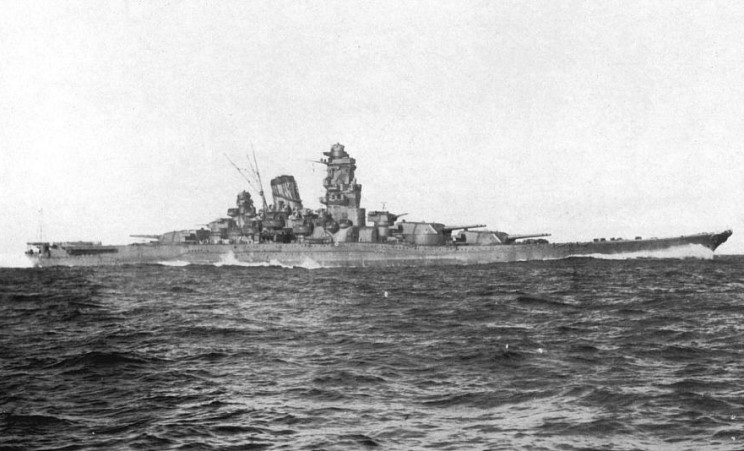
Those who have read my site since the beginning know that I have written much in terms of Naval History. One of the things that I am drawn to are the great ships that were sacrificed with the crews in futile attempts of salvage victory from defeat, or which were sacrificed in order to save others. Regardless of the circumstance I have a soft spot in my heart for sailors of any nation who pay with their lives when their ships are sunk. This is the story of the IJN Yamato, who along with her sister ship, the Musashi were the largest battleship ever constructed.

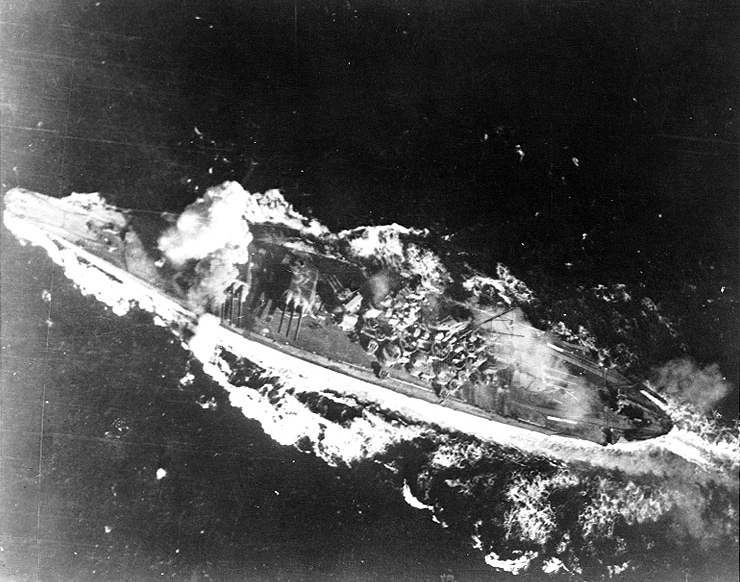
As dawn broke on April 7th 1945 the great Super-Battleship Yamato, the pride of the Japanese Imperial Navy and nine escorts steamed toward Okinawa on a suicide mission. It was literally the end of empire and the end of a navy. What had begun on December 7th 1941 was now winding down as the Imperial Navy launched its last offensive operation against the United States Navy.

The Imperial Navy was already at the end of its tether. Following the disasters at the Battle of the Philippine Sea which decimated the carrier air arm of the Imperial Navy; the subsequent losses in the defense of Formosa which used up the majority of any remaining carrier aircraft and crews; and the Battle of Leyte Gulf which decimated the surface forces of the navy what remained was a pitiful remnant of a once dominant fleet.

The great battleship Yamato and her sister ship Musashi were the largest warships ever built until the advent of the USS Enterprise CVN-65. Displacing over 72,000 tons 863 feet long and 127 feet in beam these ships mounted the heaviest artillery battery ever placed on a warship. Their nine 18.1” guns mounted in three triple turrets each weighing over 2500 tons weighed as much or more than the largest destroyers of the time. They could fire their massive shells 26 miles and even had the capability of firing a special anti-aircraft shell known as the Sanshiki or beehive round.

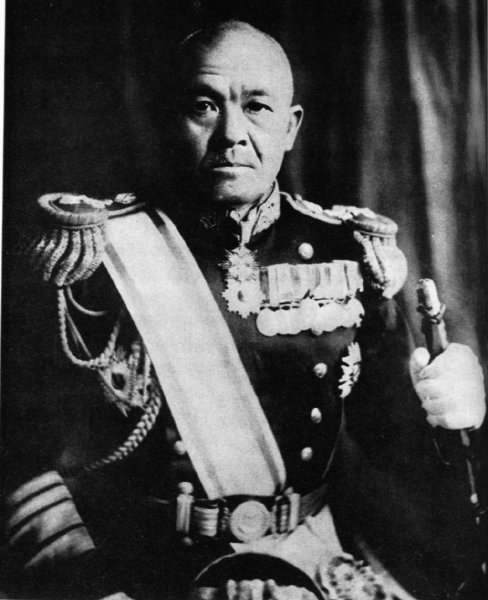
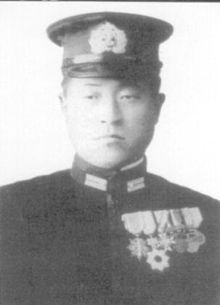
Musashi was sunk during the Battle of the Sibuyan Sea at Leyte Gulf on October 24th 1944 after being hit by 19 aerial torpedoes and 17 bombs. Yamato engaged the American Escort Carriers and destroyers of Taffy-3 at the Battle off Samar the following day but was prevented by the audacity of the inferior American destroyers and timidity of the Japanese commander Vice Admiral Takeo Kurita from achieving any notable success.

The remains of the Imperial Navy were hampered by a lack of fuel, air power and training time. When the United States attacked Iwo Jima in February 1945, barely 700 miles from the home islands of Japan not a single Japanese surface ship sortied to challenge the American Navy.

However when the American attacked Okinawa on April 1st the Navy launched Operation Ten-Go. In spite of overwhelming American superiority in both naval air and surface forces the tiny task force was to fight its way to Okinawa, beach their ships and once the ships were destroyed the crews were to join Japanese Army forces on the island.

The doomed sortie was in part due to the insistence of the Imperial Army which derided the Imperial Navy for its failures at Philippine Sea and Leyte Gulf and pressure from Emperor Hirohito who asked “But what about the Navy? What are they doing to assist in defending Okinawa? Have we no more ships?” In response the Naval High command devised what amounted to a suicide mission for Yamato and her escorts. The plan was opposed by many in the Navy and leaders of the task force who saw it as a futile mission. Only the insistence of Admiral Kusaka who told the reticent commanders that the Emperor expected the Navy to make its best effort to defend Okinawa persuaded the Captains of the doomed force to accept the mission.

At about 1600 on April 6th the ships of the task force weighed anchor and departed their anchorage at Tokuyama hoping to take advantage of approaching darkness to mask their departure. They were detected and shadowed by American submarines which provided real time information on the course and speed of the Japanese ships to the American leadership.

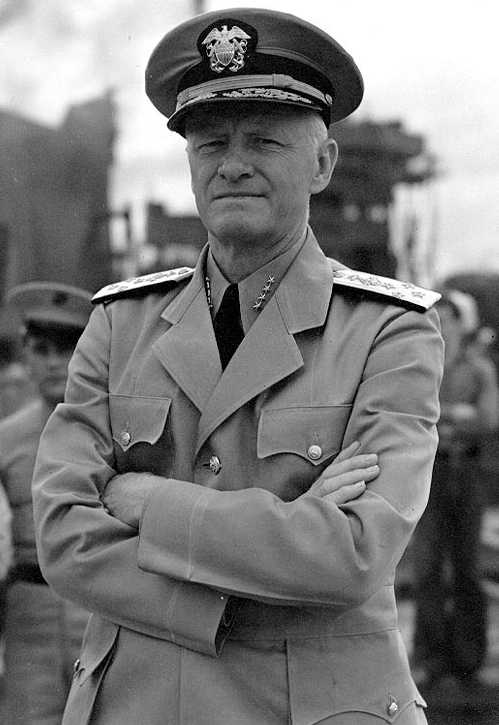
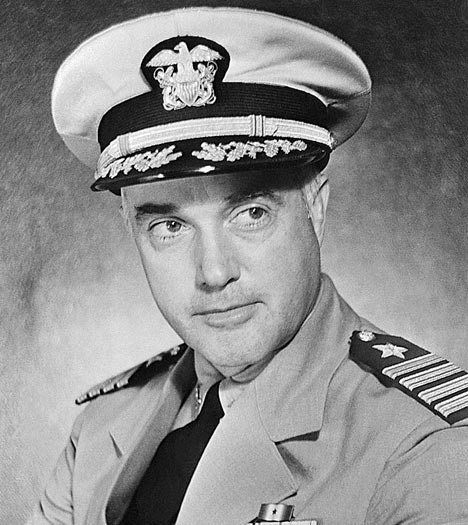
The next morning the task force was spotted by patrol planes and its position relayed to the American fleet commander, Admiral Raymond Spruance, the victor of Midway. Spruance ordered the six fast battleships, accompanied by two battlecruisers, seven cruisers and 21 destroyers engaged in shore bombardment to intercept the Japanese force. However, Admiral Marc Mitscher of Task Force 58, the fast carriers launched a massive air strike of over 400 aircraft against the Japanese.

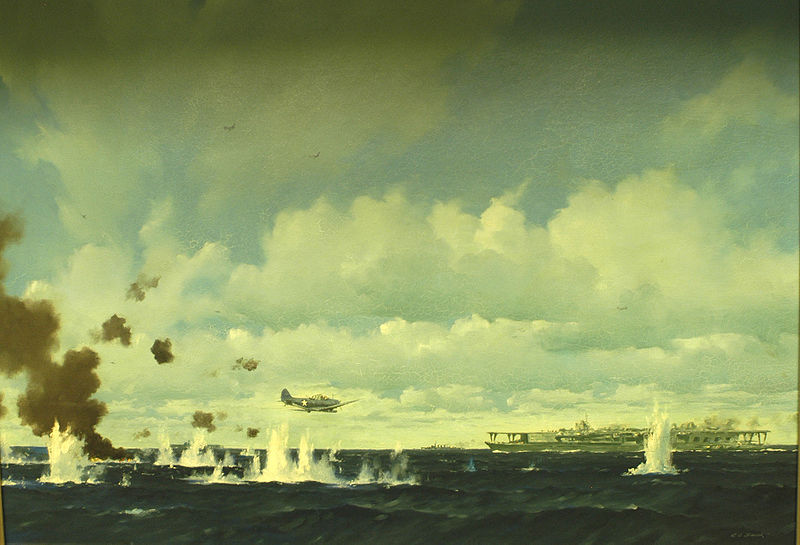
At 1232 the first wave of American aircraft began their attacks on the doomed Japanese force. As the succeeding waves of American aircraft attacked Yamato was hit by 15 bombs and at least 8 torpedoes, almost all of which struck her port side created an imminent risk of capsizing. The damage control teams’ counter flooded the starboard engine and boiler rooms which kept the ship from turning turtle, but which also further reduced her speed.

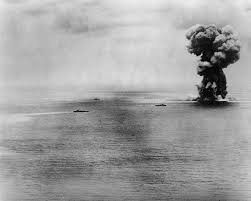
By 1405 the great ship was dead in the water and just minutes before her commander had ordered the crew to abandon ship. At 1420 she capsized and began to sink and at 1423 she blew apart in a massive explosion that was reportedly heard and seen 120 miles away and created a mushroom cloud that reached 20,000 feet.

Captain Tameichi Hara of the light cruiser Yahagi which had already sank described the demise of the great ship in his book Japanese Destroyer Captain:

“We looked and saw Yamato, still moving. What a beautiful sight. Suddenly smoke belched from her waterline. We both groaned as white smoke billowed out until it covered the great battleship, giving her the appearance of a snow-capped Mount Fuji. Next came black smoke mingled with the white, forming to a huge cloud which climbed to 2000 meters. As it drifted away we looked to the surface of the sea again and there was nothing. Yamato had vanished. Tremendous detonations at 1423 of that seventh day of April signaled the end of this “unsinkable” symbol of the Imperial Navy.”

Only 280 men of the estimated 3000 crew members were rescued by the surviving escorts. Of her escorts, the Yahagi and four destroyers were also sunk. The Americans lost a total of ten aircraft and 12 men. Never again would the surface forces of the Imperial Navy threaten U.S. forces or take any meaningful part in the war.

The sacrifice of Yamato and her escorts was a futile was of lives and though many in Japan revere their sacrifice as noble it served no purpose. The loss of Yamato, named after the ancient Yamato province in a sense was symbolic of the demise of the Japanese Empire.

I cannot help but think of gallantry of the doomed crews of these ships, sacrificed for the “honor” of leaders that did not really value their sacrifice.

It is a commentary that is timeless.

Peace

Padre Steve+

3 Comments

Filed under History, Military, Navy Ships, US Navy, World War II at Sea, world war two in the pacific

The Battle of Midway at 75

img_0063

Friends of Padre Steve’s World,

Today marks the 75th anniversary of the Battle of Midway, the epic “David versus Goliath” battle that ended Japan’s chance to win World War Two in the Pacific. It was a battle where skill, luck, good fortune and courage combined to allow the United States Navy to deliver a crushing defeat the previously undefeated Kido Butai, the Japanese First Carrier Striking Force which had run rampant across the Pacific and Indian Oceans in the six months after the attack on Pearl Harbor.

Today, the youngest survivors of the battle are over ninety years old. Their generation, like the rest of what we remember as the Greatest Generation will soon pass from the bonds of this earth into eternity. As you read this remember their sacrifice and too remember the tragedy of the Japanese sailors and airmen that were lost at Midway due to their government’s aggression against their neighbors throughout Asia that led to their attack on the American Pacific Fleet at Pearl Harbor.

Peace

Padre Steve+

Prelude to Battle

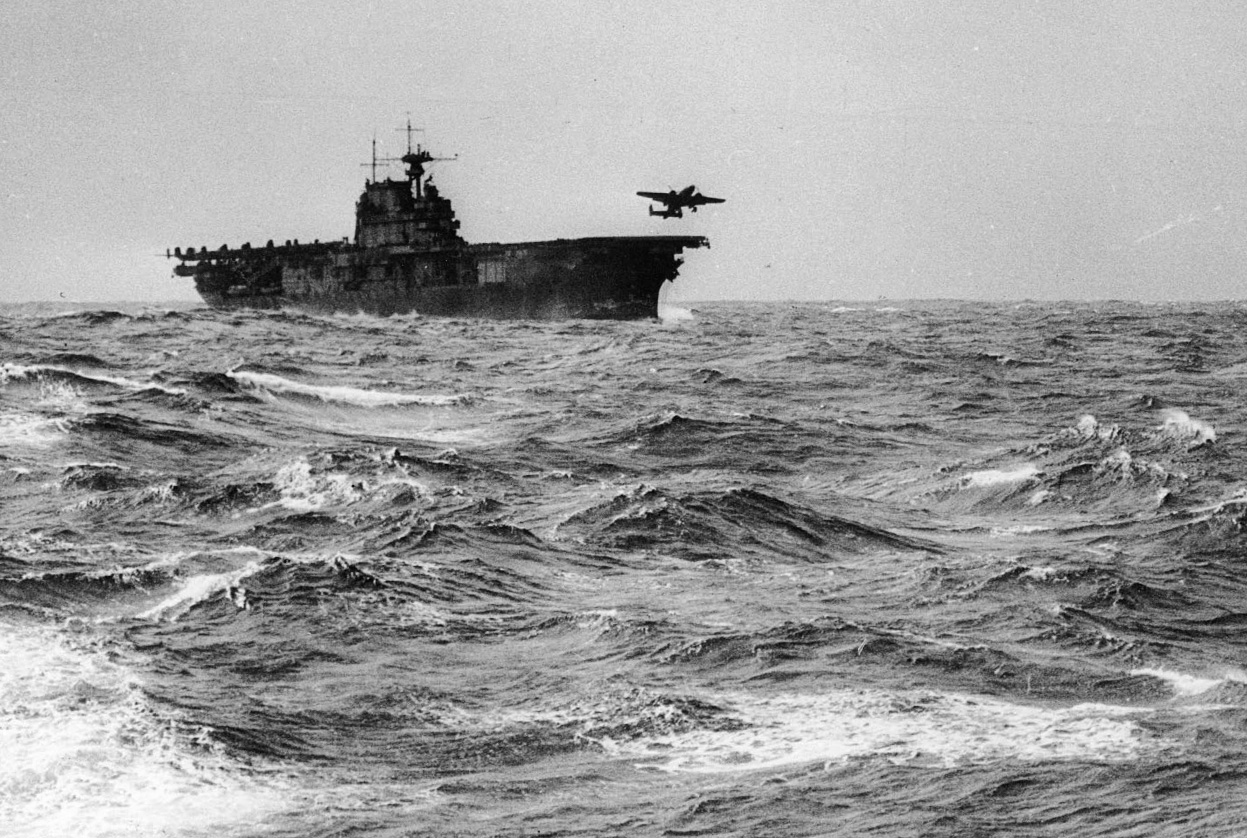
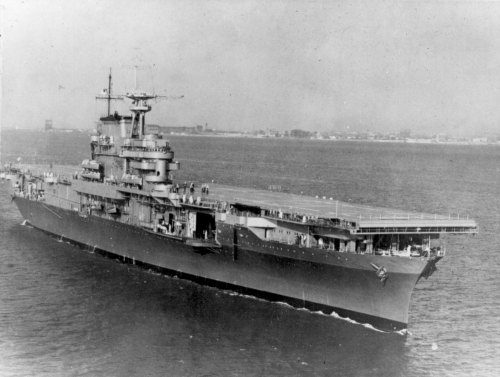
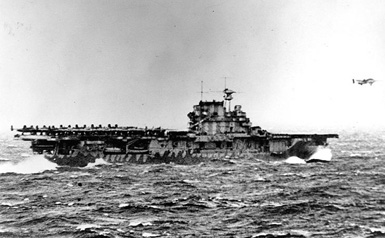
The Imperial Japanese Navy under the command of Admiral Isoruku Yamamoto had been humiliated. On April 18th 1942 16 B-25 bombers under the command of Colonel Jimmy Doolittle were launched from the deck of the USS Hornet and bombed Tokyo.  Though the physical damage was insignificant the psychological impact was massive on the Japanese military establishment. In response to the threat, Yamamoto was directed to bring the aircraft carriers of the U.S. Navy to battle and to destroy them.

Prior to the Doolittle Raid, Yamamoto and his deputy Rear Admiral Matome Ugaki had explored the possibility of attacking Midway. However, the Japanese armed forces were competing with each other to determine an overall strategy for the war effort. The Army was insistent on a China strategy while the Navy preferred expansion in the Western, South and Central Pacific.  Yamamoto’s idea envisioned seizing Midway and using it as a forward base from which an invasion of Hawaii could be mounted as well as the bait to draw the carrier task forces of the U.S. Navy into battle and destroy them. Until the Doolittle Raid shocked the Japanese leadership he was unable to do this.

“I Shall Run Wild for the First Six Months”

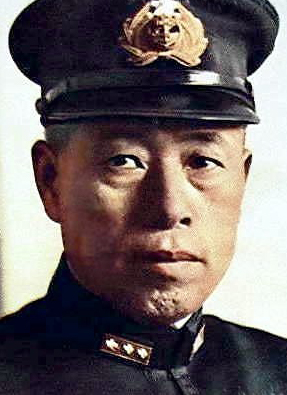
Yamamoto-Isoroku

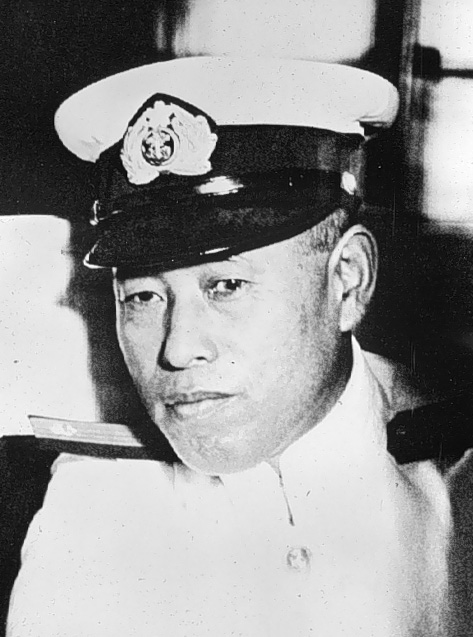
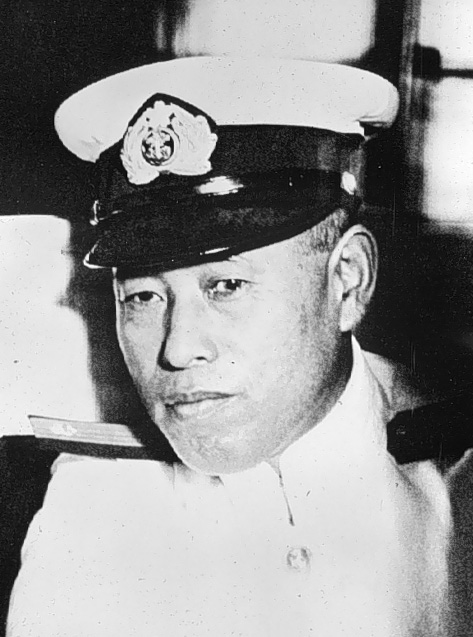
Admiral Isoruku Yamamoto

Yamamoto was one of the few Japanese military or political leaders who opposed war with the United States. He had lived in the United States, gotten to know Americans and recognized the how the massive economic and industrial power of the United States would lead to the defeat of Japan. He told Premier Konoye in 1941 “I shall run wild for the first six months or a year, but I have utterly no confidence for the second or third years of the fighting.”

It is hard to imagine now, but in June of 1942 it seemed a good possibility that the Americans and British could be on the losing side of the Second World War.

True to Yamamoto’s words in 1942 the Japanese onslaught in the Pacific appeared nearly unstoppable. The Imperial Navy stormed across the Pacific and Indian Oceans in the months after Pearl Harbor decimating Allied Naval forces that stood in their way.  The British Battleships HMS Prince of Wales and HMS Repulse were sunk by land based aircraft off of Singapore. A force of Royal Navy cruisers and the Aircraft Carrier HMS Hermes were sunk by the same carriers that struck Pearl Harbor in the Indian Ocean.  Darwin Australia was struck with a devastating blow on February 19th and on February 27th the Japanese annihilated the bulk of the American, British, Dutch and Australian naval forces opposing them at the Battle of the Java Sea. American forces in the Philippines surrendered on May 8th 1942 while the British in Singapore surrendered on February 15th.

In only one place had a Japanese Naval task force been prevented from its goal and that was at the Battle of the Coral Sea.  Between 4-8 May the US Navy’s Task Force 11 and Task Force 17 centered on the Carriers USS Lexington and USS Yorktown prevented a Japanese invasion force from taking Port Moresby. Their aircraft sank the light carrier Shoho, damaged the modern carrier Shokaku and decimated the air groups of the Japanese task force. But it was the unexpected raid by US Army Air Corps B-25 Bombers launched from the USS Hornet under command of Colonel Jimmy Doolittle on April 18th 1942 which embarrassed Yamamoto so badly that he ordered the attack to take Midway and destroy the remaining US Naval power in the Pacific.

Cracking the Code

Chester-W.-Nimitz-militarymuseum.org_

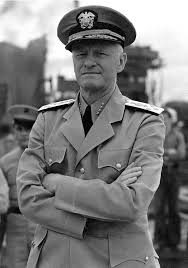
Admiral Chester Nimitz

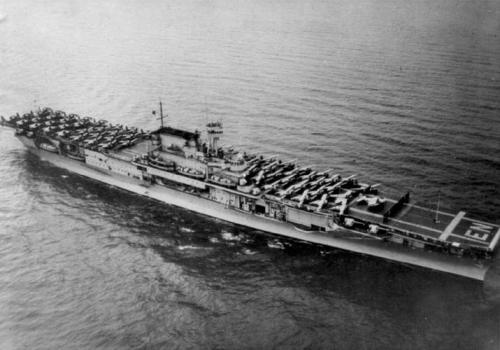
United States Navy codebreakers had broken the Japanese diplomatic and naval codes in 1941, and in May the Navy code breakers under the command of Commander Joseph Rochefort at Pearl Harbor discovered Yamamoto’s plan to have the Imperial Navy attack Midway Island and the Aleutian Islands.  Knowing the Japanese were coming, and that the occupation of Midway by Japanese forces would give them an operational base less than 1000 miles from Pearl Harbor, Admiral Chester Nimitz, commander of the U.S. Pacific Fleet committed the bulk of his naval power, the carriers USS Enterprise CV-6, USS Yorktown CV-5 and USS Hornet CV-8 and their 8 escorting cruisers and 15 destroyers to defend Midway.  This force of 26 ships with 233 aircraft embarked to defend Midway while a force of smaller force 5 cruisers and 4 destroyers was dispatched to cover the Aleutians.  The forces on the ground at Midway had a mixed Marine, Navy and Army air group of 115 aircraft which included many obsolete aircraft, 32 PBY Catalina Flying Boats and 83 fighters, dive bombers, torpedo planes and Army Air Force bombers piloted by a host of inexperienced but resolute airmen with which to defend it. It also had a ground force of U.S. Marines, should the Japanese actually land on the island.

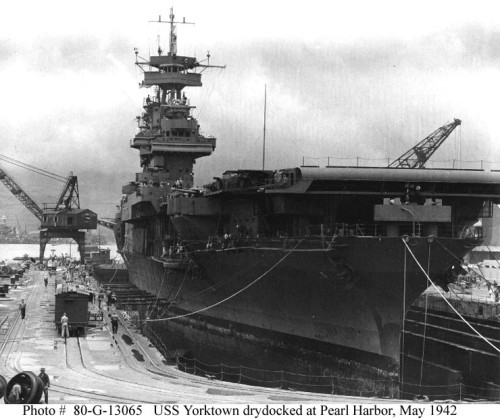
With the foreknowledge provided by the code breakers the US forces hurried to an intercept position northeast of Midway. They eluded the Japanese submarine scout line which the Japanese Commander Admiral Yamamoto presumed would find them when they sailed to respond to the Japanese attack on Midway.  Task Force 16 with the Enterprise and Hornet sailed first under the command of Rear Admiral Raymond A Spruance in place of the ailing William “Bull” Halsey. Task Force 17 under Rear Admiral Frank “Jack” Fletcher was built around the Yorktown which had been miraculously brought into fighting condition after suffering heavy damage at Coral Sea. Fletcher assumed overall command by virtue of seniority and Admiral Nimitz instructed his commanders to apply the principle of “calculated risk” when engaging the Japanese as the loss of the US carriers would place the entire Pacific at the mercy of the Japanese Navy.

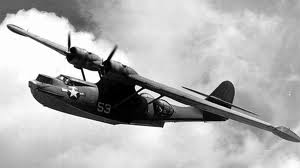
On June 3rd a PBY Catalina from Midway discovered the Japanese invasion force transport group.  US long-range B-17 bombers launched attacks against these ships but inflicted no damage.

“Our hearts burn with the conviction of sure victory.”

On the night of June 3rd 1942 Nagumo’s First Carrier Strike Force sailed east toward the tiny Midway Atoll. Nagumo had seen many of the risks involved in the plan and considered it an “impossible and pointless operation” before the Doolittle Raid on Tokyo, but even the reluctant Nagumo fell in line as Yamamoto relentlessly lobbied for the operation.

As the First Carrier strike force closed within 300 miles of Midway on the night of June 3rd 1942 Nagumo and his staff prepared for the battle that they and many others believed would be the decisive battle. Aircraft received their final preparations, bombs were loaded and as night faded into early morning air crew arose, ate their breakfast and went to their aircraft. The ships had been observing radio silence since they departed their bases and anchorages in Japan the previous week. Honed to a fine edge the crews of the ships and the veteran aircrews anticipated victory.

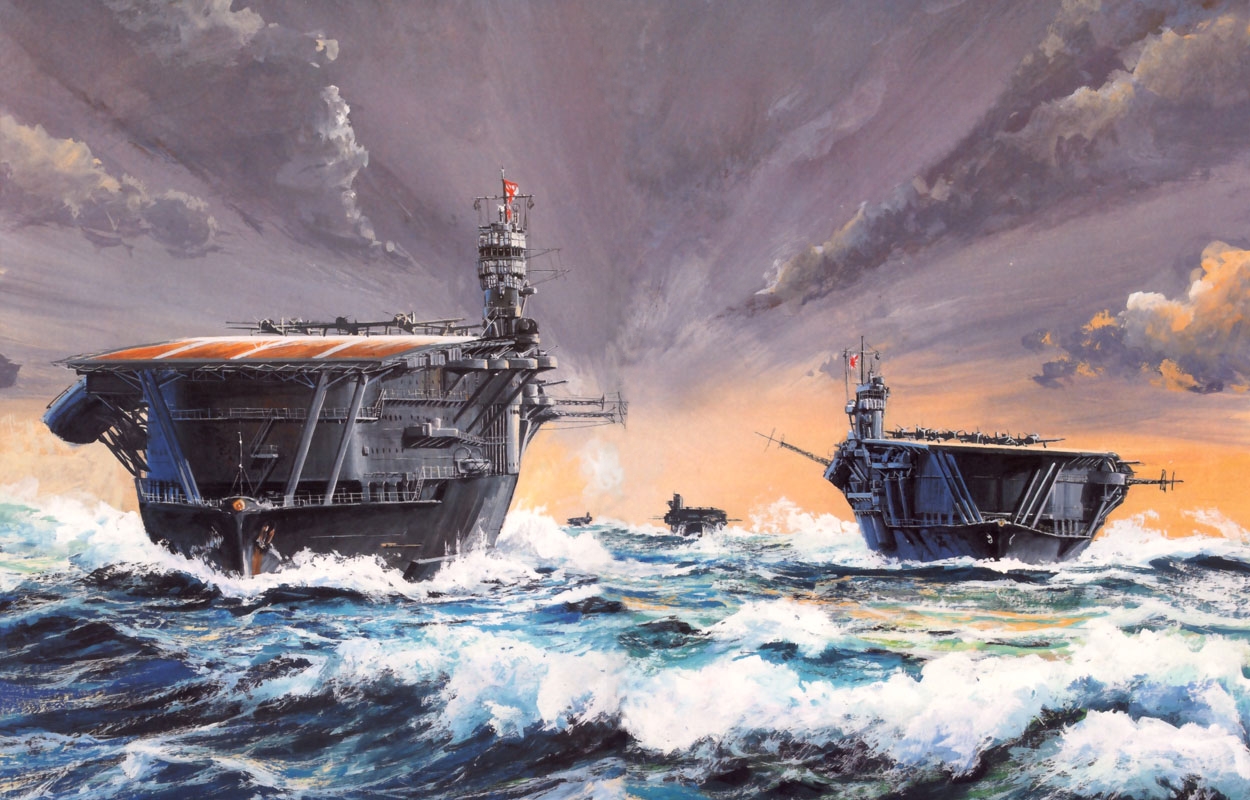
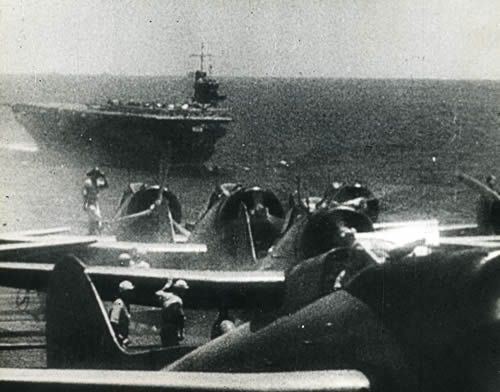
The crews of the ships of the task force and the air groups embarked on the great aircraft carriers Akagi, Kaga, Soryu and Hiryu as well as their escorts were confident. They had since the war began known nothing but victory. They had devastated the Pacific Fleet at Pearl Harbor and roamed far and wide raiding allied targets and sinking allied shipping across the Pacific and deep into the Indian Ocean. Commander Magotaro Koga of the destroyer Nowaki wrote in his diary “Our hearts burn with the conviction of sure victory.

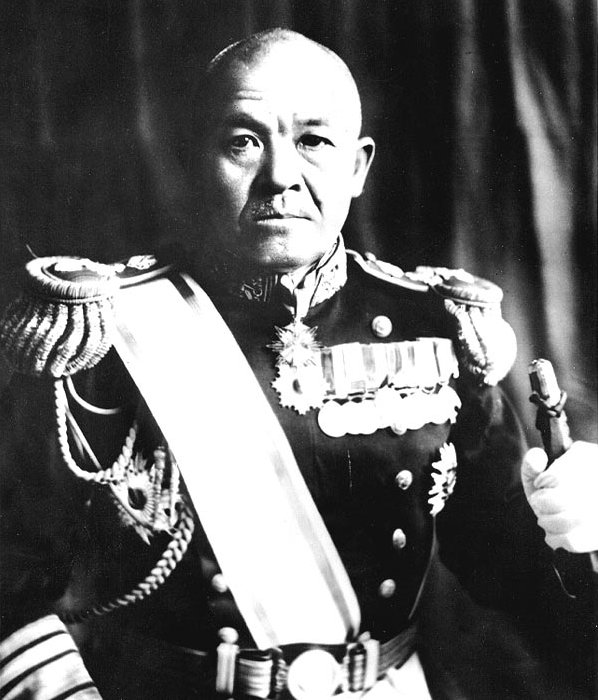
Chuichi_Nagumo

Vice Admiral Chuichi Nagumo

However, Nagumo and his sailors had no idea that most of what they knew about their American opponents was wrong. Nagumo and Yamamoto were confident that the Americans could field no more than two operational carriers to defend Midway. They had no idea that the Yorktown, which they believed had been sunk at Coral Sea was operational and her air group reinforced by the aircraft of the damaged Saratoga which was being repaired on the West Coast. Unknown to the Japanese the Yorktown and her escorts had joined Enterprise and Hornet northeast of Midway.

The Japanese were going into battle blind. They had planned to get aerial surveillance of US Fleet dispositions at Pearl Harbor, but that had been cancelled because the atoll at French Frigate Shoals that the Japanese flying boats would operate from had been occupied by a small US force. Likewise a line of Japanese submarines arrived on station a day too late, after the US carrier task forces had passed by them. Those aboard the First Carrier Strike Force, including Nagumo or his senior commanders and staff had no idea that the Americans not only knew of their approach but were already deployed in anticipation of their strike.

Within a day all of the Japanese carriers would be sunk or sinking. Thousands of Japanese sailors would be dead and the vaunted air groups which had wreaked havoc on the Allies would be decimated, every aircraft lost and the majority of pilots and aircrew dead. It would be a most unexpected and devastating defeat stolen out of the hands of what appeared to be certain victory.

There is a lesson to be learned from the Japanese who sailed into the night on June 3rd 1942 and saw the sunrise of June 4th. There is no battle, campaign or war that goes according to plan. Thousands of Japanese sailors and airmen went to bed on the night of the 3rd expecting that the following night, or within the next few days they would be celebrating a decisive victory. Thousands of those sailors would be dead by the night of the 4th of June 1942, and as their ships slid beneath the waves, the ambitions of Imperial of Japan to defeat the United States Navy and end the war were dealt a decisive defeat from which they never recovered.

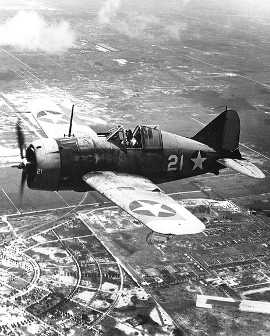
VMF-221_Buffalos_intercepting_Japanese_formation

Hawks at Angles Twelve

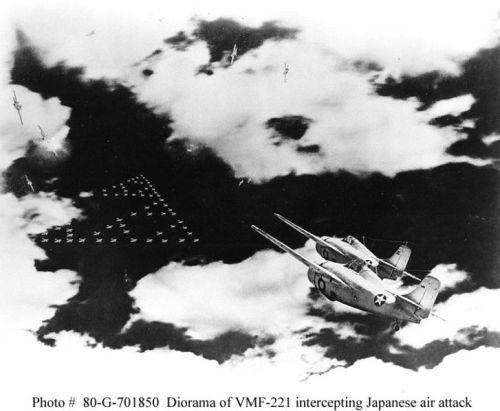
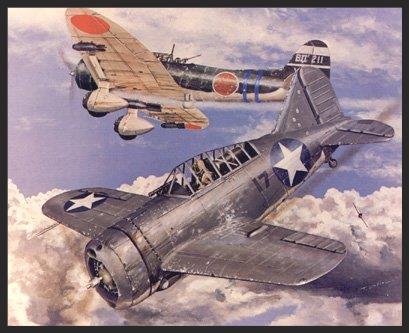
One of the more overlooked aspects of the Battle of Midway is the sacrifice of Marine Fighter Squadron 221 on the morning of June 4th 1942.   The Marine aviators flying a mix of 21 obsolescent Brewster F2A-3 Buffalos and 7 Grumman F4F-3 Wildcats engaged a vastly superior force of Japanese Navy aircraft as they vectored toward the atoll to begin softening it up for the planned invasion.

Led by Major Floyd Parks the squadron had arrived at Midway on Christmas day 1941 being delivered by the USS Saratoga after the aborted attempt to relieve Wake Island.  The squadron along with Marine Scout Bombing Squadron 241 (VMSB 241) formed Marine Air Group 22.  They fighter pilots of VMF-221 scored their first victory shooting down a Japanese Kawanishi H8K2 “Emily” flying boat. The squadron which initially was composed of just 14 aircraft, all F2A-3’s was augmented by 7 more F2A-3s and 7 of the more advanced F4F-3s before the battle.

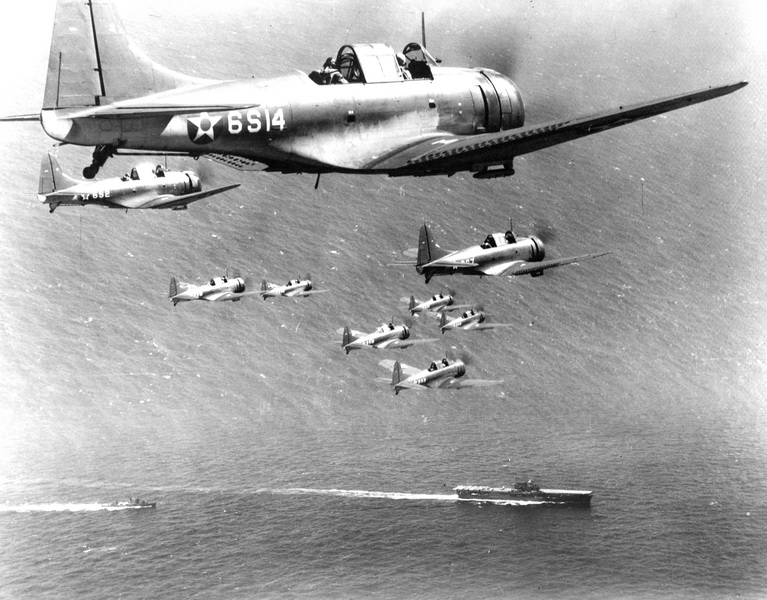
When the Japanese First Carrier Striking Group was spotted in the wee hours of June 4th the Marines and other aircrew aboard Midway scrambled to meet them.  The 18 SBD-2 Dauntless’ and 12 Vought SB2-U3 Vindicator dive bombers of VMSB-241, the 6 TBF Avengers of the Navy Torpedo Eight detachment, 4 Army Air Corps B-26 Marauders and 15 B-17 Flying Fortresses flew out to attack the Japanese carriers while the fighters rose to intercept the 108 aircraft heading toward Midway. The 72 strike aircraft, 36 Aichi 99 Val Dive Bombers and 36 Nakajima B5N Torpedo/ High Level Bombers were protected by 36 AM6-2 Zeros which thoroughly outclassed the Marine opponents in speed, maneuverability and in the combat experience of their pilots.

F2A-3+Buffalo

The Marine fighters audaciously attacked the far superior Japanese force, throwing themselves against the Japanese phalanx with unmatched courage.  Despite their courage the Marine fighters were decimated by the Japanese Zeros.  The Marines shot down 4 Val dive bombers and at least three Zeros but lost 13 Buffalos and 3 Wildcats during the battle.  Of the surviving aircraft only three Buffalos and three Wildcats were in commission at the end of the day. Among the casualties killed was Major Parks.  Of the surviving pilots of VMF-221, two became “Aces” during the war. Lieutenant Charles M. Kunz would later fly in VMF-224, adding six victories to end the war with 8 victories. Capt. Marion E. Carl would later fly in VMF-223 raising his score to 18.5 Japanese aircraft shot down.  Other pilots like 2nd Lieutenant Clayton M. Canfield shot down two additional aircraft while flying with VMF-223. 2nd Lieutenant Walter W. Swansberger won the Medal of Honor at Guadalcanal.

The last remaining Marine fighter pilot of VMF-221 from the battle of Midway, Williams Brooks died in January 2010 and was buried with full military honors, in Bellview, Nebraska. Brooks in his after action report described his part in the battle:

I was pilot of F2A-3, Bureau number 01523, Our division under Capt. Armistead was on standby duty at he end of the runway on the morning of June 4, 1942, from 0415 until 0615. At about 0600, the alarm sounded and we took off. My division climbed rapidly, and I was having a hard time keeping up. I discovered afterwards that although my wheels indicator and hydraulic pressure indicator both registered “wheels up”, they were in reality about 1/3 of the way down. We sighted the enemy at about 14,000 feet, I would say that there were 40 to 50 planes. At this time Lt. Sandoval was also dropping back. My radio was at this time putting out no volume, so I could not get the message from Zed. At 17,000 feet, Capt. Armistead led the attack followed closely by Capt. Humberd. They went down the left of the Vee , leaving two planes burning. Lt. Sandoval went down the right side of the formation and I followed. One of us got a plane from the right side of the Vee. At this time, I had completely lost sight of my division. As I started to pull up for another run on the bombers, I was attacked by two fighters. Because my wheels being jammed 1/3 way down, I could not out dive these planes, but managed to dodge them and fire a burst or so into them as they went past me and as I headed for the water. As I circled the island, the anti-aircraft fire drove them away. My tabs, instruments and cockpit were shot up to quite an extent at this time and I was intending to come in for a landing. 

It was at this time that I noticed that a important feature in their fighting. I saw two planes dog-fighting over in the east, and decided to go help my friend if at all possible. My plane was working very poorly, and my climb was slow. As I neared the fight both planes turned on me. It was then that I realized I had been tricked in a sham battle put on by two Japs and I failed to recognize this because of the sun in my eyes. Then I say I was out-numbered, I turned and made a fast retreat for the island, collecting a goodly number of bullets on the way. After one of these planes had been shaken, I managed to get a good burst into another as we passed head-on when I turned into him. I don’t believe this ship could have gotten back to his carrier, because he immediately turned away and started north and down. I again decided to land, but as I circled the island I saw two Japs on a Brewster. Three of my guns were jammed, but I cut across the island, firing as I went with one gun. But I could not get there in time to help the American flier and as soon as the Brewster had gone into the water I came in for a landing at approximately 0715 (estimated). 

As for VMF-221 it was re-equipped with the F4F-4 and later with the F4U Corsair during the course of two more deployments overseas.  VMF-221 finished the war with a score of 155 victories, 21 damaged and 16 probable kills, the second highest total of any Marine Corps Squadron during the war.

Their bomber counterparts of VMSB 241 attacked the Japanese task force on the morning of June 4th and scored no hits while losing 8 aircraft. The survivors were again in action later in the day as well as the following day where they helped sink the Japanese Heavy Cruiser Mikuma with their squadron leader Major Henderson diving his mortally wounded aircraft into the cruiser’s number 4 8” gun turret. While the Marines’ actions are not as well known or as successful as those of their Navy counterparts they were brave.  Fighter pilots had to engage some of the most experienced pilots flying superior machines while the bomber crews had little to no experience before being thrown into combat.

Into the Valley of Death: The Last Ride of the Torpedo Bombers

800px-tbd_attacking_at_midway_painting-1

Alfred, Lord Tennyson wrote in the Charge of the Light Brigade something that echoes to this day when we talk or write about men who charge the gates of death against superior enemies.

Half a league half a league,

Half a league onward,

All in the valley of Death

Rode the six hundred:

‘Forward, the Light Brigade!

Charge for the guns’ he said:

Into the valley of Death

Rode the six hundred.

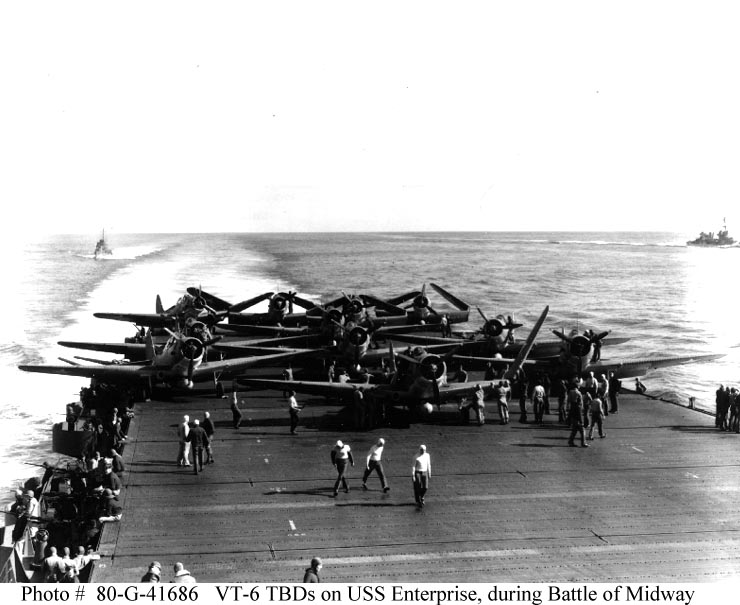
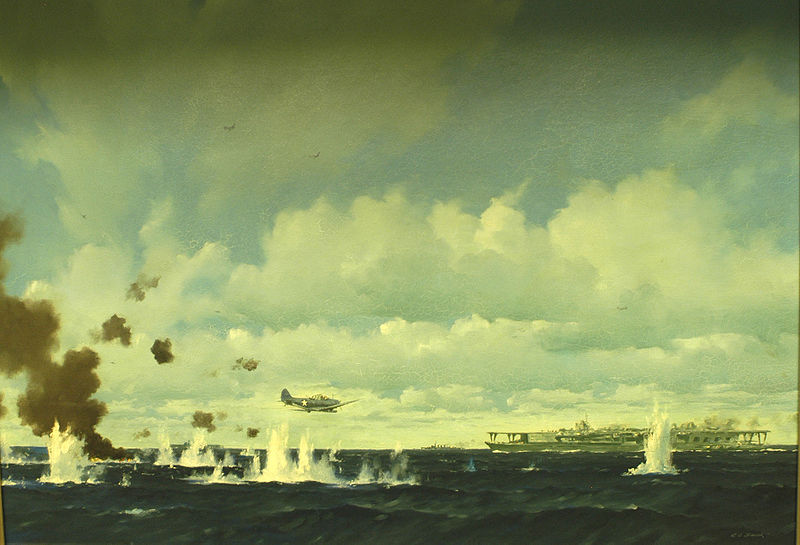
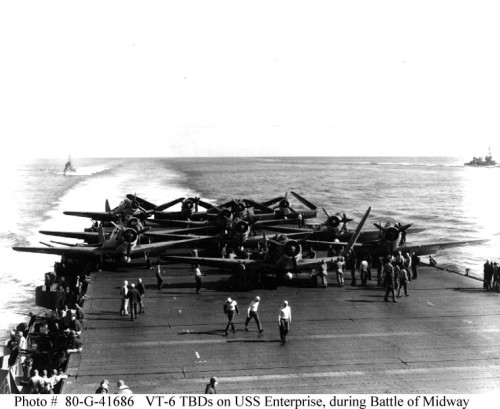
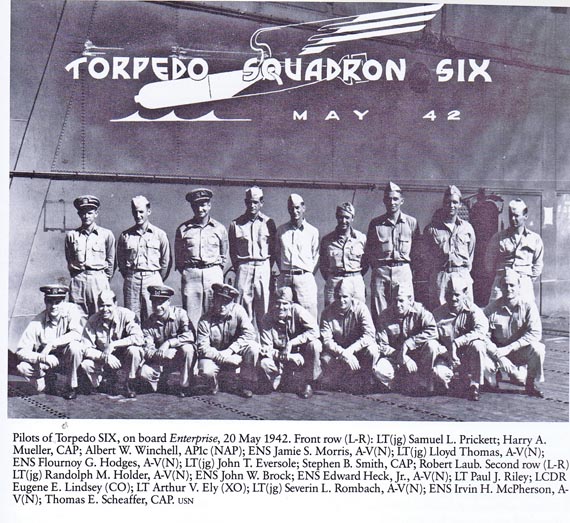
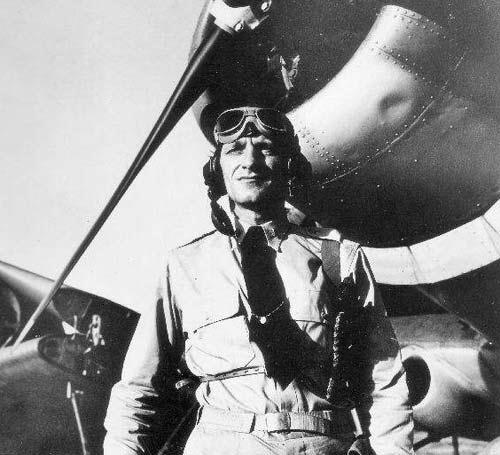
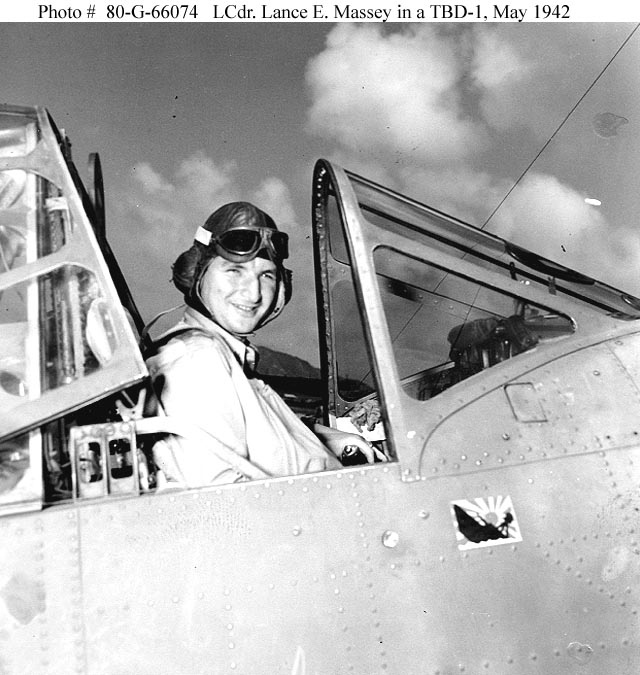
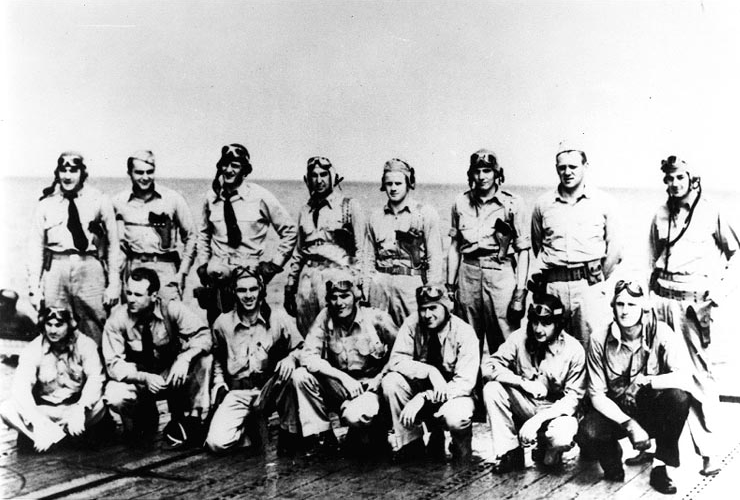
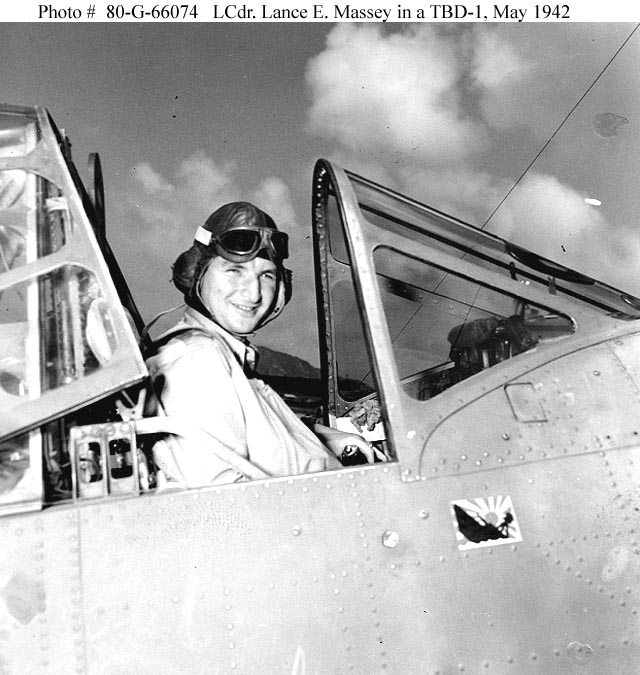
They were not six hundred and they were not mounted on horses, but the Naval Aviators of Torpedo Squadrons 3, 6 and 8 and their aerial steeds 42 Douglas TBD Devastators and 6 TBF Avengers wrote a chapter of courage and sacrifice seldom equaled in the history of Naval Aviation. Commanded by veteran Naval Aviators, LCDR Lance “Lem” Massey, LCDR Eugene Lindsey and LCDR John Waldron the squadrons embarked aboard the carriers flew the obsolete TBD Devastators. The young pilots of the Midway based Torpedo 8 detachment under the command of LT Langdon Fieberling flew in the new TBF Avengers.

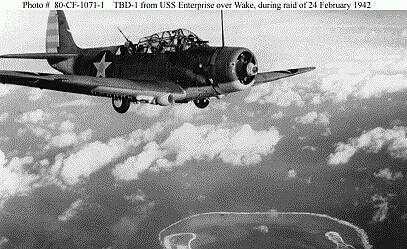
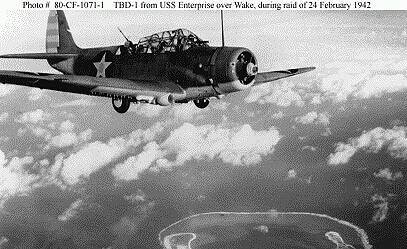
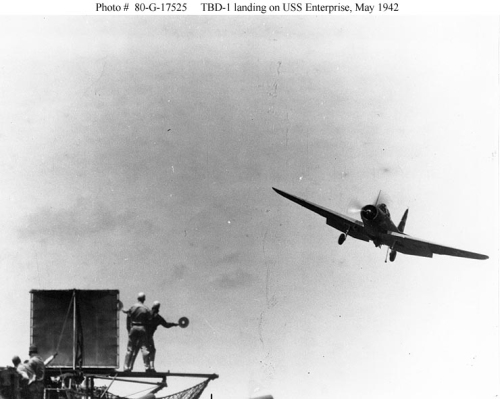
The TBD which first flew in 1935 entered service in 1937 and was possibly the most modern naval aircraft in the world when it entered service.  It was a revolutionary aircraft. It was the first monoplane widely used on carriers and was first all-metal naval aircraft.  It was the first naval aircraft with a totally enclosed cockpit, the first with hydraulic powered folding wings.  The TBD had crew of three and had a maximum speed of 206 miles an hour and carried a torpedo or up to 1500 pounds of bombs (3 x 500) or a 1000 pound bomb.  129 were built and served in all pre-war torpedo bombing squadrons based aboard the Lexington, Saratoga, Ranger, Yorktown, Enterprise and Hornet with a limited number embarked aboard Wasp. 

tbd devastator

The Devastator saw extensive service prior to the war which pushed many airframes to the end of their useful service life and by 1940 only about 100 were operational by the beginning of the war.  They were still in service in 1942 as their replacement the TBF Avenger was not available for service in large enough numbers to replace them before Midway.  The TBDs performed adequately against minor opposition at Coral Sea and in strikes against the Marshalls but the squadrons embarked on Yorktown (VT3), Enterprise (VT-6) and Hornet (VT-8) were annihilated at Midway with only 6 of 41 aircraft surviving their uncoordinated attacks against the Japanese Carrier Strike Force.  They were too slow, had poor maneuverability, insufficient armor and defensive armament.

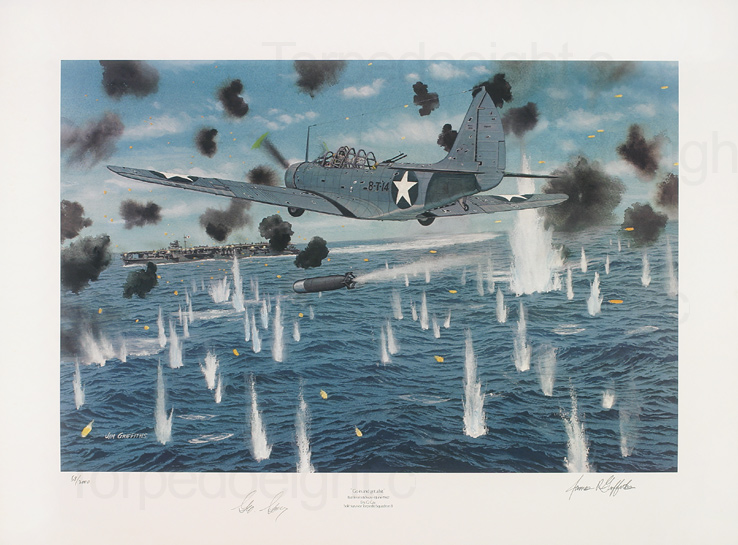
The Torpedo squadrons attacked independently of each other between 0920 and 1030 on June 4th 1942. The Japanese Combat Air Patrol ripped into the slow, cumbersome and under armed TBD Devastators as they came in low to launch their torpedoes.  Torpedo Eight from Hornet under the command of LCDR John C Waldron pressed the attack hard but all 15 of the Devastators were shot down.  Only Ensign George Gay’s aircraft was able to launch its torpedo before being shot down and Gay would be the sole survivor of the squadron to be picked up later by a PBY Catalina patrol plane.

Torpedo Six from the Enterprise under the command of LCDR Eugene Lindsey suffered heavy casualties losing 10 of 14 aircraft with Lindsey being one of the casualties.  The last group of Devastators to attack was Torpedo Three from the Yorktown under the command of LCDR Lem Massey losing 11 of 13 aircraft with Massey a casualty last being seen standing on the wing of his burning aircraft as it went down.  These aircraft were also decimated and Massey killed but they had drawn the Japanese Combat Air Patrol down to the deck leaving the task force exposed to the Dive Bombers of the Enterprise and Yorktown.  The six aircraft of the Torpedo Eight detachment from Midway under the command of LT Fieberling lost 5 of their 6 aircraft while pressing their attacks.  Only Ensign Bert Earnest and his aircraft survived the battle landing in a badly damaged state on Midway.  Four U.S. Army B-26 Marauder Medium Bombers were pressed into service as torpedo bombers of which 2 were lost.  No torpedo bomber scored a hit on the Japanese Task force even those torpedoes launched at close range failed to score and it is believe that this was in large part due to the poor performance of the Mark 13 aircraft torpedoes.

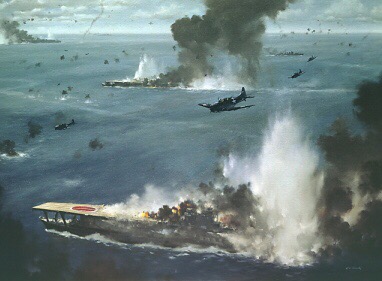
Despite the enormous losses of the torpedo squadrons their sacrifice was not in vain. Their attacks served to confuse the Japanese command and delay the rearmament of aircraft following the Japanese strikes on Midway. They also took the Japanese Combat Air Patrol down to sea level and opened the way for American Dive Bombers to strike the Japanese with impunity fatally damaging the Akagi, Kaga and Soryu in the space of 5 minutes.

After Midway the remaining TBDs were withdrawn from active service and no example survives today. The TBF became the most effective torpedo bomber of the war and some remained in service in a civilian capacity to fight forest fires until 2012.

The Provence of Chance: Five Minutes that Changed the War

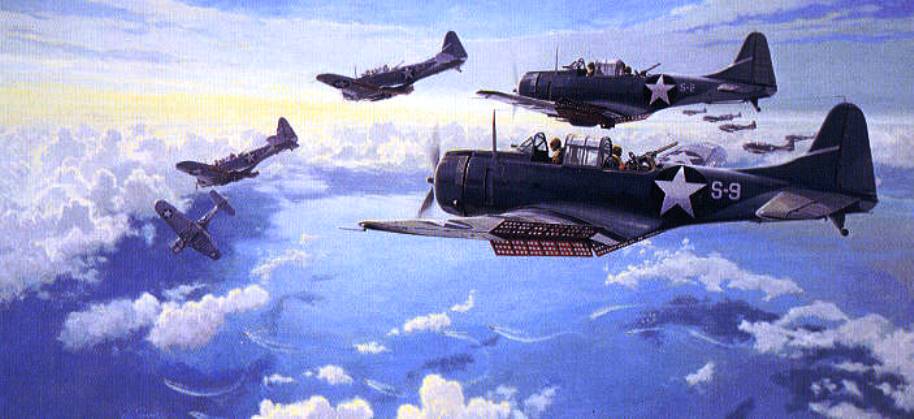
sbd dauntless midway

The land based aircraft from Midway attacked the Japanese carrier force taking heavy casualties and failed to damage the Japanese task force. When the results of the first strike of the Japanese bombers that hit Midway was analyzed Nagumo readied his second wave.

As this was happening the American carriers launched their strike groups at the Japanese fleet leaving enough aircraft behind as for Combat Air Patrol and Anti-submarine patrol missions.  As the Americans winged toward the Japanese fleet the Japanese were in a state of confusion. The confusion was caused when a scout plane from the Heavy Cruiser Tone that had been delayed at launch discovered US ships but did not identify a carrier among them until later into the patrol. The carrier was the Yorktown and TF 17, but for Nagumo who first expected no American naval forces, then received a report of surface ships without a carrier followed by the report of a carrier the reports were unsettling.

Aboard the Japanese ships, orders and counter-orders were issued as the Japanese attempted to recover their strike aircraft and prepare for a second strike on the island, but when the Yorktown task force was discovered, orders were changed and air crews unloaded ground attack ordnance in favor of aerial torpedoes and armor piercing bombs. In their haste to get their aircraft ready to strike the Americans, the hard working Japanese aircrews did not have time to stow the ordnance removed from the aircraft. But due to their hard work at 1020 they had the Japanese strike group ready to launch against the US carriers. Aircraft and their crews awaited the order to launch, their aircraft fully armed and fully fueled.

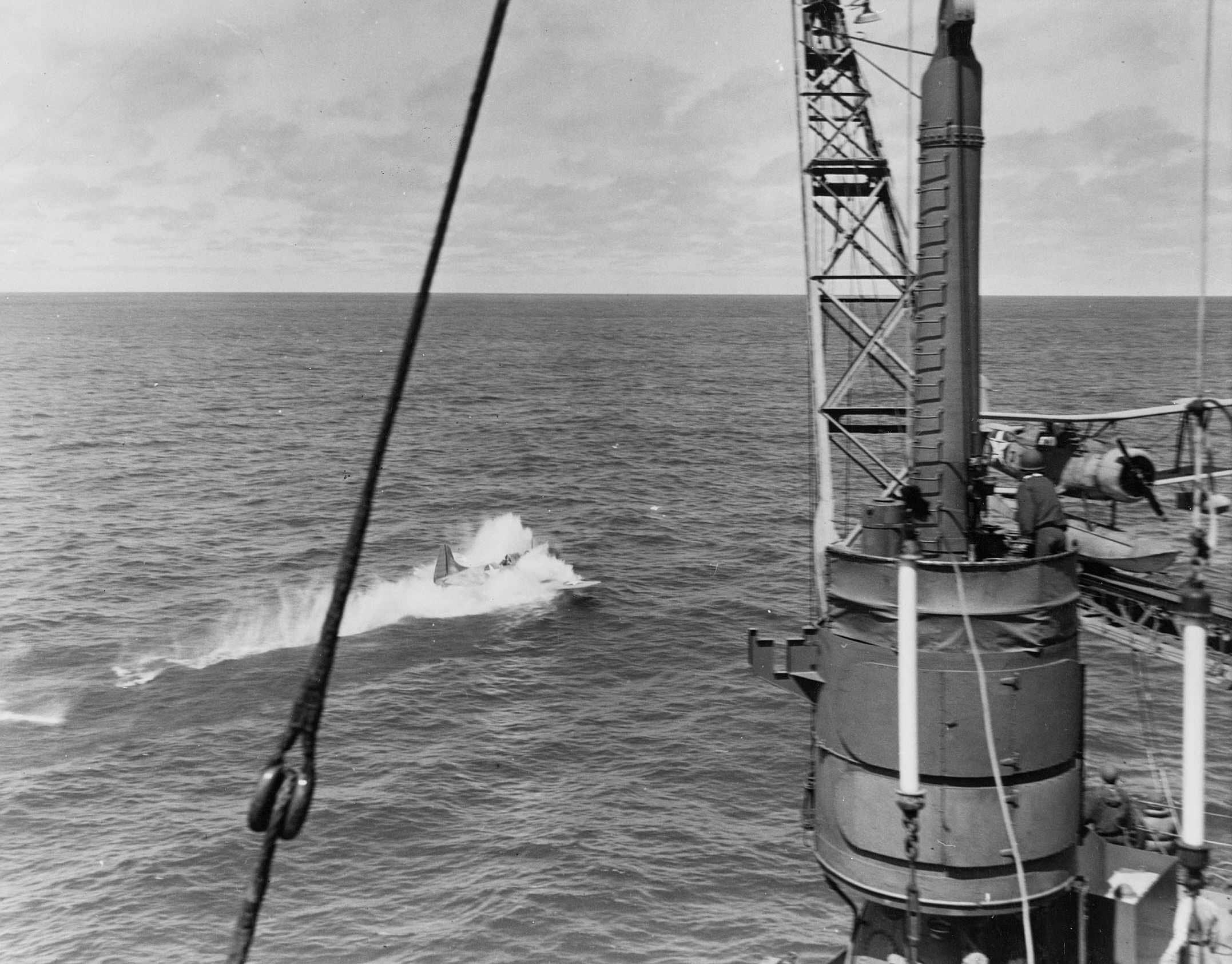
There had been confusion among the Americans as to the exact location of the Japanese Carriers. Bombing 8 and Scouting 8 from Hornet made a wrong turn and not find the Japanese carriers. The squadrons had to return due to a lack of fuel and a number of bombers and their fighter escort had to ditch in the ocean and wait for rescue. The Enterprise group composed of Bombing-6 and Scouting 6 under CDR Wade McClusky was perilously low on fuel when they spotted the wake of a Japanese destroyer steaming at high speed to catch up with the Japanese carriers.  Taking a chance, McClusky followed it straight to the Japanese Task Force arriving about 1020. The Yorktown’s group under LCDR Max Leslie arrived about the same time.

When the American dive bombers arrived over the Japanese Carrier Strike Force they found the skies empty of Japanese aircraft. Below, aboard the Japanese ships there was a sense of exhilaration as each succeeding group of attackers was brought down and with their own aircraft ready to launch and deal a fatal blow to the American carrier wondered how big their victory would be. The war would soon be decided.

At 1020 the first Zero of the Japanese attack group began rolling down the flight deck of the flagship Akagi, aboard Kaga aircraft were warming up as they were on the Soryu.  The unsuspecting Japanese were finally alerted to the threat of the American dive bombers when lookouts screamed “helldivers.” The Japanese fighters assigned to the combat air patrol were flying too low as the mopped up the last of the doomed torpedo bombers and were not in a position to intercept the Americans.

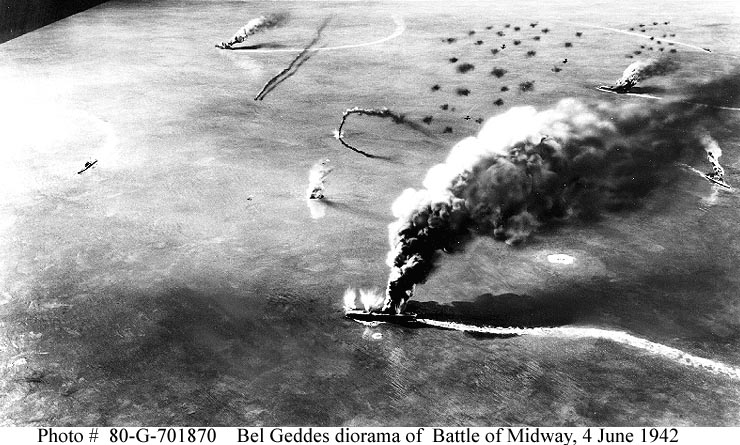
IJN_Akagi_World_War_II_Aircraft_Carrier_hit_by_Douglas_SBD_Dauntless_Dive_Bomber_at_Midway-1

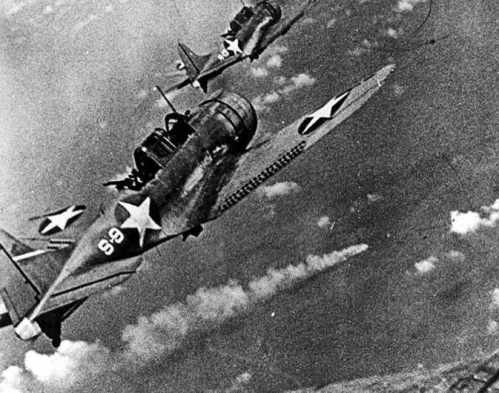
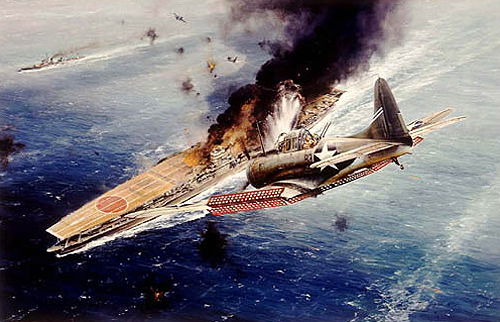
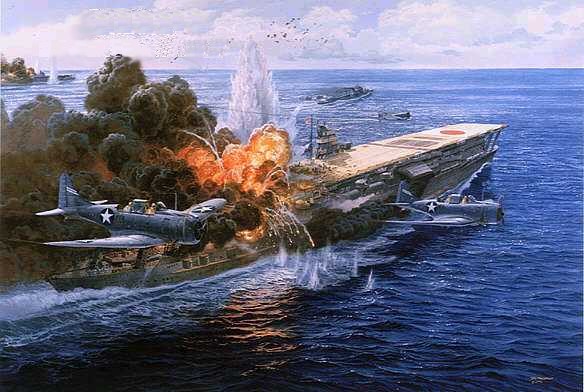
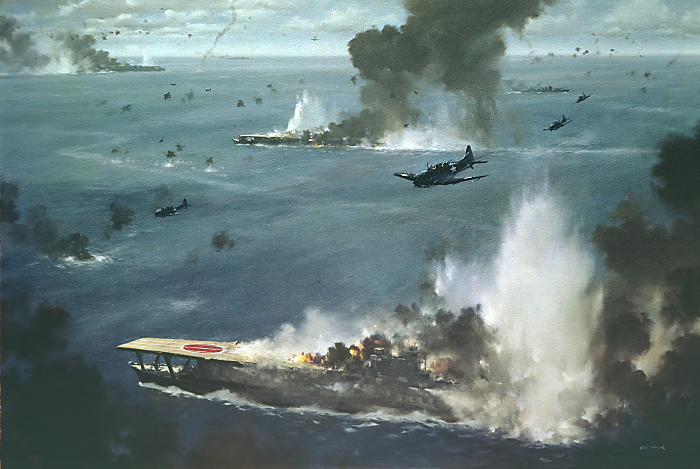
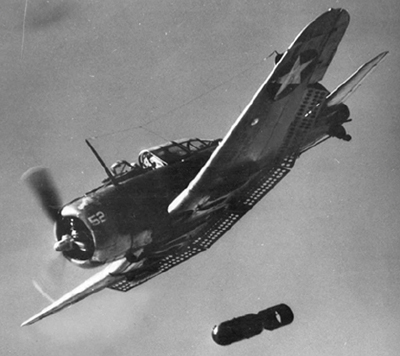
Wade McClusky’s aircraft lined up over the Akagi and Kaga pushing into their dives at 1022. There was a bit of confusion when the bulk of Scouting 6 joined the attack of Bombing 6 on the Kaga. That unprepared ship was struck by four 1000 pound bombs which exploded on her flight deck and hangar deck igniting the fully fueled and armed aircraft of her strike group and the ordnance littered about the hangar deck.  Massive fires and explosions wracked the ship and in minutes the proud ship was reduced to an infernal hell with fires burning uncontrollably. She was abandoned and would sink at 1925 taking 800 of her crew with her.

LT Dick Best of Scouting 6 peeled off from the attack on Kaga and shifted to the Japanese flagship Akagi. On board Akagi were two of Japan’s legendary pilots CDR Mitsuo Fuchida leader of and CDR Minoru Genda the architect of the Pearl Harbor attack and subsequent string of Japanese victories. Both officers were on the sick list and had come up from sick bay to watch as the fleet was attacked. Seeing Kaga burst into flames they stood mesmerized until Akagi’s lookouts screamed out the warning “helldivers” at 1026.

SBDstoastjapcarrier

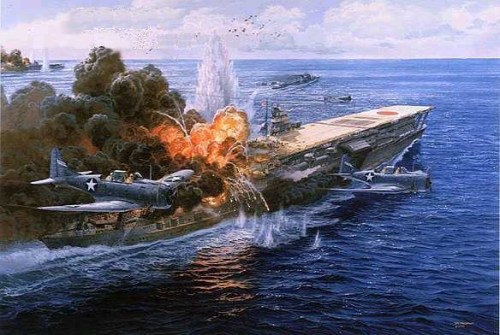
Best’s few aircraft hit with deadly precision landing two of their bombs on Akagi’s flight deck creating havoc among the loaded aircraft and starting fires and igniting secondary explosions which turned the ship into a witch’s cauldron.  By 1046 Admiral Nagumo and his staff were forced to transfer the flag to the cruiser Nagara as Akagi’s crew tried to bring the flames under control. They would do so into the night until nothing more could be done and abandoned ship at 2000.  Admiral Yamamoto ordered her scuttled and at 0500 on June 5th the pride of the Japanese carrier force was scuttled.

VB-3 under LCDR Max Leslie from the Yorktown stuck the Soryu with 17 aircraft, however only 13 of the aircraft had bombs due to an electronic arming device malfunction on 4 of the aircraft, including that of Commander Leslie.  Despite this Leslie led the squadron as it dove on the Soryu at 1025 hitting that ship with 3 and maybe as many as 5 bombs. Soryu like her companions burst into flames as the ready aircraft and ordnance exploded about her deck. She was ordered abandoned at 1055 and would sink at 1915 taking 718 of her crew with her.

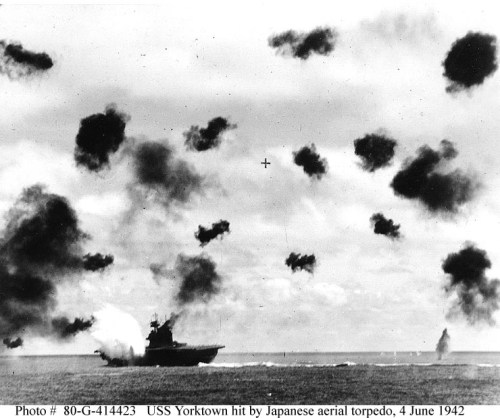
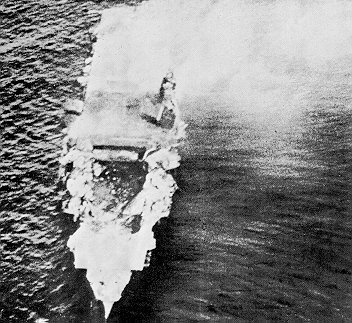
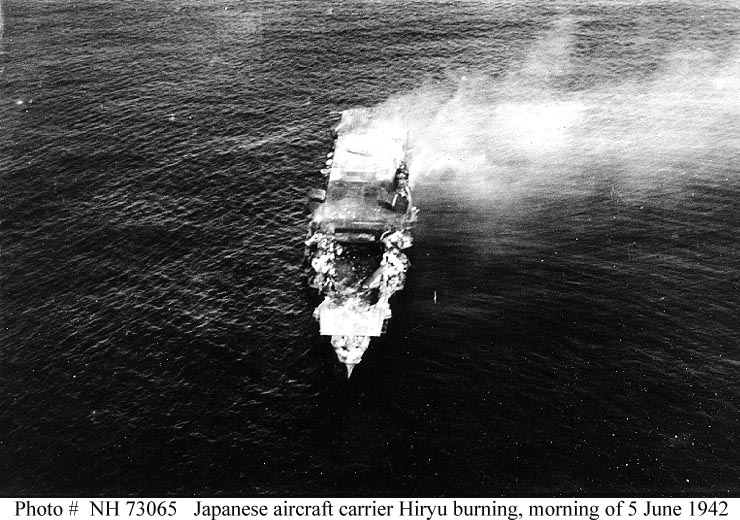
The only Japanese carrier to survive the initial assault, Hiryu continued the fight.  Hiryu’s dive bombers found Yorktown and while they suffered heavy losses to the F4F Wildcats of Yorktown’s CAP, three Val’s from Hiryu scored hits which started fires and disabled Yorktown, causing her to lose power and go dead in the water.  Yorktown’s damage control teams miraculously got the fires under control, patched her damaged flight deck while her engineers restored power and Yorktown was back in action steaming at a reduced speed of 20 knots but able to conduct air operations again, but the plucky Hiryu and her depleted air group were not done.

yorktown under attack

Hiryu’s second strike composed of Kate Torpedo Bombers discovered Yorktown, and since she appeared undamaged the squadron leader assumed that she was another carrier. Yorktown’s reduced CAP was unable to stop the Kates and the Japanese scored 2 torpedo hits causing another loss of power and a severe list.  Thinking that she might capsize, her captain ordered that she be abandoned.

hiryu_via_hosho_ac

The Damaged Hiryu

As this was occurring a mixed attack group from the Enterprise and now “homeless” Yorktown aircraft attacked Hiryu. Like her sisters she was caught with her flight deck full of fueled and armed aircraft preparing for another strike against the Americans. The damage to the brave ship was mortal. Her crew abandoned ship and she sank the following day.

Yorktown would be sunk by a Japanese submarine, along with the destroyer Hamman a few days later as her crew attempted to get her to Pearl Harbor. In five pivotal minutes the course of the war in the Pacific was changed.

A Final Ignominy

mikuma

Admiral Yamamoto was still attempting to digest the calamity that had befallen Admiral Nagumo’s carrier task force. In the shocked atmosphere of the mighty Super Battleship Yamato’s command center the Staff of the Combined Fleet was hastily attempting to arrive at a solution which might reverse the disaster and bring victory.  Admiral Ugaki, Yamamoto’s Chief of Staff, despite strong personal doubts, ordered Vice Admiral Nobutake Kondo to prepare for a night surface engagement with the US Fleet and dispatched a strong surface force to bombard Midway in order to prevent the Americans from reinforcing it and to prevent its further use against his forces should the invasion move forward.  Kondo then organized his fleet to attempt to find the American carriers and bring them to battle before dawn.

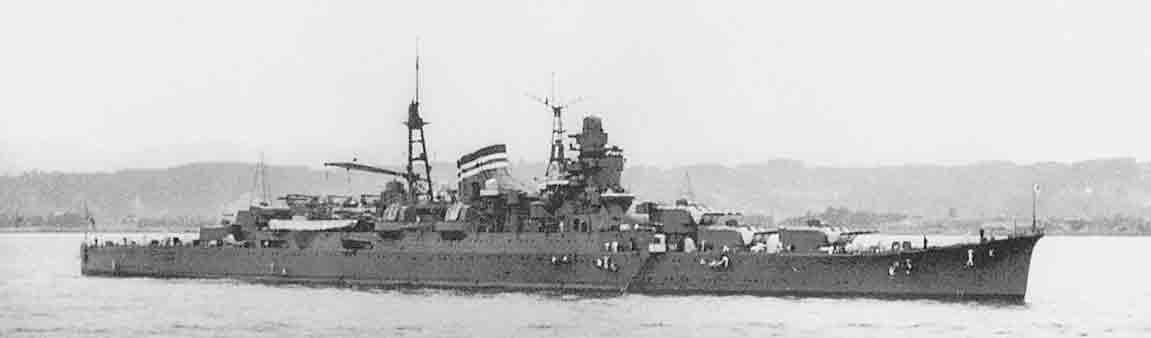
Kondo detached Vice Admiral Takeo Kurita’s Close Support Group composed of Cruiser Seven, the fastest and most modern cruisers in the Imperial Navy proceed at full speed to attack Midway.  Kurita’s cruisers, the Kumano, Suzuya, Mikuma and Mogami were each armed with 10 8” guns and were escorted by the two destroyers.

Kurita’s force was 80 miles from Midway when Yamamoto realizing that his plan was unrealistic ordered Kondo’s forces to retreat and rendezvous with his main force shortly after midnight. The order was met with a measure of relief by most officers in the force and the force turned northwest and steamed at 28 knots to meet the Main Body.  At 0215 lookouts on Kumano sighted a submarine on the surface which turned out to be the USS Tambor which had been shadowing the group, and made a signal for the force to make a emergency 45 degree turn to port.

During the process Mogami’s Navigator took over from the watch to oversee the tricky maneuver. In doing so he thought that there was too much distance between him and the ship ahead, the Mikuma. So he adjusted his course to starboard and then realized his mistake. The ship he thought was Mikuma was actually Suzuya and Mikuma was directly ahead. As soon as he recognized his mistake Mogami’s Navigator ordered a hard turn to port and reversed the engines but it was too late. Mogami’s bow crashed into Mikuma’s port quarter. The impact caused minimal damage to Mikuma but Mogami was heavily damaged. She lost 40 feet of her bow and everything else was bent back to port at right angles to her number one turret.

Mogami’s damage control teams isolated the damage and worked the ship up to 12 knots. This was not fast enough for Kurita to make his rendezvous so he left Mikuma and the destroyers to escort Mogami while he steamed ahead with Kumano and Suzuya.

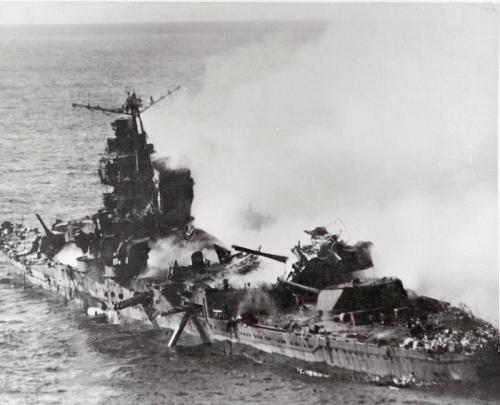
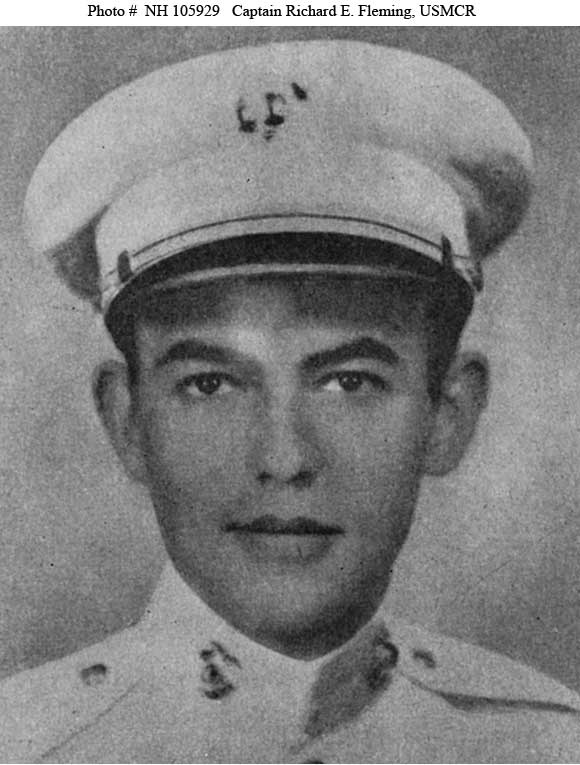
Tambor’s skipper LCDR John W Murphy sent a contact report at 0300 reporting “many unidentified ships.” He followed this with more detailed information and the Americans on Midway began to launch its remaining serviceable aircraft to attack the threat. A flight of B-17 Bombers launched at 0430 could not find the Japanese ships but at 0630 a PBY Catalina found the Japanese and radioed Midway “two Japanese battleships streaming oil.”  The remaining 12 aircraft of VSMB-241 under command of Captain Marshall Tyler a mix of SBD Dauntless and SB2U Vindicators took off at 0700. His force attacked at 0808 scoring no hits. However, Marine Captain Richard Fleming, his Vindicator on fire dropped his bomb and then crashed his aircraft into Mikuma’s after turret. Sailors aboard Mogami were impressed, the American had sacrificed himself in a suicide attack worthy of the Samurai. The fire was sucked down air intakes into the starboard engine room with disastrous results. The Mikuma’s engineers were suffocated by the smoke and fumes and Mikuma was greatly reduced in speed.

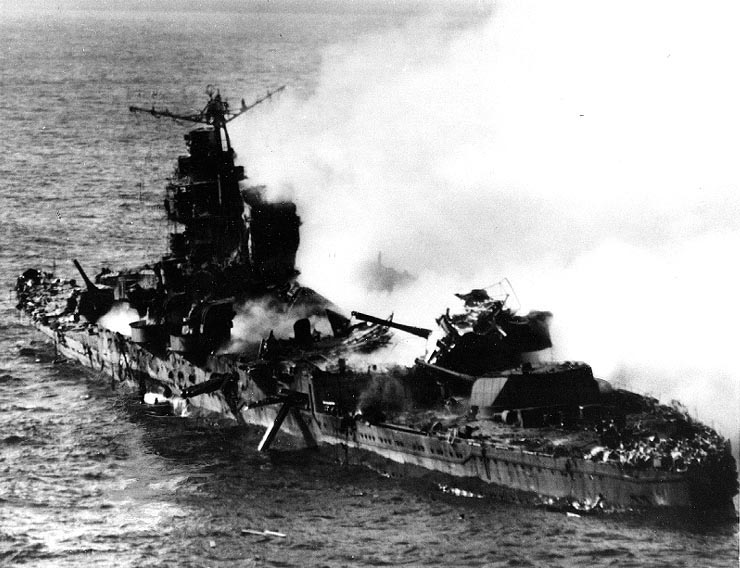
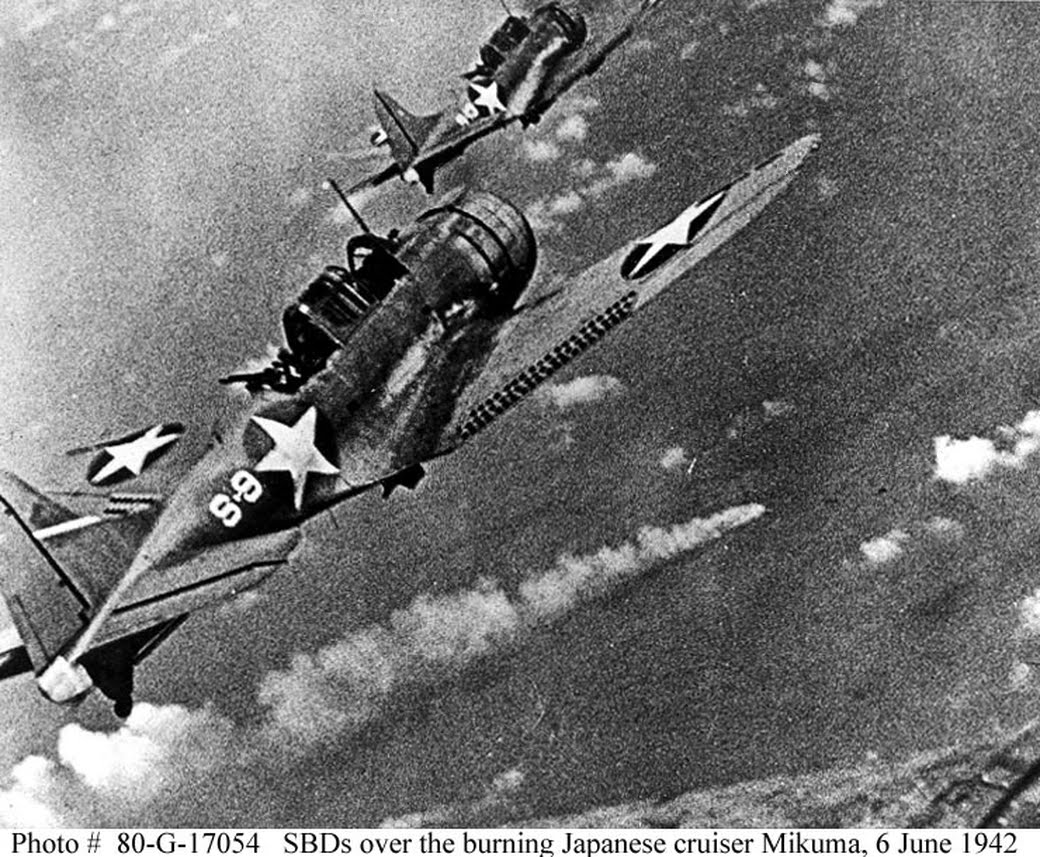
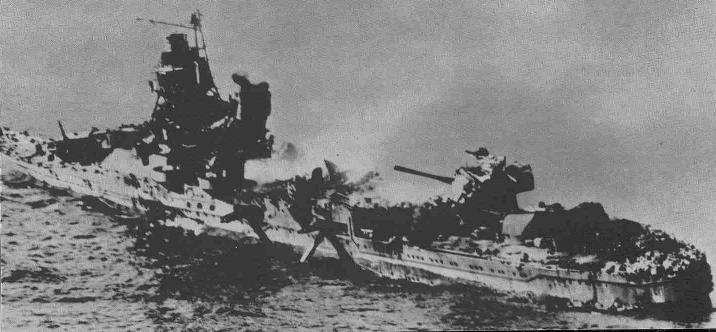
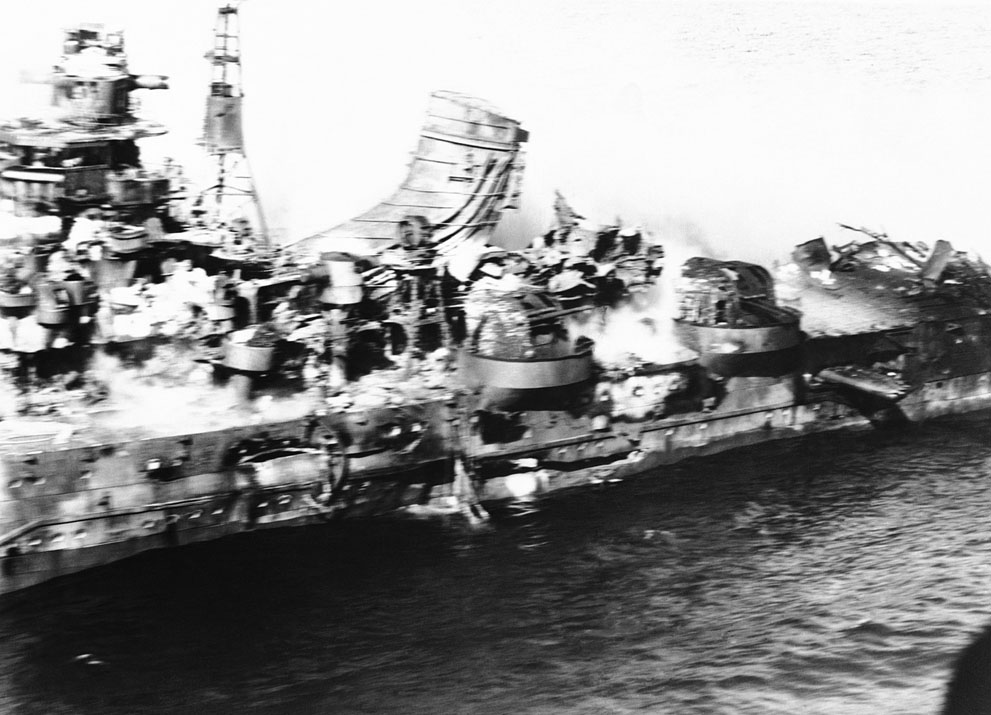
The two ships limped northwest at 12 knots escorted by the destroyers and were unmolested through much of the day with the exception of an ineffective attack by the B-17s at 0830. The following morning the Dive Bombers of Enterprise and Hornet were at work and found the crippled Japanese ships. Waves over US Dive Bombers attacked the cruisers throughout the morning and into the afternoon. Mikuma was hit at least 5 times and secondary explosions of ammunition and torpedoes doomed the ship. Mogami was also heavily damaged but remained afloat while both destroyers received bomb damage.  At sunset the tough cruiser rolled over to port and sank into the Pacific. Mogami whose damage control teams had performed miracles to keep their ship afloat helped the destroyers rescue survivors from Mikuma.  Only 240 were rescued with 650 officers and sailors going down with the ship.

The action against the cruisers ended the combat operations at Midway. The Japanese ships were doomed by Yamamoto’s decision to try to salvage victory from defeat and the error of Mogami’s Navigator during the emergency turn when Kumano sighted Tambor. The only thing that kept the result from being total was the efficacy of Mogami’s damage control teams.  Mogami was out of the war for 10 months following repairs and conversion to an Aircraft Cruiser in which her aft turrets were removed to increase the number of float plane scouts that the ship could carry. She rejoined the fleet in April 1943 and was sunk following the Battle of the Surigao Strait on 25 October 1944.

The Mogami and Mikuma proved to be tough ships to sink. Unprotected by friendly aircraft they fought hard against the unopposed American Dive Bombers. They suffered massive damage from 500 and 1000 pound bombs, both direct hits and near misses. Mogami was saved by the skill of her damage control teams and the foresight of her Damage Control Officer to jettison her torpedoes so that they did not explode and compound the damage wrought by the American bombs.

Epilogue

At Midway a distinctly smaller force defeated a vastly superior fleet in terms of experience, training and equipment. At the very moment that it appeared to the Japanese that they would advance to victory their vision disappeared. In a span of less than 5 minutes what looked like the certain defeat of the US Navy became one of the most incredible and even miraculous victories in the history of Naval warfare. In those 5 minutes history was changed in a breathtaking way. While the war would drag on and the Japanese still inflict painful losses and defeats on the US Navy in the waters around Guadalcanal the tide had turned and the Japanese lost the initiative in the Pacific never to regain it.

The Japanese government hid the defeat from the Japanese people instead proclaiming a great victory. The American government could not fully publicize the victory for fear of revealing the intelligence that led to the ability of the US Navy to be at the right place at the right time and defeat the Imperial Navy.

The American victory at Midway changed the course of the war in the Pacific. The Battle of Midway established the aircraft carrier and the fast carrier task force as the dominant force in naval warfare which some would argue it still remains. Finally those five minutes ushered in an era of US Navy dominance of the high seas which at least as of yet has not ended as the successors to the Enterprise, Hornet and Yorktown ply the oceans of the world and the descendants of those valiant carrier air groups ensure air superiority over battlefields around the world today.

1 Comment

Filed under History, Military, Navy Ships, US Navy, World War II at Sea, world war two in the pacific

The Futile Sacrifice of a Naval Leviathan: The Sinking of the Yamato

Friends of Padre Steve’s World,

Those who have read my site since the beginning know that I have written much in terms of Naval History. One of the things that I am drawn to are the great ships that were sacrificed with the crews in futile attempts of salvage victory from defeat, or which were sacrificed in order to save others. Regardless of the circumstance I have a soft spot in my heart for sailors of any nation who pay with their lives when their ships are sunk. This is the story of the IJN Yamato, who along with her sister ship, the Musashi were the largest battleship ever constructed.

As dawn broke on April 7th 1945 the great Super-Battleship Yamato, the pride of the Japanese Imperial Navy and nine escorts steamed toward Okinawa on a suicide mission. It was literally the end of empire and the end of a navy. What had begun on December 7th 1941 was now winding down as the Imperial Navy launched its last offensive operation against the United States Navy.

The Imperial Navy was already at the end of its tether. Following the disasters at the Battle of the Philippine Sea which decimated the carrier air arm of the Imperial Navy; the subsequent losses in the defense of Formosa which used up the majority of any remaining carrier aircraft and crews; and the Battle of Leyte Gulf which decimated the surface forces of the navy what remained was a pitiful remnant of a once dominant fleet.

The great battleship Yamato and her sister ship Musashi were the largest warships ever built until the advent of the USS Enterprise CVN-65. Displacing over 72,000 tons 863 feet long and 127 feet in beam these ships mounted the largest artillery battery ever placed on a warship. Their nine 18.1” guns mounted in three triple turrets each weighing over 2500 tons weighed as much or more than the largest destroyers of the time. They could fire their massive shells 26 miles and had the capability of firing a special anti-aircraft shell known as the Sanshiki or beehive round.

Musashi was sunk during the Battle of the Sibuyan Sea at Leyte Gulf on October 24th 1944 after being hit by 19 aerial torpedoes and 17 bombs. Yamato engaged the American Escort Carriers and destroyers of Taffy-3 at the Battle off Samar the following day but was prevented by the audacity of the inferior American destroyers and timidity of the Japanese commander Vice Admiral Takeo Kurita from achieving any notable success.

The remains of the Imperial Navy were hampered by a lack of fuel, air power and training time. When the United States attacked Iwo Jima in February 1945, barely 700 miles from the home islands of Japan not a single Japanese surface ship sortied to challenge the American Navy.

However when the American attacked Okinawa on April 1st the Navy launched Operation Ten-Go. In spite of overwhelming American superiority in both naval air and surface forces the tiny task force was to fight its way to Okinawa, beach their ships and once the ships were destroyed the crews were to join Japanese Army forces on the island.

The doomed sortie was in part due to the insistence of the Imperial Army which derided the Imperial Navy for its failures at Philippine Sea and Leyte Gulf and pressure from Emperor Hirohito who asked “But what about the Navy? What are they doing to assist in defending Okinawa? Have we no more ships?” In response the Naval High command devised what amounted to a suicide mission for Yamato and her escorts. The plan was opposed by many in the Navy and leaders of the task force who saw it as a futile mission. Only the insistence of Admiral Kusaka who told the reticent commanders that the Emperor expected the Navy to make its best effort to defend Okinawa persuaded the Captains of the doomed force to accept the mission.

At about 1600 on April 6th the ships of the task force weighed anchor and departed their anchorage at Tokuyama hoping to take advantage of approaching darkness to mask their departure. They were detected and shadowed by American submarines which provided real time information on the course and speed of the Japanese ships to the American leadership.

The next morning the task force was spotted by patrol planes and its position relayed to the American fleet commander, Admiral Raymond Spruance, the victor of Midway. Spruance ordered the six fast battleships, accompanied by two battlecruisers, seven cruisers and 21 destroyers engaged in shore bombardment to intercept the Japanese force. However, Admiral Marc Mitscher of Task Force 58, the fast carriers launched a massive air strike of over 400 aircraft against the Japanese.

At 1232 the first wave of American aircraft began their attacks on the doomed Japanese force. As the succeeding waves of American aircraft attacked Yamato was hit by 15 bombs and at least 8 torpedoes, almost all of which struck her port side created an imminent risk of capsizing. The damage control teams’ counter flooded the starboard engine and boiler rooms which kept the ship from turning turtle, but which also further reduced her speed.

By 1405 the great ship was dead in the water and just minutes before her commander had ordered the crew to abandon ship. At 1420 she capsized and began to sink and at 1423 she blew apart in a massive explosion that was reportedly heard and seen 120 miles away and created a mushroom cloud that reached 20,000 feet.

Captain Tameichi Hara of the light cruiser Yahagi which had already sank described the demise of the great ship in his book Japanese Destroyer Captain:

“We looked and saw Yamato, still moving. What a beautiful sight. Suddenly smoke belched from her waterline. We both groaned as white smoke billowed out until it covered the great battleship, giving her the appearance of a snow-capped Mount Fuji. Next came black smoke mingled with the white, forming to a huge cloud which climbed to 2000 meters. As it drifted away we looked to the surface of the sea again and there was nothing. Yamato had vanished. Tremendous detonations at 1423 of that seventh day of April signaled the end of this “unsinkable” symbol of the Imperial Navy.”

Only 280 men of the estimated 3000 crew members were rescued by the surviving escorts. Of her escorts, the Yahagi and four destroyers were also sunk. The Americans lost a total of ten aircraft and 12 men. Never again would the surface forces of the Imperial Navy threaten U.S. forces or take any meaningful part in the war.

The sacrifice of Yamato and her escorts was a futile was of lives and though many in Japan revere their sacrifice as noble it served no purpose. The loss of Yamato, named after the ancient Yamato province in a sense was symbolic of the demise of the Japanese Empire.

I cannot help but think of gallantry of the doomed crews of these ships, sacrificed for the “honor” of leaders that did not really value their sacrifice.

It is a commentary that is timeless.

Peace

Padre Steve+

1 Comment

Filed under History, Military, Navy Ships, World War II at Sea

Bloody Tarawa: One Square Mile of Hell

Friends of Padre Steve’s World,

There are some things that should not be forgotten, unfortunately many of them are lost to history. One of these events was the American assault against the Japanese fortress on Tarawa Atoll in November 1943. The battle was one of the bloodiest encounters of the Second World War and was waged for the control of a tiny coral atoll that only occupied one square mile of the earth’s s surface. Dug in on that atoll were about 4,000 Japanese defenders.

I hope that this small attempt to detail that battle helps you understand the sacrifice of the men who fought there.

Peace

Padre Steve+

The Decision: Operation Galvanic
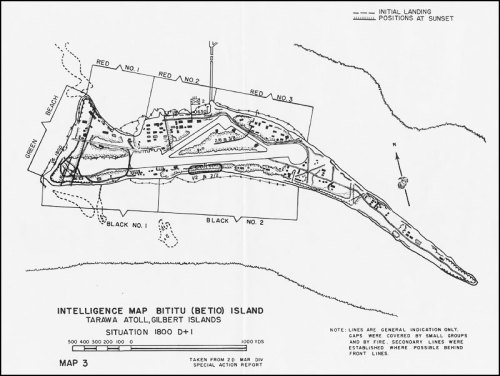
USMC-M-Tarawa-3The Target: Betio Island at Tarawa Atoll

Following Guadalcanal and the shift of significant naval forces from the Solomons the focus of the US shifted to the thrust across the Central Pacific.  Unlike the Solomons which were initially a Navy and Marine Corps Operation and shifted to the Army under MacArthur as the campaign shifted to Borneo, the operations here would be an almost total Navy and Marine Corps operation. Operation Galvanic, the first offensive operation in the Central Pacific, came about as a result of the Joint U.S. Strategic Committee decision in April 1943 to favor an advance in the Central Pacific while maintaining the offensive in the South Pacific.[i] The driving force behind this strategy was Admiral King who fought for the plan and “insisted that any campaign should focus on the destruction of Japan’s overseas resources, which meant an offensive directed only toward the Western Pacific sea lanes.”[ii] The Joint Chiefs believed that a simultaneous attack by Nimitz in the Central Pacific and MacArthur in the South Pacific would “keep the Japanese guessing.”[iii] The decision was presented to the British at the TRIDENT meetings in May 1943 and though the British resisted the American plans a compromise was reached allowing the Americans to “simultaneously…maintain and extend unremitting pressure against Japan….”[iv]
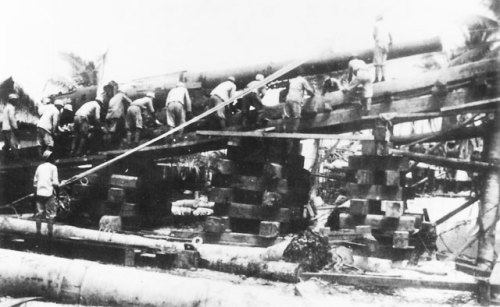
japanese emplacing gunJapanese Emplacing 8″ Vickers Gun

The decision to begin operations in the Central Pacific meant that MacArthur’s priority in logistics and personnel would be reduced in order to launch the Central Pacific operation.  MacArthur protested, to no avail and the Joint Chief’s stood firm in their decision that the Central Pacific operation “would make it easier to isolate Japan from her domain in the south.”[v] MacArthur was allowed to continue OPERATION CARTWHEEL while Nimitz seized the Marshall and Caroline islands.[vi] Nimitz’s staff began preparations and decided on a conservative course to capture the Gilberts first before taking the more heavily defended Marshalls.[vii] This was in part due to the “need to minimize the risks to his untried amphibious forces against such heavily fortified enemy bases out of reach of air cover.”[viii]
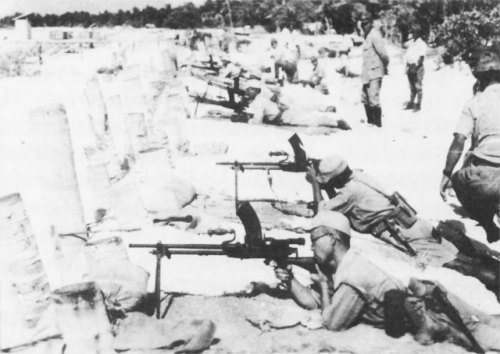
japanese conducting firing exerciseJapanese conducting Live Fire Range prior to the Assault

Several factors were considered by Nimitz and his planners considerations in this choice.  Nimitz did not have enough troops to capture all of the vital heavily defended locations in the Marshalls without dividing his forces.[ix] Additionally the Gilbert operation could be supported by land based bombers.[x] A final consideration was the Joint Chief’s decision to allow MacArthur to retain control of 1st Marine Division which Nimitz had hoped would be available for operations in the Central Pacific.[xi] CINCPAC did a thorough photo reconnaissance of the Gilbert’s convinced the Joint Chiefs that Tarawa and Makin needed to be taken to provide air bases for the assault on the Marshalls.  Finally the order for Galvanic was issued on 20 July 1943 with its execution planned for November 1943.[xii]

Japanese Preparations
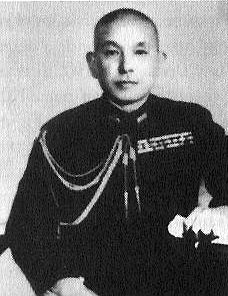
shibasakiAdmiral Shibasaki boasted that it would take a million men a thousand years to take Betio

The Japanese did little to prepare against potential American offensive operations against the Gilbert’s until Makin Island was raided by elements of 2ndRaider Battalion in August 1942.  The Makin raid shook the Japanese and at which time they reinforced Makin and occupied Betio.[xiii] The Japanese occupied Betio with the Yokosuka 6th Special Landing Force, essentially Naval Infantry or Marines[xiv] and the 111th Construction Battalion on 15 September 1942, over nine months after they attacked Pearl Harbor.[xv] These forces were commanded by Admiral Tomanari, who at once began to fortify Betio. Recognizing his need for more troops  Tomanari asked Tokyo for reinforcements.  The reinforcements came in the form of Commander Sugai’s 7thSasebo Special Naval Landing Force, which landed on 14 March.[xvi]Commander Sugai’s troops were the Rikusentai, the best of the Japanese Navy’s land forces.
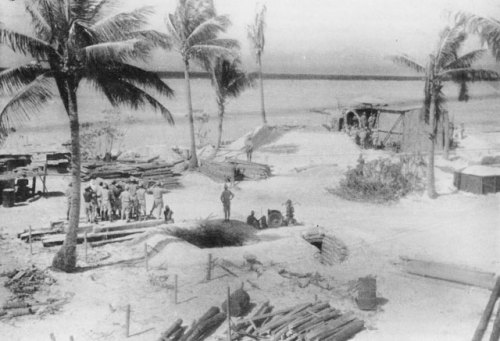
USMC-M-Tarawa-p6Japanese Conducting Gunnery Exercises

The fortification of Betio proceeded slowly until the arrival of Rear Admiral Shibasaki, who relieved Tomanari who returned to Japan.[xvii] Shibasaki, a tough veteran of service at sea and ashore including 19 months as a Rikusentai[xviii] officer in China was chosen by Admiral Koga to instill a better fighting spirit on the island.  The Imperial General Headquarters “New Operations Plan” ordered the outer defensive islands, such as Tarawa, to “hold up any American advance while an inner line of fortresses was constructed….”[xix] Shibasaki drove the garrison hard, inspiring them to “extraordinary heights of labor that resulted in Betio’s superb defenses.”[xx]Betio mounted four 8” Naval guns[xxi], four 14 cm guns, four dual mount 5.5” dual purpose guns[xxii] six 80 mm anti-boat guns, eight 75 mm dual purpose guns, ten 75 mm mountain guns, six 70 mm guns and nine 37 mm anti-tank guns, numerous machine guns and light AA guns and 14 light tanks.[xxiii] These weapons were mounted in well camouflaged armored or reinforced pillboxes.[xxiv] In accordance with the directives of the high command Shibasaki ordered his troops “to defend to the last man all vital areas and destroy the enemy at the waters’ edge.”[xxv] The Japanese records note that Shibasaki “immediately began to strengthen morale and carried out advanced training, and as a result…the garrison remarkably enhanced its fighting capability and they were full of confidence.”[xxvi] Even the service troops were thoroughly trained to fight from their superb defensive positions.[xxvii] Shibasaki reportedly told his men that it would take a million men a thousand years to take Betio.

American Preparations
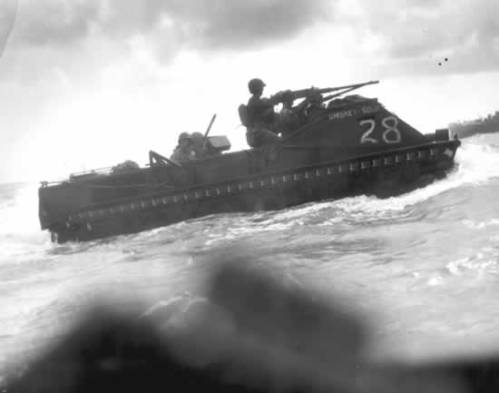
lvtLVT Amphibious Tractor

Nimitz organized his forces into three major commands, the 5th Fleet, commanded by Admiral Raymond Spruance, the 5th Amphibious Force under Admiral Richmond “Kelly” Turner and the V Amphibious Corps under Major General Holland “Howlin’ Mad” Smith, USMC.[xxviii] The 2nd Marine Division which would make the assault at Tarawa was commanded by Major General Julian Smith. The force that sustained in this operation and subsequent amphibious operations was the Service Force Pacific Fleet.[xxix] This was a collection of ships whose mission it was to sustain the fleet in mobile operations,[xxx] which greatly “increased the range and power of the Navy in amphibious operations.”[xxxi] The planned assault called for the Army’s 27th Division take Makin and the veteran 2nd Marine Division which had been blooded at Guadalcanal to take Tarawa supported by the carriers and battleships of 5thFleet.

This was the first application of new amphibious tactics developed for the Pacific war.[xxxii] Air and sea bombardment would precede the actual assault. The Marines would be transported ashore in a new vehicle called an LVT (Landing Vehicle Tracked) and other amphibious ships and craft including the LSD (Landing Ship Dock), LCM (Landing Craft Mechanized) and LCVP (Landing Craft Vehicle Personnel).  The LVTs were absolutely vital, nicknamed “Amtracks” or “Amphtracks” they were essentially a tracked amphibious personnel carrier. They were developed from a commercial vehicle used by U.S. Forrest Service Rangers in the Florida Everglades and were capable of crossing coral reefs that would cause other craft to go aground.  The early LVTs had retrofitted armor and mounted a .50 cal. machine gun.  At Tarawa the Marines deployed 75 LVT-1s[xxxiii] and 50 LVT-2s. 93 LVTs would be part of the first wave of the Marine assault.[xxxiv] The LVTs were transported to Tarawa aboard LSTs (Landing Ship Tanks.)  Other innovations included the assignment of Naval Gunfire Support teams to the Marine Regiments and some battalions,[xxxv] and the first use of the M4 Sherman tank by the Marines.[xxxvi] Tarawa was a proving ground for the tactics and equipment which would be improved on and used in every subsequent amphibious operation in the Pacific.  Tarawa would also mark the last major use of rubber landing craft by the Marine Corps in an opposed landing.[xxxvii]

There were limitations to American preparations. First the size of the force meant that it could not be assembled in one place for rehearsals or to train as a team.[xxxviii] A second problem for the Americans was the assumption that high and low tides would be sufficient to get their landing craft across the reef in spite of warnings to the contrary.[xxxix] Likewise the Americans failed to completely anticipate the scope to which the Japanese had fortified the island. This was despite good intelligence that they had done so. In particular aerial photos taken by the air force and ULTRA intercepts provided good information on the Japanese units on the island and the layout of the defenses.[xl] Additionally some equipment shortages were not remedied. The Marine Bazooka’s did not arrive, and neither the 6th or 8th Marines had made an actual amphibious assault.  At Guadalcanal they made an administrative landing and few field-grade officers remained from the 2nd Marine Regiment who had landed at Tulagi.[xli] They were far from “amphibious experts” that they would become.[xlii] However, they made up for their lack of experience by their cohesiveness, high morale and esprit, being well armed and equipped, in top physical condition and knowing the basic tools of their trade: “weapons proficiency and field firing, close combat techniques, fire and maneuver, tactical leadership, fire discipline.”[xliii]
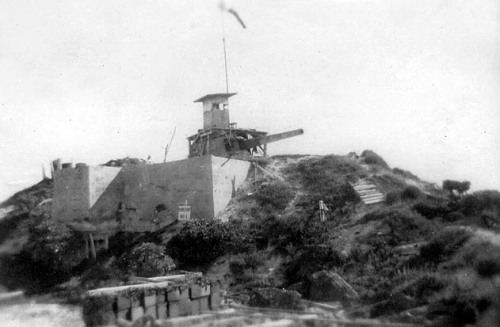
tarawa 8 inch gun8 Inch Gun Emplacement

The most critical aspect of the operation was to get across the reef onto the island.  There were few good landing sites and it was decided to make the landings from inside the atoll’s lagoon onto the Betio’s north shore.  This decision meant that transports embarking the Marines would unload outside of the lagoon and that the landing craft would have to make a 10 mile trip.[xliv]There was only one entrance into the lagoon and it was not deep enough for heavy ships to enter.[xlv]This meant that heavy ships such as battleships and cruisers would not be able to have direct fire on the Japanese positions best situated to disrupt the Marines.

The execution of the plan involved land based bomber strikes beginning on D minus 7. Carrier aircraft would begin their operations on D minus 2.  Cruisers and destroyers joined the cacophony of destruction on D minus 1 and the battleships on D Day itself.[xlvi] On D-Day itself Navy planned to bombard the island with 3,000 tons of shells in 2 ½ hours.[xlvii] The Navy was confident in the bombardment plans. Rear Admiral Kingman commanding the fire support group declared “We will not neutralize; we will not destroy; we will obliterate the defenses on Betio!”[xlviii] Four battalions of Marines would land in the first wave, the three battalions of the 2nd Marines and 2nd Battalion 8th Marines all commanded by Colonel David Shoup. Colonel Shoup who would win the Medal of Honor on Betio and later became the Commandant of the Marine Corps assumed command of 2nd Marines when its Regimental commander fell ill on the journey to Efate.[xlix] The division reserve was the remaining 8th Marine Regiment battalions. The 6th Marine Regiment served as the corps reserve.[l]The assault units would be reinforced by tanks and the 1st and 2nd Battalions 18thMarine Regiment, the division’s combat engineers.

Invasion: Day One
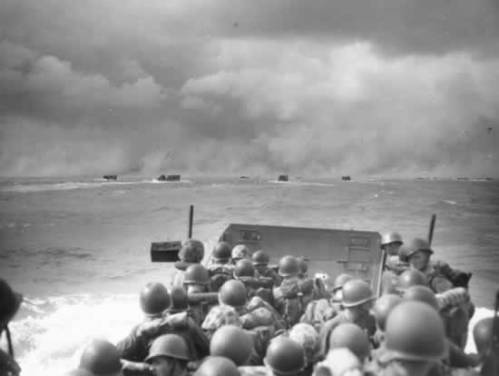
landing craft going to beachGoing Ashore

The naval gunfire bombardment commenced at 0542 on 20 November, and the assault waves began their trek to the beaches.  The transports were out of range of Japanese guns but ththat ensured boats would have to make a 10 mile trip.[li]At this point things began to go wrong.
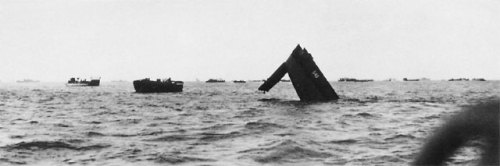
lcm sinking at tarawaNavy LCT Sinking after Being Hit By Japanese Fire

The Navy had “badly miscalculated the amount of softening-up that could be done in two and a half daylight hours bombardment.” Although major coast defense guns were silenced not enough damage was done to the Japanese defenses.[lii] The Japanese helped the Marines by firing their larger guns at warships, identifying their positions to Navy gunners.[liii] The bombardment lifted to allow an attack by carrier based aircraft. However the aircraft were late to arrive and the ships did not resume fire, allowing the Japanese to emerge and re-train their weapons.[liv] Likewise the destroyers Ringgold and Dashiell inside the lagoon had to cease fire, knowing the Japanese gunners along the shore were still active.[lv] Some believe that an extra half hour of direct fire from the destroyers would have saved many lives.[lvi] The LVTs in the first three waves were delayed by heavy chop and did not make landfall until 0913 throwing off the landing schedule.[lvii] The expect and planned for rise in tides did not materialize and they remained unpredictably low for the first 48 hours. No landing boats could cross the reef and the Marines were forced to wade ashore from 600 to 1000 yards.[lviii]
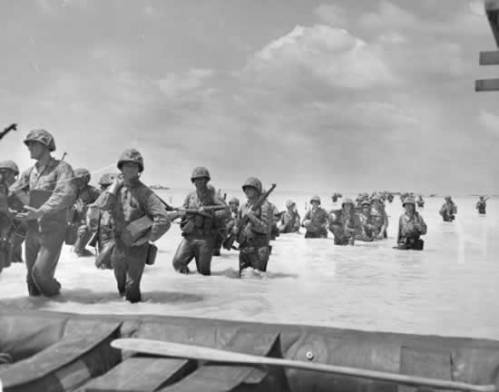
marines wade ashore at tarawaMarines Wading Ashore

Shoup’s Marines landed on three beaches.  Red one and two lay to the west of a 500 yard long pier and Red three lay to the east.  3/2 landed on Red-1, 2/2 on Red-2, 2/8 on Red-3, elements of 1/18 and the scout snipers on the pier, with 1/2 in reserve to land behind the battalion making the best progress.[lix] As soon as the Amtracks hit the reef the Japanese began firing.  Every “working weapon along the north and west shorelines….blazed forth in fierce, interlocking fields of fire.”[lx] As they watched the Amtracks craw over the reef that Japanese knew they were in for a tough fight, one of Warrant Officer Ota’s men exclaimed “Heavens! The God of Death has come!”[lxi] The Marines of 3/2 on Red-1 received enfilade fire from Japanese guns emplaced in a U around the beach.  Before the Marines landed they began to take causalities, Amtracks were hit in the lagoon and most that were not sunk or destroyed were unfit for further use.[lxii] The 2000 Marines who landed in the first hour were badly disorganized, the commanding officer’s of 2/2 and the Amtracks were killed, 3/2’s commander was isolated on the reef and only 2/8’s commander was with his troops. 2/8 was the only battalion being to reach the shore relatively intact.[lxiii] 3/2 was down to 65% of its strength and K/3/2 had taken over 50% casualties.[lxiv] The Marines in the fourth to sixth waves were struggling to wade ashore from the reef. Landing craft “ran aground or milled about helplessly outside the reef, which was swept by crossfire from behind the beaches and from a grounded hulk northwest of the pier.”[lxv] Most of the tanks were put out of action either through accurate fire by Japanese guns or by sinking in deep areas of the lagoon, the Tank battalion commander was blown out of his Amtrack, wounded and survived 24 hours by clinging to a pile of dead bodies to keep from drowning.[lxvi]
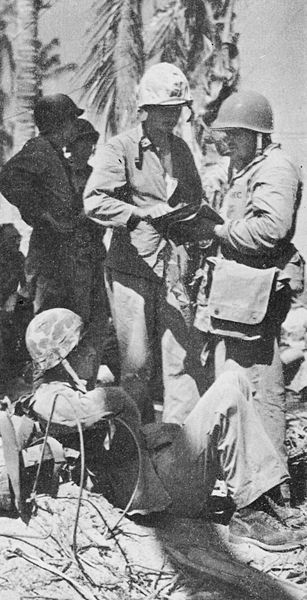
Col_Shoup_on_TarawaColonel Shoup Directing Operations on Tarawa

Shoup himself landed at Red-2 and began directing operations on the beach.  He knew that he had to get more troops ashore to exploit the minimal gains his Marines had made.  The news from Red-1 and Two was bad; he decided to bring 1/2 in at Red-2 thought that 3/8 should go in at Red-3.[lxvii] At 1018 General Julian Smith ordered the 8th Marines to dispatch 3/8 to Red-3.[lxviii] 3/8 had to make their way across 700 yards through the water to get to the beach.  It was a slaughter, only 30 percent of the first wave got ashore, in the second less and the third “were practically wiped out.”[lxix]
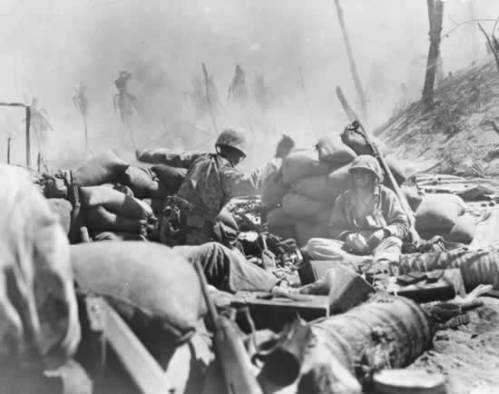
taraw close combatClose Combat on Betio

As his Marines struggled ashore those who had gotten ashore engaged the Japanese at point blank range.  Lt. Hawkins of the 2nd Marine Scout and Sniper platoon and 5 of his men engaged the Japanese on the pier in vicious hand to hand fighting,[lxx] Sergeant Bordelon of the Engineers on Red-2 though grievously wounded knocked out four gun positions, some by lobbing dynamite charges into them and galvanizing survivors into action, finally being killed while taking on a Japanese position alone.  He would be awarded the Medal of Honor.[lxxi]
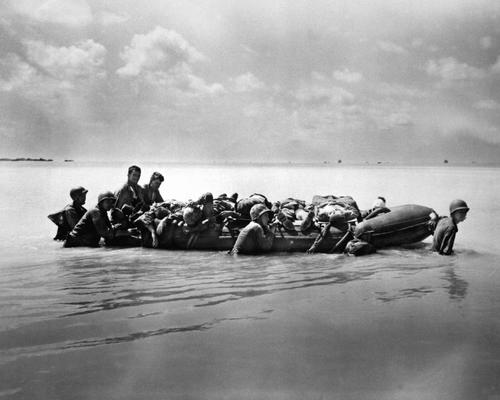
HD-SN-99-02572Wounded Marines Being Evacuated by Rubber Raft

By afternoon Julian Smith realized that he needed more troops, his last battalion, 1/8 waited to go ashore.[lxxii] Smith asked for the 6th Marines and had Admiral Hill send a message to Admiral Turner stating “Issue in doubt. I concur.” This sent a chill through the listening Naval Staff.[lxxiii] Ashore Shoup brought howitzers from 1st Battalion 10th Marines on surviving Amtracks to the eastern edge of Red-2 near the pier,[lxxiv] which landed in the early evening.[lxxv] He sent Lieutenant Colonel Carlson to make a personal report to General Smith that he would hold his beachhead no matter what happened. Shoup ordered his Catholic Chaplain to lay out a cemetery and begin burying the dead who were already decomposing in the tropical heat.[lxxvi] As this transpired 2/8 got two 37mm anti-tank guns into position to drive off Japanese tanks approaching the beachhead.[lxxvii] The Division Band assisted corpsmen in bringing back wounded Marines.[lxxviii] The rest of the day the Marines continued to eke out a beachhead; Shoup’s Marines on Red-2 and Red-3 managed to advance about halfway across the island, 3/2 and elements 1/2 and 2/2 was isolated and Major Ryan of Lima Company pulled them back to meet an expected Japanese counter-attack.[lxxix] The Marines had taken over 1500 casualties of 5000 men landed the first day.[lxxx] There is no evidence that Shoup considered withdraw that night.[lxxxi] No counterattack occurred due to Japanese command and control problems, Admiral Shibasaki and his staff were killed while shifting headquarters during the afternoon,[lxxxii] and their communications were in shambles. A counterattack would have been disastrous in their condition,[lxxxiii] yet they assembled over 1000 men to oppose the Marines on day two.[lxxxiv] Had Shibasaki lived and communications survived a counterattack might have had ramifications far beyond Tarawa.[lxxxv]

Day Two: D+1
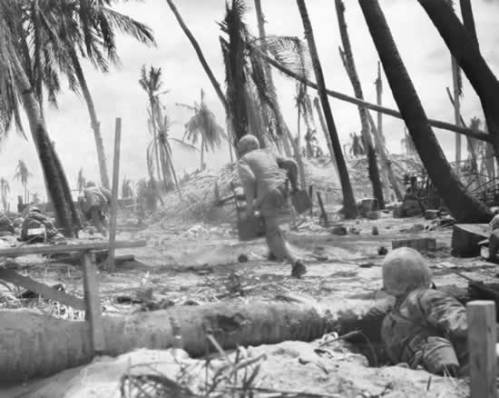
marines advancingMarines Advancing

The second day began with 1/8 landing on Red-2 and the 6th Marines began to land on Green Beach at the far western tip of Betio.  1/8’s landing turned into a bloodbath, the tide fell even lower than the previous day and as they hit the reef and waded ashore drifted into some of the heaviest Japanese defenses. Japanese guns, including the dual 5.5” guns took direct aim at the boats, and Marines ashore watched helplessly, and correspondent Robert Sherrod noted: “This is worse, far worse than it was yesterday.”[lxxxvi] Only half of 1/8 reached the beach with none of their heavy weapons or equipment.  Shoup ordered the remnants of the battalion into line on his western flank in preparation for an advance inland.[lxxxvii] During five hours of landings on day two, the “Marine casualties reached a higher rate than that sustained on the first morning.”[lxxxviii]

Meanwhile, Shoup ordered Ryan’s “orphans” to make an attack down the right flank of the Japanese positions on Green beach and the “ultimate American victory at Betio evolved from the attack during one intense hour the second morning.”[lxxxix] Taking every available Marine, two surviving Shermans and some mortars, Ryan gathered his force and coordinated Naval Gunfire support.  The area contained a number of heavy guns including two of the 8” mounts.  A destroyer blanked the Japanese positions with 5” shells and fire from her light AA guns.[xc] Attacking behind the beach, Ryan’s Marines isolated and destroyed everyone and everything that looked hostile.[xci] Against minimal opposition Ryan’s Marines quickly seized the gun positions and the western end of the airfield.  Within an hour his Marines occupied the entire western side of Betio up to a 200 yard depth by 1200 and he radioed to let Shoup know the good news and that he intended to advance east against the airfield.[xcii] The attack allowed the Marines to be able to land intact battalions with supporting arms for the first time battle.[xciii]

To the east behind Red-2 and Red-3 The 8th Marines and survivors of 1/2 and 2/2 attacked against fierce Japanese opposition near Shibasaki’s former command bunker and two other large bunkers which were mutually supporting.  The attack by the 2nd Marine survivors eventually succeeded in getting completely across the south side of the island.[xciv] During the attack Lt. Hawkins of the Scout Snipers was mortally wounded.  He too would win the Medal of Honor.  The attack cut the island in two but the Japanese launched a counterattack on the Marine positions which was beaten back.[xcv] The 8thMarines faced a more difficult task going against what was now the heart of the Japanese defense, as its defenders had been reinforced by Lt. Minami and his third company of the 7th Special Naval Landing Force.  Vicious fighting ensued and by nightfall “the Marines had little to show for their heavy losses,[xcvi] but they did make significant inroads against the Japanese to warrant optimism for D+2.[xcvii] By evening the Marines on Red-1 and Red-2 had consolidated their beachhead so that reinforcements were landing, including jeeps, artillery and heavy equipment, and other Marines noted that Japanese defenders were beginning to commit suicide and they began to feel that Japanese morale had broken.  By late afternoon Shoup transmitted the message: “Casualties many. Percentage of dead unknown. Combat efficiency-We are winning.”[xcviii] By late afternoon Major Jones’ 1/6 landed on Green beach in their rubber boats, reinforcing Ryan’s orphans, it was the first of the 7 battalions landed to get ashore intact and the two officers coordinated their units for a night defense and an early attack the next morning.[xcix] 2/6 cleared the nearby island of Bairiki allowing 2/10 to land its howitzers on the island.  This in effect cut off any line of retreat for the defenders of Betio.[c] Colonel Edson came ashore during the evening to relieve Shoup[ci], who remained ashore to help coordinate the next day’s attack.  Again there were no coordinated Japanese counterattacks, the only senior officer, Sugai was isolated in the pocket between the Red and Green beaches and no senior officer could coordinate any attacks.[cii]

Day Three and Four: D+2 and D+3
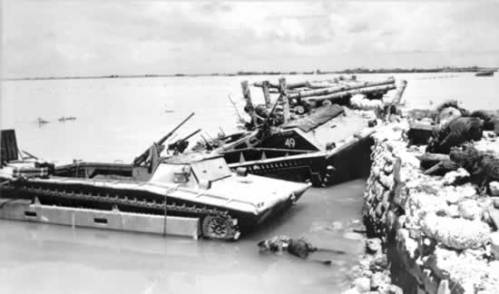
tarawa wreckageWrecked LVY’s and Bodies on the Beach: The Marines Released Photos to Get the Public to Understand the Cost of the Battle

Day three began with attacks against Japanese strong points and the arrival of more reinforcements including 3/6 which landed on Green beach and three light tank platoons which landed on Red-2.[ciii] The Marines attacked off of Green beach sweeping east to join the 2nd Marines who had cut the island in two the day before.  The 8th Marines continued to attack the heavily fortified bunker complex eventually taking these heavily fortified and defended positions.  During the assault Lt Sandy Bonnyman of 1/18 won the Medal of Honor for leading the assault on these positions.[civ] Fighting remained fierce throughout the day and General Smith arrived to take command on shore.  The Marines attacked supported by tanks, artillery and naval gunfire.  By the evening they were established at the east end of the airfield.  The Japanese launched a series of Banzai charges which beginning about 1930 hours and ending about 0400 when the Marines annihilated the last attack with the assistance of artillery.[cv] The attack, which could have succeeded the first or early the second day, now aided the Marines by sacrificing strength that might have been used to exact a higher price for the tail of the island.[cvi] The next morning the Marines pushed forward and eliminated the last Japanese defenders and by 1200 Betio was secured.  Of about 5000 defenders only 17 Japanese and some Korean laborers were taken prisoner.[cvii] The Marines lost over 1000 killed and 2300 wounded.[cviii]
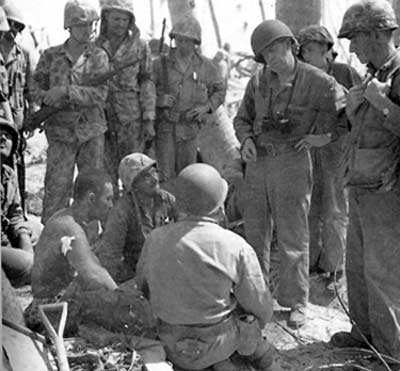
Tarawa prisonerOne of the 17 Japanese Who Survived the Battle being Interrogated by Marines, only one Chief Warrant Officer Ota was an Officer

Epilogue

The Marines paid a heavy price for Betio, but it was not to be a useless sacrifice, though it was a source of great controversy especially among politicians.[cix]Spector wonders if waiting for better tides or a full moon would have saved lives.[cx] Holland Smith later argued that Tarawa should have been bypassed, but Nimitz’s biographer Potter notes “if the lessons of the amphibious assault had not been learned at Tarawa, they would have to be learned elsewhere, probably at greater cost.”[cxi]The lessons learned alone aided all future amphibious operations in the Central Pacific and elsewhere.  Timing and coordination of naval gunfire support, air strikes and combat loading of transports were all refined in future operations. Large numbers of armored and up-gunned Amtracks would be part of every future operation.[cxii] Intelligence was emphasized and replicas of the Japanese fortifications were built and tested to determine the best way of destroying them.[cxiii] The Marines shocked the public by releasing photos and films of the carnage on Tarawa to awaken them to the challenges ahead.[cxiv]

Today the battle is remembered annually by the 2nd Marine Division at Camp LeJeune, an ever shrinking number of veterans of the battle attend the ceremonies.  Samuel Eliot Morison put it best: “All honor, then, to the fighting heart of the United States Marine. Let the battle for that small stretch of coral sand called Betio of Tarawa be remembered as terrible indeed, but glorious, and the seedbed for victory in 1945.”[cxv]

Appendix: Leaders on Tarawa
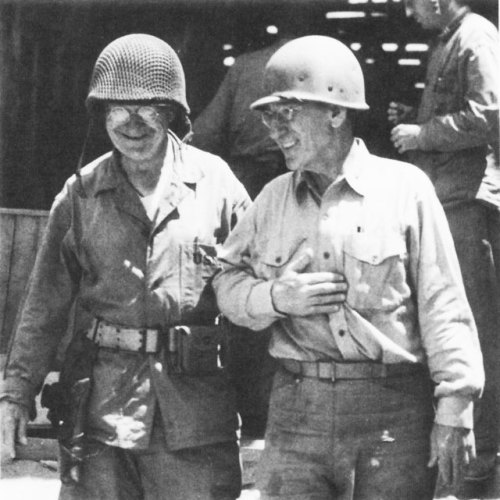
smith and smith at tarawaLieutenant General Holland Smith and Major General Julian Smith on Betio

General Holland M. “Howling Mad” Smith USMC: (1882-1967) Lieutenant General Holland M. Smith command V Amphibious Corps during the Gilberts operation.  Prior to the war he had worked extensively on amphibious warfare doctrine for both the Marine Corps and Navy. Unlike many senior officers Smith was not a Academy graduate having matriculated from the Alabama Polytechnic Institute (now Auburn University) in 1903 and law school in 1903.  Smith served as Adjutant of the 4th Marine Brigade in the First World War and served in Panama and the Dominican Republic in addition to other Marine tours afloat and ashore.  He served well and had many key assignments between the wars culminating in as the Assistant Commandant of the Marine Corps.  Subsequent to the Gilbert campaign he served as Commanding General of the Fleet Marine Force, Pacific and later commanded the Marines at Iwo Jima.  He retired in 1946.

Major General Julian Smith USMC: (1885-1975) Major General Julian Smith served as Commanding General 2nd Marine Division at Tarawa.  He graduated from the University of Delaware and was commissioned as a Second Lieutenant in 1909.  He served in Haiti, Santo Domingo and the Vera Cruz expedition. During the First World War he served as an instructor in the Marine Officer training camps at Quantico. After the war he served in Cuba, Nicaragua and various command and staff posts including the Army Command and General Staff College.  He commanded 5th Marines in 1938 and in 1942 was promoted the Major General serving as director of Fleet Marine Force Schools, New River, NC.  He took command of 2nd Marine Division in May 1943 and served there until April 1944 when he became Commanding General, Expeditionary Troops, Third Fleet and in December 1944 took command of the Military Department of the Pacific.  He retired in 1946.
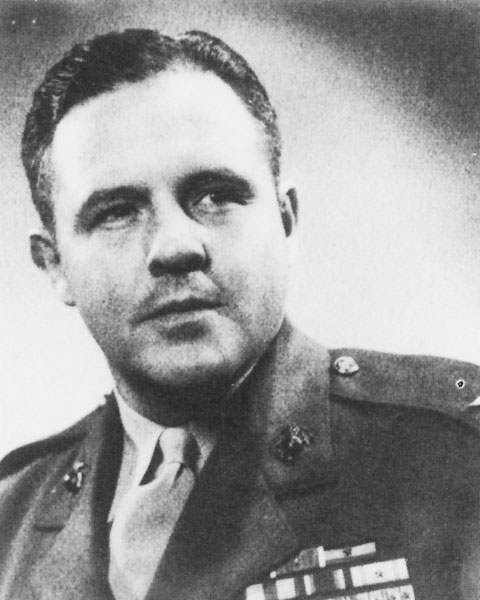
shoupColonel Shoup After the Battle

Colonel David Shoup USMC: (1904-1983) Colonel David Shoup commanded the 2nd Marines at Tarawa, being appointed as commander when its commander fell ill.  Shoup won the Congressional Medal of Honor for his actions on Tarawa.  A 1926 graduate of DePauw University, Shoup was commissioned a Second Lieutenant through the ROTC program that year.  He served in various assignments to include service in China, at sea on the battleship Maryland and Marine Barracks Puget Sound Navy Yard. He joined the staff of 6th Marines in October 1940 and assumed command of 2/6 in February 1942.  He was assigned as the Assistant Operations Officer for 2nd Marine Division in July 1942 and promoted the Lieutenant Colonel.   He went with the Division to New Zealand where he became the G-3 and from which he was fleeted up to command 2ndMarines at Tarawa.  After Tarawa he served as the Division Chief of Staff at Saipan and Tinian.  After the war Shoup continued to be assigned in key billets at the Pentagon and as commanding General, 1st Marine Division and then the Third Marine Division.  He became Chief of Staff, HQMC in 1958 and was appointed as the 22nd Commandant of the Marine Corps by President Eisenhower, a post that he retained until his retirement in 1963.

Admiral Tomanari Sachiro IJN: (1887-?) Commander of Tarawa garrison until relieved by Rear Admiral Shibasaki.   Graduate Naval Academy 1910, initially a communications officer he held various commands including Heavy Cruiser Haguro and Battleship Kirishima and two smaller ships.  Assigned to Tarawa in February 1943 he helped design and supervised the initial construction of Tarawa Defenses until relieved by Admiral Shibasaki on 20 July1943.  He returned to Japan and served the remainder of the war on Navy Division of Imperial General Headquarters.  Tomonari survived the war though nothing is mentioned as to his postwar fate.

Rear Admiral Shibasaki Keiji IJN: (1894-1943) Commanded Tarawa Garrison until his death during the battle.  He graduated from the Naval Academy in 1915 and he was a skilled navigator and instructor.  Prior to the war he had served afloat and ashore and ashore and had commanded a ship and naval station and served as a naval attaché to a member of the Imperial Family.  Among his assignments was 19 month combat tour with the special Naval Landing Forces in China, where he served as Chief of Staff of Shanghai Special Naval Landing Force.  Shibasaki’s leadership helped the garrison improve their defensive capabilities and combat skills as he inspired them to great heights and executed an intense training program. He was killed in the battle.

A Personal Note

I have not been to Tarawa but feel that I know it well.  I served in Second Marine Division from April 1999 through December 2001.  Due to my prior service experience I was used to fill gaps where chaplains were needed and ended up serving in four different battalions.  I served in 2nd Combat Engineer Battalion, the descendant of 1/18, the combat engineers.  We had a WWII Bulldozer outside our command post named after Sergeant Bordelon, the Medal of Honor Citations for Bordelon and Boonyman were prominently displayed.  I also served in 1/8 and 3/8.  I knew the accounts of the slaughter of these Marines as they attempted to land but as I re-read the accounts I was moved by their courage under fire.  The CPs of these battalions are also adorned with citations of their heroes lost at Tarawa.  Veterans would visit our units during Tarawa Days at Camp LeJeune, worn by the battle and the years they always made an impression. There is almost a mystical connection between the Second Marine Division and the Marines of Tarawa; it was a crucible that defined the division, whose motto is the same as the Army Infantry School. “Follow Me!”

Semper Fidelis,

Padre Steve


[i] Spector, Ronald H. Eagle Against the Sun: The American War with Japan.  The Free Press, New York, NY 1985. p.253

[ii] Murray, Williamson and Millett, Allan R. A War to Be Won: Fighting the Second World War, The Belknap Press of Harvard University Press, Cambridge, MA 2000. p.338

[iii] Ibid. Spector. p.253

[iv] Ibid. p.255 The conference also set a date for the invasion of France.

[v] Toland, John. The Rising Sun: The Decline and Fall of the Japanese Empire, 1936-1945. Random House, Inc. New York, NY 1970. p.468

[vi] Ibid. Spector. p.255

[vii] Costello, John. The Pacific War 1941-1945. Quill Publishing, New York, NY 1982. p.430

[viii] Ibid.

[ix] Potter, E.B. Nimitz. Naval Institute Press, Annapolis, MD, 1976, Third Printing with Revisions 1979. p.243. Nimitz’s forces would have had to seize 5 major Japanese bases and his staff was not sure that the Pacific carrier force would be strong or experienced enough to provide the necessary air cover for the operation.

[x] Ibid.

[xi] Ibid. pp.243-245

[xii] Morison, Samuel Elliott. The Two Ocean War: A Short History of the United States Navy in the Second World War. Little Brown and Company, Boston and Toronto, 1963. p.296.

[xiii] Hammell, Eric and Lane, John E. Bloody Tarawa: The 2nd Marine Division, November 20-23, 1943. The Zenith Press, St. Paul MN 2006.  Text copyright 1998 Eric Hammell and John E. Lane. p.4

[xiv] See Alexander, Joseph H. Utmost Savagery: The Three Days of Tarawa.Ivy Books, published by Ballantine Books, New York, NY. 1995. pp. 39-40.  This unit became the Third Special Base Unit on its deployment and was joined by the 111th Construction Battalion.

[xv] Ibid. Hammell. p.4

[xvi] See Alexander pp.39-40. This unit was basically a reinforced infantry battalion with 3 rifle companies, a weapons battery, anti-aircraft battery, a light tank company and support units numbering about1600 men.

[xvii] Ibid. Alexander. p.43

[xviii] Alexander p.27 The Rikusentai was the Japanese equivalent of Marines, who numbered about 50,000 men.  The officers attended Army schools and qualified enlisted men attended additional Army specialist training.

[xix] Ibid. Costello. p.431

[xx] Ibid. Hammell. p.22

[xxi] See Alexander p.77. While most writers say that these guns were brought from Singapore, Alexander notes that British writer William H Bartsch submitted proof (serial numbers) that the guns were sold by Vickers to Japan in 1905 as a legitimate business transaction.

[xxii] These are the same guns (127mm) mounted as the secondary armament of Nachi and Takao Class Heavy Cruisers and later mounted on light cruisers to replace the main battery with a more effective anti-aircraft armament.

[xxiii] Ibid. Hammell. p.22

[xxiv] Hammell notes that many of these bunkers and pillboxes were so well concealed that they could not be seen.

[xxv] Ibid. Toland. p.469.

[xxvi] Ibid. Alexander. p.43.

[xxvii] Ibid. Hammell. p.28

[xxviii] Ibid. Morison. p.297

[xxix] Ibid. Costello. p.429

[xxx] At this point the force could provide everything except major permanent repairs to warships.

[xxxi] Liddell-Hart, B.H.  History of the Second World War. G.P. Putnam’s Sons, New York, NY 1970. p.511

[xxxii] Ibid. Costello. p.431

[xxxiii] The older LVT-1s had boiler plate armor added as a field modification and were given a heavy machine gun. Prior to this they were unarmored and had two light machine guns.

[xxxiv] Ibid. Morison. p.303

[xxxv] Hammell includes a by name list of these officers in Appendix B.  Of note for today, each MEUSOC (Marine Expeditionary Unit, Special Operations Capable) has an assigned Naval Gunfire Support Team.

[xxxvi] Ibid. Alexander. pp. 61-62.  The Shermans had to be transported aboard pre-loaded LCM-3s carried in the well decks of the LSDs.

[xxxvii] Ibid. Alexander. pp.58-59

[xxxviii] Ibid. Morison. p.297.  As a sidebar discussion it should be noted that Galvanic helped provide the model for the organization of all further Marine Corps amphibious doctrine now known by the acronym PERMA; Planning, Embarkation, Rehearsal, Movement and Assault, which describes the 5 phases of a amphibious assault.

[xxxix] Ibid. Hammell details the intricacies of the particular tides seen at Tarawa and the knowledge that the Marines had from the former Resident Commissioner of the Island, Major Frank Holland who warned the division staff that he knew that there would not be enough water over the reef to get landing craft across it. (pp.18-20)

[xl] Ibid. Alexander. pp.75-77

[xli] Ibid. Alexander. pp.67-68.

[xlii] Ibid. p.70

[xliii] Ibid. p.71

[xliv] Ibid. Morison. p.302

[xlv] Ibid. Hammell. p.16

[xlvi] Johnston, Richard W. Follow Me! The Story of the Second Marine Division in world War II.  Copyright 1948 by the Second Marine Division History Board and published by Random House Publishers, New York, NY 1948. p.106

[xlvii] Ibid. Liddell-Hart. p.511  Johnson says 2,700 tons. (p.106)

[xlviii] Ibid. Johnston. p.106

[xlix] Ibid. Hammell. p.17

[l] Ibid.

[li] Ibid.. Hammell. 46-47

[lii] Ibid. Morison. p.303

[liii] Ibid. Alexander. p.113.  Alexander notes that the Japanese would have been better served by using these guns on the stalled out landing craft.

[liv] Ibid. Hammell. p.47.

[lv] Ibid. Hammell. p.58

[lvi] Ibid.

[lvii] Ibid. Morison. p.303

[lviii] Ibid. Alexander. p.79

[lix] Ibid. Hammell. p.17

[lx] Ibid. Alexander. p.121

[lxi] Wukovits, John. One Square Mile of Hell: The Battle for Tarawa. NAL Caliber, published by New American Library, a division of Penguin Group USA, New York NY, 2006. p.112

[lxii] Ibid. Johnston. p.116

[lxiii] Ibid.

[lxiv] Ibid. Wukovits. P.119  Other companies suffered as grievously, K/3/2 was not alone in its suffering.

[lxv] Ibid. Spector. pp.263-264

[lxvi] Ibid. Alexander. pp.136-138

[lxvii] Ibid. Hammell. p.90

[lxviii] Ibid. p.95

[lxix] Ibid. Spector. p.264

[lxx] Ibid. Wukovits. p.114

[lxxi] Ibid. Alexander. pp.139-140

[lxxii] 1/8 did not arrive on the beach due to botched communications until D plus 1.

[lxxiii] Ibid. p.150  The last time this signal had been sent it was by Major Devereaux at Wake Isalnd

[lxxiv] Ibid. p.151

[lxxv] Ibid. Johnston. p.132

[lxxvi] Ibid. Hammell. p.112

[lxxvii] Ibid. p.130

[lxxviii] Ibid. Johnston. p.122

[lxxix] Ibid. Johnston. p.122

[lxxx] Ibid. Costello. p.436

[lxxxi] Ibid. Alexander. p.163

[lxxxii] Ibid. Alexander. pp.157-158  Hammell notes that Shibasaski was most likely killed by fire from Ringgold or Dashiell.

[lxxxiii] Ibid. Hammell.pp.139-140

[lxxxiv] Ibid. Alexander. p.162

[lxxxv] Ibid.  Wukovits. p.176. Wukovits notes how this could have affected the planning for the Normandy invasion.

[lxxxvi] Ibid. Alexander. p.173

[lxxxvii] Ibid. Hammell. p.160

[lxxxviii] Ibid. Costello. p.437

[lxxxix] Ibid. Alexander. p.170

[xc] Ibid. Hammell. p.163

[xci] Ibid. Hammell. p.166

[xcii] Ibid. Wukovits. p.178

[xciii] Ibid. Alexander. p.170 Ryan would be awarded the Navy Cross for his efforts.

[xciv] Ibid. Hammell. p.172

[xcv] Ibid. Alexander. p.179

[xcvi] Ibid. Alexander. p.181

[xcvii] Ibid. Hammell. p.178

[xcviii] Ibid.. Wukovits. p.194

[xcix] Ibid. Hammell. p.202

[c] Ibid. Hammell. p.212

[ci] Shoup would be awarded the Medal of Honor and eventually go on to be the Commandant of the Marine Corps.

[cii] Ibid. Alexander. pp.191-192

[ciii] Ibid. Johnston. p.134  2 platoons landed on Red-2 and one on Green Beach.

[civ] Ibid. Alexander. pp.202-205

[cv] Ibid. Johnston. pp.145-146

[cvi] Ibid. Johnston. p.147

[cvii] Ibid. Toland. p.470

[cviii] Ibid. Murray and Millett. p.345

[cix] Ibid. Liddell-Hart. p.511

[cx] Ibid. Spector. p.266

[cxi] Ibid. Potter. P.264

[cxii] Ibid. Murray and Millett. p.347  The Amtrack in improved forms has been part of the Marines ever since. The current model serves in a traditional amphibious role as well as a Armored Personnel Carrier for Marines involved in ground combat operations ashore.

[cxiii] Ibid. Costello. p.439. The method found to work best was long range plunging fire by heavy guns found on battleships and heavy cruisers.

[cxiv] Ibid. Murray and Millett. p.346

[cxv] Ibid. Morison. p.306

Bibilography

Alexander, Joseph H. Utmost Savagery: The Three Days of Tarawa. Ivy Books, published by Ballantine Books, New York, NY. 1995.

Costello, John. The Pacific War 1941-1945. Quill Publishing, New York, NY 1982

Morison, Samuel Elliott. The Two Ocean War: A Short History of the United States Navy in the Second World War. Little Brown and Company, Boston and Toronto, 1963

Hammell, Eric and Lane, John E. Bloody Tarawa: The 2nd Marine Division, November 20-23, 1943. The Zenith Press, St. Paul MN 2006.

Johnston, Richard W. Follow Me! The Story of the Second Marine Division in world War II.  Copyright 1948 by the Second Marine Division History Board and published by Random House Publishers, New York, NY 1948

Murray, Williamson and Millett, Allan R. A War to Be Won: Fighting the Second World War, The Belknap Press of Harvard University Press, Cambridge, MA 2000

Potter, E.B. Nimitz. Naval Institute Press, Annapolis, MD, 1976, Third Printing with Revisions 1979

Spector, Ronald H. Eagle Against the Sun: The American War with Japan.  The Free Press, New York, NY 1985 Toland, John. The Rising Sun: The Decline and Fall of the Japanese Empire, 1936-1945. Random House, Inc. New York, NY 1970

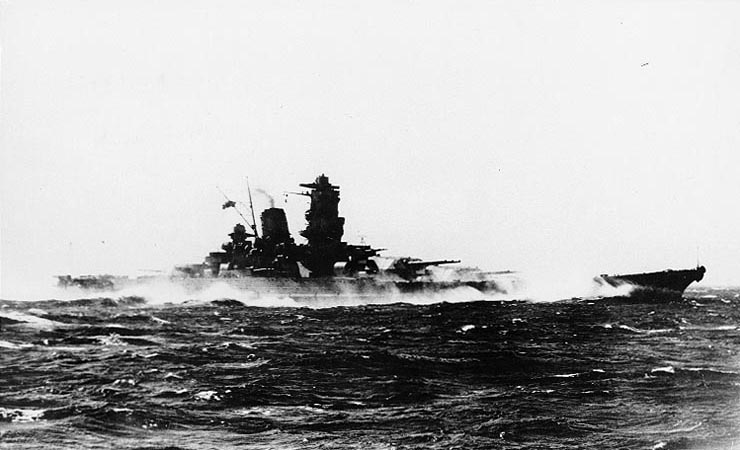
Leave a comment

Filed under History, Military, world war two in the pacific

Unlikely and Incredible: Victory at Midway

SBDstoastjapcarrier

Friends of Padre Steve’s World

As I mentioned that I would be writing about a number of watershed events this week. Today is the 74th anniversary of the beginning of the Battle of Midway. As a Navy officer and having grown up in a Navy family, this battle is still something that I find fascinating. It was a battle that could have easily been lost, and with it the war in the Pacific significantly lengthened, and which had the Japanese won, forced a change in strategy that might have allowed Hitler to strengthen his grip on Europe and maybe even defeat the Soviet Union.

It was a watershed event because it was the first real defeat that the Japanese Imperial Navy sustained in the war, and it ensured that the Japanese would not be able to win the war, except by exhausting the United States.

So it still remains important even today. If you are interested in books about Midway I recommend Walter Lord’s classic “Incredible Victory” and Gordon Prange’s “Miracle at Midway.

Peace

Padre Steve+

Prelude to Battle

The Imperial Japanese Navy under the command of Admiral Isoruku Yamamoto had been humiliated. On April 18th 1942 16 B-25 bombers under the command of Colonel Jimmy Doolittle were launched from the deck of the USS Hornet and bombed Tokyo.  Though the physical damage was insignificant the psychological impact was massive on the Japanese military establishment. In response to the threat, Yamamoto was directed to bring the aircraft carriers of the U.S. Navy to battle and to destroy them.

Prior to the Doolittle Raid, Yamamoto and his deputy Rear Admiral Matome Ugaki had explored the possibility of attacking Midway. However, the Japanese armed forces were competing with each other to determine an overall strategy for the war effort. The Army was insistent on a China strategy while the Navy preferred expansion in the Western, South and Central Pacific.  Yamamoto’s idea envisioned seizing Midway and using it as a forward base from which an invasion of Hawaii could be mounted as well as the bait to draw the carrier task forces of the U.S. Navy into battle and destroy them. Until the Doolittle Raid shocked the Japanese leadership he was unable to do this.

“I Shall Run Wild for the First Six Months”

yamamoto-isoroku1

Admiral Isoruku Yamamoto

Yamamoto was one of the few Japanese military or political leaders who opposed war with the United States. He had lived in the United States, gotten to know Americans and recognized the how the massive economic and industrial power of the United States would lead to the defeat of Japan. He told Premier Konoye in 1941 “I shall run wild for the first six months or a year, but I have utterly no confidence for the second or third years of the fighting.”

It is hard to imagine now, but in June of 1942 it seemed a good possibility that the Americans and British could be on the losing side of the Second World War.

True to Yamamoto’s words in 1942 the Japanese onslaught in the Pacific appeared nearly unstoppable. The Imperial Navy stormed across the Pacific and Indian Oceans in the months after Pearl Harbor decimating Allied Naval forces that stood in their way.  The British Battleships HMS Prince of Wales and HMS Repulse were sunk by land based aircraft off of Singapore. A force of Royal Navy cruisers and the Aircraft Carrier HMS Hermes were sunk by the same carriers that struck Pearl Harbor in the Indian Ocean.  Darwin Australia was struck with a devastating blow on February 19th and on February 27th the Japanese annihilated the bulk of the American, British, Dutch and Australian naval forces opposing them at the Battle of the Java Sea. American forces in the Philippines surrendered on May 8th 1942 while the British in Singapore surrendered on February 15th.

In only one place had a Japanese Naval task force been prevented from its goal and that was at the Battle of the Coral Sea.  Between 4-8 May the US Navy’s Task Force 11 and Task Force 17 centered on the Carriers USS Lexington and USS Yorktown prevented a Japanese invasion force from taking Port Moresby. Their aircraft sank the light carrier Shoho, damaged the modern carrier Shokaku and decimated the air groups of the Japanese task force. But it was the unexpected raid by US Army Air Corps B-25 Bombers launched from the USS Hornet under command of Colonel Jimmy Doolittle on April 18th 1942 which embarrassed Yamamoto so badly that he ordered the attack to take Midway and destroy the remaining US Naval power in the Pacific.

Cracking the Code

Chester-W.-Nimitz-militarymuseum.org_

Admiral Chester Nimitz

United States Navy codebreakers had broken the Japanese diplomatic and naval codes in 1941, and in May the Navy code breakers at Pearl Harbor discovered Yamamoto’s plan to have the Imperial Navy attack Midway Island and the Aleutian Islands.  Knowing the Japanese were coming, and that the occupation of Midway by Japanese forces would give them an operational base less than 1000 miles from Pearl Harbor, Admiral Chester Nimitz, commander of the U.S. Pacific Fleet committed the bulk of his naval power, the carriers USS Enterprise CV-6, USS Yorktown CV-5 and USS Hornet CV-8 and their 8 escorting cruisers and 15 destroyers to defend Midway.  This force of 26 ships with 233 aircraft embarked to defend Midway while a force of smaller force 5 cruisers and 4 destroyers was dispatched to cover the Aleutians.  The forces on the ground at Midway had a mixed Marine, Navy and Army air group of 115 aircraft which included many obsolete aircraft, 32 PBY Catalina Flying Boats and 83 fighters, dive bombers, torpedo planes and Army Air Force bombers piloted by a host of inexperienced but resolute airmen with which to defend itself. It also had a ground force of U.S. Marines, should the Japanese actually land on the island.

With the foreknowledge provided by the code breakers the US forces hurried to an intercept position northeast of Midway. They eluded the Japanese submarine scout line which the Japanese Commander Admiral Yamamoto presumed would find them when they sailed to respond to the Japanese attack on Midway.  Task Force 16 with the Enterprise and Hornet sailed first under the command of Rear Admiral Raymond A Spruance in place of the ailing William “Bull” Halsey. Task Force 17 under Rear Admiral Frank “Jack” Fletcher was built around the Yorktown which had been miraculously brought into fighting condition after suffering heavy damage at Coral Sea. Fletcher assumed overall command by virtue of seniority and Admiral Nimitz instructed his commanders to apply the principle of “calculated risk” when engaging the Japanese as the loss of the US carriers would place the entire Pacific at the mercy of the Japanese Navy.

On June 3rd a PBY Catalina from Midway discovered the Japanese invasion force transport group.  US long-range B-17 bombers launched attacks against these ships but inflicted no damage.

“Our hearts burn with the conviction of sure victory.”

On the night of June 3rd 1942 Nagumo’s First Carrier Strike Force sailed east toward the tiny Midway Atoll. Nagumo had seen many of the risks involved in the plan and considered it an “impossible and pointless operation” before the Doolittle Raid on Tokyo, but even the reluctant Nagumo fell in line as Yamamoto relentlessly lobbied for the operation.

As the First Carrier strike force closed within 300 miles of Midway on the night of June 3rd 1942 Nagumo and his staff prepared for the battle that they and many others believed would be the decisive battle. Aircraft received their final preparations, bombs were loaded and as night faded into early morning air crew arose, ate their breakfast and went to their aircraft. The ships had been observing radio silence since they departed their bases and anchorages in Japan the previous week. Honed to a fine edge the crews of the ships and the veteran aircrews anticipated victory.

The crews of the ships of the task force and the air groups embarked on the great aircraft carriers Akagi, Kaga, Soryu and Hiryu as well as their escorts were confident. They had since the war began known nothing but victory. They had devastated the Pacific Fleet at Pearl Harbor and roamed far and wide raiding allied targets and sinking allied shipping across the Pacific and deep into the Indian Ocean. Commander Magotaro Koga of the destroyer Nowaki wrote in his diary “Our hearts burn with the conviction of sure victory.

PERSON JAP Nagumo1

Vice Admiral Chuichi Nagumo

However, Nagumo and his sailors had no idea that most of what they knew about their American opponents was wrong. Nagumo and Yamamoto were confident that the Americans could field no more than two operational carriers to defend Midway. They had no idea that the Yorktown, which they believed had been sunk at Coral Sea was operational and her air group reinforced by the aircraft of the damaged Saratoga which was being repaired on the West Coast. Unknown to the Japanese the Yorktown and her escorts had joined Enterprise and Hornet northeast of Midway.

The Japanese were going into battle blind. They had planned to get aerial surveillance of US Fleet dispositions at Pearl Harbor, but that had been cancelled because the atoll at French Frigate Shoals that the Japanese flying boats would operate from had been occupied by a small US force. Likewise a line of Japanese submarines arrived on station a day too late, after the US carrier task forces had passed by them. Those aboard the First Carrier Strike Force, including Nagumo or his senior commanders and staff had no idea that the Americans not only knew of their approach but were already deployed in anticipation of their strike.

Within a day all of the Japanese carriers would be sunk or sinking. Thousands of Japanese sailors would be dead and the vaunted air groups which had wreaked havoc on the Allies would be decimated, every aircraft lost and the majority of pilots and aircrew dead. It would be a most unexpected and devastating defeat stolen out of the hands of what appeared to be certain victory.

There is a lesson to be learned from the Japanese who sailed into the night on June 3rd 1942 and saw the sunrise of June 4th. There is no battle, campaign or war that goes according to plan. Thousands of Japanese sailors and airmen went to bed on the night of the 3rd expecting that the following night, or within the next few days they would be celebrating a decisive victory. Thousands of those sailors would be dead by the night of the 4th of June 1942, and as their ships slid beneath the waves, the ambitions of Imperial of Japan to defeat the United States Navy and end the war were dealt a decisive defeat from which they never recovered.

Hawks at Angles Twelve

F2A-3+Buffalo

One of the more overlooked aspects of the Battle of Midway is the sacrifice of Marine Fighter Squadron 221 on the morning of June 4th 1942.   The Marine aviators flying a mix of 21 obsolescent Brewster F2A-3 Buffalos and 7 Grumman F4F-3 Wildcats engaged a vastly superior force of Japanese Navy aircraft as they vectored toward the atoll to begin softening it up for the planned invasion.

Led by Major Floyd Parks the squadron had arrived at Midway on Christmas day 1941 being delivered by the USS Saratoga after the aborted attempt to relieve Wake Island.  The squadron along with Marine Scout Bombing Squadron 241 (VMSB 241) formed Marine Air Group 22.  They fighter pilots of VMF-221 scored their first victory shooting down a Japanese Kawanishi H8K2 “Emily” flying boat. The squadron which initially was composed of just 14 aircraft, all F2A-3’s was augmented by 7 more F2A-3s and 7 of the more advanced F4F-3s before the battle.

When the Japanese First Carrier Striking Group was spotted in the wee hours of June 4th the Marines and other aircrew aboard Midway scrambled to meet them.  The 18 SBD-2 Dauntless’ and 12 Vought SB2-U3 Vindicator dive bombers of VMSB-241, the 6 TBF Avengers of the Navy Torpedo Eight detachment, 4 Army Air Corps B-26 Marauders and 15 B-17 Flying Fortresses flew out to attack the Japanese carriers while the fighters rose to intercept the 108 aircraft heading toward Midway. The 72 strike aircraft, 36 Aichi 99 Val Dive Bombers and 36 Nakajima B5N Torpedo/ High Level Bombers were protected by 36 AM6-2 Zeros which thoroughly outclassed the Marine opponents in speed, maneuverability and in the combat experience of their pilots.

The Marine fighters audaciously attacked the far superior Japanese force, throwing themselves against the Japanese phalanx with unmatched courage.  Despite their courage the Marine fighters were decimated by the Japanese Zeros.  The Marines shot down 4 Val dive bombers and at least three Zeros but lost 13 Buffalos and 3 Wildcats during the battle.  Of the surviving aircraft only three Buffalos and three Wildcats were in commission at the end of the day. Among the casualties killed was Major Parks.  Of the surviving pilots of VMF-221, two became “Aces” during the war. Lieutenant Charles M. Kunz would later fly in VMF-224, adding six victories to end the war with 8 victories. Capt. Marion E. Carl would later fly in VMF-223 raising his score to 18.5 Japanese aircraft shot down.  Other pilots like 2nd Lieutenant Clayton M. Canfield shot down two additional aircraft while flying with VMF-223. 2nd Lieutenant Walter W. Swansberger won the Medal of Honor at Guadalcanal.

The last remaining Marine fighter pilot of VMF-221 from the battle of Midway, Williams Brooks died in January 2010 and was buried with full military honors, in Bellview, Nebraska. Brooks in his after action report described his part in the battle:

I was pilot of F2A-3, Bureau number 01523, Our division under Capt. Armistead was on standby duty at he end of the runway on the morning of June 4, 1942, from 0415 until 0615. At about 0600, the alarm sounded and we took off. My division climbed rapidly, and I was having a hard time keeping up. I discovered afterwards that although my wheels indicator and hydraulic pressure indicator both registered “wheels up”, they were in reality about 1/3 of the way down. We sighted the enemy at about 14,000 feet, I would say that there were 40 to 50 planes. At this time Lt. Sandoval was also dropping back. My radio was at this time putting out no volume, so I could not get the message from Zed. At 17,000 feet, Capt. Armistead led the attack followed closely by Capt. Humberd. They went down the left of the Vee , leaving two planes burning. Lt. Sandoval went down the right side of the formation and I followed. One of us got a plane from the right side of the Vee. At this time, I had completely lost sight of my division. As I started to pull up for another run on the bombers, I was attacked by two fighters. Because my wheels being jammed 1/3 way down, I could not out dive these planes, but managed to dodge them and fire a burst or so into them as they went past me and as I headed for the water. As I circled the island, the anti-aircraft fire drove them away. My tabs, instruments and cockpit were shot up to quite an extent at this time and I was intending to come in for a landing. 

It was at this time that I noticed that a important feature in their fighting. I saw two planes dog-fighting over in the east, and decided to go help my friend if at all possible. My plane was working very poorly, and my climb was slow. As I neared the fight both planes turned on me. It was then that I realized I had been tricked in a sham battle put on by two Japs and I failed to recognize this because of the sun in my eyes. Then I say I was out-numbered, I turned and made a fast retreat for the island, collecting a goodly number of bullets on the way. After one of these planes had been shaken, I managed to get a good burst into another as we passed head-on when I turned into him. I don’t believe this ship could have gotten back to his carrier, because he immediately turned away and started north and down. I again decided to land, but as I circled the island I saw two Japs on a Brewster. Three of my guns were jammed, but I cut across the island, firing as I went with one gun. But I could not get there in time to help the American flier and as soon as the Brewster had gone into the water I came in for a landing at approximately 0715 (estimated). 

As for VMF-221 it was re-equipped with the F4F-4 and later with the F4U Corsair during the course of two more deployments overseas.  VMF-221 finished the war with a score of 155 victories, 21 damaged and 16 probable kills, the second highest total of any Marine Corps Squadron during the war.

Their bomber counterparts of VMSB 241 attacked the Japanese task force on the morning of June 4th and scored no hits while losing 8 aircraft. The survivors were again in action later in the day as well as the following day where they helped sink the Japanese Heavy Cruiser Mikuma with their squadron leader Major Henderson diving his mortally wounded aircraft into the cruiser’s number 4 8” gun turret. While the Marines’ actions are not as well known or as successful as those of their Navy counterparts they were brave.  Fighter pilots had to engage some of the most experienced pilots flying superior machines while the bomber crews had little to no experience before being thrown into combat.

800px-tbd_attacking_at_midway_painting-1

Into the Valley of Death: The Last Ride of the Torpedo Bombers

Alfred, Lord Tennyson wrote in the Charge of the Light Brigade something that echoes to this day when we talk or write about men who charge the gates of death against superior enemies.

Half a league half a league,

Half a league onward,

All in the valley of Death

Rode the six hundred:

‘Forward, the Light Brigade!

Charge for the guns’ he said:

Into the valley of Death

Rode the six hundred.

They were not six hundred and they were not mounted on horses, but the Naval Aviators of Torpedo Squadrons 3, 6 and 8 and their aerial steeds 42 Douglas TBD Devastators and 6 TBF Avengers wrote a chapter of courage and sacrifice seldom equaled in the history of Naval Aviation. Commanded by veteran Naval Aviators, LCDR Lance “Lem” Massey, LCDR Eugene Lindsey and LCDR John Waldron the squadrons embarked aboard the carriers flew the obsolete TBD Devastators. The young pilots of the Midway based Torpedo 8 detachment under the command of LT Langdon Fieberling flew in the new TBF Avengers.

he TBD which first flew in 1935 entered service in 1937 and was possibly the most modern naval aircraft in the world when it entered service.  It was a revolutionary aircraft. It was the first monoplane widely used on carriers and was first all-metal naval aircraft.  It was the first naval aircraft with a totally enclosed cockpit, the first with hydraulic powered folding wings.  The TBD had crew of three and had a maximum speed of 206 miles an hour and carried a torpedo or up to 1500 pounds of bombs (3 x 500) or a 1000 pound bomb.  129 were built and served in all pre-war torpedo bombing squadrons based aboard the Lexington, Saratoga, Ranger, Yorktown, Enterprise and Hornet with a limited number embarked aboard Wasp. 

The Devastator saw extensive service prior to the war which pushed many airframes to the end of their useful service life and by 1940 only about 100 were operational by the beginning of the war.  They were still in service in 1942 as their replacement the TBF Avenger was not available for service in large enough numbers to replace them before Midway.  The TBDs performed adequately against minor opposition at Coral Sea and in strikes against the Marshalls but the squadrons embarked on Yorktown (VT3), Enterprise (VT-6) and Hornet (VT-8) were annihilated at Midway with only 6 of 41 aircraft surviving their uncoordinated attacks against the Japanese Carrier Strike Force.  They were too slow, had poor maneuverability, insufficient armor and defensive armament.

The Torpedo squadrons attacked independently of each other between 0920 and 1030 on June 4th 1942. The Japanese Combat Air Patrol ripped into the slow, cumbersome and under armed TBD Devastators as they came in low to launch their torpedoes.  Torpedo Eight from Hornet under the command of LCDR John C Waldron pressed the attack hard but all 15 of the Devastators were shot down.  Only Ensign George Gay’s aircraft was able to launch its torpedo before being shot down and Gay would be the sole survivor of the squadron to be picked up later by a PBY Catalina patrol plane.

Torpedo Six from the Enterprise under the command of LCDR Eugene Lindsey suffered heavy casualties losing 10 of 14 aircraft with Lindsey being one of the casualties.  The last group of Devastators to attack was Torpedo Three from the Yorktown under the command of LCDR Lem Massey losing 11 of 13 aircraft with Massey a casualty last being seen standing on the wing of his burning aircraft as it went down.  These aircraft were also decimated and Massey killed but they had drawn the Japanese Combat Air Patrol down to the deck leaving the task force exposed to the Dive Bombers of the Enterprise and Yorktown.  The six aircraft of the Torpedo Eight detachment from Midway under the command of LT Fieberling lost 5 of their 6 aircraft while pressing their attacks.  Only Ensign Bert Earnest and his aircraft survived the battle landing in a badly damaged state on Midway.  Four U.S. Army B-26 Marauder Medium Bombers were pressed into service as torpedo bombers of which 2 were lost.  No torpedo bomber scored a hit on the Japanese Task force even those torpedoes launched at close range failed to score and it is believe that this was in large part due to the poor performance of the Mark 13 aircraft torpedoes.

Despite the enormous losses of the torpedo squadrons their sacrifice was not in vain. Their attacks served to confuse the Japanese command and delay the rearmament of aircraft following the Japanese strikes on Midway. They also took the Japanese Combat Air Patrol down to sea level and opened the way for American Dive Bombers to strike the Japanese with impunity fatally damaging the Akagi, Kaga and Soryu in the space of 5 minutes.

eneterprise vt-6 midway

After Midway the remaining TBDs were withdrawn from active service and no example survives today. The TBF became the most effective torpedo bomber of the war and some remained in service in a civilian capacity to fight forest fires until 2012.

img_0064

The Provence of Chance: Five Minutes that Changed the War

The land based aircraft from Midway attacked the Japanese carrier force taking heavy casualties and failed to damage the Japanese task force. When the results of the first strike of the Japanese bombers that hit Midway was analyzed Nagumo readied his second wave.

As this was happening the American carriers launched their strike groups at the Japanese fleet leaving enough aircraft behind as for Combat Air Patrol and Anti-submarine patrol missions.  As the Americans winged toward the Japanese fleet the Japanese were in a state of confusion. The confusion was caused when a scout plane from the Heavy Cruiser Tone that had been delayed at launch discovered US ships but did not identify a carrier among them until later into the patrol. The carrier was the Yorktown and TF 17, but for Nagumo who first expected no American naval forces, then received a report of surface ships without a carrier followed by the report of a carrier the reports were unsettling.

Aboard the Japanese ships, orders and counter-orders were issued as the Japanese attempted to recover their strike aircraft and prepare for a second strike on the island, but when the Yorktown task force was discovered, orders were changed and air crews unloaded ground attack ordnance in favor of aerial torpedoes and armor piercing bombs. In their haste to get their aircraft ready to strike the Americans, the hard working Japanese aircrews did not have time to stow the ordnance removed from the aircraft. But due to their hard work at 1020 they had the Japanese strike group ready to launch against the US carriers. Aircraft and their crews awaited the order to launch, their aircraft fully armed and fully fueled.

There had been confusion among the Americans as to the exact location of the Japanese Carriers. Bombing 8 and Scouting 8 from Hornet made a wrong turn and not find the Japanese carriers. The squadrons had to return due to a lack of fuel and a number of bombers and their fighter escort had to ditch in the ocean and wait for rescue. The Enterprise group composed of Bombing-6 and Scouting 6 under CDR Wade McClusky was perilously low on fuel when they spotted the wake of a Japanese destroyer steaming at high speed to catch up with the Japanese carriers.  Taking a chance, McClusky followed it straight to the Japanese Task Force arriving about 1020. The Yorktown’s group under LCDR Max Leslie arrived about the same time.

When the American dive bombers arrived over the Japanese Carrier Strike Force they found the skies empty of Japanese aircraft. Below, aboard the Japanese ships there was a sense of exhilaration as each succeeding group of attackers was brought down and with their own aircraft ready to launch and deal a fatal blow to the American carrier wondered how big their victory would be. The war would soon be decided.

At 1020 the first Zero of the Japanese attack group began rolling down the flight deck of the flagship Akagi, aboard Kaga aircraft were warming up as they were on the Soryu.  The unsuspecting Japanese were finally alerted to the threat of the American dive bombers when lookouts screamed “helldivers.” The Japanese fighters assigned to the combat air patrol were flying too low as the mopped up the last of the doomed torpedo bombers and were not in a position to intercept the Americans.

Wade McClusky’s aircraft lined up over the Akagi and Kaga pushing into their dives at 1022. There was a bit of confusion when the bulk of Scouting 6 joined the attack of Bombing 6 on the Kaga. That unprepared ship was struck by four 1000 pound bombs which exploded on her flight deck and hangar deck igniting the fully fueled and armed aircraft of her strike group and the ordnance littered about the hangar deck.  Massive fires and explosions wracked the ship and in minutes the proud ship was reduced to an infernal hell with fires burning uncontrollably. She was abandoned and would sink at 1925 taking 800 of her crew with her.

LT Dick Best of Scouting 6 peeled off from the attack on Kaga and shifted to the Japanese flagship Akagi. On board Akagi were two of Japan’s legendary pilots CDR Mitsuo Fuchida leader of and CDR Minoru Genda the architect of the Pearl Harbor attack and subsequent string of Japanese victories. Both officers were on the sick list and had come up from sick bay to watch as the fleet was attacked. Seeing Kaga burst into flames they stood mesmerized until Akagi’s lookouts screamed out the warning “helldivers” at 1026.

Best’s few aircraft hit with deadly precision landing two of their bombs on Akagi’s flight deck creating havoc among the loaded aircraft and starting fires and igniting secondary explosions which turned the ship into a witch’s cauldron.  By 1046 Admiral Nagumo and his staff were forced to transfer the flag to the cruiser Nagara as Akagi’s crew tried to bring the flames under control. They would do so into the night until nothing more could be done and abandoned ship at 2000.  Admiral Yamamoto ordered her scuttled and at 0500 on June 5th the pride of the Japanese carrier force was scuttled.

VB-3 under LCDR Max Leslie from the Yorktown stuck the Soryu with 17 aircraft, however only 13 of the aircraft had bombs due to an electronic arming device malfunction on 4 of the aircraft, including that of Commander Leslie.  Despite this Leslie led the squadron as it dove on the Soryu at 1025 hitting that ship with 3 and maybe as many as 5 bombs. Soryu like her companions burst into flames as the ready aircraft and ordnance exploded about her deck. She was ordered abandoned at 1055 and would sink at 1915 taking 718 of her crew with her. A few hours later Hiryu, which had succeeded in launching strikes that seriously damaged Yorktown met the fate of her sisters. Yorktown would be sunk by a Japanese submarine, along with the destroyer Hamman a few days later as her crew attempted to get her to Pearl Harbor. In five pivotal minutes the course of the war in the Pacific was changed.

A Final Ignominy

Sinking_of_japanese_cruiser_Mikuma_6_june_1942

Admiral Yamamoto was still attempting to digest the calamity that had befallen Admiral Nagumo’s carrier task force. In the shocked atmosphere of the mighty Super Battleship Yamato’s command center the Staff of the Combined Fleet was hastily attempting to arrive at a solution which might reverse the disaster and bring victory.  Admiral Ugaki, Yamamoto’s Chief of Staff, despite strong personal doubts, ordered Vice Admiral Nobutake Kondo to prepare for a night surface engagement with the US Fleet and dispatched a strong surface force to bombard Midway in order to prevent the Americans from reinforcing it and to prevent its further use against his forces should the invasion move forward.  Kondo then organized his fleet to attempt to find the American carriers and bring them to battle before dawn.

Kondo detached Vice Admiral Takeo Kurita’s Close Support Group composed of Cruiser Seven, the fastest and most modern cruisers in the Imperial Navy proceed at full speed to attack Midway.  Kurita’s cruisers, the Kumano, Suzuya, Mikuma and Mogami were each armed with 10 8” guns and were escorted by the two destroyers.

Kurita’s force was 80 miles from Midway when Yamamoto realizing that his plan was unrealistic ordered Kondo’s forces to retreat and rendezvous with his main force shortly after midnight. The order was met with a measure of relief by most officers in the force and the force turned northwest and steamed at 28 knots to meet the Main Body.  At 0215 lookouts on Kumano sighted a submarine on the surface which turned out to be the USS Tambor which had been shadowing the group, and made a signal for the force to make a emergency 45 degree turn to port.

During the process Mogami’s Navigator took over from the watch to oversee the tricky maneuver. In doing so he thought that there was too much distance between him and the ship ahead, the Mikuma. So he adjusted his course to starboard and then realized his mistake. The ship he thought was Mikuma was actually Suzuya and Mikuma was directly ahead. As soon as he recognized his mistake Mogami’s Navigator ordered a hard turn to port and reversed the engines but it was too late. Mogami’s bow crashed into Mikuma’s port quarter. The impact caused minimal damage to Mikuma but Mogami was heavily damaged. She lost 40 feet of her bow and everything else was bent back to port at right angles to her number one turret.

Mogami’s damage control teams isolated the damage and worked the ship up to 12 knots. This was not fast enough for Kurita to make his rendezvous so he left Mikuma and the destroyers to escort Mogami while he steamed ahead with Kumano and Suzuya.

Tambor’s skipper LCDR John W Murphy sent a contact report at 0300 reporting “many unidentified ships.” He followed this with more detailed information and the Americans on Midway began to launch its remaining serviceable aircraft to attack the threat. A flight of B-17 Bombers launched at 0430 could not find the Japanese ships but at 0630 a PBY Catalina found the Japanese and radioed Midway “two Japanese battleships streaming oil.”  The remaining 12 aircraft of VSMB-241 under command of Captain Marshall Tyler a mix of SBD Dauntless and SB2U Vindicators took off at 0700. His force attacked at 0808 scoring no hits. However, Marine Captain Richard Fleming, his Vindicator on fire dropped his bomb and then crashed his aircraft into Mikuma’s after turret. Sailors aboard Mogami were impressed, the American had sacrificed himself in a suicide attack worthy of the Samurai. The fire was sucked down air intakes into the starboard engine room with disastrous results. The Mikuma’s engineers were suffocated by the smoke and fumes and Mikuma was greatly reduced in speed.

The two ships limped northwest at 12 knots escorted by the destroyers and were unmolested through much of the day with the exception of an ineffective attack by the B-17s at 0830. The following morning the Dive Bombers of Enterprise and Hornet were at work and found the crippled Japanese ships. Waves over US Dive Bombers attacked the cruisers throughout the morning and into the afternoon. Mikuma was hit at least 5 times and secondary explosions of ammunition and torpedoes doomed the ship. Mogami was also heavily damaged but remained afloat while both destroyers received bomb damage.  At sunset the tough cruiser rolled over to port and sank into the Pacific. Mogami whose damage control teams had performed miracles to keep their ship afloat helped the destroyers rescue survivors from Mikuma.  Only 240 were rescued with 650 officers and sailors going down with the ship.

The action against the cruisers ended the combat operations at Midway. The Japanese ships were doomed by Yamamoto’s decision to try to salvage victory from defeat and the error of Mogami’s Navigator during the emergency turn when Kumano sighted Tambor. The only thing that kept the result from being total was the efficacy of Mogami’s damage control teams.  Mogami was out of the war for 10 months following repairs and conversion to an Aircraft Cruiser in which her aft turrets were removed to increase the number of float plane scouts that the ship could carry. She rejoined the fleet in April 1943 and was sunk following the Battle of the Surigao Strait on 25 October 1944.

The Mogami and Mikuma proved to be tough ships to sink. Unprotected by friendly aircraft they fought hard against the unopposed American Dive Bombers. They suffered massive damage from 500 and 1000 pound bombs, both direct hits and near misses. Mogami was saved by the skill of her damage control teams and the foresight of her Damage Control Officer to jettison her torpedoes so that they did not explode and compound the damage wrought by the American bombs.

Epilogue

At Midway a distinctly smaller force defeated a vastly superior fleet in terms of experience, training and equipment. At the very moment that it appeared to the Japanese that they would advance to victory their vision disappeared. In a span of less than 5 minutes what looked like the certain defeat of the US Navy became one of the most incredible and even miraculous victories in the history of Naval warfare. In those 5 minutes history was changed in a breathtaking way. While the war would drag on and the Japanese still inflict painful losses and defeats on the US Navy in the waters around Guadalcanal the tide had turned and the Japanese lost the initiative in the Pacific never to regain it.

The Japanese government hid the defeat from the Japanese people instead proclaiming a great victory. The American government could not fully publicize the victory for fear of revealing the intelligence that led to the ability of the US Navy to be at the right place at the right time and defeat the Imperial Navy.

The American victory at Midway changed the course of the war in the Pacific. The Battle of Midway established the aircraft carrier and the fast carrier task force as the dominant force in naval warfare which some would argue it still remains. Finally those five minutes ushered in an era of US Navy dominance of the high seas which at least as of yet has not ended as the successors to the Enterprise, Hornet and Yorktown ply the oceans of the world and the descendants of those valiant carrier air groups ensure air superiority over battlefields around the world today.


1 Comment

Filed under History, Military, Navy Ships, US Navy, World War II at Sea, world war two in the pacific

Improbable and Unlikely: Victory at Midway

800px-tbd_attacking_at_midway_painting-1

Friends of Padre Steve’s World

As I mentioned earlier in the week I am publishing a number of articles on Greatest Generation as we remember the anniversaries of the Battle of Midway in 1942 and the D-Day landings in 1944.

This article is a compilation of a number of articles that I have done in the past with a bit of edition. It deals with the battle of Midway. I hope to do some really serious writing on the topic someday, but most of my writing and research time has been devoted to the Battle of Gettysburg and the American Civil War. Too bad I am not like LCDR Data in Star Trek the Next Generation. Image the productivity, but I digress…

I grew up in a Navy family when it was not popular for people to “support the troops” back during the Vietnam War and in the post-Vietnam era. That being said I developed a love for all things Navy and buried myself in the library, reading and checking out books. My friends probably remember he hauling armloads of books too and from class and too and from school  on the buses that we rode. One of those books was Walter Lord’s classic Incredible Victory about the Battle of Midway. Through it and other books I felt as if I had come to know the men who fought that battle, the men of both sides, gaining an appreciation for their bravery and humanity. As I have mentioned time and time again on this site, people matter the most in history, especially in war. In the intervening years I have spent over 34 years in the U.S. Army and U.S. Navy serving at sea and ashore in combat operations. As such I have a connection to these men, I can imagine what they were going through.

As we get further away from these events we have fewer people who even know about them, and that is really sad because they are so important, and the sacrifices of the men who fought those battles helped secure an opportunity freedom for so many. I know that after the war that the United States has not always lived up to the ideals set forth in the Declaration of Independence, nor how our founders believed that we should pursue relations with other countries. In fact, they would not recognize what we have become. Even so, it is important for us to reexamine these events, to remember the men and women who served, and to remember their sacrifice, even as we acknowledge the tragedy of war and all that it brings.

I hope that you enjoy this and trust that you will have a good day.

Peace

Padre Steve+

 538x362xNorth-American-Aviation-B-25B-Mitchell-launches-from-USS-Hornet-CV-8-18-April-1942-21.jpg.pagespeed.ic.fjuaPl49hb

The Doolittle Raid

Prelude to Battle

The Imperial Japanese Navy under the command of Admiral Isoruku Yamamoto had been humiliated. On April 18th 1942 16 B-25 bombers under the command of Colonel Jimmy Doolittle were launched from the deck of the USS Hornet and bombed Tokyo.  Though the physical damage was insignificant the psychological impact was massive on the Japanese military establishment. In response to the threat, Yamamoto was directed to bring the aircraft carriers of the U.S. Navy to battle and to destroy them.

Prior to the Doolittle Raid, Yamamoto and his deputy Rear Admiral Matome Ugaki had explored the possibility of attacking Midway. However, the Japanese armed forces were competing with each other to determine an overall strategy for the war effort. The Army was insistent on a China strategy while the Navy preferred expansion in the Western, South and Central Pacific.  Yamamoto’s idea envisioned seizing Midway and using it as a forward base from which an invasion of Hawaii could be mounted as well as the bait to draw the carrier task forces of the U.S. Navy into battle and destroy them. Until the Doolittle Raid shocked the Japanese leadership he was unable to do this.

“I Shall Run Wild for the First Six Months”

 893594c746

Admiral Isoruku Yamamoto

Yamamoto was one of the few Japanese military or political leaders who opposed war with the United States. He had lived in the United States, gotten to know Americans and recognized the how the massive economic and industrial power of the United States would lead to the defeat of Japan. He told Premier Konoye in 1941 “I shall run wild for the first six months or a year, but I have utterly no confidence for the second or third years of the fighting.”

It is hard to imagine now, but in June of 1942 it seemed a good possibility that the Americans and British could be on the losing side of the Second World War.

True to Yamamoto’s words in 1942 the Japanese onslaught in the Pacific appeared nearly unstoppable. The Imperial Navy stormed across the Pacific and Indian Oceans in the months after Pearl Harbor decimating Allied Naval forces that stood in their way.  The British Battleships HMS Prince of Wales and HMS Repulse were sunk by land based aircraft off of Singapore. A force of Royal Navy cruisers and the Aircraft Carrier HMS Hermes were sunk by the same carriers that struck Pearl Harbor in the Indian Ocean.  Darwin Australia was struck with a devastating blow on February 19th and on February 27th the Japanese annihilated the bulk of the American, British, Dutch and Australian naval forces opposing them at the Battle of the Java Sea. American forces in the Philippines surrendered on May 8th 1942 while the British in Singapore surrendered on February 15th.

In only one place had a Japanese Naval task force been prevented from its goal and that was at the Battle of the Coral Sea.  Between 4-8 May the US Navy’s Task Force 11 and Task Force 17 centered on the Carriers USS Lexington and USS Yorktown prevented a Japanese invasion force from taking Port Moresby. Their aircraft sank the light carrier Shoho, damaged the modern carrier Shokaku and decimated the air groups of the Japanese task force. But it was the unexpected raid by US Army Air Corps B-25 Bombers launched from the USS Hornet under command of Colonel Jimmy Doolittle on April 18th 1942 which embarrassed Yamamoto so badly that he ordered the attack to take Midway and destroy the remaining US Naval power in the Pacific.

Cracking the Code

 images-2

Admiral Chester Nimitz

United States Navy codebreakers had broken the Japanese diplomatic and naval codes in 1941, and in May the Navy code breakers at Pearl Harbor discovered Yamamoto’s plan to have the Imperial Navy attack Midway Island and the Aleutian Islands.  Knowing the Japanese were coming, and that the occupation of Midway by Japanese forces would give them an operational base less than 1000 miles from Pearl Harbor, Admiral Chester Nimitz, commander of the U.S. Pacific Fleet committed the bulk of his naval power, the carriers USS Enterprise CV-6, USS Yorktown CV-5 and USS Hornet CV-8 and their 8 escorting cruisers and 15 destroyers to defend Midway.  This force of 26 ships with 233 aircraft embarked to defend Midway while a force of smaller force 5 cruisers and 4 destroyers was dispatched to cover the Aleutians.  The forces on the ground at Midway had a mixed Marine, Navy and Army air group of 115 aircraft which included many obsolete aircraft, 32 PBY Catalina Flying Boats and 83 fighters, dive bombers, torpedo planes and Army Air Force bombers piloted by a host of inexperienced but resolute airmen with which to defend itself. It also had a ground force of U.S. Marines, should the Japanese actually land on the island.

20150122152242

The Japanese Fleet and was built around the elite First Carrier Striking Group, the Kido Butai composed of the Pearl Harbor attackers Akagi, Kaga, Soryu and Hiryu. Led by Vice Admiral Chuichi Nagumo its highly trained and combat experienced air groups composed of 273 aircraft. This force was escorted by 2 Battleships, 3 Cruisers 12 Destroyers. Yamamoto commanded a force of 2 light carriers, 5 Battleships, 11 cruisers and 27 destroyers.  Meanwhile a force of 4 battleships, 12 destroyers assigned screen to the Aleutian invasion force which was accompanied by 2 carriers 6 cruisers and 10 destroyers. The other carriers embarked a further 114 aircraft.  The Japanese plan was ambitious but it was so ambitious that the Japanese Task forces were scattered over thousands of square miles of the Northern Pacific Ocean from which they could not rapidly come to the support of each other.

uss-enterprise-cv-6-1

With the foreknowledge provided by the code breakers the US forces hurried to an intercept position northeast of Midway. They eluded the Japanese submarine scout line which the Japanese Commander Admiral Yamamoto presumed would find them when they sailed to respond to the Japanese attack on Midway.  Task Force 16 with the Enterprise and Hornet sailed first under the command of Rear Admiral Raymond A Spruance in place of the ailing William “Bull” Halsey. Task Force 17 under Rear Admiral Frank “Jack” Fletcher was built around the Yorktown which had been miraculously brought into fighting condition after suffering heavy damage at Coral Sea. Fletcher assumed overall command by virtue of seniority and Admiral Nimitz instructed his commanders to apply the principle of “calculated risk” when engaging the Japanese as the loss of the US carriers would place the entire Pacific at the mercy of the Japanese Navy.

images-43

On June 3rd a PBY Catalina from Midway discovered the Japanese invasion force transport group.  US long-range B-17 bombers launched attacks against these ships but inflicted no damage.

“Our hearts burn with the conviction of sure victory.”

 10-japanese-carriers-coral-sea-midway

On the night of June 3rd 1942 Nagumo’s First Carrier Strike Force sailed east toward the tiny Midway Atoll. Nagumo had seen many of the risks involved in the plan and considered it an “impossible and pointless operation” before the Doolittle Raid on Tokyo, but even the reluctant Nagumo fell in line as Yamamoto relentlessly lobbied for the operation.

As the First Carrier strike force closed within 300 miles of Midway on the night of June 3rd 1942 Nagumo and his staff prepared for the battle that they and many others believed would be the decisive battle. Aircraft received their final preparations, bombs were loaded and as night faded into early morning air crew arose, ate their breakfast and went to their aircraft. The ships had been observing radio silence since they departed their bases and anchorages in Japan the previous week. Honed to a fine edge the crews of the ships and the veteran aircrews anticipated victory.

The crews of the ships of the task force and the air groups embarked on the great aircraft carriers Akagi, Kaga, Soryu and Hiryu as well as their escorts were confident. They had since the war began known nothing but victory. They had devastated the Pacific Fleet at Pearl Harbor and roamed far and wide raiding allied targets and sinking allied shipping across the Pacific and deep into the Indian Ocean. Commander Magotaro Koga of the destroyer Nowaki wrote in his diary “Our hearts burn with the conviction of sure victory.

Chuichi_Nagumo

Vice Admiral Chuichi Nagumo

However, Nagumo and his sailors had no idea that most of what they knew about their American opponents was wrong. Nagumo and Yamamoto were confident that the Americans could field no more than two operational carriers to defend Midway. They had no idea that the Yorktown, which they believed had been sunk at Coral Sea was operational and her air group reinforced by the aircraft of the damaged Saratoga which was being repaired on the West Coast. Unknown to the Japanese the Yorktown and her escorts had joined Enterprise and Hornet northeast of Midway.

The Japanese were going into battle blind. They had planned to get aerial surveillance of US Fleet dispositions at Pearl Harbor, but that had been cancelled because the atoll at French Frigate Shoals that the Japanese flying boats would operate from had been occupied by a small US force. Likewise a line of Japanese submarines arrived on station a day too late, after the US carrier task forces had passed by them. Those aboard the First Carrier Strike Force, including Nagumo or his senior commanders and staff had no idea that the Americans not only knew of their approach but were already deployed in anticipation of their strike.

Within a day all of the Japanese carriers would be sunk or sinking. Thousands of Japanese sailors would be dead and the vaunted air groups which had wreaked havoc on the Allies would be decimated, every aircraft lost and the majority of pilots and aircrew dead. It would be a most unexpected and devastating defeat stolen out of the hands of what appeared to be certain victory.

There is a lesson to be learned from the Japanese who sailed into the night on June 3rd 1942 and saw the sunrise of June 4th. There is no battle, campaign or war that goes according to plan. Thousands of Japanese sailors and airmen went to bed on the night of the 3rd expecting that the following night, or within the next few days they would be celebrating a decisive victory. Thousands of those sailors would be dead by the night of the 4th of June 1942, and as their ships slid beneath the waves, the ambitions of Imperial of Japan to defeat the United States Navy and end the war were dealt a decisive defeat from which they never recovered.

Hawks at Angles Twelve

 f2 number mf 21

One of the more overlooked aspects of the Battle of Midway is the sacrifice of Marine Fighter Squadron 221 on the morning of June 4th 1942.   The Marine aviators flying a mix of 21 obsolescent Brewster F2A-3 Buffalos and 7 Grumman F4F-3 Wildcats engaged a vastly superior force of Japanese Navy aircraft as they vectored toward the atoll to begin softening it up for the planned invasion.

g701850

Led by Major Floyd Parks the squadron had arrived at Midway on Christmas day 1941 being delivered by the USS Saratoga after the aborted attempt to relieve Wake Island.  The squadron along with Marine Scout Bombing Squadron 241 (VMSB 241) formed Marine Air Group 22.  They fighter pilots of VMF-221 scored their first victory shooting down a Japanese Kawanishi H8K2 “Emily” flying boat. The squadron which initially was composed of just 14 aircraft, all F2A-3’s was augmented by 7 more F2A-3s and 7 of the more advanced F4F-3s before the battle.

douglas-sbd5-dauntless-dive-bomber-battle-of-midway-01

USMC Vought SB2-U3 Vindicators

When the Japanese First Carrier Striking Group was spotted in the wee hours of June 4th the Marines and other aircrew aboard Midway scrambled to meet them.  The 18 SBD-2 Dauntless’ and 12 Vought SB2-U3 Vindicator dive bombers of VMSB-241, the 6 TBF Avengers of the Navy Torpedo Eight detachment, 4 Army Air Corps B-26 Marauders and 15 B-17 Flying Fortresses flew out to attack the Japanese carriers while the fighters rose to intercept the 108 aircraft heading toward Midway. The 72 strike aircraft, 36 Aichi 99 Val Dive Bombers and 36 Nakajima B5N Torpedo/ High Level Bombers were protected by 36 AM6-2 Zeros which thoroughly outclassed the Marine opponents in speed, maneuverability and in the combat experience of their pilots.

The Marine fighters audaciously attacked the far superior Japanese force, throwing themselves against the Japanese phalanx with unmatched courage.  Despite their courage the Marine fighters were decimated by the Japanese Zeros.  The Marines shot down 4 Val dive bombers and at least three Zeros but lost 13 Buffalos and 3 Wildcats during the battle.  Of the surviving aircraft only three Buffalos and three Wildcats were in commission at the end of the day. Among the casualties killed was Major Parks.  Of the surviving pilots of VMF-221, two became “Aces” during the war. Lieutenant Charles M. Kunz would later fly in VMF-224, adding six victories to end the war with 8 victories. Capt. Marion E. Carl would later fly in VMF-223 raising his score to 18.5 Japanese aircraft shot down.  Other pilots like 2nd Lieutenant Clayton M. Canfield shot down two additional aircraft while flying with VMF-223. 2nd Lieutenant Walter W. Swansberger won the Medal of Honor at Guadalcanal.

F2A-3+Buffalo

VMF-221 Attacks

The last remaining Marine fighter pilot of VMF-221 from the battle of Midway, Williams Brooks died in January 2010 and was buried with full military honors, in Bellview, Nebraska. Brooks in his after action report described his part in the battle:

I was pilot of F2A-3, Bureau number 01523, Our division under Capt. Armistead was on standby duty at he end of the runway on the morning of June 4, 1942, from 0415 until 0615. At about 0600, the alarm sounded and we took off. My division climbed rapidly, and I was having a hard time keeping up. I discovered afterwards that although my wheels indicator and hydraulic pressure indicator both registered “wheels up”, they were in reality about 1/3 of the way down. We sighted the enemy at about 14,000 feet, I would say that there were 40 to 50 planes. At this time Lt. Sandoval was also dropping back. My radio was at this time putting out no volume, so I could not get the message from Zed. At 17,000 feet, Capt. Armistead led the attack followed closely by Capt. Humberd. They went down the left of the Vee , leaving two planes burning. Lt. Sandoval went down the right side of the formation and I followed. One of us got a plane from the right side of the Vee. At this time, I had completely lost sight of my division. As I started to pull up for another run on the bombers, I was attacked by two fighters. Because my wheels being jammed 1/3 way down, I could not out dive these planes, but managed to dodge them and fire a burst or so into them as they went past me and as I headed for the water. As I circled the island, the anti-aircraft fire drove them away. My tabs, instruments and cockpit were shot up to quite an extent at this time and I was intending to come in for a landing. 

It was at this time that I noticed that a important feature in their fighting. I saw two planes dog-fighting over in the east, and decided to go help my friend if at all possible. My plane was working very poorly, and my climb was slow. As I neared the fight both planes turned on me. It was then that I realized I had been tricked in a sham battle put on by two Japs and I failed to recognize this because of the sun in my eyes. Then I say I was out-numbered, I turned and made a fast retreat for the island, collecting a goodly number of bullets on the way. After one of these planes had been shaken, I managed to get a good burst into another as we passed head-on when I turned into him. I don’t believe this ship could have gotten back to his carrier, because he immediately turned away and started north and down. I again decided to land, but as I circled the island I saw two Japs on a Brewster. Three of my guns were jammed, but I cut across the island, firing as I went with one gun. But I could not get there in time to help the American flier and as soon as the Brewster had gone into the water I came in for a landing at approximately 0715 (estimated). 

As for VMF-221 it was re-equipped with the F4F-4 and later with the F4U Corsair during the course of two more deployments overseas.  VMF-221 finished the war with a score of 155 victories, 21 damaged and 16 probable kills, the second highest total of any Marine Corps Squadron during the war.

Their bomber counterparts of VMSB 241 attacked the Japanese task force on the morning of June 4th and scored no hits while losing 8 aircraft. The survivors were again in action later in the day as well as the following day where they helped sink the Japanese Heavy Cruiser Mikuma with their squadron leader Major Henderson diving his mortally wounded aircraft into the cruiser’s number 4 8” gun turret. While the Marines’ actions are not as well known or as successful as those of their Navy counterparts they were brave.  Fighter pilots had to engage some of the most experienced pilots flying superior machines while the bomber crews had little to no experience before being thrown into combat.

Into the Valley of Death: The Last Ride of the Torpedo Bombers

 eneterprise-vt-6-midway1

Alfred, Lord Tennyson wrote in the Charge of the Light Brigade something that echoes to this day when we talk or write about men who charge the gates of death against superior enemies.

Half a league half a league,

Half a league onward,

All in the valley of Death

Rode the six hundred:

‘Forward, the Light Brigade!

Charge for the guns’ he said:

Into the valley of Death

Rode the six hundred.

 VT-6

They were not six hundred and they were not mounted on horses, but the Naval Aviators of Torpedo Squadrons 3, 6 and 8 and their aerial steeds 42 Douglas TBD Devastators and 6 TBF Avengers wrote a chapter of courage and sacrifice seldom equaled in the history of Naval Aviation. Commanded by veteran Naval Aviators, LCDR Lance “Lem” Massey, LCDR Eugene Lindsey and LCDR John Waldron the squadrons embarked aboard the carriers flew the obsolete TBD Devastators. The young pilots of the Midway based Torpedo 8 detachment under the command of LT Langdon Fieberling flew in the new TBF Avengers.

tbd-devastator1

The TBD which first flew in 1935 entered service in 1937 and was possibly the most modern naval aircraft in the world when it entered service.  It was a revolutionary aircraft. It was the first monoplane widely used on carriers and was first all-metal naval aircraft.  It was the first naval aircraft with a totally enclosed cockpit, the first with hydraulic powered folding wings.  The TBD had crew of three and had a maximum speed of 206 miles an hour and carried a torpedo or up to 1500 pounds of bombs (3 x 500) or a 1000 pound bomb.  129 were built and served in all pre-war torpedo bombing squadrons based aboard the Lexington, Saratoga, Ranger, Yorktown, Enterprise and Hornet with a limited number embarked aboard Wasp. 

Go-in-and-get-a-hit


The Devastator saw extensive service prior to the war which pushed many airframes to the end of their useful service life and by 1940 only about 100 were operational by the beginning of the war.  They were still in service in 1942 as their replacement the TBF Avenger was not available for service in large enough numbers to replace them before Midway.  The TBDs performed adequately against minor opposition at Coral Sea and in strikes against the Marshalls but the squadrons embarked on Yorktown (VT3), Enterprise (VT-6) and Hornet (VT-8) were annihilated at Midway with only 6 of 41 aircraft surviving their uncoordinated attacks against the Japanese Carrier Strike Force.  They were too slow, had poor maneuverability, insufficient armor and defensive armament.

The Torpedo squadrons attacked independently of each other between 0920 and 1030 on June 4th 1942. The Japanese Combat Air Patrol ripped into the slow, cumbersome and under armed TBD Devastators as they came in low to launch their torpedoes.  Torpedo Eight from Hornet under the command of LCDR John C Waldron pressed the attack hard but all 15 of the Devastators were shot down.  Only Ensign George Gay’s aircraft was able to launch its torpedo before being shot down and Gay would be the sole survivor of the squadron to be picked up later by a PBY Catalina patrol plane.

Page500_163_6

g66074

LCDR John Waldron (above) LCDR Lem Massey (below)

Torpedo Six from the Enterprise under the command of LCDR Eugene Lindsey suffered heavy casualties losing 10 of 14 aircraft with Lindsey being one of the casualties.  The last group of Devastators to attack was Torpedo Three from the Yorktown under the command of LCDR Lem Massey losing 11 of 13 aircraft with Massey a casualty last being seen standing on the wing of his burning aircraft as it went down.  These aircraft were also decimated and Massey killed but they had drawn the Japanese Combat Air Patrol down to the deck leaving the task force exposed to the Dive Bombers of the Enterprise and Yorktown.  The six aircraft of the Torpedo Eight detachment from Midway under the command of LT Fieberling lost 5 of their 6 aircraft while pressing their attacks.  Only Ensign Bert Earnest and his aircraft survived the battle landing in a badly damaged state on Midway.  Four U.S. Army B-26 Marauder Medium Bombers were pressed into service as torpedo bombers of which 2 were lost.  No torpedo bomber scored a hit on the Japanese Task force even those torpedoes launched at close range failed to score and it is believe that this was in large part due to the poor performance of the Mark 13 aircraft torpedoes.

enterprise-tbd-landing1

Despite the enormous losses of the torpedo squadrons their sacrifice was not in vain. Their attacks served to confuse the Japanese command and delay the rearmament of aircraft following the Japanese strikes on Midway. They also took the Japanese Combat Air Patrol down to sea level and opened the way for American Dive Bombers to strike the Japanese with impunity fatally damaging the Akagi, Kaga and Soryu in the space of 5 minutes.

ts8

The men of Torpedo 8 only one survived 

After Midway the remaining TBDs were withdrawn from active service and no example survives today. The TBF became the most effective torpedo bomber of the war and some remained in service in a civilian capacity to fight forest fires until 2012.


The Provence of Chance: Five Minutes that Changed the War

 Battle%20of%20Midway%20flat_080817160843

The land based aircraft from Midway attacked the Japanese carrier force taking heavy casualties and failed to damage the Japanese task force. When the results of the first strike of the Japanese bombers that hit Midway was analyzed Nagumo readied his second wave.

As this was happening the American carriers launched their strike groups at the Japanese fleet leaving enough aircraft behind as for Combat Air Patrol and Anti-submarine patrol missions.  As the Americans winged toward the Japanese fleet the Japanese were in a state of confusion. The confusion was caused when a scout plane from the Heavy Cruiser Tone that had been delayed at launch discovered US ships but did not identify a carrier among them until later into the patrol. The carrier was the Yorktown and TF 17, but for Nagumo who first expected no American naval forces, then received a report of surface ships without a carrier followed by the report of a carrier the reports were unsettling.

Dauntless_dive_bombers

Aboard the Japanese ships, orders and counter-orders were issued as the Japanese attempted to recover their strike aircraft and prepare for a second strike on the island, but when the Yorktown task force was discovered, orders were changed and air crews unloaded ground attack ordnance in favor of aerial torpedoes and armor piercing bombs. In their haste to get their aircraft ready to strike the Americans, the hard working Japanese aircrews did not have time to stow the ordnance removed from the aircraft. But due to their hard work at 1020 they had the Japanese strike group ready to launch against the US carriers. Aircraft and their crews awaited the order to launch, their aircraft fully armed and fully fueled.

sbdpilot

CDR Wade McClusky 

There had been confusion among the Americans as to the exact location of the Japanese Carriers. Bombing 8 and Scouting 8 from Hornet made a wrong turn and not find the Japanese carriers. The squadrons had to return due to a lack of fuel and a number of bombers and their fighter escort had to ditch in the ocean and wait for rescue. The Enterprise group composed of Bombing-6 and Scouting 6 under CDR Wade McClusky was perilously low on fuel when they spotted the wake of a Japanese destroyer steaming at high speed to catch up with the Japanese carriers.  Taking a chance, McClusky followed it straight to the Japanese Task Force arriving about 1020. The Yorktown’s group under LCDR Max Leslie arrived about the same time.

4-17-106

When the American dive bombers arrived over the Japanese Carrier Strike Force they found the skies empty of Japanese aircraft. Below, aboard the Japanese ships there was a sense of exhilaration as each succeeding group of attackers was brought down and with their own aircraft ready to launch and deal a fatal blow to the American carrier wondered how big their victory would be. The war would soon be decided.

g701870
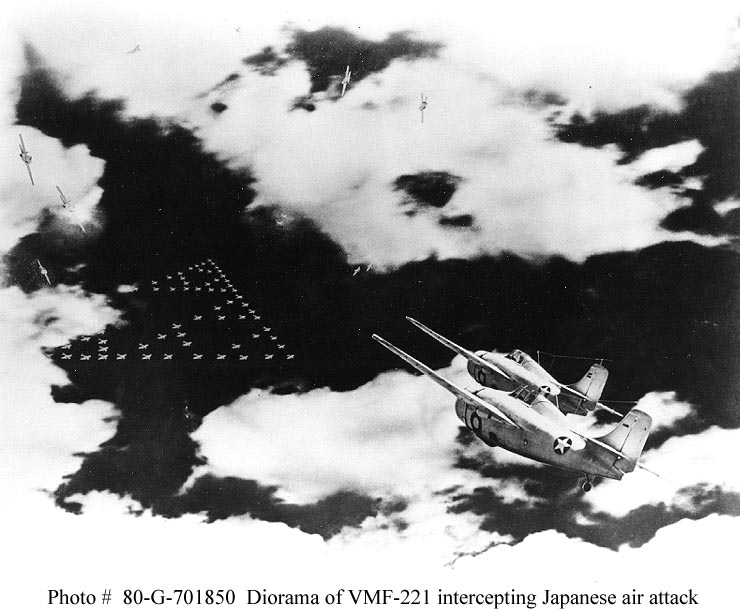
At 1020 the first Zero of the Japanese attack group began rolling down the flight deck of the flagship Akagi, aboard Kaga aircraft were warming up as they were on the Soryu.  The unsuspecting Japanese were finally alerted to the threat of the American dive bombers when lookouts screamed “helldivers.” The Japanese fighters assigned to the combat air patrol were flying too low as the mopped up the last of the doomed torpedo bombers and were not in a position to intercept the Americans.
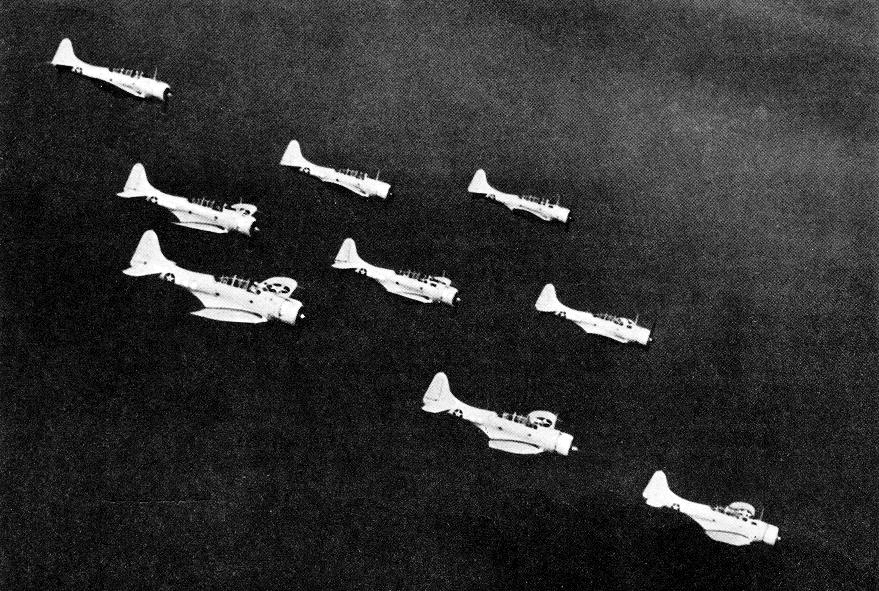
2edd2yr

Wade McClusky’s aircraft lined up over the Akagi and Kaga pushing into their dives at 1022. There was a bit of confusion when the bulk of Scouting 6 joined the attack of Bombing 6 on the Kaga. That unprepared ship was struck by four 1000 pound bombs which exploded on her flight deck and hangar deck igniting the fully fueled and armed aircraft of her strike group and the ordnance littered about the hangar deck.  Massive fires and explosions wracked the ship and in minutes the proud ship was reduced to an infernal hell with fires burning uncontrollably. She was abandoned and would sink at 1925 taking 800 of her crew with her.

sbddauntless

LT Dick Best of Scouting 6 peeled off from the attack on Kaga and shifted to the Japanese flagship Akagi. On board Akagi were two of Japan’s legendary pilots CDR Mitsuo Fuchida leader of and CDR Minoru Genda the architect of the Pearl Harbor attack and subsequent string of Japanese victories. Both officers were on the sick list and had come up from sick bay to watch as the fleet was attacked. Seeing Kaga burst into flames they stood mesmerized until Akagi’s lookouts screamed out the warning “helldivers” at 1026.

SBDstoastjapcarrier

Best’s few aircraft hit with deadly precision landing two of their bombs on Akagi’s flight deck creating havoc among the loaded aircraft and starting fires and igniting secondary explosions which turned the ship into a witch’s cauldron.  By 1046 Admiral Nagumo and his staff were forced to transfer the flag to the cruiser Nagara as Akagi’s crew tried to bring the flames under control. They would do so into the night until nothing more could be done and abandoned ship at 2000.  Admiral Yamamoto ordered her scuttled and at 0500 on June 5th the pride of the Japanese carrier force was scuttled.

SBD_ditching_near_USS_Astoria_1942

LCDR Max Leslie ditches his aircraft near a cruiser 

VB-3 under LCDR Max Leslie from the Yorktown stuck the Soryu with 17 aircraft, however only 13 of the aircraft had bombs due to an electronic arming device malfunction on 4 of the aircraft, including that of Commander Leslie.  Despite this Leslie led the squadron as it dove on the Soryu at 1025 hitting that ship with 3 and maybe as many as 5 bombs. Soryu like her companions burst into flames as the ready aircraft and ordnance exploded about her deck. She was ordered abandoned at 1055 and would sink at 1915 taking 718 of her crew with her. A few hours later Hiryu, which had succeeded in launching strikes that seriously damaged Yorktown met the fate of her sisters. Yorktown would be sunk by a Japanese submarine, along with the destroyer Hamman a few days later as her crew attempted to get her to Pearl Harbor. In five pivotal minutes the course of the war in the Pacific was changed.

A Final Ignominy

mikuma_135889

IJN Mikuma 

Admiral Yamamoto was still attempting to digest the calamity that had befallen Admiral Nagumo’s carrier task force. In the shocked atmosphere of the mighty Super Battleship Yamato’s command center the Staff of the Combined Fleet was hastily attempting to arrive at a solution which might reverse the disaster and bring victory.  Admiral Ugaki, Yamamoto’s Chief of Staff, despite strong personal doubts, ordered Vice Admiral Nobutake Kondo to prepare for a night surface engagement with the US Fleet and dispatched a strong surface force to bombard Midway in order to prevent the Americans from reinforcing it and to prevent its further use against his forces should the invasion move forward.  Kondo then organized his fleet to attempt to find the American carriers and bring them to battle before dawn.

Kondo detached Vice Admiral Takeo Kurita’s Close Support Group composed of Cruiser Seven, the fastest and most modern cruisers in the Imperial Navy proceed at full speed to attack Midway.  Kurita’s cruisers, the Kumano, Suzuya, Mikuma and Mogami were each armed with 10 8” guns and were escorted by the two destroyers.

Kurita’s force was 80 miles from Midway when Yamamoto realizing that his plan was unrealistic ordered Kondo’s forces to retreat and rendezvous with his main force shortly after midnight. The order was met with a measure of relief by most officers in the force and the force turned northwest and steamed at 28 knots to meet the Main Body.  At 0215 lookouts on Kumano sighted a submarine on the surface which turned out to be the USS Tambor which had been shadowing the group, and made a signal for the force to make a emergency 45 degree turn to port.

During the process Mogami’s Navigator took over from the watch to oversee the tricky maneuver. In doing so he thought that there was too much distance between him and the ship ahead, the Mikuma. So he adjusted his course to starboard and then realized his mistake. The ship he thought was Mikuma was actually Suzuya and Mikuma was directly ahead. As soon as he recognized his mistake Mogami’s Navigator ordered a hard turn to port and reversed the engines but it was too late. Mogami’s bow crashed into Mikuma’s port quarter. The impact caused minimal damage to Mikuma but Mogami was heavily damaged. She lost 40 feet of her bow and everything else was bent back to port at right angles to her number one turret.

Mogami’s damage control teams isolated the damage and worked the ship up to 12 knots. This was not fast enough for Kurita to make his rendezvous so he left Mikuma and the destroyers to escort Mogami while he steamed ahead with Kumano and Suzuya.

72149d1361e15e9f1540c2b425c023c7

Tambor’s skipper LCDR John W Murphy sent a contact report at 0300 reporting “many unidentified ships.” He followed this with more detailed information and the Americans on Midway began to launch its remaining serviceable aircraft to attack the threat. A flight of B-17 Bombers launched at 0430 could not find the Japanese ships but at 0630 a PBY Catalina found the Japanese and radioed Midway “two Japanese battleships streaming oil.”  The remaining 12 aircraft of VSMB-241 under command of Captain Marshall Tyler a mix of SBD Dauntless and SB2U Vindicators took off at 0700. His force attacked at 0808 scoring no hits. However, Marine Captain Richard Fleming, his Vindicator on fire dropped his bomb and then crashed his aircraft into Mikuma’s after turret. Sailors aboard Mogami were impressed, the American had sacrificed himself in a suicide attack worthy of the Samurai. The fire was sucked down air intakes into the starboard engine room with disastrous results. The Mikuma’s engineers were suffocated by the smoke and fumes and Mikuma was greatly reduced in speed.

mogami

Mikuma shattered, note wreckage of Captain Fleming’s Vindicator on turret 

The two ships limped northwest at 12 knots escorted by the destroyers and were unmolested through much of the day with the exception of an ineffective attack by the B-17s at 0830. The following morning the Dive Bombers of Enterprise and Hornet were at work and found the crippled Japanese ships. Waves over US Dive Bombers attacked the cruisers throughout the morning and into the afternoon. Mikuma was hit at least 5 times and secondary explosions of ammunition and torpedoes doomed the ship. Mogami was also heavily damaged but remained afloat while both destroyers received bomb damage.  At sunset the tough cruiser rolled over to port and sank into the Pacific. Mogami whose damage control teams had performed miracles to keep their ship afloat helped the destroyers rescue survivors from Mikuma.  Only 240 were rescued with 650 officers and sailors going down with the ship.

Link15-Mikuma-damage

Survivors abandoning Mikuma

The action against the cruisers ended the combat operations at Midway. The Japanese ships were doomed by Yamamoto’s decision to try to salvage victory from defeat and the error of Mogami’s Navigator during the emergency turn when Kumano sighted Tambor. The only thing that kept the result from being total was the efficacy of Mogami’s damage control teams.  Mogami was out of the war for 10 months following repairs and conversion to an Aircraft Cruiser in which her aft turrets were removed to increase the number of float plane scouts that the ship could carry. She rejoined the fleet in April 1943 and was sunk following the Battle of the Surigao Strait on 25 October 1944.

The Mogami and Mikuma proved to be tough ships to sink. Unprotected by friendly aircraft they fought hard against the unopposed American Dive Bombers. They suffered massive damage from 500 and 1000 pound bombs, both direct hits and near misses. Mogami was saved by the skill of her damage control teams and the foresight of her Damage Control Officer to jettison her torpedoes so that they did not explode and compound the damage wrought by the American bombs.


Epilogue

At Midway a distinctly smaller force defeated a vastly superior fleet in terms of experience, training and equipment. At the very moment that it appeared to the Japanese that they would advance to victory their vision disappeared. In a span of less than 5 minutes what looked like the certain defeat of the US Navy became one of the most incredible and even miraculous victories in the history of Naval warfare. In those 5 minutes history was changed in a breathtaking way. While the war would drag on and the Japanese still inflict painful losses and defeats on the US Navy in the waters around Guadalcanal the tide had turned and the Japanese lost the initiative in the Pacific never to regain it.

h73065

The Japanese government hid the defeat from the Japanese people instead proclaiming a great victory. The American government could not fully publicize the victory for fear of revealing the intelligence that led to the ability of the US Navy to be at the right place at the right time and defeat the Imperial Navy.

The American victory at Midway changed the course of the war in the Pacific. The Battle of Midway established the aircraft carrier and the fast carrier task force as the dominant force in naval warfare which some would argue it still remains. Finally those five minutes ushered in an era of US Navy dominance of the high seas which at least as of yet has not ended as the successors to the Enterprise, Hornet and Yorktown ply the oceans of the world and the descendants of those valiant carrier air groups ensure air superiority over battlefields around the world today.

Leave a comment

Filed under aircraft, History, Military, Navy Ships, US Navy, World War II at Sea, world war two in the pacific

The Thin Gray Line: The USS Yorktown, USS Enterprise and USS Hornet, the Carriers that Held the Japanese at Bay in 1942

yorktown-drydock1USS Yorktown CV-5

Seldom in the annals of war is recorded that three ships changed the course of a war and altered history.  Winston Churchill once said about Fighter Command of the Royal Air Force during the Battle of Britain: “Never in the field of human conflict was so much owed by so many to so few” however I would place the epic war waged by the three carriers of the Yorktown class against the Combined Fleet and First Carrier Strike Group, the Kido Butai of the Imperial Japanese Navy between December 1941 and November 1942 alongside the epic fight of the Royal Air Force against Hitler’s Luftwaffe.

The Carriers of the Yorktown Class hold a spot in United States Naval History nearly unequaled by any other class of ships, especially a class that numbered only three ships.  Designed and built in the mid 1930s they were the final class of pre-war carriers commissioned by the navy.  The ships were built incorporating the lessons learned with Langley, Lexington, Saratoga and Ranger and had features that would become standard in the design of US Aircraft Carriers. As such they were the template for future classes of ships beginning with the Essex Class until the advent of the super carriers of the Forrestal Class.

hornet-as-completed1USS Hornet CV-8

The ships heritage was evident in their names. Yorktown, the lead ship of the class named after the victory of Washington and Rochambeau over Cornwallis at Yorktown, Enterprise named after the sloop of war commanded by Stephen Decatur in the war against the Barbary Pirates, and Hornet after another famous Brig of War commanded by James Lawrence which defeated the British ship Peacock in the War of 1812.

They displaced 19.800 tons with a 25,000 full load displacement. Capable of 32.5 knots they were the Navy’s first truly successful class of carriers built from the keel up.  The ships could embark over aircraft and could steam long distances without refueling.  Protection was good for their era and the ships proved to be extraordinarily tough when tested in actual combat. In speed and air group capacity the only carriers of their era to equal them were the Japanese Hiryu and Soryu and the larger Shokaku and Zuikaku. British carriers of the period were about the same size but were slower and carried a smaller and far less capable air group though their protection which included armored flight decks was superior to both the American and Japanese ships.

enterprise-pre-war-with-ac-on-deck1USS Enterprise CV-6

Next week we will remember the epic battle of Midway, where these three gallant ships inflicted a devastating defeat on the Japanese First Carrier Strike Group. I believe that it is appropriate to go into that week remembering those ships and the brave sailors and aviators who made their triumph at Midway possible. the The links below are to articles about these three gallant ships.

They Held the Line: The USS Yorktown CV-5, USS Enterprise CV-6 and USS Hornet CV-8, Part One

They Held the Line: The USS Yorktown CV-5, USS Enterprise CV-6 and USS Hornet CV-8, Part Two the Hornet

They Held the Line: The USS Yorktown CV-5, USS Enterprise CV-6 and USS Hornet CV-8, Part Two the Hornet

Peace,

Padre Steve+

2 Comments

Filed under History, Military, Navy Ships, world war two in the pacific

Death of the Yamato

Yamato_sea_trials_2

As dawn broke on April 7th 1945 the great Super-Battleship Yamato, the pride of the Japanese Imperial Navy and nine escorts steamed toward Okinawa on a suicide mission. It was literally the end of empire and the end of a navy. What had begun on December 7th 1941 was now winding down as the Imperial Navy launched its last offensive operation against the United States Navy.

The Imperial Navy was already at the end of its tether. Following the disasters at the Battle of the Philippine Sea which decimated the carrier air arm of the Imperial Navy; the subsequent losses in the defense of Formosa which used up the majority of any remaining carrier aircraft and crews; and the Battle of Leyte Gulf which decimated the surface forces of the navy what remained was a pitiful remnant of a once dominant fleet.

The great battleship Yamato and her sister ship Musashi were the largest warships ever built until the advent of the USS Enterprise CVN-65. Displacing over 72,000 tons 863 feet long and 127 feet in beam these ships mounted the largest artillery battery ever placed on a warship. Their nine 18.1” guns mounted in three triple turrets each weighing over 2500 tons weighed as much or more than the largest destroyers of the time. They could fire their massive shells 26 miles and had the capability of firing a special anti-aircraft shell known as the Sanshiki or beehive round.

Battleship_Yamato_under_air_attack_April_1945

Musashi was sunk during the Battle of the Sibuyan Sea at Leyte Gulf on October 24th 1944 after being hit by 19 ariel torpedoes and 17 bombs. Yamato engaged the American Escort Carriers and destroyers of Taffy-3 at the Battle off Samar the following day but was prevented by the audacity of the inferior American destroyers and timidity of the Japanese commander Vice Admiral Takeo Kurita from achieving any notable success.

The remains of the Imperial Navy were hampered by a lack of fuel, air power and training time. When the United States attacked Iwo Jima in February 1945, barely 700 miles from the home islands of Japan not a single Japanese surface ship sortied to challenge the American Navy.

However when the American attacked Okinawa on April 1st the Navy launched Operation Ten-Go. In spite of overwhelming American superiority in both naval air and surface forces the tiny task force was to fight its way to Okinawa, beach their ships and once the ships were destroyed the crews were to join Japanese Army forces on the island.

The doomed sortie was in part due to the insistence of the Imperial Army which derided the Imperial Navy for its failures at Philippine Sea and Leyte Gulf and pressure from Emperor Hirohito who asked “But what about the Navy? What are they doing to assist in defending Okinawa? Have we no more ships?” In response the Naval High command devised what amounted to a suicide mission for Yamato and her escorts. The plan was opposed by many in the Navy and leaders of the task force who saw it as a futile mission. Only the insistence of Admiral Kusaka who told the reticent commanders that the Emperor expected the Navy to make its best effort to defend Okinawa persuaded the Captains of the doomed force to accept the mission.

g313714

At about 1600 on April 6th the ships of the task force weighed anchor and departed their anchorage at Tokuyama hoping to take advantage of approaching darkness to mask their departure. They were detected and shadowed by American submarines which provided real time information on the course and speed of the Japanese ships to the American leadership.

The next morning the task force was spotted by patrol planes and its position relayed to the American fleet commander, Admiral Raymond Spruance, the victor of Midway. Spruance ordered the six fast battleships battleships, accompanied by two battlecruisers, seven cruisers and 21 destroyers engaged in shore bombardment to intercept the Japanese force. However, Admiral Marc Mitscher of Task Force 58, the fast carriers launched a massive air strike of over 400 aircraft against the Japanese.

Steichin-48

At 1232 the first wave of American aircraft began their attacks on the doomed Japanese force. As the succeeding waves of American aircraft attacked Yamato was hit by 15 bombs and at least 8 torpedoes, almost all of which struck her port side created an imminent risk of capsizing. The damage control teams counter flooded the starboard engine and boiler rooms which kept the ship from turning turtle, but which also further reduced her speed.

images

By 1405 the great ship was dead in the water and just minutes before her commander had ordered the crew to abandon ship. At 1420 she capsized and began to sink and at 1423 she blew apart in a massive explosion that was reportedly heard and seen 120 miles away and created a mushroom cloud that reached 20,000 feet.

Captain Tameichi Hara of the light cruiser Yahagi which had already sank described the demise of the great ship in his book Japanese Destroyer Captain:

“We looked and saw Yamato, still moving. What a beautiful sight. Suddenly smoke belched from her waterline. We both groaned as white smoke billowed out until it covered the great battleship, giving her the appearance of a snow-capped Mount Fuji. Next came black smoke mingled with the white, forming to a huge cloud which climbed to 2000 meters. As it drifted away we looked to the surface of the sea again and there was nothing. Yamato had vanished. Tremendous detonations at 1423 of that seventh day of April signaled the end of this “unsinkable” symbol of the Imperial Navy.”

Only 280 men of the estimated 3000 crew members were rescued by the surviving escorts. Of her escorts, the Yahagi and four destroyers were also sunk. The Americans lost a total of ten aircraft and 12 men. Never again would the surface forces of the Imperial Navy threaten U.S. forces or take any meaningful part in the war.

The sacrifice of Yamato and her escorts was a futile was of lives and though many in Japan revere their sacrifice as noble it served no purpose. The loss of Yamato, named after the ancient Yamato province in a sense was symbolic of the demise of the Japanese Empire.

I cannot help but think of gallantry of the doomed crews of these ships, sacrificed for the “honor” of leaders that did not really value their sacrifice.

It is a commentary that is timeless.

Peace

Padre Steve+

2 Comments

Filed under History, Military, Navy Ships, world war two in the pacific

Remembering USS Indianapolis CA-35: Disaster, Dishonor and Redemption

USS_Indianapolis_at_Mare_Island

“Our peoples have forgiven each other for that terrible war and its consequences. Perhaps it is time your peoples forgave Captain McVay for the humiliation of his unjust conviction.” Mochitsura Hashimoto, Captain of the I-58 to Senator John Warner

On July 30th 1945 the USS Indianapolis CA-35 was speeding from the island of Guam where she had made some personnel transfers to Leyte to join other American forces for the final campaign against Japan.

Indianapolis under the command of Captain Charles B McVay III had completed one of the most important secret missions of the war. She had delivered the component parts and enriched Uranium for the the first Atomic Bomb, Little Boy which in less than a week would be detonated over the Japanese City of Hiroshima on August 6th 1945.

Indianapolis was the second ship of the Portland Class heavy cruisers built under the terms of the Washington Naval Conference. Displacing 9800 tons and mounting a main battery of 9 8” guns she typical of the American cruisers of the era. During the 1930s she hosted President Franklin D. Roosevelt three times. When Pearl Harbor was attacked she was on gunnery exercises and from that point played an active role in combat operations in the South Pacific, the Aleutians later served as flagship to Admiral Raymond Spruance, Commander 5th Fleet. After being damaged a Kamikaze off Okinawa on March 31st 1945. She then returned to Mare Island for repairs and a rendezvous with destiny.

With the components for Little Boy aboard Indianapolis sailed unescorted to Pearl Harbor in complete secrecy and then to Tinian where she delivered her deadly cargo. After her brief port call in Guam she made haste to join Vice Admiral Jesse Oldendorf’s Task Force 95 at off Leyte. Her Captain used discretion in his use of a zig-zag course and was not employing it on the night of July 30th.

ce006i58

What Captain McVay and his crew did not know was that the Japanese Imperial Navy submarine I-58 under the command of Lieutenant Commander Mochitsura Hashimoto was stalking Indianapolis. At 2300 on the 29th while surfaced the Japanese noted a ship approaching and submerged. At 0014 after he gained firing position Hashimoto launched a spread of 6 Type 95 torpedoes, one of the most powerful type of torpedoes used during the war. Two stuck Indianapolis on her starboard side. The powerful charges caused catastrophic damage and 12 minutes later the cruiser rolled over and sank taking about 300 of her nearly 1200 man crew down with her.

She sank so quickly that few lifeboats or rafts were launched and no distress call issued. It took the Navy nearly three days to even know that she was missing. Finally on August 2d the survivors, now decimated by exposure, dehydration and shark attacks were spotted by a patrol plane. The aircraft sent a message out and other aircraft and the USS Cecil J. Doyle DE-368 as well as a number of other ships which responded to the call. Only 321 crewmen out of the estimated 880 survivors of the sinking lived.

USS_Indianapolis-survivors_on_Guam

The tale of the sinking and the stories of the survivors would be recorded in Fatal Voyage by Daniel Kurzman and All the Drowned Sailors by Raymond Lech. It was also mentioned in the movie Jaws by Robert Shaw’s character, the fishing boat Captain “Quint” who was supposed to be an Indianapolis survivor. The made for television film Mission of the Shark: The Saga of the U.S.S. Indianapolis staring Stacy Keach as Captain McVay brought a renewed interest in the sinking and the story of the survivors.

indy4

Captain McVay would be tried at court-martial and convicted of “hazarding his ship by failing to zig-zag.” The sentence was controversial as McVay was the only commander of a U.S. Navy ship lost during the war to be tried by court-martial. The true fact of the matter was that McVay was a scapegoat for the failure of several systems of reporting and communication that he did not control.

Admiral Nimitz commuted the sentence and restored McVay to active duty. He retired in 1949 after being promote to Rear Admiral. Despite the fact that many of the crew felt that he was innocent many families of those lost at sea took their revenge on McVay. He received much hate mail and was frequently threatened in writing and by phone. On November 6th 1968 McVay, despondent over the death of his wife and the continued harassment committed suicide using his Navy issued revolver in his back yard. In one hand he grasped a toy sailor doll given to him by his father when he was a child.

In the years following many survivors banded together with Captain McVay’s family and others including the commander of I-58, Mochitsura Hashimoto to clear his name. The president of the USS Indianapolis Survivor’s Association testified “Capt. McVay’s court-martial was simply to divert attention from the terrible loss of life caused by procedural mistakes which never alerted anyone that we were missing.” 

220px-Mochitsura_Hashimoto

Hashimoto, who spent much of his time after the war as a Shinto priest sought the forgiveness of survivors. He returned to a survivor reunion in 1991 and said: “I came here to pray with you for your shipmates whose deaths I caused.”   

Hashimoto wrote Senator John Warner on behalf of the late Captain McVay in 1999 when he learned of the efforts being made to clear McVay’s name. The letter is touching in its honesty and speaks of the deep respect that warriors who once fought against each other can maintain for one another. It also speaks to the deep sense of honor of Hashimoto:

“I hear that your legislature is considering resolutions which would clear the name of the late Charles Butler McVay III, captain of the USS Indianapolis which was sunk on July 30, 1945, by torpedoes fired from the submarine which was under my command.

“I do not understand why Captain McVay was court-martialed. I do not understand why he was convicted on the charge of hazarding his ship by failing to zigzag because I would have been able to launch a successful torpedo attack against his ship whether it had been zigzagging or not.

“I have met may of your brave men who survived the sinking of the Indianapolis. I would like to join them in urging that your national legislature clear their captain’s name.

“Our peoples have forgiven each other for that terrible war and its consequences. Perhaps it is time your peoples forgave Captain McVay for the humiliation of his unjust conviction.”

Finally in October 2000 Congress passed a resolution stating of Captain McVay that “he is exonerated for the loss of the USS Indianapolis.” President Clinton signed the resolution and in July 2001 Secretary of the Navy Gordon England order Captain McVay’s record cleared of wrong doing. Hashimoto would die on 25th 2000 at the age of 91.

This year, on the 68th anniversary of the sinking 17 survivors gathered to mark the occasion and pay tribute to their shipmates. The Facebook page of the association has this memorial:

Goodnight and sleep well, crew of the USS Indianapolis. On this night, sixty-eight years ago, you had no way of knowing that a Japanese torpedo would hit your ship in just a few short hours. Your floating home away from home would sink within twelve minutes. Unable to get topside in time, three hundred of you would go to the bottom of the ocean with your ship. Nine hundred of you would find yourselves in the water, about to experience a terrifying existence amid sharks, dehydration, hallucinations, and the elements. 

You were so young, Indy sailors. 

Tonight, like that night, let your minds be free from nightmares and flashbacks. Tonight, like that night, know that your families and friends miss and love you. Tonight, like that night, just be “The Crew of the USS Indianapolis” instead of “Survivors” or “Lost at Sea.”

800px-USS_Indianapolis_(CA-25)_Memorial

I cannot say more.

Peace

Padre Steve+

Leave a comment

Filed under History, Navy Ships, US Navy, world war two in the pacific

The Province of Chance: The Battle of Midway, 5 Minutes that Changed the Course of a War

Battle%20of%20Midway%20flat_080817160843

“War is the province of chance. In no other sphere of human activity must such a margin be left for this intruder. It increases the uncertainty of every circumstance and deranges the course of events.” Carl Von Clausewitz 

“Even against the greatest of odds, there is something in the human spirit – a magic blend of skill, faith, and valor – that can lift men from certain defeat to incredible victory.”  Walter Lord

Six months after Pearl Harbor the United States Navy met the Imperial Japanese Navy in battle on the seas and in the airspace around Midway Island. It was a battle between a fleet that had known nothing but victory in the months after Pearl Harbor and one with the exception of a few minor tactical successes was reeling.

images-41

The Japanese had swept across the Pacific and the Indian Oceans and decimated every Allied Naval forces that stood in their way. After Pearl Harbor they had sunk the HMS Prince of Wales and HMS Repulse off of Singapore.  Next in a series of engagements destroyed the bulk of the US Asiatic Fleet in the waters around the Philippines and the Dutch East Indies culminating in the Battle of the Java Sea where the bulk of the American, British, Dutch and Australian (ABDA) naval forces engaged were annihilated attempting to fight superior Japanese forces.

Hermes_sinking

HMS Hermes sinking after Japanese Carrier air attack

In the Indian Ocean Admiral Nagumo’s carriers dispatched a force of Royal Navy cruisers and the Aircraft Carrier HMS Hermes. In only one place had a Japanese Naval task force been prevented from achieving its goal. At the Battle of the Coral Sea where Task Force 11 and Task Force 17 centered on the Carriers USS Lexington and USS Yorktown prevented a Japanese invasion force from taking Port Moresby sinking the light carrier Shoho, damaging the modern carrier Shokaku and decimating the air groups of the Japanese task force.

Hornet_launches

In May US Navy code breakers under the direction of Commander Joe Rochefort at Pearl Harbor discovered the next move of the Imperial Navy an attack on Midway Island and the Aleutian islands. Since the occupation of Midway by Japanese forces would give them an operational base less than 1000 miles from Pearl Harbor Admiral Chester Nimitz committed the bulk of his naval power, the carriers USS Enterprise CV-6, USS Yorktown CV-5 and USS Hornet CV-8 and their 8 escorting cruisers and 15 destroyers, a total of 26 ships with 233 aircraft embarked to defend Midway. Nimitz also sent a force of 5 cruisers and 4 destroyers to cover the Aleutians.

images-42

images-43

Land based air assets on Midway were composed of a mixed Marine, Navy and Army air group of 115 aircraft, many of which were obsolete. Aboard Midway there were 32 US Navy PBY Catalina Flying Boats, 83 fighters, dive bombers, torpedo planes and Army Air Force bombers piloted by a host of inexperienced pilots.

Nimitz’s instructions to his Task Force Commanders was simple “You will be governed by the principle of calculated risk, which you shall interpret to mean the avoidance of exposure of your force to attack by superior enemy forces without good prospect of inflicting … greater damage on the enemy.”

893594c746

Admiral Isoroku Yamamoto commanded the Combined Fleet. The victor of Pearl Harbor and the triumph’s in the first six months of the Pacific War was determined to end the war with a decisive battle at Midway. His plans were opposed by many in the Imperial General Staff, especially those in the Army but when the US raid on Tokyo, the Doolittle Raid, all opposition to the attack was dropped.

10-japanese-carriers-coral-sea-midway

The Japanese sent a force of 7 battleships and 7 carriers against Midway. These included the elite First Carrier Striking Group composed of the Pearl Harbor attackers Akagi, Kaga, Soryu and Hiryu and their highly trained and combat experienced air groups. Among the surface ships was Yamamoto’s flagship, the mighty Battleship Yamato, at 72,000 tons and armed with 9 18” guns, the most powerful and largest battleship ever to see combat.

The strike force included 273 aircraft and was escorted by 14 cruisers and 39 destroyers. They were to take Midway and then destroy the US Navy when it came out to fight. Yamamoto sent a force force of 4 battleships, 12 destroyers assigned screen to the Aleutian invasion force which was accompanied by 2 carriers 6 cruisers and 10 destroyers. The other carriers embarked a further 114 aircraft.

Despite this great preponderance in numbers Yamamoto’s plan was complex and his forces too far apart from each other to offer support should and get into trouble. The powerful Japanese Task forces were scattered over thousands of square miles of the Northern Pacific Ocean where they could not rapidly come to the assistance of any other group.

images-44

With the foreknowledge provided by the code breakers the US forces hurried to an intercept position northeast of Midway eluding the Japanese submarine scout line which the Japanese Commander Admiral Yamamoto presumed would find them when they sailed to respond to the Japanese attack on Midway.  Task Force 16 with the Enterprise and Hornet sailed first under the command of Rear Admiral Raymond A Spruance and Task Force 17 under Rear Admiral Frank “Jack” Fletcher with the Yorktown which had been miraculously brought into fighting condition after suffering heavy damage at Coral Sea. Fletcher assumed overall command by virtue of seniority and Admiral Nimitz instructed his commanders to apply the principle of calculated risk when engaging the Japanese as the loss of the US carriers would place the entire Pacific at the mercy of the Japanese Navy.

On June 3rd a PBY Catalina discovered the Japanese invasion force and US long range bombers launched attacks against it causing no damage. The morning of the 4th the Americans adjusted their search patterns in and the Japanese came into range of Midway and commenced their first strike against the island.

g17056

In response land based aircraft from Midway attacked the Japanese carrier force taking heavy casualties and failing to damage the Japanese task force. The American Carrier task forces launched their strike groups at the Japanese fleet leaving enough aircraft behind of the Combat Air Patrol and Anti-submarine patrol.  As the Americans winged toward the Japanese fleet the Japanese were in a state of confusion. The confusion was caused when a scout plane from the Heavy Cruiser Tone that had been delayed at launch discovered US ships but did not identify a carrier among them until later into the patrol. The carrier  was the Yorktown and TF 17, but for Nagumo who first expected no American naval forces, then received a report of surface ships without a carrier followed by the report of a carrier the reports were unsettling.

a5f7ab19-17c6-4928-90a4-5bb913d156eb

Orders and counter-orders were issued as the Japanese attempted to recover their strike aircraft and prepare for a second strike on the island and then on discovery of the Yorktown task force, orders changed and air crews unloaded ground attack ordnance in favor of aerial torpedoes and armor piercing bombs. The hard working Japanese aircrew did not have time to stow the ordnance removed from the aircraft but by 1020 they had the Japanese strike group ready to launch against the US carriers.

g701850

As the Japanese crews worked the Japanese carriers were engaged in fending off attacks by the US torpedo bomber squadrons, VT-6 from Enterprise, VT-8 from Hornet and VT-3 from Yorktown. The Japanese Combat Air Patrol ripped into the slow, cumbersome and under armed TBD Devastators as they came in low to launch their torpedoes.  Torpedo Eight from Hornet under the command of LCDR John C Waldron pressed the attack hard but all 15 of the Devastators were shot down. Only Ensign George Gay’s aircraft was able to launch its torpedo before being shot down and Gay would be the sole survivor of the squadron.

g66074


LCDR Lance Massey CO of VT-3

Page500_163_6

LCDR John Waldron CO of VT-8

220px-Eugene_Lindsey;h84903

LCDR Eugene Lindsey CO of VT-6

Torpedo 6 from Enterprise under the command of LCDR Eugene Lindsey suffered heavy casualties losing 10 of 14 aircraft with Lindsey being one of the casualties.  The last group of Devastators to attack was Torpedo 3 from Yorktown under the command of LCDR Lem Massey from the Yorktown. These aircraft were also decimated and Massey killed but they had drawn the Japanese Combat Air Patrol down to the deck leaving the task force exposed to the Dive Bombers of the Enterprise and Yorktown.

800px-tbd_attacking_at_midway_painting-1

There had been confusion among the Americans as to the exact location of the Japanese Carriers. Bombing 8 and Scouting 8 from Hornet did not find the carriers and had to return for lack of fuel while losing a number of bombers and their fighter escort having to ditch inn the ocean and wait for rescue. The Enterprise group composed of Bombing-6 and Scouting 6 under CDR Wade McClusky was perilously low on fuel when the wake of a Japanese destroyer was spotted.  McClusky followed it to the Japanese Task Force. The Yorktown’s group under LCDR Max Leslie arrived about the same time.

Dauntless_dive_bombers

When the American dive bombers arrived over the Japanese Carrier Strike Force they found the skies empty of Japanese aircraft. Below, aboard the Japanese ships there was a sense of exhilaration as each succeeding group of attackers was brought down and with their own aircraft ready to launch and deal a fatal blow to the American carrier wondered how big their victory would be. The war would soon be decided.

midway4

At 1020 the first Zero of the Japanese attack group began rolling down the flight deck of the flagship Akagi, aboard Kaga aircraft were warming up as they were on the Soryu.  The unsuspecting Japanese were finally alerted when lookouts screamed “helldivers.” Wade McClusky’s aircraft lined up over the Akagi and Kaga pushing into their dives at 1022. There was a bit of confusion when the bulk of Scouting 6 joined the attack of Bombing 6 on the Kaga. That unprepared ship was struck by four 1000 pound bombs which exploded on her flight deck and hangar deck igniting the fully fueled and armed aircraft of her strike group and the ordnance littered about the hangar deck.  Massive fires and explosions wracked the ship and in minutes the proud ship was reduced to an infernal hell with fires burning uncontrollably. She was abandoned and would sink at 1925 taking 800 of her crew with her.

douglas-sbd5-dauntless-dive-bomber-battle-of-midway-01

LT Dick Best of Scouting 6 peeled off from the attack on Kaga and shifted to the Japanese flagship Akagi. On board Akagi were two of Japan’s legendary pilots CDR Mitsuo Fuchida leader of and CDR Minoru Genda the architect of the Pearl Harbor attack and subsequent string of Japanese victories. Both officers were on the sick list and had come up from sick bay to watch as the fleet was attacked. Seeing Kaga burst into flames they stood mesmerized until Akagi’s lookouts screamed out the warning “helldivers” at 1026.  Best’s few aircraft hit with deadly precision landing two of their bombs on Akagi’s flight deck creating havoc among the loaded aircraft and starting fires and igniting secondary explosions which turned the ship into a witch’s cauldron.  By 1046 Admiral Nagumo and his staff were forced to transfer the flag to the cruiser Nagara as Akagi’s crew tried to bring the flames under control. They would do so into the night until nothing more could be done and abandoned ship at 2000.  Admiral Yamamoto ordered her scuttled and at 0500 on June 5th the pride of the Japanese carrier force was scuttled.

g701870

VB-3 under LCDR Max Leslie from the Yorktown stuck the Soryu with 17 aircraft, however only 13 of the aircraft had bombs due to an electronic arming device malfunction on 4 of the aircraft, including that of Commander Leslie.  Despite this Leslie led the squadron as it dove on the Soryu at 1025 hitting that ship with 3 and maybe as many as 5 bombs. Soryu like her companions burst into flames as the ready aircraft and ordnance exploded about her deck. She was ordered abandoned at 1055 and would sink at 1915 taking 718 of her crew with her.

h73065

The remaining Japanese flattop the Hiryu attained the same fate later in the day after engaging in an epic duel with the Yorktown which her aircraft heavily damaged. Yorktown would be sunk by the Japanese submarine I-168 while being towed to safety.

71380-004-B4724C34

USS Yorktown under attack from Kate Torpedo Bombers from Hiryu on June 4th 1942

In five pivotal minutes the course of the war in the Pacific was changed. Authors have entitled books about Midway Incredible Victory by Walter Lord and Miracle at Midway by Gordon Prange and those titles reflect the essence of the battle.

At Midway a distinctly smaller force defeated a vastly superior fleet in terms of experience, training and equipment. At the very moment that it appeared to the Japanese that they would advance to victory their vision disappeared. In a span of less than 5 minutes what looked like the certain defeat of the US Navy became one of the most incredible and even miraculous victories in the history of Naval warfare. In those 5 minutes history was changed in a breathtaking way. While the war would drag on and the Japanese still inflict painful losses and defeats on the US Navy in the waters around Guadalcanal the tide had turned and the Japanese lost the initiative in the Pacific never to regain it.

The Japanese government hid the defeat from the Japanese people instead proclaiming a great victory. The American government could not fully publicize the victory for fear of revealing the intelligence that led to the ability of the US Navy to be at the right place at the right time and defeat the Imperial Navy.

uss-enterprise-cv-6-1

The American victory at Midway changed the course of the war in the Pacific. The Battle of Midway established the aircraft carrier and the fast carrier task force as the dominant force in naval warfare which some would argue it still remains. Finally those five minutes ushered in an era of US Navy dominance of the high seas which at least as of yet has not ended as the successors to the Enterprise, Hornet and Yorktown ply the oceans of the world and the descendants of those valiant carrier air groups ensure air superiority over battlefields around the world.

Peace

Padre Steve+

1 Comment

Filed under History, Military, Navy Ships, US Navy, world war two in the pacific