Tag Archives: civil rights

The Bible on Our Side: Southern Religious Support of Slavery

Friends of Padre Steve’s World,

This week I have been relating religion to civil rights through the lens of the slavery, abolition, and the ante-bellum United States and today I will continue that with another section of my Civil War and Gettysburg Staff Ride text. It comes from the same chapter as my past few posts dealing with the role of religion and ideology in the period and its effect on the antagonists before, during and after the war. 

It is a lens through which we can view other topics that divide us today including the continuing battle against racism, Women’s rights and Gay rights. The fact is that we cannot isolate these issues from the understanding that the defense of liberty for all safeguards liberty for all. Sadly, there are a substantial number of Christians in the United States who do not believe that and through the legislative process seek to limit, role back, or completely deny rights to groups that they despise, especially Gays, but also women, and racial and religious minorities. We cannot get around that fact. It is happening with new instances occurring almost every week, and much of these laws are being passed due to the “sincerely held religious beliefs” of Christians to deny other people’s rights based on their interpretation of Biblical texts.

The words of the current politicians, preachers and pundits who fight to limit the rights of others is strikingly similar to those who defended slavery and attacked those who fought against it.   

This is not new, it has happened many times in our history, but the most notorious and injurious to American society was the defense of the institution of Slavery by American Christians, particularly those in the South. This article discusses that defense of slavery which arose in response to the tiny, but vocal number of Christians who helped lead the abolition movement.

Have a great day,

Peace

Padre Steve+
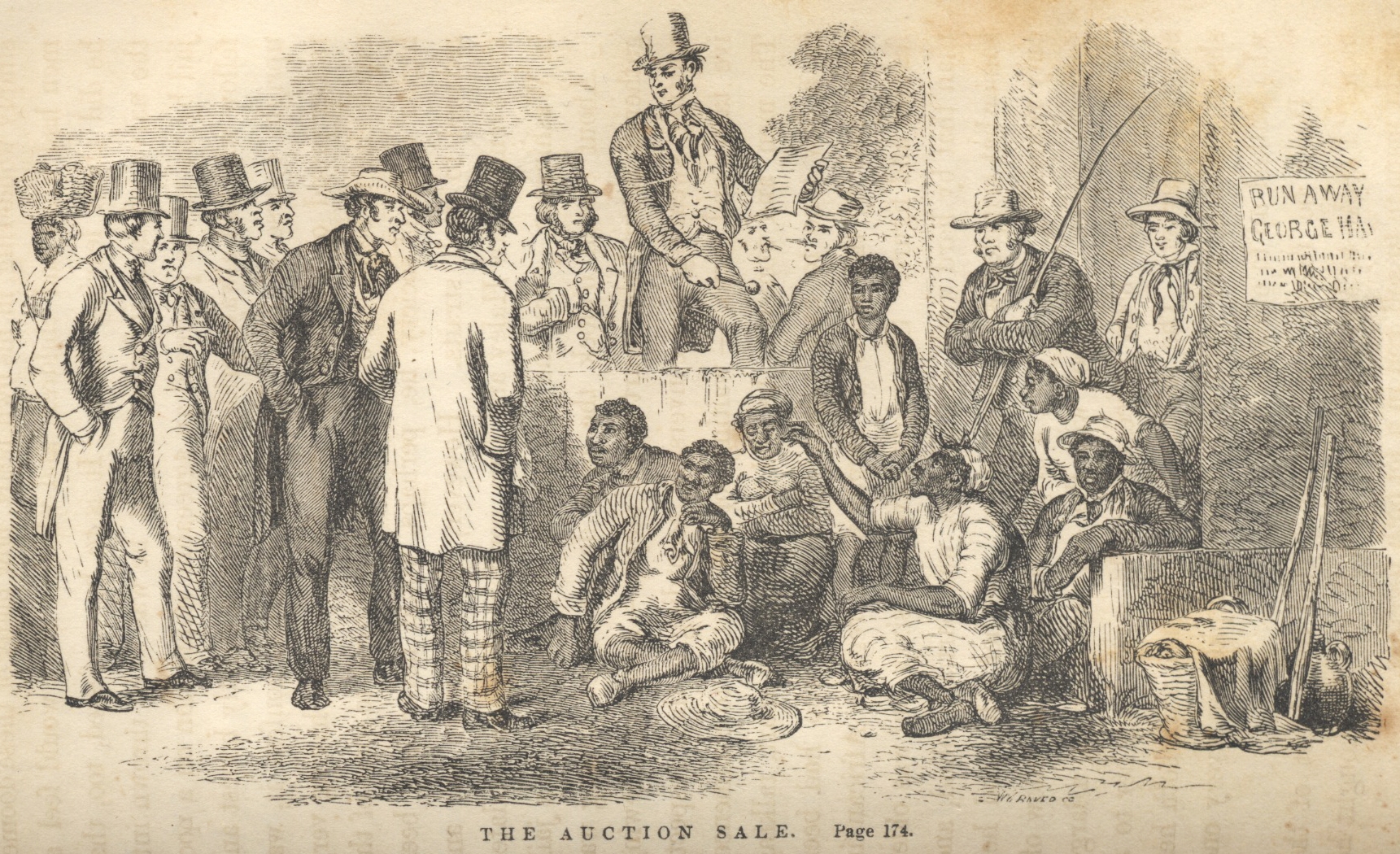
OTCauction

Southern Religious Support of Slavery

“we must go before the nation with the Bible as the text and ‘Thus saith the Lord’ as the answer….we know that on the Bible argument the abolition party will be driven to reveal their true infidel tendencies. The Bible being bound to stand on our side…” Reverend Robert Lewis Dabney on defending slavery and condemning its critics

In light of the threat posed to slavery by the emerging abolitionist movement, slaveholders were forced to shift their defense of slavery away from it being simply a necessary evil to a positive good. The institution of slavery became “in both secular and religious discourse, the central component of the mission God had designed for the South.” [1] Like in the North where theology was at the heart of many abolitionist arguments, in the South theology was used to enshrine and defend the institution of slavery. British Evangelical-Anglican theologian Alister McGrath notes how “the arguments used by the pro-slavery lobby represent a fascinating illustration and condemnation of how the Bible may be used to support a notion by reading the text within a rigid interpretive framework that forces predetermined conclusions to the text.” [2]

Southern religion was a key component of something bigger than itself and played a role in the development of an ideology much more entrenched in the Southern culture than the abolitionist cause did in the North. This was in large part due to the same Second Great Awakening that brought abolitionism to the fore in the North. “Between 1801 when he Great Revival swept the region and 1831 when the slavery debate began, southern evangelicals achieved cultural dominance in the region. Looking back over the first thirty years of the century, they concluded that God had converted and blessed their region.” [3] The Southern ideology which enshrined slavery as a key component of all areas of life was a complete worldview, a system of values, culture, religion and economics, or to use the more modern German term “Weltanschauung.” The Confederate worldview was the Cause. As Emory Thomas wrote in his book The Confederate Nation:

“it was the result of the secular transubstantiation in which the common elements of Southern life became sanctified in the Southern mind. The South’s ideological cause was more than the sum of its parts, more than the material circumstances and conditions from which it sprang. In the Confederate South the cause was ultimately an affair of the viscera….Questions about the Southern way of life became moral questions, and compromises of Southern life style would become concession of virtue and righteousness.” [4]

Despite the dissent of some, the “dominant position in the South was strongly pro-slavery, and the Bible was used to defend this entrenched position.” [5] This was tied to a strongly Calvinistic theology which saw slavery in context with the spread of the evangelical Protestant faith that had swept through the South as slavery spread. For many, if not most Southern ministers “the very spread of evangelical religion and slave labor in the South was a sign of God’s divine favor. Ministers did not focus on defending slavery in the abstract but rather championed Christian slaveholding as it was practiced in the American South. Though conceding that some forms of slavery might be evil, Southern slavery was not.” [6]

The former Governor of South Carolina, John Henry Hammond, led the religiously based counter argument to the abolitionists. Hammond’s arguments included biblical justification of blacks being biologically inferior to whites and slavery being supported in the Old Testament where the “Hebrews often practiced slavery” and in the New testament where “Christ never denounced servitude.” [7] Hammond warned:

“Without white masters’ paternalistic protection, biologically inferior blacks, loving sleep above all and “sensual excitements of all kinds when awake” would first snooze, then wander, then plunder, then murder, then be exterminated and reenslaved.” [8]

Others in the South, including politicians, pundits and preachers were preaching “that slavery was an institution sanction by God, and that even blacks profited from it, for they had been snatched out of pagan and uncivilized Africa and been given the advantages of the gospel.” [9] The basic understanding was that slavery existed because “God had providential purposes for slavery.” [10]

At the heart of the pro-slavery theological arguments was in the conviction of most Southern preachers of human sinfulness. “Many Southern clergymen found divine sanction for racial subordination in the “truth” that blacks were cursed as “Sons of Ham” and justified bondage by citing Biblical examples.” [11] But simply citing scripture to justify the reality of a system of which they reaped the benefit, is just part of the story. The real issue was far greater than that. The theology that justified slavery also, in the minds of many Christians in the north justified what they considered “the hedonistic aspects of the Southern life style.” [12] This was something that abolitionist preachers continually emphasized, criticizing the greed, sloth and lust inherent in the culture of slavery and plantation life, and was an accusation of which Southern slaveholders, especially evangelicals took umbrage, for in their understanding good men could own slaves. Their defense was rooted in their theology. The hyper-individualistic language of Southern evangelicalism gave “new life to the claim that good men could hold slaves. Slaveholding was a traditional mark of success, and a moral defense of slavery was implicit wherever Americans who considered themselves good Christians held slaves.” [13] The hedonism and fundamentalism that existed in the Southern soul, was the “same conservative faith which inspired John Brown to violence in an attempt to abolish slavery…” [14]

Slave owners frequently expressed hostility to independent black churches and conducted violence against them, and “attacks on clandestine prayer meetings were not arbitrary. They reflected the assumption (as one Mississippi slave put it) “that when colored people were praying [by themselves] it was against them.” [15] But some Southern blacks accepted the basic tenets of slave owner-planter sponsored Christianity. Frederick Douglass later wrote “many good, religious colored people who were under the delusion that God required them to submit to slavery and wear their chains with weakness and humility.” [16]

The political and cultural rift began to affect entire church denominations. The heart of the matter went directly to theology, in this case the interpretation of the Bible in American churches. The American Protestant and Evangelical understanding was rooted in the key theological principle of the Protestant Reformation, that of Sola Scripura, which became an intellectual trap for northerners and southerners of various theological stripes. Southerners believed that they held a “special fidelity to the Bible and relations with God. Southerners thought abolitionists either did not understand the Bible or did not know God’s will, and suspected them of perverting both.” [17]The problem was then, as it is now that:

“Americans favored a commonsense understanding of the Bible that ripped passages out of context and applied them to all people at all times. Sola scriptura both set and limited terms for discussing slavery and gave apologists for the institution great advantages. The patriarchs of the Old Testament had owned slaves, Mosaic Law upheld slavery, Jesus had not condemned slavery, and the apostles had advised slaves to obey their masters – these points summed up and closed the case for many southerners and no small number of northerners.” [18]

In the early decades of the nineteenth century there existed a certain confusion and ambivalence to slavery in most denominations. The Presbyterians exemplified this when in 1818 the “General Assembly of the Presbyterian Church, while opposing slavery against the law of God, also went on record as opposing abolition, and deposed a minister for advocating abolition.” [19] There were arguments by some American Christians including some Catholics, Lutherans, Episcopalians and others to offer alternative ways to “interpreting and applying scripture to the slavery question, but none were convincing or influential enough to force debate” [20] out of the hands of literalists.

However the real schisms between the Northern and Southern branches of the major denominations which began to emerge in the mid to late 1830s continued to grow with the actual breakups of the major denominations coming in the 1840s. The first denomination to split were the Methodists. This occurred in 1844 when “the Methodist General Conference condemned the bishop of Georgia for holding slaves, the church split and the following year saw the birth of the Methodist Episcopal Church.” [21] Not all Methodists in the South agreed with this split and a few Methodist abolitionists in the South “broke away from mainline Methodism to form the Free Methodist Church.” [22]

The Baptists were next, when the Foreign Mission Board “refused to commission a candidate who had been recommended by the Georgia Baptist Convention, on the ground that he owned slaves” [23] resulting in the formation of the Southern Baptist Convention. The Baptist split is interesting because until the early 1800s there existed a fairly strong anti-slavery movement in states such as Kentucky, while in 1790 the General Committee of Virginia “adopted a statement calling slavery “a violent deprivation of the rights of nature, and inconsistent with a republican government; and therefore [we] recommend it to our brethren to make use of every legal measure, to extirpate the horrid evil from the land.” [24]

However, in many parts of the Deep South there existed no such sentiment and in South Carolina, noted Baptist preachers including “Richard Furman, Peter Bainbridge, and Edmund Botsford were among the larger slaveholders.” [25] Furman wrote a defense of slavery in 1822 where he made the argument that “the right of holding slaves is clearly established in the Holy Scriptures by precept and example.” [26] After a number of slave uprisings, including the Nat Turner Revolt in Virginia, pro-slavery voices “tended to silence any remaining antislavery voices in the South.” [27]

These voices grew more ever more strident and in 1835 the Charleston Association “adopted a militant defense of slavery, sternly chastising abolitionists as “mistaken philanthropists, and denuded and mischievous fanatics.” [28] Those who met in Augusta Georgia to found the new Southern Baptist Convention indicated that “the division was “painful” but necessary because” our brethren have pressed upon every inch of our privileges and our sacred rights.” [29] Since the Baptist split was brought about by the refusal of the Triennial Convention to appoint slaveholders as foreign missionaries the new convention emphasized the theological nature of their decision:

“Our objects, then, are the extension of the Messiah’s kingdom, and the glory of God. Not disunion with any of his people; not the upholding of any form of civil rights; but God’s glory, and Messiah’s increasing reign; in the promotion of which, we find no necessity for relinquishing any of our civil rights. We will never interfere with what is Caesar’s. We will not compromit what is God’s.” [30]

Of course, to the Baptists who met at Augusta, “what was Caesar’s” was obviously the institution of slavery.

The last denomination to officially split was the Presbyterians in 1861 who, “reflecting the division of the nation, the Southern presbyteries withdrew from the Presbyterian Church and founded their own denomination.” [31] The split in the Presbyterian Church had been obvious for years despite their outward unity. Some Southern pastors and theologians were at the forefront of battling their northern counterparts for the theological high ground that defined just whose side God was on. James Henley Thornwell presented the conflict between northern evangelical abolitionists and southern evangelical defenders of slavery in Manichean terms. He believed that abolitionists attacked religion itself.

“The “parties in the conflict are not merely abolitionists and slaveholders,…They are atheists, socialists, communists, red republicans, Jacobins, on one side, and friends of order and regulated freedom on the other. In one word, the world is the battle ground – Christianity and Atheism as the combatants; and the progress of humanity at stake.” [32]

Robert Lewis Dabney, a southern Presbyterian pastor who later served as Chief of Staff to Stonewall Jackson in the Valley Campaign and at Seven Pines and who remained a defender of slavery long after the war was over wrote that:

“we must go before the nation with the Bible as the text and ‘Thus saith the Lord’ as the answer….we know that on the Bible argument the abolition party will be driven to reveal their true infidel tendencies. The Bible being bound to stand on our side, they have to come out and array themselves against the Bible. And then the whole body of sincere believers at the North will have to array themselves, though unwillingly, on our side. They will prefer the Bible to abolitionism.” [33]

Southern churches and church leaders were among the most enthusiastic voices for disunion and secession. They labeled their Northern critics, even fellow evangelicals in the abolition movement as “atheists, infidels, communists, free-lovers, Bible-haters, and anti-Christian levelers.” [34] The preachers who had called for separation from their own national denominations years before the war now “summoned their congregations to leave the foul Union and then to cleanse their world.” [35] Thomas R.R. Cobb, a Georgia lawyer, an outspoken advocate of slavery and secession who was killed at the Battle of Fredericksburg, wrote proudly that Secession “has been accomplished mainly by the churches.” [36]

The Reverend William Leacock of Christ Church, New Orleans declared in his Thanksgiving sermon:

“Our enemies…have “defamed” our characters, “lacerated” our feelings, “invaded “our rights, “stolen” our property, and let “murderers…loose upon us, stimulated by weak or designing or infidel preachers. With “the deepest and blackest malice,” they have “proscribed” us “as unworthy members… of the society of men and accursed before God.” Unless we sink to “craven” beginning that they “not disturb us,…nothing is now left us but secession.” [37]

The fact that so many Protestant ministers, intellectuals, and theologians, not only Southerners, but men like “Princeton’s venerable theologian Charles B. Hodge – supported the institution of slavery on biblical grounds, often dismissing abolitionists as liberal progressives who did not take the Bible seriously” leaves a troubling question over those who claim to oppose issues on supposedly Biblical grounds. Such men in the North spoke out for it “in order to protect and promote interests concomitant to slavery, namely biblical traditionalism, and social and theological authority.” [38] The Northern clerical defenders of slavery perceived the spread of abolitionist preaching as a threat, not just to slavery “but also to the very principle of social and ecclesiastical hierarchy.” [39] Alistair McGrath asks a very important question for modern Christians who might be tempted to support a position for the same reasons today, “Might not the same mistakes be made all over again, this time over another issue?” [40]

Notes

[1] Gallagher, Gary W. The Confederate War: How Popular Will, Nationalism and Military Strategy Could not Stave Off Defeat Harvard University Press, Cambridge MA and London 1999 p.67

[2] Ibid. McGrath Christianity’s Dangerous Idea p.324

[3] Ibid. Daly When Slavery Was Called Freedom p.69

[4] Thomas, Emory The Confederate Nation 1861-1865 Harper Perennial, New York and London 1979 p.4

[5] Ibid. McGrath Christianity’s Dangerous Idea p.324

[6] Ibid. Varon Disunion! p.109

[7] Ibid. Freehling The Road to Disunion Volume One p.29

[8] Ibid. Freehling The Road to Disunion Volume One p.29

[9] Gonzalez, Justo L. The History of Christianity Volume 2: The Reformation to the Present Day Harper and Row Publishers San Francisco 1985 p.251

[10] Ibid. Daly When Slavery Was Called Freedom p.54

[11] Ibid. Thomas The Confederate Nation p.22

[12] Ibid. Thomas The Confederate Nation p.22

[13] Ibid. Daly When Slavery Was Called Freedom p.30

[14] Ibid. Thomas The Confederate Nation p.22

[15] Ibid. Levine Half Slave and Half Free p.116

[16] Ibid. Levine Half Slave and Half Free p.116

[17] Ibid. Daly When Slavery Was Called Freedom p.60

[18] Ibid. Rable God’s Almost Chosen Peoples p.14

[19] Ibid. Gonzalez The History of Christianity Volume 2 p.251

[20] Ibid. Rable God’s Almost Chosen Peoples p.14

[21] Ibid. Gonzalez The History of Christianity Volume 2 p.251

[22] Ibid. McGrath Christianity’s Dangerous Idea p.324

[23] Ibid. Gonzalez The History of Christianity Volume 2 p.251

[24] Ibid. McBeth The Baptist Heritage p.383

[25] Ibid. McBeth The Baptist Heritage p.384

[26] Ibid. McBeth The Baptist Heritage p.384

[27] Ibid. McBeth The Baptist Heritage p.384

[28] Ibid. McBeth The Baptist Heritage p.384

[29] Shurden, Walter B Not a Silent People: The Controversies that Have Shaped Southern Baptists Broadman Press, Nashville TN 1972 p.58

[30] Ibid. Shurden Not a Silent People p.58

[31] Ibid. Gonzalez The History of Christianity Volume 2 p.251

[32] Ibid. Rable God’s Almost Chosen Peoples p.13

[33] Ibid. Rable God’s Almost Chosen Peoples p.14

[34] Ibid. Daly When Slavery Was Called Freedom p.97

[35] Freehling, William. The Road to Disunion Volume II: Secessionists Triumphant 1854-1861 Oxford University Press, Oxford and New York 2007 p.460

[36] Ibid. Rable God’s Almost Chosen Peoples p.39

[37] Ibid. Freehling The Road to Disunion Volume II p.462

[38] Ibid. Daly When Slavery Was Called Freedom p.38

[39] Ibid. Varon Disunion! P.108

[40] Ibid. McGrath Christianity’s Dangerous Idea p.324

2 Comments

Filed under christian life, civil rights, civil war, faith, History, LGBT issues, News and current events, Political Commentary

Saturday Musings: The Same Mistakes

IMG_0535

Friends of Padre Steve’s World

Not much to write tonight, mainly because I have been avoiding the heat and humidity here in the Virginia Tidewater by doing little but staying inside and working on my Gettysburg and Civil War book, but then as Yogi Berra once said “it’s not the heat, it’s the humility.” 

But really, I have been continuing to do research and work on the text and that continues to lead me to pure gold in the pursuit for truth, historical truth that is as relevant today as it was when it happened over a century and a half ago.

Sadly, the same issues that dominated America in the 1840s, 1850s, 1860s and later following Reconstruction still dominate so much of our social, political and religious debate. Whether it is the voting franchise which many on the political right seek to restrict, the rights of women, blacks and other minorities, immigrants and the LGBT community, to any semblance of political, economic equality or social justice very little has changed. Not only that there are some political, media and religious leaders who argue for the unabashed imperialism of Manifest Destiny and American Exceptionalism.

Sadly, as it was then, much, if not most of this can be laid squarely at the feet of Evangelical Protestant and other conservative Christian leaders. A century and a half ago men who claimed to be Christian leaders led the efforts to support slavery, discriminate against women, persecute gays and promote imperialistic policies that would have embarrassed the founders of the United States. After the defeat of the Confederacy most of the same people used the same theology to disenfranchise and discriminate against African Americans through Jim Crow laws, as well as discriminate against minorities, women and gays all the while claiming to be the victims of persecution.

Before the Civil War many Protestant ministers, intellectuals, and theologians, not only Southerners, but men like “Princeton’s venerable theologian Charles B. Hodge – supported the institution of slavery on biblical grounds, often dismissing abolitionists as liberal progressives who did not take the Bible seriously.”  This leaves a troubling question over those who claim to oppose other issues on supposedly Biblical grounds. Conservative Anglican theologian Alistair McGrath asks, “Might not the same mistakes be made all over again, this time over another issue?”

In the next few days I will be publishing excerpts of the text relating to those issues here.

I thank all of those who subscribe to this site, as well as those who follow my writings through Twitter or Facebook. The fact that so many people are doing this humbles me, and to repeat what Yogi Berra said, “it’s not the heat, it’s the humility.”

Peace

Padre Steve+

1 Comment

Filed under civil rights, civil war, History, LGBT issues, News and current events, Political Commentary

Killing the Mockingbird: Christians and Hate

mock

A couple of nights ago I again watched the classic film To Kill a Mockingbird with my wife Judy. I am also re-reading the book for the first time in decades. After watching it again I am convinced that many people that call themselves “conservative Christians,” are so busy protecting their place and power in society that they despise anyone not like them. They would kill the Mockingbird to ensure that they keep their privileged position in society. The Mockingbirds are those that they have condemned to social inferiority and discrimination and eternal punishment, especially gays and the LGBT community, but others as well.

This is especially the case of the preachers, pundits and politicians that crowd the airwaves and internet with their pronouncements against Gays, immigrants, Arabs, poor blacks, political liberals, progressive Christians, and for that matter anyone who simply wants the same rights enjoyed by these Christians.

In the book there is a line spoken by Miss Maudie Atkinson, a neighbor of Atticus Finch and his children. She says to Atticus’s daughter Scout:

“Sometimes the Bible in the hand of one man is worse than a whisky bottle in the hand of another… There are just some kind of men who – who’re so busy worrying about the next world they’ve never learned to live in this one, and you can look down the street and see the results.”

As I survey the world of Christian conservatives I become surer of this every day. I’ve often wrote about my own fears in regard to dealing with such people as well as the troubling trends that I see. Last week I wrote five articles on the trends that I see in the church, trends toward greed, political power, social isolation and the active campaign of some to deny basic civil rights to people that they hate on purely religious grounds.

The language of some like Matt Staver of Liberty Counsel, Tony Perkins of the American Family Association and a host of others describe actions of governments and courts to ensure equal treatment of all people under the law as threats to Christians, affronts to them and of course to God. Their words are chilling. Matt Staver commented this week that if the Supreme Court upheld marriage equity for gays that it would be like the Dred Scott decision. Of course that is one of the most Orwellian statements I have heard in a while, for the Dred Scott decision rolled back the few rights that blacks had anywhere in the country and crushed the rights of non-slave states.

Again, as a reminder to readers, especially those new to the site, I spent a large amount of my adult Christian life in that conservative Evangelical cocoon. I worked for a prominent television evangelist for several years, a man who has become an extreme spokesman for the religious political right. I know what goes on in such ministries, I know what goes on in such churches. I know the intolerance and the cold hearted political nature of the beast. I know and have gone to church with Randall Terry, the former head Operation Rescue who once said: “Let a wave of intolerance wash over you. I want you to let a wave of hatred wash over you. Yes, hate is good…” I have walked in those shoes, I have been whipped up by those preachers. I fully understand them.

As Atticus Finch told his children:

“You never really understand a person until you consider things from his point of view… Until you climb inside of his skin and walk around in it.”

Thus I total reject the message of such people now, not out of ignorance, but because I have walked in their shoes. At times I supported their causes, not to any extreme, but all too often my crime was simply said nothing when I knew that what they preached, taught and lived was not at all Christian, but from the pits of Hell.

As far as them being entitled to hold whatever opinion they want, even if I disagree, yes that is their right. But as Atticus said:

“People are certainly entitled to think that I’m wrong, and they are entitled to full respect for their opinions. But before I can live with other folks I’ve got to live with myself. The only thing that doesn’t abide by majority rule is a person’s conscience.”

My conscience will not allow me to be silent when I see men like Staver, Perkins, Franklin Graham and so many others preach hatred towards those who are different than them.

In the movie and the book the Mockingbirds were Tom Robinson, the black man falsely accused of rape and assault and Boo Radley, a shy recluse feared by his neighbors, a man who stories were made up about; stories that turned a simple man into a monster in the eyes of people who did not know him. Today they are others who fit the Mockingbird role, people who just want to get along and live in peace, but who endure discrimination and damnation from those who call themselves Christians.

Jem Finch, the son of Atticus asks his sister a question in the book and the film:

“If there’s just one kind of folks, why can’t they get along with each other? If they’re all alike, why do they go out of their way to despise each other?”

I ask the same question on a daily basis.

Peace

Padre Steve+

4 Comments

Filed under civil rights, faith, LGBT issues, movies, philosophy, Political Commentary

Bloody Sunday at 50

bloody-sunday-selma-alabama-1965-852

Today Representative John Lewis led a thousands of people on a march to commemorate the March 7th 1965 Selma march, a march that the then 25 year old Lewis, working for voting rights as a leader of the SNCC, the Student Non-Violent Coordinating Committee both led and organized.  In today’s march, Lewis was accompanied by President Barak Obama and nearly 100 members of Congress. They were joined by former President George W. Bush and his ice Laura. Though about two dozen Republican members attended, sadly, of the Republican House or Senate leadership only Majority Leader Kevin McCarthy bothered to show, changing his mind late Friday. Lewis remarked today:

“We come to Selma to be renewed. We come to be inspired. We come to be reminded that we must do the work that justice and equality calls us to do…”

This is profoundly important today.

In 1965, the political and police leaders of Alabama, including Governor George Wallace, as well as those of Selma, determined to stop any movement that might advance the cause of blacks acted to crush the marchers.  Wallace denounced the march as a threat to public safety and promised to stop it. He ordered the State Police to take all measures to ensure that it did not happened. In Selma, the county sheriff ordered all adult white males to report to the courthouse to be deputized.

background02

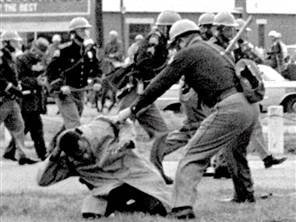
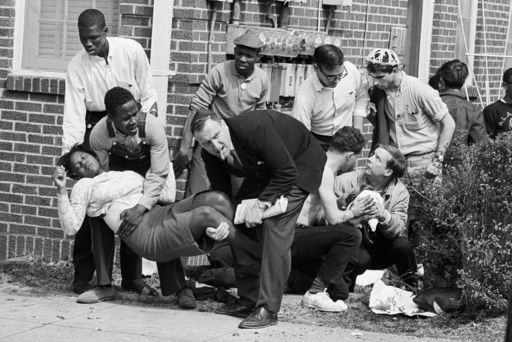
On the 7th some 550-600 protesters led by Lewis and the Reverend Hosea Williams and began their march. All went well until they crossed the Edmund Pettus Bridge. There they ran into a phalanx of State Police. The commander of those men ordered the marchers back. Williams attempted to discuss the matter with him and was rebuffed. It was then that the State Police advanced into the ranks of the demonstrators. They knocked them down, and beat them with nightsticks. Another group of State Police began to launch tear gas which incapacitated the unprepared and peaceful crowd. Still more mounted troopers charged into the now struggling mass of people beating them with nightsticks as they rode through the demonstrators.

riot; chaos; violence

Dozens of marchers, men, women and children, including Lewis were injured. Seventeen required hospitalization. Wallace appeared to have succeeded in stopping the march, but instead the images of the brazen brutal acts committed by his police energized people around the country, including President Johnson.

It triggered additional demonstrations not only in Selma, but in Montgomery, the State Capital. While the demonstrations were peaceful, and the later march which took place on March 21st was protected by U.S. Army soldiers and Alabama National Guard troops under Federal orders, more protesters would be killed or injured. Reverend James Reeb, a Unitarian Universalist minister from Boston was attacked by a white mob armed with clubs. He died of massive brain trauma two days later. On March 25th, Viola Luizzo, a white mother from Detroit who had come to support the marchers, was assassinated by members of the KKK.

The marches led to the passage of the Voting Rights Act of 1965. As he introduced the act to Congress Johnson noted:

“Even if we pass this bill, the battle will not be over. What happened in Selma is part of a far larger movement which reaches into every section and state of America. It is the effort of American Negroes to secure for themselves the full blessings of American life. Their cause must be our cause, too, because it is not just Negroes but really it is all of us who must overcome the crippling legacy of bigotry and injustice. And we shall overcome.”

Fifty years later, the battle is still not over. I know that much progress has been made in my lifetime, from my experience in high school where due to a court order I went to school with people I would have never met, people who today, are among my best friends.  Racism and discrimination are not as bad as they were back in 1965, but sadly they are still all to common and not just in the South, and its reach extends far beyond blacks, although African Americans still suffer the brunt of it.

President Obama gave an amazing and inspiring speech today at the Pettus Bridge. I recommend that you either watch it or read it. Here is just a part of what he said today:

And yet, what could be more American than what happened in this place?

What could more profoundly vindicate the idea of America than plain and humble people – the unsung, the downtrodden, the dreamers not of high station, not born to wealth or privilege, not of one religious tradition but many – coming together to shape their country’s course?

What greater expression of faith in the American experiment than this; what greater form of patriotism is there; than the belief that America is not yet finished, that we are strong enough to be self-critical, that each successive generation can look upon our imperfections and decide that it is in our power to remake this nation to more closely align with our highest ideals?

That’s why Selma is not some outlier in the American experience. That’s why it’s not a museum or static monument to behold from a distance. It is instead the manifestation of a creed written into our founding documents:

“We the People…in order to form a more perfect union.”

“We hold these truths to be self-evident, that all men are created equal.”

These are not just words. They are a living thing, a call to action, a roadmap for citizenship and an insistence in the capacity of free men and women to shape our own destiny… 

The American instinct that led these young men and women to pick up the torch and cross this bridge is the same instinct that moved patriots to choose revolution over tyranny. It’s the same instinct that drew immigrants from across oceans and the Rio Grande; the same instinct that led women to reach for the ballot and workers to organize against an unjust status quo; the same instinct that led us to plant a flag at Iwo Jima and on the surface of the Moon.

It’s the idea held by generations of citizens who believed that America is a constant work in progress; who believed that loving this country requires more than singing its praises or avoiding uncomfortable truths. It requires the occasional disruption, the willingness to speak out for what’s right and shake up the status quo.

That’s what makes us unique, and cements our reputation as a beacon of opportunity…

The actions of those who marched at Selma in 1965 and the words of the President appeal to the Declaration of Independence and the Gettysburg Address, they appeal to what Abraham Lincoln called “the new birth of freedom.”

That being said, we shall overcome.

Peace

Padre Steve+

2 Comments

Filed under civil rights, History, News and current events, Political Commentary

Southern Justice and Its Relevance Today

NormanRockwellSouthernJustice-1Southern Justice- Norman Rockwell 1965

I have been writing about the continued problem of racism and hatred in this country, as well as in others lately. Fifty years ago, three young men working to register blacks to vote as part of the Freedom Summer in Mississippi were brutally murdered by members of the Ku Klux Klan.

The three men were idealists who would all die because they fought for the right of Blacks to vote harassment and intimidation.

Twenty year old Andrew Goodman from New York City, was a progressive activist and Anthropology student at Queens College. Twenty-four year old Mickey Schwerner was a graduate student at Columbia University’s School of Social Work. Both Goodman and Schwerner were Jewish. Twenty-one year old James Chaney was from Meridian Mississippi and was a volunteer with CORE, the Congress of Racial Equity working on voter registration and education with local churches.

MtZion4

The Ruins of Mount Zion Church

On June 21st 1964 the three men were investigating the burning of Mount Zion Methodist Church in Longdale. They had been working with the church  to assist in registering blacks to vote.  In the wake of their visit to the town and to the church, the local Klan, which included many men of influence, including those in law enforcement sought to lure CORE workers into the town to make an example of them. They did this by upping the ante and instigated a campaign to harass, attack and brutalize the black citizens and church members. They then burned the church to the ground.


FBI_Poster_of_Missing_Civil_Rights_Workers

The three went to the site on June 20th and were arrested for an alleged traffic violation. They were then jailed and released later in the evening without being allowed to make any phone calls. On the way back to Meridian, two carloads of Klan members forced them over, abducted them and killed them. The bodies were buried at the base of a dam and not discovered for 44 days.

Cecil Price, a deputy Sheriff involved in the arrest was one of the murderers. He was one of the men later convicted of their murder. After the killing he told his helpers:

“Well, boys, you’ve done a good job. You’ve struck a blow for the white man. Mississippi can be proud of you. You’ve let those agitating outsiders know where this state stands. Go home now and forget it. But before you go, I’m looking each one of you in the eye and telling you this: “The first man who talks is dead! If anybody who knows anything about this ever opens his mouth to any outsider about it, then the rest of us are going to kill him just as dead as we killed those three sonofbitches (sic) tonight. Does everybody understand what I’m saying. The man who talks is dead, dead, dead!”

The disappearance of Chaney, Schwerner and Goodman brought national attention and a major investigation to the town. Eventually seven men, including deputy Price were convicted of the murders. The murders and the investigation became the subject of the movie Mississippi Burning.

In 1965 Norman Rockwell, well known for his portraits of American life and the Civil Rights movement painted “Southern Justice” which is sometimes known as “Murder in Mississippi”  This was not long after passage of the Voting Rights Act of 1964, which has been under attack in many southern states over the past decade and had a key provision gutted by the Supreme Court last year.

mississipiburning

50 years ago the murders of these three young men brought national attention to the pervasive racism and discrimination in the country. Until this incident most of the murders, lynching’s and burnings of homes, businesses, and even churches had been covered up by the media and law enforcement.  Frankly, a black life wasn’t worth investigating or the air time.

I do hope and pray that we never go back to those days, but as laws are passed to limit voting rights in various states I wonder if the clock is being turned back. I don’t think that it will in the long run these efforts to disenfranchise blacks, other minorities, students and the working poor will be successful, but we can never assume that. Freedom always hangs in the balance and it can be lost when we do nothing. The Klan is still active, and sadly its hatred for Blacks, immigrants, Jews, Moslems, Catholics, and Gays, or for that matter anyone who stands against them has spread to others not traditionally affiliated with the Klan.

Some might say that it has been fifty-years, that things have changed, so why bother bringing up the past? I’ll tell you why, because freedom is always under siege, and the sacrifice of so many, including these three young men, for those rights should never be forgotten.

In memory of Andrew Goodman, James Chaney and Mickey Schwerner and others of the Freedom Summer and the Civil Rights movement who died or suffered to peacefully bring about change to our society.

Peace

Padre Steve+

Leave a comment

Filed under civil rights, History, Political Commentary

Mine Eyes Have Seen the Glory: Racism, Slavery and Religion

slavescars

Today my friends another installment of my chapter in my Gettysburg text dealing with religion, racism and ideology as causes of the American Civil War. While many people, especially modern Southern White politicians like to repeat the mantra that we live in a “post-racial”  society where racism no longer exists. I discussed that ridiculous assertion yesterday in my intro to the series so I won’t bother to repeat it now.

the-dred-scott-case-1846-1857-402x618

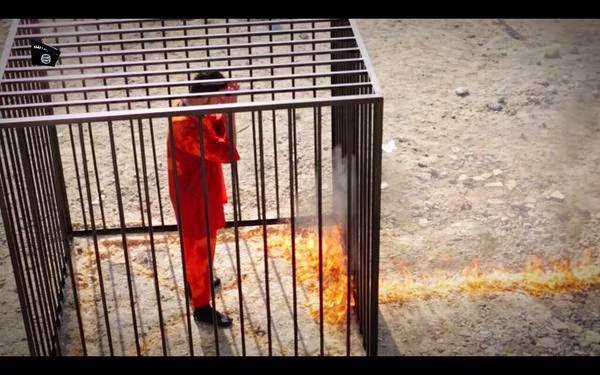
What I will do is discuss how religion has been used and in still being used by “true believers” of many religions to justify all sorts of evil in the name of their God. The latest and most newsworthy of such people are the practitioners of terror in the name of Allah, the Islamic State and Boko Haram in central and west Africa. These groups have brought back the concepts of what we would call public lynching of their enemies, burning them alive, beheading them, enslaving them, and engaging in ethnic and religious cleansing. They are ruthless and are a throwback to times that most of us had hoped had passed into recess of history.

a2a9c088d75423b7f457b194d7c9ea9a

But history has a way of never dying, especially for those who don’t stop believing in their cause. In resp0nse to the acts of ISIL and Boko Haram I have heard numerous American Christian politicians, pundits and preachers claim that Christians have never acted in such a way. I could go through the litany of crimes committed by Christians, Churches and the actions of nations whose state supported churches provided the theological justification for genocide, pogroms, ethnic cleansing, crusades, imperialism, slavery and a host of other crimes against humanity. Instead I am just going to focus on the theological justification of those who defended the institution of slavery, as well as their abolitionists opponents in this posting, because they are really not that too far removed from the actions of ISIL and the words of many supposedly Christian politicians, pundits and preachers in this country today.

020101_isilBurns_jordanian_pilot_alive

Omaha_courthouse_lynching

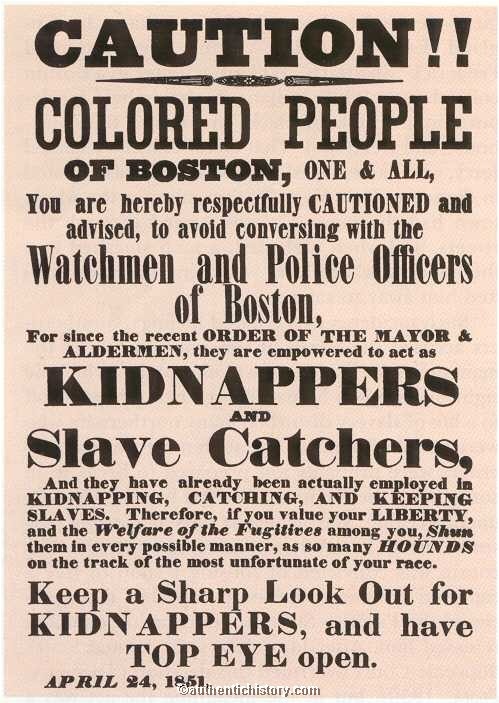
This section begins with the Compromise of 1850, an act which included the Fugitive Slave Act which gave Southern Slaveholders the right to go into any state or territory to reclaim their human property and provided them with a extra-judicial system to support them.  From this it transitions to the theological arguments and proclamations of those supporters of slavery and their opponents. The section ends with a note about a case that Virginia was pushing through the Courts in 1860, just prior to the Civil War, it was a case that they hoped would destroy any remaining legal obstacles to expanding slavery into Free States and territories against the wishes of the citizens of those states. I find it interesting that for people then as well as today the concept of “States Rights” only applies to them and their attempts to deny freedom to others.

Mine Eyes Have Seen the Glory: Religion, Ideology and the Civil War Part 2

Tomorrow I will post the third section of this chapter which begins with Bleeding Kansas, John Brown, the link between church and state in the Confederacy, the election of Lincoln, Emancipation, and the pervasive and poisonous myth of the Lost Cause in the United States.

Racism, as well as other forms of hatred backed by religion is still alive and it is not just in the Middle East and Africa. It is still here, and it is still happening now. It may be a bit more subtle and certainly not as violent as it was in the ante-bellum days, or Post-Reconstruction, but it is here. Like in the Middle East it bides its time until extremists can invent an excuse to resort to violence and terrorism.

Peace

Padre Steve+

1 Comment

Filed under civil rights, civil war, faith, History, iraq,afghanistan, laws and legislation, leadership, Political Commentary, Religion

The Desegregation of Baseball and Its Importance Today

robinson-dodgers

John Jorgensen, Pee Wee Reese, Ed Stanky and Jackie Robinson on opening day 1947

“Jackie, we’ve got no army. There’s virtually nobody on our side. No owners, no umpires, very few newspapermen. And I’m afraid that many fans will be hostile. We’ll be in a tough position. We can win only if we can convince the world that I’m doing this because you’re a great ballplayer, a fine gentleman.” Branch Rickey to Jackie Robinson 

My friends, in just a few days pitchers and catchers report for the 2015 Baseball Spring Training and it is time to reflect again on how Branch Rickey’s signing of Jackie Robinson helped advance the Civil Rights of Blacks in the United States. What Rickey did was a watershed, and though it took time for every team in the Major Leagues to integrate, the last being the Boston Red Sox in 1959, a dozen years after Jackie Robinson broke the color barrier.

Branch Rickey shook the foundations of America when he signed Jackie Robinson to a Major League deal in 1947, a year before President Truman desegregated the military and years before Jim Crow laws were overturned in many states.

Robinson and the early pioneers of the game did a service to the nation. They helped many white Americans see that Blacks were not only their equals as human beings, and as it was note about Ernie Banks and others that soon “little white boys wanted to grow up and be Ernie Banks.” 

robinson2-popup

Charles Thomas 

But for Rickey the crusade to integrate baseball began long before 1947. In 1903, Rickey, then a coach for the Ohio Wesleyan University baseball team had to console his star player, Charles Thomas when a hotel in South Bend Indiana refused him a room because he was black. Rickey found Thomas sobbing  rubbing his hands and repeating “Black skin. Black skin. If only I could make them white.” Rickey attempted to console his friend saying “Come on, Tommy, snap out of it, buck up! We’ll lick this one day, but we can’t if you feel sorry for yourself.”

Branch-Rickey

The Young Branch Rickey

Thomas, encouraged by Rickey was remembered by one alumnus who saw a game that Thomas played in noted that “the only unpleasant feature of the game was the coarse slurs cast at Mr. Thomas, the catcher.” However, the writer noted something else about Thomas that caught his eye: “But through it all, he showed himself far more the gentleman than his insolent tormentors though their skin is white.”

Baseball like most of America was not a place for the Black man. Rickey, a devout Christian later remarked “I vowed that I would always do whatever I could to see that other Americans did not have to face the bitter humiliation that was heaped upon Charles Thomas.”

In April 1947 Rickey, now the owner of the Brooklyn Dodgers had one African-American ballplayer at the Dodgers’ Spring Training site in Daytona Beach Florida. The South was still a hotbed of racial prejudice, Jim Crow was the law of the land and Blacks had no place in White Man’s baseball. That player was Jackie Robinson.

Jackie Robinson Shaking Branch Rickey's Hand

Jackie Robinson and Branch Rickey

The Dodgers had been coming to Florida for years. Rickey moved the Dodgers from Jacksonville to Daytona Beach in 1947 after Jacksonville had refused to alter its segregation laws to allow an exhibition game between the Dodgers International League affiliate the Montreal Royals, for whom Robinson starred.

That was the year that Rickey signed Robinson to a minor league contract with the Royals.  When Rickey called up Robinson 6 days prior to the 1947 season, it was  Robinson broke the color barrier for the Dodgers and Major League Baseball. However it would take another 12 years before all Major League teams had a black player on their roster.

It is hard to imagine now that even after Jackie Robinson had broken the color barrier that other teams did not immediately sign black players. However Rickey and Robinson broke the color barrier a year before Harry Truman had integrated the Armed Forces and seven years before the Supreme Court ruled the segregation of public schools illegal. But how could that be a surprise? The country was still rampant with unbridled racism. Outside of a few Blacks in the military and baseball most African Americans had few rights. In the North racism regulated most blacks to ghettos, while in the South, Jim Crow laws and public lynchings of progressive or outspoken Blacks.

But Jackie Robison and Branch Rickey helped bring about change, and soon other teams were following suit.

images-24

Larry Doby (above) and Satchel Paige signed by the Indians

pic1

The Cleveland Indians under their legendary owner Bill Veeck were not far behind the Dodgers in integrating their team. They signed Larry Doby on July 5th 1947. Doby would go on to the Hall of Fame and was a key player on the 1948 Indian team which won the 1948 World Series, the last that the storied franchise has won to this date.

Hank THOMPSON - LENNOX PEARSON BOHEMIA ARCHIVE

Hank Thompson and Roy Campanella

roy-campanella-ap2

The St. Louis Browns signed Third Baseman Hank Thompson 12 days after the Indians signed Doby. But Thompson, Robinson and Doby would be the only Blacks to play in that inaugural season of integration. They would be joined by others in 1948 including the immortal catcher Roy Campanella who signed with the Dodgers and the venerable Negro League pitcher, Satchel Paige who was signed by the Indians.

monte_irvin

Monte Irvin (Above) and Willie Mays

WillieMays

It was not until 1949 when the New York Giants became the next team to integrate. They brought up Monte Irvin and Hank Thompson who they had acquired from the Browns. In 1951 these men would be joined by a young, rookie Willie Mays to become the first all African-American outfield in the Major Leagues. Both Mays and Irvin would enter the Hall of Fame and both are still a key part of the Giants’ story. Despite their age have continued to be active in with the Giants and Major League Baseball.

images-25

Samuel “the Jet” Jethroe

The Boston Braves were the next to desegregate calling up Samuel “the Jet” Jethroe to play Center Field. Jethroe was named the National League Rookie of the Year in 1950.

mlb_a_MinnieMinoso_cmg_600

Minnie Minoso

In 1951 the Chicago White Sox signed Cuban born Minnie Minoso who had played for Cleveland in 1949 and 1951 before signing with the White Sox. Minoso would be elected to 9 All-Star teams and win 3 Golden Gloves.

BANKS-ERNIE

Ernie Banks (above) and Bob Trice

Bob_Trice1953

The Chicago Cubs and Philadelphia Athletics integrated at the end of the 1953 season. The Cubs signed Shortstop Ernie Banks who would go on to be a 14 time All-Star, 2 time National League MVP and be elected to the Hall of Fame in 1977 on the first ballot. The Athletics called up pitcher Bob Trice from their Ottawa Farm team where he had won 21 games. Trice only pitched in 27 Major League games over the course of three seasons with the Athletics.

6RI1

Curt Roberts

Four teams integrated in 1954. The Pittsburgh Pirates acquired Second Baseman Curt Roberts from Denver of the Western League as part of a minor league deal. He would play 171 games in the Majors.  He was sent to the Columbus Jets of the International League in 1956 and though he played in both the Athletics and Yankees farm systems but never again reached the Majors.

1954_alston_tom

Tom Alston

The St. Louis Cardinals, the team that had threatened to not play against the Dodgers and Jackie Robinson in 1947 traded for First Baseman Tom Alston of the Pacific Coast League San Diego Padres. Alston would only play in 91 Major League games with his career hindered by bouts with depression and anxiety.

100005

Nino Escalara (above) and Chuck Harmon

Chuck_Harmon

The Cincinnati Reds brought up Puerto Rican born First Baseman Nino Escalera and Third Baseman Chuck Harmon. Harmon had played in the Negro Leagues and had been a Professional Basketball player in the American Basketball League. Harmon who was almost 30 when called up played just 4 years in the Majors. Both he and Escalera would go on to be Major League scouts. Escalera is considered one of the best First Baseman from Puerto Rico and was elected to the Puerto Rican Baseball Hall of Fame. Harmon’s first game was recognized by the Reds in 2004 and a plaque hangs in his honor.

Carlos-Paula

The Washington Senators called up Cuban born Center Fielder Carlos Paula from their Charlotte Hornets’ farm team in September 1954. Paula played through the 1956 season with the Senators and his contract was sold to the Sacramento Salons of the Pacific Coast League. He hit .271 in 157 plate appearances with 9 home runs and 60 RBIs. He died at the age of 55 in Miami.

elston-howard

Elston Howard

In April 1955 the New York Yankees finally integrated 8 years after the Dodgers and 6 years after the Giants. They signed Catcher/Left Fielder Elston Howard from their International League affiliate where he had been the League MVP in 1954. Howard would play 13 years in the Majors with the Yankees and later the Red Sox retiring in 1968. He would be a 12-time All Star and 6-time World Series Champion as a player and later as a coach for the Yankees. He died of heart disease in 1980.  His number #32 was retired by the Yankees in 1984.

58 kennedy, john f

The Philadelphia Phillies purchased the contract of Shortstop John Kennedy from the Kansas City Monarchs of the Negro League at the end of the 1956 season. Kennedy played in just 5 games in April and May of 1957.

osvaldo4_195

 Ozzie Virgil Sr.

In 1958 the Detroit Tigers obtained Dominican born Utility Player Ozzie Virgil Sr. who had played with the Giants in 1955 and 1956. Virgil would play 9 seasons in the Majors with the Giants, Tigers, Athletics and Pirates and retire from the Giants in 1969. He later coached for 19 years in the Majors with the Giants, Expos, Padres and Mariners.

Pumpsie_Green_1962_Topps

The last team to integrate was the Boston Red Sox who signed Infielder Pumpsie Green. Green made his debut on 21 July 1959 during his three years with the Red Sox was primarily used as a pinch runner. He played his final season with the New York Mets in 1963. He was honored by the Red Sox in 2009 on the 50th anniversary of breaking the Red Sox color barrier.

little-rock-stop-the-race-mixing

voter-registration-mississippi-1960-L-umRewg

luther-king

It took 12 years for all the teams of the Major Leagues to integrate, part of the long struggle of African Americans to achieve equality not just in baseball but in all areas of public life.  These men, few in number paved the way for African Americans in baseball and were part of the inspiration of the Civil Rights Movement itself.  They should be remembered by baseball fans, and all Americans everywhere for their sacrifices and sheer determination to overcome the obstacles and hatreds that they faced. It would not be until August of 1963 that Martin Luther King Jr. would give his I Have a Dream speech and 1964 that African Americans received equal voting rights.

robbyii

Spring training for the 2015 season is about to begin in Florida and Arizona, in what are called the Grapefruit and Cactus Leagues. It is hard to believe that only 68 years ago that only one team and one owner dared to break the color barrier that was, then, and often today is still a part of American life.

However in those 68 years despite opposition and lingering prejudice African Americans in baseball led the way in the Civil Rights Movement and are in large part responsible for many of the breakthroughs in race relations and the advancement of not only African Americans, but so many others.

We can thank men like Charles Thomas, Jackie Robinson and Branch Rickey for this and pray that we who remain, Black and White, Asian, and Latin American, as well as all others who make up our great nation will never relinquish the gains that have been won at such a great cost.

obamafirstpitch

President Obama throwing out the First Pitch for the Washington Nationals

Today we have a Black President who has the same kind of racial epitaphs thrown at him every day by whites who as they did to Charles Thomas, Jackie Robinson and so many other pioneers, Frankly such behavior can only be called what is it, unrepentant, unabashed, and evil racism. The fact is that such people don’t think that any Black man should hold such high an office, just as they did not think that Blacks should be allowed to play integrated baseball. It is anathema to them, and that is why their unabashed hatred for Obama runs so deep. They may disagree with his policies, but I guarantee if Obama was white, their opposition to him would be far more civil and respectful. But because he is half-black, and has a funny name they hate him with a passion, a passion that scares me, because words  and hateful beliefs can easily become actions.

Racism still exists, but one day thanks to the efforts of the early ball-players as well as pioneers like President Obama, and the undying commitment of decent Americans to accept people regardless of race, ethnicity, gender, religion, or even sexual orientation, we will see a new birth of freedom.

Peace

Padre Steve+

Leave a comment

Filed under Baseball, civil rights, History, political commentary

A Time to Stand Against Hate

12CAROLINA2jp-master315

First they came for the communists, and I did not speak out—because I was not a communist;
Then they came for the socialists, and I did not speak out—because I was not a socialist;
Then they came for the trade unionists, and I did not speak out—because I was not a trade unionist;
Then they came for the Jews, and I did not speak out—because I was not a Jew;
Then they came for me—and there was no one left to speak out for me.

 Martin Niemöller

There comes a time in every nation where people of faith need to stand up for the rights of others who do not share their faith. There are times at all decent citizens no matter what their religion, or lack of religion need to stand up for those deemed less than full citizens, less than loyal, and in some cases less than human. This is one of those times.

On Wednesday three young America students at the University of North Carolina; Deah Barakat, his wife Yusor Mohammad Abu-Salha and her sister Razan Mohammad Abu-Salha, were gunned down, execution style, in their home.  They were each shot multiple times in  the head. They were Moslems, and from all account not only good law abiding people who hated intolerance of any kind, even to Jews and Israelis, who were active in helping the poor and homeless in their local community, and just basically good, idealistic, humanitarians.

Their assailant Craig Stephen Hicks, was a man who doesn’t fit a typical right wing, at least from the terms of the Religious Right, or Left Wing stereotype.

All that we really know about him was that neighbors described him as angry and confrontational, that some feared him, that he was anti-government, unemployed, and hated the major religions; especially Christianity, Islam, and Judaism. He was also evidently a pretty big fan of expanded gun rights, which for a man in his state of mind isn’t unusual. His current wife, who is in the process of divorcing him described him as supporting marriage equity, abortion rights and other socially progressive causes.

12CAROLINAweb2-master315

It is quite fascinating to me that Craig Stephen Hicks, was a follower of Richard Dawkins and what is called “the New Atheism” which more appropriately should be called anti-theism. This makes his case somewhat unusual, because he would be one of first of this breed in the United States to kill others in such a manner. Of course this is not to say that such people haven’t committed such acts on a mind-numbingly large scale in the former Soviet Union, Red China and other repressive atheist regimes. Likewise there are nations where state religions working hand in hand with the state do that as well.

But most of the time, recently in this country and Western Europe, those who kill others because of those  peoples religious beliefs, are religious themselves and defending their idea of God and righteousness. That my friends is what makes the act of barbarous hatred committed by Hicks so interesting from a sociological and historical point of view.

It is also why I don’t believe the claims by the soon to be ex-wife of Hicks, the police or the prosecutor that this was an isolated incident dealing with a dispute of guest parking in the condominium complex where the victims and the killer lived. That’ why the story just doesn’t wash, and the fact that it doesn’t wash causes it to stink.

Really, let’s face it, if Hicks was a Moslem and the victims were atheists would anyone believe that story? The hell no. But there are people who will not only believe it but as usual say this is a “isolated incident” because after all, white people in America don’t kill others for their religion, but that Moslems do and so a Moslem is automatically guilty of crimes simply by being a Moslem.

Evidently the killer’s ex-wife described him Hicks as a man without empathy, who incessantly watched the movie Falling Down while laughing his way through it. If you don’t know the movie it is about an unemployed engineer, angry for many reason, who goes mad and ends up in a killing spree. It is a tragic film, and I wonder if Hicks if Hicks saw himself as similar to the lead character played by Michael Douglas.

I don’t know what the final tipping point was for Hicks. From what I read he seemed like a mountain of hatred and anger just waiting to erupt.

While I don’t know his entire motivations, I do know that somewhere in his perverted psyche, he was motivated by hate, and that is all too common. Eric Hoffer said: “Passionate hatreds can give meaning and purpose to an empty life. These people haunted by the purposelessness of their lives try to find a new content not only by dedicating themselves to a holy cause but also by nursing a fanatical grievance.”   

Hicks found some measure of purpose in his hatred of religion. It is said that he was quite angry at the Christians and Jews who  participated together with Moslems and others in the ecumenical memorial services after the attacks of September 11th 2001. Evidently, that anger toward religions and religious people grew until it reached the point of murder.

Sadly, there are many people like this man who are consumed by some kind of hatred. In this case it appears to me, and I could be wrong, that it was Hicks’s hatred of Moslems and other religious people. I cannot think of any other reason why the man would execute unarmed people for a parking space, unless they represented something more to him.

The hatred something that the actions of the Islamic State, Al Qaeda, the Taliban, Boko Haram and other terrorist groups that claim the mantle of Islam  have helped to inspire. That hatred is also fed by much of the media, as well as supposedly Christian political pundits and preachers who lump all Moslems into the same camp as the terrorists and ignores the Moslems who condemn such actions and who put their lives on the line to fight those groups. This “reporting” feeds the fear, it feeds the anger of some, and it leads to people, especially people who are already angry, disturbed and possibly even mentally ill, to commit crimes in name of their religion or their ideology. In Hicks case it appears to be his militant atheism.

But let’s step back from that right now, and sometimes it is good to look at things in with a broader lens.

It seems to me that among the worst of the types of people promoting such hatred of Moslems are supposedly conservative “Christian” preachers. So I feel that I need to speak up. I say this because such hatred against a religion, any religion is not new. Militant Hindus in India kill Moslems and Christians, of course we know of the crimes of the terrorists who kill in the name of Islam, but there are places in Africa where Christians do the killing, and sometimes not even for religious reasons. Does anyone remember the Rwanda Genocide? But that is not an isolated instance, in Central and South America there were the American funded dictators and terrorist groups who had death squads all over the place, many killing to defend their “conservative Christian regimes.”

This kind of thing happens all the time and sometimes it takes place under godless regimes who co-opt religious people to bolster their evil. Chief among the times this happened was in Nazi Germany. My examples from that era include Protestant pastors Martin Niemöller, Dietrich Bonhoeffer, and Herman Maas, and Catholic Biship Galen and Jesuit Priest Father Rupert Meyer of Munich. All were imprisoned or placed in Concentration Camps by the Nazis, and Bonhoeffer was be killed. Maas was the first non-Jewish German to be officially invited to the newly formed state of Israel in 1950. In July 1964 Yad Vashem recognized the Maas as one of the Righteous Among the Nations. Of course there were others who died for attempting to help the Jews, including some European Moslems.

When Hitler took power the Jews, along with Communists, Trade Unions, Socialists were enemies of the state.  They were banned from the military, civil service and other government employment, professional associations and forced to wear a gold Star of David on their clothing.  Their property was seized, they were abused by SA men acting as deputized auxiliary police, times their businesses, Synagogues and homes vandalized, burned or seized by the state. Eventually those who remained were condemned  and sent to concentration camps, where most with nearly 6 million other Jews they would be exterminated.

Today we face a similar situation in United States and Western Europe.  This time it is not the Jews, but Moslems who are the targets of xenophobic rage by many influential members of the “conservative” media.

The ideological inspiration for the killings at Chapel Hill seems to be from English Atheist Richard Dawkins. Dawkins wrote something that the killer repeated almost verbatim in his social media posts: “All three of the Abrahamic religions are deeply evil if they take their teachings seriously. Islam is the only one that does.” Of course Dawkins statement is overblown because there are some Christians and Jews who kill in the name of religion. In fact as far as Christianity goes we have a host of them who litter our history justifying killing in the name of the Lord. To his credit Dawkins condemned the killings soon after they happened, however, his hyperbole and lumping together all religion as evil has the same effect on some people as the teachings of the radical religious preachers of hate whose ranks seem to grow daily.

Others, especially in parts of the Christian Right who have great sway in conservative politics and the Republican party advocate policies similar to the Nazi Nurnberg Laws and the Aryan Paragraph.  Threats to deny loyal American Moslems the right to serve in the military, security organizations, government positions and academia are common today. More extreme are threats to put all-Moslems “behind razor wire” as we did to American Japanese citizens in World War II, or to deport them as the Nazis did to the Jews before the “Final Solution”  are even more chilling.

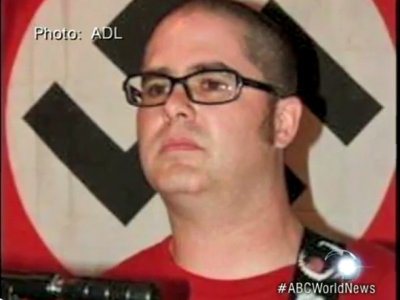
wade-michael-page-nazi-flag

Wade Page

Of course there was the mass killing by neo-Nazi Wade Page in Oak Park Illinois in October 2012, like Hicks he was filled with hate toward religion, and took his out on the members of the Sikh Temple.

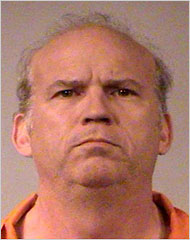
roeder190

Scott Roeder

I wonder how Christians would react if an atheist or someone on the political left suggested that all conservative Christians or members of pro-Life groups be imprisoned for the actions of Christians or pro-Life movement members like Scott Roeder or Eric Rudolph who killed to stop abortion or the late Fred Phelps and his Westboro Baptist Church? Likewise I wonder what atheists would do if someone suggested putting everyone who followed Richard Dawkins, Bill Maher, or Sam Harris in camps or depriving them of citizenship for the actions of someone like Hicks?

Thankfully, there are a few on the  Religious Right who have taken a stand. Reverend Rob Schenck, President of the National Clergy Council, commented in regard to the Moslem prayer vigil in Washington D.C. in 2009:  “With over 1.5 billion Muslims in the world, it is important that Christians have an open dialogue with the Islamic community. The church must never be timid in reaching out to peoples and groups with differing beliefs and traditions. Too much is at stake for future generations not to begin this historic conversation. This is an opportunity that we cannot afford to miss.”

What the people who advocate punitive actions against American Moslems do is dangerous, not just for Moslems and other minorities but for them.  American and English law is based on legal precedence.  Once something has been determined to be legal, or constitutional it is considered by the law to be settled law.  The law is a two edged sword and those who want to use it to have the state enforce their religious, social, ideological or political beliefs on others need to remember what comes around goes around.

Niemöller would discover this the hard way prison telling one interviewer after the war:

“I find myself wondering about that too. I wonder about it as much as I regret it. Still, it is true that Hitler betrayed me. I had an audience with him, as a representative of the Protestant Church, shortly before he became Chancellor, in 1932. Hitler promised me on his word of honor, to protect the Church, and not to issue any anti-Church laws. He also agreed not to allow pogroms against the Jews, assuring me as follows: ‘There will be restrictions against the Jews, but there will be no ghettos, no pogroms, in Germany. I really believed given the widespread anti-Semitism in Germany, at that time—that Jews should avoid aspiring to Government positions or seats in the Reichstag. There were many Jews, especially among the Zionists, who took a similar stand. Hitler’s assurance satisfied me at the time. On the other hand, I hated the growing atheistic movement, which was fostered and promoted by the Social Democrats and the Communists. Their hostility toward the Church made me pin my hopes on Hitler for a while. I am paying for that mistake now; and not me alone, but thousands of other persons like me.”

It is easy for well meaning  to be bought with promises of support by politicians and media types who speak the words they want to hear in difficult times. We have entered a dangerous phase of American, and for that matter world history.

The killing of these three young American by this hate filled man should be a wake up call to all of us. It is time to start giving a damn and standing up to those who inspire and promote such hatred, no matter what their race, creed, or ideology. We have to stand up against hate. If we do not we are no better than all of those who throughout history turned their backs as others committed the most horrible crimes against humanity.

Peace,

Padres Steve+

7 Comments

Filed under christian life, civil rights, ethics, faith, History, Political Commentary, Religion

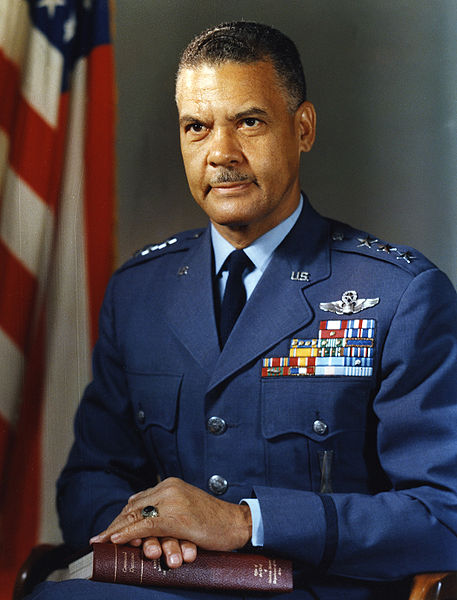
Character & Sacrifice: Generals Benjamin O. Davis Sr & Jr.

Benjamin_o_davis

Brigadier General Benjamin O Davis in France 1944

“I have a dream that my four little children will one day live in a nation where they will not be judged by the color of their skin, but by the content of their character.” Dr. Martin Luther King, Jr.

American History would not be the same without the life, work and prophetic ministry of Dr. Martin Luther King Jr. Dr. King was born in a time when most of the country was segregated when “separate by equal” was simply façade to cover the lie that in no way did African Americans have equal rights or privileges in the United States.

Dr King was born less than 60 years after the secession of the Southern states from the Union and the beginning of the American Civil War. Though that blood conflict had freed the slaves it had not freed African Americans from prejudice, violence and discrimination.  When Dr. King began his ministry and was thrust upon the national stage as the strongest voice for equal rights and protections for blacks the discrimination and violence directed towards blacks was a very real and present reality in much of the United States.

However there were cracks beginning to appear in the great wall of segregation in the years preceding Dr. King’s ascent to leadership as the moral voice of the country in the matter of racial equality. In baseball Jackie Robinson became the first African American player in Major League Baseball opening a door for others who would become legends of the game as well as help white America begin its slow acceptance of blacks in sports and the workplace.

Likewise the contributions of a father and son Brigadier General Benjamin O. Davis Sr. and General Benjamin O. Davis Jr. were advancing the cause of blacks in the military which eventually led to the desegregation of the military in 1948.  The impact of these two men cannot be underestimated for they were trailblazers who by their lives, professionalism and character blazed a trail for African Americans in the military as well as society.

Benjamin O. Davis Sr. was a student at Howard University when the USS Maine exploded and sank in Havana Harbor.  He volunteered for service and was commissioned as a temporary 1st Lieutenant in the 8th United States Volunteer Infantry. He was mustered out of service in 1899 but enlisted as a private in the 9th United States Cavalry one of the original Buffalo Soldiers regiments.  He enlisted as the unit clerk of I troop of 3rd Squadron and was promoted to be the squadron Sergeant Major.

Davis was commissioned while the unit was deployed to the Philippines and assigned to the 10th Cavalry.  He was assigned in various positions throughout his career including command, staff and instruction duties including as Professor of Military Science and Tactics in various ROTC programs.  He reached the rank of rank of temporary Lieutenant Colonel and Squadron Commander of 3rd and later 1st Squadron 9th Cavalry from 1917-1920 in the Philippines before reverting to the rank of Captain on his return as part of the post World War I reduction in force.

Davis continued to serve during the inter-war years and assumed command of the 369th Infantry Regiment New York National Guard in 1938. He was promoted to Brigadier General on 25 October 1940 becoming the first African American elevated to that rank in the United States Army and was assigned as Commander 4th Brigade 2nd Cavalry Division. He later served in various staff positions at the War Department and in France and was instrumental in the integration of the U.S. Military. He retired after 50 years service in 1948 in a public ceremony with President Harry S. Truman presiding. He was a member of the American Battle Monuments Commission from 1953-1961 and died in 1970.

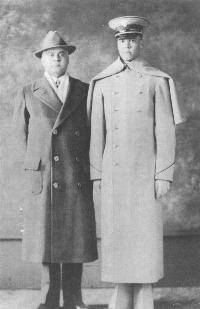
davis-3

Colonel Davis with his son Cadet Benjamin O Davis Jr.

His son Benjamin O. Davis Jr. was appointed to West Point in 1932.  He graduated and was commissioned in 1936 graduating 35 out of 278, the fourth African American graduate of West Point. During his time at the Academy most of his classmates shunned him and he never had a roommate.  Despite this he maintained a dogged determination to succeed.  The Academy yearbook made this comment about him:

“The courage, tenacity, and intelligence with which he conquered a problem incomparably more difficult than plebe year won for him the sincere admiration of his classmates, and his single-minded determination to continue in his chosen career cannot fail to inspire respect wherever fortune may lead him.”

He was denied entrance to the Army Air Corps because of his race and assigned to the Infantry first to the all lack 24th Infantry Regiment at Ft Benning where he was not allowed in the Officers Club due to his race. Upon his commissioning the Regular Army had just 2 African American Line Officers, 2nd Lieutenant Davis and his father Colonel Davis.

After completion of Infantry School he was assigned as an instructor of Military Science and Tactics and the Tuskegee Institute.  In 1941 the Roosevelt Administration moved to create a black flying unit and Captain Davis was assigned to the first black class at the Tuskegee Army Air Field and in March 1942 one his wings as one of the first 5 African Americans to complete flight training.

In July 1942 he was assigned as Commanding Officer of the 99th Pursuit Squadron which served in North Africa and Sicily flying Curtiss P-40 Warhawks. He was recalled to the United States in September 1943 to command the 332nd Fighter Group. However some senior officers attempted to prevent other black squadrons from serving in combat alleging that the 99th had performed poorly in combat. Davis defended his squadron and General George Marshall ordered an inquiry which showed that the 99th was comparable to white squadrons in combat and during a 2 day period over the Anzio beachhead the pilots of the 99th shot down 12 German aircraft.

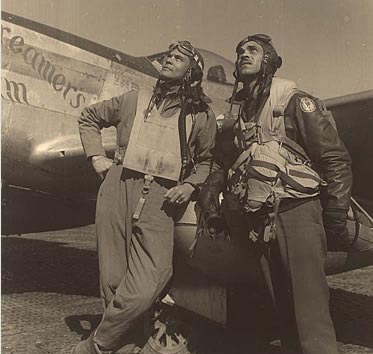
davis Library of congress   photo public domain

Colonel Benjamin O Davis Jr (left) with one of his Tuskegee Airmen

Davis took the 332nd to Italy where they transitioned to P-47 Thunderbolts and in July 1944 to the P-51 Mustang which were marked with a signature red tail. During the war, the units commanded by Davis flew more than 15,000 sorties, shot down 111 enemy planes, and destroyed or damaged 273 on the ground at a cost of 66 of their own planes.

Tuskegee_01


Their record against the Luftwaffe was outstanding and their protection of the bombers that they escorted was superb with very few bombers lost while escorted by them men that the Luftwaffe nicknamed the Schwarze Vogelmenschen and the Allies the Red-Tailed Angels or simply the Redtails. Davis led his Tuskegee Airmen to glory in the war and their performance in combat helped break the color barrier in the U.S. Military which was ended in 1948 when President Truman signed an executive order to end the segregation of the military. Colonel Davis helped draft the Air Force plan and the Air Force was the first of the services to fully desegregate.

ltgen Benjamindavis

Lieutenant General Benjamin O Davis Jr

Colonel Davis transitioned to jets and let the 51st Fighter Interceptor Wing against Chinese Communist MIGs in the Korean War.  He was promoted to Brigadier General in 1954 and served in numerous command and staff positions. He retired in 1970 with the rank of Lieutenant General and was advanced to General while retired by President Clinton in 1998.  He died in 2002 at the age of 89.

The legacy of Benjamin O. Davis Senior and Benjamin O. Davis Junior is a testament to their character, courage and devotion to the United States of America. They helped pioneer the way for officers such as General Colin Powell and helped change this country for the better.  During times when discrimination was legal they overcame obstacles that would have challenged lesser men.  Benjamin O. Davis Junior remarked:

“My own opinion was that blacks could best overcome racist attitudes through achievements, even though those achievements had to take place within the hateful environment of segregation.”

Such men epitomize the selfless service of so many other African Americans who served the country faithfully and “by the content of their character” triumphed over the evil of racism and helped make the United States a more perfect union.

Peace

Padre Steve+

Leave a comment

Filed under civil rights, History, leadership, Military

Vice Admiral Samuel Gravely Jr. Pioneer of Civil Rights

gravely

Vice Admiral Samuel Gravely Jr.

Vice Admiral Samuel Gravely Jr. is among the great pioneers of civil rights in the U.S. Military. The first African-American ever to be promoted to Flag rank he helped pave the way for so many others. Gravely understood the pressures on him at every stage of his career, He wrote:

“I was sure that I could not afford to fail. I thought that would affect other members of my race if I failed anywhere along the line. I was always conscious of that, particularly in midshipman school and any other schools I went to…I tried to set a record of perfect conduct ashore and at sea.” Vice Admiral Samuel Gravely

gravely_young

Fireman Recruit Samuel Gravely Jr. 

Things have changed much since 1942 when following the attack on Pearl Harbor a young black college student from Richmond Virginia enlisted in the Navy. Samuel Gravely Jr. was the son of a postal worker and Pullman porter while his mother worked as a domestic servant for white families in Richmond. His mother died unexpectedly when he was 15 in 1937 and he remained to help care for his siblings as his father continued to work. Balancing the care of his family with his education he enrolled in Virginia Union College, a Baptist school in Richmond.

It is hard to imagine for most of us now to comprehend the world that the young Gravely grew up in. Segregation was the norm. Blacks in the south and many other locations faced personal as well as entrenched institutional racism. Violence against blacks was quite common and the Ku Klux Klan was strong.

The military was still segregated and a great gulf existed between white military personnel and blacks. Though the selective service law of 1940 called for the conscription of people regardless of race, creed or color the services enjoyed much latitude in determining how minorities could serve. The Secretary of the Navy at the time, Frank Knox resisted integration. Knox determined that African Americans would remain segregated and serve only as Mess Stewards to “prevent undermining and disruptive conditions in the Navy.” Knox told President Roosevelt in the presence of black leaders that “because men live in such intimacy aboard ship that we simply can’t enlist Negroes above the rank of messman. “

That sentiment was strong in both the Navy and the Marines, even more so than in the Army and Army Air Corps. The leaders of both the Navy and Marine Corps resisted attempts to broaden the ability for African Americans to serve and urged that blacks serve in the Army, not the Naval Service.  Marine Corps Commandant Major General Thomas Holcomb agreed with this stance. He commented:

“If we are defeated we must not close our eyes to the fact that once in they [Negroes] will be strengthened in their effort to force themselves into every activity we have. If they are not satisfied to be messmen. they will not be satisfied to go into the constriction or labor battalions. Don’t forger the colleges are turning out a large number of well educated Negroes. I don’t know how long we will be able to keep them out of the V-7 class. I think not very long.”

But Roosevelt was not deterred and by April 1942 changes were announced to allow African Americans to serve in other capacities. Even so African Americans selected for ratings other than messman were to be segregated and commanded by White Officers and Petty Officers.

images-18

The USS PC-1264 and its crew, Gravely is the lone black officer

USS_PC-1264_officers_and_crew

Gravely enlisted in the Navy under these conditions. Serving as a Fireman Apprentice after receiving training as a Motor Machinist in San Diego he worked in menial jobs. In 1943 Gravely was one of only three sailors in his unit to be selected for the V-12 officer training program. He was the only black to make the cut. He was commissioned as an Ensign on December 14th 1944 and assigned to train black recruits at Great Lakes though the vast majority of his class went to sea. The was mainly due to the policy set forth by the General Board in 1942 that prescribed:

“(a) the white man will not accept the negro in a position of authority over him; (b) the white man considers that he is of a superior race and will not admit the negro as an equal; and (c) the white man refuses to admit the negro to intimate family relationships leading to marriage. These concepts may not be truly democratic, but it is doubtful if the most ardent lovers of democracy will dispute them, particularly in regard to inter-marriage.”

Despite this by 1945 the Navy was beginning to change. Gravely was chosen to serve on one of two ships assigned to the “experiment” of seeing how blacks in general ratings could serve at sea. The USS Mason (DE 539) and the USS PC-1264 were assigned black crews with majority white officers, except that Gravely was assigned to PC-1264. Though his commander was pleased with his service Gravely, who had been denied admittance to Officer Clubs and many other “white only” facilities resigned from the Navy in 1946. He believed that the inherent discrimination of the Navy left him no place for advancement. He returned to complete his bachelors degree at Virginia Union.

In 1949, following President Truman’s integration of the military Gravely was asked by the Navy to return to active duty. But the end of the old order was foreshadowed by a Navy pamphlet published in 1944 entitled The Guide to the Command of Negro Personnel. That publication included the statement that ”The Navy accepts no theories of racial differences in inborn ability, but expects that every man wearing its uniform be trained and used in accordance with his maximum individual capacity determined on the basis of individual performance.”

images-17

300px-USS_Taussig_(DD-746)_port_side_1965

cg29

Gravely’s commands (top to bottom) USS Theodore E Chandler, USS Taussig and USS Jouett

Gravely accepted the offer to return to active duty and never looked back. He worked hard for respect and used his natural talents, personality and size to command respect. He was a man who would blaze the way for other African Americans, and later women and most recently gays to go on to greater things.

Gravely would go on to command three ships, all surface combatants. He was the first African American Naval Officer to command a Navy warship, the USS Theodore E Chandler (DD 717), the first to command a Navy ship in combat, the USS Taussig (DD 746) and the first to command a major warship, the USS Jouett (CG 29). Promoted to flag rank he eventually became the first to command a Fleet when he took command of 3rd Fleet. He retired in 1980 and passed away in 2004.

h98996

Commander Gravely and his officers on USS Taussig

Gravely gave his parents and conditions of his upbringing much credit for his success. He believed that those conditions which forced him to “capitalize on his strong points, build his weak areas and sustain the positive self-esteem and self-worth that his parents instilled in him as a young child.”

He was a great leader. LCDR Desiree Linson who interviewed him for her Air Command and Staff College project noted that Gravely like many other great military leaders before him learned to manage the image that he presented, be a caretaker for his people, what we would now call a mentor. He said “[If I was CNO] my responsibility would be to make sure enlisted men and families were taken care of. I would do everything in my power to make sure.”

Vice Admiral Gravely’s pursuit of excellence, self confidence and mastery of professional skills empowered him in an institution where he was still an anomaly and where racism still existed. He believed in effective communication, especially verbal communication and in building teams and in being a good follower, listening, learning and proactively anticipating the needs of his superiors. Gravely was also a believer in personal morality and self discipline and preparedness. He said:

“I did everything I could think of to prepare myself. If the opportunity came, I would be prepared for it. [The question would not be] “Why didn’t you prepare for this opportunity.” I would be prepared for whatever opportunity that came. If it came, fine. If it did not, fine, but I would be prepared if it did come.”

USS_Gravely

The USS Gravely DDG 107

Vice Admiral Gravely blazed a trail for those that followed him and set an example for all Naval Officers to follow. He did it under conditions that most of us could not imagine. I am proud to serve in the Navy that he helped to make.  I happen to work for an African-American Admiral at the Staff College, and I have served under African American commanders throughout every stage of my military career, in the Army and in the Navy. Admiral Gravely’s vision, service and memory are carried on in this navy and in the ship that bears his name, the USS Gravely DDG-107. Today that ship and her crew stand watch in defense of our nation and our friends around the world. It is a fitting tribute to such an amazing leader.

Peace

Padre Steve+

2 Comments

Filed under civil rights, History, Military, US Navy