Tag Archives: civil war

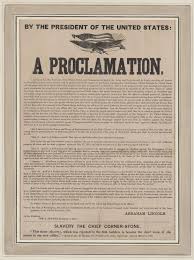
“Sound the Loud Timbrel o’er Egypt’s Dark Sea, Jehovah Hath Triumphed, His People are Free.” The Emancipation Proclamation

emancipation

Friends of Padre Steve’s World

Another section  from one of my Civil War texts, this dealing with the Emancipation Proclamation.

Peace

Padre Steve+

From the beginning of the war many Northerners, especially abolitionists and radical Republicans believed that “as the “cornerstone” of the confederacy (the oft-cited description by the South’s vice-president, Alexander H. Stephens) slavery must become a military target.” [1] When some Union generals made their own attempts at issuing emancipation orders, Lincoln countermanded them for exceeding their authority. Lincoln resisted the early calls of the abolitionists to make that a primary war goal for very practical reasons, he had to first ensure that the Border Slave States did not secede, something that would have certainly ensured that the Union would not survived. As a result in the first year of the war, Lincoln “maneuvered to hold Border South neutrals in the Union and to lure Union supporters from the Confederacy’s Middle South white belts. He succeeded on both scores. His double success with southern whites gave the Union greater manpower, a stronger economy, and a larger domain. These slave state resources boosted free labor states’ capacity to should the Union’s heavier Civil War burden.” [2] His success in doing this was instrumental in enabling him to turn to emancipation in 1862.

Finally, some twenty months after Fort Sumter fell and after nearly two years of unrelenting slaughter culminating in the bloody battle of Antietam, Abraham Lincoln published the Emancipation Proclamation. Emancipation was a tricky legal issue for Lincoln as “an executive order of emancipation would be beyond the powers of the president, but not, Lincoln concluded, if such an order were issued as furtherance of the executive’s war powers.” [3] Lincoln had desired to issue the order during the summer and sounded out elected officials and soldiers as to his plan.

Lincoln discussed his views with General George McClellan during a visit to the latter’s headquarters. McClellan stated his strident opposition to them in writing. McClellan did not admire slavery but he despised abolitionists and he wrote one of his political backers “Help me to dodge the nigger – we want nothing to do with him. I am fighting for the Union…. To gain that end we cannot afford to mix up the negro question.”  [4]

Lincoln then called border state Congressmen to sound them out on the subject on July 12th 1862 only to be met with opposition. Such opposition caused Lincoln “to give up trying to conciliate conservatives. From then on the president tilted toward the radical position, though this would not become publicly apparent for more than two months.” [5]

Lincoln’s cabinet met to discuss the proclamation on July 22nd 1862 and after some debate decided that it should be issued, although it was opposed by Postmaster General Montgomery Blair who believed that “the Democrats would capitalize on the unpopularity of such a measure in the border states and parts of the North to gain control of the House in the fall elections.” [6] Wisely, Lincoln heeded the advice of Secretary of State Seward to delay the announcement until military victories ensured that people did not see it as a measure of desperation. Seward noted: “I approve of the proclamation, but I question the expediency of its issue at this juncture. The depression of the public mind, consequent on our repeated reverses, is so great I fear…it may be viewed as the last measure of an exhausted government, a cry for help…our last shriek on the retreat.” Seward suggested that Lincoln wait “until the eagle of victory takes his flight,” and buoyed by military success, “hang your proclamation about his neck.” [7]

After the Battle of Antietam, President Lincoln issued the Preliminary Emancipation Proclamation. This document served as a warning to the leaders of the South, and insisted that there was much more at stake in their rebellion unless they surrendered; their slaves, the very “property” for which the seceded. The document “warned that unless the South laid down its arms by the end of 1862, he would emancipate the slaves.” [8] This was something that they could not and would not do, even as their cities burned and Confederacy collapsed around them in 1864.

The proclamation was a military order in which Lincoln ordered the emancipation of slaves located in the Rebel states and areas of those states occupied by Union troops. It was not designed to change law, which would have to wait until Lincoln felt he could have Congress amend the Constitution.  Instead of law it was “the doctrine of military necessity justified Lincoln’s action.” [9] The concept emanated from Boston lawyer William Whiting who argued “the laws of war “give the President full belligerent rights” as commander and chief to seize enemy property (in this case slaves) being used to wage war against the United States.” [10] There was a legitimate military necessity in the action as Confederate armies used slaves as teamsters, laborers, cooks, and other non-combatant roles to free up white soldiers for combat duty, and because slaves were an important part of the Southern war economy which could not function without them. The proclamation gave inspiration to many slaves throughout the South to desert to the Union cause or to labor less efficiently for their Confederate masters. A South Carolina planter wrote in 1865:

“the conduct of the Negro in the late crisis of our affairs has convinced me that we were all laboring under a delusion….I believed that these people were content, happy, and attached to their masters, But events and reflection have caused me to change these positions….If they were content, happy and attached to their masters, why did they desert him in the moment of need and flocked to the enemy, whom they did not know….” [11]

The proclamation authorized that freed blacks be recruited into the Federal army and it ensured that freed slaves would not again be surrendered back into slavery. As Montgomery Blair had warned Lincoln and the Republicans suffered sharp electoral reverses as “Democrats made opposition to emancipation the centerpiece of their campaign, warning that the North would be “Africanized” – inundated by freed slaves competing for jobs and seeking to marry white women.”  [12]

Lincoln’s response was to continue on despite the opposition and issue the Proclamation in spite of electoral reverses and political resistance. The vehemence of some Northern Democrats came close to matching that of white Southerners. The “white Southerner’s view of Lincoln as a despot, hell-bent on achieving some unnatural vision of “equality,” was shared by Northern Democrats, some of whom thought the president was now possessed by a “religious fanaticism.” [13] But Lincoln was not deterred and he understood “that he was sending the war and the country down a very different road than people thought they would go.” [14] He noted in December 1862:

“Fellow citizens, we cannot escape history….This fiery trial through which we pass, will light us down, in honor or dishonor, to the latest generation….In giving freedom to the slave, we assure freedom to the free – honorable alike in what we give, and what we preserve.” [15]

For Lincoln the Emancipation Proclamation was something that he believed was something that he had to do, and he believed that it would be the one thing that he did in life that would be remembered. He had long been convicted of the need for it, but timing mattered, even six months before it might have created a political backlash in the North which would have fractured support for the war effort, and in this case timing and how he made the proclamation mattered.

The Emancipation Proclamation had military, domestic political, and diplomatic implications, as well as moral implications for the conduct of the war.

The military implication would take some time to achieve but were twofold. First, Lincoln hoped that the Emancipation Proclamation would encourage former slaves, as well as already free blacks in the North to join the Union cause and enlist to serve in the Federal Army. The act would vest African Americans in the Union’s cause as little else could, and at the same time begin to choke-off the agricultural labor force that provided the backbone of the Confederate economy. Frederick Douglass eloquently made the case for African Americans to serve in July 1863, telling a crowd in Philadelphia, “Do not flatter yourself, my friends, that you are more important to the Government than the Government is to you. You stand but as a plank to the ship. This rebellion can be put down without your help. Slavery can be abolished by white men: but Liberty so won for the black man, while it may leave him an object of pity, can never make him an object of respect…. Young men of Philadelphia, you are without excuse. The hour has arrived, and your place is in the Union army. Remember that the musket – the United States musket with its bayonet of steel – is better than all the parchment guarantees of Liberty. In you hands the musket means Liberty…” [16] By the end of the war over 180,000 African American men would serve as volunteers in the United States Army.

Politically the proclamation would the diplomatic purpose by isolating the Confederacy from European assistance. This it did, after the proclamation public sentiment, especially among Europe’s working classes turned solidly against the Confederacy. Domestically it would break-ground for the Thirteenth Amendment, which Lincoln, the pragmatic lawyer was needed to actually abolish slavery. Morally, it  would serve as the guarantee of The United States Government’s public, irrevocable pledge of freedom to African Americans if the North won the war.

Lincoln signed the order on January 1st 1863. As he got ready to sign the document he paused and put down the pen, speaking to Seward he said “I never, in my life, felt more certain that I was doing right, than I do now in signing this paper….If my name ever goes down in history it will be for signing this act, and my whole soul is in it.” [17] The opening paragraph read:

“That on the first day of January, in the year of our Lord one thousand eight hundred and sixty-three, all persons held as slaves within any State or designated part of a State, the people whereof shall then be in rebellion against the United States, shall be then, thenceforward, and forever free; and the Executive Government of the United States, including the military and naval authority thereof, will recognize and maintain the freedom of such persons, and will do no act or acts to repress such persons, or any of them, in any efforts they may make for their actual freedom.” [18]

At the ends of the proclamation he added the words suggested by his devoutly Christian Secretary of the Treasury Salmon Chase: “And upon this act, sincerely believed to be an act of justice, warranted by the Constitution, upon military necessity, I invoke the considerate judgment of mankind, and the gracious favor of Almighty God.” [19]

The response throughout the North was euphoric as celebrations took place throughout the North. In some cities one hundred gun salutes were fired. At Boston’s Tremont Temple people broke out singing a hymn “Sound the loud timbrel o’er Egypt’s dark sea, Jehovah hath triumphed, his people are free.” [20] The Boston Daily Evening Telegraph predicted, “Slavery from this hour ceases to be a political power in this country…such a righteous revolution as it inaugurates never goes backward.” [21]

Frederick Douglass wrote about his reactions to the Emancipation proclamation as he had nearly despaired wondering if the Lincoln administration would actually take up the fight for emancipation:

“The fourth of July was great, but the first of January, when we consider it in all of its relations and bearings in incomparably greater. The one we respect to the mere political birth to a nation, the last concerns national life and character, and is to determine whether that life and character shall be radiantly and glorious with all high and noble virtues, or infamously blackened, forevermore, with all the hell-darkened crimes and horrors which we attach to Slavery.” [22]

The proclamation was not all some had hoped for and it was certainly provoked a negative response in the South and among many Northern Democrats. Southerners accused Lincoln of inciting racial warfare and Jefferson Davis responded “The day is not so distant when the old Union will be restored with slavery nationally declared to be the proper condition of all of African descent.” [23]

But the proclamation did something that politicians, lawyers did not comprehend, that “the details of the emancipation decree were less significant than the fact that there was an emancipation decree, and while the proclamation read like a dull legal brief, filled with qualifying clauses and exceptions, it was not language made for this, finally, a moral document. It was its existence, its title, its arrival into this world, its challenge to the accepted order, and from that there was no turning back. In this sense it was a revolutionary statement, like the Declaration itself, and nearly as significant.” [24] That the proclamation most certainly was and it was a watershed from which there was no stepping back. “It irrevocably committed the government of the United States to the termination of slavery. It was an act of political courage, take at the right time, in the right way.” [25]

However, it would take another two years, with the Confederacy crumbling under the combined Federal military onslaught before Lincoln was able to secure passage of the Thirteenth Amendment to the Constitution in January 1865.  The amendment abolished slavery and involuntary servitude throughout the country, as well as nullified the fugitive slave clause and the Three-Fifths Compromise. It would be followed after Lincoln’s death by the Fourteenth Amendment which reversed the result of the Dred Scott decision and declared that all people born in the United States were citizens and entitled to the rights of citizenship. During the Grant administration the Fifteenth Amendment was passed, and this finally extended to African American men, the right to vote in every state.

Though limited in scope, the Emancipation Proclamation had more than a domestic military, social and political effect. It also had an effect on foreign policy which ensured that Britain, and thereby France would not intervene in the war on behalf of the Southern Confederacy. It stopped all British support for the Rebels to include seizing warships that had been contracted for by Confederate agents that were building or being fitted out in British Yards. Likewise the British rejected various proposals of Emperor Napoleon III to intervene in the war in late 1862 and during the summer of 1863.

Effects of the Emancipation Proclamation on Military Law

The Emancipation Proclamation and the elimination of slavery also impacted the Union war effort in terms of law, law that eventually had an impact around the world as nations began to adapt to the changing character of war. It was important because for the first time slavery was accounted for in the laws of war. The “Instructions for the Government of Armies of the United States in the Field, General Orders No. 100 by President Lincoln, April 24, 1863; Prepared by Francis Lieber, LLD noted in Article 42 of that Code:

“Slavery, complicating and confounding the ideas of property, (that is of a thing,) and of personality, (that is of humanity,) exists according to municipal or local law only. The law of nature and nations has never acknowledged it. The digest of the Roman law enacts the early dictum of the pagan jurist, that “so far as the law of nature is concerned, all men are equal.” Fugitives escaping from a country in which they were slaves, villains, or serfs, into another country, have, for centuries past, been held free and acknowledged free by judicial decisions of European countries, even though the municipal law of the country in which the slave had taken refuge acknowledged slavery within its own dominions.” [26]

It continued in Article 43:

“Therefore, in a war between the United States and a belligerent which admits of slavery, if a person held in bondage by that belligerent be captured by or come as a fugitive under the protection of the military forces of the United States, such person is immediately entitled to the rights and privileges of a freeman To return such person into slavery would amount to enslaving a free person, and neither the United States nor any officer under their authority can enslave any human being. Moreover, a person so made free by the law of war is under the shield of the law of nations, and the former owner or State can have, by the law of postliminy, no belligerent lien or claim of service.” [27]

The Continued Fight for Emancipation: Dealing with the Copperheads and the Passage of the Thirteenth Amendment

But there were still legitimate concerns that slavery might survive as the war continued. Lincoln knew that in issuing the Emancipation Proclamation raised the stakes of the war far higher than they had been. He noted, “We shall nobly save, or meanly lose, the last best hope on earth.” [28] The threat of the destruction of the Union and the continuance of slavery in either the states of the Confederacy, the new western states, territories, or the maintenance of the Union without emancipation was too great for some; notably, the American Freedmen’s Commission to contemplate. With Grant’s army stalled outside Richmond the Copperheads and the peace party gained influence and threatened to bring about a peace that allowed Confederate independence and the continuance of slavery; members of that caucus they Edwin Stanton in the spring of 1864:

“In such a state of feeling, under such a state of things, can we doubt the inevitable results? Shall we escape border raids after fleeing fugitives? No man will expect it. Are we to suffer these? We are disgraced! Are we to repel them? It is a renewal of hostilities!…In the case of a foreign war…can we suppose that they will refrain from seeking their own advantage by an alliance with the enemy?” [29]

The effort of the Copperheads and the peace party to was soon crushed under the military successes of William Tecumseh Sherman’s armies in Georgia. This was especially true of the capture of Atlanta, which was followed by Sherman’s march to the sea and the Carolinas. Additionally the naval victory of David Farragut’s fleet at the Battle of Mobile Bay served to break the stranglehold that the Copperheads were beginning to wield in Northern politics.  These efforts helped secure Lincoln’s reelection by a large margin in the 1864 presidential election over a divided Democratic opposition, whose presidential nominee McClellan could not even endorse his party’s platform.

In his Second Inaugural Address, Abraham Lincoln discussed the issue of slavery as the chief cause of the war. In it, Lincoln noted that slavery was the chief cause of the war in no uncertain terms and talked in a language of faith that was difficult for many, especially Christians, who “believed weighty political issues could be parsed into good or evil. Lincoln’s words offered a complexity that many found difficult to accept,” for the war had devastated the playground of evangelical politics, and it had “thrashed the certitude of evangelical Protestantism” [30] as much as the First World War shattered Classic European Protestant Liberalism.  Lincoln’s confrontation of the role that people of faith brought to the war in both the North and the South is both illuminating and a devastating critique of the religious attitudes that so stoked the fires of hatred.  His realism in confronting facts was masterful, and badly needed.  He spoke of “American slavery” as a single offense ascribed to the whole nation.” [31]

“One-eighth of the whole population were colored slaves, not distributed generally over the Union, but localized in the southern part of it. These slaves constituted a peculiar and powerful interest. All knew that this interest was somehow the cause of the war. To strengthen, perpetuate, and extend this interest was the object for which the insurgents would rend the Union even by war, while the Government claimed no right to do more than to restrict the territorial enlargement of it. Neither party expected for the war the magnitude or the duration which it has already attained. Neither anticipated that the cause of the conflict might cease with or even before the conflict itself should cease. Each looked for an easier triumph, and a result less fundamental and astounding. Both read the same Bible and pray to the same God, and each invokes His aid against the other. It may seem strange that any men should dare to ask a just God’s assistance in wringing their bread from the sweat of other men’s faces, but let us judge not, that we be not judged. The prayers of both could not be answered. That of neither has been answered fully. The Almighty has His own purposes. “Woe unto the world because of offenses; for it must needs be that offenses come, but woe to that man by whom the offense cometh.” If we shall suppose that American slavery is one of those offenses which, in the providence of God, must needs come, but which, having continued through His appointed time, He now wills to remove, and that He gives to both North and South this terrible war as the woe due to those by whom the offense came, shall we discern therein any departure from those divine attributes which the believers in a living God always ascribe to Him? Fondly do we hope, fervently do we pray, that this mighty scourge of war may speedily pass away. Yet, if God wills that it continue until all the wealth piled by the bondsman’s two hundred and fifty years of unrequited toil shall be sunk, and until every drop of blood drawn with the lash shall be paid by another drawn with the sword, as was said three thousand years ago, so still it must be said “the judgments of the Lord are true and righteous altogether.[32]

Notes 

[1] Ibid. Foner Forever Free: The Story of Emancipation and Reconstruction  p.42

[2] Ibid. Freehling The South vs. The South p.47

[3] Brewster, Todd. Lincoln’s Gamble: The Tumultuous Six Months that Gave America the Emancipation Proclamation and Changed the Course of the Civil War Scribner a Division of Simon and Schuster, New York and London p.59

[4] Ibid. McPherson The Battle Cry of Freedom p.364

[5] Ibid. McPherson The Battle Cry of Freedom p.504

[6] McPherson, James M. Tried by War: Abraham Lincoln as Commander in Chief Penguin Books, New York and London 2008 p.109

[7] Ibid. Goodwin Team of Rivals p. 468

[8] Ibid. Foner Forever Free p.49

[9] McGovern, George Abraham Lincoln Times Books, Henry Holt and Company, New York 2009 p.70

[10] Ibid. McPherson Tried by War: p.108

[11] Ibid. Zinn The Other Civil War p.39

[12] Ibid. Foner Forever Free p.49

[13] Ibid. Brewster Lincoln’s Gamble p.169

[14] Ibid. Guelzo Fateful Lightning p.184

[15] Ibid. Foner Forever Free p.49

[16] Douglass, Frederick. Philadelphia Speech of July 6th 1863 recorded in the Liberator in The Civil War and Reconstruction: A Documentary Collection edited by William E. Gienapp, W.W. Norton and Company, New York and London 2001 p.221

[17] Ibid. Goodwin Team of Rivals p. 499

[18] Lincoln, Abraham The Emancipation Proclamation The National Archives & Records Administration retrieved from http://www.archives.gov/exhibits/featured_documents/emancipation_proclamation/transcript.html 14 June 2014

[19] Ibid. Lincoln The Emancipation Proclamation

[20] Ibid. Brewster Lincoln’s Gamble p.244

[21] Ibid. McPherson The Battle Cry of Freedom p.501

[22] Ibid. Guelzo Fateful Lightning pp. 180-181

[23] Ibid. Goldfield America Aflame p.263

[24] Ibid. Brewster Lincoln’s Gamble p.245

[25] Ibid. McGovern Abraham Lincoln p.78

[26] Reichberg, Gregory M, Syse Henrik, and Begby, Endre The Ethics of War: Classic and Contemporary Readings Blackwell Publishing Ltd, Malden, MA and Oxford UK 2006 p.570

[27] Ibid. Reichberg et al. The Ethics of War p.570

[28] Ibid. Goldfield America Aflame p.263

[29] Ibid. Guelzo Fateful Lightning p.534

[30] Ibid. Goldfield  America Aflame p.358

[31] Ibid. Wills Lincoln at Gettysburg p.186

[32] Lincoln, Abraham Second Inaugural Address March 4th 1865 retrieved from www.bartleby.com/124/pres32.html 24 March 2014
 

6 Comments

Filed under civil rights, civil war, History, laws and legislation, leadership, Political Commentary

Becoming What We Should Be


Friends of Padre Steve’s World,
Having completed, with the exception of editing and circulating some hard copies of the first volume of my Civil War text A Great War in a Revolutionary Age of Change, I have gone back to work on the second volume of my Civil War text “Mine Eyes Have Seen the Glory” Religious Ideology, Race, and Politics in the Civil War Era. Beginning yesterday I began to go through the approximately 160 pages of text, which had been the second chapter of my Gettysburg Staff Ride text, but like A Great War really needed to be split off and turned into its own separate book. 

Yesterday I went back to figure the natural chapter breaks and to begin some minor editing and creating a bibliography and working table of contents as I prepare to really dig in on it. The good thing is that I have continued to research this section even as I concentrated on work on A Great War and major chapter revisions to the book dealing with the campaign of 1863 and the Battle of Gettysburg. 

As I have done this I become more and more convinced that what I am writing about needs to be told. As I look at responses to the Black Lives Matter movement I am appalled by the willing historical ignorance of much of the country, including white America, which has erased from its collective memory the terrible injustices of slavery, the black codes, Jim Crow, segregation, and violence directed at African Americans over nearly three hundred year period before the Supreme Court stuck down the Jim Crow era segregation laws, and the Congress passed the 1964 Civil Rights Act, and 1965 Voting Rights Act, and less than three years later Dr. Martin Luther King Jr., the champion of peace protest and civil rights was gunned down and assassinated. 

But it is easy for some people to condemn the Black Rights Movement, it is called racist by some, and it is blamed for a host of issues that it is simply exposing and demanding action to solve. Some people respond to criticism of police with the saying that Blue Lives Matter, and I agree that they do, police officers do dangerous work, and with the proliferation of high powered weaponry in the hands of irresponsible and angry people, their lives are always in danger. But that is no reason not to say that Black Lives Matter is wrong in its intent. Some say that All Lives Matter, and I agree with that in principle, but I would challenge the people that flippantly say that in order to dismiss the validity of Black Lives Matter, while doing nothing to work for the rights of people different than themselves, that they need to put their money where their mouth is. 

In the 1850s and 1860s Abraham Lincoln struggled with this in a country that was becoming increasingly diverse due to massive immigration from Ireland and Germany, and in which Congress and the Courts were making decisions which would allow for the expansion of slavery and the definition of African Americans as a subordinate race without any citizenship rights. Lincoln was worried that America was becoming like a plow horse with blinders fastened to the sides of its eyes, capable of seeing only in one direction: ahead of it. He saw Americans as people increasingly interested only with their present and their future, the things still before them, but disinterested with their own historical past, the things already behind them. A condition that is not much different that what we see today. Maybe because I am a historian I am more sensitive to this, but it is concerning. 

Lincoln realized that people had forgotten the heart and soul of America, the secular scripture found in the preamble of the Declaration of Independence. “We hold these truths to be self-evident, that all men are created equal, that they are endowed by their Creator with certain unalienable Rights, that among these are Life, Liberty and the pursuit of Happiness,—That to secure these rights, Governments are instituted among Men…” He realized that for most people of his era the proposition that all men are created equal was in the process of dying. He knew that freedom without equality was no freedom at all, and beginning with the Emancipation Proclamation he began the first step to universalize that proposition. Les than a year later he gave a short speech of under three hundred words at Gettysburg in which he went back to the Declaration noting “Four score and seven years ago our fathers brought forth on this continent, a new nation, conceived in Liberty, and dedicated to the proposition that all men are created equal,” and he called on Americans to renew themselves to that proposition: “It is for us the living, rather, to be dedicated here to the unfinished work which they who fought here have thus far so nobly advanced. It is rather for us to be here dedicated to the great task remaining before us—that from these honored dead we take increased devotion to that cause for which they gave the last full measure of devotion—that we here highly resolve that these dead shall not have died in vain—that this nation, under God, shall have a new birth of freedom—and that government of the people, by the people, for the people, shall not perish from the earth.”

In a book that I just finished on the Gettysburg Address the author noted something that I find quite true. He said: “We should read the Preamble to the Declaration of Independence, and then, the Gettysburg Address. They are, together, our American scriptures. And we should read them aloud, the way they were meant to be. They are words which are most powerful when they are spoken. Their words remain fresh and alive, no matter how many times they are read. All we need to know about what American democracy should be, is found there, among the words of these two ancient manuscripts.”

Now I do not arrogantly claim that we as Americans exemplify those words, or that we even live up to them, but they are something that we need to keep in the forefront of our minds, and strive to achieve if we are to become a better nation. 

I was talking with one of our international officers at the staff college today who has been studying at the Naval War College for the past year before he came to us, and as we talke we agreed that what makes America great is not our military might, nor our economic power, but that proposition of Liberty, the proposition that is so radical that few countries include it in any of their political documents, that proposition, that all men are created equal. It was something that a number of my Korean officers noted at Gettysburg back in May. They all understood something that so many Americans have forgotten. 

So I will continue to read, research, and write, and I am excited about it, especially during this critical time in our nation’s history. I’m sure that in the coming month or two that you will see some of that work appear on this site as I work on Mine Eyes Have Seen the Glory. 

Until tomorrow I wish you peace,

Padre Steve+

Leave a comment

Filed under civil rights, civil war, Gettysburg, History, News and current events, Political Commentary

Celebrating an Achievement 


Friends of Padre Steve’s World,

Things have been very busy, I have been putting the finishing touches on the draft of what used to be the first chapter of my Gettysburg Staff Ride text. The chapter grew to be about 260 pages, far more than a chapter should be. For at least six months I have been planning on splitting it off into its own book, and yes it is a book; but I did not get around to it, instead I kept working on it. 

So about two weeks ago I made the decision to turn all this work into a book. So I spent my time the last two weeks, day and night, at work and at home working on getting it exactly the way I want it to be. I still need to go back and re-read it a number of times to catch mistakes that might have slipped through, as well as re-checking my sources, but when I finished it up this afternoon and sent the draft to m students I was elated. I will have some other people look at it to see if they think I need to do anything differently, but I am pretty sure that this is at least the 90% solution before seeking a publisher. 

One thing I had been stuck on was an appropriate title. For the longest time I was stuck with the rather boring Foundations of the First Modern War. It is accurate in some ways,nut it never really got me. But while working on turning this into a book was just how revolutionary the Civil War really was, and just how many times I had written about the revolutionary nature of the entire era, not just the war. So today I came up with the title: A Great War in a Revolutionary Age of Change. I think that it works as the text deals with change, military, political, social, economic, informational, and diplomatic. In fact if you want to understand who we are as Americans you have to understand the Civil War era. Of course this book is just a small part of understanding it, and I am indebted to so many historians who have worked to unravel, sorting fact from fiction, truth from myth. For so many of these men and women this has been a life’s work, and many of them have been accused of being “revisionists”  especially those who contradicted the myths of the Lost Cause and the Noble South  which were for two many decades the accepted “history”  of the Civil War era. Like them I have taken my share of heat from unrepentant secessionists and Lost Causers, and I don’t care so long as what I write is as truthful and unbiased as possible. 

Over the past couple of weeks I have taken the time to turn the massive chapter into a book. I was able to divide it up into an introduction and twelve chapters in which I try to connect the dots between the development of the Army and developments in society in the years before the war, during the war, and following the war during Reconstruction, Jim Crow, and the Civil Rights movement. I explore the continuum of history and war, war in an age of change, and the context of war. Then I move to talk about how war is more than fighting, and the development of American military culture and theory. Then I shift to technology how technology matters, building armies from scratch, the changing character of armies and society, looking at the effect of conscription on Northern and Southern society. Then I move to the social change regarding Emancipation and Black soldiers, and the beginnings of the Women’s Rights movement, before I move back to discussing how technology pioneered before and during the Civil War set the stage for many things we know today. Then I think I go on to discuss a topic that many people fail to remember, the importance of what happens when the fighting stops, before finishing up talking about the timeless importance of this era today, and how so often we fail to learn the lessons of war. 

Tomorrow I will begin taking my second chapter, another book in its own right and separate it from the bulk of the text that deals with the strategic situation at the beginning of 1863, the Gettysburg campaign, and the Battle of Gettysburg. My regular readers have seen much of this develop from a very embryonic form in 2012 to what it is becoming now, over 1100 pages of text. There is still more work to be done and I am totally motivated to push forward and complete the rest of this work before I move on to other things that I want to write about, some topics that I have written about on this site. 

But tonight is a time to rest and watch the MLB All-Star Game, one of my favorite mid-summer things to do, an event that takes me back to childhood when things were so much simpler. I’ll write about that tomorrow before I move on to other subjects. 

Have a great night,

Peace,

Padre Steve+

2 Comments

Filed under civil rights, civil war, History

What’s On Deck this Week

 Friends of Padre Steve’s World,


I have been working on a number of articles that will be published here this week. I have one coming up on some of the very troubling episodes of xenophobia that have occured in England and Wales in the wake of the Brexit vote, incidents that are similar to some that have occured in the United States and other nations over the past several months. Of course I have a number that are continued work on my Civil War and Gettysburg texts. As I mentioned I am going to have to split the first two chapters, which alone account for over 350 pages of the nearly 1100 page text into their own book or books. The trouble when you go back through work on history or political and military theory to clarify and amplify what you are saying is that it often results in more text. At least as I do this the bumpy places in the text are coming together in a much more smooth and readable form. Of course the subjects that I write about in it are just as pertinent today as they were in the ante-bellum era, The Civil War, Reconstruction, as well as the post-Reconstruction and White supremacist Jim Crow era.

Over the weekend I will be writing about the Declaration of Independence, and the most important proposition in it, the proposition that all men are created equal.

So anyway, with that said, have a great Tuesday.

Peace

Padre Steve+

Leave a comment

Filed under Loose thoughts and musings

More Musings of a Realist in Wonderland


Friends of Padre Steve’s World,

I have just a short thought for the day and plan on writing more again tomorrow and in the coming days. In the days before I travelled to Gettysburg and today I have continued to immerse myself in reading, study, reflection, and writing. Of course this is in addition to normal life and work, so it is a premeditated pursuit of knowledge, as well as truth, which never leaves me disappointed. 

I have been continuing to work on the first couple of chapters of my Gettysburg and Civil War text and I am now convinced that these two chapters, comprising close to 350 pages of text will have to become one or two books as I begin to edited them, and find a publisher. That will leave over 700 pages dealing with the Gettysburg campaign and the battle itself, and that section will also continue to grow. 

But as I do this I am reminded that indeed I am a “Realist in Wonderland.”  I am reminded how, despite how successful the campaigns of the American military have when fighting opponents that behave the way we expect them to at the operational level; my study and observations are like so many others that since the Second World War show me that we win battles but don’t win many wars. 

Actually there is no mystery to this. The simple fact is that the United States does not have a coherent national strategy, what Clausewitz called policy, and as such, our military force used almost exclusively used as a hammer to fulfill policy objectives when when we have so many other non-military tools in our strategic arsenal. 

I was reminded of this as I was revising the first chapter my Gettysburg text which is nearly 200 pages be a book in its own right. As I continue to research the connection between strategy in the American Civil War I read the works of other military historians and theorists I see just how much that disconnected from any rational political policy that war cannot be justified. This is what Clausewitz said nearly 200 years ago, and which, Abraham Lincoln, William Tecumseh Sherman, and Ulyesses S. Grant demonstrated in the Civil War. 

Those men connected national strategy to military strategy and the operational art, while the Confederates never were able to develop a national strategy that matched their military, economic, and diplomatic capabilities. As such, even the Confederacy’s  best general, Robert E. Lee, who was one of the most prolific commanders at the operational level of war, who like so many other great military leaders, and our own military leaders of the past 30 years, 70 if you go back to Korea, never was able to translate operational success to actually winning a war.

 Clausewitz understood this all too well, the act of war is not an autonomous event, and unless it is connected to rational policy it is madness. 

Pretty soon I will post something from that text revision, but I am not ready to just yet, what I am working on is difficult, because my first instinct is always to pursue conciliation with are enemies and try to limit the destructiveness of war.  But the fact is that the more that I study history, the more I am convinced, as repulsive as it may sound, that the nature of war never changes and that if we continue to attempt to abide by rules of behavior that our enemies do not follow, all of the death, carnage, and devastation of the wars that we have been fighting for over a decade and a half will have been for nothing. To paraphrase British historian Hew Strachan, if the facts to not support theory, you do not suppress facts, but change the theory in light of the facts. Sadly, every American political administration, Republican and Democrat, since the end of the Cold War, as well as the Congress has ignored this basic truth when committing this nation to war. In light of history, that is inexcusable. The fact is that we need leaders like Lincoln, Grant, and Sherman and not like Jeffeeson Davis and Robert E. Lee if we are to ever emerge from this war without end without destroying our nation in the process, and handing its destiny over to the likes of Donald Trump or supposedly Christian religious zealots. 

As unpolitcally correct as this may sound, especially coming from a man who is a liberal and progressive, I have to admit that as Sherman said, “War is cruelty. There is no use trying to reform it. The crueler it is, the sooner it will be over.”  If there was a way way to undo this timeline and go back before 9-11 which brought a measure of fear and vulnerability to the people of the United States as we have ever experienced, and the misbegotten Bush Adminstration invasion of Iraq, the terrible effects of which are still with us and not going away, I would do so. But real life is not science fiction, and we cannot alter the timeline. We can only deal with it the best that we can. 

At this point I do not know how I will post these things. I might post sections of the text or I might write something that flows out of them. Whatever I do, you will see it here first. 

We have to do better. 

Until tomorrow,

Peace,

Padre Steve+ 

1 Comment

Filed under civil war, History, Military, News and current events, Political Commentary

Women in the Civil War: Spies, Nurses and Transgender Soldiers

women-civil-war-sarah-edmonds-frank-thompson-631

Friends of Padre Steve’s World,

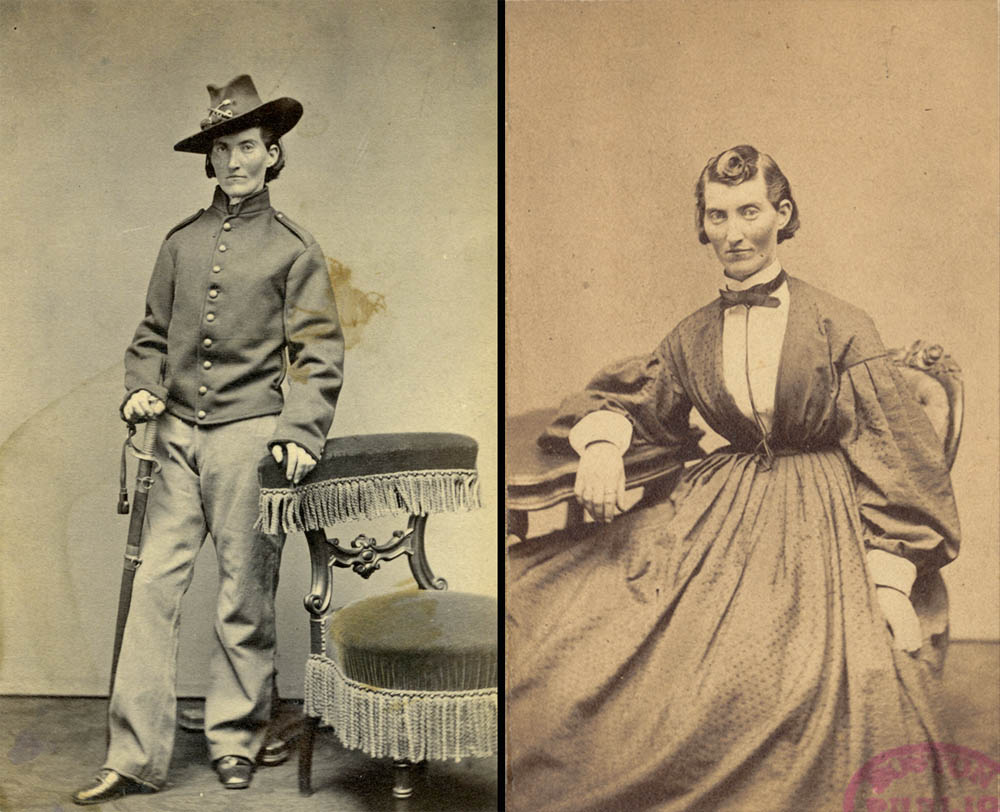
This is the follow-up to yesterday’s article on the early women’s rights movement. It deals with how women served in the Civil War. While women were not allowed to be soldiers, many disguised themselves and lived as men in order to do so, in effect living as transgender men. Others served as spies or nurses. All were pioneers, and though women are now beginning to reach the highest ranks of the U.S. Military, and being allowed to serve in military specialties previously limited to men, there is still much political and cultural opposition to them doing so. 

As before this is a section from my Civil War and Gettysburg text. I do hope that you find it interesting. 

Peace

Padre Steve+

Of course when the Civil War broke out the logical end of this train of though was that should women be allowed to serve in the military. Legally and socially it was not possible for women to serve in the military in 1861, but this did not stop women in the Union or the Confederacy from doing so. Quite a few women on both sides of the conflict chaffed about not being allowed to fight for their countries, their families and their causes, and despite official prohibitions that kept women from serving in any capacity but nursing, a good number of women found their way to go to war. While men in the North and South “were expected to enlist, any woman actively participating in the Civil War was an oddity if not a renegade.” [1] In some cases this involved hundreds of women taking male identities in order to fulfill their desires to serve their countries.

The motives of these women varied. In some cases women wanted gain the economic privileges of full citizenship, and for others the glory reserved to only to men. In our modern parlance those that took male identities would be considered transvestites or possibly transgender, but for them “transvestitism was a private rebellion against public conventions. By taking a male social identity, they secured for themselves male power and independence, as well as full status as citizens of their nation. In essence the Civil War was an opportunity for hundreds of women to escape the confines of their sex.” [2]

civilwar-07-patient1

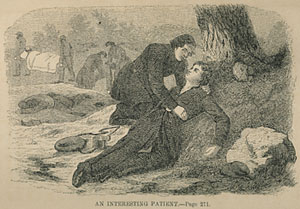
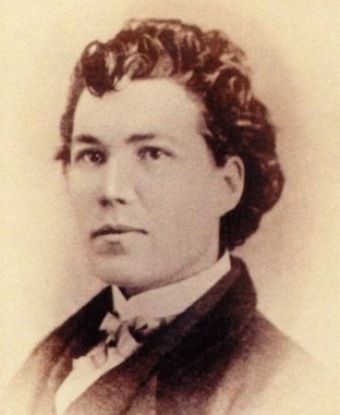
During the war hundreds of women went to war, taking on the identity of men. They enlisted under male names and pretended to be men. Unless they were discovered to be women, or unless they confessed to their wartime service either during or after the war, most women managed to serve without being caught. Sadly, most of their service records were lost. In 1861 Private Franklin Thompson “enlisted in Company F of the 2nd Michigan Infantry…unknown to comrades, Thompson actually was Sarah Emma Edmonds.” [3] Edmonds served in the illustrious Iron Brigade until the disaster at Fredericksburg. Well known for her courage as Franklin Thompson, Edmonds participated in some of the bloodiest combats of the war. At Antietam she was caring for the wounded when she came upon a soldier who had been wounded in the neck. That soldier informed Edmonds that she was dying and after a surgeon came by and confirmed what the soldier said the dying soldier told Edmonds:

“I am not what I seem, but I am female. I enlisted from the purest motives, and I have remained undiscovered and unsuspected. I have neither father, mother nor sister. My only brother was killed today. I closed his eyes about an hour before I was wounded….I am Christian, and have maintained the Christian character ever since I entered the army. I have performed the duties of a soldier faithfully, and am willing to die for the cause of truth and freedom….I wish you to bury me with your own hands, that none may know after my death that I am other than my appearance indicates.” [4]

That unknown woman was not alone, at least nine women, eight Union and one Confederate, fought at Antietam and of those five were casualties. Five women, two Federal and three Confederate took part at Gettysburg. All three Confederate women at Gettysburg were either killed or wounded, or captured, including two women who took part in Pickett’s Charge. [5]

Edmonds_inline

Sarah Edmonds aka Franklin Thompson

Sarah Edmonds published a book Nurse and Spy in the Union Army while recovering from malaria in 1863. The book, which was published the following year, sold 175,000 copies, the proceeds that she donated to care for sick and wounded Union veterans. After the war, Edmonds attended Oberlin College, married, had three of her own children and adopted two more. She “became a member of the Grand Army of the Potomac, the organization for Union veterans of the Civil War. She applied for, and received, a military pension, and upon her death in 1898 was buried with full military honors.” [6] She was the only women admitted to the Grand Army of the Republic.

Clayton-Francis-L

Frances Clayton

Another of the women to serve was Frances Louisa Clayton. Fighting for the Union as a member of the Minnesota State Militia Cavalry and 2nd Minnesota Battery, serving under the command of Ulysses S. Grant she was wounded at Fort Donelson. Like many other women soldiers, Clayton mastered the art of behaving as a man. She “became “a capital swordsman,” but also commanded attention with her “masculine stride in walking” and “her erect and soldierly carriage.” [7] After the war she promoted her service in a book.

Albert-Cashier

However, most women were more discreet during and after the war regarding their true sexuality. Private Albert Cashier hid his sexuality identity for his entire term of service. He enlisted in August 1862 as a member of the 95th Illinois. Cashier was born in Ireland as a woman, Jennie Hodgers. He fought in forty battles and was discharged with the regiment in August 1865. At Vicksburg he was briefly captured by the Confederates while conducting a reconnaissance “but managed to escape by seizing a gun from one of her guards, knocking him down, and outrunning others. Comrades recalled Private Cashier climbing to the top of their fieldworks to taut the enemy into showing themselves.” [8]

After the war “Albert” returned home and lived as a “farmer and handyman and served as a caretaker in his church. He never married.” In 1890 he applied for and received a military pension and in 1911 the now elderly “man” was struck by a car and suffered a broken leg. The doctor threating him discovered that Albert was not a man, but a woman. But the doctor kept his confidentiality and without revealing “Albert’s” secret had the Union veteran admitted to the local Soldier’s and Sailors’ Home at Quincy, Illinois.” [9] A few years later the elderly “man” began to exhibit erratic behavior and was “committed to a public mental hospital and the word was out.” [10] With her story now sensational front page news and “old comrades in arms came to her defense.” [11] Her comrades had never known that “Albert” was a man during or after the war, while the news was a surprise to them they came to her defense. To combat some of the sensationalism in the media Albert’s fellow soldiers testified “to Albert’s bravery in combat and public good works in later life. Albert/Jennie died at Watertown State Hospital in 1915 at age seventy-one. The local post of the Grand Army of the Republic arranged for her burial. Her headstone reads: “Albert D.J. Cashier, Company G, 95th Illinois Infantry.” [12]

Wartime records are sketchy but as a minimum it is believed that “between 250 and 400 women disguised as men found their way into either the Federal or Confederate armies.” [13] Women known to have served had a “combined casualty rate of 44 percent” including the fact that “eleven percent of women soldiers died in the military.” [14] Some of those women are now well known but many others are lost to history. Most women tried to keep their sexual identities secret, even to the point of their death on the battlefield. Most of the women who served in the armies returned home to resume relatively normal lives after the war.

Other women would serve as spies for both sides, often rendering valuable assistance to their countries. The women who served as spies often took their lives into their hands; however, they often provided vital information to the Union or Confederate officers that they served. Pauline Cushman “parlayed her acting talents into a series of elaborate ruses that allowed her to pry information out of admiring and complaisant Confederate officers; Belle Boyd used an equal measure of talent in as a northern Virginia coquette to elide the same kind of information out of Federal officers.[15]

Even those women who were successful often suffered for their service during and after the war as they learned “that few people completely trusted or respected a spy, not even a “friend.” [16] Many, especially Southern women who spied for the Union were ostracized and persecuted in their communities after the war, and found little support from Northern politicians. Rebecca Wright, a young Quaker schoolteacher in Winchester, Virginia provided information that “enabled him to defeat General Early’s forces” in the Valley of 1864. She lost her job, and her former friends and neighbors boycotted her family’s businesses. Rejected for a pension, Sheridan helped Wright obtain “an appointment in a government office, remaining there for the rest of her days.” [17] Elizabeth Van Lew was a lifelong resident of Richmond and daughter of a wealthy businessman. She helped Union prisoners escape from Richmond’s notorious Libby prison and when Grant besieged Petersburg, Miss Van Lew “supplied him with a steady stream of information” [18]

01302012_harriet-tubman2-library-of-congress-600

Harriet Tubman

“African American women were generally dismissed as militarily harmless, a miscalculation that Harriet Tubman…used to immense advantage. Tubman, who had escaped from slavery in Maryland twenty years before the war and who had amassed considerable experience venturing into the south to guide runaways to the North undertook spying expeditions for the Federal troops on the South Carolina Sea Islands.” [19] The incredibly brave woman served throughout the war accompanying Union forces and securing vital information even as she worked to set other slaves free. Tubman’s “spying activities included convincing slaves to trust the Union invaders,” [20] many of whom would join the ranks of the newly raised regiments of U.S. Colored Troops.

dix

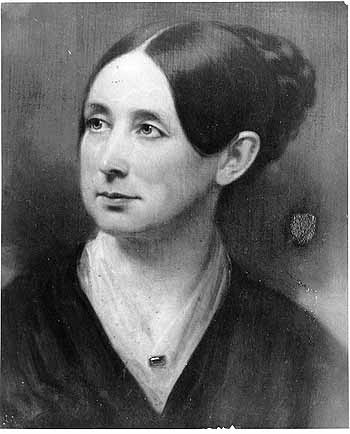
Dorothea Dix

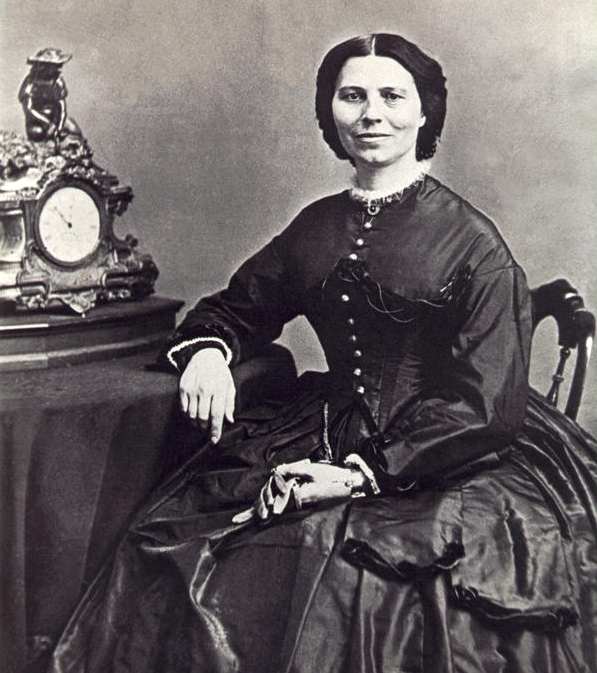
Other women served in various roles caring for the wounded. In the North, “Dorothea Dix organized the Union’s army nurses for four years without pay; Mary Livermore headed the Union’s Sanitary Commission, inspecting army camps and hospitals….Scores of others like Clara Barton, volunteered to be nurses.” [21] All of these women did remarkable service, mostly as volunteers, and many witnessed the carnage of battle close up as the cared for the wounded and the dying which often created ethic concerns for the women nurses:

“Clara Barton described her crisis of conscience when a young man on the verge of death mistook her for his sister May. Unable to bring herself actually to address him as “brother,” she nonetheless kissed his forehead so that, as she explained, “the act had done the falsehood the lips refused to speak.” [22]

Clarabartonwcbbrady

Clara Barton

Of the women that served in the ranks, some were discovered, and many remained protected by their fellow soldiers. Quite a few received promotions and even served as NCOs or junior officers. With women now serving in combat or combat support roles in the U.S. Military since Operation Desert Storm in 1991, the stigma and scandal that these cross-dressing women soldiers of the Civil War has faded and as scholars and the public both “continue probing cultural notions of gender and identity, the reemerging evidence that women historically and successfully engaged in combat has met with less intellectual resistance and has taken on new cultural significance.” [23] As the United States military services examine the issues surrounding further moves to integrate the combat arms we also should attempt to more closely examine the service of the brave and often forgotten women who served on both sides of the Civil War.

Notes

[1] Silvey, Anita I’ll Pass for Your Comrade Clarion Books, New York 2008 p.9

[2] Ibid. Blanton and Cook They Fought Like Demons p.5

[3] Ibid. Lowry The Stories the Soldiers Wouldn’t Tell p.119

[4] Ibid. Silvey I’ll Pass for Your Comrade p.68

[5] Ibid. Blanton and Cook They Fought Like Demons pp. 15-16

[6] Ibid. Silvey I’ll Pass for Your Comrade p.90

[7] Ibid. Blanton and Cook They Fought Like Demons p.58

[8] Ibid. Blanton and Cook They Fought Like Demons pp. 16-17

[9] Ibid. Lowry The Stories the Soldiers Wouldn’t Tell p.121

[10] Ibid. Lowry The Stories the Soldiers Wouldn’t Tell p.121

[11] Ibid. Silvey I’ll Pass for Your Comrade p.90

[12] Ibid. Lowry The Stories the Soldiers Wouldn’t Tell p.121

[13] Ibid. Guelzo Fateful Lightening p.394

[14] Ibid. Blanton and Cook They Fought Like Demons pp.206-207

[15] ibid. Guelzo Fateful Lightening p.395

[16] Ibid. Massey Women in the Civil War p.87

[17] Ibid. Massey Women in the Civil War pp. 103-104

[18] Ibid. Massey Women in the Civil War p.102

[19] Ibid. Guelzo Fateful Lightening p.394

[20] Sizer, Lyde Cullen Acting Her Part: Narratives of Union Women Spies in Divided Houses: Gender and the Civil War Oxford University Press, New York and Oxford 1992 p.130

[21] Ibid. Silvey I’ll Pass for Your Comrade p.10

[22] Faust, Drew Gilpin, This Republic of Suffering: Death and the American Civil War Vintage Books, a division of Random House, New York 2008 p.12

[23] Ibid. Blanton and Cook They Fought Like Demons p.204

Leave a comment

Filed under civil rights, civil war, History, Military, Political Commentary

Freedom’s Pilot: Robert Smalls Fight for Freedom


Friends of Padre Steve’s World,

There are some people and events that are important but get swept up in broader historic events. One such story is that of Robert Smalls, a slave in Charleston South Carolina. Smalls was hired out to work with the money going to his master. He worked in a number of jobs, but as a teenager fell in love with the sea. He went to work as a slave worker on the city’s waterfront where he started as a common dockworker, became a rigger, a sailmaker, and finally a wheelman, which basically was a ship’s pilot, since slaves were not permitted that title. Even so his abilities and knowledge of Charleston harbor well well known and respected by ship owners. 


When South Carolina seceded and the Confederacy went to war, Smalls was assigned as wheelman of the CSS Planter, a small and lightly armed transport. On the night of May 12th and 13th of 1862, Smalls took advantage of all three white officer’s absence ashore, by putting into effect an escape plan he had worked out with the other slave crew members of Planter. Smalls and seven other slaves got the ship underway, with Smalls donning the captain’s uniform and a straw hat similar to the captain’s. In the darkness the ruse was perfect, no Confederades ashore suspected anything as Planter stopped to pick up the escaped slaves family members at another wharf before Smalls sailed out past the range of the Confederate shore battery guns to surrender to the USS Onward. Smalls present the U.S. Navy with the ship, her cargo, which included four artillery pieces intended for a Confederate fort in the harbor, but more importantly a Confederate code book and charts showing the location of deadly undersea mines and torpedoes that had been laid in the harbor. 

Smalls quickly became a hero. Congress voted him and his crew the prize money for the ship, and he met with Secretary of War Stanton to argue the case that blacks should be allowed to serve. Smalls’ story helped convince Lincoln of allowing African Americans to serve in the United Staes forces. Smalls served as a civilian pilot working for the Navy and and the Army, serving in numerous battles. He was the pilot for the experimental ironclad USS Keokuk when that ship was heavily damaged by over 90 hits at Charleston. He was responsible for getting the ship safely out of range of the  Confederate batteries before she sank, thus saving many crew members. 

He then was reassigned to the USS Planter, now assigned to the Army. The ship got caught in a crossfire between the Union and Confederate forces and Planter’s captain ordered the ship to surrender. Smalls objected, knowing that any African American caught serving Union forces would not be treated as prisoners of war, but either returned to slavery or executed by order of the Confederate Congress. Smalls took command of the vessel and steered her out of harm’s way. He was appointed Captain of the ship and was present for the ceremonial raising of the American flag over Fort Sumter in April 1865. Smalls was the first African American to command a ship in the service of the U.S. Military.

After the war Smalls got an education and when the 14th Amendment was passed ran for office, serving in the South Carolina legislature and as a member of Congress. He fought against changes to the 1895 South Carolina Constituion that disenfhchised African Americans and codified the Jim Crow laws which had be upheld by the Supreme Court in Plessy v. Ferguson. 

In 1889 Smalls was appointed U.S. Collector of Customs in Beaufort and served in that office until 1911. He also was director of a black owner railroad, and helped publish the black owners Beaufort Standard newspaper. He died in 1915 at the age of 75. 

Small’s courage and his fight for freedom, as well as others who did so should not be forgotten. 

Peace,

Padre Steve+ 

Leave a comment

Filed under civil rights, civil war, History, leadership, Military

The Gospel of Wealth & War

phillipine harvest

Friends of Padre Steve’s World

Since I am out of country I am pre-posting articles that will be released while I am away. This is a short bit from my the second chapter Civil War and Gettysburg text. The chapter as a whole deals with religion and ideology as chief contributing factors to the war, its conduct by both sides and the post-war myth of the Lost Cause. This section briefly looks at how the war and the earlier concept of Manifest Destiny brought about a new paradigm in which the message of earlier evangelicalism which focused on conversion, salvation and personal piety was transformed into a message of wealth and war. The transformation was lasting, and is something that American Christianity has never recovered from.

Peace

Padre Steve+

Secession and war was now on the horizon, and despite well-meaning efforts of some politicians on both sides to find a way around it, it would come. Religion had been at the heart of most of the ideological debates of the preceding quarter century and now it came to symbolize the causes of both sides. The belief in Manifest Destiny had led Americans to violate nearly every pronouncement of the founders and embark on a policy of imperialism, conquest, and even the extermination of millions in its name. As far as preventing conflict, Evangelical Protestants on both sides had not only failed to prevent the war; to the contrary those very Evangelical leaders were more than instrumental in bringing on the war as they:

“fueled the passions for a dramatic solution to transcendent moral questions. Evangelical religion did not prepare either side for the carnage, and its explanations seemed less relevant as the war continued. The Civil War destroyed the Old South civilization resting on slavery; it also discredited evangelical Protestantism as the ultimate arbiter of public policy.” [1]

When war came Evangelical Protestants on the opposing sides attempted to frame their cause in the light of their nearly identical theology, sometimes seeing it is a prelude to the return of Christ and the beginning of the millennium. An agent of the American Tract Society named Hollis Read was one, he proclaimed:

“A few more such strides, a few more such terrific struggles and travail-pains among the nations; a few more such convulsions and revolutions, that shall break to pieces and destroy what remains of the inveterate and time-honored systems and confederations of sin and Satan and the friends of freedom may then lift up their heads and rejoice, for their redemption draweth nigh. The Day of Vengeance Has Always Preceded And Been preparatory to the Year of the Redeemed.” [2]

Southerners too saw the coming war in similar triumphant theological ways. Some saw in the Confederacy the embodiment of Christ. Methodist minister William Seat of Texas wrote, “The One like the Son of Man has appeared in the rise of the Confederate States.” [3] He wrote that the South would take its place among the nations through it “liberty and pure Christianity would go abroad on earth.” He noted that soon the “peaceful millennial reign would dawn” and the stone from the mountain – the South – would be glorified: “Then the stone cut out from the shall become a great mountain and fill the earth. There shall be no more curse nor death nor sorrow nor crying. There shall be fullness of joy and pleasures forevermore. We solemnly believe that the great prophetic periods have closed: the mystery is finished and the vision of prophecy unsealed. The Final Kingdom has arisen, and the Divine Redeemer has come to reign.” [4]

As the war went on ministers and theologians saw their theological presuppositions dashed on the shoals of reality of William Tecumseh Sherman’s understanding, that “war is hell.” As the war went against the Confederacy, Southerner ministers had to re-frame the cause and the reasons for defeat, which most did not ascribe to slavery, but rather deficiencies in Southern character, and economic policy. In the North the faithful were shaken by the horrendous cost of the war. One of Charles Finney’s correspondents wrote in 1864, “So many are skeptical, doubtful, so many good people are cutting loose from creeds & forms….I am sometimes tempted to ask whether prayer can make any difference.” [5]

American Religion, especially Protestantism, which had served so much to bring about the war, instead became one of its most prominent casualties. American Protestantism shifted its emphasis; some ministers preached a gospel of wealth to align themselves and their congregants with the rising tide of the new rich. Russell Conwell, a former Union soldier in the war turned Baptist preacher, whose church later formed Temple University delivered his Acres of Diamonds sermon in which he proclaimed, “Money is power, money is force…. I say to you to get rich, and it is your duty to get rich.” [6] The sermon became popular throughout the country, and people did not tire of it.

350-prosperity-gospel

The theology of wealth was not political, it preached no moral crusades, it called for no sacrifice, it considered not justice, and it appealed to people’s basest instincts and left little room for sentiment. The poor, the newly free but oppressed African American and others were left behind. Walt Whitman was concerned that the churches encouraged people to pursue everything but the common good. He wrote, “genuine belief seems to have left us…. The spectacle is appalling. We live in an atmosphere of hypocrisy throughout…. A lot of churches, sects, ect., the most dismal phantasm I know, usurp the name of religion.” [7]

Southern Evangelicals retreated in into a skepticism and denial of human progress, for if that had been the case they would have triumphed over their Yankee oppressors. After the war Southern Evangelicals “expected little from the corrupted world and expected even less from the knowledge of corrupted men, especially men of science and power. The war brought to the South a theology, as well as a politics and economics, of diminished expectations.” [8]

Never again would Evangelical Christianity play as dominant role as it did in early part of the war, and “from the 1860s onward, American Protestantism was increasingly marked by the quiet erosion of faith, and religious experience became plagued more and more decaying faith, and in an increasing appeal to feeling and imagination over confessional reason or evangelical conversion.” [9] That trend continues to the present day as if nothing as happened in the meantime. Mark Twain wrote something about Conwell’s “Gospel of Money” which echoes to the critics of the contemporary “Prosperity Gospel”:

“What is the chief end of man? – to get rich. In what way? – dishonesty if we can; honestly if we must. Who is God, the one only and true? Money is God. Gold and Greenbacks and Stock – father, son, and the ghost of same – three persons in one, these are the true and only God, mighty and supreme.” [10]

Notes

[1] Ibid. Goldfield America Aflame p.360

[2] Ibid. Guelzo Fateful Lightening p.414

[3] Ibid. Daly When Slavery Was Called Freedom p.147

[4] Ibid. Daly When Slavery Was Called Freedom p.147-148

[5] Ibid. Guelzo Fateful Lightening p.416

[6] Ibid. Goldfield America Aflame p.456

[7] Ibid. Goldfield America Aflame pp.468-469

[8] Ibid. Daly When Slavery Was Called Freedom p.153

[9] Ibid. Guelzo Fateful Lightening p.416

[10] Ibid. Goldfield America Aflame p.457

2 Comments

Filed under faith, History, Religion

Logistics, Transportation & Communication in the Civil War

Friends of Padre Steve’s World

Today something a bit wonkish, another section of my Civil War and Gettysburg Staff Ride text. Nothing controversial, but an interesting look at how all of these mundane and often forgotten components of war advanced during the Civil War and how both sides adapted to these developments.

Peace

Padre Steve+

meigs

General Montgomery Meigs: Logistician Extraordinaire

With the advances in weaponry, technology turned the adoption of field fortifications and the tactical defense; even during offensive operations changed the way that the armies conducted the war; other advances were occurring. These took place in logistics, transportation, signals and communications.

In a country as vast as the United States logistics was a major concern of both armies. The ante-bellum Army developed its logistic doctrine from Napoleonic examples. That doctrine had to be modified in light of the American reality of a less developed continent with far greater distances involved in the movement of troops. “While the North’s logistical mobilization expanded, the South’s peaked in early 1863 and then declined. Fundamental interlocking problems beset logistics. The Confederacy had few preexisting industries to expand and lacked sufficient raw materials upon which to build an industrial base.” [1]

The Confederacy “did not have the material resources to fight a mass industrial war” [2] and the actions of its leaders from Jefferson Davis down did not help their cause. “The South needed a careful weighing of assets and liabilities, the setting of strict priorities, and centralized direction in order to use its resources efficiently. But Confederate leaders allowed events to control planning, resulting in uncoordinated, tardy, and incompetent centralization of the logistical effort.” [3]

The issue was not limited to industry but also agriculture, which in a region as rich as the Confederacy should not have been a problem. However, it was a major issue that became ever more serious throughout the war, not only for the Confederate armies in the field but also for the population as a whole. While the South managed to maintain effective armies until the end of 1864, it “failed to preserve the population’s well-being.” [4] This would prove to be a major problem.

By the spring of 1863 five major cities experienced bread riots, the most serious being in Richmond. Here, women, many of whose husbands were in the army “could no longer defer starvation. Living without men meant living without livelihood for many women. On the morning of April 2, 1863, a group of working class women met at a Baptist church in Richmond. Unable to feed their families they resolved to march to the governor’s mansion to seek redress.” [5] The governor was unable to satisfy their demands and the women, armed with guns and knives proceeded to wreak havoc, and over the “next several hours, all semblance of order disappeared in Richmond’s commercial district as the enraged women broke down doors and windows, seized bread and meat, and then went on to loot jewelry, clothing, hats, “and whatever they wanted.” [6]

Army troops and militia arrived on the scene and it appeared that Confederate soldiers might soon open fire on upon Confederate women. Jefferson Davis, who heard about the situation went to the commercial district and personally gave an ultimatum to the rioters ordering them to disperse or have the troops and militia open fire. [7] He turned “glanced at the soldiers behind him and turned to the women. “We do not desire to injure anyone, but this lawlessness must stop. I will give you five minutes to disburse, otherwise you will be fired upon.” [8] Soon the crowd disbursed and order was restored, but the damage was done. Other bread riots occurred in Southern cities until the fall of 1863. Many Southerners blamed merchants in general and the press labeled most businesses as speculators and extortionists. However as a result of the great privations at home and the need for a scapegoat, the specter of anti-Semitism rose in the Confederacy. Many, including some influential newspapers and government officials “focused on the Jews as the worst “extortioners” [9] blaming them for many if not most of the Confederacy’s economic woes.

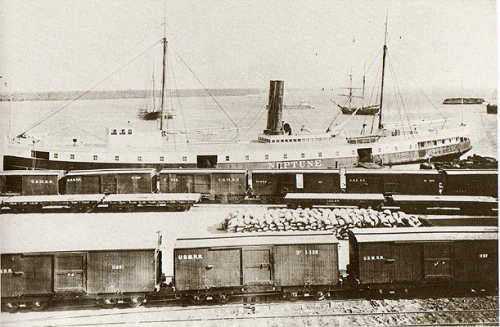
civil-war-city-point-dock

Even as their families went without food many soldiers in the armies of the Confederacy likewise faced hunger and privation. In the fall of 1863 some soldiers of the Army of Tennessee were ordered into line to be reviewed by Jefferson Davis. One soldier, Private Sam Watkins wrote: “When he passed by us with his great retinue of staff officers …cheers greeted them, with the words “Send us something to eat, Massa Jeff! Give us something to eat, Massa Jeff! I’m hungry! I’m hungry!” [10]

During the war, both armies learned to adapt their logistical support services to the reality of war. However, the South, for a number of reasons had difficultly this. Poor infrastructure and the lack of standardized rail systems were significant factors. But even more importantly inability of the government in Richmond, various states governments as well as the private sector to work together helped doom the Confederacy. The South did not lack for food. It was a rich agricultural region, but its ability to provide sustenance for its people and its armies was hindered due to its woeful infrastructure and various self-inflicted political and economic reasons. Several major issues affected the South’s ability to feed its people and its armies.

Among these were “the deficiencies of the Confederate rail system” which deteriorated throughout the war and was made worse by the lack of cooperation of Confederate railroad owners. The South “did not have a railroad network that tied its scant industrial base together or readily permitted long distance movements.” [11] This would hamper Confederate attempts to move and supply its armies as well as sustain its economy throughout the war. The Confederacy never nationalized its railroads, and “no centralized planning or organization developed, and field commanders, supply agencies, and civilian shippers competed for use of Southern rolling stock.” [12]

civil-war-locomotive

Southern policy towards the use of its railroads was muddled at best and the demands of the war and by 1863, “the excessive wear of wartime rail movement was chewing up southern rail lines[13] which resulted in the “South barely keeping a few lines operating by cannibalizing less important lines and could not replace its rolling stock.” [14] The combination of the lack of a strong industrial base to produce the iron to make replacement rails and the similar lack of producing facilities to manufacture locomotives and rolling stock, combined with the “unsure policies of the Confederate government and military” [15] ran the already feeble Southern railway system into the ground.

The Confederacy also faced a basic unwillingness of many producers of food, textiles and other necessities to cooperate with the Confederate government, which often could not even find ways for its own agencies to cooperate with each other. “The government gave no overall direction to the supply bureaus, which often bid against each other for materials and labor.” [16] This was a pervasive problem, and not helped by the efforts of some parts of the Confederate government to nationalize various parts of their economy in direct competition with the private sector. This contrasted starkly with the Union whose “quartermaster and commissary heads contracted out their needs for weapons, horses and clothes by bid on the open market, rather than by appropriating existing industries for government use.” [17]

The Confederate policies meant that many citizens and businesses found ways to not submit to government edicts. There was a basic “unwillingness of farmers to sell goods and produce at government rates” [18] and the greed of hoarders and war profiteers who through “hoarding, black marketing and simple withdraw from the market[19] crippled Southern war efforts and by “1862 much of the Confederate economy had become unmanageable.” [20] When Davis attempted to use the religious faith of the people to bolster more and “called for a day of fasting and prayer in March 1863, one man wrote that the president asked for “fasting in the midst of famine.” [21]

Where possible each side used railroads and maritime forces to move troops and supplies. The Confederacy, as has been noted was lacking in both, and was at a severe disadvantage. The Union however enjoyed a great advantage in modern rail networks, as well as ocean and river based maritime power. By late 1863 the Army of the Potomac, as well as forces in the West demonstrated “the close integration of operational planning and that of the general in chief and supply bureaus. In this one area, the development of a mature and modern staff was evident.” [22]

Once the armies were away from railheads or the ports from where they drew supplies both armies, like their Napoleonic cousins relied on wagons to transport essential food, supplies and ammunition when on campaign. In both armies commanders and their logisticians experimented with the number of wagons per regiment and how army commanders, modified that number at various points during the war based on their situation.

At the beginning of the war the Napoleonic standards by which both armies based the number of wagons, 12 wagons per 1000 men to support the troops on campaign were found to be insufficient as it “placed too much emphasis on foraging for American conditions” [23] and throughout the war standards for what the armies needed would be debated and commanders in different theaters of the war often set their own standards based on their needs and the availability of wagons and livestock to draw them.

As the war went on the Federal army experimented with the use of the “flying column” as a response to the dependency on wagons in order to increase their mobility. The flying column was an idea drawn from the French by Major General Montgomery Meigs, the Union Quartermaster General. The idea was simple; in order to reduce dependency on wagons the army itself would be reorganized at the lowest level, the infantry squad.

“The soldier in a flying column carried eight days’ compressed rations, including desiccated vegetables on his back. He carried a blanket but no overcoat. The men were divided into squads of eight, one of whom was to carry a covered cooking kettle, another a large mess tin, another an axe, another a pick, and one a shovel. One man in each company carried the hospital knapsack. Each man carried his share of a shelter tent. The cavalry were pickets and grain for their horses.” [24]

After Gettysburg and the unsuccessful pursuit of Lee’s army, Halleck and Rufus Ingalls, the Army of the Potomac’s chief quartermaster made provision and set standards “to convert the army into a flying column that would be self-sufficient for eight- and twelve- day periods away from the base of supply.” [25] In contrast, the Confederacy lacked the wagons and livestock to support the field operations of the army on campaign. Wagons, especially those suited for military operations were in short supply and any time the opportunity presented, confederate commanders ensured the capture of Union wagons. This turned out to be a major problem during the Gettysburg campaign, when Stuart during his ride around the Army of the Potomac “succumbed to temptation of capturing a beautifully equipped and heavily laden Union supply train near Rockville, Maryland, at the cost of exhausting his cavalry and wasting precious time.” [26] In most cases Stuart’s action would have been commendable, and he certainly felt that such should have been the case here as well, but the cost to his operations and Lee’s need for his cavalry were such that it was a mistake of disastrous consequences.

The basic load of food and ammunition carried by each soldier in order to increase strategic maneuverability was adjusted to meet the operational need. Both armies, but more often the Confederate army frequently had to live off the land. The success and failure of forage operations and the requirements for people and animals in each theater of operations had a large impact on each army. By early 1863 the Army of Northern Virginia was “greatly deficient in all areas of supply….there were extreme shortages of footwear, clothing, draft animals, and wagons.” [27] When the Army of Northern Virginia advanced into Pennsylvania they found it to be “a land of plenty” while “quartermaster and commissary details, acting under official instructions, filled wagons and supplies with foodstuffs.” [28]

While the Federal army never lacked in provisions or supplies, the Confederate armies were almost always in short supply. Even adequate food supplies needed to maintain an adequate caloric intake on the march were almost impossible to achieve. Food supplies were so limited that they were barely adequate, especially when the army was encamped. In fact, one of the reasons that Lee based his invasion of Pennsylvania was to alleviate his desperate supply situation. One regimental commander in Pickett’s division recalled that Lee told him “the movement was a necessity; that our provisions and supplies of every kind were nearly exhausted in Virginia, and we had to go into Pennsylvania for supplies.” [29]

As Federal forces moved into the South they encountered a new problem, the areas that the conquered and their essential supply bases, railheads and railroads had to protected from Confederate partisans, irregulars, raiders and other insurgents. Railroads were especially important to the Federal logistics chain as they provided “new strategic and operational abilities” to civil war armies, but they were an “extremely delicate sources of dependence when they ran through hostile territory.” [30] As such they had to be protected, as did the sprawling supply bases on which the Federal armies in the South depended. This resulted in an ever increasing logistics tail in proportion to the fighting forces spearheading the Federal advance. The three Union armies commanded by William Tecumseh Sherman that carried “the brunt of the Union effort against Joe Johnston and Atlanta, for example, showed 352,265 men on their muster rolls, but took only about 100,000 directly into the campaign.” [31] The rest were engaged in protecting the vital logistics tail.

Communications and Signals

The size of the armies and the distances involved on the battlefield made command and control difficult.  As such, communications became more important and each army experimented with new signals organizations that used both old and new communication technologies. At the beginning of the war both sides made extensive use of visual signals and couriers, but rapidly began to rely on the telegraph for rapid communications.

03-Beardslee-telegraph-US-Army-photo

The organizational tension was particularly evident in the rivalry between the U.S. Army Signal Corps and the Military Telegraph Service.  The Signal Corps focused on wireless communications. It preferred the Beardslee wireless telegraphs, however, they were plagued by the limitations of such early wireless technology. The Union Army command favored the traditional wire bound networks operated by the Military Telegraph due to better reliability and security and eventually the Military Telegraph Service and its Morse trained operators were given “jurisdiction for all field telegraph” services at the urging of President Lincoln in November 1863. [32] Though the Army rejected the Beardslee equipment some commanders requested it for their operations.[33] As each Army became more dependent on the telegraph, each feared that their signals could be compromised through wiretapping and made efforts to encode their transmissions.

While the various forms of telegraphic communication were important in keeping higher headquarters in contact with armies in the field, battlefield communication could be difficult. Commanders on both sides relied on messengers to relay orders to subordinate commanders as well as pass information to senior commanders. On the battlefield this took time, and since the messengers were subject to the same dangers as ordinary soldiers messages might not reach the intended commanders. It took approximately an hour for a message to travel from an army commander to a corps commander, 30 minutes from a corps commander to a division commander, 20 from division to brigade, 15 from brigade to regiment and 5 minutes from regiment to company. [34]

Written orders generally provided better clarity if detailed enough but if they were passed orally, as was Lee’s preferred method they could easily be miscommunicated by messengers, or misunderstood or even ignored by commanders. This was a major source of Lee’s consternation during the Gettysburg campaign. A major problem for Lee during the campaign was that his orders, be they written or oral were frequently vague and discretionary, something that we will discuss in detail later, but Lieutenant General Richard Ewell spoke for many Confederate subordinate commanders on the evening of June 30th when he asked his division commanders in frustration “Why can’t a commanding General have someone on his staff who can write an intelligent order?” [35]

The Union Signal Corps also pioneered the use and development with a “modern system of semaphores with a telegraphic alphabet…” as well as “a cipher disk…that allowed the Union Signal Corps to change the code hourly if need be.” [36] The one disadvantage to this form of visual communication was that it could be limited due to weather conditions or the smoke of battle. While semaphore was used with a good deal of success by the Union, and Meade would make good use of it at Gettysburg, it was not used by the Confederate army.

civil-war-us-signal-corps

Likewise Meade “set a precedent in command procedures” during the Gettysburg campaign, where “for perhaps the first time in military history the commanding general of a large army was kept in communication during active operations with his corps and division commanders.” Likewise Meade “set a precedent in command procedures when he brought signal officers to the conference table for consultation on the plan of battle” [37] and for the first time Signal Corps officers were assigned directly to each corps, when Meade ordered that two Signal Corps officers be “detached for service with each corps.” [38]

The troops of the Union Signal Corps were also a vital link in the transmission of military intelligence gathered by Colonel George Sharpe’s Bureau of Military Information, whose network of scouts during the Gettysburg campaign were “supported by Signal Corps detachments which could establish chains of flag stations from Harpers Ferry to “South Mountain, Monterrey, Greencastle…up to Parnell’s Knob, in the Cumberland Valley.” [39] This link helped provide Meade with much better intelligence regarding the movement of Lee’s army throughout the campaign.

Regardless of the means of transmitting orders, the fact was that at Gettysburg the element of friction entered the communication process. Wireless communications suffered from encryption problems, semaphore could not always be read due to the reduced visibility caused by the smoke covered battlefield. Commanders who took the time to issue written orders found that those could be delayed or lost due to battlefield conditions that impacted a messenger’s ability to deliver them, or misunderstood by their recipients. Likewise, verbal orders sent by messenger were frequently garbled and misunderstood, or depending on the situation, understood in the manner that best fit the situation of the recipient.

The developments in tactics, maneuver, defense and logistics and how those were developed over the course of the war brought about a form of warfare that remained dominant of decades. In studying the campaigns, developments and tensions between the competing theories of Jomini and Mahan in the Civil War, a student can begin to recognize them in future wars fought by the US Army including World War Two.

Russell Weigley picks up this theme in his books The American Way of War and Eisenhower’s Lieutenants. Weigley discusses Lee’s use of Napoleonic strategy and Grant’s corresponding strategy of annihilation as well as Sherman’s campaign against Johnston, as well as Sheridan’s devastation of the Shenandoah Valley to impose its aims on the Confederacy. [40] These lessons influenced American strategic doctrine well into the next century, and were employed by leaders in the First and Second World Wars, as well as much less effectively in Korea and Vietnam. Weigley concluded: “Because it worked so well, achieving total submission, American soldiers thereafter tended to generalize the United States strategy of the Civil War into the appropriate strategy for all major, full scale wars.” [41]

Notes

[1] Ibid. Millet and Maslowski For the Common Defense p.216

[2] Ibid. Thomas, The Confederate Nation p.135

[3] Ibid. Millet and Maslowski For the Common Defense pp.216-217

[4] Ibid. Millet and Maslowski For the Common Defense p.218

[5] Ibid. Goldfield America Aflame pp.296-297

[6] Ibid. Guelzo Fateful Lightening p.326

[7] Ibid. McPherson. The Battle Cry of Freedom p.617-618

[8] Ibid. Goldfield America Aflame p.297

[9] Ibid. McPherson. The Battle Cry of Freedom p.441

[10] Ibid. Robertson Soldiers Blue and Gray p.72

[11] Ibid. Millet and Maslowski For the Common Defense p.156

[12] Ibid. Thomas, The Confederate Nation p.211

[13] Ibid. Guelzo Fateful Lightening p.319

[14] Ibid. Millet and Maslowski For the Common Defense p.216

[15] Ibid. Guelzo Fateful Lightening p.323

[16] Ibid. Millet and Maslowski For the Common Defense p.217

[17] Ibid. Guelzo Fateful Lightening p.322

[18] Ibid. Guelzo Fateful Lightening p.320

[19] Ibid. Guelzo Fateful Lightening p.322

[20] Ibid. McPherson. The Battle Cry of Freedom p.442

[21] Ibid. Millet and Maslowski For the Common Defense p.219

[22] Ibid. Hagerman The American Civil War and the Origins of Modern Warfare p.79

[23] Ibid. Hagerman The American Civil War and the Origins of Modern Warfare p.44

[24] Ibid. Hagerman The American Civil War and the Origins of Modern Warfare p.71

[25] Ibid. Hagerman The American Civil War and the Origins of Modern Warfare p.76

[26] Coddington, Edwin B. The Gettysburg Campaign: A Study in Command, A Touchstone Book, Simon and Schuster New York, 1968 p.198

[27] Ibid. Hagerman The American Civil War and the Origins of Modern Warfare p.126

[28] Wert, Jeffry D. A Glorious Army: Robert E. Lee’s Triumph 1862-1863 Simon and Schuster, New York and London 2011 p.229

[29] Ibid. West A Glorious Army p.230

[30] Ibid. Weigley A Great Civil War p.322

[31] Ibid. Weigley A Great Civil War p.322

[32] Ibid. Hagerman The American Civil War and the Origins of Modern Warfare p.87

[33] Ibid. Hagerman The American Civil War and the Origins of Modern Warfare p.87

[34] Cole, Phillip M. Command and Communication Friction in the Gettysburg Campaign Colecraft Industries, Ortanna PA 2006 p.80

[35] Trudeau, Noah Andre. Gettysburg: A Testing of Courage, Harper Collins Publishers, New York 2002 p.140

[36] Ibid. Hagerman The American Civil War and the Origins of Modern Warfare pp.43-44

[37] Ibid. Hagerman The American Civil War and the Origins of Modern Warfare p.87

[38] Ibid. Guelzo Gettysburg: The Last Invasion p.123

[39] Ibid. Guelzo Gettysburg: The Last Invasion p.42

[40] Ibid. Weigley The American Way of War pp.145-146

[41] Weigley, Russell F. Eisenhower’s Lieutenants: The Campaign in France and Germany 1944-1945. Indiana University Press, Bloomington IN 1981 p.3

2 Comments

Filed under civil war, Gettysburg, History, Military

Regulars, Volunteers and Conscripts: Civil War Mobilization

Friends of Padre Steve’s World

A bit of a break from the past few days of confronting the civil rights issues and racism at work in the aftermath of the Emmanuel A.M.E. church massacre. I’m sure that I will be doing more to follow that up in the near future, but it looks like the most prominent symbol of the ideological and sometimes religious hatred that has been at the heart of American racism since the Civil War is beginning to come down, even in the South as people finally begin to face up to the evil for which that flag stood.

This is another part of my Civil War and Gettysburg text on the formation of the armies that fought the Civil War. 

When one thinks of our all-volunteer force today it is hard to imagine forming armies of this size and scope around such small regular forces. The story of how North and South raised their armies, and the stories of the volunteers of the first part of the war is amazing. I hope that you enjoy.

Peace

Padre Steve+

MenBrooklyn


The Secession Crisis, Mobilization, and Volunteer Armies

The American Civil War was the first American war fought by massed armies of mobilized citizens. All previous wars had been fought by small numbers of Regular Army troops supported by various numbers of mobilized State Militia formations or volunteer formations raised for the particular war; “The fighting force of the 1860s was a conglomerate of diverse units, each with its own degree of importance, pride, proficiency, and jealousy. Whether of North or South, an army began as little more than a loosely organized mob actuated by more enthusiasm than by experience. Its composition ran the full gauntlet of humankind.” [1]

In 1860 the Regular Army numbered 16,000 troops at the beginning of the war. These included some 1105 officers, and were organized into “ten regiments of infantry, four of artillery, and five of cavalry (including dragoons and mounted riflemen)” [2] These regiments were broken up into small units and they and their soldiers were scattered about in far flung isolated posts around the country and in the new western territories. The units primarily fought Indians and performed what best could be described as constabulary duties. Others, mostly from artillery units manned the coastal defense fortifications that protected American’s key ports and entrances to key waterways along the eastern seaboard. Even so, after the War with Mexico “three quarters army’s artillery had been scrapped” and most of the army’s artillerymen and their units were “made to serve as infantry or cavalry, thus destroying almost completely their efficacy as artillery.” [3]

The secession crisis and the outbreak of the war fractured the army, particularly the officer corps. The officer corps was heavily Southern and many Northern officers had some sympathy with their Southern brothers in arms. It has to be said that of the men holding positions of high command from 1849 to 1861 that many were Southerners:

“all of the secretaries of war were Southerners, as were the general in chief, two of the three brigadier generals, all but one of the army’s geographical departments on the eve of the Civil War, the authors of the two manuals on infantry tactics, and the artillery manual used at West Point, and the professor who taught tactics and strategy at the military academy.” [4]

Most of the Army remained loyal to the Union, “except for 313 officers who resigned their commissions.” [5] Those who remained loyal to the Union included the General in Chief, Winfield Scott, as well as the professor who had taught so many of those now leaving to serve the Confederacy, Dennis Hart Mahan. However, of the others brigadier generals William Harney, David Twiggs and Joseph E. Johnston, Brevet Brigadier General Albert Sidney Johnston, and the army’s Adjutant General, Colonel Samuel Cooper, and the newly promoted Colonel Robert E. Lee all went south. “Even so, 40 to 50 per cent of the Southern West Point graduates on active duty in 1860 held to their posts and remained loyal to the Union.” [6]

A Political Backlash against West Point and the Officer Corps

The exodus of these officers created a backlash against West Point and the professional officers who remained in service of the Union, especially those who were Democrats and to radical Republicans were soft on slavery. Some Republican members of Congress including Senator Ben Wade of Ohio, “figured that political apostasy had been taught at West Point as well, and he didn’t know which sin was worse – it or treason.” [7] The fact that the leaders of the Union forces defeated at Bull run were West Point graduates added incompetence to the list of the crimes, real and imagined committed by the officers of the Regular Army. When Congress reconvened in 1861 Wade said:

I cannot help thinking…that there is something wrong with this whole institution. I do not believe that in the history of the world you can find so many men who have proved themselves utterly faithless to their oaths, ungrateful to the Government that supported them, guilty of treason and a deliberate intention to overthrow that Government which educated them and given them support, as have emanated from this institution…I believe from the idleness of these military educated gentlemen this great treason was hatched.” [8]

Wade did not mention in his blanket his condemnation of the “traitors” that many “West Pointers from the Southern States – 162 of them – had withstood the pull of birth and kin to remain with the Union.” [9]

Wade’s fellow radical Senator Zachariah Chandler of Michigan urged Congress to dissolve the Military Academy. The academy, he said “has produced more traitors within the last fifty years than all the institutions of learning and education that have existed since Judas Iscariot’s time.” [10] Despite the words and accusations of the radical fire-eaters like Wade and Chandler and other like them, more level headed men prevailed and reminded the nation that there had been many other traitors. Senator James Nesmith of Oregon said: “Treason was hatched and incubated at these very decks around me.” [11]

Politicians and Professionals: Building Volunteer Armies

20110930-poster.png_

Many of the officers who left the army to serve the Confederacy were among the Army’s best and brightest, and many of them later rose to prominence and fame in their service to the Confederacy. In contrast to the officers who remained loyal to the Union, those that many in Congress despised and “pushed aside and passed over” in favor of “officers called back into service or directly appointed from civil life, the “South welcomed its professionals and capitalized on their talents. Sixty-four per cent of the Regular Army officers who went South became generals; less than 30 per cent of those who stayed with the Union achieved that rank.” [12]

The Union had a small Regular Army, which did undergo a significant expansion during the war, and the Confederacy did not even have that. During the war the “Confederacy established a regular army that attained an authorized strength of 15,000” [13] but few men ever enlisted in it. This was in large part due to the same distrust of the central government in Richmond that had been exhibited to Washington before the war.

Thus both sides fell back on the British tradition of calling up volunteers. The British had “invented volunteer system during the Napoleonic Wars, also to save themselves from the expense of permanent expansions of their army, and the United States had taken over the example in the Mexican War…” [14] The volunteer system was different from the militias which were completely under the control of their State and only given to the service of the national government for very limited amounts of time. The volunteers were makeshift organizations operating in a place somewhere between the Regular Army and the State militias and like the British system they saved “Congress the expense of permanently commissioning officers and mustering men into a dramatically expanded Federal service.” [15] As such the volunteer regiments that were raised by the States “were recruited by the states, marched under state-appointed officers carrying their state flag as well as the Stars and Stripes.” [16]

President Lincoln’s call for volunteers appealed “to all loyal citizens to favor, facilitate and aid this effort to maintain the honor, the integrity, and the existence of our Northern Union, and the perpetuity of the popular government; and to redress the wrongs already long enough endured.” [17] The Boston Herald proclaimed “In order to preserve this glorious heritage, vouchsafed to us by the fathers of the Republic, it is essential that every man perform his whole duty in a crisis like the present.” [18] The legislature of the State of Mississippi sated its arguments a bit differently and asserted, “Our position is thoroughly identified with the institution of slavery – the greatest material interest in the world.” Texas explained that it had joined the Union “as a commonwealth holding, maintaining and protecting the institution known as negro slavery – the servitude of the African to the white race within her limits.” [19] A newspaper correspondent wrote:

“All, all of every name and every age to arms! To arms! My father go, my son go, my brother go, your country calls you.” He called out to Southern women as well, “mothers, wives and daughters buckle on the armor of loved ones, the correspondent urged, “bid them with Roman fairness, advance and never return until victory perches on their banner.” [20]

Those who went off to war left their homes and families. Young Rhode Island volunteer Robert Hunt Rhodes wrote that is mother told him “in the spirit worth of a Spartan mother of old said: “My son, other mothers must make sacrifices and why should not I?” [21] The bulk of the soldiers that enlisted on both sides in 1861 were single their median age “was twenty-four. Only one in seven enlistees that first year was eighteen or younger, and fewer than a third were twenty-one or younger.” [22]

Illustrious regiments such as the 1st Minnesota Volunteers, the 20th Maine Volunteers, the 69th New York Volunteer Infantry, and the African American 54th Massachusetts Volunteer Infantry were just a few of the many regiments mustered into Union service under this system. As the war went on and the initial regiments were decimated by losses in combat and to disease, Northern governors “preferred to organize new regiments rather than to replenish old ones whittled down by battle and sickness. Fresh units swelled a state’s contributions, and the provided governors an opportunity to win more political favors by appointing more regimental officers.” [23] This practice produced “an army of shadow units” as “it was up to the regimental commanding officer to keep up a supply of new enlistments from back home for his own regiment, but most commanders could ill afford to detail their precious supply of junior officers for recruiting duty behind the lines.” [24]

Even before secession many Southern states began to prepare for war by building up their militias, both in numbers as well as by sending agents to arms suppliers in the North, as was done by Georgia Governor Joseph E. Brown who “sent an official north to purchase arms, ammunition and accouterments.” [25] After the bombardment of Fort Sumter both sides raced to build up their militaries. Jefferson Davis, the new President of the Confederacy who was a West Point graduate and former Secretary of War called for volunteers. On March 6th 1861 the new Provisional Confederate Congress in Montgomery authorized Davis to “call out the militia for six months and to accept 100,000 twelve-month volunteers.” [26] Within weeks they had passed additional legislation allowing for the calling up of volunteers for six months, twelve months and long-term volunteers up to any length of time. “Virginia’s troops were mustered en masse on July 1, 1861, by which time the state had 41,885 volunteers on its payroll.” [27]

poster

With the legislation in hand Davis rapidly called up over 60,000 troops to the Confederate Cause, and this was before Virginia and North Carolina seceded from the Union. A mixture of former Regular Army officers commanded these men, most of whom occupied the senior leadership positions in the army, volunteer officers, made up the bulk of the Confederate officer corps. “Well over 700 former students at Virginia Military Institute served as officers in the war, most in the Virginia Theater….” [28]Among these men was Robert Rodes who became one of Robert E. Lee’s finest division commanders.

In the North Abraham Lincoln was in a quandary. Congress was out of session, so relying on the Militia Act of 1795 called out 75,000 three-month militiamen to support the Union cause. The legislatures of the Northern States so well that the over-recruited and in this first call up the government “accepted 9,816 men, but governors clamored for the War Department to take still more troops.” [29] Dan Sickles, a rather infamous Democrat politician was one of these men. Sickles had been a Democratic Congressman representing the district of New York City that was in the control of Tammany Hall. In 1859 Sickles stood trial for the murder of Barton Key, the District Attorney for Washington D.C. and the nephew of Francis Scott Key. Key had been conducting an affair with Sickles’ young wife Maria and in a fit of anger Sickles confronted Key, who had been spotted attempting a liaison with Maria and shot him dead near Lafayette Square and the White House. Sickles was acquitted on the basis of temporary insanity becoming the first man in the United States to have that distinction.

The ambitious Sickles, “almost overnight, using flag-waving oratory, organizational skills, and promissory notes, had his regiment, the 70th New York Volunteers, well in hand.” [30] Not content with a regiment and knowing that a brigade would bring him his star as a brigadier general, he quickly the Excelsior Brigade in New York.

Daniel_Edgar_Sickles

Major General Dan Sickles

Within weeks Sickles had raised over 3000 men, a full forty companies and the New York Newspapers praised Sickles’ efforts. But partisan politics was at play. To Governor Edward Morgan, the fact that a Tammany Hall Democrat “was getting too far out ahead in the state’s race to supply manpower to the endangered Union” [31] was embarrassing and the Governor ordered Sickles to “disband all but eight of his forty companies.” [32] The incredulous, yet ambitious Sickles, knowing that Lincoln needed Democratic support to prosecute the war, traveled to Washington where after seeking an audience with the President. Lincoln was hesitant to infringe on any governor’s control of state units, but he was loath to lose the services of any soldiers. Lincoln discussed the matter with Secretary of War Simon Cameron and they ordered that Sickles “keep his men together until they could be inducted by United States officers.” [33] That process took two moths but in July Sickles was able to have the brigade sworn into service as a brigade of United States Volunteers.

For Sickles and most officers, volunteer and regular alike a regiment was a large military formation Likewise, a brigade massive and for most of these men divisions and corps on the scale of those found in Europe were almost unthinkable, but war was changing and this would be the scope of the coming war.

More troops were needed and with Congress out of session, President Lincoln acted “without legal authority…and increased the Regular Army by 22,714 men and the Navy by 18,000 and called for 42,034 three-year volunteers.” [34] On July 4th 1861 Lincoln “asked sanction for his extralegal action and for authority to raise at least another 400,000 three-year volunteers.” [35] Congress approved both of the President’s requests, retroactively, and in fact, “greatly expanded the numbers of volunteer recruitments, up to a million men – nothing more than the 1795 statute authorized either of these follow-up calls, and Lincoln would later have to justify his actions on the admittedly rather vague basis of the “war powers of the government.” [36]

In the North “the war department was staggered by the task of finding competent officers for an already numbering nearly half a million.” [37] There were so few professional officers available to either side that vast numbers of volunteer officers of often dubious character and ability were appointed to command the large number of volunteer regiments and brigades which were being rapidly mustered into service. Within months of the secession crisis the Regular Army of the United States, minus the officers who resigned to serve the Confederacy, “was swamped by a Union war army that reached about 500,000 within four months of the firing on Fort Sumter.” [38]

The Regular Army officers who remained loyal to the Union as well as those who left the army and joined the newly formed Confederacy were joined by a host of volunteer officers. Some of these officers, men like Ulysses Grant, William Tecumseh Sherman, George McClellan, Braxton Bragg, Thomas “Stonewall” Jackson, Jubal Early, and many others had left the army for any number of reasons only to return to the colors of the Union or the Confederacy during the secession crisis or at the outbreak of the war. Some of these men like George Sears Greene and Isaac Trimble Many were West Point graduates who had left the army decades before the war and almost to a man “nearly all of them displayed an old regular’s distrust of any general who had risen by political means.” [39] The hold of West Point and the teachings of Dennis Hart Mahan regarding professionalism had left a lasting imprint on these men.

2nd michigan

Another issue faced by all of the officers now commanding large formations in the Civil War was their inexperience in dealing with such large numbers of troops. When the war began, the officers educated at West Point, as well as others who had been directly appointed had previously only commanded small units. Even regimental commanders such as Joseph Johnston, Albert Sidney Johnston, and Robert E. Lee seldom had more than a few companies of their regiments with them at any given time for any given operation. Likewise, the men who had campaigned and fought in Mexico who had some experience in handling larger formations had for the most part left the service. The senior officers who had served in Mexico and that remained on active duty were handicapped because the Mexican war was still very much a limited Napoleonic War fought with Napoleonic era weapons against a more numerous but poorly equipped and trained enemy.

Other volunteer officers had little or no military experience or training and owed their appointments as officers to their political connections, business acumen or their ability to raise troops. It was not atypical for a volunteer officer to gain his rank and appointment based on the number of that he brought into the army, “if he recruited a regiment he became a colonel, while if he brought in a brigade he was rewarded with the shining star of a brigadier general.” [40] This led to a type of general “appointed for their political influence or – at least in the North with its more heterogeneous population – their leadership of ethnic groups.” [41] Despite the dangers of their inexperience, both Abraham Lincoln and Jefferson Davis had to appoint such men in order to maintain political support for the war.

Some of these men proved disastrous as commanders and their ineptness cost many lives. Henry Wager Halleck, wrote “It seems but little better than murder to give important commands to such men as Banks, Butler, McClernand, Sigel, and Lew Wallace…yet it seems impossible to prevent it.” [42] That being said some of the volunteer politically appointed generals proved to be exceptional learners of the art of war and impressive commanders in the own right.

Among the officers appointed for political considerations by Abraham Lincoln were the prominent Democratic politicians “Benjamin F. Butler, Daniel E. Sickles, John A. McClernand, John A. Logan.” [43] Among those commissioned to enlist immigrant support were Major General Carl Schurz and Brigadier General Alexander Schimmelpfennig who helped mobilize German immigrants to the Union cause. Both men were refugees from the failed revolution of 1848. Likewise, Brigadier General Thomas Francis Meagher, a survivor of the 1848 revolt in Ireland, who had escaped imprisonment in Australia helped to recruit and then commanded the famous Irish Brigade, whose regiments of Irish immigrants marched under the colors of the United States and the Green flag with the Harp of Erin.

corby

The Irish and the German soldiers volunteered in large part because they saw the Union as the hope of their people that had given them refuge from tyranny in Europe. The Irish, under the religious, political and economic thumb of Britain fled to the United States, many the victims of famine. The Irish were not sympathetic as a whole to the plight of slave and many sympathized with the South, their desire to save the Union was greater and they volunteered in overwhelming numbers. One Irish Sergeant wrote his family in Ireland who did not understand why he fought for the Union:

“Destroy this republic and her hopes are blasted If Irland is ever ever [sic] free the means to accomplish it must come from the shore of America…When we are fighting for America we are fighting for the intrest of Irland striking a double blow cutting with a two edged sword For while we strike in defense of the rights of Irishmen here we are striking a blow at Irlands enemy and oppressor England hates this country because of its growing power and greatness She hates it for its republican liberty and she hates it because Irishmen have a home and government here and a voice in the counsels of the nation that is growing stronger every day which bodes no good for her.” [44]

Thus for many Irishmen fighting for the Union had a twofold purpose, seeing the war as Americans as well as Irishmen, they were fighting for Ireland as much as they were fighting for the Union. Some too believed that the war would be a training ground for Irishmen who would someday return home to drive the English from their homeland. Thomas Meagher the commander of the Irish Brigade explained,

“It is a moral certainty that many of our countrymen who enlist in this struggle for the maintenance of the Union will fall in the contest. But, even so; I hold that if only one in ten of us come back when this war is over, the military experience gained by that one will be of more service in the fight for Ireland’s freedom than would that of the entire ten as they are now.” [45]

Many Germans and others were driven from their homeland in the wake of the failed revolutions of 1848. Having been long under autocratic and oligarchic rule in the old country many of the German, Polish and other volunteers who fled after the failed revolutions of 1848 “felt that not only was the safety of the great Republic, the home of their exiled race, at stake, but also the great principle of democracy were at issue with the aristocratic doctrines of monarchism. Should the latter prevail, there was no longer any hope for the struggling nationalities of the Old World.” [46] These immigrant soldiers saw the preservation of the Union in a profoundly universal way, as the last hope of the oppressed everywhere. Eventually the Germans became “the most numerous foreign nationality in the Union armies. Some 200,000 of them wore the blue. The 9th Wisconsin was an all-German regiment. The 46th New York was one of ten Empire State units almost totally German in makeup.” [47]

In the North a parallel system “composed of three kinds of military organizations” developed as calls for “militia, volunteers and an expanded regular army” went out. [48] A number of regular army officers were allowed to command State regiments or brigades formed of State units, but this was the exception rather than the rule. One of these men was John Gibbon who commanded the legendary Iron Brigade at the beginning of its existence through its first year of combat.

In the South too men without little or no military training and experience raised companies and regiments for the Confederate cause. Like Lincoln Jefferson Davis had to satisfy political faction as well as some prominent politicians aspirations for military glory. Thus Davis “named such men as Robert A. Toombs of Georgia and John B. Floyd and Henry A. Wise of Virginia as generals.” [49] These men were not alone; many more politicians would receive appointments from Davis and the Confederate Congress.

Some of these men were gifted in recruiting but were sadly deficient as commanders. Men like John Brockenbrough and Edward O’Neal were capable of raising troops but in combat proved to be so inept that they got their men slaughtered and were removed from the army of Northern Virginia by Robert E. Lee. But others including South Carolina’s Wade Hampton, Georgia’s John Gordon and Virginia’s William “Little Billy” Mahone, none of who had any appreciable military experience proved to be among the best division commanders in Lee’s army. By 1864 Gordon was serving as an acting Corps commander and Hampton had succeeded the legendary J.E.B. Stuart as commander of the Cavalry Corps of the Army of Northern Virginia.

Lower ranking officers in the regiments formed by the states on both sides of the Mason-Dixon Line, were most often elected by their units. During the war, some of these lower ranking officers rapidly progressed up the ranks and rose to command regiments and brigades, mostly due to their natural leadership abilities. That being said the volunteer system in which units elected their officers often to be fraught with problems. “Officers who might be popular as good fellows but who knew neither how to give orders and to get them obeyed nor even what kind of orders to give….At his worst, the volunteer officer could be as fully ignorant and irresponsible as the men he was supposed to command.” [50] Such officers proved to be a source of repeated concern for the professional officers who served alongside them.

John Reynolds, fresh from his assignment as Commandant of Cadets at West Point noted of the Pennsylvania volunteers that he commanded, “They do not any of them, officers or men, seem to have the least idea of the solemn duty they have imposed on themselves in becoming soldiers. Soldiers they are not in any sense of the word.” [51] In time both the Federal and Confederate armies instituted systems of qualifying exams for commissioned officers in order to weed out the worst of the incompetent officers.

Given the limitations of the volunteer officers who made up the bulk of the men commanding companies, battalions and regiments, “for the average soldier was that drill became his training for the realities of actual battlefield fighting.” This was helpful in getting “large and unwieldy bodies of men to the battlefield itself, but it generally turned out to be useless one the shooting started, especially as units lost cohesion and started to take casualties.” [52] This was much in evidence on the first day of the Battle of Gettysburg when Brigadier General Joseph Davis’s untested brigade got caught in the Railroad Cut and was decimated by Union troops.

These men, the regulars and the volunteers, were now faced with the task of organizing, training and employing large armies made up primarily of militia units and volunteers. Most had little experience commanding such units and their experience with militia and volunteer formations during the Mexican War did not increase the appreciation of Regulars for them or for their leaders. J.F.C Fuller noted that at the beginning of the war “the Federal soldier was semiregular and the Confederate semiguerilla. The one strove after discipline, the other unleashed initiative. In battle the Confederate fought like a berserker, but out of battle he ceased to be a soldier.” [53] Both required certain kinds of leadership and Regular officers serving in both the Union and Confederate armies “embedded with the volunteers to give them some professional stiffening privately regarded them as uncontrollable adolescents who kicked off every back-home restraint the moment they were on campaign.” [54] Over the course of time this did change as the units of both armies learned to be professional soldiers.

At the beginning of the war General George McClellan successful fought the break-up of the Regular United States Army, “which some argued should be split up to train volunteer brigades” [55] as had his predecessor General Winfield Scott. He and Scott helped keep it separate from the militia units organized by the States, “keeping it intact as the nucleus of an expandable army.” [56] This preserved a professional core in a time where the new volunteer units were learning their craft, but McClellan did approve of a measure to have regular officers command some of the new volunteer brigades.

Regular Army units were formed for the duration of the war and were exclusively under the control of the Federal government. While comparatively few in number, they often held the line and kept the Army of the Potomac intact during some early battles where volunteer units collapsed. Volunteer regiments, often officered by regulars or former regulars “remained state-based, and they signed up for two- or three- year periods, after which they returned to civilian life and their evaporated without any further fiscal obligations.” [57] Some of the volunteer regiments were formed from various state militia units, but since few states had effective militia systems, militia units “were usually employed only on emergency rear-echelon duties, to free up the volunteers and regulars.” [58]

railroad_cut

The Confederacy faced a similar situation to the Union, but it did not have a Regular Army and all of its units were raised by the various states. “In early 1861 the Confederate Congress authorized the creation of a provisional army of 100,000 men. To get these troops [the first Confederate Secretary of War Leroy Pope] Walker asked state governors to raise regiments and transfer them to the national army. The War Office provided generals and staff officers and, in theory at least, could employ the troops and their officers in any way it pleased once they mustered the provisional army.” [59] Some states were quite cooperative but others were not and the tension between the central government in Richmond in regard to military policy and some states would continue throughout the war. The quality of these units varied widely, mostly based on the leadership provided by their officers. That being said, many of the regiments mustered into service early in the war proved tough and resilient serving with distinction throughout the war.

Like the Federal forces, Southern units were officered by a collection of professionals from the ante-bellum Army, militia officers, political appointees or anyone with enough money to raise a unit. However command of divisional sized units and above was nearly always reserved to former professional soldiers from the old Army, most being graduates of West Point. At Gettysburg only one officer commanding a division or above in the Army of Northern Virginia was a non-academy graduate. This was the young and dashing Robert Rodes, who was a graduate of VMI. The quality of these officers varied greatly, as some of the old regulars failed miserably in combat and some of the volunteers such as John Gordon were remarkably successful as leaders of troops in combat.

As in the North, Southern militia and home guard units remained to free up the volunteer regiments and brigades fighting with the field armies. However, due to the South was always wrestling with the intense independence of every state government, each of which often held back units from service with the field armies in order to ensure their own states’ defense.

The withholding of troops and manpower by the states hindered Confederate war efforts, even though “the draft had been “eminently successful” in Virginia, North Carolina and South Carolina, but less so in Georgia, Mississippi, Alabama and Florida.[60] In the latter states, especially Georgia some Confederate Governors used militia appointments to protect men from the draft, classifying them as key civil servants in defiance of the needs of Richmond and the field armies for troops to fight the war.

The Changing Character of the Armies and Society: From All-Volunteer to Conscription: The Beginning of the Draft

Gettysburg was the last battle where the original volunteer armies predominated as the nature of both armies was changed by the war. Initially both sides sought to fight the war with volunteers but the increasingly costly battles which consumed vast numbers of men necessitated conscription and the creation of draft laws and bureaus.

The in April 1862 Confederate Congress passed the Conscription Act of 1862 which stated that “all persons residing in the Confederate States, between the ages of 18 and 35 years, and rightfully subject to military duty, shall be held to be in the military service of the Confederate States, and that a plain and simple method be adopted for their prompt enrollment and organization.” [61] The act was highly controversial, often resisted and the Confederate Congress issued a large number of class exemptions. Despite the exemptions “many Southerners resisted the draft or assisted evasion by others” [62] The main purpose of the conscription act was “to stimulate volunteering rather than by its actual use” [63] and while it did help increase the number of soldiers in Confederate service by the end of 1862 it was decidedly unpopular among soldiers, chafing at an exemption for “owners or overseers of twenty or more slaves” [64] who referred to the war as a “rich man’s war but a poor man’s fight.” [65]

Some governors who espoused state’s rights viewpoints “utilized their state forces to challenge Richmond’s centralized authority, hindering efficient manpower mobilization.” [66] Some, most notably Georgia’s governor Joseph Brown “denounced the draft as “a most dangerous usurpation by Congress of the rights of the States…at war with all principles for which Georgia entered the revolution.” [67] Governor Brown and a number of other governors, including Zebulon Vance of North Carolina fought the law in the courts but when overruled resisted it through the many exemption loopholes, especially that which they could grant to civil servants.

In Georgia, Governor Brown “insisted that militia officers were included in this category, and proceeded to appoint hundreds of new officers.” [68] Due to the problems with the Conscription Act of 1862 and the abuses by the governors, Jefferson Davis lobbied Congress to pass the Conscription Act of 1864. This act was designed to correct problems related to exemptions and “severely limited the number of draft exemption categories and expanded military age limits from eighteen to forty-five and seventeen to fifty. The most significant feature of the new act, however, was the vast prerogatives it gave to the President and War Department to control the South’s labor pool.” [69] Despite these problems the Confederacy eventually “mobilized 75 to 80 percent of its available draft age military population.” [70]

The Congress of the United States authorized conscription in 1863 as the Union Army had reached an impasse as in terms of the vast number of men motivated to serve “for patriotic reasons or peer group pressure were already in the army” while “War weariness and the grim realities of army life discouraged further volunteering” and “the booming war economy had shrunk the number of unemployed men to the vanishing point.” [71] Like the Confederate legislation it was also tremendously unpopular and ridden with exemptions and abuses. The Federal draft was conducted by lottery in each congressional district with each district being assigned a quota to meet by the War Department. Under one third of the men drafted actually were inducted into the army, “more than one-fifth (161,000 of 776,000) “failed to report” and about 300,000 “were exempted for physical or mental disability or because they convinced the inducting officer that they were the sole means of support for a widow, an orphan sibling, a motherless child, or an indigent parent.” [72]

There was also a provision in the Federal draft law that allowed well off men to purchase a substitute who they would pay other men to take their place. Some 26,000 men paid for this privilege, including future President Grover Cleveland. Another “50,000 Northerners escaped service by another provision in the Enrollment Act known as “commutation,” which allowed draftees to bay $300 as an exemption fee to escape the draft.” [73] Many people found the notion that the rich could buy their way out of war found the provision repulsive to the point that violence ensued in a number of large cities.

The Union draft law provoked great resentment, not because people were unwilling to serve, but from the way that it was administered, for it “brought the naked power of military government into play on the home front and went much against the national grain.[74] Open clashes and violence erupted in several cities and President Lincoln was forced to use Union Soldiers, recently victorious at Gettysburg to end the rioting and violence taking place in New York where protestors involved in a three day riot, many of whom were Irish immigrants urged on by Democratic Tammany Hall politicians, “soon degenerated into violence for its own sake” [75] wrecking the draft office, seizing the Second Avenue armory, attacking police and soldiers on the streets. Soon “the mob had undisputed control of the city.” [76] These rioters also took out their anger on blacks, and during their rampage the rioters “had lynched black people and burned the Colored Orphan Asylum.” [77] The newly arrived veteran Union troops quickly and violently put down the insurrection and “poured volleys into the ranks of protestors with the same deadly effect they had produced against the rebels at Gettysburg two weeks earlier.” [78] Republican newspapers which supported abolition and emancipation were quick to point out the moral of the riots; “that black men who fought for the Union deserved more respect than white men who fought against it.” [79]

Notes

[1] Ibid. Robertson Soldiers Blue and Gray p.19

[2] Ibid. Guelzo Fateful Lighteningp.141

[3] Ibid. Guelzo Fateful Lightening p.141

[4] McPherson, James M. Drawn With the Sword: Reflections on the American Civil War Oxford University Press, Oxford and New York 1996 pp.17-18

[5] Ibid. Weigley, American Strategy from Its Beginnings through the First World War in Makers of Modern Strategy, from Machiavelli to the Nuclear Age p.419

[6] Ibid. Huntington The Soldier and the State p.213

[7] Ibid Waugh The Class of 1846, p. 513

[8] Ibid Waugh The Class of 1846, pp. 512-513

[9] Ibid Waugh The Class of 1846, p. 513

[10] Ibid Waugh The Class of 1846, p. 513

[11] Ibid Waugh The Class of 1846, p. 513

[12] Ibid. Huntington The Soldier and the State p.213

[13] Millet, Allan R. and Maslowski, Peter For the Common Defense: A Military History of the United States of America, revised and expanded edition The Free Press, New York 1994 p.175

[14] Ibid. Guelzo Fateful Lightening p.143

[15] Ibid. Guelzo Fateful Lightening p.143

[16] Ibid. Guelzo Fateful Lightening p.142

[17] Moe, Richard The Last Full Measure: The Life and Death of the 1st Minnesota Volunteers Minnesota Historical Society Press, St Paul MN 1993 p.13

[18] Ibid. Robertson Soldiers Blue and Gray p.6

[19] Glatthaar, Joseph T. General Lee’s Army from Victory to Collapse The Free Press, Simon and Schuster, New York and London 2008 p.15

[20] McCurry, Stephanie Confederate Reckoning: Power and Politics in the Civil War South Harvard University Press, Cambridge and London 2010 pp. 82-83

[21] Rhodes, Robert Hunt ed. All for the Union: The Civil War Diaries and Letters of Elisha Hunt Rhodes, Vintage Civil War Library, Vintage Books a Division of Random House, New York 1985 p.4

[22] Ibid. Glatthaar General Lee’s Army from Victory to Collapse p.18

[23] Ibid. Robertson Soldiers Blue and Gray p.24

[24] Ibid. Guelzo Fateful Lightening p.263

[25] Ibid. Glatthaar General Lee’s Army from Victory to Collapse p.15

[26] Ibid. Millet and Maslowski For the Common Defensep.165

[27] Sheehan-Dean, Aaron Confederate Enlistment in Civil War Virginia in Major Problems in the Civil War and Reconstruction, Third Edition edited by Michael Perman and Amy Murrell Taylor Wadsworth Cengage Learning Boston MA 2011 p.189

[28] Ibid. Glatthaar General Lee’s Army from Victory to Collapse p.26

[29] Ibid. Millet and Maslowski For the Common Defensep.165

[30] Sears, Stephen W. Controversies and Commanders Mariner Books, Houghton-Mifflin Company, Boston and New York 1999 p.201

[31] Ibid. Sears Controversies and Commanders p.201

[32] Swanberg, W.A. Sickles the Incredible copyright by the author 1958 and 1984 Stan Clark Military Books, Gettysburg PA 1991 p.117

[33] Keneally, Thomas American Scoundrel: The Life of the Notorious Civil War General Dan Sickles Anchor Books a Division of Random House 2003 p.222

[34] Ibid. Millet and Maslowski For the Common Defensep.165

[35] Ibid. Millet and Maslowski For the Common Defensep.165

[36] Ibid. Guelzo Fateful Lightening p.142

[37] Nichols, Edward J. Toward Gettysburg: A Biography of John Fulton Reynolds Pennsylvania State University Press, Philadelphia 1958. Reprinted by Old Soldier Books, Gaithersburg MD 1987 p.78

[38] Ibid. Weigley, American Strategy from Its Beginnings through the First World War in Makers of Modern Strategy, from Machiavelli to the Nuclear Age p.419

[39] Ibid. Sears Controversies and Commanders p.202

[40] Ibid. Swanberg, Sickles the Incredible p.117

[41] Ibid. Millet and Maslowski For the Common Defensep.172

[42] Ibid. McPherson The Battle Cry of Freedom p.328

[43] Ibid. McPherson The Battle Cry of Freedom p.328

[44] Bruce, Susannah Ural The Harp and the Flag: Irish American Volunteers and the Union Army, 1861-1865 New York University Press, New York and London 2006 pp.54-55

[45] Ibid. Bruce The Harp and the Flag p55

[46] Gallagher, Gary W. The Union War Harvard University Press, Cambridge MA and London 2011

[47] Ibid. Robertson Soldiers Blue and Gray p.28

[48] Ibid. Guelzo Fateful Lighteningp.143

[49] Ibid. McPherson The Battle Cry of Freedom p.328

[50] Ibid. Guelzo Fateful Lightening p.245

[51] Ibid. Nichols Toward Gettysburg p.79

[52] Ibid. Guelzo Fateful Lightening p.246

[53] Fuller, J.F.C. Decisive Battles of the U.S.A. 1776-1918 University of Nebraska Press, Lincoln 2007 copyright 1942 The Royal Society for the Prevention of Cruelty to Animals p.182

[54] Guelzo, Allen C. Gettysburg: The Last Invasion Vintage Books a Division of Random House, New York 2013 p.12

[55] Ibid. Hagerman The American Civil War and the Origins of Modern Warfare p.37

[56] Ibid. Hagerman The American Civil War and the Origins of Modern Warfare p.38

[57] Ibid. Guelzo Fateful Lightening p.143

[58] Ibid. Guelzo Fateful Lightening p.143

[59] Thomas, Emory The Confederate Nation 1861-1865 Harper Perennial, New York and London 1979 p.74

[60] Gallagher, Gary W. The Confederate War: How Popular Will, Nationalism and Military Strategy Could not Stave Off Defeat Harvard University Press, Cambridge MA and London 1999 p.34

[61] Ibid. Thomas, The Confederate Nation p.152

[62] Ibid. Thomas, The Confederate Nation p.152

[63] Ibid. McPherson. The Battle Cry of Freedom p. 432

[64] Ibid. Thomas, The Confederate Nation p.154

[65] Ibid. McPherson. The Battle Cry of Freedom p.431

[66] Millet, Allan R. and Maslowski, Peter, For the Common Defense: A Military History of the United States The Free Press a Division of Macmillan Inc. New York, 1984 p.166

[67] Ibid. McPherson. The Battle Cry of Freedom p.433

[68] Ibid. McPherson. The Battle Cry of Freedom p.431

[69] Ibid. Thomas, The Confederate Nation p.261

[70] Ibid. Gallagher The Confederate War p.28

[71] Ibid. McPherson. The Battle Cry of Freedom p.600

[72] Ibid. McPherson. The Battle Cry of Freedom p.601

[73] Ibid. Guelzo Fateful Lightening p.460

[74] Ibid. Foote. The Civil War, A Narrative Volume Two p.635

[75] Ibid. Foote. The Civil War, A Narrative. Volume Two p.636

[76] Ibid. Foote. The Civil War, A Narrative. Volume Two p.637

[77] Ibid. McPherson. The Battle Cry of Freedom p.687

[78] Ibid. McPherson. The Battle Cry of Freedom p.610

[79] Ibid. McPherson. The Battle Cry of Freedom p.687


1 Comment

Filed under civil war, History, leadership, Military