Tag Archives: cold war

The Great Montana Dude Ranch Sleepover: Padre Steve’s Solution to Politics as Usual

Sleepover on a Dude Ranch anyone?

I don’t know about you but as a passionate moderate I am fed up with the nasty politics as usual that is killing our country.  Our political ruling class appears to be hell bent on destroying the country all to satisfy their respective need for power and to satisfy the basest wants of their most strident supporters. The corruption and malevolence of the career politicians on both sides of the aisle have bankrupted the country, cost American lives in war, cost American jobs, destroyed our manufacturing base, placed the interests of financial traders who produce nothing except promote the evil practice of usury because it makes them money which they in turn contribute copious amounts of said money to their political patrons.  Then to top it all off they pass laws that make no sense and that you have to have an army of lawyers to understand.  They are out of touch with the everyday concerns of real Americans and have done their best to destroy the fabric of our society in their quest for power and they are many times an unseemly lot who do things that regular people could never get away with. The number of ethics violations, criminal charges and convictions and resignations due to shady financial dealings, backroom deals, sexual scandals and sometimes rather nasty criminal cases are too numerous to catalogue unless you are Matt Drudge.  I won’t list them here but they include notable Democrats as well as Republicans, nor will I go into all the idiotic things that our government, both Democrat and Republican controlled administrations or congresses have done as the task would be ginormous. Since we all get spun up about different issues usually in tune with our own political or social viewpoints I leave it to you my readers to fill in the blanks and comment on what you think they are screwing up.

Part of the problem is that our political ruling class, the Federal Government particular is completely out of touch because they live in the netherworld of Washington D.C.  This city has become the symbol of all that ails the country and since our political class only leaves it to raise money for their next campaigns they have no earthly clue of what the rest of us are experiencing.  Thus they can coddle up to their big financial supporters and most demented party extremists and unseemly lobbyists representing some of the vilest elements of our society.  As a result for at least the past 10 years and I am sure a lot more they have for the most part forgotten the people that they are supposed to represent. The political class doesn’t live in our world, thus they do everything that they can not to look at what is best for the country but rather what is best for them, for their party, their supporters and their agendas.  If you ask me its all out of whack and they really all should be whacked.

Since they all spend far too much time in Washington or raising money to stay there it is high time that they get out of Dodge so to speak.  This is my idea of how we fix this situation.  My suggestion is definitely not politics as usual.  Instead it is based on relationships built from shared suffering and since we are suffering why shouldn’t they suffer too? So here’s my idea. First we shut down the government for a month. Now before you think that you won’t get what the government owes you I don’t mean the people that actually do the work.   What I mean is both houses of Congress, the White House and the Supreme Court.   We shut them down.  Let the clerks of the court do their thing, let the White House staff do its job and congressional aides deal with constituents.  Give the Russians and Chinese, the Iranians, Al Qaida, the European Union and everyone else a message that we’re busy the next month so don’t bother us.  We’ll tell them that if they mind their own business that our stand ins with itchy fingers won’t nuke them. where is Al Haig when you need him the most?  Hey MAD (mutual assured destruction)  worked during the Cold War, after all nothing like an ICBM loaded with multiple nuclear warheads to keep people in line and not do anything really stupid.

So do you hear me Mahmoud and Osama? Do you hear me?  All that would come between you and nuclear annihilation are a few disgruntled civil servants with road rage that just got to work after being stuck in Beltway traffic for 3 hours. Go ahead make our day.
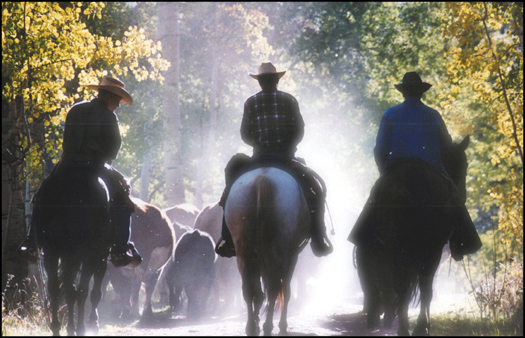
Once we shut the place down we put all of these guys and gals on Greyhound buses packed to the gills.  Each bus would have a mix of members of each party really making sure those that hate each other most sit next to each other.  Secret Service and FBI agents on the buses would have the option to Taser anyone that tries to switch seats.  Then we drive them all to some big assed dude ranch in Montana, outfit them in silly looking cowboy clothes with boots that are a bit too tight and leave them there in the charge of a bunch of cowboys at least two of which have had a recent “Brokeback Mountain” experience.

They would have no cell phones, computers or communications with the outside world or even their minions back in D.C., nope, just them and Mother Nature sharing the experience of high plains living.  In fact to liven the place up we need to bring a few folks back into the mix, some former Presidents and Speakers of the House would do fine. Also the addition of the most strident Cable TV and radio talking heads and commentators would be good too, but I digress, too many extras might spoil the moment.  Maybe we should have a separate sleepover of Rush Limbaugh and Maureen Dowd or Sean Hannity and Keith Olberman later?  No, we’ll throw them into this one to make it more fun.

This dude ranch living would be a bit Spartan. Since most of these folks a Spartan way is driving in a luxury car or SUV, having to fly First Class, staying in a luxury suite or eating at a 4 star restaurant they might have a hard time with what I propose but that would just be tough.    They made this mess and by God we’re going to get them back in touch with the real world and in the process get them to build real relationships with each other instead of the artificial life that they have led inside the beltway for years.

Once we get them to the big assed Dude Ranch we pair them up the best we can with a liberal and a conservative in each cabin.  We would try to keep the cabins of the same gender not to cause too much scandal but would make a few exceptions to that rule.  Now by cabins I don’t mean those really nice cabins that people take real vacations at, no I mean really rustic, Spartan tiny cabins with no amenities and only one bed, a full sized bed that our new roommates would need to share. The cabins would have no couches, easy chairs or love seats, no sleeping bags not even a bearskin rug, nope nothing else but the bed.  They would have a rather rustic communal outhouse to share with everyone else over a deep pit latrine and share their meals in a rather dilapidated chow hall eating off of tin plates and drinking from tin cups.  There would be a camp saloon but it would be like those of the old west, nothing but rotgut whisky, no mixed drinks, no foo-foo appetizers, no micro-brew beer. They would sleep together, eat together and have to participate in trail rides, fly fishing, Grizzly Bear hunting, rodeo events such as bull riding and calf roping as couples, odd couples, but couples nonetheless.  This togetherness would be enforced. Those Secret Service and FBI agents with their tasers… they’ll be out there too.  Anyway when our leaders go on the overnight trail rides the fun really starts.  After they eat their beans from tin plates, sing really bad western songs and take a swig or two or more of rotgut whiskey and then relieve themselves in the manner that the cowboys did in the old West they would get to curl up together in their own two person pup tent, a really small one and spoon.  This would help break down the walls that separate them and force them to get to know each other, some possibly in the Biblical sense of the word, but in the spirit of Don’t Ask Don’t Tell I won’t go there.

There is something about shared suffering to bring people together and make them realize that there is more to life than their own narcissistic agendas and power trips.  No this wouldn’t be prison for them as much as a lot of Americans think that prison would be fitting for them; prison is far too easy for our political class. Instead this would build character, character that if once they had they lost over their years inside the Beltway.

Of course they would not get to pick their room-mates so here are some of my suggestions:

President Obama and Rush Limbaugh: I know I said that the media should have their own version of this but since Limbaugh is the leader of the conservative movement he has to come and buck with his pal Barry.

Harry Reid and Orrin Hatch: They’re both Mormons so they can at least pray together.

Chief Justice John Roberts and Rachel Maddow: I don’t know it just sounds right.

Nancy Pelosi and Antonin Scalia: Sure it’s an opposite sex pairing but they are both Italians they should have fun.

Tom Tancredo and Janet Napolitano: Let’s make a run for the border and mend some fences together

Russ Feingold and Ron Paul: Government control and Libertarianism two great tastes that go great together

John Ensign and Barbara Boxer: He can’t seem to hold it in and she looks like that she could use some loving

Al Franken and Clarence Thomas: A comedian and a straight man…what a combination

John Kerry and John McCain: Both Vietnam Veterans, they understand the value of camaraderie

Mitch McConnell and Chuck Schumer: The just look like they need to be together

Diane Feinstein and Michael Savage: A San Francisco treat

Barbara Milkulski and Kay Bailey-Hutchinson: Why not?

Joe Lieberman and Arlen Spector: Not opposites but they seem to go together

Samuel Alito and Maureen Dowd: It just sounds right

Eric Holder and Glenn Beck: I sense real chemistry here

Hillary Clinton and Newt Gingrich: He’s out of office but they both want to be President

Barney Frank and Sean Hannity: They debate on his show often enough let them really get to know each other

Sarah Palin and Joe Biden: Not a recognizable cognitive thought between them all hormones and testosterone

Sheila Jackson-Lee and Ann Coulter: Salt and Pepper

Ruth Bader-Ginsberg and Pat Buchannan: It can’t get any better than this

John Boehner and Chris Dodd: I think that they could really come to love each other

Unfortunately some of our more interesting members of our political class have passed on I would have loved to throw Teddy Kennedy, Robert Byrd, Jesse Helms, Ronald Reagan and any number of others into the mix, but what can I say?

So after 30 days our political elites would board their buses and go back to their home districts or home towns.  Then they would have some real town meetings as couples, holding hands, looking dreamily into each other’s eyes and bringing peace to the political landscape.   With those pesky Secret Service and FBI agents and their tasers at the ready our leaders would have to listen to their constituents and not the lobbyists. Speaking of lobbyists they all get sent to New Guinea.   As for the Congressmen and Senators they and their new found friends would have to spend 8 months a year living in their home state or district. The would give up their palatial estates in favor of homes that are in the median real estate price for their area. They would send their kids to public schools, go to PTA meetings, coach little league or soccer, deal with local government officials as the rest of us are forced to do.  They would have to do their own grocery shopping, fight lines at  Wal-Mart, take out their own garbage and spend time sitting in traffic behind the wheel of their average car or SUV. They would fly coach or business class and go through the TSA checkpoints like the rest of us, maybe even getting the full body scan once in a while. They would sit in the drive through line at Wendy’s, make a run for the border, Taco Bell that is and shop for the lowest priced gasoline.   The four months that they spend in Washington DC will be devoted to actually fixing things that they have fouled up over the years.  They would have to pass non-pork laden budgets passed, reduce the deficit and do everything that they can to bring industry back into this country, rebuild the manufacturing base, protecting the environment as they rebuildour nation’s infrastructure and eliminate the barriers that keep small businesses and entrepreneurs from developing solutions to the challenges that face the country.  Likewise they would need to repeal all of the draconian laws that intrude on the everyday life of ordinary Americans. I want the Federal government out of our churches, out of our local public schools, out of our bedrooms and out of everything that they don’t belong in. Freedom baby, I love it.

Finally just to make sure that our now properly schooled public servants don’t forget the lessons of the Great Montana Dude Ranch Sleepover they would for two weeks each year have to do this again. Maybe it could be a trail ride in Texas and Oklahoma, a swamp safari in Louisiana complete with no mosquito repellent. Perhaps a winter camp out at the Donner Pass, a gang- reenactment camp in East L.A. or an Appalachian family get together, still building and moonshine making contest in some holler in West Virginia or Eastern Kentucky. The possibilities in our great country are endless after all learning should be a lifetime event.

Of course my pairings of political bedfellows may not work for you, maybe you have better ones.  If so feel free to add them as a comment and on this one no pairing will be denied because it’s all about togetherness.  Because as I see it everything comes down to relationships and if we can just get these folks out of Washington to share some hardship, to eat together, ride together and even spoon together after all who can’t say that they don’t feel closer to someone after spooning together?

Now before you think that I am advocating that they all have higgily-piggily sex together I am not.  However if it does happen and they get right with each other and start to work together for us what can be wrong with it? Half have probably had nasty sex with people that aren’t their spouses anyway so what difference does it make? It would be a sacrifice that they make for us, their fellow Americans.  I know that I don’t want to sleep with any of them and figure that you don’t either and I really don’t want to know what happens when they spoon.  Don’t ask don’t tell baby, don’t ask don’t tell.  Besides would you want to know what happens when Sean Hannity and Barney Frank spoon? I don’t. I’ll say it again, don’t ask, don’t tell that’s my rule for life.

If this works maybe just maybe that they will finally start looking to the issues that Americans care about. Maybe they will finally understand the desire that we all have to see our children grow up to have the opportunity to outdo us, that our children might have a better future and that the country that we live in would come together like we did in the Second World War to overcome all the obstacles that stand between us and a better future. Call me a genius or call me crazy, chalk it up to Mad Cow, after all I can’t give blood because I lived in Europe and ate too much beef. But remember “Padre Steve” is a “Uniter” not a divider, a decider not a ditherer and a real American for real Americans.

Padre Steve: a passionate moderate with radical ideas.  Sleepover anyone?

1 Comment

Filed under Just for fun, laws and legislation, philosophy, Political Commentary

The Sinking of the Cheonan and the Escalation of Tensions on the Korean Peninsula

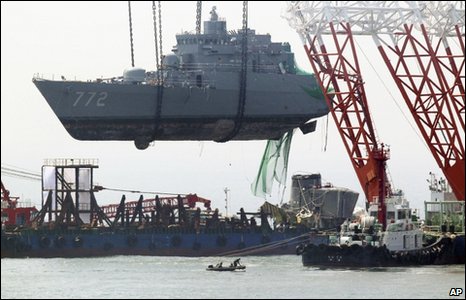
The forward half of teh hulk of the Corvette Cheoson being raised from the Yellow Sea

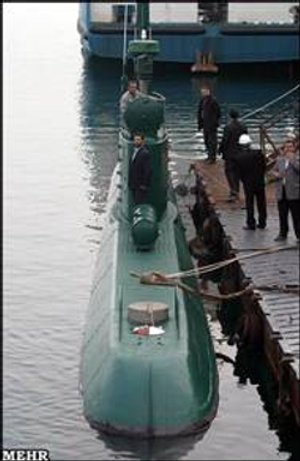
On March 26th at 2110 hrs local the 1200 ton South Korean Corvette Cheonan (PCC-722) was torpedoed by a North Korean Submarine about 1 nautical mile from Baengnyeong Island. The assailant appears to have been a North Korean Yeono Class miniature submarine using a North Korean CHT-02D 21” torpedo using acoustic homing mechanism set for a detonation under the hull of Cheonan at 6-9 meters depth.  There is the possibility that a Song class coastal submarine could have been involved but the likelihood is a Yeono class boat based on the proximity to land and the observation of a number of “small submarines” departing base a few days before and returning a few days after to their tender. The blast created an underwater shockwave and bubble effect which broke the back of the ship causing it to sink in less than 5 minutes with the loss of 46 crew members.

The probable assailant a Yeono or Yono class Miniature Sub and an Iranian variant below


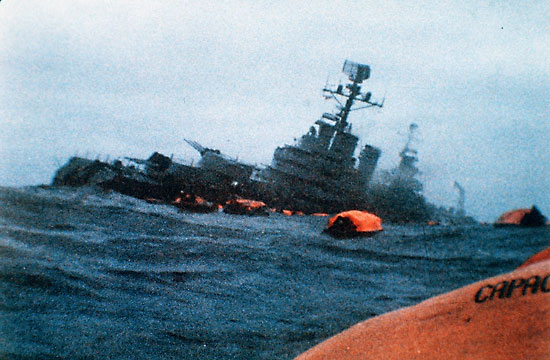
The sinking of Cheonan was the first sinking of a warship by a hostile submarine since the Argentine light cruiser the General Belgrano was sunk by the Royal Navy nuclear hunter-killer attack submarine Conqueror on May 2nd 1982 during the Falkland war.  The sinking of the Belgrano was controversial but occurred in the context of active hostilities and which posed no real threat to regional destabilization or a war that could easily escalate into a nuclear, chemical and biological conflict. The Cheonan was sunk by the North Koreans in a clear violation of the Korean Armistice and represents such a brazen move by the North Koreans that one has to wonder what purpose that it served.  There are reports that Kim Jong Il ordered the attack in retaliation for a confrontation in the same area in November 2009 in which a North Korean ship was heavily damaged.

The last warship sunk by a hostile submarine

The effects are now being felt following the May 20th release of the international investigation of the sinking which confirmed with hard evidence that the torpedo was North Korean and that there were no other possibilities for the sinking. (http://www.mnd.go.kr/mndEng_2009/WhatsNew/RecentNews/index.jsp#wrap ) The North Koreans reacted with anger toward the report while South Korea, the United States, Japan, Australia, Canada and the UN made statements condemning the sinking.  In the following days the US and South Korea announced naval exercises (http://news.bbc.co.uk/2/hi/world/asia_pacific/10150379.stm ) (http://www.csmonitor.com/USA/Military/2010/0524/Pentagon-dials-up-pressure-on-North-Korea-for-Cheonan-sinking ) and on the 24th the South Koreans suspended economic relations and assistance to the North and announced the renewal of psychological warfare against the North. The North Koreans have responded in kind severing all relations with the South, threatening to attack sites broadcasting into the North and announced that it gave its military the order to prepare for war.  http://news.yahoo.com/s/ap/20100525/ap_on_re_as/as_skorea_ship_sinks;_ylt=Alwl3biZwLFab7TyXX4HwRz9xg8F;_ylu=X3oDMTM5NTExM2R2BGFzc2V0A2FwLzIwMTAwNTI1L2FzX3Nrb3JlYV9zaGlwX3NpbmtzBGNjb2RlA21vc3Rwb3B1bGFyBGNwb3MDMgRwb3MDMgRzZWMDeW5fdG9wX3N0b3JpZXMEc2xrA25rb3JlYXNldmVycw

North Korean Torpedo components from the sinking of the Cheonan

The North on the 21st announced that “From this time on, we will regard the situation as a phase of war and will be responding resolutely to all problems in North-South relations,” and that “If the South puppet group comes out with ‘response’ and ‘retaliation’, we will respond strongly with ruthless punishment including the total shutdown of North-South ties, abrogation of the North-South agreement on non-aggression and abolition of all North-South cooperation projects.” (http://www.stuff.co.nz/world/asia/3725039/North-Korea-declares-phase-of-war-with-south )

Secretary General of the United Nations Ban Ki Moon said that the Security Council should take action against North Korea stating “I’m confident that the council, in fulfilling its responsibility for the maintenance of international peace and security, will take measures appropriate to the gravity of the situation.” (http://www.undispatch.com/node/9910 )

The situation seems to escalate by the hour as additional nations condemn the North Koreans and movement in the UN to do sop as well.  With the problem of succession in the North Korean leadership and potential struggles for internal power between the North Korean military and others within Communist Party and government it is hard to say who might gain in this situation. There are reports that part of the reason for the attack was the need for Kim Jong Il to secure the place of his son to leader the regime if he is incapacitated or dies.  The succession of Kim to the leadership was unusual as it was the first time in a Communist nation that the son of the national leader succeeded his father.  It is possibility that senior military or party leadership could oppose such a move.

There are a number of scenarios for this to play out.  Of course one would be for the North to stand down however that would be an act of weakness and loss of face for the regime after sinking a South Korean warship.  The other alternatives include the full fledged resumption of the Cold War on the peninsula or even the outbreak of a regional war which could draw in other nations and involve the use of nuclear, biological or chemical weapons on a large scale.   Any such situation would devastate the economies of much of Asia which in tour could cripple the world economy at a time when the European Union is in crisis, the United States is struggling its way out of a recession and many other nations are experiencing economic crisis or downturn.

This is a very dangerous situation and as one who has spent time on the Korean DMZ I can imagine almost nothing worse for the world than a war in Northeast Asia, perhaps a major showdown in the Arabian Gulf with Iran or a major conflict involving Israel and Iran or other Middle Eastern states, but not much other than those scenarios.  The situation has also demonstrated the threat to warships in the littorals from comparatively simple, cheap and deadly platforms firing weapons based on World War Two technology.  The reality for naval surface forces be they in the Korean littorals, the Arabian Gulf or Gulf of Oman is that low tech weaponry on low tech platforms in congested waters can deal deadly blows to unsuspecting warships.

This situation will need to be watched as it has the potential to get worse with dire consequences.

2 Comments

Filed under Foreign Policy, Military

A Previous Generation of Sailor Insults the Current Generation of Sailors

A Different Kind of Navy

Today I received an e-mail forwarded by a retired Navy Chief and actually a dear friend of my family.  However the e-mail was so insulting to the present generation of sailors that I sent a very blunt response back to him and everyone in else by replying to all recipients.

As readers of this site know I constantly go out of my way to make sure that the sacrifices of the previous generations of military personnel are recognized, honored and not forgotten.  In fact I am not alone in this, many like me have been touched by these veterans of World War II, Korea, Vietnam, the Cold War, Desert Shield and Storm and the Balkans and honor their service in thought word and deed. In fact I and thousands like me are deeply appreciative of the service and sacrifice of those who have gone before us.  However with the exception of the Vietnam vets I don’t think that this honor and appreciation is shown much to the current generation.

We have been at war coming up on 9 years. This is nearly three times as long as the US involvement in World War II and will certainly go well beyond that.  Unlike that war where the whole nation was mobilized and millions of men and women served in all components of the armed forces all over the world in the current war only a tiny minority of the population has served. In fact if you look around the country we are a nation that doesn’t even act like we are at war unless it benefits someone’s political agenda.  While various individuals and organizations, especially professional sports take time to publicly acknowledge the service of the current generation for most people the war is something abstract that really doesn’t affect them or change how they live in any appreciable manner.

What is even more insulting is getting e-mail and hearing some of the older generation demean those who serve now, while saying “Support our Troops” they then spread horse manure like this:

Then – If you smoked, you had an ashtray on your desk.
Now – If you smoke, you get sent outside and treated like a leper, if you’re lucky.

Then – Mail took weeks to come to the ship.
Now – Every time you get near land, there’s a mob topside to see if their cell phones work.

Then – If you left the ship it was in Blues or Whites, even in home port.
Now – The only time you wear Blues or Whites is for ceremonies..

Then – You wore bell-bottoms everywhere on the ship.
Now – Bell-bottoms are gone and 14 year-old girls wear them everywhere.

Then – You wore a Dixie cup all day, with every uniform.
Now – It’s not required and you have a choice of different hats..

Then – If you said “damn,” people knew you were annoyed and avoided you.
Now – If you say “damn” you’d better be talking about a hydroelectric plant.

Then -The Ships Office Yeoman had a typewriter on his desk for doing daily reports.
Now – Everyone has a computer with Internet access and they wonder why no work is getting done.

Then – We painted pictures of pretty girls on airplanes to remind us of home.
Now – We put the real thing in the cockpit.

Then – Your girlfriend was at home, praying you would return alive.
Now – She is on the same ship, praying your condom worked.

Then – If you got drunk off duty, your buddies would take you back to the ship so you could sleep it off.
Now – If you get drunk off duty, they slap you in rehab and ruin your career.

Then – Canteens were made out of steel and you could heat coffee or hot chocolate in them.
Now – Canteens are made of plastic, you can’t heat them because they’ll melt, and anything inside always tastes like plastic.

Then – Our top officers were professional sailors first.  They commanded respect.
Now – Our top officers are politicians first.  They beg not to be given a wedgie.

Then – They collected enemy intelligence and analyzed it.
Now – They collect our pee and analyze it.

Then – If you didn’t act right, they’d put you on extra duty until you straightened up.
Now – If you don’t act right, they start a paper trail that follows you forever.

Then – Medals were awarded to heroes who saved lives at the risk of their own.
Now – Medals are awarded to people who show up for work most of the time.

Then – You slept in a barracks, like a soldier.
Now – You sleep in a dormitory, like a college kid.

Then – You ate in a Mess Hall or Galley.  It was free and you could have all the food you wanted.
Now – You eat in a Dining Facility.  Every slice of bread or pat of butter costs, and you can only have one.

Then – If you wanted to relax, you went to the Rec Center, played pool, smoked and drank beer.
Now – You go to the Community Center and can still play pool, maybe.

Then – If you wanted a quarter beer and conversation, you could go to the Chief’s or Officers’ Club.
Now – The beer will cost you three dollars and someone is watching to see how much you drink.

Then – The Exchange had bargains for sailors who didn’t make much money.
Now – You can get better merchandise and cheaper at Wal-Mart.

Then – If an Admiral wanted to make a presentation, he scribbled down some notes and a YN3 spent an hour preparing a bunch of charts.
Now – The Admiral has his entire staff spending days preparing a PowerPoint presentation.

Then – We called the enemy things like “Commie Bastards” and “Reds” because we didn’t like them.
Now – We call the enemy things like “Opposing Forces” and “Aggressors” or “Insurgents” so we won’t offend them.

Then – We declared victory when the enemy was dead and all his things were broken.
Now – We declare victory when the enemy says he is sorry and won’t do it again.

Then – A commander would put his butt on the line to protect his people.
Now – A commander will put his people on the line to protect his butt.

ALOHA!

“IN GOD WE TRUST”

Now there are some elements of truth in the e-mail there is also a lot of fiction and patent falsehoods which are cobbled together to insult and put down those who serve now.  Maybe this is done because a lot of the “greatest generation” never got into combat, maybe they resent the changes in society and culture, and maybe the only paradigm of war that they know is World War Two and the Cold War.  In fact if you look at history the Vietnam vets didn’t get the support or respect of the World War II generation.

I don’t want to sound like an ass or ungrateful but my generation has honored and respected those that have gone before us as “the greatest generation” while some who served in that war and during the 1950s and early 1960s run us down.  In fact I imagine that this was written by someone who did little but sit on their ass and complain when they were in the Navy and pretty sure that they didn’t serve in World War II, or see anything more than a hostile coast when they served.

Maybe I should re-write this in this manner, of course just like what was in the e-mail above it is filled with half-truths, it makes the point of what it feels like to have your service made light of by another generation.  Please know that I write this not to put down those who served before us but to show that such ad hominem attacks can go both directions, so let’s try it:

Then: Physical fitness meant if you got to fat you purchased a new uniform to waddle down a passage way.

Now: Physical Fitness standards are such that if you don’t stay in good physical condition and stay within weight standards that your career will be over.

Then: Physical abuse of sailors and hazing was acceptable and even encouraged.

Now: We don’t tolerate assault and battery.

Then: If you didn’t smoke you were forced to inhale the smoke of others in cramped and poorly ventilated spaces ensuring that you had an equal opportunity at sharing in the joys of lung cancer.

Now: If you don’t smoke you can breathe in peace and if you do smoke you still can just not whenever and wherever you want.

Then: Senior leaders both officer and enlisted who did criminal things were quietly removed and allowed to continue in service or retire as if nothing happened.

Now: Senior leaders, especially Commanding Officers and Command Master Chiefs are held to a higher standard and when relieved for cause it is public and the offense is not swept under the rug.

Then: Only a minority of sailors were married.

Now: The majority are married.

Then: Intelligence collection was pretty straight forward; you monitored Soviet communications and movements.

Now:  The bad guys use a multitude of means to communicate that were undreamed of in years past.

Then: Drug abuse was not a big problem in society at large and there was little need to test for them.

Now: The proliferation of drugs throughout society presents risks to our sailors, our security and mission that it is necessary to test for them.

Then: Women had little opportunity in the service and were regulated to support jobs.

Now: Women serve honorably in almost every Navy community at sea, in the air or ashore.

Then: Racial prejudice was pervasive and individual and institutional racism tolerated.

Now: For the most part racism is a thing of the past and sailors of all races have the opportunity not only to serve but to rise to the highest ranks.

Then: Being drunk on duty was okay if your Chief or Divo liked you and your buddies covered it up.

Now: Being drunk on duty is recognized for what it is, endangerment of your shipmates and the mission.

Then: Going on deployment meant being on a ship with regular deployment schedules and plenty for port calls and being on shore duty meant just that.

Now:  Sailors can be deployed at a moment’s notice from shore assignments and rotate from deployment to deployment to deployment with little time in between and up serving with boots on the ground where people are trying to kill you.

Then: Pay was low but since you weren’t married and lived on ship or the barracks you had plenty of disposable income.

Now: Pay is better but since you are married you have to support them and subject them to the uncertain life of being a sailor at war.

Then: Pay and benefits were so low that many in the civilian world believed that “only losers joined the military.”

Now: Pay and benefits are better so we get so of the best professionals in their fields.

Then: Medical care for life was a given and you never paid out of pocket for it for you or your family.

Now: Even with the most affordable health coverage sailors pay something out of pocket for their family’s medical care and sometimes their own.

Then: Navy housing was usually old, dilapidated and substandard and Navy families frequently lived in worse conditions than civilians lived in.

Now: Navy housing is being built to comparable standards of homes and apartments in the civilian community.

Then: There was no “Wal-Mart” or any other discount stores so the Exchange was your best option.

Now: Competition in the civilian world often makes the Exchange less attractive an option.

Then: The Navy was stingy with awards figuring that your paycheck was your award.

Now: Hard work deployed and non-deployed is better recognized and no sailors don’t get personal awards for showing up to work on time.

Then: War was different, we fought actual countries and professional militaries who played by the rules.

Now: War is fought against shadowy groups that use terrorism and other asymmetric means to fight and have no government to end the war and do not follow the rules of conventional warfare.

Then: Education was not encouraged.

Now: Education both military and civilian is encouraged to make better sailors.

Then: A sailor’s only interactions with Soldiers, Airmen or Marines were at bar fights.

Now: Now we serve alongside Soldiers, Marines and Airmen on small isolated outposts in dangerous combat zones.

Need I go on?

Now I am not saying any of this to demean or put down those who served before this generation. However I put it out here to show just how insulting the referenced e-mail was.  My gut reaction is that people who put out stuff like this didn’t do much in their own career and maybe were embarrassed by others of their generation who did. Perhaps the only way they can value their service is to put down others.  If so they are a pitiful and bitter bunch.  Now as I said up front there are plenty of veterans from past wars who honor us who serve today, however the vocal minority who put out crap like this need to be called on it.  If you see such e-mails please register your objection to them by replying to all and maybe, just maybe this will stop.  If you want past my “then and now” into your e-mail to throw it back at them.

Finally as always I thank all who served before us, men and women, especially the Korea and Vietnam vets who had their service ignored or put down by fellow vets as well as society in general. I do not want their service to be forgotten or dishonored and if anyone interprets this essay in that manner they have missed my point entirely.  But moreover I want to thank the new “greatest generation” who though small in number volunteer to serve knowing that they will see action likely in a ground combat zone serving alongside Soldiers, Marines and Airmen in places that would have been impossible for previous generations to imagine serving. It is us, we few, we happy few who fight together that hold the line, not the pundits, not the politicians and not those who sit back under the protection that we provide demean our service and criticize how we do that job.  Such people can kiss my ass, otherwise they can sign up, pick up a weapon, put on a pack or shut the hell up.

Peace

Padre Steve+

3 Comments

Filed under Military, philosophy

I Miss the Music of the 70’s and 80’s

The Abbess and I in 1980 at Cal State Northridge

Note: Many of the links on this page are now dead. I have done a new article about this which is linked here: 

Spendin’ the Nighttime Reminiscing: Padre Steve Remembers the Music of the 1970s and Early 1980s

If you like this post please see the sequel:  More about Why I Miss the Music of the 70’s and 80’s unfortunately many of the links are dead on this one too, but the article is interesting.

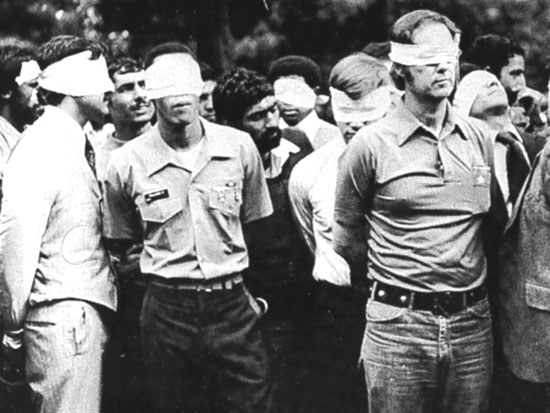
I don’t know about you but the music that I really enjoy is the music that was popular when I was in Junior High, High School and College.  For that period spanned the years 1971-1983.  For those of that were alive back then it was a turbulent era, Vietnam was ending, Nixon was resigning due to the Watergate break in cover-up, assassination attempts both successful and unsuccessful were common, two attempts on Gerald Ford, Aldo Moro of Italy and Anwar Sadat of Egypt fell to terrorists and both Ronald Reagan and Pope John Paul II were felled by bullets which did not prove fatal. The Cold War was tense, the Middle East a mess, and the economy…well kind of like now in a lot of ways.  There was a major recession the auto industry needed bailouts, inflation was running in double digits as was the unemployment rate, the dollar was weak and OPEC wreaked havoc on world oil markets. Jimmy Carter was ridiculed worldwide for his “malaise” speech and the Iranian revolution led by the Ayatollah Khomeini swept into power and with it the seizure of the US Embassy and the 444 day hostage crisis punctuated by a failed rescue attempt demoralized the United States.

The 444 Day Iranian Hostage Crisis Helped End the Carter Presidency

The Soviets invaded Afghanistan which became their Vietnam.  In Lebanon 247 Marines were killed in the bombing of their barracks, Cubans were fighting in Angola and well. Terrorist groups killed Israeli athletes at the Munich Olympics and the Red Brigades, the Bader Meinhof gang, the Weather Underground and the Irish Republican Army provided a constant string of terrorist attacks even as Middle Eastern terrorist groups highjacked airliners in daring fashion, matched at times by equally rescues by Israeli and German anti-terrorist units. As you can imagine there was a lot to be down about.

Gas Lines 1974

However with the passing of the 60’s the music of the 1970s and early 1980s provided a diversion for many people looking for respite from all the bad news that echoed around the airwaves and in the newspapers.  Thankfully there wasn’t a 24 hour cable news cycle yet and had there been people would have probably been jumping off of buildings.  As for me I had countless 45s and LPs of my favorite groups and artists, Doctor Donald D Rose of KFRC in San Fransisco was my favorite DJ and my car had a retro-fitted 8-Track tape player.

Today while much of the population gathered around TVs to watch NFL Wild Card playoff games, I needed some peace, so I started putting music DVDs on as the Abbess and I worked about the house.  First was Blondie’s Greatest Hits and Abba Gold followed by the Eagle’s Farewell Tour I concert album.

Great groups and artists ruled the pop and rock airwaves and save for the disaster known as disco the 70’s and early 80’s produced some of the more memorable music of a generation.  It was not “message music” like much of the music in the 60’s but focused on entertainment.  Power groups like Journey, Starship, REO Speedwagon and Boston made power ballads, while AC/DC and KISS shocked and entertained at the same time.  Groups like the Blondie, the Eagles, Chicago, Paul McCartney and Wings, Abba and the Commodores dominated the pop charts while individual artists such as Olivia Newton-John, Elton John, Carly Simon, John Denver, Lionel Ritchie, Barry Manilow and others satisfied the more mainstream pop crown.  R&B enjoyed a renaissance due to the unlikely duo of the Blues Brothers who helped re-launch the careers of Aretha Franklin, Johnny Lee Hooker, Cab Calloway and a host of others.  As the 80’s came along new groups and styles were introduced including New Wave and Rap. It was music that helped us through those times.

As I listened and watched I mentioned to the Abbess that I missed those times.  It certainly wasn’t the fact that things were great in the world, but despite all of what was going on there was still some sense of that things would work out okay.  Music helped provide part of that sense of hope, even disco as much as I would hate to admit that. It was an escape and the music of that time is still with us, somehow those groups haven’t gone away and people look back with fondness to the music of the era.

Here are some of my favorites with links to the videos, they are in no particular order nor are the representative of all the groups that I have in my library of CDs and DVDs, but I enjoy the heck out of them.  Have fun and enjoy.

Peace,

Padre Steve+

The Eagles “Take it Easy”

http://www.youtube.com/watch?v=ScG0ilS0dgI

“Heartache Tonight”

http://www.youtube.com/watch?v=nvJqdudx8cg

and “Hotel California”

http://www.youtube.com/watch?v=FbjKMobts5U


Olivia Newton-John “Magic”

http://www.youtube.com/watch?v=r7WPwH8Rd6g

and “I Honestly Love You”

http://www.youtube.com/watch?v=6zGLSnZGZts

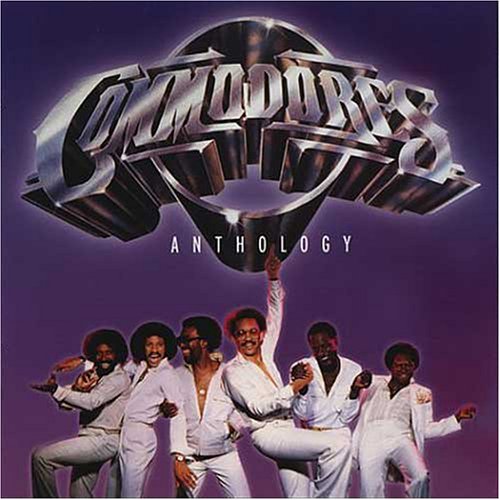
The Commodores “Sail On”


http://www.youtube.com/watch?v=zg-ivWxy5KE

Rod Stewart “Tonight’s the Night”

http://www.dailymotion.com/video/x1p96h_rod-stewarttonights-the-nightgonna_music


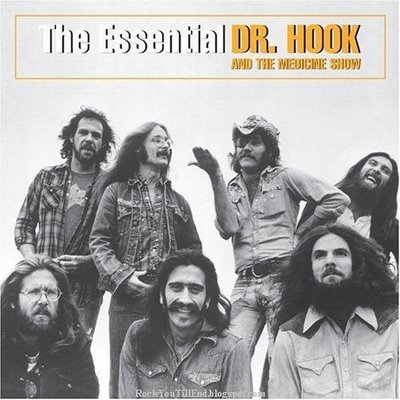
Dr Hook and the Medicine Show “On the Cover of the Rolling Stone”

http://www.youtube.com/watch?v=0-XzGOZHYdA&feature=PlayList&p=AF906570E242A626&index=1

and “Sharing the Night Together”

http://www.youtube.com/watch?v=ECyAATeNH3E


Abba “Waterloo”

http://www.youtube.com/watch?v=wGs7dTjUsXw

and The Winner Takes it All

http://www.youtube.com/watch?v=92cwKCU8Z5c


Fleetwood Mac “Don’t Stop Thinking About Tomorrow”

http://www.youtube.com/watch?v=a8arvEzHsA8


Journey “Don’t Stop Believing”

http://www.youtube.com/watch?v=CNB1EUJg1-w


Laura Branigan “Gloria”

http://www.youtube.com/watch?v=1tVutw8rjFk


Bonnie Tyler “Total Eclipse of the Heart”

http://www.youtube.com/watch?v=840B27zYfOk&feature=related

Carly Simon “You’re So Vain”

http://www.youtube.com/watch?v=mQZmCJUSC6g


Blondie “Dreaming”

http://www.youtube.com/watch?v=yIjxGKLTADE

“Rapture”

http://www.youtube.com/watch?v=xHPikUPlRD8&feature=PlayList&p=F2ED8F30DB2943CD&index=1

and “Island of Lost Souls”

http://www.youtube.com/watch?v=wEpPjBG4CJY


Chicago “Saturday in the Park”

http://www.youtube.com/watch?v=nWxA3e9f6rY

Linda Ronstadt “When Will I Be Loved”

http://www.youtube.com/watch?v=OmE7tTzJkbU


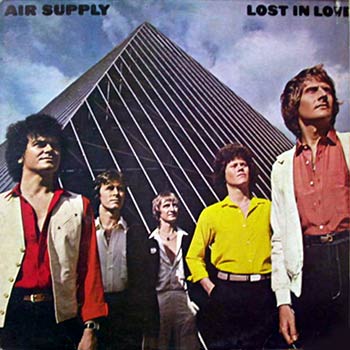
Air Supply “Making Love Out of Nothing at All”

http://www.youtube.com/watch?v=6lE6Htee0sA

Foghat “Third Time Lucky”

http://www.youtube.com/watch?v=Fj1O2KtH4kE


Elton John “Bennie and the Jets”

http://www.youtube.com/watch?v=j0WCQadt864

The Captain and Tennille “Do that to Me One More Time”

http://www.youtube.com/watch?v=KNHcgk5bf7o&feature=related

REO Speedwagon “Keep on Loving You”

http://www.youtube.com/watch?v=u-mw1HGJjdA&feature=related

Joan Jett and the Blackhearts “I Love Rock and Roll”

http://www.youtube.com/watch?v=0SOJxNOP37I

Starship “Nothing’s Gonna Stop Us Now”

http://www.youtube.com/watch?v=5PP1HEFlkdY

and “We  Built this City”

http://www.youtube.com/watch?v=7flrwE-bZVo

Finally, the Blues Brothers “Everybody Needs Somebody”

http://www.mojvideo.com/video-the-blues-brothers-everybody-needs-somebody-to-love/ac0b631b54ff095fd5c0

14 Comments

Filed under History, music

Padre Steve’s World: Top 10 articles of 2009

I began Padre Steve’s World Back in February of 2009. I started it mainly as a place to write about my experience in the Iraq War and my struggle with PTSD. It initial was, and on occasion still is a vehicle to help integrate those experiences into my life so that I might experience some measure of healing.  When I began this site I really did not expect it to become what it has become.

Now as anyone knows I am a member of the Church of Baseball, Harbor Park Parish and that the Deity Herself speaks to me through Baseball.  That combined with the fact that I am a historian somewhat of a military theorist means that I love statistics.  I also love to look at facts, data and interesting stories and try to make sense of them. I do this with baseball of course, as well as how leaders can apply lessons of the past to present conflicts and recognize dangers of their possible courses of action.

I am an introvert but writing has helped me get out of myself.  I have ended up writing about people in my life, significant losses experienced at our medical center and how others have made a difference in my life.  As the site matured I found that I was writing less about me and more about other people, history, theory and various social and political events.  Of course the latter frequently stirred up a lot of crap in me so at times, especially dealing with subjects such as “The Lies of World Net Daily” or former Navy Chaplain, defrocked priest, convicted criminal and professional liar Gordon “Chaps” Klingenschmitt.  The site also allowed me to spend a lot of time sharpening my academic research skills as well as writing about baseball.  So this has become something more than a navel gazing site where I pick out the lint of my soul for all to see.  While my experiences pervade a lot of what I write as no one can write in a vacuum one’s experience, training, culture and worldview all influence what we write about and how we interpret events, they are not the central focus of the site anymore.  I think I have about 40 different subject areas that I post on now and who knows if that number will grow.

During this past year I have met a lot of people in person and online and had a good number of people post some very kind comments as well as some very challenging ones.  On the rather amazing side I have had people from my past, like the UCLA Army ROTC “Chief Lord of Discipline” Colonel Bruce Lawson find me and look me up as well as the son of the late Master Sergeant Harry Zilkan who was out training NCO as well as others.  I have had visitors and comments from around the world including the United Kingdom, Canada, Germany, France, Italy, Singapore, Australia and Russia.  In all I have had over 700,000 views of the site since February and thousands of clicks on individual articles.  The comments that touch me the most are those who comment that what I write has touched them, helped them or provided them added knowledge about a given subject as well as those that in my more difficult times have offered me encouragement and prayed for me.  Through this I have also come across some very good bloggers and writers that I enjoy reading.  It has provided me a new network of acquaintances and associates to bounce ideas off of and have input from.  So I have to say that this has been a very helpful thing for me this past year and has given me ideas that I hope will one day will get published.  I have over the past year discovered some topics that I would like to publish and a I am ruminating on those even now.

My top 10 articles this year are listed here, as you can see they represent a wide range of topics:

Star Trek, God and Me 1966 to 2009

The USS Enterprise NCC-1701 B

I posted this on May 29th 2009 and to date it has 6827 hits.  This was done on a lark and kind of took on a life of its own. There is a reason that Star Trek is so popular after over 40 years.  It is that it touches people’s lives and the stories, though set in the future are about the human condition and people can relate to them even now.   I know I do and that was the point of this article. The post still gets 10-40 hits a day.

The Ideological War: How Hitler’s Racial Theories Influenced German Operations in Poland and Russia

Einsatzgruppen at Work

I published this article on September 14th 2009 and it now has gathered a total of 3649 hits. This article is a revision of an academic paper that I wrote for my Masters Degree in Military History.  I have studied modern German History, 1870 to the present for many years; in fact the bulk of my undergraduate history studies involved the topic.  In particular the period from the fall of the Kaiser in 1918, the German Civil War, the Weimar Republic and the Nazi Period have been my specialty.  When I posted this I expected that it would primarily be read by history wonks like me but it seems to have gained a substantial number of readers and still picks up a decent number of daily hits.

Halloween Book Burning Update: Bring the Marshmallows Please!

Pastor Marc of Amazing Grace Baptist Church, Book and Bible Burner and Heretic Confronter in Chief

I posted this on October 25th as a follow up to an article about a little Baptist Church that was hosting a book burning.  I found the subject fascinatingly terrible and had to write about it.  Humor blended with satire, history, religion, sociology and a bit of dare I say sarcasm created a monster.  This is my fastest growing article.  It’s funny how that “Old Tyme Religion” can get you going.  To date this post has 3292 hits.

The Forgotten Cold Warriors

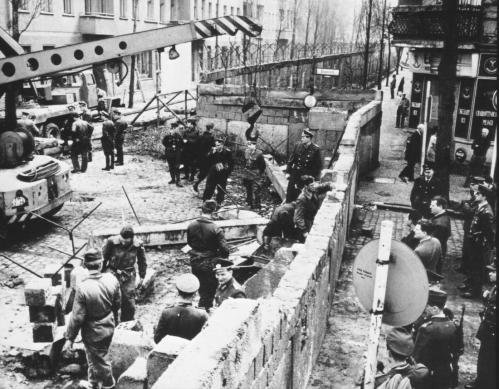
Icon of the Cold War: The Berlin Wall Goes Up

I wrote this back on July 26th 2009 as a tribute to those who served in a truly forgotten war, the Cold War.  It now has gathered 2906 hits. As a Cold War vet myself like my dad I have felt for many years that the American government and both political parties have done little to recognize those who served, frequently in harm’s way during this conflict that spanned the globe over a period of 40 years.  I imagine that the same is true in Russia and the former Warsaw Pact nations. The article still gets a decent number of daily views, not like the top three but still a good number showing me that a significant number of people have feelings for those who served as well as their own service during the Cold War.

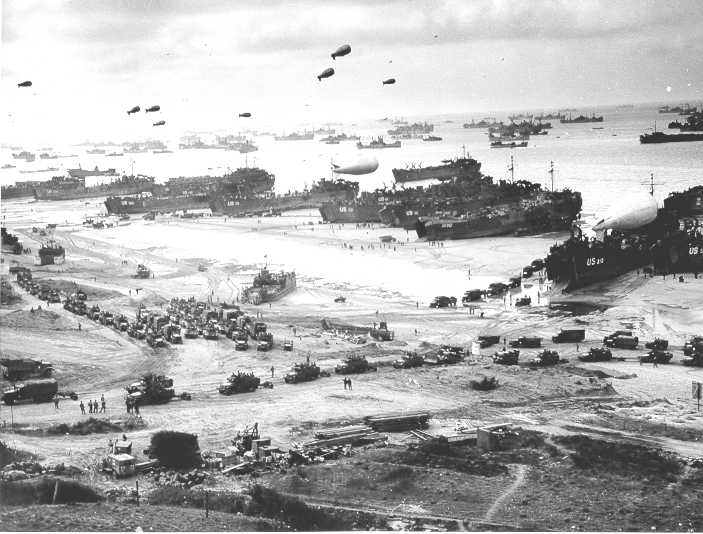
D-Day- Courage, Sacrifice and Luck, the Costs of War and Reconciliation

Omaha Beach at Low Tide

This was published on June 6th 2009 as a tribute to those who served and gave their lives on D-Day and during the Normandy campaign.  It talks about the reconciliation between Allied and German soldiers after the war and I relate it to my own dealings with the Iraqi people and military.  It voices my hope that one day Iraqi and American veterans can have the kind of reconciliation experienced by some of those who fought so hard against one another during the brutal Normandy campaign. To date it has 2887 views. 

Operation “Dachs” My First Foray into the Genre “Alternative History”

Field Marshall Erich Von Manstein

This article was posted on August 9th 2009 and was a rewrite of a paper I wrote in one of my Masters Degree classes.  It was inspired by Kenneth Macksey’s alternative history “Disaster at D-Day.” It was unusual in the fact that I wrote an alternative history as if it had actually taken place using real sources, people, places and events and writing as if the “what ifs” had actually occurred. In this case that would be the success of the March 1943 attempt on Hitler’s life had succeeded.  It has 2314 hits to date and still gathers a decent number of hits making me wonder if it has potential for expansion as a possible book. 

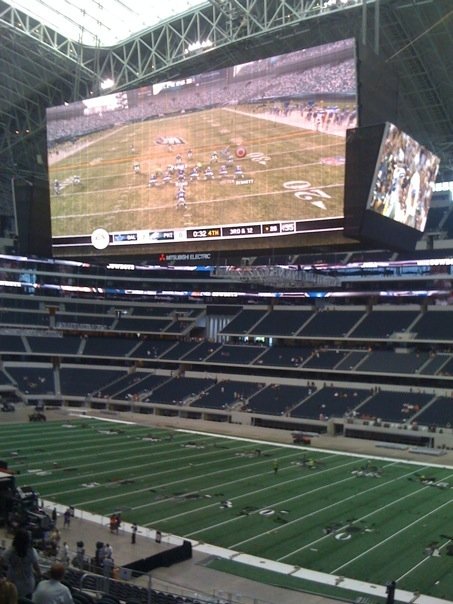
Cowboys Stadium meets Seinfeld: A Scoreboard and a Nose that You Can’t Miss

Cowboy’s Stadium and its Massive Scoreboard

This post combined my twisted sense of Seinfeld like humor into what I think is a pretty witty post about the monstrous scoreboard at the new Cowboy’s Stadium in Arlington Texas.  It seems to get a decent number of hits whenever the Cowboys play.  I wrote it on August 30th 2009 and it has 1570 hits to date.

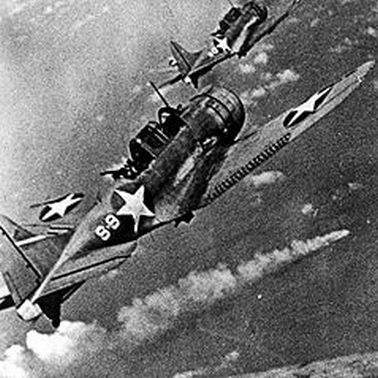
Turning Points: The Battle of Midway, Randy Johnson Gets his 300th Win and Chief Branum Gets Her Star

SBD Dauntless Dive Bombers at Midway

This article was posted on June 4th 2009 and dealt with three different but for me interrelated events.  The first was a tribute to those who fought at the Battle of Midway, the second future Hall of Fame pitcher Randy Johnson getting his 300th career win as a member of the San Francisco and a fallen Shipmate, Senior Chief Hospital Corpsman Pamela Branum who was posthumously promoted to Senior Chief at her memorial service.  To date it has 1449 views and a significant number of comments.

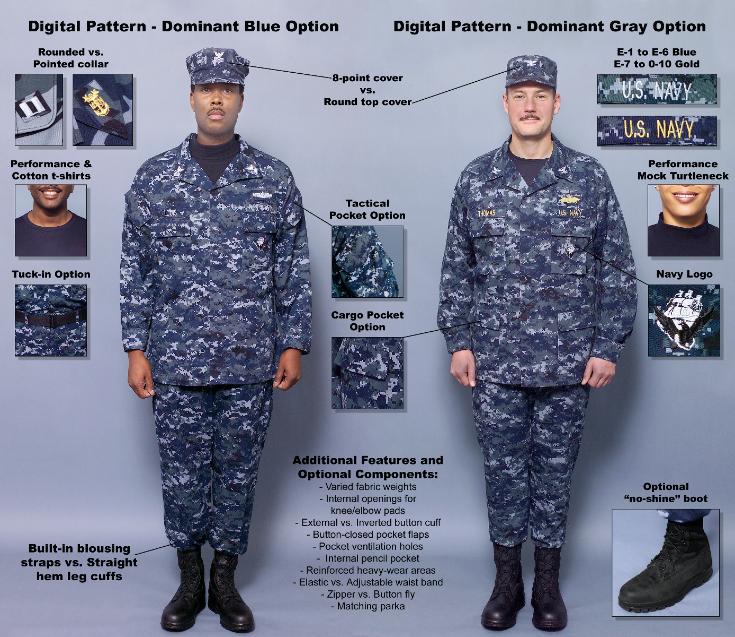
These Boots were Made for Walking: The Navy NWU Suede boots

The NWU and its Boots

This was one of my earlier posts done on April 18th 2009 and provided my review of the new US Navy suede work boot which is worn with the Naval Working Uniform or the NWU.  It has surprised me that it has garnered 1332 hits.  It was a follow up article to a humorous article that I had written previously about all the different kinds of camouflage uniforms in use by the US Military entitled: The NWU- Now we all have different camouflage.

Memorable Recruiting Slogans and the All Volunteer Force


This article was a humorous look back at some of the military recruiting slogans that have been around since the beginning of the “All Volunteer” military in the mid 1970s.  I posted it on May 4th 2009 and it now has 1084 hits.

Other Articles of Interest

Since I have posted well over 300 articles to the site since its creation I have listed some other articles that I thought were significant below:

Baseball in Between Life and Death in the ICU

Mortain to Market-Garden: A Study in How Armies Improvise in Rapidly Changing Situations

The Treaty Cruisers: A Warship Review

Sometimes You Wanna go Where Everybody Knows Your Name

It’s what you learn after you know it all that counts-Thoughts on 26 Years of Commissioned Service

You Win a Few, You Lose a Few. Some Get Rained Out. But You Got to Dress for All of Them

Remembering the Veterans in My Life…Memorial Day 2009

Alzheimer’s Disease, Ghost Fleets and Waiting for the End

Reformation Day: How Martin Luther and Hans Kung Brought Me to an Anglo-Catholic Perspective, a Book and Bible Burning Reaches Ludicrous Speed and Yankees take Game Three 8-5

My Brotherhood of War

Connecting…Baseball and Having My Dad Back for a Few Minutes

Lessons for the Afghan War: The Effects of Counterinsurgency Warfare on the French Army in Indo-China and Algeria and the United States Military in Vietnam

The Uncomfortable Legacy of Colonel General Ludwig Beck

A Christian Defense of the Rights of Moslems and Others in a Democracy (or Constitutional Republic)

I like Jesus very much, but He no help with Curveball

Comebacks in Baseball and Life: 27 Outs- the Baltimore Orioles teach us a Lesson in Life

Here’s to you Jackie Robinson

The Demons of PTSD: Abandonment

Doubt and Faith: My Crisis in Faith and Why I am Still a Christian an Advent Meditation

Padre Steve’s World Series Prediction and Book and Bible Burning Update

Dien Bien Phu- Reflections 55 Years Later

Brothers to the End…the Bond between those Who Serve Together in Unpopular Wars

World Series Game Six: Duel of the Old Dogs

The 2009 Season at Harbor Park…the View from 102 a Season in Pictures

I guess that is enough for anyone who wants to poke around on the site.  There is a place to subscribe to this site via e-mail if you want as well as a place to subscribe to comments.

I look forward to a good year of writing as life goes on.  I pray that you have a wonderful New Year.

Peace,

Padre Steve+

1 Comment

Filed under Loose thoughts and musings

The Commie Trifecta

Once upon a time there was something called the Cold War.  It was rather frosty, even in the sub-tropical paradise of Cuba.  During the Cold War the Soviet Union aka Russia led what was called the Warsaw Pact in a global conflict of world domination against the United States and it’s Allies in the North Atlantic Treaty Organization, better known as NATO.  Both sides had minor surrogates around the world.

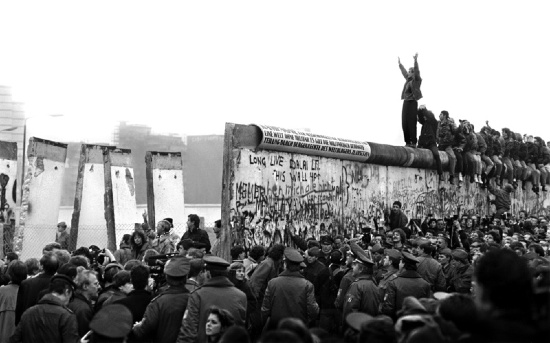
During the Cold War there were several places where the United States had forces face to face with the Soviet Union and its Allies. The most prominent of these were Berlin where the Berlin Wall surrounded West Berlin keeping its prosperous citizens from the great deals to be found on the East German economy and the East Germans out of the decadent West.

The Wall Comes Down

In the far east the United States and its South Korean ally faced the DRNK or the Democratic Republic of Nutso Korea headed by a man named Kim who would pass the leadership of the DRNK to his son who also is named Kim.  I think that the second Kim was named after Kim Novak but this is just a rumor started by the CIA to attempt to undermine the DRNK.  The demarcation line was that of the Armistice line of the Korean War located  in the general vicinity of the 38th parallel.  This remains one of the most heavily fortified locations in the world.

The final point of direct contact was in Cuba at Guantanamo Bay where failed baseball prospect Fidel Castro took his revenge on Major League Baseball by taking over Cuba, allying himself with the Soviet Union.  He almost helped start a thermonuclear war between the Soviet Union and the United States during the Cuban Missile Crisis.  After this Castro isolated Cuba from the Major Leagues and prevented them from having access to his star baseball players, except for defectors.

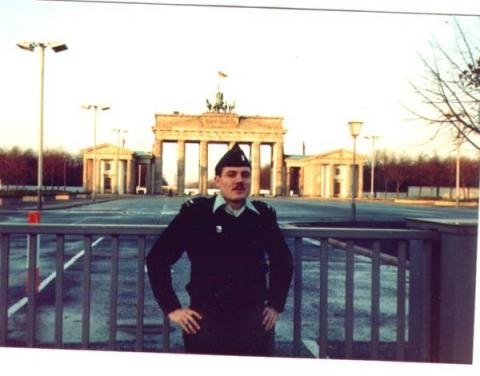
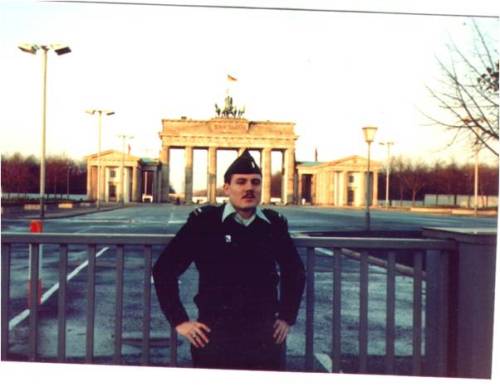
Padre Steve at the Brandenburg Gate on the East Side of the Berlin Wall

To have served in the US Military at all three flash points was nearly impossible akin winning Major League Baseball’s hitting “triple crown.”  By this I don’t just mean the American or National League crown but the entire league.  The last player to do this was Mickey Mantle in 1956 who hit .356 with 52 home runs and 130 in a mere 154 games.  I refer to the feat of serving at all three locations as accomplishing the Commie Trifecta.

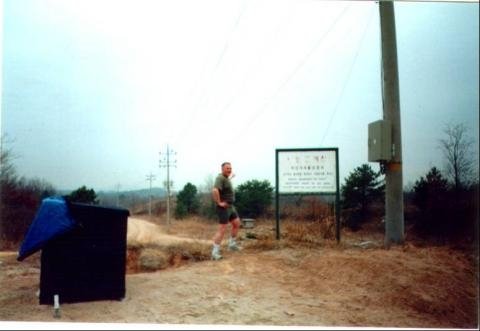
PT on the Korean DMZ

To do this now is an accomplishment because you had to be serving in the military in Germany before the Soviet Union went Tango Uniform and the Berlin Wall came down in 1989.  Thus it is an accomplishment that few can attain unless they enter an alternate time line were the the Soviet Union survives.

On the North Korean Side of the Armistice Line

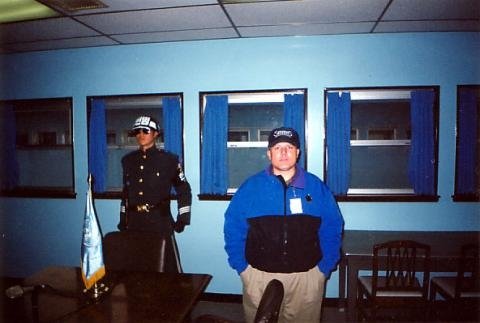
However Padre Steve has accomplished this feat.  Back in November 1986 he and the Abbess made the trip from West Germany along the Helmstedt corridor to West Berlin and then through Checkpoint Charlie into East Berlin.  12 years passed and Padre Steve was now in the Navy serving with the the 3rd Battalion 8th Marines in Korea from February through April of 2001.  Part of this involved camping out at Warrior Base a mere 800 meters from the South side of the Korean Demilitarized Zone, or DMZ.  Serenaded by nightly musical serenades and inspiring messages approved by the boy named Kim we trained and also got a tour of the Armistice village of Panmunjom where in the conference room guarded by really tall and scary looking South Korean Soldiers one can actually cross over the to North Korean side of the room.  I would also do PT along the DMZ carefully avoiding anywhere marked “mines.”

Overlooking Commie Cuba from Leeward

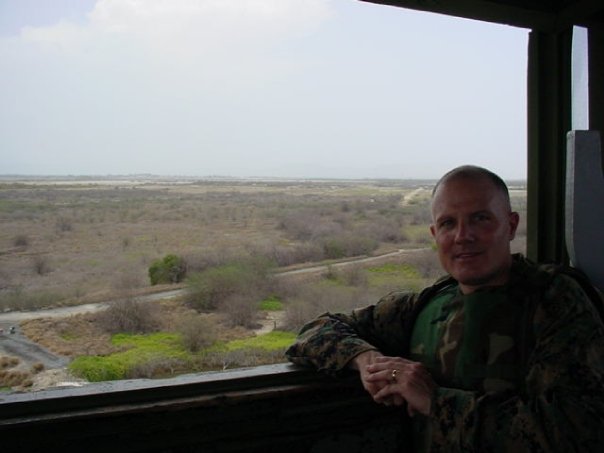
The third portion of the Commie Trifecta was in November 2003 while assigned to the Marine Security Forces who manned the Colonel Nathan R Jessup Memorial Fence Line which separates the Guantanamo Naval Station from Communist Cuba.

This makes Padre Steve a relic albeit one who has been around long enough to get to do the Commie Trifecta. That friends is is way cool.

Peace,

Padre Steve+

Leave a comment

Filed under History

“Revisionist” History and the Rape of Nanking 1937

Japanese Soldiers at Work in Nanking

The historical controversy regarding the “rape” of Nanking in 1937 by the Japanese Army is hotly debated.[1] The massacres occurred in the initial occupation of the city and the two months following in mid December 1937.  The initial reaction to the actions of the Japanese was reported by western journalists and even a German Nazi Party member by the name of John Rabe who assisted in protecting Chinese during the massacre and reported it on his return to Germany.The action shocked many in the west and helped cement the image of the Japanese being a brutal race in the west.

Massacre Victims at Nanking

The controversy’s visibility has been raised since the 1997 publication of Iris Chang’s The Rape of Nanking. However, with few exceptions the incident had received little attention by Western historians until Chang’s book was published. The reason for this was  that  China was a sideshow for for the United States and Britain throughout much of the war. When Chiang Kai Shek’s Nationalists were overthrown by the Communists in 1948 the incident disappeared from view in the United States.   The  United States government  reacted to the overthrow of Chaing by helping to rebuild Japan and rehabilitate the Japanese while opposing the Chinese Communists.  In fact it was only “after the Cold War was the Rape of Nanking Openly discussed.”[2]

Bodies of Children Killed by the Japanese at Nanking

Chang’s book was instrumental as it brought new attention to the actions of the Japanese Army in the slaughter of Prisoners of War and civilians following the occupation of the city.  Even as Chang’s work was published “revisionist” works began to appear in the 1980s which have either denied the atrocities, sought to minimize numbers killed by Japanese Forces or rationalized the them began to appear in Japan.  The revisionists were led by Masaaki Tanaka who had served as an aide to General Matsui Iwane the commander of Japanese forces at Nanking.  Tanaka denied the atrocities outright calling them “fabrications” casting doubt upon numbers in the trial as “propaganda.” He eventually joined in a lawsuit against the Japanese Ministry of Education to remove the words “aggression” and “Nanjing massacre” from textbooks, a lawsuit which was dismissed but was influential to other revisionists and Japanese nationalist politicians and publishers.[3]

Japanese Officer Preparing to Execute Man in Hospital

Most early accounts of the occupation and war crimes have used a number of 200,000 to 300,000 victims based upon the numbers provided during the War Crimes Trials of 1946.[4] Unlike the numbers of victims of the Nazi Holocaust the numbers are less accurate.  Authors who maintain the massacres such as Chang and others such as Japanese military historian Mashario Yamamoto who admits Japanese wrongdoing and excess but challenges the numbers use the same statistical sources to make their arguments.  Chang not only affirms the original numbers but extrapolates that even more may have been killed as a result of the disposal of bodies in the Yangtze River rather than in mass graves away from the city as well as the failure of survivors to report family member deaths to the Chinese authorities.[5] She also notes contemporary Chinese scholars who suggest even higher numbers.

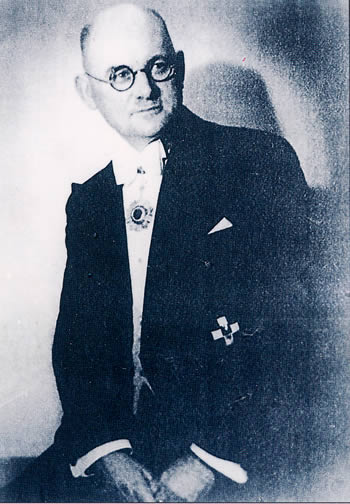
Prince Asaka, Granduncle of Emperor Hirohito Commanded Troops at Nanking

Herbert Bix discusses Japanese knowledge of the atrocities in detail up and down the chain of command including Prince Asaka, granduncle of Emperor Hirohito who commanded troops in Nanking, the military and Foreign Office, and likely even Hirohito himself.[6]

German National and Nazi Party Member John Rabe Protected Chinese at Nanking and Reported His Experience to the German Government.  He is known as “The Good Man of Nanking”

The publication of German citizen and witness to the massacres John Rabe’s diaries in 2000, The Good Man of Nanking, provided an additional first hand account by a westerner who had the unique perspective of being from Japan’s ally Nazi Germany.  His accounts buttress the arguments of those like Chang who seek to inform the world about the size and scope of Japanese atrocities in Nanking.

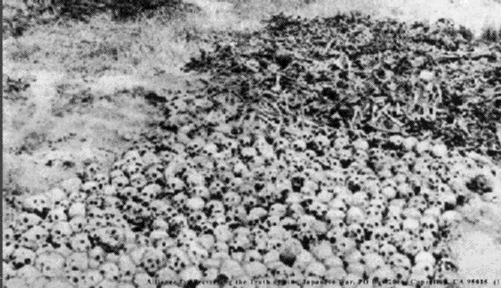
A Field of Skulls at Nanking

Yamamoto who is a military historian by trade and is viewed as a “centrist” in the debate, places the massacres in the context of Japanese military operations beginning with the fall of Shanghai up to the capture of Nanking. Yamamoto criticizes those who deny the massacres but settles on a far lower number of deaths, questioning the numbers used at the War Crimes Trials. He blames some on the Chinese Army[7] and explains many others away in the context of operations to eliminate resistance by Chinese soldiers and police who had remained in the city in civilian clothes. He  claims that  “the Japanese military leadership decided to launch the campaign to hunt down Chinese soldiers in the suburban areas because a substantial number of Chinese soldiers were still hiding in such areas and posing a constant threat to the Japanese.”[8] David Barrett in his review of the Yamamoto’s work notes that Yamamoto believes that “there were numerous atrocities, but no massacre….”[9] Yoshihisa Tak Mastusaka notes that while a centrist Yamamoto’s work’s “emphasis on precedents in the history of warfare reflects an underlying apologist tone that informs much of the book.”[10] Revisionist work also criticizes the trials surrounding Nanking and other Japanese atrocities.  An example of such a work is Tim Maga’s Judgment at Tokyo: The Japanese War Crimes Trials which is critiqued by historian Richard Minear as “having a weak grasp of legal issues” and “factual errors too numerous to list.”[11] Such is a recurrent theme in revisionist scholarship, the attempt to mitigate or minimize the scale of the atrocities, to cast doubt upon sources and motivations of their proponents or sources, to use questionable sources themselves or to attribute them to out of control soldiers, the fog of war and minimize command knowledge as does Yamamoto. Politics is often a key motivating factor behind revisionist work.

Iris Chang Would Later Commit Suicide

Chang would never be the same after researching and writing the Rape of Nanking. Traumatized by what she had learned and burdened by the weight of what she had taken on she killed herself on November 9th 2004.

Iconic Photo of Japanese Acts in China: A Wounded Child at Shanghai Station

“Revisionist” history will almost certainly remain with us, so long as people study the past.  However one has to be careful in labeling a divergent view of a historical subject as necessarily revisionist.  There are occasions when new evidence arises and a “new” or “revisionist” work may actually disprove previous conclusions regarding historic events or persons.  This might occur when what we know about a subject comes from a single or limited number of sources who themselves were limited in what they had available for research and new evidence comes to light. At the same time where numerous sources from diverse points of view attest to the genuineness of an event, the revisionist’s theses should be themselves scrutinized based on evidence presented as well as their political, ideological or racial motivations.  While one does not want to silence voices of opposition to prevailing beliefs one has to be careful in examining their claims, especially when they arise in the context of political or ideological conflicts.


[1] Bix, Herbert P. Hirohito and the Making of Modern Japan, Harper Collins Publishers, New York, NY 2000. pp.333-334. Bix does a good job explaining the number of victims of the incident drawing on Chinese and Japanese sources.

[2] Kreuter, Gretchen. The Forgotten Holocaust in The Bulletin of Atomic Scientists, March-April 1998 p.66

[3] Fogel, Joshua A. The Nanjing Massacre in History and Historiography, University of California Press, Berkley CA 2000, pp.87-89

[4] Toland, John. The Rising Sun: The Rise and Fall of the Japanese Empire 1936-45. Random House, New York, NY 1970 pp. 50-51. Toland in his brief discussion of the massacres notes both the civilian casualty figures and figures for male citizens of military age who were slaughtered.  Toland also notes the large numbers of women raped by Japanese soldiers.

[5] Chang, Iris. The Rape of Nanking: The Forgotten Holocaust of World War II Penguin Books, New York, NY 1997 pp.102-103. Chang has been criticized by some historians in a number of ways including that she was not a historian, that she compares the atrocities to the Nazi Holocaust and her emotional attachment to the subject which may have been a contributing factor in her 2004 suicide.

[6] Bix. p.336

[7] Yamamoto, Masahiro. The Rape of Nanking: Anatomy of an Atrocity. Praeger Publishers an imprint of the Greenwood Group, Westport, CT 2000. http://site.ebrary.com/lib/apus/docDetail.action?docID=10018001&p00=nanking  p.83

[8] Ibid. p.92.

[9] Barrett, David P.  Review of The Rape of Nanking: Anatomy of an Atrocity by Masashiro Yamamoto Canadian Journal of History/Annales canadiennes d’Histoire XXXVIII, April/Avril 2003 p.170

[10] Mastusaka, Yoshihisa Tak.  Review of The Rape of Nanking: Anatomy of an Atrocity by Masashiro Yamamoto American Historical Review, April 2002 p.525

[11] Minear, Richard. Review of Judgment at Tokyo: The Japanese War Crimes Trials by Tim Mata  American Historical Review. April 2002 p.526

49 Comments

Filed under History, Military, world war two in the pacific

The Afghan War 2009-2012: Lessons from Algeria 1954-1960 A Review of “A Savage War of Peace

“A Savage War of Peace.” By Alistair Horne. The New York Review of Books, 1977, 1987, 1996, 2006.  Maps. Photographs. Bibliography. Index. 608 pp.

Foreign Legion in Algeria

In light of the developing situation in Afghanistan and the plan to apply the counterinsurgency techniques of clear and hold, or “the oil slick” in that country it is wise to look at other instances of this type of warfare before criticizing those about to implement the strategy.  Of course when doing this the best place to look is history, especially where the strategy worked, at least until the DeGaulle government abandoned the nearly complete military success achieved by French forces in Algeria triggering a national crisis.

Alistair Horne’s “A Savage War of Peace” is a most needed addition for anyone seriously interested in studying the dynamics of insurgency and counterinsurgency warfare; especially political and military leaders of a western nation occupying a Moslem country.  Horne’s work is important and one of the few in English that cover this subject.  The two other books in English to cover the subject, albeit only on part of the campaign is Paul Aussaresses’ controversial memoir “The Battle of the Casbah” and Ted Morgan’s memoir “My Battle of Algiers” though useful suffer from the fact that they are limited in scope to the events the individuals experienced while serving as French Army officers in Algeria. In both the author’s personal biases are readily in evidence and by the fact that they were written many years after the events in question.  Since those books are heavily dependent on the author’s memories.

Paratroops of the First Colonial Paratroop Regiment in Algeria

Horne is not limited by these factors.  Horne is a historian who served as a British Army officer assigned to the MI5 in the Middle East and later as a foreign correspondent for the Daily Mail who has written a trilogy of excellent works on the Franco-German wars: The Fall of Paris: The Siege and the Commune 1870-1871, The Price of Glory: Verdun 1916 and To Lose a Battle: France 1940. As such his account is as close to being objective as any could be in the case of writing this particular history.

Horne approaches the subject from the perspective of the broader issues that France and the Fourth Republic were facing in 1954, economic, military and psychological recovery from the Second World War, the loss of colonies, defeat in Indochina culminating in the Dien Bien Phu debacle.  Such is important when examining a military campaign as the latter do not take place in isolation of other events in the life of a nation. When the history of the US campaigns in Iraq and Afghanistan are written they will have to take into account many other factors apart from the military operations.

Horne tackles the complex issues of the Algerian war in a multifaceted manner looking not only at the military issues, but the political and social issues faced by the French, the European Pied-Noir Algerians and the Algerian natives, both Berber and Arab alike.  Horne also looks at the conflict in the broader context of the Cold War, the emergence of the Non-Aligned nation movement and the rise of Arab nationalism, skillfully weaving the actions of these movements and key individuals such as Egypt’s Nasser, Khrushchev of the Soviet Union and the most influential, and President Jacques de Gaulle into the story of the Algerian conflict. Unlike other writers Horne had access to many of the individuals involved, including leaders from each rebel faction, the Pied-Noir and the French government and military.  Included in those he interviewed is Algerian President Boumedienne who had commanded rebels during the conflict and was instrumental in Algeria’s independence as well as Jacque Soustelle who had been Governor General from 1955 through 1956. These sources as well as numerous others help give his narrative a depth and subtlety lacking in the first hand English language memoirs and accounts.

Terrorism by FLN Militias and Sympathizers Caused Great Problems for the French

Horne begins his account with the story of the aborted revolt and massacre at Setif on May 8th, VE Day, 1945 and the attempt by the French government to reassert its control over Algeria. Of particular interest in this section is Horne’s analysis of the mistake of the Pied Noirs and the French government in not offering a settlement to the Algerian separatists under magnanimous terms due to the scale of the victory they had won following the Setif uprising and their security forces “decapitation” of the leadership of the various Algerian nationalist factions.  He compares the victory to that of the Israelis in the 1967 War and the political reaction of the Pied Noir to the Israelis, who instead of negotiating a settlement that could have long term effects advantageous to them from a position of strength determined to humiliate and subjugate their foe.[1] If the US military is able to reverse the situation in Afghanistan the United States and the Afghan government will need to be magnanimous to a defeated foe in order to prevent yet another repetition of another Al Qaida and Taliban resurgence.

French Paratroops Going House to House in Algiers

In examining the period before the actual outbreak of the war in 1954 Horne looks at the missed opportunities of the French to prevent it.  He also examines the development of the Algerian independence movement, especially the senior leaders of the movement; many of whom had served in the French Army during the Second World War with distinction. His portrayal of the conflicts within the independence movement, show that this was not a monolithic movement, but that each faction had its own goals which often were in conflict with other groups.  This is also the case in Afghanistan where a disparate number of ethnic, political, criminal, nationalist and terrorist groups who often are at war with each other.  Likewise, Horne’s treatment of the Pied Noir and certain parts of the French leadership examine how they too were divided at some points in regard to the ultimate plan for the relationship of Algeria to France.

Horne makes much of political mistakes and machinations of French leaders that culminated in the end of the Fourth Republic and subsequent impact on de Gaulle when he became president in June 1958.  Some mistakes that Horne explores are those committed in the immediate wake of Setif. He also examines mistakes during the revolt; such as not taking it seriously, to individuals in the National Assembly impeding the efforts of Soustelle to effect reforms and compromise between hard line factions in the Pied Noir and Moslem communities.[2] Likewise he notes how the draconian treatment of Algerian Moslems by the French Army in the early phases of the counter-insurgency effort, including the assignment of “collective responsibility” to punish communities for the actions of individuals helped alienate the populace and strengthen the insurgency.  Such was the case in the first part of the Iraq occupation and helped inspire that insurgency.  One member of Soustelle’s cabinet noted: “the cycle of repression getting ever tougher, and the rebellion ever stronger, will ruin all your efforts of pacification.”[3]

Besides political mistakes Horne examines issues in military tactics that seem to plague counterinsurgency efforts to the present time.  He describes the early application of heavy conventional forces in an attempt to defeat the insurgency.  Horne discusses unsuccessful efforts in 1954-1955 and how they not only did not destroy the insurgency but how the insurgency spread in response to the efforts.  The question: “Did ‘pacification’, for instance mean trying to regain the confidence of the inhabitants; or did it mean crushing the rebellion by whatever means available?”[4] This question is still asked today by soldiers fighting insurgencies and often the latter is counseled by those who still think along the lines of the conventional tactics of the Cold War and World War Two, which many conservative pundits are enamored with.  Horne also discusses the successful tactics of commando units used by General Challe to effectively combat the insurgency.[5]

Horne examines the attitudes of the French Army which in a sense fought the war for itself.  Armies that have fought many campaigns together often have a sense of comradeship that transcends even the loyalty that they have to their nation.  It is the understanding of a “Band of Brothers” and can be found throughout history.  When the histories of Iraq and Afghanistan are written they will certainly include the fact that many soldiers, Marines and Sailors engaged in actual combat operations fought for the men and women with whom they served more than for anything else.

The French Army felt little affinity for the Pied Noir who they often saw as only interested in their interest at the expense of the campaign.  Likewise the Army, felt little more than contempt for the French government which they felt had betrayed them. General Lorillot noted “They made fools of us in Indo-China…they screwed in Tunisia…We are being screwed in Morocco. But they will never screw us in Algeria. I swear to you. Let this be known in Paris.”[6] Instead attitudes of not losing, stopping the humiliations were animated by the feeling of anti-communism in French ranks, especially in the Elite Parachute, Foreign Legion, Commando and Colonials (Marines). The novel The Centurions and voiced the feelings of one Paratroop commander “We want to halt the decadence of the West and the march of Communism.”[7]

Horne provides a narrative analysis of the military campaigns within the Algerian War.  In particular he describes the successes of units designed to live among and better the lives of the Algerians and the SAS,[8] He describes the building of the border wall to keep weapons out of rebel hands.  He describes the “success” of units which specialized in torture,[9] which turned out to be helpful in the short run but which ultimately damaged the fabric of the Army.  Horne notes the effects of torture on soldiers who participated and how it negatively affected support of the war in France and internationally.[10] The use of torture in Algeria has parallels with Iraq. Horne notes: “one has to take into account all those factors…horror at the atrocities of the F.L.N., a determination not to lose yet another campaign, and the generally brutalizing effect of so cruel and protracted war.”[11]

The most powerful part of the narrative is the drama when French President de Gaulle was faced with the revolts of 1959. At this time the Pied Noir militias, dissatisfied with potential political settlements went to the barricades in Algiers and other major cities, assisted in some cases by Army units.  These forces again revolted against his attempts to mediate a settlement and were followed by the General’s revolt of April 1961 which nearly became a military coup in France itself.   President de Gaulle’s role in bringing these revolts to an end, without the collapse of the government or a civil war was miraculous.  Though his actions undercut the military success of the Army in Algeria which had virtually eliminated the insurgency his foresight in recognizing that France had a future not dependant on Algeria remaining French was exceptional.  The actions of de Gaulle should be studied by those who closely link their country’s future to holding a foreign country, even one that is considered an integral part of the mother country, as Algeria was to France.

Horne’s book is as timely as it was when first published, maybe more so with the current escalation in Afghanistan.  Along with works by David Galula “Pacification In Algeria 1956-1958, Bernard Fall “Street Without Joy” and “Hell in a Very Small Place,” Andrew Krepinevich’s  “The Army in Vietnam,” Brian McAllister Linn’s “The Philippine War: 1899-1902” and Ben Shepherd’s “War in the Wild East: The German Army and Soviet Partisans” Horne’s work is vital reading for military and political leaders fighting counter-insurgency operations.  Unfortunately many militaries are often enamored by high tech innovation are not often receptive to the decidedly human factors and strategies necessary to fight insurgencies until they experience frustration and failure attempting to use conventional forces and tactics to win a counter-insurgency campaign.  Effective intelligence, efforts to win the hearts and minds of the populace by protecting them, knowledge of public affairs and the effect of media on operations are all key elements of a proper counter-insurgency campaign are covered by Horne. Horne’s work reminds us that these conflicts are not won by the forces with the greatest firepower or most modern weapons. This is something that the United States and its NATO and other Allies in Afghanistan should never forget.


[1] Horne, Alistair. A Savage War f Peace: Algeria 1954-1962. The New York Review of Books, New York, NY 1977, 1987, 1996 2006. p.69

[2] Ibid. pp. 113-114

[3] Ibid. p.115  Some would later compare the attitudes of the French Army to those of the Nazis. In one point of his narrative Horne notes the attitude of an officer who saw nothing wrong with the tactics used by the Nazis in the Second World War.

[4] Ibid. p.112.  Another question noted is something that seems to be commonplace in the Iraq War ““Limited Repression” did not always make the clearest sense to a patrol of young soldiers caught in a vicious ambush.” When one reads Horne’s accounts one sometimes almost feels that he is writing about the current American experience in Iraq.

[5] Ibid. pp. 334-335

[6] Ibid. pp.175-176

[7] Ibid. p.176

[8] The SAS Section Administrative Specialise first set up by Soustelle.  These units had great success but also suffered heavy losses as their efforts were recognized as having a positive effect by the FLN and other Algerian rebel groups.

[9] Such as the 11th Shock Regiment

[10] See pp. 195-207.

[11] Ibid. p.198.

2 Comments

Filed under Foreign Policy, History, iraq,afghanistan, Military

20 Years: The Fall of the Berlin Wall and the End of the Cold War

Berlin Wall 4Berlin  Wall Being Built 1961

For those that did not get to experience the “other” side of the Iron Curtain and only know the Berlin Wall from history the 9th of November may not mean a lot.  However as someone who spent three years commanding troops preparing for the day that the Soviet Union would strike across the Fulda Gap and across the North German Plain the fall of the Berlin Wall was an amazing event.  The wall had been built in 1961 and in the succeeding years increased in complexity and many East Berliners lost their lives trying to escape at the hands of the East German Grenzschützen and Stasi agents.

Berlin-Wall 5Berlin Wall Death Zone

For those of us who grew up during the Cold War under the threat of “Mutual Assured Destruction” proxy wars in the Middle East, Asia and Africa and tense confrontations between U.S., NATO and Soviet forces at sea, in the air and at various flash points the Wall seemed like it would be there for the rest of our lives.

The initial cracks in the Soviet domination of Eastern Europe began in Poland as an obscure shipyard worker named Lech Walesa along with others who had been active in strike movements in the 1970s which were legalized in 1980 as Solidarity.  This movement would help encourage those in other Eastern European, or Warsaw Pact nations to begin their own resistance movements.  This in every case was a risky undertaking.  Anti-Soviet movements in Hungary and Czechoslovakia and been crushed by Soviet and other Warsaw Pact nations in 1956 and 1968.  Encouraged by support from U.S. President Ronald Reagan and Pope John Paul II these movements in Poland and elsewhere continued to grow.

RonaldReagan at wallPresident Reagan at the Wall 1987

When Reagan gave his “Mr. Gorbachev, tear down this wall” speech on June 27th 1987 it was greeted with derision by many but in less than three years would become a reality as the Soviet system suddenly and unexpectedly came apart in September and October of 1989.  That speech contained these immortal words:

“We welcome change and openness; for we believe that freedom and security go together, that the advance of human liberty can only strengthen the cause of world peace. There is one sign the Soviets can make that would be unmistakable, that would advance dramatically the cause of freedom and peace. General Secretary Gorbachev, if you seek peace, if you seek prosperity for the Soviet Union and Eastern Europe, if you seek liberalization, come here to this gate. Mr. Gorbachev, open this gate. Mr. Gorbachev, tear down this wall.”

berlin wallPadre Steve at Berlin Wall in November 1986

At the time President Reagan made that speech I was an Army Captain at Fort Sam Houston Texas in San Antonio.  The Abbess and I had just returned from a three year assignment in Germany.  My unit, the 557th Medical Company (Ambulance)  where I served as a platoon leader, executive officer and later company commander was part of the 68th Medical Group. Our mission in the event of a war with the Soviet Union was to provide casualty evacuation in V Corps area of operations and assist in the reconstitution of the 11th Armored Cavalry Regiment which was expected if war occurred to have a 90% casualty rate.  Our preparations went on every day, site visits to locations we would occupy, REFORGER exercises and several alerts a month where we were expected to be ready to move to our GDP (General Deployment Positions) locations in 4 hours or less.  This meant ready to go to war.  Additionally there was the very real threat of terrorist directed at U.S. and German soldiers, officials and public locations such as the Frankfurt International Airport and the U.S. PX at Frankfurt which were both bombed by the Red Brigades.  In fact the Abbess and I were on the road to the Frankfurt PX when she told me to turn around because she was not feeling well.  Had we continued on there is a good chance that we would have been at or near where the blast occurred.

We visited Berlin in November of 1986 driving my 1985 bright red Opel Kadett through the Helmstedt-Berlin corridor to Berlin.  That was an interesting trip.  Paperwork had to be completed well in advance and approved before the trip.  Because the trip involved going through East Germany it was required that we first stop at the NATO border checkpoint followed by the Soviet Checkpoint.  The trip was 110 miles to Berlin and we had to repeat the process first with the Soviets then at NATO.  There was to be no deviation from the route and the trip had to be made in a certain amount of time.  Too fast, you got a ticket, too slow, you got investigated.  Since we did not recognize the authority of the East German government all dealings were to be with the Soviets.

The trip was interesting, Soviet and East German troop convoys on the road with us, East German Polizei monitoring our progress and the dreariness of the East German towns and cities that we passed.  It was like driving through a time warp back to the 1950s.  It was a radical difference from what we knew in West Germany.

Cars were different; they were Soviet built Ladas, actually Fiats made under license in the Soviet Union, East German Traubis, and Czech build Skoda automobiles.  All were antiquated by western standards and at best were products of 1950s and 1960s technology.  My Opel was an economy car in the west but as the European Car of the Year in 1985 was a masterpiece of technology in comparison to anything built in the Eastern bloc.

We remained in West Berlin our first night and in the morning made the trip into the East.  Going through Checkpoint Charlie was a surreal experience as we watched East German Border Police take our photos from their control point.   We eventually found some parking in the Alexanderplatz, did some shopping, sightseeing, had a small bite to eat and a beer, the beer being quite bad, obviously the product of the Communist system, you could not believe that it had been brewed in Germany it was so bad.  It was so bad it made any cheap American beer taste good by comparison.  We went to the East Side of the Brandenburg Gate, visited a number of other sites, including the East German War memorial where as I lined up a photo was nearly kicked in the balls by an East German soldier as he goose stepped during the changing of the guard ceremony.  So members of a Scottish Regiment of the British Army got a “kick” out of this and I had no idea how close to disaster I had come until Judy told me later.  That would have been worth the price of admission for all who saw it had the boot landed.  When we finished in the east we went over to the Reichstag and the western side of the wall.   When we returned to our hotel I discovered that I had no film in the camera and so the next morning we made the trek to East Berlin once again.  This time I was able to get photos.

berlin wall 3The Wall Falls November

The Soviet System began to come apart in the summer of 1989.  Strikes, riots and refugee crisis enveloped much of the Warsaw Pact.  Hungary opened its border with Austria in August allowing thousands of East Germans into the west followed by Czechoslovakia.  Gorbachev had decided as early as 1986 that he would not use force to quell trouble in the Warsaw pact nations.  As the turmoil built throughout the Warsaw Pact the situation in East Germany became critical as thousands of East Germans gathered at border crossing points on the night of November 9th.  Later in the evening the wall would be breached.  It was the beginning of the end for the Soviet domination of Eastern Europe.  In country after county Communist governments fell, most peacefully but in cases like Romania in a violent manner.  On December 31st 1990 the Hammer and Sickle was taken down from Red Square in Moscow signaling the end of the Soviet Union as on Republic after another declared their independence ushering in a period of uncertainty, change and confusion in the former Soviet Union.

gorbachev and reaganMikhail Gorbachev and Ronald Reagan in 1987, in 1986 Gorbachev Decided that He would Not Use Force to put down Revolts in Eastern Europe

Gorbachev’s foreign affairs adviser, Anatoly Chernyaev, recorded the moment of the collapse of the Berlin Wall in his diary.

“The Berlin Wall has collapsed. This entire era in the history of the socialist system is over,” he wrote. “Today we received messages about the retirement of [China’s] Deng Xiaopeng and [Bulgaria’s] Todor Zhivkov. Only our ‘best friends’ Castro, [Romania’s Nicolae] Ceausescu, and [North Korea’s] Kim Il Sung are still around — people who hate our guts.”

Looking back 20 years it is still hard to believe that the event occurred. As a former Cold Warrior I pray that the West and the Russian Republic will not return to a Cold War mentality and begin to cooperate in ways that are beneficial to peace, security and economic stability.  In the current world situation we have more shared concerns, especially in relationship to radical Islam and terrorism which affect both the West and the Russians in a similar manner.  Economic, military and diplomatic cooperation between the West and the Russians is more important than ever.

The rest is history and the future is yet to be written.

Peace,

Padre Steve+

7 Comments

Filed under History

War, Remembrance and Healing: A Chaplain, Officer and Historian Makes His Way Home

The first version of this post was written in the spring of 2008 when I was doing a lot of soul searching and reflecting after Iraq. It was originally run in my church’s online news service.  I post it now with some updates that have been brought about by new ways that I am rediscovering God and because of the current situation in Afghanistan which has become worse in the past year. As I read news releases about casualties and attacks on NATO forces and Afghan civilians, especially those in small outposts or serving as advisers and trainers I am reminded of my time in Iraq.  Please don’t forget those who serve in Iraq and Afghanistan, or those who have served in prior wars. Especially keep in your prayers and help assist those who have returned injured in mind, body or spirit and those who made the supreme sacrifice.

874Leaving a Bedouin Camp 1 mile from Syria
I have been doing a lot of reflecting on ministry and history over the past since returning from Iraq. Since I’ve been back about a year and a half I can say that I have changed as a result of my service there.  Change can be scary but in my case it has been both necessary and probably good.  Ministry, theology and history have been part of my life for many years; they have taken on a new dimension after serving in Iraq. When I first wrote this piece not long after returning I was in pretty bad shape but in the months since I have been attempting to integrate my theological and academic disciplines with my military, life and faith experience since my return. I’m not done yet by any means, but things are getting better, not quite like Chief Inspector Dreyfus in The Pink Panther Strikes Again “Every day in every way I’m getting better and better…Kill Clouseau!” but a slowly getting better with some occasional bumps in the road.

One of the things that I have wrestled with is my faith, and returning from war changes a man.  Before I went to Iraq I thought that I had things pretty much together.  When I came home and fell apart it also affected my faith, doing little things became difficult and the effects were exaggerated by my isolation.  In a sense it was my Saint John of the Cross Dark night of the Soul experience.  I felt that God had abandoned me, people would come to me with their crisis of faith and I had to dig deep to stay with them, but in doing so I became acutely aware of the fact that I shared this with them. I couldn’t hide behind my collar or the cross on my uniform as the crisis was an interruption which drove me out of my comfort zone and forced me to deal with the world that the people I minister among deal with every day.

291Iraqi Police in Ramadi Escorting Civilians Across the War Zone of Route Michigan

There are those who believe that all forms of ministry are basically the same and that lessons learned are universally applicable and that somehow all ministries are proclamation oriented.  Unfortunately that is not the case and one of the places that this is true is the Military Chaplain ministry.  This mibnistry is much different than parish or para-church ministries and even different than other institutional ministries such as Police, Fire, Industrial or civilian health care chaplaincy.   It is different in that it is more incarnation versus proclamation. We not only minster to our people but we live among them.  We live the experience of those that we serve, especially in the uncertainly of war and deployments.  Chaplains live in a world where we are fully military officers and fully ministers of our own church or faith tradition. As a chaplain I never lose my calling of being a priest, but I am a priest in uniform, a military professional and go where our nations send me to serve the Sailors, Marines, Soldiers and Airmen who I live among be that overseas, or in the States.

142Always a Priest Eucharist with Advisers in the Far West of Al Anbar

There is always a tension in the military chaplain ministry. This is  especially true when the wars that we are sent to are unpopular at home and seem to drag on without the benefit of a nice clear victory such as VE or VJ Day in World War II or the homecoming after Desert Shield and Desert Storm. There are those that oppose the military chaplaincy on theological or philosophic grounds, usually some manner of absolutist understanding of ministry, church-state relations or social justice considerations.  My purpose is here not to defend military chaplain institutions against such criticism but rather to share the world and tension that military chaplains live in when our nation is engaged in unpopular which some consider unjust or illegal wars.

training team baseIsolated Base Camp for Advisers in Afghanistan

A lot of people have no “ethical” or “moral” qualms about wars that are easy to pigeonhole as just wars, especially if we win quickly and easily.  It is my belief that when things go well and we have easy victories that it is easy for religious people, especially more conservative Christians to give the credit to the Lord for the “victory.”  Unfortunately such “Credit” is given without them ever understanding or sometimes even caring about the human cost of war.   Likewise it is easy for others to give the credit to superior strategy, weaponry or tactics to the point of denying the possibility that God’s involvement.  Conversely and maybe even perversely I have heard some say that God has blessed the use of weapons or tactics that violate principles of fighting a “just war” especially that of proportionality. Such is the case in almost every war and Americans since World War Two have loved the technology of war seeing it as a way to easy and “bloodless” victory. In such an environment ministry can take on an almost “cheer-leading” dimension. It is hard to get around it, because it is a heady experience to be on a winning Army in a popular cause but I do think that many chaplains have a less “cheerleading” approach than many in conservative churches. The challenge for chaplains in such an environment is to keep our ministry of reconciliation in focus. To do so we must care for the least, the lost and the lonely and never forget the victims of war, especially the innocent and the vanquished, as well as our own wounded, killed and their families.

237Iraqi Kids in Al Anbar Province, a couple of months before they could not venture outside because of insurgent attacks, children are never winners in war

We are now seeing the conflict in Iraq winding down and what until this year had been “the good war” in Afghanistan go bad and support for it decline.  Strategy is being debated as how to best “win” the war in Afghanistan even as the United States withdraws from Iraq. The task of chaplains in the current war, and similar wars fought by other nations is different and really doesn’t allow for them to indulge themselves in “cheerleading.” In fact chaplains can themselves through isolation, lack of experience and fear can become more reflective and less “cheerleader” oriented the longer the war goes on without sign of appreciable progress, much less victory.  They feel the onslaught of their soldiers doubts, fears as well as the loss of friends and the chapel congregation through being killed or wounded in action. This  can take a terrible toll even for the most resilient of chaplain. In these wars, sometimes called counter-insurgency operations, revolutionary wars, guerilla wars or peace keeping operations, there is no easily discernible victory. These types of wars can drag on and on, sometimes with no end in sight. Since they are fought by volunteers and professionals, much of the population acts as if there is no war since it does often not affect them, while others oppose the war, all of which can affect the chaplain.

dien_bien_phu paras landingFrench Paratroops Landing at Dien Bien Phu

Chaplains volunteer to go with and place themselves in harms way to care for God’s people in the combat zone or far away from home. While they do this there are supporters of war as well as detractors who have no earthly clue about war or life in the military other then what they see in the media or experienced in peacetime or the cold war. Some supporters often seem more interested in political points of victory for their particular political party than for the welfare of those that are sent to fight the wars. This has been the case in about every war fought by the US since World War II. It is not a new phenomenon. Only the cast members change with the particular war.

legion indo-chinaForeign Legion Troops in Indochina

In order to somehow make sense of going on we cannot simply think of what is politically expedient for either those who support or want to expand the war, or others who want it ended now, both of which have consequences many of which are bad.  I think that we have to look at history and not just to American history to find answers, not simply answers to how to win or end the war but answers to the consequences that either course of action posits. Thus I think that we can find parallels in other militaries. I think particularly of the French professional soldiers, the paratroops, Colonials (Marines) and Foreign Legion who bore the brunt of the fighting in Indo-China. These men, not all of who were French were placed in a difficult situation by their government and alienated from their own people. In particular I think of the Chaplains, all Catholic priests save one Protestant, at the Battle of Dien Bien Phu, the epic defeat of the French forces that sealed the end of their rule in Vietnam. The Chaplains there went in with the Legion and Paras. They endured all that their soldiers went through while ministering the Sacraments and helping to alleviate the suffering of the wounded and dying. Their service is mentioned in nearly every account of the battle. During the campaign which lasted 6 months from November 1953 to May 1954 these men observed most of the major feasts from Advent through the first few weeks of Easter with their soldiers in what one author called “Hell in a Very Small Place.”

french troops indochinaFrench Troops on the March in Indochina

One author describes Easter 1954: “In all Christendom, in Hanoi Cathedral as in the churches of Europe the first hallelujahs were being sung. At Dienbeinphu, where the men went to confession and communion in little groups, Chaplain Trinquant, who was celebrating Mass in a shelter near the hospital, uttered that cry of liturgical joy with a heart steeped in sadness; it was not victory that was approaching but death.” A battalion commander went to another priest and told him “we are heading toward disaster.” (The Battle of Dienbeinphu, Jules Roy, Carroll and Graf Publishers, New York, 1984 p.239) This can be a terrible burden for the Padre who cares for such men.  Ministry in such places is truly an incarnational experience because there is no place to hide and the chaplain is as vulnerable as his flock.  It is the ministry that places us “in the valley of the shadow of death” where as the Psalmist says we are “to fear no evil for you are with us.” It is the ministry of Good Friday where to all appearances seems that God has abandoned the field and evil has won.

VIETNAM DIEN BIEN PHUFrench Surrender at Dien Bien Phu

Of course one can find examples in American military history such as Bataan, Corregidor, and certain battles of the Korean War to understand that our ministry can bear fruit even in tragic defeat. At Khe Sahn in our Vietnam War we almost experienced a defeat on the order of Dien Bien Phu. It was the tenacity of the Marines and tremendous air-support that kept our forces from being overrun.

legion algeriaLegionaries in Algeria, many French Troops Went from one War in Indochina to another in Algeria only to have the De Gaulle Government throw the Military Victory Away and Cause a Crisis
You probably wonder where I am going with this, back when I first drafted this year and a half ago I wondered too. But here is where I think I am going. We live in difficult of times at home and in Afghanistan.  It home we are mired in an economic crisis clouded by deep political division.  In Afghanistan we are engaged in a hard fight where units we are taking casualties and the mission is being debated.  Sometimes to those deployed and those who returned that their sacrifice is not fully appreciated by a nation absorbed with its own issues.  This of course is not universally true as there a people of all political viewpoints who care for the welfare and attempt to ensure that those who serve are not abandoned as those men who served in Vietnam.  I think that part of the feeling comes from the presentation of the war by the media which tends to focus only on the negative outcomes and not positive things that our soldiers accomplish. That can be discouraging to the men and women on the ground.  One of the most difficult things for me upon my return was to see the bitterness a division in the American people and political establishments and becoming quite depressed about it.   I stopped watching the perpetual news cycle and listening to talk radio.  The hatred, ignorance and crassness of it all was disheartening and I refuse to take any part in something that is so hate filled, power driven and unredemptive.

traiining team with afghan armyUSMC Training Team With Afghan Troops

For the French the events and sacrifices of their soldiers during Easter 1954 was page five news in a nation that was more focused on the coming summer. This is very similar to our circumstances today because it often seems that own people are more concerned about economic considerations and the latest in entertainment news than what is going on in Iraq or Afghanistan. The French soldiers in Indo-china were professionals and volunteers, much like our own troops today. Their institutional culture and experience of war was not truly appreciated by their own people.  Nor was it fully appreciated by their government which sent them into a war against an opponent that would sacrifice anything and take as many years as needed to secure their aim.  At the same time their own countrymen were unwilling to make the sacrifices needed to win and in fact had already given up their cause as lost. The sacrifice of French soldiers would be lost on their own people and their experience ignored by the United States when we sent major combat formations to Vietnam in the 1960s. In a way the French professional soldiers of that era have as well as British colonial troops before them have more in common with our force than the citizen soldier heroes of the “Greatest Generation.” Most of the “Greatest Generation” was citizen soldiers who did their service in an epic war and then went home to build a better country as civilians. We are now a professional military fighting unpopular wars and that makes our service just a bit different than those who went before us.  I related to the French troops who fought in Indochina and Algeria as well as our own Vietnam Vets than I do to others.  These is a kinship among us that goes beyond nationality, politics or age.

This is the world in which military chaplains’ minister.  It is a world of volunteers who serve with the highest ideals, men and women who enlist knowing that they will be deployed and quite likely end up in a combat zone. We go where we are sent, even when it is unpopular. It is here that we make our mark; it is here that we serve our Soldiers, Sailors, Marines and Airmen. Our duty is to bring God’s grace, mercy and reconciliation to men and women, and their families who may not see it anywhere else. It is a ministry of reconciliation by the means of incarnation. Many times those outside the military do not understand this. It is a different world full of contradictions and ambiguity.  Such situations even impact the families of those who serve.

When my dad was serving in Vietnam in 1972 I had a Sunday school teacher tell me that he was a “Baby Killer.” It was a Catholic Priest and Navy Chaplain who showed me and my family the love of God when others didn’t. As the country builds to the 2010 mid-term Congressional elections I anticipate that people from all parts of the political spectrum will offer criticism or support to our troops or the war in order to bolster their election chances which do not always coincide with what is in the best interest of the troops or the mission. Chaplains cannot be concerned about the politics nor even the policy as our duty is to be there as Priests, Ministers, Rabbis and Imams for those that we serve. We cannot afford to allow ourselves to be discouraged in caring for our men and women and their families because of all the strife in the body politic.  In addition we must continue on because most churches and other religious communities, even those supportive of our troops really don’t understand the nature of our service or the culture that we represent. We live in a culture where the military professional is in a distinct minority group upholding values of honor, courage, sacrifice and duty which may be foreign or archaic to many Americans, or for those countries with troops and chaplains in Afghanistan or Iraq. We are called to that ministry in victory and if it happens someday, defeat. In such circumstances we must always remain faithful to God as well as to those that we serve.

For those interested in the French campaign in Indo-China it has much to teach us. Good books on the subject include The Last Valley by Martin Windrow, Hell in a Very Small Place by Bernard Fall; The Battle of Dienbeinphu by Jules Roy; and The Battle of Dien Bien Phu- The Battle America Forgot by Howard Simpson. For a history of the whole campaign, read Street Without Joy by Bernard Fall. I always find Fall’s work poignant, he served as a member of the French Resistance in the Second World War and soldier later and then became a journalist covering the Nurnberg Trials and both the French and American wars in Vietnam and was killed by what was then known as a “booby-trap” while covering a platoon of U.S. Marines.

There is a picture that has become quite meaningful to me called the Madonna of Stalingrad. It was drawn by a German chaplain-physician named Kurt Reuber at Stalingrad at Christmas 1942 during that siege. He drew it for the wounded in his field aid station, for most of whom it would be their last Christmas. The priest would die in Soviet captivity and the picture was given to one of the last officers to be evacuated from the doomed garrison. It was drawn on the back of a Soviet map and now hangs in the Kaiser Wilhelm Memorial Church in Berlin where it is displayed with the Cross of Nails from Coventry Cathedral as a symbol of reconciliation. I have had it with me since before I went to Iraq. The words around it say: “Christmas in the Cauldron 1942, Fortress Stalingrad, Light, Life, Love.” I am always touched by it, and it is symbolic of God’s care even in the midst of the worst of war’s suffering and tragedy.

Madonna of StalingradMadonna of Stalingrad

So as you can see I have done a lot of reflecting over the past year and a half. It has been a spiritual journey, an intellectual and academic journey and a personal journey of slowly healing and recovery.  I have gone through some changes in the process which have not been easy, but certainly have deepened my faith even as I struggled and made me much more appreciative of life, love and peace.

I write in order to wrestle with what I have mentioned here, and I try to write something every night. I can full agree with Father Henri Nouwen in his book Beyond the Mirror as to the purpose that writing serves me in my journey.

“These many interruptions calling me ‘beyond’ compelled me to write. First of all, simply because writing seemed to be the only way for me not to lose heart to in the frightening and often devastating interruptions and to hold onto my innermost self while moving from known to unknown places. Writing helped me to remain somewhat focused amid the turmoil and discern the small guiding voice of God’s Spirit in the midst of the cacophony of distracting voices.  But there is a second motivation. Somehow I believed that writing was the one way tom let something of lasting value emerge from the pains and fears of my little, quickly passing life.  Each time life required me to take a new step into unknown spiritual territory, I felt a deep, inner urge to tell my story to others- perhaps as a need for companionship but maybe, too, out of an awareness that my deepest vocation is to be a witness of the glimpses of God I have been allowed to catch.”

pub2Slowly Getting Better

I am healing though it has been at times painful, but faith is returning and I can say that though it has not been easy it has been worth it.  I do hope that what little I do in my work and in my writing will be of help to those who struggle and those who recognize their own need for reconciliation, healing who need to hope again no matter who they are and what their circumstance.

Peace,

Padre Steve+

2 Comments

Filed under Loose thoughts and musings