Tag Archives: counterinsurgency

“Victory” and Reality: Never think that War will be Easy

“No one starts a war-or rather, no one in his senses ought to do so-without first being clear in his mind what he intends to achieve by that war and how he intends to conduct it.” – Karl von Clausewitz

I was talking with a friend recently and the subject came to the support of a certain church for the war in Iraq back in 2003.  My friend, who is very thoughtful, spiritual and circumspect made the comment that “they were even against the war” when we discussed the merits of this particular church.  I thought for a second and said “after the past nine years of war was that wrong?” He paused a moment and said “I see your point.” I think that in the early months and years of this war, where we quickly deposed the Taliban in Afghanistan and Saddam Hussein in Iraq that we made unfounded assumptions about our “successes” with the end result that we have had to fight a much more protracted, bloody and costly series of wars than we had ever imagined. Like so many nations who entered into wars believing that they would have easy victories achieved at a cheap price in blood and treasure we have discovered once again that the serpent of the fog and friction of war coupled with hasty or politically expedient decisions has come to cause us great pain as a nation and after nine years a foreboding sense that we might not win in Afghanistan.

Like most Americans after the attacks of 9-11-2001 on the World Trade Center and the Pentagon I was all in favor of going after those that attacked this country wherever they were to bring those that planned these vile attacks to justice.  Within a month the United States had driven the Taliban out of power in Afghanistan and put the leaders of Al Qaida on the run.  By 2002 the US Government had began making a case against Iraq, one of a trio of nations identified as the “Axis of Evil.”  In 2003 we went to war with Iraq after failing to convince many allies of the necessity of the attack. When the “shock and awe” campaign was launched, Iraq forces defeated, Baghdad captured and Saddam Hussein driven from power there was a heady feeling of success.  Even those opposed to the invasion were amazed at the speed of and apparent ease of the conquest as pictures of cheering Iraqis filled the screen as the statues of Saddam came down.  In May President Bush landed on the USS Abraham Lincoln to proclaim “mission accomplished.” “We support the troops” ribbons and bumper stickers were the rage, victory has many friends and some churches even ascribed the victory to God.  But as the muse would say to the returning Roman conquerors, “victory is fleeting.”

We thought that we had achieved a “revolution in warfare” in the two campaigns but within months the tide had shifted in Iraq as in a colossal mistake of epic proportions a decision was made either in Washington DC or by the head of the Coalition Provisional Authority Ambassador Paul Bremer. A decision was made to disband the Iraqi Military, Police and Civil Service offices without having enough troops in place to police Iraq or civilians including NGOs and the UN available to fill the civil service gaps.  This was in direct contravention to years of CENTCOM plans. To make matters worse we had gone in so light that we had not disarmed or demobilized the Iraqi forces, thus we sent the people who could best help us restore Iraq to working order home. We sent them home and as anyone that knows Arab culture can tell you we dishonored them and created enemies out of potential friends while placing corrupt opportunists in power.  It was if we were making things up as we went rather than thinking things through and the result was a disaster.  By the end of 2004 a full-fledged insurgency had broken out an insurgency that would cost thousands of Americans and Iraqis their lives with tens of thousands of others wounded.  It was not until late 2007 and 2008 that the tides turned in Iraq as Iraqi Sunnis realized that Al Qaida backed insurgents were more of a threat to them than the American forces were.

Over the course of the war the thrill of the early days was forgotten as American Soldiers and Marines engaged a resourceful enemy that was willing to fight us in ways that we had neither expected nor planned.  War loses its luster when the thrill of victory is gone.  With the transition of the mission in Iraq and a renewed focus on Afghanistan where the Taliban had come back with a vengeance we are now moving toward being at war for 10 years.  We have fought the war with a military force that is well under 1% of the US population.  The military has fought well. We have not been defeated in open combat despite losing many troops to IEDs and ambushes; though in Afghanistan there have been a couple of near run events where small bases were nearly overrun by Taliban forces. We should remember General Hans Guderian, the creator of the Blitzkrieg and his words about the German campaign in Russia after the Battle of Kursk in 1943: “We have severely underestimated the Russians, the extent of the country and the treachery of the climate. This is the revenge of reality.” General Heinz Guderian

Nine plus years after 9-11 most of the American public as well as the political class of both parties have soured on the wars even while others seek war with Iran and maybe North Korea. I wonder about the wisdom of taking on even more enemies when the military is stretched to the breaking point and the nation is heading into bankruptcy.

But such things are not new from a historic point of view, if only we would look to history. Back in 1940 after their victories in France and the Low Countries the Germans felt as if they were invincible. By 1941 their troops were bailing out the Italians in North Africa and the Balkans while engaging the British in the air above Great Britain and in the seas around it. That did not stop Hitler from attacking the Soviet Union where as in France and the Balkans the German Army enjoyed amazing success until winter arrived and the Soviets counter-attacked.  Thereafter the German Army would not enjoy the same success and millions of German Soldiers; not to mention at least 20 million Soviet citizens and Red Army Soldiers died. Eventually the Wehrmacht was shattered, defeated and Europe devastated.

I am not saying that this will happen to the US, but it can.  We need to learn from history and look at how good people were enticed by the aphrodisiac of the “victory disease” that accompanied supposedly easy victories.  If one looks at Germany many officers, soldiers and civilians drank the aphrodisiac of victory and had their faith in Germany, their leaders and their cause destroyed as the war turned against them and they experienced defeat even while many times getting the best of their enemies on the battlefield.  Honorable men that had served their country well were either cashiered by the Nazi government and many killed by that instrument of evil because they voiced opposition to the regime.  Initially many had been lured into the trap of easy victory.

Back in 2001 and into 2003 I was like many of those men who served in the German military.  I was excited about the apparent easy victories in both Afghanistan and Iraq.   But like some German officers of that day who realized as the campaign in Russia was going badly into the fall of 1941 by late 2003 I began to sense that something was going terrible wrong in Iraq.  I think it was the moment that I heard that we had disbanded the Iraqi Army, Security forces and Civil Service as I started my course of study with the Marine Command and Staff College program held at the Joint Forces Staff College.  The experience of serving with thoughtful Marines in my unit and my fellow students; Marine, Navy, Coast Guard and Allied officers at the school helped me see the danger that was developing in our campaigns.  By the time I arrived in Iraq in the summer of 2007 the tide was beginning to turn but I saw the devastation of the country, ministered to wounded Marines and Soldiers and seen the affect of the war on Iraqis.  My duties with our advisors and their Iraqi counterparts were enlightening as I travelled about Al Anbar Province.

In the end I think that the Iraqis despite everything will do okay. I believe that most are tired of war and will not succumb again to sectarian violence on a large scale. I do not think that they have an easy road ahead but I believe the words of Brigadier General Ali as I left him for the final time: “You come back to Iraq in five years, as tourist, it will be better then.” I am not so optimistic about Afghanistan or Pakistan and I do not think we have yet seen the worst in those countries, but at least despite all of our mistakes Iraq most likely will do well.

The experience of war coupled with my study of history and military theory at the Command and Staff College as well as in my studies from my Master’s degree in Military History changed my perspective. I still serve faithfully and hope and pray for a conclusion to the wars that leaves us in better shape and brings peace to the lands that we have shed the blood of our Soldiers, Sailors, Marines, Airmen and other Federal intelligence, diplomatic and police agencies and treasure in.  I pray for my friends serving in harm’s way and those preparing to deploy and I pray for the safety of my Iraqi military friends and their families.

I am not a defeatist should someone level that charge at me.  I agree with Ralph Peters who made this comment: “We will not be beaten. But we may be shamed and embarrassed on a needlessly long road to victory.” However, I wonder if this country has the will to win and to make the sacrifices to do so and not just shovel them off on those that serve and have served throughout this war, a war which appears to have no end and which may expand to other countries.

Like the Germans we are engaged in a multi-front and multi-theater war but we have been trying to do so upon the backs of less than one percent of the population. This allows the rest of the country to live under the illusion of peace and prosperity with the bitter losses and memories of 9-11 fade into a yearly remembrance called “Patriot Day” by politicians of all stripes who often mouth empty words to eulogize the victims and thank the troops and then move on to their next fundraiser.  By doing this we have worn out the force without the full support of the nation which is absolutely necessary for the successful prosecution of a war, especially a long drawn out war such as we have now.  Unfortunately most Americans have little patience and while we mythologize a lot about World War Two one has to remember that there was a strong lobby that desired to end the war in 1944 even if victory had not been achieved.

We have a military now composed of many battle hardened and deployment weary soldiers who live in a world that the bulk of the nation does not understand nor really wants to understand.  We have seen the cost of the war multiply to the point that it has drained the ability of the military to prepare for other wars and modernize itself.  What happens if God forbid we are forced into a war with Iran or North Korea?  With what will we fight those wars?

When the Allies were cracking the German front in Normandy and the Red Army was decimating Army Group Center in the East, Field Marshall Gerd Von Rundstedt was asked what needed to be done by a General at Hitler’s military headquarters. The old Prussian warhorse simply said “make peace you idiot.” He was fired shortly thereafter. We certainly have not reached that point but should anything else break out while we are still engaged in Afghanistan and maintain a large number of troops in Iraq that could change.

One always needs to be careful when getting into “easy” and “quick” wars as more often than not they are neither easy nor quick.

Peace

Padre Steve+
Leave a comment

Filed under Foreign Policy, History, iraq,afghanistan, Military, national security

Fighting a World Wide Insurgency: The Problem Fighting Revolutionary Terrorists and Insurgents- Part One

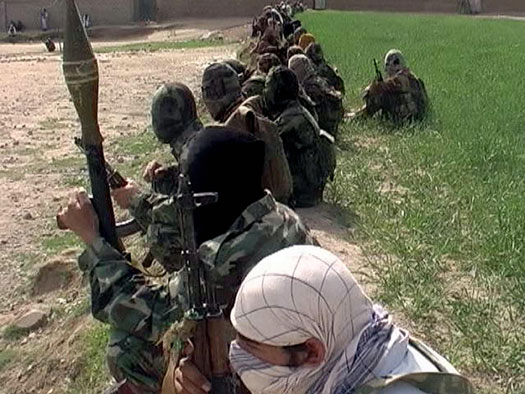
Taliban Insurgents

“Warfare is now an interlocking system of actions political, economic, psychological; military that aims at the overthrow of the established authority in a country and its replacement by another regime.  To achieve this end, the aggressor tries to exploit the internal tensions of the country attacked ideological, social, religious, economic, any conflict liable to have a profound influence on the population to be conquered.” Roger Trinquier Modern Warfare

The United State and our allies have been at war with Islamic terrorists as well as nationally based insurgencies for over nine years.  The war that we are fighting is not like the Second World War where we fought a conventional war against enemies that were defined by national, political and geographic boundaries.  That war as well as the First World War and most recently the 1991 Gulf War but rather is a global insurgency in which we are pitted against a number of sometimes disparate groups One of the things that seems to be misunderstood by much of the media as well as the public

Muslim terrorist groups they use some tenants of Islam, mostly from the Wahabi school that emerged on the Arabian Peninsula in the late 1700s to justify what they do. Hezbollah and the Iranian Revolutionary Guard use the Islam taught by the school of the Ayatollah to do the same.

However that being said there are a sizable number of Muslims worldwide that oppose the terrorists and their brands of Islam but still can be offended and driven to the other side by Americans doing just what pastor Jones got started. The radicals take this and use it as propaganda against us.

The fact is that it is all about using propaganda effectively and not giving the terrorists the grist they need to use against us. The terrorist or the insurgent has no need to tell the truth and usually will not and will twist any “truth” to his own end. This is true in every revolutionary war, which is what all of these groups are waging. They are fighting to turn all of Islam and anyone else they can against us. This is the case since the beginning of time and not limited to Muslims.

We as Americans have been pretty lousy at this except when we were the revolutionaries. It is a fact, not just with the Muslims but all revolutionaries that since they are on the weak side of the military equation that they use propaganda, especially what any of our people do to radicalize people on the fence against us. Jones and others played into their hands and by doing so jeopardize the mission and endanger our troops. The fact is that we neither have the resources or people to allow this to become a war against all of Islam. Thus we have to exploit natural divisions and cultural divides in the Moslem world to isolate and neutralize the radicals of Al Qaeda, Hamas, the Taliban, Hezbollah and the Iranian Revolutionary Guard.

It may seem on the surface to be politically correct appeasement but a true strategic purpose is served. The counter-insurgent cannot do what the insurgent can as they will lose the propaganda war and with it the broader war. We are fighting a world-wide revolutionary war against Moslem fundamentalist extremists that want us to make it a war against all of Islam. If that were to be the case we would have to go to a total war footing, ignore our own economy renew the draft and prepare for a war that in the long run we cannot win and will leave us as broken as Germany after WWII.

The problem with Islam as that for the most part much of Islam especially in the Middle East still lives in the 14th century with fancy technology. They did not have the Renaissance, Reformation or the enlightenment thus the appeal of the fundamentalist sects and radical Islam. That makes our job hard and that of Bin Laden easy as their world-view  promotes a black and white understanding of the world which makes recruitment of youthful idealists easy especially when the conflict is framed as against “Crusaders” or “Imperialists” opposed to Islam.

The war that we are engaged in is not conventional and we do not have a good record in recent times of fighting this kind of war. We lost in Vietnam because we ignored this. We won all the battles and lost the war. Despite what some pundits believe this is not like WWII and no new incarnation of George Patton will win it.

As I said we are engaged in a revolutionary war which is different than other types of war. In revolutionary wars the revolutionary no matter what his cause is able to use propaganda to influence opinion, usually of people that they are trying to bring to their side. Our founders were very good in portraying the British as violent and brutal occupiers. We used British excess especially in Boston and in the South against them very well. The Jihadists are promoting a revolutionary cause, that cause being the overthrow of established governments in the Middle East and bringing about a radical and fundamental brand of Islamic rule. This happened in Iran and after 30 years the young people are beginning to revolt against the Ayatollahs. It is also revolutionary because they are actively promoting the overthrow of established states and have a goal of establishing their brand of Islam over the entire world. The use revolutionary techniques and strategies used successfully by other revolutionaries attempting to control the populations where they operate through both terror and by discrediting unpopular or corrupt governments.

One of the problems that we in the United States have in understanding Al Qaida and other Islamic groups that rely on terrorism as their primary means of conducting warfare is the nature of the terrorist himself.  Roger Trinquier who observed and fought against such groups in the 1940s and 1950s wrote one of the fundamental books on this type of warfare.  Trinquier said something that will undoubtedly be taken wrong by some readers of this essay but if one understands the nature of Revolutionary war has been true going back for centuries and is not confined to militant Islamic Fundamentalism.   Trinquier observed that “the terrorist should not be considered an ordinary criminal.  Actually he fights within the framework of his organization, without personal interest, for a cause he considers noble and for a respectable ideal, the same as soldiers in the armies confronting him.”

One can see how this is demonstrated in history in such disparate groups as the Israeli Irgun fighters who used terrorist tactics from 1931 until the founding of the state of Israel in 1948 against the British occupiers, the Irish Republican Army.  This is even part of the American experience in the post Civil War South of the Reconstruction era.  Then many Southern whites organized into guerrilla terrorist units such as the Klan in Tennessee, the Red Shirts in South Carolina, the Knights of the White Camellia in Louisiana, the Young Men’s Democratic Club in Florida in order to attack anyone associated with Reconstruction. Their targets included newly free blacks, carpetbaggers, Scalawags, teachers from the North, Freedmen Bureau officials, northern troops, and Republicans.  If you read their writings or even query their current day descendants you will find that none believed that they were criminals and their actions, while unacceptable to many were justified.  One does not have to agree that the terrorists cause is right to acknowledge that terrorists believe this to be true.  Thus in fighting the terrorist organizations one has to employ a wide variety of tactics to protect the populations targeted by terrorists to include police, limited military involvement, the use of propaganda, and “soft” methods to provide aid to these populations and isolate the terrorists from them.

The current batch of Jihadists are actually fairly disparate and not necessarily allies as we found out in Iraq where Al Qaeda and the foreign fighters turned the population of Al Anbar Province against them and brought that Sunni population to our side. They also have sometimes conflicting goals or limit their cause to local areas. The Sunni and the Shi’a have a hard time working together so while this is a global revolution it is not monolithic. Thus if we are smart we can exploit natural divisions in these groups. To do so we have to play smart in how we fight them recognizing that the “soft” approach often is better as the French found out too late in Vietnam but did well with in Algeria. See books by David Galula “Counterinsurgency in Algeria 1956-1954” “Counterinsurgency Warfare”, Roger Trinquier’s “Modern Warfare” as well as the book by Alister Horne “A Savage War of Peace” all are excellent reads. Bernard Fall’s book “Street Without Joy” is a good study of how this happened in French Indochina. The US Counterinsurgency Manual is available online or in bookstores as is “Learning to Eat Soup with a Knife” by John Nagl, a major writer of US Counterinsurgency doctrine.

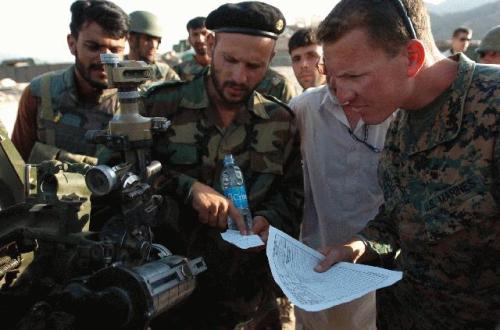
US Advisors with Afghan Army Officers

In a world-wide insurgency even actions which seem logical to Americans at home can be detrimental to US Forces and political goals in Afghanistan, Pakistan, and Iraq and throughout the Muslim world. I’m not a fan of the Mosque near the World Trade Center even though it is the equivalent of 6 normal city blocks away and not visible from the site. Many Americans if not an outright majority oppose this building project yet the builders don’t seem to understand the raw wounds that the project has opened for many Americans. I’m sure for them that much of it is a business, they are developers in New York City and the land was available. Yet the project can quite rightly be seen as insensitive because of what it means to the victims.

At the same time politicians and protesters by naming it the “Ground Zero Mosque” has raised its propaganda value exponentially, that is why Hamas and Hezbollah have also raised the ante in their talk about it. Thus what was an annoyance and hurtful to the victims has become a propaganda victory for the terrorists. In a sense we have let our collective outrage play into the terrorist’s hands. When he pastor of a small church in Florida threatened to burn a large number of copies of the Koran he helped ignite a firestorm of protest in many parts of the Islamic world especially in the epicenter of our current struggle in Afghanistan and neighboring Pakistan.

We are at war with the warlike highly militant strains of Islam and trying to keep the more Western leaning peaceful variants on the sidelines or enlist them to our side. This is a hard path for our leaders to walk as President Bush found out and President Obama is finding out is that most Americans don’t see it that way.  To many Americans all of Islam is the enemy and nothing can change that and the heated passion of our population often plays into the hands of our enemies.  Thus both Presidents’ comments about Islam have usually fallen on deaf ears and both have been excoriated for straddling this fence.

Anyway as you gather I have spent a considerable amount of time studying this type of warfare. I admit that this is pretty unusual for a chaplain, but I also have a Masters degree in Military History as well as the Marine Corps Command and Staff College. When I was in Iraq I knew more than many Marine and Army officers about fighting this type of war. Kind of weird I know but what can I say?

One of the most famous and successful practitioners of Counterinsurgency Warfare was French Colonel David Galula.  Galula in a sense is the “voice crying in the wilderness” of counterinsurgency doctrine and his methods have been used with some measure of success during the “Surge” in Iraq and the “Anbar Awakening” which turned the tide of the Iraqi insurgency.  Galula commented about terrorist tactics, tactics that have not changed in either Iraq or Afghanistan:

“The rebels realized that they could achieve the greatest psychological effect on the French and on world opinion at the cheapest price by stepping up terrorism in the main cities, notably in Algiers, which served as headquarters to most French and foreign correspondents and thus acted as a natural amplifier. A grenade or a bomb in a café there would produce far more noise than an obscure ambush against French soldiers in the Ouarsenis Mountains.” Galula “Counterinsurgency in Algeria”

One of the most frustrating aspects for military and police personnel fighting insurgencies that employ terrorist tactics is that quite often superior forces cannot finish off the insurgents. Galula provides an answer to this question.

“Our forces were vastly superior to the rebels. Then why couldn’t we finish with them quickly? Because they managed to mobilize the population through terror and persuasion . . . It was therefore imperative that we isolate the rebels from the population and that we gain the support of the population.  This implied that under no circumstances could we afford to antagonize the population even if we had to take risks for ourselves in sparing it.”

This is a lesson that we have not always learned as incidents such as the Abu Ghraib torture and most recently a series of targeted killings of Afghan civilians by a squad of Army Soldiers in Afghanistan in which they allegedly planned the killings in advance and kept body parts of their victims.  Unfortunately atrocities like this as was demonstrated at Mei Lai in Vietnam do little to the enemy and everything to turn the populations that we are trying to protect and world opinion against us. It also provides grist for the terrorist propaganda purposes and aids him in recruiting more insurgents to his cause.

Galula recognized the quandary that commanders of police and military units involved in counterinsurgency operations face when dealing with populations where terrorists operate. Galula was a realist about this and noted “If we distinguish between people and rebels, then we have a chance. One cannot catch a fly with vinegar. My rules are this: outwardly treat every civilian as a friend; inwardly you must consider him as a rebel ally until you have positive proof to the contrary.” This may seem contradictory but the concept was used by Ronald Reagan during the Cold War using the term “trust but verify” in relationship to the Soviet Union and arms control.

David Kilcullen an Australian Army Lieutenant Colonel and counterinsurgency expert and advisor to General David Petreus noted

Colonel Dennis Drew writing in 1988 understood the linkage of all parts of insurgency and how well an insurgency represents the essence of the thought of Prussian theorist Carl von Clausewitz: “Although theorists consider insurgent warfare to be anti-Clausewitzian, such warfare is the very embodiment of the Prussian master’s most famous dictum. Insurgency represents the total integration of political and military factors, but with political factors always in complete domination.” (INSURGENCY AND COUNTERINSURGENCY American Military Dilemmas and Doctrinal Proposals- Air University Press Maxwell Air Force Base, Alabama 1988)

Thus attempting to fight an insurgency and terrorist groups thinking that one can defeat them in the style of world War Two, as is so often espoused by pundits and amateur military theorists that crowd the airwaves and cyber space is foolish and only leads to the defeat of the counter-insurgent and the loss of the population targeted by the insurgent. The wars in Afghanistan and Iraq are not conventional wars and the political outweighs the military in every respect.  As Drew noted:

“Although the military aspect of the struggle may ebb and flow, the source of insurgent strength–a covert political infrastructure–remains constant. This infrastructure, the bitter fruit resulting from the perceived political and economic inequities sown much earlier, is the most important ingredient in the insurgent recipe for success. The political infrastructure performs at least six major functions vital to the survival, growth, and eventual success of the insurgency: (1) intelligence gathering and transmission; (2) provision of supplies and financial resources; (13) recruitment; (4) political expansion and penetration; (5) sabotage, terrorism, and intimidation; and (6) establishment of a shadow government.”

This is exactly what has happened in Afghanistan and why we have such difficulty in fighting the insurgency.

One of the most common tactics that the United States has attempted in attacking the insurgents is the strategy of decapitation. In this the U.S. has attempted to kill the leaders at the top echelons of the insurgency with limited success. Even when we kill off a senior Al Qaida or Taliban leader others rapidly take their place with little affect in their operations against us. Galula recognized the fallacy of this approach in Algeria when the French government succeeded in capturing five top leaders of the Algerian rebellion. “Then, five top leaders of the rebellion, including Ben Bella, had been neatly caught during a flight from Rabat to Tunis. Their capture, I admit, had little effect on the direction of the rebellion, because the movement was too loosely organized to crumble under such a blow.” The lesson here is that should we ever succeed in capturing or killing Osama Bin Laden or Mullah Omar that this will not lead to victory unless we are able to protect the population of Afghanistan.

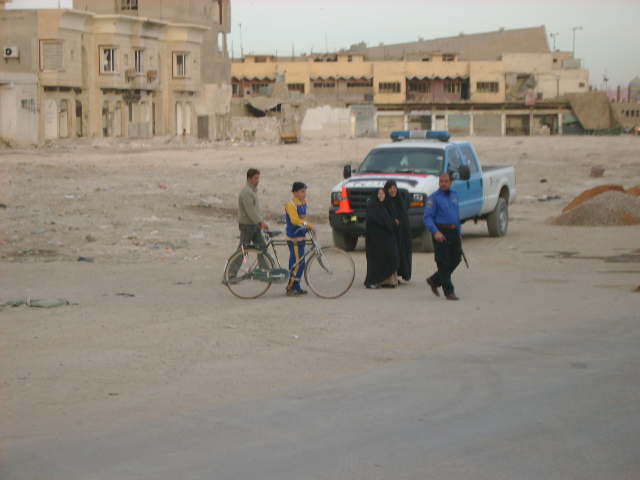
Protecting the population Iraqi Police and Civilians in Ramadi

To do this the population must come to our side because they know that we will stay the course and that we can be counted on to help them.  This cannot just be the military aspect of protecting them against the terrorists as well as economic and political reforms that is consistent with their traditional way of life which is not necessarily consistent with Western political and social traditions or practices. In fact the difficulty for the United States and NATO in Afghanistan is the political struggle on the home front where as Drew states:

“American military dilemma concerns time, public support, and image. Time is the ally of the insurgent; the longer an insurgent survives, the stronger its chances of growing. Meanwhile, as time drags on, the American military position is weakened by declining support, impatience, and war weariness at home, particularly if there is no perceived progress in the struggle. Maintaining public support is clearly a responsibility of the political side of the equation and involves factors far beyond the battlefield–although military progress is a key ingredient. The connection between the duration of the struggle and public support is the image of the insurgency presented to the American body politic.”

To be continued….

Peace

Padre Steve+

1 Comment

Filed under counterinsurency in afghanistan, History, iraq,afghanistan, Military, national security, Political Commentary

How to Make an Incredibly Difficult War Unwinnable: The Crass Hatred of “Pastor” Terry Jones for Moslems Endangers Americans

“Pastor” Terry Jones

“Warfare is now an interlocking system of actions-political, economic, psychological, military-that aims at the overthrow of the established authority in a country and its replacement by another regime. To achieve this end, the aggressor tries to exploit the internal tensions of the country attacked-ideological, social, religious, economic -any conflict liable to have a profound influence on the population to be conquered. Moreover, in view of the present-day interdependence of nations, any residual grievance within a population, no matter how localized and lacking in scope, will surely be brought by determined adversaries into the framework of the great world conflict. From a localized conflict of secondary origin and importance, they will always attempt sooner or later to bring about a generalized conflict.” Roger Trinquier

“Pastor” Terry Jones of the Gainesville Florida “Dove World Outreach Center” has crossed a boundary in regard to the abuse of freedom of speech and freedom of religion.  While many may vehemently disagree with this religious zealot’s (I cannot honor him with the title of Christian) hatred and bigotry he has a Constitutional right the express his beliefs under the First Amendment.  Unfortunately while the Reverend Jones may believe his beliefs to be the absolute truth and has the Constitutional right both to hold and express those views in any medium that he wishes it does not mean that those expressed views represent the entirety of the Christian faith much less the body politic of the American nation.  Likewise it does not mean that his views while protected free speech cannot be harmful to the interests of the nation and the people that at least in an earthly state are the guarantors of that liberty.  In fact it has become apparent that some individuals and groups can be so convinced of their own “correctness” that in spite of every warning to the contrary that they do all that they can to inflame tensions and undercut the efforts of the military that seeks to preserve those rights.

There are a couple of major issues that I see here and I will not address the Constitutional issues which regardless of how hateful and devoid of reason one’s beliefs may be they are still protected under the First Amendment.  This is settled law and has been applied to a variety of hateful and actually harmful ideologies on both the right and the left.  Thus as idiotic, ignorant, hateful and strategically harmful an argument be, be it religious, philosophical or political as long as it does not impinge of the physical right to life, liberty and property as it might be it is still protected speech.  What bothers me as well as most of the people I know believe about the stated in intentions of the “Reverend” Jones and his flock to be is that not that he has the right to express them, but that he chooses to do so in the knowledge that his actions will very well cost the American military lives in an ongoing war.

We live in the United States and political or religious thought, even hateful and potentially damaging is protected speech.  At the same time there are times that such speech can harm the interests of the county and cost lives.

The “Reverend” Jones is planning to conduct a protest against Islam, a religion that he believes to be “of the Devil.”  Okay, whatever, he has a right to those beliefs.  However, he insists on pursuing a plan to burn hundreds of copies of the Koran, the most sacred book in the Islamic religion despite the fact that the commander of US and NATO Forces in Afghanistan has asked him not to do so, and against the warnings of other US government officials and even over the protestations of other Christian denominations including the Roman Catholic Church, the National Association of Evangelicals and others.  The plan which he has announced on the internet has unfortunately gained the attention and air time of major television news networks has been reported worldwide and has sparked outrage in moderate Islamic nations that have a history of standing alongside the United States against Islamic radicals. In places where U.S. Forces battle Islamic extremists the statements and planned actions of the “Reverend” Jones and his little apostate “church” place American Solders, Marines, Sailors and Airmen in even more danger because his actions turn those that might be for us against us.

The war against Islamic extremists occurs on numerous fronts and is much larger than military operations. In fact military operations will not will the war of themselves. We do not simple face an insurgency in Iraq and Afghanistan but a world-wide insurgency where as Trinquier recognized everything is connected, political, religious, economic, military and ideological. In fact since the advent of the internet and cheap digital video technology the potential for radicals such as Jones to adversely impact U.S. military operations and broader political goals in the war against Islamic extremists has grown exponentially. Who could believe that a “pastor” of a 50 member church who has what best can be described as a “Braveheart” fantasy and fetish that was kicked out of a church that he founded in Germany in 2008 would be able to cause such a stir?” Unfortunately that is the power of the new media.  The internet has provided muckrakers of hate like Terry Jones unlimited potential to get their message out and into the sights of mainline media that survive and thrive on the controversy of such stories which feed the 24 hour news cycle for days on end. Yes, the mainstream media are prostitutes when it comes to stories like this and hopefully when Jones actually conducts his burning of the Koran will ignore him as Secretary of State Hillary Clinton has asked.  Jones may have the Constitutional right and freedom to do this but he does not need to be given any more attention by the media which would work against U.S. policy and endanger Americans, especially the military in harm’s way.

I find Jones’ actions to be treasonous. He may have the “rights” to do this but his actions endanger Americans, not just the military but all Americans by his actions. He quickly redirects the blame for this against Moslems but the fact is that his actions help stir a witch’s cauldron of hate against his own country. He advocates actions against American Moslems which if they were recommended by others against Christians would be enough to provoke outrage that might result in violence in the current poisonous political climate.  Likewise in burning the Koran he stoops to a level that Moslems will not go to against Christians or Jews, that is burning books that they consider holy, even if they do not believe that they contain the full revelation of the Koran. Islamists may burn effigies of our leaders and our flag and even persecute Christians and Jews, but they will not burn or desecrate our either the Bible or the Torah.  In doing what he is doing Jones sinks to a low that even the most insane Islamic extremist will not do.  The sad thing is that despite the murderous terrorism practiced by Al Qaeda and other Islamic extremists, including the attack on the World Trade Center and Pentagon on September 11th 2001and around the world since then, that the most brutal and murderous Moslem terrorist will not burn or desecrate our holy books.  I am sure that given Jones’ theology that if he even had a chance to do more than issue vile statements about Moslems and condemn all Moslems and their religion for the actions of some that he would do so. A man that would willingly conduct an act that most certainly will inflame the Moslem world against the United States, endanger our people as well as his own Christian brethren worldwide would not hesitate to conduct terrorist actions against Moslems if he had the money, organization and backing to do so.

Despite what he claims “Reverend” Jones embodies everything that is unseemly and even un-Christian. He has no sense of civic responsibility and he twists the Christian message so vilely that it is unrecognizable as Christian in any way shape or form. In his ignorant hatred he endangers U.S. Forces and works to make an already difficult war unwinnable as he further inflames Moslems against us. Unfortunately no amount of denunciations by the U.S. Government, military leaders or Churches will undo what will happen if he conducts this action as he has stated that he will on September 11th.  His actions like those of others that have couched the Christian message in hate to fulfill their political agendas stands in opposition to what Jesus himself would do and against the message proclaimed by the early church. His actions hearken to the times that so called “Christians” conducted their own “terrorism” against other Christians, Moslems, Jews and Pagans throughout history and even in recent times.

There are some in this country that espouse similar views to Jones even if they will not burn the Koran. Some of this I know is because of ignorance and some simply because they are reacting to world events on a totally emotional level. I get that. The vast majority of these people, be they Christians or not do not advocate or support the actions of Terry Jones.  At the same time their ignorance about the Moslem and Arab world, portraying it as a monolithic “Islamofacist” threat works against their own country and our attempts to win this war against terrorists. We can fight a campaign against a limited number of terrorists and other enemies in Iraq and Afghanistan so long as we have the majority of the populations of those nations on our side supporting us. However we cannot win those wars if people like Jones through their actions turn those that support us against us.  This is an interconnected war, and like Trinquier said it is all connected. Even little groups like the Dove World Outreach Center and their hate filled delusional pastor can cause us great problems.  We cannot fight the entire Moslem world. Our military as it is stretched to the limit, the protected wars in Iraq and Afghanistan have spent much of our national treasure as well as cost thousands of the lives of our service men and women, those killed, wounded, maimed and those that have the unseen wounds of PTSD, TBI and moral injury.

I do pray that Jones will turn away from this insanity but based on his words and past actions I believe that he has no regard for American treetops or the security of this country. Jones is a menace. He has the right to do what he is doing but in doing so he endangers American lives and makes the job of winning this war that much harder if not impossible. He is an apostate from the Christian faith and a traitor to his own country. I say this as a Christian and a career military officer that remembers 9-11 well and who has deployed twice in support of Operation Iraqi Freedom or Enduring Freedom. I have seen the sacrifice of our Marines, Sailors, Soldier and Airmen, been with the wounded and worked with Iraqi security forces and know their sacrifices.  Jones should be condemned by Americans of all faiths, especially Christians.

Our enemies will use Jones’ actions against us as we would if the situation were reversed. They will use their propaganda networks to use this to poison others against us. Whenever American “Christians” do such idiotic things it makes our job in the military that much harder. Personally I cannot see how anyone that advocates such actions can believe that they are “supporting the troops.”  I see many e-mails forwarded by family friends and others that attack the loyalty of American citizens that disagree with them and especially question the loyalty of American Moslems.  Somehow I recall back in the early years of the Christian Church that the Roman Empire questioned the loyalty of Christians in the empire because they would not acknowledge Caesar as Lord.  I wonder if we truly were Christians and paid Christ more allegiance than our political parties or ideologies rather than use him to buttress our own political parties or allies if we would be considered to be “loyal” citizens. In our country Catholics were considered suspect until at least the 1960s because of their “allegiance” to Rome. Now we do this to Americans citizens who are Moslems and we wonder why these citizens do not speak out more loudly against Islamic extremists. Many have family in Moslem countries that would be in danger if they spoke out and many feel threatened as relatively new immigrants by people like Terry Jones.  They are damned if they do and damned if they don’t.

Jones has stated that he will go ahead with his Koran burning despite the please of General David Petreus in Afghanistan, the U.S. Government and other Christians.  The blood of Americans will be on his hands.

Peace

Padre Steve+

1 Comment

Filed under faith, Foreign Policy, History, iraq,afghanistan, national security, Religion

Learning to Apply the Principles of Counterinsurgency Part One: Introduction to the Soviet-Afghan War

Soviets Enter Afghanistan

Note: This is the First Part of a Series which I will be writing on Afghanistan and Counterinsurgency strategy in that country. Part of this will be a review of various historical materials especially from Russian sources as well as analysis of the Afghan insurgency and its foreign supporters including Al Qaeda. I have written a number of other articles on the Afghan War and associated topics.  Links are provided at the end of this article.

Counterinsurgency is not just thinking man’s warfare—it is the graduate level of war. Special Forces Officer in Iraq, 2005

“Protracted conflicts favor insurgents, and no approach makes better use of that asymmetry than the protracted popular war. The Chinese Communists used this approach to conquer China after World War II. The North Vietnamese and Algerians adapted it to fit their respective situations. And some Al Qaeda leaders suggest it in their writings today. This approach is complex; few contemporary insurgent movements apply its full program, although many apply parts of it. It is, therefore, of more than just historical interest. Knowledge of it can be a powerful aid to understanding some insurgent movements.”[i]

Introduction

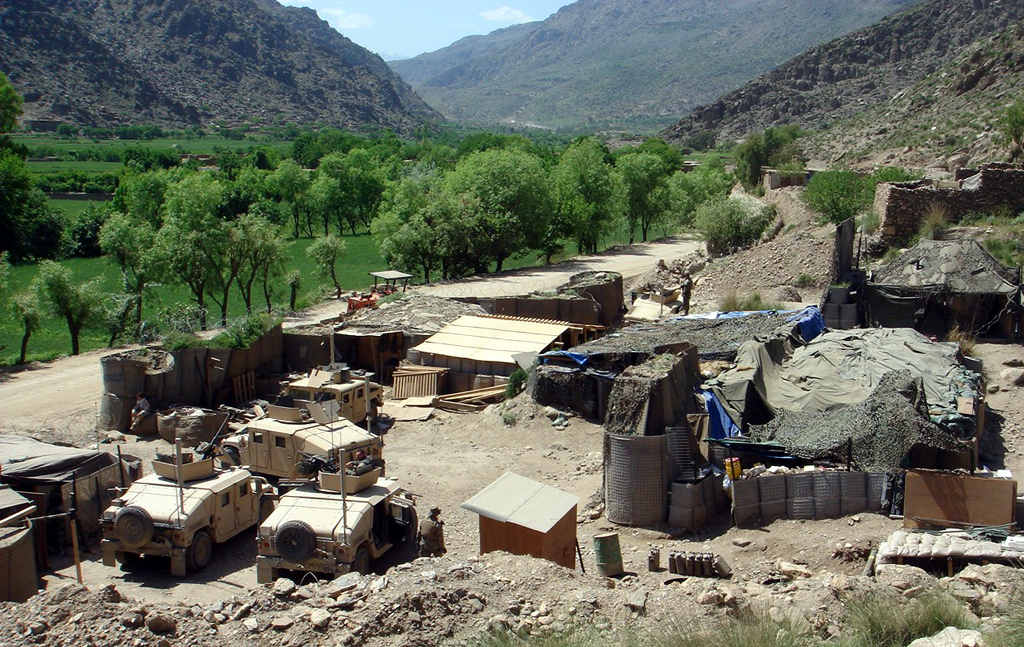
US Training Team Base

The United States has entered its 9th year of military involvement in Afghanistan following the October 2001 invasion that came as a response to the attacks on the World Trade Center and Pentagon of September 11th 2001.  In that time the United States, its NATO allies and the United Nations have endeavored to bring stability as well as a more democratic and accountable government to the country in the face of resistance from various political, religious and tribal groups with a diverse and sometimes conflicting agendas.  The foremost of these resistance groups was and is the Taliban which arose during the Soviet occupation of the country and eventually took power after winning a civil war against a number of other Mujahidin groups.   As the United States diverted force and focused its efforts on Iraq’s insurgency the Taliban using bases in remote areas along the Pakistani border and monetary and political support from Moslem groups with similar goals rehabilitated and reorganized its forces and began the process of regaining influence in Afghanistan.  By 2008 it was apparent that the situation had reached a crisis point.  The vast majority of Afghans as well as many in the international community came to view the Karzai government as corrupt, weak and unpopular.  The Taliban and other groups began to work more closely together despite differing agendas and the political and military situation deteriorated to the point that the incoming Obama administration appointed a new commander, General Stanley McChrystal to evaluate the situation and based on his recommendations and those of General David Petreus, Secretary of Defense Robert Gates and others announced a “surge” to try to regain the initiative in the country.  That troop buildup is currently underway. By the time it reaches its maximum the United States will have approximately 100, 000 troops in Afghanistan and the NATO and ISAF allies approximately another 38,000.  These are supporting and training the Afghan National Army and Police which number approximately 97,000 in the Army and another 98,000 in the National Police.  The Afghan forces have not proven to be reliable and have been infiltrated by Taliban and Al Qaeda members and the NATO and ISAF allies are often limited in the scope of their mission and have restrictive rules of engagement.  Thus the bulk of the fight rests on the United States and some allies with more robust rules of engagement such as Canada, Britain and France.  The lack of internal credibility of the Afghan Government, the weakness of its army and security forces coupled with the numerical weakness of US and ISAF forces has given the various indigenous insurgent groups, especially the Taliban to make a comeback that threatens the mission.  General McChrystal noted:

“The situation in Afghanistan is serious; neither success nor failure can be taken for granted. Although considerable effort and sacrifice have resulted in some progress, many indicators suggest the overall situation is deteriorating. We face not only a resilient and growing insurgency; there is also a crisis of confidence among Afghans—in both their government and the international community—that undermines our credibility and emboldens the insurgents. Further, a perception that our resolve is uncertain makes Afghans reluctant to align with us against the insurgents.”[ii]

Taliban Insurgents

The situation is such in Afghanistan that many Americans are struggling how the “good war” could go “bad.”  Many armchair strategists, many political and media figures and even some in the military fail to understand the nature of Counterinsurgency and its complexity as opposed to conventional warfare. In fact many of these assume that the simple application of combat force using conventional tactics is the cure for the situation, however history shows that such is not the case especially in Afghanistan.

This introduction to this study will focus on some commonalities of the Soviet and American experiences in Afghanistan.

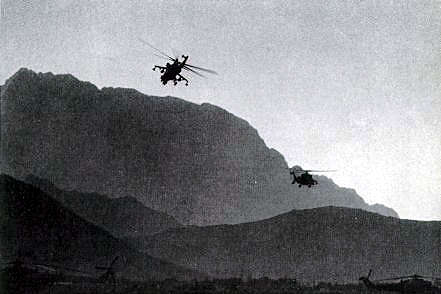
Soviet Mi-24s

The Soviets invaded Afghanistan in 1979 they used their 40th Army which initially was composed of “two motorized rifle divisions, an airborne division, an air assault brigade and separate motorized rifle regiments.”[iii] These forces totaled about 52,000 troops and were “considered sufficient to guarantee the viability of Afghanistan.”[iv] The 40th Army was a standard Cold War Soviet Combined Arms Army designed for high tempo conventional operations.  It was not designed for nor trained in counterinsurgency operations or what the Soviets and Russians class as “anti-guerilla operations.” It was poorly suited to mountain and dessert combat and at the beginning “not only had no practical skills in the conduct of counter-guerilla warfare, they also did not have a single well-developed theoretical manual, regulation or tactical guideline for fighting such a war.”[v]

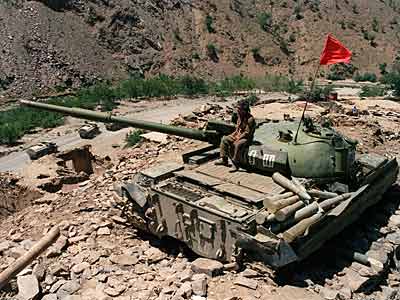
Soviet Tank Guarding Convoy

The Soviets did not expect to be involved in combat operations and the Afghan population reacted to their presence with resistance which spread across the country both against their own government which they viewed as a puppet of the Soviets but also against the Soviet Forces.  As time went on the Soviets attempted to use raids and large scale operations to attempt to bring Mujahidin forces to battle, however the insurgents were very skillful and the Soviets attempted to increase the training of their forces as well as their numbers.  By 1986 the numbers on the ground had increased to 108,000 personnel in four divisions, five separate brigades, four separate regiments and six separate battalions.[vi] In the nearly 10 years of operations over a half million Soviet soldiers and support personnel served in Afghanistan. Tours for enlisted personnel who were primarily conscripts served 12-18 months in country and officers 2 years.  Few returned for subsequent tours meaning that the 40th Army had few personnel very familiar with the country, its people and the challenges faced by Soviet forces.  According to official sources the 40th Army suffered 13,833 killed in action or died of wounds, 49,985 wounded and 311 missing in action a figured of 1 in 8 Soviet Soldiers being casualties.  14.3 percent of the casualties were officers.[vii] Of course the official figure is doubted many believing the number killed in action or died of wounds to be closer to 26,000.[viii]

Soviet Troops Preparing to Leave Afghanistan 1989

The Soviet Forces supported the Army of the Democratic Republic of Afghanistan which numbered at their peak on average between 120,000-150,000 soldiers.[ix] The Afghan forces, then as now were at the mercy of tribal, familial and communist party affiliations. Over 70 percent of the DRA was conscripted, desertions averaged 1,500 to 2,000 soldiers a month and units were usually optimistically 25-40 percent under their TO&E strength.[x] Limitations on training and leadership meant that typically DRA units could not conduct large scale missions without Soviet help. As such most of the fighting was done by Soviet formations.

Many of these problems have plagued the United States and ISAF throughout the first 8 years of the current Afghan War.  As General McChrystal has noted in his assessment “ISAF is a conventional force that is poorly configured for COIN, inexperienced in local languages and culture, and struggling with the challenges inherent to coalition warfare. These intrinsic disadvantages are exacerbated by our current culture and how we operate.”[xi]

End of part one to be continued…

Links:

Lessons on Coalition Warfare: The Dysfunctional Coalition German and the Axis Partners on the Eastern Front

The Afghan War 2009-2012: Lessons from Algeria 1954-1960 A Review of “A Savage War of Peace

Unequal Allies: Lessons from The German’s and Their Allies on the Eastern Front for Today

The Effects of Counter-Insurgency Operations on U.S. and French Forces in Vietnam and Algeria and Implications for Afghanistan

Brothers to the End…the Bond between those Who Serve Together in Unpopular Wars


[i] ______________ “The Army/Marine Corps Counterinsurgency Manual FM 3-24 MCWP 3-33.5,” HQ Department of the Army and HQ Marine Corps Combat Development Command, Washington DC 2006.  p. 1-6

[ii] MCChrystal, Stanley. “Commander’s Initial Assessment Commander International Security Assistance Force Afghanistan” dated 30 August 2009 p. 1-1

[iii] The Russian General Staff. The Soviet Afghan War: How a Superpower Fought and Lost” translated and edited by Lester A. Grau and Michael A. Gress, University Press of Kansas, Lawrence KS 2002 p.17.

[iv] Ibid. p.18

[v] Ibid. p.43

[vi] Ibid. p.28

[vii] Ibid. p.309

[viii] Ibid. p.xix

[ix] Ibid. p.48

[x] Ibid. pp.48-51

[xi] McChrystal. p.1-2

1 Comment

Filed under counterinsurency in afghanistan, History, iraq,afghanistan, Military

The Anomaly of Operation Desert Storm and Its Consequences Today

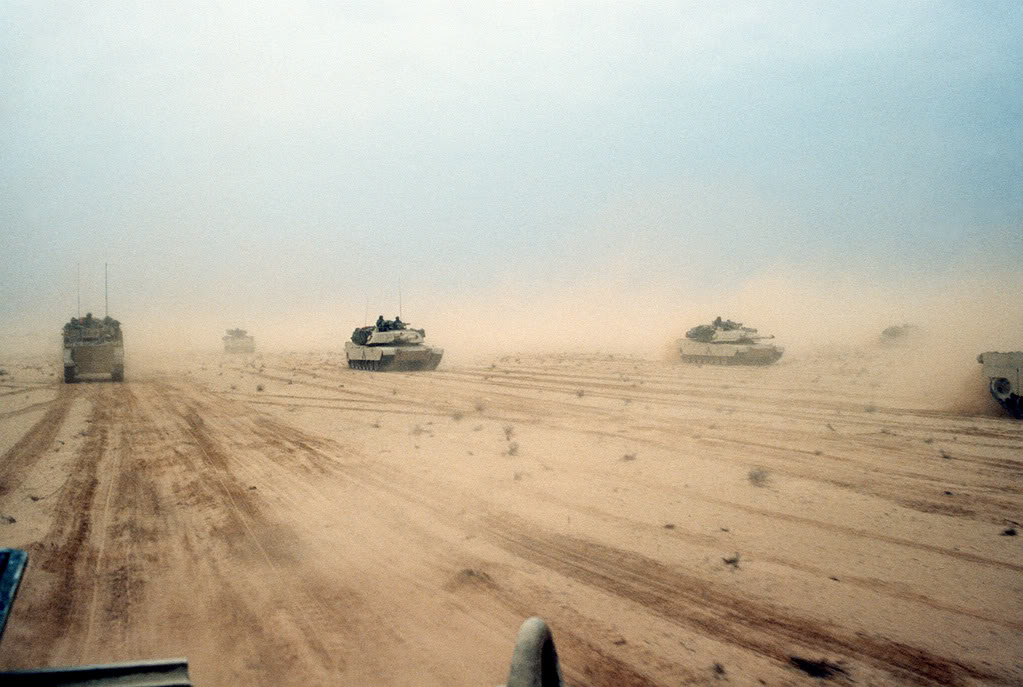
Armor Advancing During Operation Desert Storm

There are few occasions in history where an army is given exactly the scenario to which its organization, training and doctrine coalesce against an opponent that uses the template of organization and training that it has been designed to defeat.  Operation Desert Storm, the liberation of Kuwait by the United States and its coalition from Saddam Hussein’s Iraqi Army and Republican Guard was such a war. The operation was built up in the popular media to the extent that it created a false image of the cost of war and belief that wars can be won “one the cheap” because of superior technology and organization.  That belief was shattered during the Iraq insurgency which began in earnest following the occupation of Iraq following the defeat of Saddam in 2003 by a significantly smaller US force than was used to liberate Kuwait twelve years before.

Architects of Desert Storm

The superior performance of the Army in the Gulf War did not turn out to be the template of how future wars would be fought.  In the following years the US military has become embroiled in conflicts where opponents use inexpensive and often crude off the shelf technology to counter conventional US superiority in firepower and organization.

During the First Gulf War the Army was aided in that the doctrine that it developed to fight a war in Europe against the Warsaw Pact, the Airland Battle was “perhaps best suited to armored warfare in the open desert.”[i] Of course during Desert Storm this was exactly the setting that the Army would be called on to fight.  Unlike Vietnam where the Army attempted to fight an unconventional war with conventional tactics the Army had the chance to fight exactly the battle that it had trained for, against an enemy trained in the tactics and using the equipment of its former Soviet adversary.

The Army enjoyed the advantages of having “reached a high level of training and technological proficiency”[ii] against the Soviet threat. The fact that the Soviet Union and Warsaw Pact had melted down unexpectedly in 1989 and 1990 and removed any conventional threat in Europe which allowed the Army to concentrate massive amount of forces including the VII Corps from Germany to the Middle East was nothing short of incredible.  Additionally the Army had the advantages of superior weaponry and the fortuitous timing of the war before the effects of the post-Cold War drawdown were realized.

For the Army the “1980s were a golden age of military thought and debate,”[iii] and the Airland Battle concept “was greeted with enthusiasm throughout the Army.” Terms such as initiative, agility, synchronization and depth….soon became part of every officer’s vernacular.”[iv] Colonel Harry Summers who had written a critical history of the Vietnam War noted that FM 100-5, the Army’s primary manual of operations, was the “operational blueprint for Operation Desert Storm.”[v] That blueprint had a well trained and disciplined force schooled in the conduct of the Airland Battle concept enunciated in FM-100-5. David Halberstam noted that Operation Desert Storm was fought by a “professional army-a very professional army.”[vi] Seldom in the history of warfare was any army trained and equipped to fight the exact battle for which it found itself.

The Highway of Death

The foundation of doctrine, training, technology and organization laid in the 1980s was solid.  The Army was not only effective in the Gulf War, it was overwhelming.  This is not to say that the Army did not encounter problems.  It did, some which against a better trained and equipped force might have negatively impacts its operations. However the problems encountered did not keep it from dominating the battlefield.

The US rapidly deployed a blocking force of paratroops and Marines following the Iraqi invasion of Kuwait at the end of August.  While few in number they served as a deterrent that Saddam did not test. There was great concern that had Saddam pushed into Saudi Arabia when forces were small and lightly equipped that he might have succeeded in capturing the northeaster Saudi oil fields and production facilities.  The military leadership continually reinforced these forces first to a substantial defensive force and then with the addition of more forces a significant offensive force.  Thus when the decision was made to liberate Kuwait under the United Nations resolution the forces were there and ready.

When the war began advances in Joint warfare and C3 was evident in the effectiveness of the operations.[vii] Particular successes included the movement of VII and XVIII Airborne Corps into the desert to outflank the Iraqis in Kuwait[viii] and every actual engagement between Iraqi and American forces.  Of note was the performance of Major General Barry McCafferey’s 24th Mechanized Division,[ix] and the 2nd Armored Cavalry Regiment at 73 Easting against the Republican Guard’s Talwahkana Division.[x] Likewise the action of 2nd Brigade 1st Armored Division against the Guard’s Adnan Division at Madinah Ridge[xi] displayed the effectiveness and lethality of the Airland Battle and joint warfare concepts developed in the 1980s.

There were weaknesses and these included various aspects of command and control and fratricide[xii] brought about by the fast pace of operations and the fog of war. Likewise conflicts between General Schwartzkopf and some of his Army commanders, notably Generals Franks[xiii] and Yeosock hindered operations.  This occurred most notably in the failure to destroy the Republican Guard prior to the cessation of hostilities. This was partially was due to political considerations and faulty intelligence but was operational decision of Schwartzkopf to halt McCafferty’s  24th Mechanized Division before it could finish off Republican Guard units facing it or letting Franks complete his double encirclement of the Guard or encircle the key southern Iraqi city of  Basrah.[xiv]

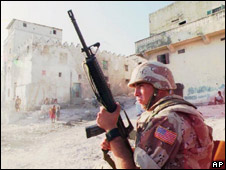
The New Face of War Somalia

Iraq

Rwanda Genocide

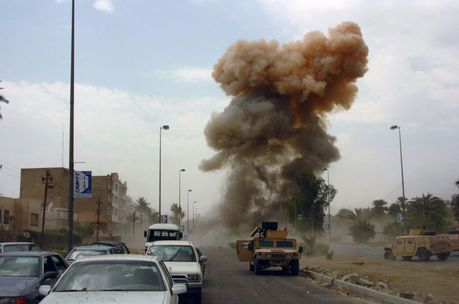
Deadly Large Shaped Charge IED

Afghanistan: Brits in Action Against Taliban Fighters

Despite the successes of Operation Desert Storm the planners failed to anticipate the end state of what would happen when hostilities had ceased.  The conditions of the cessation of hostilities were the chief contention of many against the end to the ground war at the 100 hour point. Some argue that the early end of hostilities allowed the victory to be less than it could have been.  Some even today argue that the offensive should have gone forward with the goal of overthrowing Saddam, however despite its success the Army was not prepared for an occupation nor would have the coalition supporting the US have survived an invasion and occupation of Iraq.  The actual mistakes were not in the stopping of the war, but rather the faulty conditions of the cease fire which enabled Saddam to recover the internal control of Iraq and put down attempts to revolt especially around Basra in the Shia south.  Rick Atkinson in his book Crusade notes that there were “errors would be made in establishing conditions of the ceasefire…but stopping the war was no mistake.”[xv]

While the debate about Operation Desert Storm still persists nearly 20 years after the fact the more important lesson was not learned.  That lesson was that Operation Desert Storm was not the new face of war, but rather an anomaly.  It was a war that was the swan song of the Cold War where the doctrine, technology, organization and trained to and practiced were inflicted on a less well trained and equipped version of the force that they were designed to defeat, forces which were badly deployed and already isolated by airpower even prior to the ground war. Once the ground war started the Iraqi forces in Kuwait and southern Iraq had little chance against the massive US and coalition force arrayed against it short of preemptively using the chemical and biological weapons of which Iraq had an ample supply.  It did not employ these weapons for a number of reasons, but without them Iraqi forces exposed in the open desert with no air support and cut off from much of their supply by constant air attacks were easily defeated.

In the past 20 years the United States and the west have only once been able to reprise the type of war displayed during Operation Desert Storm.  That was in the initial 2003 invasion of Iraq.  While the forces deployed were successful in defeating the Iraqi military and overthrowing Saddam Hussein they were insufficient to secure the country especially after the decision to disestablish all Iraqi police and military forces which might have assisted US forces in securing the country.  Perhaps planners forgot that German military police, police and civil servants were employed by the western allies in the period immediately after the war even during the period of “de-Nazification.”

Instead of a litany of Desert Storm like scenarios US forces as well as those of NATO and UN allies have had to deal with terrorism, insurgencies, revolutionary wars, tribal wars of genocide and wars waged by religious extremists. Despite more than a decade in dealing with these types of war, many in the military and political establishment as well as the media and public opinion believed that Desert Storm was the model for future wars. As such after the brief period of euphoria which occurred after the initial phase of Operation Iraqi Freedom the grim reality of war has stared Americans and others in the west in the face.  While the military has performed well, it has had to adjust and learn lessons about war that it wanted to avoid during and after Vietnam.  Those were the lessons of counterinsurgency, unglamorous and unexciting they were the lessons buried after Vietnam which were ignored until it was nearly too late in Iraq and possibly now too late in Afghanistan.  Desert Storm was an anomaly and one does not base the future of war on the swan song of the last war.


[i] Atkinson, Rick. Crusade: The Untold Story of the Persian Gulf War, Houghton Mifflin Company, Boston and New York 1993. p.253

[ii] Gordon, Michael R. and Trainor, Bernard E. The Generals’ War, Back Bay Books, Little Brown and Company, Boston and New York 1995. p.467

[iii] Peters, Ralph. Fighting for the Future: Will America Triumph. Stackpole Books, Mechanicsburg , PA p.xi

[iv] Ibid. Atkinson.

[v] Summers Harry G. On Strategy II: A Critical Analysis of the Gulf War, Dell Publishing a Division of Bantam Doubleday Dell Publishing Group, New York NY 1992. p.159

[vi] Halberstam, David. War in a Time of Peace: Bush, Clinton and the Generals, A Touchstone Book published by Simon and Schuster, New York 2001. p.153.  Gordon and Trainor note that the “never in the history of the Republic has a more competent and more professional military been fielded.

[vii] See Summers pp. 243-245.  Summers is very complimentary of the advances in the Joint aspects of command and control that impacted the campaign.  He notes several points at the strategic and operational levels which are complimentary of individuals including comparing General Colin Powell to General George Marshall. Gordon and Trainor writing a few years later are more critical of the “jointness” of the Americans including valid criticism of the air campaign, fire support coordination, and differences in doctrine between Marines and Army and the way the VII Corps and XVIII Corps operated based on the way that they trained and organized. Pp.471-473

[viii] Atkinson pp.309-310.  Atkinson discusses the fact that American commanders involved had seldom maneuvered units of battalion or brigade size prior to this operation.

[ix] The 24th made a great advance to the Euphrates but as Atkinson notes that it had “encountered no enemy resistance at all.” p.406

[x] See Atkinson pp. 441-448

[xi] See Atkinson pp.466-467.  In a 40minute fight the M1A1s destroyed 60 T-72s and dozens of APCs at a cost of one American KIA.  Atkinson notes that this battle like the action at 73 Easting “was waged with tactical acumen and devastating firepower….”

[xii] Ibid Atkinson pp.315-316.  Atkinson notes that there were 28 incidents with 35 killed and 72 wounded.

[xiii] Ibid. pp.405-407.  Schwartzkopf felt that Franks was not aggressive enough and that VII Corps was “sluggish” and “ceding the initiative to the Republican Guard.”  Schwatzkopf even threatened Yeosock that he would fire Franks.

[xiv] Ibid. Atkinson p.476

[xv] Ibid. p.477

Bibliography

Atkinson, Rick. Crusade: The Untold Story of the Persian Gulf War, Houghton Mifflin Company, Boston and New York 1993

Gordon, Michael R. and Trainor, Bernard E. The Generals’ War, Back Bay Books, Little Brown and Company, Boston and New York 1995

Halberstam, David. War in a Time of Peace: Bush, Clinton and the Generals, A Touchstone Book published by Simon and Schuster, New York 2001

Ralph. Fighting for the Future: Will America Triumph. Stackpole Books, Mechanicsburg , PA

Summers Harry G. On Strategy II: A Critical Analysis of the Gulf War, Dell Publishing a Division of Bantam Doubleday Dell Publishing Group, New York NY 1992.

8 Comments

Filed under Foreign Policy, History, iraq,afghanistan, Military, national security

The Afghan War 2009-2012: Lessons from Algeria 1954-1960 A Review of “A Savage War of Peace

“A Savage War of Peace.” By Alistair Horne. The New York Review of Books, 1977, 1987, 1996, 2006.  Maps. Photographs. Bibliography. Index. 608 pp.

Foreign Legion in Algeria

In light of the developing situation in Afghanistan and the plan to apply the counterinsurgency techniques of clear and hold, or “the oil slick” in that country it is wise to look at other instances of this type of warfare before criticizing those about to implement the strategy.  Of course when doing this the best place to look is history, especially where the strategy worked, at least until the DeGaulle government abandoned the nearly complete military success achieved by French forces in Algeria triggering a national crisis.

Alistair Horne’s “A Savage War of Peace” is a most needed addition for anyone seriously interested in studying the dynamics of insurgency and counterinsurgency warfare; especially political and military leaders of a western nation occupying a Moslem country.  Horne’s work is important and one of the few in English that cover this subject.  The two other books in English to cover the subject, albeit only on part of the campaign is Paul Aussaresses’ controversial memoir “The Battle of the Casbah” and Ted Morgan’s memoir “My Battle of Algiers” though useful suffer from the fact that they are limited in scope to the events the individuals experienced while serving as French Army officers in Algeria. In both the author’s personal biases are readily in evidence and by the fact that they were written many years after the events in question.  Since those books are heavily dependent on the author’s memories.

Paratroops of the First Colonial Paratroop Regiment in Algeria

Horne is not limited by these factors.  Horne is a historian who served as a British Army officer assigned to the MI5 in the Middle East and later as a foreign correspondent for the Daily Mail who has written a trilogy of excellent works on the Franco-German wars: The Fall of Paris: The Siege and the Commune 1870-1871, The Price of Glory: Verdun 1916 and To Lose a Battle: France 1940. As such his account is as close to being objective as any could be in the case of writing this particular history.

Horne approaches the subject from the perspective of the broader issues that France and the Fourth Republic were facing in 1954, economic, military and psychological recovery from the Second World War, the loss of colonies, defeat in Indochina culminating in the Dien Bien Phu debacle.  Such is important when examining a military campaign as the latter do not take place in isolation of other events in the life of a nation. When the history of the US campaigns in Iraq and Afghanistan are written they will have to take into account many other factors apart from the military operations.

Horne tackles the complex issues of the Algerian war in a multifaceted manner looking not only at the military issues, but the political and social issues faced by the French, the European Pied-Noir Algerians and the Algerian natives, both Berber and Arab alike.  Horne also looks at the conflict in the broader context of the Cold War, the emergence of the Non-Aligned nation movement and the rise of Arab nationalism, skillfully weaving the actions of these movements and key individuals such as Egypt’s Nasser, Khrushchev of the Soviet Union and the most influential, and President Jacques de Gaulle into the story of the Algerian conflict. Unlike other writers Horne had access to many of the individuals involved, including leaders from each rebel faction, the Pied-Noir and the French government and military.  Included in those he interviewed is Algerian President Boumedienne who had commanded rebels during the conflict and was instrumental in Algeria’s independence as well as Jacque Soustelle who had been Governor General from 1955 through 1956. These sources as well as numerous others help give his narrative a depth and subtlety lacking in the first hand English language memoirs and accounts.

Terrorism by FLN Militias and Sympathizers Caused Great Problems for the French

Horne begins his account with the story of the aborted revolt and massacre at Setif on May 8th, VE Day, 1945 and the attempt by the French government to reassert its control over Algeria. Of particular interest in this section is Horne’s analysis of the mistake of the Pied Noirs and the French government in not offering a settlement to the Algerian separatists under magnanimous terms due to the scale of the victory they had won following the Setif uprising and their security forces “decapitation” of the leadership of the various Algerian nationalist factions.  He compares the victory to that of the Israelis in the 1967 War and the political reaction of the Pied Noir to the Israelis, who instead of negotiating a settlement that could have long term effects advantageous to them from a position of strength determined to humiliate and subjugate their foe.[1] If the US military is able to reverse the situation in Afghanistan the United States and the Afghan government will need to be magnanimous to a defeated foe in order to prevent yet another repetition of another Al Qaida and Taliban resurgence.

French Paratroops Going House to House in Algiers

In examining the period before the actual outbreak of the war in 1954 Horne looks at the missed opportunities of the French to prevent it.  He also examines the development of the Algerian independence movement, especially the senior leaders of the movement; many of whom had served in the French Army during the Second World War with distinction. His portrayal of the conflicts within the independence movement, show that this was not a monolithic movement, but that each faction had its own goals which often were in conflict with other groups.  This is also the case in Afghanistan where a disparate number of ethnic, political, criminal, nationalist and terrorist groups who often are at war with each other.  Likewise, Horne’s treatment of the Pied Noir and certain parts of the French leadership examine how they too were divided at some points in regard to the ultimate plan for the relationship of Algeria to France.

Horne makes much of political mistakes and machinations of French leaders that culminated in the end of the Fourth Republic and subsequent impact on de Gaulle when he became president in June 1958.  Some mistakes that Horne explores are those committed in the immediate wake of Setif. He also examines mistakes during the revolt; such as not taking it seriously, to individuals in the National Assembly impeding the efforts of Soustelle to effect reforms and compromise between hard line factions in the Pied Noir and Moslem communities.[2] Likewise he notes how the draconian treatment of Algerian Moslems by the French Army in the early phases of the counter-insurgency effort, including the assignment of “collective responsibility” to punish communities for the actions of individuals helped alienate the populace and strengthen the insurgency.  Such was the case in the first part of the Iraq occupation and helped inspire that insurgency.  One member of Soustelle’s cabinet noted: “the cycle of repression getting ever tougher, and the rebellion ever stronger, will ruin all your efforts of pacification.”[3]

Besides political mistakes Horne examines issues in military tactics that seem to plague counterinsurgency efforts to the present time.  He describes the early application of heavy conventional forces in an attempt to defeat the insurgency.  Horne discusses unsuccessful efforts in 1954-1955 and how they not only did not destroy the insurgency but how the insurgency spread in response to the efforts.  The question: “Did ‘pacification’, for instance mean trying to regain the confidence of the inhabitants; or did it mean crushing the rebellion by whatever means available?”[4] This question is still asked today by soldiers fighting insurgencies and often the latter is counseled by those who still think along the lines of the conventional tactics of the Cold War and World War Two, which many conservative pundits are enamored with.  Horne also discusses the successful tactics of commando units used by General Challe to effectively combat the insurgency.[5]

Horne examines the attitudes of the French Army which in a sense fought the war for itself.  Armies that have fought many campaigns together often have a sense of comradeship that transcends even the loyalty that they have to their nation.  It is the understanding of a “Band of Brothers” and can be found throughout history.  When the histories of Iraq and Afghanistan are written they will certainly include the fact that many soldiers, Marines and Sailors engaged in actual combat operations fought for the men and women with whom they served more than for anything else.

The French Army felt little affinity for the Pied Noir who they often saw as only interested in their interest at the expense of the campaign.  Likewise the Army, felt little more than contempt for the French government which they felt had betrayed them. General Lorillot noted “They made fools of us in Indo-China…they screwed in Tunisia…We are being screwed in Morocco. But they will never screw us in Algeria. I swear to you. Let this be known in Paris.”[6] Instead attitudes of not losing, stopping the humiliations were animated by the feeling of anti-communism in French ranks, especially in the Elite Parachute, Foreign Legion, Commando and Colonials (Marines). The novel The Centurions and voiced the feelings of one Paratroop commander “We want to halt the decadence of the West and the march of Communism.”[7]

Horne provides a narrative analysis of the military campaigns within the Algerian War.  In particular he describes the successes of units designed to live among and better the lives of the Algerians and the SAS,[8] He describes the building of the border wall to keep weapons out of rebel hands.  He describes the “success” of units which specialized in torture,[9] which turned out to be helpful in the short run but which ultimately damaged the fabric of the Army.  Horne notes the effects of torture on soldiers who participated and how it negatively affected support of the war in France and internationally.[10] The use of torture in Algeria has parallels with Iraq. Horne notes: “one has to take into account all those factors…horror at the atrocities of the F.L.N., a determination not to lose yet another campaign, and the generally brutalizing effect of so cruel and protracted war.”[11]

The most powerful part of the narrative is the drama when French President de Gaulle was faced with the revolts of 1959. At this time the Pied Noir militias, dissatisfied with potential political settlements went to the barricades in Algiers and other major cities, assisted in some cases by Army units.  These forces again revolted against his attempts to mediate a settlement and were followed by the General’s revolt of April 1961 which nearly became a military coup in France itself.   President de Gaulle’s role in bringing these revolts to an end, without the collapse of the government or a civil war was miraculous.  Though his actions undercut the military success of the Army in Algeria which had virtually eliminated the insurgency his foresight in recognizing that France had a future not dependant on Algeria remaining French was exceptional.  The actions of de Gaulle should be studied by those who closely link their country’s future to holding a foreign country, even one that is considered an integral part of the mother country, as Algeria was to France.

Horne’s book is as timely as it was when first published, maybe more so with the current escalation in Afghanistan.  Along with works by David Galula “Pacification In Algeria 1956-1958, Bernard Fall “Street Without Joy” and “Hell in a Very Small Place,” Andrew Krepinevich’s  “The Army in Vietnam,” Brian McAllister Linn’s “The Philippine War: 1899-1902” and Ben Shepherd’s “War in the Wild East: The German Army and Soviet Partisans” Horne’s work is vital reading for military and political leaders fighting counter-insurgency operations.  Unfortunately many militaries are often enamored by high tech innovation are not often receptive to the decidedly human factors and strategies necessary to fight insurgencies until they experience frustration and failure attempting to use conventional forces and tactics to win a counter-insurgency campaign.  Effective intelligence, efforts to win the hearts and minds of the populace by protecting them, knowledge of public affairs and the effect of media on operations are all key elements of a proper counter-insurgency campaign are covered by Horne. Horne’s work reminds us that these conflicts are not won by the forces with the greatest firepower or most modern weapons. This is something that the United States and its NATO and other Allies in Afghanistan should never forget.


[1] Horne, Alistair. A Savage War f Peace: Algeria 1954-1962. The New York Review of Books, New York, NY 1977, 1987, 1996 2006. p.69

[2] Ibid. pp. 113-114

[3] Ibid. p.115  Some would later compare the attitudes of the French Army to those of the Nazis. In one point of his narrative Horne notes the attitude of an officer who saw nothing wrong with the tactics used by the Nazis in the Second World War.

[4] Ibid. p.112.  Another question noted is something that seems to be commonplace in the Iraq War ““Limited Repression” did not always make the clearest sense to a patrol of young soldiers caught in a vicious ambush.” When one reads Horne’s accounts one sometimes almost feels that he is writing about the current American experience in Iraq.

[5] Ibid. pp. 334-335

[6] Ibid. pp.175-176

[7] Ibid. p.176

[8] The SAS Section Administrative Specialise first set up by Soustelle.  These units had great success but also suffered heavy losses as their efforts were recognized as having a positive effect by the FLN and other Algerian rebel groups.

[9] Such as the 11th Shock Regiment

[10] See pp. 195-207.

[11] Ibid. p.198.

2 Comments

Filed under Foreign Policy, History, iraq,afghanistan, Military

Lessons for the Afghan War: The Effects of Counterinsurgency Warfare on the French Army in Indo-China and Algeria and the United States Military in Vietnam

Note: This is an article that I wrote for a class a year ago which has been updated in order to show the lessons of history that can be useful in the current wars in Iraq and Afghanistan.

legion indo-china

French Foreign Legionnaires in Indo-China

The effects of the wars Indo-China, Algeria and Vietnam on the French and American military organizations internally and in relationship to their nations piqued my interest in 2005. The wars in Iraq and Afghanistan forced me to start asking the question of what short and long term effect that these wars might have on the U.S. military.  As such I wondered what historical precedent that there was for the question. My interest was furthered by my deployment with Marine and Army advisors to Iraqi Army and Security forces in 2007-2008.  My search led to the French experiences in Indo-China and Algeria and the American experience in Vietnam.  Recently with the Iraq war winding down and ongoing war in Afghanistan which has gone from apparent victory to mounting concern that the effort could fail as the Taliban and Al Qaida have regained momentum amid widespread corruption by the Afghan government and weakness of NATO forces.

Thesis

The counterinsurgency campaigns conducted by the French and American militaries in Vietnam and Algeria had deep and long lasting effects on them.  The effects included developments in organization and tactics, relationship of the military to the government and people, and sociological changes.  The effects were tumultuous and often corrosive.  The French Army in Algeria revolted against the government. The US Army, scarred by Vietnam went through a crisis of leadership and confidence which eventually resulted in end of the draft and formation the all volunteer military.  The effects of the Iraq and Afghanistan wars are yet unknown but could result in similar situations to the militaries and governments involved,

Historiography

legion algeriaForeign Legion in Algeria

There is a wealth of data regarding these wars. There are several types of materials. The accounts of soldiers, diplomats and reporters who experienced these events contained in memoirs and diaries. The best include David Hackworth’s About Face and Steel My Soldiers Hearts; and General Harold Moore’s We Were Soldiers Once… and Young. French works include Jules Roy’s The Battle of Dien Bien Phu and General Paul Aussaresses’ The Battle of the Casbah. There are innumerable popular accounts written by NCOs and junior officers.  These accounts may contain a wealth of information, but are limited by a number of factors. First, the authors, veterans of the wars, only saw part of the overall picture and first-hand experience in war can skew a writer’s objectivity. Those who have been through the trauma of war interpret war through their own experience.  Physical and psychological wounds can have a major impact on the interpretation of these writers as can their experience and political ideology. Finally few of these writers are trained historians. Despite this they can be a valuable resource for the historian.

Another source is found in the official histories written by the military forces involved in the wars. Often these incorporate unit histories and individual narratives and analyze specific battles and the wider campaigns, but do little in regard to broader conditions that affected operations.  While a good source, many are not as critical of their institutions as they should be.

Histories by trained historians and journalists provide another view. The most insightful of the journalist accounts include Bernard Fall’ Street Without Joy and The Siege of Dien Bien Phu: Hell in a Very Small Place. A limitation of all of these is that they are often heavily influenced by the political and societal events. This means that earlier accounts are more likely to be reactive and judgmental versus critical and balanced. Later accounts have the benefit of access to the opposing side and documents not available to earlier writers.  Alistair Horn in A Savage War of Peace provides one of the most informative and balanced accounts of the war in Algeria. Martin Winslow does the same regarding Dien Bien Phu in The Last Valley.

Another source is the writings of participants who critically examine their participation in the wars.  Many of these, French and American provide insights into the minds of leaders who are reflective and critically examine what happened to their military institutions in these wars. The best of these is French Colonel David Galula whose books Pacification in Algeria 1956-1958 and Counterinsurgency Warfare: Theory and Practice provide first-hand accounts of the subject combined with critical reflection. Galula’s works have been important to John Nagl, General David Petreus and others who helped write the U.S. Army and Marine Corps Counterinsurgency manual. Andrew Krepinevich in The Army and Vietnam provides a critical analysis of the U.S. Army in Vietnam.  Other sources, both online and print, such as RAND, provide excellent analysis of selected topics within the scope of this essay, especially COIN.

Dien Bien Phu 1French at Dien Bien Phu

The ability to dispassionately and critically examine and evaluate these sources over a period of several years was and integrate them with my own experience has been a critical to me.  It has changed the way that I look at sources, and caused me to be much more aware of bias, the limitations of sources and the need to have a multiplicity of sources and points of view and to be suspicious of contemporary reports and accounts of the war in Afghanistan regardless of the source.

Analysis of the Issue

viet minh supplyViet Minh Supply Columns were Never Stopped by French Air power or Artillery

The conflicts in French Indo-China, Algeria and Vietnam had major effects on the French and American military institutions. These effects can be classified in a number of ways. First, the manner in which each military waged war, including tactics employed and use and development of weapons systems was changed.  The use of airpower, especially helicopters and use of riverine forces provided an added dimension of battlefield mobility but did not bring victory. As John Shy and Thomas Collier noted regarding the French in Indo-China: “French mobility and firepower could take them almost anywhere in Vietnam, but they could not stay, and could show only wasted resources and time for their efforts.”[1]

Joint_operation_with_ARVN_112-1Joint US and ARVN Operation

The use of intelligence and psychological warfare, including the use of torture became common practice in both the French and American armies.  The wars had an effect on the institutional culture of these armed services; neither completely embraced the idea of counterinsurgency and for the most part fought conventionally. Galula notes how the “legacy of conventional thinking” slowed the implementation of proper counterinsurgency tactics even after most commanders learned that “the population was the objective.”[2] Krepinevich notes that “any changes that might have come about through the service’s experience in Vietnam were effectively short-circuited by Army goals and policies.”[3] Finally the wars had a chilling effect on the relationship between the both militaries and the state, veterans from each nation often felt betrayed or disconnected from their country and people.  Unfortunately instances of all of these have occurred or can be seen in the current wars in Iraq and Afghanistan.

VIETNAM DIEN BIEN PHUFrench Prisoners after Dien Bien Phu: Many Survivors Would be Fighting in Algeria within Two Years
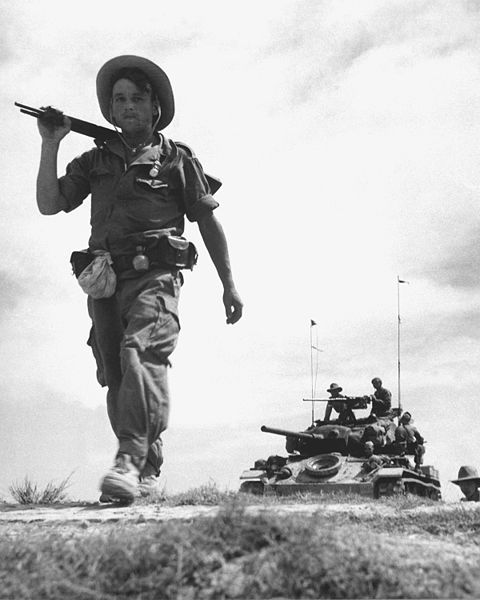
The French Army had the misfortune of fighting two major insurgencies back to back.  The French military was handicapped even before it went into these wars. The Army came out of World War II defeated by the Germans, divided by loyalties to Vichy or one of the Free French factions. They were humiliated by the Japanese in Indo-China, while in Algeria France’s crushing defeat was devastating.  “Muslim minds, particularly sensitive to prestige and baraka, the humiliation made a deep impression.”[4] French society was as divided as the Army; the economy in shambles, the government weak and divided.  The Viet-Minh had prepared well making use of time and training to get ready for war.  “Once full-scale hostilities broke out, the French, for budgetary and political reasons could not immediately make the large scale effort to contain the rebellion in the confines of small-scale warfare.”[5]

In both Indo-China and Algeria the French attempted to fight the budding insurgencies in a conventional manner.  This was particularly disastrous in Indo-China when on a number of occasions battalion and regimental combat team sized elements were annihilated by Viet-Minh regulars.  Between October 1st and 17th 1950 every French garrison along the Chinese border was over-run.  The French lost over 6000 troops and enough equipment to outfit “a whole additional Viet-Minh division.” It was their worst colonial defeat since Montcalm at Quebec.[6] In Algeria when the fight began in earnest France’s “ponderous ponderous N.A.T.O forces found themselves at an impossible disadvantage,”[7] unable to have any influence off the main roads.

french troops indochinaFrench Troops and Tanks in Indo-China: Road Bound Forces were often Defeated by Viet- Minh Forces

In Vietnam the French did not absorb the lessons of fighting a well established insurgent force. French forces hoped to draw the Viet-Minh main forces into battles of attrition where their superior firepower could be brought to bear. Such was the case at Na San in December 1952 where the French established an “Air ground base” deep in Viet-Minh territory to draw Giap’s forces into open battle.  This worked, but just barely. General Giap, short of artillery and not planning on a long battle frittered away his troops in mass charges.  However, the French, because of Na Son assumed they had found the key to victory. In their embrace of the “air ground base concept, French staff officers were following an intellectual tradition that had long been prone to seduction by elegant theories.”[8] The result was the disaster at Dien Bien Phu the following year.  The destruction of the elite Group-mobile 100 near Pleiku in 1954 was the coup de grace. In Indo-China the French made limited use of helicopters, used paratroops widely, and developed riverine forces. One thing they were critically short of was significant tactical air support.[9]

The most inventive French creation in Indochina was the GCMA/GMI forces composed of mountain tribesmen led by French NCOs and Junior Officers.  They were designed to provide “permanent guerilla groups rooted in remote areas” to harass and interdict Viet-Minh forces.[10] Trinquier noted that at the time of the Dien Bien Phu defeat that these forces had reached over 20,000 trained and equipped maquis in the Upper Region of Tonkin and Laos. These forces achieved their greatest success retaking Lao Cai and Lai Chau May 1954 as Dien Bien Phu fell.[11] Trinquier stated that “the sudden cessation of hostilities prevented us from exploiting our opportunities in depth.”[12] The GMI units and their French leaders were abandoned fighting on for years after the defeat. One account noted a French NCO two years after the defeat cursing an aircraft patrolling the border “for not dropping them ammunition so they could die like men.”[13] In the end the French left Indo-China and Giap remarked to Jules Roy in 1963 “If you were defeated, you were defeated by yourselves.”[14]

Algeria was different being part of Metropolitan France; there the French had support of European settlers, the pieds-noir. Many French soldiers had come directly from Indo-China. There French made better adaptations to local conditions, and realized that they had to win the population and isolate the insurgents from it and outside support. As Galula said, victory is the destruction of the insurgent’s political and military structures, plus “the permanent isolation from the population, not forced upon the population, but by and with the population.”[15] The lessons learned by the French in both Algerian and Indo-China were lost upon the Americans.

4CavVnM48US Heavy Forces including Armor had Little Utility in Many Parts of Vietnam
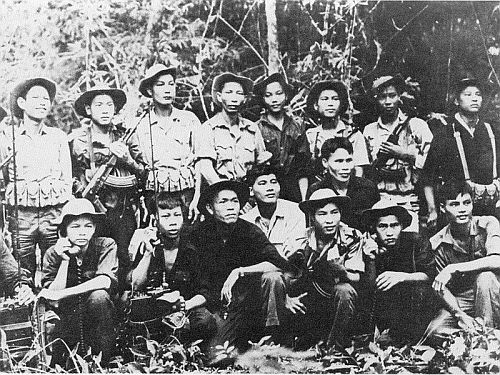
The United States military, especially the Army approached the Vietnam War with a conventional mindset, referred to as the “Army concept.” [16] It not only approached the war in this manner, but it trained and organized the South Vietnamese forces, ARVN into the American model. Americans re-organized ARVN into divisions “based upon the U.S. divisional force structure.”[17] Due to the imposition of an American template and organizational structure upon it, ARVN was not structured appropriately for the threat that it faced.”[18] The results were as to be expected. Large numbers of American troops poured in taking the lead against the North Vietnamese and Viet Cong . The American method of counterinsurgency was costly.  It was “almost a purely military approach”[19] which ignored political and social realities on the ground. Instead of focusing on protecting the Vietnamese people and denying the Communists a safe haven the Army in particular believed that massive firepower was the best means to be“utilized by the Army to achieve the desired end of the attrition strategy-the body count.”[20] In the end the American defeat was a “failure of understanding and imagination.”[21] The one shining success was the Marine Corps experimentation with “Combined Action Program” platoons which lived in the villages with militia for long periods of time. This program produced great results “in eliminating local guerillas”[22] but was killed by the Army.

NlfmainforceNVA Main Forces

These wars tore the heart out French and American armies. For the French the defeats inflicted a terrible toll.  In Indo-China many French career soldiers felt that the government’s “lack of interest in the fate of both thousands of missing French prisoners and loyal North Vietnamese…as dishonorable.”[23] Divisions arose between those who served and those who remained in France or Germany and created bitter enmity between soldiers.  France would endure a military coup which involved many who had fought in Vietnam and Algeria. Having militarily won that war, were turned into what Jean Lartenguy called The Centurions had been turned into liars.”[24] They were forced to abandon those who they had fought for and following the mutiny, tried, imprisoned, exiled or disgraced. Colonial troops who remained loyal to France were left without homes in their “independent” nations.  They saw Dien Bien Phu as the defining moment. “They responded with that terrible cry of pain which pretends to free a man from his sworn duty, and promises such chaos to come: ‘Nous sommes trahis!’-‘We are betrayed.’”[25]

war protestUS Veterans of Vietnam Would Return to a Deeply Divided Country that turned its Back on Them for Years

The U.S. Army left Vietnam and returned to a country deeply divided by the war.  Vietnam veterans remained ostracized by the society until the 1980s.  As Harold Moore recounts “in our time battles were forgotten, our sacrifices were discounted, and both our sanity and suitability for life in polite American society were publically questioned.”[26] The Army endured a massive reorganization that resulted in the formation of the All-Volunteer force, which would redeem itself and emerge from the ashes in the Gulf War. The Americans would not learn the lessons of revolutionary warfare and counterinsurgency until forced to do so in Iraq in 2004-2007. These lessons however were not applied to Afghanistan and the Taliban which seemed to have been defeated have regained the initiative, policy is being debated amid discord in the west and there are reports of American and NATO forces becoming discouraged by the course of the war and concern that their efforts will be in vain. This is a dangerous situation to be in and if we learn from anything from our own history as well as that of foreign military forces in Afghanistan we need to be very careful in implementing strategy to get whatever we do right.

training team baseTraining Team Base in Afghanistan: Some of these Bases Have proven Vulnerable to Well Planned and Coordinated Taliban Attacks
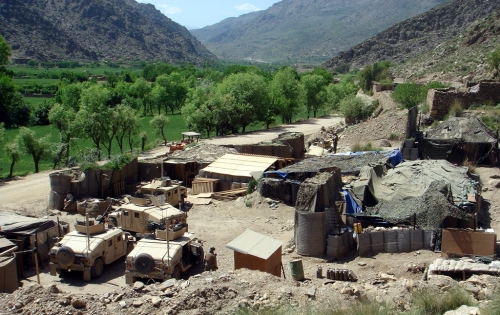
Conclusion

The effects of these wars on the French and American military establishments were long lasting and often tragic. The acceptance of torture as a means to an end sullied even the hardest French officers. Men like Galula and Marcel Bigeard refused to countenance it, while others like Paul Aussaresses never recanted.  Americans would repeat the tactic at Abu Ghraib rallying the Iraqis against them and nearly losing the war because of it.

For the Americans, the effects of Vietnam continued at home. Race riots tore at the force while drug addictions and criminal activities were rampant.  Many incompetent leaders who had “ticket punched” their careers kept their jobs and highly successful leaders who became whistle blowers like Hackworth were scorned by the Army institution.  The years following Vietnam were a severe test of the US Military and took years for the military to recover.  Likewise It took years before either the French or American veterans again felt a part of their countries.  They ended up going to war, and when it was over; feeling abandoned, their deepest bonds were to their comrades who had fought by their side.

What are the lessons to be learned from these campaigns as well as from the various accounts?  Andrew Krepinevich prophetically noted that the failure to learn the lessons of Vietnam “represents a very dangerous mixture that in the end may see the Army again attempting to fight a conventional war against a very unconventional opponent.”[27] Obviously, there are lessons to be learned, especially in understanding the nature of revolutionary war as well as the culture and history of our opponents. The U.S. has made some improvement in this regard but there is still much to be learned, especially since after the war the Army was “erecting barriers to avoid fighting another Vietnam War.”[28] From these wars we learn that nations and incompetent governments who mismanage wars can alienate themselves from the soldiers that they send to fight, with serious consequences.  As far as historiography we learn that certain historical fallacies are evident when one reads the accounts critically and recognize the bias and limitations of the various sources.


[1] Shy, John and Collier, Thomas W. “Revolutionary War” in Makers of Modern Strategy from Machiavelli to the Nuclear Age,” Peter Paret editor. Princeton University Press, Princeton N.J. 1986  p.849

[2] Galula, David. Counterinsurgency in Algeria: 1956-1958. RAND Corporation, Santa Monica, CA. 2006. First published by RAND in 1963. p.244

[3] Krepinevich, Andrew F. “The Army and Vietnam,” The Johns Hopkins University Press, Baltimore and London, 1986 p.213

[4] Horn, Alistair. “A Savage War of Peace: Algeria 1954-1962,” a New York Review Book published by the New York Review of Books, New York, 1977, 1987, 1996, and 2006 p 41

[5] Fall, Bernard B. “Street Without Joy: The French Debacle in Indochina.” Stackpole Books, Mechanicsburg PA, 2005, originally published by Stackpole Publications 1961 p.27

[6] Ibid. p.33

[7] Horn. p.100.

[8] Windrow, Martin. “The Last Valley: Dien Bien Phu and the French Defeat in Vietnam,” Da Capo Press, Novato, CA 2006, originally published by Weidenfeld and Nicholson, London 2004 p.63

[9] Fall, Bernard B. “The Siege of Dien Bien Phu: Hell in a Very Small Place.” Da Capo Press, New York an unabridged reprint of the 1st Edition reprinted in arrangement with Harper and Row Publishers, New York. 1967 pp. 456-457  Fall discusses in depth the lack of French Air support and the antecedents that led to the shortage following World War II.

[10] Pottier, Philippe(2005)’Articles: GCMA/GMI: A French Experience in Counterinsurgency during the French Indochina War’, Small Wars & Insurgencies,16:2,125 — 146 http://dx.doi.org/10.1080/09592310500079874

[11] Simpson, Howard K. “Dien Bien Phu: The Epic Battle America Forgot,” Potomac Books Inc. Washington DC 2005, originally published by Brassey’s Inc. 1994 pp. 170-171

[12] Trinquier, Roger. “Modern Warfare: A French View of Counterinsurgency,” translated from the French by Daniel Lee with an Introduction by Bernard B. Fall. Praeger Security International, Westport CT and London. 1964 and 2006. Originally published under the title “La Guerre Moderne” by Editions Table Ronde. p.87

[13] Windrow. p.652.

[14] Roy, Jules. “The Battle of Dien Bien Phu” Carrol and Graf Publishers, New York 1984. Translated from the French by Robert Baldrick. English translation copyright 1965 by Harper and Row Publishers, New York. p.xxx

[15] Galula, David. “Counterinsurgency Warfare: Theory and Practice.” Praeger Security International, Westport CT 1964 and 2006 p. 54

[16] Krepinevich. p.213

[17] Ibid. p.24

[18] Nagl, John A. “Learning to East Soup with a Knife: Counterinsurgency Lessons from Malaya and Vietnam,” University of Chicago Press, Chicago and London, 2005 p.138

[19] Shy. p.856

[20] Krepinevich. p.202

[21] Spector, Ronald H. “After Tet: The Bloodiest Year in Vietnam,” Vintage Press, a division of Random House, New York, 1993 p.314

[22] Millett, Allan R. and Maslowski, Peter. “For the Common Defense: A Military History of the United States of America.” The Free Press, a division of Macmillian, Inc. New York, 1984 p.555

[23] Windrow. p.655

[24] Ibid. p.657

[25] Ibid.

[26] Moore, Harold G and Galloway, Joseph L. “We were Soldiers Once…and Young: Ia Drang: The Battle that Changed Vietnam,” Harper Collins Publishers, New York NY 1992  p. xx


[27] Krepinevich. p.275

[28] Ibid. p.274

1 Comment

Filed under History, iraq,afghanistan, Military, vietnam

The most dangerous assignment: 4 More Advisers Die In Afghanistan

training team baseIsolated Embedded Training Team Base

Once know and relatively unglamorous group of American military men have suffered multiple casualties in a single engagement.  These men belong to are small units that do not have a lot of organic firepower.  They usually operate in remote areas far from immediate assistance if they get in trouble.  When one of these units suffers casualties, especially where they lose 3-5 men in one engagement they might have lost 20-25% of their unit.

On September 8th a team of these men was ambushed while on foot going to an Afghan with Afghan soldiers to meet tribal leaders with the intent of establishing a government presence in a hostile area.  In the ambush four were killed, three U.S. Marines and one U.S. Navy Hospital Corpsman attached to them.  On Tuesday the 8th Gunnery Sgt. Edwin W. Johnson Jr., 31, of Columbus, Ga., 1st Lt. Michael E. Johnson, 25, of Virginia Beach, Va., Staff Sgt. Aaron M. Kenefick, 30, of Roswell, Ga. and Petty Officer 3rd Class James R. Layton, 22, of Riverbank, Calif., were while working as trainers to Afghan soldiers on a mission to search for weapons and then meet village elders under an agreement to establish government authority there.  They were killed in “a complex attack according to a U.S. Military spokesman.  According to McClatchy news service who had a reporter that accompanied the mission, insurgents had set up positions in the village and in the mountains on both sides and apparently attacked as the men neared the village. 1st LT Johnson was wounded and while being attended Navy Hospital Corpsman Third Class James R. Layton when they both came under attack.  Both were killed.  Another Marine told the McClatchy reporter that they’d found the wrappings of bandages and other medical gear strewn around Layton and Johnson.  Eight Afghan troops and police and the Marine commander’s Afghan interpreter also died in the ambush and the subsequent battle that raged from dawn until 2 p.m. around the remote hamlet of Ganjgal in eastern Kunar province, close to the Pakistan border.

traiining team with afghan armyUSMC Advisers with Afghan Counterparts

The McClatchy reporter said: “We walked into a trap, a killing zone of relentless gunfire and rocket barrages from Afghan insurgents hidden in the mountainsides and in a fortress-like village where women and children were replenishing their ammunition.”  The reporter said that “U.S. commanders, citing new rules to avoid civilian casualties, rejected repeated calls to unleash artillery rounds at attackers dug into the slopes and tree lines — despite being told repeatedly that they weren’t near the village.”

The battle must have been intense.  I have been on foot patrols in areas crowded with Iraqis far away from significant support where if an insurgent group had attacked us we would have easily been overwhelmed. This is part of the world of the U.S. Military in the embedded training teams which work closely with Afghan and Iraqi soldiers.  I spent a lot of time with the advisers to Iraqi Army. Border and Port of Entry troops, Police and Highway Patrol spread across the entirety of Al Anbar Province.  These men and women are seldom thought of or mentioned by the press or even the military. . They come from all branches of the military and serve as advisers, trainers and mentors to these nations’ security forces.  The duty is dangerous.  The advisers, be they to the military, police, or civil administrations often work in the most isolated places in these countries and are stationed in small teams with the Iraqis and Afghans that they advise.  They are often far from the “big battalions” that have lots of firepower available and often operate out of larger and more secure bases with air support close at hand. Earlier in the year there were a number of incidents where advisers were killed by renegade soldiers or police, or by infiltrators posing as security personnel.  Two soldiers were working with an Iraqi unit in doing humanitarian work in a village when attacked and killed by someone who had infiltrated the Iraqi security forces.  . On March 27th Navy LT Florence Choe and LTJG Francis Toner IV were killed by an Afghan insurgent posing as an Afghan Army soldier. All of these events triggered anxiety in me as I remembered how many times I was incredibly exposed to danger conducting similar operations.

This incident was especially chilling as I read the reporter’s account of the ambush.  “Dashing from boulder to boulder, diving into trenches and ducking behind stone walls as the insurgents maneuvered to outflank us, we waited more than an hour for U.S. helicopters to arrive, despite earlier assurances that air cover would be five minutes away.”  According to the reporter Marine Maj. Kevin Williams” the commander of the team said: “We are pinned down. We are running low on ammo. We have no air. We’ve lost today, through his translator to his Afghan counterpart, responding to the latter’s repeated demands for helicopters.”  When I read this my mind flashed back to being in the middle of a massive crowd at the border crossing of Waleed on the Iraqi-Jordanian border.  There were about nine of us, of which only 8 were armed as I am not allowed by the U.S. interpretation of the law of war to carry a weapon.  There were thousands of Iraqis and others around us, very few border troops or port-of-entry police anywhere near us.  The port of entry had been the scene of numerous attempts to smuggle weapons, materials, and other supplies, drugs and to Iraq insurgents and Al Qaida.  Very few US troops were stationed there and many of these were dispatched off of the base at any given time.

The advisers are drawn from all services.  They are all Individual Augments that come from both the Active and Reserve components.  They do not deploy with their own units, which means that they go to war with people that they might have trained alongside getting ready for the mission, but otherwise have not served with.  When they come home they go back to their old assignments or new orders and are separated from the men and women that they served alongside for 7 to 15 months.  In other words they are isolated when they return home and go back to places where the majority of personnel, even those who have been “in country” have no earthly idea or appreciation of the conditions that they served in and dangers that they faced.  This happened to me when I returned and I went through an emotional collapse as the PTSD that I did not know I had kicked my ass.  Sights, smells, noises, crowds, airports and in fact almost everything but baseball diamonds caused me to melt down as they all brought the danger back to me. Don’t get me wrong, my tour in Iraq was the highlight of 27 plus years in the military, the part of which I am the most proud.

I have a special place for these men and women.  I served with them in Iraq’s Al Anbar Province as the first Navy Chaplain, and one of the first chaplains of any service to be assigned to cover these teams since Vietnam.  My assistant, RP2 Nelson Lebron and I deployed together from out unit.  I had prepared well.  I had been on the bubble to deploy for months.  My background in military history and past service with both the Army and Marines helped me. Likewise my military and civilian education helped me.  Shortly before we were notified of the deployment I went to the Jordanian Army Peace Operations Training Center course on Iraqi culture, religion and society.  I had served as a chaplain in the trauma department of one of the largest trauma centers in the country.  RP2 Lebron had deployed multiple times to Iraq, Beirut and Afghanistan where he was awarded the Defense Meritorious Service Medal (no small feat for an E-5).  He is also an incredibly gifted boxer, kick boxer and martial artist who has fought on Team USA and holds more title belts than I can count.  He most recently won the Arnold Schwarzenegger Classic. I had served with him before and he knew that his mission was to keep me safe.  I don’t want to sound arrogant, but the Chief of Staff of the Iraq Assistance Group said that we were “the best ministry team he had seen in 28 years in the Army.”

When we went to Al Anbar we were sent out with the Marines and Soldiers advising the 1st and 7th Iraqi Army Divisions, The Iraqi Police, Highway Patrol, the 2nd Border Forces Brigade and Port of Entry Police.  We operated in a area the size of the state of Oregon.  In some cases it would take us 2 days by air and convoy to reach isolated teams on the Syrian border.  When you travel by air in Iraq you are always at the mercy of the weather and aircraft availability. I had the rare privilege as a Lieutenant Commander to be able to arrange all of my own air transportation.  Most people, including people higher ranking than me had to depend on others to do this for them.  We worked with our advisers to get out to them.  We would be out 5-12 days at a time with anywhere from 4 to 7 days between missions.  In our 7 months we traveled over 4500 air miles and 1500 ground miles.  Almost all of our air travel was rotor wing. We flew in CH-46, CH-47 and MH-53s and the MV-22 Osprey.  Our convoys were usually not larger than 3 American HUMMVs and sometimes a few Iraqi vehicles.  Our biggest guns were .50 cal or M240B machine guns.

Dinner with Geneal SabahDinner with General Sabah in Ramadi

Many places we served were in places that had no large forces in position to help us if we got in trouble.  Even on the bases we were isolated.  Our teams were with the Iraqis in almost all cases.  We often ate in Iraqi chow halls and used Iraqi shower trailers.  Our advisers had us meeting their Iraqi counterparts.  We met and dined with Iraqi Generals, had ch’ai (tea) with small groups of Americans and Iraqis and got out with the Bedouins. We were in a number of particularly sensitive and dangerous situations with our advisers; one which I cannot go into great detail involved a senior advisor having to inform a new Iraqi Brigade Commander that a member of his staff was engaged in illegal activities and who had put out contracts to kill the American officer.  The bad Iraqi officer was confronted and relieved in a tense meeting where both Nelson and I were with that Colonel and two other advisors as they made the confrontation in the Iraq C.O.’s office, a confrontation that got quite heated until the Iraqi C.O. shut him up. At one point the cashiered officer appealed to the American “Imam” that he was a faithful Moslem, to whit the American Colonel and I asked him how a person who was living a good Moslem life could steal from his own countrymen and supply his county’s enemies with what they needed.

Waleed trip 006Team at Waleed on the “secure” side of the Port of Entry
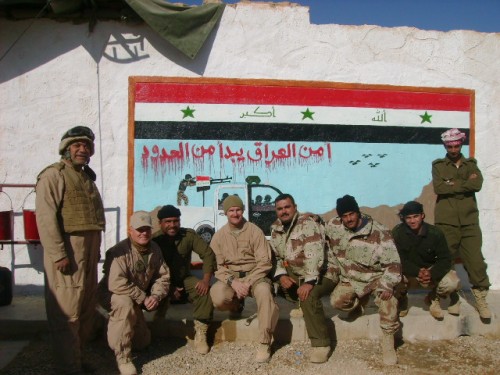
It was an incredible, once in a lifetime tour serving with some of the greatest Americans and Iraqis around. Iraqi soldiers in with our convoys would ask me to bless their trucks with Holy Water like I was doing with the American trucks.  I came to admire many of the professional Iraqi officers that I came to know and pray for the people of Iraq, that God would grant them peace. They are wonderfully hospitable and gracious.  We were often treated to food and tea by Iraqi soldiers, and civilians.  After nearly 30 years of nearly continuous war, dictatorship and terrorism, they deserve peace and security.

Me BTT CO and Iraqi LeadersAdvisers and Iraqi Border Troops near Syria
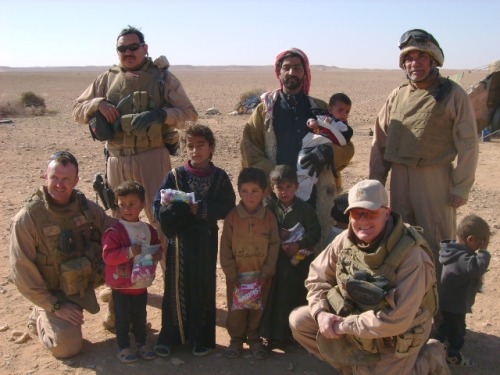
I had one Iraqi operations officer, a Sunni Muslim tell me that he wished that his Army had Christian priests because they would take care of his soldiers and had no political axe to grind. He said that the Army did not trust most Imams or Mullahs because they had compromised themselves during the civil war.  Another officer, a Shia Muslim came to me to thank me for being there to take care of our Marines.  He said that he, an Iraqi Shia Arab, hoped that if they had any problems from the Persians (Iranians), that we would help them.  These is little truth to what is floated that Iraqi and Iranian Shia like each other.  The memories of the past die hard in the Middle East.  When Persia ruled Iraq they treated the Arabs like dirt. Likewise the memories of the Iran-Iraq war are still alive.  Iraqi Arabs, Sunni, Shia and even Christian have little love for the “Persians.”  General Sabah of the 7th Division had us to his quarters for dinner. We had a wonderful and friendly discussion about similarities and differences in Christianity and Islam. We departed friends. The last time I saw him ws in the Ramadi heliport.  He saw me, ran up to me in from of his staff and Americans in the little terminal and gave me a bear hug, telling all that I was his friend. Another Iraqi General told me just before we left to come back as a tourist in 5 years because everything would be better.  I honestly think that he is right.  I hope to go back someday.  It would be a privilege to see my Iraqi friends again.

Me and BTT with Bedouin KidsWith a Bedouin Family

At the same time Afghanistan is a different animal. Iraq was not as easy of place for Al Qaida to work in and the Iraqis have a much more developed national identity which they trace back to the Babylonians and Chaldeans.  They also have adopted a lot of western ways.  Insurgents there once they had lost the confidence of the Iraqis lost traction.  In Afghanistan there is no real collective national identity and the form of Islam is much more severe than almost all Iraqi variants.  The Afghans insurgents have also due to the terrain; climate and inability of invaders to gain the confidence of the population have used the inability of invaders against them as they bring the population back under their control, sometimes quite peacefully.  The Taliban have secure bases on the Pakistani side of the border as did the North Vietnamese and they have the support of much of the population due to the unpopularity and corruption of the Afghan government.  The Taliban have begun to operate in larger better organized units and last year a battalion sized element attempted to overrun a small NATO base.  They did this with the Russians as well.  One troubling comment was reported about something overhead on the Taliban radio: “We will do to you what we did to the Russians,” the insurgent’s leader boasted over the radio, referring to the failure of Soviet troops to capture Ganjgal during the 1979-89 Soviet occupation.”  They also have outlasted or defeated a host of powerful empires.  The war in Afghanistan has much more in common with Vietnam than it does with Iraq. Counter Insurgency techniques learned in Iraq will be helpful but because of the terrain, climate and nature of the opposition will be tougher to execute and in order to have any chance of getting out of Afghanistan having accomplished the mission we will end of taking more casualties, especially in the teams of advisers.  Iraq was different, despite the problems and having to be rebuilt the Iraqi Army has a long history and tradition dating back to the Ottoman Empire, they led the way to westernizing Iraq and helping build an Iraqi identity, this is not the case in Afghanistan.  What happened to this team could easily happen to others and it looks to me like someone set them up to be hit, probably a Taliban sympathizer in the Afghan security forces or government. Afghanistan is much more treacherous than Iraq and in my view will be much more difficult.

What happened at Ganjgal is being investigated and in our area it is front page news as 1st Lt Johnson was from Virginia Beach.  The Taliban want to use events like this to break down the American home front and 8 years after the attacks of 9-11 2001 with that a fading memory they may well do this.  If they do Afghanistan will become Vietnam in the mountains.  We will be forced to withdraw and and the NATO alliance will be severely tested.  A defeat would have wide ranging consequences beginning in Afghanistan as it would fall back into the medieval world of Taliban rule, and would likely spread to Pakistan which which is already under severe strain.  This could threaten the Pakistani nuclear weapons.

Our advisers build bridges between peoples of different history and culture.  They are the unsung heroes of these wars and will likely never get credit for all that they have done.  Operating in isolation they are exposed to more danger that the average unit. They have my highest admiration and I hope that if you know one of these men or women that you will thank them.  I pray that they will all come home safe and be blessed with success.  I would certainly serve with them again at any time and in any place.

Please keep the families of the most recent casualties in your prayers. Peace, Steve+

1 Comment

Filed under iraq,afghanistan, Tour in Iraq

Random Musings-Dos De Mayo, Flu Precautions gone wild Baseball and the Burbs

Today we had a little get together with some friends to celebrate Dos De Mayo.  It was a nice gathering, plenty of great food, good beer and nice conversation.  After folks had left our friends Diane and Tim made a late appearance after the evening Mass.  It was good to spend a couple of hours with them as well.

We were informed that to take no chances regarding the Swine Flu that the Diocese of Richmond has imposed a number of rules regarding the liturgy.  During the Peace there will be no shaking hands, hugging, kissing, snuggling or heavy petting.  Instead parishioners will make a slight bow to each other kind of like those in a Japanese War Movie.  This is not all, during the Lord’s Prayer there will be no hand holding.  While I am a proponent of taking the potential threat of H1N1 seriously, see my previous posts in which I castigate people who don’t,  I don’t think that these steps would stop the spread of H1N1 in any parish.  First there is the whole airborne nature of the virus: “cough cough hack” and all those germs go floating through the church looking for a nice set of young wet lungs to take up residence.  But to totally defeat anything else that they are doing the diocese is still serving communion under two species.  For Protestants that is the bread and the wine, common cup style.  Thus there is a “cough cough and hack” and into the cup goes a nice H1N1 “loogie,” a really sweet addition to the Communion Rite.

Now I don’t propose going to ludicrous speed just yet, the threat while real still needs evaluation.  The problem is when people go to ludicrous speed like the Richmond Diocese they look stupid if the virus is not as bad as first thought. People tend to get angry at those who inconvenienced them and then get careless regarding future threats.  It’s like calling wolf.  If the wolf isn’t there then people start to ignore future warnings.  That is when the trouble begins.  People over react to a threat and if it is not as bad then they get ignored the next time when they are actually right about the threat.   I see this attitude already showing up and the full extent of this outbreak is not even known.  No as I told a person at work, I don’t want any outbreak right now.  I want this to go away.  My reason is really not that noble.  I’m sorry, it’s baseball season and for the first time in my life I have a season ticket.  I’ll be darned if I want an outbreak now.   This thing better be less widespread and potent.

Speaking of baseball the day was not good for my teams.  The Giants and O’s both lost as did the Tides.  The A’s are currently losing in the bottom of the 4th to Seattle.  I guess it could be worse…I could be a Met’s fan. Tomorrow is a new day, but a loss in May counts the same as a loss in September.  The Tides come back in town Monday for a 4 game series with the Columbus Clippers who are now affiliated with the Cleveland Indians. The weather could make things interesting, a pretty good chance of showers each day.

I got my final grade for my last class prior to comprehensive exams in my Masters Degree in Military History at American Military University.  It has been a good course of study.  My concentration was in World War Two, but other required classes got me interested in counter-insurgency.  I did a lot of work dealing with the French in Indo-China and Algeria and the United States in the Philippine War of 1899-1902 and in Vietnam.  That turn prepared me well for my tour in Iraq working with the advisers to the Iraqi 1st and 7th Divisions, 2nd Border Brigade, Police and Highway Patrol in Al Anbar Province.  I completed the class program keeping a 4.0 GPA the entire program.  I have lost track of the amount of papers, posts and readings that I have done in the past three years.  At the same time I feel much more well rounded for the effort.  This is another step to achieving a Masters in History which I had to delay back in 1983.  If things go as I think I will start the comprehensives in June.  My grade posted too late to register for May.  It is probably for the best as I will be traveling out to assist my parents the middle of this month.

I finished the evening by watching the movie The Burbs starring Tom Hanks, Bruce Dern and Carrie Fisher.  It is about a neighborhood gone mad.  I love watching it.  Tonight I caught it while channel surfing on HBO.  Tom Hanks and his friends go to ludicrous speed in trying to figure out if new neighbors led by Henry Gibson are mass murderers.   It is a fun movie and I think that Carrie Fisher looks great in it.

Anyway, have a great night.

Peace, Steve+

Leave a comment

Filed under Baseball, healthcare, History, iraq,afghanistan, Loose thoughts and musings