Tag Archives: friendship

The Friend in My Adversity…

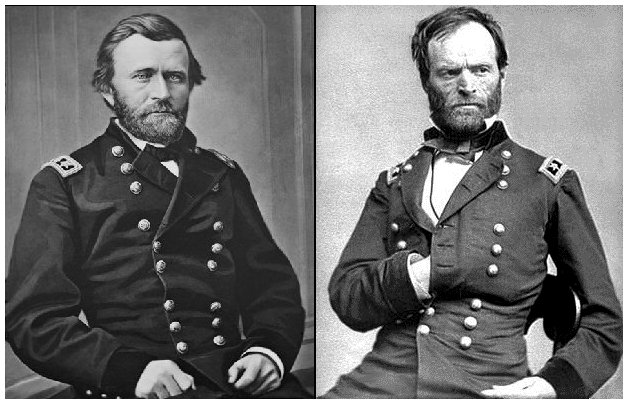
grant-and-sherman-122304

Friends of Padre Steve’s World,

Today just a short thought. I spent most of this holiday weekend down with a nasty cold which allowed me to do some reading and working on my book A Great War in a Revolutionary Age of Change: The Foundations of the American Civil War and Why it Still Matters Today. What I was working on was more on the technical “wonk” side of the development and use of artillery that preceded the war and how artillery was used in it. Lots of analysis, and delving through obscure books which I found absolutely fascinating, but anyway I digress and someday soon you’ll get to read that as well.

Last night a got a wonderful phone call from an old friend, a priest from my former denomination who remarkably hasn’t cast me off. We had a wonderful time, he’s a brilliant man, a combat veteran of Iraq and suffers from some of the same issues that plague me, but with added medical issues from inhaling so many toxins during his two combat tours. He’s gone through a lot, but he and his family are doing well. He is now in medical school and doing very well, but like I said he’s brilliant.

After we returned from Iraq we suffered and commiserated a lot, sometimes over a lot of alcoholic beverages. Last night our talk went on for quite a while and it was great just to do that, so relaxing, good memories, thoughtful discussion of what is going on in the country and in our lives. One thing he said that meant the world to me was the difference I had made as a mentor, encourager, and friend and how important I was to him. He said I was like the character that Kevin Costner played in Bull Durham, Crash Davis, the old catcher sent down to help out the rising star. In a way he is right, and I love the comparison.

As we talked he noted it was so seldom that people take the time to listen, care, encourage, and mentor others. In fact its something that is mentioned quite often in the New Testament. I mentioned to him that one of the people who recently expressed a similar thought to me was a former Navy doctor who I knew when he was an intern; he’s an atheist, but we truly appreciate and value each other.

Sadly, as a culture we have lost that connection and ability to care and learn from each other, even when we disagree on certain points, even important ones. Additionally, we often tend to discard those who are broken in some way, or who color too far outside the lines. There is a creeping Ayn Rand, survival of the fittest style of Social Darwinism that has infiltrated our culture, and especially the church. It has become part of our politics as well and I am sure under the new administration we will see it bloom as we have never seen it before, but I digress again…

Being friends means to let each other know how much we appreciate each other and encourage one another.

Ulysses S. Grant, who is one of my heroes with feet of clay remarked, The friend in my adversity I shall always cherish most. I can better trust those who helped to relieve the gloom of my dark hours than those who are so ready to enjoy with me the sunshine of my prosperity.” Grant’s ever mindful friend and subordinate William Tecumseh Sherman noted, “Grant stood by me when I was crazy, I stood by him when he was drunk. Now we stand together.” 

With that I wish you a good day,

Peace

Padre Steve+

2 Comments

Filed under christian life, Loose thoughts and musings, Pastoral Care, PTSD, remembering friends

The Importance of Now

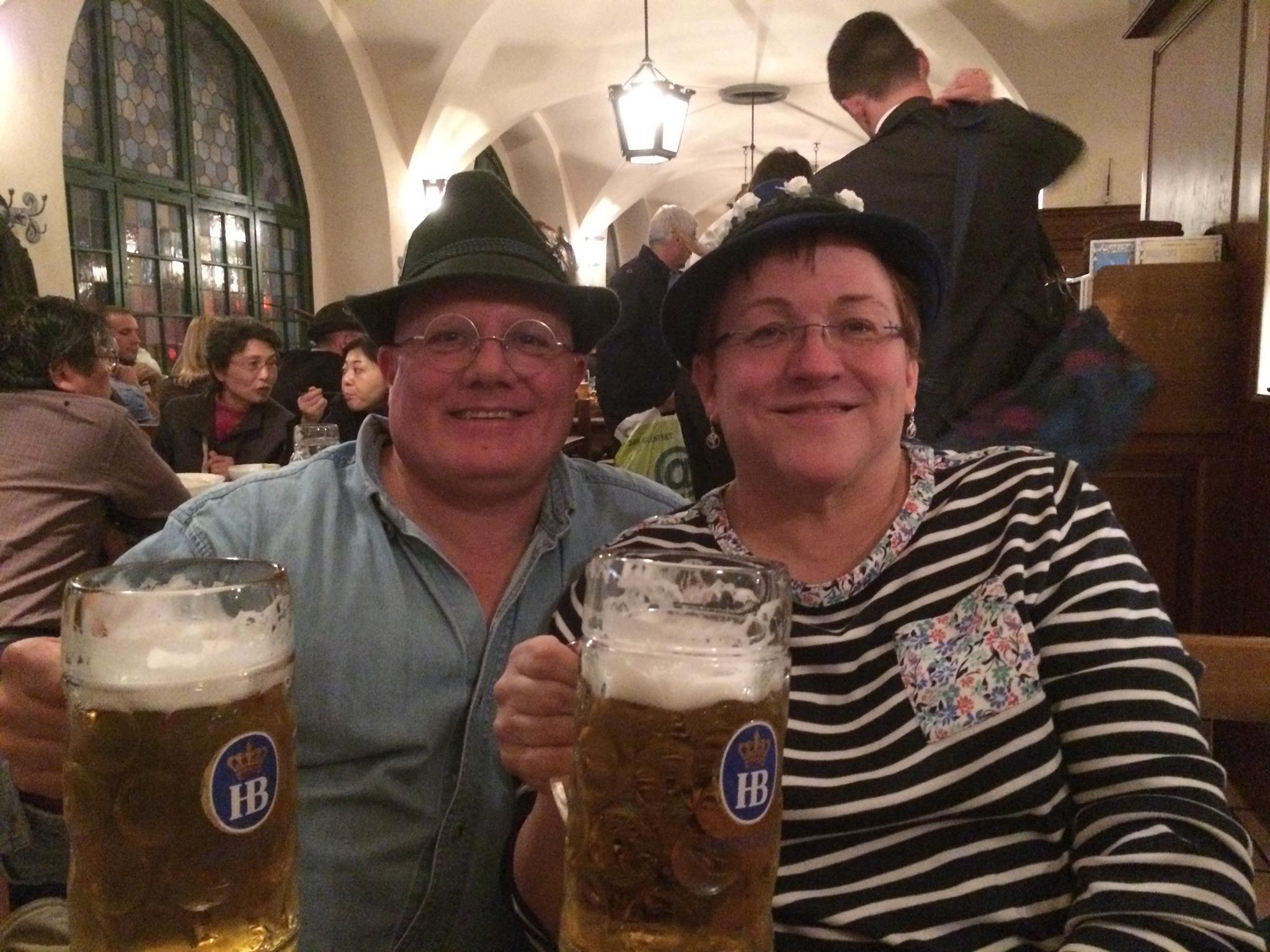
munich-2015

Friends of Padre Steve’s World

Just a short thought while I am traveling in Germany. We live in very unsettled times and when that happens people are often filled with anxiety usually concerning things that they cannot control. I understand that completely, yet there is a time to live in the moment and savor friends, family, the love of a spouse, the warmth of a dog that adores you, a drink with friends, and the exploration of new places.

In our world people ask questions. As James Spader’s character in Boston Legal rightly observed:

“Some people see things as they are and ask why? Others see things as they never were and claim mad cow.” 

I am not an economist, I am a historian and I while I do understand some things about economic theory and history, and I am certainly no expert on markets. Like many I do get concerned when I see the stock markets around the world crashing, not so much for the rich people who are losing inflated stock value, for the rich almost without exception seem to do well in times of such turmoil, in fact they often do better because governments value their business expertise and depend on them to get countries out of the mess. But I worry more for the possible effects that this could have on small business owners, the middle class and the poor. I do get concerned for the middle class who have money invested in the markets through their 401k’s and retirement programs, as well as the poor who could lose their jobs if the companies that they work for tank.

There are so many variables; interest rates, oil prices, housing prices, and employment rates just to name a few. There are also the factors of what is happening in China and other big yet developing markets which can have ripple effects, or even tsunami-like affects across the globe depending how bad things get. There are so many other things going on in the world economy dealing with Greece the EU and the Euro, Russian rumblings in Eastern Europe and the Ukraine, the rise of ISIL and the potential threats to oil producing countries in the Middle East, things going on with vast refugee migrations as well as economic, political, and potential viral epidemics in African countries which frankly most Americans, Europeans and Asians until they reach our shores, and then my God there’s Donald Trump.

All of these things are so troubling on so many levels, and why shouldn’t they be. Not only are we looking at potential economic chaos, but there is climate change and its effects on endangered wildlife like the Virgin Island Screech Owl and the Fresno Kangaroo. Who knows what could be next?

So in light of this worldwide uncertainty I can recommend a number of things. Look at your investments, take a look at history because it always has lessons, or follow the immortal advice of John “Bluto” Blutarsky: “My advice to you is to start drinking heavily.”

But that being said, no matter how bad things are and how much worse they could get it is far more important to live in the moment with those that you love and care about in the now, not the future that we have so little influence over. As Danny Crane (William Shatner) told Alan Shore (James Spader) in Boston Legal:

“Let me tell you something. When you got polar ice caps melting and breaking off into big chunks and you got Osama still hiding in a cave, planning his next attack, when you got other rogue nations with nuclear arsenals, and not to mention some wack-job, home-grown that can cancel you at any second and when you got…mad cow, now gets high priority. And when you’re still on the balcony on a clear night, sipping scotch with your best friend, now is everything.”

Peace

Padre Steve+

2 Comments

Filed under Loose thoughts and musings

Friendship Matters more than Anything 


Friends of Padre Steve’s World,

Today just a short reflection on friendship following the unexpected death of yet another friend. Today some of us gathered at our favorite watering hole who remember him, and to console each other. There were hugs, tears, and many shared memories, but there was also silence because all too often the words failed us, and all we hand was the silence, and the embrace of friends. 

I value true friendship more than most anything and I am loathe to give up friends for any reason. Sadly, all too many people are willing to toss friendship aside for extreme politics or religion. I hate to say it but I have had to separate myself from people that I presumed were friends whose extreme right or left wing ideology, or religious beliefs were so toxic and seemingly uncaring about my friendship to for them that I had to withdraw. 

Ulysses S. Grant who is one of my heroes with feet of clay remarked, “The friend in my adversity I shall always cherish most. I can better trust those who helped to relieve the gloom of my dark hours than those who are so ready to enjoy with me the sunshine of my prosperity.” Grant’s ever mindful friend and subordinate William Tecumseh Sherman noted, “Grant stood by me when I was crazy, I stood by him when he was drunk. Now we stand together.”  

Having endured gloom, having been what some would call crazy, and having been drunk, I understand this. One cannot put a price on true friendship, be it the steadfast friends of many years, or newer friends who maybe do not have the benefit of th  years, but certainly have bonded with me and become my brothers or sisters. William Shakespeare wrote that Henry V said “We, we happy few, we band of brothers…” That is friendship. Maybe that is why as a career military man I find that friendship, especially the friendship borne of adversity matters more than anything. I can handle disagreement over politics or religion so long as I believe that the person still values and cares about me as much as I do them, and as long as that is the case I will do everything I can for them, in good times and bad. 

Tonight I again watched the movie Gettysburg. In it there is a scenes where the late Richard Jordan, playing Confederate General Lewis Armistead talked of his friendship with other officers just before they went their separate ways prior to the beginning of the Civil War. He recalled a song of friendship, love, and loss called Kathleen Mouvereen. The words to that Irish song are haunting, 

Mavoureen, mavoureen, my sad tears are falling, to think that from Erin and thee I must depart. It may be for years, it may be forever, then why art thou silent, thou voice of my heart… 

Those words are haunting to anyone who truly loves friends in times of loss and adversity, I know that they are for me. Maybe it is just the Irish in my DNA, maybe it is also being a career military man, for truly I know little different, for being both a military officer, a priest, and a historian is what I was meant to be, honestly I cannot imagine anything else. Thus, my views and values of friendship reflect that reality. 

There are many quotes and sayings about friendship and believe me I read a lot of them today, but I always return to Grant, Sherman, and my own band of brothers. 

So have a good night. 

Peace

Padre Steve+ 

1 Comment

Filed under philosophy, remembering friends

33 Years of Marriage: Finding that One Special Person You Want to Annoy the Rest of Your Life


Friends of Padre Steve’s World,

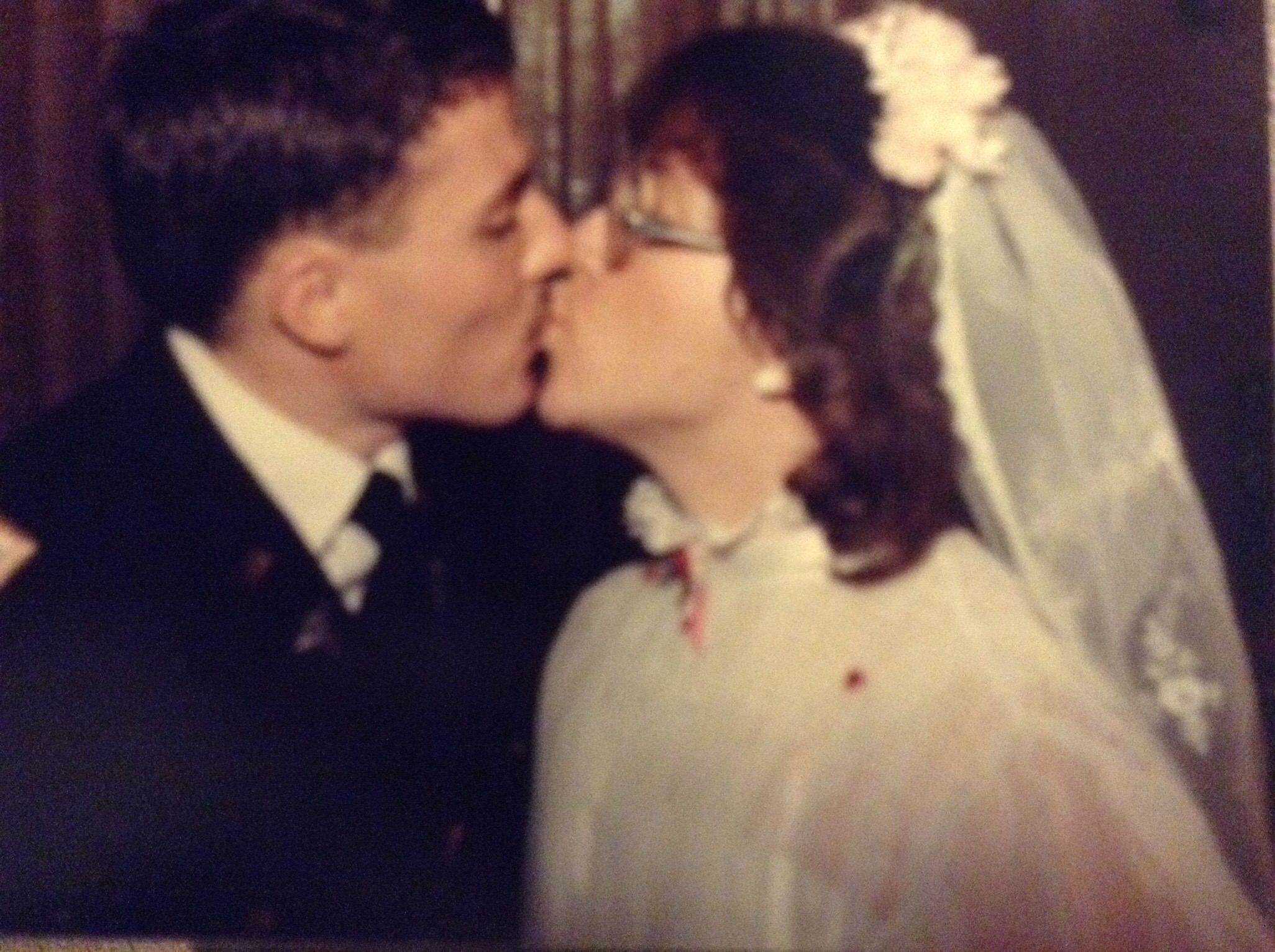
Mark Twain, a wise man if there ever was such, wrote “After all these years, I see that I was mistaken about Eve in the beginning; it is better to live outside the Garden with her than inside it without her.” Truthfully I think that he was absolutely correct.

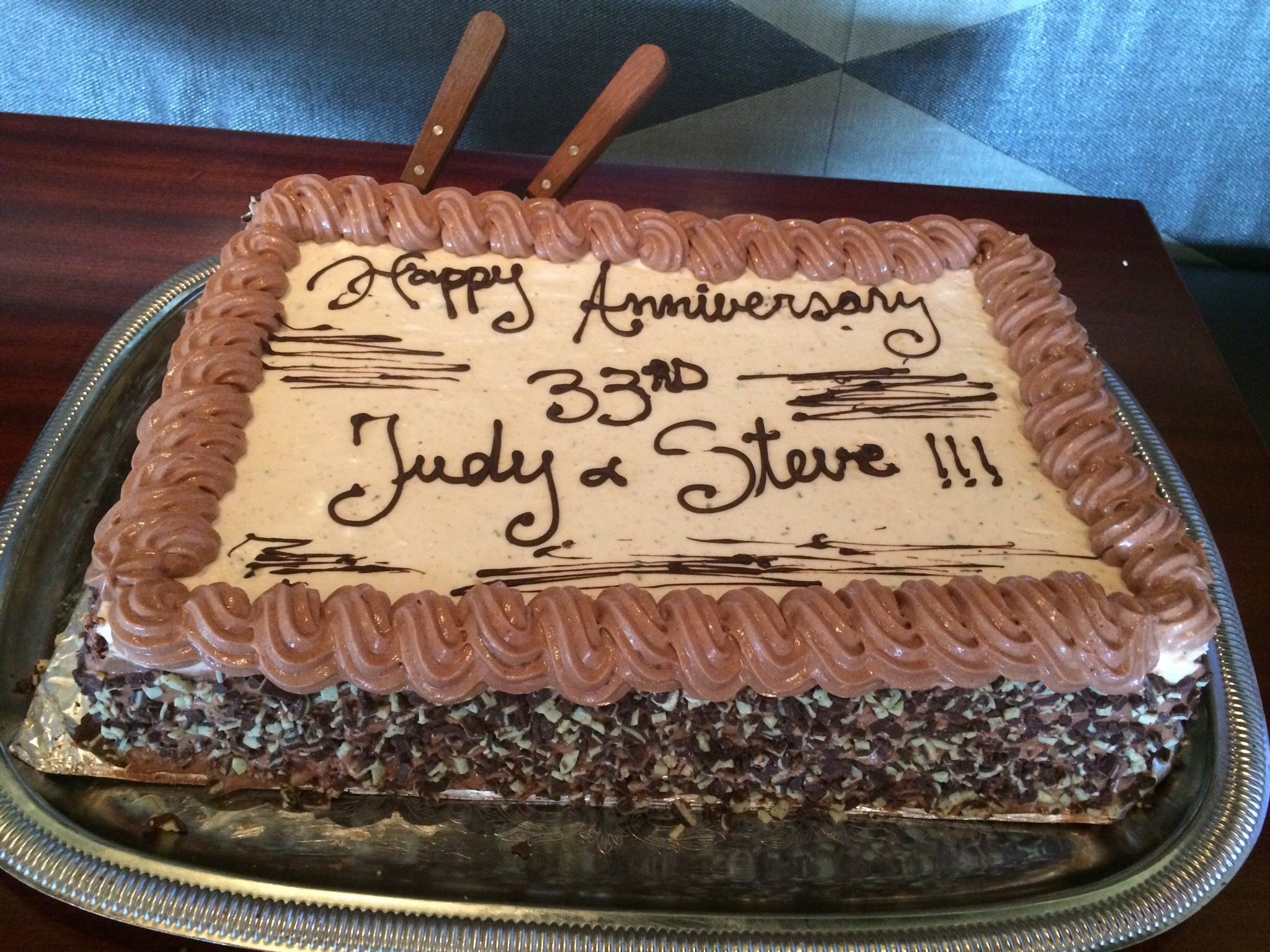
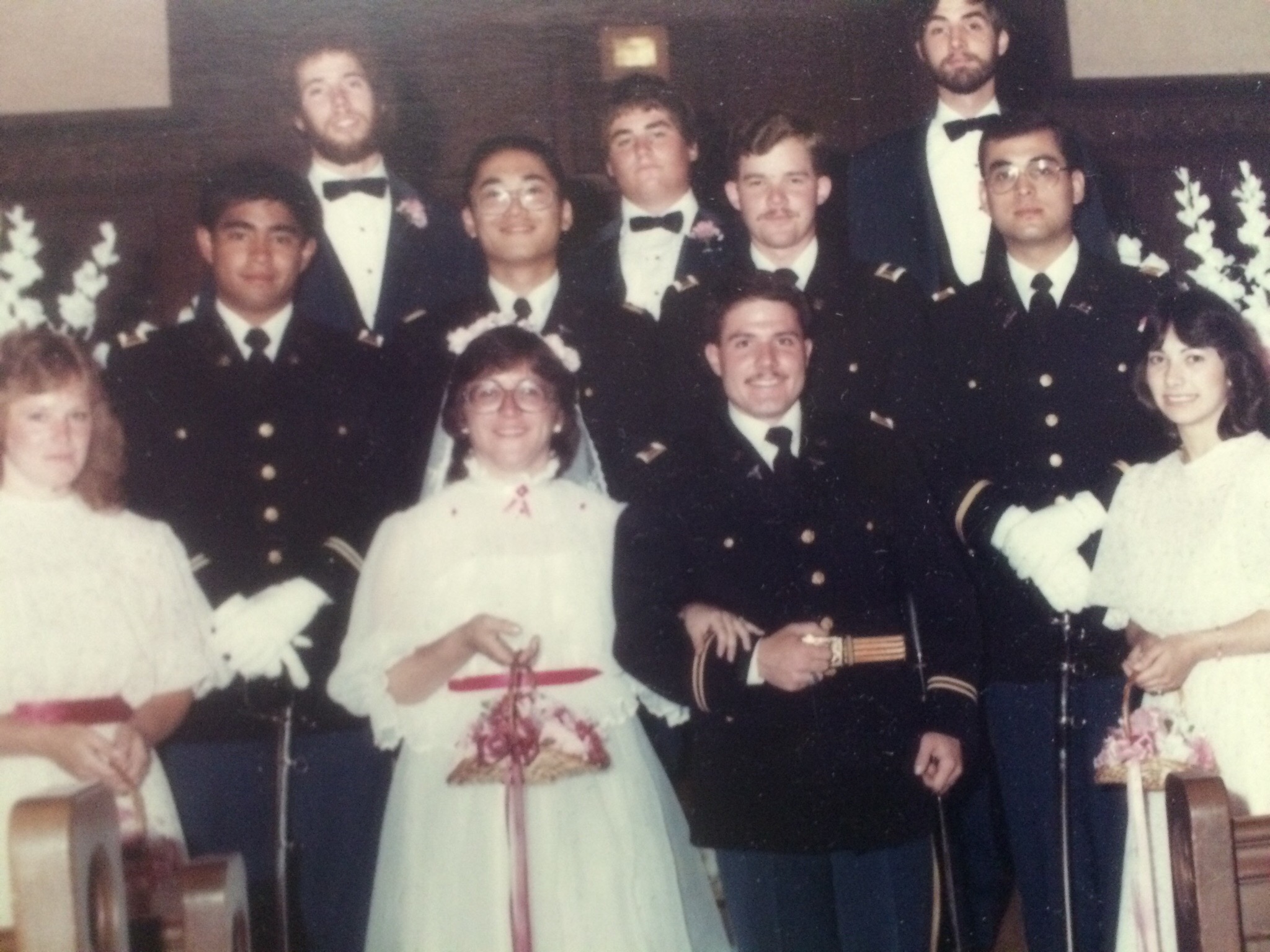
Yesterday, Judy and I celebrated our thirty-third wedding anniversary with many friends at our local version of the Cheers bar, the Gordon Biersch brewery restaurant in Virginia Beach. It was a wonderful time and I cannot have imagined a better way to spend it than with the people who came out, as well as those who wanted to but were unable to attend.


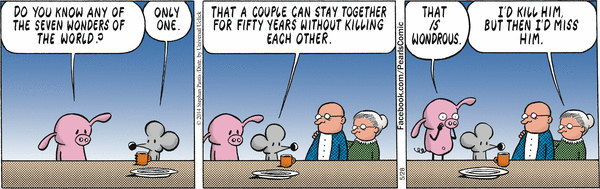
But it really is hard to imagine that we have been married thirty-three years, and that we have known each other for close to thirty-eight years. It is really amazing to think that this has been the case, I for one never really expected to fall in love but I did, in spite of my less than idealistic realism and the fact that I can be such a pain in the ass, as Judy can well attest. I think that the comedienne, Rita Rudner said it quite well, “I love being married. It’s so great to find that one special person you want to annoy for the rest of you life,”  or as I like to put it, live to love, love to annoy. Truthfully, I am surprised at times that Judy has not found reason to kill me off, in fact there are a number of times that I am sure that any jury would have ruled my murder justifiable homicide, but I digress…

pb140528

The fact is that in our thirty-three years of marriage we have weathered some incredibly difficult times that many good people in loving marriages do not survive. Marriage is a difficult thing, yes it is about love, but even more than that it it about friendship, and a commitment to make things work. Marriage is a bit like politics and diplomacy, it involves compromise and commitment in order to ensure that war does not break out. Love is certainly a part, and forgiveness, an absolute necessity, but it really does come down to friendship. As Mark Twain noted, “Love seems the swiftest, but it is the slowest of all growths. No man or woman really knows what perfect love is until they have been married a quarter of a century.” It took us nearly a third of a century, but in spite of all, I think that we have found it.

Have a great day,

Peace,

Padre Steve+

3 Comments

Filed under marriage and relationships

Friendship in Adversity


Friends of Padre Steve’s World,

Over the past few days I have written a couple of articles about friendship, life, living, and coming through dark times. I guess it is fitting to close the week with some thoughts in friendship. 

Having lived through good times and bad I find it encouraging to have had friends in many places who have been there for me, not just in the good times, but in the bad as well. As such I truly value those kinds of friends, as well as admire men who though successful, also knew the crucible of going through hard times and were there for each other. 

Being a career military officer, as well as the child of a Navy Chief Petty Officer, most of my life has revolved around the military. From my youngest days I think it was all I ever wanted to do, and beginning in grade school I started reading the biographies of famous military leaders, as well as history. As a result I learned early that many of the men that I admired the most were the ones who rose above adversity, who endured defeat as well as savored victory, and who quite often were very flawed people. As I have gotten older I have come to appreciate such people more and more. 

Two of my favorites are Ulysses S. Grant and William Tecumseh Sherman. Both struggled at times in their lives, and during the dark early days of the Civil War they became fast friends. The were people in the Army, the government and the media that attempted to destroy them as much as the Confederates that they fought on the battlefield. Theirs was a friendship that lasted to the end of their lives. 

Grant once noted: “The friend in my adversity I shall always cherish most. I can better trust those who helped relieve the gloom of my dark hours than those who a so willing to enjoy with me the sunshine of my prosperity.” I personally cannot help but to agree. It is easy to have people to want to be your friend when everything is going well, but it is the person who stands by you when all has gone to hell that you really appreciate. I think that Grant and Sherman both understood that simple truth. Sherman said of Grant after the war, “Grant stood by me when I was crazy. I stood by him when he was drunk. Now we stand together.” Having been both crazy and drunk at various times I can relate to that. 


So anyway, since we as a nation are terribly rent by political and other kinds of division, I hope that you will find in these words something to go back and find the people who were there for you in your most difficult times. Give them a call, a message and let them know what they mean to you. Don’t let anything get in the way of that, politics, religion, whatever. I plan on making a number of calls, if nothing else to touch bases with friends that I haven’t seen or talked to recently, and let them know what they mean to me. 

Have a great weekend. 

Peace, 

Padre Steve+

Leave a comment

Filed under History, Military, philosophy, remembering friends

Why Can’t We Be Friends?

Friends of Padre Steve’s World,

It is a good day. I have spent the last couple of days talking about life kinds of things and continue that trend by sharing a few thoughts about friendship, politics, and religion.

I have read a number of articles recently that addressed the growing political divide in the country and one of the commonly cited factors are that a growing number of Americans now pick their friends based on politics, religion, and ideology. That reminded me of Thomas Jefferson who once noted, “I never considered a difference of opinion in politics, in religion, in philosophy, as cause for withdrawing from a friend.”

Sadly, I have lost friends for these very reasons and every one of them saddened me. In most cases I was not the one that broke off the friendship. Now there have been a couple of times where the relationship had grown so toxic that I had to break it off to in order not end up in the position of hating the person, and to protect myself. But those cases have been few and far between. I think that I can count them on one hand.

I have friends that span the political, ideological, religious, ethnic and racial, and even sexual orientation spectrum. Hell, I even count Los Angeles Dodger’s and New York Yankee’s fans among my friends, and that coming from a diehard San Francisco Giant and Baltimore Orioles fan is truly exceptional.

I guess that most of why I am like this is because I loved the diversity that I experienced at Edison High School in Stockton, California, which I went to because of court-ordered desegregation, and close to thirty-five years of military service. In both cases I got to experience the friendship, in many cases lifelong friendships with people whose experience, culture, and backgrounds were very different from mine. This has enriched me as a human being. 

Today, my closest friends are those that I hang out at my local Gordon Biersch Brewery bar, and the local ballpark. They span the spectrum from the most liberal and progressive Bernie supporters to most devoted supporters of Donald Trump, not to mention mainline liberals and conservatives, Libertarians, Greens, as well as Social Conservatives and members of the Christian Right.

The same is true of my social media, both Facebook and Twitter. I do not have to agree with someone to respect them, care about them, and be a friend. I personally don’t understand how anyone can only hang out with people that are like them, frankly that to me sounds boring. I don’t mind exchanging ideas with friends, but I do get put off by ideologues of all beliefs who care nothing for anything but their agenda. I am not adverse to people having strong beliefs, but to impose them as a condition of friendship is beyond me.

My friends know my beliefs. They know that I am liberal, and a proponent of expanding civil rights, and against any law that is written expressly to deny the rights of others purely for the sake of religion. But that being said I don’t need to impose them as a condition of friendship. I gain so much by the multitude of people that are my friends, their real diversity in all things. I cannot imagine doing anything to intentionally lose any of their friendship this political season.

It’s just my opinion, but I think that we would all be better off to try to do the same this year and build bridges. I think instead of condemning people we don’t know just because they are different that we should take the time to get to know them and become friends that we could actually work together, solve our problems, and heal our wounds. 

But then maybe I am too much of a relic of the 1960’s and 1970’s. Maybe, to use the immortal words of John Lennon “I’m just a dreamer, but I’m not the only one. I hope one day you’ll join us, and the world will live as one.” 

So anyway, have a great weekend.

Peace

Padre Steve+


1 Comment

Filed under News and current events, philosophy, Political Commentary

An Easter Alleluia?

rubensresurrection1

Friends of Padre Steve’s World,

I am glad that Easter Sunday is over. Of course in my tradition, the Catholic-Orthodox-Anglican tradition, there are 49 more days left in the Easter Season, but who is counting?

I dreaded Easter this year, more than I ever have. I think it is because that for only the second time in my life, Easter Sunday coincided with my birthday. The only previous time that it did was in 2005, when I stilled lived in a cloud-cuckoo-land of unquestioned belief before I went to Iraq, before my crisis in faith, before I was cast aside by most of the clergy of my former church, and abandoned by men, fellow priests, chaplains, and clergy, who I thought were my friends. Interestingly enough, the current head of that church continues to stay in contact with me, and sent me a nice birthday greeting this morning. We may not agree on some of our theology, but I can respect and love him. For that I am grateful, and interestingly enough, many of those who I thought were my closest friends in that church,and in the military chaplaincy, abandoned it, just as they did me, because it wasn’t good enough for them either.

This year, for me, Easter became something existential. I did not think that I was going to live through it. Now, as far as I know there is nothing physically wrong with me that, and in fact I want to live, more than life itself. I want to live to be at least 105 years old so I can lead a staff ride on the 200th anniversary of the Battle of Gettysburg in 2063. I may need one of those hi-tech exoskeleton units to accomplish that should I live that long, but that is my goal.

I love life, but I struggle with faith. This week, in fact the whole season of Lent that preceded Holy Week was a struggle for me. Week after week I showed up to conduct services, to celebrate Eucharist, and no one came, until the last week of the previous class when one student came by. I was thrilled when it did, but truthfully, in the past two and a half years at the Staff College, my most faithful parishioners have been Lebanese Catholic officers, and there were none of them in the winter class. So despite the fact that we are kind of in a between class limbo, I was wondering, “why do I even bother to show up?”

I mean really… on Easter Sunday morning, my birthday to make matters worse, all I wanted to do was die. On the way home from work all I could feel was heaviness, and the only thing that kept me from driving my car off the road was that I didn’t want to put Judy through that pain. What I was feeling was not her fault; she had done all that she could to make this a good week and good birthday. I could not ask for more. But if you say you have faith, and have never been to the point of despair that I have been, please abstain if you can from judging me, and spare me your sermons.

Eventually, we got out to or friends at the Gordon Biersch brewery restaurant. After the horrible morning, the afternoon was good. My mood has lifted considerably. I have been treated with great kindness by hundreds of friends who have wished me well, by phone, e-mail, or on social media. Other friends were kind to me today. My Turkish friend at Biersch, his wife, made me a small cake; others were just kind to give me a hug, spend some time in conversation, or to share a laugh with me over a beer. While there I found that one of my friends here in Virginia Beach was in an automobile accident, and suffered some injuries this morning, and I pray, to the God that I so struggle to believe in, that he will be okay.

But that being said, I wonder at times, what Dietrich Bonhoeffer asked, is not true for me: experience has made us suspicious of others and kept us from being truthful and open; intolerable conflicts have worn us down and even made us cynical. Are we still of any use?”

I admit that I have been worn down, that I am suspicious, and that I struggle. I wonder, as far as my calling and vocation as a minister, priest and chaplain goes, if I am of any use.

If I am, I am glad for that. If I have even helped someone in some small way, in his or her time of crisis, or doubt, I am glad for that. If not, then that is something to be decided not by me, nor by the Church, but by God, and such decisions are way above and beyond my pay grade. As far as the men that I feel who abandoned me when I struggled, and when my questions could no longer be tolerated; men who I did all that I could do to help to where they are today, and men who I thought were my friends and brothers; for that I have no answer. So I guess that too is well above and beyond my pay grade.

As far as yesterday morning, Easter Sunday, I guess I am glad that no one showed up at my chapel. I was so far from even believing, I was so far from the hope of the resurrection, that to cry out “Alleluia! He is risen! The Lord is risen indeed!” would have been blasphemy. So in a sense, as hard as today was, I was glad that I was spared from that.

When I thin that I am reminded of the words of he great German theologian Jurgen Moltmann;

“Believing in the resurrection does not just mean assenting to a dogma and noting a historical fact. It means participating in this creative act of God’s … Resurrection is not a consoling opium, soothing us with the promise of a better world in the hereafter. It is the energy for a rebirth of this life. The hope doesn’t point to another world. It is focused on the redemption of this one.”

I am hoping that this week will be better and that if anyone darkens the door of my chapel this coming Sunday, that I might actually join in the Easter alleluias. I want to experience that rebirth again, I want, not to simply assent to a dogma, but instead to participate in the creative act of God, and maybe to find redemption in this world whatever the next world may bring.

I hope that this makes sense, and even if it doesn’t, please, pray for me a sinner,

Peace

Padre Steve+

3 Comments

Filed under christian life, ethics, faith

Coming this Weekend: Biography and Heroism

Friends of Padre Steve’s World

It has been a busy week. We had a wonderful niece of Judy visit us and work has been busy. Last night I was able to have dinner with two of my very few real friends in the Navy Chaplain Corps at a local restaurant after getting the results of the Neuron-psychological testing that I endured a couple of months ago.

The good news regarding the testing is that I don’t seem to have any issues dealing with a physical brain injury, but at the same time I have some increased deficits dealing with certain types of memory, recall, and processing speed. The doctor things this may be mostly due to dealing with PTSD, depression and sleep deprivation related to PTSD. I’ll probably go through one more battery of these tests before I retire in 2017 just to make sure that I don’t have what Denny Crane (William Shatner- Boston Legal) and I now refer to as “the Mad Cow” or Alzheimer’s or some other kind of dementia.

Since I am getting ready to lead another group of students to Gettysburg next Friday I will be publishing another of my biographic vignettes about the men who fought the battle. This time dealing with Confederate General John Bell Hood, a man who was outstanding as a brigade and division commander but who was complete failure at higher levels of command. I have some more Gettysburg material in the works but I don’t thing that I will post it until next week.

I will also be putting out an article about the French Foreign Legion at the battle of Cameron on April 30th. This is a fascinating story about a small unit of 65 men engaged in a hopeless battle on April 30th 1863 in Mexico just as the epic Battle of Chancellorsville was about to begin.

During the coming week I will be putting out some more Gettysburg articles as I get ready to take another group of students there next weekend, as well an article about another hopeless and sadly forgotten battle, that of Dien Bien Phu which came to its disastrous conclusion on May 7th and 8th 1954. Of course I am always ready to write about current events and issues as needed.

On another note I just finished the amazing book Team of Rivals: The Political Genius of Abraham Lincoln by Doris Kearns Goodwin. I think that this is a book that anyone interested in politics, people and our current political crisis need to read.

Have a great night and weekend.

Peace

Padre Steve+


Leave a comment

Filed under History, Loose thoughts and musings

Oktoberfest Retrospective: Gemütlichkeit, The Importance of Community

IMG_0491.JPG

Well my friends we have returned from Oktoberfest in Munich and despite a couple of bumps, the trip went well. That couple of days have been too full and I have been unable to post these thoughts until now, that being said I have given them a great deal of reflection.

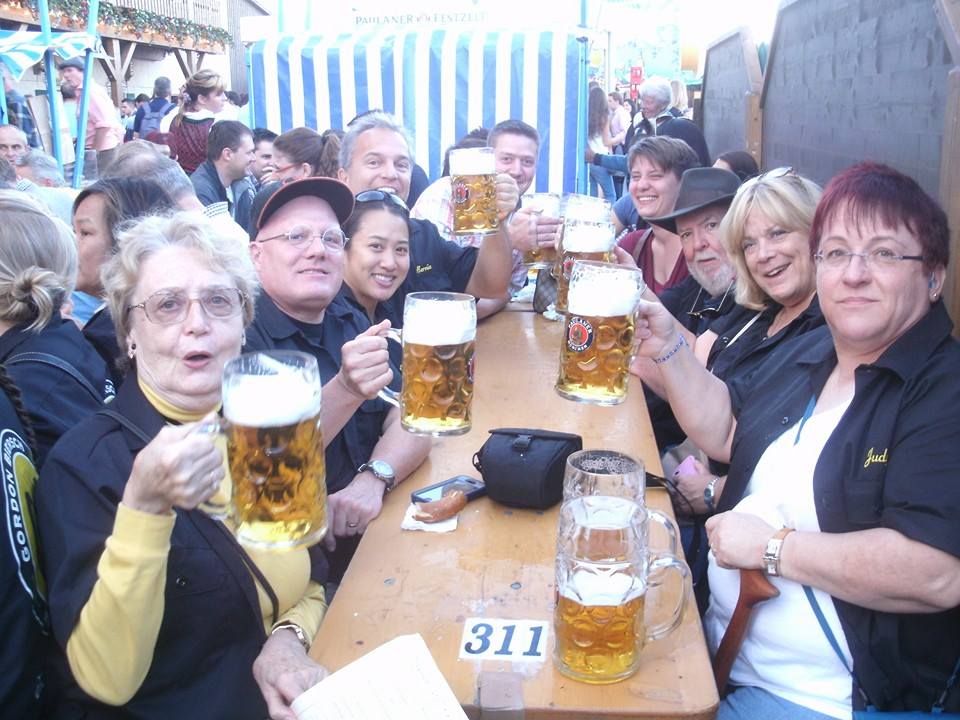
Of course for most most foreign visitors to Oktoberfest is a chance to drink and enjoy the festive atmosphere, and that is not a bad thing. However, most miss the understanding of Fests such as Oktoberfest in the life of the communities hosting them. Oktoberfest is just one of many that Munich and other German towns observe, which draw their communities together in ways that most Americans do not really comprehend. German festivals draw the local community together in many ways, community groups, clubs, associations, churches and businesses contributed to making the Fest, be it a major event like Oktoberfest or Fests conducted in small communities. Admittedly some American towns and cities have similar events, but with the exception of some major metropolitan centers with diverse and proud ethnic communities, they usually are a singular annual observance.

German cities and towns usually have a good number of these events, which draw their people together throughout the year. In fact they are somewhat linked to seasons, the church calendar, and important crops or products that their town is known for producing. While all are festive each have a different emphasis and different feel. Oktoberfest in Munich is the largess of its type, not just in Germany but the world, but it is not alone, many towns also celebrate their own Oktoberfest which are not clones of the Munich event, instead they reflect the differences in culture and tradition throughout Germany.

The Germans take life and work seriously, but unlike many, if not most of us, they know when business stops and fun, family and community begin. When people leave work they leave work, and even the business culture, in which stores are not open 24 hours or on Sundays provide Germans the opportunity to spend good amounts of time with family, their neighbors and friends as they meet for dinner or drinks at the local Gasthaus or inn on a regular basis. Likewise communities sponsor sports teams, and a wide array of other clubs which draw them together, everything from Rotary, to veterans associations, bands and choirs, hunting and shooting clubs and many more. Many of these groups sponsor events in which the entire community partake.

oktoberfesttent

The concept in all of this is that of Gemütlichkeit, a German word that basically describes a situation of where a cheerful mood, peace of mind and social acceptance are joined with the connotation of being unhurried in a cozy atmosphere. It also is understood in relationship to holidays where public festivities in the form of music, food, and drink help promote a sense of community. In this there is a sense that someone is part of something bigger than themselves where they are connected with being accepted by others while enriching the community.

Unfortunately for many Americans this is not the case. Unless one belongs to an organization such a various types of lodges, local sports fan clubs, or a local pub or bar where “everyone knows you name” there are precious few places one can experience this type of community. Churches like to claim that they are places of fellowship, but in my adult experience I have to say that most churches neither foster community nor are they places where one can go to be accepted. They are often the most cliquish, unfriendly, uninviting, and judgmental places around, and this is across the board. This cliquish and uninviting spirit covered in a veneer of spirituality and forced friendliness knows no denominational or theological boundaries, but I digress….

As I mentioned the Germans have festivals for almost everything. There are Spring, Fall, Summer and Winter festivals, harvest festivals, wine festivals throughout the Rhine, Main and Mosel and Nahe River valleys where wine is produced. I already mentioned Oktoberfest but there are Advent and Christmas markets in almost every city, town or village, Passion plays, celebrations of music, art and culture some of which are tied to the church calendar.

weihnachtsfest

In Bamburg, which is in the north of the state of Bayern (Bavaria) there is a celebration of its large number of very elaborate nativity scenes. In fact it is known as the city of nativity scenes. Some of the displays, of which there are over 30 major ones are changed every week to correspond with the nativity story, from the annunciation until the birth of Jesus, but are extended out to the scene of the first miracle of Jesus where he changed water into wine at the Wedding at Cana, just before Lent.

Speaking of Lent, there are a large number of places where Carnivals, similar to Mardi Gras in New Orleans, known as Fasching are celebrated, which all end on Fat Tuesday. In some cities there are Easter festivals, festivals involving the Patron Saint of the city, or state, and all of these are part of a holiday atmosphere.

The Germans for all of their serious nature and sometimes brusque manner of getting around do know how to draw the line between work and play and in the process build community. Their cities and towns are designed to keep a community connection including the use of excellent public transportation which means that most people don’t have to use up their cars sitting in traffic jams on the way too and from work or to a major event. I like to drive, but if our city had good public transportation I would definitely use it.

Part of this is the difference in culture and how over the years our American culture has become detached from this sort of community. In many ways we have become increasing individualistic through the proliferation of suburbia and all that goes with it, including the abandonment of cities, and small poor rural communities. The fact is we don’t know our neighbors and that leads to a culture that devalues people, destroys community and actually being on more social problems including crime. But again I digress…

This was my first trip to Oktoberfest, and though it was crowded the crowds were relatively well behaved, those who are obviously drunk or out of control are taken out, often to the first aid tent. Likewise, crime is not much a problem, despite the crowds. What is amazing is how many people lose valuables but get them back, either from someone who sees them leave them behind or drop them, but those who turn them in to security.

We experienced that on Wednesday night when the small pouch Judy had containing all of her identification and a debit card was lost. Of course we did everything we were supposed to do, retrace steps, talk with security and go to the lost and found. When I was at the lost and found I was amazed and how much was there, including very expensive looking purses, handbags and backpacks. The people there did not have it. They told me to come back the next day at 1PM Thursday when they opened and assured me that this happens all the time and that most items lost are returned.

On the way back to the hotel Judy was quite upset and my best efforts, as well as those of our friends at comforting her were of little solace. But on the U-Bahn train going back to the hotel, an older German man across from us was most kind, offered to help and did what he could to comfort Judy. That was really neat, and we both appreciated his concern and his offer of help.

With our departure less that 36 hours away, we could take no chances. Immediately on returning to the hotel I cancelled the debit card, which had not been used and contacted the U.S. Consulate in Munich. They too were reassuring, but since we could take no chances we reported her passport as lost and received a new temporary passport to ensure she could return home.

We went back to Oktoberfest after concluding that mission, when to the lost and found and they did have the pouch and nothing was missing. It had been a long 16 hours for both of us, but on finding it the mood lifted considerably. Our friends, who were doing last minute shopping met us at the Munchen Hofbrauhaus tent where we had saved seats. After dinner and a few beers we did a little bit of shopping, a quick bite at a local Gasthaus near the hotel we met our friends at the hotel to drink some of the beer that we had bought out in town.

Oktoberfestmunich

One of the cool things about this was how we have grown closer to our friends. It will be hard not seeing them everyday, but we are planning other get togethers outside of meeting at Gordon Biersch where we all congregate anyway, but cook outs, dinners and other things where we all contribute. I think what we experience with our friends is much closer to the way that Germans do life in community, and for us that is a good thing.

einprosit

There is a song that is sung at Oktoberfest as well as at other Fests throughout Germany called Ein Prosit

The band leader will get everyone’s attention and begins to sing as the band plays and everyone joins in standing, swaying to the music holding their beer steins high:

Ein prosit, Ein prosit, gemütlichkeit;
Ein prosit, Ein prosit, gemütlichkeit!
Eins, Zwei, Drei, G’Suffe!

A to at, a toast
To cheer and good times;
A toast, a toast, to cheer and good times!
One, two three! Drink up!

With that in mind I wish you the best weekend, and my wish that we all discover what it is to be in community and experience gemütlichkeit.

Peace,

Padre Steve+

2 Comments

Filed under beer, Loose thoughts and musings, philosophy

The Tragedy of Friends at War: Hancock, Armistead and Garnett at Pickett’s Charge

armistead

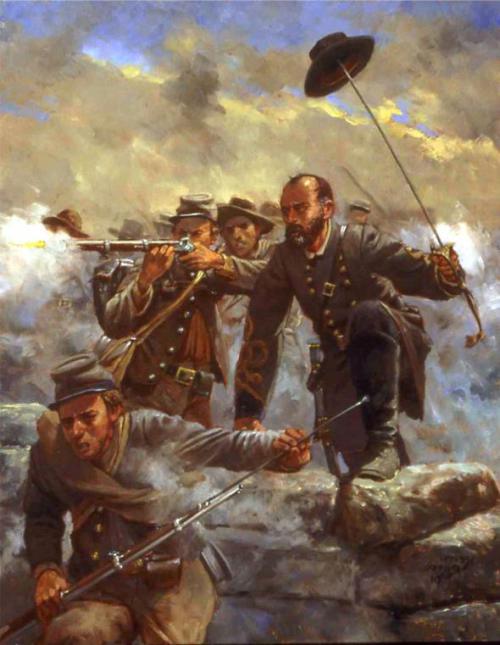
“Armistead at Gettysburg” by Keith Rocco

The bonds of friendship forged by soldiers are some of deepest and long lasting that are formed anywhere.  For American military professionals those bonds are formed in the small rather closed society that is the regular United States military. They are formed in war and peace, and are marked by years of deployments, isolated duty and combat. They are part of a culture that is often quite different than that of civilian society. That is the case now as it was in 1860.

When the Southern States seceded from the Union men who had spent much of their adult lives serving together discovered had to say goodbye and prepare to fight each other. Most did so with a heavy heart even though many had strong convictions about the rightness of their region’s cause. Those who left the army to serve the Confederate states were often torn by doubt and questions of where their loyalty lay. Robert E. Lee was a good example of the conflict that many Southern officers faced. “The Southern professional officer in 1861 was confronted with a cruel choice symbolized by Lee’s anguished pacing at Arlington. On one hand, the Southern officer’s political allegiances drew him to the Confederacy; on the other his professional responsibility drew him to the Union.” [1] They wrestled with their oath of office and the costs of perhaps having to face their dearest friends on future battlefields. Lee’s letter to his sister Ann Marshall, who remained a supporter of the Union, after he resigned from the army he had served for 32 years reflects that anguish, torn between his loyalties Lee wrote “With all my devotion to the Union, and the dear feeling of loyalty and duty of an American citizen, I have not been able to make up my mind to raise my hand against my relatives, my children, my home.” [2] He added: “I know you will blame me…but you must think as kindly of me as you can, and believe that I have endeavored to do what I think right.” [3]

They were different from the mass levies of civilian volunteers who rallied to the flags of the Union and Confederacy in 1861. The volunteers, most of whom did not have the deep and abiding friendships of the professionals were often motivated by ideological, sectional or religious hatred of the other and went to war with great aplomb. However, the professionals for the most part went to war against former comrades with heavy heart, “old army colleagues found themselves wrenched from the normal course of their lives when their states joined the Confederacy.” [4]

The American Civil War has many such tales. Porter Alexander wrote of his final words with his superior James B. McPherson, who later went on to be a highly successful corps commander under Grant and Sherman before being killed outside Atlanta in 1864. McPherson desired that Alexander remain in California as an Engineering officer and warned him about the nature of the coming war and gave him his counsel as a friend:

“Now this is not going to be any 90 day or six months affair as some of the politicians are predicting. Both sides are in deadly earnest & it is long & desperate & fought to the bitter end. ..God only knows what may happen to you individually, but for your cause there can be but one possible result. It must be lost….” [5]

Alexander wrote: “Nothing could exceed the kindness & real affection with which McPherson urged these views on me…. His earnest talk impressed me deeply & made me realize that a crisis in my life was at hand. But I felt helpless to avert it or even to debate the question what I should do. I could not controvert one of McPhersons’ statements or arguments; I could only answer this: “Mac, My people are going to war, & and for their liberty. If I don’t come & bear my part they will believe me a coward…” [6]

One of the most remembered is that of Union General Winfield Scott Hancock and Confederate General Lewis Armistead. It was key story line in Michael Shaara’s Pulitzer Prize winning novel The Killer Angels was immortalized in the movie Gettysburg which is based on Shaara’s novel.
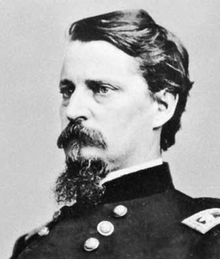
hancock 2

Major General Winfield Scott Hancock USA

Hancock was from Pennsylvania. He was a career soldier and Infantry officer, a graduate of West Point Class of 1844. He served in Mexico and held numerous positions. In 1861 he was stationed in California as a Quartermaster under the command of Colonel (Brevet Brigadier General) Albert Sidney Johnston with the Sixth Infantry Regiment. One of his fellow officers was Captain Lewis Armistead, a twice widowed Virginian who also served as a commander of the New San Diego Garrison under Johnston’s command, and Richard Garnett commanding a company at Fort Yuma. Hancock and his wife Almira became fast friends with the widowed Virginian.

Armistead was a nephew of the officer who defended Fort McHenry from the British in the War of 1812. Armistead had academic and personal difficulties at West Point and “was bounced out, not once but twice.” [7] His troubles included an altercation with Jubal Early in which he broke a plate over Early’s head.  Between his academic difficulties and the fight with Early he resigned from the Academy. However, his father helped him obtain a commission as an Infantry officer in 1839. Armistead’s career from that point on was similar to many other officers of his day. He served with distinction in Mexico, the Great Plains, Kansas, Utah and California.

As the war clouds built and various southern states seceded from the Union numerous officers from the South were torn between their oath, their friendships and their deep loyalty to their home states and families. In the end most Southern officers resigned their commissions, many with mixed feelings and quite often sadness. A large minority, some “40 to 50 per cent of Southern West Point graduates on active duty in 1860 held on to their posts and remained faithful to the Union.” [8] The most prominent of these men were General Winfield Scott and Major General George Thomas, the “Rock of Chickamauga.” Likewise Union Brigadier General John Buford’s family in Kentucky supported the Confederacy.

For those southern officers who remained loyal to the Union to was often at a great personal cost. Thomas’s action cost him his relationship with his immediate family who deemed him to be a traitor. He and others were pilloried and demonized in the basest ways by many in the South. Some Southerners who served the Union were executed when they were captured. George Pickett, who called for his fellow Virginian Thomas’ death ordered 22 North Carolinians who he captured fighting for the Union in Kinston North Carolina to be executed. Pickett was not alone in such sentiments.
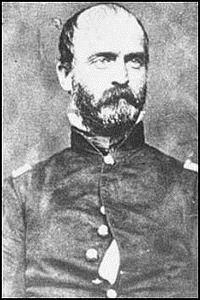
armistead2

Brigadier General Lewis Armistead CSA

However, for most it was different. As talk of secession and war heated up officers stationed on the frontier debated the issues and asked each other what they would do if war came. In California Armistead and other officers asked Hancock, who was a Democrat and not openly hostile to the South, advice on what he would do if war came. Hancock’s reply was simple. I shall not fight upon the principle of state-rights, but for the Union, whole and undivided” [9]

The parting came in 1861. When it was apparent that many officers would be resigning and heading home to join their state’s forces the Hancock’s hosted a going away party for their friends. Almira Hancock wrote of the party that “Hearts were filled with sadness over the surrendering of life-long ties.” [10]

Colonel Albert Sidney Johnston’s wife Eliza went to a piano and sang sentimental songs such as Mary of Argyle and the popular Irish song Kathleen Mavourneen. [11] Almira Hancock wrote “Those songs…will ever be remembered by survivors of that mournful gathering.” [12]

“Mavourneen, Mavourneen, my sad tears are falling, to think that from Erin and thee I must part!

It may be for years, and it may be forever, Then why art thou silent, thou voice of my heart?

The parting was especially emotional for Armistead who had been a friend of the Hancock’s for 17 years. They had helped in following the death of both of his wives and children. He was tearful. He put his arm on his friend’s shoulder as he said: “Hancock, good-by; you can never know what this has cost me, and I hope God will strike me dead if I am ever induced to leave my native soil, should worse come to worse.” [13]As he departed Armistead gave a wrapped Bible and Prayer book to Almira Hancock, in case of his death, inscribed were the words “Trust in God and fear nothing.” [14]

Armistead led his brigade during the Peninsula campaign and battles around Richmond and his brigade was decimated in Lee’s failed assault on prepared Federal positions at Malvern Hill. Armistead did not endear himself to many of the volunteer officers who served in the Confederate ranks. One of his Colonels resigned over Armistead’s supposedly harsh treatment to which Armistead replied: “I have felt obliged to speak to him as one military man would to another and as I have passed nearly all my life in camps my manner may not be understood or appreciated by one who has been all his life a civilian.” [15] Armistead’s words can easily be understood by military professionals whose lives have been shaped in a different manner than their civilian counterparts.

At Gettysburg Armistead spoke his fears about the charge to his comrades. One was Brigadier General Dick Garnett, another of Armistead and Hancock’s comrades from the California days on the night of July 2nd. Garnett’s career had paralleled that Armistead, the same age Garnett struggled at West Point in his third year “he failed and withdrew. Taking the same courses again during the next term, he finished fourteenth among his new classmates, then graduated in 1841 standing 29th of fifty-two graduates.” [16]

Armistead and Garnett served together in the Sixth Infantry for most of their careers. They were promoted at similar times, a pattern of promotion that continued into their Confederate service. The next afternoon, the two friends who had served together so long and whose careers were so similar led their brigades of Pickett’s Division across the valley between Seminary Ridge and Cemetery Ridge against their friend and comrade Winfield Scott Hancock’s II Corps which was defending Cemetery Ridge.

Garnett had to lead his brigade on foot, having been injured during the army’s march to Gettysburg. During the engagement Garnett was killed just before reaching the Union lines and Hancock gravely wounded. Armistead, lead the remnants of his decimated brigade to the Stone Wall, near the Copse of Trees. He rallied his troops fearing that some were faltering calling out: “Come on boys, give them the cold steel! Who will follow me?” [17]

His troops breached the Union line and his black hat atop his sword led his troops forward. He reached the now unmanned artillery of Cushing’s battery and called to his remaining men “The day is ours men, come and turn this artillery on them.” [18] It was then that he met more Federal troops who unleashed a volley of musket fire that cut down many of the survivors. Armistead was wounded in the right arm and shoulder and fell near one of the Union artillery pieces, a point now known as “The High Water Mark” of the Confederacy.

armistead memorial

As Armistead lay wounded he was approached by Major Bingham of Hancock’s staff. Bingham, a Mason noticed that Armistead was making a Masonic sign of distress. When Bingham told Armistead of Hancock’s injury Armistead was grieved and told Bingham to “Say to General Hancock for me that I have done him, and you all, an injury, which I shall always regret.” [19]

The meaning of those words is debated, especially by Southerners who cherish the myth of the Lost Cause. However, based on Armistead’s conduct and behavior in the time before he left California, it is not unreasonable to assume that as he lay dying he truly regretted what he had done. Armistead died from infections caused by his wounds which were initially not thought to be life threatening. A Union surgeon described him as: “seriously wounded, completely exhausted, and seemingly broken-spirited.” [20]

Garnett’s body was never found and was probably buried in a mass grave with other Confederate soldiers and was likely taken after the war to his native Virginia “together with thousands of unidentified bodies from Gettysburg, for burial in Richmond’s Hollywood Cemetery.[21] Armistead was buried by a member of the 107th Ohio near the XI Corps field hospital. About a month later a physician from Philadelphia tracked down the soldier and “dug up the “Rough box” containing the body and embalmed poor Armistead’s remains for sale to grieving family members.” [22] Armistead’s family buried the remains in Old Saint Paul’s Cemetery in Baltimore.

Robert Krick wrote: “Death on adjacent bits of blood soaked ground in Adams County, Pennsylvania, yielded a final common thread, that of indignity: Lewis Armistead’s corpse wound up a hostage to petty human greed, while Dick Garnett’s entirely disappeared.” [23]

Hancock’s injuries were severe, but he recovered. He would go on to continued fame and be one of the most admired and respected leaders of the Army during and after the war. He was gracious as a victor and spoke out against reprisals committed against Southerners after the war.

In 1880 Hancock was the Democratic nominee for President. He lost a close election to James Garfield, losing the popular vote by fewer than 40,000 votes. It was an era of great political corruption and Hancock was one of the few major public figures viewed favorably for his integrity. Even his political opponents respected him for his integrity and honesty. Former President Rutherford B Hayes said:

“if when we make up our estimate of a public man, conspicuous both as a soldier and in civil life, we are to think first and chiefly of his manhood, his integrity, his purity, his singleness of purpose, and his unselfish devotion to duty, we can truthfully say of Hancock that he was through and through pure gold.” [24]

A few years after his death Republican General Francis A Walker, lamenting the great corruption of the time said:

“Although I did not vote for General Hancock, I am strongly disposed to believe that one of the best things the nation has lost in recent years has been the example and the influence of that chivalric, stately, and splendid gentleman in the White House. Perhaps much which both parties now recognize as having been unfortunate and mischievous during the past thirteen years would have been avoided had General Hancock been elected.” [25]

The story of Hancock, Armistead and Garnett is one that reminds us of the depth of friendships that many military professionals develop and cherish. It is also a story that reminds us of how hardened ideologues can divide a nation to the point of civil war. It is a story that should give pause to any political or spiritual leader that incites people to war against their neighbor and uses their ideology to slander, demean or even enslave and brutalize their political opponents.

The blood of the approximately 50,000 soldiers that were killed or wounded during the three days of the Battle of Gettysburg is ample reminder of the tragedy of war, especially war that forces the dearest of friends to fight and even kill one another.

Notes

[1] Huntington, Samuel P. The Soldier and the State: The Theory and Politics of Civil-Military Relations, The Belknap Press of Harvard University Press, Cambridge MA and London 1957 p.212

[2] Thomas, Emory Robert E. Lee W.W. Norton and Company, New York and London 1995 p.188

[3] Korda, Michael. Clouds of Glory: The Life and Legend of Robert E. Lee Harper Collins Publishers, New York 2014 pp.230-231

[4] Jordan, David M. Winfield Scott Hancock: A Soldier’s Life Indiana University Press, Bloomington and Indianapolis 1988 p.33

[5] Alexander, Edward Porter. Fighting for the Confederacy: The Personal Recollections of General Edward Porter Alexander edited by Gary Gallagher University of North Carolina Press, Chapel Hill 1989 p.24

[6] Ibid. Alexander . Fighting for the Confederacy p.25

[7] Guelzo, Allen C. Gettysburg: The Last Invasion Vintage Books a Division of Random House, New York 2013 p.379

[8] Ibid. Huntington The Soldier and the State p.213

[9] Ibid. Jordan Winfield Scott Hancockp.33

[10] Ibid. Jordan Winfield Scott Hancockp.34

[11] Ibid. Jordan Winfield Scott Hancock p.34

[12] Ibid. Jordan Winfield Scott Hancock p.34

[13] Ibid. Jordan Winfield Scott Hancock p.34

[14] Krick, Robert K. The Parallel Lives of Two Virginia Soldiers Armistead and Garnett in The Third Day at Gettysburg and Beyond edited by Gary Gallagher, University of North Carolina Press, Chapel Hill and London 1994 p.112

[15] Tagg, Larry The Generals of Gettysburg: The Leaders of America’s Greatest Battle Da Capo Press Cambridge MA 1998 Amazon Kindle Edition p.244


[16] Ibid. Krick Armistead and Garnett p.101

[17] Stewart, George R. Pickett’s Charge: A Micro-History of the Final Attack at Gettysburg, July 3rd 1863Houghton Mifflin Company Boston 1959 pp.216-217

[18] Hess, Earl J. Pickett’s Charge: The Last Attack at Gettysburg University of North Carolina Press, Chapel Hill and London 2001 p.262

[19] Ibid. Stewart Pickett’s Charge pp.254-255

[20] Ibid. Stewart Pickett’s Charge pp.254

[21] Ibid. Krick Armistead and Garnett p.123

[22] Ibid. Krick Armistead and Garnett p.123

[23] Ibid. Krick Armistead and Garnett p.123

[24] Ibid. Jordan Winfield Scott Hancock p.319

[25] Stone, Irving They Also Ran Doubleday, New York 1943 and 1981 pg. 188


2 Comments

Filed under civil war, History, history, Military