Tag Archives: guy sager

They Thanked us Kindly and Made Their Peace: Veteran’s Day 2014

481801_10151367001287059_1003164983_n

“We were fond together because of the sweep of open places, the taste of wide winds, the sunlight, and the hopes in which we worked. The morning freshness of the world-to-be intoxicated us. We were wrought up with ideas inexpressible and vaporous, but to be fought for. We lived many lives in those whirling campaigns, never sparing ourselves: yet when we achieved and the new world dawned, the old men came out again and took our victory to remake in the likeness of the former world they knew. Youth could win, but had not learned to keep, and was pitiably weak against age. We stammered that we had worked for a new heaven and a new earth, and they thanked us kindly and made their peace.”

T.E. Lawrence

In November 1914 millions of soldiers were fighting in horrible conditions throughout Europe. From the English Channel to Serbia, Poland and Galicia; French, British, German, Austro-Hungarian, Serbian and Russian troops engaged each other in bloody and often pointless battles. Often commanded by old men who did not understand how the character of war had changed, millions were killed, wounded, maimed or died of disease.

After four years, with the Empires that were at the heart of the war’s outbreak collapsing one after the other there was an armistice. On the eleventh  hour, of the eleventh day, of the eleventh month the shooting stopped and the front lines quieted. By then over 20 million people, soldiers and civilians alike had died. Millions more had been wounded, captured, seen their homes and lands devastated or been driven from there ancestral homelands, never to return.

The human cost of that war was horrific. Over 65 million soldiers were called up on all sides of the conflict, of which nearly 37.5 million became casualties, some 57.5% of all soldiers involved. Some countries saw the flower of their manhood, a generation decimated. Russia sustained over 9 million casualties of the 12 million men they committed to the war, a casualty rate of over 76%. The other Allied powers suffered as well.  France lost 6.4 million of 8.5 million, or 73%, Great Britain 3.1 million of nearly 9 million, 35%; Italy 2.2 million of 5.6 million, 39%. Their opponents, Germany, Austria-Hungary and the Ottoman Empire suffered greatly. Germany sustained 7.1 million casualties of 11 million men called up, or nearly 65%, Austria 7 million of 7.8 million, 90% and the Ottoman Empire 975,000 of 2.8 million or 34% of the soldiers that they sent to war.

It was supposed to be the War to end all War…but it wasn’t, it was the mother of countless wars.

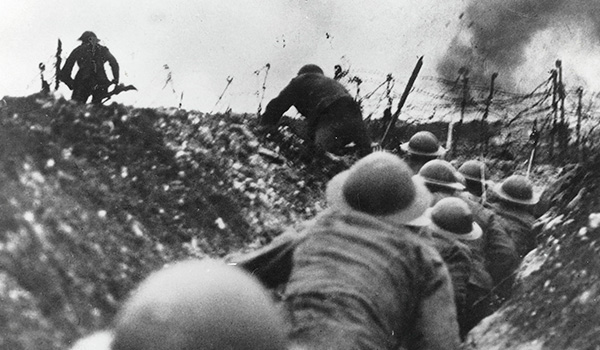
pic_giant_021814_SM_Lessons-of-World-War-1

It has been a century since that bleak November of 1914, and ninety-six years since the time where for a brief moment, people around the world, but especially in Europe dared to hope for a lasting and just peace. But that would not be the case…

The victors imposed humiliating peace terms on the vanquished, be it the Germans on the Russians, or the Allies on Germany and her partners. The victors divided up nations, drew up borders without regard to historic, ethnic, tribal or religious sensibilities. But then, it was about the victors imposing themselves and their quest for domination, expanding colonial empires and controlling natural resources rather than seeking a just and lasting peace. The current war against the Islamic State is one of the wars spawned by the Sykes-Picot agreement which divided the Middle East between the French and the British at the end of the war. It was a war that keeps on giving.

Of course we have known the disastrous results of their hubris, a hubris still carried on by those who love and profit by war…war without end which continues seemingly with no end in sight.

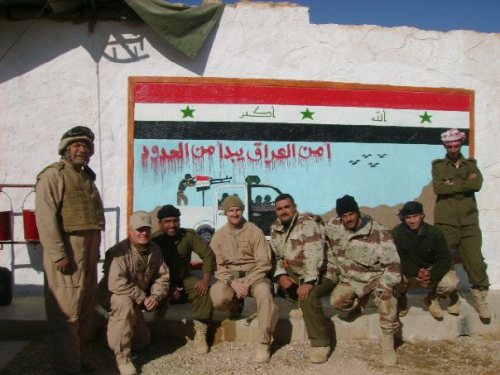
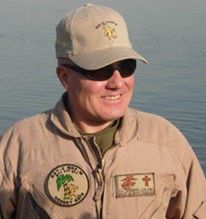
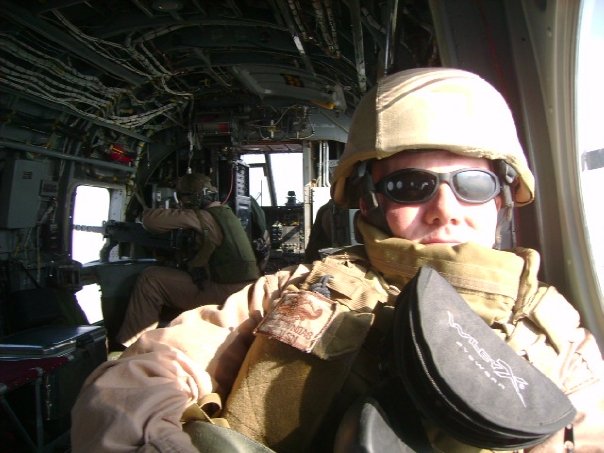
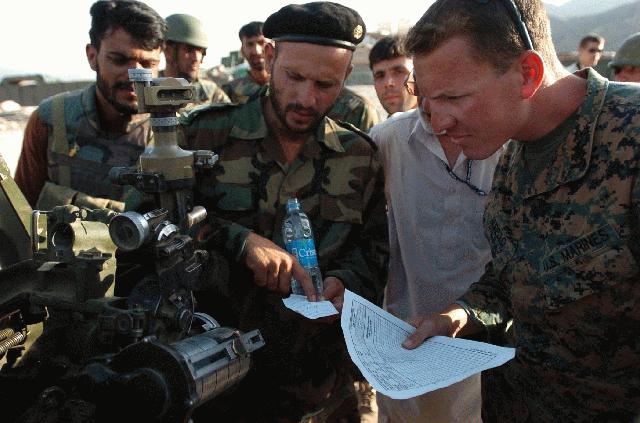
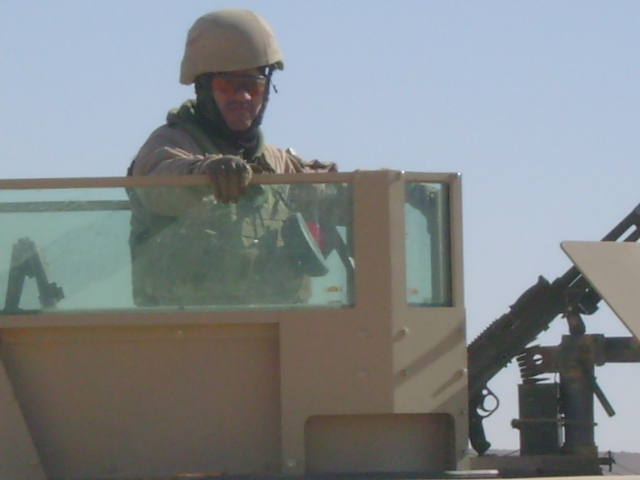
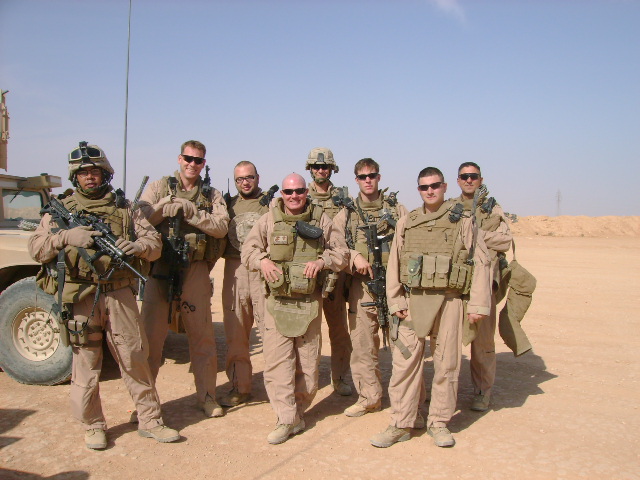
I am a veteran of Iraq and Operation Enduring Freedom, as well as the Bosnia mission and the Cold War. My dad was a Vietnam veteran who enlisted during the Korean War. I serve because it is the right thing to do, not because I find war romantic or desirable. It is as General William Tecumseh Sherman said “Hell.” If called to go back to Iraq, where I left so much of my soul, I would in a heartbeat.

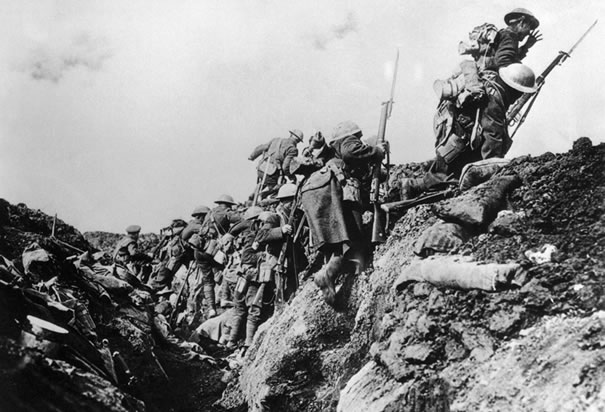
canadian-soldiers-going-over-trench

Today we pay our day of homage to our honor veterans, especially in the United States, Great Britain, Canada and France. But sometimes it seems so hollow, for in all of our countries those that serve are a tiny minority of those eligible to serve, who are much of the time ignored or even scorned by those that feel that providing for them after they have served is too much of a burden on the wealthy who make their profits on the backs of these soldiers, sailors, marines and airmen.

I have walked about since returning from Iraq often in a fog, trying to comprehend how a country can be at war for so long, and there is such a gap between the few who serve and the vast majority for whom war is an abstract concept happening to someone else, in places far away, and whose experience of war is its glorification in video games. Personally I find that obscene, and feel that I live in a foreign world. Erich Maria Remarque wrote in All Quiet on the Western Front: 

“I imagined leave would be different from this. Indeed, it was different a year ago. It is I of course that have changed in the interval. There lies a gulf between that time and today. At that time I still knew nothing about the war, we had been only in quiet sectors. But now I see that I have been crushed without knowing it. I find I do not belong here any more, it is a foreign world.”

Similarly Guy Sager wrote in his classic The Forgotten Soldier: 

“In the train, rolling through the sunny French countryside, my head knocked against the wooden back of the seat. Other people, who seemed to belong to a different world, were laughing. I couldn’t laugh and couldn’t forget.”

Major General Gouverneur Warren wrote to his wife two years after the American Civil War:

“I wish I did not dream that much. They make me sometimes dread to go to sleep. Scenes from the war, are so constantly recalled, with bitter feelings I wish to never experience again. Lies, vanity, treachery, and carnage.”

Sometimes I find it obscene that retailers and other corporations have turned this solemnity into another opportunity to profit. But then why should I expect different? Such profiteers have been around from the beginning of time, but then maybe I still am foolish enough to hope for something different. Please don’t get me wrong, I do appreciate the fact that some businesses attempt in at least some small way to thank veterans. I also know there are many businesses and business owners who do more than offer up tokens once a year, by putting their money where their mouth is to support returning veterans with decent jobs and career opportunities; but for too many others the day is just another day to increase profits while appearing to “support the troops.”

As Marine Corps legend and two time Medal of Honor winner Major General Smedley Butler Wrote:

“What is the cost of war? what is the bill? “This bill renders a horrible accounting. Newly placed gravestones. Mangled bodies. Shattered minds. Broken hearts and homes. Economic instability. Depression and all of its attendant miseries. Back -breaking taxation for generations and generations. For a great many years as a soldier I had a suspicion that war was a racket; not only until I retired to civilian life did I fully realize it….”

But the marketers of war do not mind, almost Orwellian language is used to lessen its barbarity. Dave Grossman wrote in his book On Killing:

“Even the language of men at war is the full denial of the enormity of what they have done. Most solders do not “kill,” instead the enemy was knocked over, wasted, greased, taken out, and mopped up. The enemy is hosed, zapped, probed, and fired on. The enemy’s humanity is denied, and he becomes a strange beast called a Jap, Reb, Yank, dink, slant, or slope. Even the weapons of war receive benign names- Puff the Magic Dragon, Walleye, TOW, Fat Boy, Thin Man- and the killing weapon of the individual soldier becomes a piece or a hog, and a bullet becomes a round.”

There is even a cottage industry of war buffs, some of who are veterans seeking some kind of camaraderie after their service, but most of whom have little or know skin in the real game, and at no inconvenience to themselves. As far as the veterans I understand, but as for the others I can fully understand the words of Guy Sager, who wrote:

“Too many people learn about war with no inconvenience to themselves. They read about Verdun or Stalingrad without comprehension, sitting in a comfortable armchair, with their feet beside the fire, preparing to go about their business the next day, as usual…One should read about war standing up, late at night, when one is tired, as I am writing about it now, at dawn, while my asthma attack wears off. And even now, in my sleepless exhaustion, how gentle and easy peace seems!”

dscn0064

It was to be the War to end all war” but I would venture that it was the war that birthed countless wars, worse tyrannies and genocides; That war, which we mark the end of today, is in a very real and tragic sense, the mother of the wars that have followed. War without end…Amen.

As so to my friends, my comrades and all that served I honor you, especially those that I served alongside. We are a band of brothers, no matter what the war profiteers do, no matter how minuscule our number as compared to those who do not know what we do, and those who never will.  We share a timeless bond and no-one can take that away.

n671902058_1153829_4642-2

I close with the words of a German General from the television mini-series Band of Brothers which kind of sums up how I feel today. The American troops who have fought so long and hard are watching the general address his troops after their surrender. An American soldier of German-Jewish descent translates for his comrades the words spoken by the German commander, and it as if the German is speaking for each of them as well.

Men, it’s been a long war, it’s been a tough war. You’ve fought bravely, proudly for your country. You’re a special group. You’ve found in one another a bond that exists only in combat, among brothers. You’ve shared foxholes, held each other in dire moments. You’ve seen death and suffered together. I’m proud to have served with each and every one of you. You all deserve long and happy lives in peace.

In hopes of peace,

Padre Steve+

Leave a comment

Filed under History, Military, News and current events, philosophy, Political Commentary, shipmates and veterans, world war one

The Dead and Those Forever Changed: Gettysburg and the Human Cost of War

gburg dead2

“Ashes of soldiers South or North, As I muse retrospective murmuring a chant in thought, The war resumes, again to my sense your shapes, And again the advance of the armies. Noiseless as mists and vapors, From their graves in the trenches ascending, From cemeteries all through Virginia and Tennessee, From every point of the compass out of the countless graves, In wafted clouds, in myriads large, or squads of twos or threes or single ones they come, And silently gather round me…”

From Walt Whitman- Ashes of Dead Soldiers

Too often we look at distant battles and campaigns in terms of strategy, operations, tactics, leadership and the weaponry employed. Likewise we might become more analytical and look at the impact of the battle or campaign in the context of the war it was fought, or in the manner in which the tactics or weapons used revolutionized warfare. Sometimes in our more reflective moments we might look at individual bravery or sacrifice, often missing in our analysis is the cost in flesh and blood.

Admittedly the subject is somewhat macabre. But with the reality being that very few people in the United States, Canada or Western Europe have experienced the terrible brutality of war it is something that we should carefully consider any time the nation commits itself to war. By we, I mean all citizens, including the many soldiers, sailors and airmen who never see people they kill, at least in person, or walk among the devastation caused by the highly advanced, precision weapons that they employ from a great distance, sometimes thousands of miles. In some parts of our military we have men and women who have the mission of targeting and killing enemies and then walking home to their families, to have a nice dinner and read their children a bedtime story. But in the Civil War the acts of killing and being killed in combat  “remained essentially intimate; soldiers were able to see each other’s faces and to know whom they had killed.” [1]

While the words of William Tecumseh Sherman that “War is Hell” are as true as when he spoke them. The tragic fact is that for most people war is an abstract concept, antiseptic and unreal; except for the occasional beheading of a hostage by Islamic militants or the videos shot by the perpetrators of crimes against humanity on the internet. Thus the real, brutal and devastating cost of war and its attendant cost in lives, treasure and to the environment are not real to most people in the West.

We use words to describe the business of war which dehumanize the enemy, and we describe their deaths in words more palatable to us, to shield our souls from the evil in which we partake. Military ethicists and philosophers from time immemorial describe even the most just wars as having some sense of evil to them.  Dave Grossman, the army infantry officer who has spent his post military life writing about the psychology of war and killing wrote:

“Even the language of men at war is the full denial of the enormity of what they have done. Most solders do not “kill,” instead the enemy was knocked over, wasted, greased, taken out, and mopped up. The enemy is hosed, zapped, probed, and fired on. The enemy’s humanity is denied, and he becomes a strange beast called a Jap, Reb, Yank, dink, slant, or slope. Even the weapons of war receive benign names- Puff the Magic Dragon, Walleye, TOW, Fat Boy, Thin Man- and the killing weapon of the individual soldier becomes a piece or a hog, and a bullet becomes a round.” [2]

We can now add the terms “Haji” and “Raghead” and “Camel Driver” to Grossman’s list of dehumanizing terms that we label our opponents from our most recent wars in Iraq and Afghanistan.

The very insightful words of Guy Sager in his classic work The Forgotten Soldier about World War Two on the Eastern front are lost on many that study war:

“Too many people learn about war with no inconvenience to themselves. They read about Verdun or Stalingrad without comprehension, sitting in a comfortable armchair, with their feet beside the fire, preparing to go about their business the next day, as usual…One should read about war standing up, late at night, when one is tired, as I am writing about it now, at dawn, while my asthma attack wears off. And even now, in my sleepless exhaustion, how gentle and easy peace seems!” [3]

In an age where so few have served in the military and even few have seen combat in some way shape or form many who study war are comfortable experts who learn about war with no inconvenience to themselves. When I hear men and women, the pundits, politicians and preachers; that Trinity of Evil who constantly exhort governments and peoples to go to war for causes, places or conflicts that they have little understanding of from the comfort of their living rooms or television studios I grow weary. I fully comprehend the words of Otto Von Bismarck who said: “Anyone who has ever looked into the glazed eyes of a soldier dying on the battlefield will think hard before starting a war.” [4]

As a historian who also is a military chaplain who has seen war I struggle with what Sager said. Thus when I read military history, study and write about particular battles or engagements, or conduct staff rides as like the Gettysburg trip that we are embarking on, the human cost is always present in my mind. The fact that I still suffer the effects of PTSD including night terrors and chronic insomnia keeps what I do in good focus, and prevents me from being a comfortable expert.

Thus, it is my view, to conduct a staff ride, to walk the battlefield; especially in somewhat uncomfortable weather is a good thing. It connects us more in at least a small way to the men that fought there, died there, or brought home wounds that changed them forever.

To walk a battlefield where tens of thousands of men were killed and wounded is for me a visit to hallowed ground. I have felt that at Waterloo, Verdun, Arnhem, Normandy, the Bulge, the West Wall, the Shuri Line on Okinawa, Antietam, Chancellorsville, Stone’s River, and of course the battlefield which I have visited more than any in my life, Gettysburg. There are times when I walk these fields that I am overcome with emotion. This I think is a good thing, for as an American who has family ties to the Civil War, Gettysburg in particular is hallowed ground.
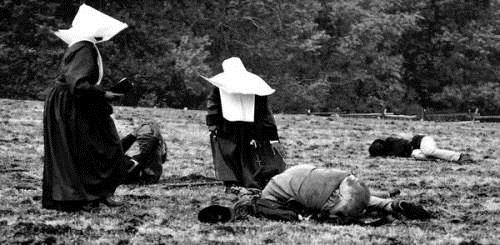
 sisters of charity

Sisters of Charity on the Battlefield

In doing this I try to be dispassionate in how I teach and while dealing with big issues that my students will face as Joint Staff Officers. Some of them will become Flag or General Officers, with the responsibility of advising our nation’s leaders as well planning and conducting the military operations on which the lives of thousands or maybe hundreds of thousands of people depend. Thus I do feel a certain responsibility to teach not only the strategy and other important military aspects of this campaign, but also the cost in human lives and ethical considerations. I take this work seriously because it forces us to remember what war is about and its nature, which Clausewitz wrote is “a paradoxical trinity-composed of primordial violence, hatred and enmity…” [5] which William Tecumseh Sherman so rightly understood without the euphemisms that we so frequently use to describe it: “War is cruelty, and you cannot refine it….”

As the sun set on the evening of July 3rd 1863 the battered Army of Northern Virginia and the battered but victorious Army of the Potomac tended their wounds, buried their dead and prepared for what might happen next. On that afternoon it was as if “the doors of Hell had shut” and the next day, the Glorious 4th of July “The heavens opened, and a thunderstorm of biblical proportions drenched the battlefield, soaking dead, wounded and able-bodied men equally.” [6]

Following the disastrous attack aimed at the Union center, Lee and his surviving commanders prepared for an expected Union counter attack. However, George Meade, the commander of the Army of the Potomac who had correctly anticipated Lee’s assault decided not to gamble on a counter attack, though it was tempting. He knew too well the tenacity and skill of the Confederate commanders and soldiers on the defense and did not want to risk a setback that might give Lee another chance, thus “the two sides stared at each other, each waiting for the other to resume the fighting, neither did.” [7]

 nurses

Federal Field Hospital

As the Confederate army retreated and Meade’s army pursued another army remained at Gettysburg, “an army of the wounded, some 20,350 in number, a third of them Confederate….” Just 106 surgeons were spared from the Army of the Potomac and “the comparatively few overburdened surgeons and attendants now on duty still labored every day to the point of exhaustion.” [8] These overworked men were aided by local volunteers as well as members of the U.S. Sanitary Commission, the Christian Commission and the Sisters of Charity. These men and women “brought organization to the hospitals, relief to the medical staffs and the local volunteers, and immense comfort to the wounded, whether blue or butternut.” [9]

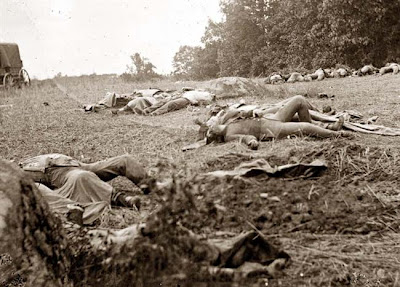
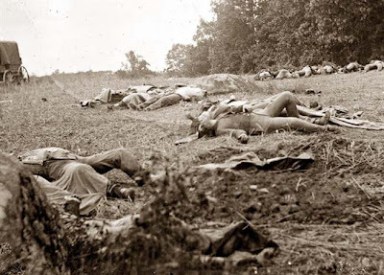
The dead and wounded littered the battlefield and the sights and smells were ghastly:

“Wherever men gazed, they saw dead bodies. A New Yorker thought they “lay as thick as the stones that is on father’s farm.” A stench smothered the field, moving John Geary to tell his wife, “My very clothes smell of death.” A Regular Army veteran exclaimed, “I have seen many a big battle, most of the big ones of the war, and I never saw the like.” [10] A resident of Gettysburg walked up to Little Round top and wrote of what she observed from the peak of that rocky hill:

“surrounded by the wrecks of battle, we gazed upon the valley of death beneath. The view there spread out before us was terrible to contemplate! It was an awful spectacle! Dead soldiers, bloated horses, shattered cannon and caissons, thousands of small arms. In fact everything belonging to army equipments was there in one confused and indescribable mass.” [11]

At Joseph Sherfy’s farm, scene of some of the heaviest fighting on the second day, his barn “which had been used as a field hospital, was left a burnt ruin, with “crisped and blackened limbs, heads and other portions of bodies” clearly visible.” [12] When the rains came, the wounded suffered terribly. Many of the field aid stations were set up next to the creeks that crisscrossed the battlefield, and those streams quickly flooded as torrents of rain water caused them to overflow their banks. “A New Jersey soldier watched in horror as the flood waters washed over and carried away badly wounded men unable to move to safety….” [13]

Major General Oliver Howard of the Union XI Corps took his escort to do a reconnaissance of the town on July 4th, and one of the cavalry troopers of his escort described the scene:

“The battle field was the Awfulest sight I ever saw…The woods in front of our men the trees were riddled with Cannon ball and bullets evry limb shot off 20 feet high. Some say the Rebel dead lay six deep in the grave yard where we lay. Nearly evry grave stone was shattered by shots and everything was torn to pieces. I went through the town on the 4th of July with the General. The streets were covered with dead. Evry frame house were riddled with balls the brick ones dented thick where shot had hit.” [14]

Field hospitals were often little more than butcher shops where arms and legs were amputated by overworked surgeons and attendants while those with abdominal wounds that could not be easily repaired were made as comfortable as possible. Triage was simple. If a casualty was thought to have a reasonable chance at survival he was treated, if not they were set aside in little groups and allowed to die as peacefully as possible. Churches were requisition for use of the surgeons. A volunteer nurse noted: “Every pew was full; some sitting, some lying, some leaning on others. They cut off the legs and arms and threw them out the windows. Every morning the dead were laid on the platform in a sheet or blanket and carried away.” [15]

Chaplains were usually found with the doctors, caring for the physical as well as the spiritual needs of the wounded. Protestant chaplains might ensure that their soldiers “knew Jesus,” while Catholics administered the Last Rites, often working together across denominational lines to care for their soldiers.

A Union chaplain described the ministry in the field hospitals and aid stations:

“Some of the surgeons were posted well up toward the front to give first aid. More of them were in the large field hospitals of division in more secure places at the rear. The chaplain might be at either place or at both by turns. Some made a point of watching for any wounded man who might be straggling back, who perhaps could be helped up into the saddle and ride back to the hospital. When the demand for help became urgent the chaplains were nurses. As the rows of wounded men grew longer, chaplains went from man to man to see what could be done to relieve their pain, perhaps to take a message or letter. All day into the night this work would continue. A drink of water, a loosened bandage on a swollen limb, a question answered, a surgeon summoned, a whispered word of comfort marked their course. Each night at sundown the men who died during the day were buried, with a short prayer, side by side in a common grave, each in his uniform with canvas wrapped around his face and a strip of paper giving his name and regiment in a bottle buttoned under his blouse.” [16]

The war would challenge the theology of the clergy who served as chaplains on both sides, as “individuals found themselves in a new and different moral universe, one in which unimaginable destruction had become a daily experience. Where could God belong in such a world? How could a benevolent deity countenance such cruelty and suffering? Doubt threatened to overpower faith….” [17] That sense of bewilderment is not lacking today among those of faith who return from war.

Some men, clergy and laity alike would attempt to find a theological meaning to the suffering. Many would do so in the theology of John Calvin which emphasized the Providence and foreknowledge of God. That theological frame of reference, of the results of battles and the death or wounding of men in war and the attendant suffering was found in the will, or providence of God was quite common among men of both sides who grew up during the Second Great Awakening, and it can still be found today; and for some, like Stonewall Jackson, it was carried to fatalistic extremes. However, others like Colonel William Oates of the 15th Alabama, who considered himself a believing Christian, saw things differently, he wrote that he believed God:

“endowed men with the power of acting for themselves and with responsibility for their acts. When we went to war it was a matter of business, of difference of opinion among men about their temporal affairs. God had nothing to do with it. He never diverted a bullet from one man, or caused it to hit another, nor directed who should fall or who should escape, nor how the battle should terminate. If I believed in such intervention of Providence I would be a fatalist….” [18]

The carnage around the battlefield was horrifying to most observers. Corporal Horatio Chapman of the 20th Connecticut Volunteers wrote about the sight on Cemetery Ridge on the night of July 3rd following the repulse of Pickett’s Charge:

But in front of our breastworks, where the confederates were massed in large numbers, the sight was truly awful and appalling. The shells from our batteries had told with fearful and terrible effect upon them and the dead in some places were piled upon each other, and the groans and moans of the wounded were truly saddening to hear. Some were just alive and gasping, but unconscious. Others were mortally wounded and were conscious of the fact that they could not live long; and there were others wounded, how bad they could not tell, whether mortal or otherwise, and so it was they would linger on some longer and some for a shorter time-without the sight or consolation of wife, mother, sister or friend. I saw a letter sticking out of the breast pocket of one of the confederate dead, a young man apparently about twenty-four. Curiosity prompted me to read it. It was from his young wife away down in the state of Louisiana. She was hoping and longing that this cruel war would end and he could come home, and she says, “Our little boy gets into my lap and says, `Now, Mama, I will give you a kiss for Papa.’ But oh how I wish you could come home and kiss me for yourself.” But this is only one in a thousand. But such is war and we are getting used to it and can look on scenes of war, carnage and suffering with but very little feeling and without a shudder.” [19]

Colonel William Oates of the 15th Alabama whose brave troopers assaulted Little Round Top on July 2nd wrote:

“My dead and wounded were nearly as great in number as those still on duty. They literally covered the ground. The blood stood in puddles in some places on the rocks; the ground was soaked with the blood of as brave men as ever fell on the red field of battle.” [20]

Another Confederate soldier described the scene west of the town on July 4th:

“The sights and smells that assailed us were simply indescribable-corpses swollen to twice their size, asunder with the pressure of gases and vapors…The odors were nauseating, and so deadly that in a short time we all sickened and were lying with our mouths close to the ground, most of us vomiting profusely.” [21]

The burial of the dead was too much for the soldier’s alone to accomplish. “Civilians joined the burial of the dead out of both sympathy and necessity. Fifty Confederates lay on George Rose’s fields; seventy-nine North Carolinians had fallen on a perfect line on John Forney’s farm.” [22]

Those tending the wounded recalled how many of the wounded soldeirs selflessly asked medical personnel to tend others more badly wounded than themselves; a volunteer nurse wrote her sister: “More Christian fortitude was never witnessed than they exhibit, always say-‘Help my neighbor first, he is worse.’” [23] The Confederate wounded were the lowest priority for the badly overwhelmed Union surgeons and Lee had not done much to help, leaving just a few surgeons and attendants to care for the Confederates left on the battlefield. The Confederate wounded housed in the classrooms of Pennsylvania College were left in dire straits:

“All the rooms, halls and hallways were occupied with the poor deluded sons of the South,” and “the moans prayers, and shrieks of the wounded and dying were everywhere.” Between 500 and 700 wounded Confederates were jammed in with “five of our surgeons” and “no nurses, no medicines no kinds of food proper for men in our condition….” [24]

Across the battlefield the wounded were being treated in a variety of makeshift aid stations and field hospitals:

“Sergeant Major David E. Johnson of the Seventh Virginia was taken to the Myers house after the bombardment, suffering from a shrapnel wound to his left side and arm. “The shed in which I was placed,” he recalled, “was filled with the wounded and dying….I spoke to no one, and no one to me, never closed my eyes to sleep; the surgeons close by being engaged in removing the limbs of those nearby to be amputated….I heard nothing but the cries of the wounded and the groans of the dying, the agonies of General Kemper, who lay nearby, frequently being heard.” [25]

The suffering was not confined to the hospitals; John Imboden commanding the cavalry brigade protecting the Confederate wounded being transported home and supply trains described the horror of that movement:

“Scarcely one in a hundred had received adequate surgical aid, owning to the demands on the hard working surgeons from still far worse cases tat had to be left behind. Many of the wounded in the wagons had been without food for thirty-six hours. Their torn and bloody clothing, matted and hardened, was rasping the tender, inflamed, and still oozing wounds….From nearly every wagon as the teams trotted on, urged by whip and shout came such cries and shrieks as these:

“My God! Why can’t I die?” “My God! Will no one have mercy and kill me?” “Stop! Oh! For God’s sake stop for just one minute; take me out and leave me to die on the roadside.” “I am dying! I am dying! My poor wife, my dear children, what will become of you?” [26]

Eventually, by July 22nd with most of the wounded evacuated a proper general hospital was set up east of the town and the remaining wounded taken there. That hospital, named Camp Letterman grew into “a hundred –acre village of cots and tents, with its own morgue and cemetery, and served more than 3,000 wounded before it was finally closed in November.” [27]

As for the families of the dead, many never found out the details of their loved one’s deaths, which caused their losses to be “in some sense unreal and thus “unrealized,” as the bereaved described them, recognizing the inhibition of mourning that such uncertainty imposed.” [28] Much was because of how overwhelmed the field hospital staffs were, and how inadequate their records of treatment and the dispositions of bodies were sketchy at best. “Reports from field hospitals were riddled with errors and omissions, often lacked dates, and were frequently illegible, “written with the faintest lead pencil.” [29]

Among the killed and wounded were the great and the small. John Reynolds who died on day one, Winfield Scott Hancock, the valiant commander of the Union II Corps was severely wounded during Pickett’s Charge. Dan Sickles, the commander of Third Corps who had nearly brought disaster on the Federal lines by advancing to the Peach Orchard on July 2nd had his leg amputated after being grazed by a cannon ball at the Trostle Farm. Sickles, who survived the wound and the war, would visit the leg, which had carefully ordered his surgeons to preserve. The leg is now displayed at the National Museum of Health and Medicine in Washington D.C.

The Army of the Potomac lost a large number of brigade and regimental commanders including Strong Vincent, the young and gallant brigade commander who helped save Little Round Top; George Willard who brought redemption to his Harper’s Ferry brigade on Cemetery Ridge stopping Barksdale’s charge on July 2nd; Colonel Augustus Van Horne Ellis who before being killed at Devil’s Den told his staff “the men must see us today;” and the young Elon Farnsworth, who had been promoted from Captain to Brigadier General just days before his death in a senseless ordered by his division commander Judson “Kill Cavalry” Kilpatrick, against Hood and McLaw’s dug in divisions as the battle ended.

The Confederates suffered grievous losses. Divisional commanders like Dorsey Pender and Johnston Pettigrew were mortally wounded, John Bell Hood was severely wounded, Isaac Trimble, wounded and captured while Harry Heth was wounded. Casualties were even higher for commanders and the brigade and regiment level, the list included excellent commanders such as Paul Semmes and William Barksdale, while Wade Hampton, Stuart’s best brigade commander was seriously wounded and would be out of action for months. The toll of brigade and regimental commanders who were killed or wounded was fearful. “At the regimental level approximately 150 colonels, lieutenant colonels and majors had been killed, wounded or captured. Of that number nineteen colonels had been slain, the most in any single battle in which the army had been engaged. Captains now led regiments.” [30]

In Picket’s division alone all three brigade commanders, Kemper, Armistead and Garnett were killed or wounded while twenty-six of forty Field Grade officers were casualties. Forty-six percent (78 of 171) of the regiments of the Army of Northern Virginia suffered casualties at the command level. The Confederate casualties, especially among the best leaders were irreplaceable and Lee’s Army never recovered from the loss of seasoned leaders who were already in short supply.
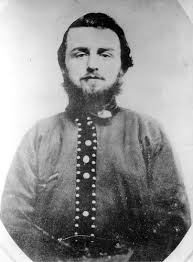
 culp

Private Wesley Culp CSA

For some like Private Wesley Culp of the 2nd Virginia it was a final trip home. Culp had grown up in Gettysburg and had taken a job in Virginia prior to the war. In 1861 he enlisted to serve among his friends and neighbors. He was killed on the morning of July 3rd on Culp’s Hill on the very property owned by his uncle where he grew up and had learned to hunt.

One witness, Frank Haskell looked in at a field hospital in the Union II Corps area and wrote:

“The Surgeons with coats off and sleeves rolled up…are about their work,… “and their faces and clothes are spattered with blood; and though they look weary and tired, their work goes systematically and steadily on- how much and how long they have worked, the piles of legs, arms, feet, hands, fingers…partially tell.” [31]

All told between 46,000 and 51,000 Americans were killed or wounded during the three days of Gettysburg. Busey and Martin’s Regimental Strengths and Losses at Gettysburg list the following casualty figures, other accounts list higher numbers, some as many as 53,000. One also has to remember that many of the missing soldiers were killed in action, but their bodies were simply never found.

                          Killed               wounded         missing         total

Union                    3,155                14,531             5,369           23,055

Confederate         4,708                12,693             5,830            23,231

Total                     7,863               27,224            11,199          46,286

To provide a reference point we need to remember that in 8 years of war in Iraq the United States suffered fewer casualties than during the three days of Gettysburg. It was the bloodiest single battle in American history, and it was a battle between brothers not against foreign enemies. Robert E Lee testified to Congress following the war “the war… was an unnecessary condition of affairs, and might have been avoided if forbearance and wisdom had been practiced on both sides.” [32]  Lee’s “Old Warhorse” James Longstreet asked “Why do men fight who were born to be brothers?” [33]

The carnage and death witnessed by survivors of Gettysburg and the other battles of the war changed Civil War soldiers as much as war has before or after. James Garfield, who served as a general in the Union army and went on to become President of the United States noted: “at the sight of these dead men whom other men killed, something went out of him, the habit of a lifetime, that never came back again: the sense of the sacredness of life and the impossibility of destroying it.” [34]
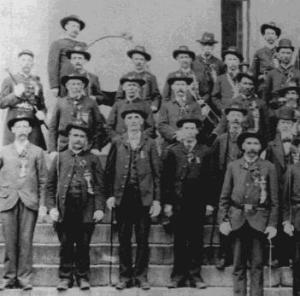
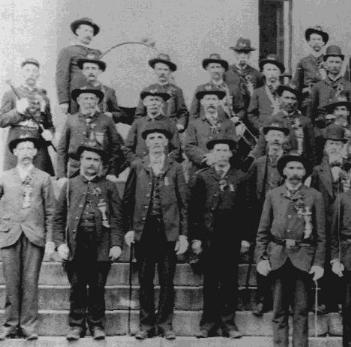
GARpost

Grand Army of the Republic Veterans

Others, like veterans of today had trouble adjusting to life after the war. “Civil War veterans had trouble finding employment and were accused of being drug addicts. Our word “hobo” supposedly comes from homeless Civil War veterans- called “hoe boys” – who roamed the lanes of rural America with hoes on their shoulders, looking for work.” [35] Following the war, during the turmoil of Reconstruction and the massive social change brought about by the industrialization of society and rise of “industrial feudalism” numerous veterans organizations were founded, for those that belonged to them they were “one of the principle refuges for old soldiers who had fought for a very different world than the one they found around them.” The Grand Army of the Republic was the most prominent of these organizations. “In more than 7,000 GAR posts across the United States, former soldiers could immerse themselves in a bath of sentimental memory; there, they established a ritualized camp geography, rekindled devotion to emancipation and preached the glories of manly independence.” [36]

At the end of the war, Joshua Chamberlain, the hero of Little Round Top who was well acquainted with the carnage of war suffered immensely. His wounds never healed fully, and he struggled to climb out of “an emotional abyss” in the years after the war. Part was caused by his wounds which included wounds to his sexual organs, shattering his sexuality and caused his marriage to deteriorate. He wrote his wife about the “widening gulf between them, one created at least in part by his physical limitations: “There is not much left in me to love. I feel that all too well.” [37]

Gouverneur Warren, who had helped save the Union at Little Round Top wrote to his wife while on Engineering duty after the war: He wrote in 1866 “Indeed the past year…was one of great despondency for me…I somehow don’t wonder that persons often remark how seldom I laugh, but it is really seldom that I do.” He wrote again in 1867 “I wish I did not dream that much. They make me sometimes dread to go to sleep. Scenes from the war, are so constantly recalled, with bitter feelings I wish to never experience again. Lies, vanity, treachery, and carnage.” [38]

The killing at Gettysburg and so many other battles “produced transformations that were not readily reversible; the living into the dead, most obviously, but the survivors into different men as well, men required to deny, to numb basic human feelings at costs they may have paid for decades after the war ended, as we know twentieth and twenty-first-century soldiers from Vietnam to Iraq continue to do; men who like James Garfield, were never quite the same again after seeing fields of slaughtered bodies destroyed by me just like themselves.” [39]

Joshua Chamberlain asked the most difficult questions when viewing the devastation around Petersburg in the final days of the war:

“…men made in the image of God, marred by the hand of man, and must we say in the name of God? And where is the reckoning for such things? And who is answerable? One might almost shrink from the sound of his own voice, which had launched into the palpitating air words of order–do we call it?–fraught with such ruin. Was it God’s command that we heard, or His forgiveness that we must forever implore?” [40]

Chamberlain’s questions should always be in our minds as we send young men and women to war.

Peace

Padre Steve+

Notes

[1] Faust, Drew Gilpin, This Republic of Suffering: Death and the American Civil War Vintage Books, a division of Random House, New York 2008 p.41

[2] Grossman, Dave On Killing: The Psychological Costs of Learning to Kill in War and Society. Back Bay Books, Little, Brown and Company New York 1995, 1996 p.92

[3] Sager, Guy The Forgotten Soldier originally published as Le Soldat Oublie Editions Robert Laffont 1967, Translation Harper and Row Inc 1971, Brasey’s Washington D.C 2000 p.223

[4] Bismarck, Otto von Speech, August 1867

[5] Clausewitz, Carl von. On War Indexed edition, edited and translated by Michael Howard and Peter Paret, Princeton University Press, Princeton NJ 1976 p.89

[6] Wittenberg, Eric J, Petruzzi, David and Nugent, Michael F. One Continuous Fight: The Retreat from Gettysburg and the Pursuit of Lee’s Army of Northern Virginia July 4-14 1863 Savas Beatie LLC New York NY and El Dorado Hills CA 2008,2001 p.27

[7] Ibid. Wittenberg One Continuous Fight p.28

[8] Sears, Stephen W Gettysburg Houghton Mifflin Co. Boston and New York 2003 p.508

[9] Ibid. Sears Gettysburg p.510

[10] Wert, Jeffry D. The Sword of Lincoln: The Army of the Potomac Simon and Schuster, New York and London 2005 p.303

[11] Schultz, Duane The Most Glorious Fourth: Vicksburg and Gettysburg July 4th 1863. W.W. Norton and Company New York and London, 2002 p.357

[12] Faust This Republic of Suffering p.81

[13] Ibid. Wittenberg One Continuous Fight p.30

[14] Ibid. Wittenberg One Continuous Fight pp.32-33

[15] Ibid. Sears Gettysburg. p.508

[16] Brinsfield, John W. et. al. Editor, Faith in the Fight: Civil War Chaplains Stackpole Books, Mechanicsburg PA 2003 pp.121-122

[17] Ibid. Faust. This Republic of Suffering p.267

[18] Oates, Willam C. and Haskell, Frank A. Gettysburg: The Confederate and Union Views of the Most Decisive Battle of the War in One Volume Bantam Books edition, New York 1992, originally published in 1905 p.138

[19] Chapman, Horatio Civil War Diary of a Forty-niner pp.22-24 Retrieved from http://www.dbappdev.com/vpp/ct20/hdc/HDC630703.htm 8 April 2014

[20] Oates, William C. Southern Historical Papers, April 6th, 1878 retrieved from http://www.brotherswar.com/Civil_War_Quotes_4h.htm 18 July 2014

[21] _________ What Happened to Gettysburg’s Confederate Dead? The Blog of Gettysburg National Military Park, retrieved from http://npsgnmp.wordpress.com/2012/07/26/what-happened-to-gettysburgs-confederate-dead/ 18 July 2014

[22] Ibid. Faust. This Republic of Suffering p.81

[23] Catton, Bruce The Army of the Potomac: Glory Road Doubleday and Company, Garden City New York, 1952 p.333

[24] Guelzo, Allen C. Gettysburg: The Last Invasion Vintage Books a Division of Random House, New York 2013 p.469

[25] Brown, Kent Masterson Retreat from Gettysburg: Lee, Logistics and the Gettysburg Campaign University of North Carolina Press, Chapel Hill and London, 2005 p.56

[26] Imboden, John D. The Confederate Retreat from Gettysburg in Battles and Leaders of the Civil War Volume III, The Tide Shifts. Edited by Robert Underwood Johnson and Clarence Clough Buel Castle, Secaucus NJ p.424

[27] Ibid. Guelzo Gettysburg: The Last Invasion pp.469-470

[28] Ibid. Faust. This Republic of Suffering p.267

[29] Ibid. Faust. This Republic of Suffering p.113

[30] Wert, Jeffry D. A Glorious Army: Robert E. Lee’s Triumph 1862-1863 Simon and Schuster, New York and London 2011

[31] Sears, Stephen W. Gettysburg Mariner Books, Houghton Mifflin Company Boston, New York 2004 p.466

[32] Flood, Charles Bracelen, Lee: The Last Years Houghton Books, New York 1981 p.124

[33] Longstreet, James in New York Times, July 24, 1885, retrieved from the Longstreet Society http://www.longstreetsociety.org/Longstreet_Quotes.html 18 July 2014

[34] Ibid. Faust. This Republic of Suffering p.55

[35] Shay, Jonathan Odysseus in America: Combat Trauma and the Trials of Homecoming Scribner, New York and London 2002 p.155

[36] Guelzo Allen C. Fateful Lightening: A New History of the Civil War Era and Reconstruction Oxford University Press, Oxford and New York 2012 p.523

[37] Longacre, Edward Joshua Chamberlain: The Soldier and the Man Combined Publishing Conshohocken PA 1999 p.259

[38] Jordan, David M. Happiness is Not My Companion: The Life of G.K. Warren Indiana University Press, Bloomington Indiana 2001 pp.248-249

[39] Ibid. Faust. This Republic of Suffering p.60

[40] Chamberlain, Joshua Lawrence, The Passing of the Armies: An Account of the Final Campaign of the Army of the Potomac, Based on the Personal Reminisces of the Fifth Corps G.P Putnam’s Son’s 1915, Bantam Books, New York 1993 Amazon Kindle Edition p.41

1 Comment

Filed under civil war, faith, History, mental health, Military, philosophy

Moral Injury: Betrayal, Isolation, Suicidality, & Meaninglessness; the War after the War

IMG_1915.JPG

“Great Odysseus woke from sleep on native ground at last- he’d been away for years- but failed to know the land.” Homer, The Odyssey 

War changes the men and women that fight them. This is a truth that dates to antiquity. It does not matter the age or era, where the war was fought or what weapons were used, the pathology is similar, the scars of war, physical, The trauma of war, as Jonathan Shay notes in his book Odysseus in America, “shows ugly deformities of character that trauma can cause, but these deformities are fully human such as might happen to ourselves….” The fact is that the does happen is normal, but how we deal with it is not.

One of the most difficult things that many returning combat veterans face is being re traumatized upon returning home. As the Odyssey shows, for many returning combat veterans it is as if they are returning to an alien planet, which looks familiar, but feels like an alternate universe. It looks the same, but it is profoundly different. Erich Maria Remarque in his classic All Quite on the Western Front wrote:

“I imagined leave would be different from this. Indeed, it was different a year ago. It is I of course that have changed in the interval. There lies a gulf between that time and today. At that time I still knew nothing about the war, we had been only in quiet sectors. But now I see that I have been crushed without knowing it. I find I do not belong here any more, it is a foreign world.”

Shortly before his death in a motorcycle crash T.E. Lawrence, the great Lawrence of Arabia wrote a friend. Lawrence certainly suffered from PTSD and other afflictions that lingered long after the war. The words are haunting and they so describe how many veterans feel, even long after they left the combat zone. For Lawrence and so many others the war after the war never ended.

Lawrence wrote:

“You wonder what I am doing? Well, so do I, in truth. Days seem to dawn, suns to shine, evenings to follow, and then I sleep. What I have done, what I am doing, what I am going to do, puzzle and bewilder me. Have you ever been a leaf and fallen from your tree in autumn and been really puzzled about it? That’s the feeling.”

This has been a facet of life for American military personnel ever since the Vietnam War. Much of the trauma comes from the unnatural and ahistorical manner of how we send men and women to war and bring them home. Now generally we prepare people for war fairly well. However, we send many to war as individual augments, away from their units and people they know, place them in units or organizations where they are relatively isolated and sometimes face great danger, then we bring them back alone, with barely any time to decompress, tell their story and face the consequences of war with those that they know.

Guy Sager, writer of the classic The Forgotten Soldier wrote of his return from war:

“In the train, rolling through the sunny French countryside, my head knocked against the wooden back of the seat. Other people, who seemed to belong to a different world, were laughing. I couldn’t laugh and couldn’t forget.”

The result is that most don’t get the help that they need to make the adjustment. The fact is that the best help is usually found among our comrades who have shared our experience. Before trans-ocean air travel, soldiers came home on troopships, with those that they served and the voyage home lasted anywhere from two weeks to a month. That gave these soldiers the opportunity to process what they had been through, and while they might not have had much in the way of “professional” mental health care, they did have each other. Likewise, they returned to a country where many if not most of the citizenry had shared at least some of the sacrifice of war, and many of whom had family members who had served at war, or who had lost people they knew.

A survivor of World War I’s “Lost Battalion” wrote after the war:

“We just do not have the control we should have. I went through without a visible wound, but have spent many months in hospitals and dollars for medical treatment as a result of those terrible experiences.”

Today soldiers are sent from the United States or United States military bases in Europe or Asia into harms way, and when their tour of duty is done, are sent home in a process that seldom takes more than a week, usually less. Apart from a few airport greeters and their family, if they have a family, their return goes almost unnoticed. They return to a world where there has been no shared experience and people go about their business untouched by war. The return is often overwhelming, and many times disorienting and frightening to the combat veteran who no longer feels connected to the country or people that sent him or her to war. The normal issues faced by redeploying soldiers, especially with their families are often even more pronounced, they and their families struggle.

The general feeling of social isolation is often made worse when they return to their home bases, stations or units and discover that instead of being welcomed home, that they are treated as if they made the life of those who did not deploy harder. “Welcome back, now you can get back to real work, now you can be back on the duty roster.” Within weeks they are submerged in routine, often mind numbing tasks among people who have not shared their experience. Alone they try to cope, quite often not very successfully. For those suffering from combat trauma, especially the unseen injuries of PTSD and Traumatic Brain Injury the experience is magnified. There is a sense of isolation and meaninglessness as they attempt to put their lives back together. For those that seek help, on the active duty side of the house there is a stigma to getting mental health care, which is so pronounced that many either avoid treatment or stop shortly after starting, instead self-medicating with alcohol or drugs. The same is often true for those who seek help in the Veterans Administration system, except they, having finished their active service do not have to endure the shame of being called or considered “broken” by their superiors or their peers. For those that have not served, to be labeled as “broken” is one of the worst things that can happen to you in the military, it is to say that you have no intrinsic value, no matter what you have accomplished to that point or what you have suffered in the line of duty.

Those that do decide to take the risk in going to get mental health care are often then traumatized by the very system that supposedly is there to help them. While there are many gifted, caring and skillful psychiatrists, psychologists and therapists working for the military and the VA, the process of getting care can be brutal and dehumanizing. The intake process is often impersonal and quite often the ordeal dissolutions those going through it. As a personal note, when I transferred back to the area that I previously had been treated it was like I had never been in the system. It was starting from scratch, and while I had gone back to the system seeking basic follow up care, the process broke me and made me worse. Due to the intervention of so very caring people including a former commanding officer who is being promoted to Admiral, I am getting some help and may even be able to contribute to a solution. But it should not be so hard, the system in overwhelmed, undermanned, underfunded and broken, despite the best efforts of some in leadership. The result is that combat veterans are further traumatized and marginalized.

The combination of new trauma, that of no longer feeling a part of society, that of being disconnected from friends and family; that of being isolated at work and treated as a number by those in the medical and mental health system. All of those things add further injury and contributes to the sense of betrayal, the sense of betrayal that goes to the heart of Moral Injury.

Moral Injury involves the breaking of trust, confidence and core beliefs. That can encompass everything from what a person believes about God, the idealism about one’s country, the military that one serves and even the society and family. Moral Injury is an abiding sense of loss of faith and confidence in the things, the beliefs and ideals that one held dear. It is a layer of trauma that adds to what one has experienced in combat, it is another layer of trauma on top of PTSD, TBI and other Combat Stress related issues. It increases the severity of other psychological conditions including depression, anxiety and the risk of suicidal, or other risk taking behaviors.

But it doesn’t seem to me that anyone gets this, and those that do are not in a position to influence policy. Neither are they in a position to ensure that mental health providers are trained to recognize, care for and not increase the chance of further traumatizing those in their care. Instead those coming home from war seem to be condemned to a sort of hell where they do not feel they matter, are treated as numbers or even worse, feel that they no longer can contribute, because they are “broken.”

My experience is that it takes far too much effort to get the basic care that one requires, and most people after being beaten down simply give up. A person should not be reduced to tears and seriously consider suicide to get attention. A person should not have to know a doctor who is going to be an Admiral to get someone to listen to them. Honestly most people will neither endure the ignominy or pain of seeking help in such an environment, much less skyline themselves but writing and speaking about I like I do. For most any of that is far too dangerous or risky.

Some, including people that I know and love and respect have lost their families, careers and lives simply because they did not want to have the stigma of being considered “broken” or deal with the impersonal and machine like bureaucracy that is our mental health system. The sad thing is that this encompasses not only the military and VA systems, but the civilian system as well. I have known far too many people who have ended their lives after being further traumatized by the system. These people include senior officers and even chaplains, most who risked their lives in combat multiple times only to return home broken. I know too many of them, men who were real heroes, who died at their own hand, or others who lost their families and careers.

I know PTSD, I live with that reality daily, the depression, anxiety, hyper vigilance, paranoia, nightmares, night terrors, insomnia and fear of of crowds, traffic, and normal relationships. That is life and I do my best to deal with it, sometimes more successfully than others. My marriage has suffered because of my madness, and I have experienced the rejection of many of my peers in the Chaplain Corps. Likewise my former church and bishop, after two knowing that for two years I was for all practical purposes an agnostic and knowing my life was a wreck, kicked me out when my faith, though very fragile and mixed with doubt, returned. I asked hard questions, and when I asked them publicly I was tossed for being “too liberal.” That rejection, the rejection of a faith community also contributes to Moral Injury. Sadly I know too many others who have returned from war to be rejected by faith communities that advertise how the “love, pray for and support the troops.”

In spite of that I continued to seek help, and at Camp LeJeune my commanders and others ensured that I got what I needed. It helped and when I returned to Hampton Roads a year ago I really thought that I was doing better. That changed last month. I went back, seeking follow-up care, which I assumed was just to download my issues with once in a while and manage my medication. Instead that attempt to re-enter the military mental health care system did me considerable harm, hell I considered suicide just last week after this. I no longer think that what I need is simple occasional follow up care, instead my experience shattered me. I had no idea just how fragile that I was, it was as if the floor had been kicked out from under me.

That my friends is what Moral Injury does to someone. Those are the kind of experiences that break a person’s faith and trust in the things, ideals, institutions and people that they grew up trusting and believing in. That loss of faith and trust, combined with the other layers of Combat Stress Injury can be devastating, and it doesn’t seem to matter because most people are neither aware, nor do they care. Not because they are bad people, but because there is such a gulf between the military and society at large that such issues are distant and incomprehensible to most people not in the military.

Yes, my trust in the system and my country is broken and I don’t know if I will ever regain the faith that I have lost. I honestly want to, I want to believe. God I want to believe. Now it does look like I will be getting help, and maybe even a chance to help being a part of the solution, and that will be a good thing.  Today I got a call from the Admiral at the Medical Center, unfortunately it went directly to voice mail, but he did sound like he cared and wanted to listen. For that I am grateful.

Pray for me as I get a chance to speak with leaders who have some influence to make things better, not just for me, but for all of us.

Peace

Padre Steve+

6 Comments

Filed under mental health, PTSD, suicide

PTSD Dreams and Stranger Things

400236_10151328400862059_541742014_n-2

I didn’t get much sleep last night. For some reason I was back in Iraq.

Last night’s dream world was about every fear I had when I was in Iraq on steroids. I woke up almost every hour in terror of IED attacks, ambushes and attacks on the small groups of advisers on Iraq bases with whom I served.

It is important to note that none of these events happened to me. I was shot at on a number of occasions but none of the terrifying instances that were part of my nightmares last night happened to me. In fact there were people in them who I know now who served in Iraq but not with me. That being said, they were terrifying and all too real in my mind. Though I never actually experienced any of them they were a part of my life and my fears that I lived with on a daily basis as I operated in Al Anbar Province during 2007 and 2008 with small groups of advisers to the Iraqi Army and Security Forces.

Nightmares and dreams are surreal. They are real, but they are not. They blend elements of our lives and our subconscious into visions that can be pleasant or terrifying. Last night was for the most part terrifying but at one point pointed to hope. That being said, I didn’t get much sleep. When I got up for a very busy yet productive day at the final day of my denominational clergy-chaplain training symposium I looked in the mirror. My eyes were bloodshot and I looked terrible.

I remembered a quote by Guy Sager, the author of the classic book of war The Forgotten Soldier:

“Only happy people have nightmares, from overeating. For those who live a nightmare reality, sleep is a black hole, lost in time, like death.

Since I have to wake up very early for my flight back home tomorrow I do hope that my sleep is sound and my dreams for once pleasant. However, I know that such thoughts are an illusion and that like me countless thousands of other combat veterans live what I live. So my hope an prayer is that we will all be able to get at least one good night of sleep.

Peace

Padre Steve+

Leave a comment

Filed under Military, PTSD

Moral Injury: The Silent Killer of Veterans

1622612_10152232336042059_727365308_n

This morning I woke up and got ready to go to work. My wife was up. She had been up most of the night because unbeknownst to me I had been fighting something in my sleep. Judy tried to wake me up, but I didn’t wake up, and evidently the episode lasted much of the night. I do remember some dreams, or rather nightmares last night dealing with a particular situation that I experienced in Iraq, but such nightmares are so common that unless there is something really unusual about them I really don’t think much about them.

I first heard of Moral Injury in 2009 about a year after I was diagnosed with severe and chronic PTSD. However, that being said as a military historian I have to admit that I have read about it time and time again in less clinical language. What I had more experience with were the memoirs of common soldiers and officers, as well as the experiences of Sailors, Marines and Soldiers who had confided in me at various times as their chaplain.

Marine Major General and two time Medal of Honor recipient Smedley Butler wrote in his book War is a Racket:

“Boys with a normal viewpoint were taken out of the fields and offices and factories and classrooms and put into the ranks. They were remolded; they were made over; they were made to “about face”; to regard murder as the order of the day. They were put shoulder to shoulder and through mass psychology, they were entirely changed. We used them for a couple of years and trained them to think of nothing but killing and being killed.

The suddenly, we discharged them and told them to make another “about face”! This time they had to do their own readjusting, sans mass psychology, sans officers’ aid and advice, sans nation-wide propaganda. We didn’t need them anymore. So we scattered them about without any “three minute” or “Liberty Loan” speeches or parades.”

Last year I was interviewed by David Wood of the Huffington Post for a series of three articles that he just published on moral injury.* If PTSD and TBI are considered “invisible wounds” then moral injury must be included. It is a condition as old as war itself and can be seen even in the most ancient of writings about war, Homer’s Iliad, King David’s grief over the loss of his friend Jonathan and many others.

I came home from Iraq forever changed. I served with Marine and Army advisers to Iraqi Army, Border Troops, Police, Highway Patrol and Port of Entry Police in Al Anbar Province in 2007 and 2008. That assignment, which took me throughout the province brought me into contact with a part of the war that many Americans, even those serving in Iraq were shielded from, a part of the war that was never shown in the media that exposed me to realities that before serving there I was unaware.

They were uncomfortable truths. The tensions between the various Iraqi factions, the real hopes for a better Iraq held by many Iraqis and the absolute devastation that the American invasion of Iraq had brought to that unfortunate country. I saw some of the disrespectful and insulting things done by American troops that had to be dealt with by the advisors, men who were as much diplomats as they were Soldiers and Marines. I saw the damage inflicted by bombing campaigns that had little to do with winning a war, but more with destroying infrastructure that even our own war plans had determined was vital to Iraq’s recovery after the success of our campaign. I saw children wounded in fire fights, as well as ministered to the wounded coming through the Fleet Surgical Facility at Ta’Qaddum on their way elsewhere.

I have spent time with Marines and Soldiers who feel real guilt from the actions that they saw or participated in both in Iraq and Afghanistan. Likewise I have dealt with the grief of men and women, Corpsmen, Doctors and Nurses who wish that they could have done more to save the lives of others or done more to prevent suffering. I have also dealt with those who have attempted suicide after taking part in actions that they could not live with or due to what they saw or experienced in Iraq or Afghanistan.

Unfortunately Moral Injury is not taken seriously by the military. This despite the fact many military physicians, mental health providers and chaplains are on the cutting edge of dealing with it. We are doing research, writing and treating those afflicted the services themselves do not even acknowledge it. Even as we do this some in the military, including Chaplains want to call it something more ambiguous using the Orwellian term “inner conflict” to describe something that is far more damaging and insidious.

I suppose that a big part of the reason is that all of the services do an amazing amount of work to built a set of moral values in those that serve. In the Navy we talk about courage, honor and commitment. We talk about being men and women of principle, doing what is right. Such ideas are a part of who we are, Douglas MacArthur spoke of “Duty, Honor Country” and our military academies have long taught the principle that “I will not lie, cheat or steal, or tolerate those that do.”

We teach our Soldiers, Marines, Sailors and Airmen values that are often more rigorous than what they grew up with at home or in school. Then we send them to war and they see and sometimes do things that are at odds with those values as well as the values that we as Americans cherish. We place them in situations where the moral values we teach them contradicted by what we teach and train them to do, and the real unvarnished truth about war, it is hell. Smedley Butler wrote:

“But the soldier pays the biggest part of this bill.
If you don’t believe this, visit the American cemeteries on the battlefields abroad. Or visit  any of the veterans’ hospitals in the United States….I have visited eighteen government hospitals for veterans. In them are about 50,000 destroyed men- men who were the pick of the nation eighteen years ago. The very able chief surgeon at the government hospital in Milwaukee, where there are 3,800 of the living dead, told me that mortality among veterans is three times as great as among those who stayed home.”

How we expect anyone to retain their soul and their sanity when we teach them a set of values that we as a nation fail to uphold is beyond me. The fact that the politicians, pundits and preachers who constantly insist on using the under one percent of the population that serves in the military to bear such burdens to satiate their bloodlust and then refuse to recognize their injuries and then deny them care or benefits is abhorrent.

One of the survivors of the famed World War One “Lost Battalion” wrote:

“We just do not have the control we should have. I went through without a visible wound, but have spent many months in hospitals and dollars for medical treatment as a result of those terrible experiences.”

While I was impacted very much by what happened to me and what I saw. The sad thing is that I was far better prepared and seasoned to survive what I experienced than most of my younger counterparts. After years of training and experience I felt that I was immune to PTSD or Moral Injury. Sadly, I was wrong and today, more than six years after I returned from Iraq I deal with the consequences of war, in my life and those of those that I serve.

I don’t pretend to have answers, but I do expect that our country takes responsibility for the injuries and suffering that its policies have created. Specifically I am speaking to that Trinity of Evil, the Politicians, Pundits and Preachers who constantly lobby for war and refuse to take personal responsibility for it when it comes, and who then for matters of political expediency throw aside the volunteers who went to war for far higher ideals and motives than those that sent them.

Okay, it is time for me to take a deep breath. But I do get really spun up about this, because I have lived this reality and I get angry when I see look around and realize that for most people in this country, the plight of veterans doesn’t matter. We are just another “special interest group” to use the words of a member of a committee appointed by former Secretary of Defense Donald Rumsfeld that wants to decimate military benefits. But even now people like Bill Kristol who have never served a day in the military and never seen a war that they didn’t like, urge that we send more men and women to war over Crimea. But I digress…

Moral injury is a silent killer of the soul and it is high time that we recognize just how deadly it is.

Guy Sager, author of the classic The Forgotten Soldier wrote: “Only happy people have nightmares, from overeating. For those who live a nightmare reality, sleep is a black hole, lost in time, like death.”

I don’t know what nightmares I will have tonight, hopefully at least for Judy’s sake I won’t have any.

With that, I will sign off for the night.

Peace

Padre Steve+

Wood’s Articles can be found here: http://projects.huffingtonpost.com/moral-injury/the-grunts
http://projects.huffingtonpost.com/moral-injury/the-recruits
http://projects.huffingtonpost.com/moral-injury/healing

6 Comments

Filed under iraq,afghanistan, Military, PTSD

Counting the Cost: Gettysburg in Flesh and Blood

CW-GettysburgDead

“It is well that war is so terrible. We should grow too fond of it.” Robert E Lee

Too often we look at distant battles and campaigns in terms of strategy, operations, tactics, leadership and the weaponry employed. Likewise we might become more analytical and look at the impact of the battle or campaign in the context of the war it was fought,  or in the manner in which the tactics or weapons used revolutionized warfare. Sometimes in our more reflective moments we might look at individual bravery or sacrifice, often missing in our analysis is the cost in flesh and blood.

The words of Guy Sager in his classic work The Forgotten Soldier about World War Two on the Eastern front is lost on many that study war:

“Too many people learn about war with no inconvenience to themselves. They read about Verdun or Stalingrad without comprehension, sitting in a comfortable armchair, with their feet beside the fire, preparing to go about their business the next day, as usual…One should read about war standing up, late at night, when one is tired, as I am writing about it now, at dawn, while my asthma attack wears off. And even now, in my sleepless exhaustion, how gentle and easy peace seems!”
battleofgettysburg-devils-den

In an age where so few have served in the military and even few have seen combat in some way shape or form many who study war are comfortable experts who learn about war with no inconvenience to themselves. When I hear men and women, the pundits, politicians and preachers, that Trinity of Evil who constantly urge on others to go to war for causes, places or conflicts that they have little understanding of from the comfort of their living rooms or television studios I grow weary.

As a historian who also is a military chaplain who has seen war I struggle with what Sager said. Thus when I read military history, study and write about particular battles or engagements, or conduct staff rides as I will this weekend at Gettysburg the human cost is always present in my mind. The fact that I still suffer the effects of PTSD including night terrors and chronic insomnia keeps what I do in good focus, and prevents me from being a comfortable expert. Thus to do a staff ride, to walk the battlefield, especially in somewhat uncomfortable weather is a good thing. It connects us more in at least a small way to the men that fought there.

To walk a battlefield where tens of thousands of men were killed and wounded is for me a visit to hallowed ground. I have felt that at Waterloo, Verdun, Arnhem, Normandy, the West Wall, the Shuri Line, Antietam, Chancellorsville and of course the battlefield which I have visited more than any in my life, Gettysburg. There are times when I walk these fields that I am overcome with emotion. This I think is a good thing, for as an American who has family ties to the Civil War, Gettysburg in particular is hallowed ground.

nursingnationdivided-jpg-20130518
Sisters of Charity on the Battlefield

The past few weeks I have been doing a lot of reading and writing on Gettysburg as part of my preparation for the staff ride. In my position as a Chaplain who also teaches Ethics and will be teaching more military history I cannot be a cheerleader. I try to be dispassionate in how I teach and while dealing with big issues that my students need to face as Joint Staff Officers. Some of these men and women will probably become Flag or General Officers. Thus I do feel a certain responsibility to teach not only the strategy and other important military aspects, but also the cost in human lives and ethical considerations. I take my work seriously. Like James Longstreet I have to ask “Why do men fight who were born to be brothers?”

As the sun set on the evening of July 3rd 1863 the battered Army of Northern Virginia and the battered but victorious Army of the Potomac tended their wounds, buried their dead and prepared for what might happen next.

Gettysburg-Casualties1

Following the disastrous attack aimed at the Union center, what is commonly called “Pickett’s Charge” Lee and his surviving commanders prepared for an expected Union counter attack. However, George Meade, the commander of the Army of the Potomac who had correctly anticipated Lee’s assault decided not to gamble on a counter attack, though it was tempting. He knew too well the tenacity and skill of the Confederate commanders and soldiers on the defense and did not want to risk a setback that might give Lee another chance.

Nurse-Anne-Bell-cares-for-wounded-soldiers-600x366

The dead and wounded littered the battlefield. Field hospitals, little more than butcher shops where arms and legs were amputated by overworked surgeons and attendants while those with abdominal wounds that could not be easily repaired were made as comfortable as possible. Triage was simple. If a casualty was thought to have a reasonable chance at survival he was treated, if not they were set aside in little groups and allowed to die as peacefully as possible. Chaplains made their way around, Protestant’s ensuring that their soldiers “knew Jesus” and Catholics administering the Last Rites.

Corporal Horatio Chapman of the 20th Connecticut Volunteers wrote about the the July 3rd:

But in front of our breastworks, where the confederates were massed in large numbers, the sight was truly awful and appalling. The shells from our batteries had told with fearful and terrible effect upon them and the dead in some places were piled upon each other, and the groans and moans of the wounded were truly saddening to hear. Some were just alive and gasping, but unconscious. Others were mortally wounded and were conscious of the fact that they could not live long; and there were others wounded, how bad they could not tell, whether mortal or otherwise, and so it was they would linger on some longer and some for a shorter time-without the sight or consolation of wife, mother, sister or friend. I saw a letter sticking out of the breast pocket of one of the confederate dead, a young man apparently about twenty-four. Curiosity prompted me to read it. It was from his young wife away down in the state of Louisiana. She was hoping and longing that this cruel war would end and he could come home, and she says, “Our little boy gets into my lap and says, `Now, Mama, I will give you a kiss for Papa.’ But oh how I wish you could come home and kiss me for yourself.” But this is only one in a thousand. But such is war and we are getting used to it and can look on scenes of war, carnage and suffering with but very little feeling and without a shudder.”

Colonel William Oates of the 15th Alabama whose brave troopers assaulted Little Round Top on July 2nd wrote:

“My dead and wounded were nearly as great in number as those still on duty. They literally covered the ground. The blood stood in puddles in some places on the rocks; the ground was soaked with the blood of as brave men as ever fell on the red field of battle.”

Another Confederate soldier describe the scene west of the town on July 4th:

“The sights and smells that assailed us were simply indescribable-corpses swollen to twice their size, asunder with the pressure of gases and vapors…The odors were nauseating, and so deadly that in a short time we all sickened and were lying with our mouths close to the ground, most of us vomiting profusely.”
Elon_John_Farnsworth

Elon Farnsworth

Among the killed and wounded were the great and the small. John Reynolds who died on day one, Winfield Scott Hancock, the valiant commander of the Union II Corps wounded during Pickett’s Charge, “Mad” Dan Sickles, who had nearly brought disaster on the Federal lines by advancing to the Peach Orchard on July 2nd had a leg amputated. The Army of the Potomac lost a large number of brigade and regimental commanders including Strong Vincent, the young and gallant brigade commander who helped save Little Round Top, and young Elon Farnsworth, who had been promoted from Captain to Brigadier General just days before his death on the Cavalry field to the east of the town.

The Confederates suffered grievous losses. Divisional commanders like Dorsey Pender and Johnston Pettigrew were mortally wounded, John Bell Hood was severely wounded, Isaac Trimble, wounded and captured while Harry Heth was wounded. Casualties were even higher for commanders and the brigade and regiment level. The toll of brigade and regimental commanders  that were killed or wounded was fearful. In Picket’s division alone all three brigade commanders, Kemper, Armistead and Garnett were killed or wounded while 26 of 40 Field Grade officers were casualties. 46% (78 of 171) of the regiments of the Army of Northern Virginia suffered casualties at the command level. The Confederate casualties, especially among the best leaders were irreplaceable and Lee’s Army never recovered from the loss of seasoned leaders who were already in short supply.
wesleyculp

Wesley Culp

For some like Private Wesley Culp of the 2nd Virginia it was a final trip home. Culp had grown up in Gettysburg and took a job prior to the war in Virginia. In 1861 he enlisted to serve among his friends and neighbors. He was killed on the morning of July 3rd on Culp’s Hill on property owned by his uncle where he grew up and had learned to hunt.

One witness, Frank Haskell looked in at a field hospital in the Union II Corps area and wrote:

“The Surgeons with coats off and sleeves rolled up…are about their work,… “and their faces and clothes are spattered with blood; and though they look weary and tired, their work goes systematically and steadily on- how much and how long they have worked, the piles of legs, arms, feet, hands, fingers…partially tell.” (Gettysburg by Stephen W Sears, Mariner Books, Houghton Mifflin Company Boston, New York 2004 p.466)

All told between 46,000 and 51,000 Americans were killed or wounded during the three days of Gettysburg. Busey and Martin’s Regimental Strengths and Losses at Gettysburg lists the following casualty figures, other accounts list higher numbers. One also has to remember that many of the missing were killed but their bodies were simply never found.

Killed          wounded         missing         total
Union                    3,155          14,531             5,369           23,055
Confederate         4,708          12,693             5,830            23,231
Total                     7,863           27,224            11,199          46,286

To provide a reference in 8 years of war in Iraq the United States suffered fewer casualties than during the three days of Gettysburg. It was the bloodiest single battle in American history.

At the end of the war, Joshua Chamberlain, the hero of Little Round Top who was well acquainted with the carnage of war asked the most difficult questions:

“…men made in the image of God, marred by the hand of man, and must we say in the name of God? And where is the reckoning for such things? And who is answerable? One might almost shrink from the sound of his own voice, which had launched into the palpitating air words of order–do we call it?–fraught with such ruin. Was it God’s command that we heard, or His forgiveness that we must forever implore?”

May we pray for peace that such an event never take place again.

Peace

Padre Steve+

1 Comment

Filed under civil war, History, leadership, Military

The Long Strange Trip: Six Years After Returning from Iraq

295_26912117058_5652_n

It is hard to believe because it seems like it was yesterday, but six Years ago tonight I got off a plane, home from Iraq. The final flight on a commercial aircraft going from Philadelphia to Norfolk was crowded, but the people on board were polite to us, both the flight crew and the passengers, but it was like I had returned to a different world. What I entered was the same as it always had been, but I was different.

Guy Sager, an Alsatian who served in the German Army in World War Two wrote at the end of his book The Forgotten Soldier:  

“In the train, rolling through the sunny French countryside, my head knocked against the wooden back of the seat. Other people, who seemed to belong to a different world, were laughing. I couldn’t laugh and couldn’t forget.” 

About a year after my return, actually on February 16th 2009 I began writing on this site. I began it in large part to express my inner angst and as a means to my own healing as well as to help others. The beginnings came out of my initial therapy with Dr Elmer Maggard, who I sometimes refer as “Elmer the Shrink.” Elmer asked me if I was willing to open up and share my story even though I was still very broken and vulnerable, feeling abandoned by God, the church and most clergy.

At the time I was a practical agnostic. My collapse from PTSD and the moral injuries that I had sustained in Iraq were severe, it was if God had abandoned me, and try as I might nothing worked. In the months before I began writing I had hit bottom. That was then.

The last five years of writing my journey home has been illuminating. As I look back at things that I wrote, surveyed my moods, emotions, intellectual and spiritual development since the beginning of Padre Steve’s World I am reminded of the words to the Grateful Dead song Truckin’ because my life, especially since Iraq has been “a long strange trip.” 

That may seem kind of flippant, but it is true. My journey has been strange and I could not have predicted it back when I got my orders to go to Iraq in May of 2007. I was a volunteer for the mission and what I experienced changed me forever.

I don’t know what the future holds. I was shaken when my Captain Tom Sitsch, my former Commodore at EOD Group Two committed suicide a month ago. I know far too many men and women who have died by their own hand due to the after effects of the trauma they sustained in Iraq Afghanistan, or even Vietnam. What I experience is not unique to me, and that comforts me.

I have been busy this week, between storm recovery, home restoration and catch up at work I have had little time to muse about what the years have been like. I still feel a sense of melancholy as I do every time this year. My difficulty sleeping, nightmares and night terrors still plague me, some nights are better than others but the insomnia that has plagued me since my time in country is still all too real. My anxiety and panic attacks, though diminished still remain.

Faith, which had disappeared has returned, but even that has changed. What I knew to be sure in 2007 is often at best doubt plagued in 2014. For me faith is still often a struggle. Thus I have great empathy for those who do not believe, those who have lost their faith or struggle with doubt, and I cannot condemn them. Sometimes this puts me at odds with other Christians who strongly believe, but who have no tolerance for differences of opinion regarding things which cannot be proven without reference to faith in things that we cannot see. I am okay with that. What I believe about God is more open and less doctrinaire than it was before I left for Iraq. I agree with the late Father Andrew Greeley who wrote:

“I don’t think Jesus was an exclusivist. He said, and we believe, that He is the unique representation of God in the world. But that doesn’t mean this is the only way God can work.”

I am thankful that I have had the chance in a number of venues to share my story. That is a gift that has been given to me and I am thankful for those who at various times have reached out to me, encouraged me and shared their stories of service, faith, struggle, doubt and loss.

In the past five years I walked with and have heard the stories of many people, veterans and their families, both in person and comments made on this site who like me still struggle, with PTSD and moral injury, as well as others who suffer from TBI and other physical injuries. They are comrades. Erich Maria Remarque wrote in his book  All Quiet on the Western Front:

“I am no longer a shuddering speck of existence, alone in the darkness;–I belong to them and they to me; we all share the same fear and the same life…I could bury my face in them, in these voices, these words that have saved me and will stand by me.”

In the next week or so I will share some more including my first article, written for my former church while I was still in Iraq around Christmas of 2007.

295_26912012058_78_n

Faith, doubt. War, peace. Madness, sanity. Isolation, community, loss and gain. So much still to learn, explore and experience despite everything that has happened. It has been a long strange trip and I expect that the long strange trip will continue. T. E. Lawrence wrote to a friend years after his war in the desert:

“You wonder what I am doing? Well, so do I, in truth. Days seem to dawn, suns to shine, evenings to follow, and then I sleep. What I have done, what I am doing, what I am going to do, puzzle and bewilder me. Have you ever been a leaf and fallen from your tree in autumn and been really puzzled about it? That’s the feeling.”

That is all for tonight as I have much to ponder as I sit with Judy. Our dogs Molly and Minnie passed out beside us, and I hope that tonight I will sleep.

Peace

Padre Steve+

6 Comments

Filed under christian life, faith, iraq,afghanistan, Military, PTSD

“A Foreign World”: The High Cost of Coming Home from War

295_26912117058_5652_n

For me it began in February 2008 when on the way back from Iraq the military charter aircraft bringing us home stopped in Ramstein Germany. After a few hour layover we re-boarded the aircraft but we were no longer alone, the rest of the aircraft had been filled with the families of soldiers and airmen stationed in Germany. Just days before most of us had been in Iraq or Afghanistan. The cries of children and the intrusion of these people, not bad people by any means on our return flight was shocking, it was like returning to a world that I no longer knew.

I think that coming home from war, especially for those damaged in some way, in mind, body or spirit is harder than being at war. In that thought I am not alone. Erich Maria Remarque in his classic novel All Quiet on the Western Front wrote:

“I imagined leave would be different from this. Indeed, it was different a year ago. It is I of course that have changed in the interval. There lies a gulf between that time and today. At that time I still knew nothing about the war, we had been only in quiet sectors. But now I see that I have been crushed without knowing it. I find I do not belong here any more, it is a foreign world.” Erich Maria Remarque in All Quiet on the Western Front

Likewise, Guy Sager a French-German from the Alsace and veteran of the Grossdeutschland Division on the Eastern Front in World War II noted at the end of his book The Forgotten Soldier: 

“In the train, rolling through the sunny French countryside, my head knocked against the wooden back of the seat. Other people, who seemed to belong to a different world, were laughing. I couldn’t laugh and couldn’t forget.” Guy Sager in The Forgotten Soldier

I have been reminded of this several times in the past week. It began walking through a crowded Navy commissary on Saturday, in the few minutes in the store my anxiety level went up significantly. On Tuesday I learned of the death of Captain Tom Sitsch my last Commodore at EOD Group Two, who died by his own hand. His life had come apart. After a number of deployments to Iraq as the Commander EOD Mobile Unit 3 and of Task Force Troy he was afflicted with PTSD. Between June of 2008 and the end of 2009 he went from commanding an EOD Group to being forced to retire.  Today I had a long talk with a fairly young friend agonizing over continued medical treatments for terminal conditions he contracted in two tours in Iraq where he was awarded the Bronze Star twice.

I have a terrible insomnia, nightmares and night terrors due to PTSD. My memories of Iraq are still strong, and this week these conditions have been much worse. Sager wrote:

“Only happy people have nightmares, from overeating. For those who live a nightmare reality, sleep is a black hole, lost in time, like death.”

Nearly 20 years after returning from war, a survivor of the 1st Battalion 308th Infantry, the “Lost Battalion” of World War One, summed up the experience of so many men who come back from war:

“We just do not have the control we should have. I went through without a visible wound, but have spent many months in hospitals and dollars for medical treatment as a result of those terrible experiences.”

Bradley-12-2

Two time Medal of Honor winner Major General Smedley Butler toured Veterans hospitals following his retirement from the Marine Corps. He observed the soldiers who had been locked away. In his book War is a Racket:

“But the soldier pays the biggest part of this bill. If you don’t believe this, visit the American cemeteries on the battlefields abroad. Or visit  any of the veterans’ hospitals in the United States….I have visited eighteen government hospitals for veterans. In them are about 50,000 destroyed men- men who were the pick of the nation eighteen years ago. The very able chief surgeon at the government hospital in Milwaukee, where there are 3,800 of the living dead, told me that mortality among veterans is three times as great as among those who stayed home.”

Similarly Remarque wrote in All Quiet on the Western Front:

“A man cannot realize that above such shattered bodies there are still human faces in which life goes its daily round. And this is only one hospital, a single station; there are hundreds of thousands in Germany, hundreds of thousands in France, hundreds of thousands in Russia. How senseless is everything that can ever be written, done, or thought, when such things are possible. It must be all lies and of no account when the culture of a thousand years could not prevent this stream of blood being poured out, these torture chambers in their hundreds of thousands. A hospital alone shows what war is.”

Lt.ColonelCharlesWhiteWhittlesey

Sometimes even those who have been awarded our Nation’s highest award for valor succumb to the demons of war that they cannot shake, and never completely adjust to life at “home” which is no longer home. For them it is a different, a foreign world to use the words of Sager and Remarque. Lieutenant Colonel Charles Whittlesey won the Congressional Medal Medal of Honor as Commander of 1st Battalion 308th Infantry, the “Lost Battalion” in France. After the war he was different. He gave up his civilian law practice and served as head of the Red Cross in New York. In that role, and as the Colonel for his reserve unit, he spent his time visiting the wounded who were still suffering in hospitals. He also made the effort to attend the funerals of veterans who had died. The continued reminders of the war that he could not come home from left him a different man. He committed suicide on November 21st 1921not long after serving as a pallbearer for the Unknown Soldier when that man was interred at Arlington National Cemetery.

In the eulogy Judge Charles L. Hibbard noted:

“He is sitting on the piazza of a cottage by the sea on a glorious late September day but a few weeks ago. . . He is looking straight out to sea, with naught but sea between him and that land where lie so many of his boys. The beating surf is but an echo, the warm, bright sunshine, the blue sky, the dancing waves, all combine to charm. But a single look at his face and one knows he is unconscious of this glory of Nature. Somewhere far down in the depths of his being or in imagination far off across the waters he lives again the days that are past. That unconscious look has all the marks of deep sorrow, brooding tragedy, unbearable memories. Weeks pass. The mainspring of life is wound tighter and tighter and then comes the burial of the Unknown Soldier. This draws the last measure of reserve and with it the realization that life had little now to offer. This quiet, reserved personality drew away as it were from its habitation of flesh, thought out the future, measured the coming years and came to a mature decision. You say, ‘He had so much to live for – family, friends, and all that makes life sweet.’ No, my friends, life’s span for him was measured those days in that distant forest. He had plumbed the depth of tragic suffering; he had heard the world’s applause; he had seen and touched the great realities of life; and what remained was of little consequence. He craved rest, peace and sweet forgetfulness. He thought it out quietly, serenely, confidently, minutely. He came to a decision not lightly or unadvisedly, and in the end did what he thought was best, and in the comfort of that thought we too must rest. ‘Wounded in action,’ aye, sorely wounded in heart and soul and now most truly ‘missing in action.’”

Psychologist and professor Dr Ari Solomon analyzed the case of Colonel Whittlesey and noted:

“If I could interview Whittlesey as a psychologist today, I’d especially have in mind … the sharp discrepancy between the public role he was playing and his hidden agony, his constant re-exposure to reminders of the battle, his possible lack of intimate relations, and his felt need to hide his pain even from family and dearest friends.”

I wish I had the answer. I have some ideas that date back to antiquity in the ways that tribes, clans and city states brought their warriors home. The warriors were recognized, there were public rituals, sometimes religious but other times not. But the difference is that the warriors were welcomed home by a community and re-integrated into it. They were allowed to share their stories, many of which were preserved through oral traditions so long that they eventually were written down, even in a mythologized state.

But we do not do that. Our society is disconnected, distant and often cold. Likewise it is polarized in ways that it has not been since the years before our terrible Civil War. Our warriors return from war, often alone, coming home to families, friends and communities that they no longer know. They are misunderstood because their experience is not shared by the population at large. The picture painted of them in the media, even when it is sympathetic is often a caricature.  Their camaraderie with the friends that they served alongside is broken by distance and the frenetic pace of our society. Remarque wrote “We were all at once terribly alone; and alone we must see it through.”

If we wonder about the suicide epidemic among veterans we have to ask hard questions. Questions like why do so many combat veterans have substance abuse problems and why is it that approximately one in ten prisoners serving time are veterans? It cannot be simply that they are all bad eggs. Many were and are smart, talented, compassionate and brave, tested and tried in ways that our civilian society has no understanding for or clue about. In fact to get in the military most had to be a cut above their peers. We have to ask if we are bringing our veterans home from war in a way that works. Maybe even more importantly we have to ask ourselves if as a culture if we have forgotten how to care about each other. How do we care for the men and women who bear the burden of war, even while the vast majority of the population basks in the freedom and security provided by the soldier without the ability to empathize because they have never shared that experience.

For every Tom Sitsch, Charles Whittlesey or people like my friend, there are countless others suffering in silence as a result of war. We really have to ask hard questions and then decide to do something as individuals, communities and government to do something about it. If we don’t a generation will suffer in silence.

Peace

Padre Steve+

2 Comments

Filed under History, iraq,afghanistan, Military, PTSD

Padre Steve’s Christmas Journey of Healing

996759_10152169414832059_1833080489_n

“God weeps with us so that we may one day laugh with him.” Jürgen Moltmann

Christmas is a special time for me, it always has been but in spite of that there were times that I took the faith element for granted. I believed and my faith in God, for me the Christian God, Father, Son and Holy Spirit was unquestioned. I knew the Scriptures, the Creeds and the Councils and I felt that my faith in a sense was untouchable. I was sure of it, in fact almost cocksure or arrogant about it. That came out in published writings in a very conservative Catholic monthly, the New Oxford Review back in 2000-2001.

For me the elements of my faith were very much intellectual. I could see other points of view but if I disagreed with them enough I would engage them with the purpose of defeating them. Of course this usually went to theological methods, history and hermeneutics. As far as those that lost their faith it was something that I had difficulty comprehending. Not that I was unsympathetic or uncaring of them or their plight, but I didn’t see how it could happen to me.

But that was before Iraq. That was before PTSD, moral injury and my own crisis of faith when I returned from the Iraq War in 2008.  That changed me as war has changed so many others before. Guy Sager wrote of his return from war in his classic The Forgotten Soldier:

“In the train, rolling through the sunny French countryside, my head knocked against the wooden back of the seat. Other people, who seemed to belong to a different world, were laughing. I couldn’t laugh and couldn’t forget.” 

iraq christmas

My return instigated a crisis of faith, I felt like I still belonged in Iraq and home seemed like a foreign land.  In the crisis I was for all practical purposes I was an agnostic trying to believe and feeling abandoned by God and many of his people, especially clergy.  Commodore Tom Sitsch at EOD Group Two, a veteran of much combat asked me “where does a Chaplain go for help?” I told him “not to other Chaplains or clergy.”

That crisis etched a permanent scar in my soul which led to some fairly major changes in my life.  It forced me to enter what Saint John of the Cross called the “Dark Night of the Soul.”

I will not tell of how my great spiritual disciplines and intellect helped me get through the crisis, as they did not. I found it hard to pray or believe in anything for nearly two years as I struggled with abandonment. I felt that God, the Church and the Navy had abandoned me.  The only thing that kept me going was my profound sense of vocation as a Priest and Chaplain and commitment to others who were suffering.

I was losing my battle with PTSD during that time, depressed, anxious and despairing I threw myself into my work among the critically ill ICU patients and those that cared for them.  Christmas Eve of 2008 was spent in despair as I wandered through the darkness on a cold night after leaving Mass because I could not get through it.

Though I found a community and camaraderie among those that I worked with and tried to provide spiritual care,  my own condition grew worse.  I was so bad enough that my clinical duties had to be curtailed over my objections in September of 2009.

I still stood the overnight duty and filled in for others as needed, but for a number of months I had no clinical assignments.  That meant that others in our minimally staffed department had to fill in for me. I am sure that they resented that, especially because before this I often worked 80-90 hours a week mostly in our ICUs and the staff of the ICUs now expected that kind of intensive ministry and support.

But in my desperation I was greeted with a surprise. On one of the on call nights not long before Christmas I received a call to the ER to provide the last rites to an elderly retired Navy Medical Doctor.  The man was a saint, faithful to God, his Church and the community. For years he dedicated much of his practice to the poorest members of the community, delivering babies for women with no insurance and caring for prisoners in the Portsmouth City Jail.  He breathed his last as I prayed this prayed the prayer of commendation following the anointing and something strange happened. I felt the presence of God for the first time since Christmas of 2007 in Iraq. It is too this day hard to explain.

Something miraculous happened that night and by Christmas Eve I realized that something was happening to me. As I wrote in Padre Steve’s Christmas Miracle on Christmas Eve of 2009:

“Mid afternoon I was walking down the hall and I experienced a wave of emotion flood over me, and unlike the majority of emotions that I have felt in the past couple of years this was different.  It was a feeling of grace and I guess the presence of God.  I went up and talked with Elmer the shrink about what I was feeling and the experience was awesome, I was in tears as I shared, not the tears of sadness, but of grace.  I am beginning to re-experience the grace of God, something that has been so long absent that I did not expect it, at least right now.  I didn’t do anything differently; I certainly was not working extra hard to pray more, get more spiritual or pack my brain full of Bible verses.  I was too far gone to do those things.  It was all I could do many mornings just to get out of bed and come to work.”

Since that time I have continued to recover faith and belief. I cannot say that it is the same kind of faith that I had before Iraq. This was a different kind of faith.  It was faith born of the terrible emptiness and pain of abandonment and despair, a faith that is not content with easy answers and not afraid to ask questions.  It is a faith in Jesus Christ, the crucified one who’s image we see hanging from the crucifix and adorning icons of the Crucifixion. It is as Jürgen Moltmann wrote in The Crucified God:

“The Symbol of the Crucifix in church points to the God who was crucified not between two candles on an altar, but between two thieves in the place of the skull, where the outcasts belong, outside the gates of the city. It is a symbol which therefore leads out of the church and out of religious longing in to the fellowship of the oppressed and abandoned. On the other hand, it is a symbol which calls the oppressed and godless into the church and through the church into the fellowship of the crucified God”

My Philosophy of Religion Professor, Dr. Yandall Woodfin at Southwestern Baptist Theological Seminary told us in class that until we had “dealt with the reality of suffering and death we were not doing Christian theology.” At the time the words were offensive to me, but by the time I had graduated and also done a year of Clinical Pastoral Education they became a part of my experience. However that did not prepare me for the darkness that I lived in from February of 2008 until that Christmas Eve of 2009.  I would say that in addition to Dr Woodfin’s understanding of grappling with suffering and death that one has to add the abandonment of the outcast to the equation.

The “I Believe in God” of the Creed is no longer for me simply a theological proposition to defend, but rather an experience of God born out of pain, despair, anxiety, doubt, unbelief and abandonment. During my crisis I found almost no Christians willing to walk through the darkness with me, including clergy. The only clergy willing to were those who were walking the same path of the outcast with me, suffering from PTSD, TBI and other unseen wounds of war. It was if I was radioactive. Many people had “answers” for me, but none sought to understood my questions until my first  therapist Dr. Elmer Maggard asked me “how I was with the big guy?”

When I finally collapsed in the summer of 2008 and met with Dr. Maggard I made a conscious decision that I would not hide what I was going through.  I felt that if someone didn’t speak out that others like me wouldn’t seek help. In the nearly six years since I returned from Iraq I have encountered many people, men and women, current and former military personnel and families of veterans who came to me either in person or through this website. It led to me being interviewed in a newspaper and being featured on the Real Warriors website http://www.realwarriors.net , a program run by the Department of Defense to help reduce the stigma of getting help for PTSD which features the stories of military personnel suffering from it. My story can be found here: http://www.realwarriors.net/multimedia/profiles.php

I have had a number of military chaplains come to me also experiencing a  faith crisis. Most said that I was the first Chaplain or minister that they had met or who admitted that he struggled with faith and the existence of God.  For a minister to be open about such struggles is dangerous. When my faith returned and was different I was asked to leave my former denomination because I was now “too liberal.”

295_26912092058_3949_n

In each of those encounters with those suffering there was a glimmer of hope for me and I think for them.  It was as if for the first time we had people that we could be open with.  Co-workers and others said that I was “real.” I certainly do not boast of that because it was painful to be transparent with people while in the depths of doubt and despair while hoping that somehow God would touch them with some measure of grace when I found it hard to believe.  I guess it was the fact that I was willing to walk with them in their crisis and let them be honest even if it meant facing my own pain and doubt. I learned something about being what Henri Nouwen called a wounded healer.  Nouwen wrote:

“Nobody escapes being wounded. We all are wounded people, whether physically, emotionally, mentally, or spiritually. The main question is not “How can we hide our wounds?” so we don’t have to be embarrassed, but “How can we put our woundedness in the service of others?” When our wounds cease to be a source of shame, and become a source of healing, we have become wounded healers.”

I do still struggle with the continued effects of War and PTSD, but I am in a much better place. I also struggle with faith at times when I look at the actions of those who profess to believe but treat others with contempt. I can understand the quote from the Gospel “I believe, help my unbelief.”

379132_10150515338077059_671902058_10701625_1511457102_n

So today this wounded healer will celebrate a special Christmas at home. My wife and I will celebrate a Mass, enjoy a Christmas dinner with our dogs, Molly and Minnie. Depending on how she feels we will either go out to a movie or watch one at home.

I want to thank all of my readers, especially those who like or comment on these posts. You are appreciated, some are lengthly and you choose to take your time to read them and often share them. If you are walking the path of the outcast feel free to drop me a line here or on my Facebook page. My wish for you and for all is a Christmas of peace, reconciliation and love.

Peace and blessings,

Padre Steve+

16 Comments

Filed under faith, Military, ministry, Pastoral Care, PTSD, Religion, Tour in Iraq

Memorial Day 2011: Counting the Cost of War and Remembering its Brotherhood

“We few, we happy few, we band of brothers; for he to-day that sheds his blood with me shall be my brother…” William Shakespeare “Henry V”

“Heroism is latent in every human soul – However humble or unknown, they (the veterans) have renounced what are accounted pleasures and cheerfully undertaken all the self-denials – privations, toils, dangers, sufferings, sicknesses, mutilations, life-” Joshua Lawrence Chamberlain

Monday is Memorial Day, the ninth that we have observed during our current series of wars which officially began on September 11th 2001.  One could argue that they had begun sooner with attacks on U.S. Forces and installations overseas and even the attempted truck bombing of the World Trade Center in 1993.  But we really did not go to war until that fateful Tuesday in September 2001.  As we come to Memorial Day I am a bit melancholy as the war continues, force reductions loom, threats abound and I observe my first Memorial Day without my father, a retired Navy Chief Petty Officer who served in Vietnam who died of complications of Alzheimer’s Disease in June 2010.

Iraq Military Training Team in West Al Anbar

We did go to war but it was not like wars past where we relied on a true national effort to win the wars. The wars have been fought by a force profession force of Active and Reserve Component Soldiers, Sailors, Marines, Airmen and Coastguardsmen that hovers a bit above a half a percent of the total population. Of those eligible for service most do not meet the entrance requirements for military service meaning that the prosecution of the war has been the task of a miniscule portion of the population.  Shortly after the 9-11 attacks President George Bush urged Americans to do their civic duty “go shopping” to get the economy moving.  As a career military officer I was aghast at his words. While he praised the military at every turn and increased military budgets, much of which went to defense contactors the actual heavy lifting was and continues to be done by men and women who volunteer to keep going back.  While the military fights the war Wall Street does business in a manner that is good for it and the vast majority of Americans are totally immersed in self-entertainment, the latest video gaming system or imbibing on a constant diet of “reality TV.”  Others on both sides of the political spectrum elect to shred their political opponents to itty bitty sheds and maneuver to gain political advantage and power without really caring what is happing to the country despite their proclamations of doing what is right for America.  In regard to the troops most of the political classes only seem to care when it affects their state, district or party.

Advisors in Afghanistan 

This Thursday 9 more Americans were killed in Afghanistan, eight in an IED blast while on a mission to root the Taliban out of a suspected strongpoint and another in a helicopter crash.  In Afghanistan we have lost 1514 military personnel killed in action or died of wounds. Another 11191 have been wounded. Additionally or NATO Allies have lost 889 military personnel listed as killed or died of wounds. In Iraq 4454 U.S troops have been killed and another 32227 troops have been wounded.  Additionally 318 Coalition troops have been killed in Iraq.  None of these figures include the high number of personnel with PTSD, mild to moderate TBI or other psychological and spiritual wounds.  5968 Americans have been listed as killed or died of wounds in Iraq and Afghanistan while another 43,418 have been officially listed as wounded.

Memorial Day is a day to remember the fallen.  It is a day to reflect on the sacrifice of those that have died in the service of our country.  Originally established as Decoration Day and its roots stretch back to the Civil War.  Other nations have similar remembrances for their war dead.  Unfortunately because our military is such a small part of our population and now concentrated into a few major bases often out of sight and out of mind of most Americans the observance has become a kick off to the summer for most Americans who are blissfully unaware of the real costs of war.  In a way I can’t really fault them because when the war began with an attack on our shores our President did not call the nation to make sacrifices to win the war he told people to go shopping while “the few” would take the war to the enemy and avenge the devastation of September 11th 2001.  It turned the vast majority of the country into cheerleaders or bystanders.  History shows time after time that nations that wage war this way seldom achieve their goals.

As Clausewitz so aptly observed that war the nature or the “remarkable trinity of war” violent emotion, chance and rational policy which are balanced with the social trinity of the people, the commander and the army and the government (or in the case of non-nation state actors tribal, social or revolutionary leaders) necessitates that the people have to be part of the equation if one is to successfully conduct a war.  While it is possible to win short wars without much support of the people any long conflict necessitates that the people be engaged as much as the military and the government policy makers, especially in a democracy. Vietnam was a classic example of the social trinity gone bad. Policy makers failed to set goals for the prosecution of the war, military leaders attempted to fight the war with operational theories and forces that were not adapted to the type of war being fought and ignored the lessons of history regarding the type of war and eventually the people turned on the policy makers and the military as the war ground on with no apparent victory in sight.  The same can be seen in the current conflict in Afghanistan with the government pushing a policy that seems to have little strategic benefit or chance of success.  A military that can inflict punishing losses on the Taliban without destroying them or due to limited resources hold onto areas that they drove the enemy and a public that is divided between cheerleaders, critics and bystanders.  Few of the latter have any personal stake in the war other than bearing some of the financial cost and having to it occasionally referred to in the news cycle.  Our “trinity” is dysfunctional and will be our undoing despite the heroic efforts of those who give their “last full measure” on the battlefields of Afghanistan, Iraq and now Libya.

While we can discuss ways bring functionality back to our social trinity and the “remarkable trinity” or essence of war we must understand that our enemies, even non state actors often have a much more congruent view of war than we do and how to connect their strategic goals, military strategy and leverage the energy of the people against the United States and our Western allies.  They do not have our military power and wherever we meet them on the battlefield where we can employ our tactical superiority in weapons and training we have success but we have been unable to translate battlefield success into victory because we do not understand the nature of the conflict, the heart and will of our enemy and are dysfunctional in our own social, military, policy and political understanding of this war and how to win it.

What does this mean to those that have given their “last full measure” and those “happy few” that bear the burden of prosecuting the war? It means that their sacrifices may not be enough and will like the veterans of Vietnam come home without victory despite never losing a battle.  After Vietnam the force was cut back, military personnel who gave all they had on the battlefield were turned out of the service and even officers reverted to enlisted status to remain in the Army and Marine Corps.  Today even as the war rages cuts are being made to the force and those cuts will only get bigger as time goes on. Like Vietnam we already have a substantial number of veterans suffering from wounds physical, psychological and spiritual unable to get adequate care or assistance from an overburdened, underfunded, under staffed and often dysfunctional or even worse uncaring Department of Veterans Affairs facilities. Others that have served most of their careers at war and are approaching retirement are seeing the benefits that they earned with their flesh and blood and the long sacrifice of themselves and their families being termed “a rich entitlement program” targeted for reductions in pensions and medical care.  People that make these decisions if they served in the military at all often served only in peacetime or in times of short military conflicts and thus really do not understand the terrible cost and burdens placed on those that serve and continue to serve in this “war without end.”

Since Monday is Memorial Day and I simply ask that people take a few minutes and reflect on sacrifices of those that served in this war, wars past or those that continue to volunteer and serve in harm’s way far from home in a cause that the government does not understand and the public no longer supports.  Yes people treat military personnel better than in times past, there is little hostility to the military but at the same time has little social connection to or understanding of, thus we are a small brotherhood forged by a war that most of our fellow citizens can comprehend.

One of my Brothers: RP2 Nelson Lebron in Iraq

As for all who served we are part of a Band of Brothers.  As William Shakespeare so well wrote in Henry V:

WESTMORELAND. O that we now had here
But one ten thousand of those men in England
That do no work to-day!

KING. What’s he that wishes so?
My cousin Westmoreland? No, my fair cousin;
If we are mark’d to die, we are enow
To do our country loss; and if to live,
The fewer men, the greater share of honour.
God’s will! I pray thee, wish not one man more.
By Jove, I am not covetous for gold,
Nor care I who doth feed upon my cost;
It yearns me not if men my garments wear;
Such outward things dwell not in my desires.
But if it be a sin to covet honour,
I am the most offending soul alive.
No, faith, my coz, wish not a man from England.
God’s peace! I would not lose so great an honour
As one man more methinks would share from me
For the best hope I have. O, do not wish one more!
Rather proclaim it, Westmoreland, through my host,
That he which hath no stomach to this fight,
Let him depart; his passport shall be made,
And crowns for convoy put into his purse;
We would not die in that man’s company
That fears his fellowship to die with us.
This day is call’d the feast of Crispian.
He that outlives this day, and comes safe home,
Will stand a tip-toe when this day is nam’d,
And rouse him at the name of Crispian.
He that shall live this day, and see old age,
Will yearly on the vigil feast his neighbours,
And say ‘To-morrow is Saint Crispian.’
Then will he strip his sleeve and show his scars,
And say ‘These wounds I had on Crispian’s day.’
Old men forget; yet all shall be forgot,
But he’ll remember, with advantages,
What feats he did that day. Then shall our names,
Familiar in his mouth as household words-
Harry the King, Bedford and Exeter,
Warwick and Talbot, Salisbury and Gloucester-
Be in their flowing cups freshly rememb’red.
This story shall the good man teach his son;
And Crispin Crispian shall ne’er go by,
From this day to the ending of the world,
But we in it shall be remembered-
We few, we happy few, we band of brothers;
For he to-day that sheds his blood with me
Shall be my brother; be he ne’er so vile,
This day shall gentle his condition;
And gentlemen in England now-a-bed
Shall think themselves accurs’d they were not here,
And hold their manhoods cheap whiles any speaks
That fought with us upon Saint Crispin’s day.

Kenneth Branagh Henry V: http://www.youtube.com/watch?v=A-yZNMWFqvM

At the same time I cannot count the number of men and women that have come to me and expressed their regret at never having served when they had the chance. By and large they are wonderful people that live with this regret. In a sense they know well the last part of the Henry V speech “And gentlemen in England now-a-bed shall think themselves accurs’d they were not here, and hold their manhoods cheap whiles any speaks that fought with us upon Saint Crispin’s day.” For such men and women I can bear no hostility because the regrets that they live with are more than I would want to live with. When spending time with people living in regret I simply to do what they do in an honorable manner, take care of their families and support the troops in any way that they can.

One of my Band of Brothers MTT with 3rd Battalion 3rd Brigade 7th Iraqi Division

As for me I continue to serve affected by war in ways that I never imagined when I enlisted nearly 30 years ago. All those who have served, past present and future are my brothers and sisters and it matters not their social status, race, religion or politics as Shakespeare noted  “For he to-day that sheds his blood with me Shall be my brother; be he ne’er so vile, this day shall gentle his condition….”

Guy Sager wrote in his book The Forgotten Soldier” about his return home from war, society and that brotherhood, something that many who have served in Vietnam, Iraq and Afghanistan can share:

“In the train, rolling through the sunny French countryside, my head knocked against the wooden back of the seat. Other people, who seemed to belong to a different world, were laughing. I couldn’t laugh and couldn’t forget.

I had looked everywhere for Hals, but hadn’t been able to find him. He filled my thoughts, and only my acquired ability to hide my feelings kept me from weeping. He was attached to me by all the terrible memories of the war, which still rang in my ears. He was my only friend in this hostile world, the man who had so often carried my load when my strength was failing, I would never be able to forget him, or the experiences we had shared, or our fellow soldiers, whose lives would always be linked to mine.”

Most of us that have served in combat zones have memories like that and like the people in the train most people don’t understand.  One thing that I do know is that I am part of a brotherhood that extends from time in memoriam to the consummation of time when war will be no more, death will be swallowed up in victory and every tear will be wiped from our eyes.

Peace

Padre Steve+

3 Comments

Filed under History, iraq,afghanistan, Loose thoughts and musings, Military, national security, PTSD, shipmates and veterans