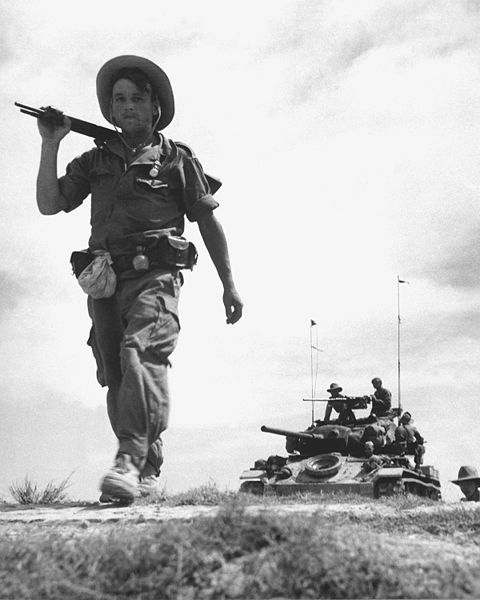
 French Mobile Group in Indochina
“Any future defense secretary who advises the president to again send a big American land army into Asia or into the Middle East or Africa should ‘have his head examined,’ as General [Douglas] MacArthur so delicately put it.” Secretary of Defense Robert Gates
The effects of the wars Indo-China, Algeria and Vietnam on the French and American military organizations internally and in relationship to their nations piqued my interest in 2005. The wars in Iraq and Afghanistan forced me to start asking the question of what short and long term effect that these wars might have on the U.S. military. As such I wondered what historical precedent that there was for the question. My interest was furthered by my deployment with Marine and Army advisors to Iraqi Army and Security forces in 2007-2008. My search led to the French experiences in Indo-China and Algeria and the American experience in Vietnam. Recently with the Iraq war winding down and ongoing war in Afghanistan which has gone from apparent victory to mounting concern that we are losing the war in Afghanistan as Taliban and Al Qaida have regained momentum amid widespread corruption by the Afghan government and weakness of NATO forces.
The counterinsurgency campaigns conducted by the French and American militaries in Vietnam and Algeria had deep and long lasting effects on them as did the Soviet war in Afghanistan. The effects included developments in organization and tactics, relationship of the military to the government and people, and sociological changes. The effects were tumultuous and often corrosive. The French Army in Algeria revolted against the government. The US Army, scarred by Vietnam went through a crisis of leadership and confidence which eventually resulted in end of the draft and formation the all volunteer military. The Soviet not only lost their war but they saw their country collapse and the military with it. The effects of the Iraq and Afghanistan wars are yet unknown but could result in similar situations to the militaries and governments involved.
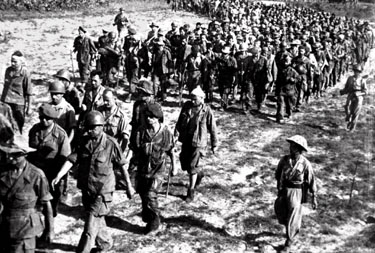 French Surrender at Dien Bien Phu
There is a wealth of data regarding these wars. There are several types of materials. The accounts of soldiers, diplomats and reporters who experienced these events contained in memoirs and diaries. The best include David Hackworth’s About Face and Steel My Soldiers Hearts; and General Harold Moore’s We Were Soldiers Once… and Young. French works include Jules Roy’s The Battle of Dien Bien Phu and General Paul Aussaresses’ The Battle of the Casbah. There are innumerable popular accounts written by NCOs and junior officers. These accounts may contain a wealth of information, but are limited by a number of factors. First, the authors, veterans of the wars, only saw part of the overall picture and first-hand experience in war can skew a writer’s objectivity. Those who have been through the trauma of war interpret war through their own experience. Physical and psychological wounds can have a major impact on the interpretation of these writers as can their experience and political ideology. Finally few of these writers are trained historians. Despite this they can be a valuable resource for the historian.
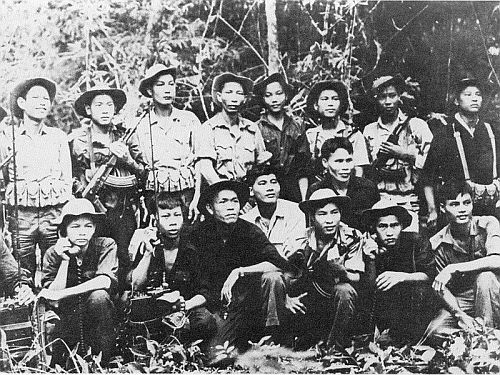
 Viet Minh Main Force Soldiers
Another source is found in the official histories written by the military forces involved in the wars. Often these incorporate unit histories and individual narratives and analyze specific battles and the wider campaigns, but do little in regard to broader conditions that affected operations. While a good source, many are not as critical of their institutions as they should be.
Histories by trained historians and journalists provide another view. The most insightful of the journalist accounts include Bernard Fall’ Street Without Joy and The Siege of Dien Bien Phu: Hell in a Very Small Place. A limitation of all of these is that they are often heavily influenced by the political and societal events. This means that earlier accounts are more likely to be reactive and judgmental versus critical and balanced. Later accounts have the benefit of access to the opposing side and documents not available to earlier writers. Alistair Horn in A Savage War of Peace provides one of the most informative and balanced accounts of the war in Algeria. Martin Winslow does the same regarding Dien Bien Phu in The Last Valley.
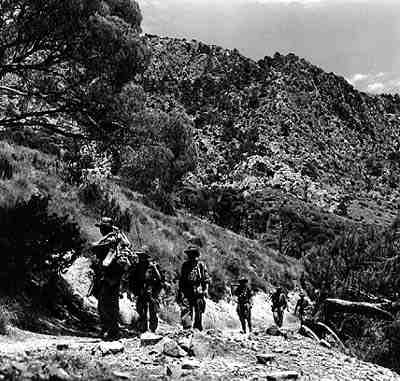 Foreign Legion in Algeria
Another source is the writings of participants who critically examine their participation in the wars. Many of these, French and American provide insights into the minds of leaders who are reflective and critically examine what happened to their military institutions in these wars. The best of these is French Colonel David Galula whose books Pacification in Algeria 1956-1958 and Counterinsurgency Warfare: Theory and Practice provide first-hand accounts of the subject combined with critical reflection. Galula’s works have been important to John Nagl, General David Petreus and others who helped write the U.S. Army and Marine Corps Counterinsurgency manual. Andrew Krepinevich in The Army and Vietnam provides a critical analysis of the U.S. Army in Vietnam. Other sources, both online and print, such as RAND, provide excellent analysis of selected topics within the scope of this essay, especially COIN.
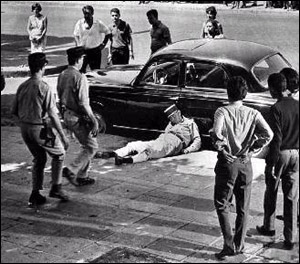
 Battles in the Streets of Algiers
The ability to dispassionately and critically examine and evaluate these sources over a period of several years was and integrate them with my own experience has been a critical to me. It has changed the way that I look at sources, and caused me to be much more aware of bias, the limitations of sources and the need to have a multiplicity of sources and points of view and to be suspicious of contemporary reports and accounts of the war in Afghanistan regardless of the source.
The conflicts in French Indo-China, Algeria and Vietnam had major effects on the French and American military institutions. These effects can be classified in a number of ways. First, the manner in which each military waged war, including tactics employed and use and development of weapons systems was changed. The use of airpower, especially helicopters and use of riverine forces provided an added dimension of battlefield mobility but did not bring victory. As John Shy and Thomas Collier noted regarding the French in Indo-China: “French mobility and firepower could take them almost anywhere in Vietnam, but they could not stay, and could show only wasted resources and time for their efforts.”[1]
 Assassination and Terrorism in Algiers
The use of intelligence and psychological warfare, including the use of torture became common practice in both the French and American armies. The wars had an effect on the institutional culture of these armed services; neither completely embraced the idea of counterinsurgency and for the most part fought conventionally. Galula notes how the “legacy of conventional thinking” slowed the implementation of proper counterinsurgency tactics even after most commanders learned that “the population was the objective.”[2] Krepinevich notes that “any changes that might have come about through the service’s experience in Vietnam were effectively short-circuited by Army goals and policies.”[3] Finally the wars had a chilling effect on the relationship between the both militaries and the state, veterans from each nation often felt betrayed or disconnected from their country and people. Unfortunately instances of all of these have occurred or can be seen in the current wars in Iraq and Afghanistan.
US Army in Vietnam
The French Army had the misfortune of fighting two major insurgencies back to back. The French military was handicapped even before it went into these wars. The Army came out of World War II defeated by the Germans, divided by loyalties to Vichy or one of the Free French factions. They were humiliated by the Japanese in Indo-China, while in Algeria France’s crushing defeat was devastating. “Muslim minds, particularly sensitive to prestige and baraka, the humiliation made a deep impression.”[4] French society was as divided as the Army; the economy in shambles, the government weak and divided. The Viet-Minh had prepared well making use of time and training to get ready for war. “Once full-scale hostilities broke out, the French, for budgetary and political reasons could not immediately make the large scale effort to contain the rebellion in the confines of small-scale warfare.”[5]
 Paras of the 1st Colonial Parachute Regiment jump in Algeria
In both Indo-China and Algeria the French attempted to fight the budding insurgencies in a conventional manner. This was particularly disastrous in Indo-China when on a number of occasions battalion and regimental combat team sized elements were annihilated by Viet-Minh regulars. Between October 1st and 17th 1950 every French garrison along the Chinese border was over-run. The French lost over 6000 troops and enough equipment to outfit “a whole additional Viet-Minh division.” It was their worst colonial defeat since Montcalm at Quebec.[6] In Algeria when the fight began in earnest France’s “ponderous ponderous N.A.T.O forces found themselves at an impossible disadvantage,”[7] unable to have any influence off the main roads.
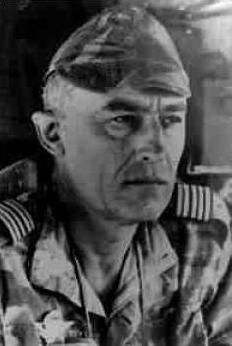
 Marcel Bigard: One of the most effective French commanders in Indochina and Algeria
In Vietnam the French did not absorb the lessons of fighting a well established insurgent force. French forces hoped to draw the Viet-Minh main forces into battles of attrition where their superior firepower could be brought to bear. Such was the case at Na San in December 1952 where the French established an “Air ground base” deep in Viet-Minh territory to draw Giap’s forces into open battle. This worked, but just barely. General Giap, short of artillery and not planning on a long battle frittered away his troops in mass charges. However, the French, because of Na Son assumed they had found the key to victory. In their embrace of the “air ground base concept, French staff officers were following an intellectual tradition that had long been prone to seduction by elegant theories.”[8] The result was the disaster at Dien Bien Phu the following year. The destruction of the elite Group-mobile 100 near Pleiku in 1954 was the coup de grace. In Indo-China the French made limited use of helicopters, used paratroops widely, and developed riverine forces. One thing they were critically short of was significant tactical air support.[9]
 Roger Trinquier helped develop tactics in Indochina which helped turn the tide in Algeria, until the French Government ended the war leaving their soldiers to feel betrayed
The most inventive French creation in Indochina was the GCMA/GMI forces composed of mountain tribesmen led by French NCOs and Junior Officers. They were designed to provide “permanent guerilla groups rooted in remote areas” to harass and interdict Viet-Minh forces.[10] Trinquier noted that at the time of the Dien Bien Phu defeat that these forces had reached over 20,000 trained and equipped maquis in the Upper Region of Tonkin and Laos. These forces achieved their greatest success retaking Lao Cai and Lai Chau May 1954 as Dien Bien Phu fell.[11] Trinquier stated that “the sudden cessation of hostilities prevented us from exploiting our opportunities in depth.”[12] The GMI units and their French leaders were abandoned fighting on for years after the defeat. One account noted a French NCO two years after the defeat cursing an aircraft patrolling the border “for not dropping them ammunition so they could die like men.”[13] In the end the French left Indo-China and Giap remarked to Jules Roy in 1963 “If you were defeated, you were defeated by yourselves.”[14]
Algeria was different being part of Metropolitan France; there the French had support of European settlers, the pieds-noir. Many French soldiers had come directly from Indo-China. There French made better adaptations to local conditions, and realized that they had to win the population and isolate the insurgents from it and outside support. As Galula said, victory is the destruction of the insurgent’s political and military structures, plus “the permanent isolation from the population, not forced upon the population, but by and with the population.”[15] The lessons learned by the French in both Algerian and Indo-China were lost upon the Americans.
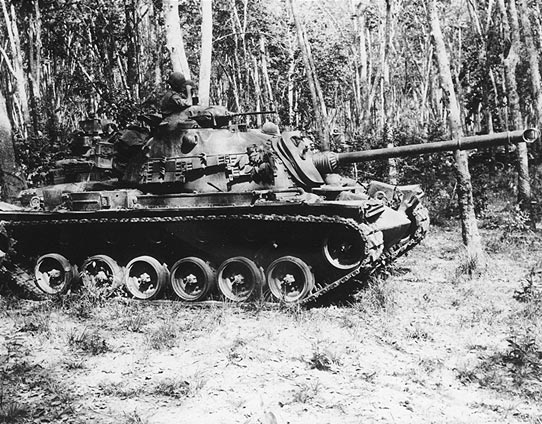
 US Armored Cavalry in Vietnam
The United States military, especially the Army approached the Vietnam War with a conventional mindset, referred to as the “Army concept.” [16] It not only approached the war in this manner, but it trained and organized the South Vietnamese forces, ARVN into the American model. Americans re-organized ARVN into divisions “based upon the U.S. divisional force structure.”[17] Due to the imposition of an American template and organizational structure upon it, ARVN was not structured appropriately for the threat that it faced.”[18] The results were as to be expected. Large numbers of American troops poured in taking the lead against the North Vietnamese and Viet Cong . The American method of counterinsurgency was costly. It was “almost a purely military approach”[19] which ignored political and social realities on the ground. Instead of focusing on protecting the Vietnamese people and denying the Communists a safe haven the Army in particular believed that massive firepower was the best means to be “utilized by the Army to achieve the desired end of the attrition strategy-the body count.”[20] In the end the American defeat was a “failure of understanding and imagination.”[21] The one shining success was the Marine Corps experimentation with “Combined Action Program” platoons which lived in the villages with militia for long periods of time. This program produced great results “in eliminating local guerillas”[22] but was killed by the Army.
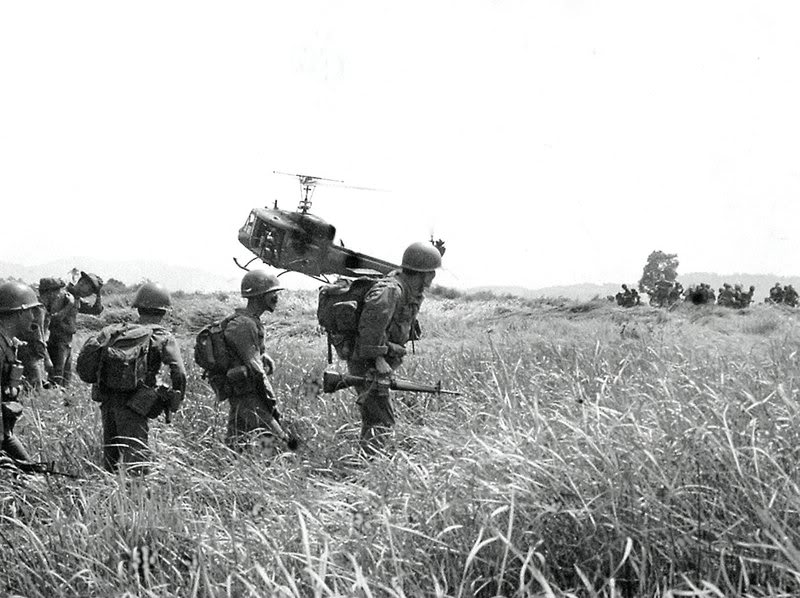
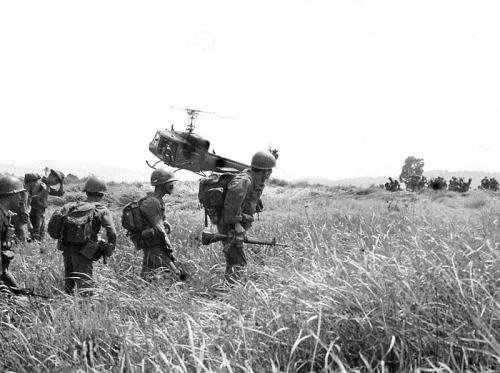 US and ARVN Soldiers in Joint Operation
These wars tore the heart out French and American armies. For the French the defeats inflicted a terrible toll. In Indo-China many French career soldiers felt that the government’s “lack of interest in the fate of both thousands of missing French prisoners and loyal North Vietnamese…as dishonorable.”[23] Divisions arose between those who served and those who remained in France or Germany and created bitter enmity between soldiers. France would endure a military coup which involved many who had fought in Vietnam and Algeria. Having militarily won that war, were turned into what Jean Lartenguy called The Centurions had been turned into liars.”[24] They were forced to abandon those who they had fought for and following the mutiny, tried, imprisoned, exiled or disgraced. Colonial troops who remained loyal to France were left without homes in their “independent” nations. They saw Dien Bien Phu as the defining moment. “They responded with that terrible cry of pain which pretends to free a man from his sworn duty, and promises such chaos to come: ‘Nous sommes trahis!’-‘We are betrayed.’”[25]
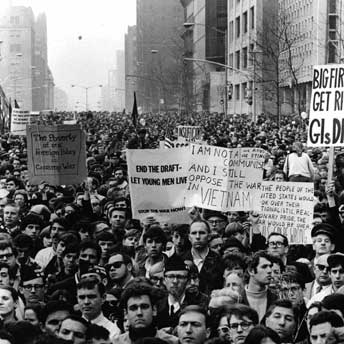 War Protests in the United States
The U.S. Army left Vietnam and returned to a country deeply divided by the war. Vietnam veterans remained ostracized by the society until the 1980s. As Harold Moore recounts “in our time battles were forgotten, our sacrifices were discounted, and both our sanity and suitability for life in polite American society were publically questioned.” [26] The Army endured a massive reorganization that resulted in the formation of the All-Volunteer force, which would redeem itself and emerge from the ashes in the Gulf War.
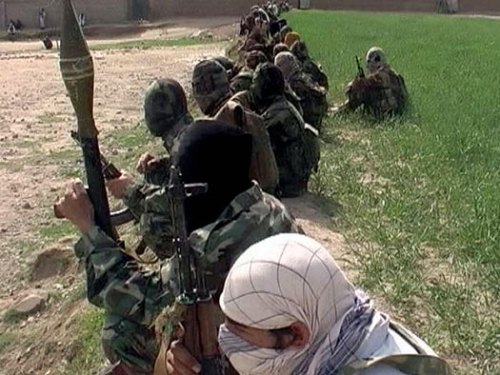 Taliban in Afghanistan
The Americans would not learn the lessons of revolutionary warfare and counterinsurgency until forced to do so in Iraq in 2004-2007. These lessons however were not applied to Afghanistan and the Taliban which seemed to have been defeated have regained the initiative, policy is being debated amid discord in the west and there are reports of American and NATO forces becoming discouraged by the course of the war and concern that their efforts will be in vain. This is a dangerous situation to be in and if we learn from anything from our own history as well as that of foreign military forces in Afghanistan we need to be very careful in implementing strategy to get whatever we do right.
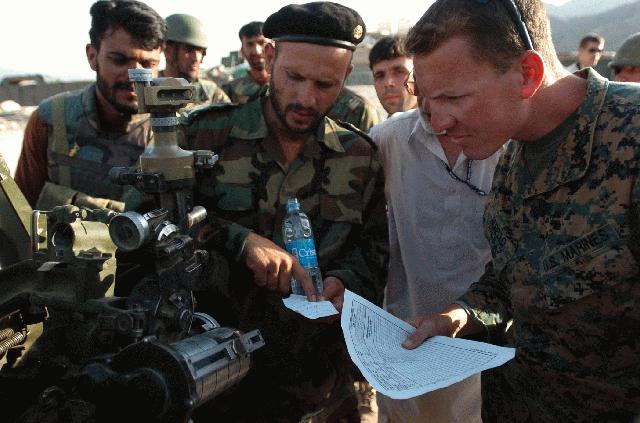
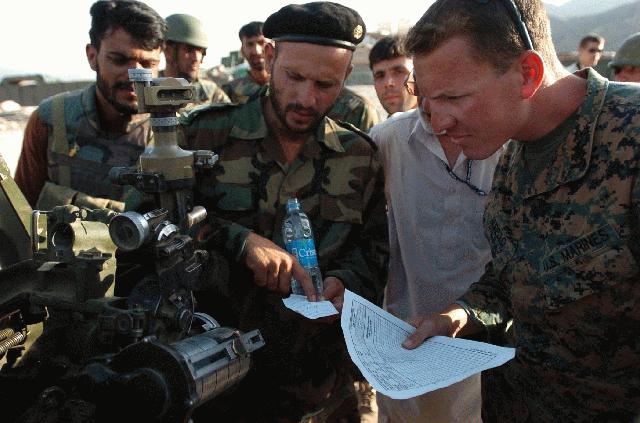
 US Advisers with Afghanistan National Army Troops
The greatest success of the war was finally killing the leader of Al Qaeda, Osama Bin Laden at his Pakistani hide-out. That did not occur in Afghanistan and was the result of smart work by the CIA and other American intelligence services and the superb conduct of the mission by Navy SEAL Team Six. It was not the product of our costly counter-insurgency and nation building campaign in Afghanistan. There are many professional think tank “experts” that now urge continuing the Afghan mission indefinitely despite its massive cost and questionable strategic value. The costs of the war which are over 2 billion dollars a week are staggering with little to be shown from the hundreds of billions already spent in Afghanistan, much of which is spent on projects where corrupt Afghan government officials and tribal leaders are the only ones to benefit. Likewise the long term health of the military is imperiled. The money that should go to modernizing the force and replacing equipment worn out by war as well as the enormous costs in lives and the continuing care needed by military personnel wounding in body, mind and spirit remaining on active duty and those in the Veteran’s Administration system are imperiled.
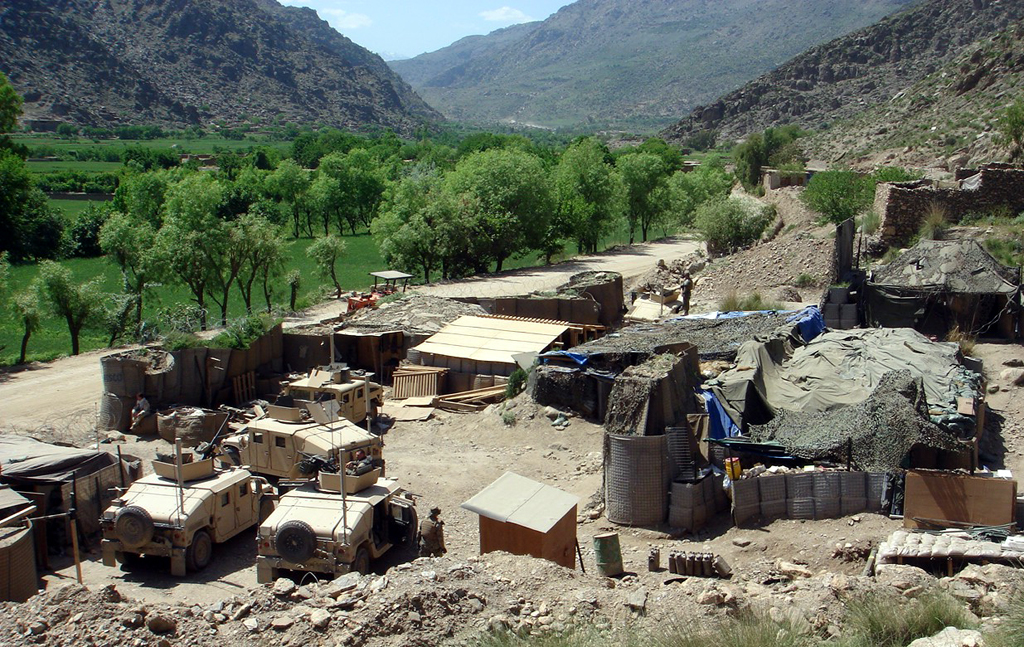
 Remote Training Team Base in Afghanistan
The effects of the wars in French Indochina, Algeria and Vietnam on the French and American military establishments were long lasting and often tragic. The acceptance of torture as a means to an end sullied even the hardest French officers. Men like Galula and Marcel Bigeard refused to countenance it, while others like Paul Aussaresses never recanted. Americans would repeat the tactic at Abu Ghraib rallying the Iraqis against them and nearly losing the war because of it.
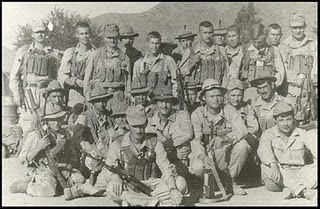 Soviet Paratroops in Afghanistan
For the Americans, the effects of Vietnam continued at home. Race riots tore at the force while drug addictions and criminal activities were rampant. Many incompetent leaders who had “ticket punched” their careers kept their jobs and highly successful leaders who became whistle blowers like Hackworth were scorned by the Army institution. The years following Vietnam were a severe test of the US Military and took years for the military to recover. Likewise it took years before either the French or American veterans again felt a part of their countries. They ended up going to war, and when it was over; feeling abandoned, their deepest bonds were to their comrades who had fought by their side.
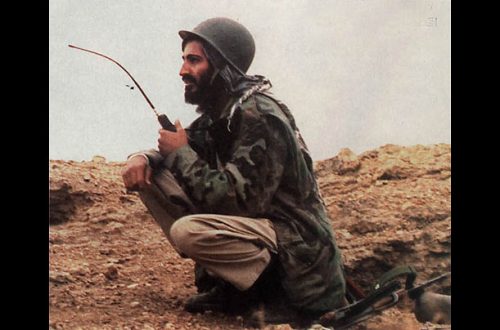 Osama Bin Laden leading Mujaheddin in 1984
If this is not enough we have the experiences of the Soviet Union, the British Empire and others that have attempted to rule Afghanistan as plumb lines to gauge our effectiveness. Others have tried and failed miserably at this. The Soviets learned the hard way and found that Afghanistan was one of the major reasons for the collapse of the Soviet Union. Reading the history of Soviet operations in Afghanistan is frighteningly like reading the history of our campaign.
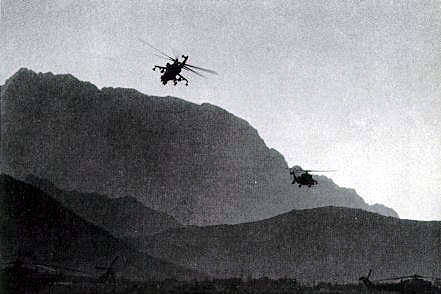 Two Soviet Mi-24 “Hind” attack helicopters flying in an Afghan Valley
The Soviets invaded Afghanistan in 1979 they used their 40th Army which initially was composed of “two motorized rifle divisions, an airborne division, an air assault brigade and separate motorized rifle regiments.”[27] These forces totaled about 52,000 troops and were “considered sufficient to guarantee the viability of Afghanistan.”[28] The 40th Army was a standard Cold War Soviet Combined Arms Army designed for high tempo conventional operations. It was not designed for nor trained in counterinsurgency operations or what the Soviets and Russians class as “anti-guerilla operations.” It was poorly suited to mountain and dessert combat and at the beginning “not only had no practical skills in the conduct of counter-guerilla warfare, they also did not have a single well-developed theoretical manual, regulation or tactical guideline for fighting such a war.”[29]
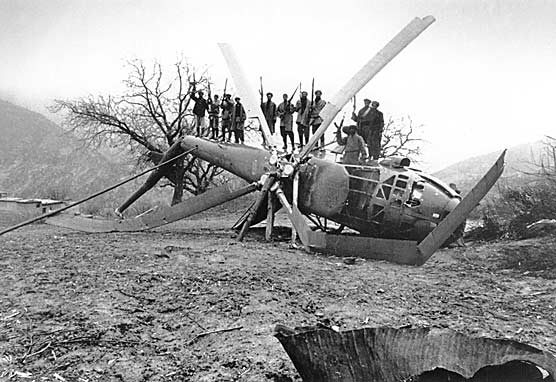
 Downed Soviet Mi-4 “Hound” with Mujaheddin
The Soviets did not expect to be involved in combat operations and the Afghan population reacted to their presence with resistance which spread across the country both against their own government which they viewed as a puppet of the Soviets but also against the Soviet Forces. As time went on the Soviets attempted to use raids and large scale operations to attempt to bring Mujahidin forces to battle, however the insurgents were very skillful and the Soviets attempted to increase the training of their forces as well as their numbers. By 1986 the numbers on the ground had increased to 108,000 personnel in four divisions, five separate brigades, four separate regiments and six separate battalions.[30] In the nearly 10 years of operations over a half million Soviet soldiers and support personnel served in Afghanistan. Tours for enlisted personnel who were primarily conscripts served 12-18 months in country and officers 2 years. Few returned for subsequent tours meaning that the 40th Army had few personnel very familiar with the country, its people and the challenges faced by Soviet forces. According to official sources the 40th Army suffered 13,833 killed in action or died of wounds, 49,985 wounded and 311 missing in action a figured of 1 in 8 Soviet Soldiers being casualties. 14.3 percent of the casualties were officers.[31] Of course the official figure is doubted many believing the number killed in action or died of wounds to be closer to 26,000.[32]
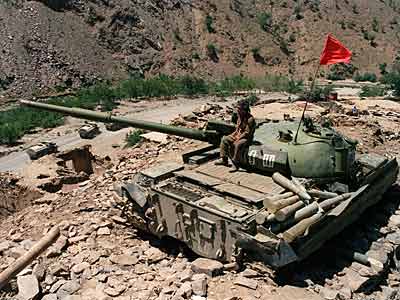 Soviet T-62 Tank guarding a convoy in a mountain pass
Like their American and French counterparts the Soviet veterans have experienced the unhealed wounds of war and a country that does not understand their experiences. The stigma of war wounds and PTSD haunt many Soviet veterans and were compounded by the collapse of the Soviet Union and Warsaw Pact in 1989. They returned home, lost their country and were by and large abandoned by their countrymen. A good number of these men and women travel to one of 5 centers across the country where according to one of the veterans come to for “social and psychological help.” He said that “The best thing about this place is that it provides us with a chance to share our Afghan memories with comrades who understand what we are talking about.” That camaraderie of being able to share their experiences with others that understand is helping some to return to something akin to “normal” life. They are joined by the soldiers that have experienced similar things in Chechnya. Russian veterans of the Afghan War are still so closely linked to it that they refer to themselves as “Afghans.”
 Soviet Mi-8 “Hip” Helicopters in Afghanistan preparing for a mission
The Soviet Forces supported the Army of the Democratic Republic of Afghanistan which numbered at their peak on average between 120,000-150,000 soldiers.[33] The Afghan forces, then as now were at the mercy of tribal, familial and communist party affiliations. Over 70 percent of the DRA was conscripted, desertions averaged 1,500 to 2,000 soldiers a month and units were usually optimistically 25-40 percent under their TO&E strength.[34]Limitations on training and leadership meant that typically DRA units could not conduct large scale missions without Soviet help. As such most of the fighting was done by Soviet formations.
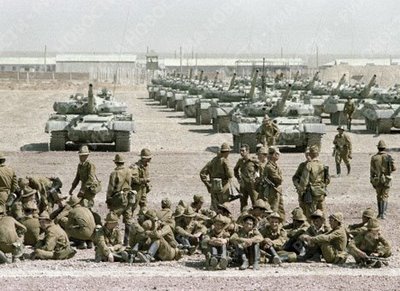 Soviet Troops preparing to leave Afghanistan
Many of these problems have plagued the United States and ISAF throughout the first 9 years of the current Afghan War. As former Afghanistan Commander General Stanley McChrystal noted in his assessment “ISAF is a conventional force that is poorly configured for COIN, inexperienced in local languages and culture, and struggling with the challenges inherent to coalition warfare. These intrinsic disadvantages are exacerbated by our current culture and how we operate.”[35]
We should have learned. A retired Red Army Colonel who served in Afghanistan from 1986-1988 who learned the Dari language in order to negotiate with the Afghan Mujahedeen warned what will happen when the Americans and NATO leave the country and the mistake that we made in entering Afghanistan. Frants Klinsevich now a member of the Russian Parliament comment to reporters at a wreath laying ceremony at a veteran’s convention that “they (NATO and the United States) are 100 percent repeating the same mistake we made by entering into a war in that country” and that “As soon as the Americans and Europeans leave, the Taliban will crack down on everything.” Klinsevich noted that he understood the American desire to tame Afghanistan but that “the problem of radical Islam will not be solved there, its violence cannot be solved. It is simply unsolvable.” He said that he wished that the United States had consulted the Russians about Afghanistan saying “they should have invited Russian specialists, involved Russia, really studied how they could use Russia. But unfortunately Americans think they know everything.” The former Russian commander understands far more that the majority of American policy makers on this subject. [36]
The fact is that we are hamstrung by the ongoing wars which limit our ability to respond to rapidly changing situations. We are in a similar situation to the Germans in 1942 and 1943 overcommitted, overstretched and lacking true strategic depth to respond to unanticipated situations as are now occurring across the Middle East. In 1942 and 1943 the Germans were always just short of the forces that would have turned the tide. Like the Germans our economy is laboring on the verge of collapse and we have to honestly answer the question “What is the strategic value in continuing to wage war in Afghanistan in the way that we are doing?”
What are the lessons to be learned from these campaigns as well as from the various accounts? Andrew Krepinevich prophetically noted that the failure to learn the lessons of Vietnam “represents a very dangerous mixture that in the end may see the Army again attempting to fight a conventional war against a very unconventional opponent.”[37] Obviously, there are lessons to be learned, especially in understanding the nature of revolutionary war as well as the culture and history of our opponents. The U.S. has made some improvement in this regard but there is still much to be learned, especially since after the war the Army was “erecting barriers to avoid fighting another Vietnam War.”[38] From these wars we learn that nations and incompetent governments who mismanage wars can alienate themselves from the soldiers that they send to fight, with serious consequences. As far as historiography we learn that certain historical fallacies are evident when one reads the accounts critically and recognize the bias and limitations of the various sources.
The fact is that we have learned little about such wars and are paying a terrible price for it. The debate now is should we continue the war as it is with minor withdraws of troops or begin a rapid exit in order to preserve and rebuild our force and to reduce the cost of these operations. But that debate and decision are well above my pay grade. But then maybe we need to remember what Field Marshall Gerd Von Rundstedt told his staff in September of 1944 when asked how to recover from the disastrous collapse of the German front following the Allied breakout from Normandy and dash across France. “Make peace you fools.” http://www.youtube.com/watch?v=ch56NAL1C-I
Peace
Padre Steve+
________________________________________
[1] Shy, John and Collier, Thomas W. “Revolutionary War” in Makers of Modern Strategy from Machiavelli to the Nuclear Age,” Peter Paret editor. Princeton University Press, Princeton N.J. 1986 p.849
[2] Galula, David. Counterinsurgency in Algeria: 1956-1958. RAND Corporation, Santa Monica, CA. 2006. First published by RAND in 1963. p.244
[3] Krepinevich, Andrew F. “The Army and Vietnam,” The Johns Hopkins University Press, Baltimore and London, 1986 p.213
[4] Horn, Alistair. “A Savage War of Peace: Algeria 1954-1962,” a New York Review Book published by the New York Review of Books, New York, 1977, 1987, 1996, and 2006 p 41
[5] Fall, Bernard B. “Street Without Joy: The French Debacle in Indochina.”Stackpole Books, Mechanicsburg PA, 2005, originally published by Stackpole Publications 1961 p.27
[6] Ibid. p.33
[7] Horn. p.100.
[8] Windrow, Martin. “The Last Valley: Dien Bien Phu and the French Defeat in Vietnam,” Da Capo Press, Novato, CA 2006, originally published by Weidenfeld and Nicholson, London 2004 p.63
[9] Fall, Bernard B. “The Siege of Dien Bien Phu: Hell in a Very Small Place.” Da Capo Press, New York an unabridged reprint of the 1st Edition reprinted in arrangement with Harper and Row Publishers, New York. 1967 pp. 456-457 Fall discusses in depth the lack of French Air support and the antecedents that led to the shortage following World War II.
[10] Pottier, Philippe(2005)’Articles: GCMA/GMI: A French Experience in Counterinsurgency during the French Indochina War’, Small Wars & Insurgencies,16:2,125 — 146http://dx.doi.org/10.1080/09592310500079874
[11] Simpson, Howard K. “Dien Bien Phu: The Epic Battle America Forgot,”Potomac Books Inc. Washington DC 2005, originally published by Brassey’s Inc. 1994 pp. 170-171
[12] Trinquier, Roger. “Modern Warfare: A French View of Counterinsurgency,” translated from the French by Daniel Lee with an Introduction by Bernard B. Fall. Praeger Security International, Westport CT and London. 1964 and 2006. Originally published under the title “La Guerre Moderne” by Editions Table Ronde. p.87
[13] Windrow. p.652.
[14] Roy, Jules. “The Battle of Dien Bien Phu” Carrol and Graf Publishers, New York 1984. Translated from the French by Robert Baldrick. English translation copyright 1965 by Harper and Row Publishers, New York. p.xxx
[15] Galula, David. “Counterinsurgency Warfare: Theory and Practice.”Praeger Security International, Westport CT 1964 and 2006 p. 54
[16] Krepinevich. p.213
[17] Ibid. p.24
[18] Nagl, John A. “Learning to East Soup with a Knife: Counterinsurgency Lessons from Malaya and Vietnam,” University of Chicago Press, Chicago and London, 2005 p.138
[19] Shy. p.856
[20] Krepinevich. p.202
[21] Spector, Ronald H. “After Tet: The Bloodiest Year in Vietnam,” Vintage Press, a division of Random House, New York, 1993 p.314
[22] Millett, Allan R. and Maslowski, Peter. “For the Common Defense: A Military History of the United States of America.” The Free Press, a division of Macmillian, Inc. New York, 1984 p.555
[23] Windrow. p.655
[24] Ibid. p.657
[25] Ibid.
[26] Moore, Harold G and Galloway, Joseph L. “We were Soldiers Once…and Young: Ia Drang: The Battle that Changed Vietnam,” Harper Collins Publishers, New York NY 1992 p. xx
[27] The Russian General Staff. The Soviet Afghan War: How a Superpower Fought and Lost” translated and edited by Lester A. Grau and Michael A. Gress, University Press of Kansas, Lawrence KS 2002 p.17.
[28] Ibid. p.18
[29] Ibid. p.43
[30] Ibid. p.28
[31] Ibid. p.309
[32] Ibid. p.xix
[33] Ibid. p.48
[34] Ibid. pp.48-51
[35] McChrystal, Stanley. “Commander’s Initial Assessment Commander International Security Assistance Force Afghanistan” dated 30 August 2009 pp. 1-2
[36] “Russian veteran warns of Afghan violence.” Reuters 16 May 2011. Edited by Paul Tait and Daniel Magnowski obtained 11 June 2011 at http://www.trust.org/alertnet/news/interview-russian-veteran-warns-of-unsolvable-afghan-violence/
[37] Krepinevich. p.275
[38] Ibid. p.274















 The Inglorius Padre Steve's World