Tag Archives: iraq war

The “Comfortable” Experts and the Real Soldiers

“Too many people learn about war with no inconvenience to themselves. They read about Verdun or Stalingrad without comprehension, sitting in a comfortable armchair, with their feet beside the fire, preparing to go about their business the next day, as usual…One should read about war standing up, late at night, when one is tired, as I am writing about it now, at dawn, while my asthma attack wears off. And even now, in my sleepless exhaustion, how gentle and easy peace seems!” 

Guy Sajer “The Forgotten Soldier”

Currently well under one percent of Americans are serving in any branch of the military and of these not all have served with boots on the ground.  There is no shame for those that have not as land war is the prevue of the Army and Marines though a significant number of Sailors and some Air Force personnel have served alongside their Soldier and Marine comrades in arms.

Of those that serve there is not one who has not enlisted, reenlisted or renewed their Officer Oath of Office at least once since September 11th 2001.  There are those of us who have been in far longer but even we have made the commitment to continue in the service of our country knowing that anyone can be sent into harm’s way at any time.

Those that serve especially those that have served at the point of the spear in the remote badlands, or dangerous cities of Iraq and Afghanistan are a true minority group. We are a minority group composed of the best our nation has to offer. We represent every state and territory; we are citizens or in the case of many immigrants’ men and women seeking citizenship by risking their lives for a country that often despises their relatives based on their race, nationality or religion.  In fact this is not new; men have come to this country since our revolution from far countries because of the ideals that this nation represents.

This is a minority group composed of all races and whose families helped colonize this nation, came here in the following centuries and those that were here before the Europeans landed on this continent. We represent almost every religion and creed known to human kind. We come from cities, small towns, rural areas and island territories.  We are Democrats, Republicans, Libertarians and Independents.  We are Americans and we know war not from books, though many of us study military history, strategy and the lives of those great Soldiers, Sailors, Marines and Airmen that have gone before us. We know war because we have seen it. We have lost friends and seen others maimed or injured in mind, body or spirit. We have seen the wounded and the destruction which war inflicts on often innocent people who have the misfortune of living in a combat zone.

We do not make policy we carry out the orders of our national leaders and obey the laws passed by Congress. We are professionals.  We are not perfect but we serve.  In a sense we embody what the character of Colonel Joshua Chamberlain of the 20th Maine said at Gettysburg in Michael Shaara’s novel The Killer Angels and its film adaptation Gettysburg.

“This is a different kind of army. If you look at history you’ll see men fight for pay, or women, or some other kind of loot. They fight for land, or because a king makes them, or just because they like killing. But we’re here for something new. This has not happened much, in the history of the world: We are an army out to set other men free. America should be free ground, all of it, from here to the Pacific Ocean. No man has to bow, no man born to royalty. Here we judge you by what you do, not by who your father was. Here you can be something. Here is the place to build a home. But it’s not the land. There’s always more land. It’s the idea that we all have value, you and me. What we’re fighting for, in the end… we’re fighting for each other. Sorry. Didn’t mean to preach.” 

We serve at a time that our nation has been engaged in two very costly wars in terms of lives and treasure. We never thought that they would last as long as they have after all we were promised that and even told that the mission was “completed.” But the wars didn’t end and now our nation is involved in one, maybe two more in Libya and possibly Yemen.

We are told in spite of what we know from experience that the wars are going well and that we have turned a corner in Afghanistan even as the situation on the ground tells us otherwise.  We have the professional military experts in the think tanks telling us that the wars have to continue. Of course these men have never served in combat and what they know is gleaned from their interpretation of history and often dictated by their ideology and sometimes even worse by their connections to the defense industry, that which President and General of the Army Dwight D. Eisenhower so charmingly called “the military industrial complex.” Of course now we can and the media and elected officials who promote war to sustain their political power and enrich the powerful in their home districts.

Then there are those, especially the young that grow up with war as a series of video games and since very few meet the standards to serve in the military for a wide variety of reasons think that war is cool.  Look at the top selling games, almost all deal with virtual close combat, without any cost to those that play them.

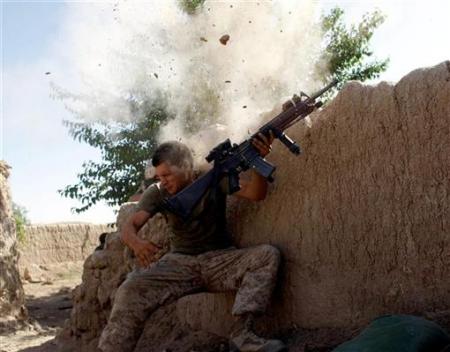
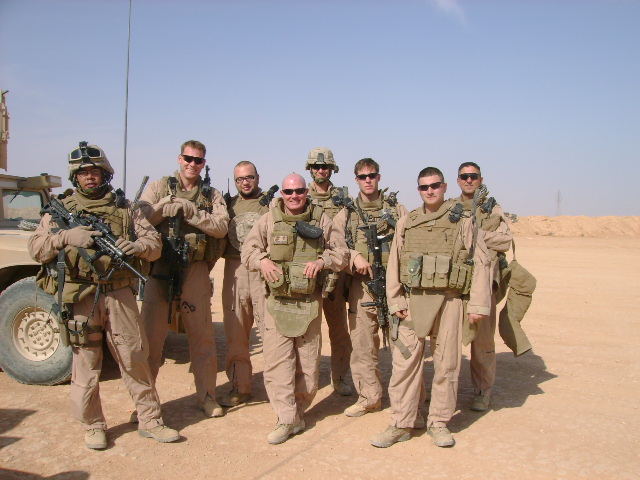
Marines in Afghanistan under attack

Such men and in some cases women need to learn about war in the uncomfortable manner described by Sajer, a Frenchman that served in the German Army on the Eastern Front because one of his parents was German.  The problem is that those that promote war as a business and those that sell war to kids via the entertainment industry really don’t care about the real human beings, the men and women who serve knowing that these wars are unlikely to end anytime soon.  Even more frightening are people of strong religious convictions who promote war in order to see their views, especially about the Middle East vindicated.

Such are the comfortable experts who debate in comfort and write with a detached certitude that they alone have the correct view of the world.  There is a good case to be made that such people be held accountable for the wars that they advocate and the lives lost because of their hubris.

Peace

Padre Steve+

4 Comments

Filed under Foreign Policy, History, iraq,afghanistan, middle east, Military, Political Commentary

Facing the Darkness that Lurks Behind Trauma

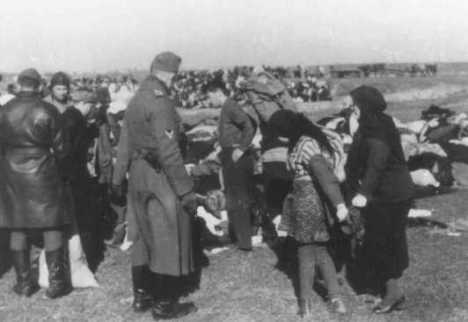
The Einsatzgrüppen: The Banality of Evil

I am in the second day of my conference and as I noted yesterday that the presenter, Dr. Robert Grant is dealing with spirituality and trauma.  As was the last time I listened to him this conference is full of good information.  For me though it is not merely information for information sake, but something very personal having gone through the living hell of a psychological, spiritual and physical collapse following my tour in Iraq and battle with chronic PTSD.  For me it was passing though the abyss and when I emerged I was a changed man.

Today Dr. Grant began with some existential truths about life which have to be acknowledged.  The basic list is his but I have taken those thoughts and ran with them.

Everyone Dies…. We can’t get around this one a recent study said that 96% of Americans will die someday.

No Guarantees…. We are not guaranteed anything in this life. You can live right, maintain good health, treat others right but still can meet with tragedy, betrayal and abandonment. 

No one can cover all contingencies…. No matter how well we plan there will be unanticipated events in life that shred our plans.  The old saying that “no plan ever survives contact with the enemy” is true.

The things that we sometimes believe are solid and long lasting are often transitory in nature…. Even things that we think are solid and will last to the end of time change, deteriorate or dissolve over time

We and our world are finite…. We have a beginning and an end and our finiteness is sandwiched between the creation and the consummation. Dietrich Bonhoeffer talked about “living in the uncomfortable middle.” Bonhoeffer was right, we don’t know the beginning because we were not there and we do not know the end because it has not yet happened.

Evil and malevolence exists in individuals, organizations and systems, even those that we esteem highly…. One only has to look at the number of trusted people and organizations that have perpetrated and covered up their own evil acts to know the truth of this. 

Nothing exposes these truths faster than trauma.  It does not matter if the trauma is impersonal and the result of a natural disaster or the result of individual or corporate evil and malevolence, be it physical, psychological or spiritual trauma the effect is often destructive.

In response to these facts we all as well as our society and culture develop patterns of denial about these existential truths.  They are truths that most of us don’t want to face and which we often will do anything to avoid most often attempting to find meaning and comfort in materialism and consumerism. Others seek a “solid” faith in more fundamental branches of their religious tradition.  Still others see to recreate a world that supposedly existed before our time attempting to roll back the clock to a time when the world was right. This is true especially in our political life, progressives think back to the Great Society or the New Deal, while conservatives tend to look back to what the Founding Fathers wrote or the ones that they agree with wrote.  The overarching theme, be it in the life philosophy, religion or political-ideological arena people seek to create a world that is stable, where they can exist in their comfort zone free of trauma and free of anxiety.  However the experience of trauma often blows such constructs into a million pieces.

The fact is that the comforts and protections that we seek refuge in are often fleeting or the myth that we have created for our self protection.  Such beliefs are often illusions.  One thing about trauma is that it tends to shake one’s world.  In fact trauma can destroy long held belief structures including faith in God, humanity and deeply held beliefs about life and one’s place in the world. Religious beliefs, political ideologies and belief the righteousness of one’s country, friends, family and heroes can be devastated when trauma picks the lock of our soul and reveals our vulnerability.  Such events including war, natural and manmade disasters, the loss of loved ones to death, divorce or the loss of one’s position in life, work and safety net all can be events that trigger crisis and reveal the startling truth that we are not invulnerable.  The recent earthquake and Tsunami in Japan is a classic example as it has shaken the long held beliefs of the Japanese people regarding the respect that they have for their government and corporations.

Collectively as Americans we have experienced numerous national traumas in the past 10 years beginning with the 9-11 attacks.  We have seen war, financial disaster and numerous natural disasters which have impacted our collective psyche as a nation.  In response we elect to deny the effect of trauma on us as individuals and on our society.  Politicians seek to find quick material fixes to a greater problem which is both spiritual and existential.  Simply put we seek to treat the symptom rather than the greater problem which is that we have been so shaken that we have stopped believing in our nation, our fellow human beings and sometimes even the Divine.

We do the same as individuals because the darkness of trauma and the malevolence of those individuals and systems, governmental, corporate and ecclesiastical that inflict trauma on us is so great that we bear not to face them and face further trauma.  The impact on individuals is often devastating as the perpetrators often use their power to dehumanize people.  Thus facing the evil is to expose one to even greater danger.  Thus the more common reaction is to edit the trauma, sealing it off so that we can reenter the safety of our protected sandbox without having to face the darkness that exists.  The malevolence of evil, or what Hannah Arendt called the “banality of evil” manifests itself in ways that most of don’t ever want to face, thus the damage done by the trauma remains unhealed.

The problem is in order to really experience healing we have to be willing to face that darkness without succumbing to it.  To do this requires not only facing the existential truths about ourselves but also uncomfortable truths about respected individuals,  government, corporate and ecclesiastical organizations and systems which perpetuate trauma.   Most of us do not want to go there.  I know I didn’t until my crisis became an existential one where I had to face the darkness or try to cover it up.  For me it was a crisis of faith in God, my church and even in the actions of my government and the political party that I had been loyal to for 36 years.

The journey was painful but in time I began to recover beginning a process that continues to this day and which I expect will be part an ongoing part of my life.  In the process I know that I have changed hopefully for the better.   As I began my recovery I found that not everyone understood, in fact when I began to write about my faith journey it cost me friends and resulted in me being asked to leave my church.  To me it seemed that some people especially in the church were more comfortable with me being damaged and quiet than recovering and posing difficult questions especially when I deviated from the party line.

I found that many people did not want to walk with me through those dark times and I can understand why not.  To walk with someone through the darkness exposes us to that darkness and sometimes takes us to places that we would rather not go places that lay outside of our safety zone.  However those that did walk with me, those who held me but let me walk though the crisis without trying to force feed me formulas for success or what I needed to do to “be healed” when I was in free fall gave me the freedom to experience healing. Part of that was healing was spiritual, God’s grace became real again and not just a concept. Part was psychological as I became more stable and had fewer symptomatic episodes, and part was physical as the nagging injuries healed and I was able to reassert control over my diet and exercise.  Finally part has been relational as I have started to rebuild the relationship that I have with my wife Judy because I had neglected that relationship for far too long and when I came home from Iraq I did her no favors.   A few weeks ago she told me that she felt that she had me back for the first time since Iraq.

I have been through the abyss and have emerged from it different but I think better. I still have work to do because I know that I am still full of issues.  I still have anxiety at night, trouble sleeping, especially without medication.  Other times I can experience bouts of depression and anxiety and on some occasions still battle anger and occasionally rage when I feel endangered or see injustice being inflicted on others. I still have some measure of hyper-vigilance and hyper-arousal and I am much more aware of my surroundings than I used to be.  Even in ministry I am careful what I share with people. I figure on this website people can pick and chose what they want to read, but when counseling or teaching I have to be more careful.  I know that I have some deep work to do especially in relation to forgiveness of those people and systems that I felt hurt or betrayed me.  I don’t know how all of that will work out but that is part of the journey.

In the mean time I will walk in faith and hope even knowing that some of the answers that I seek will not always sit well with me or others. But then such is life.

Peace

Padre Steve+

5 Comments

Filed under film, PTSD, traumatic national events

The Week before Armed Forces Day 2011

Armed Forces Day is a holiday, sort of.  It is an official holiday but no-one gets a day of work off for it. It is a holiday where we as a nation honor those serving in the Armed Forces. Other nations also have Armed Forces Day commemorations.  Ours was established in 1949 after the establishment of the Department of Defense and replaced individual days for each of the five armed services.  Each service maintains its own celebration and some are marked with great fanfare particularly those of the Marine Corps and to a lesser extent the Navy.  It is celebrated the third Saturday in May and this year will occur May 21st.

It is different than Memorial Day where we pay homage to the fallen and Veteran’s Day where we remember all who have served because it really focuses on those currently serving.  When it occurs during a war as it has for the past nine years it tends to be more significant at least for those of us currently serving.

Many local and state governments as well as private organizations and businesses do special things to honor the Armed Forces.  There are parades, ceremonies at historic locations and even at baseball games. Fireworks and cookouts as well as discounts at various retailers are common.  At the same time in many places the day goes by without fanfare. This is in part due to the fact that we have had a volunteer military which due to force cutbacks since the end of the Cold War is smaller and based in fewer locations, generally concentrated on bigger bases as many smaller and mid-sized bases were closed or consolidated under the various iterations of the Base Realignment and Closure Act (BRAC).

As a result for many Americans the military is an institution set apart, a closed profession and community with its own culture and worldview.  Less than 1% of Americans serve in the military today. That number includes active and reserve forces. The lack of a draft or some other type of compulsorily military service ensures that those who do not want to serve in the military, those that prefer stability and the chance to make a lot of money don’t have to sully themselves with serving in the military.  As a result a pitiful few politicians and business leaders have any real understanding of the military, much to our detriment as a nation.  We lack the cultural cross leveling that the draft brought.  Personally I don’t think we would have a Red State-Blue State divide if more people served together in the military.  When you serve together in war it is much easier to treat your fellow veterans with respect when you get out.

At the same time our military has become a tremendously professional organization that had it not been an all volunteer force would probably not survived the wars that we have been in for the past 10 years.  Conversely our politicians may have been more prudent in committing us to major ground wars after 2001.

Thus as a profession the military is often misunderstood and what it does overseas often shrouded in mystery as very few news organizations take the time anymore to live with the troops and those reporters that do are few and far between.  The lack of a significant number of political, business, academic and religious leaders with military experience only serves to worsen the situation simply because those leaders are ignorant of the cost that our military members and their families bear.  World War Two was a war that made us Americans because so many people had to serve in the military and serve alongside of people from different parts of the country and economic classes.  Thus the men and women that served in that war had a bond that transcended politics, religion and with the desegregation of the Armed Forces in 1948 race which had divided the country since its inception.

Today the military is one of the most trusted institutions in the country.  It bears a special place in our society and even though many have not served there is an appreciation by many people of the sacrifice of those who serve at the present time.  I am glad for that because I remember when my father came home from Vietnam and the years following that war where the military was scorned and often vilified.

My plea is that as we approach Armed Forces Day that people will take the time to thank the serving Soldiers, Sailors, Airmen, Marines and Coast Guardsmen that they know or meet.  For those that do not serve there are ways to demonstrate your care by volunteering with the Red Cross or USO or donate to any of the military relief societies (Army Relief, Navy-Marine Corps Relief, Air Force Relief) or the Fisher House Foundation which helps the families of military personnel suffering from war wounds or life threatening conditions in hospital at military medical facilities.

It is a profound honor to continue to serve the Constitution and the people of the country. I have serve alongside the best America has to offer and as we continue to serve in Afghanistan, Iraq, Libya, the War on Terrorism and elsewhere around the world please remember us.

Peace

Padre Steve+

1 Comment

Filed under History, iraq,afghanistan, Military, shipmates and veterans

Living in the Bizzaro Post Osama Bin Laden World: Another Denny Crane Moment for Padre Steve

Note to readers: Another of my Denny Crane moments which seem to be coming more likely, must be the Mad Cow

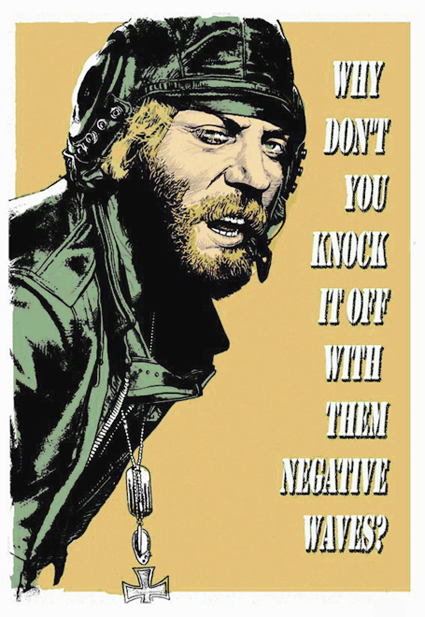
“Why don’t you knock it off with them negative waves? Why don’t you dig how beautiful it is out here? Why don’t you say something righteous and hopeful for a change?” Oddball -Kelly’s Heroes

I love that quote and everyone in this country needs to see the truth of it.

I think that I have stepped into the Bizzaro World.  For the first time in a nearly ten year old war we get a real victory. Will killed the SOB who started it by killing thousands of our people. We do it the old fashioned mano on mano, look him in the eyes way and had Navy SEALS double tap him. We minimize the collateral damage by not plastering the place with bombs killing lots of other people. The President and the National Security team kept the plan a secret for months with no leaks that could have jeopardized Bin Laden’s elimination.  Likewise the uncompromised raid secured major intelligence bonanza including laptops, hard drives, cell phones and documents that probably have more raw and up to date intelligence from the source than we ever have had which likely lead to major victories against Bin Laden’s fellow Al Qaeda leaders and their organization, finances and maybe even their contacts with other nations intelligence services.  Such information will make it a far easier task to take the Al Qaeda organization apart at the seams. This is a victory that combined with pro-democracy revolutions across the Arab World could very well make the Middle East and the world a far safer place. There are dangers out there but this is something to celebrate so why can’t we be happy? I know that some people are but as a nation we are not a happy bunch.

We have been through two terribly long was that have cost of thousands of dead and tens of thousands wounded.  The military aspects of the wars alone have cost the nation well over a trillion dollars not counting the other economic costs. The 9-11 attacks created a massive wound on the American psyche which has been aggravated by our losses in the wars and the failure to kill or capture Bin Laden. We have given up a significant number of civil liberties in the name of security.  The collective impact of these events compounded by the embarrassment of Abu Ghraib and the “Afghanistan “Kill Team” episodes the escapades of contractors like Blackwater and Kellogg Brown and Root- Halliburton have stained our conscience. Coupled with our massive economic problems and poisoned political climate these wars and losses have beaten us down.

Rather than be happy that we finally got one in the “win column” we have become so used to losing that we have forgotten that it is okay to win once in a while.  Instead of thanking God that Osama Bin Laden is bottom feeder food in the Arabian Sea and is now rehearsing for the 2011 South Park “Christmas Time in Hell” musical joining Saddam Hussein and Hitler as they use their asbestos water skis on the Lake of Fire we are all glum or pissed off. Some are wringing their hands because Bin Laden was unarmed and didn’t have a lot of security around him and that in the heat of the moment the SEALS double tapped his sorry ass.  What the hell? Did they want a firefight that would have gotten a bunch of SEALS killed? Was it fair that he was unarmed but reaching for a gun when we capped his ass? But then was it fair to the 3000 people killed in the Twin Towers when Bin Laden directed the attack on those unarmed people?

Then there are people questioning the legality of the action. Sorry Bin Laden was a man that never stopped plotting the deaths of innocent people to the end of his days. While it might have been interesting to put him on trial you can be assured that some would have provided millions if not billions of dollars for his defense and that the proceedings would have dragged on at least a decade and that his allies would have gained inspiration from his incarceration just as they will his death.  Those who question the fact that a SEAL shot him when he was unarmed does not understand the inherent danger in the action and split second decision making that went into that courageous man’s decision to kill Bin Laden.  Legally Bin Laden as a terrorist was accorded no protections under the Geneva Conventions.

Then there are the Christian objectors, those on the left that say he should have been captured and put on trial.  Some Evangelicals that really don’t care that he was killed but don’t think that Christians should be happy about it or rejoice in his death.  But I remember some of these same people smugly saying that the 9-11 attacks were “God’s judgment on the United States.”  I’m sorry but many supposedly conservative Christians are schizophrenic on being pro life. Kill the unborn it’s murder. Kill a man convicted in a state court in the United States on the basis of circumstantial evidence is okay, especially if you are from Texas where I think it’s popularity is slightly below football and NASCAR.  Have a terrorist kill 3000 of your countrymen, well God must be pissed at us but kill the man responsible for those deaths and be happy he’s dead?  Nope can’t do that we should be sad that he died without knowing the Lord. Yes it is a sad that anyone would die without knowing the Lord but this man had no desire to convert to Christianity or anything else. He was convinced of his rightness and he made no move to surrender to U.S. or Saudi authorities for nearly 20 years and still didn’t in his final moments.  He made his bed beneath the sea.  I personally think this is simply people that need to be morally superior to others spouting their opinions rather than people that are inconsistent in their application of their faith and ethics to a wide variety of issues.

Now the politicians are making political hay over this.  Some Liberals are pissed that Obama actually had the balls to order the strike.  Some Conservatives are pissed that Obama succeeded in doing something that Bush couldn’t do and that he didn’t give Bush any credit. But it serves me well that Bush never gave Clinton any credit for keeping the pressure on Saddam Hussein and keeping him from really building up his forces after the Gulf War using no-fly zones, the UN oil embargo/blockade of Iraq and selective military strikes to keep Saddam in check.  So this is all politics as usual and once again it is detrimental to the county and makes light of the sacrifices of all that have fallen in these wars and the bravery of the SEALS that killed Bin Laden.

This really is a Bizzaro world.  When Hitler died this country got happy and that happiness spanned the political, philosophical and religious divides in the country. We celebrated Hitler’s death and the destruction of his murderous regime.  Back then we actually understood the importance of such events and didn’t wring our hands and shed faux tears when evil men perished.  But now after nearly 10 years of war and thousands of causalities we get the perfidious bastard that started this and our collective jock straps and panties are in a wad. I don’t get it. The reason that we went to war is dead and we have information that probably will decimate what is left of his network and we can’t be happy.  This is bizarre and I wish that people would stop with all the negative waves.

Peace

Padre Steve+

8 Comments

Filed under faith, Foreign Policy, History, iraq,afghanistan, middle east, Military, national security, philosophy, Political Commentary

Bin Laden Dead: Navy SEALS Kill Terrorist in Pakistan

DEAD!

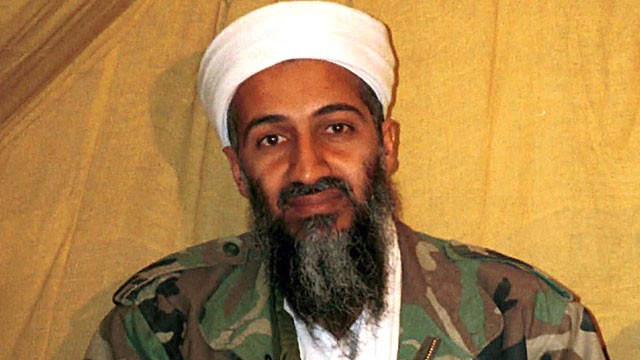
His name is associated with brutal attacks on attacks on Americans and others for over a decade the Embassy attacks in Kenya and Tanzania, the USS Cole, the Khobar Towers, Madrid Spain, Mumbai and most infamously the dastardly attack on the World Trade Center and the Pentagon on 9-11-2001.  He has eluded death and capture for years but was killed in a raid by U.S. Navy Seals in a fortified mansion in the city Abbottabad near the capital of Islamabad Pakistan today.  His death has been confirmed by DNA matches and his body is in American custody. The cold and hollow eyes staring out from beneath a white turban wearing a U.S. issue BDU jacket have haunted us for years. His hateful and defiant messages tormented us in the years following 9-11 as he released audio and video tapes from secluded hideouts in Afghanistan and Pakistan.

In a night that many believed would never come, Americans heard the news of the death of this evil terrorist. First a few but now thousands of Americans gathered outside the White House celebrating the demise of this singular face of evil. Spontaneous cries of “USA! USA! USA!” the singing of the Star Spangled Banner, and the song “hey hey hey goodbye” erupted as people gathered as President Obama made the announcement even as others gathered at Ground Zero singing “god Bless America.”  Over the past 10 years we have had precious little to celebrate in relation to the war on terror. Most of the time when announcing Bin Laden is the most hated enemy of the United States since Adolf Hitler. He embodied the evil that we went to war with, an evil that made the mass murder of civilians a staple of life and it did not matter who the victims were he sought to bring terror to all that he considered the enemy of Islam including many Moslems.  But he hated the United States more than anything and his attacks on the United States shattered our sense of invulnerability even more than the attack on Pearl Harbor.  He damaged our national psyche in a manner that no individual has in history.

It took a long time but he is dead but the fight is not over as U.S. Military installations have had their force protection level raised as it is expected that elements of the Al Qaeda will try to strike back.  We pray that they will be defeated if they try to make any attacks on Americans anywhere.  The effect on Al Qaeda will be chilling. Its operatives pledge themselves to Bin Laden personally in a manner similar to the SS Legions of Adolf Hitler. Presently there are no leaders of Bin Laden’s stature in that network and with any luck his forces will become demoralized and leave that organization.

President Obama announced Bin Laden’s death shortly before midnight and he called us back to the unity that we had for a moment following the 9-11 attacks. We have been bitterly divided for years and though we experienced some success but much frustration in our wars in Iraq and Afghanistan. Thousands of American and Allied military personnel have died in wars that came as a result of those attacks and we in the military have almost all suffered the loss of our friends and comrades.  Our forces are still engaged against numerous enemies and in Afghanistan the Taliban are launching their long awaited spring offensive and the war continues.  Hopefully the death of Bin Laden will lead to other successes that allow us to bring the troops home as victors in the War on Terror.

President Obama made a couple of comments in his speech that I quote here as they are both important to all of those that have experienced personal loss and sacrifice in this effort:

After nearly 10 years of service, struggle, and sacrifice, we know well the costs of war. These efforts weigh on me every time I, as Commander-in-Chief, have to sign a letter to a family that has lost a loved one, or look into the eyes of a service member who’s been gravely wounded.

“So Americans understand the costs of war. Yet as a country, we will never tolerate our security being threatened, nor stand idly by when our people have been killed. We will be relentless in defense of our citizens and our friends and allies. We will be true to the values that make us who we are. And on nights like this one, we can say to those families who have lost loved ones to al Qaeda’s terror: Justice has been done.”

We give thanks for the men who carried out this operation, for they exemplify the professionalism, patriotism, and unparalleled courage of those who serve our country. And they are part of a generation that has borne the heaviest share of the burden since that September day.

Finally, let me say to the families who lost loved ones on 9/11 that we have never forgotten your loss, nor wavered in our commitment to see that we do whatever it takes to prevent another attack on our shores.

And tonight, let us think back to the sense of unity that prevailed on 9/11. I know that it has, at times, frayed. Yet today’s achievement is a testament to the greatness of our country and the determination of the American people.

The cause of securing our country is not complete. But tonight, we are once again reminded that America can do whatever we set our mind to. That is the story of our history, whether it’s the pursuit of prosperity for our people, or the struggle for equality for all our citizens; our commitment to stand up for our values abroad, and our sacrifices to make the world a safer place.

Let us remember that we can do these things not just because of wealth or power, but because of who we are: one nation, under God, indivisible, with liberty and justice for all.

Thank you. May God bless you. And may God bless the United States of America.”

The rest of the announcement text can be found here:

http://www.middletownjournal.com/news/full-text-of-presidents-statement-about-bin-ladens-death-1150233.html?showComments=true&page=2&more_comments=false

President Obama and the National Security team need to be given full credit for the success of this operation which was carried out with tremendous skill and courage by the SEALS and other Special Operations troops involved. It was a risky operation and the President deserves credit for guts in the execution of the mission. Had it failed it would have been his fault and no-one would have let him off the hook.

I hope that this victory will bring us together and embolden us to take on all of the problems that beset our nation.

Peace

Padre Steve+

3 Comments

Filed under Foreign Policy, History, iraq,afghanistan, middle east, Military, national security, Political Commentary

Clergy Burnout and Suicide: A Growing Problem

Father Mulcahy: What an ordeal. 72 hours straight. I’m prayed out – absolutely prayed out.
Hawkeye: Don’t forget, Father, God was on six days straight.
Father Mulcahy: He was a lot younger then
.

It doesn’t matter whether you feel useful or not when you’re moving from one disaster to another. The trick, I guess, is to just keep moving. Father Mulcahy, William Christopher M*A*S*H

Note: This is a modification and update to an article that I wrote last summer based on the death of the Reverend David Wilkerson and his writings of the past few months.

A while back I read an article in the New York Times ( the link is here:http://www.nytimes.com/2010/08/02/nyregion/02burnout.html?_r=1&hp&adxnnl=1&adxnnlx=1280746899-Fj4AG+SysGvlJ/xdTT+ZZg ) about the large number of civilian clergy experiencing burnout, discouragement, disillusionment to the point that they end up developing chronic physical illnesses, psychological or psychiatric conditions, experience marriage or family difficulties or are so beaten down that they leave the ministry entirely.   Many clergy now suffer from high rates of obesity, hypertension and depression more so than most Americans. In the last decade, the use of antidepressants by clergy has risen and their life expectancy has fallen. Job satisfaction is down and many clergy would leave the ministry if they felt that they could. The issue cuts across denominational and even religious lines and is not bound by the depth of faith or the fervency of the minister in his or her pursuit of “doing good ministry” in whatever venue they are in.  It also impacts those of all sides of the theological spectrum from fundamentalists and Pentecostals to progressives or in old time parlance “liberals” and everything in between. The pressure is incredible. I should know I have been in ministry over 20 years mostly as a Priest and Chaplain serving in the military and in hospital critical care environments.

Likewise there have been articles about ministers and pastors that commit suicide one of the more prominent about a North Carolina pastor who committed suicide in 2009 published in the USA Today: http://www.usatoday.com/news/religion/2009-10-28-pastor_suicides_N.htm

Actually I am not surprised by the studies or the conclusions of the article or the situation described in the USA Today article.  This came to mind this week with the death of David Wilkerson which I suggest could have been suicide based on the struggle with faith and perceived failure shown in his recent blog posts, his and his family’s ordeal of cancer and the circumstances of the wreck in which he died. I suggested this as a possibility as well the other possibilities of inattentive driving or sudden medical impairment. https://padresteve.wordpress.com/2011/04/28/the-unexplained-and-tragic-death-of-david-wilkerson/ Of course I have been blasted by a number of people for even daring to suggest such a thing and I really hope that it was not suicide but if it was his death serves as a reminder of loneliness and even frailty of great pastors who go through long periods of darkness.  If his death was other than suicide we still have to look realistically at the incredible spiritual and emotional pain that he was in over the past few months. Of course I meant no offense to those that condemned me for suggesting this but the reactions drew me back to the unrealistic expectations that many people place on those that serve in ministry and I would hate to be their pastor.  The expectation is that we are somehow closer to God and don’t experience doubts, temptations or even depression and despair. The more popular and beloved the minster the taller the pedestal that people place them on in fashioning them as their idol.  Most don’t ask for this and resist it even though some embrace it and become spiritual train wrecks because of their narcissistic behavior.

When I was in seminary back in the late 1980s and early 1990s the school that I attended was filled with pastors either those in ministry or those recovering from nasty church splits, or being fired for often trivial reasons. These were by and large good men, I say men because the Southern Baptist Convention then and now has few women in parish ministry.  Many of the men that I knew were broken; they had come back to school as a way to see if there was some way to find a safe place of ministry.  In the last years of seminary and the year prior to entering my clinical pastoral education residency I worked for a nationwide ministry and was assigned the task of assisting clergy that came to us for help or counsel.  One of the interesting things to note was that during this time the average longevity of a Southern Baptist pastor in his church was a dismal 18 months. Later I had a friend in another Baptist denomination accept a call to a church that had been through 33 pastors in 30 years.  He thought that he would be the exception, less than 8 months later a time that he and his new wife were harassed, abused and hounded by the congregation he quit. He ended up in my denomination as he was moving in a more liturgical and sacramental way of life and is now in the process of becoming a married Roman Catholic priest.

When I left the active duty Army to go to seminary I was under the impression that most clergy were relatively satisfied with life but the men that I met in seminary and those that I dealt with later showed me that all was not well for many good men and women doing their best to serve Christ and the people of God committed to their charge.  I never will forget men saying to me that they struggled with depression, alcoholism, sexual addiction, were being divorced by their wives or considering either leaving the ministry or changing the type of ministry that they served or even their denominational home.  Nearly all reported the stress that they experienced in their ministry, the unmanageable tasks of trying to compete for numbers, and in many churches it is all about numbers, see Chuck Colson’s book “The Body” cater to the nearly insatiable “needs” of parishioners who demanded more time, and investment in programs to keep them in the church, pressures resulting from the financial costs of trying to manage building programs, special ministries and programs and an every growing desire for more excitement and “thrills” in the church program.  Add to this the unrealistic expectation of parishioners, local and denominational leaders and the constant upbraiding to be more like Reverend so and so on television or the guy that wrote the latest book on church growth, spiritual warfare or whatever as the list goes on ad infinitum. Add to this the intrusiveness brought about by cell phones, texting, the internet which place clergy in a place where they have no place to go when they need a rest because there is always one more need to satisfy many of  which cannot be satisfied. One minister of a well-known Mega-Church when confronted by Colson about not preaching on more controversial moral topics told Colson that “they pay me to get them in the door and keep them coming.”

The pastor of our age must become a teacher, preacher, counselor, evangelist, financer, program director, personnel manager, marketing executive and most of all be able to reinvent himself at a whim in order to remain relevant and in tune with the current “move of God.”  Those that don’t keep pace with whatever the latest “move of God” (read marketing ploy) is finds that they are out of a job faster than a Mob hit-man with bad aim. It is a recipe for disaster, not only for clergy and their families but for congregation when their pastors experience burn out, marital problems or divorce or those become compromised sex, alcohol or money problems and then suffer the consequences.  The congregations suffer because many parishioners lose faith in God, the church or ministers because the person that they had made their idol failed.

The pressures are immense and not just for married or single Protestant pastors but for Catholic Priests, Jewish Rabbis and even Moslem Imam’s all under some kind of unreasonable pressure.  It does not matter of it is trying to balance the competing theological factions present in their faith tradition from fundamentalists to progressives and everything in between, trying to meet unattainable goals set by congregational or denominational leaders or just to attempt to be all things to all people just to survive it is amazing that that any survive at all.  This is not the life of clergy even a generation ago, a generation that reported high job satisfaction, good health and congregations that would if possible strive to serve their pastor as much as he served them.

The world has changed and clergy are not doing well.  When a big name pastor, evangelist or leader of a church or denomination screws up perfectly the good men and women serving in ministry that don’t do those things are lumped in with those that commit various crimes or ethically challenged behavior.

In my chosen vocation within the vocation of being a priest and minister, that of a military Chaplain the pressures of service often exceed those that our civilian counterparts face. In a time where we have been at war almost 10 years with many chaplains making multiple deployments to the various combat zones the pressures are immense. The pressures on chaplains, their families as well as the men and women that they serve are unparalleled in civilian ministry, which as I describe above is no picnic, unless perchance you serve the fabulously well to do.

While I do not know statistics on Chaplains and burnout I can assure you that it is a concern of mine based on some of the men and women that I have met who have suffered spiritual crisis, depression, failed marriages, become embroiled in extramarital affairs or engaged in behaviors that were detrimental to their physical, spiritual and psychological health.  I have even known some that committed suicide.

In my service, the Navy we have battled shortages of Chaplains and the increasing demands necessitated by the war.  Likewise Chaplains in the Navy and Air Force face personnel cuts or elimination of billets due to cuts in their services personnel and more cuts are coming, at least to the billets that at one time offered chaplains the chance to recover from deployments and still serve God’s people. Most of the billet cuts are in shore commands, the places that at one time were the places that one could serve and recuperate after having done multiple operational tours.  As the force gets smaller and mission requirements increase these chaplains are deployed more often to combat zones and stress and family separation take their toll of chaplains.  Chaplains serving at bases and hospitals now serve large numbers of men and women traumatized by war and their families but have seen their own numbers shrink.  I work in a major medical center like all of the chaplains that serve in similar billets are caring for our wounded (in body, mind or spirit) warriors, their families those deploying or returning from deployment, are subject to deployment during our shore tours as Individual Augments to the operating forces all while dealing with life and death on a daily basis. In my last posting at a major Naval Medical Center it was not uncommon for me to come home from work at 5:30 PM after going to work at 6 AM the previous day, nearly 36 hours on duty in which time I was often involved in multiple crisis situations, baptizing dying babies, to people being removed from life support and care of patients their families and our staff in every imaginable setting. In my current assignment it is not uncommon to be called in as I was in the middle of the night on Wednesday to ministry to a dying patient and his family.  This is not uncommon for those of us that serve in health care ministry. What I described for me is typical of many Chaplains of all our military services serving in health care institutions.  It requires a tremendous sense of discipline to manage all of these competing demands and maintain ones physical, emotional and spiritual balance.

In fact when I came to my first Naval Medical Center assignment assignment I was suffering from PTSD from my tour in Iraq. I was in an emotional and spiritual nosedive and in trying to meet the demands of the job I did not take care of me and I fell apart physically, spiritually and emotionally.  It took a year and a half to begin to recover and I am now moving forward on all counts but I know others don’t recover. I was fortunate, my boss knew well enough to shield me and let me recover and get the help that I needed to do so. I did not come out of the experienced unscathed as my old denomination asked me to leave because I had become “too liberal.” Nonetheless it was not and is not easy to recover and I still have work that I need to do sleep is problematic and I am still in therapy and on medication and my longsuffering wife has to deal with this.  I was recently interviewed by our local paper in Jacksonville North Carolina about my struggles. http://www.jdnews.com/articles/cmdr-89433-stephen-military.html

Add to this the pressure to perform and get promoted to stay in the military chaplain ministry.  Chaplains like all officers have to get promoted to stay in the military.  The promotion rate from the Captain/Navy Lieutenant rank to Major / Lieutenant Commander has been consistently in the 50-60% range for those being looked at the first time.  This basically means that 40-50% will not be retained on active duty long enough to qualify for retirement unless they had prior active service before becoming a Chaplain. Even if they have this the stigma of not being selected is something that is incredibly hard on chaplains just as it is for other officers.  Non-selection is considered failure even for those that have great ministries and are awesome ministers. Sometimes failure to select has nothing to do with how well you care for God’s people but simply comes down to numbers. When a military service contracts as all of our Armed Services did following Vietnam, the Cold War and today as personnel numbers are cut the respective Chaplain Corps or Services take their share of the cuts and this often means that men and women worthy of promotion are not selected and are eventually let go.  I have been fortunate during the cutbacks following the Cold War I was selected for Major in the Army Reserve and though I reduced in rank in 1999 to enter the Navy was promoted to Lieutenant Commander and recently selected for Commander and I am very grateful for the opportunity of both increased responsibility as well as the chance to care for God’s people in the Navy and Marine Corps.  Not everyone gets that chance.

Being a minister is no easy way of life if you are seeking to love and serve God and God’s people. Burnout, discouragement and depression are not uncommon.  Health problems for many are increasing and at younger ages. Many no longer have safe places that they can go for counsel and care because doing so might hurt their ministry.  I have seen much of this, good men and women doing their best to serve God and God’s people broken, depressed and sometimes addicted to behaviors that ultimately are destructive to their lives, families, congregations and ministries.

It is my opinion that while those that take on military ministry sort of ask for this because we know going in that we may be deployed to combat zones or separated from family for extended periods of time when we sign up. However many on the civilian side have no idea of the pressures that they will face and the tasks that will become theirs when they begin to work at a parish.  It is a tough life and I am not surprised to see so many broken, discouraged and disillusioned ministers just trying to survive instead of thriving in the field that God called them to serve.  I am blessed. Despite the hard work, separations from my wife and family and even the PTSD that I came back from Iraq with I am doing well. I get to serve people in a community that I love and in which I was born into.  I get to do what I believed that I am called to do in a venue that I am very comfortable in serving.  No everyone is so lucky or blessed. As Lou Gehrig said “I am the luckiest man alive.”

Please pray for your ministers and support them. Give them grace to serve knowing that they will not always make the right decisions, preach the best sermons or compete with the minister with the “hot hand” and latest “word from God” down the street or on television.  Ministers are certainly not perfect, some of us are pretty earthy. Don’t impose the culture of corporate America into the local church.  The vast majority of clergy really do care about the people that they serve even when they make mistakes and screw up. Give them the grace that you wish that your boss would give to you.  Of course there are exceptions, men and women with few people skills, with their own agendas and even with their own dark-side which shows up in how they abuse God’s people. However these people are the exception.  Don’t let the foibles or crimes of such people lead you to turn you back on good men and women that make mistakes common with the rest of humanity.

Peace

Padre Steve+

11 Comments

Filed under christian life, faith, healthcare, Military, Pastoral Care, philosophy, PTSD, Religion

Adjusting Strategy to Reality

Taliban Fighters

“The core goal of the U.S. strategy in the Afghanistan and Pakistan theater remains to disrupt, dismantle, and eventually defeat al-Qa’ida in the region and to prevent its return to either country…” US Strategy in Afghanistan for 2011

“The aim of war should be the defeat of the enemy.  But what constitutes defeat?  The conquest of his whole territory is not always necessary, and total occupation of his territory may not be enough.” Carl Von Clausewitz

Strategic goals cannot remain fixed on geographic objectives which have lost their strategic importance because it is no longer the enemy’s center of gravity. On September 11th 2011 the Taliban ruled Afghanistan which harbored Osama Bin Laden’s Al Qaeda terrorist organization became the central front in the new “War on Terrorism.”  For about a year Afghanistan remained the central focus of United States efforts against Al Qaeda until President Bush and his administration changed the primary effort to the invasion of Iraq and the overthrow of the Saddam Hussein regime.

The effect of switching the American strategic focus from Afghanistan where we were making headway despite the limited resources provided to Iraq was a mistake of epic proportions that only became evident when Iraq did not go the way that the Bush administration led by Vice President Dick Cheney. Secretary of Defense Donald Rumsfeld and Paul Bremer the head of the Coalition Provision Authority planned.  Instead of a quick withdraw a series of mistakes and miscalculations turned the majority of the Iraqi people who had welcomed US Forces with open arms against us and an insurgency which claimed over 4000 American military personnel deaths and over 30,000 wounded became our primary focus.  We are still trying to figure out how to end our involvement in that country hoping that Iraq will not sink into another civil war.

Contrary to expectations Iraq became a front which consumed U.S. Forces and limited strategic flexibility in other regions of the world including Afghanistan.  In that country the indigenous Taliban which had been driven from power in 2001 began a gradual and deliberate return to political and military viability which was finally noticed by the United States in 2008 and 2009.  The Taliban were supported by the Pakistani Taliban, elements of the Bin Laden organization and in many cases duplicitous elements within the Pakistani military and intelligence services which were using the situation to support their own strategic goals of gaining influence in Afghanistan while strengthening their position against their perceived mortal enemy India.  Throughout the war the Pakistanis acted in their own interest while placating American demands to do more against the Taliban and Al Qaeda operating in Pakistan proper.

The Obama administration attempted to regain the initiative with a “surge” of 30,000 additional troops which raised the overall commitment of the United States to a force of over 100,000 troops assisted by NATO Allies and the corrupt, ill-trained and often Taliban Afghan Army and Police.  The surge was controversial and marked with controversy was the US Commander General Stanley McCrystal was relieved of command after an article in the Rolling Stone magazine which made it appear that he held the Obama administration in contempt. Since McCrystal recently returned to the Administration in a civilian capacity one wonders if the administration discovered that the article was meant to discredit McCrystal. McCrystal was relieved by his superior CENTCOM Commander General David Petreaus who had helped devise the strategy which in conjunction with the Anbar Awakening turned the tide against Al Qaeda and indigenous Iraqi insurgents in 2007-2008.  It achieved some success but even the United States recognizes that whatever success has been wrought is fragile and could easily be erased.

Unfortunately while the United States and its Allies continue to reinforce the campaign in Afghanistan their efforts are often undercut by the corrupt and duplicitous regime of Mohammed Karzai as well as our supposed Pakistani allies.  The Karzai regime hunkered down in Kabul has little influence outside the Presidential Palace except in its dealing in the Opium trade which helps finance the Taliban. The Pakistanis have over the 10 year duration of the war failed to maintain the security on their side of the border and often have clandestinely supported the Taliban and according to some may have given sanctuary to Al Qaeda.  The most recent setback came today when the Pakistani Chief of the General Staff General Ashfaq Parvez Kayani and Chief of Intelligence Ahmed Shuja Pasha issued a demand for the US to stop Predator Drone strikes in the border regions, cut Special Forces and CIA Staff and give the Pakistani Intelligence Service, the ISI visibility on CIA operations.  This has been long in the works but came to a head with the arrest of a CIA contractor under the suspicion of murdering two Pakistanis.  The incident created quite a rift in US and Pakistani relations in part brought about by internal Pakistani politics.  Of course the ISI has long been a source of aid to the Taliban so the United States has good reason not to trust the ISI with information that could endanger American lives.

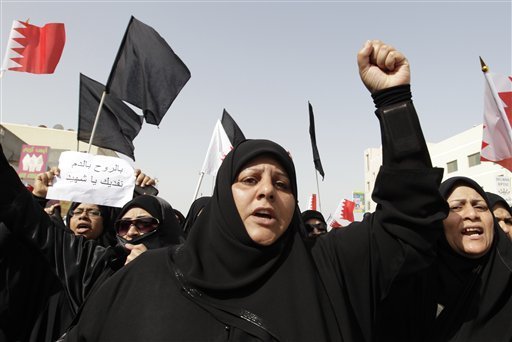
Protests in Bahrain: The Arabian Peninsula as the new Center of Gravity

The fact is without full Pakistani cooperation and substantial Afghani political reform to end corruption and provide real security to Afghani people there is no way to set conditions for a US withdraw that would leave Afghanistan a less dangerous place for its own people and for US and Western security interests. After all no one wants another 9-11 attack.  The US plans to begin withdrawing forces this year but the mission has been extended to at least 2014 at a cost of 119.4 billion dollars per year at the estimated 2011 rate and has increased exponentially since the US involvement began in 2001. The cost of the Afghanistan war in human, material and economic terms has imperiled other strategic priorities and limits the flexibility of the United States in other more vital regions.

Afghanistan is now an expensive sideshow in a larger war where the strategic center of gravity has shifted decisively to the Arabian Peninsula, North Africa and the Eastern Mediterranean where Al Qaeda seeks to use democratic revolts against autocratic despots to further its own ends. The key countries are Yemen, Saudi Arabia, Bahrain and Egypt with Lebanon, Syria, Jordan and the Israeli-Palestinian conflict boiling over.  While all of these crises grow on what seem to be a daily basis the United States and its Allies are mired in Afghanistan reinforcing failure.  Our troops on the ground have not lost a battle but like our brothers in Vietnam could “lose” the war.

This is the point where political and military leaders have to count the cost of the operation and weigh them against our actual strategic interests. The fact is if we withdrew the bulk of our ground combat forces and shifted to a lower footprint special operations and CIA campaign with a goal of ensuring that Al Qaeda cannot operate in Afghanistan with impunity as they did before 9-11 that we would likely be no worse off than we are now and have a greater amount of strategic flexibility to deal with other crises, political, military and humanitarian around the world.

The real crux of the issue is that Afghanistan is much like Stalingrad to the Germans in 1942. It has become a psychological more than a military campaign. We have invested so much in it that we do not believe that we can withdraw even though a scaled back presence would do much to improve our overall strategic situation.  Hitler denuded more important areas to attempt to capture Stalingrad and lost everything. Yes Al Qaeda used Afghanistan as its base to attack us in 2001 but they have moved on and Al Qaeda in Yemen and the Arabian Peninsula is a far greater strategic danger simply because of the oil supplies and strategic waterways in the area.

We simply need to look at all components of national strategy and decide where to concentrate.  Sometimes a strategic withdraw is necessary and actually vital to recover the initiative and set the stage for long term success. In Afghanistan this is not an admission of defeat but rather an acknowledgement that the central focus of the war and our strategic interests are elsewhere.  Our enemies would love to have us continue the campaign in Afghanistan in its current form, they know that our commitment drains our military, imperils our overall strategy and bleeds us dry economically all the while providing propaganda grist for them in their war against us.

However despite the cost the political situation in the United States keeps President Obama invested in Afghanistan. If he withdraws his opponents will say that he lost the war. Unfortunately the war in Afghanistan was ceded to the Taliban in 2003 when we decided that Iraq was more important. Now we reap the terrible consequences of that decision.  Now we have to decide how to make something positive out of this unenviable strategic position. But as Napoleon Bonaparte said “In order to govern, the question is not to follow out a more or less valid theory but to build with whatever materials are at hand. The inevitable must be accepted and turned to advantage.”

Peace

Padre Steve+


2 Comments

Filed under Loose thoughts and musings

A Return to God in the Empty Places

Three years and some change have passed since I returned from Iraq. I originally wrote this article for my former church immediately after returning home. At the time that I wrote it I was well on the way to my psychological and spiritual crash due to PTSD which at the time of writing this I clueless about despite lots of warning signs. Now well into recovery of my life and faith albeit in a different faith community as I was asked to leave my former church last September because I was now “too liberal” I have decided to repost it without any new edits or additions. I do this because for me it is a touch point in relation to being a chaplain serving with military professionals, volunteers fighting a series of unpopular wars. My problem and I think why I keep ending up here is that I was not always a Chaplain. I was not always a Chaplain but I am also a historian and more specifically a military historian and to some degree theorist. Additionally I have served as an enlisted man in the Army National Guard and as a line officer in the Army in command and staff positions before I became a Chaplain first in the Army and then in the Navy, taking a reduction in rank from a senior Army Major to a no time in grade Navy Lieutenant to enter the Navy in February 1999. As such a lot of what I study is military history and the social-political dimension of it.  I graduated from Marine Corps Command and Staff College and was about halfway through my Masters in Military History program of study when I was alerted that I was to be sent to Iraq in the Spring of 2007. As part of both the Command and Staff College and the degree program I spent a lot of time studying counterinsurgency campaigns, especially those of the French in Indo-China and Algeria and I saw many parallels between the professional French soldiers and officers who served in the Paratroops, Foreign Legion and Colonials (Marines) and our military in relation to society and politics in both countries As I point out in the article professional our all volunteer professional military is far different than the men of the Greatest Generation who were for the most part draftees as well as the military that fought in Vietnam the bulk of which were draftees.  This comment is in no way to cast dispersion on the brave men who fought so bravely in both wars, it is just a statement of fact as our military culture is different than it was then as is our political culture. In the middle of this are we happy few, we band of brothers who serve together in very unpopular wars. Tonight I post it again after my first public interview dealing with my struggles to acknowledge all of those that serve today as well as our brothers of the Vietnam era, French Indo-China and Algeria, and the British soldiers who served in so many crummy wars.

Today our Soldiers, Marines, Sailors and Airmen are engaged in three wars in the Middle East, are providing humanitarian relief to the people of Japan as well as other nations and are deployed in many other hot spots that could easily become war zones.  I don’t want anyone to forget them or their sacrifices. Anyway I digress; this is my return to God in the Empty Places.

I have been doing a lot of reflecting on ministry and history over the past few months. While both have been part of my life for many years, they have taken on a new dimension after serving in Iraq. I can’t really explain it; I guess I am trying to integrate my theological and academic disciplines with my military, life and faith experience since my return.

The Chaplain ministry is unlike civilian ministry in many ways. As Chaplains we never lose the calling of being priests, and as priests in uniform, we are also professional officers and go where our nations send us to serve our Soldiers, Sailors, Marines and Airmen. There is always a tension, especially when the wars that we are sent to are unpopular at home and seem to drag on without the benefit of a nice clear victory such as VE or VJ Day in World War II or the homecoming after Desert Shield and Desert Storm.

It is my belief that when things go well and we have easy victories that it is easy for us to give the credit to the Lord and equally easy for others to give the credit to superior strategy, weaponry or tactics to the point of denying the possibility that God might have been involved. Such is the case in almost every war and Americans since World War Two have loved the technology of war seeing it as a way to easy and “bloodless” victory. In such an environment ministry can take on an almost “cheer-leading” dimension. It is hard to get around it, because it is a heady experience to be on a winning Army in a popular cause. The challenge here is to keep our ministry of reconciliation in focus, by caring for the least, the lost and the lonely, and in our case, to never forget the victims of war, especially the innocent among the vanquished, as well as our own wounded, killed and their families.

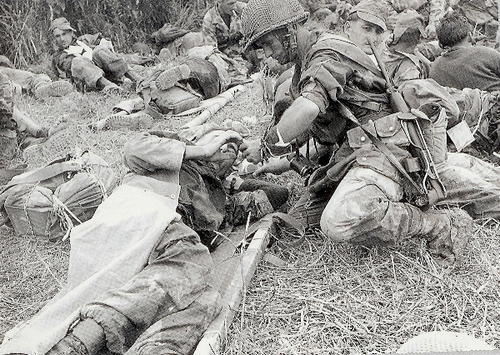
French Paratroop Corpsmen treating wounded at Dien Bien Phu

But there are other wars, many like the current conflict less popular and not easily finished. The task of chaplains in the current war, and similar wars fought by other nations is different. In these wars, sometimes called counter-insurgency operations, guerilla wars or peace keeping operations, there is no easily discernable victory. These types of wars can drag on and on, sometimes with no end in sight. Since they are fought by volunteers and professionals, much of the population acts as if there is no war since it does often not affect them, while others oppose the war.

Likewise, there are supporters of war who seem more interested in political points of victory for their particular political party than for the welfare of those that are sent to fight the wars. This has been the case in about every war fought by the US since World War II. It is not a new phenomenon. Only the cast members have changed.

This is not only the case with the United States. I think that we can find parallels in other militaries. I think particularly of the French professional soldiers, the paratroops and Foreign Legion who bore the brunt of the fighting in Indo-China, placed in a difficult situation by their government and alienated from their own people. In particular I think of the Chaplains, all Catholic priests save one Protestant, at the Battle of Dien Bien Phu, the epic defeat of the French forces that sealed the end of their rule in Vietnam. The Chaplains there went in with the Legion and Paras. They endured all that their soldiers went through while ministering the Sacraments and helping to alleviate the suffering of the wounded and dying. Their service is mentioned in nearly every account of the battle. During the campaign which lasted 6 months from November 1953 to May 1954 these men observed most of the major feasts from Advent through the first few weeks of Easter with their soldiers in what one author called “Hell in a Very Small Place.”

Another author describes Easter 1954: “In all Christendom, in Hanoi Cathedral as in the churches of Europe the first hallelujahs were being sung. At Dienbeinphu, where the men went to confession and communion in little groups, Chaplain Trinquant, who was celebrating Mass in a shelter near the hospital, uttered that cry of liturgical joy with a heart steeped in sadness; it was not victory that was approaching but death.” A battalion commander went to another priest and told him “we are heading toward disaster.” (The Battle of Dienbeinphu, Jules Roy, Carroll and Graf Publishers, New York, 1984 p.239)

Of course one can find examples in American military history such as Bataan, Corregidor, and certain battles of the Korean War to understand that our ministry can bear fruit even in tragic defeat. At Khe Sahn in our Vietnam War we almost experienced a defeat on the order of Dien Bien Phu. It was the tenacity of the Marines and tremendous air-support that kept our forces from being overrun.

You probably wonder where I am going with this. I wonder a little bit too. But here is where I think I am going. It is the most difficult of times; especially when units we are with take casualties and our troops’ sacrifice is not fully appreciated by a nation absorbed with its own issues.

For the French the events and sacrifices of their soldiers during Easter 1954 was page five news in a nation that was more focused on the coming summer. This is very similar to our circumstances today because it often seems that own people are more concerned about economic considerations and the latest in entertainment news than what is going on in Iraq or Afghanistan. The French soldiers in Indo-china were professionals and volunteers, much like our own troops today. Their institutional culture and experience of war was not truly appreciated by their own people, or by their government which sent them into a war against an opponent that would sacrifice anything and take as many years as needed to secure their aim, while their own countrymen were unwilling to make the sacrifice and in fact had already given up their cause as lost. Their sacrifice would be lost on their own people and their experience ignored by the United States when we sent major combat formations to Vietnam in the 1960s. In a way the French professional soldiers of that era have as well as British colonial troops before them have more in common with our force than the citizen soldier heroes of the “Greatest Generation.” Most of them were citizen soldiers who did their service in an epic war and then went home to build a better country as civilians. We are now a professional military and that makes our service a bit different than those who went before us.

Yet it is in this very world that we minister, a world of volunteers who serve with the highest ideals. We go where we are sent, even when it is unpopular. It is here that we make our mark; it is here that we serve our Soldiers, Sailors, Marines and Airmen. Our duty is to bring God’s grace, mercy and reconciliation to men and women, and their families who may not see it anywhere else. Likewise we are always to be a prophetic voice within the ranks.

When my dad was serving in Vietnam in 1972 I had a Sunday school teacher tell me that he was a “Baby Killer.” It was a Catholic Priest and Navy Chaplain who showed me and my family the love of God when others didn’t. In the current election year anticipate that people from all parts of the political spectrum will offer criticism or support to our troops. Our duty is to be there as priests, not be discouraged in caring for our men and women and their families because most churches, even those supportive of our people really don’t understand the nature of our service or the culture that we represent. We live in a culture where the military professional is in a distinct minority group upholding values of honor, courage, sacrifice and duty which are foreign to most Americans. We are called to that ministry in victory and if it happens someday, defeat. In such circumstances we must always remain faithful.

For those interested in the French campaign in Indo-China it has much to teach us. Good books on the subject include The Last Valley by Martin Windrow, Hell in a Very Small Place by Bernard Fall; The Battle of Dienbeinphu by Jules Roy; and The Battle of Dien Bien Phu- The Battle America Forgot by Howard Simpson. For a history of the whole campaign, read Street Without Joy by Bernard Fall. I always find Fall’s work poignant, he served as a member of the French Resistance in the Second World War and soldier later and then became a journalist covering the Nurnberg Trials and both the French and American wars in Vietnam and was killed by what was then known as a “booby-trap” while covering a platoon of U.S. Marines.

There is a picture that has become quite meaningful to me called the Madonna of Stalingrad. It was drawn by a German chaplain-physician named Kurt Reuber at Stalingrad at Christmas 1942 during that siege. He drew it for the wounded in his field aid station, for most of whom it would be their last Christmas. The priest would die in Soviet captivity and the picture was given to one of the last officers to be evacuated from the doomed garrison. It was drawn on the back of a Soviet map and now hangs in the Kaiser Wilhelm Memorial Church in Berlin where it is displayed with the Cross of Nails from Coventry Cathedral as a symbol of reconciliation. I have had it with me since before I went to Iraq. The words around it say: “Christmas in the Cauldron 1942, Fortress Stalingrad, Light, Life, Love.” I am always touched by it, and it is symbolic of God’s care even in the midst of the worst of war’s suffering and tragedy.

Peace

Padre Steve+


2 Comments

Filed under christian life, faith, History, iraq,afghanistan, Military, Tour in Iraq

The Front Page: Padre Steve talks about a Newspaper Interview on His Battle with PTSD

“Gratitude changes the pangs of memory into a tranquil joy.” Dietrich Bonhoeffer

I was interviewed about a week and a half ago by Hope Hodge a reporter for the Jacksonville Daily News. The paper had discovered me through an article I wrote last September entitled Raw Edges: Are there other Chaplains out there Like Me? The editor assigned Hope to the project. After thinking about the request a number of days I knew that I needed to do the interview and had Hope contact our Public Affairs Officer, Raymond Applewhite. When he secured the permission of my Commanding Officer Captain Daniel Zinder he set up the interview with Hope and photographer Chuck Beckley.  

The interview was a very healing experience and the article was well done and I have nothing but thanks to Hope and those that arranged this. While I have talked extensively about my tour in Iraq and subsequent battles with PTSD, loss of faith and my slow recovery on this site as well as with individuals but I have carefully avoided media until now.  While I write a lot tend to be somewhat reclusive in real life especially since coming home from Iraq with my safe places being Harbor Park in Norfolk and Gordon Biersch Virginia Beach.

I knew that the interview would trigger some memories and I knew that once the article was out in public that there would be varied reactions including some that I knew would be negative.  At the same time the negative has been far outweighed by the positive reactions, especially among those that have gone through similar dark times. As I read the comments I knew despite that any negative reactions or attacks on me that the interview was the right thing to do. I read the stories of those who told about their battles with PTSD, experiences with military and VA healthcare as well as their crisis’s of faith posted in comments section and was touched.  They were telling things that are hard to talk about, especially in a public forum of a local newspaper where people can be quite vicious.  I know that even in that forum when most remain anonymous there is a risk and an emotional cost in posting experiences that in a sense are holy to the people sharing them and should be respected so I am glad to see that for some the article was helpful and encouraging. I was also blessed and even comforted by those that spoke well of me.  The kindness, support and comradeship that one has with such people is amazing, there is a brotherhood of war and we will support each other.

There was one man that was particularly nasty and I do need to deal with his comment here, not because I am upset but rather because I know how war, especially was like Vietnam and the current wars can do to a person.  The man who is an anonymous poster to this and other articles on the Daily News website claims to be a veteran of Vietnam in 1969-1970. I have no reason to doubt him as there are a lot of Vietnam Era combat vets in the local area and since I am a child of a Vietnam combat veteran and remember the shameful way that these men were treated when they returned I would never disrespect his service or even his feelings about how he was treated and the abuses that he saw when he came home.  I am very close to the Marine veterans of the Battle of Hue City and still maintain correspondence with these men who I count as friends.

At the same time I think that this man’s comments need to be addressed, not because of his service or experience following his return but because of the use of character assassination that is so common in our national discourse now days. The last time I experienced an attack on this site of similar invective was when a Neo-Nazi or White Supremacist from East Tennessee went so far as to physically threaten me. That man claimed to be a former paratroop officer. I really don’t know what brings people to launch such attacks on people that they never have even met but it is part of life and I knew that I might get something like this so it is what it is.  This is what this man said:

“This man should never have been in the military as he is too weak-minded. And/or, he, like a surprising number of his fellow officers have found it is best to get out under a disability as it’s a tax free cream puff ride to the bank each month. Imagine if he was one of the thousands of trigger pullers afield and try to pull this off? Pathetic!!” Comment by Your62 on Jacksonville Daily News (This and other posts by this man was removed by the newspaper sometime today 3/30/11)

Needless to say he was pretty nasty to others who commented on the article as well so I cannot take it personally and some of them gave it back to him in spades. As for me I hope that this man finds peace someday.

As for me I figure that since I have been in the military, not only as a Navy chaplain but also an Army Officer for nearly 29 years and that I have volunteered for every combat, humanitarian or contingency mission that I could over the course of my career, much to the chagrin of my wife, family and friends that I am by no means weak or lack courage. I know that I didn’t volunteer to go to Iraq to come out of it with PTSD and all that I have gone through since and what I have put my wife through.

Much to the surprise of this veteran I am not looking for a “tax free crème puff” as I figure that 5-10 years from now when I actually retire that I will have maxed out about every pay scale that there is and probably will have another deployment or two in me before I am done.  I figure that the way things are going in the world I will get a shot in Afghanistan or North Africa before all is said and done.

I certainly do not claim to be anywhere or done anything that I did not do or experience and never claim that I experienced what many other veterans of our current wars or past wars have in any of their wounds.  I see too many young men and women who have suffered grievous wounds to body and soul as a result of war to do such a thing. Likewise the many veterans of previous wars that I know who still suffer their wounds I would never dishonor. I consider it an honor to have served alongside such fine men and women or to met them long after their service in Vietnam, Korea or the Second World War or at the end of their careers when I was a young and idealistic know nothing officer in the early 1980s.

My war was different than others. It was in a lot of places where many never went serving alongside small units of 15-20 American advisers stationed with Iraqi units.  These men were remarkable because they were incredibly exposed to danger and often far from big units that could help them if they ran into trouble. They were the men that help organize and train the Iraqi Army to help turn the tide against Al Qaeda in 2007 and 2008 as much as anyone they were responsible for helping build friendships with Iraqi military officers that will be a cornerstone of our friendship with Iraq in the future.

As for me I did not shrink from danger. I went on foot patrols, night convoys in the badlands and was in a helicopter that was shot at and returned fire. I have had rockets fly over my head and being on a convoy that took some fire. Thankfully I was never in a convoy hit by an IED or big coordinated ambush. Since the convoys that I travelled with usually had three HUMMVs with nothing heavier than a single .50 cal or 240 series machine gun that any such action would have been a battle for life and death and I know what I would have done had such a situation occurred. Since Al Qaeda Iraq had Chaplains as a high value target and since our Iraqis new that I was the “American Imam” and that such word would filter out of the camps the men that I served with took good care of me even in very exposed locations. Likewise even Iraqi officers sought my counsel and asked me to bless or to pray for their soldiers.  I will never forget the Iraqi soldiers that asked me to bless their vehicles on one of our convoys with Holy Water as I did for our advisers as we set off on Route Uranium west of Ramadi.

Through it all I can now say that I am grateful for what I have been through. It still is not easy as even though I continue to see improvement I still on occasion have flashbacks, nightmares and have to make the effort to go into places where I don’t feel safe.  At the same time I would gladly go back to Iraq or to Afghanistan or anywhere else to serve the men and women of the Navy, Marine Corps, Army and Air Force that I love and respect so much.  There is not a day that goes by when I don’t think about serving in combat again, much to the chagrin of my wife and family.  I am not a proponent of war, in fact the more I see I am against it.  I fully agree with General Robert E. Lee who said “It is good that war is so terrible. We should grow too fond of it.” However, I know my place until the day that I retire from the Navy is when my Marines, Sailors, Soldiers and Airmen are in harm’s way.

For those who are silently suffering the ravages of PTSD and moral injury related to their service I know the pressure. I didn’t seek help until the EOD Diving Medical Officer saw me falling apart and got me into the medical system.  Unfortunately there can be and often is a stigma attached to PTSD and for some to suffer in silence is preferable to the stigma of seeking help and being called weak.  I made the choice to get help when I couldn’t do it on my own any longer but have seen others be traumatized by other servicemen and women for seeking help, that whole thing about being “weak.” I got lucky when I was sent for help, not everyone has my experience.

Despite that I encourage those suffering from such injuries to seek help because there are a lot of us out here that really care because we know what it is like. I admit that it is not easy to seek help and sometimes getting it can be problematic simply because of the stress on the medical system, but help is there.

Blessings and Peace

Padre Steve+

7 Comments

Filed under faith, iraq,afghanistan, Military, Pastoral Care, philosophy, PTSD, Tour in Iraq

A Visit from My Dad

Is there a heaven? Oh yeah. It’s the place where dreams come true.

John Kinsella: Is this heaven?

Ray Kinsella: It’s Iowa.

John Kinsella: Iowa? I could have sworn this was heaven.

[John starts to walk away]

Ray Kinsella: Is there a heaven?

John Kinsella: Oh yeah. It’s the place where dreams come true.

[Ray looks around, seeing his wife playing with their daughter on the porch]

Ray Kinsella: Maybe this is heaven

Dialogue from Field of Dreams

I went to bed as usual on Sunday night with my usual trepidation of the night but unlike many nights I actually fell asleep after two consecutive nights where I had almost none. Since returning from Iraq I don’t sleep well and most of the time when I dream, or remember dreams they are seldom good and often quite disturbing. When I see massive trauma and destruction as has been covered on the news of late be it the triple disasters in Japan as well as the situation in Libya where Muammar Gaddafi’s forces are grinding the rebels that we encouraged to dust. For me after seeing the destruction of Iraqi cities and the effects of war the images of destruction and human tragedy in Japan and Libya are upsetting and I have slept even less well than normal.

My dad died last June after a seven year battle with Alzheimer’s disease which by the sixth year had taken away almost everything that he was.  The last time that I saw him alive he did not know me and for me that was hard. He died the day after I found out that I had been selected for promotion to the Rank of Commander and I know that he was proud of my career in the military and would have been elated to share that joy.

I love the movie Field of Dreams where Ray Kinsella played by Kevin Costner ends up helping the ghosts of the 1919 Chicago White Sox including Shoeless Joe Jackson who were banned from baseball during the “Black Sox” scandal find peace on a baseball field in Iowa. In the process he also makes peace with himself and his father. I feel a lot of connection to the movie because of the father son relationship portrayed in it. Baseball was always a big part of our lives and my dad planted the love of the game deep in me. In my early adulthood my dad and I suffered some rocky times in our relationship many of which were due to my headstrong independence.  However later in life we had become close again, he was still high strung and opinionated and I was still opinionated and independent but it was a good relationship.  The only thing that we were unable to do was get together and “have a catch” during the latter years because of his deteriorating physical condition.

So after his death I had a lack of closure a feeling that we had never been able to say goodbye to each other. On Sunday night or rather early Monday morning I had a dream where he visited me. It was the dad that I remembered.  He came to me and we talked about baseball, the weather, and my mom as well as funny stories about his mother, world affairs, the Navy and even the earthquake in Japan since we had both served there at different times.  It was a natural conversation like one might have with their father after not seeing him in person for a year or more. He was really happy that the Giants had won the World Series and we talked about the possibilities of them repeating. The conversation went on for what felt like hours. He told me how proud he was of me and how he loved me and I was able to express the same to him. When he said that he had to leave I went to my desk, somehow he was visiting me in my office at the Naval Hospital to get him my business card so he would have my phone numbers. At that point the alarm clock went off and he disappeared.

I woke from sleep feeling like I had just been with him and that the visit was real. I was still tired but my spirit was refreshed. I told Judy about it Monday night and she thought that it was pretty cool and said that he may have visited me.  Whether it was a visit or a dream I don’t know. All I know is that I had my dad back for a while and finally was able to say that last I love you and hear the same from him. I’m okay with that and hope that maybe he will come back to “have a catch” with me or take in a ball game or just talk some more.

Is there a heaven? Yes, it’s the place where dreams come true.

Peace

Padre Steve+


4 Comments

Filed under Baseball, faith