Tag Archives: isil

ISIL: A Generational Problem in Which the Enemy Gets a Vote

295_26912117058_5652_n

I have been writing much in recent days about the war that we are now in against the Islamic State, or ISIL.  Today Secretary of defense Hegel and Chairman of the Joint Chiefs of Staff General Martin Dempsey briefed the Senate Armed Services Committee about the developing strategy to defeat ISIL. They both echoed what I have been writing, that this is not going to be a short and easy war. It was the kind of briefing that Secretary Rumsfeld, Paul Wolfowitz and others should have given Congress before launching the Iraq war in 2003.

Unlike Rumsfeld and others who plainly concocted a fairy tale about the character, length and cost of the war which they and their propagandists in the media deceived the American public into supporting that war, this was a briefing conducted by realists who did not paint beautiful picture of just how easy it will be to win this war, and how it really won’t be over until it’s over. Retired Marine Corps General James Mattis very wisely said: “No war is over until the enemy says it’s over. We may think it over, we may declare it over, but in fact, the enemy gets a vote.”

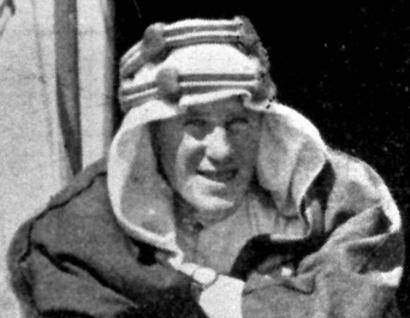
In fact the aftermath of that 2003 invasion opened a Pandora’s box of chaos, and opened the door to what T.E. Lawrence warned about in 1919: “A Wahabi-like Moslem edition of Bolshevism is possible, and would harm us almost as much in Mesopotamia as in Persia…” ISIL is exactly that, a fulfillment of Lawrence’s warning.

Unfortunately no one really likes realists, they rain on people’s ideological parades and no one likes to have their parade rained on. Both men recognize that after the past thirteen years of war, as well as the massive upheaval spawned in the region in large part because of it, and the many other crises  that the American military and our NATO allies are having to confront, that American military and diplomatic options are less than optimal and as General Mattis said the enemy gets a vote. As Winston Churchill said:

“Never, never, never believe any war will be smooth and easy, or that anyone who embarks on the strange voyage can measure the tides and hurricanes he will encounter. The statesman who yields to war fever must realize that once the signal is given, he is no longer the master of policy but the slave of unforeseeable and uncontrollable events…. Always remember, however sure you are that you could easily win, that there would not be a war if the other man did not think he also had a chance.”

General Dempsey cautioned the Senators that this was not going to be a short or easy effort. He noted as any realist would : “It’s a generational problem, and we should expect that our enemies will adapt their tactics as we adjust our approach.” 

They outlined a number of elements of the strategy to include the continued air campaign, coordination with the Iraqis, the advisory mission and the diplomatic efforts being made to build an alliance, as well as to build up “moderate” Syrian rebel forces that are functioning under some kind of “moderate” authority, whatever that is, and if there is such a thing in Syria I hope we find it.

The fact is there is nothing easy about any of these options, even the advisory piece is fraught with danger and the potential of being expanded into a ground combat operation. President Obama has promised not to enter into a ground war, but remember the enemy, as well as the other participants in war get a vote. General Dempsey acknowledged this when he told the committee: “If we reach the point where I believe our advisors should accompany Iraqi troops on attacks against specific ISIL targets, I’ll recommend that to the president.” Yes, the decision to commit troops in a ground combat role is ultimately that of the President as Commander in Chief, but the Congress and the American people need to be part of the decision making process and get a vote. If Congress fails to weigh in on this, and either vote for committing troops, or putting limitations on military action, they will have failed in one of their chief constitutional duties.

General Dempsey also noted the nature of the air campaign that is being conducted and which will be conducted in Syria, saying: “we will be prepared to strike ISIL targets in Syria that degrade ISIL’s capabilities. This won’t look like a ‘shock and awe’ campaign because that is simply not how ISIL is organized, but it will be a persistent and a sustainable campaign.” Part of this is due to ISIL as General Dempsey said, but also as he later noted the growing mismatch between policy ends and the means available to deal with them including the will of Congress to provide those means. Dempsey warned of the danger if the “will to provide means does not match the will to pursue ends,”  a time bomb that the austerity minded Congress foisted on the nation through sequestration in 2012. 

Dempsey was cautiously optimistic in his assessment:

“Given a coalition of capable, willing regional and international partners, I believe we can destroy ISIL in Iraq, restore the Iraq-Syria border and disrupt ISIL in Syria…ISIL will ultimately be defeated when their cloak of religious legitimacy is stripped away and the populations on which they have imposed themselves reject them. Our actions are intended to move in that direction.”

General Dempsey recognized that American military power alone cannot solve this situation and that ultimately if ISIL is to be defeated and destroyed, those people that they have conquered need to rise up and reject them. I think that is possible, but it may take years of suffering and oppression at the hands of ISIL for those people to rise up against them. The Sunni did it in Anbar in 2006-2009 to help turn around the Iraq campaign, but they did so on the basis that their rights would be respected and that they would have a real voice in the Shi’ite dominated Iraqi government. Instead they were tossed aside by the Maliki government making them far more apprehensive and unwilling to go all in on defeating ISIL as they did its predecessor.  The Sunni attitude is much like that of the Arabs who rebelled against the Turks, of whom T. E. Lawrence wrote:

“The Arabs rebelled against the Turks during the war not because the Turk Government was notably bad, but because they wanted independence. They did not risk their lives in battle to change masters, to become British subjects or French citizens, but to win a show of their own.”

This is the reality and it is not pretty. Reality sucks, but as Mark Twain said

“Reality can be beaten with enough imagination.”

Peace

Padre Steve+

1 Comment

Filed under Foreign Policy, History, iraq,afghanistan, middle east, Military, national security, Political Commentary, War on Terrorism

Prepare for a Long and Brutal Ideological War Against the Islamic State

“This war differs from other wars, in this particular: We are not fighting armies but a hostile people, and must make old and young, rich and poor, feel the hard hand of war.” William Tecumseh Sherman

Note: Please know, I have been to war, I have seen its devastation and heartache and I came back changed from the experience. I hate it. That being said, despite being a progressive who hates war, I am also a realist. I am not one that finds any romance or glory in war, but I know that sometimes it becomes unavoidable. In the past few articles I have written about the nature of war, the kind of war we are now engaged in with ISIL and some of the ethical and moral compromises that could easily be made in such a war. Thus what I write here is a continuation of those thoughts and I encourage you to look at those articles. 

President Obama came into office as a President determined to end the wars that the United States was engaged in and usher in an era of peace. That did not happen. The genie of war and chaos that was unleashed when President Bush stopped pursuing Al Qaeda and attacked Saddam Hussein’s Iraq refused to go back into its bottle. The new and more violent terrorist groups spawned from the loins of Al Qaeda in Iraq are now the dogs of war that have been unleashed on the region, threatening all of the peoples there.

This menace to the people of the region as well as to the West, known as the Islamic State of Iraq and the Levant is different than Al Qaeda.  It is a terrorist group to be sure, but it is also an embryonic state which is conquering territory, subduing people, butchering its enemies and murdering innocents in cold blood. They boast in their atrocities and believe what they are doing is blessed by their God. They have grown up and been nurtured by a culture of victimhood which they believe that past or present oppression justifies their actions. Eric Hoffer wrote something that is quite poignant if we are to understand the mindset of ISIL:

“It is doubtful if the oppressed ever fight for freedom. They fight for pride and power — power to oppress others. The oppressed want above all to imitate their oppressors; they want to retaliate.”

The leaders and fighters of ISIL are people of the 12th Century living in the 21st Century. Prisoners of their doctrine they are incapable of negotiation, seeing it as only weakness and a way to impose their will on those unable to, or unwilling to resist them. Hoffer described their mindset well in his book  The True Believer:

“A doctrine insulates the devout not only against the realities around them but also against their own selves. The fanatical believer is not conscious of his envy, malice, pettiness and dishonesty. There is a wall of words between his consciousness and his real self.”

Thus this war will be something different, something that we in the West do not want to comprehend. We want any war to be neat, fast and comparatively bloodless, but this will not be the case in the war against ISIL. Such wars may be possible against traditional nation states with weak militaries. But to believe that it can be with ISIL is wrong headed and dangerous because it ignores the nature of that group. Carl Von Clausewitz noted that:

“Kind-hearted people might of course think there was some ingenious way to disarm or defeat the enemy without too much bloodshed, and might imagine this is the true goal of the art of war. Pleasant as it sounds, it is a fallacy that must be exposed: war is such a dangerous business that the mistakes which come from kindness are the very worst.”

Ultimately, despite the fact that I almost always counsel that war should be avoided and peaceful solutions found to resolve conflict, there are times that wars must be fought. If ISIL was a true nation-state with a conventional understanding of diplomacy and the relationship between nations it would be conceivable that the United Nations or perhaps the Arab League could help broker a deal. But ISIL is neither your father’s terrorist organization, nor a real nation-state. It is a hybrid which is not driven by realpolitik but rather a fanatical religious belief in their cause.  This allows them to dispense with diplomatic niceties and allows them no compromise with those they believe are the enemies of their God; including other Moslems.

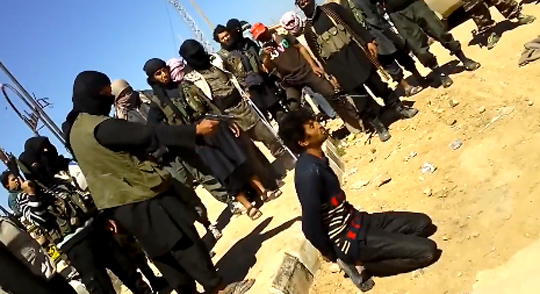
Their war has been raging for some time in both Syria and Iraq. What they are doing is further destroying the mosaic of peoples who are part of the Arab heritage in both countries. The atrocities committed by ISIL against Shi’ite Moslems, secular Sunnis, Yidazi and Christians have been displayed around the world. Mass executions, beheadings and the destruction of historic sites which are important parts of the Christian, Moslem and Jewish heritage are only part of their crimes.

Some of those images inflamed people in the West, but it was the images of American and British hostages being beheaded amid dire threats to kill others and bring vengeance on the Western Infidels that finally got our attention.  The only condition for peace given by ISIL to those it considers the enemy is “convert or die.”  Whether we like it or not, war is now unavoidable. President Obama, the “peace President,” and some of his peers in Western Europe have reluctantly decided to fight ISIL and are now gaining international support for their efforts, even in the Arab world.

Some politicians and pundits seem to think that this will be easy, simply destroy ISIL where they stand. But that belief is illusory. ISIL and its sympathizers may seem to be concentrated in Iraq and Syria, which is enough of a problem for us, but their supporters, financial supporters and sympathizers are world wide. Interestingly Pope Francis noted that:“Even today, after the second failure of another world war, perhaps one can speak of a third war, one fought piecemeal, with crimes, massacres, destruction….”

That being said there is a warning that all must remember about this war. It is at its heart ideological, and it will be long and brutal and very importantly, the Islamic State believes that it can and will win it.

Winston Churchill said:

“Never, never, never believe any war will be smooth and easy, or that anyone who embarks on the strange voyage can measure the tides and hurricanes he will encounter. The statesman who yields to war fever must realize that once the signal is given, he is no longer the master of policy but the slave of unforeseeable and uncontrollable events…. Always remember, however sure you are that you could easily win, that there would not be a war if the other man did not think he also had a chance.”

Thus in this war we cannot waver, and we must believe in our ideals of freedom, justice, equality and the value of a single human life. We must do this even though our practice of them often makes a mockery of them. But they are still ideals that are worth fighting for, because without them we lose something of our already flawed humanity. Carl Clausewitz recognized this and wrote:

“If the mind is to emerge unscathed from this relentless struggle with the unforeseen, two qualities are indispensable: first, an intellect that, even in the darkest hour, retains some glimmerings of the inner light which leads to truth; and second, the courage to follow this faint light wherever it may lead.”

It was said by Barbara Tuchman that “War is the unfolding of miscalculations.” For over a century the leaders of the West as well as Arab leaders throughout the region have miscalculated far too many times, and what is going on now is the tragic and bloody result of all of those miscalculations. The suffering and the human cost will be great.

Pray my friends for peace, but remember reality, peace is not possible when the kind of religious extremism that motivates ISIL is the driving force. That kind of ideology cannot be negotiated with, it has to be defeated.

It has been a long time since we in the West have had to wage that kind of war and it will come at some cost to our psyche and it will take some getting used to, if you can ever get used to the evil, the carnage, the suffering and the devastation that is the essence of war. As William Tecumseh Sherman said “War is Hell.”

Peace

Padre Steve+

5 Comments

Filed under ethics, Foreign Policy, History, history, middle east, Military, Religion, War on Terrorism

Can you Live With It? The Moral Costs of the War Against the Islamic State

pale-moonlight

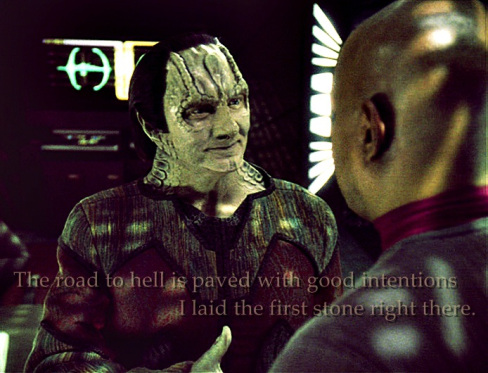
“My father used to say that the road to Hell is paved with good intentions. I laid the first stone right there. I’d committed myself. I’d pay any price, go to any lengths, because my cause was righteous. My… intentions were good. In the beginning, that seemed like enough.” Captain Benjamin Sisko (Avery Brooks) Star Trek Deep Space Nine, In the Pale Moonlight

I think that among the Star Trek series that my favorite is Star Trek Deep Space Nine. Of course all of the series deal with ethics, philosophy and morality to some extent, but Deep Space Nine is perhaps the most interesting to me. Don’t get me wrong I think that the Original Series and Start Trek the Next Generation were and are leap years ahead of most television series when it comes to addressing ethical, moral and existential issues, but somehow living in the post 9-11 “War on Terrorism” world I find Deep Space Nine to be the most compelling. I think that is that the fact that the moral issues get blurred which attracts me to the series, and to this episode in particular.

One of my favorite episodes is from season six and is entitled “In the Pale Moonlight.” The episode deals with the unsavory matter of contriving a reason to get the Romulan Empire to join with the Federation and the Klingons to fight the Dominion-Cardassian alliance that is threatening those entities as well as potentially the entire Alpha Quadrant. I have included a link to the conclusion of that episode here:

http://www.youtube.com/watch?v=dTgGtJ-PisA

The ethics of this episode seem very timely as I look at the new phase of the conflict that the United States has been engaged for the past thirteen years. The fact is that in spite of our appeal to higher ideals we are having to make alliances with powers that are only slightly less unsavory than ISIS, powers whose polices have help ISIS grow. In a sense it is the classic scenario of making a deal with the devil to defeat one’s enemy. Of course this is not new, individuals and nations have made such deals, sometimes with mortal enemies throughout history.

Unfortunately we usually judge such decisions based on their results, rather than wrestle with the ethical issues involved and how we might behave in similar situations. For me the philosophical and ethical issues involved in such alliances have a special interest and as such I tend to notice or recall instances where I saw, read or heard something that makes a connection to an ethical or moral dilemma faced by policy makers and planners today.

Some of the issues involved for policy makers are related to the traditional Just War Theory, and what is called the “Supreme Emergency” exemption. This exemption basically posits that when faced with a supreme and existential emergency a person or state may engage in behaviors that ordinarily would be considered unethical if the situation were not of a supreme emergency.

Of course such decisions in the real world are difficult. Those who have a system of beliefs that help them define right and wrong behaviors, even if they are not codified in law may struggle with with such decisions, while those who act according to what they deem necessary or expedient, unbridled by religious, philosophical or other similar codes may not, instead making their decisions based on what appears to be necessary at the time.

This Deep Space Nine episode is remarkable because we get to see an actor playing a military commander dealing with the morality of the course of action that he is taking. In one of the early scenes Captain Sisko expresses his doubts relating to the morality of a decision that he is making in a war that has already consumed the lives of tens of millions of people.

siskogarak


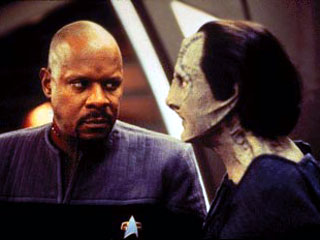
After an incident where a Federation starship was destroyed, Sisko went to Elim Garak (Andrew Robinson), an exiled Cardassian intelligence officer to uncover any evidence about Dominion-Cardassian collusion to attack the Romulans. When none was uncovered and Garak’s sources on Cardassia were compromised he agreed to allow Garak to manufacture evidence in order to get the Romulans into the war on the side of the Federation and Klingons. Sisko compounded the situation by having the Kilingons release a master forger who was on death row to help Garak. Sisko knew it was wrong and confided in his log:

“Why I didn’t listen to the voice in the back of my mind telling me not to believe a word he said, I’ll never know… But it didn’t take long for me to come face to face with the fact that I’d made a mistake.”

When the former prisoner gets drunk and attacks the owner of a tavern on the space station Sisko was in a bind. He wanted no evidence that the man had been on his station and in order to keep Quark, the bar owner quite had to bribe him. Sisko again expressed his doubts in his personal log:

“Maybe I should have put a stop to it right there. Maybe I should have said, “Thank you very much for your input, Mister Garak, I will take your suggestion under advisement,” and then gone back to my office and forgotten the whole thing. But I didn’t. Because in my heart, I knew what he was saying made sense.”

Even so Sisko still had doubts:

“That was my first moment of real doubt, when I started to wonder if the whole thing was a mistake. So I went back to my office. And there was a new casualty list waiting for me. People are dying out there every day! Entire worlds are struggling for their freedom! And here I am still worrying about the finer points of morality! No, I had to keep my eye on the ball! Winning the war, stopping the bloodshed, those were the priorities! So I pushed on. And every time another doubt appeared before me, I just found another way to shove it aside.”

When nations feel they are engaged in a life and death struggle, those who serve as policy makers, planners and military commanders often make uncomfortable compromises with their own religious, ethical or philosophical codes. Sisko continued down the path despite his doubts but justified his actions by the fact that Starfleet had approved them:

“Maybe… I was under more pressure than I realized. Maybe it really was starting to get to me, but I was off the hook. Starfleet Command had given the plan their blessing and I thought that would make things easier. But I was the one who had to make it happen. I was the one who had to look Senator Vreenak in the eye and convince him that a lie… was the truth.”

The forgery was completed and the Romulan Senator secretly arrived on the station to examine the evidence and as he did so all Sisko could do was wait, confiding in his log:

“So all I could do was wait… and see how masterful Tolar’s forgery really was. So I waited… tried to catch up on my paperwork, but I find it very difficult to focus on criminal activity reports, cargo manifests… So I went back to pacing, staring out of the window. I’m not an impatient man, I’m not one to agonize over decisions once they’re made. I got that from my father. He always says, “Worry and doubt are the greatest enemies of a great chef. The soufflé will either rise or it won’t – there’s not a damn thing you can do about it, so you might as well just sit back and wait and see what happens.” But this time the cost of failure was so high, I found it difficult to take his advice. If Vreenak discovered that the data rod was a forgery, if he realized that we were trying to trick them into the war it could push the Romulans even farther into the enemy camp. They could start to openly help the Dominion. If worst came to worst they could actually join the war against us. I had the distinct feeling that victory or defeat would be decided in the next few minutes.”

In-The-Pale-Moonlight

It did not work, Vreenak discovered that the data rod was a forgery and threatened to expose Sisko’s deception and possibly bring the Romulans into alliance with the Dominion. When Sisko’s actions blew up in his face and his deceit was revealed he was not happy and resigned himself to face the consequences:

“So it all blew up in my face. All the lies and the compromises, the inner doubts and the rationalizations – all for nothing. Vreenak was furious. I can’t say I blamed him; I’d have reacted the same way. After telling me in no uncertain terms that he intended to expose this “vile deception” to the entire Alpha Quadrant, he got back in his shuttle and headed home. There didn’t seem to be anything more to do… so I went back to work. Two days later we got the news.”

Sisko learned in a Starfleet communication that Vreenak’s shuttle had blown up and that is was suspected to be the work of the Dominion. When Sisko found that Vreenak was dead he went to Garak and forcefully confronted him, striking him in the process. He accused Garak of sabotaging the senator’s ship and killing him as well as the forger, Tolar. Instead of backing down Garak confronted the results and the ethical issue. The heated exchange between the two men is fascinating:

Garak: If you can allow your anger to subside for a moment, you’ll see that they did not die in vain! The Romulans will enter the war!

Captain Sisko: There’s no guarantee of that!

Garak: Oh, but I think that there is. You see, when the Tal Shiar finishes examining the wreckage of Vreenak’s shuttle, they’ll find the burnt remnants of a Cardassian optolythic data rod which somehow miraculously survived the explosion. After painstaking forensic examination, they’ll discover that the rod contains a recording of a high-level Dominion meeting, at which the invasion of Romulus was being planned.

Captain Sisko: And then they’ll discover that it is a fraud!

Garak: Oh, I don’t think they will! Because any imperfections in the forgery will appear to be a result of the explosion. So – with a seemingly legitimate rod in one hand, and a dead senator in the other, I ask you, Captain – what conclusion would you draw?

As Sisko’s anger subsided Garak continued:

“That’s why you came to me, isn’t it, Captain? Because you knew I could do those things that you weren’t capable of doing? Well, it worked. And you’ll get what you want: a war between the Romulans and the Dominion. And if your conscience is bothering you, you should soothe it with the knowledge that you may have just saved the entire Alpha Quadrant. And all it cost was the life of one Romulan senator, one criminal, and the self-respect of one Starfleet officer. I don’t know about you, but I’d call that a bargain.”

Shortly thereafter Sisko found out that the out that the deception was successful as Garak had said it would be. The Romulans who recovered the damaged data rod believed that it was genuine and declared war on the Dominion-Cardassian alliance and had entered the war on the side of the Federation. He completed his personal log:

“At oh-eight-hundred hours, station time… the Romulan Empire formally declared war against the Dominion. They’ve already struck fifteen bases along the Cardassian border. So, this is a huge victory for the good guys! This may even be the turning point of the entire war! There’s even a “Welcome to the Fight” party tonight in the wardroom!… So… I lied. I cheated. I bribed men to cover up the crimes of other men. I am an accessory to murder. But most damning of all… I think I can live with it… And if I had to do it all over again… I would. Garak was right about one thing – a guilty conscience is a small price to pay for the safety of the Alpha Quadrant. So I will learn to live with it…Because I can live with it…I can live with it. Computer – erase that entire personal log.”

DS9SiskoToast

My guess is that before this war is over, there will be men and women serving in positions of responsibility in our or allied militaries, policy makers and government officials who will make similar deals, violating their own moral codes and even laws in order to defeat the Islamic State and prevent acts of terror against their citizens. Most, like Sisko will not be happy but will live with their decisions. The fact is that long asymmetrical wars in which nation states have to fight non-state terrorist entities get really ugly and the longer and more bloody that they become the more decent and honorable people will make decisions like Sisko and resort to actions that in normal times they would never countenance.

This is nothing new. Those who have fought in such wars throughout history have found ways to “live” with actions that they would not approve of had things been different. Wars such as the one that we are fighting and continue to fight in the years ahead have a corrosive affect on the human spirit. They corrupt and destroy even when they are “successful.”

The question is: Can we live with it? Sadly, as much as I hate to admit it, in a similar situation I think like Sisko, that I could condone or be complicit in something like this. I too could probably convince myself that the end justified the means and that I could live with it.

Peace

Padre Steve+

4 Comments

Filed under ethics, leadership, News and current events, philosophy, Political Commentary, star trek, War on Terrorism

War is Cruelty, and You Cannot Refine it… The War Against ISIL

Iraq-unrest

The war that we are in, and please let’s call it that, which we have been in for over thirteen years now; and which has been extended indefinitely by the actions of the Islamic State and the announced intentions of President Obama to fight it will become much worse than people want to believe regardless of whether it is a long or a short war.

Americans have grown up for the past twenty years with hi-tech wars that with a few exceptions of terrorism inflicted on American civilians have been waged by a comparatively small professional military; a military that at any given time over the last 20 years has comprised less than one percent of the American population. As such war is a spectator sport for most Americans, we watch it on television, or on You Tube videos on the internet, but it is a distant thing, happening to others that doesn’t touch us too deeply because most of us think that we have no skin in the game. In fact people that bet on baseball have more skin in the game than most Americans do in the current war, but that will probably change.

Since I have written much about that military at its sacrifices in the war that began on September 11th 2001 I am not going to belabor that today. Instead I am going to go back to the nature of war, even wars that may be fought in self-defense and with just cause. It was General William Tecumseh Sherman who wrote:

“You cannot qualify war in harsher terms than I will. War is cruelty, and you cannot refine it; and those who brought war into our country deserve all the curses and maledictions a people can pour out…

Chris Hedges wrote: “Violence is a disease, a disease that corrupts all who use it regardless of the cause,” and as Clausewitz noted of war’s nature, that it is: “a paradoxical trinity-composed of primordial violence, hatred and enmity…”

We try to use language to soften war; to make it more palatable, but to do so is an Orwellian charade that is deceptive and destructive to the soul. Dave Grossman, the army infantry officer who has spent his post military life writing about the psychology of war and killing wrote:

“Even the language of men at war is the full denial of the enormity of what they have done. Most solders do not “kill,” instead the enemy was knocked over, wasted, greased, taken out, and mopped up. The enemy is hosed, zapped, probed, and fired on. The enemy’s humanity is denied, and he becomes a strange beast called a Jap, Reb, Yank, dink, slant, or slope. Even the weapons of war receive benign names- Puff the Magic Dragon, Walleye, TOW, Fat Boy, Thin Man- and the killing weapon of the individual soldier becomes a piece or a hog, and a bullet becomes a round.”

Likewise Thucydides wrote:

“Words had to change their ordinary meaning and to take that which was now given them. Reckless audacity came to be considered the courage of a loyal supporter; prudent hesitation, specious cowardice; moderation was held to be a cloak for unmanliness; ability to see all sides of a question incapacity to act on any….”

Such language gives those who have never been to war but cannot live without it to bring it on, but as Sherman noted: “It is only those who have neither fired a shot nor heard the shrieks and groans of the wounded who cry aloud for blood, more vengeance, more desolation. War is hell.”

President Obama in his address to the nation, and the world on the eve of September 11th talked of a war against the Islamic State, using far more diplomatic, restrained and less warlike language than did Vice President Biden who said:

“As a nation we are united and when people harm Americans we don’t retreat, we don’t forget. We take care of those who are grieving and when that’s finished, they should know we will follow them to the gates of hell until they are brought to justice because hell is where they will reside. Hell is where they will reside.”

I commend the President for his humanity and desire to fight the Islamic State with a matter of restraint. That restraint will last so long as the Islamic State is unable or unwilling to strike at American civilians in the American homeland, or in a country that is not in the war zone, or an American ship or military installation at home or abroad. But once that happens, and it will the pretense of restraint will drop and what the Vice President said will become our goal, even if we do not officially say it. But once those restraints are passed, the war will get really messy. Michael Walzer wrote in his book Just and Unjust Wars:

“We don’t call war hell because it is fought without restraint. It is more nearly right to say that, when certain restraints are passed, the hellishness of war drives us to break with every remaining restraint in order to win. Here is the ultimate tyranny: those who resist aggression are forced to imitate, and perhaps even to exceed, the brutality of the aggressor.”

The problem with this war is that it has lasted so long already, and such long wars are detrimental to the nations and peoples that fight them, as Sun Tzu wrote: “There is no instance of a nation benefitting from prolonged warfare,” as such the longer we drag this war against the Islamic State and other similar groups out, the longer the war continues, the crueler it will become and the more damage it will do to our civil liberties, our economy and even more importantly to the spirit of our nation. One can only look at the Patriot Act and related measures undertaken in the name of national security after 9-11-2001 and recall the words of President John F Kennedy who said in respect to the epidemic of loyalty oaths and restrictions on civil liberties enacted in the 1950s:

“We have also seen a sharpening and refinement of abusive power. The legislative investigation, designed and often exercised for the achievement of high ends, has too frequently been used by the Nation and the States as a means for effecting the disgrace and degradation of private persons. Unscrupulous demagogues have used the power to investigate as tyrants of an earlier day used the bill of attainder.

The architects of fear have converted a wholesome law against conspiracy into an instrument for making association a crime. Pretending to fear government they have asked government to outlaw private protest. They glorify “togetherness” when it is theirs, and call it conspiracy when it is that of others.”

Thus the place that we now find ourselves is not good. On one hand by using restraint the war goes on and on, war without end, and if we embrace Sherman’s realism and admit that “War is cruelty. There’s no use trying to reform it. The crueler it is, the sooner it will be over” is that we will imitate or exceed the brutality of the Islamic State. Either way, we lose something of ourselves. But as Abraham Lincoln said “There’s no honorable way to kill, no gentle way to destroy. There is nothing good in war. Except its ending.”

My hope is that somehow, when this is war is done, maybe in our time or in another generation or two, that we will be able to establish peace by making our enemies our friends.

Peace

Padre Steve+

3 Comments

Filed under History, iraq,afghanistan, middle east, Military, national security, News and current events, Political Commentary, War on Terrorism

9-11-2014 War Without End…

9-11 jumpers

“We have not reached the limit of our military commitments…” T.E. Lawrence (Mesopotamia 22 August 1920 in the Sunday Times)

Thirteen years after the Al Qaeda attacks on the World Trade Center and Pentagon in which nearly 3000 Americans were killed and the American response against Al Qaeda and its Taliban hosts in Afghanistan a month later we enter a new phase of war against old and familiar as well as new and frighteningly brutal enemies.

Of course the war was extended to Iraq by the Bush Administration, pursuing the goal of toppling Saddam Hussein and his non-existent weapons of mass destruction. That extension of the war, which so reminds me of what T.E. Lawrence wrote about the British adventure in Mesopotamia in 1920 has led to the creation of a much more ruthless and capable enemy than Al Qaeda ever was and strengthened our old adversary Iran in ways that it could not have done itself. Lawrence wrote of the British effort:

“The people of England have been led in Mesopotamia into a trap from which it will be hard to escape with dignity and honour. They have been tricked into it by a steady withholding of information. The Bagdad communiqués are belated, insincere, incomplete. Things have been far worse than we have been told, our administration more bloody and inefficient than the public knows. It is a disgrace to our imperial record, and may soon be too inflamed for any ordinary cure. We are to-day not far from a disaster.”

Like the Bush administration the British reasons for going into Mesopotamia were cloaked in the words of liberation and protection, only from the Turks, not Saddam. Lawrence noted in words that are hauntingly familiar to those that paid attention to the American war in Iraq:

“Yet our published policy has not changed, and does not need changing. It is that there has been a deplorable contrast between our profession and our practice. We said we went to Mesopotamia to defeat Turkey. We said we stayed to deliver the Arabs from the oppression of the Turkish Government, and to make available for the world its resources of corn and oil. We spent nearly a million men and nearly a thousand million of money to these ends. This year we are spending ninety-two thousand men and fifty millions of money on the same objects.”

Perhaps the most poignant and relevant note on the ill thought out Bush decision to invade Iraq in 2003 was by Thucydides who wrote:

“Think, too, of the great part that is played by the unpredictable in war: think of it now, before you are actually committed to war. The longer a war lasts, the more things tend to depend on accidents. Neither you nor we can see into them: we have to abide their outcome in the dark. And when people are entering upon a war they do things the wrong way round. Action comes first, and it is only when they have already suffered that they begin to think.”

Last night President Obama announced his intention to fight the brutal and extreme fighters of the Islamic State, or ISIL by building a broad coalition spearheaded by American airpower and intelligence agencies. Of course the President’s announcement was met with cries of not being enough by some on the political right, and with equal vehemence by opponents on the political left who feel that he has displayed cowardice in the face of “9/11 fear mongering” and the implementation of a policy of “perpetual war.” Of course the answer is more complex than anyone wants to admit, the critics on both sides are right in some things and wrong in some things, and the fact is there are no good answers.

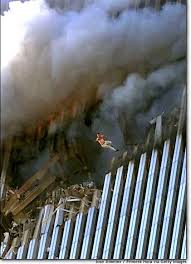
Sadly because of what we and the British and others have done in Iraq and Syria the President is left with few options, mainly those that are bad, and those that are worse. So now, as the President, with a fair amount of judiciousness and caution commits the country to continue and maybe even expand the war that began thirteen years ago, it is time to remember those burning towers, the flailing bodies of our fellow Americans and others falling to their deaths to escape the surety of death in those flames and those who have perished in Iraq and Afghanistan; not just Americans, but coalition partners and the people of those lands who had no say in what Osama Bin Laden and Al Qaeda did or what Saddam did or didn’t do; and who went from the oppression of Saddam or the Taliban, to unending civil, tribal and religious wars, in which they were caught in the middle, the Iraqis in a war that was devised by President Bush and his advisors.

There are always results and today we are dealing with the results of at least a century of incredibly short sighted decisions of Western as well as Arab leaders which have blighted the Middle East and caused immense suffering to the peoples of the region. Now because of those decisions there exists a terrorist organization which is rapidly becoming a state in the areas of Iraq and Syria that it occupies. Islamic scholar Reza Aslan described the Islamic State on CNN Monday:

“Number one, you do have to respond militarily to ISIS soldiers and fighters. These guys are fighting a war of the imagination, a war that they think is happening between the forces of good and evil. There is no negotiation. There’s no diplomacy. There’s nothing to talk about with these guys. They have to be destroyed.”

Sadly, Aslan is right in his analysis of the Islamic State. Because of that fact, on this thirteenth anniversary of the 9-11-2001 attacks we and the already suffering people of the region will see war continue without end. One wonders how many generations it will last and what the cost on lives and treasure will be.

481801_10151367001287059_1003164983_n

Peace

Padre Steve+

1 Comment

Filed under History, iraq,afghanistan, middle east, national security, News and current events

The Islamic State and the New, Old Nature of War

bilad ash shaam

I am a realist when it comes to human nature and the reality of the evil that human beings can do. I have been to war, and personally I can think of nothing worse than more war. For me war is part of the reality that I live with, and which I am reminded of every time I try to sleep. That being said, a new war is gaining in intensity and threatening to blow away what is left of the old world order.

For most modern Americans and others living in the West, war is an often abstract concept regulated to small bodies of professionals fighting actions far away, of which we only catch occasional glimpses of on television or the internet. For most Americans and others in the West, modern war has become a spectator sport, and one far less interesting to most than either American or European football matches.

We in the West have been protected from the savage nature of war for the better part of six decades, with the sole possible exception being Vietnam, when the press had nearly unfettered access to the battlefields and the troops fighting the war. That war was a staple of the six o’clock news on a daily basis for a decade, bringing the war home in almost real time, and that coverage as well as the large numbers of Americans killed and wounded coming home from the war triggered a public backlash against it that helped bring the American involvement to an end.

The government and the military changed the way that war has been covered since, now reporters are vetted and closely supervised, even when they are imbedded with the troops. When the war in Iraq began to go bad, even the return of those killed in action was largely off limits. During the Iraq War many news programs took on the character of cheerleaders as Saddam was toppled. The media only slowly adjusted to the reverses brought about by the failed strategy of the Bush administration in Iraq as the falsehoods that brought about the invasion were revealed and the Iraq Civil War and insurgency spread like wildfire.

As such most people, including political, business, media elites, and even military theorists fail to understand the essential and unchanging, character, nature and complexity of war. As British theorist Colon S. Gray so bluntly points out: “Some confused theorists would have us believe that war can change its nature. Let us stamp on such nonsense immediately. War is organized violence threatened or waged for political purposes.” 1 If we fail to understand that we cannot understand the ongoing wars, to include that being waged by the Islamic State, or Caliphate in Iraq and Syria.

This war that the Islamic State is waging is bigger than most of us understand or want to believe. It is not simply about toppling the Assad regime, nor even taking Baghdad, or even about gaining control of the oil of the Middle East, though each is a goal for the Islamic State.

The larger and much more ambitious goal of the ISIS leadership; that of toppling the Saudi monarchy, which ISIS feels is corrupt and heretical, and the occupation of Mecca, Medina and ultimately Jerusalem, the three most holy sites in Islam. The Puritanical and violent Wahhabi Islam practiced by ISIS rightly understands as so many other Wahhabi fundamentalists have throughout the years; that the possession of these sites, especially Mecca and Medina, give them both legitimacy and standing as the preeminent Islamic government in the World.

The House of Saud allied itself with the founder of Wahhabi Islam in the 1700s, but it was not until the 1920s when the British Indian Office backed the Saudi against the other tribes of the Arabian Peninsula that Wahhabi Islam had a stable base to reach out and touch the rest of the world. As the Saudis became more affluent and connected to the world through oil and the global economy some leading Saudis have tried to moderate their Wahhabi beliefs, modernize the Kingdom, even allowing women a few rights, and to accommodate more progressive beliefs. In the 1970s this brought about the assassination of King Faisal in March 1975 and the seizure of the holy sites of Mecca by extremists in November of 1979. That, coupled with their military alliance with the United States after the Gulf War brought about more opposition from the more radical Wahhabi including Osama Bin Laden whose Al Qaeda network spawned ISIS.

ISIS has found its greatest success in exploiting failures of many of the despotic and totalitarian leaders of Arab states, divisions in Islam, foreign influences and the seemingly hopeless plight of Arabs to overcome poverty and oppression in those countries to advance their cause and promote their ideology. Their brand of Islam which teaches that almost anything is an idol enables them to destroy historical sites, cemeteries, houses of worship and archeological treasures belonging to Christians, Jews, Buddhists and even to other Moslems.

Terrorism and terrorist groups have not generally been non-state actors in the world wide political drama, however, that being said, even non-state actors have strategic, ideological and political goals to which their violence is directed. The unique nature of ISIS is that what most of us assumed to be yet another non-state terrorist group is becoming an embryonic state with its own economic assets, media arm coupled with defined military and political-religious goals, both against other Moslems and the West. Is is morphing before our very eyes from a non-state entity to a hybrid entity with character traits of a non-state and a state actor, especially as it takes control of more and more territory in the Tigris-Euphrates basin of Syria and Iraq.

The message of ISIS to all, including other Moslems, is to convert to their understanding of Islam or die. It is the same kind of message that other religious extremists at the helm of governments have used for millennia, sadly including many Christians.

The fact that the Islamic State is aspiring to become not just a non-state actor, but to place itself as a dominant power on the world stage makes it different. It has the capability of operating in the open where it physically controls cities or regions, as well as in the shadows in countries viewed by them as the enemy. It will most likely adapt its tactics as the situation dictates. Against weaker, or politically unstable neighbors, it will use more conventional means and asymmetrical warfare. However, against enemies who have the power to strike them from afar such as the United States, they will use the asymmetrical means of various types of terrorism; traditional bombings, kidnappings, hijackings and assassinations, the use of any kind of WMD that they can obtain and even cyber-terrorism to attack financial institutions or critical infrastructure.

The war that the Islamic State is preparing for is a throwback to the heady days of Moslem conquest from the 7th to the 15th Centuries. But unlike those days where early Moslems were interested in such things as classical Greek learning, the preservation of historic sites or advances scientific or mathematical learning, the Islamic State is bent on destroying all vestiges of other peoples, groups or religions. Because their absolutist and apocalyptic beliefs allow no compromise, they can and will ruthlessly pursue their religious, ideological and political goals using terror as a tool.

We in the West have not faced something like this in a very long time. War is not just a military and political endeavor, “it is social and cultural… and must reflect the characteristics f the communities that wage it.” 2 The leaders of the Islamic State understand this fact all too well, that is a major reason why they are attracting new Jihadists around the world. However, we in the United States in Europe are on the whole, so detached from such matters that we do not understand the savage nature of war, or the motivations groups like the Islamic State. To us they are barbarous and a throwback to times where our ancestors waged wars of religion and ideology to conquer, convert and enslave unbelievers.

There are many politicians that seem to believe that the Islamic State can be crushed quickly by US and allied forces. However, history shows that such religious-political-ideological movements do not die easily, even when mercilessly attacked by superior military forces.

Those that think a series of surgical strikes by aircraft, cruise missiles or drones; or attacks by Special Forces will eliminate ISIS as a threat do not understand the nature of that beast. We have become enamored of the technology that we use to make war, and we often forget the preeminence of the human dimension. Technology changes rapidly, the nature of the people that employ it seldom changes.

The West must, for human rights and freedom and not for imperialist, economic or even the mission of spreading democracy, we must be prepared for a long and difficult war that will be waged in the most brutal of manners by all sides. We must realize that there will be a terrible cost such a war, economic and human to be sure, people will die and economies will suffer, but worse there will be a cost to our individual and corporate psyche.  This war will eventually have a profound effect on all  us.

We must realize as Helmuth Von Molkte told Kaiser Wilhelm II in 1906 that the next war “will be a national war which will not be settled by a decisive battle but by a long wearisome struggle with a country that will not be overcome until its whole national force is broken, and a war which will utterly exhaust our own people, even if we are victorious.” Von Molkte’s tragic mistake was that he did nothing to “follow through the logic of his prophecy” 3 and allowed his country to enter a war that it was not prepared to wage, and which caused its collapse.

Ultimately, despite our protestations this war, which has already started will become a war without mercy to use the words of John Dower. The West will be slow to move, and half measures will provoke more attacks and a further spread of the Islamic State. Alliances will have to be made with nations that we may despise, but who are also threatened by the Islamic State. Such is nothing new, the United States and Great Britain allied themselves with the Soviet Union to defeat Hitler.

However, when ISIS successfully attacks a major European or American city causing great loss of life, which they very probably will do, the gloves will finally come off. Then the only words to describe how the West will wage the war will be those of William Tecumseh Sherman who said: “You cannot qualify war in harsher terms than than I will. War is cruelty, and you cannot refine it and those who brought war into our country deserve all the curses and maledictions a people can pour out….” 4 The Islamic State is sowing the wind, and they will reap the whirlwind.

We must look to history, our own as well as Islamic and Arab to understand the new era we are entering, for in truth, despite all the technological advances and changes in strategy and tactics, the fact is that as Colin Gray writes “what changes about war and warfare, although it can be very obvious and can even seem dramatic, is actually overmatched by the eternal features of war’s nature.” 5

T.E. Lawrence wrote a memorandum to the British Foreign Office warning of what we are seeing today: “A Wahabi-like Moslem edition of Bolshevism is possible, and would harm us almost as much in Mesopotamia as in Persia…” T.E. Lawrence, Memorandum to Foreign Office 15 September 1919

Well, that vision is upon us, and with that I will close for today.

Peace

Padre Steve+

4 Comments

Filed under History, history, iraq,afghanistan, middle east, national security, News and current events, philosophy

Wars Without Mercy: The New Old Way of War

MacArthur Shigemitsu

Today is significant for it marks the end of the World War Two in the Pacific. Sixty-nine years ago a delegation from the Imperial Japanese government signed surrender documents with the Americans and their Allies aboard the Battleship Missouri in Tokyo Bay. The surrender marked the end of one of the most brutal wars ever fought, a war between two sides where in many cases no quarter was given. Violations of the Geneva and Hague conventions ran rampant on both sides as the respective governments and the media of each nation dehumanized and demonized their opponents, making it that much easier to excuse wanton barbarism and cruelty. 

Today another American reporter, Steven Sotloff, was beheaded by the ISIS/ISIL Islamic Caliphate, and as it does so often it released the video of the execution. The Caliphate, which developed out of Al Qaeda fighting the United States in Iraq has become a formidable fighting organization, with deep financial resource is gaining radicalized adherents around the world, and its brutality toward all enemies, even other Moslems is unmatched. The propaganda of the Caliphate against its enemies is similar to what was used by both sides in the Second World War and with each massacre of civilians, each execution of innocent reporters, humanitarian workers and others they ensure that they will reap the whirlwind.

What ISIS forgets is that beneath the civilized veneer of the West, that part of us that likes to abide by treaties and focus on human rights, is that when enraged Americans, Britons, Australians, Germans, Russians and even the French can be just as brutal and also fight wars without mercy. Our histories are full of such examples. The problem is that since we haven’t had to fight such a total war since the Second World War, the leaders of groups such as ISIS assume we are weak and decadent, easy targets. They forget the manner in which all sides, even the Allies waged the Second World War, especially in the Pacific, where the war was fought without mercy. 

isis-terrorists

By waging war in the manner it is doing, ISIS will ensure that its leaders and members will receive no mercy. The post 9-11 response of the United States to Al Qaeda will look like a game compared to what is coming. And unfortunately, we will all lose a bit of our humanity, maybe even a lot of it the longer this war goes on. As far as propaganda, many U.S. politicians , corporate interests and our corporate media are great at promoting war and demonizing opponents. This will be brutal my friends and I for one wish it had never come about. I want peace, I went to Iraq believing that the Iraqis I served alongside and those who had me in their homes would eventually know peace. I grieve for them, as I grieve for all that will suffer in this new war without mercy. 

61VVOf2iniL

I have reposted a book review of John Dower’s book “War without Mercy: Race and Power in the Pacific War.” Pantheon Books, a Division of Random House, New York, NY 1986. I highly recommend the book to anyone who thinks that the conflict with ISIS will be anything but uncivilized and barbarous. It has all the elements to make it so: race, religion, ideology and power, it will mark a return to barbarism that many of us thought would never happen again. 

Here is that review.

The study of war cannot simply be confined to the study of battles, weapons and leaders. While all of these are important one must as Clausewitz understood examine the human element of policy, ideology and the motivations of nations as they wage war. Clausewitz understood that war could not be reduced to formulas and templates but involved what he called the “remarkable trinity” which he described in on war as (1) primordial violence, hatred, and enmity; (2) the play of chance and probability; and (3) war’s element of subordination to rational policy. Clausewitz connects this with the people being connected to the primordial forces of war, the military with the non-rational elements of friction, chance and probability and the government.

The Clausewitzian understanding of war is rooted in the Enlightenment and classic German Liberalism, born out of his experience in the Napoleonic Wars, which forever changed the face of warfare. From the defeat of Prussia and its liberation from Napoleonic rule under Scharnhorst and Gneisenau Clausewitz developed the understanding that war was more than simply tactics and weapons. Thus when we examine war today we deprive ourselves of properly understanding the dynamic of war if we fail to appreciate the human factor which is frequently not rational. Such is especially the case when one fights an enemy who wages war on religious, racial or ideological grounds as is the case in the current war against Al Qaida and other extremist Moslem groups. Such groups would like to turn this war into such a conflict as do certain figures in the American political milieu who repeatedly label all of Islam as the enemy. In such a climate it is imperative to look at history to show us the results of such primal passions.

It is in such conflict as we are engaged in today it is good to look at previous wars from the human experiential component and not simply military operations. If one wants to look at how inflamed passion driven by racial prejudice and hatred took war to a level of barbarity and totality that defy our comprehension we only need to look back to the Pacific war between Japan and the United States. In another post I dealt with the how racial ideology influenced Nazi Germany’s conduct of the war against Poland and the Soviet Union. https://padresteve.wordpress.com/2009/09/14/the-ideological-war-how-hitlers-racial-theories-influenced-german-operations-in-poland-and-russia/

To do this I will look at John Dower’s “War Without Mercy.” In this book Dower examines World War Two in the Pacific from the cultural and ideological viewpoints of the opposing sides. He looks at the war as a race war, which he says “remains one of the great neglected subjects of World War Two.”[i] Dower examines race hated and its influence on both the Japanese and the Allies, particularly in the way that each side viewed one another and conducted the war. He examines the nature of racial prejudice and hate in each society, including its religious, psychological, ideological, scientific and mythological components. He also examines the use of media and propaganda, and how racial attitudes not only influenced national and individual attitudes, but also the military and intelligence operations of both sides. This book is not about military campaigns, thus it is much more like “In the Name of War” by Jill Lepore[ii] than any history of the Pacific war.

Dower uses sources such as songs, movies, cartoons and various writings of the times to demonstrate the totality of the war. Dower admits many of these are difficult to handle and “not respectable sources in some academic sources.”[iii] Despite this he puts together a work that is sometimes chilling, especially when one looks at the current war that our country is engaged in. He also endeavors to explain how after a war where “extraordinarily fierce and Manichean”[iv] race hate predominated, it could “have dissipated so easily”[v] after the war was over.

Dower divides his work into three major sections. The first which examines how the aspect of race effected the fighting of the war, the second, the war through Western eyes and the third the war through Japanese eyes. The first section begins with how racial attitudes in Western and Japanese societies helped fuel the war and compares similar attitudes and concepts in Western and Japanese thought, including how “prejudice and racial stereotypes frequently distorted both Japanese and Allied evaluations of the enemy’s intentions and capabilities.”[vi] He looks at the language of the conflict; at how war words and race words came together “in a manner which did not reflect the savagery of the war, but truly contributed to it….”[vii] the result being “an obsession with extermination on both sides.”[viii] He comes back to this theme throughout the book comparing the two sides and occasionally contrasting these attitudes with corresponding attitudes of the Allies to their German and Italian foes in Europe.[ix]

In the first chapter Dower examines the role played by the propaganda used by both sides. In particular he expalins how the “Know Your Enemy: Japan” movies commissioned by the War Department and directed by Frank Capra, and the Japanese works “Read this and the War is Won” and “The Way of the Subject” helped shape the view of each side. Propaganda developed the idea of the war in terms of good versus evil and the mortal threat posed to their respective cultures by the enemy.

From this he looks at the visceral emotions that the war engendered and how those emotions spilled over into the conduct of the war especially in regard to its ferocity and the war crimes that were spawned by the unbridled hatred of both sides. He notes the targeted terror bombings of civilians by both sides and how those actions were portrayed as “barbaric” by the other side when they were the victim.[x] He notes the viciousness of the war and how for the Americans the war brought forth “emotions forgotten since our most savage Indian wars.”[xi] He contrasts this with European war in particular how the Japanese and their actions were portrayed in Western media, and how similar actions by the Germans, such as the Holocaust, were ignored by Western media until the war was over.[xii] He traces some of this to the understanding of the psychological effects of the defeats and humiliations of the Allies at the hands of the Japanese, and the corresponding brutality toward Allied prisoners by the Japanese as compared to that of the Germans.[xiii] He uses this section to also examine the prevailing attitudes of the Japanese toward the Allies as being weak and “psychologically incapable of recovery” from blows such as the Pearl Harbor attack, and the Allied view of the Japanese as “treacherous.”[xiv]

Dower’s second major section describes the attitudes and actions of the Americans and British toward their Japanese enemy. He looks at the view that the Japanese were less than human and often portrayed as apes or other primates such as monkeys. To do this he examines cartoons and illustrations in popular magazines and military publications, and includes those cartoons in the book. The sheer vulgarity of these cartoons is easily contrasted with those promoted and published by Nazis such as Julius Streicher in Der Stürmer, something often overlooked or ignored in other histories.[xv] The early Western views of Japan as sub-human continued throughout the war, while at the same time, especially after the rapid series of Allied defeats and Japanese victories they were viewed as almost “super-human.” Paradoxically some allied leaders turned the Japanese from “the one time “little man” into a Goliath.”[xvi] They were now “tough, disciplined and well equipped.”[xvii] Ambassador Joseph Grew, reported on his return from Japan, that the Japanese were; “”sturdy,” “Spartan,” “clever and dangerous,” and that “his will to conquer was “utterly ruthless, utterly cruel and utterly blind to the values that make up our civilization….””[xviii] The juxtaposition of such conflicting attitudes is curious, although understandable, especially in light of other Western wars against Asians or Arabs.[xix]

Dower then examines how some Americans and British explained the Japanese “National Character,” their approach to war, and actions during the war from Freudian psychiatry as well as Anthropology and other social and behavioral sciences. Beginning with the widespread Allied understanding that the Japanese were “dressed-up primitives-or “savages” in modern garb…”[xx] he notes that these interpretations of the Japanese national character stemmed from “child-rearing practices and early childhood experiences,”[xxi] including toilet training and Freudian interpretations that saw an arrested psychic development at the “infantile (anal or genital) stage of development.”[xxii] Dower deduces that it was not hard to see how “Japanese overseas aggression became explicable in terms of penis envy or a castration complex….”[xxiii] The views were widespread and emphasized that the “Japanese were collectively unstable.”[xxiv] Dower notes that the “very notion of “national character”-was the application to whole nations and cultures of an analytical language that had been developed through personal case studies…”[xxv] which he is rightly critical in suggesting that this premise “was itself questionable.”[xxvi] In addition to this was the understanding of Margaret Mead and others of the Japanese as “adolescents” and “bullies,”[xxvii] and notes that from “the diagnosis of the Japanese as problem children and juvenile delinquents, it was but a small step to see them as emotionally maladjusted adolescents and, finally as a deranged race in general.”[xxviii] Dower cites numerous other “experts” of the time and their interpretations of the Japanese national character, but the overwhelming message is that the application of these theories, regardless of their validity had a major impact on the Allied war against Japan.

He follows this chapter with one with much importance in explaining the similarities in how Americans and Westerners in general viewed the Japanese in relationship to other races that they had dealt with including Blacks, Chinese, Filipinos, and American Indians. Common themes include the views of each as primitives, children and madmen and the view of the Japanese as part of the “Yellow Peril.” Of particular note is his analysis of the work of Homer Lea’s 1909 book The Valor of Ignorance and the vision of Japanese supermen which enjoyed a revival after Pearl Harbor.[xxix] Dower examines depictions of Asians in general in the Fu Manchu and Charlie Chan series of films and other racial aspects hearkening back to the “specter of Genghis Khan and the prospect that the white races “may be liquidated.”[xxx] He notes how Japanese propagandists attempted to use Allied prejudice to influence the Chinese and other Asians against the Allies[xxxi] and American blacks against whites,[xxxii] while attempting to maintain their own racial superiority which is the subject of the next section.

The chapters dealing with the Japanese view of themselves and their opponents tie together neatly. These deal with the Japanese view of themselves as the leading race in Asia and the world. Dower talks about symbols and the understanding of racial purity that motivated the Japanese from the 1800s to the rejection of Japan’s request for a declaration of “racial equity” at the League of Nations.[xxxiii] He notes the “propagation of an elaborate mythohistory in Japan and the time spent “wrestling with the question of what it really meant to be “Japanese” and how the “Yamato race” was unique among races….”[xxxiv] He notes the relationship of Shinto with whiteness and purity and connotations of how the Japanese indulged in “Caucasianization” of themselves vis-à-vis other Asians during World War Two,”[xxxv] and their emphasis on a Japanese racial worldview.[xxxvi] He also tackles the way in which the Japanese wrestled with evolution and its relationship to other racial theories contrasting books such as A History of Changing Theories about the Japanese Race and Evolution of Life with Cardinal Principles of the National Polity published by the Thought Bureau of the Ministry of Education in1937. These declared that the Japanese were “intrinsically different from the so-called citizens of Occidental countries.”[xxxvii] He also deals with the Kyoto school and the Taiwa concept.[xxxviii] In Chapter Nine Dower looks at how the Japanese viewed themselves and outsiders, in particular the characterization of Westerners as nanbanjin or barbarians and how this eventually train of thought carried through the war led to the “Anglo-American foe emerged full blown as the demonic other.”[xxxix] Dowers final chapter deals with how quickly the race hatred dissipated and genuine goodwill that developed between the Japanese and Americans after the war.[xl]

This book holds a unique place in the literature of the Pacific war. It is not a comfortable book, it is challenging. No other deals with these matters in any systemic way. If there is a weakness in Dower is that he does not, like Lepore in “In the Name of War” deal with the attitudes of soldiers and those who actually fought the war. His examples are good and go a long way in explaining the savagery with which the war was conducted, but could have been enhanced with reflections and accounts of those who fought the war and survived as well as the writings of those who did not, and the way those attitudes were reflected in different services, times and theaters during the war, including adjustments that commanders made during the war.[xli] His description of how Japanese “reluctance to surrender had meshed horrifically with Allied disinterest …in contemplating anything short of Japan’s “thoroughgoing defeat.”[xlii]

The lessons of the book are also contemporary in light of the cultural and religious differences between the West and its Moslem opponents in the current war. Possibly even more so than the war between the United States and Japan which was fought by nation states that still were signatories to international conventions, not nation states against terrorists unbound by any Western code or law or indigenous forces engaged in revolutionary war against the west such as the Taliban.[xliii] The temptation is for both sides to demonize one’s opponent while exalting one’s own way of life through official propaganda and popular media, with a result of increased viciousness and inhumanity in pursuit of ultimate victory. In today’s world with the exponential rise in the radicalization of whole people groups and the availability of weapons of mass destruction, it is possibility that the war could develop into one that is a racial as well as religious and ideological war that would make the War in the Pacific look like a schoolyard brawl.

As William Tecumseh Sherman said: “You cannot qualify war in harsher terms than I will. War is cruelty, and you cannot refine it…”

Bibliography

Alexander, Joseph H. Utmost Savagery: The Three Days of Tarawa. Ivy Books, Published by Ballantine Books, New York, NY 1995

Dower, John W. War without Mercy: Race and Power in the Pacific War.” Pantheon Books, A Division of Random House, New York, NY 1986.

Leckie, Robert. Okinawa. Penguin Books USA, New York NY, 1996

Lepore, Jill The Name of War Vintage Books a Division of Random House, New York, NY 1998

Tregaskis, Richard Guadalcanal Diary Random House, New York NY 1943, Modern Library Edition, 2000.

[i] Dower, John W. War without Mercy: Race and Power in the Pacific War.” Pantheon Books, A Division of Random House, New York, NY 1986. p.4
[ii] Lepore, Jill The Name of War Vintage Books a Division of Random House, New York, NY 1998. Lepore’s book deals with King Phillip’s War and how that war shaped the future of American war and how it shaped the views of Indians and the English Colonists and their later American descendants both in the language used to describe it, the histories written of it and the viciousness of the war.

[iii] Ibid. p.x

[iv] Ibid. p.ix

[v] Ibid. p.x

[vi] Ibid. p.11

[vii] Ibid.

[viii] Ibid. Also see Alexander, Joseph H. Utmost Savagery: The Three Days of Tarawa. Ivy Books, Published by Ballantine Books, New York, NY 1995 Alexander notes an incident that shows a practical application of the Japanese views and the ruthlessness inflicted on their enemies, in this case prisoners in response to an American bombing raid. In 1942 the commander of the Japanese Garrison of Makin Island ordered 22 prisoners beheaded after one cheered following a bombing raid. (p.32)

[ix] An interesting point which Dower does not mention but is interesting for this study is how the Germans referred to the British and Americans as “Die gegener” (opponents) and the Soviets as “Die Feinde” (the enemy), the implication being that one die gegener was a common foe, much like an opposing team in a sport, and the other a mortal enemy, the implication of Feinde being evil, or demonic.

[x] In particular he makes note of the Japanese actions during the “Rape of Nanking,” and the 1945 sack of Manila, as well as the fire bombing of Japanese cities by the US Army Air Corps in 1945.

[xi] Ibid. Dower. p.33

[xii] Ibid. p.35

[xiii] Ibid. This is important in the fact that the Allies tended not to make much of German brutality to the Jews, Russians and other Eastern Europeans.

[xiv] Ibid. p.36.

[xv] Dower does not make this implicit comparison, but having seen both and studied the Nazi propaganda directed toward the Jews, Russians and other Slavic peoples considered to be Untermenschen (sub-humans) by the Nazis the similarities are striking.

[xvi] Ibid. pp.112-113.

[xvii] Ibid. p.113

[xviii] Ibid.

[xix] In the 2006 Israeli invasion of Lebanon, Israeli soldiers who previously showed no respect to any Arab fighter described their Hezbollah opponents as “soldiers and warriors.” Similar attitudes were voiced by American soldiers in Vietnam when they fought NVA regulars.

[xx] Ibid. p.123

[xxi] Ibid.

[xxii] Ibid.

[xxiii] Ibid.

[xxiv] Ibid. p.124

[xxv] Ibid.

[xxvi] Ibid.

[xxvii] Ibid. p.129

[xxviii] Ibid. p.143

[xxix] Ibid. P.157. Lea is interesting because he predicts a decline in the stature of the British Empire and softness of both the Americans and British as peoples. Also see John Costello in The Pacific War 1941-1945 Quill Books, New York, NY 1982 pp.31-32 notes Lea’s concerns and how they drove the American Pacific strategy until the outbreak of World War Two.

[xxx] Ibid. p.161

[xxxi] Ibid. p.169

[xxxii] Ibid. pp.174-180. This is an interesting section. One of the most interesting topics being the reaction of the NAACP’s Walter White’s book A Rising Wind published which “suggested a sense of kinship with other colored-and also oppressed-peoples of the world….he senses that the struggle of the Negro in the United States is part and parcel of the struggle against imperialism and exploitation in India, China, Burma….” (p.177-178)

[xxxiii] Ibid. p.204

[xxxiv] Ibid. p.205

[xxxv] Ibid. p.209 This is interesting when one compares the Japanese emphasis on “Pan-Asianism” and the inherent contradiction between the two.

[xxxvi] Ibid. p.211 Dower notes that the article Establishing a Japanese Racial Worldview in the monthly Bungei Shunju “clarified the Japanese character, whose basic traits were brightness, strength and uprightness. These qualities made the Japanese “the most superior race in the world.”

[xxxvii] Ibid. p.221

[xxxviii] Ibid. p.227 This was the theory of Zen Buddhism’s Suzuki Daisetsu (D.T. Suzuki) in his teaching of the struggle for the Great Harmony “Taiwa” which attempted to identify “an intuitive sense of harmony and oneness that he declared to be characteristic of Oriental thought.”

[xxxix] Ibid. p.247. Descriptions of the Allies as Barbarians, Gangsters and Demons permeated Japanese propaganda.

[xl] Ibid. Dower makes a number of observations relating to how the Japanese were able to use their own self concept to adapt to their defeat. He also notes that the Japanese were able to transfer their self concept to a peaceful orientation.

[xli] See Leckie, Robert. Okinawa. Penguin Books USA, New York NY, 1996 p.35. Leckie quotes General Ushijima “You cannot regard the enemy as on par with you,” he told his men. “You must realize that material power usually overcomes spiritual power in the present war. The enemy is clearly our superior in machines. Do not depend on your spirits overcoming this enemy. Devise combat method [sic] based on mathematical precision-then think about displaying your spiritual power.” Leckie comments: “Ushijima’s order was perhaps the most honest issued by a Japanese commander during the war. It was Bushido revised, turned upside down and inside out-but the revision had been made too late.”

[xlii] Ibid. Dower. p.37

[xliii] See Tregaskis, Richard Guadalcanal Diary Random House, New York NY 1943, Modern Library Edition, 2000. p.95. Tregaskis notes when commenting on Japanese POWs on Guadalcanal “We stared at them and they stared back at us. There was no doubt what we or they would have liked to do at that moment-if we had not remembered our code of civilization or if they had not been unarmed.”

1 Comment

Filed under Foreign Policy, History, history, iraq,afghanistan, middle east, Military, Religion, world war two in the pacific

The Unfolding of Miscalculations


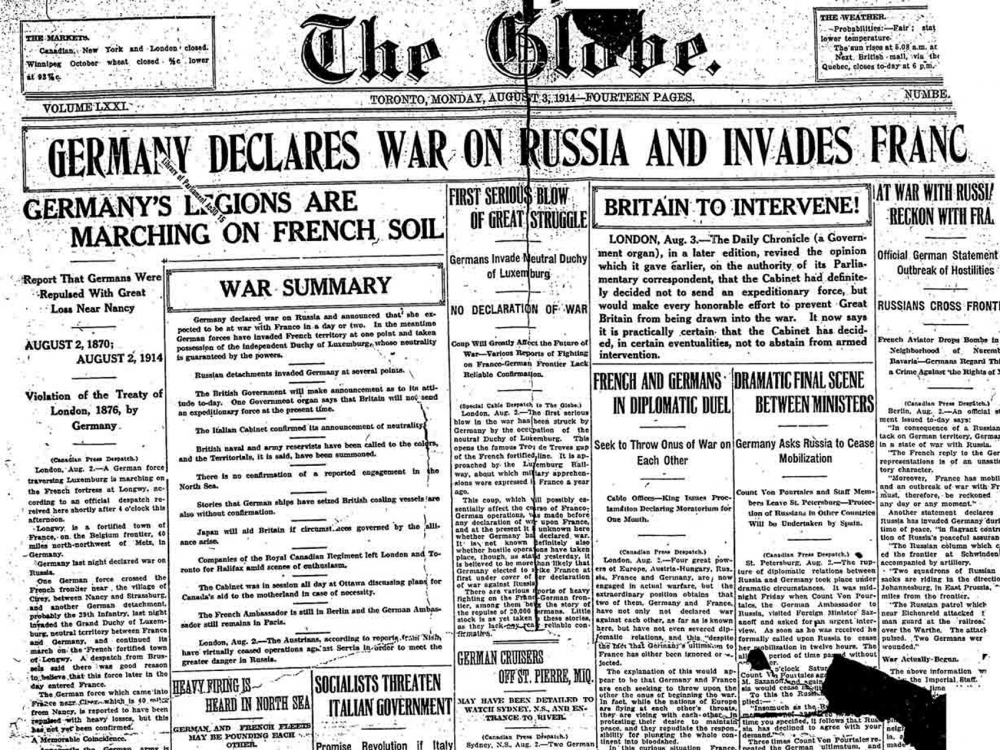
GM_Aug3_1914_Germany-Declares-war-on-Russia-invades-France

“The muffled tongue of Big Ben tolled nine by the clock as the cortege left the palace, but on history’s clock it was sunset, and the sun of the old world was setting in a dying blaze of splendor never to be seen again.” Barbara Tuchman, The Guns of August

It is now late July of 2014 and for the past month I have been reading about the events in Europe of 100 years ago, a time when the leaders of Europe were hurtling into a war which would change the world forever and the effects of which redound to our day. As I read each book I am always amazed at the hubris, vanity, ignorance and incompetence of the monarchs, prime ministers, foreign ministers and diplomats and military leaders. Men who managed to miscalculate their way into a war that was far larger, longer, destructive and earth shaking than most imagined at the time. As Barbara Tuchman wrote “War is the unfolding of miscalculations.”

Yes there were some who knew that a war would be longer, larger and more destructive than most expected, they were either ignored, or in the case of Field Marshal von Molkte of Germany and Joffre of France ignored their own predictions of a long costly war “made any allowance in their plans for the war of attrition which they both foresaw.” Lord Kitchener of Britain, who had no part in his nation’s planning for war and who was recalled to become War Minister on August 4th 1914 was the only military leader to act on his predictions. He predicted to a colleague that the war would last three years, but added that it might last longer, but “three years will do to begin with. A nation like Germany, after having forced the issue, will only give in after it is beaten to the ground. That will take a very long time. No one living knows.”

Of course few people, especially leaders learn from history, including Americans. In November 2002 Donald Rumsfeld predicted that the coming U.S. invasion of Iraq would “Five days or five weeks or five months, but it certainly isn’t going to last any longer than that….It won’t be a World War III.” Of course, he and those who led the United States into war were incredibly wrong, the American involvement lasted 8 years, cost about 4500 U.S. military dead and about 40,000 wounded and when all costs are factored in will have cost the nation trillions of dollars. It also helped bring into existence the group known as ISIL, or the Islamic State of Iraq and the Levant, which now controls vast swaths of Iraq and Syria and whose conquests may drag the United States back in to the Iraq conflagration, maybe even in concert with Iran. It may not be a “world war” but threatens to become global as the influence of ISIL is spreading to other parts of the Middle East, Africa and Asia.

There are also rumblings of war coming from Russia and the Ukraine, a conflict that has now claimed nearly 300 people who had no stake in it, the passengers and crew of Malaysia Air Flight 17, shot down by pro-Russian insurgents with a missile very probably supplied by Russia. Both Russia and Ukraine have begun limited mobilization of their militaries. While one would want to believe that neither Russia or Ukraine, or for that matter Europe or the United States has an interest in war one can never be sure. As Tuchman wrote “One constant among the elements of 1914—as of any era—was the disposition of everyone on all sides not to prepare for the harder alternative, not to act upon what they suspected to be true.”

In the weeks leading to the First World War, some nations were determined on war, others thrust into it by their perceived military interests and still others because they ignored the danger of the situation until it was too late. In all cases their actions and inaction led to disaster.

Peace

Padre Steve+

2 Comments

Filed under History, history, News and current events, world war one

Inshallah Iraq (إن شاء الله) Maybe Someday things will be Better

Whenever I read about Iraq I am reminded of how much of my life has been intertwined with that country and people. As I have said on more than one occasion I left my heart in Al Anbar. Back in 2007 and 2008 things were different there. Sunni’s and Shia were at least in the Iraqi military working with Sunni tribesman cooperated with American forces to destroy or drive out the forces of Al Qaida Iraq.

dinner-w-bg-sabah1

Now the group that formed out of AQI, the Islamic State of Iraq and the Levant ISIL has driven Iraqi government forces from the area. Because of Iraqi Prime Minister Nouri Al Maliki’s determination to exclude and marginalize he Sunnis of Al Anbar who were so important in stabilizing that region after the departure of U.S. Forces that Maliki pushed for those tribes are not resisting ISIL/ISIS or in some cases allying themselves with that group, if only to drive out Maliki, who they, as well as many Shia Iraqis despise.

399202_10151366970802059_725286976_n-2

When I was there I traveled the whole province from Fallujah to the border of Syria and Jordan. With our advisors I was treated with great respect and hospitality by officers of the Iraqi Army, Border forces and civilians of all Iraqi religious sects. General Sabah of the 7th Division who hosted me to dinner and met with me a number of times, General Ali of the Habbinyah base who as we shared Chai tea showed me his well worn Arabic-English Bible which he said he loved because it contained things not in the Koran. He told me that he hoped in 5-10 years that I would be able to come to Iraq as his guest. There was the Iraqi operations officer of 2nd Brigade of 7th Division who told me after dinner that he “wished that the Iraqi Army had Christian priests” because they would take care of the soldiers and families no matter what their religion, and the Army company commander at COP South who told me that Iraqis would gladly defend Iraq against the hated Persians if Iran ever attacked. Then there was the first class of female Iraqi Police recruits, who were putting their lives and their family’s safety in danger by volunteering to serve in Ramadi, I was able to spend time with that group of brave women. Of course there were the common soldiers who when they saw me blessing American HUMMVs with Holy Water before a convoy asked me to do the same for them. Then there were the Bedouin who invited us into their tents and homes and treated us to Chia, coffee, dates and other food.

533506_10151366982462059_34997654_n

1930252_26911927058_5336_n

I did see the Sunni Shia division when a Shia staff officer, the Logistics chief of the 2nd Border Brigade at Al Waleed, and a crony of Maliki was accused of selling coalition fuel to insurgents in Al Anbar. I was with our senior advisor and the new Iraqi brigade commander, a Sunni who had served in the old army who had been sent to rid the brigade of those like the logistics officer fired the man. The meeting was one of the most tense I have ever been in, it was like a meeting with a crime family, where weapons were locked and loaded and fingers on the trigger because even the Iraqi commander did not know who was friend or foe. The disgraced logistics officer on finding out I was a Priest tried to curry my favor during the meeting, quite strange and very scary. I still have nightmares and flashbacks about that meeting.

295_26912057058_2651_n-2

1930252_26912037058_1677_n

You see for me the current conflict is quite personal, I have known too many good and decent Iraqis who in many respects are not that much different than your average American. However they have had to bear the domination of the Persian, the Turk, the British and the Americans. Have a king appointed for them by a foreign power, borders drawn to fit British and French interests, been ruled by the dictator Saddam Hussein who most admit now was better than Maliki because he was an equal opportunity oppressor determined to maintain a unified Iraqi state. They have also endured over thirty years of war or wartime conditions, including a civil war and now a war that has a good chance of destroying any hope of an unified Iraqi state. For them violence, disruption and for many being refugees or exiles has become a way of life.

262_29132382058_5961_n-2

305907_10151366984087059_87121005_n

The Iraqis that I know were some of the most kind and hospitable people that I have ever met in my travels around the world. I grieve for what is happening to them and their once proud country. The towns, cities and bases that I served at have almost all been taken over by ISIL/ISIS and their allies. Fallujah, Ta’quadum, Habbinyah, Ramadi, Hit, Haditha, Al Rutba, Rawah, Al Qaim, Al Waleed, Al Turbial and so many others. Syrian and Iranian warplanes are attacking Iraqi towns and cities, including places I have spent time.

n671902058_1153794_4301

532404_10151366971792059_960792196_n

When I left Iraq in 2008 I had hopes that the country might survive, as did many of the Iraqis that I met. I hoped one day to go back and travel to the places that I served, and maybe had the opportunity to see the gracious people that I love again. Maybe in 15 or 20 years there might, God willing be an opportunity. I hope and pray that those I know who were so good to me are safe. Until then I can only pray and hope that for them things will one day be better.

1930252_26911977058_8055_n

When I think of the Iraq war and its costs I am reminded of the words of Major General Smedley Butler in his book War is a Racket: “What is the cost of war?…this bill renders a horrible accounting. Newly placed gravestones. Mangled bodies. Shattered minds. Broken hearts and homes. Economic instability. Depression and all of its attendant miseries. Back -breaking taxation for generations and generations. For a great many years as a soldier I had a suspicion that war was a racket; not only until I retired to civilian life did I fully realize it….”

481801_10151367001287059_1003164983_n-1.jpg

For the Iraqis and us the cost will be with us for at least a generation. But I do always hope and pray that things will be better.

Inshallah (إن شاء الله)

Padre Steve+

3 Comments

Filed under History, iraq,afghanistan, News and current events

The Results of Ignoring History: The Implosion of Iraq

bettertimes

Better Times: With the Bedouin in December 2007

Inshallah, (إن شاء اللهGod willing… or so say my Iraqi friends.

It is now 2014, over eleven years since the Bush administration launched its ill advised, preemptive and probably war against Saddam Hussein’s Iraq. That war, illegal under any definition of international law which violated most of the components of traditional Just War Theory and condemned by Pope John Paul II was a disaster for the United States and the unfortunate people of Iraq that we are only now beginning to the full negative implications.

For me the past week has been gut-wrenchingly painful as I watched the forces of ISIL/ISIS rampage through Iraq and the demoralized Iraqi military, no longer trusting Prime Minister Maliki throwing down their weapons and running away. I left Iraq over six years years ago. When I left Iraq, I was in Baghdad at the Headquarters of the Iraq Assistance Group, on my way out of country, being awarded a Defense Meritorious Service Medal for my work with our advisors and the Iraqis in Al Anbar. That night was a melancholy night. I was wearing my last serviceable uniform, which I had preserved for the trip home by wearing flight suits and baseball caps with no badges of rank, throughout most of the deployment. Like Lawrence’s donning of the Bedouin robes, my uniform choice, done purely by necessity made me stand out conspicuously among other Americans in country.

I was heading home but didn’t really want to leave, but in the process I left a big part of me in that long suffering country.  I have written much about my experience there and how even today I have a deep regard for the Iraqi people and their hopes for a better future. However, I sense that what Lawrence wrote will be true:

“We had been hopelessly labouring to plough waste lands; to make nationality grow in a place full of the certainty of God… Among the tribes our creed could be only like the desert grass – a beautiful swift seeming of spring; which, after a day’s heat, fell dusty.” 

In 2003 the United States invaded Iraq and made short work of that country’s military. That military, defeated in 1991 and crippled by years of sanctions and bombings was no threat to its neighbors and couldn’t even defend itself against the U.S. and coalition forces.

When we entered the country, many Iraqis of all creeds looked upon the US and coalition forces as liberators, but within a few months the illusion was over. Within weeks of the overthrow of Saddam, the US military personnel and leaders who were working with Iraqi officials, both military and civilian to get the country back on its feet were replaced by the Bush administration.

imperialpast

British Troops enter Baghdad 1919

In their place a new entity, the Coalition Provisional Authority was created and staffed. The first administrator of the entity was retired Army Lieutenant General Jay Garner. He had much experience in Iraq but was sacked quickly by Secretary of Defense Donald Rumsfeld for not conducting an immediate purge of members of the Baathist Party from key positions in the civil service or security forces, or implementing the agenda of the administration, an agenda that only saw Iraq as a stepping stone for future operations against Iran.

After Garner’s dismissal the CPA was led by Ambassador L. Paul Bremer, a man who had no experience in the Arab world, much less in Iraq. Bremer and his staff, most of who had little experience or knowledge of the country created conditions that directly led the the Iraq insurgency, the sacrifice of thousands of American and allied lives and the loss of friendship of the Iraqi people. They also gave a a bloodless strategic victory to Iraq’s traditional enemy and oppressor Iran, which became a dominant regional power without having to worry about their traditional Arab nemesis. It is deeply ironic that because of the terrible policy missteps of the Bush administration that the current crisis is forcing Iran and the United States to consider cooperation with one another to prevent the implosion of Iraq.


T.E. Lawrence wrote of the British incursion into Turkish Mesopotamia in 1915, managed by the British Indian Office:

“By brute force it marched then into Basra. The enemy troops in Irak were nearly all Arabs in the unenviable predicament of having to fight on behalf of their secular oppressors against a people long envisaged as liberators, but who obstinately refused to play the part.”

The actions of the CPA destroyed the plans pragmatists in the Pentagon and State Department to incorporate the existing civil service, police and military forces in the newly free Iraq.  Instead Bremer dissolved the Iraqi military, police and civil service within days of his arrival. Since the military invasion had been accomplished with minimal forces most Iraqi weapon sites, arsenals and bases were looted once their Iraqi guardians were banished and left their posts. The embryonic insurgency was thus provided by Bremer a full arsenal of weapons to use against American forces; many of whom were now mobilized Reservists and National Guardsmen that were neither trained or equipped to fight an insurgency or in urban areas.

It was as if Bremer, the leaders of the Bush administration and their neoconservative allies knew nothing of history. If they did they decided to ignore its lessons, believing that they were smarter than other occupiers. It was an act of unmitigated hubris and arrogance brought about by those who believed that they were above history. Whether it was ignorance of history, or a wanton disregard for it, it and the country we invaded it was immoral, unethical and probably criminal.

vault-von-saddam-statue-fall-itn-640x360-1

The reaction of the Iraqi Arabs to US occupation should have been anticipated. Lawrence wrote in 1920 a letter that could have easily been written in 2004:

“It is not astonishing that their patience has broken down after two years. The Government we have set up is English in fashion, and is conducted in the English language. So it has 450 British executive officers running it, and not a single responsible Mesopotamian. In Turkish days 70 per cent of the executive civil service was local. Our 80,000 troops there are occupied in police duties, not in guarding the frontiers. They are holding down the people.”

The actions of Bremer’s incompetent leadership team led to a tragic insurgency that need not have taken place. The now unnumbered US forces had to fight an insurgency while attempting to re-create an army, security forces and civil service from the wreckage created by Bremer’s mistakes; as well as its own often heavy handed tactics in the months following the invasion.


Nearly 4500 US troops would die and over 30,000 more wounded in the campaign. Hundreds of thousands of Iraqis were killed, wounded or died of disease during the war.  Lawrence wrote about the British administration of Iraq words that could well have been written about Bremer’s Coalition Provisional Authority:

“Meanwhile, our unfortunate troops, Indian and British, under hard conditions of climate and supply, are policing an immense area, paying dearly every day in lives for the willfully wrong policy of the civil administration in Bagdad.”

It took dramatic efforts in blood and treasure to restore the some modicum of security in Iraq, something that was only accomplished when the Sunni tribes of Anbar Province turned against the Al Qaeda backed foreign fighters. The surge under the command of General David Petreus achieved the desired result. It gave the Iraqis a chance to stabilize their government and increase their own security forces, however it can hardly be called a triumph.

Unfortunately many of those that remained in power of the Shia sect refused to share power in meaningful ways with Iraq’s Sunni and Kurds leading to a political crisis. The US military mission ended in December 2011 and since then Iraq security forces and civil authorities, often divided by tribal or sectarian loyalties have struggled to maintain order. The result is that by 2013 that Iraq was again heading toward the abyss of civil war. Most of this has to be laid at the feet of Prime Minister Nouri Al-Maliki who has done everything that he can to break promises made to Sunnis and Kurds, and dishonor the Sunnis who fought to save his government in 2007-2008. Sunni protestors in Anbar and other provinces conducted frequent protests which were met by brute force. Sectarian violence spread, and ISIL/ISIS a move violent and vicious offshoot of Al Qaida gained control of Fallujah and parts of Ramadi. In the north, Mosul and Tikrit have fallen and there are reports that some ISIL/ISIS fighters entered Baghdad this evening. Casualties in Iraq are continuing to mount and a humanitarian crisis is developing as hundreds of thousands of Iraqis flee the violence, feeling threatened by both the fighters and the Maliki government.

iraq-border_2939075c


To the west in Syria a brutal civil war has been going on for three years. Like Iraq it pits Sunni against Shia, as well as Kurd and foreign fighters from a score of nations, some fighting as part of a Free Syria movement, others as part of the Al Qaeda coalition and others beside Syria’s government. Now many of the Iraqi elements of ISIS/ISIL have breached the border with Syria and are attempting to redraw the political map of the Middle East, ravaging the vestiges of the Sykes-Picot agreement.

In 1920 Lawrence wrote of the British intervention and occupation of Iraq:

“The people of England have been led in Mesopotamia into a trap from which it will be hard to escape with dignity and honour. They have been tricked into it by a steady withholding of information. The Bagdad communiqués are belated, insincere, incomplete. Things have been far worse than we have been told, our administration more bloody and inefficient than the public knows. It is a disgrace to our imperial record, and may soon be too inflamed for any ordinary cure. We are to-day not far from a disaster.”

His words have a sadly familiar tone. The US invasion of Iraq did have a different outcome than we imagined, one that is far worse than we bargained for and potentially cataclysmic in its impact.

Sykes-Picot-Map-1024x576


That being said, many if not most Arabs in all of these lands simply desire to live in peace and enjoy some amount of freedom for themselves and future for their children. The Iraqis are on the whole decent and honorable people. One has to remember that the freedom for which many are striving, and dying to attain is for them, not for the United States or any other power.

Lawrence’s words and wisdom concerning the Arabs who rebelled against the Turkish Ottoman Empire are as true today as when he wrote them after the war:

“The Arabs rebelled against the Turks during the war not because the Turk Government was notably bad, but because they wanted independence. They did not risk their lives in battle to change masters, to become British subjects or French citizens, but to win a show of their own.”

That is the case in Iraq and many other Arab countries today. One can only hope that for Iraq, Syria and those countries as that somehow peace will come. I do hope that we will do better in helping them achieve that than we have over the past dozen years of conflict, or than the British or French did almost 100 years ago.

But all of that being said, this situation is going to take at least a generation to settle. There are no easy answers and certainly sending troops in to restore the situation when Maliki and his regime make no attempt to reconcile with their Sunni and Kurdish countrymen, is not the answer. In fact if there is any answer that maintains Iraq as a unified state it has to be brought about by the Iraqis, particularly Maliki, who has shown no inclination to do this since the United States military left in 2011.

It is also very possible that what is happening, as bloody, horrible and painful as it is may be, is what is needed to correct the blunder of Sykes-Picot. Perhaps it should be left to the Arabs to redraw the natural boundaries of their regions, tribes and religions and let the chips fall where they may. In Iraq, the Sunni Sheikhs once the Shi’ite influence is diminished and they have regained some autonomy will drive out and destroy ISIL/ISIS as they did to AQI in 2007-2008.  The ISIL/ISIS fighters will not be welcome once they have achieved their goals.

lawrence12

Lawrence wrote in 1920:

What is required is a tearing up of what we have done, and beginning again on advisory lines. It is no good patching with the present system….We are big enough to admit a fault, and turn a new page: and we ought to do it with a hoot of joy, because it will save us a million pounds a week.

We should listen to him.

As my Iraqi friends say Inshallah, (إن شاء الله) God willing.

Peace

Padre Steve+


1 Comment

Filed under Foreign Policy, History, iraq,afghanistan, middle east, News and current events