Tag Archives: pakistan

A Quiet Remembrance: The Fall of Dien Bien Phu May 7th 1954

French Prisoners

On May 7th in Hanoi a small remembrance was held to mark the fall of Dien Bien Phu and honor the victor, 101 year old General Vo Nguyen Giap at his home.  It was one of the few remembrances held anywhere marking that battle which was one of the watersheds of the 20th Century. A half a world away in Houston Texas a small group of French veterans, expatriates and historians laid a wreath at the Vietnam War Memorial.  In Paris an ever shrinking number of French survivors gather each year on May 7th at 1815 hours for a religious service at the Church of Saint Louis des Invalides to remember the dead and missing of the French Expeditionary Corps lost in Indochina.  This battle is nearly forgotten by time even though it and the war that it symbolized is probably the one that we need to learn from before Afghanistan becomes our Indochina.
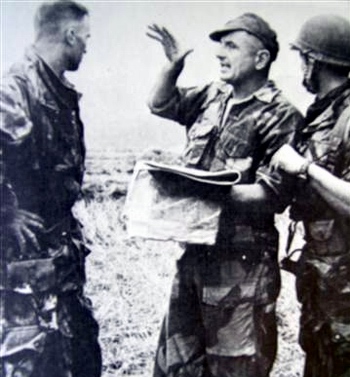
French Major Marcel Bigeard at Dien Bien Phu. A revered leader he died in 2010

On May 8th 1954 the last of the French garrison of Dien Bien Phu surrendered to the Viet Minh following the surrender of the main garrison the previous day.  It was the end of the ill-fated Operation Castor in which the French had planned to lure the Viet Minh Regulars into open battle and use superior firepower to decimate them.  The strategy which had been used once on a smaller scale the previous year at Na Son would prove to be the Göttdammerung of French colonial rule in Indochina.
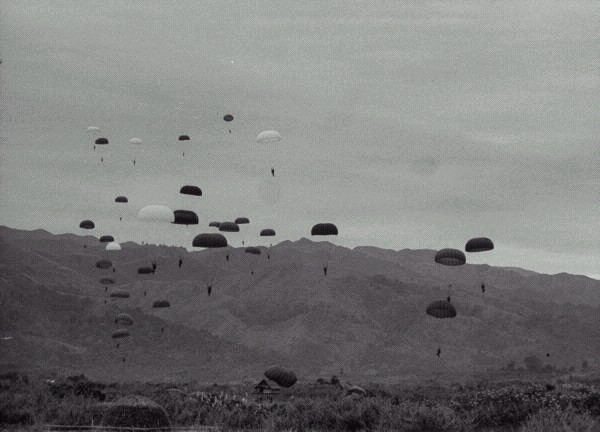
French Paras landing at Dien Bien Phu

The French had thought they had come up with a template based on Na Son in how to engage and destroy the Viet Minh which had in the years between 1945 and 1954 had turned an insurgent force into a strong Army capable of taking on large French forces.  As a result the French decided that they would attempt to draw Giap’s Army into open combat where their superiority in heavy weaponry and in the air could be used to destroy the Viet Minh. The plan was called the “Air-land base.”  It involved having strong forces in a defensible position deep behind enemy lines supplied by air.  At Na Son the plan worked as the French were on high ground and had superiority in artillery and air forces.  They were also were blessed by General Giap using human wave assaults which made the Viet Minh troops fodder for the French defenders.  Even still Na Son was a near run thing for the French and had almost no effect on Viet Minh operations elsewhere in Indochina while tying down a almost a full division of troops and a large portion of French air power. They inflicted heavy losses on the Viet Minh but did not destroy them.

The French command assumed that they had found a way to defeat the Viet Minh.  They decided to repeat the strategy used at Na-Son at the remote the remote town of Dien Bien Phu near the Laotian border.  The French desired to use Dien Bien Phu as a base from which they could conduct offensive operations against the Viet Minh and to draw Giap’s forces into a conventional fight that they thought they could win.  Unfortunately the French chose badly. Dien Bien Phu lay in a marshy valley surrounded by mountains which were covered in dense nearly impassible jungle.  It was a poor location to conduct offensive operations from and a worse place to defend.
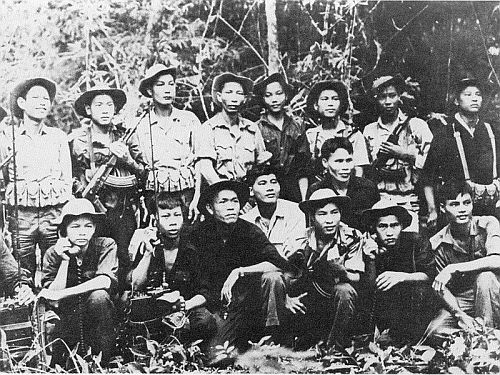
Viet Minh Main Force Regulars

The French elected to go light on artillery and due to the terrain it had to be deployed in nearly open conditions with neither cover not concealment.  Unlike Na Son the Dien Bien Phu air head was at the far end of the range of French aircraft, especially relatively weak tactical air assets.  French logistics needs were far greater than the French Air Force and American contractors could supply.  The French strong points in the valley were exposed and not mutually supporting and as such Giap and the Viet Minh were able to close with and attack each strong point in time overwhelming each after valiant French resistance.  The terrain was so poor that French units were incapable of any meaningful offensive operations against the Viet Minh.  As such they could only dig in and wait for battle.  Even so many positions were not adequately fortified and the artillery was exposed. The French garrison was a good force.  It was comprised of airborne units, the Foreign Legion, Colonial Paratroops (Marines), North Africans from Tunisia and Algeria as well as Vietnamese troops.  Many of the officers including Lieutenant Colonel Langlais and Major Bigeard commander of the 6th Colonial Parachute Battalion were among the best leaders in the French Army. Others who served in Indo-China including David Galula and Jacques Trinquier would write books which would help Americans in Iraq.  Unfortunately the French High Command badly underestimated the capabilities and wherewithal of the Giap and his divisions.

Giap rapidly concentrated his forces and built excellent logistics support.  He placed his artillery in well concealed and fortified positions which could use direct fire on French positions. Giap also had more and heavier artillery than the French believed him to have.  Additionally he brought in a large number of anti-aircraft batteries whose positions enabled the Viet Minh to take a heavy toll among French Aircraft.  Giap also did not throw his men away in human assaults.  Instead he used his Sappers (combat engineers) to build protective trenches leading up to the very wire of French defensive positions.  In time these trenches came to resemble a spider web.

Without belaboring this post the French fought hard as did the Viet Minh.  Many French positions were overwhelmed by accurate artillery and well planned attacks.  The French hoped for U.S. air intervention, even the possibility of using nuclear weapons against the Viet Minh.  They were turned down.  Relief forces were unable to get through.  The garrison died, despite the bravery of the Paratroops and Legionaries.  The French garrison was let down by their high command and their government and lost the battle due to inadequate logistics and air power.  The survivors endured a forced march of nearly 400 miles by foot to POW camps in which many died.  Many were subjected to torture and group discipline.  Few French caved to the Viet Minh interrogations but some would come away with the belief that one had to use such means to fight the revolutionaries.  French and their Algerian comrades would apply these lessons against each other within a year of their release.  French soldiers and officers were shipped from Indo-China to Algeria to wage another protracted counterinsurgency.  Militarily they had all but won the war when their government pulled out. French troops, especially the Legionaries and Paratroops felt betrayed by their nation, much like many Vietnam Vets felt about the United States government after that war.  I find today that both our government and people are caring for our returning troops in a far better manner than the past.  Even still the veterans of Iraq and Afghanistan share almost a spiritual link to our American and French brothers in arms who fought at Dien Bien Phu, the Street Without Joy and places like Khe Sanh, Hue City, the Ia Drang and the Mekong.

The lessons of the French at Dien Bien Phu and in Indo-China were not learned by the United States as it entered Vietnam.  In fact the US Army made a conscious effort to ignore the advice of those that they called “losers.”  It was an arrogance for which we paid dearly in that war.

Despite our efforts in Afghanistan and the valiant sacrifices of our Marines and Soldiers we seem to have difficulty learning the lessons of the Vietnam Wars.  Old habits die hard, counterinsurgency done right isn’t sexy and there are no easy formulas to make it work.  What works in one country may not work in another as we are found when we tried to emulate our counterinsurgency success in Iraq in Afghanistan.  Despite a lot of institutional resistance from traditionally minded Army officers we were able to apply the lessons of counterinsurgency in Iraq and work with Iraqis to make that country more secure than it was before we took this type of warfare seriously.  Despite its continued problems Iraq is doing better and will likely do well in the long run as it recovers from the damage caused by the war.  They have known civilization since antiquity and are a proud people.  Someday I hope to take up the invitation of Iraqi friends to go back as they say as a tourist.

I am concerned about Afghanistan, despite the killing of Osama Bin Laden in neighboring Pakistan because it seems that the Taliban spring offensive is off to a good start.  U.S. and NATO Forces in Khandehar and Helmand Province have been placed on a higher alert and confined to their bases following a major assault on the Afghan provincial government installations in Khandehar.  The Taliban and other Afghan insurgents are only concerned with Afghanistan and even though Bin Laden is dead the deepening rift between the United States and Pakistan will likely ensure that they will enjoy military, personnel, financial support from many in Pakistan including the Intelligence agency in the remote and ungovernable northwest territories of that country which are a safe haven much like Communist China was for the Viet Minh.

Will there be a situation where an isolated NATO garrison is overrun by Taliban forces as French forces were in Indochina?  An isolated outpost was nearly overrun at Wanat in July of 2008 and at two isolated outposts near the Pakistani border in October 2009.  One would hope not, but we cannot underestimate the Afghans and their ability to adapt to NATO tactics and weapons.   Their predecessors successfully drove out the Soviets, the British, the Persians and the Greeks.  Dien Bien Phu is a warning from history not to leave troops in places where their exposure leaves them vulnerable.

But even more Dien Bien Phu serves to remind us that in such wars it is not always the highly trained and organized Western forces that win.  These are local wars and once the momentum shifts to the insurgent they are difficult to turn around.  In a sense the French were trying to do what we are trying to do now in taking the fight to the enemy.  It turned out badly for them and it could turn out badly for us.  I hope that we don’t forget.

Peace

Padre Steve+
2 Comments

Filed under History, iraq,afghanistan, Military, vietnam

Bin Laden Dead: Navy SEALS Kill Terrorist in Pakistan

DEAD!

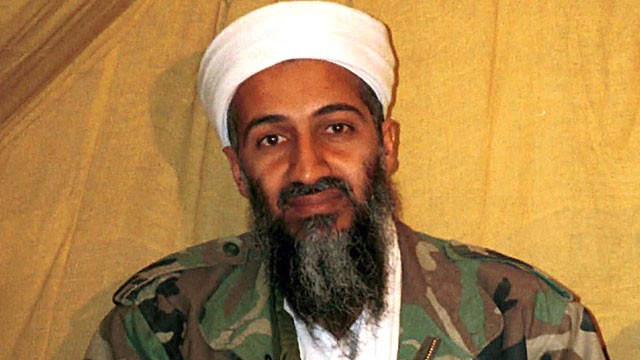
His name is associated with brutal attacks on attacks on Americans and others for over a decade the Embassy attacks in Kenya and Tanzania, the USS Cole, the Khobar Towers, Madrid Spain, Mumbai and most infamously the dastardly attack on the World Trade Center and the Pentagon on 9-11-2001.  He has eluded death and capture for years but was killed in a raid by U.S. Navy Seals in a fortified mansion in the city Abbottabad near the capital of Islamabad Pakistan today.  His death has been confirmed by DNA matches and his body is in American custody. The cold and hollow eyes staring out from beneath a white turban wearing a U.S. issue BDU jacket have haunted us for years. His hateful and defiant messages tormented us in the years following 9-11 as he released audio and video tapes from secluded hideouts in Afghanistan and Pakistan.

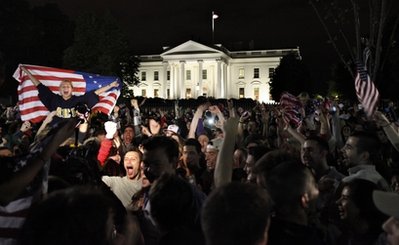
In a night that many believed would never come, Americans heard the news of the death of this evil terrorist. First a few but now thousands of Americans gathered outside the White House celebrating the demise of this singular face of evil. Spontaneous cries of “USA! USA! USA!” the singing of the Star Spangled Banner, and the song “hey hey hey goodbye” erupted as people gathered as President Obama made the announcement even as others gathered at Ground Zero singing “god Bless America.”  Over the past 10 years we have had precious little to celebrate in relation to the war on terror. Most of the time when announcing Bin Laden is the most hated enemy of the United States since Adolf Hitler. He embodied the evil that we went to war with, an evil that made the mass murder of civilians a staple of life and it did not matter who the victims were he sought to bring terror to all that he considered the enemy of Islam including many Moslems.  But he hated the United States more than anything and his attacks on the United States shattered our sense of invulnerability even more than the attack on Pearl Harbor.  He damaged our national psyche in a manner that no individual has in history.

It took a long time but he is dead but the fight is not over as U.S. Military installations have had their force protection level raised as it is expected that elements of the Al Qaeda will try to strike back.  We pray that they will be defeated if they try to make any attacks on Americans anywhere.  The effect on Al Qaeda will be chilling. Its operatives pledge themselves to Bin Laden personally in a manner similar to the SS Legions of Adolf Hitler. Presently there are no leaders of Bin Laden’s stature in that network and with any luck his forces will become demoralized and leave that organization.

President Obama announced Bin Laden’s death shortly before midnight and he called us back to the unity that we had for a moment following the 9-11 attacks. We have been bitterly divided for years and though we experienced some success but much frustration in our wars in Iraq and Afghanistan. Thousands of American and Allied military personnel have died in wars that came as a result of those attacks and we in the military have almost all suffered the loss of our friends and comrades.  Our forces are still engaged against numerous enemies and in Afghanistan the Taliban are launching their long awaited spring offensive and the war continues.  Hopefully the death of Bin Laden will lead to other successes that allow us to bring the troops home as victors in the War on Terror.

President Obama made a couple of comments in his speech that I quote here as they are both important to all of those that have experienced personal loss and sacrifice in this effort:

After nearly 10 years of service, struggle, and sacrifice, we know well the costs of war. These efforts weigh on me every time I, as Commander-in-Chief, have to sign a letter to a family that has lost a loved one, or look into the eyes of a service member who’s been gravely wounded.

“So Americans understand the costs of war. Yet as a country, we will never tolerate our security being threatened, nor stand idly by when our people have been killed. We will be relentless in defense of our citizens and our friends and allies. We will be true to the values that make us who we are. And on nights like this one, we can say to those families who have lost loved ones to al Qaeda’s terror: Justice has been done.”

We give thanks for the men who carried out this operation, for they exemplify the professionalism, patriotism, and unparalleled courage of those who serve our country. And they are part of a generation that has borne the heaviest share of the burden since that September day.

Finally, let me say to the families who lost loved ones on 9/11 that we have never forgotten your loss, nor wavered in our commitment to see that we do whatever it takes to prevent another attack on our shores.

And tonight, let us think back to the sense of unity that prevailed on 9/11. I know that it has, at times, frayed. Yet today’s achievement is a testament to the greatness of our country and the determination of the American people.

The cause of securing our country is not complete. But tonight, we are once again reminded that America can do whatever we set our mind to. That is the story of our history, whether it’s the pursuit of prosperity for our people, or the struggle for equality for all our citizens; our commitment to stand up for our values abroad, and our sacrifices to make the world a safer place.

Let us remember that we can do these things not just because of wealth or power, but because of who we are: one nation, under God, indivisible, with liberty and justice for all.

Thank you. May God bless you. And may God bless the United States of America.”

The rest of the announcement text can be found here:

http://www.middletownjournal.com/news/full-text-of-presidents-statement-about-bin-ladens-death-1150233.html?showComments=true&page=2&more_comments=false

President Obama and the National Security team need to be given full credit for the success of this operation which was carried out with tremendous skill and courage by the SEALS and other Special Operations troops involved. It was a risky operation and the President deserves credit for guts in the execution of the mission. Had it failed it would have been his fault and no-one would have let him off the hook.

I hope that this victory will bring us together and embolden us to take on all of the problems that beset our nation.

Peace

Padre Steve+

3 Comments

Filed under Foreign Policy, History, iraq,afghanistan, middle east, Military, national security, Political Commentary

Adjusting Strategy to Reality

Taliban Fighters

“The core goal of the U.S. strategy in the Afghanistan and Pakistan theater remains to disrupt, dismantle, and eventually defeat al-Qa’ida in the region and to prevent its return to either country…” US Strategy in Afghanistan for 2011

“The aim of war should be the defeat of the enemy.  But what constitutes defeat?  The conquest of his whole territory is not always necessary, and total occupation of his territory may not be enough.” Carl Von Clausewitz

Strategic goals cannot remain fixed on geographic objectives which have lost their strategic importance because it is no longer the enemy’s center of gravity. On September 11th 2011 the Taliban ruled Afghanistan which harbored Osama Bin Laden’s Al Qaeda terrorist organization became the central front in the new “War on Terrorism.”  For about a year Afghanistan remained the central focus of United States efforts against Al Qaeda until President Bush and his administration changed the primary effort to the invasion of Iraq and the overthrow of the Saddam Hussein regime.

The effect of switching the American strategic focus from Afghanistan where we were making headway despite the limited resources provided to Iraq was a mistake of epic proportions that only became evident when Iraq did not go the way that the Bush administration led by Vice President Dick Cheney. Secretary of Defense Donald Rumsfeld and Paul Bremer the head of the Coalition Provision Authority planned.  Instead of a quick withdraw a series of mistakes and miscalculations turned the majority of the Iraqi people who had welcomed US Forces with open arms against us and an insurgency which claimed over 4000 American military personnel deaths and over 30,000 wounded became our primary focus.  We are still trying to figure out how to end our involvement in that country hoping that Iraq will not sink into another civil war.

Contrary to expectations Iraq became a front which consumed U.S. Forces and limited strategic flexibility in other regions of the world including Afghanistan.  In that country the indigenous Taliban which had been driven from power in 2001 began a gradual and deliberate return to political and military viability which was finally noticed by the United States in 2008 and 2009.  The Taliban were supported by the Pakistani Taliban, elements of the Bin Laden organization and in many cases duplicitous elements within the Pakistani military and intelligence services which were using the situation to support their own strategic goals of gaining influence in Afghanistan while strengthening their position against their perceived mortal enemy India.  Throughout the war the Pakistanis acted in their own interest while placating American demands to do more against the Taliban and Al Qaeda operating in Pakistan proper.

The Obama administration attempted to regain the initiative with a “surge” of 30,000 additional troops which raised the overall commitment of the United States to a force of over 100,000 troops assisted by NATO Allies and the corrupt, ill-trained and often Taliban Afghan Army and Police.  The surge was controversial and marked with controversy was the US Commander General Stanley McCrystal was relieved of command after an article in the Rolling Stone magazine which made it appear that he held the Obama administration in contempt. Since McCrystal recently returned to the Administration in a civilian capacity one wonders if the administration discovered that the article was meant to discredit McCrystal. McCrystal was relieved by his superior CENTCOM Commander General David Petreaus who had helped devise the strategy which in conjunction with the Anbar Awakening turned the tide against Al Qaeda and indigenous Iraqi insurgents in 2007-2008.  It achieved some success but even the United States recognizes that whatever success has been wrought is fragile and could easily be erased.

Unfortunately while the United States and its Allies continue to reinforce the campaign in Afghanistan their efforts are often undercut by the corrupt and duplicitous regime of Mohammed Karzai as well as our supposed Pakistani allies.  The Karzai regime hunkered down in Kabul has little influence outside the Presidential Palace except in its dealing in the Opium trade which helps finance the Taliban. The Pakistanis have over the 10 year duration of the war failed to maintain the security on their side of the border and often have clandestinely supported the Taliban and according to some may have given sanctuary to Al Qaeda.  The most recent setback came today when the Pakistani Chief of the General Staff General Ashfaq Parvez Kayani and Chief of Intelligence Ahmed Shuja Pasha issued a demand for the US to stop Predator Drone strikes in the border regions, cut Special Forces and CIA Staff and give the Pakistani Intelligence Service, the ISI visibility on CIA operations.  This has been long in the works but came to a head with the arrest of a CIA contractor under the suspicion of murdering two Pakistanis.  The incident created quite a rift in US and Pakistani relations in part brought about by internal Pakistani politics.  Of course the ISI has long been a source of aid to the Taliban so the United States has good reason not to trust the ISI with information that could endanger American lives.

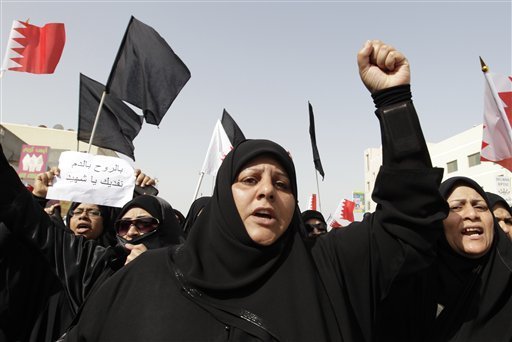
Protests in Bahrain: The Arabian Peninsula as the new Center of Gravity

The fact is without full Pakistani cooperation and substantial Afghani political reform to end corruption and provide real security to Afghani people there is no way to set conditions for a US withdraw that would leave Afghanistan a less dangerous place for its own people and for US and Western security interests. After all no one wants another 9-11 attack.  The US plans to begin withdrawing forces this year but the mission has been extended to at least 2014 at a cost of 119.4 billion dollars per year at the estimated 2011 rate and has increased exponentially since the US involvement began in 2001. The cost of the Afghanistan war in human, material and economic terms has imperiled other strategic priorities and limits the flexibility of the United States in other more vital regions.

Afghanistan is now an expensive sideshow in a larger war where the strategic center of gravity has shifted decisively to the Arabian Peninsula, North Africa and the Eastern Mediterranean where Al Qaeda seeks to use democratic revolts against autocratic despots to further its own ends. The key countries are Yemen, Saudi Arabia, Bahrain and Egypt with Lebanon, Syria, Jordan and the Israeli-Palestinian conflict boiling over.  While all of these crises grow on what seem to be a daily basis the United States and its Allies are mired in Afghanistan reinforcing failure.  Our troops on the ground have not lost a battle but like our brothers in Vietnam could “lose” the war.

This is the point where political and military leaders have to count the cost of the operation and weigh them against our actual strategic interests. The fact is if we withdrew the bulk of our ground combat forces and shifted to a lower footprint special operations and CIA campaign with a goal of ensuring that Al Qaeda cannot operate in Afghanistan with impunity as they did before 9-11 that we would likely be no worse off than we are now and have a greater amount of strategic flexibility to deal with other crises, political, military and humanitarian around the world.

The real crux of the issue is that Afghanistan is much like Stalingrad to the Germans in 1942. It has become a psychological more than a military campaign. We have invested so much in it that we do not believe that we can withdraw even though a scaled back presence would do much to improve our overall strategic situation.  Hitler denuded more important areas to attempt to capture Stalingrad and lost everything. Yes Al Qaeda used Afghanistan as its base to attack us in 2001 but they have moved on and Al Qaeda in Yemen and the Arabian Peninsula is a far greater strategic danger simply because of the oil supplies and strategic waterways in the area.

We simply need to look at all components of national strategy and decide where to concentrate.  Sometimes a strategic withdraw is necessary and actually vital to recover the initiative and set the stage for long term success. In Afghanistan this is not an admission of defeat but rather an acknowledgement that the central focus of the war and our strategic interests are elsewhere.  Our enemies would love to have us continue the campaign in Afghanistan in its current form, they know that our commitment drains our military, imperils our overall strategy and bleeds us dry economically all the while providing propaganda grist for them in their war against us.

However despite the cost the political situation in the United States keeps President Obama invested in Afghanistan. If he withdraws his opponents will say that he lost the war. Unfortunately the war in Afghanistan was ceded to the Taliban in 2003 when we decided that Iraq was more important. Now we reap the terrible consequences of that decision.  Now we have to decide how to make something positive out of this unenviable strategic position. But as Napoleon Bonaparte said “In order to govern, the question is not to follow out a more or less valid theory but to build with whatever materials are at hand. The inevitable must be accepted and turned to advantage.”

Peace

Padre Steve+


2 Comments

Filed under Loose thoughts and musings

Padre Steve’s Primer on the Muddle East

“When you are up to your arse in alligators it is hard to remember that your mission is to drain the swamp.” Old British Colonial Saying

During the dark days of World War Two when Field Marshal Erwin Rommel was making fools of a series of British commanders in North Africa people including senior British military and government leaders sometimes referred to the theater of operations as “the Muddle East.” Some things never seem to change. The Muddle East today is quite frankly speaking in a real muddled state if there ever was one with world leaders and regional leaders muddling about as if they were the New York Mets.

A large part of the muddle goes back to the fall of the Ottoman Empire at the close of the First World War when the victorious Allied Powers redrew the map of the Middle East and made alliances with various local tribal sheiks who many times were crowned king over other tribes who didn’t necessarily want them as king. This along with heavy handed European military actions such as the British using poison gas dropped from aircraft in Iraq and a real lack of effort to better the lives of the newly “liberated” peoples of the region was just the start. Add to the cesspool a bunch of oil presided over by major oil companies, the anti-colonial movements that flourished in the years after World War Two when the French, British and Italians had to divest themselves of their Middle Eastern holdings. The French had to fight a real war in Algeria but finally withdrew leaving Algeria’s new rulers to goof up the country and oppress their people for decades to come.  In the coming years many of these newly independent nations found that life still sucked so in a number of countries military officers overthrew the despised monarchs promising reforms but oppressing their people while blaming all their problems on the Israelis.  They got their asses kicked by the Israelis in a series of wars which did a number of things that made the Middle East Muddle even worse.

First it ensured that Palestinian Arabs ended up under Israeli rule and were used with great aplomb by the Middle Eastern despots to prop up support for their regimes while doing nothing to help the Palestinians other than to put them in camps in Lebanon.  Even when the Egyptians made a peace deal with Israel most of the Arab World ostracized them.  Then in 1979 the Shah of Iran was sent packing by a bunch of Mullahs and in 1981 Saddam Hussein’s Iraq attacked Iran in one of the bloodier wars of the late 20th Century which finally ended in 1988. Of course the United States was pissed at the Mullahs so Saddam became our favorite Arab despot for a while.  Add to the mix the Soviet Union and the United States arming their favorite Arab dictators who were given carte blanche to continue oppressing their people so long as it didn’t interfere with their support of either party or the oil supply. Finally the Soviets went Tango Uniform in 1989 not long after being forced out of Afghanistan by the U.S. supplied, Pakistani supported and Saudi Arabian fundamentalist financed Mujahedeen.

With the Soviets Tango Uniform and the Warsaw Pact nations trying to get into NATO the United States was now the uncontested Numero Uno country in the world Saddam presumed upon his late supporters and invaded Kuwait, albeit after thinking that the U.S. Ambassador to Iraq said that we wouldn’t mind. Well he was wrong we did mind and got a lot of countries from NATO and including a bunch of Arab countries like Egypt, Syria and Saudi Arabia to get on board on a mission to get Saddam’s troops out of Kuwait. It was a kick ass mission and since the United Nations didn’t authorize removing Saddam and because President George H.W. Bush was smart enough to not to drive on Baghdad to kick him out preferring the depot we knew to a quagmire despite Saddam’s crimes against his own people who thought we would help them.  So we stationed ground and air forces around the Gulf to keep Saddam and Iran in check and even put them in Saudi Arabia which a large number of radicals such as Osama Bin Laden equated to letting the Devil play in Allah’s Holy Sandbox.  So Osama went and set up a base with the Medieval bunch of Pashtun known as the Taliban in Afghanistan stirred up a bunch of shit killing Americans and blowing up stuff including the World Trade Center in 1993, the Khobar Towers barracks complex in 1996, the USS Cole in 2000 and then 2001 another attack on the World Trade Center which took down the towers with hijacked aircraft and also struck the Pentagon triggered an American response against Bin Laden and his Taliban hosts.  The United States then invaded in Iraq in 2003 and succeeded in taking out Saddam but also succeeded in alienating a good many Iraqis who greeted us with open arms because we goofed up the occupation and pissed a lot of them off by dissolving the Army, Police and Civil Service and letting thugs and opportunists take over. Unfortunately since we didn’t go in with enough troops to secure all the Iraqi bases, their weapons depots and actually take control of surrendering Iraqi units these newly unemployed and dishonored people launched an insurgency bolstered by Al Qaeda and other foreign fighters even as Sunni and Shi’a Moslems began to settle scores with each other. Insurgency and civil war, two great tastes that go great together, but what the heck right?

Of course it took years to get control of the situation on the ground and thankfully the United States forces in Iraq were helped when the Sunni Moslems in Al Anbar Province realized that these foreign fighters were a worse enemy than the United States and switched sides. This turned the tables in Iraq and the insurgency was brought under control and an elected government managed to start to get their stuff together and allow us to begin withdrawing from Iraq. Of course the focus on Iraq gave the Taliban a chance to regroup as the Afghani Government proved itself corrupt, incompetent and not to give a shit about the Afghani people. So the Taliban who had been hated made a comeback and made our lives much harder so that now almost 10 years into the fight we are having a really hard time.  Well enough about us there was plenty more going on in the Muddle East besides the Iraq and Afghanistan wars.

Let’s see….there was the law of unintended consequences in that by taking Saddam Down and weakening Iraq we took away Iran’s natural enemy and the key to the balance of power in the region. Iran was strengthened and began a nuclear program that everyone with half a brain knows in intended for military use and expanded its influence in Lebanon where the Iranian backed Hezbollah took power last year.  Now Hezbollah which actually has an experienced military force and probably owns 40,000 or so rockets and missiles a good number of which can hit deep in Israel seems to be ready for war especially because they fought the Israelis to a stalemate in 2008, the first time an Arab military ever did that.

Then was the effect that the wars in those countries made things harder for us in many other friendly Arab nations.  Of course there is the problem of a nuclear armed Pakistan which is about as stable as a Japanese nuclear reactor after getting hit by a tsunami and plays both sides of the street in the war on terror.  The Palestinians and Israelis continued their love affair and since Fatah which ran Palestinian Authority was so corrupt and gooned up a more militant group, Hamas took power in the Gaza strip. Hamas is a pretty bloodthirsty lot too but not the same level of threat as Hezbollah to the Israelis.  Of course the Israelis have done little to help the situation by their often heavy handed treatment of Palestinians and Israeli Arabs.

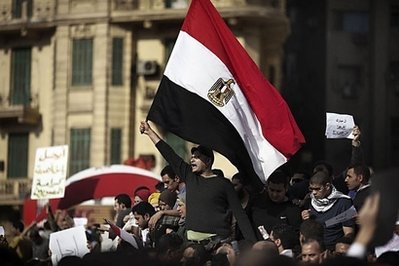
The witches’ cauldron of the Muddle East is getting even more muddled on a daily basis as young Arabs throughout the Muddle East are rising up against their despotic rulers and it doesn’t seem that any are safe, those allied with the United States and the West as well as those that have been a thorn in the side of the United States and the West. It just seems that despots and tyrants are no longer in vogue. The uprisings began in Iran after a disputed election where reformers were cheated of power and the revolt crushed by the Revolutionary Guard and other thugs of the Iranian regime. But then in December 2010 the people of Tunisia rose up and overthrew their President for Life Ben Ali in a peaceful uprising followed shortly after by the Egyptians who tossed out long term President and U.S. ally Hosni Mubarak.

This brought about spontaneous uprisings all over the Middle East with Libya and the long time pain in the ass Muammar Gaddafi being the current center of the action. However Yemen and Bahrain both are in trouble, Algeria, Jordan and Syria have or are experiencing demonstrations which look to be revolts in the making and even Saudi Arabia is trying to head off a potential popular uprising.

Yes my friends this is a mess and almost everybody that is anybody in the military and economic power houses of the world doesn’t have their handprints all over at least some part of this mess. All of these own some of the blame for what is going on, both the rulers of the nations in the region as well as world powers who all try to influence the nations and peoples for their own diplomatic, intelligence, military or economic gain. Almost no one is unsoiled by their involvement in the Muddle East over the past 90 years or so and so in a way all of world powers, as well as the despots who ran these countries are to blame.

The region is more volatile than at any time in recent history and events there could easily ignite a regional war with worldwide implications.  That is why the region has been called the Muddle East for decades.  We all hope and pray for the best and that somehow all of this will bring about a peaceful and democratic “Arab Spring” but there are better than even odds that things get way worse before they get better. There are just too many wild cards in this deck and the swamp is full of hungry alligators.

May God help us all and bring about peaceful change, or as my Iraqi friends simply say “Inshallah, God willing.”

Peace

Padre Steve+

4 Comments

Filed under Foreign Policy, History, middle east, national security

The Last Full Measure: The Long Wars with more to Come

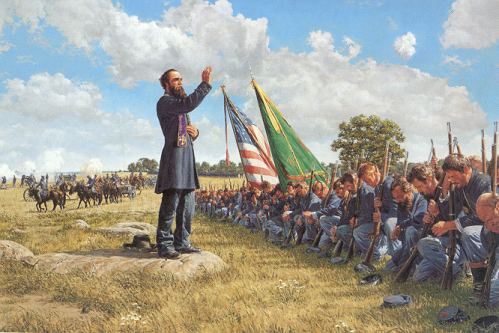
Fr Corby gives absolution to the Irish Brigade at Gettysburg as they stood in the breach

I have been watching the events in Egypt as well as other parts of the world with concern. We live in very dangerous times.  I do not want to sound like an alarmist but things are looking like we are heading into some very perilous waters.  For me this is personal because I have friends serving in harm’s way, I serve those wounded in body soul and spirit from their time in combat and I know in my heart that we will but blessed beyond compare if nothing else blows up on us.  But I am not optimistic.

The United States and its Allies have been fighting a war against Moslem extremists and terrorists on multiple fronts.  Some of these have been of necessity because they were where Al Qaeda and its allies were based such as Afghanistan and the Horn of Africa as well as a number of places in the shadows around the world. In 2003 President Bush elected to invade Iraq and another from was opened which drew the bulk of our combat forces into a protracted counter-insurgency campaign which we seem finally have been able to extricate ourselves from.  After years of neglect President Obama ordered a surge of troops into Afghanistan where the situation had deteriorated.  The fight is still raging there with the Taliban and their Al Qaeda allies receiving support from various entities in Pakistan supportive of their cause probably including parts of the Pakistani Intelligence services.

In these wars the all volunteer U.S. Military has performed many remarkable feats but suffered over 5000 deaths and more than 35,000 wounded not counting those with the unseen wounds of the soul and spirit.  Parts of it including the elite Special Operations Forces according to their Commander are stretched and frayed.  The operations tempo of deployment, redeployment, training and deployment is continuing to take a toll on active and reserve forces.

If this was all that we had to be concerned about it would be enough.  Unfortunately it seems as if the Arab world is about to experience a revolution. While we normally cheer the triumph of people over tyrants it is unknown how this will develop. Conceivably it could be a good thing should moderate forces take control of the situation in Egypt should Hosni Mubarak step down.  Unfortunately history shows that the control of revolutions seldom remain under the influence of moderates as extremists are far better organizers and much more likely to use violence to gain control through terror, especially in cultures where there is little experience of freedom or or history of non-despotic rule.  Egypt lies at the heart of the Arab World and what happens there will likely influence events in other Arab nations.

Meanwhile Iran, Syria and their Hezbollah confederates work to destabilize the region and Iran seeks to build weapons capable of carrying WMD which could be used against US Forces, our Allies in the Middle East and Europe in defiance of international organizations.  In light of all of this the outgoing Chief of Staff of the Israeli Defense Forces has told his country that it needs to prepare for “all out war.”

I could go on and talk about all the other simmering cauldrons but the point is that no matter how much we would like not to be involved when the cauldrons boil over we will. It is a very dangerous time.

Our forces, Army, Marines, Navy and Air Force which have fought gallantly for 10 years will be sent into the breach.  The place and time are not yet determined but it will happen.  And unlike Iraq and Afghanistan which are counterinsurgencies this will be a fight like we haven’t seen in many years and it may even come to our shores in the form of terrorism.

While all of us that volunteer to serve have our own motivations ranging from idealism to simply needing a job we all have volunteered. We know that we are at war and it is not going to end anytime soon.  For me the call is to be with my Sailors, Marines and Soldiers wherever I am sent, which for the moment is caring for those injured in mind body and spirit at a Naval Hospital on a Marine major Marine base but I know that I will be involved again somewhere and I am alright with that because this is a sacred calling.  That call for me is call as a Priest and Chaplain to serve our Sailors, Marines, Soldiers and Airmen wherever I am sent. Many others have this as well as the call to the profession of arms and share in the brotherhood of war.  We are a brotherhood knit together by war as Shakespeare said “We few, we happy few, we band of brothers.” This band of brothers will be called into the breach the only question is where and when. May our hearts and spirits be up to the task as just as Henry V prayed:

O God of battles! Steel my soldiers’ hearts.

Possess them not with fear. Take from them now

The sense of reckoning, if the opposed numbers

Pluck their hearts from them. Not today, O Lord,

O, not today, think not upon the fault…

Peace

Padre Steve+

4 Comments

Filed under History, iraq,afghanistan, Military

9-11-2001: A Date that Will Live in Infamy 9 Years Later

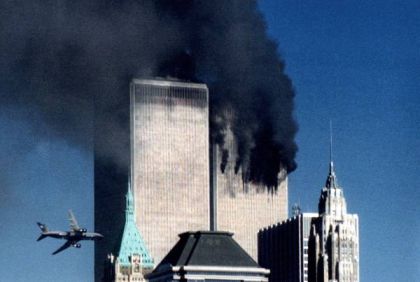
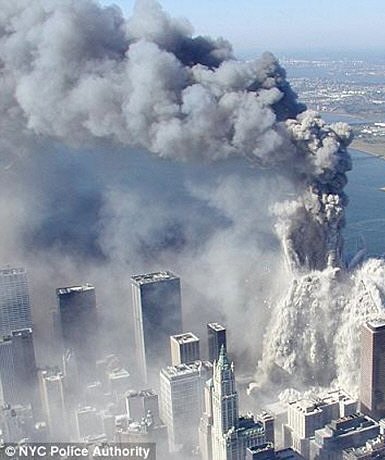
On September 11th 2001 I was the Chaplain for Headquarters Battalion 2nd Marine Division, Camp LeJeune North Carolina.  I first learned of the attacks as I was logging off of my computer to go to PT after a couple of counseling cases in the early morning.  The headline I saw on Yahoo’s home page was “Airplane crashes into World Trade Center.”  I simply figured from that that a private pilot had flown a small aircraft into on e of the buildings. I got to my car and when I turned on the engine a talk radio host was screaming “Another airline has crashed into the second tower.” I don’t even remember what talk show host that it was. My mind immediately went to terrorism as the cause thinking about the bombing of the USS Cole.  I drove to the French Creek gym to see if there was anything on the televisions. When I arrived I saw the trade centers burning and Marines and Sailors crowded around in stunned silence or whispering to each other in muted tones.  I returned to my office, showered, got my uniform on and drove to our Battalion Headquarters where Colonel Richard Lake was gathering the staff. Within hours the base was locked down with combat ready Marines patrolling possible danger areas and with hasty roadblocks and checkpoints established around the base. We were locked down for almost four days as things began to settle out. By December I was the Chaplain for the USS Hue City and deployed in February 2002 to support Operation Enduring Freedom and Operation Southern Watch.  In 2007 and 2008 I was deployed to Iraq serving with the Iraq Assistance Group and Marine, Army and other advisors serving with the Iraqi 1st and 7th Divisions and other security forces fighting insurgents in Al Anbar Province.  I have many friends that have deployed numerous times between the 9-11 attacks and today, some have been wounded and others killed.  Many suffer the psychological and spiritual trauma of PTSD and Traumatic Brain injury.    Even if we were to be able to end these wars today we would be dealing with the ravages of this long war.  I still serve working among many continue to deploy and return as well as treat those traumatized by war. I will return to Camp LeJeune next month as the Command Chaplain of the Naval Hospital which takes care of the Marines and Sailors of the II Marine Expeditionary Force, much of which is deployed to Afghanistan. I cannot forget 9-11. These are my thoughts.

Peace

Padre Steve+


I remember exactly where I was on that terrible day known simply now as 9-11.  The events of that day and in the following changed our lives and our country possibly forever.  The images of that day are seared into our individual and collective consciousness as Americans and usually conjure up deep emotions of anger, sadness, grief and pain.  The sheer magnitude of attacks, especially those on the World Trade Center towers covered on live television shocked and stunned the nation as the nation saw us transition from peace to war before its eyes.

http://www.youtube.com/watch?v=otK7c3Ushjw&NR=1

http://www.youtube.com/watch?v=IetZuu_seb8&feature=related

http://www.youtube.com/watch?v=1lKZqqSI9-s

http://www.youtube.com/watch?v=sczTcrRp1bY&feature=related

http://www.youtube.com/watch?v=E_irMA5umVM&feature=related

http://www.youtube.com/watch?v=XQyRjf3eumo

The attack on the Pentagon was also dramatic but because it was a military target the psychological impact on most Americans was less than the attack on the Trade Center towers.

http://www.youtube.com/watch?v=fxV2X0vwSas

The images are still disconcerting and when watched show the genius of Bin Laden as he struck at great symbols of American power.  Bin Laden did what no enemy had done previously striking so hard at such symbolic targets; he destroyed our sense of safety.  Of course that sense of safety was an illusion all along as with the advent of ICBMs and long range bombers we have been within reach of our enemies.  Likewise we had seen terrorists attack us before including a 1993 attack on the WTC designed to bring the building down.  But this was different than all those that came before, for the first time Americans no longer felt safe behind the “moats” of the oceans that surround the country. For the first time since the War of 1812 a foreign enemy had struck at the heart of America on the Continental United States itself and unlike then the nation saw the attack unfold in real time together.  Only the attack on the Pacific Fleet at Pearl Harbor by the Japanese Navy on December 7th 1941 has had such an impact on us.  We watched as near 3000 Americans and others died in the towers, at the Pentagon and aboard Flight 93.  Some would say that we need to “get over” 9-11, but those that say such things do not understand the magnitude of the affect of the attacks on the soul of this nation.

The emotions generated by these attacks even 9 years later in are almost visceral because they are symptomatic of the deep and yet unhealed wounds suffered on that day.  The attacks on the World Trade Center, the Pentagon and United Flight 93 perpetrated in the caves of Afghanistan by Osama Bin Laden and Al Qaeda and executed by 19 terrorists who hijacked the four aircraft involved did more than destroy or damage landmarks and kill innocent people; they wounded our nation both psychologically and spiritually.

That day also created an immense desire to see the perpetrators brought to justice and set us on a course for war a war that has no end in sight even 9 years after the 9-11 attacks.  To put this in perspective from Pearl Harbor to VJ Day was just under 3 years and 9 months and even Vietnam from the Gulf of Tonkin incident to the cease fire was only 8 years 4 months.  The young men and women now enlisting as 18 year olds in our armed forces were 9 years old when the attacks occurred, kids that were in 3rd or 4th grade playing little league baseball, soccer, pee-wee football and playing with their X-Box, PS-2 or Game Cubes.  Now these children serve in harm’s way with many dying as the average age of our casualties is about 20 years old.

After the attack Americans banded together as Americans for the first time that I can remember. There were remembrances, prayer vigils and rallies to show our unity to the world. Congress even banded together in a rare display of unity spontaneously breaking into “God Bless America”

http://www.youtube.com/watch?v=ybc3SnhCWGk

Three days later President Bush rallied the country from “Ground Zero” as it became known. http://www.youtube.com/watch?v=MiSwqaQ4VbA&feature=related

He threw out the first pitch in Game Three of the World Series at Yankee Stadium to the cheers of an energized New York crowd. http://sportsillustrated.cnn.com/baseball/mlb/2001/worldseries/news/2001/10/30/bush_ap/

http://www.youtube.com/watch?v=evb489N11Q4

Irish Tenor Ronan Tynan sang “God Bless America” which has become a fixture since then at Major and Minor League games. http://www.youtube.com/watch?v=LAtRb5oY3oM&p=C7401126B05C2B6D&playnext=1&index=28

Within a month President Bush launched our military into an attack on Al Qaeda bases and those of their Taliban allies in Afghanistan.  With the help of different Afghan Mujahidin groups US Special Forces, Marines and Paratroops had driven the Taliban out of power and were searching for Bin Laden.  Although American forces came close at the battle of Tora Bora to catching Bin Laden he escaped along with the leader of the Taliban Mullah Omar.  Eventually the effort in Afghanistan became secondary as the United States focused its attention on Iraq and became involved in a bloody insurgency against Al Qaeda allies as well as Iraqi militants of various types.  Mistakes were made by the administration in disbanding the Iraqi Army, police and Civil Service following our 2003 invasion.  On the ground some American soldiers at Abu Ghraib videotaped acts of torture on prisoners and detainees which found their way into the world wide press creating a firestorm reaction which made the war that much more difficult as it made those on the fence more likely to at least give the insurgents aid and support.  That changed in 2007 the “Surge” of extra combat troops to implement a true counter-insurgency strategy aided by Iraq security forces and the Anbar Awakening where the Sunnis turned against Al Qaeda.  Iraq still has major issues but in the long run will likely do well as the Iraqis take control of the country.  I know that there are many people including some experts who doubt this but knowing a number of Iraqi senior officers of both Sunni and Shi’a Moslem factions and the history of modern Iraq which is one of secularism, I believe that Iraq will do fine.

The strategic problem with Iraq was that it diverted attention from Afghanistan where we had an early chance to drive out and keep out both Al Qaeda and the Taliban. The loss of emphasis in Afghanistan allowed the Taliban to regroup and reestablish their control throughout much of the country.  The other thing was that it created a situation that cost the US Military a large number of casualties and made it difficult to fulfill other commitments and contingencies.

Nine years later we are still at war, American Soldiers ream in Iraq helping the Iraqis manage their own security and American troops lead NATO and Afghan forces in a bloody war against the resurgent Taliban which has claimed as of today 1257 Americans on top of the 4404 lost in Iraq.  http://projects.washingtonpost.com/fallen/

The war in Afghanistan has blown up over the past two years as the Taliban often aided by elements of Pakistani intelligence services take advantage of the corrupt and unpopular Afghan government. The Afghan government led by President Karzai who at best can be described as an unreliable ally in the war against the Taliban is barely able to influence events in the capitol Kubul, but less in outlying areas where the Taliban has established a formidable shadow government.

At home the United States seems to be at war with itself, no longer united but bitterly divided even as American military personnel lay down their lives overseas.  A controversy rages about an Islamic Cultural Center and Mosque to be built not far from Ground Zero while Fundamentalist Christian pastors threat to burn copies of the Koran inciting more rage against Americans deployed in harm’s way.  The President is increasingly unpopular and the Congress even less so. Sentiment is building for wholesale change with some even talking of revolution or secession.  It doesn’t seem that either the builders of the so called “Ground Zero Mosque,” its opponents and the hate filled pastors have any clue about the propaganda victories that they hand our enemies on a daily basis.  In a world-wide insurgency, which this has become propaganda is often more important than military power.

It seems that Osama Bin Laden is succeeding in his goals. In 2004 Bin Laden said on a video “All we have to do is send two mujaheddin . . . to raise a small piece of cloth on which is written ‘al-Qaeda’ in order to make the generals race there, to cause America to suffer human, economic and political losses.” Bin Laden and his allies have seen us abandon some of deepest principles of freedom of speech, movement and association as the government tries to ensure that no more attacks take place. However as any student of terrorism knows there is no way to stop every terrorist attack.  Eventually another will succeed and when it does we will see freedom curtailed even more.  If the attack is large enough the real possibility exists of Martial Law.

As this transpires American Military personnel of every race, color, creed and political persuasion do battle with the enemy.  At home other military units train and prepare for battle.   Police, security and intelligence officers from a myriad of Federal and state agencies conduct the painstaking work of trying to figure out where the next attack is coming from and try to stop it. Since 9-11 they have been successful but the law of averages says that eventually another attack will succeed because Al Qaeda and other Islamic terrorists while small are always seeking ways to further terrorize Americans and other westerners.

All I can imagine now is that our current state of division will last until we are shocked out of it by something worse than 9-11.  I hope and pray that cooler heads will prevail and somehow we will recover our sense of who we are as Americans that sense of “e pluribus Unum” “Out of many, One” will take the place of hyphenated America and Red States versus Blue States.  Bin Laden would like for nothing more for us to continue to be at war with ourselves.

Today we mark 9-11 and I hope and pray that the lessons of 9-11 will not be forgotten and that both the losses of that day and sacrifices since will not be in vain. As for me and the rest of us in uniform we will continue to serve to preserve and defend this country and our most cherished ideals.  May God have mercy on us all.

Peace,

Padre Steve+

3 Comments

Filed under Loose thoughts and musings

A War Crime Denier, an American Terrorist in Karachi, a Christian Bully and thoughts on Grace and Reconciliation on a Lenten Sunday

Molly Checking My Facts

Well sports fans I sit up with my little Papillion-Dachshund mix Molly musing tonight after watch a replay of a pre-season baseball game.  Today of course I have been dealing with the pain caused by Adolf my large and well dug in kidney stone who evidently will resist until the end and have to be blasted by a laser on Tuesday.  I didn’t sleep well last night and woke up in pain this morning and look to be doing the same tonight, hopefully the pain and sleep meds will kick in and I will get some sleep.  As I wait I shall write as Bucky Katt once said “you can wordify anything if you just verb it.” So tonight I shall spend some time with a war crime denier, an American traitor, an allegedly “Christian” political pundit and muse on grace and reconciliation, which are key themes in my Lenten journey this year.

So anyway….today was a weird day.  I had an irate Japanese “Rape of Nanking” denier comment on my article about that subject.  Sorry, the truth hurts war crimes and atrocities committed against civilians by any nation are immoral and to defend the indefensible or try to deflect criticism by referring to other nations that have done similar acts is simply being an accomplice to evil.  That goes for any nation including the United States and unfortunately our history is not always as pristine as some would make it out to be.

Moving on… there are conflicting reports that one of the great traitors in modern United States history, Adam Gadahn the chief spokesman for Al Qaeda was apprehended by Pakistani security forces in Karachi yesterday. A day after Gadahn urged Moslems in the US to emulate the Fort Hood terrorist Major Malik Hasan and attack high value targets in the United States Pakistani officials announced that he had been captured. However later reports that the Al Qaeda member captured may not be him after all.  This guy is a slime bag of the biggest order and I hope that if we didn’t get him this time that he will catch a Hellfire missile between his eyes so he can be the martyr that he urges others to be.  Lead by example Adam, its called leadership but then it is always easier to urge people that you don’t know or care about to do the dying for you.  Don’t worry someday you will get your 70 Virginians and they will kick your sorry ass for eternity.  If the Hellfire doesn’t get you Adam I hope that you get captured and sent to prison here in the US with the Trinity Broadcasting Network (TBN or the Terrible Blond Network) piped into your jail cell 24/7, an unending supply of Chick tracts and Gordon Klingenschmitt as your Chaplain, a fate worse than a fate worse than death.

While the aforementioned idiots are simply idiotic at least they don’t attempt to rationalize illegal or dishonorable activity by citing scripture and invoking Jesus like Townhall.com columnist Doug Giles did on Sunday.  Giles likes to fancy himself a defender of American and Christian values but is simply a bully whose imbecilic theological rants are about as Christian as those of Adam Gadahn, the American born Al Qaeda spokesman.  Giles prostitutes the Christian faith and wraps it around the flag so that the Gospel is indistinguishable from right wing politics.  The fact that he uses Jesus and says that Jesus would approve of such behavior is blasphemous and the fact that he has a degree from a seminary puts him on the same level as religious leaders of Al Qaeda, the Taliban, Hezbollah and the Iranian Revolutionary Guard clerics in camouflage.  I do believe that Christians should not divorce their faith from politics and that faith can inform and guide a Christian in life and even in politics but Giles and his radicalized followers are dangerous and will be the death of the Evangelical church.  His justification of the use of methods including deception and violence that in times past would have been denounced by the church are simply heretical and not a part of the Christian faith, even if he can “proof text” by citing disjointed and unrelated scriptural texts and by drawing false analogies to justify or prove his point.  While he as a conservative pundit may well oppose and even rightly criticize his political opponents it is wrong to use God or Scripture to justify unseemly and dirty politics even if one is tackling equally unseemly opponents.  I think this is why so many theologians, pastors and church leaders throughout history going back the Apostles and early Church Fathers distained politics and felt that Christians and their faith could only be corrupted by involvement in political movements.  The actions and words of Giles and his fellow travelers may make them feel better but only undermine their witness as Christians as they prostitute the faith for short term political advantage.

Though I did not get to Church today because of not sleeping and being in pain I was able to celebrate Eucharist at home with the Abbess.  If you have read my Lenten meditations you might notice the theme of reconciliation.  Such was the case in the lectionary readings for today, the Gospel being the parable of the Prodigal Son out of Luke Chapter 15 and the New Testament lesson being 2 Corinthians 5: 17-21, the latter which has been a major part of my theological journey since my return from Iraq.  I post the passage below because it speaks volumes about the ontological change that should be part of the Christian life imparted in the waters of Baptism and how that change should be a major part of how we relate to others in the world.  I think it stands in stark contrast to those of any political party who use Scripture and the faith for political gain and power.

“17So if anyone is in Christ, there is a new creation: everything old has passed away; see, everything has become new! 18All this is from God, who reconciled us to himself through Christ, and has given us the ministry of reconciliation; 19that is, in Christ God was reconciling the world to himself,* not counting their trespasses against them, and entrusting the message of reconciliation to us. 20So we are ambassadors for Christ, since God is making his appeal through us; we entreat you on behalf of Christ, be reconciled to God. 21For our sake he made him to be sin who knew no sin, so that in him we might become the righteousness of God.” (NRSV)

As Karl Barth said “Grace must find expression in life, otherwise it is not grace.” I dare say that Giles and other “Christian” radicals have forgotten the grace of God or somehow do not think that applies to their opponents.  In their zeal they misuse Scripture and justify hatred forgetting the great commandments to love God and love our neighbor and the witness of Christians who lived in truly evil times like Dietrich Bonhoeffer who said Our enemies are those who harbor hostility against us, not those against whom we cherish hostility… As a Christian I am called to treat my enemy as a brother and to meet hostility with love. My behavior is thus determined not by the way others treat me, but by the treatment I receive from Jesus.”

And so to you my friends I wish you a good night.

Peace,

Padre Steve+

Leave a comment

Filed under Loose thoughts and musings

Unequal Allies: Lessons from The German’s and Their Allies on the Eastern Front for Today

patton with french tankPatton with French Renault F1 Tank in WWI

One of the problems that any coalition of unequal partners as is the case in Afghanistan is the role of the lesser partners, their capabilities and limitations imposed on them by their own governments.  When NATO joined the US led effort in Afghanistan a number of NATO allies contributed troops to the effort.  The same was true of the “coalition of the willing” in Iraq.  While obviously the US appreciated and continues to appreciate the efforts of its allies in both theaters the unique problems associated with coalition warfare are often not appreciated until the strengths and weaknesses of each junior partner in the coalition are shown to include the effect of each nation’s choice of units sent, logistics capability and rules of engagement.  Thus when some Americans are critical of the contribution of some allies, or the limitations imposed by their governments they should remember that in the First World War the United States was dependant on France and Britain for the majority of the Artillery, all of the tanks and aircraft as well as instructors and training facilities for the rapidly recruited American Expeditionary Force.

RickenbackerUS Ace Eddie Rickenbacker with French Supplied Nieuport 28
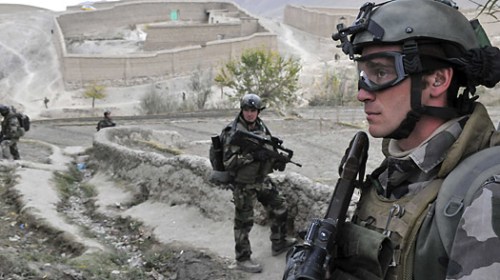
Every nation works within its own national interests and domestic political situation as well as its military capabilities. Unfortunately many people do not look at history to see how a coalition of a major power allied with a number of minor powers each with their own limitations as well as motivations for entering the war execute that war after the initial plan is foiled.  This is something that has happened in Afghanistan after the initial success disappeared with the corrupt and ineffective Afghan government, the resurgent Taliban and the resiliency of Al Qaida in their bases in the remote border areas of Afghanistan and Pakistan.

nato_france_a_0403French Troops in Afghanistan: The French, British and Canadians have the most Robust Rules of Engagement of Non US NATO Forces (Time Magazine Photo)
One of the best places to find such an example is the German relationship with their allies on the Eastern Front.  The question of the German dominated European Axis alliance in the Second World War is one of the more neglected subjects of World War Two II. In most accounts of the war, the relationship of the Germans to their coalition is minimal.  This includes the works of B.H. Liddell-Hart, Williamson Murray, Chester Wilmot and David M Glantz.   Italy usually receives some attention in the context of the campaign in North Africa and Mediterranean.  Hungary, Romania and Finland receive scant attention from anyone except as to how their armies were overrun during the Stalingrad campaign. Popular German memoirs provide little substantive help. Field Marshal Albert Kesselring’s memoirs and Erwin Rommel’s papers give some views of the Italian efforts in North Africa and the Mediterranean and Erich Manstein gives a limited amount of attention to the Italians, Finns, Hungarians and Rumanians in Russia.

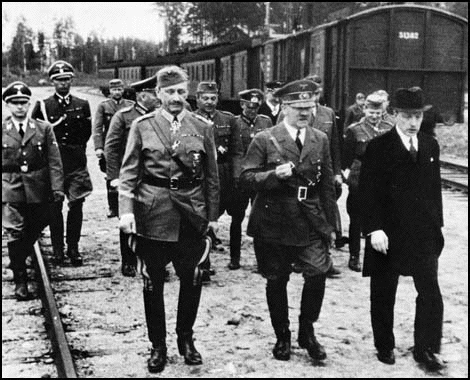
Finland-HitlerConflicting War Aims: Hitler with Finland’s Field Marshal Von Mannerheim
In his essay The Dysfunctional Coalition Robert Di Nardo examines the relationship of Germany to her allies on the Eastern Front where the Germans due to their own limitations were forced into a coalition war with weak allies of uncertain reliability. This is a subject that Di Nardo expanded on in his book Germany and the Axis Powers: from Coalition to Collapse (University of Kansas Press, 2005).  Di Nardo believes that there are important lessons to be learned from the failure of Germany and its coalition. Unfortunately we in the west are more often than not content to judge coalitions by the success of the Allies in the Second World War.  Di Nardo’s work on the subject is something that the United States must learn from as it works with coalitions whose members have significant military weaknesses often magnified by the domestic political climates in their own country. The situation, especially in Afghanistan places he United States in a similar position to Germany in relation to the current wars on terror and campaigns in Iraq and Afghanistan.

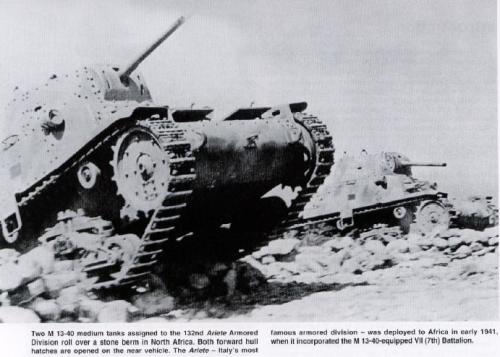
m 13-40 tankItalian M 13-40 tanks were the mainstays of Italian Armored Units, Slow, Undergunned and Poorly Armored they were No Match for Soviet T-34s

Di Nardo asserts “the way in which Germany conducted coalition warfare was reflective of the manner in which Hitler and the German military looked at the world, as well as the war in general.”  Germany often displayed a haughtiness toward its allies and even knowing their weaknesses was both unable and often unwilling to do much to strengthen them for the fight against the Soviet Union.  Di Nardo believes that the German attitudes were “a significant factor that contributed to the ultimate defeat of Nazi Germany.” (p.712)  In the essay Di Nardo notes the few successes of the coalition. In particular he looks at the German work with Rumanian air defense around the Ploesti oil refineries and the German-Finnish Winter Warfare School.  Apart from these instances he characterizes Axis coalition warfare on the eastern front as “poor” with “failures at every level.” (p.713)

italian troops stalino

Di Nardo analyzes the problems with language barriers, the wide differences of modernity of the armies and levels of technology and training of the coalition partners many of which are common to the war in Afghanistan. Germany’s failure to become the “arsenal of Fascism” which the United States became “the Arsenal of Democracy” for its allies hindered the Germans in their relationship to their poorly equipped allies.  Likewise, the lack of understanding of all the partners regarding the “relationship between national objectives, strategy and the morale of soldiers of officers and soldiers alike”(p.713) was a major obstacle.

finnish at gun

Di Nardo provides a good description of the German liaison detachments allotted to the coalition armies.  These teams functioned as advisors to their allies as well as liaisons between the German army and the allies. These teams dealt with language, tactical communications weaknesses and often displayed the generally haughty attitude that the Germans displayed to their partners. There is an excellent illustration of this in dealing with the failure of XLVIII Panzer Corps at Stalingrad when the German Liaison to the Romanian 1st Panzer Division was wounded.  At the operational and strategic levels Di Nardo describes the German policies and attitudes toward their allies as “imperialist.” (p.718)

He examines the wide gap in transportation capabilities of the various armies and the failure of the Germans to better provide for the needs of their partners in contrast to the United States assistance to her allies.   Germany provided obsolete captured Czech and French weapons and vehicles to her allies.  They refused to supply the Romanians and Hungary with the plans to build German tank and aircraft in Romanian and Hungarian industrial concerns capable of their manufacture. (pp.718-719) Di Nardo notes how this lack of modern equipment impacted the allies operations against the Red Army and their defeat at the hands of the Soviets.  Although Di Nardo alludes to how even elite German formations had substandard equipment he does not explain principle reason for this.   This was due to the fact that the Germans did not go to a “total war” footing in regard to industrial production until Albert Speer took over as Armaments Minister in 1943.

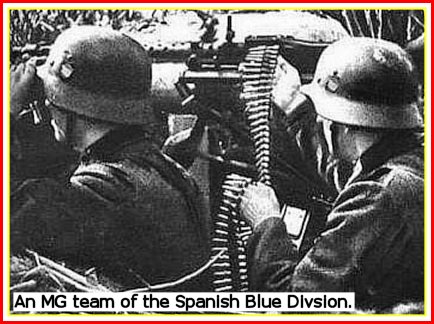
spanish blue divsion

The number of troops contributed by the German Allies was substantial. Hungary began Barbarossa with two corps, including its Mobile Corps and in 1942 supplied their 2nd Army which was composed of 1 Armored and 9 Infantry Divisions. 2nd Army was crushed by the Soviet offensive against Stalingrad. The Italians began with an expeditionary corps of 2 Semi-Motorized and 1 Light Infantry Divisions. In early 1943 they added 4 Infantry and 3 Alpine Divisions and a number of other smaller formations. This force became the 8th Army. It fought well during the advance toward Stalingrad but spread out over a wide front with little armored or air support was decimated by the Soviet offense against the city.  The remnants were no longer battle worthy and were evacuated to Italy.  Most of the Finnish Army was engaged in the war but after September 1939 made no major offensive contribution to the war. In 1944 following a major Soviet offensive which forced them to withdraw from the territory that they had captured in 1941 the Finnish government sued for peace. The Russians occupied a number of border provinces and islands and Finland was obliged to expel German Forces.  This resulted in the “Lapland War” between the Finns and the Germans with the Germans adopting a scorched earth policy as they withdrew from the country. The quality of the Finnish forces was generally higher than that of Germany’s other Allies.

romanian r35Obsolete French Built Romanian R-35 Light Tank
The Romanians contributed 19 divisions organized into 3 Armies to Barbarossa. They were limited by their equipment and logistics. The 3rd and 4th Romanian Armies were shattered at Stalingrad forcing a major reorganization as they continued the war.  In August 1944 with the Soviets pressing their border King Michael led a coup to overthrow the Fascist dictatorship of Antonescu. The Germans elected to fight and the Romanians changed sides and joined the Russian advance to the end of the war with their 1st Army taking part in the Prague offensive. Another contributor of troops was Franco’s Spain although it was a neutral country. Spain provided a division of volunteers which became the famous “Spanish Blue Division” or the 250th Infantry Division. It was outfitted as a German unit and received additional training from the Germans before it went into action. The division fought near Leningrad and was engaged in many tough fights.  A Spanish “Blue” Fighter squadron allotted to and equipped by the Luftwaffe also distinguished itself. In October 1943 Spain under allied pressure withdrew the division from the front although many soldiers volunteered to remain and fight on as smaller units attached to German formations. One volunteer company became part of the 11th SS Panzergrenadier Division Nordland at Berlin.  One thing that probably was a factor in the Spanish effectiveness as well as commitment to to German cause was their genuine loathing of the Soviets following the Spanish Civil War.

The final part of Di Nardo’s essay deals with the strategic goals and conflicts among the Axis coalition which were never worked out.  Examples of this include how the Finns never signed a formal alliance with Germany and how their national strategy did not allow them to deeper into the Soviet Union instead settling on recovering territory lost to the Soviets in 1939 with a few minor gains.  There was also the problem that the Romanians and Hungarians distrusted each other so much that they could not work together over their own territorial disputes.  The Italians joined the campaign late and their 8th Army participated in the German advance toward Stalingrad protecting the German flank.  While the Italians provided their own equipment including armor and aircraft they and their weapons were woefully suited for the war that they faced on the Eastern Front.  Di Nardo finishes his essay noting morale problems in the Hungarian, Italian and Romanian armies, the lack of understanding and general lack of motivation for the campaign.

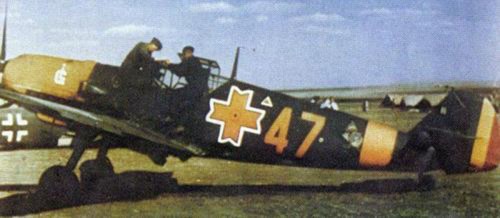
Romanian_Me109-px800Romanian ME-109 E4, The Romanian Air Force Was One of the Axis Success Stories
This article is well sourced. Di Nardo uses histories, archival sources, operational orders and analysis by the various armies as well as interviews with participants. Of particular note is that he goes to sources of the coalition partners and not just German sources.  This allows him to be far more nuanced and detailed in his discussion as opposed to others who simply ignore the contributions of the Axis partners.  His footnotes provide added detail and provide and lend support to his arguments.

The importance of this essay is twofold.  First it provides a look at the relationship of German to her coalition partners on the Eastern Front.  This is important from a historic standpoint simply because it is such a neglected topic in most histories of the period and gives added depth to the reasons for Germany’s defeat.  One has to ask the “what if questions” in regard to had the Germans better treated, equipped and recognized their allies’ contributions to the war effort.

The second and probably more important for Afghanistan is that it provides lessons to any nation which has to engage in coalition warfare.  In particular it has lessons for the United States which has found itself as the senior and vastly superior partner in a war which has multiple coalition partners in several theaters of operations.  Each coalition partner has certain military strengths and weaknesses in relationship to the United States, national interests, geo-political and economic relationships with competitors to the United States and internal political realities which impact their cooperation in the war.  As such the United States cannot allow itself to be cast in the role of a haughty imperialistic senior partner as did Germany.  The US instead must cultivate an attitude of assistance, respect and trust among its partners to assure their full cooperation and assistance in relation to U.S. goals in the war. This is particularly important now was it appears that the Afghan war is reaching a point where the deteriorating situation on the ground could invite the early withdraw of allies and necessitate either the addition of more US troops or a strategic withdraw which would be for all intents and purposes a defeat for the US and NATO. The consequences would not be good and while the Taliban may be able to be contained they undoubtedly would invite Al Qaida back and provide them with a sanctuary just as Pakistan has stepped up its efforts on the border.

Leave a comment

Filed under History, iraq,afghanistan, world war two in europe

The most dangerous assignment: 4 More Advisers Die In Afghanistan

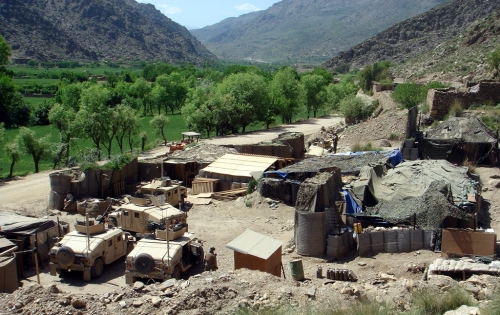
training team baseIsolated Embedded Training Team Base

Once know and relatively unglamorous group of American military men have suffered multiple casualties in a single engagement.  These men belong to are small units that do not have a lot of organic firepower.  They usually operate in remote areas far from immediate assistance if they get in trouble.  When one of these units suffers casualties, especially where they lose 3-5 men in one engagement they might have lost 20-25% of their unit.

On September 8th a team of these men was ambushed while on foot going to an Afghan with Afghan soldiers to meet tribal leaders with the intent of establishing a government presence in a hostile area.  In the ambush four were killed, three U.S. Marines and one U.S. Navy Hospital Corpsman attached to them.  On Tuesday the 8th Gunnery Sgt. Edwin W. Johnson Jr., 31, of Columbus, Ga., 1st Lt. Michael E. Johnson, 25, of Virginia Beach, Va., Staff Sgt. Aaron M. Kenefick, 30, of Roswell, Ga. and Petty Officer 3rd Class James R. Layton, 22, of Riverbank, Calif., were while working as trainers to Afghan soldiers on a mission to search for weapons and then meet village elders under an agreement to establish government authority there.  They were killed in “a complex attack according to a U.S. Military spokesman.  According to McClatchy news service who had a reporter that accompanied the mission, insurgents had set up positions in the village and in the mountains on both sides and apparently attacked as the men neared the village. 1st LT Johnson was wounded and while being attended Navy Hospital Corpsman Third Class James R. Layton when they both came under attack.  Both were killed.  Another Marine told the McClatchy reporter that they’d found the wrappings of bandages and other medical gear strewn around Layton and Johnson.  Eight Afghan troops and police and the Marine commander’s Afghan interpreter also died in the ambush and the subsequent battle that raged from dawn until 2 p.m. around the remote hamlet of Ganjgal in eastern Kunar province, close to the Pakistan border.

traiining team with afghan armyUSMC Advisers with Afghan Counterparts

The McClatchy reporter said: “We walked into a trap, a killing zone of relentless gunfire and rocket barrages from Afghan insurgents hidden in the mountainsides and in a fortress-like village where women and children were replenishing their ammunition.”  The reporter said that “U.S. commanders, citing new rules to avoid civilian casualties, rejected repeated calls to unleash artillery rounds at attackers dug into the slopes and tree lines — despite being told repeatedly that they weren’t near the village.”

The battle must have been intense.  I have been on foot patrols in areas crowded with Iraqis far away from significant support where if an insurgent group had attacked us we would have easily been overwhelmed. This is part of the world of the U.S. Military in the embedded training teams which work closely with Afghan and Iraqi soldiers.  I spent a lot of time with the advisers to Iraqi Army. Border and Port of Entry troops, Police and Highway Patrol spread across the entirety of Al Anbar Province.  These men and women are seldom thought of or mentioned by the press or even the military. . They come from all branches of the military and serve as advisers, trainers and mentors to these nations’ security forces.  The duty is dangerous.  The advisers, be they to the military, police, or civil administrations often work in the most isolated places in these countries and are stationed in small teams with the Iraqis and Afghans that they advise.  They are often far from the “big battalions” that have lots of firepower available and often operate out of larger and more secure bases with air support close at hand. Earlier in the year there were a number of incidents where advisers were killed by renegade soldiers or police, or by infiltrators posing as security personnel.  Two soldiers were working with an Iraqi unit in doing humanitarian work in a village when attacked and killed by someone who had infiltrated the Iraqi security forces.  . On March 27th Navy LT Florence Choe and LTJG Francis Toner IV were killed by an Afghan insurgent posing as an Afghan Army soldier. All of these events triggered anxiety in me as I remembered how many times I was incredibly exposed to danger conducting similar operations.

This incident was especially chilling as I read the reporter’s account of the ambush.  “Dashing from boulder to boulder, diving into trenches and ducking behind stone walls as the insurgents maneuvered to outflank us, we waited more than an hour for U.S. helicopters to arrive, despite earlier assurances that air cover would be five minutes away.”  According to the reporter Marine Maj. Kevin Williams” the commander of the team said: “We are pinned down. We are running low on ammo. We have no air. We’ve lost today, through his translator to his Afghan counterpart, responding to the latter’s repeated demands for helicopters.”  When I read this my mind flashed back to being in the middle of a massive crowd at the border crossing of Waleed on the Iraqi-Jordanian border.  There were about nine of us, of which only 8 were armed as I am not allowed by the U.S. interpretation of the law of war to carry a weapon.  There were thousands of Iraqis and others around us, very few border troops or port-of-entry police anywhere near us.  The port of entry had been the scene of numerous attempts to smuggle weapons, materials, and other supplies, drugs and to Iraq insurgents and Al Qaida.  Very few US troops were stationed there and many of these were dispatched off of the base at any given time.

The advisers are drawn from all services.  They are all Individual Augments that come from both the Active and Reserve components.  They do not deploy with their own units, which means that they go to war with people that they might have trained alongside getting ready for the mission, but otherwise have not served with.  When they come home they go back to their old assignments or new orders and are separated from the men and women that they served alongside for 7 to 15 months.  In other words they are isolated when they return home and go back to places where the majority of personnel, even those who have been “in country” have no earthly idea or appreciation of the conditions that they served in and dangers that they faced.  This happened to me when I returned and I went through an emotional collapse as the PTSD that I did not know I had kicked my ass.  Sights, smells, noises, crowds, airports and in fact almost everything but baseball diamonds caused me to melt down as they all brought the danger back to me. Don’t get me wrong, my tour in Iraq was the highlight of 27 plus years in the military, the part of which I am the most proud.

I have a special place for these men and women.  I served with them in Iraq’s Al Anbar Province as the first Navy Chaplain, and one of the first chaplains of any service to be assigned to cover these teams since Vietnam.  My assistant, RP2 Nelson Lebron and I deployed together from out unit.  I had prepared well.  I had been on the bubble to deploy for months.  My background in military history and past service with both the Army and Marines helped me. Likewise my military and civilian education helped me.  Shortly before we were notified of the deployment I went to the Jordanian Army Peace Operations Training Center course on Iraqi culture, religion and society.  I had served as a chaplain in the trauma department of one of the largest trauma centers in the country.  RP2 Lebron had deployed multiple times to Iraq, Beirut and Afghanistan where he was awarded the Defense Meritorious Service Medal (no small feat for an E-5).  He is also an incredibly gifted boxer, kick boxer and martial artist who has fought on Team USA and holds more title belts than I can count.  He most recently won the Arnold Schwarzenegger Classic. I had served with him before and he knew that his mission was to keep me safe.  I don’t want to sound arrogant, but the Chief of Staff of the Iraq Assistance Group said that we were “the best ministry team he had seen in 28 years in the Army.”

When we went to Al Anbar we were sent out with the Marines and Soldiers advising the 1st and 7th Iraqi Army Divisions, The Iraqi Police, Highway Patrol, the 2nd Border Forces Brigade and Port of Entry Police.  We operated in a area the size of the state of Oregon.  In some cases it would take us 2 days by air and convoy to reach isolated teams on the Syrian border.  When you travel by air in Iraq you are always at the mercy of the weather and aircraft availability. I had the rare privilege as a Lieutenant Commander to be able to arrange all of my own air transportation.  Most people, including people higher ranking than me had to depend on others to do this for them.  We worked with our advisers to get out to them.  We would be out 5-12 days at a time with anywhere from 4 to 7 days between missions.  In our 7 months we traveled over 4500 air miles and 1500 ground miles.  Almost all of our air travel was rotor wing. We flew in CH-46, CH-47 and MH-53s and the MV-22 Osprey.  Our convoys were usually not larger than 3 American HUMMVs and sometimes a few Iraqi vehicles.  Our biggest guns were .50 cal or M240B machine guns.

Dinner with Geneal SabahDinner with General Sabah in Ramadi

Many places we served were in places that had no large forces in position to help us if we got in trouble.  Even on the bases we were isolated.  Our teams were with the Iraqis in almost all cases.  We often ate in Iraqi chow halls and used Iraqi shower trailers.  Our advisers had us meeting their Iraqi counterparts.  We met and dined with Iraqi Generals, had ch’ai (tea) with small groups of Americans and Iraqis and got out with the Bedouins. We were in a number of particularly sensitive and dangerous situations with our advisers; one which I cannot go into great detail involved a senior advisor having to inform a new Iraqi Brigade Commander that a member of his staff was engaged in illegal activities and who had put out contracts to kill the American officer.  The bad Iraqi officer was confronted and relieved in a tense meeting where both Nelson and I were with that Colonel and two other advisors as they made the confrontation in the Iraq C.O.’s office, a confrontation that got quite heated until the Iraqi C.O. shut him up. At one point the cashiered officer appealed to the American “Imam” that he was a faithful Moslem, to whit the American Colonel and I asked him how a person who was living a good Moslem life could steal from his own countrymen and supply his county’s enemies with what they needed.

Waleed trip 006Team at Waleed on the “secure” side of the Port of Entry
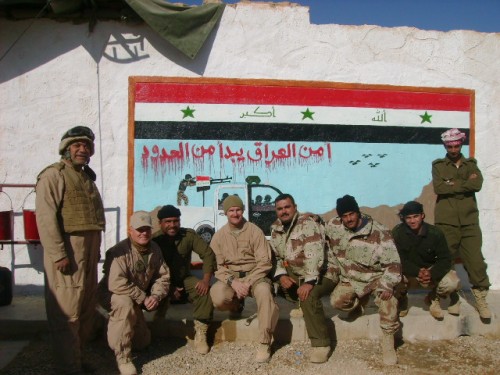
It was an incredible, once in a lifetime tour serving with some of the greatest Americans and Iraqis around. Iraqi soldiers in with our convoys would ask me to bless their trucks with Holy Water like I was doing with the American trucks.  I came to admire many of the professional Iraqi officers that I came to know and pray for the people of Iraq, that God would grant them peace. They are wonderfully hospitable and gracious.  We were often treated to food and tea by Iraqi soldiers, and civilians.  After nearly 30 years of nearly continuous war, dictatorship and terrorism, they deserve peace and security.

Me BTT CO and Iraqi LeadersAdvisers and Iraqi Border Troops near Syria
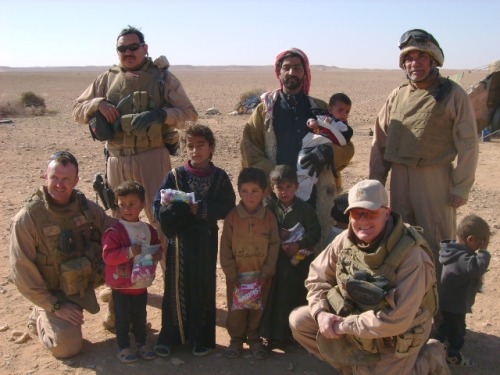
I had one Iraqi operations officer, a Sunni Muslim tell me that he wished that his Army had Christian priests because they would take care of his soldiers and had no political axe to grind. He said that the Army did not trust most Imams or Mullahs because they had compromised themselves during the civil war.  Another officer, a Shia Muslim came to me to thank me for being there to take care of our Marines.  He said that he, an Iraqi Shia Arab, hoped that if they had any problems from the Persians (Iranians), that we would help them.  These is little truth to what is floated that Iraqi and Iranian Shia like each other.  The memories of the past die hard in the Middle East.  When Persia ruled Iraq they treated the Arabs like dirt. Likewise the memories of the Iran-Iraq war are still alive.  Iraqi Arabs, Sunni, Shia and even Christian have little love for the “Persians.”  General Sabah of the 7th Division had us to his quarters for dinner. We had a wonderful and friendly discussion about similarities and differences in Christianity and Islam. We departed friends. The last time I saw him ws in the Ramadi heliport.  He saw me, ran up to me in from of his staff and Americans in the little terminal and gave me a bear hug, telling all that I was his friend. Another Iraqi General told me just before we left to come back as a tourist in 5 years because everything would be better.  I honestly think that he is right.  I hope to go back someday.  It would be a privilege to see my Iraqi friends again.

Me and BTT with Bedouin KidsWith a Bedouin Family

At the same time Afghanistan is a different animal. Iraq was not as easy of place for Al Qaida to work in and the Iraqis have a much more developed national identity which they trace back to the Babylonians and Chaldeans.  They also have adopted a lot of western ways.  Insurgents there once they had lost the confidence of the Iraqis lost traction.  In Afghanistan there is no real collective national identity and the form of Islam is much more severe than almost all Iraqi variants.  The Afghans insurgents have also due to the terrain; climate and inability of invaders to gain the confidence of the population have used the inability of invaders against them as they bring the population back under their control, sometimes quite peacefully.  The Taliban have secure bases on the Pakistani side of the border as did the North Vietnamese and they have the support of much of the population due to the unpopularity and corruption of the Afghan government.  The Taliban have begun to operate in larger better organized units and last year a battalion sized element attempted to overrun a small NATO base.  They did this with the Russians as well.  One troubling comment was reported about something overhead on the Taliban radio: “We will do to you what we did to the Russians,” the insurgent’s leader boasted over the radio, referring to the failure of Soviet troops to capture Ganjgal during the 1979-89 Soviet occupation.”  They also have outlasted or defeated a host of powerful empires.  The war in Afghanistan has much more in common with Vietnam than it does with Iraq. Counter Insurgency techniques learned in Iraq will be helpful but because of the terrain, climate and nature of the opposition will be tougher to execute and in order to have any chance of getting out of Afghanistan having accomplished the mission we will end of taking more casualties, especially in the teams of advisers.  Iraq was different, despite the problems and having to be rebuilt the Iraqi Army has a long history and tradition dating back to the Ottoman Empire, they led the way to westernizing Iraq and helping build an Iraqi identity, this is not the case in Afghanistan.  What happened to this team could easily happen to others and it looks to me like someone set them up to be hit, probably a Taliban sympathizer in the Afghan security forces or government. Afghanistan is much more treacherous than Iraq and in my view will be much more difficult.

What happened at Ganjgal is being investigated and in our area it is front page news as 1st Lt Johnson was from Virginia Beach.  The Taliban want to use events like this to break down the American home front and 8 years after the attacks of 9-11 2001 with that a fading memory they may well do this.  If they do Afghanistan will become Vietnam in the mountains.  We will be forced to withdraw and and the NATO alliance will be severely tested.  A defeat would have wide ranging consequences beginning in Afghanistan as it would fall back into the medieval world of Taliban rule, and would likely spread to Pakistan which which is already under severe strain.  This could threaten the Pakistani nuclear weapons.

Our advisers build bridges between peoples of different history and culture.  They are the unsung heroes of these wars and will likely never get credit for all that they have done.  Operating in isolation they are exposed to more danger that the average unit. They have my highest admiration and I hope that if you know one of these men or women that you will thank them.  I pray that they will all come home safe and be blessed with success.  I would certainly serve with them again at any time and in any place.

Please keep the families of the most recent casualties in your prayers. Peace, Steve+

1 Comment

Filed under iraq,afghanistan, Tour in Iraq