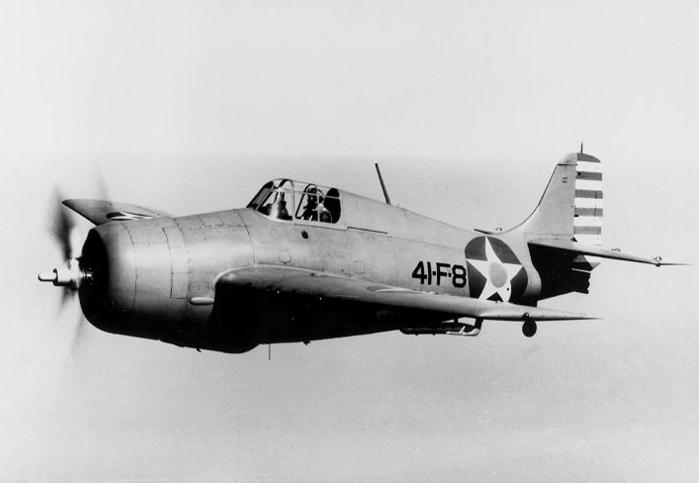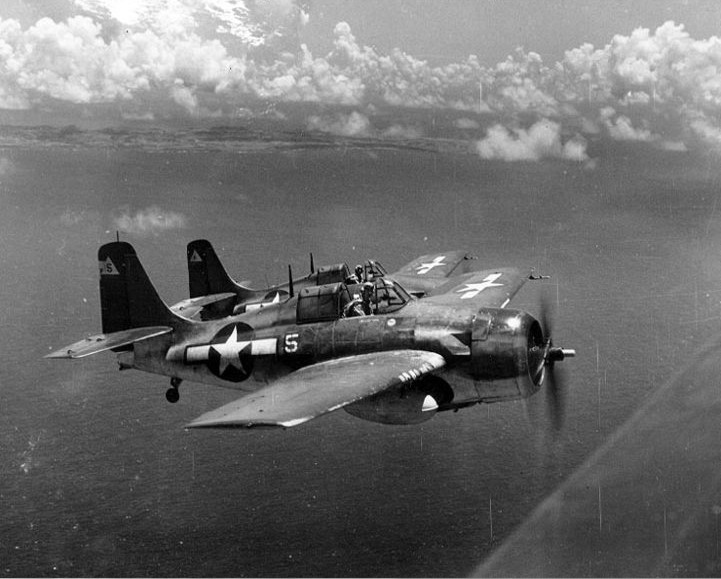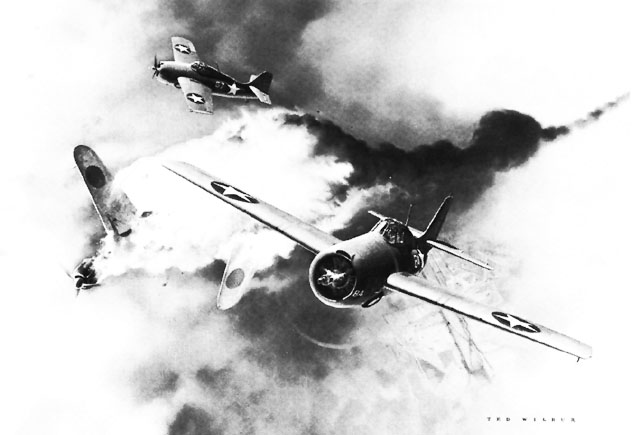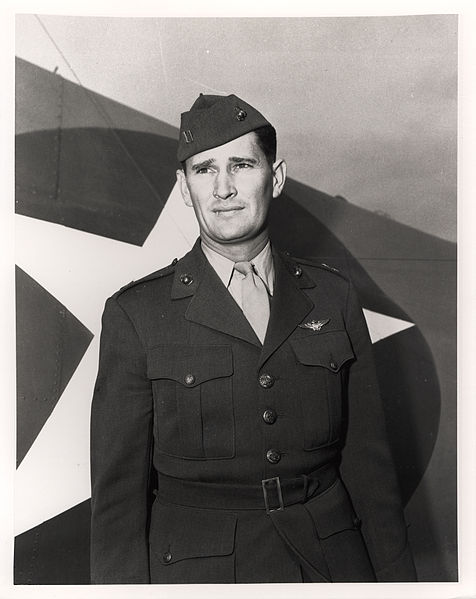
Tag Archives: pearl harbor

Out of the Mud: The Battleships of Pearl Harbor

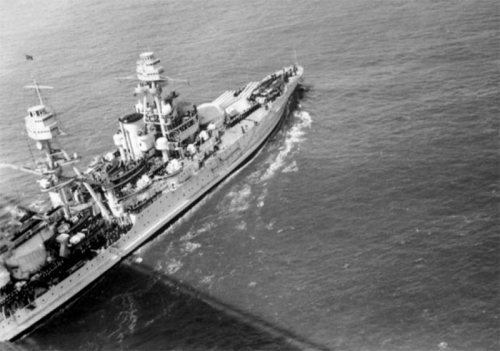
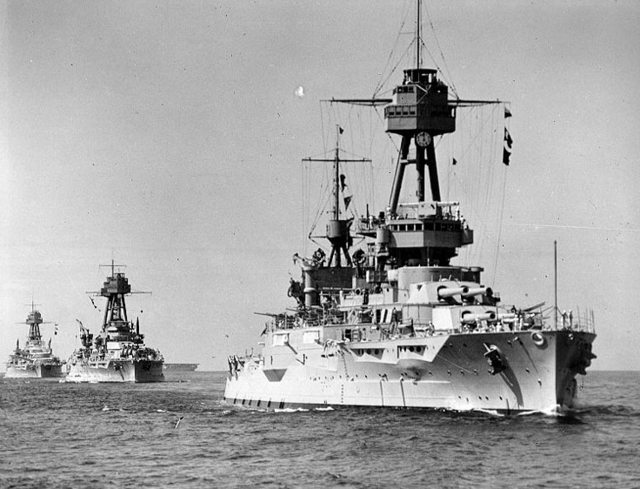
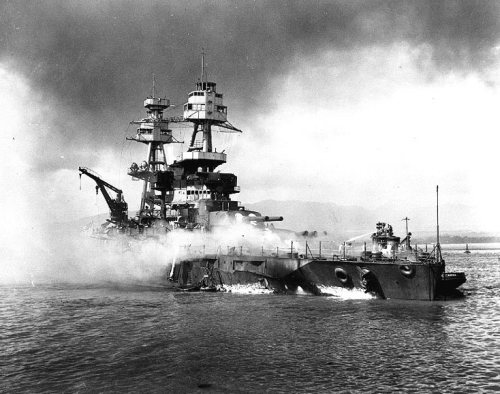
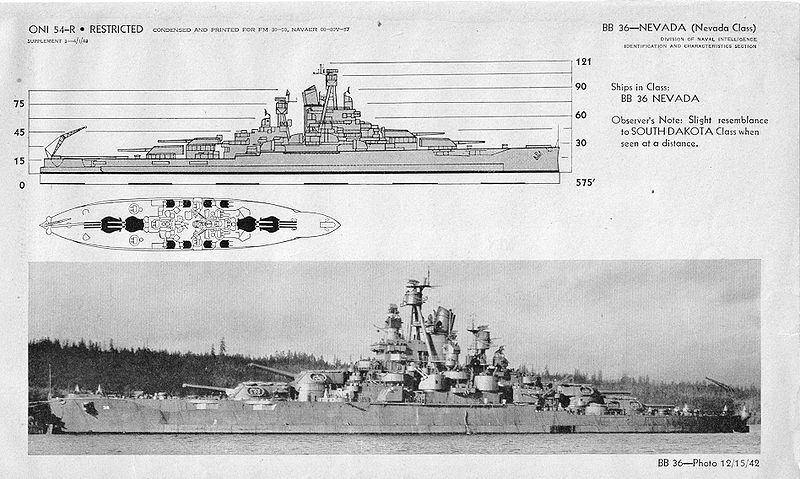
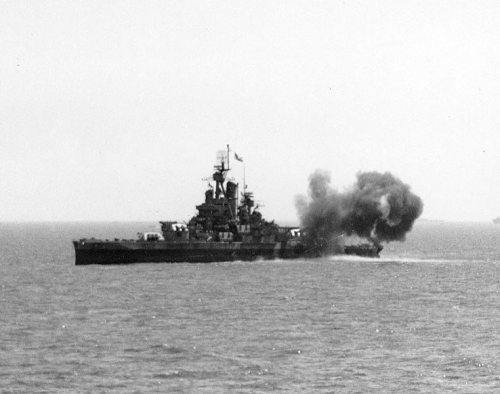
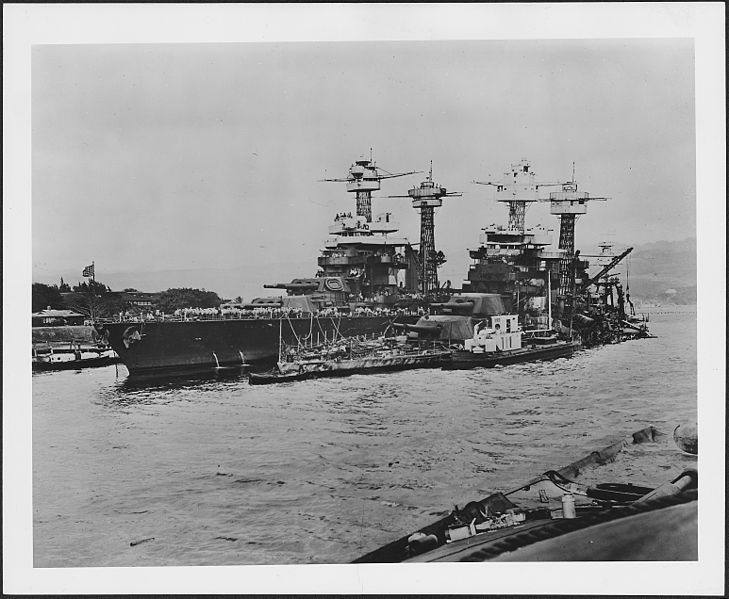
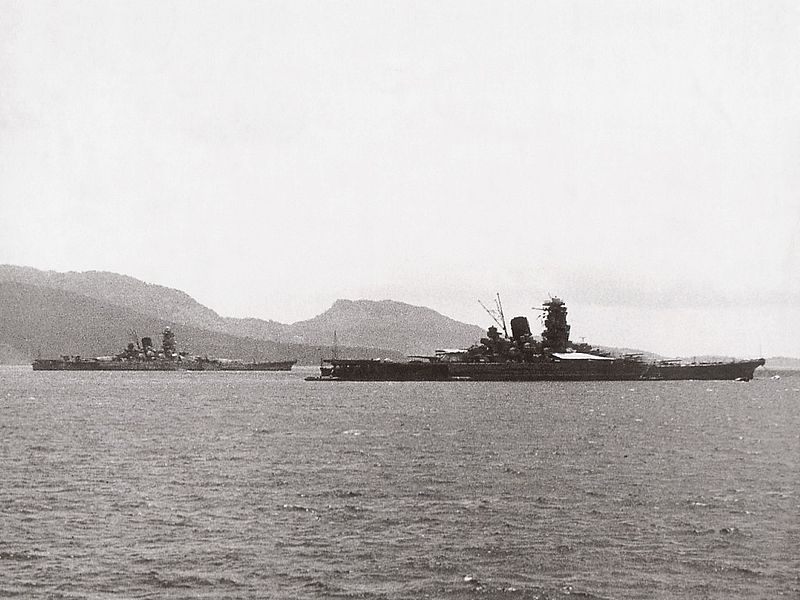
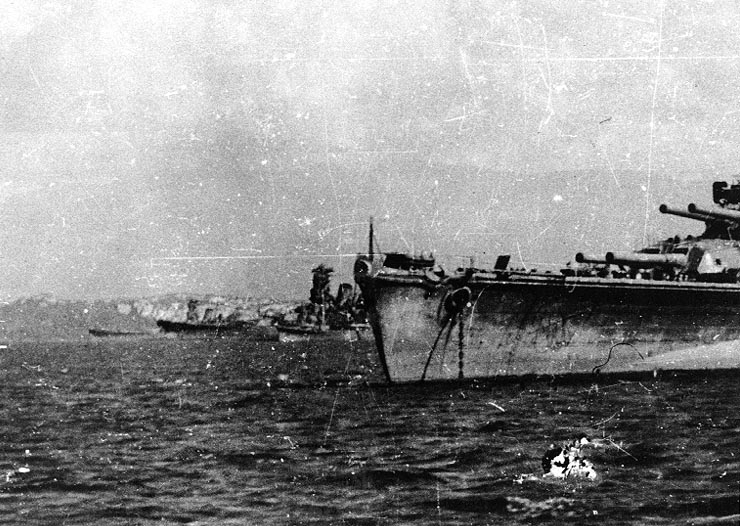
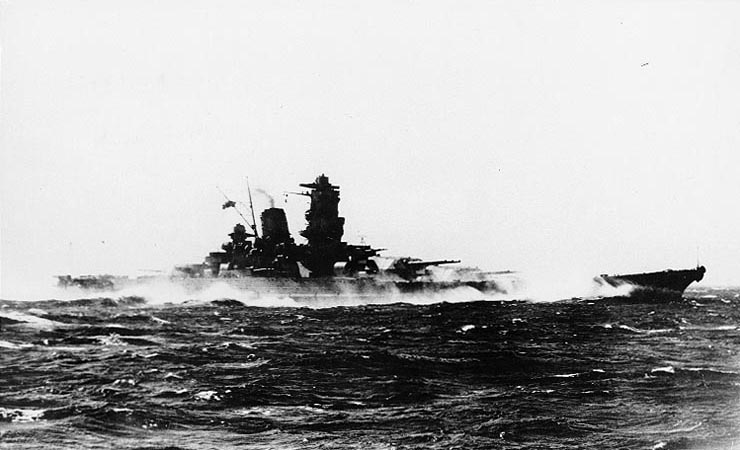
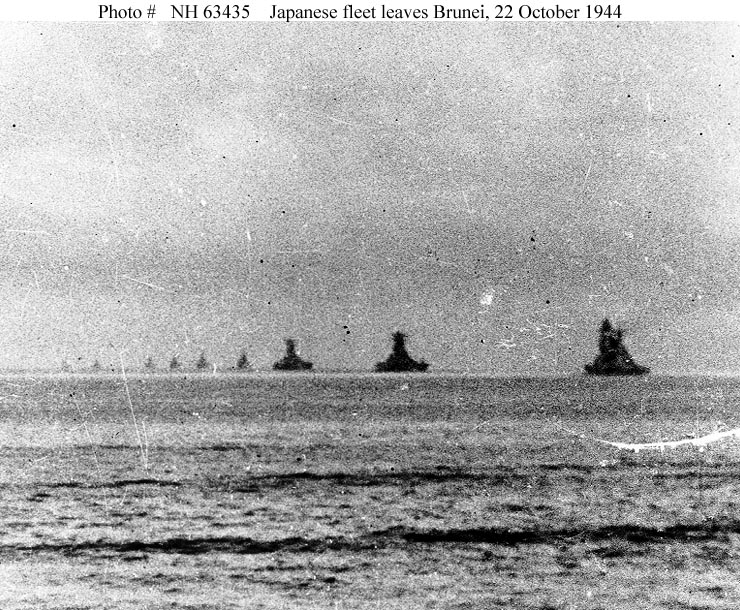
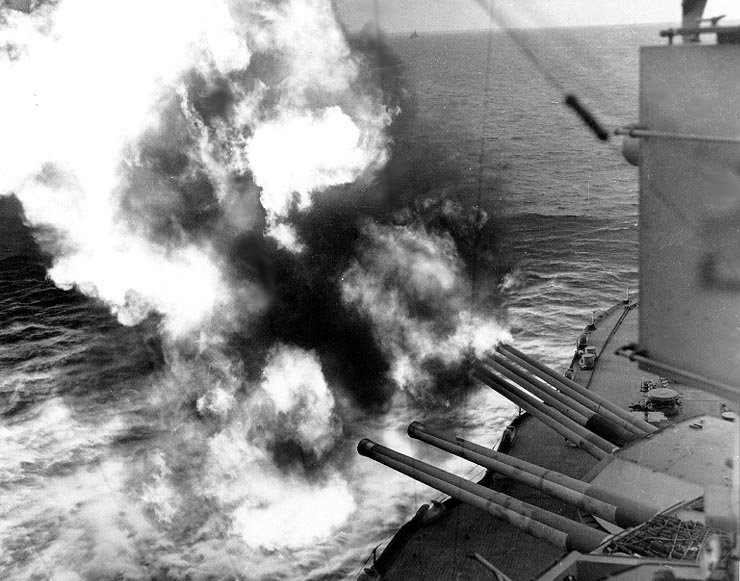
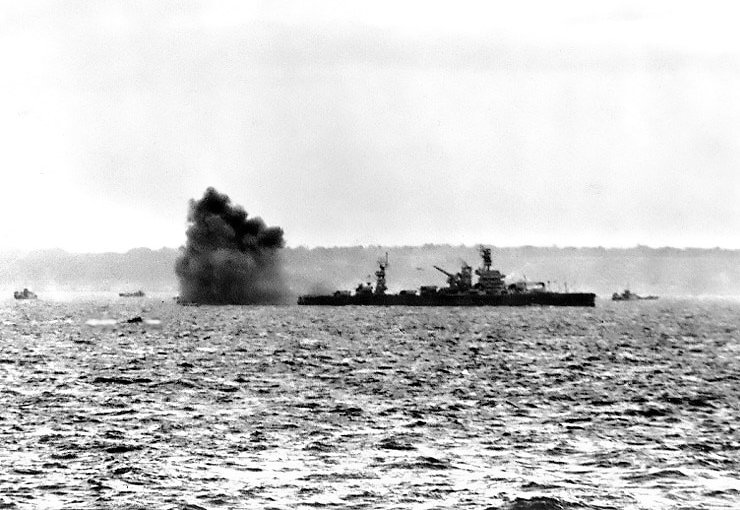
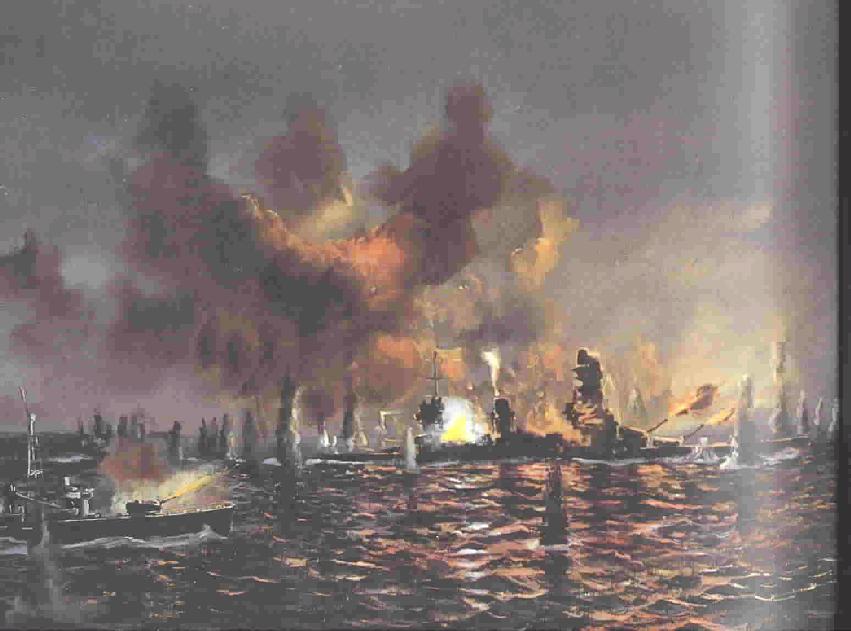
Under three years after the Japanese attack on Pearl Harbor five of the six surviving battleships fought in the last battleship versus battleship engagement in history, taking revenge on a Japanese surface force at the Battle of Surigao Strait during the Battle of Leyte Gulf.

Vice Admiral Shoji Nishimura who commanded the Southern Force of the Japanese fleet attempting to defeat the American invasion force at Leyte Gulf had successfully avoided damage from the air attacks that so damaged he Center Force sinking the massive Super-Battleship Musashi. Now his force steamed into Surigao Strait in the hopes that it could break through any American resistance and destroy the transports laden with troops and supplies in Leyte Gulf. Following a short distance behind Nishimura was the force of Vice Admiral Kiyohide Shima. The two forces were composed of two battleships, three heavy and two light cruisers and eight destroyers. They had no idea that they were sailing into a maelstrom of death.

The mission of these two groups was to fight their way through the Surigao Strait to assist the Central Force in destroying the US invasion force in Leyte Gulf. The mission was for all practical purposes a suicide mission, a naval “Charge of the Light Brigade” as they sailed into the Valley of Death against the Battle Line of the US 7th Fleet.

The two Japanese Battleships, the Fuso and Yamashiro had spent the majority of the war in home waters and had seen little action. They had not been part of any of the great Japanese victories in 1941 and 1942 and they had not been blooded in the Solomons. Instead the two elderly battlewagons passed the war conducting training in the inland sea. They were no longer first line ships, but the Japanese were desperate and every capital ship mattered, even an old battleship set loose among helpless transports could wreak havoc.
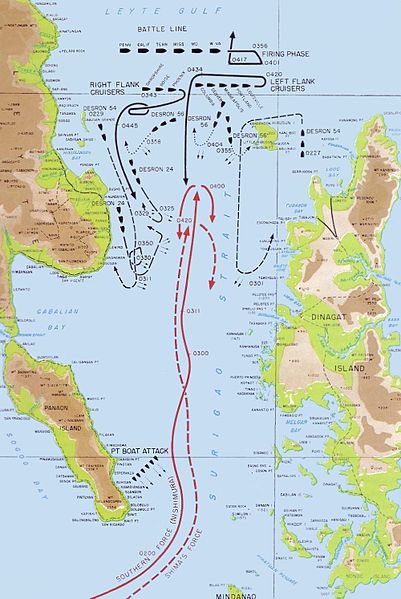
 

During the afternoon of October 24th Admiral Nishimura received an accurate report from one of Mogami’s scout planes telling him exactly what he was up against yet he pushed on in the manner of a doomed but resolute Samurai.

Facing Nishimura and Shima was a force built around the six old Battleships of Vice Admiral Jesse Oldendorf’s 7th Fleet Battle Line, five of which had been resurrected from the hell of Pearl Harbor.


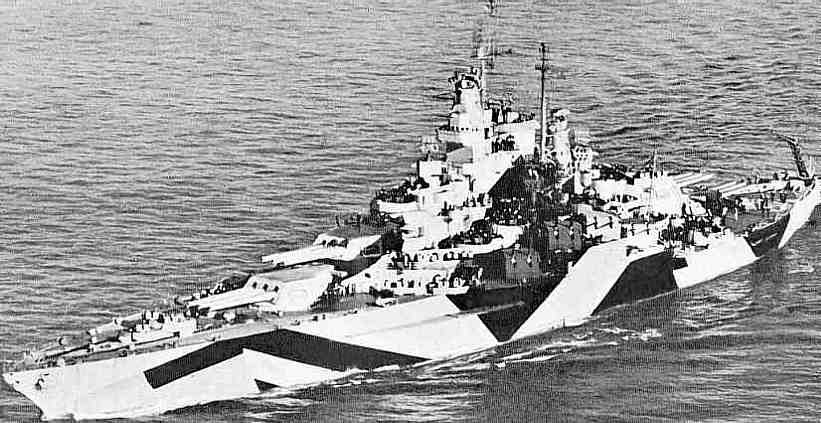
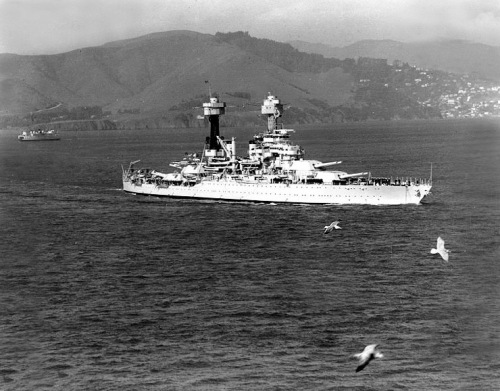
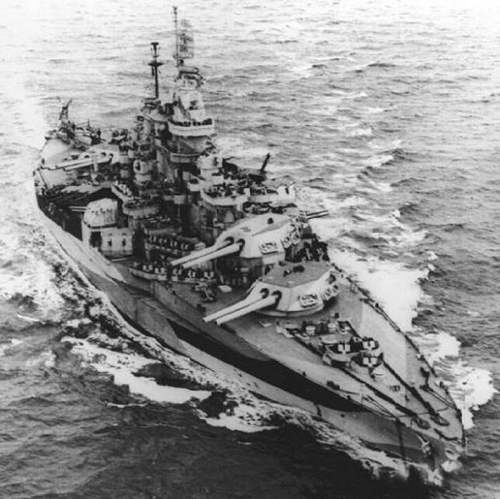
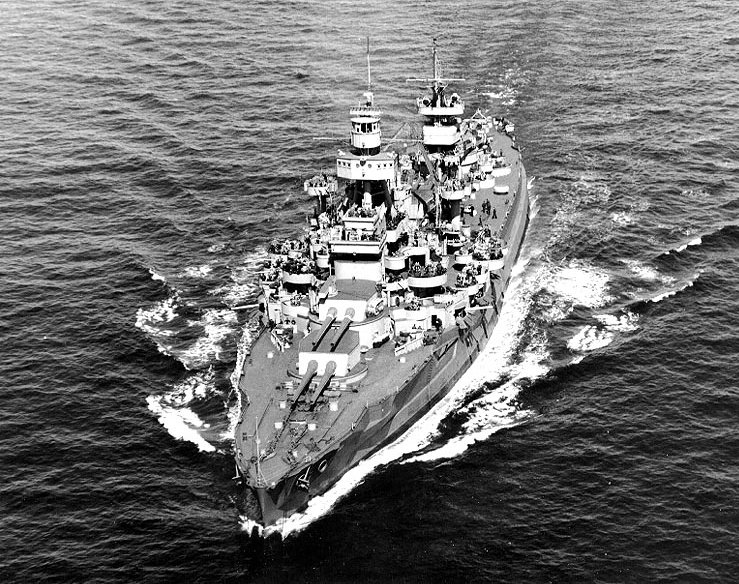
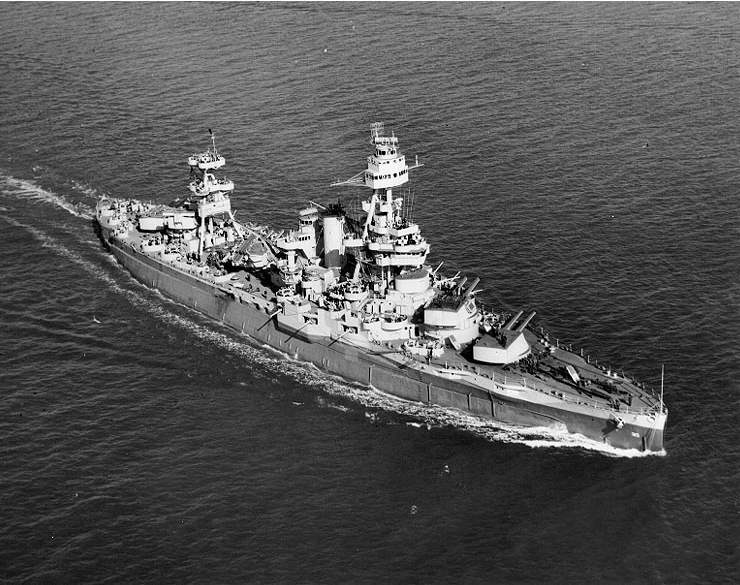
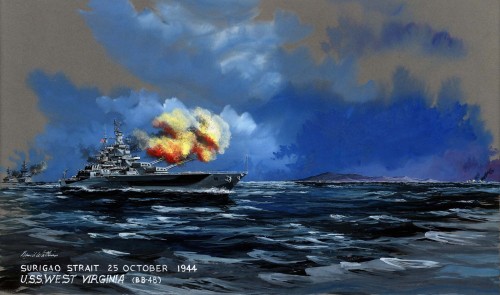
The Americans heavily outnumbered the Japanese, the Battleships USS West Virginia, USS California and USS Tennessee were the heart of the force. Fully modernized after Pearl Harbor they no longer resembled the ships that they were before the war. Equipped with the latest Mark 8 Fire Control radar they had the ability to put their 16” and 14” shells on target at ranges farther than anything that the Japanese could counter.The were in most respects, especially in gunpowder and fire control as modern as the newest battleships in the fleet, and far superior to all Japanese battleships except the great Yamato and now departed Musashi. 
These three battlewagons were joined by the less fully modernized USS Maryland, USS Mississippi and USS Pennsylvania. The American task force included  4 Heavy Cruisers, 4 Light Cruisers, 28 Destroyers and 39 PT Boats. In the shear number of guns the six American battleships outnumbered the combined Japanese forces with sixteen 16” and forty eight 14” guns against  twenty 14” guns mounted on the antiquated Yamashiro and Fuso. The disparity in lesser guns mounted on the cruisers and destroyers was was just as stark; thirty five against twenty six 8” guns, and fifty one 6” guns against six 5.5 inch guns. This massive imbalance didn’t count the nearly one hundred fifty 5” guns on theUS destroyers and as well as nearly 200 torpedo tubes mounted on those ships as well as those on the PT Boats.

When Nishimura’s force entered the southern entrance to Surigao Strait they were immediately discovered by the American PT Boats at about 2236. Though the PTs scored no hits they provided critical updates on the Japanese position and movements to Jesse Oldendorff.

At 0300 the American destroyers began a devastating series of attacks on the Japanese flanks. They sank two destroyers and damaged another which had to turn back, but the real damage occurred when both Fuso and Yamashiro were struck by torpedoes.

Fuso took two torpedo hits from fish launched by the destroyer USS Melvin. Fuso slowed and then blew up and broke in two sinking with all hands. This account has been contested in recent years but many find the new version less believable than the first.

Key in the evidence was the rescue and capture of Yamashiro’s Executive Officer in the north end of the strait combined with the surviving logs of the other Japanese ships which reported the sinking of Fuso. The Yamashiro continued ahead, though hit in the destroyer attack continued north into the valley of death with heavy cruiser Mogami and the last remaining destroyer Shigure.

At 0353 the West Virginia opened fire and scored hits on her first salvo. She was joined by California and Tennessee two minutes later, while the other battleships with their antiquated Mark 3 fire direction radars were slow to open up.
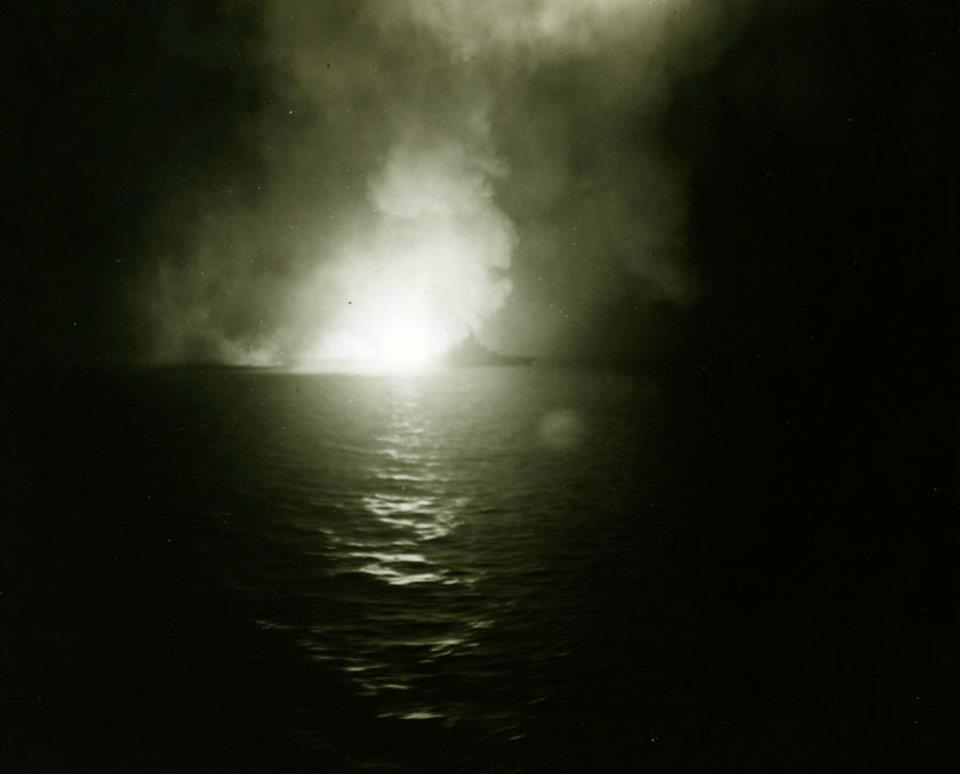
 

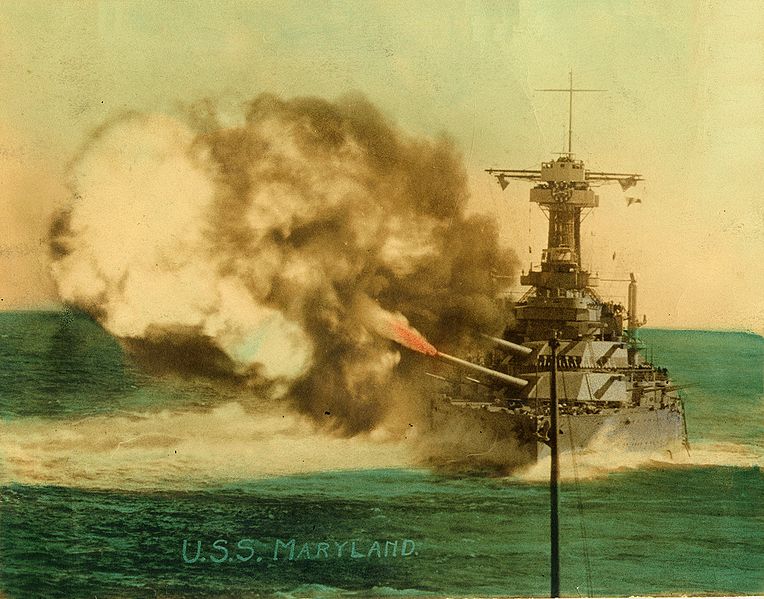
Maryland got off six full salvoes by ranging in on the splashes of West Virginia, California and Tennessee. Mississippi logged the final salvo of the battle and Pennsylvania got no shots off. West Virginia fired 16 salvoes or 96 rounds of 16”armor piercing shells, Tennessee got off 69 rounds and California 63 of 14” armor piercing shells, Maryland added forty eight 16” rounds.

The Yamashiro and Mogami sailed into the maelstrom absorbing hit after hit and gamely fought back. Yamashiro hit the destroyer USS Albert W Grant which was also hit by friendly fire badly damaging her. Finally with both of the Japanese ships ablaze they turned back down the strait in an attempt to escape this nautical version of Hell.

Yamashiro did not survive long, sinking with few survivors at 0420. Shima’s force entered the fray and the Light Cruiser Abukuma was damaged by a torpedo fired by PT-137 and fell out of the formation. She was sunk on 26 October by Army Air Force B-24s.

Shima and his force came up the strait his force encountered the battered remnants of Nishimura’s force, the burning halves of Fuso and the retreating Mogami and Shigure. Assuming the halves of Fuso to be the wreckage of both battleships Shima beat a hasty retreat but in the process his flagship, the heavy cruiser Nachi collided with Mogami flooding Mogami’s steering engine room and leaving her crippled. She was attacked again by American cruisers and aircraft and was abandoned at 1047 and scuttled a torpedo from the destroyer Akebono. Her hulk sank at 1307 on 25 October.

The battle was one of the most lopsided surface engagements of the war. When it was over only one of Nishimura’s ships had survived, the “lucky” Shigure. Shima’s force survived the night but most of his ships were sunk in the following months. Nachi was sunk in Manila Bay on 5 November by aircraft from the USS Lexington with a loss of over 800 sailors while Shima was in a conference ashore.

With the exception of the Albert W Grant and a PT Boat the American force was unscathed. The resurrected Battlewagons dredged from the mud of Peal Harbor had led the fleet to a decisive victory in the last duel between Dreadnaughts ever fought. The Japanese died as Samurai trying to complete a hopeless mission against a far superior force. The tide had turned and the Old Ladies of Pearl Harbor had returned from the dead to take revenge on the Imperial Navy.

It was an irony of of the naval war that the old battleships; ships which had been regulated to the secondary duty of protecting invasion forces and conducting shore bombardments in support of amphibious operations fought the final battleship versus battleship engagement in history. Sadly none of the surviving Pearl Harbor survivors were preserved. Pennsylvania was expended as a target during the atomic bomb tests at Bikini Atoll, while West Virginia, Maryland, California and Tennessee were scrapped in the late 1950s and early 1960s. Mississippi, which was not at Pearl Harbor survived as a gunnery trainer into the late 1950s, and served as a test ship for the first generations of guided missiles before she too was scrapped.

Peace

Padre Steve+
Leave a comment

Filed under History, Military, Navy Ships, US Navy, world war two in the pacific

The Thin Gray Line: The USS Yorktown, USS Enterprise and USS Hornet, the Carriers that Held the Japanese at Bay in 1942

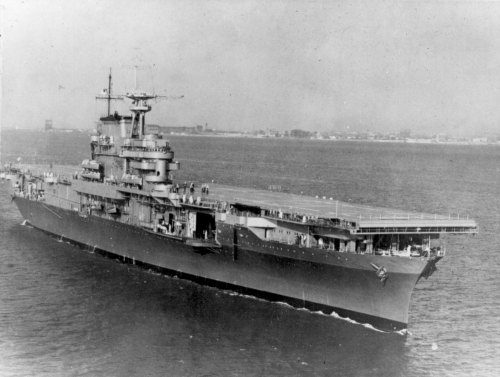
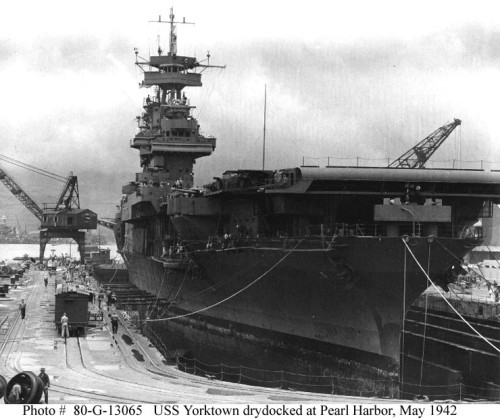
yorktown-drydock1USS Yorktown CV-5

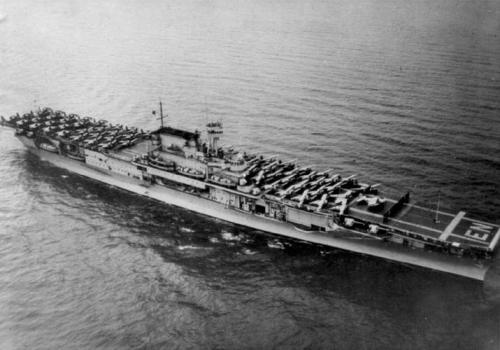
Seldom in the annals of war is recorded that three ships changed the course of a war and altered history.  Winston Churchill once said about Fighter Command of the Royal Air Force during the Battle of Britain: “Never in the field of human conflict was so much owed by so many to so few” however I would place the epic war waged by the three carriers of the Yorktown class against the Combined Fleet and First Carrier Strike Group, the Kido Butai of the Imperial Japanese Navy between December 1941 and November 1942 alongside the epic fight of the Royal Air Force against Hitler’s Luftwaffe.

The Carriers of the Yorktown Class hold a spot in United States Naval History nearly unequaled by any other class of ships, especially a class that numbered only three ships.  Designed and built in the mid 1930s they were the final class of pre-war carriers commissioned by the navy.  The ships were built incorporating the lessons learned with Langley, Lexington, Saratoga and Ranger and had features that would become standard in the design of US Aircraft Carriers. As such they were the template for future classes of ships beginning with the Essex Class until the advent of the super carriers of the Forrestal Class.

hornet-as-completed1USS Hornet CV-8

The ships heritage was evident in their names. Yorktown, the lead ship of the class named after the victory of Washington and Rochambeau over Cornwallis at Yorktown, Enterprise named after the sloop of war commanded by Stephen Decatur in the war against the Barbary Pirates, and Hornet after another famous Brig of War commanded by James Lawrence which defeated the British ship Peacock in the War of 1812.

They displaced 19.800 tons with a 25,000 full load displacement. Capable of 32.5 knots they were the Navy’s first truly successful class of carriers built from the keel up.  The ships could embark over aircraft and could steam long distances without refueling.  Protection was good for their era and the ships proved to be extraordinarily tough when tested in actual combat. In speed and air group capacity the only carriers of their era to equal them were the Japanese Hiryu and Soryu and the larger Shokaku and Zuikaku. British carriers of the period were about the same size but were slower and carried a smaller and far less capable air group though their protection which included armored flight decks was superior to both the American and Japanese ships.

enterprise-pre-war-with-ac-on-deck1USS Enterprise CV-6

Next week we will remember the epic battle of Midway, where these three gallant ships inflicted a devastating defeat on the Japanese First Carrier Strike Group. I believe that it is appropriate to go into that week remembering those ships and the brave sailors and aviators who made their triumph at Midway possible. the The links below are to articles about these three gallant ships.

They Held the Line: The USS Yorktown CV-5, USS Enterprise CV-6 and USS Hornet CV-8, Part One

They Held the Line: The USS Yorktown CV-5, USS Enterprise CV-6 and USS Hornet CV-8, Part Two the Hornet

They Held the Line: The USS Yorktown CV-5, USS Enterprise CV-6 and USS Hornet CV-8, Part Two the Hornet

Peace,

Padre Steve+

2 Comments

Filed under History, Military, Navy Ships, world war two in the pacific

Padre Steve’s Easy Listening Classic Christmas

uncomon-christmas-songs

“In the old days, it was not called the Holiday Season; the Christians called it ‘Christmas’ and went to church; the Jews called it ‘Hanukkah’ and went to synagogue; the atheists went to parties and drank. People passing each other on the street would say ‘Merry Christmas!’ or ‘Happy Hanukkah!’ or (to the atheists) ‘Look out for the wall!” Dave Barry 

I love Christmas music of all types and I have a somewhat sick sense of humor that appreciates Dave Barry’s humor. Over the past few days I have been going through some classic Christmas season songs from the Rock, R & B and Country Western genres. Tonight is a popular but not talked about feature of songs that might be best called “easy listening.” They encompass a period from the 1950s through early 1980s and include recordings from some of the most popular artists of the last half century.

National-Christmas-Tree

What I find interesting about Christmas in the United States is that it is not just for Christians. In fact some of the most popular Christmas tunes have been written or performed by men and women who are Jewish, Agnostic or sometimes even avowed Atheists.  Actually that is part of the magic of the Christmas holidays in this country. I have many friends who span the spectrum of religious diversity in the United States. Various forms of Christians from the most Orthodox, Conservative and Fundamental to the most ecumenical, progressive or liberal. I also have friendships with Jews, Moslems, Buddhists, Hindus, Wiccans, followers of Native American religions, as well as Atheists, Agnostics and Free Thinkers.

However despite their religious or philosophical differences most of my friends have a respect for others. Generally, be they Christians or not they want to be kind to others and enjoy the Christmas holiday season regardless of if they believe in the distinctive Christian understanding of the Incarnation.  I think that is commendable because that doesn’t happen in most of the world. In some places some Christians are happy with killing other Christians at Christmas for reasons of dogma, race or tribe.

These songs the implicitly Christian ones as well as the more festive and less than religious  traditional are sung by a wide variety of artists. Many are legendary for their accomplishments.

434320

Here Barbara Streisand sings Ave Maria http://www.youtube.com/watch?v=0wFtXvt8TOQ

Merry_Christmas_Darling

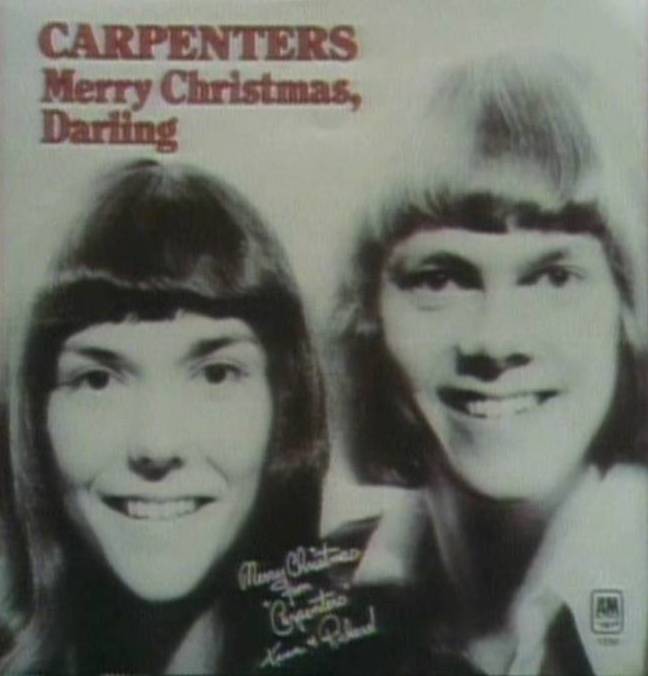
But not all Christmas songs are religious in nature. Many speak of human relationships. Barry Manilow wrote and performed Because it’s Christmas http://www.youtube.com/watch?v=QHRi6nAZZWE ,Mel Torme, nicknamed “the Velvet Fog” sang Christmas Time is Here  http://www.youtube.com/watch?v=phHwxK064RM, the Carpenters recorded and performed Merry Christmas Darling http://www.youtube.com/watch?v=nR34VJ7HWqU while Steve Lawrence and Eydie Gourmet did Hurry Home for Christmas http://www.youtube.com/watch?v=nR34VJ7HWqU, and Bing Crosby did the playful Mele Kalikimaka (Hawaiian Christmas Song) http://www.youtube.com/watch?v=hEvGKUXW0iI.

hqdefault-6

But then some are and because of the theological message of Christmas cannot be otherwise. Julie Andrews version of O Come All Ye Faithful  http://www.youtube.com/watch?v=GdJ6ZdHaFvg, Jim Neighbors http://www.youtube.com/watch?v=bQKPIplA8Gc and Andy Williams both performed Do You Hear What I Hear? http://www.youtube.com/watch?v=Em0P9zb3a3k all epitomize that part of the music of the season.

Some singers, in fact many were able to perform religious and non-religious Christmas songs. Vicki Carr sang It Came Upon a Midnight Clear http://www.youtube.com/watch?v=Yd4qLxVv_9I and I Still Believe in Christmas  http://www.youtube.com/watch?v=kFsel3waJkM.

0-11

Judy Garland sang a memorable version of Have Yourself a Merry Little Christmas http://www.youtube.com/watch?v=5g4lY8Y3eoo in the movie Meet Me In St Louis. The song has been recorded by many others including Helen Reddy  http://www.youtube.com/watch?v=hXKQYXiXBqA and Billy Joel, an avowed Atheist who has recorded a number of Christmas or Christmas themed songs including his version of this same song http://www.youtube.com/watch?v=B4LQmQompMs 

Engelbert Humperdinck sang Star of Bethlehem http://www.youtube.com/watch?v=rBLOJce1EvY and the Ray Conniff Singers performed a version of the Carol of the Bells http://www.youtube.com/watch?v=mQBpmaIRaiU . Sammy Davis Jr recorded Christmas All Over the World http://www.youtube.com/watch?v=CW8WyWkV-Gk and Carly Simon did Christmas is Almost Here http://www.youtube.com/watch?v=O0fG9d3y99c

101109_141135_25961858

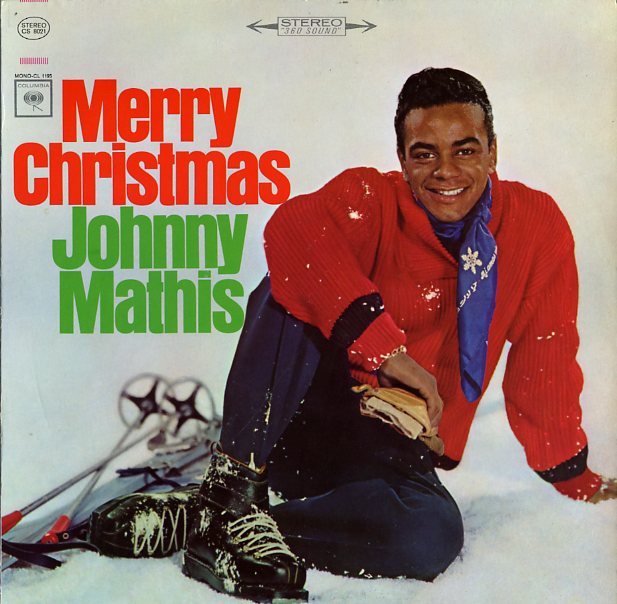
Of the more implicitly Christian hymns recored Judy Collins performed Joy to the World http://www.youtube.com/watch?v=q_JyZUnMzDQ while Johnny Mathis performed What Child is This? http://www.youtube.com/watch?v=YwNb3RQYIAQ and Anne Murray who I have always loved to hear, sang O Come All Ye Faithful http://www.youtube.com/watch?v=_oUAnGcT–A while James Taylor performed the spiritual Go Tell it on the Mountain http://www.youtube.com/watch?v=ifEUn1AxDYo.

buble-xmas-bundle_1_1

Other songs that speak of the more human and universal aspects of missing loved ones at Christmas include Roberta Flack’s The 25th of Last December http://www.youtube.com/watch?v=RwuscC7VowY Michael Buble did Christmas, Baby Please Come Home http://www.youtube.com/watch?v=iIOFMmkrfmo and Joni Mitchell who performed the haunting River http://www.youtube.com/watch?v=fCwlEnuXYsE. Robert Goulet sang The Christmas I Spend With You http://www.youtube.com/watch?v=Fko2GVOPbXI Carole King did Love for Christmas http://www.youtube.com/watch?v=8jgsQKJwcdQ

holidayinn

Perhaps the most famous and popular easy listening Christmas song is Bing Crosby’s White Christmas, which he performed in the movie of the same name http://www.youtube.com/watch?v=9Yg5g_Xl-uU Many others have sung this classic including Tony Bennett who teamed up to sing it in concert with Placido Domingo http://www.youtube.com/watch?v=jd0QQmXKAqY . The song is the most popular Christmas song ever written and has been recorded by thousands of artists.

Irving+Berlin+-+White+Christmas+Soundtrack+-+LP+RECORD-496843Irving_Berlin

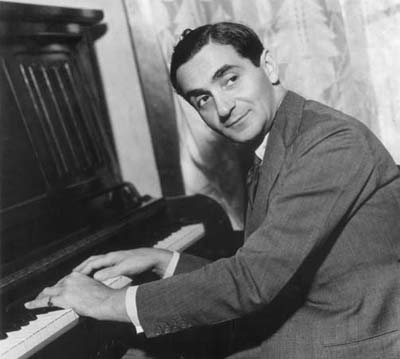
I think the irony behind White Christmas which makes it such a unique part of the American Christmas story is that it was written by Irving Berlin a Jewish immigrant from Russia. The song is not religious at all, but an almost sorrowful longing for bygone days. The fact that it was released just over two weeks after the attack on Pearl Harbor made it even more poignant.  Honestly I can’t think of any country where the most popular Christmas song of all time would be written by someone who was not a Christian. I don’t about you but that is something that makes me thankful to be an American. Now if we American Christians could only accord others the same respect and appreciation.

I could go on, in fact as I listen to different artists and songs I can think of many more that could be mentioned. The fact that all cannot be mentioned, including some that may be actually better than some on this list points to the amazing diversity of Christmas and the holiday season in the United States.

So with that I will say good night and until tomorrow my friends,

Peace

Padre Steve+

Leave a comment

Filed under film, movies, music

Battleship Row: The Story of the Battleships of Pearl Harbor

the-japanese-attack-on-pearl-harbor-everett-2

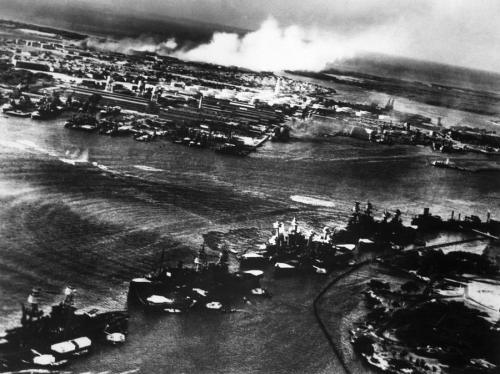
“Yesterday, Dec. 7, 1941 – a date which will live in infamy – the United States of America was suddenly and deliberately attacked by naval and air forces of the Empire of Japan…. The attack yesterday on the Hawaiian Islands has caused severe damage to American naval and military forces. Very many American lives have been lost.” Except of President Franklin D Roosevelt’s Pearl Harbor Speech December 8th 1941

g411119

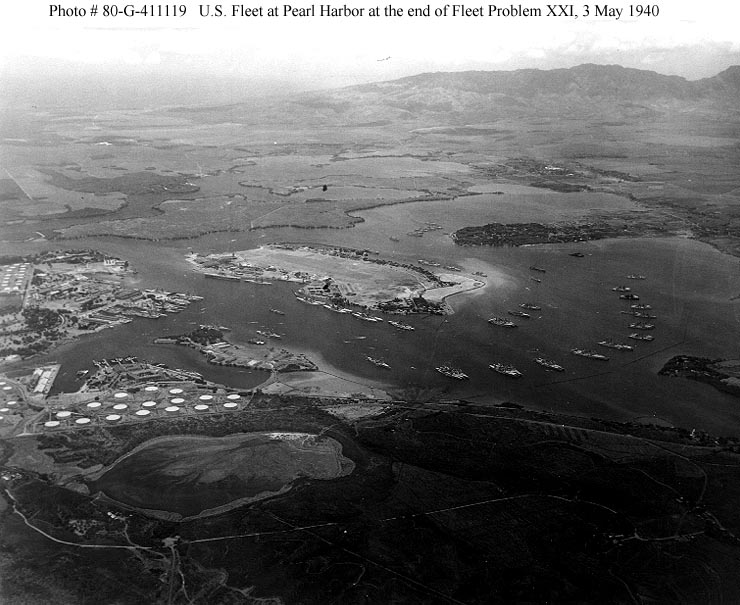
Today is the 72nd anniversary of the Japanese attack on Pearl Harbor and as we were then we are at war. Of course it is not the same kind of war and most Americans live in the illusion of peace which makes it even more important to remember that terribly day of infamy.

I remember reading Walter Lord’s classic and very readable book about Pearl Harbor “Day of Infamy” when I was a 7th grade student at Stockton Junior High School back in 1972.  At the time my dad was on his first deployment to Vietnam on the USS Hancock CVA-19.  As a Navy brat I was totally enthralled with all things Navy and there was little that could pull me out of the library.  In fact in my sophomore year of high school I cut over one half of the class meetings of the 4th quarter my geometry class to sit in the library and read history, especially naval and military history.

arizon-main-battery2-2

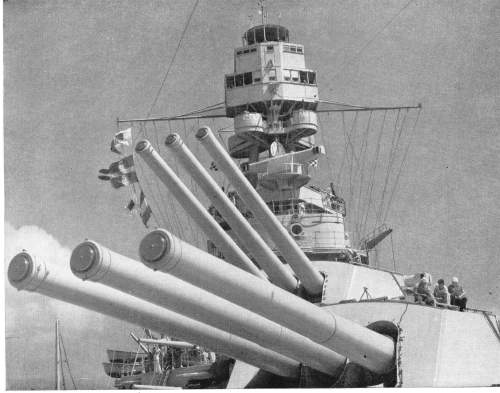
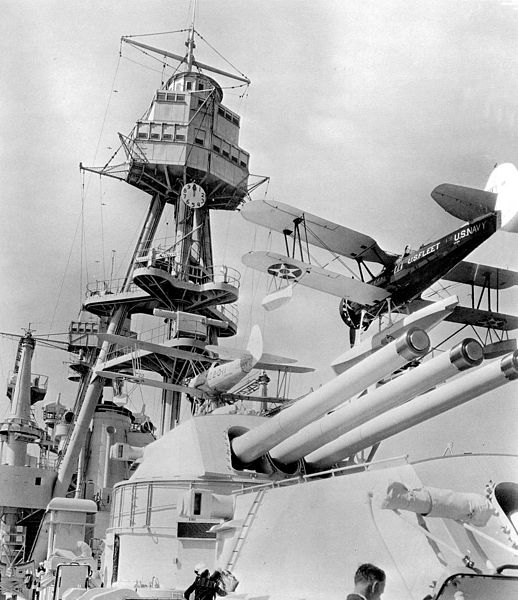
The main battery of either USS Arizona or Pennsylvania 

Over the years I have always found the pre-World War Two battleships to be among the most interesting ships in US Navy history.  No they are not the sleek behemoths like the USS Wisconsin which graces the Norfolk waterfront. They were not long and sleek, but rather squat yet exuded power. They were the backbone of the Navy from the First World War until Pearl Harbor.  They were the US Navy answer to the great Dreadnaught race engaged in by the major Navies of the world in the years prior to, during and after World War One.

pennsylvania-under-golden-gate

USS Pennsylvania passing under the Golden Gate

Built over a period of 10 years each class incorporated the rapid advances in technology between the launching of the Dreadnaught and the end of the Great War.  While the United States Navy did not engage in battleship to battleship combat the ships built by the US Navy were equal to or superior to many of the British and German ships of the era.

puyBfl

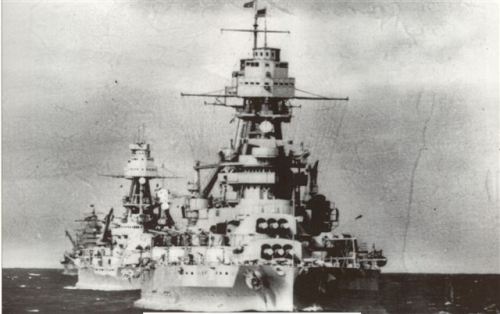
US Battleships at the Grand Fleet Review of 1937

Through the 1920s and 1930s they were the ambassadors of the nation, training and showing the flag. During those years the older ships underwent significant overhaul and modernization.

arizona-and-battleline

The Battle Force of the Pacific Fleet in 1941 included 9 battleships of which 8 were at Pearl Harbor on the morning of December 7th.  In the event of war the US War Plan, “Orange” called for the Pacific Fleet led by the Battle Force to cross the Pacific, fight a climactic Mahanian battle against the battleships of the Imperial Japanese Navy and after vanquishing the Japanese foe to relieve American Forces in the Philippines.  However this was not to be as by the end of December 7th all eight were out of action, with two, the Arizona and Oklahoma permanently lost to the Navy.

The ships comprised 4 of the 6 classes of battleships in the US inventory at the outbreak of hostilities.  Each class was an improvement on the preceding class in speed, protection and firepower.  The last class of ships, the Maryland class comprised of the Maryland, Colorado and West Virginia, was the pinnacle of US Battleship design until the North Carolina class was commissioned in 1941.  Since the Washington Naval Treaty limited navies to specific tonnage limits as well as the displacement of new classes of ships the United States like Britain and Japan was limited to the ships in the current inventory at the time of the treaty’s ratification.

uss_oklahoma

USS Oklahoma

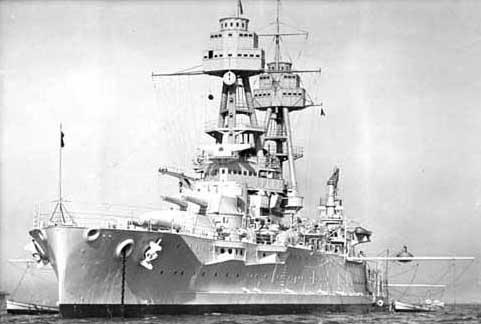
The ships at Pearl Harbor included the two ships of the Nevada class, the Nevada and Oklahoma they were the oldest battleships at Pearl Harbor and the first of what were referred to as the “standard design” battleships. The two ships of the Pennsylvania class, the Pennsylvania and her sister the Arizona served as the flagships of the Pacific Fleet and First Battleship Division respectively and were improved Nevada’s. The California class ships, California and Tennessee and two of the three Maryland’s the Maryland and West Virginia made up the rest of the Battle Force.

california-1938

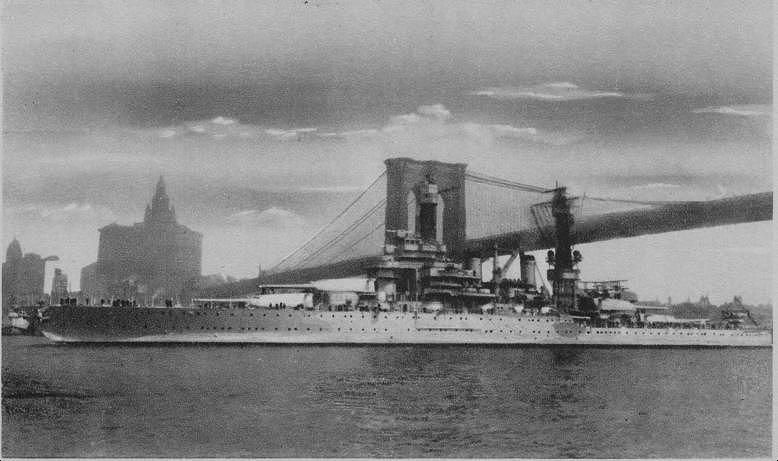
USS California passing under Brooklyn Bridge

The Colorado was undergoing a yard period at Bremerton and the three ships of the New Mexico class, New Mexico, Mississippi and Idaho had been transferred to the Atlantic before Pearl Harbor due to the German threat.  The three oldest battleships  ships of the New York and Wyoming Classes, the New York, Arkansas and Texas also were in the Atlantic. Two former battleships, the Utah and Wyoming had been stripped of their main armaments and armor belts and served as gunnery training ships for the fleet. The Utah was at Pearl Harbor moored on the far side of Ford Island.

9.athumb

The ships that lay at anchor at 0755 that peaceful Sunday morning on “Battleship Row” and in the dry dock represented the naval power of a bygone era, something that most did not realize until two hours later. The age of the battleship was passing away, but even the Japanese did not realize that the era had passed building the massive super-battleships Yamato and Musashi mounting nine 18” guns and displacing 72,000 tons, near twice that of the largest battleships on Battleship Row.

bb36_06

USS Nevada at Pearl Harbor

The Oklahoma and Nevada were the oldest ships in the Battle Force.  Launched in 1914 and commissioned in 1916 the Nevada and Oklahoma mounted ten 14” guns and displaced 27,500 tons and were capable of 20.5 knots. They served in World War One alongside the British Home Fleet and were modernized in the late 1920s. They were part of the US presence in both the Atlantic and Pacific in the inter-war years. Oklahoma took part in the evacuation of American citizens from Spain in 1936 during the Spanish Civil War.

013717


USS Oklahoma Capsized (above) and righted (below)


oklahoma-salvage

During the Pearl Harbor attack Oklahoma was struck by 5 aerial torpedoes capsized and sank at her mooring with the loss of 415 officers and crew. Recent analysis indicates that she may have been hit by at least on torpedo from a Japanese midget submarine. Her hulk would be raised but she would never again see service and sank on the way to the breakers in 1946.

nevada-1

USS Nevada aground off Hospital Point

Nevada was the only battleship to get underway during the attack.  Moored alone at the north end of Battleship Row her Officer of the Deck had lit off a second boiler an hour before the attack.  She was hit by an aerial torpedo in the first minutes of the attack but was not seriously damaged. She got underway between the attack waves and as she attempted to escape the harbor she was heavily damaged. To prevent her from sinking in the main channel she was beached off Hospital Point.

800px-USS_Nevada_(BB-36)_specs

nevada-utah-beach

USS Nevada at Normandy 

Nevada was raised and received a significant modernization before returning to service for the May 1943 assault on Attu.  Nevada returned to the Atlantic where she took part in the Normandy landings off Utah Beach and the invasion of southern France.  She returned to the Pacific and took part in the operations against Iwo Jima and Okinawa where she again provided naval gunfire support.  Following the war the great ship was assigned as a target at the Bikini atoll atomic bomb tests. The tough ship survived these tests and was sunk as a target on 31July 1948.

USS_Arizona_(BB-39)_-_1930s

USS Arizona

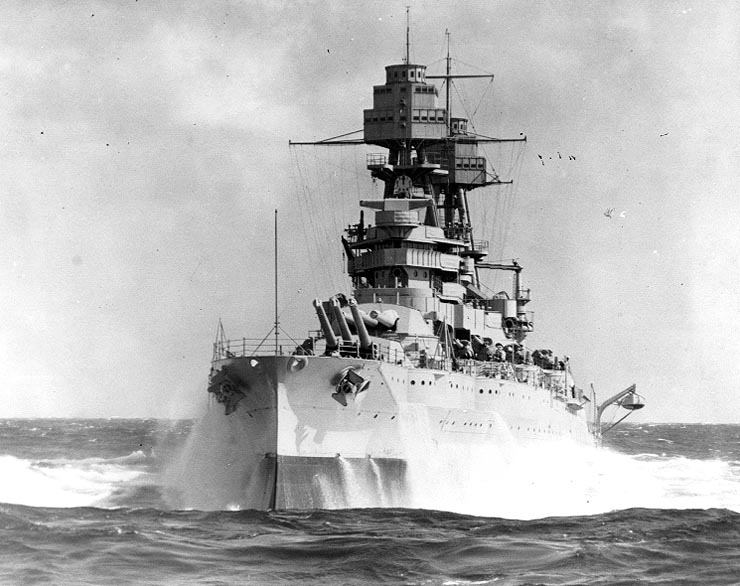
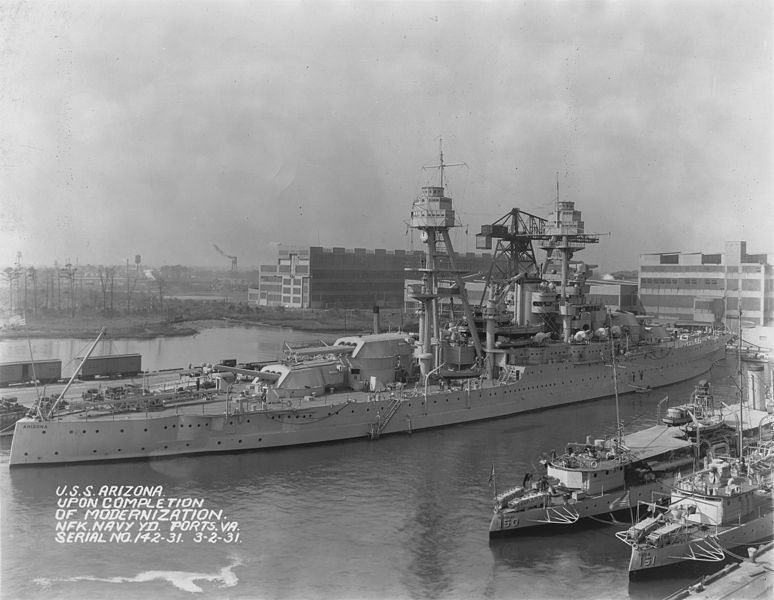
The two ships of the Pennsylvania Class were improved Oklahoma’s.  The Arizona and Pennsylvania mounted twelve 14” guns and displacing 31,400 tons and capable of 21 knots they were both commissioned in 1916. They participated in operations in the Atlantic in the First World War with the British Home Fleet. Both ships were rebuilt and modernized between 1929-1931.

518px-O3U-3s_on_USS_Pennsylvania_(BB-38)_in_1935

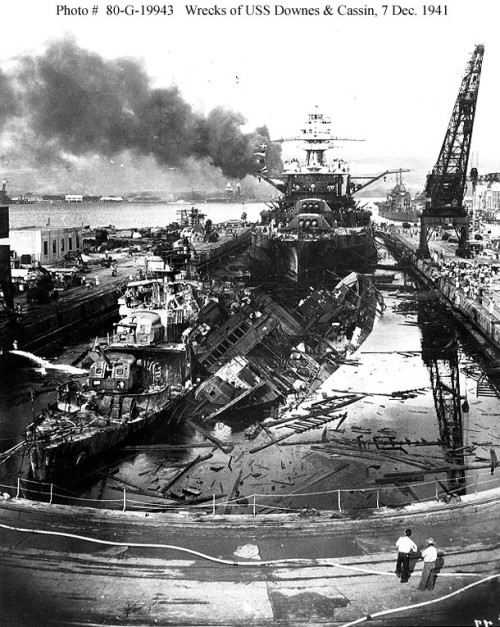
They were mainstays of the fleet being present at Presidential reviews, major fleet exercises and making goodwill visits around the world.  Pennsylvania was the Pacific Fleet Flagship on December 7th 1941 and was in dry dock undergoing maintenance at the time of the attack. She was struck by two bombs and received minor damage.

pennsylania-drydock

She was back in action in early 1942. She underwent minor refits and took part in many amphibious landings in the Pacific and was present at the Battle of Surigao Strait.  She was heavily damaged by an aerial torpedo at Okinawa Pennsylvania and was repaired. Following the war the elderly warrior was used as a target for the atomic bomb tests. She was sunk as a gunnery target in 1948.

774px-USS_Arizona_after_1931_modernization_NARA_19-LC-19B-1

arizona-buring

Arizona was destroyed during the attack. As the flagship of Battleship Division One she was moored next to the repair ship USS Vestal.  She was hit by 8 armor piercing bombs one of which penetrated her forward black powder magazine. The ship was consumed by a cataclysmic explosion which killed 1103 of her 1400 member crew including her Captain and Rear Admiral Isaac Kidd, commander of Battleship Division One.  She was never officially decommissioned and the colors are raised and lowered every day over the Memorial which sits astride her broken hull.

tennessee-1938

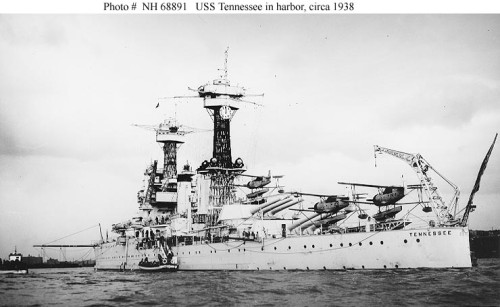
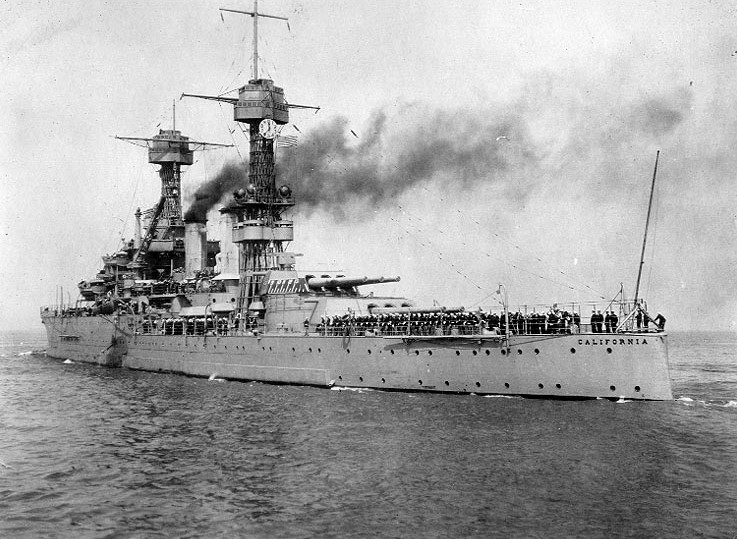
The Tennessee class ships the Tennessee and California were the class following the New Mexico class ships which were not present at Pearl Harbor. These ships were laid down in 1917 and commissioned in 1920. Their design incorporated lessons learned at the Battle Jutland. They mounted twelve 14” guns, displaced 32,300 tons and were capable of 21 knots. At Pearl Harbor Tennessee was moored inboard of West Virginia and protected from the aerial torpedoes which did so much damage to other battleships. She was damaged by two bombs. California the Flagship of Battleship Division Two was moored at the southern end of Battleship Row. She was hit by two torpedoes in the initial attack. However, she had the bad luck to have all of her major watertight hatches unhinged in preparation for an inspection.

uss_california_bb44_03

h64474

Despite the valiant efforts of her damage control teams she sank at her moorings. She was raised and rebuilt along with Tennessee were completely modernized with the latest in radar, fire control equipment and anti-aircraft armaments. They were widened with the addition of massive anti-torpedo bulges and their superstructure was razed and rebuilt along the lines of the South Dakota class.

USS California Late WWII

USS California following Modernization

014389o

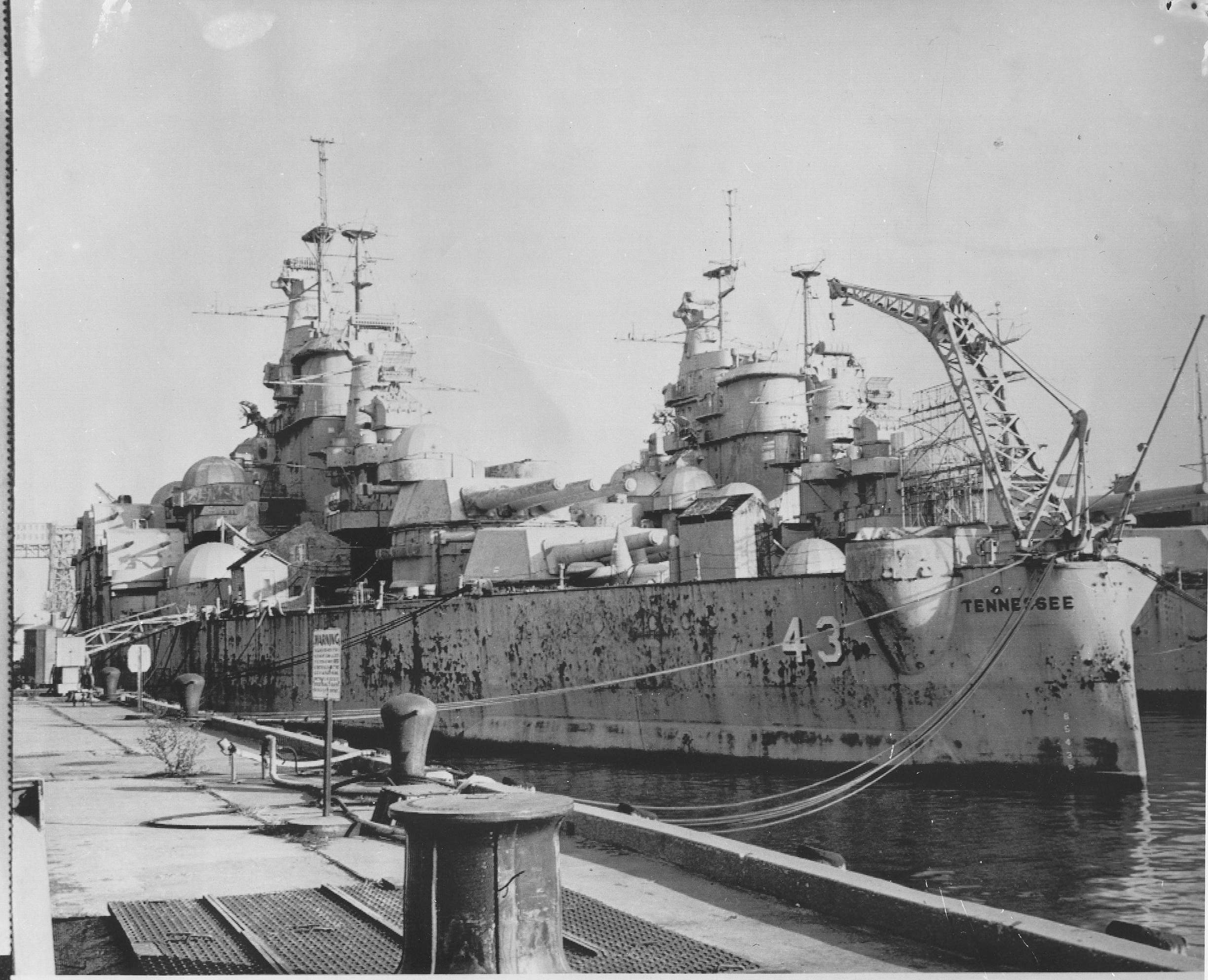
USS Tennessee with another ship, possibly California in reserve awaiting the breakers

When the repairs and modernization work was completed they looked nothing like they did on December 7th. Both ships were active in the Pacific campaign and be engaged at Surigao Strait where they inflicted heavy damage on the attacking Japanese squadron. Both survived the war and were placed in reserve until 1959 when they were stricken from the Navy list and sold for scrap.

west-virginia-1934

USS West Virginia 

The Maryland and West Virginia were near sisters of the Tennessee class.  They were the last battleships built by the United States before the Washington Naval Treaty. and the first to mount 16” guns. With eight 16” guns they had the largest main battery of any US battleships until the North Carolina class.

764px-USS_Maryland_broadside_1920s

They displaced 32,600 tons and could steam at 21 knots. Laid down in 1917 and commissioned in 1921 they were modernized in the late 1920s. They were the most modern of the Super-Dreadnoughts built by the United States and included advances in protection and watertight integrity learned from both the British and German experience at Jutland.

09_maryland_oklahoma_pearl_harbor

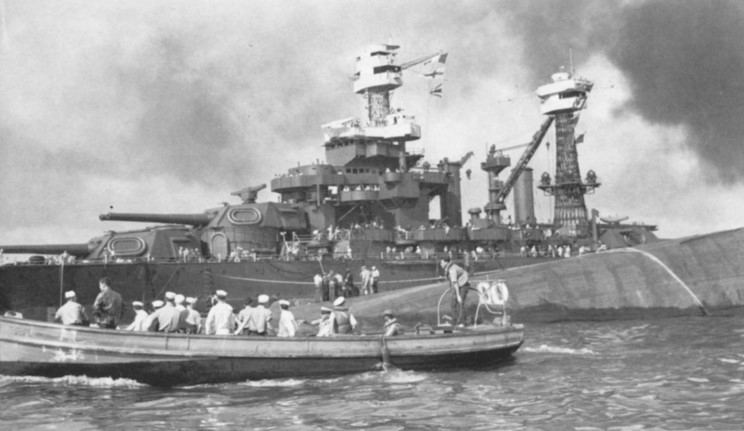
USS Maryland behind the capsized Oklahoma

At Pearl Harbor Maryland  was moored inboard of Oklahoma and was hit by 2 bombs and her crew helped rescue survivors of that unfortunate ship.  She was quickly repaired and returned to action.  She received minimal modernization during the war. She participated in operations throughout the entirety of the Pacific Campaign mainly conducting Naval Gunfire Support to numerous amphibious operations. She was present at Surigao Strait where despite not having the most modern fire control radars she unleashed six salvos at the Japanese Southern Force.

729px-Photograph_of_the_damage_done_to_the_USS_West_Virginia,_sunk_in_the_Japanese_raid_on_Pearl_Harbor_-_NARA_-_306536

754px-USS_West_Virginia_5-21-42,_Port_quarter_showing_previous_water_line_(FCP)_-_NARA_-_296915

west-virginia-damage

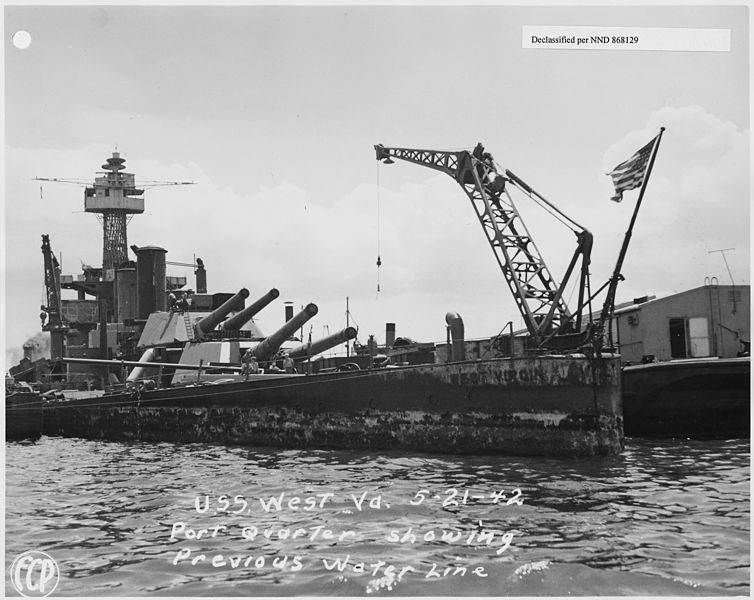
USS West Virginia, sunk, raised and in dry dock, note the massive damage to Port Side

West Virginia suffered some of the worst damage in the attack. She was hit by at least 5 torpedoes and two bombs. She took a serious list and was threatening to capsize. However she was saved from Oklahoma’s fate by the quick action of her damage control officer who quickly ordered counter-flooding so she would sink on an even keel.  She was raised from the mud of Pearl Harbor and after temporary repairs and sailed to the West Coast for an extensive modernization on the order of the Tennessee and California.

west-virginia-final-config

USS West Virginia after salvage and modernization 

West Virginia was the last Pearl Harbor to re-enter service. However when she returned she made up for lost time.  She led the battle line at Surigao Strait and fired 16 full salvos at the Japanese squadron. Her highly accurate gunfire was instrumental in sinking the Japanese Battleship Yamashiro in the last battleship versus battleship action in history.  West Virginia, Maryland and their sister Colorado survived the war and were placed in reserve until they were stricken from the Naval List and sold for scrap in 1959.

The battleships of Pearl Harbor are gone, save for the wreck of the Arizona and various relics such as masts, and ships bells located at various state capitals and Naval Stations.  Unfortunately no one had the forethought to preserve one of the survivors to remain at Pearl Harbor with the Arizona.  Likewise the sailors who manned these fine ships, who sailed in harm’s way are also passing away.  Every day their ranks grow thinner, the youngest are all 89-90 years old.

As this anniversary of the Pearl Harbor attack passes into history it is fitting to remember these men and the great ships that they manned.

Peace,

Padre Steve+

4 Comments

Filed under History, Military, Navy Ships, News and current events, US Navy, world war two in the pacific

The Doolittle Raid: 30 Seconds that Changed the Course of the Pacific War

20130417-235602.jpg

This week marks the 71st anniversary of the Doolittle Raid on Tokyo. 80 US Army Air Corps flyers manning 16 B-25 Mitchell bombers conducted a mission from the deck of the USS Hornet CV-8which though it caused little damage changed the course of World War Two in the Pacific.

The genus of the strike came from the desire of President Franklin Roosevelt to bomb Japan as soon as possible during a meeting just prior to Christmas 1941. Various aircraft types were considered and in the end the military chose the B-25 because it had the requisite range and had the best characteristics. Aircraft and their crews from the 17th Bomb Group which had the most experience with the aircraft were modified to meet the mission requirements. Lieutenant Colonel Jimmy Doolittle was selected to lead the mission.

Once the aircraft were ready they and their crews reported to Eglin Field for an intensive three week period of training. Supervised by a Navy pilot the crews practiced simulated carrier take offs, low level flying and bombing, night flying and over water navigation. When the training was complete the aircraft and crews and support personnel flew to McClellan Field for final modifications and then to NAS Alameda California where they were embarked on the Hornet Hornet’s air group had to be stowed on the ships hanger deck since the 16 B-25s had to remain of the flight deck. Each bomber was loaded with 4 specially modified 500 lb. bombs, three high explosive and one incendiary.

Departing Alameda on April 2nd the Hornet and her escorts, Hornet’s Task Force 18 rendezvoused with the Admiral William “Bull” Halsey’s Task Force 16 built around the USS EnterpriseCV-6. task Force 16 provided escort and air cover during the mission. The carriers, escorted by 4 cruisers, 8 destroyers and accompanied by two oilers hoped to get close enough to the Japanese home islands so that the raiders could reach bases in allied China.

The destroyers and slow oilers broke off on the evening of the 17th after refueling the carriers and cruisers. The two carriers and the cruisers then commenced a high speed run to get into range. However early in the morning of April 18th the ships were sited by a Japanese patrol boat, the #23 Nitto Maru which was sunk by the USS Nashvillebut not before it got off a radio message alerting the Japanese command. However the Japanese knowing that carrier aircraft had a relatively short range did not expect an attack. However, realizing the danger that the sighting brought, Captain Marc Mitscher elected to launch immediately, even though it meant that bombers would have to ditch their aircraft or attempt to land well short of the friendly Chinese airfields. The launch was 10 hours earlier and about 170 miles farther out from the Chinese bases than planned.

Flying in groups of two to four aircraft the raiders struck the Japanese cities of Tokyo, Yokohama, Yokosuka, Nagoya, Kobe and Osaka. Minimal damage was done and only one aircraft was damaged. However they needed to fly nearly 1500 more miles to get to areas of China unoccupied by Japanese forces. Miraculously most of the aircraft and crews managed to find refuge in China. 69 of the 80 pilots and crew members avoided death or capture. Two flyers drowned, one died when parachuting from his aircraft. Eight men were captured. Of those captured by the Japanese three, Lieutenants William Farrow, Dean Hallmark and Corporal Harold Spatz were tried and executed for “war crimes” on October 15th 1942.

Many of the surviving flyers continued to serve in China while others continued to serve in North Africa and Europe, another 11 died in action following the raid. Doolittle felt that with the loss of all aircraft and no appreciable damage that he would be tried by courts-martial. Instead since the raid had so bolstered American morale he was awarded the Congressional Medal of Honor, promoted to Brigadier General and would go on to command the 12th Air Force, the 15th Air Force and finally the 8th Air Force.

The raid shook the Japanese, especially the leadership of the Imperial Navy who had allowed American aircraft to strike the Japanese homeland. The attack helped convince Admiral Isoroku Yamamoto that an attack on Midway was needed in order to destroy the American Carriers and the threat to the home islands.

When asked by a reporter about where the attack was launched from, President Roosevelt quipped “Shangri-La” the fictional location of perpetual youth in the Himalayas’ made famous in the popular book and movie Lost Horizon.

The raid in terms of actual damage and losses to the attacking forces was a failure, but in terms of its impact a major victory of the United States. It gave the people of the United States a huge morale boost at a time when very little was going right. It forced the Japanese Navy to launch an attack on Midway that turned out to be a disaster, decimating the best of the Japanese Naval Air Forces and the loss of four aircraft carriers and enable the US Navy to take the offensive two month later at Guadalcanal.

In the years after the war the survivors would meet. Today four survivors of the raid remain alive. Three of them will meet in Fort Walton Beach Florida this week for their final public reunion. At some time the remaining men will meet privately and drink a bottle of 1896 Hennessy Cognac from silver goblets each inscribed with their names.

It will not be long before the final survivors will be gone and it is up to us to never forget their heroism, sacrifice and service in a mission the likes of which had never before been attempted, and which would in its own way help change the course of the Second World War.

Peace

Padre Steve+
3 Comments

Filed under History, Military, US Navy, world war two in the pacific

An older post of mine about Pearl Harbor as we approach the 71st anniversary of that “Day of Infamy.”

padresteve's avatarThe Inglorius Padre Steve's World

Arizona Leading the Battle Line

“Yesterday, Dec. 7, 1941 – a date which will live in infamy – the United States of America was suddenly and deliberately attacked by naval and air forces of the Empire of Japan…. The attack yesterday on the Hawaiian Islands has caused severe damage to American naval and military forces. Very many American lives have been lost.” Except of President Franklin D Roosevelt’s Pearl Harbor Speech December 8th 1941

Today is the 68th anniversary of the Japanese attack on Pearl Harbor and as we were then we are at war.

A Date that Will Live in Infamy: USS Arizona Burning

I remember reading Walter Lord’s “Day of Infamy” when I was a 7th grade student at Stockton Junior High School back in 1972.  At the time my dad was on his first deployment to Vietnam on the USS Hancock CVA-19.  As…

View original post 1,837 more words

1 Comment

Filed under History, Military, Navy Ships, traumatic national events, US Navy, world war two in the pacific

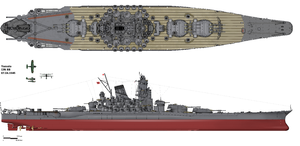
Requiem of Empire: The Yamato Class Battleships

Emperor Hirohito on Musashi in 1943

The is a long delayed installment of my series on Battleships. Previous were about the Battleships constructed under conditions of the London Naval Conference.  These have dealt with the British King George V Class, French Dunkerque and Richelieu Classes, Italian Vittorio Vento Class and the American North Carolina and South Dakota ClassesI then wrote an introduction to the Post Treaty Super-Battleships. This article is the first in that series which will include articles on the German Bismarck and Tirpitz, British Vanguard and American Iowa Class.

They were the largest and most heavily armed battleships ever built. Shrouded in secrecy by the Imperial Japanese Navy and Government the ships were designed to offset projected American numerical superiority. Their names were symbolic of Japan’s history. Yamato was named after Yamato Province, the ancestral home of the Yamato People, the dominant native ethnic group in Japan. Musashi was named after Musashi Province in which lays Tokyo Prefecture.  A third ship of the class, Shinano, was named after Shinano Province in central Japan which was the home of the prestigious Taketa Shingen family during the Senguku period.

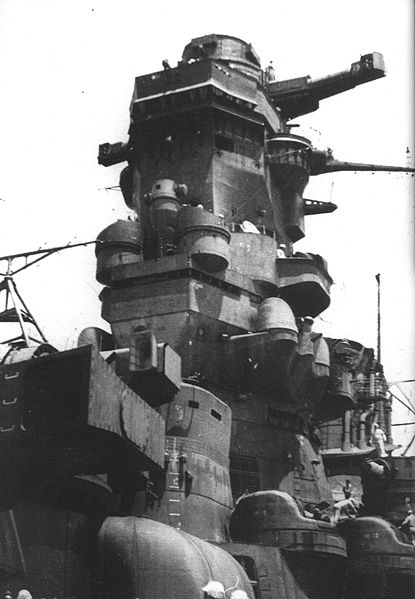
The Conning Tower and Bridge of Musashi

The secrecy surrounding their design and construction was unprecedented. Those charged with their deign and construction were thoroughly checked out by Japan’s secret police and sworn to an oath of secrecy. The oath sworn by builders of Musashi at the Mitsubishi Heavy Industries  Nagasaki Shipyard were sworn to the oath shown below:

I am aware that all work work involving the construction of the No. 2 Battleship is vital to national security. I will make utmost effort to maintain the  secrecy of the project, and swear that I will leak no information relating to the said battleship, even to relatives and close friends. In the event I violate this oath,  I will submit to the punishment determined by the company and the Navy.  

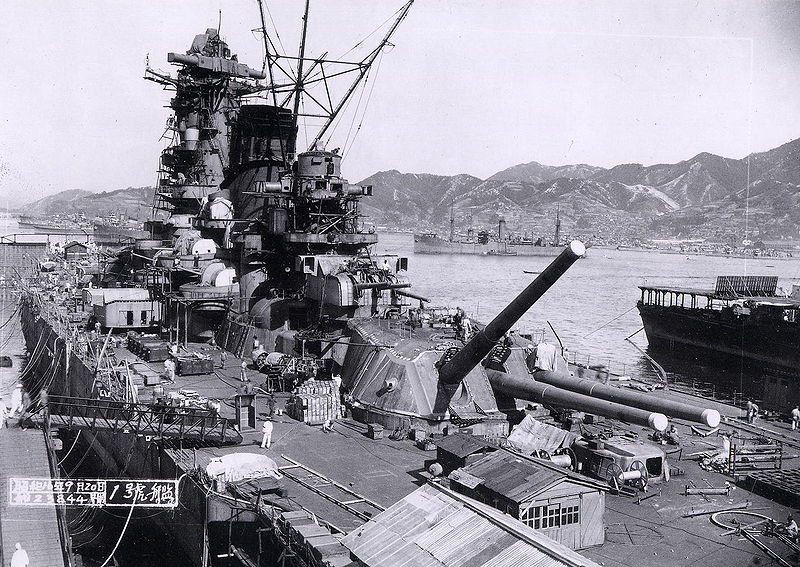
Yamato during Consrtuction

Security measures around the shipyards where Yamato and Musashi were constructed  were immense. At Nagasaki where there was a large foreign business and missionary population where the shipyard was visible from most of the city at hemp screen of 75,000 square meters was constructed to shield the ship from prying eyes and spies.

Musashi under Construction

When actual preparations for construction were taken in 1937 secret police swept the areas of foreign, especially Chinese workers. Security was increased inside and outside the shipyard, all blueprints accounted for and placed under strict guard while all shipyard workers were photographed with any having knowledge of the plans or supervising the construction sworn to the secrecy oath.

When a top secret blueprint went missing in 1938 at Nagasaki an intense investigation that included the torture of numerous suspects and the jailing of a blueprinter who accidentally swept the document into the trash was sentenced to 3 years in prison.

Armor and Protection of Yamato Class

Few pictures exist of the ships and Japanese Naval Officers destroyed many of the records of the ships design and construction just prior to the end of the Second World War. Throughout their existence they were a mystery to the American Navy. During the war the U.S. Navy estimated them to carry nine 16” guns and displace between 40,000-57,000 tons. Even the highly regarded Jane’s Fighting ships listed them at just 45,000 tons.

Yamato and Musashi together in 1943

Preliminary design work began in 1934 and progressed rapidly following Japan’s withdraw from the League of Nations and renunciation of the Washington and London Naval Treaties and withdraw from the 1936 naval talks in London. The early designs varied in the caliber of guns, size and armor, propulsion systems and endurance. Gun calibers ranged from 16” to 18.1” and a combined diesel-turbine system was considered but rejected in favor of traditional steam turbines.

The final design was for a class of five ships. Each would displace 64,000 tons standard displacement and 72,000 tons at full load. They were 862 feet long with a beam of 127 feet.  They were so large that the docks they were built needed to be expanded and special extra large launch platforms had to be built.  At Nagasaki the dock at to be expanded by cutting into the hill adjacent to it.

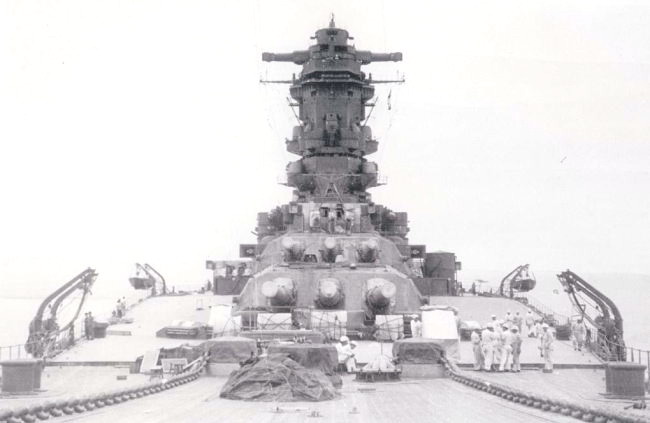
They were armed with nine 18.1 inch guns in triple turrets which could fire a projectile weighing over a ton. The secondary armament consisted of 12 6.1 inch guns mounted in triple turrets formerly mounted on the Mogami Class cruisers when those ships were equipped with 8” guns. Anti-aircraft defense included twelve 5” guns and twenty-four 25mm anti-aircraft guns. During the war two of the 6.1 inch turrets were removed and replaced with twelve more 5” guns and the 25mm battery was raised to 162 guns. Fire control systems were designed in such a way that the ships could engage multiple surface targets at the same time.

The ships were protected by a massive armored belt ranging from 16 inches to 8 inches with 26 inch armor on the face plates of the main gun turrets. The armor was advanced with excellent sloping but had a flaw where the upper and lower belts connected just below the waterline which exposed them to damage from torpedoes.

Yamato and Musashi viewed beside Battleship Nagato (foreground) just before the Battle of Leyte Gulf

They were powered by 12 Kampon boilers which powered 4 steam turbines and four three bladed propellers. These developed 150,000 shp and could drive the ship at a top speed of 27 knots.

Yamato

Construction of Yamato began on November 4th 1937 at Kure Naval Shipyard. Musashi on March 28th 1938. Traditionally such events were large public ceremonies but these were limited to just a few Naval Staff and Shipyard executives.  Yamato was Launched on August 8th 1940 and commissioned on December 16th 1941, just 9 days after Pearl Harbor. Musashi was launched on November 8th 1940 and commissioned on August 5th 1942 just two days before the U.S. Marines invaded Guadalcanal and two months after the disaster at the Battle of Midway.

Yamato served as Admiral Yamamoto’s flagship at Midway where she saw no action. The next two years she was and Musashi alternated as fleet flagship and conducted operations with Battleship Division One in operations between Mainland Japan and the major Japanese base at Truk. On December 25th 1943 while escorting a convoy she was torpedoed by the submarine USS Skate and suffered heavy damage which flooded a magazine.  On March 29th while underway Musashi was struck near the bow by a torpedo from the USS Tunny.

Musashi Under Attack at the Battle of Sibuyan Sea

Both ships participated in the Battle of the Philippine Sea and were part of Vice Admiral Takeo Kurita’s Central Force in the Battle of Leyte Gulf. Musashi was sunk by U.S. Navy Carrier aircraft from the Third Fleet on October 24th 1944 during the Battle of the Sibuyan Sea. Hit by 17 bombs and 19 torpedoes she sank with the loss of nearly 1100 of her crew of almost 2400 men. The survivors were rescued by destroyers and disembarked at Corregidor. Some were sent by troop transport to Japan but one of the ships was torpedoed and sunk leaving her survivors adrift for 19 hours before rescue. Those who reached Japan were isolated from the population while about half of the survivors remained in the Philippines where 117 of 146 of those assigned to the defense of Manila were killed in action.

Yamato or Musashi under air Attack

Yamato saw action in the surface engagement on October 25th against the Escort Carriers and Destroyers of Taffy-3 during the Battle off Samar. Her guns helped sink the Escort Carrier USS Gambier Bay but was forced away from the action by torpedo attacks from the valiant destroyers of Taffy-3.

Yamato under Attack April 7th 1945

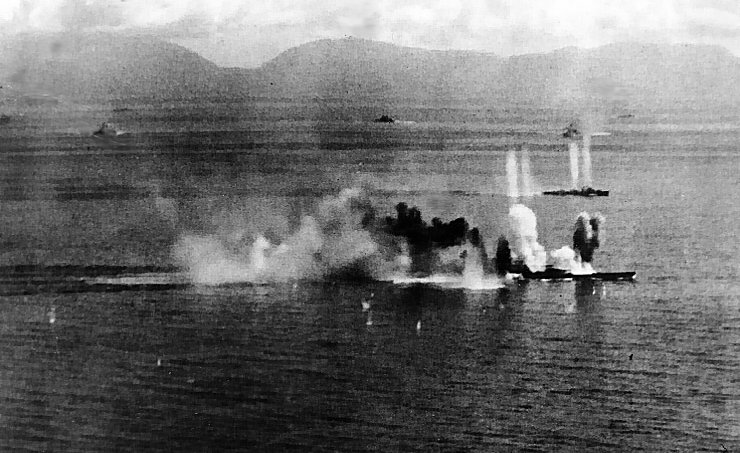
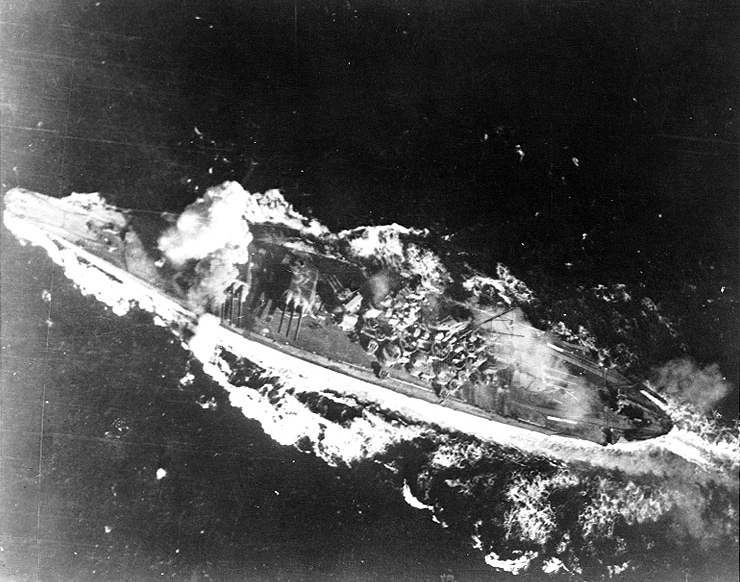
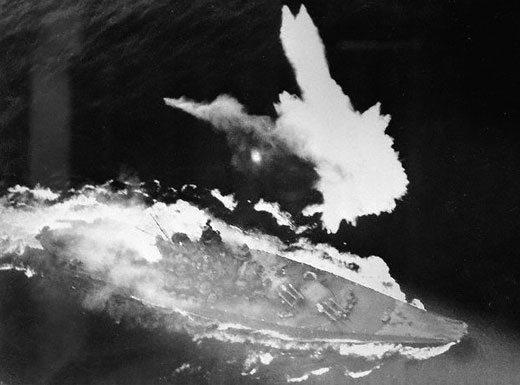
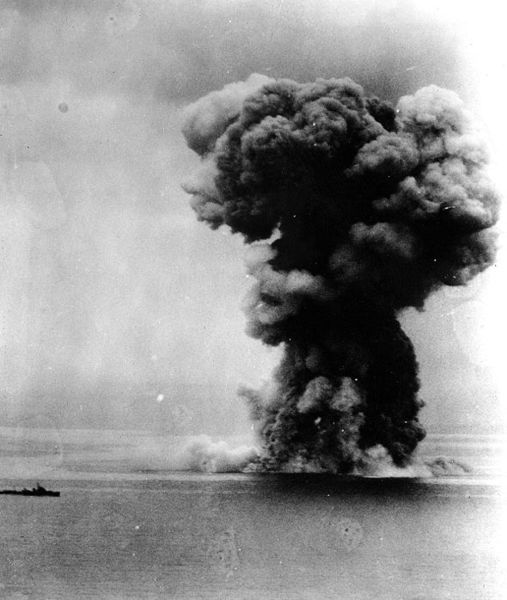
By April 1944 Japan’s Navy was decimated and U.S. Naval Forces were raiding Mainland Japan. When the United States landed on Okinawa the Japanese Navy and air force launched wave after wave of Kamikaze attacks on the ships in the waters around the island. Yamato, along with Light Cruiser Yahagi and eight destroyers were designated the Surface Special Attack Force and loaded with a full load of ammunition but only enough fuel for a one way trip got underway on April 6th. The mission was for Yamato to reach Okinawa, beach herself and serve as an “unsinkable” gun battery until she was destroyed. The force was spotted by U.S. Navy flying boats hours after their departure and on April 7th over 400 aircraft launched from Task Groups 58.1 and 58.3. The first wave began its attack at 1230 and by 1400 the ship was mortally wounded. Stuck by at least 8 torpedoes and 11 bombs she was dead in the water and began to capsize at 1405. At 1420 she turned turtle and at 1423 exploded when her forward blew up sending up a mushroom cloud nearly 20,000 feet.  Under 300 of her crew of nearly 2400 were rescued.

The End: Yamato Explodes

The ships were the largest battleships ever built, designed when naval experts planned for a war where the battleship would rule and aircraft carriers play a supporting role. Instead both never faced enemy battleships in combat and both were destroyed by the weapon that the battleship admirals had discounted. It is somewhat fitting that each was commissioned shortly after the triumphs of Japanese and American Naval air power at Pearl Harbor and Midway. However they have attained an almost mythic status in naval lore and are symbols to many Japanese of the sacrifice and futility of the war. Both of the cities where the ships were constructed were destroyed by Atomic bombs. They are tragic reminders of the cost of war in human lives, suffering, economic cost and destruction.

In a sense their poetic names and the myth ascribed to them are a tragic requiem to the Japanese Empire and the cost of war. They and their brave sailors were sacrificed when the war was already for all intents and purposes lost. They, especially the Yamato were sacrificed for no military purpose save a convoluted sense of honor.

Let us pray that it never happens again.

Peace

Padre Steve+
3 Comments

Filed under Military, Navy Ships, world war two in the pacific

The Battleships of D-Day

The 14″ Guns of USS Nevada in action at Normandy

On June 6th 1944 Allied Forces landed on the beaches of Normandy. Six American, British and Canadian Infantry Divisions, three Airborne Divisions and numerous supporting units came ashore in landing craft or were airdropped into Normandy. Backing them was an immense Naval Task Force which provided naval gunfire support, screened the force from German U-Boat or surface naval forces and transported the massive ground force.  It was an amazing armada.

HMS Rodney bombarding German positions off Caen

It was an armada that also is forgotten by many who read about Normandy or whose only exposure to the landings are films such as Saving Private Ryan. Today I think it is fitting to remember Battleships that served at Normandy, USS Arkansas, USS Texas, USS Nevada, HMS Warspite, HMS Ramillies and HMS Rodney.

USS Arkansas off Omaha Beach

The naval gunfire support force included Battleships, Cruisers and Destroyers as well as specialized gunfire support ships.  The largest and most powerful ships were the six American and British Battleships.  These ships were important in providing the heavy firepower needed to destroy the strongest fortifications and shore batteries and to fire at targets far beyond the shoreline that were vital for German reinforcements.

However the ships involved were not the modern behemoths which were built in the 1930s and since the beginning of the war but rather among the oldest ships still active in either the United States or the British Royal Navy. At one time they had all been the hearts for their navies but now old, slow and with less than modern armament and fire control systems they were regulated to supporting amphibious forces or escorting convoys.

USS Arkansas BB-33

The oldest of these venerable ships was the USS Arkansas BB-33 which was commissioned in 1912. A Wyoming Class Battleship she mounted twelve 12” guns in six twin turrets, two forward, two aft and two midships. She displaced just over 27,000 tons. She had spent most of the war escorting convoys in the Atlantic before being assigned to the Normandy landings. She stood off Omaha Beach dueling with German shore batteries and pounding the German troops who were making Omaha a living hell for the men of the US 1st and 29th Infantry Divisions.  She would continue her valuable service off of Normandy and would do the same in to support the landings in Southern France before steaming to the Pacific where she would do the same at Iwo Jima and Okinawa.

USS Texas BB-35

The USS Texas, BB-35 of the New York class had been in commission since 1914. She mounted ten 14” guns in 5 twin turrets, two forward, two aft and one midships and was slightly larger than the Arkansas.  More modern she was more extensively modernized between the wars than was Arkansas and was one of the first US ships to carry experimental radar sets.  She also conducted convoy operations but was used to bombard Vichy French troops and positions during Operation Torch, the Allied invasion  of North Africa.  At D-day she was in the western sector of Omaha and bombarded Point Du Hoc and cruised to within 3000 yards of the beach to clear the western exits of the beach near Vierville.  She remained in the area a number of days and would subsequently support the attack on Cherbourg, the invasion of South France and then serve in the Pacific at Iwo Jima and Okinawa.

USS Nevada BB-36

The USS Nevada BB-36 was the first of a new class of battleships which set the basic pattern of US Battleship design through the ratification of the Washington Naval Treaty. Her main battery of ten 14” guns was mounted in four turrets, mounted fore and aft two triple and 2 twin turrets.  She was he powered by oil fired boilers as opposed to coal and   was designed with a longer cruising radius to meet the demands of War Plan Orange.  Nevada received major upgrades between the wars and on December 7th 1941 was moored on Battleship Row when Peal Harbor was attacked by the Japanese. The only Battleship to get underway during the attack Nevada was set upon by Japanese aircraft as she steamed toward the harbor entrance. Heavily damaged she was grounded off Hospital Point. She was re-floated and sailed to the United States where she was heavily modernized with a modern AA battery of twin 5” 38 caliber guns, and fire direction radars. She was modernized to the point that she no longer resembled the ship sunk at Pearl Harbor. After her repair and modernization she participated in the invasion of Attu Island and did convoy escort duty before reporting for the invasion of Normandy. Nevada supported the US 4th Infantry Division at Utah Beach and subsequently served with Texas and Arkansas in South France before going to the Pacific to support the invasions of Iwo Jima and Okinawa. Had the war continued she would have been involved in the invasion of the Japanese Mainland.

HMS Warspite

The Royal Navy Battleships of D-Day were also elderly veterans. The eldest was the heroic HMS Warsipte commissioned in 1915 and a veteran of the Battle of Jutland and numerous actions during the Second World War including the slaughter of the German Destroyers at Narvik, the Battle of Cape Matapan and the invasion of Sicily and Italy.  The Queen Elizabeth Class Battleship mounted eight 15” guns in twin turrets and was extensively modernized between the wars. At Salerno Warspite was hit by three of the earliest guided missiles, the Fritz-X type launched by Luftwaffe Aircraft. She was heavily damaged and required major repairs before returning to service at Normandy. She supported British troops at Sword Beach and later Gold Beach. She again was heavily damaged by a magnetic mine and received temporary repairs to allow her to continue bombardment duties against German positions France and Belgium before being placed in reserve in January 1945.

HMS Ramillies

The HMS Ramillies was a Revenge Class Battleship commissioned in 1917. These ships were a compromise design that was smaller, slower and cheaper than the Queen Elizabeth Class but had the same main battery of eight 15” guns.  The compromises prevented them from receiving significant upgrades between the wars and limited their employment. Ramillies operated as a convoy escort and was also involved in action in  the Mediterranean and Indian Ocean. She participated in the hunt for the German Pocket Battleship Graf Spee and shielded Convoy HX-106 from the Scharnhorst and Gneisenau and later took part in the hunt for the Bismarck. However she but was not engaged against any of the German ships but her presence prevented Admiral Lutjens from risking Scharnhorst and Gneisenau to attack the convoy. She took part in the initial battle between the Royal Navy and the Italians at the Battle of Cape Spartivento getting off several salvos before her slow speed forced her out of the action. She was heavily damaged by a torpedo from a Japanese mini-submarine in Diego Suarez harbor during the invasion of Madagascar in May 1942. Following repairs and the addition of extra deck armor and modern anti-aircraft guns she returned to action at Normandy were she supported British troops ashore and drove off an attack by German Destroyers. She stayed in action firing over 1000 shells at Normandy before supporting the invasion of Southern France. Too slow to be of use in the Pacific she was placed in Reserve in January 1945.

HMS Rodney

The youngest of the Battlewagons at Normandy on June 6th was the HMS Rodney which was commissioned in 1927. She and her sister ship HMS Nelson were to be the first of the post WWI super battleships and was designed as a larger and more powerful ship. With the limitations of the Washington Naval Treaty the ships were “cut down” and reduced in size and speed. Her armament made her one of the most powerful battleships of period but her engineering plant was not always reliable. Since she was relatively modern she did not receive any major refits before the war and apart from a repairs to her engines in Boston in 1941 (before the US entry into the war) and a brief refit in 1942 she received no further refits during the war. With the HMS King George V she helped sink the Bismarck and would escort convoys and participate in the Allied invasions of North Africa, Sicily and Salerno before being assigned to the Normandy invasion force attacking targets near Caen.  Her sister HMS Nelson was held in reserve and joined the battle on June 10th but she was not present on D-Day.

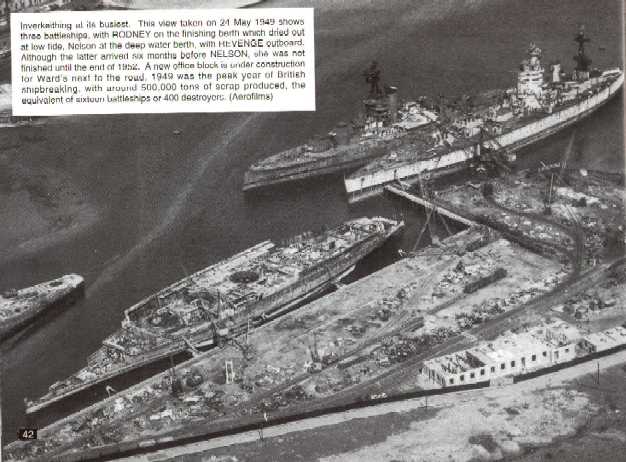
Warspite aground and Rodney being scrapped (below)

Despite their age and limitations all of these ships and their performed heroically during the war. The post war period was not as kind to the ships. Arkansas and Nevada were used in the Atomic Bomb tests at Bikini Atoll. Nevada survived and was expended as a target in 1948. All of the British ships were scrapped following the war due to their age, wear and damage incurred during the war. Warspite was being towed to the breakers when she broke a tow line and went aground. She ended up being partially scrapped in place.  Mementos of all these ships remain including a gun from Ramillies at the Imperial War Museum. The lone survivor was the USS Texas which became a museum ship and memorial at the San Jacinto battlefield in 1948. She is the last of the Dreadnought ships remaining. Other more modern US Battleships have been preserved but only Texas remains from those ships that at one time ruled the waves and pounded the Germans at Normandy.

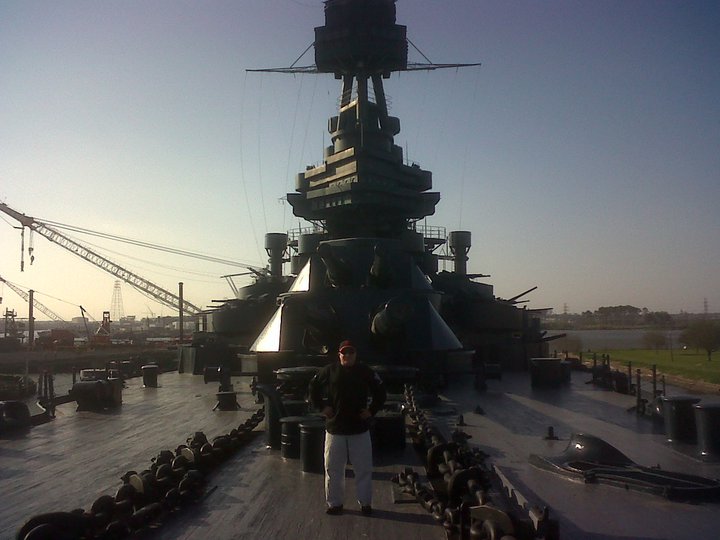
The author aboard USS Texas in March 2011

The fire support provided by these proud ships and their consorts ensured the success of the Normandy landings. Without them it is very possible that the landings would not have succeeded and many more Allied soldiers would have died and the war extended.

To these great ships and all their heroic crews…

Peace

Padre Steve+
28 Comments

Filed under History, Military, Navy Ships, US Navy, world war two in europe

Marking the Illusion of Peace: December 6th 1941

A great war was already going on in Europe, Asia and the Middle East but most Americans lived as if war would never happen.  It didn’t seem to matter that that Nazi Germany had conquered all of Western Europe and that the Soviet Union was on the Ropes even as the United States Navy was already in action escorting convoys in the Atlantic. Of course the Japanese had been busy and were entering their second decade of war in China and had occupied French Indochina earlier in 1941. No war was something that happened to other people and nations.  The United States of course was immune to what was going on overseas and isolationism dictated much of the political debate often hamstringing the Roosevelt administration.

While the Government and the military anticipated that war was immanent the bulk of the country acted as if war would never happen. Various parties in Congress and special interest groups actively lobbied for the United States to remain clear of war and resisted the Roosevelt administration as it sought to strengthen the military. Thus as December 6th passed the nation focused on  everyday life.  People went to football games did Christmas shopping and spent time with family.

Now the country had been preparing for war, the Army, the Army Air Corps and the Navy  were expanding at a rapid rate. Exercises were held by large Army formations across the South in 1941 and bases were being built around the country.  In the years before the war the Japanese had attacked and sunk the gunboat USS Panay in China and German U-Boats had torpedoed and sunk the Destroyers USS Ruben James and damaged the USS Kearny as well as numerous merchant ships. Despite this many people failed to comprehend that war was immanent.  In fact there were groups that actively supported the political cause of Nazi Germany right here in the United States. Thus when people found out in the morning or in the afternoon of December 7th 1941 there was a collective sense of shock that had was new to the nation.

December 6th 1941 was the last night of an old world, a world of fantasy. It was the temporary end of the belief that the United States could be isolated from the carnage of war in Europe, the Middle East and Asia.  For 70 years since we have fought to return to that fantasy world where if we close our eyes and mind our own business that nothing bad will happen.  After the fall of the Soviet Union and the Cold War we seemed to believe that the world was different and that somehow we were unique, it was told to us by Republicans and Democrats so it had to be true.

Then we were attacked on September 11th 2001 and we went to war, except this time we decided were the wars would be fought but unlike World War II we abdicated the responsibility for conducting the war to a small sliver of the population, never more than half of one percent of the nation to go do the fighting and dying for the rest of us. Instead of a call to service we were told to go shopping. We entered wars with no certainty of what the end state would be.  Ten years later we are still fighting and despite the many successes and the valiant efforts and sacrifices of our military we are nowhere close to where our nation was to winning the war as we were within two years of the attack on Pearl Harbor and unlike that war we now face bigger threats than we were facing then.  War beckons in other lands and the post Cold War world is in shambles.

I certainly don’t have the answers to this but I do know that we must not let ourselves be lulled into even more complacency thinking that what happens overseas stays overseas.

The memories of December 7th 1941 have faded away. Few survivors of that day remain and those of the Greatest Generation are passing away faster than we think possible.  The collective memory is being left to family members, friends and historians. For that matter our collective memory of the Korean War, Vietnam, the Cold War, the First Gulf War and even our current wars seems to be waning.  As a nation we seem to have forgotten everything and have returned to the illusions of December 6th 1941.

These are dangerous times and while there may not be a Japanese Carrier Striking Force making its final approach to Hawaii there are real threats that can make our present “crisis” look like a picnic on a summer day.

Peace

Padre Steve+
1 Comment

Filed under History, Military, national security, world war two in the pacific

Wings of Gold: U.S. Navy Carrier Fighter Aircraft 1941-1945

F4F-4 Wildcat of VF-41 in 1942

In 1941 with war raging inEuropeand the Japanese continuing their war in China  and occupied French Indo-China theUnited States rushed to build up its Naval Air Arm and the Arm Air Corps.  New models of aircraft of all types were being rushed into production to replace aircraft already known to be obsolescent.  The Navy brought aircraft already accepted into full production even as it planned more advanced models.  The events in Europe and Asia demonstrated that new fighter designs were needed quickly.

As 1940 dawned the standard fighter aircraft found on U.S. Navy carriers were the F2-A Brewster Buffalo, the Grumman F-3F biplane.  In February 1940 the Navy accepted its first F4F-3 Wildcat which in an earlier for had been rejected in favor of the Brewster Buffalo.  The new Grumman fighter was powered by a 1200 hp Pratt & Whitney R-1830-76 double row radial engine, mounted 4 .50 cal. Machine guns and was heavily armored.  It had a maximum speed of 331 mph range of 845 miles and ceiling of 39500 feet. This would serve it and its pilots well as they aircraft was incredibly tough, often amazing experienced Japanese pilots in their A6M2 Zeros in their ability to suffer heavy damage and remain in the air.  The plucky Wildcat would become the main line of defense in the Pacific against the advancing Japanese Imperial Navy in the months following Pearl Harbor.

The early F4F-3s were superseded by the F4F-4 model which incorporated folding wings, additional armor and an extra two machine guns.  This decreased its maximum speed to 320 mph, rate of climb and ceiling but nonetheless the aircraft gave a good account of itself in Navy and Marine Corps service.  F4F-3’s and F4F-4s served in the British Royal Navy where it was called the Martlet until the end of the war.  When Grumman closed out F4F production in 1943 to concentrate on its replacement the F6F Hellcat production was continued by General Motors and Eastern Aircraft as the FM1 and FM2 Wildcat. The FM1 was identical to the F4F-4 but armament was reduced to 4 machine guns and bomb racks for two 250 lb bombs or depth charges were added.  The FM2 was based on an updated version of the F4F and had a more powerful engine as well as a higher tail assembly to account for the increased torque of the engine.  These aircraft served aboard the tiny Escort Carriers and performed valiantly, especially in the Battle off Samar during the Battle of Leyte Gulf.  A total of 7860 Wildcats of all varieties were built.  They accounted for 1327 enemy aircraft shot down with the loss of only 191 Wildcats.

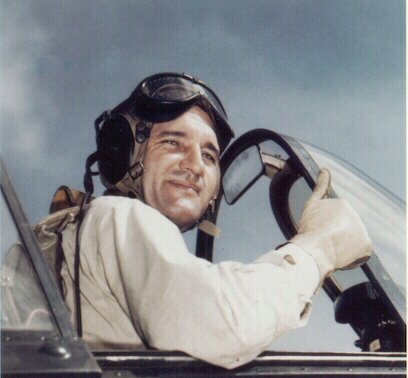
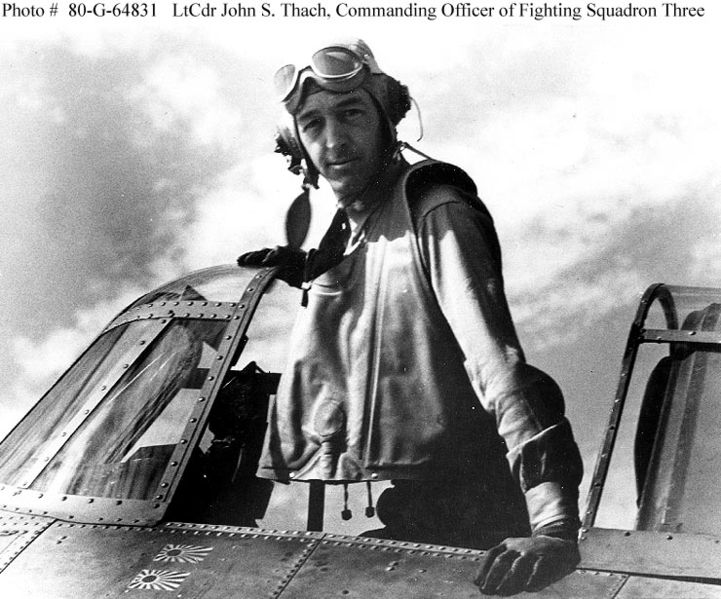
Aces Capt Joe Foss USMC and CAPT David McConnell USN both Medal of Honor Winners and CDR Jimmy Thatch (below)

The top aces who flew the Wildcat were all Marines, CAPT Joe Foss (26 victories) MAJ John Lucian Smith (19 victories) and MAJ Marion Carl (16 victories in the F4F and 2 in the F4U Corsair). Foss and Smith both won the Medal of Honor.  Foss would go on to become Governor of South Dakota and the first Commissioner of the American Football League in 1959. Smith retired as a Colonel in 1960 and Carl as a Major General.  Other distinguished F4F aces included LT Butch O’Hare, the first U.S. Navy ace and Medal of Honor winner and LCDR Jimmy Thatch who developed the highly successful “Thatch Weave” which enabled the U.S.pilots whose machines were slower and less maneuverable than the speedy and nimble Zeros to achieve good success against their Japanese foe.  Thatch retired as an Admiral in 1967.  O’Hare rose to become commander of the Enterprise Air Group and was killed in action in November 1943. Chicago’s O’Hare International Airport is named for this brave aviator.

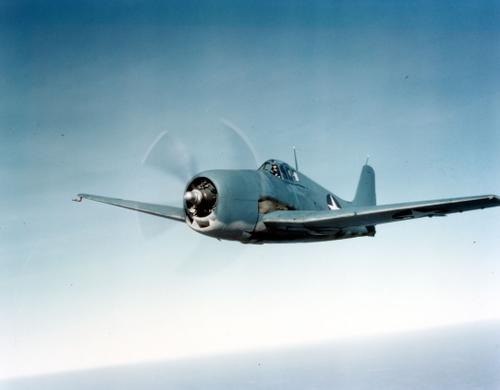
F6F Hellcat

The Grumman F6F Hellcat took over front line fighter duties on the Fleet Carriers from the Wildcat in early 1943 and established itself as the dominant fighter in the Pacific Theater of Operations.  Although it had a resemblance to the F4F the F6F was a totally new design built on combat experience against the Japanese.  The aircraft was built around the powerful Pratt & Whitney R-2800 engine which produced 2000 hp.  The Hellcat mounted six .50 caliber machine guns and had a rate of climb of 3500 feet per minute and a 37300 ft operational ceiling.

Faster than the Zero and other Japanese fighters and piloted by more experienced pilots the Hellcats took a brutal toll of Japanese aircraft.  They accounted for more Japanese aircraft kills than any other with 5163 confirmed kills with a loss of 270 aircraft an overall 19:1 kill ratio. They were piloted by 305 Navy and Marine Corps aces including Meal of Honor winner Captain David McConnell the Navy’s Ace of Aces, and highest surviving United States ace of the war that scored all 34 of his victories in the Hellcat.  The greatest achievement of the Hellcats were when they swept the rebuilt Japanese Naval Air Arm from the skies in the Great Marianas Turkey Shoot. By November 1945 12275 Hellcats had been built with 1263 going to the British Royal Navy. After the war the Hellcat was replaced by the F8F Bearcat as the primary fighter and served in a night fighter and trainer role until the 1950s.  The French Navy used the Hellcat in to provide heroic close air support to beleaguered French Soldiers in Indochina.

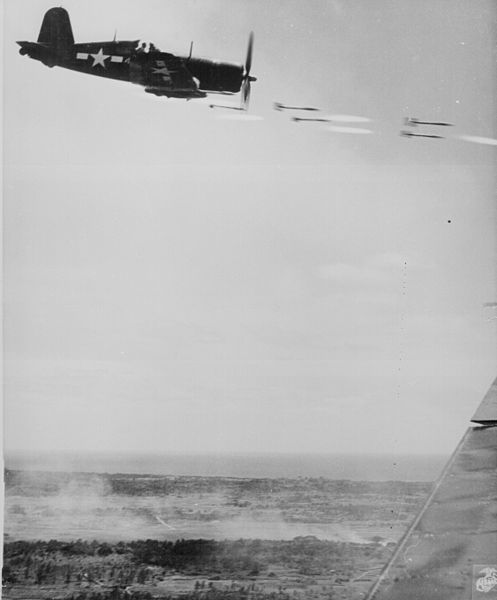
USMC F4U-4 Corsair providing close air support

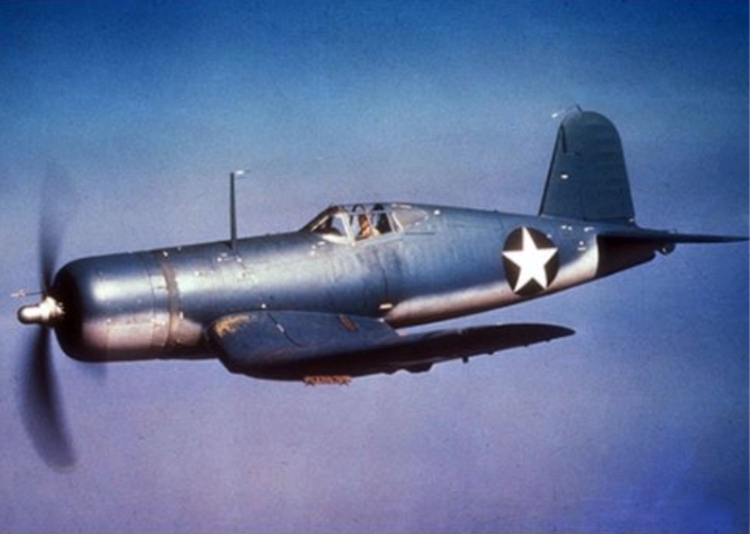
Flying alongside the F6F was the Vaught F4U Corsair. The Corsair first flew in 1940 and the Navy was slow to adopt it due to difficulties in carrier operations and negative reviews of Navy pilots.  However Marine Corps aviators flying the Corsair had great success and legendary aviators like MAJ Gregory “Pappy” Boyington and VMF-214 the Black Sheep.  The Navy would adopt the aircraft later in the war as the Corsair’s carrier operation deficiencies were remedied, but its real success was a land based aircraft operated by the Marines.  Likewise the first squadrons to operate the aircraft successfully from carriers were the Marine Corps VMF-124 and VMF-213.

Early F4U-1

The Corsair mounted the same Pratt & Whitney R-2800 engine as the F6F but had a highly streamlined gull wing design as well as a turbo-charger which allowed it a top speed of 425 mph.  Later models such as the F4U-4 had a top speed of 445 mph. The F4F was armed with six .50 cal machine guns as well as rockets and a bomb load of 2000 pounds and the F4U-4 could carry 4000 pounds of ordnance.

Less than 10000 of the over 64000 combat sorties flown by F4Us were flown from carriers, the vast bulk of the sorties coming from land based Marine Corps squadrons.  The Corsair was often used as a fighter bomber where its capabilities to drop sizable amounts of ordinance including rockets, bombs and the nearly developed Napalm in a close air support role cemented the importance of Marine Air for future generations.  They were beloved by the Marine Corps and U.S. Army infantrymen in their brutal battles with the Japanese on many hellish island battlefields.  Corsairs accounted for 2140 confirmed kills during the war against a combat loss of 189 aircraft. The aircraft remained in production until 1952 with 12571 aircraft of all variants being built.  Many Japanese pilots considered the Corsair to be the best fighter of the war.

During the war many served in the British Royal Navy and Royal New Zealand Air Force with good success and after the war the French Navy had success with them in a close air support role in Indochina and Algeria.  Following the war the Corsair remained in service for many years in the U.S. Navy and Marine Corps as well as the French Navy and other smaller navies and air forces until the 1960s.

These amazing aircraft and the men that flew them established a tradition of excellence that the Naval Aviators of the U.S. Navy and Marine Corps continue today.

Peace

Padre Steve+
Leave a comment

Filed under aircraft, US Navy, world war two in the pacific