Tag Archives: pearl harbor

They Held the Line: The USS Yorktown CV-5, USS Enterprise CV-6 and USS Hornet CV-8, Part Three the Enterprise

Enterprise CV-6 circa 1940

This is the last of a three part series about the USS Yorktown Class Aircraft Carriers. It is the story of the USS Enterprise CV-6, the legendary “Big E” and possibly the most celebrated American warship of the Second World War.

The USS Enterprise CV-6, the second ship of the Yorktown class was ordered by the Navy on 3 August 1933 as authorized under the National Industrial Recovery Act of 16 June 1933.  She was laid down just under a year later and launched on 3 October 1936 at Newport News Shipbuilding and Drydock Company, Newport News Virginia.  She was commissioned on May 12th 1938 to begin one of the most celebrated careers of any US Navy ship in history.  Displacing 25,500 tons full load Enterprise like her sister ships were designed for fast carrier operation working in conjunction with other carriers not tied to the battle line.  With good protection and speed the Enterprise incorporated the lessons learned in the preceding carriers.

Pre-War photo of Enterprise

After her shakedown cruise she operated in the Atlantic and Caribbean until April 1939 when she was transferred to the Pacific Fleet and based a Pearl Harbor. As the flagship of Task Force 16 under Rear Admiral Bill “Bull” Halsey Enterprise conducted training operations and shuttled aircraft to various US island bases in the Central Pacific one such mission to Wake Island which had her out of Pearl Harbor when the Japanese attacked on December 7th 1941.  Following the attack Enterprise and Task Force 16 would cover the Hawaiian Islands and then be used to conduct raids against Japanese bases in the Marshalls and protect convoys bound for Samoa.

Rare photo of the Enterprise at Midway

In April she escorted the newly arrived USS Hornet CV-8 to conduct the famed “Doolittle Raid” on Tokyo.  Five days after returning to Pearl Harbor Enterprise was dispatched to the Coral Sea but could not arrive before that historic carrier battle.  She returned to Pearl Harbor on May 26th and with Halsey sick departed two days later as flagship of TF-16 under the command of Rear Admiral Raymond A Spruance in company with Hornet, 6 cruisers and 10 destroyers with orders “to hold Midway and inflict maximum damage on the enemy by strong attrition tactics.”

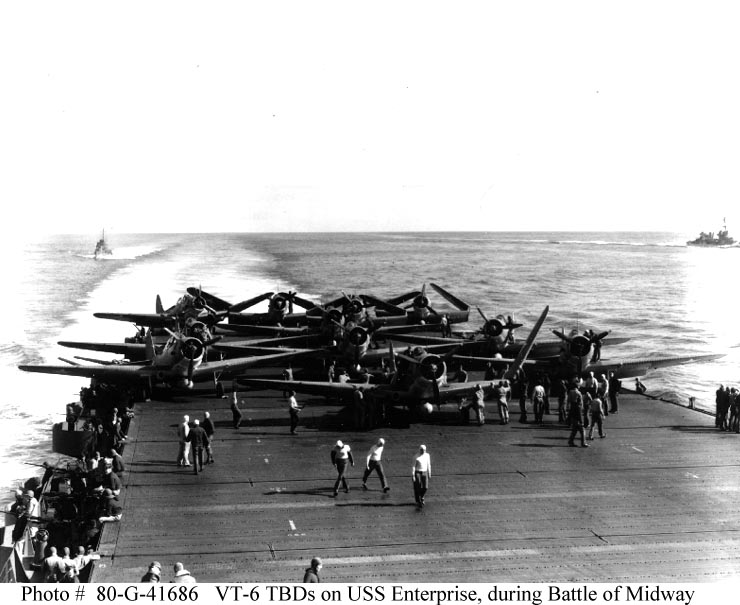
TBD Devastator landign on Enterprise May 1942

They would be joined 2 days later by the hastily repaired USS Yorktown flagship of Rear Admiral Frank “Jack” Fletcher and TF-17 escorted by 2 cruisers and 6 destroyers.  Fletcher the senior officer assumed tactical command of this comparatively small force which represented the bulk of US naval power in the Pacific.
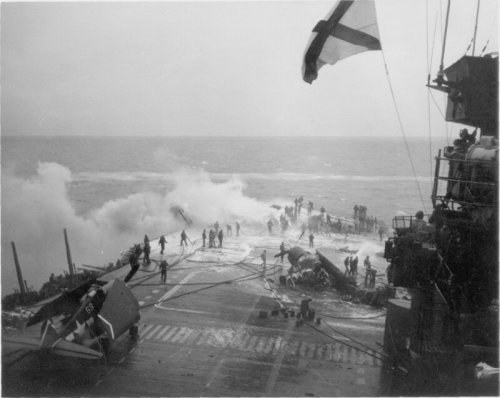
This tiny force would face 4 fleet (CV) and 2 light fleet (CVL) carriers, 7 battleships, 10 heavy (CA) and 2 light (CL) cruisers and 42 destroyers.  Additionally the Japanese had an additional 2 carriers, 4 battleships, 3heavy cruisers 4 light cruisers and 23 destroyers involved in some way the simultaneous invasion of the Aleutian Islands which could be called into the fight if Admiral Yamamoto desired.
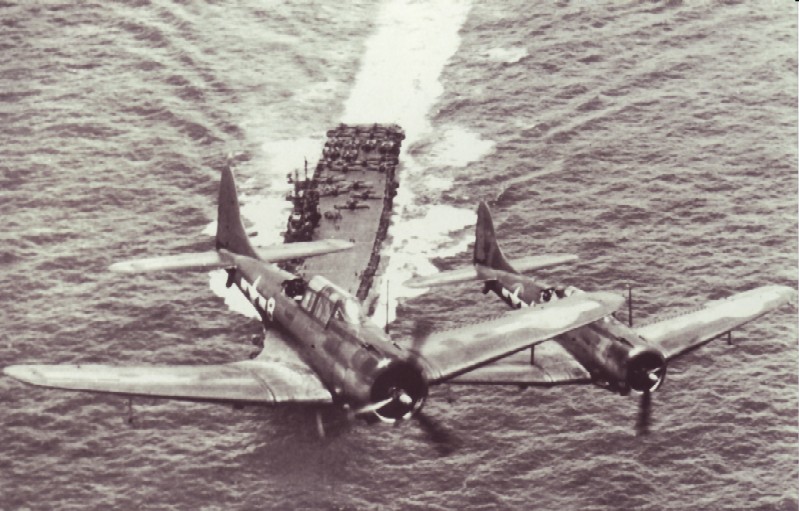
SBD Dauntless Dive Bombers over Enterprise

The Battle of Midway was an epic of warfare and Enterprise and her Air Group 6 would play a pivotal role. Torpedo Six under LCDR Max Leslie in its obsolete, underpowered and under armored TBD Devastators was chopped to pieces as they attempted torpedo attacks on the First Carrier Strike Force of Admiral Nagumo losing 10 of 14 aircraft.  As the gallant air crews of Torpedo Six along with Yorktown’s Torpedo 3 and Hornet’s ill-fated Torpedo Eight made their attacks Bombing Six under the command of CDR Wade McCloskie and Scouting Six under the command of  LT Dick Best attacked and mortally wounded the Japanese Flagship Akagi and the Soryu.  Later in the day aircraft from Enterprise would help sink the Hiryu and the following day helped mortally wound the Heavy Cruiser Mikuma. The Enterprise was not damaged by the Japanese at Midway.

Flight Operations on Enterprise

Following the Miracle at Midway the Enterprise took part in the Guadalcanal campaign participating in the invasion as well as the Battles of Santa Cruz and the Eastern Solomons.  In each of these actions she was seriously damaged but her air group was instrumental in the campaign at sea and ashore.   Following the sinking of the Wasp, Hornet and damage to Saratoga Enterprise was the only US carrier in action in the fall of 1942.
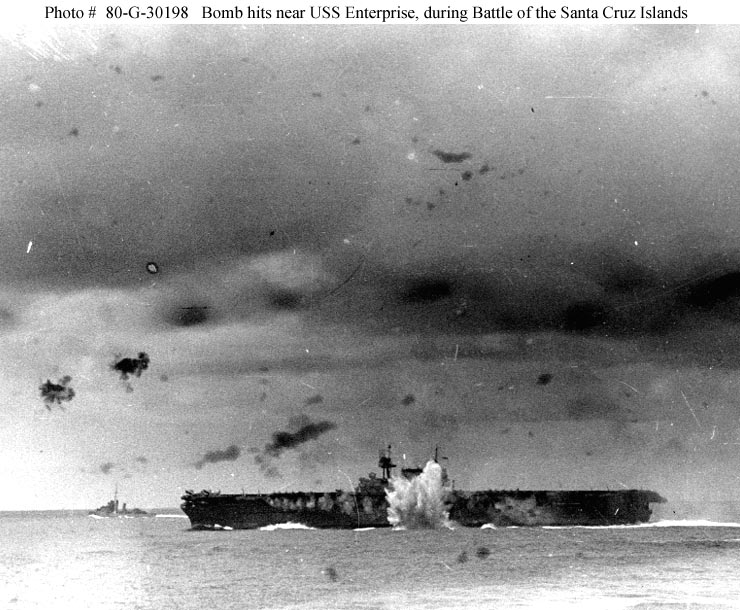
Enterprise under attack at the Battle of Santa Cruz Islands

Bomb Explosion on Enterprise at the Battle of Eastern Solomons

In November she took part in the Naval Battle of Guadalcanal where her aircraft helped to finish off the Japanese battleship Hiei and participated in the sinking of 16 Japanese ships including transports which carried troops, equipment and supplies to the Japanese defenders of Guadalcanal. After another 6 months of action in the Solomons supporting the US advance Enterprise returned first to Pearl Harbor at which time she was awarded the Presidential Unit Citation by Admiral Chester Nimitz, the first carrier awarded the citation in the Second World War and then to Bremerton for a badly needed overhaul.
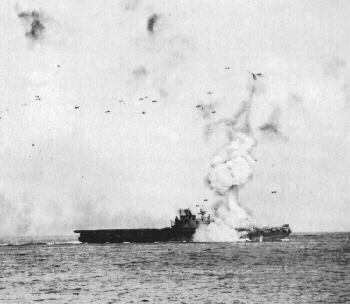
Emterprise struck by Kamikaze

Enterprise was back in action by November 1943 and participated in the US offensives in the Gilberts, Marshalls and the Marianas taking part in numerous raids, support to Marines ashore and in the Battle of the Philippine Sea, the Marianas Turkey Shoot.  After a month long refit at Pearl Harbor she participated in the attacks on the Volcano, Bonin and Palau including strikes on Yap and Ulithi followed by the fast carrier raids on Japanese facilities on Okinawa, Formosa and the Philippines which culminated in her participation in the Battle of Leyte Gulf, the largest naval battle in history.  Her aircraft would participate in strikes on each of the Japanese surface forces hitting battleships, cruisers and other Imperial Navy units in the epic naval battle.

Enterprise made a short return trip to Pearl Harbor in December 1944 where she embarked an air group trained in night operations. Rejoining the fleet she took part in sweeps against Japanese bases, ships and facilities in Indochina, the Philippines, Formosa and Okinawa prior to the invasion of Iwo Jima.
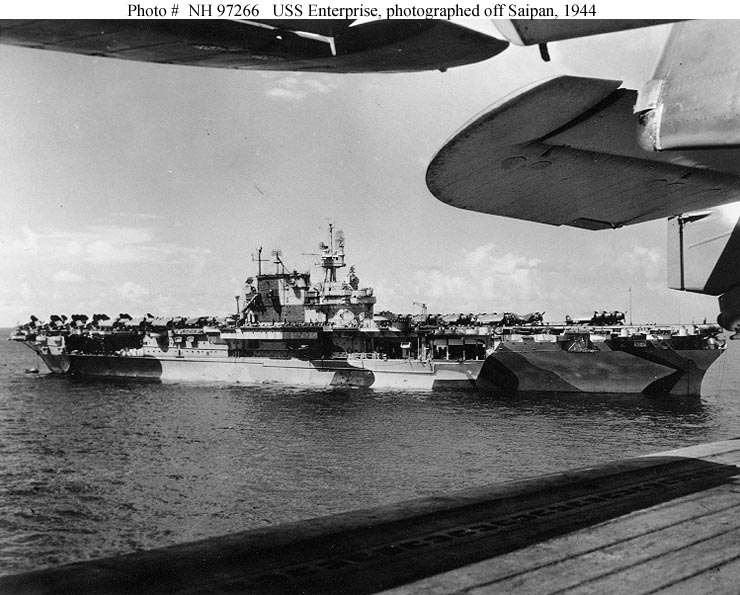
Enterprise at Saipan

During this operation her aircraft worked night and day to provide air strikes and air defense to the fleet.  She then joined the raids against Honshu, Kyushu and the Inland Sea where her aircraft provided night strikes against Japanese targets ashore as well as air defense to fleet units. She was damaged by a Japanese bomb on the 18th of March and on 11 April damaged by Kamikazes off Okinawa and again on 5 May prior to her last wound of the war on 14 May when a Kamikaze struck forward elevator necessitating repairs at Bremerton.

Kamikaze Damage or forward elevator

Returning to the fleet to late for the final actions of the war Enterprise took part in Operation Magic Carpet returning US troops to the United States at the end of hostilities.  She was decommissioned on February 17th 1947.  While she was in reserve the Enterprise was redesignated first as an Attack Aircraft Carrier (CVA), and then as Anti-submarine Carrier (CVS).
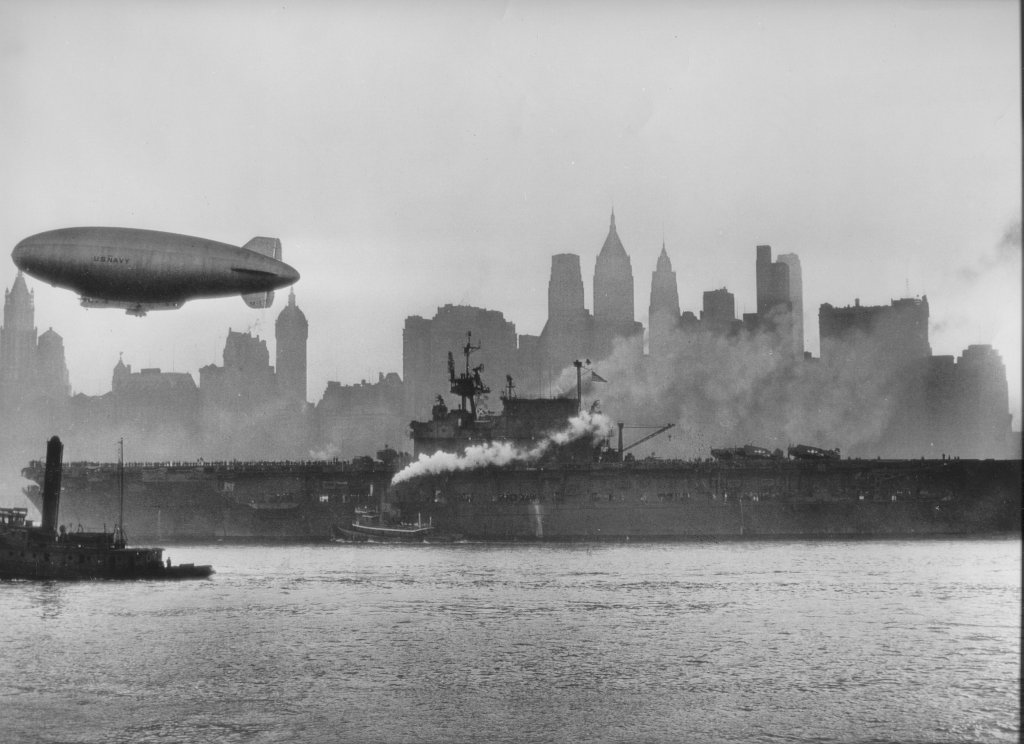
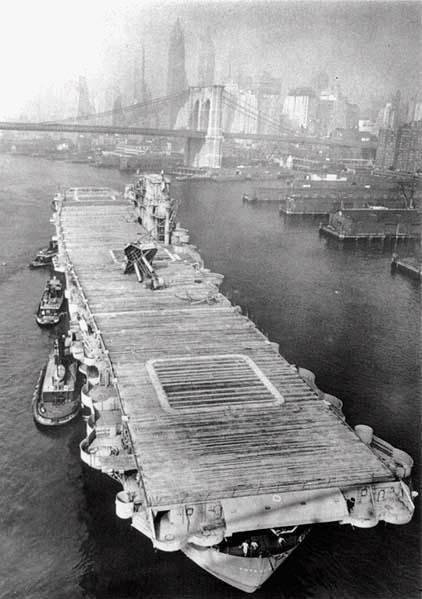
Enterprise Fleet Week New York 1945

As the super-carrier entered the scene and the Essex and Midway Classes were modernized to accommodate jet aircraft the Enterprise was determined to be in excess of Navy needs.  Despite attempts by some to save her as a Naval Museum the money could not be raised, even with the support of the dying Fleet Admiral Bill Halsey.  Enterprise which Secretary of the Navy Forrestal said was “the one vessel that most nearly symbolizes the history of the Navy in this war” was sold for scrap on 1 July 1958 and scrapped at Kearney New Jersey from September 1958 to March 1960.  Like so many ships which serve their country so well she was casually disposed of by a nation which had forgotten its past.
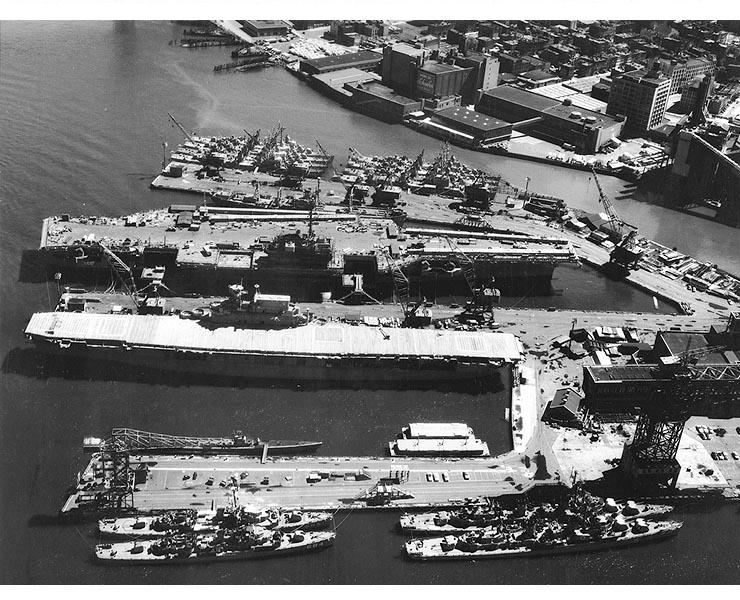
Enterprise alongside new CVA 1958

Enterprise on the way to the breakers

Enterprise was the only ship to receive both the Presidential and Naval Unit Citations for her service in World War Two and she was awarded the Asiatic-Pacific Campaign Medal with 20 battle stars.  Her place in the carrier force would be taken by a new Enterprise, CVN-65, the First Nuclear carrier which after nearly 50 years of service is still in commission. The Enterprise is so significant that her legacy continues in Hollywood Science fiction in the various Star Trek series as the Federation Starship Enterprise NCC-1701, 1701-A, 1701-B, 1701-D and 1701-E, so much so that NASA named the first experimental Space Shuttle Enterprise.

Never Forgotten USS Enterprise NCC-1701-B
2 Comments

Filed under History, Navy Ships, world war two in the pacific

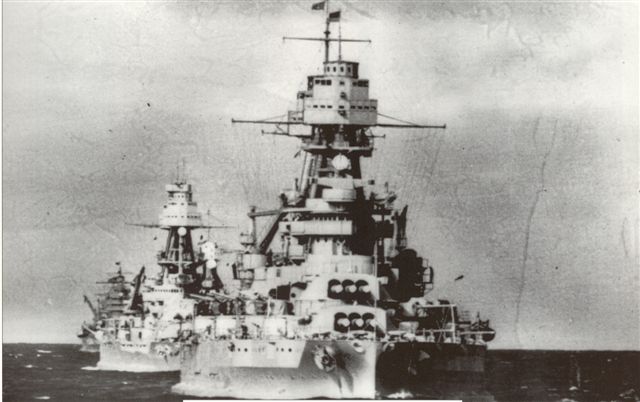
The Battleships of Pearl Harbor

Arizona Leading the Battle Line

“Yesterday, Dec. 7, 1941 – a date which will live in infamy – the United States of America was suddenly and deliberately attacked by naval and air forces of the Empire of Japan…. The attack yesterday on the Hawaiian Islands has caused severe damage to American naval and military forces. Very many American lives have been lost.” Except of President Franklin D Roosevelt’s Pearl Harbor Speech December 8th 1941

Today is the 68th anniversary of the Japanese attack on Pearl Harbor and as we were then we are at war.

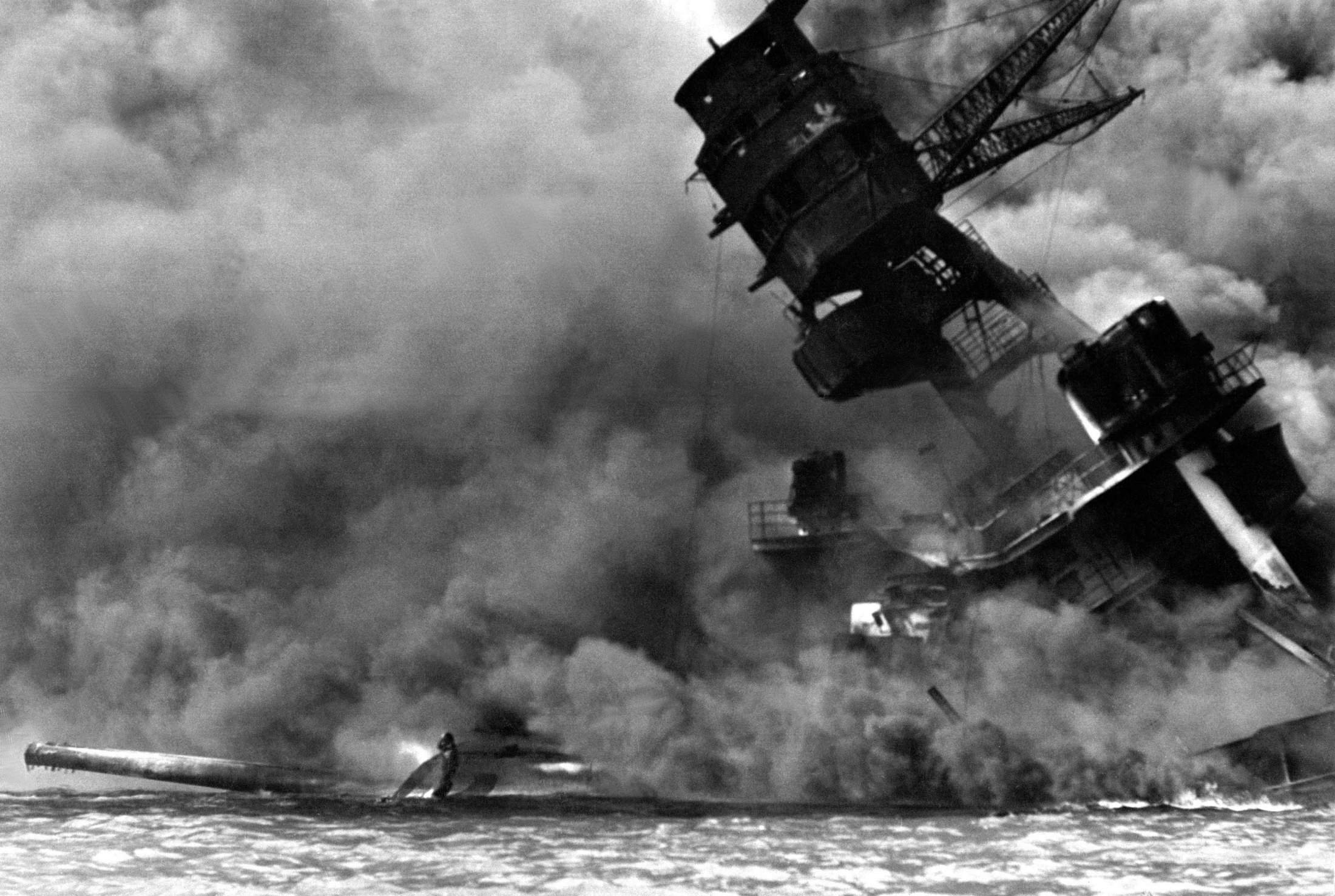
A Date that Will Live in Infamy: USS Arizona Burning

I remember reading Walter Lord’s “Day of Infamy” when I was a 7th grade student at Stockton Junior High School back in 1972.  At the time my dad was on his first deployment to Vietnam on the USS Hancock CVA-19.  As a Navy brat I was totally enthralled with all things Navy and there was little that could pull me out of the library.  Over the years I have always found the pre-World War Two battleships to be among the most interesting ships in US Navy history.  No they are not the sleek behemoths like the USS Wisconsin which I look at almost every day from Portsmouth Naval Medical Center as it lays moored across the Elizabeth River in Norfolk.  No these ships were the backbone of the Navy from the First World War until Pearl Harbor.  They were the US Navy answer to the great Dreadnaught race engaged in by the major Navies of the world in the years prior to, during and after World War One.

These ships were built over a period of 10 years and incorporated the advances in technology since the HMS Dreadnaught first came down the ways in 1906 to the experience gained in combat during the “Great War.”  While the United States Navy did not engage in battleship to battleship combat the ships built by the US Navy were the equal of many of the British and German ships of the era.

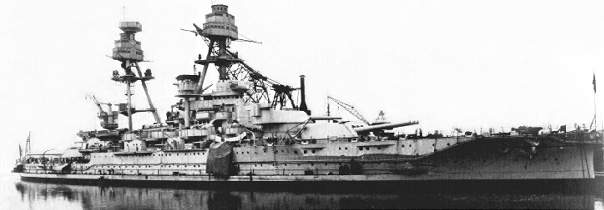
Oklahoma Before the War

The Battle Force of the Pacific Fleet in 1941 included 9 battleships of which 8 were at Pearl Harbor on the morning of December 7th.  In the event of war the US War Plans, called “Orange” called for the Pacific Fleet led by the Battle Force to cross the Pacific, fight a climactic Mahanian battle with the battleships of the Imperial Japanese Navy and after vanquishing the Japanese foe to relieve American Forces in the Philippines.  However this was not to be as by the end of December 7th all eight were out of action, with two, the Arizona and Oklahoma permanently lost to the Navy.

USS Oklahoma Being Raised from the Mud

These ships comprised 4 of the 6 classes of battleships in the US inventory at the outbreak of hostilities.  Each class was an improvement on the preceding class in speed, protection and firepower.  The last class of ships, the Maryland class composed of the Maryland, Colorado and West Virginia, was the pinnacle of US Battleship design until the North Carolina class was commissioned in 1941.  Since the Washington Naval Treaty limited navies to specific tonnage limits as well as the displacement of new classes of ships the United States like Britain and Japan was limited to the ships in the current inventory at the time of the treaty’s ratification.

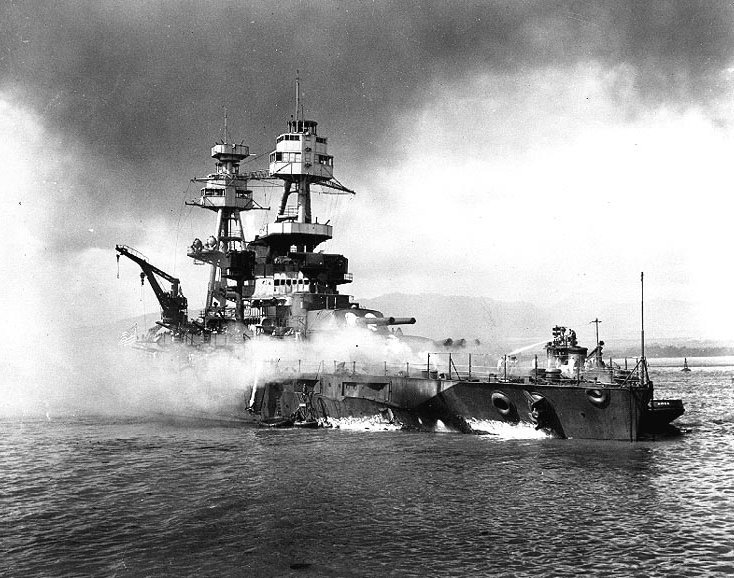
USS Nevada Aground and Burning

The ships at Pearl Harbor included the two ships of the Nevada Class, the Nevada and Oklahoma. The Two ships of the Pennsylvania class, the Pennsylvania and her sister the Arizona, the two California class ships, the California and Tennessee and two of the three Maryland’s the Maryland and West Virginia.  The Colorado was undergoing a yard period at Bremerton and the three ships of the New Mexico class, New Mexico, Mississippi and Idaho had been transferred to the Atlantic before Pearl Harbor to bolster US strength in that area due to the German threat.  The three older ships of the New York and Wyoming Classes, the New York, Arkansas and Texas also were in the Atlantic. Two older battleships, the Utah and Wyoming had been stripped of their main armaments and armor belts and served as gunnery training ships for the fleet. The Utah was also at Pearl Harbor.

USS Nevada Firing on Utah Beach: D-Day

The ships that lay at anchor at 0755 that peaceful Sunday morning on “Battleship Row” and in the dry dock represented the naval power of a bygone era which was not recognized until two hours later. The age of the battleship had passed, but even the Japanese who launched the attack did not realize that the era had passed as they continued to build the massive super-battleships Yamato and Musashi mounting 9 18” guns and displacing 72,000 tons, near twice that of the battleships of the Pacific Fleet.

Arizona’s Main Battery

The Oklahoma and Nevada were the oldest ships in the Battle Force.  Launched in 1914 and commissioned in 1916 the Nevada and Oklahoma mounted ten 14” guns and displaced 27.500 tons and were capable of 20.5 knots. Serving in World War One alongside the British Home Fleet they were modernized in the late 1920s they were part of the US presence in both the Atlantic and Pacific in the inter-war years. Oklahoma would take part in the evacuation of American citizens from Spain in 1936 during the Spanish Civil War.  During the Pearl Harbor attack Oklahoma was struck by 5 aerial torpedoes capsized and sank at her mooring with the loss of 415 officers and crew. Recent analysis indicates that she may have been hit by at least on torpedo from a Japanese midget submarine. Her hulk would be raised but she would never again see service and sank on the way to the breakers in 1946.

USS Pennsylvania in Drydock with Wrecked USS Cassin and USS Downs

Nevada was the only Battleship to get underway during the attack.  As she attempted to escape the harbor she was heavily damaged and to prevent her sinking in the main channel she was beached off Hospital Point.  She would be raised and returned to service by the May 1943 assault on Attu.  She would then return to the Atlantic where she would take part in the Normandy landings off Utah Beach and the invasion of southern France in July 1944.  She then returned to the Pacific and took part in the operations against Iwo Jima and Okinawa where she again provided naval gunfire support.  Following the war she would be assigned as a target at the Bikini atoll atomic bomb tests, surviving these she would be sunk as a target on 31 July 1948.

USS Pennsylvania at Guam

The two ships of the Pennsylvania Class were improved from the Oklahoma’s.  Mounting twelve 14” guns and displacing 31,400 tons and capable of 21 knots they were commissioned in 1916 and also participated in operations in the Atlantic in the First World War.  Both being rebuilt and modernized in 1929-1931 they were mainstays of the fleet being present at Presidential reviews and making goodwill visits around the world.  Pennsylvania was the Pacific Fleet Flagship on December 7th 1941 and was in dry dock undergoing maintenance at the time of the attack. Struck by two bombs she received minor damage and would be in action in early 1942. She underwent minor refits and took part in many amphibious landings in the Pacific and was present at the Battle of Surigo Strait.  Heavily damaged by an aerial torpedo at Okinawa Pennsylvania would be repaired and following the war used as a target for the atomic bomb tests. She was sunk as a gunnery target in 1948.

USS Pennsylvania Passing Under Golden Gate Bridge Before the War

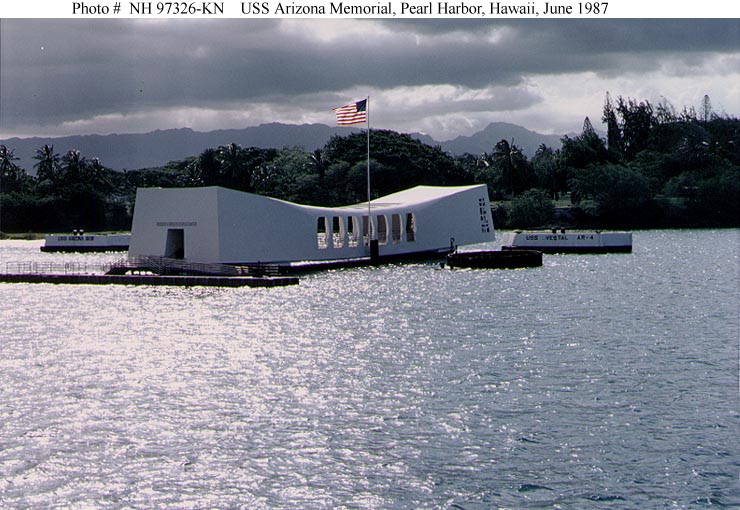
Arizona was destroyed during the attack.  Hit by 8 armor piercing bombs one of which penetrated her forward black powder magazine she was consumed in a cataclysmic explosion which killed 1103 of her 1400 member crew.  She was never officially decommissioned and the colors are raised and lowered every day over the Memorial which sits astride her broken hull.

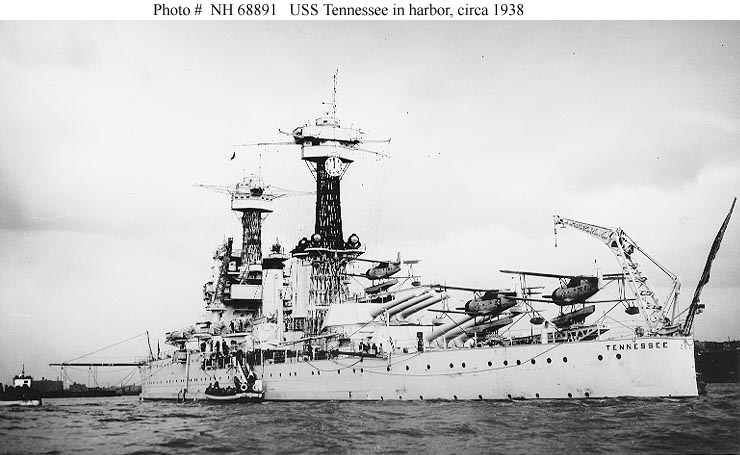
USS Tennessee 1938

The Tennessee and California were the class following the New Mexico’s which were not present at Pearl Harbor.  These ships were laid down in 1917 and commissioned in 1920.  They mounted twelve 14” guns, displaced 32.300 tons and were capable of 21 knots.  Tennessee was damaged by two bombs and was shield from torpedo hits by West VirginiaCalifornia was hit by two torpedoes but had the bad luck to have all of her major watertight hatches unhinged in preparation for an inspection.

USS Tennessee at Okinawa

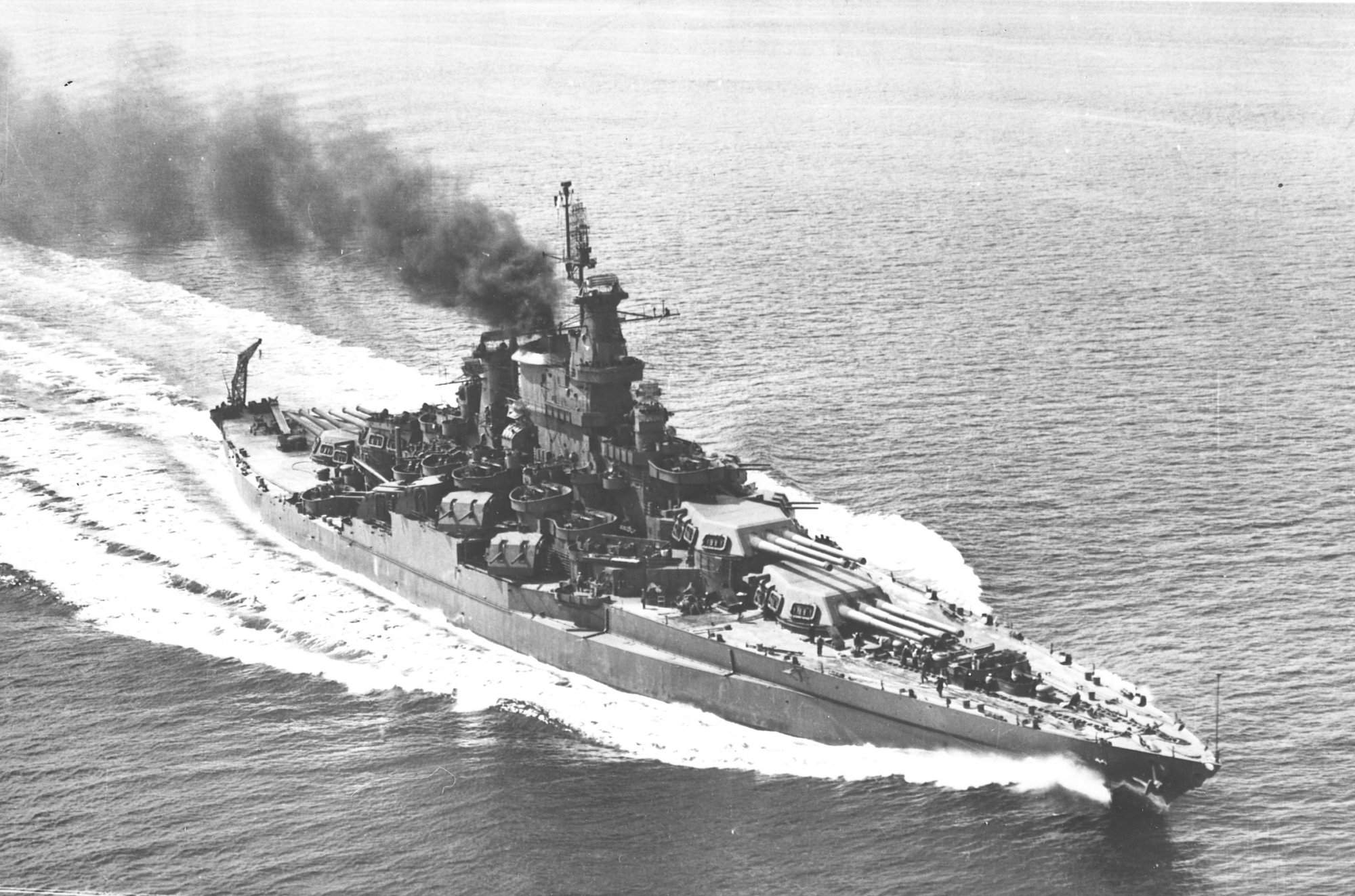
She sank at her moorings and would be refloated, rebuilt and along with Tennessee modernized with the latest in radar, fire control equipment and anti-aircraft armaments.  Both ships would be active in the Pacific campaign and be engaged at Surigo Strait where they inflicted heavy damage on the attacking Japanese squadron. Both would survive the war and be placed in reserve until 1959 when they were stricken from the Navy list and sold for scrap.

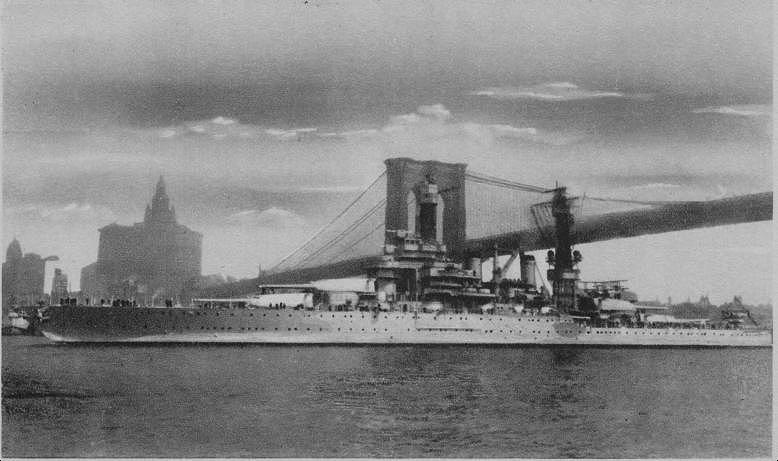
USS California Passing Under Brooklyn Bridge

The Maryland and West Virginia were near sisters of the Tennessee class.  They were the last battleships built by the United States before the Washington Naval Treaty.  Mounting eight 16” guns they had the largest main battery of any US ships until the North Carolina class.

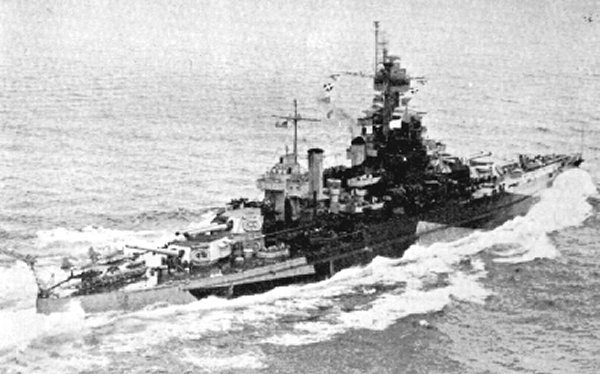
USS Maryland 1944

The displaced 32,600 tons and could steam at 21 knots. Laid down in 1917 and commissioned in 1921 they would be modernized in the late 1920s they were the most modern of the “Super-Dreadnoughts” and included advances in protection and watertight integrity learned from British and German experience at Jutland.

USS California 1944

At Pearl Harbor Maryland  was moored inboard of Oklahoma was hit by 2 bombs.  She would be quickly repaired and returned to action.  She received minimal modernization during the war. She would participate in operations throughout the entirety of the Pacific Campaign mainly conducting Naval Gunfire Support to amphibious operations. 

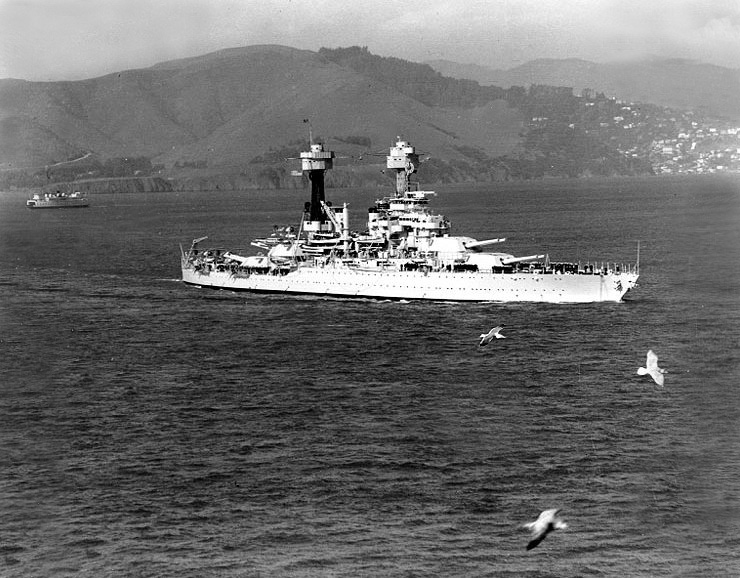
USS West Virginia 1934

and in 1944


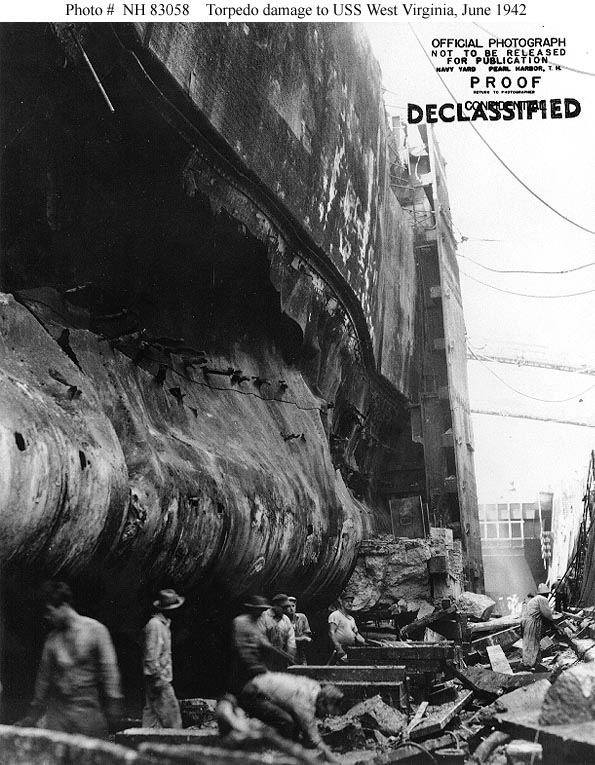
West Virginia suffered some of the worst damage in the attack. Hit by at least 5 torpedoes and two bombs she was saved from Oklahoma’s fate by the quick action of her damage control officer to counter flood so she would sink on an even keel.  She would be raised, refloated and taken back to the West Coast for an extensive modernization on the order of the Tennessee and California. 

Damage to West Virginia’s Hull

The last Pearl Harbor to re-enter service she made up for lost time as she lead the battle line at Surigo Strait firing 16 full salvos at the Japanese squadron helping sink the Japanese Battleship Yamashiro in the last battleship versus battleship action in history.  West Virginia, Maryland and their sister Colorado would survive the war and be placed in reserve until they were stricken from the Naval List and sold for scrap in 1959.

The battleships of Pearl Harbor are gone, save for the wreck of the Arizona and various relics such as masts, and ships bells located at various state capitals and Naval Stations.  Unfortunately no one had the forethought to preserve one of the survivors to remain at Pearl Harbor with the Arizona.  Likewise the sailors who manned these fine ships, who sailed in harm’s way are also passing away.  Every day their ranks grow thinner.  As December 7th  passes into history it is fitting to remember these men and the great ships that they manned.   If you know a Pearl Harbor survivor or a sailor who served on one of these ships take the time to thank them.

Peace,

Padre Steve+

USS Arizona Memorial

21 Comments

Filed under History, Military, Navy Ships, world war two in the pacific

Can Anybody Spare a DIME: A Short Primer on Early Axis Success and How the Allies Won the Second World War

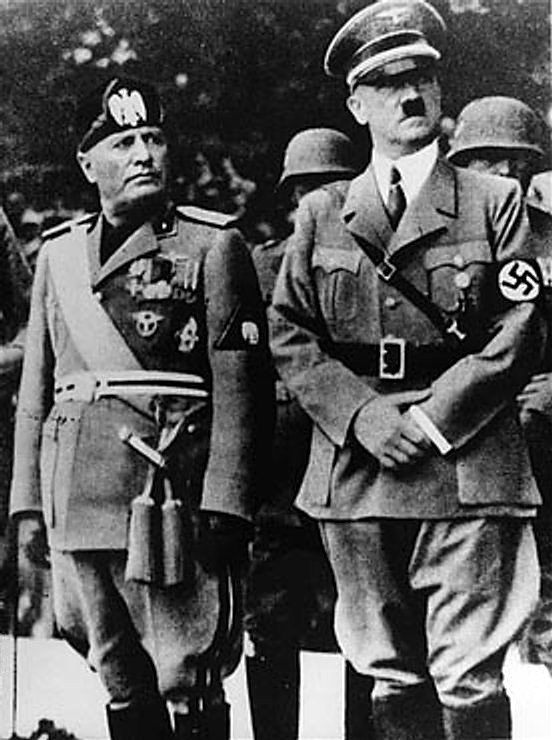
Hitler and Mussolini, the Axis Leaders Never Developed a Grand Strategy

All modern war is predicated on the full potential of a nation or alliance to fight a war.  This includes what is known in today’s parlance the DIME, or the Diplomatic, Intelligence, Military and Economic factors of national power. During the war the Axis powers almost exclusively fixated on the military dimension, especially at the operational and tactical level never coordinating a national or alliance grand strategy.  On the other hand the Allies were successful in doing so despite competing national interests of the British Empire, the Soviet Union and the United States.

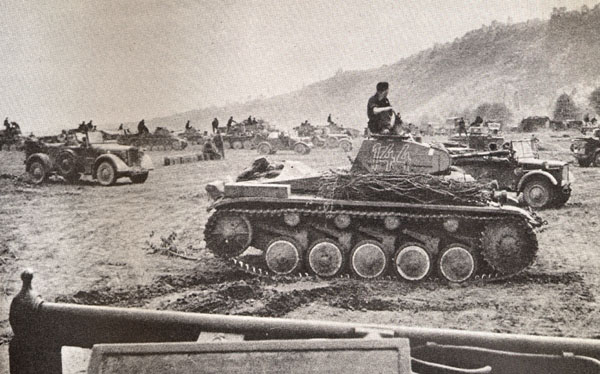
Early German Success in France Changed the Face of Warfare

The Germans and Japanese were victorious in the early years of the World War Two due to their application of the most modern forms of warfare and ability to exploit weaknesses in their opponents.  For the Germans this entailed the use of the “Blitzkrieg” or lightening war which used the combined arms team of tanks, artillery, and mechanized infantry with close air support coordinated by commanders in mobile command posts who were able to adapt to tactical considerations on the ground and exploit enemy’s weaknesses.  This involved the classic forms of applied mass, speed and firepower to overwhelm enemy defenses at critical points and the encouragement of initiative by commanders, the Auftragstaktik. Led by men such as Heinz Guderian, Erich Von Manstein and Erwin Rommel to name but a few, the German commanders overcame allied opposition as well as the occasional hesitancy of their own senior leaders to defeat Allied forces throughout Europe.  The blitzkrieg involved risk, but the Germans for the most part, with key exceptions such as at Dunkirk during the French campaign took risks and exploited weaknesses in Allied political goals, military coordination and operational art. The Allies were hampered by weak political leadership, an aversion to risk, an outmoded strategy and poor coordination of a force which outnumbered the Germans and included more tanks than the Germans could field.  The German armaments were not necessarily superior to the Allies, but were better used for the most part.

German skill at the operational level was exemplified in Poland, France and the Low Countries, a daring Norwegian operation, which could be described as one of the first joint operations in military history, the Balkans and North Africa as well as the initial phases of Operation Barbarossa.  Each of these operations had flaws, the most glaring being at the strategic level and lack of a Grand Strategy.  The operations also exposed weaknesses in logistics and limits to what the mechanized and tactical air forces could do when stretched too far, North Africa and Russia as cases in point.  The Germans would always be outnumbered and fighting a multi-front war because of their limited naval capability, both in surface units and U-Boats, as well as the lack of a strategic air capability which kept them from eliminating Britain from the war.  Hitler’s desire for German domination in Europe excluded a true coalition effort to make allies with powers in Europe such as Vichy France which shared an aversion to the British especially after the attack of the British Navy on the French fleet in North Africa.  Likewise Germany’s alliance with Mussolini’s Italy was more of a strategic liability than a true partner. Hitler’s aversion to the Soviet State prevented any more than a brief cooperation with the USSR which was ended by the German invasion of the USSR. The Germans also failed in their war strategy by not going to a total war effort until 1943 after the ascension of Albert Speer as the Armaments Minister.  Thus German forces had to fight war “on the cheap” so to speak for the first part of the war, especially in North Africa and in Russia. In Russia the vast expanse of the front forced the Germans to thin out their forces to dangerous levels and whose pathetic road and rail network limited the already limited ability of the Wehrmacht to supply its forces as they advanced deep into Russia.

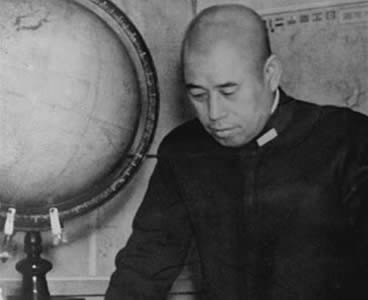
Admiral Yamamoto One of the Few Japanese Leaders to Understand what the Japanese Faced in Going to War with the United States

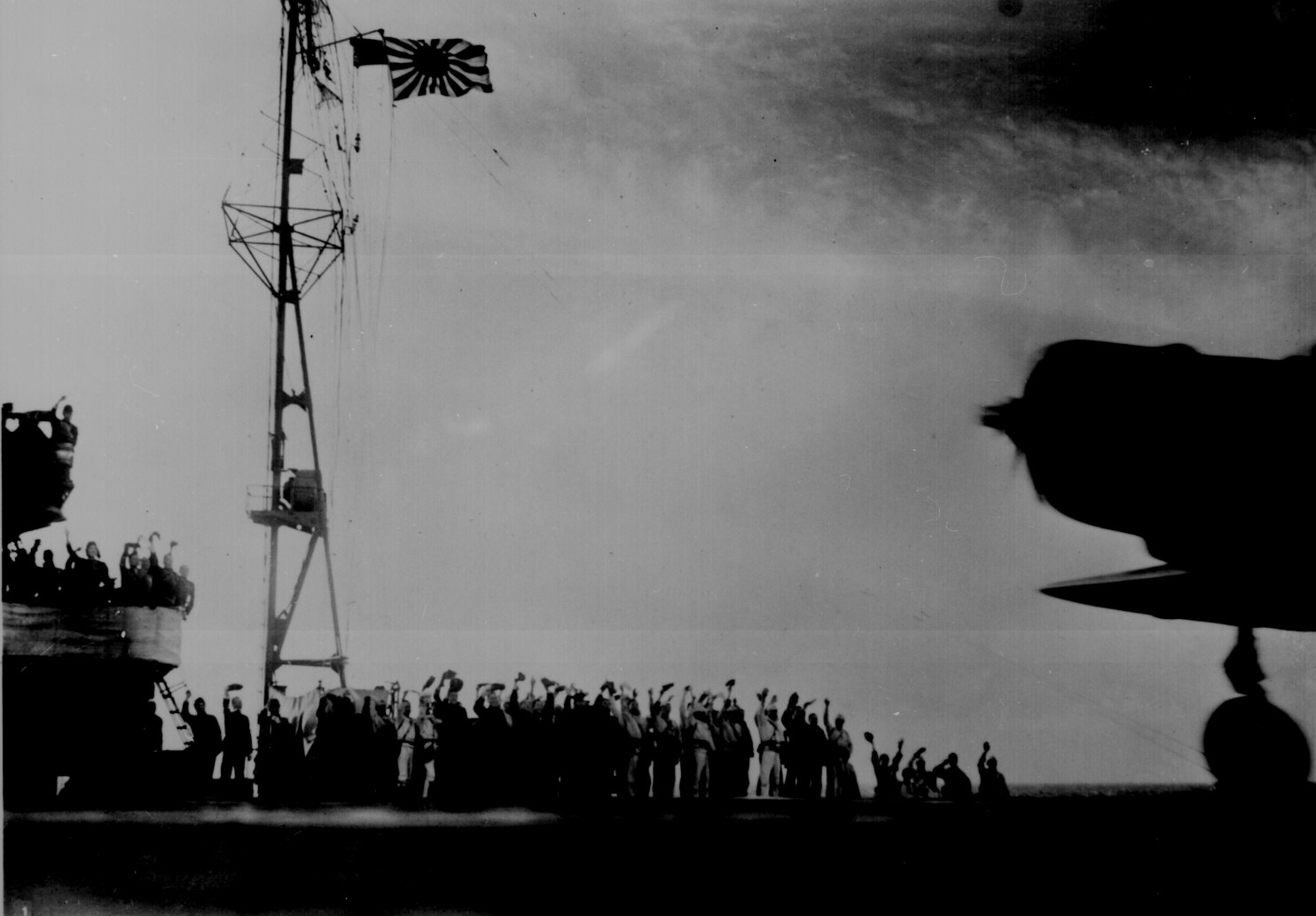
In the Pacific the Japanese used fast carrier task forces and naval air power coupled with superior surface warfare groups of fast battleships, cruisers and destroyers operating in conjunction with land based Army and Naval air units to isolate and destroy allied naval forces and outposts throughout the Pacific.   The Japanese exploited their superiority to conduct their own form of blitzkrieg.

Despite Inflicting Crushing Defeats on the Allies in late 1941 and early 1942 the Japanese period of Conquest would be Short Lived

At the same time the Japanese, even more so than the Germans lacked the ability to fight a long war; something that the best and most realistic of the Japanese strategists, Admiral Yamamoto understood and warned his government about before the attack on Pearl Harbor.  Likewise they like the Germans failed to develop a cohesive Grand Strategy in their war effort.  Competing priorities and inter-service rivalries between the Army and the Navy over resources, manufacturing priorities and war aims crippled Japanese efforts.  Despite this the Japanese used superior tactical application of forces, exploited Allied command and control weaknesses, numerical and qualitative superiority over dispersed and often obsolete Allied forces. The Allies in the opening phase of the war were often led by officers who had little respect for the Japanese and underestimated the Japanese skill at the tactical and operational level of warfare as well as the individual Japanese soldier and sailor, with tragic results.

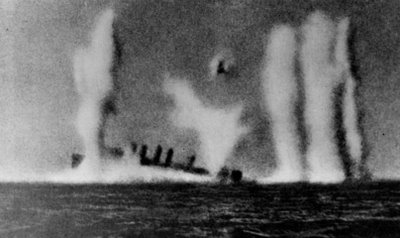
USS Pope Being Blown out of the Water at the Battle of the Java Sea

The Japanese were constrained by limited resources and intense competition between the Army and Navy for those resources as well as a long term war in China which drew off the larger part of the Japanese Army and Army Air Forces.  The Japanese effort stalled after they lost much of their carrier fleet and experienced naval aviators at Coral Sea, Midway and the Guadalcanal Campaign.  The Americans, who assumed the mantle of the Pacific Theater after the initial Japanese success and weakness of British and Dutch forces in the Pacific and demands of the war in Europe began an aggressive defense and opened an offensive against the Japanese long before the Japanese believed that they would at Guadalcanal.

At the heart of the early German and Japanese success lay their superior application of the techniques and weapons of modern warfare on the land, sea and air against opponents who were initially ill-prepared to meet their onslaught.  They both had glaring weaknesses but their weaknesses in the early years of the war were masked by Allied ineptitude at all levels, tactical, operational and strategic.   Thus they were successful and at times wildly so, but in their success lay the seeds of their defeat.

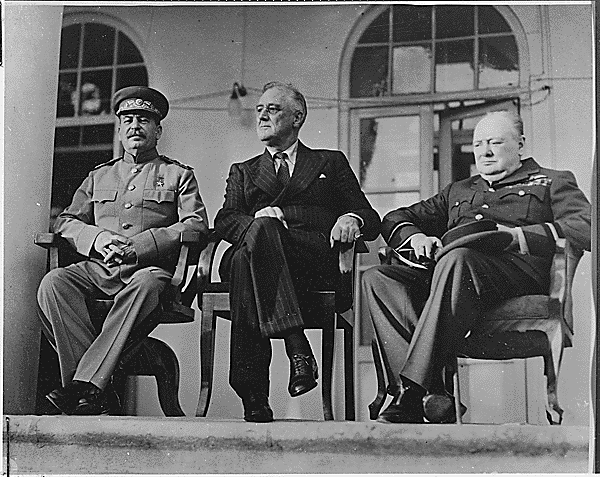
Stalin, Roosevelt and Churchill overcame Significant Conflicts of Interest to Build a Grand Strategy

The defeat of the Axis powers was in large part a combination of superior Allied strategy at the “grand strategy” level and lack of a corresponding Axis Grand Strategy; as well as the Axis powers inherent weaknesses in natural resources, manpower and industrial capabilities to fight multi-front wars, coupled with poor transportation and logistics capabilities for distant operations.

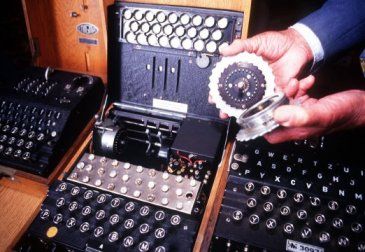
The US Navy Breaking of the Japanese Naval and Diplomatic Codes as well as the Cracking of the German Ultra Code and Capture of the Enigma Machine Greatly Enhanced Allied Intelligence

The cracking of Japanese Naval and diplomatic codes and the capture of the German Enigma code machine and code books aided Allied strategic planning, none or the Axis intelligence services rose to the challenges of the war. The Allied victory and Axis defeat was in fact a combination of what is called the DIME, the Diplomatic Intelligence Military and Economic factors which caused the Axis defeat.  While it is in part due to Allied strategy, Axis deficiencies in each of these areas played a part in their ultimate defeat.

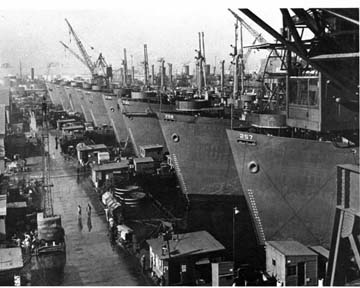
Massive US Industrial Capacity Drove the Allied War Effort

On the Grand Strategic level there was no comparison. The Allies, even factoring in often conflicting national goals were able to coordinate a strategy to first defeat Germany and then Japan.  The Americans, British and Russians began such cooperation even prior to the American entry into the war through the Lend Lease, followed by the British and American Combined Chiefs of Staff, which helped coordinate often disparate British and American strategies in Europe and Asia. Murray and Millett assert and I agree with the thesis that the British and Americans “came closest to designing a global strategy that accommodated their war aims.” (War to Be Won p.584) While close coordination with the Russians was illusory at best, the Western Allies were able to help keep the Russians in war the by helping to supply them (War to Be Won p.388), and on occasion launching operations which assisted the Russians, such as the invasion of Italy. The Italian invasion, though the pipe dream of Churchill to crack the “soft underbelly” of Europe was a key factor in the German decision to quit the Kursk offensive and redeploy Panzer Divisions, including SS formations to Italy and the West. This weakened the Germans in the face of the Russian counter offensive following Kursk which aided Russian success. The Axis powers knew no such coordinated strategic thinking.

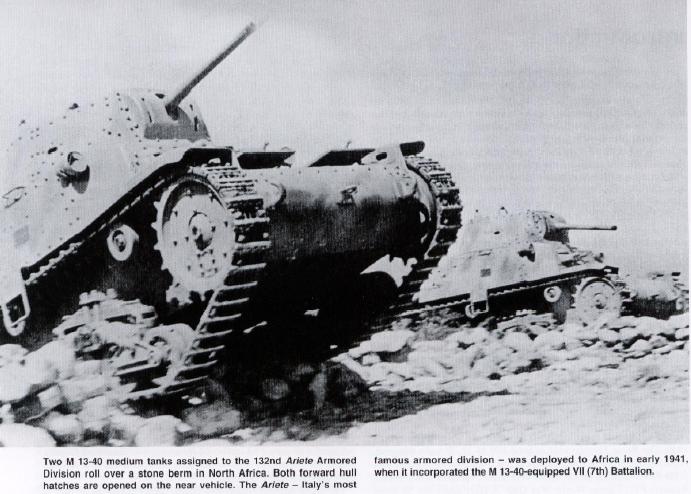
Poor Italian Technology, Training and Organization Made them More of  a Burden to Germany than a Help

The Japanese, Germans and Italians ran separate wars based on their perceived national considerations at times which often ran contrary to the common needs of their coalition.  Italian actions in the Mediterranean caused a diversion in German efforts at key times, such as in Greece where the Germans had to save the Italians and delay the opening of Operation Barbarossa.  Italian incompetence forced the Germans to commit forces to North Africa, Greece, the Balkans and Italy upon its collapse which could have been used to great effect in Europe or Russia. The Japanese and Germans never coordinated their efforts to defeat either the western Allies or the Soviets.  The lack of a coherent Grand Strategy on the part of the Axis powers, especially in the early part of the war when Allied fortunes were at lowest ebb, was every bit as much a part of their ultimate defeat as was a coordinated or “superior” Allied strategy.

The lack of a coordinated Axis Grand Strategy was reflected in the way each fought its war, the Japanese were hindered by lack of natural resources, especially those most important in maintaining a war economy, fuels, metals, rubber and even foodstuffs for which they were dependant on foreign suppliers such as the United States.  They were also hindered by a war in China which consumed troops and supplies without a corresponding benefit.  (See Barnhart’s “Japan Prepares for Total War and Toland’s “Rising Sun.) Their inability to produce the machines of war in sufficient numbers to replace losses due to combat operations and their failure to keep up with advances in technology negated their initial success and superiority at sea and in the air.

US Naval Forces Would Dominate the Pacific

The Germans failed to mobilize their economy to a total war footing until after Stalingrad and the accession of Albert Speer to head Reich war production.   They also attempted to fight a multi-front war and were dependant on weak and unenthusiastic satellite states such as Romania and Hungary to hold what they deemed to be less important areas in order free up German units.  Likewise the Germans had not adequately prepared for the war at sea with sufficient surface, naval air or U-boat strength to win the battle of the Atlantic, nor had the Luftwaffe developed a strategic bombing capability with long range fighter escorts to win the Battle of Britain. German industrial efforts, even the great strides made after Speer took over war production were unable to keep pace with the massive production of the Americans and the Soviet Union.  The Red Army ground the Wehrmacht to dust on the Steppes of Russia, a key factor in that helped the American and British successfully invade Western Europe.

B-17s Over Europe

The preponderance of western Air, Naval, war production and natural resources enabled them to field Fleets, Armies and Air Forces which were unmatched in size or technical sophistication for their time in history.  The Japanese and the Germans had no way to win by 1944, short of developing and deploying Atomic weapons and delivery systems before the Americans and British did could defeat.  Murray and Millett note this in regard to Germany which had the Wehrmacht held out longer would have been the first target of the Atomic bombs. (War to Be Won p.483)

Atomic Bomb at Hiroshima, It could Have Been Berlin Instead

In summary the Axis powers were defeated by their own weaknesses in the diplomatic, intelligence, military and economic arenas as much as they were by superior Allied strategy.  This in no way negates the superior way in which the Allies marshaled their resources and coordinated a coherent Grand Strategy.  But even so the Allies by were running out of troops by the end of the European war.  Russian formations while still formidable were operating at greatly diminished strength by the end of the war and their losses “carried political and social consequences that were to burden the Soviet Union to its demise.” (War to Be Won p.483)  The British were bled dry and unable to keep up with losses suffered after Normandy. The Americans too suffered from a shortage of manpower, particularly in Army infantry forces, and had limited their Army to a mere 90 divisions of all types to fight a world war. They had diverted manpower to the Army Air Corps, Naval and Marine Corps leaving the Army chronically short infantry. The Americans were forced into emergency drafts of troops from the Air Corps and other ancillary formations and support units to fill out infantry formations during the winter of 1944-45.  (See Russell Weigley’s book Eisenhower’s Lieutenants.” and Max Hasting’s “Armageddon” for a good treatment of the manpower situation in 1944-45) This is one point were the Americans took a risk that almost backfired on them and could have cost them victory.

12 Comments

Filed under History, Military, world war two in europe, world war two in the pacific

The First Aircraft Carriers Part One: The First American Flattops- Langley, Lexington and Saratoga

saratoga aircraft approach for landingAircraft over Saratoga

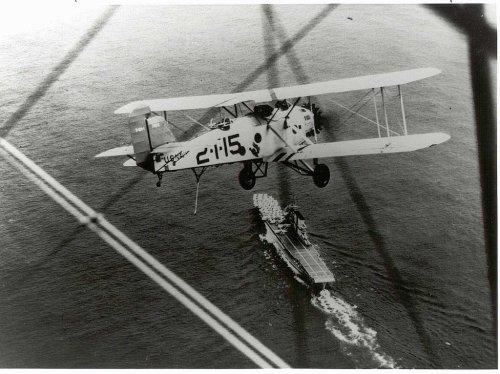
Note: This is the first in a series on the early aircraft carriers.  Two others will follow on the British and Japanese carriers.  My dad was a Chief Petty Officer in Naval Aviation.  As such I grew up around Naval Air Stations, Squadrons and of course Aircraft Carriers.  My dad retired off of the USS Hancock CVA-19 in 1974.  I spent two weeks underway on USS Coral Sea CV-43 as a NJROTC Cadet in the summer of 1976.  It was an experience that I will never forget.  While on the Cruiser USS Hue City CG-66 we deployed with the USS John F Kennedy CV-67 for Operation Enduring Freedom.  There is something about the power and majesty of the modern carriers at the same time there is a sense of timelessness in the first aircraft carriers.  Three of the first four American ships were converted from other platforms.  As a kid, a young adult and even now I am fascinated by all things Navy, especially ships that made history.  Here is my look at the first American Aircraft Carriers.

The United States did not invent the aircraft carrier although Eugene Ely flew an aircraft onto and off of the Armored Cruiser USS Pennsylvania on January 18th 1911.  It was the British Royal Navy which first built and operated aircraft carriers beginning with the HMS Furious which had been converted from a light Battle Cruiser.  The Royal Navy would covert the sister ships of the Furious, the Glorious and Courageous as well as the auxiliary ship the Argus before building their first carrier that was designed from the keel up, the HMS Hermes.     With the British building carriers and the Japanese following suit the United States began a program of aircraft carrier production and operation unmatched in history.

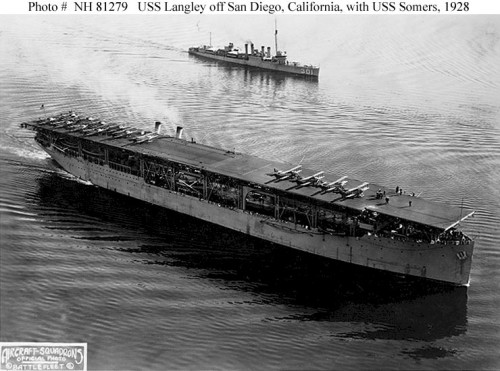
uss langleyUSS Langley CV-1 The “Covered Wagon”

The first US carrier was the USS Langley, CV-1.  Langley was converted from the collier USS Jupiter beginning in July 1919.  She was commissioned as USS Langley CV-1 on 21 April 1920.  Displacing 15,150 tons fully loaded Langley embarked 34 aircraft and had a maximum speed of 15.5 knots.  Langley was primitive but groundbreaking.  She was the first carrier equipped with catapults and on 18 November 1922 achieved the first catapult takeoff by an aircraft.  She served as an invaluable training platform for Naval Aviators and helped provide the fleet with highly skilled flight crews that would operate from the USS Lexington and USS Saratoga.

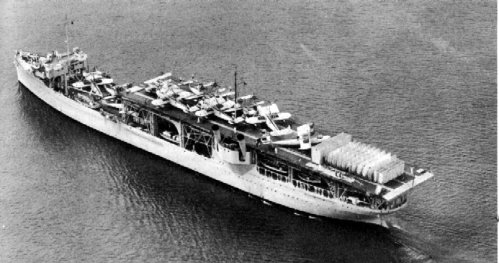
langley as av-3Langley after conversion to AV-3

Nicknamed the “Covered Wagon” she served initially in the Atlantic until November of 1924 when she was transferred to the Pacific Battle Force.  She served as a carrier in the Pacific until 1936 when she was converted into a Seaplane Tender AV-3 and assigned to the Pacific in September 1939 based in Manila.  She was in the Philippines when the Japanese attacked and was sent south to Australia.  She was assigned to the ABDA forces defending the Netherlands East Indies and was sunk by her escorts after being bombed and disabled by Japanese aircraft while delivering fighter aircraft to Java with the loss of 16 sailors.

uss lexingtonUSS Lexington CV-2

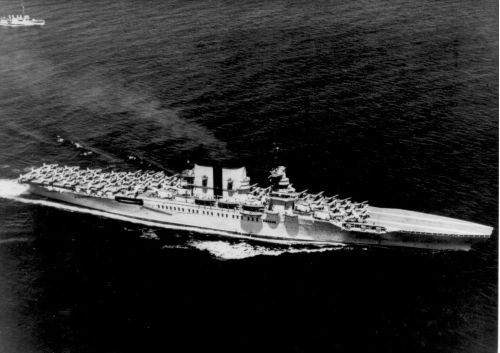
The second two American Aircraft Carriers were also conversions.  Unlike Langley the Lexington and Saratoga were converted from a new class of large and powerful battle cruisers whose construction had been canceled by the restrictions of the Washington Naval Treaty.  Commissioned on December 14th 1927 Lexington was 880 feet long and displaced 38,746 tons.  Saratoga was commissioned on November 16th of the same year and of similar dimensions and displacement.  Both of these ships could steam at 33.25+ knots and had a complement of 90 aircraft.  They were armed with eight 8” guns mounted in 4 turrets at the behest of more traditionally minded officers who felt that the armament might be needed for surface actions.

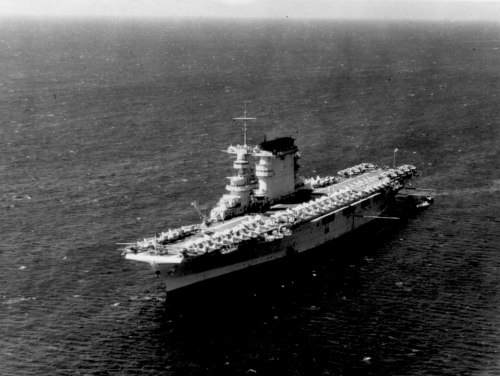
Saratoga underwayUSS Saratoga CV-3

They were the largest American carriers built until the Midway class appeared inin late 1945 and early 1946.  Of other nations pre-war carriers only the Japanese Navy’s Akagi and Kaga, converted from a battle cruiser and battle ship for the same reason as a the Lexington’s were comparable in size, air group capacity, protection and speed. Saratoga’s 8”battery would be replaced by twin 5” 38 caliber mounts in 1942.

lexington sinkingLexington Burning and Sinking

Both ships were used to help develop carrier doctrine and the concept of the carrier task force. Future leaders of Naval Aviation including Marc A. Mitscher trained aboard or flew from these ships.  Of particular note was that during Fleet Problem XIX in 1938 Saratoga launched a surprise air attack on Pearl Harbor from a point 100 miles off Oahu, setting a pattern that the Japanese copied in December 1941.

saratoga 1945Saratoga 1945

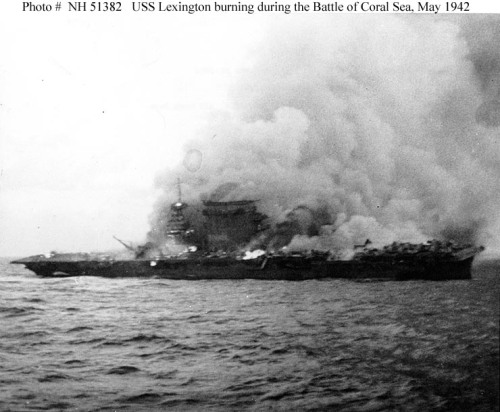
During World War II both helped hold the line after Pearl Harbor along with Enterprise, Yorktown and Hornet. Lexington was the flagship of TF-11 during as series of raids on Japanese outposts in the Solomons.  TF-11 joined Admiral Frank “Jack” Fletcher’s TF-17 at the Battle of Coral Sea, the first Naval Battle fought outside of eyesight of the respective forces. Lexington’s aircraft helped sink the Japanese light carrier Shoho on May 7th 1942 and heavily damage the fleet carrier Shokaku the following day. However aircraft from Shokaku and Zuikaku hit Lexington with two torpedoes and 3 bomb hits which her damage control parties seemed to have under control when vapors from ruptured aviation fuel lines were ignited resulting in a series of explosions which ignited uncontrollable fires. Her crew was evacuated by escorts and she was torpedoed by the destroyer USS Phelps.

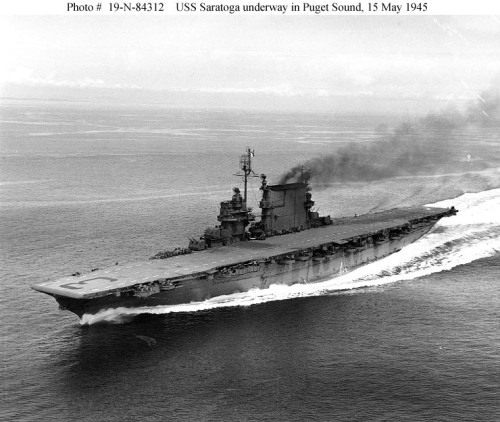
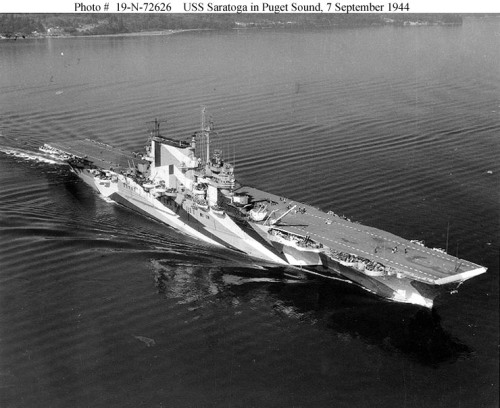
Saratoga served throughout the war. She engaged in patrols after Pearl Harbor and while enroute to joining Enterprise was hit by a torpedo from the Japanese submarine I-16. After repairs she was rushed to Hawaii to join the American Task Forces at Midway but arrived in Hawaii the day after the battle.  Following this Saratoga operated in the Central Pacific in the first offensive at Guadalcanal.  She participated in the landings as the flagship of Admiral Fletcher and then at the Battle of Eastern Solomons sank the Japanese light carrier Ryujo and damaged the seaplane carrier Chitose.  Following this battle she was hit by a torpedo from the I-26. After repairs she again went to the Solomons joined by the light carrier USS Princeton.  On November 5th the two carriers conducted a brilliant strike on Japanese ships and aircraft facilities at Rabaul which were threatening the landings at Bougainville.

saratoga 1944Saratoga September 1943

Following these operations Saratoga operated in the Gilberts and then with the British in the Indian Ocean.  She then was used as a training carrier for new pilots and aircrews at Pearl Harbor before being brought to Iwo Jima to operate night fighters against Kamikaze raids.  While conducting these operations she was attacked by Japanese aircraft in which 6 Japanese aircraft score 5 hits on her in 3 minutes.  Her forward flight deck was wrecked and she suffered great damage below decks and she lost 123 sailors.

saratoga kamikaze 2Saratoga burning after Kamikaze hits in 1945
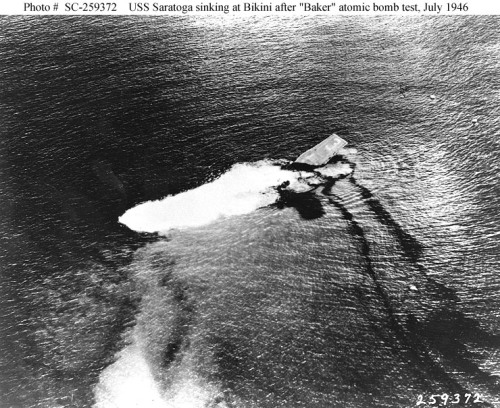
Following repairs she resumed training duties and after the defeat of Japan was involved in Operation Magic Carpet to bring Servicemen back from overseas.  Surplus to Navy needs at the end of the war Saratoga was sunk in Operation Crossroads at Bikini Atoll by an underwater atomic blast in the “Baker” bomb test a mere 500 yards from her position. She sank 7 hours later.

saratoga sinkingThe End of an Era- Saratoga goes down at Bikini
5 Comments

Filed under History, Navy Ships

Alleluia! Memories of Easter…Past and Present

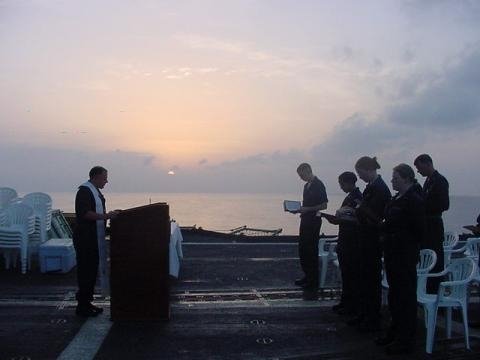
easter-2002-on-hue-cityEaster aboard USS Hue City CG-66 off the Horn of Africa 2002

I find Easter to be an interesting time.  I tend to get reflective and while I do joyfully say “Alleluia! Christ is Risen!” I also tend to be somewhat subdued.  By nature I am reflective person, I like to watch, observe and think.  I am not into big Easter productions and extravaganzas. I prefer much more simple expressions of the Risen Lord.  I think that Jesus would go along with me on this as he spent that first Easter walking with friends, who failed to recognize him, and then breaking bread, he celebrated the first Eucharist after the Resurrection at Emmaus.

For me my most memorable Easters have been connected with my life in the military.  They have almost always been simple affairs, and most involving the liturgy somehow.  I think the first Easter that I remember was at Cubi Point Naval Air Station in the Philippines, it was seeing the Chaplains in their Summer White uniforms that still stands out to me today.  I remember a Easter Sunrise service at Naval Station Long Beach and looking in wonder at two “mothballed” carriers of World War II vintage, the USS Boxer and USS Princeton moored near the site of the service on the waterfront.  When my dad was in Vietnam and we had been made unwelcome in a civilian church, we attended Mass at the Quonset hut that served as the Chapel on the little Naval Communications station.  In my senior year of high school I made a cruise on Navy ships to and from Pearl Harbor Hawaii.  During the week at Pearl I made the trip to the Arizona Memorial on Easter Sunday.  For some reason that experience reverberated as loud as any church service I have ever attended.  When I was a young Army Officer running from God and hiding in the Chapel, the Deity Herself patently used the events of Holy Week to “rend my heart” so to speak.  I left the Good Friday Tenebrea service praying that Easter would come.  Our good Lutheran Chaplain, Lee Rittenbach had driven home the reality of Jesus’ death so well that I really started to understand what the disciples went through.  When Easter came I learned to say “Alleluia! Christ is Risen!”

After that I went through kind of a spiritual desert as far as Easter was concerned.  In seminary I was attending mega-churches which did nothing with Holy week, and made a big evangelical production of Easter, complete with overly loud and insipidly shallow “worship” music and laborious preaching.  I have to say that these big productions were more of an ordeal than a celebration for me.  During seminary we were going through sickness, financial disaster, loss of our home, cars and struggling to survive working multiple jobs while being a full time student.  How we got through seminary I will never understand, other than that the Deity herself provided for us through a lot of wonderful people.  The “happy talk” at church, the prosperity Gospel, focus on signs and wonders seemed to reflect almost a gnostic other worldly view of life that I did not see in the Scriptures.

Academically and from a theological point of view Easter began to rally take shape for me.  Reading the Church Fathers as well reading Dietrich Bonhoeffer’s The Cost of Discipleship, Emil Brunner’s The Scandal of Christianity, Alister McGrath’s The Mystery of the Cross, Hans Kung’s On Being a Christian and Jurgen Moltman’s The Crucified God brought me to greater understanding of the connectedness of Easter to the Incarnation and the Passion.  One of my professors, a kindly gentleman named Yandall Woodfin, made a comment in his Philosophy of Religion class:  “We do not do Christian Theology without coming to grips with the reality of suffering and death.”  That comment was at first offensive to me because my mega-church pastors all focused on the Resurrection.  Death to them seemed to be a bother. One pastor said in a sermon how he did not do visits to the sick.  When asked by someone how sick they had to be for him to see them, he stated “You don’t want to be that sick.”

However, what Dr. Woodfin said planted a seed in me.  This went from an academic question, to daily reality during my Clinical Pastoral Education Residency at Parkland hospital.  Doing various Holy Week services there, in the midst of the amazing amount of pain, suffering and death in that gargantuan Medical Center brought into focus and made real what Dr. Woodfin said.  At Parkland there was no avoiding death or suffering, and what Dr. Woodfin said was right.  We don’t begin to do Christian theology until we we deal with suffering and death.  Easter and the Resurrection don’t happen without the Incarnation and Passion of Jesus.  Easter disconnected from the reality of suffering and death is nothing more than a “happy thought” or escape that avoids the the great Mystery of Faith: Christ has died. Christ is Risen. Christ will come again.

After Parkland my understanding of Easter grew as I was immersed in the liturgy, began to observe the liturgical year, and occasionally “clandestinely” attend Anglican churches during Christmas and Easter. During this time Judy became Roman Catholic, something that accelerated what was already going on in me.  During my formation process and following my ordination to first the Deaconate and then the Priesthood, the understanding deepened as I saw how the Gospel in Word and Sacrament. As an Army Reserve chaplain serving on active duty I experienced the life of a parish pastor at a small base in central Pennsylvania.  There I saw how the how the liturgical year and life are so intimately connect.  In life and death, in sorrow and joy, in good times and bad, the Holy Spirit touched people.

Easter became even more part of my life when I became a Navy Chaplain and left the Army in the “rear view mirror.”  Here I began to see how wonderful Easter is when you do not have all the “smells and bells” “praise teams” or great music or facilities.  It goes back to simplicity.  On Easter Sunday 2001, I was on the USS Frederick, LST 1184 with my Marines going from Korea back to Okinawa.  It was on Frederick 23 years before that I had first felt the call to be a Navy Chaplain during the trip to Pearl Harbor.  In 2002 I was deployed on USS Hue City CG-66 at the beginning of Operation Enduring Freedom. Off the Horn of Africa we had both sunrise services as well as a morning Eucharist on our flight deck. While with the Marine Security Forces I spent an Easter celebrating Eucharist on the fence-line adjoining Communist Cuba.  I now have come back to critical care hospital ministry in my ICUs.  Here we live Good Friday every day.  For me Easter is not just a nice thing to observe, but a necessity in life.

This morning I attended the early Mass with Judy at Ascension Catholic Church.  I love the church, though it is a bit big and busy for me now after Iraq.  So I found me a corner near the choir where I could sit with my back against the wall, an emergency exit to my left, and where I could observe what was going on.  Yes I was having a PTSD moment, but I got through it with the help of the Deity herself and a little ant-anxiety medication.  But the really cool thing was seeing a man who was one of our patients on the ICU a couple of months back.  A man who almost died on us several times, and his wife.  We had grown close during that 2 1/2 weeks and he made it through.  He looked great this morning.  We all hugged and talked of how good God is before Mass, exchanged the Peace and then spent some time together after Mass. That was really cool.  What a way to celebrate Easter.

Life and death, pain and suffering, healing and resurrection.  Alleluia, Christ is Risen. The Lord is Risen indeed. Alleluia!

Peace, Steve+

Leave a comment

Filed under Loose thoughts and musings, Military, Religion