Tag Archives: syria

ISIL: A Generational Problem in Which the Enemy Gets a Vote

295_26912117058_5652_n

I have been writing much in recent days about the war that we are now in against the Islamic State, or ISIL.  Today Secretary of defense Hegel and Chairman of the Joint Chiefs of Staff General Martin Dempsey briefed the Senate Armed Services Committee about the developing strategy to defeat ISIL. They both echoed what I have been writing, that this is not going to be a short and easy war. It was the kind of briefing that Secretary Rumsfeld, Paul Wolfowitz and others should have given Congress before launching the Iraq war in 2003.

Unlike Rumsfeld and others who plainly concocted a fairy tale about the character, length and cost of the war which they and their propagandists in the media deceived the American public into supporting that war, this was a briefing conducted by realists who did not paint beautiful picture of just how easy it will be to win this war, and how it really won’t be over until it’s over. Retired Marine Corps General James Mattis very wisely said: “No war is over until the enemy says it’s over. We may think it over, we may declare it over, but in fact, the enemy gets a vote.”

In fact the aftermath of that 2003 invasion opened a Pandora’s box of chaos, and opened the door to what T.E. Lawrence warned about in 1919: “A Wahabi-like Moslem edition of Bolshevism is possible, and would harm us almost as much in Mesopotamia as in Persia…” ISIL is exactly that, a fulfillment of Lawrence’s warning.

Unfortunately no one really likes realists, they rain on people’s ideological parades and no one likes to have their parade rained on. Both men recognize that after the past thirteen years of war, as well as the massive upheaval spawned in the region in large part because of it, and the many other crises  that the American military and our NATO allies are having to confront, that American military and diplomatic options are less than optimal and as General Mattis said the enemy gets a vote. As Winston Churchill said:

“Never, never, never believe any war will be smooth and easy, or that anyone who embarks on the strange voyage can measure the tides and hurricanes he will encounter. The statesman who yields to war fever must realize that once the signal is given, he is no longer the master of policy but the slave of unforeseeable and uncontrollable events…. Always remember, however sure you are that you could easily win, that there would not be a war if the other man did not think he also had a chance.”

General Dempsey cautioned the Senators that this was not going to be a short or easy effort. He noted as any realist would : “It’s a generational problem, and we should expect that our enemies will adapt their tactics as we adjust our approach.” 

They outlined a number of elements of the strategy to include the continued air campaign, coordination with the Iraqis, the advisory mission and the diplomatic efforts being made to build an alliance, as well as to build up “moderate” Syrian rebel forces that are functioning under some kind of “moderate” authority, whatever that is, and if there is such a thing in Syria I hope we find it.

The fact is there is nothing easy about any of these options, even the advisory piece is fraught with danger and the potential of being expanded into a ground combat operation. President Obama has promised not to enter into a ground war, but remember the enemy, as well as the other participants in war get a vote. General Dempsey acknowledged this when he told the committee: “If we reach the point where I believe our advisors should accompany Iraqi troops on attacks against specific ISIL targets, I’ll recommend that to the president.” Yes, the decision to commit troops in a ground combat role is ultimately that of the President as Commander in Chief, but the Congress and the American people need to be part of the decision making process and get a vote. If Congress fails to weigh in on this, and either vote for committing troops, or putting limitations on military action, they will have failed in one of their chief constitutional duties.

General Dempsey also noted the nature of the air campaign that is being conducted and which will be conducted in Syria, saying: “we will be prepared to strike ISIL targets in Syria that degrade ISIL’s capabilities. This won’t look like a ‘shock and awe’ campaign because that is simply not how ISIL is organized, but it will be a persistent and a sustainable campaign.” Part of this is due to ISIL as General Dempsey said, but also as he later noted the growing mismatch between policy ends and the means available to deal with them including the will of Congress to provide those means. Dempsey warned of the danger if the “will to provide means does not match the will to pursue ends,”  a time bomb that the austerity minded Congress foisted on the nation through sequestration in 2012. 

Dempsey was cautiously optimistic in his assessment:

“Given a coalition of capable, willing regional and international partners, I believe we can destroy ISIL in Iraq, restore the Iraq-Syria border and disrupt ISIL in Syria…ISIL will ultimately be defeated when their cloak of religious legitimacy is stripped away and the populations on which they have imposed themselves reject them. Our actions are intended to move in that direction.”

General Dempsey recognized that American military power alone cannot solve this situation and that ultimately if ISIL is to be defeated and destroyed, those people that they have conquered need to rise up and reject them. I think that is possible, but it may take years of suffering and oppression at the hands of ISIL for those people to rise up against them. The Sunni did it in Anbar in 2006-2009 to help turn around the Iraq campaign, but they did so on the basis that their rights would be respected and that they would have a real voice in the Shi’ite dominated Iraqi government. Instead they were tossed aside by the Maliki government making them far more apprehensive and unwilling to go all in on defeating ISIL as they did its predecessor.  The Sunni attitude is much like that of the Arabs who rebelled against the Turks, of whom T. E. Lawrence wrote:

“The Arabs rebelled against the Turks during the war not because the Turk Government was notably bad, but because they wanted independence. They did not risk their lives in battle to change masters, to become British subjects or French citizens, but to win a show of their own.”

This is the reality and it is not pretty. Reality sucks, but as Mark Twain said

“Reality can be beaten with enough imagination.”

Peace

Padre Steve+
1 Comment

Filed under Foreign Policy, History, iraq,afghanistan, middle east, Military, national security, Political Commentary, War on Terrorism

Prepare for a Long and Brutal Ideological War Against the Islamic State

“This war differs from other wars, in this particular: We are not fighting armies but a hostile people, and must make old and young, rich and poor, feel the hard hand of war.” William Tecumseh Sherman

Note: Please know, I have been to war, I have seen its devastation and heartache and I came back changed from the experience. I hate it. That being said, despite being a progressive who hates war, I am also a realist. I am not one that finds any romance or glory in war, but I know that sometimes it becomes unavoidable. In the past few articles I have written about the nature of war, the kind of war we are now engaged in with ISIL and some of the ethical and moral compromises that could easily be made in such a war. Thus what I write here is a continuation of those thoughts and I encourage you to look at those articles. 

President Obama came into office as a President determined to end the wars that the United States was engaged in and usher in an era of peace. That did not happen. The genie of war and chaos that was unleashed when President Bush stopped pursuing Al Qaeda and attacked Saddam Hussein’s Iraq refused to go back into its bottle. The new and more violent terrorist groups spawned from the loins of Al Qaeda in Iraq are now the dogs of war that have been unleashed on the region, threatening all of the peoples there.

This menace to the people of the region as well as to the West, known as the Islamic State of Iraq and the Levant is different than Al Qaeda.  It is a terrorist group to be sure, but it is also an embryonic state which is conquering territory, subduing people, butchering its enemies and murdering innocents in cold blood. They boast in their atrocities and believe what they are doing is blessed by their God. They have grown up and been nurtured by a culture of victimhood which they believe that past or present oppression justifies their actions. Eric Hoffer wrote something that is quite poignant if we are to understand the mindset of ISIL:

“It is doubtful if the oppressed ever fight for freedom. They fight for pride and power — power to oppress others. The oppressed want above all to imitate their oppressors; they want to retaliate.”

The leaders and fighters of ISIL are people of the 12th Century living in the 21st Century. Prisoners of their doctrine they are incapable of negotiation, seeing it as only weakness and a way to impose their will on those unable to, or unwilling to resist them. Hoffer described their mindset well in his book  The True Believer:

“A doctrine insulates the devout not only against the realities around them but also against their own selves. The fanatical believer is not conscious of his envy, malice, pettiness and dishonesty. There is a wall of words between his consciousness and his real self.”

Thus this war will be something different, something that we in the West do not want to comprehend. We want any war to be neat, fast and comparatively bloodless, but this will not be the case in the war against ISIL. Such wars may be possible against traditional nation states with weak militaries. But to believe that it can be with ISIL is wrong headed and dangerous because it ignores the nature of that group. Carl Von Clausewitz noted that:

“Kind-hearted people might of course think there was some ingenious way to disarm or defeat the enemy without too much bloodshed, and might imagine this is the true goal of the art of war. Pleasant as it sounds, it is a fallacy that must be exposed: war is such a dangerous business that the mistakes which come from kindness are the very worst.”

Ultimately, despite the fact that I almost always counsel that war should be avoided and peaceful solutions found to resolve conflict, there are times that wars must be fought. If ISIL was a true nation-state with a conventional understanding of diplomacy and the relationship between nations it would be conceivable that the United Nations or perhaps the Arab League could help broker a deal. But ISIL is neither your father’s terrorist organization, nor a real nation-state. It is a hybrid which is not driven by realpolitik but rather a fanatical religious belief in their cause.  This allows them to dispense with diplomatic niceties and allows them no compromise with those they believe are the enemies of their God; including other Moslems.

Their war has been raging for some time in both Syria and Iraq. What they are doing is further destroying the mosaic of peoples who are part of the Arab heritage in both countries. The atrocities committed by ISIL against Shi’ite Moslems, secular Sunnis, Yidazi and Christians have been displayed around the world. Mass executions, beheadings and the destruction of historic sites which are important parts of the Christian, Moslem and Jewish heritage are only part of their crimes.

Some of those images inflamed people in the West, but it was the images of American and British hostages being beheaded amid dire threats to kill others and bring vengeance on the Western Infidels that finally got our attention.  The only condition for peace given by ISIL to those it considers the enemy is “convert or die.”  Whether we like it or not, war is now unavoidable. President Obama, the “peace President,” and some of his peers in Western Europe have reluctantly decided to fight ISIL and are now gaining international support for their efforts, even in the Arab world.

Some politicians and pundits seem to think that this will be easy, simply destroy ISIL where they stand. But that belief is illusory. ISIL and its sympathizers may seem to be concentrated in Iraq and Syria, which is enough of a problem for us, but their supporters, financial supporters and sympathizers are world wide. Interestingly Pope Francis noted that:“Even today, after the second failure of another world war, perhaps one can speak of a third war, one fought piecemeal, with crimes, massacres, destruction….”

That being said there is a warning that all must remember about this war. It is at its heart ideological, and it will be long and brutal and very importantly, the Islamic State believes that it can and will win it.

Winston Churchill said:

“Never, never, never believe any war will be smooth and easy, or that anyone who embarks on the strange voyage can measure the tides and hurricanes he will encounter. The statesman who yields to war fever must realize that once the signal is given, he is no longer the master of policy but the slave of unforeseeable and uncontrollable events…. Always remember, however sure you are that you could easily win, that there would not be a war if the other man did not think he also had a chance.”

Thus in this war we cannot waver, and we must believe in our ideals of freedom, justice, equality and the value of a single human life. We must do this even though our practice of them often makes a mockery of them. But they are still ideals that are worth fighting for, because without them we lose something of our already flawed humanity. Carl Clausewitz recognized this and wrote:

“If the mind is to emerge unscathed from this relentless struggle with the unforeseen, two qualities are indispensable: first, an intellect that, even in the darkest hour, retains some glimmerings of the inner light which leads to truth; and second, the courage to follow this faint light wherever it may lead.”

It was said by Barbara Tuchman that “War is the unfolding of miscalculations.” For over a century the leaders of the West as well as Arab leaders throughout the region have miscalculated far too many times, and what is going on now is the tragic and bloody result of all of those miscalculations. The suffering and the human cost will be great.

Pray my friends for peace, but remember reality, peace is not possible when the kind of religious extremism that motivates ISIL is the driving force. That kind of ideology cannot be negotiated with, it has to be defeated.

It has been a long time since we in the West have had to wage that kind of war and it will come at some cost to our psyche and it will take some getting used to, if you can ever get used to the evil, the carnage, the suffering and the devastation that is the essence of war. As William Tecumseh Sherman said “War is Hell.”

Peace

Padre Steve+

5 Comments

Filed under ethics, Foreign Policy, History, history, middle east, Military, Religion, War on Terrorism

The Islamic State and the New, Old Nature of War

bilad ash shaam

I am a realist when it comes to human nature and the reality of the evil that human beings can do. I have been to war, and personally I can think of nothing worse than more war. For me war is part of the reality that I live with, and which I am reminded of every time I try to sleep. That being said, a new war is gaining in intensity and threatening to blow away what is left of the old world order.

For most modern Americans and others living in the West, war is an often abstract concept regulated to small bodies of professionals fighting actions far away, of which we only catch occasional glimpses of on television or the internet. For most Americans and others in the West, modern war has become a spectator sport, and one far less interesting to most than either American or European football matches.

We in the West have been protected from the savage nature of war for the better part of six decades, with the sole possible exception being Vietnam, when the press had nearly unfettered access to the battlefields and the troops fighting the war. That war was a staple of the six o’clock news on a daily basis for a decade, bringing the war home in almost real time, and that coverage as well as the large numbers of Americans killed and wounded coming home from the war triggered a public backlash against it that helped bring the American involvement to an end.

The government and the military changed the way that war has been covered since, now reporters are vetted and closely supervised, even when they are imbedded with the troops. When the war in Iraq began to go bad, even the return of those killed in action was largely off limits. During the Iraq War many news programs took on the character of cheerleaders as Saddam was toppled. The media only slowly adjusted to the reverses brought about by the failed strategy of the Bush administration in Iraq as the falsehoods that brought about the invasion were revealed and the Iraq Civil War and insurgency spread like wildfire.

As such most people, including political, business, media elites, and even military theorists fail to understand the essential and unchanging, character, nature and complexity of war. As British theorist Colon S. Gray so bluntly points out: “Some confused theorists would have us believe that war can change its nature. Let us stamp on such nonsense immediately. War is organized violence threatened or waged for political purposes.” 1 If we fail to understand that we cannot understand the ongoing wars, to include that being waged by the Islamic State, or Caliphate in Iraq and Syria.

This war that the Islamic State is waging is bigger than most of us understand or want to believe. It is not simply about toppling the Assad regime, nor even taking Baghdad, or even about gaining control of the oil of the Middle East, though each is a goal for the Islamic State.

The larger and much more ambitious goal of the ISIS leadership; that of toppling the Saudi monarchy, which ISIS feels is corrupt and heretical, and the occupation of Mecca, Medina and ultimately Jerusalem, the three most holy sites in Islam. The Puritanical and violent Wahhabi Islam practiced by ISIS rightly understands as so many other Wahhabi fundamentalists have throughout the years; that the possession of these sites, especially Mecca and Medina, give them both legitimacy and standing as the preeminent Islamic government in the World.

The House of Saud allied itself with the founder of Wahhabi Islam in the 1700s, but it was not until the 1920s when the British Indian Office backed the Saudi against the other tribes of the Arabian Peninsula that Wahhabi Islam had a stable base to reach out and touch the rest of the world. As the Saudis became more affluent and connected to the world through oil and the global economy some leading Saudis have tried to moderate their Wahhabi beliefs, modernize the Kingdom, even allowing women a few rights, and to accommodate more progressive beliefs. In the 1970s this brought about the assassination of King Faisal in March 1975 and the seizure of the holy sites of Mecca by extremists in November of 1979. That, coupled with their military alliance with the United States after the Gulf War brought about more opposition from the more radical Wahhabi including Osama Bin Laden whose Al Qaeda network spawned ISIS.

ISIS has found its greatest success in exploiting failures of many of the despotic and totalitarian leaders of Arab states, divisions in Islam, foreign influences and the seemingly hopeless plight of Arabs to overcome poverty and oppression in those countries to advance their cause and promote their ideology. Their brand of Islam which teaches that almost anything is an idol enables them to destroy historical sites, cemeteries, houses of worship and archeological treasures belonging to Christians, Jews, Buddhists and even to other Moslems.

Terrorism and terrorist groups have not generally been non-state actors in the world wide political drama, however, that being said, even non-state actors have strategic, ideological and political goals to which their violence is directed. The unique nature of ISIS is that what most of us assumed to be yet another non-state terrorist group is becoming an embryonic state with its own economic assets, media arm coupled with defined military and political-religious goals, both against other Moslems and the West. Is is morphing before our very eyes from a non-state entity to a hybrid entity with character traits of a non-state and a state actor, especially as it takes control of more and more territory in the Tigris-Euphrates basin of Syria and Iraq.

The message of ISIS to all, including other Moslems, is to convert to their understanding of Islam or die. It is the same kind of message that other religious extremists at the helm of governments have used for millennia, sadly including many Christians.

The fact that the Islamic State is aspiring to become not just a non-state actor, but to place itself as a dominant power on the world stage makes it different. It has the capability of operating in the open where it physically controls cities or regions, as well as in the shadows in countries viewed by them as the enemy. It will most likely adapt its tactics as the situation dictates. Against weaker, or politically unstable neighbors, it will use more conventional means and asymmetrical warfare. However, against enemies who have the power to strike them from afar such as the United States, they will use the asymmetrical means of various types of terrorism; traditional bombings, kidnappings, hijackings and assassinations, the use of any kind of WMD that they can obtain and even cyber-terrorism to attack financial institutions or critical infrastructure.

The war that the Islamic State is preparing for is a throwback to the heady days of Moslem conquest from the 7th to the 15th Centuries. But unlike those days where early Moslems were interested in such things as classical Greek learning, the preservation of historic sites or advances scientific or mathematical learning, the Islamic State is bent on destroying all vestiges of other peoples, groups or religions. Because their absolutist and apocalyptic beliefs allow no compromise, they can and will ruthlessly pursue their religious, ideological and political goals using terror as a tool.

We in the West have not faced something like this in a very long time. War is not just a military and political endeavor, “it is social and cultural… and must reflect the characteristics f the communities that wage it.” 2 The leaders of the Islamic State understand this fact all too well, that is a major reason why they are attracting new Jihadists around the world. However, we in the United States in Europe are on the whole, so detached from such matters that we do not understand the savage nature of war, or the motivations groups like the Islamic State. To us they are barbarous and a throwback to times where our ancestors waged wars of religion and ideology to conquer, convert and enslave unbelievers.

There are many politicians that seem to believe that the Islamic State can be crushed quickly by US and allied forces. However, history shows that such religious-political-ideological movements do not die easily, even when mercilessly attacked by superior military forces.

Those that think a series of surgical strikes by aircraft, cruise missiles or drones; or attacks by Special Forces will eliminate ISIS as a threat do not understand the nature of that beast. We have become enamored of the technology that we use to make war, and we often forget the preeminence of the human dimension. Technology changes rapidly, the nature of the people that employ it seldom changes.

The West must, for human rights and freedom and not for imperialist, economic or even the mission of spreading democracy, we must be prepared for a long and difficult war that will be waged in the most brutal of manners by all sides. We must realize that there will be a terrible cost such a war, economic and human to be sure, people will die and economies will suffer, but worse there will be a cost to our individual and corporate psyche.  This war will eventually have a profound effect on all  us.

We must realize as Helmuth Von Molkte told Kaiser Wilhelm II in 1906 that the next war “will be a national war which will not be settled by a decisive battle but by a long wearisome struggle with a country that will not be overcome until its whole national force is broken, and a war which will utterly exhaust our own people, even if we are victorious.” Von Molkte’s tragic mistake was that he did nothing to “follow through the logic of his prophecy” 3 and allowed his country to enter a war that it was not prepared to wage, and which caused its collapse.

Ultimately, despite our protestations this war, which has already started will become a war without mercy to use the words of John Dower. The West will be slow to move, and half measures will provoke more attacks and a further spread of the Islamic State. Alliances will have to be made with nations that we may despise, but who are also threatened by the Islamic State. Such is nothing new, the United States and Great Britain allied themselves with the Soviet Union to defeat Hitler.

However, when ISIS successfully attacks a major European or American city causing great loss of life, which they very probably will do, the gloves will finally come off. Then the only words to describe how the West will wage the war will be those of William Tecumseh Sherman who said: “You cannot qualify war in harsher terms than than I will. War is cruelty, and you cannot refine it and those who brought war into our country deserve all the curses and maledictions a people can pour out….” 4 The Islamic State is sowing the wind, and they will reap the whirlwind.

We must look to history, our own as well as Islamic and Arab to understand the new era we are entering, for in truth, despite all the technological advances and changes in strategy and tactics, the fact is that as Colin Gray writes “what changes about war and warfare, although it can be very obvious and can even seem dramatic, is actually overmatched by the eternal features of war’s nature.” 5

T.E. Lawrence wrote a memorandum to the British Foreign Office warning of what we are seeing today: “A Wahabi-like Moslem edition of Bolshevism is possible, and would harm us almost as much in Mesopotamia as in Persia…” T.E. Lawrence, Memorandum to Foreign Office 15 September 1919

Well, that vision is upon us, and with that I will close for today.

Peace

Padre Steve+

4 Comments

Filed under History, history, iraq,afghanistan, middle east, national security, News and current events, philosophy

Iraq, ISIS and Al Qaeda: Sowing the Wind…

In recent days I have been reading the statements, speeches and documents of senior members of the Bush administration justifying the overthrow of Saddam Hussein’s regime in Iraq. Until it invaded Kuwait in August 1990, that regime was considered an ally against the Iranian Mullahs. But that changed when he invaded Kuwait, following an American diplomatic miscalculation which he interpreted as our acquiescence to his plans.

Of course like Paul Harvey used to say, we know “the rest of the story.” The administration of George H.W. Bush assembled a coalition and obtained the support of the United Nations Security Council to drive Saddam’s forces out of Kuwait. Interestingly enough the coalition included Sunni and Arab, Shia regimes including that of Syria. Twelve years later following the Al Qaeda attacks on the World Trade Center and the Pentagon, the son-of-Bush, George W. Bush and his administration desperately tried to link the most disparate group of nations to the actions of Al Qaeda; Iran, a mortal enemy of the Sunni Al Qaeda extremists, North Korea, a rogue nation in its own right, but with no proven contacts with the terrorist group, and Saddam Hussein’s Iraq, a rather unique regime which managed under a secular mantle to unify a disparate country well enough that hundreds of thousands of Shia Arabs gave their lives in nearly decade long war with Shia Iran.

The imbecilic decision to attack Iraq, despite all the evidence to the contrary, and the knowledge that the previous Bush administration rejected the idea of overthrowing Saddam and occupying the county was disastrous. Likewise the decision to lump the Shia regime of Iran, which realized the militant Al Qaeda threat and was working through back channels to cooperate with the United States against it, was stupid. The decisions destroyed the balance of power in the region and eliminated the one relatively, though admittedly despotic secular state that opposed both Al Qaeda and Iran ran contrary to an sane understanding of geopolitics and national security.

After eight years of struggle the United States withdrew its military forces pursuant to an agreement negotiated by the Bush administration with the Shia dominated government of Iraq. The rest is history. That government under Prime Minister Maliki did all that it could to keep itself in power while marginalizing the largely secular Sunnis who rose to drive out Al Qaeda in the Anbar Awakening helped bring about the resurgence of the Al Qaeda terrorist extremism, in its new and more lethal form of the Islamic State.

Too late the Iraqi government, Iran, the United States, Europe, the United Nations, Saudi Arabia and the Emirates have woken up to the threat. ISIS now controls large chunks of strategic territory in Iraq and Syria, it is dismantling Al Qaeda and supplanting it as the terrorist organization of choice for young Jihadists around the world. The brutality and single minded devotion of of ISIS to radical Salafi and Wahhabi Islam makes Al Qaeda and the Taliban look like the Boy Scouts. It is well funded through black market oil and through rich benefactors in the Gulf States and Saudi Arabia and its recruiting efforts are bringing in volunteers around the world.

Now the world is faced with a beast that need not have been created. But, the hubris of the Bush administration to destroy the long standing balance of power in the region, eliminate Saddam and alienate Iran, just when we needed both; as well as the short sighted religious devotion of Sunni- Wahhabi and Salafist fundamentalists who funded Sunni militants and terrorists with petrodollars for two decades has opened the door to Pandora’s box. The beheading of American Photo-Journalist James Foley, the killing and persecution of Christian and Yadizi minorities who have lived in Iraq for millennia and the slaughter of Shia Moslems by the ISIS Caliphate demonstrate the level to which ISIS will go to achieve their ends.

There will be no quick end to this war. It will be a war of unimaginable duration, brutality and excess because it will be a war of radically opposed ideology infused with fanatical religion and even racism? The West, too long in denial of the importance of ideology in war, despite having fought ideological, religions or racial wars will be slow to appreciate this fact. However, when it does after yet another massive terrorist strike, the media will whip Americans and Europeans into a frenzy and the gloves will come off and the battle will be joined. The war will take years, maybe decades and the effects will be felt around the world. The brutality will drive moderates to the extremes and it will become a clash of civilizations, probably only rivaled in brutality and destruction by the war between Nazi Germany and the Soviet Union.

Of course none of this is what I want, and I do hope that I am wrong, but I sense that it will play out this way. The details are yet to be decided, but this ideological war, the offspring of the American hubris of the second Bush administration, European greed and the shortsightedness of wealthy Sunni Arabs in promoting a dangerous brand of Islam have brought us to this point. All of us have sowed the wind and now, we will reap the whirlwind.

In such a conflict I wonder about the words Joshua Chamberlain spoke at Gettysburg almost a century and a half ago: “…men made in the image of God, marred by the hand of man, and must we say in the name of God? And where is the reckoning for such things? And who is answerable? One might almost shrink from the sound of his own voice, which had launched into the palpitating air words of order–do we call it?–fraught with such ruin. Was it God’s command that we heard, or His forgiveness that we must forever implore?”

Peace Padre Steve+

2 Comments

Filed under Foreign Policy, middle east, national security, Uncategorized

Inshallah Iraq (إن شاء الله) Maybe Someday things will be Better

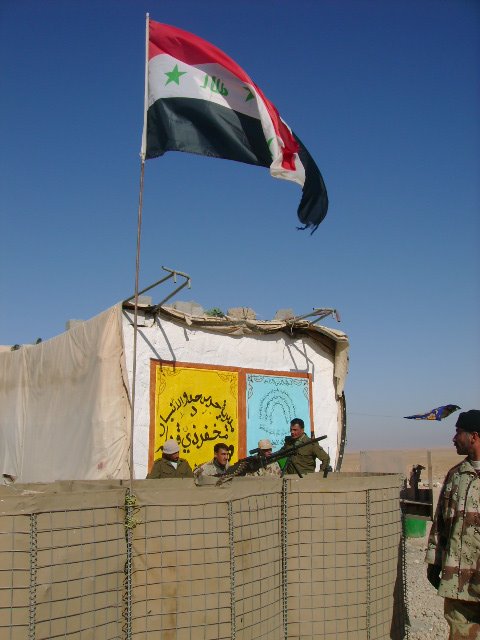
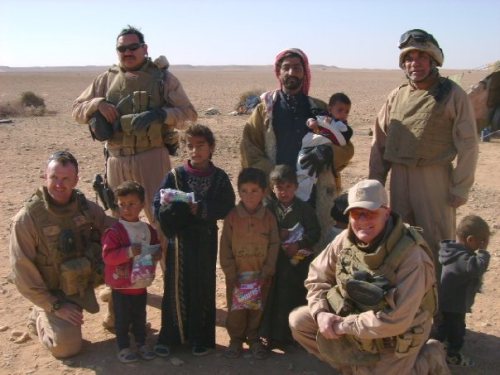
Whenever I read about Iraq I am reminded of how much of my life has been intertwined with that country and people. As I have said on more than one occasion I left my heart in Al Anbar. Back in 2007 and 2008 things were different there. Sunni’s and Shia were at least in the Iraqi military working with Sunni tribesman cooperated with American forces to destroy or drive out the forces of Al Qaida Iraq.

dinner-w-bg-sabah1

Now the group that formed out of AQI, the Islamic State of Iraq and the Levant ISIL has driven Iraqi government forces from the area. Because of Iraqi Prime Minister Nouri Al Maliki’s determination to exclude and marginalize he Sunnis of Al Anbar who were so important in stabilizing that region after the departure of U.S. Forces that Maliki pushed for those tribes are not resisting ISIL/ISIS or in some cases allying themselves with that group, if only to drive out Maliki, who they, as well as many Shia Iraqis despise.

399202_10151366970802059_725286976_n-2

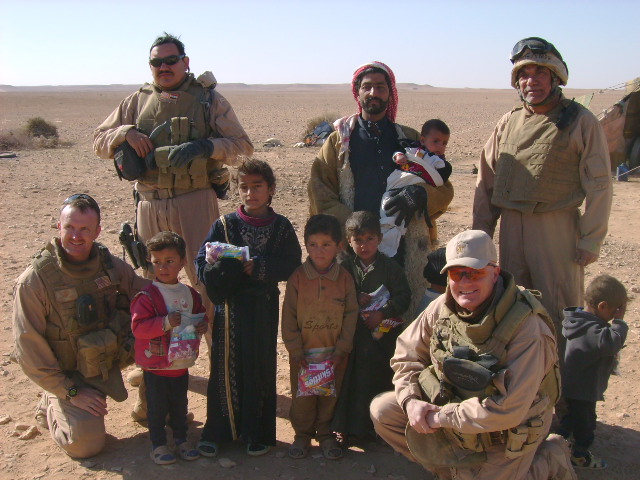
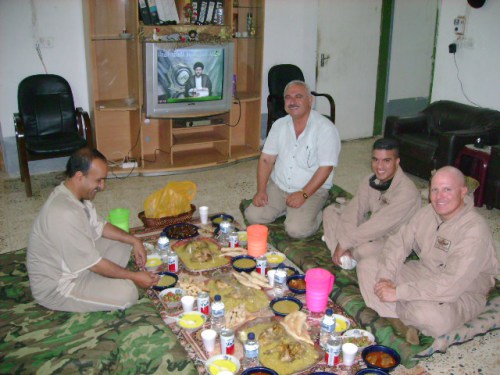
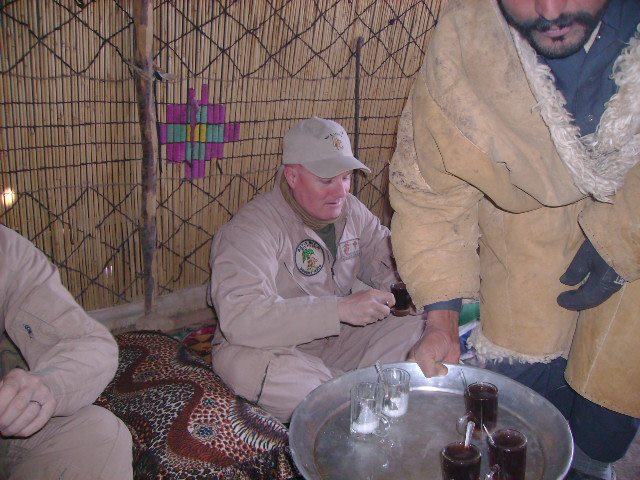
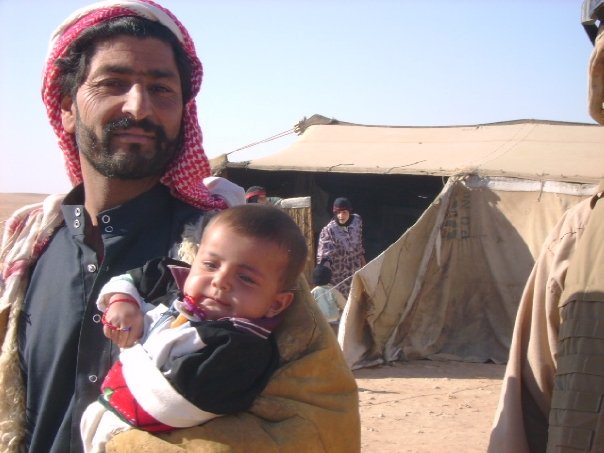
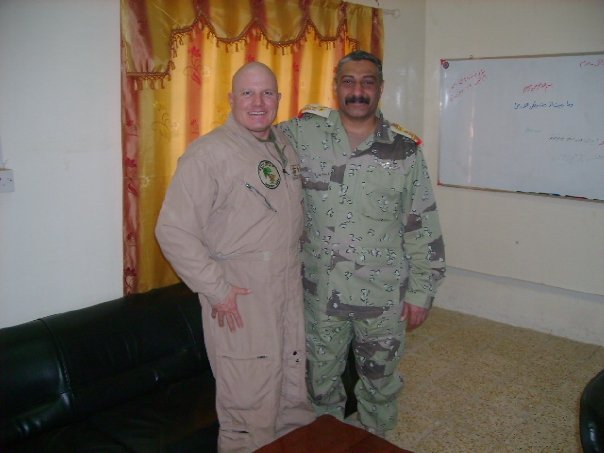
When I was there I traveled the whole province from Fallujah to the border of Syria and Jordan. With our advisors I was treated with great respect and hospitality by officers of the Iraqi Army, Border forces and civilians of all Iraqi religious sects. General Sabah of the 7th Division who hosted me to dinner and met with me a number of times, General Ali of the Habbinyah base who as we shared Chai tea showed me his well worn Arabic-English Bible which he said he loved because it contained things not in the Koran. He told me that he hoped in 5-10 years that I would be able to come to Iraq as his guest. There was the Iraqi operations officer of 2nd Brigade of 7th Division who told me after dinner that he “wished that the Iraqi Army had Christian priests” because they would take care of the soldiers and families no matter what their religion, and the Army company commander at COP South who told me that Iraqis would gladly defend Iraq against the hated Persians if Iran ever attacked. Then there was the first class of female Iraqi Police recruits, who were putting their lives and their family’s safety in danger by volunteering to serve in Ramadi, I was able to spend time with that group of brave women. Of course there were the common soldiers who when they saw me blessing American HUMMVs with Holy Water before a convoy asked me to do the same for them. Then there were the Bedouin who invited us into their tents and homes and treated us to Chia, coffee, dates and other food.

533506_10151366982462059_34997654_n

1930252_26911927058_5336_n

I did see the Sunni Shia division when a Shia staff officer, the Logistics chief of the 2nd Border Brigade at Al Waleed, and a crony of Maliki was accused of selling coalition fuel to insurgents in Al Anbar. I was with our senior advisor and the new Iraqi brigade commander, a Sunni who had served in the old army who had been sent to rid the brigade of those like the logistics officer fired the man. The meeting was one of the most tense I have ever been in, it was like a meeting with a crime family, where weapons were locked and loaded and fingers on the trigger because even the Iraqi commander did not know who was friend or foe. The disgraced logistics officer on finding out I was a Priest tried to curry my favor during the meeting, quite strange and very scary. I still have nightmares and flashbacks about that meeting.

295_26912057058_2651_n-2

1930252_26912037058_1677_n

You see for me the current conflict is quite personal, I have known too many good and decent Iraqis who in many respects are not that much different than your average American. However they have had to bear the domination of the Persian, the Turk, the British and the Americans. Have a king appointed for them by a foreign power, borders drawn to fit British and French interests, been ruled by the dictator Saddam Hussein who most admit now was better than Maliki because he was an equal opportunity oppressor determined to maintain a unified Iraqi state. They have also endured over thirty years of war or wartime conditions, including a civil war and now a war that has a good chance of destroying any hope of an unified Iraqi state. For them violence, disruption and for many being refugees or exiles has become a way of life.

262_29132382058_5961_n-2

305907_10151366984087059_87121005_n

The Iraqis that I know were some of the most kind and hospitable people that I have ever met in my travels around the world. I grieve for what is happening to them and their once proud country. The towns, cities and bases that I served at have almost all been taken over by ISIL/ISIS and their allies. Fallujah, Ta’quadum, Habbinyah, Ramadi, Hit, Haditha, Al Rutba, Rawah, Al Qaim, Al Waleed, Al Turbial and so many others. Syrian and Iranian warplanes are attacking Iraqi towns and cities, including places I have spent time.

n671902058_1153794_4301

532404_10151366971792059_960792196_n

When I left Iraq in 2008 I had hopes that the country might survive, as did many of the Iraqis that I met. I hoped one day to go back and travel to the places that I served, and maybe had the opportunity to see the gracious people that I love again. Maybe in 15 or 20 years there might, God willing be an opportunity. I hope and pray that those I know who were so good to me are safe. Until then I can only pray and hope that for them things will one day be better.

1930252_26911977058_8055_n

When I think of the Iraq war and its costs I am reminded of the words of Major General Smedley Butler in his book War is a Racket: “What is the cost of war?…this bill renders a horrible accounting. Newly placed gravestones. Mangled bodies. Shattered minds. Broken hearts and homes. Economic instability. Depression and all of its attendant miseries. Back -breaking taxation for generations and generations. For a great many years as a soldier I had a suspicion that war was a racket; not only until I retired to civilian life did I fully realize it….”

481801_10151367001287059_1003164983_n-1.jpg

For the Iraqis and us the cost will be with us for at least a generation. But I do always hope and pray that things will be better.

Inshallah (إن شاء الله)

Padre Steve+

3 Comments

Filed under History, iraq,afghanistan, News and current events

The Results of Ignoring History: The Implosion of Iraq

bettertimes

Better Times: With the Bedouin in December 2007

Inshallah, (إن شاء اللهGod willing… or so say my Iraqi friends.

It is now 2014, over eleven years since the Bush administration launched its ill advised, preemptive and probably war against Saddam Hussein’s Iraq. That war, illegal under any definition of international law which violated most of the components of traditional Just War Theory and condemned by Pope John Paul II was a disaster for the United States and the unfortunate people of Iraq that we are only now beginning to the full negative implications.

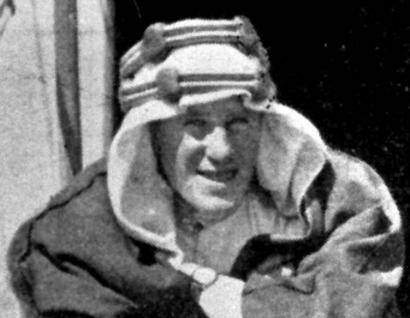
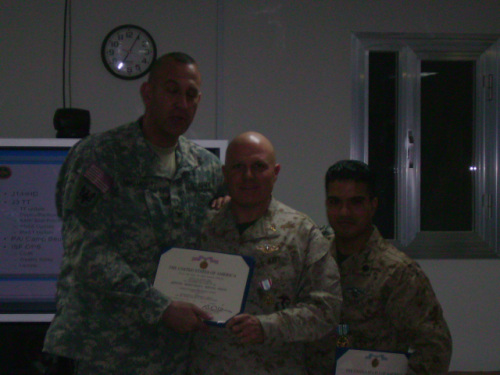
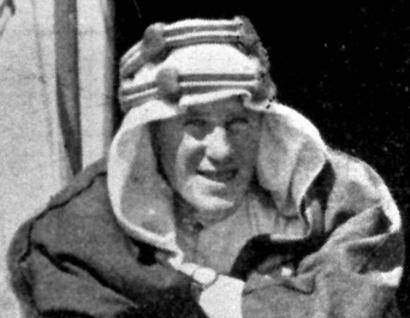
For me the past week has been gut-wrenchingly painful as I watched the forces of ISIL/ISIS rampage through Iraq and the demoralized Iraqi military, no longer trusting Prime Minister Maliki throwing down their weapons and running away. I left Iraq over six years years ago. When I left Iraq, I was in Baghdad at the Headquarters of the Iraq Assistance Group, on my way out of country, being awarded a Defense Meritorious Service Medal for my work with our advisors and the Iraqis in Al Anbar. That night was a melancholy night. I was wearing my last serviceable uniform, which I had preserved for the trip home by wearing flight suits and baseball caps with no badges of rank, throughout most of the deployment. Like Lawrence’s donning of the Bedouin robes, my uniform choice, done purely by necessity made me stand out conspicuously among other Americans in country.

I was heading home but didn’t really want to leave, but in the process I left a big part of me in that long suffering country.  I have written much about my experience there and how even today I have a deep regard for the Iraqi people and their hopes for a better future. However, I sense that what Lawrence wrote will be true:

“We had been hopelessly labouring to plough waste lands; to make nationality grow in a place full of the certainty of God… Among the tribes our creed could be only like the desert grass – a beautiful swift seeming of spring; which, after a day’s heat, fell dusty.” 

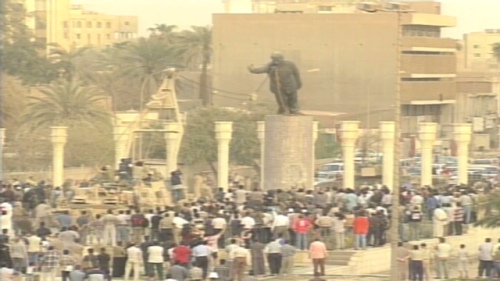
In 2003 the United States invaded Iraq and made short work of that country’s military. That military, defeated in 1991 and crippled by years of sanctions and bombings was no threat to its neighbors and couldn’t even defend itself against the U.S. and coalition forces.

When we entered the country, many Iraqis of all creeds looked upon the US and coalition forces as liberators, but within a few months the illusion was over. Within weeks of the overthrow of Saddam, the US military personnel and leaders who were working with Iraqi officials, both military and civilian to get the country back on its feet were replaced by the Bush administration.

imperialpast

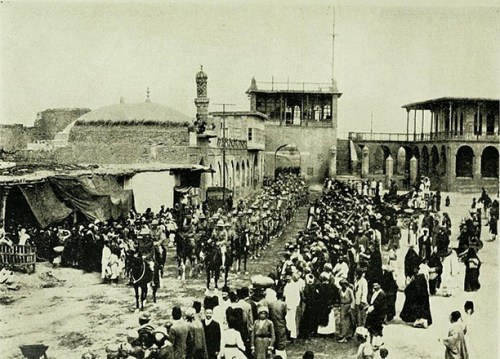
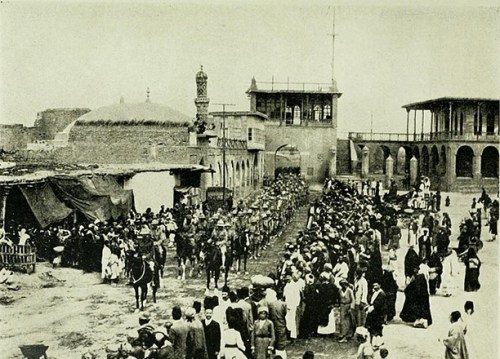
British Troops enter Baghdad 1919

In their place a new entity, the Coalition Provisional Authority was created and staffed. The first administrator of the entity was retired Army Lieutenant General Jay Garner. He had much experience in Iraq but was sacked quickly by Secretary of Defense Donald Rumsfeld for not conducting an immediate purge of members of the Baathist Party from key positions in the civil service or security forces, or implementing the agenda of the administration, an agenda that only saw Iraq as a stepping stone for future operations against Iran.

After Garner’s dismissal the CPA was led by Ambassador L. Paul Bremer, a man who had no experience in the Arab world, much less in Iraq. Bremer and his staff, most of who had little experience or knowledge of the country created conditions that directly led the the Iraq insurgency, the sacrifice of thousands of American and allied lives and the loss of friendship of the Iraqi people. They also gave a a bloodless strategic victory to Iraq’s traditional enemy and oppressor Iran, which became a dominant regional power without having to worry about their traditional Arab nemesis. It is deeply ironic that because of the terrible policy missteps of the Bush administration that the current crisis is forcing Iran and the United States to consider cooperation with one another to prevent the implosion of Iraq.


T.E. Lawrence wrote of the British incursion into Turkish Mesopotamia in 1915, managed by the British Indian Office:

“By brute force it marched then into Basra. The enemy troops in Irak were nearly all Arabs in the unenviable predicament of having to fight on behalf of their secular oppressors against a people long envisaged as liberators, but who obstinately refused to play the part.”

The actions of the CPA destroyed the plans pragmatists in the Pentagon and State Department to incorporate the existing civil service, police and military forces in the newly free Iraq.  Instead Bremer dissolved the Iraqi military, police and civil service within days of his arrival. Since the military invasion had been accomplished with minimal forces most Iraqi weapon sites, arsenals and bases were looted once their Iraqi guardians were banished and left their posts. The embryonic insurgency was thus provided by Bremer a full arsenal of weapons to use against American forces; many of whom were now mobilized Reservists and National Guardsmen that were neither trained or equipped to fight an insurgency or in urban areas.

It was as if Bremer, the leaders of the Bush administration and their neoconservative allies knew nothing of history. If they did they decided to ignore its lessons, believing that they were smarter than other occupiers. It was an act of unmitigated hubris and arrogance brought about by those who believed that they were above history. Whether it was ignorance of history, or a wanton disregard for it, it and the country we invaded it was immoral, unethical and probably criminal.

vault-von-saddam-statue-fall-itn-640x360-1

The reaction of the Iraqi Arabs to US occupation should have been anticipated. Lawrence wrote in 1920 a letter that could have easily been written in 2004:

“It is not astonishing that their patience has broken down after two years. The Government we have set up is English in fashion, and is conducted in the English language. So it has 450 British executive officers running it, and not a single responsible Mesopotamian. In Turkish days 70 per cent of the executive civil service was local. Our 80,000 troops there are occupied in police duties, not in guarding the frontiers. They are holding down the people.”

The actions of Bremer’s incompetent leadership team led to a tragic insurgency that need not have taken place. The now unnumbered US forces had to fight an insurgency while attempting to re-create an army, security forces and civil service from the wreckage created by Bremer’s mistakes; as well as its own often heavy handed tactics in the months following the invasion.


Nearly 4500 US troops would die and over 30,000 more wounded in the campaign. Hundreds of thousands of Iraqis were killed, wounded or died of disease during the war.  Lawrence wrote about the British administration of Iraq words that could well have been written about Bremer’s Coalition Provisional Authority:

“Meanwhile, our unfortunate troops, Indian and British, under hard conditions of climate and supply, are policing an immense area, paying dearly every day in lives for the willfully wrong policy of the civil administration in Bagdad.”

It took dramatic efforts in blood and treasure to restore the some modicum of security in Iraq, something that was only accomplished when the Sunni tribes of Anbar Province turned against the Al Qaeda backed foreign fighters. The surge under the command of General David Petreus achieved the desired result. It gave the Iraqis a chance to stabilize their government and increase their own security forces, however it can hardly be called a triumph.

Unfortunately many of those that remained in power of the Shia sect refused to share power in meaningful ways with Iraq’s Sunni and Kurds leading to a political crisis. The US military mission ended in December 2011 and since then Iraq security forces and civil authorities, often divided by tribal or sectarian loyalties have struggled to maintain order. The result is that by 2013 that Iraq was again heading toward the abyss of civil war. Most of this has to be laid at the feet of Prime Minister Nouri Al-Maliki who has done everything that he can to break promises made to Sunnis and Kurds, and dishonor the Sunnis who fought to save his government in 2007-2008. Sunni protestors in Anbar and other provinces conducted frequent protests which were met by brute force. Sectarian violence spread, and ISIL/ISIS a move violent and vicious offshoot of Al Qaida gained control of Fallujah and parts of Ramadi. In the north, Mosul and Tikrit have fallen and there are reports that some ISIL/ISIS fighters entered Baghdad this evening. Casualties in Iraq are continuing to mount and a humanitarian crisis is developing as hundreds of thousands of Iraqis flee the violence, feeling threatened by both the fighters and the Maliki government.

iraq-border_2939075c


To the west in Syria a brutal civil war has been going on for three years. Like Iraq it pits Sunni against Shia, as well as Kurd and foreign fighters from a score of nations, some fighting as part of a Free Syria movement, others as part of the Al Qaeda coalition and others beside Syria’s government. Now many of the Iraqi elements of ISIS/ISIL have breached the border with Syria and are attempting to redraw the political map of the Middle East, ravaging the vestiges of the Sykes-Picot agreement.

In 1920 Lawrence wrote of the British intervention and occupation of Iraq:

“The people of England have been led in Mesopotamia into a trap from which it will be hard to escape with dignity and honour. They have been tricked into it by a steady withholding of information. The Bagdad communiqués are belated, insincere, incomplete. Things have been far worse than we have been told, our administration more bloody and inefficient than the public knows. It is a disgrace to our imperial record, and may soon be too inflamed for any ordinary cure. We are to-day not far from a disaster.”

His words have a sadly familiar tone. The US invasion of Iraq did have a different outcome than we imagined, one that is far worse than we bargained for and potentially cataclysmic in its impact.

Sykes-Picot-Map-1024x576


That being said, many if not most Arabs in all of these lands simply desire to live in peace and enjoy some amount of freedom for themselves and future for their children. The Iraqis are on the whole decent and honorable people. One has to remember that the freedom for which many are striving, and dying to attain is for them, not for the United States or any other power.

Lawrence’s words and wisdom concerning the Arabs who rebelled against the Turkish Ottoman Empire are as true today as when he wrote them after the war:

“The Arabs rebelled against the Turks during the war not because the Turk Government was notably bad, but because they wanted independence. They did not risk their lives in battle to change masters, to become British subjects or French citizens, but to win a show of their own.”

That is the case in Iraq and many other Arab countries today. One can only hope that for Iraq, Syria and those countries as that somehow peace will come. I do hope that we will do better in helping them achieve that than we have over the past dozen years of conflict, or than the British or French did almost 100 years ago.

But all of that being said, this situation is going to take at least a generation to settle. There are no easy answers and certainly sending troops in to restore the situation when Maliki and his regime make no attempt to reconcile with their Sunni and Kurdish countrymen, is not the answer. In fact if there is any answer that maintains Iraq as a unified state it has to be brought about by the Iraqis, particularly Maliki, who has shown no inclination to do this since the United States military left in 2011.

It is also very possible that what is happening, as bloody, horrible and painful as it is may be, is what is needed to correct the blunder of Sykes-Picot. Perhaps it should be left to the Arabs to redraw the natural boundaries of their regions, tribes and religions and let the chips fall where they may. In Iraq, the Sunni Sheikhs once the Shi’ite influence is diminished and they have regained some autonomy will drive out and destroy ISIL/ISIS as they did to AQI in 2007-2008.  The ISIL/ISIS fighters will not be welcome once they have achieved their goals.

lawrence12

Lawrence wrote in 1920:

What is required is a tearing up of what we have done, and beginning again on advisory lines. It is no good patching with the present system….We are big enough to admit a fault, and turn a new page: and we ought to do it with a hoot of joy, because it will save us a million pounds a week.

We should listen to him.

As my Iraqi friends say Inshallah, (إن شاء الله) God willing.

Peace

Padre Steve+


1 Comment

Filed under Foreign Policy, History, iraq,afghanistan, middle east, News and current events

Iraq 2014: A Disaster Long in the Making

bilad ash shaam

Map of the ISIL/ISIS Vision

“A Wahabi-like Moslem edition of Bolshevism is possible, and would harm us almost as much in Mesopotamia as in Persia…” T.E. Lawrence, Memorandum to Foreign Office 15 September 1919

As the British and French divided up the Middle East following the collapse of the Ottoman Empire, the young Lieutenant Colonel, T.E. Lawrence wrote a warning to the British Foreign Office. He was quite concerned about what was happening and saw the dangers to the region inherent in the British and French division of it. Lawrence understood the religious and ethnic divisions of the region and saw the lack of wisdom in how both the British and French policies, which in order to prop up their gains used those divisions to establish ruling elites in Syria and Iraq, in each case pitting Sunni against Shia, Christian against Moslem and Kurd against Arab.

Iraq_mosul_refugee_2939832c

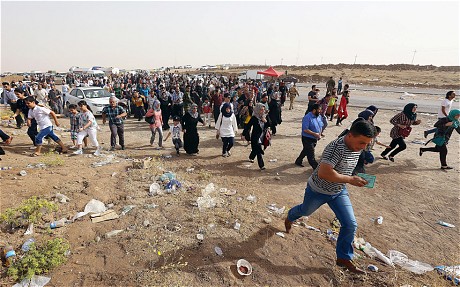
Mosul Refugees

In spite of the efforts of the Europeans and later the Americans to prop up strongmen in the region, or in the case of Saddam Hussein, destroy his regime opening a Pandora’s Box of chaos that was only contained by a massive amount of U.S. Military power and an alliance with Iraqi Sunni tribesmen and their sheikhs during the “Anbar Awakening.” The Sunnis expected after they had helped the U.S. and the Iraqi Shia led Central Government to destroy the forces of Al Qaida Iraq, to be brought back into the government and given a reasonable amount of autonomy. Instead, when the U.S. departed in 2011 at the behest of the Shia government those Sunnis became persecuted and alienated. Now many of them are actively aiding, supporting or acquiescing to the forces of the Islamic State of Iraq and the Levant (ISIL) which also known by the name Islamic State of Iraq and the Shaams (ISIS). We forget the lesson that Lawrence learned about the Arabs who fought against the Turks in the First World War: “The Arabs rebelled against the Turks during the war not because the Turk Government was notably bad, but because they wanted independence. They did not risk their lives in battle to change masters, to become British subjects or French citizens, but to win a show of their own.” The Iraqi Sunni who allied themselves with the U.S. military in Anabar in 2007 did so for the same reason, they wanted independence.

The American administration of Iraq was even more disastrous than that of the British following the First World War. Lawrence wrote of that occupation in words that could have well described the American efforts in 2003-2006.

“The people of England have been led in Mesopotamia into a trap from which it will be hard to escape with dignity and honour. They have been tricked into it by a steady withholding of information. The Bagdad communiqués are belated, insincere, incomplete. Things have been far worse than we have been told, our administration more bloody and inefficient than the public knows. It is a disgrace to our imperial record, and may soon be too inflamed for any ordinary cure. We are to-day not far from a disaster.” T. E. Lawrence, ‘Mesopotamia’ By ex.-Lieut.-Col. T. E. Lawrence (Fellow of All Souls College, Oxford) Sunday Times, 22 August 1920

iraq-isis-thursday_2939167c

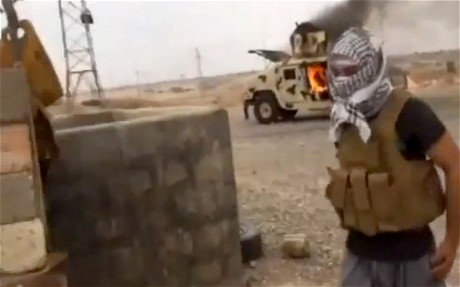
ISIL Fighter in Tikrit

Unlike the loosely organized insurgents and militants of AQI and its allies, many of whom were foreign fighters; while there are still good numbers of foreign fighters, most of the ISIS forces are Syrian or Iraqi Sunni, connected by tribe, religion and culture to the land that they are fighting on. These units are well trained, organized as proper military units and have fought both savagely and effectively in Syria and Iraq. Many are led by former professional officers of the old Iraqi Army who when Saddam fell, were thrown out of the military and not even provided for with the smallest of pensions. To demonstrate how close some of these are one only has to read the reports out of Al Jazeera and Al Arabiya, one of which quoted a tribal leader near Tikrit who said of the ISIL forces: “They came in hundreds to my town and said they are not here for blood or revenge but they seek reforms and to impose justice. They picked a retired general to run the town.”

The ISIL or ISIS fighters are strict Islamists and have been issuing decrees in Mosul regarding what citizens can and can’t do. Women are ordered to be completely veiled and covered if they go outside, which they are told that they should not do. People are being ordered to go to Mosques 5 times a day, sheikhs are being ordered not to cooperate with the government and the only people allowed to be armed are the militants. There are videos of ISIL fighters executing captured government officials.

Many of the Sunni Iraqi Nationalists, professional military officers who returned to the Army following the disastrous performance of it prior to 2007 also expected better treatment for their service. They too were not rewarded and it is possible that the collapse of Iraqi security forces could be in part due to the fact that these men hold grievances against the Baghdad regime of Maliki, which many view as a puppet to Iran, or as they call it “Persia.” Maliki claims that there was a conspiracy in the wholesale collapse of Iraqi forces in the north, and he may be right, but it is a problem that he created and made worse by his divisive policies and politics.

20140610_IRAQ1_0

The ISIL forces, though small are effective and efficient. In a sense they are a throwback, albeit a more hardened and ideological one to the Arabs that Lawrence advised and helped direct as they routed the Turkish Army in the Hajaz, Transjordan and Syria in 1917-1918. Lawrence wrote of that army:

“The Arab army, created in the field, grew from a mob of Bedouins into an organised and well-equipped body of troops. They captured thirty-five thousand Turks, disabled as many more, took a hundred and fifty guns, and a hundred thousand square miles of Ottoman territory.” From T. E. Lawrence, ‘France, Britain, and the Arabs’ by Col. T. E. Lawrence The Observer, 8 August 1920

What happens next I do not know. The ISIL forces have stated that: “Our final destination will be Baghdad; the decisive battle will be there…” I do not know if they have the ability to take and hold it, but they should be able to maintain their gains in Mosul and Tikrit. They have captured large numbers of armored HUMMVs as well as Iraqi military helicopters, including U.S. supplied UH-60 Blackhawk and MH-58 Kiowa at the Mosul airbase. To further complicate the situation the semi-autonomous Kurdish region seized the city of Kirkuk, which it considers its ancestral capitol. Those troops however are reportedly reading for a counter-attack on the ISIL forces absent any presence of regular Iraqi units.

iraq-Peshmerga-for_2939387c

Kurdish Forces outside Kirkuk

The loss of all of these areas is a disaster to a unified Iraq and shows the incredible short-sightedness of the Bush administration to overthrow Saddam and leave a power vacuum in his place after disbanding the Iraqi military, police and civil service, the only institutions that had kept Iraq together.

If Maliki has any sense he will welcome moderate Iraqi Sunni nationalists back and actually give them the autonomy within Iraq that they were promised while the U.S. was still there, a policy that now Vice President Joseph Biden articulated as early as 2007. A policy that unfortunately was ignored by Maliki as he consolidated power as the U.S. withdrew from Iraq. However, it may be too late for this. The more probable thing that Maliki will do is to rely on Shi’ite militias or even the Iranians to buttress his regime. There are reports that Iranian Al Quds commandos may have been deployed to Iraq, something that may in the vacuum of outside support from other Arab states, the U.S, U.N. Or the international community widen the conflict significantly.
This will likely lead to a bloody stalemate and civil war, similar to what has been happening in Syria, that could last for years throwing the entire region into chaos.

iraq-border_2939075c

A Border no More… the berm between Iraq and Syria

ISIL has removed the border between the areas that it controls in Iraq and Syria. They have controlled most of the Euphrates valley in Anbar since last year, and now with the seizure of Mosul and Tikrit are in control of much of the Tigris river valley. Lawrence wrote in his essay The Changing East in 1920 that:

“The cultivated districts, Mesopotamia and Syria, have, however, language, race, and interests in common. Till to-day they have always been too vast to form a single country: they are divided, except for a narrow gangway in the north, by an irredeemable waste of flint and gravel: but petrol makes light of deserts, and space is shrinking to-day, when we travel one hundred miles an hour instead of five. The effect of roads, railways, air-ways and telegraph will be to draw these two provinces together, and teach them how like they are…”

In effect the ISIL forces are creating that Sunni dominated and quite possibly radicalized Wahabi state that Lawrence warned of in 1919. This could well be the end of the duplicitous and disastrous Sykes-Picot agreement which divided the Middle East irrespective of into its current form. Those who implemented that agreement sowed the wind, and now the region and the world are reaping the whirlwind.

It is interesting to recount Lawrence’s observations of the Arab peoples in the Changing East essay published in 1920 which I quoted above. Lawrence wrote:

“The fate of the Arabs is more difficult to prophesy… they have been a government twenty times since the dawn of history, and as often after achievement they have grown tired, and let it fall: but there is no record of any force except success capable of breaking them. The history of their waves of feeling is significant in that the reservoir of all ideas, the birth of all prophecies are shown in the deserts. These empty spaces irresistibly drive their inhabitants to a belief in the oneness and omnipotence of God, by the very contrast of the barrenness of nature, the lack of every distraction and superfluity in life. Arab movements begin in the desert, and usually travel up the shortest way into Syria – for it is remarkable that whereas all prophets go to the desert, yet none of them are ever desert-born. It is the Semitic townsman or villager who receives the revelation. For this reason, for what seemed to be the immemorial finger-sign of history, this present Arab movement, the craving for national independence and self-government, was started in the desert. It, too, took the traditional road to Damascus, the traditional first centre of new movements, and with the successful establishment of Feisal there the second phase was finished. This is not, however, the proper end of the Arab movement: the weight and importance of the Semitic states have always lain in Bagdad, for very sound reasons of economics and population. Syria is a poor country, small and mountainous, dry, lacking in minerals and in arable land. There is no probability that her native population will ever be very dense. Mesopotamia has big rivers, and a huge area of irrigable land. Her wealth in grain and cotton will be very great, and nature may have bestowed on her abundance of cheap fuel. Should that be the case, she will inevitably take the headship of the Arab world in the future, as so often in the past. Damascus may hold an interim pre-eminence: Bagdad must be the ultimate regent, with perhaps five times the population of Syria, and many times its wealth. Mesopotamia will be the master of the Middle East, and the power controlling its destinies will dominate all its neighbours.”

If the politicians, diplomats, businessmen and bankers or the West fail to comprehend this we will never understand or successfully deal with the Arabs of Syria and Mesopotamia. This is not going to get better anytime soon and poses a danger to the region and also the world economy as oil prices are already going up as the oil markets anticipate losing access to Iraq’s oil reserves. In a sense what happens in Iraq will likely make the situation in Syria look like child’s play and will have far more long lasting effects, not only for the region, but the world.

Actions have consequences, and the failure of people, leaders and governments to understand the complex nature of Iraq and Syria have brought the world to a crisis. Barbara Tuchman said it well: “Confronted by menace, or what is perceived as menace, governments will usually attempt to smash it, rarely examine it, understand it, define it.”

Peace

Padre Steve+
1 Comment

Filed under Foreign Policy, History, iraq,afghanistan, News and current events

A Night of Memories: Syria, Iraq and The Middle East in 2014, Echoes of T. E. Lawrence

410w-1-2

Inshallah, (إن شاء اللهGod willing…

It is now 2014, almost eleven years since the Bush administration launched its ill advised, preemptive and probably war illegal under international law, against Saddam Hussein’s Iraq. Tonight instead of watching the State of the Union Address, and the four separate Republican responses, or a sporting event, or some thing more frivolous I am watching Lawrence of Arabia.  

award-ceremony-dundas-31

It is fitting that I do so. I left Iraq just six years ago. In fact six years ago tonight I was in Baghdad at the Headquarters of the Iraq Assistance Group, on my way out of country, being awarded a Defense Meritorious Service Medal for my work with our advisors and the Iraqis in Al Anbar. It was a melancholy night. That night I was wearing my last serviceable uniform, which I had preserved for the trip home by wearing flight suits and baseball caps with no badges of rank, throughout most of the deployment. Like Lawrence’s donning of the Bedouin robes, my uniform choice, done purely by necessity made me stand out conspicuously among other Americans in country.

399202_10151366970802059_725286976_n-2

I was heading home but didn’t really want to leave, but in the process I left part of me in that long suffering country.  I have written much about my experience there and how even today I have a deep regard for the Iraqi people and their hopes for a better future. However, I wonder if what Lawrence wrote will be true:

“We had been hopelessly labouring to plough waste lands; to make nationality grow in a place full of the certainty of God… Among the tribes our creed could be only like the desert grass – a beautiful swift seeming of spring; which, after a day’s heat, fell dusty.” 

vault-von-saddam-statue-fall-itn-640x360

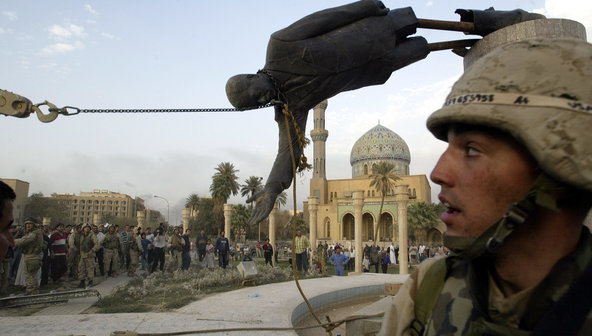
In 2003 the United States invaded Iraq and made short work of that country’s military. Many Iraqis of all creeds looked upon the US and coalition forces as liberators but within a few months the illusion was over. Within weeks of the overthrow of Saddam, the US military personnel and leaders who were working with Iraqi officials, both military and civilian to get the country back on its feet were replaced by the Bush administration.

rumsfeld-bremer-2

In their place a new entity, the Coalition Provisional Authority was created and staffed. The first administrator of the entity was retired Army Lieutenant General Jay Garner. He had much experience in Iraq but was sacked quickly by Secretary of Defense Donald Rumsfeld for not conducting an immediate purge of members of the Baathist Party from key positions in the civil service or security forces, or implementing the agenda of the administration.

After Garner’s dismissal the CPA was led by Ambassador L. Paul Bremer, a man who had no experience in the Arab world, much less in Iraq. Bremer and his staff, most of who had little experience or knowledge of the country created conditions that directly led the the Iraq insurgency, the sacrifice of thousands of American and allied lives and the loss of friendship of the Iraqi people. They also gave a a bloodless strategic victory to Iraq’s traditional enemy and oppressor Iran, which became a dominant regional power without having to worry about their traditional Arab nemesis.

It was as if Bremer, the leaders of the Bush administration and their neoconservative allies knew nothing of history. If they did they decided to ignore it. Whether it was ignorance of history, or a wanton disregard for it, and the country we invaded it was immoral, unethical and probably criminal.

baghdad1917-2

T.E. Lawrence wrote of the British incursion into Turkish Mesopotamia in 1915, managed by the British Indian Office:

“By brute force it marched then into Basra. The enemy troops in Irak were nearly all Arabs in the unenviable predicament of having to fight on behalf of their secular oppressors against a people long envisaged as liberators, but who obstinately refused to play the part.”

The actions of the CPA destroyed the plans pragmatists in the Pentagon and State Department to incorporate the existing civil service, police and military forces in the newly free Iraq.  Instead Bremer dissolved the Iraqi military, police and civil service within days of his arrival. Since the military invasion had been accomplished with minimal forces most Iraqi weapon sites, arsenals and bases were looted once their Iraqi guardians were banished and left their posts. The embryonic insurgency was thus provided by Bremer a full arsenal of weapons to use against American forces; many of whom were now mobilized Reservists and National Guardsmen that were neither trained or equipped to fight an insurgency or in urban areas.

mosul-41

The reaction of the Iraqi Arabs to US occupation should have been anticipated. Lawrence wrote in 1920 a letter that could have easily been written in 2004:

“It is not astonishing that their patience has broken down after two years. The Government we have set up is English in fashion, and is conducted in the English language. So it has 450 British executive officers running it, and not a single responsible Mesopotamian. In Turkish days 70 per cent of the executive civil service was local. Our 80,000 troops there are occupied in police duties, not in guarding the frontiers. They are holding down the people.”

The actions of Bremer’s incompetent leadership team led to a tragic insurgency that need not have taken place. The now unnumbered US forces had to fight an insurgency while attempting to re-create an army, security forces and civil service from the wreckage created by Bremer’s mistakes; as well as its own often heavy handed tactics in the months following the invasion.

OLYMPUS DIGITAL CAMERA

Nearly 4500 US troops would die and over 30,000 more wounded in the campaign. Hundreds of thousands of Iraqis were killed, wounded or died of disease during the war.  Lawrence wrote about the British administration of Iraq words that could well have been written about Bremer’s Coalition Provisional Authority:

“Meanwhile, our unfortunate troops, Indian and British, under hard conditions of climate and supply, are policing an immense area, paying dearly every day in lives for the willfully wrong policy of the civil administration in Bagdad.”

It took dramatic efforts in blood and treasure to restore the some modicum of security in Iraq, something that was only accomplished when the Sunni tribes of Anbar Province turned against the Al Qaeda backed foreign fighters. The surge under the command of General David Petreus achieved the desired result. It gave the Iraqis a chance to stabilize their government and increase their own security forces.

26iraq_image1-articleLarge

Unfortunately many of those that remained in power of the Shia sect refused to share power in meaningful ways with Iraq’s Sunni and Kurds leading to a political crisis. The US military mission ended in December 2011 and since then Iraq security forces and civil authorities, often divided by tribal or sectarian loyalties have struggled to maintain order. The result is that by 2013 that Iraq was again heading toward the abyss of civil war. Sunni protestors in Anbar and other provinces conducted frequent protests, sectarian violence spread, and an Al Qaeda affiliated group gained control of Fallujah and parts of Ramadi. Casualties in Iraq are continuing to mount.

Syria

To the west in Syria a brutal civil war has been going on for three years. Like Iraq it pits Sunni against Shia, as well as Kurd and foreign fighters from a score of nations, some fighting as part of a Free Syria movement, others as part of the Al Qaeda coalition and others beside Syria’s government.

In 1920 Lawrence wrote of the British intervention and occupation of Iraq:

“The people of England have been led in Mesopotamia into a trap from which it will be hard to escape with dignity and honour. They have been tricked into it by a steady withholding of information. The Bagdad communiqués are belated, insincere, incomplete. Things have been far worse than we have been told, our administration more bloody and inefficient than the public knows. It is a disgrace to our imperial record, and may soon be too inflamed for any ordinary cure. We are to-day not far from a disaster.”

lawrenceguerrillas1

His words have a sadly familiar tone. The US invasion of Iraq did have a different outcome than we imagined. The Arab Spring erupted and the consequences of it will be far reaching and effect much of the Middle East and the world. The internal conflicts in Iraq and Syria threaten every country that borders them, and the instability has the potential of bringing on an regional war.

295_26912097058_4309_n-4

That being said, many if not most Arabs in all of these lands simply desire to live in peace and enjoy some amount of freedom for themselves and future for their children. One has to remember that the freedom for which many are striving, and dying is for them, not for the United States or any other power.

Lawrence’s words and wisdom concerning the Arabs who rebelled against the Turkish Ottoman Empire are as true today as when he wrote them after the war:

“The Arabs rebelled against the Turks during the war not because the Turk Government was notably bad, but because they wanted independence. They did not risk their lives in battle to change masters, to become British subjects or French citizens, but to win a show of their own.”

That is the case in many Arab countries today. One can only hope that in those countries as well as in Afghanistan where our troops are embroiled in a war that cannot end well, that somehow peace will come. I do hope that we will do better than we have over the past dozen years of conflict, or than the British or French did almost 100 years ago.

As my Iraqi friends say Inshallah, (إن شاء الله) God willing.

Peace

Padre Steve+
1 Comment

Filed under ethics, Foreign Policy, History, iraq,afghanistan, middle east, Tour in Iraq

Thoughts on the Iranian “Deal”

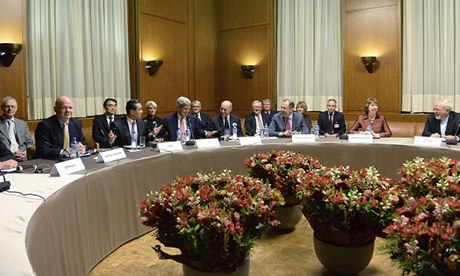
Iran nuclear talks

Yesterday negotiators from the United States, Britain, France, Germany, Russia and China finished hammering out a tentative deal with Iran regarding that nation’s nuclear program.

There are a lot of opinions about the deal, some positive, some definitely negative and quite a few like mine a wait and see attitude. Now I am hopeful that the deal is a positive first step in assuring that Iran does not build a nuclear weapon. In fact I pray that it does.

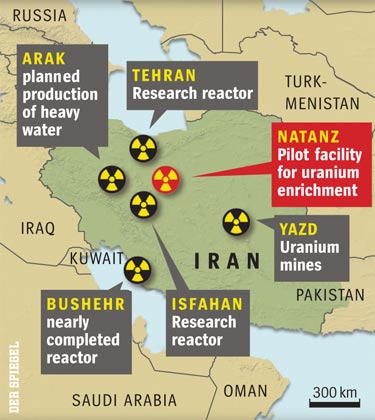
iran-nuclear-facilities

The fact is that we have to try, even if some allies for their own reasons disagree. The Israelis are understandably concerned, especially since the last President of Iran, most of the Mullahs that actually run that country and the Revolutionary Guard have expressed their belief that Israel should not exist. Thus for the Israelis this can be seen as an existential matter. If Iran were to get operational nuclear weapons and use them against Israel that state would suffer greatly. Likewise the Saudis are distrustful of the Iranians, but for different reasons. For the Saudis this is the great conflict between Sunni Islam and Shia Islam, a conflict that appears to be gaining steam in Syria, Iraq, Bahrain and Lebanon. It is  conflict that has the potential to be the Islamic equivalent of the Thirty Years war, that great bloodletting between Catholic and Protestant Europe. Iran and the Saudis are the leaders of the respective factions of Islam, they are mortal enemies.

iran_AP111222017357_620x350

We have to be cognizant of both the Israeli and Saudi concerns. They are legitimate and because they are allies we must take them into account. That being said the most important security needs to be addressed by the United States are those of the United States. Sometimes those are not always the same of allies, even allies like Israel and Saudi Arabia. That is something that has to be weighed in this case.

iran-nuclear-program

The cold fact of the matter is that for many years we in the United States have become accustomed to resorting to military force first and neglecting the other aspects of national and international power that could be brought to bear to in achieving our national security and foreign policy goals. Those other aspects include economic power, information and diplomacy which unfortunately have been neglected. Presidents and our Congress have, even in spite of the misgivings of military leaders pursued the military option first.

After the attacks of September 11th 2001 the Bush Administration with the authorization of Congress pursued an almost single minded military solution to those attacks. That response was not only against the Al Qaeda terrorists but against their Afghan Taliban hosts and Saddam Hussein’s Iraq.

07rdv-saddam-statue-iraq-anniversary-tmagArticle

Those campaigns have worn our military down. The resources spent in those countries, the lives lost, the money spent and the wear and tear on equipment have harmed our national security. But even above that in terms of strategy we eliminated the one natural enemy of Iran which helped hold them in check. We invaded Iraq and left it in a condition that it could no longer be the western bulwark against Iran. We turned down Iranian offers of help after September 11th and in doing so lost opportunities which might have led us and Iran down a different path. Instead President Bush declared Iran and Iraq both parts of an “Axis of Evil.”

IRAN-DEFENCE-MISSILES

It was a declaration that the Iranians rightly understood as a declaration of war. Legally it may not have been, but the stated strategy enunciated by men like John Bolton and those we call the “Neocons” inside the Bush Administration and in associated think tanks could only be understood by the Iranians in that light. That end state envisioned by Bolton then and even now was regime change in not only Iraq, but also Iran. We have to ask ourselves this question: If another nation did this to us, how would we respond? I dare say that we, like the Iranians would dig in our heels and seek to develop military capacities that could defeat them, or if not defeat them make their “success” so costly that our enemies would not press us.

pirhayati20130312213337917

Now because of those choices we are faced with a situation where Iran is estimated to be reasonably close to developing a nuclear weapon capacity. It is something that if it happens will result in a nuclear arms race in the Middle East. The Israelis already have that capability and the Saudis are reportedly pursuing that capability. Thus it cannot be allowed to happen.

f15s-9216-92sqd-rsaf

That being said there are ways to ensure that does not happen. One advocated by those opposed to the deal is a hard line approach including pre-emptive military strikes against Iran, which not only would bring about a regional war but at best delay Iran a few years in procuring nuclear weapons.

The other is the course that has been pursued by the Obama Administration over the course of the past few years. That is the use of economic sanctions and diplomacy. As I said at the beginning this has not been our default policy over the past 12 years. But it is necessary. We are not in a good position to add yet another war, a war with world wide security and economic implications to our plate.

The fact is that due to the wars of the past 12 years as well as budget cuts including the sequestration cuts we are not in a good position to wage another war. We are stretched thin. Readiness thanks to sequestration is declining. The Chief of Staff of the Army stated that only two combat brigades are immediately deployable for combat operations. Could we launch another military campaign? Yes we could. But war, if we believe Clausewitz war is an extension of politics and policy. But we have to ask if would it achieve our overall policy goals? That I am not sure.  Clausewitz wrote: “No one starts a war–or rather, no one in his sense ought to do so–without first being clear in his mind what he intends to achieve by the war and how he intends to conduct it.”

In fact even if we delivered punishing strikes to Iran the costs could be great, and not just the economic costs.  Our campaign would have to be an air campaign to destroy hardened targets many of which we do not know the exact locations. Our record in such air campaigns is mixed. We spent over 70 days pounding Serbia with little to show for it in actual damage to their military. Likewise Iran is not Iraq, our targets will not be exposed in the open desert. Additionally Iranian A2/D2 (Anti-Access/Area Denial) capabilities pose great risks for US and Allied Warships as well as bases in the Arabian Gulf. If an Iranian Kilo Class submarine were to sink an American Aircraft Carrier it would not be a tactical setback, it would be a major loss of American strategic capability not just in the Middle East but world wide.

revolutionary-guards-and-khamenei

Likewise as I mentioned before we took out the one natural opponent of Iran when we overthrew Saddam Hussein. In doing so we destroyed every bit of infrastructure, military power and civil government structures that any new Iraqi government would need to maintain any sense of a balance of power in the Arabian Gulf.

All that being said do I trust the Iranians? I cannot say that I do. I am a realist. I enlisted in 1981 in large part because of the Iranian takeover of the American Embassy and the hostage crisis. They remain a dictatorial regime which persecutes religious minorities including Christians. They restrict their people from open access to the internet and persecute political opponents. The Revolutionary Guards Corps, the most powerful organization in Iran has actively worked to destabilize other countries in the region. Their influence is great especially in regards to Lebanon’s Hezbollah which has launched missile campaigns against Israel and been active on the side of Syria dictator Bashir Assad in that country’s brutal civil war.

However the path of diplomacy must be given a reasonable chance to succeed. In the early 1970s President Nixon started a process of detente with the Soviet Union and Communist China. It was not embraced by hawks. President Ford, Carter and Reagan continued those policies to one degree or another with the final result being the fall of the Berlin Wall, collapse of the Warsaw Pact and overthrow of Communism.

This deal is a start. It is not perfect at all. I see issues in it. but it is based on the politics and art of the possible. It has the potential to be a game changer in a region wracked by war and revolution, a region led for the most part by despots in which terrorists often operate freely. I don’t know if it will work, but I hope it does.

Peace

Padre Steve+
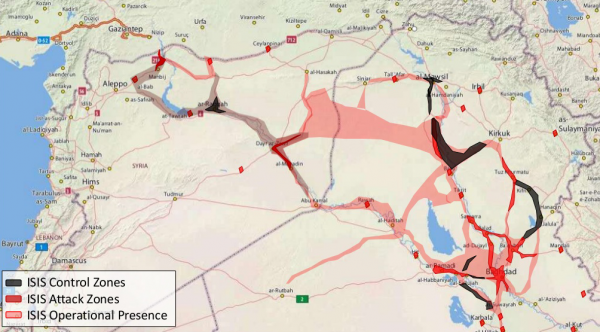
Leave a comment

Filed under Foreign Policy, History, iraq,afghanistan, middle east, Military, News and current events

Antietam and Syria…Beginning to Understand How Societies Slip Into Carnage

24-2

On September 17th 1862 the there was a battle in the War Against the Slaveholder’s Rebellion, sometimes called the American Civil War. It occurred when the Rebel Army under the command of Robert E Lee invaded the North, moving into Maryland. After a series of smaller engagements the Army of the Potomac under Major General McClellan engaged the Rebel forces at the town of Sharpsburg on the banks of the Antietam Creek.

The ensuing battle was the bloodiest single day engagement fought on the North American Continent. Almost 23,000 Union and Confederate soldiers were killed or wounded that day. Historian Stephen Sears titled his book about the battle Landscape Turned Red: The Battle of Antietam. 

I have been to that battlefield a number of times, both on my own and as part of a formal “Staff Ride.” My own military career touches the battle because when I served in the Texas and Virginia National Guard units that I was a part of traced their lineage to units that fought on that blood drenched parcel of land. In Texas units I served with were part of the 1st and 5th Texas Regiments which served in John Bell Hood’s Texas Brigade and in Virginia the 2nd and 17th Virginia Infantry Regiments.

Each time that I have been there I have never failed to be overwhelmed by the carnage inflicted on Americans by other Americans in the space of under 12 hours.

Then I think about other current civil wars and I begin to understand how places like Syria or Iraq can degenerate into sectarian bloodbaths. Both of those countries have only existed in their present form about 80 years and even then they were under the rule of military leaders for decades.

Actually it is not that hard for this to happen. We in the United States like to hold ourselves up as a model of how to do things right. But our own “Civil War” or the Slaveholder’s Revolt shows just how easily the populace a supposedly Christian and religious society can turn against each other and in the course of a day slaughter thousands and in the space of a few short years kill nearly 600,000 of their own countrymen.

Thus when I look at what is happening in other nations I am less likely to judge them so harshly. I wonder how bad the carnage of our civil war would have been had we had modern weapons including chemical weapons. Somehow I think that we would have used them quite effectively against each other and that the casualties of the war would have been at least twice as great as the Civil War.

What would the rest of the world think if it was happening here today? But more importantly what would we do?

Peace

Padre Steve+

Leave a comment

Filed under civil war, History