Tag Archives: syria

The Real Conflict: Ethics and American Values Versus Realpolitik

Syria03_GQ_07Dec12_getty_b_642x390

“A country that demands moral perfection in its foreign policy will achieve neither perfection nor security” Henry Kissinger

There are a times in a nation’s life that its leaders are confronted with situations that present conflicts between a nation’s values and realpolitik.

The fact is that there are “tribes” in foreign policy and national security debates. Some are the idealists, others pragmatists and some realists. There are gradients between the levels and sometimes depending on the situation an idealist might gravitate toward pragmatism or even realpolitik and visa versa. Sometimes it is a matter of politics, sometimes ideology and sometimes even  and no leader of no political is immune from these tensions.

The situation in Syria is one of those times where the conflicting agendas of the different foreign policy tribes conflict and where no matter what happens in Syria the conflicts between the tribes will remain and perhaps even grow more pronounced. The fact is that I often can find myself on several sides of the same argument. It might be the PTSD “Mad Cow” is causing these conflicts but it could also be that there are good arguments to be made on all sides of the argument. What is ultimately the right course or the wrong course is actually hard to say.

If we argue for the idealist position, which would argue that American values of stopping human rights violations and the use of chemical weapons, something prohibited under the Hague convention and the more recent Chemical Weapons Convention of 1992 against the realpolitik of what are the actual National Security interests of the United States, the vital interests which involve the survival of the nation itself, major interests which could impact national security or tertiary interests which might have some importance but do not threaten the survival of the nation, even of they are terrible crimes against humanity.

Whether one likes it or not these are legitimate ethical and policy conflicts. On one hand there is the position that the United States has taken following World War Two and the Nuremberg trials as well as its participation in the International Criminal Courts has a moral obligation to confront the use of chemical weapons even if other nations or international bodies stand aside. On the other hand the argument that what happens in Syria is not in the vital interests of the United States and that the United States should not take military action to stop the use of those weapons. The fact is that those that advocate military action in Syria be they politicians, pundits, preachers or profiteers need to remember the words of Carl Von Clausewitz that “No one starts a war – or rather, no one in his senses ought to do so – without first being clear in his mind what he intends to achieve by that war and how he intends to conduct it.” I really don’t think that we have thought this through as a nation.

Of course these two positions are not exclusive. There are also ranges of action which span the full spectrum of action between the either or situation that most Americans seem to find themselves caught between. The fact is that the National Security Strategy of the United States is not based on military might alone, no matter how much it has been used as the first choice by American leaders. The reality is that military force is only one element, and perhaps the weakest element of the elements of national security police known as the “DIME.” That is the Diplomatic, the Informational, the Military and the Economic power of the nation. What we seem to have forgotten is that the other elements of the DIME other than the gut level military response have value and are perhaps even more important.

I think that a large part of this conundrum is found in the reflexive use of military force as the preferred means of action since the attacks of September 11th 2001. On that day the United States was attacked by the terrorist attacks of Al Qaeda militants and while the victims of those attacks were overwhelmingly American the citizens of over 60 other nations we killed in the attacks.

Those attacks demonstrated the vulnerabilities of this nation. When one looks at our actual national security policy it is clear that those vulnerabilities are not always fixed by military action in other countries. In fact they sometimes can become even more glaring as resources required for Homeland Defense and economic recovery are spent on military operations of dubious strategic value and which at times undermine efforts to build trust with other nations, build coalitions based on shared values and to undercut the efforts of extremists using diplomacy, information and economic power.

What we have to answer now is how we address a situation in Syria that is both a violation of international law but which military force alone cannot solve. Of course there is a conflict between our ideals and what are vital national security concerns. I would suggest that the real threat of military action can be a part of the answer if it helps the United States and the world make the case through diplomacy, information and economic pressure not only to stop the slaughter but to hold those responsible for it accountable in International Criminal Courts for the commission of war crimes. At the same time the reality is that the United States and the world cannot allow an Al Qaeda dominated organization such as the Al Nursa Front gain control of Syria.

The fact is that despite how clear cut we want things to be as Americans that much of what happens in the world takes place in a world of more than 50 shades of gray. Unfortunately American conservatives and liberals alike prefer to see foreign policy in the “either or” world of using pure military force or doing nothing, neither of which of themselves are the answer. The full continuum of national and international power must be brought to bear in these kind of situations, recognizing that not everyone shares our values or has the same strategic interests.

It may not be comfortable for anyone but it is reality. How we navigate it is key, maintaining our values while ensuring that our nation survives. If military action is decided on one has to remember what Clausewitz said: “The political object is the goal, war is the means of reaching it, and the means can never be considered in isolation from their purposes.”

To make a decision without understanding this or as we did in Iraq ignoring it is to risk disaster. Such are the stakes. I personally would rather see more negotiation in the hopes that the Syrian chemical and biological weapons are secured and those responsible for using them, be they Assad, his government or even the rebels attempting to frame the Syrians and deceive the United States against the Syrian people are brought to justice.

This is a messy business and not for the faint of heart. Lives of thousands of people in Syria, the region and potentially around the world are at stake and a military strike that fails to accomplish the political object would be worse than none at all.

Peace

Padre Steve+

4 Comments

Filed under Foreign Policy, History, middle east, Military, national security, News and current events

Timing is Everything: Learning at the Pivotal Points of Life and History

pb130620

“It’s what you learn after you know it all that counts.” Earl Weaver

Timing is everything, especially when it comes to learning. Tomorrow I begin my in processing and introductions to my class classes at the Joint Forces Staff College a student at the Joint Advanced Warfighting School. I have already began my studies refreshing myself on some of the basic National Security Strategy documents that form the basis of our nation’s Military and National Security strategy.

I have always sought to learn and even more importantly to be able to understand. I think that all of us need to have our beliefs and ideologies challenged. In my study of the great men and women of history I have found that those that it is those that learned in times of crisis. Thus when I look at history I find that many of the best learners did so at the pivotal points of their lives and the times that they lived. I have learned in formal and informal study but also in life and experience.

I have read all of them before but it was good to browse through them again after I downloaded them on my Kindle IPad App. I have to admit I like the ability to download, save and read documents so easily.

As I said this is not my first foray into these subjects on National Security policy and the Joint, Multinational and Interagency world. They were part of my study in the Marine Corps Command and Staff College back in 2003 to 2005. That too was a matter of perfect timing as far as learning was concerned. The National Security and Military Strategy documents that we studied in those courses were the ones hammered out in the years after the Cold War and to a large extent ignored by the Bush Administration as we went into Iraq. To remember the debates and discussions that we had in those courses is to remember that there were men and women who could honestly debate the gross mistakes that were unfolding in the wake of the invasion of that unfortunate country.

Now after 12 years of war I am back in class and there is a national and international debate about the use of chemical weapons in Syria and a possible military strike against the Assad regime. What I find amazing is that so few of the people debating the issue have the slightest idea about National Security Strategy, past or present and I would dare say that most pundits, politicians and preachers, that Trinity of Evil have little idea of what any of the baseline documents say, nor do most care. The issue for them is either the advancement of their particular party or ideological point of view or in the case of the politicians their re-election chances. Lay people for the most part just get what they are fed by media outlets and are often even less informed or knowledgeable about these critical issues.

In the past two days I have re-read The 2010 National Security Strategy http://www.whitehouse.gov/sites/default/files/rss_viewer/national_security_strategy.pdf

the 2010 Quadrennial Defense Review  http://www.defense.gov/qdr/images/QDR_as_of_12Feb10_1000.pdf  The 2011 National Military Strategy of the United States of America http://www.jcs.mil/content/files 2011-02/020811084800_2011_NMS_-_08_FEB_2011.pdf and the 2012 Strategic Guidance entitled “Sustaining Global Leadership: Priorities for 21st Century Defense http://www.defense.gov/news/Defense_Strategic_Guidance.pdf 

The documents are the most recent guidance on these policies provided by the Defense Department and the White House. As far as they go for the time they were written they were fairly good. However like all such policy documents they are products of their time and in a fast changing world while many aspects still work they are limited. All except the 2012 Guidance none discuss the events of the Arab Spring because it had not yet occurred and few people anticipated it. Thus the continued strife in Egypt and Syria is something that will have to be addressed.

Likewise one deal with the budgetary realities that are currently crippling the military force and will impact any future military operations as well as force structure. Thus in the next year or so all will be updated. It will be good to be in the course because we will have our regular instruction plus guest speakers who have been involved in these debates and those working on policy for the coming years.

Despite their limitations I would recommend that anyone commenting on National Security matters at least take the time to familiarize themselves with these documents as well as those dating back to the mid-1990s. It is irresponsible for the chatty classes to make uniformed or half-informed pronouncements about what should be done in any of the many challenges confronting the nation without understanding the policies of the the past 20 years and more that got us to this point in time. Confucius said “Study the past if you would define the future.” His words are as pertinent now as they were when he penned them.

Since I have discussed some of the issues of the situation in Syria in previous posts recently it will suffice to say that going to this school at this time is going to expose me to a lot of different perspectives and I imagine will bring about some close friendships with the students in my seminar group.

I do expect to learn a lot over the coming months and as I said at the beginning of this article, when it comes to learning timing is everything. But as Albert Einstein said “Any fool can know. The point is to understand.”

I do not know how much time I will have to write but I will try to attempt to keep writing here over the next few months on a regular basis. I might not get as many articles up but I will keep writing and in mid November I will be able to resume a normal amount of writing.

Peace

Padre Steve+

1 Comment

Filed under History, Military, national security

Injustice in Syria and the Impotence of the World

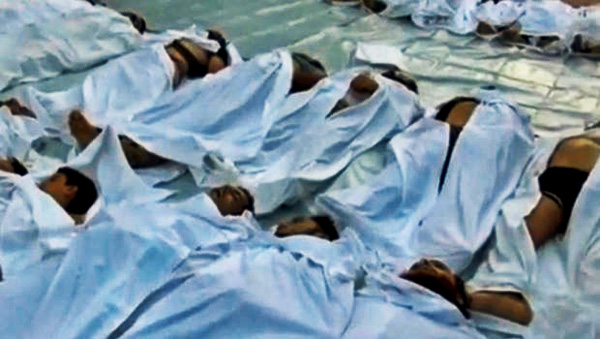
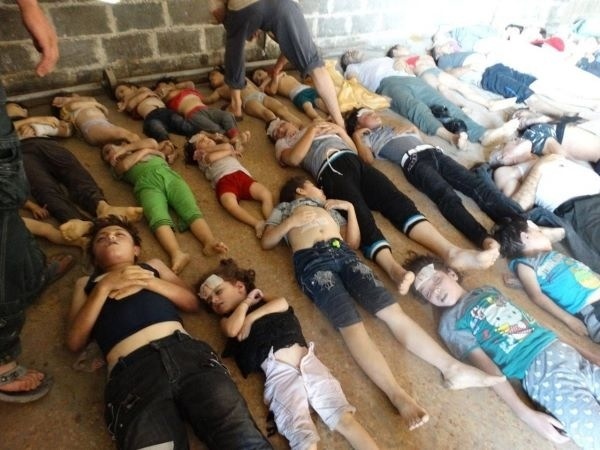
syria-unleashes-massive-gas-chemical-attack-on-damascus

“There may be times when we are powerless to prevent injustice, but there must never be a time when we fail to protest.”  Ellie Wiesel 

I do not think that any surgical strike against Syrian military forces and chemical weapons facilities by a handful of US Navy ships and submarines will stop the unrelenting bloodbath that is the Syrian Civil War. It would be nice if it would but realistically it will not.

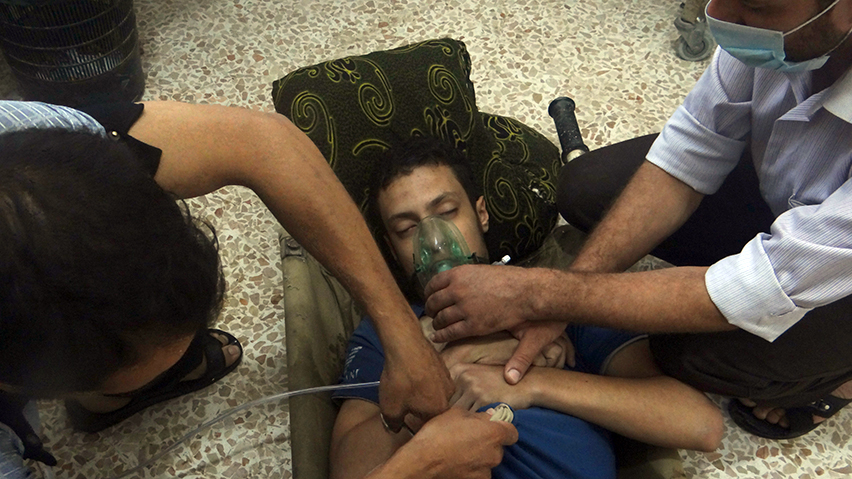
What is going on in that country fits every definition of war crimes and crimes against humanity as defined by Nuremberg, the Hague and Geneva Conventions, the Geneva protocols of 1925 which Syria is a signatory to specifically state that “the use in war of asphyxiating, poisonous or other gases, and of all analogous liquids, materials or devices, has been justly condemned by the general opinion of the civilized world.” This message was strengthened in the Chemical Weapons Convention of 1992, a document that 98% of the nations of the world are signatories to, although Syria  is not one of them.

There are strong moral and legal arguments to be made for intervention in Syria. Unfortunately morality and legal arguments against crimes against humanity seem to have very little weight in the world. But then they never have. It is only when nations decide that the threat extends beyond the deaths of unfortunate people that they really could not care less who lived or died, but directly threaten the economic and security interests of the great powers then the vast majority of people and nations would rather not get involved.

This is especially true after the American led coalition invaded Iraq on the basis of the threat of Weapons of Mass Destruction. The intelligence about the threat has been widely discredited, Iraq remains devastated, Iran empowered and the United States military hamstrung by 12 years of war. The Iraq War and its aftermath, the casualties, the costs and the loss of credibility of the United States as a result of it haunt the actions of the Obama Administration and will haunt future presidencies. As Harry Callahan noted “there are always results.” 

As Barbara Tuchman so well put it: “An event of great agony is bearable only in the belief that it will bring about a better world. When it does not, as in the aftermath of another vast calamity in 1914-18, disillusion is deep and moves on to self-doubt and self-disgust.” 

That was the result of the Iraq war. Though the vast majority of Americans had no direct link to the war that was fought by a small minority of military personnel the effects linger. Our politicians, pundits and preachers talk about us being “war weary” but that really can only be applied to the tiny number of men and women who have served in Iraq or Afghanistan and in numerous other places that no one knows or cares about. I think that people are less war weary than they are apathetic to anything that they do not believe directly effects them.

Bertold Brecht wrote:

“The first time it was reported that our friends were being butchered there was a cry of horror. Then a hundred were butchered. But when a thousand were butchered and there was no end to the butchery, a blanket of silence spread. 

When evil-doing comes like falling rain, nobody calls out “stop!”

When crimes begin to pile up they become invisible. When sufferings become unendurable the cries are no longer heard. The cries, too, fall like rain in summer.”

That being said the consequences of a military action that not only does not destroy the Assad regime’s military capacity to kill innocents could make matters even worse than they are now, a thought that is hard to imagine. Likewise the possibilities of the action going awry  and the situation escalating and even expanding outside the borders of Syria bringing are quite high.

The arguments against intervention as far as military consequences and the low probabilities of success of surgical strikes is a strong argument for non-intervention. Realistically unless there is the participation of major military forces from many nations back by the UN, the Arab League and NATO with boots on the ground to find, secure and destroy the chemical weapons a military strike may achieve a modicum of success but most likely fail in its ultimate goal. The result would be that the situation would continue to escalate and a broader intervention ensue.

I am not happy with the way this has played out. The moral thing would have been for the UN Security Council take strong action against the Syrian regime and the world join in. However that will not happen, too many nations see this as an opportunity to advance their own agendas in the region using both the Syrian government and the rebel forces, some of which are allied with the Al Qaida organization. Some of the Syrian Rebels are as bad as Assad when it comes to indiscriminate killing of innocents and the commission of war crimes.

This week there will be votes in the Senate and House of Representatives regarding a Senate resolution for limited military action against the Assad regime requested by the Obama White House. The political posturing of many opponents as well as supporters of intervention has been nothing but shameful. In many cases it is not about actual foreign policy but on politics dictated by gerrymandered districts and the politics of mutual assured destruction. There is a good chance that the resolutions will not pass and one or both houses of Congress. However there is a strong chance that even without Congressional approval that the Obama administration will most likely attempt to do the morally right thing with inadequate means.

I am torn on this. I do think that as Secretary of State John Kerry said this week that we are at a “Munich moment.” The consequences of inaction and limited action alike are potentially disastrous. The hope of many for the Arab Spring has turned into a nightmare. The question is how bad the nightmare will get.

Honestly I cannot say what is I think should be done. I can make the case for intervention based on moral, legal and ethical grounds and I can make the case against based on realpolitik.

All that being said, for the sake of humanity echo the words of Ellie Wiesel“For the dead and the living, we must bear witness.”

Peace

Padre Steve+

2 Comments

Filed under ethics, Foreign Policy, History, national security

The Guns of September: Beginnings, Endings and Beginnings

tumblr_mcwtrr8DcW1rpl538o1_500

“Do not try to do too much with your own hands. Better the Arabs do it tolerably than that you do it perfectly. It is their war, and you are to help them, not to win it for them. Actually, also, under the very odd conditions of Arabia, your practical work will not be as good as, perhaps, you think it is.”  T. E. Lawrence

In September 1939 Adolf Hitler led his Nazi regime into the bloodiest war in human history. In September 1945 that war ended when representatives of Germany’s ally Imperial Japan signed the instruments of surrender on the deck of the Battleship USS Missouri in Tokyo Bay. In those 5 years  over 60 million people died and the world changed.

Twenty five years before Hitler ordered the Wehrmacht into Poland the former leaders of the imperial dynasties of Europe as well as France  had led their world into the abyss of the First World War. In that war close to 37 million people, both military and civilian died.

EVN-385_Japanese-surrender-aboard-USS-Missouri_1945

In both conflicts leaders schemed to ensure that their nations would come out on top and the human costs were simply counted as immaterial so long as the overall goals of conquest and domination were achieved.

Since the Second World War ended the world has not become a safer place. In fact because the United Nations which was in essence created to prevent war and mitigate its effects has been so politicized where just five nations on the Security Council hold the key to it being able to act forcibly to stop genocide and the used of weapons of mass destruction. More often than not at least one of those five nations, the United States, Russia, China, Britain and France have ensured that whichever despot they they support is protected from any action by the world body through the use of their veto in the UN Security Council.

No we stand at the precipice of war again. This time in Syria. The United States, France and a number of other countries have concluded that the regime of Bashir Assad has employed the nerve agent Sarin against its own people in their bloody civil war.  This is disputed by the Russians as well as the Syrians but backed up by the Israelis and Saudi Arabians.

hi-syria-gas-rtx12sc9

As for the United States leading any strike on Syria to either degrade or weaken the Assad regime’s ability to use chemical weapons or any other weapons of mass destruction that they might have it finds itself on the horns of a dilemma. If it does nothing then the Assad regime can claim hat it forced the United States to back down and continue to slaughter its own people. If the United States attacks there is some chance of the strikes having some effect on the Syria ability to make war on their own people but opens the possibility of a wider and more bloody conflict, a conflict that may solve nothing but actually make matters worse.

The United State is also hindered on the world stage and at home by the Iraq debacle brought on by the Bush Administration. Despite the fact that less than one percent of the population has served in the military since the attacks of 9-11-2001 and even fewer have served in combat zones the political leaders, talking heads, pundits, preachers and media in general referrer to the country as “war weary.” The retired former Chief prosecutor at Guantanamo Bay made the comment on Twitter that they must be tired of shopping since so few have actually served. If there is war weariness it is in the military which has been in continuous action since 9-11-2001 and if we want to be honest almost ever since the First Gulf War with stops in the Balkans and Somalia along the way. I have been in the military 32 years and I have lost count of the number of places that we have deployed forces to and the amount of time that I have spent away from home. I think I have been away from my wife 10 of the last 17 years due to deployments and assignments that took me away from home. But I digress…

The fact of the matter that there are a number of layers to the situation in Syria that all need to be addressed but will not be. Instead they will be spun by those in favor or those opposed to war and mostly for for a very fleeting political advantage. An advantage only as good as today’s polls.

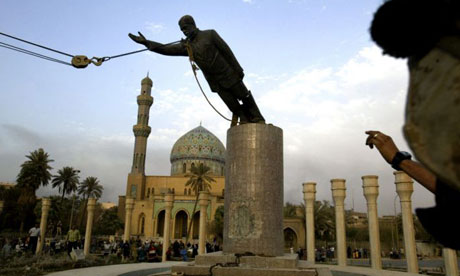
saddam0978

In the past couple of days the Obama Administration has been taking its case for action against Syria to the American people and Congress and also to other nations. The reasons for intervention have been primarily moral as well as citing the precedent of international law regarding chemical weapons. Real politic has not played much of a role, at least yet but it should.

The reality is that the Obama Administration as well as the UN, the Arab League, NATO, the EU and other nations with an interest in what happens in Syria have to deal with the moral and ethical level of the arguments for or against intervention. They also have to look at the legal justification which depending on which part of international law you examine could be used to argue for or against the legality of intervention. Finally there is the real politic of the situation, not only the chances of a successful intervention but the consequences of action versus inaction, action versus delay in the hopes of finding another solution and the results of whatever course of action is taken. After all, there are always results and even the most well intended and executed plans result in unintended consequences.

As I have said a number of times I think that President Obama is damned no matter what he decides to do and that this war no matter what we do in the next week will most likely spill over the borders of Syria into adjoining countries. That is already happening in the form of refugees going into Turkey, Jordan and Iraq, further instability in Lebanon and occasional skirmishes along the Syria and Lebanon borders with Israel. The question is not “if” but rather when and how the military conflict and sectarian violence spreads to other countries surrounding Syria. That has t be weighed with the consequences of and consideration of the “branches and sequels” to any intervention or non-intervention strategy employed by the United States and whatever allies choose to go along for the ride.

Syria03_GQ_07Dec12_getty_b_642x390

I am not in favor of war. That being said I do not know if there is a way to avoid it yet still enforce the norms of moral behavior in terms of the use of chemical, biological or even nuclear weapons.

There are times that I wonder about those who believe that they can orchestrate policy that only benefits their country or political-economic interests. The fact is that the “war genie” is out of the bottle and where the situation in Syria ends is anybody’s best guess. What we do have to remember is that those rebelling against the Assad regime are not doing so for our benefit or for that matter any other nation’s benefit. What T. E. Lawrence said of the Arabs who revolted against the Ottoman Empire in the First World War is as true now as it was then:

“The Arabs rebelled against the Turks during the war not because the Turk Government was notably bad, but because they wanted independence. They did not risk their lives in battle to change masters, to become British subjects or French citizens, but to win a show of their own.”

There are nations and groups attempting to use this for their own interests and ultimately it will blow back on them. The region is perched on the abyss of war, possibly without end. What happens now will be less decided by what happens in Washington or the capitals or Europe or the United Nations but with the people actually fighting the war, their active supporters and their proxies.

As far as the United States political scene if a single leader votes for or against war based purely on their individual or political party’s gain in either the 2014 or 2016 elections or to undermine the current President a pox on them. I want an honest debate about the real world consequences, ethical, legal, moral, economic, military and geopolitical of any intervention or non-intervention in Syria. We owe it to the Syrians, those people in the region as well as our own people, especially those who will certainly bear the burden of whatever war ensues.

Honestly, we really need to think this through before so much as one missile is launched.

Peace

Padre Steve+

Leave a comment

Filed under Foreign Policy, History, middle east, national security

Syria: The History and the Really Hard Questions for All of Us

20130831-164635.jpg

Today President Obama called on the U.S. Congress to take up and debate an authorization for the use of military force in Syria. From any moral viewpoint his words on the use of chemical weapons by the Syrian government his words were correct. Likewise his calling to account of the international community, 98% of whom are signatories to treaties outlawing the use of these weapons against anyone to support this action was correct. The fact that he also demanded that Congress come into session and do its job was correct.

In spite of all of that the use of military force to attempt to force a change in the way that the government of Bashir Assad is problematic and fraught with danger. The chances of escalation and the involvement of other nations and non-state actors are great and even a “successful” operation could lead to subsequent events detrimental to the United States, the West, the region and even to Syria and its people.

A big part of this is due to the complexity of Syria itself and its history. Syria is a complicated mosaic of cultures, peoples and religions often at odds with one another. The fact that the Assad regime has remained in power is because of its brutality and willingness to play off the various factions against each other. The Assad family is of the minority Alawite sect of Shi’a Moslems from the western region of the country. One needs to read T. E. Lawrence’s 1915 report on Syria to get a glimpse of the complexity of Syria and to understand that one has to proceed carefully when dealing with any faction. http://www.telstudies.org/writings/works/articles_essays/1915_syria_the_raw_material.shtml

20130831-171258.jpg

The fact is that the best chance for a stable Syria disappeared in 1920 when the French, emulating the British in Mesopotamia (Iraq) overthrew the government of Emir Faisal Hussein. Lawrence wrote a powerful essay about this http://www.telstudies.org/writings/works/articles_essays/1920_france_britain_and_the_arabs.shtml and when one examines the actions of the British and the French in Syria and Iraq one has to look at history. The British were willing to support the U.S. invasion of Iraq because of history, the same is true of why the French are willing to stand with the United States in Syria. The Germans for their own part frustrated by imperial ambitions in the Middle East in the First World War and a failed attempt to support an Iraqi uprising against the British in 1941 have no interest in a war that might bring disorder and terrorism among the many Moslems that reside in their country. The Turks of course have no love for the Arabs and once counted Syria as a valuable part of the Ottoman Empire. Disorder in Syria is dangerous to them but ultimately they could benefit since they have been shouldering much of the humanitarian burden.

The Jordanian royal family has no love for Syria being the descendants of Faisal Hussein while the Israelis see Syria as a mortal enemy. Lebanon which was carved out of Syria after the First World War is hopelessly divided and with Hezbollah, the erstwhile ally of Iran in de-facto control of the country in danger of becoming a front in the ongoing Syrian Civil War. Iran being the close ally of Syria has great opportunity to expand its power and should a military strike occur might become directly involved although the more likely scenario is that they would allow their Hezbollah allies to shoulder the burden of strikes against Israel and United States or other Western interests in the region. One cannot leave out the Russians who are behaving much as the Tsarist Regime did regarding the region in the First World War when they signed on to the Sykes-Picot agreement.

If the United States does nothing Assad wins. He shows that he and anyone like him who conduct themselves outside the norms of international law and human rights can get away it it. If we intervene it might strengthen his grip, likewise if our strikes were successful enough to weaken his grip and allow the rebels to take power the results could be even worse since the Al Qaeda ally Al Nursa is the strongest and most militarily effective part of the rebel forces.

In a sense the Obama administration is damned if it does, damned if it doesn’t and damned if it does no matter what the outcome. It sucks for him because he is the President and it is his job he will get the blame. This despite the fact that his freedom of action in large part is undermined by the actions of the Bush Administration in the Iraq lead up and invasion. There are always results in foreign policy decisions. The invasion of Iraq has harmed our interests in more ways than its architects ever imagined, it was a foreign policy disaster of the first order that impacts everything that we do today in the Middle East.

That is why before a single cruise missile is launched the United States Congress must debate the action and go all in or stay out. The fact is that if we do this, and I hope, we don’t we have to do it right. We have to understand the consequences and do what we can under our system of government to debate the issue, look at the ramifications, not just in the region but to our own economy and national power.

If we do it the Sequester has to be repealed in all parts, you cannot wage war on the cheap and expect a military that is worn out by 12 years of war to keep taking on more war without funding it. The Tea Party Republicans who are attempting to hold the government hostage through the Sequester and a possible government shutdown cannot have it both ways. It is irresponsible of them to continue this madness until we can get out of Afghanistan and avoid involvement in Syria or other conflicts.

20130831-175304.jpg

That my friends is the hard truth about Syria. So before you get too caught up in the opening of the College and NFL football seasons forgetting that a dangerous world exists take some time to ponder and if you have the civic decency to write your Congressman and Senator on the subject. Pro or con tell them what you think and demand accountability. If you don’t do that don’t blame President Obama for what happens because you have failed your country as citizens.

Sorry I guess that might hurt. But we didn’t do that in Iraq. Today the 4486 dead American military personnel as well as all the other dead and wounded, American, Allied and Iraqi alike and those like me afflicted with chronic PTSD demand that you do it now. It is a moral responsibility of the first order of much greater importance than your fantasy football league.

Peace

Padre Steve+

Leave a comment

Filed under Foreign Policy, History, middle east, Military, Political Commentary

It Never Rains in Southern California: Padre Steve Heads Home to Visit Family and Attend His 35th High School Reunion

biz_t440

Got on board a westbound seven forty-seven

Didn’t think before deciding what to do

Ooh, that talk of opportunities, TV breaks and movies

Rang true, sure rang true …

It Never Rains in Southern California, Albert Hammond EMI Music

I am heading off to California in morning. It is Northern California and not Southern California but like the classic Albert Hammond Song says “it never rains in California” so I hope this will be the case this week. The weather channel says so maybe it won’t be too bad.

As far as the trip I have to be up pretty early since I have an early flight. So tonight after doing another full day of work around the house I went out with Judy for dinner. Since then I have been getting packed and ready to go.

It has been since my dad died in June of 2010 that I have been home. My last few trips out in 2008 and 2009 happened after Iraq when my dad was dying and I was to put it mildly bat shit crazy in the midst of my post-Iraq PTSD meltdown. Thankfully I am doing a lot better than I was back then.

The costs of the three year geographic bachelor assignment at Camp LeJeune and the need to use leave to go home to Virginia made a heck of an impact on normal travel and vacation plans. We haven’t done much traveling at all the past three years. Apart from a couple of official travel trips to Washington DC or Houston and another to testify at a Court Martial in Germany I have not been out of Virginia and North Carolina. It will be good to see my mom, my brother and his family while I am there as well as my classmates whom I have maintained contact with over all of these years. Our class was special and I really do look forward to seeing my friends again.

My trip is now set except for checking in at the airport in the morning. I have my flight, car and hotel reservations. Thankfully the flight was all but free thanks to a the need of United Airlines to get a flight crew to Washington Dulles on my last trip, netting me a $500 flight voucher which I applied to this trip meaning that my rental car and hotel were the only up front expenses. Since Judy had foot surgery Monday and is on crutches for a few days I will be taking a cab to save her the hassle of trying to get me to the airport so early.

Now I have to admit ever since Iraq I am not a fan of air travel or airports. So once I get to the airport I will probably have breakfast with a cup of black coffee and a pint of Sam Adams at the Sports Bar in the terminal. Flying the friendly skies with a heft case of PTSD requires some adjustments. Since my flight is basically free I will probably try to upgrade my seating for at least the Chicago to San Francisco portion of my trip to avoid being stuck in steerage.

I can’t help but think that while I am on leave between assignments and traveling to California that the United States and much of the world sits on the precipice of war in Syria which could very well have regional and possibly world wide effects. I check in to my new assignment at the Joint Forces Staff College on Tuesday of next week, the morning following my return. I wonder if as Barbara Tuchman wrote about in The Guns of August that the world that I return to on Monday evening or Tuesday morning will be quite different than it is today.

“The muffled tongue of Big Ben tolled nine by the clock as the cortege left the palace, but on history’s clock it was sunset, and the sun of the old world was setting in a dying blaze of splendor never to be seen again.”

Peace

Padre Steve+

2 Comments

Filed under Loose thoughts and musings, middle east, Military, music, PTSD

All In or Stay the Hell Out: Syria, the United States NATO and the Middle East, the Guns of August All Over Again

hi-syria-gas-rtx12sc9

The Balkans aren’t worth the life of a single Pomeranian grenadier.”  Otto Von Bismarck

The terrible civil war in Syria appears to be reaching its crescendo as someone, probably the Assad Regime or its allies, or possibly the Syrian rebels are using Chemical weapons to kill non-combatants and rebel combatants. The evidence that the weapons have been used is apparently convincing enough for the UN to send in inspectors and for the US Secretary of State John Kerry to state that it is certain that they have been used.

Now NATO allies as well as representatives of Jordan and the Gulf States are meeting to decide what to do in response. Since most experts believe that the Assad regime is culpable for these attacks the belief is that the United Sates, NATO and the Arab Allies could be preparing for some kind of attack Syria. The Russians, long time supporters of Syria are pushing back against this and the Syrians are promising that any attack will result in a war that envelopes the region.

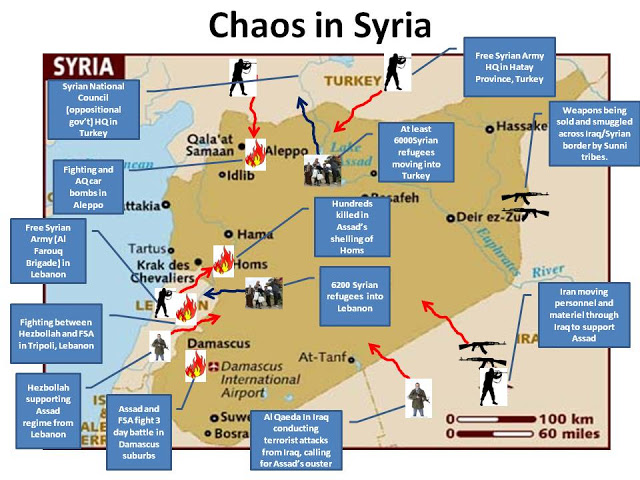
Chaos-in-Syria

What is happening in Syria is a tragedy and must be stopped. War crimes have certainly been committed by all sides in Syria and the direct involvement of Hezbollah and Iran on the side of the Assad regime and Al Qaeda affiliates on the side of the rebels complicate any response. However, that being said the question must be asked “just whose responsibility is to stop it?”

Some say the United States and NATO, others the Arab League while others the various factions of Syrians themselves.

My heart cries out for intervention in Syria if for nothing else but on humanitarian grounds. But the fact is intervention in Syria has to be much more thought out and organized than intervention that we have conducted since the fall of the Berlin Wall. It will not be a cake walk and quite likely will lead to consequences far worse than the average citizen or boneheaded Congressman has never given a cogent thought.

Syria is an incredibly complicated country. It is multi-ethnic and multi-religion. Arabs, Kurds, Druze and others live in patchwork communities and regions even as various sects of Sunni, Shia, Sufi and Salafist Moslems vie for power while the divided Christian minority , Catholics, Orthodox, Anglicans and others hope to live and remain in their own country.

As far as others in the Region besides Iran and Hezbollah, various Sunni and Shia Iraqi insurgents have crossed over into Syria, while Israel teeters on the bring of being drawn in to the conflagration.

No matter what happens there will be no winners in what is happening in Syria. There is a high probability that the Syrian civil war will overflow the borders of that unfortunate country and drag the region and possibly major world powers into the war. If that happens there are no winners, only losers. The biggest question is who will be the biggest loser?

That being said even tonight there are reports of military movements in the region even as NATO and Arab coalition partners gather to discuss a response. I am resigned to the fact that the Syrian Civil war will overflow Syria’s borders and draw in the powers of many countries. Just who I am not exactly sure at this time. In the US there is a marked tepid feeling among voters about getting involved. That may be a good thing. It may temper our response and make us deliberate the consequences of military action or inaction.

Bertrand Russell once said that “War does not determine who is right – only who is left.” I wonder if anyone in any of the nations currently involved or possibly that might be engaged in the war actually things about what Russell said.

The fact is that what is going on in Syria is the proverbial “Tar Baby.” There is no clean easy solution to the situation. Lobbing in a few hundred cruise missiles and launching airstrikes in support of the rebels is unlikely to have a profound strategic affect. Instead, unless NATO and its allies are willing to risk an actual ground war after the missile and air strikes then the fact of the matter is that those strikes will have little long term effect. If a ground invasion happens it will be bloody and not the cake walk that so many in Western Governments, media and populations that rely on a very small number of military professionals to fight their wars think it will be.

If by some chance the United States and its allies get drawn into the Syrian Civil War than all of them had better think of what the consequences of that involvement will be, for the region, the world and our own countries. The fact is that a major war in Syria will drag the rest of the region into it. This is not 2003 Iraq or 2011 Libya. The fact is that Syria is heavily splintered into various regional, ethnic and religious groups, most who have lived among each other for millennia and most of whom hate each other.

I cannot speak for other governments around the region and the world, allied to the United States or not. However I do know that our Constitution has in it the formula of who should committed the country to war and that, despite our recent history is not the President by his executive authority Commander in Chief but by Congress after due deliberation and a vote to declare war.

My thoughts are that if we in the United States are serious about this, that we believe that Syria and Assad need to be taken down then fine. Let us call Congress back to Washington now and have them debate the issue. If they vote for war then they need to do two things, the first is that Congress needs to be called away from its vacation and get to work debating the issue. If the President backed by a declaration of war from Congress and a repeal of the sequester that is gutting the country and the military.

If they cannot do this then let’s stop the bullshit and tell the work that the situation in Syria is terrible but the consequences of going to war without either an end in mind or analysis of the costs involved is criminal. Bismarck said it well in regard to the Balkans and his comments should be taken to heart by the United States and its allies.

The situation in Syria cries out for action, but that action must be action that helps the people of Syria, the region and the world and is not just an action to salve our collective consciousness and say that we did something. Simply throwing some cruise missiles at Syria accomplishes nothing unless there is a plan of what we intend to see happen. William Tecumseh Sherman said: “It is only those who have neither fired a shot nor heard the shrieks and groans of the wounded who cry aloud for blood, more vengeance, more desolation. War is hell.”

My thoughts on this are to make going to war difficult. If the President and his cabinet determines that they believe in consultations with our allies that war is the last and best of the worst case options, the Congress needs to cut short its vacation. Republican and Democrat leaders need to gather and a decision has to be made. If we go to war it can no longer be done under the very loose and terribly vague rules of the War Powers Act because any attack on Syria will certainly escalate beyond a short term military strike done “on the cheap.”

There is no cheap or easy to Syria. If military action is the only way to solve the problem then Congress must convene, make a formal declaration of war and also repeal sequestration. A war in Syria will be costly in blood and treasure and will likely pull in many other countries. The human costs in the region, not just Syria will be beyond imagination while the costs to the world economy will be severe and quite possibly push the world into another recession or possibly depression.

The military power alone of the United States has been used far too many times as our governments under successive Republican and Democrat leadership have opted not to use the full measure of our diplomatic, intelligence, military and economic power to solve problems. Instead we fall back to the easiest and most ready means to satiate our need for a quick solution to complex problems, the military option. Military power alone, especially if it is incapable of ending the conflict and bringing a just peace is not an answer in Syria.

Syria03_GQ_07Dec12_getty_b_642x390

The fact is that we Americans do not know the world nor do we understand it. Americans have become simple and lazy when it comes to dealing with complex issues. We deal in sound bites and tweets, the more fiery the better even as we stick our heads in the sand as to what is happening in the world. Ask how many people are more interested in the beginning of the College and Pro-Football seasons in the next couple of weeks versus those interested in really important issues of war and peace and you will get your answer on our priorities as Americans. We have no sense of history and are quite ignorant of the world around us and the political, cultural, religious, philosophical, ideological and economic factors that make up our world so our first response is almost always the sword.

If the President and Congress feel that it is absolutely necessary to go to war over the atrocities being committed in Syria let them make that decision, but only after considerable debate, consultations with allies, the United Nations and the Arab League followed by a vote on an actual declaration of war, the repeal of sequestration and a major stimulus to prevent the economy from tanking when the cost of oil goes through the roof and cripples the world economy.

Winston Churchill cautioned leaders “Never, never, never believe any war will be smooth and easy, or that anyone who embarks on the strange voyage can measure the tides and hurricanes he will encounter. The statesman who yields to war fever must realize that once the signal is given, he is no longer the master of policy but the slave of unforeseeable and uncontrollable events.” 

images-56

To paraphrase Bismarck, Syria is not worth the life of one American or Allied Soldier unless our governments are willing to do it right. All in or stay the hell out and don’t go in without counting the real and the potential costs.

Peace

Padre Steve+

2 Comments

Filed under middle east, Military, national security, Political Commentary

30 Years of Marriage: Marriage the Definitive Icebreaker in an Ever Changing World

1012128_10151749215177059_1902693993_n

A long time ago in a galaxy far, far away…

Luke Skywalker has returned to his home planet of Tatooine in an attempt to rescue his friend Han Solo from the clutches of the vile gangster Jabba the Hutt. Little does Luke know that the GALACTIC EMPIRE has begun construction on a new armored space station even more powerful than the first dreaded Death Star. When completed, this ultimate weapon will spell certain doom for the small band of rebels struggling to restore freedom to the galaxy…

Cut! Wrong galaxy…

295_26912077058_3276_n

The year was 1983 and a newly commissioned Army Second Lieutenant was marrying the love of his life in an old Presbyterian Church in Stockton California. The wedding was done on a shoestring but was quite nice, you would never have known that on that warm but not too hot day in Stockton California, only 89 degrees at game time with almost no humidity. Since the groom’s 1975 Chevy Monza didn’t have air conditioning that was a good thing.

Other things were going on in the world that day and that year.

Yasir Arafat was expelled from Syria after his accusations that President Hafez al-Assad was behind the anti-Arafat rebellion among Palestine Liberation Organization troops in Lebanon.

Prince Charles and Princess Diana had just had their first son, William.

Evita closed on Broadway after 1568 performances.

215px-Flashdanceposter

Flashdance…What A Feeling by Irene Cara was the Billboard top single.

thriller-video

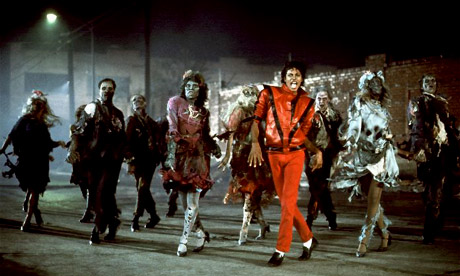
Michael Jackson’s Thriller music video became the biggest video hit of all time and he would die on our 26th wedding anniversary in 2009.

In sports an Indian team led by the legendary Kapil Dev overcame the mighty, two-time champion West Indies at Lord’s to win the Prudential World Cup.

The Orioles lost to the Tigers 9-3, the Giants lost to the Padres 3-2 and the A’s lost to the Rangers 8-3. The O’s would go on to win the World Series.

251651

Superman III was the top box office draw but would be de-throned by Star Wars VI, Return of the Jedi on the 26th. The top ten box office hits for 1983 were: Star Wars Episode VI: Return of the Jedi, Terms of Endearment, Flashdance, Trading Places, WarGames, Octopussy, Sudden Impact, Staying Alive, Mr. Mom and Risky Business.

images-48

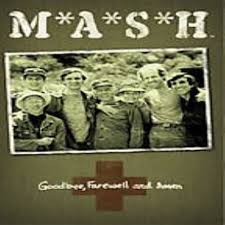
M*A*S*H had ended its epic run as one of the favorite television shows in the United States.

1983-stang-camaro-blog-dogear

The Car and Driver Magazine Top Ten Best list included the 1983 Pontiac 6000STE, 1983 Porsche 944, 1983 Toyota Celica Supra, 1983 Volkswagen Rabbit GTI, 1983 AMC/Renault Alliance, 1983 Chevrolet Caprice Classic, 1983 Ford Mustang GT 5.0, 1983 Honda Accord, 1983 Mazda RX-7 and the 1983 Mercedes-Benz 380SEL. Pontiac and AMC are no more and we now own a 2013 Mustang.

Ronald Reagan was President and Yuri Andropov the Soviet Premier as the Cold War began to reach its crescendo even as both countries were enmeshed in wars or attempts to subvert each other’s allies, the US in Nicaragua and the Soviets in Afghanistan even as Reagan proposed the Strategic Defense Initiative or Star Wars program.

The Polish Pope, John Paul II was making waves in Poland as the Solidarity movement continued to confound local Communist authorities and the Soviet Union, helping to set the stage for the eventual collapse of the Soviet Union and the Warsaw Pact.

Nelson Mandela was imprisoned in then a repressive and racist apartheid South Africa.

Iran and Iraq were locked in a bloody struggle, Israel had invaded Lebanon and become  involved in a quagmire and Saddam Hussein was considered to be our friend. Osama Bin Laden was supported by the United States in Afghanistan.

The Space Shuttle Challenger returned to earth after a historic mission with Sally Ride the first woman to go into space.

24419_10151620210532059_1908706513_n

It is hard to believe that all of that was going on. In fact since there was no internet yet and even cable news was still in its infancy most of us lived in a world that was not so complicated. In light of the current concerns regarding privacy which make Orwell’s 1984 seem all too real, that novel was merely interesting.

6095_128720537058_6625464_n

Who would have thought then that the world would be where we are today. Likewise who would believe that Judy and I are still married after all these years? Sure I think that most people enter into marriage with the intent of it lasting the rest of their lives but tragically so many don’t. In light of all the failed marriages out there I almost wonder if 30 is the new 50 as far as anniversaries are concerned. I guess that we are rather fortunate. We have done the whole sickness and in health, for richer or poorer deal a number of times already, seen our shares of joys and heartaches and since I have been in some type of military service our whole marriage endured many separations.  So far we still love each other.

6095_128718107058_2713239_n

One of my favorite movies about marriage is the classic Four Weddings and a Funeral. There is a great sequence in the film which sometimes I wonder might just be true:

Gareth: I’ve got a new theory about marriage. Two people are in love, they live together, and then suddenly one day, they run out of conversation.

Charles: Uh-huh.

Gareth: Totally. I mean they can’t think of a single thing to say to each other. That’s it: panic! Then suddenly it-it occurs to the chap that there is a way out of the deadlock.

Charles: Which is?

Gareth: He’ll ask her to marry him.

Charles: Brilliant! Brilliant!

Gareth: Suddenly they’ve got something to talk about for the rest of their lives.

Charles: Basically you’re saying marriage is just a way of getting out of an embarrassing pause in conversation.

Gareth: The definitive icebreaker.

Peace

Padre Steve+

1 Comment

Filed under Just for fun, Loose thoughts and musings, marriage and relationships

Never Forget, They are Not Just Names… Reflections on War, Loss and Change: Iraq, Afghanistan and Deep Space Nine

481801_10151367001287059_1003164983_n-1.jpg

KIRA: Sir, the latest casualty reports have just been posted.
SISKO: How many this time?
KIRA: Including the troops lost at AR five five eight, seventeen hundred and thirty.
SISKO: Seventeen hundred thirty.
KIRA: That’s a lot of names.
SISKO: They’re not just names. It’s important we remember that. We have to remember.

I have had trouble sleeping the past couple of weeks and I think that late last night or early this morning I figured it out.

I am remembering.

It was about this time of year six years ago I was getting ready to celebrate my 24th wedding anniversary with Judy knowing that about a week and a half later I would be leaving for Iraq for duty in Al Anbar Province with our advisors and wondering, if at the height of the war I would come back.

Of course I did come back and the following year in 2008 we celebrated our 25th anniversary as I melted down, collapsing due to PTSD. I was home but I wasn’t.

Every time I see or read a casualty report I still feel a chill, knowing how easily my life could have ended. I saw a report yesterday that four American troops were killed by indirect fire at Bagram Air Base near Kabul. Reading it I remembered the rocket the flew over my head the night I was flying out of Camp Victory for Anbar and how nonchalant I was when a young soldier ran up to me in his PT gear nearly in a panic asking me “what was that?” and my response, “oh it was just a rocket.” We were not far from the eastern perimeter of the base in an area of tents set out as transient quarters gunship helicopters flew over the camp and the city beyond the walls, machine guns rattled in the distance as explosions echoed in the distance as American soldiers and Iraqi security forces battled insurgents not very far from where we sat.

This past week a number of things have been triggering me. The Marines have been conducting exercises at Camp LeJeune and I have heard artillery in the distance and aircraft have been taking off and landing at the auxiliary airfield across the sound a couple miles away.

652_53210437058_4925_n

Even though it is still two weeks until July 4th the tourists and summer rental types are already shooting off fireworks in the neighborhood near the beach. Last night I barely slept and tonight the tourist insurgents have been going mad with the fireworks. I was out walking Molly when some rather large commercial type fireworks went off a couple hundred yards away on the next street over. I nearly went to ground until I realized that they were only fireworks. I thought about July 4th 2011 when Judy brought Molly down and we went down to the beach to watch the fireworks. That night I was terrified and only the unflappable calm of Molly sitting beside me barking at the fireworks to protect me kept me together. Tonight Molly was as unflappable as ever, not bothered by the explosions. That made me laugh despite the near panic that I found myself. It is amazing what a little dog, now blind but still very relevant can do for someone like me dealing with the PTSD Mad Cow. I hate July 4th now, not what it means but all the explosions.

6095_128718117058_1466465_n

Molly supervising my writing in 2008 or 2009

Tonight I was watching Star Trek Deep Space Nine on DVD and the end of the season seven episode The Siege of AR-558 got me a bit. At the end of the episode Captain Sisko and Colonel Kira are discussing the latest casualty lists, which Sisko posts each week for his crew. I quoted it at the beginning of the article and it really spoke to me.

Some 6700 American Soldiers, Marines, Sailors and Airmen have died in Iraq or Afghanistan close to 50,000 more wounded and probably a couple hundred thousand afflicted with PTSD or Traumatic Brain Injury. Hundreds, if not thousands more, active duty, reserve and former service members have taken their own lives after returning. Of course those numbers don’t count the troops from NATO or the Iraq Coalition Forces, the Iraqi and Afghan troops that have fought and died alongside us or the hundreds of thousands of civilians who have been killed, wounded or driven from their homes.

But they are more than numbers. Every one has a name, the dead and those who have come back in some way forever changed by war. It is important that we never forget that. They cannot be just numbers, otherwise we dehumanize them and avoid the real cost of war, especially the human costs. I think that Smedley Butler said it the best:

“This bill renders a horrible accounting. Newly placed gravestones. Mangled bodies. Shattered minds. Broken hearts and homes. Economic instability. Depression and all of its attendant miseries. Back -breaking taxation for generations and generations. For a great many years as a soldier I had a suspicion that war was a racket; not only until I retired to civilian life did I fully realize it….”

As I write the situation in Afghanistan is still dangerous and this week I saw another friend, a surgeon from my hospital depart for duty there. Likewise there is much debate about the US and NATO role in the Syrian Civil War, something that seems to me will eventually involve US forces in yet another war.

I guess that is why I can’t sleep and why some of my dreams have been so disturbing lately. I know that I will get through this as I have been through much worse over the past six years.

Another episode of Deep Space Nine entitled Paper Moon that I watched tonight dealt with the young Ferengi officer Nog who was wounded at AR-558, losing a leg and his struggles after returning to the station dealing with the trauma of war, loss and change.

10

Nog tells his holographic friend the lounge singer Vic Fontaine played by James Darren When the war began…I was eager. I wanted to test myself. I wanted to prove I had what it took to be a soldier. And I saw a lot of combat. I saw a lot of people get hurt. I saw a lot of people die, but I didn’t think anything was going to happen to me.” I didn’t think that anything would happen to me either, I thought that I was immune from trauma and PTSD, I was an expert in dealing with trauma but I came back changed.

At the end of the episode as he comes to terms with his loss and the change he is asked by his father’s new wife “Are you okay?” and he replies “No. But I will be.”

I will be too. Tonight I hope to sleep.

Peace

Padre Steve+

6 Comments

Filed under iraq,afghanistan, middle east, News and current events, PTSD, Tour in Iraq

Padre Steve’s 2013 Down and Dirty Primer on the Muddle East

Free Syrian Army soldiers in Idlib

“When you are up to your arse in alligators it is hard to remember that your mission is to drain the swamp.” Old British Colonial Saying

Note: This is an update to my 2011 Primer on the Muddle East

During the dark days of World War Two when Field Marshal Erwin Rommel was making fools of a series of British commanders in North Africa people including senior British military and government leaders sometimes referred to the theater of operations as “the Muddle East.” Some things never seem to change. The Muddle East today is quite frankly speaking in a real muddled state if there ever was one with world leaders and regional leaders muddling about as if they were the New York Mets.

A large part of the muddle goes back to the fall of the Ottoman Empire at the close of the First World War when the victorious Allied Powers redrew the map of the Middle East and made alliances with various local tribal sheiks who many times were crowned king over other tribes who didn’t necessarily want them as king. This along with heavy handed European military actions such as the British using poison gas dropped from aircraft in Iraq and a real lack of effort to better the lives of the newly “liberated” peoples of the region was just the start. Add to the cesspool a bunch of oil presided over by major oil companies, the anti-colonial movements that flourished in the years after World War Two when the French, British and Italians had to divest themselves of their Middle Eastern holdings. The French had to fight a real war in Algeria but finally withdrew leaving Algeria’s new rulers to goof up the country and oppress their people for decades to come.  In the coming years many of these newly independent nations found that life still sucked so in a number of countries military officers overthrew the despised monarchs promising reforms but oppressing their people while blaming all their problems on the Israelis.  They got their asses kicked by the Israelis in a series of wars which did a number of things that made the Middle East Muddle even worse.

First it ensured that Palestinian Arabs ended up under Israeli rule and were used with great aplomb by the Middle Eastern despots to prop up support for their regimes while doing nothing to help the Palestinians other than to put them in camps in Lebanon.  Even when the Egyptians made a peace deal with Israel most of the Arab World ostracized them.  Then in 1979 the Shah of Iran was sent packing by a bunch of Mullahs and in 1981 Saddam Hussein’s Iraq attacked Iran in one of the bloodier wars of the late 20th Century which finally ended in 1988. Of course the United States was pissed at the Mullahs so Saddam became our favorite Arab despot for a while.  Add to the mix the Soviet Union and the United States arming their favorite Arab dictators who were given carte blanche to continue oppressing their people so long as it didn’t interfere with their support of either party or the oil supply. Finally the Soviets went Tango Uniform in 1989 not long after being forced out of Afghanistan by the U.S. supplied, Pakistani supported and Saudi Arabian fundamentalist financed Mujahideen.

With the Soviets “Tango Uniform” and the Warsaw Pact nations trying to get into NATO the United States was now the uncontested Numero Uno country in the world Saddam presumed upon his late supporters and invaded Kuwait, albeit after thinking that the U.S. Ambassador to Iraq said that we wouldn’t mind.

Well he was wrong we did mind and got a lot of countries from NATO and including a bunch of Arab countries like Egypt, Syria and Saudi Arabia to get on board on a mission to get Saddam’s troops out of Kuwait. It was a kick ass mission and since the United Nations didn’t authorize removing Saddam and because President George H.W. Bush was smart enough to not to drive on Baghdad to kick him out preferring the despot we knew to a quagmire Saddam was left in power.

So we stationed ground and air forces around the Gulf to keep Saddam and Iran in check and even put them in Saudi Arabia which a large number of radicals such as Osama Bin Laden equated to letting the Devil play in Allah’s Holy Sandbox.  So Osama went and set up a base with the Medieval bunch of Pashtun known as the Taliban in Afghanistan stirred up a bunch of shit killing Americans and blowing up stuff including the World Trade Center in 1993, the Khobar Towers barracks complex in 1996, the USS Cole in 2000 and then 2001 another attack on the World Trade Center which took down the towers with hijacked aircraft and also struck the Pentagon triggered an American response against Bin Laden and his Taliban hosts.  The United States then invaded in Iraq in 2003 and succeeded in taking out Saddam but also succeeded in alienating a good many Iraqis who greeted us with open arms because we goofed up the occupation and pissed a lot of them off by dissolving the Army, Police and Civil Service and letting thugs and opportunists take over. Unfortunately since we didn’t go in with enough troops to secure all the Iraqi bases, their weapons depots and actually take control of surrendering Iraqi units these newly unemployed and dishonored people launched an insurgency bolstered by Al Qaeda and other foreign fighters even as Sunni and Shi’a Moslems began to settle scores with each other. Insurgency and civil war, two great tastes that go great together, but what the heck right?

Of course it took years to get control of the situation on the ground and thankfully the United States forces in Iraq were helped when the Sunni Moslems in Al Anbar Province realized that these foreign fighters were a worse enemy than the United States and switched sides. This turned the tables in Iraq and the insurgency was brought under control and an elected government managed to start to get their stuff together and allow us to begin withdrawing from Iraq. Of course the focus on Iraq gave the Taliban a chance to regroup as the Afghani Government proved itself corrupt, incompetent and not to give a shit about the Afghani people. So the Taliban who had been hated made a comeback and made our lives much harder so that now almost 10 years into the fight we are having a really hard time.  Well enough about us there was plenty more going on in the Muddle East besides the Iraq and Afghanistan wars.

Let’s see….there was the law of unintended consequences in that by taking Saddam Down and weakening Iraq we took away Iran’s natural enemy and the key to the balance of power in the region. Iran was strengthened and began a nuclear program that everyone with half a brain knows in intended for military use and expanded its influence in Lebanon where the Iranian backed Hezbollah took power.  Now Hezbollah which actually has an experienced military force and probably owns 40,000 or so rockets and missiles a good number of which can hit deep in Israel seems to be ready for war especially because they fought the Israelis to a stalemate in 2008, the first time an Arab military ever did that. Not only did they take on the Israelis but they are also helping Syrian dictator Bashir Assad turn the tide against the polyglot Syrian rebel forces which are being assisted by Sunni foreign fighters from all over the Middle East and the ever present Al Qaida presence.

Then was the effect that the wars in those countries made things harder for us in many other friendly Arab nations.  Of course there is the problem of a nuclear armed Pakistan which is about as stable as a Japanese nuclear reactor after getting hit by a tsunami and plays both sides of the street in the war on terror.  The Palestinians and Israelis continued their love affair and since Fatah which ran Palestinian Authority was so corrupt and gooned up a more militant group, Hamas took power in the Gaza strip. Hamas is a pretty bloodthirsty lot too but not the same level of threat as Hezbollah to the Israelis.  Of course the Israelis have done little to help the situation by their often heavy handed treatment of Palestinians and Israeli Arabs.

The witches’ cauldron of the Muddle East is getting even more muddled on a daily basis as young Arabs throughout the Muddle East are rising up against their despotic rulers and it doesn’t seem that any are safe, those allied with the United States and the West as well as those that have been a thorn in the side of the United States and the West. It just seems that despots and tyrants are no longer in vogue. The uprisings began in Iran after a disputed election where reformers were cheated of power and the revolt crushed by the Revolutionary Guard and other thugs of the Iranian regime. However with the election of “moderate” whatever that means cleric Hasan Rowhani as President hopes are that Iran, despite the machinations of many other clerics and the Revolutionary Guard might be brought to the negotiating table. That being said Iran is reportedly sending about 4000 troops to go help Assad in Syria so go figure.

Elsewhere in the Middle East things continue to boil. In December 2010 the people of Tunisia rose up and overthrew their President for Life Ben Ali in a peaceful uprising followed shortly after by the Egyptians who tossed out long term President and U.S. ally Hosni Mubarak. In Tunisia a “moderate Islamist” regime has been attempting to maintain control of radicals and keep some semblance of balance in that country while in Egypt the Islamic Brotherhood was able to get majorities elected in the Parliament and elect Mohammed Morsi as President. Needless to say both countries are still in turmoil.

In Iraq the Sunni Shi’a divide is as wide as ever and that country is threatening to become engulfed in yet another civil war as sectarian violence increases and the Kurds make more moves toward independence.

2013-05-31T115012Z_01_IST12_RTRIDSP_3_TURKEY-PROTESTS

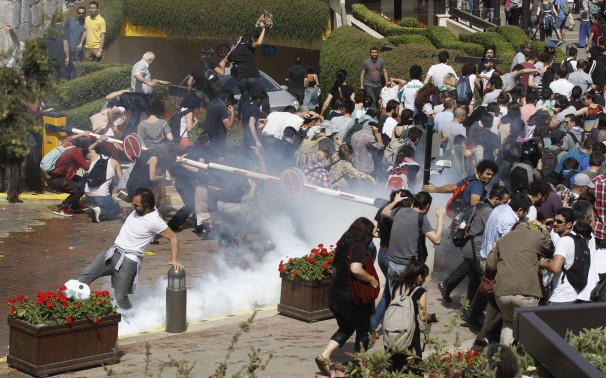
Turkey, the heart of the old Ottoman Empire is now beginning to erupt as secularist elements in the society are protesting the policies of Islamist President Recep Tayyip Erdoğan leading to repeated clashes over the past two weeks between protestors and police.
054

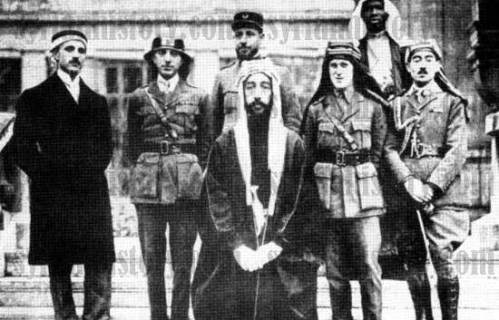
Afghanistan though technically not part of the Middle East continues to be a problem for US and NATO consuming intelligence, economic diplomatic and military resources that could be put to play with better effect elsewhere.  What T.E. Lawrence said of the British occupation of a restive Mesopotamia  in 1920:

“We realise the burden the army in Mesopotamia is to the Imperial Exchequer, but we do not see as clearly the burden it is to Mesopotamia. It has to be fed, and all its animals have to be fed. The fighting forces are now eighty-three thousand strong, but the ration strength is three hundred thousand. There are three labourers to every soldier, to supply and serve him.” ‘France, Britain, and the Arabs’ by Col. T. E. Lawrence The Observer, 8 August 1920

In Libya the Arab Spring claimed the long time pain in the ass Moammar Gaddafi. That conflict center of the action in 2011 until Gaddafi was overthrown and murdered. Since then Libya has remained in turmoil despite elections, militias run amok and the US Ambassador Chris Stevens was killed in an attack on the US Consulate and CIA base in Benghazi on September 11th 2012.

Yemen and Bahrain, Algeria, and Jordan have or are experiencing demonstrations which look to be revolts in the making and even Saudi Arabia is trying to head off a potential popular uprising.

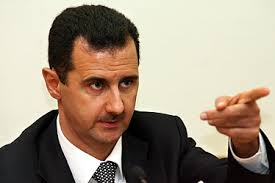
However the real problem now, the problem that threatens to send the region into a regional war is the revolt in Syria which began with peaceful protests by reformers against the Assad regime. However the hard line response of that regime to the protests spawned a civil war which now threatens to overflow the borders of Syria. France, Britain and the US have stated that they believe that there is evidence that the Syria government has used chemical weapons, in particular Sarin nerve agents against the rebels. The conflict has claimed the lives of an estimated 80,000 people with hundreds of thousands more now living as refugees.

The conflict in Syria epitomizes one of the greatest challenges in the Middle East that many in the West are just beginning to recognize, the Sunni Shi’a divide. That divide is becoming more serious with every passing day as Iran continues to lead and assist Shi’a elements in predominantly Sunni Arab countries, as well as in Iraq where the Arab Shi’a are in the majority. The conflict in Syria is predominantly Sunni versus Shi’a though in that patchwork nation of Sunni, Shi’a, Alawite Shi’a tribe of the Assad clan, various Christian and Druse groups. Lebanon which borders Syria is as divided as its larger neighbor and Hezbollah holds tremendous power in that country.

Yes my friends this is a mess and almost everybody that is anybody in the military and economic power houses of the world doesn’t have their handprints all over at least some part of this mess. All of these own some of the blame for what is going on, both the rulers of the nations in the region as well as world powers who all try to influence the nations and peoples for their own diplomatic, intelligence, military or economic gain. Almost no one is unsoiled by their involvement in the Muddle East over the past 90 years or so and so in a way all of great world powers, as well as the despots who ran these countries are to blame.
images-46

The region is more volatile than at any time in recent history and events there could easily ignite a regional war with worldwide implications.  That is why the region has been called the Muddle East for decades.  We all hope and pray for the best and that somehow all of this that the promise of a peaceful and democratic “Arab Spring” will become a reality, but there are better than even odds that things get way worse before they get better. There are just too many wild cards in this deck and the swamp is full of hungry alligators.

With the announcement this week that the US would provide military aid and training to the Syrian rebels and that US forces will remain in Jordan even as US and NATO Patriot missile batteries stand ready in Turkey there is a really good chance that the conflict in Syria will not stay in Syria.

Of course there is always the wild card if what Israel may do in what it perceives to be its security interests against outward foes such as Iran and Syria but also inside its borders and occupied territories, especially if it is attacked or provoked by Iran, Hezbollah or Hamas.

May God help us all and bring about peaceful change, or as my Iraqi friends simply say “Inshallah, God willing.”

Peace

Padre Steve+

Leave a comment

Filed under History, iraq,afghanistan, middle east, Military, national security