Yesterday was the 20th anniversary of my ordination to the Priesthood. July 7th 1996, it really is hard to believe that it has been that long, and this year it kind of snuck up on me. I had pretty much forgotten until I noticed an old friend from Camp LeJeune was wishing me well on it. If you are reading this Ray, thank you.
Since Being ordained I have served in a lot of places as an Army and now Navy Chaplain, and I have served some of the most wonderful people ever, and in turn they have done more for me than I can ever imagine or repay. One of the things that a lot of people don’t understand is that the true joy in the priestly ministry is people, all kinds of people, regardless of who they are or what they believe.
Over the years I have come to value that more than anything else. For me this is not about any kind of ecclesiastical power or desire for advancement. I do not desire to be a bishop, nor for that matter be in charge of anything. I prefer just to serve and care as I can, be with real people, and try as I might to show people God’s love by being real and caring for them. Now that doesn’t mean that I always do it well, I can be so stupid and insensitive sometimes, even when I am not trying to be. Judy tells me that it is because the male hormone causes brain damage. I won’t argue.
Over the past twenty years I’ve have times of extreme faith, actually bordering on pious certitude bordering on arrogance. But I have also had doubts, very real doubts. In fact for almost two years after my tour in Iraq I can honestly say that at best I was an agnostic just praying that God existed. Eventually faith returned, and it has to be called faith, because it is not based on how much I think I know, but how little I do know. St. Anselm of Canterbury, the great Scholastic theologian described his task as “faith seeking understanding.” I used to think that way, but I don’t think that understanding the great mystery that is God is really possible, and that’s not a bad thing. I have faith in Jesus the Christ, I believe, and as one of the men Jesus encounters exclaimed, “I believe, help my unbelief.”
I guess that is all part of the journey. When I look back at all of my time as a priest was my high point, it was my time in Iraq. In the midst of all chaos that I felt closest to God, even when I was struggling. As T.E. Lawrence wrote, “We were fond together because of the sweep of open places, the taste of the wide winds, the sunlight, and the hopes in which we worked. The morning freshness of the world-to-be intoxicated us. We were wrought up with ideas inexpressible and vaporous, but to be fought for…” It was the richest time of my life, but also the most disappointing, personally and professionally. I found like Lawrence, that most people really don’t care about the Iraqis, and that most of my fellow clergy really didn’t care about me. No wonder Lawrence said, “the fringes of their deserts were strewn with broken faiths.”
But all of that aside, despite everything, I have rediscovered faith, life, and joy in ministry. So at twenty years I am good, and hopefully I’ve got at last twenty more good years to serve God and the people of God, wherever they are and no matter what their faith or lack of faith is, and interestingly enough my idea of ministry has broadened. So I don’t think that the form of my future ministry will be in the traditional parish setting. That too is okay as I am still fond of the sweep of open places, and the ideas, often inexpressible and vaporous are still there to be fought for.
So until tomorrow, have a great day, and as the wonderful and grace filled conclusion off the rite of penance says, “pray for me a sinner.”
Character is a terrible thing to judge. Mostly because those doing the judging also suffer from flaws in their own character and truthfully I don’t think that any of us are exempt from doing this, at least sometimes. Dietrich Bonhoeffer noted: “Nothing that we despise in other men is inherently absent from ourselves.” I think is somewhat freeing to realize that, thus to grasp this is to be united with humanity, as well as loose ourselves from the shackles that would inhibit us from achieving what we are capable.
Yet somehow the temptation is for us to stand as judge, jury and character executioner on those that we find wanting. As a culture we like tearing down those that we at one time built up, in fact we have industries that exist in order to build up and then destroy people.
It is a rather perverse proclivity that we have as human beings, especially if we can find some kind of religious justification for it.
I think that is part of the complexity of the human condition. As a historian I find that the most exalted heroes, men and women of often-great courage both moral and physical, intellect, creativity, humanity and even compassion have feet of clay.
I find that I am attracted to those characters that find themselves off the beaten track; the visionaries often at odds with their superiors, institutions, and sometimes their faith and traditions. Men and women who discovered in themselves visions for what might be and pursued those visions, sometimes at the costs of their families, friends, and in quite a few cases their lives.
Throughout my studies I have been attracted to men as diverse as Peter the Apostle, Martin Luther, Thomas Aquinas, T.E. Lawrence, Dietrich Bonhoeffer, Erwin Rommel, Admiral Horatio Nelson, Abraham Lincoln, John F Kennedy, Dwight D Eisenhower, Franklin Roosevelt, Dr. Martin Luther King Jr., Jackie Robinson, Teresa of Avila, Golda Meir, Nelson Mandela, Vaclav Havel, and Emir Feisal Hussein of the Arab Revolt. All had flaws and the list could go on and on and on.
Some of these men and women, saints and sinners alike had fits of temper and violence, others sexual escapades, mistresses, affairs, greed, avarice, and a host of other unseemly characteristics. Some of them stretched law and morality in their quest to achieve their goals. But all are considered great men and women.
They all had feet of clay, and who among us doesn’t have them? But them I think that I would rather have feet of clay than a heart of stone, an unchallenged mind, or a lack of courage to do the right thing even when it does not directly benefit me.
I love the cinema classic Lawrence of Arabia. Peter O’Toole plays Lawrence in a most remarkable manner, showing his brilliance, courage, diplomatic ability and understanding of the Arabs with whom he served. In the film, Jack Hawkins who played General Allenby, perhaps the best British General of the war looked at Lawrence’s dossier and said “Undisciplined… unpunctual… untidy. Knowledge of music… knowledge of literature… knowledge of… knowledge of… you’re an interesting man there’s no doubt about it.”
There are many people, leaders and others that we encounter in life or that we study. Even the best of the best are flawed and there is no such thing as a Saint who never sinned. But we love destroying them and their memory when to our “surprise” when we find that their hagiographers built them into an idol.
I am a great believer in redemption and the weight of the whole of a person’s life. Thus I try to put the flaws, as they are called in perspective and their impact both positive and negative in history. Studying in this way gives me a greater perspective on what it is to be human and to place my own clay feet in appropriate perspective.
As Lawrence said, “Immorality, I know. Immortality, I cannot judge.”
English historian and military theorist Colin Gray noted that “people matter most”when we deal with history, policy, or politics, but especially in the matter of war.
I think one of the sad things about history is that many authors, especially in military history, but other areas as well, seem to treat the participants as bit players in a series of events, rather than a prism from which to understand and view history.
I cannot tell you how many times I have had students, and even colleagues tell me that history is dry, boring and uninteresting to them. I will not condemn them, for certainly if it is that is case, it is not their fault, but rather those who write and teach history. If all history is, is arbitrary dates, lists of disconnected events and names of people, without any context to their lives, why should they care about it?
When I first began to study history I was much more concerned about events than people. However, over the past couple of years I have began to develop what I call my philosophy of history. That has come about through my study of the events leading to the American Civil War and in particular my study of the Battle of Gettysburg, but also in other historical events such as the Arab Revolt of 1917, and the French adventures in Indochina and Algeria.
In doing all of my research I have read a large number of books, articles and primary sources on these subjects and my personal library appears to be growing at an exponential rate. I have noticed that much of what I have read deals very little with the people involved, unless I am reading a biography, and even some of the biographies seem to be event heavy, and person light and sometimes it seems that the subjects of the biography are often one dimensional, and almost caricatures of who they really were. Some of the alleged biographies that I read would be better described as hagiography, to make the subjects appear saintlike, the type of writing used by religious writers to make saints a lot less human. There are others who go to the opposite extreme and do all they can to demonize their subject. In either case the method is less than honest, but for many people, profit and propaganda value mean more than truth. Of course either type of writing appeals to the masses who do not care about nuance, or for that matter truth.
But such is not history. Neither are “histories” which are designed to support a particular ideology, be it political, religious, or economic. Such works are not history, but propaganda. When I see people, in this country forbidding the teaching of history because it is not patriotic enough I want to scream. It is like I am watching the propagandists of Stalin’s Soviet Union, Hitler’s Third Reich, or any of many other nations that used ideology or religion to supress history that didn’t meet their definition of “patriotic.” But then I digress…
My gut feeling says that such artificial divisions between history and biography do a disservice to the reader. I take a tremendous pleasure in writing, and I like to try to communicate and interpret facts, which is indeed the vocation of the historian, in a manner that makes them interesting. What I am finding is that when telling the stories of events we must also tell the stories of the people who make these events.
Without such a connection there is little to interest most readers. People tend to be interested in people because there is a connection. The human being is still the human being, no matter what age, country, culture, religion that they belong to. I learned a lot of this from reading the works of Barbara Tuchman who in her writings about events, never forgot importance of people, and refused to turn them in to one dimensional caricatures.
In my writing now I attempt to bring the prism of the biography into the events that I write about.
I had a fellow faculty member note that he liked what I wrote about Gettysburg because it was more than just the events, it was the personal connection he felt to the people.
People matter because they have so many layers. I guess one of the things that makes my writing approach a bit different is that while I am a historian, I am also trained in philosophy, pastoral care and psychology, all of which deal with existential matters.In the next few days you will be seeing some of my Gettysburg work, and hopefully as you read it you will notice that I attempt to find that nuance in the various men, on both sides of the conflict, who are part of the story.
Image found that the complexities and contradictions of the subjects of history, the people help me understand the events more than anything. I think my epiphanies came in reading about the lives, as well at writings of men like T.E. Lawrence and Gouvereur Warren whose triumphs, struggles, weaknesses and injuries mirror my own. In learning about these men as people, in the context of what they accomplished helps me to understand their history and the era that they lived far more than simply recounting how they influenced a battle.
I find that the lives, beliefs, motivations, relationships, and experiences of people to be paramount to understanding events. People are complex, multi-layers and often contradictory. All of my heroes all have feet of clay, which in a sense makes their stories even richer, and the events that they helped bring about more fascinating, because then I gain a holistic perspective and develop an empathy for them. Even good and honorable people who find themselves due to race, religion, or nationality fighting for an evil cause, or evil people fighting for a good cause. If you are trapped by ideological or religious certitude that may confuse or even offend you, but it is a part of the human condition. That my friends is history.
Barbara Tuchman noted “that if the historian needs to submit himself to his or her material instead of trying to impose himself on his material, then the material will ultimately speak to him and supply the answers.”
This is very important, because when we do this we discover the answers to the why questions, especially the why questions that are so very uncomfortable, are necessary if we want to discover truth.
I know that I can find connections in the strengths as well as their weaknesses of people that I admire. Thus when I see ordinary people taking part in events, for good or for evil,I can say that given the same set of circumstances that that could be me. Context matters, nuance matters, people matter. If we do not understand that, history becomes nothing more than a set of manipulated facts, devoid of context that can be used to buttress the most evil intentions.
I do plan on developing these thoughts over the coming weeks and months, but for now it will suffice to say that when I write about history, that people matter. That is why I write.
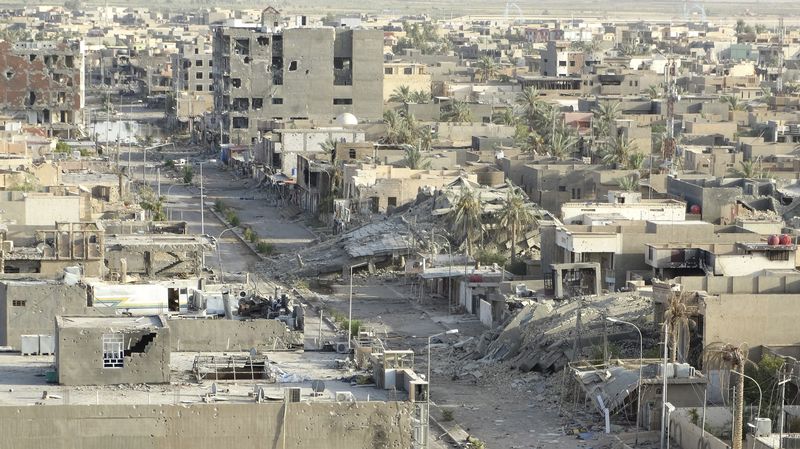
A few days ago the Iraqi military recaptured the city of Ramadi from the self-proclaimed Islamic State, or DAESH. When DAESH captured Ramadi last May it struck me very hard, I cried for the people of Ramadi as I knew that they were going to suffer terribly both from DAESH as well as in the campaign of the Iraqi military to retake the city.
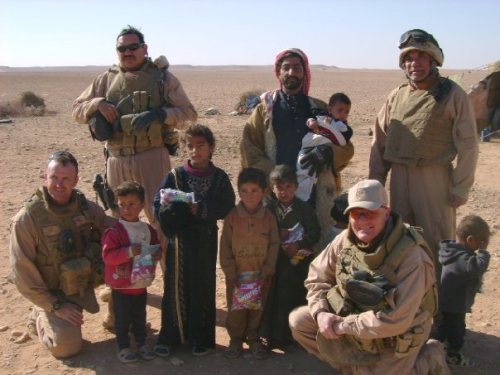
Some Americans, even other military members do not understand this, but for me Ramadi is more than an Iraqi city, but a place that I have a great deal of feeling. I spent a significant amount of time in and around Ramadi, as well as the distant reaches of Al Anbar Province. I care deeply about the people of Iraq, and I grieve because the horror that they are now experiencing is mostly due to the actions of the Bush administration; first for launching a war that met no standard of the being a just war, a war that was condemned as unjust by Pope John Paul II, and a war that many of our closest allies refused to support. Then there was the totally bungled occupation policy which destroyed the country and brought about a massive insurgency and civil war. The results of that war have been devastating, for Iraq, Syria, the Middle East, and yes even for the United States.
In fact the aftermath of that 2003 invasion opened a Pandora’s Box of chaos, and opened the door to what T.E. Lawrence warned about in 1919: “A Wahhabi-like Moslem edition of Bolshevism is possible, and would harm us almost as much in Mesopotamia as in Persia…” DAESH is exactly that, a fulfillment of Lawrence’s warning.
Whenever I read about Iraq I am reminded of how much of my life has been intertwined with that country and people. As I have said on more than one occasion I left my heart in Al Anbar. Back in 2007 and 2008 things were different there. Sunni’s and Shia were at least in the Iraqi military working with Sunni tribesman cooperated with American forces to destroy or drive out the forces of Al Qaida Iraq. I was meeting regularly with Iraqis who are some of the most hospitable people you would ever want to know. I remember meeting with the women who were going to become the first female Iraqi police officers in Ramadi.
Of all those people I wonder how many are still alive, how many have been driven out of their homes, lands, or have suffered the loss of family, friends, and their livelihoods. I grieve for what is happening to them and their once proud country. The towns, cities and bases that I served at have almost all been taken over by DAESH, or have been scenes of terrible fighting. Fallujah, Ta’quadum, Habbinyah, Ramadi, Hit, Haditha, Al Rutba, Rawah, Al Qaim, Al Waleed, Al Turbial, Baghdadi, and so many others devastated by invasion, insurgency, civil war, and the battle against DAESH.
When I left Iraq in 2008 I had hopes that the country might survive, as did many of the Iraqis that I met. I hoped one day to go back and travel to the places that I served, and maybe had the opportunity to see the gracious people that I love again. Maybe in 15 or 20 years there might, God willing be an opportunity. I hope and pray that those I know who were so good to me are safe. Until then I can only pray and hope that for them things will one day be better.
When I think of the Iraq war and its costs I am reminded of the words of Major General Smedley Butler in his book War is a Racket: “What is the cost of war?…this bill renders a horrible accounting. Newly placed gravestones. Mangled bodies. Shattered minds. Broken hearts and homes. Economic instability. Depression and all of its attendant miseries. Back -breaking taxation for generations and generations. For a great many years as a soldier I had a suspicion that war was a racket; not only until I retired to civilian life did I fully realize it….”
For the Iraqis, the Syrians, Americans, and so many others, the cost will be with us for at least a generation. But I do always hope and pray that things will be better.
Yesterday I posted an essay about a German physician and pastor who drew the picture The Madonna of Stalingrad, and the day before one about the Christmas Truce of 1914 and the movie Joyeux Noël (Merry Christmas). As I have mention before, I get very reflective around Christmas, in large part due to my experiences in Iraq. While I am certainly happy this year, I am, as I still tend to be a bit melancholy. My time in Iraq changed me, T.E. Lawrence; the immortal Lawrence of Arabia wrote to a friend, “You wonder what I am doing? Well, so do I, in truth. Days seem to dawn, suns to shine, evenings to follow, and then I sleep. What I have done, what I am doing, what I am going to do, puzzle and bewilder me. Have you ever been a leaf and fallen from your tree in autumn and been really puzzled about it? That’s the feeling.” I often feel that way.
As I said, when I returned from Iraq I was a changed man and while proud of my service I am haunted by my experiences. One cannot go to war, see its devastation, see the wounded and dead, as well as the innocents traumatized by it. One cannot get shot at, or be in enclosed rooms, meeting with people that might be friends, or might be enemies, and while everyone else is armed, you are not.
Likewise my homecoming was more difficult than I could have imagined. I never felt so cut off from my country, my society, my church, or even other chaplains. My experience is not uncommon among those who have served in Iraq or Afghanistan, or for that matter those who have served in almost any modern war. Erich Maria Remarque in his classic All Quite on the Western Front wrote:
“I imagined leave would be different from this. Indeed, it was different a year ago. It is I of course that have changed in the interval. There lies a gulf between that time and today. At that time I still knew nothing about the war, we had been only in quiet sectors. But now I see that I have been crushed without knowing it. I find I do not belong here any more, it is a foreign world.”
My first Christmas at home was so difficult that at a Christmas Eve mass I handed my wife the car keys and walked home in the dark and cold. Had there been a bar on the way home I would have walked in and poured myself into a bottle.
That being said I would not trade my experience for anything. The experience of PTSD and other war related afflictions has been a blessing as well as a curse. They have changed my world view and made me much more emphatic to the suffering and afflictions of others, as well when they are abused, mistreated, terrorized and discriminated against. These experiences along with my training as a historian, theologian, and hospital chaplain clinician before and after my tour have given me a lot bigger perspective than I had before, especially at Christmas.
But I live with all of the memories. Guy Sajer wrote in his book The Forgotten Soldier, “Only happy people have nightmares, from overeating. For those who live a nightmare reality, sleep is a black hole, lost in time, like death.” General Gouverneur Warren, a hero of many Civil War battles including Gettysburg wrote to his wife after the war “I wish I did not dream so much. They make me sometimes to dread to go to sleep. Scenes from the war, are so constantly recalled, with bitter feelings I wish never to experience again. Lies, vanity, treachery, and carnage.”
As difficult as things have been and as much as I wonder what will happen next, at Christmas I pray for peace, but too many people, some even in this country seem to live for the bloodlust of war.
But amid such unholy thoughts one can hope and pray for peace at Christmas, I guess that is a reason I love the song Happy Christmas, I have put Melissa Etheridge’s version here.
As my Iraqi friends are prone to say, Inshallah, (إنشاءالله) God willing…
It is the day after Veteran’s Day and I still am in a reflective mood about it. Of course if there were no war, if war had become a thing of the past, a sad chapter in the course of human history, the day would be less personal. It would simply be a day where people looked back in time possibly honoring ancestors, but not to their left or right, remembering their family members, friends, and neighbors who fight the wars that most people avoid. Herman Wouk, in his classic novel War and Remembrance wrote:
“In the glare, the great and terrible light of this happening, God seems to signal that the story of the rest of us need not end, and that the new light can prove a troubled dawn.
For the rest of us, perhaps. Not for the dead, not for the more than fifty million real dead in the world’s worst catastrophe: victors and vanquished, combatants and civilians, people of so many nations, men, women, and children, all cut down. For them there can be no new earthly dawn. Yet thought their bones like in the darkness of the grave, they will not have died in vain, if their remembrance can lead us from the long, long time of war to the time for peace.”
The First World War was supposed to be the war to end all war, instead became war to end all peace. That war ended at the eleventh day, of the eleventh month, and the eleventh day of 1918. However, the subsequent turmoil after that first “Armistice Day” which ended the fighting of the First World War, has birthed war without end. The Treaty of Versailles and the Sykes-Picot agreement ensured that war would be part of the last century and will be a part of life for the foreseeable future. Agatha Christie, the great English author who served as a volunteer nurse in the First World War, wrote, “One is left with the horrible feeling now that war settles nothing; that to win a war is as disastrous as to lose one.”
General Robert E. Lee wrote his wife Mary Custis Lee in 1864 as the bloodshed of the Civil War came to a climax, “What a cruel thing is war: to separate and destroy families and friends, and mar the purest joys and happiness God has granted us in this world; to fill our hearts with hatred instead of love for our neighbors, and to devastate the fair face of this beautiful world.”
As I noted, Veteran’s Day 2015 is over but I have not stopped reflecting on war and its cost. Having served in combat myself, and having stood over the wounded in field hospitals in Iraq and having seen the devastation of war up close and personal I have a hard time reducing war to the technology, the tactics and trivia that seem to satisfy the consumers of war porn. Call me whatever you want but I cannot get around the human cost of war. William Tecumseh Sherman reflected, “It is only those who have neither fired a shot nor heard the shrieks and groans of the wounded who cry aloud for blood, more vengeance, more desolation. War is hell.”
One of my favorite historians of the Second World War, Cornelius Ryan who wrote the magnificent accounts of D-Day, The Longest Day, Operation Market Garden, A Bridge Too Far, and the Battle of Berlin, The Last Battle said about his accounts: “What I write about is not war but the courage of man.” I think that writing about courage is appropriate and I do a lot of that. But I think in addition to courage that we also must write about the frailty and fallibility of human beings, especially the leaders who plan and conduct war, as well as the ordinary men and women who serve during war.
When I teach or write about military history I find it important to make sure that the people who made that history are not forgotten. After all, as the British military theorist Colin Gray says, “people matter most” when we deal with history, policy, or politics, especially in the matter of war. He is right of course; people are the one constant in war. Weapons and tactics may change, but people do not.
Likewise we cannot forget that war, even wars for the most excruciatingly correct and even righteous reasons are always tragic. The cost of war, even so called “good wars” is devastating. Ernest Hemingway wrote, “Never think that war, no matter how necessary, nor how justified, is not a crime.” To the war porn addicts the words of Sherman or Hemingway surely are offensive, but they provide a necessary warning to the politicians, pundits and preachers who cannot get enough war to satiate their bloodlust and need for power. Sadly, most of the men and women who revel in war without end have neither served in combat or have any skin in the game regarding the wars that they support and those which they work so hard to bring about. Maybe if they did then they would not be so quick to send young men and women to war.
Those who follow me on this site know that I write about war a lot, some might say too much, but I cannot help that. My life has been forever changed by war. If you look back through my archives you can see how my writing has evolved when it comes to dealing with war and part of that is because I do not want the sacrifices of the men and women who fought those wars to be forgotten or cheapened by a society which from the very beginning of our history has done so. Lieutenant General Hal Moore who co-authored the book “We Were Soldiers Once, and Young” wrote: “in our time battles were forgotten, our sacrifices were discounted, and both our sanity and suitability for life in polite American society were publicly questioned.” By continuing to write and teach I hope to ensure that this does not happen. Maybe I am “pissing into the wind,” but I cannot stand by silently and pretend that war can be glamorized and glorified for the benefit people who never serve.
I am a combat veteran, I have seen the devastation of war, I have lost friends in war, men and women who did not come home. I have seen other friends struggle in the aftermath of war, and I have seen some lose that struggle. Because I am a military historian as well as a priest, I feel a sacred duty to ensure that people know the real cost of war.
I do this in my official capacity teaching ethics and leading the Gettysburg Staff Ride for the Staff College where I have the honor to serve as faculty. This itself is interesting as I am spending the final few years of a three and a half decade military career teaching the men and women who in not too long of time will be our nation’s senior military leaders. That is a responsibility that I take most seriously. Thus I always, whether it is in teaching the ethics of war, or about the Battle of Gettysburg I attempt to impress this on my students. I preach from day one to every class that their decisions in the planning process, their recommendations to senior political and military leaders, and their decisions on the battlefield impact real people, their soldiers, the people in the lands that they fight and on the home front.
I have been writing a text for the Gettysburg Staff Ride, which I believe, will eventually become at least two and maybe more books. I tie a lot of biographic material in with the text, again in order to make what could be a dry and mechanical affair more real to my students and readers. That is one of the reasons that I find going to Gettysburg and walking that hallowed ground so important.
I find that the lives, beliefs, motivations, relationships, and experiences of people to be paramount to understanding events. People are complex, multi-layered and often contradictory. All of my heroes all have feet of clay, which in a sense makes their stories even richer, and the events that they helped bring about far more fascinating. By not denying their humanity, by understanding and appreciating their flaws, even the flaws in their character, I gain a more holistic perspective and develop a greater appreciation and empathy for them and a deeper understanding of my own flaws. As T.E. Lawrence wrote, “Immorality, I know. Immortality, I cannot judge.”
The complex and contradictory nature of humanity leads to a lot of confusion for people who see the world through the black and white lens of cosmic dualism where there is only good and evil and “if you’re not for us, you’re against us.” Human nature shows us that things are much more complex, nuanced and blurry, there are far more than fifty shades of gray when it comes to humanity and the participation of men and women in war.
Because of this otherwise good and honorable people can find themselves for any number of reasons, fighting for an evil cause, while people who are more evil than good can end up fighting for a good cause. Now if you are one of those people who are trapped by an absolute ideological or religious certitude that cannot allow for such contradictions, that statement may confuse or even offend you. For that I do not apologize and I hope that you are offended enough to face the truth, for that is the human condition, and that my friends is what history, and especially that dealing with the most destructive and consequential issues involving humanity must deal with.
So I will continue to write about war and try in the process to humanize it for my readers and to tell the stories of the tragedy that is war in such a way that even those who have not been to war, can imagine it and in doing so make wise decisions if they are to send other people’s children to fight their wars. The subject is far too important to be left to the purveyors of war porn who seek to satiate the bloodlust of others. Thus I write to ensure people remember, so that those who do not know war will never have to experience it.
As for the form of my writing, I am becoming much more deliberate in trying to craft the story. Barbara Tuchman wrote something that I am now beginning to appreciate as I write my own book on Gettysburg and the Civil War, and other works that I plan on writing, “I have always felt like an artist when I work on a book. I see no reason why the word should always be confined to writers of fiction and poetry.”
As a career military officer and veteran of the Iraq campaign as well as Operation Enduring Freedom I get very reflective around Veteran’s Day. For me it is a melancholy time. I remember those who have gone to war, those who did not come home, and those who came home, especially those who came home wounded in body, mind, or spirit; those who were forever changed by their experience of war.
One of my heroes is T.E. Lawrence, the immortal Lawrence of Arabia. After World War One ended and the politicians, diplomats, and business leaders betrayed those who served, as well as the people of many nations with a terrible peace, Lawrence wrote, “We were fond together because of the sweep of open places, the taste of wide winds, the sunlight, and the hopes in which we worked. The morning freshness of the world-to-be intoxicated us. We were wrought up with ideas inexpressible and vaporous, but to be fought for. We lived many lives in those whirling campaigns, never sparing ourselves: yet when we achieved and the new world dawned, the old men came out again and took our victory to remake in the likeness of the former world they knew. Youth could win, but had not learned to keep, and was pitiably weak against age. We stammered that we had worked for a new heaven and a new earth, and they thanked us kindly and made their peace.”
One hundred and one years ago, in November 1914, millions of soldiers were fighting in horrible conditions throughout Europe. From the English Channel to Serbia, Poland and Galicia; French, British, German, Austro-Hungarian, Serbian and Russian troops engaged each other in bloody and often pointless battles. Often commanded by old men who did not understand how the character of war had changed, millions were killed, wounded, maimed or died of disease.
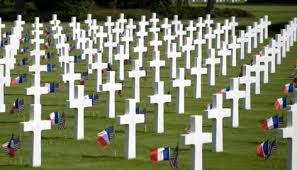
After four years, with the Empires that were at the heart of the war’s outbreak collapsing one after the other there was an armistice. On the eleventh hour, of the eleventh day, of the eleventh month the shooting stopped and the front lines quieted. By then over 20 million people, soldiers and civilians alike had died. Millions more had been wounded, captured, seen their homes and lands devastated or been driven from there ancestral homelands, never to return.
The human cost of that war was horrific. Over 65 million soldiers were called up on all sides of the conflict, of which nearly 37.5 million became casualties, some 57.5% of all soldiers involved. Some countries saw the flower of their manhood, a generation decimated. Russia sustained over 9 million casualties of the 12 million men they committed to the war, a casualty rate of over 76%. The other Allied powers suffered as well. France lost 6.4 million of 8.5 million, or 73%, Great Britain 3.1 million of nearly 9 million, 35%; Italy 2.2 million of 5.6 million, 39%. Their opponents, Germany, Austria-Hungary and the Ottoman Empire suffered greatly. Germany sustained 7.1 million casualties of 11 million men called up, or nearly 65%, Austria 7 million of 7.8 million, 90% and the Ottoman Empire 975,000 of 2.8 million or 34% of the soldiers that they sent to war.
It was supposed to be the War to end all War…but it wasn’t, it was the mother of countless wars.
It has been a century since that bleak November of 1914, and ninety-six years since the time where for a brief moment, people around the world, but especially in Europe dared to hope for a lasting and just peace. But that would not be the case…
The victors imposed humiliating peace terms on the vanquished, be it the Germans on the Russians, or the Allies on Germany and her partners. The victors divided up nations, drew up borders without regard to historic, ethnic, tribal or religious sensibilities. But then, it was about the victors imposing themselves and their quest for domination, expanding colonial empires and controlling natural resources rather than seeking a just and lasting peace. The current war against the Islamic State is one of the wars spawned by the Sykes-Picot agreement which divided the Middle East between the French and the British at the end of the war. It was a war that keeps on giving.
Of course we have known the disastrous results of their hubris, a hubris still carried on by those who love and profit by war…war without end which continues seemingly with no end in sight.
I am a veteran of Iraq and Operation Enduring Freedom, as well as the Bosnia mission and the Cold War. My dad was a Vietnam veteran who enlisted during the Korean War. I serve because it is the right thing to do, not because I find war romantic or desirable. It is as General William Tecumseh Sherman said “Hell.” If called to go back to Iraq, where I left so much of my soul, I would go in a heartbeat.
This week as we do every year we will pay our homage to honor our veterans, especially in the United States, Great Britain, Canada and France. But sometimes it seems so hollow, for in all of our countries those that serve are a tiny minority of those eligible to serve, who are much of the time ignored or even scorned by those that feel that providing for them after they have served is too much of a burden on the wealthy who make their profits on the backs of these soldiers, sailors, marines and airmen.
I have walked about since returning from Iraq often in a fog, trying to comprehend how a country can be at war for so long, and there is such a gap between the few who serve and the vast majority for whom war is an abstract concept happening to someone else, in places far away, and whose experience of war is its glorification in video games. Personally I find that obscene, and feel that I live in a foreign world. Erich Maria Remarque wrote in All Quiet on the Western Front:
“I imagined leave would be different from this. Indeed, it was different a year ago. It is I of course that have changed in the interval. There lies a gulf between that time and today. At that time I still knew nothing about the war, we had been only in quiet sectors. But now I see that I have been crushed without knowing it. I find I do not belong here any more, it is a foreign world.”
Similarly Guy Sajer wrote in his classic The Forgotten Soldier:
“In the train, rolling through the sunny French countryside, my head knocked against the wooden back of the seat. Other people, who seemed to belong to a different world, were laughing. I couldn’t laugh and couldn’t forget.”
Major General Gouverneur Warren wrote to his wife two years after the American Civil War:
“I wish I did not dream that much. They make me sometimes dread to go to sleep. Scenes from the war, are so constantly recalled, with bitter feelings I wish to never experience again. Lies, vanity, treachery, and carnage.”
Sometimes I find it obscene that retailers and other corporations have turned this solemnity into another opportunity to profit. But then why should I expect different? Such profiteers have been around from the beginning of time, but then maybe I still am foolish enough to hope for something different. Please don’t get me wrong, I do appreciate the fact that some businesses attempt in at least some small way to thank veterans. I also know there are many businesses and business owners who do more than offer up tokens once a year, by putting their money where their mouth is to support returning veterans with decent jobs and career opportunities; but for too many others the day is just another day to increase profits while appearing to “support the troops.”
As Marine Corps legend and two-time Medal of Honor winner Major General Smedley Butler Wrote:
“What is the cost of war? what is the bill? “This bill renders a horrible accounting. Newly placed gravestones. Mangled bodies. Shattered minds. Broken hearts and homes. Economic instability. Depression and all of its attendant miseries. Back -breaking taxation for generations and generations. For a great many years as a soldier I had a suspicion that war was a racket; not only until I retired to civilian life did I fully realize it….”
But the marketers of war do not mind, almost Orwellian language is used to lessen its barbarity. Dave Grossman wrote in his book On Killing:
“Even the language of men at war is the full denial of the enormity of what they have done. Most solders do not “kill,” instead the enemy was knocked over, wasted, greased, taken out, and mopped up. The enemy is hosed, zapped, probed, and fired on. The enemy’s humanity is denied, and he becomes a strange beast called a Jap, Reb, Yank, dink, slant, or slope. Even the weapons of war receive benign names- Puff the Magic Dragon, Walleye, TOW, Fat Boy, Thin Man- and the killing weapon of the individual soldier becomes a piece or a hog, and a bullet becomes a round.”
There is even a cottage industry of war buffs, some of who are veterans seeking some kind of camaraderie after their service, but most of whom have little or know skin in the real game, and at no inconvenience to themselves. As far as the veterans I understand, but as for the others I can fully understand the words of Guy Sajer, who wrote:
“Too many people learn about war with no inconvenience to themselves. They read about Verdun or Stalingrad without comprehension, sitting in a comfortable armchair, with their feet beside the fire, preparing to go about their business the next day, as usual…One should read about war standing up, late at night, when one is tired, as I am writing about it now, at dawn, while my asthma attack wears off. And even now, in my sleepless exhaustion, how gentle and easy peace seems!”
It was to be the War to end all war” but I would venture that it was the war that birthed countless wars, worse tyrannies and genocides; That war, which we mark the end of today, is in a very real and tragic sense, the mother of the wars that have followed. Today, war threatens in so many places; the Middle East, Ukraine, Asia, and Africa. Terrorism has apparently returned with a vengeance. War without end, amen.
As so to my friends, my comrades and all that served I honor you, especially those that I served alongside. We are a band of brothers; no matter what the war profiteers do, no matter how minuscule our number as compared to those who do not know what we do, and those who never will. We share a timeless bond and no one can take that away.
I close with the words of a German General from the television mini-series Band of Brothers which kind of sums up how I feel today. The American troops who have fought so long and hard are watching the general address his troops after their surrender. An American soldier of German-Jewish descent translates for his comrades the words spoken by the German commander, and it as if the German is speaking for each of them as well.
Men, it’s been a long war, it’s been a tough war. You’ve fought bravely, proudly for your country. You’re a special group. You’ve found in one another a bond that exists only in combat, among brothers. You’ve shared foxholes, held each other in dire moments. You’ve seen death and suffered together. I’m proud to have served with each and every one of you. You all deserve long and happy lives in peace.
April 1978, Navy Junior ROTC Cruise: I’m on the Right
Friends of Padre Steve’s World,
Yesterday I wrote about the Navy Birthday and I have been reflecting on life as so much of my life is connected to the Navy. It’s funny, for all the difficulties that I have experienced in life, the difficult times and even coming back a changed man from war, I am a very fortunate man, for I have been able to pursue my entire adult life my childhood dream of serving in the military, but even more specifically serving in the Navy.
I grew up in a Navy family, my brother and I were both born in Navy hospitals, and the first fourteen years of my life were spent following my dad around from duty station to duty station, up and down the West Coast and in the Philippines. I still recall the magical feeling of going to sea for the first time when I was about four years old on the USS John C. Breckenridge, a transport ship converted to carry military personnel and their families to and from the Far East. It was exhilarating and I never forgot it.
Boston 2002
As a kid I spent countless hours reading history and military history, but my favorite books were about all things navy. Biographies of the great naval leaders, not just Americans caused me to dream, as did books about naval battles, and the courage of the men who fought them. Then there were the books about ships, ship design and development that inspired me to build more models ships than I can count, and which cause me to still read up on the great ships of history, but also new developments in ship design and construction.
In high school I was in Navy Junior ROTC and was able to spend over 70 days at sea on six different ships, even sailing to Hawaii and back. I wanted to enlist but my parents suggested that I try college for a semester to see what I thought of it and it was a good thing that I did.
I went to college and I met Judy and toward the end of college ended up in the Army because I didn’t want to change my major in my senior year to enter Navy ROTC. Of course I need to mention that Judy said that she wouldn’t marry me if I joined the navy, but even in the Army my heart was all Navy. In fact when it was time for the Army-Navy Game I would wear by “Go Navy” button on the inside of my uniform shirt and flash it to get people going.
Iraq 2007
After 17 ½ years in the Army I was serving as a Major in the Army Reserve and because of my rank was unable to go back on active duty, unless I was mobilized to serve in war. I wanted to go back on active duty, I was still under forty years old, and without consulting Judy, in retrospect I should have done that as she would have supported my decision, but I’m a guy, and sometimes not very smart or sensitive.
Judy getting to help promote me to Lieutenant Commander 2006
Even so it was the right decision. One day I was an Army Reserve Major and the next day I was a Navy Lieutenant. My parents were proud, as was Judy but she was going to pay a price for my decision, years of separation due to deployments and the hardships that went along with them. Since entering the Navy I have served over six years with the Marines, five years in Navy Medicine, two years aboard ship, two years with Navy EOD and another couple of years in Joint assignments working with other military services. My current assignment is amazing, I get to teach, both military history and ethics to senior officers, some of whom will become Admirals and Generals. I can understand what Randy Pausch said in “The Last Lecture”“It’s a thrill to fulfill your own childhood dreams, but as you get older, you may find that enabling the dreams of others is even more fun.”
USS Hue City 2002
Mark Twain once wrote, “Twenty years from now you will be more disappointed by the things you didn’t do than by the ones you did. So throw off the bowlines. Sail away from the safe harbor. Catch the trade winds in your sails. Explore. Dream. Discover.” I am so fortunate. I got the second chance to fulfill my dream of serving in the Navy, and I still dream, I still want to discover, and as Denny Crane (William Shatner – Boston Legal) said to “live big.”
The past couple of years have been very trying, many challenges and much discouragement. Judy had a cancer scare and in the summer of 2014 I dropped into an emotional abyss that I wondered if I would ever emerge. But recently I have felt that spark again, and the spark that wants to ignite an inferno of creativity. T. E. Lawrence once wrote, “All men dream: but not equally. Those who dream by night in the dusty recesses of their minds wake up in the day to find it was vanity, but the dreamers of the day are dangerous men, for they may act their dreams with open eyes, to make it possible.”
To explore the unknown possibilities of existence…
I still have dreams, I still want to explore and I want to explore deeper things, the unknown possibilities of existence. To quote the character Q (John de Lancie) in the final episode of Star Trek the Next Generation, where he tells Captain Picard “That is the exploration that awaits you; not mapping stars and studying nebulae, but charting the unknown possibilities of existence.”
I was taken back to Iraq this weekend when the author of a book that will be published next year sent me next year sent me the excerpt of a section that he included on me. It was very well done, something that even Judy agreed. That being said it was so well done that I was immersed in thinking about my time in Iraq in 2007 and 2008, and my sleep was interrupted by dreams of those times. In fact it felt like I was back there, in a place that I knew so well…
I think that my thoughts and memories were also jogged by re-reading Michael Korda’s biography of T.E. Lawrence, (Hero: The Life and Legend of Lawrence of Arabia) and the current battles occurring in Iraq and Syria.
It seems that no matter how far I get from Iraq that a part of me will always be there, and I think that a fair amount of me will be in that land. If I was 20 or 30 years younger and not married I might even go back, because of how connected I still feel to Al Anbar Province and the tribes who live there.
My experience in Iraq was different than many, if not most Americans who have served there or in Afghanistan. I knew something of the history and culture of that land before I went there, and had a respect for the Arabs that most Americans do not have. I was greeted with hospitality, and had the opportunity to spend time with Sunni and Shia Moslem, as well as Christian Iraqi Arabs. I will never forget those times, meetings that occurred during missions where at times the troops that I was with took fire from insurgents.
I left Iraq in 2008 with hopes, hopes fueled by my visits with Iraqis who believed that the country had reached a point where things would continue to get better. However, that was not to be, the corruption of the Shia led Iraqi government and its disenfranchisement of the Sunni and Kurdish minorities opened the door to the so-called Islamic State, something that is neither Islamic, nor a state.
I grieve for my Iraqi friends, and pray that those who I know have survived the chaos in the region. Like Lawrence, who left the Middle East disappointed and dejected by the outcome of the war and by the actions of governments, I have felt the same way about successive American administrations and those of the Iraqi government. That disappointment often leaves me bewildered and discouraged, and I sometimes feel like Lawrence when he penned this note to one of his friends in 1935:
“You wonder what I am doing? Well, so do I, in truth. Days seem to dawn, suns to shine, evenings to follow, and then I sleep. What I have done, what I am doing, what I am going to do, puzzle and bewilder me. Have you ever been a leaf and fallen from your tree in autumn and been really puzzled about it? That’s the feeling.”
Anyway, I do hope that somehow that things will get better, for my Arab friends as well as those of us who served there.
Peace
Padre Steve+
P.S. When the book that includes some of my story comes out I will let folks know.
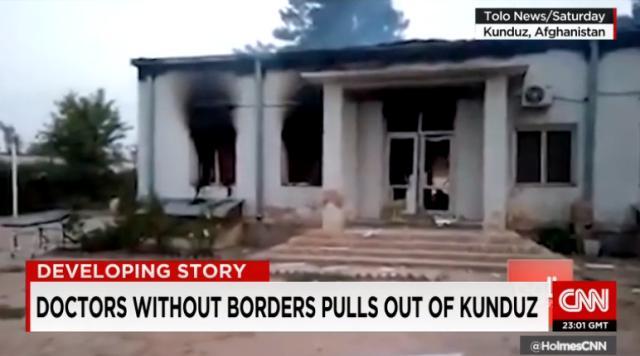
I have been troubled by the disaster at the Doctor’s Without Borders in Kunduz Afghanistan, a disaster that appears to be linked to the actions of U.S. and or NATO, Coalition, and Afghan forces as well as the Taliban who had taken control of that city a few days before the attack.
There are so many things about this incident that trouble me, but truthfully I, like almost everyone, know very little about it, other than the fact that too many innocent people died as a result of what appears to be a prolonged air strike against what should have been a known hospital. Now, truthfully, none of us knows enough about the incident to declare it a justified act, a tragic mistake, or a war crime, and there are people who without full knowledge of the facts are arguing for each of these positions. However, that has not stopped the speculation about the circumstances concerning the incident. Today the American command released a statement saying that Afghan forces requested the air strikes.
The fact is that the circumstances are unclear, and in the fog of war we may never know the truth about what happened. I do not pretend to think that the Taliban are entirely without blame, nor is the incredibly corrupt Afghan government and military; and most importantly are American, NATO and other non-Afghan coalition forces.
I do caution anyone who attempts to place the blame for what happened on any one group in this conflict, and I think that it was irresponsible for people in the United Nations to declare that this could be a war crime without knowing all the facts.
That being said I believe, as a career military officer, that we as Americans need to hold ourselves, and our military to a higher standard than our enemies and even our coalition partners. Sadly, we have not always done this and sometimes we have not only committed war crimes, but also we often hold ourselves above international sanction and law when our forces are suspected of committing war crimes. Even more importantly we ignore the words of a man who acting as an agent of the United States, and the United Nations set the standard for prosecuting war criminals. I am talking about Supreme Court Associate Justice Robert Jackson, who organized the trials of the major Nazi War Criminals at Nuremburg.
When the trials were being organized Justice Jackson set down a rule of conduct for his American, and allied colleagues from Britain, the Soviet Union and France. Sadly, we Americans have failed to heed his words on many occasions. Jackson noted:
“If certain acts of violation of treaties are crimes, they are crimes whether the United States does them or whether Germany does them, and we are not prepared to lay down a rule of criminal conduct against others which we would not be willing to have invoked against us.” Justice Robert Jackson International Conference on Military Trials, London, 1945, Dept. of State Pub.No. 3080 (1949), p.330.
Now personally I hope that this is a tragic accident brought about by a confused tactical situation that was worsened by the fog of war. Truthful that does not lessen the pain and tragedy of what happened in Kunduz, but it is far better than the alternative; that American forces ignored warnings and intelligence that this was a hospital and kept attacking even after being told that it was a hospital. If the latter is the case the charge that this could be a war crime cannot be ignored.
As a veteran of Iraq and a career officer who knows the terrible horrors of war first hand, as well as being a historian and theologian I am especially sensitive to the nuances of such events and know that many times that what happens is difficult to fully understand or comprehend. I can only hope that Secretary of Defense Carter and President Obama will ensure that an investigation, coordinated with the U.N. and our coalition partners fully explores what happened, and if American forces acted improperly, or even in a criminal manner take the moral high ground and assume responsibility.
We cannot ignore the precedent that we ourselves set when we tried the surviving leaders of the Nazi regime at Nuremburg. War crimes are war crimes no matter what people commit them, and we must hold ourselves to this higher standard. But then we must also realize as Hannah Arendt noted “The sad truth is that most evil is done by people who never make up their minds to be good or evil.”
Likewise there are people, like a younger me, who agree with Commodore Stephen Decatur who declare “my country right or wrong” and then ignore any possible evils committed by the United States. I love and serve my country, but if we are complicit in war crimes then what have we become? Are we willing to throw away our ideals, our ethics, our humanity to ensure our survival?
Personally, even if the worst outcome is true, I cannot imagine that those involved meant to commit a war crime, but that being said there is a rationalization that even good people make during war, that their actions, or the actions of their nation are excused by necessity. I am reminded of the words of Spencer Tracy in the movie Judgment at Nuremburg when he said:
“There are those in our own country too who today speak of the “protection of country” – of ‘survival’. A decision must be made in the life of every nation at the very moment when the grasp of the enemy is at its throat. Then, it seems that the only way to survive is to use the means of the enemy, to rest survival upon what is expedient – to look the other way. Well, the answer to that is ‘survival as what’? A country isn’t a rock. It’s not an extension of one’s self. It’s what it stands for. It’s what it stands for when standing for something is the most difficult! Before the people of the world, let it now be noted that here, in our decision, this is what we stand for: justice, truth, and the value of a single human being.”
At Kunduz over twenty medical personnel at the Doctors Without Borders died, another three dozen were wounded when American, or other coalition aircraft responded to the call of Afghan ground forces for air support against the Taliban. Regardless of if the Taliban were taking advantage of the hospital to engage the Afghan troops, the location of the hospital was known to coalition forces, it had been there and in operation for four years.
Please do not get me wrong, I want my country to always be in the right. For over 30 years I have sworn an oath to defend the Constitution of the United States and followed what I believe is a call to uphold the best that our country has to offer. I do not support the Taliban or any other group that would seek to impose a theocracy on their people, but at the same time how can I countenance the support of a discredited, unethical and corrupt regime that has squandered the lives and trust of its own people while at the same time taking advantage of American and NATO forces, our military and intelligence support as well our massive economic support without which they could not remain in power?
When I see what the U.S. backed governments in Afghanistan, not to mention Iraq have done to their people with our support I feel much like T.E. Lawrence who wrote of the British administration in 1920 Iraq:
“The people of England have been led in Mesopotamia into a trap from which it will be hard to escape with dignity and honour. They have been tricked into it by a steady withholding of information. The Bagdad communiqués are belated, insincere, incomplete. Things have been far worse than we have been told, our administration more bloody and inefficient than the public knows. It is a disgrace to our imperial record, and may soon be too inflamed for any ordinary cure. We are to-day not far from a disaster.”
Like about everyone I do not pretend to know everything that happened in this incident. But that being said; of we as Americans cannot uphold and subject ourselves to the same standards that we have imposed on others, then what does that say about us? I wonder what our response will be and I am troubled, because I think that we will not hold ourselves to the standards that we ourselves claim to uphold. I say this because we have not done so since Nuremberg.
If we fail in this task, the task to embody the truth of what is in our Declaration of Independence and Constitution, to embody the spirit of the city set upon a hill that inspired so many before we were ever a military power to come here, to believe that the principles that we stood for were better than their own countries; it will not matter how many Taliban we kill for we will have lostthawed and in the process our collective soul. As Lawrence wrote in 1920 “We are to-day not far from a disaster.”
Friends of Padre Steve's World
I welcome comments, even those which disagree with my positions and articles. I have done this for years, but recently I have been worn out by some people.
I have just a couple of rules for comments. First, be respectful of me and other commentators. If you are polite and respectful' even if I disagree with you your comment will be posted and I will respond accordingly.
That being said I will not allow people to hijack the comment section to push their religious or ideological views. Unless the comment deals with the meat of the article, don't expect me to allow you to preach, especially if you are a racist, anti-Semetic, or are a homophobe.
Nor will I allow spam comments. Most of those are automatically blocked by Wordpress but some do get through, and deal with them accordingly.
Peace
Padre Steve+







 The Inglorius Padre Steve's World