Tag Archives: taliban

Adjusting Strategy to Reality

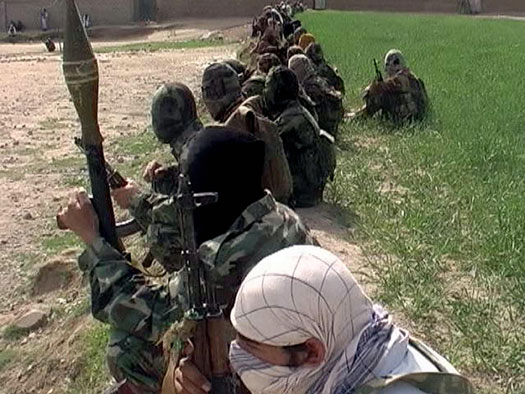
Taliban Fighters

“The core goal of the U.S. strategy in the Afghanistan and Pakistan theater remains to disrupt, dismantle, and eventually defeat al-Qa’ida in the region and to prevent its return to either country…” US Strategy in Afghanistan for 2011

“The aim of war should be the defeat of the enemy.  But what constitutes defeat?  The conquest of his whole territory is not always necessary, and total occupation of his territory may not be enough.” Carl Von Clausewitz

Strategic goals cannot remain fixed on geographic objectives which have lost their strategic importance because it is no longer the enemy’s center of gravity. On September 11th 2011 the Taliban ruled Afghanistan which harbored Osama Bin Laden’s Al Qaeda terrorist organization became the central front in the new “War on Terrorism.”  For about a year Afghanistan remained the central focus of United States efforts against Al Qaeda until President Bush and his administration changed the primary effort to the invasion of Iraq and the overthrow of the Saddam Hussein regime.

The effect of switching the American strategic focus from Afghanistan where we were making headway despite the limited resources provided to Iraq was a mistake of epic proportions that only became evident when Iraq did not go the way that the Bush administration led by Vice President Dick Cheney. Secretary of Defense Donald Rumsfeld and Paul Bremer the head of the Coalition Provision Authority planned.  Instead of a quick withdraw a series of mistakes and miscalculations turned the majority of the Iraqi people who had welcomed US Forces with open arms against us and an insurgency which claimed over 4000 American military personnel deaths and over 30,000 wounded became our primary focus.  We are still trying to figure out how to end our involvement in that country hoping that Iraq will not sink into another civil war.

Contrary to expectations Iraq became a front which consumed U.S. Forces and limited strategic flexibility in other regions of the world including Afghanistan.  In that country the indigenous Taliban which had been driven from power in 2001 began a gradual and deliberate return to political and military viability which was finally noticed by the United States in 2008 and 2009.  The Taliban were supported by the Pakistani Taliban, elements of the Bin Laden organization and in many cases duplicitous elements within the Pakistani military and intelligence services which were using the situation to support their own strategic goals of gaining influence in Afghanistan while strengthening their position against their perceived mortal enemy India.  Throughout the war the Pakistanis acted in their own interest while placating American demands to do more against the Taliban and Al Qaeda operating in Pakistan proper.

The Obama administration attempted to regain the initiative with a “surge” of 30,000 additional troops which raised the overall commitment of the United States to a force of over 100,000 troops assisted by NATO Allies and the corrupt, ill-trained and often Taliban Afghan Army and Police.  The surge was controversial and marked with controversy was the US Commander General Stanley McCrystal was relieved of command after an article in the Rolling Stone magazine which made it appear that he held the Obama administration in contempt. Since McCrystal recently returned to the Administration in a civilian capacity one wonders if the administration discovered that the article was meant to discredit McCrystal. McCrystal was relieved by his superior CENTCOM Commander General David Petreaus who had helped devise the strategy which in conjunction with the Anbar Awakening turned the tide against Al Qaeda and indigenous Iraqi insurgents in 2007-2008.  It achieved some success but even the United States recognizes that whatever success has been wrought is fragile and could easily be erased.

Unfortunately while the United States and its Allies continue to reinforce the campaign in Afghanistan their efforts are often undercut by the corrupt and duplicitous regime of Mohammed Karzai as well as our supposed Pakistani allies.  The Karzai regime hunkered down in Kabul has little influence outside the Presidential Palace except in its dealing in the Opium trade which helps finance the Taliban. The Pakistanis have over the 10 year duration of the war failed to maintain the security on their side of the border and often have clandestinely supported the Taliban and according to some may have given sanctuary to Al Qaeda.  The most recent setback came today when the Pakistani Chief of the General Staff General Ashfaq Parvez Kayani and Chief of Intelligence Ahmed Shuja Pasha issued a demand for the US to stop Predator Drone strikes in the border regions, cut Special Forces and CIA Staff and give the Pakistani Intelligence Service, the ISI visibility on CIA operations.  This has been long in the works but came to a head with the arrest of a CIA contractor under the suspicion of murdering two Pakistanis.  The incident created quite a rift in US and Pakistani relations in part brought about by internal Pakistani politics.  Of course the ISI has long been a source of aid to the Taliban so the United States has good reason not to trust the ISI with information that could endanger American lives.
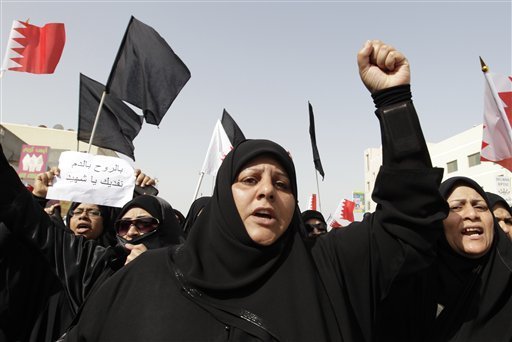
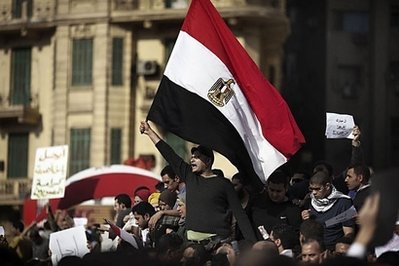
Protests in Bahrain: The Arabian Peninsula as the new Center of Gravity

The fact is without full Pakistani cooperation and substantial Afghani political reform to end corruption and provide real security to Afghani people there is no way to set conditions for a US withdraw that would leave Afghanistan a less dangerous place for its own people and for US and Western security interests. After all no one wants another 9-11 attack.  The US plans to begin withdrawing forces this year but the mission has been extended to at least 2014 at a cost of 119.4 billion dollars per year at the estimated 2011 rate and has increased exponentially since the US involvement began in 2001. The cost of the Afghanistan war in human, material and economic terms has imperiled other strategic priorities and limits the flexibility of the United States in other more vital regions.

Afghanistan is now an expensive sideshow in a larger war where the strategic center of gravity has shifted decisively to the Arabian Peninsula, North Africa and the Eastern Mediterranean where Al Qaeda seeks to use democratic revolts against autocratic despots to further its own ends. The key countries are Yemen, Saudi Arabia, Bahrain and Egypt with Lebanon, Syria, Jordan and the Israeli-Palestinian conflict boiling over.  While all of these crises grow on what seem to be a daily basis the United States and its Allies are mired in Afghanistan reinforcing failure.  Our troops on the ground have not lost a battle but like our brothers in Vietnam could “lose” the war.

This is the point where political and military leaders have to count the cost of the operation and weigh them against our actual strategic interests. The fact is if we withdrew the bulk of our ground combat forces and shifted to a lower footprint special operations and CIA campaign with a goal of ensuring that Al Qaeda cannot operate in Afghanistan with impunity as they did before 9-11 that we would likely be no worse off than we are now and have a greater amount of strategic flexibility to deal with other crises, political, military and humanitarian around the world.

The real crux of the issue is that Afghanistan is much like Stalingrad to the Germans in 1942. It has become a psychological more than a military campaign. We have invested so much in it that we do not believe that we can withdraw even though a scaled back presence would do much to improve our overall strategic situation.  Hitler denuded more important areas to attempt to capture Stalingrad and lost everything. Yes Al Qaeda used Afghanistan as its base to attack us in 2001 but they have moved on and Al Qaeda in Yemen and the Arabian Peninsula is a far greater strategic danger simply because of the oil supplies and strategic waterways in the area.

We simply need to look at all components of national strategy and decide where to concentrate.  Sometimes a strategic withdraw is necessary and actually vital to recover the initiative and set the stage for long term success. In Afghanistan this is not an admission of defeat but rather an acknowledgement that the central focus of the war and our strategic interests are elsewhere.  Our enemies would love to have us continue the campaign in Afghanistan in its current form, they know that our commitment drains our military, imperils our overall strategy and bleeds us dry economically all the while providing propaganda grist for them in their war against us.

However despite the cost the political situation in the United States keeps President Obama invested in Afghanistan. If he withdraws his opponents will say that he lost the war. Unfortunately the war in Afghanistan was ceded to the Taliban in 2003 when we decided that Iraq was more important. Now we reap the terrible consequences of that decision.  Now we have to decide how to make something positive out of this unenviable strategic position. But as Napoleon Bonaparte said “In order to govern, the question is not to follow out a more or less valid theory but to build with whatever materials are at hand. The inevitable must be accepted and turned to advantage.”

Peace

Padre Steve+


2 Comments

Filed under Loose thoughts and musings

The Unchristian Christianity of Modern America

I cannot and will not recant

We live in an era where religion and politics especially in conservative circles have become one just as they were in the days following Constantine’s granting of religious freedom to all in the Empire while making the Catholic Church the State religion which went from a persecuted Church to an Imperial Church overnight. The Church in the coming centuries became an arm of the State something that until the enlightenment it remained in many nations. Most of the English Colonies that became the United States had State Religions even after the Bill of Rights the last to disestablish its state religion being the Commonwealth of Massachusetts in 1833.  Most European State Churches remained until the fall of the Empires after the First World War but many countries in Europe still have State Churches which are not very vibrant now days.

The curious thing is that until the 18th and 19th Centuries the powers of State Churches were great and heavily benefited greatly through their allegiance to the State.  To disobey the Church was to disobey the State and to disobey the State was often tantamount to disobeying God since the State and the rulers thereof were not simply ordained by God but in fact God’s instruments. Unfortunately this led to many abuses of power by those in the Church as well as the State and thankfully we in the United States were able to for the most part break with that tradition which was and is repugnant to the Gospel as well as human freedom.

In fact the United States has been the foremost proponent of religious freedom and tolerance of any nation in history. It was something that we enshrined, the right of all people to worship according to their faith. Now we haven’t been perfect practitioners of our ideal as there have been plenty of religious based prejudice and persecution in this country dating to colonial times, especially of religions outside the mainstream of Protestant Christianity, it took nearly 150 years for Catholics to become part of mainstream America and longer for others especially religions outside of the Judeo-Christian tradition. Despite those instances our experiment of religious liberty has been an amazing success in which many denominations have prospered.

All that being said I fear we are entering a stage where authoritarian religious groups closely allied with the rich and the powerful are on the ascendant in the United States just as radicals in other religions, particularly Islam but not limited to Islam are on the rise. Frankly I expect that people who are either living in a culture that still believes that the world is like it was back in the 13th Century and those that have become fantastically rich and enamored with the technology of the West to be that way. Let us face facts most of the counties in the Middle East lack the centuries of related social, political, philosophic or religious development that is part of Western culture and we still screw things up. The Islamic World has not experienced anything like the Renaissance, Reformation or Enlightenment. There is a chance that it might amid the pro-democracy and freedom protests that are occurring throughout the Middle East even as radical Islamists dream of a new Caliphate, something that seems to be anathema to many of the young protestors in Egypt and other Arab Nations.

In the United States the movement to religious authoritarian systems closely allied with politicians and the State to do their bidding comes from conservative circles, particularly conservative and fundamental Evangelical Christian churches and the Roman Catholic Church which since the reforms of Vatican Two has retreated into its old Ultramontanistic self.

That being said I figure I should go ahead and continue to dig my grave with my conservative brethren who view anyone to the left of them as a wild eyed raving liberal and quite possibly a Socialist.  I am a moderate and I might be classed as a liberal conservative or conservative liberal.  Thus I and people like me stand in the uncomfortable middle of a deeply polarized society where most to our left or right despise us for actually deviating from the established dogmas of the left or the right.

To the extreme right I might be a raving liberal, and the far left an intolerant conservative but the I choose to live in the tension between the two, although I think that in today’s Tea Party charged environment I would be called a liberal.  But I am a moderate and I will not give up the middle ground simply because others have adopted a scorched earth policy in faith and politics where “if you ain’t for us you’re against us” is the norm. In fact I think that Jesus stood against that kind of thought process, if you don’t believe me look at Mark 9:38-40 where Jesus says something different when the disciples confront him about others casting out demons in his name “he who is not against us is for us.”

As a passionate moderate who is also a Priest and Christian my goal in life is to get along, find common ground among disparate groups and care for God’s people.  I do this by acknowledging and maintaining the tensions that are inherent in a pluralistic society and not simply going along what whatever is popular or expedient. This takes a lot of effort and does not exclude being prophetic.  However that prophetic role comes in relationship with others where there is mutual respect, civility and care for each other even when we do not agree. It does not come from being angry or acting disrespectfully just because I can.  The prophetic role does not come from the outside looking in railing at your opponents.  That only increases your isolation, eventually to the point that you are no longer a player in the debate, simply an annoying pest with absolutely no say in anything.  It takes more courage to be open and dialogue with people respectfully than it does to rail against them.  Anyone can be a critic and anyone can be a wrecking ball.  That’s easy.  There is little personal risk in doing so, because you don’t have to open you self up to the possibility that there may be some merit in your opponent’s view and once you have a relationship with someone it is hard to demonize or dehumanize them.  Unfortunately that is what is happening across the religious and political divide in our society.

Despite the rancor on the extremes I think that there are more people out there like me than not. My belief is that voices like ours are drowned out by drumbeat of competing demagogues on the far right and the far left.  Since I am a priest my focus will be on the dangers that I see in the current climate and the captivity that churches have unwittingly placed themselves in making political alliances.  These alliances, particularly those of conservative Christians have become so incestuous and so intertwined that they are seen as one with supposed political conservatives. As such these churches and Christian leaders have become the religious voice of political movements fighting a cultural war in which only one side can win and in which there is no room for compromise or dialogue.

In doing so these religious leaders have compromised themselves so that only their followers give any credence to what they are saying.  They are so to speak “preaching to the choir” and not reaching out to or even caring about the welfare of their opponents, they are in a sense like the Taliban. They frequently demonize their opponents or for that matter anyone, even other Christians that might disagree with their understanding of the Christian faith.

That is why I say that many have become like the Taliban. If you do not agree with them on their social-religious agenda you are a heretic regardless of how orthodox you are in your actual theology.  Theology and belief is no longer the test, the test is if you agree with a social-political-religious agenda which often is at odds with the Christian faith proclaimed by Jesus.  This is like the Taliban because the goal is to gain control of the government and use the government to impose a social-religious theocracy where the church uses the “police power of the government” to achieve its goals.  Such a message is anathema to the Gospel and its redemptive message that “God was in Christ reconciling the world to himself, not counting men’s sins against them.” What many churches and Christian leaders have done is to for practical purposes discard any real attempts to engage people with the message of the Gospel in favor of using political power to coerce non-believers into compliance through the police power of the government.  This in stark opposition to the early Church which was martyred for their faith in Christ versus their opposition to government policy or social ills, of which there were plenty that they could have protested.

Early in his “Reforming” days the young Martin Luther wrote a book entitled “The Babylonian Captivity of the Church.” It was a severe critique of abuses in the Roman Catholic Church of his era.  I think churches today have become captive to various political parties, social and economic theories, movements and ideas.  These are not necessarily Christian even though any churches have “baptized” them so to speak.  Capitalism for instance is has many benefits, however unbridled capitalism which is not moderated with true concern for the least, the lost and the lonely, is nothing more that economic social Darwinism.  It is the survival of the fittest with little concern or regard for real people.  People in the world of baptized unbridled capitalism are not people, but consumers and economic units.  In the United States we can see this in practical terms where historically US corporations which at one time employed millions of Americans and produced actual good that were in turn exported to the world have outsourced so many jobs and industries to other nations.

This was done in order to increase corporate profits by paying foreign workers almost nothing and not having to abide by US environmental laws or tax codes.  This may bring cheaper goods in the marketplace but it has endangered our economic and even strategic military security. Economic power is one of the key elements of national security.  In the military we call this the DIME:  Diplomatic, Intelligence, Military and Economic power and unless your economy can keep up you will fail.  Just ask the Soviet Union.  It is interesting to see many Christian leaders and churches talk of capitalism as if came down from heaven even using the Bible to try to bolster their argument.  This is just one of many areas where the church is not longer a prophetic voice, but a willing captive mouthpiece for political and economic institutions which at their heart could care less about the Christian faith and wouldn’t mind it going away.

On the left many churches have embraced social reform, the civil rights movement, women’s liberation as well as left leaning and even socialistic economic models and a demonstrated preference for the Democratic Party.  While none of these goals of themselves are anti-Christian the linkage to the causes often over the Gospel has hurt progressive Christianity.

On the right conservative churches beginning in the 1970s in reaction to the social revolutions of the 1960s moved lock, stock and barrel to the Republican Party. They were led by men such as Jerry Falwell who founded the Moral Majority in 1979, Pat Robertson who founded the Christian Coalition and Dr D. James Kennedy who founded the now defunct “Center for Reclaiming America for Christ.”  Ronald Reagan was the political spokesman and was an outspoken advocate of the role of America’s Judeo-Christian heritage. Conservative religious leaders solidified that relationship in the 1990s during the presidency of Bill Clinton, whose sexual proclivities did nothing to help his cause with Christians despite him signing the Defense of Marriage Act.  The 1994 “Republican Revolution” and “Contract for America” helped solidify Christian conservatives as a central component of the Republican Party and by that point there was a clear alliance between Christian conservatives and the Republican Party.  It was also during this time that politically conservative talk radio became a force in American politics and many on the Christian Right gravitated to broadcasters such as Rush Limbaugh and later Sean Hannity.  Conservative Christians now stand at the center of the Tea Party movement and are a force that no Republican politician can ignore if he or she wants to keep their job.

Despite what I have said I am not saying that people’s faith should not play an important part of their political viewpoint.  Churches and influential pastors have been an important part of American life and has contributed to many advances in our society including the civil rights movement, which could not have succeeded without the efforts of the Reverend Martin Luther King Jr. and many other clergymen and women, from across the denominational and racial spectrum.

Other examples of where churches spoke to societal wrongs included slavery and child labor.  Now this was not a unified front as many churches especially regarding slavery and civil rights opposed these measures.  This included the major denominations that split into northern and southern factions over the issue of slavery prior to the Civil War.  The Southern Baptist Church is a product of this split.  Other churches such as the Methodists and Presbyterians eventually came back together, the Presbyterian Church USA doing so in 1982, 117 years after the Civil War…better late than never I guess.  This will not happen with the Southern and American Baptist Convention’s as they are now theologically poles apart.

There has been a trend over the last 20 years or so by many clergy and laity in both liberal and conservative churches to be uncritical in their relationships with political parties. In my view this has emasculated the witness of the church.  I have experienced this on both the left and the right. When I was a kid my dad, a career Navy Chief Petty Officer was serving in Vietnam. New to the area we went to a church of the denomination that my parents had grown up in and in which I had been baptized.  This was a mainline Protestant church, the name I will not mention because it is irrelevant to the discussion.  The minister constantly preached against the war and the military probably assuming that he had no military families in the congregation.  At that church I had a Sunday school teacher tell me that my dad was a “baby killer” when I told her that my dad was serving in Vietnam.  If it had not been for the Roman Catholic chaplain at the little Navy base in town who showed my family the love of God when that happened, caring for our Protestant family without trying to make us Catholic I would have probably never reconciled with the church.

I trace my vocation as a priest and chaplain to that man. Since I have spent more of my life in conservative churches in the days since I have seen a growing and ever more strident move to the political right in conservative churches.  I think this has less to do with the actual churches but the influence of conservative talk radio which has catered to conservatives, especially social conservative Christians.  Conservative Christians are a key part of this demographic and it is not unusual to hear ministers as well as lay people simply parroting what these broadcasters are saying. I often hear my fellow Christians on the right talk more vociferously about free markets capitalism, the war on terror and justifying the other conservative causes which are general less than central to the faith in public forums like Facebook.  Some of what is written is scary.  People who pray for the government to fail, pray for the President to be killed, call anyone who disagrees with them pretty horrible names or prays the “imprecatory Psalms” against their opponents.  I saw an active duty Army Chaplain call the President “that reject.” The words of a lot of these folks are much more like Sean Hannity than the Apostle Paul.  When I have challenged conservative Christian friends on what I think are inconsistencies I have in some cases been attacked and pretty nastily if I might add.

I see this in stark contrast to the witness of the early church.  Pliny’s letter to the Emperor Trajan sums up how Christians responded to real, not imagined persecution for their Christian faith, not social-political cause.

“They stated that the sum of their guilt or error amounted to this, that they used to gather on a stated day before dawn and sing to Christ as if he were a god, and that they took an oath not to involve themselves in villainy, but rather to commit no theft, no fraud, no adultery; not to break faith, nor to deny money placed with them in trust. Once these things were done, it was their custom to part and return later to eat a meal together, innocently, although they stopped this after my edict, in which I, following your mandate, forbade all secret societies.”

Pliny was perplexed because although he thought their religion to be “fanatical superstitions” he could find no other fault in their lives; they even obeyed his order to stop meeting together.  My view is that Christians some on the left but especially on the right lost any prophetic voice not only in society, in their respective political party alliances.  They have become special interest groups who compete with other special interest groups, which politicians of both parties treat as their loyal servants.  This is what I mean by captivity.  I think that the church has to be able to speak her mind and be a witness of the redemption and reconciliation message of the Gospel and hold politicians, political parties and other power structures accountable for their treatment of the least, the lost and the lonely; caring for those that to those who seek to maintain political and economic control, merely numbers.  The church has to maintain her independence or lose submit to slavery.  There are many examples we can look to in this just a couple of relatively modern examples being William Wilberforce and Dr. Martin Luther King Jr.  We can find many others throughout Church history. These men were not apolitical, but they and their ministries were both prophetic and redemptive.  They maintained peaceful dialogue with their opponents and helped bring about justice.  Billy Graham never gave in to the temptation to endorse any political party.  Instead he had a voice and relationship with every US President during his active ministry, be they Republican or Democrat.

It is incumbent on Christians and other people of faith seek to embody this witness in our divided and dangerous world.  Christians especially cannot allow themselves to be ghettoized in any political party, or political faction where they are just another interest group even an important one. Nor can they allow their public witness to be absorbed and consumed by the promotion of political agendas or causes, even if those causes are worthy of support.  It is a matter of keeping priorities causes can never take precedence over the message of God’s love and reconciliation in Christ.  Unfortunately this is too often the case.

My view is that if you build relationships with people by loving them, caring for them and treating them with the same respect that you would want for yourself; even with those that you have major differences, then you will have a place at the table and your voice will be heard.  If we on the other hand cauterize ourselves from relationships and dialogue we will be relegated, and rightly so to the margins of the social and political process of our nation.  In effect we will ensure that people will stop listening to us not only on the social and political issues, but more importantly in our proclamation of the faith in the Kingdom of God which was proclaimed by Jesus which that comes to us from the Apostles.

Unfortunately I believe that Christians thinking that they are more influential than they are have marginalized themselves.  This is because many have compromised the faith by allowing extremists to be the public face of the Christian church in public debates on social, morale and political issues.  I hope someday we will rebuild our credibility as people who actually care about the life of our fellow citizens and our country and not just those who agree with us.  God have mercy on us all.

Peace, Steve+


9 Comments

Filed under christian life, faith, History, philosophy, Religion

Padre Steve’s Primer on the Muddle East

“When you are up to your arse in alligators it is hard to remember that your mission is to drain the swamp.” Old British Colonial Saying

During the dark days of World War Two when Field Marshal Erwin Rommel was making fools of a series of British commanders in North Africa people including senior British military and government leaders sometimes referred to the theater of operations as “the Muddle East.” Some things never seem to change. The Muddle East today is quite frankly speaking in a real muddled state if there ever was one with world leaders and regional leaders muddling about as if they were the New York Mets.

A large part of the muddle goes back to the fall of the Ottoman Empire at the close of the First World War when the victorious Allied Powers redrew the map of the Middle East and made alliances with various local tribal sheiks who many times were crowned king over other tribes who didn’t necessarily want them as king. This along with heavy handed European military actions such as the British using poison gas dropped from aircraft in Iraq and a real lack of effort to better the lives of the newly “liberated” peoples of the region was just the start. Add to the cesspool a bunch of oil presided over by major oil companies, the anti-colonial movements that flourished in the years after World War Two when the French, British and Italians had to divest themselves of their Middle Eastern holdings. The French had to fight a real war in Algeria but finally withdrew leaving Algeria’s new rulers to goof up the country and oppress their people for decades to come.  In the coming years many of these newly independent nations found that life still sucked so in a number of countries military officers overthrew the despised monarchs promising reforms but oppressing their people while blaming all their problems on the Israelis.  They got their asses kicked by the Israelis in a series of wars which did a number of things that made the Middle East Muddle even worse.

First it ensured that Palestinian Arabs ended up under Israeli rule and were used with great aplomb by the Middle Eastern despots to prop up support for their regimes while doing nothing to help the Palestinians other than to put them in camps in Lebanon.  Even when the Egyptians made a peace deal with Israel most of the Arab World ostracized them.  Then in 1979 the Shah of Iran was sent packing by a bunch of Mullahs and in 1981 Saddam Hussein’s Iraq attacked Iran in one of the bloodier wars of the late 20th Century which finally ended in 1988. Of course the United States was pissed at the Mullahs so Saddam became our favorite Arab despot for a while.  Add to the mix the Soviet Union and the United States arming their favorite Arab dictators who were given carte blanche to continue oppressing their people so long as it didn’t interfere with their support of either party or the oil supply. Finally the Soviets went Tango Uniform in 1989 not long after being forced out of Afghanistan by the U.S. supplied, Pakistani supported and Saudi Arabian fundamentalist financed Mujahedeen.

With the Soviets Tango Uniform and the Warsaw Pact nations trying to get into NATO the United States was now the uncontested Numero Uno country in the world Saddam presumed upon his late supporters and invaded Kuwait, albeit after thinking that the U.S. Ambassador to Iraq said that we wouldn’t mind. Well he was wrong we did mind and got a lot of countries from NATO and including a bunch of Arab countries like Egypt, Syria and Saudi Arabia to get on board on a mission to get Saddam’s troops out of Kuwait. It was a kick ass mission and since the United Nations didn’t authorize removing Saddam and because President George H.W. Bush was smart enough to not to drive on Baghdad to kick him out preferring the depot we knew to a quagmire despite Saddam’s crimes against his own people who thought we would help them.  So we stationed ground and air forces around the Gulf to keep Saddam and Iran in check and even put them in Saudi Arabia which a large number of radicals such as Osama Bin Laden equated to letting the Devil play in Allah’s Holy Sandbox.  So Osama went and set up a base with the Medieval bunch of Pashtun known as the Taliban in Afghanistan stirred up a bunch of shit killing Americans and blowing up stuff including the World Trade Center in 1993, the Khobar Towers barracks complex in 1996, the USS Cole in 2000 and then 2001 another attack on the World Trade Center which took down the towers with hijacked aircraft and also struck the Pentagon triggered an American response against Bin Laden and his Taliban hosts.  The United States then invaded in Iraq in 2003 and succeeded in taking out Saddam but also succeeded in alienating a good many Iraqis who greeted us with open arms because we goofed up the occupation and pissed a lot of them off by dissolving the Army, Police and Civil Service and letting thugs and opportunists take over. Unfortunately since we didn’t go in with enough troops to secure all the Iraqi bases, their weapons depots and actually take control of surrendering Iraqi units these newly unemployed and dishonored people launched an insurgency bolstered by Al Qaeda and other foreign fighters even as Sunni and Shi’a Moslems began to settle scores with each other. Insurgency and civil war, two great tastes that go great together, but what the heck right?

Of course it took years to get control of the situation on the ground and thankfully the United States forces in Iraq were helped when the Sunni Moslems in Al Anbar Province realized that these foreign fighters were a worse enemy than the United States and switched sides. This turned the tables in Iraq and the insurgency was brought under control and an elected government managed to start to get their stuff together and allow us to begin withdrawing from Iraq. Of course the focus on Iraq gave the Taliban a chance to regroup as the Afghani Government proved itself corrupt, incompetent and not to give a shit about the Afghani people. So the Taliban who had been hated made a comeback and made our lives much harder so that now almost 10 years into the fight we are having a really hard time.  Well enough about us there was plenty more going on in the Muddle East besides the Iraq and Afghanistan wars.

Let’s see….there was the law of unintended consequences in that by taking Saddam Down and weakening Iraq we took away Iran’s natural enemy and the key to the balance of power in the region. Iran was strengthened and began a nuclear program that everyone with half a brain knows in intended for military use and expanded its influence in Lebanon where the Iranian backed Hezbollah took power last year.  Now Hezbollah which actually has an experienced military force and probably owns 40,000 or so rockets and missiles a good number of which can hit deep in Israel seems to be ready for war especially because they fought the Israelis to a stalemate in 2008, the first time an Arab military ever did that.

Then was the effect that the wars in those countries made things harder for us in many other friendly Arab nations.  Of course there is the problem of a nuclear armed Pakistan which is about as stable as a Japanese nuclear reactor after getting hit by a tsunami and plays both sides of the street in the war on terror.  The Palestinians and Israelis continued their love affair and since Fatah which ran Palestinian Authority was so corrupt and gooned up a more militant group, Hamas took power in the Gaza strip. Hamas is a pretty bloodthirsty lot too but not the same level of threat as Hezbollah to the Israelis.  Of course the Israelis have done little to help the situation by their often heavy handed treatment of Palestinians and Israeli Arabs.

The witches’ cauldron of the Muddle East is getting even more muddled on a daily basis as young Arabs throughout the Muddle East are rising up against their despotic rulers and it doesn’t seem that any are safe, those allied with the United States and the West as well as those that have been a thorn in the side of the United States and the West. It just seems that despots and tyrants are no longer in vogue. The uprisings began in Iran after a disputed election where reformers were cheated of power and the revolt crushed by the Revolutionary Guard and other thugs of the Iranian regime. But then in December 2010 the people of Tunisia rose up and overthrew their President for Life Ben Ali in a peaceful uprising followed shortly after by the Egyptians who tossed out long term President and U.S. ally Hosni Mubarak.

This brought about spontaneous uprisings all over the Middle East with Libya and the long time pain in the ass Muammar Gaddafi being the current center of the action. However Yemen and Bahrain both are in trouble, Algeria, Jordan and Syria have or are experiencing demonstrations which look to be revolts in the making and even Saudi Arabia is trying to head off a potential popular uprising.

Yes my friends this is a mess and almost everybody that is anybody in the military and economic power houses of the world doesn’t have their handprints all over at least some part of this mess. All of these own some of the blame for what is going on, both the rulers of the nations in the region as well as world powers who all try to influence the nations and peoples for their own diplomatic, intelligence, military or economic gain. Almost no one is unsoiled by their involvement in the Muddle East over the past 90 years or so and so in a way all of world powers, as well as the despots who ran these countries are to blame.

The region is more volatile than at any time in recent history and events there could easily ignite a regional war with worldwide implications.  That is why the region has been called the Muddle East for decades.  We all hope and pray for the best and that somehow all of this will bring about a peaceful and democratic “Arab Spring” but there are better than even odds that things get way worse before they get better. There are just too many wild cards in this deck and the swamp is full of hungry alligators.

May God help us all and bring about peaceful change, or as my Iraqi friends simply say “Inshallah, God willing.”

Peace

Padre Steve+
4 Comments

Filed under Foreign Policy, History, middle east, national security

The Last Full Measure: The Long Wars with more to Come

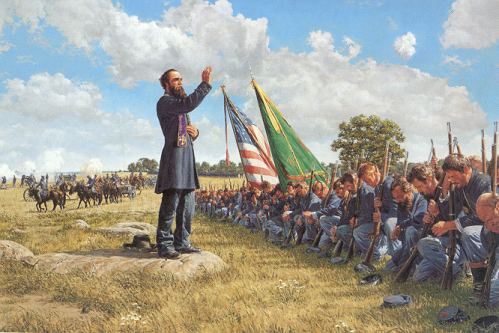
Fr Corby gives absolution to the Irish Brigade at Gettysburg as they stood in the breach

I have been watching the events in Egypt as well as other parts of the world with concern. We live in very dangerous times.  I do not want to sound like an alarmist but things are looking like we are heading into some very perilous waters.  For me this is personal because I have friends serving in harm’s way, I serve those wounded in body soul and spirit from their time in combat and I know in my heart that we will but blessed beyond compare if nothing else blows up on us.  But I am not optimistic.

The United States and its Allies have been fighting a war against Moslem extremists and terrorists on multiple fronts.  Some of these have been of necessity because they were where Al Qaeda and its allies were based such as Afghanistan and the Horn of Africa as well as a number of places in the shadows around the world. In 2003 President Bush elected to invade Iraq and another from was opened which drew the bulk of our combat forces into a protracted counter-insurgency campaign which we seem finally have been able to extricate ourselves from.  After years of neglect President Obama ordered a surge of troops into Afghanistan where the situation had deteriorated.  The fight is still raging there with the Taliban and their Al Qaeda allies receiving support from various entities in Pakistan supportive of their cause probably including parts of the Pakistani Intelligence services.

In these wars the all volunteer U.S. Military has performed many remarkable feats but suffered over 5000 deaths and more than 35,000 wounded not counting those with the unseen wounds of the soul and spirit.  Parts of it including the elite Special Operations Forces according to their Commander are stretched and frayed.  The operations tempo of deployment, redeployment, training and deployment is continuing to take a toll on active and reserve forces.

If this was all that we had to be concerned about it would be enough.  Unfortunately it seems as if the Arab world is about to experience a revolution. While we normally cheer the triumph of people over tyrants it is unknown how this will develop. Conceivably it could be a good thing should moderate forces take control of the situation in Egypt should Hosni Mubarak step down.  Unfortunately history shows that the control of revolutions seldom remain under the influence of moderates as extremists are far better organizers and much more likely to use violence to gain control through terror, especially in cultures where there is little experience of freedom or or history of non-despotic rule.  Egypt lies at the heart of the Arab World and what happens there will likely influence events in other Arab nations.

Meanwhile Iran, Syria and their Hezbollah confederates work to destabilize the region and Iran seeks to build weapons capable of carrying WMD which could be used against US Forces, our Allies in the Middle East and Europe in defiance of international organizations.  In light of all of this the outgoing Chief of Staff of the Israeli Defense Forces has told his country that it needs to prepare for “all out war.”

I could go on and talk about all the other simmering cauldrons but the point is that no matter how much we would like not to be involved when the cauldrons boil over we will. It is a very dangerous time.

Our forces, Army, Marines, Navy and Air Force which have fought gallantly for 10 years will be sent into the breach.  The place and time are not yet determined but it will happen.  And unlike Iraq and Afghanistan which are counterinsurgencies this will be a fight like we haven’t seen in many years and it may even come to our shores in the form of terrorism.

While all of us that volunteer to serve have our own motivations ranging from idealism to simply needing a job we all have volunteered. We know that we are at war and it is not going to end anytime soon.  For me the call is to be with my Sailors, Marines and Soldiers wherever I am sent, which for the moment is caring for those injured in mind body and spirit at a Naval Hospital on a Marine major Marine base but I know that I will be involved again somewhere and I am alright with that because this is a sacred calling.  That call for me is call as a Priest and Chaplain to serve our Sailors, Marines, Soldiers and Airmen wherever I am sent. Many others have this as well as the call to the profession of arms and share in the brotherhood of war.  We are a brotherhood knit together by war as Shakespeare said “We few, we happy few, we band of brothers.” This band of brothers will be called into the breach the only question is where and when. May our hearts and spirits be up to the task as just as Henry V prayed:

O God of battles! Steel my soldiers’ hearts.

Possess them not with fear. Take from them now

The sense of reckoning, if the opposed numbers

Pluck their hearts from them. Not today, O Lord,

O, not today, think not upon the fault…

Peace

Padre Steve+
4 Comments

Filed under History, iraq,afghanistan, Military

Christian Grinch’s: How the Puritans nearly stole Christmas

There are a lot of people now days in the United States that believe that the Christmas Holiday is under attack and to some extent they are right. It seems that lawsuits are as abundant as public displays of Christian themed holiday observance and décor as various individuals and groups attempt to expunge such observances from public life, even some of those erected on “private” property.

Now I am not one to go out and all these people are evil or even anti-Christian as some do from the pulpit and the even more influential “pulpits” of radio talk show hosts. However there are times that I have to admit that it seems that there is Grinchlike element present in our society. The Grinch’s who come in various types are often well meaning and concerned that religious displays of any kind but mostly the Christian kind will either offend people or create an environment where religious and non-religious minorities might be discriminated against by the religious folks. Thus they believe that all religious displays need to go lest someone be offended or discriminated against.


Above all it seems that they really don’t like the displays with the kid in the crib surrounded by a temporarily indigent family, smelly animals, even smellier migrant worker type pre-Bedouins and undocumented aliens from realms of glory.  I find the whole notion that is somehow harmful to individuals or society be quite Grinchlike and wonder of these people had their sentimental and fun glands removed at birth or simply got too many lumps of coal in their stockings.


Despite this I do not fear for Christmas because the celebration of Christ’s Incarnation and Nativity has survived far worse even dare I say from those within the faith.  Yes my friends way back in the bad old days a group influential in our early development as a nation the Puritans were big into cancelling Christmas.  Despite the fact that they were Christians they were pretty Grinchlike and in some sense the philosophic predecessors of those that want to banish Christmas from public life today.


You see after the Protestant Reformation, the English, who despite the cultured accent that we hear on the BBC or CNN World were actually more like unruly football fans in matters of religious tolerance and loving their neighbors. English Protestants of the non-monarchical reformation type did their best to rid the Church of England of anything Catholic. Of course this often included people who were Catholic or even Anglo-Catholic.  The English of all denominations tended to lop off the heads of, burn at the stake or crush with heavy stones those that deviated from the beliefs whoever was in charge. Of course those that leaned Catholic reciprocated in kind whenever they had power which made the era something like the Premier League “lite.”


The English Grinch and Lord Protector Oliver Cromwell


However when the Puritans took power they didn’t just decide to lop, crush and burn but they also decided to outlaw the celebration of Christmas. Of course they did so for noble reasons such as ridding the country of anything that smelled Catholic or did not fit within their rather harsh and purist views of the faith. Thus when they took power they did their best to ensure that everyone was as miserable as them. This included banning the celebration of Christmas which they objected for a number of reasons.


So in 1647 the Puritan dominated Parliament backed up by the brute force of the Army and Police led by Oliver Cromwell simply abolished the feast and all that went with it.  Like the Grinch himself they tried to eliminate everything including the Roast Beast. Gone were such nasty pagan ideas as Christmas Trees, feasting, caroling, and decorations. And let’s not forget the favorite target of Grinch’s everywhere, Nativity scenes, which were banned as the worship of idols. Indeed, the Puritans even frowned on the use of the word Christmas because they believed that it was akin to taking the Lord’s name in vain.

Wassailing


Not content with inflicting their beliefs on the majority of the people who simply wanted some relief for the drudgery of daily life in 17th Century England they even banned the poor from the tradition of Wassailing.  Wassailing was a custom in which the rather pungent poor would go from house to house, begging for treats in exchange for drinking a toast to the family.  The drink called wassail, was a hot spiced wine and not a vintage Napa Valley or French wine but a equally pungent English wine, thus the need for spices and heat. The result of the wassailing sometimes was an out of control drunken revelry, much like current English Football match celebrations, which is why the Puritans objected so strenuously.
Be it known that the Puritans did have their sentimental and fun glands removed on conversion had no sense of fun, or what they viewed as harmful religious practices and wanted to remove them from public life altogether.  Well altogether now: “kill the fun and sentimentality! And if need be those that practice them!” Very good you are honorary Puritans for the day doesn’t that make you feel good? It does me, I just love reenacting history sometimes.
Well this lasted until 1660 when the Lord Protector and head of the Army and Police Oliver Cromwell kicked the bucket.  The anti-Christmas laws were overturned and the populace went back to simply lopping, burning and crushing and everyone, save those being lopped, crushed or burned was happy.
Not to be outdone the Puritan colonists in the Massachusetts Bay Colony enacted similar laws which were on the books from 1659 through 1681 when a newly appointed Governor in the employee of the Crown Sir Edmund Andros.  However during the time that the laws were in force everyone had a grand time. Like others in places like Iran and Afghanistan the General Court banned the celebration of Christmas and other such holidays at the same time it banned gambling and other lawless behavior. Grouping all such behaviors together the court placed a fine of five shillings on anyone caught feasting or celebrating the holiday in another manner. The law read like this:
“For preventing disorders, arising in several places within this jurisdiction by reason of some still observing such festivals as were superstitiously kept in other communities, to the great dishonor of God and offense of others: it is therefore ordered by this court and the authority thereof that whosoever shall be found observing any such day as Christmas or the like, either by forbearing of labor, feasting, or any other way, upon any such account as aforesaid, every such person so offending shall pay for every such offence five shilling as a fine to the county.”

That sounds lovely doesn’t it? Just kidding. At least they didn’t go lopping, burning or crushing with heavy stones unless you were proven to be a Christmas celebrating witch. Unlike England where the lifting of the ban was celebrated with the aplomb given to a World Cup championship the Colonists up in the Massachusetts Bay Colony frowned upon the celebration until the 1820s when enough Irish showed up in Boston to turn the place around and make it the fun town that it is now.   By the way the last “State Church” in the United States was the Congregational Church in Massachusetts back in 1833, seems that they didn’t appreciate that separation of Church and States stuff thought up by Tom Jefferson and Jim Madison very much.


So the next time you hear about those that want to impose their beliefs to quash Christmas realize that this isn’t a new thing at all. Christians have been doing it for centuries and some of the un-fun Fundamentalists that want to re-establish the faith in the way the Puritans had imagined or legislated it to be, would do it again if they ever took control of Congress.  But for now we have to suffer those fun and sentimentality deprived army of Grinch’s that without the religious flair attempt to crush the spirit of Christmas in the name of tolerance.


So Merry Christmas my friends,


Peace
Padre Steve+

5 Comments

Filed under christian life, purely humorous, Religion

The Most Perilous of Assignments: Six Members of U.S. Border Training Team Killed By Afghan Border Policeman

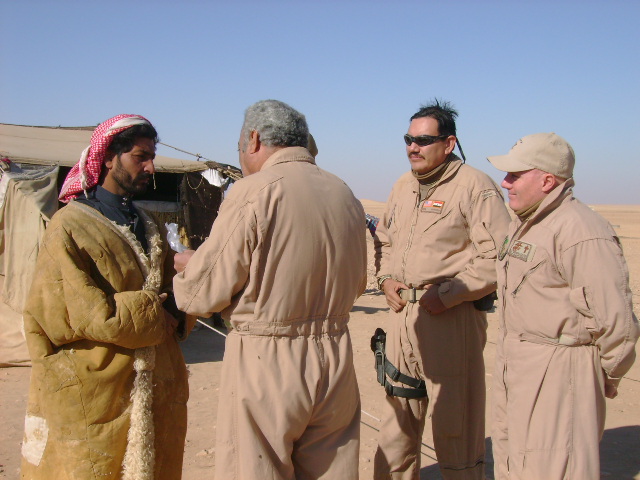
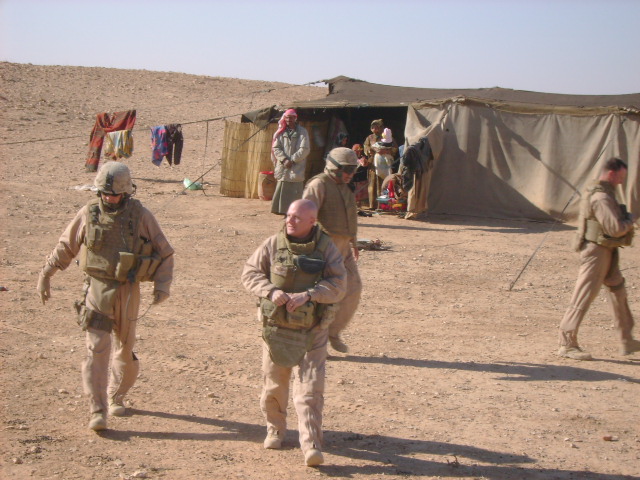
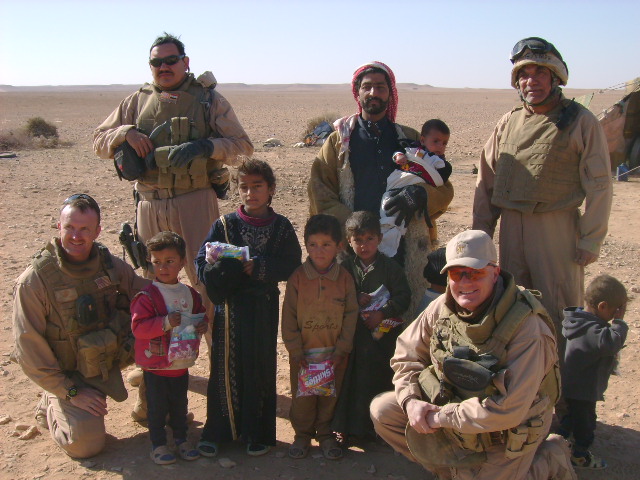
Me on Right with Border Team Members talking with a Bedouin on the Iraqi-Syrian Border

The big battalions get the press but in counter-insurgency operations in a very unstable environment such as Afghanistan the most perilous duty is often done by advisors.  Having served with our Marine and Army in Iraq in 2007 and 2008 I can say without equivocation that the advisors that serve with the Border and Port of Entry Police, as well as Police Training Team personnel serve in some of the most perilous and exposed locations imaginable usually far from quick support of combat units.

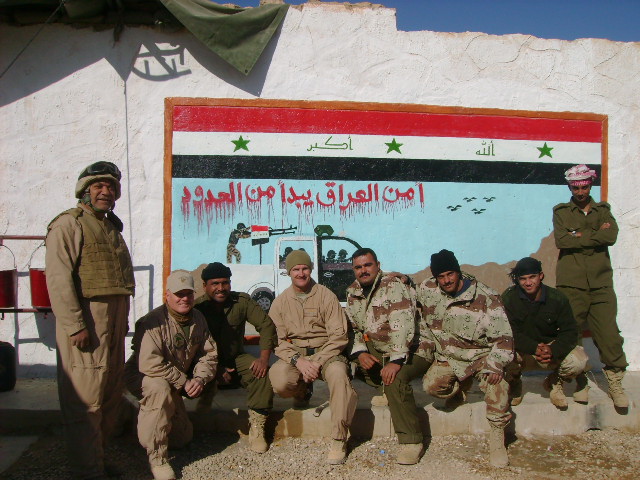
With an Iraqi Border Team

The Border teams typically cover large sectors and are composed of 15-20 personnel with a Captain or Major in command of the team and a number of junior officers or Staff Non-Commissioned Officers and junior enlisted personnel sometimes augmented by U.S. Border Patrol and Customs agents or contractors retired from those organizations.  They are not heavily armed and usually are based with the indigenous security forces.  Travelling in HUMMVS they visit and work with the indigenous Border Police and Port of Entry Police along long borders constantly exposed to possible ambush by insurgents or being attacked by the very personnel that they train and support.  This happens more frequently than we would want to see.

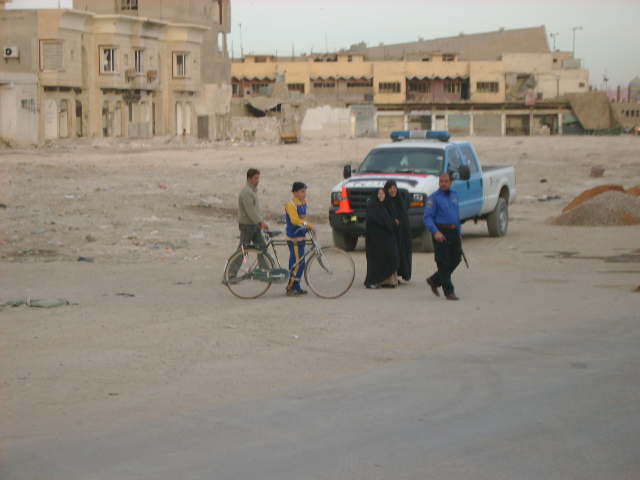
A Port of Entry Team after finishing an assistance visit at the Al Waleed Port of Entry. That evening the team went out and intercepted arms, drugs and money bound for Iraqi insurgents

The most recent case of this happened Monday the 29th when an Afghani Border Patrol Officer opened fire during a training mission Monday in the Pachir Wagam district of Nangarhar province near the border with Pakistan. The gunman was also killed during the incident according to NATO and Zemeri Bashary, a spokesman for the Afghan Interior Ministry, said the gunman was indeed a border police officer, and not an insurgent wearing a uniform. The Taliban claimed that the man was a Taliban member who had joined the Border Police to “kill foreign soldiers.” This has been a recurrent theme in the world of Afghanistan’s security forces, more so Police and Border forces than Army but a danger that grows as Afghanistan and NATO seek to quickly bolster the numbers of troops in the Afghan security forces.

Leaving a Bedouin Camp

The attack was the latest in a series against advisors by their Afghani charges. In July, a rogue Afghan soldier fired a rocket-propelled grenade on NATO troops, killing three British soldiers and wounding four others.  In November 2009, an Afghan policeman killed five British soldiers at a checkpoint in Helmand. A month earlier, an Afghan policeman on patrol with U.S. soldiers fired on the Americans, killing two.

These Marines and Soldiers do not deploy for the most part with their own units, they deploy with their team and much of the time return to another assignment after their deployments separate from their comrades with whom they served in harm’s way.

I have been there in Iraq and involved with some very tense situations at Waleed as well as the border. The men that serve on these teams in Afghanistan are always on my mind and in my prayers.

On Monday the United States lost six brave soldiers on Afghanistan’s eastern border.  Please pray for the surviving members of this team which has been decimated by the attack as well as the families of the fallen.

Peace

Padre Steve+

Leave a comment

Filed under iraq,afghanistan, Military, national security

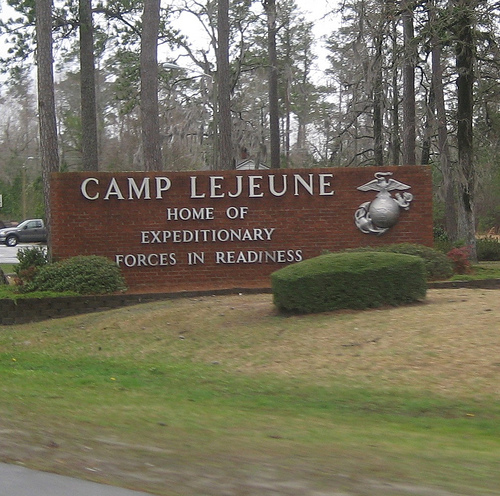
A Base at War: First Impressions of Camp LeJeune Nine Years after my First Tour

This is just a brief post on some first impressions on my assignment to Camp LeJeune after a nine year absence from the base. When I left LeJeune and my assignment with the Second Marine Division I had just completed twenty years in the military though I was not even three years into my service as a Naval Officer.

Today I was part of a Casualty Assistance Team meeting with the family of a young Navy Corpsman and Afghanistan veteran who killed himself in his apartment last night.  The Corpsman was part of a family with a long tradition of Naval Service who in his time in the Navy had gone to war with a Marine Battalion in Afghanistan’s Helmand Province and returned home changed by the war and struggling with PTSD and all the related symptoms of it.  This is something that I can understand having come back from Iraq in a rather bad way about two and a half years ago.  In my time with this young man’s parents today I found a young man that loved life but was wracked by his experiences of war.  He was well liked at his Marine Battalion as well as at the hospital and his death shocked the community almost as much as it did his family.  The sad thing is that this young man is emblematic the suicide problem in the military.  He is not alone, far too many Soldiers, Sailors, Marines and Airmen on active duty, in the Reserves or those that have left the service suffer so much from the unseen wounds of war that they commit suicide.  Since I have been here just a bit under two weeks this was a confirmation of what I knew just walking around the hospital, getting around the base and the local area.  Camp LeJeune is a base at war with Marines and Sailors fighting in Afghanistan and unfortunately many suffering from deep wounds of war at home living with physical, psychological, spiritual and moral injuries that don’t go away just because they return home.

When I left LeJeune in compliance with orders to the USS Hue City CG-66 in December 2001 we were just 3 months into the current war and barley two months into the Afghanistan campaign.  Marine morale was high though most Marines had not been to combat and those that had were veterans of Operation Desert Shield and Desert Storm, Somalia or the Balkans. Of course none of these actions lasted as long nor caused the amount of deaths as either the campaign in Iraq or Afghanistan.  Marines wanted to get a shot at the Al Qaeda terrorists that had attacked the United States and killed nearly 3000 Americans.

The Marines answered the call and have performed magnificently in every theater of the current war but the Corps has changed. Back in the late 1990s and early 2000s the Marines had a swagger that was typical of the work hard; train hard and play hard attitude of the Corps.  The Corps is now composed of many battle hardened veterans that have made deployment after deployment to the hottest combat zones in both Iraq and Afghanistan in which they took the initiative in both offensive operations in taking the battle to the enemy and employing solid counterinsurgency techniques especially in Al Anbar Province where the Iraqi Army performed quantitatively better under their tutelage in helping to turn the tide during the Anbar awakening.  Navy Corpsmen, Doctors and Chaplains serve alongside the Marines as they have done throughout our history.

I served with Marine and Army advisors in Al Anbar in 2007 and early 2008 in many of the remotest parts of the province and have dealt with individual Marines since. The Marines still have much of their swagger but it seems more fatalistic now.  An expert in trauma and moral injury told me of a recent visit to Camp Pendleton where Marines referred to themselves as “the walking dead” in an almost cavalier manner. The sad thing is that for many Marines this is only half a joke. The Corps in 2009 had the highest suicide rate in the military at 24 per 100,000 and suicides continue at a similar pace in 2010.  http://www.yuma.usmc.mil/desertwarrior/2010/03/11/feature6.html One occurred on Camp LeJeune where a Marine Sergeant pulled out a pistol and shot himself after being pulled over by Military Police in front of the base Fire Station.

As I made my way around the base the past week or so, I saw a lot more Marines with canes and obvious physical injuries from their combat injuries incurred in Iraq or Afghanistan. The Marines as always were professional but appeared to be much more serious than 9 years ago, many seeming to be old beyond their years. I love serving with and around Marines because they have a unique sense of professionalism combined with humor that is unlike almost any found in any part of the United States Military. However that positive is sometimes offset by a need to maintain an image of toughness even when they are dying on the inside which leads many not to seek help because it might make them look weak or broken, terms that no self-respecting Marine wants associated with his or her name.

In addition to the obvious injuries I noticed that while there was a much more serious tenor around the base that the Staff Sergeants and Gunnery Sergeants are a lot younger than they used to be back 9 years ago. With the war lasting as long as it has and the coupled with the expansion of the Marines during the war coupled with casualties and attrition by other means these young men and women are being promoted sooner than they were in the prewar days. Their leadership experience is mostly combat-related and they are in general superb combat leaders. However, this does not always translate well in a garrison setting especially if they are dealing with their own untreated PTSD or TBI nor is it helpful on the home front. As a result many of these young leaders are suffering the breakups of families at a record rate as well as substance abuse when they return home.

As Secretary of Defense Robert Gates noted in a speech at Duke University on September 29th of this year:

“There are a number of consequences that stem from the pressure repeated of deployments – especially when a service member returns home sometimes permanently changed by their experience.  These consequences include more anxiety and disruption inflicted on children, increased domestic strife and a corresponding rising divorce rate, which in the case of Army enlisted has nearly doubled since the wars began.  And, most tragically, a growing number of suicides.

While we often speak generally of a force under stress, in reality, it is certain parts of the military that have borne the brunt of repeat deployments and exposure to fire – above all, junior and mid-level officers and sergeants in ground combat and support specialties.  These young men and women have seen the complex, grueling, maddening face of asymmetric warfare in the 21st century up close.  They’ve lost friends and comrades.  Some are struggling psychologically with what they’ve seen, and heard and felt on the battlefield.  And yet they keep coming back.” http://www.defense.gov/speeches/speech.aspx?speechid=1508

These young men and women have forged a bond in combat and in many cases multiple combat tours. The have served well with honor and many don’t feel that people who have not been “in the shit” understand them or what they have been through.  There is a comradeship that comes out of war. There is segment at the end of the Band of Brothers mini-series where a German Commander is speaking to his soldiers after they have surrendered to the Americans. As the German Commander speaks to the survivors of his unit Corporal Joe Liebgott is asked to translate by another American. As he translates the German officer’s words the Americans know that he also speaks for their experience of war:

“Men, it’s been a long war, it’s been a tough war. You’ve fought bravely, proudly for your country. You’re a special group. You’ve found in one another a bond that exists only in combat, among brothers. You’ve shared foxholes, held each other in dire moments. You’ve seen death and suffered together. I’m proud to have served with each and every one of you. You all deserve long and happy lives in peace.”

I think that sums up what many feel today except unlike the Germans our war drags on with no end in sight.

The Marines are still tough and a force to be reckoned with on any battlefield. They, especially the Marine Divisions are an elite force but I believe that many are losing some of their resilience as the war goes in Afghanistan goes on.  Many from reports that I have read as well as those that I have talked with are concerned that much of the country doesn’t support the war nor appreciate their sacrifice. Many are concerned that their sacrifices as well as those of their friends, those killed and wounded will be wasted and the suffering that goes on after the war will be swept aside by politicians, the media and the public at large. They are also concerned that the people that they have worked with against the Taliban and Al Qaeda in Afghanistan and those that they have tried to protect and care for will suffer even more if the Taliban return to power.  I can say that I worry about my Iraqi friends and fear for them when I hear news of more attacks.

In the midst of this war we went through a number of elections and it troubles me that in the last election that the war and those fighting it were hardly ever mentioned by candidates from either party.  We mentioned it was usually for show to help politicians gain favor with voters.  We deserve better, we are not just a something to talk about at political rallies that when the election is over simply budget item to be slashed because the country is in a mess. These young men and women, as well as old guys like me are the sons, daughters, husbands and wives and brothers and sisters that have volunteered to serve this country.  The wounds that these young men and women, their experiences in combat that have left their souls scared will not go away when the last American leaves Iraq or Afghanistan.

This young man that we lost last night will be buried by his family and we will have a memorial service in his honor.  His many friends will grieve and those of us who are caring for his family will not forget them. I don’t want this young man or any other to be forgotten like so many who have returned from war before them.

Peace,

Padre Steve+


Leave a comment

Filed under iraq,afghanistan, Military, PTSD

“Victory” and Reality: Never think that War will be Easy

“No one starts a war-or rather, no one in his senses ought to do so-without first being clear in his mind what he intends to achieve by that war and how he intends to conduct it.” – Karl von Clausewitz

I was talking with a friend recently and the subject came to the support of a certain church for the war in Iraq back in 2003.  My friend, who is very thoughtful, spiritual and circumspect made the comment that “they were even against the war” when we discussed the merits of this particular church.  I thought for a second and said “after the past nine years of war was that wrong?” He paused a moment and said “I see your point.” I think that in the early months and years of this war, where we quickly deposed the Taliban in Afghanistan and Saddam Hussein in Iraq that we made unfounded assumptions about our “successes” with the end result that we have had to fight a much more protracted, bloody and costly series of wars than we had ever imagined. Like so many nations who entered into wars believing that they would have easy victories achieved at a cheap price in blood and treasure we have discovered once again that the serpent of the fog and friction of war coupled with hasty or politically expedient decisions has come to cause us great pain as a nation and after nine years a foreboding sense that we might not win in Afghanistan.

Like most Americans after the attacks of 9-11-2001 on the World Trade Center and the Pentagon I was all in favor of going after those that attacked this country wherever they were to bring those that planned these vile attacks to justice.  Within a month the United States had driven the Taliban out of power in Afghanistan and put the leaders of Al Qaida on the run.  By 2002 the US Government had began making a case against Iraq, one of a trio of nations identified as the “Axis of Evil.”  In 2003 we went to war with Iraq after failing to convince many allies of the necessity of the attack. When the “shock and awe” campaign was launched, Iraq forces defeated, Baghdad captured and Saddam Hussein driven from power there was a heady feeling of success.  Even those opposed to the invasion were amazed at the speed of and apparent ease of the conquest as pictures of cheering Iraqis filled the screen as the statues of Saddam came down.  In May President Bush landed on the USS Abraham Lincoln to proclaim “mission accomplished.” “We support the troops” ribbons and bumper stickers were the rage, victory has many friends and some churches even ascribed the victory to God.  But as the muse would say to the returning Roman conquerors, “victory is fleeting.”

We thought that we had achieved a “revolution in warfare” in the two campaigns but within months the tide had shifted in Iraq as in a colossal mistake of epic proportions a decision was made either in Washington DC or by the head of the Coalition Provisional Authority Ambassador Paul Bremer. A decision was made to disband the Iraqi Military, Police and Civil Service offices without having enough troops in place to police Iraq or civilians including NGOs and the UN available to fill the civil service gaps.  This was in direct contravention to years of CENTCOM plans. To make matters worse we had gone in so light that we had not disarmed or demobilized the Iraqi forces, thus we sent the people who could best help us restore Iraq to working order home. We sent them home and as anyone that knows Arab culture can tell you we dishonored them and created enemies out of potential friends while placing corrupt opportunists in power.  It was if we were making things up as we went rather than thinking things through and the result was a disaster.  By the end of 2004 a full-fledged insurgency had broken out an insurgency that would cost thousands of Americans and Iraqis their lives with tens of thousands of others wounded.  It was not until late 2007 and 2008 that the tides turned in Iraq as Iraqi Sunnis realized that Al Qaida backed insurgents were more of a threat to them than the American forces were.

Over the course of the war the thrill of the early days was forgotten as American Soldiers and Marines engaged a resourceful enemy that was willing to fight us in ways that we had neither expected nor planned.  War loses its luster when the thrill of victory is gone.  With the transition of the mission in Iraq and a renewed focus on Afghanistan where the Taliban had come back with a vengeance we are now moving toward being at war for 10 years.  We have fought the war with a military force that is well under 1% of the US population.  The military has fought well. We have not been defeated in open combat despite losing many troops to IEDs and ambushes; though in Afghanistan there have been a couple of near run events where small bases were nearly overrun by Taliban forces. We should remember General Hans Guderian, the creator of the Blitzkrieg and his words about the German campaign in Russia after the Battle of Kursk in 1943: “We have severely underestimated the Russians, the extent of the country and the treachery of the climate. This is the revenge of reality.” General Heinz Guderian

Nine plus years after 9-11 most of the American public as well as the political class of both parties have soured on the wars even while others seek war with Iran and maybe North Korea. I wonder about the wisdom of taking on even more enemies when the military is stretched to the breaking point and the nation is heading into bankruptcy.

But such things are not new from a historic point of view, if only we would look to history. Back in 1940 after their victories in France and the Low Countries the Germans felt as if they were invincible. By 1941 their troops were bailing out the Italians in North Africa and the Balkans while engaging the British in the air above Great Britain and in the seas around it. That did not stop Hitler from attacking the Soviet Union where as in France and the Balkans the German Army enjoyed amazing success until winter arrived and the Soviets counter-attacked.  Thereafter the German Army would not enjoy the same success and millions of German Soldiers; not to mention at least 20 million Soviet citizens and Red Army Soldiers died. Eventually the Wehrmacht was shattered, defeated and Europe devastated.

I am not saying that this will happen to the US, but it can.  We need to learn from history and look at how good people were enticed by the aphrodisiac of the “victory disease” that accompanied supposedly easy victories.  If one looks at Germany many officers, soldiers and civilians drank the aphrodisiac of victory and had their faith in Germany, their leaders and their cause destroyed as the war turned against them and they experienced defeat even while many times getting the best of their enemies on the battlefield.  Honorable men that had served their country well were either cashiered by the Nazi government and many killed by that instrument of evil because they voiced opposition to the regime.  Initially many had been lured into the trap of easy victory.

Back in 2001 and into 2003 I was like many of those men who served in the German military.  I was excited about the apparent easy victories in both Afghanistan and Iraq.   But like some German officers of that day who realized as the campaign in Russia was going badly into the fall of 1941 by late 2003 I began to sense that something was going terrible wrong in Iraq.  I think it was the moment that I heard that we had disbanded the Iraqi Army, Security forces and Civil Service as I started my course of study with the Marine Command and Staff College program held at the Joint Forces Staff College.  The experience of serving with thoughtful Marines in my unit and my fellow students; Marine, Navy, Coast Guard and Allied officers at the school helped me see the danger that was developing in our campaigns.  By the time I arrived in Iraq in the summer of 2007 the tide was beginning to turn but I saw the devastation of the country, ministered to wounded Marines and Soldiers and seen the affect of the war on Iraqis.  My duties with our advisors and their Iraqi counterparts were enlightening as I travelled about Al Anbar Province.

In the end I think that the Iraqis despite everything will do okay. I believe that most are tired of war and will not succumb again to sectarian violence on a large scale. I do not think that they have an easy road ahead but I believe the words of Brigadier General Ali as I left him for the final time: “You come back to Iraq in five years, as tourist, it will be better then.” I am not so optimistic about Afghanistan or Pakistan and I do not think we have yet seen the worst in those countries, but at least despite all of our mistakes Iraq most likely will do well.

The experience of war coupled with my study of history and military theory at the Command and Staff College as well as in my studies from my Master’s degree in Military History changed my perspective. I still serve faithfully and hope and pray for a conclusion to the wars that leaves us in better shape and brings peace to the lands that we have shed the blood of our Soldiers, Sailors, Marines, Airmen and other Federal intelligence, diplomatic and police agencies and treasure in.  I pray for my friends serving in harm’s way and those preparing to deploy and I pray for the safety of my Iraqi military friends and their families.

I am not a defeatist should someone level that charge at me.  I agree with Ralph Peters who made this comment: “We will not be beaten. But we may be shamed and embarrassed on a needlessly long road to victory.” However, I wonder if this country has the will to win and to make the sacrifices to do so and not just shovel them off on those that serve and have served throughout this war, a war which appears to have no end and which may expand to other countries.

Like the Germans we are engaged in a multi-front and multi-theater war but we have been trying to do so upon the backs of less than one percent of the population. This allows the rest of the country to live under the illusion of peace and prosperity with the bitter losses and memories of 9-11 fade into a yearly remembrance called “Patriot Day” by politicians of all stripes who often mouth empty words to eulogize the victims and thank the troops and then move on to their next fundraiser.  By doing this we have worn out the force without the full support of the nation which is absolutely necessary for the successful prosecution of a war, especially a long drawn out war such as we have now.  Unfortunately most Americans have little patience and while we mythologize a lot about World War Two one has to remember that there was a strong lobby that desired to end the war in 1944 even if victory had not been achieved.

We have a military now composed of many battle hardened and deployment weary soldiers who live in a world that the bulk of the nation does not understand nor really wants to understand.  We have seen the cost of the war multiply to the point that it has drained the ability of the military to prepare for other wars and modernize itself.  What happens if God forbid we are forced into a war with Iran or North Korea?  With what will we fight those wars?

When the Allies were cracking the German front in Normandy and the Red Army was decimating Army Group Center in the East, Field Marshall Gerd Von Rundstedt was asked what needed to be done by a General at Hitler’s military headquarters. The old Prussian warhorse simply said “make peace you idiot.” He was fired shortly thereafter. We certainly have not reached that point but should anything else break out while we are still engaged in Afghanistan and maintain a large number of troops in Iraq that could change.

One always needs to be careful when getting into “easy” and “quick” wars as more often than not they are neither easy nor quick.

Peace

Padre Steve+

Leave a comment

Filed under Foreign Policy, History, iraq,afghanistan, Military, national security

Fighting a World Wide Insurgency: The Problem Fighting Revolutionary Terrorists and Insurgents- Part One

Taliban Insurgents

“Warfare is now an interlocking system of actions political, economic, psychological; military that aims at the overthrow of the established authority in a country and its replacement by another regime.  To achieve this end, the aggressor tries to exploit the internal tensions of the country attacked ideological, social, religious, economic, any conflict liable to have a profound influence on the population to be conquered.” Roger Trinquier Modern Warfare

The United State and our allies have been at war with Islamic terrorists as well as nationally based insurgencies for over nine years.  The war that we are fighting is not like the Second World War where we fought a conventional war against enemies that were defined by national, political and geographic boundaries.  That war as well as the First World War and most recently the 1991 Gulf War but rather is a global insurgency in which we are pitted against a number of sometimes disparate groups One of the things that seems to be misunderstood by much of the media as well as the public

Muslim terrorist groups they use some tenants of Islam, mostly from the Wahabi school that emerged on the Arabian Peninsula in the late 1700s to justify what they do. Hezbollah and the Iranian Revolutionary Guard use the Islam taught by the school of the Ayatollah to do the same.

However that being said there are a sizable number of Muslims worldwide that oppose the terrorists and their brands of Islam but still can be offended and driven to the other side by Americans doing just what pastor Jones got started. The radicals take this and use it as propaganda against us.

The fact is that it is all about using propaganda effectively and not giving the terrorists the grist they need to use against us. The terrorist or the insurgent has no need to tell the truth and usually will not and will twist any “truth” to his own end. This is true in every revolutionary war, which is what all of these groups are waging. They are fighting to turn all of Islam and anyone else they can against us. This is the case since the beginning of time and not limited to Muslims.

We as Americans have been pretty lousy at this except when we were the revolutionaries. It is a fact, not just with the Muslims but all revolutionaries that since they are on the weak side of the military equation that they use propaganda, especially what any of our people do to radicalize people on the fence against us. Jones and others played into their hands and by doing so jeopardize the mission and endanger our troops. The fact is that we neither have the resources or people to allow this to become a war against all of Islam. Thus we have to exploit natural divisions and cultural divides in the Moslem world to isolate and neutralize the radicals of Al Qaeda, Hamas, the Taliban, Hezbollah and the Iranian Revolutionary Guard.

It may seem on the surface to be politically correct appeasement but a true strategic purpose is served. The counter-insurgent cannot do what the insurgent can as they will lose the propaganda war and with it the broader war. We are fighting a world-wide revolutionary war against Moslem fundamentalist extremists that want us to make it a war against all of Islam. If that were to be the case we would have to go to a total war footing, ignore our own economy renew the draft and prepare for a war that in the long run we cannot win and will leave us as broken as Germany after WWII.

The problem with Islam as that for the most part much of Islam especially in the Middle East still lives in the 14th century with fancy technology. They did not have the Renaissance, Reformation or the enlightenment thus the appeal of the fundamentalist sects and radical Islam. That makes our job hard and that of Bin Laden easy as their world-view  promotes a black and white understanding of the world which makes recruitment of youthful idealists easy especially when the conflict is framed as against “Crusaders” or “Imperialists” opposed to Islam.

The war that we are engaged in is not conventional and we do not have a good record in recent times of fighting this kind of war. We lost in Vietnam because we ignored this. We won all the battles and lost the war. Despite what some pundits believe this is not like WWII and no new incarnation of George Patton will win it.

As I said we are engaged in a revolutionary war which is different than other types of war. In revolutionary wars the revolutionary no matter what his cause is able to use propaganda to influence opinion, usually of people that they are trying to bring to their side. Our founders were very good in portraying the British as violent and brutal occupiers. We used British excess especially in Boston and in the South against them very well. The Jihadists are promoting a revolutionary cause, that cause being the overthrow of established governments in the Middle East and bringing about a radical and fundamental brand of Islamic rule. This happened in Iran and after 30 years the young people are beginning to revolt against the Ayatollahs. It is also revolutionary because they are actively promoting the overthrow of established states and have a goal of establishing their brand of Islam over the entire world. The use revolutionary techniques and strategies used successfully by other revolutionaries attempting to control the populations where they operate through both terror and by discrediting unpopular or corrupt governments.

One of the problems that we in the United States have in understanding Al Qaida and other Islamic groups that rely on terrorism as their primary means of conducting warfare is the nature of the terrorist himself.  Roger Trinquier who observed and fought against such groups in the 1940s and 1950s wrote one of the fundamental books on this type of warfare.  Trinquier said something that will undoubtedly be taken wrong by some readers of this essay but if one understands the nature of Revolutionary war has been true going back for centuries and is not confined to militant Islamic Fundamentalism.   Trinquier observed that “the terrorist should not be considered an ordinary criminal.  Actually he fights within the framework of his organization, without personal interest, for a cause he considers noble and for a respectable ideal, the same as soldiers in the armies confronting him.”

One can see how this is demonstrated in history in such disparate groups as the Israeli Irgun fighters who used terrorist tactics from 1931 until the founding of the state of Israel in 1948 against the British occupiers, the Irish Republican Army.  This is even part of the American experience in the post Civil War South of the Reconstruction era.  Then many Southern whites organized into guerrilla terrorist units such as the Klan in Tennessee, the Red Shirts in South Carolina, the Knights of the White Camellia in Louisiana, the Young Men’s Democratic Club in Florida in order to attack anyone associated with Reconstruction. Their targets included newly free blacks, carpetbaggers, Scalawags, teachers from the North, Freedmen Bureau officials, northern troops, and Republicans.  If you read their writings or even query their current day descendants you will find that none believed that they were criminals and their actions, while unacceptable to many were justified.  One does not have to agree that the terrorists cause is right to acknowledge that terrorists believe this to be true.  Thus in fighting the terrorist organizations one has to employ a wide variety of tactics to protect the populations targeted by terrorists to include police, limited military involvement, the use of propaganda, and “soft” methods to provide aid to these populations and isolate the terrorists from them.

The current batch of Jihadists are actually fairly disparate and not necessarily allies as we found out in Iraq where Al Qaeda and the foreign fighters turned the population of Al Anbar Province against them and brought that Sunni population to our side. They also have sometimes conflicting goals or limit their cause to local areas. The Sunni and the Shi’a have a hard time working together so while this is a global revolution it is not monolithic. Thus if we are smart we can exploit natural divisions in these groups. To do so we have to play smart in how we fight them recognizing that the “soft” approach often is better as the French found out too late in Vietnam but did well with in Algeria. See books by David Galula “Counterinsurgency in Algeria 1956-1954” “Counterinsurgency Warfare”, Roger Trinquier’s “Modern Warfare” as well as the book by Alister Horne “A Savage War of Peace” all are excellent reads. Bernard Fall’s book “Street Without Joy” is a good study of how this happened in French Indochina. The US Counterinsurgency Manual is available online or in bookstores as is “Learning to Eat Soup with a Knife” by John Nagl, a major writer of US Counterinsurgency doctrine.

US Advisors with Afghan Army Officers

In a world-wide insurgency even actions which seem logical to Americans at home can be detrimental to US Forces and political goals in Afghanistan, Pakistan, and Iraq and throughout the Muslim world. I’m not a fan of the Mosque near the World Trade Center even though it is the equivalent of 6 normal city blocks away and not visible from the site. Many Americans if not an outright majority oppose this building project yet the builders don’t seem to understand the raw wounds that the project has opened for many Americans. I’m sure for them that much of it is a business, they are developers in New York City and the land was available. Yet the project can quite rightly be seen as insensitive because of what it means to the victims.

At the same time politicians and protesters by naming it the “Ground Zero Mosque” has raised its propaganda value exponentially, that is why Hamas and Hezbollah have also raised the ante in their talk about it. Thus what was an annoyance and hurtful to the victims has become a propaganda victory for the terrorists. In a sense we have let our collective outrage play into the terrorist’s hands. When he pastor of a small church in Florida threatened to burn a large number of copies of the Koran he helped ignite a firestorm of protest in many parts of the Islamic world especially in the epicenter of our current struggle in Afghanistan and neighboring Pakistan.

We are at war with the warlike highly militant strains of Islam and trying to keep the more Western leaning peaceful variants on the sidelines or enlist them to our side. This is a hard path for our leaders to walk as President Bush found out and President Obama is finding out is that most Americans don’t see it that way.  To many Americans all of Islam is the enemy and nothing can change that and the heated passion of our population often plays into the hands of our enemies.  Thus both Presidents’ comments about Islam have usually fallen on deaf ears and both have been excoriated for straddling this fence.

Anyway as you gather I have spent a considerable amount of time studying this type of warfare. I admit that this is pretty unusual for a chaplain, but I also have a Masters degree in Military History as well as the Marine Corps Command and Staff College. When I was in Iraq I knew more than many Marine and Army officers about fighting this type of war. Kind of weird I know but what can I say?

One of the most famous and successful practitioners of Counterinsurgency Warfare was French Colonel David Galula.  Galula in a sense is the “voice crying in the wilderness” of counterinsurgency doctrine and his methods have been used with some measure of success during the “Surge” in Iraq and the “Anbar Awakening” which turned the tide of the Iraqi insurgency.  Galula commented about terrorist tactics, tactics that have not changed in either Iraq or Afghanistan:

“The rebels realized that they could achieve the greatest psychological effect on the French and on world opinion at the cheapest price by stepping up terrorism in the main cities, notably in Algiers, which served as headquarters to most French and foreign correspondents and thus acted as a natural amplifier. A grenade or a bomb in a café there would produce far more noise than an obscure ambush against French soldiers in the Ouarsenis Mountains.” Galula “Counterinsurgency in Algeria”

One of the most frustrating aspects for military and police personnel fighting insurgencies that employ terrorist tactics is that quite often superior forces cannot finish off the insurgents. Galula provides an answer to this question.

“Our forces were vastly superior to the rebels. Then why couldn’t we finish with them quickly? Because they managed to mobilize the population through terror and persuasion . . . It was therefore imperative that we isolate the rebels from the population and that we gain the support of the population.  This implied that under no circumstances could we afford to antagonize the population even if we had to take risks for ourselves in sparing it.”

This is a lesson that we have not always learned as incidents such as the Abu Ghraib torture and most recently a series of targeted killings of Afghan civilians by a squad of Army Soldiers in Afghanistan in which they allegedly planned the killings in advance and kept body parts of their victims.  Unfortunately atrocities like this as was demonstrated at Mei Lai in Vietnam do little to the enemy and everything to turn the populations that we are trying to protect and world opinion against us. It also provides grist for the terrorist propaganda purposes and aids him in recruiting more insurgents to his cause.

Galula recognized the quandary that commanders of police and military units involved in counterinsurgency operations face when dealing with populations where terrorists operate. Galula was a realist about this and noted “If we distinguish between people and rebels, then we have a chance. One cannot catch a fly with vinegar. My rules are this: outwardly treat every civilian as a friend; inwardly you must consider him as a rebel ally until you have positive proof to the contrary.” This may seem contradictory but the concept was used by Ronald Reagan during the Cold War using the term “trust but verify” in relationship to the Soviet Union and arms control.

David Kilcullen an Australian Army Lieutenant Colonel and counterinsurgency expert and advisor to General David Petreus noted

Colonel Dennis Drew writing in 1988 understood the linkage of all parts of insurgency and how well an insurgency represents the essence of the thought of Prussian theorist Carl von Clausewitz: “Although theorists consider insurgent warfare to be anti-Clausewitzian, such warfare is the very embodiment of the Prussian master’s most famous dictum. Insurgency represents the total integration of political and military factors, but with political factors always in complete domination.” (INSURGENCY AND COUNTERINSURGENCY American Military Dilemmas and Doctrinal Proposals- Air University Press Maxwell Air Force Base, Alabama 1988)

Thus attempting to fight an insurgency and terrorist groups thinking that one can defeat them in the style of world War Two, as is so often espoused by pundits and amateur military theorists that crowd the airwaves and cyber space is foolish and only leads to the defeat of the counter-insurgent and the loss of the population targeted by the insurgent. The wars in Afghanistan and Iraq are not conventional wars and the political outweighs the military in every respect.  As Drew noted:

“Although the military aspect of the struggle may ebb and flow, the source of insurgent strength–a covert political infrastructure–remains constant. This infrastructure, the bitter fruit resulting from the perceived political and economic inequities sown much earlier, is the most important ingredient in the insurgent recipe for success. The political infrastructure performs at least six major functions vital to the survival, growth, and eventual success of the insurgency: (1) intelligence gathering and transmission; (2) provision of supplies and financial resources; (13) recruitment; (4) political expansion and penetration; (5) sabotage, terrorism, and intimidation; and (6) establishment of a shadow government.”

This is exactly what has happened in Afghanistan and why we have such difficulty in fighting the insurgency.

One of the most common tactics that the United States has attempted in attacking the insurgents is the strategy of decapitation. In this the U.S. has attempted to kill the leaders at the top echelons of the insurgency with limited success. Even when we kill off a senior Al Qaida or Taliban leader others rapidly take their place with little affect in their operations against us. Galula recognized the fallacy of this approach in Algeria when the French government succeeded in capturing five top leaders of the Algerian rebellion. “Then, five top leaders of the rebellion, including Ben Bella, had been neatly caught during a flight from Rabat to Tunis. Their capture, I admit, had little effect on the direction of the rebellion, because the movement was too loosely organized to crumble under such a blow.” The lesson here is that should we ever succeed in capturing or killing Osama Bin Laden or Mullah Omar that this will not lead to victory unless we are able to protect the population of Afghanistan.

Protecting the population Iraqi Police and Civilians in Ramadi

To do this the population must come to our side because they know that we will stay the course and that we can be counted on to help them.  This cannot just be the military aspect of protecting them against the terrorists as well as economic and political reforms that is consistent with their traditional way of life which is not necessarily consistent with Western political and social traditions or practices. In fact the difficulty for the United States and NATO in Afghanistan is the political struggle on the home front where as Drew states:

“American military dilemma concerns time, public support, and image. Time is the ally of the insurgent; the longer an insurgent survives, the stronger its chances of growing. Meanwhile, as time drags on, the American military position is weakened by declining support, impatience, and war weariness at home, particularly if there is no perceived progress in the struggle. Maintaining public support is clearly a responsibility of the political side of the equation and involves factors far beyond the battlefield–although military progress is a key ingredient. The connection between the duration of the struggle and public support is the image of the insurgency presented to the American body politic.”

To be continued….

Peace

Padre Steve+

1 Comment

Filed under counterinsurency in afghanistan, History, iraq,afghanistan, Military, national security, Political Commentary

Raw Edges: Are there other Chaplains out there Like Me?

Before a Convoy

The past week or so I have had to go back and revisit my Iraq experience. Part of this is due to work, we have had seminars on the spiritual and moral affects of trauma, the challenge of forgiveness and most recently discussing best spiritual care practices for those who suffer from PTSD or Traumatic Brain Injury (TBI).  The training has been excellent but has kicked up a lot of stuff in me.  Added to this have been reports out of Afghanistan about more casualties in particular of a helicopter that crashed that killed 9 Americans, the Taliban claim credit for downing the aircraft but the circumstances are not fully known.

One of many helicopter flights, this a daylight flight in a Marine CH-46

The course last week on the spiritual and moral affect of trauma and the challenge of forgiveness brought up issues from Iraq but not upsetting.  In fact the seminar taught by Dr. Robert Grant author of The Way of the Wound was helpful to me in sorting out what I have been going through for the past couple of years.  The training this week is also good, good information but for me it is more unsettling because it deals with images, videos of convoys, burning vehicles and other things like that.  The convoy images coupled with the news of the helicopter crash actually had me pretty shaken as I spent a large amount of time in small convoys with small groups of Americans and Iraqis in pretty dangerous areas of Al Anbar Province stretching from Fallujah to the Syrian border as well as a couple of hundred hours in the air, usually at night in various Marine and Army helicopters as well as the MV-22 Osprey.  During those experiences we took fire a couple of times and had a few experiences on some of our flights that were a bit sporty.  So for a while I was lost in my own stuff but was able to pull out in not too long of time.

Convoy stopped near Al Qaim

Some of our discussions revolved around how trauma and war can impact a person’s image and relationship with God, whatever that may be.  The focus was on us as pastoral care givers caring for those in our charge.  Once again this really good information for me as I will be dealing with a lot of PTSD and TBI cases are Camp LeJeune.  But there was one thing that got me.  I came back from Iraq as most of my readers know in pretty bad shape dealing with PTSD and issues of abandonment feeling disconnected with the Navy and my church.  Part of that was what amounted to be a loss of faith so severe that I was for all practical purposes an agnostic for almost two years because I couldn’t make sense of anything to do with God, I felt God forsaken it was to use the image of St. John of the Cross, my Dark Night of the Soul.  I am doing better now and feel like my faith has returned to some degree, certainly not like it was before but while I have doubts I am okay with that part of the journey now.

Christmas Eve not far from Syria

I know a number of military Chaplains from the Navy and Army that have returned from Iraq or Afghanistan in some sort of faith crisis many suffering from PTSD or TBI.  I am actually wondering how many are out there.  I know that I am not alone, but I need to know if others are going through this experience too.  It was for me a desperate feeling to be the Chaplain, Priest, Pastor and spiritual care giver when I was struggling having no answers and only questions, when people asked me about God and I didn’t even know if God existed.  This is the unspoken cry of at least some and possibly quite a few Chaplains and other ministers who have experienced trauma and moral injury.  One thing my incoming CO at my old unit asked me was “where does the Chaplain go for help?”  At that point I said that I didn’t know.  The sad thing is that I know many chaplains and ministers that have a basic lack of trust in their fellow clergy and do not feel safe confiding in them because they feel that they will be judged, not listened to or blown off.

A different war with the Bedouin in the western desert of Iraq about 5 km from Syria.

When I was diagnosed with PTSD in the summer of 2008 I made it my goal to grow through this and hopefully as I go through this to be there for others. Part of my recovery came through sharing experiences, the good and the bad on this site.  Elmer the Shrink asked me back when I started this if I thought that it would be helpful to me in my recovery, but he also asked if I was okay in opening up about this topic.  Since I didn’t see many people writing about this from the perspective of being a “wounded healer” I told him that I thought that I had to do it.  The experience has been terribly painful but at the same time I think that it has been worth it because as a Priest and Chaplain I think now more than ever in my weakness I can be with people in their difficult times without trying to “fix” them.

Colonel David Abramowitz with me and RP2 Nelson Lebron after presenting me with the Defense Meritorious Service Medal and Nelson the Joint Service Commendation Medal for our service with our advisors and Iraqis in Al Anbar with the Iraq Assistance Group. After this we both dealt with abandonment and other issues on our return home.

So who is there for “damaged” Chaplains? Who takes care of us? I was lucky or maybe blessed. I had Dr Chris Rogan ask me if I was okay. I had Elmer the Shrink do a lot of the hard work with me. At Naval Medical Center Portsmouth I had a Command Chaplain that was wise enough to protect me while I went through the deepest and darkest valley of my life.   As I recovered he challenged much like a Baseball Manager would challenge a pitcher who had been very successful on other clubs coming off the disabled list to regain his self confidence and ability to get back on the mound with a winning attitude. Not every Chaplain gets what I got and I am blessed.  I still have work to do and I need to recognize my limits, much as a pitcher who has recovered from Tommy John surgery makes adjustments.

So this is my question:  Are there others other there like me?  Are there other Chaplains experiencing such feelings after Iraq or Afghanistan? I’d really like to know because I believe that in what might be termed “a fellowship of the forsaken” that we can rediscover faith, belief and hope again and in doing so be there for others.

If you want please let me know if this encourages you or feel free to comment. Prayer is still hard for me but I promise that if someone asks that I will pray and to the best of my ability be available for them as others were for me because I don’t want any Chaplain to experience the abandonment that I felt went I returned from Iraq having felt that it was the pinnacle of my military career. To those Chaplains I just want to say that you are not alone.

Peace

Padre Steve+

4 Comments

Filed under faith, iraq,afghanistan, Military, Pastoral Care, philosophy, PTSD, Religion, Tour in Iraq, US Navy