Tag Archives: us army

The Impact of Technology on the Organization, Strategy and Tactics in the Second World War

Introduction

World War II saw some of most rapid technological advances impacting military forces in history. The advances in technology impacted the organization and tactics of major power military forces, especially those of the United States, Germany, the Soviet Union and Great Britain.  These advances combined to revolutionize the way wars were fought and military forces have been organized to the current day.

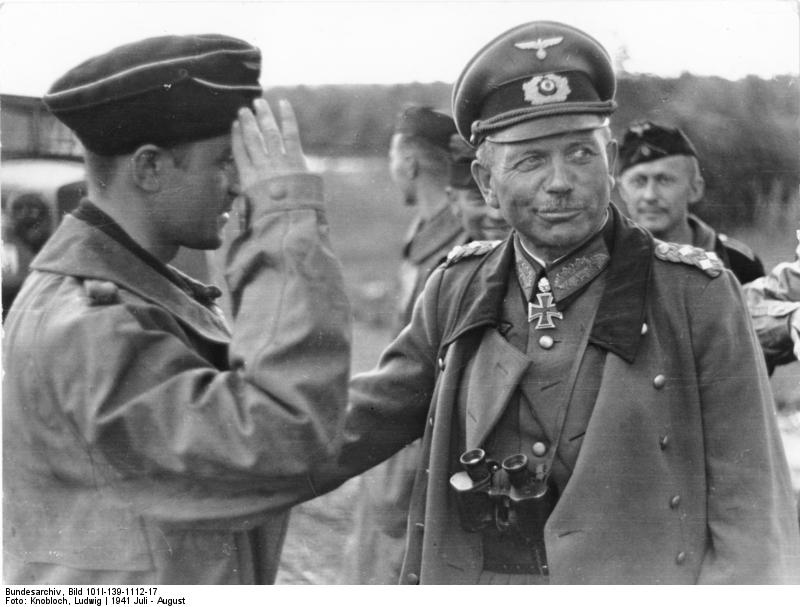
Heinz Guderian’s Theories of Mechanized and Combined Arms Warfare and His Organizational Genius Revolutionized  Land Warfare

The technical developments and their relationship to military organization and tactical applications began in the years following World War I as various writers began to analyze that war and formulate ways not to repeat the grist mill of trench warfare that dominated it.  The writers looked at tactical innovations, new technology and enunciated ways that technology and tactics could be combined with organizational changes to revolutionize the ways that wars were fought.  Chief among these writers were General Fuller and Captain B.H. Liddell Hart in Britain, Colonel Heinz Guderian and Erwin Rommel in Germany.  Airpower theories were dominated by the strategic bombing theories of Italy’s Guido Douhet and tactical air theories of American Marine General Roy Geiger as well as the pioneers of tactical air support in the Luftwaffe.   In the United States General George C. Marshall helped initiate doctrinal changes that would change the way that the U.S. Army would fight.

Among the common elements found in the works of these men was the necessity to apply technology to overcome the pitfalls that all of the armies which fought in the First World War found themselves.

The Mechanization of Ground Forces

Mass Speed and Firepower: The Germans Would Pioneer the New Style of Warfare

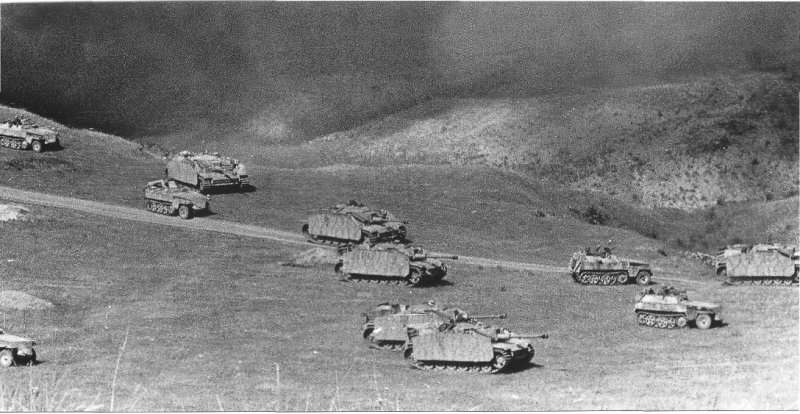
There were a number of major technological advances between the wars and during the war that helped change the nature of warfare.  One of the earliest was the mechanization of armies which began toward the end of the First World War and continued between the wars to varying degrees in each country.  All the major armies experimented with mechanized forces to one degree or another. In Britain these got the earliest start with some formations being 100% mechanized by the early 1930s.  France was more circumspect about mechanization only slowly converting forces as they were focused on a defensive strategy based on the Maginot Line.  Many in the German high command resisted Guderian and other innovators regarding the mechanization of the Wehrmacht as well as the development of the Panzerwaffe.

The Soviet Union Would Turn the Tables on the Germans using their own Tactics

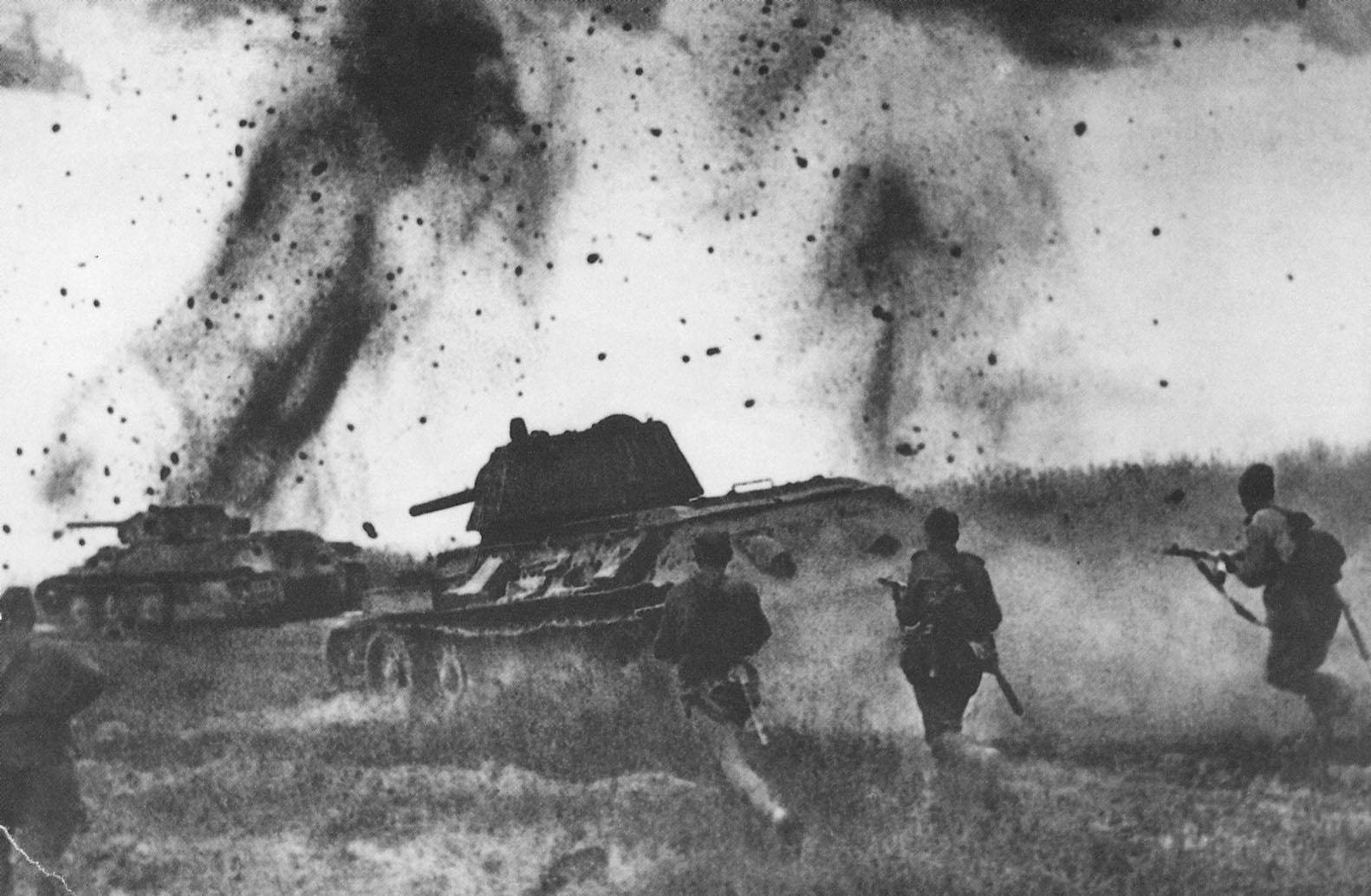
The Soviet Union had a large number of mechanized and armored formations prior to the war though they were not proficient in their use and had not developed doctrine to match the forces that they controlled.  The Untied States also resisted efforts to mechanize its Army but seeing the results of the German Blitzkrieg quickly overcame years of resistance to become an Army that save for 2 Cavalry Divisions was 100% mechanized.  The development of Airborne formations added the possibility of vertical envelopment to ground operations. These developments impacted nearly every campaign in Europe and North Africa and to a much lesser degree the Pacific theater. German performance in the early Polish, French, North African and Balkan Campaigns as well as the initial foray into the Soviet Union were all successful due to the proficiency of their combined mechanized, Panzer and tactical air forces.  The Soviets would develop and become very effective at this type of warfare on a much large scale than the Germans could have imagined beginning with the Stalingrad counteroffensive and especially in the destruction  of the German Army Group Center in the summer of 1944.

Though Using Lighter Armored Forces the Americans Would become Proficient in the New Type of Warfare by the Summer of 1944

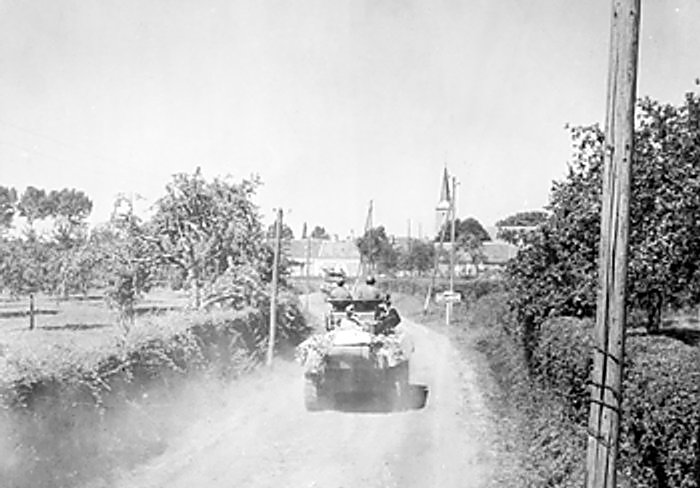
The Americans became proficient at mobile operations during the war, especially during the “dash across France” and the breakout in the Saar-Palatine campaign in 1945,  but many times uninventive commanders squandered the advantage and allowed themselves to be sucked into battles of attrition that their forces were not made for.

Communications

A key development that accompanied and accentuated the mechanization of ground forces were advances in tactical wireless communications which made it possible for commanders to keep up with fast moving formations and react in near real time to changing tactical situations.  The Germans were the first to become very proficient in this as they not only developed communications for ground forces but also for coordination between tactical air forces and ground forces.  This made the German Blitzkrieg the first example of modern air-ground combat cooperation.  The Americans, British and Soviets would follow suit but it was the German Wehrmacht and Luftwaffe that pioneered the communications revolution.  As the war went on communications capabilities increased and armies became more dependent on tactical and long range wireless communications.  The dependency of military forces on communications networks became a major factor in operational planning and the success of the Allies in breaking Japanese and German codes gave them an advantage in anticipating German or Japanese moves.

Armor, Firepower and Mobility: The Tank Comes into its Own

World War Two Saw Tanks become Deadly Instruments of Modern Warfare

Mechanization was a major factor in the war and the most decisive component of the mechanization of ground forces was the development of the tank as well as specialized formations which employed tanks in close cooperation with other arms, such as mechanized infantry and artillery.  The development of such forces really began with the British but the best example of this was the German Panzer Division.  The Panzer Division was a totally mechanized and integrated force of all arms which was employed in mass and capable like all German units to be task organized into Kampfgruppen to optimize tactical flexibility.  British Armored Divisions were tank heavy and infantry light which made them far less flexible organizations.  Soviet Armored forces were slow to develop but they became masters of large level operational maneuver using mechanized and tactical air forces to a deadly effect against the Wehrmacht.  The Americans delivered a light and flexible armored formation and became very proficient in combined arms warfare though the divisional structure often proved too light and not as resilient as German formations.  It was in this environment that the tank truly came into its own to dominate the battlefield in a way that many could not have imagined prior to the war. Firepower, protection and mobility advantages gained through technological advances increased the lethality and survivability of the tank and forced each side to develop better ways of neutralizing tanks through more powerful anti-tank guns, sabot rounds and shaped charges.

Tactical and Strategic Air developments

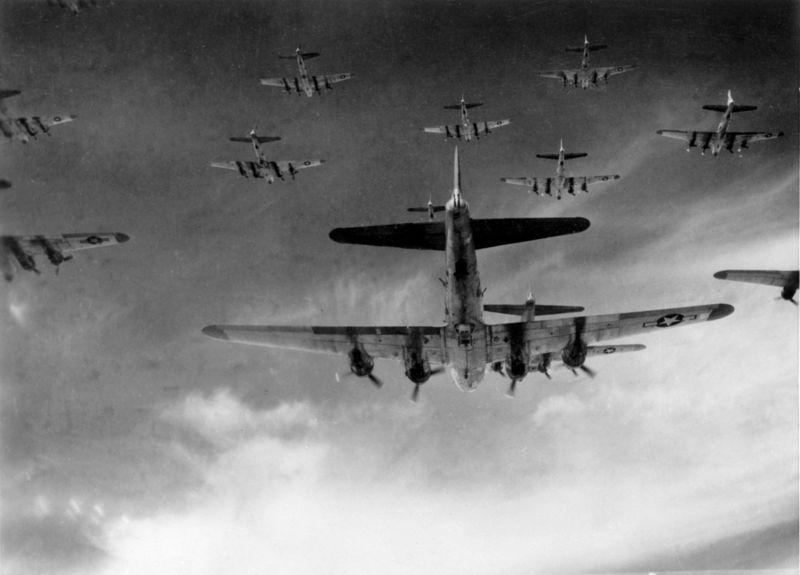
The Americans and the British Would Develop the Concept of Strategic Bombing against Germany

With the technical revolution came revolution in the skies both at the strategic and tactical levels.  Modern bombers with good navigational gear guided by radar and assisted by modern bombsites such as the Norden developed by the United States would wreak havoc on industrial and civilian centers. Advances in aircraft technology saw fast and more lethal aircraft being fielded by all powers as the war progressed and while Jet propulsion developed during the war would doom piston powered aircraft as first line assets.

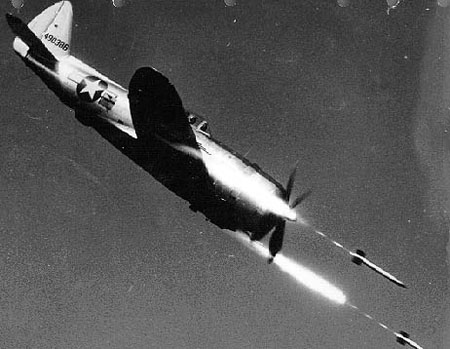
The P-47 Thunderbolt Would Serve as both a Long Range Bomber Escort and as Seen Here as an Excellent Ground Attack Aircraft

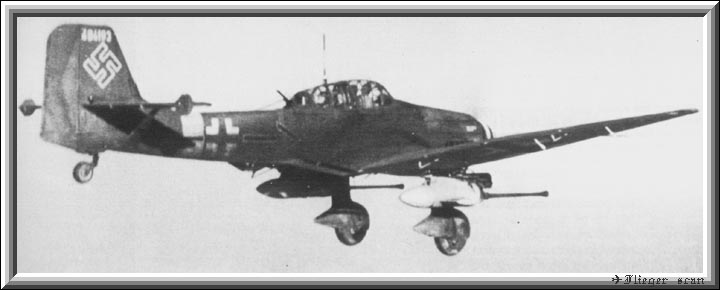
Tactical air developments would be led by the Germans but as the war went on the Allies developed sophisticate tactical air forces that dominated battlefields when the weather permitted. The Germans pioneered the use of ballistic missiles as well as the cruise missile while the United States and Britain developed the Atomic Bomb.  Specialized types of tactics and organizations were developed for strategic, tactical and naval air forces. At the strategic level there were the dueling schools of precision versus area bombing while at the tactical level the developments were as much predicated on air-ground communications as they were the aircraft flown.  Specialized aircraft were developed or modified as tank-killers while fighter forces became more specialized to into interceptors, bomber escorts and night fighters.

The Obselecent Junkers JU-87 found New Life on the Eastern Front as a Tank Killer armed with 2 37mm FLAK cannon

The influence of air assets, especially at the tactical level would become more pronounced as the war went on.  Allied air superiority ensured that the landings in France and the breakout in Normandy succeeded and tactical air dominance by US Navy and Marine air forces in the Pacific aided ground operations as well as sea battles.

Amphibious Warfare developments

The US Navy and Marine Corps Would Perfect Amphibious Operations in the Pacific

Technology came to the fore in amphibious operations with the development of specialized landing craft, beach clearing equipment and naval gunfire support.  This effort was led by the United States with the most advanced force being the Marines.   The combined use of air, land, sea and naval air forces to include the use of Aircraft Carriers revolutionized how the campaign in the Pacific would be fought to a conclusion long before anyone thought that it could be.

General Naval Developments

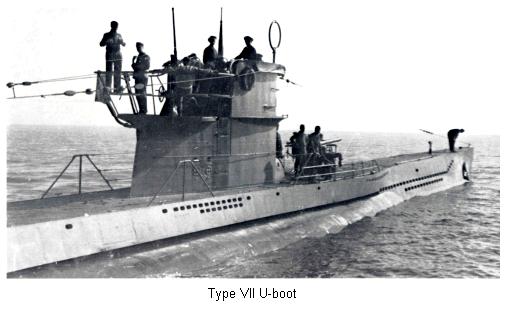
At sea ship design advanced new and better classes of warships as technologic advances in radar, sonar, gunnery systems, torpedo and ant-aircraft technology made warships far more formidable than those built only years before the war.  This was nowhere more apparent than in submarine development especially that of Germany’s U-boat arm with the development of streamlined hulls and “schnorkel” technology.  The use of U-Boats and later American submarines in the Pacific into “Wolf Packs” increased the lethality of submarine forces to a near decisive state in the war.  Naval tactics were influenced by the use of air and surface search radar as well as sonar.

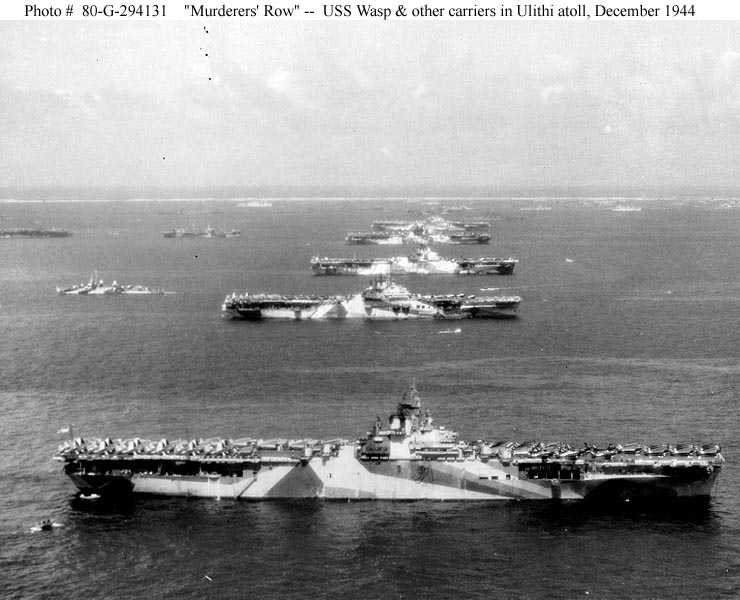
US Fast Carrier Task Forces Would Dominate the Pacific War and Naval Warfare to the Present Day

The development of the US Navy into the dominant Naval Power of the next 65 years was built upon the success of the Navy in the Second World War.  The largest and some of the bloodiest sea battles in history were fought in the Pacific with decisive results in that theater of operations.  Operationally the major Navies all were influenced to one degree or another by the theories of Alfred Thayer Mahan.

Summary and Conclusion

The course of World War Two was determined by the strategic and operational theories developed in the inter-war years. These were applied correctly by some powers and not by others.   The use technological advances and more effective organizational structure developed in the inter-war years and refined by the experience of war impacted the war on land, at sea and in the air in every theater of war.  The use of combined arms and joint operations revolutionized the manner in which wars would be fought.  If the technology, theory and force structure had not come together when it did the war might have been fought much as the First World War.  Instead warfare became faster and more lethal than ever and would lead to even more advances in the years to come.

3 Comments

Filed under History, Military, world war two in europe, world war two in the pacific

Fort Hood Memorial and Veteran’s Day…The War Comes Home via a Traitor to His Oath

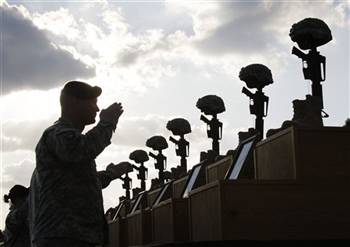
fort hood memorialSoldiers rendering Honors to Fallen Comrades at Fort Hood (MSNBC Photo)

The killings of 13 Americans and wounding of 30 others by Major Nidal Malik Hasan has left a bitter taste in many American’s mouth.  It was an act of treason by a man who apparently became a “self-radicalized home grown terrorist.”  Influenced by his religious beliefs which even some of his Moslem Imam’s thought were troubling and for which they would not approve him to serve as a volunteer lay leader for other Moslem soldiers, Major Hasan attacked his fellow soldiers.  He walked into a processing center for soldiers and opened fire allegedly shouting “Allah Akbar!” as he began his 4 minute rampage firing over 100 rounds from two weapons, one a “cop killer” type of pistol.  It appears that in the year prior to this terrorist act that Major Hasan not only made statements approving of suicide bombing, statements against U.S. Service Members of the Moslem faith fighting other Moslems and vehemently opposing the U.S. involvement in the wars in Afghanistan and Iraq.  Many of these statements were around other Army personnel and evidently Army investigators had been watching him.  As an officer who at one time was a company commander and also helped the administrative oversight of various criminal investigations I wonder how Major Hasan was not fully investigated and called into account for his statements which were in direct contravention to his oath as an Army Officer, his Commission which as a Regular Army Field Grade Officer was actually approved by the Senate, and his Hippocratic Oath as a Physician to “do no harm.”  Major Hasan is not the first soldier, Moslem or otherwise to kill his fellow soldiers.  What makes his case unique is that he is an officer and a physician.  I personally think that is why he was never called to account for his words by others in the Army.  The fact is that no one ever assumes that an officer or a physician could or would actually commit such an act.  This was one of the hardest things for me in comprehending Major Hasan’s crime, simply put “officers do not do such things.” Maybe I’m old fashioned and my sense of honor as an officer borders on archaic but how such a man could swear the oath “to support and defend the Constitution of the United States against all enemies, foreign and domestic “ could kill his fellow soldiers is beyond me.  I read his power point presentation given to his class last year which is posted here:

http://a.abcnews.go.com/images/Blotter/Hasan_2007.pdf

The presentation is troubling because of the more fundamentalist understanding that Major Hasan shows even in relationship to Moslems that he considers “moderate.”  “Muslims may be seen as moderate (compromising) but God is not.”  And “We love death more than you love life!” Having attended the Jordanian Army Peace Operations Training Center and gotten to know senior Iraq officers while serving with our advisors I can say that Major Hasan has a different take on this than many Islamic officers in the armies of Arab nations.  How Hasan was able to present this and have had documented contact with known radicals without being at least questioned shows an incredible lack of forsight by the FBI and Army investigators.

http://abcnews.go.com/Blotter/official-nidal-hasan-unexplained-connections/story?

I pray that he faces justice and of there are any accomplices that they will also be cause and pay for this.  At the same time I pray that the xenophobic ramblings of some who see all Moslems as the enemy are curbed and that they will not incite violence against the innocent in the name of revenge.

Fort Hood conducted a memorial service today for the fallen.  I listened to a lot of it on the radio as I was out.  I was impressed by the remarks of General Cone, General Casey and President Obama.   I think that given the circumstances that the words were fitting and appropriate especially since tomorrow is Veteran’s Day.  The link to the text of the President’s speech is here:

http://www.whitehouse.gov/the-press-office/remarks-president-memorial-service-fort-hood

However I do think that a couple of parts of the speech stand out enough to post here:

This is a time of war.  Yet these Americans did not die on a foreign field of battle.  They were killed here, on American soil, in the heart of this great state and the heart of this great American community.  This is the fact that makes the tragedy even more painful, even more incomprehensible.

For those families who have lost a loved one, no words can fill the void that’s been left.  We knew these men and women as soldiers and caregivers.  You knew them as mothers and fathers; sons and daughters; sisters and brothers.

But here is what you must also know:  Your loved ones endure through the life of our nation.  Their memory will be honored in the places they lived and by the people they touched.  Their life’s work is our security, and the freedom that we all too often take for granted.  Every evening that the sun sets on a tranquil town; every dawn that a flag is unfurled; every moment that an American enjoys life, liberty and the pursuit of happiness — that is their legacy…

These are trying times for our country.  In Afghanistan and Pakistan, the same extremists who killed nearly 3,000 Americans continue to endanger America, our allies, and innocent Afghans and Pakistanis.  In Iraq, we’re working to bring a war to a successful end, as there are still those who would deny the Iraqi people the future that Americans and Iraqis have sacrificed so much for.

As we face these challenges, the stories of those at Fort Hood reaffirm the core values that we are fighting for, and the strength that we must draw upon.  Theirs are the tales of American men and women answering an extraordinary call — the call to serve their comrades, their communities, and their country.  In an age of selfishness, they embody responsibility.  In an era of division, they call upon us to come together.  In a time of cynicism, they remind us of who we are as Americans.

We are a nation that endures because of the courage of those who defend it.  We saw that valor in those who braved bullets here at Fort Hood, just as surely as we see it in those who signed up knowing that they would serve in harm’s way.

We are a nation of laws whose commitment to justice is so enduring that we would treat a gunman and give him due process, just as surely as we will see that he pays for his crimes.

We’re a nation that guarantees the freedom to worship as one chooses.  And instead of claiming God for our side, we remember Lincoln’s words, and always pray to be on the side of God.

We’re a nation that is dedicated to the proposition that all men and women are created equal.  We live that truth within our military, and see it in the varied backgrounds of those we lay to rest today.  We defend that truth at home and abroad, and we know that Americans will always be found on the side of liberty and equality.  That’s who we are as a people.

Tomorrow is Veterans Day.  It’s a chance to pause, and to pay tribute — for students to learn the struggles that preceded them; for families to honor the service of parents and grandparents; for citizens to reflect upon the sacrifices that have been made in pursuit of a more perfect union.

For history is filled with heroes.  You may remember the stories of a grandfather who marched across Europe; an uncle who fought in Vietnam; a sister who served in the Gulf.  But as we honor the many generations who have served, all of us — every single American — must acknowledge that this generation has more than proved itself the equal of those who’ve come before.

We need not look to the past for greatness, because it is before our very eyes.

This generation of soldiers, sailors, airmen, Marines and Coast Guardsmen have volunteered in the time of certain danger. They are part of the finest fighting force that the world has ever known.  They have served tour after tour of duty in distant, different and difficult places.  They have stood watch in blinding deserts and on snowy mountains.  They have extended the opportunity of self-government to peoples that have suffered tyranny and war.  They are man and woman; white, black, and brown; of all faiths and all stations — all Americans, serving together to protect our people, while giving others half a world away the chance to lead a better life.

In today’s wars, there’s not always a simple ceremony that signals our troops’ success — no surrender papers to be signed, or capital to be claimed.  But the measure of the impact of these young men and women is no less great — in a world of threats that no know borders, their legacy will be marked in the safety of our cities and towns, and the security and opportunity that’s extended abroad.  It will serve as testimony to the character of those who served, and the example that all of you in uniform set for America and for the world…

Long after they are laid to rest — when the fighting has finished, and our nation has endured; when today’s servicemen and women are veterans, and their children have grown — it will be said that this generation believed under the most trying of tests; believed in perseverance — not just when it was easy, but when it was hard; that they paid the price and bore the burden to secure this nation, and stood up for the values that live in the hearts of all free peoples.

The speech which I heard on radio moved me.  A president acknowledged what I have believed about our current military.  We serve because we believe in the ideals of this nation and unlike wars past, the “Good Wars” where there were homecoming parades after surrender ceremonies we come home to a nation which mostly has not been at war, a nation that we have protected and served in harm’s way when most Americans were told to be patriotic after 9-11 by President Bush by “going shopping.”  In the midst of all we serve, many of us volunteering for more, not because we like war, but because we believe in our country and in helping others come to know freedom.  I know that amid the political cynicism that is so rampant that such idealism is derided by those who only see America as a force for evil, but such is not the case.  By and large our Soldiers, Marines, Sailors, Airmen and Coastguardsmen serve not for college money or to simply have a job, but because we care about the country and know that by serving now that we will likely end up in a combat zone.

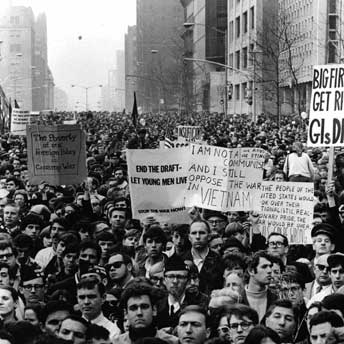
We serve in unpopular wars and our sacrifice is to many people just a news bite in between economic, entertainment and sports stories.  There are those on the left who despise us as much as they did those who served in Vietnam. Likewise there are those on the right who have no compunction about using us in the military until we are spent without sharing a whit in our sacrifice, without ever having put on a uniform much less seeing combat.  Some are politicians seeking a way to increase their power; others are people that I used to listen to on the radio all the time whose answer is to automatically suggest bombing or invading another country.  They say many kind words about us who serve and occasionally sponsor events to “help” military families, but none suggest any real shared sacrifice on the part of the nation.  In fact sometimes they have a negative effect on those who serve because their words are believed as gospel by many and if a combat veteran disagrees with a popular radio talk show host he can be told that that he is “politically correct” “weak” or even a “pansy” by people who shop till they drop under the protection provided by we who serve.  Having had this happen to me recently I know it is the case and the blowhards who drive goad people into such idiocy can go to hell.

So we fight the wars alone while contractors such as Halliburton and the company formerly known as Blackwater get rich lining their pockets with tax dollars doing jobs that at one time were done by the military in an era when much of the nation had a personal interest in the outcome of the war.  We fight the wars and deal with the trauma while others beat the war drums without regard to cost and for the first six years of the war continued to reduce the size of the military.  The previous administration had to be forced by congress into increasing the size of the active Army and Marine Corps and to stop cutting the Navy and the Air Force.

I am glad that unlike Vietnam that the majority of people seem to care about the military and our servicemen and women, even if they disagree with the national policy regarding the present wars.  For that I am grateful and blessed for the outward show of support by many stands in stark contrast what our brothers and sisters who served in Vietnam faced.

This has been and will continue to be a long war.  We have been at war over 8 years since 9-11 as opposed to under 4 years of American involvement in World War II.  The overwhelming burden of the war has been on the backs of an incredibly small segment of the American population.   If you look at the numbers it is well under one percent of the population of the United States that has served in Iraq or Afghanistan.  This is not a shared sacrifice.

Today is Veteran’s Day.  Take the time to recognize the sacrifices of not just those who fought in the big popular wars, but for those who have endured the unpopular and unglamorous wars such as Vietnam, Iraq and Afghanistan.  I have made two combat deployments as well as numerous trips in and out of theater. When the time comes and my boss thinks I’m ready to go again I will go to serve alongside my friends and comrades many of whom are serving in harm’s way now.

I ask readers of this website to remember the fallen in Iraq, Afghanistan and the other fronts in this ongoing war including the home front which felt the effect of the war when Major Hasan attacked his fellow soldiers.  Remember the fallen, care for the wounded and the families of those who have lost their lives, being wounded in mind body or spirit and those who have served in wars past as well as this war.  Our brothers and sisters who fought in World War II, Korea and Vietnam are growing fewer in number daily and “we, we happy few” who continue this fight need all the support that we can get.

I have been in California this week helping with my parents affairs.  My dad is in a nursing facility here with Alzheimer’s disease.  During my last visit he still recognized me and for a few minutes I had him back. Now he no longer knows who I am.  He is a retired Navy Chief and toward the end of his career served at An Loc where he endured that siege in the spring of 1972.  I thank God for my dad’s service and example that helped lead me to chose serving in the military, something for me that has lasted more than 28 years in service with the Army and the Navy.  I pray for God’s peace and mercy on him as he lives what little life that he has left.

God bless all of our veterans, the living and the dead as well as all of those who serve in harm’s way in Iraq and Afghanistan.  Pray for our country and the military.

Peace,

Padre Steve+

1 Comment

Filed under Military, Political Commentary, traumatic national events

Fort Hood Update II: The Shooter is Alive

At a news conference LTG Cone the Commander of III Corps and Fort Hood revealed that the shooter suspected in the killing of 12 soldiers and wounding of 31 others is alive and in stable condition and not dead as initially reported.  Major Malik Nidal Hasan a  psychiatrist was supposedly upset that he had orders to deploy to Iraq.

nidal hasanMajor Malik Nidal Hasan the Killer of 12 Soldiers

Once again I was correct in my suppositions about the suspect.  I was telling the Abbess at dinner that I believed that he was an American citizen who went through a commissioning program at a major university before attending medical school. Major Hasan was a graduate of Virginia Tech and its Army ROTC program before attending the Uniformed Services University of Health Sciences.  He reportedly received a poor Officer Evaluation Report (OER) at Walter Reed before being assigned to Fort Hood.  There is speculation that the he viewed his deployment to Iraq as punishment.

If Major Hasan survives his wounds the truth may come out.  Thankfully he has not as yet taken his secrets to the grave. If there is a conspiracy or other possible terrorist involvement or even a psychiatric disorder we may find an answer to the carnage and terror that his actions have caused.  It is possible that he did this simply out of being pissed at the Army for his bad OER and deployment orders and taking it out on his fellow soldiers.  The worst scenario is if is a deliberate terrorist act committed by a man committed to a radical ideology.  That suggests if an officer is capable of such an act that others may be capable of the same.  If it is a case of a provider who has hit the wall in dealing with his patients trauma it is also frightening.  If it is a case of a man who is angry at the Army for real or perceived injustices it is another matter.  The only scenario that makes sense to me is in regard to the targets of his attack.  The choice of his fellow soldiers could be indicative of the terrorist motive.  The choice of victims could also be indicative of his motivations. There are reports that Major Hasan was strongly opposed to the wars in Iraq and Afghanistan and also made internet postings about suicide bombings. While this is still not yet confirmed if it is true than it it could indicate terrorist involvement apart from Major Hasan.

Please pray for the victims and their friends and families.

Peace,

Padre Steve+

Leave a comment

Filed under Military, PTSD, traumatic national events

Fort Hood Shooting URGENT

I’ve been following the shootings at Fort Hood.  There is still very sketchy information about what is going on.  So far information on most news outlets saying at least 7 dead and 12-15 wounded.  A Sergeant Major interviewed on CNN said that there were multiple shooters of which one has been caught.  There is a manhunt underway.  The friends that I know are safe, both young chaplains and certainly involved in what is going on.  Reports say that the shooters were wearing the Army Combat Uniform and using “M-16s.”  My guess is that the weapons were AR-15’s which can be bought on the outside and are readily available for $500-$800 through legitimate sellers.  The are semi-automatic but can be modified to fire fully automatic.

No one is saying if the shooters were military or impostors or their motivation other than to kill soldiers. The shooting occurred at the “Soldier Readiness Center.”    This is a place where deployers and returning warriors are processed and appears to also house the Combat Stress treatment center.

I used to train at Fort Hood when I was in the Texas Army National Guard back in the 1980s and 1990s.  It is a huge base and the area where the shootings occurred is quite congested and heavily populated at mid-day.

I have suspicious that the shooters were impersonating Army personnel, agents of a terrorist organization planted in the military, or possibly members of a separatist or fundamentalist group that has infiltrated the Army.

Senator Kay Bailey Hutchinson is reporting close to 30 casualties.

More to follow…Pray for the the victims and their families.

Peace, Padre Steve+


Leave a comment

Filed under Military, traumatic national events

Lessons for the Afghan War: The Effects of Counterinsurgency Warfare on the French Army in Indo-China and Algeria and the United States Military in Vietnam

Note: This is an article that I wrote for a class a year ago which has been updated in order to show the lessons of history that can be useful in the current wars in Iraq and Afghanistan.

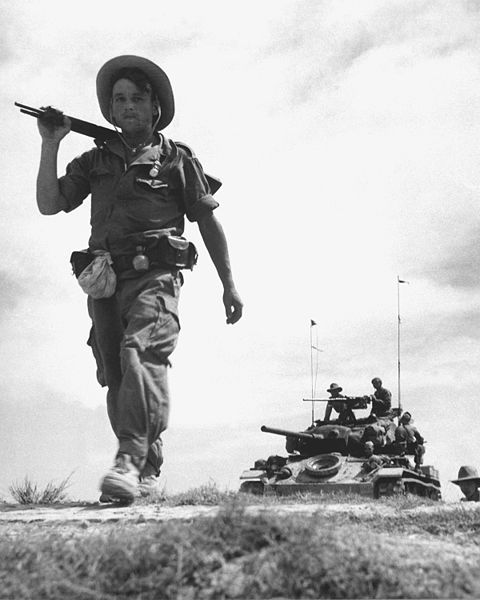
legion indo-china

French Foreign Legionnaires in Indo-China

The effects of the wars Indo-China, Algeria and Vietnam on the French and American military organizations internally and in relationship to their nations piqued my interest in 2005. The wars in Iraq and Afghanistan forced me to start asking the question of what short and long term effect that these wars might have on the U.S. military.  As such I wondered what historical precedent that there was for the question. My interest was furthered by my deployment with Marine and Army advisors to Iraqi Army and Security forces in 2007-2008.  My search led to the French experiences in Indo-China and Algeria and the American experience in Vietnam.  Recently with the Iraq war winding down and ongoing war in Afghanistan which has gone from apparent victory to mounting concern that the effort could fail as the Taliban and Al Qaida have regained momentum amid widespread corruption by the Afghan government and weakness of NATO forces.

Thesis

The counterinsurgency campaigns conducted by the French and American militaries in Vietnam and Algeria had deep and long lasting effects on them.  The effects included developments in organization and tactics, relationship of the military to the government and people, and sociological changes.  The effects were tumultuous and often corrosive.  The French Army in Algeria revolted against the government. The US Army, scarred by Vietnam went through a crisis of leadership and confidence which eventually resulted in end of the draft and formation the all volunteer military.  The effects of the Iraq and Afghanistan wars are yet unknown but could result in similar situations to the militaries and governments involved,

Historiography

legion algeriaForeign Legion in Algeria

There is a wealth of data regarding these wars. There are several types of materials. The accounts of soldiers, diplomats and reporters who experienced these events contained in memoirs and diaries. The best include David Hackworth’s About Face and Steel My Soldiers Hearts; and General Harold Moore’s We Were Soldiers Once… and Young. French works include Jules Roy’s The Battle of Dien Bien Phu and General Paul Aussaresses’ The Battle of the Casbah. There are innumerable popular accounts written by NCOs and junior officers.  These accounts may contain a wealth of information, but are limited by a number of factors. First, the authors, veterans of the wars, only saw part of the overall picture and first-hand experience in war can skew a writer’s objectivity. Those who have been through the trauma of war interpret war through their own experience.  Physical and psychological wounds can have a major impact on the interpretation of these writers as can their experience and political ideology. Finally few of these writers are trained historians. Despite this they can be a valuable resource for the historian.

Another source is found in the official histories written by the military forces involved in the wars. Often these incorporate unit histories and individual narratives and analyze specific battles and the wider campaigns, but do little in regard to broader conditions that affected operations.  While a good source, many are not as critical of their institutions as they should be.

Histories by trained historians and journalists provide another view. The most insightful of the journalist accounts include Bernard Fall’ Street Without Joy and The Siege of Dien Bien Phu: Hell in a Very Small Place. A limitation of all of these is that they are often heavily influenced by the political and societal events. This means that earlier accounts are more likely to be reactive and judgmental versus critical and balanced. Later accounts have the benefit of access to the opposing side and documents not available to earlier writers.  Alistair Horn in A Savage War of Peace provides one of the most informative and balanced accounts of the war in Algeria. Martin Winslow does the same regarding Dien Bien Phu in The Last Valley.

Another source is the writings of participants who critically examine their participation in the wars.  Many of these, French and American provide insights into the minds of leaders who are reflective and critically examine what happened to their military institutions in these wars. The best of these is French Colonel David Galula whose books Pacification in Algeria 1956-1958 and Counterinsurgency Warfare: Theory and Practice provide first-hand accounts of the subject combined with critical reflection. Galula’s works have been important to John Nagl, General David Petreus and others who helped write the U.S. Army and Marine Corps Counterinsurgency manual. Andrew Krepinevich in The Army and Vietnam provides a critical analysis of the U.S. Army in Vietnam.  Other sources, both online and print, such as RAND, provide excellent analysis of selected topics within the scope of this essay, especially COIN.

Dien Bien Phu 1French at Dien Bien Phu

The ability to dispassionately and critically examine and evaluate these sources over a period of several years was and integrate them with my own experience has been a critical to me.  It has changed the way that I look at sources, and caused me to be much more aware of bias, the limitations of sources and the need to have a multiplicity of sources and points of view and to be suspicious of contemporary reports and accounts of the war in Afghanistan regardless of the source.

Analysis of the Issue

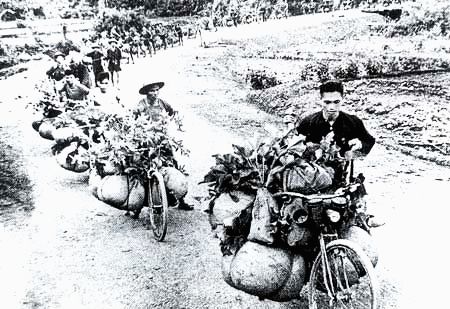
viet minh supplyViet Minh Supply Columns were Never Stopped by French Air power or Artillery

The conflicts in French Indo-China, Algeria and Vietnam had major effects on the French and American military institutions. These effects can be classified in a number of ways. First, the manner in which each military waged war, including tactics employed and use and development of weapons systems was changed.  The use of airpower, especially helicopters and use of riverine forces provided an added dimension of battlefield mobility but did not bring victory. As John Shy and Thomas Collier noted regarding the French in Indo-China: “French mobility and firepower could take them almost anywhere in Vietnam, but they could not stay, and could show only wasted resources and time for their efforts.”[1]

Joint_operation_with_ARVN_112-1Joint US and ARVN Operation

The use of intelligence and psychological warfare, including the use of torture became common practice in both the French and American armies.  The wars had an effect on the institutional culture of these armed services; neither completely embraced the idea of counterinsurgency and for the most part fought conventionally. Galula notes how the “legacy of conventional thinking” slowed the implementation of proper counterinsurgency tactics even after most commanders learned that “the population was the objective.”[2] Krepinevich notes that “any changes that might have come about through the service’s experience in Vietnam were effectively short-circuited by Army goals and policies.”[3] Finally the wars had a chilling effect on the relationship between the both militaries and the state, veterans from each nation often felt betrayed or disconnected from their country and people.  Unfortunately instances of all of these have occurred or can be seen in the current wars in Iraq and Afghanistan.

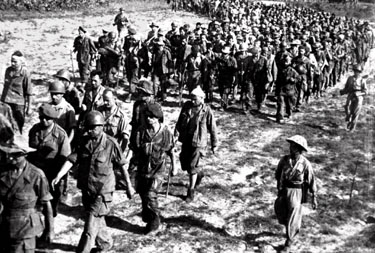
VIETNAM DIEN BIEN PHUFrench Prisoners after Dien Bien Phu: Many Survivors Would be Fighting in Algeria within Two Years

The French Army had the misfortune of fighting two major insurgencies back to back.  The French military was handicapped even before it went into these wars. The Army came out of World War II defeated by the Germans, divided by loyalties to Vichy or one of the Free French factions. They were humiliated by the Japanese in Indo-China, while in Algeria France’s crushing defeat was devastating.  “Muslim minds, particularly sensitive to prestige and baraka, the humiliation made a deep impression.”[4] French society was as divided as the Army; the economy in shambles, the government weak and divided.  The Viet-Minh had prepared well making use of time and training to get ready for war.  “Once full-scale hostilities broke out, the French, for budgetary and political reasons could not immediately make the large scale effort to contain the rebellion in the confines of small-scale warfare.”[5]

In both Indo-China and Algeria the French attempted to fight the budding insurgencies in a conventional manner.  This was particularly disastrous in Indo-China when on a number of occasions battalion and regimental combat team sized elements were annihilated by Viet-Minh regulars.  Between October 1st and 17th 1950 every French garrison along the Chinese border was over-run.  The French lost over 6000 troops and enough equipment to outfit “a whole additional Viet-Minh division.” It was their worst colonial defeat since Montcalm at Quebec.[6] In Algeria when the fight began in earnest France’s “ponderous ponderous N.A.T.O forces found themselves at an impossible disadvantage,”[7] unable to have any influence off the main roads.

french troops indochinaFrench Troops and Tanks in Indo-China: Road Bound Forces were often Defeated by Viet- Minh Forces

In Vietnam the French did not absorb the lessons of fighting a well established insurgent force. French forces hoped to draw the Viet-Minh main forces into battles of attrition where their superior firepower could be brought to bear. Such was the case at Na San in December 1952 where the French established an “Air ground base” deep in Viet-Minh territory to draw Giap’s forces into open battle.  This worked, but just barely. General Giap, short of artillery and not planning on a long battle frittered away his troops in mass charges.  However, the French, because of Na Son assumed they had found the key to victory. In their embrace of the “air ground base concept, French staff officers were following an intellectual tradition that had long been prone to seduction by elegant theories.”[8] The result was the disaster at Dien Bien Phu the following year.  The destruction of the elite Group-mobile 100 near Pleiku in 1954 was the coup de grace. In Indo-China the French made limited use of helicopters, used paratroops widely, and developed riverine forces. One thing they were critically short of was significant tactical air support.[9]

The most inventive French creation in Indochina was the GCMA/GMI forces composed of mountain tribesmen led by French NCOs and Junior Officers.  They were designed to provide “permanent guerilla groups rooted in remote areas” to harass and interdict Viet-Minh forces.[10] Trinquier noted that at the time of the Dien Bien Phu defeat that these forces had reached over 20,000 trained and equipped maquis in the Upper Region of Tonkin and Laos. These forces achieved their greatest success retaking Lao Cai and Lai Chau May 1954 as Dien Bien Phu fell.[11] Trinquier stated that “the sudden cessation of hostilities prevented us from exploiting our opportunities in depth.”[12] The GMI units and their French leaders were abandoned fighting on for years after the defeat. One account noted a French NCO two years after the defeat cursing an aircraft patrolling the border “for not dropping them ammunition so they could die like men.”[13] In the end the French left Indo-China and Giap remarked to Jules Roy in 1963 “If you were defeated, you were defeated by yourselves.”[14]

Algeria was different being part of Metropolitan France; there the French had support of European settlers, the pieds-noir. Many French soldiers had come directly from Indo-China. There French made better adaptations to local conditions, and realized that they had to win the population and isolate the insurgents from it and outside support. As Galula said, victory is the destruction of the insurgent’s political and military structures, plus “the permanent isolation from the population, not forced upon the population, but by and with the population.”[15] The lessons learned by the French in both Algerian and Indo-China were lost upon the Americans.

4CavVnM48US Heavy Forces including Armor had Little Utility in Many Parts of Vietnam

The United States military, especially the Army approached the Vietnam War with a conventional mindset, referred to as the “Army concept.” [16] It not only approached the war in this manner, but it trained and organized the South Vietnamese forces, ARVN into the American model. Americans re-organized ARVN into divisions “based upon the U.S. divisional force structure.”[17] Due to the imposition of an American template and organizational structure upon it, ARVN was not structured appropriately for the threat that it faced.”[18] The results were as to be expected. Large numbers of American troops poured in taking the lead against the North Vietnamese and Viet Cong . The American method of counterinsurgency was costly.  It was “almost a purely military approach”[19] which ignored political and social realities on the ground. Instead of focusing on protecting the Vietnamese people and denying the Communists a safe haven the Army in particular believed that massive firepower was the best means to be“utilized by the Army to achieve the desired end of the attrition strategy-the body count.”[20] In the end the American defeat was a “failure of understanding and imagination.”[21] The one shining success was the Marine Corps experimentation with “Combined Action Program” platoons which lived in the villages with militia for long periods of time. This program produced great results “in eliminating local guerillas”[22] but was killed by the Army.

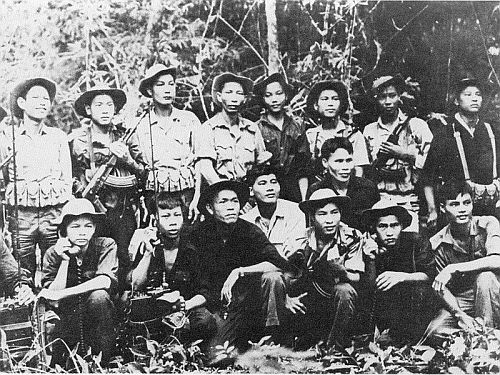
NlfmainforceNVA Main Forces

These wars tore the heart out French and American armies. For the French the defeats inflicted a terrible toll.  In Indo-China many French career soldiers felt that the government’s “lack of interest in the fate of both thousands of missing French prisoners and loyal North Vietnamese…as dishonorable.”[23] Divisions arose between those who served and those who remained in France or Germany and created bitter enmity between soldiers.  France would endure a military coup which involved many who had fought in Vietnam and Algeria. Having militarily won that war, were turned into what Jean Lartenguy called The Centurions had been turned into liars.”[24] They were forced to abandon those who they had fought for and following the mutiny, tried, imprisoned, exiled or disgraced. Colonial troops who remained loyal to France were left without homes in their “independent” nations.  They saw Dien Bien Phu as the defining moment. “They responded with that terrible cry of pain which pretends to free a man from his sworn duty, and promises such chaos to come: ‘Nous sommes trahis!’-‘We are betrayed.’”[25]

war protestUS Veterans of Vietnam Would Return to a Deeply Divided Country that turned its Back on Them for Years

The U.S. Army left Vietnam and returned to a country deeply divided by the war.  Vietnam veterans remained ostracized by the society until the 1980s.  As Harold Moore recounts “in our time battles were forgotten, our sacrifices were discounted, and both our sanity and suitability for life in polite American society were publically questioned.”[26] The Army endured a massive reorganization that resulted in the formation of the All-Volunteer force, which would redeem itself and emerge from the ashes in the Gulf War. The Americans would not learn the lessons of revolutionary warfare and counterinsurgency until forced to do so in Iraq in 2004-2007. These lessons however were not applied to Afghanistan and the Taliban which seemed to have been defeated have regained the initiative, policy is being debated amid discord in the west and there are reports of American and NATO forces becoming discouraged by the course of the war and concern that their efforts will be in vain. This is a dangerous situation to be in and if we learn from anything from our own history as well as that of foreign military forces in Afghanistan we need to be very careful in implementing strategy to get whatever we do right.

training team baseTraining Team Base in Afghanistan: Some of these Bases Have proven Vulnerable to Well Planned and Coordinated Taliban Attacks

Conclusion

The effects of these wars on the French and American military establishments were long lasting and often tragic. The acceptance of torture as a means to an end sullied even the hardest French officers. Men like Galula and Marcel Bigeard refused to countenance it, while others like Paul Aussaresses never recanted.  Americans would repeat the tactic at Abu Ghraib rallying the Iraqis against them and nearly losing the war because of it.

For the Americans, the effects of Vietnam continued at home. Race riots tore at the force while drug addictions and criminal activities were rampant.  Many incompetent leaders who had “ticket punched” their careers kept their jobs and highly successful leaders who became whistle blowers like Hackworth were scorned by the Army institution.  The years following Vietnam were a severe test of the US Military and took years for the military to recover.  Likewise It took years before either the French or American veterans again felt a part of their countries.  They ended up going to war, and when it was over; feeling abandoned, their deepest bonds were to their comrades who had fought by their side.

What are the lessons to be learned from these campaigns as well as from the various accounts?  Andrew Krepinevich prophetically noted that the failure to learn the lessons of Vietnam “represents a very dangerous mixture that in the end may see the Army again attempting to fight a conventional war against a very unconventional opponent.”[27] Obviously, there are lessons to be learned, especially in understanding the nature of revolutionary war as well as the culture and history of our opponents. The U.S. has made some improvement in this regard but there is still much to be learned, especially since after the war the Army was “erecting barriers to avoid fighting another Vietnam War.”[28] From these wars we learn that nations and incompetent governments who mismanage wars can alienate themselves from the soldiers that they send to fight, with serious consequences.  As far as historiography we learn that certain historical fallacies are evident when one reads the accounts critically and recognize the bias and limitations of the various sources.


[1] Shy, John and Collier, Thomas W. “Revolutionary War” in Makers of Modern Strategy from Machiavelli to the Nuclear Age,” Peter Paret editor. Princeton University Press, Princeton N.J. 1986  p.849

[2] Galula, David. Counterinsurgency in Algeria: 1956-1958. RAND Corporation, Santa Monica, CA. 2006. First published by RAND in 1963. p.244

[3] Krepinevich, Andrew F. “The Army and Vietnam,” The Johns Hopkins University Press, Baltimore and London, 1986 p.213

[4] Horn, Alistair. “A Savage War of Peace: Algeria 1954-1962,” a New York Review Book published by the New York Review of Books, New York, 1977, 1987, 1996, and 2006 p 41

[5] Fall, Bernard B. “Street Without Joy: The French Debacle in Indochina.” Stackpole Books, Mechanicsburg PA, 2005, originally published by Stackpole Publications 1961 p.27

[6] Ibid. p.33

[7] Horn. p.100.

[8] Windrow, Martin. “The Last Valley: Dien Bien Phu and the French Defeat in Vietnam,” Da Capo Press, Novato, CA 2006, originally published by Weidenfeld and Nicholson, London 2004 p.63

[9] Fall, Bernard B. “The Siege of Dien Bien Phu: Hell in a Very Small Place.” Da Capo Press, New York an unabridged reprint of the 1st Edition reprinted in arrangement with Harper and Row Publishers, New York. 1967 pp. 456-457  Fall discusses in depth the lack of French Air support and the antecedents that led to the shortage following World War II.

[10] Pottier, Philippe(2005)’Articles: GCMA/GMI: A French Experience in Counterinsurgency during the French Indochina War’, Small Wars & Insurgencies,16:2,125 — 146 http://dx.doi.org/10.1080/09592310500079874

[11] Simpson, Howard K. “Dien Bien Phu: The Epic Battle America Forgot,” Potomac Books Inc. Washington DC 2005, originally published by Brassey’s Inc. 1994 pp. 170-171

[12] Trinquier, Roger. “Modern Warfare: A French View of Counterinsurgency,” translated from the French by Daniel Lee with an Introduction by Bernard B. Fall. Praeger Security International, Westport CT and London. 1964 and 2006. Originally published under the title “La Guerre Moderne” by Editions Table Ronde. p.87

[13] Windrow. p.652.

[14] Roy, Jules. “The Battle of Dien Bien Phu” Carrol and Graf Publishers, New York 1984. Translated from the French by Robert Baldrick. English translation copyright 1965 by Harper and Row Publishers, New York. p.xxx

[15] Galula, David. “Counterinsurgency Warfare: Theory and Practice.” Praeger Security International, Westport CT 1964 and 2006 p. 54

[16] Krepinevich. p.213

[17] Ibid. p.24

[18] Nagl, John A. “Learning to East Soup with a Knife: Counterinsurgency Lessons from Malaya and Vietnam,” University of Chicago Press, Chicago and London, 2005 p.138

[19] Shy. p.856

[20] Krepinevich. p.202

[21] Spector, Ronald H. “After Tet: The Bloodiest Year in Vietnam,” Vintage Press, a division of Random House, New York, 1993 p.314

[22] Millett, Allan R. and Maslowski, Peter. “For the Common Defense: A Military History of the United States of America.” The Free Press, a division of Macmillian, Inc. New York, 1984 p.555

[23] Windrow. p.655

[24] Ibid. p.657

[25] Ibid.

[26] Moore, Harold G and Galloway, Joseph L. “We were Soldiers Once…and Young: Ia Drang: The Battle that Changed Vietnam,” Harper Collins Publishers, New York NY 1992  p. xx


[27] Krepinevich. p.275

[28] Ibid. p.274

1 Comment

Filed under History, iraq,afghanistan, Military, vietnam

The Effects of Counter-Insurgency Operations on U.S. and French Forces in Vietnam and Algeria and Implications for Afghanistan

legion indo-china1st Foreign Legion Parachute Regiment in Indo-China

Introduction

The effects of the wars Indo-China, Algeria and Vietnam on the French and American military organizations internally and in relationship to their nations piqued my interest in 2005. The wars in Iraq and Afghanistan forced me to start asking the question of what short and long term effect that these wars might have on the U.S. military.  As such I wondered what historical precedent that there was for the question. My interest was furthered by my deployment with Marine and Army advisors to Iraqi Army and Security forces in 2007-2008.  My search led to the French experiences in Indo-China and Algeria and the American experience in Vietnam.

The counterinsurgency campaigns conducted by the French and American militaries in Vietnam and Algeria had deep and long lasting effects on them.  The effects included developments in organization and tactics, relationship of the military to the government and people, and sociological changes.  The effects were tumultuous and often corrosive.  The French Army in Algeria revolted against the government. The US Army, scarred by Vietnam went through a crisis of leadership and confidence which eventually resulted in end of the draft and formation the all volunteer military.
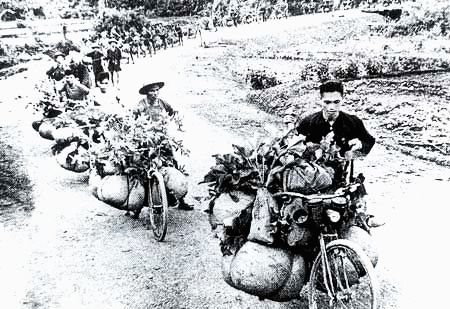
viet minh supplyPrimitive but Effective- Viet Minh Supply Column The French Could Never Stop them

There is a wealth of data regarding these wars. There are several types of materials. The accounts of soldiers, diplomats and reporters who experienced these events contained in memoirs and diaries. The best include David Hackworth’s About Face and Steel My Soldiers Hearts; and General Harold Moore’s We Were Soldiers Once… and Young. French works include Jules Roy’s The Battle of Dien Bein Phu and General Paul Aussaresses’ The Battle of the Casbah. There are innumerable popular accounts written by NCOs and junior officers.  These accounts may contain a wealth of information, but are limited by a number of factors. First, many only saw part of the overall picture and first-hand experience can skew objectivity. Those who have been through the trauma of war interpret war through their own experience.  Physical and psychological wounds can have a major impact on the interpretation of these writers as can their experience and political ideology. Finally few of these writers are trained historians. Despite this they can be a valuable resource for the historian.

Another source is official histories. Often these incorporate unit histories and individual narratives and analyze specific battles and the wider campaigns, but do little in regard to broader conditions that affected operations.  While a good source, many are not as critical of their institutions as they should be. Histories by trained historians and journalists provide another view. The most insightful of the journalist accounts include Bernard Fall’ Street Without Joy and The Siege of Dien Bien Phu: Hell in a Very Small Place. A limitation of all of these is that they are often heavily influenced by the political and societal events. This means that earlier accounts are more likely to be reactive and judgmental versus critical and balanced. Later accounts have the benefit of access to the opposing side and documents not available to earlier writers.  Alistair Horn in A Savage War of Peace provides one of the most informative and balanced accounts of the war in Algeria. Martin Winslow does the same regarding Dien Bien Phu in The Last Valley.
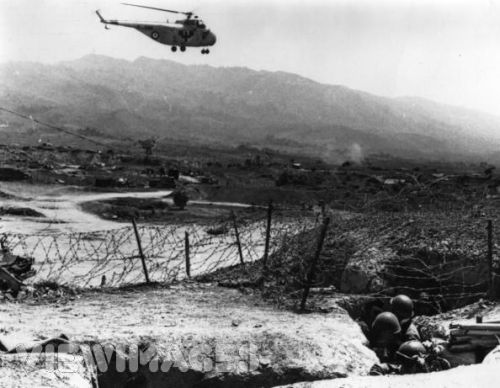
Dien Bien Phu 1Isolated and Besieged Dien Bien Phu

Another source is the writings of participants who critically examine their participation in the wars.  Many of these, French and American provide insights into the minds of leaders who are reflective and critically examine what happened to their military institutions in these wars. The best of these is French Colonel David Galula whose books Pacification in Algeria 1956-1958 and Counterinsurgency Warfare: Theory and Practice provide first-hand accounts of the subject combined with critical reflection. Galula’s works have been important to John Nagl, General David Petreus and others who helped write the U.S. Army and Marine Corps Counterinsurgency manual. Andrew Krepinevich in The Army and Vietnam provides a critical analysis of the U.S. Army in Vietnam.  Other sources, both online and print, such as RAND, provide excellent analysis of selected topics within the scope of this essay, especially COIN.

The ability to dispassionately and critically examine and evaluate these sources over a period of several years was and integrate them with my own experience has been a critical to me.  It has changed the way that I look at sources, and caused me to be much more aware of bias, the limitations of sources and the need to have a multiplicity of sources and points of view.

Effects of Insurgencies on the Armies that Fought Them

The conflicts in French Indo-China, Algeria and Vietnam had major effects on the French and American military institutions. These effects can be classified in a number of ways. First, the manner in which each military waged war, including tactics and weapons systems was changed.  The use of airpower, especially helicopters and use of Riverine forces provided an added dimension of battlefield mobility but did not bring victory. As John Shy and Thomas Collier noted regarding the French in Indo-China: “French mobility and firepower could take them almost anywhere in Vietnam, but they could not stay, and could show only wasted resources and time for their efforts.”[1] The use of intelligence and psychological warfare, including the use of torture became common practice in both the French and American armies.  The wars had an effect on the institutional culture of these armed services; neither completely embraced the idea of counterinsurgency and for the most part fought conventionally. Galula notes how the “legacy of conventional thinking” slowed the implementation of proper counterinsurgency tactics even after most commanders learned that “the population was the objective.”[2] Krepinevich notes that “any changes that might have come about through the service’s experience in Vietnam were effectively short-circuited by Army goals and policies.”[3] Finally the wars had a chilling effect on the relationship between the both militaries and the state, veterans from each nation often felt betrayed or disconnected from their country and people.

legion algeriaForeign Legion in Algeria

The French Army had the misfortune of fighting two major insurgencies back to back.  The French military was handicapped even before it went into these wars. The Army came out of World War II defeated by the Germans, divided by loyalties to Vichy or one of the Free French factions. They were humiliated by the Japanese in Indo-China, while in Algeria France’s crushing defeat was devastating.  “Muslim minds, particularly sensitive to prestige and baraka, the humiliation made a deep impression.”[4] French society was as divided as the Army; the economy in shambles, the government weak and divided.  The Viet-Minh had prepared well making use of time and training to get ready for war.  “Once full-scale hostilities broke out, the French, for budgetary and political reasons could not immediately make the large scale effort to contain the rebellion in the confines of small-scale warfare.”[5]

In both Indo-China and Algeria the French attempted to fight the budding insurgencies in a conventional manner.  This was particularly disastrous in Indo-China when on a number of occasions battalion and regimental combat team sized elements were annihilated by Viet-Minh regulars.  Between October 1st and 17th 1950 every French garrison along the Chinese border was over-run.  The French lost over 6000 troops and enough equipment to outfit “a whole additional Viet-Minh division.” It was their worst colonial defeat since Montcalm at Quebec.[6] In Algeria when the fight began in earnest France’s “ponderous ponderous N.A.T.O forces found themselves at an impossible disadvantage,”[7] unable to have any influence off the main roads.

VIETNAM DIEN BIEN PHUSurrender at Dien Bien Phu

In Vietnam the French did not absorb the lessons of fighting a well established insurgent force. French forces hoped to draw the Viet-Minh main forces into battles of attrition where their superior firepower could be brought to bear. Such was the case at Na San in December 1952 where the French established an “Air ground base” deep in Viet-Minh territory to draw Giap’s forces into open battle.  This worked, but just barely. Giap, short of artillery and not planning on a long battle frittered away his troops in mass charges.  However, the French, because of Na Son assumed they had found the key to victory. In their embrace of the “air ground base concept, French staff officers were following an intellectual tradition that had long been prone to seduction by elegant theories.”[8] The result was the disaster at Dien Bien Phu the following year.  The destruction of the elite Group-mobile 100 near Pleiku in 1954 was the coup de grace. In Indo-China the French made limited use of helicopters, used paratroops widely, and developed Riverine forces. One thing they were critically short of was significant tactical air support.[9]

The most inventive French creation was the GCMA/GMI forces composed of mountain tribesmen led by French NCOs and Junior Officers.  They were designed to provide “permanent guerilla groups rooted in remote areas” to harass and interdict Viet-Minh forces.[10] Trinquier noted that at the time of the Dien Bien Phu defeat that these forces had reached over 20,000 trained and equipped maquis in the Upper Region of Tonkin and Laos. These forces achieved their greatest success retaking Lao Cai and Lai Chau May 1954 as Dien Bien Phu fell.[11] Trinquier stated that “the sudden cessation of hostilities prevented us from exploiting our opportunities in depth.”[12] The GMI units and their French leaders were abandoned fighting on for years after the defeat. One account noted a French NCO two years after the defeat cursing an aircraft patrolling the border “for not dropping them ammunition so they could die like men.”[13] In the end the French left Indo-China and Giap remarked to Jules Roy in 1963 “If you were defeated, you were defeated by yourselves.”[14]

Algeria was different being part of Metropolitan France; there the French had support of European settlers, the pieds-noir. Many French soldiers had come directly from Indo-China. There French made better adaptations to local conditions, and realized that they had to win the population and isolate the insurgents from it and outside support. As Galula said, victory is the destruction of the insurgent’s political and military structures, plus “the permanent isolation from the population, not forced upon the population, but by and with the population.”[15] The lessons learned by the French in both Algerian and Indo-China were lost upon the Americans.

The United States military, especially the Army approached the Vietnam War with a conventional mindset, the “Army concept.” [16] It not only approached the war in this manner, but it trained and organized the South Vietnamese forces, ARVN into the American model. Americans re-organized ARVN into divisions “based upon the U.S. divisional force structure.”[17] ARVN was not structured appropriately for the threat that it faced.”[18] The results were as to be expected. Large numbers of troops poured in, American counterinsurgency was costly.  It was “almost a purely military approach”[19] which ignored political and social realities on the ground. Massive firepower was the means “utilized by the Army to achieve the desired end of the attrition strategy-the body count.”[20] In the end the American defeat was a “failure of understanding and imagination.”[21] The one shining moment was the Marine Corps experimentation with “Combined Action Program” platoons which lived in the villages with militia for long periods of time. This program produced great results “in eliminating local guerillas”[22] but was killed by the Army.

For both the French and Americans these wars tore the heart out of their armies. For the French the defeats inflicted a terrible toll.  In Indo-China many French career soldiers felt that the government’s “lack of interest in the fate of both thousands of missing French prisoners and loyal North Vietnamese…as dishonorable.”[23] Divisions arose between those who served and those who remained in France or Germany and created bitter enmity between soldiers.  France would endure a military coup which involved many who had fought in Vietnam and Algeria. Having militarily won that war, were turned into what Jean Lartenguy called ‘the Centurions” had been turned into liars.”[24] They were forced to abandon those who they had fought for and following the mutiny, tried, imprisoned, exiled or disgraced. Colonial troops who remained loyal to France were left without homes in their “independent” nations.  They saw Dien Bien Phu as the defining moment. “They responded with that terrible cry of pain which pretends to free a man from his sworn duty, and promises such chaos to come: ‘Nous sommes trahis!’-‘We are betrayed.’”[25]
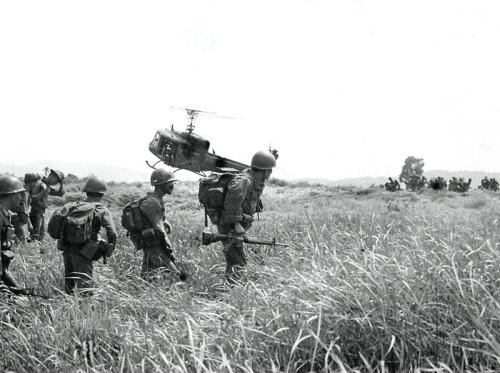
Joint_operation_with_ARVN_112-1Joint US-ARVN Operation

The U.S. Army returned to a country deeply divided and Vietnam veterans remained ostracized until the 1980s.  As Harold Moore recounts “in our time battles were forgotten, our sacrifices were discounted, and both our sanity and suitability for life in polite American society were publically questioned.”[26] The Army endured a massive reorganization that resulted in the formation of the All-Volunteer force, which would redeem itself and emerge from the ashes in the Gulf War. The Americans would not learn the lessons of revolutionary warfare and counterinsurgency until forced to do so in Iraq in 2004-2007.

Conclusions and Possibilities

The effects of these wars on the French and American military establishments were long lasting and often tragic. The acceptance of torture as a means to an end sullied even the hardest French officers. Men like Galula and Marcel Bigeard refused to countenance it, while others like Paul Aussaresses never recanted.  Americans would repeat the tactic at Abu Ghraib rallying the Iraqis against them.

For the Americans, the debacle continued at home. Race riots tore at the force while drug addictions and criminal activities were rampant.  Incompetent leaders kept their jobs and highly successful leaders who became whistle blowers like Hackworth were scorned by the Army institution. It took years before either the French or American veterans again felt a part of their countries.  They ended up going to war, and when it was over; feeling abandoned, their deepest bonds were to their comrades who had fought by their side.

What are the lessons to be learned from these campaigns as well as from the various accounts?  Andrew Krepinevich prophetically noted that the failure to learn the lessons of Vietnam “represents a very dangerous mixture that in the end may see the Army again attempting to fight a conventional war against a very unconventional opponent.”[27] Obviously, there are lessons to be learned, especially in understanding the nature of revolutionary war as well as the culture and history of our opponents. The U.S. has made some improvement in this regard but there is still much to be learned, especially since after the war the Army was “erecting barriers to avoid fighting another Vietnam War.”[28] From these wars we learn that nations and incompetent governments who mismanage wars can alienate themselves from the soldiers that they send to fight, with serious consequences.  As far as historiography we learn that certain historical fallacies are evident when one reads the accounts critically and recognize the bias and limitations of the various sources.

In Iraq the U.S. adapted, albeit belatedly to the nature of the insurgency and took advantage of Al Qaeda Iraq (AQI) over-reach in the manner that they abused the Iraqi people.  The situation turned dramatically in September of 2007 when Al Qaeda killed the most prominent Sunni Sheik outside of Ramadi.  The Sheik had begun to work with Americans on security issues and his death turned much of the Sunni populace in Al Anbar and other provinces against AQI for the first time allying them with the Sh’ia dominated government.  Changing focus the U.S. Forces focused on safeguarding the population and building up the capabilities of Iraqi forces.  Within months because of the increased security and stability in Al Anbar the U.S. Marine trained and Iraqi led forces of the 1st Iraqi Division were able to be moved to Basra where they retook the city from insurgent forces and to Diyala where they helped the government gain the upper hand.  Success in Iraq did not come easy, American forces suffered their greatest losses since the Vietnam War in the cities, villages and countryside of Iraq.  The U.S. is now in the process of drawing down as the Iraqis take over their own security.  The process is not perfect as there still tension between Sunni and Sh’ia factions as well as Kurds and other minority ethnic groups.  However it is still going better than most experts predicted.
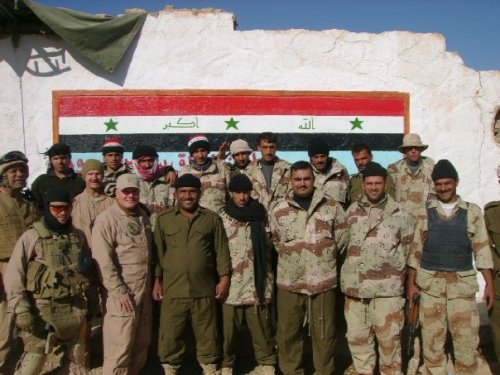
iraqi border troopThe Author and Advisors with Iraqi Border Troops near Syria

Afghanistan is another matter.  After early success in overthrowing the Taliban and isolating Al Qaeda the Americans and NATO pretty ran a status quo operation attempting to legitimize the Karzai government, eliminate the Opium poppy crops and establish government presence and security in outlying areas.  There was a problem in this; both the Taliban and Al Qaeda used border sanctuaries in Pakistan and financial support from worldwide Moslem groups to continue the fight.  As Al Qaeda and the Taliban built themselves up the Afghan government lost support. This loss of support was in large part due to rampant government corruption as well as to the perception of U.S. and NATO forces being occupiers and not liberators.  This perception of the U.S. and NATO forces was in large part because they had ignored the lessons of French Indo-China, Algeria, Vietnam and Iraq.  Isolated from the population the bulk of NATO forces performed in a reactionary manner and often used aircraft and artillery to respond to Taliban forces often killing non-combatants by mistake. Each time this happened, the Al Qaeda and Taliban leaders used the results to further bolster their image and portray the allies as the oppressors.  As the Taliban took back much of the country they also returned to oppressive means to subdue the population by fear and intimidation.
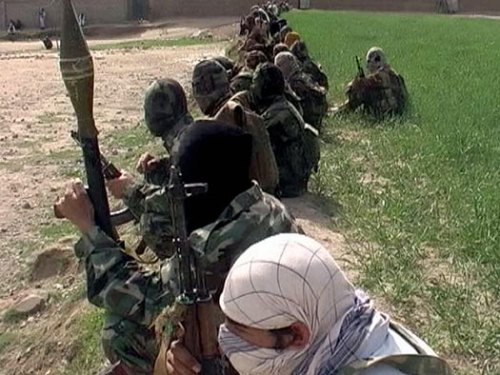
taliban insurgentsTaliban Insurgents

The new American commander, General Stanley McChrystal has asked for more forces in order to run a proper counter-insurgency campaign which focuses on the security of the population to isolate the Taliban and Al Qaeda.  Whether General McChrystal gets his forces and whether they are enough to turn the tide before all political and public support in the U.S. and NATO countries is lost is another matter.  Right now the situation is tenuous at best.  There are means to win this war despite the history of Afghanistan which suggests that this is not possible.  The key is he Afghan population, if they believe that the U.S. and NATO are n their side, that we respect them, their culture, religion and that Al Qaeda and the Taliban are the real oppressors the war can be won.  This requires patience, forethought and deliberate measures to secure the population, build up a government that they can trust and de-legitimatize Al Qaeda and the Taliban.  If that does not happen, the U.S. and NATO run the risk of repeating the story of the French in Indo-China.   Unlike AQI and Iraqi insurgents the Taliban are very capable of running military operations capable of defeating small to medium sized units in isolated locations.  They know the terrain, often have the support of the people, are highly mobile and not dependant on roads and can mass quickly at critical points.  Last year the Taliban launched a large scale assault on an American COP which came close to overrunning it.  They were repelled with heavy casualties but the incident demonstrated a capability that is growing.  What I would be concerned about is the total destruction of an isolated post or a convoy which could be used to demoralize western nations.  While I do not think that the Taliban could pull off the defeat of a major US or NATO base or force as the Viet-Minh did at Dien Bien Phu but the threat should not be minimized.

traiining team with afghan armyUSMC Training Team in Afghanistan

How we learn the lessons of past insurgencies and revolutionary wars is important in Afghanistan.  The stakes are higher than most would want to admit. A withdraw would be seen by militants outside of Afghanistan would be emboldened just as the Algerians were by the loss of the French in Indo-China. It would again provide Al Qaeda with a safe haven and secure base of operations.  The stakes are high.  Who knows what will happen?

Bibliography

Aussaresses, Paul, “The Battle of the Casbah: Counter-Terrorism and Torture,” translated by Robert L Miller.  Enigma Books, New York, 2005. Originally published in French under the title of “SERVICES SPECIAUX Algerie 1955-1957” Perrin 2001

Fall, Bernard B. “The Siege of Dien Bien Phu: Hell in a Very Small Place.” Da Capo Press, New York an unabridged reprint of the 1st Edition reprinted in arrangement with Harper and Row Publishers, New York. 1967

Fall, Bernard B. “Street Without Joy: The French Debacle in Indochina.” Stackpole Books, Mechanicsburg PA, 2005, originally published by Stackpole Publications 1961

Galula, David. “Counterinsurgency Warfare: Theory and Practice.” Praeger Security International, Westport CT 1964 and 2006

Galula, David. “Pacification in Algeria 1956-1958.” RAND Corporation, Santa Monica CA 2006. Originally published by RAND 1963

Hackworth, David H. and Sherman, Julie. “About Face: The Odyssey of an American Warrior,” a Touchstone Book published by Simon and Schuster, New York. 1989

Horn, Alistair. “A Savage War of Peace: Algeria 1954-1962,” a New York Review Book published by the New York Review of Books, New York, 1977, 1987, 1996, and 2006

Karnow, Stanley. “Vietnam, a History: The First Complete Account of Vietnam at War,” The Viking Press, New York, 1983

Krepinevich, Andrew F. “The Army and Vietnam,” The Johns Hopkins University Press, Baltimore and London, 1986

Millett, Allan R. and Maslowski, Peter. “For the Common Defense: A Military History of the United States of America.” The Free Press, a division of Macmillian, Inc. New York, 1984

Moore, Harold G and Galloway, Joseph L. “We were Soldiers Once…and Young: Ia Drang: The Battle that Changed Vietnam,” Harper Collins Publishers, New York NY 1992

Nagl, John A. “Learning to East Soup with a Knife: Counterinsurgency Lessons from Malaya and Vietnam,” University of Chicago Press, Chicago and London, 2005

Nolan, Keith William. “The Battle for Hue: Tet 1968,” Presidio Press, Novato CA, 1983

Pottier, Philippe (2005) Articles: GCMA/GMI: A French Experience in Counterinsurgency during the French Indochina War, Small Wars & Insurgencies,16:2,125 — 146 http://dx.doi.org/10.1080/09592310500079874

Roy, Jules. “The Battle of Dien Bien Phu” Carrol and Graf Publishers, New York 1984. Translated from the French by Robert Baldrick. English translation copyright 1965 by Harper and Row Publishers, New York.

Sheehan, Neil. “A Bright and Shining Lie: John Paul Vann and America in Vietnam,” Vintage Books, a division of Random House, New York, 1989

Shy, John and Collier, Thomas W. “Revolutionary War”in Makers of Modern Strategy from Machiavelli to the Nuclear Age,” Peter Paret editor. Princeton University Press, Princeton N.J. 1986

Simpson, Howard K. “Dien Bien Phu: The Epic Battle America Forgot,” Potomac Books Inc. Washington DC 2005, originally published by Brassey’s Inc. 1994

Spector, Ronald H. “After Tet: The Bloodiest Year in Vietnam,” Vintage Press, a division of Random House, New York, 1993

Trinquier, Roger. “Modern Warfare: A French View of Counterinsurgency,” translated from the French by Daniel Lee with an Introduction by Bernard B. Fall. Praeger Security International, Westport CT and London. 1964 and 2006. Originally published under the title “La Guerre Moderne” by Editions Table Ronde.

West, F.J. “The Village,” Pocket Books, a division of Simon and Schuster, New York. 1972.

Windrow, Martin. “The Last Valley: Dien Bien Phu and the French Defeat in Vietnam,” Da Capo Press, Novato, CA 2006, originally published by Weidenfeld and Nicholson, London 2004


[1] Shy, John and Collier, Thomas W. “Revolutionary War” in Makers of Modern Strategy from Machiavelli to the Nuclear Age,” Peter Paret editor. Princeton University Press, Princeton N.J. 1986  p.849

[2] Galula, David. Counterinsurgency in Algeria: 1956-1958. RAND Corporation, Santa Monica, CA. 2006. First published by RAND in 1963. p.244

[3] Krepinevich, Andrew F. “The Army and Vietnam,” The Johns Hopkins University Press, Baltimore and London, 1986 p.213

[4] Horn, Alistair. “A Savage War of Peace: Algeria 1954-1962,” a New York Review Book published by the New York Review of Books, New York, 1977, 1987, 1996, and 2006 p 41

[5] Fall, Bernard B. “Street Without Joy: The French Debacle in Indochina.” Stackpole Books, Mechanicsburg PA, 2005, originally published by Stackpole Publications 1961 p.27

[6] Ibid. p.33

[7] Horn. p.100.

[8] Windrow, Martin. “The Last Valley: Dien Bien Phu and the French Defeat in Vietnam,” Da Capo Press, Novato, CA 2006, originally published by Weidenfeld and Nicholson, London 2004 p.63

[9] Fall, Bernard B. “The Siege of Dien Bien Phu: Hell in a Very Small Place.” Da Capo Press, New York an unabridged reprint of the 1st Edition reprinted in arrangement with Harper and Row Publishers, New York. 1967 pp. 456-457  Fall discusses in depth the lack of French Air support and the antecedents that led to the shortage following World War II.

[10] Pottier, Philippe(2005)’Articles: GCMA/GMI: A French Experience in Counterinsurgency during the French Indochina War’, Small Wars & Insurgencies,16:2,125 — 146 http://dx.doi.org/10.1080/09592310500079874

[11] Simpson, Howard K. “Dien Bien Phu: The Epic Battle America Forgot,” Potomac Books Inc. Washington DC 2005, originally published by Brassey’s Inc. 1994 pp. 170-171

[12] Trinquier, Roger. “Modern Warfare: A French View of Counterinsurgency,” translated from the French by Daniel Lee with an Introduction by Bernard B. Fall. Praeger Security International, Westport CT and London. 1964 and 2006. Originally published under the title “La Guerre Moderne” by Editions Table Ronde. p.87

[13] Windrow. p.652.

[14] Roy, Jules. “The Battle of Dien Bien Phu” Carrol and Graf Publishers, New York 1984. Translated from the French by Robert Baldrick. English translation copyright 1965 by Harper and Row Publishers, New York. p.xxx

[15] Galula, David. “Counterinsurgency Warfare: Theory and Practice.” Praeger Security International, Westport CT 1964 and 2006 p. 54

[16] Krepinevich. p.213

[17] Ibid. p.24

[18] Nagl, John A. “Learning to East Soup with a Knife: Counterinsurgency Lessons from Malaya and Vietnam,” University of Chicago Press, Chicago and London, 2005 p.138

[19] Shy. p.856

[20] Krepinevich. p.202

[21] Spector, Ronald H. “After Tet: The Bloodiest Year in Vietnam,” Vintage Press, a division of Random House, New York, 1993 p.314

[22] Millett, Allan R. and Maslowski, Peter. “For the Common Defense: A Military History of the United States of America.” The Free Press, a division of Macmillian, Inc. New York, 1984 p.555

[23] Windrow. p.655

[24] Ibid. p.657

[25] Ibid.

[26] Moore, Harold G and Galloway, Joseph L. “We were Soldiers Once…and Young: Ia Drang: The Battle that Changed Vietnam,” Harper Collins Publishers, New York NY 1992  p. xx

[27] Krepinevich. p.275

[28] Ibid. p.274

1 Comment

Filed under History, iraq,afghanistan, Military, vietnam

The Guadalcanal Campaign and the Beginning of Joint Operations

The Guadalcanal campaign was the first experiment by the United States of conducting a “joint” campaign in modern warfare involving Naval and Naval Air, Ground combat units, Army air assets and amphibious operations. The campaign involved numerous land, sea and air battles. It was under the command of Admiral Nimitz as CINCPACFLTand included commanders for ground, air and sea forces engaged.  For brevity and simplicity sake I will discuss the campaign and sea even though they are interconnected with the sea and air campaigns directly affecting the outcome of the land campaign.

Designated OPERATION WATCHTOWER and aptly called OPERATION SHOESTRING the campaign was launched on short notice, approved on 2 July the commanders of the operation first learned of it on 7 July. Utilizing the 1st Marine Division, which would later be reinforced by the Americal Division, landed on Guadalcanal and the neighboring island of Tulagi on 7 August.  The Marines took Tulagi after a brief but bloody fight and the few Japanese troops on Guadalcanal fled inland allowing the Marines to seize the airfield.  Unfortunately, the commander of the supporting US carrier task force, Admiral Frank Fletcher fearing danger to his carriers and withdrew following the landings. The forces in direct support were surprised by a Japanese cruiser force under Admiral Mikawa losing 3 American and 1 Australian heavy cruiser in one of the worst American naval defeats in history at the Battle of Savo Island. The next morning the transports, many still full of supplies left the Marines.  Admiral Fletcher’s action, which left the Marines without air cover and carrier support gave the Marines a new term, still in use today, for being left high and dry: “to be Fletchered.”

The Land Battles: The Japanese quickly responded sending in Naval Landing forces which went in light without all their troops or equipment. The Ichiki detachment was wiped out in the battle of the Tenaru (Ilu) river on 20 August.  The Kawaguchi detachment of 3,500 men landed in two groups, again short of men, material and equipment landed in the closing days of August and attempted to seize the now operational “Henderson” field on September 13 to 14th after one of its supporting units had been destroyed by the 1st Raider Battalion in a small amphibious assault.  Kawaguchi’s attack was disjointed and his units dispersed.  He was defeated in detail by the Marines in the Battle of “Edson’s ridge” or “Bloody Ridge.”  The Marines attacked and destroyed another Japanese force at the Mataniko river on 9 October.  The Marines were further reinforced by the 7th Marine Regiment while Kawaguchi was reinforced by the HQ of 17th Army under General Hyakutake who brought the 2nd Division onto the Island under the command of General Maruyama.  Kawaguchi would then be relieved and sent home following disagreements with Maruyama and his chief of staff prior to the next major Japanese attack which took place 23-25 October along the same ridgeline that Kawaguchi had assaulted. Though the Japanese now had 15,000 troops with good artillery support, the attacks were fierce but uncoordinated. Defended by 7th Marines under Chesty Puller as well as troops from the recently arrived Americal, the Marines again effectively destroyed the attacking Japanese force.  Despite additional reinforcements of the 38th Division, the Japanese, due to severe food, supply and ammunition shortages would not make any more major attempts to take the airfield.  The Americans would shift to the offensive with the Army XIV Corps composed of the 25th Division, Americal Division and Second Marine Division under Major General Lawton J “Lightening Joe” Collins commanding in December.

The Sea Battles: The sea campaign in the waters surrounding Guadalcanal would be marked by some of the bloodiest sea battles in the history of the US Navy.  So many ships from both navies would be sunk offshore that the waters would become known as “Ironbottom Sound.” Following the previously mentioned “Battle of Savo Island” the Americans lost the carrier Saratoga to torpedo damage and the Wasp was sunk while escorting a convoy. In the Battle of Eastern Solomon’s of 24 August the Americans have the Enterprise knocked out of action for 2 months and while sinking a Japanese light carrier and inflicting heavy aircraft losses on the Japanese.The Americans surprised a Japanese force on 11 October off Cape Esperance sinking a heavy cruiser and destroyer and heavily damaging a second heavy cruiser. The Japanese effort, now directed by Yamamoto brought battleships to support operations around Guadalcanal, including bombardments of the airfield on 13-14October in support of Maruyama. The attacks damaged but did not close Henderson field which was able to continue air support to the Marines and soldiers.  On 26 October a carrier engagement would be fought, the Battle of Santa Cruz Islands would be a tactical Japanese victory sinking the Hornet and damaging Enterprise, while losing no ships. Two Japanese carriers were damaged but they lost a large number of pilots and aircrews who could not be readily replaced. They also not succeed in their amphibious efforts to retake the island or Henderson field, gaining the Americans badly needed time.  On 13 November the Japanese attempted to repeat the bombardment of Henderson field but would be stopped from doing so by a task force under Admiral Daniel Callaghan.  The First Naval Battle of Guadalcanal cost the Japanese the battleship Hiei and two destroyers, additionally many of the transports bringing Japanese reinforcements would be sunk by aircraft from Henderson field and Enterprise.  The Americans lost 2 cruisers and 4 destroyers sunk and every other ship save the destroyer Fletcher damaged. Admiral Callaghan and Admiral Scott, the victor of Cape Esperance were both killed.  The following night the Japanese would lose the battleship Kirishima to the USS Washington task group under the command of Admiral Willis Lee.  Further Japanese naval activity would be limited to attempts to reinforce the island with destroyers; during one of these operations on 29 November they would clash with a force of American cruisers and destroyers at Cape Tassafaronga, sinking 1 cruiser and badly damaging three more at the cost of one destroyer, but was unable to complete his supply run.  Though the Americans lost more total warships, the Japanese could not replace what they lost.

Air Operations: The air operations would be decisive to the effort, land based aircraft of the Japanese played a key role in destroying some US shipping and sinking warships in waters off Guadalcanal however they could not maintain air superiority over the island which was maintained and increased by the Americans as Henderson field’s capacity grew and additional Army, navy and Marine aircraft were stationed there.  Naval air was extremely important in the sea battles around the island.

Japanese Reaction: The Japanese reaction was one of dismay; they could not fulfill their promise to the emperor to retake the island.  They had lost many ships and aircraft as well as ground troops. From this time on the Japanese would go over to a strategic defensive in the Pacific.  Japanese losses were devastating as they could not be made up.

Importance for the Americans: This was important in a number of ways. For the navy it showed that they could defeat Japanese surface ships in night engagements and gave the navy great experience as it moved forward in the South and Central Pacific. American carrier air crews had become experienced and gained superiority over the Japanese.  On the ground the myth of the Japanese “superman” was destroyed, yet American commanders also began to appreciate the skill, endurance and tenacity of the Japanese soldier in future operations.

Importance for Joint Operations: The campaign also was a triumph for the Americans in the fact that they were able to overcome inter-service rivalries undertake a difficult operation against a stronger opponent far from major fleet logistics and support basis.  To be sure this was Joint Operations in its infancy and until the arrival of significant Army forces on the island to relieve the Marines was for the most part a Navy, Marine Corps and Army Air Corps operation.  When Major General Lawton “Lightning Joe” Collins assumed command of the island from Marine Major General Alexander Vandergrift it became a true-inter service operation and the beginning of Joint Operations.

Leave a comment

Filed under Loose thoughts and musings

Going to War: It was Just a Rocket and a Night Flight to Fallujah

helos at nightTypical LZ at Night

That evening Nelson and I said farewell to our new friends at Iraq Assistance Group, went and got chow at the large Camp Victory chow hall.  What is interesting on some of the larger bases is just how well fed the troops are.  Of course there are those who are better fed than others who could use the “wide load” convoy signs hanging off of their asses.  The main chow hall at Victory has a number of serving lines and drink, salad and dessert islands.  It has the main serving line, a fast food short order line, a Mongolian BBQ line as well as variations of Giros, Indian food, pizza bar and of course soft serve as well as Baskin and Robbins Ice Cream.  Breakfast is another “feeder” with almost everything imaginable to eat.  I am not a big breakfast eater by and large so for me black coffee, hot or cold cereal and fruit was a normal breakfast.  After dinner we went and finished our packing and waited for our ride to take us to the Camp Liberty airfield.  Had I been stationed at Camp Victory I would have probably outgrown my uniforms as I look at food wrong and can add a pound.

We had a very late flight, about 0200.  Since you normally need to manifest for a flight two hours prior it means that you back up at least a hour before the manifest time.  This particular evening there was not much cooling going on and there was little illumination which meant in most places it was very dark. Especially in troop the billeting areas.  We dragged our gear to the entrance to the billeting area.  Nelson went back to his tent and I plopped my ass down on my bags.  About 2300 I heard and felt a rush over my head.  It was a rocket, probably a 107 mm rocket which is one of the most popular indirect fire weapon used by the insurgents or possibly a 122 mm rocket.  Both are former Soviet systems and not very accurate but still the fact that a rocket has buzzed me was disconcerting.  A few seconds later I heard an explosion.  I later heard the rocket had continued on and hit an uninhabited area of the camp.  Soon after it went over my head a very young looking soldier came running up to me in his PT gear with an M-16 at the ready.  He shouted “Sir, what was that?”  The young man appeared to be a bit scared to I simply quipped “Only a rocket son didn’t hit us.”  He seemed to relax just a bit and I said “You okay son?” the good thing about being as old as I am that you can get away with calling the young guys “son” because in most cases they I’m old enough to be their father.  I stay in game too much longer and the new kids could be grandchildren.  This young soldier said, “Well sir I’m on the quick reaction force and that sounded close.” In the background to the east machine gun and small arms fire could be heard.  A pair of gunships buzzed us going the general direction of the gunfire. Baghdad was definitely not a violence free school zone.  I replied to the young soldier. “Son, if I were you I’d report to where you need to go, better grab your helmet and flak.”  The young man looked at me in the dark, assuming I was a Marine officer since I was in my Marine Desert digital cammies, saluted and said “Yes sir” to which I replied “be safe soldier and God bless, keep up the good work.”  Once again he thanked me and hurried off into the night.

AIR_CH-46_Brownout_Landing_lgCH-46 Landing

A few minutes later, Nelson who has been in some pretty sporty situations in Afghanistan including once where he took out a knife wielding assailant at a checkpoint in Kabul with his fists, came up to me.  “Hey Chaps, did you hear that rocket? Sounded like a 107.”  I said to him, “Shit brother, it felt like it went right over my head. “  He responded quickly “Boss I think we’re in a war here.”  And I said “sounds like it partner, definitely sounds like it.”  Then he said “Chaps, you wouldn’t believe what I just saw.”  I said “Really, what?”  And he told me the story. “I was over looking for our boy when I needed to go to the head, so I opened one of the port-a johns and when I opened it saw this guy and girl having sex in it, like they didn’t have the door closed and you know how nasty those things are.”  I said “Partner you’ve got to be kidding me” and Nelson said “Chaps I wouldn’t do that to you, those people looked at me like I was stupid when I opened the door and I just said excuse me and closed the door. That place stank sir; I don’t know how they were doing it in there.”  I replied “Partner, I guess after a year of more here some folks will take whatever they can get.” “But, you’d think that they would find some dark spot rather that a port-a-john,” replied a thoroughly disgusted Nelson.  As I laughed at the misfortune of my little buddy, bodyguard and protector I simply said “There’s no accounting for taste my friend, no accounting for taste.”

We sat on our gear and waited, and waited.  The time when we should have been picked up went by and after about 15 minutes of chatter about not being picked up on time, Nelson said. “Boss you want e to go find our ride?”  I responded that I wanted him to as it was so dark that he might not know where to find us. A few vehicles had come and gone but none were our assigned wheels.  Finally after about 45 minutes our ride showed up, Nelson had found him on the other side of the compound in his truck listening to AFN radio.  He had come to the wrong side of the billeting area and was chastising me for not being there.  I said, “Sergeant, I said to meet us over here and I’ll be damned f we have to lug our gear a couple hundred yards to make you happy.”  I paused as he started to interrupt and then cut him off “Sergeant, don’t go there, you’re talking to a field grade officer who wasn’t always a chaplain, you went to the wrong place and you didn’t take the initiative to try to find us. We had to find you so don’t push your luck.”  He replied, almost dejectedly, “Yes sir” and I said, “consider this matter ended, get us to the airfield, we have a flight to catch.”  Nelson and I piled our gear into the back of the truck, got in and rode the airfield.

The Camp Liberty airfield, which deals exclusively in rotor wing aircraft, is one of the busiest heliports in the world.  Hundreds of flights go through it every day.  They are primarily Army, but a fair amount of Marine aircraft pass through as well.  We were flying Marine air tonight.  When we got to the heliport our chauffer had a difficult time finding a place to park.  Eventually we sort of double parked and Nelson and I and Nelson and I unloaded our gear with a bit of help from our chastened chauffer got up to the manifest desk where we were greeted by a civilian. He took our names and our mission number and then took out a marking pen and wrote it on the back of our hands.  I found that that at each place this was the primary way to identify who was getting off where or if you should even be on the aircraft. I found a seat and then because I couldn’t get comfortable walked outside for a while.  Nelson on the other hand, ground his gear, threw himself upon it pulled his cover over his eyes and took a power nap. He can sleep almost anywhere.

With about 10 minutes to go I woke up Nelson, and I find it amazing how he can wake back up the way he does.  When I take a nap I am useless for about 30 minutes after I wake up as my body tries to figure out what time it is. We both took turns guarding our gear as the other hit the head, once again a darkened port-a-john that stank to low hell.  When done we staged our gear near the lineup point.  Our mission was called and we lined up with about 30 others, a mixture of Marines, Sailors, contractors and a few soldiers.  We geared up, securing helmets, flaks, our packs as well as our massive EOD issue sea-bags.  Nelson helped me with mine as we got ready to walk, once was over my back and the second strapped across my chest, actually going from my chin to just above my knees.  Many of our fellow passengers had very little gear, and one fairly large contractor offered to help me with my gear.  I took him up on it about half of the 100 yards to where our bird had landed.

Watching our aircraft come in, a flight of 2 Marine CH-46s which date back to Vietnam service I was amazed at how surreal they looked coming in out of the night, their haze gray fuselages almost having a ghostly appearance as they set down.  Of course we had the bird that was farthest from the line up point and I was really glad for the help of this generous contractor.  As we loaded our bags onto the aircraft, stacking it in the center of the deck with everyone else’s gear, we each took one of the jump seats along the side and strapped ourselves in.  Sweat was pouring off of me and I felt totally winded, no amount of running, pull ups, pushups and crunches had prepared me to lug our heavy and ungainly gear around.  The dimly lit troop compartment was hot and I looked around the aircraft.  I noted the machine gunners in the front doors and the crewman in the back who took a seat with a 240 series machine gun mounted on a swivel.  It reminded me of the films I saw of the inside of World War Two B-17s, except that the flight suits were different.  The crew gave the let the pilots know that we were ready, and I wondered what we were heading into.  Nelson got my attention and gave me a “thumbs up” and I returned it as the lights went out that our flight lifted off.

1002CH-46 Door Gunner

Banking around to the left the 46 gained altitude and flew back across the camp as it did so I got my first view of Iraq after dark.  As we flew into the city of Baghdad there were lights and sometimes lit streets. In a few places I could see the flashing lights of emergency vehicles.  We soon began to descend into the city surrounded by tall buildings, mainly hotels and government buildings and I knew that we were in the “Green Zone.” We sat down on a small landing pad, the dim lights came back on and a couple of passengers got out of our bird which a couple of more boarded the flight. The scene from Camp Liberty was repeated and gear was off and on loaded, passengers boarded and debarked from the flight and the lights went off and the bird lifted off.  Gunners took their positions and chatted on their headsets obviously scanning for threats and assessing what was going on, or they could have been talking about the new video game one of them had bought at the exchange.

Banking left we gained altitude heading east, with Baghdad fading into the night the lights of the communities along the Euphrates came into view as we flew on toward Fallujah.  For me it was a fascinating experience, surreal and a bit of anxiety making but interesting as I thought of the history of the ancient civilizations who had settled here, the Assyrians, Babylonians and Persians and the fact that the faith of the Christian Church through Abraham and later the people of Israel began here with Abraham’s obedience to the Lord.

The flight only took about 16-18 minutes and we flew into Fallujah.  The bird sat down on a large tarmac and the crew motioned us to get up grab our gear and get off of the aircraft.  I was praying desperately that it would not be a long walk to the terminal from the helicopter pad.  As we hauled our gear off the 46 to get to the terminal I was about tapped out.  The 46 had landed about 100 yards from the terminal where our ride waited.  It might as well have been 100 miles.  I loaded one bag on my back and commenced to drag the other.  Nelson was ahead of me and realized that his old Padre was not doing well.  I was about halfway to the terminal when Nelson showed up with a Marine on a John Deere Gator. My gear was loaded aboard the Gator; I gave a hearty thank you to Nelson, the Marine and to the Deity Herself as I dragged my sorry ass to the terminal.

The Fallujah terminal like most terminals at heliports in Iraq was a plywood building constructed by the Seabees.  It was well lit inside, had air conditioning which I sucked up and a large refrigerator with bottled water stashed in it.  Once inside I took off my helmet as we checked in at the desk.  By now it was about 0245, I had been up since 0530 the previous day, done PT a Camp Victory, had a rocket fly directly above me and dragged 200 pounds of gear more places than I wanted to in 100 degree heat and I was a spent round.  War is a young man’s game and even though I am in good shape for someone my age, the key is that I am in good shape for someone my age, not a young guy.  Sweating profusely I found a liter bottle of water and downed it.  About that time a large African American 1st Class Petty Officer came in the door.  RP1 Donnie Roland was the LPO of the II MEF Forward Chaplain’s office and worked for Mike Langston.   Donnie, who is now a Chief is a guy that you definitely want on your side.  He hooked us up.  Normally personnel in a transient status in Fallujah are housed in tents with cots in varying degrees of disrepair.  Donnie got us rooms in the VIP quarters, nicknamed by the Marines the “Ramadan Inn.”  The place had once been the haunt of Uday and Qusay Hussein, Saddaam’s sons.  It had a pond in the center of the court yard and was reputedly a place where they would entertain senior members of the Ba’ath Party amid scenes of debauchery.  We were given a small room that had a desk and two small Iraqi beds, both of which had thin concave mattresses which had little support but were a definite step up from a cot.  Sheets, pillows and a blanket were included.  Our gear took up the majority of the room but it didn’t matter.  After a shower I crashed hard.  The bed might have been from a 5 star hotel, all that mattered at 0330 was that I could get to sleep.  RP1 Roland told us that Chaplain Langston said that we should get some sleep and come in when we could.  With outgoing artillery fire going off in the background I laid my worn out body down on the waiting mattress, I thought about the day and it came to me that the rocket that had went over my head could have killed me and a chill went down my tired spine.  Another salvo of artillery lashed out at the enemy, and my mind drifted back to the present.  I was now in Fallujah.  One more stop on the way to my war, Nelson was already asleep, I am amazed at his ability to go from 0-60 and 60-0 so fast.  More artillery fire boomed and as a former forward observer I found outgoing artillery fire to be comforting, amid it’s lullaby I went to sleep.

Leave a comment

Filed under History, iraq,afghanistan, Military, Tour in Iraq

Going to War: Baghdad, Briefings, Coordination and Connections

This is the 10th installment of my “Going to War” series which Chronicles my deployment with RP2 Nelson Lebron to Iraq in 2007-2008.  This installment deals with our time at Camp Victory in Baghdad as were prepared to go west. For other segments go to the “Tour in Iraq” link on the sidebar.

051Sitting on Saddam’s Throne

Following our arrival at Camp Victory Nelson and I continued to get our bearings. We went to the Iraq assistance Group where we checked in and began to meet the people who were going to be assisting us as we got ready to do our mission where we met with the Chaplain, Major Peter Dissmore, the Chief of staff, Colonel David Abramowitz and the Commanding General.  We received briefing and coordinating assistance from a number of the G-Shops in the IAG, the Chaplain and the Multi-National Corps Iraq Chaplain Office.

The visits with all were cordial and my long Army career as a Medical Service Corps Officer and Chaplain allowed me to have a edge in working with the Army because I knew the system, the language and the culture.  Now the IAG was run by the Army but was a joint command with Navy, Air Force and Marine staff in addition to the Army.  The IAG at least then was the coordinating office for the teams of Advisors and trainers working with the Iraqi Army, Border Forces and National Police.  Another command worked with the Provincial Police and other security forces throughout the country.

While we had an idea where we would be working before we deployed that we would work with the Marine and Army advisors in Multi-National Force West, we received the word that we would be going there.  MNF-West operates in Al Anbar Province which at that time was still a very dangerous place, although there were signs that things might be beginning to turn around.  It was funny as during our pre-deployment preparation and training took place almost everyone who heard that Nelson and I were going to Anbar expressed concern as the battle there had been very difficult since the U.S. led invasion.

The actual briefings and preparations did not take long, but the important part was building relationships that would assist us in our mission as it developed.  The two key people at IAG for our mission were Chaplain Dissmore and Colonel Abramowitz.  Chaplain Dissmore a chaplain of the Assemblies of God denomination, graduate of Princeton and ethics instructor at the Army Engineer school had been deployed like us as an individual augment as had Colonel Abramowitz.  We got along with both very well as we got details of the mission.  Colonel Abramowitz took a liking to us, especially Nelson, a fellow New Yorker.  Abramowitz is an Army Aviator and the son of an Army Infantry Colonel.  He is a big man, about 6′ 6′ or maybe taller and reminds me of a Jewish version of Patton.  When he found out that Nelson was a fighter and had multiple championship belts he had to “Google” him.  Nelson told him to “Google Nelson Lebron, kick boxer.”  When Colonel Abramowitz did he was amazed that Nelson was the real deal.  He became one of our strongest advocates in Baghdad.  We talked baseball of course the good Colonel being a Yankees fan. Another group of men who were invaluable to us were two former Iraqi Army and Air Force Generals who had fled the country during the reign of Saddaam after the the Gulf war.  Both helped us considerably as we gt to know more about the make up of the new Iraqi Army which after a couple of years had been purged of many of the opportunists and political hacks who had come in after it was re-established.  Many of the officers replacing the problem children were career military men, secular in outlook who had served since the Iran-Iraq war of the 1980s are well as in the First Gulf War.  These men wanted the chance to get the Iraqi Army back in shape as a fighting force, but faced opposition from certain political and religious groups in the country not to mention the insurgents who desired to undermine the effectiveness of this force from the beginning.

Almost immediately after meeting with the IAG staff we were on the phone with Navy Captain Mike Langston the Chaplain for MNF-W and II Marine Expeditionary Force Forward and his deputy Commander J. Hedges.  They were excited to have us coming to their area.  When Chaplain Dissmore informed them that they had the choice of a Navy team or an Army team they of course picked us.  This was also the intent of the IAG who realized that a Navy team would understand the more Marine oriented advisors and chain of command out west.  When Chaplain Langston heard that the team was composed of Nelson and me he expressed great pleasure as Nelson had served with him in Afghanistan and I had served with him at Second Marine Division.  As a result we had a great amount of trust placed in us because of prior service together as we were both known quantities.  Relationships matter in the military and this time they were a great help to us.

Dundas and FallahMeeting with General Falah

One of the things pointed out to us was that we were the first Navy team assigned to doing this type of mission since Vietnam.  Most of the Army teams doing the mission were reservists and according to the information that we were given were struggling.  A team that had been dispatched out west prior to us had been sent back early because of their ineffectiveness.  I had already known that we were the first Navy team to do this mission since Vietnam and had taken the time to read the histories of the chaplains who served in this “niche” role in that war.  Likewise being a history major and working on a second Masters in Military History I had been doing a lot of study on counter-insurgency and revolutionary warfare.  Not long prior to our deployment the Army and Marine Corps had issued a new manual on the subject.  When I read it I was surprised to find that I had already read many of the primary sources used in its compilation.  These are things that while not directly related o being a chaplain are things that help give a chaplain “street cred” and an ability to adapt to the culture and understand the language of the men that he serves with.  I did not stop being a Priest in this, but I knew where we fit and understood what the advisers on the MiTT  Military Transition teams, mission was and challenges that they faced.  This again put us ahead of the power curve going into the mission.  I do not think that any Religious Ministry or Army Unit Ministry Team has been as well prepared for this kind of mission than we were.

While at Camp Victory I met several old friends and acquaintances from Army and Navy service, as well as a Marine Corps Officer with who I had attended Command and Staff College.  One, LCDR Andy Wade who I had served with at 2nd MARDIV was completing a tour with the MNC-I Chaplain Office. Two of the Army Chaplains had been in my officer basic course and one, an Orthodox Priest was a friend from the Army Chaplain Officer basic course at Fort Monmouth NJ in 1990.  Peter Batkis was a newly commissioned 1LT when I went to the basic course and was the room mate of my good friend Fr Jim Bowman.  He was  now a Lieutenant Colonel and Chaplain for the 18th MP Brigade.  The other former classmate had been with an advisory team elsewhere in country and not had a good experience.  I was shocked to see how he had aged and how badly he wanted to get out of country.

While at Camp Victory we continued to get ourselves ready to go.  Our flight to Fallujah was arranged by the IAG staff and we began the process of waiting.  While waiting we were able to get some PT in and on the morning of the 8th of August (7 August in the States) while at breakfast I saw Barry Bonds hit home run #756 to break the record of Hank Aaron.  What I saw at Camp Victory amazed me.  The place was a veritable “little America” complete with the largest military exchange in country, about the size of a small Wal-Mart with a separate market for Iraqi vendors and, American fast food outlets housed in white trailers outside the exchange and a host of other exchange services found anywhere in the world, except to much of Al Anbar where we were heading.  It was kind of surreal, all of this Americana plunked down in there heart of Iraq, surrounded by blast walls and guarded with multiple check points. Parking lots were filled with a  mixture of tactical and non-tactical vehicles and every military person was armed. Helicopters overflew the area regularly, both transport aircraft and gunships, the gunships which flew what would have at one time been called a “Combat Air Patrol.” Additionally there was the ever present noise of small arms fire, distant explosions and sirens of various emergency and police vehicles.  The weather while 6-8 degrees cooler than Kuwait was still very hot and we were constantly picking up liter bottles of fresh water to stay hydrated.

Additionally we received the tour of the Al Faw Palace which was one of Saddaam Hussein’s major residences which had been taken over as the headquarters of Multi-National Force Iraq.  The palace was abuzz with the activity of the MNF-I staff.  In the lobby of the palace there is a throne given to Saddaam by Yasser Arafat in which almost everyone going through Camp Victory gets their photo taken in.

On our 4th day in country we got word that we would fly that night.  Nelson and I got ourselves packed, made final preparations and coordination with the IAG staff and waited.

Leave a comment

Filed under iraq,afghanistan, Military, Tour in Iraq