Tag Archives: walt whitman

Repair Our Losses and Be a Blessing to Us: A Night at the Congressional Baseball Game


Friends of Padre Steve’s World,
Baseball legend Bill Veeck once noted:  “Baseball?  It’s just a game – as simple as a ball and a bat.  Yet, as complex as the American spirit it symbolizes.  It’s a sport, business – and sometimes even religion.”

Baseball is essential to the American spirit, it is complex and for people like me it is a religion, a true Church in which I find refuge. Likewise, as I get older and more disillusioned with the Christian Church and religion in general I tend to agree more and more with Annie Savoy in Bull Durham when she says   “The Only church that truly feeds the soul, day-in day-out, is the Church of Baseball”


I, like many people turn to baseball in times of trouble. My frequent trips to the ball park after Iraq were places of solace where I could escape the terror of my PTSD.


Last night I went up with Chaplain Vince Miller to see the Congressional Baseball game at National’s Stadium in D.C. It was  a last minute decision. My friend messaged me Wednesday evening and suggested it. He got the tickets, we got permission from our bosses, rearranged our schedules and I got the hotel and drove up. When he contacted me Wednesday he felt that it was something that we needed to do, and I immediately agreed. There were two reasons for this; First some long overdue self care that you can only have from people who are friends who have lived the same kind of life you have, but second because both of us thought it was important in a deeper way. 

After yesterday’s attempted assassination of Republican members of Congress both of us felt it necessary to go to show our support for our elected representatives from both parties. Both of us felt the need to be there for the members of Congress as Americans because both of us still believe in the ideals and the promise that still resides in the people of this country. 

I believe that we can vehemently disagree about policy, but the answers are found at the ballot box and by deciding to become friends again. Likewise I believe that one of the best places for that is the baseball diamond where last night members of the Democrat and Republican Senate and House faced each other as friends during a baseball game, the proceeds of which benefited charities in the Washington D.C. Metro area. 


Wednesday’s attack was an attack on America itself, our institutions, and based on the violent rhetoric and intense anger of many people it could have happened to either team. So last night’s game was a balm for the soul of the nation and I hope a sign of better things to come. Maybe it took something like this to realize that we have ventured too far down the road of hate and intolerance to continue that direction.

Walt Whitman wrote that baseball is “our game – the American game.  It will take our people out-of-doors, fill them with oxygen, give them a larger physical stoicism.  Tend to relieve us from being a nervous, dyspeptic set.  Repair these losses, and be a blessing to us.”


The game was fun to watch both sides played hard but the sportsmanship, camaraderie, and friendship showed. From the crowd there were few boos or catcalls from either side of the nearly 25,000 fans of both teams. Before the game the members of both teams went to second base and took a knee praying for their colleague Representative Steve Scalise and the police officers wounded in the attack. Even President Trump struck the right note in his remarks which were broadcast on the center field scoreboard. Among the fans of both sides there was absolute courtesy that was so unlike the intense and often mean spirited partisanship that has consumed the nation for the past decade or more. I know that I can only hope that this will continue.

The Democrats overwhelmed the GOP with a barrage of hits while their pitcher Representative Cedric Richmond of New Orleans threw a five hitter, and struck out seven. GOP shortstop Ryan Costello of Pennsylvania who had been moved from third base due to the shooting of Scalise  showed excellent defensive prowess making a number of outstanding defensive plays.


But on another level this trip was good for me and for Vince as well. We had both thought it important to show our support by going and we likewise both knew that we needed the time together to take care of each other, but it became bigger than that. After the game we went for a nightcap at the Gordon Biersch Brewery Restaurant near the stadium. While we were there two members of Congress, Republican Congressman Mark Walker of North Carolina and Democratic Congressman Tony Cardenas of California came in and we both greeted them and thanked them for coming out to play the game after what happened yesterday. Ever gracious both autographed baseballs for us and Cardenas extended an invitation to visit him in his House office.

The fact is that we in the military deal with losing friends to senseless violence everyday, but this is not what normal people deal with, including the men and women who serve in the House and Senate. To go out and play a ballgame after your colleagues were attacked is not an everyday event and there had to be some amount of fear for anyone that went out onto that field, perhaps for the first time in a long time members realized that they too could be the target of political violence. I think that that shook many people to the core, and I believe that it took a measure of courage for them to play the game after the attack, but I digress… 

Our time with both of these Congressmen was important, they were surprised and pleased that two Navy Chaplains completely changed their plans and travelled 200 miles to watch them play baseball. It was also interesting because Vince is from North Carolina, and Representative Walker was a pastor for many years, and the family of Congressman Cardenas had been migrant workers around Stockton California, my home town. I’m not going to speculate but I am going to assume by how they treated us that it meant a lot to them that we and so many others stood with them last night. I think they realized as many others did, that this is about all of us, Democrat and Republican, and as I said before I hope and pray that this might signal a new and less hateful era in American politics. 

When we went back to the hotel we talked about the mystery that is the work of the Holy Spirit of God, not the fatalism of providence, but the mystery of the Holy Spirit’s work in our lives and those around us. It was about more than us, and to quote Jake Blues “we’re on a mission from God.” 

So I’m going to leave you with the mystery of the Spirit that worked in the hearts of two Chaplains who needed some time to take care of each other had our lives intersect those of a lot of nice people, 

So anyway, let us try to all do better. 

Until tomorrow,

Peace

Padre Steve+

1 Comment

Filed under Baseball, faith, leadership, Political Commentary

They Silently Gather Round Me: A Memorial Day Reflection

Friends of Padre Steve’s World,

After the end of the American Civil War, the poet Walt Whitman reflected on the human cost of it. Whitman wrote,

“Ashes of soldiers South or North, As I muse retrospective murmuring a chant in thought, The war resumes, again to my sense your shapes, And again the advance of the armies. Noiseless as mists and vapors, From their graves in the trenches ascending, From cemeteries all through Virginia and Tennessee, From every point of the compass out of the countless graves, In wafted clouds, in myriads large, or squads of twos or threes or single ones they come, And silently gather round me…”

Memorial Day is always an emotional time for me, especially since I returned from Iraq in 2008, and this weekend I have been thinking about the men and women that I knew who died in action or died after they left the service, some at their own hand, unable to bear the burdens and trauma that they suffered while at war. I was reminded of them again at the memorial service that we conducted for the sailors and soldiers from our base who have died in action since September 11th 2001. In an age where less than one percent of Americans serve in the military, I think that it is important that we take the time to remember and reflect on the human cost of wars.

I think of the battlefields that I have served on in Al Anbar Province, the one my father served on at An Loc, Vietnam, or the battlefields and the graveyards I have been to, Verdun, Waterloo, Arnhem, Normandy, Belleau Wood, Luxembourg, the Shuri Line, the Naktong River, Yorktown, Chancellorsville, Antietam, Stone’s River, Bentonville, Gettysburg, the wrecks of the USS Arizona and USS Utah at Pearl Harbor, and so many more, I think about the men and women who never returned. To me all of these places are hallowed ground, ground that none of us can hallow, the sacrifices of the men who gave their last full measure of devotion have done that better than we can ever do.

There are some songs that are haunting yet comfort me when I reflect on the terrible costs of war, even those wars that were truly just; and yes there are such wars, even if politicians and ideologues demanding revenge or vengeance manage to mangle the peace following them. Of course there are wars that are not just in any manner of speaking and in which the costs far outweigh any moral, legal, or ethical considerations, but I digress…

Joshua Lawrence Chamberlain, the hero of the Battle of Little Round Top at Gettysburg wrote something that talks about the importance and even the transcendence of the deeds of those who lost their lives in those wars fought and died to achieve.

In great deeds, something abides. On great fields, something stays. Forms change and pass; bodies disappear; but spirits linger, to consecrate ground for the vision-place of souls… generations that know us not and that we know not of, heart-drawn to see where and by whom great things were suffered and done for them, shall come to this deathless field, to ponder and dream; and lo! the shadow of a mighty presence shall wrap them in its bosom, and the power of the vision pass into their souls.”

Elton John wrote and performed this song, Oceans Away on the centenary of the First World War. It speaks of the men that never came home, and he related it to those who continue to go off to war today.

I hung out with the old folks

In the hope that I’d get wise

I was trying to bridge the gap

Between the great divide

Hung on every recollection

In the theater of their eyes

Picking up on this and that

In the few that still survive


Call em up

Dust em off

Let em shine

The ones who hold onto the ones, they had to leave behind

Those that flew, those that fell,

The ones that had to stay,

Beneath a little wooden cross


They bend like trees in winter

These shuffling old grey lions

Those snow-white stars still gather

Like the belt around Orion

Just to touch the faded lightning

Of their powerful design

Of a generation gathering

For maybe the last time

Oceans away

Where the green grass sways

And the cool wind blows

Across the shadow of their graves.

Shoulder to shoulder back in the day

Sleeping bones to rest in earth, oceans away

Call em up

Dust em off

Let em shine

The ones who hold onto the ones, they had to leave behind

Those that flew, those that fell,

The ones that had to stay,

Beneath a little wooden cross

Oceans away

Elton John “Oceans Away”

Likewise I find myself thinking about all those times alone overseas, and realize that many did not come home. The song I’m Dreaming of Home or Hymne des Fraternisés from the film Joyeux Noel which was adapted by French composer Philippe Rombi from the poem by Lori Barth I think speaks for all of us that served so far away, both those who returned and those who still remain oceans away.

I hear the mountain birds

The sound of rivers singing

A song I’ve often heard

It flows through me now

So clear and so loud

I stand where I am

And forever I’m dreaming of home

I feel so alone, I’m dreaming of home


It’s carried in the air

The breeze of early morning

I see the land so fair

My heart opens wide

There’s sadness inside

I stand where I am

And forever I’m dreaming of home

I feel so alone, I’m dreaming of home


This is no foreign sky

I see no foreign light

But far away am I

From some peaceful land

I’m longing to stand

A hand in my hand

… forever I’m dreaming of home

I feel so alone, I’m dreaming of home.

Please take the time to remember those who whose spirits still dream of home, oceans away.

Until tomorrow,

Peace,

Padre Steve+

1 Comment

Filed under civil war, History, Military, News and current events

The Ghosts of Gettysburg Gather Around Me

img_0578

Friends of Padre Steve’s World,

I am at Gettysburg this weekend so I am just posting just a short meditation and some words written by Walt Whitman. 

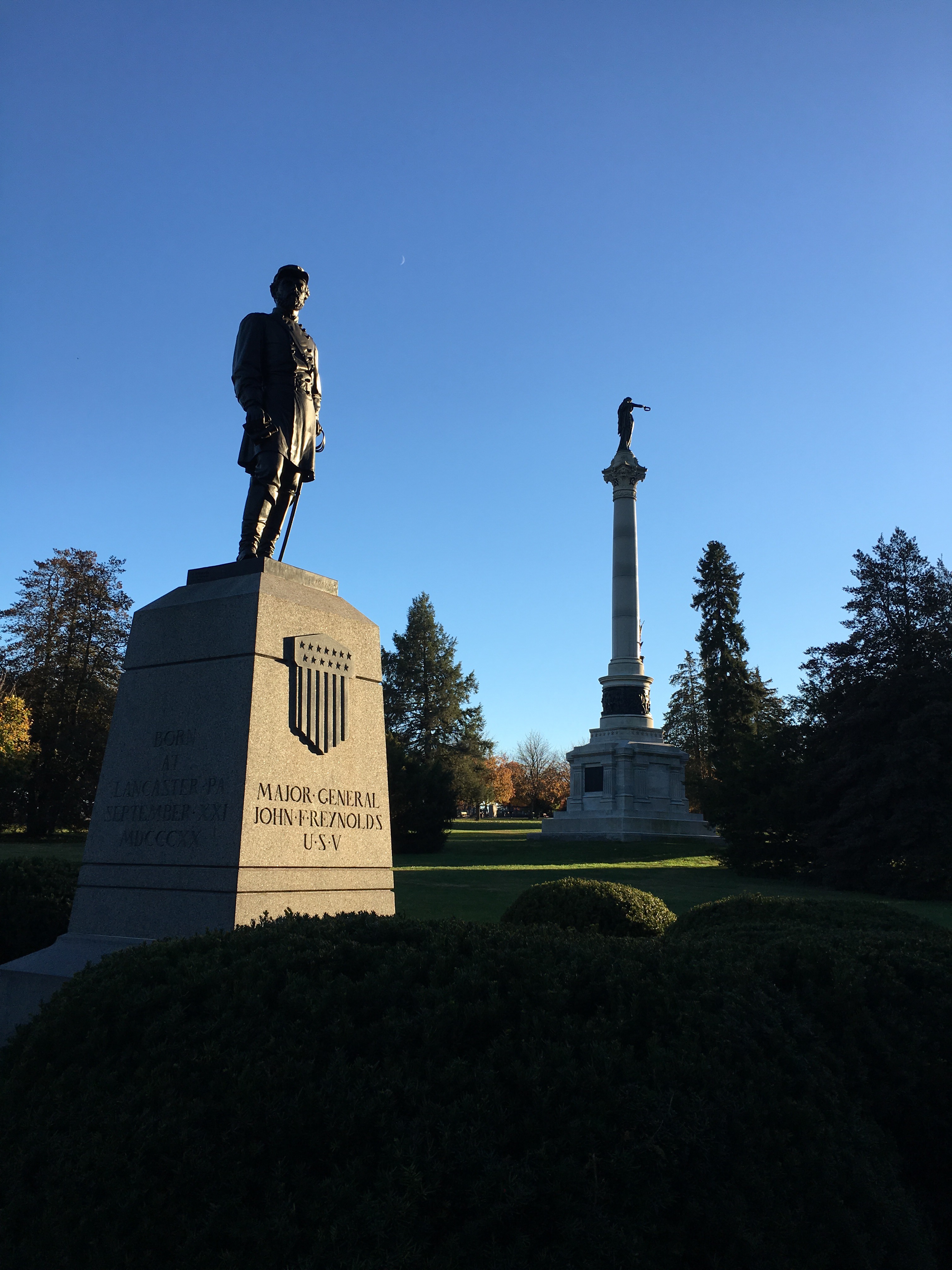
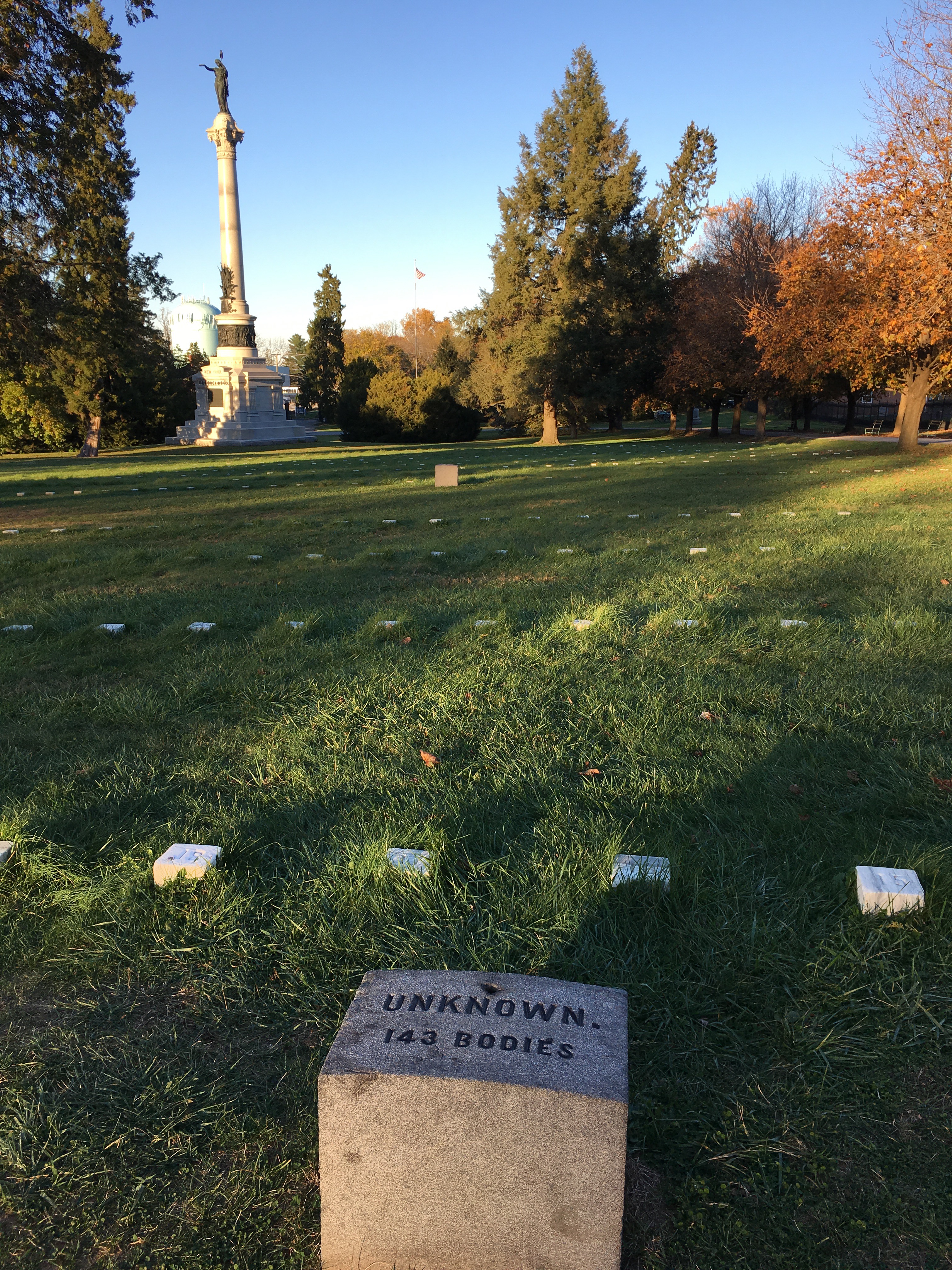
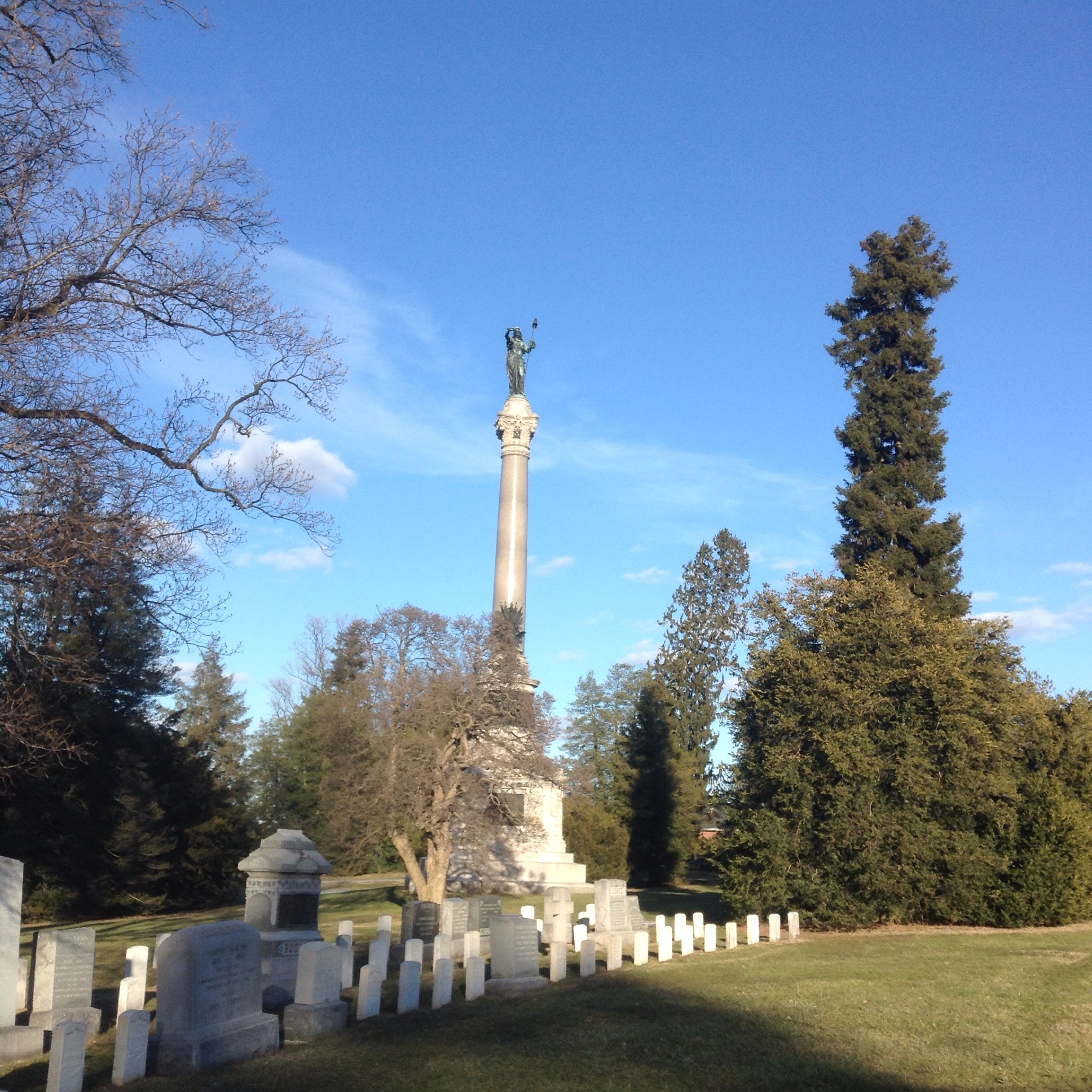
Yesterday afternoon I wandered around the Soldier’s Cemetery as well as East Cemetery Hill. It was a beautiful evening with the fall foliage in full display under a a blue sky with the sun setting in the west. As I walked about the graves of the 3577 Union Soldiers buried here, over half who are unknowns, I felt such powerful presence and was reminded of the importance of what they did here. There are sections where of the cemetery where unknown soldiers are buried, rank upon rank, with only a small marble marker with a number to identify them.

Each was a son, maybe a husband, father, or brother, or a friend, and most certainly, a comrade in arms. Each has a name, even if we don’t know it; and all of them, and many more gave the last full measure of devotion to duty to preserve this country against an enemy. But unlike other enemies, the soldiers that these men battled were from of an enemy that has raised itself up from within the country; men, no matter how good they might have been, took up arms against the United States. These included men who took up arms and fought against friends who they had served alongside in peace and war.

While men of my family fought for the Confederacy I cannot succumb to the lie that their cause was just. Thus when I stand among the ranks of these fallen Union men I honor their memory in ways I cannot fully do for their opponents in Confederate gray. Do not get me wrong, I weep for those who fought and died on both sides of the American Civil War, and each soldier needs to be remembered, even those who fought for a cause that was evil, the cause of slavery. As a military man myself I cannot walk these battlefields and not have a sense of compassion and even empathy for the Southerners who died here, even while rightly condemning the government and the cause that sent them to their deaths.

Walt Whitman wrote the poem Ashes of Dead Soldeirs after the war was over. Whitman knew the terrible cost borne by soldiers as he volunteered to help the wounded in Federal hospitals during the war. His words speak to me. 

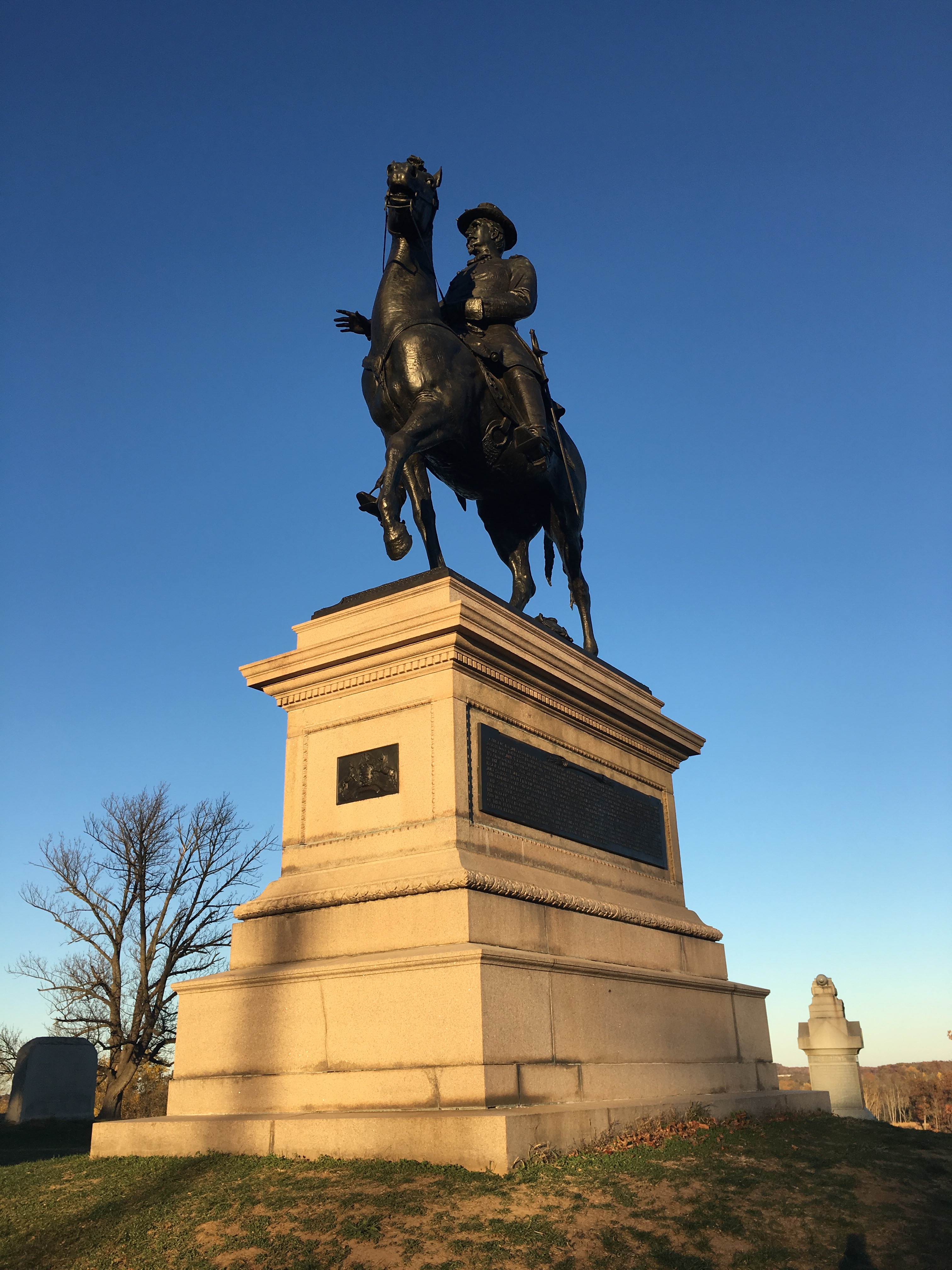
When I come here I can sense their presence, the great and the small, John Reynolds, Lewis Armistead, Paddy O’Rorke, Dick Garnett, Alonzo Cushing, and Stong Vincent. The men of the Iron Brigade and the Irish Brigade, Dan Sickles’s Excelsior Brigade, Augustus Van Horne Ellis’s 124th New York “Orange Blossoms,”the men of George Pickett’s doomed division, the 1st Minnesota, the 20th Maine, and so many more. 

Whitman penned these words:

 “Ashes of soldiers South or North,
As I muse retrospective murmuring a chant in thought,
The war resumes, again to my sense your shapes,
And again the advance of the armies.
Noiseless as mists and vapors,
From their graves in the trenches ascending,
From cemeteries all through Virginia and Tennessee,
From every point of the compass out of the countless graves,
In wafted clouds, in myriads large, or squads of twos or threes or
single ones they come,
And silently gather round me…”

From Walt Whitman- Ashes of Dead Soldiers

Peace,

Padre Steve+ 

Leave a comment

Filed under civil war, Gettysburg, History

Cubs Win Epic World Series and Remind us of All that Can Be

cubs-world-series

Friends of Padre Steve’s World,

The late W.P. Kinsella wrote: “Baseball is the most perfect of games, solid, true, pure and precious as diamonds. If only life were so simple. Within the baselines anything can happen. Tides can reverse; oceans can open. That’s why they say, “the game is never over until the last man is out.” Colors can change, lives can alter, anything is possible in this gentle, flawless, loving game.”

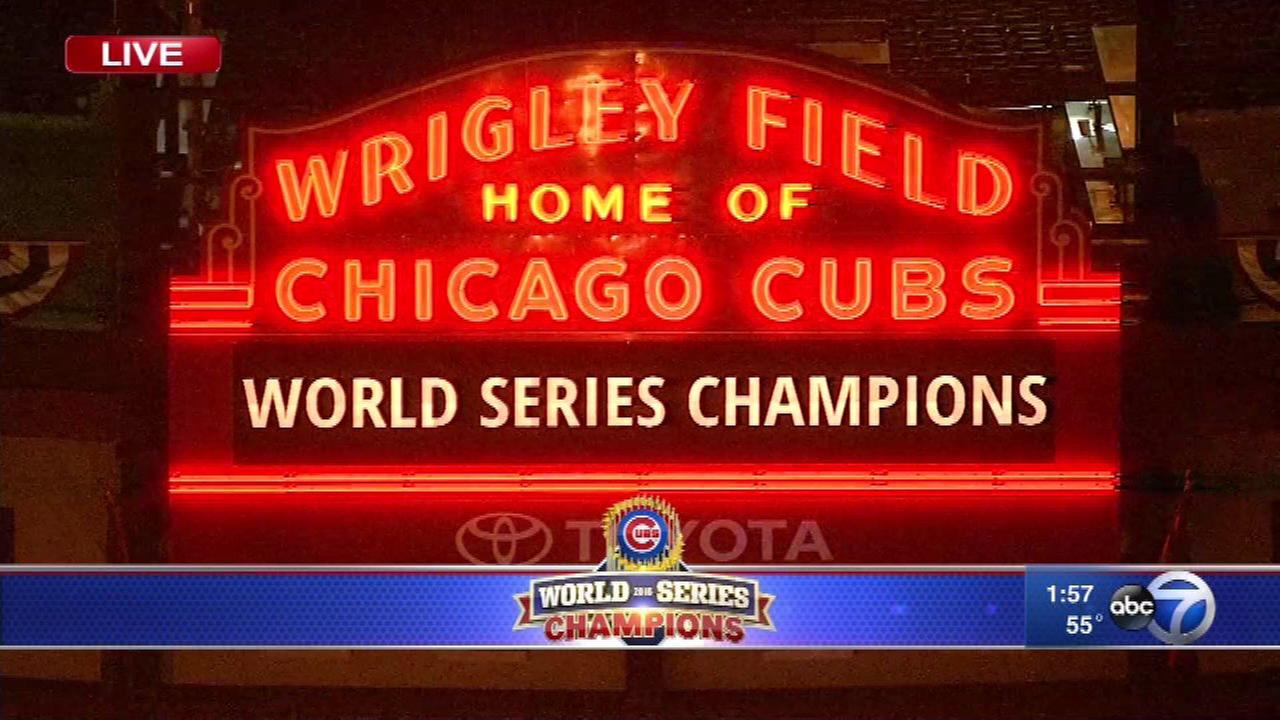
For five hours last night all the cares of the world didn’t matter. Not the raging anger of Donald Trump, not the election, not the wars and bloodshed in the Middle East, not terrorism, not the economy, not anything…  except what transpired on the baseball field in Cleveland. In Game Seven of an epic World Series two teams with a combined 174 years of not winning a World Series battled into the 10th inning as the weather got worse and the rain began to fall. The tension throughout the game was electric, the mood swings as the Cubs took a 5-1 lead and then the Indians scored three runs with two outs in the bottom of the 8th inning to tie the game took one’s breath away.  Watching these two teams battle it was if time itself no longer existed, just the game, a game which transfixed the nation as no sporting event has in recent memory.

Kinsella wrote something profound  in his classic baseball fantasy The Iowa Baseball Confederacy: 

“Name me a more perfect game!” Matthew Clarke had been fond of saying to his son. “Name me a game with more possibilities for magic, wizardry, voodoo, hoodoo, enchantment, obsession, possession.” 

I have to agree, this World Series showed all of us something that no other sport can match in terms of tension, magic, and enchantment. People like to say that NFL football is exciting, but compared to this wonderful game, but the NFL has has degenerated into brutal test of strength, of declining talent, terrible injuries that the owners don’t seem to mind, with the joy taken out of it.

Instead last night we saw talented players play their hearts out, pitchers exhausted from overuse, hitters coming up big, and fielders making spectacular plays. The drama was played out as if it were a story out of ancient Greek mythology as immortals battled in front of watching mortals. I  wished that it could have gone on forever and that both teams could have won, but that is not baseball. A game may go into extra innings, but when it is over, it is over. Unlike politics when the game is over there is no recount: when the final strike is called, there is no court of appeals. As Bill Veeck said:  “Baseball is almost the only orderly thing in a very unorderly world. If you get three strikes, even the best lawyer in the world can’t get you off.”  But that being said there is always next year; which brings with it a hope that springs as eternal as the luxuriant green grass on the enchanted diamonds in every corner of the nation; diamonds whose foul lines theoretically extend to infinity, and whose perfection calls us to something better.  Those fields await us all if we believe.

This World Series, in particular this Game Seven also called us back for just a few hours to a better time, a time of hopes and dreams that have always captivated American, a goodness that dwells within us just waiting to be released again. And it can be again, if we decide to release the cynicism and hatred that has built up over the decades which has been on such display during this election.

What happened last night reminded us of Kinsella’s classic line in his book Shoeless Joe which became the film Field of Dreams: 

“The one constant through all the years has been baseball. America has rolled by like an army of steamrollers. It’s been erased like a blackboard, rebuilt, and erased again. But baseball has marked the time. This field, this game, is a part of our past. It reminds us of all that once was good, and what could be again.”

Congratulations to the Cubs and to their faithful fans. 108 years is an eternity to wait for this, and thank you to the Indians, and there fans as well, and maybe for you it will be next year. But whatever, this wonderful game reminded us of the fact that American is great, because America is good, and baseball reminds us of that good, and what could be again.  As Walt Whitman wrote: “I see great things in baseball. It’s our game — the American game. It will take our people out-of-doors, fill them with oxygen, give them a larger physical stoicism. Tend to relieve us from being a nervous, dyspeptic set. Repair these losses, and be a blessing to us.”

Until tomorrow,

Peace

Padre Steve+

Leave a comment

Filed under Baseball, News and current events, philosophy, sports and life

Dreaming of Home… Oceans Away: A Post-Memorial Day Meditation

481801_10151367001287059_1003164983_n1

British Grave at Habbanyah, Al Anbar, Iraq

Friends of Padre Steve’s World,

Though it is now the day after Memorial Day I believe that this reflection is worth the read, as well as listening to the music that is part of it.

img_0600

After the end of the American Civil War, the poet Walt Whitman reflected on the human cost of it. Whitman wrote,

“Ashes of soldiers South or North, As I muse retrospective murmuring a chant in thought, The war resumes, again to my sense your shapes, And again the advance of the armies. Noiseless as mists and vapors, From their graves in the trenches ascending, From cemeteries all through Virginia and Tennessee, From every point of the compass out of the countless graves, In wafted clouds, in myriads large, or squads of twos or threes or single ones they come, And silently gather round me…”

I have been posting a number of articles about Memorial Day this weekend, all of which were edited versions of previous articles posted before the weekend began. As such I had time this weekend to reflect on the day, and the sacrifices of those who never returned home, many of who lay in graves on or near the battlefields that they fought and died on so far away from home.

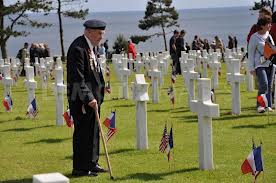
Memorial Day is always an emotional time for me, especially since I returned from Iraq in 2008, and this weekend I have been thinking about the men and women that I knew who died in action or died after they left the service, some at their own hand, unable to bear the burdens and trauma that they suffered while at war. In an age where less than one percent of Americans serve in the military, I think that it is important that we take the time to remember and reflect on the human cost of wars.

imagesCA580JS0

I think of the battlefields that I have served on in Al Anbar Province, the one my father served on at An Loc, Vietnam, or the battlefields and the graveyards I have been to, Verdun, Waterloo, Arnhem, Normandy, Belleau Wood, Luxembourg, the Shuri Line, the Naktong River, Yorktown, Chancellorsville, Antietam, Stone’s River, Bentonville, Gettysburg, the wrecks of the USS Arizona and USS Utah at Pearl Harbor, and so many more, I think about the men and women who never returned. To me all of these places are hallowed ground, ground that none of us can hallow, the sacrifices of the men who gave their last full measure of devotion have done that better than we can ever do.

There are some songs that are haunting yet comfort me when I reflect on the terrible costs of war, even those wars that were truly just; and yes there are such wars, even if politicians and ideologues demanding revenge or vengeance manage to mangle the peace following them. Of course there are wars that are not just in any manner of speaking and in which the costs far outweigh any moral, legal, or ethical considerations, but I digress…

Joshua Lawrence Chamberlain, the hero of the Battle of Little Round Top at Gettysburg wrote something that talks about the importance and even the transcendence of the deeds of those who lost their lives in those wars fought and died to achieve.

In great deeds, something abides. On great fields, something stays. Forms change and pass; bodies disappear; but spirits linger, to consecrate ground for the vision-place of souls… generations that know us not and that we know not of, heart-drawn to see where and by whom great things were suffered and done for them, shall come to this deathless field, to ponder and dream; and lo! the shadow of a mighty presence shall wrap them in its bosom, and the power of the vision pass into their souls.”

Elton John wrote and performed this song, Oceans Away on the centenary of the First World War. It speaks of the men that never came home, and he related it to those who continue to go off to war today.

I hung out with the old folks

In the hope that I’d get wise

I was trying to bridge the gap

Between the great divide

Hung on every recollection

In the theater of their eyes

Picking up on this and that

In the few that still survive


Call em up

Dust em off

Let em shine

The ones who hold onto the ones, they had to leave behind

Those that flew, those that fell,

The ones that had to stay,

Beneath a little wooden cross


They bend like trees in winter

These shuffling old grey lions

Those snow-white stars still gather

Like the belt around Orion

Just to touch the faded lightning

Of their powerful design

Of a generation gathering

For maybe the last time

Oceans away

Where the green grass sways

And the cool wind blows

Across the shadow of their graves.

Shoulder to shoulder back in the day

Sleeping bones to rest in earth, oceans away

Call em up

Dust em off

Let em shine

The ones who hold onto the ones, they had to leave behind

Those that flew, those that fell,

The ones that had to stay,

Beneath a little wooden cross

Oceans away

Elton John “Oceans Away”


Likewise I find myself thinking about all those times alone overseas, and realize that many did not come home. The song I’m Dreaming of Home or Hymne des Fraternisés from the film Joyeux Noel which was adapted by French composer Philippe Rombi from the poem by Lori Barth I think speaks for all of us that served so far away, both those who returned and those who still remain oceans away.

I hear the mountain birds

The sound of rivers singing

A song I’ve often heard

It flows through me now

So clear and so loud

I stand where I am

And forever I’m dreaming of home

I feel so alone, I’m dreaming of home


It’s carried in the air

The breeze of early morning

I see the land so fair

My heart opens wide

There’s sadness inside

I stand where I am

And forever I’m dreaming of home

I feel so alone, I’m dreaming of home


This is no foreign sky

I see no foreign light

But far away am I

From some peaceful land

I’m longing to stand

A hand in my hand

… forever I’m dreaming of home

I feel so alone, I’m dreaming of home.

Please take the time to remember those who whose spirits still dream of home, oceans away.

Until tomorrow,

Peace,

Padre Steve+

Leave a comment

Filed under civil war, Gettysburg, History, iraq,afghanistan, Korean Conflicts, Military, News and current events, remembering friends

Fort Sumter Pt 2: Only Two Parties Now

sumterflag

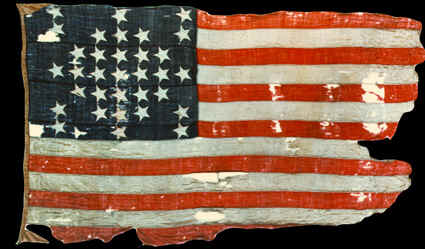
The Flag of Fort Sumter

Friends of Padre Steve’s World,

Here is part two of another two-part installment of my Civil War text. The story follows the implosion of the Democratic Party, the election of Abraham Lincoln, and the secession crisis. It describes who the attack came about and the reactions of people in all parts of the country, as well as the Army to those fateful shots. I hope that you enjoy.

Peace

Padre Steve+

When the Stars and Stripes came down on April 14th 1861 the North was galvanized as never before, and “the clash at Fort Sumter brought forth an outpouring of support for the Union and President Lincoln.” [1] Abner Doubleday wrote “With the first shot fired against Fort Sumter the whole North became united.” [2] Another observer wrote: “The heather is on fire….I never knew what popular excitement can be… The whole population, men, women, and children, seem to be in the streets with Union favors and flags.” [3] The assault on Fort Sumter help to unify the North in ways not thought possible by Southern politicians who did not believe that Northerners had the mettle to go to war against them. But they were wrong, those shots, which Jefferson Davis ordered had the opposite reaction, for Northerners, even opponents of abolition who were not supporters of Lincoln, slavery in the South was one thing, but the attack on a Federal garrison by massed artillery was another; even Senator Stephen Douglas, Lincoln’s stalwart opponent of so many campaigns went to the White House for a call to national unity. Returning to Chicago he told a huge crowd just a month before his untimely death:

“There are only two sides to the question. Every man must be for the United States or against it. There can be no neutrals in this war, only patriots – or traitors” [4]

For Frederick Douglass the shots marked a new phase in abolition:

“The first flash of rebel gunpowder and shell upon the starving handful of men at Sumter instantly changed the nation’s whole policy. Until then, the ever hopeful North was dreaming of compromise…

I wrote in my newspaper; “On behalf of our enslaved and bleeding brothers and sisters, thank God! The slaveholders themselves have saved the abolition cause from ruin! The government is aroused, the dead North is alive, and its divided people united. Never was a change so sudden, so universal, and so portentous. The whole North from East to West is in arms…” [5]

Douglas died less than a month later, possibly from cirrhosis of the liver, but his impact on the Democrats in the North was immense, “for a year of more his war spirit lived among most Democrats. “Let our enemies perish by the sword,” was the theme of democratic editorials in the spring of 1861. “All squeamish sentimentality should be discarded, and bloody vengeance wreaked upon the heads of the contemptable traitors who have provoked it by their dastardly impertinence and rebellious acts.” [6]

sickles as brigadier

Dan Sickles

One of these Democrats was New York Congressman Dan Sickles. He was one of many men whose outlook toward the South changed when Sumter was fired upon. Sickles had stridently defended Southerners and Southern states rights just months before, so long as they remained in the Union, and he took the actions of his former friends personally. He then became one of the first of men who were known as Union Democrats who followed Lincoln into the war, and despite his lack of ethics in much of his life it was a cause for which he would remain true, during and after the war.

When the soldiers of South Carolina opened fire on Fort Sumter, Sickles, who had said that no troops would cross through New York to invade the South in 1859 proclaimed “the men of New York would go in untold thousands anywhere to protect the flag of their country and to maintain its legitimate authority.” [7] In one of his last congressional speeches Sickles lambasted the South for its threat to the United States as a whole, and condemned the new Confederacy’s policies in spite of Northern attempts to conciliate them, “has been followed by insults to our flag; by the expulsion of the United States troops and authorities from navy yards and forts and arsenals; by measures to control the vast commerce of the Mississippi and its tributaries….” [8] He also condemned the South for its seizure of U.S. funds in the sub-treasuries and mints in the South as well sending envoys to England and France.

Sickles-Excelsior-Brigade-Headquarters-City-Hall-Park.-Yorktown

After the war Sickles, who had lost his leg in the Battle of Gettysburg fighting for the Union, oversaw the early efforts of reconstruction in North Carolina and for ordering the end to the public whippings of blacks by state officials was fired by President Andrew Johnston for supporting voting rights for African Americans. Congress reinstated him but Sickles who had so earnestly supported the South as late as 1860 no longer could stomach such abuse by those men who at one time his political friends and allies. During the election of 1876 Sickles, a lifelong Democrat labeled his party as “the party of treason.” [9] He joined forces with Republicans and helped to prevent the election of New York Democrat Samuel Tilden through shrewd political electioneering in key battleground states.

For Stephen Douglas the attack on Fort Sumter meant the end of his efforts to bring about some kind of reconciliation to reunite the country and restore the Union. When the Little Giant heard the news of the attack and reports of the statements of Confederate leaders he rushed to Lincoln to offer his support. Douglas wrote of the meeting:

“I heartily approve of your proclamation calling up 75,000 militia,” I told him. “Except that I would make it 200,000. You don’t know the dishonest purposes of these southern men as well as I do.” After a review of the strategic situation with the President Douglas continued, “Mr. President,” I said. “Let me speak plainly. I remain unalterably opposed to your Administration on purely its political issues. Yet I’m prepared to sustain you in the exercise of all your constitutional functions to preserve the Union, maintain the government, and defend the capital. A firm policy and prompt action are necessary. The capital of our country is in danger, and must be defended at all hazards, and at any expense of men and money. I speak of the present and future without reference to the past.

He shook my hand, hard. “We need more patriots like you, Douglas,” he said as he walked me to the door.

“I depreciate war,” I said in parting, “but if it must come, I’m with my country and for my country, under all circumstances and in every contingency.” [10]

Douglas then went to his fellow Democrats in Washington and told them: “We must fight for our country and forget all differences. There can be only two parties now – the party of patriots and the party of traitors. We belong to the first.” [11]

ewell

Richard Ewell

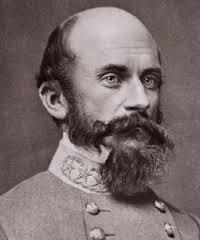
Army officers were conflicted between the Army that they had served, often for many years, the flag that they had fought under, longstanding friendships, and loyalty to their states and families. Richard Ewell who would rise to corps command in the Army of Northern Virginia, described the feelings of many officers in the ante-bellum Army: “Officers generally are very much adverse to any thing like civil war, though some of the younger ones are a bit warlike. The truth is in the army there are no sectional feelings and many from extreme ends of the Union are the most intimate friends.” [12] In California a number of those friends and their families bade tearful farewells as they parted ways. Brigadier General Albert Sidney Johnston and Captains Winfield Scott Hancock and Lewis Armistead gathered one last time. Hancock had already, who had great sympathy for his Southern friends, made his views known had previously announced “I shall fight not upon the principle of state-rights, but for the Union, whole and undivided.” [13] His commander, Johnston, and dear friend Armistead were departing to serve the Confederacy and the parting was painful. Almira Hancock wrote of the final night together in Los Angeles:

“The most crushed was Major Armistead, who with tears, which were contagious, streaming down his face, put his hands upon Mr. Hancock’s shoulders, while looking him steadily in the eye, said, “Hancock, good-bye; you can never know what this has cost me; and I hope God will strike me dead if I am ever induced to leave my native soil, should worse come to worst….” [14]

Colonel Robert E. Lee of Virginia looked askance at secession, but he had made the decision that no matter what he would not lead armies against the South. In fact it was clear when he left Texas to come east where his sentiments lay. He told a friend “If Virginia stands by the old Union, so will I. But if she secedes (though I do believe in secession as a constitutional right, nor that there is sufficient cause for revolution), then I will follow my native State with my sword, and if need be, with my life.” [15] When he returned to Washington D.C. he accepted a promotion to Colonel in the Regular Army less than a month before he was offered command of the Union armies by Abraham Lincoln, a position that he turned down. In his final interview with General Winfield Scott to announce his decision, he admitted that “the struggle had been hard. He did not believe in secession, he said, and if he owned every slave in the South he would free them all to bring peace; but to fight against Virginia was not in him.” [16] When Virginia seceded Lee submitted his resignation from the Army for a cause that he did not really believe was constitutional or necessary, noting in his letter:

“With all my devotion to the Union and feeling of loyalty and duty of an American citizen, I have not been able to make up my mind to raise my hand against my relatives, my children, my home. I have therefore, resigned my commission in the Army, and save in the defense of my native State…I hope I may never be called upon to draw my sword.” [17]

Within days Lee was appointed as a General and commander of the military forces of Virginia. When he arrived at the State House and “before he had much time to ruminate, he found himself being presented with George Washington’s sword, and hailed as a hero in a powerful tribute by the president of the convention.” [18] Even so, Lee’s decision was assailed by much of his Unionist oriented family, and many of them went on to serve the Union with distinction during the war. One relative wrote of Lee’s decision, “I feel no exalted respect for a man who takes part in a movement in which he says he can see nothing but ‘anarchy and ruin’… and yet very utterance scare passed Robt Lees lips… when he starts off with delegates to treat traitors.” [19]

Lee’s future right hand man and chief lieutenant, Thomas Jackson, the soon to be “Stonewall” Jackson was then a professor at the Virginia Military Institute. The often grim and serious Jackson saw the issue of secession as he did all of life through the prism of his Evangelical Protestant Calvinistic faith. For him it disunion was a matter of Divine Providence. When secession came and Jackson heard a minister friend in Lexington lamenting the nation’s troubles he noted:

“Why should Christians be at all disturbed about the dissolution of the Union? It can only come by God’s permission, and only will be permitted, if it is for his people’s good, for does he not say that all things shall work together for the good to them that love God?” [20]

In San Francisco Lieutenant James McPherson of the Corps of Engineers attempted to convince Lieutenant Porter Alexander from going home and joining the cause of the Confederacy. He bluntly spoke the facts of what would happen to the South in coming the war to the future Confederate artillery general:

“The population of the seceding states is only eight million while the North has twenty million. Of your 8 million over 3 million are slaves & may pose a dangerous element. You have no army, no navy, no treasury, no organization & practically none of the manufacturers – the machine shops, coal & iron mines & such things – which are necessary for the support of armies & carrying on war on a large scale.

You are but scattered agricultural communities & will be isolated from the world by blockades.

It is not possible for your cause to succeed in the end…” [21]

But Alexander, like so many Southern officers realized “that a crisis in my life was at hand. But I felt helpless to avert it or even debate the question what I should do. I could not doubt or controvert one of McPherson’s statements or arguments…” [22]

buford

John Buford

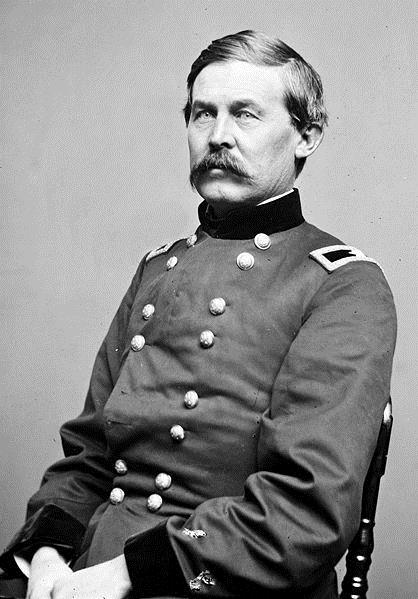
However, many Southern born officers serving in the Army did not leave. Close to half of the “Southern West Point graduates on active duty in 1860 held to their posts and remained loyal to the Union.” [23] One was Kentucky’s John Buford who would gain immortal fame at the Battle of Gettysburg. Since Buford’s family had longstanding ties to Kentucky, the pro-secession governor of Kentucky, Beriah Magoffin offered Buford a commission in that states’ militia. At the time Kentucky was still an “undeclared border slave state” and Buford loyal to his oath refused the governor’s offer. He wrote a brief letter to Magoffin and told his comrades that “I sent him word that I was a Captain in the United States Army and I intend to remain one.” [24] Around the same time the new provisional government of the Confederacy “offered Buford a general officer’s commission, which reached him by mail at Fort Crittenden.” [25] According to Buford’s biographer Edward Longacre “a well-known anecdote has him wadding up the letter while angrily announcing that whatever future had in store he would “live and die under the flag of the Union.” [26] A starker contrast could not be drawn.

Close to forty-percent of the Virginians serving on active-duty in the army remained faithful to the Union, including the Commander of the Army, General Winfield Scott and Robert E. Lee’s friend George Thomas and both were ostracized in the Old Dominion. “Thomas’s family never again communicated with him except to ask him to change his name. A young Virginian just out of West Point, acknowledged that by retaining his commission he had been shunned by all of his Southern associates; yet he still derided those who would hold their obligations so lightly as to abandon the nation when it most needed them.” [27]

But throughout the South, most people were less than circumspect and openly rejoiced at the surrender of Fort Sumter. In Richmond the night following the surrender “bonfires and fireworks of every description were illuminating in every direction- the whole city was a scene of joy owing to [the] surrender of Fort Sumter” – and Virginia wasn’t even part of the Confederacy.” [28] John Gordon, the future Confederate General was leading his Georgia volunteers to the new Confederate capital and “found the line of march an unbroken celebration: fires lighted the hilltops; fife-and-drum corps shrilled and thumped; cannons exploded their welcome.” [29]

poor--ulysses-s-grant-president-1040cs021412

Ulysses Grant

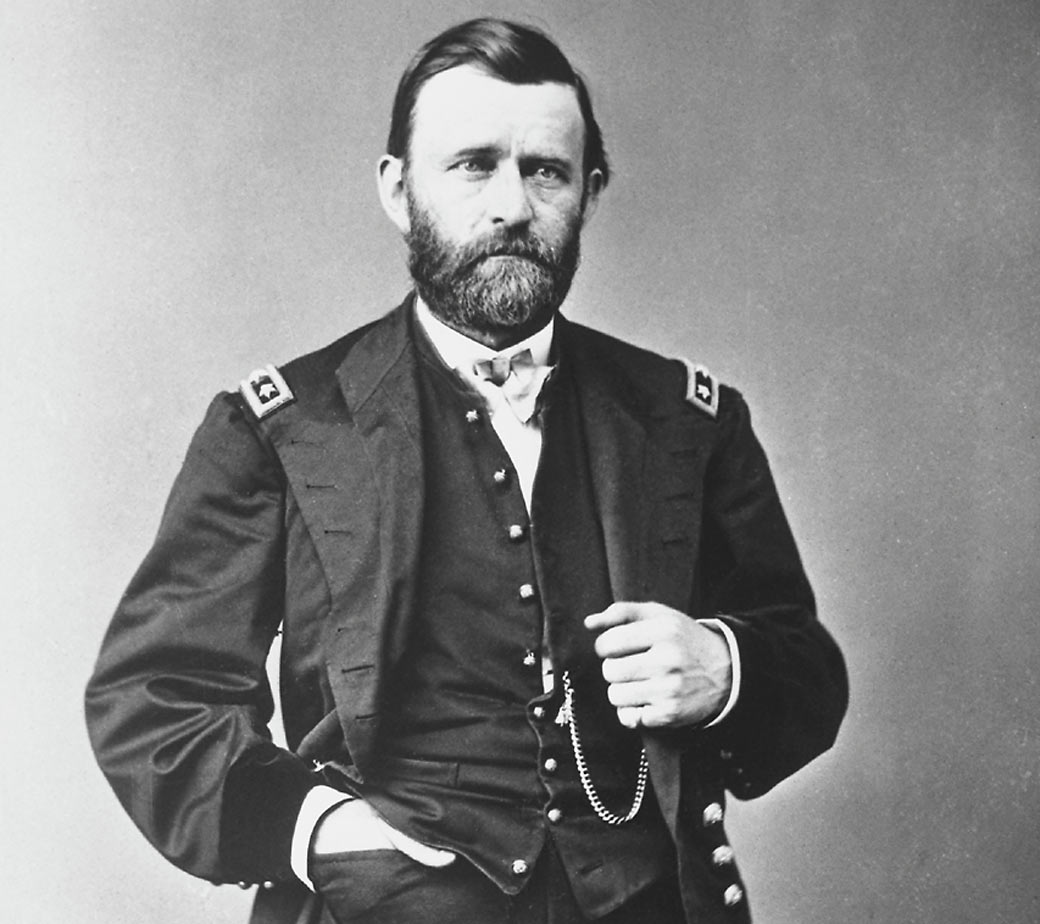
Far to the north in Bangor Maine a little known professor at Bowdin College named Joshua Lawrence Chamberlain read the news “could not abide the thought of a divided nation; the Founding Fathers “did not vote themselves into a people; they recognized and declared that they were a people” whose bonds out not to be severed by political, social, or economic grievances.” [30] The professor “was seized with anger that “the flag of the Nation had been insulted” and “the integrity and existence of the people of the United States had been assailed in open and bitter war.” [31] In Illinois, a former struggling former Regular Army officer and veteran of the War with Mexico, Ulysses S. Grant whose in-laws were sympathetic to the Southern cause who had volunteered to lead a regiment of Illinois volunteers, wrote “Whatever may have been my opinions before, I have but one sentiment now. That is to have a Government, and laws and a flag and they all must be sustained….There are but two parties now, Traitors and Patriots and I want hereafter to be ranked with the latter.” [32]

1st_7th_Reg_Departs

Even in cities that had often leaned toward the South like Cincinnati, people rushed to proclaim their patriotism and support of the Union. George Ticknor told an English friend “The whole population, men, women, and children, seem to be in the streets with Union favours and flags…. Civil war is freely accepted everywhere… by all, anarchy being the obvious, and perhaps the only alternative.” Pacifists who had rejected violence, even in support of righteous causes, turned bellicose. Ralph Waldo Emerson enthused, “Sometimes gunpowder smells good.” [33] As the Sixth Massachusetts Volunteer Infantry marched through the streets of New York on their way to Washington were greeted with cheers from thousands of New Yorkers. The New York Times reported the event:

“Flags were displayed at all the hotels on the route, and waving handkerchiefs from the balconies and windows signified the warm greetings of the fair sex to the brave Bay State soldiers. Opposite the New York Hotel a gray-haired old man mounted a stoop and addressing the soldiers and people, said that he had fought under the Stars and Stripes in the War of 1812 against a foreign power, and now that the flag was spit upon by those who should be its defenders. He closed his remarks by a “God bless our flag,” and left the crowd with tears streaming down his wrinkled cheeks.” [34]

The Rubicon had been crossed and there was now no going back for either side. Poet Walt Whitman wrote:

War! An arm’d race is advancing! The welcome for battle, no turning away;

War! Be it weeks, months, or years, an arm’d race is advancing to welcome it.” [35]

Notes

[1] Ibid. Cooper We Have the War Upon Us p.270

[2] Doubleday, Abner From Moultrie to Sumter in Battles and Leaders of the Civil War Volume I Edited by Robert Underwood Johnson and Clarence Clough Buel Castle, Secaucus NJ p.48

[3] Ibid. McPherson The Battle Cry of Freedom p.274

[4] Ibid. McPherson The Battle Cry of Freedom p.274

[5] Ibid. Oates The Approaching Fury p.423

[6] Ibid. McPherson The Battle Cry of Freedom pp.274-275

[7] Ibid. Keneally American Scoundrel p.212

[8] Ibid. Keneally American Scoundrel p.214

[9] Ibid. Goldfield America Aflame p.525

[10] Ibid. Oates The Approaching Fury pp.421-422

[11] Ibid. Oates The Approaching Fury p.422

[12] Pfanz, Donald. Richard S. Ewell: A Soldier’s Life University of North Carolina Press, Chapel Hill and London 1998 p.120

[13] Jordan, David M. Winfield Scott Hancock: A Soldier’s Life Indiana University Press, Bloomington and Indianapolis 1988 p.33

[14] Hancock, Almira Reminiscences of Winfield Scott Hancock Charles L Webster and Company, New York 1887 pp.69-70

[15] Thomas, Emory Robert E. Lee W.W. Norton and Company, New York and London 1995 p.187

[16] Ibid. Catton The Coming Fury p.335

[17] Ibid. Thomas The Confederate Nation p.85

[18] Pryor, Elizabeth Brown. Reading the Man: A Portrait of Robert E. Lee Through His Private Letters Penguin Books, New York and London 2007 p.295

[19] Ibid. Pryor Reading the Man p.295

[20] Ibid. Rable God’s Almost Chosen Peoples p.38

[21] Alexander, Edward Porter. Fighting for the Confederacy: The Personal Recollections of General Edward Porter Alexander edited by Gary Gallagher University of North Carolina Press, Chapel Hill 1989 p.24

[22] Ibid. Alexander Fighting for the Confederacy p.25

[23] Huntington, Samuel P. The Soldier and the State: The Theory and Politics of Civil-Military Relations, The Belknap Press of Harvard University Press, Cambridge MA and London 1957

[24] Ibid. Guelzo. Gettysburg: The Last Invasion p.121

[25] Longacre, Edward G. John Buford: A Military Biography Da Capo Press, Perseus Book Group, Cambridge MA p.70

[26] Ibid. Longacre John Buford p.70

[27] Pryor, Elizabeth Brown. Reading the Man: A Portrait of Robert E. Lee Through His Private Letters Penguin Books, New York and London 2007 p.292

[28] Ibid. Guelzo Fateful Lightening p.140

[29] Smith, Jean Edward. Grant Simon and Schuster, New York and London 2001 p.99

[30] Longacre, Edward G. Joshua Chamberlain: The Soldier and the Man Combined Publishing Conshohocken PA 1999 pp.49-50

[31] Ibid. Guelzo. Gettysburg: The Last Invasion p.139

[32] Ibid. Smith Grant p.103

[33] Ibid. Goldfield America Aflame p.205

[34] Holzer, Harold and Symonds, Craig L. Editors, The New York Times Complete Civil War 1861-1865 Black Dog and Leventhal Publishers, New York 2010 p.75

[35] Ibid. Goldfield America Aflame p.205

2 Comments

Filed under civil war, History, Military, Political Commentary

The Gospel of Wealth & War

phillipine harvest

Friends of Padre Steve’s World

Since I am out of country I am pre-posting articles that will be released while I am away. This is a short bit from my the second chapter Civil War and Gettysburg text. The chapter as a whole deals with religion and ideology as chief contributing factors to the war, its conduct by both sides and the post-war myth of the Lost Cause. This section briefly looks at how the war and the earlier concept of Manifest Destiny brought about a new paradigm in which the message of earlier evangelicalism which focused on conversion, salvation and personal piety was transformed into a message of wealth and war. The transformation was lasting, and is something that American Christianity has never recovered from.

Peace

Padre Steve+

Secession and war was now on the horizon, and despite well-meaning efforts of some politicians on both sides to find a way around it, it would come. Religion had been at the heart of most of the ideological debates of the preceding quarter century and now it came to symbolize the causes of both sides. The belief in Manifest Destiny had led Americans to violate nearly every pronouncement of the founders and embark on a policy of imperialism, conquest, and even the extermination of millions in its name. As far as preventing conflict, Evangelical Protestants on both sides had not only failed to prevent the war; to the contrary those very Evangelical leaders were more than instrumental in bringing on the war as they:

“fueled the passions for a dramatic solution to transcendent moral questions. Evangelical religion did not prepare either side for the carnage, and its explanations seemed less relevant as the war continued. The Civil War destroyed the Old South civilization resting on slavery; it also discredited evangelical Protestantism as the ultimate arbiter of public policy.” [1]

When war came Evangelical Protestants on the opposing sides attempted to frame their cause in the light of their nearly identical theology, sometimes seeing it is a prelude to the return of Christ and the beginning of the millennium. An agent of the American Tract Society named Hollis Read was one, he proclaimed:

“A few more such strides, a few more such terrific struggles and travail-pains among the nations; a few more such convulsions and revolutions, that shall break to pieces and destroy what remains of the inveterate and time-honored systems and confederations of sin and Satan and the friends of freedom may then lift up their heads and rejoice, for their redemption draweth nigh. The Day of Vengeance Has Always Preceded And Been preparatory to the Year of the Redeemed.” [2]

Southerners too saw the coming war in similar triumphant theological ways. Some saw in the Confederacy the embodiment of Christ. Methodist minister William Seat of Texas wrote, “The One like the Son of Man has appeared in the rise of the Confederate States.” [3] He wrote that the South would take its place among the nations through it “liberty and pure Christianity would go abroad on earth.” He noted that soon the “peaceful millennial reign would dawn” and the stone from the mountain – the South – would be glorified: “Then the stone cut out from the shall become a great mountain and fill the earth. There shall be no more curse nor death nor sorrow nor crying. There shall be fullness of joy and pleasures forevermore. We solemnly believe that the great prophetic periods have closed: the mystery is finished and the vision of prophecy unsealed. The Final Kingdom has arisen, and the Divine Redeemer has come to reign.” [4]

As the war went on ministers and theologians saw their theological presuppositions dashed on the shoals of reality of William Tecumseh Sherman’s understanding, that “war is hell.” As the war went against the Confederacy, Southerner ministers had to re-frame the cause and the reasons for defeat, which most did not ascribe to slavery, but rather deficiencies in Southern character, and economic policy. In the North the faithful were shaken by the horrendous cost of the war. One of Charles Finney’s correspondents wrote in 1864, “So many are skeptical, doubtful, so many good people are cutting loose from creeds & forms….I am sometimes tempted to ask whether prayer can make any difference.” [5]

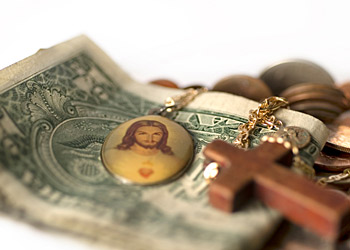
American Religion, especially Protestantism, which had served so much to bring about the war, instead became one of its most prominent casualties. American Protestantism shifted its emphasis; some ministers preached a gospel of wealth to align themselves and their congregants with the rising tide of the new rich. Russell Conwell, a former Union soldier in the war turned Baptist preacher, whose church later formed Temple University delivered his Acres of Diamonds sermon in which he proclaimed, “Money is power, money is force…. I say to you to get rich, and it is your duty to get rich.” [6] The sermon became popular throughout the country, and people did not tire of it.

350-prosperity-gospel

The theology of wealth was not political, it preached no moral crusades, it called for no sacrifice, it considered not justice, and it appealed to people’s basest instincts and left little room for sentiment. The poor, the newly free but oppressed African American and others were left behind. Walt Whitman was concerned that the churches encouraged people to pursue everything but the common good. He wrote, “genuine belief seems to have left us…. The spectacle is appalling. We live in an atmosphere of hypocrisy throughout…. A lot of churches, sects, ect., the most dismal phantasm I know, usurp the name of religion.” [7]

Southern Evangelicals retreated in into a skepticism and denial of human progress, for if that had been the case they would have triumphed over their Yankee oppressors. After the war Southern Evangelicals “expected little from the corrupted world and expected even less from the knowledge of corrupted men, especially men of science and power. The war brought to the South a theology, as well as a politics and economics, of diminished expectations.” [8]

Never again would Evangelical Christianity play as dominant role as it did in early part of the war, and “from the 1860s onward, American Protestantism was increasingly marked by the quiet erosion of faith, and religious experience became plagued more and more decaying faith, and in an increasing appeal to feeling and imagination over confessional reason or evangelical conversion.” [9] That trend continues to the present day as if nothing as happened in the meantime. Mark Twain wrote something about Conwell’s “Gospel of Money” which echoes to the critics of the contemporary “Prosperity Gospel”:

“What is the chief end of man? – to get rich. In what way? – dishonesty if we can; honestly if we must. Who is God, the one only and true? Money is God. Gold and Greenbacks and Stock – father, son, and the ghost of same – three persons in one, these are the true and only God, mighty and supreme.” [10]

Notes

[1] Ibid. Goldfield America Aflame p.360

[2] Ibid. Guelzo Fateful Lightening p.414

[3] Ibid. Daly When Slavery Was Called Freedom p.147

[4] Ibid. Daly When Slavery Was Called Freedom p.147-148

[5] Ibid. Guelzo Fateful Lightening p.416

[6] Ibid. Goldfield America Aflame p.456

[7] Ibid. Goldfield America Aflame pp.468-469

[8] Ibid. Daly When Slavery Was Called Freedom p.153

[9] Ibid. Guelzo Fateful Lightening p.416

[10] Ibid. Goldfield America Aflame p.457

2 Comments

Filed under faith, History, Religion

ISIL, the Caliphate and Manifest Destiny: Two sides of the Same Coin

Friends of Padre Steve’s World

Today another section of my Gettysburg Staff Ride text, taken from the second introductory chapter which deals with how religion and ideology plays a huge role in conflict and how it was used during the American Civil War.  This section discusses how a people’s worldview is strongly linked to culture and religion. It deals with the rather uncomfortable truth that the Islamic concept of the Caliphate differs little from the American idea of Manifest Destiny, a concept which may have created our nation as we know it but in practice was as barbaric and dishonorable as nearly conquering power has ever done, in fact there are many on the political right in this country, especially the Christian Right who are apologists for what occurred in the past and who advocate more of the same now. 

This might be an uncomfortable read for some people, and I hope that is the case. Of course in no way am I condoning anything that the Islamic State is doing in its quest to create a Caliphate, that needs to be condemned and fought wherever possible, preferably by the people most affected by it, the Arabs. 

But the truth is, religiously based imperialism, be it Manifest Destiny or the Islamic State’s dream of a Caliphate are two sides of the same coin of evil. 

So with that I bid you a happy Friday.

Peace

Padre Steve+ 

Manife4

One can never separate war and the means by which it is fought from its political ends. According to Clausewitz, war is an extension or continuation of politics. Of course Clausewitz understood the term politics or policy in the light of the concept of a “World View” or to use the German term Weltanschauung. The term is not limited to doctrine or party politics, but it encompasses the worldview of a people or culture. The world view is oft used by the political, media and religious leadership of countries and can be quite instrumental in the decision by a people to go to war; who they war against, their reasons for going to war, the means by which they fight the war, and the end state that they envision. This concept includes racial, religious, cultural, economic and social dimensions of a worldview.

One of the problems that modern Americans and Western Europeans have is that we tend to look at the world, particularly in terms of politics and policy, be it foreign or domestic, through a prism from which we cannot see the forest for the trees. We look at individual components of issues such as economic factors, military capabilities, existing political systems, diplomatic considerations and the way societies get information in isolation from each other. We dissect them, we analyze them, and we do a very good job in examining and evaluating each individual component; but we often do this without understanding the world view and ideological factors that link how a particular people, nation or party understand these components of policy.

Likewise policy makers tend to take any information they receive and interpret it through their own worldview. This is true even if they have no idea what their world-view is or how they came to it. Most often a worldview is absorbed over years. Barbara Tuchman wrote “When information is relayed to policy-makers, they respond in terms of what is already inside their heads and consequently make policy less to fit the facts than to fit the notions and intentions formed out of the mental baggage that has accumulated in their minds since childhood.” [1]

Policy makers often fail to see just how interconnected the most primal elements of the human experience are to the worldview of others as well as their own.

Because of this, many policy makers, be they military or civilian do not understand how critical the understanding of worldview is to designing effective polices. Likewise, many fail to see how the world view of others influence their application of economic, political, diplomatic and military power as well as the use and dissemination of information in their nation or culture. This is true no matter which religion or sect is involved, even if a people or nation is decidedly secular, or at least outwardly non-religious.

Perhaps this is because we do not want to admit that our Western culture itself is very much a product of primal religious beliefs which informed politics, philosophy, ethics, law, economics, views of race, and even the arts for nearly two millennia. Perhaps it is because we are justifiably appalled and maybe even embarrassed at the excesses and brutality of our ancestors in using religion to incite the faithful to war; to use race and religion justification to subjugate or exterminate peoples that they found to be less than human; or to punish and conquer heretics.

The United States Military made a belated attempt to address ideology, culture and religion in terms of counter-insurgency doctrine when it published the U.S. Army/Marine Counterinsurgency Manual. The discussion of these issues is limited to two pages that specifically deal with various extreme Moslem groups that use that religion as a pillar of their ideology, strategy and operations. But the analysis in the counterinsurgency manual of is limited because its focus is very general and focused at a tactical level.

Likewise the analysis of world view, ideology and religion in the counterinsurgency manual is done in an “us versus them” manner. While the manual encourages leaders to attempt to understand the cultural differences there is little in it to help leaders to understand why this understanding of religion and ideology is important at the strategic and operational levels of war.

ISIS-MAP

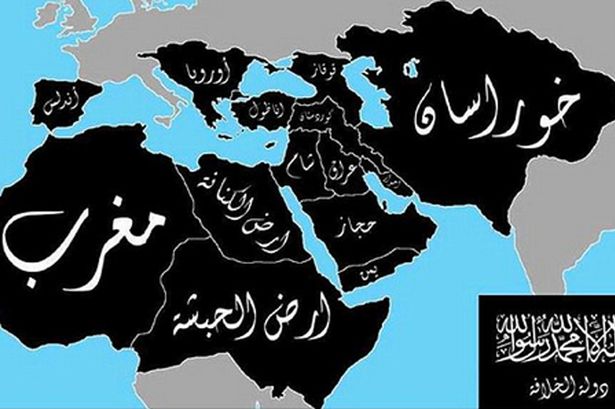
Commendably, the manual discusses how terrorist and insurgent groups use ideology, which is frequently based on religion to create a narrative. The narrative often involves a significant amount of myth presented as history, both Al Qaida and ISIL use the idea of the Caliphate as a religious and political ideal to achieve, because for many Moslems the idea of the Caliphate “produces a positive image of the golden age of Islamic civilization.” [2]

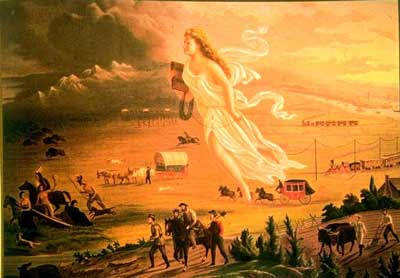
But Islam is not the only religion to do this. Most Americans are blind as to how previous generations Americans have used the Christian religion and race as a theological tool to justify subjugating other peoples and how that impacts us today. Beginning with the “landing of the Mayflower Pilgrims, the notion that the British colonies in the New World had been founded with divine assistance, in order to fulfill a providential mission, was commonly accepted.[3] The idea that it was God’s will for White Protestant settlers to push west, conquer and settle the continent of North America crystalized in the term Manifest Destiny. This concept was what motivated Americans to move into lands claimed by Britain as well as those which belonged to Mexico. The fact that the lands belong to other nations “was a small matter…Because most Americans considered it their “manifest destiny” to absorb these regions into the United States.” [4] There was a hunger in the land for more and Congressman John L. O’Sullivan, the inventor of the phrase proclaimed “Yes, more, more, more!….More…till our national destiny is fulfilled and…the whole boundless continent is ours.” [5]

mex_war_cam_1846_1847

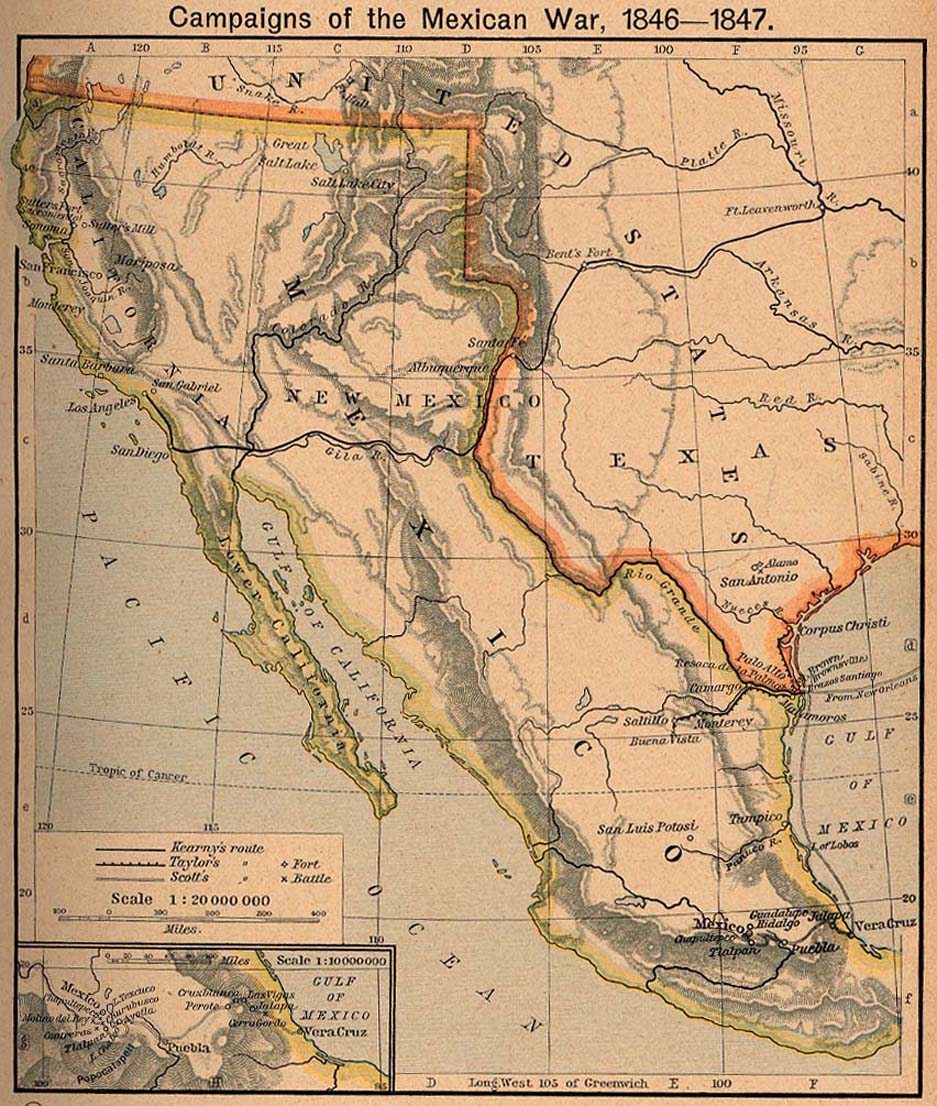
The issue came to a head when American settlers moved into Mexican territory in what is not Texas. The Mexican government allowed the settlers on the provision that they would become Catholic and swear allegiance to Mexico. The settlers did this but had no intention of honoring their word for they believed that their race and the Protestant religion they had denied to settle in Mexico “made them naturally superior to the mestizos – people of mixed Indian and European blood – who governed in the name of Mexico.” [6] This caused serious issues. Especially when the settlers, many of who were Southerners refused to give up their slaves when Mexico abolished slavery in 1829. The American colonists disregarded every agreement they had made with the Mexican government, they flouted the Catholic Church, and they refused to learn Spanish and refused to obey Mexican law. Eventually “their numbers dwarfed the tiny Mexican population of Texas.” [7]

One of the most prominent of the early settlers, Stephen Austin declared “for fifteen years, I have been laboring to Americanize Texas” noting that his enemies were a “population of Indians, Mexican and renegados, all mixed together, and all the natural enemies of white men and civilization.” [8] Eventually General Santa Anna attempted to seal the border between Texas and Louisiana to forestall the movement of any new settlers into the territory, but the move backfired and the Texans revolted and in the ensuing war secured their independence. The agreement pledged that Texas would remain an independent nation and not become part of the United States, but this agreement was broken as well and in 1845 Texas was admitted to the Union as a Slave State, furthering the cries of those advocating Manifest destiny for more. One Congressman asserted that:

“When God crowned American arms with success in the Revolution…he had not “designed the original States should be the only abode of liberty on earth. On the contrary, He only designed them as the great center from which civilization, religion, and liberty should radiate and radiate until the whole continent shall bask in their blessing.” [9]

The year after Texas joined the Union the administration of President James K. Polk provoked a war with Mexico which secured most of the rest of what we now know as the United States. In the process the Americans decided to violate treaties they had made with Native American tribes, and the “manifest destiny that represent hope for white Americans thus spelled doom for red Americans,” [10] and through war and disease the Americans decimated the Indian populations over the next fifty years.

A few voices were raised against the war with Mexico, former President John Quincy Adams said in the House of Representatives that in a war with Mexico “the banners of freedom will be the banners of Mexico; and your banners, I blush to speak the word, will be the banners of slavery.” [11] Abraham Lincoln doomed his reelection prospects in 1848 by condemn the war and criticizing President Polk. Alexander Stephens, a Southern Whig and later Vice President of the Confederacy assailed the President:

“The principle of waging war against a neighboring people to compel them to sale their country, is not only dishonorable, but disgraceful and infamous. What. Shall it be said that American honor aims at nothing higher than land…..never did I expect to live to see the day when the Executive of this country should announce that our honor was such a loathsome, beastly thing, that it could be satisfied with any achievements in arms, however brilliant and glorious, but must feed on the earth – gross, vile, dirt!” [12]

Walt Whitman prophetically noted that “the United States may conquer Mexico, but it will be as the man who swallows arsenic, which brings him down in turn. Mexico will poison us.” [13] Whitman would be proven right as it was the territorial acquisitions gained in the war with Mexico which lit the fuse which ignited the Civil War.

images-4

The deeply Christian and imperialist civil-religious concept of Manifest Destiny of can still be seen in pronouncements of some politicians, pundits and preachers who believe that that this is America’s mission in the world. Manifest Destiny is an essential element of the idea of American Exceptionalism which often has been the justification for much American foreign policy from the time of President McKinley. Former President George W. Bush alluded to this in his 2003 State of the Union Address, “that freedom is the right of every person and the future of every nation. The liberty we prize is not America’s gift to the world, it is God’s gift to humanity.” [14] Throughout the Bush presidency the idea that God undergirded the policy of the United States led to a mismatch of policy ends and the means to accomplish them. Former Israeli Ambassador to the U.S. and historian Michael Oren wrote:

“Not inadvertently did Bush describe the struggle against Islamic terror as a “crusade to rid the world of evildoers.” Along with this religious zeal, however, the president espoused the secular fervor of the neoconservatives…who preached the Middle East’s redemption through democracy. The merging of the sacred and the civic missions in Bush’s mind placed him firmly in the Wilsonian tradition. But the same faith that deflected Wilson from entering hostilities in the Middle East spurred Bush in favor of war.” [15]

Policy makers and military leaders must realize that if they want to understand how culture and religious ideology drive others to conquer, subjugate and terrorize in the name of God, they first have to understand how our ancestors did the same thing. It is only when they do that that they can understand that this behavior and use of ideology for such ends is much more universal and easier to understand.

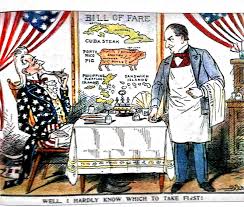
If one wants to see how the use of this compulsion to conquer in the name of God in American by a national leader one needs to go no farther than to examine the process whereby President McKinley, himself a veteran of the Civil War, decided to annex the Philippine in 1898 following the defeat of the Spanish. That war against the Filipinos that we had helped liberate from Spanish rule saw some of the most bloodthirsty tactics employed in fighting the Filipino insurgents, who merely wanted independence. It was a stain on our national honor which of which Mark Twain wrote: “There must be two Americas: one that sets the captive free, and one that takes a once-captive’s new freedom away from him, and picks a quarrel with him with nothing to found it on; then kills him to get his land. . .” [16]

A doubtlessly sincere McKinley sought counsel from God about whether he should annex the Philippines or not.

“He went down on his knees, according to his own account, and “prayed to Almighty God for light and guidance.” He was accordingly guided to conclude “that there was nothing left to do for us but to take them all, and to educate the Filipinos. And uplift and civilize and Christianize them, by God’s grace to do the very best we could by them, as our fellowmen for whom Christ died.” [17]

On the positive side the counterinsurgency manual does mention how “Ideology provides a prism, including a vocabulary and analytical categories, through which followers perceive their situation.” [18] But again it does so at a micro-level and the lessons of it are not applied at the higher levels of strategic thinking and policy. This is often due to the fact that American and other Western policy makers “as a set of theological issues rather than as a profoundly political influence in public life.” [19] Even after nearly a decade and a half of unremitting war against enemies for whom religion is at the center of their politics policy makers still misread or neglect the importance of religion and religiously based ideology in the political motivations of their opponents. In many cases the religion of a people is stronger part of their identity than that of the state. Nations which were created during the post-colonial era “continue to see religion, clan, ethnicity, and other such factors as the markers of community identity.” [20]

Thus when faced with cultures for which religion provides the adhesive which binds each of these elements, such as the Islamic State or ISIL we attempt to deal with each element separately, as if they have no connection to each other. But that is where we err, for even if the religious cause or belief has little grounding in fact, science or logic, and may be the result of a culture’s attempt to seize upon mythology to build a new reality, it is, in the words of Reggie Jackson the “straw that stirs the drink” and to ignore or minimize it is to doom our efforts to combat its proponents.

Perhaps that is because people do not like to look at themselves and their own history in the mirror. People tend to be uncomfortable when the face that they see in the mirror is face too similar to those they oppose, especially those who are perfectly willing to commit genocide in the name of their God. It really does not matter if one holds a predominantly secularist worldview and lives a secular lifestyle, or if one is religious yet embarrassed by the religiously motivated criminal actions of their forefathers, the result is strikingly and tragically similar; it makes them blind to the religious motivations of others and causes them to misread events in often tragic ways.

Notes

[1] Tuchman, Barbara W. Practicing History Alfred A. Knopf, New Your 1981 p.289

[2] ___________ U.S. Army/ Marine Counterinsurgency Field Manual FM 3-24 MCWP 3-33.5 15 December 2006 with and forward by General David A Petraeus and General James Amos, Konecky and Konecky, Old Saybrook CT 2007 p.26

[3] Gonzalez, Justo L. The History of Christianity Volume 2: The Reformation to the Present Day Harper and Row Publishers San Francisco 1985 p.246

[4] McPherson, James. The Battle Cry of Freedom: The Civil War Era Oxford University Press, Oxford and New York 1988 p.42

[5] Ibid. McPherson The Battle Cry of Freedom p.48

[6] Ibid. Gonzales The History of Christianity Volume 2 p.248

[7] Guelzo Allen C. Fateful Lightening: A New History of the Civil War Era and Reconstruction Oxford University Press, Oxford and New York 2012 p.59

[8] Ibid. Gonzales The History of Christianity Volume 2 p.248

[9] Ibid. McPherson The Battle Cry of Freedom p.48

[10] Ibid. McPherson The Battle Cry of Freedom p.48

[11] Ibid. Gonzales The History of Christianity Volume 2 p.249

[12] Ibid. Guelzo Fateful Lightening: p.63

[13] Ibid. McPherson The Battle Cry of Freedom p.51

[14] Bush, George W. State of the Union Address Washington D.C. January 28th 2003 retrieved from Presidential Rhetoric.com http://www.presidentialrhetoric.com/speeches/01.28.03.html 10 June 2015

[15] Oren, Michael Power, Faith and Fantasy: America and the Middle East 1776 to the Present W.W. Norton and Company, New York and London 2007 p.584

[16] Twain, Mark To the Person Sitting in Darkness February 1901 Retrieved from The World of 1898: The Spanish American War The Library of Congress http://www.loc.gov/rr/hispanic/1898/twain.html 12 December 2014

[17] Ibid. Tuchman Practicing History p.289

[18] Ibid. U.S. Army/ Marine Counterinsurgency Field Manual p.27

[19] Rubin, Barry Religion in International Affairs in Religion: The Missing Dimension of Statecraft Oxford University Press, Oxford and New York 1994 p.20

[20] Ibid. Rubin Religion in International Affairs p.22

2 Comments

Filed under civil war, History, middle east, national security, News and current events, Political Commentary, Religion

Gettysburg and the Human Cost of War

“Ashes of soldiers South or North, As I muse retrospective murmuring a chant in thought, The war resumes, again to my sense your shapes, And again the advance of the armies. Noiseless as mists and vapors, From their graves in the trenches ascending, From cemeteries all through Virginia and Tennessee, From every point of the compass out of the countless graves, In wafted clouds, in myriads large, or squads of twos or threes or single ones they come, And silently gather round me…”

From Walt Whitman- Ashes of Dead Soldiers

gburg dead2 

Friends of Padre Steve’s World

In a day or two I will be posting an article on the terrible nature of war. I am a career military officer who suffers from PTSD, TBI and other afflictions after serving in Iraq’s Al Anbar Province in 2007-2008.  I have seen firsthand the terrible effects of war. I am also a historian and I Assostant Professor at a major military staff college which helps educate senior military officers from this country and other countries. I my capacity there I teach ethics as well as lead a staff ride, or study of the Battle of Gettysburg. In my teaching I always attempt to deal with the human cost of war. Gettysburg was the most costly battle ever fought on the American continent. Around 50,000 men were killed or wounded there in three days of battle. William Tecumseh Sherman noted that “war is hell.” I agree, there is nothing romantic about it. The effects of war last generations and though we have been at war for the last thirteen and a half years, war itself is an abstract concept to most Americans. Fought by professionals and only experienced by most Americans on the news, movies or most the banal manner, video games, the cost in human terms is not fully appreciated, and nor can it be. Our politicians have insulated the public from war and in doing so have ensured that we are in a perpetual war which benefits no one. That is a big reason why I write so much about it, not to glorify or romanticize it, but to try in some war to help make it real  to my readers. This is a draft chapter from my Gettysburg text. 

Peace

Padre Steve+

Too often we look at distant battles and campaigns in terms of strategy, operations, tactics, leadership and the weaponry employed. Likewise we might become more analytical and look at the impact of the battle or campaign in the context of the war it was fought, or in the manner in which the tactics or weapons used revolutionized warfare. Sometimes in our more reflective moments we might look at individual bravery or sacrifice, often missing in our analysis is the cost in flesh and blood.

Admittedly the subject is somewhat macabre. But with the reality being that very few people in the United States, Canada or Western Europe have experienced the terrible brutality of war it is something that we should carefully consider any time the nation commits itself to war. By we, I mean all citizens, including the many soldiers, sailors and airmen who never see the personally see people they kill, or walk among the devastation caused by the highly advanced, precision weapons that they employ from a great distance, sometimes thousands of miles. In some parts of our military we have men and women who have the mission of targeting and killing enemies and then walking home to their families, but in the Civil War killing in combat “remained essentially intimate; soldiers were able to see each other’s faces and to know whom they had killed.” [1]

While the words of William Tecumseh Sherman that “War is Hell” are as true as when he spoke them; the tragic fact is that for most people war is an abstract concept, antiseptic and unreal; except for the occasional beheading of a hostage by Islamic militants or the videos shot by the perpetrators of crimes against humanity on the internet. Thus the cost of war and its attendant cost in lives, treasure and to the environment are not real to most people in the West.

We use words to describe the business of war which dehumanize the enemy, and we describe their deaths in words more palatable to us. Dave Grossman, the army infantry officer who has spent his post military life writing about the psychology of war and killing wrote:

“Even the language of men at war is the full denial of the enormity of what they have done. Most solders do not “kill,” instead the enemy was knocked over, wasted, greased, taken out, and mopped up. The enemy is hosed, zapped, probed, and fired on. The enemy’s humanity is denied, and he becomes a strange beast called a Jap, Reb, Yank, dink, slant, or slope. Even the weapons of war receive benign names- Puff the Magic Dragon, Walleye, TOW, Fat Boy, Thin Man- and the killing weapon of the individual soldier becomes a piece or a hog, and a bullet becomes a round.” [2]

We can now add the terms Haji and Raghead to Grossman’s list of dehumanizing terms for our opponents from our most recent wars in Iraq and Afghanistan.

The words of Guy Sager in his classic work The Forgotten Soldier about World War Two on the Eastern front is lost on many that study war:

“Too many people learn about war with no inconvenience to themselves. They read about Verdun or Stalingrad without comprehension, sitting in a comfortable armchair, with their feet beside the fire, preparing to go about their business the next day, as usual…One should read about war standing up, late at night, when one is tired, as I am writing about it now, at dawn, while my asthma attack wears off. And even now, in my sleepless exhaustion, how gentle and easy peace seems!” [3]

In an age where so few have served in the military and even few have seen combat in some way shape or form many who study war are comfortable experts who learn about war with no inconvenience to themselves. When I hear men and women, the pundits, politicians and preachers, that Trinity of Evil who constantly exhort governments and peoples to go to war for causes, places or conflicts that they have little understanding of from the comfort of their living rooms or television studios I grow weary. I fully comprehend the words of Otto Von Bismarck who said: “Anyone who has ever looked into the glazed eyes of a soldier dying on the battlefield will think hard before starting a war.” [4]

As a historian who also is a military chaplain who has seen war I struggle with what Sager said. Thus when I read military history, study and write about particular battles or engagements, or conduct staff rides as like the Gettysburg trip that we are embarking on, the human cost is always present in my mind. The fact that I still suffer the effects of PTSD including night terrors and chronic insomnia keeps what I do in good focus, and prevents me from being a comfortable expert.

Thus, it is my view, to conduct a staff ride, to walk the battlefield; especially in somewhat uncomfortable weather is a good thing. It connects us more in at least a small way to the men that fought there, died there, or brought home wounds that changed them forever.

To walk a battlefield where tens of thousands of men were killed and wounded is for me a visit to hallowed ground. I have felt that at Waterloo, Verdun, Arnhem, Normandy, the Bulge, the West Wall, the Shuri Line on Okinawa, Antietam, Chancellorsville, Stone’s River, and of course the battlefield which I have visited more than any in my life, Gettysburg. There are times when I walk these fields that I am overcome with emotion. This I think is a good thing, for as an American who has family ties to the Civil War, Gettysburg in particular is hallowed ground.

In doing this I try to be dispassionate in how I teach and while dealing with big issues that my students will face as Joint Staff Officers. Some of them will become Flag or General Officers, with the responsibility of advising our nation’s leaders as well planning and conducting the military operations on which the lives of thousands or maybe hundreds of thousands of people depend. Thus I do feel a certain responsibility to teach not only the strategy and other important military aspects of this campaign, but also the cost in human lives and ethical considerations. I take this work seriously because it forces us to remember what war is about and its nature, which Clausewitz wrote is “a paradoxical trinity-composed of primordial violence, hatred and enmity…” [5] which William Tecumseh Sherman so rightly understood without the euphemisms that we so frequently use to describe it: “War is cruelty, and you cannot refine it….”

As the sun set on the evening of July 3rd 1863 the battered Army of Northern Virginia and the battered but victorious Army of the Potomac tended their wounds, buried their dead and prepared for what might happen next. On that afternoon it was as if “the doors of Hell had shut” and the next day, the Glorious 4th of July “The heavens opened, and a thunderstorm of biblical proprotions drenched the battlefield, soaking dead, wounded and able-bodied men equally.” [6]

Following the disastrous attack aimed at the Union center, Lee and his surviving commanders prepared for an expected Union counter attack. However, George Meade, the commander of the Army of the Potomac who had correctly anticipated Lee’s assault decided not to gamble on a counter attack, though it was tempting. He knew too well the tenacity and skill of the Confederate commanders and soldiers on the defense and did not want to risk a setback that might give Lee another chance, thus “the two sides stared at each other, each waiting for the other to resume the fighting, neither did.” [7]

As the Confederate army retreated and Meade’s army pursued another army remained at Gettysburg, “an army of the wounded, some 20,350 in number, a third of them Confederate….” Just 106 surgeons were spared from the Army of the Potomac and “the comparatively few overburdened surgeons and attendants now on duty still labored every day to the point of exhaustion.” [8] These overworked men were aided by local volunteers as well as members of the U.S. Sanitary Commission, the Christian Commission and the Sisters of Charity. These men and women “brought organization to the hospitals, relief to the medical staffs and the local volunteers, and immense comfort to the wounded, whether blue or butternut.” [9]

The dead and wounded littered the battlefield and the sights and smells were ghastly:

“Wherever men gazed, they saw dead bodies. A New Yorker thought they “lay as thick as the stones that is on father’s farm.” A stench smothered the field, moving John Geary to tell his wife, “My very clothes smell of death.” A Regular Army veteran exclaimed, “I have seen many a big battle, most of the big ones of the war, and I never saw the like.” [10] A resident of Gettysburg walked up to Little Round top and wrote of what she observed from the peak of that rocky hill:

“surrounded by the wrecks of battle, we gazed upon the valley of death beneath. The view there spread out before us was terrible to contemplate! It was an awful spectacle! Dead soldiers, bloated horses, shattered cannon and caissons, thousands of small arms. In fact everything belonging to army equipments was there in one confused and indescribable mass.” [11]

At Joseph Sherfy’s farm, scene of some of the heaviest fighting on the second day, his barn “which had been used as a field hospital, was left a burnt ruin, with “crisped and blackened limbs, heads and other portions of bodies” clearly visible.” [12] When the rains came, the wounded suffered terribly. Many of the field aid stations were set up next to the creeks that crisscrossed the battlefield, and those streams quickly flooded as torrents of rain water caused them to overflow their banks. “A New Jersey soldier watched in horror as the flood waters washed over and carried away badly wounded men unable to move to safety….” [13]

Oliver Howard took his escort to do a reconnaissance of the town on July 4th, one of the cavalry troopers described the scene:

“The battle field was the Awfulest sight I ever saw…The woods in front of our men the trees were riddled with Cannon ball and bullets evry limb shot off 20 feet high. Some say the Rebel dead lay six deep in the grave yard where we lay. Nearly every grave stone was shattered by shots and everything was torn to pieces. I went through the town on the 4th of July with the General. The streets were covered with dead. Evry frame house were riddled with balls the brick ones dented thick where shot had hit.” [14]

Field hospitals were often little more than butcher shops where arms and legs were amputated by overworked surgeons and attendants while those with abdominal wounds that could not be easily repaired were made as comfortable as possible. Triage was simple. If a casualty was thought to have a reasonable chance at survival he was treated, if not they were set aside in little groups and allowed to die as peacefully as possible. Churches were requisition for use of the surgeons. A volunteer nurse noted: “Every pew was full; some sitting, some lying, some leaning on others. They cut off the legs and arms and threw them out the windows. Every morning the dead were laid on the platform in a sheet or blanket and carried away.” [15]

Chaplains were usually found with the doctors, caring for the physical as well as the spiritual needs of the wounded. Protestant chaplains might ensure that their soldiers “knew Jesus” and Catholics administered the Last Rites, often working together across denominational lines to care for their soldiers.

A Union chaplain described the ministry in the field hospitals and aid stations:

“Some of the surgeons were posted well up toward the front to give first aid. More of them were in the large field hospitals of division in more secure places at the rear. The chaplain might be at either place or at both by turns. Some made a point of watching for any wounded man who might be straggling back, who perhaps could be helped up into the saddle and ride back to the hospital. When the demand for help became urgent the chaplains were nurses. As the rows of wounded men grew longer, chaplains went from man to man to see what could be done to relieve their pain, perhaps to take a message or letter. All day into the night this work would continue. A drink of water, a loosened bandage on a swollen limb, a question answered, a surgeon summoned, a whispered word of comfort marked their course. Each night at sundown the men who died during the day were buried, with a short prayer, side by side in a common grave, each in his uniform with canvas wrapped around his face and a strip of paper giving his name and regiment in a bottle buttoned under his blouse.” [16]

The war would challenge the theology of the clergy who served as chaplains on both sides, as “individuals found themselves in a new and different moral universe, one in which unimaginable destruction had become a daily experience. Where could God belong in such a world? How could a benevolent deity countenance such cruelty and suffering? Doubt threatened to overpower faith….” [17] That sense of bewilderment is not lacking today among those of faith who return from war.

Some men, clergy and laity alike would attempt to find a theological meaning to the suffering. Many would do so in the theology of John Calvin which emphasized the Providence and foreknowledge of God. That theological frame of reference, of the results of battles and the death or wounding of men in war and the attendant suffering was found in the will, or providence of God was quite common among men of both sides who grew up during the Second Great Awakening, as it is today; and for some it was carried to fatalistic extremes. However, others like Colonel William Oates of the 15th Alabama, who considered himself a believing Christian, wrote that he believed God:

“endowed men with the power of acting for themselves and with responsibility for their acts. When we went to war it was a matter of business, of difference of opinion among men about their temporal affairs. God had nothing to do with it. He never diverted a bullet from one man, or caused it to hit another, nor directed who should fall or who should escape, nor how the battle should terminate. If I believed in such intervention of Providence I would be a fatalist….” [18]

The carnage around the battlefield was horrifying to most observers. Corporal Horatio Chapman of the 20th Connecticut Volunteers wrote about the sight on Cemetery Ridge on the night of July 3rd following the repulse of Pickett’s Charge:

But in front of our breastworks, where the confederates were massed in large numbers, the sight was truly awful and appalling. The shells from our batteries had told with fearful and terrible effect upon them and the dead in some places were piled upon each other, and the groans and moans of the wounded were truly saddening to hear. Some were just alive and gasping, but unconscious. Others were mortally wounded and were conscious of the fact that they could not live long; and there were others wounded, how bad they could not tell, whether mortal or otherwise, and so it was they would linger on some longer and some for a shorter time-without the sight or consolation of wife, mother, sister or friend. I saw a letter sticking out of the breast pocket of one of the confederate dead, a young man apparently about twenty-four. Curiosity prompted me to read it. It was from his young wife away down in the state of Louisiana. She was hoping and longing that this cruel war would end and he could come home, and she says, “Our little boy gets into my lap and says, `Now, Mama, I will give you a kiss for Papa.’ But oh how I wish you could come home and kiss me for yourself.” But this is only one in a thousand. But such is war and we are getting used to it and can look on scenes of war, carnage and suffering with but very little feeling and without a shudder.” [19]

Colonel William Oates of the 15th Alabama whose brave troopers assaulted Little Round Top on July 2nd wrote:

“My dead and wounded were nearly as great in number as those still on duty. They literally covered the ground. The blood stood in puddles in some places on the rocks; the ground was soaked with the blood of as brave men as ever fell on the red field of battle.” [20]

Another Confederate soldier described the scene west of the town on July 4th:

“The sights and smells that assailed us were simply indescribable-corpses swollen to twice their size, asunder with the pressure of gases and vapors…The odors were nauseating, and so deadly that in a short time we all sickened and were lying with our mouths close to the ground, most of us vomiting profusely.” [21]

The burial of the dead was too much for the soldier’s alone to accomplish. “Civilians joined the burial of the dead out of both sympathy and necessity. Fifty Confederates lay on George Rose’s fields; seventy-nine North Carolinians had fallen on a perfect line on John Forney’s farm.” [22]

Those tending the wounded recalled how many of the wounded selflessly asked medical personnel to tend others more badly wounded than themselves; a volunteer nurse wrote her sister: “More Christian fortitude was never witnessed than they exhibit, always say-‘Help my neighbor first, he is worse.’” [23] The Confederate wounded were the lowest priority for the badly overwhelmed Union surgeons and Lee had not done much to help, leaving just a few surgeons and attendants to care for the Confederates left on the battlefield. The Confederate wounded housed in the classrooms of Pennsylvania College were left in dire straits:

“All the rooms, halls and hallways were occupied with the poor deluded sons of the South,” and “the moans prayers, and shrieks of the wounded and dying were everywhere.” Between 500 and 700 wounded Confederates were jammed in with “five of our surgeons” and “no nurses, no medicines no kinds of food proper for men in our condition….” [24]

Across the battlefield the wounded were being treated in a variety of makeshift aid stations and field hospitals:

“Sergeant Major David E. Johnson of the Seventh Virginia was taken to the Myers house after the bombardment, suffering from a shrapnel wound to his left side and arm. “The shed in which I was placed,” he recalled, “was filled with the wounded and dying….I spoke to no one, and no one to me, never closed my eyes to sleep; the surgeons close by being engaged in removing the limbs of those nearby to be amputated….I heard nothing but the cries of the wounded and the groans of the dying, the agonies of General Kemper, who lay nearby, frequently being heard.” [25]

The suffering was not confined to the hospitals; John Imboden commanding the cavalry brigade protecting the Confederate wounded being transported home and supply trains described the horror of that movement:

“Scarcely one in a hundred had received adequate surgical aid, owning to the demands on the hard working surgeons from still far worse cases tat had to be left behind. Many of the wounded in the wagons had been without food for thirty-six hours. Their torn and bloody clothing, matted and hardened, was rasping the tender, inflamed, and still oozing wounds….From nearly every wagon as the teams trotted on, urged by whip and shout came such cries and shrieks as these:

“My God! Why can’t I die?” “My God! Will no one have mercy and kill me?” “Stop! Oh! For God’s sake stop for just one minute; take me out and leave me to die on the roadside.” “I am dying! I am dying! My poor wife, my dear children, what will become of you?” [26]

Eventually, by July 22nd with most of the wounded evacuated a proper general hospital was set up east of the town and the remaining wounded taken there. That hospital, named Camp Letterman grew into “a hundred –acre village of cots and tents, with its own morgue and cemetery, and served more than 3,000 wounded before it was finally closed in November.” [27]

As for the families of the dead, many never found out the details of their loved one’s deaths, which caused their losses to be “in some sense unreal and thus “unrealized,” as the bereaved described them, recognizing the inhibition of mourning that such uncertainty imposed.” [28] Much was because of how overwhelmed the field hospital staffs were, and how inadequate their records of treatment and the dispositions of bodies were sketchy at best. “Reports from field hospitals were riddled with errors and omissions, often lacked dates, and were frequently illegible, “written with the faintest lead pencil.” [29]

Among the killed and wounded were the great and the small. John Reynolds who died on day one, Winfield Scott Hancock, the valiant commander of the Union II Corps was severely wounded during Pickett’s Charge. Dan Sickles, the commander of Third Corps who had nearly brought disaster on the Federal lines by advancing to the Peach Orchard on July 2nd had his leg amputated after being grazed by a cannon ball at the Trostle Farm. Sickles, who survived the wound and the war, would visit the leg, which had carefully ordered his surgeons to preserve. The leg is now displayed at the National Museum of Health and Medicine in Washington D.C.

The Army of the Potomac lost a large number of brigade and regimental commanders including Strong Vincent, the young and gallant brigade commander who helped save Little Round Top; George Willard who brought redemption to his Harper’s Ferry brigade on Cemetery Ridge stopping Barksdale’s charge on July 2nd; Colonel Augustus Van Horne Ellis who before being killed at Devil’s Den told his staff “the men must see us today;” and the young Elon Farnsworth, who had been promoted from Captain to Brigadier General just days before his death in a senseless ordered by his division commander Judson “Kill Cavalry” Kilpatrick, against Hood and McLaws dug in divisions as the battle ended.

The Confederates suffered grievous losses. Divisional commanders like Dorsey Pender and Johnston Pettigrew were mortally wounded, John Bell Hood was severely wounded, Isaac Trimble, wounded and captured while Harry Heth was wounded. Casualties were even higher for commanders and the brigade and regiment level, the list included excellent commanders such as Paul Semmes and William Barksdale, while Wade Hampton, Stuart’s best brigade commander was seriously wounded and would be out of action for months. The toll of brigade and regimental commanders who were killed or wounded was fearful. “At the regimental level approximately 150 colonels, lieutenant colonels and majors had been killed, wounded or captured. Of that number nineteen colonels had been slain, the most in any single battle in which the army had been engaged. Captains now led regiments.” [30]

In Picket’s division alone all three brigade commanders, Kemper, Armistead and Garnett were killed or wounded while twenty-six of forty Field Grade officers were casualties. Forty-six percent (78 of 171) of the regiments of the Army of Northern Virginia suffered casualties at the command level. The Confederate casualties, especially among the best leaders were irreplaceable and Lee’s Army never recovered from the loss of seasoned leaders who were already in short supply.

For some like Private Wesley Culp of the 2nd Virginia it was a final trip home. Culp had grown up in Gettysburg and had taken a job in Virginia prior to the war. In 1861 he enlisted to serve among his friends and neighbors. He was killed on the morning of July 3rd on Culp’s Hill on the very property owned by his uncle where he grew up and had learned to hunt.

One witness, Frank Haskell looked in at a field hospital in the Union II Corps area and wrote:

“The Surgeons with coats off and sleeves rolled up…are about their work,… “and their faces and clothes are spattered with blood; and though they look weary and tired, their work goes systematically and steadily on- how much and how long they have worked, the piles of legs, arms, feet, hands, fingers…partially tell.” [31]

All told between 46,000 and 51,000 Americans were killed or wounded during the three days of Gettysburg. Busey and Martin’s Regimental Strengths and Losses at Gettysburg list the following casualty figures, other accounts list higher numbers, some as many as 53,000. One also has to remember that many of the missing soldiers were killed in action, but their bodies were simply never found.

                           Killed               wounded         missing         total

Union                    3,155                14,531             5,369           23,055

Confederate         4,708                12,693             5,830            23,231

Total                     7,863               27,224            11,199          46,286

To provide a reference point we need to remember that in 8 years of war in Iraq the United States suffered fewer casualties than during the three days of Gettysburg. It was the bloodiest single battle in American history, and it was a battle between brothers not against foreign enemies. To put it another perspective, even at the lowest estimates “the “army of Northern Virginia suffered something comparable to two sinkings of the Titanic, the 2001 attacks on the World Trade Center and the Pentagon, ten repetitions of the Great Blizzard of 1888, and two Pearl Harbors.” [32]Robert E Lee testified to Congress following the war “the war… was an unnecessary condition of affairs, and might have been avoided if forbearance and wisdom had been practiced on both sides.” [33]  Lee’s “Old Warhorse” James Longstreet asked “Why do men fight who were born to be brothers?” [34]

The carnage and death witnessed by survivors of Gettysburg and the other battles of the war changed Civil War soldiers as much as war has before or after. James Garfield, who served as a general in the Union army and went on to become President of the United States noted: “at the sight of these dead men whom other men killed, something went out of him, the habit of a lifetime, that never came back again: the sense of the sacredness of life and the impossibility of destroying it.” [35]

Others, like veterans of today had trouble adjusting to life after the war. “Civil War veterans had trouble finding employment and were accused of being drug addicts. Our word “hobo” supposedly comes from homeless Civil War veterans- called “hoe boys” – who roamed the lanes of rural America with hoes on their shoulders, looking for work.” [36] Following the war, during the turmoil of Reconstruction and the massive social change brought about by the industrialization of society and rise of “industrial feudalism” numerous veterans organizations were founded, for those that belonged to them they were “one of the principle refuges for old soldiers who had fought for a very different world than the one they found around them.” The Grand Army of the Republic was the most prominent of these organizations. “In more than 7,000 GAR posts across the United States, former soldiers could immerse themselves in a bath of sentimental memory; there, they established a ritualized camp geography, rekindled devotion to emancipation and preached the glories of manly independence.” [37]

At the end of the war, Joshua Chamberlain, the hero of Little Round Top who was well acquainted with the carnage of war suffered immensely. His wounds never healed fully, and he struggled to climb out of “an emotional abyss” in the years after the war. Part was caused by his wounds which included wounds to his sexual organs, shattering his sexuality and caused his marriage to deteriorate. He wrote his wife about the “widening gulf between them, one created at least in part by his physical limitations: “There is not much left in me to love. I feel that all too well.” [38]

Gouverneur Warren, who had helped save the Union at Little Round Top wrote to his wife while on Engineering duty after the war: He wrote in 1866 “Indeed the past year…was one of great despondency for me…I somehow don’t wonder that persons often remark how seldom I laugh, but it is really seldom that I do.” He wrote again in 1867 “I wish I did not dream that much. They make me sometimes dread to go to sleep. Scenes from the war, are so constantly recalled, with bitter feelings I wish to never experience again. Lies, vanity, treachery, and carnage.” [39]

The killing at Gettysburg and so many other battles “produced transformations that were not readily reversible; the living into the dead, most obviously, but the survivors into different men as well, men required to deny, to numb basic human feelings at costs they may have paid for decades after the war ended, as we know twentieth and twenty-first-century soldiers from Vietnam to Iraq continue to do; men who like James Garfield, were never quite the same again after seeing fields of slaughtered bodies destroyed by me just like themselves.” [40]

Joshua Chamberlain asked the most difficult questions when viewing the devastation around Petersburg in the final days of the war:

“…men made in the image of God, marred by the hand of man, and must we say in the name of God? And where is the reckoning for such things? And who is answerable? One might almost shrink from the sound of his own voice, which had launched into the palpitating air words of order–do we call it?–fraught with such ruin. Was it God’s command that we heard, or His forgiveness that we must forever implore?” [41]

Notes

Chamberlain’s questions should always be in our minds as we send young men and women to war.

[1] Faust, Drew Gilpin, This Republic of Suffering: Death and the American Civil War Vintage Books, a division of Random House, New York 2008 p.41

[2] Grossman, Dave On Killing: The Psychological Costs of Learning to Kill in War and Society. Back Bay Books, Little, Brown and Company New York 1995, 1996 p.92

[3] Sager, Guy The Forgotten Soldier originally published as Le Soldat Oublie Editions Robert Laffont 1967, Translation Harper and Row Inc 1971, Brasey’s Washington D.C 2000 p.223

[4] Bismarck, Otto von Speech, August 1867

[5] Clausewitz, Carl von. On War Indexed edition, edited and translated by Michael Howard and Peter Paret, Princeton University Press, Princeton NJ 1976 p.89

[6] Wittenberg, Eric J, Petruzzi, David and Nugent, Michael F. One Continuous Fight: The Retreat from Gettysburg and the Pursuit of Lee’s Army of Northern Virginia July 4-14 1863 Savas Beatie LLC New York NY and El Dorado Hills CA 2008,2001 p.27

[7] Ibid. Wittenberg One Continuous Fight p.28

[8] Sears, Stephen W Gettysburg Houghton Mifflin Co. Boston and New York 2003 p.508

[9] Ibid. Sears Gettysburg p.510

[10] Wert, Jeffry D. The Sword of Lincoln: The Army of the Potomac Simon and Schuster, New York and London 2005 p.303

[11] Schultz, Duane The Most Glorious Fourth: Vicksburg and Gettysburg July 4th 1863. W.W. Norton and Company New York and London, 2002 p.357

[12] Faust This Republic of Suffering p.81

[13] Ibid. Wittenberg One Continuous Fight p.30

[14] Ibid. Wittenberg One Continuous Fight pp.32-33

[15] Ibid. Sears Gettysburg. p.508

[16] Brinsfield, John W. et. al. Editor, Faith in the Fight: Civil War Chaplains Stackpole Books, Mechanicsburg PA 2003 pp.121-122

[17] Ibid. Faust. This Republic of Suffering p.267

[18] Oates, Willam C. and Haskell, Frank A. Gettysburg: The Confederate and Union Views of the Most Decisive Battle of the War in One Volume Bantam Books edition, New York 1992, originally published in 1905 p.138

[19] Chapman, Horatio Civil War Diary of a Forty-niner pp.22-24 Retrieved from http://www.dbappdev.com/vpp/ct20/hdc/HDC630703.htm 8 April 2014

[20] Oates, William C. Southern Historical Papers, April 6th, 1878 retrieved from http://www.brotherswar.com/Civil_War_Quotes_4h.htm 18 July 2014

[21] _________ What Happened to Gettysburg’s Confederate Dead? The Blog of Gettysburg National Military Park, retrieved from http://npsgnmp.wordpress.com/2012/07/26/what-happened-to-gettysburgs-confederate-dead/ 18 July 2014

[22] Ibid. Faust. This Republic of Suffering p.81

[23] Catton, Bruce The Army of the Potomac: Glory Road Doubleday and Company, Garden City New York, 1952 p.333

[24] Guelzo, Allen C. Gettysburg: The Last Invasion Vintage Books a Division of Random House, New York 2013 p.469

[25] Brown, Kent Masterson Retreat from Gettysburg: Lee, Logistics and the Gettysburg Campaign University of North Carolina Press, Chapel Hill and London, 2005 p.56

[26] Imboden, John D. The Confederate Retreat from Gettysburg in Battles and Leaders of the Civil War Volume III, The Tide Shifts. Edited by Robert Underwood Johnson and Clarence Clough Buel Castle, Secaucus NJ p.424

[27] Ibid. Guelzo Gettysburg: The Last Invasion pp.469-470

[28] Ibid. Faust. This Republic of Suffering p.267

[29] Ibid. Faust. This Republic of Suffering p.113

[30] Wert, Jeffry D. A Glorious Army: Robert E. Lee’s Triumph 1862-1863 Simon and Schuster, New York and London 2011 Ibid. Guelzo Gettysburg: The Last Invasion p.444

[31] Sears, Stephen W. Gettysburg Mariner Books, Houghton Mifflin Company Boston, New York 2004 p.466

[32]

[33] Flood, Charles Bracelen, Lee: The Last Years Houghton Books, New York 1981 p.124

[34] Longstreet, James in New York Times, July 24, 1885, retrieved from the Longstreet Society http://www.longstreetsociety.org/Longstreet_Quotes.html 18 July 2014

[35] Ibid. Faust. This Republic of Suffering p.55

[36] Shay, Jonathan Odysseus in America: Combat Trauma and the Trials of Homecoming Scribner, New York and London 2002 p.155

[37] Guelzo Allen C. Fateful Lightening: A New History of the Civil War Era and Reconstruction Oxford University Press, Oxford and New York 2012 p.523

[38] Longacre, Edward Joshua Chamberlain: The Soldier and the Man Combined Publishing Conshohocken PA 1999 p.259

[39] Jordan, David M. Happiness is Not My Companion: The Life of G.K. Warren Indiana University Press, Bloomington Indiana 2001 pp.248-249

[40] Ibid. Faust. This Republic of Suffering p.60

[41] Chamberlain, Joshua Lawrence, The Passing of the Armies: An Account of the Final Campaign of the Army of the Potomac, Based on the Personal Reminisces of the Fifth Corps G.P Putnam’s Son’s 1915, Bantam Books, New York 1993 Amazon Kindle Edition p.41

4 Comments

Filed under civil war, ethics, Gettysburg, History, Military, philosophy

Mine Eyes Have Seen the Glory: Religion, Ideology and the Civil War Part 2

This is part two of a very long chapter in my Gettysburg Staff Ride Text. Part one was published last night and can be found here: https://padresteve.com/2014/12/11/mine-eyes-have-seen-the-glory-religion-ideology-the-civil-war-part-1/

The chapter is different because instead of simply studying the battle my students also get some very detailed history about the ideological components of war that helped make the American Civil War not only a definitive event in our history; but a war of utmost brutality in which religion drove people and leaders on both sides to advocate not just defeating their opponent, but exterminating them.

But the study of this religious and ideological war is timeless, for it helps us to understand the ideology of current rivals and opponents, some of whom we are in engaged in battle and others who we spar with by other means, nations, tribes and peoples whose world view, and response to the United States and the West, is dictated by their religion. 

Yet for those more interested in current American political and social issues the period is very instructive, for the religious, ideological and political arguments used by Evangelical Christians in the ante-bellum period, as well as many of the attitudes displayed by Christians in the North and the South are still on display in our current political and social debates. 

I will be posting the final part tomorrow. 

Peace

Padre Steve+

62128-004-4A2CB629

Henry Clay argues for the Compromise of 1850

The Disastrous Compromise of 1850

The tensions in the aftermath of the war with Mexico escalated over the issue of slavery in the newly conquered territories brought heated calls by some southerners for secession and disunion. To preserve the Union, Henry Clay and Daniel Webster, supported by the new President Millard Fillmore were able to pass the compromise of 1850 solved a number of issues related to the admission of California to the Union and boundary disputes involving Texas and the new territories. But among the bills that were contained in it was the Fugitive Slave Law, or The Fugitive Slave Act of 1850. The act was the device of Henry Clay which was meant to sweeten the deal for southerners. The law would “give slaveholders broader powers to stop the flow of runaway slaves northward to the free states, and offered a final resolution denying that Congress had any authority to regulate the interstate slave trade.” [1] which for all practical purposes nationalized the institution of slavery, even in Free states by forcing all citizens to assist law enforcement in apprehending fugitive slaves and voided state laws in Massachusetts, Vermont, Ohio, Connecticut, Pennsylvania and Rhode Island which barred state officials from aiding in the capture, arrest or imprisonment of fugitive slaves. “Congress’s law had nationalized slavery. No black person was safe on American soil. The old division of free state/slave state had vanished….” [2]

That law required all Federal law enforcement officials, even in non-slave states to arrest fugitive slaves and anyone who assisted them, and threatened law enforcement officials with punishment if they failed to enforce the law. The law stipulated that should “any marshal or deputy marshal refuse to receive such warrant, or other process, when tendered, or to use all proper means diligently to execute the same, he shall, on conviction thereof, be fined in the sum of one thousand dollars.” [3]

Likewise the act compelled citizens in Free states to “aid and assist in the prompt and efficient execution of this law, whenever their services may be required….” [4] Penalties were harsh and financial incentives for compliance attractive.

“Anyone caught providing food and shelter to an escaped slave, assuming northern whites could discern who was a runaway, would be subject to a fine of one thousand dollars and six months in prison. The law also suspended habeas corpus and the right to trial by jury for captured blacks. Judges received a hundred dollars for every slave returned to his or her owner, providing a monetary incentive for jurists to rule in favor of slave catchers.” [5]

The law gave no protection for even black freedmen. The created a new office, that of Federal Commissioner, to adjudicate the claims of slaveholders and their agents and to avoid the normal Federal Court system. No proof or evidence other than the sworn statement by of the owner with an “affidavit from a slave-state court or by the testimony of white witnesses” [6] that a black was or had been his property was required to return any black to slavery. Since blacks could not testify on their own behalf and were denied representation the act created an onerous extrajudicial process that defied imagination. The commissioners had a financial incentive to send blacks back to slavery. “If the commissioner decided against the claimant he would receive a fee of five dollars; if in favor ten. This provision, supposedly justified by the paper work needed to remand a fugitive to the South, became notorious among abolitionists as a bribe to commissioners.” [7]

Frederick Douglass said:

“By an act of the American Congress…slavery has been nationalized in its most horrible and revolting form. By that act, Mason & Dixon’s line has been obliterated;…and the power to hold, hunt, and sell men, women, and children remains no longer a mere state institution, but is now an institution of the whole United States.” [8]

On his deathbed Henry Clay praised the act, which he wrote “The new fugitive slave law, I believe, kept the South in the Union in ‘fifty and ‘fifty-one. Not only does it deny fugitives trial by jury and the right to testify; it also imposes a fine and imprisonment upon any citizen found guilty of preventing a fugitive’s arrest…” Likewise Clay depreciated the opposition noting “Yes, since the passage of the compromise, the abolitionists and free coloreds of the North have howled in protest and viciously assailed me, and twice in Boston there has been a failure to execute the law, which shocks and astounds me…. But such people belong to the lunatic fringe. The vast majority of Americans, North and South, support our handiwork, the great compromise that pulled the nation back from the brink.” [9]

The compromise had “averted a showdown over who would control the new western territories” [10] but it only delayed disunion. In arguing against the compromise South Carolina Senator John C. Calhoun realized that for Southerners it did not do enough and that it would inspire abolitionists to greater efforts in their cause. He argued for permanent protection of slavery:

“He understood that slavery stood at the heart of southern society, and that without a mechanism to protect it for all time, the Union’s days were numbered.” Almost prophetically he said “I fix its probable [breakup] within twelve years or three presidential terms…. The probability is it will explode in a presidential election.” [11]

Of course it was Calhoun and not the authors of the compromise who proved correct. The leap into the abyss of disunion and civil war had only been temporarily avoided. However, none of the supporters anticipated what would occur in just six years when a train of unexpected consequences would throw an entirely new light on the popular sovereignty doctrine, and both it and the Compromise of 1850 would be wreaked with the stroke of a single judicial pen.” [12]
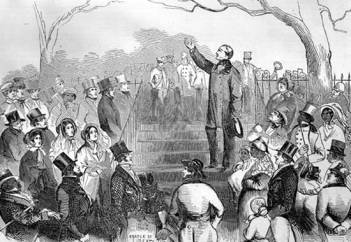
70787-004-784C0452

Religion, Ideology and the Abolitionist Movement

In the North a strident abolitionist movement took root and with each failed compromise, with each new infringement on the rights of northern free-states by the Congress, Courts and the Executive branch to appease southern slaveholders the movement gained added support. The movement developed during the 1830s in New England as a fringe movement among the more liberal elites. One wing of the movement “arose from evangelical ranks and framed its critique of bound labor in religious terms.” [13] The polarization emerged as Northern states abolished slavery as increasing numbers of influential “former slave owners such as Benjamin Franklin changed their views on the matter.” [14]

Many in the movement were inspired by the preaching of revivalist preacher Charles Finney who “demanded a religious conversion with a political potential more radical than the preacher first intended.” [15] Finney and other preachers were instrumental in the Second Great Awakening “which rekindled religious fervor in much of the nation, saw new pressure for abolition.” [16] In fact the “most important child of the Awakening, however, was the abolitionist movement, which in the 1830s took on new life, place the slavery issue squarely on the national agenda, and for the next quarter century aroused and mobilized people in the cause of emancipation.” [17]

The evangelical proponents of abolition understood this in the concept of “free will” something that the pointed out that slavery “denied one group of human beings the freedom of action necessary to free will – and therefore moral responsibility for their behavior. Meanwhile, it assigned to other human beings a degree of temporal power that virtually guaranteed their moral corruption. Both master and slave were thus trapped in a relationship that inevitably led both down the path of sin and depravity” [18]

Finney’s preaching was emboldened and expanded by the American Anti-Slavery Society founded by William Lloyd Garrison “which launched a campaign to change minds, North and South, with three initiatives, public speeches, mass mailings and petitions.” [19] Many of the speakers were seminary students and graduates of Lane Seminary in Cincinnati, who became known as “the Seventy” who received training and then “fanned out across the North campaigning in New England, Pennsylvania, New York, Ohio, Indiana and Michigan[20] where many received hostile receptions, and encountered violence. Garrison used his newspaper, The Liberator to “pledge an all-out attack on U.S. slavery.” [21] Likewise other churches such as the Presbyterians founded new educational institutions such as “Oberlin College in Ohio” which “was founded as an abolitionist institution” [22]

Theodore Parker, a Unitarian pastor and leading Transcendentalist thinker enunciated a very important theological-political analogy for many in the religious wing of the abolitionist movement which concentrated less on using chapter and verse but appealing to “the spirit of the Gospel,” [23] in as Parker’s analogy: as Jesus is to the Bible, so is the Declaration to the Constitution:

“By Christianity, I mean that form of religion which consists of piety – the love of God, and morality – the keeping of His laws. That Christianity is not the Christianity of the Christian church, nor of any sect. It is the ideal religion which the human race has been groping for….By Democracy, I mean government over all the people, by all the people and for the sake of all….This is not a democracy of the parties, but it is an ideal government, the reign of righteousness, the kingdom of justice, which all noble hearts long for, and labor to produce, the ideal whereunto mankind slowly draws near.” [24]

The early abolitionists who saw the issue framed in terms of their religious faith declared slavery a sin against God and man that demanded immediate action.” [25] For them the issue was a matter of faith and belief in which compromise of any kind including the gradual elimination of slavery or any other halfway measures were unacceptable. “William Lloyd Garrison and his fellow abolitionists believed the nation faced a clear choice between damnation and salvation,” [26] a cry that can be heard in much of today’s political debate regarding a number of social issues with religious components including abortion, gay rights and immigration. Harrison wrote that “Our program of immediate emancipation and assimilation, I maintained, was the only panacea, the only Christian solution, to an unbearable program.” [27] The abolitionists identified:

“their cause with the cause of freedom, and with the interests of large and relatively unorganized special groups such as laborers and immigrants, the abolitionists considered themselves to be, and convinced many others that they were, the sole remaining protectors of civil rights.” [28]

The arguments were frequently and eloquently rooted in profoundly religious terms common to evangelical Christianity and the Second Great Awakening. One of the leading historians of the era, Henry Wilson of Massachusetts, a Radical Republican and abolitionist who served as a United States Senator and Vice President in Ulysses Grant’s second administration provides a good example of this. He wrote in his post war history of the events leading to the war explaining basic understanding of the religiously minded abolitionists during the period:

“God’s Holy Word declares that man was doomed to eat his bread in the sweat of his face. History and tradition teach that the indolent, the crafty, and the strong, unmindful of human rights, have ever sought to evade this Divine decree by filching their bread from the constrained and unpaid toil of others…

American slavery reduced man, created in the Divine image, to property….It made him a beast of burden in the field of toil, an outcast in social life, a cipher in courts of law, and a pariah in the house of God. To claim for himself, or to use himself for his own benefit or benefit of wife and child, was deemed a crime. His master could dispose of his person at will, and of everything acquired by his enforced and unrequited toil.

This complete subversion of the natural rights of millions…constituted a system antagonistic to the doctrines of reason and the monitions of conscience, and developed and gratified the most intense spirit of personal pride, a love of class distinctions, and the lust of dominion. Hence a commanding power, ever sensitive, jealous, proscriptive, dominating, and aggressive, which was recognized and fitly characterized as the Slave Power…” [29]

The religious abolitionists took aim at the Southern churches and church leaders who they believed only buttressed slavery but “had become pawns of wealthy slaveholders and southern theologians apologists for oppression.” [30] As the abolitionist movement spread through Northern churches, especially those with ties to the evangelicalism of the Great Awakenings, and for “Evangelical northerners, the belief in individual spiritual and personal rights and personal religious activism made such involvement necessary.” [31]

For Baptists the issue created a deep polarization with northern Baptists mobilizing around abolitionist principles which came out of their association with English Baptists who had been at the forefront of the abolitionist movement in England where the Reverend William Knibb, who also led the fight to end slavery in Jamaica “became an impassioned defender of the human rights of blacks….his flamboyant speeches aroused the people against slavery.” [32] The Baptist Union in England sent a lengthy letter to the Baptist Triennial Convention in the United States on December 31st 1833 in which they condemned “the slave system…as a sin to be abandoned, and not an evil to be mitigated,” and in which they urged all American Baptists to do all in their power to “effect its speedy overthrow.” [33]

In 1835 two English Baptists, Francis Cox and James Hoby, who were active in that nation’s abolitionist movement with William Wilberforce came to the United States “to urge Baptists to abandon slavery. This visit and subsequent correspondence tended to polarize Baptists.” [34] In the north their visit encouraged faith based activism in abolitionist groups. In 1849 the American Baptist Anti-Slavery Convention was formed in New York and launched a polemic attack on the institution of slavery and called southern Baptists to repent in the strongest terms. They urged that the mission agencies be cleansed from “any taint of slavery…and condemned slavery in militant terms.” They called on Southern Baptists to “confess before heaven and earth the sinfulness of holding slaves; admit it to be not only a misfortune, but a crime…” and it warned that “if Baptists in the South ignored such warnings and persisted in the practice of slavery, “we cannot and dare not recognize you as consistent brethren in Christ.” [35] Such divisions we not limited to Baptists and as the decade moved on rose to crisis proportions in every evangelical denomination, provoking Kentucky Senator Henry Clay to wonder: “If our religious men cannot live together in peace, what can be expected of us politicians, very few of whom profess to be governed by the great principles of love?” [36]

The abolition movement aimed to not only stop the spread of slavery but to abolish it. The latter was something that many in the North who opposed slavery’s expansion were often either not in favor of, or indifferent to, became an issue for many after the passage of the Fugitive Slave Act of 1850. So long as slavery was regulated to the South most northerners showed little concern, and even though many profited by slavery, or otherwise reaped its benefits their involvement was indirect. While they may have worn clothes made of cotton harvested by slaves, while the profits of corporations that benefited from all aspects of the Southern slave economy paid the wages of northern workers and shareholders, few thought of the moral issues until they were forced to participate or saw the laws of their states overthrown by Congress.
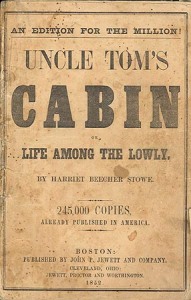
cover22

Uncle Tom’s Cabin and the Popularization of Abolitionism in the North

It was only after this act that the abolitionist movement began to gain traction among people in the North. The movement was given a large boost by the huge popularity of Harriett Beecher Stowe’s 1852 novel Uncle Tom’s Cabin “a vivid, highly imaginative, best-selling, and altogether damning indictment of slavery” [37]
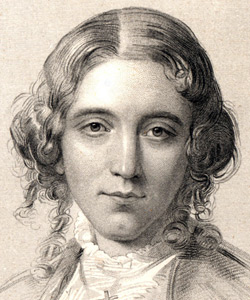
hbs

Harriet Beecher Stowe

Stowe was a well-educated writer, the daughter of the President of Lane Seminary, Lyman Beecher and wife of Calvin Ellis Stowe, a professor at the seminary. She and her family were deeply involved in the abolitionist movement and supported the Underground Railroad, even taking fugitive slaves into her home. These activities and her association with escaped slaves made a profound impact on her. She received a letter from her sister who was distraught over the passage of the Fugitive Slave Law. He sister challenged Stowe to write: “How, Hattie, if I could use a pen as you can, I would write something that would make this whole nation feel what an accursed thing slavery is.” [38]

One communion Sunday she:

“sat at the communion table of Brunswick’s First Parish Church, a vision began playing before my eyes that left me in tears. I saw an old slave clad in rags, a gentle, Christian man like the slave I had read about in American Slavery as It Is. A cruel white man, a man with a hardened fist, was flogging the old slave. Now a cruel master ordered two other slaves two other slaves to finish the task. As they laid on the whips, the old black man prayed for God to forgive them.

After church I rushed home in a trance and wrote down what I had seen. Since Calvin was away, I read the sketch to my ten- and twelve-year-old sons. They wept too, and one cried, “Oh! Mamma, slavery is the most cursed thing in the world!” I named the old slave Uncle Tom and his evil tormenter Simon Legree. Having recorded the climax of my story, I then commenced at the beginning….” [39]

OTCauction

The Auction, engraving from Uncle Tom’s Cabin

Many of Stowe’s characters were fiction versions of people that she actually knew or had heard about and the power of her writing made the work a major success in the United States and in Britain. The abolitionist movement gained steam and power through it and the play that issued from it. The publication of the book and its success “raised a counter indignation among Southerners because they thought Mrs. Stowe’s portrait untrue and because the North was so willing to believe it.” [40]

But despite the furor of many southerners the book gained in popularity and influenced a generation of northerners, creating a stereotype of Southern slaveholders and it caused people “to think more deeply and more personally about the implications of slavery for family, society and Christianity.” [41] The book drew many previously ambivalent to the writings of the abolitionists, and who did not normally read the accounts of escaped slaves. The vivid images in Stowe’s book “were irredeemably hostile: from now on the Southern stereotype was something akin to Simon Legree.” [42] But those images transformed the issue in the minds of many in the north as they “touched on all these chords of feeling, faith, and experience….The genius of Uncle Tom’s Cabin was that it made the personal universal, and it made the personal political as well. For millions of readers, blacks became people.” [43] One northern reader said “what truth could not accomplish, fiction did” [44] as it “put a face on slavery, and a soul on black people.” [45]

George Fitzhugh, a defended of benevolent paternalistic slavery noted Stowe’s book “was “right” concerning the “bitter treatment of slaves….Law, Religion, and Public Opinion should be invoked to punish and correct those abuses….” [46] However, such thoughts could not be spoken too openly for fear of other slaveholders who “could not calmly debate internal correction…while outside agitators advertised their supposed monstrosities.” [47] The inability to debate the issue internally made the southern visceral response to Uncle Tom’s Cabin look petty and impotent.

But others too had an effect on the debate, even escaped former slaves like Frederick Douglass. Douglass became a prominent abolitionist leader was very critical of the role of churches, especially Southern churches in the maintenance of slavery as an institution. His polemic against them in his autobiography reads like the preaching of an Old Testament prophet such as Amos, or Jeremiah railing against the corrupt religious institutions of their day:

“Indeed, I can see no reason, but the most deceitful one, for calling the religion of this land Christianity. I look upon it as the climax of all misnomers, the boldest of all frauds, and the grossest of all libels. Never was there a clearer case of “stealing the livery of the court of heaven to serve the devil in.” I am filled with unutterable loathing when I contemplate the religious pomp and show, together with the horrible inconsistencies, which every where surround me. We have men-stealers for ministers, women-whippers for missionaries, and cradle-plunderers for church members. The man who wields the blood-clotted cowskin during the week fill the pulpit on Sunday, and claims to be a minister of the meek and lowly Jesus. The man who robs me of my earnings at the end of each week meets me as a class-leader on Sunday morning, to show me the way of life, and the path of salvation. He who sells my sister, for purposes of prostitution, stands forth as the pious advocate of purity. He who proclaims it a religious duty to read the Bible denies me the right of learning to read the name of the God who made me. He who is the religious advocate of marriage robs whole millions of its sacred influence, and leaves them to the ravages of wholesale pollution. The warm defender of the sacredness of the family relation is the same that scatters whole families, — sundering husbands and wives, parents and children, sisters and brothers, — leaving the hut vacant and the heart desolate. We see the thief preaching against theft, and the adulterer against adultery. We have men sold to build churches, women sold to support the gospel, and babes sold to purchase Bibles for the poor heathen! All for the glory of God and the good of souls.”[48]

Poet Walt Whitman was radicalized by the passage of the act and in his poem Blood Money he “used the common evangelical technique of applying biblical parables to contemporary events, echoing in literary form William H. Seward’s “higher law” speech.” [49]

Of olden time, when it came to pass

That the Beautiful God, Jesus, should finish his work on earth,

Then went Judas, and sold the Divine youth,

And took pay for his body.

Cursed was the deed, even before the sweat of the clutching hand grew dry…


Since those ancient days; many a pouch enwrapping mean-

Its fee, like that paid for the Son of Mary.

Again goes one, saying,

What will ye give me, and I will deliver this man unto you?

And they make the covenant and pay the pieces of silver…


The meanest spit in thy face—they smite thee with their

Bruised, bloody, and pinioned is thy body,

More sorrowful than death is thy soul.

Witness of Anguish—Brother of Slaves,

Not with thy price closed the price of thine image;

And still Iscariot plies his trade. [50]

The leaders of the Abolitionist movement who had fought hard against acts the Fugitive Slave Act and the Dred Scott decision were now beginning to be joined by a Northern population that was becoming less tolerant of slavery and the status quo. For abolitionists “who had lost their youthful spiritual fervor, the crusade became a substitute for religion. And in the calls for immediate emancipation, one could hear echoes of perfectionism and millennialism.” [51]

But there was resistance of Northern theological circles to abolitionism. Charles B. Hodge, the President of Princeton Theological Seminary “supported slavery on biblical grounds, often dismissing abolitionists as liberal progressives who did not take the Bible seriously.” [52]

With the formation of the Republican Party in 1854, a party founded on opposition to the expansion of slavery in the territories found a formidable political voice and became part of a broad coalition of varied interests groups whose aspirations had been blocked by pro-slavery Democrats. These groups included “agrarians demanding free-homestead legislation, Western merchants desiring river and harbor improvements at federal expense, Pennsylvania iron masters and New England textile merchants in quest of higher tariffs.” The abolitionists also made headway in gaining the support of immigrants, “especially among the liberal, vocal, fiercely anti-slavery Germans who had recently fled the Revolution of 1848.” [53] One of those German immigrants, Carl Schurz observed that “the slavery question” was “not a mere occasional quarrel between two sections of the country, divided by a geographic line” but “a great struggle between two antagonistic systems of social organization.” [54]

Southern Religious Support of Slavery
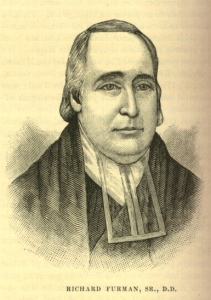
furman1

In light of the threat posed to slavery by the emerging abolitionist movement forced slaveholders to shift their defense of slavery from it being simply a necessary evil. Slavery became “in both secular and religious discourse, the central component of the mission God had designed for the South.” [55] Like in the North where theology was at the heart of many abolitionist arguments, in the South theology was used to enshrine and defend the institution of slavery. British Evangelical-Anglican theologian Alister McGrath notes how “the arguments used by the pro-slavery lobby represent a fascinating illustration and condemnation of how the Bible may be used to support a notion by reading the text within a rigid interpretive framework that forces predetermined conclusions to the text.” [56]

Southern religion was a key component of something bigger than itself and played a role in the development of an ideology much more entrenched in the culture than the abolitionist cause did in the North, in large part due to the same Second Great Awakening that brought abolitionism to the fore in the North. “Between 1801 when he Great Revival swept the region and 1831 when the slavery debate began, southern evangelicals achieved cultural dominance in the region. Looking back over the first thirty years of the century, they concluded that God had converted and blessed their region.” [57]The Southern ideology which enshrined slavery as a key component of all areas of life was a belief system, it was a system of values, it was a worldview, or to use the more modern German term “Weltanschauung.” The Confederate worldview was the Cause. As Emory Thomas wrote in his book The Confederate Nation:

“it was the result of the secular transubstantiation in which the common elements of Southern life became sanctified in the Southern mind. The South’s ideological cause was more than the sum of its parts, more than the material circumstances and conditions from which it sprang. In the Confederate South the cause was ultimately an affair of the viscera….Questions about the Southern way of life became moral questions, and compromises of Southern life style would become concession of virtue and righteousness.” [58]

Despite the dissent of some, the “dominant position in the South was strongly pro-slavery, and the Bible was used to defend this entrenched position.” [59] The religiously based counter argument to the abolitionists was led by the former Governor of South Carolina, John Henry Hammond. Hammond’s arguments included biblical justification of blacks being biologically inferior to whites and slavery being supported in the Old Testament where the “Hebrews often practiced slavery” and in the New testament where “Christ never denounced servitude.” [60] Hammond warned:

“Without white masters’ paternalistic protection, biologically inferior blacks, loving sleep above all and “sensual excitements of all kinds when awake” would first snooze, then wander, then plunder, then murder, then be exterminated and reenslaved.” [61]

Others in the South, including politicians, pundits and preachers were preaching “that slavery was an institution sanction by God, and that even blacks profited from it, for they had been snatched out of pagan and uncivilized Africa and been given the advantages of the gospel.” [62] The basic understanding was that slavery existed because “God had providential purposes for slavery.” [63]

At the heart of the pro-slavery theological arguments was in the conviction of most Southern preachers of human sinfulness. “Many Southern clergymen found divine sanction for racial subordination in the “truth” that blacks were cursed as “Sons of Ham” and justified bondage by citing Biblical examples.” [64] But simply citing scripture to justify the reality of a system that they repeated the benefit is just part of the story for the issue was far greater than that. The theology that justified slavery also, in the minds of many Christians in the north justified what they considered “the hedonistic aspects of the Southern life style.” [65] This was something that abolitionist preachers continually emphasized, criticizing the greed, sloth and lust inherent in the culture of slavery and plantation life, and was an accusation that Southern slaveholders, especially evangelicals took umbrage, for in their understanding good men could own slaves. Their defense was rooted in their theology and the hyper-individualistic language of Southern evangelicalism gave “new life to the claim that good men could hold slaves. Slaveholding was a traditional mark of success, and a moral defense of slavery was implicit wherever Americans who considered themselves good Christians held slaves.” [66] The hedonism and fundamentalism that existed in the Southern soul, was the “same conservative faith which inspired John Brown to violence in an attempt to abolish slavery…” [67]

Slave owners frequently expressed hostility to independent black churches and conducted violence against them, and “attacks on clandestine prayer meetings were not arbitrary. They reflected the assumption (as one Mississippi slave put it) “that when colored people were praying [by themselves] it was against them.” [68] But some Southern blacks accepted the basic tenets do slave owner-planter sponsored Christianity. Frederick Douglass later wrote “many good, religious colored people who were under the delusion that God required them to submit to slavery and wear their chains with weakness and humility.” [69]

The political and cultural rift began to affect entire church denominations. The heart of the matter went directly to theology, in this case the interpretation of the Bible in American churches. The American Protestant and Evangelical understanding was rooted in the key theological principle of the Protestant Reformation, that of Sola Scripura, which became an intellectual trap for northerners and southerners of various theological stripes. Southerners believed that they held a “special fidelity to the Bible and relations with God. Southerners thought abolitionists either did not understand the Bible or did not know God’s will, and suspected them of perverting both.” [70]The problem was then, as it is now that:

“Americans favored a commonsense understanding of the Bible that ripped passages out of context and applied them to all people at all times. Sola scriptura both set and limited terms for discussing slavery and gave apologists for the institution great advantages. The patriarchs of the Old Testament had owned slaves, Mosaic Law upheld slavery, Jesus had not condemned slavery, and the apostles had advised slaves to obey their masters – these points summed up and closed the case for many southerners and no small number of northerners.” [71]

In the early decades of the nineteenth century there existed a certain confusion and ambivalence to slavery in most denominations. The Presbyterians exemplified this when in 1818 the “General Assembly of the Presbyterian Church, while opposing slavery against the law of God, also went on record as opposing abolition, and deposed a minister for advocating abolition.” [72] There were arguments by some American Christians including some Catholics, Lutherans, Episcopalians and others to offer alternative ways to “interpreting and applying scripture to the slavery question, but none were convincing or influential enough to force debate” [73] out of the hands of literalists.

However the real schisms between the Northern and Southern branches of the major denominations began to emerge in the mid to late 1830s with the actual breakups coming in the 1840s. The first to split were the Methodists when in “1844 the Methodist General Conference condemned the bishop of Georgia for holding slaves, the church split and the following year saw the birth of the Methodist Episcopal Church.” [74] Not all Methodists in the South agreed with this split and Methodist abolitionists in the South “broke away from mainline Methodism to form the Free Methodist Church.” [75]

The Baptists were next, when the Foreign Mission Board “refused to commission a candidate who had been recommended by the Georgia Baptist Convention, on the ground that he owned slaves” [76] resulting in the formation of the Southern Baptist Convention. The Baptist split is interesting because until the early 1800s there existed a fairly strong anti-slavery movement in states such as Kentucky, while in 1790 the General Committee of Virginia “adopted a statement calling slavery “a violent deprivation of the rights of nature, and inconsistent with a republican government; and therefore [we] recommend it to our brethren to make use of every legal measure, to extirpate the horrid evil from the land.” [77]

However, in many parts of the Deep South there existed no such sentiment and in South Carolina noted Baptist preachers including “Richard Furman, Peter Bainbridge, and Edmund Botsford were among the larger slaveholders.” [78] Furman wrote a defense of slavery in 1822 where he made the argument that “the right of holding slaves is clearly established in the Holy Scriptures by precept and example.” [79] After a number of slave uprisings, including the Nat Turner Revolt in Virginia, pro-slavery voices “tended to silence any remaining antislavery voices in the South.” [80]

These voices grew more ever more strident and in 1835 the Charleston Association “adopted a militant defense of slavery, sternly chastising abolitionists as “mistaken philanthropists, and denuded and mischievous fanatics.” [81] Those who met in Augusta Georgia to found the new Southern Baptist Convention indicated that “the division was “painful” but necessary because” our brethren have pressed upon every inch of our privileges and our sacred rights.” [82] Since the Baptist split was brought about by the refusal of the Triennial Convention to appoint slaveholders as foreign missionaries the new convention emphasized the theological nature of their decision:

“Our objects, then, are the extension of the Messiah’s kingdom, and the glory of God. Not disunion with any of his people; not the upholding of any form of civil rights; but God’s glory, and Messiah’s increasing reign; in the promotion of which, we find no necessity for relinquishing any of our civil rights. We will never interfere with what is Caesar’s. We will not compromit what is God’s.” [83]

Of course, to the Baptists who met at Augusta, what was Caesar’s was obviously the institution of slavery.

The last denomination to officially split was the Presbyterians in 1861 who, “reflecting the division of the nation, the Southern presbyteries withdrew from the Presbyterian Church and founded their own denomination.” [84] The split in the Presbyterian Church had been obvious for years despite their outward unity, some of the Southern pastors and theologians were at the forefront of battling their northern counterparts for the theological high ground that defined just whose side God was on. James Henley Thornwell presented the conflict between northern evangelical abolitionists and southern evangelical defenders of slavery in Manichean terms. He believed that abolitionists attacked religion itself.

“The “parties in the conflict are not merely abolitionists and slaveholders,…They are atheists, socialists, communists, red republicans, jacobins, on one side, and friends of order and regulated freedom on the other. In one word, the world is the battle ground – Christianity and Atheism as the combatants; and the progress of humanity at stake.” [85]

Robert Lewis Dabney, a southern Presbyterian pastor who later served as Chief of Staff to Stonewall Jackson in the Valley Campaign and at Seven Pines and who remained a defender of slavery long after the war was over wrote that:

“we must go before the nation with the Bible as the text and ‘Thus saith the Lord’ as the answer….we know that on the Bible argument the abolition party will be driven to reveal their true infidel tendencies. The Bible being bound to stand on our side, they have to come out and array themselves against the Bible. And then the whole body of sincere believers at the North will have to array themselves, though unwillingly, on our side. They will prefer the Bible to abolitionism.” [86]

Southern churches and church leaders were among the most enthusiastic voices for disunion and secession. They labeled their Northern critics, even fellow evangelicals in the abolition movement as “atheists, infidels, communists, free-lovers, Bible-haters, and anti-Christian levelers.” [87] The preachers who had called for separation from their own national denominations years before the war now “summoned their congregations to leave the foul Union and then to cleanse their world.” [88] Thomas R.R. Cobb, a Georgia lawyer, an outspoken advocate of slavery and secession, who was killed at the Battle of Fredericksburg, wrote proudly that Secession “has been accomplished mainly by the churches.” [89]

The Reverend William Leacock of Christ Church, New Orleans declared in his Thanksgiving sermon “Our enemies…have “defamed” our characters, “lacerated” our feelings, “invaded “our rights, “stolen” our property, and let “murderers…loose upon us, stimulated by weak or designing or infidel preachers. With “the deepest and blackest malice,” they have “proscribed” us “as unworthy members… of the society of men and accursed before God.” Unless we sink to “craven” beginning that they “not disturb us,…nothing is now left us but secession.” [90]

The Religious Divide Becomes Political

The breakups of the major Protestant denominations boded ill for the country, in fact the true believers in their cause be it the abolition of slavery or the maintenance and expansion of it were among the most strident politically. “For people of faith these internecine schisms were very troubling. If citizens could not get along in the fellowship of Christ, what did the future hold for the nation?” [91] Both of the major political parties of the 1840s, the Democrats and the Whigs found themselves ever more led by religion as the “fissures among evangelicals, the conflicts between Protestants and Catholics, the slavery debates, and the settlement of the West placed religion at the forefront of American politics.” [92] Of course it was slavery that became the overriding issue as decade moved forward and the divisions among the faithful became deeper.

A Cincinnati minister who preached against secession “citing Absalom, Jeroboam, and Judas” as examples, argued that the “Cause of the United States” and the Cause of Jehovah” were identical…and insisted that “a just defensive war” against southern secessionists is “one of the prominent ways by which the Lord will introduce the millennial day.” [93] In the South many ministers became active in politics and men who at one time had been considered moderates began to speak “in the language of cultural warfare.” Mississippi Episcopal Bishop William Mercer Green denounced the “restless, insubordinate, and overbearing spirit of Puritanism” that was destroying the nation.” [94]

Some political leaders who had worked to craft compromises like South Carolina Senator John C. Calhoun were concerned and observed that the evangelical denominations which were splitting had “contributed greatly to strengthen the bond of the Union.” If all bonds were loosed, he worried, “nothing will be left to hold the Union together except force.” [95] Jefferson Davis and Abraham Lincoln, both who would be considered moderates on the issue of slavery in the late 1840s and early 1850s came to sharply different philosophical and theological understandings of the unfolding dissolution of the country. Davis as early as 1848 was defending slavery as “a common law right to property in the services of man; its origin is in Divine decree – the curse on the graceless sons of Noah.” But Lincoln condemned the expansion of the institution did so in decidedly theological terms, noting that “Slavery is founded in the selfishness of man’s nature…opposition to it is in his love of justice…. Repeal all past human history, you cannot repeal human nature. It will still be the abundance of man’s heart, that slavery extension is wrong.” [96]

God’s Chosen People and the Confederate Union of Church and State
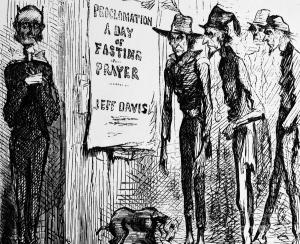
confederate-fasting-1863-granger

Perhaps more than anything the denominational splits helped prepare the Southern people as well as clergy for secession and war. They set precedent by which Southerners left establish national organizations. When secession came, “the majority of young Protestant preachers were already primed by their respective church traditions to regard the possibilities of political separation from the United States without undue anxiety.” [97]

One of the most powerful ideological tools since the days of the ancients has been the linkage of religion to the state. While religion has always been a driving force in American life since they days of the Puritans in the Massachusetts Bay Colony, especially in the belief about the destiny of the nation as God’s “Chosen People” it was in the South where the old Puritan beliefs took firm root in culture, society, politics and the ideology which justified slavery and became indelibly linked to Southern nationalism. “Confederate independence, explained a Methodist tract quoting Puritan John Winthrop, was intended to enable the South, “like a city set on a hill’ [to] fulfill her God given mission to exalt in civilization and Christianity the nations of the earth.” [98]

Religion and the churches “supplied the overarching framework for southern nationalism. As Confederates cast themselves as God’s chosen people” [99] and the defense of slavery was a major part of this mission of the chosen people. A group of 154 clergymen “The Clergy of the South” “warned the world’s Christians that the North was perpetuating a plot of “interference with the plans of Divine Providence.” [100] A Tennessee pastor bluntly stated in 1861 that “In all contests between nations God espouses the cause of the Righteous and makes it his own….The institution of slavery according to the Bible is right. Therefore in the contest between the North and the South, He will espouse the cause of the South and make it his own.” [101]

The effect of such discourse on leaders as well as individuals was to unify the struggle as something that linked the nation to God, and God’s purposes to the nation identifying both as being the instruments of God’s will and Divine Providence:

“Sacred and secular history, like religion and politics, had become all but indistinguishable… The analogy between the Confederacy and the chosen Hebrew nation was invoked so often as to be transformed into a figure of everyday speech. Like the United States before it, the Confederacy became a redeemer nation, the new Israel.” [102]

This theology also motivated men like the convinced hard line Calvinist-Presbyterian, General Stonewall Jackson on the battlefield. Jackson’s brutal, Old Testament understanding of the war caused him to murmur: “No quarter to the violators of our homes and firesides,” and when someone deplored the necessity of destroying so many brave men, he exclaimed: “No, shoot them all, I do not wish them to be brave.” [103]

In effect: “Slavery became in secular and religious discourse, the central component of the mission God had designed for the South….The Confederates were fighting a just war not only because they were, in the traditional framework of just war theory, defending themselves against invasion, they were struggling to carry out God’s designs for a heathen race.” [104]

From “the beginning of the war southern churches of all sorts with few exceptions promoted the cause militant” [105] and supported war efforts, the early military victories of Robert E. Lee’s Army of Northern Virginia and the victories of Stonewall Jackson in the Shenandoah Valley   were celebrated as “providential validations of the cause that could not fail…” Texas Methodist minister William Seat wrote: “Never surely since the Wars of God’s ancient people has there been such a remarkable and uniform success against tremendous odds. The explanation is found in the fact that the Lord goes forth to fight against the coercion by foes of his particular people. Thus it has been and thus it will be to the end of the War.” [106]

This brought about a intertwining of church and state authority, a veritable understanding of theocracy as “The need for the southern people to acknowledge God’s authority was bound up with a legitimation of the authority of clerical and civil rulers. Christian humility became identified with social and political deference to both God and Jefferson Davis.” [107]

Jefferson Davis and other leaders helped bolster this belief:

“In his repeated calls for God’s aid and in his declaration of national days of fasting, humiliation, and prayer on nine occasions throughout the war, Jefferson Davis similarly acknowledged the need for a larger scope of legitimization. Nationhood had to be tied to higher ends. The South, it seemed, could not just be politically independent; it wanted to believe it was divinely chosen.” [108]

Davis’s actions likewise bolster his support and the support for the war among the clergy. A clergyman urged his congregation that the people of the South needed to relearn “the virtue of reverence- and the lesson of respecting, obeying, and honoring authority, for authority’s sake.” [109]

Confederate clergymen not only were spokesmen and supporters of slavery, secession and independence, but many also shed their clerical robes and put on Confederate Gray as soldiers, officers and even generals fighting for the Confederacy. Bishop Leonidas Polk, the Episcopal Bishop of Louisiana, who had been a classmate of Jefferson Davis at West Point was commissioned as a Major General and appointed to command the troops in the Mississippi Valley. Polk did not resign his ecclesiastical office, and “Northerners expressed horror at such sacrilege, but Southerners were delighted with this transfer from the Army of the Lord.” [110] Lee’s chief of Artillery Brigadier General Nelson Pendleton was also an academy graduate and an Episcopal Priest. By its donations of “everything from pew cushions to brass bells, Southern churches gave direct material aid to the cause. Among all the institutions in Southern life, perhaps the church most faithfully served the Confederate Army and nation.” [111] Southern ministers “not only proclaimed the glory of their role in creating the war but also but also went off to battle with the military in an attempt to add to their glory.” [112]

Sadly, the denominational rifts persisted until well into the twentieth century. The Presbyterians and Methodists both eventually reunited but the Baptists did not, and eventually “regional isolation, war bitterness, and differing emphasis in theology created chasms by the end of the century which leaders of an earlier generation could not have contemplated.” [113] The Southern Baptist Convention is now the largest Protestant denomination in the United States and many of its preachers are active in often divisive conservative social and political causes. The denomination that it split from, the American Baptist Convention, though much smaller remains a diverse collection of conservative and progressive local churches. Some of these are still in the forefront of the modern civil rights movement, including voting rights, women’s rights and LGBT issues, all of which find some degree of opposition in the Southern Baptist Convention.

But the religious dimensions were far bigger than denominational disagreements about slavery; religion became one of the bedrocks of Confederate nationalism. The Great Seal of the Confederacy had as its motto the Latin words Deo Vindice which can be translated “With God as our Champion” or “Under God [Our] Vindicator.” The issue was bigger than independence itself, it was intensely theological and secession “became an act of purification, a separation from the pollutions of decaying northern society, that “monstrous mass of moral disease,” as the Mobile Evening News so vividly described it.” [114]

The arguments found their way into the textbooks used in schools throughout the Confederacy. “The First Reader, For Southern Schools assured its young pupils that “God wills that some men should be slaves, and some masters.” For older children, Mrs. Miranda Moore’s best-selling Geographic Reader included a detailed proslavery history of the United States that explained how northerners had gone “mad” on the subject of abolitionism.” [115] The seeds of future ideological battles were being planted in the hearts of white southern children by radically religious ideologues, just as they are today in the Madrassas of the Middle East.

While the various theological and ideological debates played out and fueled the fires of passion that brought about the war, and provided great motivation, especially to Confederates during the war, that their cause was righteous, other very real world decisions and events in terms of politics, law and lawlessness further inflamed passions.

The Deepening Divide: The Dred Scott Decision
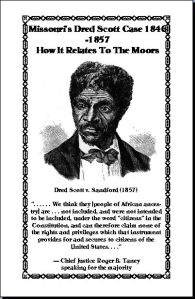
the-dred-scott-case-1846-1857-402x618

As the 1850s wore on the divisions over slavery became deeper and voices of moderation retreated. The trigger for the for the worsening of the division was the political battle regarding the expansion of slavery, even the status of free blacks in the north who were previously slaves, over whom their owners asserted their ownership. Southerners considered the network to help fugitive slaves escape to non-slave states, called the Underground Railroad “an affront to the slaveholders pride” and “anyone who helped a man or woman escape bondage was simply a thief” who had robbed them of their property and livelihood, as an “adult field hand could cost as much as $2000, the equivalent of a substantial house.” [116]

In 1856 the Supreme Court, dominated by southern Democrats ruled in favor of southern views in the Dred Scott decision one pillar of which gave slavery the right to expand by denying to Congress the power to prohibit slavery in Federal territories. The decision was momentous but it was a failure, but it was a disaster for the American people. It solved nothing and further divided the nation:

“In the South, for instance, it encouraged southern rights advocates to believe that their utmost demands were legitimatized by constitutional sanction and, therefore, to stiffen their insistence upon their “rights.” In the North, on the other hand, it strengthened a conviction that an aggressive slavocracy was conspiring to impose slavery upon the nation, and that any effort to reach an accommodation with such aggressors was futile. While strengthening the extremists, it cut the ground from under the moderates.” [117]

The decision in the case is frightening when one looks upon its tenor and implications. The majority opinion which was written by Chief Justice Roger Taney was chilling, not only in its views of race, but the fact that blacks were perpetually property without the rights of citizens. Taney wrote:

“Can a negro, whose ancestors were imported into this country, sold as slaves, become a member of the political community formed and brought into existence by the Constitution of the United States, and as such become entitled to all the rights, and privileges, and immunities, guaranteed by that instrument to the citizen?…It is absolutely certain that the African race were not included under the name of citizens of a state…and that they were not included, and were not intended to be included, under the word “citizens” in the Constitution, and therefore claim none of the rights and privileges which that instrument provides for and secures to citizens of the United States. On the contrary, they were at that time considered as a subordinate and inferior class of beings, who had been subjugated by the dominant race, and, whether emancipated or not, yet remain subject to their authority, and had no rights or privileges but those who held the power and the Government might choose to grant them” [118]

The effect of the ruling on individuals and the states was far reaching. “No territorial government in any federally administered territory had the authority to alter the status of a white citizen’s property, much less to take that property out of a citizen’s hands, without due process of law or as punishment for some crime.” [119] Free slaves were no longer safe, even in Free States from the possibility of being returned to slavery, because they were property.
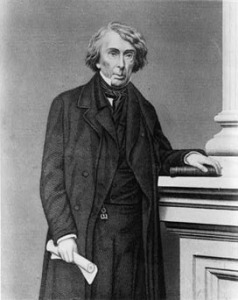
roger-b-taney-1-sized

Chief Justice Roger Taney, Author of the Dred Scott Decision

But the decision had been influenced by President-Elect James Buchanan’s secret intervention in the Supreme Court deliberations two weeks before his inauguration. Buchanan hoped by working with the Justices that he save the Union from breaking apart by appeasing slave owners and catering to their agenda. “The president-elect wanted to know not only when, but if the Court would save the new administration and the Union from the issue of slavery in the territories. Would the judges thankfully declare the explosive subject out of bounds, for everyone who exerted federal power? The shattering question need never bother President Buchanan.” [120] In his inaugural address he attempted to camouflage his intervention and “declared that the Court’s decision, whatever it turned out to be, would settle the slavery issue forever.” [121]

But Buchanan was mistaken, the case made the situation even more volatile as it impaired “the power of Congress- a power which had remained intact to this time- to occupy the middle ground.” [122] Taney’s decision held that Congress “never had the right to limit slavery’s expansion, and that the Missouri Compromise had been null and void on the day of its formulation.” [123]

The Court’s decision “that a free negro was not a citizen and the decision that Congress could not exclude slavery from the territories were intensely repugnant to many people in the free states” [124] and it ignited a firestorm in the north where Republicans now led by Abraham Lincoln decried the decision and southerners basked in their judicial victory. Northerners quite rightly feared that an activist court would rule to deny their states the right to forbid slavery. As early as 1854 Lincoln posed the idea that the Declaration of Independence was “the standard maxim of free society …constantly spreading and deepening its influence,” ultimately applicable “to peoples of all colors everywhere.” [125]

But after the Dred Scott decision Lincoln warned that the Declaration was being cheapened and diluted. Lincoln noted:

“Our Declaration of Independence was held sacred by all, and thought to include all” Lincoln declared, “but now, to aid in making the bondage of the Negro universal and eternal, it is assaulted, and sneered at, and construed, and hawked at, and torn, till, its framers could ride from their graves, they could not recognize it at all.” [126]

Not only that, Lincoln asked the logical question regarding Taney’s judicial activism. How long would it be, asked Abraham Lincoln, before the Court took the next logical step and ruled explicitly that:

“the Constitution of the United States does not permit a state to exclude slavery from its limits?” How far off was the day when “we shall lie down pleasantly thinking that the people of Missouri are on the verge of making their State free; and shall awake to the reality, instead, that the Supreme Court has made Illinois a slave State?” [127]

Lincoln discussed the ramification of the ruling for blacks, both slave and free:

“to aid in making the bondage of the Negro universal and eternal….All the powers of the earth seem rapidly combining against him. Mammon is after him; ambition follows, and philosophy follows, and the theology of the day is fast joining the cry. They have him in his prison house;…One after another they have closed the heavy doors upon him…and they stand musing as to what invention, in all the dominions of mind and matter, can be produced the impossibility of his escape more complete than it is.” [128]

Lincoln was not wrong in his assessment of the potential effects of the Dred Scott decision on Free States. “In 1852 a New York judge upheld the freedom of eight slaves who had left their Virginia owner while in New York City on their way to Texas.” [129] The Dred Scott decision brought that case, Lemon v. The People back to the fore and “Virginia decided to take the case to the highest New York court (which upheld the law in 1860) and would have undoubtedly appealed it to Taney’s Supreme Court had not secession intervened.” [130]

In response to the decision the advocates of the expansion of slavery not only insisted on its westward expansion in Federal territories but “in their must exotic fantasy, proslavery expansionists would land several dozen or several hundred American freedom fighters on Central or South American shores.” [131] Their targets would include Panama, Nicaragua, and Cuba as well. In 1855 one of these adventurers was William Walker who “sailed with about sixty followers (“the immortals”) to participate in a civil war in Nicaragua. Within little more than a year, he made himself President, and Franklin Pierce recognized his government.” [132] In 1857 Jefferson Davis further provoked northern ire when he insisted that “African Slavery as it exists in the United States is a moral, a social, and a political blessing.” [133]

Southern leaders poured political, human and economic capital into the struggle for the imposition of slavery on the Kansas Territory following the passage of the Kansas-Nebraska Act. For the South a pro-slavery victory in Kansas meant “two new U.S. Senators for the South. If a free labor Kansas triumphed, however, the North would gain four senators: Kansas’s immediately and Missouri’s soon.” [134]

To be continued tomorrow….

Notes

[1] Ibid. Guelzo Fateful Lightening p.68

[2] Goldfield, David America Aflame: How the Civil War Created a Nation Bloomsbury Press, New York, London New Delhi and Sidney 2011 p.71

[3] ______________Fugitive Slave Act of 1850 retrieved from the Avalon Project, Yale School of Law http://avalon.law.yale.edu/19th_century/fugitive.asp 11 December 2014

[4] Ibid. Fugitive Slave Act of 1850

[5] Ibid. Goldfield America Aflame p.71

[6] McPherson, James. The Battle Cry of Freedom: The Civil War Era Oxford University Press, Oxford and New York 1988 p.80

[7] Ibid. McPherson The Battle Cry of Freedom p.80

[8] Ibid. Goldfield America Aflame p.72

[9] Ibid. Oates The Approaching Fury p.94

[10] Ibid. Guelzo Fateful Lightening p.71

[11] Ibid. Goldfield America Aflame p.64

[12] Ibid. Guelzo Fateful Lightening p.71

[13] Ibid. Levine Half Slave and Half Free p.93

[14] McGrath, Alister Christianity’s Dangerous Idea: The Protestant Revolution A History from the Sixteenth Century to the Twenty-First Harper Collins Publishers, New York 2007 p.324

[15] Ibid. Freehling The Road to Disunion Volume One p.289

[16] Ibid. McGrath Christianity’s Dangerous Idea p.324

[17] Huntington, Samuel P. Who Are We? America’s Great Debate The Free Press, Simon and Schuster Europe, London 2004 p.77

[18] Ibid. Levine Half Slave and Half Free p.93

[19] Ibid. Egnal Clash of Extremes:pp.125-126

[20] Ibid. Egnal Clash of Extremes p.125

[21] Ibid. Freehling The Road to Disunion Volume One p.12

[22] Ibid. McGrath Christianity’s Dangerous Idea p.324

[23] Ibid. Rable God’s Almost Chosen Peoples p.14

[24] Wills, Garry Lincoln at Gettysburg: The Words that Remade America Simon and Schuster Paperbacks, New York 1992

[25] Ibid. Rable God’s Almost Chosen Peoples p.13

[26] Ibid. Rable God’s Almost Chosen Peoples p.13

[27] Oates, Stephen B. Editor The Approaching Fury: Voices of the Storm, 1820-1861 University of Nebraska Press, Lincoln and London 1997 p.36

[28] Stampp, Kenneth M. editor The Causes of the Civil War 3rd Revised Edition A Touchstone Book published by Simon and Schuster, New York and London 1991 p.23

[29] Ibid. Stampp The Causes of the Civil War p.29

[30] Ibid. Rable God’s Almost Chosen Peoples p.13

[31] Ibid. Goldfield America Aflame p.35

[32] McBeth, H. Leon The Baptist Heritage Broadman Press, Nashville TN 1987 p.301

[33] Ibid. McBeth The Baptist Heritage p.301

[34] Ibid. McBeth The Baptist Heritage p.384

[35] Ibid. McBeth The Baptist Heritage pp.384-385

[36] Ibid. Goldfield America Aflame p.35

[37] Ibid. Catton Two Roads to Sumter p.94

[38] Ibid. Goldfield America Aflame p.75

[39] Ibid. Oates The Approaching Fury p.120

[40] Ibid. Catton Two Roads to Sumter p.94

[41] Ibid. Goldfield America Aflame p.83

[42] Ibid. Catton Two Roads to Sumter p.94

[43] Ibid. Goldfield America Aflame p.79

[44] Ibid. Goldfield America Aflame p.79

[45] Ibid. Goldfield America Aflame p.83

[46] Ibid. Freehling The Road to Disunion Volume One p.48

[47] Ibid. Freehling The Road to Disunion Volume One p.49

[48] Douglass, Frederick. Life and Times of Frederick Douglass: His Early Life as a Slave, His Escape From Bondage, and His Complete History. New York: Collier Books, 1892. Retrieved from http://www.pbs.org/wgbh/americanexperience/features/primary-resources/lincolns-inconsistencies/ December 9th 2014

[49] Ibid. Goldfield America Aflame p.72

[50] Whitman, Walt Blood Money March 22nd 1850 retrieved from the Walt Whitman Archive http://www.whitmanarchive.org/published/periodical/poems/per.00089 11 December 2014

[51] Ibid. Goldfield America Aflame p.13

[52] Ibid. McGrath Christianity’s Dangerous Idea p.324

[53] Catton, William and Bruce, Two Roads to Sumter: Abraham Lincoln, Jefferson Davis and the March to Civil War McGraw Hill Book Company New York 1963, Phoenix Press edition London p.123

[54] Ibid. Levine Half Slave and Half Free p.15

[55] Gallagher, Gary W. The Confederate War: How Popular Will, Nationalism and Military Strategy Could not Stave Off Defeat Harvard University Press, Cambridge MA and London 1999 p.67

[56] Ibid. McGrath Christianity’s Dangerous Idea p.324

[57] Daly, John Patrick When Slavery Was Called Freedom: Evangelicalism, Proslavery, and the Causes of the Civil War The University Press of Kentucky, Lexington KY 2002 p.69

[58] Thomas, Emory The Confederate Nation 1861-1865 Harper Perennial, New York and London 1979 p.4

[59] Ibid. McGrath Christianity’s Dangerous Idea p.324

[60] Ibid. Freehling The Road to Disunion Volume One p.29

[61] Ibid. Freehling The Road to Disunion Volume One p.29

[62] Gonzalez, Justo L. The History of Christianity Volume 2: The Reformation to the Present Day Harper and Row Publishers San Francisco 1985 p.251

[63] Ibid. Daly When Slavery Was Called Freedom p.54

[64] Ibid. Thomas The Confederate Nation p.22

[65] Ibid. Thomas The Confederate Nation p.22

[66] Ibid. Daly When Slavery Was Called Freedom p.30

[67] Ibid. Thomas The Confederate Nation p.22

[68] Ibid. Levine Half Slave and Half Free p.116

[69] Ibid. Levine Half Slave and Half Free p.116

[70] Ibid. Daly When Slavery Was Called Freedom p.60

[71] Ibid. Rable God’s Almost Chosen Peoples p.14

[72] Ibid. Gonzalez The History of Christianity Volume 2 p.251

[73] Ibid. Rable God’s Almost Chosen Peoples p.14

[74] Ibid. Gonzalez The History of Christianity Volume 2 p.251

[75] Ibid. McGrath Christianity’s Dangerous Idea p.324

[76] Ibid. Gonzalez The History of Christianity Volume 2 p.251

[77] Ibid. McBeth The Baptist Heritage p.383

[78] Ibid. McBeth The Baptist Heritage p.384

[79] Ibid. McBeth The Baptist Heritage p.384

[80] Ibid. McBeth The Baptist Heritage p.384

[81] Ibid. McBeth The Baptist Heritage p.384

[82] Shurden, Walter B Not a Silent People: The Controversies that Have Shaped Southern Baptists Broadman Press, Nashville TN 1972 p.58

[83] Ibid. Shurden Not a Silent People p.58

[84] Ibid. Gonzalez The History of Christianity Volume 2 p.251

[85] Ibid. Rable God’s Almost Chosen Peoples p.13

[86] Ibid. Rable God’s Almost Chosen Peoples p.14

[87] Ibid. Daly When Slavery Was Called Freedom p.97

[88] Freehling, William. The Road to Disunion Volume II: Secessionists Triumphant 1854-1861 Oxford University Press, Oxford and New York 2007 p.460

[89] Ibid. Rable God’s Almost Chosen Peoples p.39

[90] Ibid. Freehling The Road to Disunion Volume II p.462

[91] Ibid. Goldfield America Aflame p.35

[92] Ibid. Goldfield America Aflame p.36

[93] Ibid. Rable God’s Almost Chosen Peoples pp.39-40

[94] Ibid. Rable God’s Almost Chosen Peoples p.40

[95] Ibid. Goldfield America Aflame p.35

[96] Ibid. Catton Two Roads to Sumter p.61

[97] Brinsfield, John W. et. al. Editor, Faith in the Fight: Civil War Chaplains Stackpole Books, Mechanicsburg PA 2003 p.67

[98] Faust, Drew Gilpin The Creation of Confederate Nationalism: Ideology and Identity in the Civil War South Louisiana State University Press, Baton Rouge and London p.27

[99] Ibid. Gallagher The Confederate War pp.66-67

[100] Ibid. Daly When Slavery Was Called Freedom p.145

[101] Ibid. Daly When Slavery Was Called Freedom p.138

[102] Ibid. Faust The Creation of Confederate Nationalism p.29

[103] Fuller, J.F.C. Grant and Lee: A Study in Personality and Generalship, Indiana University Press, Bloomington IN 1957

[104] Ibid. Faust, The Creation of Confederate Nationalism: Ideology and Identity in the Civil War South p.60

[105] Ibid. Thomas The Confederate Nation 1861-1865 pp.245-246

[106] Ibid. Daly When Slavery Was Called Freedom pp.145 and 147

[107] Ibid. Faust The Creation of Confederate Nationalism p.26

[108] Ibid. Faust The Creation of Confederate Nationalism p.33

[109] Ibid. Faust The Creation of Confederate Nationalism p.32

[110] Foote, Shelby, The Civil War, A Narrative. Volume One: Fort Sumter to Perryville Random House, New York 1963 1958 p.87

[111] Ibid. Thomas The Confederate Nation p.246

[112] Ibid. Daly When Slavery Was Called Freedom p.142

[113] Ibid. McBeth The Baptist Heritage pp.392-393

[114] Ibid. Faust The Creation of Confederate Nationalism p.30

[115] Ibid. Faust The Creation of Confederate Nationalism p.62

[116] Goodheart, Adam. Moses’ Last Exodus in The New York Times: Disunion, 106 Articles from the New York Times Opinionator: Modern Historians Revist and Reconsider the Civil War from Lincoln’s Election to the Emancipation Proclamation Edited by Ted Widmer, Black Dog and Leventhal Publishers, New York 2013 p.15

[117] Ibid. Potter The Impending Crisis p.291

[118] Guelzo Allen C. Fateful Lightening: A New History of the Civil War Era and Reconstruction Oxford University Press, Oxford and New York 2012 p.91

[119] Ibid. Guelzo Fateful Lightening pp.91-92

[120] Freehling, William. The Road to Disunion Volume II: Secessionists Triumphant 1854-1861 Oxford University Press, Oxford and New York 2007 p.115

[121] Ibid. Freehling, The Road to Disunion Volume II: Secessionists Triumphant 1854-1861 p.109

[122] Ibid. Potter The Impending Crisis p.291

[123] Ibid. Levine Half Slave and Half Free p.210

[124] Ibid. Potter The Impending Crisis p.279

[125] Ibid. Catton Two Roads to Sumter p.139

[126] Ibid. Guelzo Fateful Lightening p.93

[127] Ibid. Levine Half Slave and Half Free p.211

[128] Ibid. Catton Two Roads to Sumter p.139

[129] Ibid. McPherson The Battle Cry of Freedom p.181

[130] Ibid. McPherson The Battle Cry of Freedom p.181

[131] Ibid. Freehling, The Road to Disunion Volume II: Secessionists Triumphant 1854-1861 p.145

[132] Ibid. Potter The Impending Crisis p.193

[133] Ibid. Catton Two Roads to Sumter p.142

[134] Ibid. Freehling, The Road to Disunion Volume II: Secessionists Triumphant 1854-1861 p.124


1 Comment

Filed under civil rights, civil war, History, Political Commentary, Religion