Tag Archives: war crimes

Wars Without Mercy: The New Old Way of War

MacArthur Shigemitsu

Today is significant for it marks the end of the World War Two in the Pacific. Sixty-nine years ago a delegation from the Imperial Japanese government signed surrender documents with the Americans and their Allies aboard the Battleship Missouri in Tokyo Bay. The surrender marked the end of one of the most brutal wars ever fought, a war between two sides where in many cases no quarter was given. Violations of the Geneva and Hague conventions ran rampant on both sides as the respective governments and the media of each nation dehumanized and demonized their opponents, making it that much easier to excuse wanton barbarism and cruelty. 

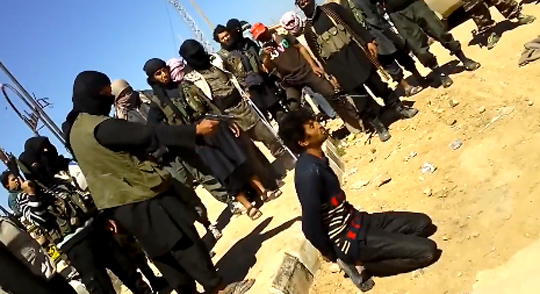
Today another American reporter, Steven Sotloff, was beheaded by the ISIS/ISIL Islamic Caliphate, and as it does so often it released the video of the execution. The Caliphate, which developed out of Al Qaeda fighting the United States in Iraq has become a formidable fighting organization, with deep financial resource is gaining radicalized adherents around the world, and its brutality toward all enemies, even other Moslems is unmatched. The propaganda of the Caliphate against its enemies is similar to what was used by both sides in the Second World War and with each massacre of civilians, each execution of innocent reporters, humanitarian workers and others they ensure that they will reap the whirlwind.

What ISIS forgets is that beneath the civilized veneer of the West, that part of us that likes to abide by treaties and focus on human rights, is that when enraged Americans, Britons, Australians, Germans, Russians and even the French can be just as brutal and also fight wars without mercy. Our histories are full of such examples. The problem is that since we haven’t had to fight such a total war since the Second World War, the leaders of groups such as ISIS assume we are weak and decadent, easy targets. They forget the manner in which all sides, even the Allies waged the Second World War, especially in the Pacific, where the war was fought without mercy. 
isis-terrorists

By waging war in the manner it is doing, ISIS will ensure that its leaders and members will receive no mercy. The post 9-11 response of the United States to Al Qaeda will look like a game compared to what is coming. And unfortunately, we will all lose a bit of our humanity, maybe even a lot of it the longer this war goes on. As far as propaganda, many U.S. politicians , corporate interests and our corporate media are great at promoting war and demonizing opponents. This will be brutal my friends and I for one wish it had never come about. I want peace, I went to Iraq believing that the Iraqis I served alongside and those who had me in their homes would eventually know peace. I grieve for them, as I grieve for all that will suffer in this new war without mercy. 

61VVOf2iniL

I have reposted a book review of John Dower’s book “War without Mercy: Race and Power in the Pacific War.” Pantheon Books, a Division of Random House, New York, NY 1986. I highly recommend the book to anyone who thinks that the conflict with ISIS will be anything but uncivilized and barbarous. It has all the elements to make it so: race, religion, ideology and power, it will mark a return to barbarism that many of us thought would never happen again. 

Here is that review.

The study of war cannot simply be confined to the study of battles, weapons and leaders. While all of these are important one must as Clausewitz understood examine the human element of policy, ideology and the motivations of nations as they wage war. Clausewitz understood that war could not be reduced to formulas and templates but involved what he called the “remarkable trinity” which he described in on war as (1) primordial violence, hatred, and enmity; (2) the play of chance and probability; and (3) war’s element of subordination to rational policy. Clausewitz connects this with the people being connected to the primordial forces of war, the military with the non-rational elements of friction, chance and probability and the government.

The Clausewitzian understanding of war is rooted in the Enlightenment and classic German Liberalism, born out of his experience in the Napoleonic Wars, which forever changed the face of warfare. From the defeat of Prussia and its liberation from Napoleonic rule under Scharnhorst and Gneisenau Clausewitz developed the understanding that war was more than simply tactics and weapons. Thus when we examine war today we deprive ourselves of properly understanding the dynamic of war if we fail to appreciate the human factor which is frequently not rational. Such is especially the case when one fights an enemy who wages war on religious, racial or ideological grounds as is the case in the current war against Al Qaida and other extremist Moslem groups. Such groups would like to turn this war into such a conflict as do certain figures in the American political milieu who repeatedly label all of Islam as the enemy. In such a climate it is imperative to look at history to show us the results of such primal passions.

It is in such conflict as we are engaged in today it is good to look at previous wars from the human experiential component and not simply military operations. If one wants to look at how inflamed passion driven by racial prejudice and hatred took war to a level of barbarity and totality that defy our comprehension we only need to look back to the Pacific war between Japan and the United States. In another post I dealt with the how racial ideology influenced Nazi Germany’s conduct of the war against Poland and the Soviet Union. https://padresteve.wordpress.com/2009/09/14/the-ideological-war-how-hitlers-racial-theories-influenced-german-operations-in-poland-and-russia/

To do this I will look at John Dower’s “War Without Mercy.” In this book Dower examines World War Two in the Pacific from the cultural and ideological viewpoints of the opposing sides. He looks at the war as a race war, which he says “remains one of the great neglected subjects of World War Two.”[i] Dower examines race hated and its influence on both the Japanese and the Allies, particularly in the way that each side viewed one another and conducted the war. He examines the nature of racial prejudice and hate in each society, including its religious, psychological, ideological, scientific and mythological components. He also examines the use of media and propaganda, and how racial attitudes not only influenced national and individual attitudes, but also the military and intelligence operations of both sides. This book is not about military campaigns, thus it is much more like “In the Name of War” by Jill Lepore[ii] than any history of the Pacific war.

Dower uses sources such as songs, movies, cartoons and various writings of the times to demonstrate the totality of the war. Dower admits many of these are difficult to handle and “not respectable sources in some academic sources.”[iii] Despite this he puts together a work that is sometimes chilling, especially when one looks at the current war that our country is engaged in. He also endeavors to explain how after a war where “extraordinarily fierce and Manichean”[iv] race hate predominated, it could “have dissipated so easily”[v] after the war was over.

Dower divides his work into three major sections. The first which examines how the aspect of race effected the fighting of the war, the second, the war through Western eyes and the third the war through Japanese eyes. The first section begins with how racial attitudes in Western and Japanese societies helped fuel the war and compares similar attitudes and concepts in Western and Japanese thought, including how “prejudice and racial stereotypes frequently distorted both Japanese and Allied evaluations of the enemy’s intentions and capabilities.”[vi] He looks at the language of the conflict; at how war words and race words came together “in a manner which did not reflect the savagery of the war, but truly contributed to it….”[vii] the result being “an obsession with extermination on both sides.”[viii] He comes back to this theme throughout the book comparing the two sides and occasionally contrasting these attitudes with corresponding attitudes of the Allies to their German and Italian foes in Europe.[ix]

In the first chapter Dower examines the role played by the propaganda used by both sides. In particular he expalins how the “Know Your Enemy: Japan” movies commissioned by the War Department and directed by Frank Capra, and the Japanese works “Read this and the War is Won” and “The Way of the Subject” helped shape the view of each side. Propaganda developed the idea of the war in terms of good versus evil and the mortal threat posed to their respective cultures by the enemy.

From this he looks at the visceral emotions that the war engendered and how those emotions spilled over into the conduct of the war especially in regard to its ferocity and the war crimes that were spawned by the unbridled hatred of both sides. He notes the targeted terror bombings of civilians by both sides and how those actions were portrayed as “barbaric” by the other side when they were the victim.[x] He notes the viciousness of the war and how for the Americans the war brought forth “emotions forgotten since our most savage Indian wars.”[xi] He contrasts this with European war in particular how the Japanese and their actions were portrayed in Western media, and how similar actions by the Germans, such as the Holocaust, were ignored by Western media until the war was over.[xii] He traces some of this to the understanding of the psychological effects of the defeats and humiliations of the Allies at the hands of the Japanese, and the corresponding brutality toward Allied prisoners by the Japanese as compared to that of the Germans.[xiii] He uses this section to also examine the prevailing attitudes of the Japanese toward the Allies as being weak and “psychologically incapable of recovery” from blows such as the Pearl Harbor attack, and the Allied view of the Japanese as “treacherous.”[xiv]

Dower’s second major section describes the attitudes and actions of the Americans and British toward their Japanese enemy. He looks at the view that the Japanese were less than human and often portrayed as apes or other primates such as monkeys. To do this he examines cartoons and illustrations in popular magazines and military publications, and includes those cartoons in the book. The sheer vulgarity of these cartoons is easily contrasted with those promoted and published by Nazis such as Julius Streicher in Der Stürmer, something often overlooked or ignored in other histories.[xv] The early Western views of Japan as sub-human continued throughout the war, while at the same time, especially after the rapid series of Allied defeats and Japanese victories they were viewed as almost “super-human.” Paradoxically some allied leaders turned the Japanese from “the one time “little man” into a Goliath.”[xvi] They were now “tough, disciplined and well equipped.”[xvii] Ambassador Joseph Grew, reported on his return from Japan, that the Japanese were; “”sturdy,” “Spartan,” “clever and dangerous,” and that “his will to conquer was “utterly ruthless, utterly cruel and utterly blind to the values that make up our civilization….””[xviii] The juxtaposition of such conflicting attitudes is curious, although understandable, especially in light of other Western wars against Asians or Arabs.[xix]

Dower then examines how some Americans and British explained the Japanese “National Character,” their approach to war, and actions during the war from Freudian psychiatry as well as Anthropology and other social and behavioral sciences. Beginning with the widespread Allied understanding that the Japanese were “dressed-up primitives-or “savages” in modern garb…”[xx] he notes that these interpretations of the Japanese national character stemmed from “child-rearing practices and early childhood experiences,”[xxi] including toilet training and Freudian interpretations that saw an arrested psychic development at the “infantile (anal or genital) stage of development.”[xxii] Dower deduces that it was not hard to see how “Japanese overseas aggression became explicable in terms of penis envy or a castration complex….”[xxiii] The views were widespread and emphasized that the “Japanese were collectively unstable.”[xxiv] Dower notes that the “very notion of “national character”-was the application to whole nations and cultures of an analytical language that had been developed through personal case studies…”[xxv] which he is rightly critical in suggesting that this premise “was itself questionable.”[xxvi] In addition to this was the understanding of Margaret Mead and others of the Japanese as “adolescents” and “bullies,”[xxvii] and notes that from “the diagnosis of the Japanese as problem children and juvenile delinquents, it was but a small step to see them as emotionally maladjusted adolescents and, finally as a deranged race in general.”[xxviii] Dower cites numerous other “experts” of the time and their interpretations of the Japanese national character, but the overwhelming message is that the application of these theories, regardless of their validity had a major impact on the Allied war against Japan.

He follows this chapter with one with much importance in explaining the similarities in how Americans and Westerners in general viewed the Japanese in relationship to other races that they had dealt with including Blacks, Chinese, Filipinos, and American Indians. Common themes include the views of each as primitives, children and madmen and the view of the Japanese as part of the “Yellow Peril.” Of particular note is his analysis of the work of Homer Lea’s 1909 book The Valor of Ignorance and the vision of Japanese supermen which enjoyed a revival after Pearl Harbor.[xxix] Dower examines depictions of Asians in general in the Fu Manchu and Charlie Chan series of films and other racial aspects hearkening back to the “specter of Genghis Khan and the prospect that the white races “may be liquidated.”[xxx] He notes how Japanese propagandists attempted to use Allied prejudice to influence the Chinese and other Asians against the Allies[xxxi] and American blacks against whites,[xxxii] while attempting to maintain their own racial superiority which is the subject of the next section.

The chapters dealing with the Japanese view of themselves and their opponents tie together neatly. These deal with the Japanese view of themselves as the leading race in Asia and the world. Dower talks about symbols and the understanding of racial purity that motivated the Japanese from the 1800s to the rejection of Japan’s request for a declaration of “racial equity” at the League of Nations.[xxxiii] He notes the “propagation of an elaborate mythohistory in Japan and the time spent “wrestling with the question of what it really meant to be “Japanese” and how the “Yamato race” was unique among races….”[xxxiv] He notes the relationship of Shinto with whiteness and purity and connotations of how the Japanese indulged in “Caucasianization” of themselves vis-à-vis other Asians during World War Two,”[xxxv] and their emphasis on a Japanese racial worldview.[xxxvi] He also tackles the way in which the Japanese wrestled with evolution and its relationship to other racial theories contrasting books such as A History of Changing Theories about the Japanese Race and Evolution of Life with Cardinal Principles of the National Polity published by the Thought Bureau of the Ministry of Education in1937. These declared that the Japanese were “intrinsically different from the so-called citizens of Occidental countries.”[xxxvii] He also deals with the Kyoto school and the Taiwa concept.[xxxviii] In Chapter Nine Dower looks at how the Japanese viewed themselves and outsiders, in particular the characterization of Westerners as nanbanjin or barbarians and how this eventually train of thought carried through the war led to the “Anglo-American foe emerged full blown as the demonic other.”[xxxix] Dowers final chapter deals with how quickly the race hatred dissipated and genuine goodwill that developed between the Japanese and Americans after the war.[xl]

This book holds a unique place in the literature of the Pacific war. It is not a comfortable book, it is challenging. No other deals with these matters in any systemic way. If there is a weakness in Dower is that he does not, like Lepore in “In the Name of War” deal with the attitudes of soldiers and those who actually fought the war. His examples are good and go a long way in explaining the savagery with which the war was conducted, but could have been enhanced with reflections and accounts of those who fought the war and survived as well as the writings of those who did not, and the way those attitudes were reflected in different services, times and theaters during the war, including adjustments that commanders made during the war.[xli] His description of how Japanese “reluctance to surrender had meshed horrifically with Allied disinterest …in contemplating anything short of Japan’s “thoroughgoing defeat.”[xlii]

The lessons of the book are also contemporary in light of the cultural and religious differences between the West and its Moslem opponents in the current war. Possibly even more so than the war between the United States and Japan which was fought by nation states that still were signatories to international conventions, not nation states against terrorists unbound by any Western code or law or indigenous forces engaged in revolutionary war against the west such as the Taliban.[xliii] The temptation is for both sides to demonize one’s opponent while exalting one’s own way of life through official propaganda and popular media, with a result of increased viciousness and inhumanity in pursuit of ultimate victory. In today’s world with the exponential rise in the radicalization of whole people groups and the availability of weapons of mass destruction, it is possibility that the war could develop into one that is a racial as well as religious and ideological war that would make the War in the Pacific look like a schoolyard brawl.

As William Tecumseh Sherman said: “You cannot qualify war in harsher terms than I will. War is cruelty, and you cannot refine it…”

Bibliography

Alexander, Joseph H. Utmost Savagery: The Three Days of Tarawa. Ivy Books, Published by Ballantine Books, New York, NY 1995

Dower, John W. War without Mercy: Race and Power in the Pacific War.” Pantheon Books, A Division of Random House, New York, NY 1986.

Leckie, Robert. Okinawa. Penguin Books USA, New York NY, 1996

Lepore, Jill The Name of War Vintage Books a Division of Random House, New York, NY 1998

Tregaskis, Richard Guadalcanal Diary Random House, New York NY 1943, Modern Library Edition, 2000.

[i] Dower, John W. War without Mercy: Race and Power in the Pacific War.” Pantheon Books, A Division of Random House, New York, NY 1986. p.4
[ii] Lepore, Jill The Name of War Vintage Books a Division of Random House, New York, NY 1998. Lepore’s book deals with King Phillip’s War and how that war shaped the future of American war and how it shaped the views of Indians and the English Colonists and their later American descendants both in the language used to describe it, the histories written of it and the viciousness of the war.

[iii] Ibid. p.x

[iv] Ibid. p.ix

[v] Ibid. p.x

[vi] Ibid. p.11

[vii] Ibid.

[viii] Ibid. Also see Alexander, Joseph H. Utmost Savagery: The Three Days of Tarawa. Ivy Books, Published by Ballantine Books, New York, NY 1995 Alexander notes an incident that shows a practical application of the Japanese views and the ruthlessness inflicted on their enemies, in this case prisoners in response to an American bombing raid. In 1942 the commander of the Japanese Garrison of Makin Island ordered 22 prisoners beheaded after one cheered following a bombing raid. (p.32)

[ix] An interesting point which Dower does not mention but is interesting for this study is how the Germans referred to the British and Americans as “Die gegener” (opponents) and the Soviets as “Die Feinde” (the enemy), the implication being that one die gegener was a common foe, much like an opposing team in a sport, and the other a mortal enemy, the implication of Feinde being evil, or demonic.

[x] In particular he makes note of the Japanese actions during the “Rape of Nanking,” and the 1945 sack of Manila, as well as the fire bombing of Japanese cities by the US Army Air Corps in 1945.

[xi] Ibid. Dower. p.33

[xii] Ibid. p.35

[xiii] Ibid. This is important in the fact that the Allies tended not to make much of German brutality to the Jews, Russians and other Eastern Europeans.

[xiv] Ibid. p.36.

[xv] Dower does not make this implicit comparison, but having seen both and studied the Nazi propaganda directed toward the Jews, Russians and other Slavic peoples considered to be Untermenschen (sub-humans) by the Nazis the similarities are striking.

[xvi] Ibid. pp.112-113.

[xvii] Ibid. p.113

[xviii] Ibid.

[xix] In the 2006 Israeli invasion of Lebanon, Israeli soldiers who previously showed no respect to any Arab fighter described their Hezbollah opponents as “soldiers and warriors.” Similar attitudes were voiced by American soldiers in Vietnam when they fought NVA regulars.

[xx] Ibid. p.123

[xxi] Ibid.

[xxii] Ibid.

[xxiii] Ibid.

[xxiv] Ibid. p.124

[xxv] Ibid.

[xxvi] Ibid.

[xxvii] Ibid. p.129

[xxviii] Ibid. p.143

[xxix] Ibid. P.157. Lea is interesting because he predicts a decline in the stature of the British Empire and softness of both the Americans and British as peoples. Also see John Costello in The Pacific War 1941-1945 Quill Books, New York, NY 1982 pp.31-32 notes Lea’s concerns and how they drove the American Pacific strategy until the outbreak of World War Two.

[xxx] Ibid. p.161

[xxxi] Ibid. p.169

[xxxii] Ibid. pp.174-180. This is an interesting section. One of the most interesting topics being the reaction of the NAACP’s Walter White’s book A Rising Wind published which “suggested a sense of kinship with other colored-and also oppressed-peoples of the world….he senses that the struggle of the Negro in the United States is part and parcel of the struggle against imperialism and exploitation in India, China, Burma….” (p.177-178)

[xxxiii] Ibid. p.204

[xxxiv] Ibid. p.205

[xxxv] Ibid. p.209 This is interesting when one compares the Japanese emphasis on “Pan-Asianism” and the inherent contradiction between the two.

[xxxvi] Ibid. p.211 Dower notes that the article Establishing a Japanese Racial Worldview in the monthly Bungei Shunju “clarified the Japanese character, whose basic traits were brightness, strength and uprightness. These qualities made the Japanese “the most superior race in the world.”

[xxxvii] Ibid. p.221

[xxxviii] Ibid. p.227 This was the theory of Zen Buddhism’s Suzuki Daisetsu (D.T. Suzuki) in his teaching of the struggle for the Great Harmony “Taiwa” which attempted to identify “an intuitive sense of harmony and oneness that he declared to be characteristic of Oriental thought.”

[xxxix] Ibid. p.247. Descriptions of the Allies as Barbarians, Gangsters and Demons permeated Japanese propaganda.

[xl] Ibid. Dower makes a number of observations relating to how the Japanese were able to use their own self concept to adapt to their defeat. He also notes that the Japanese were able to transfer their self concept to a peaceful orientation.

[xli] See Leckie, Robert. Okinawa. Penguin Books USA, New York NY, 1996 p.35. Leckie quotes General Ushijima “You cannot regard the enemy as on par with you,” he told his men. “You must realize that material power usually overcomes spiritual power in the present war. The enemy is clearly our superior in machines. Do not depend on your spirits overcoming this enemy. Devise combat method [sic] based on mathematical precision-then think about displaying your spiritual power.” Leckie comments: “Ushijima’s order was perhaps the most honest issued by a Japanese commander during the war. It was Bushido revised, turned upside down and inside out-but the revision had been made too late.”

[xlii] Ibid. Dower. p.37

[xliii] See Tregaskis, Richard Guadalcanal Diary Random House, New York NY 1943, Modern Library Edition, 2000. p.95. Tregaskis notes when commenting on Japanese POWs on Guadalcanal “We stared at them and they stared back at us. There was no doubt what we or they would have liked to do at that moment-if we had not remembered our code of civilization or if they had not been unarmed.”
1 Comment

Filed under Foreign Policy, History, history, iraq,afghanistan, middle east, Military, Religion, world war two in the pacific

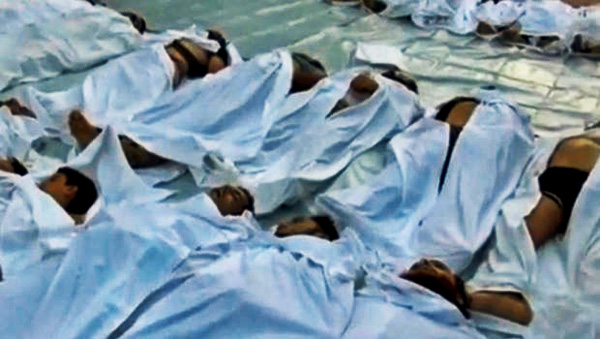
Injustice in Syria and the Impotence of the World

syria-unleashes-massive-gas-chemical-attack-on-damascus

“There may be times when we are powerless to prevent injustice, but there must never be a time when we fail to protest.”  Ellie Wiesel 

I do not think that any surgical strike against Syrian military forces and chemical weapons facilities by a handful of US Navy ships and submarines will stop the unrelenting bloodbath that is the Syrian Civil War. It would be nice if it would but realistically it will not.

What is going on in that country fits every definition of war crimes and crimes against humanity as defined by Nuremberg, the Hague and Geneva Conventions, the Geneva protocols of 1925 which Syria is a signatory to specifically state that “the use in war of asphyxiating, poisonous or other gases, and of all analogous liquids, materials or devices, has been justly condemned by the general opinion of the civilized world.” This message was strengthened in the Chemical Weapons Convention of 1992, a document that 98% of the nations of the world are signatories to, although Syria  is not one of them.

There are strong moral and legal arguments to be made for intervention in Syria. Unfortunately morality and legal arguments against crimes against humanity seem to have very little weight in the world. But then they never have. It is only when nations decide that the threat extends beyond the deaths of unfortunate people that they really could not care less who lived or died, but directly threaten the economic and security interests of the great powers then the vast majority of people and nations would rather not get involved.

This is especially true after the American led coalition invaded Iraq on the basis of the threat of Weapons of Mass Destruction. The intelligence about the threat has been widely discredited, Iraq remains devastated, Iran empowered and the United States military hamstrung by 12 years of war. The Iraq War and its aftermath, the casualties, the costs and the loss of credibility of the United States as a result of it haunt the actions of the Obama Administration and will haunt future presidencies. As Harry Callahan noted “there are always results.” 

As Barbara Tuchman so well put it: “An event of great agony is bearable only in the belief that it will bring about a better world. When it does not, as in the aftermath of another vast calamity in 1914-18, disillusion is deep and moves on to self-doubt and self-disgust.” 

That was the result of the Iraq war. Though the vast majority of Americans had no direct link to the war that was fought by a small minority of military personnel the effects linger. Our politicians, pundits and preachers talk about us being “war weary” but that really can only be applied to the tiny number of men and women who have served in Iraq or Afghanistan and in numerous other places that no one knows or cares about. I think that people are less war weary than they are apathetic to anything that they do not believe directly effects them.

Bertold Brecht wrote:

“The first time it was reported that our friends were being butchered there was a cry of horror. Then a hundred were butchered. But when a thousand were butchered and there was no end to the butchery, a blanket of silence spread. 

When evil-doing comes like falling rain, nobody calls out “stop!”

When crimes begin to pile up they become invisible. When sufferings become unendurable the cries are no longer heard. The cries, too, fall like rain in summer.”

That being said the consequences of a military action that not only does not destroy the Assad regime’s military capacity to kill innocents could make matters even worse than they are now, a thought that is hard to imagine. Likewise the possibilities of the action going awry  and the situation escalating and even expanding outside the borders of Syria bringing are quite high.

The arguments against intervention as far as military consequences and the low probabilities of success of surgical strikes is a strong argument for non-intervention. Realistically unless there is the participation of major military forces from many nations back by the UN, the Arab League and NATO with boots on the ground to find, secure and destroy the chemical weapons a military strike may achieve a modicum of success but most likely fail in its ultimate goal. The result would be that the situation would continue to escalate and a broader intervention ensue.

I am not happy with the way this has played out. The moral thing would have been for the UN Security Council take strong action against the Syrian regime and the world join in. However that will not happen, too many nations see this as an opportunity to advance their own agendas in the region using both the Syrian government and the rebel forces, some of which are allied with the Al Qaida organization. Some of the Syrian Rebels are as bad as Assad when it comes to indiscriminate killing of innocents and the commission of war crimes.

This week there will be votes in the Senate and House of Representatives regarding a Senate resolution for limited military action against the Assad regime requested by the Obama White House. The political posturing of many opponents as well as supporters of intervention has been nothing but shameful. In many cases it is not about actual foreign policy but on politics dictated by gerrymandered districts and the politics of mutual assured destruction. There is a good chance that the resolutions will not pass and one or both houses of Congress. However there is a strong chance that even without Congressional approval that the Obama administration will most likely attempt to do the morally right thing with inadequate means.

I am torn on this. I do think that as Secretary of State John Kerry said this week that we are at a “Munich moment.” The consequences of inaction and limited action alike are potentially disastrous. The hope of many for the Arab Spring has turned into a nightmare. The question is how bad the nightmare will get.

Honestly I cannot say what is I think should be done. I can make the case for intervention based on moral, legal and ethical grounds and I can make the case against based on realpolitik.

All that being said, for the sake of humanity echo the words of Ellie Wiesel“For the dead and the living, we must bear witness.”

Peace

Padre Steve+

2 Comments

Filed under ethics, Foreign Policy, History, national security

Reflections on the Invasion of Iraq: 10 Years Later in Light of Nuremberg

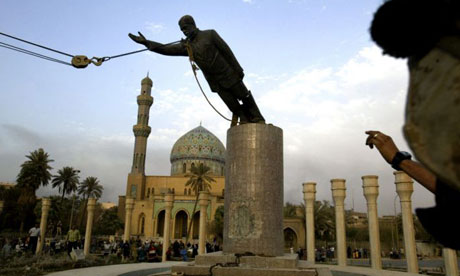
saddam0978

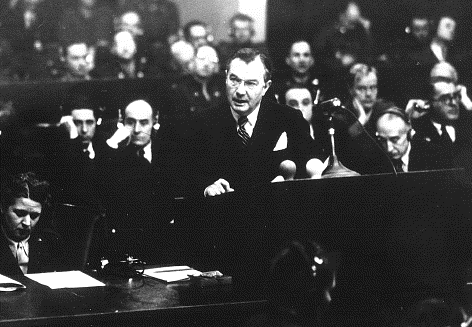
“If certain acts of violation of treaties are crimes, they are crimes whether the United States does them or whether Germany does them, and we are not prepared to lay down a rule of criminal conduct against others which we would not be willing to have invoked against us.” Justice Robert Jackson International Conference on Military Trials, London, 1945, Dept. of State Pub.No. 3080 (1949), p.330.

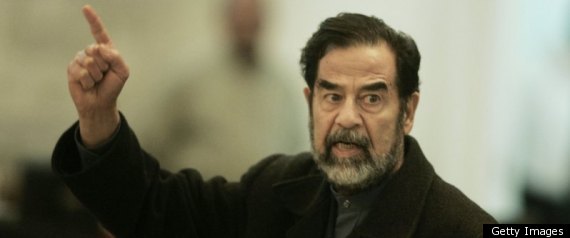
In March 2003 I like many of us on active duty at the time saw the nation embark on a crusade to overthrow an admittedly thuggish criminal head of state, Saddam Hussein. The images of the hijacked airliners crashing into the Twin Towers of the World Trade Center and the Pentagon were still relatively fresh in our minds. The “evidence” that most of us had “seen,” the same that most Americans and people around the world were shown led many of us to believe that Saddam was involved in those attacks in some manner and that he posed a threat to us.

Now it wasn’t that we didn’t have doubts about it or even the wisdom of invading Iraq. It didn’t matter that there was also credible evidence that maybe what we were being told was not correct, and it didn’t matter that some of our closest allies voted against a mandate to invade Iraq in the United Nations Security Council. We were emotionally charged by the events of 9-11 and “we knew” that Saddam was a “bad guy.” We also believed that we could not be defeated. We had defeated the Iraqis in 1991 and we were stronger and they weaker than that time.

We really didn’t know much about Iraq, its history, people, culture and certainly we paid little attention to the history of countries that had invaded and occupied Iraq in the past. T.E. Lawrence, the legendary Lawrence of Arabia wrote in August of 1920 about his own country’s misbegotten invasion and occupation of Iraq, or as it was known then Mesopotamia.

“The people of England have been led in Mesopotamia into a trap from which it will be hard to escape with dignity and honour. They have been tricked into it by a steady withholding of information. The Bagdad communiqués are belated, insincere, incomplete. Things have been far worse than we have been told, our administration more bloody and inefficient than the public knows. It is a disgrace to our imperial record, and may soon be too inflamed for any ordinary cure. We are to-day not far from a disaster.”

The sad thing is that the same could have been written of the United States occupation by 2004.

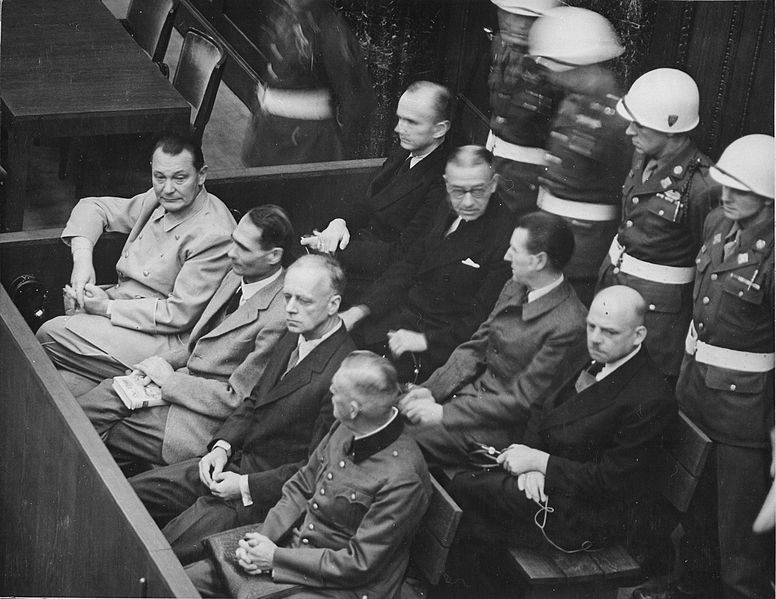
But even more troubling than the words of Lawrence are the Nuremberg War Crimes Trials. Somehow as a historian who has spent a great deal of time studying the Nazi period and its aftermath I cannot help but look back in retrospect and wonder what Supreme Court Justice Robert Jackson and the other Nuremberg prosecutors would have done had they had some of our leaders in the dock instead of the Nazis.

776px-Nuremberg-1-

The indictments against the Nazis at Nuremberg are chilling if we were to be held to the same standard that we held the Nazis leaders at Nuremberg. True, we did not have massive death camps or exterminate millions of defenseless people, nor did we run slave labor factories, but we did like they launched a war of aggression under false pretense against a country that had not attacked us.

At Nuremberg we charged twenty top Nazi political officials, as well as police and high ranking military officers with war crimes. The indictments included:

Count One: Conspiracy to Wage Aggressive War: This count addressed crimes committed before the war began, showing a plan by leaders to commit crimes during the war.

Count Two: Waging Aggressive War, or “Crimes Against Peace” which included “the planning, preparation, initiation, and waging of wars of aggression, which were also wars in violation of international treaties, agreements, and assurances.”

Count Three: War Crimes. This count encompassed the more traditional violations of the law of war already codified in the Geneva and Hague Conventions including treatment of prisoners of war, slave labor, and use of outlawed weapons.

Count Four: Crimes Against Humanity, which covered the actions in concentration camps and other death rampages.

While count four, Crimes Against Humanity would be difficult if not impossible to bring to trial because there was nothing in the US and Coalition war in Iraq that remotely compares to that of what the Nazis were tried, some US and British leaders could probably have been successful prosecuted by Jackson and the other prosecutors under counts one through three.

The fact is that none of the reasons given for the war by the Bush Administration were demonstrated to be true. Senior US and British officials knowing this could be tried and very probably convicted on counts one and two. We also know that some military and intelligence personnel have been convicted of crimes that would fall under count three.

r-SADDAM-HUSSEIN-large570

Saddam Hussein was a war criminal. He was also a brutal dictator who terrorized and murdered hundreds of thousands of his own people. But we went to war over his alleged ties to Al Qaeda and WMDs and he had not attacked us. Looking back at history and using the criteria that we established at Nuremberg I have no doubt that had Dick Cheney or Donald Rumsfeld been in the dock that Justice Jackson would have destroyed them and the court would have convicted them.

So 10 years, nearly 5000 US military personnel dead, 32,000 wounded, over 100,000 afflicted with PTSD, and other spiritual and psychological injuries, with an estimated 22 veterans committing suicide every day; somewhere between 1 and 2 trillion dollars spent, hundreds of thousands of Iraqis dead, wounded and displaced from their homes and a country destroyed and still in turmoil. And somehow those that decided to take us to war roam free. They write books defending their actions and appear on “news” programs hosted by their media allies who 10 years ago helped manipulate the American public, still traumatized by the events of 9-11-2001 to support the war.

nuremberg-jackson-10400

http://www.youtube.com/watch?v=No06Lwk_TAg

Saddam and many of his henchmen are dead or rotting in Iraqi prisons for their crimes against the Iraqi people. However good this may be one has to ask if how it happened was legal or justified under US or International Law, if it was worth the cost in blood, treasure or international credibility. Likewise why have none of the men and women who plotted, planned and launched the war been held the standard that we as a nation helped establish and have used against Nazi leaders and others?

If we cannot ask that and wrestle with this then we as a nation become no better than the Germans who sought minimize their responsibility for the actions of their leaders, and in doing so enable future leaders to feel that they can do the same with impunity. That is a terrible precedent.

Peace

Padre Steve+

1 Comment

Filed under History, iraq,afghanistan, middle east

Atrocity in War: The Afghanistan Video

“Our men can’t make this change from normal civilians into warriors and remain the same people … the abnormal world they have been plunged into, the new philosophies they have had to assume or perish inwardly, the horrors and delights … they are bound to be different people from those you sent away. They are rougher than when you knew them. Killing is a rough business.”  Ernie Pyle

Ernie Pyle was one of the most prolific wartime journalists that ever lived, in fact he was killed by Japanese machine gun fire on the island of Ie Jima while with the Army during the Okinawa campaign. Ernie Pyle understood war and the men that fight it. If he was alive today I imagine that his comments about what happens to men in combat would be no different now than it was then.

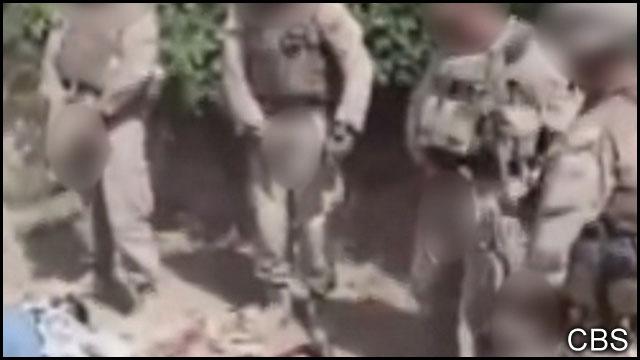
In the past two days we have heard much and seen a distressing video of four U.S. Marines from a Scout-Sniper Team of 3rd Battalion 2nd Marine Regiment urinating on dead Taliban fighters. The images are disturbing and because they are raw and offensive they have created a furor that could define the NATO campaign in Afghanistan as much as the Abu Ghraib torture photos harmed U.S. efforts in Iraq and the broader Middle East.  When I was in Iraq I heard Marine leaders talking about the Abu Ghraib incident with distain and saying that those few soldiers that recorded their torture of prisoners were costing us the war.

3/2 was deployed in the northern area of Helmand Province and lost 6 Marines and a Navy Corpsman during their deployment. According to the Marine Corps Times Battle Rattle Blog author Dan Lamothe, Major General John Toolan said that the Scout Snipers of 3/2 may have killed up to 100 insurgents each during their tour, which would mean that they were engaged in many dangerous combat engagements.  This in no way condones or excuses their actions but it does provide some context to view what happened.

However wrong the actions may be and how stupid it was for the Marines in this unit to record them and allow them onto the internet the truth is that war changes people. Ordinary men do things that they would not have contemplated before it including breaking the codes of honor that they pledge to uphold when volunteering to serve. Ernie Pyle understood this far better than most journalists before or since. In fact he understood it far better than the minuscule percentage of Americans who have ever served in the military much less in combat.  Pyle wrote:

“Their life consisted wholly and solely of war, for they were and always had been front-line infantrymen. They survived because the fates were kind to them, certainly — but also because they had become hard and immensely wise in animal-like ways of self-preservation.”

E.B Sledge who served throughout the Pacific War as a Marine infantryman and whose writings are dramatized in the HBO Series The Pacific wrote about fellow Marines that harvested gold teeth from dead Japanese soldiers, urinated in the mouths of the corpses of the Japanese and shot civilians.  He was patriotic, religious and after the war wrote in his book With the Old Breed: At Peleliu and Okinawa:

“The fierce struggle for survival in the abyss of Peleliu had eroded the veneer of civilization and made savages of us all. We existed in an environment totally incomprehensible to men behind the lines-service troops and civilians.” 

Mind you this is not an excuse for what these Marines did but it does offer an explanation for the act that they committed to video that we view without any context as to what led up to the incident or what they had been through.  It seems that people are rushing to judgement and that this will be compared to Abu Ghraib as a defining image of the Afghanistan as much as Abu Ghraib became symbolic of Iraq.  This is despite the fact that apart from being committed to video they are different. The Marines were infantrymen in one of the most desolate and dangerous combat zones of Afghanistan and the Abu Ghraib soldiers were jailers that had complete control of the prisoners.  There is a major difference between the actions as deplorable as both are.

I see the American wounded every day, Marines and Sailors whose lives have been radically changed by service in Iraq and Afghanistan.  They have seen horrors committed by Taliban, Al Qaida and other insurgents against their comrades as well as against Iraqi and Afghan civilians.  The war is every bit as brutal as was waged in the Pacific and they fight a brutal and unforgiving enemy that is intent on driving the infidels out of Afghanistan.

The uncomfortable fact is that an incredibly small number of Americans are fighting a war that at best will be a draw and quite probably a strategic and political defeat despite our troops not losing any battles.  The fact is that the action of these Marines will be used to not only prosecute them but to demonize them just as the actions of Lieutenant William Calley and his platoon at My Lai were used to demonize the Americans that fought in Vietnam.  The sad truth is that most of those that will engage in such demonization have never served in harm’s way or even known military service. Sledge wrote of critics of the Marines following the Second World War:

“In the post-war years, the U.S. Marine Corps came in for a great deal of undeserved criticism in my opinion, from well-meaning persons who did not comprehend the magnitude of stress and horror that combat can be. The technology that developed the rifle barrel, the machine gun and high explosive shells has turned war into prolonged, subhuman slaughter.”

I know that a thorough investigation will be conducted and that we will find out what happened in this unit that caused this obvious breakdown in discipline. Right now we don’t know who even posted the video on the internet and why they did so. Hopefully this is an isolated incident otherwise the incident will only grow in significance. During the investigation as well as news reports and interviews we will learn about the individual Marines involved in this action as well as their leaders. It will likely be uncomfortable and sad to watch.  It could well damage the reputation of the Marine Corps in the eyes of many even if it is an isolated incident.  What happened has already and will continue to reverberate here and in Afghanistan for a long time to come.  I just wish that we our media and politicians were as wise as Ernie Pyle and Eugene Sledge in judging these men as individuals before we know the whole story.

As someone that has served with Marines in harm’s way and know something of the stress that small teams of Marines can experience I have mixed feelings on this. I cannot approve of desecrating the remains of any human being at the same time I wonder what happened before this that might have contributed to the incident.  Of course we will hear more details than we want.

Peace

Padre Steve+

P.S. I have written a number of articles about the political, ideological strategic and moral aspects of war which I have listed here:

War Without Mercy: Race, Religion, Ideology and Total War

Why History Matters: The Disastrous Effects of Long Insurgency Campaigns on the Nations that Wage them and the Armies that Fight Them 

The Ideological War: How Hitler’s Racial Theories Influenced German Operations in Poland and Russia

1 Comment

Filed under iraq,afghanistan, Military, national security, News and current events

War Without Mercy: Race, Religion, Ideology and Total War

Dower, John W. War without Mercy: Race and Power in the Pacific War.” Pantheon Books, a Division of Random House, New York, NY 1986.

The study of war cannot simply be confined to the study of battles, weapons and leaders. While all of these are important one must as Clausewitz understood examine the human element of policy, ideology and the motivations of nations as they wage war. Clausewitz understood that war could not be reduced to formulas and templates but involved what he called the “remarkable trinity” which he described in on war as (1) primordial violence, hatred, and enmity; (2) the play of chance and probability; and (3) war’s element of subordination to rational policy. Clausewitz connects this with the people being connected to the primordial forces of war, the military with the non-rational elements of friction, chance and probability and the government.

The Clausewitzian understanding of war is rooted in the Enlightenment and classic German Liberalism, born out of his experience in the Napoleonic Wars, which forever changed the face of warfare.  From the defeat of Prussia and its liberation from Napoleonic rule under Scharnhorst and Gneisenau Clausewitz developed the understanding that war was more than simply tactics and weapons.  Thus when we examine war today we deprive ourselves of properly understanding the dynamic of war if we fail to appreciate the human factor which is frequently not rational.  Such is especially the case when one fights an enemy who wages war on religious, racial or ideological grounds as is the case in the current war against Al Qaida and other extremist Moslem groups. Such groups would like to turn this war into such a conflict as do certain figures in the American political milieu who repeatedly label all of Islam as the enemy.  In such a climate it is imperative to look at history to show us the results of such primal passions.

It is in such conflict as we are engaged in today it is good to look at previous wars from the human experiential component and not simply military operations.  If one wants to look at how inflamed passion driven by racial prejudice and hatred took war to a level of barbarity and totality that defy our comprehension we only need to look back to the Pacific war between Japan and the United States.  In another post I dealt with the how racial ideology influenced Nazi Germany’s conduct of the war against Poland and the Soviet Union.  https://padresteve.wordpress.com/2009/09/14/the-ideological-war-how-hitlers-racial-theories-influenced-german-operations-in-poland-and-russia/

To do this I will look at John Dower’s “War Without Mercy.” In this book Dower examines World War Two in the Pacific from the cultural and ideological viewpoints of the opposing sides.  He looks at the war as a race war, which he says “remains one of the great neglected subjects of World War Two.”[i] Dower examines race hated and its influence on both the Japanese and the Allies, particularly in the way that each side viewed one another and conducted the war.  He examines the nature of racial prejudice and hate in each society, including its religious, psychological, ideological, scientific and mythological components.  He also examines the use of media and propaganda, and how racial attitudes not only influenced national and individual attitudes, but also the military and intelligence operations of both sides.  This book is not about military campaigns, thus it is much more like “In the Name of War” by Jill Lepore[ii] than any history of the Pacific war.

Dower uses sources such as songs, movies, cartoons and various writings of the times to demonstrate the totality of the war.  Dower admits many of these are difficult to handle and “not respectable sources in some academic sources.”[iii] Despite this he puts together a work that is sometimes chilling, especially when one looks at the current war that our country is engaged in. He also endeavors to explain how after a war where “extraordinarily fierce and Manichean”[iv] race hate predominated, it could “have dissipated so easily”[v] after the war was over.

Dower divides his work into three major sections.  The first which examines how the aspect of race effected the fighting of the war, the second, the war through Western eyes and the third the war through Japanese eyes.  The first section begins with how racial attitudes in Western and Japanese societies helped fuel the war and compares similar attitudes and concepts in Western and Japanese thought, including how “prejudice and racial stereotypes frequently distorted both Japanese and Allied evaluations of the enemy’s intentions and capabilities.”[vi] He looks at the language of the conflict; at how war words and race words came together “in a manner which did not reflect the savagery of the war, but truly contributed to it….”[vii] the result being “an obsession with extermination on both sides.”[viii] He comes back to this theme throughout the book comparing the two sides and occasionally contrasting these attitudes with corresponding attitudes of the Allies to their German and Italian foes in Europe.[ix]

In the first chapter Dower examines the role played by the propaganda used by both sides.  In particular he expalins how the “Know Your Enemy: Japan” movies commissioned by the War Department and directed by Frank Capra, and the Japanese works “Read this and the War is Won” and “The Way of the Subject” helped shape the view of each side. Propaganda developed the idea of the war in terms of good versus evil and the mortal threat posed to their respective cultures by the enemy.

From this he looks at the visceral emotions that the war engendered and how those emotions spilled over into the conduct of the war especially in regard to its ferocity and the war crimes that were spawned by the unbridled hatred of both sides.  He notes the targeted terror bombings of civilians by both sides and how those actions were portrayed as “barbaric” by the other side when they were the victim.[x] He notes the viciousness of the war and how for the Americans the war brought forth “emotions forgotten since our most savage Indian wars.”[xi] He contrasts this with European war in particular how the Japanese and their actions were portrayed in Western media, and how similar actions by the Germans, such as the Holocaust, were ignored by Western media until the war was over.[xii] He traces some of this to the understanding of the psychological effects of the defeats and humiliations of the Allies at the hands of the Japanese, and the corresponding brutality toward Allied prisoners by the Japanese as compared to that of the Germans.[xiii] He uses this section to also examine the prevailing attitudes of the Japanese toward the Allies as being weak and “psychologically incapable of recovery” from blows such as the Pearl Harbor attack, and the Allied view of the Japanese as “treacherous.”[xiv]

Dower’s second major section describes the attitudes and actions of the Americans and British toward their Japanese enemy.  He looks at the view that the Japanese were less than human and often portrayed as apes or other primates such as monkeys.  To do this he examines cartoons and illustrations in popular magazines and military publications, and includes those cartoons in the book.   The sheer vulgarity of these cartoons is easily contrasted with those promoted and published by Nazis such as Julius Streicher in Der Stürmer, something often overlooked or ignored in other histories.[xv] The early Western views of Japan as sub-human continued throughout the war, while at the same time, especially after the rapid series of Allied defeats and Japanese victories they were viewed as almost “super-human.”  Paradoxically some allied leaders turned the Japanese from “the one time “little man” into a Goliath.”[xvi] They were now “tough, disciplined and well equipped.”[xvii] Ambassador Joseph Grew, reported on his return from Japan, that the Japanese were; “”sturdy,” “Spartan,” “clever and dangerous,” and that “his will to conquer was “utterly ruthless, utterly cruel and utterly blind to the values that make up our civilization….””[xviii] The juxtaposition of such conflicting attitudes is curious, although understandable, especially in light of other Western wars against Asians or Arabs.[xix]

Dower then examines how some Americans and British explained the Japanese “National Character,” their approach to war, and actions during the war from Freudian psychiatry as well as Anthropology and other social and behavioral sciences.   Beginning with the widespread Allied understanding that the Japanese were “dressed-up primitives-or “savages” in modern garb…”[xx] he notes that these interpretations of the Japanese national character stemmed from “child-rearing practices and early childhood experiences,”[xxi] including toilet training and Freudian interpretations that saw an arrested psychic development at the “infantile (anal or genital) stage of development.”[xxii] Dower deduces that it was not hard to see how “Japanese overseas aggression became explicable in terms of penis envy or a castration complex….”[xxiii] The views were widespread and emphasized  that the “Japanese were collectively unstable.”[xxiv] Dower notes that the “very notion of “national character”-was the application to whole nations and cultures of an analytical language that had been developed through personal case studies…”[xxv] which he is rightly critical in suggesting that this premise “was itself questionable.”[xxvi] In addition to this was the understanding of Margaret Mead and others of the Japanese as “adolescents” and “bullies,”[xxvii] and notes that from “the diagnosis of the Japanese as problem children and juvenile delinquents, it was but a small step to see them as emotionally maladjusted adolescents and, finally as a deranged race in general.”[xxviii] Dower cites numerous other “experts” of the time and their interpretations of the Japanese national character, but the overwhelming message is that the application of these theories, regardless of their validity had a major impact on the Allied war against Japan.

He follows this chapter with one with much importance in explaining the similarities in how Americans and Westerners in general viewed the Japanese in relationship to other races that they had dealt with including Blacks, Chinese, Filipinos, and American Indians.  Common themes include the views of each as primitives, children and madmen and the view of the Japanese as part of the “Yellow Peril.”  Of particular note is his analysis of the work of Homer Lea’s 1909 book The Valor of Ignorance and the vision of Japanese supermen which enjoyed a revival after Pearl Harbor.[xxix] Dower examines depictions of Asians in general in the Fu Manchu and Charlie Chan series of films and other racial aspects hearkening back to the “specter of Genghis Khan and the prospect that the white races “may be liquidated.”[xxx] He notes how Japanese propagandists attempted to use Allied prejudice to influence the Chinese and other Asians against the Allies[xxxi] and American blacks against whites,[xxxii] while attempting to maintain their own racial superiority which is the subject of the next section.

The chapters dealing with the Japanese view of themselves and their opponents tie together neatly.  These deal with the Japanese view of themselves as the leading race in Asia and the world.  Dower talks about symbols and the understanding of racial purity that motivated the Japanese from the 1800s to the rejection of Japan’s request for a declaration of “racial equity” at the League of Nations.[xxxiii] He notes the “propagation of an elaborate mythohistory in Japan and the time spent “wrestling with the question of what it really meant to be “Japanese” and how the “Yamato race” was unique among races….”[xxxiv] He notes the relationship of Shinto with whiteness and purity and connotations of how the Japanese indulged in “Caucasianization” of themselves vis-à-vis other Asians during World War Two,”[xxxv] and their emphasis on a Japanese racial worldview.[xxxvi] He also tackles the way in which the Japanese wrestled with evolution and its relationship to other racial theories contrasting books such as A History of Changing Theories about the Japanese Race and Evolution of Life with Cardinal Principles of the National Polity published by the Thought Bureau of the Ministry of Education in1937.  These declared that the Japanese were “intrinsically different from the so-called citizens of Occidental countries.”[xxxvii] He also deals with the Kyoto school and the Taiwa concept.[xxxviii] In Chapter Nine Dower looks at how the Japanese viewed themselves and outsiders, in particular the characterization of Westerners as nanbanjin or  barbarians and how this eventually train of thought carried through the war led to the “Anglo-American foe emerged full blown as the demonic other.”[xxxix] Dowers final chapter deals with how quickly the race hatred dissipated and genuine goodwill that developed between the Japanese and Americans after the war.[xl]

This book holds a unique place in the literature of the Pacific war.  It is not a comfortable book, it is challenging. No other deals with these matters in any systemic way.  If there is a weakness in Dower is that he does not, like Lepore in “In the Name of War” deal with the attitudes of soldiers and those who actually fought the war.  His examples are good and go a long way in explaining the savagery with which the war was conducted, but could have been enhanced with reflections and accounts of those who fought the war and survived as well as the writings of those who did not, and the way those attitudes were reflected in different services, times and theaters during the war, including adjustments that commanders made during the war.[xli] His description of how Japanese “reluctance to surrender had meshed horrifically with Allied disinterest …in contemplating anything short of Japan’s “thoroughgoing defeat.”[xlii]

The lessons of the book are also contemporary in light of the cultural and religious differences between the West and its Moslem opponents in the current war. Possibly even more so than the war between the United States and Japan which was fought by nation states that still were signatories to international conventions, not nation states against terrorists unbound by any Western code or law or indigenous forces engaged in revolutionary war against the west such as the Taliban.[xliii] The temptation is for both sides to demonize one’s opponent while exalting one’s own way of life through official propaganda and popular media, with a result of increased viciousness and inhumanity in pursuit of ultimate victory.   In today’s world with the exponential rise in the radicalization of whole people groups and the availability of weapons of mass destruction, it is possibility that the war could develop into one that is a racial as well as religious and ideological war that would make the War in the Pacific look like a schoolyard brawl.

Bibliography

Alexander, Joseph H. Utmost Savagery: The Three Days of Tarawa. Ivy Books, Published by Ballantine Books, New York, NY 1995

Dower, John W. War without Mercy: Race and Power in the Pacific War.” Pantheon Books, A Division  of Random House, New York, NY 1986.

Leckie, Robert. Okinawa. Penguin Books USA, New York NY, 1996

Lepore, Jill  The Name of War Vintage Books a Division of Random House, New York, NY 1998

Tregaskis, Richard Guadalcanal Diary Random House, New York NY 1943, Modern Library Edition, 2000.


[i] Dower, John W. War without Mercy: Race and Power in the Pacific War.” Pantheon Books, A Division  of Random House, New York, NY 1986. p.4

[ii] Lepore, Jill  The Name of War Vintage Books a Division of Random House, New York, NY 1998.  Lepore’s book deals with King Phillip’s War and how that war shaped the future of American war and how it shaped the views of Indians and the English Colonists and their later American descendants both in the language used to describe it, the histories written of it and the viciousness of the war.

[iii] Ibid. p.x

[iv] Ibid. p.ix

[v] Ibid. p.x

[vi] Ibid. p.11

[vii] Ibid.

[viii] Ibid.   Also see Alexander, Joseph H. Utmost Savagery: The Three Days of Tarawa. Ivy Books, Published by Ballantine Books, New York, NY 1995 Alexander notes an incident that shows a practical application of the Japanese views and the ruthlessness inflicted on their enemies, in this case prisoners in response to an American bombing raid. In 1942 the commander of the Japanese Garrison of Makin Island ordered 22 prisoners beheaded after one cheered following a bombing raid. (p.32)

[ix] An interesting point which Dower does not mention but is interesting for this study is how the Germans referred to the British and Americans as “Die gegener” (opponents) and the Soviets as “Die Feinde” (the enemy), the implication being that one die gegener was a common foe, much like an opposing team in a sport, and the other a mortal enemy, the implication of Feinde being evil, or demonic.

[x] In particular he makes note of the Japanese actions during the “Rape of Nanking,” and the 1945 sack of Manila, as well as the fire bombing of Japanese cities by the US Army Air Corps in 1945.

[xi] Ibid. Dower. p.33

[xii] Ibid. p.35

[xiii] Ibid.  This is important in the fact that the Allies tended not to make much of German brutality to the Jews, Russians and other Eastern Europeans.

[xiv] Ibid. p.36.

[xv] Dower does not make this implicit comparison, but having seen both and studied the Nazi propaganda directed toward the Jews, Russians and other Slavic peoples considered to be Untermenschen (sub-humans) by the Nazis the similarities are striking.

[xvi] Ibid. pp.112-113.

[xvii] Ibid. p.113

[xviii] Ibid.

[xix] In the 2006 Israeli invasion of Lebanon, Israeli soldiers who previously showed no respect to any Arab fighter described their Hezbollah opponents as “soldiers and warriors.”  Similar attitudes were voiced by American soldiers in Vietnam when they fought NVA regulars.

[xx] Ibid. p.123

[xxi] Ibid.

[xxii] Ibid.

[xxiii] Ibid.

[xxiv] Ibid. p.124

[xxv] Ibid.

[xxvi] Ibid.

[xxvii] Ibid. p.129

[xxviii] Ibid. p.143

[xxix] Ibid. P.157.  Lea is interesting because he predicts a decline in the stature of the British Empire and softness of both the Americans and British as peoples.  Also see John Costello in The Pacific War 1941-1945 Quill Books, New York, NY 1982 pp.31-32 notes Lea’s concerns and how they drove the American Pacific strategy until the outbreak of World War Two.

[xxx] Ibid. p.161

[xxxi] Ibid. p.169

[xxxii] Ibid. pp.174-180.  This is an interesting section.  One of the most interesting topics being the reaction of the NAACP’s Walter White’s book A Rising Wind published which “suggested a sense of kinship with other colored-and also oppressed-peoples of the world….he senses that the struggle of the Negro in the United States is part and parcel of the struggle against imperialism and exploitation in India, China, Burma….” (p.177-178)

[xxxiii] Ibid. p.204

[xxxiv] Ibid. p.205

[xxxv] Ibid. p.209  This is interesting when one compares the Japanese emphasis on “Pan-Asianism” and the inherent contradiction between the two.

[xxxvi] Ibid. p.211  Dower notes that the article Establishing a Japanese Racial Worldview in the monthly Bungei Shunju “clarified the Japanese character, whose basic traits were brightness, strength and uprightness.  These qualities made the Japanese “the most superior race in the world.”

[xxxvii] Ibid. p.221

[xxxviii] Ibid. p.227 This was the theory of Zen Buddhism’s Suzuki Daisetsu (D.T. Suzuki) in his teaching of the struggle for the Great Harmony “Taiwa” which attempted to identify “an intuitive sense of harmony and oneness that he declared to be characteristic of Oriental thought.”

[xxxix] Ibid. p.247.  Descriptions of the Allies as Barbarians, Gangsters and Demons permeated Japanese propaganda.

[xl] Ibid. Dower makes a number of observations relating to how the Japanese were able to use their own self concept to adapt to their defeat.  He also notes that the Japanese were able to transfer their self concept to a peaceful orientation.

[xli] See Leckie, Robert. Okinawa. Penguin Books USA, New York NY, 1996 p.35.  Leckie quotes General Ushijima “You cannot regard the enemy as on par with you,” he told his men. “You must realize that material power usually overcomes spiritual power in the present war. The enemy is clearly our superior in machines. Do not depend on your spirits overcoming this enemy. Devise combat method [sic] based on mathematical precision-then think about displaying your spiritual power.”  Leckie comments: “Ushijima’s order was perhaps the most honest issued by a Japanese commander during the war. It was Bushido revised, turned upside down and inside out-but the revision had been made too late.”

[xlii] Ibid. Dower. p.37

[xliii] See Tregaskis, Richard Guadalcanal Diary Random House, New York NY 1943, Modern Library Edition, 2000. p.95.  Tregaskis notes when commenting on Japanese POWs on Guadalcanal “We stared at them and they stared back at us. There was no doubt what we or they would have liked to do at that moment-if we had not remembered our code of civilization or if they had not been unarmed.”
2 Comments

Filed under History, iraq,afghanistan, world war two in the pacific

The Uncomfortable Legacy of Colonel General Ludwig Beck

“It is a lack of character and insight, when a soldier in high command sees his duty and mission only in the context of his military orders without realizing that the highest responsibility is to the people of his country.” Ludwig Beck

Bundesarchiv_Bild_183-C13564,_Ludwig_BeckLudwig Beck  Bundesarchiv Foto

This is one of those uncomfortable posts to write partially because I know that some people will take it completely wrong or ascribe meaning to it that I do not intend. I by training am a military historian, probably better at that than I am theology.  One thing that fascinates me in the study of military history is the actions of men in the face of evil and the meetings of such people at the intersections of where military and government policy intersect.  It is a timeless theme. The bulk of my study until the past few years was the German Army, particularly that of the Weimar Republic and the Wehrmacht to include policies, leaders, political attitudes and behavior in war and peace. Thus it makes sense for me to look at Colonel General Ludwig Beck who held the post of Chief of the German General Staff during the early part of the Nazi era.

Ludwig Beck is one of those characters in military history that makes professional military officers uncomfortable.  Beck is not the perfect example of righteousness nor was he always correct in things that he supported.  As an artillery regiment commander he defended the rights of soldiers and officers to be Nazi Party members though he himself was not one.  He, like many military officers was a conservative military officer by nature and became Chief of Staff of the Wehrmacht in 1935 two years after Hitler’s ascension to power.  Taking office Beck was troubled by some Nazi policies but not by the need for Germany to expand to areas that it had once controlled, he opposed the plan to attack Czechoslovakia not because of any love for the Czech state which he desired to be eliminated, but rather it being a war that Germany could not win. He resigned from his position a Chief of Staff in 1938 when he could not persuade the rest of the General Staff to resign in protest over Hitler’s plan which he felt would be disastrous for Germany.  Had the western powers led by Neville Chamberlain not caved at Munich it is likely that the Germans would have suffered badly against the Czech army and fortifications and with the entry of France into the war would have suffered a defeat that would have ended the Hitler regime.  In fact German officers who saw the extent of Czech preparations on the frontier following the Munich deal were greatly relieved that they did not have to fight their way into the Czech state.

After his resignation Beck played a key role in the resistance movement. He was involved in the planning for a number of attempts on Hitler’s life. Yet it was his leadership in the July 20th 1944 attempt on the life of Hitler that ensured his place in history.  With Colonel Klaus Von Stauffenberg and others in the General Staff at the Front and in Germany he acted to avert further destruction in Europe and the certain destruction of Germany.  The plot, Operation Valkyrie was marred by poor execution and failed to kill Hitler of seize power but for a few hours. The planners had left too much to chance and once Hitler had restored communications the coup attempted ended swiftly.  Had the attempt succeeded Beck was in line to become either the leader of Germany or the Head of the Army.  Instead while being interrogated after his capture he took his own life depriving Nazi leaders of the ability to put him up for a public trial at which he would have been humiliated and then executed.  The Kasserne in Sonthofen where the Bundeswehr MP School and Staff School as well as NATO and EU military schools are located is named for him.  It is there, ironically a former Adolf Hitler School that his memory and sacrifice is honored by the nation which emerged from the rubble of World War Two.  He is honored in a small museum and with a plaque recognizing his sacrifice.

492Ludwig Beck Kasserne Sonthofen

The reason that General Beck makes many of us in uniform uncomfortable (and I do include myself) is that he recognized that senior officers, especially those in high command who help set and execute policy cannot isolate themselves in the purely military aspects of the operations.  Instead he believed that officers have a higher duty to the constitution and people and not just the military mission that they have been assigned.  When he realized that he could not stop Hitler’s invasion of Czechoslovakia he resigned and worked in the obscurity of a small and often divided resistance movement against Hitler.  The bulk of the German high command, including many officers idolized in the United States did not recognize the higher duty. Many of these men were consummate professionals who did not support the evil of the Nazi regime and who conducted themselves honorably. Yet they effectively abetted its crimes by not opposing actions of their government that were against international law and morality as well as dangerous from purely a pragmatic military standpoint.

The problem is that military officers in any nation, including ours can face situations such as Beck faced.  A military’s character is demonstrated in how leaders deal with such situations.  Beck recognized the situation early, the bulk of his fellow officers did not recognize a problem until Germany was embroiled in a war that it could no longer win.  Even then most could not mount an opposition to Hitler because they did not want to be considered to be mutineers and violate their oath.  The potential to abet evil when military professionals bury their heads by planning and executing purely military aspects of a campaign is great.  If they ignore questionable policy or even policies that they know that have been judged by the international community to be illegal or immoral, such as torture of prisoners or waging wars of aggression against countries that have not attacked their nation they become complicit in their nations crimes.  This was the case with German Officers who may not have committed any personal crime and even tried to mitigate the evils of the Nazi regime were morally complicit in that evil.

In the United States the military shows its fidelity by remembering our oath to the Constitution and being faithful to it and the people that we serve.  As officers we represent all Americans and not just those of our political party, religious faith or social or economic interests, nor any political leader, faction or interest group within the nation. The Constitution, our military regulations, traditions and the Uniform Code of Military Justice are the standard by which we operate and by which we conduct ourselves and tools that protect us when policies or actions taken by the government or people within it violate those codes or international law.  The UCMJ makes it clear those officers who take part in, plan or a complicit in illegal actions in war are committing crimes.

When a nation become involved in wars which are non-traditional, revolutionary wars or insurgencies that barriers to professional conduct can be broken down. The Mai Lai massacre committed by 2LT William Calley’s platoon with the certain knowledge and maybe even approval of individuals in the chain of command is one example as were the uncontrolled chaos of prisoner abuse and torture at Abu Ghraib.

Times are difficult and we do not know what the future brings.  Stress in societies caused by economic conditions, natural disasters, lawlessness on the streets and divided and ineffective governments sometimes remove the moral restraints of the society and even affect the military.  One sees this in Weimar Germany as well as the 4th Republic in France which had to deal with post World War II economic difficulties, exacerbated by recriminations of political opponents for actions the others did during the war while France was occupied by Germany as well as the wars in Indo-China and Algeria which further divided the nation and the military.

It is in stressful and uncertain times that officers have to be men and women of principle who always uphold the highest traditions of their military as well as be the voice of conscience when governments, political parties, special interests or leaders begin to violate international norms in the conduct of war. Beck was not a perfect officer. He supported some of Hitler’s policies until after his resignation but like much of the resistance believed that the Nazi regime could only end up destroying Germany.  It is important to remember that like Ludwig Beck that officers do not need to sacrifice their honor to be faithful to their oath.

Peace, Steve+

16 Comments

Filed under History, leadership, Military, national security, world war two in europe