Tag Archives: world war ii

Memorial Day Weekend 2010: We Happy Few, We Band of Brothers

On May 27th 2010 the US Military experienced the loss of its 1000th KIA in Afghanistan. The young man killed was Corporal Jacob C Leicht of Kerrville Texas.  Corporal Leicht was assigned to 1st Light Armor Reconnaissance Battalion, 1st Marine Division Camp Pendleton California. Corporal Leicht had previously served in Iraq where he had been badly wounded by an Improvised Explosive Device (IED) that hit the HUMMV that he was traveling in.  Pulled to safety by his Iraqi interpreter Leicht spent the two years recovering from those injuries engaged in a letter and phone call campaign to get back into the fight with his fellow Marines.  He was killed when he stepped on a land mine during that desperately sought after second tour. His younger brother Jesse Leicht who just 10 days ago enlisted in the Marines said “He said he always wanted to die for his country and be remembered, he didn’t want to die having a heart attack or just being an old man. He wanted to die for something.”  Please keep his family and his fellow Marines in your prayers this Memorial Day.

Last year I was very melancholy during Memorial Day and stories of young Marines, Soldiers and Sailors killed in the line of duty usually cause me to reflect on the sacrifice that the young men and women who volunteer to serve our country make on a daily basis while most of the country goes about its business often oblivious to the wars being waged by our sons, daughters, brothers and sisters and mothers and fathers in Afghanistan, Iraq and other lesser known fronts in this war.  Last year I was still very much in the midst of my PTSD crash and struggling with depression and faith.  At the same time I was still remembering all of the veterans who made a difference in my life.  That was covered in the posts Memorial Day 2009- Thoughts and Musings and Remembering the Veterans in My Life…Memorial Day 2009.
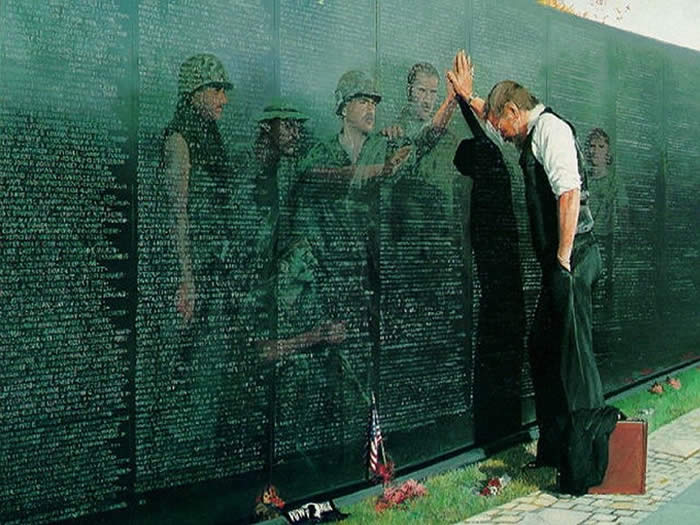
As we approach Memorial Day 2010 we must remember that while the war in Iraq is drawing down that the war in Afghanistan is heating up even as U.S. and NATO forces prepare to engage the Taliban in their spiritual home of Khandehar.  Likewise there is are rising tensions on the Korean peninsula where the Heavy Combat Brigade and Air Combat Brigade of the 2nd Infantry Division are based in support of Republic of Korea and UN forces in Korea backed up by Marines of the 3rd Marine Division and 3rd Marine Expeditionary Force in Okinawa and Hawaii that are not currently in Afghanistan. At sea U.S. Navy forces patrol strategic choke points including the Straits of Hormuz where an ascendant Iran continues to build up for forces that could threaten the Freedom of the seas.

How am I different this year? To answer the question I can only say that I have regained some measure of faith and community that had been absent in my life after I returned from Iraq.  This has made a lot of difference however it in no way takes the place of remembering those men and women that I have served with in harm’s way as well as the veterans who made an impact in my life and still do today.

Memorial Day, initially known as Decoration Day is a somber holiday in its truest sense however it is as Paul Reikoff of the Iraq Afghanistan Veterans Association notes is “One Country, Two Holidays.” http://www.huffingtonpost.com/paul-rieckhoff/memorial-day-one-holiday_b_592398.html For those that have served in war going back to our WWII veterans but also those of the not so popular wars, Korea, Vietnam and the current conflicts in Iraq and Afghanistan who have lost friends and sacrificed spending months and even years in combat zones and the work-ups and exercises that part and parcel to deployment.  There are the wounded in body, mind and spirit and those whose physical injuries who have killed them in previous wars but now live in tortured bodies somewhere in between life and death.  Likewise there are those whose injuries are invisible, the injuries of PTSD, TBI and other psychiatric or psychological disorders related to their time in combat.  I spent almost two years in PTSD hell and though I am making a good recovery now still am reminded of the fear, anxiety, depression, hopelessness, loneliness and an existential crisis of faith that came with my return.  I know too many Marines, Soldiers and Sailors that suffer much more than I have whose struggles pass unnoticed by most of society.  I am now working with our Substance Abuse Rehabilitation Program and it is hard to see the young men and women that are in the program whose problems either came in part from their combat experience or their experience upon returning home.  Likewise we are now receiving more of our combat wounded at the medical center and thus I am reminded of the sacrifices made by veterans every day.  For those who work to help these young men and women and in many cases have served alongside them in the combat zones it is a continual reminder of the cost of war.

For those of us that have served, not just in the current conflict but our brothers and sisters that served in previous wars, especially Vietnam and Korea there is one Memorial Day.  While we do attempt to do some things with families and friends the holiday is one of sober reflection as we count the cost of war in human terms, both in our lives as well as our families, the soldiers of our Allies that serve alongside of us and the populations of lands devastated by war.

But then there is another country.  A country consumed with materialism and for whom “heroes” are reality television “stars,” actors and actresses and sports figures.  There are those who while they profess to “support the troops” are the first to want to replace military personnel with contractors such as Halliburton and the company formerly known as “Blackwater” with often disastrous results. Political operatives and lobbyists support paying astronomical sums to corporations that often embarrass the country and make the  job in the military harder in Iraq and Afghanistan having done things that alienate those populations.  Then there is the cost for services delivered and the often terrible way that these corporations treat their employees, especially the third country nationals with working hours and living conditions that would be punishable he in the United States, but also Americans who gain employment but serve driving trucks or other hazardous duties that they have little combat training to do and receive little if the are wounded in action nor for their families if they are killed or disabled. That is part of the “other country.” About 1.8 million Americans have served in Iraq or Afghanistan less than 6/10ths of 1 percent. Unlike World War II where the war was truly a national effort this war is waged by a small minority of the population.

I do not have any problems with people enjoying a holiday but hope and pray that Americans will take at least a few minutes to pay their respects to the Veterans of wars past and present the honored dead as well as the living.  Say a prayer, visit a military or veteran cemetery, and pay a visit on a living vet or the family of one of those killed. Donate to reputable veteran organizations or charities and maybe take a vet out for a bite to eat or buy them a cup of coffee, Coke or a beer.  Don’t let the day pass by simply looking at the faded yellow ribbon “I support the troops” on your car but take a few minutes to thank and remember those that have served our country regardless of race, creed or color and pray that the fallen will rest in peace and the living will recover from all wounds.

Unfortunately for the country the President will not be at the wreath laying ceremony at Arlington Cemetery this year. Unlike some who are vehemently criticizing him I can only say that I am disappointed that the Commander-in-Chief will not be present because of what I feel is the tremendous symbolic importance of his presence at the event when we are at war. At the same time the President’s absence in emblematic of how much of the country “celebrates” Memorial Day.  Unfortunately as the number of men and women who have served our nation in time of war goes down in proportion to the population at large the day will become less significant to many, a curiosity that is quaint and nice but does not impact their lives.  I do not mean this in a bad way or with any malice; it is simply a statement of fact as for most the military and the war is not an everyday part of their lives. I think that the Previous President while understanding the significance of this day did not help the nation when after the September 11th attacks did not marshal the energy of the nation for a war which his administration readily acknowledged would be a “long war” but instead told people to “go shopping” to pump up the economy.  I think that was an act that has limited the personal effect of the human cost of these wars to a very limited segment of the population.

At the same time I as well as most veterans do appreciate the fact that we in the military are treated well by our countrymen even if they do not truly understand what we go through.  I for one am thankful to people who go out of their way to thank us in public places, those that take on hateful groups like the crowd at West Baptist Church that protests outside of military funerals and bases invoking God’s wrath on us.  Likewise there are the volunteers who meet returning servicemen and women at airports as the come home from war, the sports that honor the military before games or as in the case of most of Major and Minor League Baseball in the 7th inning stretch.  At the Church of Baseball, Harbor Park Parish in Norfolk they display the photos of servicemen and women currently serving overseas.  The Raley’s grocery store near my parents’ home in Stockton California has a display of hundreds of 8 x 10 photos of military personnel in the front of their store and a wide range of people and groups try to find ways to help.  This in is stark contrast to the treatment of our brothers and sisters who served in Vietnam and the attitudes and treatment of military personnel on college campuses that lingered far into the 1980s.  Thankfully the vast majority of Americans are appreciative of what we do.  At the same time most are not personally effected and as such will simply see Memorial Day as a three day weekend that kicks off the summer vacation season hardly pausing to think of the cost that has been born to ensure that Americans and people around the world have the opportunity to live in freedom.

Band of Brothers, Above Me and RP2 Nelson Lebron, below Foot Patrol Al Waleed Iraq
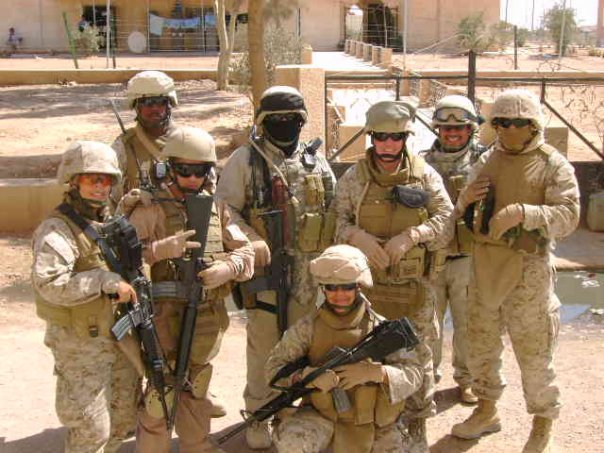
This weekend I pause to remember the veterans in my life, my father who remains in a nursing facility with dementia brought about by Alzheimer’s disease, men like my NJROTC instructors Senior Chief John Yarro and Buff Rambo who taught me in our FIST or Fire Support Team, SFC Harry Zilkan and CSM John Butler from my UCLA Army ROTC program and SFC Harry Ball my Drill Instructor in ROTC Advanced Camp. All were Vietnam Vets.  Then there were 1SG Jim Koenig of 557th Medical Company who was my 1st Sergeant when I was a new Lieutenant in Germany and Colonel Donald A Johnson the Commander of the 68th Medical Group and his successor Colonel Jim Truscott a high decorated Medevac or “Dustoff” helicopter pilot.  I cannot forget Chaplain (LTC) Rich Whaley a company commander in Vietnam who saved my ass as an aspiring Chaplain at the Chaplain School in 1990 and 1992.

Then there were the WWII and Vietnam Vets in my Chapel at Fort Indiantown Gap PA. USAF Major General Frank Smoker a B-17 pilot, Colonel Walt Swank who served at Normandy and SSG Henry Boyd one of the 101st Airborne Troopers epitomized by “Band of Brothers.” There were the Vietnam Vets in the congregation, Colonel Ray Hawthorne an artillery officer who served several tours in country including an advisor tour.  Charlie Kosko a helicopter pilot and Major Scotty Jenkes who served as a USAF pilot flying close air support in Vietnam.  Then there was Colonel Tom Allmon the Garrison Commander who served in the Gulf War as well as Iraq.

My life more recently has been impacted by others.  My friends of the veterans of the Battle of Hue City including General Peter Pace, Barney Barnes, Tony “Limey Cartilage” Sergeant Major Thomas and so many others have become close over the years, especially after I did my time in Iraq. They and all the Vietnam vets, including the guys from the Vietnam Veterans of America like Ray and Charlie who used man the beer stand behind the plate at Harbor Park until health issues kept them from continuing all mean a lot to me.  Likewise my friends at Marine Security Forces Colonel Mike Paulovich and Sergeant Major Kim Davis both Iraq Vets mean more than almost any people in the world.  We traveled the globe together visiting our Marines.  Both of these men are heroes to me as well as friends.

There are those that I served with at Navy EOD Group II that performed amazing feats in Iraq and Afghanistan and retired Command Master Chief Bill “Two Feathers” Tyrell an EOD tech that I came to know well working family issues and PTSD issues for our EOD sailors.  Bill was a tremendous help as I struggled with PTSD.  Likewise there are my shipmates and friends from the USS HUE CITY that I served with deployed to the Northern Arabian Gulf and Horn of Africa in 2002 including the men of the boarding team that I served as an advisor to on 75 boarding missions aboard impounded Iraqi Oil Smugglers.  Then there are the men that I served with in Iraq especially my assistant and body guard RP2 Nelson Lebron who is getting ready for his 10th deployment this time another trip to Afghanistan.  There are my friends that served in various locations with the Iraqi security forces that I was able to travel to, serve alongside and serve as a chaplain in remote areas of Iraq with the Iraqis. In my current assignment I have had many friends and colleagues deploy to Iraq and Afghanistan in some very “hot” zones caring for our wounded as well as local nationals and allied soldiers.  This is not stopping anytime soon.

These are my brothers and sisters and I remember all of them with fondness.  My thoughts are much the same as Henry V at Agincourt as depicted in Shakespeare’s Henry V:

What’s he that wishes so?
My cousin Westmoreland? No, my fair cousin;
If we are mark’d to die, we are enow
To do our country loss; and if to live,
The fewer men, the greater share of honour.
God’s will! I pray thee, wish not one man more.
By Jove, I am not covetous for gold,
Nor care I who doth feed upon my cost;
It yearns me not if men my garments wear;
Such outward things dwell not in my desires.
But if it be a sin to covet honour,
I am the most offending soul alive.
No, faith, my coz, wish not a man from England.
God’s peace! I would not lose so great an honour
As one man more methinks would share from me
For the best hope I have. O, do not wish one more!
Rather proclaim it, Westmoreland, through my host,
That he which hath no stomach to this fight,
Let him depart; his passport shall be made,
And crowns for convoy put into his purse;
We would not die in that man’s company
That fears his fellowship to die with us.
This day is call’d the feast of Crispian.
He that outlives this day, and comes safe home,
Will stand a tip-toe when this day is nam’d,
And rouse him at the name of Crispian.
He that shall live this day, and see old age,
Will yearly on the vigil feast his neighbours,
And say ‘To-morrow is Saint Crispian.’
Then will he strip his sleeve and show his scars,
And say ‘These wounds I had on Crispian’s day.’
Old men forget; yet all shall be forgot,
But he’ll remember, with advantages,
What feats he did that day. Then shall our names,
Familiar in his mouth as household words-
Harry the King, Bedford and Exeter,
Warwick and Talbot, Salisbury and Gloucester-
Be in their flowing cups freshly rememb’red.
This story shall the good man teach his son;
And Crispin Crispian shall ne’er go by,
From this day to the ending of the world,
But we in it shall be remembered-
We few, we happy few, we band of brothers;
For he to-day that sheds his blood with me
Shall be my brother; be he ne’er so vile,
This day shall gentle his condition;
And gentlemen in England now-a-bed
Shall think themselves accurs’d they were not here,
And hold their manhoods cheap whiles any speaks
That fought with us upon Saint Crispin’s day.

See the Kenneth Branagh’s rendition here: http://www.youtube.com/watch?v=NA3gOST4Pc8&feature=player_embedded

With crucial battles ahead in Afghanistan against the Taliban, the storm clouds of war gathering over Korea and the threat of terrorism and attacks around the world and at home it is indeed a dangerous world that our Soldiers, Sailors, Marines, Airmen and Coastguardsmen serve in.  Never before in our country have so many owed so much to so few.   Unfortunately there are those of us, men and women that have served our country from before Pearl Harbor to the present who who struggle and will spend this day alone and uncared for in isolation, anonymous to nearly everyone. Please, if you see such a man or woman do not let the opportunity pass to thank them and if need be do something to encourage or thank them for their service. Please remember and thank a Veteran this weekend and if somehow the spirit moves you to do more and you are capable of serving and join this new “Band of Brothers” please see a recruiter.  It is a noble profession that we, we happy few are proud to serve despite the cost.

Peace

Padre Steve+
3 Comments

Filed under iraq,afghanistan, Military, PTSD, shipmates and veterans

Adjusting Strategy to Reality: The Pacific War- Why the Japanese Lost

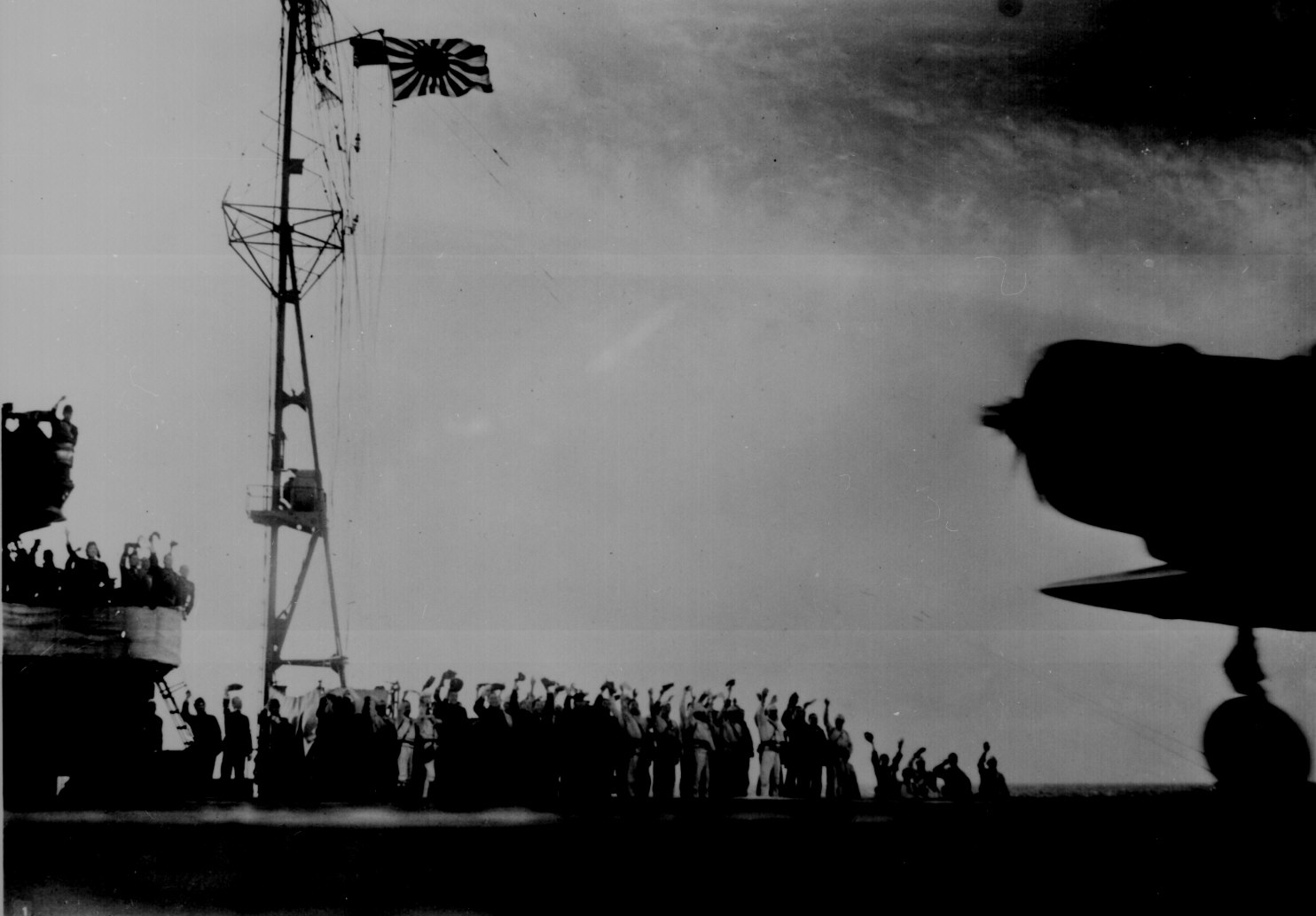
Lead aircraft ready to take off of IJN Carrier Akagi to attack Pearl Harbor beginning a 6 month chain of Japanese victories in the Pacific

The outcome of the Pacific war was directly related to the ability of the Americans to adjust strategy to the realities of the Pacific war, a unity of effort directed by the National Command Authority and superior industrial, technological and logistical capabilities. The Japanese after initial success did little to adapt and were hamstrung by inter-service rivalries and inadequate industrial capacity and limited natural resources.

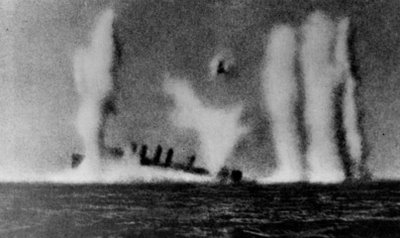
US Destroyer USS Pope being blasted out of the water by Japanese Cruisers at the Battle of Java Sea

The Japanese and the Americans each had war plans in place for the Pacific campaign.  The American plans, Plan Orange had been developed since the early part of the 20th Century after the Spanish-American War and Russo-Japanese War.  Predicated on holding the Philippines until relief could arrive Orange assumed that the US Pacific Fleet would sail across the Pacific and fight the Japanese Navy in a manner written about by Alfred Thayer Mahan; see Weigley in The American Way of War and Ronald Spector in “Eagle Against the Sun: The American War Against Japan.”

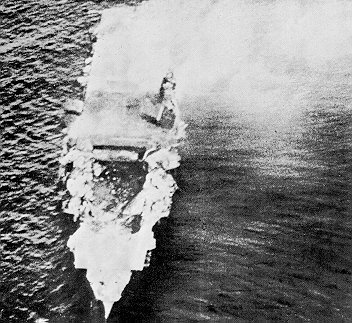
IJN Carrier Hiryu heavily damaged and abandoned at Midway. Hiryu, Akagi, Kaga and Soryu the creme of the Japanese carrier fleet were lost at Midway, the Japanese found it hard to replace them or their decimated air crews

The Japanese were conflicted.  The Navy desired a campaign that would destroy the American Navy and expand the Empire to the East and to Southeast Asia and the Indian Ocean. The Army was fixated on the China strategy having been embroiled on the Asian continent since the early 1930s. John Toland discusses this in good detail in his book “Rising Sun: The Decline and Fall of the Japanese Empire 1936-1945” In addition other Japanese Army leaders had designs on Siberia and fought a brief campaign against the Soviets which ended in a defeat.

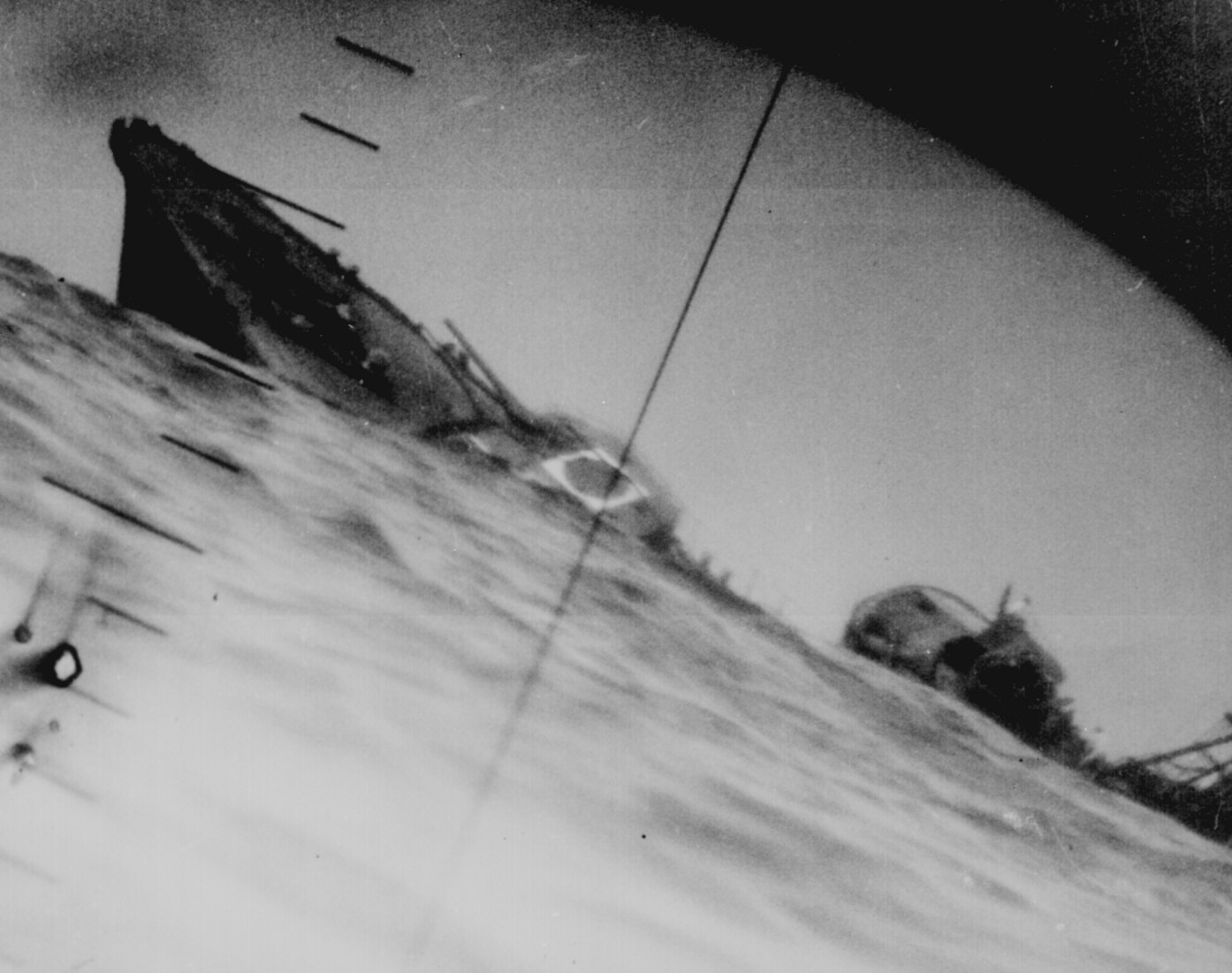
Japanese destroyer shown sinking after being torpedoed by a US submarine

When the Japanese attacked Pearl Harbor as well as the Philippines and Southeast Asia defeating American and Allied forces in detail, crippling the American Navy and dooming the Philippines the Americans were able to adjust strategy to first a defensive one supplemented by raids against the Japanese perimeter by carrier forces and the beginnings of a nascent submarine campaign against Japanese merchant shipping.  The Americans were able to parry the Japanese thrust at the Coral Sea and inflict a major defeat on the Japanese Carrier Forces at Midway prior to launching the first limited offensive by the Navy and the Marines at Guadalcanal.

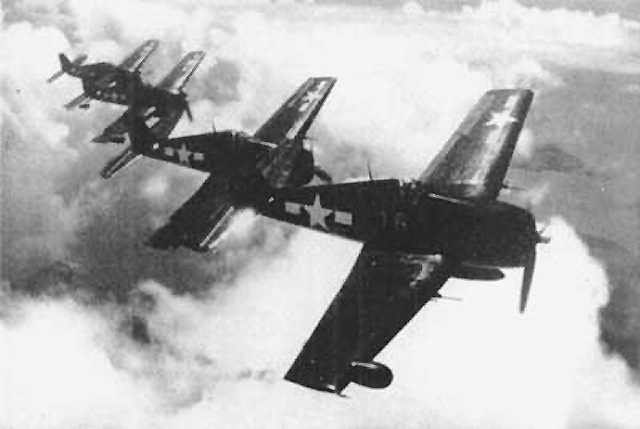
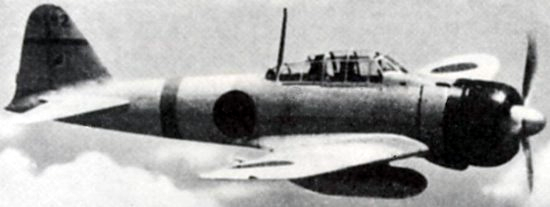
Aircraft like the F6F Hellcat drove Japanese aircraft such as the A6M2 Zero from the skies in the Pacific


The Japanese remained mired in their conflicting strategies with the Navy primarily fighting the Pacific campaign aided by limited Army and Army Air Forces on the islands Japan had occupied or fortified while the bulk of the Army was engaged in China, Southeast Asia or sitting on the Manchurian-Soviet border.

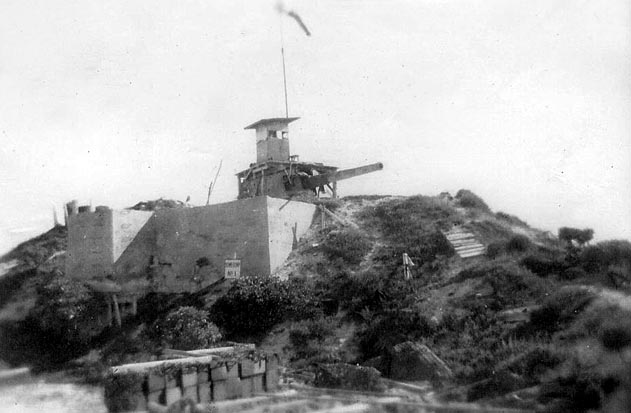
Heavily fortified Japanese islands were either bypassed or taken in bloody assaults, here a 8″ gun on Tarawa

Once the Americans shifted to the offensive a campaign of island hopping coordinated between the Southwest Pacific Area under General MacArthur and the Central Pacific Area under Admiral Nimitz focused on gaining control of islands which contained airbases and anchorages capable of sustaining the American advance while bypassing islands not necessary for this along with their Army garrisons. Both American advances in the South Pacific and Central Pacific focused on retaking the Philippines and cutting the Japanese lines of communication and supply with Southeast Asia. From late 1942 on the Japanese strategy was focused on individual areas of danger versus a overall coordinated defensive effort.

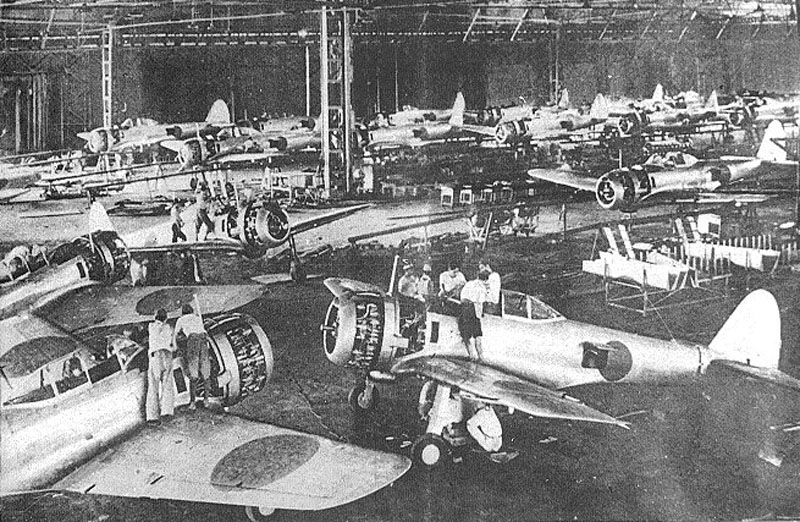
Japanese war industries were woefully ill equipped to match US war production. Here a factory producing Oscar fighter planes

The Japanese were hamstrung from the beginning of the war by limited natural resources, especially oil and oil refining capacities, limited industrial capacity, especially in the realm of the manufacture of steel and machining tools.  All of these were supplied in large part by their opponents and were cut off once the war began.

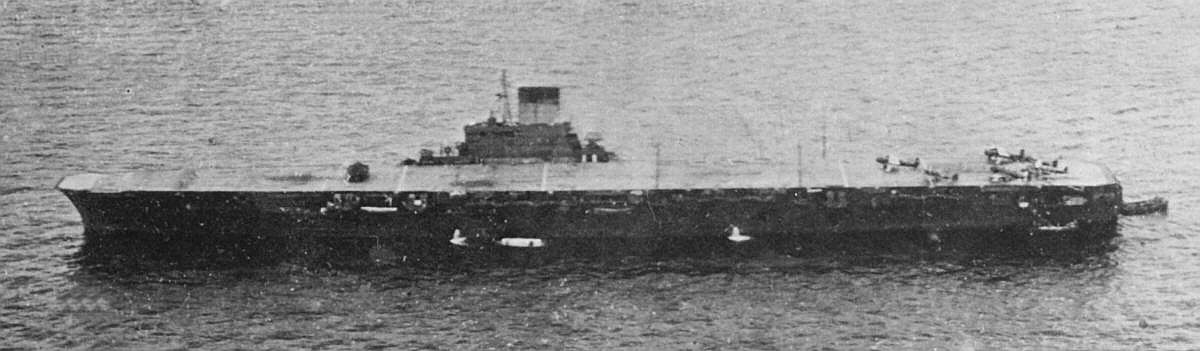
The Carrier Taiho was the equivalent of the Essex Class but the Japanese could only produce one unit

Michael Barnhart in his book Japan Prepares for Total War” has an excellent account of the limitations of Japanese economic, industrial and natural resource capacities, as well as the continual struggle by the Army and the Navy for priority in access to them and the inability of Japanese planners, both civilian and military to resolve this conflict. The Americans had a different situation; although American industrial capacity was enormous it had to be split between to Theaters of Operations and support the needs of American Allies, Britain, the Soviet Union, Canada and China.

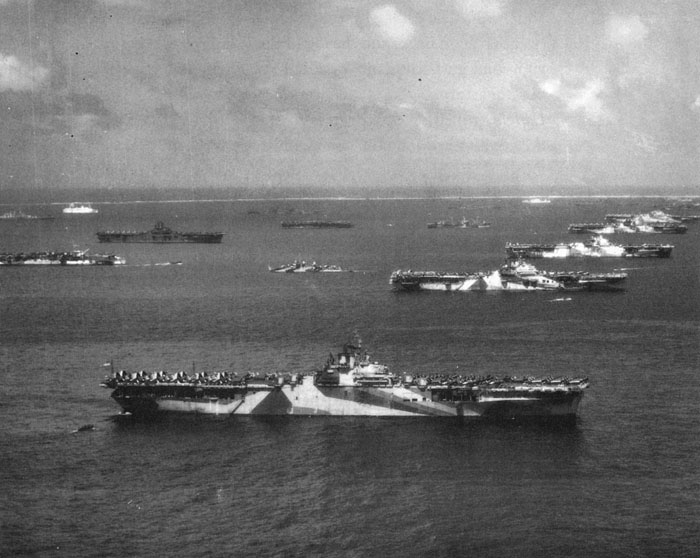
An Armada of US Essex Class Carriers in 1944 the Japanese could not keep pace with US Naval production

Despite this the Americans in a relatively short time were able to amass forces equal to or great than the Japanese who were unable to replace losses in ships, aircraft or the highly trained personnel needed to man them.  At the beginning of the war Japanese Air and Naval forces in the Pacific outmatched everything the Allies could offer, however once they began to experience significant losses at Midway and during the Guadalcanal Campaign their air and naval capabilities diminished to the point that they had to conserve ships and aircraft hoping to be able to gain local advantage in critical defensive areas.

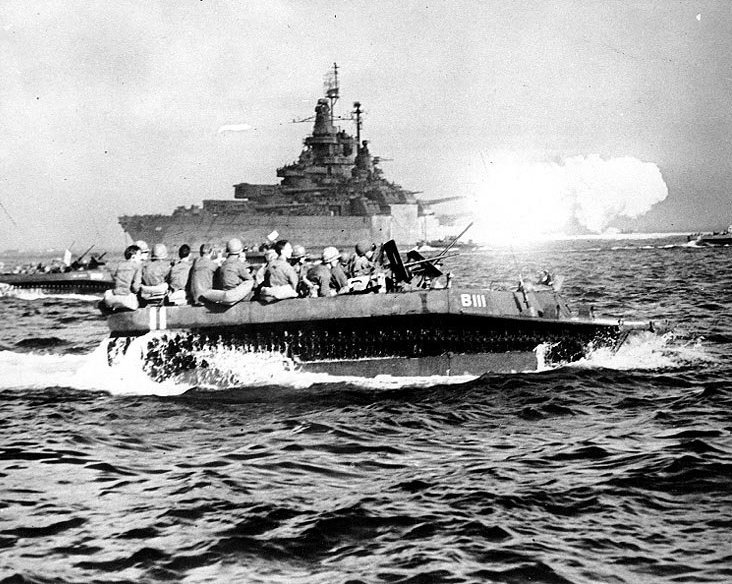
The US Amphibious warfare capacity was a key factor in the ability of the United States to take the war to Japan

New American ships and aircraft introduced during the war were superior to Japanese designs, many of which had reached their apex by 1942.  American advantages in radar, communications equipment added to American advantages throughout the war.  Japanese ground forces in the Pacific were dependant on the Navy and merchant marine for supply and reinforcements. As the American submarine campaign became better organized this became more difficult as the American submarines copying German Wolf pack tactics decimated the Japanese merchant Marine. I particularly like Samuel Elliott Morrison’s account of this in “The Two Ocean War” and “The History of US Navy Operations in World War II” which has a volume devoted to this subject.

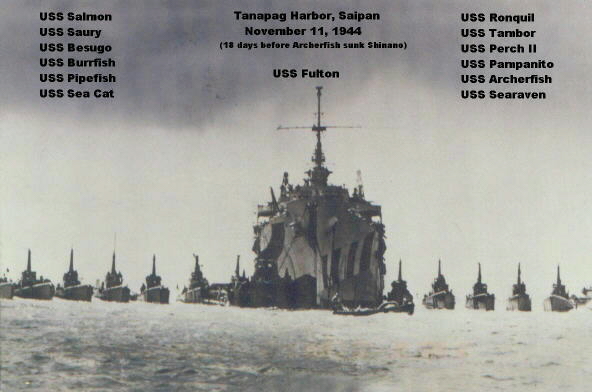
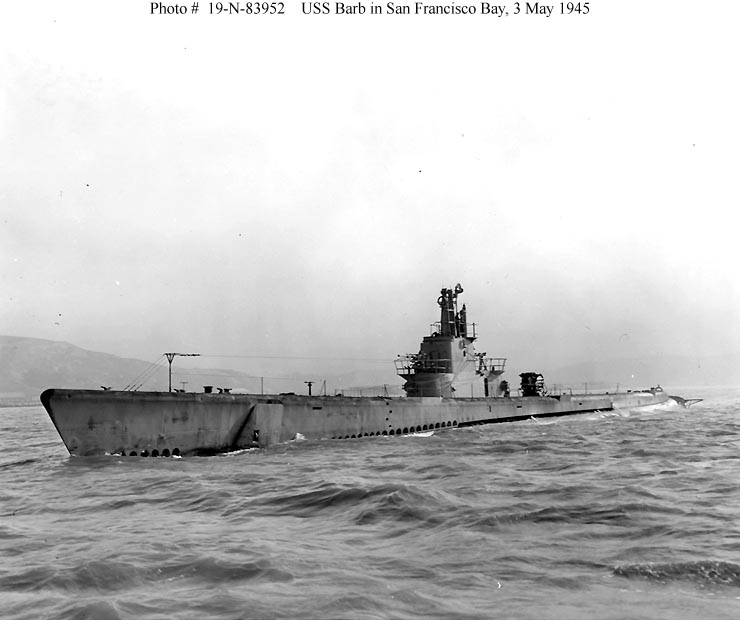
US Navy Submarines cut off Japan from its vital natural resources in Southeast Asia. A Sub Squadron above and USS Barb below

Japanese forces would always fight determined battles but they often expended great amounts of manpower in senseless Banzai charges rather than make the Americans force them out of well prepared positions.  Where the Japanese maintained excellent defense such as at Tarawa and Iwo Jima they made the Americans pay greatly for their gains.  American Marines were apart from the 82nd and 101st Airborne Divisions were the best infantry in the US Military and their skill at amphibious operations and integrated air-ground and naval warfare increased as the war went on.  The Americans were well equipped with modern weapons while the Japanese operated antiquated tanks and often substandard artillery.

Japanese leadership at the strategic and political level was inept throughout the war. They failed to coordinate any strategy with the Germans and failed to enunciate any sort of Grand Strategy.  On the operational and tactical levels the Japanese forces, especially the surface navy performed well, however as the American numeric and technologic advantage increased the Navy became less effective.  After the death of Admiral Yamamoto in 1943 Japanese Naval Leadership became far less effective. The Americans as mentioned before were able to devise a Grand Strategy which not only dealt with Japan but also Germany and coordinated the efforts of forces, war production, planning and logistics to advance their war aims.  At the operational and tactical level American forces, especially the Navy and Marines and later the Army Air Forces and Army became more skilled and than their Japanese counterparts with the possible exception of General Simon Bolívar Buckner at Okinawa. See Spector and Thomas Costello “The Pacific War.” In the air the Americans continued to increase their combat capabilities at the tactical and strategic level and used massed fire bombing raids to devastate the Japanese homeland.  The Japanese in contrast due to inexperienced pilots and fewer competitive aircraft were forced into suicide or Kamikaze missions as the war neared Japan.

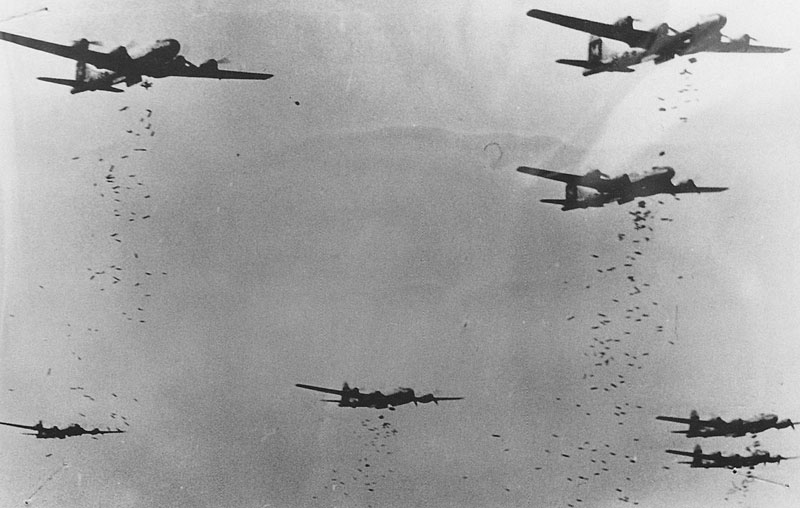
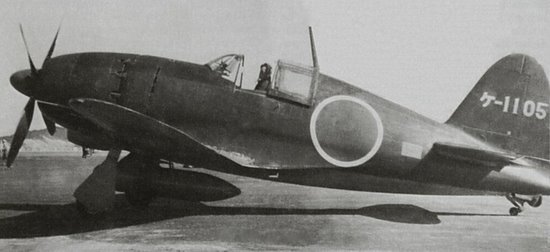
B-29 Super-fortresses leveled Japanese cities and even excellent fighters like the Mitsubishi J2M Raiden could not stop them


The outcome of the Pacific war was directly related to the ability of the Americans to adjust strategy to the realities of the Pacific war as well as the unity of effort which enabled the American superiority in industrial, technological and logistical capabilities to overwhelm the Japanese. The Japanese after initial success did little to adapt and were hamstrung by inter-service rivalries and inadequate industrial capacity and limited natural resources, fell behind in technology and were unable to replace losses among the ships, men and aircraft that they needed to fight an effective war.  Japanese leaders at many levels failed to adapt strategy, tactics or methods to match the reality of the war and the places that they did do so were done by local commanders and never instituted throughout the Japanese military.

2 Comments

Filed under History, Military, world war two in the pacific

Padre Steve’s Military History and Theory Articles

I am not normal, ask anyone who knows me.  I am a Priest who is also a military history and theory “wonk.”  I guess part of the reason for this as that I did not begin life as a clergyman. In fact way back when, when I was a young whippersnapper it was my desire to be in the military.  I was a Navy brat who grew up during the height of the Vietnam War and had friends whose fathers did not return from that war.  Likewise when my dad was serving in Vietnam surrounded by the North Vietnamese and Viet Cong in a town called An Loc I had a blessed Sunday school teacher tell me that my dad was a “baby killer.”  When you are an eleven year or twelve year-old and get told that your dad is a baby killer by some hippie wench you grow somewhat cynical about such people early in life.

Even worse than Limbaugh and Hannity is Michael Savage. Savage who despite having an earned PhD in the field of nutrition is so clueless and rude in discussing military issues that I can’t believe my ears whenever I run into his program. His absolute disdain that he shows for military leadership and actual implications of how we wage war in this era is so off base that it isn’t even funny.  For all of their lack of understanding of military strategy and policy at least Limbaugh and Hannity for the most part treat people in the military respectfully.

We no longer live in the World War Two world, warfare has changed and as the 2010 Quadrennial Defense Review notes that the United States must “prevail in today’s wars” while at the same time “prevent and deter conflict” which involves “preventing the rise of threats to U.S. interests requires the integrated use of diplomacy, development, and defense, along with intelligence, law enforcement, and economic tools of statecraft, to help build the capacity of partners to maintain and promote stability.” If deterrence fails we must Prepare to defeat adversaries and succeed in a wide range of contingencies: If deterrence fails and adversaries challenge our interests with the threat or use of force, the United States must be prepared to respond in support of U.S. national interests. Not all contingencies will require the involvement of U.S. military forces, but the Defense Department must be prepared to provide the President with options across a wide range of contingencies, which include supporting a response to an attack or natural disaster at home, defeating aggression by adversary states, supporting and stabilizing fragile states facing serious internal threats, and preventing human suffering due to mass atrocities or large-scale natural disasters abroad.” (2010 QDR Executive Summary pp. v-vi)

So tonight I am highlighting a series of articles that I have written that deal with the kind of war that we are waging in Afghanistan and have done in Iraq as well as a couple of studies from military history that discuss how the diplomatic, intelligence, economic and military resources of a nation are all important in the continuum of conflict and the importance of alliances when waging global warfare. These are the articles that I have produced so far and will as time goes on continue to add to.  They span the spectrum and hopefully will assist the reader in sorting through a lot of the mindless gibberish that is pumped out from the political right and left on TV, radio and the internet.  Some of these are drawn out of military history but have an application today while others are more targeted at what is going on today.  Since this is an ever expanding subject for me I expect to post more articles on a regular basis.

Learning to Apply the Principles of Counterinsurgency Part One: Introduction to the Soviet-Afghan War

Mission Accomplished in Al Anbar: The Marines Turn Over the Mission to the Iraqis

The Anomaly of Operation Desert Storm and Its Consequences Today

War Without Mercy: Race, Religion, Ideology and Total War

Lessons on Coalition Warfare: The Dysfunctional Coalition German and the Axis Partners on the Eastern Front

The Afghan War 2009-2012: Lessons from Algeria 1954-1960 A Review of “A Savage War of Peace

Moslem Allies and Friends

Lessons for the Afghan War: The Effects of Counterinsurgency Warfare on the French Army in Indo-China and Algeria and the United States Military in Vietnam

The most dangerous assignment: 4 More Advisers Die In Afghanistan

Brothers to the End…the Bond between those Who Serve Together in Unpopular Wars

Iran Makes Noise in Persian Gulf: Obama Dispatches Patriots and Ships to Deter

Mission Accomplished in Al Anbar: The Marines Turn Over the Mission to the Iraqis

The Dangerous and Often Thankless Duty of Military Advisers

More on our Unsung Heroes-Military Advisers, Past and Present

The Ideological War: How Hitler’s Racial Theories Influenced German Operations in Poland and Russia

D-Day- Courage, Sacrifice and Luck, the Costs of War and Reconciliation

Dien Bien Phu- Reflections 55 Years Later

God in the Empty Places

I hope that this rather diverse series of articles and my comments will be helpful to the reader in sorting through all the crap that floats about as “truth” from all sides of the media and the various political parties, special interest groups and others more intent on seeing their often divergent and uninformed agendas.

Peace

Padre Steve+

Leave a comment

Filed under counterinsurency in afghanistan, Foreign Policy, hampton roads and tidewater, History, iraq,afghanistan, Military

Groundhog Day, Tapping the Keller Heller and Padre Steve’s Top World War Two Articles

Well today is Groundhog Day and Punxatwany Phil has predicted another six weeks of old man winter. This is something that does not surprise me as I expect to be “chilling” at Harbor Park the night of April 8th when the Tides play the Bulls in their home opener.  Back in 2005 the temperature was 38 degrees at game time with winds gusting to 40 mph blowing in over the center field wall.  Since we have already had a massive snowstorm this last weekend and may get another bout of winter weather beginning Friday I know the cuddly furball is right.  Every day I wake up thanking God for global warming as I can’t imagine how cold it would be without it.  So winter is here to stay for a while and I guess my short cargo pants have to wait until opening day to come back out.  Anyway while at back after trudging back to the office after my 0715 meeting I ran into one of our other chaplains in the hallway near our small Navy Exchange.  I went into the exchange to pick up a bottle of water and some apples and after waiting in line left the exchange to head back to the officer where I ran into the same chaplain in almost the same location.  I asked “didn’t I just see you here?” Since I had just passed him and he was going the other way I thought it was déjà vu all over again.  I followed up my question with the comment “well it is Groundhog Day.”  So once again though not waking to the sound of I Got You Babe I was confronted with the reality of Groundhog Day in the flesh several hundred miles from Punxatwany Phil. C’est le guerre.

Not today’s picture but still fun

Tonight was the tapping of the new Gordon Biersch seasonal brew, a “Keller Heller.” The Abbess and I went there with our 80 plus friend Eileen who is here on her annual trip from Brooklyn back to North Carolina.  Eileen is a good Irish Catholic who remembers bar-hopping with her late husband. She had a blast and folks loved her. Some of the regulars were calling the Keller Heller a Heller Keller when we first tried a version of it at our Stein Club Christmas dinner and voted on the next seasonal. When I heard “Heller Keller” I automatically started calling it “Helen Keller” because if you drink too much of it you’ll go blind.  We tasted brew master Allen Young’s version at a Stein Club get-together last week and it is well worth it.   The hops are from Germany and have been used in the making of the Czech Pilsner Urquell for many years.  They are a bit pricy from what I understand and Allen got a metric ton to do the brew so this seasonal should be around for a while. According the Allen only one other American brewery has used them.  I can attest that the “Helen Keller” is great and well worth the effort to get it.  Of course if you don’t live in Hampton Roads or happen to travel here during the time that we have it you will miss a very good beer.  On a side note the Abbess was inducted into the Stein Club and Greg, a recently retired Navy Medical Service Corps Officer and I provided back-up to the back-up singers at the tapping party.  The good thing was that the music was ‘50s retro and “do-wops” and other such lyrics are not hard to do.  The best part was when we helped out with “Jailhouse Rock” and yes we were dancing to the jailhouse rock, actually kind of reminded me of the Blues Brothers. I guess that there is nothing like a couple of old Navy junior officers to have some fun at something like this. So anyway if you are in Hampton Roads and want a great beer come down to Gordon Biersch at Town Center.  Do I get extra Passport Points for the plug?

So anyway, since I am just kind of rambling right now here are links to my “Top 10 World War II Articles.” I have left off articles that are more composite and only included some Second World War material.

The Ideological War: How Hitler’s Racial Theories Influenced German Operations in Poland and Russia

D-Day- Courage, Sacrifice and Luck, the Costs of War and Reconciliation

Operation “Dachs” My First Foray into the Genre “Alternative History”

Mortain to Market-Garden: A Study in How Armies Improvise in Rapidly Changing Situations

“Revisionist” History and the Rape of Nanking 1937

Unequal Allies: Lessons from The German’s and Their Allies on the Eastern Front for Today

The Paradox of Conflicting Doctrine: The US Campaign in France and Germany 1944-1945

Can Anybody Spare a DIME: A Short Primer on Early Axis Success and How the Allies Won the Second World War

Ein Volk Steht Auf: The German Volksturm, Ideology and late war Nazi Strategy

The Battleships of Pearl Harbor

So as Groundhog Day 2010 ends and we live our own Groundhog Days over the coming year don’t fear, find the humor in it all and remember that somewhere and somehow in this primordial mess that we live in that the Deity Herself still loves you and that God will never leave you or forsake you, even if you seem to be stuck in some hellish place where one day seems just like the last and the last and the last before the last or even the one or one hundred day that was just like it before that. Did that make sense? If not I think what we have is a failure to misunderstand each other.

Peace

Padre Steve+
Leave a comment

Filed under beer, Just for fun, Loose thoughts and musings, Military, national security

A Previous Generation of Sailor Insults the Current Generation of Sailors

A Different Kind of Navy

Today I received an e-mail forwarded by a retired Navy Chief and actually a dear friend of my family.  However the e-mail was so insulting to the present generation of sailors that I sent a very blunt response back to him and everyone in else by replying to all recipients.

As readers of this site know I constantly go out of my way to make sure that the sacrifices of the previous generations of military personnel are recognized, honored and not forgotten.  In fact I am not alone in this, many like me have been touched by these veterans of World War II, Korea, Vietnam, the Cold War, Desert Shield and Storm and the Balkans and honor their service in thought word and deed. In fact I and thousands like me are deeply appreciative of the service and sacrifice of those who have gone before us.  However with the exception of the Vietnam vets I don’t think that this honor and appreciation is shown much to the current generation.

We have been at war coming up on 9 years. This is nearly three times as long as the US involvement in World War II and will certainly go well beyond that.  Unlike that war where the whole nation was mobilized and millions of men and women served in all components of the armed forces all over the world in the current war only a tiny minority of the population has served. In fact if you look around the country we are a nation that doesn’t even act like we are at war unless it benefits someone’s political agenda.  While various individuals and organizations, especially professional sports take time to publicly acknowledge the service of the current generation for most people the war is something abstract that really doesn’t affect them or change how they live in any appreciable manner.

What is even more insulting is getting e-mail and hearing some of the older generation demean those who serve now, while saying “Support our Troops” they then spread horse manure like this:

Then – If you smoked, you had an ashtray on your desk.
Now – If you smoke, you get sent outside and treated like a leper, if you’re lucky.

Then – Mail took weeks to come to the ship.
Now – Every time you get near land, there’s a mob topside to see if their cell phones work.

Then – If you left the ship it was in Blues or Whites, even in home port.
Now – The only time you wear Blues or Whites is for ceremonies..

Then – You wore bell-bottoms everywhere on the ship.
Now – Bell-bottoms are gone and 14 year-old girls wear them everywhere.

Then – You wore a Dixie cup all day, with every uniform.
Now – It’s not required and you have a choice of different hats..

Then – If you said “damn,” people knew you were annoyed and avoided you.
Now – If you say “damn” you’d better be talking about a hydroelectric plant.

Then -The Ships Office Yeoman had a typewriter on his desk for doing daily reports.
Now – Everyone has a computer with Internet access and they wonder why no work is getting done.

Then – We painted pictures of pretty girls on airplanes to remind us of home.
Now – We put the real thing in the cockpit.

Then – Your girlfriend was at home, praying you would return alive.
Now – She is on the same ship, praying your condom worked.

Then – If you got drunk off duty, your buddies would take you back to the ship so you could sleep it off.
Now – If you get drunk off duty, they slap you in rehab and ruin your career.

Then – Canteens were made out of steel and you could heat coffee or hot chocolate in them.
Now – Canteens are made of plastic, you can’t heat them because they’ll melt, and anything inside always tastes like plastic.

Then – Our top officers were professional sailors first.  They commanded respect.
Now – Our top officers are politicians first.  They beg not to be given a wedgie.

Then – They collected enemy intelligence and analyzed it.
Now – They collect our pee and analyze it.

Then – If you didn’t act right, they’d put you on extra duty until you straightened up.
Now – If you don’t act right, they start a paper trail that follows you forever.

Then – Medals were awarded to heroes who saved lives at the risk of their own.
Now – Medals are awarded to people who show up for work most of the time.

Then – You slept in a barracks, like a soldier.
Now – You sleep in a dormitory, like a college kid.

Then – You ate in a Mess Hall or Galley.  It was free and you could have all the food you wanted.
Now – You eat in a Dining Facility.  Every slice of bread or pat of butter costs, and you can only have one.

Then – If you wanted to relax, you went to the Rec Center, played pool, smoked and drank beer.
Now – You go to the Community Center and can still play pool, maybe.

Then – If you wanted a quarter beer and conversation, you could go to the Chief’s or Officers’ Club.
Now – The beer will cost you three dollars and someone is watching to see how much you drink.

Then – The Exchange had bargains for sailors who didn’t make much money.
Now – You can get better merchandise and cheaper at Wal-Mart.

Then – If an Admiral wanted to make a presentation, he scribbled down some notes and a YN3 spent an hour preparing a bunch of charts.
Now – The Admiral has his entire staff spending days preparing a PowerPoint presentation.

Then – We called the enemy things like “Commie Bastards” and “Reds” because we didn’t like them.
Now – We call the enemy things like “Opposing Forces” and “Aggressors” or “Insurgents” so we won’t offend them.

Then – We declared victory when the enemy was dead and all his things were broken.
Now – We declare victory when the enemy says he is sorry and won’t do it again.

Then – A commander would put his butt on the line to protect his people.
Now – A commander will put his people on the line to protect his butt.

ALOHA!

“IN GOD WE TRUST”

Now there are some elements of truth in the e-mail there is also a lot of fiction and patent falsehoods which are cobbled together to insult and put down those who serve now.  Maybe this is done because a lot of the “greatest generation” never got into combat, maybe they resent the changes in society and culture, and maybe the only paradigm of war that they know is World War Two and the Cold War.  In fact if you look at history the Vietnam vets didn’t get the support or respect of the World War II generation.

I don’t want to sound like an ass or ungrateful but my generation has honored and respected those that have gone before us as “the greatest generation” while some who served in that war and during the 1950s and early 1960s run us down.  In fact I imagine that this was written by someone who did little but sit on their ass and complain when they were in the Navy and pretty sure that they didn’t serve in World War II, or see anything more than a hostile coast when they served.

Maybe I should re-write this in this manner, of course just like what was in the e-mail above it is filled with half-truths, it makes the point of what it feels like to have your service made light of by another generation.  Please know that I write this not to put down those who served before us but to show that such ad hominem attacks can go both directions, so let’s try it:

Then: Physical fitness meant if you got to fat you purchased a new uniform to waddle down a passage way.

Now: Physical Fitness standards are such that if you don’t stay in good physical condition and stay within weight standards that your career will be over.

Then: Physical abuse of sailors and hazing was acceptable and even encouraged.

Now: We don’t tolerate assault and battery.

Then: If you didn’t smoke you were forced to inhale the smoke of others in cramped and poorly ventilated spaces ensuring that you had an equal opportunity at sharing in the joys of lung cancer.

Now: If you don’t smoke you can breathe in peace and if you do smoke you still can just not whenever and wherever you want.

Then: Senior leaders both officer and enlisted who did criminal things were quietly removed and allowed to continue in service or retire as if nothing happened.

Now: Senior leaders, especially Commanding Officers and Command Master Chiefs are held to a higher standard and when relieved for cause it is public and the offense is not swept under the rug.

Then: Only a minority of sailors were married.

Now: The majority are married.

Then: Intelligence collection was pretty straight forward; you monitored Soviet communications and movements.

Now:  The bad guys use a multitude of means to communicate that were undreamed of in years past.

Then: Drug abuse was not a big problem in society at large and there was little need to test for them.

Now: The proliferation of drugs throughout society presents risks to our sailors, our security and mission that it is necessary to test for them.

Then: Women had little opportunity in the service and were regulated to support jobs.

Now: Women serve honorably in almost every Navy community at sea, in the air or ashore.

Then: Racial prejudice was pervasive and individual and institutional racism tolerated.

Now: For the most part racism is a thing of the past and sailors of all races have the opportunity not only to serve but to rise to the highest ranks.

Then: Being drunk on duty was okay if your Chief or Divo liked you and your buddies covered it up.

Now: Being drunk on duty is recognized for what it is, endangerment of your shipmates and the mission.

Then: Going on deployment meant being on a ship with regular deployment schedules and plenty for port calls and being on shore duty meant just that.

Now:  Sailors can be deployed at a moment’s notice from shore assignments and rotate from deployment to deployment to deployment with little time in between and up serving with boots on the ground where people are trying to kill you.

Then: Pay was low but since you weren’t married and lived on ship or the barracks you had plenty of disposable income.

Now: Pay is better but since you are married you have to support them and subject them to the uncertain life of being a sailor at war.

Then: Pay and benefits were so low that many in the civilian world believed that “only losers joined the military.”

Now: Pay and benefits are better so we get so of the best professionals in their fields.

Then: Medical care for life was a given and you never paid out of pocket for it for you or your family.

Now: Even with the most affordable health coverage sailors pay something out of pocket for their family’s medical care and sometimes their own.

Then: Navy housing was usually old, dilapidated and substandard and Navy families frequently lived in worse conditions than civilians lived in.

Now: Navy housing is being built to comparable standards of homes and apartments in the civilian community.

Then: There was no “Wal-Mart” or any other discount stores so the Exchange was your best option.

Now: Competition in the civilian world often makes the Exchange less attractive an option.

Then: The Navy was stingy with awards figuring that your paycheck was your award.

Now: Hard work deployed and non-deployed is better recognized and no sailors don’t get personal awards for showing up to work on time.

Then: War was different, we fought actual countries and professional militaries who played by the rules.

Now: War is fought against shadowy groups that use terrorism and other asymmetric means to fight and have no government to end the war and do not follow the rules of conventional warfare.

Then: Education was not encouraged.

Now: Education both military and civilian is encouraged to make better sailors.

Then: A sailor’s only interactions with Soldiers, Airmen or Marines were at bar fights.

Now: Now we serve alongside Soldiers, Marines and Airmen on small isolated outposts in dangerous combat zones.

Need I go on?

Now I am not saying any of this to demean or put down those who served before this generation. However I put it out here to show just how insulting the referenced e-mail was.  My gut reaction is that people who put out stuff like this didn’t do much in their own career and maybe were embarrassed by others of their generation who did. Perhaps the only way they can value their service is to put down others.  If so they are a pitiful and bitter bunch.  Now as I said up front there are plenty of veterans from past wars who honor us who serve today, however the vocal minority who put out crap like this need to be called on it.  If you see such e-mails please register your objection to them by replying to all and maybe, just maybe this will stop.  If you want past my “then and now” into your e-mail to throw it back at them.

Finally as always I thank all who served before us, men and women, especially the Korea and Vietnam vets who had their service ignored or put down by fellow vets as well as society in general. I do not want their service to be forgotten or dishonored and if anyone interprets this essay in that manner they have missed my point entirely.  But moreover I want to thank the new “greatest generation” who though small in number volunteer to serve knowing that they will see action likely in a ground combat zone serving alongside Soldiers, Marines and Airmen in places that would have been impossible for previous generations to imagine serving. It is us, we few, we happy few who fight together that hold the line, not the pundits, not the politicians and not those who sit back under the protection that we provide demean our service and criticize how we do that job.  Such people can kiss my ass, otherwise they can sign up, pick up a weapon, put on a pack or shut the hell up.

Peace

Padre Steve+

3 Comments

Filed under Military, philosophy

Marshall, Eisenhower and Senior Military Leadership

Great military leaders are the products of the militaries in which they serve.  This begins in their early career and includes their education, training, assignments as well as the men that they serve under in their formative years.  They are shaped by the character, doctrine and organization of the military that they serve and are products of the times that they live and serve. Even the difference of a few years can make a major difference in the career path and development of a leader.  Such was the case with two of the great figures of the US Army in World War Two Generals of the Army George Marshall and Dwight David Eisenhower.

George Marshall

The careers of Marshall and Eisenhower prior to the Second World War were somewhat similar but also included major differences that would shape them for their roles in the war.  Marshall was commissioned 13 years prior to Eisenhower in 1902.  As a result he served his early years in a peacetime army marked by slow promotion.  Marshall was promoted to Captain in 1916 after serving 14 years as a Lieutenant despite attendance at the Army Staff College then called the Infantry and Cavalry School.  As an infantry officer he served in the Philippines for 2 years and served in various battalion and regimental level staff positions. Marshall’s career also included as assignments working with the National Guard and State militias.   His skills as a planner brought him to France as Assistant Chief of Staff for the 1st Infantry Division and later the American Expeditionary Force (AEF) under General Pershing.

While serving in these positions he was promoted rapidly to Major, Lieutenant Colonel and Colonel. In France he worked with the training, supply and operations of the American Forces as well as coordination with the French and British. His skills were invaluable and he played a major role in the rapid transition of the AEF from the St Michel salient to the Meuse-Argonne and though he reduced in rank when the war ended he was appointed aide-de-camp to Pershing in 1919.

During the 1920 Marshall served as Executive officer of the 15th Infantry Regiment in China and on his return to the United States he was assigned to the Army War College during which time his first wife died.  Following her death he would become Director of the Academic Department of the Infantry School.  His tenure at the War College was marked by his training numerous officers who would later become generals, including Eisenhower. He played a key role in the Preparation of the book “Infantry in Battle” which became a standard textbook for Army infantry officers.  He then served as senior instructor for the Illinois National Guard from 1933-1936 and was promoted to Brigadier General in 1936. After his promotion he worked to improve the Civilian Conservation Corps.  His organizational talents were recognized by President Franklin D Roosevelt and he was appointed Chief of Staff of the Army in 1939.  Marshall’s career is unique; he never served in command of anything more than a company. His positions above the company level were all in staff or instructor duty. In our current military an infantry officer or other combat arms officer who never commanded a maneuver unit at battalion, regiment or division level would never become a General and certainly never become Chief of Staff of the Army or Commandant of the Marine Corps.  Marshall was a brilliant organizer, leader, judge of men and visionary in understanding the necessity of coalitions and inter-dependence of nations in the modern world.  His organizational leadership skills, ability to pick the right officers for key positions and his political and diplomatic acumen made him one of the foremost military leaders in US Military history.

Dwight D Eisenhower

Eisenhower was commissioned in 1915 less than two years prior to the entry of the US into the First World War. Like Marshall was commissioned as an Infantry officer and his career progressed in normal fashion until the entry of the United States into the war.  Though Eisenhower never served in France, he was assigned to training troops and became one of the early leaders of the Armored Forces until they were disbanded after the war.  In the rapidly expanded wartime army Eisenhower was promoted from 2nd Lieutenant to Lieutenant Colonel in less time than Marshall spent as a 2nd Lieutenant.

During his tenure in the Tank Corps he served with George Patton, commanded a tank battalion and was executive officer of an armored brigade.  Following the disestablishment of the Tank Corps Eisenhower served as an infantry regiment executive officer in Panama.  In this position he was schooled by General Fox Conner in classic military theory.   It was fortunate for Eisenhower in that he was able to serve with and was able to gain seasoning and education under an excellent officer. Eisenhower returned to the United States and commanded an infantry battalion at Fort Benning and following this served on the faculty of the Infantry School under Marshall who would remember him at the beginning of World SWar Two.

His subsequent career was somewhat mundane. He served on the Battle Monument’s Commission under Pershing and then on the staff of the Assistant Secretary of War.  However both of these assignments put him in the eye of other important officers and officials.  Eisenhower was then transferred to the Philippines where he served as Chief of Staff to Douglas MacArthur from 1935-39. He returned to the US to serve concurrently as the regimental Executive Officer and a battalion commander in the 15th Infantry regiment and later Chief of Staff to the Commander of 3rd Army.  Through his excellent work in every assignment he gained the attention of Conner, Pershing and eventually Marshall. While at the Infantry school he helped prepare Pershing’s memoirs.  His experience with MacArthur in Washington and the Philippines helped prepare him for the myriad of difficult personalities with which he would deal with as Supreme Commander of Allied Forces in Europe. In 1941 he came to Washington to serve under Marshall at the WPA.

As far as who was the better officer, opinions vary; there are arguments to be made for both yet Eisenhower himself seemed to subordinate himself to Marshall.  Omar Bradley says of Marshall “if there ever was an indispensable man in time of national crisis, he was that man.” (A Soldier’s Story p.205) However both Marshall and Eisenhower were excellent officers and each played a vital role in the Allied victory.   However their careers were markedly different. In fact one could say that they were “apples and oranges.” Marshall served entirely as a staff officer and instructor after his service as a company officer.  Eisenhower served in numerous command positions as well as staff jobs. Their careers would intersect and had commonalities but each was shaped by their different experiences in the Army.

In World War Two Marshall seems to have fewer critics.  However this seems to more a result of Eisenhower’s exposed position in Europe where he was comparatively junior to many of the officers that that he would command.  He also had to deal with the competing interests of such strong personalities as Marshall, Patton, Roosevelt, Churchill, DeGaulle and Montgomery while fighting the Germans. This has lent him to criticism from both British and American officers as well as various historians.  But these observations are based on wartime experience and not their early careers.   Field Marshall Alan Brooke seems to have had more respect for Marshall and many in the British high command showed little respect toward Eisenhower.

“Better” in the military is in the eye of the beholder and often dependant on assignments as well as the superiors that one works for.  From a traditional point of view Eisenhower had the better career path with command at battalion and executive officer at regiment levels. However Marshall’s career provided him with a wider spectrum in dealing with senior staff, school, reserve component, government civilian agencies and Washington bureaucracy and politics that Eisenhower did not experience until Marshall tapped him in 1941 to work with the WPA. Their personalities were different and they dealt with subordinates in different manners, but both successfully managed their subordinates. Eisenhower was able to manage Patton and Montgomery while working in Churchill’s back yard, while others such as DeGaulle walking through his door.  Both men were uniquely suited to work with each other and in the positions that they found themselves during the war and one has a hard time imagining a better partnership in command.

The interesting thing to me is Marshall’s career.  In the current era he would never rise to the heights that he served.  Since the Second World War no officer who has not served command in major combat arms units at all levels has risen to be Chief of Staff of the Army, Air Force, Commandant of the Marine Corps or Chief of Naval Operations.  Nor has any risen to the Chairmanship of the Joint Chiefs of Staff or major Combatant Command such as EUCOM, CENTCOM or PACOM.  Of we look at Marshall and his impact one has to ask if “punching tickets”in the combat arms  is necessarily optimal  when it comes to managing the organization at the service level.  While it is proven that command is a great asset to senior command in combatant commands it may not be as necessary for the chief of a service.  One can ask if an officer who has served in staff and instructor positions, especially those where they have to deal with politicians, civilian agencies, as well as active and reserve component forces as well as an instructor and writer of doctrine could not serve as successfully in a position such as the Army Chief of Staff or the Commandant of the Marine Corps as an officer who has had the “well rounded career.”

In the light of George Marshall these are valid questions to ask. Might someone who has had the ability to step back and examine the personnel, logistics and training of a force as well as having experience with reserve component and civilian agencies could conceivably serve as effectively as an officer who has served rotating between command and staff positions.  In today’s world the staff oriented officer would also have experience dealing with industry and intelligence.  While I do not advocate such a change I think it would be wise to consider officers such as Marshall for these service level positions.

Following the war Marshall would become Secretary of State and help rebuild Europe while serving under Eisenhower how had become President of the United States.

Peace,

Padre Steve{

3 Comments

Filed under History, leadership, Military, national security, world war two in europe

War Without Mercy: Race, Religion, Ideology and Total War

Dower, John W. War without Mercy: Race and Power in the Pacific War.” Pantheon Books, a Division of Random House, New York, NY 1986.

The study of war cannot simply be confined to the study of battles, weapons and leaders. While all of these are important one must as Clausewitz understood examine the human element of policy, ideology and the motivations of nations as they wage war. Clausewitz understood that war could not be reduced to formulas and templates but involved what he called the “remarkable trinity” which he described in on war as (1) primordial violence, hatred, and enmity; (2) the play of chance and probability; and (3) war’s element of subordination to rational policy. Clausewitz connects this with the people being connected to the primordial forces of war, the military with the non-rational elements of friction, chance and probability and the government.

The Clausewitzian understanding of war is rooted in the Enlightenment and classic German Liberalism, born out of his experience in the Napoleonic Wars, which forever changed the face of warfare.  From the defeat of Prussia and its liberation from Napoleonic rule under Scharnhorst and Gneisenau Clausewitz developed the understanding that war was more than simply tactics and weapons.  Thus when we examine war today we deprive ourselves of properly understanding the dynamic of war if we fail to appreciate the human factor which is frequently not rational.  Such is especially the case when one fights an enemy who wages war on religious, racial or ideological grounds as is the case in the current war against Al Qaida and other extremist Moslem groups. Such groups would like to turn this war into such a conflict as do certain figures in the American political milieu who repeatedly label all of Islam as the enemy.  In such a climate it is imperative to look at history to show us the results of such primal passions.

It is in such conflict as we are engaged in today it is good to look at previous wars from the human experiential component and not simply military operations.  If one wants to look at how inflamed passion driven by racial prejudice and hatred took war to a level of barbarity and totality that defy our comprehension we only need to look back to the Pacific war between Japan and the United States.  In another post I dealt with the how racial ideology influenced Nazi Germany’s conduct of the war against Poland and the Soviet Union.  https://padresteve.wordpress.com/2009/09/14/the-ideological-war-how-hitlers-racial-theories-influenced-german-operations-in-poland-and-russia/

To do this I will look at John Dower’s “War Without Mercy.” In this book Dower examines World War Two in the Pacific from the cultural and ideological viewpoints of the opposing sides.  He looks at the war as a race war, which he says “remains one of the great neglected subjects of World War Two.”[i] Dower examines race hated and its influence on both the Japanese and the Allies, particularly in the way that each side viewed one another and conducted the war.  He examines the nature of racial prejudice and hate in each society, including its religious, psychological, ideological, scientific and mythological components.  He also examines the use of media and propaganda, and how racial attitudes not only influenced national and individual attitudes, but also the military and intelligence operations of both sides.  This book is not about military campaigns, thus it is much more like “In the Name of War” by Jill Lepore[ii] than any history of the Pacific war.

Dower uses sources such as songs, movies, cartoons and various writings of the times to demonstrate the totality of the war.  Dower admits many of these are difficult to handle and “not respectable sources in some academic sources.”[iii] Despite this he puts together a work that is sometimes chilling, especially when one looks at the current war that our country is engaged in. He also endeavors to explain how after a war where “extraordinarily fierce and Manichean”[iv] race hate predominated, it could “have dissipated so easily”[v] after the war was over.

Dower divides his work into three major sections.  The first which examines how the aspect of race effected the fighting of the war, the second, the war through Western eyes and the third the war through Japanese eyes.  The first section begins with how racial attitudes in Western and Japanese societies helped fuel the war and compares similar attitudes and concepts in Western and Japanese thought, including how “prejudice and racial stereotypes frequently distorted both Japanese and Allied evaluations of the enemy’s intentions and capabilities.”[vi] He looks at the language of the conflict; at how war words and race words came together “in a manner which did not reflect the savagery of the war, but truly contributed to it….”[vii] the result being “an obsession with extermination on both sides.”[viii] He comes back to this theme throughout the book comparing the two sides and occasionally contrasting these attitudes with corresponding attitudes of the Allies to their German and Italian foes in Europe.[ix]

In the first chapter Dower examines the role played by the propaganda used by both sides.  In particular he expalins how the “Know Your Enemy: Japan” movies commissioned by the War Department and directed by Frank Capra, and the Japanese works “Read this and the War is Won” and “The Way of the Subject” helped shape the view of each side. Propaganda developed the idea of the war in terms of good versus evil and the mortal threat posed to their respective cultures by the enemy.

From this he looks at the visceral emotions that the war engendered and how those emotions spilled over into the conduct of the war especially in regard to its ferocity and the war crimes that were spawned by the unbridled hatred of both sides.  He notes the targeted terror bombings of civilians by both sides and how those actions were portrayed as “barbaric” by the other side when they were the victim.[x] He notes the viciousness of the war and how for the Americans the war brought forth “emotions forgotten since our most savage Indian wars.”[xi] He contrasts this with European war in particular how the Japanese and their actions were portrayed in Western media, and how similar actions by the Germans, such as the Holocaust, were ignored by Western media until the war was over.[xii] He traces some of this to the understanding of the psychological effects of the defeats and humiliations of the Allies at the hands of the Japanese, and the corresponding brutality toward Allied prisoners by the Japanese as compared to that of the Germans.[xiii] He uses this section to also examine the prevailing attitudes of the Japanese toward the Allies as being weak and “psychologically incapable of recovery” from blows such as the Pearl Harbor attack, and the Allied view of the Japanese as “treacherous.”[xiv]

Dower’s second major section describes the attitudes and actions of the Americans and British toward their Japanese enemy.  He looks at the view that the Japanese were less than human and often portrayed as apes or other primates such as monkeys.  To do this he examines cartoons and illustrations in popular magazines and military publications, and includes those cartoons in the book.   The sheer vulgarity of these cartoons is easily contrasted with those promoted and published by Nazis such as Julius Streicher in Der Stürmer, something often overlooked or ignored in other histories.[xv] The early Western views of Japan as sub-human continued throughout the war, while at the same time, especially after the rapid series of Allied defeats and Japanese victories they were viewed as almost “super-human.”  Paradoxically some allied leaders turned the Japanese from “the one time “little man” into a Goliath.”[xvi] They were now “tough, disciplined and well equipped.”[xvii] Ambassador Joseph Grew, reported on his return from Japan, that the Japanese were; “”sturdy,” “Spartan,” “clever and dangerous,” and that “his will to conquer was “utterly ruthless, utterly cruel and utterly blind to the values that make up our civilization….””[xviii] The juxtaposition of such conflicting attitudes is curious, although understandable, especially in light of other Western wars against Asians or Arabs.[xix]

Dower then examines how some Americans and British explained the Japanese “National Character,” their approach to war, and actions during the war from Freudian psychiatry as well as Anthropology and other social and behavioral sciences.   Beginning with the widespread Allied understanding that the Japanese were “dressed-up primitives-or “savages” in modern garb…”[xx] he notes that these interpretations of the Japanese national character stemmed from “child-rearing practices and early childhood experiences,”[xxi] including toilet training and Freudian interpretations that saw an arrested psychic development at the “infantile (anal or genital) stage of development.”[xxii] Dower deduces that it was not hard to see how “Japanese overseas aggression became explicable in terms of penis envy or a castration complex….”[xxiii] The views were widespread and emphasized  that the “Japanese were collectively unstable.”[xxiv] Dower notes that the “very notion of “national character”-was the application to whole nations and cultures of an analytical language that had been developed through personal case studies…”[xxv] which he is rightly critical in suggesting that this premise “was itself questionable.”[xxvi] In addition to this was the understanding of Margaret Mead and others of the Japanese as “adolescents” and “bullies,”[xxvii] and notes that from “the diagnosis of the Japanese as problem children and juvenile delinquents, it was but a small step to see them as emotionally maladjusted adolescents and, finally as a deranged race in general.”[xxviii] Dower cites numerous other “experts” of the time and their interpretations of the Japanese national character, but the overwhelming message is that the application of these theories, regardless of their validity had a major impact on the Allied war against Japan.

He follows this chapter with one with much importance in explaining the similarities in how Americans and Westerners in general viewed the Japanese in relationship to other races that they had dealt with including Blacks, Chinese, Filipinos, and American Indians.  Common themes include the views of each as primitives, children and madmen and the view of the Japanese as part of the “Yellow Peril.”  Of particular note is his analysis of the work of Homer Lea’s 1909 book The Valor of Ignorance and the vision of Japanese supermen which enjoyed a revival after Pearl Harbor.[xxix] Dower examines depictions of Asians in general in the Fu Manchu and Charlie Chan series of films and other racial aspects hearkening back to the “specter of Genghis Khan and the prospect that the white races “may be liquidated.”[xxx] He notes how Japanese propagandists attempted to use Allied prejudice to influence the Chinese and other Asians against the Allies[xxxi] and American blacks against whites,[xxxii] while attempting to maintain their own racial superiority which is the subject of the next section.

The chapters dealing with the Japanese view of themselves and their opponents tie together neatly.  These deal with the Japanese view of themselves as the leading race in Asia and the world.  Dower talks about symbols and the understanding of racial purity that motivated the Japanese from the 1800s to the rejection of Japan’s request for a declaration of “racial equity” at the League of Nations.[xxxiii] He notes the “propagation of an elaborate mythohistory in Japan and the time spent “wrestling with the question of what it really meant to be “Japanese” and how the “Yamato race” was unique among races….”[xxxiv] He notes the relationship of Shinto with whiteness and purity and connotations of how the Japanese indulged in “Caucasianization” of themselves vis-à-vis other Asians during World War Two,”[xxxv] and their emphasis on a Japanese racial worldview.[xxxvi] He also tackles the way in which the Japanese wrestled with evolution and its relationship to other racial theories contrasting books such as A History of Changing Theories about the Japanese Race and Evolution of Life with Cardinal Principles of the National Polity published by the Thought Bureau of the Ministry of Education in1937.  These declared that the Japanese were “intrinsically different from the so-called citizens of Occidental countries.”[xxxvii] He also deals with the Kyoto school and the Taiwa concept.[xxxviii] In Chapter Nine Dower looks at how the Japanese viewed themselves and outsiders, in particular the characterization of Westerners as nanbanjin or  barbarians and how this eventually train of thought carried through the war led to the “Anglo-American foe emerged full blown as the demonic other.”[xxxix] Dowers final chapter deals with how quickly the race hatred dissipated and genuine goodwill that developed between the Japanese and Americans after the war.[xl]

This book holds a unique place in the literature of the Pacific war.  It is not a comfortable book, it is challenging. No other deals with these matters in any systemic way.  If there is a weakness in Dower is that he does not, like Lepore in “In the Name of War” deal with the attitudes of soldiers and those who actually fought the war.  His examples are good and go a long way in explaining the savagery with which the war was conducted, but could have been enhanced with reflections and accounts of those who fought the war and survived as well as the writings of those who did not, and the way those attitudes were reflected in different services, times and theaters during the war, including adjustments that commanders made during the war.[xli] His description of how Japanese “reluctance to surrender had meshed horrifically with Allied disinterest …in contemplating anything short of Japan’s “thoroughgoing defeat.”[xlii]

The lessons of the book are also contemporary in light of the cultural and religious differences between the West and its Moslem opponents in the current war. Possibly even more so than the war between the United States and Japan which was fought by nation states that still were signatories to international conventions, not nation states against terrorists unbound by any Western code or law or indigenous forces engaged in revolutionary war against the west such as the Taliban.[xliii] The temptation is for both sides to demonize one’s opponent while exalting one’s own way of life through official propaganda and popular media, with a result of increased viciousness and inhumanity in pursuit of ultimate victory.   In today’s world with the exponential rise in the radicalization of whole people groups and the availability of weapons of mass destruction, it is possibility that the war could develop into one that is a racial as well as religious and ideological war that would make the War in the Pacific look like a schoolyard brawl.

Bibliography

Alexander, Joseph H. Utmost Savagery: The Three Days of Tarawa. Ivy Books, Published by Ballantine Books, New York, NY 1995

Dower, John W. War without Mercy: Race and Power in the Pacific War.” Pantheon Books, A Division  of Random House, New York, NY 1986.

Leckie, Robert. Okinawa. Penguin Books USA, New York NY, 1996

Lepore, Jill  The Name of War Vintage Books a Division of Random House, New York, NY 1998

Tregaskis, Richard Guadalcanal Diary Random House, New York NY 1943, Modern Library Edition, 2000.


[i] Dower, John W. War without Mercy: Race and Power in the Pacific War.” Pantheon Books, A Division  of Random House, New York, NY 1986. p.4

[ii] Lepore, Jill  The Name of War Vintage Books a Division of Random House, New York, NY 1998.  Lepore’s book deals with King Phillip’s War and how that war shaped the future of American war and how it shaped the views of Indians and the English Colonists and their later American descendants both in the language used to describe it, the histories written of it and the viciousness of the war.

[iii] Ibid. p.x

[iv] Ibid. p.ix

[v] Ibid. p.x

[vi] Ibid. p.11

[vii] Ibid.

[viii] Ibid.   Also see Alexander, Joseph H. Utmost Savagery: The Three Days of Tarawa. Ivy Books, Published by Ballantine Books, New York, NY 1995 Alexander notes an incident that shows a practical application of the Japanese views and the ruthlessness inflicted on their enemies, in this case prisoners in response to an American bombing raid. In 1942 the commander of the Japanese Garrison of Makin Island ordered 22 prisoners beheaded after one cheered following a bombing raid. (p.32)

[ix] An interesting point which Dower does not mention but is interesting for this study is how the Germans referred to the British and Americans as “Die gegener” (opponents) and the Soviets as “Die Feinde” (the enemy), the implication being that one die gegener was a common foe, much like an opposing team in a sport, and the other a mortal enemy, the implication of Feinde being evil, or demonic.

[x] In particular he makes note of the Japanese actions during the “Rape of Nanking,” and the 1945 sack of Manila, as well as the fire bombing of Japanese cities by the US Army Air Corps in 1945.

[xi] Ibid. Dower. p.33

[xii] Ibid. p.35

[xiii] Ibid.  This is important in the fact that the Allies tended not to make much of German brutality to the Jews, Russians and other Eastern Europeans.

[xiv] Ibid. p.36.

[xv] Dower does not make this implicit comparison, but having seen both and studied the Nazi propaganda directed toward the Jews, Russians and other Slavic peoples considered to be Untermenschen (sub-humans) by the Nazis the similarities are striking.

[xvi] Ibid. pp.112-113.

[xvii] Ibid. p.113

[xviii] Ibid.

[xix] In the 2006 Israeli invasion of Lebanon, Israeli soldiers who previously showed no respect to any Arab fighter described their Hezbollah opponents as “soldiers and warriors.”  Similar attitudes were voiced by American soldiers in Vietnam when they fought NVA regulars.

[xx] Ibid. p.123

[xxi] Ibid.

[xxii] Ibid.

[xxiii] Ibid.

[xxiv] Ibid. p.124

[xxv] Ibid.

[xxvi] Ibid.

[xxvii] Ibid. p.129

[xxviii] Ibid. p.143

[xxix] Ibid. P.157.  Lea is interesting because he predicts a decline in the stature of the British Empire and softness of both the Americans and British as peoples.  Also see John Costello in The Pacific War 1941-1945 Quill Books, New York, NY 1982 pp.31-32 notes Lea’s concerns and how they drove the American Pacific strategy until the outbreak of World War Two.

[xxx] Ibid. p.161

[xxxi] Ibid. p.169

[xxxii] Ibid. pp.174-180.  This is an interesting section.  One of the most interesting topics being the reaction of the NAACP’s Walter White’s book A Rising Wind published which “suggested a sense of kinship with other colored-and also oppressed-peoples of the world….he senses that the struggle of the Negro in the United States is part and parcel of the struggle against imperialism and exploitation in India, China, Burma….” (p.177-178)

[xxxiii] Ibid. p.204

[xxxiv] Ibid. p.205

[xxxv] Ibid. p.209  This is interesting when one compares the Japanese emphasis on “Pan-Asianism” and the inherent contradiction between the two.

[xxxvi] Ibid. p.211  Dower notes that the article Establishing a Japanese Racial Worldview in the monthly Bungei Shunju “clarified the Japanese character, whose basic traits were brightness, strength and uprightness.  These qualities made the Japanese “the most superior race in the world.”

[xxxvii] Ibid. p.221

[xxxviii] Ibid. p.227 This was the theory of Zen Buddhism’s Suzuki Daisetsu (D.T. Suzuki) in his teaching of the struggle for the Great Harmony “Taiwa” which attempted to identify “an intuitive sense of harmony and oneness that he declared to be characteristic of Oriental thought.”

[xxxix] Ibid. p.247.  Descriptions of the Allies as Barbarians, Gangsters and Demons permeated Japanese propaganda.

[xl] Ibid. Dower makes a number of observations relating to how the Japanese were able to use their own self concept to adapt to their defeat.  He also notes that the Japanese were able to transfer their self concept to a peaceful orientation.

[xli] See Leckie, Robert. Okinawa. Penguin Books USA, New York NY, 1996 p.35.  Leckie quotes General Ushijima “You cannot regard the enemy as on par with you,” he told his men. “You must realize that material power usually overcomes spiritual power in the present war. The enemy is clearly our superior in machines. Do not depend on your spirits overcoming this enemy. Devise combat method [sic] based on mathematical precision-then think about displaying your spiritual power.”  Leckie comments: “Ushijima’s order was perhaps the most honest issued by a Japanese commander during the war. It was Bushido revised, turned upside down and inside out-but the revision had been made too late.”

[xlii] Ibid. Dower. p.37

[xliii] See Tregaskis, Richard Guadalcanal Diary Random House, New York NY 1943, Modern Library Edition, 2000. p.95.  Tregaskis notes when commenting on Japanese POWs on Guadalcanal “We stared at them and they stared back at us. There was no doubt what we or they would have liked to do at that moment-if we had not remembered our code of civilization or if they had not been unarmed.”

2 Comments

Filed under History, iraq,afghanistan, world war two in the pacific

The Danger of Believing Historical Myths: Hitler, the Stab in the Back and the United States

The are many times in history where leaders of nations and peoples embrace myths about their history even when historical, biographical and archeological evidence points to an entirely different record.  Myths are powerful in the way that they inspire and motivate people. They can provide a cultural continuity as a people celebrates the key events and people that shaped their past, even if they are not entirely true.  At the same time myths can be dangerous when they cause leaders and people to make bad choices and actually become destructive. Such was the case in Germany following the First World War.

After the war the belief that the German Army was not defeated but was betrayed by the German people, especially those of the political left.  Like all myths there was an element of truth in the “stab in the back” myth, there were revolts against the Monarchy of Kaiser Wilhelm II and even mutiny on elements of the German High Seas Fleet and Army units stationed in Germany. However the crisis had been brought about by General Ludendorff who until the last month of the war refused to tell the truth about the gravity of Germany’s position to those in the German government.  So when everything came crashing down in late October and early November 1918 the debacle came as a surprise to most Germans.  The myth arose because the truth had not been told by Ludendorff who was arguably the most powerful figure in Germany from 1916-1918.  In the looming crisis which included Ludendorff’s collapse and relief, General Wilhelm Groener presented the facts to the Kaiser and insisted on his abdication.  The Republic that was proclaimed on the 9th of November was saddled with the defeat and endured revolution, civil war and threats from the extreme left and right.  When it signed the Treaty of Versailles it accepted the sole responsibility of Germany for the war and its damages. Ordered to dismantle its military, cede territory that had not been lost in battle and pay massive reparations the legend of the “stab in the back” gained widespread acceptance in Germany.

Hitler and Many in Germany Doubted the War making Potential of the United States

Hitler always believed that the defeat of Germany in the First World War was due to the efforts of internal enemies of the German Reich on the home front and not due to battlefield losses or the entry of the United States.  This was a fundamental belief for him and was expressed in his writings, speeches and actions.  The internal enemies of Germany for Hitler included the Jews, as well as the Socialists and Communists who he believed were at the heart of the collapse on the home front.  Gerhard Weinberg believes that the effect of this misguided belief on Hitler’s actions has “generally been ignored” by historians. (Germany, Hitler and World War II p. 196)

Hitler believed that those people and groups that perpetrated the “stab in the back” were “beguiled by the by the promises of President Wilson” (World in the Balance p.92) in his 14 Points.  Thus for him Americans were in part responsible for undermining the German home front, something that he would not allow to happen again.  In fact Hitler characterization of Wilson’s effect on the German people in speaking about South Tyrol.  It is representative of his belief about not only the loss of that region but the war: “South Tyrol was lost by those who, from within Germany, caused attrition at the front, and by the contamination of German thinking with the sham declarations of Woodrow Wilson.” (Hitler’s Second Book p.221)

While others will note Hitler’s lack of respect for the potential power of the United States, no other author that I am familiar with links Hitler’s actions and the reaction of the German political, military and diplomatic elites to the entry of the United States into the war to the underlying belief in the “stab in the back.”   Likewise Hitler had little regard for the military abilities or potential of the United States. Albert Speer notes that Hitler believed “the Americans had not played a very prominent role in the war of 1914-1918,” and that “they would certainly not withstand a great trial by fire, for their fighting qualities were low.” (Inside the Third Reich: Memoirs by Albert Speer p.121)

Hitler not only dismissed the capabilities of the Americans but also emphasized the distance that they were from Germany and saw no reason to fear the United States when “he anticipated major victories on the Eastern Front.” (Germany Hitler and World War II p.92)   Hitler’s attitude was reflected by the majority of the military high command and high Nazi officials. Ribbentrop believed that the Americans would be unable to wage war if it broke out “as they would never get their armies across the Atlantic.” (History of the German General Staff, Walter Goerlitz, p.408).  General Walter Warlimont notes the “ecstasy of rejoicing” found at Hitler’s headquarters after Pearl Harbor and the fact that the he and Jodl at OKW caught by surprise by Hitler’s declaration of war. (Inside Hitler’s Headquarters 1939-1945 pp.207-209) Kenneth Macksey notes Warlimont’s comments about Hitler’s beliefs; that Hitler “tended to dismiss American fighting qualities and industrial capability,” and that he “regarded anyone who tried to show him such information [about growing American strength] as defeatist.” (Why the Germans Lose at War, Kenneth Macksey, p.153.)

Others like Field Marshal Erwin Rommel record the disregard of senior Nazis toward American capabilities in weaponry.  Quoting Goering who when Rommel discussed 40mm anti-aircraft guns on aircraft that were devastating his armored forces Goering replied “That’s impossible. The Americans only know how to make razor blades.” (The Rommel Papers edited by B.H. Liddell-Hart p.295) Rommel was one of the few German commanders who recognized the folly of Hitler’s  declaration of war on the United States noting that “By declaring war on America, we had brought the entire American industrial potential into the service of Allied war production. We in Africa knew all about the quality of its achievements.” (The Rommel Papers p.296)

When one also takes into account the general disrespect of the German military for the fighting qualities of American soldiers though often with good reason (see Russell Weigley’s books Eisenhower’s Lieutenants and The American Way of War) one sees how the myth impacted German thought.  This is evidenced by the disparaging comments of the pre-war German military attaché to the United States; General Boeticher, on the American military, national character and capability. (See World in the Balance pp. 61-62)

The overall negative view held by many Germans in regard to the military and industrial power and potential of the United States reinforced other parts of the myth. Such false beliefs served to bolster belief in the stab-in-the back theory as certainly the Americans could not have played any important role in the German defeat save Wilson’s alleged demoralization of the German population.  This was true not only of Hitler, but by most of his retinue and the military, diplomatic and industrial leadership of the Reich. Hitler’s ultimate belief, shaped by the stab-in-the back and reinforced by his racial views which held the United States to be an inferior mongrel people. This led him to disregard the impact that the United States could have in the war and ultimately influenced his decision to declare war on the United States, a decision that would be a key factor in the ultimate defeat of Germany.

Myth can have positive value, but myth which becomes toxic can and often does lead to tragic consequences. All societies have some degree of myth in relationship to their history including the United States.  The myths are not all the same, various subgroups within the society create their own myth surrounding historic events.  It is the duty of historians, philosophers and others in the society to ensure that myth does not override reality to the point that it moves policy both domestic and foreign in a manner that is ultimately detrimental to the nation.  The lesson of history demonstrated by myths surrounding the German defeat and role of the United States in that defeat shows just how myth can drive a nation to irrational, evil and ultimately tragic actions not only for that nation and its people, but for the world.

Peace,

Padre Steve+

7 Comments

Filed under History, Military, philosophy

The Italian Military at War in the Second World War

Italian Armor in North Africa

The Italian military had very little combat power with which to fight a modern war, apart from the sheer size of its Army and Navy. The size of its military made it one of the larger military powers in Europe in the late 1930s but this would prove no advantage during the war.  Following the First World War Italy did little to modernize its forces or learn from the experiences of the war. This was not confined to the institutional military services but to the armaments industry that developed and supplied the weapons systems that Italy would use in the war. All services were hampered by Italy’s poor literacy rate, lack of national identity, poor industrialization and lack of natural resources. Despite attempts to build a modern military and even having the leading exponent of strategic bombing in their air force the Italian military was woefully prepared to engage in combat operations during the Second World War.

Italian First Line Aircraft Such as the Savoia-Marchetti SM79 and the Fiat G.50 (below) were obsolete by any standard and suffered badly at the Hands of the Royal Air Force


The Italian Air Force produced one of the most influential thinkers on modern warfare Marshall Giulio Douhet. Douhet’s theories on strategic bombing would become the staple of the American Army Air Corps (and later Air Force) and the British Royal Air Force.  Although Douhet was influential in other air forces and even on Mussolini’s thought the Italian Air Force constantly invoked Douhet’s theories but never grasped really grasped them. This was evidenced by having never built or trained a bomber force that could even remotely attempt to execute them, including building the types of aircraft and the bombs needed to carry out such a strategy. The Air Force neglected tactical air support to the Army and only late in Italy’s War began to produce fighter aircraft that could compete with Allied designs. Part of this was due to Italy’s Air Force leadership’s lack of understanding of modern air warfare and design and the need for high octane fuels and petroleum needed to power modern aircraft and instead “sought to make a virtue of these deficiencies by standardizing them,” by continuing to produce substandard aircraft even when modern designs were available.  As a result Italy’s Air Force failed in every way during the war.

Despite Fast Modern Battleships Like the Vittorio Ventio the Italian Navy waged a Timid Campaign in the Mediterranean against the British

Like the Air Force the Italian Navy enjoyed Mussolini’s favor.  Mussolini saw an offensive minded fleet which would dominate the Mediterranean.  He did succeed in building up the strength and tonnage of the Navy during the 1920s and early 1930s. Italy entered the war with the largest submarine for in the world, but despite their superior numbers this force was hampered by bad designs with numerous combat deficiencies, as well as poor tactical doctrine. Light forces which could have been used extremely effectively in the confines of the Mediterranean in conjunction with air power and submarines were neglected.  The Italian Admirals favored capitol ships and focused on battleships and large cruisers.  While many of these were good designs with adequate speed and armor to fight, they also had numerous flaws related to ammunition, fire direction and control systems and lack of radar.  Added to this was the lack of offensive mindedness on the part of the Italian Naval leadership that contradicted what Mussolini desired and which focused on preserving the fleet vice seeking maritime supremacy.  The Italian Navy also was hampered by shortages of fuel oil to conduct naval operations.  The Navy had one weapon that provided some measure of success, the manned torpedo.  The Navy’s operations were never integrated with the Air Force on which it depended for air cover having no naval air arm and failed to support the Army by keeping the Italian forces in North Africa supplied.  The Navy lost a number of opportunities during the early part of the war to deal heavy blows on British naval forces but were dealt significant defeats at the Battle of Cape Matapan and the British Naval Air Strike on the major Italian Naval Base at Taranto, an action which helped inspire the Imperial Japanese Navy to attack Pearl Harbor.

Captured Italian Tanks in Australian Service in North Africa

The Italian Army could best be characterized as a large an ineffective force bent on maintaining a bloated and antiquate force structure. Italian Army leaders put their faith in numbers and the strength of the human will rather than in the technological revolution that was beginning in the 1930s.  It had not evolved in the inter-war years as had other armies in use of modern artillery, mechanized forces, motor transport and armored forces.  It built up a large number of divisions, almost all of which were non-motorized infantry divisions. The Army’s “armored” divisions were poor in comparison to British, French or Russian equivalents with obsolescent tanks and poor tactical doctrine . Italian artillery remained dependant on horse and mule teams to transport the gun carriages that mounted obsolete World War One vintage gun designs, despite newer weapons being available as well as motor transport. Italy had the lowest vehicle to personnel percentage of any of the major European powers making her forces nearly immobile in terms of modern war.  Tank designs were limited by lack of team planning and obsolete designs which were unable to compete with allied designs of even the early war years.  Italian tanks were small, underpowered, under armored and under gunned. Italian units at all levels suffered from lack of heavy weapons, machine guns and anti-tank guns. As such in nearly every theater they were outclassed by their opponents and defeated even by weak powers, notably the invasion of Greece.  Italian Army leadership was most often inept and produced only one notable combat commander, General Messe who commanded Italian troops in the Soviet Union and later assumed commanded of Panzer Army Afrika when Field Marshal Rommel was ordered back to Germany by Hitler. .

The Italian Army’s performance in the new forms of mechanized warfare seen in the Second World War was abysmal in most cases with the exception of a few units such as the Arête Armored Division in North Africa which won both the respect and admiration of the Germans and their British opponents.

The stage for this debacle was set by the Army’s senior leadership whose credo was that men were the invaluable resource not machines.  It was a illogical “mind over matter” mindset that was a military and cultural that predated Mussolini and Fascism and was almost impervious to change even in the wartime conditions.  This mindset emphasized a large number of divisions, almost all of which were unmechanized.  These were nearly immobile infantry divisions with weak artillery, limited anti-tank and automatic weapons capabilities which were numerical inferior (2 regiments with only 7000 troops) when compared to German or British infantry divisions which averaged 14,000 to 17,000 full strength in the early war years.  They also suffered a dearth of communications capability or means to coordinate close air support from the equally unprepared Italian Air Force.  It was in short an army incapable of waging a modern war.

Had the army been well trained and equipped, the troops better led and their commanders competent their performance might have been better.  However the training was poor, leadership bad at every level, especially at junior levels where the Army made “virtually no attempt to select its reserve officers for military aptitude or to train them to acceptable standards of tactical or technical competence.”  The Italian High Command failed to organize train or equip mechanized divisions even when they realized that one motorized division had the capability of 4 non motorized divisions. The few Italian mechanized divisions such as the Trieste suffered from an inability to fight mounted operations and a lack of armored cars and support vehicles, while Armored divisions had to make do with poor quality tanks that had neither the firepower, protection or mechanical reliability and speed of either their German allies or British and Russian opponents.  The armored divisions also suffered from a lack of armored cars for reconnaissance, mobile modern artillery and inadequate numbers of radios for communication. Any attempt at mechanized warfare was also hampered by the backward Italian logistics system which was incapable of supporting a mobile army.

With all of these limitations it is not surprising to see how the Italian Army failed to effectively wage modern mechanized war, despite having done so against the Ethiopians in 1936. In that campaign they employed tanks, mechanized forces and aircraft, as well as chemical weapons against the valiant but ill equipped Ethiopians to a devastating effect.  These lessons were not learned by the Army. In the three major theaters where it was engaged the Italians had an opportunity to use mechanized forces yet failed in every case. In Greece the Italian Army fought a disjointed campaign.  They failed to concentrate forces against the Greeks or to make use of mechanized forces.  Neither did they coordinate air support and were handily defeated by the Greeks. This was the result of poor planning, poor leadership and poor execution and forced the Germans to come to the aid of Italy.

In North Africa the Italian 10th Army a mostly infantry force was defeated in detail by one British armored and one motorized infantry division under General O’Connor in the fall of 1940. The Italian defeat again ended with German intervention in the form of Rommel’s Afrika Korps.

Italian performance in mechanized warfare in North Africa remained poor mainly due to the inability of the Italian high command to rectify shortfalls in vehicles, tanks, mobile artillery, anti-tank units and provide adequate communications systems.  Despite all the handicaps imposed on them the leaders of Italian mechanized forces in North Africa learned “far more quickly than the British the lesson that armor, artillery and infantry must function as a team both operationally and tactically.” These forces gave a good account of themselves in the Battle of El Alamein.  In Russia the Italian forces had great difficulty and the 8th Army was decimated during the Stalingrad campaign and following actions.  Only a few leaders grasped the need for an effective mechanized and armored force and these leaders such as General Messe (Italian Corps in Russia 1941 and Panzer Army Africa 1943) were not in position to influence policy despite being effective combat leaders.

In the end it must be said that the Italian Army was ill-prepared to re-fight World War One much less the mechanized war that was the Second World War. This was a key factor in Italy’s battlefield failures and ultimate defeat.  Italy’s strategy was ineffective and poor leadership at all levels coupled with poor command and control, power struggles between Mussolini and his Generals and poorly executed operations all led to defeat. In Greece insufficient forces were used in conjunction with bad assumptions of how the Greeks would deploy their forces and the effectiveness of the Greek Army.  In North Africa a timid advance and failure to use what armored forces were available left the Italian 10th Army in a bad tactical position from which it was routed. Likewise Italian reluctance to ask for or accept German help when offered in the form of a Panzer division contributed to this defeat.

On the land, sea and air the Italian military failed to coordinate the grand strategy of coordinating land, air and sea operations and the economic, mobilization and war production issues needed to win the war.  Italian participation in the war proved to be a liability to the Germans despite the “paper” strength of the Italian military.  Mussolini’s lust for power and dominance in southern Europe, the Balkans and North Africa brought Italy into a conflict that its military was doomed to lose.

3 Comments

Filed under Loose thoughts and musings

Lessons in Coalition Warfare: Admiral Ernest King and the British Pacific Fleet

The genesis and strategy of British Royal Navy’s participation in the Pacific in 1945 is a little studied aspect of the Pacific campaign.  Prior to 1945 the participation of the Royal Navy in the Pacific ended at the Battle of the Java Sea.  After that the Royal Navy operated in the Indian Ocean in support of British operations in Burma and against German surface raiders. Michael Coles in “Ernest King and the British Pacific Fleet: The Conference at Quebec, 1944 (Octagon) published in The Journal of Military History January 2001, 65, 1 Research Library pp. 105-129 provides a good analysis of the Allied decision to allow the Royal Navy a role in the Pacific and the objections of Admiral Ernest King to the proposal.

The renewal of the Royal Navy’s Pacific role began at the 1944 Octagon Conference where the Allied Joint Staff made the decision to bring the Royal Navy back to the Pacific. Admiral Ernest King was the only dissenter in the question of Royal Navy operations in the Pacific.  The strategic aspects of this decision are seldom addressed by most who chronicle the Pacific war.[i] William Kimball in “Forged in War: Roosevelt Churchill and the Second World War” never mentions the naval strategy discussed at the Octagon conference. Samuel Elliott Morison in “The Two-Ocean War” described the decision for the Royal Navy to enter the Pacific as “important” and outlines King’s opposition to it without addressing strategic considerations.[ii] John Costello in “The Pacific War” described how Churchill insisted on the Royal Navy being committed to operations against Japan and how Roosevelt’s agreed to “to avoid a bitter clash.”[iii] Likewise Williamson Murray and Allen R. Millett in “War to Be Won” note that one of the goals of Octagon was “to determine the level and nature of British in the air-naval war in the Pacific.” However they do so as do the others without addressing the naval strategy.[iv] Max Hastings mentions Octagon in “Retribution: The Battle for Japan, 1944-1945” again without specific reference to naval strategy.  However later in the book later discusses the Royal Navy’s limitations in ships, manning, logistics and operational art as it entered the Pacific campaign.[v] Other writers chronicle British operations in the Pacific but usually focus in the gallantry and determination of the Royal Navy and not its weaknesses.[vi]

Coles’ article is invaluable to understand the decision in relation to the political, military and economic considerations which influenced both King’s opposition to the deployment and the performance of the British fleet in the Pacific.  Coles analyzes tensions between King and the other participants at Octagon. He judges King to be more realistic and informed regarding Royal Navy capabilities and more importantly its limitations than British leaders especially Churchill.[vii]

King was surprised at Roosevelt’s decision to accept Churchill’s offer of the Royal Navy without prior discussion by the Combined Chiefs of Staff.  Coles notes that King may have kept silent at subsequent meetings of the Combined Chiefs, because he either assumed that his positions were logical and apparent to all or that he believed that Churchill was lying about his navy’s capabilities. Of course it was politically impossible for King to suggest such.[viii]

King’s realism on the subject was a directly related to the political tensions between American and British visions for the outcome of the Pacific war, and the pressing strategic considerations necessitated by Japanese offensives in Burma and China. The British goal of re-establishing colonial rule in Southeast Asia was a major bone of contention.  Many Americans believed that the British goals were “aimed primarily at the resurgence of British political and economic ascendancy in South East Asia and restoration of British prestige.”[ix] Yet the US wanted to defeat Japan’s formidable Army in Asia without the sacrifice of large numbers of American troops or material which necessitated British participation.[x] The introduction of large numbers of American troops on the Asian continent was impossible due to the lineation of the US Army to 90 divisions, most of which were engaged in Europe.  Likewise US domestic issues regarding war production and the Navy’s share of it in relations to changing wartime conditions was a major concern for King.  King and the Navy argued for high naval production while others including George Marshall were beginning to question it, especially if the British could provide “make substantial Naval forces available in the Pacific.”[xi]

American Lend Lease aid to Britain was another issue.  Roosevelt calculated that the US needed Britain to be active in post-war Europe, this required significant post war aid. Roosevelt viewed “vigorous participation” by the Royal Navy as a means to gain congressional support in spite of the fact that Britain could no longer play a global military role without US support.[xii] One of the problems faced in the Pacific was how British mandated modifications to weapons systems supplied by the United States caused problems in production and caused shortages in key weapons systems, especially naval aircraft.  Coles’ notes how King had problems with this and wondered if supplying the Royal Navy’s Pacific operations “represented the most effective use of American industrial capacity.[xiii] However King did not chose to argue this point at the conference, once again demurring to President Roosevelt.

The most compelling factor discussed by Coles was the operational and logistic problems related to the deployment, supply and operation of the Royal Navy. There were a number of problems that the Royal Navy faced as it deployed to the Pacific.  First among them was the fact that the Royal Navy was in large part short-legged and cold water Navy.  Its ships were designed mainly for service in the Atlantic and Mediterranean and ill-suited for the Pacific. The Royal Navy did not have the operational experience of the Americans in regard to Fast Carrier Task Forces, especially coordination of refueling and resupply operations or coordination of air group operations.  Admiral Philip Vian insisted that “Before joining the Americans…we needed to be adept at using a great many more aircraft at a time, and for longer periods.”[xiv] Max Hastings’ noted that the Royal Navy was “overstretched and war weary”[xv] and Coles goes to great lengths to illustrate British weakness while analyzing tensions in the British-American relationship particularly the shift in the relationship as the Americans took the leading role.

King had the foresight to recognize that the British contribution would be more of a liability than help.[xvi] The principal Royal Navy purpose in the Pacific was political, not military and Coles asks if it helped or hindered “the achievement of the respective nations’ policy objectives.” Coles does not believe that it helped; that in fact the Royal Navy would not have been able to continue had the war continued.  He quoted a British liaison officer who wrote that the Royal Navy would have “been unable to continue operations because of lack of logistic support.”[xvii] Coles calls the Royal Navy’s effort in the Pacific an “expensive instrument of failed policy” and that Admiral King seemed to have recognized this better than others, arguing that King’s opinions were not based on simple personal prejudice.[xviii]

Coles uses an excellent mix of primary and secondary sources including diaries, operational reports, histories and journal articles from American and British sources to document his work providing ample references throughout his article. His work is important in recognizing the importance strategy plays in making political decisions in coalition warfare.  Likewise he places value on individuals such as King who are able to recognize the strategic aims and limitations in coalition warfare by various partners.

Though the Royal Navy’s participation in the Pacific War was a relatively insignificant in terms of its overall role in the war it provides lessons for our time. Coalition warfare requires that members of the coalition be able to function our time we can see a similar situation where many of the NATO forces in Afghanistan are dependent on the US for most of their operational and logistic support. It also requires that the members of the coalition have a firm grip on the overall strategy and understand the capabilities and limitations of each.  In Afghanistan the United States faces a situation where it needs capable alliance partners.  It does not have the force capacity to go it alone and political support for additional troops has weakened in congress and in the public.  It is a somewhat similar situation to the Second World War where the United States needed significant British participation in the Asian ground war to ensure that the United States would not have to make major commitments to on the Asian mainland.  Likewise it was needed to get congressional support for post war aid to Britain.  Likewise George Marshall and others wondered if the British could provide significant naval support which would alleviate the need for high naval production which they questioned.  Strategy and the desired end state must be central to how coalitions fight wars.


[i] See Spector, Ronald H. Eagle Against the Sun: The American War With Japan. The Free Press and Division of MacMillan, Inc. New York, NY 1985. Spector nowhere mentions the British Navy in his history of the campaign  and in his short reference to Octagon he does not mention the debate over the Royal Navy’s inclusion in the campaign. p.419

[ii] Morison, Samuel Eliot. The Two Ocean War: A Short History of the United States Navy in the Second World War. An Atlantic Monthly Press Book, Boston MA 1963. pp. Morrison does also mention some of the specific actions of Royal Navy in the Pacific. Pp.423-424.

[iii] Costello, John. The Pacific War: 1941-1945 Quill Publishers, New York, NY 1981. p.495.

[iv] Murray, Williamson and Millett, Allan R. A War to Be Won: Fighting the Second World War.  The Belknap Press of Harvard University, Cambridge, MA. 2000. pp.484-485.

[v] Hastings, Max. Retribution: The Battle for Japan, 1944-1945. Alfred A Knopf, New York, NY 2008. Originally published in Great Britain as Nemesis: The Battle for Japan, 1944-45, Harper Press, London, 2007.  p.112-113 and 400-402.

[vi] “Ernest King and the British Pacific Fleet: The Conference at Quebec, 1944 (Octagon). By Michael  Coles.  Published in The Journal of Military History January 2001, 65, 1 Research Library. p.127

[vii] Ibid. pp.111-112

[viii] Ibid. p.111

[ix] Ibid. p.113

[x] Ibid. p.114

[xi] Ibid. p.117

[xii] Ibid. p.118

[xiii] Ibid. p.120 Coles describes several instances where the “Anglicized” systems delayed deliveries and lengthened transportation to operational British units.  Modifications included flight helmets, radios and aircraft modifications. He also discusses how ineffectively the British used the large number of Escort Carriers provided by the US.

[xiv] Ibid. p.123

[xv] Hastings. p.400

[xvi] Coles. p.127. This is something that Morison does with utmost deference to the British.

[xvii] Ibid. p.128

[xviii] Ibid. p.129

8 Comments

Filed under Foreign Policy, History, iraq,afghanistan, world war two in the pacific