Monthly Archives: October 2011

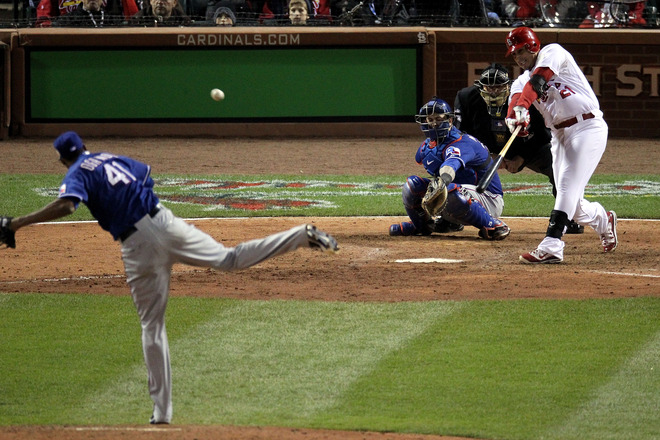
Beat Down in Texas: Pujols Sets Record as Cardinals down Rangers 16-7

“I’m sure the ball looked to him like a water balloon up there.” Ranger’s reliever Darren Oliver. Albert Pujols hits his historic 3rd Home Run with 2 outs in the top of the 9th against Darren Oliver

Game three of the World Series between the St Louis Cardinals and the Texas Rangers was one for the ages.  Cardinals First Baseman Albert Pujols set a record for a World Series game going 5-6 with 3 home runs and 6 runs batted in. He is the first player to hit three home runs in a World Series since “Mr. October” Reggie Jackson did it in game six of the 1977 World Series against the Los Angeles Dodgers and Babe Ruth how did it in the 1926 and 1927 World Series.  Pujols home runs were all massive going 43 feet, 406 feet and 397 feet respectively. One commentator referred to Pujols as “Mr. Octobert” to distinguish him from Jackson.

The game was a big change from games one and two where pitching and defense dominated. In those games the teams scored a combined 8 runs on 23 hits and only committed 2 errors.  In those two games the Texas pitching staff had a 2.11 ERA and St Louis a 2.00 ERA. However in game three on a warm and windy night in Arlington the pitching staffs of both teams broke down and both bullpens showed signs of overuse.  In game three the teams scored a combined 23 runs on 28 hits and the Rangers committed 3 costly errors plus one that should have been an error which resulted in a blown call at First Base and helped the Cardinals to a big 4th inning.  The series ERA for the Rangers ballooned to 6.66 and the Cardinals to 3.80.

Of particular concern for the Rangers is their g0-to man in the bullpen Alexi Ogando who was central to their success as a set up man for closer Neftali Feliz has been thunderstruck during the World Series.  He has three appearances and only gotten one out in each appearance.  He has  given up 5 hits, one being a home run and two walks and allowed 4 runs of which 3 were earned for a 27.00 ERA in the World Series. Ogando has to be on for the Rangers to win.

Conversely the batting averages of the teams which had been very low in games one and two Texas hitting a meager .186 andSt Louisa marginally better 2.03 went up.  At the end of game three the Cardinals average was .267 and the Rangers to .252. The Rangers series On Base Percentage (OBP) is .292 and a Slugging Percentage of .378. The Cardinals OBP is now 3.70 and a .455 SLG.

Lance Lynn got the win in relief for the Cardinals and Rangers starting pitcher Matt Harrison took the loss.  Tonight Edwin Jackson 12-9 3.79 will be on the hill for the Cardinals and Derek Holland 16-5 3.95 will pitch for the Rangers. Holland has not performed well in the playoffs giving up 8 earned runs and 18 hits including 5 home runs in 13.2 innings.  His playoff ERA is 5.27 and his opponent batting average is .305. Jackson too has struggled in the playoffs giving up 8 earned runs on 16 hits with 4 home runs in 12.1 innings.  He has a playoff ERA of 5.86 and opponents are hitting .302 off of him. Jackson in his career against the Rangers is 2-3 with a 4.02 ERA and opposing batting average of .244.

Pujols is now hitting .418 in the playoffs with a .492 OBP and .818 SLG.  In addition to Pujols mammoth feat David Freese continued his record playoff run hitting safely in 13 consecutive games with 21 hits including 7 doubles and 4 home runs. He has a .429 batting average, .481 OBP and .816 SLG.   Allen Craig who has been an amazing pinch hitter during the 2011 playoff made his first start in Left Field hit a hitting a solo home run in the first inning off Matt Harrison.

I expect more fireworks from both teams tonight and think that in order to win one team will have to get a clutch performance out of their pitching staff.  The Rangers are down but they are not out. They have the firepower

Peace

Padre Steve+

2 Comments

Filed under Baseball

Deep Thoughts and Musings on a Lazy Fall Saturday

I have been down with an ear and sinus infection most of the week which has added to my insomnia and made me pretty useless.  It is no fun to get up in the morning with vertigo.  When this happens I wonder where Verti went. Over the past few days with the vertigo, occasional fever, sinus headaches and some coughing and sneezing I have officially welcomed in the 2011-2012 cold and flu season.

The past few days have given me time to do a lot of thinking, some praying and a bunch of writing.  At least my PTSD-Mad Cow brain is functioning relatively well.  But not getting out much and only going to work to go to the doctor is a bit of a downer.  But it is now time to stop whining to you about this and simply be thankful for the blessings that I have.

I could have a job that had paid time off for sickness or that provided no medical coverage.  I could be wondering where the next meal or paycheck was coming from or where I will sleep.  One thing that I am thankful for is that we paid off a painful reminder of when where the next meal, tank of gas, medical care or pace to live was our reality.  I left the active duty Army in September 1988 to attend seminary and that as about the time of the big Texas oil bust and real estate collapse.  I was an Army Captain and couldn’t get a job because I was overqualified for most jobs or competing against people who could be paid less than me for others.  It was brutal.

Judy was sick and could not work and eventually despite eventually getting a job with a social service agency, things fell apart. We lost our home and even our cars.  It was the worst time of our lives.  We never declared bankruptcy and paid off everything that we owed and this week I paid off the balance of the home that we lost in 1989 to the Veterans Administration.  When the market crashed and the foreclosure came owed almost 40% of the selling price when the house sold at auction.

I am so grateful for what we have now and so being sick and laid up for a few days is really nothing to complain about.  There are far too many people in our country that even a couple of years ago had what they thought were stable well paying jobs with benefits that don’t have them now.  Many are veterans and their families.  It is most likely that things will get worse before they get better for most people as the effects of the sovereign debt and banking crisis in Europe hits our banks.

For me what people are going through is not abstract because we have been there. I really wonder when I see people in political and economic power doing nothing with one Presidential candidate blaming the unemployed if they didn’t have a job and were not rich.  I wonder what has happened to our country.  I wonder why so many churches side with the rich and powerful and seem to despise the poor.

It seems heartless to say the things that this Presidential candidate said with unemployment remaining over 9% for over a year and companies deciding when they do have a job opening to give preference to those that currently have jobs.  Even well qualified unemployed people are not even considered for job openings because they don’t have a job.  And this is happening when the supposed “job creators” on Wall Street who the taxpayers bailed out in 2008 and 2009 are giving themselves bonuses.  It just immoral and when I see many of my fellow Christians making the support of polices which are condemned by Jesus an article of faith in both theology and politics.

I have also had time to think about what is going on in the Middle East especially the Iraq withdraw and ongoing war in Afghanistan.  I am really concerned with Afghanistan because of the veiled threats that Pakistan is making about cutting our supply lines.  They have done this for short time periods before and there have been numerous attacks on supply convoys in that country by Pakistani Taliban.  To make matters even more uncertain Afghan President Hamid Karzai has said that if there were a conflict between the United States and Pakistan that Afghanistan would help them.

Sometimes I hate being a military historian because I understand what happens to armies with tenuous supply lines that are under the control of unreliable allies.  Stalingrad comes to mind. Likewise the lesser known but very significant The Second Jassy-Kishinev Offensive between August 20 and August 29 1944 in which the Romanian allies of the Germans switched sides during the battle.  This allowed the Red Army to destroy the German 6th Army and maul the 8th Army. The offensive probably shortened the war by six months.  At Stalingrad the Germans and their allies suffered 841,000 casualties and at Jassy-Kishinev they lost 100,000 killed and 115,000 captured.  Currently there are about 90,000 American and another 40,000 NATO or coalition troops in Afghanistan deployed in penny packets throughout the country fighting an insurgency.  They are very vulnerable to any supply disruption especially during the winter months and if there was a conflict that shut down the supply lines we would have to rely on the good graces of the Russians to resupply or withdraw our troops. When I think about this I think about my friends and comrades serving in Afghanistan and I pray to God that this does not happen.

When I think that the burden of these wars has fallen on under half a percent of the American population and that politicians and their allies in the business sector are looking at ways to make substantial cutbacks in medical care and other benefits to those that have been sacrificing in ways that no one else has been doing the past ten years.  Talks of cutting VA care for veterans is obscene when because of their preexisting conditions they wouldn’t be able to afford medical insurance even if they could get it.  And the word that these politicians and their allies use is that these are “entitlements.”  That is a really nasty word and it is used pejoratively because everybody knows that “entitlement programs” are bad and those that receive “entitlements” haven’t earned them and are leaching off of society.  In fact a letter from the “Super Committee” in charge of finding ways to slash the budget has proposed cuts to veterans benefits including pension, disability compensation and education payments.

This is why I would rather be at work, I think too much.

But I am still grateful for all that I have and honored to serve with the fine men and women of the US Military in this time of war.  I do pray that things get better in our nation, which those suffering from the terrible economy will have their needs for employment and other physical needs met. I pray that somehow the deep division that has rent our people asunder will be healed and that our political and economic leaders will do what is right for the country and our people rather than the quarterly bottom line of select corporations.  And I pray for the safety and success of my friends and comrades in both Iraq and Afghanistan and that our political and business leaders will not sacrifice us and then abandon us after beating us to dust the past 10 years.

But at least the World Series is on and nothing bad accrues from Baseball.  For that I am very grateful as Sharon Olds said “Baseball is reassuring.  It makes me feel as if the world is not going to blow up.”

Peace

Padre Steve+

1 Comment

Filed under economics and financial policy, History, iraq,afghanistan, Loose thoughts and musings, Military

Padre Steve’s Arab Spring Articles: Tahir Square to Sirte

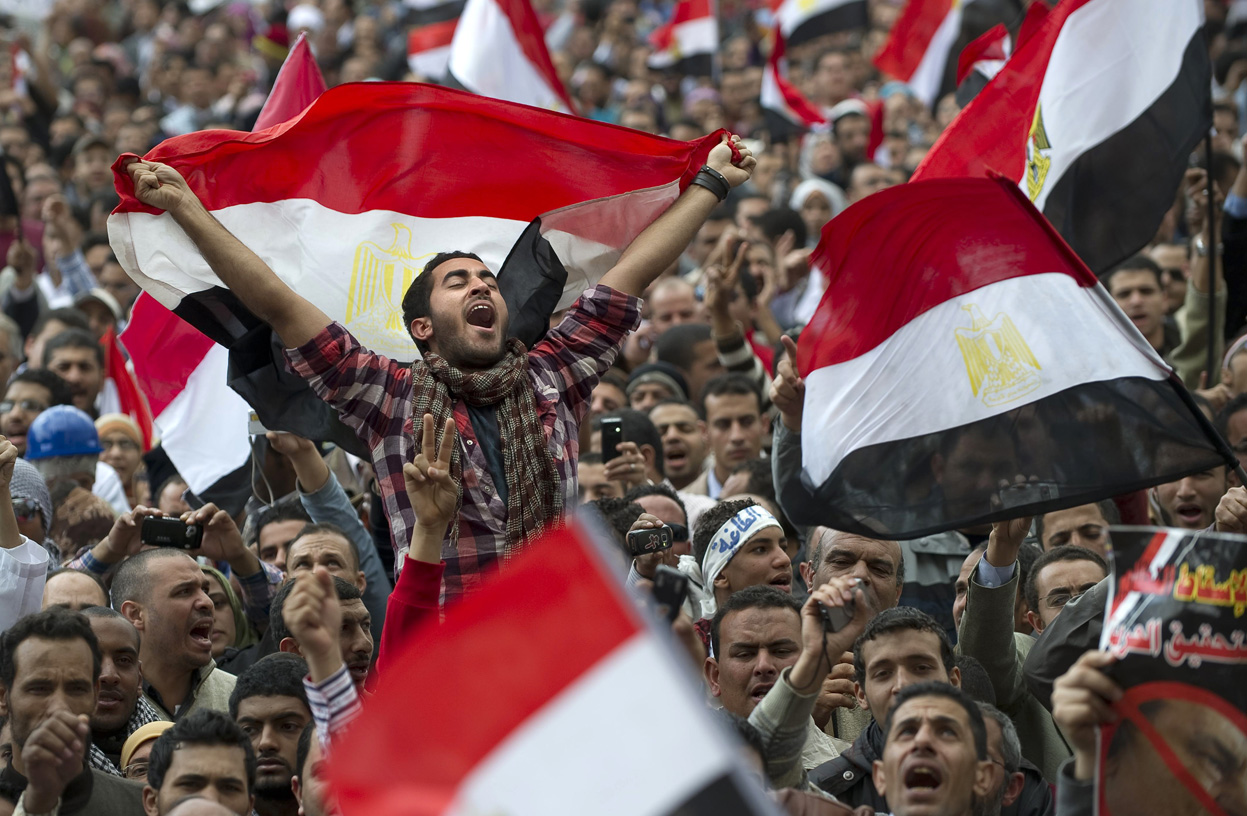
It is hard to believe that Moammar Gaddafi is dead and that the people of Libya have thrown off the shackles of his tyrannical dictatorship which caused them and the world so much grief.  These are links and brief descriptions of the articles of this series.  There have been revolts across the Middle East as oppressed people have risen up peacefully against their repressive governments only to be met with force. Egypt, Yemen, Bahrain, Libya and now Syria, each is rooted in history and each is different. Taken together they are inspiring others around the world.  I have not written much on Yemen or Syria but expect in the coming weeks and months there will be plenty of opportunities to look at the history, culture and unique aspects of these revolts and their potential impact in the region and around the world.  It is my belief that they are helping usher in a new age of revolution with results that will be as dramatic and important as the fall of Empires at the close of the First World War.  Looking at each article you can see how my thought process has evolved as the situation has developed.

Also a page update. I have updated the Middle East Page found in the top menu.

Peace

Padre Steve+

Walk Like an Egyptian: The Egyptian Revolution and the Radicalization of the Middle East Published31 January 2011. An analysis of the probability of the radicalization of the Middle East as revolution spreads.

The Beginning of Chaos in Egypt: Watching and Waiting as the Situation Deteriorates Published2 February 2011 as the situation began to deteriorate in Egypt as Mubarak loyalists attacked protesters in Tahir Squar.

Egypt: As Mysterious as the Sphinx and as Dangerous as a Cobra….What Next? Posted11 February 2011.  A continuation of my observations of  the revolution in Egypt prior to the fall of Hosni Mubarak.

Danger in the Arabian Gulf: The Fires of Protest Spread to Bahrain Posted18 February 2011. The article deals with the protests in Bahrain and my experiences and observations having traveled there many times.

Damned if you do…Damned if you Don’t: The Middle East Protests and U.S. Foreign Policy Posted 19 February 2011. An examination of the difficulties facing U.S. Foreign policy officials in light of the recent spread of revolution in the Arab World.

To the Shores of Tripoli: The Flames of Revolution Spread to Libya as Gaddafi Fights Back Posted February 21st as the protests in Libya provoked a response from dictator Moammar Gaddafi. Saif Al Islam Gaddafi said We will take up arms… we will fight to the last bullet… We will destroy seditious elements. If everybody is armed, it is civil war, we will kill each other.”

Göttdammerung in Libya: Shades of Hitler as Gaddafi Promises to Die as a Martyr Published 22 February 2011 Moammar Gaddafi promises “I am a fighter, a revolutionary from tents … I will die as a martyr at the end… I have not yet ordered the use of force, not yet ordered one bullet to be fired … when i do, everything will burn.”   Moammar Gaddafi accurately predicts his death.

The Guns of March Published 9 March 2011. “War is the unfolding of miscalculations” Barbara Tuchman Libya in the context of the broader Middle East and US Military capabilities.

Gaddafi Taunts the West and Kills his People: Our inaction speaks so loud he can’t hear a Word that we are Saying  Published 11 March 2011.  The cost of inaction and the risks of making threats that you do not back up with force.  When I wrote this I believed that if nothing was done that Gaddafi or terrorist organizations like Al Qaeda and others could turn this revolt into a regional war.

Strike on Libya: The Unknown outcome of Operation Odyssey Dawn Published20 March 2011. The beginning of the NATO air campaign in Libya.

Damned if you do and Damned if you Don’t: The Allied Intervention in Libya Published March 21st 2011.  War is the province of chance. In no other sphere of human activity must such a margin be left for this intruder. It increases the uncertainty of every circumstance and deranges the course of events.”- Karl von Clausewitz The opportunities and peril associated with the NATO intervention in Libya.

Gaddafi’s Götterdämmerung: The End in Tripoli Published 21 August 2011.  The fall of  Tripoli, the Libyan Rebels drive out Gaddafi.

The Promise and Peril of Revolutionary Times: A Warning From History  Published 18 October 2011. Putting revolutions around the world in context.

Gaddafi is Dead so what happens Now? Published 20 October 2011. The death of Moammar Gaddafi and questions of what comes next.

Why the Libyans were able to Overthrow Gaddafi and what We can learn from It: A Lesson from the work of T E Lawrence  Published 21 October 2011 What NATO and theUnited States did right inLibya and a look at Middle East History.

2 Comments

Filed under Foreign Policy, History, middle east, Military

Why the Libyans were able to Overthrow Gaddafi and what We can learn from It: A Lesson from the work of T E Lawrence

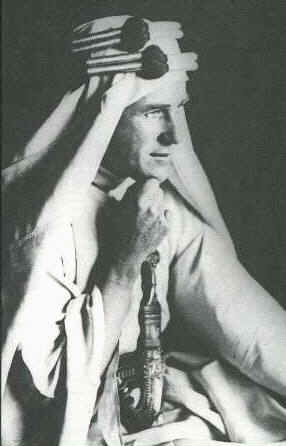
T E Lawrence

“Do not try to do too much with your own hands. Better the Arabs do it tolerably than that you do it perfectly. It is their war, and you are to help them, not to win it for them. Actually, also, under the very odd conditions of Arabia, your practical work will not be as good as, perhaps, you think it is.” T. E. Lawrence

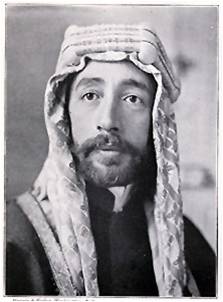
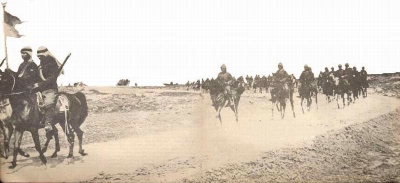
Lawrence with Arab fighters at Aqaba and Emir Faisal Hussein (below)

The Libyan revolution succeeded in overthrowing Moammar Gaddafi and his 42 year tyranny because the West did not turn it into an American or NATO war. By limiting involvement to airpower, coastal interdiction and tiny numbers of advisers the United States and NATO avoided the costly trap of putting large numbers of troops on the ground.  Such action would have been counterproductive in Libya and in the Arab world. While the action certainly would have ridded the world of Gaddafi and his regime much more quickly it would have emasculated the Libyans who had taken up arms against Gaddafi by turning it into our war, a war which would have been seen by many Libyans and Arabs as just more Western Imperialism.  Critics can always find fault in any military operation but for once in the Post Cold War era the United States and NATO knew their limitations and that the revolution had to be the work of the Libyans themselves.

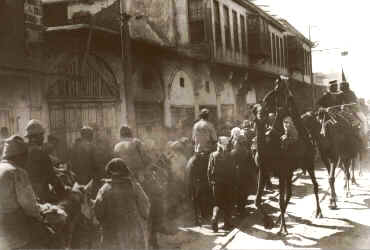
Lawrence and Hussein’s troops pass Ottoman prisoners at Damascus in 1918

T E Lawrence understood the Arab mind more than most westerners ever will.  Living with and helping lead the Arab tribes that revolted against the Ottoman Empireduring the First World War he learned the culture as well as came to understand the strengths and weaknesses of the Arab tribes.  One thing that can be said is that most Americans like many of Lawrence’s counterparts in the British political leadership, military and diplomatic services is that far too few have taken the time to either understand or respect the Arabs. When I was in Iraq the senior Iraqi Officers that I met were amazed and impressed that I knew their history and culture because so few people did. When I mentioned their victory at Al Kut Amara, or their capture of the Al Faw peninsula at the end of the Iran-Iraq war they beamed with pride.

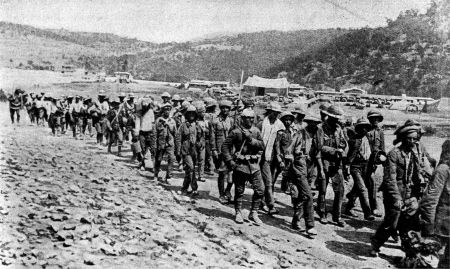
Ottoman troops in Mesopotamia 

One of the things that Lawrence understood was the profound sense of personal pride and honor which imbued the Bedouin.  He understood that the various Bedouin tribes had no love for the Ottoman Turks who treated them with distain.  He also understood that they needed to be the ones that defeated the Turks.

The campaign waged by Lawrence and the Bedouin confounded the Turks. Working with Emir Faisal the son of Sherif  Hussein of Mecca he convinced his force of Arab irregulars not to make a direct assault on the city of Medina which was heavily garrisoned by the Turks.  Instead he expanded the battlefield by exploiting the natural weakness of the Turks, the need for constant supply via the Hejaz Railway.  In doing so he tied up large numbers of Ottoman troops that could have been used against the forces of General Allenby that were waging a conventional campaign and which was very successful in defeating the Ottomans.

While Lawrence was a part of a much larger effort his work in helping the Arab revolt was of great importance to the success of the British efforts against the Ottomans.  Unfortunately the good will that Lawrence and others like him built did not last. The British and French governments did not respect treaties that supported Arab independence and instead dividing the region between them under the terms of the 1916 Sykes-Picot Agreement. They left an isolated and abandoned Hashamite kingdom in the Hejaz which was conquered by the Saudis to whom the British had shifted their support.

British prisoners at Kut al Amara

A few hundred miles away the British did not take advantage of indigenous Arab resentment of the Ottomans in Mesopotamia.  The British invaded Mesopotamiain 1914 expecting to defeat the Turks easily.  However the British did precious little to enlist the support or help the Iraqi Arabs.  The campaign was long and included the worst defeat of a British Army during the war at the Siege of Kut Al Amara in 1916 at the hands of a largely Iraqi Ottoman 6th Army.  Some 30,000 British and Indian soldiers were killed or died of disease and 13,000 captured many who did not survive captivity.  After the war Lawrence remarked “The people of England have been led in Mesopotamia into a trap from which it will be hard to escape with dignity and honor. They have been tricked into it by a steady withholding of information.”

Faisal would go on to be elected as the new Kingdom of Syria by the Syrian National Congress in March of 1920 but kicked out by the French who enforced the Mandate of Syria in July.  In 1922 after the British brutally suppressed an Iraqi independence movement they appointed Faisal as the King of Iraq. When the British “gave” the Iraqis their independence in 1932 Faisal was the head of state.  He died in 1933 and the British maintained a tight grip on the country and put down another Iraqi nationalist revolt led by the Army in 1941.  The British would remain in Iraq until 1958 when a military coup which is known as the “14 July Revolution” overthrew the government and killed king Faisal II.

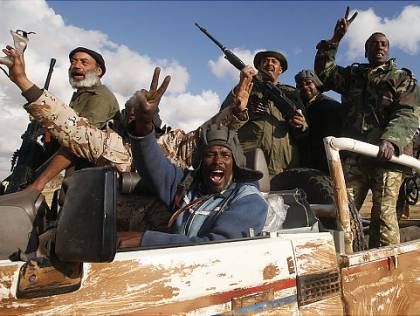
Libya Rebels

In Libya there was great temptation and political pressure for the United States to begin an early air campaign without significant support in the international community.  Some say that this caused more casualties and suffering for the Libyans, but it helped in the long run because Libyans saw it as their war to win even when NATO began its air campaign against Gaddafi.  The air campaign was a great help to the newly proclaimed National Transitional Council in Benghazi and probably saved them from being defeated but it was the courage of Libyans on the ground who sacrificed themselves against a better armed and trained force to retake the country.

The revolt restored the pride of an oppressed people, something that could not have taken place had the campaign been led by the United States and NATO with boots on the ground.  People forget that in 2003 the majority of Iraqis welcomed US forces as liberators.  This lasted until Paul Bremer unilaterally dissolved Iraqi military, police and civil servants that were actively helping us, turning them into enemies overnight.  The liberated Iraqis felt betrayed and dishonored by the United States just as they had been by the British following the First World War.  Bremer did this without ensuring that the Iraqi Army weapons depots were secure thereby providing Sunni and Shia insurgents with vast amounts of weapons.  These weapons were turned against American and coalition soldiers and even the UN and NGOs which were just beginning to helpIraqrebuild.  The result of Bremer’s was a protracted insurgency and civil which cost us nearly 4500 soldiers killed and over 32000 wounded and hundreds of thousands of Iraqis killed, wounded or displaced.  If one wants an answer as to why the Iraqis rose up against the United States occupation in late 2003 they need to look no farther than this. The Iraqis only want to be independent and saw the Bremer’s actions in the lens of their history with the British.

The author with Iraqi General Sabah Ramadi 2007

The decision of President Obama, French President Sarkozy and British Prime Minister Cameron to work through the UN and NATO was the correct one. It enabled the Libyans to overthrow Gaddafi and it kept our military involvement to a minimum.  While it cannot be a template for all future military operations in the Arab world as every Arab country is different it does have lessons for us. Libya was a perfect place to use this method. It had a population that wanted Gaddafi gone and were willing to die trying to overthrow him.  It had no huge urban population centers teaming with uneducated and poverty stricken people with little hope.  It has substantial oil wealth and an oil infrastructure which unlike Iraq was not destroyed during the war or in bad repair due to years of sanctions. It also enjoyed a key geographic location which made NATO air intervention much easier than almost anywhere in the Middle East because we did not need bases in Libya or its neighbors to run the operation. It was conducted from Europe and platforms at sea.   This is not possible in most other Arab countries. The task would be much more difficult if the target was Syria.

Now is the time to help the Libyans in rebuilding their country and letting them continue to regain their pride by letting them do as much as possible.  They won’t do it the way we would but that is okay. They will make mistakes but given time the people that shed their blood together to rid themselves of Gaddafi can work together to build a free country.  Those that go to Libya to assist the Libyans need to keep this in mind if they really want to see a strong, robust and successful Libyan democracy take hold.  Let’s also make sure that the good feelings that the Libyans have for us now remain by simply treating them as we would like to be treated.  Simply put we have to stop treating them as vassal states that we only value for their natural resources while we disrespect their people, history and culture.

As for the future it would be a wise investment to ensure that diplomatic, military and NGO personnel be trained and educated to understand and appreciate the Arabs and other cultures that are different than ours in the West.  The West has much to overcome in its relationship with the Arabs most of which is self inflicted. But we can try to start again.

Peace

Padre Steve+

3 Comments

Filed under Foreign Policy, History, middle east, Military

Comeback: Rangers Win Battle of the Bullpens

Elvis Andrus scores the winning run in the top of the 9th (Photo By REUTERS/Jeff Haynes/REUTERS)

The World Series is coming down to pitching and defense.  The Texas Rangers shut out for 8 innings made a 9th inning comeback againstSt Louis closer Jason Motte who has saved five games this post season.

Both starting pitchers had great performances. Texas starter Colby Lewis pitched 6.2 innings allowing 1 run on 4 hits with 4 strikeouts and 2 walks. St Louis starter Jaime Garcia went 7 innings allowing no runs and just 3 hits with 7 strikeouts.

Defense especially that of the Texas middle infield of Kinsler and Andrus who made an amazing 4th inning double play and equally impressive fielder’s choice to end the 6th inning.

The Cardinals scored first on a 2 out 7th inning rally.  Lewis gave up a single David Freese and a second to Nick Punto. LaRussa sent in Allen Craig to hit for Garcia. Ron Washington countered by bringing in Alexi Ogando to set up a rematch of game one.  The result was the same when Craig singled to score Punto to give the Cardinals a 1-0 lead.

Ian Kinsler hit a bloop single to leadoff the 9th against Motte and stole second with Elvis Andrus at the plate.  Andrus singled to right to send Kinsler to third and Andrus took advantage of a poor throw by Jon Jay which was touched but not cut off by Albert Pujols to take second.  At this point Tony LaRussa made what I think was his first mistake of the series. He took out Motte and brought in Arthur Rhodes to pitch to Josh Hamilton. Hamilton hit a sacrifice fly to right center which scored Kinsler. LaRussa then took out Rhodes and sent in Lance Lynn to pitch to Michael Young who also flied to right center to bring home Andrus to give the Rangers a 2-1 lead. For Motte who had pitched 9 post season innings giving up just 1 hit and no runs it was his first setback. Of course he was not helped by his defense because Andrus took second and took away the chance of a double play.

The Cardinals blew a number of chances to score more runs and left 9 men on base some of which were do to bad execution on the part of the team.

Neftali Feliz gave up a leadoff walk in the 9th but shut down the Cardinals to secure the win. The Rangers scored 2 runs on 5 hits and committed one error and the Cardinals 1 run on 6 hits with no errors. Texas reliever Mike Adams got the win and Feliz the save while Motte took the loss.

The Series goes to Arlington where the resurgent Rangers who were one inning from going down 2-0 will be able to take advantage of their ballpark where they score an average of 2 runs more than they do on the road.  The Cardinals will start Kyle Lohse who went 14-8 with a 3.39 ERA in the regular season against the Ranger’s Matt Harrison who went 14-9 with a 3.39 ERA.

So far this has been a battle of pitchers and great defense. Will the return to Texas change this dynamic or will the big bats come out?  We’ll see what happens Saturday.

Peace

Padre Steve+

2 Comments

Filed under Baseball

Gaddafi is Dead so what happens Now?

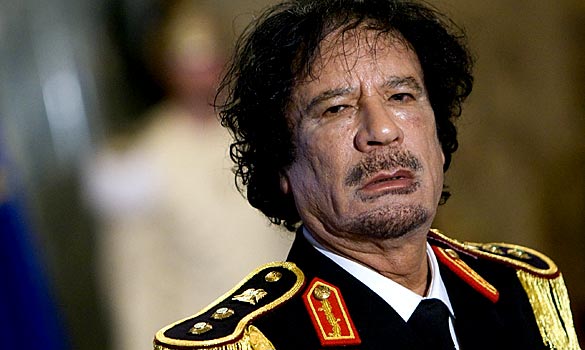
“We announce to the world that Qaddafi has been killed at the hands of the revolution. It is a historic moment. It is the end of tyranny and dictatorship. Qaddafi has met his fate.” Abdel Hafez Ghoga, spokesman for the National Transitional Council

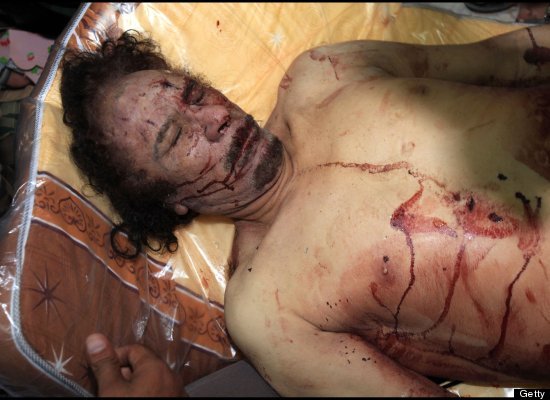
Note: This article contains graphic images of Gaddafi’s body. They may not be suitable for all readers.

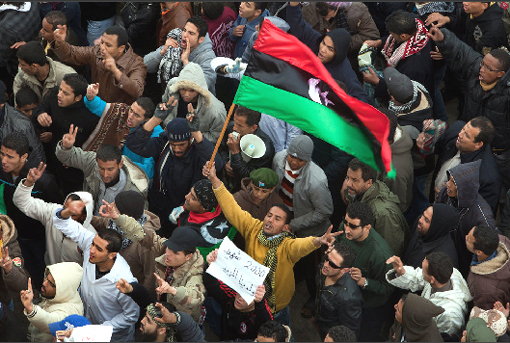
The Arab Spring gained new momentum today with the killing of Moammar Gaddafi by forces loyal to the National Transitional Council. The NTC had captured Tripoli in August and the former dictator had been on the run attempting to rally loyalists to help him regain power.  His efforts were in vain. The NTC forces which are best described as a collection of irregular forces rather than a real army continued to gain territory and liberate cities which had been terrorized by Gaddafi’s forces.

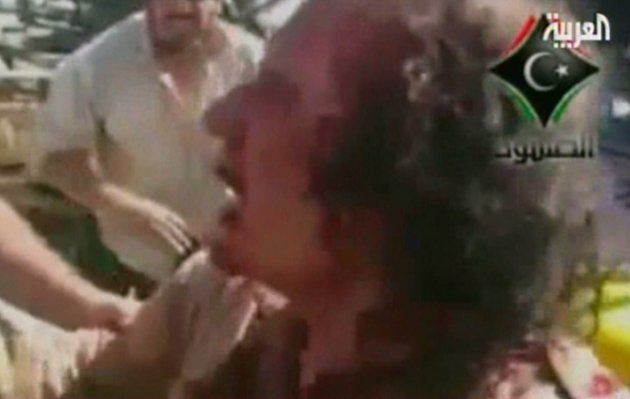
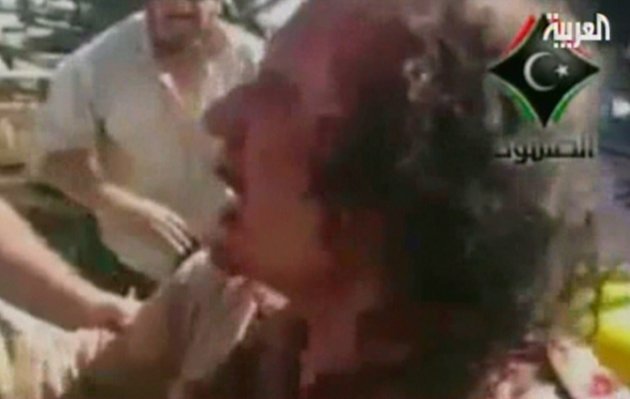
Gaddafi was killed today while he and close advisors were attempting to flee Sirte his hometown which was in the process of  falling to NTC forces.  Reports are sketchy but his convoy appeared to be hit by French Jets and American Predator drones  killing many of his loyalists.  Gaddafi reportedly was wounded but escaped to hide in a drainage ditch tunnel.  He was later captured by pursuing NTC forces, captured and reportedly died of his wounds after his capture.  The circumstances of his death are unclear some say that the vehicle that he was being transported in was caught in a crossfire and other reports indicate that he may have been summarily executed by his captors.  Pictures of his body seem to show a bullet wound in his forehead, one in his left arm and several just below his sternum.

Along those killed with Gaddafi was his Defense Minister Abu Bakr Yunis Jabr, head of Intelligence Services Abdullah al-Senussi and his son Muatassim and other loyalists who were killed during or following a firefight with NTC forces.  Another report by Al Arabya News says that one of their reporters in Sirte has confirmed that Saif-Al Islam Gaddafi is also dead.

http://english.aljazeera.net/news/africa/2011/10/20111020111520869621.html

Gaddafi wounded and still alive (above) after his capture and his corpse below


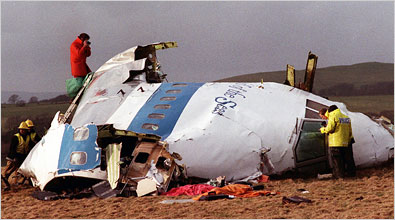
The death of Gaddafi ends a 42 year reign of terror in Libyaand of Gaddafi’s support for terrorism and terrorist organizations. Among those terrorist acts included the downing of Pan Am flight 103 over Lockerbie Scotland on December 21st 1988 killing all 270 souls aboard and the April 5th 1986 bombing of the West Berlin nightclub La Belle which killed 3 people and wounded 230. The latter was directed at US Army soldiers that frequented the club.  He trained and supported tyrants in Sierra Leone and Liberia who killed hundreds of thousands of people.  Tens of thousands of Libyans died at his hand.

Despite this Libya faces difficulties.  Tribal, ideological, economic and political rivalries long contained and suppressed are showing. The Misrata Council in the West does not recognize the NTC despite the latter group’s recognition by governments around the world.  There are tensions between those of a more secular democratic view and Islamists so it remains to be seen what Libya will evolve or devolve into over the coming weeks, months and years.

The killing of Gaddafi is likely to have broad repercussions throughout the Middle East and may further encourage the now months long revolts against Yemen’s long term dictator Ali Abdullah Saleh and Syria’s Bashar Al-Assad.  Other regimes could face uprising and there is potential for the Arab Spring to inspire those in other nations who feel oppressed or that have real or imagined grievances against their governments or those that they see as the real power brokers in their lands.

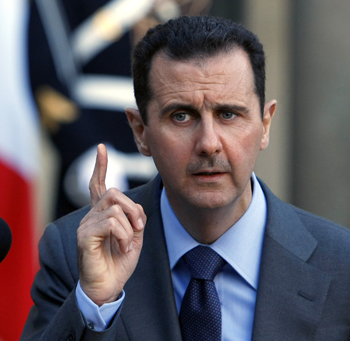
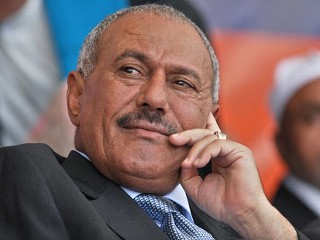
Bashar Al Assad and Ali Abdullah Saleh…are they next?

Since war, economic crisis and perceived inequities between the rich and the poor are fertile ground for such movements it is my belief that the Arab Spring is helping to usher in a new era of revolution around the world such as not been seen since 1918 and the overthrow of long established governments and the collapse of empires which lasted until the 1960s.  The world is still shaped by those events.

As Alexis de Tocqueville said “In a revolution, as in a novel, the most difficult part to invent is the end.”

As I said a few days ago this is a time of promise and peril. But for now we can rejoice for the people of Libya as they begin a new chapter in their history.

Peace

Padre Steve+

2 Comments

Filed under Foreign Policy, History, middle east

Cardinals take Game One 3-2: Defense and Pitching Key to Win

Chris Carpenter’s diving put out of Elvis Andrus in the 1st inning set the tone for the game (Reuters)

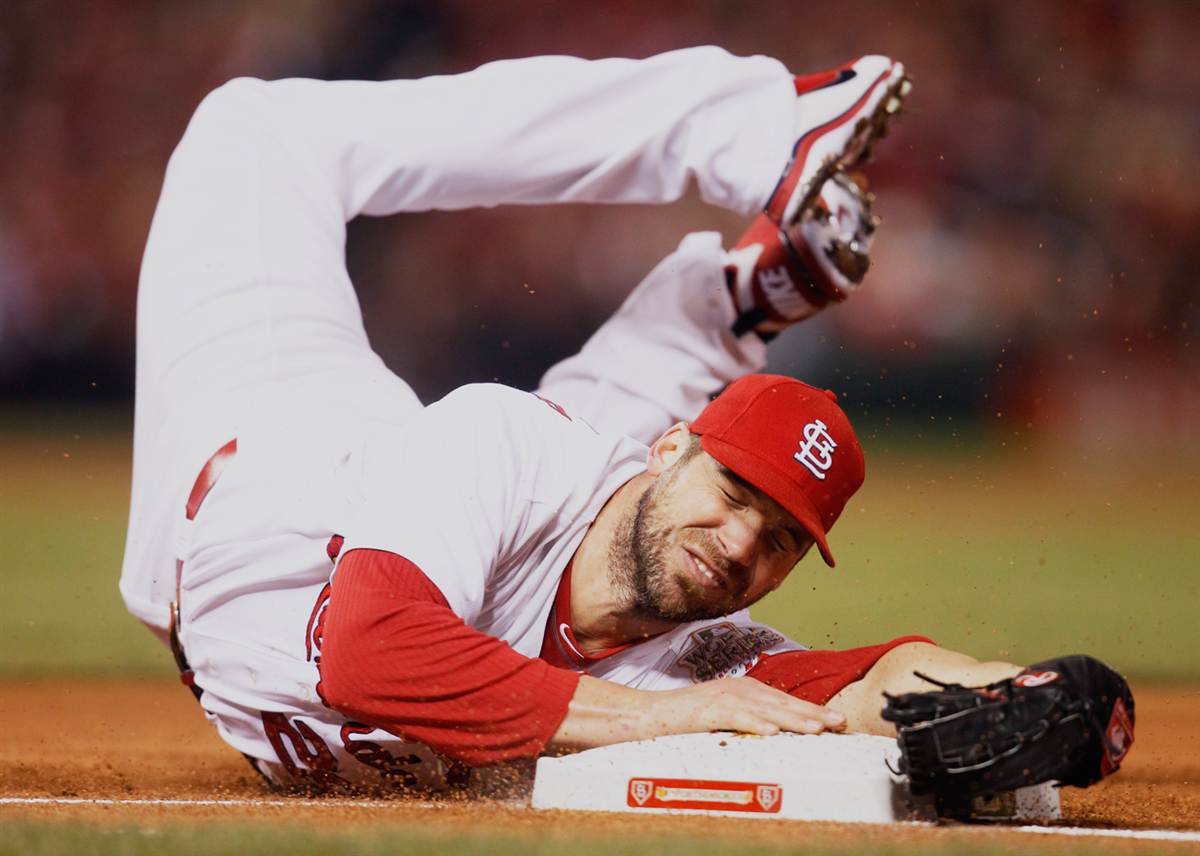
The game was decided in the top of the 1st inning. Cardinals’ starter Chris Carpenter gave up a fluke leadoff single to Ian Kinsler that was deflected off the glove of third baseman David Freese.  The speedy Kinsler attempted to steal with Elvis Andrus at bat and was gunned down at second by Yadier Molina.  Andrus hit a grounder that Albert Pujols had to go deep to get and his throw was far in front of Carpenter who was racing to cover first.  Carpenter dove to catch the ball and slid into the bag slapping it with his right hand to make the put out.  The play electrified the crowd and at that point I was confident that the pluck and determined Cardinals would win this game.

The game was dominated by pitching and defense, a far cry from the LCS when both the Rangers and Cardinals hammered their opponents.  The Cardinals struck first in the bottom of the 4th inning when Rangers’ starter C J Wilson hit Albert Pujols to lead off the inning and gave up a double to Matt Holliday and a single to Lance Berkman which scored Pujols and Holliday to give the Cardinals a 2-0 lead.  That lead would only last a third of an inning when Carpenter gave up a single to Adrian Beltre and then struck out Nelson Cruz.  He then gave up a home run to Mike Napoli which tied the game.

The Cardinals scored again in the bottom of the 6th inning when Freese doubled off of Wilson and advanced to 3rd on a wild pitch.Wilson stuck out Molina for the second out but then walked Nick Punto.  That was it for Wilson who was relieved by Alexi Ogando who gave up a single to pinch hitter Allen Craig that scored Freese to give the Cardinals the lead.  Freese’s hit gave him the record for consecutive games with a hit his 11th of this post season.

Allen Craig singled the go ahead run off of  Alexi Ogando in the bottom of the 6th inning

The Cardinals then used 5 relief pitchers to shut down the Rangers. The Rangers threatened in the top of the 7th getting men on first and second with one out.  Tony LaRussa  brought Marc Rzepczynski into the game to relieve Fernado Salas who had come on after Carpenter left the game.  Rzepczynski struck out pinch hitters Craig Gentry and Esteban German to end the threat and the inning.  Octavio Dotel relieved Rzepczynski in the 8th getting Kinsler and Andrus and LaRussa was back out to the mound to bring in 40 year old left hander Arthur Rhodes to face Josh Hamilton and LaRussa was right again as Hamilton flied out to center to end the inning.

This set the plate for the non-closer closer Jason Motte who put down Michael Young, Adrian Beltre and Nelson Cruz in order to close out the inning and get the save.

The game demonstrated the craftiness of LaRussa who found the right combination of pitchers and hitters to get the win.  It was a very close game and LaRussa and his Cardinals scraped out the win against a very strong Rangers team.

The Rangers had 2 runs on 6 hits with no errors and the Cardinals 3 runs on 6 hits with no errors.  Carpenter got the win and Motte the save while C J Wilson continued to have a rough post season taking the loss.

On Thursday Colby Lewis 14-10 4.40 ERA will face Jaime Garcia 13-7 3.56 ERA at Busch Stadium in game two.

Peace

Padre Steve+

2 Comments

Filed under Baseball

Cardinals in Seven: Padre Steve’s World Series Pick

Last Year I made picks for both the MLB Playoff series and the World Series that were very accurate. See the 2010 MLB Post Season Page link at the top of this page.  I try to look at all the stats in the regular and post season to make my picks.  This year I did not get around to picking winners for the Division or League Championship Series.  I plan on providing analysis of each game during the World  series.  Of course I could be wrong, but this is my pick.   


This is a really interesting World Series that I really believe will go the full seven games. I am picking the Cardinals but not because I think that they are the “better” team in the context of this season.  I think that in a 7 game series that Tony LaRussa will do just enough to beat the Rangers.  The majority of baseball commentators are predicting that the Rangers will win this in 6 or 7 games. If they were playing the Brewers, Diamondbacks or Phillies I would pick them in a New York minute. But they are playing a team that at the end of August was 10.5 games out of the Wild Card race in the National League and handily defeat teams in the NLDS and NLCS that were on paper better than them.

I believe that the Texas Rangers are the better team and I actually kind of want them to win the Series because I like Nolan Ryan, Ron Washington and would like to see the Rangers win their first World Series. Over the course of this year’s 162 game season I don’t think that there was a better team in baseball.  They have decent starting pitching, a great bullpen and hit the hell out of ball.  They have made mincemeat of some of the best pitchers in the league.  Ron Washington is one of my favorite managers, he is smart and really has shaped this team into the machine that they are.  They are at or near the top in almost every offensive category including stolen bases.  They have a better record than the Cardinals and the two teams pitching staffs have similar records and statistics for the season.  The Rangers held off a late season rush by the Los Angeles Angels and took the AL West for the second time in as many years.  They eliminated the Tampa Bay Rays in 4 games chewing up a very good Rays pitching staff and proceeded take down the Tigers in 6 games to reach the World Series for the second strait year.  Ron Washington is turning into a great manager who has proven that he can manage the game and inspire his players at the same time.

However the Wild Card so to speak is the “Wild Card” in this series. The Cardinals took advantage by the epic collapse of the Atlanta Braves in September and won the NL Wild Card on the last day of the season.  They then had to face the Philadelphia Phillies in the NLDS.  The Phillies had the best record in the National League but had fallen victim to the Red Birds 6 of 9 times during the regular season 3 of which came in September.  They dispatched the Phillies in 5 games after being down 2-1 in the series.  Then they went to their division rivals and NL Central Champion Milwaukee Brewers. They took the Brewers with whom they evenly split their 18 regular season games in 6 games.

These are both great teams with a lot of character and talent.  When one looks up and down the roster they are filled with great hitters.  The Rangers have the edge in overall quality but the Cardinals are also very good and had the best team hitting in the Division and League Championship Series.  Albert Pujols, Lance Berkman, Yadier Molina, Jon Jay and Matt Holiday highlight a line up that hit for a .274 batting average, .341 On Base Percentage and .425 Slugging Percentage in the regular season and produced 762 runs. The Rangers roster includes Josh Hamilton, Michael Young, Adrian Beltre, Elvis Andrus and Nelson Cruz.  The Rangers hit a Major League leading team batting average of .283 On Base Percentage of .341 a .460 Slugging Percentage and which produced a MLB high 855 runs.

However the playoffs have been another story. The Cardinals led all the playoff teams in batting average (.288) and runs (111) while having .345 OBP and .448 SLG percentages.  The Rangers hitters were not as dominant in the playoffs hitting for a .259 team batting average producing 90 runs and achieving a .330 OBP and .434 SLG.  They were still potent especially Nelson Cruz the ALCS MVP who hit .364 with six homers and 13 RBIs.

The pitching performance of the two teams in the regular season was quite similar the Cardinals had a slightly better team ERA of 2.74 versus the Rangers 2.79 but LaRussa is unorthodox in his use of his bullpen when has performed magnificently.  Game one will feature the two teams’ workhorses, Chris Carpenter for the Cardinals and C J Wilson for the Rangers.  The bullpens are both excellent and the Rangers feature Neftali Feliz and Alexi Ogando.  Ogando has been particularly good and as a former starter can pitch in extended or short relief.  The Cardinals bullpen features Jason Motte and Octavio Dotel who have been excellent in the playoffs.

The hitters will challenge the pitchers of both teams and the starters will need to perform to protect their bullpens.  LaRussa will use his bullpen in ways that cannot be anticipated and the Rangers could face any pitcher in any situation.

The reason that I am picking the Cardinals is the fact that they have done so much that they were not expected to do this season. They overcame a lot to get to this point. The Rangers were expected by many to be here again, especially after the Red Sox collapsed in September and did not make the playoffs.  The key for me is Tony LaRussa and his ability to manage a game inning by inning batter by batter in order to deny the opposing team the opportunity to score runs in any single inning particularly “the last three innings of the game.”  LaRussa manages the details of a game probably better than anyone in baseball and though many criticize his “micromanagement” it certainly has worked.  Provided nothing really unexpected happens LaRussa will pass the great John McGraw on the all time managerial win list sometime during the 2012 season. None of this is to be disrespectful of Ron Washington, he too is an excellent manager and the Rangers would not be where they are without him.  Likewise the Cardinals have home field advantage and Busch Stadium is a pitchers park which plays well with how LaRussa uses his bullpen and bench.

The Rangers are an amazing team and I do think that they are the better team and really want to win this, but there is something about this 2011 Cardinals team.  Since the end of August they have played every day with their season on the line and risen to the occasion.  Besides they have the Rally Squirrel…. How can they lose?

Peace

Padre Steve+

3 Comments

Filed under Baseball

The Promise and Peril of Revolutionary Times: A Warning From History

“In a revolution, as in a novel, the most difficult part to invent is the end.” – Alexis de Tocqueville

“They who clamor loudest for freedom are often the ones least likely to be happy in a free society.”  Eric Hoffer – The True Believer

I don’t know about you but it seems that everywhere I look that revolution is in the air.  Revolutionary times can be exciting to watch or even to participate in because all at least initially cater to the hopes of people, the hope of change, freedom, justice and equity are common themes.   As a historian I find it fascinating to observe revolutions and to read about revolutions throughout history.  But I always have a concern about how even the most well intentioned revolts against real or perceived injustice often miscarry and create conditions ripe for civil war, dictatorship and even regional or world war.

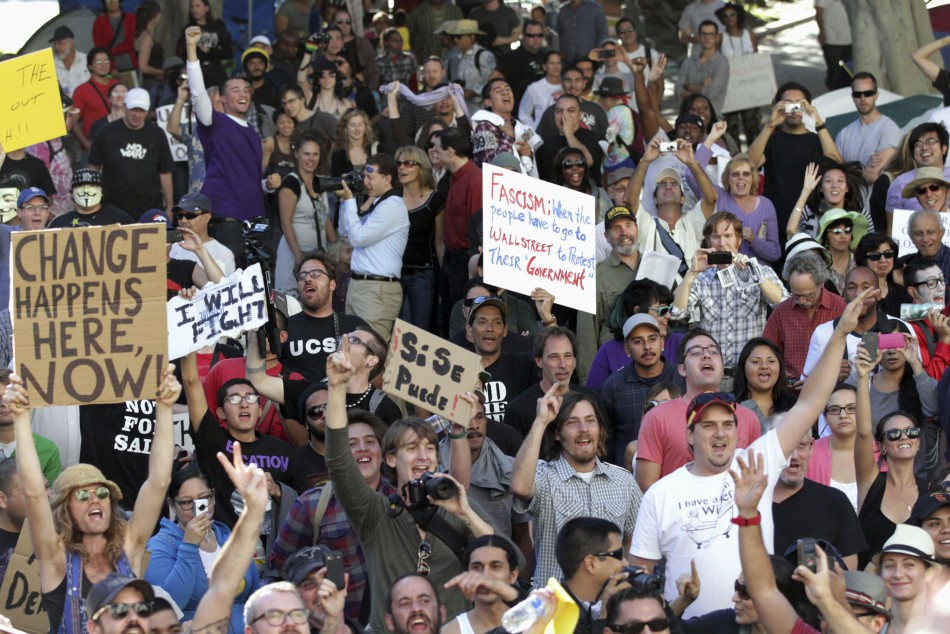
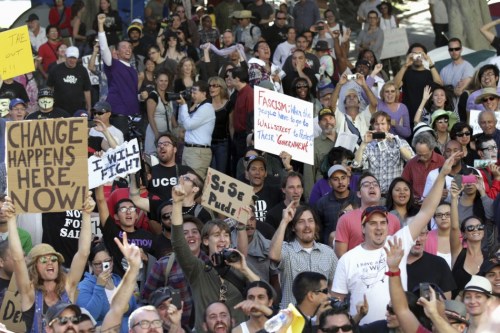
The revolutions sweeping the world today and I include the proto-revolutionary movements of the conservative Tea Party and Occupy Wall Street movements as revolutionary movements are becoming mass movements.  As mass movements they share many things in common even if their ideologies and backers appear to be diametrically opposed.  We now have two diametrically opposed revolutionary movements seeking power in this country and neither side will be satisfied until they achieve it.

Those that dismiss or seek to tame the Tea Party or the Occupy Wall Street movement are foolish. The anger, resentment and the hatred that these movements have for the established order are too great to be easily dismissed.  The politicians that try to channel these movements for their own benefit or party or that attempt to encourage them without actually addressing their grievances will discover too late that lip service and cosmetic change will not be enough.  Peaceful nonviolent protests can turn violent in a moment with very unpredictable results.

In our country there is great dissatisfaction with the status quo on the right and the left which in large part is due to the actions of those in power in government, media, business and even religion to address the concerns of those on both sides of the political abyss.  Likewise it is the same entities that in order to maintain their power have used every opportunity to create enmity among Americans.

Similar events are occurring on the other side of the Atlantic as the crisis in Greece threatens the economic stability and quite possibly the viability of the European Union.  The extremists on the left and right are garnering support that they have not had in decades from people that until the current economic downturn were content with the status quo because they were doing alright.

Even those revolutions that bring positive change tend to bring in some form of social unrest and upheaval to include the maltreatment and sometimes exile of people that did not agree with the revolution.  One only has to take a look at the large numbers of British colonists in the 13 Colonies who were loyal to the British Crown and lost their place in society and many times their homes and livelihoods as they were no longer welcome.  Many fled to Canada, the British West Indies or had to return to England.
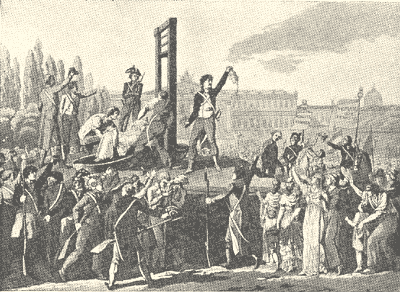
Revolutionaries do not take kindly to those that oppose them, especially when they are kinsmen.  Those officers or Federal officials that remained loyal to the Union during the American Civil War that hailed from Southern States often found that they were no longer welcome in their communities and sometimes disowned by their families.  This was the fate of General George Thomas who remained faithful to his oath despite being fromVirginia. His family turned his picture around and refused to have anything to do with him from that point forward even refusing financial assistance from him after the war.

The English Civil Wars of 1641-1653 were some of the most brutal to occur inEuropeand devastated Ireland which lost some 41% of its population and where the lingering scars are still seen today.
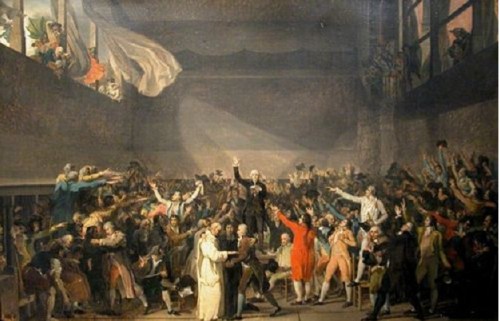
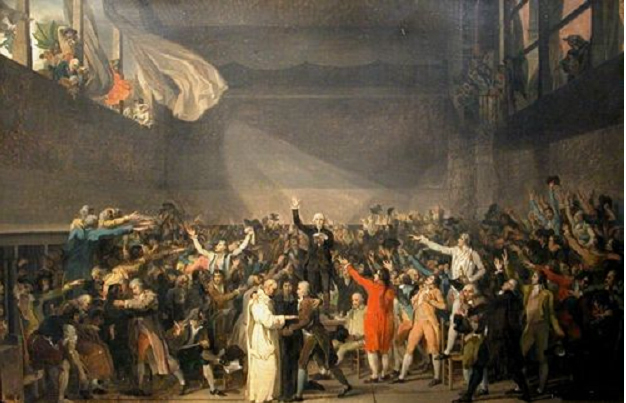
The French Revolution was a bloodletting that shaped France to the present day.  People tend to forget that the root cause of this revolution was a financial crisis brought about by the costs of the Seven Years War with England and the French support of the American Revolution which brought the country into more conflict with England. The antiquated and regressive French tax code put a heavy burden on the middle and lower classes but provided many exemptions to the nobility and the clergy.  When comptroller Jacques Necker proposed ending or reducing those exemptions he was fired.  But the crown was so week that it decided to call the Estates General into session for the first time since 1618 and when the three components of the assembly could not agree on credentials the lower assembly of commoners broke off and formed their own National Assembly and when it appeared that the King was bringing foreign troops to Paris it set off an armed revolt.

The revolution was brutal and unleashed an unprecedented series of wars which engulfed the European continent the West Indies and Egypt.  Eventually a young Army officer named Napoleon Bonaparte did much to secure the new regime’s security by a series of brilliant military victories.  He was so successful that he overthrew the government and became a dictator in 1799 and would proclaim himself Emperor in 1804.  The wars in Europe were devastating and would create a situation where a weakened Spain and Portugal would lose their colonies in Central and South America.
When Napoleon was finally defeated for the last time at Waterloo in 1815 the Congress of Vienna reestablished a conservative order and peace inEurope.  There was a brief revolutionary period in 1848 and the wars that led to the unification of Germany and the defeat of France by Prussia in 1870-71. But for the most part stability reigned until the First World War as European powers focused on using their power in imperialist ways in Africa, the Middle East and Asia.   The war set in motion revolutionary movements that would lead to the overthrow of empires and birth the mass movements of Communism, Fascism and Nazism that would be responsible for some of the most destructive wars and crimes against humanity ever seen by the world.
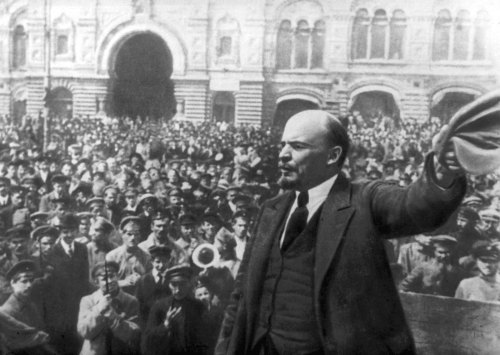
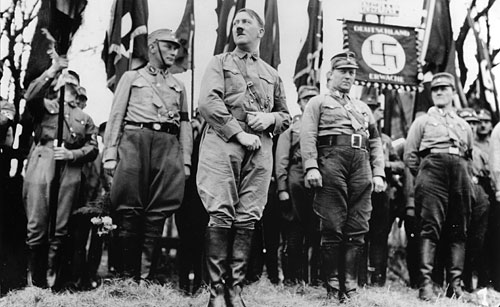
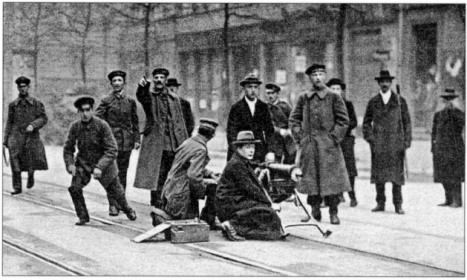
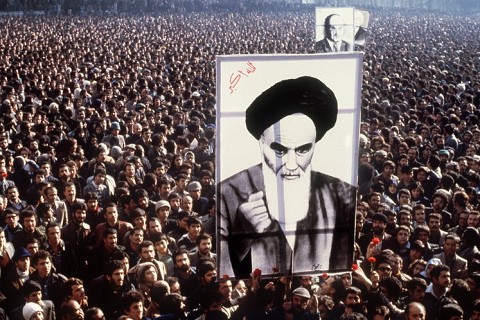
Other revolutions have caused immeasurable suffering, the Cultural Revolution in China, the Iranian revolution, the Bolshevik Revolution in Russia to name a few. The Spartacus revolution in the early days of the Weimar Republic helped doom it and led to the Nazi revolution in Germany. The Nazi revolution was brought about through legal means with the appointment of Adolf Hitler as Chancellor after which his revolutionary policies were put in place.
The revolutions in the Soviet Union and Warsaw pact in aftermath of the Cold War have brought a multiplicity of outcomes, some which appear to have brought forth societies where human rights and individual liberties are respected and others which have become or are in the process of becoming dictatorships.

And so today we live in an age of revolution which is heightened and moves across the globe like a wind fanned wildfire due to the instantaneous nature of the communication and media that we now enjoy.  There is the Arab Spring and the beginnings of revolutionary movements in Europe, Asia and now even North America.  Governments seem impotent to do anything about the conditions that have moved these revolutionary groups to action and have given the ideologues on the left and right respectability that they could have never enjoyed before.  The ideologues make their money by providing a platform for the airing of the grievances of their readers or listeners real and imagined by playing on the need for hope.  The motive of the listener or follower is finding something to believe in a hope and promise, hope around the corner not hope deferred.  Eric Hoffer noted “To have a grievance is to have a purpose in life. It not infrequently happens that those who hunger for hope give their allegiance to him who offers them a grievance.”

The extremists on both sides of the line in the United States have held sway so long that they have turned the extreme into the mainstream inspiring one of the most amazing displays of left-right groupthink that I have ever seen.  I read a lot of conservative and liberal blogs and websites,some which are considered mainstream by their proponents.  I believe that you can tell a lot about movements by what the rank and file write or share.  One thing that I notice is how interchangeable these blogs are and how much they mirror the talking points of their respective echo chambers.  There is little creative though only the endless repetition of talking points. If one ventures a dissenting opinion on one of these sites he or she will find themselves shouted down and demonized and it doesn’t matter if the site is left wing or right wing, religious or secular.  The purity of ideology and necessity of conformity to the group-think ensures that opposing points of view be shouted down.

I first started noticing this when I returned fromIraqin 2008. At that time I was still listening to conservative talk radio on a regular basis and I started noticing that with minor differences all the talk show hosts sounded alike, the same talking points driven home day after day.  Alternative viewpoints even those that differed only slightly from the party line were ridiculed and demonized. That was eye opening to me and I noticed a similar tone emanating from the left.  Both emphasize that they are being oppressed or persecuted and the rank and file believe that they are oppressed and gladly allow themselves to become parts of these mass movements.

It is the real and perceived feelings of oppression or persecution provide these disparate movements their most fervent followers and energy.

One attitude prominently displayed is an absolute hatred and distain of moderation.  Both have an absolute distain of dialogue and neither appear to want a win-win situation to develop simply because to both sides only absolute victory for themselves and destruction of all that that they oppose matters.  It is a nihilistic zero sum game that both sides play.  Both sides are slaves to their doctrine and the vast majorities of the followers of these mass movements are absolutely unaware of this.  Philosopher Eric Hoffer wrote “A doctrine insulates the devout not only against the realities around them but also against their own selves. The fanatical believer is not conscious of his envy, malice, pettiness and dishonesty. There is a wall of words between his consciousness and his real self.”

Revolutionary movements of themselves can be transforming and in the long run quite beneficial but for every one that is such there are many more that in succeeding bring about tyrannies as bad or worse than the ones that they ended.  The evidence of this is widespread.  Much of this is due to a desire not for freedom but for revenge as those that viewed themselves as oppressed or persecuted turn their new found power into a weapon of revenge and retaliation.  Hoffer wrote “It is doubtful if the oppressed ever fight for freedom. They fight for pride and power — power to oppress others. The oppressed want above all to imitate their oppressors; they want to retaliate.”

History shows that in more cases than not that when revolutionaries take power they become oppressors themselves and are perfectly willing to crush dissent by force. They become the conservative faction resistant to change and opposed to dissent.  Hannah Arendt observed that “The most radical revolutionary will become a conservative the day after the revolution.”

Eric Hoffer understood mass movements as few in the last century have.  Hoffer’s book The True Believer (1951) is a study of mass movements and since Hoffer had witnessed the mass movements of the 1920s and 1930s that defined the age, Fascism, Communism and Nazism.  Hoffer notes similarities between political, social and religious mass movements and when it was written in 1951 President Dwight D. Eisenhower praised it.  It is well worth the read.  Hannah Arendt also understood how individuals in mass movements could participate in evil including genocide and think that they were just doing their job and helping society.  Her book Eichmann in Jerusalem: A Report on the Banality of Evil.

Revolutionary times are filled with promise and peril. The wise in Tea Party and the Occupy Wall Street and other movements around the world need to understand that crucial truth.  Movements such as these can be co-opted and driven in ways that those that began them can little anticipate and the leaders of such movements often become victims of the very movement that they helped create.  The names of such instigators that have become victims is too long to list.

As a historian I find the process that we see unfolding as simply fascinating and I cannot predict how this revolutionary era will play out.  I just hope and pray that things don’t get too sporty.

Peace

Padre Steve+

5 Comments

Filed under History, News and current events, Political Commentary

Goodbye Iraq… Inshallah (إن شاء الله)

A spokesman for the Administration confirmed that US Forces will leave Iraq by the end of the year. The decision came after Iraqi Prime Minister Nouri al-Maliki has told U.S. military officials that he does not have the votes in parliament to provide immunity to the American trainers.

As of today 4478 American, 179 British and 139 other coalition troops have given their lives in this campaign. 32200 Americans have been wounded. Over 10,000 members of the Iraqi Army and Security Forces have given their lives to defend their country following the fall of Saddam Hussein. The official count of Iraqi civilian deaths is a bit over 50,000 people but the actual toll is probably much higher. The Congressional Budget Office estimates the long term cost of the Iraq War will be about 1.9 trillion dollars.
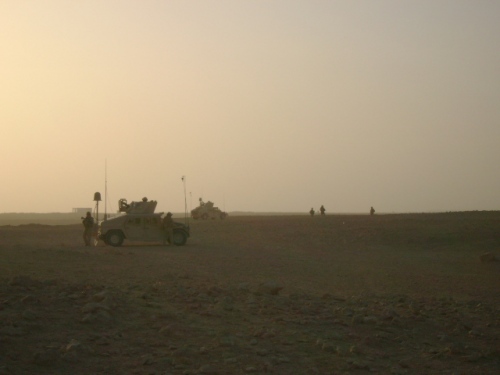
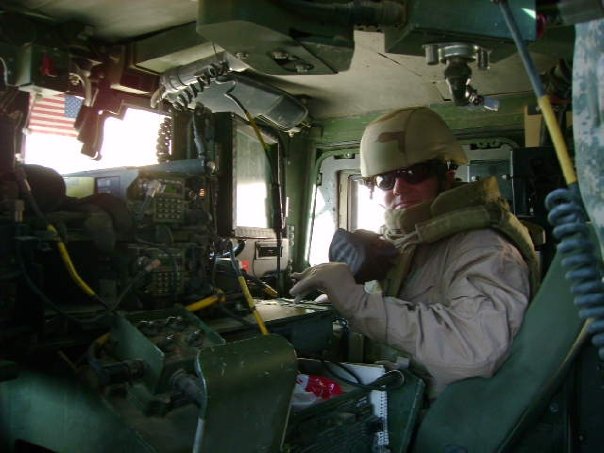
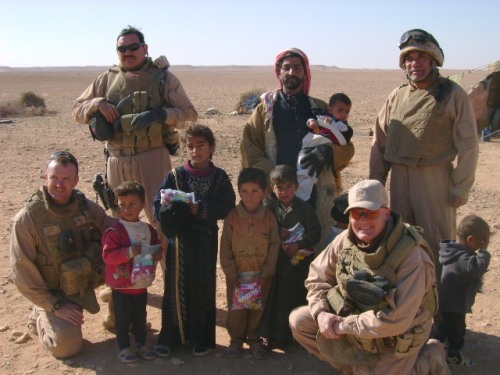
I served in Iraq and I am proud of my service there as part of the Iraq Assistance Group serving with our Marine Corps, Army, Navy and Air Force working with our Iraqi allies in Al Anbar Province from 2007-2008. I have found that it was probably the most rewarding tour I have had in my 30 years in the military. It also changed me in ways that I did not anticipate, especially the effects of PTSD. People sometimes ask me why the tour in Iraq was more rewarding than peacetime or non-deployed service and why I desire to serve in combat again as a Chaplain. The first time someone asked the answer at first surprised them. I said while I viewed peacetime and garrison service as important and meaningful ministry that it was like the regular baseball season. On the other hand getting to do what I did in a combat zone outside the wire with little groups of Americans and their Iraqis was like playing in the World Series. Some will not understand that and I can respect their opinion and their bewilderment. However you had to be there to understand.

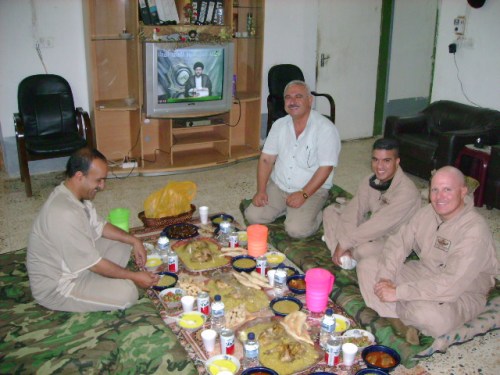
I left part of me in Iraq and I will value my friendships with Iraqi military officers and the hospitality shown by them where ever I traveled. I will worry about them and their families as Iraq attempts to stabilize itself and rebuild from the war. I pray that there will be no civil war as some speculate and thatIran’s influence will become less as we leave and the Iraqi Shia Arabs remember that the “Persians” are not their friends as an Iraqi Shia officer reminded me. I do hope that one day I can go back as a visitor and see what I hope to be a free and prosperous country that is a friend.

Yet despite my feelings the question has to be asked: Was it worth it? Somehow I am left feeling that it hurt us andIraqin the long run. Saddam is gone and with him the terror that he imposed on the Iraqi people, but the Iranians are stronger and they were always the real threat to the region.

I almost feel like General Roy Urquhart played by Sean Connery at the end of the movie “A Bridge too Far.” http://www.youtube.com/watch?v=1j9kRciiD3E

We have to ask was it worth the human cost born by the United States military and the Iraqi people. Was it worth the strategic result of Iran becoming stronger? Was it worth the immense cost in blood, military strength and treasure and to our image around the world?

I am not sure if it was. I can only hope and pray that in the end something good will result for us and the long suffering people of Iraq.

Inshallah,

Padre Steve+

Note: Inshallah (إن شاء الله) is the Arabic word for “God Willing” or “if God wills it.”

5 Comments

Filed under History, iraq,afghanistan, Tour in Iraq