Monthly Archives: September 2013

Adjusting Strategy to Reality: The Pacific War- Why the Japanese Lost

Synchronizing national military strategy and the national,security policy of the nation are important. Nothing new today, just doing a lot of reading and stidy at the Joint Forces Staff College dealing with such policy issues. so tonight just a re-post of an older article that demonstrates this. The next time someone asked you “why don’t we bomb” whatever country into submission remember this lesson to be learned for the Japanese in the Second World War.
Peace
Padre Steve+

padresteve's avatarThe Inglorius Padre Steve's World

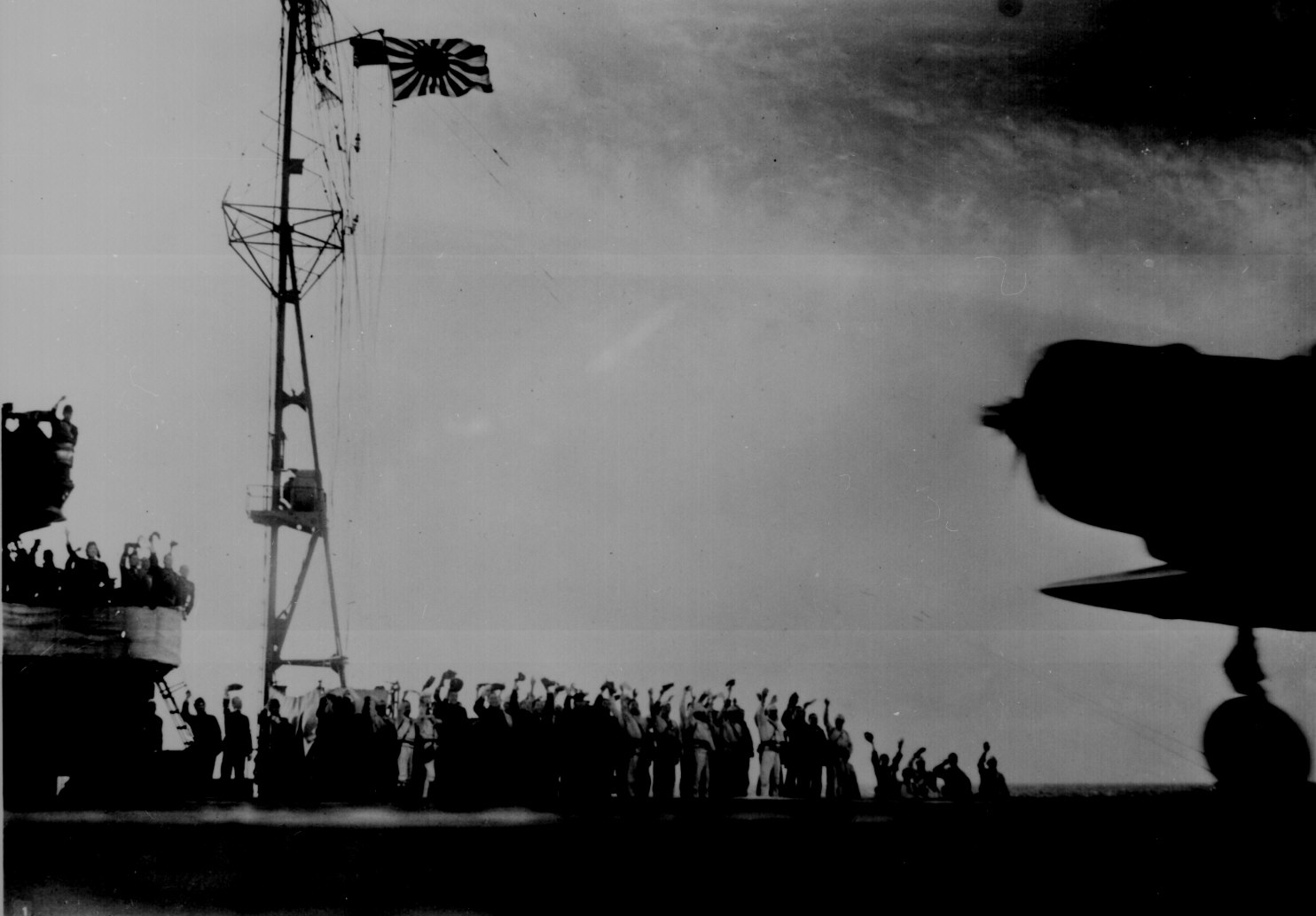
Lead aircraft ready to take off of IJN Carrier Akagi to attack Pearl Harbor beginning a 6 month chain of Japanese victories in the Pacific

The outcome of the Pacific war was directly related to the ability of the Americans to adjust strategy to the realities of the Pacific war, a unity of effort directed by the National Command Authority and superior industrial, technological and logistical capabilities. The Japanese after initial success did little to adapt and were hamstrung by inter-service rivalries and inadequate industrial capacity and limited natural resources.

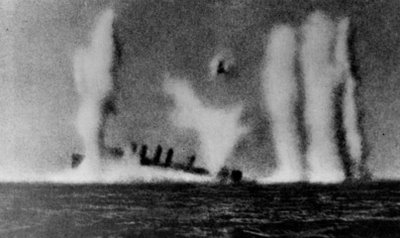
US Destroyer USS Pope being blasted out of the water by Japanese Cruisers at the Battle of Java Sea

The Japanese and the Americans each had war plans in place for the Pacific campaign.  The American plans, Plan Orange had been developed since the early part of the 20th Century after the Spanish-American War and Russo-Japanese War.  Predicated on…

View original post 1,427 more words

Leave a comment

Filed under Loose thoughts and musings

Antietam and Syria…Beginning to Understand How Societies Slip Into Carnage

24-2

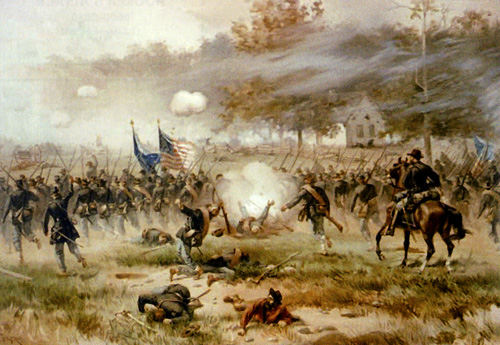
On September 17th 1862 the there was a battle in the War Against the Slaveholder’s Rebellion, sometimes called the American Civil War. It occurred when the Rebel Army under the command of Robert E Lee invaded the North, moving into Maryland. After a series of smaller engagements the Army of the Potomac under Major General McClellan engaged the Rebel forces at the town of Sharpsburg on the banks of the Antietam Creek.

The ensuing battle was the bloodiest single day engagement fought on the North American Continent. Almost 23,000 Union and Confederate soldiers were killed or wounded that day. Historian Stephen Sears titled his book about the battle Landscape Turned Red: The Battle of Antietam. 

I have been to that battlefield a number of times, both on my own and as part of a formal “Staff Ride.” My own military career touches the battle because when I served in the Texas and Virginia National Guard units that I was a part of traced their lineage to units that fought on that blood drenched parcel of land. In Texas units I served with were part of the 1st and 5th Texas Regiments which served in John Bell Hood’s Texas Brigade and in Virginia the 2nd and 17th Virginia Infantry Regiments.

Each time that I have been there I have never failed to be overwhelmed by the carnage inflicted on Americans by other Americans in the space of under 12 hours.

Then I think about other current civil wars and I begin to understand how places like Syria or Iraq can degenerate into sectarian bloodbaths. Both of those countries have only existed in their present form about 80 years and even then they were under the rule of military leaders for decades.

Actually it is not that hard for this to happen. We in the United States like to hold ourselves up as a model of how to do things right. But our own “Civil War” or the Slaveholder’s Revolt shows just how easily the populace a supposedly Christian and religious society can turn against each other and in the course of a day slaughter thousands and in the space of a few short years kill nearly 600,000 of their own countrymen.

Thus when I look at what is happening in other nations I am less likely to judge them so harshly. I wonder how bad the carnage of our civil war would have been had we had modern weapons including chemical weapons. Somehow I think that we would have used them quite effectively against each other and that the casualties of the war would have been at least twice as great as the Civil War.

What would the rest of the world think if it was happening here today? But more importantly what would we do?

Peace

Padre Steve+

Leave a comment

Filed under civil war, History

“Breaking Bats” Broken Bats and Life

994899_10151847060517059_47934649_n

“Your bat is your life. It’s your weapon. You don’t want to go into battle with anything that feels less than perfect.” Lou Brock

Today something happened that to me that I have never had happen to me. I broke a bat while hitting in a slow pitch softball practice. We play old guy rules in the intramural league that I play in as a student and in about 9 weeks or so as faculty at the Joint Forces Staff College. Last week while pursuing a pop foul ball on the fist base line I pulled a butt muscle and today while throwing a ball tweaked a muscle in my elbow. We were playing in a light drizzle and the wet ball slipped out of my fingers as I threw it and I felt a slight tweak, which remained painful for the rest of the practice.

Both of those injuries are painful and because I am 53 years old are not helpful to my playing days. However, I will continue to play because I love the game and I am at times not very bright. But like Satchel Paige said “We don’t stop playing because we get old. We get old because we stop playing.”

Now as far as the bat goes I am a purist. I bat with a wooden bat, even in softball. Of course it is an approved “official softball” bat as opposed to a baseball bat, but it is still wood. I have tried aluminum or other metal or composite bats but they just don’t feel natural. In fact when I bat with them it is almost like my mind locks up and my batting average sinks like the Titanic. When Yogi Berra said “Baseball is ninety percent mental. he other half is physical” he was absolutely right, you do the math.

Now broken bats are part of life even if you don’t play ball. We all break break bats, be they real bats or metaphorical bats at some time in our life. Hell I’ve broken a lot of things, some by mistake and some intentionally. I have learned the hard way to make sure if I am wound up too tight to make sure whatever I throw is not breakable. Sometimes this is a challenge when the PTSD kicks in and I need to throw something.

About six months ago in my previous assignment I was having a very frustrating day and emotionally hit the wall. I needed to throw something. I looked around my office and realized that all the baseballs I had were autographed. Likewise anything that would have been nice to throw was somehow important to me.

Then I spied a banana on my desk. I looked at it and picked it up. Since I was the only one in the office I walked out, looked down the hallway which was empty and charged for the nearest exit which emptied into a patio on the back side of the hospital. I ran out onto the patio and threw the banana as far as I could. No one saw me, nothing was broken, except the banana which I assume was eaten by local wildlife, thus contributing to the circle of life, and my need to get my physical anger out was assuaged but I digress… That being said throwing something is not the same as breaking a bat.

I liked the bat that broke today. It was like a friend. I am not a power hitter but when I am in a groove everything feels right. In our first practice last week I felt good. I was making good contact and the ball was falling for hits. Ground balls and line drives. However today something didn’t feel quite right. Part I am sure was my arm which I had tweaked the muscle near my elbow, but the bat didn’t feel right. Whenever I hit the ball it didn’t seem right. Maybe I had already damaged it in the previous practice or maybe it had bounced around in the back of my Ford Escape. But whatever happened it just didn’t feel right.

Then it happened. I thought I had a good pitch, went for it and when the bat hit the ball I heard the crack. The ball was inside and I was jammed but the ball was hit sharply to the third baseman who threw me out but everyone was wondering about the bat. I knew it was broken. I went back and picked it up. A couple of us looked at it and sure enough just about the grip on the handle where I hit the ball there was a crack. It was like a hairline fracture, but the bat was now dead.

In my last at bat I had to use a composite bat, with which I did succeed in lining a solid single into left field. However, after practice I took my old Rawlings Adirondack “Big Stick” made of Ash to my car and went home. I then went out to have a couple of beers and a light dinner at Gordon Biersch after which I went out and bought me a new Louisville Slugger “125 SB” Powerized wooden softball bat made of White Ash. It too feels good. I cannot wait to use it at our next practice.

I have broken many things in life as I said, but this was the first time in years of playing baseball or softball that I have ever broken a bat. The fact that it happened in slow pitch makes it even more amazing. But I guess that is life. Maybe someday I will hit a home run. There is a sign in left field that says 230’, I have three years to put it over that wall. It may mean buying a few more bats, but one day I will get my home run.

After all if I can break a bat in slow pitch ball maybe I might have enough in me to put one over that fence.

Peace

Padre Steve+

20130916-233922.jpg

2 Comments

Filed under Baseball, Loose thoughts and musings

Four Little Girls: The Birmingham Church Bombing 50 Years Later

MCNAIR ROBERTSON COLLINS WESLEY

Most Americans will not recognize the names and I would dare say that many do not even know about what happened in Birmingham Alabama 50 years ago today. At 1022 in the morning on September 15th 1963 a bomb exploded during the worship service at the 16th Street Baptist Church. Most people also do not know that before that beginning in 1955 there had been 19 other bombings of black churches and the homes of black leaders in Birmingham. Even before that Birmingham had become known as “Bombingham” because over 50 bombing attacks against blacks, black churches and black institutions in the years after the First World War.

Four young girls, three 14 year olds and one 13 year old were killed. Addie Mae Collins, Denise McNair, Carole Robertson and Cynthia Wesley lost their lives that day and 22 other church members were wounded in an attack carried out by members of the KKK and tacitly approved of by many political leaders including Alabama Governor George Wallace.

SixteenthStBaptistBomb05

The church had served as a focal point of the Freedom Summer where Civil Rights activists and students from around the country had met, trained and organized to register blacks to vote. This made it a prominent target for violence.

Early in the morning of September 15th four members of the United Klans of America Frank Bobby Cherry, Thomas Blanton, Herman Cash and Robert Chambliss placed a box of 10 sticks of dynamite under the church steps near the basement. A time delay detonator was set o ensure that the church was filled when the bomb went off. The blast occurred as children were entering the to listen to a sermon, ironically entitled “The Love that Forgives.”

It was a heinous crime and an act of cold blooded premeditated murder which maybe a number of years before might not have made the news in much of the country. But this was 1963 and over the preceding months of the Freedom Summer many people across the nation had an eye on the South. The brutal attacks on many blacks, civil rights workers and student volunteers had raised the profile of the Civil Rights Movement and shown the ugly hatred towards blacks held by many Southerners hidden underneath the veneer of polite Southern hospitality.

315

Not only was the attack heinous, but the response of many in law enforcement at the local level and even at the office of FBI Director J. Edgar Hoover was criminal. Chambliss was identified by a witness and was not charged with the bombing, simply having a case of dynamite without a permit. He was fined $100 and given a six month jail sentence.

The FBI had investigated and discovered evidence against all four men but Hoover ordered the evidence not be provided to local or Federal prosecutors. However in 1971 Bill Baxley was elected Attorney General of Alabama, he re-opened the case and requested the FBI files. In 1977 Chambliss was indicted and convicted of first degree murder, he died in prison. Blanton was tried in 2001, convicted of four counts of murder and sentenced to life in prison. Cash died in 1994 with ever having been charged with a crime and Cherry was convicted in 2002, sentenced to life in prison and died in 2004.

The attack and the deaths of the four girls served as a catalyst in the Civil Rights Movement. in 1964 Lyndon Johnson signed the Civil Rights Act. However it did not end the fight. Dr Martin Luther King Jr would die at the hands of an assassin’s bullet less than 4 years later. Many advances occurred. Many blacks have been elected to office, serve in the highest ranks of the military, two Colin Powell and Condoleeza Rice have served as Secretary of State, one, Eric Holder as Attorney General of the United States and one, Barak Obama elected as President. Black sports stars, actors and singers are celebrated as heroes among much of society.

One of my former co-workers from Georgia, a white Baptist minister and retired military chaplain noted that many whites may not be explicitly racists in interpersonal relationships with blacks, but have an attitude that blacks still need “to stay in their place.” He noted that he thinks that quite a few believe that many whites believe that this is a large part of the reason that President Obama is opposed and even hated by so many whites. It is not just politics or ideology and while those may play a role the root of it is racism.

But the sad truth is there still is an undercurrent of unrepentant racism in the country and not just the South. In fact many places in the South have seen greater advances in racial relations than other parts of the country. That is not to say that there are those who would attempt to disenfranchise blacks, some of the voting laws recently passed are designed to ensure that significant parts of the black population, specifically the elderly and students living away from home have greater difficulty voting. It is actually a more insidious method than past Jim Crow laws because the drafters of these laws hope to peel off just enough black and other poor or minority voters to ensure that they maintain power.

Not only is racial prejudice experienced by blacks, it is experienced by many Americans of Hispanic origins, some of Asian descent but also by those of Middle Eastern, Iranian, Pakistani or Indian descent. And yes, even people of racial minorities can be racist. Racism is an ugly part of our human condition and no matter who it is targeted against and who does the targeting it is wrong and needs to be fought.

map_hate_groups

The Southern Poverty Law Center http://www.splcenter.org lists 1,007 known hate groups operating across the country, including neo-Nazis, Klansmen, white nationalists, neo-Confederates, racist skinheads, black separatists, border vigilantes and others.

Too many people have died in this struggle to stop now. If today you read this before or after going to church, remember those four little girls who died at the hands of four murdering, racist Klansmen. Likewise remember that there are others out there full of hate who would not hesitate to do the same again and others who would actively support those efforts. Sometimes even in the name of God.

As for me I will fight it no matter who it is against.

Peace

Padre Steve+

Leave a comment

Filed under civil rights, History, laws and legislation, News and current events

Mortain to Market-Garden: A Study in How Armies Improvise in Rapidly Changing Situations

Well folks another re-run. Since we are coming up on the the anniversary of Operation Market-Garden, the Allied airborne invasion of Holland in Septmber 1944 I thought I would re-publish this article. The Market-Garden plan was designed to take advantage of German confusion and disarray to leap across the Rhine River and occupy the Ruhr industrial region and in doing so hopefully end the war. It was a bold and risky plan and it did not work. This article is about how the Allies got to this point and how both the Allies and the Germans adapted to a rapidly changing situation on the western front.
Peace, Padre Steve+

padresteve's avatarThe Inglorius Padre Steve's World

NOTE: I decided to post an old article from my file which has not been posted here before as I was too emotionally spent to work on anything requiring emotional input. This is a look at the campaign in Western Europe from late July to September 1944.  I wrote this a number of years ago for my Masters in Military History program. Peace, Steve+

September 17th is the 65th anniversary of the Allied attempt to liberate the Netherlands, secure a crossing across the Rhine and plunge into the heart of German industry and war making capacity the Ruhr basin. The plan is better known as Operation “Market-Garden” and was the first major use of Airborne Divisions in a strategic jump versus a tactical or operational mode.  What made this operation different was the distance that the Airborne would be dropped from the front lines and the number of…

View original post 7,003 more words

Leave a comment

Filed under Loose thoughts and musings

The Double Edged Sword of Denying Religious Rights

Tonight after another long day in class being too tired to write anything original I am re-posting an older article about religious rights. This is done in response to the host of the Fox News program “The Five” Dana Perino and Bob Beckle who agreed that American citizens who are Atheists should “leave the country” if they didn’t agree with the current version of the Pledge of Allegiance which has the added phase “one Nation under God” in it.
The fact that this was not in the original Pledge written by Francis Bellamy, a Baptist Minister and Christian Socialist but added in 1954 is lost on them. Likewise lost on them is the fact that for a Christian the obligation to recite the Pledge is nowhere found in Scripture, the Creeds, Councils or even in the writings of the Protestant Reformers is unimportant.
Likewise the fact that the requirement to recite the Pledge is not found in the Constitution or the writings of any of the founders of this country is lost on these Taliban like talking heads. In fact it was John Leland, the Virginia Baptist who lobbied Thomas Jefferson and James Madison who was key in ensuring the right of religious freedom as well as the right not to believe in anything that enshrines greater freedom as well as loyalty than any Pledge using the name of God to swear its citizens to loyalty to the State. Bellamy’s original text which was changed by President Eisenhower and Congress in 1954 was simple. It said: “I pledge allegiance to my Flag and the Republic for which it stands, one nation indivisible, with liberty and justice for all.” Funny, even though Bellamy was a Baptist Minister who was profoundly evangelical and influenced by the Second Great Awakening did not include the “under God” phrase should make one think. What binds us together as Americans is not our religious belief and those who insist that non-beleviers deny their beliefs have totally misunderstood what our founders built. Bellamy wrote why he carefully wrote the Pledge, He said: “It began as an intensive communing with salient points of our national history, from the Declaration of Independence onwards; with the makings of the Constitution… with the meaning of the Civil War; with the aspiration of the people…
“The true reason for allegiance to the Flag is the ‘republic for which it stands’. …And what does that last thing, the Republic mean? It is the concise political word for the Nation – the One Nation which the Civil War was fought to prove. To make that One Nation idea clear, we must specify that it is indivisible, as Webster and Lincoln used to repeat in their great speeches. And its future?
“Just here arose the temptation of the historic slogan of the French Revolution which meant so much to Jefferson and his friends, ‘Liberty, equality, fraternity’. No, that would be too fanciful, too many thousands of years off in realization. But we as a nation do stand square on the doctrine of liberty and justice for all…”
Somehow I think that Bellamy was closer to the ideals of our founders than Perino and Beckle.
Peace,
Padre Steve+

padresteve's avatarThe Inglorius Padre Steve's World

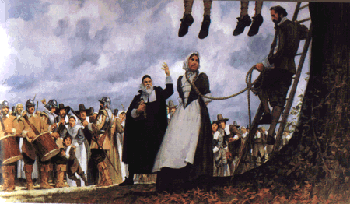
Puritans in Massachusetts Bay Colony Hanging Quakers

“Who does not see that the same authority which can establish Christianity, in exclusion of all other religions, may establish with the same ease any particular sect of Christians, in exclusion of all other sects?” James Madison

“We believe that institutionally Christianity should be the official religion of the country, that its laws should be specifically Christian” David Chilton (leader in Christian Reconstructionist and Dominionist Theology)

We love to talk about religious liberty in the United States, especially we who are of the Christian faith.  In fact religious liberty is deeply entwined in the story of the United States of America.  We love to call attention to those brave souls that came to North American search of religious liberty to the point that sometimes we fail to realize that we  have moved from history to myth.  The story of the Massachusetts Bay Colony…

View original post 2,684 more words

2 Comments

Filed under Loose thoughts and musings

The Real Conflict: Ethics and American Values Versus Realpolitik

Syria03_GQ_07Dec12_getty_b_642x390

“A country that demands moral perfection in its foreign policy will achieve neither perfection nor security” Henry Kissinger

There are a times in a nation’s life that its leaders are confronted with situations that present conflicts between a nation’s values and realpolitik.

The fact is that there are “tribes” in foreign policy and national security debates. Some are the idealists, others pragmatists and some realists. There are gradients between the levels and sometimes depending on the situation an idealist might gravitate toward pragmatism or even realpolitik and visa versa. Sometimes it is a matter of politics, sometimes ideology and sometimes even  and no leader of no political is immune from these tensions.

The situation in Syria is one of those times where the conflicting agendas of the different foreign policy tribes conflict and where no matter what happens in Syria the conflicts between the tribes will remain and perhaps even grow more pronounced. The fact is that I often can find myself on several sides of the same argument. It might be the PTSD “Mad Cow” is causing these conflicts but it could also be that there are good arguments to be made on all sides of the argument. What is ultimately the right course or the wrong course is actually hard to say.

If we argue for the idealist position, which would argue that American values of stopping human rights violations and the use of chemical weapons, something prohibited under the Hague convention and the more recent Chemical Weapons Convention of 1992 against the realpolitik of what are the actual National Security interests of the United States, the vital interests which involve the survival of the nation itself, major interests which could impact national security or tertiary interests which might have some importance but do not threaten the survival of the nation, even of they are terrible crimes against humanity.

Whether one likes it or not these are legitimate ethical and policy conflicts. On one hand there is the position that the United States has taken following World War Two and the Nuremberg trials as well as its participation in the International Criminal Courts has a moral obligation to confront the use of chemical weapons even if other nations or international bodies stand aside. On the other hand the argument that what happens in Syria is not in the vital interests of the United States and that the United States should not take military action to stop the use of those weapons. The fact is that those that advocate military action in Syria be they politicians, pundits, preachers or profiteers need to remember the words of Carl Von Clausewitz that “No one starts a war – or rather, no one in his senses ought to do so – without first being clear in his mind what he intends to achieve by that war and how he intends to conduct it.” I really don’t think that we have thought this through as a nation.

Of course these two positions are not exclusive. There are also ranges of action which span the full spectrum of action between the either or situation that most Americans seem to find themselves caught between. The fact is that the National Security Strategy of the United States is not based on military might alone, no matter how much it has been used as the first choice by American leaders. The reality is that military force is only one element, and perhaps the weakest element of the elements of national security police known as the “DIME.” That is the Diplomatic, the Informational, the Military and the Economic power of the nation. What we seem to have forgotten is that the other elements of the DIME other than the gut level military response have value and are perhaps even more important.

I think that a large part of this conundrum is found in the reflexive use of military force as the preferred means of action since the attacks of September 11th 2001. On that day the United States was attacked by the terrorist attacks of Al Qaeda militants and while the victims of those attacks were overwhelmingly American the citizens of over 60 other nations we killed in the attacks.

Those attacks demonstrated the vulnerabilities of this nation. When one looks at our actual national security policy it is clear that those vulnerabilities are not always fixed by military action in other countries. In fact they sometimes can become even more glaring as resources required for Homeland Defense and economic recovery are spent on military operations of dubious strategic value and which at times undermine efforts to build trust with other nations, build coalitions based on shared values and to undercut the efforts of extremists using diplomacy, information and economic power.

What we have to answer now is how we address a situation in Syria that is both a violation of international law but which military force alone cannot solve. Of course there is a conflict between our ideals and what are vital national security concerns. I would suggest that the real threat of military action can be a part of the answer if it helps the United States and the world make the case through diplomacy, information and economic pressure not only to stop the slaughter but to hold those responsible for it accountable in International Criminal Courts for the commission of war crimes. At the same time the reality is that the United States and the world cannot allow an Al Qaeda dominated organization such as the Al Nursa Front gain control of Syria.

The fact is that despite how clear cut we want things to be as Americans that much of what happens in the world takes place in a world of more than 50 shades of gray. Unfortunately American conservatives and liberals alike prefer to see foreign policy in the “either or” world of using pure military force or doing nothing, neither of which of themselves are the answer. The full continuum of national and international power must be brought to bear in these kind of situations, recognizing that not everyone shares our values or has the same strategic interests.

It may not be comfortable for anyone but it is reality. How we navigate it is key, maintaining our values while ensuring that our nation survives. If military action is decided on one has to remember what Clausewitz said: “The political object is the goal, war is the means of reaching it, and the means can never be considered in isolation from their purposes.”

To make a decision without understanding this or as we did in Iraq ignoring it is to risk disaster. Such are the stakes. I personally would rather see more negotiation in the hopes that the Syrian chemical and biological weapons are secured and those responsible for using them, be they Assad, his government or even the rebels attempting to frame the Syrians and deceive the United States against the Syrian people are brought to justice.

This is a messy business and not for the faint of heart. Lives of thousands of people in Syria, the region and potentially around the world are at stake and a military strike that fails to accomplish the political object would be worse than none at all.

Peace

Padre Steve+

4 Comments

Filed under Foreign Policy, History, middle east, Military, national security, News and current events

Forerunners of the Next Generation: The New Mexico Class, USS New Mexico, USS Idaho and USS Mississippi

In response to a request by a reader I am re-posting this article with a plug for the USS New Mexico BB-40 Reunion. As our World War II veterans continue to pass away it is important that we continue to remember them and their service to the nation. It is funny in a time when the wars of the nation are quite literally the burden of a small part of society that in the Second World War the nation banded together as it had not before or after for a common goal. Millions served, millions more including large numbers of women worked in the industries that produced the ships, aircraft and weapons that supplied the United States military as well as a large part of the Allied War effort through Lend Lease. It was also a catalyst that helped revitalize the country as veterans returned home, studied under the GI Bill leading to the post war economic boom of the 1950s. The war also brought additional life to the civil rights movement as African American GIs returned home after serving overseas vowing not to remain persecuted and marginalized citizens. Please pass this along to anyone that you know who served on the New Mexico or are the family members of a former New Mexico Sailor. Contact Sheri Briley USS New Mexico BB40 reunion, at e-mail aspie_pride@yahoo.com or cell phone # 636-497-0583.

As far as me, today was long day in class and in processing with another couple coming up. I have to catch up on some reading so I wish you a good night.
Peace,
Padre Steve+

padresteve's avatarThe Inglorius Padre Steve's World

New Mexico BB-40 in 1930 before moderization

The Battleships of the Nevada and Pennsylvania classes had established American ship design as second to none in 1916.  At the same time the US Navy was planning advances in engineering systems that would change naval engineering forever.

Idaho  BB-42 in 1931 after modernization

The ships of the New Mexico class were improvements on the preceding Nevada and Pennsylvania class half sisters.  Their hull was lengthened and beam increased. Additionally the new class was given a clipper bow to improve sea keeping capabilities.  While they maintained the same main battery layout of four turrets mounting three 14” guns each, however the guns were a higher caliber 14”/50 models that would also be mounted on the California class.  The New Mexico was also the test bed for a new power plant which featured General Electric geared turbines with electric drive which would be standard…

View original post 686 more words

Leave a comment

Filed under Loose thoughts and musings

Timing is Everything: Learning at the Pivotal Points of Life and History

pb130620

“It’s what you learn after you know it all that counts.” Earl Weaver

Timing is everything, especially when it comes to learning. Tomorrow I begin my in processing and introductions to my class classes at the Joint Forces Staff College a student at the Joint Advanced Warfighting School. I have already began my studies refreshing myself on some of the basic National Security Strategy documents that form the basis of our nation’s Military and National Security strategy.

I have always sought to learn and even more importantly to be able to understand. I think that all of us need to have our beliefs and ideologies challenged. In my study of the great men and women of history I have found that those that it is those that learned in times of crisis. Thus when I look at history I find that many of the best learners did so at the pivotal points of their lives and the times that they lived. I have learned in formal and informal study but also in life and experience.

I have read all of them before but it was good to browse through them again after I downloaded them on my Kindle IPad App. I have to admit I like the ability to download, save and read documents so easily.

As I said this is not my first foray into these subjects on National Security policy and the Joint, Multinational and Interagency world. They were part of my study in the Marine Corps Command and Staff College back in 2003 to 2005. That too was a matter of perfect timing as far as learning was concerned. The National Security and Military Strategy documents that we studied in those courses were the ones hammered out in the years after the Cold War and to a large extent ignored by the Bush Administration as we went into Iraq. To remember the debates and discussions that we had in those courses is to remember that there were men and women who could honestly debate the gross mistakes that were unfolding in the wake of the invasion of that unfortunate country.

Now after 12 years of war I am back in class and there is a national and international debate about the use of chemical weapons in Syria and a possible military strike against the Assad regime. What I find amazing is that so few of the people debating the issue have the slightest idea about National Security Strategy, past or present and I would dare say that most pundits, politicians and preachers, that Trinity of Evil have little idea of what any of the baseline documents say, nor do most care. The issue for them is either the advancement of their particular party or ideological point of view or in the case of the politicians their re-election chances. Lay people for the most part just get what they are fed by media outlets and are often even less informed or knowledgeable about these critical issues.

In the past two days I have re-read The 2010 National Security Strategy http://www.whitehouse.gov/sites/default/files/rss_viewer/national_security_strategy.pdf

the 2010 Quadrennial Defense Review  http://www.defense.gov/qdr/images/QDR_as_of_12Feb10_1000.pdf  The 2011 National Military Strategy of the United States of America http://www.jcs.mil/content/files 2011-02/020811084800_2011_NMS_-_08_FEB_2011.pdf and the 2012 Strategic Guidance entitled “Sustaining Global Leadership: Priorities for 21st Century Defense http://www.defense.gov/news/Defense_Strategic_Guidance.pdf 

The documents are the most recent guidance on these policies provided by the Defense Department and the White House. As far as they go for the time they were written they were fairly good. However like all such policy documents they are products of their time and in a fast changing world while many aspects still work they are limited. All except the 2012 Guidance none discuss the events of the Arab Spring because it had not yet occurred and few people anticipated it. Thus the continued strife in Egypt and Syria is something that will have to be addressed.

Likewise one deal with the budgetary realities that are currently crippling the military force and will impact any future military operations as well as force structure. Thus in the next year or so all will be updated. It will be good to be in the course because we will have our regular instruction plus guest speakers who have been involved in these debates and those working on policy for the coming years.

Despite their limitations I would recommend that anyone commenting on National Security matters at least take the time to familiarize themselves with these documents as well as those dating back to the mid-1990s. It is irresponsible for the chatty classes to make uniformed or half-informed pronouncements about what should be done in any of the many challenges confronting the nation without understanding the policies of the the past 20 years and more that got us to this point in time. Confucius said “Study the past if you would define the future.” His words are as pertinent now as they were when he penned them.

Since I have discussed some of the issues of the situation in Syria in previous posts recently it will suffice to say that going to this school at this time is going to expose me to a lot of different perspectives and I imagine will bring about some close friendships with the students in my seminar group.

I do expect to learn a lot over the coming months and as I said at the beginning of this article, when it comes to learning timing is everything. But as Albert Einstein said “Any fool can know. The point is to understand.”

I do not know how much time I will have to write but I will try to attempt to keep writing here over the next few months on a regular basis. I might not get as many articles up but I will keep writing and in mid November I will be able to resume a normal amount of writing.

Peace

Padre Steve+

1 Comment

Filed under History, Military, national security

Injustice in Syria and the Impotence of the World

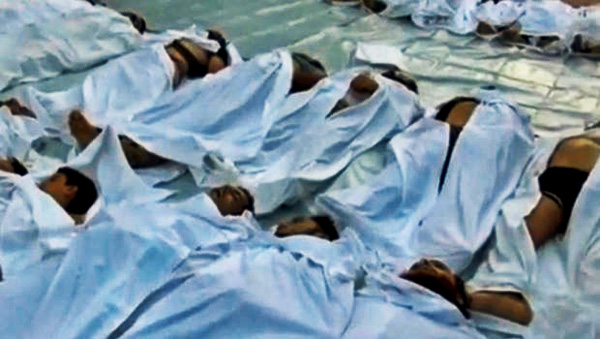
syria-unleashes-massive-gas-chemical-attack-on-damascus

“There may be times when we are powerless to prevent injustice, but there must never be a time when we fail to protest.”  Ellie Wiesel 

I do not think that any surgical strike against Syrian military forces and chemical weapons facilities by a handful of US Navy ships and submarines will stop the unrelenting bloodbath that is the Syrian Civil War. It would be nice if it would but realistically it will not.

What is going on in that country fits every definition of war crimes and crimes against humanity as defined by Nuremberg, the Hague and Geneva Conventions, the Geneva protocols of 1925 which Syria is a signatory to specifically state that “the use in war of asphyxiating, poisonous or other gases, and of all analogous liquids, materials or devices, has been justly condemned by the general opinion of the civilized world.” This message was strengthened in the Chemical Weapons Convention of 1992, a document that 98% of the nations of the world are signatories to, although Syria  is not one of them.

There are strong moral and legal arguments to be made for intervention in Syria. Unfortunately morality and legal arguments against crimes against humanity seem to have very little weight in the world. But then they never have. It is only when nations decide that the threat extends beyond the deaths of unfortunate people that they really could not care less who lived or died, but directly threaten the economic and security interests of the great powers then the vast majority of people and nations would rather not get involved.

This is especially true after the American led coalition invaded Iraq on the basis of the threat of Weapons of Mass Destruction. The intelligence about the threat has been widely discredited, Iraq remains devastated, Iran empowered and the United States military hamstrung by 12 years of war. The Iraq War and its aftermath, the casualties, the costs and the loss of credibility of the United States as a result of it haunt the actions of the Obama Administration and will haunt future presidencies. As Harry Callahan noted “there are always results.” 

As Barbara Tuchman so well put it: “An event of great agony is bearable only in the belief that it will bring about a better world. When it does not, as in the aftermath of another vast calamity in 1914-18, disillusion is deep and moves on to self-doubt and self-disgust.” 

That was the result of the Iraq war. Though the vast majority of Americans had no direct link to the war that was fought by a small minority of military personnel the effects linger. Our politicians, pundits and preachers talk about us being “war weary” but that really can only be applied to the tiny number of men and women who have served in Iraq or Afghanistan and in numerous other places that no one knows or cares about. I think that people are less war weary than they are apathetic to anything that they do not believe directly effects them.

Bertold Brecht wrote:

“The first time it was reported that our friends were being butchered there was a cry of horror. Then a hundred were butchered. But when a thousand were butchered and there was no end to the butchery, a blanket of silence spread. 

When evil-doing comes like falling rain, nobody calls out “stop!”

When crimes begin to pile up they become invisible. When sufferings become unendurable the cries are no longer heard. The cries, too, fall like rain in summer.”

That being said the consequences of a military action that not only does not destroy the Assad regime’s military capacity to kill innocents could make matters even worse than they are now, a thought that is hard to imagine. Likewise the possibilities of the action going awry  and the situation escalating and even expanding outside the borders of Syria bringing are quite high.

The arguments against intervention as far as military consequences and the low probabilities of success of surgical strikes is a strong argument for non-intervention. Realistically unless there is the participation of major military forces from many nations back by the UN, the Arab League and NATO with boots on the ground to find, secure and destroy the chemical weapons a military strike may achieve a modicum of success but most likely fail in its ultimate goal. The result would be that the situation would continue to escalate and a broader intervention ensue.

I am not happy with the way this has played out. The moral thing would have been for the UN Security Council take strong action against the Syrian regime and the world join in. However that will not happen, too many nations see this as an opportunity to advance their own agendas in the region using both the Syrian government and the rebel forces, some of which are allied with the Al Qaida organization. Some of the Syrian Rebels are as bad as Assad when it comes to indiscriminate killing of innocents and the commission of war crimes.

This week there will be votes in the Senate and House of Representatives regarding a Senate resolution for limited military action against the Assad regime requested by the Obama White House. The political posturing of many opponents as well as supporters of intervention has been nothing but shameful. In many cases it is not about actual foreign policy but on politics dictated by gerrymandered districts and the politics of mutual assured destruction. There is a good chance that the resolutions will not pass and one or both houses of Congress. However there is a strong chance that even without Congressional approval that the Obama administration will most likely attempt to do the morally right thing with inadequate means.

I am torn on this. I do think that as Secretary of State John Kerry said this week that we are at a “Munich moment.” The consequences of inaction and limited action alike are potentially disastrous. The hope of many for the Arab Spring has turned into a nightmare. The question is how bad the nightmare will get.

Honestly I cannot say what is I think should be done. I can make the case for intervention based on moral, legal and ethical grounds and I can make the case against based on realpolitik.

All that being said, for the sake of humanity echo the words of Ellie Wiesel“For the dead and the living, we must bear witness.”

Peace

Padre Steve+

2 Comments

Filed under ethics, Foreign Policy, History, national security