Yearly Archives: 2016

The Rollback and the Response: Jim Crow to Civil Rights

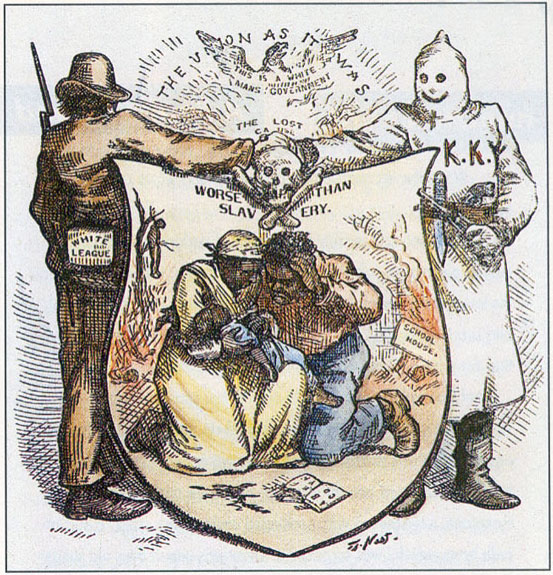
KKK-Nast

Friends of Padre Steve’s World,

Today I have a revised section of my Cicil War text “A Great War in an Age of Revolutionary Change.” I have being doing some final touches on it before I start working on final edits before seeking a publisher. I think it is important and timely in a day when state legislatures throughout the “Old South” are passing laws that seek to restrict voting rights against minorities and the elderly in order to diminish their political power, or to pass legislation designed to discriminate against LGBTQ people based solely on religious dogma. 

In such a world it is important to remember what happened to African Americans after Southern Whites reclaimed power following the collapse of Reconstruction.

Have a great day.

Peace

Padre Steve+

The Supreme Court, Congress, the Presidents as well as state governments systematically rolled back the rights of African Americans after Reconstruction ended. The Courts were the first to do this and once they had set the precedent were followed by the now Democrat controlled Congress and President Grover Cleveland. In 1883 “the Civil Rights Act of 1875, outlawing discrimination against Negroes using public facilities, was nullified by the Supreme Court, which said: “individual invasion of individual rights is not the subject-matter of the amendment.” The Fourteenth Amendment, it said, was aimed at state action only. No state shall…” [1] Associate Justice Joseph Bradley who had so eviscerated the Enforcement Act again played his hand in overturning a law that he despised on principle. He had written when Grant first signed the act in 1875 “to deprive white people of the right of choosing their own company would be to introduce another kind of slavery…. It can never be endured that the white shall be compelled to lodge and eat and sit with the Negro. The latter can have his freedom and all legal and essential privileges without that. The antipathy of race cannot be crushed and annihilated by legal enactment.” [2] In writing to overturn the Civil Rights Act of 1875 Bradley wrote that such laws were made African Americans a “special favorite of laws” and ignored the fact that in most of the country blacks were indeed not a favorite and were in fact still the subject of discrimination, segregation, political disenfranchisement, systematized violence, murder and lynching.

The actions of the court and alliances between Northern corporations and Southern landowners led to even more discrimination and disenfranchisement for blacks, “From the 1880s onward, the post-Reconstruction white governments grew unwilling to rely just on intimidation at the ballot box and themselves in power, and turned instead to systematic legal disenfranchisement” [3] which furthered the black codes into what we now call the era of Jim Crow.

For years after the Supreme Court’s Cruikshank decision blacks throughout the South attempted to vote despite intense opposition from Southern whites and armed bands of thugs. But with White Democrats now in charge of local government and “in control of the state and local vote-counting apparatus, resistance to black voting increasingly took the form of fraud as well as overt violence and intimidation. Men of color who cast Republican votes often found later that they had been counted for the party of white supremacy.” [4]

In 1896 the Supreme Court in the case of Plessy v. Ferguson upheld the black codes and Jim Crow laws. That ruling established the “separate but equal” doctrine and ushered in an era of de jure segregation in almost all arenas of life including education, transportation, entertainment and health care. The limited social equity and privileges enjoyed by blacks, not only in the South, but in the entire nation were erased by the stroke of the judicial pen. The justices ruled on the concept that the Constitution only guaranteed or protected a people’s political rights in the social arena that African-Americans could not interact with whites and assumed their racial inferiority.

Not all on the Court agreed with these rulings. One of them was Associate Justice John Harlan, who was a former slaveholder. Harlan dissented in the Court’s majority decision to overturn the Civil Rights Act of 1875 and also in Plessy v. Ferguson. In the case of the Civil Rights Act ruling Harlan insisted “our Constitution is color blind” [5] and wrote a strongly worded opinion:

“The destinies of two races, in this country are indissolubly linked together, and the interests of both require that the common government of all should not permit the seeds of race hate to be planted under the sanction of law. What can more certainly arouse race hate, what more certainly create and perpetuate a feeling of distrust between these races, than state enactments, which, in fact, proceed on the ground that colored citizens are so inferior and degraded that they cannot be allowed to sit in public coaches occupied by white citizens? That, as all will admit, is the real meaning of such legislation as was enacted in Louisiana.” [6]

As eloquent and as correct as Justice Harlan’s argument was, it was not sufficient to turn the tide of the new Court backed segregation laws. Harlan “was fighting a force greater than the logic of justice; the mood of the Court reflected a new coalition of northern industrialists and southern businessmen-planters.” [7] The “separate but equal” measures approved by the Court majority in Plessy v. Ferguson led to the widespread passage of Jim Crow laws, not only in the South but in other areas of the country. The Jim Crow era took nearly a century to reverse, and “only began to disappear with Brown v. Board of Education in 1954 and the Civil Rights and Voting Rights Acts of 1964 and 1965.” [8]

In order to get around the Fifteenth Amendment state governments in the South employed a strategy of subterfuges to suppress the African American vote. Along with the ever present threats of voter intimidation from armed White Supremacist groups, the states complicated the processes of voter registration and voting in order to make it nearly impossible for blacks to vote and into political oblivion. “Redeemer” governments in the post-Reconstruction South through the use of literary tests and poll taxes, the later which required people to pay in order to vote. The literacy and educational requirements mandated that “perspective registrants to “interpret” a section of the state constitution, and enacted standards which few blacks could fulfill, such as limiting registration to those whose grandfathers had voted.” Of course few blacks could meet the latter requirement as their grandfathers had been slaves and ineligible to vote. The laws were so devious that “when a journalist asked an Alabama lawmaker could pass his state’s understanding” test, the legislator replied, That would depend on entirely on which way he was going to vote.” [9]

These court decisions and legislation strengthened racism and discrimination against blacks, “effectively excluding blacks from public places, from the right to votes, from good public education, and so forth.” [10] The Plessy ruling was a watershed. Southern legislators, now unencumbered by Federal interference passed “state laws mandating racial segregation in every aspect of life, from schools to hospitals, waiting rooms to toilets, drinking fountains to cemeteries…segregation was part of a complex system of white domination, in which each component – disenfranchisement, unequal economic status, inferior education – reinforced the others.” [11]

For decades future courts would cite Plessy and Cruikshank as well as other decisions as precedent in deny rights to blacks. It would not be until 1954 when the Supreme Court overturned Plessy and the “Separate but Equal” Jim Crow laws in Brown v. Board of Education. Brown was a watershed for it deemed that separate schools were “inherently unequal.” The reaction across the South, especially Mississippi was stunned shock, disbelief and anger. “A Mississippi judge bemoaned “black Monday” and across the South “Citizen’s Councils” sprung up to fight the ruling. [12]

Mississippi led the way in disenfranchising black voters through the use of voter qualifications that would eliminate most blacks from the rolls of voters. In 1895 the state legislature passed a measure that would “technically apply to everybody but actually eliminate the Negro without touching the white.” [13] The move was in open defiance of the Fifteenth Amendment and resulted in tens of thousands of black voters being dropped from the rolls, in most cases under 5% of black voters who had been eligible to vote in 1885 remained eligible in 1896. Mississippi was rewarded in 1898 when the Supreme Court in Williams v. Mississippi that “there was no reason to suppose that the state’s new voting qualification were aimed specifically at Negroes.” [14] “In 1900 blacks comprised 62 percent of Mississippi, the highest percentage in the nation. Yet the state had not one black elected official.” [15]

Violence was used with great effect and between 1880 and 1968 approximately 3,500 people were murdered or lynched throughout the South. In 1892 alone 235 blacks were lynched “and throughout the decade, whites lynched an average of 150 southern blacks per year.” [16] This had become a far easier task and far less dangerous for the perpetrators of violence against blacks as Supreme Court “interpreted black people’s other constitutional rights almost out of existence.” [17] Since the court had “limited the federal government’s role in punishing violations of Negro rights” this duty fell to the states, which seldom occurred, and when “those officials refused to act, blacks were left unprotected.” [18]

The effects of these actions were shown in the number of African Americans in elected office. In 1869 there were two African American United States Senators and twenty black members of the House of Representatives. After Reconstruction ended these numbers dwindled and “the last black left Congress in 1901.” [19]

One of these was the case of United States v. Harris where the federal prosecutors had indicted “twenty members of a Tennessee lynch mob for violating section two of the enforcement Act, which outlawed conspiracies to deprive anyone of “equal protection of the laws.” However the Court struck down section 2 because the “lynching was not a federal matter, the Court said, because the mob consisted only of private individuals.” [20]

Many Southern states, especially Mississippi continued to tighten Jim Crow throughout the first half of the twentieth century. “In 1922 a new Jim Crow law kept up with the times by segregating taxis. In 1930 another new law prohibited “publishing, printing, or circulating any literature in favor of or urging inter-racial marriage or social equality.” [21] Not only were physical barriers being erected, but thought and free speech was now illegal if one supported equal rights.
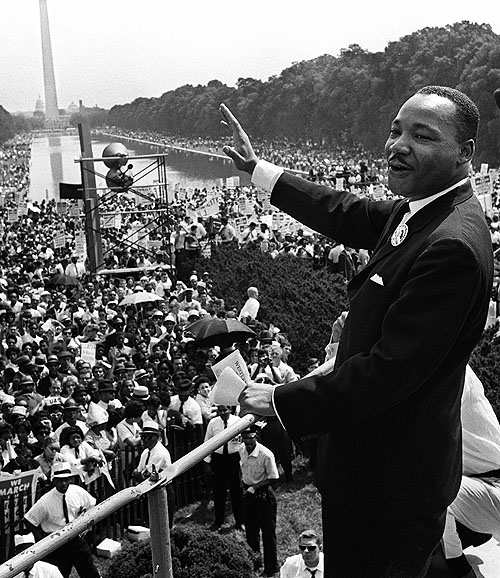
martin-luther-king-jr

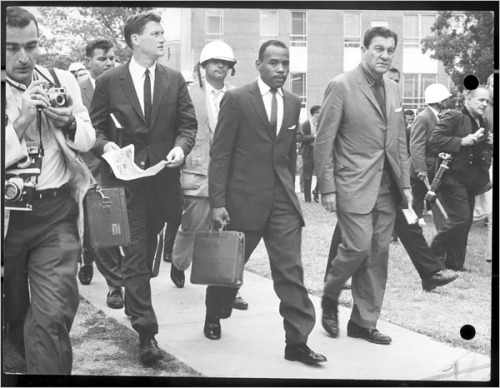
This remained the case until the 1960s when during the Freedom Rides when Mississippi again became a battleground in the Civil Rights movement. In 1961 James Meredith, a veteran of the U.S. Air Force, became the first black to ever be admitted to the University of Mississippi. His admission was fought by the university, Mississippi politicians including U.S. Senator James Eastland, Governor Ross Barnett, numerous congressmen and state representatives, and a populace that threatened violence and even war if the Federal government or courts order them to comply. Governor Barnett spoke for many when he made a statewide television address in September 1961 “We must either submit to the unlawful dictates of the federal government or stand up like men and tell them ‘NEVER!’” [22] He then called for the arrest of any federal officials who attempted to hold a state official for defying federal court orders. Backed by federal court orders to admit Meredith, and by the Brown v. Board of Education ruling, Attorney General Robert F. Kennedy called Barnett on September 24th.

“Governor,” Kennedy observed, “you a part of the United States.”

            “We have been a part of the United States, but I don’t know whether we are or not.”

            Are you getting out of the Union?”

            “It looks like we are being kicked around – like we don’t belong to it.”

            Back to specifics again, Kennedy ended the talk with a typical crisp wrap-up. “My job is to enforce the laws of the United States.” [23]

The resultant conflict nearly came to violence as thousands of Mississippians, whipped into an anti-black and anti-federal government frenzy by their elected leaders, radio, and television and newspaper commentators and supported by the KKK, the John Birch Society and other groups mobilized to fight the “invasion.” Eventually a deal was reached to admit Meredith on September 30th. As Meredith entered the campus he was protected by Federal Marshals and Border Patrol officers, as well as the State Police, which had just a few hours before been deployed to keep Meredith and the federals out. Despite this thousands of people ringed the campus, and the Confederate Battle Flag was raised over the Civil War memorial on campus. The rioters uttered death threats and assaulted anyone who supported Meredith. Members of the press, even southerners, faculty members and civilian supporters were beaten, bricks, stones and bottles thrown, tires of federal vehicles slashed. Finally the marshals themselves were attacked and eight injured, forcing them to deploy tear gas to protect themselves and the State police withdrew.
tumblr_ly9o466dxz1r4tvc5o1_500

James Meredith being escorted to Ole Miss

Eventually U.S. Army MPs and mobilized National Guard units were called up and battled Molotov cocktails that were being thrown by the anti-integration protests to relieve the beleaguered marshals and border patrolmen. The troops finally cleared the campus and ended the riot. During the riot 160 marshals were hurt, some 28 of who were wounded by bullets fired by the protestors. The next morning with Meredith admitted to the university a local clergyman saw the Confederate flag still flying and “with firm step, he strode out to the pole, loosened the halyard and lowered the Confederate flag.” [24]

The battle to integrate Ole’ Miss was over. Meredith graduated peacefully in August of 1963 and by then Mississippi abandoned its defiance of Federal authority, but many in the state still protested the admission as well as the later passage of the Civil Rights and Voting Rights Acts. Violence still occurred and even intensified at times as the Civil Rights movement, now led by Dr. Martin Luther King Junior made headway. King wrote in the Letter from a Birmingham Jail:

“One day the South will recognize its real heroes. They will be the James Merediths, with the noble sense of purpose that enables them to face jeering and hostile mobs, and with the agonizing loneliness that characterizes the life of the pioneer. They will be old, oppressed, battered Negro women, symbolized in a seventy two year old woman in Montgomery, Alabama, who rose up with a sense of dignity and with her people decided not to ride segregated buses, and who responded with ungrammatical profundity to one who inquired about her weariness: “My feets is tired, but my soul is at rest.” They will be the young high school and college students, the young ministers of the gospel and a host of their elders, courageously and nonviolently sitting in at lunch counters and willingly going to jail for conscience’ sake. One day the South will know that when these disinherited children of God sat down at lunch counters, they were in reality standing up for what is best in the American dream and for the most sacred values in our Judaeo Christian heritage, thereby bringing our nation back to those great wells of democracy which were dug deep by the founding fathers in their formulation of the Constitution and the Declaration of Independence.” [25]

In South Carolina, which had fought integration in the courts outgoing Governor Ernest F. Hollings read King’s letter and knew that he had been on the wrong side of history. The Democrat Governor realized that the handwriting was on the wall, and that South Carolina was different than Mississippi. Hollings knew that South Carolina’s racism was the old aristocratic type, which gave more value to an orderly society. As such Hollings told the legislature:

“As we meet, South Carolina is running out of courts. If and when every legal remedy has been exhausted, the General Assembly must make clear South Carolina’s choice, a government of laws rather than a government of men. As determined as we are, we of today must realize the lesson of once hundred years ago, and move on for the good of South Carolina and our United States. This should be done with dignity. It must be done with law and order.” [26] When Clemson University admitted its first student later in the year, there was no violence.

Hollings later remembered that for years he had supported and enforced the Jim Crow laws in his state. However, King’s Letter from a Birmingham Jail changed him, it was for him a moment like the Apostle Paul on the Road to Damascus. He admitted, “as governor, for four years, I enforced those Jim Crow laws. I did not understand, I did not appreciate what King had in mind… until he wrote that letter. He opened my eyes and set me free.” [27]

More violence would occur in Mississippi and other states during the 1960s. During the Freedom Rides, students and educators came from around the nation to the state to help register blacks to vote in 1964. This brought generations of barely concealed hatred to the surface. Bruce Watson in his book Freedom Summer wrote:

“In Mississippi’s most remote hamlets, small “klaverns” of ruthless men met in secret to discuss the “nigger-communist invasion of Mississippi.” They stockpiled kerosene, shotguns, and dynamite, then singled out targets – niggers, Jews, “nigger-lovers.” One warm April night, their secret burst into flames. In some sixty counties, blazing crosses lit up courthouse lawns, town squares, and open fields. The Klan was rising again in Mississippi. Like “White Knights” as their splinter group was named, the Klan planned a holy war against the “dedicated agents of Satan…determined to destroy Christian civilization.” The Klan would take care of your business, a recruiting poster said. “Get you Bible out and PRAY! You will hear from us.” [28]

Eventual the violence of these people led to the killings of three of the organizers, Michael Schwerner, James Cheney and Andrew Goldman were killed by a group of Klansmen led by members of the Neshoba County Sheriff’s Department on June 21st 1964. The resultant search for their bodies and the subsequent investigation transfixed the nation and led to the passage of the Civil Rights and Voting Rights Acts of 1964 and 1965.

After he left office, Ulysses Grant gave an interviewer a sober assessment of Reconstruction’s failure. Grant concluded that at the end of the war what the South really needed was a benevolent dictatorship until it could be fully reintegrated into the Union. Instead the South remained defiant and using subterfuge mixed with targeted violence wore down the will northerners to fully pursue and implement Reconstruction. He told the interviewer:

“Military rule would have been just to all… the Negro who wanted freedom, the white man who wanted protection, the Northern man who wanted Union. As state after state showed a willingness to come into the Union, not on their terms but upon ours, I would have admitted them. The trouble about the military rule in the South was that our people did not like it. It was not in accordance with our institutions. I am clear now that it would have been better to suffrage, reconstruction, State governments, for ten year, and held the South in a territorial condition. But we made our scheme, and we must do what we must with it.” [29]

Grant was correct in his analysis. The policies enacted by the North in 1865 that were considered benevolent were seized upon as signs of weakness in the defeated South. The leaders of the South knew that the Republican Party was a coalition and worked to push the fault lines of the Republicans until they broke, and they were successful. The Confederacy may have lost the war in a military and economic sense, but in the “ways that mattered most to white Southerners – socially, politically, and ideologically – the South itself did not.” [30] Grant died in 1885 hailed throughout the nation, but knowing that he was unable to secure the new birth of freedom, that he and his friend Abraham Lincoln and so many others had fought for in the Civil War.

The example of Reconstruction’s failure shows that in order to secure peace that military victory must be accompanied by the political will to ensure that the avowed goals of that victory are secured after the war in ensuring a just peace. In retrospect, a harsh peace and a long period of nation building may have benefited the nation more than botched reconstruction, but as Grant noted “our people did not like it.”

Southerners may have lost the shooting war, but they could not and would not accept the peace. By successfully wearing down the will of the people of the North and exploiting the fissures in varying components of the Republican Party, they succeeded in winning the things most important to them in regard to race relations and White Supremacy.

After the war, White Southerners resorted to all means to reverse their military defeat through political, social, economic and judicial means and “justice was sacrificed for the unjust peace ushered in by “redemption” of the South, a peace marred by Jim Crow, poverty and lynching.” [31] Most Northern leaders, politicians, the media and the clergy failed to appreciate this until it was far too late, and hindered by President Johnson’s opposition failed to win the peace in the South when they had the best chance. They failed to appreciate that even after the shooting is often that “there is a need for further threats, and indeed action, because postwar disorder and even chaos will have to be address, and victorious allies are always likely to squabble over the spoils of victory” [32] as certain was the case in the divided Republican Party of the Reconstruction era. By the time Ulysses S. Grant was elected President many in the North were already tiring of Reconstruction and African Americans and when he resorted to harsh yet effective means of quelling violence and enforcing the laws many, even in his own Republican Party rebelled, ensuring the former Confederates of a political and social victory that took nearly another hundred years to end, if indeed it is truly ended, a proposition that I think is ludicrous as for many the Civil War is not over.

Notes

[1] Ibid. Zinn The Other Civil War p.57

[2] Ibid. Lane The day Freedom Died p.253

[3] Ibid. Guelzo Fateful Lightening p.526

[4] Ibid. Lane The day Freedom Died p.251

[5] Ibid. Zinn The Other Civil War p.58

[6] LaMorte, Michael W. School Law: Cases and Concepts 9th Edition 2008 Allyn and Bacon Inc. 2008 p.300

[7] Ibid. Zinn A People’s History of the United States pp.204-205

[8] Ibid. Huntington Who are We? p.54

[9] Ibid. Goldfield Still Fighting the Civil War: The American South and Southern History p.197

[10] Gonzalez, Justo L. The History of Christianity Volume 2: The Reformation to the Present Day Harper and Row Publishers San Francisco 1985 p.252

[11] Ibid. Foner Forever Free p.208

[12] Ibid. Watson Freedom Summer p.46

[13] Ibid. Lord The Past that Wouldn’t Die p.22

[14] Ibid. Lord The Past that Wouldn’t Die p.23

[15] Ibid. Watson Freedom Summer p.41

[16] Ibid. Goldfield Still Fighting the Civil War: The American South and Southern History, Updated Edition, p.206

[17] Ibid. Lane The day Freedom Died p.253

[18] Ibid. Langguth After Lincoln p.338

[19] Ibid. Zinn A People’s History of the United States p.200

[20] Ibid. Lane The day Freedom Died p.253

[21] Ibid. Lord The Past that Wouldn’t Die p.25

[22] Ibid. Lord The Past that Wouldn’t Die p.139

[23] Ibid. Lord The Past that Wouldn’t Die p.159

[24] Ibid. Lord The Past that Wouldn’t Die p.231

[25] King, Martin Luther Letter from a Birmingham Jail 16 April 1963 Retrieved from https://www.africa.upenn.edu/Articles_Gen/Letter_Birmingham.html 15 September 2016

[26] Bass, Jack and Nelson, Jack The Orangeburg Massacre Mercer University Press, Macon and Atlanta 1984, 1996 & 2002 pp.11-12

[27] Ibid. Goldfield Still Fighting the Civil War: The American South and Southern History, Updated Edition, p.74

[28] Ibid. Watson Freedom Summer p.12

[29] Ibid. Lane The day Freedom Died p.254

[30] Ibid. Lane The day Freedom Died p.254

[31] Ibid. McPherson The War that Forged a Nation p. 191

[32] Ibid. Gray Fighting Talk p.14
2 Comments

Filed under civil rights, civil war, History, Political Commentary

The King George V Class Battleships: British Bulwarks

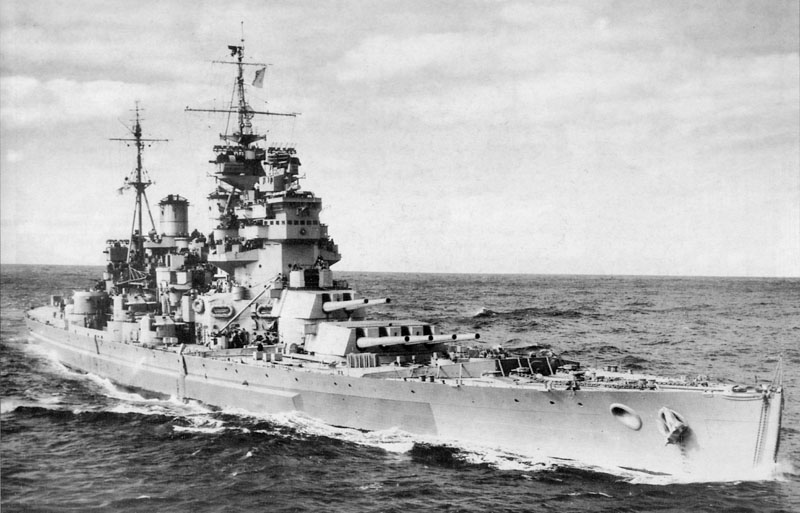
kgv2

Friends of Padre Steve’s World,

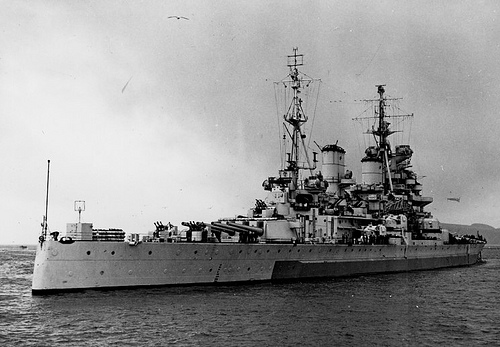
It has been a very busy couple of days so I am reaching back deep into the archives to re-post an old article about the British King George V Class battleships of the Second World War. These ships and their brave crews were of great importance to the Allied cause. Sadly, like so many great ships of that war all the surviving ships were scrapped due to measures of austerity and obsolescence and none preserved to honor their service or crews. 

Hope to post something fresh tomorrow,

Peace’

Padre Steve+

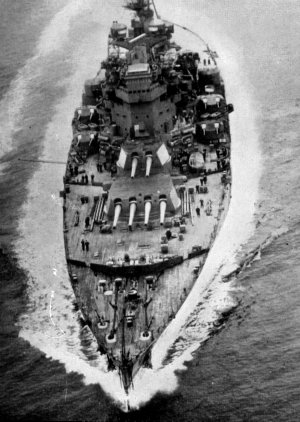
HMS King George V II

HMS King George V

This is the third in a series of five articles on the battleships built under the provision of the Washington and London Naval Treaty limitations in the 1930s. I am not including the ships which were completed in the immediate aftermath of the Washington Treaty limitations. This series looks at the modern battleships that the World War II combatants would produce in the 1930s which saw service in the war. This article covers the British Royal Navy King George V Class battleships. Part one covered the Italian Vittorio Veneto class entitled The Pride of the Regina Marina: The Vittorio Veneto Class Battleships. Part two French Firepower Forward: The unrealized potential of the Dunkerque and Richelieu Class Battleships covered the French Dunkerque class and Richelieu class Battleships. Part Four the American North Carolina and South Dakota Classes. I have already published the final part which covers the German Scharnhorst Class entitled Power and Beauty the Battle Cruisers Scharnhorst and Gneisenau. The German Bismarck, Japanese Yamato, British Vanguard and American Iowa Classes will be covered in a subsequent series.

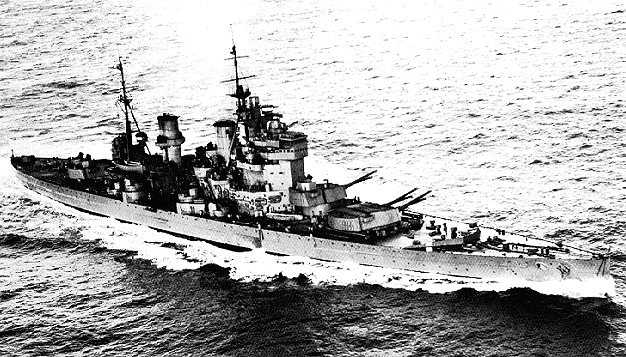
HMS_King_George_V_in_1941

HMS King George V in 1941

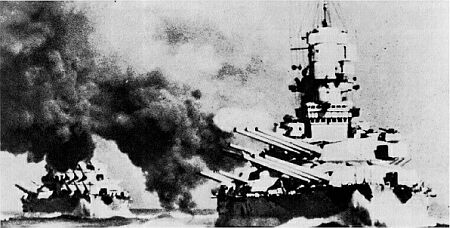
In the wake of the First World War the major naval powers entered into an agreement restricting the construction of capital ships and limiting the numbers that treaty signatories were allowed to keep. As a result numerous ships were scrapped or disposed of and the majority of planned ships were either cancelled while building or never laid down. In some cases to comply with treaty restrictions ships such as the Royal Navy’s Nelson Class which was a compromise design which sacrificed speed for protection and firepower. By the late 1920s the Royal Navy’s battle force was comprised of the Nelson’s, the fast Battlecruisers Hood, Renown and Repulse and 10 ships of the Queen Elizabeth and Revenge classes all designed before the First World War.

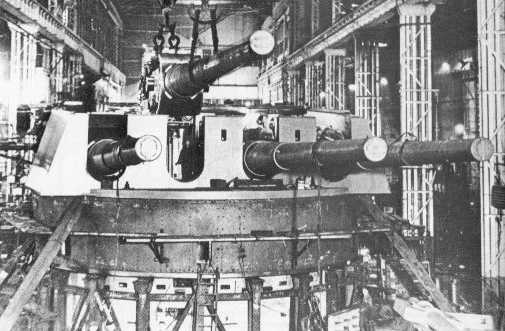
kgv class 14-45_mk7_pic

King George V Class Quad Turret being built

The Royal Navy began planning for a new class of battleships in 1928 but the plans were shelved with the signing of the London Naval Treaty which continued the “building holiday” on capital ship construction as well as size and armaments until 1937. With the realization that its battle force was becoming dated as other nations laid down new classes of battleships the Royal Navy recommenced planning in 1935. The Navy planned to build to the maximum of the 35,000 displacement limitation and placed a great measure of emphasis on armor and protection. The ships were designed to achieve a 28 knot speed which made them faster than all British battleships although slower than the Battlecruisers.

The planners had alternative designs to use 14”, 15” or 16” guns with the Navy favoring the 15” models which had equipped all of their other ships with the exception of the Nelson’s. However the Admiralty to use 14” as the government was endeavoring to negotiate with other powers to impose a 14” limitation on armament for new battleships. While the Americans and French agreed to the limit neither the Japanese nor Italians followed suit and as a result all new battleships of other powers had larger guns than the King George V Class ships with the French and Italians opting for 15”on the Richelieu and Vittorio Veneto Class, the Americans 16” on the North Carolina, South Dakota and Iowa Classes and the Japanese 18” guns for their Yamato Class. The Germans who were not a signatory built their Scharnhorst Class with 11” although they were planned as 15” ships and would equip the Bismarck Class with 15” guns. The Royal Navy attempted to rectify this by placing more guns on the ships than those of other navies but the planned armament of twelve 14” guns mounted in quadruple turrets but this was impossible on the 35,000 platform without compromising protection or speed. Thus the Admiralty compromised on 10 guns mounted in 2 quadruple and 1 twin turret.

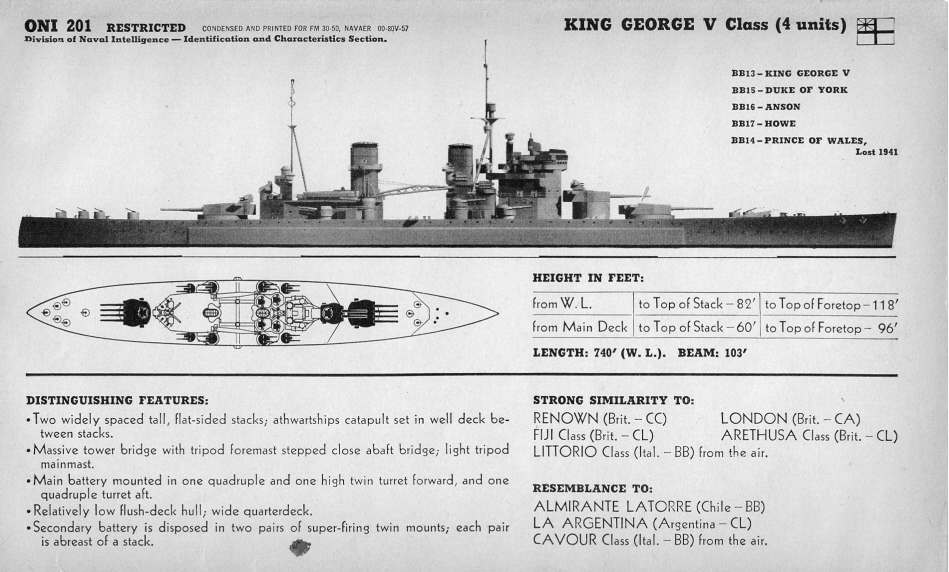
king george v class drawing

ONI Drawing of King George Class

The ships displaced a full load displacement of 42,237 tons in 1942 which had increased to 44,460 tons in 1944. The were 745 feet long had a beam of 103 feet, a top speed of 28 knots with a cruising range of 5,400 nautical miles at 18 knots. Their relatively poor endurance limited their operations in the Pacific and even nearly caused King George V to have to abandon the chase of the Bismarck in May 1941.

The main batteries of the ships proved problematic in combat with the quadruple turret design causing all the ships problems. This was demonstrated in the engagement of the Prince of Wales against the Bismarck as well as the King George V in its duel with the German behemoth when A turret became disabled and completely out of action for 30 minutes and half of the main battery being out of action for most of the engagement for mechanical reasons. The Duke of York achieved excellent results against the Scharnhorst but even in that engagement the main battery was only able to be in action 70% of the time. One of the other drawbacks of the design was that in order to replace a gun due to wear that the turret itself had to be dismantled in order to remove and replace the guns.

The main secondary armament of 5.25” dual purpose guns in twin mounts suffered from poor rate of fire and slow traverse well below their designed standards.

The mounting of the armament was designed to provide protection against turret explosions which could potentially detonate the ship’s magazines. The main side and underwater protection scheme was sound and protected the ships well in combat. The vertical protection was also sound as was the protection afforded to the turret barbets and placement of the magazines to shield them from plunging fire. Only the Prince of Wales was lost due to enemy action had later examination of her wreck revealed that the culprit was a torpedo which detonated in a propeller shaft outside of the armored belt which caused uncontrolled flooding when she was attacked by Japanese aircraft on 8 December 1941.

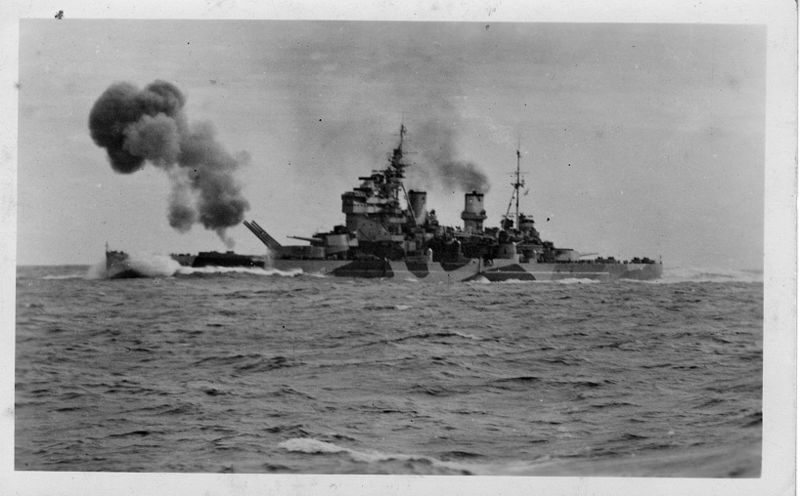
HMS_Anson_firing_guns

HMS Anson conducting gunnery exercises

The propulsion systems developed problems after 1942 when fuel oil quality was decreased because of the need for aviation gas. The new mixtures which were higher viscosity and contained more water than the boilers could effectively burn increased maintenance costs and decreased efficiency. To compensate the Admiralty designed new higher pressure fuel sprayers and burners which returned the boilers to full efficiency.

The lead ship of the class the King George V was laid down on 1 January 1937, launched on 21 February 1939 and commissioned on 11 December 1940. As the flagship of the Home Fleet she took part in the unsuccessful search for the Scharnhorst and Gneisenau and in the hunt for the Bismarck in which she earned lasting fame in helping to sink that ship. She took part in the Murmansk convoy protection as well as Operation Husky, the invasion of Sicily before sailing to the Far East for operations against the Japanese. She finished the war with the British Pacific Fleet and was present at the Japanese surrender in Tokyo Bay. She returned as flagship of Home Fleet until she was decommissioned in 1949. She was subsequently sold for scrap in 1957.

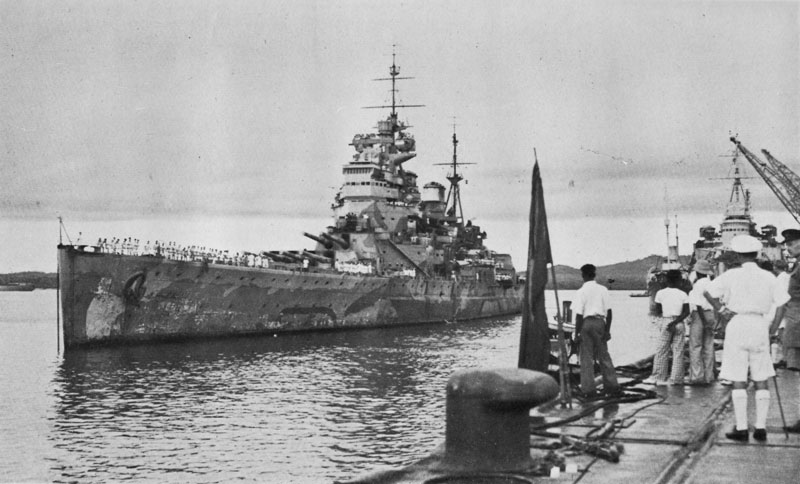
prince of wales

Prince of Wales pulling into Singapore, December 1941

The second ship the Prince of Wales laid down on 1 January 1937, launched on 3 May 1939 and commissioned 19 January 1941 although she was not officially completed until March 1941. Her initial operation came in May 1941 when she sailed with the HMS Hood to intercept the Bismarck. When she sailed she still had shipyard technicians aboard. Damaged in the action she did score an important hit on Bismarck which cut a fuel line making her forward tanks inaccessible and causing her to make her run for Brest which she did not complete. Another hit damaged her aircraft catapult and a third an electric dynamo.

Prince_of_Wales-4

Church Service on Prince of Wales at Argentia Bay with Churchill and Roosevelt in attendance

Following repairs she carried Winston Churchill to the Argentia Bay Newfoundland where he met with Franklin D. Roosevelt and together drafted the Atlantic Charter. She accompanied the HMS Repulse to Singapore to bolster the British presence in the Far East but without air cover was sunk by Japanese aircraft which struck her with 4 torpedoes and a bomb, the key hit being a lucky hit on her propeller shaft which caused flooding that caused a loss of power to pumps and anti-aircraft defenses.

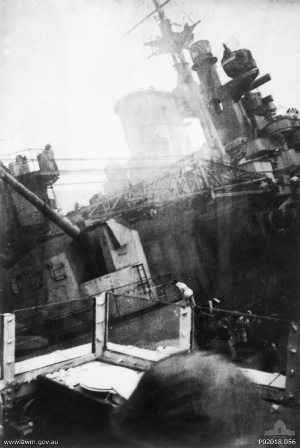
Prince_of_Wales_sinking

Prince of Wales sinking and being abandoned

The third ship the Duke of York was laid down 5 May 1937, launched on 28 February 1940 and commissioned 4 November 1941. She provided convoy escort for the Lend Lease convoys to the Soviet Union as well the sinking of the Scharnhorst on 26 December 1943 during the Battle of North Cape. She was transferred to the Pacific in 1944 and served at Okinawa. She was decommissioned in 1949 and scrapped in 1957.

duke_of_york_02

Duke of York

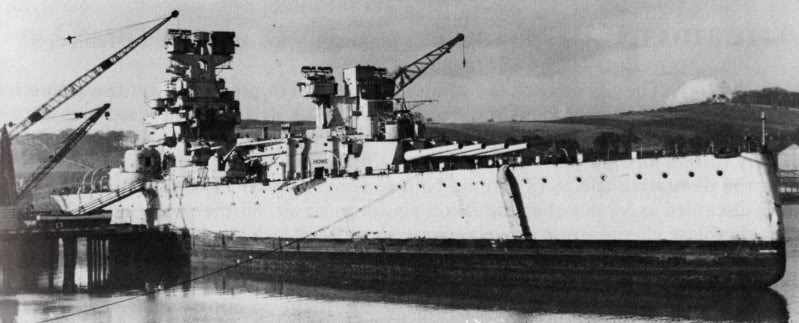
The fourth ship of the class the Howe was laid down on 1 June 1937, launched 9 April 1940 and commissioned on 29 August 1942. She served with the Home Fleet and in the Mediterranean until she was transferred to the Pacific in August 1944. She was stuck by a Kamikaze in May 1945 and Howe was sent for refit at Durban South Africa. She was still in refit when the war ended. She returned home and was placed in reserve in 1950 and scrapped in 1958.

hms howe

HMS Howe

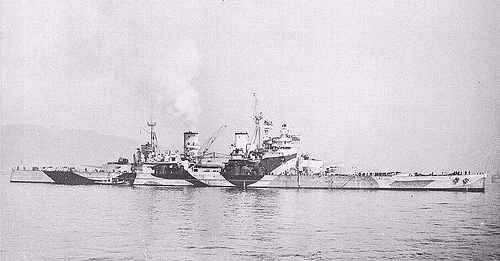
The last of the class the Anson was laid down 20 July 1937, launched 24 February 1940 and commissioned on 22 June 1942. She operated in the Mediterranean and the North Atlantic and was sent to the Pacific in 1945 where she accepted the surrender of the Japanese Forces at Hong Kong. She returned to Britain and was decommissioned in 1951 and scrapped in 1957.

hms anson

HMS Anson

The ships had rather unremarkable careers for the most part with the exception of the Prince of Wales and King George V in the hunt for the Bismarck and the Duke of York sinking the Scharnhorst. They had a number of technical problems which limited their operations in the war. However they and their brave crews deserve to be remembered as helping to hold the line against the Axis in the early years of the war and sank two of the four German Battleships lost during the war. This alone was as remarkable achievement as of their contemporaries only the USS Washington sank an enemy battleship in combat.

hmshoweundergoingscrappingatwards-n

The End: HMS Howe Being Scappped 1958 

1 Comment

Filed under History, Military, Navy Ships

Who is Guilty?

1179981

Friends of Padre Steve’s World

On September 16th 1963 a young Southern White lawyer in Birmingham Alabama spoke these words after a black church was bombed and the police attacked peaceful protesters:

“from anger and despair, from frustration and empathy. And from years of hopes, hopes that were shattered and crumbled with the steps of that Negro Baptist Church.”

Most Americans will not recognize the names and I would dare say that many do not even know about what happened in Birmingham Alabama 52 years ago today. At 10:22 in the morning on September 15th 1963 a bomb exploded during the worship service at the 16th Street Baptist Church. It was one of the most brazen attacks against a church in the modern era, and men who claimed to be “Christians” committed it.

MCNAIR ROBERTSON COLLINS WESLEY

Four young girls, three 14 year olds and one 13 year old were killed. Addie Mae Collins, Denise McNair, Carole Robertson and Cynthia Wesley lost their lives that day. Twenty-two other church members were wounded in an attack, which was carried out by members of the KKK and tacitly approved of by many political leaders including Alabama Governor George Wallace. Why were they killed and why were the others wounded? For the crime of being black and the crime of their church serving as a focal point of the Civil Rights movement.
Likewise, most people, including many blacks do not know that before that beginning in 1955 there had been 19 other bombings of black churches and the homes of black leaders in Birmingham before this one. But even before that outbreak of violence, Birmingham had become known as “Bombingham” because over 50 bombing attacks against blacks, black churches and black institutions in the years after the First World War.

The church had served as a focal point of the Freedom Summer where Civil Rights activists and students from around the country had met, trained and organized to register blacks to vote. This made it a prominent target for violence.

SixteenthStBaptistBomb05

Early in the morning of September 15th four members of the United Klans of America Frank Bobby Cherry, Thomas Blanton, Herman Cash and Robert Chambliss placed a box of 10 sticks of dynamite under the church steps near the basement. A time delay detonator was set o ensure that the church was filled when the bomb went off. The blast occurred as children were entering the to listen to a sermon, ironically entitled “The Love that Forgives.”

The attack was a heinous crime and an act of cold-blooded premeditated murder that maybe a number of years before might not have made the news in much of the country. But this was 1963 and over the preceding months of the Freedom Summer opened the eyes of people across the nation to what was happening in the South. The brutal attacks on many blacks, civil rights workers and student volunteers during that time raised the profile of the Civil Rights Movement and shown the ugly hatred towards blacks held by many Southerners hidden underneath the veneer of polite Southern hospitality.

765026275

Blacks protested and were met with a massive police response coordinated by Governor Wallace that brought about more violence, and more dead blacks. A day later a young white lawyer, Charles Morgan Jr.; a true Southerner by right and heritage spoke to the White Businessman’s club of Birmingham. His words were forceful and to the point. Instead of simply asking why, the young man began his speech with this poignant remark:

“Four little girls were killed in Birmingham yesterday. A mad, remorseful worried community asks, “Who did it? Who threw that bomb? Was it a Negro or a white?” The answer should be, “We all did it.” Every last one of us is condemned for that crime and the bombing before it and a decade ago. We all did it.”

He continued, “A short time later, white policemen kill a Negro and wound another. A few hours later, two young men on a motorbike shoot and kill a Negro child. Fires break out, and, in Montgomery, white youths assault Negroes. And all across Alabama, an angry, guilty people cry out their mocking shouts of indignity and say they wonder, “Why?” “Who?” Everyone then “deplores” the “dastardly” act. But you know the “who” of “Who did it” is really rather simple.”

Not only was the attack heinous, but, the response of many in law enforcement at the local level and even at the office of FBI Director J. Edgar Hoover was criminal. Hoover refused to investigate, and although a witness identified Chambliss, he was not charged with the bombing; instead he was charged for having a case of dynamite without a permit. He was fined $100 and given a six-month jail sentence.

robert-chambliss

Robert Chambliss 

Thought FBI agents had investigated the crime and discovered evidence against all four men, Hoover ordered the evidence not be provided to local or Federal prosecutors. So for eight years the crime was covered up.

However in 1971 Bill Baxley was elected Attorney General of Alabama. Baxley re-opened the case and requested the FBI files, which had been suppressed by Hoover, who had died in 1972. In 1977 Chambliss was indicted and convicted of first degree murder, he died in prison. Blanton was tried in 2001, convicted of four counts of murder and sentenced to life in prison. Cash died in 1994 with ever having been charged with a crime and Cherry was convicted in 2002, sentenced to life in prison and died in 2004.

The attack and the deaths of the four girls served as a catalyst in the Civil Rights Movement. In 1964 President Lyndon Johnson signed the Civil Rights Act. However it did not end the fight for equality, and others would die in its aftermath, including Dr. Martin Luther King Jr. who died at the hands of an assassin’s bullet less than 4 years later.

Since the passage of the Civil Rights Act of 1964 and the Voters Rights Act of 1965 many blacks have been elected to local, state and federal offices or served in some of the highest ranks of the military, judiciary, and at the Cabinet level. Two, Colin Powell and Condoleezza Rice have served as Secretary of State, two, Eric Holder and Loretta Lynch, as Attorney General of the United States; one, Clarence Thomas, as a Justice of the Supreme Court; and one, Barak Obama elected as President of the United States. Black sports stars, actors and singers are celebrated as heroes among much of society.

But despite these advances, racism is still quite prevalent. One of my former co-workers from Georgia, a white Southern Baptist minister and retired military chaplain noted that many whites may not be explicitly racists in interpersonal relationships with blacks, but have an attitude that blacks still need “to stay in their place.” He noted that he thinks that quite a few believe that many whites believe that this is a large part of the reason that President Obama is opposed and even hated by so many whites. It is not just politics or ideology. While politics may play a role the root of the hatred is racism because I cannot for the life of me imagining any white Democrat, including Hilary Clinton getting this kind of treatment.

But the sad truth is there still is an undercurrent of unrepentant racism in the country and not just the South. In fact many places in the South have seen greater advances in racial relations than other parts of the country. That is not to say that there are those who would attempt to disenfranchise blacks, some of the voting laws recently passed are designed to ensure that significant parts of the black population, specifically the elderly and students living away from home have greater difficulty voting. It is actually a more insidious method than past Jim Crow laws because the drafters of these laws hope to keep just enough black and other poor or minority voters from voting to ensure that they maintain power. Some of those who drafted or supported these state laws designed to disenfranchise voters have openly admitted that fact.

Not only is racial prejudice experienced by blacks, it is experienced by many Americans of Hispanic origins, some of Asian descent but also by those of Middle Eastern, Iranian, Pakistani or Indian descent. And yes, people of all races, including racial, ethnic and religious minorities can be as racist and violent as the men who bombed the 16th Street Baptist Church 52 years ago. Racism is an ugly part of our human condition and no matter whom it is targeted against, and who does the targeting, it is wrong and needs to be fought.

The Southern Poverty Law Center http://www.splcenter.org lists nearly 800 active hate groups of all types operating across the country, including neo-Nazis, Klansmen, white nationalists, neo-Confederates, racist skinheads, black separatists, border vigilantes and others. (See the Hate Map here https://www.splcenter.org/hate-map) The number is down from recent because a number of more the virulent White Supremacist and militia groups have gone underground, shut down websites and social media pages.

Too many people have died in this struggle to stop now. If today you read this before or after going to church, remember those four little girls who died at the hands of four murdering, racist Klansmen. Likewise remember that there are others out there full of hate who would not hesitate to do the same again and others who would actively support those efforts. Sometimes even in the name of God.

As for me I will fight it no matter whom it is against.

Charles Morgan Jr. closed the speech which brought about death threats against him and his family and forced him to leave Birmingham with these words.

“And who is really guilty? Each of us. Each citizen who has not consciously attempted to bring about peaceful compliance with the decisions of the Supreme Court of the United States, every citizen who has ever said “they ought to kill that nigger,” every citizen who votes for the candidate with the bloody flag, every citizen and every school board member and schoolteacher and principal and businessman and judge and lawyer who has corrupted the minds of our youth; every person in this community who has in any way contributed during the past several years to the popularity of hatred, is at least as guilty, or more so, than the demented fool who threw that bomb.”

10morgan01-190

Charles Morgan Jr.

Charles Morgan died in 2009, but after he left Birmingham he went on to lead a remarkable life, especially in his commitment to Civil Rights and Justice. The New York Times obituary noted:

“Among his many cases as a civil rights lawyer, Mr. Morgan sued to desegregate his alma mater, the University of Alabama; forced a new election in Greene County, Ala., that led to the election of six black candidates for local offices in 1969; and successfully challenged racially segregated juries and prisons. After the civil rights movement began to subside, Mr. Morgan, as a leader of the American Civil Liberties Union, fought three celebrated court cases involving protests against the Vietnam War.

He represented Muhammad Ali in his successful court fight to avoid being drafted. He represented the civil rights activist Julian Bond in the early stages of an ultimately successful lawsuit after Mr. Bond had been denied a seat in the Georgia legislature because of his antiwar views. And he defended an officer when he was court-martialed for refusing to help instruct Green Berets headed for Vietnam.”

We cannot ever let ourselves forget that it was supposedly Christian men who bombed a church and killed those four little girls, and that as long as all of us fail to live up to our responsibilities such things will happen again. If we do not, we are as guilty as those who throw the bombs, shoot the bullets, and those preachers, pundits and politicians who deny the fact that these things are still commonplace. Sadly the candidate of the Republican Party for President as well as many GOP operatives and candidates for office dow the ballot seem to have no interest in justice and Trump’s many supporters in the badly named “Alt-Right” which would be better called Klansmen and Nazis long for the return of the society that allowed the bombing of the 16th Street Baptist Church.

Sadly my friends, if we allow a racist like Donald Trump to become President we will be at least as guilty as the brazen killers who continue to try to kill the dreams of those who are not like them. As for me, I hope that I will be as committed to stand for the rights of the oppressed and for justice as did Charles Morgan no matter what the results of the upcoming election.

Peace

Padre Steve+

Leave a comment

Filed under civil rights, History, Political Commentary

It is By Small Failures that Freedom Dies


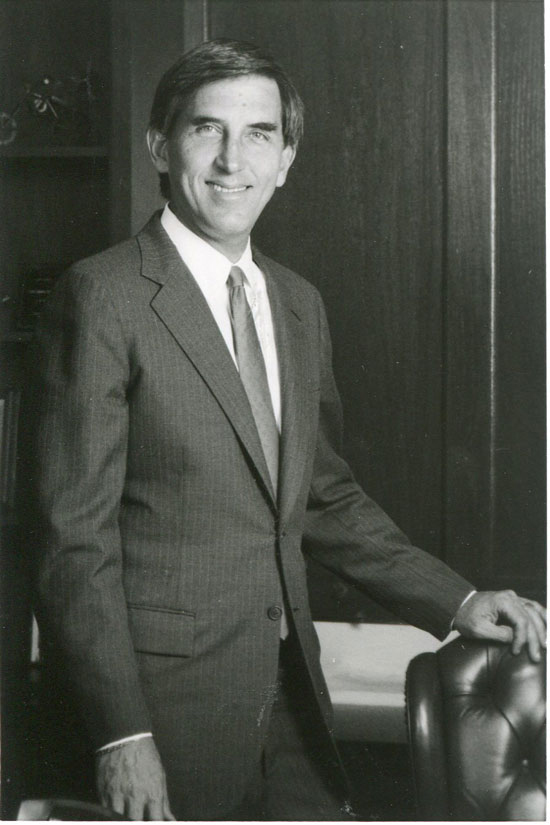
Charles D. Morgan Jr.  Chief Executive Officer  Acxiom Corporation

Charles Morgan Jr.

Friends of Padre Steve’s World,

Just a short thought today as I have been very busy with a new class at the Staff College as well as doing more writing and research on my Civil War and Gettysburg texts, but I wanted to share this thought, from the late Charles Morgan Jr. I wrote about what this amazing man said in regard to what he said after the bombing to the 16th Street Baptist Church in Birmingham Alabama some 53 years ago in previous articles, but I think that this is something that is pertinent as well look to the coming election.

Morgan was a well off young Southern gentleman, a lawyer, and a man with a conscience. He was a defender of the civil liberties of many people during his life, most of which were incredibly unpopular when he made his strand.

Morgan made a comment that really stuck in my brain because it is so true. He said,

“It is not by great acts but by small failures that freedom dies. . . . Justice and liberty die quietly, because men first learn to ignore injustice and then no longer recognize it.”

The truth is that it those small failures; first to turn our backs on justice and to ignore it, and then finally, to fail to even recognize it when justice is being trampled. That is how freedom dies. Sadly, those who most often trample freedoms, usually in the name of God or religion are the last to recognize their complicity in that loss of freedom. Judge Learned Hand spoke these words; “If we are to keep our democracy, there must be one commandment: Thou shalt not ration justice.”

Sadly, there are too many who will do just that, all to often in the name of their God, or their religion, but some in the name of “law and order.” If we ration justice so that only a few; the rich, and the well off are able to afford it, then we will succeed in standing idly by as injustice becomes the norm.

Please ponder that thought. I have some other projects that I am working on for this site, but today I am going with Judy for another follow-up visit with her oncologist and praying as always that there is no recurrence of the Endometrial Cancer that she was operated on last year.

So have a great day,

Peace

Padre Steve+

Leave a comment

Filed under civil rights, History

Everything Has Changed: The Aftermath of 9-11-2001 and Fifteen Years of War

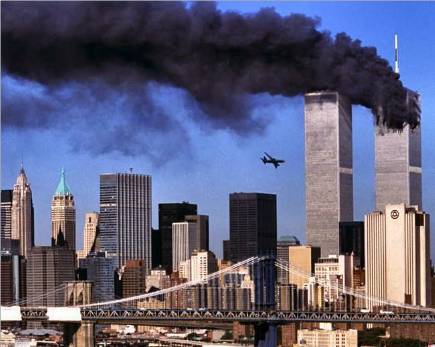
Explodierendes World Trade Center III

Friends of Padre Steve’s World

I posted a reflection yesterday on some of my reflections on the 9-11-2001 attacks on the World Trade Center and the Pentagon, today a continuation of those thoughts. Yesterday morning after chapel and taking care of things I needed to for the opening day of our new class at the Staff college this morning I went to breakfast with Judy. We talked about how it was hard to believe that it had been fifteen years since the attacks of 9-11-2001. Judy mentioned that everything had changed since then.

As I recalled yesterday I can still remember the day like it had just happened, the images are burned into my memory and will never go away. I was getting out of my office at Camp LeJeune after an early morning counseling case and some administrative duties I was getting ready to head to the French Creek gym. I was about to close out my browser when I saw a little note on the Yahoo.com homepage: “Airplane crashes into World Trade Center.” It was about 0900 that tragic morning. I thought to myself, “Some dumb ass just crashed his Cessna into the building.”

The day was clear and absolutely gorgeous, a slight north wind and low humidity, a well-deserved break from what had been a hot and humid summer. Not that I had seen much of the Carolina summer having returned from a deployment to Okinawa, Mainland Japan and Korea in late July. When I got to my car the local talk radio station was broadcasting a second or third tier national talk radio host and he was screaming “oh my God another plane just flew into the towers!”

I was stunned and I drove over to the gym where I joined a large crowd of Marines and Sailors transfixed as we watched the towers burn. I went back to my office showered and went over to my battalion headquarters and was there when the South Tower went down at 0959.

Since then a lot has changed. I have made two deployments and traveled to the Middle East many more times. I came back from my deployment to Iraq with a serious case of PTSD and a health distrust of the right wing media, politicians, preachers, and especially the talk radio hosts that I used to listen to as often as I could. I remember being in Iraq in between missions to the far reaches of Al Anbar Province and watching the news on the televisions at the dining facility and wondering just what war that they were covering.

Before Iraq I could be considered a pretty solid “conservative” but eight years after going to war I am decidedly liberal. However, despite many allegedly conservative talk pundits, politicians and right wing preachers say just because a person is “liberal” does not mean that they are unpatriotic or do not care about our country or freedom. After serving in Iraq and seeing how certain people have equated patriotism with adherence to their political agenda I wholeheartedly believe that a person’s patriotism has nothing to do with their politics or their religious beliefs.

Before Iraq I was jaded by what happened to my dad’s generation after Vietnam when liberals called returning Veterans “baby killers” or “Nazis.” In fact I had a Sunday school teacher tell me that my dad was a “baby killer” in 1972 and in 1981 had some ass at UCLA call me a “ROTC Nazi.” As a result I had little love for the Left. After September 11th I followed the “conservative” talk radio crowd and Fox News more than I had ever before. The emotions that they stirred up were primal. But experience and reflection caused me to get beyond the pain of my past and the emotion of the present. Just as I detest those that characterized my dad’s service or my service as being criminal I also detest those that say one cannot be critical of those that advocate for war regardless of the human and economic cost or actual strategic benefit.

kaseasbeh-4

daesh-girls-slaves-isis-4

A man (C) identified in the subtitiles as Al Karar the Iraqi gestures as he speaks at an undisclosed location in this image taken from undated video footage released by Islamic State. Islamic State warned in the new video on November 16, 2015 that countries taking part in air strikes against Syria would suffer the same fate as France, and threatened to attack in Washington. The video, which appeared on a site used by Islamic State to post its messages, begins with news footage of the aftermath of Friday's Paris shootings in which at least 129 people were killed. REUTERS/Social Media Website via Reuters TVATTENTION EDITORS - THIS PICTURE WAS PROVIDED BY A THIRD PARTY. REUTERS IS UNABLE TO INDEPENDENTLY VERIFY THE AUTHENTICITY, CONTENT, LOCATION OR DATE OF THIS IMAGE. THIS PICTURE IS DISTRIBUTED EXACTLY AS RECEIVED BY REUTERS, AS A SERVICE TO CLIENTS. FOR EDITORIAL USE ONLY. NOT FOR SALE FOR MARKETING OR ADVERTISING CAMPAIGNS. NO RESALES. NO ARCHIVE.      TPX IMAGES OF THE DAY

I rejoiced when our SEALs killed Osama Bin Laden and every Al Qaeda leader that we have ushered into the arms of Allah. They have caused unmitigated suffering around the world, not just to us but to their own Islamic neighbors and deserve no pity and since they refuse to give quarter should be shown none. I feel the same way about ISIS and ISIL who are killing the Iraqis that I served alongside and their families, and if that sounds harsh I can’t help it. The attacks of 9-11 and the wars that have followed are all too personal and as far as the extremists of ISIl, Al Qaeda, and their affiliates around the world I am unapologetic, we should annihilate them. I would apply the words of the hero of the Battle of Little Round Top at Gettysburg, Colonel Strong Vincent concerning the Confederates to the supporters of Al Qaeda and ISIL wherever the are:

“We must fight them more vindictively, or we shall be foiled at every step. We must desolate the country as we pass through it, and not leave a trace of a doubtful friend or foe behind us; make them believe that we are in earnest, terribly in earnest; that to break this band in twain is monstrous and impossible; that the life of every man, yea, of every weak woman or child in the entire South, is of no value whatever compared with the integrity of the Union.”

This will sound hard, but the life of every supporter of ISIL or Al Qaeda is of no value whatsoever to freedom and democracy.  I would apply that standard to any supporter of authoritarian dictatorship in any guise, not just militant Islamists, lest there be any doubt.

At the same time I question the strategic purpose and value of the campaign in we conducted in Iraq which seems to me has opened the gates of hell. I still think that the words that T.E. Lawrence wrote in 1920 about the British in Iraq are as applicable today as when he penned them; only the empires are different:

“The people of England have been led in Mesopotamia into a trap from which it will be hard to escape with dignity and honour. They have been tricked into it by a steady withholding of information. The Bagdad communiqués are belated, insincere, incomplete. Things have been far worse than we have been told, our administration more bloody and inefficient than the public knows. It is a disgrace to our imperial record, and may soon be too inflamed for any ordinary cure. We are to-day not far from a disaster.”

The British who Lawrence wrote about, gave their people reasons for going into Mesopotamia which were similar to those of the Bush administration over 80 years later. They cloaked their intentions in the words of liberation and protection, the British from the Turks, and the Americans from Saddam. Lawrence noted in words that are hauntingly familiar to those that paid attention to the American war in Iraq:

“Yet our published policy has not changed, and does not need changing. It is that there has been a deplorable contrast between our profession and our practice. We said we went to Mesopotamia to defeat Turkey. We said we stayed to deliver the Arabs from the oppression of the Turkish Government, and to make available for the world its resources of corn and oil. We spent nearly a million men and nearly a thousand million of money to these ends. This year we are spending ninety-two thousand men and fifty millions of money on the same objects.”

At the fifteen year mark I grieve for those that have lost their lives as well as loved ones in the attacks or in the wars that have followed. On September 11th 2001 2977 people were killed at the World Trade Center, the Pentagon or on United Flight 93 which went down in Pennsylvania. One of those killed at the Pentagon was Lieutenant Colonel Karen Wagner who I had served with at the Academy of Health Sciences Brigade in 1987-1988.

481801_10151367001287059_1003164983_n1

Since then about 4500 American military personnel have given their lives in Iraq and another 2400 in Afghanistan. NATO or coalition allies, excluding the Iraqi and Afghani military or police forces have lost about another 1300 military personnel and that does not count the soldiers of Iraq and Afghanistan who fought at our side. More than 45,000 American servicemen an women have been wounded in this fight. I know a decent number of those wounded and some of those that have died. The losses are intensely personal and to think that we have lost well over twice the number killed on September 11th 2001 in two wars; many of whom were children aged 8-12 years old on that tragic September day. Of course the numbers do not count those that died by their own hand after they returned from the war, a number that grows daily. I have known too many of them as well, heroes who could not make the adjustment coming home. Likewise I cannot forget the devastation that I saw in Iraq, the deaths of so many, some estimates of over a million civilian casualties, not county what has happening during the current ISIS/ISIL era.

That is why I am in favor of a hard war against these people. Some would say that a hard war would endanger civilians, and yes I agree with that. But then what is the alternative? To leave those same people under a regime that crushes them, enslaves them, takes their children and schools them to be child soldiers and Islamic Kamikazes? William Tecumseh Sherman told the mayor of Atlanta after ordering the civilian population expelled that “we are not only fighting hostile armies, but a hostile people, and must make the old and young, the rich and poor, feel the hard hand of war.”

That may seem hard, but I have been changed by that tragic event and the wars that have followed. I still shudder when I see the video of United Air Lines Flight 175 crashing into the South Tower or see the videos of the towers crashing down on that September day fifteen years ago.

The events of that tragic day changed me, and changed countless numbers of other Americans as well as others around the world. While we yearn to return to the day’s before 9-11-2001 that is impossible, there is too much water and too much blood that has passed under the bridge to go back, and those who advocate the same ideology as the attackers of 9-11 will not go back either.

As for me, I know that I can’t go back. But as much as I wish that I could I will have to live with reality, as I have for the last fifteen years, and I will continue to learn to live with it.  To live with the reality that this war will not end anytime soon and that far too many more people will die before this war ends. For those that find my opinions about this war repulsive or less than informed, I would actually hope and pray that you are right. But as my Iraqi friends say,

“Inshallah (إن شاء الله)”

Peace

Padre Steve+

1 Comment

Filed under afghanistan, Foreign Policy, History, iraq,afghanistan, middle east, Military, national security, News and current events, terrorism, War on Terrorism

There Lies a Gulf Between that Time and Today: Remembering 9-11-2001

flight_175_photo

Friends of Padre Steve’s World,

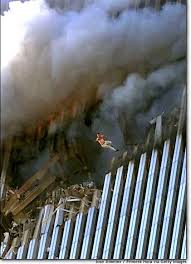
September 11th is a day that always makes me more introspective. It brings back so many memories, some that I wish I could forget; but I cannot get the images of that day out of my mind. The burning towers, the people jumping to their deaths to escape the flames, and the scenes of devastation. I knew one of the victims in the attack on the Pentagon, an Army Lieutenant Colonel, Karen Wagner who commanded a Medical training company at Fort Sam Houston where I was serving as the Brigade Adjutant in 1987 and 1988. She was a very nice person, very gracious and decent, admired by everyone who knew her; I was shocked to see her name on the casualty list after the attack.

The emotions that I feel on the anniversary of these terrorist attacks which claimed the lives of so many innocent people, and which devastated so many families, still haunts me, and my subsequent service, especially in Iraq has changed me. Years after he returned from his time in the Middle East, T.E. Lawrence; the immortal Lawrence of Arabia wrote to a friend, “You wonder what I am doing? Well, so do I, in truth. Days seem to dawn, suns to shine, evenings to follow, and then I sleep. What I have done, what I am doing, what I am going to do, puzzle and bewilder me. Have you ever been a leaf and fallen from your tree in autumn and been really puzzled about it? That’s the feeling.” I often feel that way.

Fifteen years ago I was getting ready to go to the French Creek Gym at Camp Le Jeune North Carolina where I was serving as the Chaplain of Headquarters Battalion 2nd Marine Division. I had returned from a deployment to Okinawa, Mainland Japan and Korea just two months before and was preparing to transfer to the USS Hue City, a guided missile cruiser stationed in Mayport, Florida.

At the time of the attack I had already been in the military for over 20 years and I had actually taken a reduction in rank to transfer from the Army, where I was a Major in the reserves, to the Navy to serve on active duty. In those previous 20 years I had served overseas during the Cold War along the Fulda Gap. I had been mobilized to support the Bosnia mission in 1996, and I had just missed being mobilized for Operation Desert Storm as my unit was awaiting its mobilization orders when the war ended. I had done other missions as well as the deployment to the Far East that returned from in July 2001; but nothing prepared me for that day. Like other career military officers I expected that we would be at war again and thought it might be back in the Middle East, and probably a result of some fool’s miscalculations; but like the American officers who were serving at the time of the Pearl Harbor attack, I never expected what happened that morning.

Tuesday, September 11th 2001 had started like so many days in my career. Routine office work, a couple of counseling cases and what I thought would be a good PT session. I was about to close out my computer browser when I saw a little headline on Yahoo News that a plane had crashed into the World Trade Center. I paid little attention and figured that a private plane, something like a Cessna piloted by an incompetent had inadvertently flown into the building.

9-11 jumpers

That delusion lasted about two minutes. I got in my car and the radio, tuned to an AM talk station had a host calling the play by play. He started screaming “oh my God another airliner flew into the other tower.” Seeking to see what was happening I went to the gym where there were many televisions. I got there and saw the towers burning, with stunned Marines and Sailors watching silently, some in tears. I went back out, drove to my office and got into uniform. After checking in with my colonel a made a quick trip to my house for my sea bags and some extra underwear, and personal hygiene items. When I got back the headquarters we went into a meeting, and the base went on lock down mode. The gates were closed and additional checkpoints, and roadblocks established on base. Marines in full battle-rattle patrolled the perimeter and along the waterfront. I did not leave the base until the night of the 15th when things began to settle down and we all went into contingency planning mode for any military response to the attacks.

My wife, who as waiting for a doctor’s appointment with a friend saw the attacks on live television and knew when the first plane struck she told her friend that it was terrorism. Her friend responded “that damned Saddam Hussein.” Like so many of us who initially thought this, my wife’s friend was wrong.

LutjensHonors

Those were tumultuous days, so much fear; so much paranoia; and so much bad information as to who committed the attacks and what was going to happen next.

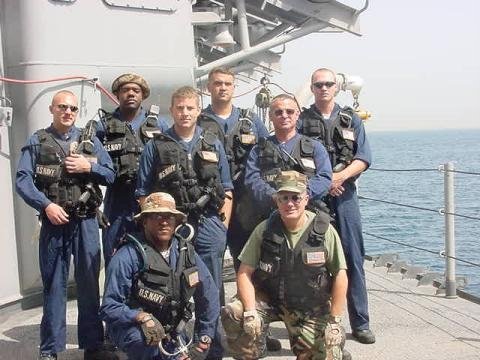
hue city boarding party


A few months later I deployed aboard Hue City to the Middle East where we supported the air operations in Afghanistan, anti-terrorist operations off the Horn of Africa and in Operation Southern Watch and the U.N. Oil Embargo against Iraq. I then did three years with Marine Security Forces, traveling around the world to support Marine Fleet Anti-Terrorism Security Team companies. For three years I was on the road one to three weeks a month traveling to the Middle East, Europe, the Pacific and many parts of the United States. Then I was promoted and transferred to Explosive Ordnance Disposal Group Two, from which I was deployed with my assistant to Iraq, where we served as members of the Iraq Assistance Group in all Al Anbar Province supporting small teams of Marine Corps, Army and Joint Force adviser teams to the Iraqi Army, Border troops, Port of Entry police, police and highway patrol.

with-mtt-3-7-ronin


When I returned from Iraq I was a changed man and while I am proud of my service I am haunted by my experiences. One cannot go to war, see its devastation, see the wounded and dead, as well as the innocents traumatized by it. One cannot get shot at, or be in enclosed rooms, meeting with people that might be friends, or might be enemies, and while everyone else is armed, you are not.

War changed me, and my homecoming was more difficult than I could have imagined. I never felt so cut off from my country, my society, my church, or even other chaplains. My experience is not uncommon among those who have served in Iraq or Afghanistan, or for that matter those who have served in almost any modern war. Erich Maria Remarque in his classic All Quite on the Western Front wrote:

“I imagined leave would be different from this. Indeed, it was different a year ago. It is I of course that have changed in the interval. There lies a gulf between that time and today. At that time I still knew nothing about the war, we had been only in quiet sectors. But now I see that I have been crushed without knowing it. I find I do not belong here any more, it is a foreign world.”

That being said I would not trade my experience for anything. The experience of PTSD and other war related afflictions has been a blessing as well as a curse. They have changed my world view and made me much more emphatic to the suffering and afflictions of others, as well when they are abused, mistreated, terrorized and discriminated against. These experiences along with my training as a historian, theologian, and hospital chaplain clinician before and after my tour have given me a lot bigger perspective than I had before.

But I have to live with all of the memories. Guy Sajer wrote in his book The Forgotten Soldier, “Only happy people have nightmares, from overeating. For those who live a nightmare reality, sleep is a black hole, lost in time, like death.” General Gouverneur Warren, a hero of many Civil War battles including Gettysburg wrote to his wife after the war “I wish I did not dream so much. They make me sometimes to dread to go to sleep. Scenes from the war, are so constantly recalled, with bitter feelings I wish never to experience again. Lies, vanity, treachery, and carnage.”

As hard as this has been these are good things, and as I go on I wonder what will happen next. I do not think that the wars and conflicts which have followed in the wake of the 9-11 attacks will be over for years, maybe even decades. I pray for peace, but too many people, some even in this country seem to live for the bloodlust of war. One can only hope and as my Iraqi friends say, Inshallah, (إن شاء الله) God willing…

I wonder too, if the words of T.E. Lawrence reflecting on his service in the Arab Revolt are not as applicable to me and others who came back from Iraq, “We had been hopelessly labouring to plough waste lands; to make nationality grow in a place full of the certainty of God… Among the tribes our creed could be only like the desert grass – a beautiful swift seeming of spring; which, after a day’s heat, fell dusty.” I have lost too many friends in these wars, including men who could not readjust to home, many like me. I have seen the men and women, broken in body, mind and spirit and I wonder if any of it was worth it, and if in some of our response, especially the invasion of Iraq has not made a bad situation even worse, and turned the war into a generational conflict.

As for me, I am now an old guy by military standards. I recently celebrated 35 years of service. Sadly, I know all too well that those who I have worked with, and those who are yet to enlist will be continuing to fight a war which seems to be without end long after I retire in about four years.

Yesterday and today there were and will be many ceremonies and services to remember the victims of the attacks. I think that is fitting. President Obama has declared this a of prayer and remembrance which is also good. I will not attend the ceremonies because I still get too emotional, but I will be there in spirit, even though much of me is still in Iraq.

I will quietly reflect as I conduct my chapel services today, and as I get ready for our incoming class at the Staff College. I will also try to get a good run in and then spend some time with Judy, and then have a few beers with some friends at Gordon Biersch.

So please, have a good day and whatever you do do not forget those whose lives were forever changed by those dastardly attacks and all that has transpired in the years since. I do hope that things will get better and that some semblance of peace will return to the world.

Inshallah, (إن شاء الله) God willing…

Peace

Padre Steve+

Leave a comment

Filed under History, iraq,afghanistan, middle east, Military, PTSD, remembering friends, terrorism, War on Terrorism

Remembering the Eve of 9-11-2001 and War Without End

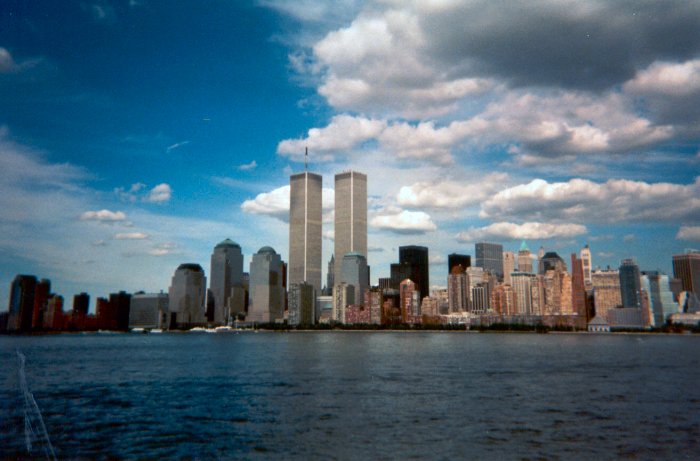
twin-towers-june01

Friends of Padre Steve’s World,

Over the past few days I have been quite busy but despite that I have not been able to take my mind off of the events of September 11th 2001. As I was walking my dogs around the lake near our house tonight I was struck by the calm, except when they went chasing the ducks, the geese, and a lone Crane. Papillons with a Napoleon complex are fare too funny not to enjoy, but I digress…

I cannot get that day out of my mind, it changed millions of lives including my own.

On the night of September 10th 2001 my mind was as far from war and terror as it could be. I was much more interested in the MLB Pennant Race than I was anything going on in the world, after all the only issues we faced were occasional, if deadly terrorist attacks on foreign installations and deployed ships like the USS Cole. But as to the security of the Continental United States, or as it has been referred to since 9-11 as “the Homeland” I wasn’t concerned. Somehow, despite my knowledge, understanding and study of terrorist groups I just never thought anyone could pull off an attack of this magnitude. The next morning I discovered just how wrong I was as the first reports came in while I was on my way to a late PT session at Camp LeJeune North Carolina where I was serving with the Second Marine Division.

That day changed all of our lives and ushered in years of war which has cost the United States military almost 60,000 casualties including nearly 7,000 dead or died of wounds including a number of friends and others who I served alongside at various points in my career. Of course that does not count non-DOD agency casualties, or those of the contractors who have been a big part of the war effort. Nor does it count hundreds of thousands of other lives in the Middle East that were a result of our response to 9-11, and the unending attacks by terrorists who trace their inspiration to the attacks of September 11th 2001 in so many places; France, Germany, Britain, Spain, India, Pakistan, Turkey, Lebanon, Australia, Belgium, Africa, Asia, and so many other places that I have a hard time naming them all.

Whether we wanted it to or not the war which began on 9-11, which was so stupidly expanded into Iraq by the Bush Administration, opening the door to Al Qaeda Iraq and now the Islamic State, and which greatly strengthened Iran by eliminating their worst enemy, Saddam Hussein have made our task most difficult.

Fifteen years after 9-11-2001 we are not only still at war, but it is becoming a war without end. Fifteen years ago I figured that after a few months Al Qaeda would be no more, and the war that they had unleashed upon us would be over. however I was wrong. I do not know what September 11th 2016 will bring, but there is one thing that I know it will not bring… peace.

Have a good night, until tomorrow,

Peace

Padre Steve+

Leave a comment

Filed under History

The Bond

img_0602

Friends of Padre Steve’s World,

Today is going to be a busy and sad day as we gather with friends to remember the life of our friend Dave Shaw. I wrote about his unexpected loss over the weekend and as such, since I am not going to have time to write anything new I am going to reach back into the archives an re-post an article that I wrote back in June of 2011 about the bond that is shared by those who go to war. Dave served as a Navy Corpsman aboard various Navy ships, hospitals, and with the Marines. He retired as a Chief Petty Officer, as did my dad. He was a friend and brother, and, like so many others he will be missed.

Peace

Padre Steve+

This story shall the good man teach his son;
And Crispin Crispian shall ne’er go by,
From this day to the ending of the world,
But we in it shall be remembered-
We few, we happy few, we band of brothers;
For he to-day that sheds his blood with me
Shall be my brother; be he ne’er so vile,
This day shall gentle his condition;
And gentlemen in England now-a-bed
Shall think themselves accurs’d they were not here,
And hold their manhoods cheap whiles any speaks
That fought with us upon Saint Crispin’s day.

From the Speech of King Henry V at Agincourt in Shakespeare’s “Henry V” 1599

In the midst of the petty politics surrounding the Afghan War so so ponderously and pompously purveyed by politicians and pundits of all strains I feel the need to speak up for that small band of brothers that has served in these wars. They are to steal a phrase applied to a previous generation the “New Greatest Generation” something that I am loathe to apply to much of the population at large. You see the cost of these wars is finally beginning to sink in, at least the financial cost. I’m not so sure that the human cost factors in for most people because the tiny percentage of the population that serve in the wars. The fact is that the volunteer military is an insular community which for the most part is based on bases away from most of the population. We used to have big bases in or near major cities, the New York Naval Yard, the Presidio of San Francisco, Long Beach Naval Shipyard, Fort Devens Massachusetts near Boston, Fort Benjamin Harrison Indiana at Indianapolis. But after the Cold War they and hundreds of other bases were eliminated and with them a connection to the active duty military. That is not the fault of the people in the big cities it just happened that way, no the military with a few exceptions is based away from most of the population. As a result people may support the troops but most have no idea what they do, how they live and what they suffer.

In spite of that this new Greatest Generation’s accomplishments will largely go unheralded by history. Unlike the “Greatest Generation” of World War Two they will probably not receive the full honors and accolades due them. This brotherhood of war who have served in the current War on Terror, Iraq and Afghanistan campaigns have now been serving in a war that is now twice as long as the American involvement in World War Two. Many, like me have been in this since the beginning and many have made multiple deployments to the combat zones. And many of us, if not most of us would go again. I know that I would because part of me is still in Iraq; for me this war is still un-won and un-finished.

The battles, Fallujah, Ramadi, Haditha, Mosul, Baghdad, Tal Afar, Marjah, Kandahar, Anaconda, Wanat and thousands of other places significant and insignificant are vivid in the minds of those that were there. Unfortunately for most of their countrymen they might as well be on a different planet.

With no disrespect to the Greatest Generation of World War Two, all of the current Soldiers, Sailors, Marines, Airmen and Coast Guardsmen volunteered to serve in time of war. At any given time only about one half of one percent is in uniform. In the three years and ten months of the Second World War about 16.1 Million Americans served in the military, the vast majority being draftees. Likewise the current generation has fought the war alone. The vast bulk of the country has lived in peace untouched by any inconvenience to daily life such as gas and food rationing, requirements to work in war industries and the draft as were citizens in World War Two. In the Second World War Americans shared the burden which in large part has not occurred in this war. While many have pitched in to help and volunteered to help veterans and their families the vast majority of people in this country are untouched by the war, not that there is anything wrong with that. This is simply a comparison of the situation that those who served in World War Two and the present conflicts faced. So I have to say that our current “Greatest Generation” is only a small part of the generation, as the line in Henry V “we few, we happy few who fought together….”

These Soldiers, Sailors, Marines and Airmen from the United States as well as our Allies who serve alongside of us are my brothers and sisters. They too are volunteers and represent a miniscule portion of their countries population. I am friends with military personnel from the UK, Canada and Germany who have served in the various combat zones or at sea and met quite a few others from France, the Netherlands and Australia. Of course my Iraqi friends who I served with while with our advisers in Al Anbar province who are not only trying to bring peace and stability back to their country but have to worry about the possibility that their families become the target of terrorists.

There are a number of things that unite us in this relatively small brotherhood. However, I think that this brotherhood could also be extended to our brothers who fought in Vietnam, French, Vietnamese, Australian, South Korean and American, the French who served in Algeria and the Americans and others that served in Korea. All of these wars were unpopular. All had little support on the home front and often returning veterans found themselves isolated and their sacrifices ignored or disrespected. For those Americans who serve in the current wars I can say that at least to this point the public has been much more supportive than they were to our Vietnam brothers, many of who were even disrespected by World War Two vets who had fought in “a real war.” I cannot count the Gulf War in this list as it was hugely successful and the returning vets were hailed as conquering heroes with ticker tape parades.

Our shared brotherhood includes our scars, physical, psychological, neurological and spiritual. Those who served on the ground in Iraq and Afghanistan as well as those who served in Vietnam, French Indo-China and Algeria have a common shared experience. All fought people who didn’t or don’t like foreigners no matter how noble our intentions and who by the way have a long history of outlasting people that they believe to be invaders or occupiers. We have had to fight wars with no front lines, no major units arrayed against us, but rather asymmetrical threats propagated by creatively devious foes who use low tech easily available technology and a willingness to sacrifice themselves and others to force attempt to kill us. Thus we have cleverly designed and often quite powerful IEDs or Improvised Explosive Devices which can obliterate a HUMMV.

These threats create a situation where there is no front line and thus where every excursion outside of a FOB (Forward Operating Base) or COP (Coalition Outpost) is automatically a trip into a potential danger zone. Enemies can infiltrate bases posing as local nationals in either military uniform or as workers, rockets and mortars can be lobbed onto even the largest and most secure bases at any time and any vehicle driving by you on the road could be loaded with explosives and just waiting to blow you up while insurgents with automatic weapons and Anti-Tank Rocket Propelled Grenades (RPGs) have taken down helicopters. When you have taken fire on the road, in the air and had rockets whiz over your head you this becomes a reality that you never forget.

As a result we many men and women with physical wounds as well as wounds that have damaged the psyche or the soul. PTSD is very common either from a direct encounter or the continual wear and tear of being in a danger zone wondering if you were to get hit that day every day of a tour. I have lost count now of people that I know who have mild to severe symptoms of PTSD. Traumatic Brain injury is another condition men and women attacked by IEDs, mortars and rockets experience. Likewise there are the injuries that shatter the soul. These are the images of ruined buildings, burned out vehicles, wounded bodies, injured children, refugees and wars desolation that can leave a person’s faith in God, or ideals that he or she believes in weakened or even destroyed. There are the smells of smoke, death, diesel, garbage and sewage that when encountered far away from the combat zone send us back.

The wars have been costly in lives and treasure. The “up front” casualty numbers are below; they do not include those with PTSD or mild to moderate TBI. They also do not count those that have died later after their service in VA or other civilian care, those that did not report their injuries and those that have committed suicide.

Iraq KIA US 4463 UK 179 Other 139 Total 4781

Afghanistan KIA US 1637 UK 374 Other 537 Total 2548

US Wounded Iraq 32227 Afghanistan 11191

The financial cost: over 1.2 trillion dollars and counting.

As many idealistic and patriotic military personnel question God, their National Leadership and even themselves because of their experience in Iraq or Afghanistan. I cannot get the image of a refugee camp on the Iraqi Syrian border full of Palestinian refugees who have nowhere to go; they had been invited to Iraq under Saddam and have been sitting on the border trying to get home for years now. The Palestinian authority wants nothing to do with them. I cannot smell smoke or hear a helicopter or pass a freshly fertilized field without being reminded of Iraq.

These men and women are my brothers and sisters. I have seen quite a few of my colleagues at the Naval Medical Center and Naval Hospital deploy and deploy, the medical personnel don’t get much of a break. These are my friends and I do get concerned for them and pray earnestly for their safe return. I wish that I could go with them because I know them and have already walked with them through the dark valley of the shadow of death in the Medical Center ICU or the wards and clinics of the Naval Hospital. We already have a bond that will not be broken.

It is now four years since I was in the process of leaving for Iraq and three years since my PTSD crash. However, I still would do it again in a heartbeat. There is something about doing the job that you were both trained to do and called to do that makes it so. Likewise the bonds of friendship and brotherhood with those who you serve are greater than almost any known in the human experience. Shared danger, suffering and trauma bind soldiers together, even soldiers of different countries and sometimes with enemies. I remember the conversation that I had with an Iraqi Merchant Marine Captain on a ship that we had apprehended for smuggling oil violating the United Nations sanctions. The man was a bit older than me, in his early 60s. He had been educated in Britain and traveled to the US in the 1960s and 1970s. He had the same concerns as any husband and father for his family and had lost his livelihood after Saddam invaded Kuwait in 1990. He was a gentleman who provided for his crew and went out of his way to cooperate with us. In our last meeting he said to me: “Someday I hope that like the Americans, British and the German soldiers at the end of the Second World War can meet after the war is over, share a meal and a drink in a bar and be friends.” That is my hope as well.

In the final episode of the series Band of Brothers there is a scene where one of the American soldiers, Joseph Liebgott who came from a German Jewish family interprets the words of a German General to his men in the prisoner compound. The words sum up what the Americans had felt about themselves and likewise the bond that all soldiers who serve together in war have in common, if you have seen the episode you know how powerful it is, I ended up crying when I heard it the first time and cannot help but do so now that I have been to the badlands of Al Anbar Province.

“Men, it’s been a long war, it’s been a tough war. You’ve fought bravely, proudly for your country. You’re a special group. You’ve found in one another a bond that exists only in combat, among brothers. You’ve shared foxholes, held each other in dire moments. You’ve seen death and suffered together. I’m proud to have served with each and every one of you. You all deserve long and happy lives in peace.”

As do we.

Peace

Padre Steve+

1 Comment

Filed under iraq,afghanistan, Military, remembering friends, shipmates and veterans, US Navy

Pride of the Regina Marina: The Vittorio Veneto Class Battleships

vittorio veneto and littorio

Friends of Padre Steve’s World

It has been another really hectic and busy day and though I want so much to comment on Donald Trump’s exceptionally inept answers or Matt Lauder’s incredibly moronic interview on foreign policy and military matters, I am too tired to do so. Perhaps tomorrow, but today I am going back deep into the archives and post an article about a class of battleships that are often overlooked, but for their time they were magnificent ships. These were the Vittorio Veneto, Littorio, and Roma. 

I hope that you enjoy,

Peace

Padre Steve+

This is the first in a series of five articles on the battleships built under the provision of the Washington and London Naval Treaty limitations in the 1930s. I am not including the ships which were completed in the immediate aftermath of the Washington Treaty limitations. This series looks at the modern battleships that the World War II combatants would produce in the 1930s which saw service in the war. Part one covers the Italian Vittorio Veneto class, Part Two the French Dunkerque and Richelieu Classes, Part Three the British King George V Class and Part Four the American North Carolina and South Dakota Classes. I have already published the final part which covers the German Scharnhorst Class entitled Power and Beauty the Battle Cruisers Scharnhorst and Gneisenau The German Bismarck, Japanese Yamato, British Vanguard and American Iowa Classes will be covered in a subsequent series.

Technically many of these ships were constructed after the expiration of the treaties but since most of the navies at least attempted to maintain a façade of compliance with them most were officially listed as complying with the treaty restrictions.

The Washington Treaty placed a limit on the displacement and armament of battleships. The London Treaty continued them which limited the displacement of new ships to 35,000 tons with the main battery being limited to 16” guns. Each of the treaty signatories as well as the Germans who had been bound by the much more stringent Treaty of Versailles restrictions endeavored to build to the limit of the treaty and if possible skirt the limitations in terms of displacement which allowed them to increase protection as well as more powerful engineering plants.

The Royal Italian Navy had not completed a battleship design since the Andria Doria Class which were constructed between 1912 and 1915 and modernized given an extensive modernization between 1937 and 1940. A subsequent class the Francesco Caracciolo class was started during the First World War but no ships of the class were completed.

In the 1930s a new naval arms race was underway in the Mediterranean as the French Navy had begun a new class of Fast Battleships, the Dunkerque class which were designed to defeat the German Deutschland class “pocket battleships” and the follow on Richelieu Class. Mussolini saw the new French ships as a threat to the control of the Mediterranean and ordered the construction of a new class of battleships to help Italy achieve naval dominance in the Mediterranean.

The new ships were of a breathtaking design, large, fast and heavily armed officially listed as meeting the prescribed treaty limit of 35,000 tons they actually would displace 41,177 tons standard displacement and 45,963 tons full load. Armed with a main battery of 9 15” guns in triple turrets and a secondary armament of 12 6” and 12 3.5” guns along with 20 37mm and 30 20mm anti-aircraft guns and capable of 29 knots in service and with a relatively short range of 3900 miles at 20 knots they were formidable ships for operations in the Mediterranean. They were well protected although their Pugliese torpedo defense system proved inferior to traditional designs.

Their main armament though formidable was not without its flaws. The 15” guns had a very long range of 42 km or 26.6 miles and high muzzle velocity of 2900 fps. The high muzzle velocity led to a barrel life of only about half that of their counterparts and inconsistent shell fall patterns. The guns also suffered from a slow rate of fire of only 1.3 rounds per gun a minute.

The Ships:

vittorio_veneto_1943

Vittorio Veneto in 1943

Vittorio Veneto: The lead ship of the class, Vittorio Veneto was laid down 1934 along with her sister the Littorio and was launched on 25 July 1937 and commissioned on 28 April 1940. She would see action numerous times and give a good account of herself against the British taking part in 56 war missions. She fought at the Battle of Cape Spartivento (Teulada) where she fired 19 salvos to drive off a 7 ship British cruiser squadron in a pitched battle that also included the battleship HMS Ramillies and battle cruiser HMS Renown. In 1941 she took part in the Battle of Cape Matapan where she was damaged by an aerial torpedo after driving off a British cruiser squadron. After repairs she was back in action and on 15 June 1942 participated in the Battle of Mid-June, where she and her sister ship Littorio successfully fenced off a large British convoy from Alexandria by their mere presence at sea. She was also the first Italian battleship equipped with radar. She surrendered with the Italian fleet to the Allies on 8 September 1943 surviving furious German air attacks. She was interred at the Great Bitter Lakes in the Suez Canal. After the war she taken as war compensation and was returned to Italy and scrapped beginning in 1948.

Littorio

Littorio

Littorio (later Italia): Littorio was laid down in 1934 and launched on 22 August 1937 and commissioned on 6 May 1940. She participated in 43 operations including the Battle of Sirte and several actions against British convoys. Following the Battle of Mid-June she was struck by an aerial torpedo dropped by a Wellington bomber. She was repaired and upon the removal of Mussolini from power was renamed Italia and surrendered with the Italian Fleet on 8 September 1943 being damaged by a Fritz-X radio controlled bomb. With her sister Vittorio Veneto she was interred in the Great Bitter Lake and was returned to Italy where she was decommissioned and scrapped beginning in 1948.

Roma_(1940)

Roma

Roma: Roma was laid down 18 September 1938, launched on 9 June 1940 and commissioned 14 June 1942. Despite her addition to the fleet she was not deployed due to a fuel shortage. She sailed with the Italian Fleet to surrender on 8 June under the guise of the fleet sailing to attack the Allied invasion fleet off Salerno. The Germans discovering the ruse launched air attacks by Dornier Do-217s armed with Fritz-X radio controlled bombs attacked the fleet as it transited the Strait of Bonafacio.

Roma_(1940)_exploding

Roma exploding after being hit by Fritz-X radio guided bomb

Roma was hit by two of the missiles the first which flooded two boiler rooms and the aft engine room. She was hit soon after by a second Fritz-X which hit in the forward engine room causing catastrophic damage and igniting the number two turret magazine blowing the turret off the ship and causing the ship to capsize and break in two as she sank carrying 1255 of her crew including Admiral Carlo Bergamini to their death. Roma was the first ship sunk by a radio controlled bomb, the forerunner of our current air launched anti-ship missiles. Her wreck was discovered in June of 2012 about 30 kilometers off the northern coast of Sardinia.

Fritz_X_

The Fritz-X Radio Guided Bomb

Impero: The last ship of the class, the Impero was laid down but never completed and scrapped after the war.

The Vittorio Veneto class was a sound design and operationally successful against the Royal Navy and the brave sailors of the Regina Marina who manned these fine ships should not be forgotten.

Leave a comment

Filed under History, Military, Navy Ships, world war two in europe

Revisiting the Rape of Nanking

nanking_massacre_1

Japanese Soldiers using Chinese Prisoners for Bayonet Practice

Friends of Padre Steve’s World,

Not long after I started this blog I wrote an article on the Rape of Nanking. The event which occurred in 1937 was one of the most extensively documented war crimes in modern history. But despite that there are many, especially those of Japanese political right who deny that the event ever occurred and if if atrocities happened in Nanking it was the Chinese government which carried them out. It is amazing that I still get comments from such people on that original article.

Since many of my newer readers might have never seen that article I am re-posting it today. I am doing some more reading on the subject and will probably revisit it again sometime in the next few months.

Have a good day,

Peace

Padre Steve+

The historical controversy regarding the “rape” of Nanking in 1937 by the Japanese Army is hotly debated.[1] The massacres occurred in the initial occupation of the city and the two months following in mid December 1937.  The initial reaction to the actions of the Japanese was reported by western journalists and even a German Nazi Party member by the name of John Rabe who assisted in protecting Chinese during the massacre and reported it on his return to Germany.The action shocked many in the west and helped cement the image of the Japanese being a brutal race in the west.

Massacre Victims at Nanking

The controversy’s visibility has been raised since the 1997 publication of Iris Chang’s The Rape of Nanking. However, with few exceptions the incident had received little attention by Western historians until Chang’s book was published. The reason for this was  that  China was a sideshow for for the United States and Britain throughout much of the war. When Chiang Kai Shek’s Nationalists were overthrown by the Communists in 1948 the incident disappeared from view in the United States.   The  United States government  reacted to the overthrow of Chaing by helping to rebuild Japan and rehabilitate the Japanese while opposing the Chinese Communists.  In fact it was only “after the Cold War was the Rape of Nanking Openly discussed.”[2]

Bodies of Children Killed by the Japanese at Nanking

Chang’s book was instrumental as it brought new attention to the actions of the Japanese Army in the slaughter of Prisoners of War and civilians following the occupation of the city.  Even as Chang’s work was published “revisionist” works began to appear in the 1980s which have either denied the atrocities, sought to minimize numbers killed by Japanese Forces or rationalized the them began to appear in Japan.  The revisionists were led by Masaaki Tanaka who had served as an aide to General Matsui Iwane the commander of Japanese forces at Nanking.  Tanaka denied the atrocities outright calling them “fabrications” casting doubt upon numbers in the trial as “propaganda.” He eventually joined in a lawsuit against the Japanese Ministry of Education to remove the words “aggression” and “Nanjing massacre” from textbooks, a lawsuit which was dismissed but was influential to other revisionists and Japanese nationalist politicians and publishers.[3]

Japanese Officer Preparing to Execute Man in Hospital

Most early accounts of the occupation and war crimes have used a number of 200,000 to 300,000 victims based upon the numbers provided during the War Crimes Trials of 1946.[4] Unlike the numbers of victims of the Nazi Holocaust the numbers are less accurate.  Authors who maintain the massacres such as Chang and others such as Japanese military historian Mashario Yamamoto who admits Japanese wrongdoing and excess but challenges the numbers use the same statistical sources to make their arguments.  Chang not only affirms the original numbers but extrapolates that even more may have been killed as a result of the disposal of bodies in the Yangtze River rather than in mass graves away from the city as well as the failure of survivors to report family member deaths to the Chinese authorities.[5] She also notes contemporary Chinese scholars who suggest even higher numbers.

Prince Asaka, Granduncle of Emperor Hirohito Commanded Troops at Nanking

Herbert Bix discusses Japanese knowledge of the atrocities in detail up and down the chain of command including Prince Asaka, granduncle of Emperor Hirohito who commanded troops in Nanking, the military and Foreign Office, and likely even Hirohito himself.[6]

German National and Nazi Party Member John Rabe Protected Chinese at Nanking and Reported His Experience to the German Government.  He is known as “The Good Man of Nanking”

The publication of German citizen and witness to the massacres John Rabe’s diaries in 2000, The Good Man of Nanking, provided an additional first hand account by a westerner who had the unique perspective of being from Japan’s ally Nazi Germany.  His accounts buttress the arguments of those like Chang who seek to inform the world about the size and scope of Japanese atrocities in Nanking.

A Field of Skulls at Nanking

Yamamoto who is a military historian by trade and is viewed as a “centrist” in the debate, places the massacres in the context of Japanese military operations beginning with the fall of Shanghai up to the capture of Nanking. Yamamoto criticizes those who deny the massacres but settles on a far lower number of deaths, questioning the numbers used at the War Crimes Trials. He blames some on the Chinese Army[7] and explains many others away in the context of operations to eliminate resistance by Chinese soldiers and police who had remained in the city in civilian clothes. He  claims that  “the Japanese military leadership decided to launch the campaign to hunt down Chinese soldiers in the suburban areas because a substantial number of Chinese soldiers were still hiding in such areas and posing a constant threat to the Japanese.”[8] David Barrett in his review of the Yamamoto’s work notes that Yamamoto believes that “there were numerous atrocities, but no massacre….”[9] Yoshihisa Tak Mastusaka notes that while a centrist Yamamoto’s work’s “emphasis on precedents in the history of warfare reflects an underlying apologist tone that informs much of the book.”[10] Revisionist work also criticizes the trials surrounding Nanking and other Japanese atrocities.  An example of such a work is Tim Maga’s Judgment at Tokyo: The Japanese War Crimes Trials which is critiqued by historian Richard Minear as “having a weak grasp of legal issues” and “factual errors too numerous to list.”[11] Such is a recurrent theme in revisionist scholarship, the attempt to mitigate or minimize the scale of the atrocities, to cast doubt upon sources and motivations of their proponents or sources, to use questionable sources themselves or to attribute them to out of control soldiers, the fog of war and minimize command knowledge as does Yamamoto. Politics is often a key motivating factor behind revisionist work.

Iris Chang Would Later Commit Suicide

Chang would never be the same after researching and writing the Rape of Nanking. Traumatized by what she had learned and burdened by the weight of what she had taken on she killed herself on November 9th 2004.

Iconic Photo of Japanese Acts in China: A Wounded Child at Shanghai Station

“Revisionist” history will almost certainly remain with us, so long as people study the past.  However one has to be careful in labeling a divergent view of a historical subject as necessarily revisionist.  There are occasions when new evidence arises and a “new” or “revisionist” work may actually disprove previous conclusions regarding historic events or persons.  This might occur when what we know about a subject comes from a single or limited number of sources who themselves were limited in what they had available for research and new evidence comes to light. At the same time where numerous sources from diverse points of view attest to the genuineness of an event, the revisionist’s theses should be themselves scrutinized based on evidence presented as well as their political, ideological or racial motivations.  While one does not want to silence voices of opposition to prevailing beliefs one has to be careful in examining their claims, especially when they arise in the context of political or ideological conflicts.

Notes


[1] Bix, Herbert P. Hirohito and the Making of Modern Japan, Harper Collins Publishers, New York, NY 2000. pp.333-334. Bix does a good job explaining the number of victims of the incident drawing on Chinese and Japanese sources.

[2] Kreuter, Gretchen. The Forgotten Holocaust in The Bulletin of Atomic Scientists, March-April 1998 p.66

[3] Fogel, Joshua A. The Nanjing Massacre in History and Historiography, University of California Press, Berkley CA 2000, pp.87-89

[4] Toland, John. The Rising Sun: The Rise and Fall of the Japanese Empire 1936-45. Random House, New York, NY 1970 pp. 50-51. Toland in his brief discussion of the massacres notes both the civilian casualty figures and figures for male citizens of military age who were slaughtered.  Toland also notes the large numbers of women raped by Japanese soldiers.

[5] Chang, Iris. The Rape of Nanking: The Forgotten Holocaust of World War II Penguin Books, New York, NY 1997 pp.102-103. Chang has been criticized by some historians in a number of ways including that she was not a historian, that she compares the atrocities to the Nazi Holocaust and her emotional attachment to the subject which may have been a contributing factor in her 2004 suicide.

[6] Bix. p.336

[7] Yamamoto, Masahiro. The Rape of Nanking: Anatomy of an Atrocity. Praeger Publishers an imprint of the Greenwood Group, Westport, CT 2000. http://site.ebrary.com/lib/apus/docDetail.action?docID=10018001&p00=nanking  p.83

[8] Ibid. p.92.

[9] Barrett, David P.  Review of The Rape of Nanking: Anatomy of an Atrocity by Masashiro Yamamoto Canadian Journal of History/Annales canadiennes d’Histoire XXXVIII, April/Avril 2003 p.170

[10] Mastusaka, Yoshihisa Tak.  Review of The Rape of Nanking: Anatomy of an Atrocity by Masashiro Yamamoto American Historical Review, April 2002 p.525

[11] Minear, Richard. Review of Judgment at Tokyo: The Japanese War Crimes Trials by Tim Mata  American Historical Review. April 2002 p.526

Leave a comment

Filed under History, Military, war crimes, world war two in the pacific