Yearly Archives: 2016

I’d Like to Believe: Reflections on Death and the Life to Come


Friends of Padre Steve’s World,

In the final scene of the final episode of the season nine of the X-Files, Fox Mulder tells Dana Scully “I’d like to believe that the dead are not really lost to us. That they speak to us as part of something greater than us…” 

Over the past couple of weeks I have experienced the loss of three wonderful people. Two of the were expected. My cousin, Betty Dundas who was in her 80s and had been in declining health for the past year passed away on Wednesday. My friend from  high school, Tony Martin passed away two weeks ago after battling cancer for more than a year; and I found out last night that my friend Cara Burke Hartwell, one of the people who helped keep me sane during my tour in Camp LeJeune suffered a massive stroke and was taken off of life support Saturday night. I guess that Cara’s death hit me the hardest because she was my age and it was so totally unexpected.

All three were beautiful people, and all three left the world better off for simply being here. Betty lived a long and full life, until a year effort she died she took an active role in her church choir. Tony and Cara both died far too young, they leave behind many family members and friends.

After chapel today I walked around the grounds of the Staff College and the Naval Support Activity for about an hour. I needed to. I reflected on life, and I prayed for the souls of my friends, and of those that they left behind. The walk was quite peaceful, and I glad that I did it. I am blessed to have had my life touched by all three of these wonderful people, so I do not grieve for myself. I was blessed by all of them, and that is nothing to be sad about, and like Fox Mulder I’d like to believe that Betty, Tony, and Cara are not really lost to us.

I guess that believing that is really important to me, and my faith as a Christian about that is summed up in the final sentence of the Nicene Creed, “We look for the resurrection of the dead, and the life of the world to come. Amen.” 

Until tomorrow,

Peace

Padre Steve+

2 Comments

Filed under faith, remembering friends

Hiroshima, Nukes, and Trump

Cloud-2

Hiroshima, August 6th 1945

Friends of Padre Steve’s World,

Today is the 71st anniversary of the first atomic bomb being used against the city of Hiroshima. In an instant ninety percent of the city was destroyed, 80,000 people killed, and tens of thousands more would die of radiation exposure in the weeks, months, and years following the bombing. Three days later another atomic bomb was dropped on Nagasaki. In the decades that followed, the United States, the Soviet Union, Britain, France, China, India, Pakistan, probably Israel, and maybe even North Korea have constructed thousands of nuclear weapons, most of them more powerful than the ones used by the United States against Japan.

In the decades since, none of the countries that have built these weapons have used them. There is a good reason for that. Once a nation crosses the nuclear threshold today there is no going back. It was something that President John F. Kennedy understood, and he led the nation through a potential nuclear Armageddon during the Cuban Missile Crisis, “We will not prematurely or unnecessarily risk the costs of worldwide nuclear war in which even the fruits of victory would be ashes in our mouth.”

I have always been concerned about the character and temperament of Donald Trump, especially when I think of the possibility of the use of nuclear weapons, Back in the 1980s during the Cold War I was a Nuclear, Biological, and Chemical Defense Officer. I had to learn all about the effects of nuclear weapons on people. I could tell you how many Rads, or the absorbed radiation dose that a soldier could be exposed to and still function. I could tell you how best to survive a nuclear strike, what kind of structure, or vehicle would provided you some amount of protection from radiation exposure. I could tell you how long you could remain in an area where a nuclear blast, or in the case of the Chernobyl meltdown occurred, and I could plot fallout patterns. The maps we used to plot those things in our training included the city that I lived in. I know more about this than I ever wanted to, and those when I hear politicians or for that matter anyone advocating for the use of nuclear weapons, especially as a first strike option, I get concerned.

This week, Joe Scarborough of the MSNBC morning show “The Morning Joe” reported that a senior national security policy adviser was asked by Donald Trump “why can’t we use nukes?” three times within less than an hour. When I heard Trump’s acceptance speech, he said that he would defeat the Islamic State “quickly,” even as he derided the U.S. Miltary as a “disaster.” To me that meant only one thing, that he would use nuclear weapons as a first strike option against an enemy that has no capacity to destroy us. The Islamic State is evil, but it is not an existential threat to the United States or any of its allies, thus from an ethical, moral, legal, and military standpoint the use of nuclear weapons would be criminal.

I believe that it spoke volumes as to why he is unfit to lead this country, and why so many military and national security experts are not supporting him. The fact is that Trump has no self-control. He acts on emotion and perceived slights to his person. His prejudices are now legend, and his ignorance of basic national security strategy policy, government, and even the Constitution itself are shown on a daily basis. Barbara Tuchman wrote something that I think is very applicable to Trump. “Strong prejudices and an ill-informed mind are hazardous to government, and when combined with a position of power even more so.” [1]

When I read Tuchman’s words I can only think about Donald Trump with his finger on the nuclear trigger.

Anyway, it is something to seriously ponder. Have a great weekend.

Peace

Padre Steve+

[1] Tuchman, Barbara The March of Folly: From Troy to Vietnam A Ballantine Book published by Random House, New York 1984 p.138

1 Comment

Filed under ethics, History, Military, News and current events, Political Commentary

Manifest Destiny, American Exceptionalism and U.S. Foreign Policy

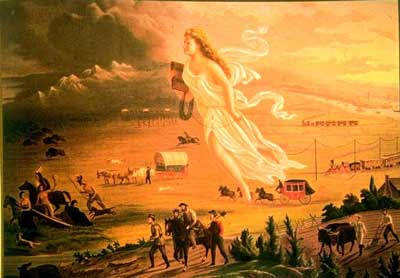
Manife4

Manifest Destiny

Friends of Padre Steve’s World,

Once again I return to the text that I am working on, Mine Eyes Have Seen the Glory: Race, Religion, and Ideology in the Civil War Era because however much we long to escape our history, it is still very much present. Have a great night.

Peace,

Padre Steve+

Manifest Destiny and American Exceptionalism

The foreign policy of the United States nearly always reflects to one degree or another a quasi-religious belief in the continued importance of the United States in spreading democracy around the world.

The United States was an anomaly among western nations in the early 1800s. During that time the percentage of people in Europe who were active churchgoers was shrinking and the number of skeptics rising as the industrial revolution, and advances in science, and the philosophies and theology of classic Liberalism permeated the elites of the continent. But in the United States, the situation was different. The Second Great Awakening helped shape and define the purpose of the nation, and by the “mid-nineteenth century, from North to South, was arguably Christendom’s most churchgoing nation, bristling with exceptionalist faith and millennial conviction.” [1] This was especially true of American Protestantism were “church attendance rose by a factor of ten over the period 1800 to 1860, comfortably outstripping population growth. Twice as many Protestants went to church at the end of this period as the beginning.” [2]

This exceptionalist faith kindled a belief in the nation’s Manifest Destiny in large part was an outgrowth of the Second Great Awakening which was particularly influential among the vast numbers of people moving into the new western territories. As people moved west, Evangelical religion came with them, often in the form of vast revival and camp meetings which would last weeks and which would be attended by tens of thousands. The first of these was at Cane Ridge Kentucky in 1801, organized by a Presbyterian others, including Baptists and Methodists joined in the preaching, and soon the revivals became a fixture of frontier life and particularly aided the growth of the Methodist and Baptists who were willing to “present the message as simply as possible, and to use preachers with little or no education,” [3] and which soon became the largest denominations in the United States. These meetings appealed to common people and emphasized emotion rather than reason. Even so the revivals “not only became the defining mark of American religion but also played a central role in the nation’s developing identity, independence, and democratic principles.” [4]

The West came to be viewed as a place where America might be reborn and “where Americans could start over again and the nation fulfill its destiny as a democratic, Protestant beacon to inspire peoples and nations. By conquering a continent with their people and ideals, Americans would conquer the world.” [5] The westward expansion satiated the need for territorial conquest and the missionary zeal to transform the country and the world in the image of Evangelical Christianity.

The man who coined the term “Manifest Destiny,” New York journalist John O’Sullivan a noted that “Manifest Destiny had ordained America to “establish on the earth the moral dignity and salvation of man,” to disseminate its principles, both religious and secular abroad,” [6] and New York Journalist Horace Greely issued the advice, “Go West, young man” which they did go, by the millions between 1800 and 1860.

But the movement also had a dark side. Americans poured westward first into the heartland of the Deep South and the Old Northwest, then across the Mississippi, fanning westward along the great rivers that formed the tributaries of the new territories. As they did so, the “population of the region west of the Appalachians grew nearly three times as fast as the original thirteen states” and “during that era a new state entered the Union on the average of three years.” [7]

The combination of nationalism fueled by Evangelical religion was combined with the idea from revolutionary times that America was a “model republic” that could redeem the people of the world from tyranny,” [8] as well an ascendant rational nationalism based on the superiority of the White Race. This, along with the belief that Catholicism was a threat to liberty was used as reason to conquer Mexico as well as to drive Native Americans from their ancestral homes. “By 1850 the white man’s diseases and wars had reduced the Indian population north of the Rio Grande to half of the estimated million who had lived there two centuries earlier. In the United States all but a few thousand Indians had been pushed west of the Mississippi.” [9] The radical racism used pseudo-scientific writings to “find biological evidence of white supremacy, “radical nationalism” cast Mexicans as an unassimilable “mixed “race “with considerable Indian and some black blood.” The War with Mexico “would not redeem them, but would hasten the day when they, like American Indians, would fade away.” [10]

Manifest Destiny and American Foreign Policy

Just as the deeply Evangelical Christian religious emphasis of Manifest Destiny helped shape American domestic policy during the movement west, it provided similar motivation and justification for America’s entry onto the world stage as a colonial power and world economic power. It undergirded United States foreign policy as the nation went from being a continental power to being an international power; claiming as Hawaii, and various former Spanish possessions in 1890s, and which would be seen again in the moralizing of Woodrow Wilson in the years leading up to America’s entry into World War One.

The belief in Manifest Destiny can still be seen in the pronouncements of American politicians, pundits, and preachers who believe that that this message is to be spread around the world. Manifest Destiny is an essential element of the idea of American Exceptionalism which often has been the justification for much recent American foreign policy, including the Freedom Agenda of former President George W. Bush. Bush referenced this during his 2003 State of the Union Address, “that freedom is the right of every person and the future of every nation. The liberty we prize is not America’s gift to the world, it is God’s gift to humanity.” [11] Bush frequently used language in his speeches in which biblical allusions were prominent in justifying the morality of his policy, and by doing this “Bush made himself a bridge between politics and religion for a large portion of his electorate, cementing their fidelity.” [12]

Throughout the Bush presidency the idea that God was directing him even meant that his faith undergirded the policy of the United States and led to a mismatch of policy ends and the means to accomplish them. Former Israeli Ambassador to the U.S. and historian Michael Oren wrote:

“Not inadvertently did Bush describe the struggle against Islamic terror as a “crusade to rid the world of evildoers.” Along with this religious zeal, however, the president espoused the secular fervor of the neoconservatives…who preached the Middle East’s redemption through democracy. The merging of the sacred and the civic missions in Bush’s mind placed him firmly in the Wilsonian tradition. But the same faith that deflected Wilson from entering hostilities in the Middle East spurred Bush in favor of war.” [13]

Policy makers and military leaders must realize that if they want to understand how culture and religious ideology drive others to conquer, subjugate and terrorize in the name of God, they first have to understand how our ancestors did the same thing. It is only when they do that that they can understand that this behavior and use of ideology for such ends is much more universal and easier to understand.

One can see the influence of Manifest Destiny abroad in a number of contexts. Many American Christians became missionaries to foreign lands, establishing churches, colleges, schools, and hospitals in their zeal to spread the Gospel. As missionaries spread across the globe, American policy makers ensured their protection through the presence of the United States Navy, and missionaries frequently called upon the United States Government for help and the naval strength of the United States during the period provided added fuel to their zeal. In 1842, Dabney Carr, the new American ambassador to the Ottoman Empire “declared his intention to protect the missionaries “to the full extent of [his] power,” if necessary “by calling on the whole of the American squadron in the Mediterranean to Beyrout.” [14] Such episodes would be repeated in the Middle East, Asia, the Pacific, and Central America over and over again until the 1920s.

The White Man’s Burden, Imperialism, Business, and Faith: Manifest Destiny and the Annexation of the Philippines

If one wants to see how the use of this compulsion to conquer in the name of God in American by a national leader one needs to go no farther than to examine the process whereby President McKinley, himself a veteran of the Civil War, decided to annex the Philippine in 1898 following the defeat of the Spanish. That war against the Filipinos that the United States had helped liberate from Spanish rule saw some of the most bloodthirsty tactics ever employed by the U.S. Army to fight the Filipino insurgents. The Filipino’s who had aided the United States in the war against Spain were now being subjugated by the American military for merely seeking an independence that they believed was their right. While the insurgency was suppressed in a violent manner and American rule was established, some Americans came to see the suppression of the Filipino’s as a stain on our national honor which of which Mark Twain wrote: “There must be two Americas: one that sets the captive free, and one that takes a once-captive’s new freedom away from him, and picks a quarrel with him with nothing to found it on; then kills him to get his land. . .” [15]

William McKinley was a cautious man, and after the United States had defeated the Spanish naval squadron at Manila Bay and wrestled with what to do with the Philippines. McKinley was a doubtless sincere believer, and according to his words, he sought counsel from God about whether he should make the decision to annex the Philippines or not. For him this was not a mere exercise, but a manifestation of his deep rooted faith which was based on Manifest Destiny. Troubled, he sought guidance, and he told a group of ministers who were vesting the White House:

“Before you go I would like to say a word about the Philippine business…. The truth is I didn’t want the Philippines, and when they came to us as a gift from the gods, I did not know what to do with them…. I sought counsel from all sides – Democrat as well as Republican – but got little help…. I walked the floor of the White House night after night until midnight; and I am not ashamed to tell you, gentlemen, that I went down on my knees and prayed Almighty God for guidance more than one night. And late one night it came to me this way – I don’t know how it was but it came….” [16]

He then went on to discuss what he supposedly heard from God, but reflected more of a calculated decision to annex the archipelago. He discussed what he believed would be an occupation of just a few islands and Manila, ruled out returning them to Spain as that would be “dishonorable,” ruled out turning them over to France or Germany because “that would be bad for business,” or allowing Filipino self-rule, as “they were unfit for self-government.” [17] The last was a reflection of the deep-rooted opinion of many Americans that the dark skinned Filipinos were “niggers.”

Barbara Tuchman described McKinley’s comments to the ministers:

“He went down on his knees, according to his own account, and “prayed to Almighty God for light and guidance.” He was accordingly guided to conclude “that there was nothing left to do for us but to take them all, and to educate the Filipinos. And uplift and civilize and Christianize them, by God’s grace to do the very best we could by them, as our fellowmen for whom Christ died.” [18]

But the result, regardless of whether McKinley heard the voice of God, or took the advice of advisers with imperialist, business, or religious views, he made the choice to annex the Philippines, believing it to be the only rational course of action, and something that he could not avoid. In a sense McKinley, of who Barbara Tuchman wrote “was a man made to be managed,” and who was considered spineless by Speaker of the House Thomas Reed who said “McKinley has no more backbone than a chocolate éclair.” [19] It appears that McKinley was more convinced by the arguments of those who desired to annex the Philippines for military reasons, a business community which saw the islands as a gateway to the markets of Asia, and by Protestant clergy, who saw “a possible enlargement of missionary opportunities.” [20] He rejected a proposal by Carl Schurz who urged McKinley to “turn over the Philippines as a mandate to a small power, such as Belgium or Holland, so the United States could remain “the great neutral power in the world.” [21]The combination of men who desired the United States to become an imperialist and naval power, business, and religion turned out to be more than McKinley could resist, as “the taste of empire was on the lips of politicians and business interests throughout the country. Racism, paternalism, and the talk of money mingled with the talk of destiny.” [22] Though there was much resistance to the annexation in congress and in the electorate, much of which was led by William Jennings Bryant, but which crumbled when Bryant with his eyes on the Presidency embraced imperialism.

The sense of righteousness and destiny was encouraged by magazine publisher S.S. McClure, who published a poem by Rudyard Kipling addressed to Americans debating the issue entitled The White Man’s Burden:

Take up the White Man’s burden–
Send forth the best ye breed–
Go bind your sons to exile
To serve your captives’ need;
To wait in heavy harness,
On fluttered folk and wild–
Your new-caught, sullen peoples,
Half-devil and half-child…

Take up the White Man’s burden–
The savage wars of peace–
Fill full the mouth of Famine
And bid the sickness cease…

Take up the White Man’s burden–
Ye dare not stoop to less–
Nor call too loud on Freedom
To
cloke your weariness;
By all ye cry or whisper,
By all ye leave or do,
The silent, sullen peoples
Shall weigh your gods and you…
[23]

McKinley’s decision and the passage of the peace treaty with Spain to acquire the Philippines sparked an insurrection led by Filipino revolutionary Emilio Aguinaldo who had been leading resistance to Spanish rule on the island of Luzon for several years prior to the American defeat of Spanish naval forces at the Battle of Manila Bay, and the subsequent occupation of Manila. The following war lasted nearly three years and was marked by numerous atrocities committed by American forces against often defenseless civilians and it would help to change the nature of the country. After American troops captured Manila, Walter Hines Page, the editor of the Atlantic Monthly believed that Americans would face greater challenges and difficulties in the coming years than they had known in previous years. He wrote:

“A change in our national policy may change our very character… and we are now playing with the great forces that may shape the future of the world – almost before we know it…. Before we knew the meaning of foreign possessions in a world ever growing more jealous, we have found ourselves the captors of islands in both great oceans; and from our home staying policy of yesterday we are brought face to face with world-wide forces in Asia as well as Europe, which seem to be working, by the opening of the Orient, for one of the greatest challenges in human history…. And to nobody has the change come more unexpectedly than ourselves. Has it come without our knowing the meaning of it?” [24]

Within the span of a few months, America had gone from a nation of shopkeepers to an imperial power, and most people did not realize the consequences of that shift. Manifest destiny and American Exceptionalism had triumphed and with it a new day dawned, where subsequent generations of leaders would invoke America’s mission to spread freedom and democracy around the world, as President George W. Bush said, “that freedom is the right of every person and the future of every nation. The liberty we prize is not America’s gift to the world, it is God’s gift to humanity.”

Notes

[1] Ibid. Phillips American Theocracy: The Peril and Politics of Radical Religion, Oil and Borrowed Money in the 21st Century p.143

[2] McGrath, Alister Christianity’s Dangerous Idea: The Protestant Revolution A History from the Sixteenth Century to the Twenty-First Harper Collins Publishers, New York 2007 p.164

[3] Gonzalez, Justo L. The History of Christianity Volume 2: The Reformation to the Present Day Harper and Row Publishers San Francisco 1985 p.246

[4] Ibid. McGrath Christianity’s Dangerous Idea: The Protestant Revolution A History from the Sixteenth Century to the Twenty-First p.164

[5] Goldfield, David America Aflame: How the Civil War Created a Nation Bloomsbury Press, New York, London New Delhi and Sidney 2011 p.5

[6] Ibid. Oren Power, Faith and Fantasy: America and the Middle East 1776 to the Present p130

[7] McPherson, James. The Battle Cry of Freedom: The Civil War Era Oxford University Press, Oxford and New York 1988 p.42

[8] Varon, Elizabeth R. Disunion! The Coming of the American Civil War 1789-1858 University of North Carolina Press, Chapel Hill NC 2008 p.183

[9] Ibid. McPherson The Battle Cry of Freedom: The Civil War Era p,45

[10] Ibid. Varon. Disunion! The Coming of the American Civil War 1789-1858 p.183

[11] Bush, George W. State of the Union Address Washington D.C. January 28th 2003 retrieved from Presidential Rhetoric.com http://www.presidentialrhetoric.com/speeches/01.28.03.html 10 June 2015

[12] Ibid. Phillips American Theocracy: The Peril and Politics of Radical Religion, Oil and Borrowed Money in the 21st Century p.252

[13] Oren, Michael Power, Faith and Fantasy: America and the Middle East 1776 to the Present W.W. Norton and Company, New York and London 2007 p.584

[14] Ibid. Oren Power, Faith and Fantasy: America and the Middle East 1776 to the Present p130

[15] Twain, Mark To the Person Sitting in Darkness February 1901 Retrieved from The World of 1898: The Spanish American War The Library of Congress http://www.loc.gov/rr/hispanic/1898/twain.html 12 December 2014

[16] Zinn, Howard A People’s History of the United States Harper Perennial, New York 1999 pp.312-313

[17] Ibid. Zinn A People’s History of the United States p.313

[18] Ibid. Tuchman Practicing History p.289

[19] Tuchman, Barbara The Proud Tower: A Portrait of the World Before the War, 1890-1914 Random House Trade Paperbacks Edition, New York 2008 originally published 1966 by McMillan Company. Amazon Kindle edition location 2807 of 10746

[20] Hofstadter, Richard The Paranoid Style in American Politics Vintage Books a Division of Random House, New York 1952 and 2008 p167

[21] Ibid. Tuchman The Proud Tower: A Portrait of the World Before the War, 1890-1914 location 3098 of 10746

[22] Ibid. Zinn A People’s History of the United States p.313

[23] Kipling, Rudyard “The White Man’s Burden: The United States and the Philippine Islands” 1899 retrieved from https://public.wsu.edu/~brians/world_civ/worldcivreader/world_civ_reader_2/kipling.html 6 August 2016

[24] Ibid. Hofstadter The Paranoid Style in American Politics pp.183-184

1 Comment

Filed under Foreign Policy, History, middle east

Nightmares and Adjusting to PTSD


Friends of Padre Steve’s World,

Last week I wrote about a very vivid PTSD triggered nightmare which landed me in the emergency room with cuts and contusions to my face and a broken nose. 

After it happened I mentioned that I had decided to get a catcher’s mask to sleep in. Well, I got something else, a street hockey goalie mask. Judy, thought that I should get a bed rail for my side of the bed. Despite the soundness of her advice, I realized that such a contraption would result in even more injuries to me. To say the least I am not very graceful, and I am sure that I would end up tripping over it even when I was not having nightmares causing even more injuries each time I got up to go to the toilet in the middle of the night. When I told her that I had ordered the goalie mask, she told me that I was an idiot. Truthfully, I’m okay with that, as I have been called a lot worse. 

The mask arrived the on Monday and I have been sleeping with it every night since. It is actually relatively comfortable, and if you served in the Army in Europe during the Cold War, and had to live in chemical protective gear and M-17 A1 gas masks for hours on end in field exercises, this is easy. I was actually surprised at how quickly I adapted, as did our two Papillons, Minnie and Izzy who took my new appearance in stride. 

Judy took a picture of me with it on and posted it on Facebook. What can I say?

Peace

Padre Steve+

Leave a comment

Filed under PTSD

Opposing Ideas of Liberty: Slave Power vs. the Declaration of Independence

img_0080

Friends of Padre Steve’s World,

This is something that I pulled from the text that I am currently working on regarding the role of race, religion, ideology and politics in the Civil War era. It deals with the thought of George Fitzhugh, a Southern Social social theorist whose views on race and humanity were quite common in the ante-bellum South, and directly opposed to the principles of the Declaration of Independence. In fact, if you look closely at Fitzhugh’s words, they are very similar to those today who seek to reestablish a society built on an aristocracy of race. They are worth taking some time to read, and then to compare with people today who oppose civil rights based on race, religion, gender, or any other difference that they believe makes people undeserving of liberty. 

So until tomorrow,

Peace

Padre Steve+

The issue of slavery even divided the ante-bellum United States on what the words freedom and liberty meant. The dispute can be seen in the writings of many before the war, with each side emphasizing their particular understanding of these concepts. In the South, freedom was reserved for those who occupied the positions of economic power; slavery was key to that from not only an economic point of view but as a social philosophy. The concept of human equality, which was so much a part of the Declaration of Independence was ridiculed by George Fitzhugh, a planter and slave owner in eastern Virginia commented that that concept “is practically impossible, and directly conflicts with all government, all separate property, and all social existence.” [1] Fitzhugh was very critical of the founder’s philosophy of natural liberty and human equality which he found repugnant and error ridden. He wrote:

“We must combat the doctrines of natural liberty and human equality, and the social contract as taught by Locke and the American sages of 1776. Under the spell of Locke and the Enlightenment, Jefferson and other misguided patriots ruined the splendid political edifice they erected by espousing dangerous abstractions – the crazy notions of liberty and equality that they wrote into the Declaration of Independence and the Virginia Bill of Rights. No wonder the abolitionists loved to quote the Declaration of Independence! Its precepts are wholly at war with slavery and equally at war with all government, all subordination, all order. It is full if mendacity and error. Consider its verbose, newborn, false and unmeaning preamble…. There is, finally, no such thing as inalienable rights. Life and liberty are not inalienable…. Jefferson in sum, was the architect of ruin, the inaugurator of anarchy. As his Declaration of Independence Stands, it deserves the appropriate epithets which Major Lee somewhere applies to the thought of Mr. Jefferson, it is “exuberantly false, and absurdly fallacious.”   ” [2]

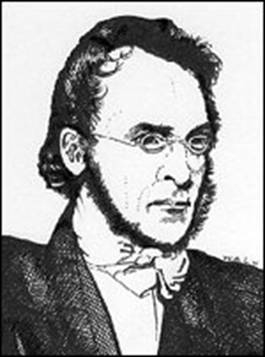
fitzhugh

George Fitzhugh

The political philosophy such as Fitzhugh’s, which was quite common in the South, and was buttressed by a profound religious belief that it was the South’s God ordained mission to maintain and expand slavery. One Methodist preacher in his justification of slavery wrote, “God as he is infinitely wise, just and holy never could authorize the practice of moral evil. But God has authorized the practice of slavery, not only by bare permission of his providence, but by the express permission of his word.” [3] Buttressed by such scriptural arguments Southerners increasingly felt that they were the only people following God. The Northern abolitionists as well as those who advocated for the concept of human equality and free labor were heretics to be damned. As such the “South’s ideological isolation within an increasingly antislavery world was not a stigma or a source of guilt but a badge of righteousness and a foundation for national identity and pride.” [4]

Speaking of the necessity for slavery, as well as limitations on the equality of human beings no matter what their race or sex; Fitzhugh penned words that explained that human relationships were not to be seen in terms of individual liberty, “but in relations of strict domination and subordination. Successful societies were those whose members acknowledged their places within that hierarchy.” [5]

Fitzhugh was quite caustic when he discussed the real implications of his philosophy:

“We conclude that about nineteen out of twenty individuals have “a natural and inalienable right” to be taken care of and protected, to have guardians, trustees, husbands or masters; in other words they have a natural and inalienable right to be slaves. The one in twenty are clearly born or educated in some way fitted for command and liberty.” [6]

Fitzhugh’s chilling conclusion was summarized in the words “Liberty for the few – slavery in every form, for the mass.” [7]

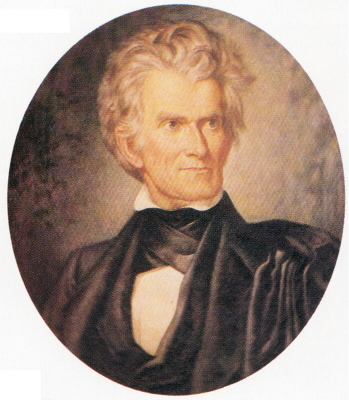
Calhoun

John C. Calhoun

But many Southerners, including many poor whites, especially the Yeoman farmers who were the backbone of the Southern populace did not see or understand the limitations that were placed on their own liberty by the slavery system and instead saw slavery as the guarantee of their economic freedom. John C. Calhoun said to the Senate in 1848 that “With us, the two great divisions of society are not the rich and poor, but white and black; and all of the former, the poor as well as the rich, belong to the upper class, and are respected and treated as equals.” [8] Calhoun’s racial distinction is important if we are to understand why poor whites would fight and die for a social and economic idea that did not benefit them or their families.

But it was Abraham Lincoln, who cut to the heart of the matter when he noted the difference between his understanding of liberty and that of Calhoun and others in the South who defended slavery and the privileges of the Southern oligarchs:

“We all declare for liberty” but “in using the same word we do not all mean the same thing. With some the word liberty may mean for each man to do as he pleases with himself and the product of his labor; while with others the same word may mean for some men to do as they please with other men and the product of other men’s labor.” [9]

Notes 

[1] Ibid. Levine Half Slave and Half Free: The Roots of the Civil War Revised Edition p.140

[2] Fitzhugh, George. New Haven Lecture 1855, in The Approaching Fury: Voices From the Storm, 1820-1861 Stephen B. Oates, Editor, University of Nebraska Press, Lincoln and London 1997 p.135

[3] Ibid. Daly When Slavery Was Called Freedom: Evangelicalism, Proslavery, and the Causes of the Civil War pp.63-64

[4] Ibid. Faust, Drew The Creation of Confederate Nationalism: Ideology and Identity in the Civil War South p.61

[5] Ibid. Levin Half Slave and Half Free p.140

[6] Ibid. Levin Half Slave and Half Free p.140

[7] Ibid. Levin Half Slave and Half Free p.141

[8] McPherson, James M. Drawn With the Sword: Reflections on the American Civil War Oxford University Press, Oxford and New York 1996 p.50

[9] Ibid. Levin Half Slave and Half Free p.122

1 Comment

Filed under civil rights, civil war, History

Disgusting, Disgraceful, and Dishonorable: Trump’s Pathological Need to Belittle those Who Sacrifice for the Country 


Friends of Padre Steve’s World,

Three words: Disgusting, disgraceful, dishonorable, is how I have to characterize how Donald Trump and his campaign treats those who serve, those who have served, and the families of military personnel. 

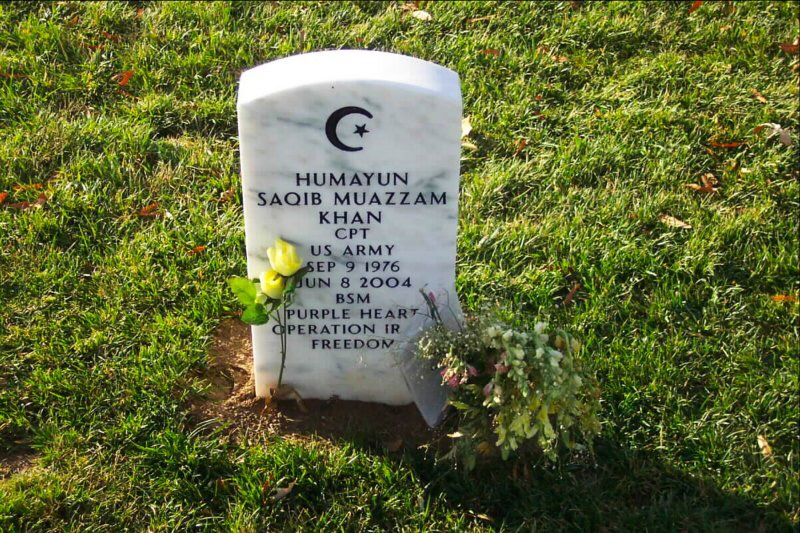
Ever since the parents of Army Captain Humayun Khan so eloquently spoke, and criticized Donald Trump at the Democratic National Convention there has been a full court press by Trump, his aides, and his most strident supporters to demonize the Khans in the most cruel, senseless, and even evil ways. What they have done and continue to do is so offensive that it drew the official rebuke of many veterans groups, including the Veterans of Foreign Wars, and the Iraq Afghanistan Veterans Association. 

Trump is the ultimate bully and crybaby. He went to Twitter to complain of their “vicious attacks,” of course ignoring how has made a career of not only making vicious, and even libelous attacks on people of all walks of life. But then, like I said he is a bully and a crybaby. His assault on military personnel and veterans knows no bounds. He went out of his way to insult, attack, and demonize the Khans, and some of his aides and advisers have insinuated that they are connected to the Islamic Brotherhood, and demanded that they condemn Islamic militants, like losing their son in the battle against them doesn’t count. He mocked John McCain who spent years in a North Vietnamese POW camp, as well as others who have been POWs. He equates his high school years at an elite military prep school as being better than having actually served in the military. He says that he knows more than Generals about how to defeat ISIL. He stated in his acceptance speech that the military was “a disaster.” This list could go on, but even more despicable is the fact that while he claims to “have made sacrifices” he used five deferments to dodge the draft, something that he seems proud of doing. 

He claims to have made millions of dollars in donations to military charities but there are no records, he will not name the charities, and he will not reveal his tax returns. He biggest bragging point is his participation as a co-chairman of the New York Vietnam Veterans Memorial Commission, in which he claimed credit for its construction is also full of deceit. In 1984 he was exposed by fellow members for only showing up at two or three of the twenty meetings. When asked by the Washington post about this he played down the military service of the other commissioners saying “They’re very small thinkers. They’re stockbrokers that were in Vietnam and they don’t have it.” 

The farcical comments by one of the head of his political action committee, that his sacrifice included losing two marriages because he was so committed to his business, conveniently leaving out the part about his constant affairs that led to the break up of those marriages. Some sacrifice. 

Why Trump acts this way might be a mystery to some, but I have a theory. Trump actually feels inferior to the men and women he is insulting because he knows that his avoidance of serving in Vietnam was cowardly. So he has to tear down McCain, he has to say he knows more than the generals, he has to go after the parents of a fallen hero. He is pathological in his need to prove his superiority, but as much as he blusters, Trump knows that he cannot live his own dishonor down, and so he must actively continue to belittle the sacrifices of, and even attempt to destroy the lives and reputations of those who actually did serve. 

Truthfully, the man has no honor, and neither do his henchmen in the Christian Right who have been the loudest and most vicious critics of the Khans, simply because they are Muslim, and who have demeaned Captain Khan’s sacrifice to protect his troops from a terrorist car bomber. Some even said that he was not a hero. To see people who claim to be “Christians” act in such a manner defies the imagination and brings to mind the images of the burning of heretics, witch hunts, and more recently in American history the lynching of blacks by the supposed Christians of the Ku Klux Klan, the Red Shirts, and the White Leagues. 

But truthfully I am surprised at none of this. Many American Evangelical and Conservative Christians only care about the military and the men and women who serve in it so long as it fits their political and religious agenda, and they ruthlessly attack anyone who dares to criticize that agenda. I know this because it has happened to me on quite a few occasions. 

The whole affair has both sickened and angered me as a thirty five year veteran of the Army and Navy, as a combat veteran, and as a Christian. When I see the venomous nature of Trump, his campaign, and many of his supporters I fear for the country. A a Mike Pence speech the mother of a current Air Force member asked Pence about Trump’s attack on the Khans and was booed by the attendees, and he made no attempt to stop it. 

The campaign being waged by Trump reminds me of the 1932 campaign of Hitler against Paul Von Hindenburg. In that campaign war veterans of non-Nazi parties were attacked, derided, and sometimes murdered by Nazi Brownshirts. The violence of the Trump campaign language being used against the Khans and others who disagree with Trump could easily lead to physical violence against Trump’s enemies. Don’t say it can’t happen, violence was a central feature of Trump supporters during the primaries and as the election draws closer I would not be surprised to see an uptick in the number of acts of violence against those who oppose Trump. 

So anyway. That will be all. Have a great Tuesday. 

Until tomorrow,

Peace,

Padre Steve+

3 Comments

Filed under christian life, civil rights, faith, iraq, Military, News and current events, Political Commentary

Rebels and Racism in Gettysburg 


Friends of Padre Steve’s World,

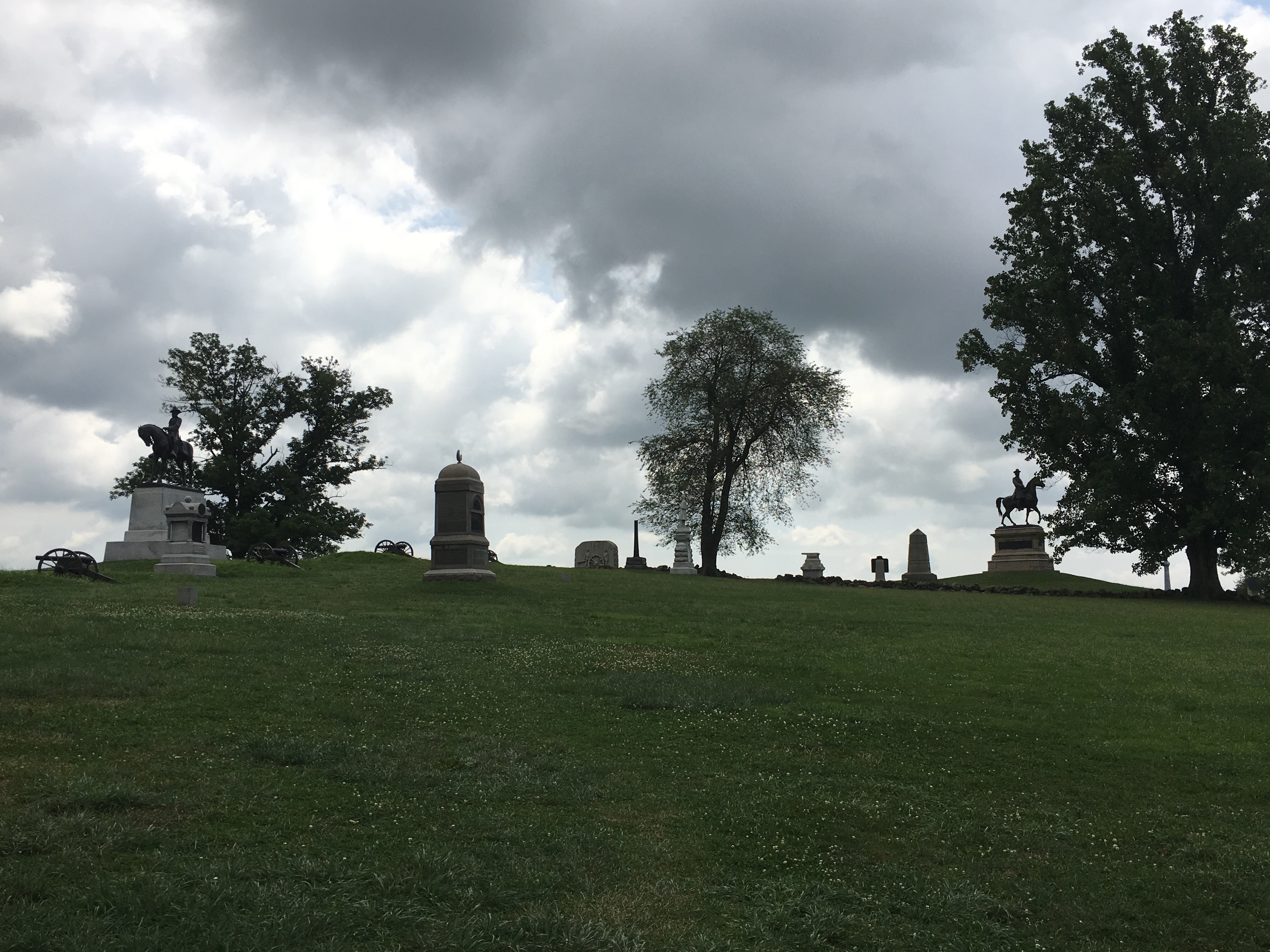
Gettysburg is hallowed ground for all who love this country. It is the site of a defeat which ended any hope for a Confederate military victory, and at which Abraham Lincoln spoke of a new birth of freedom. It is a place that veterans of both sides began to gather both to remember their service and comrades but also to promote reconciliation between the North and the South. 

But it has also become a place in recent years for neo-Confederates to gather, not to remember the new birth of freedom, but to arrogantly defile the site by spewing hate, proclaiming racism, while openly speaking of their hatred of the United States and love of the late Confederacy. Some drive around town and in front of the Soldier’s Cemetery in large and loud pickup trucks, sometimes blaring their horns, while flying large 3′ x 5′ Confederate Battle Flags flying as if to mock the Union soldiers buried there. 

It is also interesting to note that many of these openly racist people are not from the South, nor do they have southern roots. They simply tend to be racist and anti-government and gather around the flag of the Confederacy.  I remember having a beer with a man from upstate New York in a bar a year or so ago who said he was the chaplain for a Confederate reenactment unit (in uniform) and went on to discuss his hatred for the United States, as well as African Americans, and other non-white American citizens. Likewise on another visit an older couple who said they were from Georgia listened to me talk with my students in the Soldier’s Cemetery, and when I was finished with reading the Gettysburg Address, the man made sure that he told me that all people were not created equal. 

But let me be clear, there are also Southerners who love this country very much, who when they come to Gettysburg to remember their fallen ancestors, do so with a reverence which is perfectly in keeping with the desire for reconciliation of the Southern veterans as who returned to Gettysburg in the decades after the war. 

I was walking by one of the gift shops in town and noticed a t-shirt on display. The shirt was adorned with the Confederate Battle Flag and and the words “I will not be reconstructed and I don’t give a damn!” 

To some that may seem like a simple snarky statement. However, when you understand what the phase really means it should leave you cold. In 1866 it became part of the lyrics of a song called Oh, I’m a Good ole Rebel, a song that has been recorded numerous times in the years since it was written. 

It was a phase used by Southerners after the Civil War who opposed the process of reconstruction, opposed all civil rights for blacks, and pushed for the return of white rule, which they achieved in 1877 when Reconstruction ended. At that point nearly every hard fought for right of African Americans was reversed, suppressed, or made so difficult to use as to be effectively revoked. Those rights would not begin to be restored until 1954 when the Supreme Court issued the Brown v. Board of Education decision which overturned the  Plessy v. Ferguson ruling of 1894. This ruling declared that the segregation laws and Black Codes of the Jim Crow era were unconstitutional. It took another ten years for Congress in the face of heated opposition to pass the Voting Rights Act of 1964 and the Civil Rights Act of 1965. 

But among segregationists those rulings were reviled. Governors fought to keep African Americans from entering segregated public schools and universities, civil rights workers were attacked and sometimes killed, civil rights leaders like Dr. Martin Luther King Jr were assassinated. Alabama governor George Wallace, who in his 1963 governor’s inauguration address proclaimed “segregation now, segregation tomorrow, segregation forever!” ran on a segregationist platform in the 1968 election and won 13.53% of the popular vote. He won Georgia, Alabama, Mississippi, Louisiana, and Arkansas, while collecting 45 electoral votes. Interestingly enough, the demographics of Wallace’s supporters, heavily white male and lesser educated, were very much like those of current GOP nominee Donald Trump. 

But I digress, yet the fact of the matter is that the open proclamation of the phrase I will not be reconstructed on a shirt displaying the flag of the republic that Confederate Vice President Alexander said, was founded on the superiority of the white race and subordination of the negro as slaves. They are the words of the KKK, the Red Shirts, and the White Leagues who used violence and terrorism to intimidate blacks and any of their white supporters. 

So a a historian I will not attempt to silence those people’s free speech rights, as repugnant as I find them to be. But have to call their words what they are, a call for the return to Jim Crow and worse. They are meant to intimidate people, and I find that message evil, in fact it goes against everything that makes America great. Maybe those who say they will “make America great again” should take heed to the Declaration of Independence, the Bill of Rights, and Lincoln’s Gettysburg Address and realize what really makes America great instead of spewing the hate of those who fought the propositions of life, liberty, and the pursuit of happiness at every turn, even to begin a bloody civil war. 

So until tomorrow have a great Monday.

Peace,

Padre Steve+


2 Comments

Filed under civil rights, Political Commentary

A Cyclorama, a Cornerstone, and a Proposition


Friends of Padre Steve’s World

I have been at Gettysburg this weekend and yesterday was spent doing the Staff Ride on the battlefield. Normally we get all of the first two days of the battle done and conclude at Culp’s Hill and East Cemetery Hill before retiring to dinner. Yesterday, the weather got in the way. Thunderstorms came through and while we were able to finish the final assault of the Confederates on Cemetery Ridge, the storms became worse, so I altered the plan. Instead of pushing on and ensuring that my students would be too wet and miserable to learn anything I changed the plan on the fly and took them to the Visitors Center, where we normally begin our Sunday.


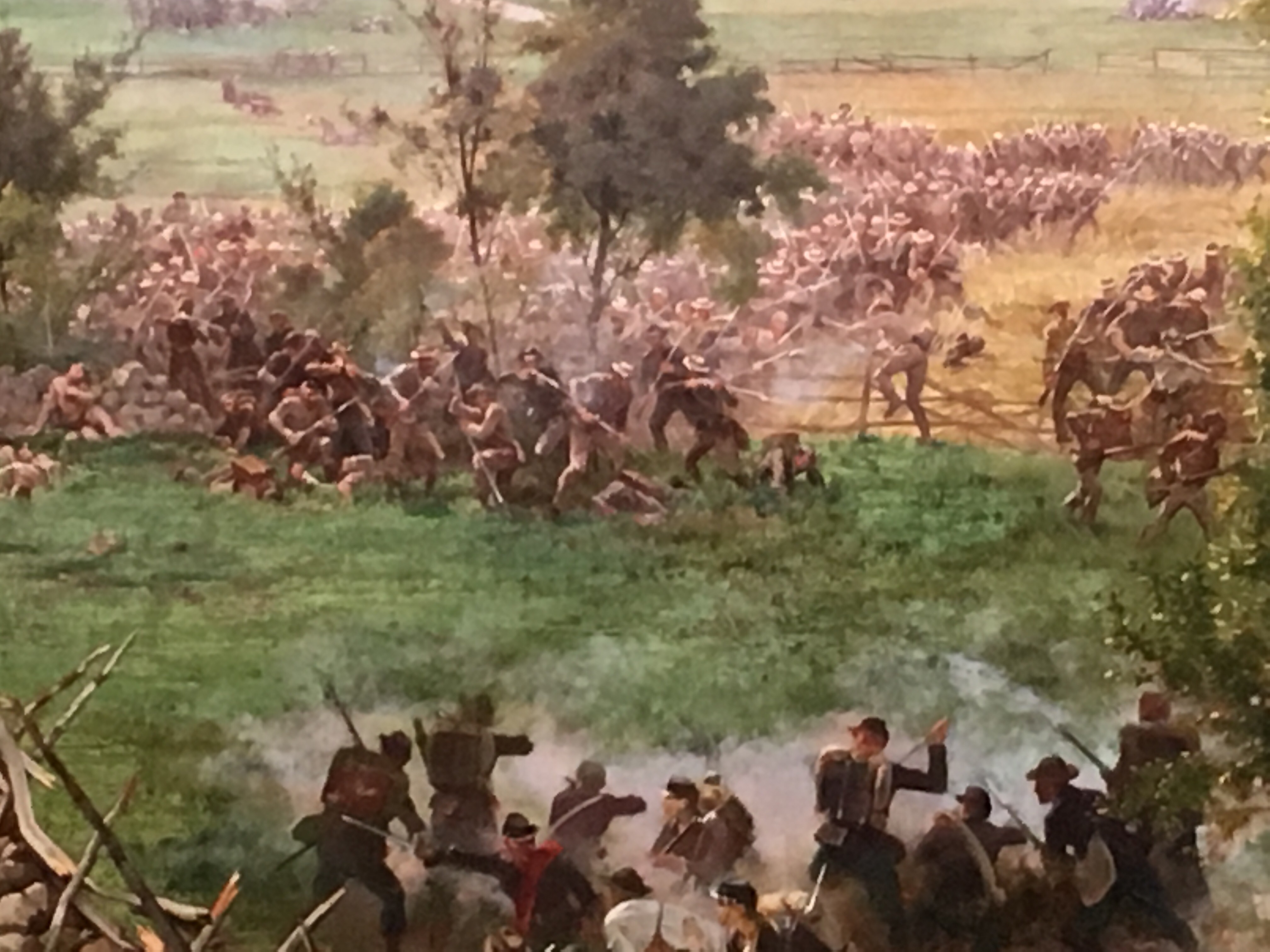
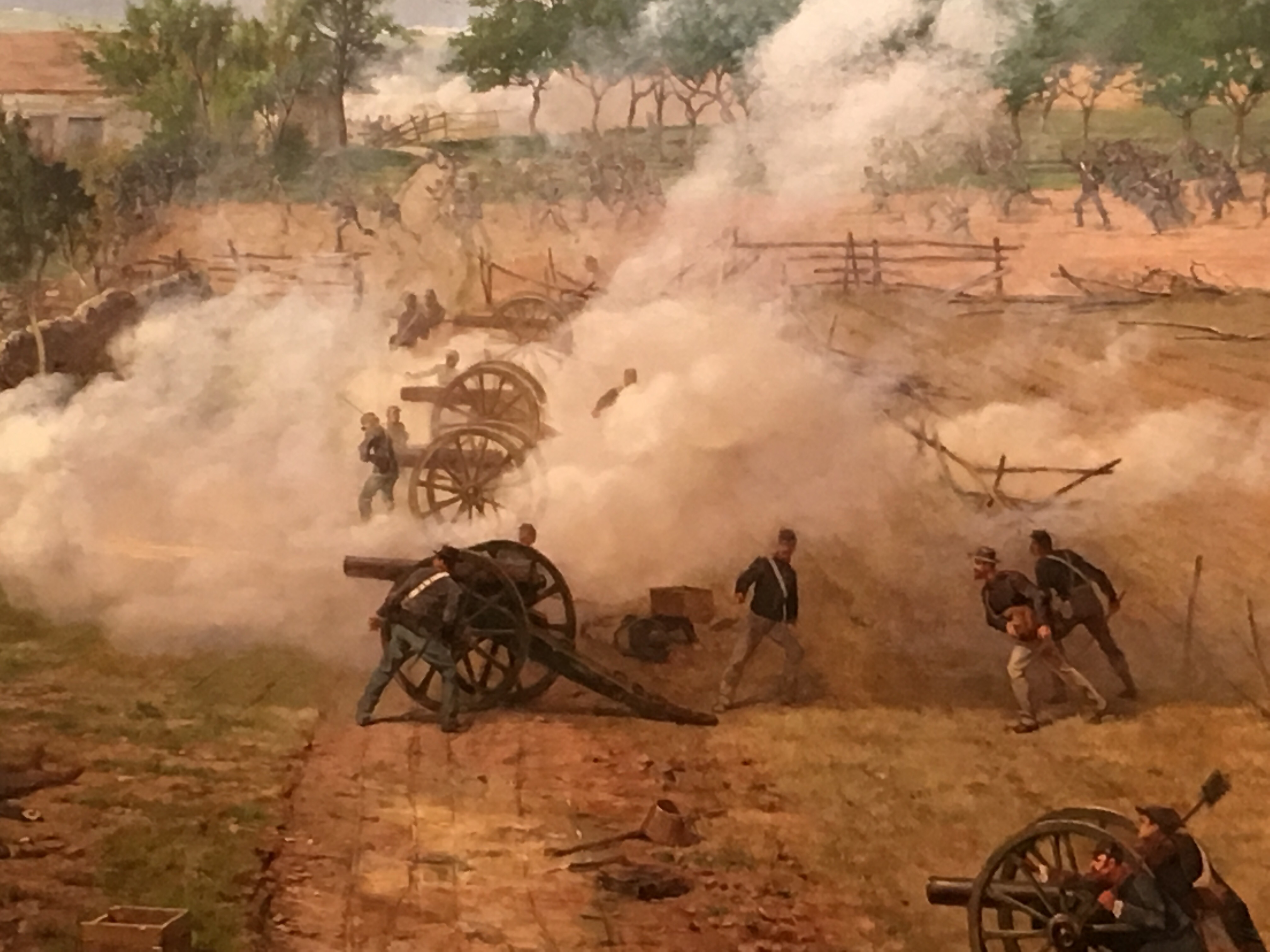
This was a good choice because it also got them more time there than if we had done it today. While there I went the the Cyclorama of Pickett’s Charge, which I had not visited since 1997. The cyclorama is the largest oil and canvas painting in the United States. It give a 360 degree view of the battle. Painted in 1883 by Paul Phillipotaux it is 42 feet high and 377 feet in circumference. It was restored between 2005 and 2008 when it was placed in the new Visitors Center. In all of my trips since then I had not re-visited it. Yesterday I did and it was spectacular, far better than it used to be. 

I also spent time in the museum. One of the displays was a video display of Northern and Southern leaders comments about slavery and abolition in the years leading up to the war and shortly after secession. I stopped and watched and listened, as the words of speeches that I had only read were spoken. One of the statements was that of Confederate Vice President Alexander Stephens in his “Cornerstone Speech” of March 1861. In it Stephens laid out the what he called the “cornerstone” of the Confederacy, that it was a nation conceived on the superiority of the white race, the subordination of the black race, and the error of the founders of the United States in the proposition that “all men are created equal.” 

This was an assertion that Stephens to believed was in error, and he noted that the new Confederacy was “founded on exactly the opposite idea; its foundations are laid, its cornerstone rests, upon the great truth that the negro is not equal to the white man; that slavery, subornation to the superior race, is his natural and normal condition…” 

Now I have read that speech many times and it always sends a tremor of revulsion through me. But yesterday was different. I heard an actor speaking those words, and not only did that tremor of revulsion go through me, but I had an emotional reaction, terms filled my eyes in sadness and anger such as I had not experienced when simply reading the words. To hear a voice utter them was to make them real, because I hear all too similar expressions of the racial superiority of the white race from many supporters of Donald Trump, to included prominent White Supremacists, like David Duke and Pat Buchanan as well as many others including the KKK and bro-Nazis. 

 Likewise, it struck me because many people I know who call themselves conservative Evangelical or Catholic Christians use similar terminology not just to describe their racial superiority, but their religious superiority over others. Hearing those words spoken, reminded me of the fact that those who proclaim them are in fact attacking the very foundation, the very e proposition that the founders stated, and which Abraham Lincoln reiterated and universalized, “the proposition that all men are created equal.” 

That proposition is at the heart of the Bill of Rights and if we say that this is wrong, and we attempt to marginalize, disenfranchise, and otherwise discriminate against people based on their race, nationality, skim color, religion, gender, or sexual orientation, then we have forgotten the most important part of who we are as Americans. Thankfully, a number of rooms later I entered a room which dealt with the Gettysburg Address. In it there was a display of that text, with the voice of an actor portraying Abraham Lincoln speaking it. I paused, listened and reflected on the difference of Lincoln’s words and those of Stephens. Truthfully, hearing the words of Stephens and Lincoln being spoke felt like how I reacted the differences between the Trump convention, and the Democratic National Convention. 

The fact is that the United States was founded on that simple proposition that all men are created equal. While we haven’t always practiced it, in this country or abroad, it does not take away the power that simple truth to set people free. In this country it has been an at times grueling task to bring freedom to slaves, to women, to other immigrants, and to the LGBTQ community. It has been 240 years and there are still people trying to roll back the rights of those they think are inferior, or who they believe that their religion condemns. That my friends is not an American concept, it a throwback to the old world, a world which only exists in the Cloud-Cukoo land of ideologues.


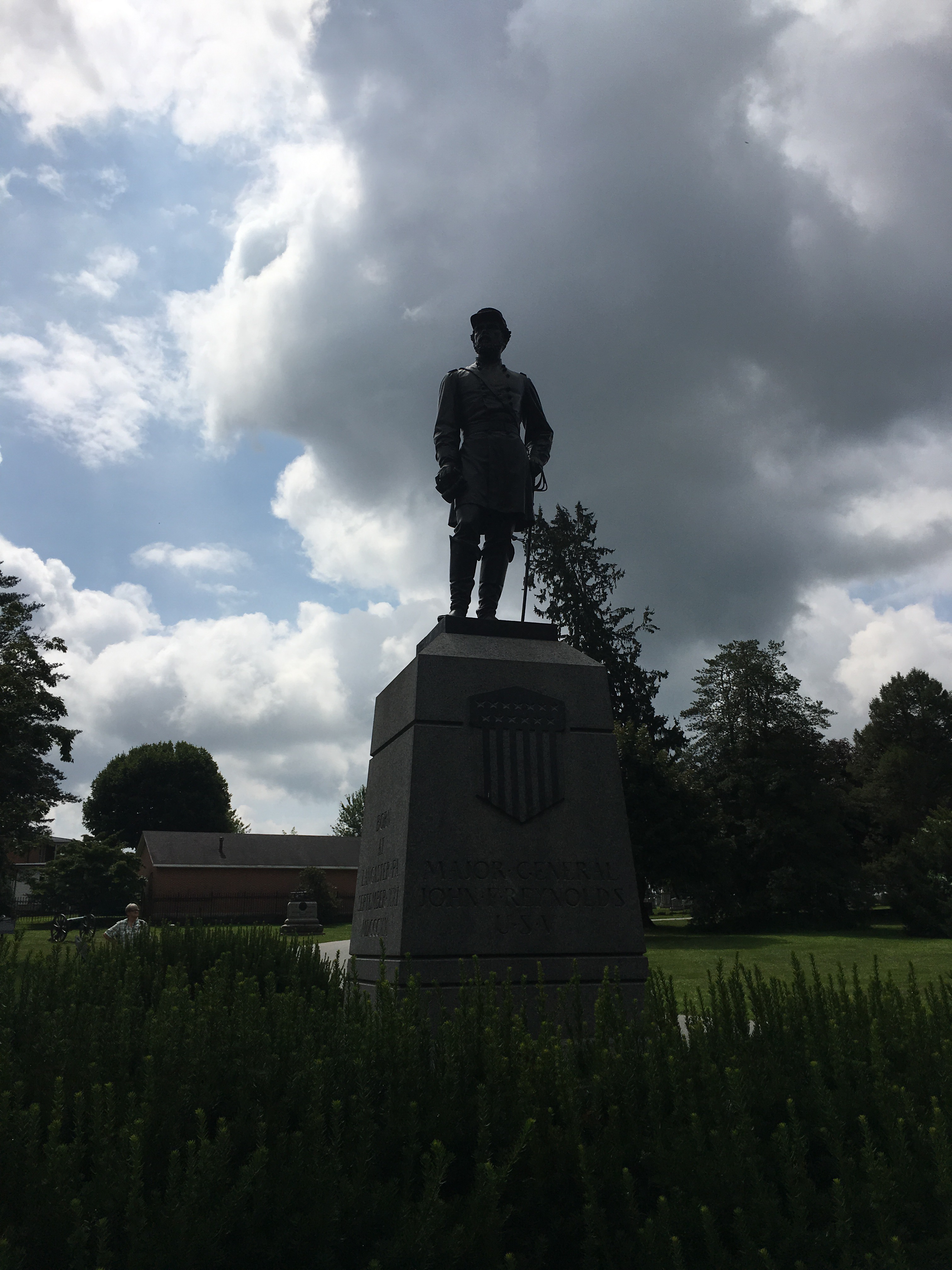
So today we finished up the Staff Ride going to Culp’s Hill and East Cemetery Hill prior to retracing the route take by Pickett’s troops as they made their ill-fated charge into the center of the Federal line. The last past is particularly powerful as I quote from the words of the soldiers who observed the attack and the human carnage inflicted by the Federal guns and infantry. As much as I despised the cause of those brave soldiers, I cannot help but to admire their courage in making that attack, call it the common humanity and compassion that I feel towards soldiers who are ordered to do the impossible. When we got to the Angle where Lieutenant William Cushing was killed firing his last rounds of canister at the advancing Confederates, and where the Irishmen of the 69th Pennsylvania joined with others to drive the Confedates back, I am equally amazed by the courage of those Union men.


As always we finished up at the Soldier’s Cemetery where we talked about the human cost of war, and the moves on to talk about the importance of the Gettysburg Address, in particular its relationship to the Declaration of Indpendence and that proposition that is the heart and soul of what makes America different than any other country. The proposition that all men are created equal, and that we are not a nation founded on race, ethnicity, or religion, but on a proposition that most of the world envies, and which we ourselves so often neglect out of fear, of others, much to our detriment. 

So I will write more later to post tomorrow. But for now I am yours.

Peace,

Padre Steve+ 

Leave a comment

Filed under civil rights, civil war, Gettysburg, History, News and current events, Political Commentary

Gettysburg and Ghosts


Friends of Padre Steve’s World,

I am back up at Gettysburg with another class. After a night of eating, teaching, and drinking some fine craft beer, I am back in my room at the 1863 Inn of Gettysburg. 

The hotel sits at the base of East Cemetery Hill where the right wing of Harry Hay’s brigade, the Louisiana Tigers, made their attack on the night of July 2nd 1863. The attack ended in failure and the Federal Troops held their ground and drove the Louisiana troops back. 

Since the hotel opened in the 1960s there have been many reports of paranormal activity. Usually the people are awakened by what appear to be Confederate soldiers near their beds.

So when I booked the rooms for the class I asked the manager to put me in one of the rooms where such activity has been reported. Now, after my night out with our students I am ensconced in my room and hoping that tonight or tomorrow that I might encounter one of these reported spirits. If I only had the gear of the various ghost hunters it would be really cool, but I don’t, so oh well. I guess if I do see one I will be okay, so long as I don’t go throwing myself out of bed and break another bone in my face.

Until tomorrow,

Peace

Padre Steve+

Leave a comment

Filed under Gettysburg, Loose thoughts and musings

America is Great because America is Good


Friends of Padre Steve’s World,

With the except of a few tweets or Facebook comments I have kept relatively silent about politics, but even though I have been relatively quiet I have been listening, watching, and reading. I have been watching parts of the Democratic National Convention and following what people from all parts of the political spectrum have been saying about it. While some diehard Trump supporters and former Bernie supporters who are pissed off that Bernie is more of a realist than them, I can only say that what has transpired in Philadelphia was 180 degrees different than that of the Dark Lord Trump in Cleveland. It was inspiring, it was the belief in the America that I grew up believing. As the son of a Navy Chief won served in Vietnam, as well an Iraq war and Enduring Freedom veteran, as a man who began his service during the height of the Cold War, I appreciated tonight. 

Let me say as a veteran and currently serving Navy man I was proud of what I saw and heard tonight. Instead of a convention that tore down the very ideals of the Declaration of Independence, the Bill of Rights, and the Gettysburg Address and painted an apocalyptic and fearful vision of fear, there was something to be proud about. There was hope, there was real passion and love for the country. There were the words of Khazr Kahn the father of Captain Humayun Khan who was killed serving in Iraq, which were so moving. As a combat veteran the the words of Medal of Honor winner Captain Florent Groberg, and the words of retired Marine Corps General John Allen meant a great deal to me. To see most delegates shouting USA as these men spoke was so different than the way that that same chant was done in Cleveland, instead of a chant of exclusion, it was a celebration of who were are as Americans. Last week that chant was frightening because it accompanied a message that threatened our allies, encouraged our enemies, and demonized other Americans. This week it made me proud. 

Those who really know me know that for me party politics has never been an obsession. I was a Republican for 32 years. Before I could vote I worked for the Ford campaign as a volunteer. I voted for Ronald Reagan, George Bush, Bob Dole, and George W. Bush. But that was before Iraq and when I came home I was different, and in spite of everything that was , I came to believe in the promise of America again, and remembering the men and women who I knew who gave the last full measure of devotion to duty, I re-embraced the challenge of Abraham Lincoln at Gettysburg, “It is rather for us to be here dedicated to the great task remaining before us – that from these honored dead we take increased devotion- that we here highly resolve that these dead shall not have died in vain, that this nation under God shall have a new birth of freedom, and that government of the people, by the people, and for the people shall not perish from the face of the earth.” 

I was pleased to see the Democratic Party return to a being party of liberal progressivism, as well as values, faith, and patriotism. It was a convention that reflected hope and realism. 

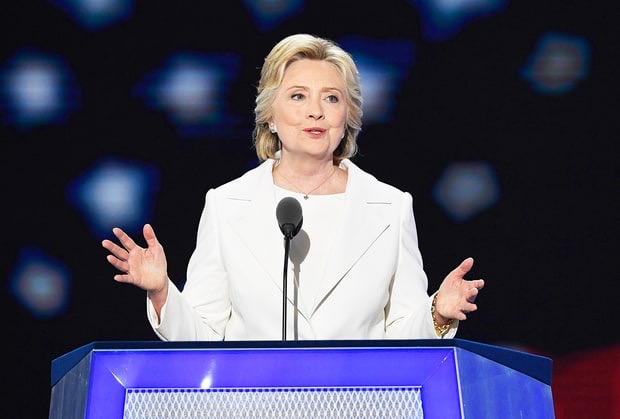
I honestly don’t ask people to agree with me as I believe that all Americans have a right to their political beliefs, and as I have for nearly 35 years I still pledge my life and my sacred honor to do that. But I was proud tonight, I was proud of another child of a Navy Chief, Hillary Clinton. 

I head up to Gettysburg again today with yet another class, and I am glad to be doing so. Every time I go I am inspired and rededicate myself to serving. 

So have a great day. 

Peace,

Padre Steve+

3 Comments

Filed under News and current events, Political Commentary