Monthly Archives: September 2017

Retirement Honors

Friends of Padre Steve’s World,

William Shakespeare wrote in his play Henry V:

This story shall the good man teach his son;

And Crispin Crispian shall ne’er go by,

From this day to the ending of the world,

But we in it shall be remembered-

We few, we happy few, we band of brothers;

For he to-day that sheds his blood with me

Shall be my brother; be he ne’er so vile,

This day shall gentle his condition;

And gentlemen in England now-a-bed

Shall think themselves accurs’d they were not here,

And hold their manhoods cheap whiles any speaks

That fought with us upon Saint Crispin’s day.

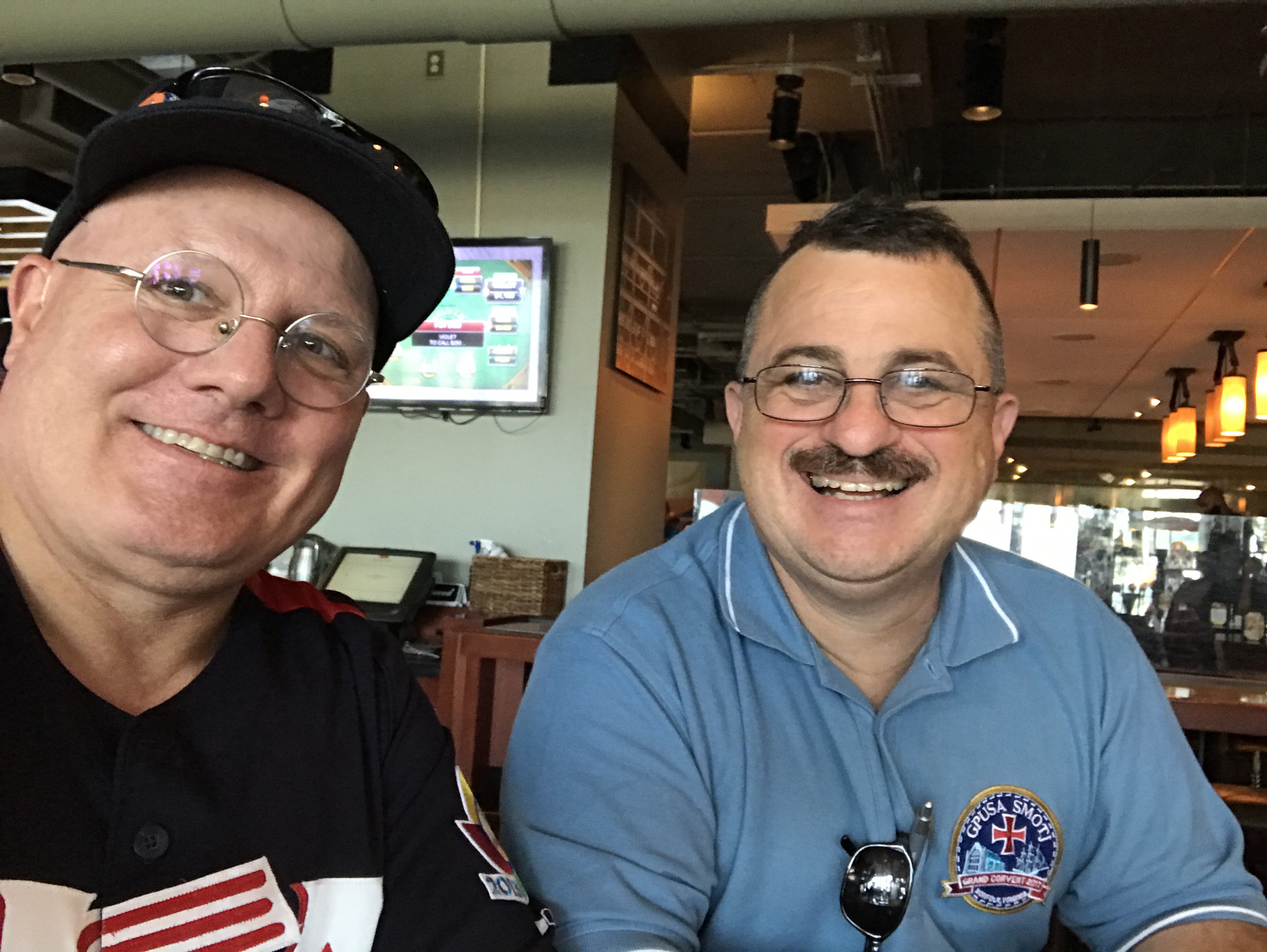
Today I have the honor or participating in the retirement ceremony of my friend Vince Miller at Naval Station Norfolk. He is retiring from the Navy Chaplain Corps as a Commander after 24 years of service. He is a dear friend and a man of great integrity and one of the conscientious men that I know in the Chaplain Corps. He has served with the Marines, as well as at sea, and with the SEALS. He has served in Iraq, and has done much to better the lives of people at a number of shore installations as a base Chaplain and pastor.

I appreciate Vince’s friendship and I am pleased that I will have the honor or participating in his retirement ceremony. Lord willing in not too many years I will be retiring too, but with nearly two full careers between the Army and the Navy spanning nearly 40 years when I retire in 2020 or 2021.

But for those who have never served it is hard to fully appreciate what a man like Vince, and his family, have accomplished and endured in his 24 years of service. This is not a vocation for the faint of heart, or those who are enamored with uniforms and the possibility of having power over the lives of others. To be a chaplain and a naval officer one has to really desire to put others first and be a servant leader. I know that there are officers and including a good number of chaplains who are not that, but in fact are quite toxic, I have served under a number of them in my career, so when a good chaplain like Vince retires there is always a void left.

However, Vince is, and always has been a servant leader who has likewise endured much at the hands of toxic leaders. But that being said he has always remained humble and devoted to caring for the people of God in the military, regardless of their rank, position, race, creed, color, religion, gender, or sexual preference. He sees people as people, created in the image of God who are all worthy of being cared for, respected, and loved.

We lose a fine chaplain tomorrow. I know that Vince will continue to care for and serve people as a minister in his church regardless of what he does next in life, and that he will always be my friend and care about me.

I think Vince would agree with the words of Admiral William McRaven, a Navy SEAL and the former head of U.S. Special Forces Command:

“Remember… start each day with a task completed. Find someone to help you through life. Respect everyone. Know that life is not fair and that you will fail often. But if you take some risks, step up when times are toughest, face down the bullies, life up the downtrodden, and never, ever give up – if you do these things, then you can change your life for the better… and maybe the world!”

I am honored to have a part in his retirement ceremony today, for he is worthy of being honored for his service to God and country. It is an honor to have served with him, for he truly is my brother.

Peace

Padre Steve+

1 Comment

Filed under faith, Loose thoughts and musings, Military, shipmates and veterans, US Navy

The Rationalization of Genocide

Friends of Padre Steve’s World,

Seventy-eight years ago the members of Heinrich Himmler’s Einsatzgruppen were following the German Army into Poland. These forces were intended to do one thing, to eliminate any Poles capable of resisting the Reich and to round up and kill Jews. The sad thing is that while the Genocide committed by the Nazis is in a league of its own, the propensity for others to write about, urge, and promote genocidal practices is not unique.

One of the most troubling aspects of genocide is the degree to which people will go to rationalize and justify it, especially if it is supposedly commanded by their “God.” This includes people who exalt their human leader’s pronouncements to that of a god.

Thus, today’s article is difficult to write. I realuze that some people will be offended because to those that cannot see the nuance that any criticism of their beliefs is akin to an attack on God. That is not my intent at all, there are too many people of faith in all religions who work against the extremists who proport to speak evil in the name of their God. Likewise I am not  attempting by any stretch of the imagination to broad brush or demonize people of faith. That being said, there are people of every faith and ideology who are capable of planning and committing genocide.

Yes there are extremists, but there are also many ordinary people who obey without questioning, and if ordered by a high enough authority will commit unspeakable acts. As Primo Levi noted, “Monsters exist, but they are too few in numbers to be truly dangerous. More dangerous are…the functionaries ready to believe and act without asking questions.”

But my purpose today, in fact the sole intent of this article is to point out some of the questions and issues that people of faith need to ask when they faced with the killing of inocents or defenseless people in the name of God, or of a political leader.

One only has to look at history and the words or actions of people who live among us to realize that the seeds of genocide are always being sown by those who find others less than human. The men and women who sow the seeds of future genocide can do so in the name of their God, their religion, their religious or secular political ideological, or their views on the superiority of their race. The Nazis provide us a road map of the twisted logic used by the perpetrators of such actions, but they are not alone in history, and people like them exist today, some peddling their hatred in the name of God and religion, but not always.

When one reads the speeches, the after action reports, and the post-war testimony of those who orchestrated and conducted the worst terror of the Nazi regime against the Jews and others that they considered to be less than human, or in the case of the handicapped and the mentally ill, “life unworthy of life” they are stunning, and troubling.

During his Posen speech of October 1943 SS Reichsfuhrer Heinrich Himmler was quite clear about the aims of the Nazis, and their goals regarding the Jews and other Untermenschen (Sub humans) including infants and children. Himmler said:

“We came to the question: what to do with the women and children? I decided to find a clear solution here as well. I did not consider myself justified to exterminate the men – that is, to kill them or have them killed – and allow the avengers of our sons and grandsons in the form of their children to grow up. The difficult decision had to be taken to make this people disappear from the earth…”

One would think that killing babies, any babies, but in the particular case Jewish babies to prevent them from growing up to avenge the deaths of their parents would be repulsive, especially to Jews. For most Jews it is, but like every religion Judaism has its share of extremists. One of them is the controversial Rabbi Yitzhak Shapira, the dean of the Od Yosef Hai Yeshiva near Nablus in Israel. In a chapter in his book Torat ha-Melekh [The King’s Teaching] entitled “Deliberate harm to innocents,” which provides numerous justifications to kill gentiles, even babies, Shapira wrote:

“In any situation in which a non-Jew’s presence endangers Jewish lives, the non-Jew may be killed even if he is a righteous Gentile and not at all guilty for the situation that has been created… Hindrances—babies are found many times in this situation. They block the way to rescue by their presence and do so completely by force. Nevertheless, they may be killed because their presence aids murder. There is justification for killing babies if it is clear that they will grow up to harm us, and in such a situation they may be harmed deliberately, and not only during combat with adults.”

The Rabbi’s followers have engaged in frequent violence against Palestinians and Jews who do not hold his radical views. In 2006 he was detained for questioning after writing an article in which he said that all Palestinian males from age 13 and up should be killed or expelled from the West Bank. The rabbi condemns any moderation by the Israeli Defense Forces, and he criticizes Israel’s legal system and judiciary when its rulings conflict with his uncompromising views. To be sure his book was condemned by other Rabbis, especially of the Reformed School, but some Orthodox Rabbis supported it.

Those views are not unlike the stated views of the leaders of the so-called Islamic State when it comes to the killing of non-believers. In that organization’s 2013 Declaration of War those leaders stated:

“If you can kill a disbelieving American or European – especially the spiteful and filthy French – or an Australian, or a Canadian, or any other disbeliever from the disbelievers waging war, including the citizens of the countries that entered into a coalition against the Islamic State, then rely upon Allah, and kill him in any manner or way however it may be. Do not ask for anyone’s advice and do not seek anyone’s verdict. Kill the disbeliever whether he is civilian or military, for they have the same ruling. Both of them are disbelievers. Both of them are considered to be waging war [the civilian by belonging to a state waging war against the Muslims]. Both of their blood and wealth is legal for you to destroy, for blood does not become illegal or legal to spill by the clothes being worn.”

Many Imam’s and Mufti’s around the world and in the Middle East have issued Fatwah’s against the Islamic State and condemned its teachings. But many of these clerics, who often represent their tribal or government leaders, are considered to be disbelievers and “defenders of Israel” by the Islamic State. As such, many Moslem clerics, and large numbers the vast oppressed masses of impoverished, and often disenfranchised Arab Moslems are attracted to that ideology, especially that directed against the Jews, who are seen as the ultimate enemy.

There are Christians too that find theological justification for killing children, and their reasons are chillingly like those of Himmler: The author of an article on the blog Rational Christianity wrote:

“Why were the children killed, if they weren’t guilty? Apparently, they were considered as morally neutral, since they weren’t yet old enough to be held accountable or to have done much right or wrong. While not as corrupt as their parents, they were part of the society that was judged, and shared its earthly (though not its eternal) fate.”

Another author, a man named Wayne Jackson of Apologetics Press writes of the children of the Canaanites, “Would it not have been infinitely worse, in view of eternity, had these children grown to maturity and adopted the same pagan practices as their parents?”

William Lane Craig, a frequent apologist wrote in the Reasonable faith website a comment that sounds like it could have come from the lips of Himmler in dealing with the effect of the mass murders of Jews and others on the troops of the Einsatzgruppen. Craig wrote:

“So whom does God wrong in commanding the destruction of the Canaanites? Not the Canaanite adults, for they were corrupt and deserving of judgment. Not the children, for they inherit eternal life. So who is wronged? Ironically, I think the most difficult part of this whole debate is the apparent wrong done to the Israeli soldiers themselves. Can you imagine what it would be like to have to break into some house and kill a terrified woman and her children? The brutalising effect on these Israeli soldiers is disturbing.”

However, Craig has no qualms about what the Israelites did, simply because the genocide was commanded by God.

If one substitutes “Hitler” for “God” one sees a similar rationalization used members of the Einsatzgruppen. Colonel Walter Blume, a Police Colonel at Vitebsk who tried to “care” for his troops during a mass execution of Jews. He wrote:

“If I am now asked about my inner attitude which I then held, I can only say that it was absolutely split. On the one hand there was the strict order of my superior… and as a soldier I had to obey. On the other hand I considered the execution of this order cruel and humanly impossible. My very presence at this execution convinced me of this in a final manner. I still know that I wanted to make the situation easier for my men who were certainly moved by the same feelings. When ten men were shot there was always a pause until the next had been brought in. During these pauses I let my men sit down and rest and I joined them. I still know what I said exactly the following words to them at this time: “As much as it is no job for German men and soldiers to shoot defenseless people but the Fuhrer has ordered these shootings because he is convinced that these men would otherwise shoot at us as partisans or would shoot our comrades and our women and children were to be protected if we undertake these executions. This we would have to remember when we carry out this order.” Furthermore, I tried talking about neutral subjects to make the difficult spiritual situation easier and to overcome it.”

That is the troubling issue for me. Genocide is genocide and evil, no matter who commands it. We can try to wiggle around and avoid the subject by saying that whatever God we have is above normal law, or that our secular leader’s commands are above the law, but we cannot escape the fact that genocide is immoral and an immutable evil; even if we do it in the name of our God.

I think that is the problem that I have with people who follow their leaders down the path to genocide, even those who they believe are speaking for God. Likewise, I am very much concerned when people seem to care more about the emotional and spiritual effects of mass murders on the perpetrators than on the victims.

But then, the victims are dead and have no one left to speak for them.

Until tomorrow,

Peace,

Padre Steve+

1 Comment

Filed under History, holocaust, nazi germany, News and current events, Political Commentary

I like Jesus Very Much, but…

Friends of Padre Steve’s World,

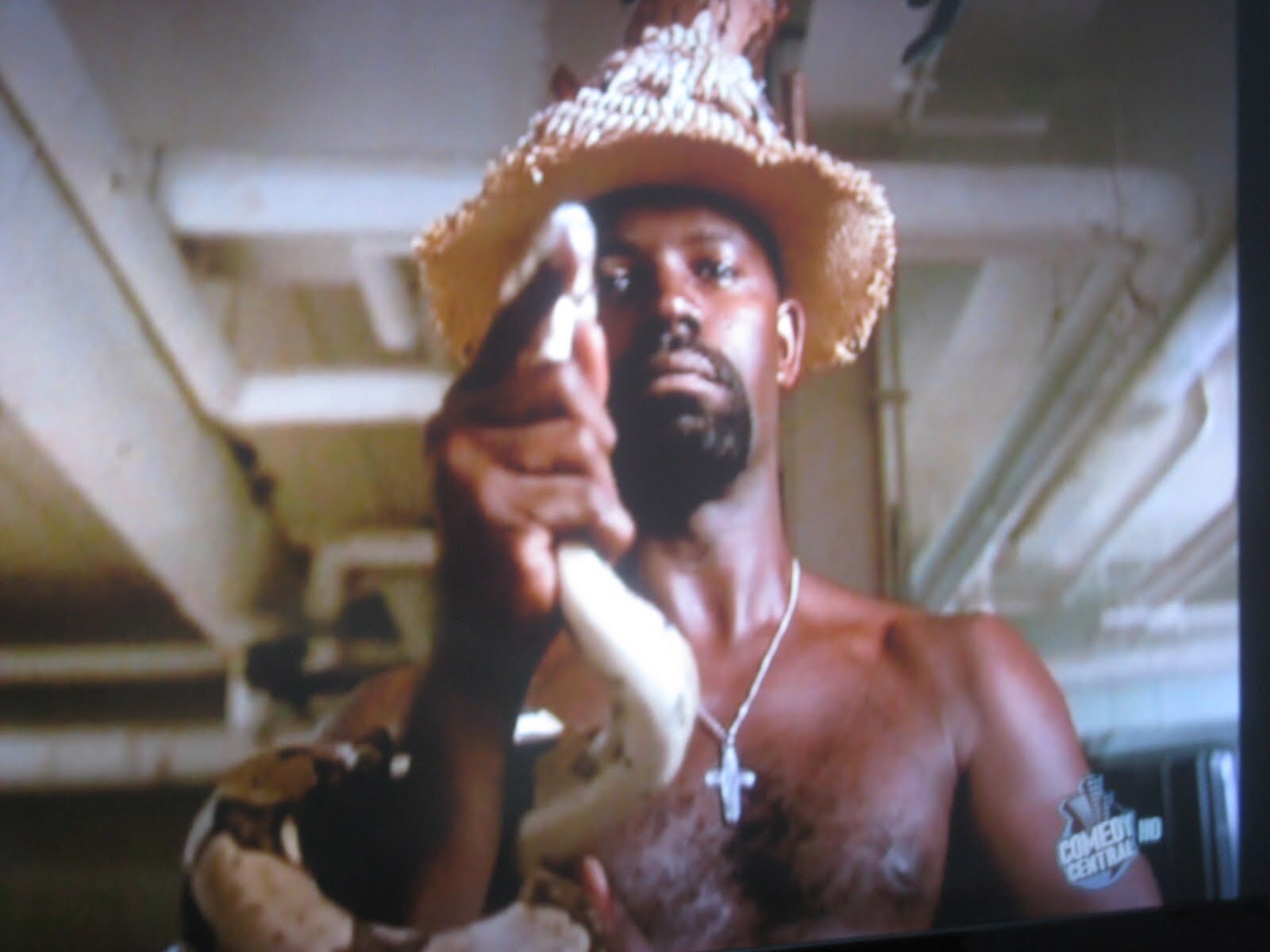
I returned from my extended weekend near Washington D.C. this afternoon looking at a world that seems to me to be headed for the abyss I was heartened to see my wife Judy sticking it to greedy and rude people, not that there is anything wrong with what she did. But truthfully, if there is anything that pisses me off more than anything it is the supposed Christians who are the loudest in proclaiming their devotion to Christ are the rudest, most disrespectful, and entitled people that I have ever seen. I think, what the hell, no wonder people are fleeing the church and want nothing the do with Jesus. As for me, like Pedro Cerano, “Jesus, I like him very much, but he no help with curveball.”

I hate to say that but it is true. The people who have the most bumper stickers, t-shirts, and voice the most platitudes about Jesus and his love are sadly some of the most despicable people that I have ever met. So this weekend at an event where a number of people were both the most hateful and entitled, all while holding their “faith” above others, I decided to wear t-shirts fro breweries and bars throughout the weekend.

I’m sorry to sound so harsh, but if your faith is founded upon demeaning others then the Jesus that you worship above all, who is no help with the curveball won’t help you. Being a rather merciful kind of guy I do hope that you have purchased your asbestos water-skies for your eternal vacation on the Lake of Fire, otherwise it will real suck if I read the Bible correctly.

Honestly, if I see a post by someone blaming whatever misfortune, be it a natural disaster, or war on some poor people who happen not to be of white European descent, or who do not meet the supposed moral standards of these Pharisees, will first excoriate them, and then block them from any social media interaction. I have reached the point that while they can post their shit anywhere else, but I will not allow them to do so here or any of my other social media sites. I won’t be a party to it. To do that is simply to be a party to evil masked as godliness, and I cannot do that. If John 3:16 only applies to some people then the hell with it. Again that may sound harsh but what were the earliest disciples of Jesus talking about? That is a rhetorical question so don’t even try to go there.

Anyway. It has been a long day and since my return home I have had enough to drink. So if you want to challenge me to a fight it will be fair, because I’ve had more than enough to drink.

But since when this is officially posted I will be awake after a full night of sleep, you might stand a chance.

So anyway, until tomorrow,

Peace,

Padre Steve+

10 Comments

Filed under Baseball, christian life, faith, Religion

Thoughts on Labor Day

Friends of Padre Steve’s World,

Yesterday was Labor Day and sadly many people don’t really understand its significance. For decades organized labor has been demonized by the descendants of people who died to secure decent working conditions, wages, and benefits for regular hard working people. But most of the people lucky enough not to have to work on Labor Day really don’t know why it it matters, and whips in spite of those who despise labor and care not a whit about working people, who simply to use business terminology are simply human capital or resources.

So today I am digging into the vault to explore why Labor Day and what it represents matters to us now. This article is one that I have taken the time to edit and update.

Until tomorrow,

Peace,

Padre Steve+

Abraham Lincoln, who was perhaps our only President who was a real working man once said, “If any man tells you he loves America, yet hates labor, he is a liar. If any man tells you he trusts America, yet fears labor, he is a fool.” Likewise, Adam Smith wrote:

“In regards to the price of commodities, the rise of wages operates as simple interest does, the rise of profit operates like compound interest. Our merchants and masters complain much of the bad effects of high wages in raising the price and lessening the sale of goods. They say nothing concerning the bad effects of high profits. They are silent with regard to the pernicious effects of their own gains. They complain only of those of other people.”

It seems that nothing about humanity ever changes, even so it is hard to believe that at one time American workers had no rights and I am not talking about African American slaves who as slaves didn’t even count as human beings. No I’m talking about the people Mel Brooks called in Blazing Saddles: “the white God fearing citizens of Rock Ridge” and for that matter every place and every race in America.

It was not until the mid-1800s in the United States and Europe that workers began to organize and protest for the right to decent wages and working conditions. But this came at a cost; the loss of jobs, homes, property, prison, deportation, deportation, and death.

There were many instances when this cost workers and labor organizers their lives. Employers, often backed by heavily armed private security contractors like the Pinkerton Agency, used deadly force to break up peaceful strikes. In the days of the Robber Barons, when business ran the government at almost every level, employers frequently called in local and state law enforcement, as well as the National Guard, and occasionally Federal troops to break strikes. They played various ethnic and racial groups off of each in order to divide the labor movement. There are hundreds of instances of such violence being used against workers, in some strikes the dead numbered in the hundreds.

Some of these attacks on workers occurred in major cities, others at isolated work sites and factories. Some are famous, the Haymarket Massacre of May 4th 1886 in Chicago, the Pullman Strike Massacre of 1894, the Homestead Strike and Massacre of 1892, the Lattimer Massacre of 1897, the Ludlow Massacre of 1914, and the Columbine Mine Massacre of 1927.

Others less so, but there was more. In the Bisbee Deportation of 1917 1300 striking miners and their families were deported from their homes in Bisbee Arizona by 2000 armed deputies, put in box cars and transported 200 miles to the New Mexico desert, where without food, water or money they were left. There was the Triangle Shirtwaist Factory Fire where managers locked the doors in order to ensure that the fleeing women workers did not put anything unauthorized in their purses. One hundred forty-four workers, mostly young women died, many jumping from the burning building to their death.

Early labor organizations such as the Knights of Labor led the effort to bring about better conditions. For doing so they were labeled subversive and even called communists. Their meetings were often attacked and the leaders jailed and some lynched.

The sacrifices of those early workers, and organizers are why we have Labor Day. One of the early American labor leaders was a man named Eugene Debs. Debs eventually became a Socialist, but he said something remarkable which still is as timely as when he uttered the words:

“I am opposing a social order in which it is possible for one man who does absolutely nothing that is useful to amass a fortune of hundreds of millions of dollars, while millions of men and women who work all the days of their lives secure barely enough for a wretched existence.”

I wish that wasn’t true but it is. The Social Darwinists who follow Ayn Rand as if she were the Prophet and who populate Wall Street boardrooms and every major school of business ensure that it is. The disparity between wage laborers and CEOs is higher than it has ever been. But I digress…

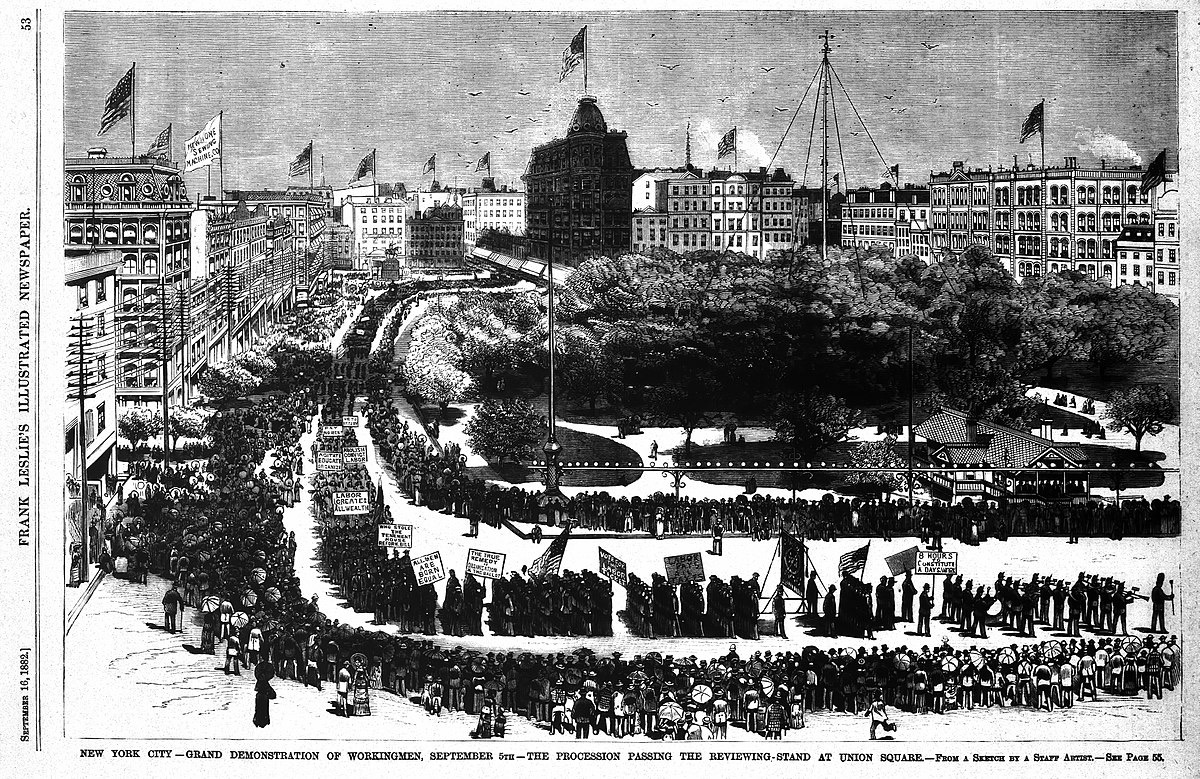
On September 5th 1882 the first Labor Day was observed when members of several Unions in New York City organized the first Labor Day parade. The police came armed and ready to intervene if the workers got out of hand, but the parade was peaceful. It ended and the marchers moved over to Wendell’s Elm Park where they had a party. Twenty-five thousand Union men and their families celebrated, with hundreds of kegs of lager beer.

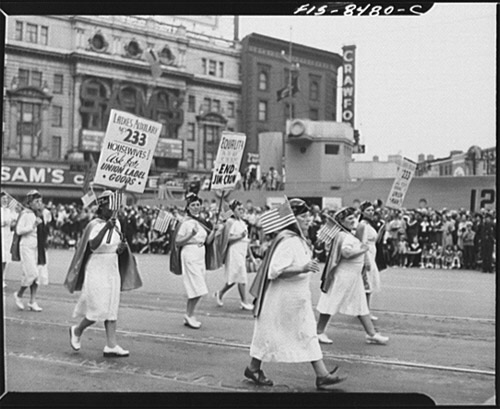
Within a few years many states began to institute Labor days of their own. In 1894, just days after the violent end of the Pullman strike in which Federal troops and Marshalls killed 30 workers and wounded 57 more, Congress and President Grover Cleveland rushed through legislation to establish a Federal Labor Day.

My Great Aunt Goldie Dundas was a labor organizer for the International Ladies Garment Worker’s Union in West Virginia in the 1920s – 1950s. I wish I had gotten to really know her, but she died when I was about 8 or 9 years old. Sadly the workers represented by that Union have had almost all of their jobs in the textile industry outsourced to China, India, Pakistan, the Caribbean, and Bangladesh where cheaply made garments are produced, and workers abused. The examples of mass deaths due to safety issues and fires in Bangladeshi factories are too numerous to list. But then who cares? The fact is you can drive through many parts of the South and see the poverty created by the exodus of these Union employers, the textile industry, which was part of the fabric of the South is gone. Empty factories and poverty stricken towns dot the countryside. I saw a lot of them living in Eastern North Carolina, towns that once thrived are ghost towns, riddled with crime, unemployment and no hope, unless Wal-Mart opens a store in town. Ironically it sells the clothing made overseas that used to be manufactured by the parents, grandparents and great-grandparents of the people who live there today.

Adam Smith, the father of Capitalism understood it in a very different manner than those who claim to be Capitalists today. He wrote in his magnum opus, The Wealth of All Nations:

“In regards to the price of commodities, the rise of wages operates as simple interest does, the rise of profit operates like compound interest. Our merchants and masters complain much of the bad effects of high wages in raising the price and lessening the sale of goods. They say nothing concerning the bad effects of high profits. They are silent with regard to the pernicious effects of their own gains. They complain only of those of other people.”

The fact is that today, labor is under threat. Unions have been demonized by politicians and pundits and their power and influence much reduced. Some of this was due to their own success in improving conditions from workers, and not just Union workers. When my dad retired from the Navy in 1974, he went to work at one of the few non-Union warehouses of the John Deere Company in Stockton, California. While they were not union, the workers received every benefit won by the majority of the workers in the company who were members of the United Auto Workers Union. Due to that my dad had high wages, excellent working conditions and benefits. The company had a program for the children of workers, which allowed them to work in the summer in the warehouse and receive incredibly high pay and benefits while in college. I did that for two years, and it helped pay for much of my college. I was not a union member but I benefited because Union men and leaders did the hard work to make that job happen.

However, in many places, Unions and labor are under attack, sometimes not just by corporations, but also by state governments. Job security and stability for most American workers is a thing of the past. Federal and State agencies charged with protecting those rights, including safety in the workplace are being cut in the mad rush to reduce government power. Corporations are offshoring and outsourcing jobs without regard to American workers or the country itself. Part of that is due to globalization and I understand that, but these companies frequently relocate jobs to places where they can exploit workers, deny them benefits, pay them less, and suffer no penalty for ignoring safety procedures or harming the environment. It seems to me that we are returning to the days of the Robber Barons. I wonder when violence against workers and those who support them will be condoned or simply ignored.

Pope Leo XIII wrote in his encyclical Renum Novarum:

“The following duties . . . concern rich men and employers: Workers are not to be treated as slaves; justice demands that the dignity of human personality be respected in them, … gainful occupations are not a mark of shame to man, but rather of respect, as they provide him with an honorable means of supporting life. It is shameful and inhuman, however, to use men as things for gain and to put no more value on them than what they are worth in muscle and energy.”

He also wrote:

“Equity therefore commands that public authority show proper concern for the worker so that from what he contributes to the common good he may receive what will enable him, housed, clothed, and secure, to live his life without hardship. Whence, it follows that all those measures ought to be favored which seem in any way capable of benefiting the condition of workers. Such solicitude is so far from injuring anyone, that it is destined rather to benefit all, because it is of absolute interest to the State that those citizens should not be miserable in every respect from whom such necessary goods proceed.”

But sadly there are far too few church leaders of any denomination who will take the side of workers or the poor, and when they do they are either condemned by the disciples of Ayn Rand or politely thanked and ignored by politicians and corporate leaders.

So please, when you celebrate Labor Day, do not forget that it is important, and that we should not forget why we celebrate it. If we forget that, it will become a meaningless holiday and our children may have to make the same sacrifices of our ancestors.

Labor Day is a day to remember the men and women, some of them former soldiers, workers, labor organizers, and leaders; some of whom were killed by National Guard and Federal troops for their effort, who paved the way for workers today. We cannot forget that. So when you see a politician attacking Labor and seeking to diminish workers rights or benefits ask them what Abraham Lincoln or Adam Smith would think. If they can’t answer, turn your backs on them and start fighting for what is right.

Dr. Martin Luther King Jr., who always stood for the rights of workers no-matter what their race, creed, or color, said: “We must rapidly begin the shift from a “thing-oriented” society to a “person-oriented” society. When machines and computers, profit motives and property rights are considered more important than people, the giant triplets of racism, materialism, and militarism are incapable of being conquered.”

This my friends is why Labor and the protection of working people from those who abase them, mistreat them, and exploit them is so important.

7 Comments

Filed under ethics, faith, History, labor, laws and legislation, News and current events, Political Commentary

Of Hubris, Hurricanes, Hydrogen Bombs, and Harder Alternatives

Friends of Padre Steve’s World,

I got five mile walk in with my dogs Minnie and Izzy along the Potomac River and has a good amount of time to enjoy them, to take in the woods and wildlife, and to do some thinking. As I walked in the quiet with my girls I thought about what I wrote yesterday about the blessings of solitude. Going out with them meant that I had time to think and ponder a number of crises that have the possibility of impacting all of our lives in major ways and the hubris, arrogance, ignorance, and incompetence of the so called leader of the free world. Max Hastings description of Kaiser Wilhelm II is frighteningly descriptive of President Trump: “a brittle personality whose yearning for respect caused him to intersperse blandishments and threats in ill-judged succession.”

First, there was the catastrophe of Hurricane Harvey with the massive destruction to Houston and much of East Texas to which despite two visits to the region the President still seems emotionally untouched by. Then, after North Korea tested a missile that could hit the United States I conducted a test of its largest nuclear weapon to which after he made his obligatory angry tweets to North Korea, President Trump then both threatened and scolded South Korea.

Now there is the real possibility of another natural disaster as Hurricane Irma bears down of the Southeastern or Gulf Coast of the United States as a major, possibly category four or five storm capable of massive destruction and loss of life, and the realization that we have a President that only seems to see these crises in the light of self-promotion and how they make him appear, and the realization that most people do not prepare themselves for worst case scenarios.

This is nothing new, Barbara Tuchman wrote of an earlier generation “One constant among the elements of 1914—as of any era—was the disposition of everyone on all sides not to prepare for the harder alternative, not to act upon what they suspected to be true.”

Likewise over the weekend I have been doing a lot of reading. I finished Max Hastings book about the opening months of the First First World War, Catastrophe 1914: Europe Goes to War, Bradley Gottfried’s annotated atlas of the Battle of Antietam, The Maps of Antietam, which was helpful as I walked the battlefield on Thursday, Meg Groeling’s The Aftermath of Battle: The Burial,of the Civil War Dead, and Breaking Point of the French Army: the Nivelle Offensive of 1917 by David Murphy. All three books to some extent dealt with the hubris of leaders and the human cost of war. Likewise, my walk of the Antietam battlefield was a good way for me to put both hubris and the human cost of war into perspective.

While natural disasters cannot be avoided they can certainly be mitigated if leaders and people are willing to do the hard thing prepare for worst case scenarios. What happened with Hurricane Harvey is going to cost hundreds of millions of dollars to repair and even for the region to partially recover. Houston will rebuild, and recover but many of the poorer small towns down the Gulf Coast of Texas will not. As I write this the potential damage and loss of life to whatever section of the East Coast or the Gulf Coast that Irma hits will be substantial.

As for North Korea, it seems that the President is determined to provoke the already tense situation on the Korean Peninsula by not only threatening North Korea, but our ally South Korea as well. I don’t know about you but my training as a young officer on the Fulda Gap during the peak of the Cold War taught me to prepare for the worst and I don’t see the leaders of our country or for that matter most people planning, or even thinking about how bad this could get. My motto is that of Hannah Arendt “Prepare for the worst; expect the best; and take what comes,” to which I would add be flexible.

My hope is that Irma will turn away from land and head into the vast reaches of the North Atlantic, but with every new update I see the possibility that as with Harvey, millions of real people are going to have their lives upended. The same is true if the situation on the Korean Peninsula comes to war. It’s just the way I think, and I would rather be ready and have done my best to prepare for the worst case scenario hoping that it never comes to pass, than through a lack of planning, inaction, and careless words or gestures make things exponentially worse.

So anyway, until tomorrow,

Peace,

Padre Steve+

5 Comments

Filed under History, national security, natural disasters, News and current events, Political Commentary

The Glory of Solitude


Friends of Padre Steve’s World,

Today I am writing late after a long but good day at a meet up for owners of Papillon dogs. Saturdays are usually my time to be alone and spend time with Judy and our dogs doing as little as possible. I use them to recharge. I’m getting a lot more social interaction this weekend and that is not a bad thing, but every so often I take the time to break away to spend a bit of time alone, usually with my dogs Izzy and Pierre sitting on my lap. Both happen to be quite sensitive and know when having them there is therapeutic for me.

Since Thursday when I walked the Antietam battlefield I have been musing on the value of solitude and the importance that it has in my life. Paul Tillich wrote: “Our language has wisely sensed these two sides of man’s being alone. It has created the word “loneliness” to express the pain of being alone. And it has created the word “solitude” to express the glory of being alone.”

I am a natural introvert, a thinker, and soldier, who has found his vocation as a priest, and scholar. I think had I been born 800 years ago that I could have easily been a scholastic warrior monk. Thus I live in a world that is foreign to many people. I value community, friendship, and the camaraderie found in some parts of the military. I have learned over the years to mix rather well in social settings, I stay very busy, and I am bombarded with many issues on a daily basis at work as well as by having to know what is going on in the nation and world because of what I do.

I also know what I need, in the words of Elwood Blues, to “live, thrive, and survive,” and one of those things is solitude, which at means for me, venturing from the busyness and chaos of life, and of being inundated by an often toxic stew of nonstop information which dulls the senses. I have to have times of solitude in order to survive, but for much of my life I tried to fill those times alone by doing other doing things, even good things like praying the Daily Office or reading scripture, rather than actually being alone with myself.

Being alone does not necessarily mean being lonely. Loneliness, usually denotes a sense of, pain, abandonment, and often friendlessness, or even being unloved or unlovable. People can be terribly lonely even in a room full of people. There have been times in life, especially in my journey since returning from Iraq in 2008 that I felt the pain and despair of loneliness even when surrounded by people. I also know what it is like to have people who I believed were friends abandon me. But that has nothing to do with being alone or knowing the richness of solitude.

Everyday try to disconnect from people, social media, and other distractions in order to be alone with my thoughts. This can be dangerous as because in solitude we are quite often faced not by the chaos of what is outside of us, but the chaos, and the unresolved conflicts within us. Being alone and seeking solitude is so disquieting at times that many people want to flee from it, because the outer chaos can be used as a shield to mask us from the disquiet within. Thus it takes a certain amount of discipline to remain in solitude, especially in those times when our own demons of fear, anxiety, disappointment, failure, bad memories, unresolved conflicts, angry feelings, and impulses seek to overwhelm us.

Yesterday I wrote about my 17 mile walk through the Antietam battlefield and I think that was one of the most rich times of solitude that I have had in a long time because it was much longer than what I usually get. It was punctuated with a chat with an 88 year old resident of the area who was coming up the trail from the Burnside Bridge with his fishing pole in hand. It was an interesting encounter because during the first 11 miles or so of the walk I had come across very few people and most of them seemed to be in a hurry. But that seems to be the case almost everywhere.

But this gentleman was fascinating, and though I was intent on getting to the bridge, I knew that I had to remain. I listened as he told me about some the the changes in the area since he was a child, homes and barns that no longer existed except as ruins, the people who lived in them, and how as a child he would fish or hunt along the creek. When he found out that I was a in the military and also a historian he lit up. He told me about his and his son’s military experiences, and then he told me about his visit as a child to Gettysburg in 1938 on the occasion of the dedication of the Peace Monument. He described the elderly veterans of North and South, as well as seeing President Franklin Roosevelt deliver his speech on that day. Of course I have read about that event, and seen pictures and newsreel footage of it, but I had never talked to an eyewitness, and he may be the only eyewitness that I will ever meet. My solitude was was enriched. I was reminded of the words of C. S. Lewis who observed, “We live, in fact, in a world starved for solitude, silence, and private: and therefore starved for meditation and true friendship.” As we parted, he walking back toward the new Burnside Bridge and me heading to the site where Burnside’s regiments threw themselves across the old bridge in the face of murderous Confederate fire, he said, “I hope to see you next year,” and I told him I hope so too, and yes I meant it. I then continued my walk all the while contemplating what happened on the battlefield, imagining what it had to be like for those soldiers, and also contemplating my own life. It was liberating.

Solitude is important for many reasons, but it is especially important for leaders at any level, or those who care for others. Secretary of Defense James Mattis is a historian as well as devotee of the writings of Marcus Aurelius. Aurelius was a wise man and he wrote “It is in your power to withdraw yourself whenever you desire. Perfect tranquility within consists in the good ordering of the mind, the realm of your own.” Yes it is possible to withdraw and to seek solitude, but it is also hard, yet necessary. General Mattis noted:

 “Solitude allows you to reflect while others are reacting.  We need solitude to refocus on prospective decision-making, rather than just reacting to problems as they arise.  You have some external stimulus, then you go back to your experience, your education, and you see what needs to be done.”

Solitude is a good thing. It is often, at least for me, an uncomfortable time as I wrestle with my inner demons, but in those times of inner struggle I often discover truths about myself as well as the world around me, sometimes coming in the form of old men who enter my solitude and enrich my life. The two, solitude and companionship on the journey are import, as Dietrich Bonhoeffer wrote:

“Let him who cannot be alone beware of community… Let him who is not in community beware of being alone… Each by itself has profound perils and pitfalls. One who wants fellowship without solitude plunges into the void of words and feelings, and the one who seeks solitude without fellowship perishes in the abyss of vanity, self-infatuation and despair.”

I hope that this makes some sense as I don’t often write articles like this, but as I thought about it today I realized that I ought to write about it, if for nothing else than not writing about the Devil’s Triangle of any of the various crises facing all of us. Sometimes it is important to step away for a time in order to know what to do.

Have a great day and until tomorrow,

Peace

Padre Steve+

1 Comment

Filed under faith, Loose thoughts and musings, philosophy

They Silently Gather Around Me: Walking the Antietam Battlefield


Friends of Padre Steve’s World,

As you know from yesterday’s article I am taking an extended weekend in the D.C. area and yesterday I took a trip up to the Antietam Battlefield which surrounds much of Sharpsburg, Maryland. It was a time of quiet reflection on a battle, on the lives of soldiers, and on our country. The Battle of Antietam was the bloodiest day in American military history, more Americans were killed and wounded on that day than any other single day. While the battle was a draw from a military point of view it was singularly important in that it stopped Robert E. Lee’s invasion of the North and gave Abraham Lincoln enough of a victory to announce the preliminary Emancipation Proclamation. The announcement of that, and creative Union diplomacy helped turn the tide of the war by helping to keep England and France from recognizing the Confederacy.


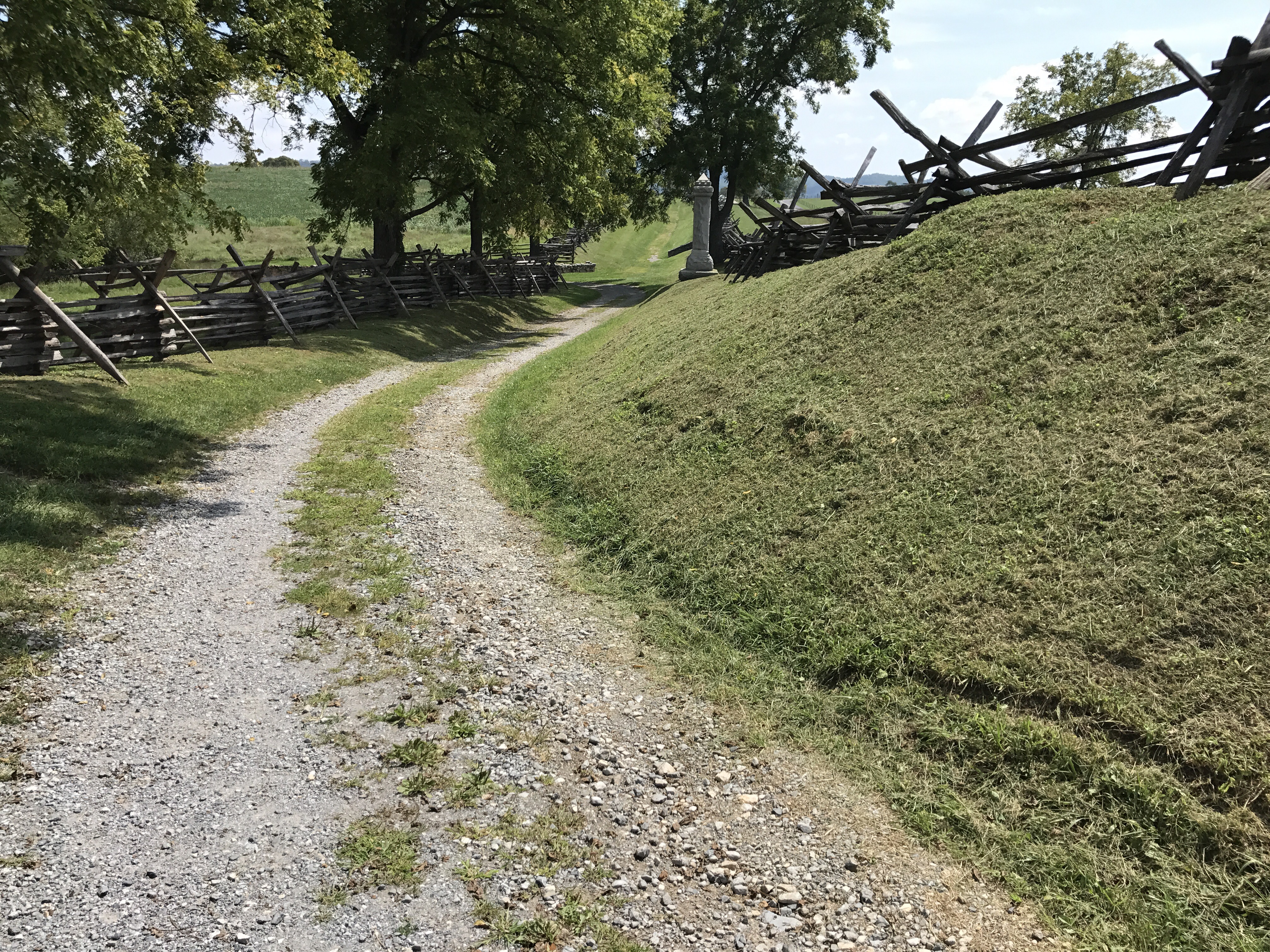
It was my intention to walk as much of the battlefield as I could and I did. The weather was good but a bit warmer and sunnier than what the soldiers who fought there experienced on September 17th 1862. Even so it is my opinion that walking battlefields, be it on a staff ride, reenactment, or simply doing what I did yesterday helps one put the battle into a human context especially if one has a fair amount of historical knowledge and familiarity with a given battle. Being hot, sweaty, feeling ones legs, feet, and back hurt, dealing with waterlogged shoes, being assaulted by swarms of insects, and fighting your way through thrushes, reeds, and high grass along the banks of a creek or river, and drinking the bare minimum of water, and getting a little bit sunburned, is a good way to get a feel for what the soldiers experienced at Antietam or other Civil War battles. I am just glad that I was not wearing a wool uniform, carrying a heavy rifle, 60 rounds of ammunition and cartridges, and all my kit wearing what we would no call substandard shoes, if like the Union soldiers did we even had them. If you were a Confederate soldier at Antietam you might have been barefoot. Since I have been to war and lugged heavy amounts of gear around Iraq I can imagine that, even though I never had to walk as far there as I did today. That’s a good thing.


In his book The Forgotten Soldier, Guy Sajer wrote:

“Too many people learn about war with no inconvenience to themselves. They read about Verdun or Stalingrad without comprehension, sitting in a comfortable armchair, with their feet beside the fire, preparing to go about their business the next day, as usual…One should read about war standing up, late at night, when one is tired, as I am writing about it now, at dawn, while my asthma attack wears off. And even now, in my sleepless exhaustion, how gentle and easy peace seems!”

I am sure that many a Civil War soldier would agree with him. The fact is that reading the history of various wars is important, but whenever possible it is good to experience some of the discomfort of those who fought the battle. When I finished the last part of my battlefield experience my feet hurt and when I took off my shoes they looked pretty bad, but much of that was from the dirt, grass, and moisture that had found its way into my shoes. But unlike the soldiers at Antietam I could return to a safe and dry place and care for my feet, they couldn’t.


We are fortunate along much of the east and central parts of the United States to have many well preserved battlefields. I highly recommend those who have not gotten out to see them, walk them, and to remember those who were killed, wounded, or emotionally scarred for life. Walking the Antietam battlefield for the first time since 2001 I was able to sense the terrible reality that that battlefield was the bloodiest single day of fighting in American history. Depending on the estimate some 22,000 to 27,000 Union and Confederate soldiers were killed or wounded on that one day. As I walked through the Cornfield and the West Woods I tried to imagine how over 13,000 troops were killed or wounded in that part of the battlefield alone. I felt the same way along the Bloody Lane, near the Dunker Church, at the Burnside Bridge, and along the furthest point of the Union advance. Of course this is hallowed ground and the National Cemetery has in it the remains of over 5,000 Union soldiers.


The remains of nearly 3,000 Confederates were interred in a new cemetery on the outskirts of Hagerstown which was dedicated in 1877 as well as two other cemeteries. This is interesting to me because at Gettysburg the Confederate dead were exhumed and taken back to the south with many buried in Richmond’s Hollywood Cemetery.


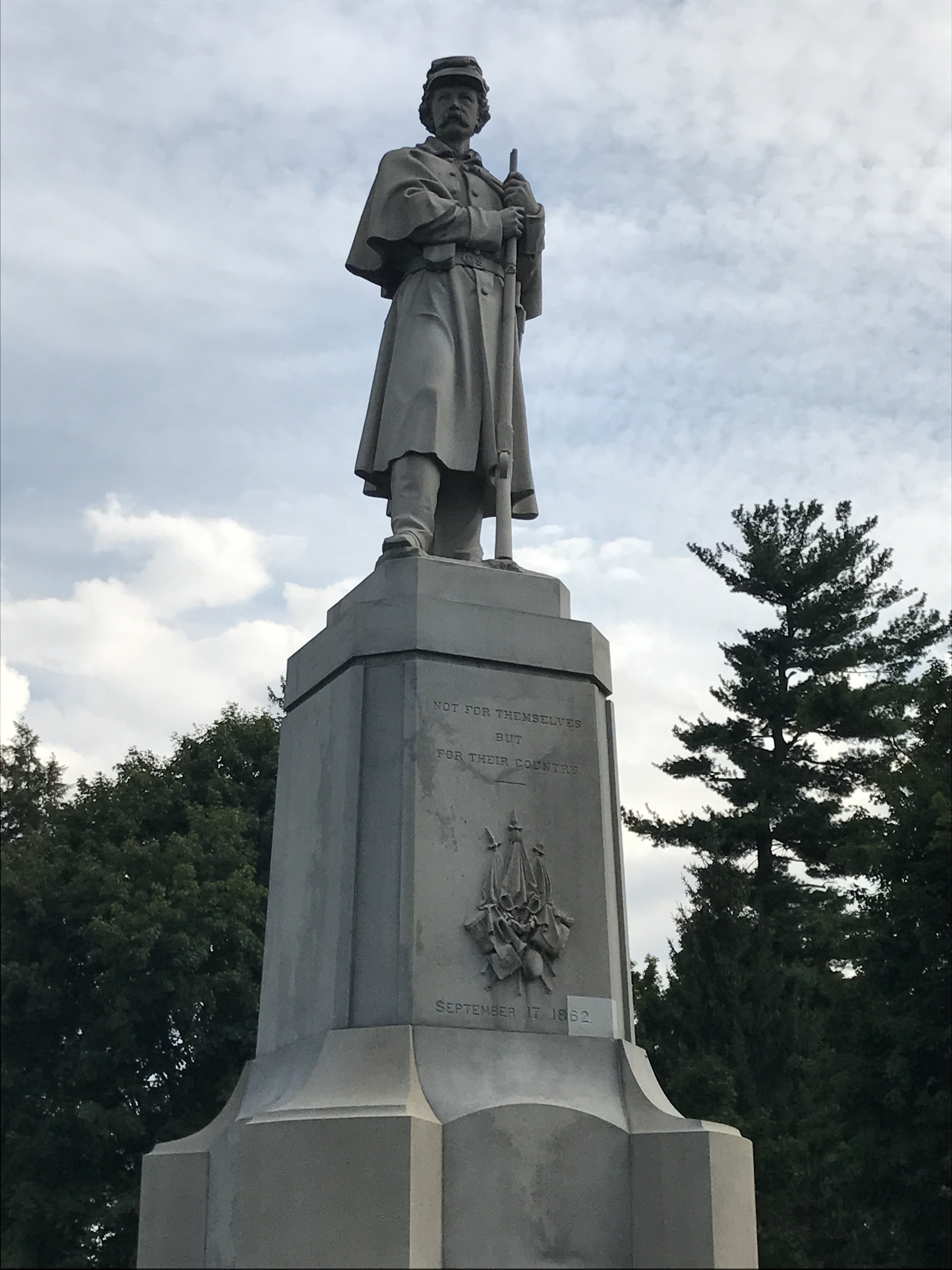
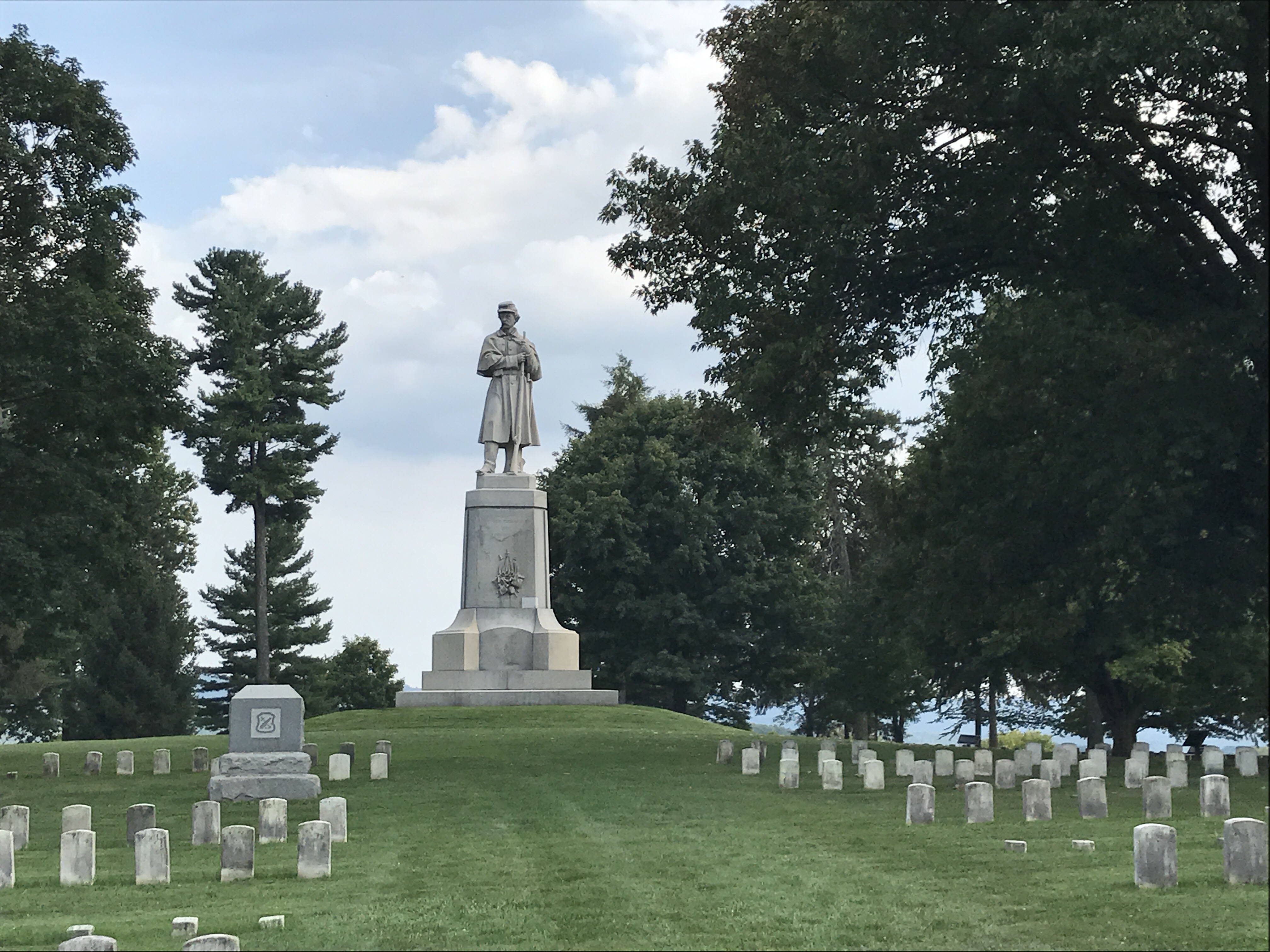
The National Cemetery is guarded by Old Simon a massive granite statue of a representative Union soldier. The monument is 44 feet tall, and Old Simon, designed and sculpted by James Batterson is 21 1/2 feet tall and weighs 30 tons. The inscription is appropriate. It simply reads: Not for themselves but for their country, September 17, 1862.


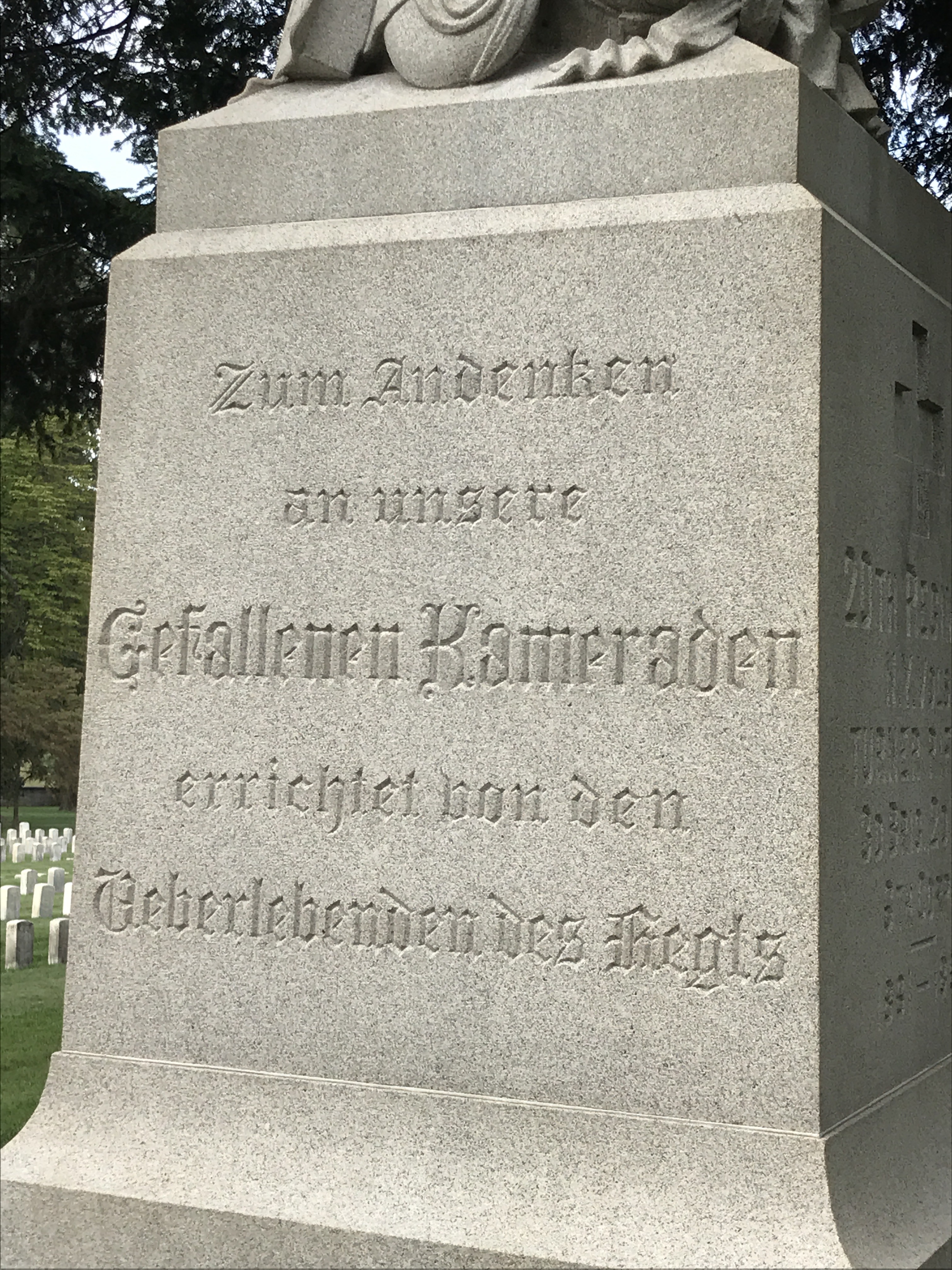
The graves of the soldiers are laid out around the statue grouped in the states from where they came. There are a few individual monuments and a monument erected by the survivors of the 20th New York, a unit primarily composed of German immigrants that also has a monument not far from the Dunker Church. The inscription on one side has in German the words Zum Andenken an unsere Gefallenen Kameraden, errichtet von dem Ueberlebenden des Regts. (Erected to our fallen comrades by the survivors of the regiment)


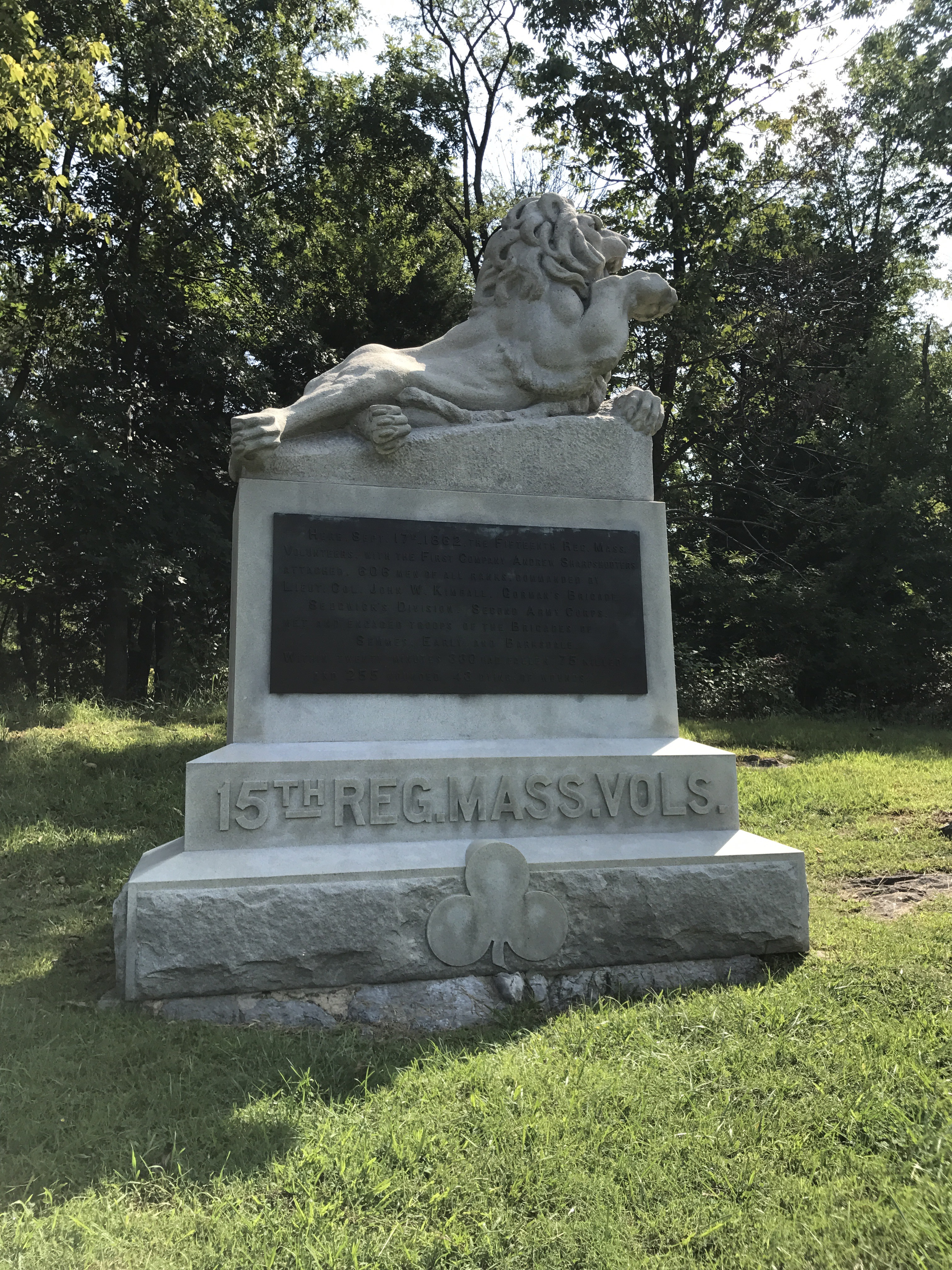
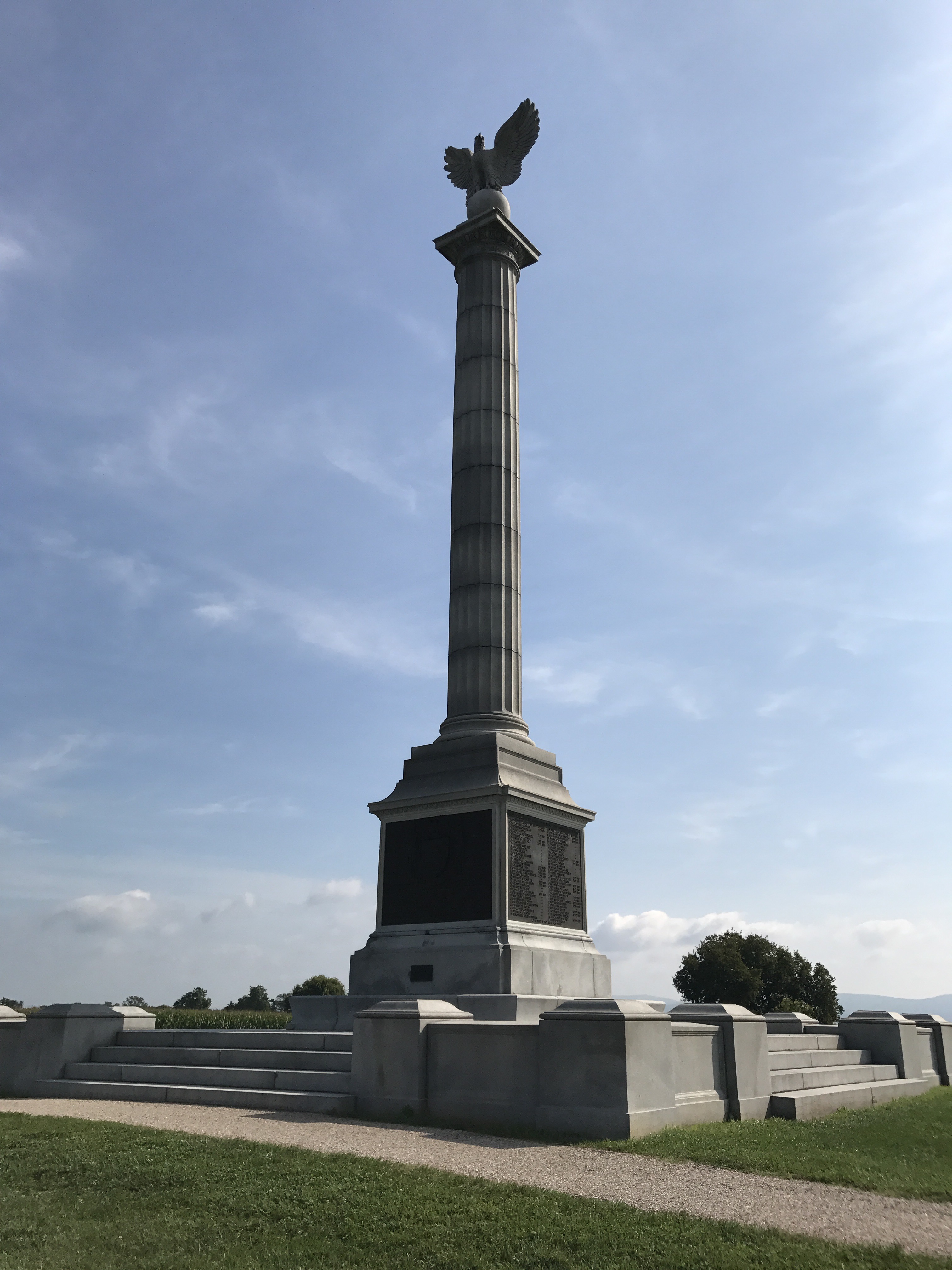
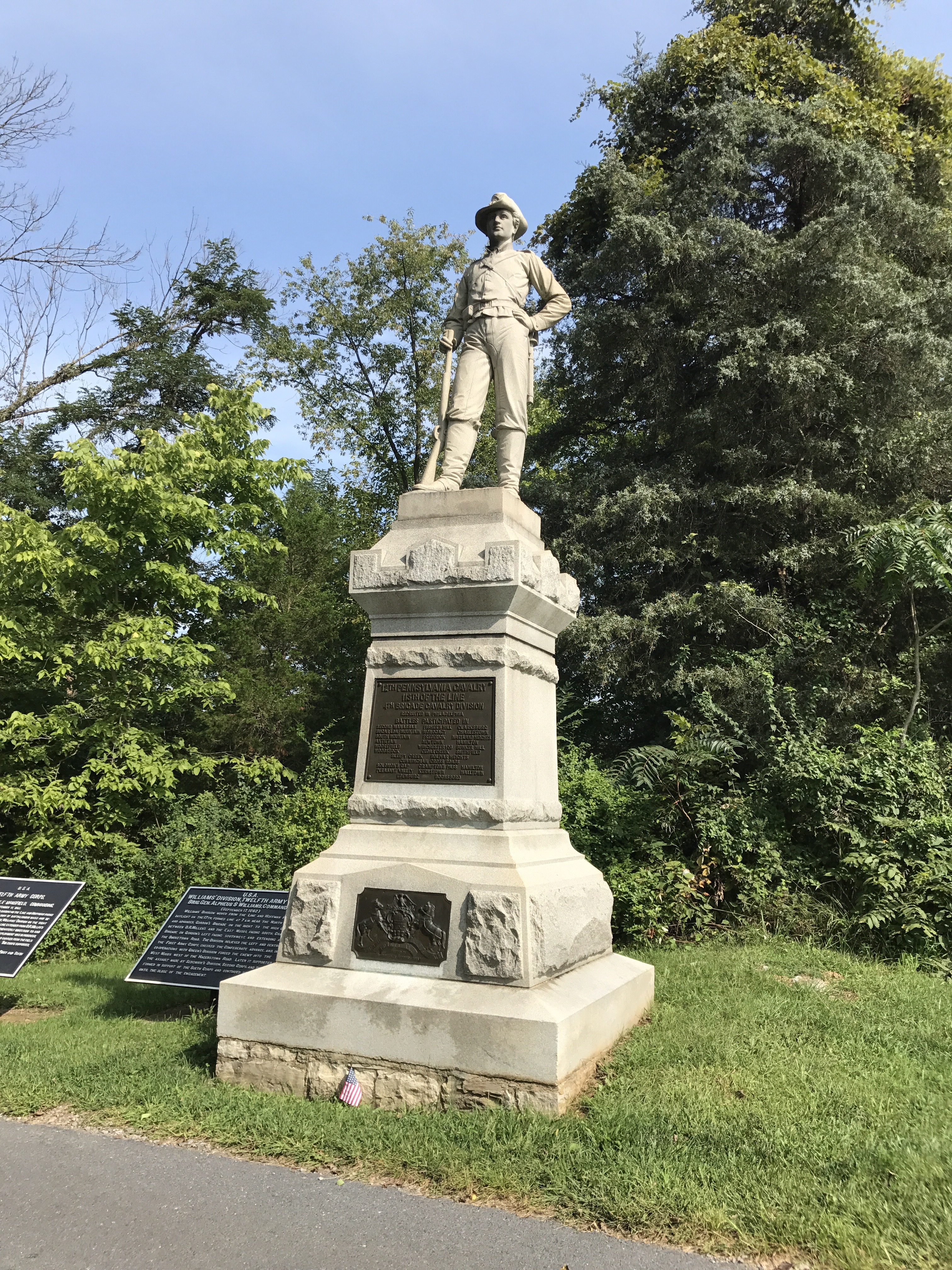
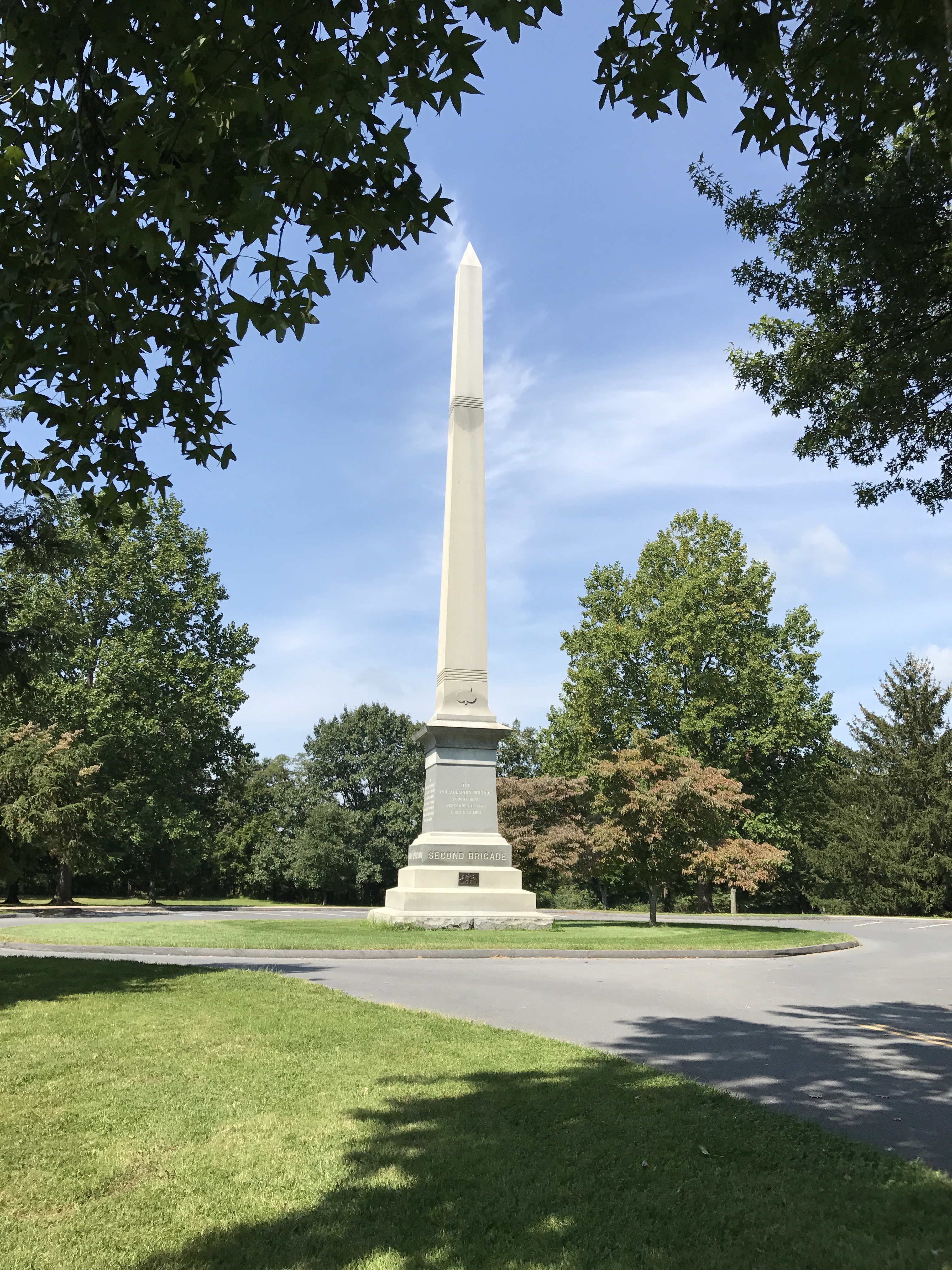
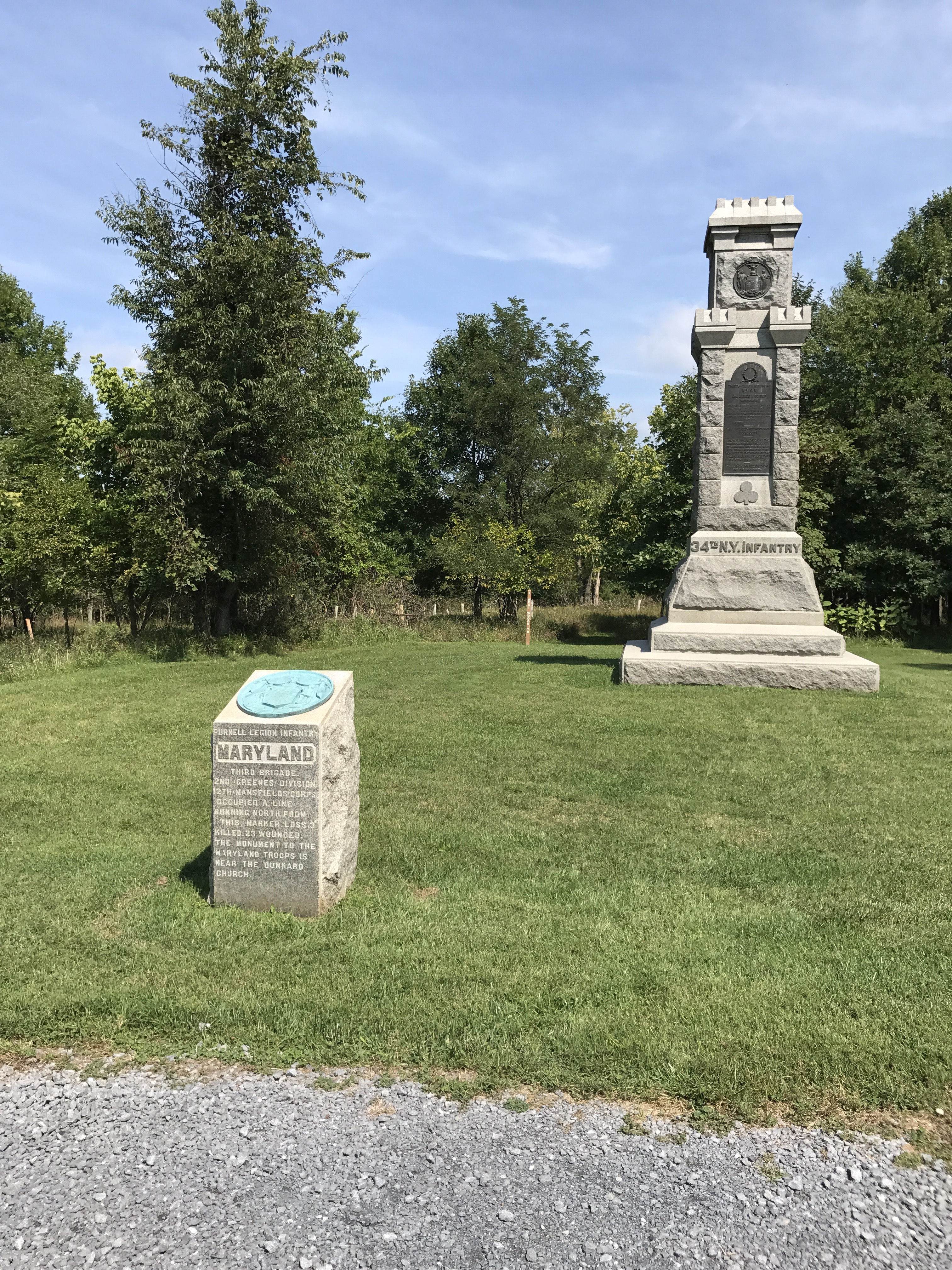
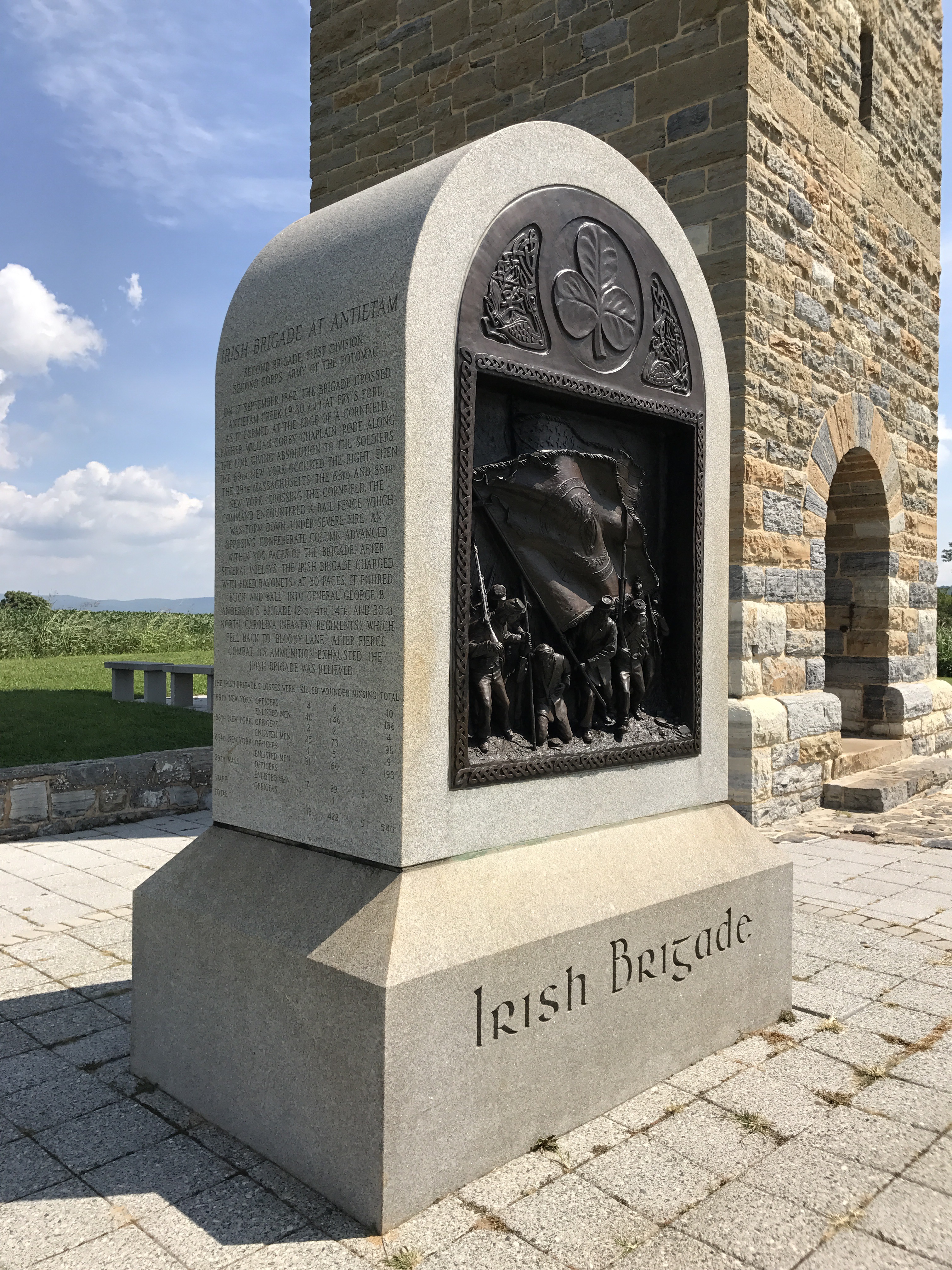
As far as battlefield monuments are concerned there are comparatively few, just 96 as compared to Gettysburg which has some 1,300 of all types. Almost all of the monuments at Antietam, with the exception of the ubiquitous bronze markers that show the positions of units and describe their actions, are dedicated to units of the Army of the Potomac. These were erected by states, communities that contributed troops and veteran associations. There are only six monuments specifically honoring Confederates with Maryland having a monument to its soldiers of both sides.


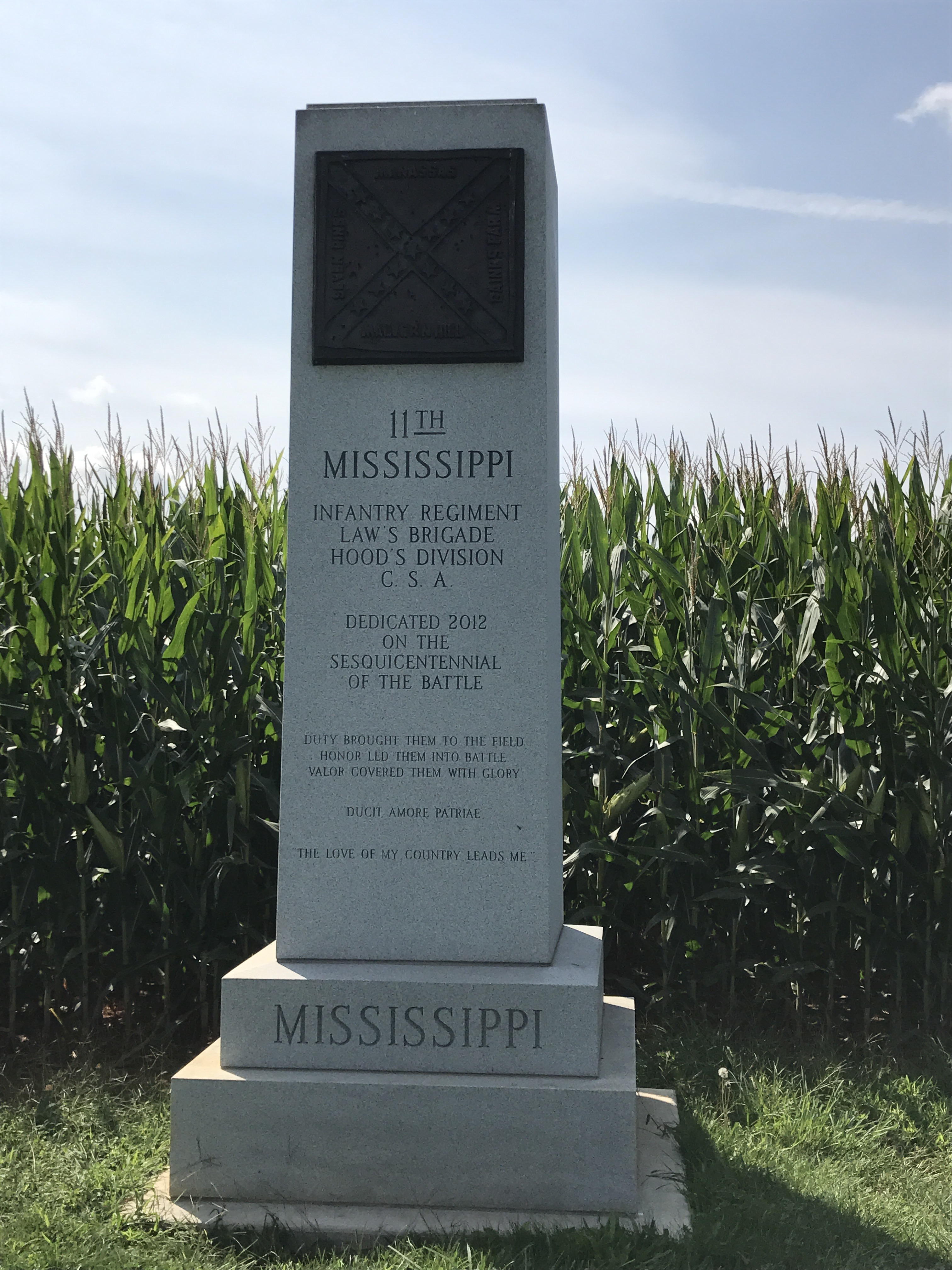
 Of the Confederate monuments most are of fairly recent import. Georgia and Texas have monuments to all of their soldiers, while Mississippi has one dedicated to the 11thMississippi Infantry. All three of these stand within a hundred yards of each other on the southern edge of the Cornfield.


There is a monument to Robert E. Lee near the new Burnside bridge off Maryland Highway 34 as you cross Antietam Creek. It too is a rather new addition, being funded by William F. Chaney and dedicated in June 2003. Chaney had noted that he just wanted “even things up a bit.” The inscription on it furthers the Lee myth promoted by the purveyors of the Lost Cause and the Noble South saying “Although hoping for a decisive victory Lee had to settle for a military draw, Robert E. Lee was personally against secession and slavery, but decided his duty was to fight for his home and the universal right of every people to self-determination.”


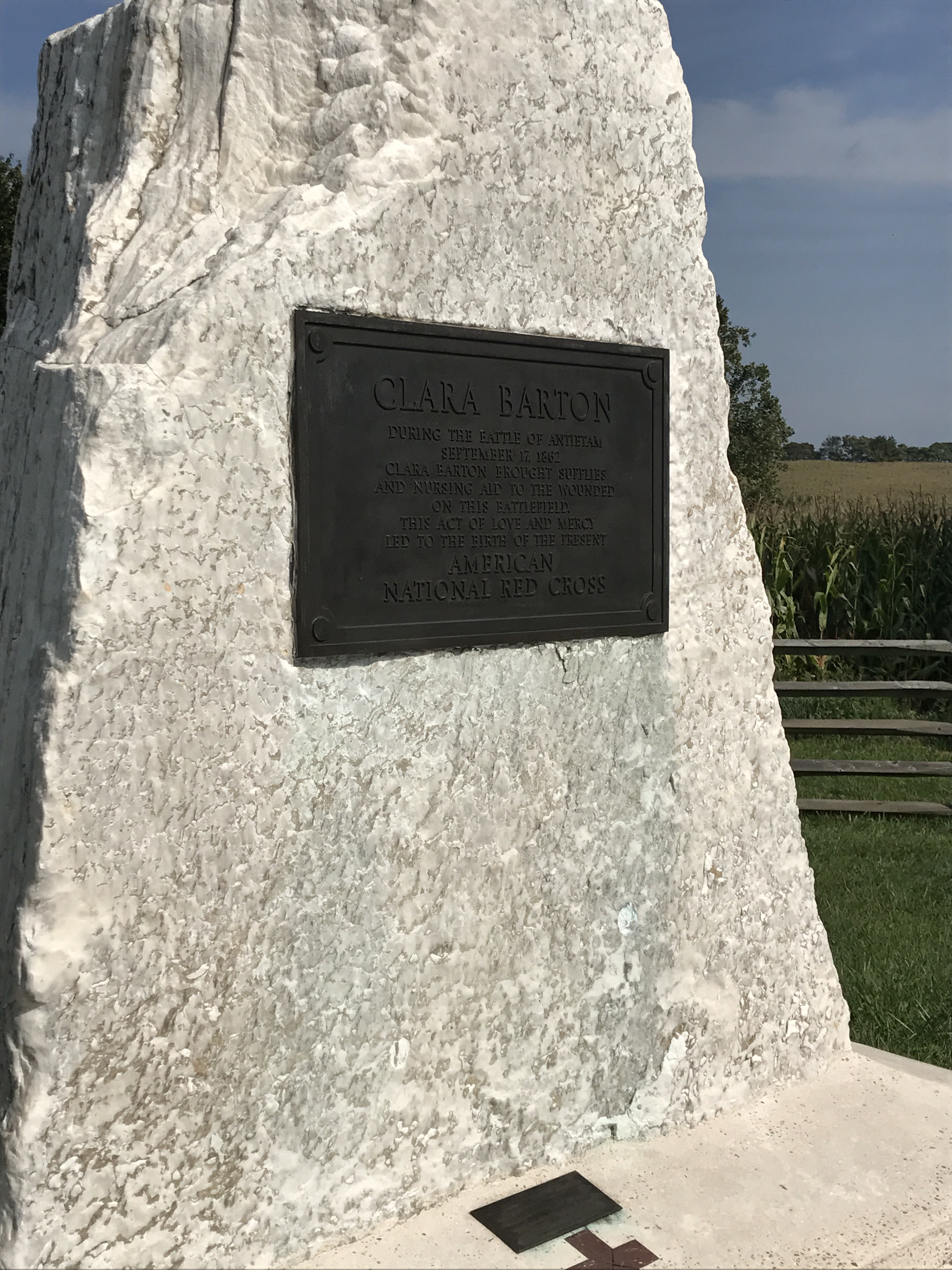
A monument on the northern edge of the Cornfield is dedicated to Clara Barton who along with other nurses helped to care for the wounded of the battle and one near the Burnside Bridge to President William McKinley who was a Sergeant in the 23rd Ohio Infantry. Six monuments each with a cannon placed upside down into a stone, these are mortuary markers noting where six Generals were killed or mortally wounded. They include Union Generals Joseph Mansfield, commander of XII Corps, and division commanders Israel Richardson and Isaac Rodman. Three Confederate brigade commanders, George Anderson, William Starke, and Lawrence O’Brien Branch are marked by identical monuments.


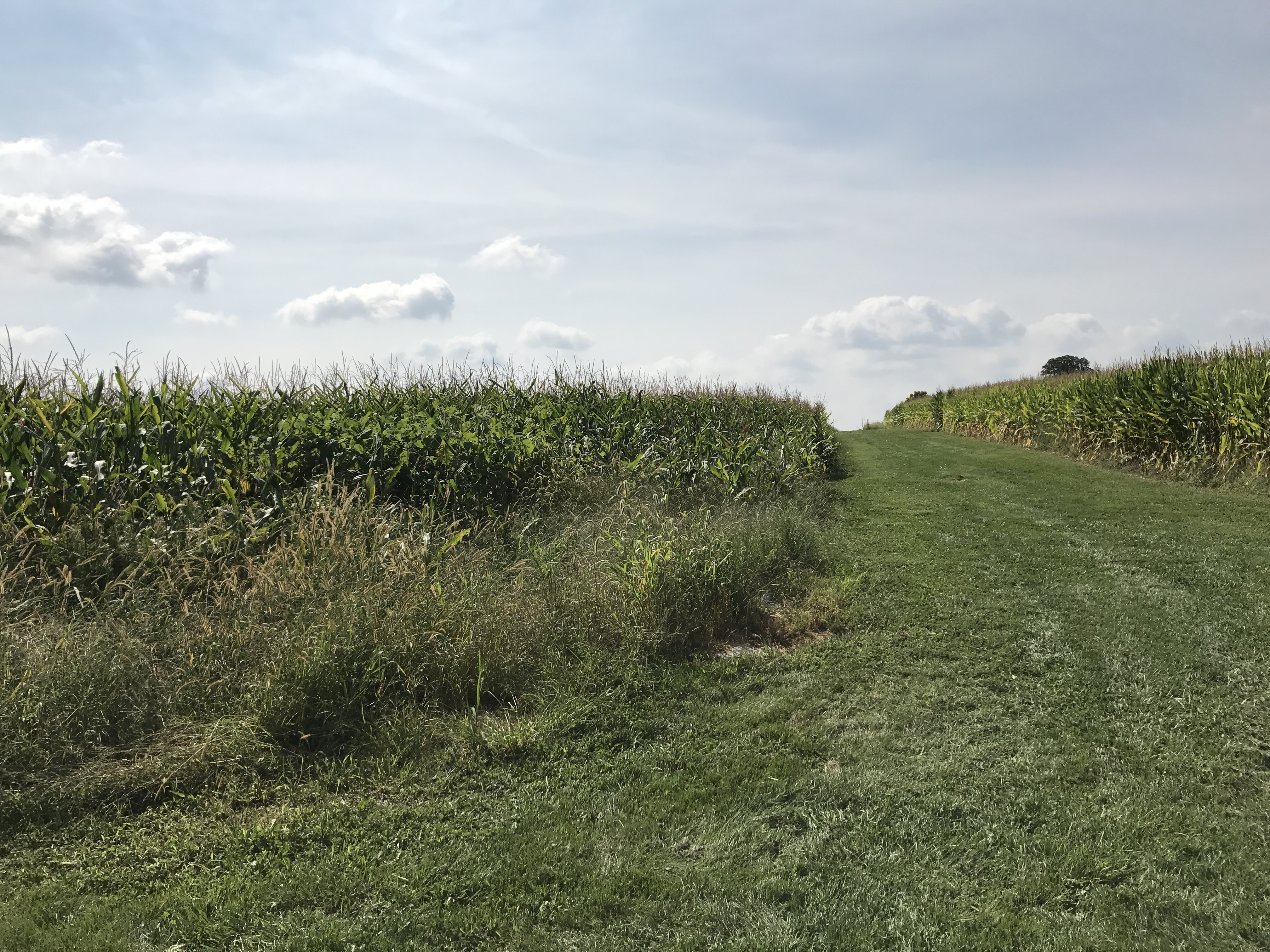
There was an eerie pristine feeling when I walked the battlefield yesterday. There were not many people on it, especially compared to Gettysburg. This led to a rather solitary experience amid the quite, only punctuated by the calls of birds, the chattering of squirrels, and the assorted buzzing, chirping, and humming of insects. As I walked the Cornfield, the West Woods, the Sunken Road and Bloody Lane, crossed the Burnside Bridge, made my way to the furthest point of the Union advance, and paused in the cemetery I was continually reminded of Walt Whitman’s poem, Ashes of Dead Soldiers:

“Ashes of soldiers South or North, As I muse retrospective murmuring a chant in thought, The war resumes, again to my sense your shapes, And again the advance of the armies. Noiseless as mists and vapors, From their graves in the trenches ascending, From cemeteries all through Virginia and Tennessee, From every point of the compass out of the countless graves, In wafted clouds, in myriads large, or squads of twos or threes or single ones they come, And silently gather round me…”


Until tomorrow,

Peace,

Padre Steve+

3 Comments

Filed under civil war, History, Loose thoughts and musings, Military, Travel