Author Archives: padresteve

padresteve's avatar

About padresteve

I'm a Navy Chaplain and Old Catholic Priest

Now More than Ever: The Importance of Dr. King’s Dream

Friends of Padre Steve’s World,

Dr. Martin Luther King Jr. has always been one of my heroes. This time of year I always ponder the importance of his life and work for civil rights, and I wonder what might have been had this man of peace not been cut down in cold blood at the young age of 39 by James Earl Ray on April 4th 1968. He was an amazing and courageous man whose memory should not be let to one day a year.

We live in a world where a minority of voters elected a man as President who through his words and actions demonstrates daily that he cares not for anything that Dr.King stood for. Thus, we have to ensure, though our words and actions that it is not allowed to die. Doing that may involve a high cost as the President-Elect is not known for playing nice with his opponents and now that he will have the police power of the state and a compliant Congress at his back you can expect that opponents will be harassed, intimidated, and maybe worse.

Dr. King was a man of courage, a man of honor, a man of conviction. But he came of age in a time when many people were willing to maintain the status quo and play things safe, like many clergy, even African-American clergy. Many pastors of the era, remained quiet about the conditions of segregation, and the racism of the day. Their lack of action did not mean they were bad people, they just understood that if they spoke up, their lives, and the lives of their families and congregations could be in danger. As such many pastors just hoped to see things slowly improve, without rocking the boat, and without endangering themselves or their families. They had seen what happened to blacks who spoke up or confronted the evil, lynching’s, cross burnings, threats and murder. They had contented themselves with just trying to get along. At the beginning of the movement, many pastors did not support or gave only lukewarm support to Dr. King, Andrew Young, Fred Shuttlesworth, and Ralph Abernathy going into that critical year of 1963.
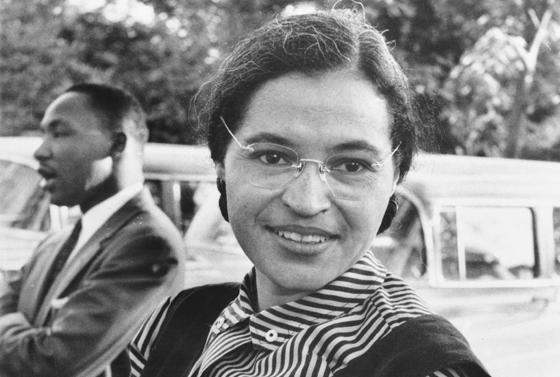
lossless-page1-560px-Rosa_Parks_(detail).tiff

King did not start out to become a Civil Rights leader. However, he was inspired to actively join the movement through the example of Rosa Parks, who defiance of the law for blacks to sit “in the back of the bus” in 1955. He led the Montgomery Bus Boycott which lasted for 385 days. The reaction among segregationists to King and his protest was against violent. King’s house was bombed, and his life threatened. But he refused to stand down.

King’s leadership of the boycott brought the young pastor to national prominence. However, by 1963 much of the Civil Rights movement and the African American community was despairing of the lack of progress. Many people had become disenchanted with King, not considering him bold enough despite his rhetorical abilities.

But in April 1963, working with other Civil Rights leaders in Birmingham Alabama King relit the fires of the movement. Montgomery Police Chief “Bull” Conner used his police force to violently attack the demonstrators. Conner ordered his men to unleash their police dogs on the protestors, and used high pressure water cannon against them, including women, children and the elderly. The violent reaction to the protests shocked much of America and the world.

King was arrested and in the Birmingham jail composed one of his most famous works, the Letter from the Birmingham Jail.  The letter was a social, political and theological masterpiece. It was some of his harshest criticism was of white liberals, as well as black moderates:

“I have almost reached the regrettable conclusion that the Negro’s great stumbling block in his stride toward freedom is not the White Citizen’s Councilor or the Ku Klux Klanner, but the white moderate, who is more devoted to “order” than to justice; who prefers a negative peace which is the absence of tension to a positive peace which is the presence of justice; who constantly says: “I agree with you in the goal you seek, but I cannot agree with your methods of direct action”; who paternalistically believes he can set the timetable for another man’s freedom; who lives by a mythical concept of time and who constantly advises the Negro to wait for a “more convenient season”

King continued his activism until his assassination. In August 1963 he led the March on Washington for Jobs and Freedom, where before a crowd of an estimated 200,000-300,000 he gave his I Have a Dream Speech.

http://www.americanrhetoric.com/speeches/mlkihaveadream.htm

The crescendo of the speech was remarkable and is perhaps one of the most remembered speeches in American history.

Let us not wallow in the valley of despair, I say to you today, my friends.

And so even though we face the difficulties of today and tomorrow, I still have a dream. It is a dream deeply rooted in the American dream.

I have a dream that one day this nation will rise up and live out the true meaning of its creed: “We hold these truths to be self-evident, that all men are created equal.”

I have a dream that one day on the red hills of Georgia, the sons of former slaves and the sons of former slave owners will be able to sit down together at the table of brotherhood.

I have a dream that one day even the state of Mississippi, a state sweltering with the heat of injustice, sweltering with the heat of oppression, will be transformed into an oasis of freedom and justice.

I have a dream that my four little children will one day live in a nation where they will not be judged by the color of their skin but by the content of their character.

I have a dream today!

I have a dream that one day, down in Alabama, with its vicious racists, with its governor having his lips dripping with the words of “interposition” and “nullification” — one day right there in Alabama little black boys and black girls will be able to join hands with little white boys and white girls as sisters and brothers.

I have a dream today!

I have a dream that one day every valley shall be exalted, and every hill and mountain shall be made low, the rough places will be made plain, and the crooked places will be made straight; “and the glory of the Lord shall be revealed and all flesh shall see it together.”2

This is our hope, and this is the faith that I go back to the South with.

With this faith, we will be able to hew out of the mountain of despair a stone of hope. With this faith, we will be able to transform the jangling discords of our nation into a beautiful symphony of brotherhood. With this faith, we will be able to work together, to pray together, to struggle together, to go to jail together, to stand up for freedom together, knowing that we will be free one day.

And this will be the day — this will be the day when all of God’s children will be able to sing with new meaning:

My country ’tis of thee, sweet land of liberty, of thee I sing.

Land where my fathers died, land of the Pilgrim’s pride,

From every mountainside, let freedom ring!

And if America is to be a great nation, this must become true.

And so let freedom ring from the prodigious hilltops of New Hampshire.

Let freedom ring from the mighty mountains of New York.

Let freedom ring from the heightening Alleghenies of Pennsylvania.

Let freedom ring from the snow-capped Rockies of Colorado.

Let freedom ring from the curvaceous slopes of California.

But not only that:

Let freedom ring from Stone Mountain of Georgia.

Let freedom ring from Lookout Mountain of Tennessee.

Let freedom ring from every hill and molehill of Mississippi.

From every mountainside, let freedom ring.

And when this happens, and when we allow freedom ring, when we let it ring from every village and every hamlet, from every state and every city, we will be able to speed up that day when all of God’s children, black men and white men, Jews and Gentiles, Protestants and Catholics, will be able to join hands and sing in the words of the old Negro spiritual:

                Free at last! Free at last!

                Thank God Almighty, we are free at last!

King knew the dangers and the risks of appealing to a strategy of non-violence based on love of his enemies. King spoke to the world when he accepted the Nobel Peace Prize in 1964:

“Here and there an individual or group dares to love, and rises to the majestic heights of moral maturity. So in a real sense this is a great time to be alive. Therefore, I am not yet discouraged about the future. Granted that the easygoing optimism of yesterday is impossible. Granted that those who pioneer in the struggle for peace and freedom will still face uncomfortable jail terms, painful threats of death; they will still be battered by the storms of persecution, leading them to the nagging feeling that they can no longer bear such a heavy burden, and the temptation of wanting to retreat to a more quiet and serene life. Granted that we face a world crisis which leaves us standing so often amid the surging murmur of life’s restless sea. But every crisis has both its dangers and its opportunities. It can spell either salvation or doom. In a dark confused world the kingdom of God may yet reign in the hearts of men.”  http://www.nobelprize.org/nobel_prizes/peace/laureates/1964/king-lecture.html 

Dr. King understood how easy hatred could consume people and movements and urged  people not to follow the course of hate, he wrote:

“Returning hate for hate multiplies hate, adding deeper darkness to a night already devoid of stars. Darkness cannot drive out darkness; only light can do that. Hate cannot drive out hate; only love can do that. Hate multiplies hate, violence multiplies violence, and toughness multiplies toughness in a descending spiral of destruction.”

The day before his assassination in Memphis, Dr. King still recognized what he might face. His “I have been to the Mountaintop” speech http://www.americanrhetoric.com/speeches/mlkivebeentothemountaintop.htm recounted many of the things that he had encountered, including an assassination attempt in 1958 which had come close to killing him. It was an amazing speech and one wonders if having lived under threat so long that he almost had a premonition of his death the next day.

And then I got into Memphis. And some began to say the threats, or talk about the threats that were out. What would happen to me from some of our sick white brothers?

Well, I don’t know what will happen now. We’ve got some difficult days ahead. But it really doesn’t matter with me now, because I’ve been to the mountaintop.

And I don’t mind.

Like anybody, I would like to live a long life. Longevity has its place. But I’m not concerned about that now. I just want to do God’s will. And He’s allowed me to go up to the mountain. And I’ve looked over. And I’ve seen the Promised Land. I may not get there with you. But I want you to know tonight, that we, as a people, will get to the promised land!

Dr. King’s dream is not dead and we who live today cannot allow it to die. There is still much work to see justice done for all Americans as well as those suffering from violence, persecution, discrimination and poverty around the world.

It is 2016. It has been 54 years since Dr. King sat in the Birmingham jail. Sadly, there are some who long for a return to the day of Jim Crow. In some states there have been and there are ongoing attempts to return it by stealth, especially through restrictions on voting that predominantly impact African Americans and the poor. Racism is not dead, nor are so many other “isms.” As Dr. King told us, “Now is the time to make real the promises of democracy,” and “It would be fatal for the nation to overlook the urgency of the moment.”

Dr. King and many of the leaders of the Civil Rights Movement have passed on. Likewise, many people today are complacent about the injustices present in our society, injustices experienced by many people. We need a generation of new men and women with hearts like Dr. King’s, who will be the conscience of the nation and confront these injustices.
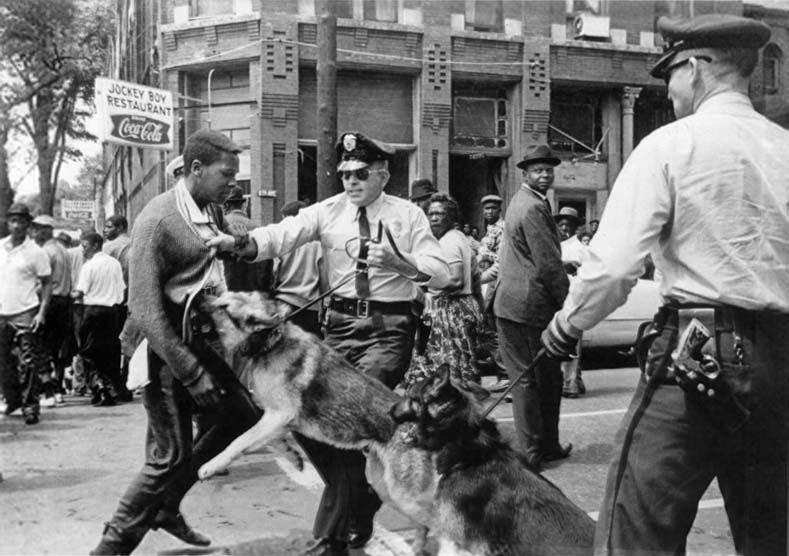
Birmingham_campaign_dogs

Likewise we cannot ghettoize Dr. King’s accomplishments as being something that only helped African Americans. They have helped all of us. Dr. King’s courage in standing for Constitutional Amendments that many of his opponents despised, the 13th, 14th, 15th and 19th Amendments, as well as the Civil Rights Act and Voting Rights Acts is of fundamental importance to all Americans, even those that think they don’t matter.

President Ulysses Grant was absolutely correct when he pointed out the plight of white Southerners in the ante-bellum South. They were people so bound to the slavery system and their place in it that they could not see how badly it hurt them so long as they had a group, in this case African American slaves who were below them. Grant wrote:

“The great bulk of the legal voters of the South were men who owned no slaves; their homes were generally in the hills and poor country; their facilities for educating their children, even up to the point of reading and writing, were very limited; their interest in the contest was very meagre–what there was, if they had been capable of seeing it, was with the North; they too needed emancipation. Under the old regime they were looked down upon by those who controlled all the affairs in the interest of slave-owners, as poor white trash who were allowed the ballot so long as they cast it according to direction.”

That my friends is descriptive of how President Elect Trump and the Republican Congress view those who put them in office. Trump supporters do not seem to realize that they will be hurt the most by the incoming administration and congresses policies. They too need emancipation and deliverance, thus we have to remain strong, for they too are our brothers and sisters.

Representative John Lewis, one of the original Freedom Riders was beaten numerous times during those protests. When leading the march across the Pettus Bridge in Selma, Lewis had his skull fractured by a State Trooper when he stopped to pray.  Lewis’s words call us to action today:

“If not us, then who? If not now, then when?” 

Representative Lewis is still speaking out, and enduring the attacks of the President-Elect, and we must join him. We cannot let Dr. King’s dream die.

Peace

Padre Steve+

Leave a comment

Filed under civil rights, History, News and current events, Political Commentary

Neither Safe, nor Politic, nor Popular: The Call of Dr. Martin Luther King Jr.

martin luther king jr

Friends of Padre Steve’s World

On a weekend where we honor the life of Dr. Martin Luther King Jr. we saw our President-Elect stoop to a Twitter tirade against Representative John Lewis, a true hero of the Civil Rights movement because Lewis dared to question his legitimacy. A true statesman would have either ignored it or simply making the comment that Lewis is entitled to his opinion. But our President-Elect has incapable of such behavior. When he was at Liberty University last year on Martin Luther King Day, he only mentioned Dr. King in regard to the fact that he had set a record for attendance at Liberty.

Even longstanding conservatives bastions in Congress who have worked with Mr. Lewis, and conservative media titans were  shocked by President-Trump’s action and many rightly commented that the only person that Donald Trump has not attacked is Vladimir Putin.

Like a lot of people it seems it seems that our soon to be President seeks to marginalize Dr. King’s life and work by simply relegating him to the pages of history. The attitude of such people seems to be that maybe Dr. King may important in his day, but that we have advanced to the point that we don’t need to see beyond the King of history, but the President-Elect seems not even to care about that. It is a sad spectacle where the man who was elected to be all of our President dismisses such an important man in our history.

So now more than ever it is important for all Americans remember and act upon the legacy of Dr. King.

Dr. King was a man of tremendous personal courage. Nearly every day of his public ministry and advocacy for the rights of African Americans and the poor his life was in danger. Of course he, like so many other men who throughout history understood that those that champion the cause of justice and peace must ask hard questions. They must engage in hard thinking. They must challenge their own beliefs as well as those that they come in contact, and they must do so from the least safe place to do so, the place of conscience which commands us to do what is right.

In 1968 Dr. King said something that should make us all look in the mirror and ask who we really are and what we represent. He noted how cowardice, expediency and vanity all vie with conscience. He said:

“On some positions, Cowardice asks the question, “Is it safe?” Expediency asks the question, “Is it politic?” And Vanity comes along and asks the question, “Is it popular?” But Conscience asks the question “Is it right?” And there comes a time when one must take a position that is neither safe, nor politic, nor popular, but he must do it because Conscience tells him it is right.” 

If you look closely at what Dr. King said one can almost see every political, business or religious leader make decisions about things which matter to people, but without facing the demands of conscience.

It would be easy just to say this of many of our leaders, especially the President-Elect, however, it is also true of most of us as well. I hate to admit it is regardless of our protestations most of us follow the demands of cowardice, expediency or vanity rather than conscience. We do it not because we are bad people, but because we fear the potential negative consequences of doing the right thing, we count the cost and decide we cannot pay it.

Every time we make these decisions not to do the right thing, but to shrink in cowardice, and appeal to the cold calculations of being politic, or choosing to go with what is popular, something in us dies.

Dietrich Bonhoeffer, the German pastor and martyr wrote about the results of such equivocation from prison:

“We have been silent witnesses of evil deeds: we have been drenched by many storms; we have learnt the arts of equivocation and pretense; experience has made us suspicious of others and kept us from being truthful and open; intolerable conflicts have worn us down and even made us cynical. Are we still of any use?”

But to follow the demands of conscience requires us to think, and think critically. Too often we simply do things or support causes because we are comfortable with the ideas, and because we do not want to face inconvenient or uncomfortable ideas. We do not like to be challenged. I think that is why there is such a great appeal to often ignorant loud mouthed politicians, pundits and preachers, the Unholy Trinity, to do our thinking for us. The pundits, preachers and politicians often appeal to the must base human instincts to turn citizens against each other, or to drive up support for their ideology. Such ideas are made more destructive when they appear as “memes” on social media, attached to pictures which are designed to invoke an emotional response of anger, hatred and resentment at person or group being demonized. In following them we can become unthinking fanatics, convinced of our rightness without ever examining what we believe to see if it really true.

This is not thinking when we follow the lead of such people, regardless of their ideology. In doing so we give up our right and responsibility to think for ourselves and ask the hard questions. Eric Hoffer noted how ideology blinds us:

“A doctrine insulates the devout not only against the realities around them but also against their own selves. The fanatical believer is not conscious of his envy, malice, pettiness and dishonesty. There is a wall of words between his consciousness and his real self.”

Dr. King’s words spoken in 1963 are equally true today:

“Rarely do we find men who willingly engage in hard, solid thinking. There is an almost universal quest for easy answers and half-baked solutions. Nothing pains some people more than having to think.”

I hope that in 2017 we may we find in Dr. King’s words inspiration to be people of character and conscience. But to do so we must start doing the hard thinking that allows us to follow the demands of conscience and not cowardice. We must do the hard thinking that places justice over popularity and the hard thinking which exposes the emptiness of brazen political calculation embodied in the easy answers and half-baked solutions of the Unholy Trinity.

Sadly, I don’t think that most people want to do this type of thinking, our materialistic culture does not value it. As a result I fully expect we give up our rights as a people to a few oligarchs who throw a few small breaks our way while they expand their control, power and wealth. It’s a bad formula and we all suffer for it.

In spite of that it is time to stop asking if things are safe, politic, popular, or expedient and do the hard work and thinking that conscience demands. If we don’t we deserve what we get. I’m sure that Dr. King would agree.

Peace

Padre Steve+

1 Comment

Filed under civil rights, culture, ethics, History, leadership, News and current events, Political Commentary

The Terrible Danger of Unreason and Demagoguery

lemmi_cliff

Friends of Padre Steve’s World

As the inauguration of Donald Trump as President draws near it is important to remember the words of the late Adlai Stevenson who once wrote:

“Unreason and anti-intellectualism abominate thought. Thinking implies disagreement; and disagreement implies nonconformity; and nonconformity implies heresy; and heresy implies disloyalty. So, obviously, thinking must be stopped. But shouting is not a substitute for thinking and reason is not the subversion but the salvation of freedom.”

I have traveled to a lot of places, in this country and around the world where reason has been a scarce commodity and to me that has always been a frightening specter; a world where reason is all too often sacrificed on the altar of political, ideological or religious expediency. Over the past year, and more frighteningly over the past few weeks what was once a specter is beginning to look like reality.

But reason does matter, and those who ignore it do so at their own peril as Christopher Hitchens once said “That which can be asserted without evidence, can be dismissed without evidence.” History shows us in times like this, where reason is tossed as primordial urges rise, that people all too often fall back on old hatreds and myth rather than seeking answers; instead of trying to figure out what is really important; instead of studying the details of the great questions; that frustrated people become intellectually lazy and gravitate towards angry demagogues who play to their often legitimate anger and frustration. As such we have entered an era where Facebook and Twitter memes with little truth but much emotion form the basic thoughts of many people.

But populist demagogues with authoritarian leanings like the President Elect do not need to appeal to reason. Instead they appeal to something more primal; they appeal to fear, anger, and the need of desperate people to find someone to blame.

Appealing to fear and loathing is so much easier than using reason. To call an opponent a Communist or Nazi, Fascist or imperialist, unbeliever, heretic or even a racist; and then connect them to the evil we want to demonize them is far easier than it is to actually engage them in a truthful debate and to see things in their historical context.

Too often we allow people of little learning but whose great charm and salesmanship ability, to sell us myth in place of fact and this happens across the political, social, economic and theological spectrum. That is a tragedy for all of us no matter what our political, ideological, or religious views.

Such salesmanship may comfort the true believer in whatever cause may be, and it may even make them feel superior to those that disagree with them. But it blinds them to reality and ensures that they never become aware of their own envy, malice, pettiness and dishonesty. The untruths they believe serve as protection against any thought, fact, presumption or doctrine that contradicts them.  John F Kennedy said, “Too often we enjoy the comfort of opinion without the discomfort of thought.” Thus we are inundated with fake news, fake history, outright lies and propaganda that go unchallenged by people who should know better.

In times like ours, it is most important to take the time to learn from history, not just generalities that mix fact and myth but the little details that make up history and for that matter the sciences, philosophy, sociology, political thought and theology.  As a society we have ceased to do this and until we take the time to return to such study, dialogue and put aside our blinders we will be doomed to remain as we are no matter what political party is in power or ideology dominates the airwaves and cyber space.

Reason, it is important, and the dangers that we face as a nation, society, and world demand that we return to it, no-matter what our occupation or station in life. If we do not stand for truth and the freedom of thought maintained in reason and objectivity we will see freedom die. George Orwell wrote something that we should not forget: “Threats to freedom of speech, writing and action, though often trivial in isolation, are cumulative in their effect and, unless checked, lead to a general disrespect for the rights of the citizen.”

Have a great day.

Peace

Padre Steve+

2 Comments

Filed under History, leadership, News and current events, philosophy, Political Commentary

Cavalry in the American Civil War

gallonbuyingtime

Friends of Padre Steve’s World,

Today I am posting a revised part of one of my Civil War texts, this one dealing with the organization, use, and development of cavalry during the war. It’s kind of a history geek thing, I’m re-working on the section on artillery. I hope that you enjoy.

Peace

Padre Steve+

Cavalry in the United States in the ante-bellum period and during the war differed from the massive cavalry arms of European armies. In Europe the major armies had two types of cavalry units, light cavalry which was used for scouting, reconnaissance and screening, and heavy cavalry which was designed to be employed at the decisive moment of the battle in order to break enemy infantry formations through the shock of the massed charge. Napoleon always had a number of reserve cavalry corps to fulfill this mission.

The United States had little in the way of a cavalry tradition. Cavalry was considered by many American political leaders to be too aristocratic for America and as a result this arm of service suffered. In its early years the U.S. Army did not have any sizable mounted formations to call upon.

There were a number of other reasons for the cultural and institutional resistance to a strong were trained and armed cavalry service in the United States Army.

First, the nation as a whole distrusted large standing armies and viewed them as a source of potential tyranny and traditional cavalry was the most aristocratic part of European armies. The struggle between Federalists who desired a standing army and a militia that could be organized under central control and Republicans who wanted nothing of the sort was a constant source of friction in the new republic. Anti-Federalists saw standing armies as despotic, as one anti-federalist publication noted “In despotic governments, as well as in all the monarchies of Europe, standing armies are kept to execute the commands of the prince or magistrate…. By establishing an armed force to execute the laws at the point of the bayonet – a government of all others is the most to be dreaded.” [1]

As such, much of the nation’s military spending was focused on the Navy, which was deemed as less of a domestic threat, and even then the limited budgets meant that many times significant numbers of ships were laid up in ordinary. The Regular Army struggled to maintain its existence from 1787 until the War of 1812 in the face of Republican opposition led by Thomas Jefferson. After the War of 1812 the nation soon lost interest in paying for a standing army and in 1821 against the wishes of Secretary of War John C. Calhoun slashed “the Army’s strength by eliminating regiments and reducing the number of officers.” [2] With appropriations cut to the bone there was no effort to create a cavalry arm for the service as cavalry formations were much more expensive to equip and maintain than infantry.

Even though the Regular Army survived, it was tiny in. Its strength ranged from 3,000 to 6,000 men, the bulk were infantry who for the most part formed a frontier constabulary or manned coastal fortifications. However, in 1796 two companies of Dragoons were authorized, but even so the mounted arm remained a poor stepchild. Likewise, “Doctrinal resistance to battle cavalry was also very strong. The ‘American’ tradition had no place for such an animal….” [3]

Finally as the nation expanded westward the army formed the First Dragoon Regiment in 1833. In 1836 the Second Dragoons were organized. The Dragoons were basically mounted infantry formations and these units were scattered about the expanding western frontiers of the nation were employed “guarding the routes of expansion as far west as the Rocky Mountains and as far south as the Red River.” The army also formed Mounted Infantry units, which like the Dragoons were hybrid formations. Though many thought that such units promised “a double return on the government’s investment, but which did not manage to provide either an efficient force of infantry or an efficient battle force of cavalry.” [4]

The First Dragoons would serve with “distinction in numerous engagements in what was to become California and New Mexico.” [5] The regiment fought well in the War with Mexico but suffered heavy casualties in the process. When the war ended it was again dispersed on the frontier when it was used to protect settlers and fight Native American tribes that resisted the advance of the flood of white settlers.

One of the reasons for the heavy losses sustained by the First Dragoons in Mexico was because “West Point cavalry doctrine was based upon a Napoleonic mania for the massed saber charge.” [6] However, one problem with this was that the United States Army never had sufficient numbers of cavalry, not to mention a death of heavy cavalry needed to make such attacks successful, but in Mexico the limited number of cavalry troops available made such tactics untenable. The tactic had often worked well for Napoleon and massed cavalry charges were used to sweep the field of broken enemy infantry formation. However, the suicidal charge of Marshal Ney’s vaunted Cuirassiers against the Duke of Wellington’s highly disciplined infantry squares at Waterloo had shown that such tactics were destined for extinction unless they were part of an all arms assault. Marshal Ney failed because he used his cavalry in unsupported attacks against the allied infantry squares rather advancing artillery to support the attack or bringing infantry up to force the defenders out of their squares.

It was not until the 1850s that the army organized its first two Cavalry regiments for duty on the frontier. The new cavalry regiments were the equivalent of European light cavalry and during the war primarily served in that role, conducting reconnaissance, raids, and screening the army. Even so the tactical doctrine taught at West Point focused continued to “support the continuing predominance of the offense over the defense, of shock over firepower” [7] which was at odds with the cavalry’s actual capabilities.

Cavalry regiments were usually composed of four to six squadrons, each squadron having two companies. Cavalry regiments could range in size from 660 to nearly 1,200 troopers. Both the Union and the Confederacy grouped their cavalry into brigades and later divisions, but the Confederates were first to establish cavalry brigades and divisions. By 1863 both the Confederate Army of Northern Virginia and the Union Army of the Potomac each formed cavalry corps. Cavalry tactics “complemented conventional infantry assault tactics, emphasizing shock and the role of the saber”; unfortunately both the infantry and the cavalry developed their doctrine independently. U.S. Army Cavalry doctrine was prescribed in Philip St. George Cooke’s Cavalry Tactics which was published in 1861 while a corresponding Confederate manual, Joseph Wheeler’s A Revised System of Cavalry Tactics appeared in 1863.

Before the war American cavalry units tended to operate in small numbers with regiments seldom sending into action more than a few companies at once. At the beginning of the war the Federal government decided to form just five mounted regiments, including two of Dragoons and one of Mounted Infantry. It soon decided to add a sixth but the units were hindered by the fact that many of their officers had gone to the Confederacy, and some of those remaining “would jump to volunteer units to secure higher rank, pay, and prestige.” [8] The result was defeat after defeat at the hands of J.E.B. Stuart’s Confederate cavalry.

Eventually large scale programs to train and equip large numbers of volunteers and the Regulars combined with wartime reorganizations and solid leadership would make the Federal cavalry a force that was able to hold its own and then to sweep Confederate cavalry from the field. But it took time to train cavalry, and early Union commanders like McClellan refused to take that time and a “whole year was lost as a result, during which the cavalry was allowed to indoctrinate itself in the notion that it could never make use of European standards.” [9] While McClellan may have done well in organizing and training the infantry and artillery of the Army of the Potomac, he did little in the way of providing the mounted arm with leaders, training or missions that would increase their effectiveness. Unlike Stuart who combined his troopers with effective horse artillery, McClellan “failed to appreciate the advantage of coordinating the tactical strengths of cavalry with those of infantry and artillery.” [10]

CWP015

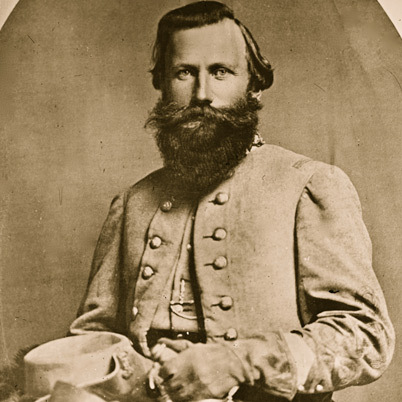
J.E.B. Stuart

While the South did struggle at times with its cavalry arm but did have an advantage in that the vast majority of their cavalry troopers owned their mounts and were experienced horsemen, something that could not be said of the many city dwellers who volunteered for duty in the Union cavalry. But the initial Southern superiority in cavalry was also due to the fact that “the principal of massing regiments into brigades and divisions was pursued earlier than by the Federal.” [11] In contrast McClellan “followed the evil course of reducing mounted regiments to their smallest components for operational use.” Likewise, he “wasted cavalry’s potential and depressed its morale by employing it as couriers, bodyguards for his subordinates, pickets for his encampments, and wagon train escorts, instead of as combat troops.” [12] The result as one would expect was that for the first two years of the war “J.E.B. Stuart and his horsemen were able, literally, to run rings around their opponents.” [13]

One Union writer compared the development of the Confederate and Union cavalry arms during the war:

“The habits of the Southern people facilitated the formation of cavalry corps which were comparatively efficient even without instruction; and accordingly we see Stuart, John Morgan, and Forrest riding around with impunity around the Union armies, and destroying or harassing their communications. Late in the war that agency was reversed. The South was exhausted of horses, while the Northern cavalry increased in numbers and efficiency, and acquired the audacity which had characterized the Southern.” [14]

buford

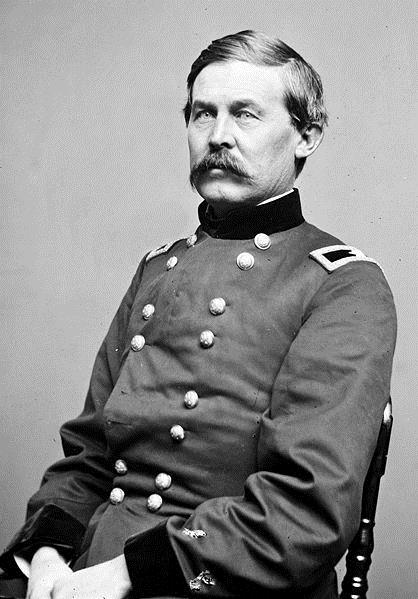
John Buford

As such much of the initial improvement in the Union cavalry arm were due to solid commanders like Brigadier General John Buford to teach new recruits as well as discouraged veterans to become effective cavalrymen.

Cavalry remained a fairly small in comparison to the infantry and artillery branches of service. Even during the wartime expansion the amount of cavalry available was miniscule compared to European armies. On the average only about 8% of the Army of the Potomac was composed of cavalry, compared to Napoleon’s 20 to 25%. [15] Part of this was due to the perceived cost of the cavalry arm which many believed was too expensive to maintain on a large scale: “estimates held that every twelve companies mounted and outfitted at public expense would rob the Treasury of over $300,000 a year merely to cover upkeep on animals, remounts, weapons, and equipment….” [16]

The cost of equipping cavalry was high enough that in the South that troopers had to procure their own mounts. Edwin Coddington noted that the Confederate policy “was a wonderful arrangement for keeping the strength of the cavalry below par, much more than enemy bullets, for it encouraged absenteeism.” [17] The Confederate government paid the own for the use of the horse, and a cash reimbursement if it was lost in combat, but if it was lost in any other manner the soldier had to get another horse if he wanted to remain in the service. Since the Confederates never set up a “centralized replacement service” troopers who lost their mount “had to go home to procure a new horse. If he were a Virginian he needed from thirty to sixty days to accomplish his purpose, and a much longer time should he have to come deeper south.” [18]

Despite the doctrinal predilection to the offense and using the cavalry as a shock unit, the U.S. Army formed no heavy cavalry formations on the order of the famous French Cuirassiers, named after their armored breastplates and metal helmets which were the primary type of cavalry used in Europe for such tactics. As such, during the Civil War both Union and Confederate cavalry formations were primarily assigned to reconnaissance and screening missions normally conducted by light cavalry units in Europe. These larger formations began to be used en masse for the purpose of raiding by both sides “but in the hands of J.E.B Stuart and his friends it became little more than a license to roam off into the enemy’s rear areas looking for plunder and glory.” [19] The cavalry Corps of the Army of the Potomac was used in a similar manner to raid enemy rear areas with often dreadful results which contributed nothing to the overall goal of defeating Lee’s army. A prime example was when Joseph Hooker detached his newly formed Cavalry Corps under George Stoneman to raid Richmond leaving the flank of the army uncovered at Chancellorsville.

Quite often the soldiers assigned to the infantry and artillery had little use for the cavalry who they saw as pampered and contributing little to the war. Many infantrymen held the “cavalry in open contempt. “These cavalry are a positive nuisance,” an officer in the 123rd Illinois wrote. “They won’t fight, and whenever they are around they are always in the way of those who will fight.” [20] Disdainful Confederate infantrymen “greeted their cavaliers with “Here’s your mule!” and “their Federal counterparts would exclaim: “There’d going to be a fight, boy; the cavalry’s running back!” and “Whoever saw a dead cavalryman.” [21]

The lethality of the rifled musket also made the classic Napoleonic cavalry charge against enemy infantry a costly and dangerous enterprise if the enemy infantry still had the means to make organized resistance, and if the cavalry assault was not supported by infantry and cavalry.. An example of this was the ill-fated cavalry attack ordered by Brigadier General Judson Kilpatrick against the men of Lafayette McLaws’s well prepared division on the Confederate right after the failure of Pickett’s Change at Gettysburg.

Cavalry tactics began to change during the war. Both sides used their cavalry for raids, sometimes very large ones, and operations against enemy partisans in their rear areas. In each case the cavalry was typically deployed by itself and even when it accompanied the armies into battle cavalry units were typically employed on the periphery of the battle. As such as Griffith wrote, “Civil War doctrine of raiding… was not only a deliberate turn away from the hope of victory on the battlefield, but it actually removed the means by which victory might have been won at the very moment when those means were at last starting to be properly efficient.” [22] The lack of heavy cavalry of the European model sometimes kept commanders from completing victories, one can only imagine what would have happened had George Meade had a division of heavy cavalry at hand to sweep the Confederates from the battlefield after Pickett’s Charge.

sheridanphiliphbio

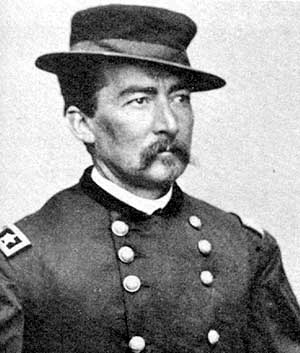
Philip Sheridan

Tactics only began to change when General Philip Sheridan took command of Grant’s cavalry. Sheridan kept the cavalry close to the main body of the arm. Sheridan had replaced Major General Alfred Pleasanton as commander of the Cavalry Corps of the Army of the Potomac in early 1864. It is quite possible had he not died in December 1863 that the post would have gone to John Buford, but Sheridan had a vision for the cavalry that foreshadowed modern operational art. Sheridan wanted to organize the Cavalry Corps by concentrating it “into a powerful striking arm. He desired to do this, first, to deal with the Confederate cavalry, on the theory that “with a mass of ten thousand mounted men… I could make it so lively for the enemy’s cavalry that… the flanks and rear of the Army of the Potomac would require little or no defense.” [23] Sheridan was making no idle boast as by now his troops “were not only more numerous, but they had better leaders, tactics, and equipment than before,” [24] especially when it came to the Spencer repeating rifle which was now standard issue for the cavalrymen, and which gave them a tremendous advantage in firepower over Stuart’s now ill-equipped troops.

Sheridan first did this at the beginning of the Wilderness campaign when he took his 10,000 strong corps around the Confederate flank. Sheridan had been quarreling with Meade about the latter’s insistence that Sheridan’s horsemen were clogging the roads that his infantry needed to advance upon. In the heated discussion Sheridan came very close to being insubordinate with Meade. Meade reportedly told Sheridan that “Stuart “will do about how he pleases anyhow” to which Sheridan supposedly replied “Damn Stuart, I can trash hell out of him any day.” [25] Furious, Meade went and reported the matter to Grant. Grant listened and replied “Did Sheridan say that?… He usually knows what he is talking about. Let him go ahead and do it.” [26] At Grant’s request Meade provided Sheridan with new orders to concentrate his cavalry, march south and engage Stuart’s cavalry. Unlike previous raids which sought to avoid battle with Stuart’s troops in order to hit prescribed objectives, above all Sheridan wanted to engage and defeat the legendary Confederate cavalier. He “defined the raid as “a challenge to Stuart for a cavalry duel behind Lee’s lines in his own country.” And the more there were of the gray riders when the showdown was at hand, the better he would like it, since that would mean there were more to be smashed up.” [27]

Sheridan’s column totaled nearly 13,000 men and was nearly 13 miles long as he proceeded at a slow pace around Lee’s army and south towards Richmond. In addition to his horsemen he brought all of his horse artillery batteries. He was well around Lee’s flank before he was discovered and during the march his troops burned a depot and over one hundred railroad cars containing “close to a million rations of meat and better than a half million of bread, along with Lee’s entire reserve of medical stores.” [28]

On May 11th Stuart managed to intercept Sheridan’s column at a place called Yellow Tavern, just south of Ashland and the Ana River, but his corps was outnumbered by at least three to one. Three well trained, experienced, equipped, and superbly led Federal cavalry divisions confronted Stuart. With no hopes of fighting an offensive action, Stuart’s troops fought dismounted and were routed by the superior Bluecoats who continued on to cut the railroad between Lee’s army and Richmond. During the battle Stuart, who had cheated death on a number of occasions was mortally wounded. The Confederate cavalry of the Army of Northern Virginia would never recover, and to Southerners Stuart’s death was a profound psychological blow, only slightly worse than that of Stonewall Jackson a year before. Robert E. Lee, to who Stuart was like a son took the loss harder than he had taken Jackson’s. “I can scarcely think of him without weeping,” he told one of Stuart’s officers.” [29]

As the armies in the East and West dueled throughout 1864, Sheridan and other Federal cavalry officers transformed the Union cavalry into a striking force which could be the spearhead of the army and use new tactics to overcome the problem of combining fire with rapid maneuver which had never been satisfactory applied by the infantry. There were four components in the new tactical mix: “fast operational mobility on horseback out of contact with the enemy; a willingness to take cover and fight on foot when the enemy was close; new repeating carbines to give enhanced firepower; and a mounted reserve to make the sabre charge when the moment was ripe.” [30] Sheridan would apply these tactics in his later campaigns against Jubal Early in the Shenandoah Valley and during the Appomattox campaign and his cavalry, working with infantry and artillery smashed the beleaguered Confederate armies which tried to oppose them. The reorganized cavalry was not the answer to all of the battlefield problems faced by Civil War commanders but it gave Union commanders an impressive weapon in which the speed and firepower of the cavalry could be readily combined with artillery and infantry to achieve decisive results. On the Confederate side, General Joseph Wheeler who commanded the cavalry in the west, Wheeler usually fought dismounted in “skirmish order using field fortification, whether skirmishing independently or in the line…. In the last major action of the war, he dramatically displayed how cavalry had become tactically integrated with infantry. At Bentonville, while fighting his cavalry dismounted, first on the right, then moving around to the left flank, Wheeler constructed a line of breastworks 1,200 yards long.” [31]

European cavalry officers found little to admire in American use of cavalry. Few paid attention to the importance of fighting dismounted and working as part of a combined arms team. In August 1914 their cavalry formations paid severe price for ignoring the realities of modern war, realities which the Americans, both Union and Confederate learned during the Civil War.

Notes

[1] ____________ Anti-Federalists Fear a Large Military “Brutus I.” “To the Citizens of the State of New York” 1787 in Major Problems in American Military History edited by John Whiteclay Chambers II and G. Kurt Piehler, Houghton-Mifflin and Company, Boston and New York 1999 p. 103

[2] Ibid. Millet and Maslowski For the Common Defense: A Military History of the United States p.122

[3] Ibid. Griffith, Battle Tactics of the Civil War p.181

[4] Ibid. Griffith, Battle Tactics of the Civil War p.181

[5] Longacre, Edward G. John Buford: A Military Biography Da Capo Press, Perseus Book Group, Cambridge MA p.33

[6] Thomas, Emory M. Bold Dragoon: The Life of J.E.B. Stuart University of Oklahoma Press, Norman OK 1986 and 1999 p.30

[7] Ibid. Hagerman The American Civil War and the Origins of Modern Warfare p.21

[8] Longacre, Edward G. The Cavalry at Gettysburg: A Tactical Study of Mounted Operations, during the Civil War’s Pivotal Campaign, 9 June- 14 July 1863. University of Nebraska Press, Lincoln and London 1986 p.44

[9] Ibid. Griffith, Battle Tactics of the Civil War p.182

[10] Ibid. Longacre The Cavalry at Gettysburg: A Tactical Study of Mounted Operations, during the Civil War’s Pivotal Campaign, 9 June- 14 July 1863 p.45

[11] Ibid. Griffith, Battle Tactics of the Civil War p.181

[12] Ibid. Longacre The Cavalry at Gettysburg: A Tactical Study of Mounted Operations, during the Civil War’s Pivotal Campaign, 9 June- 14 July 1863 p.45

[13] Ibid. Griffith, Battle Tactics of the Civil War p.183

[14] Buell, Don Carlos. East Tennessee and the Campaign of Perryville in Battles and Leaders of the Civil War Volume III, The Tide Shifts. Edited by Robert Underwood Johnson and Clarence Clough Buel Castle, Secaucus NJ p.51

[15] Ibid. Griffith, Battle Tactics of the Civil War p.181

[16] Ibid. Longacre The Cavalry at Gettysburg: A Tactical Study of Mounted Operations, during the Civil War’s Pivotal Campaign, 9 June- 14 July 1863 p.43

[17] Coddington, Edwin B. The Gettysburg Campaign: A Study in Command, A Touchstone Book, Simon and Schuster New York, 1968 p.17

[18] Ibid. Coddington The Gettysburg Campaign: A Study in Command p.17

[19] Ibid. Griffith, Battle Tactics of the Civil War p.183

[20] Ibid. Robertson Soldiers Blue and Gray p.20

[21] Ibid. Longacre The Cavalry at Gettysburg: A Tactical Study of Mounted Operations, during the Civil War’s Pivotal Campaign, 9 June- 14 July 1863 p.45

[22] Ibid. Griffith, Battle Tactics of the Civil War pp.183-184

[23] Ibid. Weigley A Great Civil War: A Military and Political History 1861-1865 p.369

[24] Ibid. Whelan Bloody Spring: Forty Days that Sealed the Confederacy’s Fate p.181

[25] Ibid. Thomas Bold Dragoon: The Life of J.E.B. Stuart p.288

[26] Catton, Bruce Grant Takes Command Little, Brown, and Company, New York, Toronto, London 1968 and 1969 p.216

[27]Ibid. Foote The Civil War, A Narrative. Volume Three Red River to Appomattox p.564 p.224

[28] Ibid. Foote The Civil War, A Narrative. Volume Three Red River to Appomattox p.564 p.225

[29] Ibid. Korda, Clouds of Glory p.626

[30] Ibid. Griffith, Battle Tactics of the Civil War p.184

[31] Ibid. Hagerman The American Civil War and the Origins of Modern Warfare p.298

4 Comments

Filed under civil war, History, Military

Ideologues and Ideologically Empty Pragmatists: The Key to an Authoritarian State

werner-best

Dr. Werner Best

Friends of Padre Steve’s World,

I have been looking at some of the nominees to various cabinet posts in the incoming Trump administration. Trump is a known quality, since his lack of character, integrity, narcissism, and thin skin are well known I was thinking about his picks. Trump has no ideology other than his own power and ego which makes him both dangerous and unpredictable, and this is not just to those who are his current lot of “enemies,” but even people who campaigned at his side like obedient lap dogs, New Jersey Governor Chris Christie comes to mind, but I digress because believe me there will be a lot more of his supposed friends and allies who make that list.

Some of them are hopeless right wing ideologues. They too are known qualities and actually fairly easy to predict and to defend against and many so so incompetent, divisive, and intolerable, that even people who agree with them will throw them under the bus.

But there are others, like Trump himself devoid of ideology, but even more dangerous because they are much more careful. In fact they can move from administration to administration, campaign to campaign. One can see a number of them in Trump’s entourage, including people who advised his GOP primary opponents and then abandoned them when they saw a winner. They are in it for their own personal achievement and whatever power they can gain.

Such people can be found in any government, any business, any military, and any church. One of the interesting things about history is that you can see them weave their way in and out of the picture, outmaneuvering and undercutting rivals, even selling out their bosses.

My regular readers know that I have spent a large amount of my life and academic study dealing wth the transition from Imperial Germany, to the Weimar Republic, and to the National Socialist or Nazi state of Adolf Hitler. The interesting thing is to see how many professional men, business leaders, bureaucrats, police officials, and military officers, many men; a good number of whom had opposed Hitler and never were Nazis until it became convenient served the Nazi State, especially in the ranks of Heinrich Himmler’s SS. One of the books that has been part of my study since college is Heinz Hohne’s The Order of the Death’s Head: The Story of Hitler’s SS. The book which came out in 1966 was one of the first to confront the myths about the SS which allowed many Germans after the war to use the SS as their alibi, all that was wrong with Germany could be blamed on the SS. While the SS was certainly culpable of many crimes it was just one part of the Nazi state, a state as contradictory as it was totalitarian.

In his book Hohne discusses the types of men who found their way into the SS, which included the true believers as well as the pragmatists who had no ideology. One of these men was Dr. Werner Best who had been an official in the Gestapo. A gifted intriguer he maneuvered himself between various party factions and leaders and was promoted to SS Obergruppenfuhrer. Then, later as the head of the Nazi government in Denmark went against the final solution in that county by helping the Jews of that country escape to Sweden.

Best adapted the philosophy of Ernst Junger, the writer of the classic novel of the First World War Storm of Steel who wrote: “The important part is not what we fight for but how we fight.” Best transformed Junger’s philosophy into one of the pillars of the SS leadership, the ideal of “heroic realism.” Best wrote: “The fight itself is essential and permanent; the aims of the fight are temporary and interchangeable. There can therefore be no question of success in our fight… the yardstick of the new code of morality, therefore, is not its content – not ‘what’ but ‘how’.” 

Hohne noted that the ethic “with no specific aim, opened the door door to concentration on achievement for achievement’s sake.” Himmler put it succinctly, “The word ‘impossible’ must never be heard in the SS.”  The result was that even non-Nazis were attracted to the SS and because of their abilities or connections were brought in to the organization.

This is where it really gets interesting when one thinks of today’s opportunistic yet ethically deprived pragmatists of so many professions who have jumped aboard the Trump train.

Hohne wrote: “The call to energy and efficiency, the ceaseless challenge to action and trial, launched SS men into a primitive competitive struggle in which all normally accepted rules of conduct were forgotten.” Some believed that they were still were still only responsible to themselves but because they were subject to orders became prisoners “of an ethic linked to no purpose, an ethic which, ostensibly for purposes of political necessity, could suddenly order the commission of crimes and present them as goals of human technological efficiency.”  

Hohne quoted historian Hans Buchheim who wrote in his book The Anatomy of the SS State:

“If a man is concerned not with what he is fighting for but only with how he fights, he is conditioned to heroic action in a criminal cause. Although such a heroic fighter imagines that he must rely on himself alone… he can be swept into the service of an organization claiming complete totalitarian authority – and he will perceive that this has happened not at all or too late.”

Werner Best learned late and he tried to make up for his early activities in the Nazi State, even so he was convicted as a war criminal though he escaped the death sentence. Sadly there were a lot more men like him, non-Nazis who became part of the SS and conducted some of the worst crimes in human history.

So when you hear the man who will be President in just over a week’s time threaten reporters, denigrate intelligence officials, and conduct Twitter tirades against anyone who criticizes him, and then shamelessly lies about all of it you need to be concerned regardless of your political affiliation. Many of the men and women who are selling their souls to serve in the incoming administration are completely without any moral center, ethic, or guiding ideology; and it is them that all of us should be really concerned about. This is because they are the ones who will get things done, morality or convention be damned. Authoritarians or totalitarians cannot succeed without them.

Have a good day.

Peace

Padre Steve+

Note: I do recommend Hohne’s book from which I drew much of this article. Sadly, it is still in print but not available in a digital format. You have to purchase and read it the old fashioned way. It’s actually kind of cool to read a book that smells like a book.


Leave a comment

Filed under ethics, History, nazi germany, News and current events, philosophy, Political Commentary

The Danger of Fake History: An Article by Sean Munger

Friends of Padre Steve’s World,

I seldom republish other people’s articles but this one is by my friend and history professor Sean Munger. It is worth the read.

Peace

Padre Steve+

The evil twin brother of “fake news” is “fake history”–and it can have a much more lasting and devastating impact.

via We must not only fight “Fake News”: we must fight Fake History too. — www.seanmunger.com

Leave a comment

Filed under ethics, History, Loose thoughts and musings, Political Commentary

All Men are Created Equal: The Standard Maxim of a Free Society

c91f46b3ce5943b9e213e3cd306c6348_f3094

Friends of Padre Steve’s World,

I am very concerned with the future of civil liberties in our country and much of that is based on my experience with and observation of conservative Christian political activists who now have tremendous power to oppress those who they deem to be God’s enemies.

Supreme Court Justice Robert Jackson noted in his dissent in American Communications Assn. v. Douds wrote:“[I]n our country are evangelists and zealots of many different political, economic and religious persuasions whose fanatical conviction is that all thought is divinely classified into two kinds — that which is their own and that which is false and dangerous.” — His words were true then and even more so today.

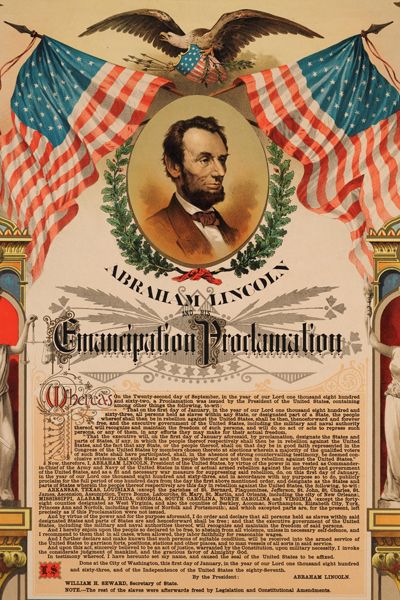
In December of 1862, President Abraham Lincoln spoke these profound words to Congress prior to the signing of the Emancipation Proclamation Lincoln.

“Fellow citizens, we cannot escape history….This fiery trial through which we pass, will light us down, in honor or dishonor, to the latest generation….In giving freedom to the slave, we assure freedom to the free – honorable alike in what we give, and what we preserve.”

His words in giving freedom to the slave, we assure freedom to the free are part of an understanding of freedom, especially Lincoln’s radical understanding that the Declaration of Independence actually meant what it said that “all men are created equal.” For Lincoln this meant African Americans, including those that labored as slaves. Lincoln understood the Declaration in its most broad understanding; he saw it as a universal liberty. As early as 1854 Lincoln posed the idea that the Declaration of Independence was the standard maxim of free society …constantly spreading and deepening its influence,” ultimately applicable “to peoples of all colors everywhere.”

Today there are a lot of people, especially the loudly political preachers, pundits and politicians of the Christian right and their allies who are committed to rolling back the rights of blacks, but also of women, and to prevent Gays, Lesbians and others of the LGBTQ community from having any rights commensurate with their status as citizens.

But that is not all. In many states we have seen the protections of the Voter’s Rights Act being eroded as state legislatures enact laws to restrict voting rights and make it more difficult for people to exercise their right to vote. State legislatures are enacting laws that allow people to discriminate against others based on “a sincerely held religious belief” and while those laws are targeted against Gays they are in many cases written so broadly that they will protect just about any form of discrimination based on religion.

That is why what Lincoln said as he was preparing to sign the Emancipation Proclamation matters today. When we give freedom to people, we protect the freedom of everyone, but that my friends is not how many people in the so-called Christian Right see it.

For these religious ideologues the only freedom that matters is their freedom to discriminate against others in God’s name. This is because they, like the anointed lords of the Southern Aristocracy believe that it is God’s will for them to do this. Sounding like a Southern planter, preacher or politician of the 1850s the founder of the movement known and Christian Dominionism R.J. Rushdooney wrote: “One faith, one law and one standard of justice did not mean democracy. The heresy of democracy has since then worked havoc in church and state . . . Christianity and democracy are inevitably enemies.”

British Evangelical-Anglican theologian Alister McGrath notes how “the arguments used by the pro-slavery lobby represent a fascinating illustration and condemnation of how the Bible may be used to support a notion by reading the text within a rigid interpretive framework that forces predetermined conclusions to the text.”

That is what we are dealing with today and why it matters, to all of us, regardless of our political or religious ideology. There is a party of Christians who have tremendous political power who are using it for the most nefarious of purposes, using the law and the police power of the state to deny rights to others while preserving their own while claiming to be the victims of persecution, just as did Southern slaveholders in the 1830s to 1861.

So that is all for now.

Peace

Padre Steve+

Leave a comment

Filed under History, leadership, LGBT issues, News and current events, Political Commentary

The Peril of Private Power: A Warning from Franklin D. Roosevelt

roosevelt2

Friends of Padre Steve’s World,

Since I posted about Franklin D. Roosevelt’s 1941 State of the Union address and the Four Freedoms yesterday, I thought that I would follow it up with just a couple of truths from him:

“Unhappy events abroad have retaught us two simple truths about the liberty of a democratic people.

The first truth is that the liberty of a democracy is not safe if the people tolerate the growth of private power to a point where it becomes stronger than their democratic state itself. That, in its essence, is Fascism—ownership of Government by an individual, by a group, or by any other controlling private power.

The second truth is that the liberty of a democracy is not safe if its business system does not provide employment and produce and distribute goods in such a way as to sustain an acceptable standard of living.

Both lessons hit home.

Among us today a concentration of private power without equal in history is growing…”

Sounds to me like he was well acquainted with our President Elect. A warning to the wise…

Have a great day,

Peace

Padre Steve+

1 Comment

Filed under History, leadership, News and current events, Political Commentary

Remembering the Four Freedom’s Speech

Friends of Padre Steve’s World,

On January 6th 1941 President Franklin Delano Roosevelt delivered his State of the Union Message to Congress and the nation. I spent the time to both both read it and listen to it the other day. It is a profoundly moving speech, not without controversy of course, but one which we need to hear again. It is a speech that like the Declaration of Independence, Lincoln’s  Gettysburg Address, and Dr. Martin Luther King Jr.’s I have a Dream speech calls us to higher ideals, ideals that we often come up short in living up to, but ideals worth living for and to endeavor to attain in our lifetime.


When Roosevelt spoke the nation was in the midst of crisis. The United States was still recovering from the Great Depression. War threatened as Hitler’s Nazi German legions had overrun all of Western Europe and much much of North Africa. German U-Boats and surface ships were prowling the North Atlantic. Britain stood alone between Germany’s complete domination of Europe. Even the Soviet Union, a mortal enemy of Fascism had concluded a concordat with Hitler to divide Eastern Europe. Though no one yet knew it, Hitler was already planning to break his accord with Stalin and invade the Soviet Union.

In it Roosevelt made a comment that we should remember in light of the knowledge that Russia interfered in our election, and has been working tirelessly to split us from our allies and directly working against our efforts to fight ISIS, and the efforts of our soldiers in Afghanistan. He noted:

“I suppose that every realist knows that the democratic way of life is at this moment being directly assailed in every part of the world — assailed either by arms or by secret spreading of poisonous propaganda by those who seek to destroy unity and promote discord in nations that are still at peace.”

Roosevelt’s speech, which largely focused on the threat of Nazi Germany, also supported Britain and the exiled governments of nations conquered by Hitler.  As he outlined preparations to defend the United States, Roosevelt also called on Congress to pass Lend Lease to help those fighting the dictators, as well as increased opportunity at home. In response to the emerging threats and the unwillingness of some, including a strong pro-Germany lobby headed by prominent senators, American aviation hero Charles Lindberg, and and big business, Roosevelt challenged Americans to face up to them. He noted:

“As a nation we may take pride in the fact that we are soft-hearted; but we cannot afford to be soft-headed.  We must always be wary of those who with sounding brass and a tinkling cymbal preach the “ism” of appeasement.  We must especially beware of that small group of selfish men who would clip the wings of the American eagle in order to feather their own nests.”

On the domestic front Roosevelt reiterated the message of the New Deal, for even with war looming he did not want to see Americans lost in the exchange and he linked freedom abroad to the same at home. He noted:

“As men do not live by bread alone, they do not fight by armaments alone. Those who man our defenses and those behind them who build our defenses must have the stamina and the courage which come from unshakable belief in the manner of life which they are defending. The mighty action that we are calling for cannot be based on a disregard of all the things worth fighting for.”

He continued:

“Certainly this is no time for any of us to stop thinking about the social and economic problems which are the root cause of the social revolution which is today a supreme factor in the world. For there is nothing mysterious about the foundations of a healthy and strong democracy.

The basic things expected by our people of their political and economic systems are simple. They are:

Equality of opportunity for youth and for others.

Jobs for those who can work.

Security for those who need it.

The ending of special privilege for the few.

The preservation of civil liberties for all.

The enjoyment — The enjoyment of the fruits of scientific progress in a wider and constantly rising standard of living.

These are the simple, the basic things that must never be lost sight of in the turmoil and unbelievable complexity of our modern world. The inner and abiding strength of our economic and political systems is dependent upon the degree to which they fulfill these expectations.”

But the real heart of the message, applicable to all people everywhere Roosevelt enunciated a number of principles that are a beacon to all people. Firmly grounded in words of the Declaration of Independence and the Gettysburg Address they are called the Four Freedoms. Those freedoms are an ideal, in fact they certainly were not practiced well then by Americans, nor now, but they are worth working to: Roosevelt said:

“In the future days, which we seek to make secure, we look forward to a world founded upon four essential human freedoms.

The first is freedom of speech and expression—everywhere in the world.

The second is freedom of every person to worship God in his own way—everywhere in the world.

The third is freedom from want—which, translated into world terms, means economic understandings which will secure to every nation a healthy peacetime life for its inhabitants—everywhere in the world.

The fourth is freedom from fear—which, translated into world terms, means a world-wide reduction of armaments to such a point and in such a thorough fashion that no nation will be in a position to commit an act of physical aggression against any neighbor—anywhere in the world.

That is no vision of a distant millennium. It is a definite basis for a kind of world attainable in our own time and generation. That kind of world is the very antithesis of the so-called new order of tyranny which the dictators seek to create with the crash of a bomb.”

The speech was important, and now as it did then it calls Americans to higher purposes, to higher ideals, and it recognizes that we have never fully measured up to our own words. At the time it was spoken, Jim Crow was still the law of the land, Mexican Americans were often treated as poorly as blacks, Native Americans had few rights; and barely a year later Japanese Americans would be taken from the homes, lose their business and be sent to detention camps for the duration of the war after Pearl Harbor, simply because they were of Japanese descent. But those abiding principles are things that we should never lose sight of, and always strive to realize.

Today the four freedoms that Roosevelt enunciated are under threat around the world and in the United States too. We live in an age of uncertainty, turbulence, division, inequity, as well as deeply ingrained cynicism. Unscrupulous authoritarian politicians are using that uncertainty and fear to roll back the very liberties that democratic institutions are founded on.

As a result, as a man who promised during his campaign to roll back the rights of many people it is important not to forget this speech. The same is true as state and local politicians set out to not only roll back the rights of some, but to enable religious people to discriminate against other citizens.

It is also important because the government of Russia led efforts to attack the country by influencing the election, and for years has been committing aggression against American allies and working against American and allied efforts around the world. Yet the the incoming administration is not only welcoming it, but attacking and trying to discredit the American intelligence officials who say that it happened, and condemning senators and congressmen of its own party who want to further investigate those attacks by Russia and impose sanctions.  

So I think that it is important to reflect on these events, and then turn to speeches like Roosevelt’s in order for us to strive for a higher purpose, not to lose hope, and give in to fear that would enable our freedoms and the freedoms of any citizen to be curtailed.

If you can please that the time to listen to it or read it at the following link: http://www.americanrhetoric.com/speeches/fdrthefourfreedoms.htm

Peace,

Padre Steve+

Leave a comment

Filed under civil rights, Foreign Policy, History, leadership, national security, News and current events, Political Commentary

The Problem with Having Scruples when Rulers Don’t: A Warning from General Johannes Steinhoff 

Friends of Padre Steve’s World

I have written a lot about the dehumanization of people and genocide, and some of the things that create a climate where such events take place, and how political and religious leaders stir the primal passions of otherwise good, decent and law abiding citizens. I wrote yesterday how I am afraid of what is going on in our country, especially in regard to the violence being sanctioned and even promoted by President Elect Donald Trump.

Last spring I read a book by World War II German Luftwaffe ace Johannes Steinhoff. Steinhoff was unlike many of the German officers who wrote memoirs following the war, memoirs that historian Williamson Murray wrote “fell generally into two categories; generals writing in the genre of “if the fuhrer had only listened to me!” and fighter pilots or tank busters writing about their heroics against the productive flood from America or the primitively masses of the Soviet Union.” His book, The Final Hours: The Luftwaffe Plot Against Goering should be essential reading for any currently serving officer.

steinhoff6

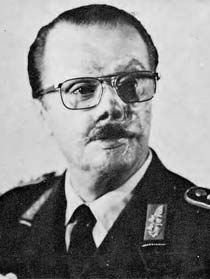
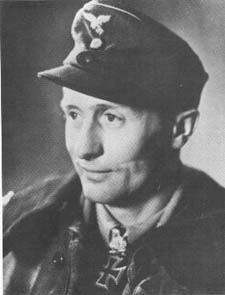
General Johannes Steinhof (above) as a Bundeswehr and NATO officer, showing his burns and before his crash (below)

steinhoff WW II

In his books, Steinhoff does something that you do not see authors do in most military or political memoirs, he actually does serious self reflection on his role in supporting an evil regime. In his introduction to his book The Final Hours the legendary fighter ace who was horribly disfigured when his Me-262 jet fighter crashed and burned two weeks prior to the end of the war wrote:

“In recalling these events, which had been long buried in my memory, it has not been my intention to make excuses. Our unconditional self-sacrifice in the service of the Third Reich is too well documented for that….

So it is because of what is happening today—with freedom threatened in virtually every respect by its own abuse—that I offer this contribution, in the form of an episode in which I was myself involved, to the history of the soldier in the twentieth century. Soldiers have always, in every century of their existence, been victims of the ruthless misuse of power; indeed, given the opportunity, they have joined in the power game themselves. But it fell to our own century to accomplish, with the aid of a whole technology of mass extermination, the most atrocious massacres in the history of mankind. This fact alone makes pacifism a philosophy worthy of respect, and I have a great deal of sympathy with those who profess it. 

The figure of the soldier in all his manifestations is thus symptomatic of the century now nearing its close, and it is to the history of that figure that I wish to contribute by describing what happened to me. I have tried to show what it is possible to do to men, how insidiously they can be manipulated by education, how they can be hoisted onto a pedestal as “heroes,” how they can be so corrupted as even to enjoy the experience—and how they can be dropped and denounced as mutineers when they discover that they have scruples. The complete lack of scruples that such treatment implies is peculiar to rulers who believe that the problems of their own and other peoples can be solved by imposing, through the use of military force, peace on their, the rulers’, terms—in our case a pax germanica, but the second Latin word is readily interchangeable.” from “The Final Hours: The Luftwaffe Plot Against Goring (Aviation Classics)” by Johannes Steinhoff

Since I am a historian and and a career military officer with service in the Iraq War, a war that was illegal and unjust by all measure I can understand Steinhof’s words. Because much of my undergraduate and graduate work focused on German history, particularly that of Imperial Germany after the unification, the Weimar Republic, and the Nazi Reich, I draw a lot of lessons from the period. I also understand how people in this country can fall for the same kind of vitriolic propaganda that the Germans of that era did. I can understand because for years I fell for the lies and propaganda being put out by the politicians, pundits and preachers of the American political right.

10665323_10154041610267059_5277331492232210946_n

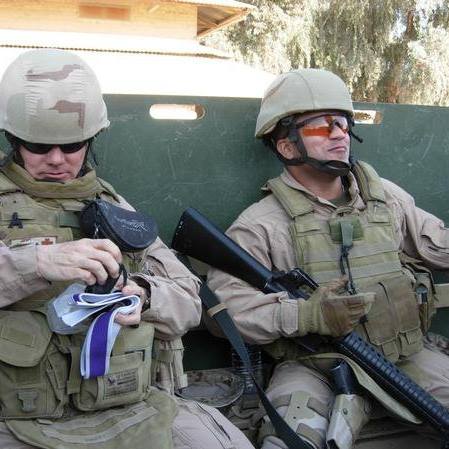
A picture of me (on left) in Iraq 2007 with my assistant and bodyguard RP1 Nelson Lebron

One of those lessons is that in times of crisis, that people, no matter what their race, culture, religious belief system, educational, or economic background are still human. Humanity is the one constant in all of history, our prejudices are often ingrained in us during childhood and reinforced by the words of politicians, pundits, and preachers. In times of stress, crisis, and societal change or upheaval even good people, moral people, people of great intellectual, scientific abilities can fall prey to demagogues who preach hate and blame others, usually racial, ethnic, or religious minorities, as well as civil libertarians who champion the rights of those minorities for the problems of the nation.

Shrewd politicians, preachers, and pundits do this well. They demonize the target group or population and then let the hatred of their disaffected followers flow. The leaders need that disaffected and angry base in order to rise to power; such was how Hitler, Stalin, and so many other despots gained power. They took advantage of a climate of fear, and found others to blame. For Hitler it was the Jews, Slavs, Socialists and Communists; while for Stalin it was various groups like the Ukrainians, or the Poles who were the devil to be feared and destroyed. Timothy Snyder in his book Bloodlands: Europe Between Hitler and Stalin wrote:

“Dead human beings provided retrospective arguments for the rectitude of policy. Hitler and Stalin thus shared a certain politics of tyranny: they brought about catastrophes, blamed the enemy of their choice, and then used the death of millions to make the case that their policies were necessary or desirable. Each of them had a transformative utopia, a group to be blamed when its realization proved impossible, and then a policy of mass murder that could be proclaimed as a kind of ersatz victory.”

But that being said, there are a lot of people who from childhood believe the lies about others without question. In good times such people continue on with life as normal, but in crisis those hatreds and prejudices come to the fore. Rudolf Höss, the notorious sociopath who commanded Auschwitz told American Army psychologist Gustave Gilbert about his reaction when ordered to turn the camp into an extermination center. He said that the order “fitted in with all that had been preached to me for years,” and “at the same time I didn’t think of it as propaganda, but as something one just had to believe.” 

Eugene Davidson in his book on the Nuremberg Trials wrote:

“Every society has in it at all times negative, criminal, sadistic, asocial forces. What holds them in check more than law and police is the consensus of the society – a general belief that despite everything wrong and stupid and muddleheaded in politics, the state is a going concern that will somehow make its way into the future.” (Davidson, The Trial of the Germans p.581)

But when things do not go well, when people do not feel that things will be okay, that the future will be better, and that they have a purpose they look for answers. However, they tend to find their answers in the rantings of demagogues, race baiters, conspiracy theorists, and others who they would tend to dismiss out of hand in good times. In Germany it was the loss of the First World War, the humiliation of Versailles and the economic chaos and social change of the Weimar period which allowed Hitler to gain an audience, then a following, then political power. The demagogues played to what was already in the hearts and minds of the disaffected masses, without that fertile soil, the rantings of Hitler and his propagandists would have never succeeded. Albert Speer wrote:

“As I see it today, Hitler and Goebbels were in fact molded by the mob itself, guided by its yearnings and its daydreams. Of course, Goebbels and Hitler knew how to penetrate through to the instincts of their audiences; but in the deeper sense they derived their whole existence from these audiences. Certainly the masses roared to the beat set by Hitler’s and Goebbels’ baton; yet they were not the true conductors. The mob determined the theme. To compensate for misery, insecurity, unemployment, and hopelessness, this anonymous assemblage wallowed for hours at a time in obsessions, savagery and license. The personal unhappiness caused by the breakdown of the economy was replaced by a frenzy that demanded victims. By lashing out at their opponents and vilifying the Jews, they gave expression and direction to fierce primal passions.”

In a sense a similar thing has happened in the United States which has experienced a series of wars beginning with Vietnam, the shock of the 9-11-2001 attacks, the economic crash of 2007 and 2008 which devastated the savings, home ownership, and investments of many Americans while at the same time benefiting the banking and brokerage houses whose government assisted policies brought about the crash. Of course there are other issues, many religious conservatives hate the progress made by the Women’s and Gay Rights movements, and their leaders play to their fears in apocalyptic terms. I could go on, but I am sure that my readers can identify other issues which demagogues and others use to spread fear and hate to further their goals. The fact is that without the the fertile soil that lays in the hearts of their most fervent followers they would never have a following.

In Weimar Germany hate mongers like Julius Streicher and propagandist Josef Goebbels stuck a chord with disenchanted people who felt that they had lost their country. They were fearful, angry, and desired a leader who would “make Germany great again.” Hitler and his Nazi media sycophants played to that fear, and took advantage of their anger at the existing order. Davidson wrote such people “exist everywhere and in a sick society they can flourish.” 

For decades the way has been prepared for true extremists to take advantage of the fears and doubts of people as modern American versions of Streicher and Goebbels have been at work for years. Rush Limbaugh was a modern pioneer of this in the United States, and he has been joined by so many who are even more extreme in their rantings that it is hard to name them all. Likewise, whole media corporations, websites, and political networks spread such fear every minute of the day, claiming that they, and they alone are real Americans. They actively support politicians who condemn, and sometimes even threaten people who oppose them, and all the while claim that “make America great again.”

When I was younger I devoured that propaganda, despite all of my learning I followed the rantings of men who I realize today are propagandists who promote the basest of lies, and hatred, often in the name of God. I was changed when I was at war, and when I returned home from Iraq in 2008 I realized through hard experience that I had been lied to, and that as a result that thousands of my brothers and sisters were dead, and tens of thousands shattered in body, mind, and spirit. Likewise I saw the massive destruction levied on Iraq and realized how terrible war really is. That was my epiphany, that is what it took to see how much I had been lied to, and it called me to question everything else that I had so willingly believed, things which had been fed to me by years of indoctrination in church, through the media, and by politicians who I believed were truly Christian. I can understand now how Martin Niemoller felt after the Nazi seizure of power when he said, “I hated the growing atheistic movement, which was fostered and promoted by the Social Democrats and the Communists. Their hostility toward the Church made me pin my hopes on Hitler for a while. I am paying for that mistake now; and not me alone, but thousands of other persons like me.”

There was a time that I hated people who espouse the views that I hold today, the views that I write about so often here on this site. I can remember how angry I would get as I listened to the propaganda being put out by Limbaugh, Hannity, the Fox News Channel and all of the others that I listened to every time that I had the chance. But when I changed after Iraq, I felt the sting of that hatred in very real ways. I remember the day I was called by my bishop in my former church, who told me that I had to leave because my views on women, gays, and Moslems were to use his words were now “too liberal.” After that, many men who I considered to be the best of friends turned their backs on me, some in the most bitter and vindictive of ways.

But I realize now that what they did was because I had in a sense left the cult, and had to be ostracized. I can understand that now, because when I was under the spell I too turned my back on people who had fallen out of favor, or people who had rejected the tenants of the church or the political movement, and those are things that I can never undo. But at the time it made sense, it fitted in with all I had been taught for decades, as Albert Speer wrote of Hitler, “One seldom recognizes the devil when he is putting his hand on your shoulder.”

What happened to Steinhoff’s generation is threatening to happen again, in our country, an authoritarian movement is threatening to destroy our democracy and republic. In it soldiers are esteemed, until they realize what is going on and speak out, but by then it is usually too late. I am understanding that fact more and more every day, and having had people troll this blog and call me a traitor and worse, I understand just a bit of what happened to Steinhoff and his fellow officers when they protested to the highest levels what was happening to Germany in early 1945.

We will soon know how military professionals react to being labeled as traitors. President Elect Trump and his followers have been demonizing the personnel of the nation’s intelligence, law enforcement, and diplomatic communities since before the election. The President Elect lambasts critics of any station on his Twitter feed which results in them receiving death threats from his followers. I expect that when presumptive Secretary of Defense James Mattis speaks his mind and tells the truth that we will find out. Personally I expect that when he does that Trump and his most strident supporters will label him as a traitor for doing so. Like a religious cult they have no capacity to tolerate dissent, loyalty to the man will supersede loyalty to the country or the Constitution. When that happens it will be interesting to see the throngs of people in the military and outside of it who make the choice to throw one of the most courageous, selfless, and intellectual soldiers ever produced by our nation under the bus.

Their’s will be a conscious decision. My opinion is that the Constitution and the country will always come first. I want to give the President Elect the benefit of the doubt and do honestly pray that he will do the right thing for the country, but I am concerned because of his past and current behavior that his only loyalty is to himself. General Ludwig Beck, who resigned rather than obey Hitler’s order to invade Czechoslovakia in 1938 and died in the anti-Hitler coup attempt in 1944 said:

“It is a lack of character and insight, when a soldier in high command sees his duty and mission only in the context of his military orders without realizing that the highest responsibility is to the people of his country.” 

I have no doubt that General Mattis understands that and will courageously speak his mind, even if he is condemned for doing so. Sadly I have many doubts about other leaders: be they military, political, business, or religious. There are many people who will sell their souls for their personal advancement, the advancement of their agenda, or an increase in their bottom line. It is after all human nature. 

But the question is: will we see true men and women of courage who will stand when it appears there is no chance of success? As Atticus Finch said in To Kill a Mockingbird: “Real courage is when you know you’re licked before you begin, but you begin anyway and see it through no matter what.” 

That will be what is demanded in the coming months and years. 

Peace

Padre Steve+

1 Comment

Filed under ethics, History, holocaust, leadership, Military, News and current events, Political Commentary