Author Archives: padresteve

padresteve's avatar

About padresteve

I'm a Navy Chaplain and Old Catholic Priest

The Great Hampton Roads Blizzard of 2017

dairy-queen-restaurants-blizzard-deal-for-september

Friends of Padre Steve’s World,

I live in southeastern Virginia and beginning last night we have been under a Blizzard warning. Blizzards are not uncommon here, but normally when one wants a Blizzard here they go to Dairy Queen, but this time Mother Nature has given us a real blizzard.

It’s crazy enough here that the Weather Channel’s Jim Cantore is in town. Parts of the area now have over 10 inches of snow although our neighborhood only has about 6 inches on the ground right now and I expect by the end of the storm our total will be between 6 and 8 inches of snow. The one thing that has kept our snow total down is the fact that we began the storm with sleet and freezing rain, which has also been interspersed with the heavy snow and high winds. The combination has left the roads very icy and dangerous.

We lost power for a couple of hours when according to the police some idiot crashed into a power line pole. When that happened we bundled up, defrosted the Escape and took a short drive over to Gordon Biersch until we knew that power had been restored. Since there were very few people there we had some wings and a couple of beers and Judy introduced me to a fascinating tile game called Quirkle.

The road conditions were bad. The snow was heavy and the roads icy and though few people were on the road, it was obvious that many had no idea what they were doing.

Now our Papillons love the snow, especially Izzy. It is so fun to see them play and get what Pappy owners call the “zoomies.”

So anyway, wherever you are I wish you a great day while I eat my special recipe chili and drink beer.

Peace

Padre Steve

Leave a comment

Filed under Loose thoughts and musings, papillons, weather

Infantry Tactics at the Beginning of the American Civil War

2nd michigan

Friends of Padre Steve’s World,

Today another revised section of one of my Civil War texts.

Blessings

Padre Steve+

The heart of the Civil War armies was the infantry, of which the key unit was the infantry regiment. The U.S. Army had ten Regular Army infantry regiments that the outbreak of the war, most of which were scattered about the country in small garrisons especially in the west, where they were engaged in providing security in the newly acquired territories and states. The few Regular Army units of the United States Army were expanded during the war, and more importantly were joined by hundreds of volunteer regiments during the war.

The Confederacy, lacking a regular army also raised hundreds of volunteer infantry regiments.  The regiment was built around the infantry company that was composed of sixty to one hundred soldiers commanded by a Captain. Most companies, in the case of the volunteer regiments came from the same town, county or neighborhood. The infantry regiment was composed of ten companies. Union infantry regiments “maximum strength was fixed at 39 officers and 986 men. A Confederate regiment was larger: 49 officers and 1,340 men maximum.”  [1] However, in practice these guidelines were not rigidly adhered to, depending on recruiting efforts some regiments have fewer men than their authorized strength when organized and others from more populous areas had more.

However, most regiments were rarely at their authorized strength after their muster into service and this got far worse for units after they had been on campaign and in battle. Federal statistics show that, “by April 1862, an average regiment had 560 men; by July 1863, it would number only 375 soldiers.” [2] These were average numbers, at Gettysburg, some regiments like the 8th Ohio Volunteer Infantry, which on July 3rd decimated the men of John Brockenbrough and Joseph Davis’s brigades on the left flank during Pickett’s Charge had just 209 men in its the ranks. The 124th New York Volunteer Infantry had just 18 officers and 220 men in its ranks when Hood’s brigades of Texans, Georgians and Arkansas men hit them at Devil’s Den on July 2nd 1863 at Gettysburg. [3]

Prior to the war regiments tended to be scarred about the nation in small garrisons or on the frontier, and the brigade was the largest unit within the army, and then only put together for combat or expeditionary operations. A brigade was typically composed of two to five regiments. In theory brigades were commanded by Brigadier Generals but many times commanded by Colonels. In addition to their organic infantry brigades usually had their “own quartermaster, commissary, and ammunition trains. Medical teams and sometimes artillery, were assigned to brigades.” [4] With the attachments the brigade could function as an independent unit.

With the expansion of the armies divisions of infantry were formed. Composed of two or more brigades divisions could operate independently or banded together as part of an army corps. Corps were composed of two or more divisions. Two or more corps would compose an army.

Infantry formations on both sides relied on Napoleonic infantry tactics which when they were formulated worked well due to the types of weapons used by opposing armies. Depending on the tactical situation, infantry regiments, brigades and divisions advanced into battle in either column formation or line shoulder to shoulder.

The column formation, a tactic borrowed from the French, but also used by other armies was used to move quickly into battle. It involved “massing troops on a narrow front, like a swinging a ram, could smash into, and disrupt, an enemy infantry formation and make it run for its life.” [5] During the Napoleonic Era the French often used to charge in the offense as it could provide weight of numbers at the point of attack. The drawback to this formation was that the attacking units were extremely vulnerable to enemy artillery fire, particularly Solid Shot cannonballs “which could do hideous damage to a tightly packed column with just a few well-placed rounds[6] if the enemy artillery was not sufficiently disrupted or destroyed before they came into range.

Columns could be formed from battalion level up. At Waterloo Napoleon deployed a Corps in column, to gain a better understanding it is best to look at the battalion or regiment in column. Typically a column would be one to two companies wide making a front of 30 to 60 soldiers. Thus a full strength regiment deployed in a two company front column would have about 17 ranks.

The line formation was adopted from the British although the French and Prussians used it as well. The line formation was designed to maximize the fire of regiments by placing the men in a formation of “two or three lines which allowed the full play of musket fire along its front.” [7] Since the rate of fire of muzzle loading muskets, rifled or not was much slower in battle conditions, the tactic enabled infantry regiments to maintain a good volume of fire against enemy units, in the offense or in the defense. However the line was an “extremely fragile formation. Attempting to march a line forward across anything except the smoothest parade ground led to disorder. Men straggled, stumbled, wavered, and the line would soon lose all cohesion.” [8] Confederate General D.H. Hill “later in life once asked, rhetorically but memorably: ‘Whoever saw a Confederate line advancing that was not crooked as a ram’s horn? Each ragged rebel yelling on his own hook and aligning on himself.’” [9]

The great virtue of the line formation was “its ability to deliver musket fire by volley and its relative immunity to artillery fire,” [10] at least fire delivered from the front as it presented a small target. However if enemy artillery was able to get in position to deliver enfilade fire, or fire from the flank as happened to the Confederate troops who made Pickett’s Charge, the effect could be devastating.  Unlike the column formation, the line formation took a great deal of time to deploy in line of battle and to maneuver swiftly as a unit once formed and it was vulnerable to cavalry if caught in the open.

The first American infantry drill manual was issued in 1779 when General Von Steuben was given the task of training the Continental Army. The books was based on the tactics of the Prussian Army under Frederick the Great. However, over time, Americans came to favor French drill manuals. In 1835 General Winfield Scott translated the revised French drill manual and issued it as Infantry Tactics and Rules for the Exercise and Manoeuvers of the United States Infantry. The Army that Scott led into Mexico in 1846 used the manual with success and it remained in publican until 1861, and “its general structure remained the heart of all the civil War drill manuals.” [11] As tacticians began to appreciate the impact of the rifled musket infantry tactics saw some adjustments in order to “increase the speed and mobility of tactical movement.” [12]

Scott’s manual was superseded by the volume produced by William J. Hardee who later became a Confederate general. Hardee’s work, Rifle and Light Infantry Tactics for the Exercise of Manoeuvers of Troops when acting as Light Infantry or Riflemen was “based directly on a new generation of French manuals.” [13] Hardee modified the line formation from three lines to two and had an increased role for skirmishers. Likewise Hardee added “extra provisions for rifle fire and manoeuvers at a gymnastic pace (‘double quick’) of 165 to 180 steps a minute.” [14] While an improvement on the older manuals it was still very similar to Scott’s work.

civilwararmyinfantry

In 1862 the U.S. Army adopted Silas Casey’s manual, Infantry Tactics as its official doctrine. Casey’s work was for the most part a composite of Scott’s and Hardee’s work. That being said, Casey “also contributed tactical doctrine for brigade and larger-unit tactics and made revisions that improved the deployment from column to line.” These contributions were important to both armies as the “Confederates quickly followed the Union army in adapting his revisions.” [15] While Casey’s became the official doctrine it was Hardee’s that “won the widest usage and was issued in the most variants.” [16] These included adaptations for U.S. Colored Troop regiments as well as militia forces.

Casey’s manual was particularly helpful for officers serving as brigade and regimental commanders. Previous manuals had been unclear as to where they should place themselves in the order of march, or when the unit was moving in line or column on the attack. Casey clarified this so that “Budding commanders could easily work out where they should place themselves as their regiments marched to the front in column or line, how brigade artillery should be employed, how the head of a column should be maneuvered to give direction to the main mass, and so on.” [17] Even so new officers who had crammed their heads with Scott, Hardee, or Casey for a few weeks could cause havoc among his own troops. A soldier of the 14th New Hampshire Infantry noted: “The men were serene in their ignorance of tactics; but ambitious officers of the line, who had been cramming Casey for a fortnight, were in a vertebral, cold-shiver temperature…. That the men got caught in a snarl, a tangle, a double twisted, inextricable tactical knot, is tame delineation. The drill caused a great deal of serious reflection…” [18]

As the war went on more use was made of skirmishers, which traditionally had deployed in front of the line. With the rifled muskets the skirmishers, advancing ahead of the massed formations could use the longer range and greater accuracy of their weapons to inflict significant numbers of casualties on the enemy, and to pick off enemy officers and artillerymen. The artillery despised the skirmishers as they could do little to combat them without having their own close infantry support.

But skirmishers took a long time to train and the massed volunteer armies, mostly officered  by volunteers had precious little time or experience to train good skirmishers. The Union attempted to rectify this by organizing Sharpshooter regiments, “two of which were organized for the army of the Potomac by Hiram Berdan in 1862.” [19] Both of these units served well at Malvern Hill in 1862 and Gettysburg on July 2nd and proved their worth on other battlefields of the war.  Highly trained and motivated Berdan’s sharpshooters “lived like a band of brothers, imbued with the one feeling of patriotism in their voluntary enlistment for three years.” [20]

Notes

[1] Robertson, James I. Soldiers Blue and Gray University of South Carolina Press, Columbia 1988 p.21

[2] Ibid. Robertson Soldiers Blue and Gray p.19

[3] For a listing of the numbers of soldiers that each regiment went into battle with at Gettysburg see Petruzzi, J. David and Stanley, Steven The Gettysburg Campaign in Numbers and Losses: Synopses, Orders of Battle, Strengths, Casualties and Maps, June 9 – July 1, 1863 Savas Beatie LLC, El Dorado Hills CA 2012

[4] Ibid. Robertson Soldiers Blue and Gray p.24

[5] Guelzo, Allen C. Gettysburg: The Last Invasion Vintage Books a Division of Random House, New York 2013 p.38

[6] Ibid. Guelzo Gettysburg the Last Invasion p.39

[7] Ibid. Guelzo Gettysburg the Last Invasion p.38

[8] Ibid. Cornwell Waterloo: The History of Four Days, Three Armies, and Three Battles p.69

[9] Ibid. Griffith, Battle Tactics of the Civil War p.111

[10] Ibid. Guelzo Gettysburg the Last Invasion p.38

[11] Ibid. Griffith, Battle Tactics of the Civil War p.100

[12] Ibid. Hagerman The American Civil War and the Origins of Modern Warfare p.20

[13] Ibid. Griffith, Battle Tactics of the Civil War p.100

[14] Ibid. Griffith, Battle Tactics of the Civil War p.100

[15] Ibid. Hagerman The American Civil War and the Origins of Modern Warfare p.20

[16] Ibid. Griffith, Battle Tactics of the Civil War p.101

[17] Ibid. Griffith, Battle Tactics of the Civil War p.103

[18] Ibid. Robertson Soldiers Blue and Gray p.50

[19] Ibid. Guelzo Gettysburg the Last Invasion  p.38

[20] Ibid. Guelzo Gettysburg the Last Invasion  p.261

1 Comment

Filed under civil war, History, Military

A Revolution in Killing: The Rifled Musket and the Minié Ball

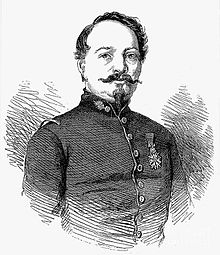
claude_etienne_minie

Claude Minié

Friends of Padre Steve’s World,

I have continued to work on my various Gettysburg and Civil War texts and today something from one of them that should appeal to those interested in Civil War infantry weaponry and tactics.  I have to admit that I am kind of a geek about this kind of stuff but in order to understand the broad brush aspects of history one also has to know something about detailed facts. So anyway, here is a section of my text dealing with the advances in weaponry that made the American Civil War and subsequent wars so much more deadly.

Peace

Padre Steve+
minnie-ball

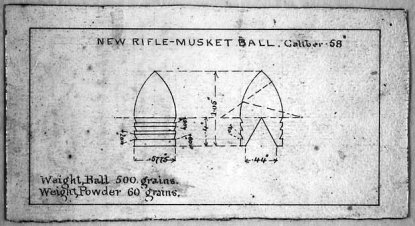
Minié Ball 

While various individuals and manufacturers had been experimenting with rifles for some time the weapons were difficult to load as the rifled groves slowed down the loading process. The British pioneered the use of the rifle during the Napoleonic Wars and the War of 1812. The issue of the Baker rifle, a rifled flintlock which was accurate to about 300 yards was limited to specific Rifle Regiments which were considered elite units, as well as skirmishers in some other regiments. The soldiers assigned to the Rifle regiments wore a distinctive green uniform as opposed to the red wore by the rest of the British Army. When the United States Army formed its first Sharpshooter regiments in late 1861 under the command of Colonel Hiram Berdan. Like the British the men of the regiment as well as the 2nd Regiment of Sharpshooters wore a distinctive green uniform instead of the Union Blue.

In 1832 a captain Norton of the British Army “invented a cylindroconoidal bullet. When fired, its hollow base automatically expanded to engage the rifling of the barrel, thus giving the bullet a horizontal spin.” [1] But the bullet was unwieldy, so it and other bullets that were “large enough to “take” the rifling was difficult to ram down the barrel” and slowed down the rate of fire significantly, and since “rapid and reliable firing was essential in a battle, the rifle was not practical for the mass of the infantrymen.” [2]

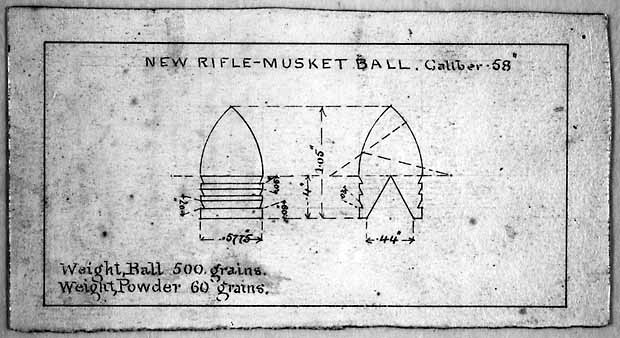
In was not until 1848 when French Army Captain Claude Minié who “perfected a bullet small enough to be easily rammed down a rifled barrel, with a wooden plug in the base of the bullet to expand it upon firing to take the rifling.” [3] Unfortunately the bullets were expensive to produce and it was not until in 1850 an American armorer at Harpers Ferry, James Burton “simplified the design that had made Minié famous and developed a hollow based, .58-caliber lead projectile that could be cheaply mass produced.” [4] Burton’s ammunition was very easy to load into weapons, and soldiers were able to drop the cartridge into the muzzle of their rifles as easily as they could musket balls down a smoothbore.

The tactics the officers were educated in were developed at a time when the maximum effective range of muskets was barely 100 yards. However, the Army did make some minor adjustments to its tactics to increase speed and mobility in the tactic movement of the infantry. Colonel William J. Hardee went on to become a Confederate General adapted changes first made by the French to the U.S. infantry manual. These changes “introduced double-quick time (165 steps per-minute) and the run and allowed changes to the order of march to be made in motion rather than after coming to a halt.” [5]

During Napoleon’s time assaulting an opponent with a large body of troops was a fairly easy proposition, one simply maneuvered out of the rage of the enemy’s artillery and muskets, thus “to bring a heavy mass of troops upon them was possible because of the limited destructiveness of smoothbore firearms. Their range was so restricted that defenders could count on getting off only one reasonably effective volley against advancing soldiers. By the time that volley was unloosed, the attackers would be so close to their objective that before the defenders could reload, the attacking troops would be upon them.” [6] One of Napoleon’s favorite tactics was for his troops to make well executed turning maneuvers aimed at the enemy’s flanks, but the increased range and lethality meant that even when such maneuvers were executed, they often produced only a short term advantage as the defenders would form a new front and continue the action.

Yet by 1860 the rifled muskets had an effective range of about 500 yards and sometimes, depending on the type of weapon even more, but in most cases during the Civil War infantry engagements were fought at considerable shorter ranges. Paddy Griffith notes that even in the modern era long range firing by infantry units is still rare, and that there is “a fallacy in the notion that longer range weapons automatically produce longer-range fire. The range of firing has much more to do with the range of visibility, the intentions of the firer and the general climate of the army.” [7] Drew Gilpin Faust wrote that Civil War battles still “remained essentially intimate; soldiers were often able to see each other’s faces and to know who they had killed.” [8] They knew their weapons could fire at longer range, and one Union soldier explained, “when men can kill one another at six hundred yards they would generally would prefer to do it at that distance.” [9] But for the average infantryman such occasions were the exception.

The advent of the breach loading and later the repeating rifle and carbine further increased the firepower available to individual soldiers. However, with the exception of the Prussian Army, armies in Europe as well as the United States Army were slow to adapt the breech loading rifles. In “1841 the U.S. Arsenal at Harpers Ferry, Virginia, had prepared the pattern weapons of the first general-issue rifled shoulder arm of the U.S. Army” [10]

The process of conversion to the new weapons was slow, conservatism reigned in the Army and the lack of suitable ammunition was a sticking point. However, the U.S. Army began its conversion “to the rifled musket in the 1840s but rejected both the repeating rifle and the breechloader for infantry because of mechanical problems.” [11] Even so there was a continued resistance by leaders in the army to arming infantry with the rifled muskets despite the already noted obsolescence of them during the Crimean War. In discussing the differences of rifles and smoothbore muskets during the Peninsular Campaign, Edward Porter Alexander wrote that “In the Mexican War fought with smooth bore, short range muskets, in fact, the character of the ground cut comparatively little figure. But with the rifles muskets & cannon of this war the affair was proven both at Malvern Hill, & at Gettysburg….” [12]

However, in 1855 the new Secretary of War, Jefferson Davis ordered the Army to convert to “the .58 caliber Springfield Rifled Musket. Along with the similar British Enfield rifle (caliber .577, which would take the same bullet as the Springfield), the Springfield became the main infantry arm of the Civil War.” [13] Even so the production of the new rifles was slow and at the beginning of the war only about 35,000 of all types were in Federal arsenals or in the hands of Federal troops.

The one failure of Union Chief of Ordnance Ripley was his “insistence in sticking by the muzzle loading rifle as the standard infantry arm, rather than introducing the breach-loading repeating rifle.” [14] Ripley believed that a “move to rapid fire repeating rifles would put too much stress on the federal arsenals’ ability to supply the repeaters in sufficient quantities for the Union armies.” [15] There is a measure of truth in this for troops armed with these weapons did have the tendency to waste significantly more ammunition than those armed with slow firing muzzle loaders, but had he done so the war may not have lasted nearly as long.

weapons

Had Ripley done this Union infantry would have enjoyed an immense superiority in sheer weight of firepower on the battlefield. The noted Confederate artilleryman and post-war analyst Porter Alexander believed that had the Federals adopter breech loading weapons that the war would have been over very quickly, noting, “There is reason to believe that had the Federal infantry been armed from the first with even the breech-loaders available in 1861 the war would have been terminated within a year.” [16] Alexander’s observation is quite correct. As the war progressed and more Union troops were armed with breach loaders and repeaters Confederates found themselves unable to stand up to the vastly increased firepower of Union units armed with the newer weapons. A Union soldier assigned to the 100th Indiana of Sherman’s army in 1865:

“I think the Johnnys are getting rattled; they are afraid of our repeating rifles. They say that we are not fair, that we have guns that we load up on Sunday and shoot all the rest of the week. This I know, I feel a good deal confidence in myself with a 16 shooter in my hands, than I used to with a single shot rifle.” [17]

During the war both the Union and Confederate armies used a large number of shoulder-fired rifles and muskets of various manufactures and vintage. This was in large part because of a shortage of the standard M1861 Springfield Rifled Musket at the beginning of the war and initially standardization was a problem, and as a result many units went to war armed with various types of weapons which made supply, training, and coordinated fires difficult. At the beginning of the war, the Federal government had only about 437,000 muskets and rifles in its inventory, and only about 40,000 of these were rifled muskets, either older weapons converted from smoothbores or the newly manufactured Springfield rifles.

The disparity of types of weapons that might be found in a single regiment contributed to difficulties in supplying ammunition to them, and proved to be nightmarish for experienced quartermasters. This was especially the case when the amateur quartermasters of many regiments did not specify exactly what types of ammunition they required.

Likewise, in addition to the existing stocks of weapons available for use, the Federal government only had two armories capable of manufacturing arms, Harpers Ferry Virginia, which had to be abandoned in 1861 when Virginia seceded from the Union, and the other in Springfield Massachusetts, which had a capacity to manufacture between 3,000 and 4,000 rifles a month. Ordnance Chief Ripley solved that problem by contracting with U.S. and foreign manufacturers to make up for what government armories could not do. In the first year of the war he contracted for nearly 750,000 rifles from U.S. and foreign arms suppliers. During the war he expanded the capacity at Springfield so that it could produce over 300,000 weapons a year. Even so at Gettysburg sixty-five of the 242 Union infantry regiments, some 26%, were fully or partially armed with older substandard weapons, both smoothbores and antiquated rifles. In 1863 and 1864, the Confederate Army of the Tennessee over half of the army was armed with smoothbores or antiquated rifles. [18]

But the initial shortage of weapons caused problems for both sides. The Confederacy had to make the best use of what they had obtained in captured federal depots at the beginning of the war, which amounted to 140,000 smoothbores and another 35,000 rifled muskets.  Like the Federal Government, the Confederacy which had much less industrial capacity was forced to purchase many of its weapons from England expending badly needed capital to do so and requiring the weapons to be shipped through the Union blockade on blockade runners operating from England, the Bahamas, or other English Caribbean possessions. During the war the Confederates purchased approximately 300,000 rifled muskets and 30,000 smoothbores from Europe while producing just over 100,000 shoulder fired weapons of all types during the war. The Union through its economic superiority was able to acquire a million rifled muskets, 100,000 smoothbores from Europe in addition to the 1.75 million rifled muskets, 300,000 breechloaders, and 100, repeaters of its own wartime manufacture. [19]

In the end the disparity in quality and quantity of arms would doom the élan of the Confederate infantry in battle after battle. Porter Alexander wrote of the Confederate equipment situation:

“The old smooth-bore musket, calibre 69, made up the bulk of the Confederate armament at the beginning, some of the guns, even all through 1862, being old flint-locks. But every effort was made to replace them by rifled muskets captured in battle, brought through the blockade from Europe, or manufactured at a few small arsenals which we gradually fitted up. Not until after the battle of Gettysburg was the whole army in Virginia equipped with the rifled musket. In 1864 we captured some Spencer breech-loaders, but we could never use them for lack of proper cartridges.” [20]

The number of kinds of weapons that a given unit might be equipped was difficult for commanders and logisticians on both sides.  For example, Sherman’s division at the Battle of Shiloh “utilized six different kinds of shoulder arms, with each necessitating a different caliber of ammunition,” [21] which caused no end of logistical problems for Sherman’s troops as well as other units equipped with mixed weaponry.

Commonly Used Union and Confederate Rifles and Muskets

Type Designed Manufactured Weight Length Caliber Rate of Fire (Rounds per Minute) Feed System Effective Range Maximum Range
M1861 Springfield 1861 ~1,000,000

9 Lbs.

56 inches .58 2-4 Muzzle Loaded 100-400 yards 500-620 yards
M1863 Springfield 1863 700,000 9 Lbs. 56 inches .58 2-3 Muzzle Loaded 200-300 yards 800-1000 yards
Pattern 1853 Enfield (England) 1853 1,500,000 total 900,000 estimated used in Civil War 9.5 Lbs. 55 inches .58 3+ Muzzle Loaded 200-600 Yards 1250 yards
Lorenz Rifle (Austria) 1853  ~325,000 used in Civil War 8.82 Lbs. 37.5 inches .54 2 Muzzle Loaded 100-600 yards 900-1000 yards
M186 to M1842 Springfield Musket 1816-1842 ~1,000,000 10 Lbs. 58 inches .69 2-3 Muzzle Loaded 75-100 yards 200 yards
Sharps Rifle 1848 120,000+ 9.5 Lbs. 47 inches .52 8-9 Breech Loading 500 yards 1000 yards
Spencer Repeating Rifle 1860 200,000 10 Lbs. 47 Inches .52 14-20 Breech Loading 500 yards

1000 yards


While this increase in range, accuracy, and rate of fire were important, they were also mitigated by the fact that the smoke created by the black, non-smokeless gunpowder powder expended by all weapons during the Civil War often obscured the battlefield, and the stress of combat reduced the rate and accuracy of fire of the typical soldier. This was compounded by the fact that most soldiers received little in the way of real marksmanship training. Allen Guelzo notes that the “raw inexperience of Civil War officers, the poor training in firearms offered to the Civil War recruit, and the obstacles created by the American terrain generally cut down the effective range of Civil War combat to little more than eighty yards.” [22] That being said well-drilled regiments engaging enemy troops in the open on ground of their choosing could deliver devastating volley fire on their enemies.

But the real increase in lethality on the Civil War battlefield was the Minié ball “which could penetrate six inches of pine board at 500 yards.” [23] as such, the bullet was decidedly more lethal than the old smoothbore rounds, and most wounds “were inflicted by Minié balls fired from rifles: 94 percent of Union casualties were caused by bullets.” [24] The old musket balls were fired at a comparatively low velocity and when they hit a man they often pass through a human body nearly intact, unless there was a direct hit on a bone. Thus wounds were generally fairly simple to treat unless a major organ or blood vessel had been hit. But the Minié ball ushered in for those hit by it as well as the surgeons who had to treat their wounds:

“The very attributes that increased the bullet’s range also increased its destructive potential when it hit its target. Unlike the solid ball, which could pass through a body nearly intact, leaving an exit would not much larger than the entrance wound, the soft, hollow-based Minié ball flattened and deformed on impact, while creating a shock wave that emanated outward. The Minié ball didn’t just break bones, it shattered them. It didn’t just pierce organs, it shredded them. And if the ragged, tumbling bullet had enough force to cleave completely through the body, which it often did, it tore out an exit wound several times the size of the entrance wound.” [25]

When these bullets hit the arm and leg bones of soldiers the effects were often catastrophic and required immediate amputation of the limb by surgeons working in abysmal conditions. “The two minie bullets, for example, that struck John Bell Hood’s leg at Chickamauga destroyed 5 inches of his upper thigh bone. This left surgeons no choice but to amputate shattered limbs. Hood’s leg was removed only 4 and 1/2 inches away from his body. Hip amputations, like Hood’s, had mortality rates of around 83%.” [26]

This technological advance changed the balance and gave armies fighting on the defensive an edge. The advance in the range and killing power embodied in the rifled musket made it especially difficult for the armies that fought the Civil War to successfully execute frontal assaults on prepared defenders. The defensive power was so enhanced that even a “well executed turning maneuver was likely to produce only a decidedly temporary advantage in the Civil War.” [27] Well trained units could change their front against enemies assailing their flanks and turning them back as was demonstrated by Joshua Chamberlain’s 20th Maine at Little Round Top. Occasionally some assaulting troops would get in among the enemy’s lines, despite the enormous costs that they incurred during their attacks, but “the greater problem was how to stay there and exploit the advantage once the enemy’s line had been pierced. Almost invariably, by that time the attacker had lost so heavily, and his reserves were distant, that he could not hold on against a counterattack by the defending army’s nearby reserves.” [28]

Despite the increased range of the rifled muskets many infantry firefights were still fought at closer ranges, usually under 200 yards, not much more than the Napoleonic era. Much of this had to do with the training of the infantry as well as visibility on the battlefield which in North America was often obscured by heavy forested areas and thickets in which armies would battle each other at close range. Battles such as the Seven Days, Chancellorsville, and much of the Overland Campaign were fought in such terrain.

This was demonstrated time and time again throughout the course of the war as commanders attempted frontal assaults on such positions. “The only way to impose heavy enough casualties upon an enemy army to approximate that army’s destruction was to accept such heavy casualties oneself that no decisive advantage could accrue.” [29] Lee’s assault on Malvern Hill and his numerous frontal assaults on prepared positions at Gettysburg, Burnside’s ghastly assaults at Fredericksburg, Grant’s first attack at Vicksburg, and Grant’s ill-advised attack at Cold Harbor demonstrated the futility and ghastly cost of such tactics. The ability of infantry in the assault to “rise up and deliver a frontal attack became almost always futile against any reasonably steady defenders. Even well executed flank attacks tended to suffer such heavy casualties as experienced riflemen maneuvered to form new fronts against them that they lost the decisiveness they had enjoyed in the Napoleonic Wars.” [30] During the Wilderness Campaign battles were fought for hours on end at point blank range amid heavy woods and fortifications.

As important as the rifled muskets were, the real revolution in battlefield firepower was brought about by the repeating rifles and muskets which came into use during the war. The early examples were not reliable because the ammunition available was in a paper cartridge which sometimes caused gas and flames to escape form the breach, making the weapon dangerous to the user. But this was corrected with the introduction of brass cartridges and later weapons became deadly instrument. Because of its range as compared to the older smoothbores, the rifled musket “added a new spatial dimension to the battlefield,” [31] but the repeating rifles, which had a shorter range than the rifled muskets looked forward to the day of semi-automatic and automatic weapons. The repeaters could “pump out so many shots in such a short time that it offered a new perspective in tactical theory from that used by the old carefully aimed one-shot weapons,” and added “a new temporal dimension to the close range volley.” [32]

Despite the fact that leaders knew about the increased range and accuracy that came with the rifled musket, tactics in all arms were slow to change, and “on every occasion, a frontal assault delivered against an unshaken enemy led to failure.” [33] Even at Gettysburg Robert E. Lee would demonstrate that he had not fully appreciated the effects of the lethality of the rifled musket when he ordered Hood’s assault on Federal troops at Little Round Top on July 2nd and Pickett’s assault on the Union center on July 3rd 1863. Lee should have learned during the bloody battles of 1862 and early 1863 which cost his army over 50,000 casualties.

Notes 

[1] Ibid. Hagerman The American Civil War and the Origins of Modern Warfare p.15

[2] Ibid. McPherson. The Battle Cry of Freedom p.474

[3] Ibid. McPherson. The Battle Cry of Freedom p.474

[4] Leonard, Pat The Bullet that Changed History in The New York Times Disunion: 106 Articles from the New York Times Opinionator edited by Ted Widmer with Clay Risen and George Kalogerakis, Black Dog and Leventhal Publishers, New York 2013 p.372

[5] Ibid. Hagerman The American Civil War and the Origins of Modern Warfare p.20

[6] Ibid. Weigley A Great Civil War p.33

[7] Griffith, Paddy, Battle Tactics of the Civil War Yale University Press, New Haven and London 1989 p.148

[8] Ibid. Faust This Republic of Suffering: Death and the American Civil War p.41

[9] Ibid. Faust This Republic of Suffering: Death and the American Civil War p.41

[10] Ibid. Weigley A Great Civil War p.32

[11] Ibid. Hagerman The American Civil War and the Origins of Modern Warfare p.17

[12] Ibid. Alexander Fighting for the Confederacy: The Personal Recollections of General Edward Porter Alexander p.111

[13] Ibid. McPherson. The Battle Cry of Freedom p.474

[14] Ibid. Guelzo Fateful Lightning p.317

[15] Ibid. Guelzo Fateful Lightning p.251

[16] Alexander, Edward Porter Military Memoirs of a Confederate: A Critical Narrative 1907 republished 2013 by Pickle Partners Publishing, Amazon Kindle Edition location 1691 of 12969

[17] Davis, Burke. Sherman’s March Open Roads Integrated Media, New York, 2016, originally published by Vintage Press 1980 p.196

[18] Ibid. Griffith,  Battle Tactics of the Civil War  pp.76-77

[19] Ibid. Griffith, Battle Tactics of the Civil War p.80

[20] Ibid. Alexander Military Memoirs of a Confederate location 1683 of 12969

[21] Ibid. McDonough William Tecumseh Sherman: In the Service of My Country, A Life  p.2

[22] Ibid. Guelzo Fateful Lightening pp.255-256

[23] Ibid. Guelzo Fateful Lightening p.250

[24] Ibid. Faust This Republic of Suffering: Death and the American Civil War p.41

[25] Ibid. Leonard, Pat The Bullet that Changed History p.372

[26] Goellnitz, Jenny Civil War Battlefield Surgery The Ohio State University, Department of History retrieved from https://ehistory.osu.edu/exhibitions/cwsurgeon/cwsurgeon/amputations 22 December 2016

[27] Ibid. Weigley A Great Civil War: A Military and Political History 1861-1865 p.34

[28] Ibid. Weigley The American Way of War p.117

[29] Ibid. Weigley A Great Civil War: A Military and Political History 1861-1865 p.34

[30] Ibid. Weigley, American Strategy from Its Beginnings through the First World War In Makers of Modern Strategy, from Machiavelli to the Nuclear Age p.419

[31] Ibid. Griffith, Battle Tactics of the Civil War p.75

[32] Ibid. Griffith, Battle Tactics of the Civil War p.75

[33] Ibid. Fuller, The Conduct of War 1789-1961 p.104

5 Comments

Filed under civil war, History, Military

“To Gain Exclusive Control over the Franchise…” The Goal of the Christian Right

IMG_0537

Friends of Padre Steve’s World,

Atticus Finch, the hero of the book and film To Kill a Mockingbird said: 

“Sometimes the Bible in the hand of one man is worse than a whisky bottle in the hand of (another)… There are just some kind of men who – who’re so busy worrying about the next world they’ve never learned to live in this one, and you can look down the street and see the results.”

I think that most people like to believe that religion is a benign or positive influence in the world. As much as I want to believe the positive aspects I have to admit based on the historical and sociological evidence that this is not so, especially during unsettled times of great change. We live in such an era and when it comes to identity, God is the ultimate trump card.

If one wonders why the most fanatical individuals and groups on earth are tied to religions, whether it is the Islamic State and Al Qaeda, Boko Haram, Hezbollah, Orthodox Jews, radical Hindus and Buddhists as well as militant Christians. Of course all of these groups have different goals, and some are less violent than the others, but their overall thoughts and philosophy are quite similar: they desire to impose their religious authority on others using the means of the state or if they cannot gain control of government, through terror.

Robert Heinlein wrote:

“Almost any sect, cult, or religion will legislate its creed into law if it acquires the political power to do so.”

Heinlein, the author of the classic Starship Troopers was absolutely correct. Just look at any place in any time where any religion, sect or cult has gained control of a government. They are not loving, they are not forgiving and they use the police power of the state to persecute any individual or group that is judged to be in error, or even worse has the gall to question their authority. Samuel Huntington wrote in his book The Clash of Civilizations:

“Whatever universalist goals they may have, religions give people identity by positing a basic distinction between believers and non-believers, between a superior in-group and a different and inferior out-group.”

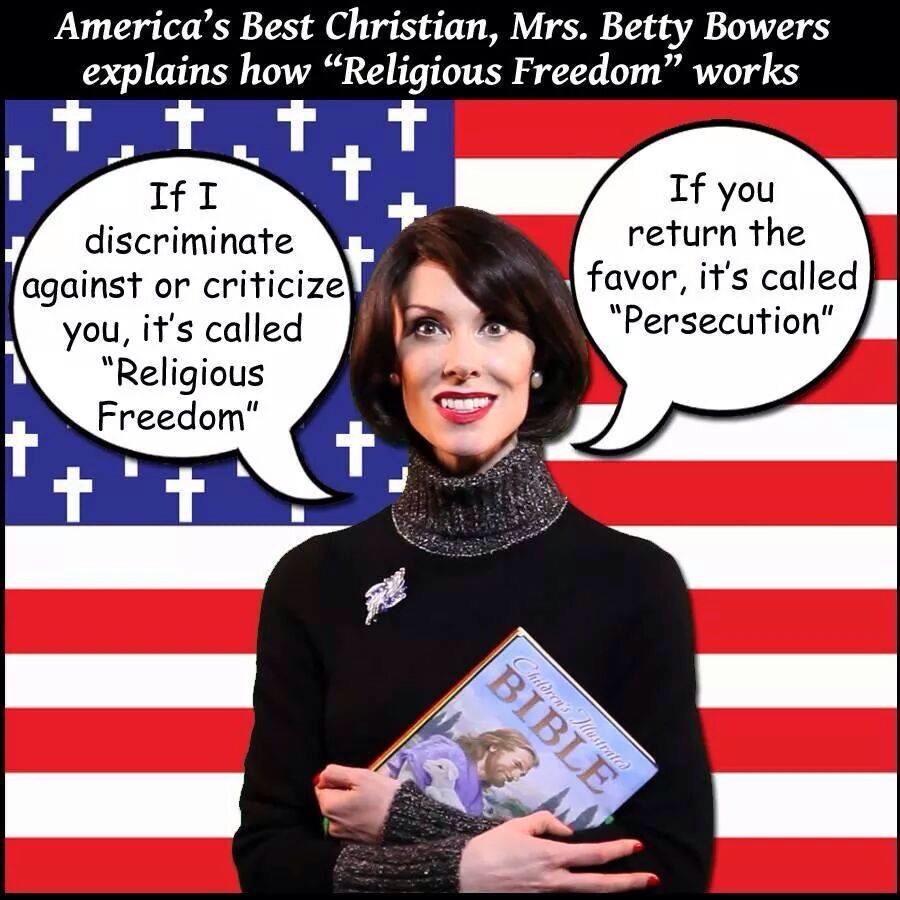
That distinction is on display all over the world and in our own country when conservative Christians write laws that allow them the right to discriminate against other people based solely on their religious beliefs and to secure themselves the preeminent position in society. Gary North, one of the most eloquent expositors of the Christian Dominionist movement and a long time adviser to Ron and Rand Paul and other conservative Christian politicians wrote:

“The long-term goal of Christians in politics should be to gain exclusive control over the franchise. Those who refuse to submit publicly to the eternal sanctions of God by submitting to His Church’s public marks of the covenant–baptism and holy communion–must be denied citizenship, just as they were in ancient Israel.”

Huntington was right, you see the true believers, those who follow their religion without question and believe that it is superior to all others also believe that their religion entitles them to be atop the food chain, others who don’t believe like them be damned both in this life and the next. That is the certitude of the true believer, especially the religious one. Secular or atheistic fanatics could care less about the next life, for this life is all that they have. But the religious “true believers” are not only interested in destroying someone in this life, but ensuring that in the next that they suffer for eternity, unless they believe in the annihilation of the soul after death, which really spoils the whole Dante’s Inferno perspective of the damned in the afterlife.

The great American philosopher, Eric Hoffer wrote:

“The impression somehow prevails that the true believer, particularly the religious individual, is a humble person. The truth is the surrendering and humbling of the self breed pride and arrogance. The true believer is apt to see himself as one of the chosen, the salt of the earth, the light of the world, a prince disguised in meekness, who is destined to inherit the earth and the kingdom of heaven too. He who is not of his faith is evil; he who will not listen will perish.”

That is why they, the religious true believers of any faith are capable of such great evil, and why such people can murder innocents in the most brutal manner simply because they do not believe correctly. Sadly it seems that conservative American Christians will get their chance to do their worst under the Presidency of Donald Trump unless they are fought at every turn and people of all faiths protest so strongly that President Trump is forced to disown them and their tactics.

So until tomorrow,

Peace

Padre Steve+

1 Comment

Filed under faith, News and current events, Political Commentary, Religion

Do as We Say to Trump, Not as We Did to Obama: Conservative Christian Sanctimony on Display

thank-jesus-for-trump

Friends of Padre Steve’s World,

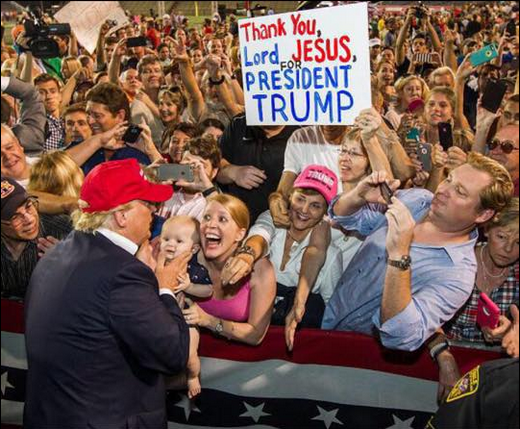
It is the end of the Holiday season, or should I better say in the post-war on Christmas world of Donald Trump, the Christmas season. I find that this season is perhaps the most sanctimonious time of the year: this is especially true for many politically driven conservative Christians who when not fighting the imaginary “war on Christmas,” attacking Barak Obama and Hillary Clinton, condemning Gays to Hell, or urging that Muslims be banned from the country, all the while urging military action to destroy Muslims wherever they live around the world, insist that their opponents who criticize President Elect Trump to shut up.

What I am talking about is the plethora of self-proclaimed Christian preachers, pundits, politicians, and even regular people who are insisting that Donald Trump’s opponents stop criticizing him and instead support and pray for him. Now don’t get me wrong, I will pray for the soon to be President for the good of the country, and of course as a military officer I will do my duty as is stated in my oath of office. Really, I don’t want the man to screw up, if he screws up we’re all screwed. That being said I’m very concerned so many things that he has said and done in the past and that he appears not to have changed one iota since his election. I am worried, but I do hope and pray for the best.

But that being said let me get back the blatant sanctimonious hypocrisy of Christians who demand that their opponent’s, who criticize Trump abide by a code that they never did from day one of the Obama Presidency. In fact every one of these people were incredibly disrespectfully and intolerant of President Obama, and I dare say mostly because he is black. They declared him illegitimate on day one, and the day of his inauguration their Congressional leaders declared their intent to make his a failed presidency. The surge in blatantly racist remarks was unbelievable to me because I falsely believed that we had become a better country in terms of race relations. These attacks, comments, and libelous statements by these Christians have continued even until today. Now, these same people have the nerve to criticize people who criticize Trump for things that actually do matter to the country.

pslam-109-obama

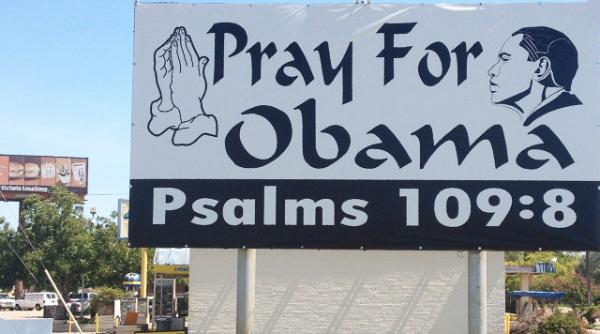
Of all of Barak Obama’s opponents, politically consumed conservative Christians have been the most reprehensible in their conduct. Now they demand others do something that they never did, or intended to do. Many even urged others to pray imprecatory psalms calling on God to bring about President Obama and his family’s deaths. They say to stop criticizing, be respectful, pray for and support Donald Trump, while never for a moment doing the same to President Obama. That bothers me, because it’s the classic do as I say, not as I do attitude that is killing the Christian church in this country. I’m sorry folks, Donald Trump will not stop the fact that people are fleeing the church in record numbers and that the fastest growing religious identification is the “nones,” or those who want nothing of organized religion; in fact his presidency may increase that as conservative Christians try to use his administration to impose their beliefs on others.

So stop the hypocritical sanctimony. It’s still a free country, at least for a while.

Until tomorrow,

Peace

Padre Steve+


2 Comments

Filed under civil rights, ethics, faith, News and current events, Political Commentary, Religion

The One Truly Essential Wall: Separation of Church and State

Friends of Padre Steve’s World,

I don’t know about you but I am sick and tired of people, no matter what their religious belief in this country who use the Constitutionally protections extended to religious freedom in manners that the founders of our country never would have imagined. The fact that those basic religious freedoms are not in danger in any way is irrelevant to true believers.  In their insecurity such people need to create new laws specifically crafted to allow them to discriminate against others based on their religious beliefs.

Sadly, and I say this as a Christian, the vast majority of people doing this are people that claim to be Christians and in a few weeks they will have the chance to use not only state and local governments to do their bidding but the Federal Government and quite possibly the Supreme Court. It is a situation that those who founded our country fought against, and even addressed the matter in the Constitution and in their correspondence.

Thomas Jefferson was first among these men. In his wonderful letter to the Virginia Baptist Association in 1808, in a letter the echoed his letter to the Danbury Baptist Association of of 1802 in which he referred that the legislature in enacting the dual provisions of religious liberty in the Constitution had built up “a wall of separation between Church and State” noted:

“Because religious belief, or non belief, is such an important part of every person’s life, freedom of religion affects every individual. Religious institutions that use government power to support themselves and force their views of other faiths, or no faith, undermine all our civil rights. Morever, state support of an established religion tends to make the clergy unresponsive to their own people, and leads to corruption in religion itself. Erecting the “wall of separation between church and state,” therefore, is absolutely essential in a free society.” 

You see my friends, Jefferson and the other courageous men who so carefully crafted this wall of separation had real experience with the abuses by church-state and the incestuous clergy who used state power to prop up themselves and their churches and to persecution those that refused to submit to their control. Likewise there were religious groups in the recently independent former colonies like the Baptists who in Virginia and other states, as well as the Quakers in Massachusetts who were victims of such persecution, and they were determined not to let it happen here through the marriage of church and state.

In fact Jefferson was absolutely convinced that no specific God or religion be established: not only in the Constitution of the United States, but in his own home state, the Commonwealth of Virginia. There Jefferson authored the Virginia a religious liberty bill which was passed, but which met with considerable opposition from faithful Christians. Reflecting on that legislation Jefferson wrote this in 1821:

“[When] the [Virginia] bill for the establishment of religious freedom…was finally passed,…a singular proposition proved that it’s protection of opinion was meant to be universal. Where the preamble declares that coercion is a departure from the holy author of our religion, an amendment was proposed, by inserting “Jesus Christ,” so that it should read “a departure from the plan of Jesus Christ, the holy author of our religion.” The insertion was rejected by a great majority, in proof that they meant to comprehend within the mantle of its protection the Jew and the Gentile, the Christian and the Mahamoten, the Hindoo and the infidel of every denomination.”

Sadly, Jefferson’s words are twisted, rejected and even despised by the authors of the Religious Liberty Restoration Acts being enacted in state houses around the country.  President-Elect Trump, whose actual understanding of Constitutional liberties is minimal, has promised to sign into law a bill called First Amendment Defense Act. Not only are the state legislatures enacting laws meant only to provide Christians the  protection and the police power of the state to discriminate against any person, or group based on religious belief, something that so so-called First Amendment Defense Act will do at the Federal level. I believe that he will sign it based on the preachers he has speaking or praying at his inaugural, all of who are proponents of enhancing the rights of Christians to discriminate based solely on their religious beliefs, and to limit the civil rights of those they oppose. Call it theocracy, something better suited to Tehran or Riyahd than the United States.

Our founders, especially Jefferson and Madison who have found that incomprehensible, but then they would certainly not be surprised because they had seen it and lived under it during the English Administration of the colonies. They also understood human nature very well.

Thus I think that we should applaud Thomas Jefferson and like Christopher Hitchens exclaim “Mr. Jefferson. BUILD UP THAT WALL!” 

However that wall is being torn down by the descendants of Christians who longed to be free from the coercion and evil wrought by the marriage of church and state, a marriage which Jefferson so wisely noted harmed the church as much as the state.

I have spent the better part of my adult life as a military chaplain defending and protecting the rights of others to their free exercise of religion on whether or not I agreed with them. I held and still hold that to be a sacred duty of my commission and office. I can also state that even most people who did not agree with regarding my beliefs respected me and still consult me because first they knew that I cared about them and secondly that they knew that I would do all within my power to protect their freedom the exercise their religion, or to have no religion and not to be penalized for it.

But that being said I have found that I am increasingly isolated by the fervent religionists who have highjacked the understanding of religious freedom to mean theirs and only theirs and who use the battering ram of the legislature to destroy Mr. Jefferson’s “Wall.” Sadly they are to blind to see that their actions are a two-edged sword which once precedence has been established can be turned on them with a vengeance. I and other chaplains who come from more moderate or liberal traditions that have long embraced both the Social Gospel, the Civil Rights, Women’s Rights, and LGBTQ Rights movements have been long shunned by many of our conservative or fundamentalist colleagues. I have no doubt that in the coming administration that this will become more common and that we may find ourselves punished for speaking our beliefs. Old guys like me will probably be okay and just retire, but but the young progressive chaplains will have a difficult time.

One of my favorite television series of all times is Boston Legal. My favorite character in the show is the lawyer played by James Spader, one Alan Shore. In the episode Whose God is it Anyway  Spader’s character is defending a friend form charges or religious discrimination in the workplace, and his character, Alan Shore delivers this remarkable closing, which because of the unrelenting actions of many of my Christian Brothers and Sisters in putting their rights and privileges as Christians over those of other citizens. That my friends is profoundly dangerous.

By doing so they through their intense hubris not only harm others as they attempt to control them by the police power of the state but damage their own credibility and the religious liberty of Americans yet to be born. It is no wonder that this generation of American Christianity is shedding members at a rate never seen in this country before, and driving those who they might want to bring to faith away. But I digress…

There is a bit of dialogue in that episode of Boston Legal that I wish I had thought of and said years ago. I am certain that if  Jefferson, Madison and so many of our founders would agree with if they had lived to see the depths of dishonesty of Christian individuals, businesses and legislatures have sunk in their abuse of others through their unremitting pursuit of their religious freedom. That is not just at home where they enact laws allowing them to discriminate, but through their apocalyptic machinations to bring the world to war killing billions of people just so Jesus will come back. Though they would deny it, their ultimate goals, albeit in the name of a different  God, are little different than that the Islamic State, Al Qaida, the Iranian Mullahs or Hezbollah. That my friends should scare the living shit out of any rational person.

So here is that closing:

“I don’t know about you but I’m getting a little tired of the religious freedom thing. When did religion get such a good name anyway. Be it the Crusades, the reformation genocides, the troubles in Northern Ireland, the Middle East, mass slaughters in the name of Allah, the obligatory reciprocal retributions. Hundreds of millions have died in religious conflicts. Hitler did his business in the name of his creator. Religious extremism, it’s our greatest threat today, a holy jihad. If we’re not ready to strip religion of its sacred cow status, how about we at least scale back on the Constitutional dogma exalting it as all get out….

Everyone should get to believe in his God, pray to his God, worship his God of course. But to impose him on others, to victimize others in his name?  The founding fathers set out to prevent persecution, not license it…

At a certain point we have to say “enough with this freedom of religion crap. Yuck, yuck, yuck. I know, I’ll get letters….” 

To that I can only say “Amen!”

So with that I bid you a good day.

Peace

Padre Steve+

2 Comments

Filed under civil rights, ethics, faith, History, laws and legislation, Political Commentary, Religion

2017: A Future Not Yet Written that Hinges on Each of a Thousand Choices

new-year

Friends at Padre Steve’s World

I tend to become somewhat reflective at the New Year, maybe more this year than in past years. I am reminded of Peter Benchley, who wrote, “The past always seems better when you look back on it than it did at the time. And the present never looks as good as it will in the future.” Likewise, St Augustine of Hippo once asked “How can the past and future be, when the past no longer is, and the future is not yet?”

Augustine’s question is interesting, but I think that his question is flawed. I think that the past lives in the present much more than we would like to think and that our future, though unwritten can unfold in a multitude of ways and possibilities.

Many of us live in the past as if it were today. We, individually and collectively, as individuals and nations live in the past and look to it much more fondly than when it was our present. I think that historian Will Durant possibly said it the best: “The past is not dead. Indeed, it is often not even past.”

As a historian myself I value the past and seek answers and wisdom from it to use in the present because what we do in the present does, for better or worse defines our future. Confucius said “study the past if you would define the future.” He was quite wise, he said to study the past did not say to live in it.

That is something that I have been learning for over twenty years since my Clinical Pastoral Education Residency Supervisor, using a Star Trek Next Generation metaphor from the episode A Matter of Time to confront me about living in the past. In the episode a shadowy visitor claiming to be from the future refuses to help the Captain Picard and crew of the Enterprise claiming that if he were to help that his “history – would unfold in a way other than it already has.”

Finally Picard is forced to make a decision and confronts the visitor, who turns out to be a thief from the past using time travel to collect technology to enrich himself. Picard responds:

“A person’s life, their future, hinges on each of a thousand choices. Living is making choices! Now, you ask me to believe that if I make a choice other than the one that appears in your history books, then your past will be irrevocably altered. Well… you know, Professor, perhaps I don’t give a damn about your past, because your past is my future, and as far as I’m concerned, it hasn’t been written yet!”

He was in telling me that my future did not have to be my past, and that opened a door of life and faith that I had never experienced before and which showed me that life was to be boldly lived in the present. While it meant a lot then, it means more now for the past according to William Shakespeare “is prologue.”

We cannot help being influenced by the past. We should indeed learn from it, but we cannot remain in it or try to return to it. Kierkegaard said that “Life can only be understood backwards; but it must be lived forwards.”

Since I am a Christian, at least by profession, my faith in that future is in the God who is eternal, the God of love. Victor Hugo in Les Miserables said “Love is the only future God offers.” That is the future that I want to envision despite the hatred that I see and hear from those who devalue and dehumanize people in the name of their religious beliefs or political ideology, which too often are indistinguishable.

Living is making choices and the future hinges on thousands of them. Many of these choices we make automatically without thought simply because we have always done them that way, or because that is how it was done in the past. However, if we want to break the cycle, if we want to live in and envision that future of the God of love then we have to live in the present though the past lives in us.

T.S. Elliot penned this verse:

“For last year’s words belong to last year’s language
And next year’s words await another voice.
And to make an end is to make a beginning.”

This is truth. We must all find our voice in 2017. My future, and for that matter your future my friends is not yet written, and those who claim otherwise are full of shit. So Happy New Year, find your voice and make a difference.

Peace

Padre Steve+

Leave a comment

Filed under christian life, faith, Pastoral Care, philosophy

New Years Eve: Our Hopes and Our Will to Try

cropped-307278_10151416014837059_1368025422_n.jpg

Friends of Padre Steve’s World,

It is New Year’s Eve and in some parts of the world it is already 2017, it is amazing how time flies.

After the year that was 2016 with its seeming unending cycle of violence, hate, war, destruction, and political turmoil including Brexit and the 2016 Presidential campaign that culminated in the election of Donald Trump is over. Overall 2016 was a difficult year, and some would even call it bad. One hundred years ago the world was engaged in a war that was killing thousands of men a day. Some hoped that 1917 would be better, but it wasn’t. In fact in some ways the conflagration that had erupted in 1914 would get far worse.

I hope that 2017 is different and turns out better than 2016, we certainly could use a break, but the forces of history and nature are sometimes greater than our hopes, but we can always hope. Even so more than hope we who believe in liberty, freedom, humanity, brotherhood, and justice must work against the forces of war, terrorism, dehumanization, and political ideologies that are designed to enslave, devalue, and marginal people based on race, religion, gender, color, or belief.

I believe that the forces that made 2016 so terrible will not take a break and that we need to stand up and do the right and sometimes the hard things in order to protect liberty. The time for safe zones is past, as progressives we have to toughen up; think rationally, and act strategically if we are to protect the liberties of all people, including people who will find out far to late that they placed their trust in the wrong place. But I digress…

Many people will see in the New Year singing Auld Lang Syne. I suppose that as Judy and I pop the Champagne and toast tonight when we watch the Ball descend in Times Square on our television, safe from all the drunk drivers that we will as well. Not that we will be isolated, we will go out earlier and see our friends at Gordon Biersch around dinner time and get out before the crowds get going and the place gets too loud and crazy for our tastes.

But my favorite song for the New Year is Abba’s Happy New Year.  Like Auld Lang Syne it is a melancholy song of the end of one year’s hopes, dreams and expectations and hopes and dreams for the New Year. I think one of the lines that I like, one which I think calls on us to actually do more than hope, but to act on hope, is “May we all have a vision…” A vision requires that we begin to imagine a better future, in a sense it is to dream, as Martin Luther King Jr. dreamed, I have a dream that one day this nation will rise up and live out the true meaning of its creed: “We hold these truths to be self-evident, that all men are created equal.”

To fulfill that dream and vision we must live, work, dream and imagine that things can be better, and as Dr. King said, Let us not wallow in the valley of despair, I say to you today, my friends.

And so even though we face the difficulties of today and tomorrow, I still have a dream…

The song, Happy New Year ends with this verse, May we all have our hopes, our will to try, If we don’t we might as well lay down and die, You and I

Here is wishing you the best New Year possible, and I for one will not lay down and die.

Peace

Padre Steve+

4 Comments

Filed under History, Loose thoughts and musings, News and current events, Political Commentary

Life Gives Meaning to Death: Remembering Lives Lost in 2016

481801_10151367001287059_1003164983_n1

Friends of Padre Steve’s World,

As 2016 comes to an end I am remembering so many people who passed away this year. Death does seem to touch all of us, and I am pretty sure that most of us have probably had a relative, friend, coworker, or classmate pass away this year. Some might have been expected, others unexpected. Likewise some may have lived long and full lives and others lives seemingly cut too short. Henry David Thoreau wrote: “On the death of a friend, we should consider that the fates through confidence have devolved on us the task of a double living, that we have henceforth to fulfill the promise of our friend’s life also, in our own, to the world.”

Of course we read abut or see stories of people dying all the time. The media and especially social media assures us that we know about the deaths of famous people, or the deaths of large numbers of people in natural disasters, accidents, murders, wars, and terrorism. The former we tend to magnify because of our celebrity and media culture. Actors, musicians,. sports figures, and famous people become part of our lives, and when they die it seems that some part of us dies as well, even if we never met them. The one celebrity that actually I met and with who I chatted occasionally with on Facebook and Twitter was Patty Duke. Her death came as an absolute shock. But, even so among those I had never met there were so many who through their lives touched me. I was looking through the New York Times which has a gallery of notable deaths and was reminded of the stories, events, songs, sporting events, plays, films, inventions, and decisions that impacted my life. I was really amazed with who we lost and what so many had contributed to my life as I know it. The link is here: http://www.nytimes.com/interactive/projects/notable-deaths/2016

But the latter, people whose lives end in large groups tend to just become numbers to us, and that is something we cannot allow. We must try the best we can to remember them as individual lives. That struck me last week when I read about the Russian aircraft that crashed with the Red Army Chorale aboard. I remember going the victims through name by name, as I did with the victims of the various terror attacks, and mass killings this year.

Then there were the stories of military personnel, or first-responders, killed in the line of duty. Those were important for me to read, and sense the common humanity.

But it gets harder when we see the mass killings and disasters around the world and the numbers become overwhelming. The temptation is to allow the dead to become mere statistics rather than people who had lives. Instead of thinking about a mass number of people which generally ends in a round number, let us remember individuals, like Army reserve Captain Antonio Davon Brown whose was killed at thee Pulse Nightclub, or Justin and Stephanie Shults who were killed in the Brussels terror attack, Sean and Brodie Copeland, killed in the Nice terror attack. Dr. Liza Glinka, the Russian humanitarian who died along with the Red Army Chorale.

sean-and-brodie-copeland

Sean and Brodie Copeland 

os-mass-shooting-victim-antonio-brown-20160614

Antonio Brown

dr-liza-glinka

Dr. Liza Glinka

Of course there are so many more many whose names will never be known in the west, and because of the ravages of war and ethnic cleansing in the Middle East will have their lives erased from memory. So it is important to us to ensure that those lives, those individual lives multiplied a million times are not forgotten.

dave-shaw

Dave

cara

Cara

tony-martin

Tony

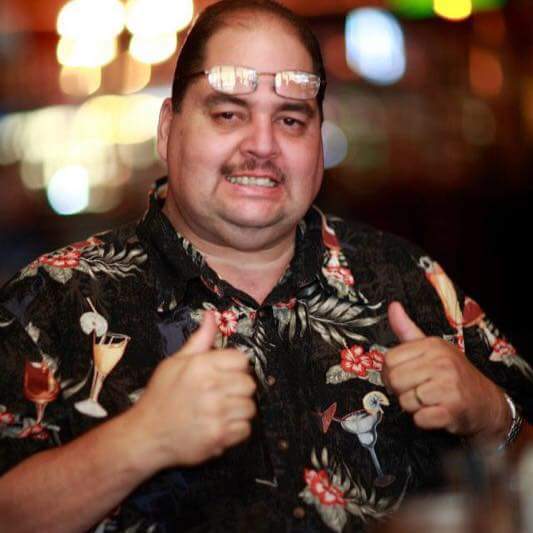
This year lost a number of friends and relatives. “New York” Mike Ferry and Cara Beruk Hartwell were people who helped hold me together when I was stationed at Camp LeJuene and struggling just to survive as I went through very dark times struggling with PTSD, TBI, terrible anxiety, depression, and times when I was considering suicide. My friend from Gordon Biersch Dave Shaw, a retired Navy Chief Hospital Corpsman planning to retire from his civilian career and travel around the country; my co-worker Bert Trembley whose sudden death coupled with a few other events kicked me into a tailspin at the end of March. My great-aunt Betty Dundas who loved to sing in the church choir; my former neighbor Tim Nestor who suffered for years with heart problems finally received a transplant but had complications which killed him; Bishop Randy Adler of my former church who was always so kind to me, and finally my high school friends, Stephanie Leon and Tony Martin. Tony took the time in his last month to spend time with me chatting via Facebook messenger as he was in the final stages of his battle with cancer.

In a world where death is always present it is important to remember the lives of people, not just their deaths. To quote Timothy Snyder death “must not, above all, supply the rounding rhetorical flourish that brings a story to a defined end.” Life gives meaning to death, rather than the other way around, so it is important that we remember the lives, not just the deaths if we are to retain any sense of humanity.

Until tomorrow,

Peace

Padre Steve+


Leave a comment

Filed under Loose thoughts and musings, philosophy

“The Only Thing that Doesn’t Abide by Majority Rule is a Person’s Conscience” Standing Up to the Empowered Christian Right

mock

Friends of Padre Steve’s World

One of my favorite films is To Kill a Mockingbird. I am a convinced that many people that call themselves “conservative Christians,” are so busy protecting their place and power in society that they despise anyone not like them. For decades before and now after the election of Donald Trump the same collection of conservative Christian Supremacists have played fast and loose with the truth, scammed billions of dollars from desperate followers, and drove almost every moderate there ever was out of the Republican Party with their ideology of Christian Dominionism.

I have written about this before. In light of my experience with them I imagine that some of these folks will, now that they have help a man that they belief will fully support their agenda, “kill the Mockingbird” in order to ensure that they keep their privileged position in society. Traditionally the Mockingbirds are those people that they have condemned to social inferiority and discrimination and eternal punishment simply because they are different. To today’s theocrats, the most frequent targets of their wrath are gays and the LGBT community, as well as Muslims, other non-white immigrants, women, and the disabled. The fact that just because someone else gets equal rights doesn’t mean that they lose any rights equality before the law, except to persecute them, seems to be beyond their capability to understand.

This is especially the case of the preachers, pundits and politicians that crowd the airwaves and internet with their pronouncements against Gays, immigrants, Arabs, poor blacks, political liberals, progressive Christians, and for that matter anyone who simply wants the same rights enjoyed by these Christians. This makes me fear them more far more than I fear Donald Trump. They represent a majority of the Republican House caucus and there quite a few in the Senate including, Attorney General nominee Senator Jefferson Beauregard Sessions, whose racist sentiments were so reprehensible that kept him from appointment as a Federal Judge during the Reagan administration.

In the book there is a line spoken by Miss Maudie Atkinson, a neighbor of Atticus Finch and his children. She says to Atticus’s daughter Scout:

“Sometimes the Bible in the hand of one man is worse than a whiskey bottle in the hand of another… There are just some kind of men who – who’re so busy worrying about the next world they’ve never learned to live in this one, and you can look down the street and see the results.”

As I survey the world of Christian conservatives I become surer of this every day. I’ve often wrote about my own fears in regard to dealing with such people as well as the troubling trends that I see. Over the years I have written articles on the trends that I see in the church, trends toward greed, political power, social isolation and the active campaign of some to deny basic civil rights to people that they hate on purely religious grounds.

The language of some like Matt Staver of Liberty Counsel, Tony Perkins of the American Family Association and a host of others describe actions of governments and courts to ensure equal treatment of all people under the law as threats to Christians, affronts to them and of course to God. Their words are chilling. Before the Obergfell v. Hodges decision, Matt Staver that if the Supreme Court upheld marriage equity for gays that it would be like the Dred Scott decision. Of course that is one of the most Orwellian statements I have heard in a while, for the Dred Scott decision rolled back the few rights that blacks had anywhere in the country and crushed the rights of non-slave states. These men are now pushing to ensure that President-Elect Trump does there will, and some have pledged to turn against him if he doesn’t fully support their every demand. I hope that they become so onerous that Trump turns on them like he has on so many other past supporters. They would deserve it and this is a distinct possibility. If we look at history, every authoritarian leader of the past century has turned on supporters who think that they are more entitled than other followers, often with a vengeance.

Again, as a reminder to readers, especially those new to the site, I spent a large amount of my adult Christian life in that conservative Evangelical cocoon. I worked for a prominent television evangelist for several years, a man who has become an extreme spokesman for the religious political right. I know what goes on in such ministries, I know what goes on in such churches. I know the intolerance and the cold hearted political nature of the beast. I know and have gone to church with Randall Terry, the former head Operation Rescue who once said: “Let a wave of intolerance wash over you. I want you to let a wave of hatred wash over you. Yes, hate is good…” I have walked in those shoes, and at one time I was as whipped into a frenzy of hate by those preachers, and their colleagues in right wing talk radio. Thus I fully understand them.

As Atticus Finch told his children:

“You never really understand a person until you consider things from his point of view… Until you climb inside of his skin and walk around in it.”

Thus I total reject the message of such people now, not out of ignorance, but because I have walked in their shoes. At times I supported their causes, not to any extreme, but all too often my crime was simply said nothing when I knew that what they preached, taught and lived was not at all Christian, but from the pits of Hell.

As far as them being entitled to hold whatever opinion they want, even if I disagree, yes that is their right. But as Atticus said:

“People are certainly entitled to think that I’m wrong, and they are entitled to full respect for their opinions. But before I can live with other folks I’ve got to live with myself. The only thing that doesn’t abide by majority rule is a person’s conscience.”

My conscience will not allow me to be silent when I see men like Staver, Perkins, Franklin Graham and so many others preach hatred towards those who are different than them. In 2010 that caused me to be thrown out of a church I had served faithfully from over 14 years as a priest and chaplain. These people are viscous and need to be opposed at all costs.

In the movie and the book the Mockingbirds were Tom Robinson, the black man falsely accused of rape and assault and Boo Radley, a shy recluse feared by his neighbors, a man who stories were made up about; stories that turned a simple man into a monster in the eyes of people who did not know him. Today they are others who fit the Mockingbird role, people who just want to get along and live in peace, but who endure discrimination and damnation from those who call themselves Christians.

Jem Finch, the son of Atticus asks his sister a question in the book and the film:

“If there’s just one kind of folks, why can’t they get along with each other? If they’re all alike, why do they go out of their way to despise each other?”

I ask the same question on a daily basis and I wonder how it can happen again and again.

Peace

Padre Steve+

1 Comment

Filed under civil rights, ethics, faith, film, History, laws and legislation, leadership, LGBT issues, movies, News and current events, Political Commentary