Author Archives: padresteve

padresteve's avatar

About padresteve

I'm a Navy Chaplain and Old Catholic Priest

Greetings from Shangri-La: The Doolittle Raid

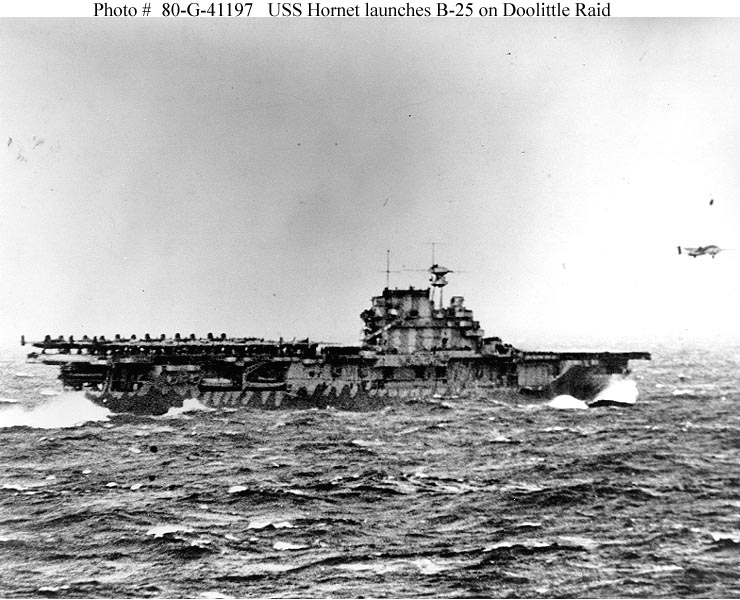
hornet1941-4-18-020807

This week marks the 73rd anniversary of the Doolittle Raid on Tokyo. 80 US Army Air Corps flyers manning 16 B-25 Mitchell bombers conducted a mission from the deck of the USS Hornet CV-8 which though it caused little damage changed the course of World War Two in the Pacific.

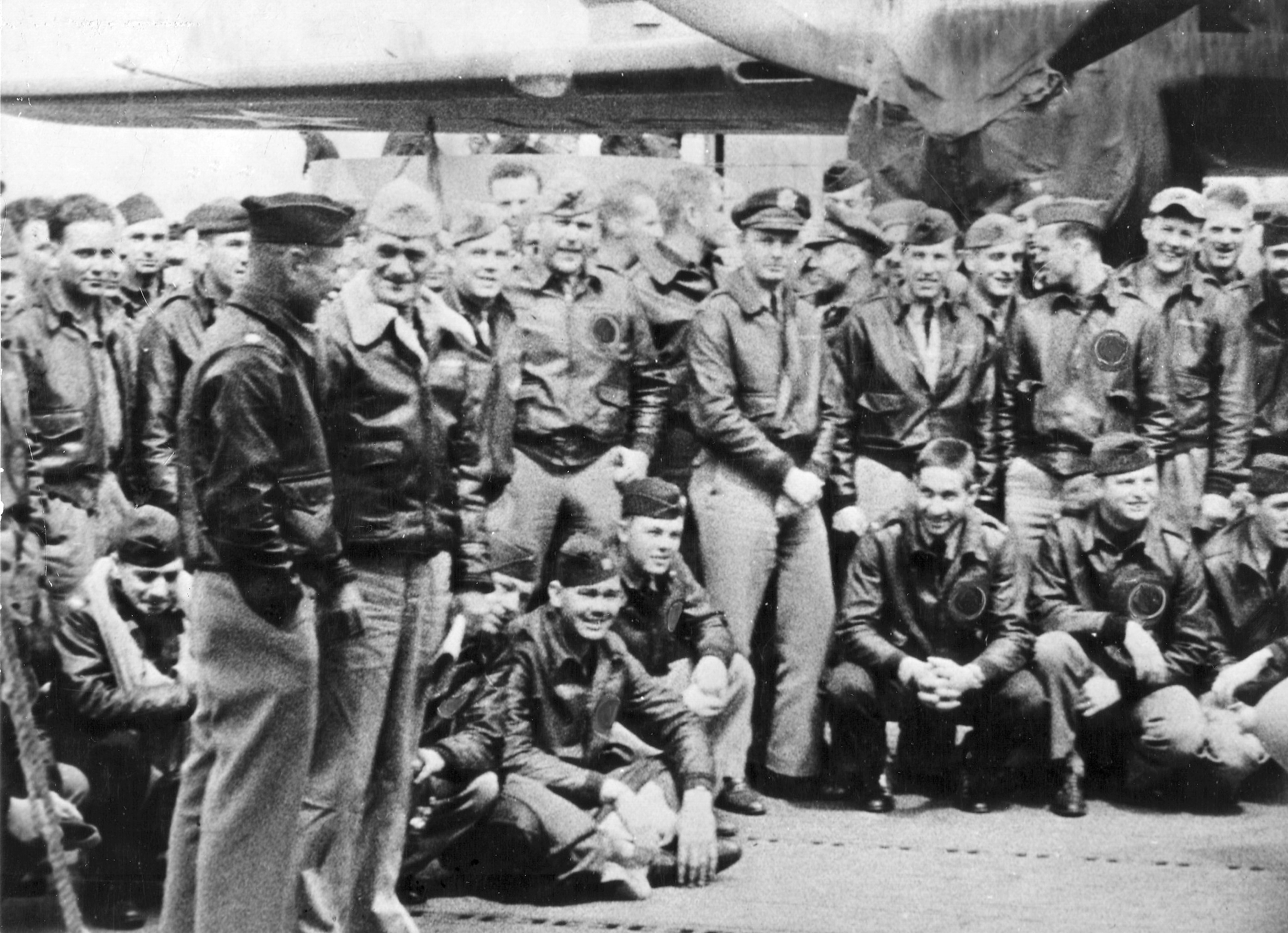
Marc_A._Mitscher_and_James_Doolittle

Doolittle and his Airmen with Hornet’s C.O. Captain Marc Mitscher 

The genus of the strike came from the desire of President Franklin Roosevelt to bomb Japan as soon as possible during a meeting just prior to Christmas 1941. Various aircraft types were considered and in the end the military chose the B-25 because it had the requisite range and had the best characteristics. Aircraft and their crews from the 17th Bomb Group which had the most experience with the aircraft were modified to meet the mission requirements. Lieutenant Colonel Jimmy Doolittle was selected to lead the mission.

Once the aircraft were ready they and their crews reported to Eglin Field for an intensive three week period of training. Supervised by a Navy pilot the crews practiced simulated carrier take offs, low level flying and bombing, night flying and over water navigation. When the training was complete the aircraft and crews and support personnel flew to McClellan Field for final modifications and then to NAS Alameda California where they were embarked on the Hornet Hornet’s air group had to be stowed on the ships hanger deck since the 16 B-25s had to remain of the flight deck. Each bomber was loaded with 4 specially modified 500 lb. bombs, three high explosive and one incendiary.

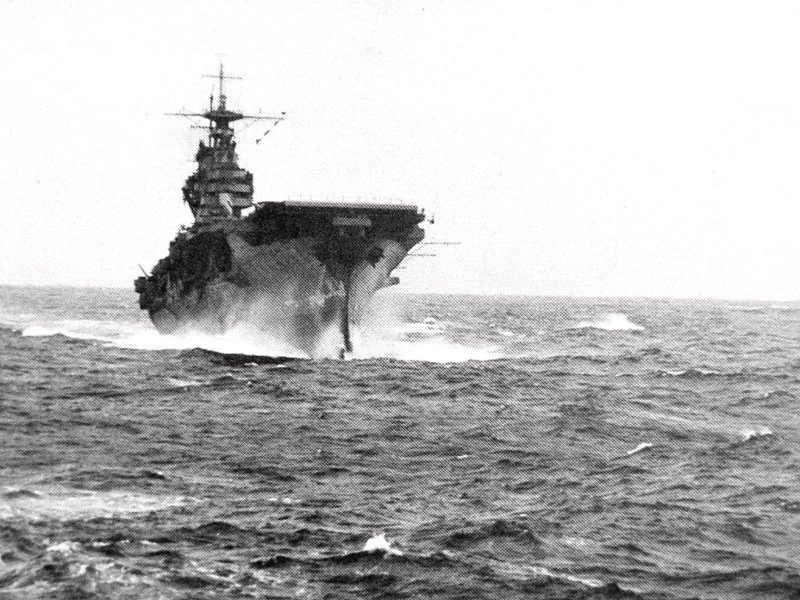
Departing Alameda on April 2nd the Hornet and her escorts, Hornet’s Task Force 18 rendezvoused with the Admiral William “Bull” Halsey’s Task Force 16 built around the USS Enterprise CV-6. task Force 16 provided escort and air cover during the mission. The carriers, escorted by 4 cruisers, 8 destroyers and accompanied by two oilers hoped to get close enough to the Japanese home islands so that the raiders could reach bases in allied China.

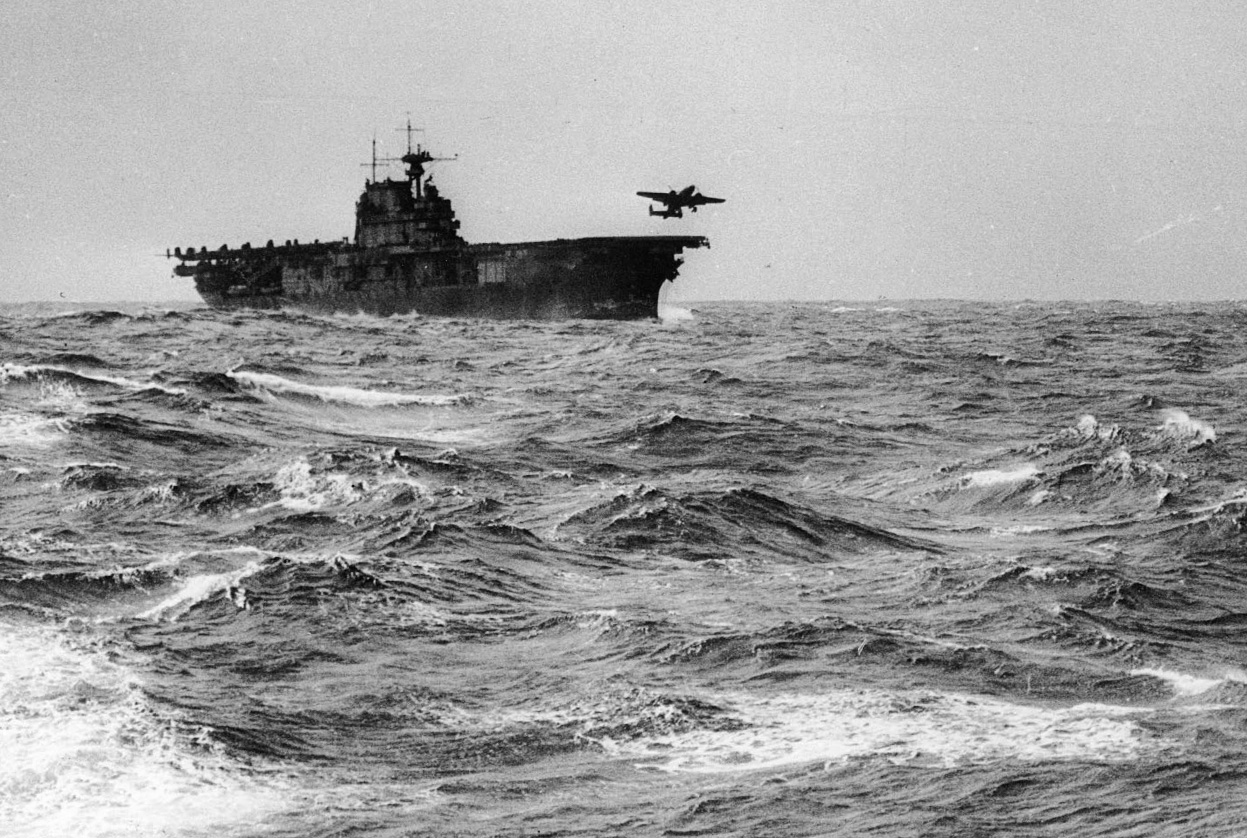
hornet-rough-seas1

Hornet in Heavy Seas while launching the Raiders

The destroyers and slow oilers broke off on the evening of the 17th after refueling the carriers and cruisers. The two carriers and the cruisers then commenced a high speed run to get into range. However early in the morning of April 18th the ships were sited by a Japanese patrol boat, the #23 Nitto Maru which was sunk by the USS Nashville but not before it got off a radio message alerting the Japanese command. However the Japanese knowing that carrier aircraft had a relatively short range did not expect an attack. However, realizing the danger that the sighting brought, Captain Marc Mitscher elected to launch immediately, even though it meant that bombers would have to ditch their aircraft or attempt to land well short of the friendly Chinese airfields. The launch was 10 hours earlier and about 170 miles farther out from the Chinese bases than planned.

538x362xNorth-American-Aviation-B-25B-Mitchell-launches-from-USS-Hornet-CV-8-18-April-1942-21.jpg.pagespeed.ic.fjuaPl49hb

B-25 Launching from Hornet

Flying in groups of two to four aircraft the raiders struck the Japanese cities of Tokyo, Yokohama, Yokosuka, Nagoya, Kobe and Osaka. Minimal damage was done and only one aircraft was damaged. However they needed to fly nearly 1500 more miles to get to areas of China unoccupied by Japanese forces. Miraculously most of the aircraft and crews managed to find refuge in China. 69 of the 80 pilots and crew members avoided death or capture. Two flyers drowned, one died when parachuting from his aircraft. Eight men were captured. Of those captured by the Japanese three, Lieutenants William Farrow, Dean Hallmark and Corporal Harold Spatz were tried and executed for “war crimes” on October 15th 1942.

Many of the surviving flyers continued to serve in China while others continued to serve in North Africa and Europe, another 11 died in action following the raid. Doolittle felt that with the loss of all aircraft and no appreciable damage that he would be tried by courts-martial. Instead since the raid had so bolstered American morale he was awarded the Medal of Honor, promoted to Brigadier General and would go on to command the 12th Air Force, the 15th Air Force and finally the 8th Air Force.

The raid shook the Japanese, especially the leadership of the Imperial Navy who had allowed American aircraft to strike the Japanese homeland. The attack helped convince Admiral Isoroku Yamamoto that an attack on Midway was needed in order to destroy the American Carriers and the threat to the home islands.

When asked by a reporter about where the attack was launched from, President Roosevelt quipped “Shangri-La” the fictional location of perpetual youth in the Himalayas’ made famous in the popular book and movie Lost Horizon.

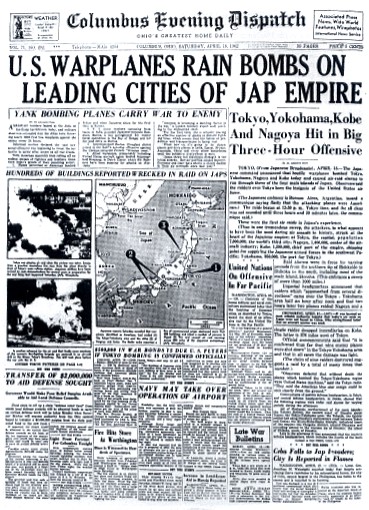
01_raid_newspaper

The raid in terms of actual damage and losses to the attacking forces was a failure, but in terms of its impact a major victory of the United States. The attack was psychologically devastating to Japanese leaders, including Prime Minister Hideki Tojo, whose personal aircraft was nearly hit by one of the raiders and Admiral Isoroku Yamamoto, who felt personally humiliated and dishonored by the fact that bombers launched from American carriers.

Likewise the raid gave the people of the United States a huge morale boost at a time when very little was going right. It forced the Japanese Navy to launch the attack on Midway that turned out to be a disaster, decimating the best of the Japanese Naval Air Forces and the loss of four aircraft carriers and enable the US Navy to take the offensive two months later at Guadalcanal.

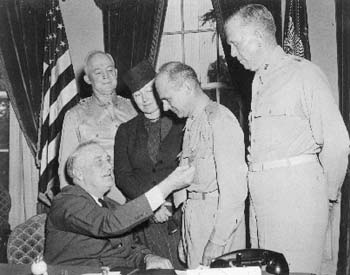
President-Franklin-Delano-Roosevelt-pins-the-Congressional-Medal-of-Honor-on-Brig.-Gen.-James-Doolittle.

Franklin Roosevelt Awards Medal of Honor to Jimmy Doolittle 

In the years after the war the survivors would meet. Today only two survivors of the raid remain alive. The two men presented the Congressional Gold Medal awarded to the group to the National Museum of the U.S. Air Force on Saturday, 73 years to the day after their bombing attack on Japan rallied Americans in World War II. Ninety-nine year old Lt.Col. Richard “Dick” Cole and ninety-three year old Staff Sergeant David Thatcher presented the medal which was carried to the museum in  a ceremonial flight of B-25 bombers. Cole was Doolittle’s co-pilot and Thatcher the tail gunner in the bomber nicknamed the “Ruptured Duck.”

It will not be long before these last two survivors will be gone and it is up to us to never forget their heroism, sacrifice and service in a mission the likes of which had never before been attempted, and which would in its own way help change the course of the Second World War.

Peace

Padre Steve+

9 Comments

Filed under History, Military, world war two in the pacific

Monday Musings: Books the Carriers of Civilization 


Friends of Padre Steve’s World

It is Monday and I am traveling back home from the conference that I attended in Houston and I am tired after traveling and spending most of the weekend sick. But to be fair the conference was well worth it. 

 As I muse about the the coming week I am stuck on something that I saw about the decline in the number of Americans who read books, and it occurred to me that this is probably a major factor in the ignorance displayed by so many Americans on so many subjects. A Pew survey reported that 23% of Americans read no books whatsoever in 2013 and over a hefty half  of Americans read fewer than five books. The survey did not ask what people were reading but by my perusal of best-seller lists, Amazon.com notifications and bookstore racks it appears that much of what is read is junk. No judgement intended but the best sellers in the non-fiction world are almost universally written by popular but biased and often ignorant political pundits, preachers and politicians. 

As a society we just don’t read, and much of what we do read is not directed toward learning but political-religious indoctrination, or to make us feel good about our own lifestyle or prejudices. 

I am a historian, theologian and stand-up philosopher. I have always read. Since the day I was introduced to the library and the card catalogue in grade school I have never ceased to read, and if I do not become distracted I can read hundreds of pages a day by authors who challenge my presuppositions or shed new light on subjects I already thought myself competent. My wife Judy is the same way, her tastes in subjects is different than mine, but she almost always is reading, be it a real book in print for or and-book. However, that being said I know many people, including people who are educated who have either stopped reading or console themselves in the works of the pundits, politicians and preachers, that Trinity of Evil whose one overriding goal is to convince people to follow what they say without thinking critically. 

if we don’t read, as a civilization we die.

Barbara Tuchman wrote:

 “Books are the carriers of civilization. Without books, history is silent, literature dumb, science crippled, thought and speculation at a standstill. Without books, the development of civilization would have been impossible. They are engines of change (as the poet said), windows on the world and lighthouses erected in the sea of time. They are companions, teachers, magicians, bankers of the treasures of the mind. Books are humanity in print.”

Abraham Lincoln, though lacking a formal education was always reading, it helped make him into one of the most formidable thinkers of his day, and helped him keep perspective even when he met setback after setback that would have crushed anyone else. There are hundreds, if not thousands of other examples that I could cite of men and women whose personal strength and character was shaped by what they read. Sadly, we lack that today, but thankfully it does appear that there might be some hope. According to the Pew survey Minnenials read more than those older than them. 

But just looking around we can see the result of the literary deprivation that afflicts our society. Half-baked conspiracy theories promoted by politicians, pundits and preachers are given the air of respectability by supposed news organizations. When someone has the integrity to ask hard questions or challenge the purveyors of such intellectual smut they are condemned. That my friends is a demonstration of the level of ignorance that we have allowed ourselves to sink to, something that in an age where we have the literary, scientific, philosophical, religious and historical classics of civilization at our figertips, is inexcusable. 

I shall come back to this another time because writing in the aisle seat of a Boeing 737 has some limitations. 

So this week I should be putting out at least one Gettysburg article and possibly one Abraham Lincoln. I will be doing one about the Dootlitle Raid on Toyko which occurred 73 years ago this week during the darkest days of the Second World War as well as some other subjects that I am musing about. 

As for now I am going to use the last hour of my flight to continue reading Doris Kearns Goodwin’s Pulitizer Prize winning book Team of Rivals: The Political Genious of Abraham Lincoln. I highly recommend it. 

So from 39000 feet over Southeestern Ohio I wish you a good day.

Peace

Padre Steve+

8 Comments

Filed under books and literature, Loose thoughts and musings, philosophy, Political Commentary

A Question for Tom Cotton and Other War Mongers

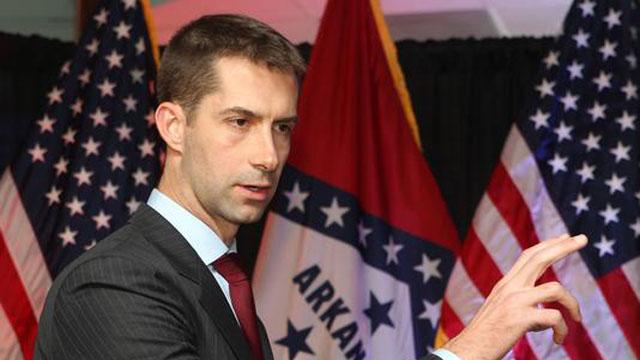
cotton

I have been at my denominational Chaplain and Pastoral Counselor conference and we were talking about the concept of Moral Injury.  Sadly the concept while real is so misunderstood. Many in the Christian psychotherapy and pastoral counseling world have reduced the concept to what the soldier did on a battlefield that causes him problems and which he must confess to God to be forgiven. But the bigger issue in moral injury is not that, it is the betrayal of trust by the nation of those that they send to war for the most spurious and often illegal and immoral reasons.

Most people who join the military are idealistic and have a trust of their government, their leaders, their military services and even their churches and God that is a major part of their life. Sadly, that trust is betrayed when the nation sends them into wars which are illegal, immoral and place them in situations where they do or see things that break that trust often forever. This happened to many of our Vietnam vets and is happening again to those of us who served in Iraq or Afghanistan.

Sadly, most Americans, about 99% have no skin in this game. The young men and women who go to war represent far less than one percent of the American population. Many ethnic minorities and come from either the middle class or the poor. Likewise, a growing percentage are men and women who grew up as military brats. I’m one of those, but I see a lot more now. In World War II even the political and economic elites sent their sons to war, but this is not the case today. In fact it is hard to name the children of any national political or corporate leaders who have served in Iraq or Afghanistan. The only one that comes to mind to me is Vice President Joe Biden’s son Beau, who served in Iraq.

But even as we still struggle to deal with the results of the Iraq blunder, there are those who foolishly desire to involve this nation in another war. A war which can have no good outcome and which when push comes to shove few will oppose, because other than the incredibly small minority that serve in the military, no one has any skin in the game.

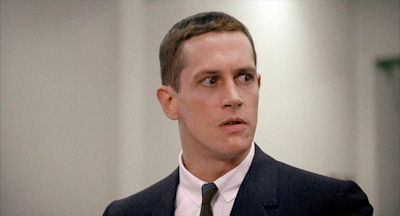
Senator Tom Cotton, a former Army Lieutenant and Iraq veteran, with about as much sense as Doug Neidermeyer from Animal House is beating the drums of war with Iran saying that any military action against Iran would be short and easy. Senator Cotton-Neidermeyer say that it would require just a few days of bombing to complete the mission of crippling Iran’s nuclear program.

Of course he is not alone there is a rising chorus of war mongers who want yet to wage another preemptive war. This would be a war that baring a direct attack of Iran on the United States or an ally that we are bound by treaty to defend would be illegal under every international convention. It would be comparable to the actions of Nazi Germany in its wars of aggression that we sent Nazi leaders to the gallows at Nuremberg.

U.S. Supreme Court Associate Justice Robert Jackson who served as the American prosecutor and worked with our allies to set up the Nuremberg proceedings made this comment which always should be for most in the mind of any American leader when considering going to war: “If certain acts of violation of treaties are crimes, they are crimes whether the United States does them or whether Germany does them, and we are not prepared to lay down a rule of criminal conduct against others which we would not be willing to have invoked against us.” Justice Robert Jackson International Conference on Military Trials, London, 1945, Dept. of State Pub.No. 3080 (1949), p.330.

neidermeyer

If Senator Cotton-Neidermeyer gets his war, baring an Iranian attack on us or one of our allies it be illegal an tantamount to what we put the leaders of the Third Reich on trial for.  Likewise, it would be like the one waged against Iraq one waged under false pretenses which cost so many lives, bled the nation’s treasury dry and reduced our trust and standing in the world.  

We sowed the wind in Iraq, and with climatic struggle between the Islamic State and the Iraqi Shia, supported by Iranian Revolutionary Guards, are reaping the whirlwind. 

Senator Cotton seems not to get the fact that in any war the enemy gets a vote, and the Iranians, even if we manage to cripple their nuclear program will certainly exact a price in blood and treasure that Lieutenant Cotton-Neidermeyer does not seem to understand or appreciate. U.S. ships in the Persian Gulf will have to right off salvos of anti-ship missiles, swarm attacks by Iranian missile and torpedo boats as well as air attacks and submarines. No matter how well we do in defending against these attacks it is undoubtable that ships will be damaged or even sunk and many, maybe even hundreds or thousands of sailors killed, something not seen since World War Two. Likewise the U.S. installations in Bahrain and Qatar will be bombarded with hundreds of short and medium ranged missiles many which will get through our missile defense systems.

When the bodies of our dead military personnel come back, will Senator Cotton be there to meet them? I doubt it because for him, they are just the cost of war. Will he and his allies increase support for the bereaved families, or the wounded? I doubt it, because all of them are bent of cutting the benefits to the wounded, the broken and those shattered by war, because such expenditures get in the way of lining the pockets of their benefactors.

Yes, they will beat their chests and talk about “our heroes” and castigate as traitors those who opposed the war that they brought about in order to cover their guilt.

While we would eventually prevail in such an exchange it would be disastrous and further weaken our military as well as our standing in the world. But then there is the moral question, especially for those who like Senator Cotton and so many of the others who advocate an illegal, immoral preemptive war of aggression who claim to be Christians need to ask.

That question was asked by the iconic hero of the American Civil War Joshua Chamberlain on the front lines at Petersburg in the closing days of that war: “…men made in the image of God, marred by the hand of man, and must we say in the name of God? And where is the reckoning for such things? And who is answerable? One might almost shrink from the sound of his own voice, which had launched into the palpitating air words of order–do we call it?–fraught with such ruin. Was it God’s command that we heard, or His forgiveness that we must forever implore?” 

That my friends is what Senator Cotton and others of those who advocate yet another war of aggression need to answer.

Peace

Padre Steve+

5 Comments

Filed under afghanistan, ethics, faith, Foreign Policy, History, iraq, leadership, Military, national security, PTSD

A Chaplain Conference and the Stomach Flu

Friends of Padre Steve’s World

I am in Houston for my denomination Chaplain, Pastoral Counselor and Mental Health Professional training conference. The conference has been really good, but exhausting because I am not used to spending eight-hours or more a day in presentations and case conferences. This we are focusing on various treatments for Post Traumatic Stress Disorder (PTSD), Traumatic Brain Injury (TBI) and Moral Injury.

But tonight I am wiped out. Evidently there is a stomach flu going around Houston as well as other parts of the country and I have got it.  At first I thought that it just might be something I ate, but after nine hours and a number of trips to the great white throne I decided to see if anything is going around, and yes it is. I have even been throwing up the stuff I am taking to calm down my stomach. So I will do my best to stay hydrated and get well.

So in the hopes that my stomach calms down and that can enjoy tomorrow  with you a good night.

Peace

Padre Steve+

2 Comments

Filed under Loose thoughts and musings

He Made Us a Better Nation: Jackie Robinson

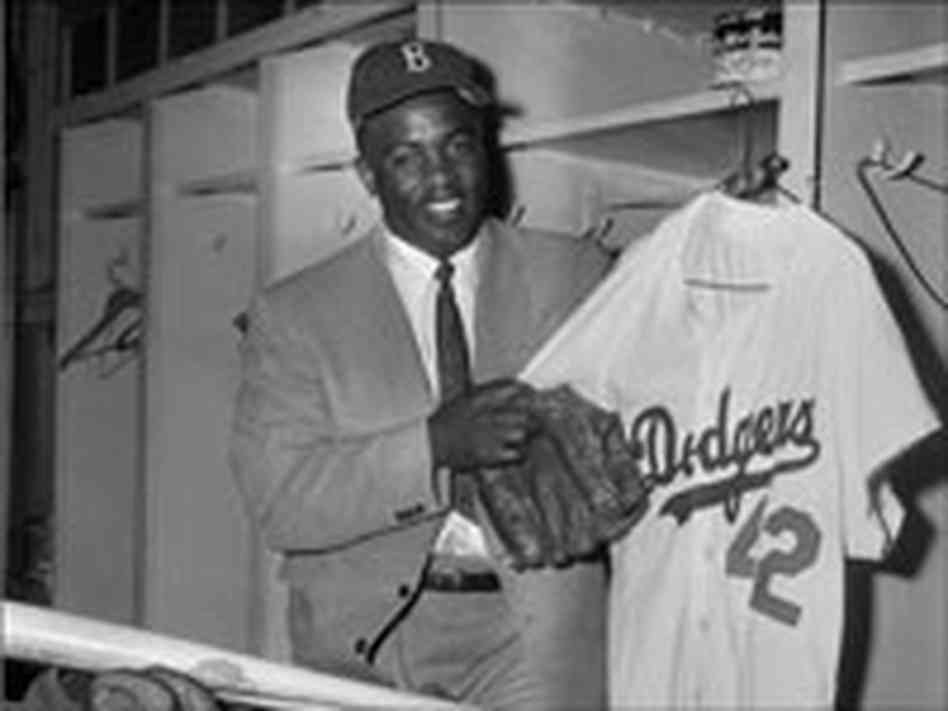
robinson200-ffbfd794408772ed56c5418c8f637c6b552e5c70-s6-c30

He led America by example. He reminded our people of what was right and he reminded them of what was wrong. I think it can be safely said today that Jackie Robinson made the United States a better nation.” – American League President Gene Budig

April 15th 2015 was the 68th anniversary of Jackie Robinson’s first game in the Major Leagues with the Brooklyn Dodgers.  Jim Crow was very alive and well when Jackie stepped onto the field that day and no matter how much we want to distance ourselves from those days there are still some in this country who want to go back to that kind of society. Robinson’s first game with the Dodgers came a full year before President Truman integrated the military, a move which infuriated many in the South.  Likewise it occurred a full seven years before the Supreme Court ruled school segregation unconstitutional in the Brown vs Board of Education decision.  It came a full 17 years before Congress passed the Voters Rights Act in 1964.

When Jackie Robinson stepped onto the field it was a watershed moment in Civil Rights for African Americans and paved the way for a change in American society that has continued since his Major League debut. Blacks had struggled for years against Jim Crow laws, discrimination in voting rights and even simple human decencies like where they could use a rest room, sit on a bus or what hotel they could stay in.

In baseball many white fans were upset that blacks were allowed to see Robinson in stadiums that they would not have been allowed in before.  Players from other teams heckled Robinson, he received hate mail, people sent made death threats, he was spiked and spit on.  But Jackie Robinson kept his pledge to Dodgers owner Branch Rickey not to lash out at his tormentors, as Rickey told him that he needed a man “with enough guts not to strike back.”

Jackie Robinson played the game with passion and even anger.  He took the advice of Hank Greenberg who as a Jew suffered continual racial epithets throughout his career “the best ways to combat slurs from the opposing dugout is to beat them on the field.” He would be honored as Rookie of the Year in 1947. He was a MVP and played in six World Series and six All Star Games.  He had a career .311 batting average, .409 on base percentage and .474 Slugging percentage. He was elected to Baseball’s Hall of Fame in 1962.

Today Jackie Robinson’s feat is history, but it should not be forgotten.  He was a pioneer who made it possible for others to move forward.  He would be followed by players like Roy Campinella, Satchel Paige, Don Larson, Larry Dobie and   Willie Mays.  His breakthrough had an effect not just on baseball but on society.

Jackie Robinson would have an effect on my life.  In 1975 the Stockton Unified School District voted to desegregate.  I was in the 9th grade and preparing for high school.  As the school board wrestled with the decision anger boiled throughout the town, especially in the more affluent areas.  Vicious letters were sent to the school board and to the Stockton Record by parents as well as other opponents of the move.  Threats of violence and predictions failure were commonplace.  In the summer of 1975 those who went out for the football team, both the sophomore and varsity squads began to practice.  Black, White, Mexican and Asian, we bonded as a team, the Edison Vikings.  By the time the first buses pulled up to the bus stops throughout town on the first day of school, the sense of foreboding ended.  Students of all races discovered common interests and goals.  New friends became guests in each others homes, and all of us became “Soul Vikes.”

30 years later the Class of 1978, the first class to be desegregated from start to finish graduated from Edison held a reunion.  Our class always had a special feel about it.  Looking back we too were pioneers, like Jackie Robinson we were far ahead of our time.  When I look at my friends on Facebook from Edison I see the same faces that I played ball, rode the bus and went to class with.   Things have changed.  Even 30 years ago none of us imagined a African American President, we believed in each other and we saw potential, but I don’t think that anyone believed that we would see this in our day.

I think that Jackie Robinson prepared the way for other pioneers of Civil Rights including Dr. Martin Luther King.  Today, 68 years later Jackie Robinson looms large not only in baseball, but for the impact of his life and actions on America.

His number “42” is now retired from baseball. The last player to wear it was Mariano Rivera of the Yankees. Rivera had been granted an exemption to wear it until he retired. At least the last Major League ball player to honor the number was a class act who will certainly be in the Hall of Fame.

Robinson said something that still resonates with me: “Life is not a spectator sport. If you’re going to spend your whole life in the grandstand just watching what goes on, in my opinion you’re wasting your life.” It is something that I take into account every day of my life.

May we not forget and always forge ahead in the constant struggle for civil rights and equality, even as many in our nation sink back into the old ways of apathy, and the toleration of injustice and inequity, even seeking to reverse the hard gotten gains that we all have been blessed to see.

So here’s to you Jackie Robinson. Thank you and all the other pioneers.

Peace,

Padre Steve+

1 Comment

Filed under Baseball, civil rights, Political Commentary, sports and life

Teaching, Taxes, Texas and Lincoln

IMG_0535

Well my friends it has been a very busy day. A day full of teaching and writing. A day of filing taxes, thankfully I’ll get some of what I paid in back, and tomorrow I will be heading to Houston, Texas for a Chaplain Training conference at my denomination headquarters. I will return home on Monday afternoon.

Today it was the first meeting of my ethics class and the first meeting for the Gettysburg Staff Ride. I also did a modified version of last night’s post  on the assassination of Abraham Lincoln to send to my colleagues and students at the Staff College.

While doing my taxes tonight I watched the movie Lincoln again and as I saw the flags flying half-staff on the base this afternoon I pondered the depth of the loss of the late President 150 years ago today. As I did so I thought of both the Gettysburg Address and his Second Inaugural Address, for I so much desire the day that all of our citizens shall embrace the ideal that these dead shall not have died in vain — that this nation, under God, shall have a new birth of freedom — and that government of the people, by the people, for the people, shall not perish from the earth.

But now, I need to pack as I need to be at the airport at 4:30 A.M. and get to bed. So until tomorrow,

Peace

Padre Steve+

1 Comment

Filed under civil rights, civil war, History, leadership

A Terrible Good Friday: The Assassination of Abraham Lincoln

gburg address

Good Friday is somber day, and I think that there was none more somber than Good Friday 1865. Shortly after 10 P.M. at Ford’s theater a handsome and well known actor walked into the booth occupied by President Lincoln at Washington’s Ford’s Theater. The President was there with his wife Mary Todd Lincoln and another couple after a very full day of business to watch the play Our American Cousin a farcical look at the visit of an American visiting his English relatives when going to settle the family estate.

Lincoln was looking forward to the play. Though the war continued the surrender of Robert E. Lee’s Army of Northern Virginia to Ulysses S. Grant on April 9th for all intents and purposes had placed the final nail in the Confederacy’s malevolent coffin, and it was if a burden have been removed from Lincoln’s shoulders. His task now what the reintegration of the rebellious states back into the Union, a task that he believed needed to be accomplished without malice while still seeking justice. He made this clear in his Second Inaugural Address just over a month before:

“With malice toward none, with charity for all, with firmness in the right as God gives us to see the right, let us strive on to finish the work we are in, to bind up the nation’s wounds, to care for him who shall have borne the battle and for his widow and his orphan, to do all which may achieve and cherish a just and lasting peace among ourselves and with all nations.”

Just three days before Lincoln had given his last public speech at the White House. It was a practical speech dealing with the nuts and bolts reuniting the country including announcing his support for Negro Suffrage. He said:

“By these recent successes the re-inauguration of the national authority — reconstruction — which has had a large share of thought from the first, is pressed much more closely upon our attention. It is fraught with great difficulty. Unlike a case of a war between independent nations, there is no authorized organ for us to treat with. No one man has authority to give up the rebellion for any other man. We simply must begin with, and mould from, disorganized and discordant elements. Nor is it a small additional embarrassment that we, the loyal people, differ among ourselves as to the mode, manner, and means of reconstruction.”

In the speech Lincoln discussed the issues related to the new government of Louisiana and its dealings with African Americans, which did not go far enough for Lincoln, who was intent on extending the franchise to vote for all blacks, even if it took time to make it so. John Wilkes Booth was in attendance that day and as he listened he became ever angrier and he vowed to a fellow conspirator Lewis Powell, “That is the last speech he will make” and Booth was going to ensure this himself.

Lincoln had been troubled for some time by terrible insomnia and dreams, both bizarre and ghoulish. A few days before he had told Mary and others sharing dinner with them of a troubling dream which he described in detail, Mary and those at the table so accustomed to Lincoln’s customary wit and humor were stunned as Lincoln spoke. He closed the description with these words:

“Determined to find the cause of a state of things so mysterious and shocking, I kept on until I entered the East Room, which I entered. There I was met with a sickening surprise. Before me was a catafalque, on which rested a corpse wrapped in funeral vestments. Around it were stationed soldiers who were acting as guards; and a throng of people, some gazing mournfully at the corpse, whose face was covered, others weeping pitifully: ‘Who is dead in the White House?’ I demanded of one of the soldiers. ‘The President’ was the answer; ‘he was killed by an assassin!’ “Then came a loud burst of grief from the crowd…” [1]

Mary and the others were so upset, particularly with the large number of death threats Lincoln had received throughout the war. However, Lincoln told them all not to worry as “it was only a dream.”

On that Good Friday Lincoln was determined not to mourn, instead of attending Good Friday services or contemplating the war, or reconstruction, he simply wanted to laugh and chose to attend the play, wanting General Grant and his wife to attend. However Grant needed to travel to New Jersey and declined the offer.

Despite this Lincoln was in a cheerful mood, looking forward to the future and discussing all the things that he wanted to see and do after his term in office. Mary was startled by his cheerfulness and Lincoln told her “I have never felt better in my life.” [2] Lincoln and his party arrived late to the cheers of the cast and took their seats in the box about 8:30 to the strains of Hail to the Chief. As the play resumes Lincoln’s bodyguard slips away to get a drink and about twelve minutes after ten Booth slipped into the box where Lincoln sat watching the play. As the crowd roared its delight at a particularly funny scene a shot rings out and Lincoln’s arm jerks up and he slumps over. Booth then jumped to the stage from the box, injuring his leg and shouting “Sic semper tyrannis” or thus always to tyrants. It was the beginning of a series of attempted assassinations designed to decapitate the Federal government, Secretary of State Seward was badly wounded by Lewis Payne, a third assassin backed out at the last minute and failed to attack Vice President Johnson.

Though physicians sought to save the President the wound was mortal, the bullet having ender the back of his head, and dug deep into his brain, lodging behind his left eye. At 7:22 A.M. Abraham Lincoln was dead. It was a disaster for the nation as the new President, Andrew Johnson was a political enemy of Lincoln and not in line with Lincoln’s understanding of reconstruction and reconciliation. A poor Southerner from Tennessee, Johnson hated the Southern plantation aristocracy and would act as a punisher, while radical reconstructionist members of the cabinet and Congress would act in such a way that reconstruction would never achieve all that Lincoln believed that it could.

While radical Confederates rejoiced in Lincoln’s death others were more circumspect. Jefferson Davis who was fleeing and hoping to continue the war realized that the South would not fare as well under Johnson as Lincoln. In fact Johnson’s lack of understanding of the nuances of northern politics as well as his loathing of blacks, his “beliefs, prejudices, personality traits were a recipe for disaster at a time when an unprecedented national crisis put a premium on the capacity to think in new and creative ways.” [3]

The Army of the Potomac learned of Lincoln’s assassination on Easter Sunday. Joshua Chamberlain told a woman whose mansion was at the center of his division’s camp when she asked what disturbed him “It is bad news for the South.” When the woman asked if it was Lee or Davis Chamberlain told her that it was Lincoln and said “The South has lost its best friend, Madam.” [4]

Chamberlain ordered chaplain to conduct a field memorial for the fallen President. The division chaplain a Catholic Priest, Father Egan spoke and roused the men, and Egan ended his service “Better so, Better to die glorious, than live infamous. Better to be buried beneath a nation’s tears, than to walk the earth guilty of the nation’s blood.” [5]

During the war Lincoln had endeared himself to his soldiers and they responded with great emotion. One burst into tears and sobbed “He was our best friend. God bless him,” another wrote home “What a hold Old Abe had on the hearts of the soldiers of the army could only be told by the way they showed their mourning for him.” Admiral David Dixon Porter wrote “The United States has lost the greatest man she ever produced.” [6]

The bullet fired by John Wilkes Booth was a disaster for the country. Sadly, there are some today, in particular the White Supremacist group The League of the South are choosing to celebrate the assassination of the man that they so hate, and honor the assassin as a hero. However, I have to agree with Admiral Porter, there has never been a President before or after who was anything like this man, and I dedicate myself to the quest for equality of all people and for a reconciliation like the leaders of the League of the South and their forbearers will never embrace, for they hate this nation as much as they hate Lincoln. I also fear what such people would do to President Obama should they ever get the opportunity.

Peace

Padre Steve+

Notes

[1] Winik, Jay April 1865: The Month that Saved America Harper Collins, New York 2001 p.205

[2] Ibid. Winik April 1865 p.220

[3] Foner, Eric Forever Free: The Story of Emancipation and Reconstruction Vintage Books, New York 2005 p.109

[4] Wallace, Willard. The Soul of the Lion: A Biography of Joshua L. Chamberlain Stan Clark Military Books, Gettysburg PA 1960 p.193

[5] Ibid. Wallace The Soul of the Lion p.194.

[6] Flood, Charles Bracelen Grant and Sherman: The Friendship that Won the War Harper Perennial, New York 2005 pp.329-330

Leave a comment

Filed under civil war, History, leadership, Political Commentary

The Most Lovable of All Lee’s Generals: A.P. Hill

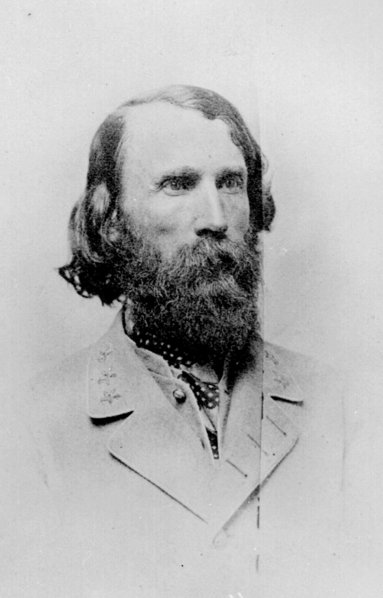
Hill.28135413_std

Lieutenant General Ambrose Powell Hill

Friends of Padre Steve’s World

I am continuing to periodically intersperse and publish short articles about various commanders at Gettysburg on the site. These all are drawn from my student text and will likely become a book in their own right when I finish the chapter on the Union commanders.  The reason is I am going to do this is because I have found that readers are often more drawn to the lives of people than they are events. As I have noted before that people matter, even deeply flawed people, and we can learn from them. Sometimes good and even honorable people serve malignant causes, while bad or even wicked people support good causes, usually for selfish reasons, but that is the constant quandary that human beings find themselves.

Today’s article is about Confederate Lieutenant General A.P. Hill. Hill is an interesting character to me, a man of a lot of contradictions both on and off the battlefield. He was gallant and reckless at the same time plagued with ill-health, some of which was certainly real, but at some times may have been stress induced. He made lasting friendships with men who he would later oppose in battle. He fought for a cause that he found repugnant for he hated slavery and the maltreatment of blacks, even condemning the actions of the people of his home town before the war in that regard. In an army filled with highly religious officers, even some who might be termed fanatical in terms of their beliefs, Hill was a skeptic who had little appreciation for those like Stonewall Jackson who he believed were fanatics.

So anyway, tomorrow I will be writing about the assassination of Abraham Lincoln, one of the darkest days in our history.

Peace

Padre Steve+

Ambrose Powell Hill was born about ten miles from Culpepper Court House Virginia in 1825. He was the youngest son of a “a highly esteemed, merchant, farmer, and politician….noted for his courage, famed for his hospitality and beloved for his character.” [1] The young Powell Hill was a good student and gifted horseman who loved the outdoors. His mother was introverted and a hypochondriac who seldom left the house and through her he acquired a love of reading.

As a child Hill attended Black Hills Seminary, a private school for well to do families and though he was a good student was not fond of the significant religious overtones of the school. In addition his mother, who had been raised Episcopalian became caught up in a Baptist revival which swept Northern Virginia in 1840. His mother embraced the austere faith of her new church. Soon “dancing, boisterous conduct, card-playing, and all forms of theatrics were banned in the Main Street home.” [2] From that time on the young Hill “spurned religion” and “always looked with disapproval on anyone who – like Stonewall Jackson, for instance- practiced religion with excessive intensity.” [3]

With his father’s approval and his mother approbation Hill sought admission to West Point and was accepted in 1842. Hill had little problem with the academics of the academy, but conduct was another matter. Hill entered the West Point with a good number of men who would become famous over the next two decades including George McClellan, Thomas Jackson, Cadmus Wilcox, Darius Couch and George Pickett. Hill would have been part of the illustrious class of 1846, but the young cadet had a certain proclivity for women and a certain amount of debauchery, causing him to lose a year of study after contracting “a case of gonorrhea, followed by complications, which were followed by lingering prostatitis.” [4] These afflictions caused many other ailments that would plague him the rest of his life. At West Point, Hill roomed with George McClellan, a refined cadet from Philadelphia, and became a longtime friend. His delayed graduation put him in the class of 1847 where along with his new roommate Julian McAllister and friends Harry Heth and Ambrose Burnside were the social leaders of the class due to their later “practical jokes and boisterous conduct.” [5]

Hill graduated fifteenth in his class and was assigned to the artillery. The young Second Lieutenant accompanied Brigadier General Joseph Lane’s brigade to Mexico where he saw limited action at the end of the war and mainly served on occupation duty. In Mexico and in the following years he was stricken with various fevers including typhoid and yellow fever, as well as recurrences of his prostatitis which so limited his ability to serve in the field with the artillery that he requested a transfer to a desk job. This he was granted by Secretary of War Jefferson Davis who detailed him “for special duty in the United States Coast Survey offices in Washington D.C.” [6]

The assignment to the Coast Survey offices was unusual, especially for Hill’s era of service, for they were a part of the Department of the Navy. Despite much political support, Hill could not get promoted to captain, most likely due to the fact that he was working for the Navy. Hill was generally unlucky at love being twice engaged and twice rejected, the latter time when his fiancée’s parents learned that he had had gonorrhea.

But Hill eventually found a bride as war drew near, Kitty Morgan McClung. She was a young and well off widow who was the sister of Confederate Brigadier General John Hunt Morgan. The two had a happy marriage and were nearly insuperable, Hill affectionately called her Dolly. They had four daughters, only two of who reached adulthood the last born three months after Hill’s death at Petersburg. During the war Dolly had a hard time remaining away from her husband. “She appeared to be impervious to danger and repeatedly ignored Hill’s admonitions to stay away from the front.” [7] Legend has it that she was nearly captured when attempting to spy on Union General Philip Sheridan.

When war came Hill’s friends at the Coastal Survey attempted to convince him to remain with the Union, as serving in their office he would have little chance of taking up arms against Virginia. The now happily settled and married Virginian was torn. He hated slavery and the depreciations visited on blacks; having in 1850 responded to the lynching of a young black man in his home town of Lynchburg: “Shame, shame upon you all, good citizens…Virginia must crawl unless you vindicate good order or discipline and hang every son of a bitch connected with this outrage.” [8] Likewise he was not in favor of secession, but he, like so many other Southern officers felt a stronger connection to family and his Virginia heritage than to the Union, and resigned his commission on February 26th 1861.

Hill was appointed as a Colonel of infantry in May 1861 to organize and command the 13th Virginia Infantry regiment. He commanded the regiment in the Valley and western Virginia as well as at First Manassas. By February 1862 he was a Brigadier General commanding Longstreet’s old Virginia brigade on the Peninsula where he distinguished himself against McClellan at Williamsburg. On May 26th 1862 he was promoted to Major General and given command of the very large so called “Light Division.” He emerged from the fighting on the Peninsula, the battles around Richmond and the Seven Days “with the reputation of being one of the best combat officers that Lee had.” [9] However, his success on the battlefield, like so many commanders, came at great cost. In those battles his division suffered nearly 5,500 casualties. “Six colonels and three majors were killed; two brigadiers (Anderson and Pender), eleven colonels and six lieutenant colonels wounded.” [10]

Hill had an earned reputation as a brilliant division commander with the Light Division. Despite his clashes with Longstreet, and especially with Jackson, who had Hill arrested twice and attempted to have him court-martialed, Lee recommended him to take command of Third Corps. Lee sang his praise of Hill and his abilities to Jefferson Davis noting that Hill was “the best soldier of his grade with me.” [11] However, Hill had never commanded more than one division in action, except for the confused hour after Jackson had been struck down. Hill, however, was devoted, prompt, and energetic, and deserved promotion.” [12]

Hill’s reputation as a superb division commander was well earned. At Antietam when Lee’s army was in danger of destruction, he “drove his men at a killing pace toward the sound of distant gunfire….” [13] Hill’s “Light Division’s remarkable march from Harper’s Ferry- seventeen miles in less than eight hours- rivaled the best marks by Jackson’s famous foot cavalry.” [14] Upon his arrival “instantly recognized the military situation, Kyd Douglas wrote, “and without waiting for the rest of the division and without a breathing spell he threw his columns into line and moved against the enemy, taking no note of their numbers.” [15] Hill’s march saved the Army of Northern Virginia from destruction as he dealt reverses to his old friends McClellan and Burnside. “Lee’s reference to him in his official Sharpsburg report, “And then A.P. Hill came up,” had become a byword in the army.” [16] There were other times, notably at Second Manassas and Fredericksburg where “he was sometimes careless on the battlefield,” and in both instances “his defensive postings were poor and nearly proved very costly.” [17]

Hill was a “nervous wiry man with a persistent chip of underappreciation [sic] on his shoulders and a bevy of chronic illnesses when under stress.” [18] He had an “impetuous streak and fiery temperament that matched his red beard, traits that at times had brought him trouble on the battlefield and off…” [19] Despite this, Hill exhibited a fondness and care for the welfare of his men that earned their respect and admiration. One officer called him “the most lovable of all Lee’s generals,” while “his manner so courteous as almost to lack decision.” [20]

Hill detested Jackson, who he referred to as “that old Presbyterian fool.” [21] His poor relations with Jackson’s confidants at Second Corps ensured that Ewell took Second Corps when Lee reorganized the army after Chancellorsville.

Lee appointed Hill to command Third Corps of which “half of the troops had been with him all along” [22] in the Light Division. Lee liked Hill’s aggressiveness and command instincts, which mirrored his own. Lee hoped that Hill’s aggressive instincts as a division commander would translate into success at the corps level. Longstreet was not in favor of Powell Hill’s appointment, most likely due to his altercation with him the previous year and lobbied for the promotion of D.H. Hill.

In his letter recommending the promotion of A.P. Hill and Ewell to serve as corps commanders, Lee wrote to Davis:

“I wish to take advantage of every circumstance to inspire and encourage…the officers and men to believe that their labors are appreciated, and that when vacancies occur that they will receive the advantages of promotion….I do not know where to get better men than those I have named.” [23]

But the decision to promote Ewell and Hill, both Virginians, stirred some dissent among those that believed that Lee was “favoring Virginians over officers from other states. The promotion of A.P. Hill, as previous noted was “made over the head of two Major Generals more senior than Hill- North Carolinian D.H. Hill and Georgian Lafayette McLaws.” [24] There is some validity to this perception, as Longstreet’s biographer Jeffry Wert noted:

“While the bulk of the troops hailed from outside the Old Dominion, two of the three corps commanders, six of the ten division commanders – including Jeb Stuart with the cavalry – and sixteen of forty-seven brigade commanders were natives of Virginia, along with the army commander and the chief of artillery.” [25]

As a Corps commander Hill enjoyed the confidence of many of his commanders, “the affection of his staff and the admiration of his men.” [26] He ceases to engage in conflict with other officers but “after advancement to corps command, Hill – the victim of what now seems to be a psychosomatic ailment – performed somewhat unevenly and was often incapacitated.” [27] For whatever reason, ill-health or the added responsibility Hill “is not the same man who impetuously led the fighting Light division.” [28]

His sickness did not mean that he was either shirking duty or a coward. During the final agony of the Army of Northern Virginia Hill, who was very sick, left his sick bed against the advice of his doctor to resume command of his decimated Third Corps at Petersburg. On April 1st he was shot through the heart by a Union infantryman of the 138th Pennsylvania as he attempted to ascertain the situation his broken corps faced as the Confederate lines collapsed.

His pregnant wife was told of his death and in the chaos of the fall of Richmond and the Confederate retreat it took several days before Hill’s body was buried. Dolly remarried in 1870, one of her daughters noted that “she was very averse to talking of anything connected with the war…” and nothing, not even a pardon from the Federal government “softened Dolly’s bitterness over the struggle that had taken her husband’s life.” [29] That bitterness also made her refuse “to support any of the “Lost Cause” sentiments that sprouted up during this time.” [30] She died in Lexington Kentucky in 1920.

Notes

[1] Robertson, James I. Jr. General A.P. Hill: The Story of a Confederate Warrior Random House, New York 1987 p.5

[2] Ibid. Robertson General A.P. Hill p.6

[3] Ibid. Robertson General A.P. Hill pp.6-7

[4] Waugh, John C. The Class of 1846: From West Point to Appomattox, Stonewall Jackson, George McClellan and their Brothers Ballantine Books, New York 1994 p.166

[5] Ibid. Robertson General A.P. Hill p.13

[6] Ibid. Robertson General A.P. Hill p.26

[7] Ibid. Wilson and Clair They Also Served p.91

[8] Ibid. Robertson General A.P. Hill p.22

[9] Ibid. Robertson General A.P. Hill p.95

[10] Ibid. Robertson General A.P. Hill p.95

[11] Ibid. Freeman Lee’s Lieutenants p.526

[12] Ibid. Freeman Lee p.304

[13] Ibid. Robertson, General A.P. Hillp.143

[14] Sears, Stephen W. Landscape Turned Red: The Battle of Antietam Houghton-Mifflin Company, Boston and New York 1983 p.285

[15] Ibid. Robertson General A.P. Hill p.144

[16] Ibid. Tagg The Generals of Gettysburg p.301

[17] Ibid. Sears Gettysburg p.45

[18] Ibid. Guelzo, Gettysburg: The Last Invasion p.22

[19] Ibid. Sears Landscape Turned Red p.285

[20] Ibid. Tagg The Generals of Gettysburg p.301

[21] Ibid. Guelzo, Gettysburg: The Last Invasion p.22

[22] Foote, Shelby, The Civil War, A Narrative. Volume Two Fredericksburg to Meridian Random House, New York 1963 p.434

[23] Ibid. Freeman Lee’s Lieutenants p.526

[24] Ibid. Taylor, John Duty Faithfully Performed p.290

[25] Ibid. Wert General James Longstreet p.249

[26] Ibid. Freeman Lee’s Lieutenants p.35

[27] Ibid. Warner Generals in Gray p.135

[28] Ibid. Freeman Lee’s Lieutenants p.35

[29] Ibid. Robertson General A.P. Hill p.321

[30] Ibid. Wilson and Clair They Also Served p.91

Leave a comment

Filed under civil war, faith, Gettysburg, History, leadership, Military

Doubt, Faith and Realism: Doubting Thomas

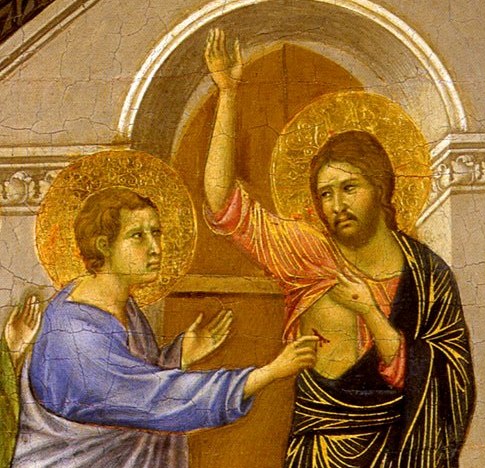
jesusthomas

Yesterday I celebrated Eucharist on the Second Sunday of Easter its a number of m students and their families at our Staff College Chapel. I have to say that I love what do, I never will regret following the call that I first felt aboard the USS Frederick (LST-1184) back in 1978 to become a Navy Chaplain.

Of course was with everything in my life it has not been easy, and to quote Jerry Garcia I have to admit “what a long strange trip it’s been.” Bug my friends I digress…

That being said, today was a specially day. I was able to celebrate Eucharist with some very nice people and today the Gospel lesson, from the final chapter of John centered on the story of St. Thomas, or he is better know among most people today, “Doubting Thomas.”

The interesting thing is that unlike most “true believers” today Thomas was not rejected by the other disciples as they testified to the resurrection, nor by Jesus himself. Thomas you see was a realist who wanted proof. Thomas wanted to put his hand in the wounds of Jesus, the same Jesus who he knew was crucified and dead. As a realist, Thomas know that dead is dead and unless as he told the other disciples, unless he could put his hand in the wounds of Jesus he would not believe.

Personally, I admire that, more than most people could imagine. Faith is faith, it is not about having to absolutely know, but is about trust, about belief even when you cannot prove it, otherwise it would not be faith. That is why when I see those who have to prove that the absolute certitude that they call “faith” is “absolute truth” I realize that they have totally missed the point of the Gospel.

Having gone through a period of almost two years where as a priest and chaplain I was for all practical purposes an agnostic hoping that God existed I understand this. In fact I have to admit that even today I doubt as much as I believe. I totally understand Thomas, and in fact not only understand, but feel a special kinship with this much maligned follower of Jesus.

Truthfully I think that doubt is a very good thing, it keeps us honest, it keeps us from becoming pious, arrogant, religious assholes who think that they know it all.

Truthfully, I don’t know it all. In fact, as the late Earl Weaver said, “it’s what you learn after you know it all that counts.” At least that seems to be the case for Thomas and the other disciples because what happened with Jesus and the resurrection blew their minds, it was not anything that they could fathom.

Perhaps Thomas, having not been one of the first witnesses to the resurrection was actually more circumspect and a bit more like us than the disciples who first saw Jesus following his crucifixion and resurrection. I would actually saw more honest, for in fact Thomas was a realist who refused to believe unless he had some kind of physical evidence. That my friends I appreciate more than I ever did, because even though Thomas saw Jesus, talked with him and had Jesus show him his wounds, Thomas only believed when he saw and touched those wounds. I cannot condemn nor can I question the faith of the man who is most identified with doubt.

Doubt is not bad. As the late Father Andrew Greeley wrote in his novel The Bishop and the Beggar Girl of St. Germain: 

“Most priests, if they have any sense or any imagination, wonder if they truly believe all the things they preach. Like Jean-Claude they both believe and not believe at the same time.” 

That my friends is faith. That is Easter, if we knew it absolutely it would not be faith and that would be against everything proclaimed by those that first followed Jesus. In fact if we claim with absolute certitude that we know everything needed to be right with God and that we know exactly what God desires, we are probably liars, or at the minimum sadly deluded. As the late Father Henri Nouwen wrote:

“Theological formation is the gradual and often painful discovery of God’s incomprehensibility. You can be competent in many things, but you cannot be competent in God.”

I think this is something that Thomas and the other disciples came to understand. All of them had their moments of faith, and certainly their times of unbelief, even after the resurrection. Maybe that is why Jesus told Thomas “Have you believed because you have seen me? Blessed are those who have not seen and yet have come to believe.”  

Thomas was a realist. Even though the other disciples testified to Jesus being alive, Thomas knew that dead, was dead. He knew that Jesus had died on that cross and that it would take more than words to make him believe that Jesus was alive.

Faith is not about certitude as much as the apologists and propagandists of any faith may say, faith always has to have an element of doubt, otherwise it cannot legitimately be called faith. In fact sincere faith admits that it could be wrong, and as the Paul the Apostle said “If Christ has not been raised, your faith is futile….”

Personally, I find nothing wrong with that. For me that is honest faith, that is Easter faith.

So, have a great day.

Peace

Padre Steve+


1 Comment

Filed under christian life, faith, Religion

The Oddest, Most Eccentric Genius: Lt. General Richard Ewell

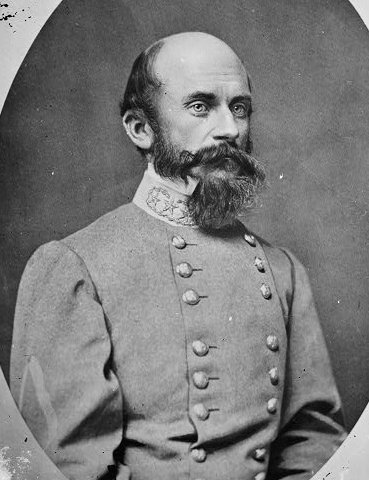
Richard-Ewell

Lieutenant General Richard Ewell C.S.A.

Friends of Padre Steve’s World

I am continuing to periodically intersperse and publish short articles about various commanders at Gettysburg on the site. These all are drawn from my student text and may become a book in their own right.  The reason is I am going to do this is because I have found that readers are often more drawn to the lives of people than they are events. As I have noted before that people matter, even deeply flawed people, and we can learn from them.

Today’s article is about Lieutenant General Richard Ewell who commanded the Confederate Second Corps at Gettysburg. He is another complex character, whose actions at Gettysburg are surrounding in controversy. This article does not go into those but instead focuses on the man and his leadership qualities, character, particularly his struggle with faith and depression.

Peace

Padre Steve+


Dick Ewell was a modest man and “had maintained a reputation for solid competence.” [1] Freeman wrote:

“In part, the appointment of Dick Ewell was made because of sentimental association with the name Jackson, and in part because of admiration for his unique, picturesque, and wholly lovable personality. Of his ability to lead a corps nothing was known. Ewell had never handled more than a division and he had served with Lee directly for less than a month.” [2]

Richard Ewell was native of Virginia on February 8th 1817 in the District of Columbia. His father, Thomas Ewell, was a physician and scientific writer whose works created controversy with both the Catholic and Episcopal Churches. Though a gifted writer and editor, his finances declined even as the size of his family increased, plunging the family into poverty. The elder Ewell struggled with depression and alcoholism and died at the age of forty in in 1826 when Richard was nine years old. Ewell’s maternal grandfather was Benjamin Stoddert who served in the Revolutionary war and as the first Secretary of the Navy by John Adams. Stoddert helped create the Navy that rose to greatness. “In just three years he purchased land for six navy yards, acquired fifty ships, and recruited 6,000 sailors, including a corps of talented young officers that included David Porter, Isaac Hull, Oliver Perry, and Stephen Decatur.[3]

When his father died, the family remained in poverty on the family farm, albeit poverty with a distinguished heritage that his mother ensured that her children understood. She also instilled a strict religious faith in her son. With one brother at West Point and another having died of a liver infection, possibly caused by typhoid, Richard took over the management of the family farm. His mother, who sought more than a rudimentary education for him worked for several years to get him an appointment to West Point. Through her efforts he was finally admitted to the academy in 1836.

The young Ewell was an eccentric in many ways like his father, mother and grandfather:

“In him one could see the practical, precise mind of his grandfather Benjamin Stoddert and, negatively, the cynicism and sharp tongue of his mother, Elizabeth. The similarities to his deceased father were more pronounced. Richard possessed Thomas Ewell’s violent temper, high intellect, nervous energy, and love of alcohol.” [4]

In 1836 Ewell entered West Point, from which he graduated in 1840 along with his classmates, William Tecumseh Sherman and George Thomas. Some of his seniors in his cadet company included Joseph Hooker, John Sedgwick, P.T.G. Beauregard, Henry Halleck, Jubal Early and Henry Hunt, all of whom served as General officers in either the Union or Confederate armies during the Civil War. Some of the underclassmen who served under him included both James Longstreet and Ulysses S. Grant. By the end of his time at West Point Ewell had “developed into not only an impressive student but an impressive soldier.[5] He graduated thirteenth in a class of forty-two and chose to be commissioned in the Dragoons.

Upon graduation and his brevet promotion to Second Lieutenant the young officer reported to the First Dragoons and served on the western territories and plains of the rapidly expanding nation. Ewell was picky as far as relationships went and seeing the often sad examples of men who married on the frontier he elected to wait, which caused him not to marry until after the Civil War began.

On the frontier his Christian faith began to wane. He still believed in God, but he was a skeptic, did not own a Bible and found little solace in region, even as his mother converted to Catholicism and entered a novitiate with a Catholic religious order. His antipathy was deepened as he observed the behavior of Christian missionaries working among the various Indian tribes. Of the missionaries he observed “wife beating, fornication, theft and adultery.” He was taken by surprise when his younger brother William decided to become a missionary. Ewell wrote: “I have seen so much injury done the Indians here by them that I am rather skeptic[c]al of their utility. Some of the greatest scamps we have are missionaries.[6] Despite this he never completely lost faith. Stonewall Jackson had a marked influence on his return to faith. One night before a battle he heard Jackson praying inside his tent and later remarked that “he had never before heard a prayer so devout and beautiful; he then for the first time, felt the desire to be a Christian.[7]

When war came with Mexico Ewell, now a First Lieutenant went with his company. He fought at Vera Cruz, Cerro Gordo, Puebla and Churubusco. While he suffered no physical harm in combat, he developed malaria. He lost his older brother Tom, who while serving with the Mounted Rifles was mortally wounded at Cerro Gordo. Likewise his cousin Levi Gannt, was killed at Chapultepec. Following Mexico, he served in various duties became a noted Indian fighter on the western frontier. Those duties showed that “he had proved his mettle and established his credibility.” [8]

As secession drew near, Ewell was very sick again with fever and was returned to Virginia, some thought to die. However, that did not stop him from offering to fight a group of secessionists in Texas who were threatening to attack a Federal installation. He returned to health and on April 24th 1861 he resigned his commission in the U.S. Army, an act that he wrote “was like death to me.” [9] He was commissioned in the new Confederate Army as a Lieutenant Colonel of Cavalry shortly after his resignation.

Completely bald, and speaking with a lisp, Ewell’s oddities “endeared him to his officers and men,” [10] and by January 1862 he was a division commander and Major General serving under Jackson in the Valley campaign. John Gordon noted that Ewell “had in many respects the most unique personality I have ever known. He was composed of anomalies, the oddest, most eccentric genius in the Confederate Army….” [11] During that campaign he distinguished himself. During the campaign “Next to Jackson himself, Ewell stood out. Every act of Ewell’s in the campaign had been the standard of a competent, alert, and courageous lieutenant.” [12]

William C. Oates wrote of Ewell:

“Ewell was a first-class lieutenant, but he did not have enough confidence in himself to make him successful with an independent command…He hesitated…Therein was Ewell’s deficiency as a general. He had a splendid tactical eye, capable of grand military conceptions, and once resolved quick as lightening to act, yet never quite confident of his own judgment and sought the approval of others before he would execute.” [13]

Ewell had been an effective and dependable division commander under Jackson but had been wounded at Groveton where he was severely wounded and lost a leg, which meant the “absence for long months of the most generous, best disciplined, and in many soldierly qualities, the ablest of Jackson’s subordinates.” [14] Longstreet “regarded him as a superior officer in every respect to Hill.” [15]However, Ewell, though serving long with Jackson in the Shenandoah Valley had served “only briefly under Lee” [16] before being wounded at Groveton. The result was that neither Lee nor Ewell fully knew or understood each other. Lee knew Ewell’s excellent reputation among the soldiers of Second Corps and “may have heard rumors that on his deathbed Jackson expressed a preference for Ewell as his successor” [17] but he had little familiarity with Ewell.

In sending the recommendation on to Richmond Lee termed Ewell “an honest, brave soldier, who has always done his duty well.” [18] It was not a resounding recommendation, but then Lee barely knew Ewell. Lee wrote after the war that he recommended Ewell “with full knowledge of “his faults as a military leader- his quick alternations from elation to despondency[,] his want of decision &c.” [19]

Three days after his promotion Ewell married his widowed cousin, Lizinka Campbell, who he had long admired. Lizinka was the daughter of a Tennessee Congressman and had inherited he first husband’s estate. The couple had renewed their relationship during Ewell’s recovery from his wounds suffered at Grovetown. However, the marriage did not help Ewell. Lizinka was domineering and attempted to extend her “domination to the operations of 2nd Corps.” This “created animosity all around.” [20] One colonel noted that Lizinka’s conduct:

“very seriously injured old Ewell, and the very cleverness, which at other times would render her agreeable has only tended to make her more unpopular. She manages everything,” he complained, “from the General’s affairs down to the courier’s, who carries his dispatches. All say they are under the petticoat government.” [21]

Many questions hovered around the appointment of Ewell including how the loss of his leg, his recent marriage, newness to corps command, and unfamiliarity with Lee’s style of command would have on him.

The latter was even more problematic than any residual mental or physical effects of his wound and change in lifestyle. The fact was that Ewell was unfamiliar with Lee’s methods of command in large part because he “had served directly under Lee something less than a month, and then always subject to Jackson’s guidance. Lee never had an opportunity of the lack of self-confidence in Ewell.” [22] Had Lee known that the humble Ewell had reservations of his own about assuming command of a corps and going back to battle after the traumatic amputation of his leg he might have reconsidered his choice.

Ewell had written “I don’t feel up to a separate command” and he had “no desire to see the carnage and shocking sights of another field of battle.” [23] Ewell admitted to his new bride Lizinka that he was “provoked excessively with myself at times at my depression of spirits & dismal way of looking at everything, present & future….” [24] Lee did speak privately about his concerns to Ewell, but no record exists of the conversation, regardless Lee was not concerned enough to remove Ewell from command or to assign his corps to important tasks. However, Ewell was “never the same man in body or mind after the loss of his leg at Groveton.” [25] His decision making on the battlefield became clouded and he was often indecisive.

After Gettysburg Ewell continued to command Second Corps through the Battle of Spotsylvania Court House, “after which his health compelled his temporary retirement from active field duty.” [26] He was reassigned to be the commander of the Department of Richmond and was captured at Sayler’s Creek in April 1865. After the war Ewell was honest about his shortcomings as a corps commander, especially of his actions at Gettysburg. He told one officer “it took a dozen blunders to lose Gettysburg he committed a good many of them.” [27]

He retired to his wife’s dilapidated farm in Tennessee, which he rehabilitated through much hard work. He was active in his community and did not become immersed in the conflicts of various commanders. In January 1872 he and his family were stricken with fever, Lizinka died and he followed a few days later.

In his final days, the faith that he had so long avoided sustained him remarked to a former subordinate he said “I don’t know how it all is, but the mercy of God is greater than the mercy of men.” [28] He dictated that he wanted a simple funeral and no monument over his grave. “Above all, he insisted that nothing disrespectful to the United States Government be inscribed upon his tomb.” [29]

Unlike his former subordinate the bitter, hate filled and arrogant Jubal Early, the reserved and humble Dick Ewell reconciled with his country and owned his mistakes.

Peace

Padre Steve+

Notes

[1] Ibid. Taylor, John Duty Faithfully Performed p.130

[2] Ibid. Freeman Lee’s Lieutenants p.322

[3] Pfanz, Donald. Richard S. Ewell: A Soldier’s Life University of North Carolina Press, Chapel Hill and London 1998 p.9

[4] Ibid. Pfanz Richard S. Ewell p.11

[5] Ibid. Pfanz Richard S. Ewell p.24

[6] Ibid. Pfanz Richard S. Ewell p.33

[7] Ibid. Pfanz Richard S. Ewell p.266

[8] Ibid. Pfanz Richard S. Ewell p.99

[9] Ibid. Pfanz Richard S. Ewell p.121

[10] Ibid. Freeman Lee’s Lieutenants p.172

[11] Ibid. Girardi. The Civil War Generals p.209

[12] Ibid. Freeman Lee’s Lieutenants p.220

[13] Ibid. Girardi. The Civil War Generals p.209

[14] Ibid. Freeman Lee’s Lieutenants p.322

[15] Ibid. Wert A Glorious Army p.214

[16] Gallagher, Gary. Confederate Corps Leadership on the First Day at Gettysburg: A.P. Hill and Richard S. Ewell in a Difficult Debut in The First Day at Gettysburg edited by Gallagher, Gary W. Kent State University Press, Kent Ohio 1992 p.47

[17] Ibid. Gallagher Confederate Corps Leadership on the First Day at Gettysburg p.47

[18] Ibid. Gallagher Confederate Corps Leadership on the First Day at Gettysburg p.48

[19] Ibid. Gallagher Confederate Corps Leadership on the First Day at Gettysburg p..49

[20] Ibid. Wilson and Clair They Also Served p.25

[21] Ibid. Pfanz Richard S. Ewell p.356

[22] Freeman, Douglas Southall, Lee an abridgment by Richard Harwell, Touchstone Books, New York 1997 p.305

[23] Ibid. Guelzo, Gettysburg: The Last Invasion p.23

[24] Ibid. Pfanz Richard S. Ewell p.279

[25] Ibid. Freeman Lee’s Lieutenants p.720

[26] Ibid. Warner Generals in Gray p.85

[27] Ibid. Freeman Lee’s Lieutenants p.605

[28] Ibid. Pfanz Richard S. Ewell pp.495-496

[29] Ibid. Pfanz Richard S. Ewell p.496

[30] Ibid. Pfanz Richard S. Ewell p.268


Leave a comment

Filed under civil war, faith, History, leadership, Military