Category Archives: Foreign Policy

North Korea Tensions: One Misstep could mean War what the US can deploy to the Theater

The USS George Washington

The tensions on the Korean Peninsula following the North Korean sinking of the South Korean Corvette Cheonan on March 26th and the North’s continued bellicose actions are now the highest in years.  Since the United States and South Korea announced naval exercises in the Yellow Sea and the Sea of Japan the North has gone on a propaganda offensive condemn the exercises as a threat to peace and “nothing but outright provocations aimed to stifle the Democratic People’s Republic of Korea [North Korea] by force of arms.” North Korean spokesman Ri Tong Il claimed that the exercise “is a grave threat to the Korean peninsula and also to the region of Asia as a whole,” and “another example of a hostile policy” toward North Korea.

One of a number of Naval Clashes between South and North Korean Navy vessels

The North Koreans announced also that “The army and people of the DPRK will start a retaliatory sacred war of their own style based on nuclear deterrent any time necessary in order to counter the US imperialists and the South Korean puppet forces deliberately pushing the situation to the brink of a war,” and while threats of war are common from the DPRK the situation is now so tense that any miscue from either side could spark a war.

The US State Department dismissed the North Korean threats spokesman P J Crowley stated “North Korea has a habit of trying to deflect, you know, responsibility onto others.”  He noted that some U.S. officials were concerned that North Korea might use the heightened tensions and exercises to make further provocations against the South and US Forces.  Some speculate that such measures might include missile tests or nuclear tests or other military measures.  In response to questions that North Korea might take aggressive steps Crowley noted:  “Are they capable of these kinds of steps? Tragically, the answer is yes….And the very kind of actions that we’ve announced in recent days, including military exercises that will be conducted in the near future, are expressly to demonstrate that we will be prepared to act in response to future North Korea provocations. We hope it won’t come to that.”

South Korean Navy LHD Dokdo

Secretary of State Hillary Clinton remarked at a conference regarding the South China Sea in Vietnam that “an isolated and belligerent North Korea has embarked on a campaign of provocative, dangerous behavior…”

The US Forces Korea Commander General Walter Sharp stated:  “These defensive, combined training exercises are designed to send a clear message to North Korea that its aggressive behavior must stop, and that the ROK and U.S. are committed to enhancing our combined defensive capabilities.”

The Exercise “Invincible Spirit” will include the USS George Washington carrier battle group including the Guided Missile Destroyers USS McCampbell, USS John S. McCain and USS Lassen, as well as South Korean Navy assets including the largest ship in the South Korean Navy the Landing Ship Dokdo. A total of 20 ships 200 aircraft and 8,000 sailors will take part in the exercise which according to the South Korean newspaper Chosun Ilbo “will consist of an electronic warfare simulation with members of the US Cyber Command, an aerial refueling and bombing exercise by the Air Force, command control training by the Marines, and a navy anti-submarine exercise.”  It is also likely that the converted former Trident Missile submarines USS Ohio, USS Michigan and possibly the USS Florida are in the area each armed with up to 154 Tomahawk cruise missiles.  The 4th of these submarines USS Georgia is also deployed and its whereabouts are not known. It is the first time that all 4 subs have been deployed at the same time.   The US Air Force has deployed the F-22 Raptor for the first time to Korea and elements of the 7th Air Force will take part in the exercise.  Invincible Spirit is the first in a series of scheduled summer exercises between the US and South Korea. Admiral Robert F Willard commander of the 7th Fleet said that at the end of the exercise, there will be a counter special-forces exercise. He added “These occur with some frequency in both the East and West Seas, conducted by the [South Korea] and U.S. Navy.” North Korea has a large special-forces establishment and capability.

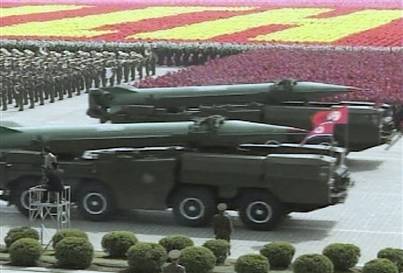
North Korean YJ-62 Anti-Ship Missile on mobile launcher

The US Navy has additional assets that could be deployed in the event of a major crisis on the peninsula as the USS Ronald Reagan is involved with the RIMPAC 2010 exercises in the Pacific and the carriers USS Carl Vinson and USS Abraham Lincoln are underway off the west coast involved in exercises or deployment work ups.  At this time 123 (43%) of the navy’s 289 ships are deployed and a total of 184 (64%) are underway away from their homeport. Of the submarine force 23 (43%) are deployed and 30 (55%) are underway.  This is a sizable amount of the fleet and represents a significant surge potential should a conflict break out.  In the midst of the current wars in Iraq and Afghanistan many forget that a significant amount of our national military power can be deployed quickly from the sea to danger spots like Korea where their assets based on history can have a decisive affect.

The USS Ohio and her sisters USS Michigan and USS Florida could play a deterrent role

Ground forces are more spares, the major component of land based forces are those of South Korea, the US now has just a Brigade Combat Team stationed in South Korea although other assets not engaged in Operation Iraqi Freedom or Operation Enduring Freedom could be deployed from the 25th Division in Hawaii and Alaska and the 2nd Division based at Ft Lewis Washington.  As of now 1 brigade the 4th BCT of 25th Infantry Division is deployed to Afghanistan as well as the 5th BCT of 2nd Division which also has its 4th BCT deployed to Iraq. The 2nd BCT of 25th Division is schedule for deployment and may already be deployed this summer. The 3rd BCT of the 25th Division is now in a post-deployment cycle after having just returned from Iraq. The deployment of uncommitted assets would take time and the only immediate reinforcements could be a limited number of Marine units from the 3rd Marine Division and III MEF in Okinawa and Kaneohe Bay Hawaii that are not currently engaged in Operation Enduring Freedom.
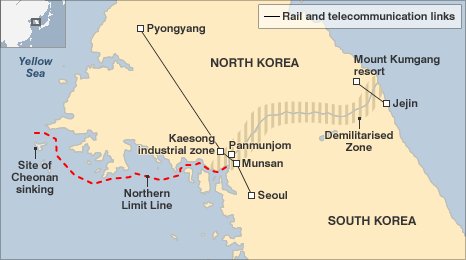
The North Korean threat of a “retaliatory sacred war” may be the usual propaganda hyperbole used by the North or it may be their “line in the sand.”  It also could be more bellicose than usual because of internal tensions in the North regarding potential successors to the ailing Kim Jong Il. US and South Korea operational planning has contingencies should there be unrest in the North following Kim’s death but a conflict brought on by one of the rival factions the North could plunge Northeast Asia into a regional war. We don’t know what it is but the week ahead could become rather sporty.   China has warned that the exercise could make matters worse on the peninsula and the US apparently in response to China will keep the George Washington in the Sea of Japan.  There are also good tactical measures for doing so to protect the carrier by keeping it out of constricted waters in the vicinity of a good number of North Korean assets should fighting actually break out and the fact that the USS John S. McCain already is equipped with the Aegis Ballistic Missile Defense System.

The Japanese Naval Self Defense Force (Navy) is sending 4 observers to the exercise a tacit measure of support for them and the Japanese have several ships fitted for the Aegis Ballistic Defense System.

With all of this said we now have to wait and see what happens. Will the North do something to instigate a conflict or will it back down?  We don’t know as it is a very unpredictable country with a penchant for raising the ante in the high stakes world of geopolitical dominance in Northeast Asia. The Obama administration seems to be walking a narrow line between war and appeasement, not that we would consider what we do appeasement but what the North would certainly take it to be. The stakes are high and only God knows what will happen in the next several days. An actual conflict could kill hundreds of thousands or even millions of people; especially should the North successfully deploy and use a nuclear weapon. Thousands of American lives are at stake should a conflict break out and besides our Soldiers, Sailors Marines and Airmen standing in harm’s way many of them are non-military citizens that live and work in South Korea and Japan.

That is all for now, pray for peas.

Peace

Padre Steve+
3 Comments

Filed under Foreign Policy, Military, national security, Navy Ships, US Navy

The North Korean Order of Battle

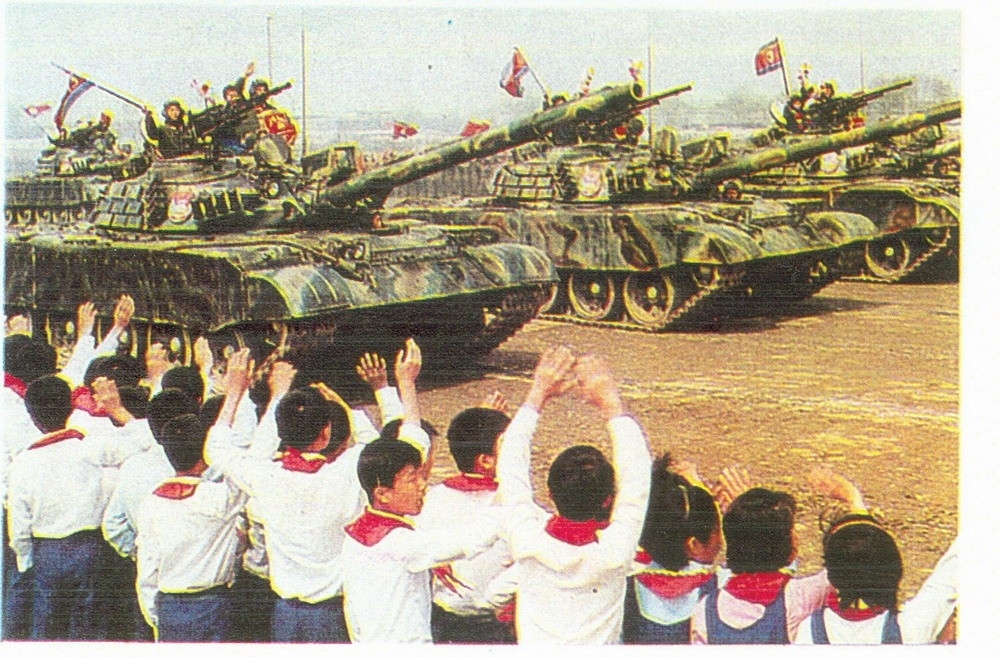
This article is a follow up to my article about the sinking of the South Korean Navy Corvette Cheonan and the subsequent developments on the peninsula. With North Korea continually raising the rhetoric following its sinking of the Cheonan on March 26th it is important that people in the United States know what this tiny, poor, aggressive, paranoid and mysterious, yet militarily savvy nation has in its arsenal and what its goals in a renewal of hostilities against the South and US Forces in Korea might look like. I will publish articles on basic North Korean plans and war aims, Special Weapons, and ROK/US Forces and plans in the next few days. All are from unclassified sources. Since this was originally posted the situation has continued to deteriorate and I have published an article entitled The South Korean Order of Battle

https://padresteve.wordpress.com/2010/11/24/the-south-korean-order-of-battle/


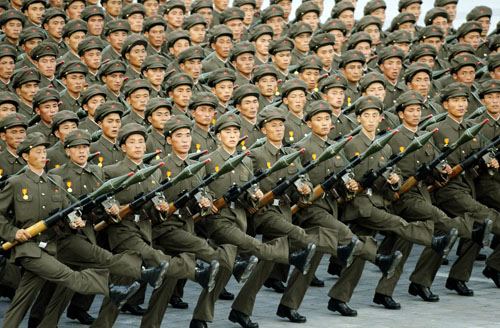
DPRK Forces are large, well trained in military tactics and political ideology

The according to the Library of Congress and unclassified Central Intelligence Agency estimates the make-up of the military forces of the Democratic People’s Republic of Korea (DPRK) is listed below:

PERSONNEL
Total Population: 23,479,088 [2008]
Population Available: 12,414,017 [2008]
Fit for Military Service: 10,280,687 [2008]
Reaching Military Age Annually: 392,016 [2008]
Active Military Personnel: 1,170,000 [2008]
Active Military Reserve: 4,700,000 [2008]
Active Paramilitary Units: 189,000 [2008]

ARMY
Total Land-Based Weapons: 16,400
Tanks: 3,500 [2006]
Armored Personnel Carriers: 2,500 [2006]
Towed Artillery: 3,500 [2006]
Self-Propelled Guns: 4,400 [2006]
Multiple Rocket Launch Systems: 2,500 [2006]
Mortars: 7,500 [2006]
Anti-Aircraft Weapons: 11,000 [2006]

NAVY
Total Navy Ships: 708
Merchant Marine Strength: 167 [2008]
Major Ports and Harbors: 12
Aircraft Carriers: 0 [2008]
Destroyers: 0 [2008]
Submarines: 97 [2008]
Frigates: 3 [2006]
Patrol & Coastal Craft: 492 [2006]
Mine Warfare Craft: 23 [2006]
Amphibious Craft: 140 [2006]

AIR FORCE
Total Aircraft: 1,778 [2006]
Helicopters: 612 [2006]
Serviceable Airports: 77 [2007]

FINANCES (USD)
Defense Budget: $5,500,000,000 [2005]
Purchasing Power: $40,000,000,000 [2007]

OIL
Oil Production: 141 bbl/day [2005]
Oil Consumption: 10,520 bbl/day [2006]

LOGISTICAL
Labor Force: 20,000,000 [2004]
Roadways: 25,554 km
Railways: 5,235 km

GEOGRAPHIC
Waterways: 2,250 km
Coastline: 2,495 km
Square Land Area: 120,540 km

The Same sources provide this data for South Korea

PERSONNEL
Total Population: 48,379,392 [2008]
Population Available: 26,721,668 [2008]
Fit for Military Service: 21,966,367 [2008]
Reaching Military Age Annually: 696,516 [2008]
Active Military Personnel: 687,000 [2008]
Active Military Reserve: 4,500,000 [2008]
Active Paramilitary Units: 22,000 [2008]

ARMY
Total Land-Based Weapons: 8,325
Tanks: 1,060 [2004]
Armored Personnel Carriers: 2,480 [2004]
Towed Artillery: 4,000 [2004]
Self-Propelled Guns: 500 [2004]
Multiple Rocket Launch Systems: 185 [2004]
Mortars: 6,000 [2004]
Anti-Tank Guided Weapons: 58 [2004]
Anti-Aircraft Weapons: 1,692 [2004]

NAVY
Total Navy Ships: 85
Merchant Marine Strength: 812 [2008]
Major Ports and Harbors: 4
Aircraft Carriers: 0 [2008]
Destroyers: 6 [2004]
Submarines: 20 [2004]
Frigates: 9 [2004]
Patrol & Coastal Craft: 75 [2004]
Mine Warfare Craft: 15 [2004]
Amphibious Craft: 28 [2004]

AIR FORCE
Total Aircraft: 538 [2004]
Helicopters: 502 [2004]
Serviceable Airports: 150 [2007]

FINANCES (USD)
Defense Budget: $25,500,000,000 [2007]
Foreign Exch. & Gold: $262,200,000,000 [2007]
Purchasing Power: $1,206,000,000,000 [2007]

OIL
Oil Production: 17,050 bbl/day [2005]
Oil Consumption: 2,130,000 bbl/day [2006]
Proven Oil Reserves: 0 bbl [2006]

LOGISTICAL
Labor Force: 24,220,000 [2007]
Roadways: 102,062 km
Railways: 3,472 km

GEOGRAPHIC
Waterways: 1,608 km
Coastline: 2,413 km
Square Land Area: 98,480 km

According to the National Intelligence Service (NIS) of the Republic of Korea (ROK) the balance of forces between the South and the North is listed below.

Ground Forces

North Korea possesses a total of 996,000 ground forces in twenty corps units (12 infantry, 4 mechanized, 2 artillery) plus a light Special Forces command, which oversees special warfare units.

Its heavy equipment consists of 3800 tanks (T-55, T-62, T-72, light tanks), 2270 armored personnel carriers, and 11200 pieces of field artillery, with a major percentage self-propelled for purposes of speedy artillery support. The units are geared for mechanized warfare reminiscent of the Nazi blitzkrieg.

Last but not least, 100,000 Special Forces troopers stand ready to engage in sabotage behind the lines, sowing confusion and turning the whole ROK into a battlefield.

Navy

Yono Class Midget Sub

The DPRK Navy is divided into East Sea (10 squadrons) and West Sea fleets (6 squadrons) with a total manpower of 48,000.

North Korea’s fleet consist of approximately 430 combat vessels (Patrol craft, guided missile boats, torpedo boats, fire support craft), 40 submarines (15 midgets), and 340 support craft (landing craft, hovercraft). Like the ground forces 60% of the vessels are stationed near the demarcation line.

North Korea has constructed and is operating up to 130 hovercraft, each one capable of transporting a special forces platoon and operating freely in difficult terrain such as tidal flats, and able to be used for multiple landings by special forces troops at the onset of the war.

Air Force

The air force has a total of six divisions (103,000); 3 for combat (fighter/bomber regiments), 2 for transport and helicopter, and one devoted exclusively for training.

Most of the 1670 aircraft are obsolete, with only sixty modern aircraft (MiG-23, 29). The mainstays consist of 470 old Soviet aircraft (MiG-19, MiG-21, IL-28, SU-7, SU-25) and 320 of ancient type (MiG-15, MiG-17). But it does possess a whopping 820 support aircraft and helicopters.

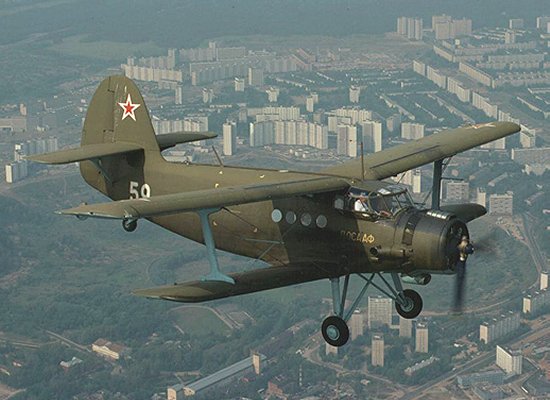
The aircraft that causes the most concern is the 300 AN-2, flying at 100 mph at low altitudes, that makes detection by radar very difficult, and its transport of Special Forces troopers deep behind the lines is a very definite threat.

The NIS provides the following comparison between the forces of the two Koreas.

ROK (South Korea)       DPRK (North Korea)

Total
Ground forces
Navy
Air Force
690,000
560,000
67,000
63,000
1,147,000
996,000
48,000
103,000
Corps
Div./Brigades
11
71
20
153
Tanks
APC
Artillery
2,150
2,250
4,800
3,800
2,270
11,200
Combat vessels
Submarines
Support vessels
Total
180
5
40
225
430
40
340
810
Combat aircraft
Support aircraft
Helicopters
Total
550
180
630
1,360
850
510
310
1,670

North Korea’s regular army consists of 4 corps in the front area, 8 corps in the rear area, one tank corps, 5 armored corps, 2 artillery corps, and 1 corps for the defense of Pyongyang, a total of over 80 divisions and Brigades. Almost all of these forces are based near the DMZ and require little time to be ready for an offensive. In fact because the North Koreans maintains these forces on a continuous state of alert there will likely be little appreciable warning before a commencement of hostilities.

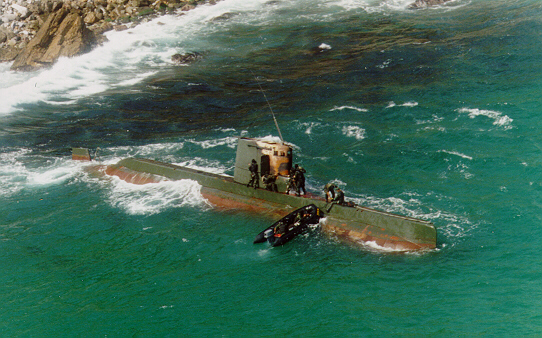
DPRK Special Operations equipment, the SILC Submersible Landing Craft, a Mini-Sub captured in 1996 while attmptign to land commandos in the South and the AN-2 Colt transport aircraft

North Korea has approximately 120,000 troops assigned its Special Forces, the largest Special Forces organization in the world. The Special Forces of the DPRK are grouped into 25 brigades of various types to include light infantry, attack, airborne, and sea-born commando units. They have the support of the Navy and Air Force and use high speed hovercraft and other fast maritime craft, miniature submarines and the AN-2 “Colt” which can transport a squad of soldiers and is virtually undetectable to radar.  These troops will be tasked to open a “2nd Front” by attacking US military installations in Korea, Japan, Okinawa and Guam as well as by disrupting South Korean headquarters, logistics centers, communications facilities, media outlets and government agencies in particular targeting members of the National Command Authority.

The Korean Peninsula is rugged and crisscrossed with numerous streams and rivers.  The climate is difficult hot summers and very cold winters.  The one time that the North has invaded the South it did so in the summer, June 25th 1950.

To be continued….

14 Comments

Filed under Foreign Policy, Military, national security

The Sinking of the Cheonan and the Escalation of Tensions on the Korean Peninsula

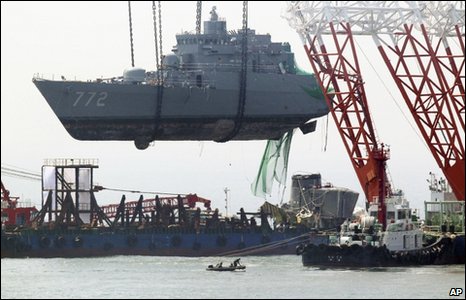
The forward half of teh hulk of the Corvette Cheoson being raised from the Yellow Sea

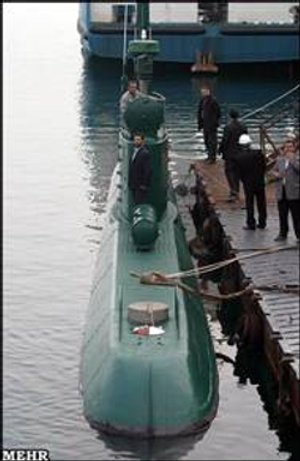
On March 26th at 2110 hrs local the 1200 ton South Korean Corvette Cheonan (PCC-722) was torpedoed by a North Korean Submarine about 1 nautical mile from Baengnyeong Island. The assailant appears to have been a North Korean Yeono Class miniature submarine using a North Korean CHT-02D 21” torpedo using acoustic homing mechanism set for a detonation under the hull of Cheonan at 6-9 meters depth.  There is the possibility that a Song class coastal submarine could have been involved but the likelihood is a Yeono class boat based on the proximity to land and the observation of a number of “small submarines” departing base a few days before and returning a few days after to their tender. The blast created an underwater shockwave and bubble effect which broke the back of the ship causing it to sink in less than 5 minutes with the loss of 46 crew members.

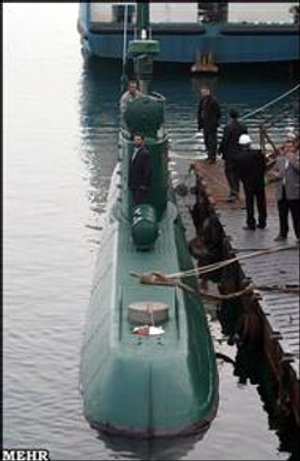
The probable assailant a Yeono or Yono class Miniature Sub and an Iranian variant below


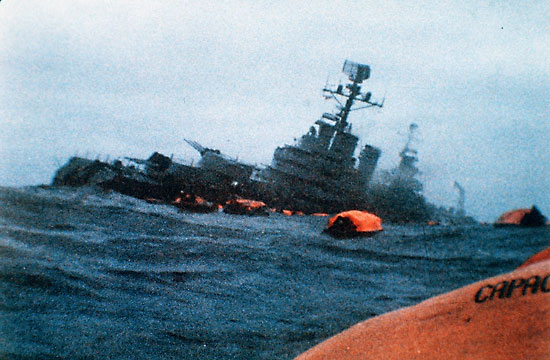
The sinking of Cheonan was the first sinking of a warship by a hostile submarine since the Argentine light cruiser the General Belgrano was sunk by the Royal Navy nuclear hunter-killer attack submarine Conqueror on May 2nd 1982 during the Falkland war.  The sinking of the Belgrano was controversial but occurred in the context of active hostilities and which posed no real threat to regional destabilization or a war that could easily escalate into a nuclear, chemical and biological conflict. The Cheonan was sunk by the North Koreans in a clear violation of the Korean Armistice and represents such a brazen move by the North Koreans that one has to wonder what purpose that it served.  There are reports that Kim Jong Il ordered the attack in retaliation for a confrontation in the same area in November 2009 in which a North Korean ship was heavily damaged.

The last warship sunk by a hostile submarine

The effects are now being felt following the May 20th release of the international investigation of the sinking which confirmed with hard evidence that the torpedo was North Korean and that there were no other possibilities for the sinking. (http://www.mnd.go.kr/mndEng_2009/WhatsNew/RecentNews/index.jsp#wrap ) The North Koreans reacted with anger toward the report while South Korea, the United States, Japan, Australia, Canada and the UN made statements condemning the sinking.  In the following days the US and South Korea announced naval exercises (http://news.bbc.co.uk/2/hi/world/asia_pacific/10150379.stm ) (http://www.csmonitor.com/USA/Military/2010/0524/Pentagon-dials-up-pressure-on-North-Korea-for-Cheonan-sinking ) and on the 24th the South Koreans suspended economic relations and assistance to the North and announced the renewal of psychological warfare against the North. The North Koreans have responded in kind severing all relations with the South, threatening to attack sites broadcasting into the North and announced that it gave its military the order to prepare for war.  http://news.yahoo.com/s/ap/20100525/ap_on_re_as/as_skorea_ship_sinks;_ylt=Alwl3biZwLFab7TyXX4HwRz9xg8F;_ylu=X3oDMTM5NTExM2R2BGFzc2V0A2FwLzIwMTAwNTI1L2FzX3Nrb3JlYV9zaGlwX3NpbmtzBGNjb2RlA21vc3Rwb3B1bGFyBGNwb3MDMgRwb3MDMgRzZWMDeW5fdG9wX3N0b3JpZXMEc2xrA25rb3JlYXNldmVycw

North Korean Torpedo components from the sinking of the Cheonan

The North on the 21st announced that “From this time on, we will regard the situation as a phase of war and will be responding resolutely to all problems in North-South relations,” and that “If the South puppet group comes out with ‘response’ and ‘retaliation’, we will respond strongly with ruthless punishment including the total shutdown of North-South ties, abrogation of the North-South agreement on non-aggression and abolition of all North-South cooperation projects.” (http://www.stuff.co.nz/world/asia/3725039/North-Korea-declares-phase-of-war-with-south )

Secretary General of the United Nations Ban Ki Moon said that the Security Council should take action against North Korea stating “I’m confident that the council, in fulfilling its responsibility for the maintenance of international peace and security, will take measures appropriate to the gravity of the situation.” (http://www.undispatch.com/node/9910 )

The situation seems to escalate by the hour as additional nations condemn the North Koreans and movement in the UN to do sop as well.  With the problem of succession in the North Korean leadership and potential struggles for internal power between the North Korean military and others within Communist Party and government it is hard to say who might gain in this situation. There are reports that part of the reason for the attack was the need for Kim Jong Il to secure the place of his son to leader the regime if he is incapacitated or dies.  The succession of Kim to the leadership was unusual as it was the first time in a Communist nation that the son of the national leader succeeded his father.  It is possibility that senior military or party leadership could oppose such a move.

There are a number of scenarios for this to play out.  Of course one would be for the North to stand down however that would be an act of weakness and loss of face for the regime after sinking a South Korean warship.  The other alternatives include the full fledged resumption of the Cold War on the peninsula or even the outbreak of a regional war which could draw in other nations and involve the use of nuclear, biological or chemical weapons on a large scale.   Any such situation would devastate the economies of much of Asia which in tour could cripple the world economy at a time when the European Union is in crisis, the United States is struggling its way out of a recession and many other nations are experiencing economic crisis or downturn.

This is a very dangerous situation and as one who has spent time on the Korean DMZ I can imagine almost nothing worse for the world than a war in Northeast Asia, perhaps a major showdown in the Arabian Gulf with Iran or a major conflict involving Israel and Iran or other Middle Eastern states, but not much other than those scenarios.  The situation has also demonstrated the threat to warships in the littorals from comparatively simple, cheap and deadly platforms firing weapons based on World War Two technology.  The reality for naval surface forces be they in the Korean littorals, the Arabian Gulf or Gulf of Oman is that low tech weaponry on low tech platforms in congested waters can deal deadly blows to unsuspecting warships.

This situation will need to be watched as it has the potential to get worse with dire consequences.

2 Comments

Filed under Foreign Policy, Military

Padre Steve’s Military History and Theory Articles

I am not normal, ask anyone who knows me.  I am a Priest who is also a military history and theory “wonk.”  I guess part of the reason for this as that I did not begin life as a clergyman. In fact way back when, when I was a young whippersnapper it was my desire to be in the military.  I was a Navy brat who grew up during the height of the Vietnam War and had friends whose fathers did not return from that war.  Likewise when my dad was serving in Vietnam surrounded by the North Vietnamese and Viet Cong in a town called An Loc I had a blessed Sunday school teacher tell me that my dad was a “baby killer.”  When you are an eleven year or twelve year-old and get told that your dad is a baby killer by some hippie wench you grow somewhat cynical about such people early in life.

Even worse than Limbaugh and Hannity is Michael Savage. Savage who despite having an earned PhD in the field of nutrition is so clueless and rude in discussing military issues that I can’t believe my ears whenever I run into his program. His absolute disdain that he shows for military leadership and actual implications of how we wage war in this era is so off base that it isn’t even funny.  For all of their lack of understanding of military strategy and policy at least Limbaugh and Hannity for the most part treat people in the military respectfully.

We no longer live in the World War Two world, warfare has changed and as the 2010 Quadrennial Defense Review notes that the United States must “prevail in today’s wars” while at the same time “prevent and deter conflict” which involves “preventing the rise of threats to U.S. interests requires the integrated use of diplomacy, development, and defense, along with intelligence, law enforcement, and economic tools of statecraft, to help build the capacity of partners to maintain and promote stability.” If deterrence fails we must Prepare to defeat adversaries and succeed in a wide range of contingencies: If deterrence fails and adversaries challenge our interests with the threat or use of force, the United States must be prepared to respond in support of U.S. national interests. Not all contingencies will require the involvement of U.S. military forces, but the Defense Department must be prepared to provide the President with options across a wide range of contingencies, which include supporting a response to an attack or natural disaster at home, defeating aggression by adversary states, supporting and stabilizing fragile states facing serious internal threats, and preventing human suffering due to mass atrocities or large-scale natural disasters abroad.” (2010 QDR Executive Summary pp. v-vi)

So tonight I am highlighting a series of articles that I have written that deal with the kind of war that we are waging in Afghanistan and have done in Iraq as well as a couple of studies from military history that discuss how the diplomatic, intelligence, economic and military resources of a nation are all important in the continuum of conflict and the importance of alliances when waging global warfare. These are the articles that I have produced so far and will as time goes on continue to add to.  They span the spectrum and hopefully will assist the reader in sorting through a lot of the mindless gibberish that is pumped out from the political right and left on TV, radio and the internet.  Some of these are drawn out of military history but have an application today while others are more targeted at what is going on today.  Since this is an ever expanding subject for me I expect to post more articles on a regular basis.

Learning to Apply the Principles of Counterinsurgency Part One: Introduction to the Soviet-Afghan War

Mission Accomplished in Al Anbar: The Marines Turn Over the Mission to the Iraqis

The Anomaly of Operation Desert Storm and Its Consequences Today

War Without Mercy: Race, Religion, Ideology and Total War

Lessons on Coalition Warfare: The Dysfunctional Coalition German and the Axis Partners on the Eastern Front

The Afghan War 2009-2012: Lessons from Algeria 1954-1960 A Review of “A Savage War of Peace

Moslem Allies and Friends

Lessons for the Afghan War: The Effects of Counterinsurgency Warfare on the French Army in Indo-China and Algeria and the United States Military in Vietnam

The most dangerous assignment: 4 More Advisers Die In Afghanistan

Brothers to the End…the Bond between those Who Serve Together in Unpopular Wars

Iran Makes Noise in Persian Gulf: Obama Dispatches Patriots and Ships to Deter

Mission Accomplished in Al Anbar: The Marines Turn Over the Mission to the Iraqis

The Dangerous and Often Thankless Duty of Military Advisers

More on our Unsung Heroes-Military Advisers, Past and Present

The Ideological War: How Hitler’s Racial Theories Influenced German Operations in Poland and Russia

D-Day- Courage, Sacrifice and Luck, the Costs of War and Reconciliation

Dien Bien Phu- Reflections 55 Years Later

God in the Empty Places

I hope that this rather diverse series of articles and my comments will be helpful to the reader in sorting through all the crap that floats about as “truth” from all sides of the media and the various political parties, special interest groups and others more intent on seeing their often divergent and uninformed agendas.

Peace

Padre Steve+

Leave a comment

Filed under counterinsurency in afghanistan, Foreign Policy, hampton roads and tidewater, History, iraq,afghanistan, Military

Iran Makes Noise in Persian Gulf: Obama Dispatches Patriots and Ships to Deter

Mahmoud Ahamadinejad threatens a “harsh blow at global arrogance”

Something is going on in Iran.  The despotic regime of Mahmoud Ahamadinejad has been cracking down on dissidents and protestors over the last few months since the disputed presidential election.  Two opposition leaders were hanged yesterday.  The opposition is calling for protests on February 11th to coincide with the 31st anniversary of the Iranian Revolution.  At the same time government supporters and the Iranian Revolutionary Guard forces are planning both pro-regime activities as well as anti-opposition crackdowns in the days leading up to this event.  To add to the volatile mixture Iran’s President Mahmoud Ahamadinejad has threatened a “harsh blow against global arrogance” on the 11th.  There has been no explanation of what Ahamadinejad meant by his cryptic comments by the Iranian news service but  the Obama administration is taking them seriously by sending additional Aegis Missile ships equipped with anti-ballistic missile systems as well as Patriot air defense missiles to the Persian Gulf. To give you a glimpse of some of the confusion surrounding the current situation in Iran and in its implications for the West I have linked a number of articles from a wide variety of sources here:

http://www.guardian.co.uk/world/2010/jan/31/iran-nuclear-us-missiles-gulf

http://www.cnn.com/2010/WORLD/meast/01/31/iran.protests/index.html?section=cnn_latest

http://www.reuters.com/article/idUSTRE60U18R20100131?type=politicsNews

http://news.bbc.co.uk/2/hi/americas/8490929.stm

http://www.foxnews.com/politics/2010/02/01/missile-shield-gulf-ups-ante-iran/?test=latestnews

http://www.dailystar.com.lb/article.asp?edition_id=1&article_id=111329&categ_id=17

http://www.dailytimes.com.pk/default.asp?page=201022\story_2-2-2010_pg20_1

http://www.theaustralian.com.au/news/world/gulf-countries-accept-air-defences/story-e6frg6so-1225825224604

http://english.farsnews.com/newstext.php?nn=8811080764

http://www1.voanews.com/english/news/middle-east/Supreme-Leader-Claims-Iran-Remains-United-Against-Outside-Threat-82073702.html

http://www.rferl.org/content/Irans_Protesters_Must_Keep_Their_Eyes_On_February_11/1942248.html

http://www.opendemocracy.net/volker-perthes/iran-2010-11-four-scenarios-and-nightmare

http://en.rian.ru/world/20100129/157712614.html

http://www.rferl.org/content/Iran_Media_German_Diplomats_Involved_In_December_Riots_/1941229.html

http://www.haaretz.com/hasen/spages/1146909.html

http://www.energypublisher.com/article.asp?id=25925

http://www.presstv.ir/detail.aspx?id=116955&sectionid=3510303

http://www.google.com/hostednews/afp/article/ALeqM5hos0sGvW5l2cEN2xO2ex4fhamzIw

http://www.ynetnews.com/articles/0,7340,L3838323,00.htmlhttp://www.ynetnews.com/articles/0,7340,L-3838323,00.html

http://www.english.globalarabnetwork.com/201001284565/World-Politics/iran-morality-police-vanish-as-more-protests-loom-in-tehran.html

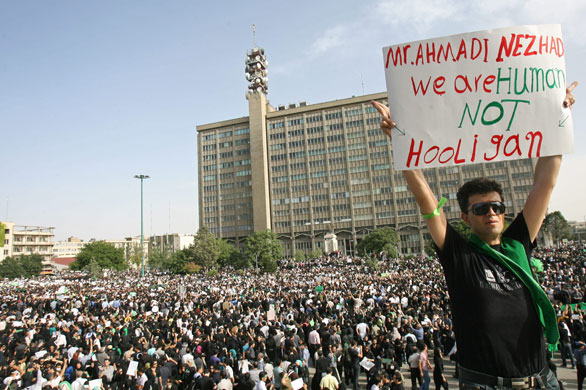
Massed Protests in Iran have been met by force

If you take a look at the details of these various reports there are a number of possibilities in regard to Iran, its internal political tensions and its repeated threats to US and Western interests. There are a myriad of possibilities many of which while directed outward are also directly related to the internal unrest in Iran in which a new generation who have grown up under the religious totalitarianism of the Mullah’s and men like Ahamadinejad who are convinced of the certainty of their beliefs and determined to impose them not only on their own people but their neighbors.  Ahamadinejad’s belief in the return of the 12th Mahdi to bring in a new era where the Caliphate will be established in Jerusalem is another wild card to factor into any equation.

Shahab-3 Missile test launch from mobile launcher

In the past year the Iranians have been increasingly more bellicose concerning their nuclear program and ballistic missile programs and have thwarted US, EU and UN initiatives to ensure that the nascent nuclear capacity is only capable of peaceful use and not capable of producing weapons grade uranium which could then be used in nuclear weapons.   They have expanded the number of centrifuges used for enriching uranium as well as continued to disperse and harden nuclear facilities against possible Israeli or US preventive strikes.  Additionally they have continued to increase their ballistic and cruise missile capabilities and the newer versions of the Shahab missile are capable of striking Western Europe.  The Revolutionary Guard forces have been actively supporting the Hezbollah terrorist group in Lebanon which in 2006 waged a successful war against Israel on the Israeli-Lebanese border.  It has continued to improve its asymmetric warfare capabilities as well as Naval and Revolutionary Guard Naval force capacity for disrupting shipping in the Straits of Hormuz through which a large percentage of the world’s oil is transported.

Iranian Missile Boat and Helicopter

Ahamadinejad’s latest remarks are ambiguous and could mean a number of things ranging from empty rhetoric designed to evoke a response from the United States or Israel up to military action.  Possible events within the continuum could be measures to destabilize Iraq where recently Iranian forces briefly occupied an Iraqi oil facility on the border near Basra before leaving when Iraq sent troops and threatened force to retake the facility.  Likewise a missile test of an upgraded or longer range Shahab could be planned, a military exercise in the Gulf or a test of a nuclear weapon which they might have succeeded in developing in their clandestine labs from previously enriched uranium.  The timing of the threat could also mean a military attack against Israel or US allies in the Persian Gulf including Kuwait, Bahrain, Qatar, the United Arab Emirates or Saudi Arabia.  Iran could in a “doomsday” strike launch a nuclear weapon (should it have an operation weapon) or chemical or biological weapons against Israel or even the rival Sunni Moslem Kingdom of Saudi Arabia, provoking a retaliatory strike which could embroil the region in a major war and might have worldwide implications. While I would think that the military attack would be a lower possibility the timing which coincides with the anniversary of the Revolution coupled with domestic unrest could mean that Ahamadinejad may feel that the benefit outweighs the risk.  It also could mean a stronger domestic crackdown on Iranian dissidents, whichever course of action the Iranians take it could make life even more interesting.

Shore based C-802 Surface to Surface Anti-Ship Missile in Iranian service

With the full spectrum of possibilities from simple rhetoric to a military strike laid out the Obama administration reportedly has sent Patriot Missile batteries to shield key Gulf allies and dispatched additional Aegis anti-ballistic missile capable ships from the US Navy to the Gulf.  Past remarks by the administration have been perceived as weak by the Iranians and the demonstration of US resolve by the dispatch of additional forces to the region may be designed to show that the Obama administration is not indecisive but capable of countering military threats to the region.

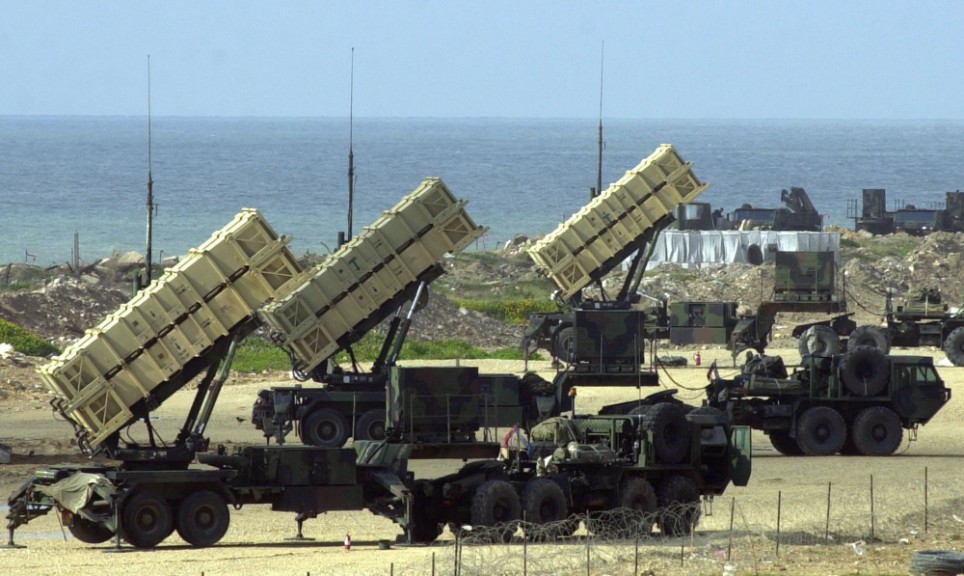
Additional ships of the Arliegh Burke Class that carry SM-3 missiles and Ant–Ballistic Missile systems have been moved into the Gulf along with Patriot Missile batteries

The administration’s move is prudent considering the potential threat.  Iran does not have the capabilities to fight a sustained war but could if fueled by the apocalyptic vision of Ahamadinejad mean that the Iranian government is willing to risk a confrontation with the United States because it perceives the Obama administration as weak.  I think that such an assumption by Ahamadinejad would be a serious mistake, however if he were to attempt a military or asymmetric-terrorist act of some kind he could create chaos until the United States and our allies eliminate his offensive capability.

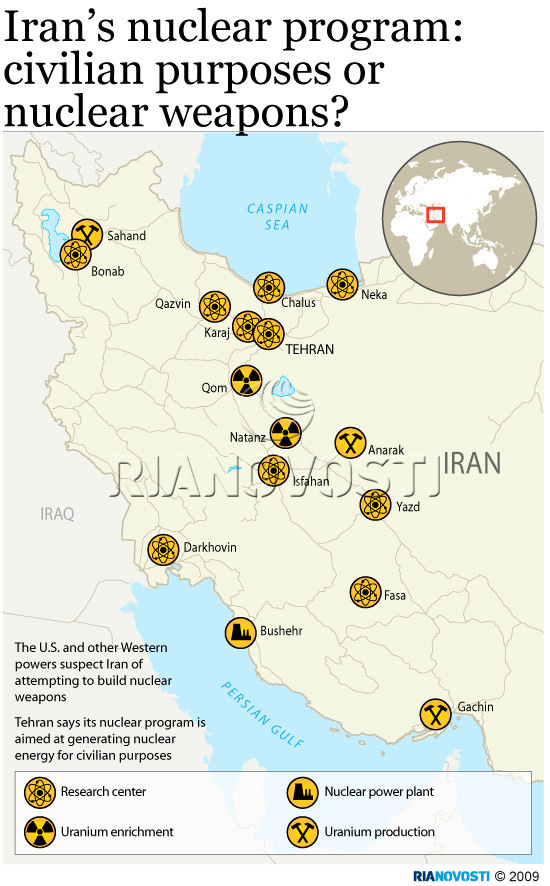
Iranian Nuclear facilities are dispersed around the country and in hardened sites

Potential problems that Iran could cause the United States could include disruption of transition efforts in Iraq through military or terrorist activity as well as to cause casualties or damage US military forces in that country. Far less likely is the possibility that the Iranians could offer support to their rivals in Al Qaida and the Taliban in Afghanistan if for no other reason than to disrupt the US/NATO mission in that country. Likewise the Iranians could attempt to cause economic and diplomatic problems in the region that would adversely affect the US and world economy that could be done short of war.

To deal with all possibilities the United States must not only be militarily ready to respond to any military threat but also to be able to exercise the full spectrum of diplomatic, economic and intelligence resources of its own and our allies.

So in about a week and a half we will know what the cryptic Ahamadinejad meant by his latest outburst, hopefully there will be some clarification before then so the US and its allies in the region can coordinate an effective response.  With tensions rising and uncertainty in the air it is important for the US, Israel and the West to get this right and hopefully give the Iranian opposition time to force Ahamadinejad and his supporters in the Iranian clergy and the Revolutionary Guard from power.  There is both danger and opportunity in the coming days and one can only hope that the Iranian opposition will be successful.

Peace,

Padre Steve+
Leave a comment

Filed under Foreign Policy, Military, national security

Pat Robertson the Devil and Haiti

Devastation in Haiti (TelegraphUK photo)

Well just when human tragedy couldn’t get any more tragic Pat Robertson decided to get into the act. Following the 7.0 earthquake that devastated that impoverished country leveling the capital of Pot-O-Prince and killing thousands with estimates going into the 100,000 to 1.000.000 range with hurricane season approaching. Not being able to keep his mouth shut my neighbor in the Tidewater has decided to blame the tragedy on to poop people of Haiti on the alleged actions of people who lived over 150 years ago.  Robertson on his 700 Club show commented:

Pat Robertson Hears from God and Tells us about it

“They were under the heel of the French, you know Napoleon the third and whatever. And they got together and swore a pact to the devil. They said ‘We will serve you if you will get us free from the prince.’ True story. And so the devil said, ‘Ok it’s a deal.’ And they kicked the French out. The Haitians revolted and got something themselves free. But ever since they have been cursed by one thing after another….”

This is absurdity of course but something that has been spread by some Fundamentalist Christians for years.  Robertson is not alone, blogger Tom Barrett of “The American Daily” says: “Haiti is the only country in the entire world that has dedicated its government to Satan. Demonic spirits have been consulted for political decisions, and have shaped the country’s history.” Thus speaks Reverend Doug Anderson, who grew up in Haiti with missionary parents, and served there along with his wife Dawn as a missionary until 1990. The leaders of Haiti make no attempt to hide their allegiance to Satan. Haiti’s government is a government of the devil, by the devil, and for the devil.”

Unfortunately crap like this has been floating around for years in the United States among some more conservative and fundamentalist Christians for many years.  I can remember in a number of churches where former “missionaries” to Haiti spoke the same tripe.  Unfortunately this is more common than any of us would like to admit and even allegedly educated and “spiritual” people who have money and power like to spout forth such hateful and un-Christian ideology.

Of course such comments are absurd as Jean Gelen of “Black and Christian.com notes:

“Obviously, the idea that Haiti was dedicated to Satan prior to its independence is a very serious and profound statement with potentially grave consequences for its people in terms of how they are perceived by others or how the whole nation is understood outside its borders. One would agree that such a strong affirmation should be based on solid historical and scriptural ground. But, although the satanic pact idea is by far the most popular explanation for Haiti’s birth as a free nation, especially among Christian missionaries and some Haitian Church leaders, it is nothing more than a fantasist opinion that ultimately dissipates upon close examination.”

In fact the issue is less related to a pact with Beelzebub than the American and French governments of the time.  As historian Alex von Tunzelmann wrote in the Times Online in his article “Haiti: the land where children eat mud” said and I apologize for the long quote but I cannot say it better:

“History tells a different story. The appalling state of the country is a direct result of having offended a quite different celestial authority — the French. France gained the western third of the island of Hispaniola — the territory that is now Haiti — in 1697. It planted sugar and coffee, supported by an unprecedented increase in the importation of African slaves. Economically, the result was a success, but life as a slave was intolerable. Living conditions were squalid, disease was rife, and beatings and abuses were universal. The slaves’ life expectancy was 21 years. After a dramatic slave uprising that shook the western world, and 12 years of war, Haiti finally defeated Napoleon’s forces in 1804 and declared independence. But France demanded reparations: 150m francs, in gold.

For Haiti, this debt did not signify the beginning of freedom, but the end of hope. Even after it was reduced to 60m francs in the 1830s, it was still far more than the war-ravaged country could afford. Haiti was the only country in which the ex-slaves themselves were expected to pay a foreign government for their liberty. By 1900, it was spending 80% of its national budget on repayments. In order to manage the original reparations, further loans were taken out — mostly from the United States, Germany and France. Instead of developing its potential, this deformed state produced a parade of nefarious leaders, most of whom gave up the insurmountable task of trying to fix the country and looted it instead. In 1947, Haiti finally paid off the original reparations, plus interest. Doing so left it destitute, corrupt, disastrously lacking in investment and politically volatile. Haiti was trapped in a downward spiral, from which it is still impossible to escape. It remains hopelessly in debt to this day.” http://www.timesonline.co.uk/tol/news/world/us_and_americas/article6281614.ece

One has to look at the practical implications of statements such as Robertson has not only on the people of Haiti but also on how people around the world view the Christian faith.  To his credit Robertson’s “Operation Blessing” charity has done much good, however his statements, even when retracted or clarified by his spokespeople as was done today, damage the efforts of well meaning Christians who go to Haiti not simply to evangelize but to serve and help local churches.  Additionally such statements do immeasurable harm to his fellow Christians of all types as many people who are not Christians assume that such views are characteristic of all Christians.

The reaction to Robertson’s remarks have been predicable, as usual he has played right into his detractors and the critics of the Christian faith. His words will echo far louder than all the Christian aid workers who are already in Haiti or on their way, many at their own expense.  My old training sergeant when I was in my college Army ROTC made a comment that in the Army that there were “attaboys and aw shits” and that “it took 2000 attaboys to make up for one aw shit.”  The same is true in life and in any form or public ministry. Robertson has as usual managed to drop a turd in the communion chalice and piss on Christians who care for the people of Haiti and spend their time and talent to help these good people.

Robertson’s comments ultimately that God would be so vengeful that he would punish the people of Haiti today for the alleged actions of people who in desperation revolted against harsh and brutal colonial masters over 200 years ago.  Of course this takes Old Testament judgments against the people of Israel for their sins “down to the 7th generation” or judgments on the nations surrounding Israel and applies them to current people by isogeting scripture and outside of its historic context in order to bolster crass prejudice against Haitians.  The Haitians are not viewed as people whose current situation is based on alleged “pacts with the Devil” when the only “devil” that they dealt with were the French, Americans and Germans who placed insurmountable burdens on the Haitians that when coupled with corrupt families who dominated Haitian politics for nearly a century doomed these people to the lowest standard of living in the Western Hemisphere.

Robertson and those like him only make matters worse for the Haitians and the Christians who actually go to Haiti to serve the Haitian people.  It is a sad commentary that men like Robertson who have power, money and influence over millions of Evangelical Christians use their position to posit such crap which assumes that somehow God is angry at the Haitians today for things that their founding fathers allegedly did.  I have to ask if this is so how can God ignore the sins of other powerful nations who not only through their ideology, economic policies and prejudices have exploited poor nations like Haiti for their own nefarious purposes.  The idea that somehow the Haitians are any more under God’s judgment than any other nation is prejudicial at best and demonstrates the height of historical ignorance and cultural arrogance.

Robertson as usual has stuffed his foot so deep down his throat that his big toe is almost visible from another orifice and as usual other Christians will have to deal with his statements as they strive to love and serve God and his people.

God bless those who are already on the ground and those on their way to Haiti to help the Haitian people no matter what their religious faith is or is not.  I do pray that people will do whatever they can to contribute to worthwhile organizations who will use the time, talent and treasure of those who give to actually do some good for the people of Haiti and not simply make themselves look good.

Some links are provided here:

The American Red Cross

https://american.redcross.org/site/Donation2?4306.donation=form1&idb=1696340864&df_id=4306&JServSessionIdr004=9lm1250ur1.app197a

Catholic Charities of Miami

https://secure.qgiv.com/cps_donors/?key=catholiccharitiesofthearchdioceseofmiami&restrict=Haiti%2BEarthquake%2BRelief

Samaritans Purse

http://www.samaritanspurse.org/

Salvation Army

http://www.salvationarmy.org/ihq/www_sa.nsf/vw-news/3BA710B2E3E57078802576AA004D0ED3?opendocument

Episcopal Relief and Development

http://www.er-d.org/ERDHaiti/

UNICEF

http://www.unicefusa.org/news/releases/unicef-urgently-appeals-for.html

Peace,

Padre Steve+
1 Comment

Filed under Foreign Policy, philosophy, Religion

The Anomaly of Operation Desert Storm and Its Consequences Today

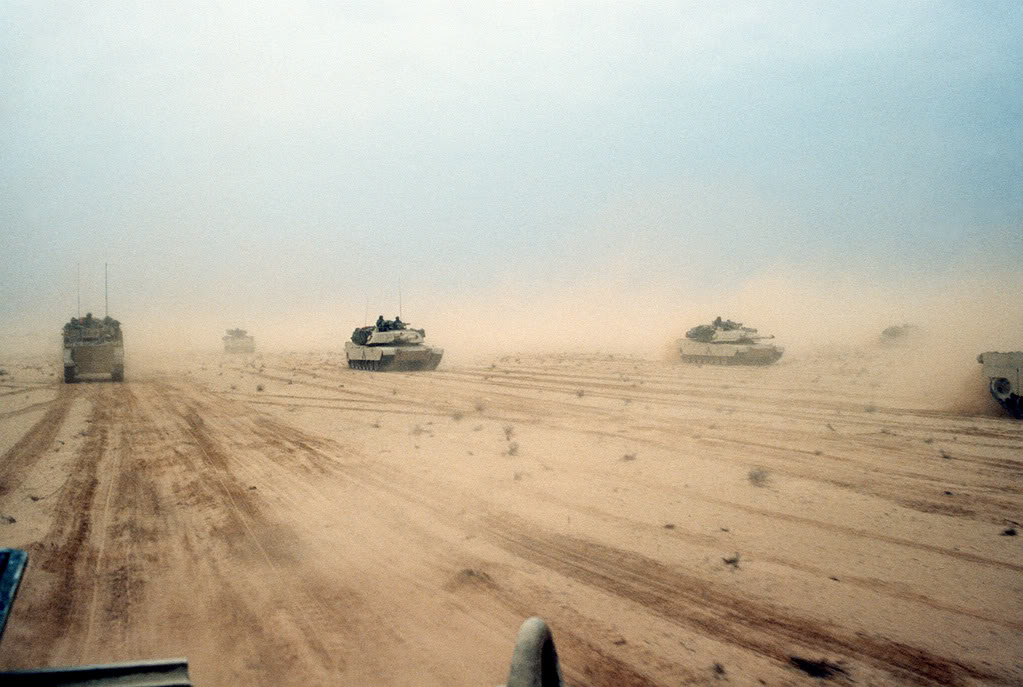
Armor Advancing During Operation Desert Storm

There are few occasions in history where an army is given exactly the scenario to which its organization, training and doctrine coalesce against an opponent that uses the template of organization and training that it has been designed to defeat.  Operation Desert Storm, the liberation of Kuwait by the United States and its coalition from Saddam Hussein’s Iraqi Army and Republican Guard was such a war. The operation was built up in the popular media to the extent that it created a false image of the cost of war and belief that wars can be won “one the cheap” because of superior technology and organization.  That belief was shattered during the Iraq insurgency which began in earnest following the occupation of Iraq following the defeat of Saddam in 2003 by a significantly smaller US force than was used to liberate Kuwait twelve years before.

Architects of Desert Storm

The superior performance of the Army in the Gulf War did not turn out to be the template of how future wars would be fought.  In the following years the US military has become embroiled in conflicts where opponents use inexpensive and often crude off the shelf technology to counter conventional US superiority in firepower and organization.

During the First Gulf War the Army was aided in that the doctrine that it developed to fight a war in Europe against the Warsaw Pact, the Airland Battle was “perhaps best suited to armored warfare in the open desert.”[i] Of course during Desert Storm this was exactly the setting that the Army would be called on to fight.  Unlike Vietnam where the Army attempted to fight an unconventional war with conventional tactics the Army had the chance to fight exactly the battle that it had trained for, against an enemy trained in the tactics and using the equipment of its former Soviet adversary.

The Army enjoyed the advantages of having “reached a high level of training and technological proficiency”[ii] against the Soviet threat. The fact that the Soviet Union and Warsaw Pact had melted down unexpectedly in 1989 and 1990 and removed any conventional threat in Europe which allowed the Army to concentrate massive amount of forces including the VII Corps from Germany to the Middle East was nothing short of incredible.  Additionally the Army had the advantages of superior weaponry and the fortuitous timing of the war before the effects of the post-Cold War drawdown were realized.

For the Army the “1980s were a golden age of military thought and debate,”[iii] and the Airland Battle concept “was greeted with enthusiasm throughout the Army.” Terms such as initiative, agility, synchronization and depth….soon became part of every officer’s vernacular.”[iv] Colonel Harry Summers who had written a critical history of the Vietnam War noted that FM 100-5, the Army’s primary manual of operations, was the “operational blueprint for Operation Desert Storm.”[v] That blueprint had a well trained and disciplined force schooled in the conduct of the Airland Battle concept enunciated in FM-100-5. David Halberstam noted that Operation Desert Storm was fought by a “professional army-a very professional army.”[vi] Seldom in the history of warfare was any army trained and equipped to fight the exact battle for which it found itself.

The Highway of Death

The foundation of doctrine, training, technology and organization laid in the 1980s was solid.  The Army was not only effective in the Gulf War, it was overwhelming.  This is not to say that the Army did not encounter problems.  It did, some which against a better trained and equipped force might have negatively impacts its operations. However the problems encountered did not keep it from dominating the battlefield.

The US rapidly deployed a blocking force of paratroops and Marines following the Iraqi invasion of Kuwait at the end of August.  While few in number they served as a deterrent that Saddam did not test. There was great concern that had Saddam pushed into Saudi Arabia when forces were small and lightly equipped that he might have succeeded in capturing the northeaster Saudi oil fields and production facilities.  The military leadership continually reinforced these forces first to a substantial defensive force and then with the addition of more forces a significant offensive force.  Thus when the decision was made to liberate Kuwait under the United Nations resolution the forces were there and ready.

When the war began advances in Joint warfare and C3 was evident in the effectiveness of the operations.[vii] Particular successes included the movement of VII and XVIII Airborne Corps into the desert to outflank the Iraqis in Kuwait[viii] and every actual engagement between Iraqi and American forces.  Of note was the performance of Major General Barry McCafferey’s 24th Mechanized Division,[ix] and the 2nd Armored Cavalry Regiment at 73 Easting against the Republican Guard’s Talwahkana Division.[x] Likewise the action of 2nd Brigade 1st Armored Division against the Guard’s Adnan Division at Madinah Ridge[xi] displayed the effectiveness and lethality of the Airland Battle and joint warfare concepts developed in the 1980s.

There were weaknesses and these included various aspects of command and control and fratricide[xii] brought about by the fast pace of operations and the fog of war. Likewise conflicts between General Schwartzkopf and some of his Army commanders, notably Generals Franks[xiii] and Yeosock hindered operations.  This occurred most notably in the failure to destroy the Republican Guard prior to the cessation of hostilities. This was partially was due to political considerations and faulty intelligence but was operational decision of Schwartzkopf to halt McCafferty’s  24th Mechanized Division before it could finish off Republican Guard units facing it or letting Franks complete his double encirclement of the Guard or encircle the key southern Iraqi city of  Basrah.[xiv]

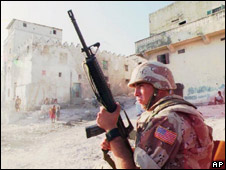
The New Face of War Somalia

Iraq

Rwanda Genocide

Deadly Large Shaped Charge IED

Afghanistan: Brits in Action Against Taliban Fighters

Despite the successes of Operation Desert Storm the planners failed to anticipate the end state of what would happen when hostilities had ceased.  The conditions of the cessation of hostilities were the chief contention of many against the end to the ground war at the 100 hour point. Some argue that the early end of hostilities allowed the victory to be less than it could have been.  Some even today argue that the offensive should have gone forward with the goal of overthrowing Saddam, however despite its success the Army was not prepared for an occupation nor would have the coalition supporting the US have survived an invasion and occupation of Iraq.  The actual mistakes were not in the stopping of the war, but rather the faulty conditions of the cease fire which enabled Saddam to recover the internal control of Iraq and put down attempts to revolt especially around Basra in the Shia south.  Rick Atkinson in his book Crusade notes that there were “errors would be made in establishing conditions of the ceasefire…but stopping the war was no mistake.”[xv]

While the debate about Operation Desert Storm still persists nearly 20 years after the fact the more important lesson was not learned.  That lesson was that Operation Desert Storm was not the new face of war, but rather an anomaly.  It was a war that was the swan song of the Cold War where the doctrine, technology, organization and trained to and practiced were inflicted on a less well trained and equipped version of the force that they were designed to defeat, forces which were badly deployed and already isolated by airpower even prior to the ground war. Once the ground war started the Iraqi forces in Kuwait and southern Iraq had little chance against the massive US and coalition force arrayed against it short of preemptively using the chemical and biological weapons of which Iraq had an ample supply.  It did not employ these weapons for a number of reasons, but without them Iraqi forces exposed in the open desert with no air support and cut off from much of their supply by constant air attacks were easily defeated.

In the past 20 years the United States and the west have only once been able to reprise the type of war displayed during Operation Desert Storm.  That was in the initial 2003 invasion of Iraq.  While the forces deployed were successful in defeating the Iraqi military and overthrowing Saddam Hussein they were insufficient to secure the country especially after the decision to disestablish all Iraqi police and military forces which might have assisted US forces in securing the country.  Perhaps planners forgot that German military police, police and civil servants were employed by the western allies in the period immediately after the war even during the period of “de-Nazification.”

Instead of a litany of Desert Storm like scenarios US forces as well as those of NATO and UN allies have had to deal with terrorism, insurgencies, revolutionary wars, tribal wars of genocide and wars waged by religious extremists. Despite more than a decade in dealing with these types of war, many in the military and political establishment as well as the media and public opinion believed that Desert Storm was the model for future wars. As such after the brief period of euphoria which occurred after the initial phase of Operation Iraqi Freedom the grim reality of war has stared Americans and others in the west in the face.  While the military has performed well, it has had to adjust and learn lessons about war that it wanted to avoid during and after Vietnam.  Those were the lessons of counterinsurgency, unglamorous and unexciting they were the lessons buried after Vietnam which were ignored until it was nearly too late in Iraq and possibly now too late in Afghanistan.  Desert Storm was an anomaly and one does not base the future of war on the swan song of the last war.


[i] Atkinson, Rick. Crusade: The Untold Story of the Persian Gulf War, Houghton Mifflin Company, Boston and New York 1993. p.253

[ii] Gordon, Michael R. and Trainor, Bernard E. The Generals’ War, Back Bay Books, Little Brown and Company, Boston and New York 1995. p.467

[iii] Peters, Ralph. Fighting for the Future: Will America Triumph. Stackpole Books, Mechanicsburg , PA p.xi

[iv] Ibid. Atkinson.

[v] Summers Harry G. On Strategy II: A Critical Analysis of the Gulf War, Dell Publishing a Division of Bantam Doubleday Dell Publishing Group, New York NY 1992. p.159

[vi] Halberstam, David. War in a Time of Peace: Bush, Clinton and the Generals, A Touchstone Book published by Simon and Schuster, New York 2001. p.153.  Gordon and Trainor note that the “never in the history of the Republic has a more competent and more professional military been fielded.

[vii] See Summers pp. 243-245.  Summers is very complimentary of the advances in the Joint aspects of command and control that impacted the campaign.  He notes several points at the strategic and operational levels which are complimentary of individuals including comparing General Colin Powell to General George Marshall. Gordon and Trainor writing a few years later are more critical of the “jointness” of the Americans including valid criticism of the air campaign, fire support coordination, and differences in doctrine between Marines and Army and the way the VII Corps and XVIII Corps operated based on the way that they trained and organized. Pp.471-473

[viii] Atkinson pp.309-310.  Atkinson discusses the fact that American commanders involved had seldom maneuvered units of battalion or brigade size prior to this operation.

[ix] The 24th made a great advance to the Euphrates but as Atkinson notes that it had “encountered no enemy resistance at all.” p.406

[x] See Atkinson pp. 441-448

[xi] See Atkinson pp.466-467.  In a 40minute fight the M1A1s destroyed 60 T-72s and dozens of APCs at a cost of one American KIA.  Atkinson notes that this battle like the action at 73 Easting “was waged with tactical acumen and devastating firepower….”

[xii] Ibid Atkinson pp.315-316.  Atkinson notes that there were 28 incidents with 35 killed and 72 wounded.

[xiii] Ibid. pp.405-407.  Schwartzkopf felt that Franks was not aggressive enough and that VII Corps was “sluggish” and “ceding the initiative to the Republican Guard.”  Schwatzkopf even threatened Yeosock that he would fire Franks.

[xiv] Ibid. Atkinson p.476

[xv] Ibid. p.477

Bibliography

Atkinson, Rick. Crusade: The Untold Story of the Persian Gulf War, Houghton Mifflin Company, Boston and New York 1993

Gordon, Michael R. and Trainor, Bernard E. The Generals’ War, Back Bay Books, Little Brown and Company, Boston and New York 1995

Halberstam, David. War in a Time of Peace: Bush, Clinton and the Generals, A Touchstone Book published by Simon and Schuster, New York 2001

Ralph. Fighting for the Future: Will America Triumph. Stackpole Books, Mechanicsburg , PA

Summers Harry G. On Strategy II: A Critical Analysis of the Gulf War, Dell Publishing a Division of Bantam Doubleday Dell Publishing Group, New York NY 1992.

8 Comments

Filed under Foreign Policy, History, iraq,afghanistan, Military, national security

More Lies and Distortions from WorldNet Daily’s Bob Unruh

Note: It has been a good number of months since I have addressed the Lies of WorldNet Daily and it’s leadership Joe Farah and his designated hit man Bob Unruh. I stumbled across an article yesterday evening when my curser hit the Worldnet Daily link on my “favorites.” I seldom go there unless I think that they might be getting crazy, but this was accidental, or if I was a Calvinist possibly God’s will. Unfortunately late last night I saw an attack on a fellow officer by this influential “Conservative Christian” website.  The attack was gratuitous and directed at an officer currently serving in Afghanistan Major Brian Stuckert who as part of a military education course published a monograph which is in the public domain entitled “Strategic Implications of American Millennialism.” As I mentioned the last time that I wrote against something that Unruh and WND published that I would limit myself to military issues as I do in this article.  I try to ignore the folks at WND but feel in this case that that are again in the process of attempting to stir up opinion against an officer who has done nothing wrong but to disagree with their political-religious ideology. While the folks at WND and those like them have every right to their opinions an beliefs, which are defended by those of us in uniform, they are way out of line in this article and owe Major Stuckert an apology. Unfortunately the WND leadership doesn’t do this as is evidenced in their past treatment of the Commanding Officers of Gordon Klingenschmitt. These men have no honor and stoop to the basest means to attack those that disagree with their narrow point of view. Some will not like what I write. That is fair, I do not claim to be infallible not do I practice censoring those that disagree with me. But I will not let a fellow officer who is serving in a combat zone be the subject of an egregious attack by the folks at WND. If it were an attack by a “liberal” website I would feel the same way. The fact that it is a “conservative” website which claims to “support the troops” that attacks Major Stuckert and other military officers who disagree with their point of view only makes me angry.  Now to my response:

Just when you think it is safe to go in the water and just enjoy the Christmas season Joe Farah and the good folks at Worldnet Daily come out with another whopper to attempt to whip people up against those in the military with differing opinions than that of their own.  Written by noted propagandist Bob Unruh who helped spin the lies of former Navy Chaplain, defrocked Evangelical Episcopal Priest Gordon Klingenschmitt into a frenzy that had many Christians believe that the Navy was attempting to muzzle Klingenschmitt’s religious rights, the article takes aim at an monograph written by Army Major Brian Stuckert ( the link to Stuckert’s monograph is here: http://www.wnd.com/files/Millennial.pdf ) for the Advanced Military Studies program. Officers who attend courses such as this are often required to produce a research paper on a subject that deals with political, military and foreign policy topics to include how social, ideological or religious can impact military operations at the strategic and operational levels including effects on foreign policy and diplomacy.  The Worldnet Daily article is linked here:   http://www.wnd.com/index.php?fa=PAGE.view&pageId=119315

Unruh in his usual manner has manipulated the facts to make it appear that Stuckert and the Army is attempting to silence what Unruh calls “Evangelical beliefs.”  In fact the title of the article U.S. Army Major: Lose evangelical Christian beliefs” is a straw man intentional thrown out by Unruh to chum the waters so to speak.  Unruh takes a research paper which he does not agree with and demonizes the writer.  These papers are akin to any research paper done for a graduate level academic program. They reflect the opinion of the author and not the institution.  Like all papers of this type they have to be evidenced based, in other words the author has to have data to show that his hypothesis and conclusions actually are not simply whims but have impact in the world in which the writer serves and for the topic that he or she addresses.  One does not have to agree with them and in fact in the future other officers might actually write articles to refute what Stuckert says.  This is an academic program and as such differing points of view are sought.

Instead of just leaving this be both Unruh and undoubtedly Joe Farah is using this article to again whip up the faithful against any idea that might contradict their political-religious views.  Stuckert has criticized the foundational philosophy of the Worldnet Daily leadership that of Pre-millennial Dispensationalist theology which does have very real foreign policy implications for the United States.   As such Stuckert’s article is important because it draws attention to how Pre-Millennial Dispensationalist effects how many Americans view the world and international relations to include how such beliefs can influence policy making.  Stuckert’s premise is found in his abstract:

“Since the beginning of the Republic, various forms of millennial religious doctrines, of which dispensational pre-millennialism is the most recent, have shaped U.S. national security strategy. As the dominant form of millennialism in the U.S. evolves, it drives changes in U.S. security policy and subsequent commitment of the instruments of national power. Millennial ideas contribute to a common American understanding of international relations that guide our thinking irrespective of individual religious or political affiliation. Millennialism has great explanatory value, significant policy implications, and creates potential vulnerabilities that adversaries may exploit.”

This is a fair characterization of the effect of pre-millennial dispensational theology on American national thought.  Thus it is fair to examine its effect on current policy both foreign and domestic.

Instead of taking Stuckert’s observations and critiques for what they are Unruh and his co-conspirators turn this into a conspiracy of people in the Army and government against true Christians. In the usual manner Unruh quotes someone that he agrees with on the article: Unruh quotes John McTernan a writer on Biblical Prophecy who says that Stuckert’s article is “the most dangerous document to believers that I have ever read in my entire life” and “After reading this document, it is easy to see the next step would be to eliminate our Constitutional rights and herd us into concentration camps.”

I am sorry, this is beyond reason: “eliminate our Constitutional rights and herd us into concentration camps?  That is nothing more than propaganda. In fact it is delusional paranoia designed implicitly to scare people and move them further into WorldNet Daily’s orbit turning good people against honest and decent military officers.  Unruh did this with Klingenschmitt in grand fashion through character assassination of Captain Carr, Klingenschmitt’s Commanding Officer on USS Anzio and Captain Pyle, the Commanding Officer of Naval Station Norfolk.  This got so bad regarding Captain Pyle, a conservative evangelical Christian of the Assemblies of God denomination that he was ostracized by his own church and demonized by the Christians who were the closest to his theological views.  It was shameful; people still believe the lies about Klingenschmitt spewed by the WorldNet Daily crowd.  Now they attack an Army Major who is serving in combat in Afghanistan.  Such conduct is beyond crude and unseemly, it is dishonest, disingenuous and dishonorable.

Unruh, no stranger to such behavior ends his article with a totally unrelated reference to the terrorist who killed 13 and wounded many others at Fort Hood just a month ago.  Major Stuckert’s article was published in 2008 and has nothing to do with the actions of Major Hasan.  The implication is that Stuckert supports the traitorous terrorist Hasan. This is another disingenuous attempt to link someone who disagrees with them with terrorists or other extremists.  Such behavior by alleged “journalists” is simply dishonest and to use a term from American history is “Yellow Journalism.”

The conduct of WorldNet Daily and in particular Bob Unruh is shameful and shows none of the graces associated with true Christian faith. Lying and mischaracterizing what others say and demonizing them in apocalyptic terms is not Christian behavior. It is crass cynical propaganda and WorldNet Daily is one of the worst offenders around.  Unfortunately these people are vicious in their attacks.  The article talks of “losing evangelical beliefs” however many evangelicals either oppose or have out rightly condemned pre-Millennial Dispensationalist as heresy. Yet many pre-millennial dispensationalists, especially the type found at WorldNet Daily effectively write off all evangelicals who do not hold to one of their several Rapture theories: “All people who believe the Bible believe in a Rapture” Mark Hitchcock “What Jesus Says About Earth’s Final Days” (p. 96).  This is just one example of how this camp views other Christians. If you do not believe in the Rapture as they define it you do not believe the Bible. The deduction is that Christians believe the Bible, you disagree with the Rapture, and you don’t believe the Bible and are thus not a Christian.

Even Prominent Evangelicals such as A. W. Pink (1886-1952) have disagreed with the tenants of Dispensationalism:

“Dispensationalism is a device of the enemy, designed to rob the children of no small part of that bread which their heavenly Father has provided for their souls; a device wherein the wily serpent appears as an angel of light, feigning to “make the Bible a new book” by simplifying much in it which perplexes the spiritually unlearned. It is sad to see how widely successful the devil has been by means of this subtle innovation.”

Many conservative Christian churches and individuals do not hold this position; in fact to take the view of Unruh is to assume that Stuckert is attacking Evangelical Christianity.  Stuckert is not doing so, he is simply critiquing one of several competing Christian Eschatological theories and how its influence helps shape US foreign policy and the worldview of many Americans.  He asserts that such beliefs when not recognized by those that propagate them can leave the United States vulnerable to our enemies, nothing more, nothing less. In fact Stuckert is careful to differentiate the various factions in what is considered by some radical secularists to be a monolithic “Evangelical” movement.

“Millennialism, and especially dispensational pre-millennialism, derives in large part from extraordinary literalism of even the most figurative passages of the Bible. In America, literalism in biblical interpretation is most closely associated with fundamentalism. Theologically, it is best to begin a discussion of American millennialism with a brief review of fundamentalism as the term applies to the contemporary American religious tradition. Fundamentalism is a frequently misunderstood term in America. Although it has connections to each, fundamentalism is distinct from evangelicalism, the charismatic movement or conservative Christianity in general. Fundamentalism is also poorly understood when we attempt to define it as a personality style, a form of militancy, or a particular worldview.” (Stuckert pp. 6-7)

Stuckert is fair in this; to not admit that religious, ideological or philosophical views do not serve is “filters” as McTernan and Unruh seem loathe doing is simply wrong. To understand the prism of how religious, ideological and other beliefs can influence worldview and decision making is important. This is what Stuckert does as pre-millennial dispensationalism is one of the major shapers of American thought; not only for Fundamentalist Christians but anyone who follows the popular fictional writings of Tim LaHaye’s Left Behind series.

Stuckert continues his monograph by discussing the importance of how Christian Fundamentalists view the Bible and the influence of pre-millennial eschatology on American political thought and foreign policy.   Since the popularized version of this eschatology influences the way that many Americans view the world it is appropriate that the effects of it be analyzed by those who study foreign and domestic policy. In his summery and conclusions Stuckert makes an erudite observation that is lost on many people:

“Because religion in America directly impacts policy, military leaders and planners must learn to recognize the tenets and implications of American millennial thought. Millennialism has always been a feature of the American culture and has shaped not only the objectives of U.S. government policy, but also the way in which we interpret the words and actions of other actors on the international stage. Millennial ideas contribute to a common American understanding of international relations that guide our thinking regardless of individual religious or political affiliation. Millennialism has great explanatory value, significant policy implications, and creates potential vulnerabilities that adversaries may exploit. By gaining insight into and embracing intellectual honesty where our own prejudices and proclivities are concerned, we can greatly improve the quality and clarity of our decision-making.” (Stuckert pp. 58-59)

Unruh “cherry picks” what he wants from Stuckert’s monograph in order to paint Stuckert as some kind of anti-Christian officer.  The use of McTernan’s claims to buttress his article shows how biased that Unruh as since McTernan’s livelihood is based on writing books and speaking about Bible prophecy from a pre-millennial dispensational point of view.  He claims to be a “student of American history” but has no academic credentials save a BA from Virginia Commonwealth University in an unnamed field. He has no military experience, no education in military or political theory other than what he may have learned on his own “study” and is in no position to be a legitimate critic of Major Stuckert’s work.  McTernan claims that the “last third (of Stuckert’s work) is an interpretation of Bible belief on world events. “This report blames all the world evils on believers! World peace would break out if it were not for Bible believers in America.” In fact it says no such thing.  It is not a “report” as McTernan calls it, but simply the equivalent of a graduate level thesis. This is nothing but a hit piece on a fellow officer who disagrees with McTernan and the crowd at WorldNet Daily.  McTernan talks about an argument that he had with Colonel Stefan Banack of the School for Advanced Military Studies who McTernan attacks:

“The conversation was extremely heated between us, and he hid behind the freedom of speech to produce it. He refused to let me write an article to refute this attack on Bible believers. He refused to tell me what this study was used for and who within the military was sent copies. I believe that it represents an official military view of Bible believers as Col. Banack said there was no study or article refuting this one.”

The fact that these papers are in the public domain and on the center’s website makes no difference to McTernan. He attempts to paint this is a some kind of conspiracy against Evangelical Christians when in fact it is the equivalent of an academic thesis in a Masters Degree program.  The fact that he says that Colonel Banack “hid behind the freedom of speech to produce it” sends a chilling message. Freedom of speech for McTernan goes only for McTernan not for those who disagree with him. Likewise McTernan uses the refusal of Colonel Banack to allow him to “refute this attack on Bible believers” is a red-herring. The School’s academic publications are for students to publish not for people with no standing in the military to use the platform to propagate their beliefs.  Mr. McTernan to my knowledge is not a student at the Advanced Military Studies program and would not be using the forum for actual academic debate but to advance his own cause which he does on his own website without any restriction.

So once again WorldNet Daily drops a whopper on its readers and attacks the character beliefs and academic thought of a military officer. Their conduct in this is much more like the Taliban and the Iranian Ayatollah’s than anyone who claims to value the right to freedom of speech and religion as they do. Like the early Puritans who came to the New World for “religious freedom” the only religious freedom or freedom of speech that Unruh, Farah and other like them value is their own. Those who dissent from their narrow understanding of eschatology stand condemned as do those who ask legitimate questions about the policy implications of their belief system. If they were ever to be in a position to impose their beliefs in this country men like Major Stuckert and probably yours truly would be persecuted.

Although I am but a “pip-squeak” in comparison to the WorldNet Daily behemoth but I cannot let a fellow officer who is serving in harm’s way be the subject of a gratuitous attack by these people. May God keep Major Stuckert and those he serves with in harm’s way safe and may they accomplish the mission that they have been sent to do.  As far as WorldNet Daily goes…I hope that they continue to have the freedom to speak in the manner that they would deny to those who disagree with them, especially those who serve in the uniform of the United States of America in harm’s way.

Peace,

Padre Steve+

10 Comments

Filed under Foreign Policy, Lies of World Net Daily, Military, national security

The Afghan War 2009-2012: Lessons from Algeria 1954-1960 A Review of “A Savage War of Peace

“A Savage War of Peace.” By Alistair Horne. The New York Review of Books, 1977, 1987, 1996, 2006.  Maps. Photographs. Bibliography. Index. 608 pp.

Foreign Legion in Algeria

In light of the developing situation in Afghanistan and the plan to apply the counterinsurgency techniques of clear and hold, or “the oil slick” in that country it is wise to look at other instances of this type of warfare before criticizing those about to implement the strategy.  Of course when doing this the best place to look is history, especially where the strategy worked, at least until the DeGaulle government abandoned the nearly complete military success achieved by French forces in Algeria triggering a national crisis.

Alistair Horne’s “A Savage War of Peace” is a most needed addition for anyone seriously interested in studying the dynamics of insurgency and counterinsurgency warfare; especially political and military leaders of a western nation occupying a Moslem country.  Horne’s work is important and one of the few in English that cover this subject.  The two other books in English to cover the subject, albeit only on part of the campaign is Paul Aussaresses’ controversial memoir “The Battle of the Casbah” and Ted Morgan’s memoir “My Battle of Algiers” though useful suffer from the fact that they are limited in scope to the events the individuals experienced while serving as French Army officers in Algeria. In both the author’s personal biases are readily in evidence and by the fact that they were written many years after the events in question.  Since those books are heavily dependent on the author’s memories.

Paratroops of the First Colonial Paratroop Regiment in Algeria

Horne is not limited by these factors.  Horne is a historian who served as a British Army officer assigned to the MI5 in the Middle East and later as a foreign correspondent for the Daily Mail who has written a trilogy of excellent works on the Franco-German wars: The Fall of Paris: The Siege and the Commune 1870-1871, The Price of Glory: Verdun 1916 and To Lose a Battle: France 1940. As such his account is as close to being objective as any could be in the case of writing this particular history.

Horne approaches the subject from the perspective of the broader issues that France and the Fourth Republic were facing in 1954, economic, military and psychological recovery from the Second World War, the loss of colonies, defeat in Indochina culminating in the Dien Bien Phu debacle.  Such is important when examining a military campaign as the latter do not take place in isolation of other events in the life of a nation. When the history of the US campaigns in Iraq and Afghanistan are written they will have to take into account many other factors apart from the military operations.

Horne tackles the complex issues of the Algerian war in a multifaceted manner looking not only at the military issues, but the political and social issues faced by the French, the European Pied-Noir Algerians and the Algerian natives, both Berber and Arab alike.  Horne also looks at the conflict in the broader context of the Cold War, the emergence of the Non-Aligned nation movement and the rise of Arab nationalism, skillfully weaving the actions of these movements and key individuals such as Egypt’s Nasser, Khrushchev of the Soviet Union and the most influential, and President Jacques de Gaulle into the story of the Algerian conflict. Unlike other writers Horne had access to many of the individuals involved, including leaders from each rebel faction, the Pied-Noir and the French government and military.  Included in those he interviewed is Algerian President Boumedienne who had commanded rebels during the conflict and was instrumental in Algeria’s independence as well as Jacque Soustelle who had been Governor General from 1955 through 1956. These sources as well as numerous others help give his narrative a depth and subtlety lacking in the first hand English language memoirs and accounts.

Terrorism by FLN Militias and Sympathizers Caused Great Problems for the French

Horne begins his account with the story of the aborted revolt and massacre at Setif on May 8th, VE Day, 1945 and the attempt by the French government to reassert its control over Algeria. Of particular interest in this section is Horne’s analysis of the mistake of the Pied Noirs and the French government in not offering a settlement to the Algerian separatists under magnanimous terms due to the scale of the victory they had won following the Setif uprising and their security forces “decapitation” of the leadership of the various Algerian nationalist factions.  He compares the victory to that of the Israelis in the 1967 War and the political reaction of the Pied Noir to the Israelis, who instead of negotiating a settlement that could have long term effects advantageous to them from a position of strength determined to humiliate and subjugate their foe.[1] If the US military is able to reverse the situation in Afghanistan the United States and the Afghan government will need to be magnanimous to a defeated foe in order to prevent yet another repetition of another Al Qaida and Taliban resurgence.

French Paratroops Going House to House in Algiers

In examining the period before the actual outbreak of the war in 1954 Horne looks at the missed opportunities of the French to prevent it.  He also examines the development of the Algerian independence movement, especially the senior leaders of the movement; many of whom had served in the French Army during the Second World War with distinction. His portrayal of the conflicts within the independence movement, show that this was not a monolithic movement, but that each faction had its own goals which often were in conflict with other groups.  This is also the case in Afghanistan where a disparate number of ethnic, political, criminal, nationalist and terrorist groups who often are at war with each other.  Likewise, Horne’s treatment of the Pied Noir and certain parts of the French leadership examine how they too were divided at some points in regard to the ultimate plan for the relationship of Algeria to France.

Horne makes much of political mistakes and machinations of French leaders that culminated in the end of the Fourth Republic and subsequent impact on de Gaulle when he became president in June 1958.  Some mistakes that Horne explores are those committed in the immediate wake of Setif. He also examines mistakes during the revolt; such as not taking it seriously, to individuals in the National Assembly impeding the efforts of Soustelle to effect reforms and compromise between hard line factions in the Pied Noir and Moslem communities.[2] Likewise he notes how the draconian treatment of Algerian Moslems by the French Army in the early phases of the counter-insurgency effort, including the assignment of “collective responsibility” to punish communities for the actions of individuals helped alienate the populace and strengthen the insurgency.  Such was the case in the first part of the Iraq occupation and helped inspire that insurgency.  One member of Soustelle’s cabinet noted: “the cycle of repression getting ever tougher, and the rebellion ever stronger, will ruin all your efforts of pacification.”[3]

Besides political mistakes Horne examines issues in military tactics that seem to plague counterinsurgency efforts to the present time.  He describes the early application of heavy conventional forces in an attempt to defeat the insurgency.  Horne discusses unsuccessful efforts in 1954-1955 and how they not only did not destroy the insurgency but how the insurgency spread in response to the efforts.  The question: “Did ‘pacification’, for instance mean trying to regain the confidence of the inhabitants; or did it mean crushing the rebellion by whatever means available?”[4] This question is still asked today by soldiers fighting insurgencies and often the latter is counseled by those who still think along the lines of the conventional tactics of the Cold War and World War Two, which many conservative pundits are enamored with.  Horne also discusses the successful tactics of commando units used by General Challe to effectively combat the insurgency.[5]

Horne examines the attitudes of the French Army which in a sense fought the war for itself.  Armies that have fought many campaigns together often have a sense of comradeship that transcends even the loyalty that they have to their nation.  It is the understanding of a “Band of Brothers” and can be found throughout history.  When the histories of Iraq and Afghanistan are written they will certainly include the fact that many soldiers, Marines and Sailors engaged in actual combat operations fought for the men and women with whom they served more than for anything else.

The French Army felt little affinity for the Pied Noir who they often saw as only interested in their interest at the expense of the campaign.  Likewise the Army, felt little more than contempt for the French government which they felt had betrayed them. General Lorillot noted “They made fools of us in Indo-China…they screwed in Tunisia…We are being screwed in Morocco. But they will never screw us in Algeria. I swear to you. Let this be known in Paris.”[6] Instead attitudes of not losing, stopping the humiliations were animated by the feeling of anti-communism in French ranks, especially in the Elite Parachute, Foreign Legion, Commando and Colonials (Marines). The novel The Centurions and voiced the feelings of one Paratroop commander “We want to halt the decadence of the West and the march of Communism.”[7]

Horne provides a narrative analysis of the military campaigns within the Algerian War.  In particular he describes the successes of units designed to live among and better the lives of the Algerians and the SAS,[8] He describes the building of the border wall to keep weapons out of rebel hands.  He describes the “success” of units which specialized in torture,[9] which turned out to be helpful in the short run but which ultimately damaged the fabric of the Army.  Horne notes the effects of torture on soldiers who participated and how it negatively affected support of the war in France and internationally.[10] The use of torture in Algeria has parallels with Iraq. Horne notes: “one has to take into account all those factors…horror at the atrocities of the F.L.N., a determination not to lose yet another campaign, and the generally brutalizing effect of so cruel and protracted war.”[11]

The most powerful part of the narrative is the drama when French President de Gaulle was faced with the revolts of 1959. At this time the Pied Noir militias, dissatisfied with potential political settlements went to the barricades in Algiers and other major cities, assisted in some cases by Army units.  These forces again revolted against his attempts to mediate a settlement and were followed by the General’s revolt of April 1961 which nearly became a military coup in France itself.   President de Gaulle’s role in bringing these revolts to an end, without the collapse of the government or a civil war was miraculous.  Though his actions undercut the military success of the Army in Algeria which had virtually eliminated the insurgency his foresight in recognizing that France had a future not dependant on Algeria remaining French was exceptional.  The actions of de Gaulle should be studied by those who closely link their country’s future to holding a foreign country, even one that is considered an integral part of the mother country, as Algeria was to France.

Horne’s book is as timely as it was when first published, maybe more so with the current escalation in Afghanistan.  Along with works by David Galula “Pacification In Algeria 1956-1958, Bernard Fall “Street Without Joy” and “Hell in a Very Small Place,” Andrew Krepinevich’s  “The Army in Vietnam,” Brian McAllister Linn’s “The Philippine War: 1899-1902” and Ben Shepherd’s “War in the Wild East: The German Army and Soviet Partisans” Horne’s work is vital reading for military and political leaders fighting counter-insurgency operations.  Unfortunately many militaries are often enamored by high tech innovation are not often receptive to the decidedly human factors and strategies necessary to fight insurgencies until they experience frustration and failure attempting to use conventional forces and tactics to win a counter-insurgency campaign.  Effective intelligence, efforts to win the hearts and minds of the populace by protecting them, knowledge of public affairs and the effect of media on operations are all key elements of a proper counter-insurgency campaign are covered by Horne. Horne’s work reminds us that these conflicts are not won by the forces with the greatest firepower or most modern weapons. This is something that the United States and its NATO and other Allies in Afghanistan should never forget.


[1] Horne, Alistair. A Savage War f Peace: Algeria 1954-1962. The New York Review of Books, New York, NY 1977, 1987, 1996 2006. p.69

[2] Ibid. pp. 113-114

[3] Ibid. p.115  Some would later compare the attitudes of the French Army to those of the Nazis. In one point of his narrative Horne notes the attitude of an officer who saw nothing wrong with the tactics used by the Nazis in the Second World War.

[4] Ibid. p.112.  Another question noted is something that seems to be commonplace in the Iraq War ““Limited Repression” did not always make the clearest sense to a patrol of young soldiers caught in a vicious ambush.” When one reads Horne’s accounts one sometimes almost feels that he is writing about the current American experience in Iraq.

[5] Ibid. pp. 334-335

[6] Ibid. pp.175-176

[7] Ibid. p.176

[8] The SAS Section Administrative Specialise first set up by Soustelle.  These units had great success but also suffered heavy losses as their efforts were recognized as having a positive effect by the FLN and other Algerian rebel groups.

[9] Such as the 11th Shock Regiment

[10] See pp. 195-207.

[11] Ibid. p.198.

2 Comments

Filed under Foreign Policy, History, iraq,afghanistan, Military

Lessons in Coalition Warfare: Admiral Ernest King and the British Pacific Fleet

The genesis and strategy of British Royal Navy’s participation in the Pacific in 1945 is a little studied aspect of the Pacific campaign.  Prior to 1945 the participation of the Royal Navy in the Pacific ended at the Battle of the Java Sea.  After that the Royal Navy operated in the Indian Ocean in support of British operations in Burma and against German surface raiders. Michael Coles in “Ernest King and the British Pacific Fleet: The Conference at Quebec, 1944 (Octagon) published in The Journal of Military History January 2001, 65, 1 Research Library pp. 105-129 provides a good analysis of the Allied decision to allow the Royal Navy a role in the Pacific and the objections of Admiral Ernest King to the proposal.

The renewal of the Royal Navy’s Pacific role began at the 1944 Octagon Conference where the Allied Joint Staff made the decision to bring the Royal Navy back to the Pacific. Admiral Ernest King was the only dissenter in the question of Royal Navy operations in the Pacific.  The strategic aspects of this decision are seldom addressed by most who chronicle the Pacific war.[i] William Kimball in “Forged in War: Roosevelt Churchill and the Second World War” never mentions the naval strategy discussed at the Octagon conference. Samuel Elliott Morison in “The Two-Ocean War” described the decision for the Royal Navy to enter the Pacific as “important” and outlines King’s opposition to it without addressing strategic considerations.[ii] John Costello in “The Pacific War” described how Churchill insisted on the Royal Navy being committed to operations against Japan and how Roosevelt’s agreed to “to avoid a bitter clash.”[iii] Likewise Williamson Murray and Allen R. Millett in “War to Be Won” note that one of the goals of Octagon was “to determine the level and nature of British in the air-naval war in the Pacific.” However they do so as do the others without addressing the naval strategy.[iv] Max Hastings mentions Octagon in “Retribution: The Battle for Japan, 1944-1945” again without specific reference to naval strategy.  However later in the book later discusses the Royal Navy’s limitations in ships, manning, logistics and operational art as it entered the Pacific campaign.[v] Other writers chronicle British operations in the Pacific but usually focus in the gallantry and determination of the Royal Navy and not its weaknesses.[vi]

Coles’ article is invaluable to understand the decision in relation to the political, military and economic considerations which influenced both King’s opposition to the deployment and the performance of the British fleet in the Pacific.  Coles analyzes tensions between King and the other participants at Octagon. He judges King to be more realistic and informed regarding Royal Navy capabilities and more importantly its limitations than British leaders especially Churchill.[vii]

King was surprised at Roosevelt’s decision to accept Churchill’s offer of the Royal Navy without prior discussion by the Combined Chiefs of Staff.  Coles notes that King may have kept silent at subsequent meetings of the Combined Chiefs, because he either assumed that his positions were logical and apparent to all or that he believed that Churchill was lying about his navy’s capabilities. Of course it was politically impossible for King to suggest such.[viii]

King’s realism on the subject was a directly related to the political tensions between American and British visions for the outcome of the Pacific war, and the pressing strategic considerations necessitated by Japanese offensives in Burma and China. The British goal of re-establishing colonial rule in Southeast Asia was a major bone of contention.  Many Americans believed that the British goals were “aimed primarily at the resurgence of British political and economic ascendancy in South East Asia and restoration of British prestige.”[ix] Yet the US wanted to defeat Japan’s formidable Army in Asia without the sacrifice of large numbers of American troops or material which necessitated British participation.[x] The introduction of large numbers of American troops on the Asian continent was impossible due to the lineation of the US Army to 90 divisions, most of which were engaged in Europe.  Likewise US domestic issues regarding war production and the Navy’s share of it in relations to changing wartime conditions was a major concern for King.  King and the Navy argued for high naval production while others including George Marshall were beginning to question it, especially if the British could provide “make substantial Naval forces available in the Pacific.”[xi]

American Lend Lease aid to Britain was another issue.  Roosevelt calculated that the US needed Britain to be active in post-war Europe, this required significant post war aid. Roosevelt viewed “vigorous participation” by the Royal Navy as a means to gain congressional support in spite of the fact that Britain could no longer play a global military role without US support.[xii] One of the problems faced in the Pacific was how British mandated modifications to weapons systems supplied by the United States caused problems in production and caused shortages in key weapons systems, especially naval aircraft.  Coles’ notes how King had problems with this and wondered if supplying the Royal Navy’s Pacific operations “represented the most effective use of American industrial capacity.[xiii] However King did not chose to argue this point at the conference, once again demurring to President Roosevelt.

The most compelling factor discussed by Coles was the operational and logistic problems related to the deployment, supply and operation of the Royal Navy. There were a number of problems that the Royal Navy faced as it deployed to the Pacific.  First among them was the fact that the Royal Navy was in large part short-legged and cold water Navy.  Its ships were designed mainly for service in the Atlantic and Mediterranean and ill-suited for the Pacific. The Royal Navy did not have the operational experience of the Americans in regard to Fast Carrier Task Forces, especially coordination of refueling and resupply operations or coordination of air group operations.  Admiral Philip Vian insisted that “Before joining the Americans…we needed to be adept at using a great many more aircraft at a time, and for longer periods.”[xiv] Max Hastings’ noted that the Royal Navy was “overstretched and war weary”[xv] and Coles goes to great lengths to illustrate British weakness while analyzing tensions in the British-American relationship particularly the shift in the relationship as the Americans took the leading role.

King had the foresight to recognize that the British contribution would be more of a liability than help.[xvi] The principal Royal Navy purpose in the Pacific was political, not military and Coles asks if it helped or hindered “the achievement of the respective nations’ policy objectives.” Coles does not believe that it helped; that in fact the Royal Navy would not have been able to continue had the war continued.  He quoted a British liaison officer who wrote that the Royal Navy would have “been unable to continue operations because of lack of logistic support.”[xvii] Coles calls the Royal Navy’s effort in the Pacific an “expensive instrument of failed policy” and that Admiral King seemed to have recognized this better than others, arguing that King’s opinions were not based on simple personal prejudice.[xviii]

Coles uses an excellent mix of primary and secondary sources including diaries, operational reports, histories and journal articles from American and British sources to document his work providing ample references throughout his article. His work is important in recognizing the importance strategy plays in making political decisions in coalition warfare.  Likewise he places value on individuals such as King who are able to recognize the strategic aims and limitations in coalition warfare by various partners.

Though the Royal Navy’s participation in the Pacific War was a relatively insignificant in terms of its overall role in the war it provides lessons for our time. Coalition warfare requires that members of the coalition be able to function our time we can see a similar situation where many of the NATO forces in Afghanistan are dependent on the US for most of their operational and logistic support. It also requires that the members of the coalition have a firm grip on the overall strategy and understand the capabilities and limitations of each.  In Afghanistan the United States faces a situation where it needs capable alliance partners.  It does not have the force capacity to go it alone and political support for additional troops has weakened in congress and in the public.  It is a somewhat similar situation to the Second World War where the United States needed significant British participation in the Asian ground war to ensure that the United States would not have to make major commitments to on the Asian mainland.  Likewise it was needed to get congressional support for post war aid to Britain.  Likewise George Marshall and others wondered if the British could provide significant naval support which would alleviate the need for high naval production which they questioned.  Strategy and the desired end state must be central to how coalitions fight wars.


[i] See Spector, Ronald H. Eagle Against the Sun: The American War With Japan. The Free Press and Division of MacMillan, Inc. New York, NY 1985. Spector nowhere mentions the British Navy in his history of the campaign  and in his short reference to Octagon he does not mention the debate over the Royal Navy’s inclusion in the campaign. p.419

[ii] Morison, Samuel Eliot. The Two Ocean War: A Short History of the United States Navy in the Second World War. An Atlantic Monthly Press Book, Boston MA 1963. pp. Morrison does also mention some of the specific actions of Royal Navy in the Pacific. Pp.423-424.

[iii] Costello, John. The Pacific War: 1941-1945 Quill Publishers, New York, NY 1981. p.495.

[iv] Murray, Williamson and Millett, Allan R. A War to Be Won: Fighting the Second World War.  The Belknap Press of Harvard University, Cambridge, MA. 2000. pp.484-485.

[v] Hastings, Max. Retribution: The Battle for Japan, 1944-1945. Alfred A Knopf, New York, NY 2008. Originally published in Great Britain as Nemesis: The Battle for Japan, 1944-45, Harper Press, London, 2007.  p.112-113 and 400-402.

[vi] “Ernest King and the British Pacific Fleet: The Conference at Quebec, 1944 (Octagon). By Michael  Coles.  Published in The Journal of Military History January 2001, 65, 1 Research Library. p.127

[vii] Ibid. pp.111-112

[viii] Ibid. p.111

[ix] Ibid. p.113

[x] Ibid. p.114

[xi] Ibid. p.117

[xii] Ibid. p.118

[xiii] Ibid. p.120 Coles describes several instances where the “Anglicized” systems delayed deliveries and lengthened transportation to operational British units.  Modifications included flight helmets, radios and aircraft modifications. He also discusses how ineffectively the British used the large number of Escort Carriers provided by the US.

[xiv] Ibid. p.123

[xv] Hastings. p.400

[xvi] Coles. p.127. This is something that Morison does with utmost deference to the British.

[xvii] Ibid. p.128

[xviii] Ibid. p.129

8 Comments

Filed under Foreign Policy, History, iraq,afghanistan, world war two in the pacific