Category Archives: History

“No More Dangerous Thing for a Democracy…”

Friends of Padre Steve’s World,

There are some times when my education and experience as a historian and ethicist. Last week was one of those times as I watched Secretary of State Tillerson and President Trump raise the specter of preventive war on the Korean peninsula. Combined with the evisceration of the State Department and other levers of “soft power” in the Trump budget proposal and the President’s near total commitment to military force as the preferred option in foreign policy it makes me believe that we will be in a substantial and potentially devastating war in terms of lives, treasure, and moral standing, if not in Korea, somewhere else in the world within the next couple of years.

I do seriously hope that I am wrong, but I do not see patience, prudence, or wisdom as strengths of the Trump Presidency in either domestic or foreign policy. Historian Arthur Schlesinger Jr. wrote: “There is no more dangerous thing for a democracy than a foreign policy based on presidential preventive war,” but it appears that this is the foreign policy of the Trump administration.

Preventive war is also something called aggressive war, because the target of it has not committed an act of war before it is attacked. This was the policy of Nazi Germany for which its leaders were convicted at Nuremberg. Former Senator Ron Paul noted, “Another term for preventive war is aggressive war – starting wars because someday somebody might do something to us. That is not part of the American tradition.” As such most people have no understanding how the crime of preventive or wars of aggression poison and ultimately kill a democracy.

People also forget that once the Pandora’s Box of war is opened that nothing is certain but death, destruction, and the seeds of more war. Winston Churchill noted, “Never, never, never believe any war will be smooth and easy, or that anyone who embarks on the strange voyage can measure the tides and hurricanes he will encounter. The statesman who yields to war fever must realize that once the signal is given, he is no longer the master of policy but the slave of unforeseeable and uncontrollable events.”

In terms of the destructiveness of such a war, including as Churchill noted the unforeseen effects of it President Dwight D. Eisenhower said:

A preventive war, to my mind, is an impossibility today. How could you have one if one of its features would be several cities lying in ruins, several cities where many, many thousands of people would be dead and injured and mangled, the transportation systems destroyed, sanitation implements and systems all gone? That isn’t preventive war; that is war.

I’ll leave it at that.

Until tomorrow,

Peace

Padre Steve+

5 Comments

Filed under History, Korean Conflicts, News and current events, Political Commentary

A Son of Erin

Friends of Padre Steve’s World,

Like any American whose family on both the paternal and maternal sides has been in this country since well before the American Revolution, I am kind of a genetic mutt. However, it seems that most of my DNA is Irish, the rest being from Scotland, England, Wales, and the Iberian Peninsula, so basically, I’m Celtic. Most of my Irish seems to come from my mom’s side of the family with Travis’s who came from the Old Country and eventually settled in Illinois. My favorite uncle when I was a kid was my uncle Ted. He was as Irish as they come, and according to my mom uncle Ted help begin my great love of beer when I was just a babe.

I have come rather belatedly to the conclusion that I am a son of Erin. In addition to my love of a good beer, when I look at my temperament I see the Irish come through in my readiness to fight, my love of laughter, and my occasional melancholy. I love Irish songs like The Minstrel Boy and Garryowen as well as songs that were made famous by Irish soldiers like It’s a Long Way to Tipperary.


On my dad’s side I descend from Scottish nobility, not that it matters in this country. But when I was younger I found it a source of pride, especially the military tradition that came with it, and for that matter I still am, but I have become more cognizant of my Irish heritage. This is a heritage that I plan on doing research on in the near future.

As much as the Irish are a part of the rich tapestry that make up America, and the celebration of Saint Patrick’s Day has become a fest that most Americans revel in, the Irish were not welcomed with open arms. They were poor, Roman Catholic immigrants, fleeing persecution and famine in the Old Country. The tradition Irish song, The Wearing of the Green includes this verse:

I’ve heard a whisper of a country
That lies beyond the sea,
Where rich and poor stand equal
In the light of freedom’s day.

When they arrived in the United States the found themselves at the bottom of the white man’s world, despised and often violently persecuted by Americans of the anti-immigrant, anti-Catholic “Know Nothing” movement. They were accused of being agents of the Pope, and wanting to overthrow Protestant America. As such they had to work hard, and they also stayed together in predominant Irish neighborhoods, and in time they became a political constituency that even non-Irish politicians could not ignore. In a time when other groups of immigrants are discriminated against and demonized, often for their religious beliefs I think that we cannot forget the Irish immigrants, and those who are of Irish descent, those whose ancestors were persecuted in the Old Country as well in this country need to think twice before doing the same to people who are fleeing political and religious persecution as well as war and famine. My Irish heritage has made me feel a closer bond with immigrants than almost anything.

As a historian I want to do that because I wonder if any of my Irish-American ancestors fought with any of the Civil War Irish regiments. I have always been particularly fond of the Irish Brigade of the Army of the Potomac and many times I fly the flag of the 69th New York Volunteer Infantry, also known as the 1st Regiment of the Irish Brigade alongside my 34 Star Circle Union Flag outside my house, especially this time of year. The motto of the regiment,  Faugh A Ballagh  (pronounced “Fah-g Ahn BAY-Lick”) means “Clear the way!”

Approximately 150,000 Irish immigrants fought in the Union Army during the Civil War, many hoping that their display of loyalty would put a stop to anti-Irish discrimination, but despite their gallantry and sacrifice on the battlefield it did not. With casualties mounting and the institution of the draft which hit poor people and immigrants the hardest, many Irish staged draft riots in 1863. Eventually the Irish would be accepted, but what happened to them has happened to almost every other group ethnic and religious immigrants who have come to America to be free.

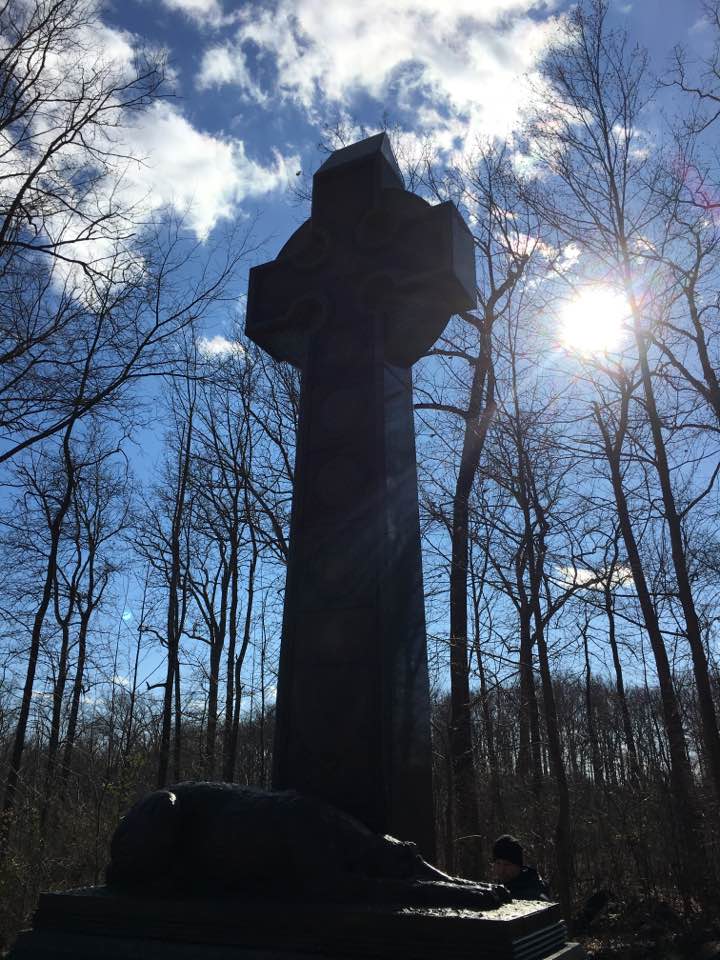
Whenever I go to Gettysburg I stop at the Irish Brigade memorial near the edge of the bloody Wheat Field and speak of its service during the war and the absolution granted to it by its chaplain, Father Corby before it went into battle that hot summer afternoon of July 2nd 1863. Likewise I tell the story of the young Colonel Paddy O’Rorke, the first Irish Catholic to graduate from West Point who died leading his regiment at Little Round Top, not far from where his kinsmen were fighting at the Wheat Field.

So I wish you a Happy Saint Patrick’s Day even as I reflect more on my Irish heritage and raise a pint or two; after all a bird never flew on one wing. Sláinte.

Peace

Padre Steve+

1 Comment

Filed under History, Loose thoughts and musings

The Christian Choice: The Idolatrous Worship of Power or Stand in Favor of the Weak

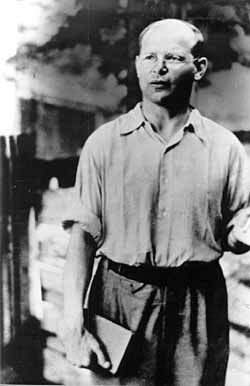
Dietrich Bonhoeffer 

Friends of Padre Steve’s World,

One of the most frightening things to me as a historian who happens of claim to be a Christian is the propensity for the Church and its leaders to be attracted to the worship of power and all of its folly. This has been the case since Constantine made Christianity the State religion of the Roman Empire. Leaders of the church in every place and clime as well as almost every denomination have cozied up to rulers in the pursuit of power almost always to the detriment the Church and sometimes their nation. The hierarchies of different churches were in the forefront of the extermination of supposed “heretics,” the persecution of non-state favored religions, the slave trade, the conquest, subjugation, and extermination of indigenous peoples in the Americas, Africa, parts of Asia; they were often the supporters of disastrous wars, and at home used their place of power to wealthy beyond all measure.

Conversely, on the occasions where the Church and its leaders have advocated for the poor, the marginalized, and others who had no earthly power it lead to advances in human rights and liberty. The abolition of slavery in Great Britain was led by William Wilberforce against heated opposition in Parliament and even the Church of England that spanned decades. During the period of the Industrial Revolution, some churches and Christians made a determined effort to end child labor, support workers’ rights, and advocate for the poor, but many others feasted upon the wealth that their rich benefactors lavished upon them and remained silent. Dr. Martin Luther King Jr. and other African American church leaders helped lead the Civil Rights movement and were joined by some white religious leaders, but many others, including men who were early leaders of the Christian Right opposed the Civil rights movement and used their pulpits to advocate for segregation. Many other just remained silent, just as their forbears had from Constantine one. Silence and the acquiescence to injustice has been a hallmark of the Christian church.

The German martyr Dietrich Bonhoeffer saw the disastrous effects of the German church’s subservience to the Nazi regime and before that to the Kaiser. He wrote:

“Christianity stands or falls with its revolutionary protest against violence, arbitrariness and pride of power and with its plea for the weak. Christians are doing too little to make these points clear rather than too much. Christendom adjusts itself far too easily to the worship of power. Christians should give more offense, shock the world far more, than they are doing now. Christian should take a stronger stand in favor of the weak rather than considering first the possible right of the strong.”

Sophie Scholl (Center)

Bonhoeffer spoke those words in a 1934 sermon, just a bit over a year following the Nazi takeover as Hitler was still consolidating his power and before he and his regime began their war of conquest and extermination. Some German Christians did take the chance to stand up for those oppressed by the Nazis, both in Germany in in the areas the Nazis conquered. Many of those who did would pay for their opposition with either their freedom or their lives, but most of the church was silent. One of the young Christians who opposed the Nazis was Sophie Scholl, a 22 year old student at the University of Munich. She and a number of fellow students formed a group called the White Rose to distribute anti-Nazi materials and to speak out against the crimes of the regime. She wanted those Christians of her day that silence was not an option. She wrote:

“The real damage is done by those millions who want to ‘survive.’ The honest men who just want to be left in peace. Those who don’t want their little lives disturbed by anything bigger than themselves. Those with no sides and no causes. Those who won’t take measure of their own strength, for fear of antagonizing their own weakness. Those who don’t like to make waves—or enemies. Those for whom freedom, honor, truth, and principles are only literature. Those who live small, mate small, die small. It’s the reductionist approach to life: if you keep it small, you’ll keep it under control. If you don’t make any noise, the bogeyman won’t find you. But it’s all an illusion, because they die too, those people who roll up their spirits into tiny little balls so as to be safe. Safe?! From what? Life is always on the edge of death; narrow streets lead to the same place as wide avenues, and a little candle burns itself out just like a flaming torch does. I choose my own way to burn.”

The same is true today in the United States. The vast majority of Evangelical Christians who support the policies of the Trump presidency in order to be at the table of temporal power have cast the church into the pigsty of lies and polices that crush the lives of people who have no power and mock the words of Jesus.

There is a choice to be made by anyone who claims the mantle of Jesus the Christ or claims to follow him. Will we do better than our ancestors or will we to silently slide down the road to perdition?

With that I will end for the day. Until tomorrow,

Peace

Padre Steve+

3 Comments

Filed under christian life, civil rights, ethics, faith, History, leadership, News and current events, Political Commentary, Religion

“I am not a tool of any President!” Will a Republican Emulate Stephen A. Douglas?

Stephen A. Douglas

Friends of Padre Steve’s World,

Barbara Tuchman wrote in her book The March of Folly: From Troy to Vietnam something that we are observing up close and personal as President Trump and his administration flounder in a sea of make believe, a cloud cuckoo land of alternative facts, alternative truth, and alternative history:

“Wooden-headedness, the source of self-deception, is a factor that plays a remarkably large role in government. It consists in assessing a situation in terms of preconceived fixed notions while ignoring or rejecting any contrary signs. It is acting according to wish while not allowing oneself to be deflected by the facts.”

To be true, the Trump administration is not the first in history, in fact not even in our own country to ignore facts when making decisions. However, it is remarkable in its ability not only to shun facts but to make up its own narrative that depends on denying reality while impugning the character, honesty, and decency of those who present facts and truth that is verifiable. To be sure, competence and prudence are not and probably will never be marks of President Trump, his closest advisors, or his enablers in Congress. My hope is that some Republican in either the House or Senate rises up to confront the ineptitude and folly being demonstrated on a daily basis.

President James Buchanan

In some ways the incompetence and refusal to deal with reality by the Trump administration reminds me of the administration of James Buchanan during the years before the American Civil War. Buchanan’s collusion with Chief Justice Roger Taney regarding the Dred Scott decision before his inauguration stained him from the beginning and poisoned his relationship with Congress by declaring that the Congress never had the right to limit slavery as it had in the Missouri Compromise. Buchanan’s presidency is considered by most historians to be the worst in American history, incompetent, arrogant, and ineffective.

Likewise, Buchanan’s attempt to jam the Lecompton Constitution through Congress as a reward to Southern Democrats blew up in his face. The Lecompton Constitution was a gerrymandered bill which ignored the will of the vast majority of Kansas’s settlers who were anti-slavery. The work of the pro-slavery element in Kansas was so onerous that it brought Republicans and Northern Democrats together for the first time as Southern Democrats threatened secession if Kansas was not admitted as a Slave State. Ignoring warnings that supporting a measure that would open the door to slavery in all the western territories would split his party, Buchanan pushed on. His intransigence on the matter brought Democratic Senator Stephen A. Douglas of Illinois to the fore in opposing it. Nicknamed “the Little Giant,” Douglas was the odds on favorite to be the Democratic nominee for the Presidency. Douglas was not against the institution of slavery, and he was a racist, but he had no tolerance for those who would upend carefully crafted compromises to expand it through the whole country. Thus he  took his case to the floor of the Senate and to the President himself.

The Confrontation between the Senator and the President was unparalleled. Douglas recalled, “The Lecompton constitution, I told Buchannan bluntly, was a blatant fraud on the people of Kansas and the process of democracy, I warned him not to recommend acceptance of it. With his head titled forward in that bizarre habit of his, he said that he intended to endorse the constitution and send it to Congress. “If you do,” I thundered, “I’ll denounce it the moment that it is read.” His face turned red with anger. “I’ll make Lecompton a party test,” he said. “I expect every democratic Senator to support it.” I will not, sir!

Angry and offended by the confrontation of Douglas, Buchanan cut the senator off and issued his own threat to Douglas and his political career saying, “I desire you to remember that no Democrat ever yet differed from an administration of his own choice without being crushed….Beware of the fate of Tallmadge and Rives,” two senators who had gone into political oblivion after crossing Andrew Jackson.” The redoubtable Senator from Illinois was undeterred by the President’s threat and fought back, “Douglas riposted: “Mr. President, I wish to remind you that General Jackson is dead, sir.”  It was an unprecedented action by a sitting Senator, to confront a President of one’s own party and threaten to oppose him in Congress was simply not done, but now Douglas was doing it, but doing so to his President’s face, and the consequences for him, his party, and the country would be immense.

Undeterred by facts, Buchanan and Southern Democrats fought for the bill’s passage. When Buchanan’s supporters pushed for Lecompton’s approval and the admission of Kansas as a Slave State, Douglas fired back, warning “You do,” I said, “and it will lead directly to civil war!” I warned the anti-Lecompton Democrats of the North that the President intended to put the knife to the throat of every man who dared to think for himself on this question and carry out principles in good faith. “God forbid,” I said “that I ever surrender my right to differ from a President of the United States for my own choice. I am not a tool of any President!”

Under Douglas the Northern Democrats joined with Republicans for the first time to defeat the admission of Kansas as a Slave State. Douglas recalled the battle:

“After the Christmas recess, the Administration unleashed its heavy horsemen: Davis, Slidell, Hunter, Toombs, and Hammond, all southerners. They damned me as a traitor and demanded that I be stripped of my chairmanship of the Committee on Territories and read out of the Democratic party. Let the fucking bastards threaten, proscribe, and do their worst, I told my followers; it would not cause any honest man to falter. If my course divided the Democratic party, it would not be my fault. We were engaged in a great struggle for principle, I said, and we would defy the Administration to the bitter end.”

Douglas and his supporters did just that, Buchanan and his supporters were outfought and outmaneuvered by Douglas’s Democrats and their Republican allies. The bill was sent back to Kansas where in a new election the people of Kansas voted solidly against the Lecompton Constitution. In the following Congressional elections the thoroughly discredited Democrats lost their majority, their party now hopelessly divided with Southerners determined to destroy Douglas at any cost, even if it meant losing the presidency, the conflict opened the door for the election of Abraham Lincoln in 1860.

I wonder if there will be a Republican in the Congress with the courage that Stephen A. Douglas displayed in confronting the incompetent and vindictive President Buchanan during the Lecompton Crisis. Will there be a Republican with enough courage to stop the insanity of the Trump administration even if it means in the short term to divide the party and doom their political future? Honestly I doubt it, but if Trump’s march of folly is to be stopped, someone in the Republican Senate or House will have to have the courage to stand up and defend the necessity of thinking for themselves, and doing what is right.

Have a great day.

Peace

Padre Steve+

1 Comment

Filed under History, laws and legislation, leadership, News and current events, Political Commentary

Abandon Facts and Abandon Freedom: Contending Against Alternative Truth, Facts, and History

Friends of Padre Steve’s World,

Marcus Aurelius wrote:

“If someone is able to show me that what I think or do is not right, I will happily change, for I seek the truth, by which no one was ever truly harmed. It is the person who continues in his self-deception and ignorance who is harmed.”

I wrote a review of Timothy Snyder’s book On Tyranny: Twenty Lessons from the Twentieth Century on Tuesday and today I wanted to follow up on one of the key points made by Dr. Snyder in that work. Snyder wrote: “To abandon facts is to abandon freedom. If nothing is true, then no one can criticize power, because there is no basis to do so. If nothing is truth, then all is spectacle. The biggest wallet pays for the most blinding lights.”  I have been worried about that since the election campaign where Snyder noted that seventy-eight percent of the claims and statements made by President Trump on the election trail were demonstrably false.

As Snyder noted the falsehoods came so fast that they were overwhelming. The assertions were presented as if they were the truth, as if they were fact, creating as Kellyanne Conway said, a world of “alternate facts” and “alternative truths.” Of course there are no such thing as “alternative facts” or “alternative truths” when it comes to the reality that we know. There may be arguments about things that we cannot fully observe or understand, such as the ultimate issues of whether there is a God or not, and if so what is true about him, her, or it; likewise there are things that change the way that we see the world such as when scientists make new discoveries.

But in neither case do these examples posit that there are alternative truth, there are things like God that cannot be proven, and there is a universe that we do not fully understand, but those have nothing to do with people who flagrantly lie about things that are commonly known and claim that the lies are the truth. Such claims are cynical and designed to ensure that those in power cannot be challenged, and when deployed by demagogues in a society in which fear has become an overriding factor, can be frighteningly effective. Thus when the President says “I alone can fix it” or “I am your voice” those who have lost the ability to think critically and who have surrendered to the unending mantras of the demagogue do not question them, they are not matters of reason, they are matters of faith.

Throughout the campaign Trump and his campaign surrogates not only twisted truth, but lied so many times that fact checkers could hardly keep up with their untruths. After the election, Trump surrogate Scottie Nell Hughes told Diane Rehm of NRP: “There’s no such thing, unfortunately, anymore, of facts,” she continued, “Mr. Trump’s tweet, amongst a certain crowd, a large — a large part of the population, are truth. When he says that millions of people illegally voted, he has some — in his — amongst him and his supporters, and people believe they have facts to back that up. Those that do not like Mr. Trump, they say that those are lies, and there’s no facts to back it up.” The biggest problem in this interview was that Ms. Hughes lied and twisted what happened to fit the Trump campaign narrative that truth did not matter. The fact was that then candidate Trump’s tweets were devoid of fact and the criticism of them was based on fact.

I have written about how some people and parties present myths as truth, twisting history to meet their craven desire for power and control. This appeal to myth was the genus of the President’s campaign slogan “Make America great again.” Such slogans are the instruments by which demagogues in every place and time have used to not only gain power, but to convince people to do things that in normal times they would never consider doing. They are distortions of history that blind their followers to real truth, even worse, they compel people to never learn history and thus accept the lies as truth with all too often fatal consequences. Snyder calls this “the politics of eternity” which “performs a masquerade of history… It is concerned with the past, but in a self-absorbed way, free of any real concern with facts. Its mood is a longing for past moments that never really happened during epochs that were, in fact, disastrous.” To the politicians who like the President rely on them, the past is “a vast misty courtyard of illegible monuments to national victimhood, all of them equally distant from the present, all of them equally accessible for manipulation. Every reference to the past seems to involve an attack by some mortal enemy upon the purity of the nation.” These are the basis for things like the Myth of the Lost Cause, and the Noble South, and the Stab in the Back.

This is dangerous distortion of history. George Santayana wrote, “Those who cannot remember the past are condemned to repeat it.” But I think that Howard Zinn said it the best:

“History can come in handy. If you were born yesterday, with no knowledge of the past, you might easily accept whatever the government tells you. But knowing a bit of history–while it would not absolutely prove the government was lying in a given instance–might make you skeptical, lead you to ask questions, make it more likely that you would find out the truth.”

I cannot help but think that the rapidity of the lies, the incessant attacks on the institutions of our country’s democracy, and the rights established in the Constitution by the President, people in his administration, and his supporters, especially those in the Breitbart universe of alternative media, are nothing but an attempt to delegitimize those institutions in order to gain total control and establish some kind of authoritarian and totalitarian state. The deluge of lies and distortions practiced by this administration and so many others who have taken power after being legally elected or appointed is designed to ensure that people no longer believe in truth. Hannah Arendt wrote: “The ideal subject of totalitarian rule is not the convinced Nazi or the convinced Communist, but people for whom the distinction between fact and fiction ( i.e., the reality of experience) and the distinction between true and false ( i.e ., the standards of thought) no longer exist.”

That is the very danger that we face today because many people, especially the President’s most stalwart and sometime violent defenders, as well as his enablers in Congress do not care, and others are so confused and distracted by the tactics of denial and deflection coming from the administration that they are growing weary. Polls show that many people are quite alright with limiting freedom of the press, freedom of speech, the role of the courts and other institutions designed to check executive power, and have no problem with limiting the rights of groups that they have identified as their enemy, and even limitations placed on their own freedom if it serves to absolve them of responsibility for things that they are too uncomfortable to deal with. The British military historian and theorist B.H. Liddell-Hart observed:

“We learn from history that in every age and every clime the majority of people have resented what seems in retrospect to have been purely matter-of-fact comment on their institutions. We learn too that nothing has aided the persistence of falsehood, and the evils resulting from it, more than the unwillingness of good people to admit the truth when it was disturbing to their comfortable assurance. Always the tendency continues to be shocked by natural comment and to hold certain things too “sacred” to think about.”

Believe me I desperately want to be wrong about this, but my study of history tells me that I am not. Thus I believe that every claim of the President and the administration must be questioned and its veracity determined, before it is accepted as truth. The time has come when we cannot simply wait to see what happens and give this administration the benefit of the doubt. Immediately after the election I was prepared to do that, but the actions of the President and his advisors have demonstrated to me that this is no longer an option. I will of course remain true to my oath under the Constitution, I will still respect the office of the Presidency, but I will always stand for the Constitution and defend those rights, and the institutions that are established by it.

Truth: historical, scientific, and verifiable is not our enemy. However, lies, and distortions, and the trampling of truth under the guise of “alternative truth,” “alternative fact,” and “alternative history” is the moral enemy of our republic and its democratic institutions. Thus truth must be upheld and fought for at all costs, because once you have sacrificed truth on the altar of political expediency you pave the way for freedom to be sacrificed.

So until tomorrow.

Peace

Padre Steve+

5 Comments

Filed under culture, ethics, History, News and current events, philosophy, Political Commentary

“If nothing is true…” A Review of “On Tyranny: Twenty Lessons from the Twentieth Century” by Timothy Snyder

On Tyranny: Twenty Lessons from the Twentieth Century, 128 pages, Tim Duggan Books, March 2017

Timothy Snyder is the Housum Professor of History at Yale University and a permanent fellow at the Institute for Human Sciences in Vienna. Among his publications are several award-winning books, all of which have been translated: The Red Prince: The Secret Lives of a Habsburg Archduke (2008); Bloodlands: Europe Between Hitler and Stalin (2010), Black Earth: The Holocaust as History and Warning, Snyder is also the co-editor of Wall Around the West: State Borders and Immigration Controls in Europe and North America (2001) and Stalin and Europe: Terror, War, Domination (2013). He helped Tony Judt to compose a thematic history of political ideas and intellectuals in politics, Thinking the Twentieth Century (2012). He is a member of the Committee on Conscience of the United States Holocaust Memorial Museum and sits on the advisory councils of the Yivo Institute for Jewish Research and other organizations.

Friends of Padre Steve’s World,

Today a short review of a very timely new book. Dr. Timothy Snyder’s On Tyranny: Twenty Lessons from the Twentieth Century.

The book is a must read for anyone concerned with the direction that the United States and Western Europe are heading at this time. If we have an expert in understanding tyranny today it is Dr. Snyder. His research and writing in that field, highlighted by his books and publications on the history of Germany and Eastern Europe should be read in order to grasp the full implications of totalitarianism.

This book is timely and concise. It easily can be read in one sitting, but you will want to go back and read it again and again as his salient points need to be thought about, digested, and taken for action, not only in public but in our private lives.

Snyder’s premise is that Americans are no wiser than the peoples of Europe in the 1920s and 1930s in their response and acceptance of totalitarian movements. He asserts that we must grapple with history to understand what is going on and to warn us that temptation “to think our democratic heritage automatically protects us from threats,” is a “misguided reflex.”

In the twenty short chapters of the book Snyder presents twenty historical lessons from the twentieth century which he has adapted to the situation that we find ourselves today. Our founders were aware of the dangers to the republic that they founded, and from their study of Greece and Rome, particularly the threats of oligarchy and empire which overcame those ancient democracies. He explains that the founders attempted to mitigate those dangers in the institutions that they created but did not think that what they created was immune to those threats. James Madison wrote that tyranny rises “on some favorable emergency.”  The understood as Aristotle did that inequity brought instability and Plato’s belief that demagogues exploited free speech to install themselves as tyrants. They “fought to avoid the evil that they, like the ancient philosophers, called tyranny.”  That is an ongoing struggle today, both in the United States and Western Europe.

His talks about the means that authoritarians use to gain and keep power, particularly in their cynical derision of truth, claims to different truths, and alternative facts. One particular point that he makes is that we have to believe in truth, and fight for it. He writes: “To abandon facts is to abandon freedom. If nothing is true, then no one can criticize power, because there is no basis to do so. If nothing is truth, then all is spectacle. The biggest wallet pays for the most blinding lights.”

In each chapter he makes very practical observations and recommendations which can be implemented in our public and private lives. One of the most important of these is real human contact, meeting and getting to know people who came from different backgrounds and experiences than us; simple things like making eye contact, and having private lives, building friendships, and hobbies, even as he notes former Czech dissident and later President Vaclav Havel even suggested brewing beer.

But he also mentions the importance of remembering professional ethics, investigating truth claims, standing out in the crowd, not obeying authority in advance, defend democratic institutions including the press and the courts, to listen for dangerous words such as extremism and terrorism, as well as what he calls the “fatal notions of emergency and exception” and the “treacherous use of patriotic vocabulary.”

I could go on, but I would rather that you read his words. The book can be purchased for under seven dollars, and the Kindle edition for under three dollars.

I highly recommend this book, it is a must for our day.

Peace

Padre Steve+

4 Comments

Filed under ethics, History, News and current events, philosophy, Political Commentary

Tragic Heroes of Little Round Top: The Hidden Side of the Hero

fannychamberlain1

Fannie and Joshua Chamberlain (Dale Gallon) 

Friends of Padre Steve’s World,

I’m back after an amazing but very cold weekend in Gettysburg. I had a great group of students as well as guests. The past few days I have posted articles from my still untitled text on the Battle of Gettysburg dealing with the lives of three of the men who were immortalized during the battle of Little Round Top. Today is A follow up to those articles dealing with an American icon with feet of clay. The impact of war on those who go to war and the loved ones that they return to is often incredibly difficult, I know from experience. I am lucky, first I survived war, then I at least until now have survived its aftermath, finally, I have a wife who survived it with me and in spite of all the trauma our marriage not only survived but has become better. I hope that you appreciate this account of the post-war life of Joshua and Fannie Chamberlain.

Peace

Padre Steve+

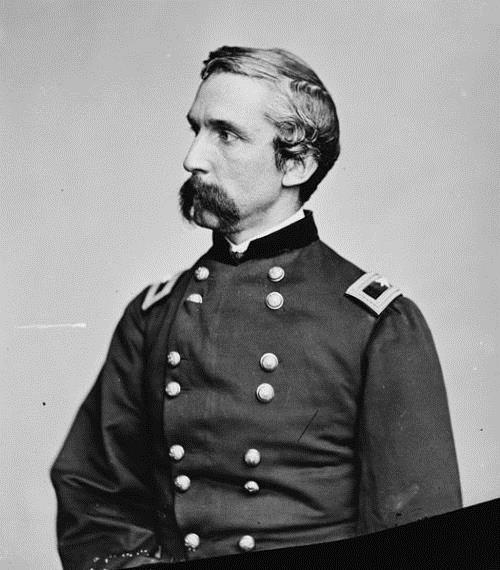
Chamberlain’s accolades were certainly earned but others on that hill have been all too often overlooked by most people. This list includes Gouverneur Warren who was humiliated by Phillip Sheridan at Five Forks, Strong Vincent who died on of wounds suffered on Little Round Top and Paddy O’Rorke, the commander of the 140th New York of Weed’s Brigade on Vincent’s right who was mortally wounded that day.

After the war like most citizen soldiers, Chamberlain returned to civilian life, and a marriage that was in crisis in which neither Joshua nor Fannie seemed able to communicate well enough to mend.  The troubled couple “celebrated their tenth wedding anniversary on December 7, 1865. He gave her a double banded gold-and-diamond bracelet from Tiffany’s, an extravagant gift that only temporarily relieved the stresses at work just below the surface of their bland marriage. Wartime separation had perhaps damaged it more than Chamberlain knew.”  [1]

When he came home Chamberlain was unsettled. Fannie quite obviously hoped that his return would reunite them and bring about “peaceful hours and the sweet communion of uninterrupted days with the husband that had miraculously survived the slaughter” [2] and who had returned home, but it was not to be. Army life had given him a sense of purpose and meaning that he struggled to find in the civilian world. He was haunted by a prediction made by one of his professors. A prediction that “he would return from war “shattered” & “good for nothing,” [3] Chamberlain began to search for something to give his life meaning. He began to write a history of V Corps and give speeches around the northeast, and “these engagements buoyed his spirit, helping him submerge his tribulations and uncertainties in a warm sea of shared experience. [4] In his travels he remained apart from Fannie, who remained with the children, seldom including her in those efforts. She expressed her heart in a letter in early 1866:

“I have no idea when you will go back to Philadelphia, why dont you let me know about things dear?….I think I will be going towards home soon, but I want to hear from you. What are you doing dear? are you writing for your book? and how was it with your lecture in Brunswick- was it the one at Gettysburg? I look at your picture when ever I am in my room, and I am lonely for you. After all, every thing that is beautiful must be enjoyed with one you love, or it is nothing to you. Dear, dear Lawrence write me one of the old letters…hoping to hear from you soon…I am as in the old times gone bye Your Fannie.” [5]

In those events he poured out his heart in ways that seemed impossible for him to do with Fannie. He accounted those wives, parents, sons and daughters at home who had lost those that they loved, not only to death:

“…the worn and wasted and wounded may recover a measure of their strength, or blessed by your cherishing care live neither useless nor unhappy….A lost limb is not like a brother, an empty sleeve is not like an empty home, a scarred breast is not like a broken heart. No, the world may smile again and repair its losses, but who shall give you back again a father? What husband can replace the chosen of your youth? Who shall restore a son? Where will you find a lover like the high hearted boy you shall see no more?” [6]

Chamberlain set his sights on politics, goal that he saw as important in championing the rights of soldiers and their well treatment by a society, but a life that again interrupted his marriage to Fannie and brought frequent separation. Instead of the one term that Fannie expected, Chamberlain ended up serving four consecutive one year terms as Governor of Maine, and was considered for other political offices. However, the marriage continued to suffer and Fannie’s “protracted absence from the capital bespoke her attitude toward his political ambitions.” [7]  Eventually Chamberlain returned home and. “For twelve years following his last term as governor, he served as president of Bowdoin College, his alma mater. [8]

He became a champion of national reconciliation admired by friend and former foe alike, but he returned with bitterness towards some in the Union who he did not believe cared for his comrades or their families, especially those who had lost loved ones in the war. While saluting those who had served in the Christian and Sanitary Commissions during the war, praising veterans, soldiers and their families he noted that they were different than:

Those who can see no good in the soldier of the Union who took upon his breast the blow struck at the Nation’s and only look to our antagonists for examples of heroism- those over magnanimous Christians, who are so anxious to love their enemies that they are willing to hate their friends….I have no patience with the prejudice or the perversity that will not accord justice to the men who have fought and fallen on behalf of us all, but must go round by the way of Fort Pillow, Andersonville and Belle Isle to find a chivalry worthy of praise.” [9]

Chamberlain’s post-war life, save for the times that he was able to revisit the scenes of glory and be with his former comrades was marred by deep personal and professional struggles and much suffering. He struggled with the adjustment to civilian life, which for him was profoundly difficult. He “returned to Bowdoin and the college life which he had sworn he would not again endure. Three years of hard campaigning however, had made a career of college teaching seem less undesirable, while his physical condition made a permanent army career impossible.” [10] The adjustment was more than even he could anticipate, and the return to the sleepy college town and monotony of teaching left much to be desired.

These are not uncommon situations for combat veterans to experience, and Joshua Chamberlain, the hero of Little Round Top who was well acquainted with the carnage of war, suffered immensely. His wounds never fully healed and he was forced to wear what would be considered an early form of a catheter and bag. In 1868 he was awarded a pension of thirty dollars a month for his Petersburg wound which was described as “Bladder very painful and irritable; whole lower part of abdomen tender and sensitive; large urinal fistula at base of penis; suffers constant pain in both hips.” [11] Chamberlain struggled to climb out of “an emotional abyss” in the years after the war. Part was caused by his wounds which included wounds to his sexual organs, shattering his sexuality and caused his marriage to deteriorate.

He wrote to Fannie in 1867 about the “widening gulf between them, one created at least in part by his physical limitations: “There is not much left in me to love. I feel that all too well.” [12] Chamberlain’s inability to readjust to civilian life following the war, and Fanny’s inability to understand what he had gone through during it caused great troubles in their marriage. Chamberlain “felt like hell a lot of the time, morose in mood and racked with pain.” [13] His wounds would require more surgeries, and in “April 1883 he was forced to have extensive surgery on his war wounds, and through the rest of the decade and well into the next he was severely ill on several occasions and close to death once.” [14]

By 1868 the issues were so deep that Fannie threatened him with divorce and was accusing Joshua of domestic abuse, not in court, but among her friends and in town; a charge which he contested. It is unknown if the abuse actually occurred and given Chamberlain’s poor physical condition it is unlikely that he could have done what she claimed, it is actually much more likely, based on her correspondence as well as Fannie’s:

“chronic depression, her sense of being neglected of not abandoned, and her status as an unappreciated appendage to her husband’s celebrated public career caused her to retaliate in a manner calculated to get her husband’s attention while visiting on him some of the misery she had long endured.” [15]

The bitterness in their relationship at the time was shown in his offer to her of a divorce; a condition very similar to what many combat veterans and their families experience today. After he received news of the allegations that Fannie was spreading among their friends around town, Chamberlain wrote to her:

“If it is true (as Mr. Johnson seems to think there is a chance of its being) that you are preparing for an action against me, you need not give yourself all this trouble. I should think we had skill enough to adjust the terms of a separation without the wretchedness to all our family which these low people to whom it would seem that you confide your grievances & plans will certainly bring about.

You never take my advice, I am aware.

But if you do not stop this at once it will end in hell.” [16]

His words certainly seem harsh, especially in our time where divorce, be it contested or uncontested does not have the same social stigma it did then. Willard Wallace writes that the letter “reflects bewilderment, anger, even reproof, but not recrimination; and implicit throughout is an acute concern for Fanny, who did not seem to realize the implications of legal action. The lot of a divorcee in that era in a conservative part of the country was not likely to be a happy one.” [17]This could well be the case, but we do not know for sure his intent. We can say that it speaks to the mutual distress, anger and pain that both Joshua and Fannie were suffering at the time.

The marriage endured a separation which lasted until 1871 when his final term of office expired they reconciled, and the marriage did survive, for nearly forty more years. “Whatever differences may have once occasionally existed between Chamberlain and Fanny, the two had been very close for many years.” [18] The reconciliation could have been for any number of reasons, from simple political expedience, in that he had been rejected by his party to be appointed as Senator, and the realization that “that politics, unlike war, could never stir his soul.” [19] Perhaps he finally recognized just how badly he had hurt her over all the years of his neglect of her needs. But it is just as likely that deep in his heart he really did love her despite his chronic inability for so many years to demonstrate it in a way she could feel. Fannie died in 1905 and Chamberlain, who despite all of their conflicts loved her and grieved her, a grief “tinged with remorse and perhaps also with guilt.” [20] The anguished widower wrote after her death:

“You in my soul I see, faithful watcher, by my cot-side long days and nights together, through the delirium of mortal anguish – steadfast, calm, and sweet as eternal love. We pass now quickly from each other’s sight, but I know full well that where beyond these passing scenes you shall be, there will be heaven!”

Chamberlain made a final trip to Gettysburg in May of 1913. He felt well enough to give a tour to a delegation of federal judges. “One evening, an hour or so before sunset, he trudged, alone, up the overgrown slope of Little Round Top and sat down among the crags. Now in his Gothic imagination, the ghosts of the Little Round Top dead rose up around him….he lingered up the hillside, an old man lost in the sepia world of memory.” [21] He was alone.

Chamberlain died on a bitterly cold day, February 24th 1914 of complications from complications of the ghastly wound that he received at Petersburg in 1864. The Confederate minié ball that had struck him at the Rives’ Salient finally claimed his life just four months shy of 50 years since the Confederate marksman found his target.

Sadly, the story of the marriage of Joshua and Fannie Chamberlain is all too typical of many military marriages and relationships where a spouse returns home changed by their experience of war and struggles to readjust to civilian life. This is something that we need to remember when we encounter those changed by war and the struggles of soldiers as well as their families; for if we have learned nothing from our recent wars it is that the wounds of war extend far beyond the battlefield, often scarring veterans and their families for decades after the last shot of the war has been fired.

The Battle for Little Round Top which is so legendary in our collective history and myth was in the end something more than a decisive engagement in a decisive battle. It was something greater and larger than that, it is the terribly heart wrenching story of ordinary, yet heroic men like Vincent, Chamberlain and O’Rorke and their families who on that day were changed forever. As Chamberlain, ever the romantic, spoke about that day when dedicating the Maine Monument in 1888; about the men who fought that day and what they accomplished:

“In great deeds, something abides. On great fields, something stays. Forms change and pass; bodies disappear; but spirits linger, to consecrate ground for the vision-place of souls… generations that know us not and that we know not of, heart-drawn to see where and by whom great things were suffered and done for them, shall come to this deathless field, to ponder and dream; and lo! the shadow of a mighty presence shall wrap them in its bosom, and the power of the vision pass into their souls.” [22]

Notes 

[1] Ibid. Golay, To Gettysburg and Beyond p.282

[2] Ibid. Smith Fanny and Joshua p.182

[3] Ibid. Smith, Fanny and Joshua p.180

[4] Ibid. Longacre Joshua Chamberlain p.260

[5] Ibid. Smith, Fanny and Joshua pp.178-179

[6] Ibid. Smith, Fanny and Joshua p.181

[7] Ibid. Longacre Joshua Chamberlain p.

[8] Ibid. LaFantasie Twilight at Little Round Top p.245

[9] Ibid. Smith, Fanny and Joshua p.180 It is interesting to note that Chamberlain’s commentary is directed at Northerners who were even just a few years after the war were glorifying Confederate leader’s exploits. Chamberlain instead directs the attention of his audience, and those covering the speech to the atrocities committed at the Fort Pillow massacre of 1864 and to the hellish conditions at the Andersonville and Belle Isle prisoner of war camps run by the Confederacy.

[10] Ibid. Wallace The Soul of the Lion p.203

[11] Ibid. Golay, To Gettysburg and Beyond p.289

[12] Ibid. Longacre  Joshua Chamberlain: The Soldier and the Man p.259

[13] Ibid. Golay, To Gettysburg and Beyond p.288

[14] Ibid. Longacre Joshua Chamberlain: The Soldier and the Man p.285

[15] Ibid. Longacre Joshua Chamberlain: The Soldier and the Man p.268

[16] Chamberlain, Joshua L. Letter Joshua L. Chamberlain to “Dear Fanny” [Fanny Chamberlain], Augusta, November 20, 1868 retrieved from Bowdoin College, Joshua Lawrence Chamberlain Documents http://learn.bowdoin.edu/joshua-lawrence-chamberlain/documents/1868-11-20.html 8 November 2014

[17] Ibid. Wallace The Soul of the Lion p.227

[18] Ibid. Wallace The Soul of the Lion p.297

[19] Ibid. Golay To Gettysburg and Beyond p.290

[20] Ibid. Longacre  Joshua Chamberlain: The Soldier and the Man p.290

[21] Ibid. Golay To Gettysburg and Beyond PPP.342-343

[22] Chamberlain, Joshua Lawrence. Chamberlain’s Address at the dedication of the Maine Monuments at Gettysburg, October 3rd 1888 retrieved from http://www.joshualawrencechamberlain.com/maineatgettysburg.php 4 June 2014

4 Comments

Filed under civil war, Gettysburg, History, marriage and relationships, mental health, Military, PTSD

Tragic Heroes of Little Round Top: Part Three

o'rorke

The Irish Regular: Paddy O’Rorke

To Vincent’s right another hero emerged, Colonel Patrick “Paddy” O’Rorke; the young 27 year old Colonel of the 140th New York. O’Rorke was born in County Cavan, Ireland in 1836. His family immigrated to the United States, settling in Rochester, New York during the great wave of Irish immigration between 1838 and 1844. There the young O’Rorke worked hard to overcome the societal prejudices against Irish Catholics. After he completed his secondary education, he worked as a marble cutter before obtaining an appointment to West Point in 1857.  He was the only foreign born member of his class at the academy from which he graduated first in his class in 1861. “Aggressive and bold, there was also something that implied gentility and tenderness…Beneath the mettle of a young professional soldier was a romantic heart that could croon a ballad before wielding the sword.” [1] O’Rorke married his childhood, schoolmate, fellow parishioner and childhood sweetheart, Clarissa Wadsworth Bishop, in the summer of 1862 and shortly thereafter accepted a commission as colonel of the 140th New York Infantry.

At Gettysburg, O’Rorke was with Weed’s brigade when Gouverneur Warren found him as he attempted to get any available troops to the summit of Little Round Top. When Warren found O’Rorke, who had been one of his students at West Point, he ordered him to follow him up the hill, saying “Paddy…give me a regiment.” [2] When O’Rorke said that Weed expected him to be following him, Warren took the responsibility telling O’Rorke “Bring them up on the double quick, and don’t stop for aligning. I’ll take responsibility.” [3] O’Rorke followed with his gallant regiment with the rest of the brigade under Weed following behind them.

The 140th New York’s entrance onto the summit of Little Round Top must have been dramatic. Dressed in new Zouave uniforms that they had been issued in early June “the men were “jaunty but tattered” in baggy blue trousers, red jackets, and fezzes.” [4] O’Rorke’s New Yorkers entered the battle to the right of the Vincent’s 16th Michigan, which was being swarmed by the 4th and 5th Texas and 4th Alabama, who thought that victory was at hand. O’Rorke did not even take time to form his men for battle but drew his sword and yelled, “Down this way boys!” [5] His troops responded magnificently slamming into the surprised Texans and Alabamians and “at once the Confederate assault began to dissolve” [6]

O’Rorke’s troops smashed into the surging Rebel ranks, stopping the Confederate assault in its tracks and taking over two-hundred prisoners. As O’Rorke “valiantly led his men into battle, surging down the hill toward the shelf of rock so recently vacated by the right wing of the 16th Michigan, he paused for a moment to cheer his men on and wave them forward. When he did, he was struck in the neck by an enemy bullet….O’Rorke, killed instantly slumped to the ground.” [7] But his regiment “had the initiative now. More and more men piled into a sloppy line, firing as fast as they could reload. Their dramatic appearance breathed renewed life into the other Union regiments on the hill, which now picked up their firing rates.” [8] The gallant young Irish colonel was dead, but he and his regiment had saved Vincent’s right flank. The regiment had suffered fearfully, “with 183 men killed or wounded, but they had managed to throw back the Texans. The adjutant of the 140th estimated that they came within sixty seconds of losing the top of the hill.” [9] O’Rorke’s soldiers were enraged by the death of their beloved colonel and picked out the Confederate who had killed him. One of the soldiers wrote “that was Johnny’s last shot, for a number of Companies A and G fired instantly.” It was said that this particular Johnny was hit, by actual count, seventeen times.” [10] Now led by company commanders the 140th stayed in the fight and solidified and extended the Federal line in conjunction with the rest of Weed’s brigade to their right.

The actions of Chamberlain’s, Vincent’s, and O’Rorke’s soldiers shattered Hood’s division. “Casualties among the Alabamians, Texans, and Georgians approached or exceeded 2,000. In the Texas Brigade commander Robertson had been wounded, three regimental commanders had fallen killed or wounded, and nearly all of the field officers lay on the ground.” [11]

The badly wounded Strong Vincent was taken to a field hospital at the Weikert farm where he lingered for five days before succumbing to his wounds. In the yard lay the body of Paddy O’Rorke whose regiment had saved his brigade’s right flank. Vincent knew that he was dying and he requested that a message be sent to Elizabeth for her to come to Gettysburg. It did not reach her in time. Though he suffered severe pain he bravely tried not to show it. Eventually he became so weak that he could no longer speak. “On July 7, a telegram from President Lincoln, commissioning Vincent a brigadier general, was read to him, but he could not acknowledge whether he understood that the president had promoted him for bravery in the line of duty.” [12] He died later that day and his body was transported home to Erie for burial. Ten weeks after his death his wife gave birth to a baby girl. The baby would not live a year and was buried next to him.

Colonel Rice, who led the 44th New York up the hill and took command of the brigade on Vincent’s death, memorialized his fallen commander in his general order to the brigade on July 12th:

“The colonel commanding hereby announces to the brigade the death of Brig. Gen. Strong Vincent. He died near Gettysburg, Pa., July 7, 1863, from the effects of a wound received on the 2d instant, and within sight of that field which his bravery had so greatly assisted to win. A day hallowed with all the glory of success is thus sombered by the sorrow of our loss. Wreaths of victory give way to chaplets of mourning, hearts exultant to feelings of grief. A soldier, a scholar, a friend, has fallen. For his country, struggling for its life, he willingly gave his own. Grateful for his services, the State which proudly claims him as her own will give him an honored grave and a costly monument, but he ever will remain buried in our hearts, and our love for his memory will outlast the stone which shall bear the inscription of his bravery, his virtues, and his patriotism.

While we deplore his death, and remember with sorrow our loss, let us emulate the example of his fidelity and patriotism, feeling that he lives but in vain who lives not for his God and his country. “[13]

Rice would be killed during the Battle of the Wilderness just ten months later. Vincent’s wife Elizabeth never married again and was taken in by the Vincent family. Vincent’s younger brother became an Episcopal Priest and Bishop and later provided a home for her. She became a tireless worker in the church working with charitable work for young women and children. This led to an interest in sacred art and she wrote two books: Mary, the Mother of Jesus and The Madonna in Legend and in Art. She also translated Delitzch’s Behold the Man and A Day in Capernaum from the German. [14] Elizabeth Vincent passed away in April 1914 and was buried beside her husband and daughter.

After the battle, as the army looked to replace the casualties in the ranks of senior leadership and “when Colonel Rice, in charge of 3rd Brigade after Vincent fell, was promoted to brigadier general and given another command” the new division commander Major General Charles Griffin, “insisted on having Chamberlain, for the 3rd Brigade.” [15]

Chamberlain survived the war to great acclaim being wounded three times, once during the siege of Petersburg the wound was so severe that his survival was in doubt and General Ulysses S. Grant promoted him on the spot. It was the only promotion that Grant gave on the field of battle. Grant wrote:

“He had been several times recommended for a brigadier-generalcy for gallant and meritorious conduct. On this occasion, however, I promoted him on the spot, and forwarded a copy of my order to the War Department, asking that my act might be confirmed without any delay. This was done, and at last a gallant and meritorious officer received partial justice at the hands of his government, which he had served so faithfully and so well.” [16]

He recovered from the wound, and was promoted to Major General commanding a division and awarded the Medal of Honor. He received the surrender of John Gordon’s division of the Army of Northern Virginia at Appomattox on April 9th 1865. When he did he ordered his men to present arms in honor of their defeated foe as those haggard soldiers passed his division. It was an act that helped spur a spirit of reconciliation in many of his former Confederate opponents.

To be continued…

Notes 

[1] LaFantasie, Glenn W. Twilight at Little Round Top: July 2, 1863 The Tide Turns at Gettysburg Vintage Books, a Division of Random House, New York 2005 pp.61-62

[2] Ibid. Jordan Happiness is Not My Companion: The Life of G.K. Warren p.93

[3] Ibid. Foote The Civil War, A Narrative. Volume Two Fredericksburg to Meridian p.504

[4] Ibid. Pfanz Gettysburg: The Second Day p.228

[5] Ibid. Pfanz Gettysburg: The Second Day p.228

[6] Ibid. LaFantasie Twilight at Little Round Top p.153

[7] Ibid. LaFantasie Twilight at Little Round Top p.154

[8] Ibid. Trudeau, Gettysburg: A Testing of Courage p.327

[9] Ibid. Jordan Happiness is Not My Companion: The Life of G.K. Warren p.93

[10] Ibid. Sears Gettysburg p.294

[11] Wert, Jeffry D. A Glorious Army: Robert E. Lee’s Triumph 1862-1863 Simon and Schuster, New York and London 2011 p.260

[12] Ibid. LaFantasie Twilight at Little Round Top p.207

[13] Ibid. Nevins What Death More Glorious p.86

[14] Ibid. Nevins What Death More Glorious pp.87-88

[15] Ibid. Wallace The Soul of the Lion p.115

[16] Ibid. Wallace The Soul of the Lion pp.134-135

3 Comments

Filed under civil war, Gettysburg, History, leadership, Military

Tragic Heroes of Little Round Top, Part One

Friends of Padre Steve’s World

I am at Gettysburg this weekend and I am publishing a three part series dealing with three young Union Colonels who helped to save the Union line at Little Round Top and win the Battle of Gettysburg.

I hope that you enjoy, but even more so, to appreciate the sacrifice of these men, and their families.

Peace,

Padre Steve+

Strong_Vincent

July 2nd 1863 was to be a pivotal day in the history of the United States, a day of valor, courage and carnage; a day where nearly 20,000 Americans were killed, wounded or missing fighting fellow Americans. It was a day where the fate of the Union and the Confederacy were in the balance. On the afternoon of that day, three volunteers rose to the challenge.

However, when we tell the story of Gettysburg or for that matter any other battle we often neglect the human costs endured by the soldiers as well as their families off the battlefield. In fact, what we know of the heroes of these battles is of their battlefield heroism as well other military or governmental service. The pictures we have of them are often the polished versions of their heroics, sometimes bordering on hagiography, criticism, if any is leveled at all, is confined to battlefield decisions or campaign plans. We mythologize them, we turn them into idols, icons and somehow, even as important and inspiring as the myths may be, we ignore their basic humanity.  When we do this we often miss the more important things about their lives; those things that make them much more real, much more human, much more like us.

Sadly, the unvarnished accounts of then lives of heroes often only show up in biographies, and are seldom mentioned in the more popular accounts of battles. But the pain and suffering that these men and their families endured during and after war is sadly neglected, much to the detriment of those who idolize them.

Yes, there were many more heroes on Little Round Top that day; far too many to be covered in depth in any one work. However, these three Colonels, Strong Vincent, Joshua Lawrence Chamberlain and Patrick “Paddy” O’Rorke along with Brigadier General Gouverneur Warren were instrumental in securing the Union victory. They were all unlikely heroes. Of these men only O’Rorke was a professional soldier, albeit a very young one, but all took to soldiering and leading soldiers as if it were second nature. They were men who along with others “who stepped out of themselves for a moment and turned a corner at some inexpressibly right instant.” [1]

Colonel Strong Vincent

I Enlisted to Fight: Strong Vincent

Colonel Strong Vincent was a 26 year old Harvard graduate and lawyer from Erie Pennsylvania. He was born in Waterford and attended school in Erie. Growing up, he worked in his father’s iron foundry, where the work helped make him a man of great physical strength. He studied at Trinity College in Hartford Connecticut and transferred to Harvard. There are various explanations for why he left Trinity, but the most interesting and probably the most credible is that during his sophomore year which was recorded by Trinity alumnus Charles F. Johnson who wrote that:

“He went calling on Miss Elizabeth Carter, a teacher at Miss Porter’s school in Farmington, ten miles west of Hartford. At some point a guard or watchman voiced a comment that impinged the lady’s virtue, and, as Johnson so aptly phrases it, Vincent “responded to the affront with the same gallantry and vigor that he was to display in the Civil War.” McCook’s account indicated that the man was repeatedly pummeled, which effectively rendered him unconscious.” [2]

Long after the war Dr. Edward Gallaudet, the president of Trinity responded to an enquiry of the circumstances leading to Vincent’s early departure from Trinity. Gallaudet responded to the request in a terse manner:

“Replying to yours of yesterday, I must say that I do not think it would be wise to make public the story I told of Strong Vincent’s escapade at Farmington & its consequences. Certainly not in the lifetime of Mrs. Vincent.” [3]

Evidently the incident resulted in Vincent leaving Trinity and the next year he entered Harvard. Vincent graduated from Harvard in 1859, ranking 51st in a class of 92. However, he was not an outstanding student and “earned admonishments on his record for missing chapel and smoking in Harvard Yard.” [4]

Returning home he studied law with a prominent lawyer and within two years had passed the bar, and he was well respected in the community. When war came and the call went out for volunteers, Vincent enlisted in a 30 Day regiment, the Wayne Guards as a private and then was appointed as a 1st Lieutenant and Adjutant of the regiment because of his academic and administrative acumen.

He married Elizabeth, the same woman whose virtue he had defended at Trinity that day. Vincent like many young northerners believed in the cause of the Union undivided, and he wrote his wife shortly after the regiment went to war on the Peninsula:

“Surely the right will prevail. If I live we will rejoice in our country’s success. If I fall, remember you have given your husband to the most righteous cause that ever widowed a woman.” [5]

When the Wayne Guards were disbanded at the end of their enlistment, Vincent helped to raise the 83rd Pennsylvania and was commissioned as a Lieutenant Colonel in it on September 14th 1861. The young officer learned his trade well and was considered a “strict disciplinarian and master of drill.” [6] That being said one enlisted man remarked that “no officer in the army was more thoughtful and considerate of the health and comfort of his men.” [7] Vincent assumed command of the regiment when the commander was killed during the Seven Days in June of 1862 where he learned lessons that he would help impart to his fellow officers as well as subordinates, including Chamberlain. At Fredericksburg any doubters about the young officer’s courage and leadership ability were converted where they observed his poise “with sword in hand” he “stood erect in full view of the enemy’s artillery, and though the shot fell fast on all sides, he never wavered or once changed his position.” [8]

By the time of the Battle of Gettysburg, the 26 year old Vincent was the youngest brigade commander in the army. He was noted for his intelligence, leadership, military acumen and maturity. One friend wrote “As a general thing his companions were older than himself….Among his associates were men of the highest rank. He could adapt himself to all, could talk with the politician on questions of history, with a general officer on military evolutions, or with a sporting man on the relative merits of horses,-and all respected his opinion.” [9]

His promotion was well earned, following a bout with a combination of Malaria and Typhoid, the “Chickahominy Fever” which almost killed him; Vincent took command of the regiment after its commander was killed at Gaines Mill. He commanded the regiment at Fredericksburg and was promoted to command the 3rd Brigade after the Battle of Chancellorsville following the resignation of its commander, Colonel T.W.B. Stockton on May 18th 1863.

Vincent was offered the chance to serve as the Judge Advocate General of the Army of the Potomac by Joseph Hooker in the spring of 1863 after spending three months on court-martial duty. But the feisty Vincent refused the offer in so that he might remain in the fight commanding troops. [10] He told his friends “I enlisted to fight.” [11]

Vincent, like Chamberlain, who admired him greatly had “become a kind of model of the citizen soldier.” [12] As a result of his experience in battle and the tenacity of the Confederate army he became an advocate of the tactics that William Tecumseh Sherman would later employ during his march to the sea in 1864. He wrote his wife before Chancellorsville:

“We must fight them more vindictively, or we shall be foiled at every step.  We must desolate the country as we pass through it, and not leave a trace of a doubtful friend or foe behind us; make them believe that we are in earnest, terribly in earnest; that to break this band in twain is monstrous and impossible; that the life of every man, yea, of every weak woman or child in the entire South, is of no value whatever compared with the integrity of the Union.” [13]

Unlike most other brigade commanders, Vincent was still a Colonel, and he, like many others would in his place hoping for a General’s star. He remarked that his move to save Sickles’ command “will either bring me my stars, or finish my career as a soldier.” [14] On July first, Vincent, a native Pennsylvanian came to Hanover and learning that battle had been joined, ordered “the pipes and drums of the 83rd Pennsylvania to play his brigade through the town and ordered the regiments to uncover their flags again….” [15] As the brigade marched through the town, Vincent “reverently bared his head” and announced to his adjutant, “What death more glorious can any man desire than to die on the soil of old Pennsylvania fighting for that flag?” [16]

Vincent was known for his personal courage and a soldier of the 83rd Pennsylvania observed: “Vincent had a particular penchant for being in the lead….Whenever or wherever his brigade might be in a position to get ahead…, he was sure to be ahead.” [17] That courage and acumen to be in the right place at the right time was in evidence when he led his brigade into battle on that fateful July second.

On July 2nd Barnes’ division of V Corps, which Vincent’s brigade was a part was being deployed to the threat posed by the Confederate attack of McLaws’ division on the Peach Orchard and the Wheat Field to reinforce Sickles’ III Corps. While that division marched toward the Peach Orchard, Vincent’s 3rd Brigade was the trail unit. When Gouverneur Warren’s aide, Lieutenant Randall Mackenzie [18] came toward the unit in search of Barnes, he came across Vincent and his brigade near the George Weikert house on Cemetery Ridge awaiting further orders. [19]

Vincent intercepted him and demanded what his orders were. Upon being told that Sykes’ orders to Barnes were to “send one of his brigades to occupy that hill yonder,” [20] Vincent defied normal protocol assuming that Barnes had hit the bottle and was drunk [21] and told Mackenzie “I will take responsibility of taking my brigade there.” [22] Vincent immediately went into action and ordered Colonel James Rice, his friend and the commander of the 44th New York “to bring the brigade to the hill as quickly as possible,” and then turned on his horse and galloped off toward Little Round Top.” [23]

It was a fortunate thing for the Union that he did. His quick action to get his brigade, clear orders to his subordinate commanders and skilled analysis of the ground were a decisive factor in the Union forces holding Little Round Top. After ordering Colonel Rice to lead the brigade up to the hill, he and his aide went forward to scout positions accompanied by the brigade standards. Rice brought the brigade forward at the double quick “across the field to the road leading up the north shoulder of the hill” with Chamberlain’s 20th Maine in the lead. [24]

Vincent and his orderly made a reconnaissance of the south and east slope of the hill which adjoined a small valley and a rocky outcrop called Devil’s Den, which was occupied by the 124th New York and which was the end of Sickles’ line. Near the summit of the southern aspect of the hill, they came under Confederate artillery fire and told his orderly “They are firing at the flag, go behind the rocks with it.” [25]

Vincent dismounted, leaving his sword secured on his horse, carrying only his riding crop. He continued and “with the skill and precision of a professional had reconnoitered and decided how to best place his slim brigade of 1350 muskets.” [26] He chose a position along a spur of the hill, which now bears his name, running from the northwest to the southeast to place his regiments where they could intercept the Confederate troops of Hood’s division which he could see advancing toward the hill.

What Vincent saw when he arrived was a scene of disaster. Confederate troops had overwhelmed the 124th New York and were moving on Little Round Top, “Devil’s Den was a smoking crater,” and the ravine which separated Devil’s Den from Little Round Top “was a whirling maelstrom.” [27] Seeing the threat Vincent began to deploy his brigade but also sent at messenger back to Barnes telling him “Go tell General Barnes to send reinforcements at once, the enemy are coming against us with an overwhelming force” [28]

The 16th Michigan, the smallest regiment in his brigade with barely 150 soldiers in line [29] was placed on the right flank of the brigade. As it moved forward, its adjutant, Rufus W. Jacklin’s horse was hit by a cannon ball which decapitated that unfortunate animal and left it “a mass of quivering flesh.” [30] A fierce Confederate artillery barrage fell among the advancing Union troops and splintered trees, causing some concern among the soldiers. The 20th Maine’s Chaplain, Luther French, saw the “beheading of Jacklin’s horse and ran to Captain Atherton W. Clark, commanding the 20th’s Company E, babbling about what he had seen. Clark interrupted French abruptly and shouted: “For Christ sake Chaplain, if you have any business attend to it.” [31]

That section of the line was located on massive boulders that placed it high above the valley below, making it nearly impregnable to frontal attack. On the summit Vincent deployed the 83rd Pennsylvania and 44th New York to their left at the request of Rice who told him “In every battle that we have engaged the Eighty-third and Forty-fourth have fought side by side. I wish that it might be so today.” [32] The story is probably apocryphal but the regiments remained side by side with the 16th Michigan on the right and the 20th Maine on the left. The two regiments were deployed below the crest among the large number of boulders; the 83rd was about two-thirds of the way down the way down the slope where it joined the right of the 44th, whose line angled back up the slope to the southeast. A historian of the 83rd Pennsylvania noted that “Each rock”… “was a fortress behind which the soldier[s] instantly took shelter.” [33] The soldiers were determined to do their duty as they now were fighting on home ground.

Vincent deployed the 20th Maine on his extreme left of his line, and in fact the extreme end of the Union line. Vincent knew that if this flank was turned and Chamberlain overrun that it would imperil the entire Union position. Vincent came up to Chamberlain who remembered that Vincent said “in an awed, faraway voice: “I place you here….This is the left of the Union line. You understand. You are to hold this ground at all costs.” [34] Chamberlain acknowledged his understanding of the order and since the regiment lacked field grade officers, Chamberlain “assigned Captain Atherton Clark of company E to command the right wing, and acting Major Ellis Spear the left.” [35]

To be continued…

Notes 

[1] Guelzo, Allen C. Gettysburg: The Last Invasion Vintage Books a Division of Random House, New York 2013 p.462

[2] Nevins, James H. And Styple What Death More Glorious: A Biography of General Strong Vincent Belle Grove Publishing Co, Kearny N.J. 1997 p.16

[3] Ibid. Nevins What Death More Glorious p.17

[4] Ibid. LaFantasie, Glenn W. Twilight at Little Round Top: p.105

[5] ________. Erie County Historical Society http://www.eriecountyhistory.org/wp-content/uploads/2008/10/strongvincent.pdf retrieved 9 June 2014

[6] Golay, Michael. To Gettysburg and Beyond: The Parallel Lives of Joshua Lawrence Chamberlain and Edward Porter Alexander Crown Publishers Inc. New York 1994 p.129

[7] Nevins, James H. and Styple, William B. What Death More Glorious: A Biography of General Strong Vincent Belle Grove Publishing Company, Kearney NJ 1997 p.29

[8] Ibid Guelzo, Gettysburg: The Last Invasion p.262

[9] Ibid. Nevins, What Death More Glorious p.54

[10] Leonardi, Ron Strong Vincent at Gettysburg in the Barringer-Erie Times News retrieved June 9th 2014 from http://history.goerie.com/2013/06/30/strong-vincent-at-gettysburg/

[11] Ibid. Nevins What Death More Glorious p.55

[12] Wallace, Willard. The Soul of the Lion: A Biography of Joshua L. Chamberlain Stan Clark Military Books, Gettysburg PA 1960 p.91

[13] Ibid. Nevins  What Death More Glorious p.57

[14] Ibid. Guelzo, Gettysburg: The Last Invasion p.264

[15] Pfanz, Harry F. Gettysburg: The Second Day. University of North Carolina Press, Chapel Hill 1987 p.51

[16] Ibid. Guelzo Gettysburg: The Last Invasion Vintage p.159

[17] Trudeau, Noah Andre. Gettysburg: A Testing of Courage, Harper Collins Publishers, New York 2002 p.305

[18] Some such as Guelzo believe this may have been Captain William Jay of Sykes staff

[19] Ibid. Trudeau, Gettysburg: A Testing of Courage p.327

[20] Ibid. Guelzo Gettysburg: The Last Invasion Vintage p.262

[21] Ibid. Guelzo Gettysburg: The Last Invasion Vintage p.262

[22] Ibid. Trudeau, Gettysburg: A Testing of Courage p.327

[23] Ibid. LaFantasie Twilight at Little Round Top p.108

[24] Coddington, Edwin B. The Gettysburg Campaign: A Study in Command, A Touchstone Book, Simon and Schuster New York, 1968 p.389

[25] Ibid. LaFantasie Twilight at Little Round Top p.109

[26] Ibid. Coddington The Gettysburg Campaign p.390

[27] Ibid. Guelzo Gettysburg: The Last Invasion Vintage p.270

[28] Ibid. Nevins What Death More Glorious p.75

[29] Sears, Stephen W. Gettysburg. Houghton Mifflin Co. Boston and New York 2003 p.292

[30] Ibid. LaFantasie Twilight at Little Round Top p.109

[31] Ibid. LaFantasie Twilight at Little Round Top p.109

[32] Ibid. Pfanz, Gettysburg: The Second Day. p.213

[33] Ibid. LaFantasie Twilight at Little Round Top p.111

[34] Ibid. Golay, To Gettysburg and Beyond p.157

[35] Ibid. LaFantasie Twilight at Little Round Top p.111

1 Comment

Filed under civil war, Gettysburg, History, leadership

“To Act in the Light of Truth” Another Staff ride at Gettysburg

chamberlain

Joshua Lawrence Chamberlain

Friends of Padre Steve’s World,

Today I am travelling up to Gettysburg for another Staff Ride with students from the Staff College. The weather this weekend looks like it will be spectacular for the visit, praise be Al Gore for the great weather, but admittedly weather like this probably isn’t that great for us in the long run, so say the climate scientists and researchers that I trust to tell the truth, but I digress…

Gettysburg is a good place for me to visit. It is a place that helps remind me that even in the midst of the most hateful, politically divided period of our history since the Civil War Era, which spans the 1850s, the war, Reconstruction, and the return of White Rule, Black Codes, and Jim Crow, that good has triumphed over evil more than once. That fact helps keep me grounded in history and reminds me that no-matter how hard the fight is that we must resist tyranny, racism, discrimination, and injustice at every opportunity, even when the odds are against us.

IMG_1249

Gettysburg inspires me for many reasons. I cannot go there without sensing the spirits of the men whose blood hallowed that ground, to preserve the Union, and helped pave the way for the slow but steady advances in liberty that our nation experienced, despite often violent opposition, which appear to be threatened again today. I may be a realist, but I still have a sense of idealism that will not let me give up.

One of my inspirations is Joshua Lawrence Chamberlain, a hero of the Battle of Little Round Top at Gettysburg. He was a Professor of Natural and Revealed Religion at Maine’s Bowdoin College, who against the wishes of his wife volunteered to serve, going on to great distinction during the war. He wrote:

“It is something great and greatening to cherish an ideal; to act in the light of truth that is far-away and far above; to set aside the near advantage, the momentary pleasure; the snatching of seeming good to self; and to act for remoter ends, for higher good, and for interests other than our own.”

We have to fight for the higher good, and not our own interests now. We have to act in the light of truth against the phalanx of lies deployed by the President, his advisors, and the propagandists that spread those lies as much as the press of the South encouraged disunion, and the hate of the North. When I hear the lies, distortions, and hatred being spread by them I get angry, but then I remember something else that Chamberlain wrote:

“But the cause for which we fought was higher; our thought wider… That thought was our power.”  

So, have a great day and never give up.

Peace

Padre Steve+

4 Comments

Filed under civil rights, civil war, History, Political Commentary