Category Archives: History

Atticus v. Antonin: Farewell Harper Lee

mock

Friends of Padre Steve’s World,

Last week we lost a number of people who made a real difference. One of them never held elective office, and she remained a part and parcel of the town that she was born and raised in, that was Harper Lee, the author of the classic novel To Kill a Mockingbird.

In that book she wrote these words:

“We know all men are not created equal in the sense some people would have us believe- some people are smarter than others, some people have more opportunity because they’re born with it, some men make more money than others, some ladies make better cakes than others- some people are born gifted beyond the normal scope of men. But there is one way in this country in which all men are created equal – there is one human institution that makes a pauper the equal of a Rockefeller, the stupid man the equal of an Einstein, and the ignorant man the equal of any college president. That institution, gentlemen, is a court.”

A few days before she died, Supreme Court Justice Antonin Scalia passed away, alone, while at an exclusive hunting lodge in Texas. In a way he too was a prophet, but not of equality before the law, his judicial opinions almost always favored the rich, the elites, those of white European ancestry, as well as those who shared his religious views on the limited rights of women and gays. In fact, Scalia believed in the inherent inequity of people, and his opinions for the most part echoed that idea, for Scalia, law remained fixed in time and could not change, except when he wanted to change it.

I do not read a lot of novels, but this is one that I did, of course after I saw the film by the same name. Harper Lee was an amazing writer as well as a gifted prophet, if you will. She was able to see through the cultural, religious, and racial prejudices of her times and write a novel that echoes though the decades, and will probably remain a classic of literature for centuries to come.

Harper Lee demonstrated something that Scalia, a legal giant by all measure never understood. She actually believed that all people should be equal before the law. Scalia, for all of his brilliance, never really understood that. He held to an interpretation of law and the Constitution that existed before the 13th, 14th and 15th Amendments.

Scalia called himself an “Originalist” in his understanding of the Constitution. He viewed the Constitution in the same way as Roger Taney, the author of the Dred Scott decision, and the Court members who wrote the majority opinion in Plessy v. Fergusson that enshrined Jim Crow as law. Scalia, for all of his oratory, and legal brilliance, honestly believed that not everyone was equal in the eyes of the law, and it showed in opinion after opinion that he wrote from the bench. He never understood the words of Thomas Jefferson who wrote, “I know also, that laws and institutions must go hand in hand with the progress of the human mind. As that becomes more developed, more enlightened, as new discoveries are made, new truths disclosed, and manners and opinions change with the change of circumstances, institutions must advance also, and keep pace with the times. We might as well require a man to wear still the coat which fitted him when a boy, as civilized society to remain ever under the regimen of their barbarous ancestors.” 

Admittedly there are a lot of people who share the opinions of the late Justice Scalia, but I am not one of them. To use the idea of Jefferson that we cannot “as a civilized society remain under the regimen of our barbarous ancestors.” That is the essence of Scalia’s “Originalism,” it is an argument that assumes, much like Fundamentalist religion that there is a point when law is fixed in time and thus immutable, even when the proponents of such views have no problem changing law or religious doctrine to suit their needs, so long as it is done in the name of some kind of faux conservatism.

Presence-To-Kill-a-Mockingbird-Harper-Lee-631.jpg__800x600_q85_crop

I would agree with the words spoke by Atticus Finch in To Kill a Mockingbird in regard to the opinions of others like the late Justice Scalia and his disciples, “They’re certainly entitled to think that, and they’re entitled to full respect for their opinions… but before I can live with other folks I’ve got to live with myself. The one thing that doesn’t abide by majority rule is a person’s conscience.”

I am glad that I encountered the work of Harper Lee, and I mourn her passing. I do hope that many others, inspired by her writing will be the prophets of a new era.

Have a great Monday.

Peace

Padre Steve+

2 Comments

Filed under History, laws and legislation, News and current events

They are Not Just Names: Remembering the Fallen

481801_10151367001287059_1003164983_n

Friends of Padre Steve’s World,

Back in October of 2001 as the United States invaded Afghanistan following the attacks on the World Trade Center and the Pentagon which killed nearly 3,000 people I began to read the casualty reports. The first name that I knew was Lieutenant Colonel Karen Wagner, who was killed at the Pentagon on September 11th 2001. She had been a training company commander at the Academy of Health Sciences when I served there as the Brigade Adjutant.

As the war spread following the Bush administration’s misbegotten invasion of Iraq those casualty lists got longer and longer, and I read them because I thought it was the least that I could do to attempt to enshrine their memory as something more than a number. Each year around Memorial Day the various publications of the Military Times, the Army, Navy, Marine Corps, and Air Force Times would publish a center section with the names, pictures and dates of death of these men and women. Some were just eighteen years old, and a few in their fifties, showing the face of an all-volunteer force that few see. Most of the time I didn’t know the individuals, but sometimes I did, and when I did, the war came home.

The other night Judy and I were watching the Star Trek Deep Space Nine episode The Siege of AR-558. At the beginning of the episode Captain Benjamin Sisko, played by Avery Brooks is looking at the latest casualty list when his executive officer, Colonel Kira walks in on him. He makes a comment that hit home with me, in fact it summed up how I came to see those lists:

“I think that’s what I’m going to remember most about this war – looking through casualty reports. Sometimes it feels like that’s all I do – stare at the names of the dead. When the war started, I read every name. I felt it was the least I could do to honor their sacrifices… But now, the names have begun to blur together.”

Of course I did two combat tours, the second of them in Iraq where I served with our advisers in Al Anbar Province. A couple of times while back in the large base camp at T’Qaddum I was called to the Trauma Platoon, a Navy medical unit designed to try to save the lives of the wounded and evacuate them to higher levels of care in Iraq, Germany, or the United States. Despite all of the protective gear worn by soldiers, the injuries caused by IEDs, bombs, anti-tank rockets, explosions, and bullets are ghastly. I still can vividly remember the faces and the wounds of the young men that I attended to as the surgeons, nurses and corpsmen valiantly tried to save their lives.

Months later I was home but the war was still real. The casualty reports from Iraq and Afghanistan kept coming, and more people I knew were on them. Of course there were others who died later, sometimes by their own hand because of the suffering that they had been through in body, mind, and spirit. I saw many of them in the naval hospitals and medical centers where I served, to see the faces scarred by bombs, bullets, and burns, to see the men and women with artificial limbs struggling down hallways, and to see the pain in their eyes is something that I will never forget.

The last couple of years in my teaching assignment I have been somewhat shielded from revisiting those times. Likewise the number of casualties in the more recent reports has slowed to a trickle, just a few a month most of the time. But I don’t forget, I still check the reports on a daily basis.

Sadly, despite the yellow ribbons bumper stickers that boldly say “I Support the Troops,” for most Americans these wars never were that important, and without the constant reminder of the dead and wounded coming home, they have been forgotten. However, they are still very real, some 6840 American military personnel have died in these wars, and close to 50,000 wounded. Those numbers do not count the contractors, diplomats, or aid-workers killed and wounded, nor those diagnosed with combat related PTSD. Likewise it does it count the losses of our coalition or NATO allies, or those of the Iraqis or Afghanis.

At the end of the Siege of AR-558 Kira gives Sisko the latest casualty list. Their conversation is something that I think that we should remember when we think of those lost in these wars, and the ones who certainly will die in the war against the Islamic State.

https://www.youtube.com/watch?v=LI2WTfB0mz4

Colonel Kira: Sir, the latest casualty reports have just been posted.

Captain Sisko: How many this time?

Colonel Kira: Including the troops lost at AR-558 – 1730.

Captain Sisko: [whispering] 1730…

Colonel Kira: It’s a lot of names.

Captain Sisko: They’re not just names. It’s important we remember that. We have to remember.

Peace,

Padre Steve+

2 Comments

Filed under afghanistan, History, iraq, shipmates and veterans, star trek, Tour in Iraq, War on Terrorism

A Raging Torrent of Friday Musings 

  
Friends of Padre Steve’s World

Just a few thoughts to close out this week. As I said yesterday much of my time lately has been consumed with completing a major revision to my Gettysburg text. I completed that revision yesterday, and while there is still a good amount of editing, a couple of less massive chapter revisions, and a final chapter to write, I am starting to see that the end is in sight, but with the end always comes a new beginning. As Hedley Lamarr, Harvey Korman’s character in Mel Brooks’ classic movie Blazing Saddles remarked, “My mind is a raging torrent, flooded with rivulets of thought cascading into a waterfall of creative alternatives.”  So even as I work on this my mind is thinking about what to write next. 

And speaking of rivulets of thought…

Last week the Y’all Qaida takeover of the wildlife refuge in Oregon by the Bundy Bunch came to an end, not with a bang but with a paranoid delusional wimper. When I heard that the FBI was closing in on the final four self-proclaimed freedom fighters I decided to listen to the live that they maintained with their supporters on the outside. I spent about two hours listening and for a while I honestly thought that at least one of them was going to try to become a martyr for their anti-government crusade. 

Truthfully, as I listened I realized just how paranoid, delusional, and scary these people are. They voiced a convoluted worldview that blended a mixture of extreme-fundamentalist Christian and Mormon thought, conspiracy theories, including UFOs, white-supremacist ideology, and one of the most ill-informed understandings of the Constitution that I have ever heard; as well as myth masquerading as history where they are a new incarnation of the Minutemen who won the American Revolution. Sadly, I have either heard or listened to many of the same thoughts being broadcast on talk-radio and all over the Internet. Truthfully they reminded me of an American versions of the violent Muslim jihadists who do the same thing with their history and religion. 

I was glad that the standoff ended with no more death, and that the whole Bundy Bunch, including the family patriarch Cliven Bundy will likely be going to prison for a very long time. I’m sure that some equally delusional reader will send me a nasty comment or two for saying what I just said, but it takes a hell of a lot of paranoid ideology and misplaced faith to believe the things that these people believe, even if you think the government has too much power. 

Last Saturday as I was pounding away on my keyboard working on the Gettysburg text I got the news that Supreme Court Justice Antonin Scalia died alone in a hotel room in a posh hunting lodge in west Texas. Truthfully I take no delight in the death of anyone, well almost anyone; those who use terrorism to attack my country and our allies killing innocent civilians are another matter. But cannot rejoice in the deaths people that I disagree with on matters of politics, religion, or ideology. Justice Scalia was someone that I seldom agreed with in his interpretation of the Constitution, and how harmful his judicial opinions on civil rights, voting rights, the environment, women’s health, and the rights of people in the LGBTQ community were to people who have been long discrimated against. Honestly, I can understand why many people who have been harmed by his decisions rejoiced in his death. I cannot do that but I certainly can understand.

As far as his replacement, I think that the President has a constitutional duty to nominate a fully qualified individual toothed court, and that the Senate has the duty to provide a hearing for the nominee. I really believe that the vacancy should be filled, long before the next President takes office. I say that regardless of who the sitting President is, and regardless of their political ideology. A President’s duty under the Constitution does not end a year before his term expires wither they are a Republican, or a Democrat. Likewise there is no precedent in American history for the Supreme Court to have a vacancy lasting over a year, and there is nothing to say that another justice could die in office as most of them are not spring chickens, and then what? 

Well, that is enough for the day. Enjoy your Friday. 

Peace

Padre Steve+

1 Comment

Filed under History, Loose thoughts and musings, News and current events, Political Commentary

Politics! Politics! Politics! The Genius of Mel Brooks

Friends of Padre Steve’s World,

Next Tuesday is the South Carolina primary, and after all the hoopla in Iowa and New Hampshire I don’t know if I can stand the incessant political bombardment on the airwaves and the internet. As such I take a bit to get my fill so I know what is happening, and then retreat into my private world.

Sometimes that private world has some fascinating intersections with politics.  I love the movies of Mel Brooks and find them hysterically funny. Call me crude, uncultured or anyhting else you want to call me I find Brooks to be one of the most brilliant writers to ever grace film.  Despite some of the course language and frequent use of the double entendre employed I find that Brook’s films speak our current political climate in strikingly biting ways. Brooks had an amazing way of confronting ingrained prejudice, discrimination, racism, religious intolerance, and the massive economic, social, and political privileges enjoyed by the wealthy. What is amazing to me is that his movies have become classics and that four decades later they still are relevant to the political, social, economic issues that we face as well as the continued curse of racism.

https://www.youtube.com/watch?v=uDxzIuhTROU

Both Blazing Saddles and History of the World Part I came out in times of political and economic turmoil. Like now when these films came out people were disillusioned and cynical about their political leaders.  The country was badly divided, racism was rampant while divisive social issues, a problem riddled military and economic malaise ruled the day.  The Soviet Union seemed to be on the ascendant while some were writing the obituary of the United States and Western Europe. There are a lot of similarities.

http://www.youtube.com/watch?v=rYqF_BtIwAU

In such difficult times most political leaders and their partisan followers are absolutely devoid of humor, as are most pundits and politically minded preachers.  As a result everything becomes personal, and anyone that deviates from the party line is “the enemy.”  This goes for partisans on both sides of the political chasm.

http://www.youtube.com/watch?v=dk47saogI8o

Unfortunately our problems are multifaceted in scope, and deeper than the Marianas Trench.  Scandals have long been part and parcel of both the Legislative and Executive branches of our government.  As a people we seem to hate the sinner involved but love the scandal itself. The scandals titillate us and satiate our most wanton desires for reality entertainment.

https://www.youtube.com/watch?v=ryvljjccqL8

Our corporate 24 hour news cycle thrives on them and even the slightest odor of a potential scandal sends the media into a frenzy. But many of the scandals while troubling seldom amount to a hill of beans. Meanwhile implicated office holder or official is incessantly beaten by the opposing media and sometimes even “friendly” media long after grounds for the scandal are shown to be false.  That being said there is a double standard because it is quite often that a truly guilt party gets off with no punishment, few are forced to resign from office, while even fewer ever end up in court for offenses that most of us would get jail time for doing.

http://www.youtube.com/watch?v=boO4RowROiw

More troubling from my point of view is the manner in which politicians at almost every level prostitute themselves in order to rake in political donations from big donors.  This is a bi-partisan problem.  Business, political action committees, and special interest groups of all varieties participate in getting in bed with those in power. I think one of the most egregious examples are the Koch brothers, but they are not alone. In the midst of the money driven depravity for power the actual needs of constituents or the greater good of the country are seldom address. God forbid a constituent show up at a town hall meeting and ask hard questions or state opposition to their representative’s position.  Sometimes those who have the courage to do so are physically assaulted by the supporters of the politician, forcibly removed and sometimes arrested.

https://www.youtube.com/watch?v=5ZegQYgygdw

The average congressman spends a third or more his or her time in office raising money for the next election, some spend more than 50% of their time raiding campaign contributions.  The thing is that money talks and if you look at any major legislation who will see a direct correlation of money to the votes of congress. Again, both parties are guilty of this and they do it every day. Is it a wonder that Congress has single digit approval ratings?

https://www.youtube.com/watch?v=2XfqlbFvGN8

Is it any wonder that the President barely polls 40% approval?  Is it any wonder that grass roots Tea Party members and the progressives that by and large make up the Occupy Wall Street movement are in the streets?  True partisans on both sides deride the opposing movement but the fact that so many people are upset shows that our political system as we know it is broken and may not last.

https://www.youtube.com/watch?v=uDxzIuhTROU

Now I admit that was an awfully serious interlude. However, it sets the stage for the humor of Mel Brooks.  Like I said in the beginning I love the humor of Mel Brooks. He is a comic genius and understands that humor is often more effective in making political and social commentary than almost any other means. Both Blazing Saddles and The History of the World Part One had wonderful if crude satire about politics and speak volumes about our political condition and how many people feel about their government.  I am putting a few clips from both films here and let them do the talking with no commentary from me.  Have fun and enjoy even as you cringe at how accurate Brooks’ commentary is today.  You would think that he is a prophet.

Peace

Padre Steve+

Leave a comment

Filed under film, History, movies, News and current events, Political Commentary

A President’s Day Reflection” Lincoln’s Second Inaugural Address

abraham-lincoln-secondinauguration3

Friends of Padre Steve’s World,

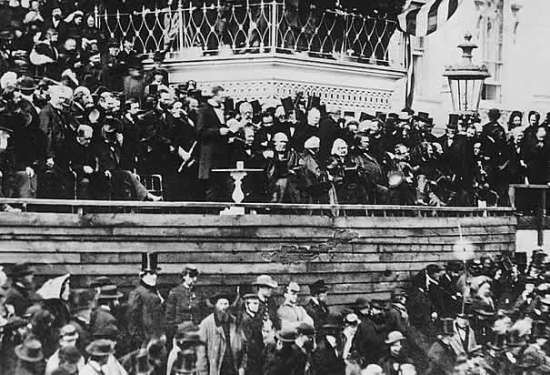
Today is President’s Day and instead of doing much I am simply going to post one of the most poignant and meaningful speeches ever given by a President,  Abraham Lincoln’s Second Inaugural Address.

The address was delivered on March 4th 1865 just over a month before Robert E. Lee’s Army surrendered at Appomattox, and just 41 days before Lincoln died at the hands of John Wilkes Booth. A man who the League of the South, a radical group bent on returning the whole country to their neo-Confederate ways,  honor on April 14th for “executing” Lincoln who they call a criminal tyrant.

Lincoln’s words need to be remembered for what they are, a remarkable statement of reality as well as hope for the future. When he spoke them the war was all but over, but much blood was still being spilt on battlefields across the South. By the time the war, which began in 1861 was over, more than 600,000 Americans would be dead. It was the bloodiest conflict in American History.

To really understand what Lincoln was speaking of one has to remember that just nine years before the Supreme Court had seemed to demolish any hope at all for Blacks in the United States, and not just the enslaved Blacks of the South, in it’s notorious Dred Scott decision. Roger Taney, the Chief Justice writing for the majority, most of whom were Southerners said about Blacks when denying them any form of Constitutional Rights:

“Can a negro, whose ancestors were imported into this country, sold as slaves, become a member of the political community formed and brought into existence by the Constitution of the United States, and as such become entitled to all the rights, and privileges, and immunities, guaranteed by that instrument to the citizen?…It is absolutely certain that the African race were not included under the name of citizens of a state…and that they were not included, and were not intended to be included, under the word “citizens” in the Constitution, and therefore claim none of the rights and privileges which that instrument provides for and secures to citizens of the United States. On the contrary, they were at that time considered as a subordinate and inferior class of beings, who had been subjugated by the dominant race, and, whether emancipated or not, yet remain subject to their authority, and had no rights or privileges but those who held the power and the Government might choose to grant them”

Before that there was the equally noxious Compromise of 1850 which included the Fugitive Slave Act which gave any Southerner claiming his human “property” not only the rights but a legal mechanism to hunt them down in the North and penalize anyone hindering them with weighty fines and jail terms.

One has to look at the words of Confederate Vice President Alexander Stephens in his Cornerstone Speech to understand the truth of what Lincoln spoke on that day in March 1865. Stephens, just four years before had declared in the starkest terms what the war was about and what the Confederacy’s foundation was:

Our new government is founded upon exactly the opposite idea; its foundations are laid, its corner- stone rests upon the great truth, that the negro is not equal to the white man; that slavery — subordination to the superior race — is his natural and normal condition. [Applause.] This, our new government, is the first, in the history of the world, based upon this great physical, philosophical, and moral truth.”

It took four years of bloody war, the first total war waged on American soil to end slavery, sadly within just a few years the Jim Crow laws had regulated Southern Blacks to a status not much better than their previous estate, and again became victims of often state sanctioned violence, discrimination, prejudice and death through lynching.

Southern leaders like Stephens and Jefferson Davis denied that slavery was the cause of the war and the foundation of the Confederacy in their revisionist histories after the war was over. They did so even though the litany of their letters, speeches and laws they supported, damned their words as the bold faced lies that they were. In the mean time many in the South sought to reclaim their pre-war glory in the myth of the Lost Cause which permeated much of the United States in the decades after the war, being glorified by Hollywood in Birth of a Nation, Gone with the Wind, and Walt Disney’s Song of the South. The unconscionable racism and white supremacy promoted by these masterpieces of cinema helped perpetuate racism across the country.

In the North, blacks faced discrimination and prejudice as well. another Supreme Court decision (Plessy v. Ferguson 1896) had legalized segregation and discrimination against Blacks in the form of “Separate but Equal” across the entire United States, something that would remain until a later Supreme Court would overturn Plessy in Brown v. Board of Education in 1954.

Despite all the reverses and the continued fight against the rights of Blacks, as well as women, other minorities and Gays, the struggle continues.

In August 1863, Lincoln was asked to speak at a gathering wrote in support of stronger war efforts and enlistments. Lincoln could not attend and wrote James Conkling a letter to be read on his behalf. That letter addressed those who disagreed with Lincoln on emancipation while still be claiming to be for the Union. Lincoln ended that letter with this:

“Peace does not appear so distant as it did. I hope it will come soon, and come to stay; and so come as to be worth the keeping in all future time. It will then have to be proved that among freemen that there can be no successful appeal from the ballot to to bullet, and that they who take such appeal are sure to lose their case and pay the cost. And there will be some black men who can remember that with silent tongue, and with clenched teeth, and steady eye, and well-poised bayonet, that they will have helped mankind on to this great consummation, while I fear there will be some white ones unable to forget that with malignant heart and deceitful speech they strove to hinder it….” 

Lincoln, unlike many even in the North recognized the heroic nature of African Americans fighting for their rights and how their struggle was beneficial for every American.

Lincoln died too soon, his death was a tragedy for the nation, but today, on President’s Day let us remember the words of the Lincoln’s Second Inaugural Address and the truth that they express. Lincoln’s concluding sentences which began with “With malice toward none, with charity for all…” should be at the heart of our dealings with all people so that we, as Lincoln said so eloquently “may achieve and cherish a just and lasting peace among ourselves and with all nations.”

It is a speech that always encourages me to fight for freedom and truth, even when that truth is less than popular and often uncomfortable. Lincoln’s words still inspire me, because he spoke the truth that many even today do not want to hear:

At this second appearing to take the oath of the Presidential office there is less occasion for an extended address than there was at the first. Then a statement somewhat in detail of a course to be pursued seemed fitting and proper. Now, at the expiration of four years, during which public declarations have been constantly called forth on every point and phase of the great contest which still absorbs the attention and engrosses the energies of the nation, little that is new could be presented. The progress of our arms, upon which all else chiefly depends, is as well known to the public as to myself, and it is, I trust, reasonably satisfactory and encouraging to all. With high hope for the future, no prediction in regard to it is ventured.

On the occasion corresponding to this four years ago all thoughts were anxiously directed to an impending civil war. All dreaded it, all sought to avert it. While the inaugural address was being delivered from this place, devoted altogether to saving the Union without war, insurgent agents were in the city seeking to destroy it without war–seeking to dissolve the Union and divide effects by negotiation. Both parties deprecated war, but one of them would make war rather than let the nation survive, and the other would accept war rather than let it perish, and the war came.

One-eighth of the whole population were colored slaves, not distributed generally over the Union, but localized in the southern part of it. These slaves constituted a peculiar and powerful interest. All knew that this interest was somehow the cause of the war. To strengthen, perpetuate, and extend this interest was the object for which the insurgents would rend the Union even by war, while the Government claimed no right to do more than to restrict the territorial enlargement of it. Neither party expected for the war the magnitude or the duration which it has already attained. Neither anticipated that the cause of the conflict might cease with or even before the conflict itself should cease. Each looked for an easier triumph, and a result less fundamental and astounding. Both read the same Bible and pray to the same God, and each invokes His aid against the other. It may seem strange that any men should dare to ask a just God’s assistance in wringing their bread from the sweat of other men’s faces, but let us judge not, that we be not judged. The prayers of both could not be answered. That of neither has been answered fully. The Almighty has His own purposes. “Woe unto the world because of offenses; for it must needs be that offenses come, but woe to that man by whom the offense cometh.” If we shall suppose that American slavery is one of those offenses which, in the providence of God, must needs come, but which, having continued through His appointed time, He now wills to remove, and that He gives to both North and South this terrible war as the woe due to those by whom the offense came, shall we discern therein any departure from those divine attributes which the believers in a living God always ascribe to Him? Fondly do we hope, fervently do we pray, that this mighty scourge of war may speedily pass away. Yet, if God wills that it continue until all the wealth piled by the bondsman’s two hundred and fifty years of unrequited toil shall be sunk, and until every drop of blood drawn with the lash shall be paid by another drawn with the sword, as was said three thousand years ago, so still it must be said “the judgments of the Lord are true and righteous altogether.”

With malice toward none, with charity for all, with firmness in the right as God gives us to see the right, let us strive on to finish the work we are in, to bind up the nation’s wounds, to care for him who shall have borne the battle and for his widow and his orphan, to do all which may achieve and cherish a just and lasting peace among ourselves and with all nations.

Peace

Padre Steve+

3 Comments

Filed under civil rights, civil war, History, News and current events, Political Commentary

Fighting Germans and Jim Crow: African-Americans in the First World War

Harlem_Hell_Fighters

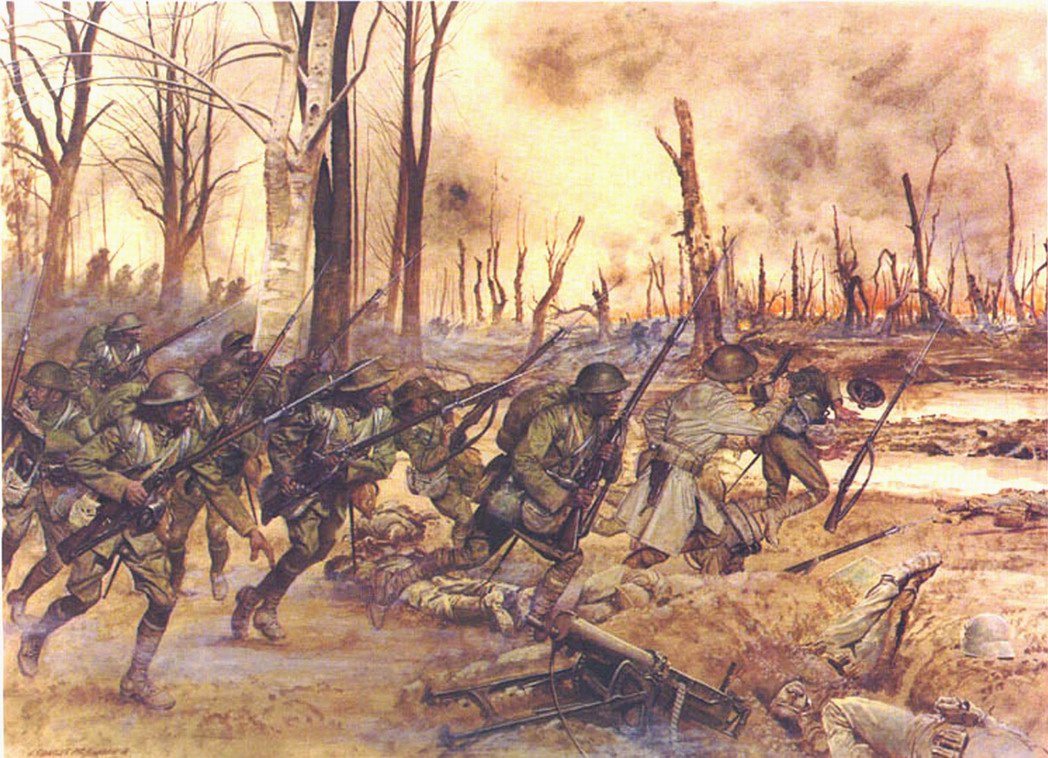
Harlem Hellfighters in Action

Friends of Padre Steve’s World,

One of the things about history is that we tend to forget the sacrifices of men who fought for the ideals of liberty, even when they were denied it themselves. That was the case with the African American men who served in the Army after the Civil War and well into the 1960s, fighting the external enemies of the United States, while being subject to the discrimination of Jim Crow and the Black Codes at home.

They were Americans who in spite of prejudice and in spite of intolerance and persecution loved their country. They were men who labored under the most difficult circumstance to show all Americans and the world that they were worthy of being soldiers and citizens of the United States of America.

They were all volunteers and many of them were veteran soldiers had already served full careers on the Great Plains. They were the Buffalo Soldiers, and when the United States entered the First World War, they were not wanted. Instead, the veterans were left on the frontier and a new generation of African American draftees and volunteers became the nucleus of two new infantry divisions, the 92nd and 93rd.

However in the beginning they too were kept out of action. These men were initially regulated to doing labor service behind the lines and in the United States. But finally, the protests of organizations such as the NAACP and men like W.E.B.DuBois and Phillip Randolph forced the War Department to reconsider the second class status of these men and form them into combat units.

Despite this the leadership of the AEF, or the American Expeditionary Force of General John Pershing refused to allow these divisions to serve under American command. Somehow the concept of such men serving alongside White Americans in the “War to end All War” was offensive to the high command.

Instead these divisions were broken up and the regiments sent to serve out of American areas on the Western Front. The regiments of the 93rd Division were attached to French divisions. The 369th “Harlem Hellfighters” were first assigned to the French 16th Division and then to the 161st Division.

The 370th “Black Devils” were detailed to the French 26th Division and the 371st and 372nd Infantry Regiments were assigned to the French 157th (Colonial) Division, which was also known as the Red Hand Division.

These units performed with distinction. The 371st was awarded the French Croix de Guerre and Légion d’honneur and Corporal Freddie Stowers of the 1st Battalion 371st was the only African American awarded the Congressional Medal of Honor in the First World War. The 372nd was also awarded the Croix de Guerre and Légion d’honneur for its service with the 157th Division.

The 157th (Colonial) Division had suffered badly during the war and been decimated in the unrelenting assaults in the trench warfare of the Western Front. It was reconstituted in 1918 with one French Regiment and two American regiments, the Negro 371st and 372nd Infantry. On July 4th 1918 the commanding General of the French 157th Division, General Mariano Goybet issued the following statement:

“It is striking demonstration of the long standing and blood-cemented friendship which binds together our two great nations. The sons of the soldiers of Lafayette greet the sons of the soldiers of George Washington who have come over to fight as in 1776, in a new and greater way of independence. The same success which followed the glorious fights for the cause of liberty is sure to crown our common effort now and bring about the final victory of right and justice over barbarity and oppression.”

220px-Red_Hand_Division

While many white American soldiers depreciated their French hosts and attempted to sow the seeds of their own racial prejudice against the black soldiers among the French, Southerners in particular warned the French of  the “black rapist beasts.” However the French experience of American blacks was far different than the often scornful treatment that they received from white American soldiers.

“Soldiers from the four regiments that served directly with the French Army attested to the willingness of the French to let men fight and to honor them for their achievements. Social interactions with French civilians- and white southern soldiers’ reactions to them- also highlighted crucial differences between the two societies. Unlike white soldiers, African Americans did not complain about high prices in French stores. Instead they focused on the fact that “they were welcomed” by every shopkeeper that they encountered.”

Official and unofficial efforts by those in the Army command and individual soldiers to stigmatize them and to try to force the French into applying Jim Crow to laws and attitudes backfired. Villages now expressed a preference for black over white American troops. “Take back these soldiers and send us some real Americans, black Americans,” wrote one village mayor after a group of rowdy white Americans disrupted the town.”

Stowers

The citation for Corporal Stowers award of the Medal of Honor reads as follows:

Corporal Stowers, distinguished himself by exceptional heroism on September 28, 1918 while serving as a squad leader in Company C, 371st Infantry Regiment, 93d Division. His company was the lead company during the attack on Hill 188, Champagne Marne Sector, France, during World War I. A few minutes after the attack began, the enemy ceased firing and began climbing up onto the parapets of the trenches, holding up their arms as if wishing to surrender. The enemy’s actions caused the American forces to cease fire and to come out into the open. As the company started forward and when within about 100 meters of the trench line, the enemy jumped back into their trenches and greeted Corporal Stowers’ company with interlocking bands of machine gun fire and mortar fire causing well over fifty percent casualties. Faced with incredible enemy resistance, Corporal Stowers took charge, setting such a courageous example of personal bravery and leadership that he inspired his men to follow him in the attack. With extraordinary heroism and complete disregard of personal danger under devastating fire, he crawled forward leading his squad toward an enemy machine gun nest, which was causing heavy casualties to his company. After fierce fighting, the machine gun position was destroyed and the enemy soldiers were killed. Displaying great courage and intrepidity Corporal Stowers continued to press the attack against a determined enemy. While crawling forward and urging his men to continue the attack on a second trench line, he was gravely wounded by machine gun fire. Although Corporal Stowers was mortally wounded, he pressed forward, urging on the members of his squad, until he died. Inspired by the heroism and display of bravery of Corporal Stowers, his company continued the attack against incredible odds, contributing to the capture of Hill 188 and causing heavy enemy casualties. Corporal Stowers’ conspicuous gallantry, extraordinary heroism, and supreme devotion to his men were well above and beyond the call of duty, follow the finest traditions of military service, and reflect the utmost credit on him and the United States Army.

Corporal Stowers is buried at the Meuse-Argonne American Cemetery. The award of the Medal of Honor was not made until 1991 when President George H. W. Bush presented it to Stowers’ two surviving sisters.

The contrast between the American treatment of its own soldiers and that of the French in the First World War is striking. The fact that it took President Harry S. Truman to integrate the U.S. Military in 1948 is also striking. African Americans had served in the Civil War, on the Great Plains, in Cuba and in both the European and Pacific Theaters of Operation in the Second World War and were treated as less than fully human by many Americans.

770px-369th_15th_New_York

Men of the 371st and 372nd Infantry Regiments of the French 157th Division Awarded the Croix d’Guerre

Even after President Truman desegregated the armed forces in 1948, African Americans, as well as other racial minorities, women and gays have faced very real discrimination. The military continues to make great strides, and while overt racist acts and other types of discrimination are outlawed, racism still remains a part of American life.

Today things have changed, and that in large part is due to the unselfish sacrifice in the face of hatred and discrimination of the men of the USCT and the State Black Regiments like the 54th Massachusetts and the Louisiana Home Guards who blazed a way to freedom for so many. Those who followed them as Buffalo Soldiers and volunteers during the World Wars continued to be trail blazers in the struggle for equal rights. A white soldier who served with the 49th Massachusetts wrote “all honor to our negro soldiers. They deserve citizenship. They will secure it! There would be much suffering in what he termed “the transition state” but a “nation is not born without pangs.”

Unfortunately racial prejudice is still exists in the United States. In spite of all the advances that we have made racism still casts an ugly cloud over our country. Despite the sacrifices of the Buffalo Soldiers, the leaders of the Civil Rights movement and others there are some people who like the leaders of the AEF in 1917 and 1918 cannot stomach having blacks as equals or God forbid in actual leadership roles in this country.

A good friend of mine who is a retired military officer, a white man, an evangelical Christian raised in Georgia who graduated from an elite military school in the South, who is a proponent of racial equality has told me that the problem that many white people in the South have with President Obama is that “he doesn’t know his place.” Yes racism is still real and rears its ugly head all too often.

Peace

Padre Steve+

3 Comments

Filed under civil rights, History, Military, Political Commentary, world war one

War and Redemption: Dan Sickles Pt.5

sickles as brigadier

Friends of Padre Steve’s World

I am a historian as well as a chaplain and priest. I do a lot of work with the Battle of Gettysburg and much of my work involves biography as I believe that the one constant in history is people. Technology and many other things may change, but people and human nature are constant, for good and for bad, and frankly I find people fascinating.

One of the most fascinating people of the Battle of Gettysburg is Union Major General Daniel E. Sickles, a man who was one of the most fascinating, salacious, scandalous, and incredible figures ever to grace and disgrace American history.

This is the fifth of a multi-part series taken from my Gettysburg and Civil War text. I hope that you enjoy.

Peace,

Padre Steve+

Dan Sickles completed his term in Congress making few speeches and maintaining a relatively low profile, frequently entering and leaving through side entrances. But as tensions rose and secession fever built, Sickles, the longstanding supporter of Southern states rights, who had declined to run for reelection “briefly transformed himself from outcast to firebrand” [1] when secessionist troops opened fire on the transport Star of the West when that ship attempted to deliver supplies to Fort Sumter. Surprising his Southern colleagues he declared the attack on the ship as “naked, unmitigated war,” and declared:

It will never do, sir, for them [the South] to protest against coercion and, at the same moment, seize all the arms and arsenals and forts and navy-yards and ships… when sovereign states by their own deliberate acts, make war, they must not cry peace… When the flag of the Union is insulted, when the fortified place provided for the common defense are assaulted and seized, when the South abandons its Northern friends for English and French alliances, then the loyal and patriotic population of that imperial city [New York] are unanimous for the Union.” [2]

He declared the assault to an act of war, and predicted that “the men of New York would go in untold thousands anywhere to protect the flag of its country and to maintain its legitimate authority.” [3] Sickles’ speech was electrifying and heartened back to his early career and what might have been, and during the remaining days of his term he continued to speak out in the House against the actions of the South and sponsored legislation to bills to suspend postal service with the South and recover the funds in the United States Mint buildings which had been seized by seceding states. He thundered in the presence of Southern friends still serving in the House, “Surely the chivalrous men of the South would scorn to receive the benefit of our postal laws,… “They cannot intend to remain, like Mahomid’s coffin, between heaven and earth, neither in nor out of the Union, getting all the benefits, and subjecting us to all its burdens.” [4]

Shortly thereafter Dan Sickles left Washington to what many thought would be political and possibly personal oblivion, but they underestimated Sickles. Ambition and the desire for redemption still burned in his heart, and shortly after President Lincoln called for 75,000 volunteers to put down the rebellion, Sickles volunteered to help raise and lead the men of the Empire State into battle to restore the Union. As the future commander of a one of the regiments, the French born journalist, Regis De Trobriand, noted “during the lead-up to Sumter, Dan had been among the conciliatory and moderate, “but when the sword was drawn, he was one of the first to throw away the scabbard.” [5]

sickles-brigade

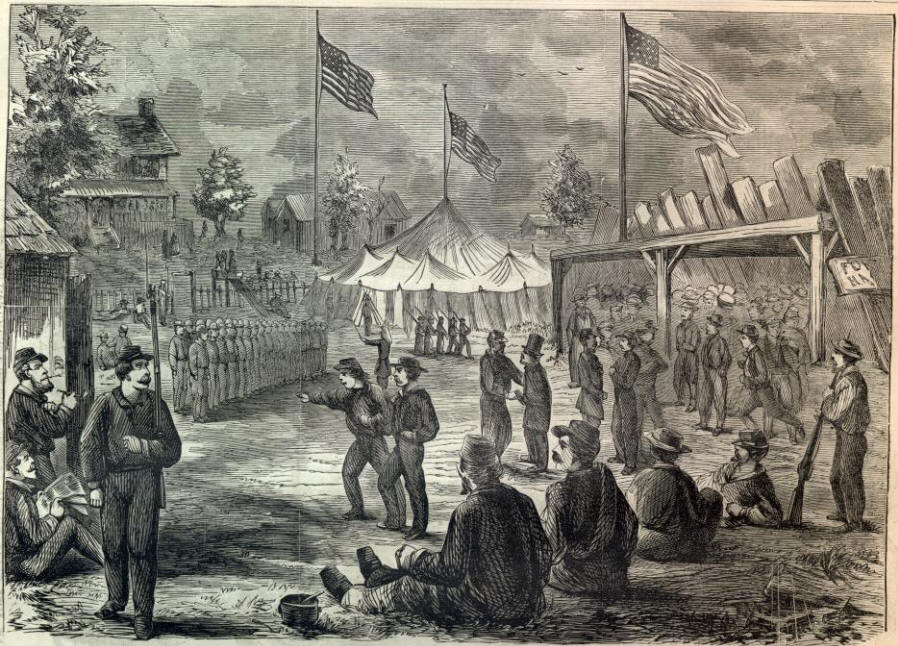
Taking up the challenge to raise a regiment sickles went to work, and “almost overnight, using flag-waving oratory, organizational skills, and promissory notes, he had his regiment, the 70th New York volunteers well in hand.” [6] Soon his authority was expanded to recruit a brigade, which rapidly filled with volunteers, soon over 3,000 men were under his command, and the new brigade, consisting of the 70th, 71st, 72nd, 73rd and 74th New York Volunteers which Sickles promptly christened the Excelsior Brigade, taking on the Empire State’s motto. However many of the brigade’s volunteers were scorned because of Sickles’ reputation, the brigade’s historian wrote, “no name was too bad for you; one would call you this and another would call you that, and even a person’s own relatives would censure him for joining such a Brigade as that of Daniel E. Sickles.” [7]

Even so, Sickles rapidly captured the hearts of his men. Volunteers were found throughout New York, as well as New Jersey, Ohio, and Pennsylvania, and the men represented the spectrum of White America; men of traditional Anglo-Saxon origin mingled with Irish, Germans, and Dutch. But he was so successful in recruiting that organizers of other regiments, especially in rural New York counties demanded that the Republican governor, Edward Morgan, order Sickles to disband most of the brigade. Believing the action politically motivated, Sickles refused and went directly to Lincoln to get the brigade Federal recognition. At first Lincoln balked at the request, he needed troops but was yet unwilling to get in the way of what he saw as the individual state control of their militias. The result was an impasse as Federal and New York officials argued about the brigade and the status of Sickles himself.

Sickles organizational and leadership skills were tested by the situation, and he went to extraordinary lengths to meet the needs of his soldiers for housing, food and sanitation, “and financed its camp for some time out of his own purse…. At one point he rented a circus tent from P.T. Barnum to house several hundred of his recruits. At another, with several companies or more quartered in a bare hall on lower Broadway, he contracted a cheap bath-house to give fourteen hundred men a shave and shower at ten cents apiece.” [8] To meet the need for cooked meals Sickles’ old friend Captain Wiley “commandeered cooks for the brigade from Delmonico’s, working in inadequate kitchens in side streets, they tried to turn out enough food for the men.” [9] Eventually the brigade was given a campsite on “Staten Island, near Fort Wadsworth, where he and his men could wait until the issue of mustering-in was settled.” [10]

Finally in July of 1861 the Excelsiors were officially mustered in to service as New York Volunteer troops and Sickles commissioned as a Colonel, functioning as the commander of the 70th New York and the de-facto commander of the brigade. Lincoln nominated Sickles for a commission as a Brigadier General of Volunteers but due to pressure from New York officials, still steaming at Sickles for going to Lincoln, and the Senate delated confirmation for months, forcing Lincoln to re-nominate him a second time after which they confirmed him in May 1862, in some measure due to the influence of Sickles former defense attorney, Edwin Stanton who had succeeded Simon Cameron as Secretary of War.

Sickles and his brigade first saw combat at Fair Oaks during the Seven Day’s battle. Sickles acquitted himself well during the fighting, he seemed to be a natural leader of men, who cheered him as he led them into battle. The actions of the Excelsiors and their newly minted Brigadier were praised by the Army commander, George McClellan in a letter to Stanton, “The dashing charge of the Second and Fourth Regiments,…”the cool and steady advance of the Third, occurred under my immediate observation and could not have been surpassed.” [11] A news correspondent attached to the army wrote:

“Gen. Sickles had several narrow escapes; he was always to be found in the thickest of the fight. Had those gifted Senators who refused to confirm his nomination, but witnessed the enthusiasm of his troops when serving under him, and his military qualifications for office, they would do penance until re-elected.” [12]

The success at Fair Oaks was not followed up by McClellan, despite the urging of many officers, including Sickles and Richmond, which many believed could have been taken, remained in Confederate hands. Sickles performance during the Peninsular Campaign won Dan the respect and affection of his soldiers, as well as the respect of his division commander Fighting Joe Hooker. Unlike many other leaders who in their first taste of combat on the Peninsula saw the terrible carnage of battle, the immense numbers of casualties, and the suffering of the troops, Sickles maintained his composure, as others collapsed, “neither the casualties nor the state of the earth daunted Sickles.” [13] Hundreds of his Excelsiors, including his own aid-de-camp were killed or wounded during the campaign, and “the Excelsior Brigade, through steadily reduced by deaths, wounds and illness, had been forged into a body of hard-bitten, battle-wise soldiers educated in the necessities of war and in the tricks of self-preservation.” [14] A member of the brigade wrote, “It is no fable about the men of this Brigade thinking a great deal of the General.” [15]

Following the army’s withdraw from the Peninsula and its return to encampments near Washington D.C. Sickles went back to New York to raise new troops to replace those killed or wounded during the campaign. He also took time to organize efforts to care of the children of the brigade’s soldiers, living and dead who were being taken care of at the Union Home School. Due to this he missed the battles of Second Bull Run and Antietam. His recruiting efforts were successful, even former political enemies were impressed by his service, and his ability to raise and organize troops. His reputation had been so completely rehabilitated by his war service that some of his “old backers in Tammany wanted him to run again for Congress,” [16] but he was opposed by others, like his old friend Sam Butterworth, who had become a “Copperhead,” an anti-war, faction that wanted to end the war and let the South go on its way; “to them, Dan had become a Lincoln man, a crypto-Republican.” [17] the relief of many of his troops he declined the offer to run again. As one of his Chaplains, Joseph Twitchell noted Sickles, “is getting fixed in his new place most successfully and will probably serve himself, as well as the country, better here than in a war of words.” [18]

Sickles-Excelsior-Brigade-Headquarters-City-Hall-Park.-Yorktown

During his recruiting efforts Sickles, now a military, as well as political realist, made many speeches, in which he recognized that conscription was inevitable. Having seen the brutal cost of war and the suffering of his men, Sickles complained of the lack of effort being provided in New York to the war effort. In a speech at the Produce Exchange, he praised the leadership and nerve of President Lincoln, and said, “A man may pass through New York, and unless he is told of it, he would not know that this country is a war…. In God’s name, let the state of New York have it to say hereafter that she furnished her quota for the army without conscription – without resorting to a draft!” [19]

When he returned to the army in November of 1862 his old division commander, Hooker had been promoted to corps command following the relief of George McClellan, and as the senior brigadier was promoted to command of the division. His, division, the Second Division of Third Corps was used in a support role at Fredericksburg and saw little action in that fight and only suffered about 100 casualties. His old friend and defense counsel Thomas Meagher, now commanding the Irish Brigade saw his brigade shattered in the carnage of at Fredericksburg. After Ambrose Burnside who had commanded the army during that fiasco was relieved of command Hooker was appointed by Lincoln as commander of the Army of the Potomac.

One of Hooker’s organizational changes was to establish a Cavalry Corps which was to be commanded by Major General George Stoneman, the commander of Third Corps. This left “Sickles as the corps’ ranking officer.” [20] Sickles was promoted to command the Third Corps by Hooker, who chose Sickles over another volunteer officer, David Birney. Had a professional officer rather than Birney been his competition, “Sickles would have remained division commander.” [21] Sickles was given the corps “on a provisional basis, for his appointment as a major general had not yet been confirmed by the Senate and corps command was definitely a two-star job.” [22] Once again it was political enemies in the Senate, this time Republicans who did not trust the Democrat, who delayed Sickles’ promotion to Major General, but he was finally confirmed on March 9th 1863, with his promotion backdated to November 29th of 1862. “Professionals in the army attributed his rise to his “skill as a political maneuverer.” Few men, however, questioned his personal bravery.” [23]

To be continued…

Notes

[1] Ibid. Hessler Sickles at Gettysburg p.21

[2] Ibid. Hessler Sickles at Gettysburg p.111

[3] Ibid. Keneally American Scoundrel p. 212

[4] Ibid. Keneally American Scoundrel p.214

[5] Ibid. Keneally American Scoundrel p.219

[6] Ibid. Sears Controversies and Commanders p.201

[7] Ibid. Hessler Sickles at Gettysburg p.23

[8] Ibid. Catton Glory Road p. 153

[9] Ibid. Keneally American Scoundrel p.222

[10] Ibid. Keneally American Scoundrel p.222

[11] Ibid. Hessler Sickles at Gettysburg pp.30-31

[12] Ibid. Swanberg Sickles the Incredible p.149

[13] Ibid. Keneally American Scoundrel p.245

[14] Ibid. Swanberg Sickles the Incredible p.153

[15] Ibid. Wert The Sword of Lincoln p.222

[16] Ibid. Hessler Sickles at Gettysburg p.32

[17] Ibid. Keneally American Scoundrel p.245

[18] Ibid. Hessler Sickles at Gettysburg p.32

[19] Ibid. Keneally American Scoundrel p.252

[20] Ibid. Wert The Sword of Lincoln p.223

[21] Ibid. Sears Controversies and Commanders p.206

[22] Ibid. Swanberg Sickles the Incredible p.168

[23] Ibid. Wert The Sword of Lincoln p.223

2 Comments

Filed under civil war, History, leadership, Military

The Pariah: Dan Sickles Pt.4

dan-sickle-teresa-key

Friends of Padre Steve’s World

I am a historian as well as a chaplain and priest. I do a lot of work with the Battle of Gettysburg and much of my work involves biography as I believe that the one constant in history is people. Technology and many other things may change, but people and human nature are constant, for good and for bad, and frankly I find people fascinating.

One of the most fascinating people of the Battle of Gettysburg is Union Major General Daniel E. Sickles, a man who was one of the most fascinating, salacious, scandalous, and incredible figures ever to grace and disgrace American history.

This is the fourth of a multi-part series taken from my Gettysburg and Civil War text. I hope that you enjoy.

Peace,

Padre Steve+

After a brief absence, Sickles returned to Congress and to Teresa, who was now even a worse social pariah than her husband. After the murder and for the duration of the trial, Teresa remained at one of the family homes in the New York countryside under the care of her parents. She followed the trial and occasionally wrote to Dan in jail, and over time he began to write back. Teresa was thrilled with the verdict and she honestly believed that the marriage and her reputation could be rehabilitated, and that she could be restored to a normal wife. The normal family values system of the time would have now involved Sickles divorcing his tarnished wife. That would have been “the predictable and conservative course.” [1] But despite his own continuing excursions into infidelity and his rage over hers, Sickles still loved her, and could not fathom divorcing her. His father George and Teresa’s father Antonio “were stricken with the same delusion as Teresa – that reconciliation would be tolerated by society.” [2]

Had the recently celebrated Congressman done divorced Teresa, his political career, while crippled, might have resumed its previous upward trajectory. But the ever unpredictable Dan Sickles “shocked everyone by forgiving Teresa and resuming their former relationship.” [3]

It was a characteristic of the time, and in some place even today in that maintained the belief that an adulterous wife knew no forgiveness, and Sickles “put himself beyond the pale by the simple act of forgiving his wife and restoring her to his bosom.” [4] Murder could be forgiven, a man’s indiscretions as well, but forgiving an adulterous women, especially a wife and mother was unforgivable. All the better people had already assigned the appropriate scarlet letter to the fallen woman, and they were shocked into paroxysms of moral outrage when Sickles apparently forgave her transgression.” [5] Sickles action was totally “out of kilter with an age that neatly divided women into “saintly mothers,” “pure virgins,” and “fallen women.” [6] Frankly the action was shocking to New York and Washington society, and both Dan and Teresa paid the price, but the price paid by Teresa would be greater, and ultimately contribute to her death, a death that occurred far too early.

Sickles was flailed in the papers, the New York Dispatch noted “His warmest personal and political friends bitterly denounce his course.” While the Sunday Courier wrote, “His political aspirations, his career in life, once so full of encouraging brightness, and his business prospects, have all been blasted by this act.” [7]

The Sunday Mercury put their condemnation published a biting bit of poetry lampooning both Dan and Teresa:

Hail matchless pair! United once again, In newborn bliss forget your bygone pain…

What the world may say, “with hands all red Yon bridegroom steals to a dishonored bed”

And friends, estranged, exclaim on every side: “Behold! Adultery couched with Homicide! [8]

Even long time friends were like James Topham Brady who had defended him at his trial were livid. Interestingly enough it was Sickles old foe Horace Greeley who “flew in the face of convention by commending Sickles for his forgiveness.” [9] But Greeley was an exception, and in the face of the critics sent a letter to the New York Herald in which he fired a broadside:

“Referring to the forgiveness which my sense of duty and my feelings impelled me to extend to an earring and repentant wife… I am prepared to defend what I have done before the only tribunal I recognize as having the slightest claim to jurisdiction over the subject – my own conscience and the bar of Heaven. I am not aware of any statute or code of morals which makes it infamous to forgive a woman… And I cannot allow even all the world combined to dictate to me the repudiation of my wife, when I think it right to forgive her and restore her to my confidence and protection. If I have ever failed to comprehend the utterly desolate position of an offending though penitent woman – the hopeless future, with its dark possibilities of danger, to which she is proscribed as an outcast – I can now see plainly in the in the almost universal howl of denunciation with which she is followed to my threshold…” [10]

Dan Sickles the sinner had struck back at his Pharisaical accusers with the aplomb of Christ himself, who had forgiven the adulteress woman, but it did little to change public perception. Teresa would always be the adulteress, abandoned by friends and scorned by society at large. Dan, who even with the scandal of the Key murder behind him and who would have been forgiven had he denounced and divorced his wife, was now a pariah, even among his peers and colleagues. Mary Boykin Chesnut, wife of a renowned senator, and prolific diarist from South Carolina “sat in the House gallery one day and saw Sickles deliberately, and totally ostracized. He was sitting all alone, like Catiline, every other member careful not to come near him – “left to himself as if he had the smallpox.” [11] When Chesnut asked a friend why he was shunned, the friend noted that the murder of Key “was all right… It was because he condoned his wife’s profligacy and took her back… Unsavory subject.” [12]

But for Teresa it was worse. She was “socially exiled, shunned even by humble neighbors, compelled to keep the house by day or face the sneers and hoots of such street trash as recognized her, cut off from her cherished riding and walking, coped up with a loving but over emotional mother, a penurious, egocentric father, Teresa, torn between grief for the dead, contrition for the living, began to fail…” [13] Despite his defense of her and officially taking her back, he spent little time with her and she never again accompanied him in any of his assignments, in the military, or after the war. But his policy of leaving her behind was not due to cruelty or neglect, as Dan and Teresa were “merely accepting an accomplished social fact, knowing Teresa would forever be an outcast and forever be an outcast and would be exposed to endless snubs and torment were she be so rash as to essay a new entrance into society.” [14] In his own way Dan loved her, but neither could change the attitude of a society where Puritanical morality still reigned, and the granddaughter of Giacomo Casanova’s friend could never be forgiven, and whose relationship with her husband would always be haunted by the ghost of Barton Key. Nothing could change that, and soon Teresa lost the will to live though she was not even twenty-five years old. “Sleepless, she took refuge in opiates….She sank slowly from frailty to invalidism.” [15] She contracted tuberculosis, and though she attempted to maintain her household she suffered from severe depression, and again took up her family’s Catholic faith. Catholic rosaries, missals, holy cards, and other items filled her bedroom. Eventually, she died unexpectedly in January of 1867, with most people thinking that she would yet recover. She was only thirty-one years old. Dan, now serving as military governor in South Carolina was stunned. Her pallbearers include James Topham Brady, and four U.S. Army generals including Sickles former comrade Alfred Pleasanton and his Gettysburg aide Henry Tremain. In death she finally found a measure of public sympathy, the funeral Mass was attended by many mourners, and as Sickles and his now teenage daughter Laura followed Teresa’s casket out of the church, “His feelings now broke forth and he wept, and the large congregation rushed tumultuously from the building after him, testifying to the hold he held on their hearts, and the extent to which they shared his affliction.” [16] In light of the prevailing morality of the day can wonder if most of the mourners had more sympathy for Sickles than his now dead wife. Unlike the adulteress of the Gospels, Teresa Sickles had no one to 

Notes

[1] Ibid. Sears Controversies and Commanders p.200

[2] Ibid. Keneally American Scoundrel p.202

[3] Ibid. Wilson and Clair They Also Served p.100

[4] Ibid. Catton Glory Road p.152

[5] Ibid. Sears Controversies and Commanders p.200

[6] Ibid. Pinchon Dan Sickles p.136

[7] Ibid. Swanberg Sickles the Incredible p.72

[8] Ibid. Keneally American Scoundrel p.203

[9] Ibid. Swanberg Sickles the Incredible p.73

[10] Ibid. Swanberg Sickles the Incredible p.74

[11] Ibid. Catton Glory Road p. 152 Catiline was a counsel of Ancient Rome is best known for two attempts to overthrow the Roman Republic in 62 BC. His plot was exposed before the Senate by Cicero and he is famously depicted in Cesare Macari’s painting sitting alone in with his head down as Cicero denounces him before the Senate.

[12] Ibid. Hessler Sickles at Gettysburg p.20

[13] Ibid. Pinchon Dan Sickles p.136

[14] Ibid. Swanberg Sickles the Incredible p.282

[15] Ibid. Pinchon Dan Sickles p.137

[16] Ibid. Keneally American Scoundrel p.329

3 Comments

Filed under civil war, crime, History

Trial of the Century: Dan Sickles Pt.3

HD_TrialofDanielSickles1859.preview

The Sickles Trial

Friends of Padre Steve’s World

I am a historian as well as a chaplain and priest. I do a lot of work with the Battle of Gettysburg and much of my work involves biography as I believe that the one constant in history is people. Technology and many other things may change, but people and human nature are constant, for good and for bad, and frankly I find people fascinating.

One of the most fascinating people of the Battle of Gettysburg is Union Major General Daniel E. Sickles, a man who was one of the most fascinating, salacious, scandalous, and incredible figures ever to grace and disgrace American history.

This is the second of a multi-part series taken from my Gettysburg and Civil War text. It deals with one of the most memorable trials in American History. I hope that you enjoy.

Peace

Padre Steve+

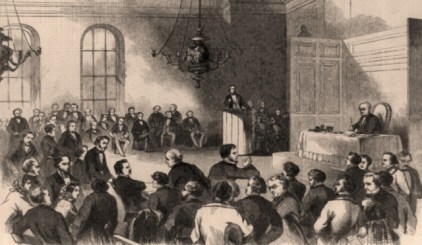
The stage was now set for the one of the most unbelievable and storied trials in American history, a trial that would have been much more suited to the era of 24/7 cable news coverage and the Internet than the era of the telegraph and newspaper, but even so it was sensational by any standard and it riveted the attention of the public in every part of the nation, from the largest cities to the smallest towns.

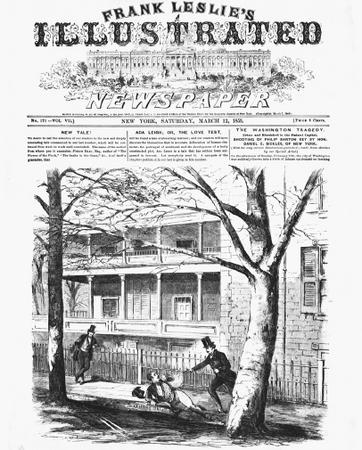
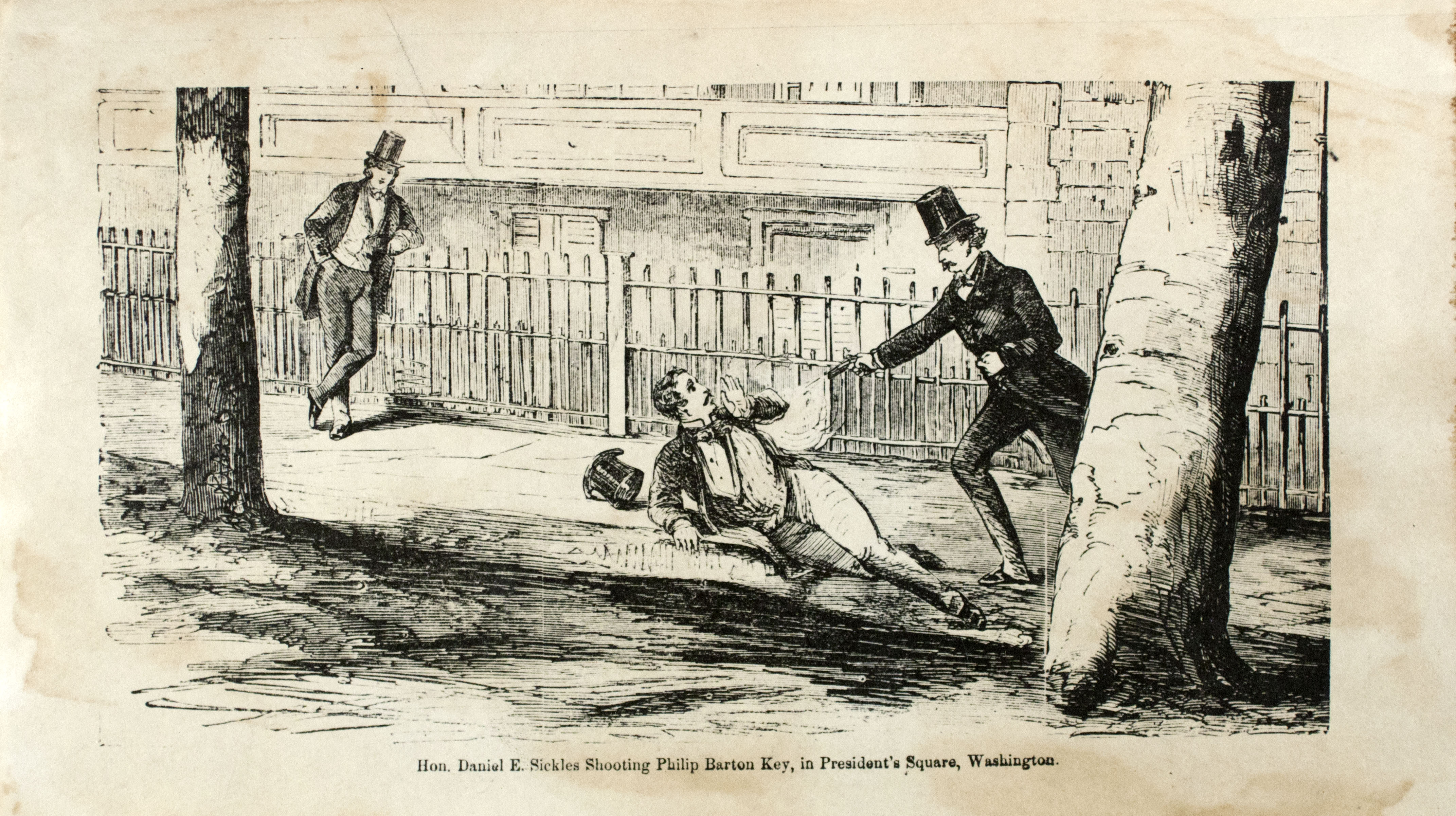
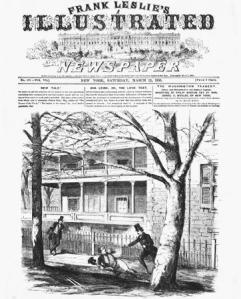
Almost immediately swarms of journalists were camped outside the prison and Sickles’ house where distraught Teresa sought a way to gain Dan’s forgiveness having received his broken wedding band which he sent to her from the jail. Witnesses to her dalliances with Key at the 15th Street house and other venues were brought to the Stockton Mansion to identify her. “She was the meat in the market, the ogre at the carnival. A little way across the square, souvenir hunters were cutting fragments of wood out of the tree by which Key had fallen, and artists from the illustrated papers set up their easels and began sketching every aspect of the area – the railings, the Stockton Mansion, the Clubhouse.” [1] A Presbyterian pastor who knew the couple found her obsessed by the shame that she had brought upon herself and her daughter, and he “found her in such mental agony that he feared for her sanity and even felt that she might try to take her life.” [2]

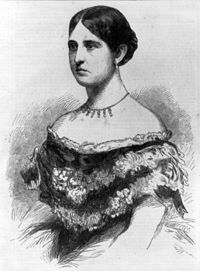
It was a credit to her own emotional strength that Teresa survived the ordeal that she had helped to bring about, and which she found herself blamed for, even by her father, who felt that she had dishonored the Bagioli family name. Antonio Bagioli wrote to Dan in prison, “You have heaped on my child affection, kindness, devotion, generosity. You have been a good son, a true friend, and a devoted, kind, loving husband and father.” [3] Of all the commentators, it was the eminent historian and diplomat George Bancroft who seemed to have any “sense of Teresa’s pain: “Poor child, what a cruel thing to deprive her of her sole stay and support. Key was the only man she could look to for sympathy and protection.” [4]

After Barton Key’s lifeless body was borne off in a mahogany casket to the Presbyterian cemetery in Baltimore and buried in the grave of his dead wife, and his children placed in the care of his family, his effects, what they amounted to, including his resplendent Montgomery Guards uniform were “sold off to a morbid, bargain-hunting, souvenir-hounding crowd.” [5] It was an ignoble end to the scandalous story of the son of Francis Scott Key, a story that soon with all of its salacious detail would be revealed to the public.

Meanwhile, inside the jail her husband, alternating between fits of rage and calm was visited by Washington’s Mayor James Barret, Sam Butterworth, Attorney General Black, Vice President John C. Breckinridge, and Speaker of the House, James Orr. He was comforted by the many expressions of support and sympathy found in scores of letters from people around the country, one of the first “a kindly note from the President,” [6] and others from total strangers. He was also joined by friends and allies from New York and Washington. “James Topham Brady, John Graham, and Thomas Francis Meagher, able lawyers all, arrived post haste to defend their rash ally” [7] as well as his father who before offering encouragement to his son offered a sharp chastisement, “You hot-headed fool! That’s no way to settle things! No woman’s worth it! No matter how you come out of this, you’ve killed your career – White House and everything else.” [8] Undeterred and calm Dan told his father that he understood and that if he had to he would do it again, after which, his father began to discuss the organization of his son’s defense with this legal team.
rerl_02_img0122

The case was front page news in all the major newspapers, which provided “extensive coverage of the “Sickles Tragedy.” Sickles’ murder of his friend Key in broad daylight in view of the White House had all of the scandalous elements that have thrilled Americans then and even today: “adultery, politics, celebrity, and a handsome corpse,” [9] not to mention a beautiful young woman who even more than her husband who had killed a man, stood accused in the eye of the public.

Despite the notoriety of the case, many people found sympathy with Sickles and believed that no jury would convict him of murder or manslaughter, after all, Teresa was the one who committed adultery with Key. The New York Herald “doubted that a grand jury would indict him. Even if he were indicted, Harper’s Weekly presumed that no jury would convict him of manslaughter if the adultery charge were proven, which it considered a foregone conclusion.” [10] The New York Times noted well before the trial opened, “there appears to be no second opinion as to the certainty of Mr. Sickles acquittal” but “national interest” arose from “the general desire to see the whole case fairly put, and the million scandals of mystery laid to rest by the plain facts.” [11] Newspapers like the New York Evening Post, his political arch-enemy found the murder an excellent opportunity to attack Sickles, “That wretched man, Daniel E. Sickles, has in his career reached the stage of assassination, and dipped his hands in human blood… It is certain that a man… who in his own practice, regards adultery as a joke and the matrimonial bond as no barrier against the utmost caprice of licentiousness – has little right to complain when the mischief which he carriers without scruple into other families enters his own.” [12] But such commentary was the exception, and it came from the organ of a political enemy. It is an interesting comment on the era, that a woman’s adultery, even when committed by the wife of an adulterous male who had killed her lover, was consider more of a social stigma and crime than murder.

Within days Sickles had assembled one of the most formidable defense teams ever to dominate an American court. Brady, who was considered to be the ablest criminal defense lawyer of his day became the lead attorney for the defense team, and was joined by Sickles’ New York friends, Graham and Meagher. Brady was an excellent choice, he “was admired and even loved by society in general, but on top of that, though his legal repertoire was wide, he had been involved successfully in more than fifty murder cases.” And he “had also made a special study of pleas of insanity,” [13] something that would figure greatly in the trial.

Additionally, President Buchanan helped recruit one of the finest attorneys in the country, the future Secretary of War, Edwin Stanton to the team. They were joined by four lesser known, yet high-powered attorneys; Samuel Chilton a Virginian who later represented John Brown, and his partner Allen Magruder, Daniel Ratcliffe, and Philip Phillips, a former Alabama Congressman and member of Washington’s Jewish community. Additionally, Reverdy Johnson, one of the most respected attorneys of the day served as an occasional advisor. “The Washington Evening Star observed that Sickles was collecting a lot of lawyers for a man whose defenders did not expect to leave their box before acquitting him.” [14]

Sickles’ defense team was a nineteenth century legal Dream Team against which the government deployed but one attorney, Key’s former assistant District Attorney Robert Ould. Ould, described by one of Sickles’ biographers as “a dull bull of a man, at one time a Baptist parson,” [15] had been named acting District Attorney by President Buchanan when Key was killed. It was an odd place for Ould, as he was serving to prosecute his former boss’s killer, at the behest of the President, who happened to be one of the defendant’s best friends. Ould, the former parson “was placed by inference in the unhappy position of defending adultery – something that he indignantly denied, insisting that he was merely prosecuting a killer….” [16] but to many people, the murderer of an adulterer by an aggrieved husband was complete justified. Ould was totally outclassed by the defense team, and Key’s family paid to have John Carlisle a respected Washington attorney to aid Ould in the case, but the trial would prove them appear incompetent and not up to the task of convicting Sickles.

HarpersMagazineTeresaConfession

Teresa Sickles Confession on the Front Page of Harper’s Weekly

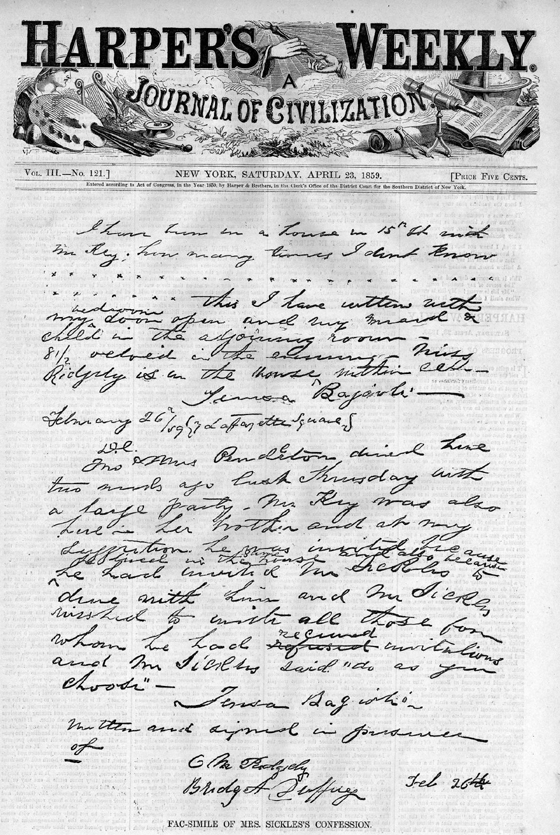
The defense pushed for a speedy trial and decided, as many lawyers do today, to try the case in the newspapers, which in light of the lurid nature of the story hung on every word coming out of Washington. The defense team pursued the strategy of “entirely reversing the roles of Sickles and Key by putting the dead man on trial for having made a victim of the defendant, and the New York Press prepared the public for just such an emotional appeal.” [17] The news stories printed by papers that supported Sickles as well as those of his detractors helped inflame the public as the newspapers across the country “wherever wires ran, were front-paging the story under screaming headlines and, in larger cities, rushing out extras every hour or two, as fresh details came to hand.” [18] The private affairs of Dan and Teresa Sickles became known around the nation, and even though the judge in the case refused to admit the confessions Sickles had forced from Teresa into evidence they found their way into the papers, some like Harper’s not only ran the text but reproduced the confession in enlarged facsimile form. The question in many people’s mind “was Dan Sickles justified in slaying the man who had betrayed his confidence and seduced his wife?… As a consequence the whole country turned jury.” [19]

The trial began on April 4th, just over a month after the killing and barely a week after the indictment was handed down. The first three days involved jury selection, a task that the defense turned over to Philip Phillips, who sparred with the prosecutor Ould over the twelve men who would eventually sit in judgment of Dan Sickles. Ould attempted to gain a favorable jury by introducing the property qualifications of jurors, he “ruled out jurors who did not meet the requirement of owning property valued at $800. Since this $800 property limit had not been imposed in similar cases, Ould’s insistence on it would attract much scorn from Dan’s lawyers…” [20] Sickles’ team fought back embarrassing Ould in the process, but not getting the judge to change his narrow application of the law to help the defense. Over two hundred potential jurors were examined before twelve unbiased jurors could be found, and a “great majority of those dismissed confess strong prejudice in favor of the prisoner.” [21] When the jury was seated it was composed of twelve men, two farmers, four grocers, a merchant, a tinner, a coach maker, a men’s clothing salesman, a shoemaker, and a cabinetmaker, “but not a single “gentleman” in the occupational sense.” [22]

Ould opened his case, “ponderously, powerfully, in the blackest of terms,” [23] he drew a picture of the killing. He delivered an “emotionally charged argument that Sickles, “a walking magazine,” had taken deliberate care in arming himself against Key, who only had “a poor and feeble opera-glass.” [24] Ould argued “that homicide with a deadly weapon, perpetrated by a party who has all the advantage on his side and with all the deliberate cruelty and vindictiveness, is murder, no matter what the antecedent provocation in the case.” [25] He then called twenty-eight witnesses, the majority of whom had actually witnessed the shooting, but he did not call upon Butterworth, Teresa, or the young White House page boy who had told President Buchanan and been sent away. Likewise he had not established intent, a key factor in any murder trial, nor had he introduced evidence that he had obtained regarding Sickles’ own affairs with women in Philadelphia, Baltimore, and elsewhere. The presentation of the physical evidence of Barton Key’s clothing and the bullet that supposedly killed Key was botched, the bullet that the prosecution claimed to have killed key did not fit either the Derringer, or the Colt revolver. Thus Ould left open for the defense the chance to explore all the salacious details of the case to put Key on trial, and to establish exculpatory reasons why Sickles had killed Key. Ould’s presentation of his case was brief, and so futile “that it seemed that Key was on trial for seduction, not that Sickles was on trial for murder.” [26]

sickles in the box

Sickles in the Prisoner’s Dock

The defense team made mincemeat of the prosecution. John Graham’s opening statement was a work of oratory genius that “would massively outshine Robert Ould’s more cumbersome opening.” [27]Weaving allusions from Shakespeare and other literary greats into his statement, he painted Sickles as the victim of a adulterous rogue who had on a Sunday, a day when he should have “sent his aspirations heavenward,” had instead besieged “that castle where for security and repose the law had placed the wife and children of his neighbor.” [28] Casting Sickles as the aggrieved and temporarily insane victim he also asked if it was a “crime for a husband to defend his family altar.” From there he proceeded to use quotes from Shakespeare’s Othello he inveighs against the adulterer as the supreme criminal, piling up quotation upon quotation from the Old Testament and Roman law to show that in wiser days the punishment invariably was death’” [29] to paint the picture of Sickles’ agony as he saw the man who had defiled his wife prowling outside of his home. Graham then went to provocation and argued that due the circumstance of the crime, a friend and confidant attempting to defile Sickles’ wife on a Sunday that the prosecution “needed to prove Dan’s sanity at the time of the act. And they could not do that, because there was not enough in the case “to melt the heart that is not cut from the unwedgeable gnarled oak.” [30] It was a masterful performance.

Over the next two weeks, Brady, Stanton, and Graham would continue to hammer the prosecution case. The defense proved that Key’s family had tampered with evidence, including testimony from a locksmith who had changed the locks at the 15th Street house at the direction of Key’s family. Witness after witness was introduced to undermine the prosecution and support the defense’s claim that Sickles’ was indeed in a state of uncontrollable madness, and the defense deftly parried the prosecutor’s rebuttal witnesses. When Ould attempted to keep African American witnesses from testifying Stanton, thundered and “accused the prosecution of a “monstrous” attempt to suppress evidence in its zeal of the defendant’s blood,” [31] and argued from North Carolina precedent that the prosecution was not willing to grant Sickles the same right as a slave. As his lawyers argued his case and witnesses gave testimony Sickles maintained his composure except for a number of times when he broke down and had to be excused from the proceedings. “Whether the courtroom histrionics were real or an award-winning performance, the jury witnessed firsthand a husband who was mentally unable to bear his wife with another man.” [32] On the Friday the 22nd of April Judge Crawford declared the testimony closed and the next day began the closing arguments.

Saturday April 23rd dawned with a violent gale, but that did not prevent crowds of people from trying to gain admittance to the courtroom. Edwin Stanton began the defense closing arguments in a manner that was calm and precise. He brought up that justifiable homicide included that which was “committed in defense of family chastity, the sanctity of the marriage bed, the matron’s honor, the virgin’s purity.” [33] Since the prosecution had never brought into evidence Sickles’ own violation of these covenants his attacks on Key and the prosecution case hit home. As he continued his voice rose to a roar, sounding like a prophet of ancient Israel “Who seeing this thin, would not exclaim to the unhappy husband, “Hasten, hasten, to save the mother of your child! And may the Lord who watches over the home and family guide the bullets and direct the stroke!” [34] When Stanton finished the court erupted in a frenzy as spectators as well as supporters of Sickles applauded his closing.

Next up was Brady who went on for three hours, captivating the audience which hung on every word. “When Daniel Sickles realized how he had been betrayed, all the emotions of his nature changed into a single impulse; every throb of his heart brought before him the sense of his great injuries; every drop of his blood was burdened with a sense of shame; he was crushed by inexorable agony in the loss of his wife, in the dishonor that he had come upon his child, in the knowledge that the future – which had opened to him so full of brilliancy – had now been enshrouded in eternal gloom by one who, contrawise, should have invoked form the eternal God his greatest effulgence on the path of his friend….” [35]

The closing had been masterful, emotional, and dramatic. In response Ould attempted to recover, but his arguments were weak, he agreed with the defense about the crime of adultery, and attempted to redirect the jury’s attention that it was Sickles who was on trial for murder and not Key for adultery, but he had already lost that argument. He called the defense of temporary insanity a ploy and “mentioned how easily, and readily a man on trial for his life might pretend to be deranged if he were on trial for his life.” But it was too little, too late. Since there was no psychiatric profession to weigh in on the matter, the argument of temporary insanity fell back on the “tradition of male marital dominance” and “that argument played well among men who rarely wore collars on their shirts…” [36] the very kind of men seated in the jury booth. When the jury recessed to deliberate Sickles’ fate on the 26th it took them less than an hour to return their verdict, and few were surprised when it came back “not guilty.” Stanton “was so excited that he did a jig in the courtroom, the hoarsely called for three cheers.” [37] As he did “Pandemonium and cheers broke out in the courtroom.” [38] People crowded around to congratulate Sickles and the crush was so great that Sickles had to be escorted for the courtroom. President Buchanan on hearing the verdict was delighted, later in the evening, though he sought rest, Sickles was taken by Brady to a gala in his honor attended by nearly 1500 supporters and well-wishers. The trial was over but the trials of Dan Sickles were not.

Notes

[1] Ibid. Keneally American Scoundrel p.142

[2] Ibid. Swanberg Sickles the Incredible p.63

[3] Ibid. Keneally American Scoundrel p.146

[4] Ibid. Keneally American Scoundrel p.147

[5] Ibid. Pinchon Dan Sickles p.117

[6] Ibid. Pinchon Dan Sickles p.117

[7] Ibid. Swanberg Sickles the Incredible pp.62-63

[8] Ibid. Pinchon Dan Sickles p.116

[9] Ibid. Hessler Sickles at Gettysburg p.12

[10] Marvel, William Lincoln’s Autocrat: The Life of Edwin Stanton University of North Carolina Press, Chapel Hill 2015 p.103

[11] Ibid. Hessler Sickles at Gettysburg pp.12-13

[12] Ibid. Swanberg Sickles the Incredible p.63

[13] Ibid. Keneally American Scoundrel p.151

[14] Ibid. Marvel Lincoln’s Autocrat p.103

[15] Ibid. Pinchon Dan Sickles p.121

[16] Ibid. Swanberg Sickles the Incredible p.64

[17] Ibid. Marvel Lincoln’s Autocrat p.104

[18] Ibid. Pinchon Dan Sickles p.118

[19] Ibid. Pinchon Dan Sickles pp.118-119

[20] Ibid. Keneally American Scoundrel p.162

[21] Ibid. Pinchon Dan Sickles p.120

[22] Ibid. Marvel Lincoln’s Autocrat p.105

[23] Ibid. Pinchon Dan Sickles p.122

[24] Ibid. Hessler Sickles at Gettysburg p.14

[25] Ibid. Pinchon Dan Sickles p.122

[26] Ibid. Swanberg Sickles the Incredible p.65

[27] Ibid. Keneally American Scoundrel p.173

[28] Ibid. Keneally American Scoundrel p.173

[29] Ibid. Pinchon Dan Sickles p.124

[30] Ibid. Keneally American Scoundrel p.175

[31] Ibid. Marvel Lincoln’s Autocrat p.107

[32] Ibid. Hessler Sickles at Gettysburg p.15

[33] Ibid. Pinchon Dan Sickles p.127

[34] Ibid. Pinchon Dan Sickles p.128

[35] Ibid. Pinchon Dan Sickles p.129

[36] Ibid. Marvel Lincoln’s Autocrat p.110

[37] Ibid. Swanberg Sickles the Incredible p.66

[38] Ibid. Hessler Sickles at Gettysburg p.17

3 Comments

Filed under civil war, crime, ethics, History, Religion

Incredible Scoundrel Pt.2: A Murder in Washington

philip-barton-key-granger

Friends of Padre Steve’s World

I am a historian as well as a chaplain and priest. I do a lot of work with the Battle of Gettysburg and much of my work involves biography as I believe that the one constant in history is people. Technology and many other things may change, but people and human nature are constant, for good and for bad, and frankly I find people fascinating.

One of the most fascinating people of the Battle of Gettysburg is Union Major General Daniel E. Sickles, a man who was one of the most fascinating, salacious, scandalous, and incredible figures ever to grace and disgrace American history.

This is the second of a three part series taken from my Gettysburg and Civil War text. I hope that you enjoy.

Peace,

Padre Steve+

Within a year of his assignment Sickles returned to the United States to help prepare the Democratic nomination for his friend Buchanan who had long desired the office, and return to his lucrative post in New York. In the spring of 1856 Sickles began to work on Buchanan’s nomination for the Presidency and while doing so began his own campaign for New York’s Third District’s Congressional seat. Buchanan won the election of 1856 against an opposition divided between the Know Nothing candidacy of former President Millard Fillmore and the candidate of the new Republican Party, John C. Fremont.

In the election of 1856, Sickles carried the district easily. For Sickles it was a triumph, he was “riding a flood tide of political fortune that might carry him far,” [1] and like any wife Teresa too was delighted with the result. Even so, Teresa must have wondered if her husband would mend his ways now that he was on the national spotlight, or if he would continue his extramarital romps around the nation’s capital. Following the election Dan and Teresa moved to Washington D.C. where they took up a fashionable residence, the Stockton Mansion, on Lafayette Square, not far from the White House and Sickles friend, James Buchanan.

Once he was established in Washington Sickles was in his element, politics at its grandest. It was a different style than of politics than Tammany, where brass knuckled force often ruled, but it suited Sickles, who was “a fixer who knew all the tricks of Tammany at its crookedest but who seems not to have taken graft himself. He had his sights fixed on the presidency, and he was making about as much progress in that direction as a Tammany man can,” [2]   until a strange combination of unrequited love, infidelity, the personal betrayal of a friend, and a murder intervened.

HarpersMagazineMrs.Sickles

Teresa Sickles

While her husband politicked along the Potomac, the new congressman’s wife was adapting to her life in Washington D.C. The wives were expected to entertain and host parties on a regular basis at their residences, but they also knew their share of loneliness and neglect. Since legislators routinely were “busy with night sessions, committee meetings, and plain nocturnal politicking over whiskey punch, that their wives either accepted other escorts or spent lonely evenings at home with fancywork or a book.” thus it was not surprising that Teresa, “should seek the gayety of the capital in her first year there.” [3] In the absence of their husbands it “was not uncommon for available bachelors to act as escorts for married women when their husbands were unavailable.” [4] Since Dan Sickles was frequently unavailable and since Teresa probably still suspected that Dan was still engaged in extramarital affairs, it is not surprising that the young Mediterranean beauty found comfort in another man.

The years of 1857 and 1858 would be a tumultuous time for the nation as well as the Sickles. Buchanan had been elected because of his stability and moderation in an age of pro and anti-slavery radicalism. However, over the next year his presidency, and his would be overwhelmed by events and Buchanan’s decisions supporting the expansion of slavery. While Sickles was neither a slave owner, nor himself fond of the institution, it was part of life, and many of his friends in Washington D.C. and in Congress were slave holders. Buchanan had schemed before his inauguration with Chief Justice of the Supreme Court Roger Taney in the Dred Scott decision, which was handed down in the days following Buchanan’s inauguration, followed by the fiasco over the Lecompton constitution and the attempted admission of Kansas as a Slave State, an event which split the Democratic party in the 1860 election, ensuring Abraham Lincoln’s defeat of Buchanan’s Lecompton foe in the Senate, Senator Stephen A. Douglas who would have been the prohibitive favorite in the election had the split not occurred.

Likewise, Sickles and his beautiful young wife would become part of one of the most sensational trials of American history, rivaling the Lindbergh kidnapping trial, the trial of O.J. Simpson, the Scopes Monkey Trial, and the Impeachment of President Bill Clinton in its captivation of America. As in London, Teresa became popular and she and Dan were much sought after and their home “became the scene of a gradual number of and entertainments,” [5] and even as Sickles continued his robust politicking and philandering Teresa became the object of another’s affection, the District of Attorney for the District of Columbia, Philip Barton Key, the son Francis Scott key, the writer of the Star Spangled Banner. Interestingly enough it was Sickles who had helped Key the troubled man to be reappointed to his office in early 1857 after Key had helped Sickles overcome legal and financial difficulties to secure Sickles in the Stockton Mansion and the two men developed a warm friendship.

Philip Key was extraordinarily handsome, especially when outfitted in his green and gold militia uniform of the Montgomery Guards, and was considered one of the most desirable men in Washington. An accomplished horsemen he rode about town on his “horse Lucifer – a nobly bred, dapple gray hunter.” [6] When he gained Sickles’ friendship many of his well to do political and society friends became frequent visitors to the Sickles household. After Sickles had helped Key to be reappointed to his office, Key was instrumental in helping make the arrangements for Sickles to rent the Stockton Mansion.

During his first term in office Key was not known for being a particularly good District Attorney and spent much time away from the office complaining about his allegedly poor health. But his health did not keep him away from Washington’s party scene and “One hostess called him “the handsomest man in all Washington… he was a prominent figure at all the principle functions; a graceful dancer, her was a favorite of every hostess of the day.” [7] When he met Teresa, the dashing bachelor took an intense interest in the wife of the man who had helped him retain his job. The two were soon attending many functions together that Sickles, due to his work schedule could seldom attend.

Within weeks Key became a frequent guest at the Sickles home and few were surprised at this, as most observers knew that Sickles was responsible for Key’s reappointment. With Sickles now fully engaged in the dramatic political battles of late 1857, Teresa and Key began to spend much more time together. The two were seen together at the “theater, at teas, at hops. But most of all they went riding together.” [8] The frequency of these visits was noted and became the source of much gossip but Sickles was unaware of it and entertained no suspicions that his new friend was becoming deeply involved with his wife, and that Key had rented a room where the two could intimate.

That was until a young man equally smitten by Teresa had a few drinks with a colleague and the colleague shared the information with a loyal Sickles ally who then told Sickles. Sickles was shocked and called for a meeting with Key, however, after a brief conversation, Key convinced Sickles that there was nothing to the rumors, and Sickles was satisfied.

Though Sickles had been satisfied by the explanation, “despite his own well-publicized moral lapses, Daniel Sickles was a man of intense personal pride who would not countenance the breath of scandal attaching to his wife.” [9] He took the time to warn her to make sure that she was not involved in any other indiscretions, and left the subject. However, Key and Teresa continued to see each other, and “she and Barton thought that they were taking more care, and being less observed by people than they were.” [10] Yet as they pursued one another their affair became increasingly public, and seen by too many people not to go unnoticed. The two were seen together in at the Congressional Cemetery, and frequently at a house at “385 15th Street where he would enter the by the front door – and she the back.” [11] When a mutual friend expressed his concerns, Key shrugged off the warning, and “with the bravado of a proud weakling, he still held his course. And Teresa, ductile, enamored, blindly followed his lead.” [12] Another friend of Key suggested to him that he could be in danger, but Key “bridled and patted the breast of his coat. “I am prepared for any emergency,” he snapped. Key was a crack pistol shot and his friend believed that Key was preparing for a possible confrontation. [13]

Like so many people young spouses who find their needs unfulfilled at home, and who suspect their spouse of infidelity, , “Teresa did not see this love affair as tragic and dangerous. She lived within it as a secret fantasy, as in a virtual and time-consuming experience that lacked any power to inflict damage on other areas of her life.” [14] She became less discreet, Key would signal to her from across the street to confirm their dalliances and despite their insipidly inept attempt to hide the affair it became clear to Sickles’ coachman and household maids that the two were engaged in sexual encounters in the Sickles carriage and in the Stockton Mansion itself.

The situation finally came to a head in February 1859 following Sickles reelection and return to Washington. “Made more reckless than ever by their recent separation, Barton and Teresa now again were seen everywhere together.” [15] The couple were now making clandestine liaisons on a nearly daily basis, and eventually, one of the observers decided to tell Sickles. The anonymous source, using the initials of R.P.G. sent Sickles a letter detailing the affair. Sickles received the letter from a butler on the night of Thursday February 24th as he was leaving the usual dinner party at his house for the traditional hop that followed at the Willard Hotel.

Sickles did not read the letter until after the couple returned home and Teresa had gone to bed. Sickles was stunned and at first did not believe the contents as he placed little stock in anonymous messages. So he had George Wooldridge, a longtime friend and congressional clerk investigate, and on Saturday February 26th Wooldridge confirmed Sickles worst fears. That evening at their home Sickles confronted Teresa about the letter and as he stormed about angrily in their bedroom she confessed, after which Sickles had her write out her confession detailing everything. He may have been desolate and angry, but he was a lawyer, and he got his written proof.

But scandal was the last thing that Sickles wanted, as he had higher aspirations in politics, so he immediately called his friends for counsel and by Sunday morning several, including Wooldridge and Samuel Butterworth were at the Stockton Mansion with Sickles. As always, Sickles’ “first thoughts were for himself, and he melodramatically”[16] exclaimed to Butterworth, “I am a dishonored and ruined man…I cannot look you in the face.” [17]

4P8V9475

Murder

His friends “were profoundly touched by the depth of his feeling, and were convinced that he needed to be saved from a severe derangement of his senses; from lunacy, that is.” [18] his friends attempts to calm him, Sickles was beside himself with anger, and his anger now swirled around his marriage and what he believed was the scandal that would cost hi his career. That afternoon, Key again tempted fate, this time, for the last time. He had been tipped off by an anonymous letter that the affair was public, but he was determined to see Teresa. He made several passes by the house, each time signaling with a handkerchief, until Sickles observed him. Sickles called out to Butterworth “That villain has just passed my house! My God, this is horrible!” [19]

Butterworth left the house first and met Key at the southeast corner of Lafayette Square across from the White House. Allegedly not knowing Sickles intended any harm, Butterworth walked with Key to for a few minutes and then left. The exchange delayed Key and gave Sickles, who had armed himself with a single shot large caliber Derringer, and a muzzle-loading Colt revolver, enough time to catch up with Key near the Club House on Madison on the east side of the square. Sickles was raving but Dan’s fury transcended reality,” [20] as at least a dozen witnesses were nearby as he screamed, “Key, you scoundrel, … you have dishonored my bed – and you must die!” [21] Sickles pulled out the revolver, the first shot from which grazed Key, and the second which misfired. A brief scuffle ensued as Key lunged at his assailant, but Sickles flung him to the ground, and drew the Derringer as Key threw the opera glasses that he viewed Teresa at Dan. A third shot hit Key in the groin and he slumped to the ground screaming “Murder! Murder!… Don’t shoot!” [22]

If there was a chance for Sickles to prove that he acted in self-defense it was now, but he could not control himself. He fired the revolver yet again and it misfired. He placed the weapon in his pocket and drew the Derringer, and fired a shot which hit Key in the Liver. As Key writhed on the ground Sickles tossed the Derringer to the ground and he again drew the Colt. As the stunned witnesses to the attack looked on, Sickles advanced toward the fallen Key and placed the gun at his head and pulled the trigger, but again the weapon misfired. As Sickles attempted to place another cap in the pistol, a number of witnesses began to intervene. One man, “a member of the club, running up, stopped him. Mr. sickles – for God’s sake!” And Butterworth, coming forward, took Dan by the arm. Without a word, they walked away together.” [23] Witnesses took the mortally wounded Key away to the Club, where he expired.

President Buchanan was almost immediately told of the murder by a White House page boy, was aware of the implications of the scandal, Sickles was a friend and political ally with much promise. Buchanan told the boy leave town and gave him a sum of money to facilitate his departure. Soon after Sickles and Butterworth went by carriage “to the home of Attorney General Black, where the Congressman formally surrenders himself to the silver-haired Cabinet member who had regarded him as a protégé.” [24] He declined bail in favor of a speedy trial, was allowed to go home where he told Teresa that he had killed her lover, retrieved some personal items and then went to the District jail, “a foul hole, swarming with vermin, destitute of sewage, bath, water, ventilation, and so inadequate to its purpose that often a dozen or more prisoners were herded into a single narrow cell.” [25] When he arrived he reportedly asked the jailer if they were the best accommodations available, to which the jailer responded “this is the best place you members of Congress have afforded us.” [26] Dejected, but undeterred Sickles sent a message to the public, “In doing what I had to do I have broken the law. Therefore I place myself behind bars. It is for you to set me free.” [27] The stage was now set for the one of the most unbelievable and storied trials in American history.

Notes

[1] Ibid. Swanberg Sickles the Incredible p.4

[2] Ibid. Catton The Army of the Potomac: Glory Road p.151

[3] Ibid. Swanberg Sickles the Incredible p.15

[4] Ibid. Hessler Sickles at Gettysburg p.8

[5] Ibid. Swanberg Sickles the Incredible p.16

[6] Ibid. Pinchon Dan Sickles p.74

[7] Ibid. Hessler Sickles at Gettysburg p.9

[8] ibid. Swanberg Sickles the Incredible p.20

[9] Ibid. Swanberg Sickles the Incredible p.25

[10] Ibid. Keneally American Scoundrel p.92

[11] Ibid. Wilson and Clair They Also Served p.99

[12] Ibid. Pinchon Dan Sickles p.94

[13] Ibid. Swanberg Sickles the Incredible p.44

[14] Ibid. Keneally American Scoundrel p.92

[15] Ibid. Pinchon Dan Sickles p.93

[16] Ibid. Hessler Sickles at Gettysburg p.10

[17] Ibid. Swanberg Sickles the Incredible p.53

[18] Ibid Keneally American Scoundrel p.121

[19] Ibid. Hessler Sickles at Gettysburg p.10

[20] Ibid. Keneally American Scoundrel p.127

[21] Ibid. Swanberg Sickles the Incredible p.54

[22] Ibid. Hessler Sickles at Gettysburg p.11

[23] Ibid. Pinchon Dan Sickles p.112

[24] Ibid. Swanberg Sickles the Incredible p.55

[25] Ibid. Pinchon Dan Sickles p.114

[26] Ibid. Keneally American Scoundrel p.135

[27] Ibid. Swanberg Sickles the Incredible p.114

3 Comments

Filed under civil war, crime, Gettysburg, History, laws and legislation, Political Commentary