Category Archives: History

God in the Empty Places, Six Years After Iraq

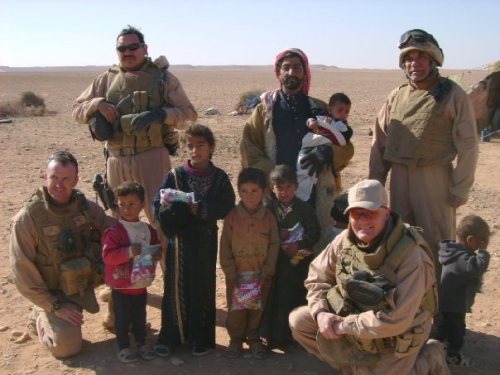
313_34838767058_2205_n

Leaving Iraq, January 31st 2008

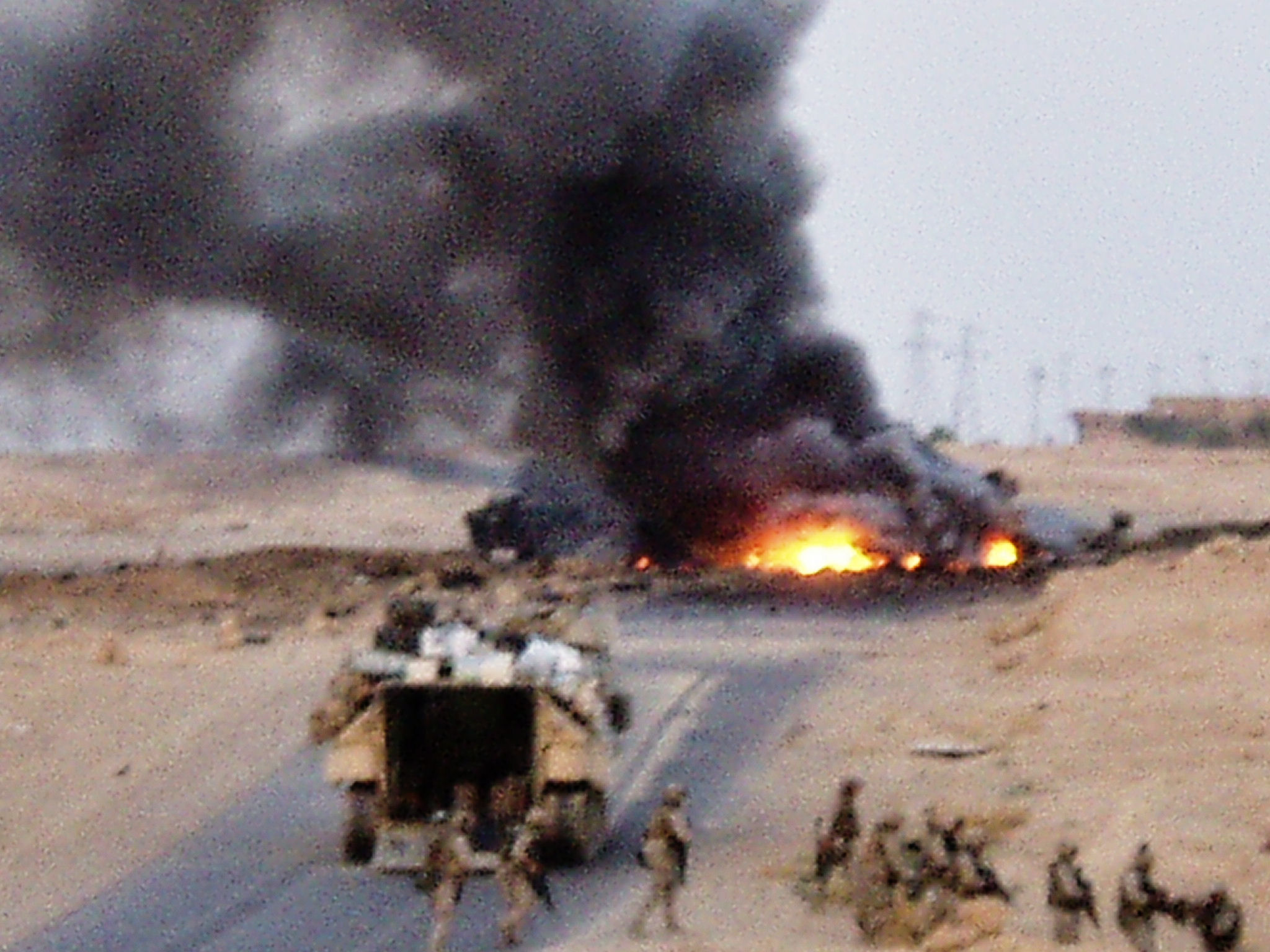
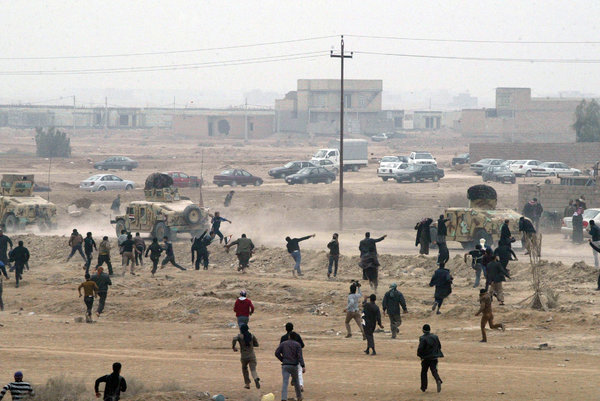
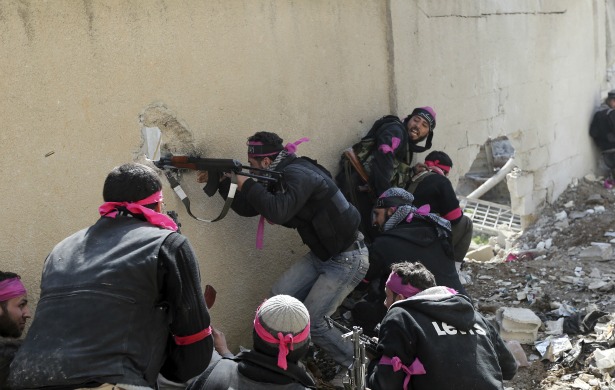
Six years ago I arrived home from Iraq. It was the beginning of a new phase in my life.  I wrote an article shortly after my return for the church that I belonged to at the time and I have republished it around this time of year a number of times.

When I wrote it I really had no idea how much I had changed and what had happened to me. When I wrote it I was well on my way to a complete emotional and spiritual collapse due to PTSD.  Things are better now but it was a very dark time for several years and occasionally I still have my bad days.

These wars in Iraq and Afghanistan have been terribly costly in lives, treasure and they have lost almost all sense of public support. I have been in the military almost all of my adult life, over 32 years. I am also a historian and the son of a Vietnam Veteran. Thus, I feel special kinship with those that have fought in unpopular wars before me. French Indochina, Algeria and Vietnam, even the Soviet troops in Afghanistan before we ever went there. 

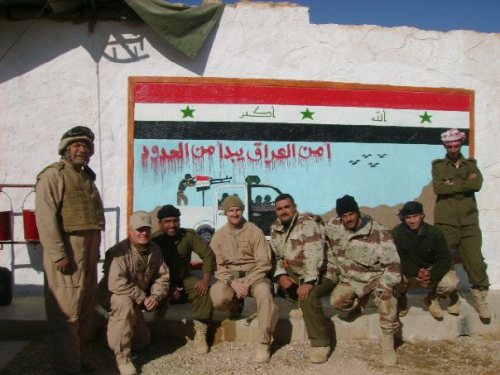
533506_10151366982462059_34997654_n

I am honored to have served with or known veterans of Vietnam, particularly the Marines that served at the Battle of Hue City, who are remembering the 44th anniversary of the beginning of that battle.  My dad also served in Vietnam at a place called An Loc. He didn’t talk about it much and I can understand having seen war myself. 

When I look up at the moonlit sky I think about seeing all of those stars and the brilliance of the moon over the western desert of Iraq near Syria. Somehow, when I see that brilliant sight it comforts me instead of frightens me. 

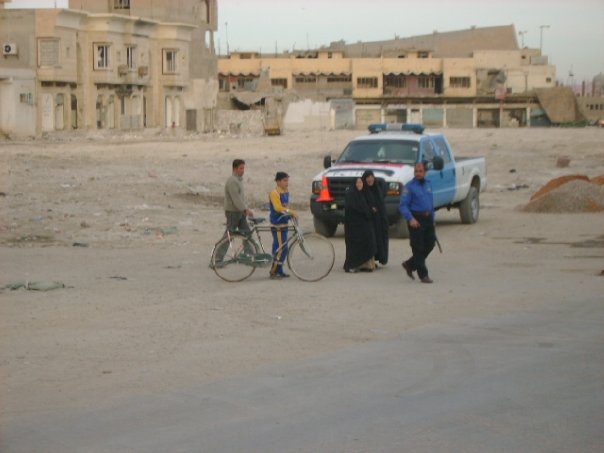
295_26912092058_3949_n

Tonight our Soldiers, Marines, Sailors and Airmen serve in harm’s way nearly 35,000 in Afghanistan alone. We are sort of out of Iraq but Lord knows how things will turn out in the long run, and it appears that another major Battle of Fallujah is shaping up.  

Tonight I am thinking about them, as well as those men who fought in other unpopular wars which their nation’s government’s sent them. 

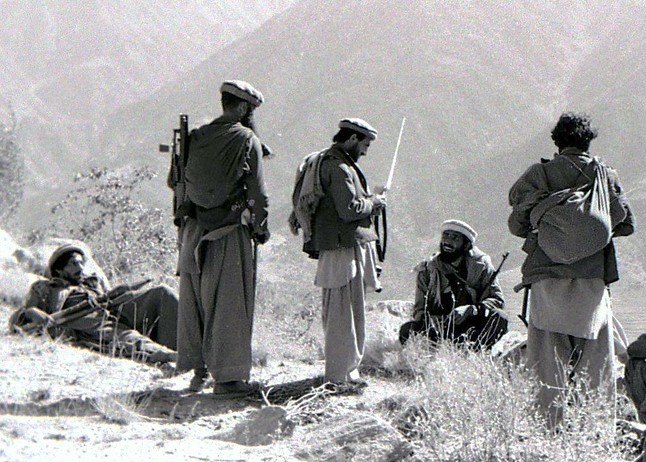
dien-bien-phu6

When I left Iraq I was traumatized. All that I had read about our Vietnam veterans, the French veterans of Indochina and Algeria and the Soviet veterans of Afghanistan resonated in my heart. The words of T. E. Lawrence, Smedley Butler, Erich Maria Remarque and Guy Sager also penetrated the shields I had put around my heart. 

So I wrote, and I wrote, and I still write. But tonight here is God in the empty Places.

262_29132262058_8844_n-2

God in the Empty Places. 

I have been doing a lot of reflecting on ministry and history over the past few months. While both have been part of my life for many years, they have taken on a new dimension after serving in Iraq. I can’t really explain it; I guess I am trying to integrate my theological and academic disciplines with my military, life and faith experience since my return.

The Chaplain ministry is unlike civilian ministry in many ways. As Chaplains we never lose the calling of being priests, and as priests in uniform, we are also professional officers and go where our nations send us to serve our Soldiers, Sailors, Marines and Airmen. There is always a tension, especially when the wars that we are sent to are unpopular at home and seem to drag on without the benefit of a nice clear victory such as VE or VJ Day in World War II or the homecoming after Desert Shield and Desert Storm.

french-chaplain-and-soldiers-2

It is my belief that when things go well and we have easy victories that it is easy for us to give the credit to the Lord and equally easy for others to give the credit to superior strategy, weaponry or tactics to the point of denying the possibility that God might have been involved. Such is the case in almost every war and Americans since World War Two have loved the technology of war seeing it as a way to easy and “bloodless” victory. In such an environment ministry can take on an almost “cheer-leading” dimension. It is hard to get around it, because it is a heady experience to be on a winning Army in a popular cause. The challenge here is to keep our ministry of reconciliation in focus, by caring for the least, the lost and the lonely, and in our case, to never forget the victims of war, especially the innocent among the vanquished, as well as our own wounded, killed and their families.

377

But there are other wars, many like the current conflict less popular and not easily finished. The task of chaplains in the current war, and similar wars fought by other nations is different. In these wars, sometimes called counter-insurgency operations, guerrilla wars or peace keeping operations, there is no easily discernible victory. These types of wars can drag on and on, sometimes with no end in sight. Since they are fought by volunteers and professionals, much of the population acts as if there is no war since it does often not affect them, while others oppose the war.

Likewise, there are supporters of war who seem more interested in political points of victory for their particular political party than for the welfare of those that are sent to fight the wars. This has been the case in about every war fought by the US since World War II. It is not a new phenomenon. Only the cast members have changed.

legion-algeria1

This is not only the case with the United States. I think that we can find parallels in other militaries. I think particularly of the French professional soldiers, the paratroops and Foreign Legion who bore the brunt of the fighting in Indochina, placed in a difficult situation by their government and alienated from their own people. In particular I think of the Chaplains, all Catholic priests save one Protestant, at the Battle of Dien Bien Phu, the epic defeat of the French forces that sealed the end of their rule in Vietnam. The Chaplains there went in with the Legion and Paras. They endured all that their soldiers went through while ministering the Sacraments and helping to alleviate the suffering of the wounded and dying. Their service is mentioned in nearly every account of the battle. During the campaign which lasted 6 months from November 1953 to May 1954 these men observed most of the major feasts from Advent through the first few weeks of Easter with their soldiers in what one author called “Hell in a Very Small Place.”

frenchforeignlegionairevtnamdod-2

Another author describes Easter 1954: “In all Christendom, in Hanoi Cathedral as in the churches of Europe the first hallelujahs were being sung. At Dienbeinphu, where the men went to confession and communion in little groups, Chaplain Trinquant, who was celebrating Mass in a shelter near the hospital, uttered that cry of liturgical joy with a heart steeped in sadness; it was not victory that was approaching but death.” A battalion commander went to another priest and told him “we are heading toward disaster.” (The Battle of Dienbeinphu, Jules Roy, Carroll and Graf Publishers, New York, 1984 p.239)

Of course one can find examples in American military history such as Bataan, Corregidor, and certain battles of the Korean War to understand that our ministry can bear fruit even in tragic defeat. At Khe Sahn in our Vietnam War we almost experienced a defeat on the order of Dien Bien Phu. It was the tenacity of the Marines and tremendous air-support that kept our forces from being overrun.

You probably wonder where I am going with this. I wonder a little bit too. But here is where I think I am going. It is the most difficult of times; especially when units we are with take casualties and our troops’ sacrifice is not fully appreciated by a nation absorbed with its own issues.

legion-indo-china

For the French the events and sacrifices of their soldiers during Easter 1954 was page five news in a nation that was more focused on the coming summer. This is very similar to our circumstances today because it often seems that own people are more concerned about economic considerations and the latest in entertainment news than what is going on in Iraq or Afghanistan.

french-at-dien-bien-phu

The French soldiers in Indochina were professionals and volunteers, much like our own troops today. Their institutional culture and experience of war was not truly appreciated by their own people, or by their government which sent them into a war against an opponent that would sacrifice anything and take as many years as needed to secure their aim, while their own countrymen were unwilling to make the sacrifice and in fact had already given up their cause as lost. Their sacrifice would be lost on their own people and their experience ignored by the United States when we sent major combat formations to Vietnam in the 1960s.

In a way the French professional soldiers of that era, as well as British colonial troops before them have more in common with our current all volunteer force than the citizen soldier heroes of the “Greatest Generation.” Most of them were citizen soldiers who did their service in an epic war and then went home to build a better country as civilians. We are now a professional military and that makes our service a bit different than those who went before us.

943043_10151694525692059_632653331_n

Yet it is in this very world that we minister, a world of volunteers who serve with the highest ideals. We go where we are sent, even when it is unpopular. It is here that we make our mark; it is here that we serve our Soldiers, Sailors, Marines and Airmen. Our duty is to bring God’s grace, mercy and reconciliation to men and women, and their families who may not see it anywhere else. Likewise we are always to be a prophetic voice within the ranks.

When my dad was serving in Vietnam in 1972 I had a Sunday school teacher tell me that he was a “Baby Killer.” It was a Catholic Priest and Navy Chaplain who showed me and my family the love of God when others didn’t. In the current election year anticipate that people from all parts of the political spectrum will offer criticism or support to our troops. Our duty is to be there as priests, not be discouraged in caring for our men and women and their families because most churches, even those supportive of our people really don’t understand the nature of our service or the culture that we represent. We live in a culture where the military professional is in a distinct minority group upholding values of honor, courage, sacrifice and duty which are foreign to most Americans. We are called to that ministry in victory and if it happens someday, defeat. In such circumstances we must always remain faithful.

For those interested in the French campaign in Indochina it has much to teach us. Good books on the subject include The Last Valley by Martin Windrow, Hell in a Very Small Place by Bernard Fall; The Battle of Dienbeinphu by Jules Roy; and The Battle of Dien Bien Phu- The Battle America Forgot by Howard Simpson. For a history of the whole campaign, read Street Without Joy by Bernard Fall. I always find Fall’s work poignant, he served as a member of the French Resistance in the Second World War and soldier later and then became a journalist covering the Nuremberg Trials and both the French and American wars in Vietnam and was killed by what was then known as a “booby-trap” while covering a platoon of U.S. Marines.

madonna-of-stalingrad-2

There is a picture that has become quite meaningful to me called the Madonna of Stalingrad. It was drawn by a German chaplain-physician named Kurt Reuber at Stalingrad at Christmas 1942 during that siege. He drew it for the wounded in his field aid station, for most of whom it would be their last Christmas. The priest would die in Soviet captivity and the picture was given to one of the last officers to be evacuated from the doomed garrison. It was drawn on the back of a Soviet map and now hangs in the Kaiser Wilhelm Memorial Church in Berlin where it is displayed with the Cross of Nails from Coventry Cathedral as a symbol of reconciliation. I have had it with me since before I went to Iraq. The words around it say: “Christmas in the Cauldron 1942, Fortress Stalingrad, Light, Life, Love.” I am always touched by it, and it is symbolic of God’s care even in the midst of the worst of war’s suffering and tragedy. I have kept a a copy hanging over my desk in my office since late 2008. It still hangs in my new office.

Peace

Padre Steve+

1 Comment

Filed under History, iraq,afghanistan, middle east, ministry, PTSD, Tour in Iraq

The Dehumanization of America: Tom Perkins, Peter Schiff, The Wall Street Journal and the Absence of Empathy

Wall-Street

“Our merchants and masters complain much of the bad effects of high wages in raising the price and lessening the sale of goods. They say nothing concerning the bad effects of high profits. They are silent with regard to the pernicious effects of their own gains. They complain only of those of other people.” Adam Smith The Wealth of the Nations: An Inquiry into the Nature and Causes of the Wealth of Nations

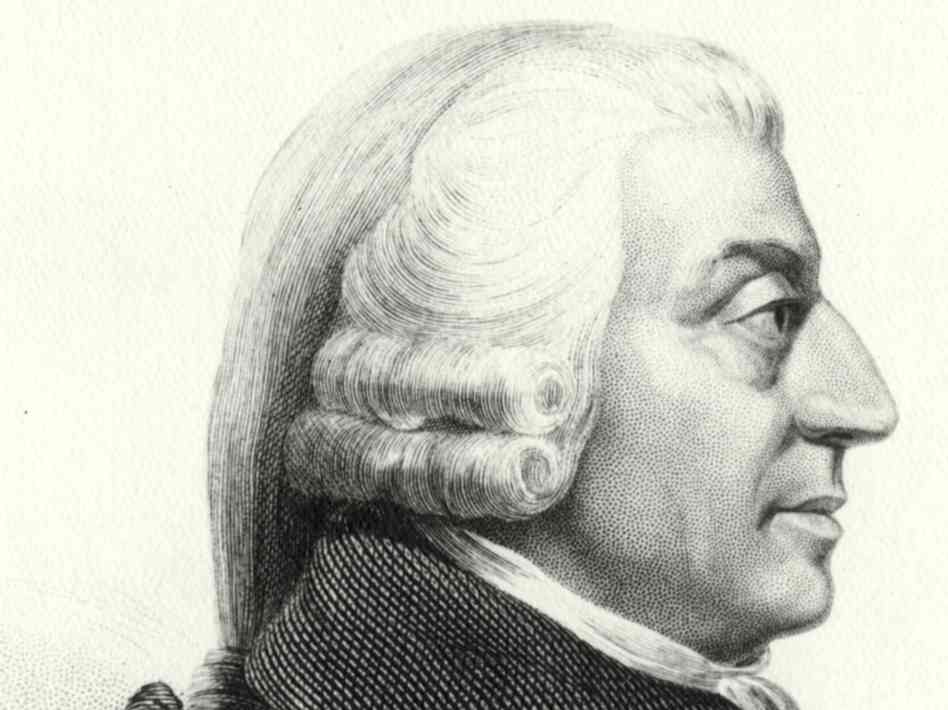
adamsmith-47887bce47b183e01c90a934cfb760b5f7ba966c-s6-c30

Let me start this essay by categorically that I do not oppose people making money, becoming rich through their genius, their hard work, and being successful. In fact I applaud people who can do that. Adam Smith who developed what we know as Capitalism understood this. Unfortunately what now is described as Capitalism bears little resemblance to the understanding of Smith, and thereby his name is often dragged through the mud by people who seeing the bastard seed of the “new capitalists” reject the truly remarkable aspects of what Smith wrote about.

These men, and the society that they desire were described by Smith:

“As soon as the land of any country has all become private property, the landlords, like all other men, love to reap where they never sowed, and demand a rent even for its natural produce.”

Smith understood the value of free markets, but he also understood that the value of a human being was greater than a means to a profitable end. He had a sense of social responsibility, something that those who profess to be his disciples today lack. Smith noted:

“The subjects of every state ought to contribute towards the support of the government, as nearly as possible, in proportion to their respective abilities.” 

19dvp6wtrqhycpng

In the past week we have been witnesses of the banal attitudes of some men and the institutions that they represent toward those who they make their riches from. Tom Perkins, a now retired venture capitalist wrote a letter to the Wall Street Journal which complained that the rich were the targets of a new Kristallnacht against the rich. Later when defending his ideas, though lamenting his use of the term Kristallnacht, he boasted of his wealth including a James Bond like car which could “fly” underwater and a nearly 400,000 watch. It was a crass vulgar display or his wealth. It was almost as if Smith had wrote about Perkins in 1776:

“With the greater part of rich people, the chief enjoyment of riches consists in the parade of riches, which in their eye is never so complete as when they appear to possess those decisive marks of opulence which nobody can possess but themselves.”

peter-schiff-gets-totally-owned-on-larry-kudlows-show-in-debate-about-inflation

Peter Schiff equated the value of a worker to what they are and not what they produce, especially in regard to the mentally retarded but an argument that can equally apply to those of lower education, those with physical disabilities or even mental illness. Of course the Wall Street Journal then had to rise to the defense of such sentiments.

I mention these men because they were crass enough to voice what so many like them actually think, thus the criticism is not of these two men, but of the lifestyle, culture and attitude that they represent, which pervades almost every part of modern American economic life. We live in a society which our news media, entertainment industry and often even religion exalt the wealthy and in which our political, social and economic elites see wealth as their divine right. Smith noted:

“This disposition to admire, and almost to worship, the rich and powerful, and to despise or, at least, neglect persons of poor and mean conditions, though necessary both to establish and to maintain the distinction of ranks and the order of society, is, at the same time, the great and most universal cause of the corruption of our moral sentiments.”

Smith makes a direct connection between the attitudes toward wealth and the near worship of the rich and powerful to the corruption of the moral sentiments of a society. One only needs to look at the great banking, savings and loan and real estate meltdowns of the past 20 or so years to see the effects of this unquestioned worship of the rich and powerful has on the society at large. Even so those who have brought our economy to near ruin on numerous occasions do not see the connection. They are so insulated by their riches and success that they feel nothing of the suffering of others.

Theirs is a condition of intense narcissism and insecurity. They boldly assert their superiority over the majority of humanity, but are so insecure that they need to ensure that the government safeguards their position in society. Smith wrote:

“Civil government, so far as it is instituted for the security of property, is in reality instituted for the defense of the rich against the poor, or of those who have some property against those who have none at all.”

Men like Perkins and Schiff and the shills at the Wall Street Journal have a profound lack of empathy, something that is common in narcissistic personalities. In fact the criteria listed for the psychiatric condition of Narcissistic Personality Disorder are present in many highly successful and powerful people, in politics, business, government, entertainment and even religion. Thus the  criteria serve well to illuminate the attitudes of such people, even if they themselves do not match enough of the criteria meet the clinical diagnosis.

*Has a grandiose sense of self-importance (e.g., exaggerates achievements and talents, expects to be recognized as superior without commensurate achievements)

*Is preoccupied with fantasies of unlimited success, power, brilliance, beauty, or ideal love

*Believes that he or she is “special” and unique and can only be understood by, or should associate with, other special or high-status people (or institutions)

*Requires excessive admiration

*Has a very strong sense of entitlement, e.g., unreasonable expectations of especially favorable treatment or automatic compliance with his or her expectations

*Is exploitative of others, e.g., takes advantage of others to achieve his or her own ends

*Lacks empathy, e.g., is unwilling to recognize or identify with the feelings and needs of others

*Is often envious of others or believes that others are envious of him or her

*Regularly shows arrogant, haughty behaviors or attitudes

Now it is possible for people to demonstrate some of these symptoms without being diagnosed with Narcissistic Personality Disorder, in fact at least five have to be present for a clinical diagnosis. That being said, the words and actions Perkins, Schiff and others demonstrate some characteristics of a a narcissistic personality, especially the lack or absence of empathy, which I think is the most dangerous narcissistic trait of all.

10376938-large

When men no longer can empathize with other human beings, and only see others, especially the weak, the poor, those different than them and the disabled as a means to their own riches, power or success; the stage is set for great human tragedy. It does not matter in what type of political or economic system that it takes place, it can be Capitalist, Fascist, Communist, Nationalist, Tribal or even Theocratic; the issue is not the system, but the underlying lack of empathy for others in those who rise to power in it.

The terrible result of such a lack of empathy is the dehumanization of a society.

Gustave Gilbert, who served as a U. S. Army Psychologist at Nuremberg noted something about them men that he observed and worked with during the Nuremberg Trials. The men included bankers, industrialists, propagandists, technocrats, police, party and military personnel who served the Nazi regime. Gilbert wrote:

“In my work with the defendants I was searching for the nature of evil and I now think I have come close to defining it. A lack of empathy. It’s the one characteristic that connects all the defendants, a genuine incapacity to feel with their fellow men. Evil, I think, is the absence of empathy.” 

Now before someone jumps the shark and says that I am calling either Perkins or Schiff “Nazis” or Nazi sympathizers, be aware I am not. I just feel that Gilbert’s assessment of the definition of evil, is a lack of empathy is a universal statement. Though Gilbert worked among Nazi War Criminals, I believe that the statement is true in any society where a minority of the people live in such a manner that they control the society and are incapable of having empathy for others.

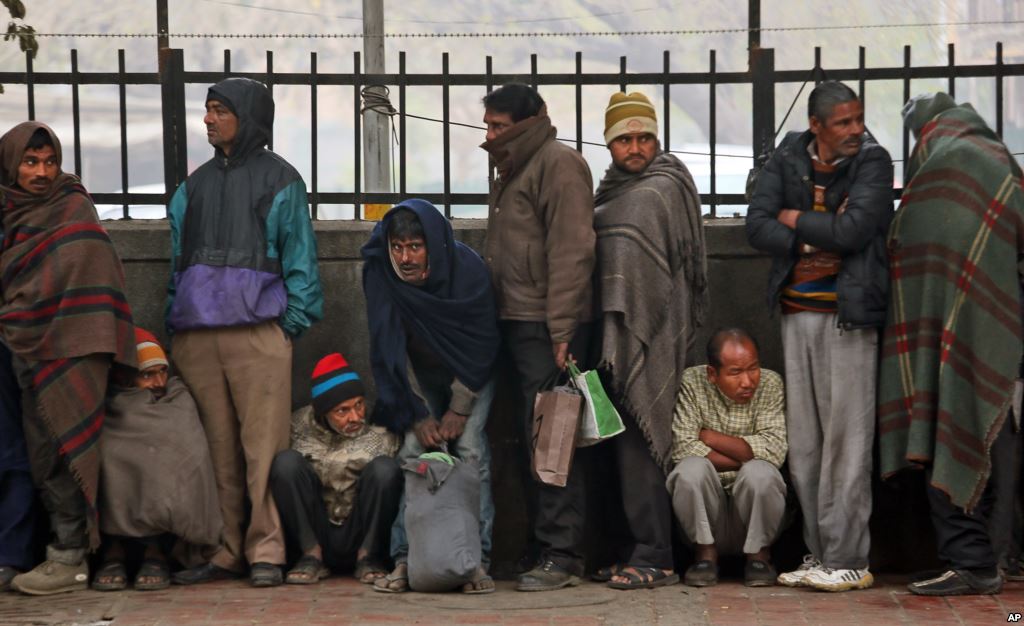
people-images-of-homeless-people-14-60-images-of-homeless-people

There is an antidote to this, and it is not in trying to protect one’s position, but rather to be generous to others regardless of our estate and to avoid vanity. Smith wrote that “Bounty and hospitality very seldom lead to extravagance; though vanity almost always does.”  Likewise he noted something that all of us should take note of before in our attempt to climb to the top crush all beneath us:  “No society can surely be flourishing and happy, of which the far greater part of the members are poor and miserable.”

So though my criticism falls on Perkins, Schiff and the Wall Street Journal it is something that all of us have to be aware of and guard against, regardless of our political, ideological, religious or economic philosophy of life; lest we sow the wind and reap the whirlwind.

Peace

Padre Steve+

3 Comments

Filed under economics and financial policy, ethics, History, News and current events, Political Commentary

A Night of Memories: Syria, Iraq and The Middle East in 2014, Echoes of T. E. Lawrence

410w-1-2

Inshallah, (إن شاء اللهGod willing…

It is now 2014, almost eleven years since the Bush administration launched its ill advised, preemptive and probably war illegal under international law, against Saddam Hussein’s Iraq. Tonight instead of watching the State of the Union Address, and the four separate Republican responses, or a sporting event, or some thing more frivolous I am watching Lawrence of Arabia.  

award-ceremony-dundas-31

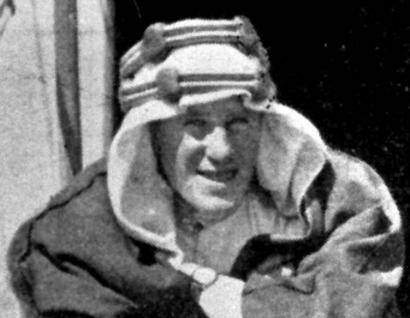
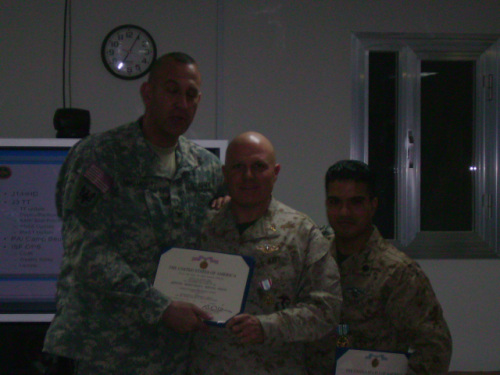
It is fitting that I do so. I left Iraq just six years ago. In fact six years ago tonight I was in Baghdad at the Headquarters of the Iraq Assistance Group, on my way out of country, being awarded a Defense Meritorious Service Medal for my work with our advisors and the Iraqis in Al Anbar. It was a melancholy night. That night I was wearing my last serviceable uniform, which I had preserved for the trip home by wearing flight suits and baseball caps with no badges of rank, throughout most of the deployment. Like Lawrence’s donning of the Bedouin robes, my uniform choice, done purely by necessity made me stand out conspicuously among other Americans in country.

399202_10151366970802059_725286976_n-2

I was heading home but didn’t really want to leave, but in the process I left part of me in that long suffering country.  I have written much about my experience there and how even today I have a deep regard for the Iraqi people and their hopes for a better future. However, I wonder if what Lawrence wrote will be true:

“We had been hopelessly labouring to plough waste lands; to make nationality grow in a place full of the certainty of God… Among the tribes our creed could be only like the desert grass – a beautiful swift seeming of spring; which, after a day’s heat, fell dusty.” 

vault-von-saddam-statue-fall-itn-640x360

In 2003 the United States invaded Iraq and made short work of that country’s military. Many Iraqis of all creeds looked upon the US and coalition forces as liberators but within a few months the illusion was over. Within weeks of the overthrow of Saddam, the US military personnel and leaders who were working with Iraqi officials, both military and civilian to get the country back on its feet were replaced by the Bush administration.

rumsfeld-bremer-2

In their place a new entity, the Coalition Provisional Authority was created and staffed. The first administrator of the entity was retired Army Lieutenant General Jay Garner. He had much experience in Iraq but was sacked quickly by Secretary of Defense Donald Rumsfeld for not conducting an immediate purge of members of the Baathist Party from key positions in the civil service or security forces, or implementing the agenda of the administration.

After Garner’s dismissal the CPA was led by Ambassador L. Paul Bremer, a man who had no experience in the Arab world, much less in Iraq. Bremer and his staff, most of who had little experience or knowledge of the country created conditions that directly led the the Iraq insurgency, the sacrifice of thousands of American and allied lives and the loss of friendship of the Iraqi people. They also gave a a bloodless strategic victory to Iraq’s traditional enemy and oppressor Iran, which became a dominant regional power without having to worry about their traditional Arab nemesis.

It was as if Bremer, the leaders of the Bush administration and their neoconservative allies knew nothing of history. If they did they decided to ignore it. Whether it was ignorance of history, or a wanton disregard for it, and the country we invaded it was immoral, unethical and probably criminal.

baghdad1917-2

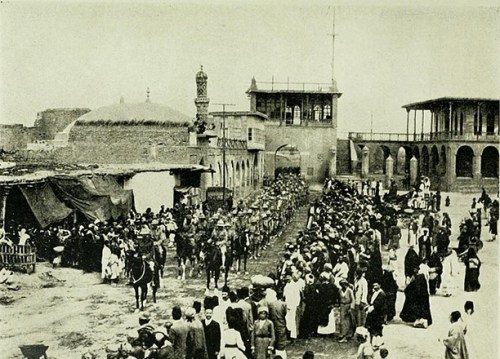
T.E. Lawrence wrote of the British incursion into Turkish Mesopotamia in 1915, managed by the British Indian Office:

“By brute force it marched then into Basra. The enemy troops in Irak were nearly all Arabs in the unenviable predicament of having to fight on behalf of their secular oppressors against a people long envisaged as liberators, but who obstinately refused to play the part.”

The actions of the CPA destroyed the plans pragmatists in the Pentagon and State Department to incorporate the existing civil service, police and military forces in the newly free Iraq.  Instead Bremer dissolved the Iraqi military, police and civil service within days of his arrival. Since the military invasion had been accomplished with minimal forces most Iraqi weapon sites, arsenals and bases were looted once their Iraqi guardians were banished and left their posts. The embryonic insurgency was thus provided by Bremer a full arsenal of weapons to use against American forces; many of whom were now mobilized Reservists and National Guardsmen that were neither trained or equipped to fight an insurgency or in urban areas.

mosul-41

The reaction of the Iraqi Arabs to US occupation should have been anticipated. Lawrence wrote in 1920 a letter that could have easily been written in 2004:

“It is not astonishing that their patience has broken down after two years. The Government we have set up is English in fashion, and is conducted in the English language. So it has 450 British executive officers running it, and not a single responsible Mesopotamian. In Turkish days 70 per cent of the executive civil service was local. Our 80,000 troops there are occupied in police duties, not in guarding the frontiers. They are holding down the people.”

The actions of Bremer’s incompetent leadership team led to a tragic insurgency that need not have taken place. The now unnumbered US forces had to fight an insurgency while attempting to re-create an army, security forces and civil service from the wreckage created by Bremer’s mistakes; as well as its own often heavy handed tactics in the months following the invasion.

OLYMPUS DIGITAL CAMERA

Nearly 4500 US troops would die and over 30,000 more wounded in the campaign. Hundreds of thousands of Iraqis were killed, wounded or died of disease during the war.  Lawrence wrote about the British administration of Iraq words that could well have been written about Bremer’s Coalition Provisional Authority:

“Meanwhile, our unfortunate troops, Indian and British, under hard conditions of climate and supply, are policing an immense area, paying dearly every day in lives for the willfully wrong policy of the civil administration in Bagdad.”

It took dramatic efforts in blood and treasure to restore the some modicum of security in Iraq, something that was only accomplished when the Sunni tribes of Anbar Province turned against the Al Qaeda backed foreign fighters. The surge under the command of General David Petreus achieved the desired result. It gave the Iraqis a chance to stabilize their government and increase their own security forces.

26iraq_image1-articleLarge

Unfortunately many of those that remained in power of the Shia sect refused to share power in meaningful ways with Iraq’s Sunni and Kurds leading to a political crisis. The US military mission ended in December 2011 and since then Iraq security forces and civil authorities, often divided by tribal or sectarian loyalties have struggled to maintain order. The result is that by 2013 that Iraq was again heading toward the abyss of civil war. Sunni protestors in Anbar and other provinces conducted frequent protests, sectarian violence spread, and an Al Qaeda affiliated group gained control of Fallujah and parts of Ramadi. Casualties in Iraq are continuing to mount.

Syria

To the west in Syria a brutal civil war has been going on for three years. Like Iraq it pits Sunni against Shia, as well as Kurd and foreign fighters from a score of nations, some fighting as part of a Free Syria movement, others as part of the Al Qaeda coalition and others beside Syria’s government.

In 1920 Lawrence wrote of the British intervention and occupation of Iraq:

“The people of England have been led in Mesopotamia into a trap from which it will be hard to escape with dignity and honour. They have been tricked into it by a steady withholding of information. The Bagdad communiqués are belated, insincere, incomplete. Things have been far worse than we have been told, our administration more bloody and inefficient than the public knows. It is a disgrace to our imperial record, and may soon be too inflamed for any ordinary cure. We are to-day not far from a disaster.”

lawrenceguerrillas1

His words have a sadly familiar tone. The US invasion of Iraq did have a different outcome than we imagined. The Arab Spring erupted and the consequences of it will be far reaching and effect much of the Middle East and the world. The internal conflicts in Iraq and Syria threaten every country that borders them, and the instability has the potential of bringing on an regional war.

295_26912097058_4309_n-4

That being said, many if not most Arabs in all of these lands simply desire to live in peace and enjoy some amount of freedom for themselves and future for their children. One has to remember that the freedom for which many are striving, and dying is for them, not for the United States or any other power.

Lawrence’s words and wisdom concerning the Arabs who rebelled against the Turkish Ottoman Empire are as true today as when he wrote them after the war:

“The Arabs rebelled against the Turks during the war not because the Turk Government was notably bad, but because they wanted independence. They did not risk their lives in battle to change masters, to become British subjects or French citizens, but to win a show of their own.”

That is the case in many Arab countries today. One can only hope that in those countries as well as in Afghanistan where our troops are embroiled in a war that cannot end well, that somehow peace will come. I do hope that we will do better than we have over the past dozen years of conflict, or than the British or French did almost 100 years ago.

As my Iraqi friends say Inshallah, (إن شاء الله) God willing.

Peace

Padre Steve+

1 Comment

Filed under ethics, Foreign Policy, History, iraq,afghanistan, middle east, Tour in Iraq

Never Again: Holocaust Remembrance Day 2014

1483285_10152114931522059_1612934841_n

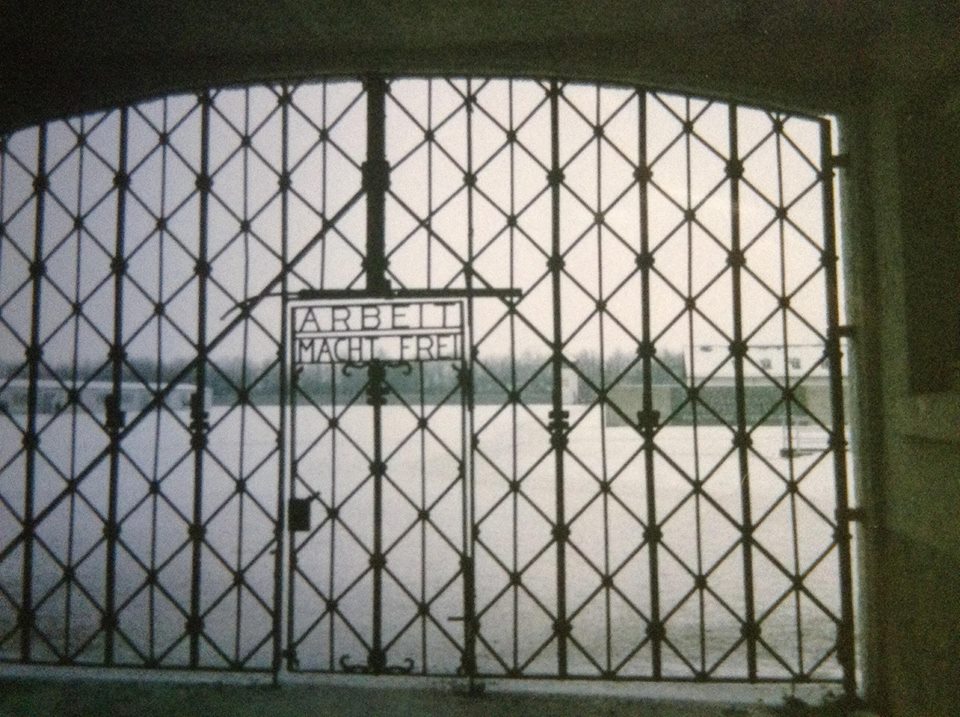
Dachau 

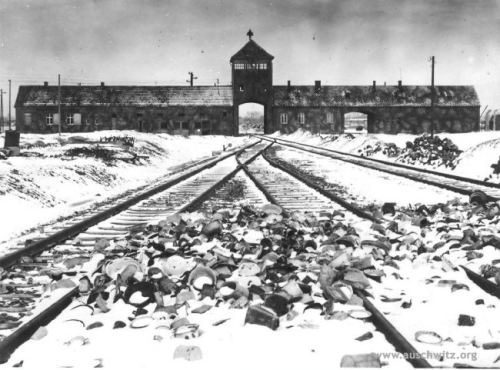
On January 27th 1945 the Soviet Red Army liberated the Auschwitz Concentration Camp, the centerpiece of the Nazi Death Camp machine. Though it did not end the Nazi genocide against the Jews it was only a matter of time before the horror would end.

20080713_1383757010_brama_birkenau-2

Auschwitz 

It is a day that we should never forget. The horrors perpetrated by the Nazi regime, all in the name of “race purity” and the extermination of the Jews and others deemed by the Nazis to be “sub-human” or untermenschen is something that is hard for most to imagine.

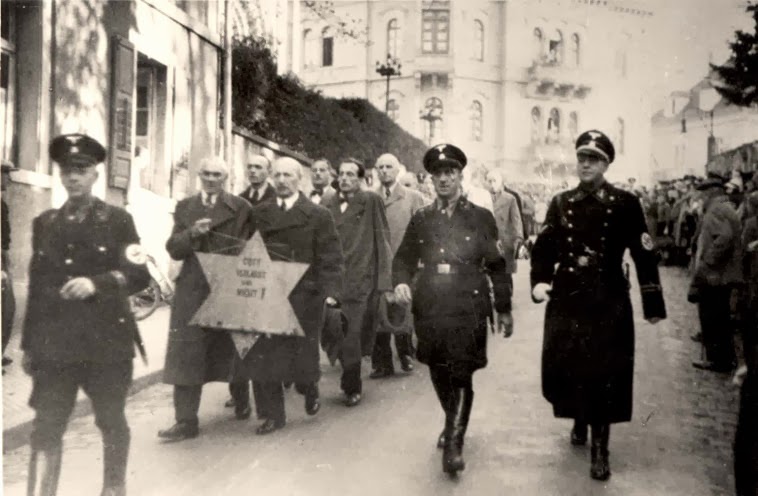
The Nazis had begun their persecution of the Jews shortly after Hitler took power in 1933. Later in the year the Enabling Act gave Hitler and his henchmen the legal means to begin their persecution of the Jews and others. These were followed by the Nuremberg Laws and other laws that targeted the Jews. Persecution increased throughout the 1930s, and sadly most countries refused to accommodate increased Jewish immigration.

1938_progrome_synag_696724g

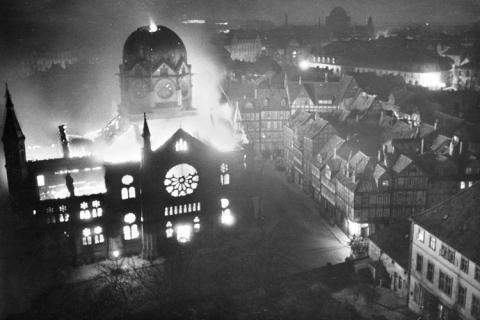
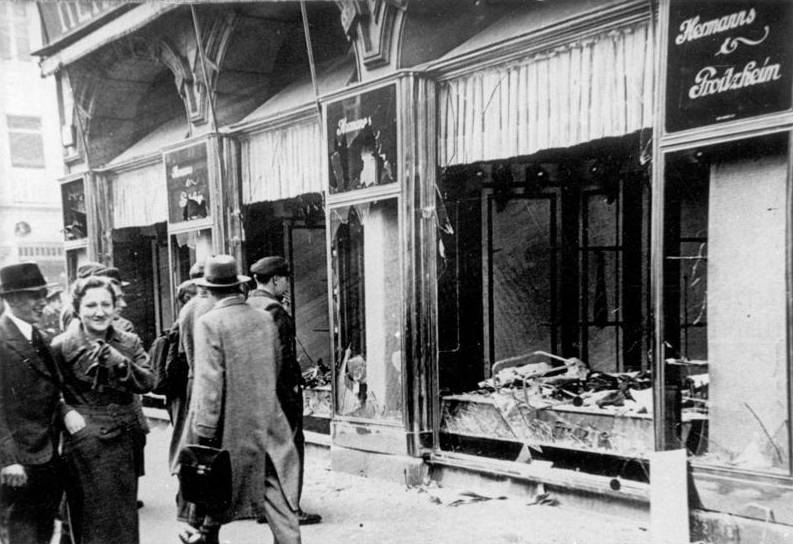
Kristallnacht

Nazi persecution became more pronounced during Kristallnacht, or the Night of Broken Glass, when on 9-10 November 1938, a series of orchestrated attacks on Jewish businesses, Synagogues, institutions and individuals. On that night close to 200 synagogues, 7000 Jewish businesses and 29 major department stores were destroyed or damaged. Over 30,000 Jews, mostly en were arrested and sent to concentration camps, 91 people were killed outright, and several thousand died in the aftermath.

Bundesarchiv_Bild_146-1970-083-42,_Magdeburg,_zerstörtes_jüdisches_Geschäft-2

The order to executed the Kristallnacht progrom from SS Gruppenfuhrer Heydrich is chilling in its bureaucratic attention to detail:

TO ALL REGIONAL AND SUB-REGIONAL GESTAPO OFFICES 1:20AM, November 8, 1938

SUBJECT: MEASURES AGAINST THE JEWS THIS NIGHT

That only such measures were to be taken that would not endanger German lives or property  Businesses and residences of Jews may be damaged but not looted. Particular care is to be paid in business sections and surrounding streets. Non-Jewish businesses are to be protected from damage under all circumstances. Police are to seize all archives from synagogues and offices of community organizations, this refers to material of historical significance. Archives are to be handed over to the SS. As soon as possible, officials are to arrest as many Jews especially wealthy ones – in all districts as can be accommodated in existing cells. For the time being, only healthy male Jews of not too advanced age are to be arrested.


Reinhard Heydrich, SS Gruppenführer

kristallnacht

The Jews were made to bear the costs of the assault on them and their institutions. Hermann Goering, in charge of the German economic program was not in favor, though he and his contacts in the German banking industry, major corporations and businesses took full advantage of the situation to “Aryanize” Jewish businesses, stripping Jews of businesses that had been in their families for generations.

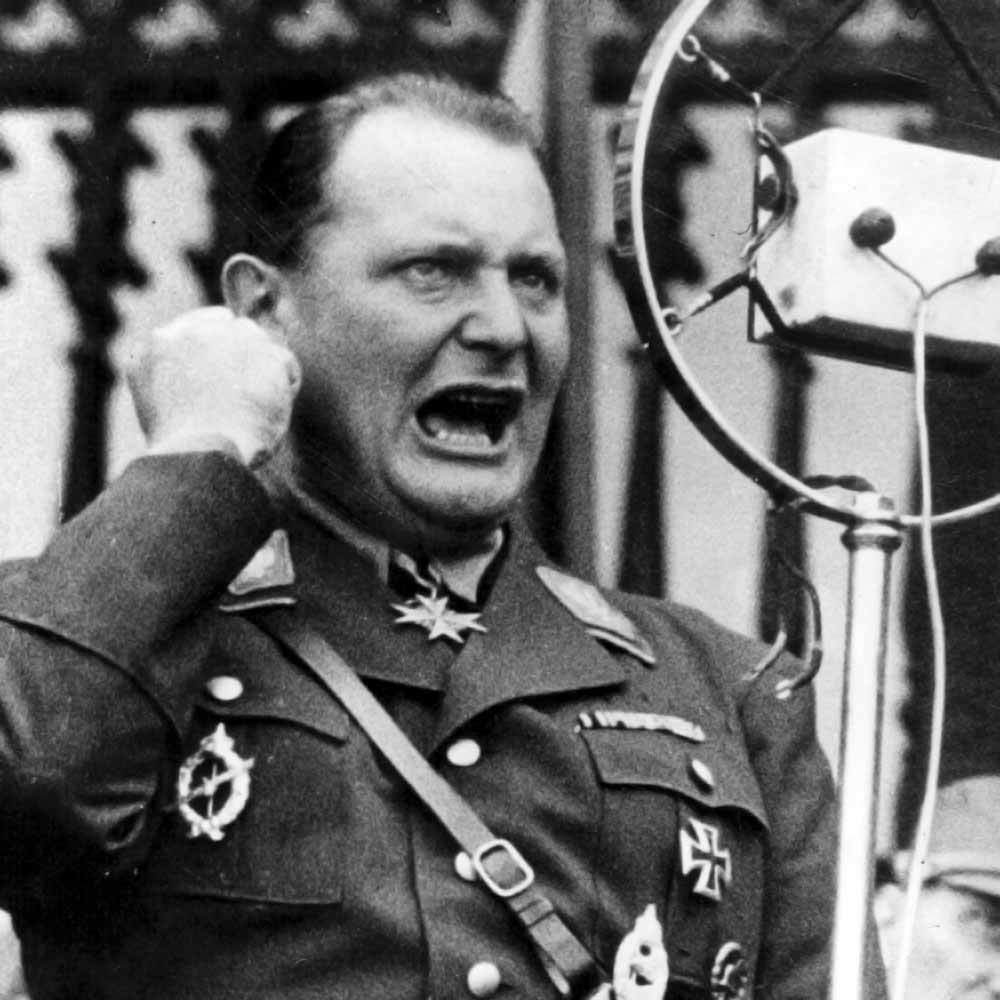
Goering-1935-a

Goering

After the war began the persecution became worse and in July 1941, not long after the German invasion of the Soviet Union, Hitler ordered that the the “Endlosung” or Final Solution of the “Jewish problem” begin. Georing entrusted the task to SS Gruppenfuhrer  Reinhard Heydrich. His order read:

Berlin, July 31st 1941

To: Gruppenfuhrer Heydrich

Supplementing the task assigned to you by the decree of January 24th 1939, to solver the Jewish problem by means of evacuation and emigration in the best possible way by according to present conditions, I hereby charge you to carry out preparations as regards organizational, financial, and material matters for a total solution (Gesamtlosung) of the Jewish question in all the territories of Europe under German occupation.

Where the competency of other organizations touches on this matter, the organizations are to collaborate.

I charge you further to submit to me as soon as possible a general plan of the administrative material and financial measures necessary for the carrying out the desired final solution (Endlosung) of the Jewish question.”

Goering

When Goering wrote Heydrich, the head of the Reichssiecherhiethauptampt (RSHA) in July 1941 it seemed that Nazi victory in Europe was all but assured. Goering’s words were businesslike. Early measures to rid Germany and the annexed Austria ha been reasonably successful of their Jews through emigration and evacuation. However with the occupation of most of Europe following the Nazi military success and the looming occupation and subjugation of the Soviet Union the process of giving the Jews a chance to emigrate to lands outside Nazi control had come to an end. In fact the Nazis occupied the countries that may Jews had found refuge. The Nazi leadership decided that its race war against the Jews needed to forge ahead.

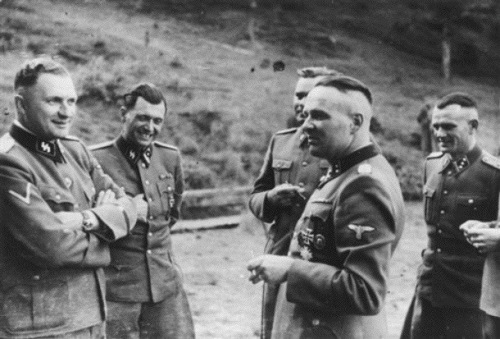
20130408-232813

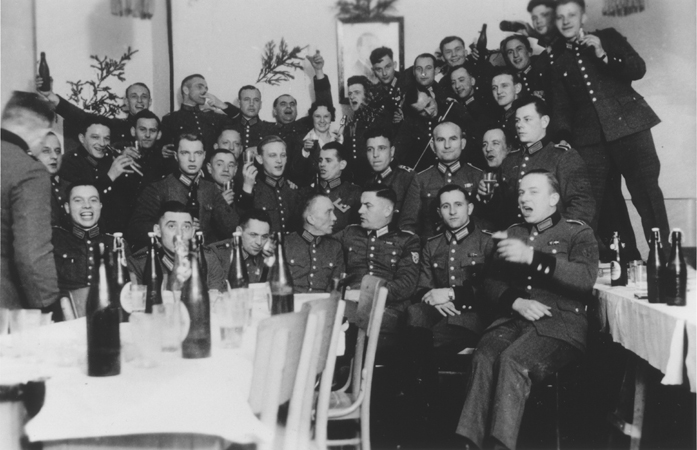
Rudolph Höss and his Officers 

Within weeks SS commanders at various concentration camps were devising means to exterminate Jews more efficiently. It was a matter of pride and efficiency for them. As Rudolph Höss the Commandant of Auschwitz said at Nuremberg “the camp commandant at Treblinka told me that he had liquidated 80,000 in the course of one half year. He was principally concerned with liquidating all the Jews from the Warsaw Ghetto. He used monoxide gas, and I did not think that his methods were very efficient. So when I set up the extermination building at Auschwitz, I used Zyclon B….” Hoess estimated that some 2.5 million people were exterminated at Auschwitz at rates as high as 10,000 a day.

In the Soviet Union four Einsatzgruppen followed each of the German Army Groups and systematically began to massacre the Jews of every city and village which German soldiers captured. Over a million and a half Soviet Jews were killed by the Einsatzgruppen, Ordungspolizei battalions, Army Security Divisions and locally recruited units.

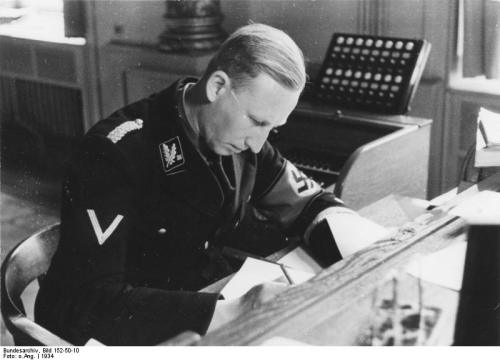
Reinhard Heydrich

Heydrich

Less than six months after he received the directive from Goering, on January 20th 1942 Heydrich summoned representatives from various Reich agencies were called for what turned out to be a brief, two hour meeting which decided the fate of the Jews. The meeting was held at an estate located in the suburbs of Berlin, called Wansee. Organized by Heydrich’s deputy Adolph Eichmann, involved Heydrich, Eichmann and 13 mid level representatives from various economic, governmental, justice and police entities.

At the conference Heydrich established his authority through Goering’s directive to overcome the bureaucratic and personal attempts of various attendees to take control of the Final Solution process. Despite objections from some attendees who favored sterilization and the use of Jews in the war armaments industries, Heydrich made it clear that the Final Solution would be a campaign of extermination. He was quite clear:

“Approximately 11 million Jews will be involved…in large single sex labor columns, Jews fit to work will work their way eastward constructing roads. Doubtless the large majority will be eliminated through natural causes. Any final remnant that survives will doubtlessly consist of the most resistant elements. They will have to be dealt with appropriately, because otherwise by natural selection, they would form the germ cell of a new Jewish revival.”

20130408-233150

Himmler talked to the SS Leaders responsible for the mass killings:

“I also want to mention a very difficult subject before you here, completely openly. It should be discussed among us, and yet, nevertheless, we will never speak about it in public…I am talking about the “Jewish evacuation” the extermination of the Jewish people.”

It is One of the things that is easily said. “The Jewish people is being exterminated,” every Party member will tell you, “perfectly clear, it’s part of our plans, we’re eliminating the Jews, exterminating them, ha!, a small matter.”

But then along they all come, all the decent upright Germans and each has his decent Jew. They all say: the others are all swine, but here is a first class Jew. And none of them has seen it, has endured it. Most of you will know what it means when 100 bodies lie together, or when there are 500 or 1000. And to have seen this through, and –with the exception of human weaknesses– to have remained decent, has made us hard and is a page of glory never mentioned and never to be mentioned….”

Whether the words are those of Goering, Heydrich, Höss or Himmler, there is a certain businesslike banality to them. But these men, and many others like them orchestrated a campaign of genocide and race hatred unmatched in history. Yes, there have been other genocides, the Turks killing the Armenians during the First World War and the Hutu and Tutsi slaughter in Rwanda but neither they or the politically motivated campaigns of mass slaughter conducted by the Soviets, the Chinese Communists and the Khamer Rouge killing fields can match the systematized extermination campaign waged by the Nazis against the Jews.

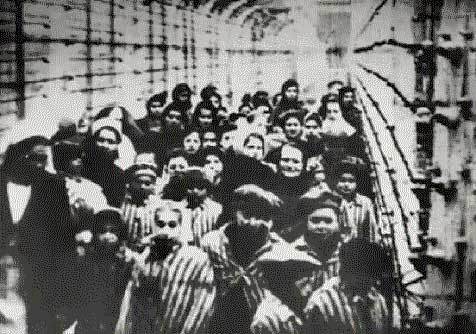
auschwitz-2

The truly terrifying thing about the Nazi perpetrators of the Holocaust to me is that most of the men at Wansee, men that commanded the Concentration camps and the Einsatzgruppen were very ordinary men who simply believed that they were doing their jobs. Very few could be described as psychopathic killers by nature. They were lawyers, doctors, career police officials, businessmen, and bureaucrats who carried out an extermination campaign that killed by their own numbers between 5.5 and 6 million Jews, not to mention others deemed to be subhuman including the handicapped, the mentally ill, homosexuals, and other non-Jewish minorities like the Gypsies not to mention the wide variety of those considered political enemies. But it was the Jews that bore the most tragic fate.

Auschwitz began as a work camp, notoriously harsh in its treatment of its prisoners but a work camp, picked because of its proximity to rail lines and isolation. By the summer of 1941 it was the largest camp in the Concentration Camp system. Within months the process of turning Auschwitz into a factory of mass murder began, quite accidentally when members of the camp staff discovered that a chemical used for the delousing of barracks known as Zyklon-B also worked on large animals, and therefore people.  It was tested on Russian and Polish POWs in September 1941.

As the Nazi desire for efficient extermination grew and early death factories showed their limitations and the “experiments” at Auschwitz resulted in it being selected as a death camp. The camp was expanded and its first gas chamber, the former camp morgue began its operations in February 1942. Other more massive chambers were built, chambers that could hold up to 2000 victims per cycle. By the time the operation was shut down in the weeks leading up to the camp’s liberation Rudolf Höss the Commandant of Auschwitz estimated that 2.5 million people, mostly Jews were exterminated in it. Höss boasted d that his camp could exterminate 10,000 people in a 24 hour period. Other estimates are lower, but still in the millions.

Höss, and other functionaries such Adolf Eichmann, who coordinated the massive effort to exterminate the Jews of Europe following the Wansee Conference of January 20th 1942 approached their jobs dispassionately. This was a common attitude among the civil service, military and police officials that oversaw the Holocaust. They simply did their jobs and followed the law.

Hannah Arendt wrote of Eichmann:

“The trouble with Eichmann was precisely that so many were like him, and that the many were neither perverted nor sadistic, that they were, and still are, terribly and terrifyingly normal. From the viewpoint of our legal institutions and of our moral standards of judgment, this normality was much more terrifying than all the atrocities put together.”

This was what made the Holocaust committed against the Jews of Europe by Nazi Germany a phenomenon different than other genocides. Many of the perpetrators were not driven by centuries old hate as in the Balkans, tribal blood lust as occurred in Rwanda, or the products of Soviet Communism or Communist Chines Maoist regimes.

WW2 expo1_01_l

Einsatzgruppen 

It was the racial ideology of the Nazis which deemed the Jews and other non-Aryans to be sub-human. That ideology undergirded the German treatment of the Jews, and the conduct of the war, especially in the East. But the execution of the plan required the bureaucratic, administrative, technical and legal skills brought to the table by ordinary men. Men who sought promotion, advancement and economic security for their families. Individually many would have never killed, but in their positions they ran the rail network, the factories, the banking and finance industries and supported the war effort, most not thinking much about the evil that they abetted or if they did finding a way, be it social, scientific, religious, patriotic, legal or simply in the name of efficiency.

That is what makes the evil committed by them so terrifying. It is the product of “normal” people in an advanced Western nation. Make no bones about it, their actions were evil. They aided and abetted the genocide of the Jews, the disabled, other “sub-human” races, particularly Slavs, as well as those that they deemed less than suitable.

polbat101christmas

Ordinary Men of Reserve Police Battalion 101

I think that the most chilling thing about the Holocaust was that the greatest atrocities were committed by ordinary men, sometimes well educated, decent family men. These were men who simply executed orders and often went home at night. Hannah Arendt wrote that “The sad truth is that most evil is done by people who never make up their minds to be good or evil.” She was right, there was an ordinariness to the evil perpetrated by the Nazis.

It is important that we do not forget the Holocaust. It is also important to recognize that the instruments of that horror were on the whole “ordinary” men who as they saw it were simply doing their job. It is something that everyone needs to remember.

Primo Levi wrote:

“Monsters exist, but they are too few in number to be truly dangerous. More dangerous are the common men, the functionaries ready to believe and to act without asking questions.” 

That is the real problem with atrocities committed by human beings.

In the classic film Judgment at Nuremberg Spencer Tracy reads the verdict at the end of the Judges Trial. His words are timeless:

“Janning, to be sure, is a tragic figure. We believe he loathed the evil he did. But compassion for the present torture of his soul must not beget forgetfulness of the torture and the death of millions by the Government of which he was a part. Janning’s record and his fate illuminate the most shattering truth that has emerged from this trial: If he and all of the other defendants had been degraded perverts, if all of the leaders of the Third Reich had been sadistic monsters and maniacs, then these events would have no more moral significance than an earthquake, or any other natural catastrophe.

But this trial has shown that under a national crisis, ordinary – even able and extraordinary – men can delude themselves into the commission of crimes so vast and heinous that they beggar the imagination. No one who has sat through the trial can ever forget them: men sterilized because of political belief; a mockery made of friendship and faith; the murder of children. How easily it can happen. There are those in our own country too who today speak of the “protection of country” – of ‘survival’. A decision must be made in the life of every nation at the very moment when the grasp of the enemy is at its throat. Then, it seems that the only way to survive is to use the means of the enemy, to rest survival upon what is expedient – to look the other way. Well, the answer to that is ‘survival as what’? A country isn’t a rock. It’s not an extension of one’s self. It’s what it stands for. It’s what it stands for when standing for something is the most difficult! Before the people of the world, let it now be noted that here, in our decision, this is what we stand for: justice, truth, and the value of a single human being.”

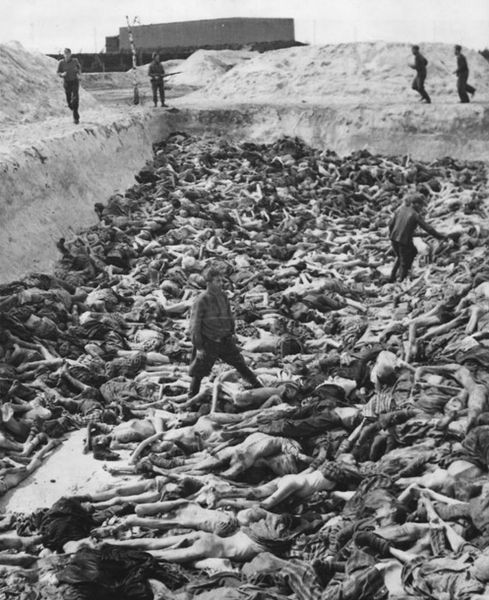
489px-Mass_Grave_3_at_Bergen-Belsen_concentration_camp

20130408-234402

Never Again: Bergen Belsen 

Peace

Padre Steve+

2 Comments

Filed under History, nazi germany, world war two in europe

1914: The Beginning of a Century of War

worldwar1-battlefield

This year marks the centennial of the onset of the First World War, a war which ushered in the world that we live today.  It was a war which changed warfare, a war which destroyed a long standing social and political order, a war that radically re-drew national boundaries and a war which planted the seeds of both freedom and tyranny, peace and more war. It was a war like no other before it. 

images-75


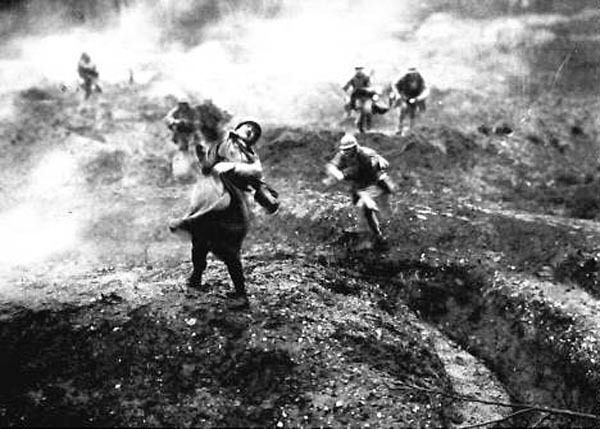
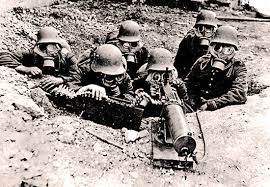
It lasted four years and was fought in Europe, Africa, the Middle East and Asia as well as at sea in every corner of the globe. It was a war which introduced humanity to the full effect of industrialized warfare, carnage on a vaster scale than had ever been seen, and the introduction of aircraft, submarines, tanks and poisoned gas as instruments of war. It was the birth of a new era of war. 

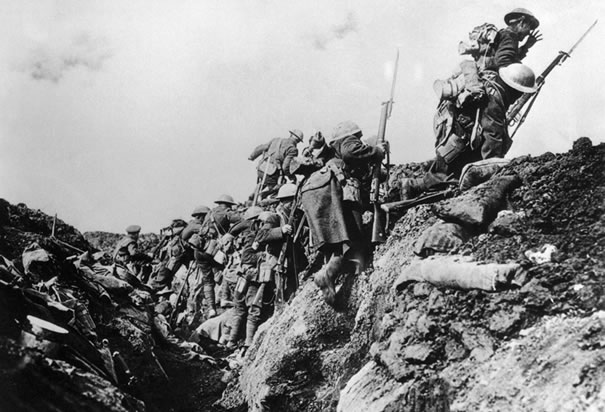
canadian-soldiers-going-over-trench

In terms of the human cost it changed war, amplifying the carnage of the U.S. Civil war by an unimaginable magnitude.  Firepower and weaponry had advanced exponentially in the intervening years, but offensive tactics had remained as they were before.  Military experts remained in denial about the changes, even when the evidence was before their eyes. Regiments charged into battle shoulder to shoulder, relaying on élan to overcome firepower, the French Army outfitted in bright blue uniforms with red trousers and kepi forage hats valiantly attacking German’s outfitted in field gray.  Cavalry retained its place on the battlefield for a brief moment, Uhlans, Lancers, Cuirassiers and Dragoons charged about but found that the modern battlefield was not their place. 

images-74

Old Generals looked to the past for answers, and found none while remaining in denial about the power of the weapons and technology their troops faced. Field Marshal Douglas Haig said in 1915, after nearly 2 million men had fallen on the Western Front The machine gun is a much over rated weapon...”

images-73

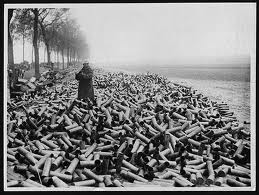
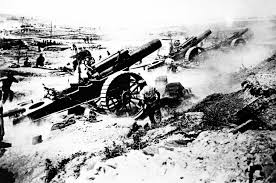
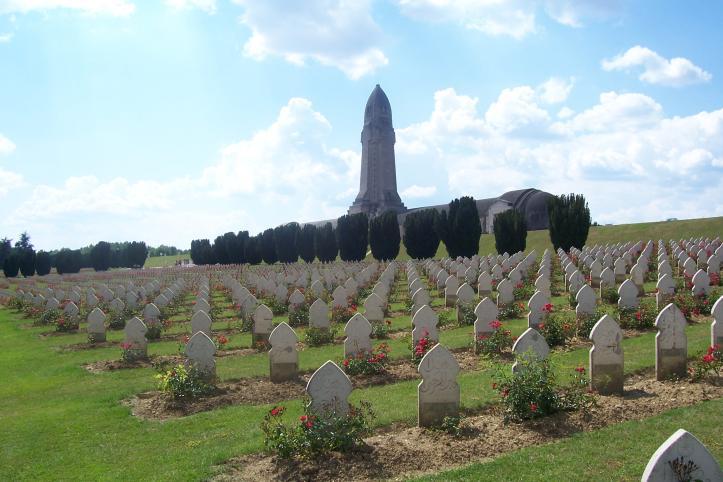
But as the war progressed the instruments of war, particularly the artillery became the weapon of choice for commanders. The symbolism of the massive French Memorial at Verdun, it’s spire shaped like an artillery round is an apt reminder of the power of artillery during the war and the reliance of the combatants on it.

cimetiere_-_douaumont

The human cost was horrific. Over 65 million soldiers were called up on all sides of the conflict, of which nearly 37.5 million became casualties, some 57.5% of all soldiers involved. Some countries saw the flower of their manhood, a generation decimated. Russia sustained over 9 million casualties of the 12 million men they committed to the war, a casualty rate of over 76%. The other Allied powers suffered as well.  France lost 6.4 million of 8.5 million, or 73%, Great Britain 3.1 million of nearly 9 million, 35%; Italy 2.2 million of 5.6 million, 39%. Their opponents, Germany, Austria-Hungary and the Ottoman Empire suffered greatly. Germany sustained 7.1 million casualties of 11 million men called up, or nearly 65%, Austria 7 million of 7.8 million, 90% and the Ottoman Empire 975,000 of 2.8 million or 34% of the soldiers that they sent to war.

flat,550x550,075,f

The United States, though a late entry into the war suffered 323,000 casualties of over 4.3 million men called to arms in barely a year of combat, most occurring in the summer and fall of 1918.

Erich Maria Remarque wrote of the carnage and casualties in All Quiet on the Western Front:

“A man cannot realize that above such shattered bodies there are still human faces in which life goes its daily round. And this is only one hospital, a single station; there are hundreds of thousands in Germany, hundreds of thousands in France, hundreds of thousands in Russia. How senseless is everything that can ever be written, done, or thought, when such things are possible. It must be all lies and of no account when the culture of a thousand years could not prevent this stream of blood being poured out, these torture chambers in their hundreds of thousands. A hospital alone shows what war is.”

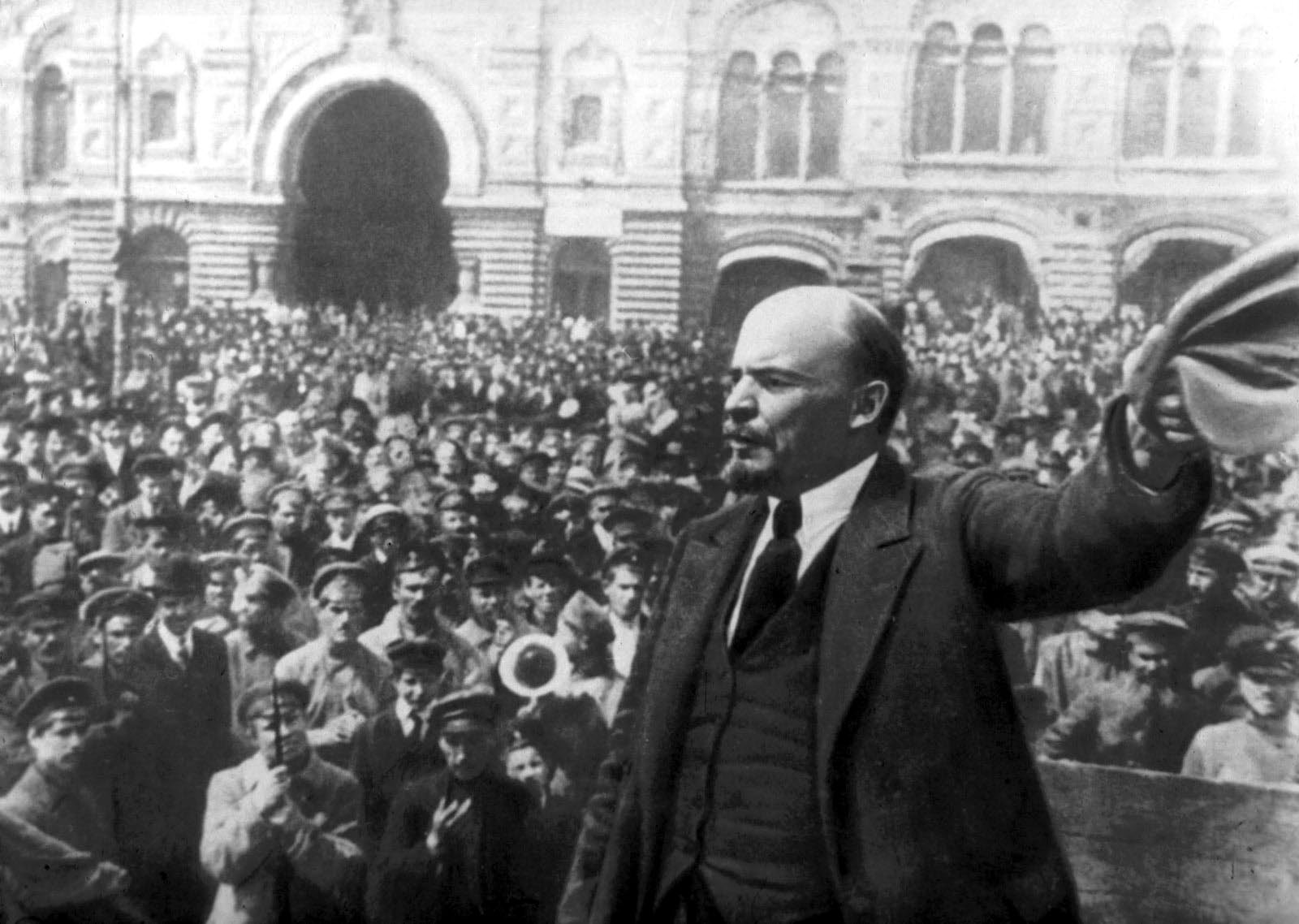
The war brought about the overthrow of Imperial Germany, Imperial Russia, the Austro-Hungarian Empire and the Ottoman Empire. The resultant break up of those empires brought freedom for some in Europe, a change in colonial masters for others in the Middle East, Africa and Asia, as well as civil war, failed attempts at democracy and the establishment of Communist or Fascist dictatorships in Germany, Italy and Russia. 

the-russian-revolution-1917-1923-also-known-as-the-october-revolution-led-by-vladimir-lenin


The promise of a just peace died at the hands of the victors, and the conditions of peace as well as the unrest in Europe eventually brought about another even more horrific Second World War. It was a war to end all war, but the peace became a peace to end all peace.

Lawrence_1519699c-2


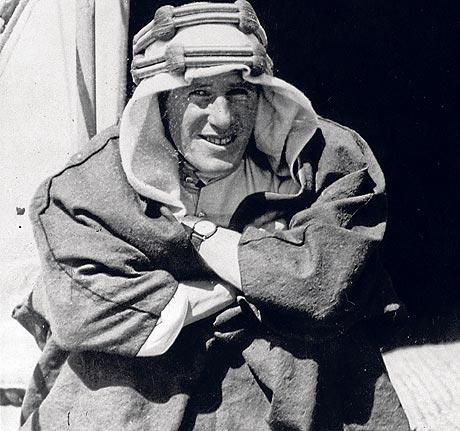
The young men who fought the war had hoped for better, but it was not to be. T. E. Lawrence, or as he is often known “Lawrence of Arabia” wrote after the war:

“We were fond together because of the sweep of open places, the taste of wide winds, the sunlight, and the hopes in which we worked. The morning freshness of the world-to-be intoxicated us. We were wrought up with ideas inexpressible and vaporous, but to be fought for. We lived many lives in those whirling campaigns, never sparing ourselves: yet when we achieved and the new world dawned, the old men came out again and took our victory to remake in the likeness of the former world they knew. Youth could win, but had not learned to keep, and was pitiably weak against age. We stammered that we had worked for a new heaven and a new earth, and they thanked us kindly and made their peace.”

I will be writing a lot about this war in 2014. It is something that we cannot forget. The world today is much like it was in 1914. There have been many small wars in far off places fought by a few professionals of the great powers. Tensions rise as established nations and empires shrink and new powers rise to challenge them. The terrible peace and the borders established by Sykes-Picot continue to bring war and misery to the world today.

What I write will include stories of soldiers, battles, weapons and diplomacy and the cost of war.  I will do so because it is still pertinent, it still matters. The terrible costs need to be recounted, because our world could easily fall into a similar tragedy.  

princip460x276

British historian Max Hastings wrote about the changes in Europe leading up to the World War, noting that they occurred in approximately the same span of time as have transpired since the attacks of September 11th 2001. Hasting records in his book Catastrophe 1914: Europe Goes to War that “Austrian writer Carl von Lang wrote early in 1914: “There is a feeling that events re in the air; all that is unpredictable is their timing. Perhaps we will see several more years of peace, but it is equally possible that overnight some tremendous upheaval will happen.”  

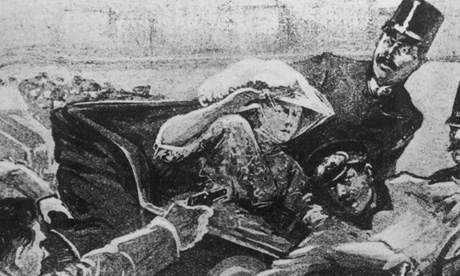
Otto von Bismarck prophetically wrote: “If there is ever another war in Europe, it will come out of some damned silly thing in the Balkans.” In July 1914, in the provincial town of  Sarajevo, the assassination of an unappreciated and unloved Austrian Archduke, Franz Ferdinand, who was likely the one man in that country who would have tried to avoid war, proved to be the match that lit the kindling which set off the conflagration of the First World War. 

Peace

Padre Steve+

1 Comment

Filed under History, Military, News and current events

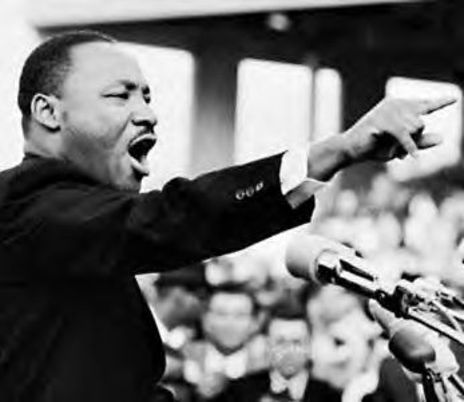
The Dream: Keeping Dr. Martin Luther King Jr.’s Dream Alive in 2014

martinlutherking

“Let us rise up tonight with a greater readiness. Let us stand with a greater determination. And let us move on in these powerful days, these days of challenge to make America what it ought to be. We have an opportunity to make America a better nation.”

Over the past week I have been pondering the importance of the life and work of Dr. Martin Luther King Jr. It is important to not forget this man and what he stood for, his life and sacrifice.

You see King, like many Black clergy of his day could have played it safe. Many pastors, for good reason remained quiet about the conditions of segregation and the racism of the day. Many just hoped to see things slowly improve without rocking the boat and without endangering themselves or their families. They had seen what happened to blacks who spoke up or confronted the evil, lynchings, cross burnings, threats and murder. They had contented themselves with just trying to get along. Many pastors did not support or gave only lukewarm support to King, Andrew Young, Fred Shuttlesworth and Ralph Abernathy. going into 1963.

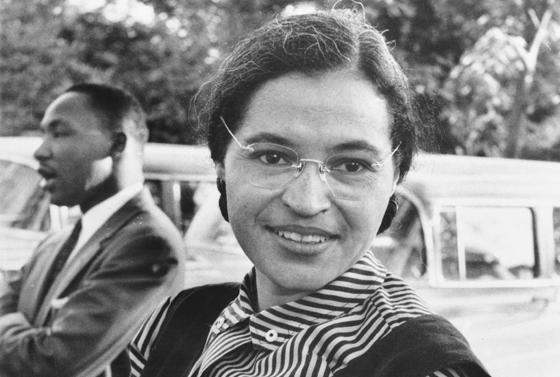
lossless-page1-560px-Rosa_Parks_(detail).tiff

King did not start out to become a Civil Rights leader. However, he was inspired to actively join the movement through the example of Rosa Parks, who defiance of the law for blacks to sit “in the back of the bus” in 1955. He led the Montgomery Bus Boycott which last 385 days. Reaction among segregationists against King was violent, his house was bombed and his life threatened.

The leadership of the boycott brought the young pastor to national prominence. However, by 1963 much of the Civil Rights movement and the African American community was despairing of the lack of progress. Many had become disenchanted with King, not considering him bold enough despite his rhetorical abilities.

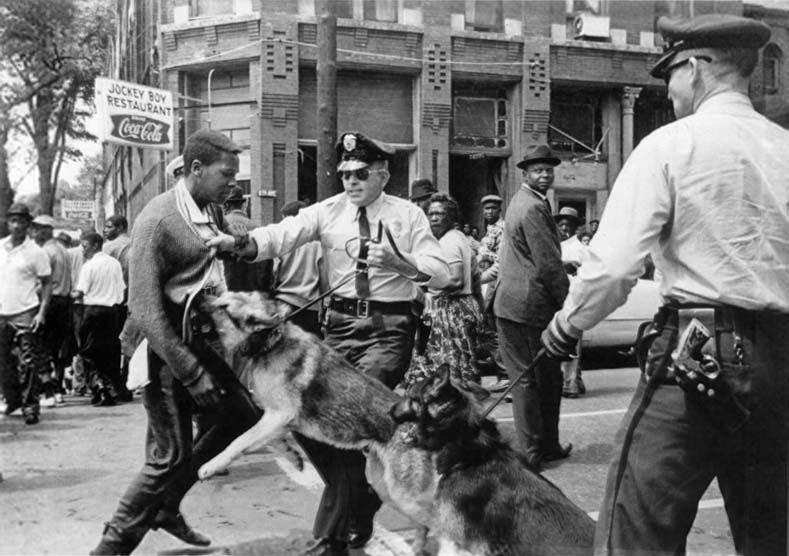
Birmingham_campaign_dogs

But in April 1963, working with other Civil Rights leaders in Birmingham Alabama King relit the fires of the movement. Montgomery Police Chief “Bull” Conner used his force to violently attack the demonstrators, unleashing dogs and using high pressure water cannon on them, including women, children and the elderly. The violent reaction to the protests shocked much of America and the world.

Martin Luther King being arrested in Montgomery, Alabama 1963_jpg

King was arrested and in the Birmingham jail composed one of his most famous works, the Letter from the Birmingham Jail.  The letter was a social, political and theological masterpiece. It it some of his harshest criticism was of white, as well as black moderates:

“I have almost reached the regrettable conclusion that the Negro’s great stumbling block in his stride toward freedom is not the White Citizen’s Councilor or the Ku Klux Klanner, but the white moderate, who is more devoted to “order” than to justice; who prefers a negative peace which is the absence of tension to a positive peace which is the presence of justice; who constantly says: “I agree with you in the goal you seek, but I cannot agree with your methods of direct action”; who paternalistically believes he can set the timetable for another man’s freedom; who lives by a mythical concept of time and who constantly advises the Negro to wait for a “more convenient season”

gty_march_on_washington_martin_luther_king_ll_130819_16x9_992

King continued his activism until his assassination. In August 1963 he led the March on Washington for Jobs and Freedom, where before a crowd of an estimated 200,000-300,000 he gave his I Have a Dream Speech.

http://www.americanrhetoric.com/speeches/mlkihaveadream.htm

The crescendo of the speech was remarkable and is perhaps one of the most remembered speeches in American history.

Let us not wallow in the valley of despair, I say to you today, my friends.

And so even though we face the difficulties of today and tomorrow, I still have a dream. It is a dream deeply rooted in the American dream.

I have a dream that one day this nation will rise up and live out the true meaning of its creed: “We hold these truths to be self-evident, that all men are created equal.”

I have a dream that one day on the red hills of Georgia, the sons of former slaves and the sons of former slave owners will be able to sit down together at the table of brotherhood.

I have a dream that one day even the state of Mississippi, a state sweltering with the heat of injustice, sweltering with the heat of oppression, will be transformed into an oasis of freedom and justice.

I have a dream that my four little children will one day live in a nation where they will not be judged by the color of their skin but by the content of their character.

I have a dream today!

I have a dream that one day, down in Alabama, with its vicious racists, with its governor having his lips dripping with the words of “interposition” and “nullification” — one day right there in Alabama little black boys and black girls will be able to join hands with little white boys and white girls as sisters and brothers.

I have a dream today!

I have a dream that one day every valley shall be exalted, and every hill and mountain shall be made low, the rough places will be made plain, and the crooked places will be made straight; “and the glory of the Lord shall be revealed and all flesh shall see it together.”2

This is our hope, and this is the faith that I go back to the South with.

With this faith, we will be able to hew out of the mountain of despair a stone of hope. With this faith, we will be able to transform the jangling discords of our nation into a beautiful symphony of brotherhood. With this faith, we will be able to work together, to pray together, to struggle together, to go to jail together, to stand up for freedom together, knowing that we will be free one day.

And this will be the day — this will be the day when all of God’s children will be able to sing with new meaning:

My country ’tis of thee, sweet land of liberty, of thee I sing.

Land where my fathers died, land of the Pilgrim’s pride,

From every mountainside, let freedom ring!

And if America is to be a great nation, this must become true.

And so let freedom ring from the prodigious hilltops of New Hampshire.

Let freedom ring from the mighty mountains of New York.

Let freedom ring from the heightening Alleghenies of Pennsylvania.

Let freedom ring from the snow-capped Rockies of Colorado.

Let freedom ring from the curvaceous slopes of California.

But not only that:

Let freedom ring from Stone Mountain of Georgia.

Let freedom ring from Lookout Mountain of Tennessee.

Let freedom ring from every hill and molehill of Mississippi.

From every mountainside, let freedom ring.

And when this happens, and when we allow freedom ring, when we let it ring from every village and every hamlet, from every state and every city, we will be able to speed up that day when all of God’s children, black men and white men, Jews and Gentiles, Protestants and Catholics, will be able to join hands and sing in the words of the old Negro spiritual:

                Free at last! Free at last!

                Thank God Almighty, we are free at last!

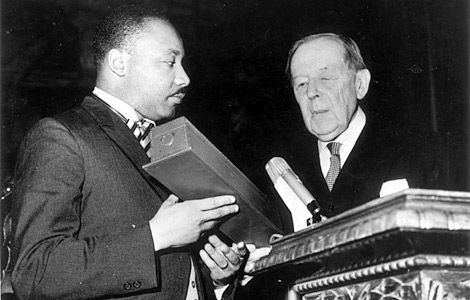
09-martin-king-010909_14102_600x450

King knew the dangers and the risks of appealing to a strategy of non-violence based on love of his enemies. King spoke to the world when he accepted the Nobel Peace Prize in 1964:

“Here and there an individual or group dares to love, and rises to the majestic heights of moral maturity. So in a real sense this is a great time to be alive. Therefore, I am not yet discouraged about the future. Granted that the easygoing optimism of yesterday is impossible. Granted that those who pioneer in the struggle for peace and freedom will still face uncomfortable jail terms, painful threats of death; they will still be battered by the storms of persecution, leading them to the nagging feeling that they can no longer bear such a heavy burden, and the temptation of wanting to retreat to a more quiet and serene life. Granted that we face a world crisis which leaves us standing so often amid the surging murmur of life’s restless sea. But every crisis has both its dangers and its opportunities. It can spell either salvation or doom. In a dark confused world the kingdom of God may yet reign in the hearts of men.”  http://www.nobelprize.org/nobel_prizes/peace/laureates/1964/king-lecture.html 

Dr. King understood how easy hatred could consume people and movements and urged  people not to follow the course of hate, he wrote:

“Returning hate for hate multiplies hate, adding deeper darkness to a night already devoid of stars. Darkness cannot drive out darkness; only light can do that. Hate cannot drive out hate; only love can do that. Hate multiplies hate, violence multiplies violence, and toughness multiplies toughness in a descending spiral of destruction.”

The day before his assassination in Memphis, Dr. King still recognized what he might face. His “I have been to the Mountaintop” speech http://www.americanrhetoric.com/speeches/mlkivebeentothemountaintop.htm recounted many of the things that he had encountered, including an assassination attempt in 1958 which had come close to killing him. It was an amazing speech and one wonders if having lived under threat so long that he almost had a premonition of his death the next day.

King_Last_Sermon

And then I got into Memphis. And some began to say the threats, or talk about the threats that were out. What would happen to me from some of our sick white brothers?

Well, I don’t know what will happen now. We’ve got some difficult days ahead. But it really doesn’t matter with me now, because I’ve been to the mountaintop.

And I don’t mind.

Like anybody, I would like to live a long life. Longevity has its place. But I’m not concerned about that now. I just want to do God’s will. And He’s allowed me to go up to the mountain. And I’ve looked over. And I’ve seen the Promised Land. I may not get there with you. But I want you to know tonight, that we, as a people, will get to the promised land!

Dr. King’s dream is not dead. There is still much work to see justice done for all Americans as well as those suffering from violence, persecution, discrimination and poverty around the world.

It is 2014. It has been 51 years since Dr. King sat in the Birmingham jail and some still long for a return to the day of Jim Crow, and some who through legislation in some states are attempting to return it by stealth. Racism is not dead, nor are so many other “isms.”

Martin-Luther-King-Killed

Dr. King and many of the leaders of the Civil Rights Movement have passed on, and many people today are complacent about the injustices present in our society, injustices experienced by many people. We need a generation of new men and women with hearts like Dr. King’s, who will be the conscience of the nation and confront these injustices.

Peace

Padre Steve+

Leave a comment

Filed under civil rights, faith, History, News and current events

Separate and Unequal: Jim Crow Still Lives at a Florida Civil War Battlefield

n046635

The Battle of Olustee

Something is going on in Florida that shows that Jim Crow is still very much alive in the hearts and motivations of some elected officials and their supporters.

This is going on in regard to the Battle of Olustee, and the Battle of Olustee Battlefield State Park. Last year the Sons of Union Veterans of the Civil War requested permission from the State Parks Department to place a monument at the site. The Parks Department responded favorably to the request and began to determine where on the battlefield to place the memorial to the Union dead. It would stand on ground where three monuments to Confederate units and casualties already stand.

800px-Olustee_Battlefield_Historic_State_Park10

The Main Monument at Olustee

That was when Republican State Representative Dennis Baxley, the House Judiciary Chairman got involved. Baxley is a member of the Sons of Confederate Veterans. He stated that he believed that a Union monument would “redefine” the park. He called it “revisionist history” and objected to a non-elected body making these kinds of decisions.

Baxley was joined by James Davis, the Florida Division Commander of the Sons of Confederate Veterans in opposition to a Union memorial at the site. Davis did not object to a Union memorial per say, but he objected locating one in the park. Davis said: “We are not opposed to the monument at all; we are opposed to the location, and here is why — it’s like any other historical building, you put something brand new in there and it destroys the significance of it.” Davis suggested that the memorial be built across the road from the park, near the museum located on Federal property instead.

The National Commander of the Son’s of Confederate Veterans began an internet campaign against the monument stating  his opposition to the “Darth Vader-esque obscene obsidian obelisk.” Another leader of the group, Jim Shillinglaw noted: “If you have an Iraq war monument, you don’t want to put a Muslim/jihadist monument right in front of it.

There are numerous Confederate monuments on Union soil, including a number of major monuments at Gettysburg. Across the country it is standard practice to include monuments for both Union and Confederate forces that fought at these battles. In fact I know of no battlefields where what is going on at Olustee has ever been an issue.

DSCN8843

The Virginia Monument at Gettysburg 

In fact the Florida State Parks Department is going ahead with plans to have a Union Monument. The chief officer for park planning, Lew Scruggs said: “The mission in the state park system is to commemorate the battle between the two opposing forces; it’s not restricted to one.” The park itself has also been recognized for its past work in remembering the African Americans who fought at the battle.

So why the fuss?

As a historian I wondered why this might be an issue to Baxley and Davis. But then I did some reading on the battle. It was fought in February 1864 and was a significant Confederate tactical victory. The Confederate troops, highly experienced combat veterans, including Colquitt’s Georgia brigade which had been detached to help hold back the Union in Florida inflicted heavy casualties on a badly handled Union force. Both sides had about the same number of troops involved and the Confederate victory kept the Union from setting up a Union government in the state prior to the end of the war. For a relatively small battle it was fierce and bloody, casualties on both sides were considerable. The Union suffered about 2000 casualties to just under 1000 suffered by the Confederates.

However, there is an issue that has not been brought up in most media accounts of this new “Battle of Olustee.” The fact is that nearly half of the Union troops engaged were “Colored Troops,” the 8th and 35th Regiments of U.S. Colored Troops and the illustrious 54th Massachusetts. The 8th and 35th USCT regiments were both new to combat. At the end of the battle the 54th helped cover the Union retreat back to Jacksonville.

After the battle the wounded Union Colored troops left on the battlefield were slaughtered by some units of Confederates. The testimony of Confederate troops in letters and memoirs attests to the slaughter of the wounded and other prisoners. William Frederick Penniman of the 4th Florida Cavalry wrote:

“A young officer was standing in the road in front of me and I asked him, “What is the meaning of all this firing I hear going on”. His reply to me was, “Shooting niggers Sir. “I have tried to make the boys desist but I can’t control them”. I made some answer in effect that it seemed horrible to kill the wounded devils, and he again answered, “That’s so Sir, but one young fellow over yonder told me the niggers killed his brother after being wounded, at Fort Pillow, and he was twenty three years old, that he had already killed nineteen and needed only four more to make the matter even, so I told him to go ahead and finis the job”. I rode on but the firing continued.

The next morning I had occasion to go over the battle field again quite early, before the burial squads began their work, when the results of the shooting of the previous night became quite apparent. Negroes, and plenty of them, whom I had seen lying all over the field wounded, and as far as I could see, many of them moving around from palace to place, now without a motion, all were dead. If a negro had a shot in the shin another was sure to be in the head.” 

Likewise Corporal Henry Shackelford of the 19th Georgia Infantry wrote in a letter home: “We got all their artillery, 8 pieces, took about 400 prisoners and killed about the same number. How our boys did walk into the niggers, they would beg and pray but it did no good.” (Excerpt from letter written by Corporal Henry Shackelford, 19th Georgia Infantry 20 February 1864)

The Commander of the 2nd Florida Cavalry urged his men into battle that day with a clear message:

“Comrades and soldiers of the 2nd Florida Cavalry, we are going into this fight to win. Although we are fighting five or six to one, we will die, but never surrender. General Seamore’s Army is made up largely of negroes from Georgia and South Carolina, who have come to steal, pillage, run over the state and murder, Kill and rape our wives, daughters and sweethearts. Let’s teach them a lesson. I shall not take any negro prisoners in this fight.” (Lawrence Jackson, Company C, 2nd Florida Cavalry, written in 1929 when he was 65 years old.)

The unspoken issue is not that the fact that the troops being honored are simply white Union boys, but rather that so many were African Americans. Baxley’s and Davis’s words speak volumes. This is a racial issue. Davis is not opposed to a monument, he just doesn’t want it to be where the Confederate monuments are. Baxley says that having a monument to the Union troops who fought there is “revisionist history.” Give me a break. It is history. Union troops fought there too and they are entitled to a monument, last this become a shrine to those who murdered the wounded and prisoners after the battle. I wonder how these men would feel if a request by the Confederate Veterans for a monument to Confederate troops at a park in a state that fought for the Union was opposed in such a manner. I’m sure that they would make the same cry of revisionist history, but this time be correct.

450px-Olustee_Battlefield_Historic_State_Park14

Detail of the Main Monument at the Olustee Battlefield State Park

But then maybe that is what Davis and Baxley want. Maybe that is the history that they want to preserve. I would hope not, but their language makes it hard to believe that that is not exactly what they desire. I can only believe that both men still hold to the message “segregation forever” and are still committed to fulfilling the dream of the Lost Cause that died on the battlefields of the Civil War. They may not say so openly but the message is clear, keep the memory of the blacks out, even if they are dead.

Sorry, all the men who fought at Olustee deserve a memorial.  Even the African American Union troops. That is history, that is recognizing all who fought there.

Peace

Padre Steve+

Note: All quotes from soldiers and information about the battle come from The Battle of Olustee and the Battle of Olustee Site Reenactment website, http://www.battleofolustee.org . The quotes from Davis and Baxley are found at the Tampa Bay Times article at http://www.tampabay.com/news/politics/stateroundup/fight-flares-over-sons-of-union-veterans-request-for-monument-in-north/2161556

As a side note I am also eligible to join the Sons of Confederate Veterans, but because the organization frequently acts in this manner I refuse to join.

Leave a comment

Filed under civil war, History, News and current events

“A Foreign World”: The High Cost of Coming Home from War

295_26912117058_5652_n

For me it began in February 2008 when on the way back from Iraq the military charter aircraft bringing us home stopped in Ramstein Germany. After a few hour layover we re-boarded the aircraft but we were no longer alone, the rest of the aircraft had been filled with the families of soldiers and airmen stationed in Germany. Just days before most of us had been in Iraq or Afghanistan. The cries of children and the intrusion of these people, not bad people by any means on our return flight was shocking, it was like returning to a world that I no longer knew.

I think that coming home from war, especially for those damaged in some way, in mind, body or spirit is harder than being at war. In that thought I am not alone. Erich Maria Remarque in his classic novel All Quiet on the Western Front wrote:

“I imagined leave would be different from this. Indeed, it was different a year ago. It is I of course that have changed in the interval. There lies a gulf between that time and today. At that time I still knew nothing about the war, we had been only in quiet sectors. But now I see that I have been crushed without knowing it. I find I do not belong here any more, it is a foreign world.” Erich Maria Remarque in All Quiet on the Western Front

Likewise, Guy Sager a French-German from the Alsace and veteran of the Grossdeutschland Division on the Eastern Front in World War II noted at the end of his book The Forgotten Soldier: 

“In the train, rolling through the sunny French countryside, my head knocked against the wooden back of the seat. Other people, who seemed to belong to a different world, were laughing. I couldn’t laugh and couldn’t forget.” Guy Sager in The Forgotten Soldier

I have been reminded of this several times in the past week. It began walking through a crowded Navy commissary on Saturday, in the few minutes in the store my anxiety level went up significantly. On Tuesday I learned of the death of Captain Tom Sitsch my last Commodore at EOD Group Two, who died by his own hand. His life had come apart. After a number of deployments to Iraq as the Commander EOD Mobile Unit 3 and of Task Force Troy he was afflicted with PTSD. Between June of 2008 and the end of 2009 he went from commanding an EOD Group to being forced to retire.  Today I had a long talk with a fairly young friend agonizing over continued medical treatments for terminal conditions he contracted in two tours in Iraq where he was awarded the Bronze Star twice.

I have a terrible insomnia, nightmares and night terrors due to PTSD. My memories of Iraq are still strong, and this week these conditions have been much worse. Sager wrote:

“Only happy people have nightmares, from overeating. For those who live a nightmare reality, sleep is a black hole, lost in time, like death.”

Nearly 20 years after returning from war, a survivor of the 1st Battalion 308th Infantry, the “Lost Battalion” of World War One, summed up the experience of so many men who come back from war:

“We just do not have the control we should have. I went through without a visible wound, but have spent many months in hospitals and dollars for medical treatment as a result of those terrible experiences.”

Bradley-12-2

Two time Medal of Honor winner Major General Smedley Butler toured Veterans hospitals following his retirement from the Marine Corps. He observed the soldiers who had been locked away. In his book War is a Racket:

“But the soldier pays the biggest part of this bill. If you don’t believe this, visit the American cemeteries on the battlefields abroad. Or visit  any of the veterans’ hospitals in the United States….I have visited eighteen government hospitals for veterans. In them are about 50,000 destroyed men- men who were the pick of the nation eighteen years ago. The very able chief surgeon at the government hospital in Milwaukee, where there are 3,800 of the living dead, told me that mortality among veterans is three times as great as among those who stayed home.”

Similarly Remarque wrote in All Quiet on the Western Front:

“A man cannot realize that above such shattered bodies there are still human faces in which life goes its daily round. And this is only one hospital, a single station; there are hundreds of thousands in Germany, hundreds of thousands in France, hundreds of thousands in Russia. How senseless is everything that can ever be written, done, or thought, when such things are possible. It must be all lies and of no account when the culture of a thousand years could not prevent this stream of blood being poured out, these torture chambers in their hundreds of thousands. A hospital alone shows what war is.”

Lt.ColonelCharlesWhiteWhittlesey

Sometimes even those who have been awarded our Nation’s highest award for valor succumb to the demons of war that they cannot shake, and never completely adjust to life at “home” which is no longer home. For them it is a different, a foreign world to use the words of Sager and Remarque. Lieutenant Colonel Charles Whittlesey won the Congressional Medal Medal of Honor as Commander of 1st Battalion 308th Infantry, the “Lost Battalion” in France. After the war he was different. He gave up his civilian law practice and served as head of the Red Cross in New York. In that role, and as the Colonel for his reserve unit, he spent his time visiting the wounded who were still suffering in hospitals. He also made the effort to attend the funerals of veterans who had died. The continued reminders of the war that he could not come home from left him a different man. He committed suicide on November 21st 1921not long after serving as a pallbearer for the Unknown Soldier when that man was interred at Arlington National Cemetery.

In the eulogy Judge Charles L. Hibbard noted:

“He is sitting on the piazza of a cottage by the sea on a glorious late September day but a few weeks ago. . . He is looking straight out to sea, with naught but sea between him and that land where lie so many of his boys. The beating surf is but an echo, the warm, bright sunshine, the blue sky, the dancing waves, all combine to charm. But a single look at his face and one knows he is unconscious of this glory of Nature. Somewhere far down in the depths of his being or in imagination far off across the waters he lives again the days that are past. That unconscious look has all the marks of deep sorrow, brooding tragedy, unbearable memories. Weeks pass. The mainspring of life is wound tighter and tighter and then comes the burial of the Unknown Soldier. This draws the last measure of reserve and with it the realization that life had little now to offer. This quiet, reserved personality drew away as it were from its habitation of flesh, thought out the future, measured the coming years and came to a mature decision. You say, ‘He had so much to live for – family, friends, and all that makes life sweet.’ No, my friends, life’s span for him was measured those days in that distant forest. He had plumbed the depth of tragic suffering; he had heard the world’s applause; he had seen and touched the great realities of life; and what remained was of little consequence. He craved rest, peace and sweet forgetfulness. He thought it out quietly, serenely, confidently, minutely. He came to a decision not lightly or unadvisedly, and in the end did what he thought was best, and in the comfort of that thought we too must rest. ‘Wounded in action,’ aye, sorely wounded in heart and soul and now most truly ‘missing in action.’”

Psychologist and professor Dr Ari Solomon analyzed the case of Colonel Whittlesey and noted:

“If I could interview Whittlesey as a psychologist today, I’d especially have in mind … the sharp discrepancy between the public role he was playing and his hidden agony, his constant re-exposure to reminders of the battle, his possible lack of intimate relations, and his felt need to hide his pain even from family and dearest friends.”

I wish I had the answer. I have some ideas that date back to antiquity in the ways that tribes, clans and city states brought their warriors home. The warriors were recognized, there were public rituals, sometimes religious but other times not. But the difference is that the warriors were welcomed home by a community and re-integrated into it. They were allowed to share their stories, many of which were preserved through oral traditions so long that they eventually were written down, even in a mythologized state.

But we do not do that. Our society is disconnected, distant and often cold. Likewise it is polarized in ways that it has not been since the years before our terrible Civil War. Our warriors return from war, often alone, coming home to families, friends and communities that they no longer know. They are misunderstood because their experience is not shared by the population at large. The picture painted of them in the media, even when it is sympathetic is often a caricature.  Their camaraderie with the friends that they served alongside is broken by distance and the frenetic pace of our society. Remarque wrote “We were all at once terribly alone; and alone we must see it through.”

If we wonder about the suicide epidemic among veterans we have to ask hard questions. Questions like why do so many combat veterans have substance abuse problems and why is it that approximately one in ten prisoners serving time are veterans? It cannot be simply that they are all bad eggs. Many were and are smart, talented, compassionate and brave, tested and tried in ways that our civilian society has no understanding for or clue about. In fact to get in the military most had to be a cut above their peers. We have to ask if we are bringing our veterans home from war in a way that works. Maybe even more importantly we have to ask ourselves if as a culture if we have forgotten how to care about each other. How do we care for the men and women who bear the burden of war, even while the vast majority of the population basks in the freedom and security provided by the soldier without the ability to empathize because they have never shared that experience.

For every Tom Sitsch, Charles Whittlesey or people like my friend, there are countless others suffering in silence as a result of war. We really have to ask hard questions and then decide to do something as individuals, communities and government to do something about it. If we don’t a generation will suffer in silence.

Peace

Padre Steve+
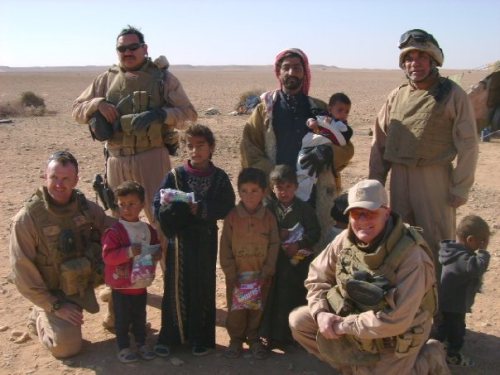
2 Comments

Filed under History, iraq,afghanistan, Military, PTSD

My Heart Remains in Al Anbar

262_29132382058_5961_n-2

I keep a close watch at what happens in Iraq, especially Al Anbar Province.  I was there in 2007-2008 in the midst of the Anbar Awakening.  I had the honor of working with our advisors and the Iraqis of the 1st and 7th Divisions, 2nd Border Brigade and local police and Iraqi Highway Patrol. In my time there, traveling the entirety of the province, getting to work with and know Iraqi military officers and tribal leaders I gained a great appreciation for them as people and sympathy for the people there who in the course of over 30 years of war have suffered so much.

295_26912097058_4309_n-3

To do so I have to use the English language services of various Arab and Iraqi news sources as well as some German and French services to get decent information. American media tends to ignore Iraq until it cannot be ignored because to be truthful most Americans don’t give a damn about Iraq or its long suffering people. Come to think of it, as I look at the voting records and actions of those that they elect to Congress of both parties, they don’t seem to give a damn about the Americans who served in Iraq or Afghanistan either. But then it is easy to buy a “I support the Troops” bumper sticker and then elect Congressmen who instead of cutting unnecessary and wasteful defense spending in their districts, cut the benefits to the troops.

n671902058_1153829_4642-2

The situation in Al Anbar now with Al Qaida ISIL militants gaining strength and attempting to seize both Fallujah and Ramadi has brought back many memories. It has also given me great concern for the Iraqi people who I served among and Iraqi military personnel who not only risk their lives in combat but whose families are often targeted by terrorists. They are true patriots because deciding to serve not only endangers them but their families.

185615_1857288397412_3950321_n

When I came home from Iraq I was a changed man. My life, faith, politics and values were  challenged by what I experienced. I came home afflicted with chronic and serve PTSD, something that while I do better in managing the symptoms now still affects me in many ways.

295_26912117058_5652_n

Nearly six years after I left Iraq it is amazing to me how much it still permeates my soul, my thoughts and life. I can close my eyes and I can be back there, on the Syrian border, in Ramadi, and in dozens of different camps and settlements. The kindness and hospitality of the Iraqis I met is something that I shall not forget.

399202_10151366970802059_725286976_n

I do pray that the Tribal leaders in Al Anbar can take the fight to the militants and defeat them with the help of the Iraqi Army, perhaps the most trusted institution in the country. I hope and pray that the Shia leaders of the Maliki government stop the heavy handed and undemocratic tactics they have been using against the Sunni in Al Anbar. It looks that after his last meeting with President Obama that Maliki might be getting the hint.

295_26912057058_2651_n-2

Too many people, Iraqis as well as Americans have shed their blood in a war of choice launched by the Bush Administration where Bush appointees squandered any good will after the invasion through sheer hubris and incompetence. Iraq will take years to recover even if a full fledged civil war does not erupt.

533506_10151366982462059_34997654_n

The costs have been so great and I do pray that the Iraqis will find a way to unite and defeat both Sunni and Shia extremists so that they may one day again live in peace with themselves and their neighbors.

481801_10151367001287059_1003164983_n-2

I would go back again, because I did leave a big part of me in Iraq. I left my heart in Al Anbar. I can echo the words of T. E. Lawrence in his opening sentences of Seven Pillars of Wisdom: 

“I loved you, so I drew these tides of men into my hands
and wrote my will across the sky in stars
To earn you Freedom” 

Peace

Padre Ste

2 Comments

Filed under History, iraq,afghanistan, Tour in Iraq

Spendin’ the Nighttime Reminiscing: Padre Steve Remembers the Music of the 1970s and Early 1980s

me-and-judy-dorm

I don’t know about you but the music that I really enjoy is the music that was popular when I was in Junior High, High School and College.  For me that period spanned the years 1971-1983.

richardnixon-flickrcommons1

It was a turbulent era. The Vietnam War was ending and Nixon was resigning due to the Watergate break in cover-up despite going to China and establishing the beginning of detente with the Soviet Union.  Assassination attempts on political leaders, successful and unsuccessful, were common. Two attempts were made on Gerald Ford.  Prime Minister Aldo Moro of Italy and President Anwar Sadat of Egypt victim fell to terrorists while President  Ronald Reagan and Pope John Paul II were felled by bullets which did not prove fatal.

gas-lines

The Cold War was tense despite the beginning of detente and signing of Nuclear Weapons treaties between the United States and the Soviet Union. The Middle East was in turmoil even as Egypt and Israel hammered out a peace treaty withe the help of US President Jimmy Carter. In Iran a revolution swept the Shah of Iran out of power bringing the Ayatollah Khomeini into power.  The seizure of the US Embassy and the 444 day hostage crisis punctuated by a failed rescue attempt demoralized the United States. In October 1983 247 Marines were killed in a terror bombing of their barracks at the Beirut International Airport.

Mortar_attack_on_Shigal_Tarna_garrison,_Kunar_Province,_87

The Soviets invaded Afghanistan which would become their Vietnam, as part of the Cold War this lead to US involvement with Mujahideen. The US support with the Mujahideen was a fateful alliance that brought the Taliban to prominence and introduced the world to Osama Bin Laden. The Cubans were fighting in Angola while the Anti-Apartheid movement struggled with its leader Nelson Mandela languishing in a South African prison.

70s-iranian-hostages

High profile terrorist attacks became common. The Palestinian terrorist group Black September killed Israeli athletes at the 1972 Munich Olympics. European terrorist organizations including the Red Brigades, the Red Army Faction and Bader Meinhof gang, the Irish Republican Army and the American Weather Underground provided a constant string of terrorist attacks even as Middle Eastern terrorist groups highjacked airliners in daring fashion, matched at times by equally rescues by Israeli and German anti-terrorist units.

The American and the world economies were in a state of recession much of the era. There was a major recession, the American auto industry needed bailouts, inflation was running in double digits as was the unemployment rate. The dollar was weak and OPEC wreaked havoc on world oil markets with embargoes in 1973 and 1979.

Casey Kasem AT40 Ad

However it was music in the 1970s and early 1980s that provided a diversion for many people looking for respite from all the bad news that echoed around the airwaves and in the newspapers.  Thankfully there wasn’t a 24 hour cable news cycle yet otherwise people would have probably been jumping off of buildings.  It was the heyday of AM Top 40 type stations and the beginning of rock oriented FM music stations. Kasey Kasem gave voice to the hits with American Top 40. As for me I had countless 45s and LPs of my favorite groups and artists.

628x471-8

I listened  Doctor Donald D Rose of KFRC in San Francisco and my car, a 1966 Buick LeSabre 400 had a retro-fitted 8-Track tape player and speakers.

Great groups and artists ruled the pop and rock airwaves and the era produced some of the best rock, pop, R&B, soul, country-rock, disco and new-wave music ever done. It really was an amazing era both in quality and diversity of music .

It was not “message music” like much 60’s music but focused on entertainment.  Power groups like Journey, Starship, REO Speedwagon and Boston made power ballads, while AC/DC and KISS shocked and entertained at the same time.  Groups like the Blondie, the Eagles, Chicago, Paul McCartney and Wings, Abba and the Commodores dominated the pop charts while individual artists such as Olivia Newton-John, Elton John, Carly Simon, John Denver, Lionel Ritchie, Barry Manilow and others satisfied the more mainstream pop crown.  Disco enjoyed a brief heyday with the popularity of Saturday Night Fever and the Bee Gees.  R&B enjoyed a renaissance due to the unlikely duo of the Blues Brothers who helped re-launch the careers of Aretha Franklin, Johnny Lee Hooker, Cab Calloway and a host of others. Country crossovers became big with Kenny Rogers, Dolly Parton and Glenn Campbell leading the way.  As the 80’s came along new groups and styles were introduced including New Wave and Rap. It was music that helped us through those times.

I listen to that music all the time and remember those turbulent days well. It certainly wasn’t the fact that things were great in the world. That being said despite bad news there was still some sense of that things would work out okay.  Music helped provide part of that sense of hope. It was an escape and the music of that time is still with us. Many of those those groups haven’t gone away and people look back with fondness to the music of the era even as the artists age and pass away.

Here are some of my favorites with links to the videos, they are in no particular order nor are the representative of all the groups that I have in my library of CDs and DVDs, but I enjoy the heck out of them.  Have fun and enjoy.

Peace,

Padre Steve+
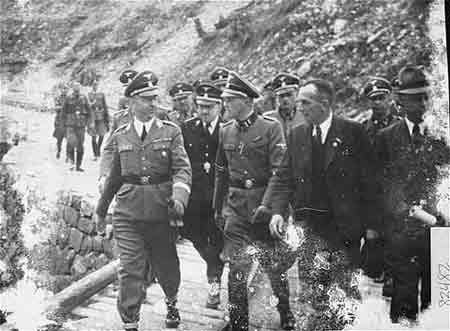
Little River Band “Reminiscing” http://www.youtube.com/watch?v=CZ_3G4xqSDQ

olivia-if-not-for-you-a

Olivia Newton-John “Magic”

http://www.youtube.com/watch?v=r7WPwH8Rd6g

and “I Honestly Love You”

http://www.youtube.com/watch?v=6zGLSnZGZts 

commodores

The Commodores “Sail On” 

http://www.youtube.com/watch?v=zg-ivWxy5KE

the-eagles-hotel-california

The Eagles “Hotel California” 

http://www.youtube.com/watch?v=mnkJcjBCG88

ac-dc

AC/DC “You Shook Me All Night Long”

http://www.youtube.com/watch?v=Lo2qQmj0_h4

KISS “I Was Made for Loving You” 

http://www.youtube.com/watch?v=q7fxN3g5sLw

Kenny Rogers and Dolly Parton: Islands in the Stream http://www.youtube.com/watch?v=recWNQddJeE&feature=related

Rupert Holmes: Escape (The Pina Colada Song) http://www.youtube.com/watch?v=DaOXWJKsX-U

donna2

Donna Summer: Last Dance http://www.youtube.com/watch?v=7cPIT_T3mYU

Roberta Flack: The First Time Ever I Saw Your Face http://www.youtube.com/watch?v=r9jmusgMgro&feature=related

bee-gees1

Bee Gees “How Deep is You Love

http://www.youtube.com/watch?v=XpqqjU7u5Yc

Dr Hook “Cover of the Rolling Stone” 

http://www.youtube.com/watch?v=fJu6Up9w2Hc

John Denver: Take Me Home Country Roads http://www.youtube.com/watch?v=ukUL_I14GPw

Three Dog Night, Joy to the World http://www.dailymotion.com/video/x2x3af_three-dog-night-joy-to-the-world_people

the-carpenters

The Carpenters “Rainy Days and Mondays” http://www.youtube.com/watch?v=dPmbT5XC-q0

Paul McCartney and Wings  “Band on the Run http://www.youtube.com/watch?v=7Qx2jEfBsqY

The Trammps “Disco Inferno” http://www.youtube.com/watch?v=A_sY2rjxq6M

rod_stewart

Rod Stewart “Tonight’s the Night”

http://www.dailymotion.com/video/x1p96h_rod-stewarttonights-the-nightgonna_music

abba

Abba “The Winner Takes it All” http://www.youtube.com/watch?v=92cwKCU8Z5c

and “Waterloo” 

http://www.youtube.com/watch?v=Sj_9CiNkkn4

Elvis Presley: Suspicious Minds

 http://www.youtube.com/watch?v=SBmAPYkPeYU

elton_john_70s

Elton John “Goodbye Yellow Brick Road” 

http://www.youtube.com/watch?v=9kMVdazvII4 

Journey “Don’t Stop Believing” 

http://www.youtube.com/watch?v=VcjzHMhBtf0

Albert Hammond: It Never Rains in Southern California http://www.youtube.com/watch?v=-pyC7WnvLT4

queen

Queen: Bohemian Rhapsody http://www.youtube.com/watch?v=fJ9rUzIMcZQ

blondie

Blondie “Heart of Glass” 

http://www.youtube.com/watch?v=WGU_4-5RaxU

Neil Diamond: Sweet Caroline

 http://www.youtube.com/watch?v=1vhFnTjia_I

Boz Skaggs “Lido Shuffle” http://www.youtube.com/watch?v=DIu0jQ5TaRQ&feature=PlayList&p=8201408B8B6E42C8&index=2

Katrina and the Waves “Walking on Sunshine” http://www.youtube.com/watch?v=iPUmE-tne5U

Billy Joel “Piano Man” http://www.youtube.com/watch?v=gxEPV4kolz0

barry-manilow

Barry Manilow “Mandy” http://www.youtube.com/watch?v=AM7SQzq3yHQ

Heart: Crazy on You

 http://www.youtube.com/watch?v=4gpNqB4dnT4&feature=related

villagepeople

Village People: YMCA

 http://www.youtube.com/watch?v=CS9OO0S5w2k

Fleetwood Mac “Don’t Stop Thinking About Tomorrow”

http://www.youtube.com/watch?v=a8arvEzHsA8

laurabranigan1990

Laura Branigan “Gloria”

http://www.youtube.com/watch?v=1tVutw8rjFk

Carly Simon “You’re So Vain”

http://www.youtube.com/watch?v=mQZmCJUSC6g

Chicago “Saturday in the Park”

http://www.youtube.com/watch?v=nWxA3e9f6rY

linda_ronstadt_usa_11

Linda Ronstadt “When Will I Be Loved”

http://www.youtube.com/watch?v=OmE7tTzJkbU

Foghat “Third Time Lucky”

http://www.youtube.com/watch?v=Fj1O2KtH4kE

The Captain and Tennille “Do that to Me One More Time”

http://www.youtube.com/watch?v=KNHcgk5bf7o&feature=related

kingdingeling_blues_brothers_most

Finally, the Blues Brothers “Everybody Needs Somebody”

http://www.mojvideo.com/video-the-blues-brothers-everybody-needs-somebody-to-love/ac0b631b54ff095fd5c0

2 Comments

Filed under History, music