Category Archives: History

Christmas at the Front 1776-2010

Note: I wrote most of this on Christmas but didn’t finish it until a bit after 1AM on the 26th.

Today as on so many Christmas Days in days gone by military personnel serve on the front lines in wars far away from home and sometimes not far from their homes. Today American and NATO troops engage a resourceful and determined enemy in Afghanistan. To the west Americans support our Iraqi allies in their continued battle to end terrorism in that country while in many corners of the globe others stand watch on land, at sea and in the air. Unfortunately wars continue and until the end of time as we know it there will likely be war without end.

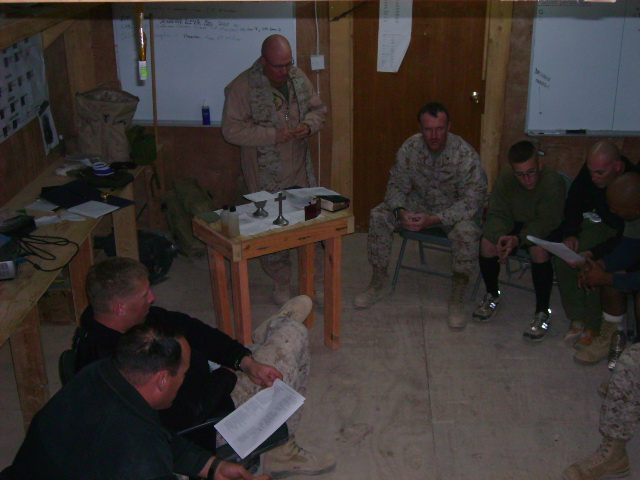
I have done my time in Iraq at Christmas on the Syrian-Iraqi Border with our Marine advisors and their Iraqis.  Since returning home have thought often of those that remain in harm’s way as well as those soldiers, sailors, Marines and airmen, American and from other nations that have spent Christmas on the front lines. Some of these events are absolutely serious while others display some of the “light” moments that occur even in the most terrible of manmade tragedies.

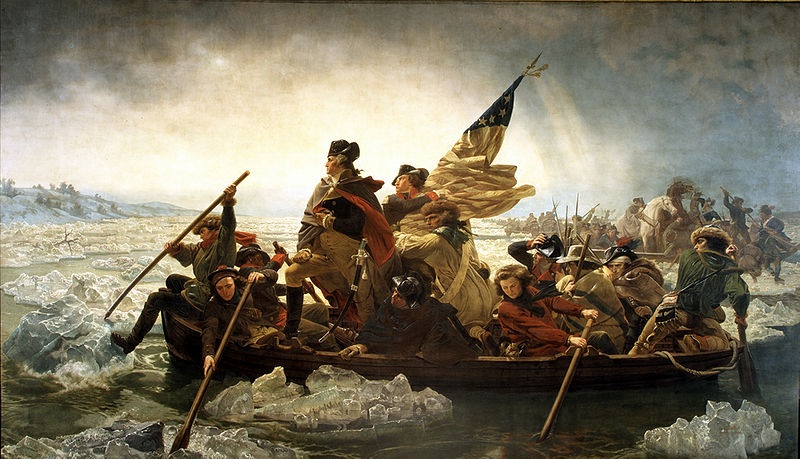
In American history we can look back to 1776, of course we could go back further but 1776 just sounds better. On Christmas of 1776 George Washington took his Continental Army across the Delaware to attack the British garrison at Trenton. Actually it was a bunch of hung over Hessians who after Christmas dinner on the 24th failed to post a guard but it was an American victory. In 1777 Washington and his Army had a rather miserable Christmas at Valley Forge where they spent the winter freezing their asses off and getting drilled into a proper military force by Baron Von Steuben.

While not a battle in the true sense of the word the Cadets at West Point wrote their own Christmas legend in the Eggnog Riot of 1826 when the Cadets in a bit of holiday revelry had a bit too much Eggnog and a fair amount of Whiskey and behaved in a manner frowned upon by the Academy administration. Needless to say that many of the Cadets spent the Christmas chapel services in a hung over state with a fair number eventually being tossed from the Academy for their trouble.

In 1837 the U.S. Army was defeated at the Battle of Lake Okeechobee by the Seminole Nation, not a Merry Christmas at all.  In 1862 the Army of the Potomac and Army of Northern Virginia faced each other across the Rappahannock River after the Battle of Fredericksburg while to the south in Hilton Head South Carolina 40,000 people watched Union troops play baseball some uttering the cry of many later baseball fans “Damn Yankees.” In 1864 the Army of the Potomac and Army of Northern Virginia faced each other again in the miserable trenches of Petersburg while General William Tecumseh Sherman enjoyed Christmas in Savannah Georgia after cutting a swath of destruction from Atlanta to the sea. He presents the city to Lincoln who simply says “nice, but I really wanted Richmond.”

Napoleon had something to celebrate on December 25th 1801 after surviving an assassination attempt on Christmas Eve and 1809 he was celebrating his divorce from Empress Josephine which had occurred on the 21st.

Meanwhile in Europe the 1914 “Christmas Truce” began between British and German troops and threatened to undo all the hard work of those that made the First World War possible.  Thereafter the High Commands of both sides ensured that such frivolity never happened again.

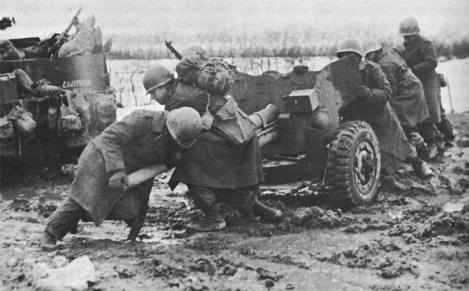
U.S. Soldiers and Anti-Tank Gun at the Battle of the Bulge

World War II brought much suffering in 1941 after Pearl Harbor the Japanese forced the surrender of Hong Kong and its British garrison while two days later the Soviets launched their counterattack at Moscow against Hitler’s Wehrmacht and the British were retaking Benghazi from the Afrika Corps.  A year later the Americans were clearing Guadalcanal of the Japanese and the Red Army was engaged in a climactic battle against the encircled German 6th Army at Stalingrad. At Stalingrad a German Physician named Kurt Reuber who is also a Lutheran minister draws “The Madonna of Stalingrad.”

The drawing which was taken out of Stalingrad by one of the last German officers to be evacuated now hangs in the Kaiser Wilhelm Memorial Church in Berlin. Reuber would draw another in 1943 while in a Soviet POW camp in which he would die in less than a month after that Christmas. Reuber wrote:

“I wondered for a long while what I should paint, and in the end I decided on a Madonna, or mother and child. I have turned my hole in the frozen mud into a studio. The space is too small for me to be able to see the picture properly, so I climb on to a stool and look down at it from above, to get the perspective right. Everything is repeatedly knocked over, and my pencils vanish into the mud. There is nothing to lean my big picture of the Madonna against, except a sloping, home-made table past which I can just manage to squeeze. There are no proper materials and I have used a Russian map for paper. But I wish I could tell you how absorbed I have been painting my Madonna, and how much it means to me.”
“The picture looks like this: the mother’s head and the child’s lean toward each other, and a large cloak enfolds them both. It is intended to symbolize ‘security’ and ‘mother love.’ I remembered the words of St.John: light, life, and love. What more can I add? I wanted to suggest these three things in the homely and common vision of a mother with her child and the security that they represent.”

In 1943 the Marines were battling the Japanese at New Britain while the Red Army was involved in its winter offensive against the Wehrmacht. In 1944 the Russians were advancing in Hungary, the Americans were engaged in a desperate battle with the Germans in the Ardennes with the German 2nd Panzer Division running out of gas 4 miles from the Meuse River and were destroyed by the American 2nd Armored Division. In the Pacific McArthur’s forces were battling the Japanese in the Philippines.

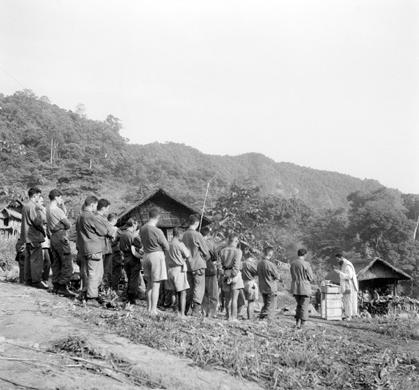
French Chaplain and Soldiers in Indochina

In the years following the Second World War Christmas was celebrated even while armies continued to engage in combat to the death. Christmas of 1950 was celebrated in Korea as the last American forces were withdrawn from the North following the Chinese intervention which the 1st Marine Division chewed up numerous Red Chinese divisions while fighting its way out of the Chosin Reservoir.  In the following years a stalemate along the front brought no end to the war and In French Indo-China the French garrison of Dien Bien Phu celebrated Christmas in primitive fashion unaware that General Giap was already marshalling his forces to cut them off and then destroy them shortly after Easter of 1954.   In 1964 the U.S. commits to the war in Vietnam and for the next 9 years American Soldiers, Marines, Sailors and Airmen will battle the North Vietnamese and Viet Cong with Marines fighting the North at Khe Sanh during Christmas of 1967.

Christmas on the Syrian Border with USMC Advisors

In the years after Vietnam American troops would spend Christmas in the Desert of Saudi Arabia preparing for Operation Desert Storm in 1990, in Somalia the following year and in the Balkans. After September 11th 2001 U.S. Forces spent their first of at least 10 Christmas’s in Afghanistan and in 2003 begin the first for at least 8 Christmas’s in Iraq.

Today Americans serve around the world far away from home fighting the war against Al Qaeda and its confederates and some will die even on this most Holy of Days while for others it will be their last Christmas.

Please keep them and all who serve now as well as those that served in the past, those that remain and those that have died in your prayers.

Peace

Padre Steve+


1 Comment

Filed under faith, History, Military

NUTS!

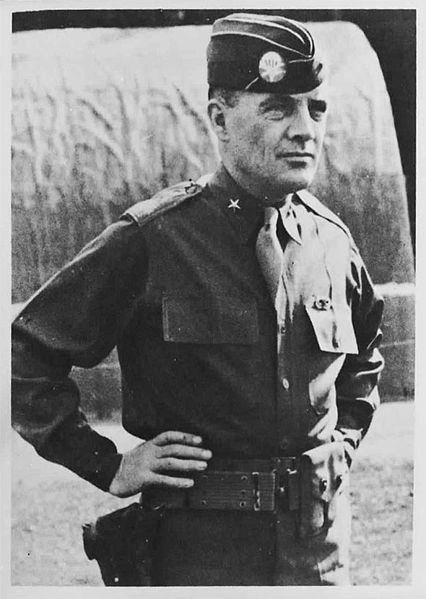
Brigadier General Anthony McAuliffe

On December 16th 1944 the German Army launched an assault in the Ardennes Forrest completely surprising the thinly spread American VIII Corps.  The German 6th Panzer Army, 5th Panzer Army and 7th Army attacked and forced the surrender of 2 regiments of 106th Infantry Division, mauled the 28th Division in the center of the American line while battering other U.S. forces.  To the north the 2nd and 99th Infantry Divisions were tenaciously defending Elsenborn Ridge while to the south the thinly spread 4th Infantry and 9th Armored Divisions resisted the 7th Army advance. As elements of the two German Panzer armies advanced west Eisenhower dispatched his only reserves the 82nd and 101st Airborne Divisions to meet the threat. The 82nd moved to the town of St Vith to aid the 7th Armored Division while the 101st was dispatched to hold the key road center of Bastogne.

By the 22nd the besieged American defenders of Bastogne were causing Hasso Von Manteuffel’s 5th Panzer Army headaches. Manteuffel’s leading Panzer units of the 2nd Panzer Division and Panzer Lehr had been thwarted from taking the town by a Combat Command of 10th Armored Division and lead elements of the 101st.  After failing to take the town the Germans invested it with the 26th Volksgrenadier Division and a regiment of Panzer Lehr while 2nd Panzer and the bulk of Panzer Lehr continued their westward advance.

Cut off from any other American forces the 101st and a collection of stray units including CCB 10th Armored Division and remnants of CCR 9th Armored Division, three 155mm artillery battalions including the African American 969th Field Artillery Battalion held out. By the 21st of December they were completely surrounded.

The Commander of the American garrison was Brigadier General Anthony McAuliffe. McAuliffe was the acting commander of the 101st and normally was the commander of the Division Artillery. Major General Matthew Ridgeway and many key commanders and staff were away from the division when it was hastily deployed to the Bulge to combat the German offensive.  McAuliffe commanded a division short of ammunition, food and cold weather gear.

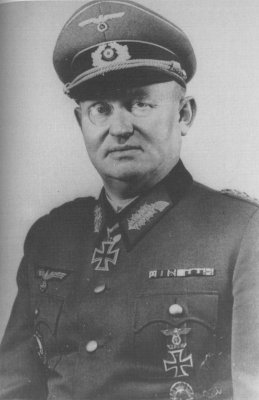
General Der Panzertrüppen Heinrich Freiherr von Lüttwitz

The German forces surrounding the city were commanded by the veteran General Der Panzertrüppen Heinrich Freiherr von Lüttwitz commander of XLVII Panzer Corps.  Lüttwitz believing that resistance was futile sent the following message under a flag of truce to McAuliffe:

To the U.S.A. Commander of the encircled town of Bastogne.

The fortune of war is changing. This time the U.S.A. forces in and near Bastogne have been encircled by strong German armored units. More German armored units have crossed the river Our near Ortheuville, have taken Marche and reached St. Hubert by passing through Hompre-Sibret-Tillet. Libramont is in German hands.

There is only one possibility to save the encircled U.S.A. troops from total annihilation: that is the honorable surrender of the encircled town. In order to think it over a term of two hours will be granted beginning with the presentation of this note.

If this proposal should be rejected one German Artillery Corps and six heavy A. A. Battalions are ready to annihilate the U.S.A. troops in and near Bastogne. The order for firing will be given immediately after this two hours term.

All the serious civilian losses caused by this artillery fire would not correspond with the well-known American humanity.

The German Commander

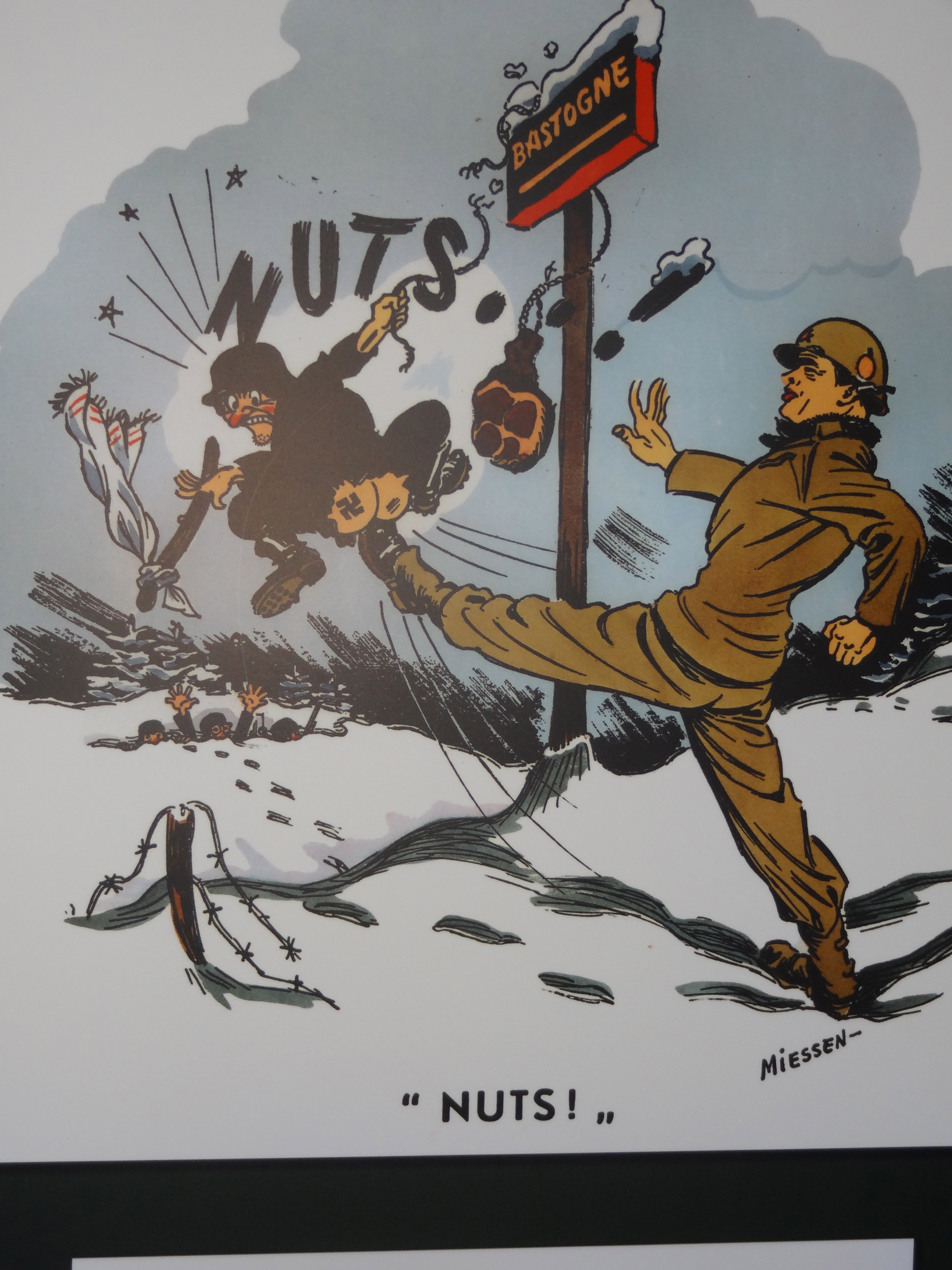
McAuliffe’s response has become one of the immortal responses to a surrender demand in military history. According to staff members present when he received Lüttwitz’s note he simple said “nuts.” One of his staff officers suggested that he use “nuts” as his official reply to Lüttwitz and the following reply was typed:

To the German Commander

NUTS!

The American Commander

The reply was delivered by the commander of the 327th Glider Infantry Regiment Lieutenant Colonel Joseph Harper and his S-3 Major Alvin Jones. When Harper delivered the message he told the German delegation that in “plain English” it meant “Go to hell.” The scene has been immortalized on film in the movie The Battle of the Bulge http://www.youtube.com/watch?v=73OiRZf7DsM

dsc00072

The garrison held out until it was relieved on December 26th by the 4th Armored Division of General George Patton’s 3rd Army.  Despite that the situation remained tenuous and the town was the scene of much hard fighting over the next two weeks.

McAuliffe went on to command the 103rd Infantry Division by the end of the war.  He returned to Europe as Commander of 7th Army in 1953 and U.S. Army Europe in 1955. He retired in 1956 with the rank of General.  He died in 1975 at the age of 77. His adversary Von Lüttwitz died at the age of 72 in 1969.

As we remain engaged in the current war it is always worth our time to remember the heroism, courage and faith of those that served before us.

Peace

Padre Steve+

Post Script: To read more about the Battle of the Bulge on this site go to Wacht am Rhein: The Battle of the Bulge

4 Comments

Filed under History, Military, world war two in europe

The Ships of Pearl Harbor: A Comprehensive List with Short Histories of Each Ship

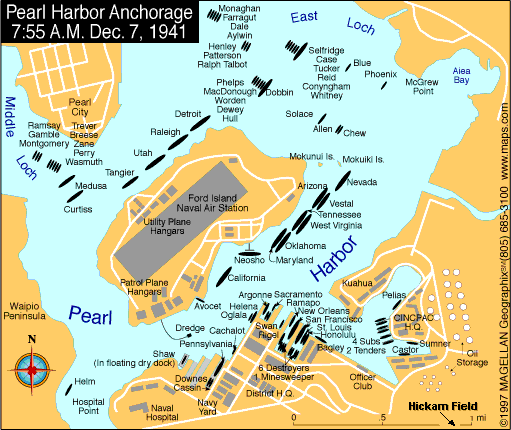
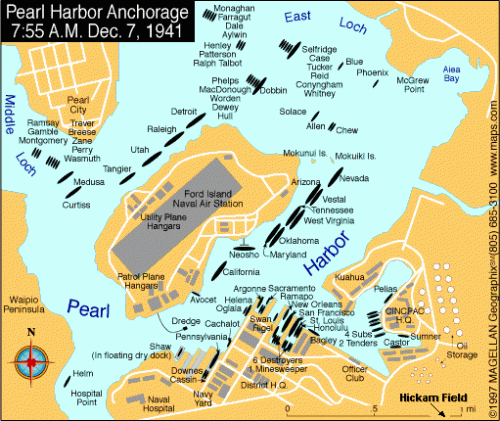
Last year I wrote a piece called The Battleships of Pearl Harbor. I followed that with an article this year entitled “Forgotten on the Far Side of Ford Island: The USS Utah, USS Raleigh, USS Detroit and USS Tangier. Of course most anyone that has see either Tora! Tora! Tora! Or Pearl Harbor is acquainted with the attack on “Battleship Row” and the airfields on Oahu.  What are often overlooked in many accounts are the stories of some of the lesser known ships that played key roles or were damaged in the attack.  Since none of the articles that I have seen have discussed all of the U.S. Navy ships at Pearl Harbor on that fateful morning I have taken the time to list all the ships with the exception of yard and patrol craft present at Pearl Harbor on December 7th 1941.  I have also excluded Coast Guard cutters. A brief account of each ship’s war service and final disposition is included.  I believe that this is the only site that has this information in a single article.

During the attack 18 ships were sunk or damaged but only three, Arizona, Oklahoma and Utah never returned to service.  During the war a further 18 ships were sunk or written off as losses during the war. All ships lost in the war are marked with an asterisk. One ship, the USS Castor remained in active service until 1968 serving in the Korean and Vietnam Wars. One ship, the Light Cruiser Phoenix was sunk in the Falklands War while serving as the Argentine ship General Belgrano. No U.S. Navy ships apart from the Yard Tug Hoga (not included in this article) remain today.  It is unfortunate that the Navy or any organization had the foresight to save one of these ships. It would have been fitting for one of the battleships that survived the war to be preserved as a memorial ship near the Arizona Memorial. While the USS Missouri serves this purpose symbolic of the end of the war it is a pity that no ship at Pearl Harbor was preserved so that people could see for themselves what these gallant ships was like.

Battleships


Nevada (BB-36) Nevada was the only Battleship to get underway during the attack.  As she attempted to escape the harbor she was heavily damaged and to prevent her sinking in the main channel she was beached off Hospital Point.  She would be raised and returned to service by the May 1943 assault on Attu.  She would then return to the Atlantic where she would take part in the Normandy landings off Utah Beach and the invasion of southern France in July 1944.  She then returned to the Pacific and took part in the operations against Iwo Jima and Okinawa where she again provided naval gunfire support.  Following the war she would be assigned as a target at the Bikini atoll atomic bomb tests, surviving these she would be sunk as a target on 31 July 1948. She received 7 battle stars for her WWII service.

*Oklahoma (BB-37) During the Pearl Harbor attack Oklahoma was struck by 5 aerial torpedoes capsized and sank at her mooring with the loss of 415 officers and crew. Her hulk would be raised but she would never again see service and sank on the way to the breakers in 1946.  She was awarded one battle star for her service during the attack.

Pennsylvania (BB-38) Pennsylvania was the Pacific Fleet Flagship on December 7th 1941 and was in dry dock undergoing maintenance at the time of the attack. Struck by two bombs she received minor damage and would be in action in early 1942. She underwent minor refits and took part in many amphibious landings in the Pacific and was present at the Battle of Surigo Strait.  Heavily damaged by an aerial torpedo at Okinawa Pennsylvania would be repaired and following the war used as a target for the atomic bomb tests. She was sunk as a gunnery target in 1948.  She received 8 battle stars for her WWII service.

*Arizona (BB-39) Arizona was destroyed during the attack.  Hit by 8 armor piercing bombs one of which penetrated her forward black powder magazine she was consumed in a cataclysmic explosion which killed 1103 of her 1400 member crew.  She was decommissioned as a war loss but her colors are raised and lowered every day over the Memorial which sits astride her broken hull.  She received one battle star for her service at Pearl Harbor.

Tennessee (BB-43) Tennessee was damaged by two bombs and was shield from torpedo hits by West Virginia. After repairs she conducted operations in the Pacific until she reported to Puget Sound Naval Shipyard in August 1942 for a complete rebuild and modernized with the latest in radar, fire control equipment and anti-aircraft armaments. She returned to active service in May 1943. She provided Naval Gunfire support in numerous amphibious operations and was a key ship during the Battle of Surigo Strait firing in six-gun salvos to make careful use of her limited supply of armor-piercing projectiles, Tennessee got off 69 of her big 14-inch bullets before checking fire.  Her gunfire helped sink the Japanese Battleships Fuso and Yamishiro and other ships of Admiral Nishimura’s Southern Force.  She was damaged by a Kamikaze off Okinawa on 18 April 1945 which killed 22 and wounded 107 of her crew but did not put her out of action.  Her final assignment of the war was to cover the landing of occupation troops at Wakayama, Japan.  She was decommissioned in 1947 and remained in reserve until 1959 when she was sold for scrap. Tennessee earned a Navy Unit Commendation and 10 battles stars for World War II service.

California (BB-44) California was hit by two torpedoes but had the bad luck to have all of her major watertight hatches unhinged in preparation for an inspection. Hit by two torpedoes and two bombs she sank at her moorings suffering the loss of 98 killed and 61 wounded. She was refloated and received temporary repairs at Pearl Harbor before sailing to Puget Sound Naval Shipyard to be completely rebuilt and modernized with the latest in radar, fire control equipment and anti-aircraft armaments. She returned to service in January 1944. She saw her first action in the Marianas and was in continuous action to the end of the war. She played an important part in the Battle of Surigo Strait and in the amphibious landings at Guam and Tinian, Leyte, Iwo Jima and Okinawa.  She was decommissioned in 1947 and placed in reserve finally being sold for scrap in 1959. She received 7 battle stars for her WWII service.

Maryland (BB-45) At Pearl Harbor Maryland was moored inboard of Oklahoma and was hit by 2 bombs.  She would be quickly repaired and returned to action and receive minimal modernization during the war. She would participate in operations throughout the entirety of the Pacific Campaign providing naval gunfire support to the landings at Tarawa, Kwajalein, Saipan, where she was damaged by an aerial torpedo, Palau, Leyte where she was damaged by a Kamikaze, Okinawa and the battleship action at Surigo Strait.  Decommissioned in 1947 she was placed in reserve and sold for scrap in 1959. On 2 June 1961 the Honorable J. Millard Tawes, Governor of Maryland, dedicated a lasting monument to the memory of the venerable battleship and her fighting men. Built of granite and bronze and incorporating the bell of “Fighting Mary,” this monument honors a ship and her 258 men who gave their lives while serving aboard her in WWII.  This monument is located on the grounds of the State House, Annapolis, Md. Maryland received seven battle stars for World War II service.

West Virginia (BB-48) West Virginia suffered some of the worst damage in the attack. Hit by at least 5 torpedoes and two bombs she was saved from Oklahoma’s fate by the quick action of her damage control officer to counter flood so she would sink on an even keel.  She would be raised, refloated and taken back to the West Coast for an extensive modernization on the order of the Tennessee and California. The last Pearl Harbor battleship to re-enter service she made up for lost time as she lead the battle line at Surigo Strait firing 16 full salvos at the Japanese squadron helping sink the Japanese Battleship Yamashiro in the last battleship versus battleship action in historyWest Virginia was decommissioned in 1947, placed in reserve and sold for scrap in 1959.

Heavy Cruisers

New Orleans (CA-32) Minor shrapnel damage from near miss. Fought throughout the war in the Pacific; bow blown off by Japanese torpedo at Battle of Trassafaronga in November 1942, repaired. 17 battle stars for WWII service, decommissioned 1947 and sold for scrap in 1957

San Francisco (CA-38 Undamaged at Pearl Harbor, fought through Pacific war, most noted for actions at the Naval Battle of Guadalcanal fighting Japanese Battleship Hiei. Decommissioned 1946 and sold for scrap in 1959. San Francisco earned 17 battle stars during World War II. For her participation in the Naval Battle of Guadalcanal, she was awarded the Presidential Unit Citation. For the same action, three members of her crew were awarded the Medal of Honor: Lieutenant Commander Herbert E. Schonland, Lieutenant Commander Bruce McCandless , and Boatswain’s Mate 1st Class Reinhardt J. Keppler (posthumous). Admiral Daniel Callaghan was also awarded the Medal of Honor (posthumous).  During the November 1942 repair at Mare Island, it was necessary to extensively rebuild the bridge. The bridge wings were removed as part of that repair, and are now mounted on a promontory in Lands End, San Francisco at Golden Gate National Recreation Area overlooking the Pacific Ocean. They are set on the great circle course from San Francisco  to Guadalcanal.  The old ship’s bell is housed at the Marines Memorial Club in San Francisco.

Light Cruisers

Raleigh (CL-7) Heavily damaged by torpedo, repaired served throughout war mainly in North Pacific . Decommissioned 1945 and scrapped 1946

Detroit (CL-8) Undamaged and got underway during attack. Mainly served in North Pacific and on convoy duty earning 6 battle stars for WWII service, decommissioned and sold for scrap 1946

Phoenix (CL-46) Undamaged at Pearl Harbor and served throughout war and at the Battle of Surigo Strait she helped sink the Japanese Battleship Fuso.  She earned 9 battle stars for WWII service. Decommissioned 1946 and transferred to Argentina 1951. Served as General Belgrano and sunk by submarine HMS Conqueror on 2 May 1982 during the Falklands War.

Honolulu (CL-48) Suffered minor hull damage from near miss. Served in Pacific and fought several engagements against Japanese surface forces in the Solomons. At the Battle of Kolombangara on the night of 12-13 July 1943 she was damaged by a torpedo but sank the Japanese Light Cruiser Jintsu. Earned 9 battle stars for WWII service, decommissioned 1947 and sold for scrap 1949

St. Louis (CL-49) St. Louis got underway at 0930 nearly torpedoed by Japanese midget sub. She served throughout war in numerous operations and was damaged at the Battle of Kolombangara. She earned 11 battle stars for WWII service. She decommissioned 1946 and transferred to Brazil where she was renamed Tamandare stricken in 1976 sold for scrap in 1980 but sank while under tow to Taiwan.

*Helena (CL-50) Damaged and repaired. Engaged in many battles around Solomon Islands where at the Battle of Cape Esperance at Guadalcanal she sank the Japanese Heavy Cruiser Furutaka and destroyer Fubiki. She was engaged during the Naval Battle of Guadalcanal and was sunk at Battle of Kula Gulf 6 July 1943.  She was the first ship to be awarded the Naval Unit Commendation and was awarded 7 battle stars for her WWII service.

Destroyers

Allen (DD-66) Undamaged during attack spent war in local operations in Oahu area. Decommissioned 1945 and scrapped 1946

Schley (DD-103) Being overhauled on December 7th was undamaged in attack. Converted into High Speed Transport (APD) in 1942, earned 11 battle stars for WWII service and decommissioned in 1945 and scrapped in 1946

Chew (DD-106) Undamaged during attack and conducted local operations in Oahu operations for remainder or war, decommissioned 1945 and scrapped 1946

*Ward (DD-139) Ward was underway patrolling Channel entrance to Pearl Harbor on December 7th, sank Japanese midget submarine. Converted to APD in 1943 and served in numerous operations prior to being heavily damaged by Japanese bombers at Ormoc Bay off Leyte in December 1944 starting fires that could not be controlled. She was sunk by USS O’Brien (DD-725) after survivors were rescued. By a strange twist of fate the C.O. of O’Brien LCDR Outerbridge who had commanded Ward when she sank the Japanese submarine at Pearl Harbor. Ward earned 10 battle stars for WWII service.

Dewey (DD-349) Being overhauled on December 7th Dewey served throughout the war earning 13 battle stars escorting carriers, convoys and supporting amphibious operations. Decommissioned October 1945 and sold for scrap 1946

Farragut (DD-348) Got underway during attack suffered minor damage from strafing. During the war she operated from the Aleutians to the South Pacific and Central Pacific escorting carriers and supporting amphibious operations. She earned 14 battle stars for WWII service. Decommissioned 1945 and sold for scrap 1947

*Hull (DD-350) Undamaged at Pearl Harbor she operated from the Aleutians to the South Pacific and Central Pacific escorting carriers and supporting amphibious operations. She earned 10 battle stars before sinking in “Halsey’s Typhoon” on 18 December 1944.

MacDonough (DD-351) MacDonough got underway during attack and was undamaged, during war served in North and Central Pacific escorting carriers and supporting amphibious operations. She earned 13 battle stars for her WWII service. Decommissioned October 1945 and sold for scrap 1946

*Worden (DD-352) Worden got underway during attack and went to sea with ships searching for Japanese strike force. Served at Midway and the South Pacific before being transferred to the Aleutians where she grounded on a pinnacle due to winds and currents at Constantine Harbor Amchitka Island on 12 January 193, she broke up in the surf and was written off as a total loss. Worden was awarded 4 battle stars for her WWII service.

Dale (DD-353) Dale got underway immediately under the command of her Command Duty Officer, an Ensign and joined ships searching for Japanese strike force. During war served in North and Central Pacific and took part in the Battle of the Komandorski Islands on 26 March 1943.  Earned 12 battle stars for WWII service, decommissioned October 1945 sold for scrap December 1946.

*Monaghan (DD-354)  Monaghan was the Ready destroyer on December 7th and ordered underway when Ward sank the midget submarine. On way out of harbor rammed, depth charged and sank a Japanese midget submarine that had gotten into Pearl Harbor. She participated in Coral Sea, Midway, Aleutians, the Battle of the Komandorski Islands and Central Pacific operations before sinking with the loss of all but 6 crewmen during the great Typhoon of November 1944 sinking on 17 November. She received 12 battle stars for her WWII service.

Aylwin (DD-355) Got underway within an hour of the beginning of the attack with 50% of her crew and four officers, all Ensigns manning her leaving her Commanding Officer and others behind in a launch as she was under direction not to stop for anything. This was captured in the movie In Harm’s Way. During the war Aylwin saw action at Coral Sea, Midway, Guadalcanal, the Aleutians, and the Central Pacific up to the Okinawa and due to the action of her crew survived the great typhoon of November 1944. She earned 13 battle stars for her WWII service and was decommissioned in October 1945. She was sold for scrap in December 1946.

Selfridge (DD-357) Manned by a crew from 7 different ships Selfridge got underway at 1300 and was undamaged in the attack. Throughout war she served primarily as an escort to carriers and transports. Torpedoed by Japanese destroyer and lost her bow at Battle of Vella Lavella on 6 October 1942. Repaired and finished war. Earned 4 battle stars for WWII service and was decommissioned in October 1945 and sold for scrap in December 1946.

Phelps (DD-360) Undamaged at Pearl Harbor Phelps was credited with shooting down one enemy aircraft. She was in action at Coral Sea, Midway, Guadalcanal, the Aleutians and the Central Pacific picking up 12 battle stars for her WWII service. Decommissioned in October 1945 and scrapped 1947.

Cummings (DD-365) Sustained minor damage from bomb fragments but got underway quickly. During war served on convoy escort, with fast carrier task forces and provided Naval Gunfire Support from the Aleutians to the Indian Ocean where she operated with the Royal Navy. On 12 August 1944, President Roosevelt broadcast a nationwide address from the forecastle of Cummings after a trip the Alaska. Cummings was decommissioned in December 1945 and sold for scrap in 1947.

*Reid (DD-369) Undamaged at Pearl Harbor Reid escorted convoys and amphibious operations throughout the Pacific until she was sunk by Kamikazes at Ormoc Bay in the Philippines on 11 December 1944. On 31 August 1942 she sank by gunfire the Japanese submarine RO-1 off Adak Alaska. She received 7 battle stars for her WWII service.

Case (DD-370) Undamaged at Pearl Harbor Case escorted the fast carrier task forces throughout much of the war as well as conducted Anti-Submarine Warfare operations and Naval Gunfire Support. She sank a Midget submarine outside the fleet anchorage at Ulithi on 20 November 1944 and a Japanese transport off of Iwo Jima on 24 December 1944. She earned 7 battle stars for her WWII service and was decommissioned in December 1945 and sold for scrap in December 1947.

Conyngham (DD-371) Undamaged during attack she was underway that afternoon. Spent most of war on convoy escort, escorting carrier task forces and conducting Naval Gunfire Support missions she was damaged twice by strafing Japanese aircraft she earned 14 battle stars for her WWII service. Used in 1946 Atomic Bomb tests and destroyed by sinking in 1948.

Cassin (DD-372) Destroyed in drydock but salvaged returned to service 1944 escorting convoys and TG 38.1 the Battle Force of the fleet at Leyte Gulf as well as supporting amphibious operations. She earned 6 battle stars for her WWII service.  Decommissioned December 1945 and sold for scrap 1947

Shaw (DD-373) Sustained massive damage due to magazine explosion, salvaged and repaired served throughout war and awarded 11 battle stars. Damaged by Japanese dive bombers off Cape Gloucester on 25 December 1943 with loss of 3 killed and 33 wounded. Decommissioned October 1945 and scrapped 1947

*Tucker (DD-374) Undamaged at Pearl Harbor Tucker conducted convoy escort operations and was sunk when she struck a mine escorting a transport to Espiritu Santo on 1 August 1942 sinking on 4 August. She received one battle star for her WWII service.

Downes (DD-375) Destroyed in drydock and salvaged. Decommissioned June 1942, rebuilt and recommissioned 1943. After she was recommissioned and used to escort convoys and conduct Naval Gunfire Support to amphibious operations. She earned 4 battle stars for her WWII service. Decommissioned 1947 and sold for scrap.

Bagley (DD-386) Undamaged at Pearl Harbor Bagley conducted convoy escort operations and supported amphibious landings throughout the Pacific earning 1 battle stars ended the war on occupation duty at the Sasebo-Nagasaki area until returning to the United States. She earned 12 battle stars for her WWII service and was decommissioned in June 1946 and sold for scrap in October 1947.

*Blue (DD-387) Blue was undamaged and got underway during the attack under the direction of 4 Ensigns.  Served on convoy escort duties, present at Battle of Savo Island on 9 August 192 and was torpedoed off Guadalcanal by Japanese destroyer Kawakaze on 21 August and was scuttled 22 August. She earned five battle stars for her WWII service.

Helm (DD-388) Helm was underway, nearing West Loch at the time of the attack. Helm served in the Solomons and the South Pacific until February 19. She joined the fast carrier task forces of 5th Fleet in May 1944. On 28 October at Leyte Gulf 28 October 1944 Helm and companion destroyer Gridley made sank the Japanese submarine I-46. She was used for a target during Operation Crossroads and scrapped in 1946. She received 11 battle stars for her WWII service.

Mugford (DD-389) Mugford was on standby status and had steam up which allowed her to get to sea during the attack in which she shot down Japanese aircraft. She spent much of 1942 on convoy duty between the U.S. and Australia. She took part in the Guadalcanal invasion and was struck by a bomb which killed 8 men, wounded 17 and left 10 missing in action. She would go on to serve in the Central and South Pacific being damaged by a near miss from a bomb on 25 December off Cape Gloucester and was stuck by a Kamikaze on 5 December 1944 in Surigo Strait. She escorted the fast carriers of TF 8 and 58 and later served on anti-submarine and radar picket duty. She decommissioned 1946 and was used in the Atomic Bomb tests and after use as a test ship for radioactive decontamination was sunk on 22 March 1948 at Kwajalein. She received 7 battle stars for her WWII service.

Ralph Talbot (DD-390) Ralph Talbot got underway by 0900 on the morning of the attack and joined other ships at sea attempting to find the Japanese strike force. She spent much of 1942 engaged in escort duties and took part in the Battle of Savo Island where she engaged the Japanese as part of the Northern Group and was damaged by Japanese shellfire. She spent the war in the South and Central Pacific escorting convoys and supporting amphibious operations and was damaged by a Kamikaze off Okinawa. She remained in service until 1946 when she was assigned to JTF-1 and the Operations Crossroads Atomic Bomb test. She survived the blast and was sunk in 198. She earned 12 battle stars for her WWII service.

*Henley (DD-391) Undamaged at Pearl Harbor Henley was already at General Quarters when the attack began because a new sailor sounded the General Quarters alarm instead of Quarters for Muster. As a result her weapons were manned. She got underway during the attack under the command of a junior Lieutenant and joined other ships patrolling outside of Pearl Harbor. Henley carried out convoy and anti-submarine patrols mainly around Australian continuing those duties through the Guadalcanal campaign. She was torpedoed and sunk by Japanese bombers on 3 October 1943 while conducting a sweep in support of troops ashore near Finshafen New Guinea. Henley earned 4 battle stars for her WWII service.

Patterson (DD-392) Patterson was undamaged during the attack and proceeded to sea conducting anti-submarine warfare patrols. She would spend the bulk of the war as an escort for fast carrier task forces. She was with the Southern Group during the Battle of Savo Island and suffered a hit on her #4 gun mount that killed 10 sailors.  She was awarded 13 battle stars for her WWII service. Decommissioned in November 1945 she was stricken from the Naval Vessel Register in 1947 and sold for scrap.

*Jarvis (DD-393) Jarvis survived Pearl Harbor undamaged and got underway to join other ships in patrols around Oahu.  She served as an escort for carriers and convoys and the invasion of Guadalcanal. She was heavily damaged by an aircraft launched torpedo during the landings but her crew made temporary repairs and restored power. She was ordered to Efate New Hebrides but evidently unaware of the order her Commanding Officer set sail for Sidney Australian and repairs from the Destroyer Tender USS Dobbin. She passed south of Savo Island as the Japanese cruiser force approached and refused assistance for the USS Blue.  She was last seen on the morning of 9 August 1942 by a scout plane from Saratoga. Already heavily damaged and having little speed, no radio communications and few operable guns was attacked by a force of 31 Japanese bombers sinking with all hands at 1300 on 9 August. Jarvis was awarded 3 battle stars for her WWII service.

Submarines

Narwhal (SS-167) Narwhal was one of a class of three large cruiser submarines that was built in the mid 1920s. Narwhal was 14 years old at the time of the attack. She was undamaged at Pearl Harbor and was used primarily to support special missions and special operations forces in raids against Japanese shore installations. Narwhal earned 15 battle stars for her service in the Pacific and was decommissioned in February 1945 and sold for scrap in May. Her 6” guns are enshrined at the Naval Submarine Base Groton.

Dolphin (SS-169) Undamaged in the Pearl Harbor attack Dolphin made 3 war patrols in late 1941 and early 1942 before being withdrawn from combat service and used for training due to her age. She was decommissioned in October 1945 and sold for scrap in 1946. She received 2 battle stars for her service in WWII.

Cachalot (SS-170) Undamaged at Pearl Harbor Cachalot conducted three war patrols damaging an enemy tanker before being withdrawn from combat service in the fall of 1942 being judged too old for arduous combat service. She served as a training ship until June 1945 and was decommissioned in October 1945 and sold for scrap in January 1947. She was awarded 3 battle stars for her WWII service.

Tautog (SS-199) Tautog was undamaged at Pearl Harbor and made the Japanese pay for not sinking her. She helped avenge the Pearl Harbor attack sinking 26 enemy ships of 71,900 tons including the submarines RO-30 and I-28 and destroyers Isoname and Shirakumo in 13 war patrols. She was withdrawn from combat service in April 1945 and served and operated in conjunction with the University of California’s Department of War Research in experimenting with new equipment which it had developed to improve submarine safety. She was decommissioned in December 1945. Spared from the Atomic Bomb tests she served as an immobile reserve training ship in the Great Lakes until 1957 and was scrapped in 1960.  Tautog was awarded 14 battle stars and a Naval Unit Commendation for her service in WWII.

Minelayer

Oglala (CM-4) Sank due to concussion from torpedo hit on Helena. Raised and repaired, converted to internal combustion repair ship. Decommissioned 1946 transferred to Maritime Commission custody and scrapped 1965

Minesweepers

Turkey (AM-13) Undamaged at Pearl Harbor she was redesignated as a Fleet Tug in 1942. She was decommissioned in November 1945 and sold for scrap in 1946. She received one battle star for her service at Pearl Harbor.

Bobolink (AM-20) Undamaged at Pearl Harbor and redesignated as an Ocean Going Tug in 1942. She decommissioned in 1946 and sold through the Maritime Administration. She received one battle star for her service at Pearl Harbor.

Rail (AM-26) Undamaged at Pearl Harbor Rail was redesignated as a Ocean Going Tug in June 1942. She supported operations throughout the Pacific earning 6 battle stars for her WWII service. She was decommissioned in 1946 and transferred to the Maritime Administration for disposal in 1947.

Tern (AM-31) Undamaged in the attack Tern was redesignated as an Ocean Going Tug in June 1942 and supported the fleet for the remainder of the war. She was decommissioned and struck from the Navy List in December 1945. She earned one battle star for her service at Pearl Harbor.

*Grebe (AM-43) Undamaged at Pearl Harbor Grebe was redesignated as an Ocean Going Tug in June 1942.  On 6 December 1942 Grebe grounded while attempting to float SS Thomas A. Edison at Vuanta Vatoa, Fiji Islands. Salvage operations were broken up by a hurricane that destroyed both ships 1-2 January 1943.

Vireo (AM-52) Undamaged at Pearl Harbor Vireo was designated an Ocean Going Tug in May 1942. At the Battle of Midway she was assisting USS Yorktown CV-5 when that ship was torpedoed by a Japanese submarine and sunk.  She was damaged in a Japanese air strike off Guadalcanal on October 15th 1942 abandoned but recovered by U.S. Forces and repaired supporting damaged fleet units. She was decommissioned in 1946 and disposed of by the Maritime Administration in 1947. Her final disposition is unknown. She was awarded 7 battle stars for her WWII service.

Coastal Minesweepers

Cockatoo (AMC-8) Undamaged at Pearl Harbor Cockatoo operated in the 14th Naval District from Pearl Harbor throughout the war. She was transferred to the Maritime Commission 23 September 1946.

Crossbill (AMC-9) Undamaged in the attack she operated in an in-service status attached to the 14th Naval District from 1941 to 1947.

Condor (AMC-14) Undamaged in the attack she operated in the Hawaiian Islands throughout World War II. Placed out of service 17 January 1946, she was transferred to the Maritime Commission for disposal 24 July 1946.

Reedbird (AMC-30) Undamaged during the attack she operated in Hawaiian waters throughout World War II. Then ordered inactivated, Reedbird returned to San Diego where she was stripped and placed out of service 14 January 1946. Her name was struck from the Navy list 7 February 1946 and on 8 November 1946 she was delivered to the Maritime Commission for disposal.

Light Minelayers (Note: All of these ships were WWI era “four piper” destroyers converted to Mine Warfare ships in the 1920s and 1930s)

*Gamble (DM-15) Gamble was undamaged at Pearl Harbor and served throughout the Pacific. On 29 August 1942 she sank Japanese submarine I-123 near Guadalcanal. On 6 May 1943 she mined the Blackett Strait with her sisters USS Preble and USS Breese. On the night of 7-8 May a Japanese destroyer force entered the minefield one of which Kurashio, went down and two others Oyashio and Kagero were sunk by Allied aircraft the next day. The sinking of Kagero provided a measure of revenge as that ship was part of the Japanese Carrier Strike Group that attacked Pearl Harbor. On 18 February 1945 Gamble was damaged by two bombs while operating off of Iwo Jima. Badly damaged she was towed to Saipan but salvage was impossible and she was decommissioned sunk off of Apra Harbor Guam on 16 July 1945. She was awarded 7 battle stars for her WWII service.

Ramsay (DM-16) Ramsey got underway during the attack and dropped depth charges in the vicinity of what was believed to be a midget submarine. She served in the Solomons and Aleutians and was redesignated as a Miscellaneous Auxiliary (AG-98) in 1944 operating around Pearl Harbor. She was decommissioned in October 1945 and scrapped in 1946. She received 3 battle stars for her WWII service.

*Montgomery (DM-17) Undamaged in the attack Montgomery conducted ASW operations in the wake of the attack. She operated throughout the Pacific until she was damaged by a mine while anchored off Ngulu on 17 October 1944. She was decommissioned on 23 April 1945 and sold for scrap in 1946. She was awarded 4 battle stars for her WWII service.

Breese (DM-18) Breese got underway during the attack and assisted in sinking a midget submarine. She was engaged throughout the war in the Pacific and operated with Gamble and Preble to mine the Blackett Strait in May 1943, an operation that resulted in the sinking of 3 Japanese destroyers. She was decommissioned and sold for scrap in 1946. She was awarded 10 battle stars for her WWII service.

Tracy (DM-19) Tracy was being overhauled during the attack and all machinery and armament was dismounted.  After the overhaul she operated around the Pacific and in February 1943 she Tracy, as task group leader, led Montgomery (DM-17) and Preble (DM-20) in laying a field of 300 mines between Doma Reef and Cape Esperance. That night, Japanese destroyer Makigumo struck one of these mines and was damaged so badly that she was scuttled. Tracy was decommissioned and scrapped in 1946. She received 7 battle stars for her WWII service.

Preble (DM-20) Preble was being overhauled on December 7th and took no part in the action. During the war she operated throughout the Pacific and in company with Gamble and Breese laid a minefield on 6 May 1943 which resulted in sinking 3 Japanese destroyers. She was redesignated as a Miscellaneous Auxiliary (AG-99) and she was regulated to convoy escort duties until the end of the war. She was decommissioned in December 1945 and sold for scrap in 1946. She was awarded 8 battle stars for WWII service.

Sicard (DM-21) Sicard was under overhaul at the Naval Shipyard during the attack. During the war she primarily served on convoy escort duty with and in some mine laying operations. She was reclassified a miscellaneous auxiliary, AG-100, effective 5 June 1945, decommissioned in December 1945 and sold for scrap in 1946. She was awarded 2 battle stars for her WWII service.

Pruitt (DM-22) Pruitt was being overhauled during the attack and served throughout the Pacific during the war. She was reclassified a miscellaneous auxiliary, AG-101, effective 5 June 1945, decommissioned November and stricken from the Navy List in December 1945 being scrapped at Philadelphia Naval Shipyard. She was awarded 3 battle stars for her WWII service.

High Speed Minesweepers (Note: All of these ships were WWI era “four piper” destroyers converted to Mine Warfare ships in the 1920s and 1930s)

Zane (DMS-14) Undamaged at Pearl Harbor Zane saw much service in the South and Central Pacific in WWII. She conducted minesweeping, convoy escort and ASW operations from Pearl Harbor to the Marianas campaign. She was damaged in a firefight with Japanese destroyers at Guadalcanal in 1942.  After the invasion of Guam she was reassigned to target towing duties. Reclassified from high-speed minesweeper to a miscellaneous auxiliary, AG-109, on 5 June 1945 she decommissioned in December 1945 and sold for scrap in 1946. She was awarded 6 battle stars and a Naval Unit Commendation for her service in WWII.

*Wasmuth  (DMS-15) Wasmuth was undamaged during the attack and spent 1942  conducting patrol and convoy escort duties in the Aleutians and the West Coast. On 27 December 1942 while escorting a convoy in heavy seas two of her depth charges were ripped off their racks and exploded under her fantail blowing off her stern.  Despite repair attempts her crew was evacuated and she sank on 29 December 1942. She was awarded one battle star for her service at Pearl Harbor.

Trever (DMS-16) Trever got underway during the attack without her Commanding Officer. During the war she saw extensive service. In 1945 she was regulated to training and local operations around Pearl Harbor. On 4 June 1945, she was reclassified as a miscellaneous auxiliary and designated as AG-110 and decommissioned in December 1945 and sold for scrapping in 1946. She received 5 battle stars for her WWII service.

*Perry (DMS-17) Perry got underway during the attack and was undamaged. During the war she engaged in numerous minesweeping and escort duties. She struck a mine during the Peleliu invasion off Florida Island and sank on 6 September 1944. She was awarded 6 battle stars for her WWII service.

Gunboat

Sacramento (PG-19) The elderly Sacramento was undamaged during the attack and participated in rescue and salvage operations after the attack. During the war she served as a tender for PT Boats and an air sea rescue vessel.  Sacramento was decommissioned on 6 February 1946 at Suisun Bay, Calif., and simultaneously transferred to the War Shipping Administration for disposal. She was sold on 23 August 1947 for mercantile service, initially operating under Italian registry as Fermina. She received one battle star for her service at Pearl Harbor.

Destroyer Tenders

Dobbin (AD-3) Dobbin received minor damage from a bomb burst alongside which killed 2 crewmembers.  During the war she would serve in the South Pacific supporting Pacific Fleet Destroyer Squadrons. She was decommissioned and transferred to the Maritime Administration in 1946. She was awarded one battle star for her service at Pearl Harbor.

Whitney (AD-4) Whitney was moored with a nest of destroyers during the attack and helped them prepare for sea during the attack issuing supplies and ammunition to help them get underway. Her sailors helped in repair and salvage operations on several ships during and after the attack.  She would provide vital support to destroyer squadrons during the war and serve until 1946 when she was decommissioned and transferred to the Maritime Administration and scrapped in 1948. She received one battle star for her service at Pearl Harbor.

Seaplane Tenders

Curtiss (AV-4) Damaged by bomb and repaired. She served throughout the war and was damaged by a  Kamikaze in 1945 while operating off Okinawa. Repaired she finished the war and served on active duty until 1956 when she was decommissioned and placed in reserve. She was scrapped 1972. Curtiss received 7 battle stars for her WWII service.

Tangier (AV-8) Moored just past the USS Utah Tangier was undamaged in the attack and contributed her guns to the air defense as well as shooting at a Japanese midget submarine that had penetrated the harbor. She maintained a very active operational carrier in the Pacific. Decommissioned in 1946 Tangier was sold for scrap in 1961. She earned 3 battle stars for her WWII service.

Seaplane Tenders (Small)

Avocet (AVP-4) Undamaged at Pearl Harbor Avocet Avocet served in the Alaskan and Aleutian theatres of operations as a unit of Patrol Wing 4. During the years, she tended patrol squadrons, transported personnel and cargo, and participated in patrol, survey, and salvage duties. She was decommissioned in December 1945 and sold in 1946. She received one battle star for her service at Pearl Harbor.

Swan (AVP-7) Swan was on the Marine Railway drydock during the attack and was undamaged. During the war she was primarily used on target towing duties. She was decommissioned in December 1945 and disposed of by the Maritime Commission in 1946. She received one battle star for her service at Pearl Harbor.

Seaplane Tenders (Destroyer) (Note: All of these ships were WWI era “four piper” destroyers converted to Seaplane Tenders in the 1920s and 1930s)

Hulbert (AVD-6) Hulbert was undamaged during the attack and spent 1942-1943 conducting support missions for flying boats. Reclassified DD-342 she was used as an escort and plane guard for new Escort Carriers at San Diego until the end of the war. She was decommissioned in November 1945 and sold for scrap in 1946. She received 2 battle stars for her WWII service.

*Thornton (AVD-11) Thornton contributed her guns to the defense of Pearl Harbor and served in varying locales in the Pacific supporting the operations of flying boats. She was lost during the Okinawa invasion when collided with Ashtabula (AO-51) and Escalante (AO-70). Her starboard side was severely damaged. She was towed to Kerama Retto. On 29 May 1945 a board of inspection and survey recommended that Thornton be decommissioned, beached stripped of all useful materiel as needed, and then abandoned. She was beached and decommissioned on 2 May 1945. Her name was struck from the Navy list on 13 August 1945. In July 1957, Thornton’s abandoned hulk was donated to the government of the Ryukyu Islands. She received 3 battle stars for her WWII service.

Ammunition Ship

Pyro (AE-1) Pyro was undamaged in the attack and served the war transporting ammunition to naval bases around the Pacific. She was decommissioned in 1946 and scrapped in 1950. She was awarded one battle star for her service at Pearl Harbor.

Oilers

Ramapo (AO-12) Ramapo was not damaged at Pearl Harbor and due to her slow speed was regulated to fuel transport operations between the Aleutians and the Puget Sound. She was decommissioned in 1946 and transferred to the Maritime Administration.

*Neosho (AO-23) Undamaged during the attack her Captain alertly moved her from her berth near Battleship Row to a less exposed part of the harbor.  She operated with the carrier task forces and was heavily damaged at the Battle of Coral Sea by Japanese aircraft. Her crew kept her afloat for 4 days until she was discovered and her crew rescued before she was sunk by gunfire from USS Henley on 11 May 1942. Neosho was awarded 2 battle stars for her WWII service.

Repair Ships

Medusa (AR-1) Medusa was undamaged at Pearl Harbor and spent the war throughout the South Pacific repairing numerous vessels damaged in combat. After the war she served to prepare ships for inactivation before being decommissioned in 1947 and turned over to the Maritime Administration. She was scrapped in 1950. She received one battle star for her service at Pearl Harbor.

Vestal (AR-4) Vestal was damaged while moored adjacent to USS Arizona. Repaired following the attack Vestal served throughout war in the Pacific and was vital during the critical days of 1942 when she and her crew performed valiant service on major fleet units damaged during the Guadalcanal campaign and actions around the Solomon Islands. Carriers Enterprise and Saratoga, battleships South Dakota and North Carolina, cruisers San Francisco, New Orleans, Pensacola and St. Louis were among the 5,603 jobs on 279 ships and 24 shore activities that she completed in a 12 month tour at Espiratu Santo. She would continue to perform this level of service the remainder of the war. During a stint at Ulithi she completed 2,195 jobs for 149 ships including 14 battleships, 9 carriers, 5 cruisers and 5 destroyers.  She continued her vital work even after the war into 1946 when she was finally decommissioned.  She was sold for scrap in 1950. She received 1 battle star for her service at Pearl Harbor.

Rigel (AR-11) Rigel was at Pearl Harbor completing her transformation from Destroyer Tender to Repari Ship. She incurred minor damage and she served throughout the war conducting vital repairs to numerous ships. She was decommissioned and transferred to the Maritime Administration in 1946.  Her ultimate fate is unknown. She was awarded 4 battle stars for her WWII service.

Submarine Tender

Pelias (AS-14) Undamaged during the attack Pelias supported submarine squadrons based in the Pacific throughout the war. She was placed in commission in reserve 6 September 1946, and in service in reserve 1 February 1947. On 21 March 1950 she was placed out of service in reserve but later performed berthing ship duty at Mare Island until she decommissioned 14 June 1970. She was scrapped in 1973.

Submarine Rescue Ship

Widgeon (ASR-1) Widgeon conducted salvage, rescue and fire fighting operations on the sunk and damaged battleships on battleship row. During the war she served as the duty submarine rescue ship at Pearl Harbor and San Diego.  After the war she supported the Operation Crossroads. She was decommissioned and sold for scrap in 1947. She received on battle star for her service at Pearl Harbor.

Hospital Ship

Solace (AH-5) Solace was undamaged in the attack and provided medical care to many of the wounded after the attack. She served throughout the war caring for the wounded and dying in the Gilberts, the Marshalls, Guam, Saipan, Palau, Peleliu, Iwo Jima and Okinawa.  Solace was decommissioned at Norfolk on 27 March, struck from the Navy list on 21 May, and returned to the War Shipping Administration on 18 July 1946. She was sold to the Turkish Maritime Lines on 16 April 1948 and renamed SS Ankara, rebuilt as a passenger liner. SS Ankara was laid up in 1977 and scrapped at Aliaga, Turkey, in 1981. Solace received seven battle stars for World War II service.

Cargo Ship

Vega (AK-17) Vega was at Honolulu offloading ammunition when the attack occurred. She served in the Aleutians and in the Central Pacific during the war. Decommissioned and scrapped in 1946. She received 4 battle stars for her WWII service.

General-Stores-Issue Ships

Castor (AKS-1) Castor was strafed by Japanese aircraft during the attack but suffered little damage. She would go on to an illustrious career in WWII, Korea and Vietnam before being decommissioned 1968 and scrapped in Japan in 1969. She was awarded three battle stars for World War II service, two for Korean War service and six campaign stars for Vietnam War service.

Antares (AKS-3) Antares was at the Pearl Harbor entrance and spotted a midget submarine. She reported the contact to the USS Ward which sank the sub.  During the war Antares made many supply runs in the Pacific and was at Okinawa. Sailing from Saipan to Pearl Harbor she was attacked by the Japanese submarines I-36, whose torpedoes missed their target and the kaiten-carrying I-165. She opened fire on one of the subs forcing it to dive. She was decommissioned in 1946 and sold for scrap in 1947. She was awarded 2 battle stars for her WWII service.

Ocean-going Tugs

Ontario (AT-13) Undamaged at Pearl Harbor Ontario would support operations in the Pacific throughout the war. She was decommissioned in 1946 and sold in 1947. She received one battle star for her service at Pearl Harbor.

Sunnadin (AT-28) Undamaged in the attack she operated at Pearl Harbor for the duration of the war. She was decommissioned in 1946 and transferred to the Maritime Administration. Her final disposition is unknown. She was awarded one battle star for her service during the Pearl Harbor attack.

Keosanqua (AT-38) Keosanqua was at the Pearl Harbor entrance preparing to transfer a tow from the USS Antares. She took the tow to Honolulu during the attack. She operated at Pearl Harbor and in the Central Pacific conducting towing operations. She was decommissioned in 1946   ransferred to the Maritime Commission 11 July for disposal, she was sold the same day to Puget Sound Tug & Barge Co., Seattle, Wash. Resold to a Canadian shipping firm in 1948, she was renamed Edward J. Coyle. In 1960 she was renamed Commodore Straits.

*Navajo (AT-64) Navaho was 12 miles outside Pearl Harbor entrance when the attack occurred. She operated in the South Pacific until 12 December 1942 when she was torpedoed and sunk by the Japanese submarine I-39 while towing gasoline barge YOG-42 150 miles east of Espiritu Santo, 12 December 1943 with the loss of all but 17 of her crew of 80.  She earned 2 battle stars for her WWII service.

Miscellaneous Auxiliaries

*Utah (AG-16 ex-BB-31) Sunk at her moorings and righted 1944 but not raised, wreck is now a memorial at Ford Island.

Argonne (AG-31) Argonne was undamaged during the attack and served in a variety of capacities during the war supporting operations in the Pacific. For a time she was Admiral Halsey’s flagship as Commander Southwest Pacific in 1942 during the Guadalcanal Campaign.  On 10 November 1944, Argonne lay moored to a buoy in berth 14, Seeadler Harbor, when the ammunition ship Mount Hood (AE-11) blew up, 1,100 yards away causing damage to her and other ships which she assisted after the explosion. She was decommissioned in 1946 and transferred to the Maritime Administration. She was scrapped in 1950. Argonne was awarded one battle star for her service at Pearl Harbor.

Sumner (AG-32) Sumner was undamaged during the attack and was redesignated as a Survey Ship AGS-5. She was damaged by a Japanese shell off Iwo Jima on 8 March 1945. She was decommissioned in 1946 and transferred to the Maritime Administration. She was awarded 3 battle stars for her WWII service.

15 Comments

Filed under History, Military, Navy Ships, world war two in the pacific

Wiki-Leaks Minions: A Man’s got to Know His Limitations

“A Man’s got to know his limitations” Harry Callahan

Julian Assange has sparked a cyber insurgency of the highest degree. Over the past few months the brilliant yet arrogant and paranoid head of Wiki-Leaks has acted as if no one can stop him and in a technical sense for the moment it appears that he is correct. Despite the fact that he is sitting in a British jail awaiting extradition hearings regarding charges of rape and sexual assault in Sweden his minions and supporters have launched a cyber war on governments, corporations and individuals that oppose them. They have attacked government sites in a number of nations, major financial sites such as Visa, Mastercard and Pay-Pal as well as individuals.  At the same time they continue to release documents in a shotgun blast manner hitting targets far and wide in a very indiscriminate way while holding back the 256bit encrypted 1.4 gigabyte “insurance file” in case they feel their operation too threatened.  Hundreds of mirror sites have popped up around the world to ensure if the main Wiki-Leaks site is taken down that the leaked information will still be available.

It seems for the moment that Assange and his minions have the upper hand. They claim that in order to stop them the internet would have to be shut down. Many experts say that the encryption on the insurance file is impossible to break.  Their attacks become more widespread by the hour and they appear to be  filled with a confidence that no-one can stop them. It is as if they think that nothing can happen to them and that their actions will somehow by creating chaos bring about some kind of new Utopia.  Their Utopia supposedly puts “openness” among people and nations as the highest ideal. They presume of course that total openness is something that is good. If people were totally good this might be a wonderful proposition. Unfortunately as anyone slightly acquainted with human nature knows, there are very few real saints walking the earth.  That is why most people secure their property, insist on privacy and use things like passwords and pin numbers.  It’s why governments, corporations and individuals have secrets. You see secrets are not simply evil but serve a purpose for law abiding peoples in protecting them from others that wish to do them harm. Anyone that has every had their identity stolen can testify to this.

The mistake that the Wiki-Leakers make is that they don’t realize their limitations.  They believe that their knowledge of the internet and technological savvy will give them an edge against those that they want to punish, governments, corporations or individuals.  While they seem to be unstoppable for the moment they forget that any kind of military operation eventually hits what Clausewitz called its “culminating point.” This is the place and time where its energy of the offense is spent and the attacker becomes vulnerable to counterattack. Despite the fact that this is a cyber-war the principle remains sound.

In this case it is quite probable that it will not be the technology that is the Wiki-Leaker’s Achilles’ heel. What will be their downfall will be their overreach which will lead to a real human backlash from governments whose citizens demand action. The problem for the Wiki-Leakers is that they are human and have friends, families and associates that have human intelligence regarding them. The Wiki-Leakers are arrogant and quite boastful as I have found out and while technologically savvy are not very wise. They forget that as the information that they leak and the attacks that they make will affect regular people, many of whom would support them until their lives and livelihoods are threatened.  Once this happens the leakers will find that they can no longer hide as pressure is put on their loved ones who do not approve of their methods.  It is much like when Al Qaeda’s foreign fighters started attacking important Sunni leaders and turning the population of Al Anbar Province against them.

The Wiki-Leakers are playing with fire and in their smugness they have no earthy idea of the world that they are about to spawn and the terrible consequences that they will bring to the earth. Unfortunately like all revolutionaries they do not care about the effect that their work will have on the world. That is the beauty of being very technologically savvy and arrogant while ignorant at the same time.  They behave as pseudo-religious crusaders convinced of their righteousness and belief that the end justifies the means.

The more gentle nations such as the United States will simply prosecute those that they catch while the brutal nations will hunt them down torture and kill them. They will find that the chaos that they create will turn against them and that they will have to spend more time defending than attacking or leaking. From that moment their days will be numbered.

Unfortunately the chaos that they create will cause people to accept draconian measures which will severely limit liberty and the freedom of speech around the world.  The openness that they desire is illusory and they will find that they should have known their limitations. Those that sow the wind reap the whirlwind.

They should watch more Clint Eastwood movies after all “a man’s got to know his limitations” as they are rapidly approaching the point of no return.

Peace,

Padre Steve+

4 Comments

Filed under Foreign Policy, History, national security

Forgotten on the Far Side of Ford Island: USS Utah, USS Detroit, USS Raleigh and USS Tangier

USS Utah BB-31 in 1920s

When you visit Pearl Harbor most eyes are drawn to the USS Missouri and the USS Arizona Memorial on Battleship Row.  On the mooring quays the names of the Battleships California, Oklahoma, Maryland, West Virginia, Tennessee and Arizona mark the places where the proud Battle Force of the U.S. Pacific fleet was moored on the fateful morning of December 7th 1941.  Movies such as Tora! Tora! Tora!, In Harm’s Way and Pearl Harbor have recorded the attack in varying degrees of accuracy for audiences worldwide in the 1960s, 1970s and 2000s. All record the attack on Battleship row and the attacks on the Army Air Corps at Hickam Field but all overlook the former battleship moored on the west side of Ford Island, the two elderly light cruisers and the Seaplane Tender moored nearby.

USS Utah AG-16 in 1935

Of course these ships hold little interest to most people, they were elderly, Utah had been converted to a gunnery training ship years before and the Omaha Class light cruisers Raleigh and Detroit were obsolescent and after Pearl Harbor would serve in the backwaters of the Pacific war.  The Tangier a new Seaplane Tender occupied the berth aft of Utah.


The USS Utah AG-16, ex-BB-31 was one of the early U.S. Navy Dreadnought battleships of the Florida Class. Utah was 521 feet long, displaced 21,825 tons and mounted 10 12” guns making her comparable to British Dreadnoughts of the Neptune and Colossus class and slightly inferior to the German Helgoland class.  Utah was commissioned on 31 August 1911 and served at the Vera Cruz incident where a Naval “battalion” of 17 officers and 371 her prevented the delivery of arms from Germany to Mexican dictator Victoriano Huerta.  The in the clash with Huerta’s forces the sailors distinguished themselves earning 7 Congressional Medals of Honor.

Utah served as part of the U.S. Battle Squadron sent to operate with the Royal Navy operating out of Ireland conducting convoy protection missions and preparing to engage the German High Seas Fleet if called upon.  Utah served from 1919-1931 as a battleship conducting training and goodwill missions to Europe and South America before being converted to a gunnery training and target ship (AG16) in 1931 per the stipulations of the Washington Naval Conference. In 1941 she was modernized and equipped with weapons being installed on modern destroyers before resuming training duties with the fleet at Pearl Harbor.

On the morning of December 7th Utah was moored on the West side of Ford Island and at colors the ship was struck by a torpedo forward and began to heal to port. With the flooding causing the list to increase the senior officer on the ship, LCDR Isquith the Chief Engineer ordered Utah abandoned and while most of the crew was able to escape some were trapped below including Chief Water Tender Peter Tomich who remained below to ensure that the boilers were secured and his sailors safely out of the boiler rooms.  Tomich was awarded the Congressional Medal of Honor for his sacrifice.  By 0812 the mooring cables had snapped and Utah lay on her beam sinking into the harbor her war over.  6 Officers and 58 crewmen died the majority trapped in the ship.  The ship would be partially righted to clear an adjacent berth in 1944.

The Raleigh and Detroit were Omaha Class Light Cruisers 555 feet long, displacing 7050 tons and mounting 12 6” guns and 10 21” torpedo tubes and were capable of 3 knots. This made them more heavily armed than the contemporary Japanese Nagara Class or the British C, D  or E Class light cruisers and larger than all but the two ship E Class. However by the beginning of the war they were inferior to all newly constructed ships.

USS Raleigh CL-7 fighting to stay afloat

The cruiser Raleigh took a torpedo that caused her to list so sharply that it was feared she would capsize, however the heroic efforts of her crew and service force craft and sailors kept her afloat and allowed her to fight another day. Most of her war would be fought in the Aleutians and following the war she would be decommissioned and scrapped.

USS Detroit CL-8 1945, final configuration

Detroit was able to get underway during the attack and avoid damage to join other ships which had escaped to form an ad hoc task group to find the Japanese strike force.  She would also serve in the Aleutians through 1944 when she became flagship of the Replenishment Group servicing the U.S. Carrier Task Forces of the 3rd and the 5th Fleets. She would be present in Tokyo Bay for the signing of the peace treaty ending the war. She too would be decommissioned and scrapped shortly after the war.

Tangier would serve in many parts of the Pacific as a mobile base for PBY Catalina’s which conducted reconnaissance, anti-submarine and search and rescue operations in support of the fleet for the duration of the war. She was decommissioned in 1947 and sold for scrap in 1961.

USS Utah Memorial (Google Earth)

Today a monument is located on Ford Island near the rusting hulk of the Utah. It replaced a bronze plaque which had been placed on the wreck in the late 1940s. The Memorial was officially dedicated on Memorial Day 1972.  The monument is not listed on most tourist brochures and the memorial attracts few visitors. I was able to visit the memorial in 1978 while on a Navy Junior ROTC Cadet Cruise to Pearl Harbor and back.  The official USS Utah association website is linked here: http://ussutah.org/ and the Historical Naval Ships Association webpage on Utah is here: http://hnsa.org/ships/utah.htm and the Naval History and Heritage Webpage is here: http://www.history.navy.mil/photos/sh-usn/usnsh-u/bb31-y.htm

The Raleigh, Detroit and Tangier have no memorials.  Despite the anonymity of these ships and the men who served on them they all played a role in the war and they should not be forgotten.

Peace

Padre Steve+


33 Comments

Filed under History, Military, Navy Ships, world war two in the pacific

The Dangerous Ignorance of the Wiki-Leakers

The Zimmerman Telegram: Just One Cable with consequences still being felt today

“A prince must imitate the fox and the lion, for the lion cannot protect himself from traps, and the fox cannot defend himself from wolves. One must therefore be a fox to recognize traps, and a lion to frighten wolves. Those that wish to be only lions do not understand this. Therefore, a prudent ruler ought not to keep faith when by so doing it would be against his interest, and when the reasons which made him bind himself no longer exist. If men were all good, this precept would not be a good one; but as they are bad, and would not observe their faith with you, so you are not bound to keep faith with them.” Niccolo Machiavelli

In 1917 the British leaked a telegram from the German Foreign Minister to the President of Mexico. By 1916 the Germans were doing all that they could to keep the United States out of the war while the British looked for ways to assist the Americans into the war. The cat and mouse campaign continued until the Germans being starved by the British blockade realized that they had to resume unrestricted submarine warfare against Britain knowing that such a resumption might well provide the United States a reason to enter the war. The Germans approached the Mexican government with the offer of an alliance and the promise of the restoration of lands lost to the United States.  The Mexican government rejected the offer because as much as they desired the restoration of land that they believed to be rightfully theirs that the Germans could not deliver.  The British knew this but waited and when the moment was right released the decrypted cable to the American Press which much as it had done against the Spanish in 1898 provided the grist for the Congress to declare war in April 1917.  The involvement of the United States in that war made the United States a player on the world stage and was the catalyst for our involvement in  the Second World War and all that has followed.  Just one cable changed history.

Julian Assange, his companions and supporters are some of the most incredibly naïve people in the world.  I do not doubt for one minute that most of them are convinced of the innate righteousness that some ascribe to whistleblowers.  You see there are times that whistleblowers are absolutely necessary.  Unfortunately most self proclaimed “whistleblowers” lack the nuance to know what should be leaked and what shouldn’t, what matters and what doesn’t and the immense dangers inherent in revealing information that potentially could lead to the targeted death of innocents or even inciting whole populations to war.

Diplomacy is a most delicate Machiavellian art.  Diplomats representing the interests of the governments work in a world where there is little that is “black and white” but rather a world of murky grays where truth is mixed with deception, blunt honesty and candor with lies and subterfuge.  It is an art filled with nuance where the slightest misstep could and often has triggered wars of cataclysmic proportions. It is a world where diplomats, military attaches and even dare I say spies work to gain their nations advantages and if they do their job well such advantages are secured without war.

To do this the diplomatic corps of various nations, even nations that are each other’s mortal enemy understand that it is possible to smile, share a drink and converse as colleagues even while seeking an advantage. That advantage might be information regarding trade agreements, military alliances, or countless other subjects.  Diplomacy is a person playing chess game with one hand and a poker game with the other at the same time.  It is a dark world that most people are ignorant of and as Barbara Tuchman said: “Diplomacy means all the wicked devices of the Old World, spheres of influence, balances of power, secret treaties, triple alliances, and, during the interim period, appeasement of Fascism” and Randolph Bourne noted “Diplomacy is a disguised war, in which states seek to gain by barter and intrigue, by the cleverness of arts, the objectives which they would have to gain more clumsily by means of war.”

Diplomacy is truly a Machiavellian enterprise that is not for the faint of heart and good diplomats understand what Machiavelli said “And to be sure, sometimes you need to conceal a fact with words, do it in such a way that it does not become known, or, if it does become known, that you have a ready and quick defense.” Diplomats understand the hard truth that the ally of today may very well be the enemy of tomorrow and that it is unwise to have allies that you are ignorant about. Sun Tzu put it well “One who is not acquainted with the designs of his neighbors should not enter into alliances with them.”

Our Founding Fathers were not fond of alliances and warned against them, unfortunately that horse left the barn years and years ago and like our European ancestors we are now dependant on alliances, even with very unseemly characters nations because for better or worse they suit our security or economic geopolitical needs.  That is the way it is. We are unable to turn back the clock to more genial time.

Thus diplomats and their work matter and what they say and do in public and in secret needs to be guarded because the consequences of “transparency” are often worse than the maintaining of secrets. The latest documents leaked by Assange and Wiki Leaks have nothing to do with revealing anything that is the reason for whistle blowing which by definition is aimed at exposing wrongdoing or illegal activity by an organization or individuals with the hope of stopping it. In some cases Wiki Leaks has done this but the latest round of leaks appear to be more about embarrassing governments and leaders around the world with no real positive gain for society or for that matter world peace. Instead they have endangered many by exposing secrets that might result in brutal civil wars, regional wars or assist terrorist groups to destabilize democracies and kill innocents.  One of the documents listed all sites deemed by the United States vital to its national security as well as those of other nations practically giving terrorists a roadmap to kill and destabilize and even increase the economic crisis engulfing much of the world.  Since many are soft targets terrorists could and likely will use the information in ways that can be unimaginably bad.

When finally confronted by governments around the world Assange threatens to release 100,000 uncensored documents that they refer to as an “insurance policy” against being silenced. The documents are in the hands of thousands of Wiki Leaks supporter who only need the key to unlock them and spill the data with very unpredictable consequences depending on what is in the files. Who knows what if they were leaked to trap Assange and his followers?

Regardless the release of these most recent documents has exposed people in many nations, mostly innocents to grave danger all it seems to feed Assange’s massive ego.  Having had to deal with a decent number of his supporters recently I know that the general attributes of his followers are arrogance, self righteousness and naiveté which when combined together are really dangerous. However they don’t seem to care as I read a post by one of Assange’s followers someone named “sunnydee” who wrote on the “Above Top Secret” website: “Hope you’ll keep us posted. And hope that someone has the guts to open it. It’s best to know the truth, no matter how ugly.” This just shows the naïve and seemingly uncomprehending mentality of many of his supporters. I could be wrong but it doesn’t seem like Assange or his followers care about the lives that could be lost and the devastation that could ensue either due to war, terrorism or greater economic calamity.  Such actions do not promote democracy or open societies they destroy them.

It seems that unless something changes quickly that Assange and his followers could ignite a spark that engulfs whole regions of the world in war and open the door wider for terrorists to destabilize weak governments around the world.  Diplomats are smarter than a lot of people give them credit for and the diplomatic cables needed to be protected and Assange has opened Pandora’s Box.

This is a dangerous gambit that nothing good can come from. God help us.

Peace

Padre Steve+


2 Comments

Filed under Foreign Policy, History, national security

Passionate Moderates Arise!

“All tyranny needs to gain a foothold is for people of good conscience to remain silent.” Thomas Jefferson

The Reign of Terror, the End Result of Extremist Ideologies

Everywhere I look I see extremism winning. It doesn’t matter which corner of our furry world you look it seems that some sort of extremist group or bunch of radicals is dominating the landscape.  It doesn’t matter what realm of life it is the radicals and extremists dominate be it religion, politics, foreign policy, social issues, the environment, the worldwide economy and the media. I’m sorry to me it is a very unseemly environment and unfortunately will probably get far worse before it gets better.

Just take a look around the country and the world and you can see it. We have Muslim fundamentalist extremists committing acts of terror in the name of their faith against anyone that they oppose. There are Christian fundamentalists in Africa advocating killing homosexuals just because they can with the full support of some American fundamentalist groups.  In India Hindu fundamentalists burn Christian villages and kill the inhabitants. In Iran anyone that disagrees with the Islamic regime is a target of the Revolutionary Guard, in China dare disagree with the Communist party.  There are environmentalists that advocate killing off most of humanity to “save the planet” using the Vietnam war logic of “we had to destroy the village to save it.” I could go on naming example after example but that would simply be beating the dead horse so to speak and I would rather kill farting cows.

In the politics of American real moderates were pretty much driven from the Democratic Party and for the past 20 years or so the Republicans have been driving moderates from their ranks. Many of those that call themselves “moderate” still in political power simply pander and meander to stay in power giving the rest of us a bad name.  Now if you want to gauge just how much moderates are held in derision by these self proclaimed ideological purists just look around the blogosphere and you will see people on the right and the left use the same language and invective to castigate moderates. At least they can find something to agree about, maybe there is hope.   Let’s face it even Hitler and Stalin agreed about crushing Poland.

With all of the extremists about the world is lurching, no plunging into anarchy. As any student of history knows that anarchy is unsustainable because people in nations suffering under it will eventually give up and surrender freedom for the “security” that tyrants provide.  I don’t know about you but while tyrants provide order they also tend to repress the people that helped them into power, crush dissent at home and wage aggressive campaigns against their historic enemies who might have actually become friends in more civil times.  In a sense we have reverted to totalitarian tribalism in almost all areas of life where those of the political, ideological and religious extremes attempt to ensure that those views are dominant and all others crushed.

I remember once when I was attending seminary hearing a fundamentalist preacher remark that moderates that were recognizable by the tire tracks on their back and deserved to be run over. That was back in about 1990 or 1991.  As a moderate I was appalled because this preacher was fairly well known.  Now no moderate is safe.  In the United States true moderates as opposed to the pandering politicians than claim to be moderates are unwelcome in either of the major political party. In the religious world moderates are being driven from their churches or religious organizations because they do not adhere to the prevailing theological, social or political leanings of their particular religious faith.  Allegedly since moderates are not doctrinally ideologically pure they are not moderate at all but watered down versions of what they ideologues on the right and left view as their enemies.  In fact they are despised even more than their actual ideological or theological opponents.  I have seen atheists state that religious moderates are worse than fundamentalists and similar things said by religious fundamentalists regarding religious moderates. Even Hitler viewed moderates the same way these Jacobins and used such terms. It doesn’t matter what the issue is be it moral, social, political or dealing with other nations we now live in a world where alleged ideological or theological “purity” thumps everything and woe betide the person that raises his or her voice against the extremists. Mind you the ideological, political or theological purity that the radicals espouse is usually some bastardized form of the original because ideologues are as brazen liars in regard to truth as they come, except they claim to own the truth.

In fact such people cannot back down from their own propaganda because if they do they believe that they lose their corner on the truth. Adolf Hitler said in regard to this: As soon as by one’s own propaganda even a glimpse of right on the other side is admitted, the cause for doubting one’s own right is laid.

It used not to be this way in the United States.  Americans used to be appalled by extremists and our Founding Fathers feared extremists like the French Jacobins who conducted the reign of terror during the French Revolution. Moderation was considered a virtue and was the glue that held American society together during times of worldwide upheaval.  In the past we found common things to agree on even when we debated very divisive and explosive subjects.  We were the epitome of religious freedom of expression and tolerance and we found ways to appreciate the cultural contributions of immigrants from around the world.  Yes we had problems and still do but overall we did pretty well when we still valued one another.

Moderation meant that we respected the Constitution and the liberties that it promises to all citizens.  Moderation meant that the hate filled ideologies of Fascism, Nazism and Communism never found a home here, at least beyond that of limited enclaves of society.  We never had a Hitler or Stalin because we respected each other as Americans enough not to embrace such types of individuals and their hate driven ideologies.  Moderation meant that four Army Chaplains, two Protestants, a Catholic and a Jew gave away their life jackets to soldiers without on a doomed transport torpedoed by a U-Boat. Those chaplains after giving up their life jackets were seen embracing each other and praying as the ship went down.  Moderation meant that our politicians could go to the mat against each other on the campaign trail or in the halls of Congress but when all was said and done could still be friends and even grieve when an opponent passed away. As Thomas Jefferson said “I never considered a difference of opinion in politics, in religion, in philosophy, as cause for withdrawing from a friend.” Now we have elected leaders as well as political pundits of both major parties calling the other side the enemy and hurling the vilest of epithets at one another to include the wish that their opponents would die.

American moderation sets the ideal of the Constitution and rights of fellow citizens over any ideology or theology that would trample those rights from the left or the right of the political, social or religious spectrum.  American moderation believed in an ideal of consensus, the consensus of the governed and the government to build a more perfect Union.  Of course consensus does not mean perfection or ideological purity thus we evolved from a country that believed that blacks were only 3/5ths of a person and could be enslaved to a country that fought a war to end that practice and then fought another 100 or so years to ensure that African Americans had equal rights. We have had similar, although not nearly as egregious examples of discrimination that we have fought to eliminate and not just racial. While not perfect we have aimed to ensure equal rights for all, but there are people that would use their political or religious (including Atheists) that would attempt to impose their beliefs on others, so the fight goes on. For those that want perfection you are not going to see it on this earth no matter what extremist promises that it can happen. America was great because it was a nation whose exceptionalism was not found in political or economic power but in our very form of government which promoted individual liberty as well as the common good.  Our founders believed strongly in majority rule but not at the expense of the minority. As Jefferson said: “All, too, will bear in mind this sacred principle, that though the will of the majority is in all cases to prevail, that will to be rightful must be reasonable; that the minority possess their equal rights, which equal law must protect, and to violate would be oppression.”

This worked because Americans made it work and resisted for the most part the temptation to abuse those liberties for the sake of one political party or religious sect’s gain.  Andrew Jackson said: “Americans are not a perfect people, but we are called to a perfect mission.”

That era has ended and thus real moderates need to stand up and become passionate for the ideals of individual liberty and the common good before those are savaged by extremists of every kind that promote their way as the only way. Moderates cannot be like the sham moderate politicians who sell their vote to the highest bidder while claiming to be non-partisan or moderate when in reality the only thing that they are concerned is maintaining their office and the power that goes with it. That is not moderation and our founders would spin in their graves at the thought of this. I would dare say that James Madison who was as great of a moderate and champion of liberty and the common good as any man that has ever lived would be appalled by what is going on today in the United States but also in the world.  Andrew Jackson saw the danger in his own day when he said: “I weep for the liberty of my country when I see at this early day of its successful experiment that corruption has been imputed to many members of the House of Representatives, and the rights of the people have been bartered for promises of office.” I know that many if not most politicians are susceptible to this but when those that proclaim that they are “moderate” do it they bring even more shame to their office.

If moderates not only in the United States but around the world do not start passionately promoting this kind of moderation they will end up like the fundamentalist preacher said with “tire tracks down their backs,” but I think that they might have worse in their backs, perhaps knives or bullets.  If moderates do not stand up for individual rights and the common good and build real consensus that works for liberty we are doomed to political, social and religious fratricide and anarchy that will only end when one group of extremists wins and sets up a tyranny that oppresses all in the name of their ideology.

Look at us today we stopped dreaming and have given in to fear mongers of every imaginable persuasion. These fear mongers have no compunction in communicating that if things are not done their way that calamity will be the result and they use every form of media to communicate that to a populace in despair. They play on the fears that they create and gain support of people that are desperate. The result is that they are destroying the fabric of this nation every day.

Unfortunately that my dear readers is happening every day and it seems that no one has the wherewithal to stand up against it.  We live in an age where the world is in turmoil and “leaders” of all types actively seek to bring about the despair that increases their power over those that they govern. The world is going down the road that ends up in tyranny faster than the speed limit allows and the ones driving the bus are the are the radicals and extremists, the descendants of the Inquisition, the  Jacobins, Lenin, Stalin and Hitler, the perpetuators of genocide around the world and the Ayatollahs, Al Qaeda.  They hail from every country on the planet and are found among all religions including the Atheists, all political persuasions and economic point of view and mind you wherever you live on this big blue marble their desire is to gain and maintain power for themselves because they honestly believe that there is no other way but theirs.

True moderation is not just borrowing from the extremists and trying to find a “middle way” between them. That has been the trap of those who desire to be moderates for millennia. John Adams said: “In politics the middle way is none at all.” Moderates must not be looking for the middle way but be about forging a consensus built around truth and dare I say tolerance. Moderates must always seek the truth wherever it may be and not be afraid of those that chastise them for doing so simply because they do not fit one group or another’s ideological or doctrinal template. If moderates pursue such a life and maintain such an ethos they will be opposed by all extremist but have nothing to fear because truth is on their side.

However my friend’s true moderates are a dying breed in our land and in the world. I saw some analysis of voting patterns and exit polling from the last few elections and it appears from being some latent massive force that real moderates comprise only about 10-15% of the population.  I hope that those numbers are not true and only a passing phenomena.  Of course that is the result of several decades of bitter and acrimonious fighting that have so divided Americans that it is hard to imagine things going back to a better time.  The extremists have intentionally done everything that they can to rip apart the social, political and religious fabric of our nation just as extremists have done throughout history.  They do this because they know that such action serves to destroy consensus in order that they and their faction can gain absolute power.

If men and women of good will practiced the kind of moderation that I write about they would have nothing to fear.  In fact this kind of life promotes optimism. As Dietrich Bonhoeffer said: “The essence of optimism is that it takes no account of the present, but it is a source of inspiration, of vitality and hope where others have resigned; it enables a man to hold his head high, to claim the future for himself and not to abandon it to his enemy.”

Americans used to dream and imagine a better world and were willing to work together to make it happen. The words of President John F. Kennedy still resonate in my heart “Ask not what your country can do for you, but what you can do for your country.” Likewise when the rest of the world was falling to totalitarianism in the 1930s as a result of the Great Depression when fear and panic gripped much of the nations, President Franklin D. Roosevelt said “we have nothing to fear but fear itself” and though many disagreed with his policies Republicans worked with him and a number served in his cabinet.

It is time that we returned to such an ethos. We live in an age where the world is in turmoil and “leaders” of all types actively seek to bring about the despair that increases their power over those that they govern.

Real moderates do stand for something and I for one am tired of those that decry moderates in favor of narrow self serving ideologies which promote the seeds anarchy, tyranny and oppression. It’s time to stand up. Andrew Jackson said: “Americans are not a perfect people, but we are called to a perfect mission.”

Padre Steve+

8 Comments

Filed under faith, History, philosophy, Political Commentary, Religion

The Drumhead: A Star Trek TNG Episode that Speaks to Us Today

Captain Picard being Interrogated

Back in 1991 when I was still in seminary I spent every Saturday evening glued to my television set to watch Star Trek the Next Generation or Star Trek TNG for short.  Even today I enjoy watching the human drama that Gene Roddenberry and his cohorts created on the small screen.  Of all the Star Trek series my favorites are TNG and Deep Space 9 which sometimes called simply DS9.  Those series often touched on very pertinent social, political, medical, and technological and dare I say national security issues such as….oh, there are so many to choose from, let’s try airport security and protection against terrorists since that seems to be in the news a lot.

One of the most chilling episodes is called “The Drumhead.” http://www.imdb.com/title/tt0708793/

The episode is about an investigation that takes place on the Enterprise following an explosion in its engineering spaces.  Suspicion centers on a Klingon exchange officer but the investigator, the retired Starfleet Judge Advocate General a woman named Nora Satie and her Betazed assistant soon casts a wide net which eventually brings charges against a crew member and eventually Captain Picard.

At first Admiral Satie’s investigation seems reasonable. After all the Federation was in danger and there was a possibility that Flagship of Starfleet was sabotaged and there was the possibility that the Klingons or others might be involved.  Thus as she began her investigation she was welcomed by the Captain as well as the Security Chief, Lieutenant Worf, the only Klingon serving as a Starfleet officer.  Satie assisted by the Enterprise officers find how the Klingon scientist was getting information off the Enterprise and Lieutenant Commander LeForge finds that the explosion thought to be “sabotage” was caused by a flaw in a recently replaced dilithium chamber.  Although convinced that the Klingon is not the saboteur Satie is convinced that another saboteur is aboard and she and her assistants trick a young hospital corpsman named Simon Tarsus into lying, not about the sabotage but because his grandfather was a Romulan, which he did mention when he enlisted, instead saying that the grandfather was a Vulcan.

As the investigation widens Picard discusses it with Lieutenant Worf of which I find this dialogue to be quite relevant to today in year ten of the War on Terror and the passage of the Patriot Act.

Lieutenant Worf: “Sir, the Federation does have enemies. We must seek them out.”
Captain Jean-Luc Picard: “Oh, yes. That’s how it starts. But the road from legitimate suspicion to rampant paranoia is very much shorter than we think. Something is wrong here, Mister Worf. I don’t like what we have become.”

Picard’s confrontation with Admiral Satie

When Picard objects to the grilling of Crewman Tarsus, Admiral Satie and her chief assistant begin an investigation of Picard.  He confronts the admiral saying:  “Admiral! What you’re doing here is unethical; it’s immoral. I’ll fight it.” And the Admiral replies “Do what you must, Captain. And so will I.”

This brings about the final confrontation where Admiral Satie calls a Senior Admiral from Starfleet to what her interrogate Picard who she has labeled a traitor. The investigation ends with her interrogating him and in the process revealing that she has become so consumed with “defending liberty” that she is willing to trample the rights of anyone that she suspects of disloyalty to the Federation.  The questioning of Picard by the Admiral is fascinating and thought provoking because there are people that think and act just like the Admiral, believing like her that they are defending the United States or in her case the Federation.

Admiral Satie: Tell me, Captain, have you completely recovered from your experience with the Borg?

Captain Jean-Luc Picard: Yes, I have completely recovered.

Admiral Satie: It must have been awful for you… actually becoming one of them. Being forced to use your vast knowledge of Starfleet operations to aid the Borg. Just how many of our ships were lost? Thirty-nine? And a loss of life, I believe, measured at nearly 11,000. One wonders how you can sleep at night, having caused so much destruction. I question your actions, Captain; I question your choices, I question your loyalty!

Capt. Picard: You know there are some words I’ve known since I was a schoolboy: “With the first link, the chain is forged. The first speech censured, the first thought forbidden, the first freedom denied, chains us all irrevocably.” Those words were uttered by Judge Aaron Satie, as wisdom and warning. The first time any man’s freedom is trodden on, we’re all damaged. I fear that today…

Admiral Satie: [stands up in anger and interrupts Picard] How dare you! You who consort with Romulans, invoke my father’s name to support your traitorous arguments! It is an offense to everything I hold dear! And to hear those words used to subvert the United Federation of Planets. My father was a great man! His name stands for integrity and principle. You dirty his name when you speak it! He loved the Federation. But you, Captain, corrupt it. You undermine our very way of life. I will expose you for what you are. I’ve brought down bigger men than you, Picard!
[Admiral Henry gets up and leaves the room]

I have linked the episode here because it is so compelling to watch each segment is on You Tube and is 9 minutes long.

Part One: http://www.youtube.com/watch?v=z0e5M8QZGyE

Part Two: http://www.youtube.com/watch?v=Hh2B5WXoQXY

Part Three: http://www.youtube.com/watch?v=_X4sS5zBoNc

Part Four: http://www.youtube.com/watch?v=DLJ4D6MyR1E

Part Five: http://www.youtube.com/watch?v=GJnVPyBIj5E

Of course Admiral Henry ends the investigation then and there and sends Admiral Satie home.  Of course this is fiction but the mindset and attitude of Admiral Satie seems to have been embraced by some in our government and security agencies, especially the TSA.  Rather than actually using police methods that work to identify potential terrorists from the vast amount of they make the entire nation suspects and use methods that in the past would have been declared unconstitutional because they violate Habeas Corpus rights, privacy rights and treat everyone as a potential terrorist without probable cause. Yet 80% of Americans are okay with this because it makes them feel safe without any data to show that it actual does and in over 9 years of existence has yet to catch one terrorist.  People that question or refuse their demands are treated as criminals and subject to arrest and prosecution with potential imprisonment and fines of $11,000 if they decide that when they get to the gate that they don’t want to put up with the nonsense and go home without boarding the aircraft.  The crime is not theirs because they don’t have to have anything in their possession to convict them; just deciding that they have had enough is enough for the TSA under the provisions of the Patriot Act to ruin their lives.  Our founding Fathers are probably spinning in their graves.  But the talk is out there, former Senator and Secretary of Defense William J. Cohen said: “Terrorism is escalating to the point that Americans soon may have to choose between civil liberties and more intrusive means of protection.” Well the choice has been made and I don’t think that there is any going back.  I’m sure that once the Tea Party led Republican Party comes to power in 2012 that they will use every tool available to “protect us because it is necessary” just as President Obama is doing now.

Frederick Douglass once said: “Find out just what the people will submit to and you have found out the exact amount of injustice and wrong which will be imposed upon them; and these will continue until they are resisted with either words or blows, or with both. The limits of tyrants are prescribed by the endurance of those whom they oppress.” He was right and I do not see any change until enough people object to force a change in how we fight terrorism.

I contend that we must fight this war but in the process not lose who we are as a people and surrender the ideals, principles and freedoms that made us the envy of people everywhere.  The balance has to be found in this effort; right now the pendulum is so far to the security side that it seems freedom is no longer even a concern at least for the vast majority of the population and our political leadership. One only has to look at what politicians on both sides of the political chasm have said about “protecting the homeland” and “safeguarding air travel” to realize that this is only the beginning.

The last lines of “The Drumhead” are interesting. Lieutenant Worf comes to Picard to let him know that Admiral Satie and Admiral Henry have left the Enterprise. Worf is apologetic about his rather overzealous role in the investigation and realizing the danger says: “after yesterday, people will not be so ready to trust her.” To which Picard replies “Maybe. But she, or someone like her, will always be with us, waiting for the right climate in which to flourish, spreading fear in the name of righteousness. Vigilance, Mister Worf – that is the price we have to continually pay.”

Eternal vigilance in the face of both terrors from abroad and self imposed tyranny designed to protect us from the terrorists. Yes James Madison, God bless him was absolutely right when he said “The means of defense against foreign danger historically have become the instruments of tyranny at home.” However I fear that those that warn of such dangers will themselves be labeled the enemy. It as Henry Steele Commanger said “Men in authority will always think that criticism of their policies is dangerous. They will always equate their policies with patriotism, and find criticism subversive.” This, my friends is the reality that we live in.

Peace

Padre Steve+


6 Comments

Filed under History, national security, philosophy, Political Commentary, star trek

My God What Happened? I’ve become a Civil Rights Advocate and I know Why

“The means of defense against foreign danger historically have become the instruments of tyranny at home.” James Madison

I don’t know what it is, maybe the Mad Cow or something but somehow and I don’t know how I have become a raging civil libertarian championing or supporting all sorts of causes that as a law and order conservative that I would never espoused. I have been so riled up lately about what is going on with the Transportation Security Agency because I have been accosted by them and practically strip searched while traveling in my Navy uniform on valid travel orders with proper military identification while foreigners wearing clothes that could hide a truck bomb passed through the checkpoint.  That was back in 2003 before the current Grope on Site order was in place. This happened again in 2008 when coming home from Iraq. I think that it was those two instances that were the watershed for me.

When I was forced to remove my ribbons, rank, belt buckle and made to unzip back in 2003, or remove boots and belt buckle and uniform shirt less than an hour after returning from Iraq I knew that if the TSA was out of control, and that my dear readers was back in the days of the Bush administration.  When I realized that the TSA was subjecting military personnel in uniform with proper ID and on orders to such ludicrous and humiliating searches that the police state was already here even if most people didn’t see the danger.

Evidently I am still in a minority as according to a CNN/Gallup poll 80% of Americans supported the TSA so long as “it made them safe.” Of course probably 60% of the poll respondents have not had the pleasure of being assaulted by the TSA since they don’t fly.  It’s easy to support such practices if they don’t affect you.

I guess it is the repugnant Gestapo, STASI or KGB like invasive search methods that are nothing less than physical and sexual assault and battery that have turned me into a civil libertarian. It is the indictment of innocent citizens that only desire to travel by air and are forced to prove that they are not terrorists that bothers me. To see people with medical conditions and even children humiliated and even strip searched is abhorrent.  It is even more so because despite the billions of dollars allotted to the TSA not a single terrorist has been apprehended by them and the new tactics are already being rendered obsolete by the terrorists that attacked us on 9-11-2001.  With each year the TSA’s methods have grown more invasive and humiliating to average citizens whose only crime is travelling without any corresponding increase in air safety and security.

http://www.cbsnews.com/stories/2010/05/19/eveningnews/main6500349.shtml

Unfortunately the tactics of the TSA will not change because no politician wants to get blamed if something does go wrong and we will find that our liberties will be stripped away one by one under the benevolent and watchful eye of government bureaucrats and officials empowered by ill conceived laws; laws that the vast majority of the legislators that voted for them never even read.

George Washington said it so eloquently “Government is not reason; it is not eloquence. It is force. And force, like fire, is a dangerous servant and a fearful master.” James Monroe was even more prophetic when he addressed the Virginia Ratifying Convention in 1788:  “How prone all human institutions have been to decay; how subject the best-formed and most wisely organized governments have been to lose their check and totally dissolve; how difficult it has been for mankind, in all ages and countries, to preserve their dearest rights and best privileges, impelled as it were by an irresistible fate of despotism.”

Now I see that many people are okay with this and that I expect because I believe that the vast majority of people will always opt for security over freedom if pushed hard enough. However, when I see people that raised no alarm when the Patriot Act and other security legislation was passed by a Republican Congress and signed into law by President Bush now castigate President Obama for not going against the will of 80% of the population who think this is perfectly fine.  After all what politician goes against the will of voters when they are in great political difficulty?

When people like Rush Limbaugh state on the air “Mr. President don’t touch my teabags” when the fly on private jets I want to scream.  The differences now are that the TSA has bought technology that was not available in 2001 to do the job that Bush’s second director of Homeland Security Director Michael Chertoff advocated buying. Chertoff has been retained by the manufacturers of the devices and their lobbyists. Of course the company Rapiscan Systems also has Linda Daschle a former FAA official and wife of former Democrat Speaker of the House Tom Daschle on their payroll. I love bi-partisanship don’t you?

The second reason is all politics. There is a Democrat in the White House. A Democrat that Limbaugh and others will shred if he appears soft on terrorism and if terrorists somehow succeed in conducting an attack.  Obama is damned if he does and damned if he doesn’t, just as Bush was after 9-11 when people were in a panic and every politician, pundit and media personality was demanding action.

Sometimes I think in our current drift toward a police state civil libertarians are not appreciated because they raise issues that make people uncomfortable. You see for many if not most people it is better to trade safety and security for liberty when politicians, pundits and the media tell us that it is necessary and that they have our best interests at heart.  It is just as Daniel Webster said: “Good intentions will always be pleaded for every assumption of authority. It is hardly too strong to say that the Constitution was made to guard the people against the dangers of good intentions. There are men in all ages who mean to govern well, but they mean to govern. They promise to be good masters, but they mean to be masters.”

You see what is happening with the TSA is the tip of the iceberg. Once we get hit again no politician of any party with the possible exception of Ron Paul will willingly divest him themselves of the powers granted under emergency provision which are deemed “necessary” in a crisis and most people will support them.  Unfortunately it is hard for me to see how the provisions of the Patriot Act and the actions of the TSA in their current methods of passenger screening do not violate the 4th Amendment which states: The right of the people to be secure in their persons, houses, papers, and effects, against unreasonable searches and seizures, shall not be violated, and no Warrants shall issue, but upon probable cause, supported by Oath or affirmation, and particularly describing the place to be searched, and the persons or things to be seized.

Unfortunately such actions even with the approval of the citizenry trample the Constitution. It is the Constitution that is the best guarantee for us remaining a free society.  The Constitution as Justice David Davis wrote “is a law for rulers and people, equally in war and in peace, and covers with the shield of its protection all classes of men, at all times, and under all circumstances. No doctrine, involving more pernicious consequences, was ever invented by the wit of man than that any of its provisions can be suspended during any of the great exigencies of government. Such a doctrine leads directly to anarchy or despotism, but the theory of necessity on which it is based is false; for the government, within the Constitution, has all the powers granted to it, which are necessary to preserve its existence; as has been happily proved by the result of the great effort to throw off its just authority.”

We need to learn as a nation and people before it is too late the dangerous course that we have embarked upon. Other great nations have surrendered liberties in times of crisis and because it was necessary.  How many have recovered them without being totally destroyed and having to be rebuilt?

Al Qaeda and its allies have done what no previous enemy has ever succeeded in doing.  More than the human and material costs of 9-11-2001 and other terrorist acts Osama Bin Laden and his allies have succeeded in giving up essential liberties in the name of security. James Madison was correct when he wrote: The means of defense against foreign danger historically have become the instruments of tyranny at home. I pray that we will come to our collective senses before we lose everything.  When Patrick Henry said “Give me liberty or give me death” he understood that liberty and its defense were more important than life itself.  If we continue down this path we will lose even more liberty and it will be all be for our good and perfectly legal. Bin Laden and his evil consorts must be laughing as we walk down this path and are certainly going to keep making threats and attacks to cause us to curtail our freedom even more than we have. As Bin Laden said: “And he moved the tyranny and suppression of freedom to his own country, and they called it the Patriot Act under the disguise of fighting terrorism.”

God help us.

Peace

Padre Steve+


5 Comments

Filed under History, laws and legislation, national security, Political Commentary

The Road to Totalitarianism is paved with Good Intentions

“They that can give up essential liberty to obtain a little safety deserve neither liberty nor safety.” Benjamin Franklin

Hitler presides over the Reichstag during the passage of the Enabling Act

Sometimes in crisis nations enact laws that in the heat of the moment sound quite good. In fact the writers of such laws usually don’t have bad intentions, they react to a crisis enact laws to safeguard society from the events of the crisis which usually included widespread political, social and economic disruption.  In 1919 with the country engulfed in economic, social, political crisis that had evolved into what amounted to a civil war Germany added an article to the Weimar Constitution.  That article was Article 48 and read as follows:

Article 48 of the German Constitution of August 11, 1919:

If public safety and order in Germany are materially disturbed or endangered, the President may take the necessary measures to restore public safety and order, and, if necessary, to intervene with the help of the armed forces. To this end he may temporarily suspend, in whole or in part, the fundamental rights established in Articles 114, 115, 117, 118, 123, 124, and 153

During the turbulent history of Weimar Article 48 was used by the Socialist President Friedrich Ebert who had to guide the country through the collapse of the monarchy, the humiliation of Versailles, the period of hyperinflation as well as an attempted takeover by those who wanted to implement a Soviet government as well coup attempts from the political right.  After Ebert’s death in 1925 Field Marshal Paul von Hindenburg was elected President and during the economic, political and social crisis brought about by the Great Depression invested the conservative Chancellor Heinrich Brüning with the powers of Article 48, something that he also granted to Brüning’s successors Franz von Papen, Kurt von Schleicher and Adolf Hitler.

Under Hitler it was invoked after the burning of the Reichstag, the German Parliament building an event which was very likely executed by the Nazis themselves while blaming the Communists.  It was issued in the following manner:

ARTICLE 1. In virtue of paragraph 2, article 48, of the German Constitution, the following is decreed as a defensive measure against communist acts of violence, endangering the state:

Sections 114, 115, 117, 118, 123, 124, and 153 of the Constitution of the German Reich are suspended until further notice. Thus, restrictions on personal liberty [114], on the right of free expression of opinion, including freedom of the press [118], on the right of assembly and the right of association [124], and violations of the privacy of postal, telegraphic, and telephonic communications [117], and warrants for house-searches [115], orders for confiscation as well as restrictions on property [153], are also permissible beyond the legal limits otherwise prescribed.

Following this the Reichstag passed a law called the Enabling Act. This law gave the President unlimited power which Hindenburg ceded to Hitler.  When Hindenburg died in 1934 the offices of President and Chancellor were merged in the person of Adolf Hitler. This is the text of the Enabling Act legislation:

The Enabling Act of 1933

The Reichstag [the lower house of parliament] has passed the following law, which is, with the approval of the Reichsrat [the upper house], herewith promulgated, after it has been established that it satisfies the requirements for legislation altering the Constitution.

ARTICLE 1. In addition to the procedure for the passage of legislation outlined in the Constitution, the Reich Cabinet is also authorized to enact Laws referred to by Articles 85 Paragraph 2 and Article 87 of the constitution. (Article 85 outlined the process by which the Reichstag and Reichsrat approved the Reich budget. Article 87 restricted government borrowing.)

ARTICLE 2. The national laws enacted by the Reich Cabinet may deviate from the Constitution provided they do not affect the position of the Reichstag (low house of Parliament) and the Reichsrat (the Upper House). The powers of the President remain unaffected.

ARTICLE 3. The national laws enacted by the Reich Cabinet shall be prepared by the Chancellor and published in the official gazette. They come into effect, unless otherwise specified, upon the day following their publication unless they prescribe a different date. Articles 68 to 77 of the Constitution do not apply to laws enacted by the Reich government. (Articles 68 to 77 stipulated the procedures for enacting legislation in the Reichstag.)

ARTICLE 4. Treaties of the Reich with foreign states which concern matters of domestic legislation do not require the consent of the bodies participating in legislation. The Reich Cabinet is empowered to issue the necessary provisions for the implementing of these treaties.

ARTICLE 5. This law comes into effect on the day of its publication. It ceases to be valid on 1 April 1937 or if the present Reich government is replaced by another.

The Enabling Act was passed by a majority of the Reichstag by a vote of 441 to 96. The Communists had been banned and had no representation, the center and right cast aside their reservations and voted for it and only the Socialists led by their Chief Otto Wels voted against it.  For their trouble most of the Socialist deputies would be imprisoned, go into concentration camps or have to flee the country.

Some leaders of religious groups that initially supported the Nazis rapidly discovered that they had made a deal with the Devil. As Martin Niemöller said:

They came first for the Communists,
and I didn’t speak up because I wasn’t a Communist.

Then they came for the trade unionists,
and I didn’t speak up because I wasn’t a trade unionist.

Then they came for the Jews,
and I didn’t speak up because I wasn’t a Jew.

Then they came for me
and by that time no one was left to speak up.
.

In times of crisis people seek security and stability and are often willing to sacrifice constitutional liberties to do so.  Unfortunately when a people and nation willing abrogate their constitutional rights and protections by legislative action or executive order in the name of security and safety they ensure that they will lose all. The German political parties that voted in favor of the Enabling Act included cultural and religious conservatives.  Most of these people feared a potential Communist takeover and continued political and economic instability more than surrendering their rights and freedoms.

Unfortunately it is my belief as well as that of many civil libertarians on both sides of the political divide that we have set the stage in this country for a totalitarian state.  Our legislature passes massive bills which none have read that are so Byzantine that no one can understand them which often give nearly unchecked power to unelected bureaucrats in government agencies and often serve to grant more power to the Executive Branch at the expense of Congress, the Courts and State governments.  Such legislation passed under conditions where people believe a crisis exists includes the Patriot Act of 2001, the Intelligence Reform and Terrorism Protection Act of 2004, the Emergency Economic Stabilization Act of 2008 the Troubled Asset Relief Program (TARP) of 2008 and the Patient Protection and Affordable Care Act (PPACA) of 2010.  Most of the people that voted for these laws certainly believed that they were doing the right thing, but all contain provisions that give unelected and unaccountable bureaucrats unheard of power over the daily lives of Americans and contain provisions that sacrifice individual rights and liberties. There are numerous other examples which in conjunction with Presidential Executive Orders and Directives, some public and many secret that provide the Executive Branch willing to use them almost unbridled power.  Under normal conditions no President would attempt take full advantage of such powers nor would most people accept such a power grab, but history shows that under emergency or crisis conditions people and legislatures willingly surrender liberty for supposed security.

In Weimar Germany the catalyst was the fear of Communist takeover in the midst of economic crisis that created the conditions by which non-Nazi citizens and political parties surrendered their liberties. In the wake of the attacks of September 11th 2001, continued terrorist threats, two wars, economic crisis, the collapse of the housing market and the ineffectiveness of government leaders at the Federal and State levels the United States in a place where many people may accept an authoritarian or totalitarian regime so long as we are safe and the economy gets back on track.  Instead of a Communist threat we have a Muslim extremist terrorist threat. Instead of the Great Depression we have a world economy on the brink of collapse. People are fearful; millions are going bankrupt or losing their homes and jobs and more seem to be willing to surrender freedom just to be safe and have some semblance of an orderly society again.  You really can’t blame people for wanting a return to an America where it is safe and the economy is doing well there is nothing evil in that desire. Unfortunately history shows that there are those that will exploit people’s fears and longings to gain unbridled power and once they have it will stop at nothing to keep it.

In 1933 the German people surrendered their rights and freedoms for the promise of safety, security, economic recovery and a return to national greatness.  The question that I have to ask is will the people of the United States of America do the same in the next few years?  I think the answer is obvious.  It will only take a successful terror attack on the United States Homeland, an economic collapse or a government shutdown to force the issue. People will demand results and will welcome whoever can deliver those results.  We have already shown what people will accept in order to travel by commercial air and from that it is but a small step to accepting such measures in the rest of life.  Get ready folks it will be a joy.

Peace

Padre Steve+


6 Comments

Filed under History, laws and legislation, national security, Political Commentary