Category Archives: History

Forerunners of the Next Generation: The New Mexico Class, USS New Mexico, USS Idaho and USS Mississippi

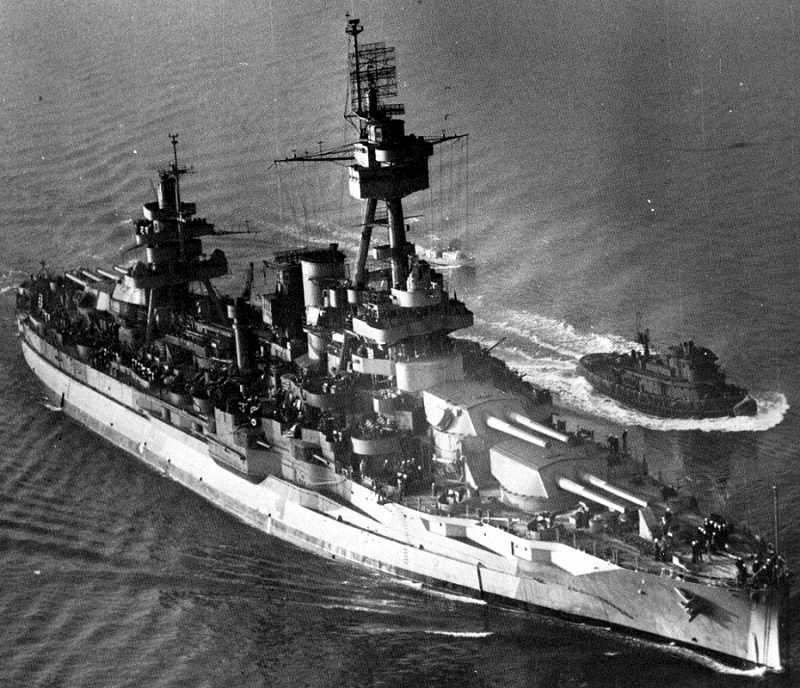
New Mexico BB-40 in 1930 before moderization

The Battleships of the Nevada and Pennsylvania classes had established American ship design as second to none in 1916.  At the same time the US Navy was planning advances in engineering systems that would change naval engineering forever.

Idaho  BB-42 in 1931 after modernization

The ships of the New Mexico class were improvements on the preceding Nevada and Pennsylvania class half sisters.  Their hull was lengthened and beam increased. Additionally the new class was given a clipper bow to improve sea keeping capabilities.  While they maintained the same main battery layout of four turrets mounting three 14” guns each, however the guns were a higher caliber 14”/50 models that would also be mounted on the California class.  The New Mexico was also the test bed for a new power plant which featured General Electric geared turbines with electric drive which would be standard on succeeding classes of battleships as well as carriers, cruisers and destroyers.  The Mississippi and Idaho retained the older geared turbine design. The practical effect was that the New Mexico required less horsepower to attain the same speeds as the earlier design turbines.

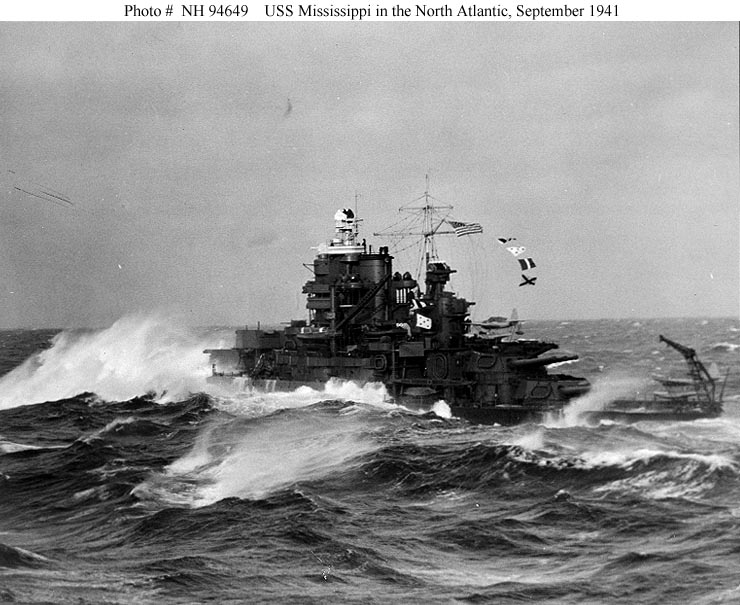
USS Mississippi BB-41 in the North Atlantic September 1941

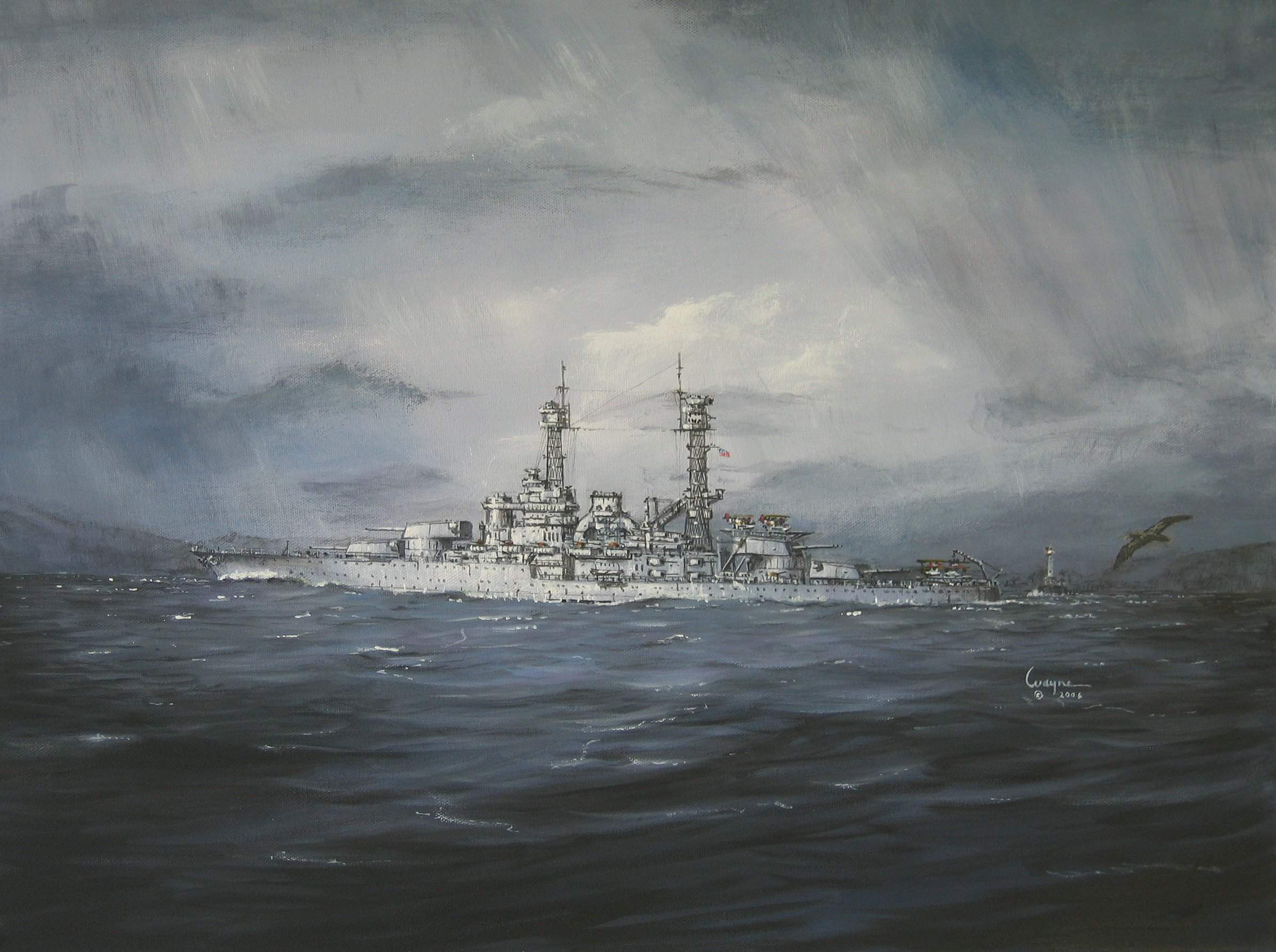
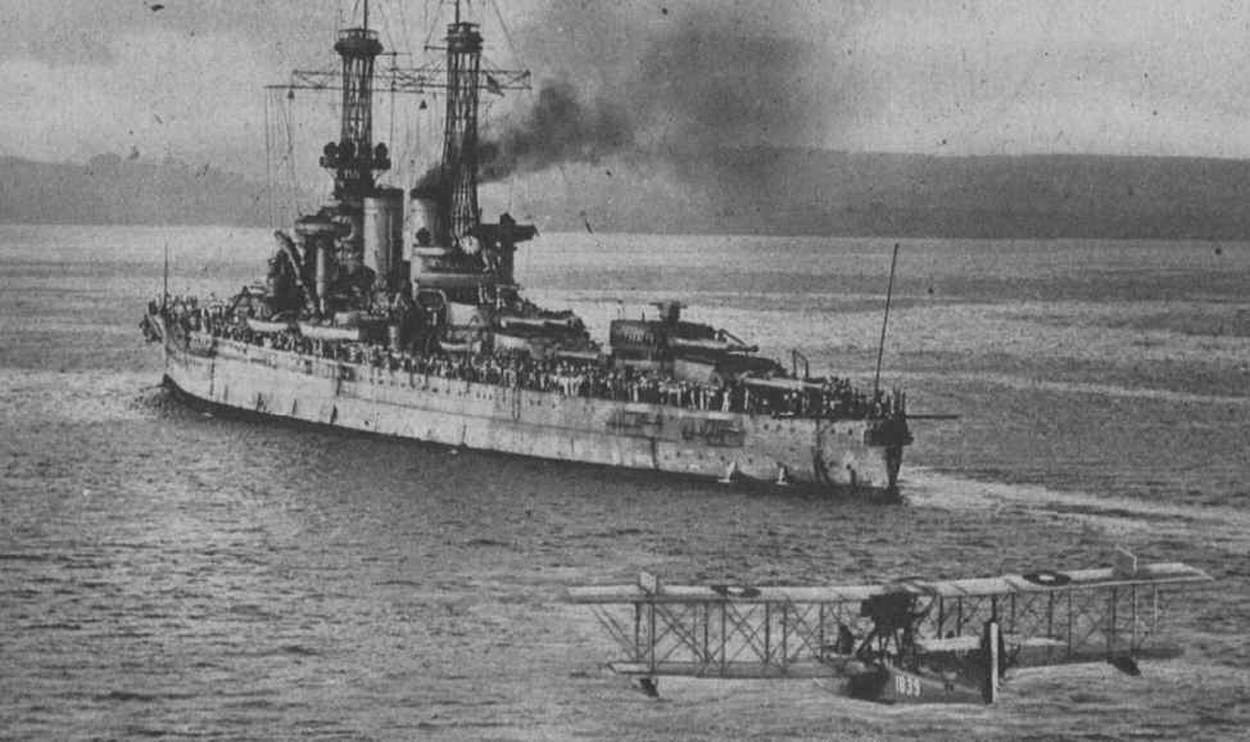
Displacing 32,000 tons the ships were slightly larger than their predecessors.  New Mexico was launched on 23 April 1917 and commissioned on May 18th 1918.  Her sisters Mississippi and Idaho were actually launched and commissioned sooner being launched on January 25th 1917 and commissioned on December 18th 1917.  None of the ships saw action in the First World War and in 1919 the three would become the nucleus of the newly formed Pacific Fleet. They would serve in the Pacific but conduct exercises with the Atlantic Fleet in the Pacific as well as the Atlantic and Caribbean.  All three were modernized in the early 1930s receiving improvements in armor protection, anti-torpedo blisters, a modernized bridge structure to replace their cage masts, improvements to machinery and their secondary armament.

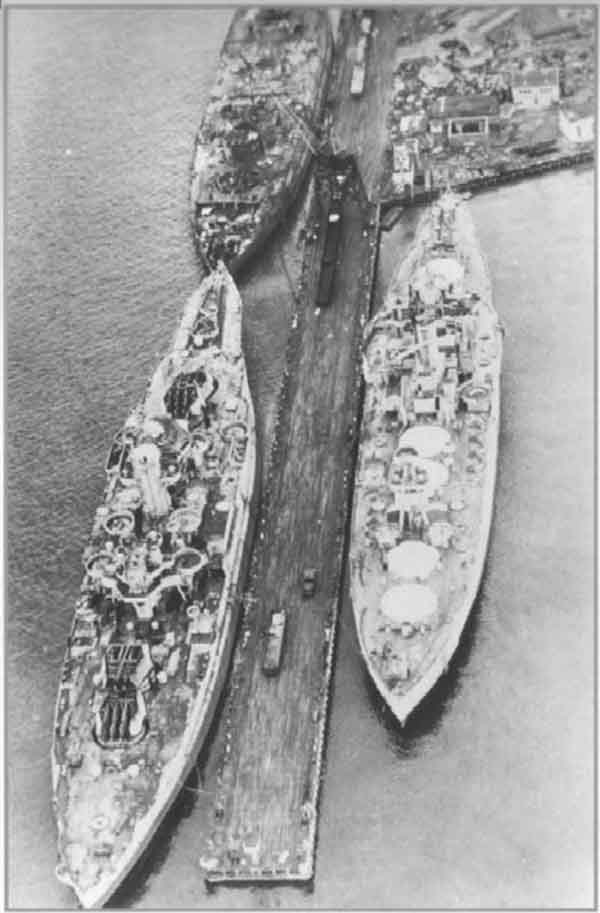
The Three Sister Moored Together, Late 1943

They would return to the Pacific but with the outbreak of war in Europe the three ships were transferred to the Atlantic Fleet where they took part in the Neutrality Patrol. When Pearl Harbor was attacked the three sisters went back to the Pacific where they spent much of 1942 escorting convoys and being prepared to repel any Japanese assault on the US Mainland.  In April 1943 they took part in the Aleutian campaign and the assaults on Attu and Kiska.  They would then sail to the Central Pacific where the provided support to the invasions of the Gilberts, Marshalls and Marianas islands by protecting the transports and providing naval gunfire support to Marines ashore.

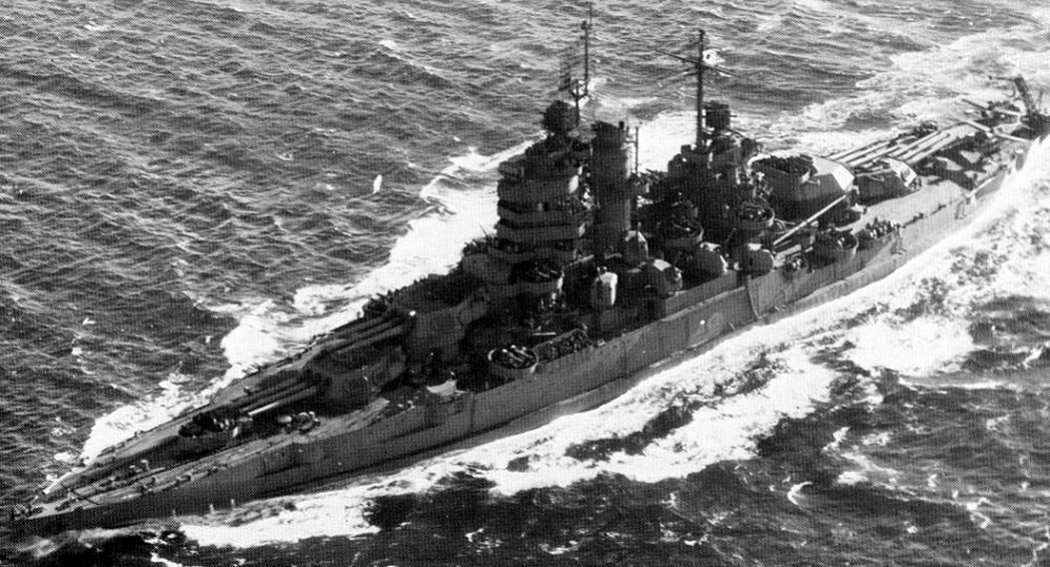
Idaho in her final 1945 configuration. Note the 5″/38 DP Guns in single enclosed mounts used by US Fletcher Class DDs. The Idaho was the only Battleship to have this type of 5″ mount

The three would again operate together during the invasion of the Philippines where the Mississippi served with other battleships of the 7th Fleet’s battle line under Rear Admiral Jesse Oldenforf at the Battle of Surigo Strait where they annihilated a Japanese force including the battleships Fuso and Yamisharo.   Both Mississippi and New Mexico were damaged by Kamikaze hits in Philippine waters, the New Mexico taking a hit on her bridge which killed her Captain and 27 crewmembers.  Both would require repairs and both would miss the invasion of Iwo Jima which Idaho took part in.  The three joined forces again at Okinawa where they provided fire support to Marines and Soldiers ashore.  They would serve until the end of the war in the Pacific and take part in Operation Magic Carpet to return military personnel from the Pacific to the United States.

Idaho at Okinawa

Following the war the New Mexico and Idaho were decommissioned and sold for scrap in 1948.  Mississippi however was converted into a gunnery training ship and reclassified as AG-128.

Idaho (lower left) New Mexico (top left) and Wyoming being scrapped at Newark NJ 1948

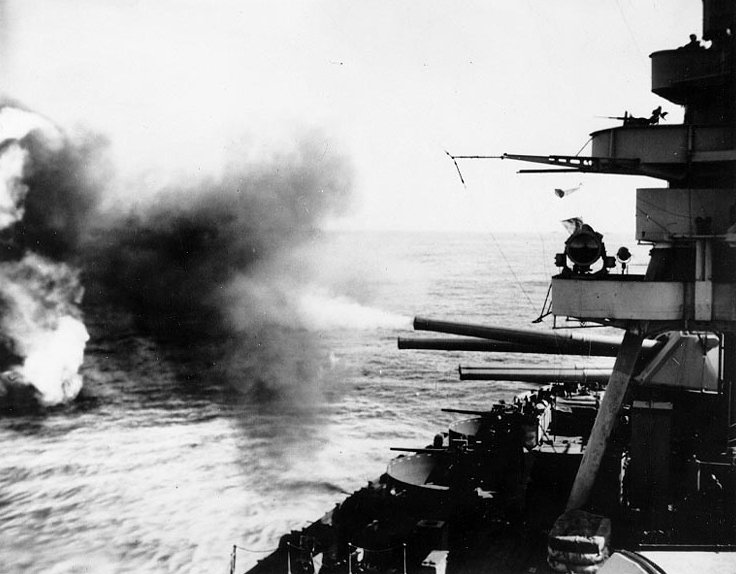
In this capacity she served as a test bed for new weapons including the Terrier guided missile systems which would be mounted on the first generation of US Navy Guided Missile Cruisers.   She was decommissioned in 1956 and sold for scrap after an abortive attempt by the state of Mississippi to acquire her as a memorial ship.

USS Mississippi AG-128 firing Terrier Missiles

The ships provided valuable service during the Second World War and the technical innovations in propulsion and protection would become standard in subsequent classes of US Navy battleships.  Additionally the post war service of the Mississippi helped propel the Navy into the missile era helping to build a foundation that is in evidence today in the Ticonderoga Class Guided Missile Cruisers and Arleigh Burke class Guided Missile Destroyers and their Aegis air defense and ballistic missile defense systems.  The ships of the New Mexico class and their stalwart crews should not be forgotten.

7 Comments

Filed under History, Military, Navy Ships, world war two in the pacific

The Battle Fleet that Never Was: The USS Washington, the South Dakota Class and the Lexington Class Battle Cruisers

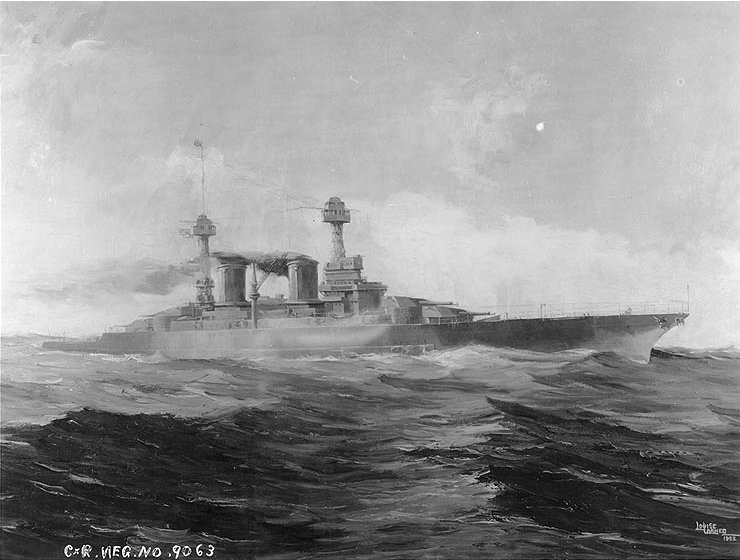
Artist depiction of the Lexington as Battle Cruiser

Note: This is the first of a series of articles on what might have happened if the Washington Naval Treaty had not been signed. This article is a look at the American fleet that never was, the following articles will be in the alternative history genre looking at a war breaking out in the Pacific in 1937.

Historians almost always muse on what might have been.  One of the most significant events of the years following the First World War was the Washington Naval Conference and Treaty. The treaty called by the President Harding and conducted under the auspices of the League of Nations was the first international disarmament conference and attended by none nations having interests in the Pacific. The major players in the conference from the naval power perspective were the British, Americans, Japanese, French and Italians.  Each nation had an agenda for the conference, for the United States it was to break the Anglo-Japanese naval accord and to limit the Japanese naval build up.  The British, exhausted and financially reeling from the effects of the First World War had a number of goals.  Though they had the largest navy and the most Dreadnaught type battleships and battle cruisers of any Navy many of its ships were obsolete or worn out from wartime service.  They had little capital to put into new ship construction, especially considering the vast resources of the United States which was already well into a vast naval buildup including ships that would be among the largest and most heavily armed in the world.  It was in the interest of Britain to limit the both the number, tonnage and armament of these ships.

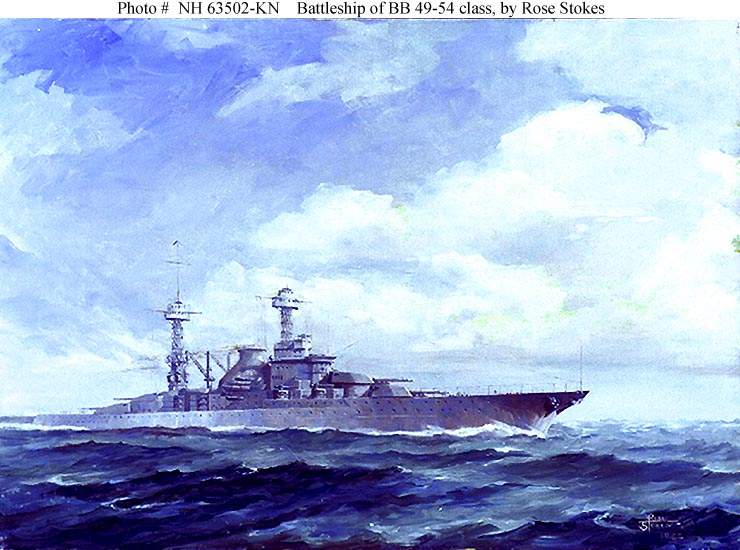
Artist impression of South Dakota Class

The treaty which was ratified in 1922 limited the United States and Great Britain to a maximum of 525,000 tons in their battle ship fleets and 125,000 tons in aircraft carriers.  The Japanese agreed to a limit of 315,000 tons and the French and Italians 175,000 tons each.  Tonnage for battleships was limited to a maximum of 35,000 tons with a limitation on guns size to 16 inches.  Since the bulk of the ships planned or being built by the US and Japan exceeded those limits they would be effected more than the British whose post war shipbuilding program had not begun in earnest. For the US this had a dramatic effect on its planned fleet, which if built would have become the dominant Navy of the 1920s and 1930s.  It is fascinating to think what might have happened if the treaty had not been signed and what the battle fleets of the various nations would have looked like in 1941 had war not come sooner.

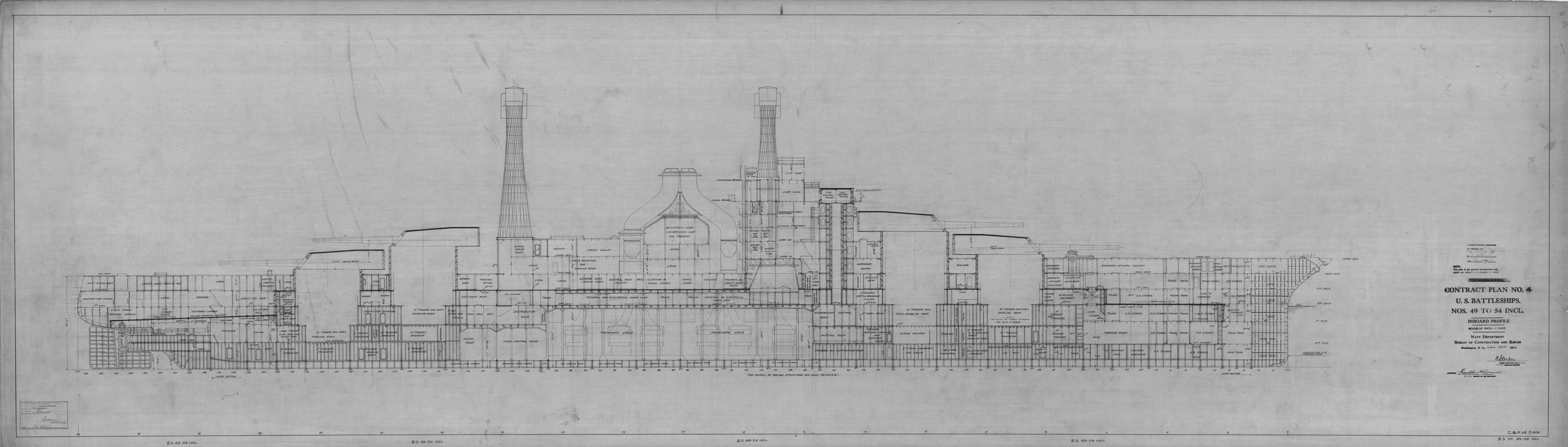
Plans for South Dakota Class

The American Navy went to war in 1941 with 18 battleships, the most modern of which were the new North Carolina and Washington and the rest averaging over 20 years old in 1941. The most modern of these ships were the Colorado class composed of the Colorado, Maryland and West Virginia each mounting eight 16”/50 guns.  The fourth ship of the class the Washington was sunk as a gunnery target when 75% complete under the terms of the Washington Naval Treaty.

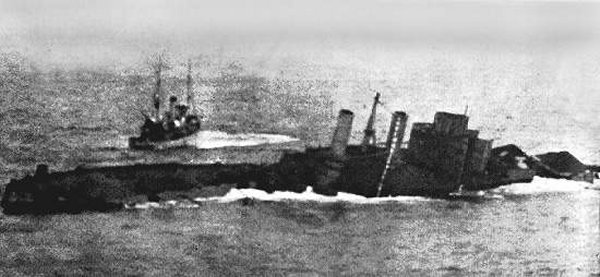
The incomplete USS Washington sinking

However it was a battle force that could have been much larger and far more capable, a force that may not been regulated to convoy escort duties and shore bombardment but instead may have taken on the Imperial Navy on the high seas in battleship combat not seen since Jutland.  Yet this was not to be, the great fleet of super-battleships was never built and only two hulls completed the Lexington and Saratoga which instead of being completed as battle cruisers were completed as aircraft carriers.

Artist impression of South Dakota Class

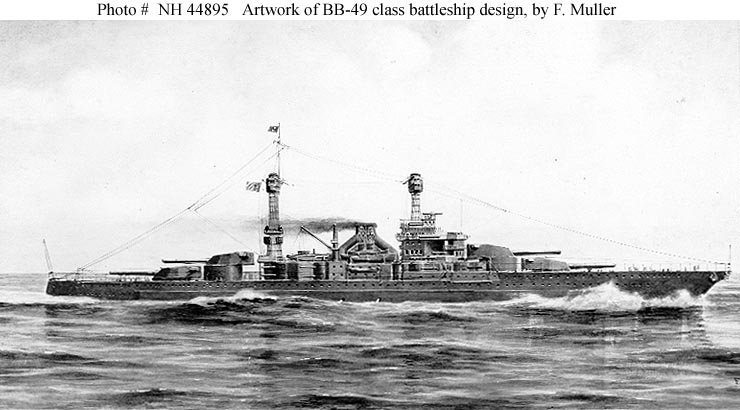
The Americans had set out to build the largest, most modern and powerful battleships and battle cruisers afloat.  The Navy had already produced the Colorado class super-dreadnaughts which were equal to or superior to any battleships of their era.  The Navy planned for a class of six battle cruisers which would be superior to any similar ship afloat, the Lexington class and a class of six battleships, the South Dakota class mounting twelve 16”/50 guns in triple turrets.

Artist impression of South Dakota Class as they might have appeared in 1938

The two classes were leviathans and to counter them the British made plans for a four ship 48,000 ton class of battleships, the N3 project mounting nine 18” guns and a class of battle cruisers mounting nine 16” guns.  The ships of both classes were designed with their main battery mounted forward in order to save weight on armor.  Both classes were canceled with the signing of the treaty and none were laid down.  It is suggested by some that the G3 battle cruiser design was a ploy to get the United States to agree to the cancellation of its capital ship projects. The guns planned for the G3 class were mounted on the Nelson class battleships which complied with treaty limits.  Although powerful ships they suffered from engineering problems which often reduced their speed from what was designed.  Along with the HMS Hood, the sole ship completed of the four ship Admiral class the Nelson and Rodney were the most modern battleships in the Royal Navy until the King George V class entered service in 1941.  The Japanese planned for eight battleships and eight battle cruisers centered on the two existing Nagato class battleships and 4 Kongo class battle cruisers to be joined by the two ship 40,000 ton Tosa class battleships, the Tosa and the Kaga, of which Kaga was completed as an aircraft carrier. They were to be joined by the 4 improved Tosa class or Kii class fast battleships of 42,000 which were ordered but never laid down.  These were to be joined by the four ship Amagi class battle cruiser class.  Amagi was destroyed during the Tokyo earthquake of 1922 and scrapped and Akagi completed as an aircraft carrier.  All of the planned Japanese ships were to mount ten 16” guns in five twin turrets.

Lexington Class final design drawing

The American ships were to be powerful and based on main battery, protection and speed they would have acquitted themselves well had they been built.  The Japanese ships would have had a speed advantage over the South Dakota’s but this would have been offset by the gun power and protection of the latter.  The American Lexington class would have been faster than any of their competitors.

South Dakota Class Design Specifications
Displacement: 43,200 tons normal
Dimensions: 684 x 106 x 33 feet/208.5 x 32.3 x 10.1 meters
Propulsion: Turbo-electric, 12 285 boilers, 4 shafts, 50,000 shp, 23 knots
Crew: 1191
Armor: 8-13.5 inch belt, 3.5 inch deck, 4.5-13.5 inch barbettes, 5-18 inch turrets, 8-16 inch CT
Aviation: none
Armament: 4 triple 16″/50cal, 16 6″/53cal, 8 3″/50cal AA, 2 21 inch torpedo tubes (submerged)

The six ships in the Class, South Dakota, Indiana, Montana, North Carolina, Iowa and Massachusetts were all scrapped in accordance with the treaty when partially complete, the North Carolina being in the most advanced stage of construction, 37.8% when construction was halted.

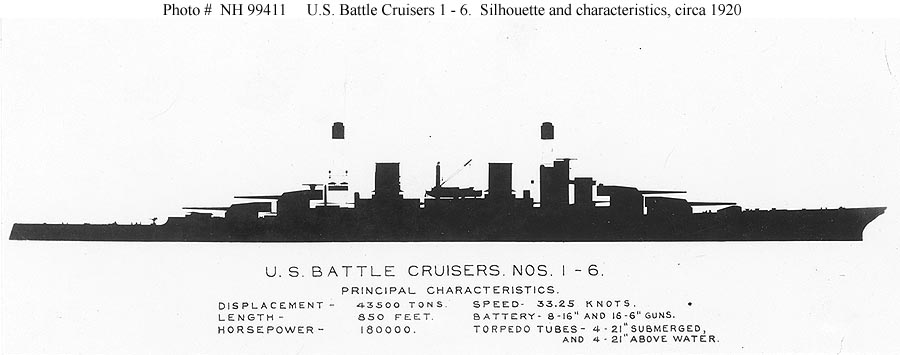
Lexington class Battle Cruiser Design Specifications

Displacement 43,500 Tons, Dimensions, 874′ (oa) x 105′ 5″ x 31′ (max).
Armament 8 x 16″/50 16 x 6″/53 4 x 3″8 x 21″ torpedo tubes
Machinery, 180,000 SHP; G.E. Geared Turbines with Electric Drive, 4 screws
Speed, 35 Knots, Crew 1500

The ships with the exception of the Lexington and Saratoga were scrapped incomplete.  All were to be named after famous warships or battles, and the Constellation, Constitution, Ranger and the United States were to be named after some of the most illustrious ships ever to serve in the US Navy.

If all of the ships, including the Washington of the Colorado class been completed the US Navy would have had eight battleships and six battle cruisers mounting 16 inch guns to compliment the nine battleships of the Nevada, Pennsylvania, New Mexico and California classes which all mounted 14 inch batteries.  The fleet would have been superior to either the Royal Navy or the Imperial Japanese Navy even with the ships planned by those navies.  Economically the United States was the only nation in the world capable of sustaining a naval arms race of this magnitude, the British economy and political will would have been unable to sustain it and the limited industrial capacity and dependence on the United States for raw materials and machine tools needed to construct their ships would have limited their ability to produce such a fleet. Without the conversion of the Lexington, Saratoga and their Japanese counterparts the Akagi and Kaga into aircraft carriers the development of the carrier would likely have gone slower and that type of ship may not have risen to the prominence that they gained during the Second World War.

8 Comments

Filed under History, Military, Navy Ships

The Oldest Ladies…Battleships USS Arkansas, New York and Texas

USS Arkansas 1919

Note: This is the second of my series on US Battleships of World War Two. The First was the essay The Battleships of Pearl Harbor and I will follow this with essays on the New Mexico class, the North Carolina class, the South Dakota class and the Iowa Class. I have published other series on US Aircraft Carriers, the Treaty Cruisers, the Alaska Class Battle Cruisers and the German Battle Bruisers Scharnhorst and Gneisenau.

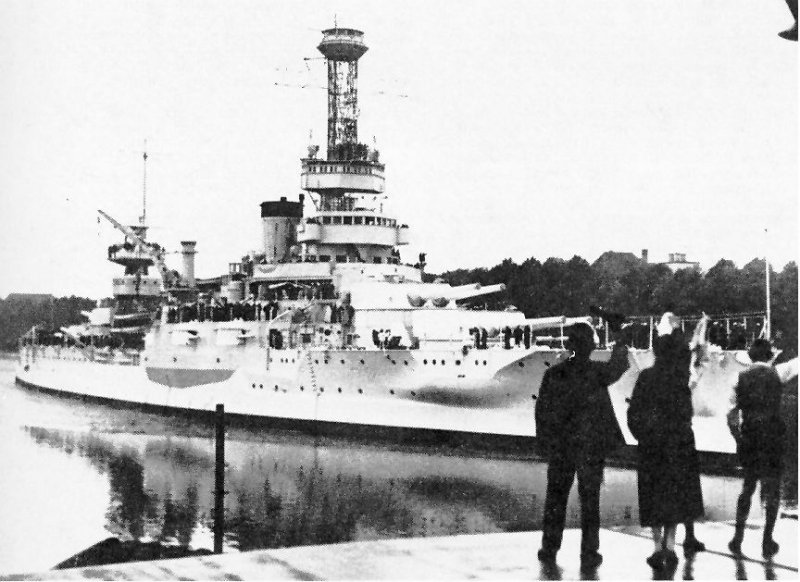
Arkansas Passing through the Kiel Canal on Midshipman Training Cruise June 6th 1937

When the United States entered the Second World War the average age of its battleship fleet was over years, an age that if the new North Carolina and Washington were omitted would have been well over 23 years old.  Two former battleships, the Utah and Wyoming had been demilitarized and were serving as gunnery training ships. The oldest of these ships, the Arkansas, the second ship of the Wyoming class was commissioned well before the First World War and was typical of ships built in that era comparable to the Italian battleships Conti de Cavour, Giulio Caesar.  The Two ships of the New York Class were improved Wyoming’s with a heavier main battery and better protection and were comparable to the Japanese Fuso class and British Royal Sovereign class ships.

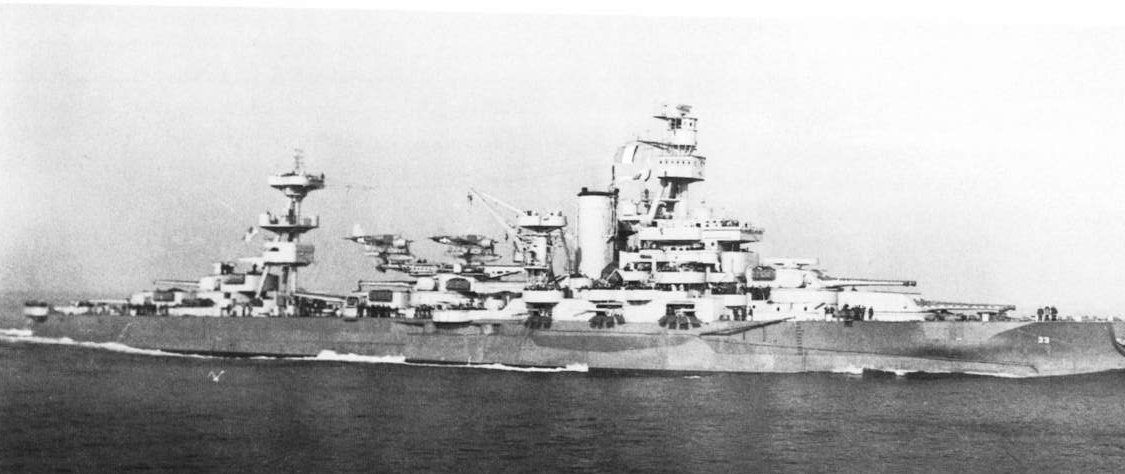
Arkansas 1944

The oldest and also the smallest battleship in service in 1941 was the USS Arkansas. Displacing 26,000 tons and sporting a main battery of twelve 12”/50 guns in twin turrets she was launched on 14 January 1911 and commissioned on 17 September 1912 she first saw service in the Mexican crisis of 1914 and served with the British Home Fleet following the entry of the United States into the war. Between the wars Arkansas severed in both the Atlantic and Pacific and was modernized in 1925 receiving oil fired boilers to replace her coal fired plant. During the inter-war years she was engaged as were most battleships of the era in training exercises, midshipman and Naval Reserve cruises, goodwill visits and in the case of Arkansas work with the Fleet Marine force as it began to develop its amphibious doctrine.

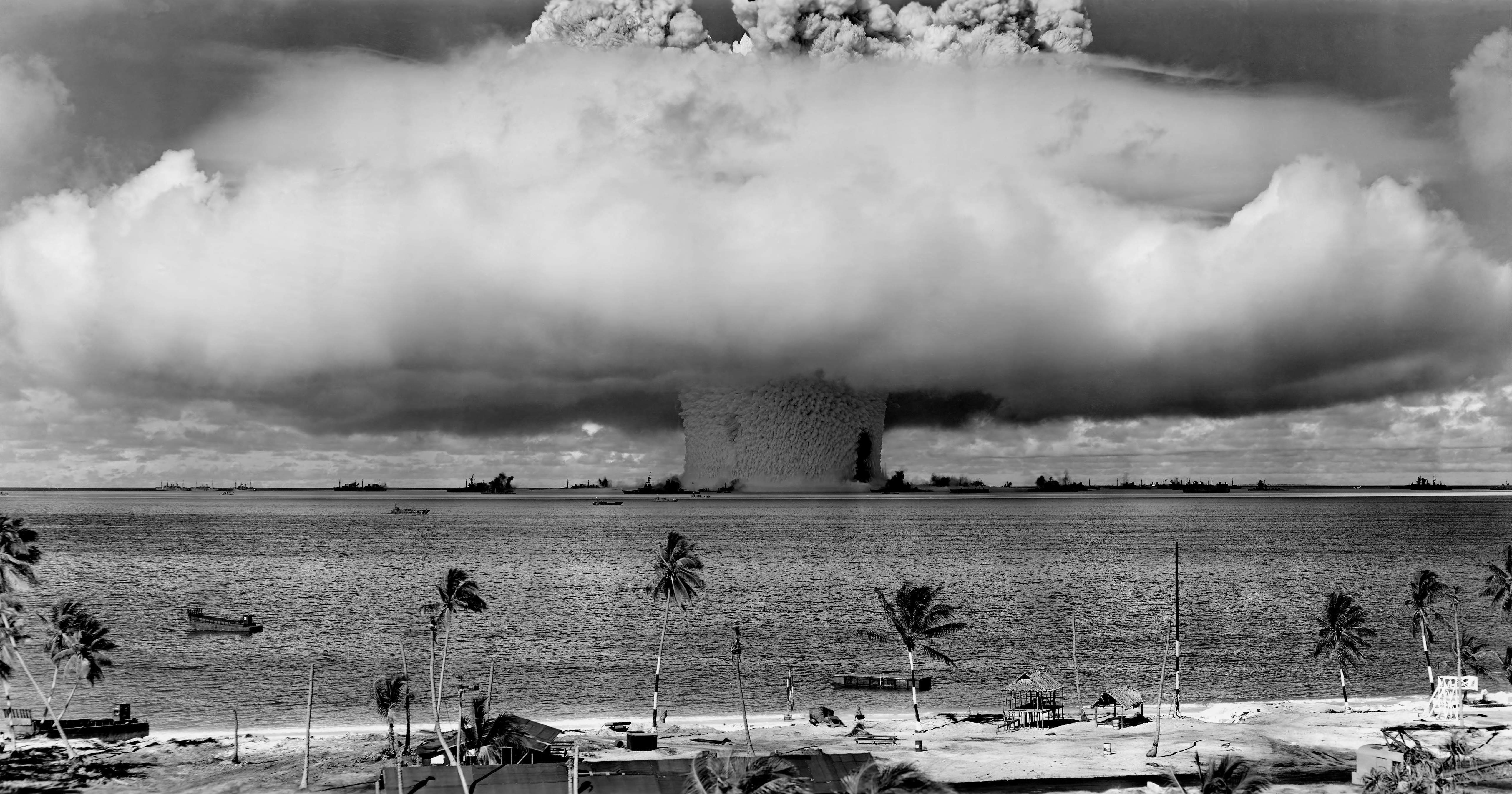
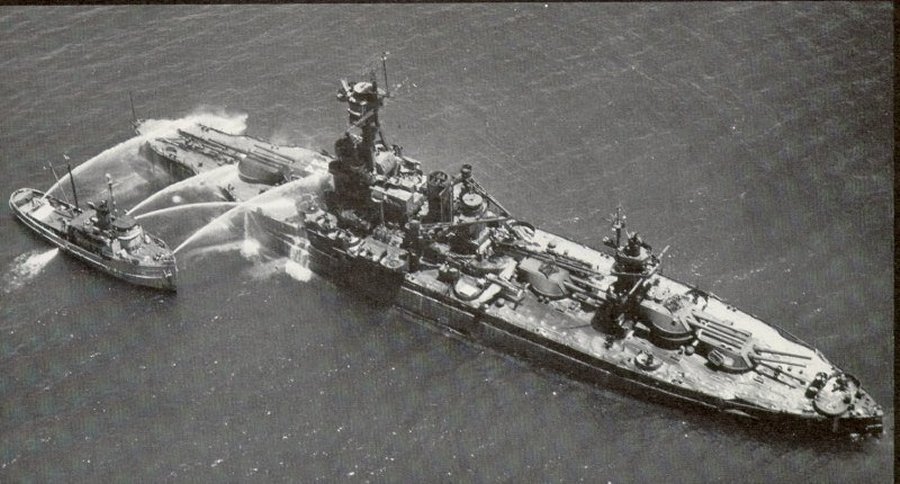
Operation Crossroad, Baker Test note Arkansas standing on end on right side of blast

When war came to Europe in 1939 Arkansas was serving with the Atlantic Fleet and conducted training operations and neutrality patrols.  In April 1941 she escorted the first convoy of Marines to Iceland and following that sailed to Argentia Newfoundland where President Franklin D. Roosevelt was meeting with British Prime Minister Winston Churchill concluding the Atlantic Charter.  Following Pearl Harbor she would primarily serve as a convoy escort and midshipman training vessel until June 6th 1944 where she provided naval gunfire support at Omaha Beach and subsequent support to land operations in Normandy. In August she took part in the invasion of southern France, Operation Anvil before returning the US for repairs and modifications before sailing to the Pacific.  The elderly ship then took part in the battles for Iwo Jima and Okinawa again providing naval gunfire support to Marines and soldiers ashore. She also was introduced to the Kamikaze at Okinawa.   When the war ended she carried returning troops home in “Operation Magic Carpet” and in 1946 she was earmarked for her last mission, Operation Crossroads, the first of the Bikini atomic bomb tests where she was sunk during test Baker on July 25th 1946.   She was anchored very close to the underwater blast and was violently sucked up into the blast where she can be seen standing on end it the picture below.

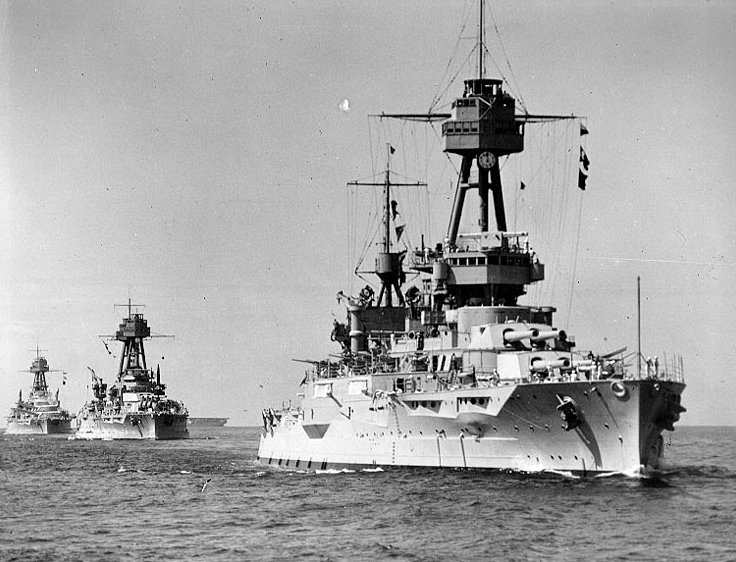
New York 1932 leading the Battle Line

The New York and her sister Texas were the first US Navy battleships armed with 14” guns.  The ships displaced 27,000 tons and mounted ten 14”/45 guns in twin turrets. Launched 30 October 1912 and commissioned April 15th 1914 the New York deployed with the Atlantic battle ship squadrons to Mexico during the crisis at Vera Cruz.  Like Arkansas she joined the American battleship squadron serving with the British Home Fleet in 1917 and served in convoy escort and deterrence missions until the end of the war.  Between the wars New York undertook various training missions and modernizations and was the sole US ship at the 1937 Grand Naval Review for the coronation of King George VI of England.

New York in 1944 departing for the Pacific

As war drew near New York remained engaged in training missions and took part in neutrality patrols and convoy escort missions in the Atlantic.  Following the outbreak of hostilities she would continue these missions and take part in Operation Torch, the invasion of North Africa in November 1942. She continued the vital convoy escort mission until she was withdrawn for service as a gunnery training ship for sailors being assigned to battleships and destroyer escorts.  In November 1944 she was sent to the Pacific where in February 1945 she provided naval gunfire support to the Marines at Iwo Jima. During pre-invasion bombardment she fired more rounds that any of the ships present.

New York at Iwo Jima

Her next action came at Okinawa where she provided 76 straight days of support to Marines and soldiers ashore while fending off kamikaze attacks and taking one minor hit.  She had her guns replaced at Pearl Harbor in preparation for the planned invasion of Japan.  After the cessation of hostilities New York took part in Operation Magic Carpet and took part in Fleet Week in New York.

New York receiving anti-radiation wash down after Baker. She has survived the blast in good condition

New York was then assigned to be a target ship in Operation Crossroads where she survived both Test Able and Test Baker.  Towed back to Pearl Harbor for extensive study she was finally expended as a target on July 8th 1948 by the Navy 40 miles off Oahu taking the punishment of a number of ships before sinking after 8 hours under fire.

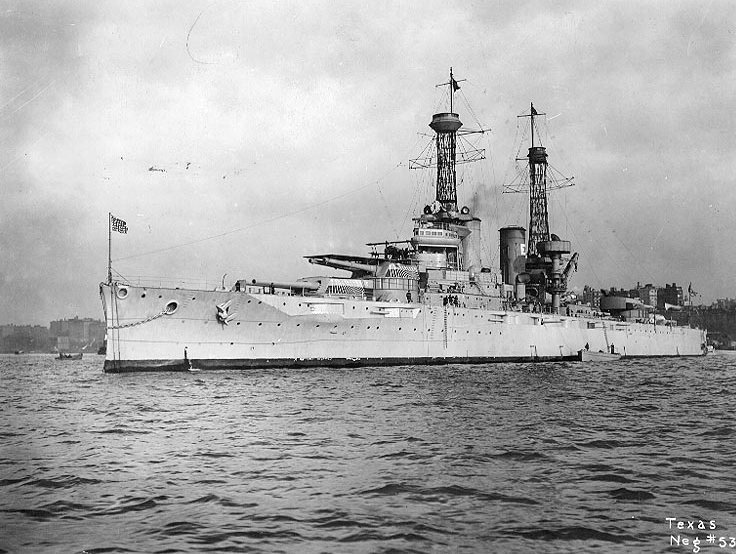
Texas in 1919 note the Battle “E” on her funnel

The Texas was launched on May 18th 1912 and commissioned on March 12th 1914 and within two months was in action with the Atlantic Fleet off Mexico without the benefit of the normal shakedown cruise.

During World War One Texas joined Battleship Division 9 serving alongside the British Home Fleet at Scapa Flow.  In this capacity she took part in convoy escort missions and operations in the North Sea including one where the Home Fleet nearly met the German High Seas Fleet in action.

Texas firing her main battery 1927 after her modernization

Between the wars Texas served on both the Atlantic and Pacific Fleets and received a major overhaul in 1925.  Like other ships she engaged in training exercises, midshipman and Naval Reserve training cruises and operations with the Fleet Marine Force.  With the outbreak of hostilities in Europe Texas joined the neutrality patrol.  When the US entered the war Texas served as a convoy escort and participated in Operation Torch.  Her convoy escort duties remained unchanged until she took part in Operation Overlord, the invasion of France and provided gunfire support to Rangers at Point du Hoc and soldiers on Omaha Beach. Closing to within 3000 yards of the beach Texas guns provided direct support to troops on the beach and interdiction fire on German troop concentrations further inland. She continued this following D-Day and while engaged in a duel with heavy German guns near Cherbourg was struck by two 280mm (11.2 inch) shells, one of which struck her on the navigation bridge killing the helmsman and wounding nearly everyone else.   She then sailed into the Mediterranean where she again supported troops ashore lending her weight to the invasion of south France. With that mission completed Texas returned to New York for repairs and to have her main battery guns replaced.

Texas under German Fire off Cherbourg

Reassigned to the Pacific Texas would support the invasion of Iwo Jima and Okinawa where she would remain in action for almost two months.  She finished the war in the Philippines and like so many other ships took part in Operation Magic Carpet. She arrived at Norfolk on February 13th 1946 to prepare for inactivation, but unlike so many other ships was spared the ignominious fate of the scrap yard or that of the New York and Arkansas. She was towed to Texas to serve as a permanent memorial at the San Jacinto battlefield and decommissioned there on April 21st 1948.  She was dry-docked and received a major overhaul in from 1988-90 which restored her to her 1945 appearance and in which major structural repairs were made. Continual restoration is conducted on the ship and there are plans for another major overhaul.  She is the last surviving “Dreadnaught” battleship in the world, a singular example of the great ships that once dominated the seas.

Texas at San Jacinto, the last of the Dreadnaughts

Though obsolete the Arkansas, New York and Texas rendered commendable service throughout the war and took part in some of the key invasions of the war. Their guns inflicted considerable damage on Vichy French, German and Japanese forces in Europe, North Africa and the Pacific.  New York and Arkansas trained thousands of sailors for service aboard other ships.  They performed admirably and their availability to do the less glamorous missions of naval gunfire support, convoy escort and training sailors for the fleet enabled other ships to be available for other missions.  They and the proud Sailors and Marines who served aboard them should never be forgotten.

19 Comments

Filed under History, Military, Navy Ships, US Navy, world war two in europe, world war two in the pacific

Thoughts on Ending Don’t Ask Don’t Tell…a Moderate View

No, we’re not homosexual, but we are willing to learn…Yeah, would they send us someplace special?

Note:  I’m not feeling well tonight with my Kidney stone keeping up a steady mid grade pain in my Kidney.  Thus I am modifying something that I wrote nearly a year ago concerning the subject of gays serving in the military. This is not a political or social screed, I have tried to remain dispassionate in this essay realizing that people of goodwill but with differing moral, ethical or religious values can have differing opinions.  Since ultimately the decision to repeal “Don’t Ask Don’t “ will be recommended by the military and will have to be passed into law by Congress. As an officer it will be my duty whatever decision is reached to support that decision.

I have written an essay agreeing with Admiral Mullen and Secretary Gates when they announced the decision to begin the process of repealing the Don’t Ask Don’t Tell law on homosexuals serving in the military. I followed that with piece which attacked the lies and distortions being marketed by former Chaplain, defrocked priest and convicted criminal Gordon “Chaps” Klingenschmitt in an unsolicited bulk e-mail sent through the Washington Times Media Group. In neither article did I advocate an immediate change in the law and stated that I believed that the Military should make the recommendations on how the change should be made, and not politicians or special interest groups of any variety.

This post is simply how I have seen military culture evolving over the 27 plus years of my career. These patently are simply my observations and have both a bit of seriousness as well as humor.  I am most definitely a dyed in the wool heterosexual, not that there’s anything wrong with that, but I think that someone without a political axe to grind on either the gay rights or anti-gay rights movement who is in the military have to have a say.  I know that I could be wading into Vietnam here but here I go….

When I enlisted in August of 1981, gays were not allowed to serve in the military.  It was even on the recruiting form. Applicants were asked under the penalty of making a false official statement “Are you a homosexual?”  Who can forget the scene in Stripes where Bill Murray and Harold Ramis are asked by the Army recruiter “Are either of you homosexual?” Their reply was a hoot.  They looked at each other and Bill Murray replied “you mean like flaming or…” The recruiter then said “It’s a standard question we have to ask.” Harold Ramis then quipped “We’re not homosexual, but we’re willing to learn” and Bill Murray adding “Would they send us to someplace special?”  The recruiter then ends the exchange “I guess that’s a no on both.”  It was a hilarious scene as we all had to answer the question back in those days.

Plain and simple if a person lied about being homosexual and was later discovered he was in deep dung, even an accusation of being gay could result in being charged under the UCMJ or at the very least investigated.  Soldiers could be taken to Article 15 proceedings (Captain’s Mast in the Navy, Office Hours in the Marines) or possibly even a court-martial. Depending on the charges one could receive a punitive discharge, such a Bad Conduct Discharge, or administrative discharge under a General, General under Other than Honorable, or Other than Honorable conditions.

Back in my days as a company XO and company commander in the 1980s I had a number of soldiers; male and female who I knew that were gay.  I had grown up in California, had gay friends and even when someone was hiding it I pretty much knew.  If I was homophobic I could have made accusations, began investigations and made these soldiers lives hell.  At that point in time there were a good amount of people in the military who would have done just that.  These soldiers were exemplary in the way that they conducted themselves at work.  They were professional, knowledgeable and I never once had to take any of them to article 15 proceedings for any reason. They never refused missions, they were exceptionally responsible, and good leaders.  As far as their personal lives they were discreet. I am sure that if they stayed in the military that they probably maintained that balance.  I don’t know what happened to them later on, but they were great.   I took over company command as a very junior 1st Lieutenant. The unit had the highest drug abuse rate in Europe with more disciplinary problems than you could shake a stick at. I wasn’t about to go after soldiers who were not giving me problems, I had far more pressing matters on my plate.  I guess you could say that I was exercising the “Don’t ask, don’t tell” policy 7-8 years before it became policy.  My philosophy then as is is now, is that if someone is willing to serve honorably and endure the hardships and dangers of the lives of military professionals then they should be able to regardless of the way that they are wired.  My issue then and now applies to both homosexuals and heterosexuals who are predatory or push themselves sexually on other soldiers causing problems with good order and discipline and unit cohesion. I have to say had far more problems with my heterosexual soldiers in this regard than my homosexual soldiers. My homosexual soldiers were discreet in their personal lives and very professional, some of my heterosexuals were neither discreet nor professional in thier sexual lives and relationships.

When I served as a personnel officer at the Academy of Health Sciences I became “CINC AIDS.”  I was the most junior of the Medical Personnel Officers, serving as the Training Brigade Adjutant.  It was at this time that we began having soldiers test positive for HIV and develop AIDS.  I worked with representatives of the Army Surgeon General’s Office to develop personnel procedures for HIV positive soldiers.  These policies gave them the opportunity to serve honorably and at the same time ensured that they did  not endanger others through their sexual conduct.  Since I was the junior guy I got to deal with all the cases of officers who had been diagnosed with HIV.  No one else wanted anything to do with them. While the world around me raged with apocalyptic screeds of those convinced that this was God’s judgment on homosexual; those who prophesied how this virus would become a pandemic infecting people willy-nilly through casual contact, I dealt with real people.  These officers wore the same uniform as me and had been pronounced with a death sentence.  Some I knew were gay, but some were straight.  When an officer came to my office that was not on our brigade staff and the door closed, there was a good chance that the visitor had just received the news that they had an infection that would cause a process that would kill them.  They had received a death sentence.  I was a Christian and knew that I was going to be going to seminary after this assignment.  I could not see how Jesus could reject these folks.  While assigned there we had the first trial of a soldier who was intentionally attempting to spread the HIV virus among his coworkers.  He was a heterosexual and was a sexual predator.  He was taken to courts-martial and convicted.  As he was now in the latter stages of the disease process and battling the opportunistic infections which actually kill you he was sentenced to 6 months in Leavenworth.  I doubt that he lived that long. The experience of dealing with these officers taught me the torment that many homosexuals go through.  Following my time in the Army while in seminary and after it I worked in a variety of social service organizations and hospitals and I knew worked alongside many gays without a problem.

When President Clinton enacted the “Don’t ask, don’t tell” policy I was in the Army National Guard.  When the policy was announced there was public outcry from Veteran’s organizations but even more so from conservative religious groups.  I had no problem with the policy as I think that everyone should be somewhat discreet in their sexual habits, especially in the military. Regardless of sexual orientation it is always important for military members to conduct themselves in professional manner, and not only in sexual matters.  It is always a matter of good order and discipline.   While the policy made no one happy, gay activists did not think it went far enough and anti-gay forces hated it, I think it was a wise policy.  The President may have erred in the way that he announced it, but I think it was still the right thing to do at the time.

Since then our society as a whole has changed in its view and treatment of homosexuals.  There is a lot more acceptance of them now and many more people are openly gay.  I think that those who hid that aspect of their lives in earlier times now feel safe enough to come out.  Yes there are those who vehemently oppose any form of equal treatment for homosexuals, but there is a lot more acceptance than in the past. Various polls show that a sizable majority of Americans support changing the policy while polls of military personnel have seen the opposition to ending the policy drop significantly since 2002 even though most of these polls indicate a fair amount of opposition to the policy but even those who oppose a change by and large have determined that they would make their peace with the decision. I believe that this is due to the change in societal views of homosexuals as well as the fact that military professionals, especially officers and career NCOs tend to tend to be more dispassionate and pragmatic than they are given credit.

There have been famous military leaders who were gay including Frederick the Great who was forced to marry but kind of liked other guys better.  Lord Kitchner and Sir Hector Archibald MacDonald, both distinguished officers were homosexual, MacDonald committed suicide when notified that he would be courts-martialed for his homosexuality.   There were constant rumors when I was in the Army about senior leaders who were suspected of being gay.   While a majority of military members polled opposed the Clinton administration change of policy, it seems to have worked.  There still are objections by gay rights activists that the policy is too restrictive and opponents who desire for it to be repealed, but in large part there is no problem.  Other countries the British, Canadians and Israelis and a number of other European nations all allow homosexuals to serve in the military. Contrary to claims that the policy would destroy the military there is nothing to support that.  In fact the US Military has been more heavily engaged on multiple fronts since the policy went into place and done well despite being undermanned and often over-committed.

The Rand Corporation had a study of how allowing gays to serve would impact the military suggested the following was of ensuring that such a change would not endanger good order and discipline or unit cohesion, the two most critical aspects of any change.  They suggested:

  • A requirement that all members of the military services conduct themselves in ways that enhance good order and discipline. Such conduct includes showing respect and tolerance for others. While heterosexuals would be asked to tolerate the presence of known homosexuals, all personnel, including acknowledged homosexuals, must understand that the military environment is no place to advertise one’s sexual orientation.
  • A clear statement that inappropriate conduct could destroy order and discipline, and that individuals should not engage in such conduct.
  • A list of categories of inappropriate conduct, including personal harassment (physical or verbal conduct toward others, based on race, gender, sexual orientation, or physical features), abuse of authority, displays of affection, and explicit discussions of sexual practices, experience, or desires.
  • Application of these standards by leaders at every level of the chain of command, in a way that ensures that unit performance is maintained.

It has been over 15 years since the “don’t ask, don’t tell” policy went into effect.  I have noted that while some military members still vehemently oppose gays serving in the military, that quite a few, officer and enlisted, especially those under the age of 30 are much more tolerant than were those of my era.  A while back I was talking with a couple of military doctors and a hospital corpsman, all of us committed heterosexuals, not that there’s anything wrong with that the other day and the subject came up in a humorous way when discussing ways to get out of the military.  The corpsman noted that saying you were gay was one way, and I said, at least for now it was.

As we talked we all agreed that anyone willing to serve in the military at this point of time should be able to so long as they meet the professional standards of the services.  This is no gravy train.  Soldiers, Sailors, Marines and Airmen are constantly deployed and putting themselves in harm’s way.  If a gay wants to commit his or her life to the service of this country, who am I to object?

From a practical and somewhat humorous standpoint we have to acknowledge a number of things about gays, especially gay men.  Many are very well educated successful professionals.  Most seem to have a far better sense of taste and style than most of us on the heterosexual team and quite a few are very physically fit and health conscious. Anyone who has ever served in the military knows that we are not known for the greatest living conditions, food or ascetics.  Military housing, both barracks and family quarters tend to be rather boring, and often substandard.  There is not a lot of imagination in most military dining facilities and the ascetics and design of many of our buildings and bases leaves a lot to be desired. Can you imagine if we let these guys serve?  Our bases would probably look a lot better and well kept.  Our living quarters would be nicer and more ascetically pleasing. The food would definitely go up in quality and we would get some highly qualified folks in the service, especially in some of the more scientific and medical specialties.  As a married heterosexual and “a uniter not a divider” I see all of this as a win-win situation.  Who could be against that? I would have loved to drive onto bases where buildings and landscaping were done well, where you didn’t feel like you were driving onto a prison.  I’d love to work in buildings where there was some sense of style and artistry, where when you walked in you didn’t think you had walked onto the set of a WWII movie.  I would love a nice selection of food that was both healthy and tasty.

Will this happen anytime soon? I don’t know.  At the present time DOD is studying how the change might be implemented including the possible ramifications of the decision on the force.  That study will take time and I suspect that at some point the President and Congress will address the issue and if it is changed I expect little practical change in the military.  We will keep deploying and doing our job, some people will be upset and some won’t, but I think there has been enough societal change over the last 27 years to allow this to happen relatively smoothly.  Will some people be unhappy? Most certainly. Will crusades be mounted against it by some?  Most definitely and one is already being waged by Gordon Klingenschmitt who went on record calling Admiral Mullen a liar and others will also oppose any change.  However I think that this opposition will come more from the outside and less so from the military which is busy fighting wars and protecting the country.  If “Don’t Ask, Don’t Tell” is repealed I expect that the military will survive and continue to do well.  I think that most will make their peace with any change and those who desire to serve their country, even those who oppose repealing the law will still elect to serve I the military.

Those are my thoughts and as I said at the beginning I remained as dispassionate as I can while still stating what I believe. After all, in the end this is all well above my pay grade.

Peace,

Padre Steve+

Leave a comment

Filed under History, laws and legislation, Military, philosophy

Do you believe in Miracles? Padre Steve Remembers the “Miracle on Ice”

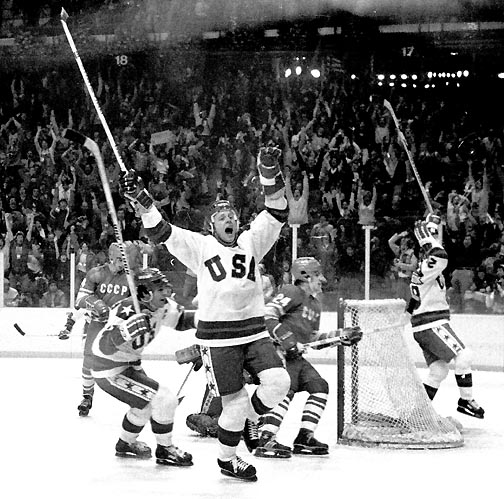
We all remember where we were when tragedy happened.  No one can forget where they were when John or Bobby Kennedy or the Reverend Martin Luther King Junior was assassinated. Likewise few can forget where they were when the Space Shuttle Challenger blew up or the events of September 11th 2001.  However, in spite of the fact that good news is not always as memorable as tragedy there was a sentinel event by a group of unknown US college hockey players that if you were around back then you have likely never forgotten and probably remember exactly where you were and what you were doing when it took place.  Of course I am speaking about the victory of the US hockey team, Team USA over the Soviet team at the 1980 Winter Games in Lake Placid New York.

http://www.youtube.com/watch?v=CGACsSW4Iqw&feature=related (Al Michaels Call)

http://www.youtube.com/watch?v=fztlLwgSFCg (highlights and live call)

Thirty years ago today I was a college sophomore in California.  I had grown up with hockey, when we were stationed in Oak Harbor Washington as a child from 1965 through the end of 1969 I grew up with the weekly broadcast of “Hockey Night in Canada” on the Canadian Broadcasting Network.  When we moved to Long Beach my dad would take my brother and me to see Los Angeles Kings games and then when we moved to Stockton to see the California Seals in Oakland.  While in Stockton I played in a youth hockey league for a couple of years playing defenseman, occasional right wing and for 4 games goalie when our goalkeeper was injured.   As a goalkeeper I went 2 for 2 in those four games and can tell you that there is almost nothing as frightening as having a 2 on 1 or one or two man breakaway coming at you full bore.  Goalies are a special breed and I don’t think that I would want that kind of pressure on me to make a living, combat and life and death is hard enough…I don’t need that.

So hockey to a lesser extent than baseball has been a part of my life for a very long time.  I remember watching my first Winter Olympics when I was in Stockton back in 1972.  Back then Team USA was nothing more than a bunch of American college kids playing teams of Warsaw pact professional all-stars from powerhouse teams such as the Soviet Red Army team.  The Soviets dominated the game in the since 1956 and with the exception of the US Gold Medal team of 1960 had won every Olympic gold and in 1980 were once again expected to win Olympic Gold.

Back in 1980 times were tough in the United States, double digit inflation 20% interest rates a gas crisis, recession, residual effects of the Vietnam War and the humiliation that the Iranians were inflicting on the United States on a daily basis following the seizure of the US Embassy in Tehran by “students” and the seemingly unending hostage crisis.  The Soviet invasion of Afghanistan was yet another thumb in the eye of the United States.  As the United States prepared to host the Winter Games at Lake Placid New York there was not much to cheer about.  The country was mired in political crisis as the sitting President Jimmy Carter was continually at odds with his own Democratic Party and to all appeared weak in dealing with the Soviets, their satellites or the Iranians.  When he made his “malaise” speech in July 1979 I was in the UK touring as a spotlight tech with a Christian singing group and the reaction by the Brits and other Europeans was ridicule of the President and pity for the United States.  The United States had hit bottom.

When it came to the hockey team no one expected much with the exception of head coach Herb Brooks.  Brooks and his collection of college players, a number of whom would later become stats in the NHL, began their time together inauspiciously conducting a 61 game exhibition tour against teams from around the world.  In the final game on February 9th 1980 the Americans faced the Soviets at Madison Square Garden and were handily beaten by a score of 10-3 by the Soviet team.  The Soviets on the other hand had enjoyed nothing but success against NHL teams with Soviet teams going 5-3-1 against their NHL counterparts.  The previous year a Soviet team had shut out an NHL All-Star team 6-0.

When the Olympic completion began the Soviets as was expected dominated their opponents in the preliminary round going 5-0 and outscoring their opponents 51-10.  The United States surprised everyone tying Sweden 2-2 with a last minute goal and then stunning a highly favored Czech team 7-3 before defeating Norway, Romania and West Germany to advance to the medal round.  Brooks practiced the team hard as they prepared for the Soviets who they were scheduled to meet in the opening round of the medal competition. A loss for the Americans would force them to play for Bronze and no one expected the Americans to defeat the Soviets. Yet when the day came the Lake Placid Field House was packed with 8500 fans decked out in Red White and Blue, American flags displayed everywhere and the crowd spontaneously singing “God Bless America.”  Unfortunately because the Soviets refused to allow a later start time the game was not televised live nor broadcast live on the radio in the States.

On February 22nd I had finished work making and rolling pizza dough at Shakey’s Pizza in Stockton, went home showered and then got in my car to head over to Judy’s house.  On my way over I was listening to the radio when ABC radio broke in to air final few seconds of the game live, as Al Michaels made the famous call “Eleven seconds, you’ve got ten seconds, the countdown going on right now! Morrow up to Silk. Five seconds left in the game. Do you believe in miracles? YES!” I could not believe it and was screaming in the car, as soon as I got to Judy’s I went in and told her and her parents When the game came on I watched it with undivided attention and to this day I cannot forget that night.  The Americans had beaten the vaunted Soviet team 4-3 and would go on to defeat Finland in the Gold medal game 4-2.  The next day they were guests at the White House and after that the team broke up.  13 players would go on to NHL careers, Brooks would lead the 2002 Team USA to a Silver in 2002 before being killed in a car crash in 2003.

The Soviet people and their news media were stunned by the loss and the fact that the Soviet Team won Silver by defeating Sweden 9-2 the team had lost its luster.  While it remained dominant until the break-up of the Soviet Union in 1990 it was the end of an era.  Today many Russian players star in the NHL and live in the United States even after their careers.

Thirty years later the triumph of Team USA against all odds on that night is remembered as an event nearly unequaled in sports history as well as contemporary American history.  That game actually marked a return of pride to the country after a decade of discontent, defeat and discouragement.  That team and its members did something that no one expected in defeating the Soviets and going on to win the Gold medal against the Finns.  No one could have expected the effect on the country either. It was a miracle, a miracle on ice.

I don’t know about you, but I still believe in miracles.

Peace,

Padre Steve+

1 Comment

Filed under History

God in the Empty Places…Padre Steve Remembers the Beginnings of Padre Steve’s World

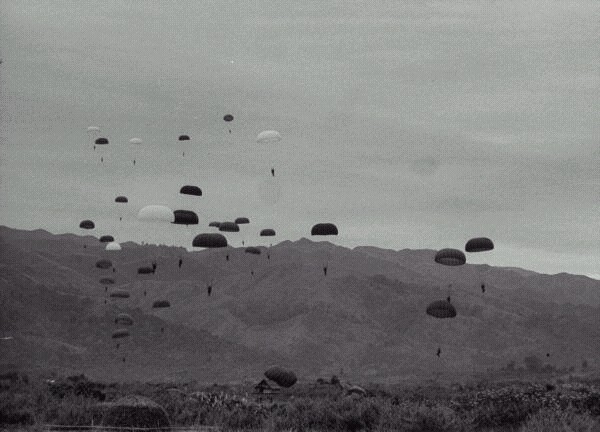
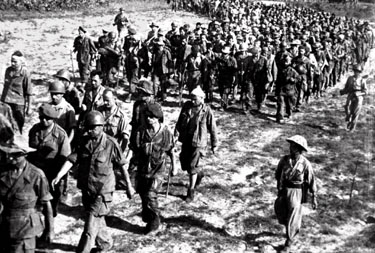
The 16th will be the first anniversary of Padre Steve’s World…Musings of a Passionate Moderate. When I began the site it was about a year after I returned from Iraq.  When I began the site I was running pretty ragged from my PTSD, the deteriorating condition of my father who has end-stage Alzheimer’s disease and from throwing myself so intensely into work in the ICU and PICU at the Medical Center that I was operating on fumes.  This is one of my earliest posts and reflects to a large degree where I was in my life at the time.  It is a reflection on life, ministry and military history and identity.  For me the return from Iraq and the continued wars that we are engaged in bring to mind the experience of the French military in Indo-China and Algeria and as I note here it is my view that the current generation of American Soldiers, Marines, Sailors and Airmen have more in common with the career soldiers of the Foreign Legion, Paratroops and Colonials (Marines) who served in Indo-China and Algeria than we do with the men and women of the “Greatest Generation.”  Unlike those veterans who by and large were draftees and were able to fight a conventional war against nation state actors which they vanquished, the current generation serves against shadowy forces in counterinsurgency campaigns in wars that show no sign of ending soon. I came back feeling isolated and alienated from people who had not served in Iraq, Afghanistan or our predecessors in Vietnam. This is my reflection on that at the beginning of this website a year ago I have added pictures as well as some video links about the Battle of Dien Bien Phu but have not altered the post.

Peace,

Padre Steve+

Foreign Legion Troops in Indochina

I have been doing a lot of reflecting on ministry and history over the past few months. While both have been part of my life for many years, they have taken on a new dimension after serving in Iraq. I can’t really explain it; I guess I am trying to integrate my theological and academic disciplines with my military, life and faith experience since my return.

The Chaplain ministry is unlike civilian ministry in many ways. As Chaplains we never lose the calling of being priests, and as priests in uniform, we are also professional officers and go where our nations send us to serve our Soldiers, Sailors, Marines and Airmen. There is always a tension, especially when the wars that we are sent to are unpopular at home and seem to drag on without the benefit of a nice clear victory such as VE or VJ Day in World War II or the homecoming after Desert Shield and Desert Storm.

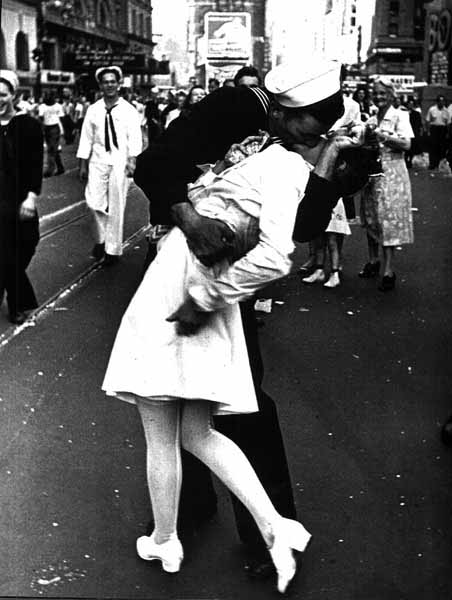
VJ Day…It will never happen again

It is my belief that when things go well and we have easy victories that it is easy for us to give the credit to the Lord and equally easy for others to give the credit to superior strategy, weaponry or tactics to the point of denying the possibility that God might have been involved. Such is the case in almost every war and Americans since World War Two have loved the technology of war seeing it as a way to easy and “bloodless” victory. In such an environment ministry can take on an almost “cheer-leading” dimension. It is hard to get around it, because it is a heady experience to be on a winning Army in a popular cause. The challenge here is to keep our ministry of reconciliation in focus, by caring for the least, the lost and the lonely, and in our case, to never forget the victims of war, especially the innocent among the vanquished, as well as our own wounded, killed and their families.

But there are other wars, many like the current conflict less popular and not easily finished. The task of chaplains in the current war, and similar wars fought by other nations is different. In these wars, sometimes called counter-insurgency operations, guerilla wars or peace keeping operations, there is no easily discernable victory. These types of wars can drag on and on, sometimes with no end in sight. Since they are fought by volunteers and professionals, much of the population acts as if there is no war since it does often not affect them, while others oppose the war.

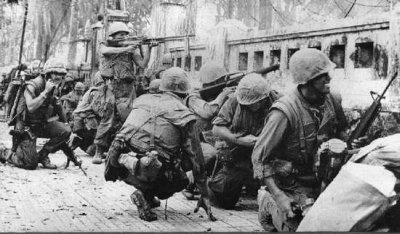
Marines at Hue City

Likewise, there are supporters of war who seem more interested in political points of victory for their particular political party than for the welfare of those that are sent to fight the wars. This has been the case in about every war fought by the US since World War II. It is not a new phenomenon. Only the cast members have changed.

Foreign Legion in Algeria, the ancestral home of the Legion

www.youtube.com/watch?v=8YSsetJU-tU&feature=related

This is not only the case with the United States. I think that we can find parallels in other military organizations. I think particularly of the French professional soldiers, the paratroops and Foreign Legion who bore the brunt of the fighting in Indo-China, placed in a difficult situation by their government and alienated from their own people. In particular I think of the Chaplains, all Catholic priests save one Protestant, at the Battle of Dien Bien Phu, the epic defeat of the French forces that sealed the end of their rule in Vietnam. The Chaplains there went in with the Legion and Paras. They endured all that their soldiers went through while ministering the Sacraments and helping to alleviate the suffering of the wounded and dying. Their service is mentioned in nearly every account of the battle. During the campaign which lasted 6 months from November 1953 to May 1954 these men observed most of the major feasts from Advent through the first few weeks of Easter with their soldiers in what one author called “Hell in a Very Small Place.”

www.youtube.com/watch?v=th7tImvzutc

Another author describes Easter 1954: “In all Christendom, in Hanoi Cathedral as in the churches of Europe the first hallelujahs were being sung. At Dienbeinphu, where the men went to confession and communion in little groups, Chaplain Trinquant, who was celebrating Mass in a shelter near the hospital, uttered that cry of liturgical joy with a heart steeped in sadness; it was not victory that was approaching but death.” A battalion commander went to another priest and told him “we are heading toward disaster.” (The Battle of Dienbeinphu, Jules Roy, Carroll and Graf Publishers, New York, 1984 p.239)

Of course one can find examples in American military history such as Bataan, Corregidor, and certain battles of the Korean War to understand that our ministry can bear fruit even in tragic defeat. At Khe Sahn in our Vietnam War we almost experienced a defeat on the order of Dien Bien Phu. It was the tenacity of the Marines and tremendous air-support that kept our forces from being overrun.

Terrorism and the Battle of Algiers

You probably wonder where I am going with this. I wonder a little bit too. But here is where I think I am going. It is the most difficult of times; especially when units we are with take casualties and our troops’ sacrifice is not fully appreciated by a nation absorbed with its own issues.

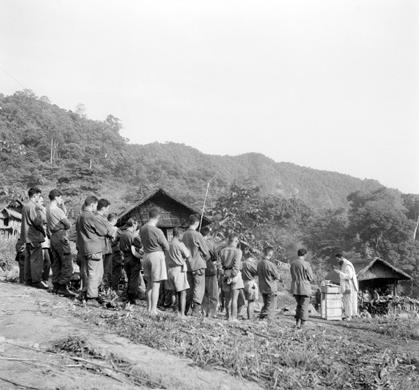
French Chaplain and Soldiers Indochina 1950

For the French the events and sacrifices of their soldiers during Easter 1954 was page five news in a nation that was more focused on the coming summer. This is very similar to our circumstances today because it often seems that own people are more concerned about economic considerations and the latest in entertainment news than what is going on in Iraq or Afghanistan. The French soldiers in Indo-china were professionals and volunteers, much like our own troops today. Their institutional culture and experience of war was not truly appreciated by their own people, or by their government which sent them into a war against an opponent that would sacrifice anything and take as many years as needed to secure their aim, while their own countrymen were unwilling to make the sacrifice and in fact had already given up their cause as lost. Their sacrifice would be lost on their own people and their experience ignored by the United States when we sent major combat formations to Vietnam in the 1960s. In a way the French professional soldiers of that era have as well as British colonial troops before them have more in common with our force than the citizen soldier heroes of the “Greatest Generation.” Most of them were citizen soldiers who did their service in an epic war and then went home to build a better country as civilians. We are now a professional military and that makes our service a bit different than those who went before us.

Yet it is in this very world that we minister, a world of volunteers who serve with the highest ideals. We go where we are sent, even when it is unpopular. It is here that we make our mark; it is here that we serve our Soldiers, Sailors, Marines and Airmen. Our duty is to bring God’s grace, mercy and reconciliation to men and women, and their families who may not see it anywhere else. Likewise we are always to be a prophetic voice within the ranks.

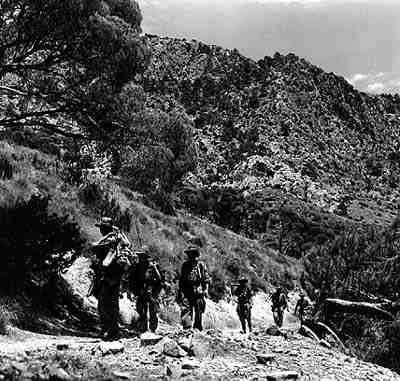
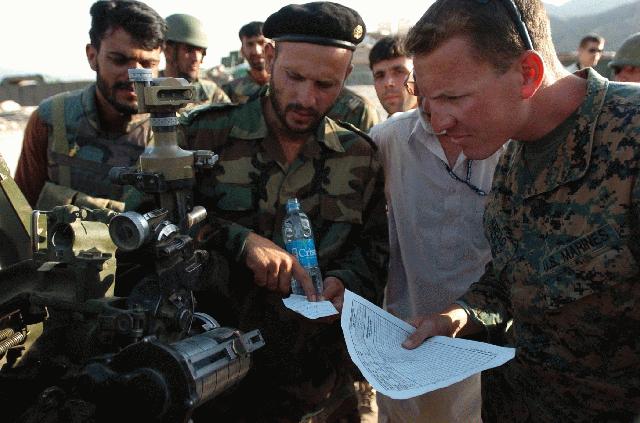
Marine Advisers and Afghan Soldiers

When my dad was serving in Vietnam in 1972 I had a Sunday school teacher tell me that he was a “Baby Killer.” It was a Catholic Priest and Navy Chaplain who showed me and my family the love of God when others didn’t. In the current election year anticipate that people from all parts of the political spectrum will offer criticism or support to our troops. Our duty is to be there as priests, not be discouraged in caring for our men and women and their families because most churches, even those supportive of our people really don’t understand the nature of our service or the culture that we represent. We live in a culture where the military professional is in a distinct minority group upholding values of honor, courage, sacrifice and duty which are foreign to most Americans. We are called to that ministry in victory and if it happens someday, defeat. In such circumstances we must always remain faithful.

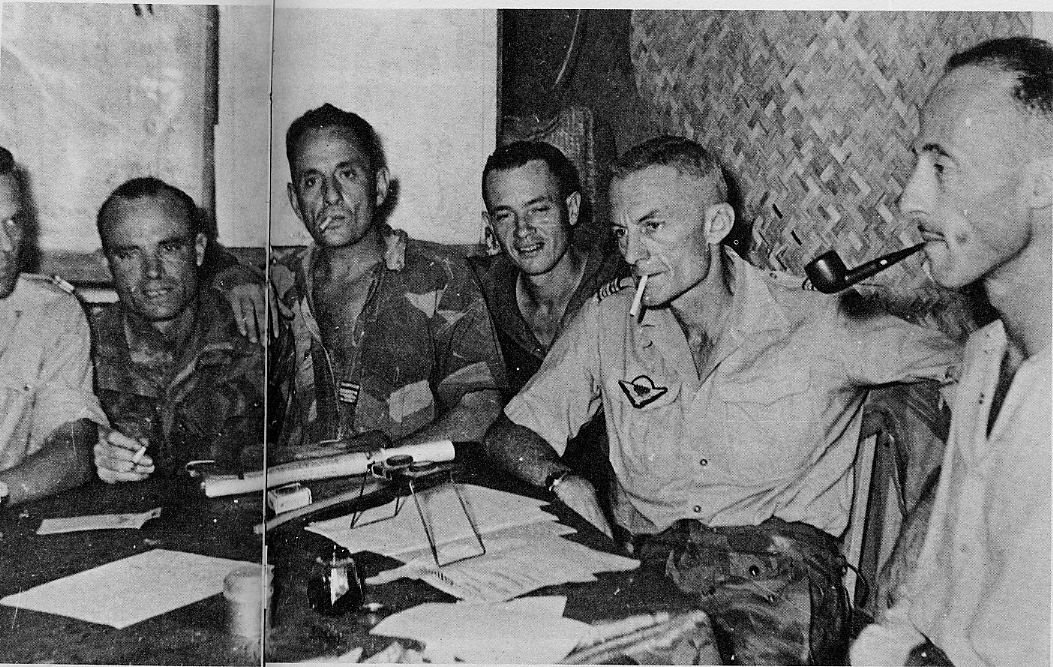
French Commanders at Dien Bien Phu

For those interested in the French campaign in Indo-China it has much to teach us. Good books on the subject include The Last Valley by Martin Windrow, Hell in a Very Small Place by Bernard Fall; The Battle of Dienbeinphu by Jules Roy; and The Battle of Dien Bien Phu- The Battle America Forgot by Howard Simpson. For a history of the whole campaign, read Street Without Joy by Bernard Fall. I always find Fall’s work poignant, he served as a member of the French Resistance in the Second World War and soldier later and then became a journalist covering the Nurnberg Trials and both the French and American wars in Vietnam and was killed by what was then known as a “booby-trap” while covering a platoon of U.S. Marines.

There is a picture that has become quite meaningful to me called the Madonna of Stalingrad. It was drawn by a German chaplain-physician named Kurt Reuber at Stalingrad at Christmas 1942 during that siege. He drew it for the wounded in his field aid station, for most of whom it would be their last Christmas. The priest would die in Soviet captivity and the picture was given to one of the last officers to be evacuated from the doomed garrison. It was drawn on the back of a Soviet map and now hangs in the Kaiser Wilhelm Memorial Church in Berlin where it is displayed with the Cross of Nails from Coventry Cathedral as a symbol of reconciliation. I have had it with me since before I went to Iraq. The words around it say: “Christmas in the Cauldron 1942, Fortress Stalingrad, Light, Life, Love.” I am always touched by it, and it is symbolic of God’s care even in the midst of the worst of war’s suffering and tragedy.

Peace

Padre Steve+

2 Comments

Filed under History, iraq,afghanistan, Military, PTSD, Religion, vietnam

Padre Steve’s Favorite Super Bowl: Super Bowl XXIII Joe Montana and the Drive

Note: Though this is an essay about a great Super Bowl tonight the Saints took home the Lombardi Trophy as they defeated the Colts 31-17.  I have included a post script at the end of this article about the Saints’ historic win.

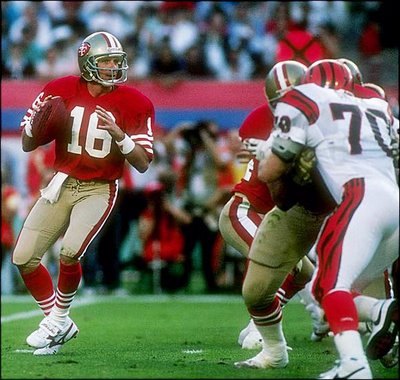
As anyone who knows me well or reads this site knows I am not a football person. God speaks to me through baseball, and despite its popularity football to me is somewhat interesting but not in the same league as the one true religion, the Church of Baseball of which I am a member of my local parish, Harbor Park in Norfolk Virginia. Despite this disclaimer I will watch the game though not with the same level of attention to or interest as I will baseball.  Now does not mean that I am ignorant about the game for I have played it in High School and grew up in a family of fanatical Raiders and 49ers fans.  I am a 49er fan through thick and thin lately mainly thin but back in the day of Saint Joe Montana, Jerry Rice and Bill Walsh they were the dominant team in football.  The had previously won two Super Bowls, Super Bowl XIX where they defeated Dan Marino and the Miami Dolphins 38-16 and their first Super Bowl, Super Bowl XVI in which they defeated the Cincinnati Bengals 26-21.

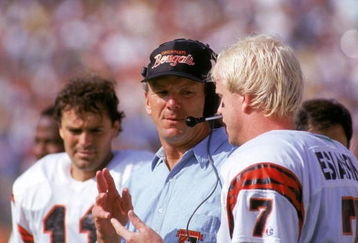
Super Bowl XXIII played in Miami’s Joe Robbie Stadium on January 22nd 1989 featured a classic rematch between the 49ers and the Bengals. The Bengals coached by the freewheeling and ever colorful Sam Wyche and quarterbacked by Boomer Esiason had won the AFC with a 14-5 record.  Esiason was the NFL Most Valuable Player throwing for 3,572 yards and 28 touchdown passes with only 14 interceptions.  He had a league leading passer rating of  97.4.  He also rushed for 248 yards.  The Bengals had a top notch team with six Pro-bowlers including future Hall of Fame Offensive Tackle Anthony Munoz.  Finishing the season at 12-4 the Bengals went on to defeat Seattle and Buffalo to advance to the Super Bowl.

The 49ers coached by Bill Walsh had already won 2 Super Bowls.  This would be Walsh’s last game as the coach of the 49ers and a year that they went 13-6 including the win in the Super Bowl. The 49ers had started the season slow going 6-5 before Montana led them to wins in 4 of their next 5 games to end the season at 10-6.  They then defeated both Minnesota and Chicago in very lopsided games to advance to Miami to meet the Bengals.  Montana completed 238 passes for 2981 yards and 18 touchdowns. He would be aided by future Hall of Famers Jerry Rice, Roger Craig and Defensive Back Ronnie Lott.

The game was one of the closest Super Bowl in Super Bowl history and bucked a trend of blowouts that had marked many of the Super Bowls of the 1980s.  With the game tied 6-6 with under a minute left in the 3rd Quarter following a 49er’s field goal Cincinnati kick-off returner took the ensuing kick 93 yards for a touchdown and a 13-6 lead.  The 49ers then came back to tie the game with a 4 play 85 yard drive featuring a 31 yard pass to Rice, a 40 yard completion to Craig and finished with a 14 yard touchdown strike to Rice to tie the game 13-13.  After an exchange of possessions which included a missed 49 yard field goal attempt by the 49ers the Bengals took possession at their 32 yard line.  In a 46 yard 10 play drive the Bengals kicker Jim Breech hit a 40 yard Field Goal with 3:20 left in the game.

http://niners.fandome.com/video/109180/XXIII-Super-Bowl—The-Drive/

The 49ers were penalized on the ensuing kick-off for an illegal block in the back took possession at their own 8 yard line.  It was at this point that Montana, Rice and crew would launch a magical drive that would go down in the annals of NFL lore as simply “the Drive.” Like “the Catch” against the Dallas Cowboys that ended that 1970s dynasty it was a defining moment for the 49ers which would forever place Montana and Rice as well as an unlikely hero named John Taylor in the made Super Bowl history in a game that NFL.com in 2006 named as the number one of the top ten Super Bowls of all time.

Montana entered the huddle with much on his shoulders.  Apart from the scoring drive at the beginning of the quarter the Bengals defense had played the 49ers tough bending but not breaking.  With the crowd roaring Montana looked up from the huddle and pointing to the stands said to his offense “Hey isn’t that John Candy?” to calm his team. In the ensuing drive Montana befuddled the Bengals defense throwing inside routes to Craig, Rice and Tight End John Frank and mixing in solid rushes by Craig to reach the Bengals 35 yard line. Montana then threw an incompletion and the following play Center Randy Cross was flagged for an illegal man downfield penalty which put the 49ers with a second and twenty at the Bengal 45 with just 1:15 left.  Montana brought the 49ers back quickly hiting Rice for 27 yards before he was brought down at the Bengal 18. Montana then hit Craig for 8 years to the Bengal 10 with 39 seconds left. Montana capped the drive with a 10 yard strike to John Taylor in the end zone for the winning touchdown.

Rice who had 11 receptions for 215 yards and scored a touchdown was the Most Valuable Player. Montana passed for a Super Bowl Record 357 yards going 23 of 36 and two touchdowns. On the final drive “Joe Cool” went 8 for 9 for 97 yards.  It was an amazing performance. The following year Montana would lead the 49ers to their fourth Super Bowl victory in which the 49ers went 17 and 2 and destroyed the Denver Broncos by a score of 55-10 in Super Bowl XXIV at the Louisiana Super Dome in New Orleans.

Drew Brees with Lombardi Trophy (TIMOTHY A. CLARY/AFP/Getty Images)

Post Script” Since I am ending this post with the 49ers victory in New Orleans tonight in Super Bowl XLIV in Miami where 21 years ago Joe Montana worked his magic.  In tonight’s game New Orleans Saints Quarterback Drew Brees led his team over the favored Indianapolis Colts by a score of 31-17.  Brees picked apart the Colt’s secondary and was ably assisted by a stingy defense that after allowing the Colts an early 10-0 lead dominated the Indianapolis offense.  The victory is especially sweet for the Saints and the city of New Orleans which until now had never won a major championship.  The Saints who for many years were the doormat of the NFL being so bad at times that they were knows as the “Aints” and their fans would wear paper bags over their heads at their home games.  With the devastation of the city in by Hurricane Katrina in 2005 and suggestions that the team be moved to another city the Saints helped provide inspiration as the city recovered.  It is a great story and congratulations to the Saints.

Peace

Padre Steve+

Leave a comment

Filed under football, History

Padre Steve’s Military History and Theory Articles

I am not normal, ask anyone who knows me.  I am a Priest who is also a military history and theory “wonk.”  I guess part of the reason for this as that I did not begin life as a clergyman. In fact way back when, when I was a young whippersnapper it was my desire to be in the military.  I was a Navy brat who grew up during the height of the Vietnam War and had friends whose fathers did not return from that war.  Likewise when my dad was serving in Vietnam surrounded by the North Vietnamese and Viet Cong in a town called An Loc I had a blessed Sunday school teacher tell me that my dad was a “baby killer.”  When you are an eleven year or twelve year-old and get told that your dad is a baby killer by some hippie wench you grow somewhat cynical about such people early in life.

Even worse than Limbaugh and Hannity is Michael Savage. Savage who despite having an earned PhD in the field of nutrition is so clueless and rude in discussing military issues that I can’t believe my ears whenever I run into his program. His absolute disdain that he shows for military leadership and actual implications of how we wage war in this era is so off base that it isn’t even funny.  For all of their lack of understanding of military strategy and policy at least Limbaugh and Hannity for the most part treat people in the military respectfully.

We no longer live in the World War Two world, warfare has changed and as the 2010 Quadrennial Defense Review notes that the United States must “prevail in today’s wars” while at the same time “prevent and deter conflict” which involves “preventing the rise of threats to U.S. interests requires the integrated use of diplomacy, development, and defense, along with intelligence, law enforcement, and economic tools of statecraft, to help build the capacity of partners to maintain and promote stability.” If deterrence fails we must Prepare to defeat adversaries and succeed in a wide range of contingencies: If deterrence fails and adversaries challenge our interests with the threat or use of force, the United States must be prepared to respond in support of U.S. national interests. Not all contingencies will require the involvement of U.S. military forces, but the Defense Department must be prepared to provide the President with options across a wide range of contingencies, which include supporting a response to an attack or natural disaster at home, defeating aggression by adversary states, supporting and stabilizing fragile states facing serious internal threats, and preventing human suffering due to mass atrocities or large-scale natural disasters abroad.” (2010 QDR Executive Summary pp. v-vi)

So tonight I am highlighting a series of articles that I have written that deal with the kind of war that we are waging in Afghanistan and have done in Iraq as well as a couple of studies from military history that discuss how the diplomatic, intelligence, economic and military resources of a nation are all important in the continuum of conflict and the importance of alliances when waging global warfare. These are the articles that I have produced so far and will as time goes on continue to add to.  They span the spectrum and hopefully will assist the reader in sorting through a lot of the mindless gibberish that is pumped out from the political right and left on TV, radio and the internet.  Some of these are drawn out of military history but have an application today while others are more targeted at what is going on today.  Since this is an ever expanding subject for me I expect to post more articles on a regular basis.

Learning to Apply the Principles of Counterinsurgency Part One: Introduction to the Soviet-Afghan War

Mission Accomplished in Al Anbar: The Marines Turn Over the Mission to the Iraqis

The Anomaly of Operation Desert Storm and Its Consequences Today

War Without Mercy: Race, Religion, Ideology and Total War

Lessons on Coalition Warfare: The Dysfunctional Coalition German and the Axis Partners on the Eastern Front

The Afghan War 2009-2012: Lessons from Algeria 1954-1960 A Review of “A Savage War of Peace

Moslem Allies and Friends

Lessons for the Afghan War: The Effects of Counterinsurgency Warfare on the French Army in Indo-China and Algeria and the United States Military in Vietnam

The most dangerous assignment: 4 More Advisers Die In Afghanistan

Brothers to the End…the Bond between those Who Serve Together in Unpopular Wars

Iran Makes Noise in Persian Gulf: Obama Dispatches Patriots and Ships to Deter

Mission Accomplished in Al Anbar: The Marines Turn Over the Mission to the Iraqis

The Dangerous and Often Thankless Duty of Military Advisers

More on our Unsung Heroes-Military Advisers, Past and Present

The Ideological War: How Hitler’s Racial Theories Influenced German Operations in Poland and Russia

D-Day- Courage, Sacrifice and Luck, the Costs of War and Reconciliation

Dien Bien Phu- Reflections 55 Years Later

God in the Empty Places

I hope that this rather diverse series of articles and my comments will be helpful to the reader in sorting through all the crap that floats about as “truth” from all sides of the media and the various political parties, special interest groups and others more intent on seeing their often divergent and uninformed agendas.

Peace

Padre Steve+

Leave a comment

Filed under counterinsurency in afghanistan, Foreign Policy, hampton roads and tidewater, History, iraq,afghanistan, Military

Stalingrad: Disaster on the Volga

Madonna of Stalingrad: Drawn by a German Chaplain and physician the piece was taken out of the city by one of the last officers to get out. It is now displayed in the Kaiser Wilhelm Memorial Church in Berlin

Sunday the 31st of January marks the surrender of the remnants of the German 6th Army to the Soviets at Stalingrad. The focus of this article is on how the Germans and Russians fought the Stalingrad campaign. In particular it is an analysis of the way the governments and military’s of both Nazi Germany and the Soviet Union planned and executed strategy during the course of the campaign adjusted to the situation and how the campaign ended. It is also a reminder of the price that ordinary soldiers can pay when a country commits them to war. I conclude with a potential modern application for the US and NATO in Afghanistan.

Stalingrad: Primary or Secondary Objective

The mistakes began early in the planning and conduct of the operation

Following the Soviet winter offensive and the near disaster in front of Moscow the German High Command was faced with the strategic decision of what to do in the 1942 campaign.  Several options were considered and it was decided to seize the Caucasus oilfields and capture or neutralize the city of Stalingrad on the Volga.  However, the High Command was divided on the actual objective of the campaign.
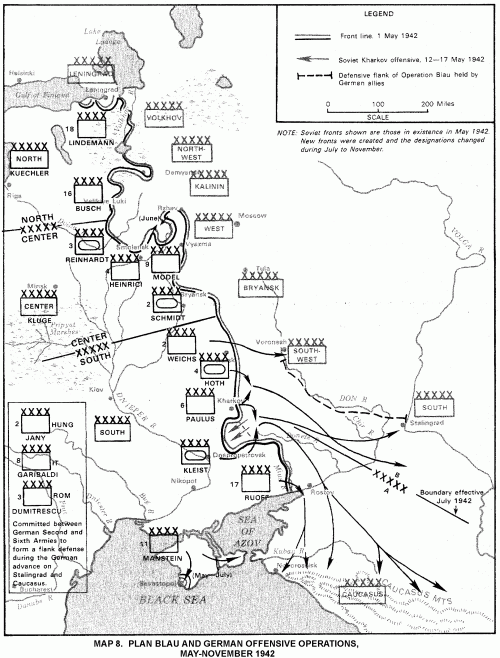
OKH under the guidance of General Halder assumed that Stalingrad was the objective and the advance into the Caucasus was a blocking effort.[i] Hitler and OKW planned to capture the Caucasus oil fields and capture or neutralize Stalingrad to secure the left flank.[ii] Both OKH and OKW considered Stalingrad significant but “German commanders initially regarded it as a weigh station en route to the Caucasus oil fields.”[iii] The conflict echoed in the ambiguity of Directive No. 41 which “included the ‘seizure of the oil region of the Caucasus’ in the preamble concerning the general aim of the campaign, yet made no mention of this in the main plan of operations.”[iv] At the planning conference held at Army Group South in early June “Hitler hardly mentioned Stalingrad. As far as his Generals were concerned it was little more than a name on the map. His obsession was with the oil fields of the Caucasus.”[v] Manstein noted that “Hitler’s strategic objectives were governed chiefly by the needs of his war economy….”[vi] Anthony Beevor notes that at this stage of planning “the only interest in Stalingrad was to eliminate the armaments factories there and secure a position on the Volga. The capture of the city was not considered necessary.”[vii] German planners “expected that the Soviets would again accept decisive battle to defend these regions.”[viii]

In Moscow Stalin and his Generals attempted to guess the direction of the impending German offensive.  “Stalin was convinced that Moscow remained the principle German objective…Most of the Red Army’s strategic reserves…were therefore held in the Moscow region.”[ix] To disrupt the German offensive and to attempt to recover Kharkov three offensives were launched by Red Army forces under the direction of Stavka. The largest of these on Kharkov was defeated between 12-22 May with the loss of most of the armor in southern Russia. This coupled with an equally disastrous defeat of Red Army forces in Crimea by Von Manstein’s 11th Army meant that the Red Army would face the Germans in a severely weakened condition.[x]

Operation Blau: Opening Moves and Divergent Objectives
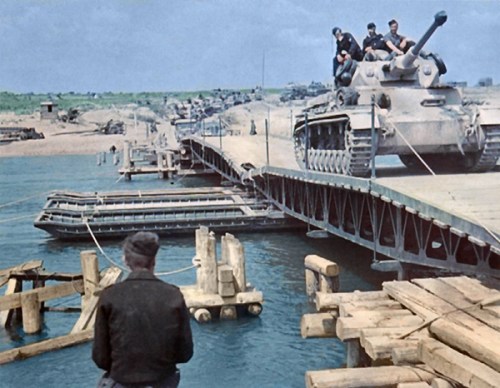
Panzers cross the Don

The German offensive began on 28 June under the command of Field Marshal von Bock. Bock’s command included two separate army groups, Army Group B under General Von Weichs with 2nd Army, 6th Army and 4th Panzer Army operated in the northern part of the operational area. Army Group A was to the south with 17th Army and 1st Panzer Army.[xi] Army Group B provided the main effort and quickly smashed through the defending Soviet armies and by the 20th Hitler believed that “the Russian is finished.”[xii] One reason for the German success in the south was that until July 7th Stalin believed that Moscow was still the primary objective.[xiii] Bock was prevented by Hitler from destroying Soviet formations left behind and was relieved of command by Hitler. He was replaced by Von Weichs which created a difficult command and control problem.  Manstein noted that this created a “grotesque chain of command on the German southern wing” with the result that Army Group A had “no commander of its own whatever” and Army Group B had “no few than seven armies under command including four allied ones.”[xiv]

Destroyed Soviet T-34s

This decision proved fateful.  Hitler’s decided to redirect the advance of the 4th Panzer Army to support an early passage of the lower Don, diverting it from its drive on Stalingrad.  Additionally the army groups became independent of each other when Bock was relieved of command.  They were “assigned independent-and diverging-objectives” under the terms of Directive No.45.[xv] This combination of events would have a decisive impact on the campaign.  The decision prevented a quick seizure of Stalingrad by 4th Panzer Army followed by a hand over to 6th Army to establish the “block” as described by Directive No.41.  Kleist noted that he didn’t need 4th Panzer Army’s help to accomplish his objectives and that it could have “taken Stalingrad without a fight at the end of July….”[xvi]

Field Marshall Von Paulus

The result was damning. Air support and fuel needed by Army Group A was transferred to 6th Army, denuding Army Group A of the resources that it needed to conclude its conquest of the Caucasus.[xvii] At the same time it denied Army Group B of the Panzer Army that could seize Stalingrad when it was still possible to do so.  Beevor calls Hitler’s decision a disastrous compromise.[xviii] Halder believed the decision underestimated the enemy and was “both ludicrous and dangerous.”[xix]

Focus on Stalingrad
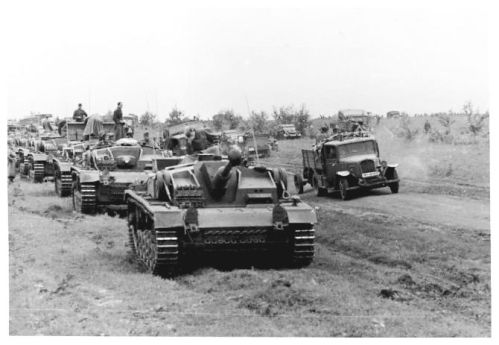
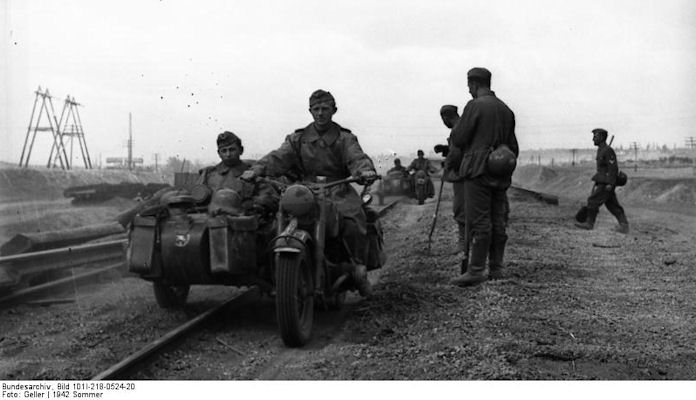
Sturmgeschutz Battalion Advancing toward Stalingrad

On July 22 as the Wehrmacht ran short on fuel and divisions to commit to the Caucasus, and 6th Army fought for control of Voronezh the Soviets created the Stalingrad Front. Stavka moved an NKVD Division to the city,[xx] and rapidly filled the new front with formations transferred from the Moscow Front.[xxi] Stalin issued Stavka Order 227, better known as “No Step Back” on 28 July. The order mandated that commanders and political officers who retreated would be assigned to Penal battalions[xxii] and armies were to form three to five special units of about 200 men each as a second line “to shoot any man who ran away.”[xxiii] Russian resistance west of the Don slowed the German advance. German commanders were astonished “at the profligacy of Russian commanders with their men’s lives.”[xxiv] Von Kleist compared the stubbornness of Russians in his area to those of the previous year and wrote that they were local troops “who fought more stubbornly because they were fighting to defend their homes.”[xxv] Additionally, Stalin changed commanders frequently in the “vain hope that a ruthless new leader could galvanize resistance and transform the situation.”[xxvi] General Chuikov brought the 64th Army into the Stalingrad Front in mid-July to hold the Germans west of the Don.[xxvii]
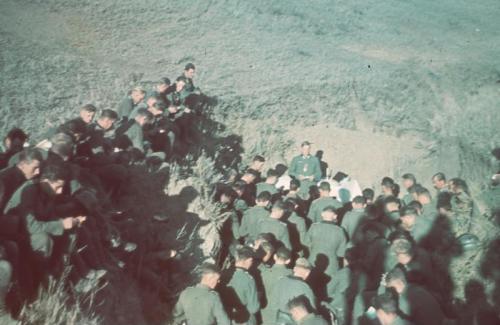
German Militarpfarrer (Chaplain) leading field service in August 1942

Further weakening the Germans OKW transferred key SS Panzer Divisions and the Grossdeutschland Division to France. Supporting Hungarian, Italian and Romanian allied armies which lacked motorization, modern armor or anti-tank units were unable to fulfill the gaps left by the loss of experienced German divisions and the expectations of Hitler.[xxviii] 6th Army was virtually immobilized for 10 days due to lack of supplies allowing the Russians to establish a defense on the Don Bend.[xxix] To the south the Germans were held up by lack of fuel and increased Soviet resistance including the introduction of a force of 800 bombers.[xxx] Glantz and House note that with the fall of Rostov on July 23rd “Hitler abruptly focused on the industrial and symbolic value of Stalingrad.”[xxxi] Undeterred by warnings from Halder that fresh Russian formations were massing east of the Volga and Quartermaster General, Wagner, who guaranteed that he could supply either the thrust to the Caucasus or Stalingrad but not both.[xxxii] Again frustrated by slow progress Hitler reverted to the original plan for 4th Panzer Army to assist 6th Army at Stalingrad, but the cost in time and fuel were significant to the operation and the question was whether “they could make up for Hitler’s changes in plan.”[xxxiii]

Strategic Implications

General Chuikov who directed the defense of Stalingrad during the battle

Soviet Naval Infantry and Political Officer

The changes in the German plan had distinct ramifications for both sides.  Von Mellenthin wrote that “the diversion of effort between the Caucasus and Stalingrad ruined our whole campaign.”[xxxiv] The Germans could not secure the Caucasus oil fields which Hitler considered vital to the German war effort.  They advanced deep into the region and captured the Maikop oil fields, though they were almost completely destroyed by the retreating Russians.[xxxv] Army Group A was halted by the Russians along the crests of the Caucasus on August 28th.[xxxvi] This left Hitler deeply “dissatisfied with the situation of Army Group A.”[xxxvii] Kleist and others attributed much of the failure to a lack of fuel[xxxviii] and Blumentritt noted that Mountain divisions that could have made the breakthrough were employed along the Black Sea coast in secondary operations.[xxxix]
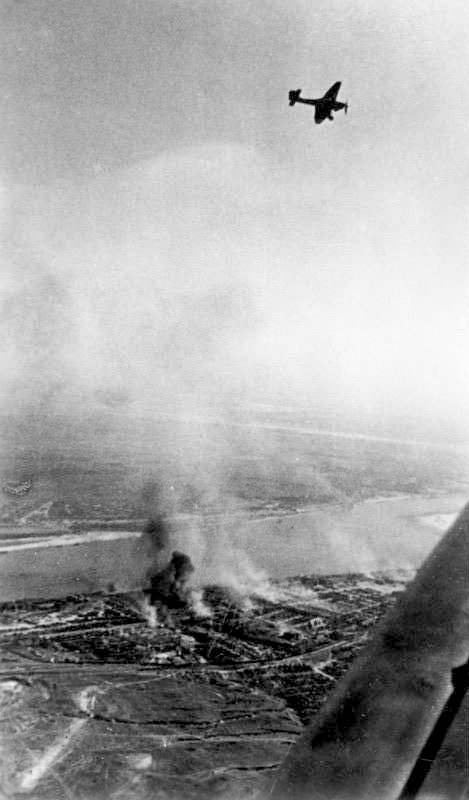
JU-87 Stuka over Stalingrad

Fuel and supply shortages delayed 6th Army’s advance while Hoth’s 4th Panzer Army was needlessly shuttled between Rostov and Stalingrad. By the time it resumed its advance the Russians “had sufficiently recovered to check its advance.”[xl] As 6th Army advanced the “protection of Army Group B’s ever-extending northern flank was taken over by the 3rd Rumanian, the 2nd Hungarian and the newly formed 8th Italian Army.”[xli] The allied armies were neither equipped for the Russian campaign nor well motivated.[xlii] The supply shortage in both army groups was not helped by a logistics bottleneck. All supplies came over a single Dnieper crossing, which Manstein noted, prevented swift movement of troops from one area to another.[xliii]

Reconnaissance Battalion of 24th Panzer Division near Stalingrad

Von Paulus’ 6th Army now attempted to rush Stalingrad between the 25th and 29th of July, while Hoth milled about on the lower Don.  However, Paulus’s piecemeal commitment of his divisions and failure to concentrate in the face of unexpectedly strong Soviet resistance caused the attacks to fail.  Paulus halted 6th Army on the Don so it could concentrate its forces and build its logistics base,[xliv] and to allow Hoth to come up from the south. This delay allowed the Russians to build up forces west of Stalingrad and reinforce the Stalingrad front and strengthen the defenses of the city,[xlv] and due to the distances involved it was easier for the Russians to reinforce the Stalingrad front.[xlvi] It also allowed the Russians to fill a number of key leadership positions with Generals who would skillfully fight the battle.[xlvii]
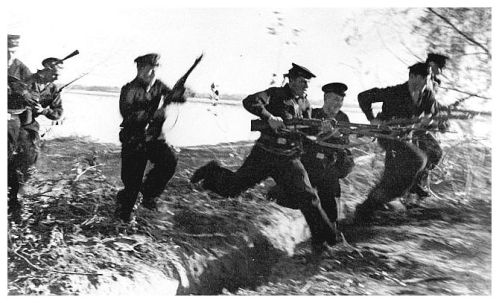
Russian Naval Infantry during early phase of battle

Hitler now focused on the capture of Stalingrad despite the fact that “as a city Stalingrad was of no strategic importance.”[xlviii] Strategically, its capture would cut Soviet supply lines to the Caucasus,[xlix] but this could be achieved without its capture. The checks in the south “began to give Stalingrad a moral importance-enhanced by its name-which came to outweigh its strategic value.”[l] To Hitler Stalingrad would gain “a mystic significance”[li] and along with Leningrad became “not only military but also psychological objectives.”[lii]

Red Army Armored troops using Lend-Lease American M3 Stuart and M3 Grant tanks

The Germans mounted a frontal assault with 6th Army and elements of 4th Panzer Army despite air reconnaissance that “the Russians are throwing forces from all directions at Stalingrad.[liii] Paulus as the senior General was in charge of the advance, with Hoth subordinated to him, but the attack had to wait until Hoth’s army could fight its way up from the south.[liv] Von Mellenthin comments rightly that “when Stalingrad was not taken on the first rush, it would have been better to mask it….”[lv] It is clear that the German advance had actually reached its culminating point with the failure of the advance into the Caucasus and Paulus’s initial setback on the Don, but it was not yet apparent to many involved.[lvi] The proper course of action would have been to halt and build up the front and create mobile reserve to parry any Russian offensive along northern flank while reinforcing success in the Caucasus. Manstein wrote that “by failing to take appropriate action after his offensive had petered out without achieving anything definite, he [Hitler] paved the way to the tragedy of Stalingrad!”[lvii]

Transfixed by Stalingrad
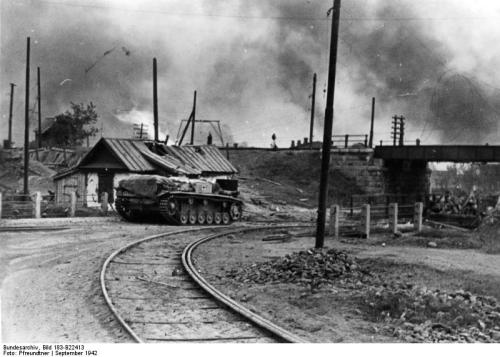
German Stug III at Stalingrad

On August 19th Paulus launched a concentric attack against the Russian 62nd and 64th Armies on the Don.  The attack ran into problems, especially in Hoth’s sector.[lviii] Yet, on the 22nd the 14th Panzer Corps “forced a very narrow breach in the Russian perimeter at Vertyachi and fought its way across the northern suburbs of Stalingrad,”[lix] and reached the Volga on the 23rd. That day 4th Air Fleet launched 1600 sorties against the city dropping over 1,000 tons of bombs.[lx] The breakthrough imperiled the Soviet position they had concentrated their strongest forces against Hoth.[lxi] The Germans held air superiority and continued heavy bombing attacks.  During the last days of August 6th Army “moved steadily forward into the suburbs of the city, setting the stage for battle.”[lxii] As the Soviets reacted to Paulus, Hoth achieved a breakthrough in the south which threatened the Russian position.  However 6th Army was unable to disengage its mobile forces to link up with the 4th Panzer Army and another opportunity had been missed.[lxiii]
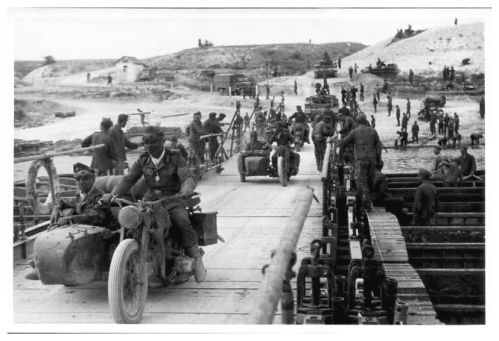
German unit crossing the Don

As 6th Army moved into the city Yeremenko ordered attacks against Hube’s 16th Panzer Division and Soviet resistance increased as more formations arrived the Germans suffered one of their heaviest casualty rates.”[lxiv] Though unsuccessful the counterattacks “managed to deflect Paulus’s reserves at the most critical moment.”[lxv] The Germans remained confident the first week of September as 6th Army and 4th Panzer Army linked up, but Yeremenko saved his forces by withdrawing and avoiding encirclement west of the city, retiring to an improvised line close to the city.[lxvi] On September 12th Chuikov was appointed to command 62nd Army in Stalingrad.  Chuikov understood that there “was only one way to hold on. They had to pay in lives. ‘Time is blood,’ as Chuikov put it later.”[lxvii] Stalin sent Nikita Khrushchev to the front “with orders to inspire the Armies and civilian population to fight to the end.”[lxviii] 13th Guards Rifle Division arrived on the 14th saved the Volga landings but it lost 30% casualties in its first 24 hours of combat.[lxix]
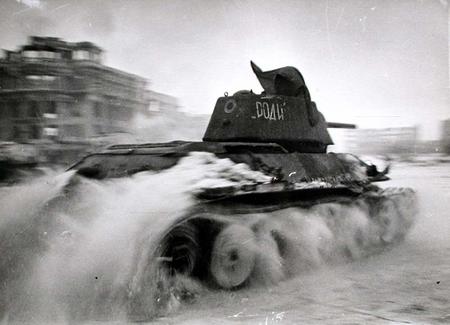
T-34 in Stalingrad

An NKVD regiment and other units held the strategically sited Mamaev Kurgan, keeping German guns from controlling the Volga.[lxx] The defenders fought house to house and block by block, Army and NKVD were reinforced by Naval Infantry.  Chuikov conducted the defense with a brutal ferocity, relieving senior commanders who showed a lack of fight and sending many officers to penal units.  Chuikov funneled massed German attacks into “breakwaters” where the panzers and infantry could be separated from each other causing heavy German casualties.[lxxi]
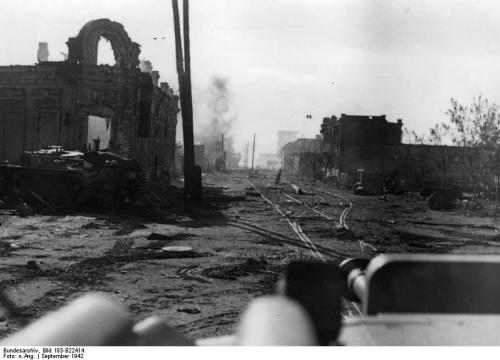
Street Fighting


Now the “city became a prestige item, its capture ‘urgently necessary for psychological reasons,’ as Hitler declared on October 2. A week later he declared that Communism must be ‘deprived of its shrine.’”[lxxii] The Germans did continue to gain ground, however slowly and at great cost, especially among their infantry, so much so that companies had to be combined.   Chuikov used his artillery to interdict the Germans from the far side of the Volga and the fight in the city was fought by assault squads with incredible ferocity and the close-quarter combat was dubbed “’Rattenkrieg’ by German soldiers.”[lxxiii] Paulus brought more units into the city and continued to slowly drive the Russians back against the river, by early October Chuikov wondered if he would be able to hold.[lxxiv] By early November Chuikov “was altogether holding only one-tenth of Stalingrad-a few factory buildings and a few miles of river bank.”[lxxv] Paulus expected “to capture the entire city by 10 November,”[lxxvi] despite the fact that many units were fought out. The 6th Army judged that 42% of the battalions of 51st Corps were fought out.[lxxvii] On 9 November Hitler declared “No power on earth will force us out of Stalingrad again!”[lxxviii]

Soviet Counteroffensive: Disaster on the Flanks

Soviet offensive on the flanks

Hungarian withdraw

Hungarian dead

On September 24th Hitler relieved Halder for persisting in explaining “what would happen when new Russian reserve armies attacked the over-extended flank that ran out to Stalingrad.”[lxxix] Many in the German side recognized the danger. Blumentritt said “The danger to the long-stretched flank of our advance developed gradually, but it became clear early enough for anyone to perceive it who was not willfully blind.”[lxxx] Warnings were also given by Rumanian Marshall Antonescu and the staff’s of Army Group B and 6th Army[lxxxi] but Hitler was transfixed on Stalingrad.  In doing so the Germans gave up the advantage of uncertainty and once their “aim became obvious…the Russian Command could commit its reserves with assurance.”[lxxxii]

Chuikov and his staff

In the midst of Stalin’s concern about Stalingrad Stavka planners never lost sight of their goal to resume large scale offensive operations and destroy at least one German Army Group.[lxxxiii] Unlike Hitler Stalin had begun to trust his Generals and Stavka under the direction of Marshal Vasilevsky produced a concept in September to cut off the “German spearhead at Stalingrad by attacking the weak Rumanian forces on its flanks.”[lxxxiv] At first Stalin “showed little enthusiasm” for the attack, fearing that Stalingrad might be lost, but on 13 September he gave his full backing to the proposal[lxxxv] which Zhukov, Vasilevsky and Vatutin developed into a plan involving two operations, Operation Uranus, to destroy the German and allied forces at Stalingrad, Operation Saturn to destroy all the German forces in the south and a supporting attack to fix German forces in the north, Operation Mars aimed at Army Group Center.[lxxxvi]
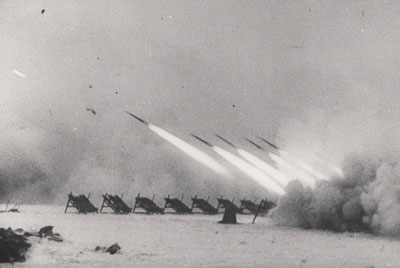
Soviet Katusha Rockets

To accomplish the destruction of 6th Army and part of 4th Panzer Army the Red Army employed over 60% of the “whole tank strength of the Red Army.”[lxxxvii] Strict secrecy combined with numerous acts of deception was used by the Red Army to disguise the operation.[lxxxviii] The plan involved an attack against 3rd Romanian Army on the northern flank by 5th Tank Army and two infantry armies with supporting units.[lxxxix] In the south against 4th Rumanian Army and weak element of 4th Panzer Army another force of over 160,000 men including 430 tanks were deployed.[xc] Despite warnings from his Intelligence Officer, Paulus did not expect a deep offensive into his flanks and rear and made no plans to prepare to face the threat.[xci] Other senior officers believed that the attack would take place against Army Group Center.[xcii] Warlimont notes that there was a “deceptive confidence in German Supreme Headquarters.”[xciii]

Luftwaffe JU-52s made many resupply runs into the pocket but suffered great losses

The storm broke on 19 November as Soviet forces attacked rapidly crushing Romanian armies in both sectors[xciv] linking up on the 23rd.[xcv] 48th Panzer Corps supporting the Romanians was weak and had few operational tanks.[xcvi] It attempted a counterattack but was “cut to pieces” in an encounter with 5th Tank Army.[xcvii] A promising attempt by 29th Motorized division against the flank of the southern Russian pincer was halted by the Army Group and the division was ordered to defensive positions south of Stalingrad.[xcviii] German airpower was neutralized by bad weather.[xcix] Paulus continued to do nothing as since the attacks were outside of his area of responsibility and waited for instructions.[c] As a result the 16th and 24th Panzer Divisions which could have assisted matters to the west remained “bogged down in street-fighting in Stalingrad.”[ci] Without support 6th Army units west of Stalingrad were forced back in horrific conditions.  By the 23rd 6th Army was cut off along with one corps of 4th Panzer Army and assorted Romanian units, over 330,000 men.  This now entrapped force that would require seven rifle armies and much staff attention to eliminate.[cii]

The Death of 6th Army
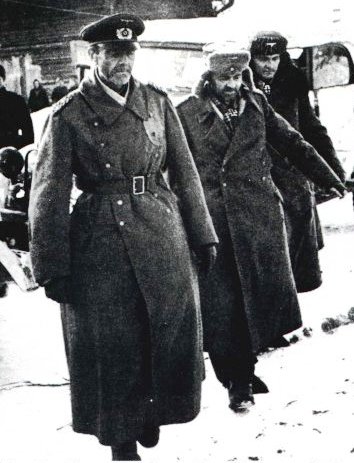
Paulus Surrenders

Hitler ordered Manstein to form Army Group Don to relieve Stalingrad. Hitler would not countenance a break out and wanted Manstein to break through and relieve 6th Army.[ciii] Hitler refused a request by Paulus on 23 November to move troops to prepare for a possible a break out attempt, assuring him that he would be relieved.[civ] Albert Speer notes that Zeitzler who replaced Halder insisted that the Sixth Army must break out to the west.”[cv] Hitler told Zeitzler that “We should under no circumstances give this up. We won’t get it back once it’s lost.”[cvi] Goering promised the Luftwaffe would be able to meet the re-supply needs of 6th Army by air, even though his Generals knew that it was impossible with the number of transport aircraft available.[cvii] Hitler took Goering at his word and exclaimed “Stalingrad can be held! It is foolish to go on talking any more about a breakout by Sixth Army…”[cviii] and a Führer decree was issued ordering that the front be held at all costs.[cix] Goerlitz states that “Hitler was incapable of conceiving that the 6th Army should do anything but fight where it stood.”[cx] Likewise Manstein had precious few troops with which to counterattack and had to protect the flank of Army Group A deep in the Caucasus. His army group was only corps strength and was spread across a 200 mile front.[cxi] Any relief attempt had to wait for more troops, especially Panzers.  Manstein too believed that the best chance for a breakout had passed and that it was a serious error for Paulus to put the request to withdraw through to Hitler rather than the Army Group or act on his own.[cxii] Many soldiers were optimistic that Hitler would get them out.[cxiii] Other generals like Guderian, Reichenau or Hoeppner might have acted, but Paulus was no rebel.[cxiv]
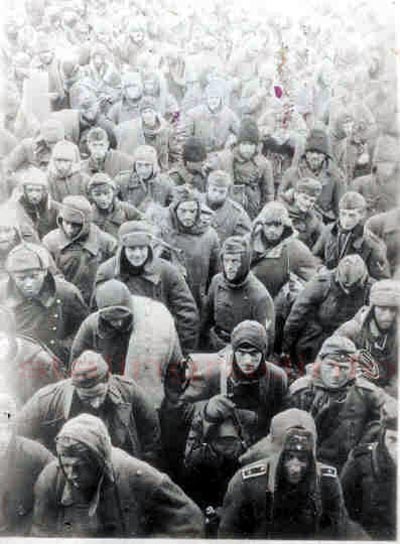
German POWs only 5000 of some 90,000 would see home again

Operation Saturn began on 7 December destroying the Italian 8th Army and forcing the Germans to parry the threat.[cxv] A relief attempt by 57th Panzer Corps under Hoth on 12 December made some headway until a massive Soviet counterattack on 24 December drove it back.[cxvi] This attack was hampered by OKW’s refusal to allocate the 17th Panzer and 16th Motorized divisions to Manstein,[cxvii] and by 6th Army not attacking out to link with the relief force.[cxviii]By 6 January Paulus signaled OKW: Army starving and frozen, have no ammunition and cannot move tanks anymore.”[cxix] On 10 January the Soviets launched Operation Ring to eliminate the pocket and despite all odds German troops fought on. On the 16th Paulus requested that battle worthy units be allowed to break out, but the request was not replied to.[cxx] On the 22nd the last airfield had been overrun and on 31 January Paulus surrendered.[cxxi]

Analysis: What Went Wrong

Stalingrad had strangely drawn the attention of both sides, but the Russians never lost sight of their primary objectives during the campaign. The Germans on the other hand committed numerous unforced errors mostly caused by Hitler and or von Paulus. These mistakes began early in the planning and After the fall of Stalingrad as the Soviets attempted to follow up their success by attempted to cut off Army Group “A” Manstein was permitted to wage a mobile defense while Von Kleist managed to withdraw with few losses.[cxxii] The superior generalship of Manstein and Von Kleist prevented the wholesale destruction of German forces in southern Russia and Manstein’s counter offensive inflicted a severe defeat on the Soviets. However the German Army had been badly defeated.  The seeds of defeat were laid early, the failure to destroy bypassed Soviet formations in July, the diversion of 4th Panzer Army from Stalingrad, and the divergent objectives of trying to capture the Caucasus and Stalingrad at the same time.  This diluted both offensives ensuring that neither succeeded.  Likewise the failure to recognize the culminating point when it was reached and to adjust operations accordingly was disastrous for the Germans. The failure create a mobile reserve to meet possible Russian counter offensives, and the fixation on Stalingrad took the German focus off of the critical yet weakly held flanks. The hubris of Hitler and OKW to believe that the Russians were incapable of conducting major mobile operations even as Stavka commenced offensive operations on those flanks all contributed to the defeat.  Clark notes these facts but adds that the Germans “were simply attempting too much.”[cxxiii] Soviet numbers allowed them to wear down the Germans even in defeat.[cxxiv] At the same time Stalin gave his commanders a chance to revive the mobile doctrine of deep operations with mechanized and shock armies that he had discredited in the 1930s.[cxxv] All through the campaign Zhukov and other commanders maintained both their nerve even when it appeared that Stalingrad was all but lost. They never lost sight of their goal of destroying major German formations though they failed to entrap Army Group A with 6th Army.

A Modern Application

It is well and good to attempt to remain on the offensive.  The U.S. currently has forces spread thinly over two combat theaters with possibilities that other threats in the same region could flare up.  Like the Germans the U.S. is operating in areas, especially Afghanistan where overland supply lines are vulnerable and where weather can and does affect resupply operations by both ground and air.  The fact that the U.S. is operating with just barely enough forces in areas where others have met disaster calls for a circumspect look at what our enemy’s capabilities really are and not allowing ourselves to be surprised when they do things that have worked for them in the past against the Russians.  While it is unlikely that the U.S. and NATO would face a Stalingrad type situation in Afghanistan it is possible that isolated forces could be overrun as the Afghans reprise tactics used so successfully against the Soviets and as they begin to operate in larger units, concentrate them quickly and with more firepower to catch NATO forces when they are most vulnerable.  It is true that they will not mass large numbers of tanks and artillery as the Soviets did against the Germans, but the principle of speed, concentration at the critical point and surprise can inflict defeats, even small ones like the attack on the US outpost in Wanat that can turn public sentiment in the U.S. and Europe against further commitments and against the war and force the NATO governments as well as the U.S. to give up the effort.

Notes

[i] Clark, Alan. Barbarossa: The Russian-German Conflict: 1941-45. Perennial Books, An imprint of Harper Collins Publishers, New York, NY 1965. p.191

[ii] Ibid.

[iii] Glantz, David M. and House, Jonathan. When Titan’s Clashed: How the Red Army Stopped Hitler. The University Press of Kansas, Lawrence KS, 1995. p.111

[iv] Ibid. Clark. p.191

[v] Beevor, Anthony. Stalingrad: The Fateful Siege: 1942-1943. Penguin Books, New York NY 1998. p.69

[vi] Manstein, Erich von. Forward by B.H. Liddle Hart, Introduction by Martin Blumenson. Lost victories: The War Memoirs of Hitler’s Most Brilliant General. Zenith Press, St Paul MN 2004. First Published 1955 as Verlorene Siege, English Translation 1958 by Methuen Company. p.291 This opinion is not isolated, Beevor Quotes Paulus “If we don’t take Maikop and Gronzy…then I must put an end to the war.” (Beevor pp. 69-70)  Halder on the other hand believed that Hitler emphasized that the objective was “the River Volga at Stalingrad. (Clark. p.190)

[vii] Ibid. Beevor. p.70.

[viii] Ibid. Glantz and House. p.106

[ix] Ibid. p.105-106

[x] Ibid. Clark. p.203.  The offensive did impose a delay on the German offensive.

[xi] Ibid. Clark. p.191 Each group also contained allied armies.

[xii] Ibid. p.209.

[xiii] Ibid. Glantz and House. p.119

[xiv] Ibid. Manstein. p.292.

[xv] Ibid. Clark. p.209

[xvi] Ibid. Clark.  p.211

[xvii] Ibid. Glantz and House. p.120. There is a good discussion of the impact of this decision here as 6th Army’s advance was given priority for both air support and fuel.

[xviii] Ibid. Beevor. p.74

[xix] Warlimont, Walter. Inside Hitler’s Headquarters 1939-45. Translated by R.H. Berry, Presido Press, Novato CA, 1964. p.249

[xx] Ibid. Beevor. p.75 This was the 10th NKVD Division and it took control of all local militia, NKVD, and river traffic, and established armored trains and armor training schools.

[xxi] Ibid. Clark. p.212

[xxii] Ibid. Glantz and House. p.121

[xxiii] Ibid. Beevor. p.85

[xxiv] Ibid. p.89

[xxv] Liddell-Hart, B.H. The German Generals Talk. Quill Publishers, New York, NY 1979. Originally published by the author in 1948. p.202

[xxvi] Ibid. Beevor. p.88

[xxvii] Ibid. Beevor. p.90

[xxviii] Ibid. Beevor. p.81

[xxix] Ibid. Glantz and House. p.121

[xxx] Ibid. Liddell-Hart. p.202

[xxxi] Ibid. Glantz and House. p.120

[xxxii] Goerlitz, Walter. History of the German General Staff. Westview Press, Frederick A. Praeger Publisher, Boulder, CO. 1985 p.416

[xxxiii] Ibid. Beevor. pp.95-96.

[xxxiv] Von Mellenthin, F.W. Panzer Battles: A Study of the Employment of Armor in the Second World War. Translated H. Betzler, Edited by L.C.F. Turner. Oklahoma University Press 1956, Ballantine Books, New York, NY. 1971. p.193

[xxxv] Shirer, William L. The Rise and Fall of the Third Reich. A Touchstone Book published by Simon and Schuster, 1981, Copyright 1959 and 1960. p.914

[xxxvi] Ibid. Glantz and House. p.122

[xxxvii] Ibid. Warlimont. p.256

[xxxviii] Ibid. Liddell-Hart. p.203

[xxxix] Ibid. p.204

[xl] Ibid. Shirer. p.914

[xli] Ibid. Goerlitz. p.416

[xlii] Ibid. Goerlitz. p.416

[xliii] Ibid. Manstein. p.293

[xliv] Ibid. Clark. p.214

[xlv] Ibid. Beevor. pp.97-99. The mobilization included military, political, civilian and industrial elements.

[xlvi] Liddell-Hart, B.H. Strategy. A Signet Book, the New American Library, New York, NY. 1974, Originally Published by Faber and Faber Ltd., London. 1954 & 1967. p.250

[xlvii] Ibid. Beevor. p.99.  Two key commanders arrived during this time frame, Colonel General Andrei Yeremenko, who would command the Stalingrad Front  and General Chuikov commander of 64th Army who would conduct the defense of the city.

[xlviii] Carell, Paul Hitler Moves East: 1941-1943. Ballantine Books, New York, NY 1971, German Edition published 1963. p.581

[xlix] Ibid. Shirer.  p.909.

[l] Ibid. Liddell-Hart, Strategy. p.250

[li] Wheeler-Bennett, John W. The Nemesis of Power: The German Army in Politics 1918-1945. St. Martin’s Press, New York, NY 1954.  p.531

[lii] Ibid. Wheeler-Bennett. p.531

[liii] Ibid. Beevor. p.96

[liv] Ibid. Clark. p.216.

[lv] Ibid. Von Mellenthin. P.193

[lvi] See Von Mellinthin pp.193-194.  Von Mellinthin quotes Colonel Dinger, the Operations Officer of 3rd Motorized Division at Stalingrad until a few days before its fall. Dingler noted that the Germans on reaching Stalingrad “had reached the end of their power. Their offensive strength was inadequate to complete the victory, nor could they replace the losses they had suffered.” (p.193) He believed that the facts were sufficient “not only to justify a withdrawal, but compel a retreat.” (p.194)

[lvii] Ibid. Manstein. p.294

[lviii] Ibid. Clark. p.216

[lix] Ibid. Clark. p.217

[lx] Ibid. Beevor. p.107

[lxi] Ibid. Beevor. p.107

[lxii] Ibid. Glantz and House. p.122

[lxiii] Ibid. Carell. P.601

[lxiv] Ibid. Beevor. p.118

[lxv] Ibid. Beevor. p.118

[lxvi] Ibid. Carell. p.602

[lxvii] Ibid. Beevor. p.128

[lxviii] Ibid. Carell. p.603

[lxix] Ibid. Beevor. p.134

[lxx] Ibid. Beevor. pp.136-137

[lxxi] Ibid. Beevor. p.149

[lxxii] Fest, Joachim. Hitler. Translated by Richard and Clara Winston, Harcourt, Brace, Jovanovich Publishers, San Diego, New York, London. 1974. p.661

[lxxiii] Ibid. Beevor. pp. 149-150

[lxxiv] Ibid. Beevor. p.164

[lxxv] Ibid. Carell. p.618

[lxxvi] Ibid. Glantz and House. p.123

[lxxvii] Ibid. Beevor. p.218

[lxxviii] Ibid. Carell. p.623

[lxxix] Ibid. Goerlitz. p.418

[lxxx] Ibid. Liddell-Hart. The German Generals Talk. p.207

[lxxxi] Ibid. Manstein. p292

[lxxxii] Ibid. Liddell-Hart. History of the Second World War. p.258

[lxxxiii] Ibid. Glantz and House. p.129

[lxxxiv] Ibid. Glantz and House. p.130

[lxxxv] Ibid. Beevor. pp.221-222 Glantz and House say that Stalin gave his backing in mid-October but this seems less likely due to the amount of planning and movement of troops involved to begin the operation in November.

[lxxxvi] Ibid. Glantz and House. p.130

[lxxxvii] Ibid. Beevor. p.226

[lxxxviii] Ibid. Glantz and House. p.132

[lxxxix] Ibid. Glantz and House. p.130

[xc] Ibid. Beevor. p.227

[xci] Ibid. Beevor. p.228

[xcii] Ibid. Clark. p.235

[xciii] Ibid. Warlimont. p.274

[xciv] Ibid, Carell. p.627 3rd Rumanian Army lost 75,000 men in three days.

[xcv] Ibid. Clark.pp.247-248

[xcvi] The condition of the few German Panzer Divisions in position to support the flanks was very poor, the 22nd had suffered from a lack of fuel and maintenance and this many of its tanks were inoperative. Most of the armor strength of the 48th Panzer Corps was provided by a Rumanian armored division equipped with obsolete Czech 38t tanks provided by the Germans.

[xcvii] Ibid. Clark. pp.251-252. The designation of 2nd Guards Tank Army by Clark has to be wrong and it is the 5th Tank Army as 2nd Guards Tank was not involved in Operation Uranus.  Carell, Beevor and Glantz properly identify the unit.

[xcviii] Ibid. Carell. p.630

[xcix] Ibid. Beevor. p.244

[c] Ibid. Beevor. p.247

[ci] Ibid. Beevor. p.245

[cii] Ibid. Glantz and House. p.134

[ciii] Ibid. Glantz and House. p.134

[civ] Ibid. Clark. p.256

[cv] Speer, Albert. Inside the Third Reich. Collier Books, a Division of MacMillan Publishers, Inc. New York, NY 1970. p.248

[cvi] Heiber, Helmut and Glantz, David M. Editors. Hitler and His Generals: Military Conferences 1942-1945. Enigma Books, New York, NY 2002-2003.  Originally published as Hitlers Lagebsprechungen: Die Protokollfragmente seiner militärischen Konferenzen 1942-1945. Deutsche Verlags-Anstalt GmbH, Stuttgart, 1962. p.27

[cvii] Ibid. Glantz and House. p.135 Glantz and House note that the amount of aircraft estimated to successfully carry out the re-supply operation in the operational conditions was over 1,000.  The amount needed daily was over 600 tons of which the daily reached only 300 tons only one occasion.

[cviii] Ibid. Speer. p.249

[cix] Ibid. Carell. p.636

[cx] Ibid. Goerlitz. p.426

[cxi] Ibid. Clark. p.252

[cxii] Ibid. Manstein. p.303

[cxiii] Ibid. Beevor. p.276

[cxiv] Ibid. Carell. p.640

[cxv] Ibid. Glantz and House. p.140

[cxvi] Ibid. Glantz and House. p.140

[cxvii] Ibid. Clark. p.264

[cxviii] Ibid. Manstein. p.337

[cxix] Ibid. Beevor. p320

[cxx] Ibid. Beevor. p.365

[cxxi] Of the approximately 330,000 in the pocket about 91,000 surrendered, another 45,000 had been evacuated.  22 German divisions were destroyed.

[cxxii] Ibid. Liddell-Hart. The German Generals Talk. p.211

[cxxiii] Ibid. Clark. p.250

[cxxiv] Ibid. Glantz and House. p.124

[cxxv] Ibid. Beevor. p.221

Bibliography

Beevor, Anthony. Stalingrad: The Fateful Siege: 1942-1943. Penguin Books, New York NY 1998

Carell, Paul Hitler Moves East: 1941-1943. Ballantine Books, New York, NY 1971, German Edition published 1963.

Clark, Alan. Barbarossa: The Russian-German Conflict:1941-45. Perennial Books, An imprint of Harper Collins Publishers, New York, NY 1965.

Fest, Joachim. Hitler. Translated by Richard and Clara Winston, Harcourt, Brace, Jovanovich Publishers, San Diego, New York, London. 1974

Glantz, David M. and House, Jonathan. When Titan’s Clashed: How the Red Army Stopped Hitler. The University Press of Kansas, Lawrence KS, 1995.

Goerlitz, Walter. History of the German General Staff. Westview Press, Frederick A. Praeger Publisher, Boulder, CO. 1985

Heiber, Helmut and Glantz, David M. Editors. Hitler and His Generals: Military Conferences 1942-1945. Enigma Books, New York, NY 2002-2003.  Originally published as Hitlers Lagebsprechungen: Die Protokollfragmente seiner militärischen Konferenzen 1942-1945. Deutsche Verlags-Anstalt GmbH, Stuttgart, 1962.

Liddell-Hart, B.H. The German Generals Talk. Quill Publishers, New York, NY 1979. Originally Published by the author in 1948.

Liddell-Hart, B.H. Strategy. A Signet Book, the New American Library, New York, NY. 1974, Originally Published by Faber and Faber Ltd., London. 1954 & 1967

Manstein, Erich von. Forward by B.H. Liddle Hart, Introduction by Martin Blumenson. Lost victories: The War Memoirs of Hitler’s Most Brilliant General. Zenith Press, St Paul MN 2004. First Published 1955 as Verlorene Siege, English Translation 1958 by Methuen Company

Shirer, William L. The Rise and Fall of the Third Reich. A Touchstone Book published by Simon and Schuster, 1981, Copyright 1959 and 1960

Speer, Albert. Inside the Third Reich. Collier Books, a Division of MacMillan Publishers, Inc. New York, NY 1970.

Von Mellenthin, F.W. Panzer Battles: A Study of the Employment of Armor in the Second World War. Translated H. Betzler, Edited by L.C.F. Turner. Oklahoma University Press 1956, Ballantine Books, New York, NY. 1971.

Warlimont, Walter. Inside Hitler’s Headquarters 1939-45. Translated by R.H. Berry, Presido Press, Novato CA, 1964.

Wheeler-Bennett, John W. The Nemesis of Power: The German Army in Politics 1918-1945. St. Martin’s Press, New York, NY 1954

17 Comments

Filed under History, Military, world war two in europe

Power and Beauty the Battle Cruisers Scharnhorst and Gneisenau

Scharnhorst

The naval architects of Germany in the early 1930s designed some of the most beautiful as well as deadly warships of the Second World War.  Following Germany’s rejection of the provisions of the Treaty of Versailles the Kreigsmarine enacted a building program to enlarge and modernize the German Navy which then was composed of obsolete pre-Dreadnaught battleships and a few modern light cruisers and destroyers.   The first major units constructed were actually begun by the predecessor to the Kreigsmarine, the Reichsmarine of the Weimar Republic.  These were the Deutschland class Armored Ships, sometimes called “Pocket Battleships” and later reclassified as Heavy Cruisers. These ships were designed to replace the old pre-Dreadnaught battleships and incorporated electric welds to reduce displacement, diesel engines for extended cruise range to enable them to serve as commerce raiders and a battery of six 11” guns.  While an advance over anything in the German inventory they were outclassed by the British battle cruisers Hood, Renown and Repulse.

Gneisenau

The next and first truly capital ships built by the Kriegsmarine were the Scharnhorst and Gneisenau battleships which in reality were battle cruisers because of their light main battery of 11” guns as opposed to the 14”, 15” or 16” batteries of other nations battleships.  Despite this in displacement and armor protection of the ships was comparable to other battleships of the era and their designed speed of 31.5 knots was superior to almost all other battleships of the era including the British King George V Class and the US North Carolina class.  Only the British Hood was their superior in speed.

Gneisenau Main Battery

As built they displaced 31,000 toms, however at full combat load they both weighed in at nearly 38,000 tons and were 772 feet long.  They had an armor belt that was nearly 14 inches thick.  Armed with a main battery of nine 11” guns and a secondary armament of twelve 5.9 inch guns they also mounted a powerful for the time anti- aircraft battery of fourteen 4.1 inch guns, 16 37mm and 16 20mm anti-aircraft cannons.  Additionally they mounted six 21” torpedo tubes and carried three Arado 196 A3 scout planes.  The main battery was eventually to be replaced by six 15” guns but this never occurred although Gneisenau was taken in hand to mount the new weapons but the conversion was never completed.

Scharnhorst in Action Against HMS Glorious

Laid down on 15 June 1935 and launched 3 October 1936 Scharnhorst was commissioned 7 January 1939.  Her sister Gneisenau was laid down 6 May 1935, launched 8 December 1936 and commissioned 21 May 1938.  Upon the commencement of the Second World War the two sisters began a reign of destruction on British shipping. In November they sank the Armed Merchant Cruiser HMS Rawalpindi During Operation Weserübung the pair surprised sank the aircraft carrier Glorious and her two escorting destroyers, the only time a Fleet carrier was caught and sunk by battleships during the war.   From January to March 1941 they conducted Operation Berlin against British merchant shipping in the North Atlantic sinking 22 ships before returning to base.

The Channel Dash Seen from Prinz Eugen

While in the port of Brest Gneisenau was bombed and torpedoed requiring extensive repairs.  Due to the exposed location of the port the German high command decided to return the ships to Germany along with the Heavy Cruiser Prinz Eugen.  This was Operation Cerberus and it took place from 11-13 February 1942 and involved the ships making a dash up the English Channel which was unsuccessfully contested by the British Royal Air Force and Royal Navy although both Scharnhorst and Gneisenau were damaged by mines and needed subsequent repairs.  While undergoing repairs in Kiel Gneisenau was further damaged by the Royal Air Force requiring repairs in or to steam to the port of Gotenhafen for repair and conversion.  Although some work was completed she was decommissioned and sunk as a blockship on 23 March 1945.  Following the war she was raised by the Poles and scrapped.

Gneisenau Sunk as Blockship

Scharnhorst was repaired following Operation Cerberes and in March 1943 was transferred to Norway where along with Tirpitz, Admiral Scheer, Lutzow (the former Deutschland), Admiral Hipper and Prinz Eugen she became part of a “fleet in being” poised to strike the Allied convoys bound for Russia. On Christmas Day 1943 under the command of Rear Admiral Erich Bey the Scharnhorst set sail with several destroyers undertook Operation Ostfront and the ensuing battle became known as the Battle of North Cape. This was to be an attack on two Russia bound convoys; however the orders were intercepted and decoded by the British which allowed Scharnhorst to be intercepted by the battleship HMS Duke of York four cruisers and a number of destroyers as she closed with the convoy after Bey had detached his escorting destroyers.  While attempting to escape she received damage that impacted her speed and maneuvering capabilities and was sunk with the loss of all but 36 of her 1968 man crew.  Her wreck was discovered 3 October 2000 some 70 miles north of North Cape Norway.
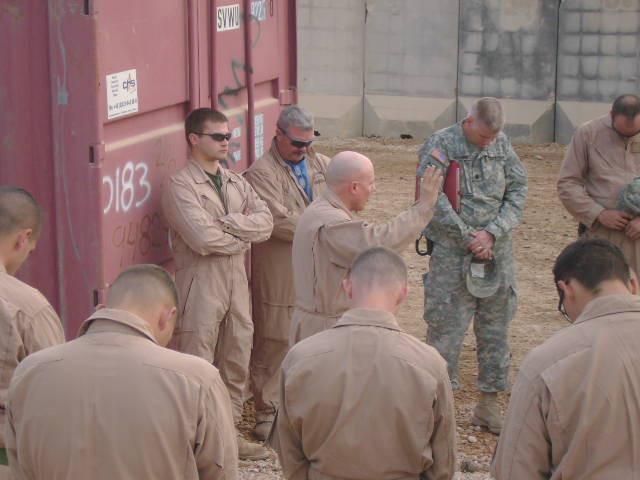
Thus ended the careers of two of the most beautiful ships to grace the seas, though their careers were short they both survived frequent heavy battle damage to return and fight again.  Perhaps their greatest weakness was the inability of the German Navy to provide them adequate escort and the Luftwaffe being unable to protect them against air strike while in port.

9 Comments

Filed under History, Military, Navy Ships, world war two in europe