Category Archives: History

They Silently Gather Around Me: Walking the Antietam Battlefield


Friends of Padre Steve’s World,

As you know from yesterday’s article I am taking an extended weekend in the D.C. area and yesterday I took a trip up to the Antietam Battlefield which surrounds much of Sharpsburg, Maryland. It was a time of quiet reflection on a battle, on the lives of soldiers, and on our country. The Battle of Antietam was the bloodiest day in American military history, more Americans were killed and wounded on that day than any other single day. While the battle was a draw from a military point of view it was singularly important in that it stopped Robert E. Lee’s invasion of the North and gave Abraham Lincoln enough of a victory to announce the preliminary Emancipation Proclamation. The announcement of that, and creative Union diplomacy helped turn the tide of the war by helping to keep England and France from recognizing the Confederacy.

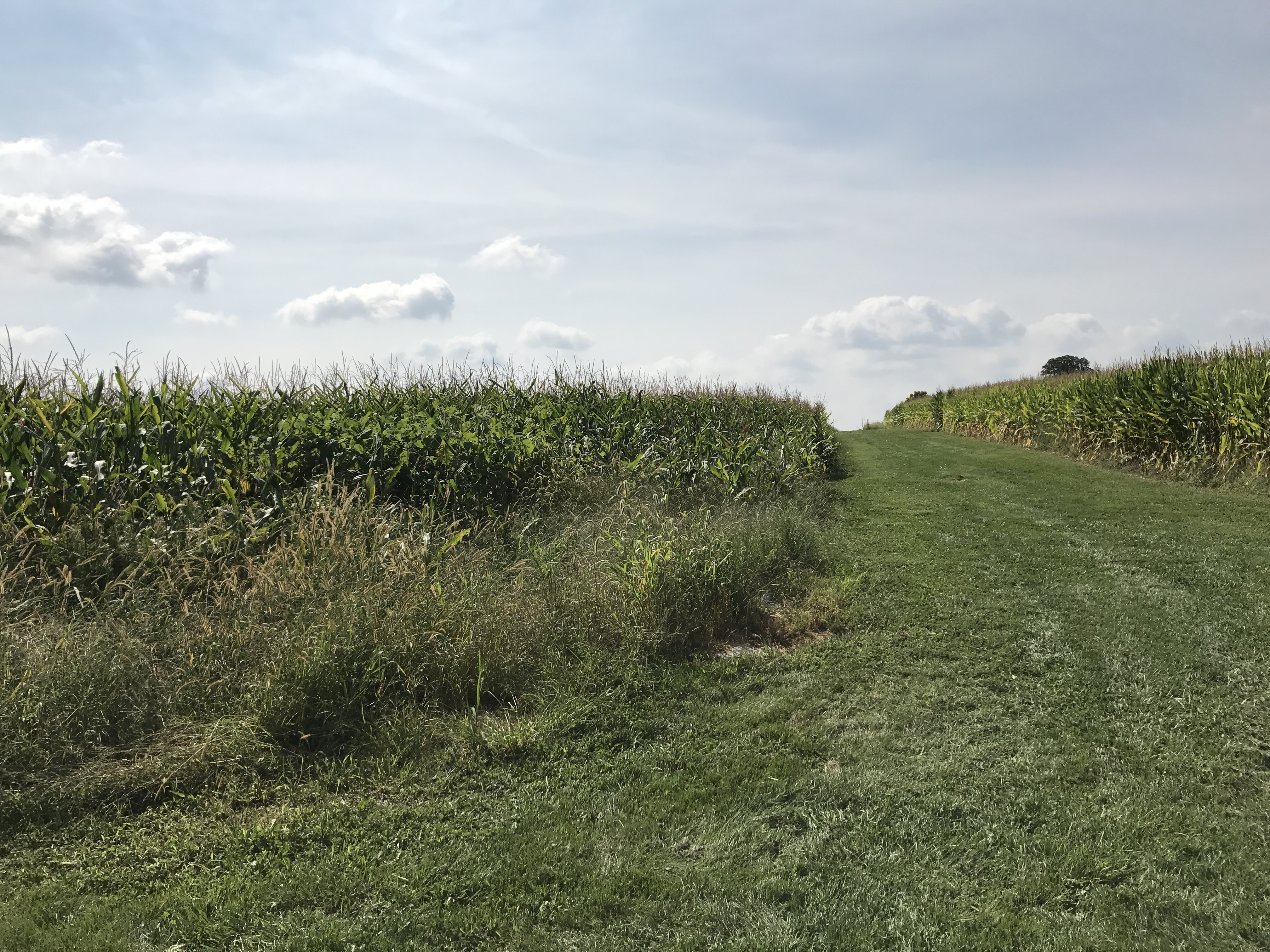
It was my intention to walk as much of the battlefield as I could and I did. The weather was good but a bit warmer and sunnier than what the soldiers who fought there experienced on September 17th 1862. Even so it is my opinion that walking battlefields, be it on a staff ride, reenactment, or simply doing what I did yesterday helps one put the battle into a human context especially if one has a fair amount of historical knowledge and familiarity with a given battle. Being hot, sweaty, feeling ones legs, feet, and back hurt, dealing with waterlogged shoes, being assaulted by swarms of insects, and fighting your way through thrushes, reeds, and high grass along the banks of a creek or river, and drinking the bare minimum of water, and getting a little bit sunburned, is a good way to get a feel for what the soldiers experienced at Antietam or other Civil War battles. I am just glad that I was not wearing a wool uniform, carrying a heavy rifle, 60 rounds of ammunition and cartridges, and all my kit wearing what we would no call substandard shoes, if like the Union soldiers did we even had them. If you were a Confederate soldier at Antietam you might have been barefoot. Since I have been to war and lugged heavy amounts of gear around Iraq I can imagine that, even though I never had to walk as far there as I did today. That’s a good thing.

In his book The Forgotten Soldier, Guy Sajer wrote:

“Too many people learn about war with no inconvenience to themselves. They read about Verdun or Stalingrad without comprehension, sitting in a comfortable armchair, with their feet beside the fire, preparing to go about their business the next day, as usual…One should read about war standing up, late at night, when one is tired, as I am writing about it now, at dawn, while my asthma attack wears off. And even now, in my sleepless exhaustion, how gentle and easy peace seems!”

I am sure that many a Civil War soldier would agree with him. The fact is that reading the history of various wars is important, but whenever possible it is good to experience some of the discomfort of those who fought the battle. When I finished the last part of my battlefield experience my feet hurt and when I took off my shoes they looked pretty bad, but much of that was from the dirt, grass, and moisture that had found its way into my shoes. But unlike the soldiers at Antietam I could return to a safe and dry place and care for my feet, they couldn’t.

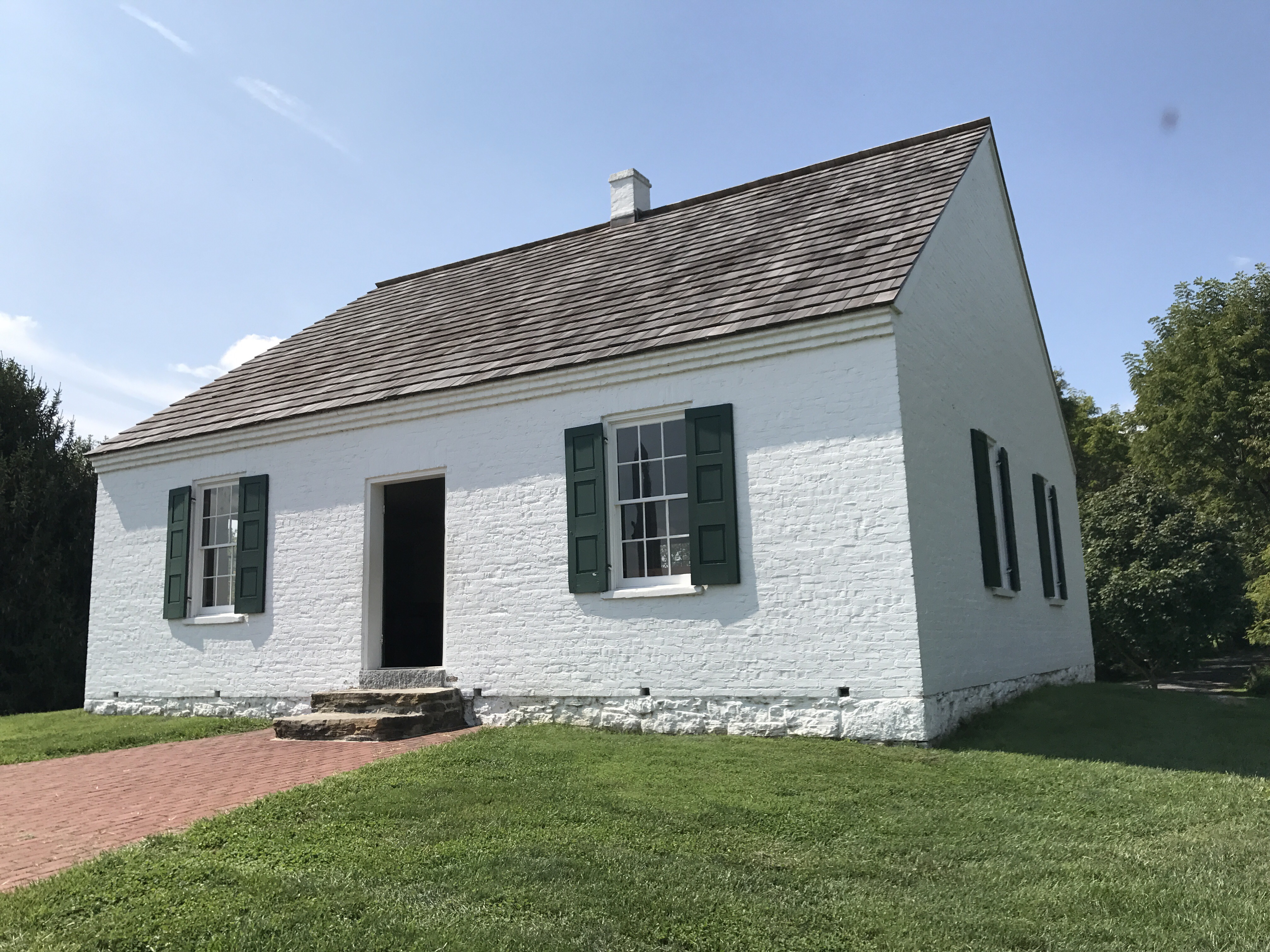
We are fortunate along much of the east and central parts of the United States to have many well preserved battlefields. I highly recommend those who have not gotten out to see them, walk them, and to remember those who were killed, wounded, or emotionally scarred for life. Walking the Antietam battlefield for the first time since 2001 I was able to sense the terrible reality that that battlefield was the bloodiest single day of fighting in American history. Depending on the estimate some 22,000 to 27,000 Union and Confederate soldiers were killed or wounded on that one day. As I walked through the Cornfield and the West Woods I tried to imagine how over 13,000 troops were killed or wounded in that part of the battlefield alone. I felt the same way along the Bloody Lane, near the Dunker Church, at the Burnside Bridge, and along the furthest point of the Union advance. Of course this is hallowed ground and the National Cemetery has in it the remains of over 5,000 Union soldiers.

The remains of nearly 3,000 Confederates were interred in a new cemetery on the outskirts of Hagerstown which was dedicated in 1877 as well as two other cemeteries. This is interesting to me because at Gettysburg the Confederate dead were exhumed and taken back to the south with many buried in Richmond’s Hollywood Cemetery.
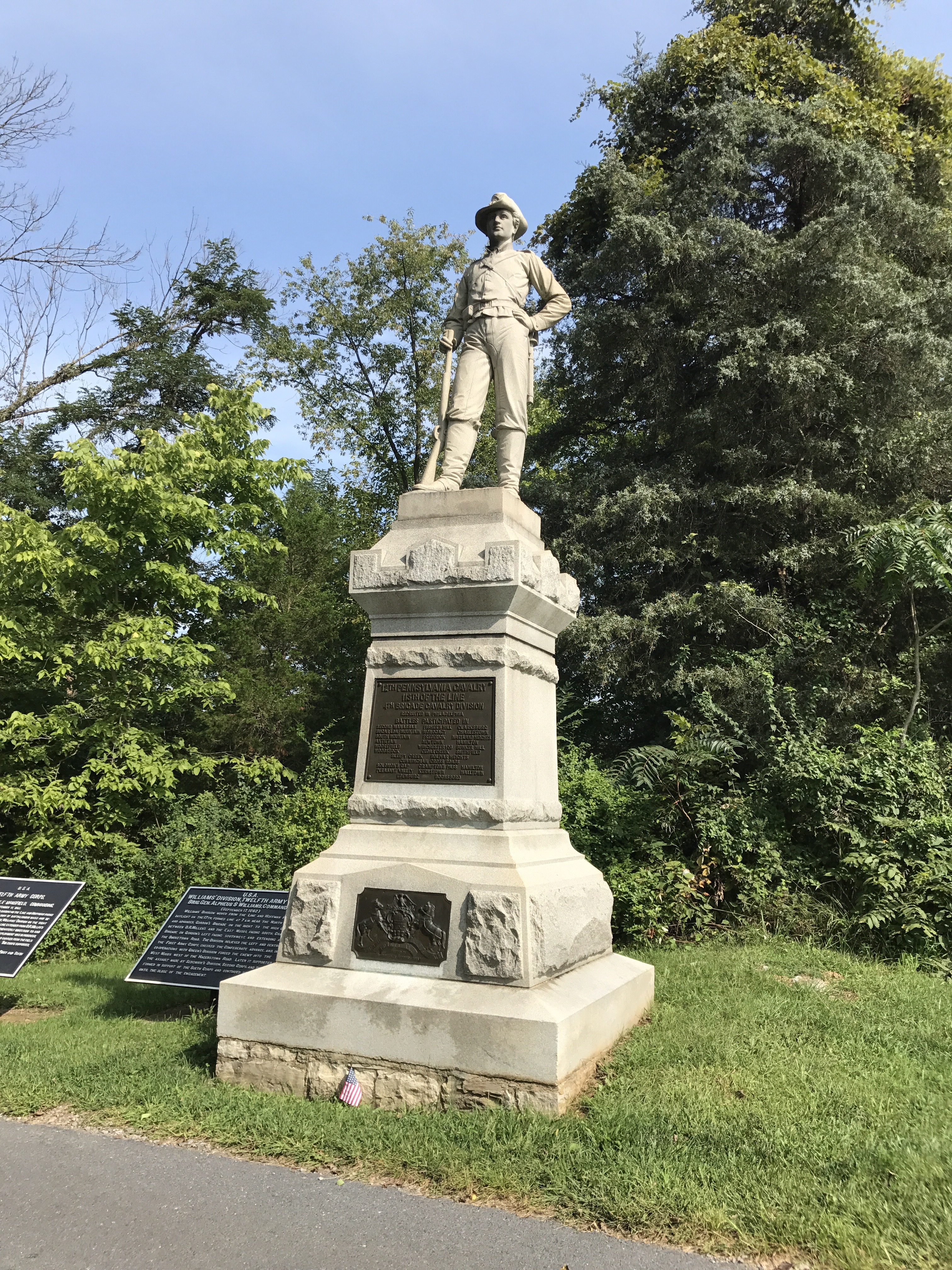
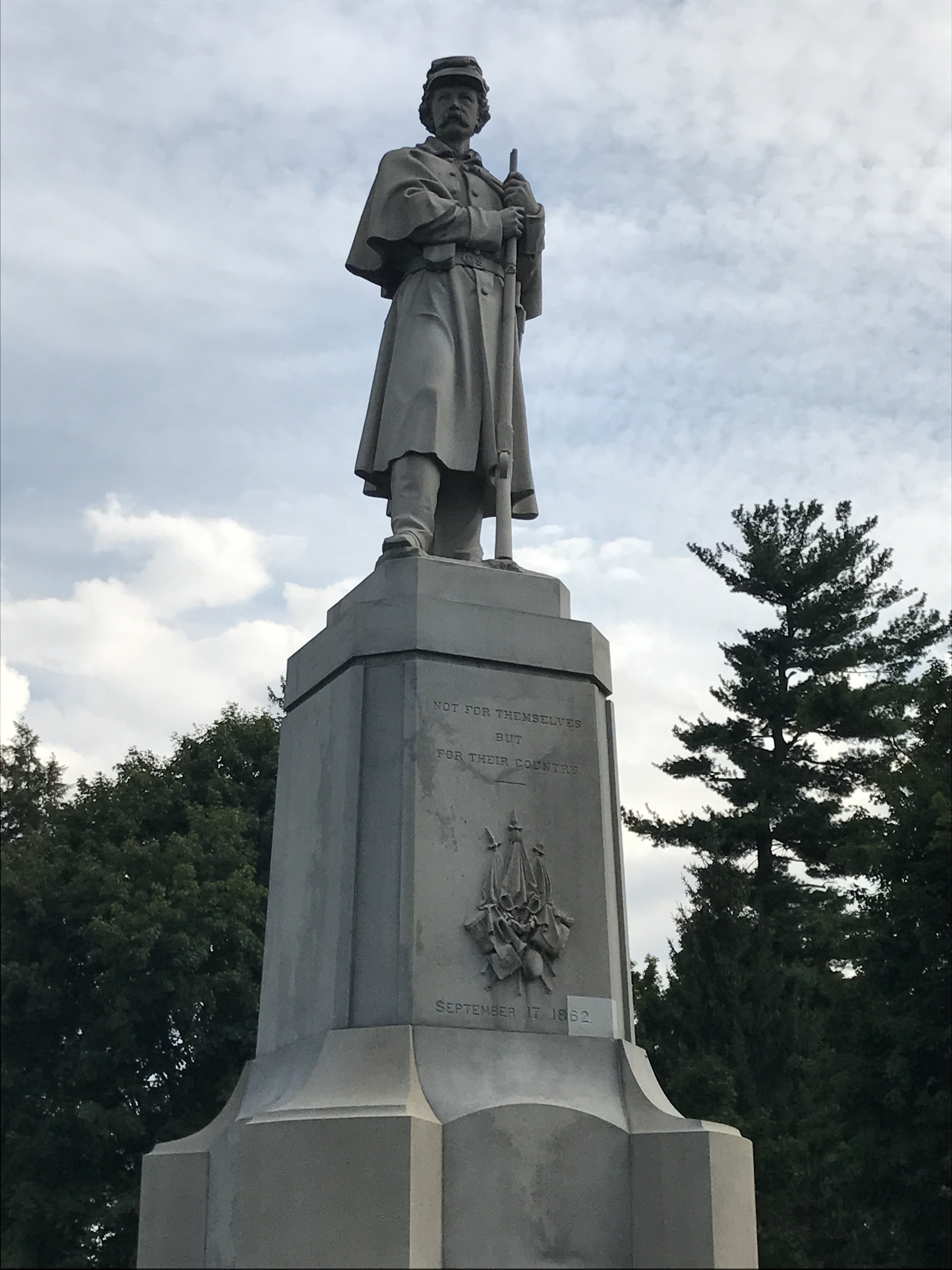
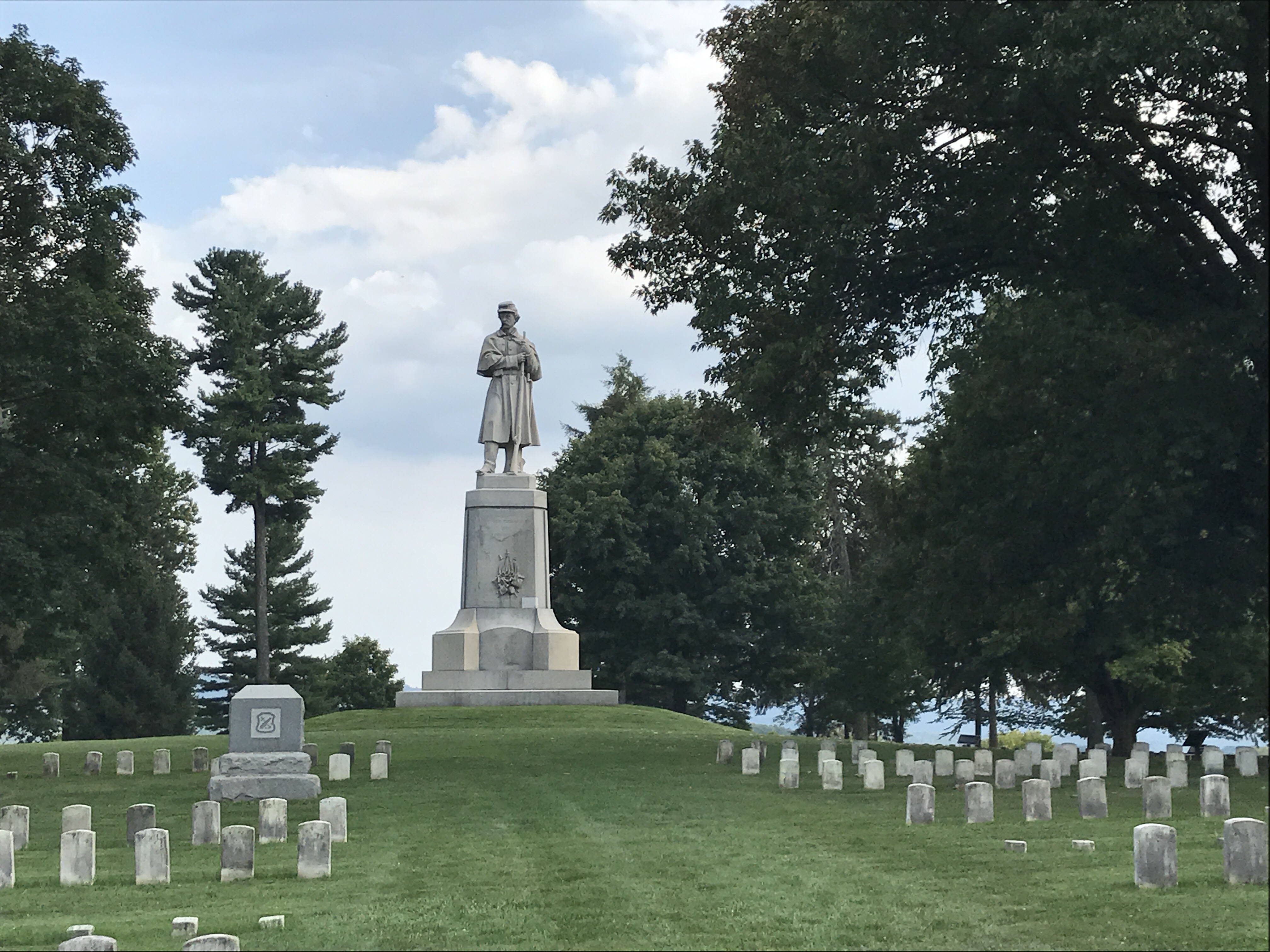
The National Cemetery is guarded by Old Simon a massive granite statue of a representative Union soldier. The monument is 44 feet tall, and Old Simon, designed and sculpted by James Batterson is 21 1/2 feet tall and weighs 30 tons. The inscription is appropriate. It simply reads: Not for themselves but for their country, September 17, 1862.
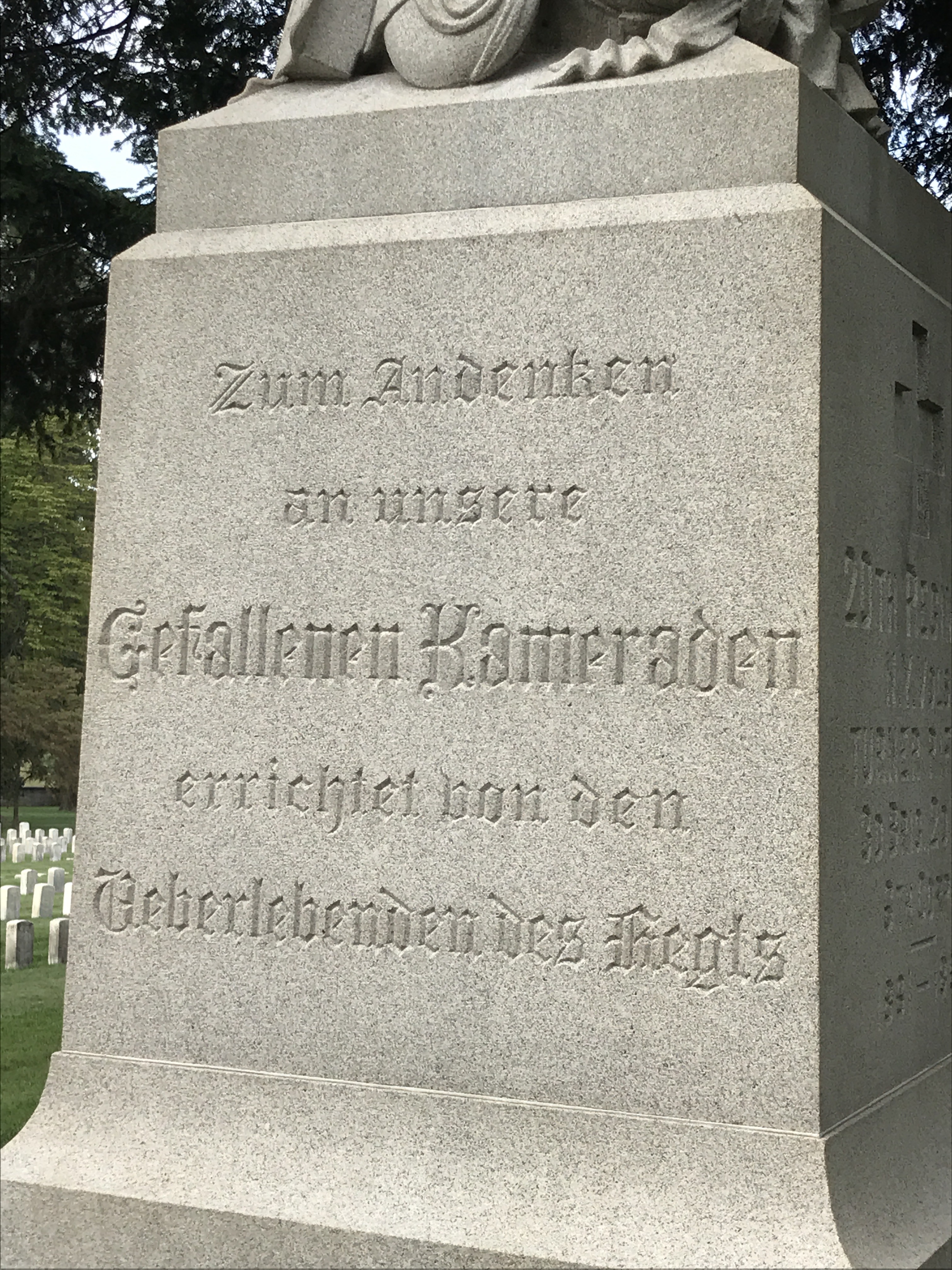


The graves of the soldiers are laid out around the statue grouped in the states from where they came. There are a few individual monuments and a monument erected by the survivors of the 20th New York, a unit primarily composed of German immigrants that also has a monument not far from the Dunker Church. The inscription on one side has in German the words Zum Andenken an unsere Gefallenen Kameraden, errichtet von dem Ueberlebenden des Regts. (Erected to our fallen comrades by the survivors of the regiment)
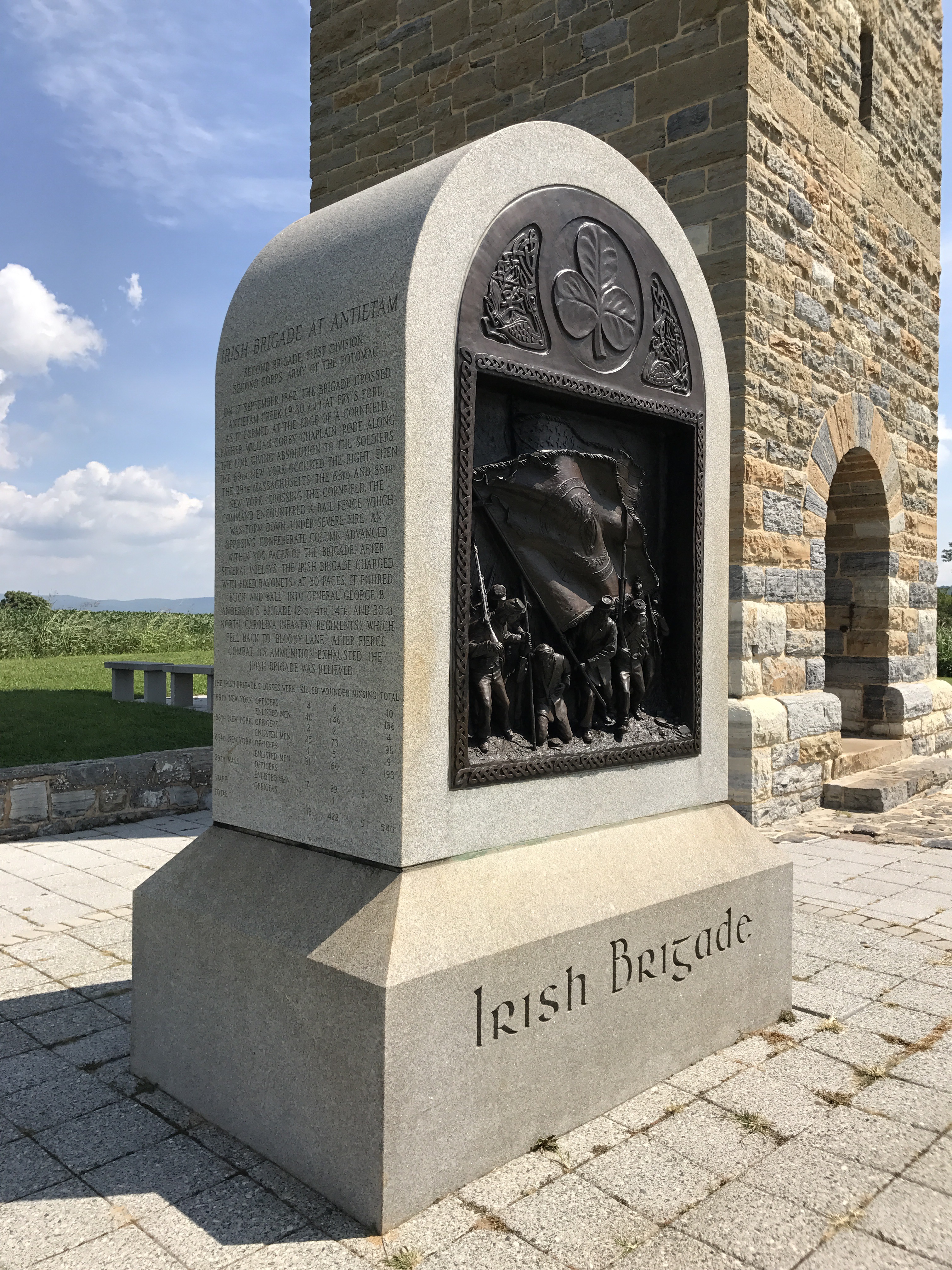

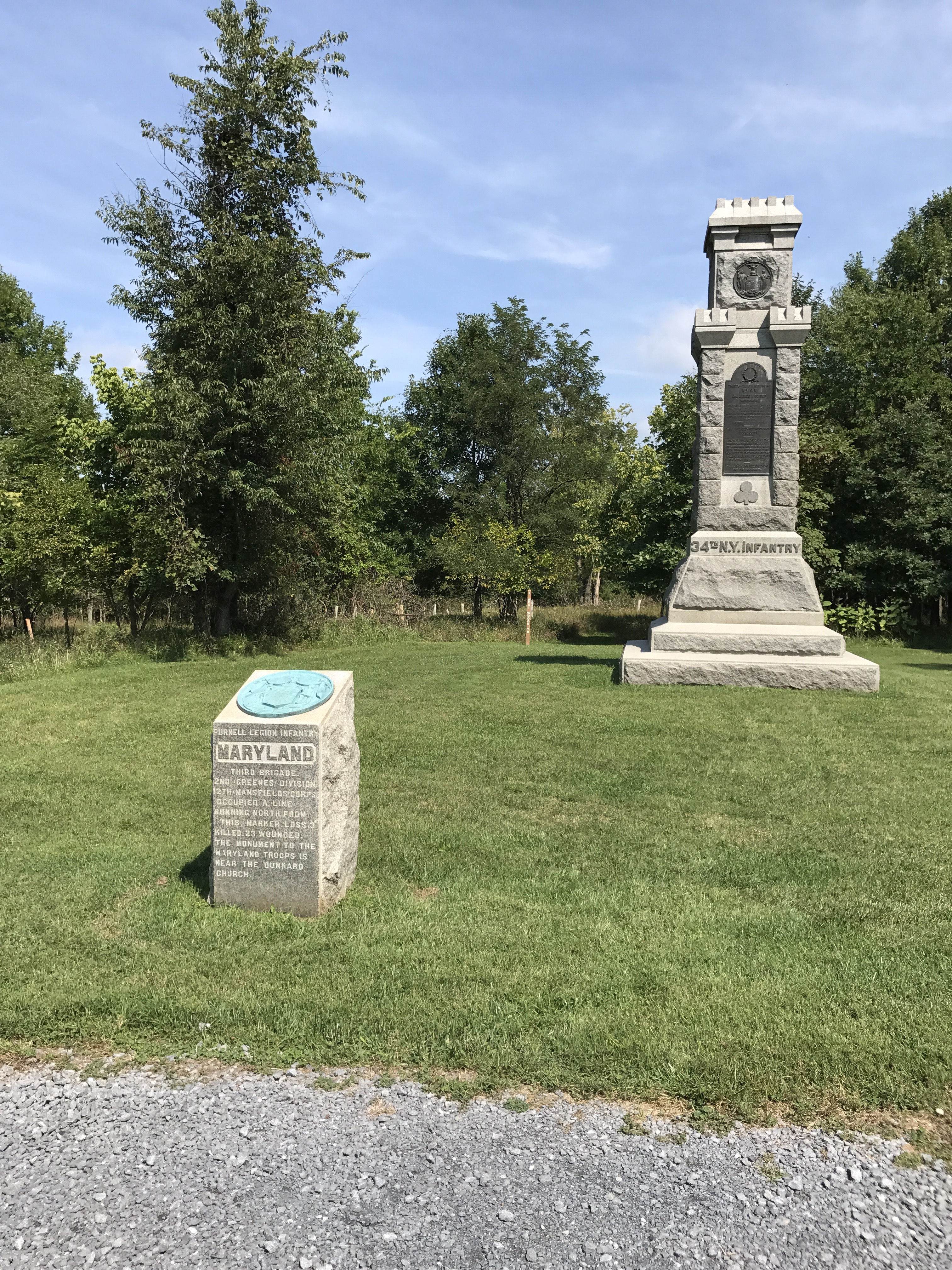
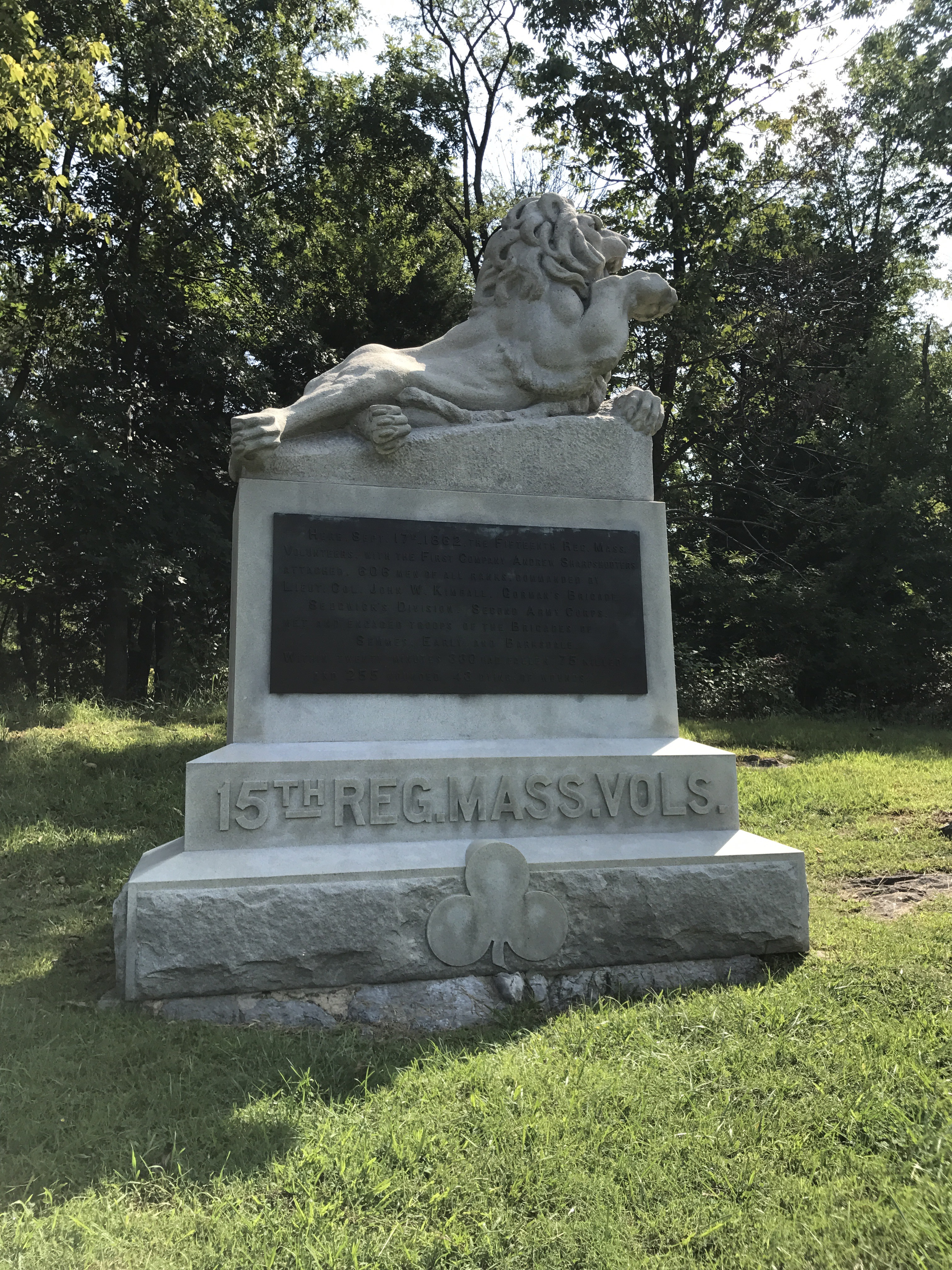
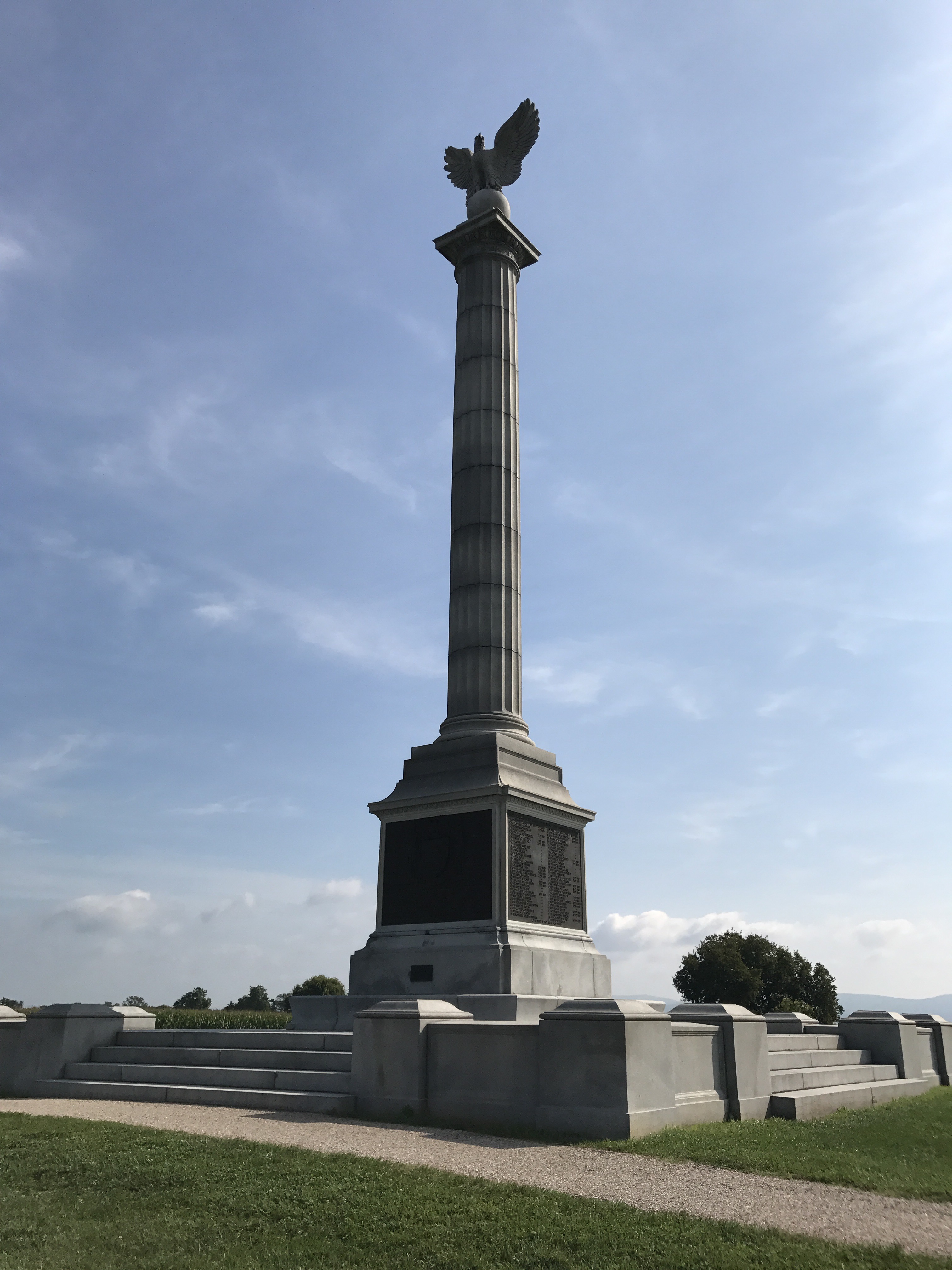
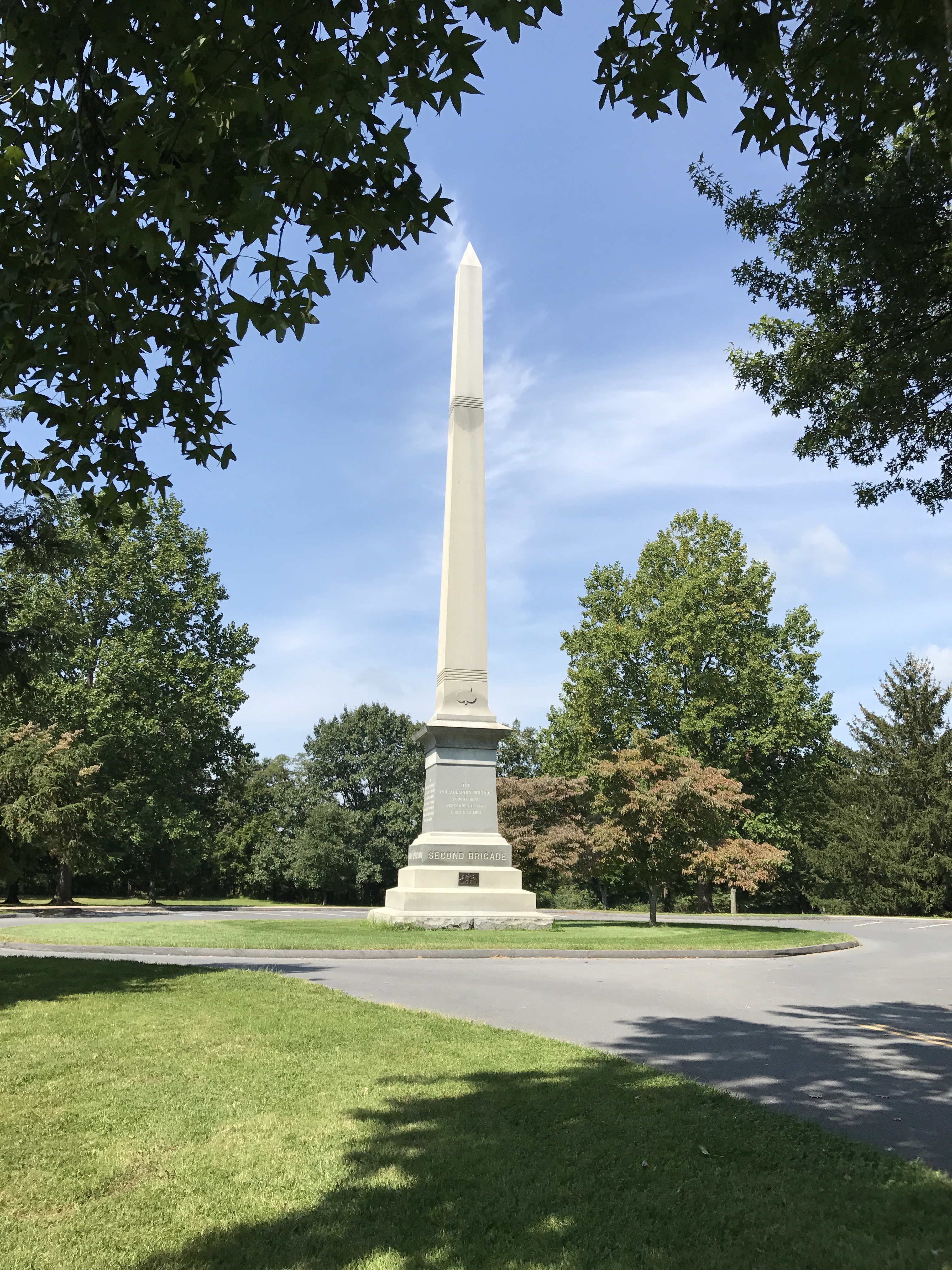
As far as battlefield monuments are concerned there are comparatively few, just 96 as compared to Gettysburg which has some 1,300 of all types. Almost all of the monuments at Antietam, with the exception of the ubiquitous bronze markers that show the positions of units and describe their actions, are dedicated to units of the Army of the Potomac. These were erected by states, communities that contributed troops and veteran associations. There are only six monuments specifically honoring Confederates with Maryland having a monument to its soldiers of both sides.
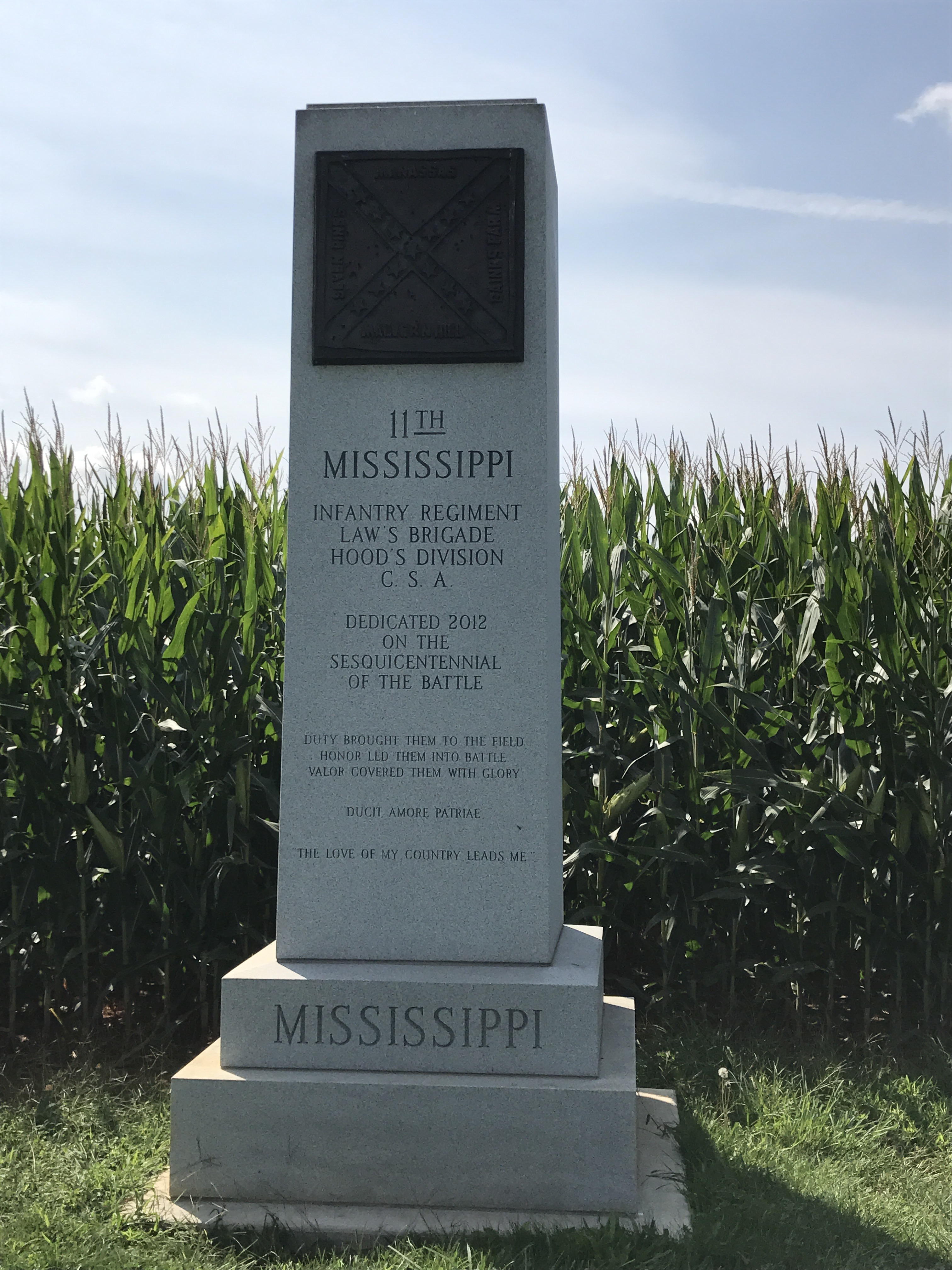

 Of the Confederate monuments most are of fairly recent import. Georgia and Texas have monuments to all of their soldiers, while Mississippi has one dedicated to the 11thMississippi Infantry. All three of these stand within a hundred yards of each other on the southern edge of the Cornfield.
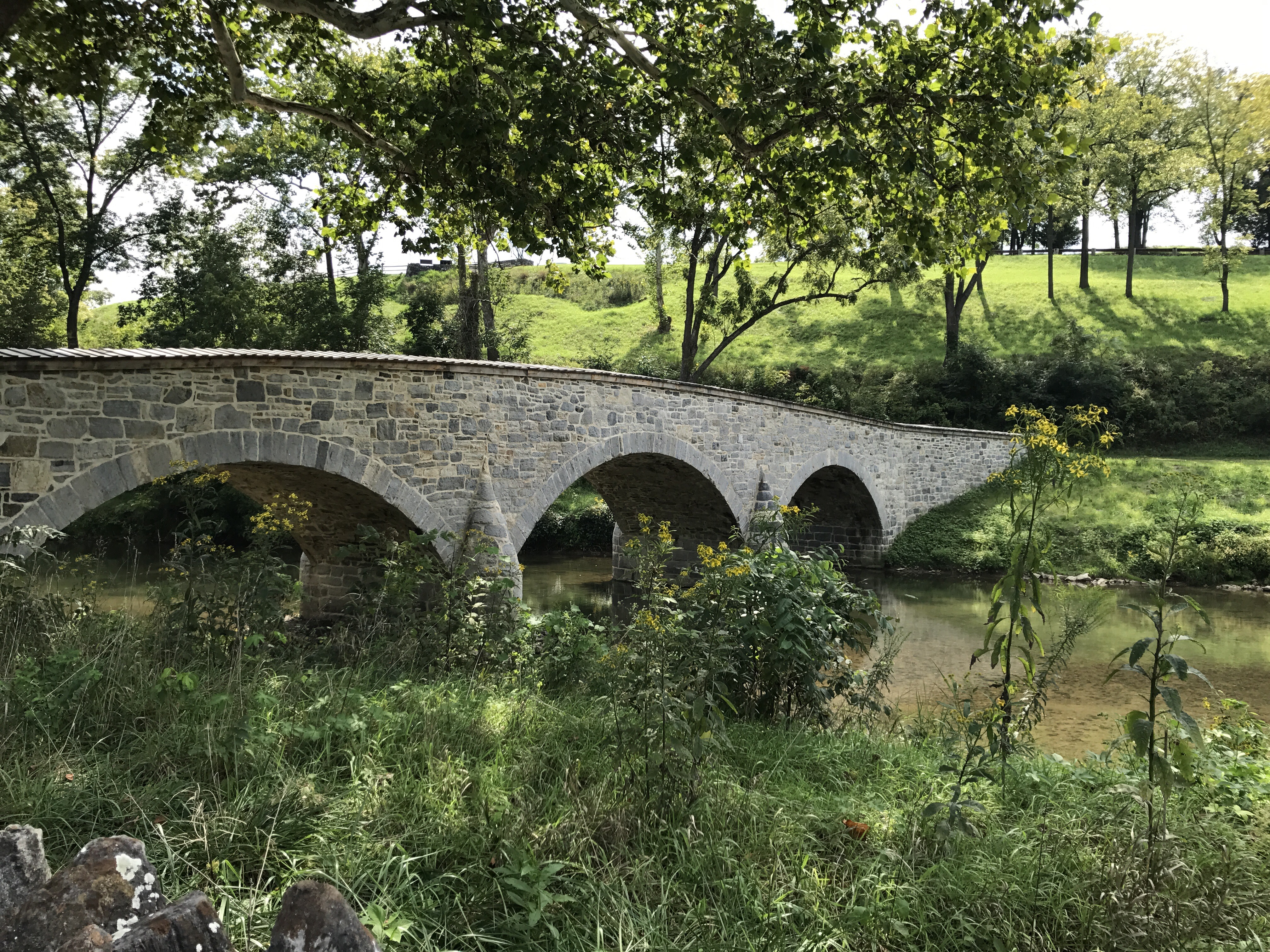

There is a monument to Robert E. Lee near the new Burnside bridge off Maryland Highway 34 as you cross Antietam Creek. It too is a rather new addition, being funded by William F. Chaney and dedicated in June 2003. Chaney had noted that he just wanted “even things up a bit.” The inscription on it furthers the Lee myth promoted by the purveyors of the Lost Cause and the Noble South saying “Although hoping for a decisive victory Lee had to settle for a military draw, Robert E. Lee was personally against secession and slavery, but decided his duty was to fight for his home and the universal right of every people to self-determination.”
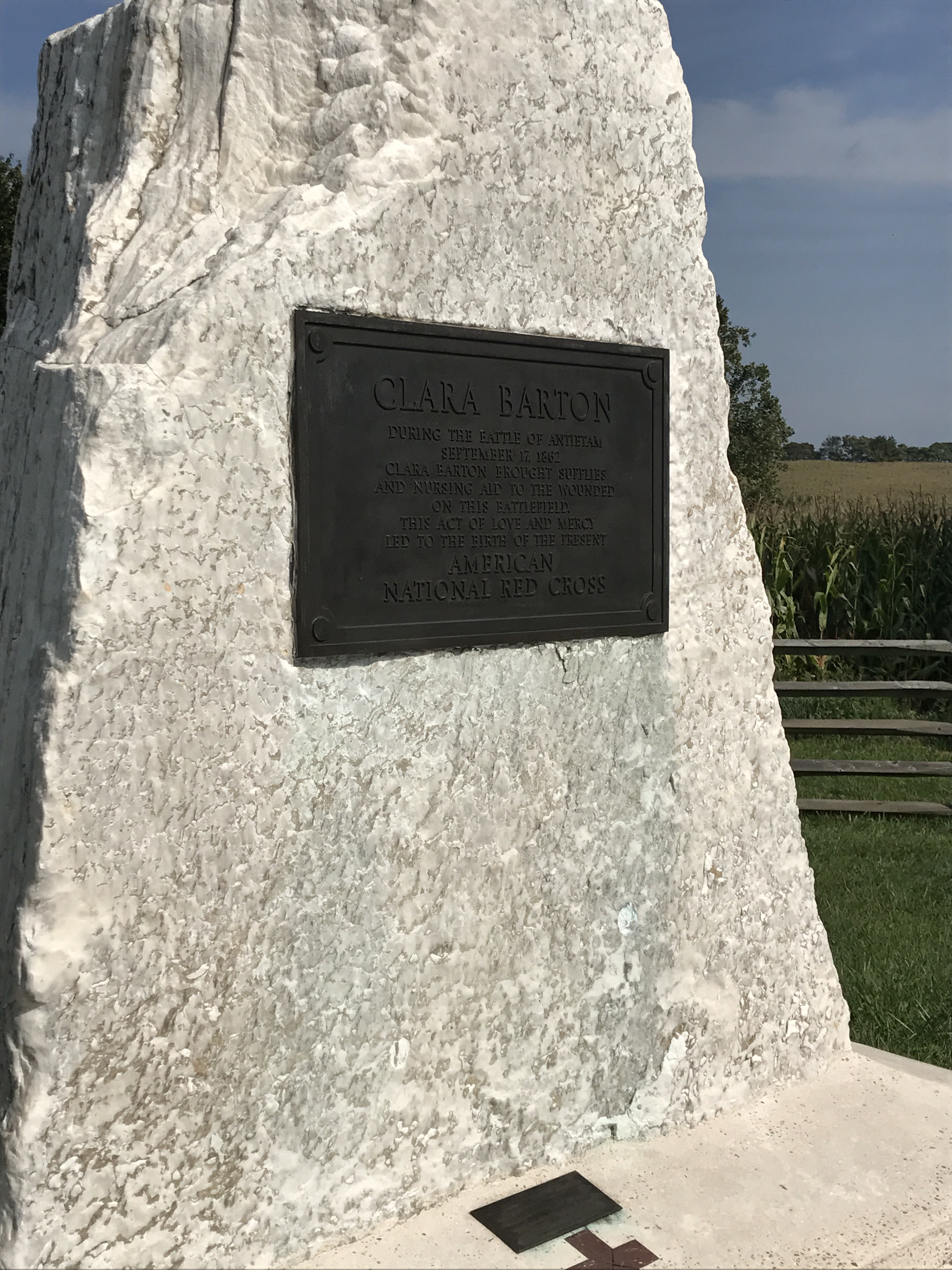

A monument on the northern edge of the Cornfield is dedicated to Clara Barton who along with other nurses helped to care for the wounded of the battle and one near the Burnside Bridge to President William McKinley who was a Sergeant in the 23rd Ohio Infantry. Six monuments each with a cannon placed upside down into a stone, these are mortuary markers noting where six Generals were killed or mortally wounded. They include Union Generals Joseph Mansfield, commander of XII Corps, and division commanders Israel Richardson and Isaac Rodman. Three Confederate brigade commanders, George Anderson, William Starke, and Lawrence O’Brien Branch are marked by identical monuments.


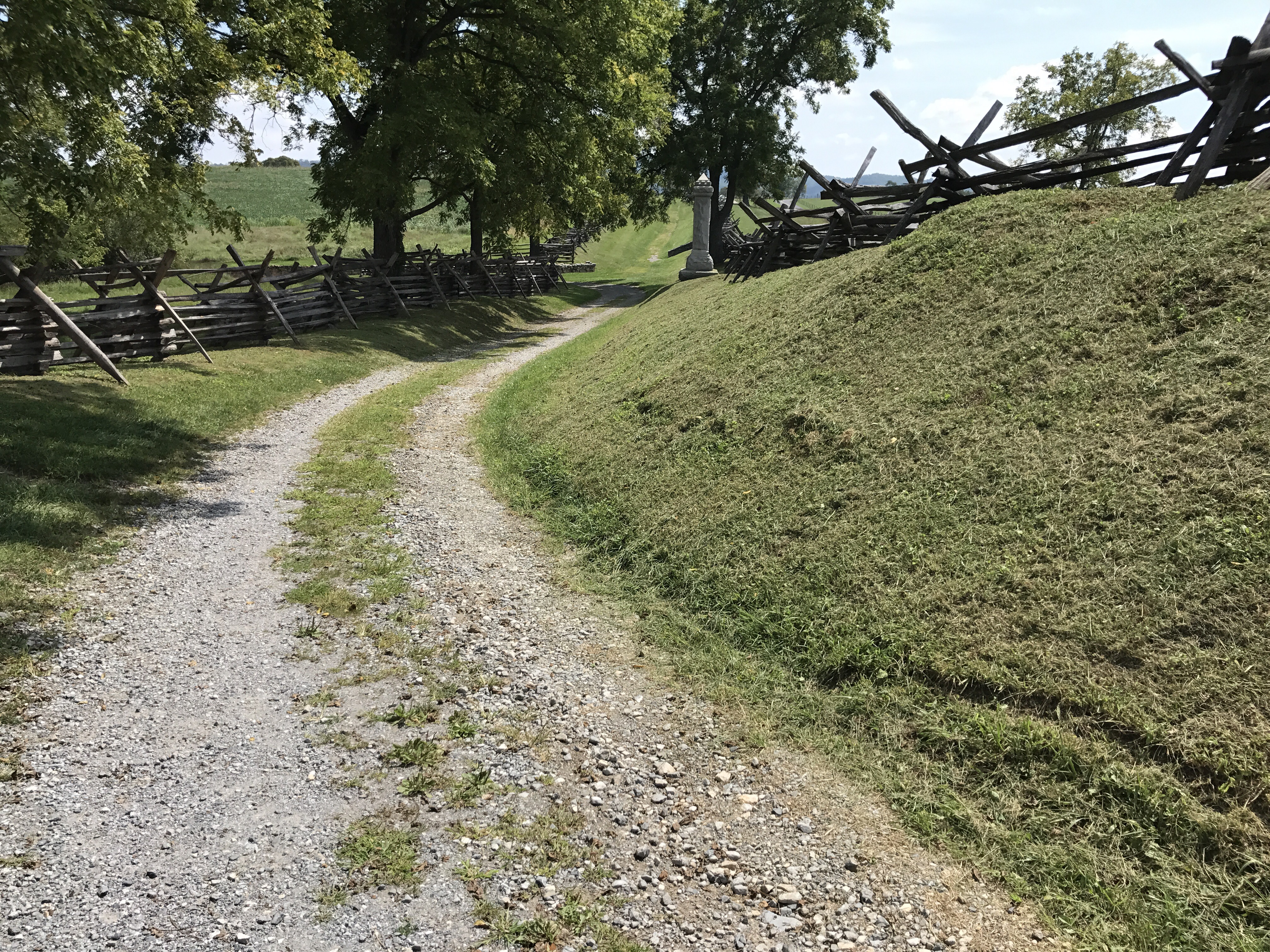
There was an eerie pristine feeling when I walked the battlefield yesterday. There were not many people on it, especially compared to Gettysburg. This led to a rather solitary experience amid the quite, only punctuated by the calls of birds, the chattering of squirrels, and the assorted buzzing, chirping, and humming of insects. As I walked the Cornfield, the West Woods, the Sunken Road and Bloody Lane, crossed the Burnside Bridge, made my way to the furthest point of the Union advance, and paused in the cemetery I was continually reminded of Walt Whitman’s poem, Ashes of Dead Soldiers:

“Ashes of soldiers South or North, As I muse retrospective murmuring a chant in thought, The war resumes, again to my sense your shapes, And again the advance of the armies. Noiseless as mists and vapors, From their graves in the trenches ascending, From cemeteries all through Virginia and Tennessee, From every point of the compass out of the countless graves, In wafted clouds, in myriads large, or squads of twos or threes or single ones they come, And silently gather round me…”

Until tomorrow,

Peace,

Padre Steve+
3 Comments

Filed under civil war, History, Loose thoughts and musings, Military, Travel

The Eternal Precedent of the Holocaust

Friends of Padre Steve’s World,

While I was writing the article that I published here yesterday that I was not done with the subject, and that in the words of Hedy (that’s Headly) Lamar “My mind is a raging torrent, flooded with rivulets of thought cascading into a waterfall of creative alternatives.” That being said I have been so busy that I am finishing this late today after driving of the the Washington D.C. area for an extended weekend. Tomorrow morning I am going to drive up to the Antietam battlefield which is just up the road in Maryland to spend the day walking that battlefield. I’ll probably write something later in the afternoon or evening rather than to push out another article for tomorrow morning tonight.

Yesterday I wrote an published an article about how easy it is to acquiesce and silently become an accomplice and bystander to evil. But there was so much more to write if I had the time to do so in the format of this site. Of course I am sure that I will use what I wrote yesterday in other projects and maybe even in a book format. I had a reader ask me yesterday if I didn’t think the continuing to brink up past evils such as the Holocaust and American Slavery was worse than letting them lie and to disappear into history far from memory.

It’s actually not a bad question but I responded to him by reminding him that Holocaust Denial industry has been going on for decades, and as philosopher Primo Levy, an Auschwitz survivor noted “Those who deny Auschwitz would be ready to remake it.” Since there are now very few victims, perpetrators, or bystanders left to remind us of that genocide in the flesh, the Holocaust deniers and the fabricators of fake history are becoming more numerous and some, seek to present themselves as legitimate historians with their own journals. This as I said is not surprising to me, especially in the United States which was physically unscarred by the war and where White Supremacy has long been part of our history and culture, and not just in the old states of the Confederacy. 

I would dare say that the vast majority of Americans have never looked at one of the victims of the Holocaust in the eye or seen their Auschwitz camp number tattooed on their left forearm. I have and I cannot forget. But the truth is, that the further into the past an atrocity like the Holocaust disappears, through ignorance or intentionality, there is a very real possibility, or shall I say probability is that those crimes against humanity will be forgotten and repeated by a new generation. That is the lesson of history and the human condition, that is why it is even more important not to forget or allow others to forget the magnitude of these crimes against humanity. Timothy Snyder correctly observed that “The world is now changing, reviving fears that were familiar in Hitler’s time, and to which Hitler responded. The history of the Holocaust is not over. Its precedent is eternal, and its lessons have not yet been learned.” A growing number of Americans are comfortable in stating publicly their agreement with White Supremacist and neo-Nazi ideology, some 9% or 30 million in a recent poll. 

The Nazis, the American Slave Power elite, the Stalin and his NKVD mass murderers, their willing executioners, those who profited from their crimes, and those who stood by and said nothing, were not that much different than most of us given similar circumstances. In regard to the Holocaust it was not an anomaly of human history or something that could not be replicated in other places. Yehuda Bauer wrote:

“The horror of the Holocaust is not that it deviated from human norms; the horror is that it didn’t. What happened may happen again, to others not necessarily Jews, perpetrated by others, not necessarily Germans. We are all possible victims, possible perpetrators, possible bystanders.”

We have to remain on guard in order to ensure that such events, unimaginable to most people, never happen again. History may not repeat itself, but human nature doesn’t change and we are fools if we think that we are any more ethical or moral than Europeans of the 1930s or 1940s.

Until tomorrow,

Peace

Padre Steve+

1 Comment

Filed under ethics, History, holocaust, Loose thoughts and musings, nazi germany

“But the Jews Weren’t the Only Ones” How Ordinary and Terrifyingly Normal People Minimize and Accept Nazi Ideology

Friends of Padre Steve’s World,

I have to admit that the amount of ignorance in the defense of evil that I see daily is simply mind blowing. It makes me shake my head. But then I cannot be surprised anymore. Over the weekend I saw a poll in which nine percent of Americans said that holding White Supremacist or Neo-Nazi views and ideology was okay.

Now nine percent doesn’t sound like a big number or anything to worry about until you extrapolate that percentage into the numbers of people who hold that view. Based on the population of the United States that nine percent equals about thirty million individuals. Now I’m sure that many of these patriotic Americans are not card carrying Klansmen or Nazis, but the fact that they would turn a blind eye to the evil of both in the name of some incomprehensible moral equivalence as did President Trump after Charlottesville is quite disturbing. Perhaps it is his example that enables them to be so open about their acceptance of evil.

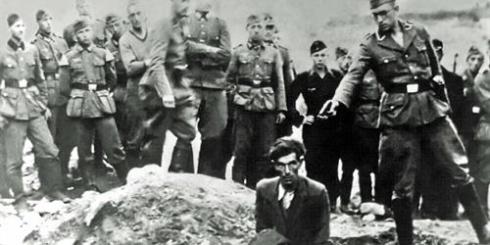
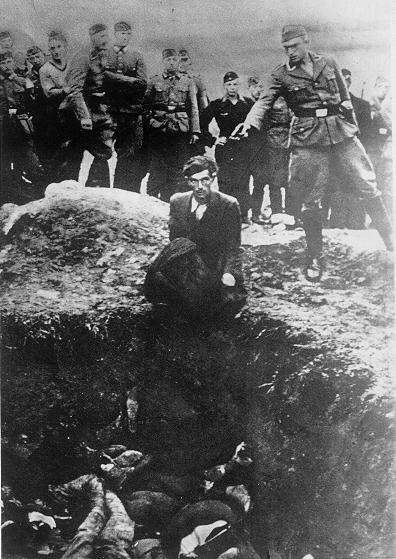
Yesterday on my Facebook page a friend of a friend commented on an article which discussed new research that indicates that the Nazis in their occupation of the Ukraine killed perhaps a half million more Jews than previously believed. That woman made the comment that there were others, and yes that is true. Had the Nazis won the war tens of millions more of the Jews as well as the Slavs who they referred to as Untermenschen or subhumans would have been killed, either directly or through a policy of intentional starvation. But make no bones about it, from the months that Hitler spent in Landsberg prison for his role in the Beer Hall Putsch of 1923 writing Mein Kampf until the end of the war as the Red Army closed in on his bunker in Berlin, the Jews above all were the object of his personal hatred.

Close to six million Jews and millions of others were killed by the Nazis. Millions of Africans were enslaved in the United States and even after emancipation were by law treated as less than full citizens. Under Jim Crow they were discriminated against at every level of government including states that were neither a part of the Confederacy or not even States when the Civil War was fought, they were impressed as forced labor under the Black Codes and thousands were murdered, often in public by people who brought their children to watch Black men die.

But these people were not just numbers. It’s all to easy to blur them into a mass of dehumanized humanity by talking about the millions, when every single one was a human being, yes, I believe created in the image of God. We have to see their faces and we have to recognize their essential humanity as men and women, children, fathers, mothers, brothers, sisters, husbands and wives, whose lives were in the case of the Jews obliterated as if they never existed, and others like African slaves who were simply property.

I explained that in quite a few fewer words and told her that she shouldn’t challenge me on the subject, which of course she did. So I went into more detail and shot her argument down in flames, to the cheers of other commentators on the post. When you have spent much of your academic life studying a subject it really gets old hearing people make excuse for evil by trying to minimize that evil, especially against the targeted people.

It’s like Confederate apologists saying that the institution of slavery which enslaved millions of Africans was actually worse for White people. Yes it is true that many poor whites benefited little from slavery, but they were not bought and sold as chattel, sold away from their wives and children, whipped, and marched across country in chains to new owners, or yes even killed simply because they were not considered human beings but property.

Sadly, as Dr. Timothy Snyder wrote “The history of the Holocaust is not over. Its precedent is eternal, and its lessons have not yet been learned.”

So there are about 30 million Americans who believe that holding Nazi and White Supremacist beliefs is okay. A few years ago I would believed that the number was lower, but after seven months of living in Trump’s America I believe that it might be even higher than the poll indicated. I only say this based on the postings I see on various social media platforms, news comment pages, the proliferation of websites that cater to these beliefs, and the lack of real condemnation of such individuals by the majority of the GOP Senate and House majorities, and the outright defense of them by other GOP representatives at the Federal and State level. These people have not learned the lessons of the Holocaust, nor American slavery.

Again I don’t believe that the majority of these people are real card carrying Nazis or Klansmen. Most would probably be considered great citizens: they work, they raise families, they go to church, and many would claim that they have “a Black or Jewish friend” so obviously they cannot be racists. But that being said they turn a blind eye to the evil of race hatred and White supremacy, and sometimes join in on social media meme wars where they mock the victims. But no matter what, not condemning the purveyors of White Supremacist or Neo-Nazi ideology, or by using the arguments of moral equivalence to minimize those crimes against humanity makes these people as complicit in the past, present, and future crimes of Naziism as if they were.

They may be ordinary people, as seemingly normal as anyone else, but as Hannah Arendt noted about Adolf Eichmann and other Nazis who advanced the destruction of the Jews was that they were so normal. She wrote:

“The trouble with Eichmann was precisely that so many were like him, and that the many were neither perverted nor sadistic, that they were, and still are, terribly and terrifyingly normal. From the viewpoint of our legal institutions and of our moral standards of judgment, this normality was much more terrifying than all the atrocities put together.”

That my friends is as true as the day she wrote it after Eichmann’s trial, as it is today, and why we must constantly educate people in every forum possible that it is all too easy to become either a perpetrator or evil or a bystander. As Snyder wrote: “It is less appealing, but morally more urgent, to understand the actions of the perpetrators. The moral danger, after all, is never that one might become a victim but that one might be a perpetrator or a bystander. It is tempting to say that a Nazi murderer is beyond the pale of understanding. …Yet to deny a human being his human character is to render ethics impossible. To yield to this temptation, to find other people inhuman, is to take a step toward, not away from, the Nazi position. To find other people incomprehensible is to abandon the search for understanding, and thus to abandon history.”

Since they were human beings the Nazis were not unique to history. In every era of history human beings have committed atrocities, many in the name of some kind of ethnic, religious, or nationalist ideology of supremacy that held other people to be less than human. That may sound harsh, but it is all too true based on history.

Yehuda Bauer wrote: “The horror of the Holocaust is not that it deviated from human norms; the horror is that it didn’t. What happened may happen again, to others not necessarily Jews, perpetrated by others, not necessarily Germans. We are all possible victims, possible perpetrators, possible bystanders.”

In the movie Judgment at Nuremberg the judge played by Spencer Tracy noted something important about the defendants in the trial. His words need to be heard today as well:

Janning, to be sure, is a tragic figure. We believe he loathed the evil he did. But compassion for the present torture of his soul must not beget forgetfulness of the torture and the death of millions by the Government of which he was a part. Janning’s record and his fate illuminate the most shattering truth that has emerged from this trial: If he and all of the other defendants had been degraded perverts, if all of the leaders of the Third Reich had been sadistic monsters and maniacs, then these events would have no more moral significance than an earthquake, or any other natural catastrophe.

But this trial has shown that under a national crisis, ordinary – even able and extraordinary – men can delude themselves into the commission of crimes so vast and heinous that they beggar the imagination. No one who has sat through the trial can ever forget them: men sterilized because of political belief; a mockery made of friendship and faith; the murder of children. How easily it can happen. There are those in our own country too who today speak of the “protection of country” – of ‘survival’. A decision must be made in the life of every nation at the very moment when the grasp of the enemy is at its throat. Then, it seems that the only way to survive is to use the means of the enemy, to rest survival upon what is expedient – to look the other way. Well, the answer to that is ‘survival as what’? A country isn’t a rock. It’s not an extension of one’s self. It’s what it stands for. It’s what it stands for when standing for something is the most difficult! Before the people of the world, let it now be noted that here, in our decision, this is what we stand for: justice, truth, and the value of a single human being.

It is high time that we learn that again and that we make up our minds to oppose the ideologies that made the Holocaust and Slavery possible. As Hannah Arendt observed: “The sad truth is that most evil is done by people who never make up their minds to be good or evil.”

So until tomorrow,

Peace

Padre Steve+

4 Comments

Filed under civil rights, History, holocaust, nazi germany, News and current events, Political Commentary

Presidential Twitter Storms and the Absence of Empathy

Friends of Padre Steve’s World,

As residents of southeast Texas struggled against the unrelenting rain and floods of former Hurricane Harvey the President was on a Twitter spree recommending a book by Milwaukee Sheriff David Clark (his other favorite criminal Sheriff after Joe Arpaio) his determination to build a border wall, NAFTA, a visit to Missouri, the 2016 election, a slam against Missouri Senator Claire McCaskill, and a few treats bragging about the great response to the hurricane.

It was a banal display of sordid narcissism by a man who shows not a bit of empathy for people, many of who voted for him. But then that should not surprise anyone because his tweets and his public statements have always had a mocking tone towards those most loyal to him.

Gustave Gilbert, who served as a psychologist to the major Nazi war criminals at Nuremberg noted that in his observation and discussions with them he had to deal with the nature of evil. He had to find the common thread among them that allowed them to take part in the most horrific crimes against humanity conducted by an allegedly civilians, western and Christian country. He noted that in his dealings with them they had one thing in common, they had no empathy for their victims. He said, “evil is the absence of empathy.” The common psychological term for a person who cannot empathize with other people is a sociopath. That is what are President is. It is a trait that he shares with the vilest criminals of the Twentieth Century. Yesterday was just another day in the life of our sociopath in chief.

I was have a beer with some friends this afternoon and a friend showed me some Facebook post of a mutual friend. They were posts and memes that belittled and mocked the people fighting the rain and floods caused by Hurricane Harvey. I could only shake my head when she asked me if he was a Trump supporter, because indeed he is, and he was belittling many people who like him voted for and continued unreservedly to support the President, at least until Harvey, we’ll see if they remain supporters. However, That being said, I do think that many of the President’s supporters are so far in the tank for he that he could shoot an kill one of their family members and they would continue to support him.

As I thought of these things last night I was reminded of the words of Hannah Arendt: “When evil is allowed to compete with good, evil has an emotional populist appeal that wins out unless good men and women stand as a vanguard against abuse.”

Now honestly I don’t think that the majority of Trump supporters are themselves evil or even bad people. But that being said I do believe that quite a few of the, perhaps a majority of them have surrendered to taking the path of least resistance and looking out for what they think are their interests first, even if the result of their decisions hurt people who are much like them.

As Arendt said, “The sad truth is that most evil is done by people who never make up their minds to be good or evil.”

That is what we are watching happen before our very eyes. Some might claim ignorance, or claim that they are non-political and are in no position to judge the morality of this President and his administration, but that is the refuge of the coward. Karl Popper noted “Ignorance is not a simple lack of knowledge but an active aversion to knowledge, the refusal to know, issuing from cowardice, pride, or laziness of mind.”

The fact is that today, like in Germany between 1933 and 1945 no one can claim ignorance about the nature and character of our President, but if they don’t know it is simply cause they do not want to know, and for those in positions of authority who turn a blind eye, what Albert Speer, Hitler’s architect and later armaments minister wrote “…being in a position to know and nevertheless shunning knowledge creates direct responsibility for the consequences…”

It is lack of empathy, an active aversion to truth, shunning knowledge, and perhaps worse, a refusal to know when in a position to know which allow people to look the other way in the face of evil and injustice.

Until tomorrow.

Peace,

Padre Steve+

1 Comment

Filed under ethics, History, holocaust, leadership, nazi germany, News and current events, Political Commentary

Statues With Limitations: Part Three


Friends of Padre Steve’s World,

Today I am continuing my series about statues and monuments which was fueled by the controversy regarding various Confederate monuments and memorials, most which are in the South but many others in states that remained loyal to the Union, were not states at the time of the Civil War, or which were in areas be they North or South which were heavily pro-Union and which sent more soldiers to fight for the Union then they did the Confederacy. 

It is interesting to see how memory and myth cloud history when it comes to monuments, especially those to the Southern Confederacy, a nation that was described by its Vice President, former US Senator Alexander Stephens in these words:

“Our new government is founded upon exactly the opposite idea; its foundations are laid, its corner- stone rests upon the great truth, that the negro is not equal to the white man; that slavery — subordination to the superior race — is his natural and normal condition. [Applause.] This, our new government, is the first, in the history of the world, based upon this great physical, philosophical, and moral truth.” 

Confederate President Jefferson Davis, who so many monuments are dedicated was not happy with his Vice President’s remarks, not because he didn’t believe them not to be true but because their honesty could hurt the cause of the Confederacy abroad. He noted:

“That speech infuriated me, Oh, what Stephens had said was true, perfectly true, but could anything hurt us more abroad than such impolitic remarks? It was the beginning of a fatal falling out between me and that rebellious and vindictive dwarf, who was hell-bent on forming his own policies and disputing mine with niggardly deviousness.” 

The fact is that the vast majority of the Confederate monuments, be they located in the former eleven Confederate states, or place that were not a part of the Confederacy were not built to honor the several hundred thousand Confederate dead, but to remind Blacks that they were subordinate to Whites wherever the were erected. This can be seen by the periods during which they were constructed. Only a few were built in the first two decades following the war, and some of those, including the monument in Portsmouth, Virginia were built by the wives, mothers, and children of the fallen. Honestly as to those I understand why they are where they are, and while I think that 150 years later, unless the context of their construction and monuments or historical narratives to the victims of the Confederacy and the institution of Souther Slavery are placed alongside, I am hard pressed to explain why they remain in places of honor. 

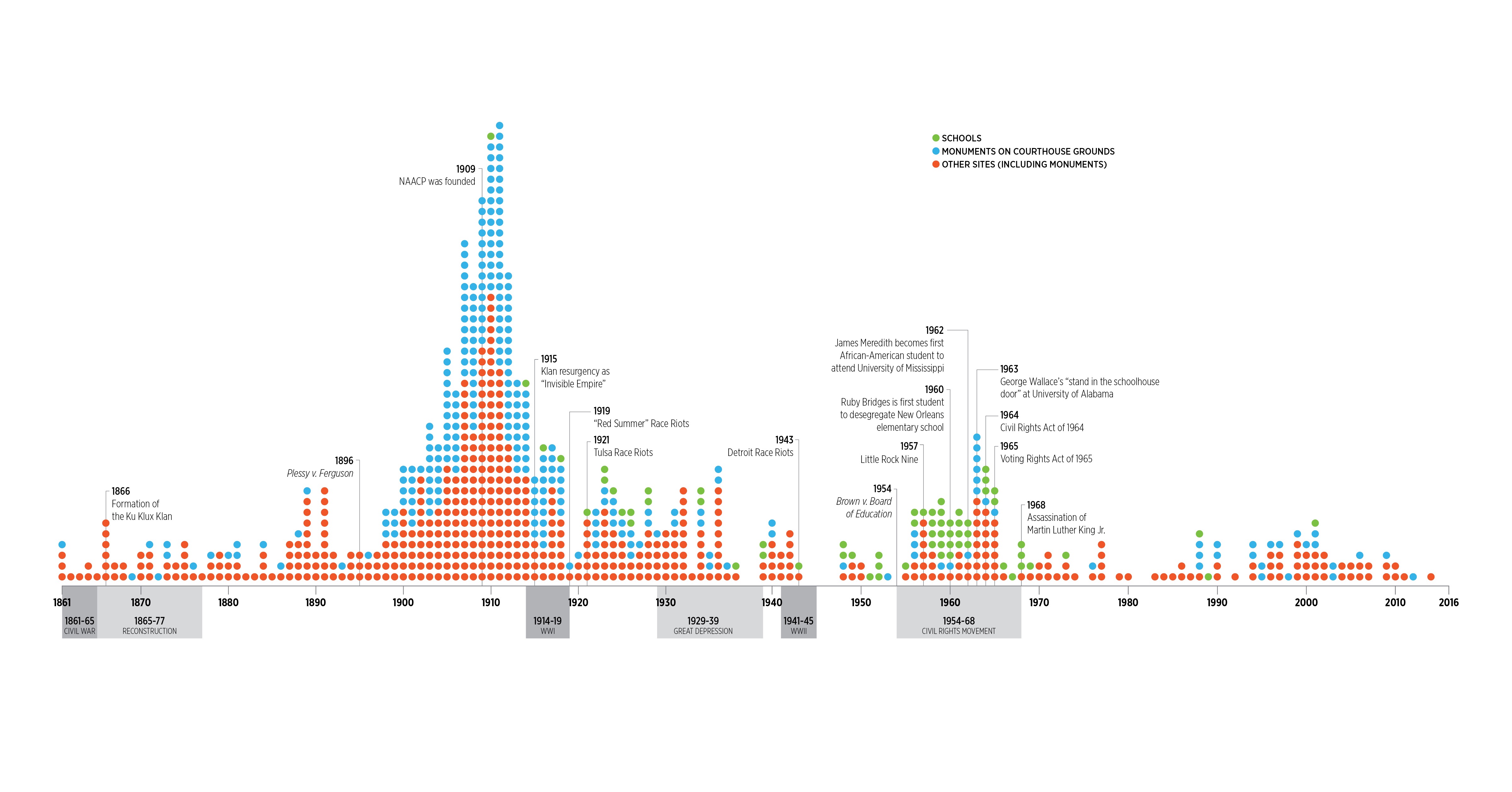
But honestly, those memorials are but a minority. Most of the Confederate monuments that spark such freak controversy today were erected anywhere from 30 to 150 years after the war. The periods that they were built are interesting of themselves. The biggest spike in construction began in the immediate aftermath of the Plessy v. Ferguson ruling that legalized Jim Crow and the second during the backlash against the Civil Rights Movement beginning around 1948. The chart below provides a good representation of when the Confederate monuments were built. 

As I mentioned in my first two articles of this series I am not of the opinion that the monuments should be destroyed, nor do I think that they should be torn down by protesters. I think that each monument should be examined based on its historical merit. Since the vast majority happen to be from the days of the Confederate resurgence after Plessy and in the height of the Dixiecrat response to the Civil Rights movement beginning after Brown v. Board of Education which overturned Plessy in 1954. So today I am going to use the example of the monuments in Hampton Roads area as a teaching point. 

Virginia where I live has 223 Confederate monuments, the most of any state. That is in a sense understandable due to it being the largest state in the Confederacy as well as the site of its capital. There are three major public monuments located in South Hampton Roads as well as a number of monuments in local cemeteries throughout the area.

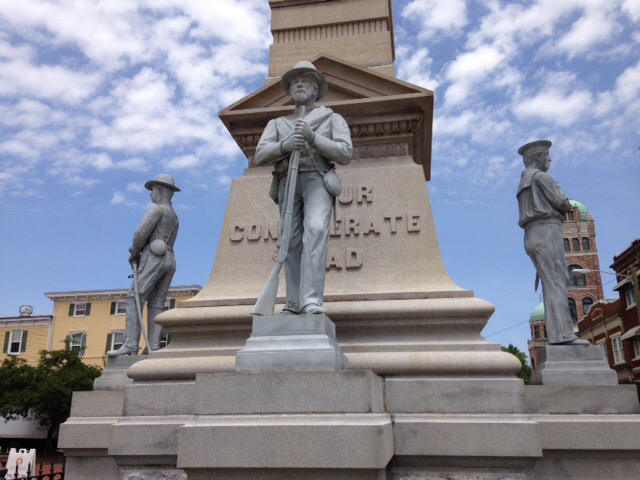
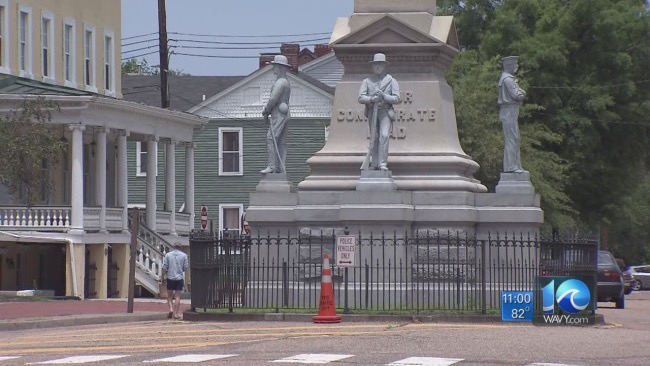
The one located in Portsmouth is the oldest and the most interesting from a historical point of view. Planning and fund raising for it began in the late 1860s shortly after the war and it was dedicated on the site where slaves were whipped and punished in the town square. It was dedicated in 1893. The head of the local Sons of Confederate Veterans chapter say that it was placed there when a church where it was planned to be located backed out. I do not know the veracity of that claim. That being said the location is still problematic, especially since Portsmouth is heavily African American and many of the Black families there trace their roots to the slaves of the city’s ante-bellum times. The monument itself is one of the most interesting monuments that I have seen. It is an imposing sight in the old court square. At its center is an obelisk on which is inscribed To Our Confederate Dead. The obelisk is surrounded by four statues representing an infantryman, a cavalryman, an artillleryman, and a sailor. I think that it would fitting if this monument was moved in its entirety to a cemetery in the city where Confederate war dead are buried. It could be replaced by any number of monuments, perhaps one to the city’s war dead from the World Wars, Korea, Vietnam, the First Gulf War, and the current wars which have been going on since 2001. 


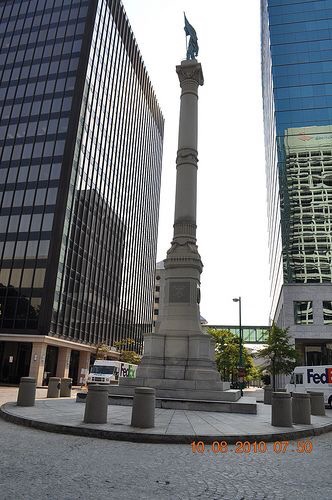
Norfolk’s monument is located within a block of where the slave auctions, the slave jail, the slave infirmary, and a few blocks from the docks where the were shipped to other destinations. This is important because Norfolk was the leading port in the slave trade from about the 1830s until the outbreak of the Civil War. The monument is over 80 feet tall and is capped by the figure of a defiant Confederate soldier holding a sword and the Confederate flag. At its base are engravings of the Confederate Battle Flag and a dedication to Our Confederate Dead. Despite those words this monument can only be described as a monument to White Superority and should be removed and replace with a monument to all of the city’s war dead. The statue adorning the top could go to a museum. 


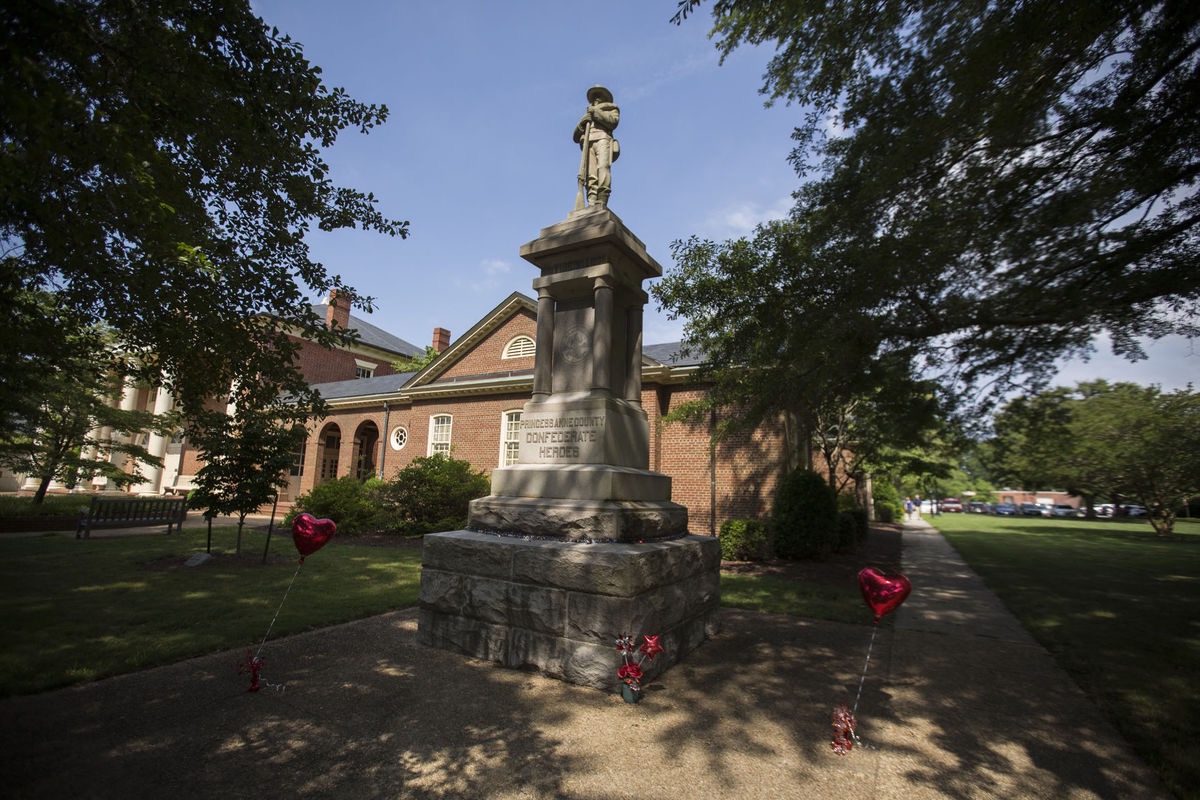
In Virginia Beach the Confederate Monument is outside the old Princess Anne County Courthouse where slave auctions were held, and which is on the grounds of the current Virginia Beach Municipal complex. In older times it would have been seen by all entering the city hall or courts for any reason. It is over 20 feet tall and topped by the statue of a Confederate infantryman. Unlike the other monuments dedicated to the dead, this one is dedicated to Our Confederate Heroes. Now it is in a distinctly less visible location and one has to go out of their way to find it. I think it could remain where it is but only if there was monument to the victims of slavery who were bought and sold there. That would provide context for it. 


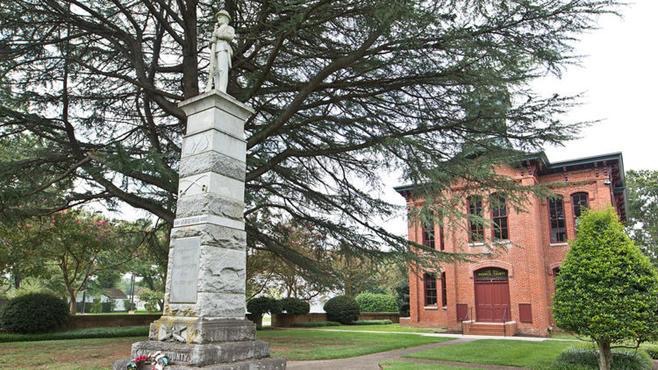
That monument was erected in 1905 during the height of the re-establishment of White Rule and White Sumpremacy after Plessy. One other, in the Denbeigh section of Newport News stands at site of the old Warwick County Courthouse. Denbeigh was named after the Denbeigh Plantation and the county seat was moved to Newport News when Denbeigh and Warwick county consolidated with the independent cit of Newport News in 1958. The courthouse is now a museum and the monument was dedicated in 1909 to the men of Company H, 32nd Virginia Infantry Regiment. The regiment, recruited from the Peninsula in early 1861 had a number of companies farmed out to the artillery was reconstituted as a small, 7 company regiment in 1862. It was decimated at Antietam and served to the end of the war with the Army of Northern Virginia where five officers and forty-two enlisted men surrendered with Robert E. Lee on April 9th 1865. Since this monument is dedicated to a specific unit which distinguished itself in numerous engagements, including Antietam, and Petersburg that relocating it to one of those battlefields would be completely appropriate. 

Admittedly all of these monuments served a twofold purpose, in the case of Portsmouth, from what I have read was that those who began to contribute money for the monument was to honor the fallen. By the time it was built that purpose was also mixed with the political desire of many whites to re-establish White Supremacy. The same is true with the other monuments in the public square. As to monuments located in cemeteries where Confederate soldiers are interred it is only fitting that they remain where they are. 

As to what should be done with each monument there are options, but what can actually be done with them are dictated by State Law which stipulates that localities can erect monuments but cannot “disturb or interfere with any monuments or memorials so erected.” That is a problem for the Virginia legislature to deal with and truthfully I believe that they should amend the law to allow municipalities to remove, alter, or relocate monuments. 

As a historian I think that all can serve as teaching points and that whatever is done with them that their context in relation to slavery, the Civil War, Reconstruction and Jim Crow needs to be clarified as part of teaching history and in the process expunging the myths of the Lost Cause and the Noble South from the historical narrative. 

I want to make a couple of points. First I do not think it is wrong for the relatives and descendants of those who fell in any war to want to remember them. I have traveled throughout Europe and I have seen the monuments in city squares that list the dead from wars dating back to the Napoleonic periods and before. Even if I disagree wth the cause that they fought for I will not forbid their descendants to honor their memory, even if I refuse to honor the military service of my ancestors who rebelled against the Union in 1861. 

I think that the Confederate monuments in Portsmouth, Newport News, Norfolk, and Virginia Beach can serve a purpose greater than for which they were originally constructed. I have described what I think would be best done with each, but I believe that with some modifications that each could remain where they are now so long as there are monuments to those who were the victims of slavery, those who were the unwilling conscripts recruited for that immoral and inhuman cause, and those who opposed that cause, before, during, or after the war. 

The same is true for many other of the Confederate monuments throughout the South. But, at the same time we have to address the monuments to Confederate leaders which built during the same time period as these generic representations of Confederate soldiers. The fact is that the leaders of the Confederate rebellion against the United States are much more responsible for the deaths of three quarters of a million soldiers and the devastation of the South than any ordinary soldier. These leaders include the Confederate President, Jefferson Davis, secessionist politicians like Henry Benning and Alexander Stephens, and military leaders like Robert E. Lee, Stonewall Jackson, and Braxton Bragg. I see little reason for monuments to men who were responsible for such great suffering to remain in places of honor. 

But honestly even this is not enough, for to fully tell the story we have to also honor the Southern Unionists like George Thomas and John Buford who did not forsake their oaths the the country, and men like Robert E. Lee’s lieutenants James Longstreet, Richard Ewell, Billy Mahone, and John Mosby who fully reconciled to the Union, and who were deomonized and then written out of Southern history. 
So anyway, I will deal specifically with monuments to Confederate leaders another time, but I think this is enough for now. That being said, any monuments to the leaders of the Confederacy or those who served during that rebellion need to be held to the bar of history, otherwise we mock all of their victims, and yes, even the sacrifices of the innumerable Johnny Rebs who died in a war that most had little or nothing to gain from. 

Peace 

Padre Steve+

3 Comments

Filed under civil war, historic preservation, History, News and current events, Political Commentary

Statues With Limitations: Part Two


Friends of Padre Steve’s World,

Alexander Pope wrote “Monuments, like men, submit to fate.” 

Two days ago I began a series regarding the Confederate Monument Controversy. I was going to begin today’s article by going directly into what I think should be done with these monuments but think that a little bit more background and context is necessary. That context is best put in the difference between history and memory. History, is made by people because it has real world effects cannot be erased because for good or bad its effects always are with us. Memory on the other hand is often selective and tends toward sentimentally. Because of that, memory often leads to the preservation of things that provide us with a certain sense of comfort, things that buttress our innate sense of superiority. 

Statues and monuments themselves have to be taken in their historical context: especially what they meant to the people that erected them and the era in which they were constructed. From time immemorial people and nations have erected statues and monuments to dieties, empowers, kings, generals, and yes, even philosophers and historians. They have also sought to commemorate the lives of soldiers who died in various wars, in part to honor their dead as did the ancient Athenians at Kerameikos, but more often to build upon a sense of national myth and purpose, to link the sacrifices of yesterday’s leaders, or soldiers to their current generation’s political, social, and even spiritual urges.

Some religions like Judaism and Islam have traditionally frowned upon the erection of statues and images that represented their dieties, their saints, or their leaders, fearing that such images could lead to idolatry. There was even a constroversy in the Christian Church, the Iconoclast Controversy, which dealt with this matter which took more than a hundred years to resolve. 

In Western society, especially since the Romans there has been a conscious attempt by nations to built statues and monuments to their leaders and other men, as women seldom rated such honor, whether they actually deserved honor or not. As such there are monuments in prominent places to men with political, social, hereditary, or economic connections who when compared to their contemporaries, or others, before or after them, have done little to be heirs to such honor. This does not mean that they were necessarily bad people, or even unworthy of the honor of their time, but rather that they are undeserving of perpetual honor in the most public of locations, or in places unconnected with where they made their name. 

Cemeteries and museums are the best places for statues which have past their effective life in the public square. Removing them does nothing to harm history, nor does it write them out of history. I like how the Old Testament writers of the books of the Kings and Chronicles end their discussions of the kings of Israel and Judah. They note that these men’s lives and deeds, good and evil, are written about and where they were buried to be with their ancestors. An example of the is Jesus, one of the kings of Israel in the book of Second Kings: “Now the rest of the acts of Jehu, all that he did, and all his power, are they not written in the Book of the Annals of the Kings of Israel?”

Since the Jews of the Old Testament did not build statues to their leaders for fear of idolatry the ensured through the oral, and later the written tradition that these leaders, the good and the bad, were remembered for their work and contributions. The Islamic tradition is quite similar. 

The ancient Greeks, particularly those of Athens chose to use the cemetery as a place to remember their dead. In dedicating the Mount Auburn Cemetery during the Greek revival, U.S. Supreme Court Justice Joseph Story noted: 

“The Greeks exhausted the resources of their exquisite art in adorning the habitations of the dead. They discouraged internments within the limits of their cities; and consigned their relics to shady groves, in the neighborhood of murmuring streams and merry fountains, close by the favorite resorts of those who were engaged in the study of philosophy and nature, and called them, with the elegant expressiveness of their own beautiful language, cemeteries or “places of repose.”

Cemeteries are always places where the dead can be honored or remembered, where their descendants can find comfort and even sense the presence of their departed ancestors. 

But the public square is another matter. Times change, governments and governmental types change. The statues that the early colonists of the British American colonies erected to King George III had no place in the new republic and were removed. Monuments to Josef Stalin and Vladimir Lenin where removed from their places of prominence in Hungary, Czechoslovakia, Poland, and Romania once those countries escaped Soviet domination. 

Statues in public places dedicated to specific individuals or events tend to have a shelf life which means that they regardless of who they are dedicated to need to be periodically re-examined to see if they should remain in their current place of honor or be moved to a different location. But the United States is a comparatively young country, our oldest monuments are likewise comparatively new, and many pale in comparison to those of Europe, the Middle East, and Asia. In those areas multiple civilizations and empire have risen and fallen, massive monuments have been erected, toppled, or faded away. Many surviving monuments now are in museums, collections of antiquity representing fallen civilizations, or have been moved from places of honor and replaced by ones that more appropriately represent the national culture and experience. 

As we approach the first quarter millenium of our experiment as a republic it is a good time to look at what we have commemorated with monuments and make considered decisions about each of them, and not just Confederate monuments. Obviously many, especially those that deal with our founding as a nation and our founders need to stay, but others should be replaced, or removed to more appropriate venues, or in cases of monuments that memorialize the more shameful parts of our history, maybe leave them and place other monuments and markers to explain the historical context and promote history versus myth. Likewise if we decide to remove them, what replaces them should be well thought out. This actually goes beyond the monuments themselves but has all to do with history, historical preservation, and the narrative that a community wants to communicate about its history, its values, and yes, even its future, for those monuments for good or bad are part of what bind generations together. 

As no point do I think they should be destroyed, even those to men who were evil, or represented evil causes. It think in the cases of truly evil men that their statues should be placed in parks, at eye level with other statues like them. The process then allows people to view them not as exalted figures, but people with feet of clay. A number of Eastern European countries have done this with statues of Stalin, Lenin, and others from the Soviet era. 

The placement or monuments is of more importance than their existence, and their contexts matter. Honore De Balzac noted: “With monuments as with men, position means everything. 

So anyway, tomorrow I will wrap this up by dealing with the Confederate Monument Controversy.

Peace

Padre Steve+

Leave a comment

Filed under culture, historic preservation, History, News and current events

The Past Isn’t Quaint: A Pause to Reflect


Friends of Padre Steve’s World,

I mentioned that I will be continuing my article on the Confederate Statue Controversy when I posted my last two articles. I will be doing that but the date has been pushed back as I have paused to read and reflect a bit more before I publish them here. I have my drafts of what look like another two articles in that series, but I want to do a bit more reading, and reflection before I go final with them. The same goes for my article on General Robert E. Lee. That being said it is interesting to have three drafts in different stages of readiness but not being ready to go with any of them just yet mainly because I want to do my best to cover the subjects as truthfully as possible. 

This is the problem of history. It requires critical thinking and also an argument that is accountable to evidence, as Jill Lapore noted: 

“History is the art of making an argument about the past by telling a story accountable to evidence. In the writing of history, a story without an argument fades into antiquarianism; an argument without a story risks pedantry. Writing history requires empathy, inquiry, and debate. It requires forswearing condescension, cant, and nostalgia. The past isn’t quaint. Much of it, in fact, is bleak.”

The fact is that many of the subjects that I write about are rather bleak, and often exist in places where to be fair one has to be empathetic, inquire, and even seek debate with people who disagree. I believe that what I write must be relatable today, even if it occurred hundreds of years ago. 

Later today I will be watching the solar eclipse and polishing up an article for tomorrow, probably one dealing with the Confederate Statue Controversy. That being said I have much on my mind; friends who have contacted me for guidance or encouragement, the illness of one of the people who work for me, and concern about the sailors injured and missing following the collision of the USS John S. McCain with a civilian tanker near Singapore. If you haven’t served at sea you might not understand that last concern. 

So anyway, until tomorrow,

Peace

Padre Steve+

Leave a comment

Filed under History, Loose thoughts and musings, News and current events, US Navy

Statues With Limitations: Part One


Friends of Padre Steve’s World,

Over the past week I have written a number of articles about what happened in Charlottesville and I have promised to write something about the Confederate Monument controversy. Last night I posted an article about that controversy in light of one particular monument in Colfax, Louisiana, the site of one of the most brutal massacres committed in the name of White Supremacy in our nation’s history. I do hope that you read it and share it. 

Likewise I have I have posted quite a few articles and links to articles regarding what happened at Charlottesville and the subsequent debate about removing Confederate statues on my Facebook and Twitter pages. 

Today I am beginning a two part article dealing with my thoughts on the monuments themselves. This section is more of a background article before part two which will deal with my thoughts about the monuments themselves in the broader context of them, as well as other monuments not necessarily connected with the Confederate monuments. 

First, as to the Confederate Monuments, my comments are not meant to impugn the lives of people’s ancestors. My family on both my paternal and maternal sides fought as members of the 8th Virginia Cavalry on the side of the Confederacy even though their part of Virginia officially sided with the Union. One of them, the family patriarch on my paternal side was a slave holder who after the war refused to swear his allegiance to the United States and probably was a member of White Supremacist groups after the war. There is no doubt of what he fought for, and the fact that he was a traitor and remained a traitor to our country. I don’t know as many details about the maternal side except they were part of the same regiment, except that they were not subject to conscription and as such all volunteered willingly to fight against the United States. For that is a problem, I find it hard to honor their military service because it was against the United States. There are no records that I know of, no letters that they wrote which say what they thought, and they are not “mentioned in dispatches” (the manner in which the Confederate Army honored soldiers) for any particular gallantry, in fact the history of the regiment mentions that my paternal family patriarch deserted in February of 1865. 

I do draw a distinction between the kinds of men that served in the Confederate Army. In particular I make a distinction between those that were eager volunteers for the Confederacy and those who were unwilling conscripted in the Confederate Draft beginning in early 1862 because the Confederate Army could not get enough willing volunteers. These men were drafted, often against their will. Most had no means to pay for a substitute or did not have political connections. Interestingly one of the notable exemptions to the Confederate Draft were the men who were exempted  because they owned more than ten slaves or worked for someone that owned more than 20 slaves. This was known as the Twenty Slave Rule, which modified in Draft Law of 1864 to 15 slaves. As you can imagine many poor Whites who owned no slaves found the rule to be quite unjust, but privilege is just that, quite unjust. 

As a result the conscripts were frequently abused by the willing volunteers and frequently deserted. When found, most were summarily executed following a Drumhead Trial. As the war became more desperate, deserters were summarily exectuted without trial. Hundreds of deserters from the Army of Northern Virginia were executed in the last months of the war by the direct order of Robert E. Lee simply because they were trying to go home to their families who had been displaced by the advance of Sherman’s army in Georgia and the Carolinas. These men were victims of the war and secessionist leaders as much as anyone. If you read some of their letters they are heartbreaking. 

Those who volunteered to serve the Confederate cause, especially men who had been officers in the United States Army or Navy no-matter their reason for serving the Confederacy, their gallantry as soldiers, battlefield heroics, leadership skills, or tactical brilliance were traitors to the United States. Yes they were Americans, and many had served honorably before the Civil War, but that makes them no less traitors. After the war a good number of the survivors reconciled with the Union, opposed the growing myth of the Lost Cause, and took no part in subsequent violence or in implementing discriminatory measures against the now free Blacks. Among the most prominent of these men were Lee’s lieutenants James Longstreet, Richard Ewell, John Mosby, and Billy Mahone. I have no doubt that A.P. Hill would have joined them had he not been killed in action at the end of the war, and following the war his widow opposed Jubal Early and other proponents of the Lost Cause. Robert E. Lee himself did reconcile and opposed the use of the Confederate flags, uniforms, and monuments. I will explore Lee’s actions before, during and after the war in another article that I have already started to draft. 

Interestingly, very few monuments, except those on battlefields are dedicated to these men in the South, except from Robert E. Lee who ironically wanted no part of them. Nor are there monuments in the South to Southern officers who remained loyal to the Union during the war including Generals Winfield Scott, George Thomas, John Buford, John Gibbon, Montgomery Miegs, and Admiral David Farragut. 

Likewise there is another class of men who have to be considered when dealing with the Monument Controversy. These were the political leaders whose actions led directly to the deaths of three quarters of a million men, including hundreds of thousands of Southern men, and the destruction of much of the South. How even the most devoted Southerner who wants to honor their soldiers can tolerate monuments to these leaders in their back yards is beyond me. These were also the men who ensured that every state legislature made sure that the primary reason they gave for secession in their various articles of secession was preserving and expanding slavery, while maintain white superiority. As Confederate Vice President Alexander Stephens noted in his Cornerstone Speech:

“Our new Government is founded upon exactly the opposite idea; its foundations are laid, its cornerstone rests, upon the great truth that the negro is not equal to the white man; that slavery, subordination to the superior race, is his natural and normal condition.”

There is a final group that needs to be considered. These were Confederate veterans, including notables like General Nathan Bedford Forrest, as well as men who did not serve in the war who joined paramilitaries that terrorized and killed newly free blacks. There were others who established the Black Codes which were pre-Jim Crow laws that placed many former slaves into a form of slavery by other means, imprisoning them and making them forced laborers on plantations, and businesses, many owned by Northerners. 

Racism and slavery was at the heart of the war, and it was not just a Southern problem. Many Northern businesses and banks had a strong financial interest in slavery, and there was a strong anti-war, pro-Confederate movement in the North that fully approved of slavery, the post-war Black Codes, and Jim Crow. Likewise there were many Northerners who were just as racist before, during and after the war. There were and are still are many Sundown Towns in the North and states that were never a part of the Confederacy. In no way can Northerners be fully excused from the crime of slavery, nor can they be absolved of being as racist any pro-slavery Confederate or Jim Crow proponent. Some of these men have monuments built in their honor which likewise should be examined if we are going to talk about the Confederate monuments. 

As to the monuments themselves, the vast majority were erected after the Plessy v. Ferguson case that legalized the Jim Crow Laws and empowered the movement to disenfranchise blacks, to fire them from positions in Federal and State governments, and to use violence against Blacks to keep them in line. Almost all of the monuments which were erected between 1895 and 1930 were put up not to honor the men who served but to remind Blacks of their status. The same is true of the next major surge of monument building which occurred during the Civil Rights movement, again to demonstrate to Blacks that they were subordinate to Whites, and many of these monuments were erected in places where no Confederate soldiers came from, and others which commemorate men who committed terrorist acts and murder against Blacks in the years after the war. In many case these monuments are located in cities and towns that are heavily African American. Two of these are no far from where I live in Norfolk and Portsmouth Virginia. They have different histories which I think leads to a discussion about their context. 

So, that is some of the background. I’ve written a lot about slavery, secession, and Jim Crow and will put some of those articles out again, and tomorrow I will have my proposal on what I think should be done with the various monuments. This will take into the context each type of monument and how to respectfully deal with them and how people feel about them, both opponents and supporters. In looking at what I wrote here the series may well be more than two parts. 

Until tomorrow,

Peace

Padre Steve+ 

4 Comments

Filed under civil rights, civil war, History, News and current events, Political Commentary

“Time to Oblterate the Marks of Civil Strife and the Feelings of Oblivion the Feelings it Engendered”  


Friends of Padre Steve’s World,

Just a short post today because I have become weary of cyber-battles with neo-Confederates and Alt-Right Nazis. That is not to say that I won’t stop fighting them, but don’t have a lot of energy to put into this post because of those battles. I guess it could be worse, I could be tired because I had spent the day getting real bullets fired at me by these people’s Confederate and Nazi ancestors. I have been shot at in combat by Iraqi insurgents, and no it is not fun, especially when you are the only guy there without a weapon. That being said, my ancestors on both sides of my family fought for the Confederacy, and those on my paternal side were slave owners, Confederate officers, and unrepentant rebels who would not reconcile themselves to the defeat of the Confederacy. 

Unlike my ancestors, Confederate General James Longstreet was honest with himself and to the causes of the war. He wrote this in 1867:

“The surrender of the Confederate armies in 1865 involved: 1. The surrender of the claim to the right of secession. 2. The surrender of the former political relations of the negro. 3. The surrender of the Southern Confederacy. These issues expired on the fields last occupied by the Confederate armies. There they should have been buried. The soldier prefers to have the sod that receives him when he falls cover his remains. The political questions of the war should have been buried upon the fields that marked their end.” 

I am going to write about my rather nuanced view of statues dedicated to Confederate soldiers or leaders in the next few days. I had a really good, and lengthy discussion today with a fellow officer and friend about that subject. When I write it my words will probably not make anyone completely happy because I am not an absolutist in my views. While I reject what my ancestors fought for I also know that there were Confederate soldiers who were drafted against their will, Southerners like George Thomas and John Buford, who fought for the Union, and Northerners who fought political battles against Abraham Lincoln and wanted the South to win its independence because it would be good for business, and because they were as racist as the most rabid slave power secessionist. There were also Confederates who after their defeat, including James Longstreet, John Mosby, and Billy Malone who reconciled with the United States, recanted their secessionist views, and were demonized as if they were Judas Iscariot by the leaders of the Lost Cause cult because they did so. 

Robert E. Lee, who as so many statues in his honor including the one in Charlottesville that the Neo-Nazis supposedly went to defend, made this comment regarding such things, he was not in favor of them because he did not think it wise to keep open the wounds of war. He said:

“I think it wiser moreover not to keep open the sores of war, but to follow the examples of those nations who endeavored to obliterate the marks of civil strife and to commit to oblivion the feelings it engendered.” 

The neo-Confederates would be wise to heed to his words and those of James Longstreet. 

But I’ll leave that until I write that article. 

Peace

Padre Steve+ 

6 Comments

Filed under civil rights, civil war, ethics, History, Military, News and current events, Political Commentary

“Silence in the Face of Evil is Evil Itself” Charlottesville and the Deafening Silence of Conservative Christians 


Friends of Padre Steve’s World,

As I spent time watching for the response of many friends on social media to what happened in Charlottesville over the weekend there was one thing that stood out more glaringly than anything else. It wasn’t the response or lack thereof of President Trump. It wasn’t the hate filled invective of the damned Nazis and Klan, or as they call themselves now, the “Alt-Right.” It wasn’t the response most elected Republican or Democrat office holders, or of civil rights activists. It was the silence of conservative Christians and ordained clergy of whom I have many friends, some going back decades. The silence was deafening. 

But the silence of conservative Christians was even more deafening when I heard the claims of the Nazis and their supporters who called the violence “a victory of victories,” “the beginning of their revolution,” “their Beer Hall Putsch,” and that it “fulfills the promises of Donald Trump.” Even so most remained silent, the great and the small, the elected and the ordained, the politically active and the non-politically active. 

As I thought about this I knew that it had happened before, both in the United States and elsewhere. So I mused upon the words of the German pastor and martyr Dietrich Bonhoeffer that he wrote while a prisoner of the Nazi Gestapo, and the question that he posed to himself, and to those who would read his writings after his execution at Flosseberg Concentration camp. He wrote:

“We have been silent witnesses of evil deeds; we have been drenched by many storms; we have learnt the arts of equivocation and pretence; experience has made us suspicious of others and kept us from being truthful and open; intolerable conflicts have worn us down and even made us cynical. Are we still of any use?” 


It is a good question for all of us to ponder. But I think that it is a more pertinent question who for whatever reason cannot condemn the evil of racism, race hatred, and racial superiority. Whether it is those who excuse evil by using the argument of moral equivalence, those who are too afraid to speak up because it might cause them the loss of popularity or profit, and those who while maintaining their outward respectability quietly agree with the evil. I found it troubling that I saw very few conservative Christians, great or small, openly condemn the violence and death caused by the Nazis in Charlottesville, and like Bonhoeffer I ask, are we still of any use? 

Dr. Martin Luther King Jr. once said “Our lives begin to end the day we become silent about things that matter.” Yes, this does matter. It is a stain upon our nation, but even more for the Christian it is a profound witness against Jesus Christ, and a stain upon his Church. If those who profess the name of Christ cannot stand in the face of evil then what use are we? 

Bonhoeffer wrote: “Silence in the face of evil is itself evil: God will not hold us guiltless. Not to speak is to speak. Not to act is to act.” 

Please don’t get me wrong, I know a number of theologically conservative Christian friends, including my Friend Fr. Kenneth Tanner who have been a consistent witness for Christ and justice, and Kenneth is quite eloquent in his witness. But sadly I haven’t seen many who can even bother to put a like on an anti-Nazi and anti-racism post. Why I don’t know, maybe they don’t want to appear political, but there are times that even the most non-political people have to speak up. 


Charles Morgan Jr., a lawyer in Birmingham, Alabama, risked his status and reputation to speak out against the racism that helped bring about the bombing of the 16th Street Baptist Church by members of the KKK which killed four little girls and wounded many more. He noted: “It is not by great acts but by small failures that freedom dies. . . . Justice and liberty die quietly, because men first learn to ignore injustice and then no longer recognize it.” 

Too many Christians are turning a blind eye and remaining silent in the face of the evil of White Supremacy and race hatred, remaining silent and not surprisingly justice and liberty are dying. 

Thus I repeat Bonhoeffer’s question, are we still of any use?

Until tomorrow,

Peace

Padre Steve+

5 Comments

Filed under christian life, civil rights, faith, History, nazi germany, News and current events, Political Commentary