Category Archives: Loose thoughts and musings

Chronic Pain, Insomnia, Trumped Up National Emergencies and a brief Thought for the Night

Friends of Padre Steve’s World,

I had a very difficult time sleeping last night. Part, probably much was due to physical pain in my knees and especially my right hip. Then there was the pounding rain and wind that kept me awake, and finally the anxiety that I feel for our nation in the wake of President Trump’s “Trumped up” Declaration of National Emergency. I didn’t get to actual sleep until nearly 4 AM, in the military that’s 0400, if you work in the Trump White House Donald’s little hand is shoving a chicken leg down his gullet and and his big hand is on tweet. But I digress…

I’m tired despite having slept until almost 11:00 AM, since today was President’s Day I didn’t have physical therapy at our Navy clinic. I have an assessment on my shoulder at the physical therapy clinic for a nagging injury that has been afflicting me since my return from Iraq. I got treatment for it way back then but little has changed, it’s just gotten worse as I tried to get back some upper body strength doing pull-ups late this summer, and yes I’m still tired. I had a whole bunch of stuff that I started but just saved as drafts this evening.

So with that, especially the Trump National Emergency, I leave you with this thought:

Russian exile and Chess Grand Master Gary Kasparov who wrote:

“First of all, people here should understand that nothing is for granted. There were many warnings in the past, you know, but every time, Americans and Europeans—they believe that it’s like bad weather. It comes and goes. But the danger is real. I always want to quote Ronald Reagan, who said, “Freedom is never more than one generation away from extinction.” Now, probably, it’s not even one generation. Things can happen very quickly, because there’s so much power that comes in the hands of people who have very little affection for the values that make up the core of liberal democracy and the free world.” 

Because of that I believe that we must stand for principle and work for a new birth of freedom even as it seems that freedom itself is in danger due to the actions of the American President. We must stand or we will lose everything that generations of Americans as well as others have fought so hard to preserve, but it is difficult. As Max Boot wrote back in March of this year:

“Trump is sucking a substantial portion of America into his Orwellian universe. The rest of us have to struggle simply to remember that war isn’t peace, freedom isn’t slavery, ignorance isn’t strength.”

So until tomorrow,

Peace,

Padre Steve+

3 Comments

Filed under Loose thoughts and musings, mental health, Military, News and current events, Political Commentary, PTSD

A Quick Post Surgery Update

Friends of Padre Steve’s World,

I was up very early this morning to go to get my knee surgery. As I mentioned it was arthroscopic and the surgeon repaired the torn meniscus as well as trimmed a fair amount of shredded cartilage. Judy talked with the surgeon while I was in recovery and because of this and since it is so arthritic it looks like I will probably need to have knee replacement surgery. Likewise, since I don’t seem to be responding well to the platelet rich plasma treatment I expect that the right knee will also have to be replaced.

I am going to try to have this done while still on active duty which could delay my retirement until everything is completed. I would prefer this rather than starting new in the VA system. That will obviously be part of my retirement physical which I need to schedule fairly soon.

The Navy surgeon, and anesthesiologist, and the civilian nursing staff at Sentara Obici hospital in Suffolk were great. I have nothing it praise for them. Judy has bee been a great help, it seems that we are doing things in a tag-team manner now, she was the patient, I am now, she will be again in April and I image that I will be next. Who knows, by the end of the year we may have four new knees between us. The three pups have been great, each doing their part to nurse me back to health.

Anyway, I was out of it most of the day as a result of being under general anesthesia rather than Colonel, Captain anesthesia. I am going to take it easy tonight.

It appears that my nearly 38 years of military service have been a bit harder on my body than I had thought. To paraphrase Mickey Mantle: If I knew I would have been in the military this long I would have taken better care of myself.

Pearls Before Swine Comic Strip for September 17, 2013

So anyway, I am going to do some reading, and I will catch up on what is going on the the world tomorrow. I refuse to get spun up about anything that I cannot control tonight.

Until tomorrow,

Peace

Padre Steve+

8 Comments

Filed under healthcare, Loose thoughts and musings

A Last Drink before Surgery in the Morning

Friends of Padre Steve’s World,

As I lift this stein, an hour and a half before I can neither eat and drink before by arthroscopic knee surgery Thursday I wish you all the best. Sadly, in order to get to the hospital where the surgery will be done I will have to be up way before sunrise. As anyone with any sense knows, the darkness of the morning is God’s way of letting you know you should still be in bed.

I had a great day having lunch with a Navy Chaplain who I now call a friend who I threw a coffee cup at in between missions in Al Anbar Province in 2007. Yes I was already dealing with PTSD back then but didn’t know it. He’s a great guy, and my wife Judy loves his wife as a dear friend. Then this evening I dinner and a couple of beers with a fellow progressive Navy Chaplain of my age who suffers from many of my afflictions and others far worse.

Now, I have every bit of confidence in the surgery that will be conducted on my left knee Thursday, which is like a few hours from now, which is kind of like today if I lived in Germany. But by the time you read this dear reader it will be today, unless you ready it tomorrow or sometime after that, but I digress…

That being said, my right knee, which I had a Platelet Rich Plasma treatment on a week ago still hurts like a motherfucker. If that continues I will probably need a knee replacement which could throw my projected retirement date into doubt. Honestly, I don’t give a flying fuck so long as it gets fixed before I leave active duty and have to surrender valuable private sector work in order to wait on the VA to fix it. Call me selfish and entitled, but after nearly 38 years of throwing my body under the bus for the country I deserve getting it taken care of before I retire and am cast off into the abyss of veteran care.

So anyway. Whenever you read this, lift a pint and say a prayer for me, and those far worse off than me. There are a lot of them, and most are too intimidated by the system to throw the bullshit flag like I have been doing for the past decade. I owe much of this to my military and civilian therapists and psychiatrists who encouraged me as a Chaplain and senior officer to tell the truth and speak out. Sadly, quite a few of the senior officers and Chaplains I have known swallowed the pain and taken their lives, and there were times that I would have done the same if it wasn’t for Judy and our dogs, especially Molly who decided she wanted to live with me in North Carolina during the times I most wanted to die. I couldn’t kill myself because she was so devoted to me. Now I have Izzy, Pierre, and Minnie. Judy would love all of them, but Pierre and Izzy are devoted to me. Strange how things like that keep you alive when nothing else does.

Until tomorrow, have a great night.

Peace,

Padre Steve+

4 Comments

Filed under healthcare, Loose thoughts and musings, mental health, ministry, PTSD, suicide

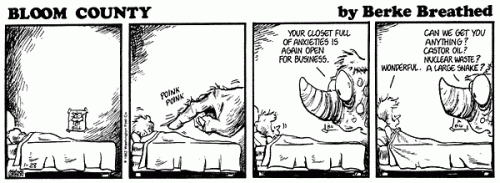
The Closet Of Anxieties

Friends of Padre Steve’s World,

Today has been a pretty crappy day. I have been anxious and a bit depressed. A couple of months ago I found an old friend on Facebook. When I found him I was excited. In addition to being my supervisory chaplain, he was a mentor. I lost contact with him after I entered the Navy in 1999. But that initial joy was turned to pain when on an almost daily basis he intruded on my Facebook page, attacked my beliefs, and my character. He had become a complete Trumpite, with no regard for my beliefs, except to attack nearly every day. Most of those attacks involved issues of race and social justice. It seemed that he hadn’t met a White Supremacist that he couldn’t defend or member of a minority group that he couldn’t blame.

So I dropped him and blocked him, I also tightened my privacy settings, and I did receive a lot of encouragement and love from other friends.

Of course I am also anxious about the Platelet Rich Plasma treatment that I will be getting on my right knee tomorrow. I’m not afraid of the procedure, but I’m afraid that it won’t help with the pain that I have in that knee. I am less anxious and more confident in the arthroscopic surgery I am having next Thursday to repair the meniscus on my left knee. I am tired of having to walk with the assistance of a cane and not to be able to run, power walk, or even go for a leisurely stroll. I get jealous and upset when I see people my age out jogging. I feel useless and crippled.

So anyway, I’m tired and going to read some uplifting book about the perpetrators of the Holocaust. Of course, that last part is sarcasm. I hope that I don’t have another of my more frequent crazy dream or nightmares and go crashing out of bed. I don’t need another ER visit.

Until tomorrow,

Peace,

Padre Steve+

2 Comments

Filed under Loose thoughts and musings, remembering friends

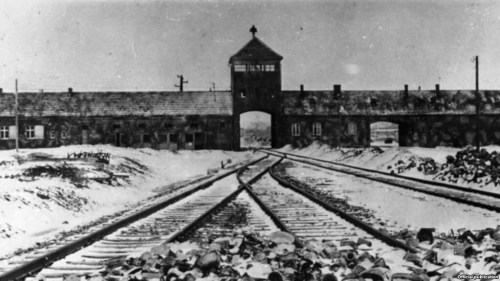
Holocaust Remembrance 2019: “To Forget a Holocaust is to Kill Twice”

Friends of Padre Steve’s World,

Seventy-four years ago today the Red Army liberated the Auschwitz Concentration Camp. Although Auschwitz was liberated, the Nazis continued to exterminate Jews at other camps and conducted forced marches in freezing winter weather to keep them from being liberated, marches which were both deadly and inhuman. Actions that even Heinrich Himmler had forbidden. Many of these actions were the work of Adolf Eichmann.

Even Rudolf Höss the former Commandant of Auschwitz, who admitted to killing over one and a half-million Jews, was appalled by the senseless brutality of what he saw. Höss, the meticulous killer of millions, was shocked by the columns of emaciated and Jews, with no winter clothing or in many cases not even shoes that Eichmann marched from Budapest and other cities and camps to Austria and Czechoslovakia in late 1944 and 1945 to keep the Russians from liberating them, even against the orders of Himmler.

There have been many episodes of genocide in human history, but none were more pointedly directed at a single group of people based on race hatred than the Holocaust of the Jews. While it is true that the Nazis exterminates millions of people than the nearly six million Jews they dispatched during the Holocaust. This is important, as the late Christopher Hitchens noted:

“We should not at all allow ourselves to forget the millions of non-Jewish citizens of Belarus, Russia, Ukraine, and other Slav territories who were also massacred. But for me the salient fact remains that anti-Semitism was the regnant, essential, organizing principle of all the other National Socialist race theories. It is thus not to be thought of as just one prejudice among many.” 

Hitchens was right, without the primary Nazi hatred and determination to obliterate the Jews from the face of the earth, their other atrocities would never occurred. Today, that rabid anti-semitism is again raising its evil head in Eastern and Western Europe, the Middle East, and even in the United States.

It is impossible for an objective person to deny this fact. Hate crimes against Jews are blossoming around the world like toxic mushrooms. The new perpetrators are the descendants of the former perpetrators, Protestant, Catholic, and Orthodox Christians, Muslims, and secularists who embrace the same social Darwinism that motivated many of the Nazis.

Or course the non-Muslim opponents of the Jews today also despise dark skinned minorities, non-Christians, not to mention atheists and secularists; thus what Hitchens says is still as accurate as it was when he wrote those words.

So here we are, Holocaust Remembrance Day, 2019. The question is, will we allow it to happen again? The late Iris Chang, who documented the Rape Of Nanking noted: “to forget a holocaust is to kill twice.” Sadly, I believe that without a sea change in public opinion and knowledge about the Holocaust, genocide, and anti-semitism we will see it happen again.

But will we allow it to happen again? I would hope not, but I have to say that human nature and the course of events is leading me to believe that it will happen again, maybe even in our lifetime.

That may be difficult to accept, but it is reality. What is the alternative to telling the truth? Except to perpetuate a lie, except to take the side of the perpetrators, and those who would do the same today. That includes many of President Trump’s most loyal supporters, Evangelical Christians who while outwardly allying with Israel, only do so in that their interpretation of Biblical prophecy might be fulfilled. That interpretation is that Christians will be raptured from the earth, and during a seven year Great Tribulation the Anti-Christ will conquer his foes and that in the end over two-thirds of all Jews will be killed, while the survivors convert to follow Christ.

Honestly, I cannot deem such politicized and racist theology to be Christian, or respectful and considerate of the elder brother of the Christian faith, Judaism, without which Christianity wouldn’t exist. Let me repeat that. Without Judaism Christianity would not exist, and the treatment of the Jews by the Christian Church has been shameful for the majority of its existence. I say that as a Christian.

In the 1930s and 1940s the Nazis created the euphemism the Jewish Question in order to remove the aspect of humanity from their policy. It wasn’t about human beings, it was about people that they considered sub-human minority that they were able to demonize to expedite their elimination. Hitchens wrote:

“Die Judenfrage,’ it used to be called, even by Jews. ‘The Jewish Question.’ I find I quite like this interrogative formulation, since the question—as Gertrude Stein once famously if terminally put it—may be more absorbing than the answer. Of course one is flirting with calamity in phrasing things this way, as I learned in school when the Irish question was discussed by some masters as the Irish ‘problem.’ Again, the word ‘solution’ can be as neutral as the words ‘question’ or ‘problem,’ but once one has defined a people or a nation as such, the search for a resolution can become a yearning for the conclusive. Endlösung: the final solution.”

Thus, once one labels the Jews, or for that matter any other despised minority a question, or a problem, we place ourselves on the path to Trump administration and his followers have done that since 2015 regarding Mexicans and other Hispanics, Arabs, Haitians, Sub-Saharan Africans, and too many others.

That is why I cannot be silent. I have to proclaim the words of Ellie Wiesel:

“I swore never to be silent whenever and wherever human beings endure suffering and humiliation. We must take sides. Neutrality helps the oppressor, never the victim. Silence encourages the tormentor, never the tormented.”

Silence it not an option, and to again quote Wiesel: “For the dead and the living, we must bear witness.”

We must bear witness, for if we do not it will happen again. Humanity is the one constant in history, and there are no exceptions once one begins down the path to labeling the fate of races, nations, and peoples a question or a problem which they can resolve with a solution, the more comprehensive, total, or final, the better. There are certainly plenty of people, including Trump’s closest advisors who would make draconian laws in order to enable the government to commit genocide.

Yehuda Bauer wrote:

“The horror of the Holocaust is not that it deviated from human norms; the horror is that it didn’t. What happened may happen again, to others not necessarily Jews, perpetrated by others, not necessarily Germans. We are all possible victims, possible perpetrators, possible bystanders.”

In the wake of an number of situations that I have seen and have watched in morbid fascination be debated on my Facebook timeline, I realize that with the prevailing attitudes being stoked by men like President Trump, his media supporters, and sadly, far too many Conservative Christians, that it will quite probably happen again.

I will fight it, butI have no doubt of the power, passion, and petulance of people consumed by race hatred under the guise of patriotism.

Until tomorrow,

Peace,

Padre Steve+

3 Comments

Filed under History, holocaust, Loose thoughts and musings, nazi germany

Fighting Joe Hooker, a Biographical Vingette: Part One

Friends of Padre Steve’s World

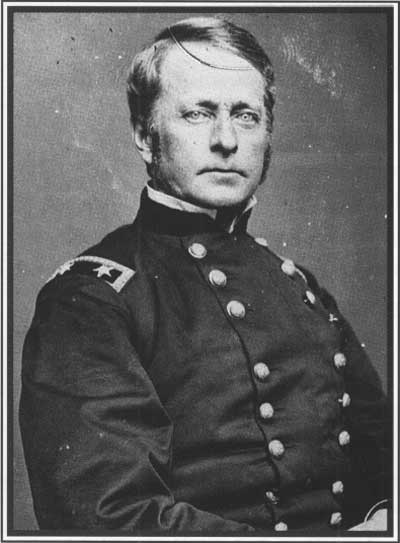
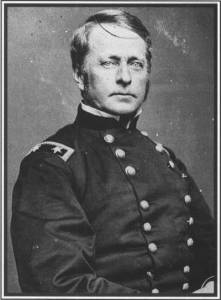
Another biographic vignette from my Gettysburg text, the first part of a section dealing with Major General Joseph Hooker who almost commanded the Army of the Potomac at Gettysburg. This section of the text deals with Hooker and his command of the Army leading up to the Battle of Chancellorsville. I find him to be one of the most complex and intriguing commanders of the Civil War. He was vain, profane and ambitious, as well as a gifted administrator who actually cared about the welfare of his soldiers. At the same time as a division and corps commander he was outstanding. As the commander of the army he was singularly unsuccessful in battle, but what he had done in the months between his appointment and the disaster at Chancellorsville he turned the Army of the Potomac around. The improvements that he made to the army were very important when it won the Battle of Gettysburg under the command of George Gordon Meade. What Hooker’s legacy shows me is that some men have different talents. Had Hooker been successful at Chancellorsville he would be hailed and what he did before the battle to care for his troops and improve the army would be used as examples of how one should lead. Since he lost that battle and was relieved by Lincoln just days before the Battle of Gettysburg, what he did to make the Army of the Potomac a formidable fighting machine is largely forgotten.

Peace

Padre Steve+
hooker

“Fighting Joe” Hooker had been in command of the Army of the Potomac about five months, assuming command from Burnside, who Lincoln had relieved following the crushing defeat at Fredericksburg, and after that general had demanded the wholesale firing of ten generals from the army of the Potomac, including Hooker. Hooker was a graduate of West Point, class of 1837 and veteran of the Mexican War. During that war he was brevetted three times for bravery acting as Chief of Staff to General Pillow and his division, and as well as the commander of a mixed infantry-cavalry regiment known as the Voltiguers. He received his third brevet of the war to Lieutenant Colonel at Chapultepec. General Winfield Scott “mentioned him prominently in his report on the capture of Mexico, and Pillow testified that he was distinguished by his extraordinary activity, energy and gallantry.” [1]

However, by 1863 he was not well regarded by some of his peers and one very important superior, Major General Halleck, who he had run afoul of in California. “While on Garrison duty in California in the 1850s, he cultivated “bad habits and excesses”- too much liquor, and too many women. He left the army, failed at business, and amassed gambling debts and legal problems.” [2] Hooker, like many contemporaries, finding advancement slow and pay bad resigned from the army in February 1853, and engaged in a series of less than successful business operations in Northern California, and also became active in California politics. However in 1858 Hooker was the recipient of a political plum, and “was appointed Superintendent of Military Roads in Oregon” and in 1859 was appointed a Colonel in the California State Militia. [3]

When war came Hooker managed to obtain an appointment as a Brigadier General of volunteers over the objections of General Winfield Scott from McClellan. Hooker was a “capable commander and brave soldier” [4] and became an excellent brigade commander. He combined strict training and discipline with care and concern for his troops. He “made himself accessible to officers and men who had complaints to air or favors to ask. He also took care that his brigade received its rightful share of rations, clothing and other supplies. He early struck upon the right balance of discipline and paternalism which marks those generals who gain the good will of their men.” [5]

But Hooker had a dark side, his unchecked ego and boundless ambition which were unconstrained by ethical considerations or loyalty to superiors and peers. He worked shamelessly against previous army commanders, including George McClellan, to whom he owed his appointment as a Brigadier General in the Regular Army.

In appearance, Hooker was “a strikingly handsome man” with “erect soldierly bearing…” but he was also “arrogant and stubborn, more than willing to work behind the scenes to advance himself, and reputed to have a headquarters that Charles Francis Adams Jr. described as “a combination barroom and brothel.” [6] The commander of XII Corps, Henry Slocum had “no faith whatever in Hooke’s ability as a military man, in his integrity or honor,” [7] a sentiment echoed by many other officers. However, George Meade was more circumspect, and wrote to his wife “He is a very good soldier, capital general for an army corps, but I am not prepared to say as to his abilities for carrying out a campaign and commanding a large army. I should fear his judgment and prudence…” [8]

Hooker genuinely believed in his abilities and much of the “criticism which he so freely bestowed on his superiors came simply because his professional competence was outraged by the blunders that he had to witness[9] on battlefields such as Second Manassas, Antietam and Fredericksburg. But his enemies, and “there would be a host of them- regarded him as “thoroughly unprincipled.” Hooker was driven by an “all consuming” ambition and undoubted self-confidence…. War intoxicated hi m and offered salvation for a troubled life. As a gambler he liked the odds.” [10]

During the war Hooker was what we would call now “media savvy.” He used the press of his day to shamelessly promote his image and “deliberately played up to the press to swell his image as a stern, remorseless campaigner, and he reveled in the nickname the newspapers happily bestowed on him, “Fighting Joe.” [11] However, he would later express his “deep regret that it was ever applied to him. “People will think that I am a highwayman or bandit,” he said; when in fact he was one of the most kindly and tender-hearted of men.” [12]

But Hooker was not just disrespectful of his military superiors, but also those in the Lincoln administration, including Abraham Lincoln himself. Hooker told reporters after Fredericksburg that Lincoln “was an imbecile for keeping Burnside on but also in his own right, and that the administration itself “was all played out.” What the country needed was a dictator….” [13] Hooker was an intriguer for sure but unlike many generals who did so anonymously. Hooker was quite open and public going before the “Joint Committee on the Conduct of the War investigating Fredericksburg” [14] where he not only provided damning testimony against Burnside, but against potential rivals, and after Fredericksburg the press clamored for Hooker to be named commander. One paper wrote:

We have in the Army of the Potomac, however, a General of the heroic stamp. A general who feels the enthusiasm of a soldier and who loves battle from an innate instinct for his business. The cry is universal, Hooker to the command.” [15]

After the failure at Fredericksburg Burnside had to contend with a “General’s Revolt” within the army. Numerous senior officers were involved, some speaking to the media, others to the high command in Washington and still others to influential congressmen, among these was Hooker.

After the infamous “mud march” Ambrose Burnside, now tired of Hooker and his other subordinates machinations drew up General Order Number 8 in which he planned to relieve seven generals,“two of his three Grand Division chiefs (along with the third Grand Division’s chief of staff), one corps commander, two division commanders, and one brigade commander.” [16] At the insistence of personal friends and staff who pointed out that only Lincoln had that authority, Burnside requested a meeting with the President during which he showed the order to Lincoln and also his letter of resignation if Lincoln refused to back him against his generals. The order stated in part:

“General Joseph Hooker…having been found guilty of unjust and unnecessary criticisms of the actions of his superior officers, and of the authorities, and having, by the general tone of his conversations, endeavored to create distrust in the minds of officers who have associated with him, by having, by omissions and otherwise, made reports and statements that were calculated to create incorrect impressions, and habitually speaking in disparaging terms of other officers, is hereby dismissed from the service of the United States as a man unfit to hold an important commission, during a crisis like the present…” [17]

Burnside was fed up with Hooker and since he did not have the authority to dismiss senior officers from the service he took the matter to Lincoln. Meeting the President at the White House Burnside “confronted Lincoln with this order and his own resignation, either the dissident generals had to go, he said, or he would. Lincoln agreed- and accepted Burnside’s resignation.” [18]

Much to Burnside’s profound dismay, Lincoln appointed Hooker, Burnside’s nemesis, to command the Army of the Potomac and sent Burnside west to command a corps. As far as the other conspirators of the Generals Revolt, none gained profit of honor from their machinations, and most, with the exception of Hooker ended the war in obscurity or out of the army.

                                   Hooker Appointed to Command

Lincoln knew Hooker’s unsavory side, but the President “considered him an aggressive, hard fighting general…and hoped that Hooker could infuse that spirit into the army,” [19] which now was at its nadir. When Lincoln appointed Hooker to the command of the Army of the Potomac, he gave his new army commander a letter that is unique in American military history. In the letter, Lincoln lectured Hooker as to his conduct while under the command of Burnside, “and just how much he disapproved of the unbounded ambition Hooker had displayed in Undercutting Burnside.” [20] In the letter and during his meeting with Hooker Lincoln laid out his expectations, as well as concerns that he had for him in his new command:

“you may have taken counsel of your ambition, and thwarted him as much as you could, in which you did a great wrong to the country.” Continuing: “I have heard, in such a way as to believe it, of your recently saying that both the Army and the government needed a Dictator. Of course it was not for this, but in spite of it, that I have given you command. Only those generals who gain successes, can set up dictators. What I ask now is military success, and I will risk dictatorship.” [21] However, Lincoln pledged his support to Hooker saying “The government will support you to the utmost of its ability” but warned “I much fear the spirit which you have aided to infuse into the army, of criticizing their commander and withholding confidence in him, will now turn upon you. I shall assist you as far as I can to put it down. Neither you, nor Napoleon, if he were alive again, could get any good out of an army while such a spirit prevails in it.” [22]

Never before or since has an officer been given such responsibility by a President who recognized the man’s qualities, in this case a fighting spirit, as well as his personal vices and shortcomings in character. In fact, the letter can be viewed as “a model for a leader dealing with a flawed, willful, but energetic and useful subordinate.” [23] Lincoln finished the latter to Hooker with the admonition “And now, beware of rashness. Beware of rashness, but with energy and sleepless vigilance go forward and give us victories.” [24] Hooker believed the last comment was due to the way he was portrayed in the press, the “Fighting Joe Hooker” moniker had stuck.

The letter “engendered neither resentment nor misunderstanding” [25] and Hooker’s reaction to the letter was an interesting commentary to say the least. He recalled a few days later that, when he read it, he “informed him personally of the great value I placed on the letter notwithstanding his erroneous views of myself, and that sometime I intended to have it framed and posted in some conspicuous place for the benefit of those who might come after men.” [26] He read it to a number of others and told a journalist “It is a beautiful letter…and, although I think he was harder on me than I deserved, I will say that I love the man who wrote it.” [27] Hooker was certainly sincere in this as he not only preserved it but ensured that it was published after the war was over.

  The Positive Contributions of Hooker to the Army of the Potomac

Despite the misgivings of the President and many of his peers, Hooker began a turnaround in the army that changed it for the better. At the beginning of his tenure he inspired confidence among his troops. He reorganized the Cavalry Corps and instituted many other reforms. Hooker discarded Burnside’s failed “Grand Division” organization and returned to the corps system. He was aided by experienced Corps commanders who had earned their promotions in combat and not due to political patronage, even the political animal Dan Sickles of III Corps had shown his abilities as a leader and commander, gone were the last remnants of McClellan’s regime.

Despite the many positives gained during the reorganization, Hooker made one significant mistake during the reorganization which hurt him at Chancellorsville, this was in regard to the artillery. Before that battle decided to “strip General Hunt of command of the artillery and restrict him to purely administrative duties…he had restored Hunt to command the night of May 3 after the Confederates had driven him out of Chancellorsville.” This act ensured that “The advantages traditionally possessed by the Union artillery in the quality of its material and cannon disappeared in this battle through Hooker’s inept handling of his forces.”[28]

When Hooker took command many of the men in the army were “disheartened, homesick, in poor health and without confidence in their officers. Thousands died in their quarters from lack of proper care or medicines for which there was no excuse.” [29] Hooker became immensely popular with the men as he conducted reforms which improved their lives. “He took immediate steps to cashier corrupt quartermasters, improve food, clean up the camps and hospitals, grant furloughs, and instill unit pride by creating insignia badges for each corps…Sickness declined, desertions dropped, and a grant of amnesty brought back many AWOLs back into the ranks.” [30]Additionally “paydays were reestablished and new clothing issued…. Boards of inspection searched out and dismissed incompetent officers.[31] Soldiers sang a ditty about him:

“Joe Hooker is our leader, he takes his whisky strong-” [32]

The most important thing that Hooker did was inspire his troops, both to them and for the cause of the nation was the way he saw that the troops were cared for, no previous Union commander had made troop welfare a priority. Hooker’s “sober, unimaginative, routine work of eternally checking up on rations, clothing, hospitals, living quarters, and other little details which in the long run make all the difference.” [33]

But nothing impacted morale more that his order that “soft bread would henceforth be issued to the troops four times a week. Fresh potatoes and onions were to be issued twice a week, and desiccated vegetables once a week.” [34] The most singularly important accomplishment of Joe Hooker as commander of the army was to demonstrate that he actually cared for his soldiers. It was radically different than Burnside, and even an improvement over the days of McClellan. Such actions made a huge difference in army morale. One officer wrote home “His ‘soft bread’ order reaches us in a tender spot….” [35] Regimental commanders were ordered to ensure that “regular company cooks went to work, and if there were no company cooks they were instructed to create some, so that the soldier could get some decent meals in place of the intestine-destroying stuff he cooked for himself.” [36] Hooker announced “My men shall eat before I am fed, and before my officers are fed” and he clearly meant it.” [37] Hooker’s actions to supply his troops with better food and living conditions as well as his attitude that the welfare of his troops came above his own and his officers was a remarkable example of leadership by example. These very concrete actions of Hooker “did more than anything else to enhance his popularity.” [38] One veteran recalled:

“From the commissary came less whisky for the officers and better rations, including vegetables for the men. Hospitals were renovated, new ones built, drunken surgeons discharged, sanitary supplies furnished, and the sick no longer had to suffer and die without proper care and attention. Officers and men who from incompetence or disability could be of no further use to the service were allowed to resign or were discharged, and those who were playing sick in the hospitals were sent to their regiments for duty.” [39]

Additionally Hooker reformed training in the army. He knew that bored soldiers were their own worst enemy, and instituted a stringent training regimen that paid dividends on the battlefield. “From morning to night the drill fields rumbled with the tramp of many feet. Officers went to school evenings and the next day went out to maneuver companies, regiments, brigades, and divisions in the tactics just studied.” [40]Fitzhugh Lee noted of Hooker that “it must be admitted his preliminary steps toward reorganization and the promotion of the battle power of his army were well taken.” [41] Not only did Hooker mandate such training he frequently showed up and observed the training as well as spent time visiting isolated pickets along the Rappahannock.

Hooker ridded himself of the last vestiges of McClellan’s reliance on the Pinkerton detective agency, and for his uncoordinated use of spies, cavalry and balloons while no “coordinated bureau compiled this information.” [42] Hooker consolidated intelligence operations and created a new staff office in the army, the “Bureau of Military Intelligence, led by Colonel George Sharpe” who “built a network of spies, who soon supplied Hooker with accurate information on Lee’s numerical strength and the unit composition of the Confederate army.” [43] Additionally Hooker helped quash key sources of information relied on by Lee, the local residents along the Rappahannock and Union newspapers. In regard to the former he restricted the movement of civilians along his lines, and cleared out Confederate partisans. As far as the newspapers he “found it expedient to ask Stanton to take action against certain Northern newspapers which were publishing revealing information about the army and offsetting his efforts to retain some secrecy.” [44]

Hooker also reorganized and systematized the Medical Department of the army, and “placed it under the supervision of the competent medical director Dr. Jonathan Letterman.” [45]Under Letterman’s direction and Hooker’s supervision “new hospitals were built and old ones renovated,” [46] this attention to the health of his soldiers paid dividends. Within weeks, “sick rolls had been reduced, and by April, scurvy had virtually disappeared. A veteran contended that Hooker “is a good man to feed an army for we have lived in the best since he took command that we ever did since we have been in the army.” [47]

Hooker worked to combat the vast number of desertions which were plaguing the Army of the Potomac which when he took command were averaging an estimated 200 per day. Tens of thousands of soldiers, some 85,000 according to Hooker’s estimate were absent from the army when he took command. In addition to his work to improve living conditions and the lives of his soldiers in camp Hooker revitalized the office of the Inspector General and used it aggressively to monitor conditions in the camps. One of Hooker’s first initiatives was to systematize “the granting if leaves of absences…..In those regiments lacking discipline, inspection reports were used as a basis for canceling leaves and furloughs, while leaves were increased for those units earning high commendations.” [48]

It was a remarkable turnaround which even impressed his soldiers, his critics, and enemies and his enemies alike. Darius Couch of Second Corps, who later resigned and became Hooker’s arch-enemy, wrote that Hooker had, “by adopting vigorous measures stopped the almost wholesale desertions, and infused new life and discipline into the army.” [49]

The actions of Hooker in the three months between his assumption of command and Chancellorsville were some of the most important of any Federal commander during the war. One senior officer who was not fond of Hooker noted “The Army of the Potomac never spent three months to better advantage.” [50]

          The Crisis in Command: Hooker, Lincoln, and Halleck

Hooker had gone into the Battle of Chancellorsville with high hopes and great confidence, but the disaster at Chancellorsville Hooker was not the same. During that battle it was as if he was two persons, the first supremely confident and competent and the second lost and out of his league. During the campaign Hooker had: “planned his campaign like a master and carried out the first half with great skill, and then when the pinch came he simply folded up. There had been no courage in him, no life, no spark; during most of the battle the army had to all intents and purposes had no commander at all.” [51]

The defeat had a lasting effect on Hooker, the connection with his soldiers which he prized was broken. The general who had “once been so popular, was no longer well received in the camps – “there was something in the air of the men which said: ‘We have no further use for you.’” [52] In the immediate aftermath of the battle “Hooker had been deeply depressed… he told Meade that he “almost wished that he had never been born.” [53] However, it was a visit from Lincoln which helped revive him as “Lincoln let it be known that he blamed no one for the defeat.” [54] Henry Halleck who accompanied Lincoln told the President afterward that “Hooker was so dispirited that he offered to reign his command. Not surprisingly, Halleck thought Lincoln should accept the resignation, but the President disagreed. He wanted to give Hooker another chance to show his mettle.” [55]

After Lincoln’s visit he did begin to recover some his self-confidence. Hooker, a slave to his vanity who had little capacity for reflection and blamed various corps commanders including Oliver Howard, John Sedgwick and cavalry commander George Stoneman for the defeat. Unlike the unpopular Ambrose Burnside who after Fredericksburg, had “taken responsibility for the defeat on his shoulders,” [56] Hooker refused to take any responsibility for it. Years later, Hooker when asked about the defeat, “knew a rare moment of humility and remarked, “Well, to tell the truth, I just lost confidence in Joe Hooker.” [57]

                                                            Notes

[1] Hebert, Walter H. Fighting Joe Hooker University of Nebraska Press, Lincoln and London 1999. Originally published by Bobbs-Merrill, New York 1944 p.33

[2] Ibid. Wert The Sword of Lincoln p.74

[3] Ibid. Hebert Fighting Joe Hooker p.42

[4] Jordan, David M. Winfield Scott Hancock: A Soldier’s Life Indian University Press, Bloomington and Indianapolis 1988 p.67

[5] Ibid. Hebert Fighting Joe Hooker p.53

[6] Marszalek, John F. Commander of All of Lincoln’s Armies: A Life of General Henry W. Halleck The Belknap Press of Harvard University Press, Cambridge MA and London 2004 p.165

[7] Ibid. Guelzo Fateful Lightening p.331

[8] Huntington, Tom Searching for George Gordon Meade: The Forgotten Victor of Gettysburg Stackpole Books, Mechanicsburg PA 2013 p.127

[9] Catton, Bruce The Army of the Potomac: Glory Road Doubleday and Company, Garden City New York, 1952 p.7

[10] Ibid. Wert The Sword of Lincoln pp.74-75

[11] Ibid. Guelzo Fateful Lightening p.331

[12] Bates, Samuel P. Hooker’s Comments on Chancellorsville in Battles and Leaders of the Civil War Volume III, The Tide Shifts.Edited by Robert Underwood Johnson and Clarence Clough Buel Castle, Secaucus NJ p.217

[13] Ibid. Foote The Civil War, A Narrative. Volume Two p.136

[14] Sears, Stephen W. Controversies and Commanders Mariner Books, Houghton-Mifflin Company, Boston and New York 1999 p.150

[15] Ibid. Hebert Fighting Joe Hooker p.165

[16] Ibid. Sears Controversies and Commanders p.154

[17] Ibid. Hebert Fighting Joe Hooker p.165

[18] McPherson, James M. Tried by War: Abraham Lincoln as Commander in Chief Penguin Books, New York and London 2008 p.162

[19] Ibid. McPherson Tried by War p.162

[20] Ibid. Sears Controversies and Commanders p.157

[21] Ibid. Wert The Sword of Lincoln p.219

[22] Ibid. Foote The Civil War, A Narrative. Volume Two pp.132-133

[23] Cohen, Elliot A. Supreme Command: Soldiers, Statesman and Leadership in Wartime The Free Press, New York 2002 p.20

[24] Ibid. Foote The Civil War, A Narrative. Volume Two p.133

[25] Ibid. Cohen Supreme Command p.20

[26] Sears, Stephen W. Chancellorsville Houghton Mifflin Co. Boston and New York 1996 p.62

[27] Godwin, Doris Kearns Team of Rivals: The Political Genius of Abraham Lincoln Simon and Shuster, New York and London 2005 p.514

[28] Ibid. Coddington The Gettysburg Campaign p.31

[29] Ibid. Hebert Fighting Joe Hooker p.179

[30] McPherson, James. The Battle Cry of Freedom: The Civil War Era Oxford University Press, Oxford and New York 1988 p.133

[31] Ibid. Sears. Chancellorsville p.73

[32] Ibid. Catton Glory Road p.141

[33] Ibid. Catton Glory Road pp.141-142

[34] Ibid. Sears Chancellorsville p.73

[35] Ibid. Sears Chancellorsville p.73

[36] Ibid. Catton Glory Road p.143

[37] Ibid. Sears Chancellorsville p.73

[38] Ibid. Hebert Fighting Joe Hooker p.179

[39] Ibid. Catton Glory Road p.143

[40] Ibid. Catton Glory Road p.145

[41] Girardi, Robert I. The Civil War Generals: Comrades, Peers, Rivals in Their Own Words Zenith Press, MBI Publishing, Minneapolis MN 2013 p.89

[42] Ibid. Hebert Fighting Joe Hooker p.180

[43] Ibid. Wert The Sword of Lincoln p.229

[44] Ibid. Hebert Fighting Joe Hooker p.181

[45] Ibid. Wert The Sword of Lincoln p.225

[46] Ibid. Hebert Fighting Joe Hooker p.179

[47] Ibid. Wert The Sword of Lincoln pp.225-226

[48] Ibid. Hebert Fighting Joe Hooker p.179

[49] Ibid. Sears Controversies and Commanders p.157

[50] Ibid. Hebert Fighting Joe Hooker p.184

[51] Ibid. Catton Glory Road p.210

[52] Cleaves, Freeman Meade of Gettysburg University of Oklahoma Press, Norman and London 1960 p.114

[53] McPherson, James M. Tried by War: Abraham Lincoln as Commander in Chief Penguin Books, New York and London 2008 p.177

[54] Ibid. Marszalek, Commander of All of Lincoln’s Armies p.171

[55] Ibid. Marszalek, Commander of All of Lincoln’s Armies p.171

[56] Ibid. Sears Controversies and Commanders p.158

[57] Ibid. Catton Glory Road p.211

Leave a comment

Filed under Loose thoughts and musings

An Unnecessary Condition Of Affairs: A Temporary end to the #TRUMPDOWN

Friends of Padre Steve’s World,

I pondered writing this post late last night but was too tired to write it. It’s not long at all and it it is something that I wrote about previous shutdowns. Back in 2011 I wrote the following words regarding the shutdown provoked by Mitch McConnell and Paul Ryan and their Right Wing supporters at Fox News and Right Wing pundits, which ended up with the disastrous policy of sequestration.

“The attitudes that we have formed and angry words which we now use so ubiquitously are reflective of a deep hatred that now is becoming what defines us as a people.  In fact the deep and abiding hatred which now permeates our society is now threatening the international standing and I would say the national security of the United States.  We have only ourselves to blame because through our actions and inactions of the past decade we have made our choice to be what we have become and there is no one group especially in our political, media and business elites that have served us well.  In fact we have as voters chosen this toxic mix of elected officials often more influenced by hate spewing pundits and our own self interests rather than that of the nation and future generations much as we would like to claim that we are looking out for the future.”

Interestingly enough these same people, hitched their wagons to President Trump’s disastrous decision to shut down the government to build his monstrous monument to his morbid #MAGA manhood; that big beautiful wall. Of course anyone with a knowledge of history knows that such walls are expensive and ultimately self defeating.

For now the current Shutdown is over. Increasingly isolated Trump had no other exit for the trap that he laid for himself. Standing alone in the Rose Garden he capitulated to reality.

So for at least three weeks, the shutdown is over. Of course it really isn’t over as long as Trump thinks he can succeed, and there remains the ever present threat of him declaring a National Emergency. I think the latter is more likely, especially if the crisis in Venezuela results in bloodshed at the American Embassy. But for that we have to wait and see. My hope is that a legislative fix is found that actually increases border security without wasting money on that wall. One does not return to provenly ineffectual past remedies to solve present problems, but I digress…

To quote from the testimony of the former Confederate General Robert E. Lee before a Congressional Committee after the disaster of the American Civil War, or as it should still be called the War of the Southern Rebellion.

Before the committee, Lee, who had resigned his commission less than a month of been promoted to full Colonel and rejecting President Lincoln’s offer to command the Armies of the Union accepted commissions by Virginia and the Confederacy said:

“I may have said and I may have believed that the position of the two sections which they held to each other was brought about by the politicians of the country; that if the great mass of the people, if they had understood the real questions would have avoided it. I did believe at the time that it (the war) was an unnecessary condition of affairs, and might have been avoided if forbearance and wisdom had been practiced on both sides.”

But Lee was engaged in the same sort of moral equivalence that many politicians and pundits use today. In his testimony, Lee blamed both sides and conveniently left out his role in the conflict. Before the war Lee inherited the slaves of his father in law who had expressly said that they were to be emancipated. He delayed and did not do it. When he resigned his U.S. Army commission he said that he would only raise his sword in defense of Virginia, but he personally led two invasions of the North, invasions that his Army used to capture free blacks and return them to slavery. Despite the urging of some Confederate Generals, Lee steadfastly opposed the emancipation of slaves to serve in the Confederate Army until February of 1865. When the war was for all purposes lost, Lee redoubled his efforts and had hundreds of deserting Confederate Soldiers sentenced to death at Drumhead Court Martial. The vast majority of those troops were from Georgia and the Carolinas and their states, families, and homes were being ravaged by William Tecumseh Sherman’s Army’s March to the Sea.

Yes the American Civil War was an unnecessary condition of affairs, as was the Trump-McConnell Shutdown. In each case the blame is not shared across the board. These disasters can be laid at the feet of the men who provoked them and demanded them. In the case of the Civil War, those were the leaders of the South, who having the assurance of Lincoln that slavery was safe in the Slave states decided to secede, and who through the Fugitive Slave Law Of 1850 had an instrument to enforce slavery in the Free States.

In the current situation it all comes down to race once again. President Trump and many Republican leaders have blamed immigrants and racial minorities for all the problems of the country. They offer support to White Nationalist, Neo-Confederate, and Neo-Nazi groups, while demonizing anyone with darker skin. Trump’s Wall, like his Red MAGA hats are symbolic of that race hatred, and fear mongering. The Trump Shutdown can only be blamed on that. Trump bragged about the Shutdown and took responsibility for it. He owns it, maybe we should start calling it the #TRUMPDOWN ? It does have a nice ring.

So until tomorrow when I return to other subjects,

Peace,

Padre Steve+

Leave a comment

Filed under civil war, History, laws and legislation, Loose thoughts and musings, national security, News and current events, Political Commentary

The Civil War’s Transgender Soldiers


Friends of Padre Steve’s World

Today in the Supreme Court President Trump and his theocratic supporters of the Christian Right won a victory on one of their fronts to suppress the civil rights of Court overturned stays issued by lower courts and appeals courts to Trump’s order of 2017 to remove transgender military personnel from the service and prevent others from serving. This in an era when the services are failing to meet recruiting and retention goals because the vast majority of young Americans cannot meet the physical, psychological, or legal requirements to serve in the military. So what does the administration do to satisfy its theocratic supporters, it moves to throw out an estimated 14,000 honorable soldiers, sailors, marines, and airmen; highly trained, experienced, personnel, and many combat veterans.

So, today I am posting an article about the women soldiers of the Civil War, many of who based on their personal narratives would be considered transgender today. It is a section in one of my yet to be published books on the Civil War. I hope that you enjoy.

Peace

Padre Steve+

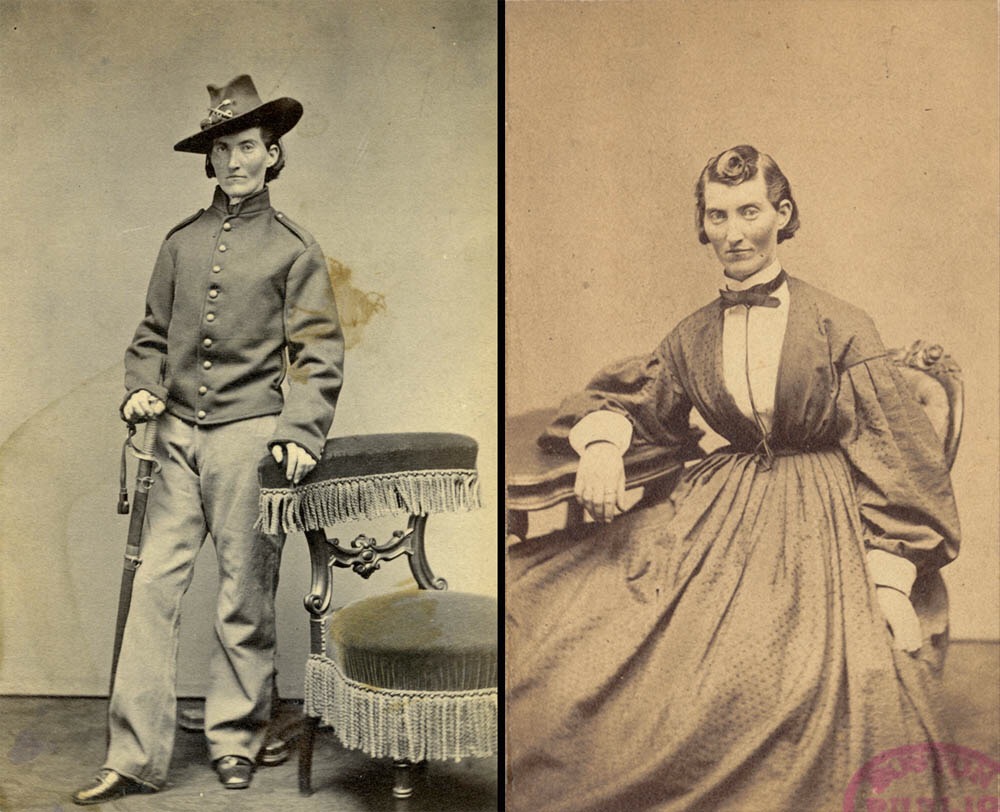
Of course when the Civil War broke out the logical end of this train of though was that should women be allowed to serve in the military. Legally and socially it was not possible for women to serve in the military in 1861, but this did not stop women in the Union or the Confederacy from doing so. Quite a few women on both sides of the conflict chaffed about not being allowed to fight for their countries, their families and their causes, and despite official prohibitions that kept women from serving in any capacity but nursing, a good number of women found their way to go to war. While men in the North and South “were expected to enlist, any woman actively participating in the Civil War was an oddity if not a renegade.” In some cases this involved hundreds of women taking male identities in order to fulfill their desires to serve their countries.

The motives of these women varied. In some cases women wanted gain the economic privileges of full citizenship, and for others the glory reserved to only to men. In our modern parlance those that took male identities would be considered transvestites or possibly transgender, but for them “transvestitism was a private rebellion against public conventions. By taking a male social identity, they secured for themselves male power and independence, as well as full status as citizens of their nation. In essence the Civil War was an opportunity for hundreds of women to escape the confines of their sex.” 

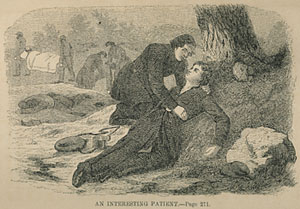
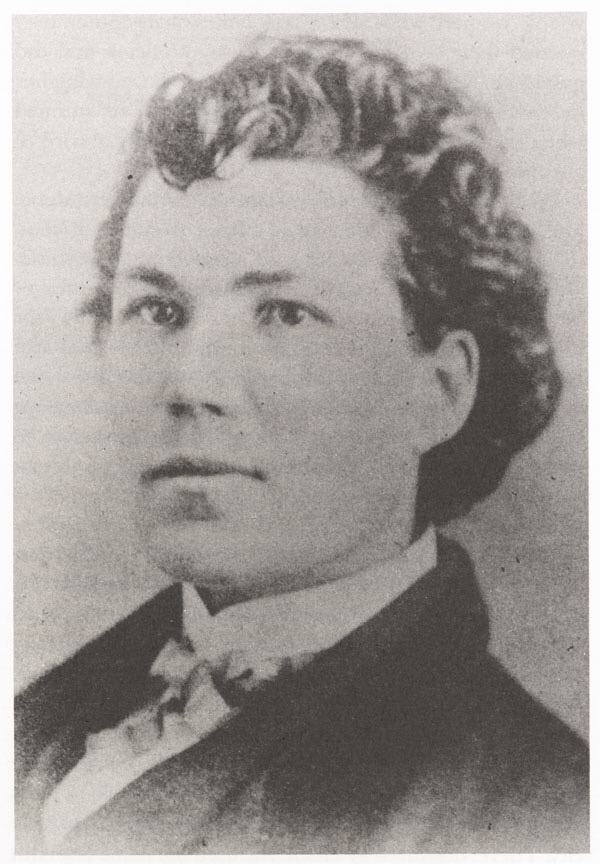
During the war hundreds of women went to war, taking on the identity of men. They enlisted under male names and pretended to be men. Unless they were discovered to be women, or unless they confessed to their wartime service either during or after the war, most women managed to serve without being caught. Sadly, most of their service records were lost. In 1861 Private Franklin Thompson “enlisted in Company F of the 2nd Michigan Infantry…unknown to comrades, Thompson actually was Sarah Emma Edmonds.” Edmonds served in the illustrious Iron Brigade until the disaster at Fredericksburg. Well known for her courage as Franklin Thompson, Edmonds participated in some of the bloodiest combats of the war. At Antietam she was caring for the wounded when she came upon a soldier who had been wounded in the neck. That soldier informed Edmonds that she was dying and after a surgeon came by and confirmed what the soldier said the dying soldier told Edmonds:

“I am not what I seem, but I am female. I enlisted from the purest motives, and I have remained undiscovered and unsuspected. I have neither father, mother nor sister. My only brother was killed today. I closed his eyes about an hour before I was wounded….I am Christian, and have maintained the Christian character ever since I entered the army. I have performed the duties of a soldier faithfully, and am willing to die for the cause of truth and freedom….I wish you to bury me with your own hands, that none may know after my death that I am other than my appearance indicates.”

That unknown woman was not alone, at least nine women, eight Union and one Confederate, fought at Antietam and of those five were casualties. Five women, two Federal and three Confederate took part at Gettysburg. All three Confederate women at Gettysburg were either killed or wounded, or captured, including two women who took part in Pickett’s Charge.


Sarah Edmonds published a book Nurse and Spy in the Union Army while recovering from malaria in 1863. The book, which was published the following year, sold 175,000 copies, the proceeds that she donated to care for sick and wounded Union veterans. After the war, Edmonds attended Oberlin College, married, had three of her own children and adopted two more. She “became a member of the Grand Army of the Potomac, the organization for Union veterans of the Civil War. She applied for, and received, a military pension, and upon her death in 1898 was buried with full military honors.” She was the only women admitted to the Grand Army of the Republic.


Another of the women to serve was Frances Louisa Clayton. Fighting for the Union as a member of the Minnesota State Militia Cavalry and 2nd Minnesota Battery, serving under the command of Ulysses S. Grant she was wounded at Fort Donelson. Like many other women soldiers, Clayton mastered the art of behaving as a man. She “became “a capital swordsman,” but also commanded attention with her “masculine stride in walking” and “her erect and soldierly carriage.” After the war she promoted her service in a book.


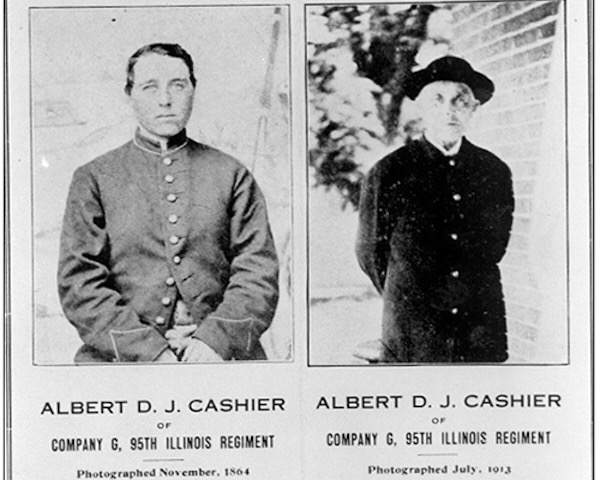
However, most women were more discreet during and after the war regarding their true sexuality. Private Albert Cashier hid his sexuality identity for his entire term of service. He enlisted in August 1862 as a member of the 95th Illinois. Cashier was born in Ireland as a woman, Jennie Hodgers. He fought in forty battles and was discharged with the regiment in August 1865. At Vicksburg he was briefly captured by the Confederates while conducting a reconnaissance “but managed to escape by seizing a gun from one of her guards, knocking him down, and outrunning others. Comrades recalled Private Cashier climbing to the top of their fieldworks to taut the enemy into showing themselves.”

After the war “Albert” returned home and lived as a “farmer and handyman and served as a caretaker in his church. He never married.” In 1890 he applied for and received a military pension and in 1911 the now elderly “man” was struck by a car and suffered a broken leg. The doctor threating him discovered that Albert was not a man, but a woman. But the doctor kept his confidentiality and without revealing “Albert’s” secret had the Union veteran admitted to the local Soldier’s and Sailors’ Home at Quincy, Illinois.” A few years later the elderly “man” began to exhibit erratic behavior and was “committed to a public mental hospital and the word was out.” With her story now sensational front page news and “old comrades in arms came to her defense.” Her comrades had never known that “Albert” was a man during or after the war, while the news was a surprise to them they came to her defense. To combat some of the sensationalism in the media Albert’s fellow soldiers testified “to Albert’s bravery in combat and public good works in later life. Albert/Jennie died at Watertown State Hospital in 1915 at age seventy-one. The local post of the Grand Army of the Republic arranged for her burial. Her headstone reads: “Albert D.J. Cashier, Company G, 95th Illinois Infantry.”

Wartime records are sketchy but as a minimum it is believed that “between 250 and 400 women disguised as men found their way into either the Federal or Confederate armies.” Women known to have served had a “combined casualty rate of 44 percent” including the fact that “eleven percent of women soldiers died in the military.”  Some of those women are now well known but many others are lost to history. Most women tried to keep their sexual identities secret, even to the point of their death on the battlefield. Most of the women who served in the armies returned home to resume relatively normal lives after the war.

Of the women that served in the ranks, some were discovered, and many remained protected by their fellow soldiers. Quite a few received promotions and even served as NCOs or junior officers. With women now serving in combat or combat support roles in the U.S. Military since Operation Desert Storm in 1991, the stigma and scandal that these cross-dressing women soldiers of the Civil War has faded and as scholars and the public both “continue probing cultural notions of gender and identity, the reemerging evidence that women historically and successfully engaged in combat has met with less intellectual resistance and has taken on new cultural significance.” As the United States military services examine the issues surrounding further moves to integrate the combat arms we also should attempt to more closely examine the service of the brave and often forgotten women who served on both sides of the Civil War

4 Comments

Filed under civil rights, civil war, History, LGBT issues, Loose thoughts and musings, Military, national security, News and current events, Political Commentary, us army, US Marine Corps, US Navy

Dr. King’s Letter From a Birmingham Jail

primary-source-mlk-birmingham-jail-497fe198

Friends of Padre Steve’s World,

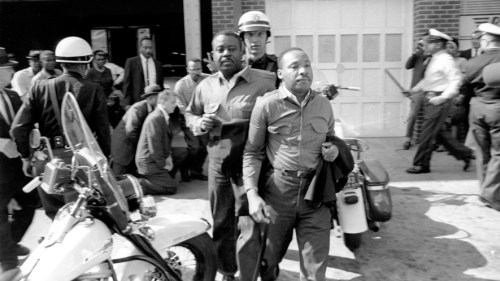
Not long ago I posted an article about Dr. Martin Luther King Jr.’s Letter from a Birmingham Jail. 

I included the link to the letter in my article, but I realize that most people, unlike me we not follow a link to get to the original source of the information supplied.

For those that don’t understand, my position as a Priest, if I am actually to be faithful to my vows requires that I be faithful to the Gospel. Sometimes that vow requires stating things that some in denial of their own faith would condemn as partisan politics. But this is not partisan, it echoes both the Christian and American propositions that all men are created equal.

With that in mind here is the full text of King’s letter. It is worthy of your full consideration and contemplation, and for that reason I make no editorial comments, although I did find Vice President Mike Pence’s comparison of President Trump to Dr. King abhorrent, insulting, and damnable.

On this day where we as a nation remember Dr. King it is fitting to read his unedited words from a Birmingham jail. Sadly, they are as applicable today as when he penned them.

Peace,

Padre Steve+

16 April 1963

My Dear Fellow Clergymen:

While confined here in the Birmingham city jail, I came across your recent statement calling my present activities “unwise and untimely.” Seldom do I pause to answer criticism of my work and ideas. If I sought to answer all the criticisms that cross my desk, my secretaries would have little time for anything other than such correspondence in the course of the day, and I would have no time for constructive work. But since I feel that you are men of genuine good will and that your criticisms are sincerely set forth, I want to try to answer your statement in what I hope will be patient and reasonable terms.

I think I should indicate why I am here in Birmingham, since you have been influenced by the view which argues against “outsiders coming in.” I have the honor of serving as president of the Southern Christian Leadership Conference, an organization operating in every southern state, with headquarters in Atlanta, Georgia. We have some eighty five affiliated organizations across the South, and one of them is the Alabama Christian Movement for Human Rights. Frequently we share staff, educational and financial resources with our affiliates. Several months ago the affiliate here in Birmingham asked us to be on call to engage in a nonviolent direct action program if such were deemed necessary. We readily consented, and when the hour came we lived up to our promise. So I, along with several members of my staff, am here because I was invited here. I am here because I have organizational ties here.

But more basically, I am in Birmingham because injustice is here. Just as the prophets of the eighth century B.C. left their villages and carried their “thus saith the Lord” far beyond the boundaries of their home towns, and just as the Apostle Paul left his village of Tarsus and carried the gospel of Jesus Christ to the far corners of the Greco Roman world, so am I compelled to carry the gospel of freedom beyond my own home town. Like Paul, I must constantly respond to the Macedonian call for aid.

Moreover, I am cognizant of the interrelatedness of all communities and states. I cannot sit idly by in Atlanta and not be concerned about what happens in Birmingham. Injustice anywhere is a threat to justice everywhere. We are caught in an inescapable network of mutuality, tied in a single garment of destiny. Whatever affects one directly, affects all indirectly. Never again can we afford to live with the narrow, provincial “outside agitator” idea. Anyone who lives inside the United States can never be considered an outsider anywhere within its bounds.

You deplore the demonstrations taking place in Birmingham. But your statement, I am sorry to say, fails to express a similar concern for the conditions that brought about the demonstrations. I am sure that none of you would want to rest content with the superficial kind of social analysis that deals merely with effects and does not grapple with underlying causes. It is unfortunate that demonstrations are taking place in Birmingham, but it is even more unfortunate that the city’s white power structure left the Negro community with no alternative.

In any nonviolent campaign there are four basic steps: collection of the facts to determine whether injustices exist; negotiation; self purification; and direct action. We have gone through all these steps in Birmingham. There can be no gainsaying the fact that racial injustice engulfs this community. Birmingham is probably the most thoroughly segregated city in the United States. Its ugly record of brutality is widely known. Negroes have experienced grossly unjust treatment in the courts. There have been more unsolved bombings of Negro homes and churches in Birmingham than in any other city in the nation. These are the hard, brutal facts of the case. On the basis of these conditions, Negro leaders sought to negotiate with the city fathers. But the latter consistently refused to engage in good faith negotiation.

Then, last September, came the opportunity to talk with leaders of Birmingham’s economic community. In the course of the negotiations, certain promises were made by the merchants–for example, to remove the stores’ humiliating racial signs. On the basis of these promises, the Reverend Fred Shuttlesworth and the leaders of the Alabama Christian Movement for Human Rights agreed to a moratorium on all demonstrations. As the weeks and months went by, we realized that we were the victims of a broken promise. A few signs, briefly removed, returned; the others remained. As in so many past experiences, our hopes had been blasted, and the shadow of deep disappointment settled upon us. We had no alternative except to prepare for direct action, whereby we would present our very bodies as a means of laying our case before the conscience of the local and the national community. Mindful of the difficulties involved, we decided to undertake a process of self purification. We began a series of workshops on nonviolence, and we repeatedly asked ourselves: “Are you able to accept blows without retaliating?” “Are you able to endure the ordeal of jail?” We decided to schedule our direct action program for the Easter season, realizing that except for Christmas, this is the main shopping period of the year. Knowing that a strong economic-withdrawal program would be the by product of direct action, we felt that this would be the best time to bring pressure to bear on the merchants for the needed change.

Then it occurred to us that Birmingham’s mayoral election was coming up in March, and we speedily decided to postpone action until after election day. When we discovered that the Commissioner of Public Safety, Eugene “Bull” Connor, had piled up enough votes to be in the run off, we decided again to postpone action until the day after the run off so that the demonstrations could not be used to cloud the issues. Like many others, we waited to see Mr. Connor defeated, and to this end we endured postponement after postponement. Having aided in this community need, we felt that our direct action program could be delayed no longer.

You may well ask: “Why direct action? Why sit ins, marches and so forth? Isn’t negotiation a better path?” You are quite right in calling for negotiation. Indeed, this is the very purpose of direct action. Nonviolent direct action seeks to create such a crisis and foster such a tension that a community which has constantly refused to negotiate is forced to confront the issue. It seeks so to dramatize the issue that it can no longer be ignored. My citing the creation of tension as part of the work of the nonviolent resister may sound rather shocking. But I must confess that I am not afraid of the word “tension.” I have earnestly opposed violent tension, but there is a type of constructive, nonviolent tension which is necessary for growth. Just as Socrates felt that it was necessary to create a tension in the mind so that individuals could rise from the bondage of myths and half truths to the unfettered realm of creative analysis and objective appraisal, so must we see the need for nonviolent gadflies to create the kind of tension in society that will help men rise from the dark depths of prejudice and racism to the majestic heights of understanding and brotherhood. The purpose of our direct action program is to create a situation so crisis packed that it will inevitably open the door to negotiation. I therefore concur with you in your call for negotiation. Too long has our beloved Southland been bogged down in a tragic effort to live in monologue rather than dialogue.

One of the basic points in your statement is that the action that I and my associates have taken in Birmingham is untimely. Some have asked: “Why didn’t you give the new city administration time to act?” The only answer that I can give to this query is that the new Birmingham administration must be prodded about as much as the outgoing one, before it will act. We are sadly mistaken if we feel that the election of Albert Boutwell as mayor will bring the millennium to Birmingham. While Mr. Boutwell is a much more gentle person than Mr. Connor, they are both segregationists, dedicated to maintenance of the status quo. I have hope that Mr. Boutwell will be reasonable enough to see the futility of massive resistance to desegregation. But he will not see this without pressure from devotees of civil rights. My friends, I must say to you that we have not made a single gain in civil rights without determined legal and nonviolent pressure. Lamentably, it is an historical fact that privileged groups seldom give up their privileges voluntarily. Individuals may see the moral light and voluntarily give up their unjust posture; but, as Reinhold Niebuhr has reminded us, groups tend to be more immoral than individuals.

We know through painful experience that freedom is never voluntarily given by the oppressor; it must be demanded by the oppressed. Frankly, I have yet to engage in a direct action campaign that was “well timed” in the view of those who have not suffered unduly from the disease of segregation. For years now I have heard the word “Wait!” It rings in the ear of every Negro with piercing familiarity. This “Wait” has almost always meant “Never.” We must come to see, with one of our distinguished jurists, that “justice too long delayed is justice denied.”

We have waited for more than 340 years for our constitutional and God given rights. The nations of Asia and Africa are moving with jetlike speed toward gaining political independence, but we still creep at horse and buggy pace toward gaining a cup of coffee at a lunch counter. Perhaps it is easy for those who have never felt the stinging darts of segregation to say, “Wait.” But when you have seen vicious mobs lynch your mothers and fathers at will and drown your sisters and brothers at whim; when you have seen hate filled policemen curse, kick and even kill your black brothers and sisters; when you see the vast majority of your twenty million Negro brothers smothering in an airtight cage of poverty in the midst of an affluent society; when you suddenly find your tongue twisted and your speech stammering as you seek to explain to your six year old daughter why she can’t go to the public amusement park that has just been advertised on television, and see tears welling up in her eyes when she is told that Funtown is closed to colored children, and see ominous clouds of inferiority beginning to form in her little mental sky, and see her beginning to distort her personality by developing an unconscious bitterness toward white people; when you have to concoct an answer for a five year old son who is asking: “Daddy, why do white people treat colored people so mean?”; when you take a cross county drive and find it necessary to sleep night after night in the uncomfortable corners of your automobile because no motel will accept you; when you are humiliated day in and day out by nagging signs reading “white” and “colored”; when your first name becomes “nigger,” your middle name becomes “boy” (however old you are) and your last name becomes “John,” and your wife and mother are never given the respected title “Mrs.”; when you are harried by day and haunted by night by the fact that you are a Negro, living constantly at tiptoe stance, never quite knowing what to expect next, and are plagued with inner fears and outer resentments; when you are forever fighting a degenerating sense of “nobodiness”–then you will understand why we find it difficult to wait. There comes a time when the cup of endurance runs over, and men are no longer willing to be plunged into the abyss of despair. I hope, sirs, you can understand our legitimate and unavoidable impatience. You express a great deal of anxiety over our willingness to break laws. This is certainly a legitimate concern. Since we so diligently urge people to obey the Supreme Court’s decision of 1954 outlawing segregation in the public schools, at first glance it may seem rather paradoxical for us consciously to break laws. One may well ask: “How can you advocate breaking some laws and obeying others?” The answer lies in the fact that there are two types of laws: just and unjust. I would be the first to advocate obeying just laws. One has not only a legal but a moral responsibility to obey just laws. Conversely, one has a moral responsibility to disobey unjust laws. I would agree with St. Augustine that “an unjust law is no law at all.”

Now, what is the difference between the two? How does one determine whether a law is just or unjust? A just law is a man made code that squares with the moral law or the law of God. An unjust law is a code that is out of harmony with the moral law. To put it in the terms of St. Thomas Aquinas: An unjust law is a human law that is not rooted in eternal law and natural law. Any law that uplifts human personality is just. Any law that degrades human personality is unjust. All segregation statutes are unjust because segregation distorts the soul and damages the personality. It gives the segregator a false sense of superiority and the segregated a false sense of inferiority. Segregation, to use the terminology of the Jewish philosopher Martin Buber, substitutes an “I it” relationship for an “I thou” relationship and ends up relegating persons to the status of things. Hence segregation is not only politically, economically and sociologically unsound, it is morally wrong and sinful. Paul Tillich has said that sin is separation. Is not segregation an existential expression of man’s tragic separation, his awful estrangement, his terrible sinfulness? Thus it is that I can urge men to obey the 1954 decision of the Supreme Court, for it is morally right; and I can urge them to disobey segregation ordinances, for they are morally wrong.

Let us consider a more concrete example of just and unjust laws. An unjust law is a code that a numerical or power majority group compels a minority group to obey but does not make binding on itself. This is difference made legal. By the same token, a just law is a code that a majority compels a minority to follow and that it is willing to follow itself. This is sameness made legal. Let me give another explanation. A law is unjust if it is inflicted on a minority that, as a result of being denied the right to vote, had no part in enacting or devising the law. Who can say that the legislature of Alabama which set up that state’s segregation laws was democratically elected? Throughout Alabama all sorts of devious methods are used to prevent Negroes from becoming registered voters, and there are some counties in which, even though Negroes constitute a majority of the population, not a single Negro is registered. Can any law enacted under such circumstances be considered democratically structured?

Sometimes a law is just on its face and unjust in its application. For instance, I have been arrested on a charge of parading without a permit. Now, there is nothing wrong in having an ordinance which requires a permit for a parade. But such an ordinance becomes unjust when it is used to maintain segregation and to deny citizens the First-Amendment privilege of peaceful assembly and protest.

I hope you are able to see the distinction I am trying to point out. In no sense do I advocate evading or defying the law, as would the rabid segregationist. That would lead to anarchy. One who breaks an unjust law must do so openly, lovingly, and with a willingness to accept the penalty. I submit that an individual who breaks a law that conscience tells him is unjust, and who willingly accepts the penalty of imprisonment in order to arouse the conscience of the community over its injustice, is in reality expressing the highest respect for law.

Of course, there is nothing new about this kind of civil disobedience. It was evidenced sublimely in the refusal of Shadrach, Meshach and Abednego to obey the laws of Nebuchadnezzar, on the ground that a higher moral law was at stake. It was practiced superbly by the early Christians, who were willing to face hungry lions and the excruciating pain of chopping blocks rather than submit to certain unjust laws of the Roman Empire. To a degree, academic freedom is a reality today because Socrates practiced civil disobedience. In our own nation, the Boston Tea Party represented a massive act of civil disobedience.

We should never forget that everything Adolf Hitler did in Germany was “legal” and everything the Hungarian freedom fighters did in Hungary was “illegal.” It was “illegal” to aid and comfort a Jew in Hitler’s Germany. Even so, I am sure that, had I lived in Germany at the time, I would have aided and comforted my Jewish brothers. If today I lived in a Communist country where certain principles dear to the Christian faith are suppressed, I would openly advocate disobeying that country’s antireligious laws.

I must make two honest confessions to you, my Christian and Jewish brothers. First, I must confess that over the past few years I have been gravely disappointed with the white moderate. I have almost reached the regrettable conclusion that the Negro’s great stumbling block in his stride toward freedom is not the White Citizen’s Counciler or the Ku Klux Klanner, but the white moderate, who is more devoted to “order” than to justice; who prefers a negative peace which is the absence of tension to a positive peace which is the presence of justice; who constantly says: “I agree with you in the goal you seek, but I cannot agree with your methods of direct action”; who paternalistically believes he can set the timetable for another man’s freedom; who lives by a mythical concept of time and who constantly advises the Negro to wait for a “more convenient season.” Shallow understanding from people of good will is more frustrating than absolute misunderstanding from people of ill will. Lukewarm acceptance is much more bewildering than outright rejection.

I had hoped that the white moderate would understand that law and order exist for the purpose of establishing justice and that when they fail in this purpose they become the dangerously structured dams that block the flow of social progress. I had hoped that the white moderate would understand that the present tension in the South is a necessary phase of the transition from an obnoxious negative peace, in which the Negro passively accepted his unjust plight, to a substantive and positive peace, in which all men will respect the dignity and worth of human personality. Actually, we who engage in nonviolent direct action are not the creators of tension. We merely bring to the surface the hidden tension that is already alive. We bring it out in the open, where it can be seen and dealt with. Like a boil that can never be cured so long as it is covered up but must be opened with all its ugliness to the natural medicines of air and light, injustice must be exposed, with all the tension its exposure creates, to the light of human conscience and the air of national opinion before it can be cured.

In your statement you assert that our actions, even though peaceful, must be condemned because they precipitate violence. But is this a logical assertion? Isn’t this like condemning a robbed man because his possession of money precipitated the evil act of robbery? Isn’t this like condemning Socrates because his unswerving commitment to truth and his philosophical inquiries precipitated the act by the misguided populace in which they made him drink hemlock? Isn’t this like condemning Jesus because his unique God consciousness and never ceasing devotion to God’s will precipitated the evil act of crucifixion? We must come to see that, as the federal courts have consistently affirmed, it is wrong to urge an individual to cease his efforts to gain his basic constitutional rights because the quest may precipitate violence. Society must protect the robbed and punish the robber. I had also hoped that the white moderate would reject the myth concerning time in relation to the struggle for freedom. I have just received a letter from a white brother in Texas. He writes: “All Christians know that the colored people will receive equal rights eventually, but it is possible that you are in too great a religious hurry. It has taken Christianity almost two thousand years to accomplish what it has. The teachings of Christ take time to come to earth.” Such an attitude stems from a tragic misconception of time, from the strangely irrational notion that there is something in the very flow of time that will inevitably cure all ills. Actually, time itself is neutral; it can be used either destructively or constructively. More and more I feel that the people of ill will have used time much more effectively than have the people of good will. We will have to repent in this generation not merely for the hateful words and actions of the bad people but for the appalling silence of the good people. Human progress never rolls in on wheels of inevitability; it comes through the tireless efforts of men willing to be co workers with God, and without this hard work, time itself becomes an ally of the forces of social stagnation. We must use time creatively, in the knowledge that the time is always ripe to do right. Now is the time to make real the promise of democracy and transform our pending national elegy into a creative psalm of brotherhood. Now is the time to lift our national policy from the quicksand of racial injustice to the solid rock of human dignity.

You speak of our activity in Birmingham as extreme. At first I was rather disappointed that fellow clergymen would see my nonviolent efforts as those of an extremist. I began thinking about the fact that I stand in the middle of two opposing forces in the Negro community. One is a force of complacency, made up in part of Negroes who, as a result of long years of oppression, are so drained of self respect and a sense of “somebodiness” that they have adjusted to segregation; and in part of a few middle-class Negroes who, because of a degree of academic and economic security and because in some ways they profit by segregation, have become insensitive to the problems of the masses. The other force is one of bitterness and hatred, and it comes perilously close to advocating violence. It is expressed in the various black nationalist groups that are springing up across the nation, the largest and best known being Elijah Muhammad’s Muslim movement. Nourished by the Negro’s frustration over the continued existence of racial discrimination, this movement is made up of people who have lost faith in America, who have absolutely repudiated Christianity, and who have concluded that the white man is an incorrigible “devil.”

I have tried to stand between these two forces, saying that we need emulate neither the “do nothingism” of the complacent nor the hatred and despair of the black nationalist. For there is the more excellent way of love and nonviolent protest. I am grateful to God that, through the influence of the Negro church, the way of nonviolence became an integral part of our struggle. If this philosophy had not emerged, by now many streets of the South would, I am convinced, be flowing with blood. And I am further convinced that if our white brothers dismiss as “rabble rousers” and “outside agitators” those of us who employ nonviolent direct action, and if they refuse to support our nonviolent efforts, millions of Negroes will, out of frustration and despair, seek solace and security in black nationalist ideologies–a development that would inevitably lead to a frightening racial nightmare.

Oppressed people cannot remain oppressed forever. The yearning for freedom eventually manifests itself, and that is what has happened to the American Negro. Something within has reminded him of his birthright of freedom, and something without has reminded him that it can be gained. Consciously or unconsciously, he has been caught up by the Zeitgeist, and with his black brothers of Africa and his brown and yellow brothers of Asia, South America and the Caribbean, the United States Negro is moving with a sense of great urgency toward the promised land of racial justice. If one recognizes this vital urge that has engulfed the Negro community, one should readily understand why public demonstrations are taking place. The Negro has many pent up resentments and latent frustrations, and he must release them. So let him march; let him make prayer pilgrimages to the city hall; let him go on freedom rides -and try to understand why he must do so. If his repressed emotions are not released in nonviolent ways, they will seek expression through violence; this is not a threat but a fact of history. So I have not said to my people: “Get rid of your discontent.” Rather, I have tried to say that this normal and healthy discontent can be channeled into the creative outlet of nonviolent direct action. And now this approach is being termed extremist. But though I was initially disappointed at being categorized as an extremist, as I continued to think about the matter I gradually gained a measure of satisfaction from the label. Was not Jesus an extremist for love: “Love your enemies, bless them that curse you, do good to them that hate you, and pray for them which despitefully use you, and persecute you.” Was not Amos an extremist for justice: “Let justice roll down like waters and righteousness like an ever flowing stream.” Was not Paul an extremist for the Christian gospel: “I bear in my body the marks of the Lord Jesus.” Was not Martin Luther an extremist: “Here I stand; I cannot do otherwise, so help me God.” And John Bunyan: “I will stay in jail to the end of my days before I make a butchery of my conscience.” And Abraham Lincoln: “This nation cannot survive half slave and half free.” And Thomas Jefferson: “We hold these truths to be self evident, that all men are created equal . . .” So the question is not whether we will be extremists, but what kind of extremists we will be. Will we be extremists for hate or for love? Will we be extremists for the preservation of injustice or for the extension of justice? In that dramatic scene on Calvary’s hill three men were crucified. We must never forget that all three were crucified for the same crime–the crime of extremism. Two were extremists for immorality, and thus fell below their environment. The other, Jesus Christ, was an extremist for love, truth and goodness, and thereby rose above his environment. Perhaps the South, the nation and the world are in dire need of creative extremists.

I had hoped that the white moderate would see this need. Perhaps I was too optimistic; perhaps I expected too much. I suppose I should have realized that few members of the oppressor race can understand the deep groans and passionate yearnings of the oppressed race, and still fewer have the vision to see that injustice must be rooted out by strong, persistent and determined action. I am thankful, however, that some of our white brothers in the South have grasped the meaning of this social revolution and committed themselves to it. They are still all too few in quantity, but they are big in quality. Some -such as Ralph McGill, Lillian Smith, Harry Golden, James McBride Dabbs, Ann Braden and Sarah Patton Boyle–have written about our struggle in eloquent and prophetic terms. Others have marched with us down nameless streets of the South. They have languished in filthy, roach infested jails, suffering the abuse and brutality of policemen who view them as “dirty nigger-lovers.” Unlike so many of their moderate brothers and sisters, they have recognized the urgency of the moment and sensed the need for powerful “action” antidotes to combat the disease of segregation. Let me take note of my other major disappointment. I have been so greatly disappointed with the white church and its leadership. Of course, there are some notable exceptions. I am not unmindful of the fact that each of you has taken some significant stands on this issue. I commend you, Reverend Stallings, for your Christian stand on this past Sunday, in welcoming Negroes to your worship service on a nonsegregated basis. I commend the Catholic leaders of this state for integrating Spring Hill College several years ago.

But despite these notable exceptions, I must honestly reiterate that I have been disappointed with the church. I do not say this as one of those negative critics who can always find something wrong with the church. I say this as a minister of the gospel, who loves the church; who was nurtured in its bosom; who has been sustained by its spiritual blessings and who will remain true to it as long as the cord of life shall lengthen.

When I was suddenly catapulted into the leadership of the bus protest in Montgomery, Alabama, a few years ago, I felt we would be supported by the white church. I felt that the white ministers, priests and rabbis of the South would be among our strongest allies. Instead, some have been outright opponents, refusing to understand the freedom movement and misrepresenting its leaders; all too many others have been more cautious than courageous and have remained silent behind the anesthetizing security of stained glass windows.

In spite of my shattered dreams, I came to Birmingham with the hope that the white religious leadership of this community would see the justice of our cause and, with deep moral concern, would serve as the channel through which our just grievances could reach the power structure. I had hoped that each of you would understand. But again I have been disappointed.

I have heard numerous southern religious leaders admonish their worshipers to comply with a desegregation decision because it is the law, but I have longed to hear white ministers declare: “Follow this decree because integration is morally right and because the Negro is your brother.” In the midst of blatant injustices inflicted upon the Negro, I have watched white churchmen stand on the sideline and mouth pious irrelevancies and sanctimonious trivialities. In the midst of a mighty struggle to rid our nation of racial and economic injustice, I have heard many ministers say: “Those are social issues, with which the gospel has no real concern.” And I have watched many churches commit themselves to a completely other worldly religion which makes a strange, un-Biblical distinction between body and soul, between the sacred and the secular.

I have traveled the length and breadth of Alabama, Mississippi and all the other southern states. On sweltering summer days and crisp autumn mornings I have looked at the South’s beautiful churches with their lofty spires pointing heavenward. I have beheld the impressive outlines of her massive religious education buildings. Over and over I have found myself asking: “What kind of people worship here? Who is their God? Where were their voices when the lips of Governor Barnett dripped with words of interposition and nullification? Where were they when Governor Wallace gave a clarion call for defiance and hatred? Where were their voices of support when bruised and weary Negro men and women decided to rise from the dark dungeons of complacency to the bright hills of creative protest?”

Yes, these questions are still in my mind. In deep disappointment I have wept over the laxity of the church. But be assured that my tears have been tears of love. There can be no deep disappointment where there is not deep love. Yes, I love the church. How could I do otherwise? I am in the rather unique position of being the son, the grandson and the great grandson of preachers. Yes, I see the church as the body of Christ. But, oh! How we have blemished and scarred that body through social neglect and through fear of being nonconformists.

There was a time when the church was very powerful–in the time when the early Christians rejoiced at being deemed worthy to suffer for what they believed. In those days the church was not merely a thermometer that recorded the ideas and principles of popular opinion; it was a thermostat that transformed the mores of society. Whenever the early Christians entered a town, the people in power became disturbed and immediately sought to convict the Christians for being “disturbers of the peace” and “outside agitators.”‘ But the Christians pressed on, in the conviction that they were “a colony of heaven,” called to obey God rather than man. Small in number, they were big in commitment. They were too God-intoxicated to be “astronomically intimidated.” By their effort and example they brought an end to such ancient evils as infanticide and gladiatorial contests. Things are different now. So often the contemporary church is a weak, ineffectual voice with an uncertain sound. So often it is an archdefender of the status quo. Far from being disturbed by the presence of the church, the power structure of the average community is consoled by the church’s silent–and often even vocal–sanction of things as they are.

But the judgment of God is upon the church as never before. If today’s church does not recapture the sacrificial spirit of the early church, it will lose its authenticity, forfeit the loyalty of millions, and be dismissed as an irrelevant social club with no meaning for the twentieth century. Every day I meet young people whose disappointment with the church has turned into outright disgust.

Perhaps I have once again been too optimistic. Is organized religion too inextricably bound to the status quo to save our nation and the world? Perhaps I must turn my faith to the inner spiritual church, the church within the church, as the true ekklesia and the hope of the world. But again I am thankful to God that some noble souls from the ranks of organized religion have broken loose from the paralyzing chains of conformity and joined us as active partners in the struggle for freedom. They have left their secure congregations and walked the streets of Albany, Georgia, with us. They have gone down the highways of the South on tortuous rides for freedom. Yes, they have gone to jail with us. Some have been dismissed from their churches, have lost the support of their bishops and fellow ministers. But they have acted in the faith that right defeated is stronger than evil triumphant. Their witness has been the spiritual salt that has preserved the true meaning of the gospel in these troubled times. They have carved a tunnel of hope through the dark mountain of disappointment. I hope the church as a whole will meet the challenge of this decisive hour. But even if the church does not come to the aid of justice, I have no despair about the future. I have no fear about the outcome of our struggle in Birmingham, even if our motives are at present misunderstood. We will reach the goal of freedom in Birmingham and all over the nation, because the goal of America is freedom. Abused and scorned though we may be, our destiny is tied up with America’s destiny. Before the pilgrims landed at Plymouth, we were here. Before the pen of Jefferson etched the majestic words of the Declaration of Independence across the pages of history, we were here. For more than two centuries our forebears labored in this country without wages; they made cotton king; they built the homes of their masters while suffering gross injustice and shameful humiliation -and yet out of a bottomless vitality they continued to thrive and develop. If the inexpressible cruelties of slavery could not stop us, the opposition we now face will surely fail. We will win our freedom because the sacred heritage of our nation and the eternal will of God are embodied in our echoing demands. Before closing I feel impelled to mention one other point in your statement that has troubled me profoundly. You warmly commended the Birmingham police force for keeping “order” and “preventing violence.” I doubt that you would have so warmly commended the police force if you had seen its dogs sinking their teeth into unarmed, nonviolent Negroes. I doubt that you would so quickly commend the policemen if you were to observe their ugly and inhumane treatment of Negroes here in the city jail; if you were to watch them push and curse old Negro women and young Negro girls; if you were to see them slap and kick old Negro men and young boys; if you were to observe them, as they did on two occasions, refuse to give us food because we wanted to sing our grace together. I cannot join you in your praise of the Birmingham police department.

It is true that the police have exercised a degree of discipline in handling the demonstrators. In this sense they have conducted themselves rather “nonviolently” in public. But for what purpose? To preserve the evil system of segregation. Over the past few years I have consistently preached that nonviolence demands that the means we use must be as pure as the ends we seek. I have tried to make clear that it is wrong to use immoral means to attain moral ends. But now I must affirm that it is just as wrong, or perhaps even more so, to use moral means to preserve immoral ends. Perhaps Mr. Connor and his policemen have been rather nonviolent in public, as was Chief Pritchett in Albany, Georgia, but they have used the moral means of nonviolence to maintain the immoral end of racial injustice. As T. S. Eliot has said: “The last temptation is the greatest treason: To do the right deed for the wrong reason.”

I wish you had commended the Negro sit inners and demonstrators of Birmingham for their sublime courage, their willingness to suffer and their amazing discipline in the midst of great provocation. One day the South will recognize its real heroes. They will be the James Merediths, with the noble sense of purpose that enables them to face jeering and hostile mobs, and with the agonizing loneliness that characterizes the life of the pioneer. They will be old, oppressed, battered Negro women, symbolized in a seventy two year old woman in Montgomery, Alabama, who rose up with a sense of dignity and with her people decided not to ride segregated buses, and who responded with ungrammatical profundity to one who inquired about her weariness: “My feets is tired, but my soul is at rest.” They will be the young high school and college students, the young ministers of the gospel and a host of their elders, courageously and nonviolently sitting in at lunch counters and willingly going to jail for conscience’ sake. One day the South will know that when these disinherited children of God sat down at lunch counters, they were in reality standing up for what is best in the American dream and for the most sacred values in our Judaeo Christian heritage, thereby bringing our nation back to those great wells of democracy which were dug deep by the founding fathers in their formulation of the Constitution and the Declaration of Independence.

Never before have I written so long a letter. I’m afraid it is much too long to take your precious time. I can assure you that it would have been much shorter if I had been writing from a comfortable desk, but what else can one do when he is alone in a narrow jail cell, other than write long letters, think long thoughts and pray long prayers?

If I have said anything in this letter that overstates the truth and indicates an unreasonable impatience, I beg you to forgive me. If I have said anything that understates the truth and indicates my having a patience that allows me to settle for anything less than brotherhood, I beg God to forgive me.

I hope this letter finds you strong in the faith. I also hope that circumstances will soon make it possible for me to meet each of you, not as an integrationist or a civil-rights leader but as a fellow clergyman and a Christian brother. Let us all hope that the dark clouds of racial prejudice will soon pass away and the deep fog of misunderstanding will be lifted from our fear drenched communities, and in some not too distant tomorrow the radiant stars of love and brotherhood will shine over our great nation with all their scintillating beauty.

Yours for the cause of Peace and Brotherhood, 

Martin Luther King, Jr.

3 Comments

Filed under civil rights, ethics, faith, History, Loose thoughts and musings, News and current events

So Far Yet to Go, Overt Racism on Display Yet Again: Catholic Youth Accost Native American at the Lincoln Memorial

Friends of Padre Steve’s World,

Tomorrow is the official observance of the birthday of Dr. Martin Luther King Jr. In the past I have been content to post variations on the theme of Dr. King’s I Have a Dream speech. In some of those I have also mentioned Dr. King’s Letter from a Birmingham Jail. I will address his I have a dream speech in a future post, probably near the anniversary of his assassination.

Today I decided to read the Letter from a Birmingham Jail again  and contemplate Dr. King’s words in the light of the overt racism that has become fashionable in Donald Trump’s America. Today I saw videos of a gang of white male Catholic High School students from Covington Kentucky accosting Native America Vietnam Veteran Nathan Phillips at the Lincoln Memorial. The students were in Washington DC for the annual March for life, but clad in Trump’s Make America Great Again hats and shirts they had surrounded and were shouting at the man and a few other Native Americans gathered there. One young man stood directly in front of Mr. Phillips giving him a mocking and menacing look. It was like watching Hitler Youth mock Jews in the 1930s, and they call themselves Christians, and I knew that I would not take much to turn these young men into killers. Historian Timothy Snyder wrote:

“The European history of the twentieth century shows us that societies can break, democracies can fall, ethics can collapse, and ordinary men can find themselves standing over death pits with guns in their hands. It would serve us well today to understand why.”

The actions of such people are so far out of the prophetic tradition of the Christian church and its ancestors the great Jewish prophets of the Old Testament that it makes my mind spin. I could see them in time standing over death pits with guns in their hands.

I wonder what they are learning from their parents and the school that they attend. While I was already planning on writing about Dr. King I realized just how far we have to go to see his dream come true.

The fact is that as much as anyone would like to deny it, the American President not only is a paranoid and narcissistic sociopath, but also a racist as well. He is all too much like the men and their supposedly Christian supporters who did all that they could to stop the civil rights movement and to fight against every evil cause that Dr. King stood to oppose. The sad thing is that as banal and abhorrent as the racism of President Trump is, that of his defenders is far worse, for they, at least his Christian supporters should know better.

The fact is that instead of speaking a few well meaning yet conscience salving platitudes about Dr. King we really have to remember who he really was and what his message spoke to, and no it was not his acknowledgement of American Exceptionalism. That being said he embodied all that was good about the ideal of the United States of America and the message of Jesus and the prophets; and he was killed for it. Dr. King understood the implications of following Jesus, the depths of Christian theology and the its prophetic past. When I hear and read Dr. King’s words I am reminded of the Sermon on the Mount as well as the messages of Jeremiah and the other great Old Testament prophets.

A year after I returned from Iraq I struggled with what I was becoming. Before Iraq I had always considered myself to be a conservative, but though I was already on the path to becoming a liberal and progressive I could not identify myself as such, so I called myself a “passionate moderate” and the site “Musings of a Passionate Moderate.” A few years ago I owned the fact that I am a liberal and progressive, but also a realist. I came to realize that while moderation is an important part of civic life, it is not redemptive if it stands in silent opposition to justice in the name of order. As my journey continued I began to understand the words of Dietrich Bonhoeffer who wrote:

“Christianity stands or falls with its revolutionary protest against violence, arbitrariness and pride of power and with its plea for the weak. Christians are doing too little to make these points clear rather than too much. Christendom adjusts itself far too easily to the worship of power. Christians should give more offense, shock the world far more, than they are doing now. Christian should take a stronger stand in favor of the weak rather than considering first the possible right of the strong.”

Dr. King wrote in his Letter from a Birmingham Jail: 

“I must make two honest confessions to you, my Christian and Jewish brothers. First, I must confess that over the past few years I have been gravely disappointed with the white moderate. I have almost reached the regrettable conclusion that the Negro’s great stumbling block in his stride toward freedom is not the White Citizen’s Counciler or the Ku Klux Klanner, but the white moderate, who is more devoted to “order” than to justice; who prefers a negative peace which is the absence of tension to a positive peace which is the presence of justice; who constantly says: “I agree with you in the goal you seek, but I cannot agree with your methods of direct action”; who paternalistically believes he can set the timetable for another man’s freedom; who lives by a mythical concept of time and who constantly advises the Negro to wait for a “more convenient season.” Shallow understanding from people of good will is more frustrating than absolute misunderstanding from people of ill will. Lukewarm acceptance is much more bewildering than outright rejection.” 

Dr. King’s words in that letter are timeless and their implications should be contemplated by anyone who truly believes in that proposition in the Declaration of Independence that “all men are created equal.” That is something that Dr. King certainly believed, but like those who sat on the fence in his day so many today choose to believe, but not to act upon. That is why that I continue to make my stand in the name of Jesus the Christ, the Gospel, and yes, the proposition of the Declaration that all men are created equal. If the President and his Christian supporters don’t get that then there is no hope for them as long as they continue down that path, but as I wrote yesterday, I still believe that people can have epiphanies.

I encourage all of my readers to read Dr. King’s letter. You can read it here:

https://www.africa.upenn.edu/Articles_Gen/Letter_Birmingham.html

So until tomorrow,

Peace

Padre Steve+

4 Comments

Filed under christian life, civil rights, ethics, History, Loose thoughts and musings, nazi germany, News and current events, Political Commentary