Category Archives: Military

The Brotherhood: Veterans Day 2013

I am always a bit on the melancholy side on Veterans Day.  This year is no different but is a bit different because for the United States the war in Iraq is over, at least for now while the war in Afghanistan grinds on as we prepare to transition.

For me our wars are more about the incredibly small number of Americans who for the past 12 years have borne the burden of these wars.  They are my brothers and sisters, the 0.45% of Americans that serve in the military.  While this is a terribly low number it is only marginally lower than most of our previous wars.

In fact for most of our history it has always been a small minority of Americans that have fought our wars.  Kind of funny when you think about how much our culture worships militarism. World War II was an anomaly as just over 16.1 million people or 9% of the population served in the military then.  That number while large pales in comparison with percentages of those that served in other nations involved in the Second World War. The reason that I point this out is just to say that as a nation it has always been the few that have borne the cost of war. We are “the few.”

This story shall the good man teach his son;
And Crispin Crispian shall ne’er go by,
From this day to the ending of the world,
But we in it shall be remembered-
We few, we happy few, we band of brothers;
For he to-day that sheds his blood with me
Shall be my brother; be he ne’er so vile,
This day shall gentle his condition;
And gentlemen in England now-a-bed
Shall think themselves accurs’d they were not here,
And hold their manhoods cheap whiles any speaks
That fought with us upon Saint Crispin’s day.

From the Speech of King Henry V at Agincourt in Shakespeare’s “Henry V” 1599

In the midst of the petty politics surrounding the Afghan War so so ponderously and pompously purveyed by politicians and pundits of all strains I feel the need to speak up for that small band of brothers that has served in these wars. They are to steal a phrase applied to a previous generation the “New Greatest Generation” something that I am loathe to apply to much of the population at large.  You see the cost of these wars is finally beginning to sink in, at least the financial cost. The real fact of the matter is that these ill advised wars have harmed us as a military and as a nation, our superpower status which was uncontested before 9-11-2001 is challenged because our military is hollowed out, economy weakened and our moral authority questioned by those wars, war crimes and spy scandals.

I’m not so sure that the human cost factors in for most Americans because the tiny percentage of the population that serve in the wars. The fact is that the volunteer military is an insular community which for the most part is based on bases away from most of the population. We have become a society apart from the society.

We used to have big bases in or near major cities, the New York Naval Yard, the Presidio of San Francisco, Long Beach Naval Shipyard, Fort Devens Massachusetts near Boston, Fort Benjamin Harrison Indiana at Indianapolis.  But after the Cold War they and hundreds of other bases were eliminated and with them a connection to the active duty military.  That is not the fault of the people in the big cities it just happened that way, no the military with a few exceptions is based away from most of the population. As a result people may support the troops but most have no idea what they do, how they live and what they suffer.

In spite of that this many of the new Greatest Generation’s accomplishments will largely go unheralded by history. Unlike the “Greatest Generation” of World War Two they will probably not receive the full honors and accolades due them.  This brotherhood of war who have served in the current War on Terror, Iraq and Afghanistan campaigns have now been serving in a war that is now twice as long as the American involvement in World War Two.  Many, like me have been in this since the beginning and many have made multiple deployments to the combat zones.  And many of us, if not most of us would go again. I know that I would because part of me is still in Iraq; for me this war is still un-won and un-finished.

The battles, Fallujah, Ramadi, Haditha, Mosul, Baghdad, Tal Afar, Marjah, Kandahar, Anaconda, Wanat and thousands of other places significant and insignificant are vivid in the minds of those that were there. Unfortunately for most of their countrymen they might as well be on a different planet.

With no disrespect to the Greatest Generation of World War Two, most who were drafted, all of the current Soldiers, Sailors, Marines, Airmen and Coast Guardsmen volunteered to serve in time of war.

At any given time only about one half of one percent is in uniform.  In the three years and ten months of the Second World War about 16.1 Million Americans served in the military, the vast majority being draftees.  Likewise the current generation has fought the war alone.  The vast bulk of the country has lived in peace untouched by any inconvenience to daily life such as gas and food rationing, requirements to work in war industries and the draft as were citizens in World War Two.

In the Second World War Americans shared the burden which in large part has not occurred in this war.  While many have pitched in to help and volunteered to help veterans and their families the vast majority of people in this country are untouched by the war, not that there is anything wrong with that.  This is simply a comparison of the situation that those who served in World War Two and the present conflicts faced.  So I have to say that our current “Greatest Generation” is only a small part of the generation, as the line in Henry V “we few, we happy few who fought together….”

These Soldiers, Sailors, Marines and Airmen from the United States as well as our Allies who serve alongside of us are my brothers and sisters.  They too are volunteers and represent a miniscule portion of their countries population. I am friends with military personnel from the UK, Canada and Germany who have served in the various combat zones or at sea and met quite a few others from France, the Netherlands and Australia. Of course my Iraqi friends who I served with while with our advisers in Al Anbar province who are not only trying to bring peace and stability back to their country but have to worry about the possibility that their families become the target of terrorists.

There are a number of things that unite us in this relatively small brotherhood.  However, I think that this brotherhood could also be extended to our brothers who fought in Vietnam, French, Vietnamese, Australian, South Korean and American, the French who served in Algeria and the Americans and others that served in Korea.  All of these wars were unpopular. All had little support on the home front and often returning veterans found themselves isolated and their sacrifices ignored or disrespected.  For those Americans who serve in the current wars I can say that at least to this point the public has been much more supportive than they were to our Vietnam brothers, many of who were even disrespected by World War Two vets who had fought in “a real war.”  I cannot count the Gulf War in this list as it was hugely successful and the returning vets were hailed as conquering heroes with ticker tape parades.

Our shared brotherhood includes our scars, physical, psychological, neurological and spiritual.  Those who served on the ground in Iraq and Afghanistan as well as those who served in Vietnam, French Indo-China and Algeria have a common shared experience.  All fought people who didn’t or don’t like foreigners no matter how noble our intentions and who by the way have a long history of outlasting people that they believe to be invaders or occupiers.  We have had to fight wars with no front lines, no major units arrayed against us, but rather asymmetrical threats propagated by creatively devious foes who use low tech easily available technology and a willingness to sacrifice themselves and others to force attempt to kill us.  Thus we have cleverly designed and often quite powerful IEDs or Improvised Explosive Devices which can obliterate a HUMMV.

These threats create a situation where there is no front line and thus where every excursion outside of a FOB (Forward Operating Base) or COP (Coalition Outpost) is automatically a trip into a potential danger zone.  Enemies can infiltrate bases posing as local nationals in either military uniform or as workers, rockets and mortars can be lobbed onto even the largest and most secure bases at any time and any vehicle driving by you on the road could be loaded with explosives and just waiting to blow you up while insurgents with automatic weapons and Anti-Tank Rocket Propelled Grenades (RPGs) have taken down helicopters.  When you have taken fire on the road, in the air and had rockets whiz over your head you this becomes a reality that you never forget.

As a result we many men and women with physical wounds as well as wounds that have damaged the psyche or the soul.  PTSD is very common either from a direct encounter or the continual wear and tear of being in a danger zone wondering if you were to get hit that day every day of a tour.  I have lost count now of people that I know who have mild to severe symptoms of PTSD.  Traumatic Brain injury is another condition men and women attacked by IEDs, mortars and rockets experience. Likewise there are the injuries that shatter the soul.  These are the images of ruined buildings, burned out vehicles, wounded bodies, injured children, refugees and wars desolation that can leave a person’s faith in God, or ideals that he or she believes in weakened or even destroyed.  There are the smells of smoke, death, diesel, garbage and sewage that when encountered far away from the combat zone send us back.

The wars have been costly in lives and treasure.  The “up front” casualty numbers are below; they do not include those with PTSD or mild to moderate TBI. They also do not count those that have died later after their service in VA or other civilian care, those that did not report their injuries and those that have committed suicide.

Iraq                   KIA    US  4483       UK 179    Other  139           Total  4801

Afghanistan     KIA  US  2290         UK 446     Other 659        Total  3395

US Wounded   Iraq  32224      Afghanistan   17674

The financial cost: over 1.2 trillion dollars and counting.

As many idealistic and patriotic military personnel question God, their National Leadership and even themselves because of their experience in Iraq or Afghanistan.  I cannot get the image of a refugee camp on the Iraqi Syrian border full of Palestinian refugees who have nowhere to go; they had been invited to Iraq under Saddam and have been sitting on the border trying to get home for years now.  The Palestinian authority wants nothing to do with them. I cannot smell smoke or hear a helicopter or pass a freshly fertilized field without being reminded of Iraq.

These men and women are my brothers and sisters.   I have seen quite a few of my colleagues at the Naval Medical Center and Naval Hospital deploy and deploy, the medical personnel don’t get much of a break.  These are my friends and I do get concerned for them and pray earnestly for their safe return.  I wish that I could go with them because I know them and have already walked with them through the dark valley of the shadow of death in the Medical Center ICU or the wards and clinics of the Naval Hospital.  We already have a bond that will not be broken.

It is now six years since I served in Iraq and five years since my PTSD crash.  However, I still would do it again in a heartbeat.  There is something about doing the job that you were both trained to do and called to do that makes it so.  Likewise the bonds of friendship and brotherhood with those who you serve are greater than almost any known in the human experience.  Shared danger, suffering and trauma bind soldiers together, even soldiers of different countries and sometimes with enemies.

I remember the conversation that I had with an Iraqi Merchant Marine Captain on a ship that we had apprehended for smuggling oil violating the United Nations sanctions.  The man was a bit older than me, in his early 60s.  He had been educated in Britain and traveled to the US in the 1960s and 1970s. He had the same concerns as any husband and father for his family and had lost his livelihood after Saddam invaded Kuwait in 1990.   He was a gentleman who provided for his crew and went out of his way to cooperate with us.  In our last meeting he said to me: “Someday I hope that like the Americans, British and the German soldiers at the end of the Second World War can meet after the war is over, share a meal and a drink in a bar and be friends.”  That is my hope as well.

In the final episode of the series Band of Brothers there is a scene where one of the American soldiers, Joseph Liebgott who came from a German Jewish family interprets the words of a German General to his men in the prisoner compound.  The words sum up what the Americans had felt about themselves and likewise the bond that all soldiers who serve together in war have in common, if you have seen the episode you know how powerful it is, I ended up crying when I heard it the first time and cannot help but do so now that I have been to the badlands of Al Anbar Province.

“Men, it’s been a long war, it’s been a tough war. You’ve fought bravely, proudly for your country. You’re a special group. You’ve found in one another a bond that exists only in combat, among brothers. You’ve shared foxholes, held each other in dire moments. You’ve seen death and suffered together. I’m proud to have served with each and every one of you. You all deserve long and happy lives in peace.”

As do we.

Peace

Padre Steve+
3 Comments

Filed under History, Military, shipmates and veterans

Semper Fidelis! Happy 236th Birthday Marine Corps!

In 1775 a committee of the Continental Congress met at Philadelphia’s Tun Tavern to draft a resolution calling for two battalions of Marines able to fight for independence at sea and on shore.  The resolution was approved on November 10, 1775, officially forming the Continental Marines. The first order of business was to appoint Samuel Nicholas as the Commandant of the newly formed Marines. Robert Mullan the owner and proprietor of the said Tun Tavern became Nicholson’s first captain and recruiter. They began gathering support and were ready for action by early 1776.  They served throughout the War for Independence and like the Navy they were disbanded in April 1783 and reconstituted as the Marine Corps in 1798. The served on the ships of the Navy in the Quasi-war with France, against the Barbary Pirates where a small group of 8 Marines and 500 Arabs under Lieutenant Presley O’Bannon made a march of 500 miles across the Libyan Desert to lay siege Tripoli but only reached Derna. The action is immortalized in the Marine Hymn as well as the design of the Marine Officer’s “Mameluke” Sword. They served in the War of 1812, the Seminole Wars and in the Mexican-American War where in the storming of the on Chapultepec Palace they continued to build and enduring legacy. In the months leading up to the Civil War they played a key role at home and abroad.  In October 1859 Colonel Robert E. Lee led Marines from the Marine Barracks Washington DC to capture John Brown and his followers who had captured the Federal Armory at Harper’s Ferry.

The Corps would serve through the Civil War and on into the age of American Expansion serving in the Spanish American War in the Philippines, Puerto Rico and Cuba where they seized Guantanamo Bay at the battle of Cuzco Wells.  The would serve in China and be a key component of the international force that defended foreign diplomats during the Boxer Revolt as well as the international force that would relieve the diplomatic compound in Peking (Beijing).  In World War One the Marines stopped the German advance at Chateau Thierry and cemented their reputation as an elite fighting force at Belleau Wood where legend has it that the Germans nicknamed them Teufelhunden or Devil Dogs, a name that they Marines have appropriated with great aplomb.

During the inter-war years the Marines were quite active in the Caribbean and Asia and also developed amphibious tactics and doctrine that would be put to use in the Pacific Campaign.  During the war the Marines served in all theaters but won enduring fame at Wake Island, Guadalcanal, Tarawa, Iwo Jima, Okinawa and numerous other battles in the Pacific war. Marine Aviators flew in some the most desperate actions in the war to support the Navy and amphibious operations ashore.

After the war the Truman Administration sought to eliminate the Marine Corps but the Corps was saved by the efforts of Americans across the country and Marine supporters in Congress.  That was a good thing because the Marines were instrumental in keeping the North Koreans from overrunning the South during the Korean War on the Pusan Perimeter, turned the tide at Inchon and helped decimate Communist Chinese forces at the Chosin Reservoir.  After Korea the Marines would serve around the World in the Caribbean and Lebanon and in Vietnam where at Da Nang Keh Sanh, Hue City, Con Thien fighting the North Vietnamese and their Viet Cong allies.  The Marines took the initiative to implement innovative counter insurgency measures such as the Combined Action Platoons which enjoyed tremendous success until they were shut down by the Army high command.  These lessons would serve the Marines well in the new millennium during the Anbar Awakening in Iraq which changed the course of that insurgency and war.

The Marines would again be involved around the World after Vietnam serving in the Cold War, in Lebanon and the First Gulf War which was followed by actions in Somalia, the Balkans and Haiti. After the attacks of September 11th 2001 the Marines were among the first into Afghanistan helping to drive the Taliban from power. In the Iraq Campaign the Marines had a leading role both in the invasion and in the campaign in Al Anbar Province.  After theirwithdraw from Iraq the Marines became a central player in Afghanistan where today they are engaged around Khandehar and in Helmand Province.

The Marines are elite among world military organizations and continue to “fight our nations battles on the air and land and sea.” The Corps under General John LeJeune institutionalized the celebration of the Marine Corps Birthday and their establishment at Tun Tavern. General LeJeune issued this order which is still read at every Marine Corps Birthday Ball or observance:

MARINE CORPS ORDER No. 47 (Series 1921)
HEADQUARTERS
U.S. MARINE CORPS Washington, November 1, 1921

The following will be read to the command on the 10th of November, 1921, and hereafter on the 10th of November of every year. Should the order not be received by the 10th of November, 1921, it will be read upon receipt.

On November 10, 1775, a Corps of Marines was created by a resolution of Continental Congress. Since that date many thousand men have borne the name “Marine”. In memory of them it is fitting that we who are Marines should commemorate the birthday of our corps by calling to mind the glories of its long and illustrious history.

The record of our corps is one which will bear comparison with that of the most famous military organizations in the world’s history. During 90 of the 146 years of its existence the Marine Corps has been in action against the Nation’s foes. From the Battle of Trenton to the Argonne, Marines have won foremost honors in war, and in the long eras of tranquility at home, generation after generation of Marines have grown gray in war in both hemispheres and in every corner of the seven seas, that our country and its citizens might enjoy peace and security.

In every battle and skirmish since the birth of our corps, Marines have acquitted themselves with the greatest distinction, winning new honors on each occasion until the term “Marine” has come to signify all that is highest in military efficiency and soldierly virtue.

This high name of distinction and soldierly repute we who are Marines today have received from those who preceded us in the corps. With it we have also received from them the eternal spirit which has animated our corps from generation to generation and has been the distinguishing mark of the Marines in every age. So long as that spirit continues to flourish Marines will be found equal to every emergency in the future as they have been in the past, and the men of our Nation will regard us as worthy successors to the long line of illustrious men who have served as “Soldiers of the Sea” since the founding of the Corps.

JOHN A. LEJEUNE,
Major General
Commandant

I have had the privilege of serving with the Marines in peace and war and the most memorable Marine Corps Birthday celebrations for me were in Ramadi with the Marine advisors to the Iraqi 7th Division and with the Marine Security Force Company at Guantanamo Bay Cuba. The highlight of my career was serving with the Marines in Iraq and I wear my Iraq Campaign Medal with pride.  The Marines have helped my professional development as an office through the Amphibious Warfare Course, Command and Staff College and the Fleet Marine Force Officer Qualification. I count my Marines as some of my most enduring friends.

Happy Birthday Marines. Thank you for all you do.

Peace

Padre Steve+

1 Comment

Filed under History, Military

Veterans Day Thoughts: The Few that Stand Guard over the Country

“When I was studying law, and Mr. Keefer here was writing his stories, and you, Willie, were tearing up the playing fields of dear old Princeton, who was standing guard over this fat, dumb, happy country of ours, eh? Not us. Oh, no! We knew you couldn’t make any money in the service. So who did the dirty work for us? Queeg did! And a lot of other guys, tough, sharp guys who didn’t crack up like Queeg.” LT Barney Greenwald (Jose Ferrer) in the movie The Caine Mutiny (1954)

I do a lot of reading and watch old war movies. One of my favorite movies and books is Herman Wouk’s classic The Caine Mutiny.  It is quite an amazing story, the book is better but the epic performance of Humphrey Bogart as Captain Queeg is something to behold.  The quote above comes from the movie and I think accurately portrays how most Americans; especially those of privilege have viewed military service not only then but now.

I always find that I become more introspective around Veterans Day.  Perhaps it is the fact that military life, service and history are so deeply woven into the tapestry of my life.  Perhaps it is because veterans beginning with my dad had such a great impact on my life.  Perhaps it is because I fell in love with military service as an ideal as a mere child.

I know that is not uncommon as many men that served with distinction in the military, that of the United States as well as in countries around the world tell similar stories.  In the United Statesthere have been some families that were or continue to be associated with the military going back generations.  What is fascinating to me is that the military tradition of this country, with the exception of the mass levees of draftees required in the World Wars that was continued through the Vietnam War that most who have served have been volunteers going back to the earliest times.

It has always been a perilously small minority often discriminated against who have heeded the call to serve in war and peace and the countless wars of peace that make up our history.  The burden of the American Revolution was carried by a very small part of the population and such has been the case for most of our history.  Today only about one half of one percent of the population serves in the military and that in a time where theUnited States has been at war for over a decade.

But this is nothing new.  It was the same in the War of 1812, the Civil War only had about 3% of the population involved as did World War One.  World War Two had the largest percentage in the military during our history at just over 9% and the military population of theUnited Stateshas been at or below 1% since the establishment of the All Volunteer force in 1975.

This week as our military is stretched around the globe and our Soldiers, Marines, Sailors, Airmen and Coastguardsmen serve with distinction and honor as their predecessors did in times before.  I will be doing some writing this week about Veterans Day and the Veterans that have made an impact in my life.

If you know a veteran or someone currently serving it is an opportune time not only to thank them but to speak out for them in a time when it appears that support for Veterans’ benefits is eroding in Congress even as we remain at war.  As Theodore Roosevelt said “A man who is good enough to shed his blood for the country is good enough to be given a square deal afterwards.”

Peace

Padre Steve+

1 Comment

Filed under History, Military

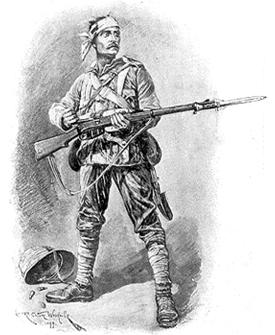
“Tommy Atkins” and “Just a Common Soldier” an Ode to Veterans Yesterday and Today

There has been much talk by our purloined and pampered politicians, pundits, preachers and their backs on Wall Street about the need for all of us to sacrifice. They seem to pushing harder and harder for the men and women that have served in thankless wars for the last 10 years and our families to again take a bullet for the country as they and their supporters refuse to sacrifice anything for the country.  You see the volunteers that have sacrificed to serve in time of war and on deployment after deployment have answered the call are expendable when push comes to shove.  We’re entitled you see, and our benefits much too generous.  They must be cut because no one else wants to sacrifice and they are so few that their votes really don’t matter.

Back inBritain’s colonial days the Soldiers, Sailors and Marines of the Royal Army, Royal Navy and Royal Marine Corps, and later the Royal Air Force served around the world but went without thanks at home. The American “Doughboys” took to the streets ofWashingtonDCin the midst of the depression seeking their bonus from the war because of they had lost their jobs in the Great Depression. They were driven from the streets and brutalized by troops under the command of General Douglas Macarthur who had commanded many of them in the Great War.

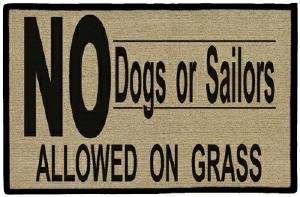
In many towns near bases in our fair land once stood signs in lawns that said “Dogs and Soldiers (or Sailors) keep off the grass.”  My late father told me of seeing these signs in Jacksonville Florida in the 1959s. The great poet Rudyard Kipling wrote the Poem “Tommy Atkins” which was dedicated to the soldiers that at the beginning of war were cheered and in peace jeered.  A. Lawrence “Larry” Vaincourt penned “Just a Common Soldier” in 1987.  Both speak volumes to the situation that exists in theUnited States as well as our alliesBritain,Australia, France andGermany as each government and their financial backers cast their veterans aside.

They say it better than I so I leave you tonight with these two great poems.  Something to think about the next time some Senator, Congressman, pundit, other political hack or Wall Street corporate raider says that veterans have it too good.

Peace,

Padre Steve+


TOMMY by Rudyard Kipling (1865-1936)


I went into a public-‘ouse to get a pint o’ beer,
The publican ‘e up an’ sez, “We serve no red-coats here.”
The girls be’ind the bar they laughed an’ giggled fit to die,
I outs into the street again an’ to myself sez I:

O it’s Tommy this, an’ Tommy that, an’ “Tommy, go away”;
But it’s “Thank you, Mister Atkins”, when the band begins to play,
The band begins to play, my boys, the band begins to play,
O it’s “Thank you, Mister Atkins”, when the band begins to play.

I went into a theatre as sober as could be,
They gave a drunk civilian room, but ‘adn’t none for me;
They sent me to the gallery or round the music-‘alls,
But when it comes to fightin’, Lord! they’ll shove me in the stalls!

For it’s Tommy this, an’ Tommy that, an’ “Tommy, wait outside”;
But it’s “Special train for Atkins” when the trooper’s on the tide,
The troopship’s on the tide, my boys, the troopship’s on the tide,
O it’s “Special train for Atkins” when the trooper’s on the tide.

Yes, makin’ mock o’ uniforms that guard you while you sleep
Is cheaper than them uniforms, an’ they’re starvation cheap;
An’ hustlin’ drunken soldiers when they’re goin’ large a bit
Is five times better business than paradin’ in full kit.

Then it’s Tommy this, an’ Tommy that, an’ “Tommy, ‘ow’s yer soul?”
But it’s “Thin red line of ‘eroes” when the drums begin to roll,
The drums begin to roll, my boys, the drums begin to roll,
O it’s “Thin red line of ‘eroes” when the drums begin to roll.

We aren’t no thin red ‘eroes, nor we aren’t no blackguards too,
But single men in barricks, most remarkable like you;
An’ if sometimes our conduck isn’t all your fancy paints,
Why, single men in barricks don’t grow into plaster saints;

While it’s Tommy this, an’ Tommy that, an’ “Tommy, fall be’ind”,
But it’s “Please to walk in front, sir”, when there’s trouble in the wind,
There’s trouble in the wind, my boys, there’s trouble in the wind,
O it’s “Please to walk in front, sir”, when there’s trouble in the wind.

You talk o’ better food for us, an’ schools, an’ fires, an’ all:
We’ll wait for extry rations if you treat us rational.
Don’t mess about the cook-room slops, but prove it to our face
The Widow’s Uniform is not the soldier-man’s disgrace.

For it’s Tommy this, an’ Tommy that, an’ “Chuck him out, the brute!”
But it’s “Saviour of ‘is country” when the guns begin to shoot;
An’ it’s Tommy this, an’ Tommy that, an’ anything you please;
An’ Tommy ain’t a bloomin’ fool — you bet that Tommy sees!

Just a Common Soldier by A. Lawrence Vaincourt (1987)

He was getting old and paunchy and his hair was falling fast, and he sat around the Legion, telling stories of the past. Of a war that he had fought in, and the deeds that he had done, in his exploits with his mates; they were heroes, every one. And tho’ sometimes, to his neighbours, his tales became a joke, all his Legion buddies listened, for they knew whereof he spoke. But we’ll hear his tales no longer for old Bill has passed away, and the world’s a little poorer, for a soldier died today.


He will not be mourned by many, just his children and his wife, for he lived an ordinary and quite uneventful life. Held a job and raised a family, quietly going his own way, and the world won’t note his passing, though a soldier died today. When politicians leave this earth, their bodies lie in state, while thousands note their passing and proclaim that they were great. Papers tell their whole life stories, from the time that they were young, but the passing of a soldier goes unnoticed and unsung.

Is the greatest contribution to the welfare of our land a man who breaks his promises and cons his fellow man? Or the ordinary fellow who, in times of war and strife, go`s off to serve his Country and offers up his life? A politician’s stipend and the style in which he lives are sometimes disproportionate to the service that he gives. While the ordinary soldier, who offered up his all, is paid off with a medal and perhaps, a pension small.


It’s so easy to forget them for it was so long ago, that the old Bills of our Country went to battle, but we know it was not the politicians, with their compromise and ploys, Who won for us the freedom that our Country now enjoys. Should you find yourself in danger, with your enemies at hand, would you want a politician with his ever-shifting stand?

Or would you prefer a soldier, who has sworn to defend his home, his kin and Country and would fight until the end?


He was just a common soldier and his ranks are growing thin, but his presence should remind us we may need his like again. For when countries are in conflict, then we find the soldier’s part is to clean up all the troubles that the politicians start.  If we cannot do him honour while he’s here to hear the praise, then at least let’s give him homage at the ending of his days. Perhaps just a simple headline in a paper that would say, Our Country is in mourning, for a soldier died today.


3 Comments

Filed under History, iraq,afghanistan, Military, Pastoral Care

The Battle of Leyte Gulf: Sinking the Musashi

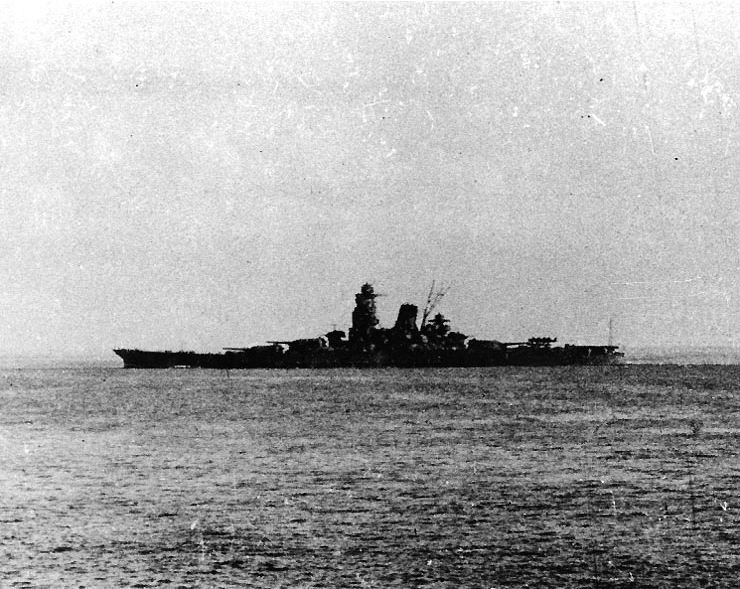
IJNS Musashi

This is the second in a series of articles about the Battle of Leyte Gulf.  The first article in the series is liked here and is entitled

The Battle of Leyte Gulf: Introduction and the Battle of Palawan Passage

Following the loss of Atago, Maya and Takao Vice Admiral Takeo Kurita’s Center Force had an uneventful rest of the day on the 23rd as his ships kept a watchful eye and ear for more US Navy submarines.  At about 0800 on 24 October the Center Force was spotted by 3 B-24 Liberator bombers which promptly reported them.

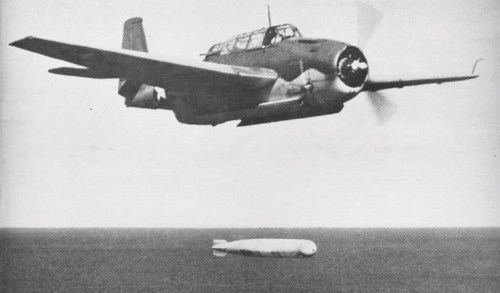
TBF Avenger dropping its “fish” 19 would hit Musashi
One of the ships in the Center Force was the IJNS Musashi, sister ship of the mighty Yamato which was also in the force. The two battlewagons were the largest battleships ever built.  With a full load displacement of 72,800 tons and an armament of nine 18.1 inch guns, the largest battery ever mounted on a warship the two behemoths also had massive anti-aircraft batteries and the Japanese were counting on them leading the Center Force to a miraculous victory during the battle.  Admiral Kurita addressed his commanders prior to the battle:

“I know that many of you are strongly opposed to this assignment.  But the war situation is far more critical than any of you can possibly know.  Would it not be shameful to have the fleet remain intact while our nation perishes?  I believe that the Imperial General Headquarters is giving us a glorious opportunity.  Because I realize how very serious the war situation actually is, I am willing to accept even this ultimate assignment to storm into Leyte Gulf.  You must all remember that there are such things as miracles.”

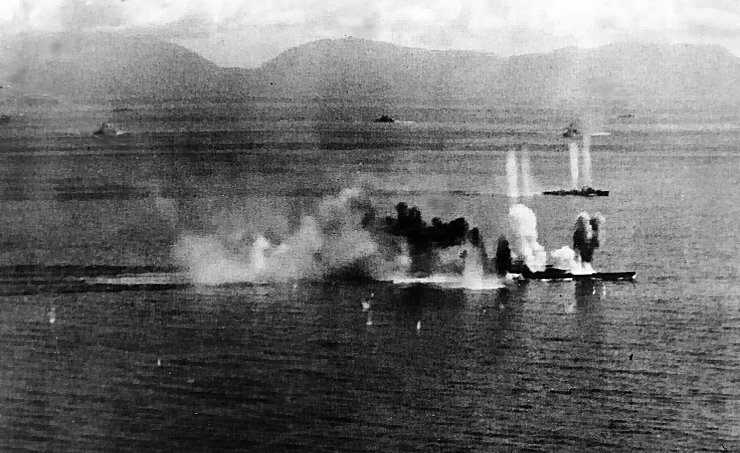
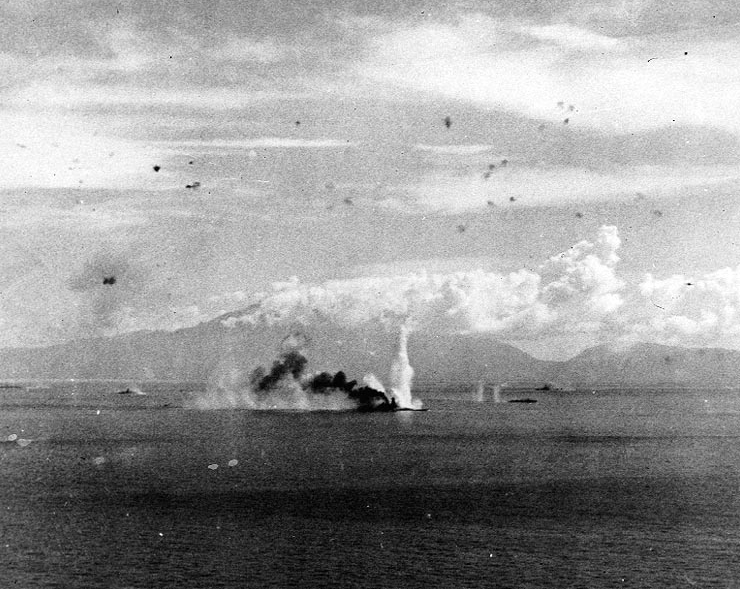
Musashi or Yamato under attack October 24th 1944

At 1000 the Musashi’s radar picked up approaching aircraft.  These were from the USS Intrepid and the USS Cabot which were assigned to Rear Admiral Gerard Bogan’s Task Group 38.4. The anti-aircraft crews and damage control teams prepared as the ship’s bugle sounded the alarm.  As the aircraft came closer the main guns of the Musashi fired but ceased fire as the aircraft drew closer.  Helldiver dive bombers plunged downward at the ships of the Center Force and F6F Hellcat fighters unopposed by enemy fighters conducted strafing runs as TBF Avenger torpedo bombers dropped their deadly loads at the Musashi.  The big ship avoided two of the “fish” but a third struck causing little damage and the first wave few away.  Musashi reported that she had sustained a hit and continued on.  The Japanese sailors knew that this would not be the last attack.  Though Musashi had weathered the first strike the American fliers hit the battleships Nagato, Yamato and severely damaged the heavy cruiser Myōkō.

Musashi hit

At 1140 the Musashi’s radar picked up the next wave of attackers and at 1203.  These were from the Intrepid, Essex and Lexington.  Hitting the Center Force in two waves a half hour apart these aircraft delivered punishing blows on Musashi. She was hit by 3 torpedoes and 2 bombs. The torpedoes caused damage that caused a 5 degree list and was down six feet by the bow. The torpedo damage was concentrated midships and one torpedo flooded her number 4 engine room. One of the bombs hit an engine room and disabled her port inline propeller shaft.  With her speed reduced she proceeded on.

Musashi

Thirty minutes following this attack at about 1330 Musashi was attacked again by Helldivers and Avengers. She is hit by 4 1000 pound bombs and 4 torpedoes.  She was now so badly damage that she could no longer keep up with the fleet and dropped behind to fend for herself.  At 1350 this attack ends with her speed reduced to 20 knots and with her down 13 feet by the bow and nearly all of her trim and void tanks full. There is now little room for any more damage forward.

Separated from the fleet Musashi was now attacked by aircraft from the Enterprise, Cabot, Franklin and Intrepid that score hits with 11 bombs including the deadly 1000 pounders and 8 torpedoes.  During the course of these attacks which ended after 1530 Musashi sustained 19 torpedo and 17 bomb hits and taken 18 near hits close aboard. At 1620 her skipper Rear Admiral Toshihira Inoguchi began desperate damage control measures to control the increasing list which had reached 10 degrees to port.  Dead in the water she continued to list further and when the list reached 12 degrees at 1915 Inoguchi ordered preparations to abandon ship.  The surviving crew assembled on the deck, the battle flag and the Emperor’s portrait were removed.  Admiral Inoguchi gave his personal notebook to his Executive officer Captain Kenkichi Kato and directed then him to abandon ship. Admiral Inoguchi retired to his cabin and was not seen again.  At 1930 with the list now 30 degrees Captain Kato gave the order to abandon ship and soon with the list increasing further men began to slide across the decks being crushed in the process.  Panic broke out among the crew which had been assembled by divisions and Captain Kato ordered “every man for himself.”  At 1936 the ship capsized and port and went down by the bow sinking in 4,430 feet of water in the Visayan Sea at 13-07N, 122-32E.
The destroyers Kiyoshimo, Isokaze and Hamakaze rescued 1,376 survivors including Captain Kato, but 1,023 of Musashi’s 2,399 man crew were lost including her skipper, Rear Admiral Inoguchi who was promoted Vice Admiral, posthumously.

The rest of the Center Force under Kurita turned around to get out of range of the aircraft, passing the crippled Musashi as his force retreated. Kurita’s retreat was temporary and Kurita waited until 17:15 before turning around again to head for the San Bernardino Strait hoping to find it empty of American ships.  His force was still battle worthy because the majority of the 259 sorties were directed on Musashi and the Heavy Cruiser Myōkō which retired heavily damaged. The Southern Force which had also been hit by American carrier air strikes also continued its push toward Surigao Strait.  The Battle of Surigao Strait, the revenge of the Pearl Harbor Battleships will be the next article in this series.
Peace

Padre Steve+

3 Comments

Filed under History, Military, Navy Ships, US Navy, world war two in the pacific

Deep Thoughts and Musings on a Lazy Fall Saturday

I have been down with an ear and sinus infection most of the week which has added to my insomnia and made me pretty useless.  It is no fun to get up in the morning with vertigo.  When this happens I wonder where Verti went. Over the past few days with the vertigo, occasional fever, sinus headaches and some coughing and sneezing I have officially welcomed in the 2011-2012 cold and flu season.

The past few days have given me time to do a lot of thinking, some praying and a bunch of writing.  At least my PTSD-Mad Cow brain is functioning relatively well.  But not getting out much and only going to work to go to the doctor is a bit of a downer.  But it is now time to stop whining to you about this and simply be thankful for the blessings that I have.

I could have a job that had paid time off for sickness or that provided no medical coverage.  I could be wondering where the next meal or paycheck was coming from or where I will sleep.  One thing that I am thankful for is that we paid off a painful reminder of when where the next meal, tank of gas, medical care or pace to live was our reality.  I left the active duty Army in September 1988 to attend seminary and that as about the time of the big Texas oil bust and real estate collapse.  I was an Army Captain and couldn’t get a job because I was overqualified for most jobs or competing against people who could be paid less than me for others.  It was brutal.

Judy was sick and could not work and eventually despite eventually getting a job with a social service agency, things fell apart. We lost our home and even our cars.  It was the worst time of our lives.  We never declared bankruptcy and paid off everything that we owed and this week I paid off the balance of the home that we lost in 1989 to the Veterans Administration.  When the market crashed and the foreclosure came owed almost 40% of the selling price when the house sold at auction.

I am so grateful for what we have now and so being sick and laid up for a few days is really nothing to complain about.  There are far too many people in our country that even a couple of years ago had what they thought were stable well paying jobs with benefits that don’t have them now.  Many are veterans and their families.  It is most likely that things will get worse before they get better for most people as the effects of the sovereign debt and banking crisis in Europe hits our banks.

For me what people are going through is not abstract because we have been there. I really wonder when I see people in political and economic power doing nothing with one Presidential candidate blaming the unemployed if they didn’t have a job and were not rich.  I wonder what has happened to our country.  I wonder why so many churches side with the rich and powerful and seem to despise the poor.

It seems heartless to say the things that this Presidential candidate said with unemployment remaining over 9% for over a year and companies deciding when they do have a job opening to give preference to those that currently have jobs.  Even well qualified unemployed people are not even considered for job openings because they don’t have a job.  And this is happening when the supposed “job creators” on Wall Street who the taxpayers bailed out in 2008 and 2009 are giving themselves bonuses.  It just immoral and when I see many of my fellow Christians making the support of polices which are condemned by Jesus an article of faith in both theology and politics.

I have also had time to think about what is going on in the Middle East especially the Iraq withdraw and ongoing war in Afghanistan.  I am really concerned with Afghanistan because of the veiled threats that Pakistan is making about cutting our supply lines.  They have done this for short time periods before and there have been numerous attacks on supply convoys in that country by Pakistani Taliban.  To make matters even more uncertain Afghan President Hamid Karzai has said that if there were a conflict between the United States and Pakistan that Afghanistan would help them.

Sometimes I hate being a military historian because I understand what happens to armies with tenuous supply lines that are under the control of unreliable allies.  Stalingrad comes to mind. Likewise the lesser known but very significant The Second Jassy-Kishinev Offensive between August 20 and August 29 1944 in which the Romanian allies of the Germans switched sides during the battle.  This allowed the Red Army to destroy the German 6th Army and maul the 8th Army. The offensive probably shortened the war by six months.  At Stalingrad the Germans and their allies suffered 841,000 casualties and at Jassy-Kishinev they lost 100,000 killed and 115,000 captured.  Currently there are about 90,000 American and another 40,000 NATO or coalition troops in Afghanistan deployed in penny packets throughout the country fighting an insurgency.  They are very vulnerable to any supply disruption especially during the winter months and if there was a conflict that shut down the supply lines we would have to rely on the good graces of the Russians to resupply or withdraw our troops. When I think about this I think about my friends and comrades serving in Afghanistan and I pray to God that this does not happen.

When I think that the burden of these wars has fallen on under half a percent of the American population and that politicians and their allies in the business sector are looking at ways to make substantial cutbacks in medical care and other benefits to those that have been sacrificing in ways that no one else has been doing the past ten years.  Talks of cutting VA care for veterans is obscene when because of their preexisting conditions they wouldn’t be able to afford medical insurance even if they could get it.  And the word that these politicians and their allies use is that these are “entitlements.”  That is a really nasty word and it is used pejoratively because everybody knows that “entitlement programs” are bad and those that receive “entitlements” haven’t earned them and are leaching off of society.  In fact a letter from the “Super Committee” in charge of finding ways to slash the budget has proposed cuts to veterans benefits including pension, disability compensation and education payments.

This is why I would rather be at work, I think too much.

But I am still grateful for all that I have and honored to serve with the fine men and women of the US Military in this time of war.  I do pray that things get better in our nation, which those suffering from the terrible economy will have their needs for employment and other physical needs met. I pray that somehow the deep division that has rent our people asunder will be healed and that our political and economic leaders will do what is right for the country and our people rather than the quarterly bottom line of select corporations.  And I pray for the safety and success of my friends and comrades in both Iraq and Afghanistan and that our political and business leaders will not sacrifice us and then abandon us after beating us to dust the past 10 years.

But at least the World Series is on and nothing bad accrues from Baseball.  For that I am very grateful as Sharon Olds said “Baseball is reassuring.  It makes me feel as if the world is not going to blow up.”

Peace

Padre Steve+

1 Comment

Filed under economics and financial policy, History, iraq,afghanistan, Loose thoughts and musings, Military

Padre Steve’s Arab Spring Articles: Tahir Square to Sirte

It is hard to believe that Moammar Gaddafi is dead and that the people of Libya have thrown off the shackles of his tyrannical dictatorship which caused them and the world so much grief.  These are links and brief descriptions of the articles of this series.  There have been revolts across the Middle East as oppressed people have risen up peacefully against their repressive governments only to be met with force. Egypt, Yemen, Bahrain, Libya and now Syria, each is rooted in history and each is different. Taken together they are inspiring others around the world.  I have not written much on Yemen or Syria but expect in the coming weeks and months there will be plenty of opportunities to look at the history, culture and unique aspects of these revolts and their potential impact in the region and around the world.  It is my belief that they are helping usher in a new age of revolution with results that will be as dramatic and important as the fall of Empires at the close of the First World War.  Looking at each article you can see how my thought process has evolved as the situation has developed.

Also a page update. I have updated the Middle East Page found in the top menu.

Peace

Padre Steve+

Walk Like an Egyptian: The Egyptian Revolution and the Radicalization of the Middle East Published31 January 2011. An analysis of the probability of the radicalization of the Middle East as revolution spreads.

The Beginning of Chaos in Egypt: Watching and Waiting as the Situation Deteriorates Published2 February 2011 as the situation began to deteriorate in Egypt as Mubarak loyalists attacked protesters in Tahir Squar.

Egypt: As Mysterious as the Sphinx and as Dangerous as a Cobra….What Next? Posted11 February 2011.  A continuation of my observations of  the revolution in Egypt prior to the fall of Hosni Mubarak.

Danger in the Arabian Gulf: The Fires of Protest Spread to Bahrain Posted18 February 2011. The article deals with the protests in Bahrain and my experiences and observations having traveled there many times.

Damned if you do…Damned if you Don’t: The Middle East Protests and U.S. Foreign Policy Posted 19 February 2011. An examination of the difficulties facing U.S. Foreign policy officials in light of the recent spread of revolution in the Arab World.

To the Shores of Tripoli: The Flames of Revolution Spread to Libya as Gaddafi Fights Back Posted February 21st as the protests in Libya provoked a response from dictator Moammar Gaddafi. Saif Al Islam Gaddafi said We will take up arms… we will fight to the last bullet… We will destroy seditious elements. If everybody is armed, it is civil war, we will kill each other.”

Göttdammerung in Libya: Shades of Hitler as Gaddafi Promises to Die as a Martyr Published 22 February 2011 Moammar Gaddafi promises “I am a fighter, a revolutionary from tents … I will die as a martyr at the end… I have not yet ordered the use of force, not yet ordered one bullet to be fired … when i do, everything will burn.”   Moammar Gaddafi accurately predicts his death.

The Guns of March Published 9 March 2011. “War is the unfolding of miscalculations” Barbara Tuchman Libya in the context of the broader Middle East and US Military capabilities.

Gaddafi Taunts the West and Kills his People: Our inaction speaks so loud he can’t hear a Word that we are Saying  Published 11 March 2011.  The cost of inaction and the risks of making threats that you do not back up with force.  When I wrote this I believed that if nothing was done that Gaddafi or terrorist organizations like Al Qaeda and others could turn this revolt into a regional war.

Strike on Libya: The Unknown outcome of Operation Odyssey Dawn Published20 March 2011. The beginning of the NATO air campaign in Libya.

Damned if you do and Damned if you Don’t: The Allied Intervention in Libya Published March 21st 2011.  War is the province of chance. In no other sphere of human activity must such a margin be left for this intruder. It increases the uncertainty of every circumstance and deranges the course of events.”- Karl von Clausewitz The opportunities and peril associated with the NATO intervention in Libya.

Gaddafi’s Götterdämmerung: The End in Tripoli Published 21 August 2011.  The fall of  Tripoli, the Libyan Rebels drive out Gaddafi.

The Promise and Peril of Revolutionary Times: A Warning From History  Published 18 October 2011. Putting revolutions around the world in context.

Gaddafi is Dead so what happens Now? Published 20 October 2011. The death of Moammar Gaddafi and questions of what comes next.

Why the Libyans were able to Overthrow Gaddafi and what We can learn from It: A Lesson from the work of T E Lawrence  Published 21 October 2011 What NATO and theUnited States did right inLibya and a look at Middle East History.

2 Comments

Filed under Foreign Policy, History, middle east, Military

Why the Libyans were able to Overthrow Gaddafi and what We can learn from It: A Lesson from the work of T E Lawrence

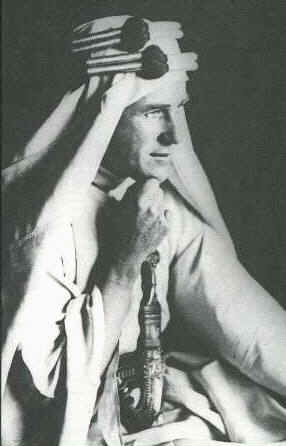
T E Lawrence

“Do not try to do too much with your own hands. Better the Arabs do it tolerably than that you do it perfectly. It is their war, and you are to help them, not to win it for them. Actually, also, under the very odd conditions of Arabia, your practical work will not be as good as, perhaps, you think it is.” T. E. Lawrence

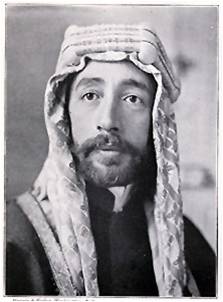
Lawrence with Arab fighters at Aqaba and Emir Faisal Hussein (below)

The Libyan revolution succeeded in overthrowing Moammar Gaddafi and his 42 year tyranny because the West did not turn it into an American or NATO war. By limiting involvement to airpower, coastal interdiction and tiny numbers of advisers the United States and NATO avoided the costly trap of putting large numbers of troops on the ground.  Such action would have been counterproductive in Libya and in the Arab world. While the action certainly would have ridded the world of Gaddafi and his regime much more quickly it would have emasculated the Libyans who had taken up arms against Gaddafi by turning it into our war, a war which would have been seen by many Libyans and Arabs as just more Western Imperialism.  Critics can always find fault in any military operation but for once in the Post Cold War era the United States and NATO knew their limitations and that the revolution had to be the work of the Libyans themselves.

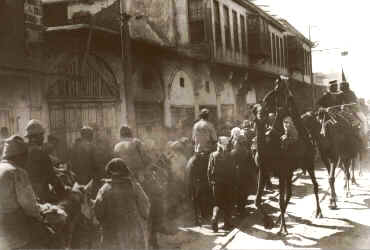
Lawrence and Hussein’s troops pass Ottoman prisoners at Damascus in 1918

T E Lawrence understood the Arab mind more than most westerners ever will.  Living with and helping lead the Arab tribes that revolted against the Ottoman Empireduring the First World War he learned the culture as well as came to understand the strengths and weaknesses of the Arab tribes.  One thing that can be said is that most Americans like many of Lawrence’s counterparts in the British political leadership, military and diplomatic services is that far too few have taken the time to either understand or respect the Arabs. When I was in Iraq the senior Iraqi Officers that I met were amazed and impressed that I knew their history and culture because so few people did. When I mentioned their victory at Al Kut Amara, or their capture of the Al Faw peninsula at the end of the Iran-Iraq war they beamed with pride.

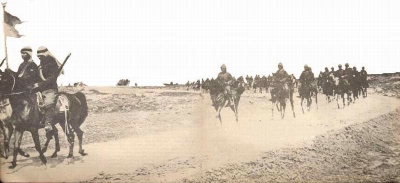
Ottoman troops in Mesopotamia 

One of the things that Lawrence understood was the profound sense of personal pride and honor which imbued the Bedouin.  He understood that the various Bedouin tribes had no love for the Ottoman Turks who treated them with distain.  He also understood that they needed to be the ones that defeated the Turks.

The campaign waged by Lawrence and the Bedouin confounded the Turks. Working with Emir Faisal the son of Sherif  Hussein of Mecca he convinced his force of Arab irregulars not to make a direct assault on the city of Medina which was heavily garrisoned by the Turks.  Instead he expanded the battlefield by exploiting the natural weakness of the Turks, the need for constant supply via the Hejaz Railway.  In doing so he tied up large numbers of Ottoman troops that could have been used against the forces of General Allenby that were waging a conventional campaign and which was very successful in defeating the Ottomans.

While Lawrence was a part of a much larger effort his work in helping the Arab revolt was of great importance to the success of the British efforts against the Ottomans.  Unfortunately the good will that Lawrence and others like him built did not last. The British and French governments did not respect treaties that supported Arab independence and instead dividing the region between them under the terms of the 1916 Sykes-Picot Agreement. They left an isolated and abandoned Hashamite kingdom in the Hejaz which was conquered by the Saudis to whom the British had shifted their support.

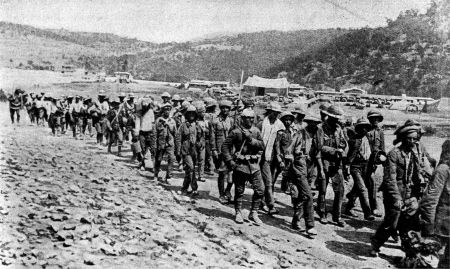
British prisoners at Kut al Amara

A few hundred miles away the British did not take advantage of indigenous Arab resentment of the Ottomans in Mesopotamia.  The British invaded Mesopotamiain 1914 expecting to defeat the Turks easily.  However the British did precious little to enlist the support or help the Iraqi Arabs.  The campaign was long and included the worst defeat of a British Army during the war at the Siege of Kut Al Amara in 1916 at the hands of a largely Iraqi Ottoman 6th Army.  Some 30,000 British and Indian soldiers were killed or died of disease and 13,000 captured many who did not survive captivity.  After the war Lawrence remarked “The people of England have been led in Mesopotamia into a trap from which it will be hard to escape with dignity and honor. They have been tricked into it by a steady withholding of information.”

Faisal would go on to be elected as the new Kingdom of Syria by the Syrian National Congress in March of 1920 but kicked out by the French who enforced the Mandate of Syria in July.  In 1922 after the British brutally suppressed an Iraqi independence movement they appointed Faisal as the King of Iraq. When the British “gave” the Iraqis their independence in 1932 Faisal was the head of state.  He died in 1933 and the British maintained a tight grip on the country and put down another Iraqi nationalist revolt led by the Army in 1941.  The British would remain in Iraq until 1958 when a military coup which is known as the “14 July Revolution” overthrew the government and killed king Faisal II.

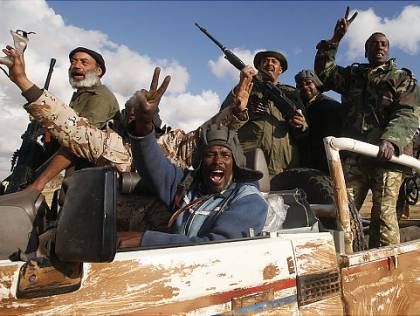
Libya Rebels

In Libya there was great temptation and political pressure for the United States to begin an early air campaign without significant support in the international community.  Some say that this caused more casualties and suffering for the Libyans, but it helped in the long run because Libyans saw it as their war to win even when NATO began its air campaign against Gaddafi.  The air campaign was a great help to the newly proclaimed National Transitional Council in Benghazi and probably saved them from being defeated but it was the courage of Libyans on the ground who sacrificed themselves against a better armed and trained force to retake the country.

The revolt restored the pride of an oppressed people, something that could not have taken place had the campaign been led by the United States and NATO with boots on the ground.  People forget that in 2003 the majority of Iraqis welcomed US forces as liberators.  This lasted until Paul Bremer unilaterally dissolved Iraqi military, police and civil servants that were actively helping us, turning them into enemies overnight.  The liberated Iraqis felt betrayed and dishonored by the United States just as they had been by the British following the First World War.  Bremer did this without ensuring that the Iraqi Army weapons depots were secure thereby providing Sunni and Shia insurgents with vast amounts of weapons.  These weapons were turned against American and coalition soldiers and even the UN and NGOs which were just beginning to helpIraqrebuild.  The result of Bremer’s was a protracted insurgency and civil which cost us nearly 4500 soldiers killed and over 32000 wounded and hundreds of thousands of Iraqis killed, wounded or displaced.  If one wants an answer as to why the Iraqis rose up against the United States occupation in late 2003 they need to look no farther than this. The Iraqis only want to be independent and saw the Bremer’s actions in the lens of their history with the British.

The author with Iraqi General Sabah Ramadi 2007

The decision of President Obama, French President Sarkozy and British Prime Minister Cameron to work through the UN and NATO was the correct one. It enabled the Libyans to overthrow Gaddafi and it kept our military involvement to a minimum.  While it cannot be a template for all future military operations in the Arab world as every Arab country is different it does have lessons for us. Libya was a perfect place to use this method. It had a population that wanted Gaddafi gone and were willing to die trying to overthrow him.  It had no huge urban population centers teaming with uneducated and poverty stricken people with little hope.  It has substantial oil wealth and an oil infrastructure which unlike Iraq was not destroyed during the war or in bad repair due to years of sanctions. It also enjoyed a key geographic location which made NATO air intervention much easier than almost anywhere in the Middle East because we did not need bases in Libya or its neighbors to run the operation. It was conducted from Europe and platforms at sea.   This is not possible in most other Arab countries. The task would be much more difficult if the target was Syria.

Now is the time to help the Libyans in rebuilding their country and letting them continue to regain their pride by letting them do as much as possible.  They won’t do it the way we would but that is okay. They will make mistakes but given time the people that shed their blood together to rid themselves of Gaddafi can work together to build a free country.  Those that go to Libya to assist the Libyans need to keep this in mind if they really want to see a strong, robust and successful Libyan democracy take hold.  Let’s also make sure that the good feelings that the Libyans have for us now remain by simply treating them as we would like to be treated.  Simply put we have to stop treating them as vassal states that we only value for their natural resources while we disrespect their people, history and culture.

As for the future it would be a wise investment to ensure that diplomatic, military and NGO personnel be trained and educated to understand and appreciate the Arabs and other cultures that are different than ours in the West.  The West has much to overcome in its relationship with the Arabs most of which is self inflicted. But we can try to start again.

Peace

Padre Steve+

3 Comments

Filed under Foreign Policy, History, middle east, Military

The Navy is the Future of National Security

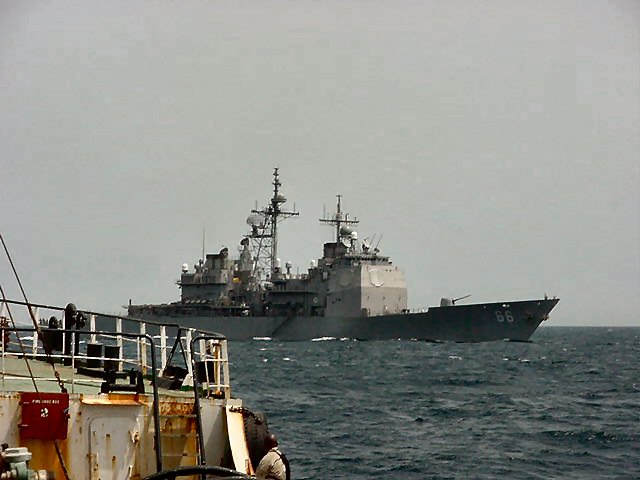
USS HUE CITY CG 66 in the Arabian Gulf 2002.  “I wish to have no Connection with any Ship that does not Sail fast for I intend to go in harm’s way.” John Paul Jones 

“Without a decisive naval force we can do nothing definitive, and with it, everything honorable and glorious.”  President George Washington

“A good Navy is not a provocation to war. It is the surest guaranty of peace.” President Theodore Roosevelt

“A powerful Navy we have always regarded as our proper and natural means of defense; and it has always been of defense that we have thought, never of aggression or of conquest. But who shall tell us now what sort of Navy to build? We shall take leave to be strong upon the seas, in the future as in the past; and there will be no thought of offense or provocation in that. Our ships are our natural bulwarks.” President Woodrow Wilson

“Events of October 1962 indicated, as they had all through history, that control of the sea means security. Control of the seas can mean peace. Control of the seas can mean victory. The United States must control the seas if it is to protect your security….” President John F. Kennedy

There are a great many debates in Congress and the Pentagon regarding the current and future military budgets in light of the massive budget deficits and economic crisis facing the nation.  Complicating the issue is our massive commitment to land campaigns that contribute little to the long term national security of the United States and its friends. These wars constrain our diplomatic military and economic ability to respond to other crises at home and around the world be they military threats, terrorism or natural or man made disasters.

Until the mid 20th Century theUnited States viewed the land forces when used abroad as expeditionary forces which were employed overseas for relatively short periods of times of combat.  The mission and strategy was to fight the war, bring all or most of the forces home, assist with security as needed and depend on a naval presence to show the flag without a continued large “boots on the ground” presence.   The two times that we have elected to fight protracted ground wars with no definable condition of victory we have come out weaker than we went in.  This was the case inVietnam a war which badly divided the nation and nearly destroyed the military as a viable force.  The present campaign in Afghanistan and the war in Iraq which is close to ending have the potential to do the same.

In the prosecuting the Global War on Terror which was launched in response to the attacks of September 11th 2001 we have for the most costly and historically flawed ways to use an American Army.  In doing so we have had to invest a huge amount of our expenditures simply to maintain a force to keep the status quo in a country that will turn on us as soon as it convenient to do so.

In the process of focusing on these aspects of this war we have forgotten the more crucial long term aspects of national security which can only be addressed by maritime power.  This power includes the military might of the Navy and Marine Corps team but also includes our Merchant Marine and Coast Guard.

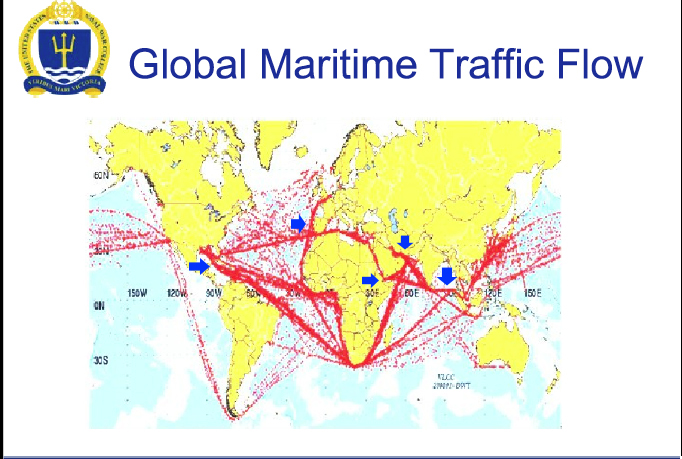
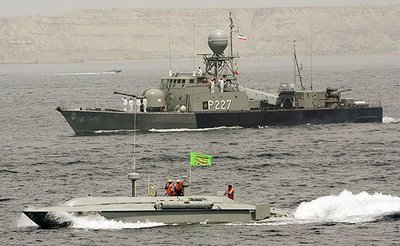
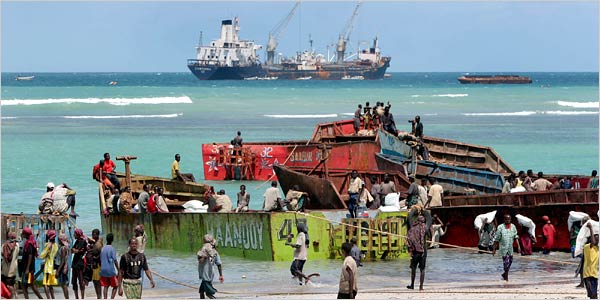
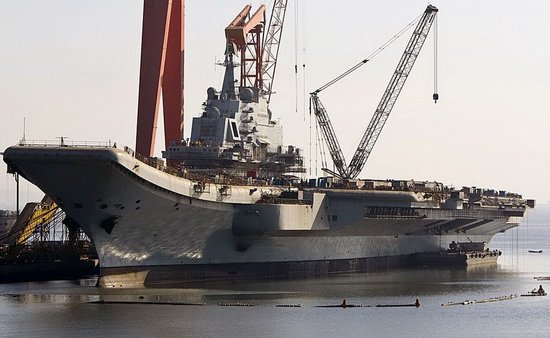
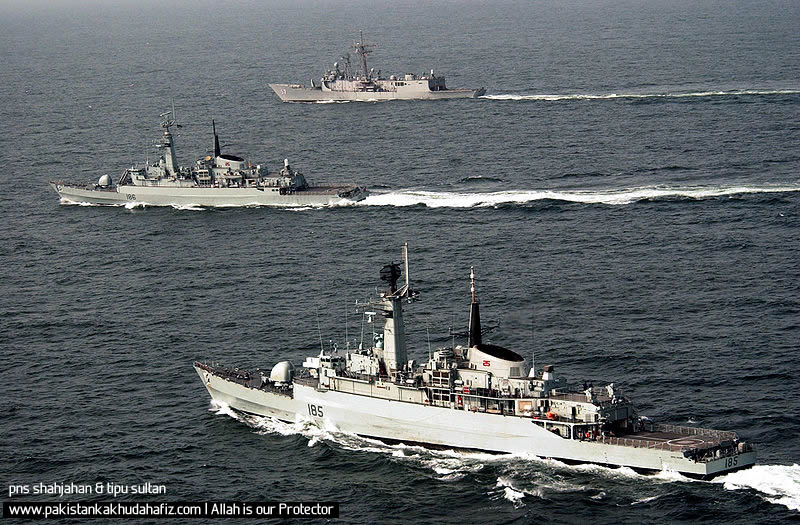
Ninety percent of world trade is transported by ship via sea lanes that have choke points such as the Strait of Hormuz,Strait of Malacca, the Bab El Mendeb and the Horn of Africa, and the Strait of Gibraltar.  Likewise other traffic must pass through the South China Sea, the Taiwan Straits or around Cape Horn.  Then there are the two major maritime canals the Panama and Suez Canals.  Terrorists, pirates, rogue nations and ascending Naval powers such asChinapose real threats in all of these critical maritime commerce choke points.

Real and potential threats to the choke points: Iranian Naval and Revolutionary Guard Naval forces, Somali pirates, the new Chinese aircraft carrier and a Pakistani Navy that may become an enemy overnight 

Most of the world’s population lives in what are called the littorals, the areas of land adjacent to oceans and major waterways.  Likewise most industry is located in these areas. Most of these populations and industries are also in areas under the same type of threats as the sea lanes and choke points.  Simply put the sea and the littorals are much more important to this country and the world than landlocked Afghanistan.  They also are much more easily influenced by naval power that is not bound to land bases in nations where governments and their policy to the United Statesand our friends can change overnight and which large land armies would have minimal impact.

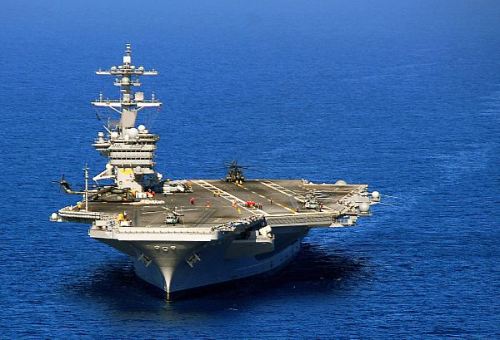
The United States Navy has been and still is the world’s preeminent naval power. It will likely remain so for the foreseeable future but the navy is strained.  Since 2001 it has shrunk in size, shed some 52,000 sailors and seen its scope of responsibility and operational tempo increase putting greater strain on the ships, aircraft and personnel remaining.  Ships are aging, maintenance was deferred and the planned new construction has not materialized.  The Ticonderoga Class Guided Missile Cruisers are nearing an average age of 20 years, our carriers average 23 years old, many of our submarines are nearing the end of their projected service lives and some other ships are far older.

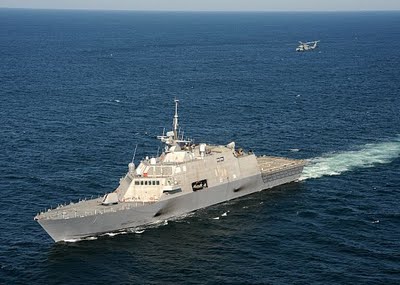
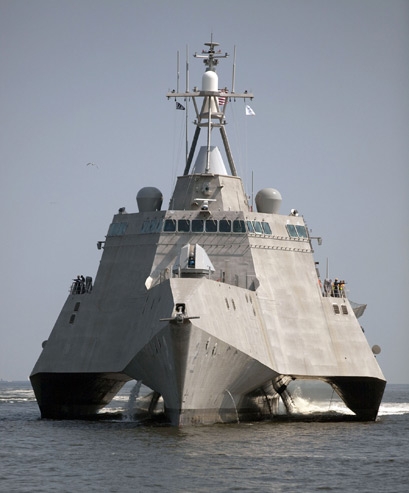
Ship classes like the Freedom and Independence class Littoral Combat Ships (LCS), San Antonio Class Landing Ships (LPD) and the DD-1000 Zumwalt Class are badly over budget, plagued with technical and workmanship issue and are behind in production.

USS Freedom (above) and USS Independence Littoral Combat Ships

The LCS in particular seems like a bad investment, the ships are undermanned and under armed, planned weapons modules are not in production and they are not designed for survivability.  In effect they are large fast ships with almost no offensive or defensive capabilities that would be hard pressed to survive in a fight with any current or future Corvette or Frigate fielded by an opposing naval force. In order to be effective they need heavier armament and larger crews and need a redesign to improve their survivability. It makes no sense to spend more than half a billion dollars each on ships that are not survivable and cannot fulfill their intended missions.  A better choice would be something similar to the Dutch De Zeven Provincien  German Sachsen or the French Lafayette Class frigates which have a heavy armament and good endurance or the smaller and cheaper German Braunschweig class Corvettes.

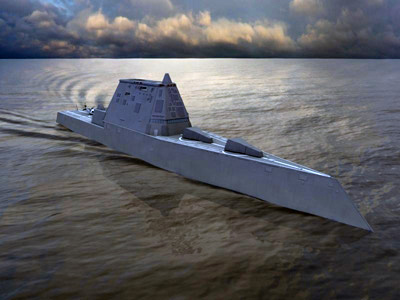
DD-1000 the Zumwalt Class

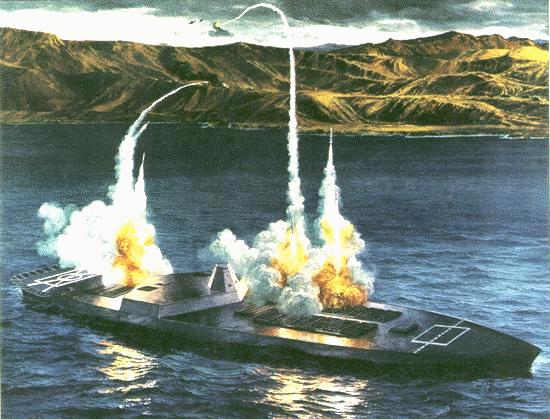
The Zumwalts are 14,000 ton “Destroyers” that were designed as a replacement for the battleship.  Originally 32 were planned but the high cost and multiple problems associated with the design. These issues have included such things as seaworthiness due to their hull form and other hull issues, its integrated advanced electro-magnetic propulsion system and its surface and air warfare capabilities.  Their armament has been an issue since the beginning as they cannot meet the standards of the Aegis equipped Cruisers and DDGs and cannot support the Ballistic Missile Defense capabilities of those ships.  Their naval gunfire support capability which was advertised as one of their main selling points is woeful. They are to be equipped with two 155mm long range naval guns designed to use a “smart” munitions. The ships will carry a limited supply of shells for these guns and because of the need for extended range and guidance capabilities the shells will have a smaller charge than their land based counterparts.   They will have only two-thirds of the VLS cells than Ticonderoga class ships meaning that they can carry few missiles of all types.  It is likely that the Tomahawk cruise missile will comprise the bulk of their missile armament but if one wants a ship that’s only significant capability is launching Tomahawks then there are many other ideas which are more economical and can carry far more missiles than the Zumwalts. One of these was the Arsenal ship which was designed to carry 500 Tomahawks on a stealthy platform that requires a small crew and had an estimated cost of 500-800 million dollars.  It was cancelled in favor of the project that eventually turned into the Zumwalt class. The DD-1000 program began with the DD-21 program in 1994 and the first ship may not enter service until 2015. The cost of just two of these ships has grown exponentially to 6.6 billion as of 2011.  The two ships under construction have little place in the current or future Navy and would likely serve as technology test beds.

The Arsenal Ship

While we have increased the numbers and continued the production of the highly successful Arleigh Burke class guided missile destroyers (DDG) and Wasp class Amphibious Assault ships (LHD) it is not enough to compensate for the continued attrition.  If worst case budget projections occur the Navy could experience massive cuts without any decrease in maritime threats or operational commitments.  The Coast Guard is in even worse shape.

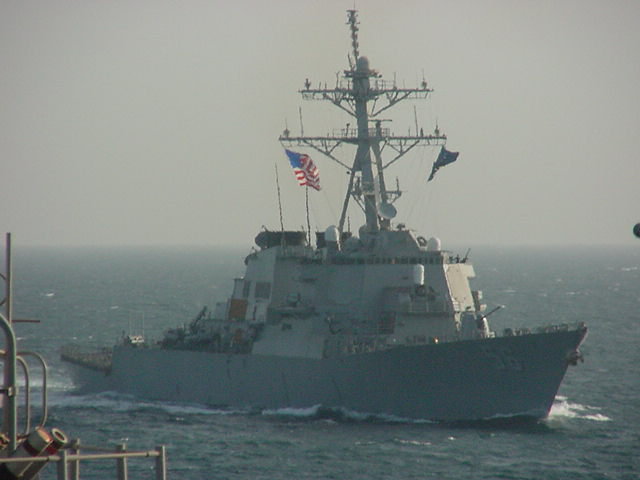
The USS John S McCain DDG 56

The most important aspect of national defense, free trade and humanitarian assistance in the coming years are America’s Navy, Marine Corps, Coast Guard and Merchant Marine.  Without a strong Navy and the other components of maritime power we are at the mercy of tin-horned dictators, pirates and terrorists who live and operate in the most vital areas of the world’s maritime transportation network.

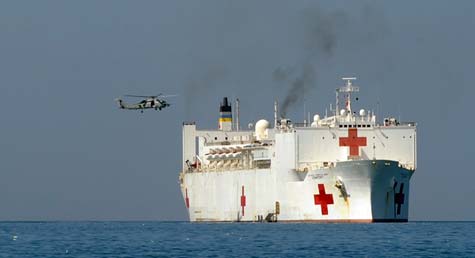
Humanitarian assistance: USNS Comfort off Haiti 

As our political leaders meet in the coming weeks and months decisions will be reached in matters of national security.  They will be based budget considerations alone as we have not operated on a clearly defined national security strategy since the end of the Cold War.  Force structure has to be decided based on the over arching national strategy and broad brushed and un-thought out cuts are a recipe for disaster.

History tells us this. Following our Revolution the nation was deep in debt and eliminated the Navy.  Since our merchant shipping was no longer protected by the Royal Navy and the treaty withFrancewas allowed to lapse American ships became easy prey for the Barbary Pirates.  Rather than build a navy to protect American citizens and shipping the nation paid “tribute” to dictators which amounted to tens of millions of dollars until Thomas Jefferson sent the new re-established Navy to counter the threat.   Our history and that of other maritime powers such asGreat Britainand theNetherlandsprovide many precedents for this use of power.

What needs to happen now is for the LCS ships and Zumwalt class production to end with the current ships building.  No carriers except the 50 year old USS Enterprise should be decommissioned until a full up national strategy review is completed and agreed to by both political parties.  That strategy needs to actually prioritize the most important areas of engagement that the military should focus its efforts.  The Middle East will remain important but will fade as Asia continues to gain importance.

Regarding other ship classes much needs to happen.  DDG production should be stepped up and an affordable yet fully capable replacement to the Ticonderoga class designed, to include the ability to conduct ballistic missile defense.  A diesel electric attack submarine needs to be fielded to complement the Virginia Class attack boats.  A Light Fleet Aircraft Carrier design should be designed and produced to compliment the Nimitz and Ford Class Carriers now in commission or building. The Navy should design or take an off the shelf Corvette or small Frigate type ship to fill the role envisioned by the LCS.  Such ships should be designed for specific tasks to avoid the massive cost overruns and simplify production.  When one remembers that it as the United States Navy that first developed the Destroyer Escort type ship to fill a specific role such an undertaking should be well within ship designer and capabilities so long as they do not try to “gold plate” the type and make it a jack of all trades and master of none ship.  Other types of ship should be studied to include smaller but still capable aircraft carriers and new amphibious ships to support the Marine Expeditionary forces.

Ships need to be designed with combat power, survivability as the first priorities and they need to be affordable and easy to mass produce.  Designs do not need to be over thought.  George Patton’s adage “a good plan violently executed now is better than a perfect plan next week” applies today for this nation and the Navy.  To adapt Patton’s adage I say that “a combat effective and survivable ship class that we can afford and mass produce now is better than a perfect ship that bankrupts us and cannot be produced in the numbers needed to secure the seas.” 

The Navy is the American Armed Force of the Future. Of all the Armed Services the Navy offers the United States the ability to protect its interests abroad and homeland security without the need to base large numbers of ground forces overseas.  Naval forces are flexible, are easily sustainable and conduct security, combat and humanitarian operations better and more affordably than any armed service in the world. When coupled with the expeditionary capability of the Marines offer a force that affordably provides national security.  George Washington, John Adams, Theodore Roosevelt and Franklin Delano Roosevelt all knew this.  I do hope that the current Administration, Congress and their successors will not allow the current superiority that we enjoy on the high seas to decay just as our greatest economic and military competitors build up their naval capabilities and the threat of terrorists, pirates and the small but dangerous navies of rogue states threaten the sea lanes that are absolutely vital to our economy and national security.

The Navy is also the least provocative armed service and history has repeatedly shown that naval forces are a deterrent to war and guarantee of peace.

On that last note…

Peace

Padre Steve+

3 Comments

Filed under History, Military, national security, Navy Ships, US Navy

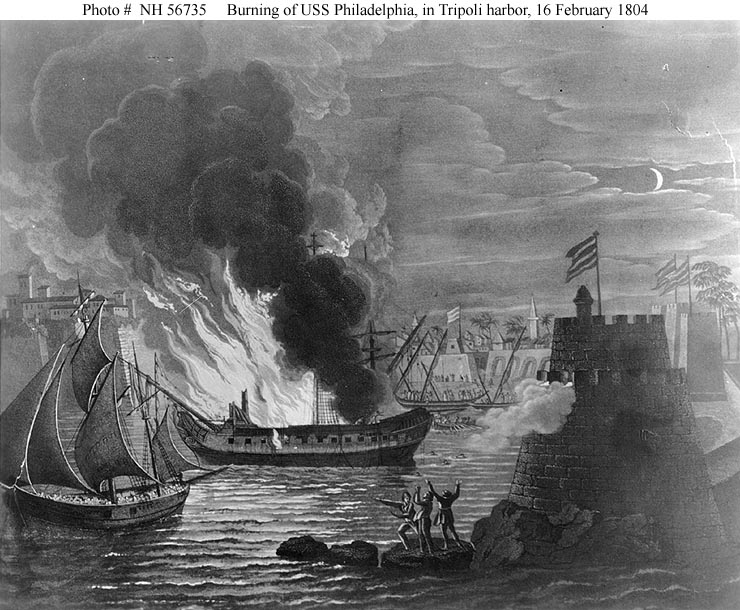
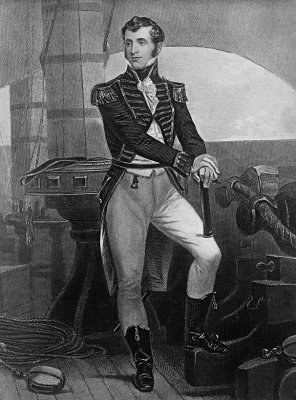
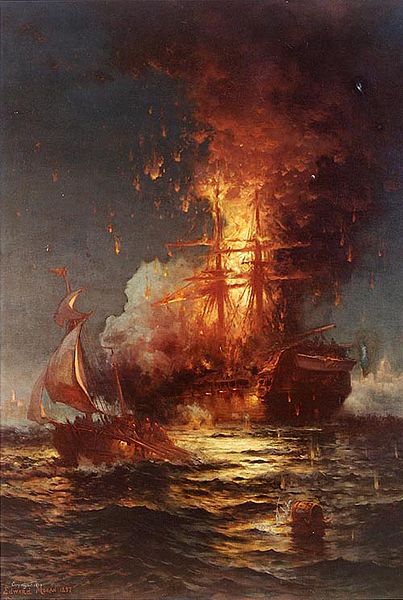
“The most bold and daring act of the age” Stephen Decatur and the Burning of the USS Philadelphia at Tripoli


“Our Country! In her intercourse with foreign nations may she always be in the right; but right or wrong, our country!” Stephen Decatur

This is the latest of a series of articles that I am writing this month in celebration of the brave men and proud ships of the United States Navy on its 236th Anniversary. Thursday October 13th is that day and I ask my readers to wish any United States Navy Sailor that you know a “Happy Birthday” and thank them for their service in this time of war.

Peace

Padre Steve+

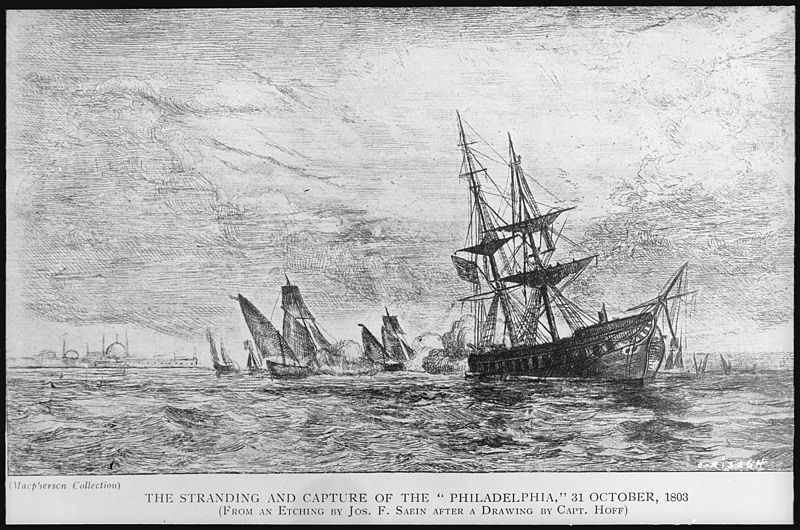
In 1803 the United States Navy was two years into its campaign against the Barbary Pirates who sailed from Algiers, Tunis, Tripoli and Morocco.  For years the United States like other nations had paid tribute to the rulers of these states for free passage of its ships and hefty ransoms to free the sailors that were enslaved following the capture of their ships.  By 1800 tens of millions of dollars had been paid and in that year the amount of tribute paid was 20% of the government’s total revenue.

In 1801 the Pasha of Tripoli Yusuf Karamanli demanded the payment of $225,000 tribute from the new President of the United States President Thomas Jefferson. In years past Jefferson had advised against payment of tribute believing that such payment only encouraged the Barbary States to continue their actions.  The anti-naval partisans and even his Republican allies had blocked his recommendations even though Secretary of State John Jay and President John Adams agreed with him. These partisans insisted that tribute be paid irregardless of the effect on European trade or the fate of American seamen because they believed that the Atlantic trade and involvement in the “Old World” detracted from the westward expansion by diverting money and energy away from the west.  When Jefferson refused the demand and put his beliefs into practice Karmanli declared war on the United States by cutting down the flag at the US Consulate in Tripoli.

Jefferson sent a small force to defend protect American ships and sailors and asked Congress to authorize him to do more as he did not believe that he had the Constitutional power to do more. Congress did not issue a declaration of war but authorized Jefferson to “employ such of the armed vessels of the United States as may be judged requisite… for protecting effectually the commerce and seamen thereof on the Atlantic Ocean, the Mediterranean and adjoining seas.”

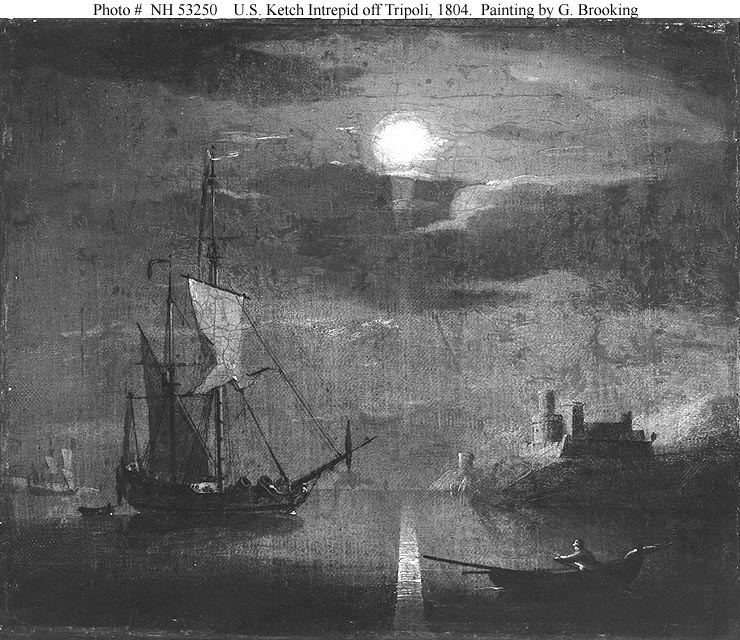
Jefferson sent the best of the United States Navy to deal with the situation and US Navy ships soon began to take a toll on the pirate vessels.  The squadron was composed of ships that would become legend in the history of the Navy. Commanded by Commodore Edward Preble and included the USS Argus, Chesapeake, Constellation, Constitution, Enterprise, Intrepid, Philadelphia and Syren.  Numerous young officers who would distinguish themselves in the following years served aboard the ships of the squadron.

One of the young officers was the 24 year old Captain of the 12 Gun Schooner USS Enterprise Stephen Decatur the son of a Navy Captain who had entered the Naval service as a Midshipman in 1798 and who had risen rapidly through the ranks due to his abilities and leadership. He was among the few officers selected to remain in service following the end of the Quasi-War with France.  By the time that he took command of Enterprise Decatur had already served as the First Lieutenant of the Frigates USS Essex and USS New York.  After an altercation with British officer while wintering in Malta he was sent home to command the new Brig of War USS Argus. He was ordered to bring her to Europe where he handed over command to Lieutenant Isaac Hull who would achieve fame in the War of 1812 as Commanding Officer of the USS Constitution.  Decatur was given command of Enterprise on when he detached from the Argus.

On December 23rd 1803 while operating with the Constitution Decatur and the Enterprise captured the small Tripolian ketch Mastico which was sailing under Turkish colors.  The small ship was taken to Syracuse where Commodore Edward Preble condemned her as a prize of war, renamed her Intrepid and placed Decatur in command.

Normally such an event would be considered a demotion for an officer of Decatur’s caliber but events at Tripoli had forced Preble to make a bold strike at the heart of the enemy.  On October 31st 1803 the Frigate USS Philadelphia one of the most powerful ships in the squadron under the command of Captain William Bainbridge ran aground on an uncharted shoal and was captured.  Her crew was taken prisoner and the ship floated off by the Tripolians partially repaired and moored as a battery in the harbor until her foremast could be remounted having be cut away by Bainbridge in his  unsuccessful  attempt to float the ship off the shoal.

Burning the Philadelphia

The threat posed by such a powerful ship in the hands of the enemy was too great to ignore. Preble order Decatur to man the Intrepid with volunteers to destroy the Philadelphia at anchor.  Decatur took 80 men from the Enterprise and was joined by eight more volunteers  from USS Syren including Lieutenant Thomas McDonough who had recently served aboard Philadelphia and knew the ship well.

Under the cover of night of February 16th 1804 Decatur took the former Tripolian ship into the harbor beneath the dim light of the new moon.  Posing as a Tripolian ship he was able to slip past the guns of the forts overlooking the harbor using a Sicilian sailor who spoke Arabic to request permission. This was granted and Intrepid approached Philadelphia and when close enough ordered his crew to board the Frigate. After a brief skirmish with the small contingent of sailors aboard he took control of the vessel and set it ablaze. When he was sure that the fire could not be extinguished he ordered his men back aboard Intrepid and sailed out of the harbor under the fire of the shore batteries and gunboats.

Decatur sailed Intrepid back to Syracuse where he was greeted as a hero and became one of the Navy’s legends.  Pope Pius VII publicly proclaimed that “the United States, though in their infancy, had done more to humble the anti-Christian barbarians on the African coast, than all the European states had done for a long period of time.” Admiral Lord Horatio Nelson, one of the most heroic sailors that ever lived and no stranger to daring said that Decatur’s accomplishment was “the most bold and daring act of the Age.

Decatur leading American Sailors in hand to hand combat against Barbary Pirates at Tripoli 1804 his younger brother Lieutenant James Decatur was killed aboard another gunboat in the action

Decatur would return to command the Enterprise in 1804 and would prove himself again against the forces of Tripoli. He distinguished himself  in the years to come against the Royal Navy in the War of 1812 and later in the Second Barbary War. Decatur’s squadron decisively defeated the Algerian fleet capturing the Frigate Mashouda and killing the highly successful and chivalrous commander of the Algerian raiding squadron Rais Hamidu.  The Pashas of Algiers, Tunis and Tripoli all made peace and reimbursed the Americans for the financial damage that they had done.  His victory ended the terror that the Barbary States had inflicted on Europeans for centuries and helped bring peace to the Mediterranean.  Stephen Decatur more than any one man ended their reign of terror against Christian Europe.

3 Comments

Filed under History, leadership, Military, national security, Navy Ships, US Navy