Category Archives: Military

Bloody Savo: Disaster at Guadalcanal

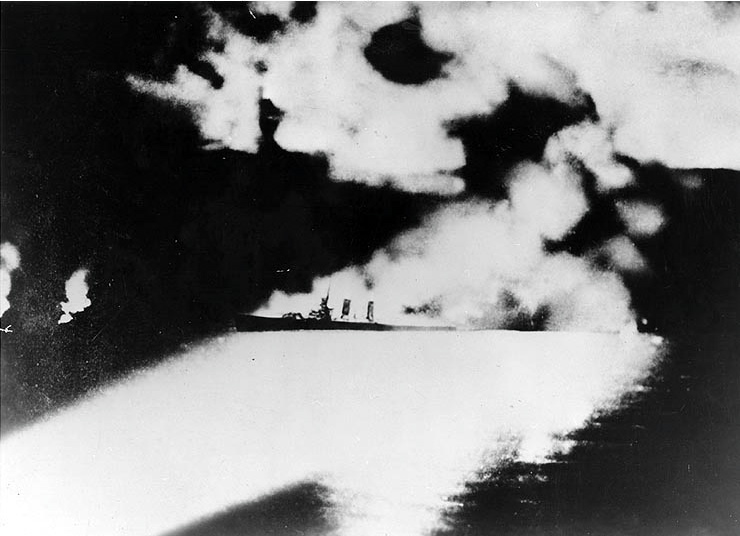
USS Quincy under attack off Savo Island

On August 8th 1942 the U.S. Task Force supporting the invasion of Guadalcanal was tired. The crews of the ships had been in continuous combat operations conducting naval gunfire support missions, fending off numerous Japanese air attacks and guarding against submarine attacks for two days.  The force commanded by Admiral Richmond K. Turner was still unloading materials, equipment and supplies needed by the men of the 1st Marine Division who they had put ashore on the morning of the seventh.

On the afternoon of the eighth Turner was informed by Admiral Frank “Jack” Fletcher that he was pulling his carrier task force out of action. Fletcher alleged that he did not have enough fighter aircraft (79 remaining of an original 98) and as low on fuel.  The carriers had only been in action 36 hours and Fletcher’s reasons for withdraw were flimsy.  Fletcher pulled out and left Turner and his subordinate commanders the responsibility of remaining in the area without air support with the transports still full of badly needed supplies and equipment.

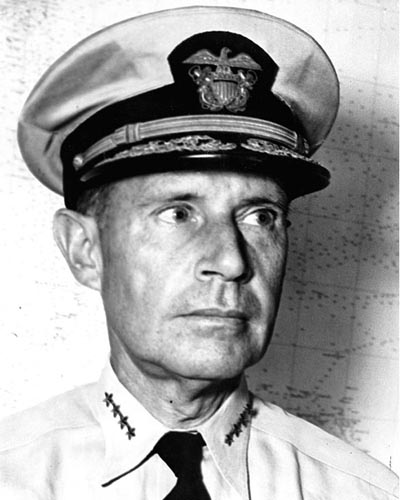
Admiral Gunichi Mikawa

As the American drama played out, the Japanese moved forces into position to strike the Americans.  Admiral Gunichi Mikawa commander of the 8th Fleet and Outer South Seas Force based at Rabaul New Britain quickly assembled a force of 6 heavy cruisers, the 14,000 ton Atago Class Chokai, and the four smaller ships of the Kako Class, the Aoba, Kako, Kinugasa and Furutaka, the light cruisers Yubari and Tenryu and the destroyer Yunagi.   Mikawa raised his flag aboard Chokai and the force sped down “the slot” which ran the length of the of the Solomon’s chain mid day on the seventh.

The Americans had warning of their coming. The first sighting was by B-17s before the Japanese forces had reached Rabaul.  The second was the elderly U.S. Navy submarine S-38 at 2000 on the 7th when they were 550 miles away not far from Rabaul.  This report was discounted because it would not be unusual to find a number of fleet units steaming near a major naval base and fleet headquarters.  The last which should have alerted the allies was a sighting by a Royal Australian Air Force patrol aircraft on the morning of the 8th.  However the pilot did not report the sighting until he returned from his mission returned to his base and had his tea.  The eight hour delay in reporting the information as well as errors in it which reported 2 submarine tenders as part of the force lulled the Allied forces into believing that the Japanese were setting up a seaplane base and posed no threat to the invasion forces. It was a fatal error of reporting and judgment by the pilot.
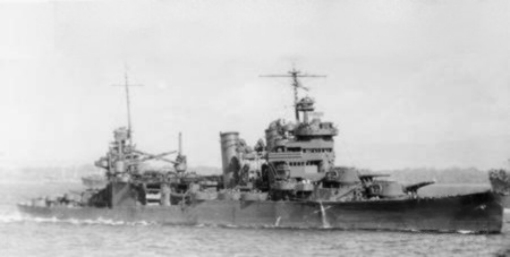
USS Astoria on August 8th off Guadalcanal 

In the absence of good information Turner deployed his support ships to cover the three entrances into what soon would be known as Iron Bottom Sound.  He placed the Anti Aircraft Cruiser USS San Juan and Australian Light Cruiser HMAS Hobart to the east with two destroyers under the command of Rear Admiral Norman Scott. To protect the south west entrance into the sound south of Savo Island Turner placed the Heavy Cruisers USS Chicago, HMAS Australia and HMAS Canberra and two destroyers under the command of Rear Admiral R.A.C. Crutchley RN who in theory commanded the screening force.  To the north of Savo he deployed the Heavy Cruisers USS Vincennes, USS Astoria and USS Quincy and two destroyers under the tactical direction of Captain Frederick Riefkohl aboard Vincennes. To the west of Savo he placed two destroyers to act as picket ships.  Unfortunately these ships radar sets were insufficient and would fail to pick up the approaching enemy.
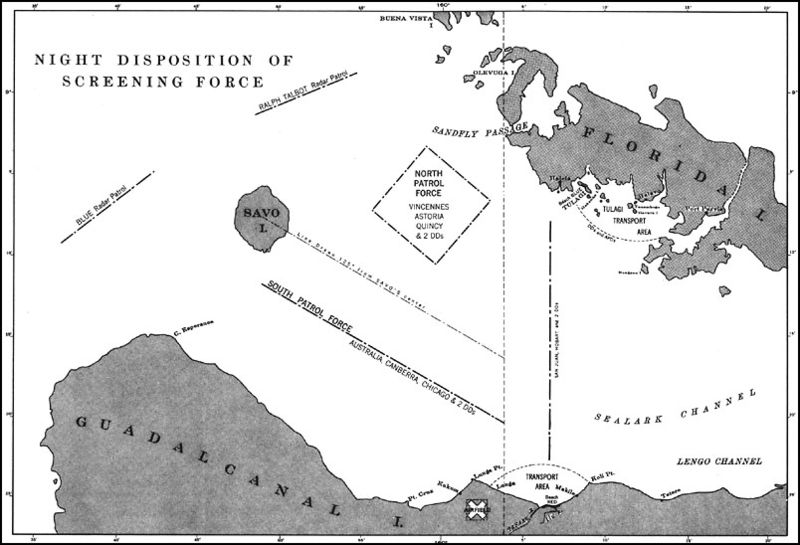
Allied Dispositions 

During the early evening Turner recalled Crutchley to his flagship for consultations of what to do regarding Fletcher’s retreat.  Crutchley came over in his flagship the Australia denuding the southern force of its commander as well as one of its three heavy cruisers.  He left the commanding officer of Chicago Captain Howard D. Bode in tactical command but Bode did not have his ship take the lead position in the patrol assuming Crutchley would return bymidnight.

Mikawa launched float planes to scout the locations of the American ships and to provide illumination once the battle began.  Some of these aircraft were spotted but no alert measures were taken as many assumed the Japanese to be friendly aircraft.  Many commanding officers were asleep or resting away from the bridge of their ships, lookouts were tired and not expecting the Japanese and Condition Two was set in order to provide some of the tired crews a chance to rest.
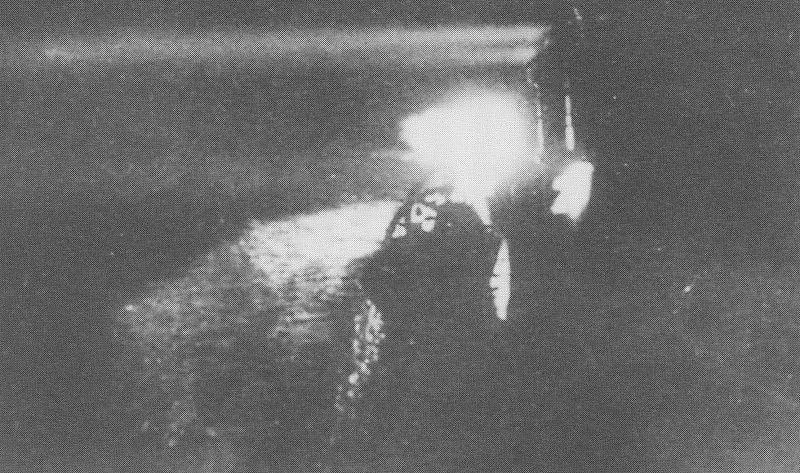
Light Cruiser Yubari illuminating American cruisers at Savo Island 

Admiral Mikawa now new the Allied disposition and ordered his ships to battle stations at 0045.  At 004 he sighted and passed astern of USS Blue the southern picket which also failed to detect the Japanese force.  Mikawa assumed that the destroyer might have reported his presence, briefly turned north but turned back to his original course when a lookout allegedly spotted a destroyer to his northeast.  He gave the order to attack at 0132 and promptly spotted the American destroyer USS Jarvis which had been heavily damaged and without radio communications was making her way toAustralia for repair and passed her after some ships fired torpedoes and raced toward the southern force at 26 knots.  With the southern force just a few miles away Mikawa ordered his ships to commence firing at 0136 and at 0138 torpedoes had been launched.

Mikawa’s flagship heavy Cruiser Chokai

Even now the southern force was unaware of Mikawa until at 0143 the destroyer USS Patterson on the far side of the action saw Mikawa’s ships bearing down a mere 5000 yards from the force. Her commander radioed “STRANGE SHIPS ENTERING HARBOR” but the alert came too late.  As Patterson signaled her warning Japanese float planes dropped their illumination flares silhouetting the Chicago and Canberra as the Japanese cruisers opened fire at ranges from 4500 to 9000 yards.  At 0143 Canberra was struck by to torpedoes and 24 shells, mostly 8” from the cruisers. Her Captain was killed and she was mortally wounded.  The Japanese brushed off the attempts of Patterson and the other southern force destroyer the USS Bagley to intervene bypassing them quickly and shifting their fire to Chicago. Chicago was stuck by a torpedo at 0147 and a single hit from a cruiser which caused little damage. Chicago briefly engaged the Yunagi at 0151 which had been sent back to cover the Japanese as they moved north.  With his ship crippled Captain Bode failed to warn the northern force of the Japanese attack.
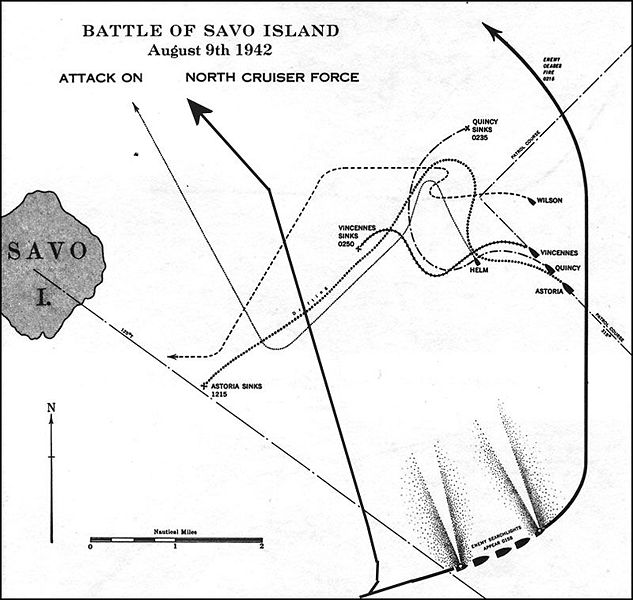
Mikawa’s lookouts spotted the northern group at 0144 and changed course. The maneuver was badly executed and left the Japanese in two columns as they swiftly closed on the Americans.  Mikawa’s flagship Chokai launched torpedoes at 0148 and Astoria the cruiser closest to the Japanese set general quarters at 0145 and at 0150 the Japanese illuminated her with searchlights and opened fire. Astoria under the direction of her gunnery officer returned fire at 0152 ½ just before her Captain came to the bridge unaware of the situation. He ordered a cease fire until he could ascertain who he was firing at assuming the Japanese to be friendly ships.  He delayed 2 minutes and ordered fires commenced at 0154 but the delay was fatal. Astoria had opened fire on the Chokai which then had time to get the range on the American cruiser and hit her with an 8” salvo which caused fires which provided the other Japanese ships an aiming point.
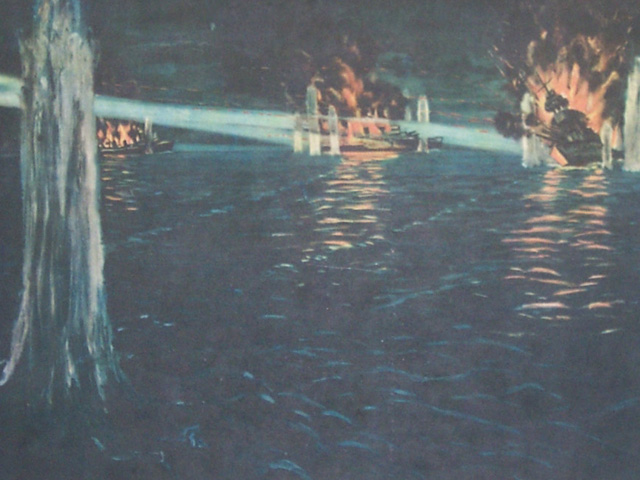
Japanese artist depiction of attack on US Navy Cruisers at Savo Island

Astoria was left burning and heavily damaged barely maintaining headway but attempted to fight on scoring a hit on Chokai’s forward turret even as the Japanese opened up on the next cruiser in line the USS Quincy.  Quincy caught between the two Japanese columns.  Aoba illuminated her with her searchlight and Japanese forces opened fire. The gunnery officer order Quincy to return fire getting two salvos off before her skipper Captain Samuel Moore came to the bridge, briefly ordered a cease fire assuming that he was firing on Americans and turned on his running lights.  Quincy was ripped by salvo after salvo which killed Captain Moore and nearly everyone in the pilothouse just as a torpedo ripped into her engineering spaces turning them into a sealed death trap forcing the engineer to shut down the engines.  Burning like a Roman candle Quincy was doomed she was ordered abandoned and capsized and sank at 0235. However Quincy did not die in vain, at 0205 two of her 8” shells hit Chokai causing enough damage the Admiral’s chart room that Mikawa would order a withdraw at 0220 which spared the now defenseless American transports.

Vincennes the lead ship and flagship was next in the line of death.  Captain Reifkohl order General Quarters sounded not long after the Japanese illuminated the southern group.  At 0150 Vincennes was lit up by the searchlights of three Japanese ships which opened fire on her. Vincennes returned fire at 0153 hitting Kinugasa before she was hit starting fires on her scout planes mounted on their catapults. The Japanese mauled Vincennes, three possibly four torpedoes ripped into her as shells put ever gun out of action. At 0215 she was left burning and sinking by the Japanese who soon withdrew from the action.  Ordered abandoned she sank at 0250.
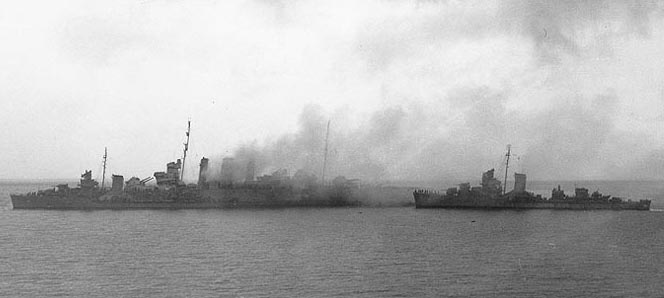
Canberra being evacuated by the Patterson and Blue

Canberra struggled against the odds but was abandoned and was sent to the bottom by an American torpedo at 0800.  Astoria also struggled for life but the damage was too great and she was abandoned sinking at 1215.  Mikawa withdrew up the sound but on his return the Heavy Cruiser Kako 70 miles from home was sunk by torpedoes from the American submarine S-44 sinking in 5 minutes.

The Americans and Australians lost 4 Heavy Cruisers sunk and one heavily damaged as well as two destroyers damaged.  Killed on the various ships Quincy-389, Vincennes-342, Astoria235, Canberra-85, Ralph Talbot-14, Patterson-10, and Chicago-2.

It was an unmitigated disaster, an allied force destroyed in less than 30 minutes time.  Boards of inquiry were held and Captain Bode hearing that he shouldered much blame killed himself in 1943.

It was a rude awakening to a Navy which had believed that technical advances would give it victory and which was not yet in the words of Admiral King “sufficiently battle minded.”  It was the first of many equally bloody battles in the waters aroundGuadalcanal.

2 Comments

Filed under History, Military, Navy Ships, US Navy, world war two in the pacific

A Grievous Loss: CH-47 with 31 Americans believed Shot Down during Combat Operation in Afghanistan

CH-47 Making a Rooftop Pickup in Afghanistan

Yesterday a U.S. Army CH-47F helicopter from the elite 160th Aviation Regiment was shot down during a combat operation in Afghanistan’s Tangi Valley in the troubled Wardak Province killing 31 American Sailors, Soldiers and Airmen and 8 Afghan soldiers.U.S. officials have not confirmed the circumstances of how the aircraft was lost but a senior official speaking on condition of anonymity said it was apparently shot down said that 22 SEALS from SEAL Team 6 based inVirginia BeachVirginia, 3 Air Force Air Controllers, a dog handler and his dog and the air crew.

The Taliban have claimed the shoot down occurred when NATO forces were engaged in a heavy raid against their forces which were gathering in the Sayd Abad district and the head of the Afghan Police in the Province claimed that there was a two hour battle in the town of Jaw-e-mekh Zareen.  The Taliban official claimed that the aircraft was downed by a rocket propelled grenade as it was taking off from the roof of a building.  The Taliban official Zabihullah Mujahid said that 8 Taliban fighters were killed in the fight.

This morning I received a call from the chaplain that is my assistant at our hospital. She has the duty this weekend because I have had such a difficult time getting around when called in late on Wednesday night for the death of a newborn baby.  Since she was the duty she received the page that she was needed to accompany a Casualty Assistance Call Officer (CACO) to notify the family of one of these SEALS who lived in the local area.  We will be providing more assistance over the course of the coming weeks.  When she told me about the call I knew that it was in response to the SEALS lost in the crash because Sailors assigned to Marine units who become casualties are taken care of by their Marine Corps commands and the Navy Chaplains assigned to them. I thank God that I have been blessed having such an outstanding young Chaplain assigned to me.

This is a terrible loss of brave men and tragedy for their loved ones and shipmates.  That kind of loss tears a gaping hole in a small community.  Just on the practical side one does not produce the kind of skilled Special Operators assigned to SEAL Team Six, or DEVGRU overnight, these are the best of the best. They do not grow on trees.

The SEAL community will recover as they have done before but this loss hurts.  It hurts because even more because as a nation we don’t understand the war or how such sacrifices actually contribute to our national security.  We don’t even seem to know how we define “winning” or even if we can define what a “win” would look like if we can achieve it now.  I know combat hardened Marines who now fight for their fellow Marines and their brotherhood of war.   The same is true of Soldiers and Sailors that I know.  I would go to Afghanistan tomorrow if called in order to serve my fellow Sailors, Marines and Soldiers because for me after 10 years the war is personal.

I find it troubling that there are those that continue to act like cheerleaders and act as if the limited numbers of troops available can do a counterinsurgency mission that by doctrine requires far more troops, resources and time to do right and a national will to win.  The reality is we do not have the forces, the resources or the national will to “win” and we know from history that even winning militarily cannot be sustained unless Afghanistan itself changes and that history shows at best unlikely.

I am reminded of the words of General John Buford in opening part of the movie Gettysburg when I hear those that do the cheerleading from their comfortable political offices and think tank chairs when tragedies like this occur.

“They’ll be on his back in Washington. Wire hot with messages ‘Attack! Attack!” So he will set up a ring around these hills. And when Lee’s army is nicely entrenched behind fat rocks on the high ground, Meade will finally attack, if he can coordinate the army. Straight up the hillside, out in the open, in that gorgeous field of fire. We will charge valiantly… and be butchered valiantly! And afterwards men in tall hats and gold watch fobs will thump their chest and say what a brave charge it was…”

The cheerleaders may not wear tall hats anymore or have gold watch fobs. Instead they wear Armani suits and Rolexes. They always praise the bravery of the military from their luxurious perches as they gaze into the cameras of the parasitic media which only sees the story.  We will see hundreds of members of the Unholy Trinity of politicians, pundits and preachers thump their chest and praise the bravery of the SEALS and the Soldiers and Airmen that died alongside them in that ill fated Chinook on that tragic night over the next week, but this will fade quickly as these people go about the business of maintaining their power and position no matter what happens on the battlefields of Afghanistan and Iraq.

I have spent the day pondering the sacrifice of these men and praying for their loved ones and shipmates.  Since I have flown many night missions in Chinooks in Iraq including one that took fire I can readily imagine the last moments of these men.

I pray for the souls of these men and that somehow in tragedy that their loved ones and shipmates will find some measure of peace as they mourn the sacrifice of these heroes. I pray that we as their neighbors will do all that we can to help them.

Peace

Padre Steve+

1 Comment

Filed under iraq,afghanistan, Military, national security, US Navy

The Deal is Done and are We? There are Always Results

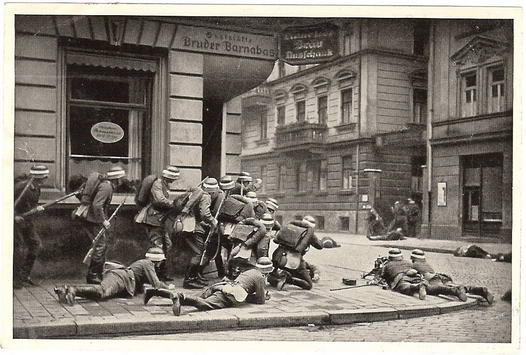
Spartacist revolutionaries and Freikorps in action. Is this our fate? 

“but this momentous question, like a fire bell in the night, awakened and filled me with terror. I considered it at once as the knell of the Union. it is hushed indeed for the moment. but this is a reprieve only, not a final sentence. a geographical line, coinciding with a marked principle, moral and political, once conceived and held up to the angry passions of men, will never be obliterated; and every new irritation will mark it deeper and deeper.” Thomas Jefferson on the Missouri Compromise

I believe that Thomas Jefferson in describing the results of the Missouri Compromise aptly describes the mood of our times and the consequences of politicians that lead us to the dark abyss of hatred and civil war.   There are times that I wish that I was not a historian or theologian for then I could simply be ignorant of the place that our elected leaders are leading us.

Yesterday and today I sat convalescing at home trying to stay off of my injured leg as the final actions were taken in the House and the Senate on the Debt Ceiling Compromise. I felt as if I was watching a national tragedy being marketed as by some as a triumph of cooperation.  I was amazed that talk which was paired with the opponents of the measure in both parties.  I felt that those praising their actions to pass the increase and related budgetary cuts were saying it all for show even as they sharpened their swords for the next battle even as the vast majority of Americans expressed anger and frustration with the behavior of their elected officials.  A Pew Research poll indicated “72 percent of American characterized the recent budget negotiations as “ridiculous, disgusting, stupid, and frustrating.”

But we have no one to blame but ourselves. We voted them all into office and we have encouraged their repugnant behavior with our votes which more often than not were purchased by the fear mongering engaged by each side and our desire to have our special interests and or ideology come out on top. We have been engaged in what conservative columnist Pat Buchanan declared a “culture war” for the past two decades and wars be they cultural, ideological, and economic or military have consequences.  The longer they go on the worse and more violent they become until one side finally loses and the landscape is destroyed. A conservative German newspaper noted “It is this war-like rhetoric that has so poisoned American politics.” The Germans should know something of this.  The “Kulturkrieg” and the violent hatred of their countrymen in the wake of the defeat of the First World War and humiliation of Versailles brought about civil war.  The pursuit of radical ideologies in the following years is what doomed the ill-fatedWeimarRepublicwhen the economic calamity of the Great Depression struck and led to the tragedy of the Nazi takeover and ultimately led to World War Two.

I believe that the actions of all parties in this forced crisis were a disservice to the citizens of this country, the memory of all who have gone before us and done more to damage our standing in the world than I could ever imagine.  It is as if the leaders of the country have forgotten why they are even in Washington.  There is no unity of purpose, only the language of war being used against fellow Americans.  A German newspaper wrote “No one can forget the Civil War atmosphere in which this debt fight has taken place. It weighs on America’s international reputation. From the point of view of financial markets, the dysfunctional nature of Washington is a risk factor that must be calculated for in the future.”

The sad thing is that there is so much work that has to be done and it is more than reducing Federal Government spending. Our industries have been shipped wholesale overseas using the treaties that business has foisted upon their willing accomplices in both parties in the name of “free trade.”  Our unemployment continues to rise and many economic experts believe that we are entering a “double dip” recession which some believe could easily become a depression. The infrastructure of the nation crumbling with the businesses that benefit from them refusing to contribute to their maintenance unless they receive government contracts and money in return.  We are committed to long term ground wars that have sapped the economy and worn out the military which now seem to serve little strategic purpose.   In fact the position of the Army in Afghanistan could be disastrous if Pakistan decides to stop cooperating and not allow us to supply the Army through it.

It is apparent to me that those that can afford it the least and the military will bear the brunt of the cuts that will come and that it will be a long time before this crisis passes.  No one seems to be addressing the major issue of unemployment or economic growth without which there is no recovery.  I heard the President and Senate Majority Leader McConnell repeat what they have said for years but no plans and no action.  As for the military we are worn to a nub, our equipment needs to be replaced and modernized and our troops still deserve the best that we can give them, but even this is on the chopping block, military retirement is called “an expensive entitlement program” by those advocating that the military adopt a private sector pay and benefit plan of little value especially to those that have spent 10 years at war paying with their minds, bodies and spirit fighting wars that the Wall Street bunch has benefited from, the same Wall Street leaders that now call for reductions in military pay and benefits.  It is obscene.

I would like to believe that this is a rough patch that we will get through, but right now with the terrible acrimony present in Washington and all the State Capitols I have a hard time believing that we will.  The President has failed to enunciate any kind of plan or vision and the Tea Party leadership is acting like the Jacobins in Revolutionary France.

I have no idea who will “win” this “culture war” and does it really matter? The result will be a Pyrrhic victory with the winners celebrating on the ruins of the country.  I only know that we all lose.

God help us,

Peace

Padre Steve+

4 Comments

Filed under History, leadership, Military, Political Commentary

A Tuesday in DC: Lunch with a Dear Friend and a Night walk through the Monuments

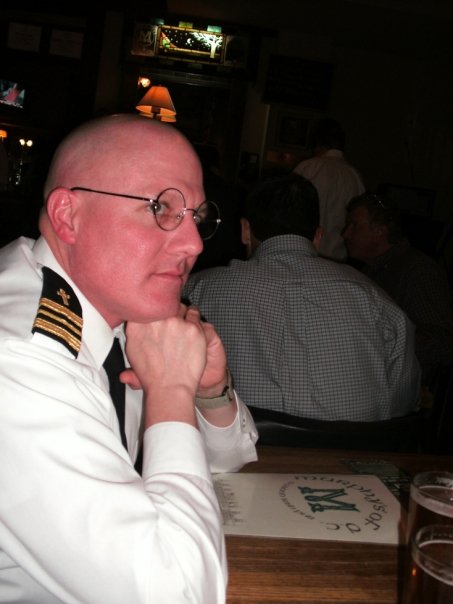
Today was another good day, in fact really good day at the conference I am attending with the George Washington Institute for Spirituality and Health.  At lunch I was able to spend some time with my former commanding officer at Marine Security Forces.  It was good to see Mike again.  He and I went through some very trying times together and I treasure his friendship as well of that of his family.  I think that of all the commanding officers that have served under which have included some incredible men that he was the best.  We are a lot alike in many ways both rather cerebral and out of the box thinkers. We basically are the same generation as far as military service goes, when he was a young Marine Corps Officer I was a young Army Officer.

We reminisced about the way the country was back then how our leaders still worked together and even if we disagreed with the policies of those in the opposing party that we still knew that we were Americans and that at the end of the day we were friends.  I guess that Mike and I are dinosaurs now; we tend to look at the big picture and both being career officers of the same generation have seen the country change. We both entered the military during the Cold War and after the loss of Vietnam.  Our teachers were the men that served in that war, those who came home to a then hostile country.  Neither Mike nor I are service academy types nor the products of conservative military schools, Mike went to Harvard and attended Navy ROTC and I went to a California State University School, CSU Northridge and took Army ROTC at UCLA.  We both come from strong yet tolerant religious traditions and were influenced by chaplains early in our careers.  Mike’s academic background is Economics mine Theology and Military History and both of us hold advanced degrees in those subjects.  We both graduated from the Marine Corps Command and Staff College.  We have both served overseas and in combat.  We love our country and treasure our military service and that of the men and women that we have served with over so many decades.

I am honored that Mike will administer the Oath of Office when I am promoted on September 1st at Harbor Park in Norfolk Virginia.  By the way Mike loves baseball too and being from Boston he is a Red Sox fan.  His dad, a die hard fan died a few months before the Sox broke the “Curse of the Bambino” in 2004. My dad died a few months before his San Francisco Giants won the World Series in 2010.

Talking with Mike today made me think back to a time when things were not like what they are now, where political opponents were simply opponents and not “the enemy.”  I shared with Mike the terms the German Military used in the Second World War to describe those that they fought against.  The Western Allies were “die Gegener” or simply opponents and for the most part the German military observed the Geneva Convention and Laws of War when fighting the Americans, British and French.  However with the Soviet Unionit was different.  The Soviets were “Der Feind” or the enemy.

As divided as we were in the 1970s and 1980s there was still a modicum of respect for the other side and ability to work together when we needed and Mike brought up the relationship of Ronald Reagan and Thomas “Tip” O’ Neill, vigorous political opponents who remained friends.  However there is today and has been for the past 20 years or so for members of the extreme wings of both major parties to identify their opponents as “enemies.”  The language difference is significant. An opponent is a adversary that you hope to defeat but there is not a hatred involved and when the competition ceases the opponents remain friends and even colleagues even as they prepare for the next “game” so to speak.

Enemies are another matter.  To be an enemy is to assume that the other side poses an existential threat to your side or your agenda.  Thus there can be no compromise and the opponent is not simply to be defeated but destroyed and annihilated much like the Old Testament when the Israelites were commanded by God to kill everything even the babies and pregnant women.  So much for being pro-life but I digress….

Today we are more divided than any time since the Civil War, blood is boiling and if there is compromise it will be a mere truce until the next round of political bloodletting which if we are not careful may become actual bloodletting and the enemies allow their unbridled hatred of each other spill out into open conflict.  Such affairs never end well and if we remember our history our Civil War’s military conflict was over in a few years and yet with the relatively primitive weapons of the ay killed more Americans than any other conflict.  The after effects well, frankly Scarlett took over a hundred years to recover from and I would dare posit that some believe that the war is not yet over.

Tonight I went to dinner alone cancelling my plans to head out to watch the Nationals play the Marlins. I needed the time and solitude and somehow a trip on the DC Metro seemed the last place that I would find it. I walked to the Gordon Biersch where I had dinner, drank a few beers and watched the Orioles beat the Blue Jays.  After dinner I detoured from my normal route back to my campus housing which takes me in front of the White House.

Amid the lights and the amazing splendor of the buildings adorned with American and District of Columbia Flags I walked and simply observed people.  Tourists from across the nation and the world were taking pictures, business people and government workers hurried about, vendors hawked their patriotic wares, mostly made in China I might add or snack foods.  Here and there a protester sought to draw attention to their pet cause, there is the anti-nuclear weapons protestor that has been camped across from the White House since 1981, people demanding to see the Birth Certificate, those protesting for the removal of various Arab dictators and others peppered about. Capitol Police and Secret Service officers were out in force and amid the fortress like surroundings of many government buildings and the offices such as the World Bank and major business and financial institutions armed police and private security stood watch with cameras watching every move.

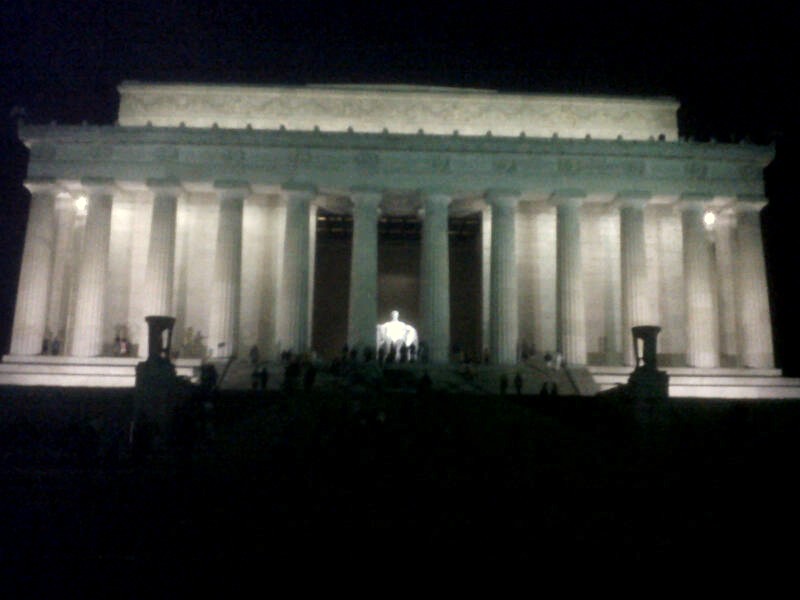
When I passed the White House I was rather down.  So I decided to walk the monuments that adorn the Capitol Mall.  I passed the Executive Office Building and Washington Monument and crossed the street to the World War Two Memorial.  At each place I paused before I continued to walk into the night.  I then stopped by the Korean War Memorial and the Vietnam War Memorial, the stark reminder of the men and women killed and missing in that war as well as the rip in the fabric of the nation that I am not sure we have ever gotten past.  I then went and paused before the Lincoln Memorial and I thought of the immortal words spoken by President Lincoln in his Second Inaugural Address shortly before he was cut down by a bullet fired by John Wilkes Booth.  They are words of reconciliation spoken even while Americans fought Americans in the last months of the war.

Fellow-Countrymen:  At this second appearing to take the oath of the Presidential office there is less occasion for an extended address than there was at the first. Then a statement somewhat in detail of a course to be pursued seemed fitting and proper. Now, at the expiration of four years, during which public declarations have been constantly called forth on every point and phase of the great contest which still absorbs the attention and engrosses the energies of the nation, little that is new could be presented. The progress of our arms, upon which all else chiefly depends, is as well known to the public as to myself, and it is, I trust, reasonably satisfactory and encouraging to all. With high hope for the future, no prediction in regard to it is ventured.

On the occasion corresponding to this four years ago all thoughts were anxiously directed to an impending civil war. All dreaded it, all sought to avert it. While the inaugural address was being delivered from this place, devoted altogether to saving the Union without war, insurgent agents were in the city seeking to destroy it without war—seeking to dissolve the Union and divide effects by negotiation. Both parties deprecated war, but one of them would make war rather than let the nation survive, and the other would accept war rather than let it perish, and the war came.

One-eighth of the whole population were colored slaves, not distributed generally over the Union, but localized in the southern part of it. These slaves constituted a peculiar and powerful interest. All knew that this interest was somehow the cause of the war. To strengthen, perpetuate, and extend this interest was the object for which the insurgents would rend the Union even by war, while the Government claimed no right to do more than to restrict the territorial enlargement of it. Neither party expected for the war the magnitude or the duration which it has already attained. Neither anticipated that the cause of the conflict might cease with or even before the conflict itself should cease. Each looked for an easier triumph, and a result less fundamental and astounding. Both read the same Bible and pray to the same God, and each invokes His aid against the other. It may seem strange that any men should dare to ask a just God’s assistance in wringing their bread from the sweat of other men’s faces, but let us judge not, that we be not judged. The prayers of both could not be answered. That of neither has been answered fully. The Almighty has His own purposes. “Woe unto the world because of offenses; for it must needs be that offenses come, but woe to that man by whom the offense cometh.” If we shall suppose that American slavery is one of those offenses which, in the providence of God, must needs come, but which, having continued through His appointed time, He now wills to remove, and that He gives to both North and South this terrible war as the woe due to those by whom the offense came, shall we discern therein any departure from those divine attributes which the believers in a living God always ascribe to Him? Fondly do we hope, fervently do we pray, that this mighty scourge of war may speedily pass away. Yet, if God wills that it continue until all the wealth piled by the bondsman’s two hundred and fifty years of unrequited toil shall be sunk, and until every drop of blood drawn with the lash shall be paid by another drawn with the sword, as was said three thousand years ago, so still it must be said “the judgments of the Lord are true and righteous altogether.”

With malice toward none, with charity for all, with firmness in the right as God gives us to see the right, let us strive on to finish the work we are in, to bind up the nation’s wounds, to care for him who shall have borne the battle and for his widow and his orphan, to do all which may achieve and cherish a just and lasting peace among ourselves and with all nations.

As I walked through the warm and humid night air I imagined what it must have been like for officers of the United States Army, Navy and Marine Corps as the nation split in 1861 with many Southerners leaving the service to enter the service of their own states.  Many tearful goodbyes were spoken by men that had served together in war and peace and on the lonely frontier of the nation, men who in a few moths time would be commanding American armies and killing their fellow Americans.  My family fought for the South being from Virginia.  I cannot say that I would have done different like them and so many Southerners or if like General George Thomas of Virginia I would have remained with the Union incurring the wrath of his family for the rest of his life.  Since I have never taken my Oath lightly I can only imagine that I would have done what Thomas did even if it meant the loss of family.

Today I fear that even if our leaders can avert a default on or debts that they have now set the stage for worse I the coming months and years. The open hatred and contempt of our leaders for one another and the ideas that each stand for has wounded the nation more deeply than any default or government shutdown could ever do. This is not simply partisan discourse it is a deep enmity and hatred that has not been seen in this country for 150 years.  If cooler heads do not prevail soon the damage may be irreparable and the consequences more terrible than we can imagine and why anyone would willingly continue down this road is beyond me, but hatred does terrible things to people and nations.

Since it was nearing10 PMI hailed a taxi by the Lincoln Memorial.  I entered into a conversation with the driver, an immigrant fromMoroccowho has been in the United States22 years.  I mentioned my concern and he was far more hopeful than me. He said he believed that a shutdown would be averted.  I love immigrants especially recent ones who have left home and family to become Americans.  My dad’s side family has been in this country since 1747 and my mother’s even longer.  It was inspiring for me to hear this man still be in awe of this nation despite all of our troubles. When I left the cab I thanked him, gave him a decent tip shook his hand and in my woeful Arabic said “Assalamu alaikum” or peace be unto you.

As a historian I tend to see the dangers in what is happening in our country and I do have legitimate concerns, but when I hear the words of hope and awe that this country engenders in those who come here to be free I hope again in spite of myself.

Peace

Padre Steve+

1 Comment

Filed under History, leadership, Military, philosophy, Political Commentary, remembering friends

The Tapestry of Life: How PTSD and Combat Stress is a Part of Who and What We Are

I have been dealing with the effects of Post Traumatic Stress over 3 ½ years.  In that time I have had my struggles going ranging from falling into the abyss to a measure of recovery and occasional relapses.  It has been a difficult time which has stretched me in ways that I never dreamed and given me perspective on what it is to live, to have faith and to experience life in ways that I could not have imagined before I deployed toIraq.

Within a few weeks of beginning therapy I was asked by my therapist what I wanted to do with my experience.  I really didn’t know, I was in the midst of a complete emotional breakdown and crisis of faith.  When my therapist asked me “well Padre how are you with the Big Guy” I could only answer “I don’t know if God exists anymore or if he does if he cares about me.”  My therapist was the first person that asked me about my spiritual life after I returned.  No clergy of any kind asked that question.  I guess that they assumed quite wrongly that I hadn’t really changed.  There is a tendency among clergy to ignore the obvious when a colleague begins to fall apart.

In fact it is really a cultural problem.  Often the advice to someone dealing with trauma and the experience of grief which often compounds traumatic experience is to “forget about it” or “put it behind you and move forward.”  Some therapists and pastors seem to have burying the experience, reliving it time and time again until you are numb or simply try to expunge it from memory as their goal.

The problem with all of these “methods” is that they label the person who has been traumatized and the complex grief that they experience as a result of the trauma as ill, damaged or broken.  But it the opposite is true, people that have experienced trauma especially in a combat zone are simply having a normal reaction to experiences that are not normal.

We adapt to war and the experience becomes part of who we are.  It is a survival tool that humans have had ever since the first skirmishes between primitive tribes.  However primitives actually have an advantage over the modern human.  They went to war to defend their families and homes.  The warriors would be sent out with fanfare, religious ceremonies and ritual. When they returned they would be brought back into the tribe, new warriors who had distinguished themselves would be noted, sometimes marked in some physical manner.  Rituals marked the re-entry of the warriors and they would be reincorporated into the community. Some societies would incorporate rituals for individuals to do as they re-entered the community. Their stories would become part of the tribe’s oral tradition and passed down to successive generations.

Today’s modern American warrior doesn’t go to war with his neighbors.  These warriors go to war with men and women that come from many parts of the country, US territories or immigrants and when they leave service they often return to neighbors, friends and families that care about them but do not understand them or their experience. The reactions that they developed in combat and their response to perceived threats are considered dangerous or abnormal.  People tell them that they need to go back to what they were before the war experience but they can’t because they have been changed by their experiences.

We live in a culture of denial. All too often it seems that society simply wants the traumatized and grieving veteran just be quiet, see a shrink, go to a PTSD group and “get well.”  Many times churches and religious institutions treat the problem as some kind of spiritual shortcoming.  Many Christian veterans come home and find that they are shunned because they have doubts or because they don’t “get better” after people pray for them.  I was reading a faux news article which was more like an infomercial for a CD that promotes a method as “Be still and know….”  It was developed by a reserve Army Chaplain and Christian therapist. It is designed to make it all go away.  Do the method right and you get better, God heals you and you live happily ever after until something breaks the cycle of denial and you crash.  I do believe that God heals but I don’t believe that God makes everything magically go away like it never happened.  Such a belief is not supported in Scripture, the testimony of the early Church or for that matter most of the Christian tradition.

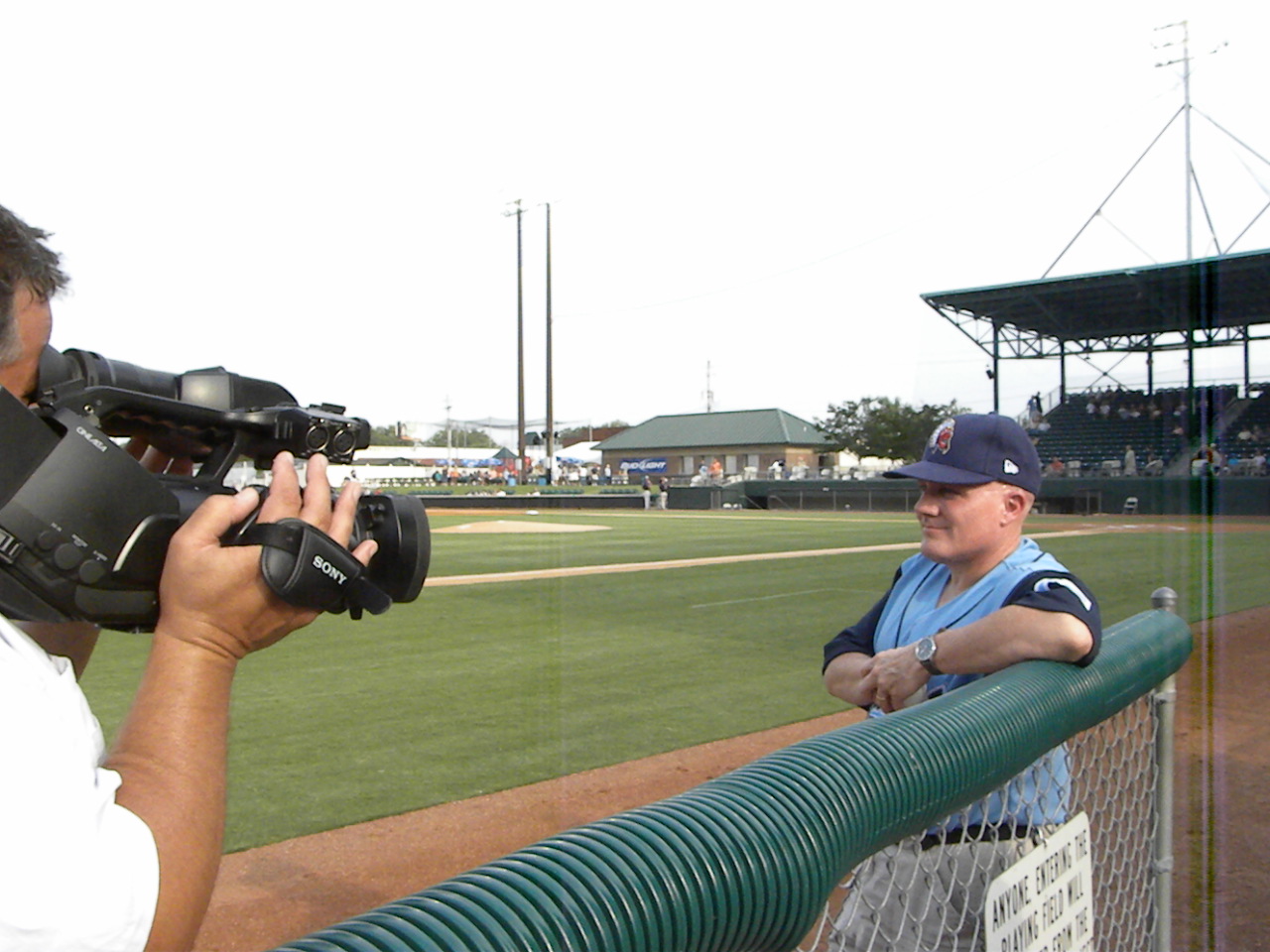
This week I was being filmed for a Department of Defense program called The Real Warriors Campaign   http://www.realwarriors.net/which is designed to de-stigmatize Combat Stress injuries including PTSD and Traumatic Brain Injury.  They picked up the article that was written about me in the Jacksonville Daily News in April of this year and asked if I would be willing to participate.   http://www.enctoday.com/articles/cmdr-89433-jdn-stephen-military.html

It was a hard week for me. I went to a functioned hosted by our hospital Wardroom at the base Officer’s Club Saturday night and while I enjoyed myself I hit sensory overload. When I got hope I was pretty edgy and to add to the situation we had some Marine helicopters flying in the area I live that night. As I tried to calm down I realized that I was going to be interviewed Tuesday and the thought scared the shit out of me.  Yes I had agreed to do it and yes I thought I needed to do it but my heavily introverted and relatively anti-social personality type now seasoned with reactivated PTSD symptoms couldn’t handle it.  I couldn’t sleep and had the firstIraqrelated dreams I have had in many months. I did not even open the front door of my place on Sunday.  I couldn’t sleep Sunday night and got permission of my boss to get some assistance.  Since I couldn’t get a no-notice appointment with my current psychiatrist I called my first therapist and he was helpful. I went to a ball game and that helped calm me down.  I was still anxious but functional.

The two days of filming went pretty well for me, although I know with the possible exception of “COPS” there is no such thing as reality television.  This was not “reality television” but the goal was to try to show how I live life, work and relate to people after deployment.  The crew was really good and handled things professionally but even so it was packaged and things had to be have lighting, have different camera angles and required me to repeat things sometimes because of the privacy issues of patients in the hospital.  But it is what it is.  By the end of the two days I was pretty wiped out and simply rested last night.

However on Monday night before the interview I had an epiphany.  That simple illumination came from an episode of Star Trek the Next Generation called Tapestry I won’t ruin it for you but the final segment of the episode is linked here:

http://www.youtube.com/watch?v=hZeGzaJiP6g&feature=related

The epiphany was very simple.  All of our life, the good, the bad, the enjoyable and even the traumatic are part of a rich tapestry.  Those painful threads, the ones that we cause ourselves or the ones that are the result of trauma, grief and loss are part of who we are as human beings.  If we try to remove them we damage the tapestry and if we try or are persuaded by those that deny the reality of pain and suffering to remove the really painful and deep hurts, those which are the most tightly wound into the fabric of our lives, especially for the combat veteran we risk long lasting damage to our very soul.

The challenge is not to be “healed” or to compartmentalize the trauma and put it in some deep closet in our brain.  Nor is it to deny the trauma or for that matter keep trying to relive the trauma so that we are desensitized to the pain.  The real challenge is to allow our experiences of war, grief, loss and trauma to have their place in our lives knowing that without them we are not who we are.

I’m not saying that I have any real answer to what all of us that experience combat stress injuries deal with.  All I know is that I just want to be real and there are risks in opening up to people and reaching out to get help.  At the same time it is important to find a way to get help so we can adapt to our new reality.

As for me I went through some terrible times that still affect me.  Yes I went through a period of profound spiritual crisis and even a loss of faith and when I began to recover faith people that had been okay with me being broken ended up asking me to leave my church because the faith that I have now didn’t fit the narrow box that defined that church.

All that being said I am glad that my therapists or my supervisors allowed me and continue to allow me to work through the issues that still impact me and my ability to function in society, deal with others and even effect my marriage.  I wish every combat vet and survivor of trauma had that support.  I just hope that I can be worthy of the trust that they have place in me and that I will care for those entrusted to me with the same care and compassion that I was and am being shown.

Peace

Padre Steve+

3 Comments

Filed under faith, Military, Pastoral Care, philosophy, PTSD, Religion, star trek, Tour in Iraq

The Stab in the Back: How Historical Myths, Lies and Propaganda Destroy Nations

The Stab in the Back

There are many times in history where leaders of nations and peoples embrace myths about their history even when historical, biographical and archeological evidence points to an entirely different record.  Myths are powerful in the way that they inspire and motivate people. They can provide a cultural continuity as a people celebrates the key events and people that shaped their past, even if they are not entirely true.  At the same time myths can be dangerous when they cause leaders and people to make bad choices and actually become destructive. Such was the case inGermanyfollowing the First World War.

While today I am writing about Germany it is important to know that historical myths can become powerful and terribly destructive forces when unleashed in troubled times. This is in fact a lot of what we are seeing in the American body politic at this time as the most extreme views on the political right and left now define the major parties in this country. Some of these myths are no more than appeals to patriotism and times that Americans assume had to be better than they are now. Others are defined by ideology and still others by lies, deceit and hatred directed upon those that the purveyors of such use to demonize and dehumanize those that oppose their agendas.  The scary part that I see as a historian, military officer and Priest is that what is happening now especially on the extreme political right could lead us as a nation down paths that others have gone down before, paths that only lead to destruction. The really scary part is that many people who are in no way extreme often fall for the lies of extremists on both sides of the political spectrum and suffer later for their complicity in allowing extremists to run roughshod.

After the war the belief that the German Army was not defeated but was betrayed by the German people, especially those of the political left.  Like all myths there was an element of truth in the “stab in the back” myth, there were revolts against the Monarchy of Kaiser Wilhelm II and even mutiny on elements of the German High Seas Fleet and Army units stationed in Germany. However the crisis had been brought about by General Ludendorff who until the last month of the war refused to tell the truth about the gravity of Germany’s position to those in the German government.  So when everything came crashing down in late October and early November 1918 the debacle came as a surprise to most Germans.  The myth arose because the truth had not been told by Ludendorff who was arguably the most powerful figure in Germanyfrom 1916-1918.  In the looming crisis which included Ludendorff’s collapse and relief, General Wilhelm Groener presented the facts to the Kaiser and insisted on his abdication.  The Republic that was proclaimed on the 9th of November was saddled with the defeat and endured revolution, civil war and threats from the extreme left and right.  When it signed the Treaty of Versailles it accepted the sole responsibility of  Germany for the war and its damages. Ordered to dismantle its military, cede territory that had not been lost in battle and pay massive reparations the legend of the “stab in the back” gained widespread acceptance in Germany.

Hitler always believed that the defeat of Germany in the First World War was due to the efforts of internal enemies of the German Reich on the home front and not due to battlefield losses or the entry of the United States.  This was a fundamental belief for him and was expressed in his writings, speeches and actions.  The internal enemies of Germany for Hitler included the Jews, as well as the Socialists and Communists who he believed were at the heart of the collapse on the home front.  Gerhard Weinberg believes that the effect of this misguided belief on Hitler’s actions has “generally been ignored” by historians. (Germany, Hitler and World War II p. 196)

Hitler believed that those people and groups that perpetrated the “stab in the back” were “beguiled by the by the promises of President Wilson” (World in the Balance p.92) in his 14 Points.  Thus for him Americans were in part responsible for undermining the German home front, something that he would not allow to happen again.  In fact Hitler characterization of Wilson’s effect on the German people in speaking about South Tyrol.  It is representative of his belief about not only the loss of that region but the war: “South Tyrol was lost by those who, from within Germany, caused attrition at the front, and by the contamination of German thinking with the sham declarations of Woodrow Wilson.” (Hitler’s Second Book p.221)

While others will note Hitler’s lack of respect for the potential power of the United States, no other author that I am familiar with links Hitler’s actions and the reaction of the German political, military and diplomatic elites to the entry of the United States into the war to the underlying belief in the “stab in the back.”   Likewise Hitler had little regard for the military abilities or potential of the United States. Albert Speer notes that Hitler believed “the Americans had not played a very prominent role in the war of 1914-1918,” and that “they would certainly not withstand a great trial by fire, for their fighting qualities were low.” (Inside the Third Reich: Memoirs by Albert Speer p.121)

Hitler not only dismissed the capabilities of the Americans but also emphasized the distance that they were from Germanyand saw no reason to fear the United Stateswhen “he anticipated major victories on the Eastern Front.” (Germany Hitler and World War II p.92)   Hitler’s attitude was reflected by the majority of the military high command and high Nazi officials. Ribbentrop believed that the Americans would be unable to wage war if it broke out “as they would never get their armies across the Atlantic.” (History of the German General Staff, Walter Goerlitz, p.408).  General Walter Warlimont notes the “ecstasy of rejoicing” found at Hitler’s headquarters after Pearl Harbor and the fact that the he and Jodl at OKW caught by surprise by Hitler’s declaration of war. (Inside Hitler’s Headquarters 1939-1945 pp.207-209) Kenneth Macksey notes Warlimont’s comments about Hitler’s beliefs; that Hitler “tended to dismiss American fighting qualities and industrial capability,” and that he “regarded anyone who tried to show him such information [about growing American strength] as defeatist.” (Why the Germans Lose at War, Kenneth Macksey, p.153.)

Others like Field Marshal Erwin Rommel record the disregard of senior Nazis toward American capabilities in weaponry.  Quoting Goering who when Rommel discussed 40mm anti-aircraft guns on aircraft that were devastating his armored forces Goering replied “That’s impossible. The Americans only know how to make razor blades.” (The Rommel Papers edited by B.H. Liddell-Hart p.295) Rommel was one of the few German commanders who recognized the folly of Hitler’s  declaration of war on the United States noting that “By declaring war on America, we had brought the entire American industrial potential into the service of Allied war production. We in Africa knew all about the quality of its achievements.” (The Rommel Papers p.296)

When one also takes into account the general disrespect of the German military for the fighting qualities of American soldiers though often with good reason (see Russell Weigley’s books Eisenhower’s Lieutenants and The American Way of War) one sees how the myth impacted German thought.  This is evidenced by the disparaging comments of the pre-war German military attaché to the United States; General Boeticher, on the American military, national character and capability. (See World in the Balance pp. 61-62)

The overall negative view held by many Germans in regard to the military and industrial power and potential of theUnited Statesreinforced other parts of the myth. Such false beliefs served to bolster belief in the stab-in-the back theory as certainly the Americans could not have played any important role in the German defeat saveWilson’s alleged demoralization of the German population.  This was true not only of Hitler, but by most of his retinue and the military, diplomatic and industrial leadership of the Reich. Hitler’s ultimate belief shaped by the stab-in-the back and reinforced by his racial views which held theUnited Statesto be an inferior mongrel people. This led him to disregard the impact that theUnited Statescould have in the war and ultimately influenced his decision to declare war on theUnited States, a decision that would be a key factor in the ultimate defeat of Germany.

The myths popularized by the extreme political right in Germany after the First World War led to a greater tragedy for the world when Hitler’s Nazi Party used myths, lies and distortion to demonize, marginalize and ultimately murder large segments of its own population and bring destruction to all of Europe.

Myth can have positive value, but myth which becomes toxic can and often does lead to tragic consequences. All societies have some degree of myth in relationship to their history including the United States. The myths are not all the same, various subgroups within the society create their own myth surrounding historic events.  It is the duty of historians, philosophers, ethicists, moral theologians and others in the society to ensure that myth does not override reality to the point that it moves policy both domestic and foreign in a manner that is ultimately detrimental to the nation.

The lesson of history demonstrated by myths surrounding the German defeat and role of the United States in that defeat shows just how myth can drive a nation to irrational, evil and ultimately tragic actions not only for that nation and its people, but for the world.  One can only hope that the American political leadership as well as media will be wiser than the leaders of Germany in the last few years of the Weimar Republic.  One has to be very careful when allowing overheated rhetoric and the use of myths, lies and distortion by political figures, pundits and even preachers no matter what political extreme they belong and just how much we may agree with their politics.

Peace,

Padre Steve+

4 Comments

Filed under History, leadership, Military, philosophy, Political Commentary, world war two in europe

What Makes Padre Steve Tick: My Vocation, Life, Love and Baseball

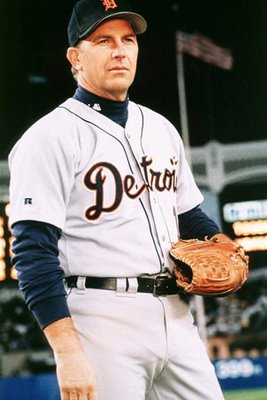
I’ve always related to the characters in Kevin Costner’s baseball films, Bull Durham, Field of Dreams and For the Love of the Game. The main characters in each of the films touch me each in different way.  Crash Davis and Billy Chapel are players at the end of their careers.  Davis is a career Minor Leagues journeyman who “played 21 days in the show.” and Chapel is other a future Hall of Famer at the close of a final season filled with disappointment.

The character of Crash Davis strikes a particular chord in me.  Crash Davisis a journeyman minor league catcher with the dubious distinction of having the most minor league home runs, 227 to be exact. The real life Minor League Home Run King is Mike Hessman who played for 15 years in the Minors with a few trips to the Majors and the U. S. Olympic Baseball Team; he had 329 home runs and is now playing in Japan) I have seen Hessman belt numerous home runs and the man is a beast, but I digress…

Davis also played “21 days in the show.” In the film Davis is a consummate professional. He loves and respects the game and actually cares about the development of the young guys, even if they try his patience.  His dealings with Ebby Calvin “Nuke” LaLooche played by Tim Robbins are case in point.  Crash is demoted by the big team from his AAA contract to the single “A” Durham Bulls, back when Durham was in the Carolina League in order to help the team develop the young bonus baby.  Crash is not happy with the job, he’s proud, and threatens to leave the team, only to ask his new manager what time batting practice is.

He takes the new assignment on with a mixture of skill and humor in a manner that benefits not only the young pitcher but motivates the rest of the team.  It does not matter that he is in the minor leagues as he still plays his heart out and spends his time teaching the next generation.  He even gets thrown out of games if it helps motivate his team.  Likewise he is not hesitant to let his young charge learn the hard way when young “Nuke” decides to ignore his advice.  The thing that Crash has the hardest time in dealing with his young charge is that he feels that “Nuke” doesn’t respect the game. Respect matters to a professional.

Mike Hessman

The comparison fits for me in more than one way. In a sense my life has been like a journeyman ball player.  I started my military career in the Army almost 30 years ago.  I come from a different generation of military than the vast majority of the Sailors and Marines that I serve with today.  I am “old school” in some ways but have learned to adapt, just as the men who were the old soldiers when I was a young enlisted man and officer. My career has been quite diverse and I have not always done the same job on the same team or at the same level.  I think this is the mark of a true journeyman, to keep playing because you love the game. Mike Hessman is doing that in Japan.

To continue the baseball journeyman analogy I played one position for a number of years and then so to speak left the big team to train for a new position while playing in the minors.  I left my active career as a Medical Service Corps Captain and transferred to the National Guard to attend seminary. When I graduated from seminary I became a National Guard and Reserve Chaplain.  I did not go on active duty. Back then the reserves were kind of like the minor leagues. Being a Reserve component Chaplain while doing my hospital residency and first hospital chaplain jobs it was like working my way up through the minors.  When I was promoted to the rank of Major in the Army Reserve it was like moving up to AAA ball.  When I got mobilized to support the Bosnia operation it was like getting called up during the regular season by the Major League team.  When that time ended and I returned to the reserves it was like being sent back to the minors.  I honestly thought that I would spend the rest of my career there, maybe getting called up for brief periods of time but knowing that my career was destined to end in the minor leagues.

That all changed when I was given a chance to go into the Navy.  I took a reduction in rank and came in with no time in grade. This meant that I was starting from scratch with a new team.  I had all of my experience but I was starting over.  It was like when a player gets traded or is sent back to the Minors by one team and has his contract picked up by another team in a different league in mid season. His slate is clear; it is a new start with the new team. That is what happened to me.

The analogy also fits because I do not like it when I feel that people do not respect “the game.”  By game of course I mean the vocation of serving as a Military Chaplain as a calling as well as their attitude toward the organization in which they serve. I have little tolerance for clergyman or women who enter the military with better education and natural or God given abilities than me who do not respect the institution, those in it and are out to push their agenda. This is how Crash feels about “Nuke” and I love this exchange from the film:

Ebby Calvin LaLoosh: How come you don’t like me?
Crash Davis: Because you don’t respect yourself, which is your problem. But you don’t respect the game, and that’s my problem. You got a gift.
Ebby Calvin LaLoosh: I got a what?
Crash Davis: You got a gift. When you were a baby, the Gods reached down and turned your right arm into a thunderbolt. You got a Hall-of-Fame arm, but you’re pissing it away.
Ebby Calvin LaLoosh: I ain’t pissing nothing away. I got a Porsche already; a 911 with a quadraphonic Blaupunkt.
Crash Davis: Christ, you don’t need a quadraphonic Blaupunkt! What you need is a curveball! In the show, everyone can hit heat.
Ebby Calvin LaLoosh: Well, how would you know? YOU been in the majors?
Crash Davis: Yeah, I’ve been in the majors.

Looking at Billy Chapel, the central character in For the Love of the Game I also find some connection though not quite the same as Crash Davis.  Billy has played the game a long time for the same team, 19 years. He came back from what should have been a career ending injury.  In the film and in the novel he pitches in what for his team is a meaningless last game of the season against the playoff bound Yankees in New York.  The story focuses on this last game, Billy’s relationships with current and former teammates as well as his long term relationship with the team’s owner who is selling the team.  The new management wants to deal Billy to another team in the off season and is asking him if he wants to continue in baseball.

While the game is going on, Chapel knows this is the end and spends a lot of time reflecting on his life, his parents, his World Series appearances and friendships. He thinks about things that have gone well and things that he regrets. He especially regrets his relationship with the woman he loves but has messed up.  While his mind visits these subjects he tries to maintain his focus on the game and block out the thoughts as well as the near hatred of the Yankee fans. “Clear the mechanism….”

The thing that hits me the most is relationship between Billy Chapel and Jane Aubrey played by Kelly Preston.  I have done a lot in my military career but at the same time have missed a lot of time with Judy.  From 1996-2001 we spent most of 40 of 60 months apart. Since September 11th 2001 we have spent many more months apart. We have only spent 12 of 28 wedding anniversaries together not to mention birthdays and other holidays such as Christmas and Thanksgiving.  So many times Judy has missed the high points of my career and I have missed out on being with her to celebrate her achievements and to be there when times were hard.  But as anyone who serves a full career in the military knows it goes with the game. Chapel’s words to Jane Aubrey played by Kelly Preston after his perfect game strike a chord with me, I don’t ever think that I have said that I didn’t need Judy, but I spent a lot of my life not needing anybody, so she probably thought at times that I didn’t need her. Thus Chapel’s words to Jane do get me and when I first saw the movie put tears in my eyes:

“I used to believe, I still do, that if you give something your all it doesn’t matter if you win or lose, as long as you’ve risked everything put everything out there. And I’ve done that. I did it my entire life. I did it with the game. But I never did it with you, I never gave you that. And I’m sorry. I know I’m on really thin ice but, when you said I didn’t need you… well last night should’ve been the biggest night of my life, and it wasn’t. It wasn’t because you weren’t there. So I just wanted to tell you, not to change your mind or keep you from going, but just so you know, that I know, that I do need you. “

The second thing that really gets me is where the owner tells Billy Chapel that he is selling the team and tells Chapel that “the game stinks.”  I’ve seen a lot of people throughout my career with that kind of attitude about the Church, the military, their vocation and life in general that I want to scream.  Yes there is much that is not perfect in life and the institutions that we serve, but neither life nor serving God one this country stinks. Chapel’s words back to him echo how I feel about so much of life.

“The game doesn’t stink, Mr. Wheeler. It’s a great game.” After all these years I still love the game, my vocation, my service as a chaplain in the military and the young people that I get to work with.

Since coming back from Iraq there have been plenty of times that I have felt like I had nothing left to give. In the times that I was really struggling I made my transfer to Naval Medical Center Portsmouth where I ran into a number of guys who were like Chapel’s catcher Gus Sinski (played by John C. Reilly) and let me know that they were not only with me but were going to take care of me:

Billy Chapel: I don’t know if I have anything left.
Gus Sinski: You just throw whatever you got, whatever’s left. The boys are all here for you. We’re gonna be awesome for you right now!

There are times in life where we think that we have nothing left and when we have people that challenge us and stand with us even painful situations where we don’t think that we don’t think we have anything left to give.

Finally there is the announcer, the legendary Vin Scully calling the game and realizes that something special is going on:

“And you know Steve you get the feeling that Billy Chapel isn’t pitching against left handers, he isn’t pitching against pinch hitters, he isn’t pitching against the Yankees. He’s pitching against time. He’s pitching against the future, against age, and even when you think about his career, against ending. And tonight I think he might be able to use that aching old arm one more time to push the sun back up in the sky and give us one more day of summer.”

Now I know that I am quite as far down the road career wise as Billy Chapel in the movie, but I do know that I am closer to the end of my military career than I was even a couple of years ago, but the thought that I could be on the last few years does cross my mind a lot.

I guess that there are three major things that I want to accomplish before the end of my military career. I want to take care of all of the people that God gives me and puts in my life.  Second is to help coach the young men and women that I meet along the way, especially clergy and chaplains as well as colleagues and friends, especially when they hit difficult patches.  In one scene Billy Chapel talks to a young player named Mickey Hart (played by Greer Barnes) who made a boneheaded play on a fly ball against the “Green Monster” in Boston.  The young man knows that his flub will be all over the news and chapel advises him:  There’s a bunch of cameras out there right now waiting to make a joke of this, Mick. So you can either stop, give them the sound bite, do the dance. Or you can hold your head up and walk by, and the next time we’re in Boston, we’ll go out there and work the wall together. Don’t help them make a joke out of you.” When I see young guys get in trouble or make mistakes I want to help them get back on their feet, especially the young chaplains and medical professionals that come into my life.

What is funny is that I am as old or older than most of our young Sailors and Marines parents.   I’ve been in the military since before many of the Sailors and Marines were born.  In a sense I’m a Crash Davis and Billy Chapel kind of guy. I want to finish well and have my last season be my best, to go out like Mike Mussina when he retired from the Yankees.

My career isn’t done yet. I should have a few more good years left. I’ll be promoted on September 1st to Commander in the Navy.

I love both films and characters and find a new connection every time that I watch them. I think that it is important when we have lived the often disconnected military life that we find things that help connect us to the people closest to us, those who have often have had to endure our choice of vocation.  Somehow in Her grace the Deity Herself allowed me to find this in baseball and somehow relate it to the rest of my life.  After all, it is for the Love of the Game.

Peace, Steve+

4 Comments

Filed under Baseball, film, Military, Pastoral Care, philosophy, sports and life

Thoughts on Smoke, Suicides, Gracie Jane, the Media Legal System and I guess I’m not Patriotic

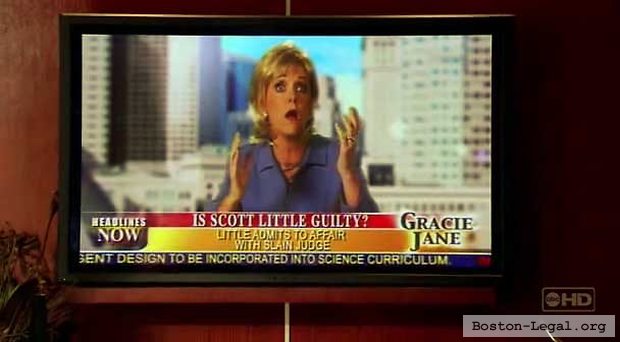
Gracie Jane…the Boston Legal Nancy Grace

Today was one of those weird days. I got up relatively early for a day off only to have my morning interrupted by a page from the Emergency Room to deal with a suicide. I showered and drove in to work knowing what the outcome was going to be even though our staff was trying heroically to save the patient.  On the way in I was reminded of Iraq once again as I drove through the dense smoke which has enshrouded our region from one of several wild fires.

Last night I had been out watching the Independence Day fireworks with Judy and our little dog Molly on the beach about a quarter of a mile from the Island Hermitage and I did pretty wel`l, though Molly did better. While I was occasionally flashing back to watching artillery and illumination rounds and hearing that infernal 122 rocket flying over me in Baghdad as well as being nervous in the large crowds that surrounded me I didn’t melt down despite some very close blasts from individuals firing some pretty large firework charges above our heads. Maybe it was the unflappable attitude of Molly. Molly isn’t afraid of anything and maybe her looking up and occasionally barking at the infernal things both comforted and amused me. However I digress….

I got to the ER sustained by a large cup of Dunkin Donuts coffee and found that our staff could not save the life of the individual. I have dealt with far too many suicides in the military where it seems to be epidemic now days as well as in my time as an ER and Trauma department Chaplain in major civilian medical centers. There are people that condemn those that commit suicide to hell and call it an “unpardonable sin.” I can’t do that. Suicide is a tragedy no matter when it happens and it is happening far too often among the ranks of our Active Duty, Reserve and National Guard forces and to those retired or discharged from the military.  I spent some time and with our staff as well as some of his senior enlisted leaders who were obviously affected by this and quietly said a prayer of commendation at the bedside.  This is a tragedy one that will unfortunately keep occurring even as Congress contemplates cuts to the force that include the Mental Health Professionals and Chaplains that are the last line of defense for these young men and women.  But then what value are the lives of the men and women that fight our wars compared to not raising the taxes for the incredible wealthy that profit off of our wars and the sacrifices of the troops.

When I got home Judy and I took a drive up to Beaufort North Carolina where we had lunch at Finz, a bar and grill. As always we sat in the bar and while eating lunch noticed a commotion. A waitress from the restaurant side rushed in and changed the channel from the peaceful natural disasters reported by the Weather Channel to Headline News where Gracie Jane (Nancy Grace, Gracie Jane is the caricature Nancy created by the writers of Boston Legal played with gusto by Jill Brennan) was having a conniption fit that Casey Anthony was found not guilty of killing her daughter in one of the most sensational trials since the O. J. Simpson trial.

Now I didn’t watch the trial my faith in the Media Legal system having been crushed with the failure of the O. J. jury to find him guilty and order him crushed to death with heavy stones. But evidently some jury in Florida where convicting someone of murder and having them put to death is a spectator sport failed to convict, something about reasonable doubt. It sounds to me that in such and environment that the prosecutors must have pulled a Marcia Clarke and botched the prosecution.  They should have petitioned to have the trial moved to Texas where they could have gotten the conviction and the death penalty. Even President Bush who never pardoned anyone as Governor couldn’t save the lady convicted of drowning her kids when she said she had repented when a jury convicted her of capital murder.

However, my friends as terrible as the verdict sounds as it seems justice has been denied, someone probably killed that little girl and will get away with it, the reaction of Gracie Jane was priceless as she was nearly apoplectic even saying that Satan must be having a “party in Hell” and that proving “reasonable doubt” an unfair burden to prosecutors.   But that is the way the Media Legal system works, Greta, Geraldo, Court TV and Gracie Jane, they thrive on trying these cases in the media and while our justice system is certainly imperfect and sometimes even insane ever person is due their day in court and it is the responsibility of prosecutors to prove guilt beyond reasonable doubt. These prosecutors had no direct evidence of the lady killing her daughter.  They had lots of circumstantial evidence even some pretty damning stuff from what Gracie Jane tells me but they couldn’t get a conviction. When I took a class in Military Law we were advised that if we didn’t believe that we could make the charges stick at a General Courts Martial in from of a judge and jury that it was inadvisable to charge soldiers with a crime, even if we were trying the case as a “non-judicial” case under Article 15 of the UCMJ. As a company commander I never lost because I made sure that if I charged someone that the evidence would prove guilt beyond a reasonable doubt.  These guys didn’t. They lost to better defense attorneys and someone got away with murder, manslaughter or child abuse. But the Media Legal system will never admit that they could be wrong in convicting people before a jury even gets the case. It’s a pity that Lincoln Meyer (a peeping Tom murderer played in a most creepy manner by David Dean Bottrell) couldn’t come up and clunk her on the head with a shovel like in Boston Legal).

Finally I ran afoul of a Tea Party partisan yesterday when I mentioned in his extended quote from the Declaration of Independence about removing despots and the right of people to revolt he cut off the quote where the Declaration says “Prudence, indeed, will dictate that Governments long established should not be changed for light and transient causes.” For this I was called everything but a Democrat, you’d think that I had spurned God and man for mentioning this. Instead the man and one of his friends set out to mock me as some kind of Constitution stomping, CNN and MSNBC watching infidel for my cautious and even distrustful views views in regard to the Tea Party movement and some of its leaders.  Of course when picked their arguments apart I got called more names was told that they were “Constitutionalists” and kept trying to shut me up. I had too much fun finally getting one to end his insulting comments aimed at me with “God Bless the USA!” Unfortunately when the phase is used to end an argument, insult the honor, integrity and intellectual honesty and question the patriotism of a fellow American it resonates about as well with me as much as “Heil Hitler!” did to Dietrich Bonhoeffer.

Evidently even though I have served the country in the military in peace and war the past 30 years including in combat I am less of a patriot than him or anyone else in the Tea Party.  Despite my personal victory today I fear for the worst when this man and others like him come to power. Dissent will be crushed as they use laws that they currently decry to punish their opponents or critics. Those that joined the movement out of legitimate frustration at the mess that Republicans and Democrats alike as well as most powerful supporters have made of this country will be sorely disappointed when they find that they are considered expendable to those that they put their trust in to deliver the country.

I personally find the often violent language and imagery used so flippantly by many the leaders of the Tea Party to be frightening. The use of such terms as evil, satanic, communist, Marxist or Fascist to characterize those that disagree with you is dangerous for it dehumanizes the other and appeals to the basest forms of human behavior.  The fact that some senior state organizers have links intellectual and economic to white supremacist groups and anti-government “militia” groups makes me even more nervous as do the unstated motivations of some of the principal financial backers the Koch brothers and Rupert Murdoch.  Contrary to what some believe this movement is not a movement of uneducated bumpkins to be trifled with. The Tea Party has money, media and power at its disposal it is not to be taken lightly even when its leaders make mistake after mistake concerning American history and the Constitution.

But it seems that none of them really studies history and that we have failed in teaching our people to learn from history, not the mythology that makes us feel good and warms our patriotic hearts. But according to the gentleman I must not have one of those. Oh well… God Bless the USA!

Well that’s all for tonight.

Peace

Padre Steve+

2 Comments

Filed under ER's and Trauma, faith, leadership, Lies of World Net Daily, Military, Pastoral Care, philosophy, Political Commentary, PTSD, purely humorous

The Bond

This story shall the good man teach his son;
And Crispin Crispian shall ne’er go by,
From this day to the ending of the world,
But we in it shall be remembered-
We few, we happy few, we band of brothers;
For he to-day that sheds his blood with me
Shall be my brother; be he ne’er so vile,
This day shall gentle his condition;
And gentlemen in England now-a-bed
Shall think themselves accurs’d they were not here,
And hold their manhoods cheap whiles any speaks
That fought with us upon Saint Crispin’s day.

From the Speech of King Henry V at Agincourt in Shakespeare’s “Henry V” 1599

In the midst of the petty politics surrounding the Afghan War so so ponderously and pompously purveyed by politicians and pundits of all strains I feel the need to speak up for that small band of brothers that has served in these wars. They are to steal a phrase applied to a previous generation the “New Greatest Generation” something that I am loathe to apply to much of the population at large.  You see the cost of these wars is finally beginning to sink in, at least the financial cost. I’m not so sure that the human cost factors in for most people because the tiny percentage of the population that serve in the wars. The fact is that the volunteer military is an insular community which for the most part is based on bases away from most of the population. We used to have big bases in or near major cities, the New York Naval Yard, the Presidio of San Francisco, Long Beach Naval Shipyard, Fort Devens Massachusetts near Boston, Fort Benjamin Harrison Indiana at Indianapolis.  But after the Cold War they and hundreds of other bases were eliminated and with them a connection to the active duty military.  That is not the fault of the people in the big cities it just happened that way, no the military with a few exceptions is based away from most of the population. As a result people may support the troops but most have no idea what they do, how they live and what they suffer.

In spite of that this new Greatest Generation’s accomplishments will largely go unheralded by history. Unlike the “Greatest Generation” of World War Two they will probably not receive the full honors and accolades due them.  This brotherhood of war who have served in the current War on Terror, Iraq and Afghanistan campaigns have now been serving in a war that is now twice as long as the American involvement in World War Two.  Many, like me have been in this since the beginning and many have made multiple deployments to the combat zones.  And many of us, if not most of us would go again. I know that I would because part of me is still in Iraq; for me this war is still un-won and un-finished.

The battles, Fallujah, Ramadi, Haditha, Mosul, Baghdad, Tal Afar, Marjah, Kandahar, Anaconda, Wanat and thousands of other places significant and insignificant are vivid in the minds of those that were there. Unfortunately for most of their countrymen they might as well be on a different planet.

With no disrespect to the Greatest Generation of World War Two, all of the current Soldiers, Sailors, Marines, Airmen and Coast Guardsmen volunteered to serve in time of war.  At any given time only about one half of one percent is in uniform.  In the three years and ten months of the Second World War about 16.1 Million Americans served in the military, the vast majority being draftees.  Likewise the current generation has fought the war alone.  The vast bulk of the country has lived in peace untouched by any inconvenience to daily life such as gas and food rationing, requirements to work in war industries and the draft as were citizens in World War Two.  In the Second World War Americans shared the burden which in large part has not occurred in this war.  While many have pitched in to help and volunteered to help veterans and their families the vast majority of people in this country are untouched by the war, not that there is anything wrong with that.  This is simply a comparison of the situation that those who served in World War Two and the present conflicts faced.  So I have to say that our current “Greatest Generation” is only a small part of the generation, as the line in Henry V “we few, we happy few who fought together….”

These Soldiers, Sailors, Marines and Airmen from the United States as well as our Allies who serve alongside of us are my brothers and sisters.  They too are volunteers and represent a miniscule portion of their countries population. I am friends with military personnel from the UK, Canada and Germany who have served in the various combat zones or at sea and met quite a few others from France, the Netherlands and Australia. Of course my Iraqi friends who I served with while with our advisers in Al Anbar province who are not only trying to bring peace and stability back to their country but have to worry about the possibility that their families become the target of terrorists.

There are a number of things that unite us in this relatively small brotherhood.  However, I think that this brotherhood could also be extended to our brothers who fought in Vietnam, French, Vietnamese, Australian, South Korean and American, the French who served in Algeria and the Americans and others that served in Korea.  All of these wars were unpopular. All had little support on the home front and often returning veterans found themselves isolated and their sacrifices ignored or disrespected.  For those Americans who serve in the current wars I can say that at least to this point the public has been much more supportive than they were to our Vietnam brothers, many of who were even disrespected by World War Two vets who had fought in “a real war.”  I cannot count the Gulf War in this list as it was hugely successful and the returning vets were hailed as conquering heroes with ticker tape parades.

Our shared brotherhood includes our scars, physical, psychological, neurological and spiritual.  Those who served on the ground in Iraq and Afghanistan as well as those who served in Vietnam, French Indo-China and Algeria have a common shared experience.  All fought people who didn’t or don’t like foreigners no matter how noble our intentions and who by the way have a long history of outlasting people that they believe to be invaders or occupiers.  We have had to fight wars with no front lines, no major units arrayed against us, but rather asymmetrical threats propagated by creatively devious foes who use low tech easily available technology and a willingness to sacrifice themselves and others to force attempt to kill us.  Thus we have cleverly designed and often quite powerful IEDs or Improvised Explosive Devices which can obliterate a HUMMV.

These threats create a situation where there is no front line and thus where every excursion outside of a FOB (Forward Operating Base) or COP (Coalition Outpost) is automatically a trip into a potential danger zone.  Enemies can infiltrate bases posing as local nationals in either military uniform or as workers, rockets and mortars can be lobbed onto even the largest and most secure bases at any time and any vehicle driving by you on the road could be loaded with explosives and just waiting to blow you up while insurgents with automatic weapons and Anti-Tank Rocket Propelled Grenades (RPGs) have taken down helicopters.  When you have taken fire on the road, in the air and had rockets whiz over your head you this becomes a reality that you never forget.

As a result we many men and women with physical wounds as well as wounds that have damaged the psyche or the soul.  PTSD is very common either from a direct encounter or the continual wear and tear of being in a danger zone wondering if you were to get hit that day every day of a tour.  I have lost count now of people that I know who have mild to severe symptoms of PTSD.  Traumatic Brain injury is another condition men and women attacked by IEDs, mortars and rockets experience. Likewise there are the injuries that shatter the soul.  These are the images of ruined buildings, burned out vehicles, wounded bodies, injured children, refugees and wars desolation that can leave a person’s faith in God, or ideals that he or she believes in weakened or even destroyed.  There are the smells of smoke, death, diesel, garbage and sewage that when encountered far away from the combat zone send us back.

The wars have been costly in lives and treasure.  The “up front” casualty numbers are below; they do not include those with PTSD or mild to moderate TBI. They also do not count those that have died later after their service in VA or other civilian care, those that did not report their injuries and those that have committed suicide.

Iraq                   KIA    US  4463       UK 179    Other  139           Total  4781

Afghanistan     KIA  US  1637         UK 374     Other 537        Total  2548

US Wounded   Iraq  32227      Afghanistan   11191

The financial cost: over 1.2 trillion dollars and counting.

As many idealistic and patriotic military personnel question God, their National Leadership and even themselves because of their experience in Iraq or Afghanistan.  I cannot get the image of a refugee camp on the Iraqi Syrian border full of Palestinian refugees who have nowhere to go; they had been invited to Iraq under Saddam and have been sitting on the border trying to get home for years now.  The Palestinian authority wants nothing to do with them. I cannot smell smoke or hear a helicopter or pass a freshly fertilized field without being reminded of Iraq.

These men and women are my brothers and sisters.   I have seen quite a few of my colleagues at the Naval Medical Center and Naval Hospital deploy and deploy, the medical personnel don’t get much of a break.  These are my friends and I do get concerned for them and pray earnestly for their safe return.  I wish that I could go with them because I know them and have already walked with them through the dark valley of the shadow of death in the Medical Center ICU or the wards and clinics of the Naval Hospital.  We already have a bond that will not be broken.

It is now four years since I was in the process of leaving for Iraq and three years since my PTSD crash.  However, I still would do it again in a heartbeat.  There is something about doing the job that you were both trained to do and called to do that makes it so.  Likewise the bonds of friendship and brotherhood with those who you serve are greater than almost any known in the human experience.  Shared danger, suffering and trauma bind soldiers together, even soldiers of different countries and sometimes with enemies.  I remember the conversation that I had with an Iraqi Merchant Marine Captain on a ship that we had apprehended for smuggling oil violating the United Nations sanctions.  The man was a bit older than me, in his early 60s.  He had been educated in Britain and traveled to the US in the 1960s and 1970s. He had the same concerns as any husband and father for his family and had lost his livelihood after Saddam invaded Kuwait in 1990.   He was a gentleman who provided for his crew and went out of his way to cooperate with us.  In our last meeting he said to me: “Someday I hope that like the Americans, British and the German soldiers at the end of the Second World War can meet after the war is over, share a meal and a drink in a bar and be friends.”  That is my hope as well.

In the final episode of the series Band of Brothers there is a scene where one of the American soldiers, Joseph Liebgott who came from a German Jewish family interprets the words of a German General to his men in the prisoner compound.  The words sum up what the Americans had felt about themselves and likewise the bond that all soldiers who serve together in war have in common, if you have seen the episode you know how powerful it is, I ended up crying when I heard it the first time and cannot help but do so now that I have been to the badlands of Al Anbar Province.

“Men, it’s been a long war, it’s been a tough war. You’ve fought bravely, proudly for your country. You’re a special group. You’ve found in one another a bond that exists only in combat, among brothers. You’ve shared foxholes, held each other in dire moments. You’ve seen death and suffered together. I’m proud to have served with each and every one of you. You all deserve long and happy lives in peace.”

As do we.

Peace

Padre Steve+

2 Comments

Filed under History, iraq,afghanistan, Military, PTSD, shipmates and veterans, Tour in Iraq

The Great Marianas Turkey Shoot

U.S. Navy personnel observe the Air Battle from a Carrier

The Battle of the Philippine Sea of 19-20 June 1944 was the largest carrier battle in history.  Twenty four aircraft carriers, 15 American and 9 Japanese embarking over 1400 aircraft dueled in the Central Pacific in a battle that so decimated Japanese Naval Aviation that it never recovered. The battle and the subsequent fall of Saipan brought down the government of General Tojo and was the beginning of the collapse of the Japanese Empire and the “Greater Asia Co-Prosperity Sphere.”  

http://dsc.discovery.com/videos/destroyed-in-seconds-marianas-turkey-shoot.html

In late 1943 the Japanese realized that they needed to recover the initiative in the Pacific.  Between the Battle of the Coral Sea and the Battle of Santa Cruz Japanese Naval aviation suffered crippling losses especially among the elite pilots and aircrews with who they had begun the war.  These losses were compounded when the Navy attempted to support the operations of the Army to defend the Solomons and New Guinea.  Squadrons sent to battle the United States Navy, Marine Corps and Army Air Corps suffered at the hands of the every more skilled and well equipped American fighter squadrons the victims of which included Admiral Isoruku Yamamoto the Commander of the Combined Fleet when the Betty bomber that he was traveling on was ambushed by U.S. Army Air Corps P-38 Lightening fighters.

Vice Admiral Jisaburō Ozawa

By late 1943 the Japanese were attempting to train new pilots and aircrews to man the carriers of the Combined Fleet’s Carrier Striking Forces.  Admiral Soemu Toyoda, the new commander of the Combined Fleet and its third commander in less than a year developed “Plan A-Go” as a means to mass carrier and land based aviation assets to defeat the Fast Carrier Task Forces of the United States Navy.  The rebuilt Carrier Striking Groups built around 9 carriers embarking 473 aircraft was commanded by Vice Admiral Jisaburō Ozawa who had taken over from Vice Admiral Chuichi Nagumo.

D4Y3 “Judy” Dive Bomber

The Japanese discerned the intentions of the Americans when American Carrier aircraft struck Saipan and Guam. The Japanese had expected the Americans to strike further south and the Marianas had few land-based aircraft in the area. Toyoda made the decision to engage the Americans and ordered the fleet to attack. American submarines discovered the gathering Japanese forces. The Japanese forces were assembled by the 17th and by the 18th the 5th Fleet under the command of Admiral Raymond Spruance spearheaded by Task Force 58 Commanded by Vice Admiral Marc Mitscher had assembled west of Saipan to meet the Japanese.  The Americans fielded 15 carriers including 9 Fleet Carriers of which 6 were the new Essex Class Fleet Carriers which embarked 956 aircraft.

The F6F Hellcat cemented its place as the premier fighter plane of the Pacific war during the “Turkey Shoot”

The Americans held both a quantitative and qualitative advantage against the Japanese. The American fighter squadrons were equipped with the F6F Hellcat which was far superior to the now obsolescent Japanese Zero fighters and their pilots and aircrews were now more experienced and proficient than the newly minted Japanese aviators who by and large had little combat experience and were flying inferior aircraft.  The Japanese had not planned for a long war and had done little to systemically address the heavy losses that their force experienced during 1942 and 1943 at Coral Sea, Midway, Eastern Solomons, Santa Cruz and in the Solomons campaign.

Vice Admiral Marc Mitscher aboard the USS Lexington

Mitscher desired to move aggressively against the Japanese. However he was overruled by Spruance who acting on the advice of his Battle Line Commander Vice Admiral Willis Lee decided that a possible night surface action with the Japanese was not desirable. Spruance instead directed Mitscher to be ready to defend against Japanese air strikes knowing that his carriers and carrier based air groups was more than a match for the Japanese air groups.   Spruance has been criticized for his decision but the words of Willis Lee, a veteran of the Naval Battle of Guadalcanal where he defeated a Japanese force sinking the Battleship Kirishima.  He prevailed in his flagship the USS Washington but losing three of four escorting destroyers and seeing his second battle wagon the USS South Dakota heavily damaged. A night surface engagement was not worth the risk as in Lee’s eyes it evened the playing field for the Japanese and took away the American air power advantages.

A Japanese aircraft goes down in flames

The Japanese began the action on the 19th sending successive attack waves against Task Force 58. They were met by massed formations of Hellcats vectored in by air controllers in the Combat Information Centers of the American carriers using their superior air search radar systems.  In less than two hours well over 200 Japanese aircraft were downed by the Hellcats.  Lieutenant Alexander Vraicu shot down 6 “Judy” dive bombers in minutes before low on fuel he returned to the USS Lexington.

Lieutenant Alexander Vraicu holds up six fingers on board the USS Lexington

While the Hellcats were chewing up the Japanese squadrons the American submarines USS Albacore and USS Cavalla each sank a Japanese Fleet Aircraft Carrier.  The Albacore hit the Ozawa’s flagship, the new Tiaho with a torpedo which caused minimal damage, but ruptured fuel lines. The Japanese damage control officer opened vents in the ship which allowed the fumes to spread throughout the carrier. They were ignited by a generator causing massive explosions and forcing Ozawa to abandon his flagship. Tiaho would sink by late afternoon after being ripped apart by a series of massive explosions taking with her 1650 of 1750 officers and crew. Cavalla hit the Pearl Harbor veteran Shokaku with a spread of three torpedoes causing that ship to burst into flames with aircraft and ordnance adding to the conflagration. A massive explosion ripped through the ship causing her to sink with a loss of over 1200 officers and crew.

The Japanese flagship Tiaho and her killer the USS Albacore

Toyoda desired that Ozawa retire from the battle before he suffered more losses but Ozawa wanted to stay around and hit the Americans with everything that he had left. The Americans sailed west during the night to seek out the Japanese Fleet. It took the majority of the day to find the Japanese. With only 75 minutes of daylight remaining Mitscher launched a strike despite the risk to his aircrew the majority whom were not trained in night landings.  The American strike sank the carrier Hiyo and two tankers and damaged the carriers Zuikaku, Chitoyda and Junyo as well as the battleship Haruna.  By the end of the day Ozawa had 35 aircraft in flyable condition.

The Japanese Fleet under attack, carrier Zuikaku and two destroyers on June 20th

The final part of the drama was the return of the American strike group to the carriers. Knowing that if he maintained darken ship he would lose many aircraft and the men that flew them Mitscher ordered that the fleet turn on its lights. This act though incredibly risky helped bring the majority of the aircraft to land or ditch near the task force.  The Americans lost less than 100 aircraft many due to the night landings and many of the aircrew were rescued. The Japanese also lost nearly 200 land based aircraft.

Admiral Raymond Spruance

The battle was the death-kneel of Japanese Naval Aviation. Later in the year the carriers again under Ozawa sailed against the Americans only this time they were a decoy force at the Battle of Leyte Gulf, a role that they succeeded in admirably. The American carriers now had free run of the Pacific only opposed by land based aircraft many used in a Kamikaze role until the end of the war. These would cause fearful losses among the American ships heavily damaging a number of carriers.

The battle is often forgotten by due to its proximity to the Normandy landings but was a significant step in the fight against Japan. The islands captured by the Americans, Saipan, Tinian and Guam would provide major sea and air staging areas for the final assault against Japan. Tinian would become the base of many Army Air Corps B-29 “Superfortress” bombers including those that dropped the Atomic bombs less than 14 months later. It was a turning point both militarily and politically. With the fall of the Tojo government the Japanese leaders began to slowly tell the truth about wartime setbacks and losses to a people that it had lied to since their invasion of China and occupation of Mongolia.  It was a setback that even Tojo and the highest leadership of Japan knew that they could not recover.

5 Comments

Filed under History, Military, US Navy, world war two in the pacific