Category Archives: Military

Silent Night: A Song Can Overcome War and Violence

Friends of Padre Steve’s World,

It will soon be Christmas and I am going to focus on that, particularly musical expressions as well as meditations about my own faith journey as well as the experience of soldiers during the holidays.

In the midst of everything happening in Washington D.C. and the potential crises that could plunge the world into war in the coming months it still is important to focus on the holidays. Since I am a Christian I share about Christmas without any shame, even as I respect and honor other people’s traditions and expressions of faith.

So here is a post about the song Silent Night. 

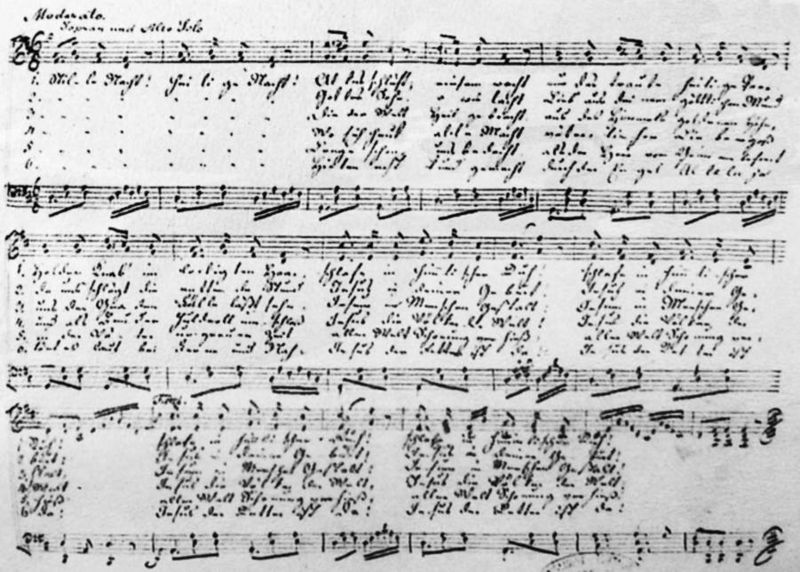
800px-Stille_nacht

Stille Nacht Autograph in the Hand of Joseph Mohr

In 1816 a young Austrian Catholic Priest in a small parish near Salzburg penned the lyrics to a hymn that even in the midst of war can bind people together. Father Joseph Mohr after moving to another parish in Oberndorf took those lyrics to Franz Gruber a nearby schoolmaster and organist. Mohr asked Gruber to put the words to music, specifically with a guitar accompaniment. Together the performed the song at Oberndorf’s parish church’s Vigil Mass on December 24th 1818.

malamkudus_11

There are a number of fanciful apocryphal stories about why the song was written and performed on the guitar, including one about the bellows of the church organ having been eaten by mice, but these are akin to sensationalist tabloid journalism. The simple truth is that Mohr sought out Gruber to arrange the song for guitar to be sung by two people accompanied by a choir for that Christmas Vigil Mass.

Stille Nacht, Heilige Nacht 

Stille Nacht, heilige Nacht,
Alles schläft; einsam wacht
Nur das traute hochheilige Paar.
Holder Knabe im lockigen Haar,
Schlaf in himmlischer Ruh!

Stille Nacht, heilige Nacht,
Hirten erst kundgemacht
Durch der Engel Halleluja,
Tönt es laut von fern und nah:
Christ, der Retter ist da!

Stille Nacht, heilige Nacht,
Gottes Sohn, o wie lacht
Lieb’ aus deinem göttlichen Mund
, Da uns schlägt die rettende Stund’.
Christ, in deiner Geburt!

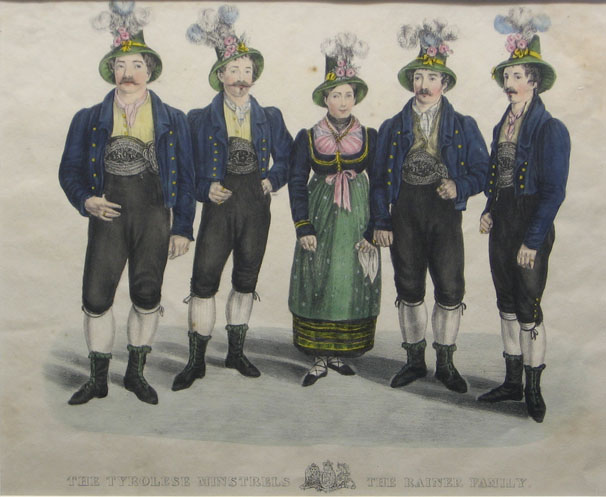
 The song rapidly grew in popularity and spread quickly in Europe. A traveling Austrian singing group, the Rainer family performed it in front of Austrian Emperor Franz I and Tsar Alexander I.

7998

They also gave its first American performance in New York outside the famed Trinity Church in 1839. I continued to grow in popularity and was translated into many languages, now numbering about 140.

21760570

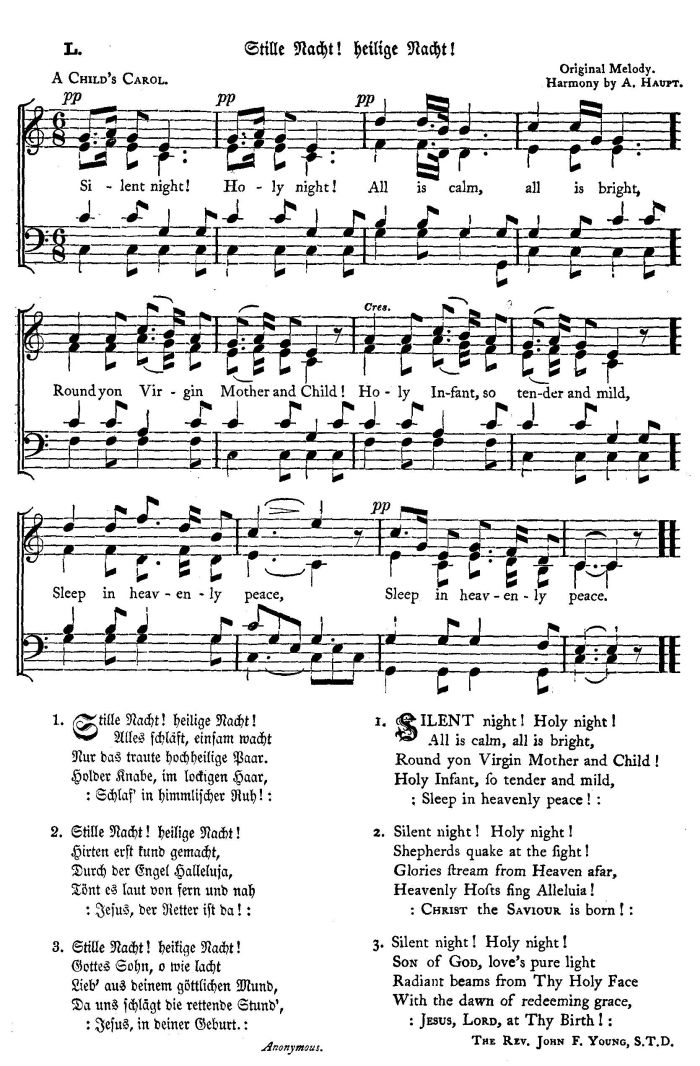
The American Episcopalian Bishop John Freeman Young translated it into English in 1863. It is his version that is most used today in English speaking lands today. A website called the Silent Night Web http://silentnight.web.za has 227 versions of the song in 142 languages on its site.

50-Silent_Night

Silent Night 

Silent night, Holy night

 All is calm, all is bright

‘Round yon virgin , mother and child

Holy infant so, tender and mild
Sleep in heavenly peace,
Sleep in heavenly peace.

Silent night, Holy night
Shepherds quake, at the sight
Glories stream from heaven afar
Heavenly, hosts sing Hallelujah.
Christ the Savior is born,
Christ the Savior is born.

Silent night, Holy night
Son of God, love’s pure light
Radiant beams from thy holy face
With the dawn of redeeming grace,
Jesus, Lord at thy birth,
Jesus, Lord at thy birth.

Father Mohr refused to profit from his song and donated his proceeds to care for the elderly and educate children in the parishes and towns he served. He died in 1848.

889

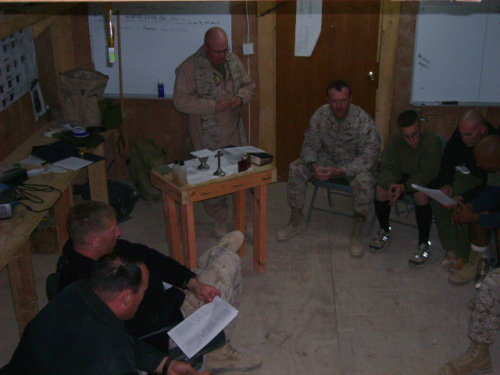
I find that the song will bring me to tears fast than almost any song. It is one that I have sung in English, German and French. In my travels as a military Chaplain have used on every Christmas Eucharist celebration that I have done, including at two lonely COPS in Iraq, COP South and COP North on the Syrian Border in Al Anbar Province. Likewise I have celebrated joint ecumenical Christmas services with German military chaplains and civilian clergy. Last Friday I did that again for the members of the German NATO contingent at my chapel.

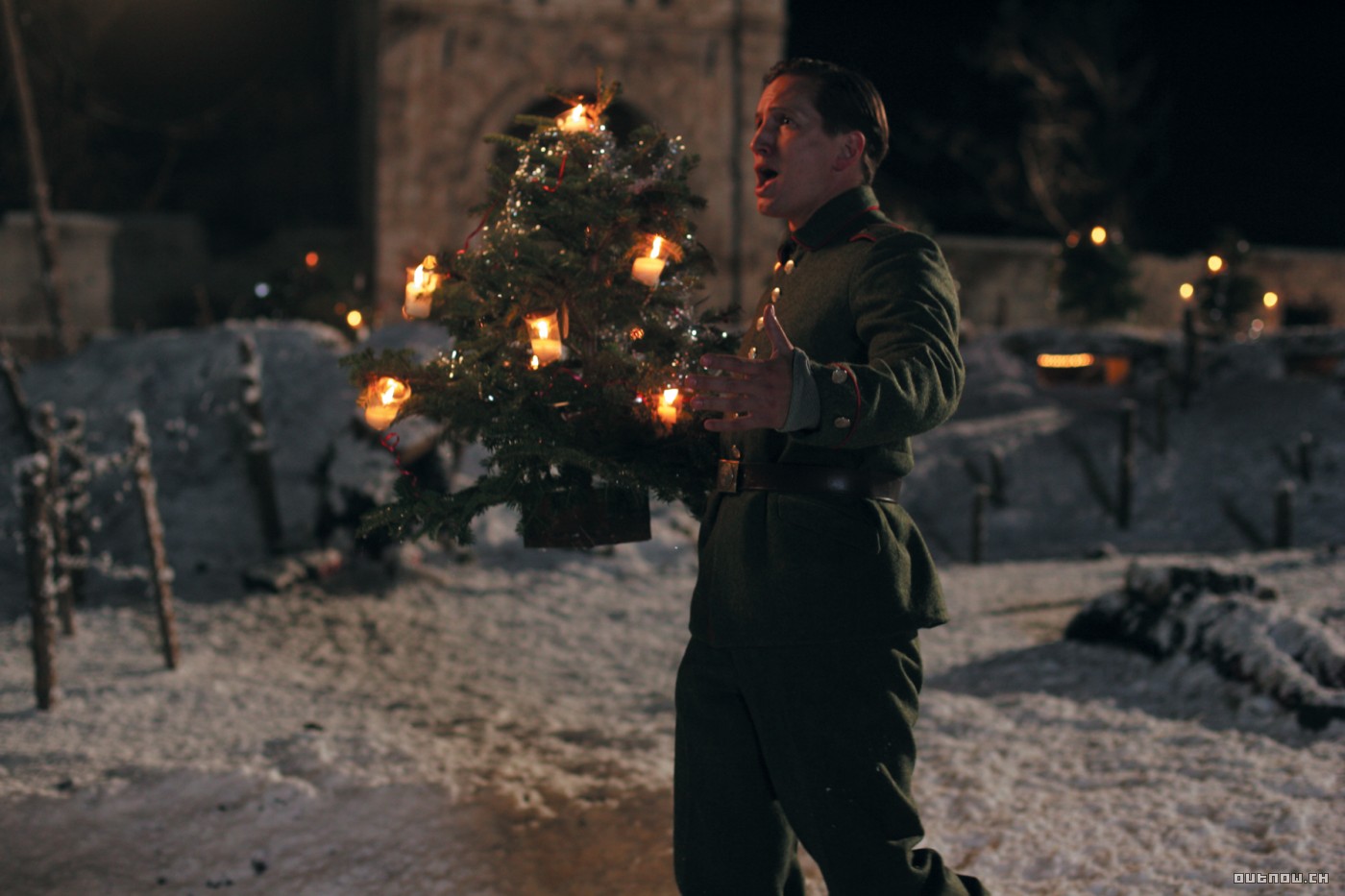
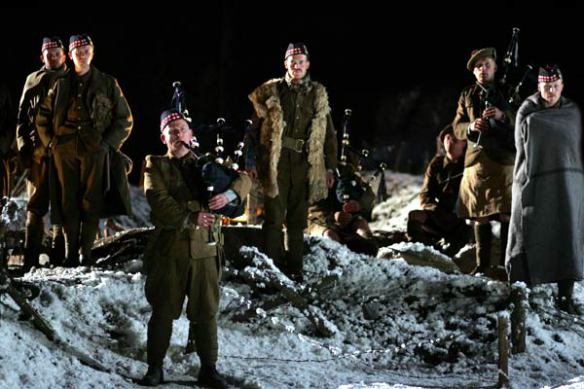
It is a simple and humble song. It is performed the world over by the great and small, the famous and the unknown. It is a song that in two world wars has stopped the violence as opposing soldiers paused to sing it together each in their own language. This happened during the Christmas Truce truce of 1914 as well as in 1944 along the Western Front during the Battle of the Bulge.

13-1

http://www.youtube.com/watch?v=EbGZ7T5EHpQ

 joyeux-noel-4

On Tuesday as people gather for Christmas Eve Sunday and when they gather for Christmas Day services the song will be sung around the world. In lands where war rages the song will be sung. It is my hope that someday that war will be no more and the tiny child spoken of in this humble hymn will understand the incredible grace of the message spoken by the Angels as recorded in Luke’s Gospel:  “Glory to God in the highest, And on earth peace among men in whom he is well pleased.” (American Standard Version)

Peace

Padre Steve+

4 Comments

Filed under Loose thoughts and musings, Military, music

The Highest Responsibility: Ludwig Beck, Loyalty, and Leadership in a Time of Crisis

Friends of Padre Steve’s World,

I am dipping into the archives today because the article is exceptionally relevant, at least to me with the distressing actions of President Trump which seem to me to be based on his lack of character, his bellicose threats against civil liberties as well as the actions of his administrational against the norms of our republican form of government, his disregard for the Constitution, his exceptional narcissism and what I believe is a terrible psychological instability which may be based on an onset of some form of dementia, which could lead us into multiple wars the likes that have not been seen since the Second World War, frighten the hell out of me.

Most of my undergraduate and non-theological graduate studies focused on the conundrum faced by German military officers during the rise of Hitler. Did those not immediately cashiered or murdered after Hitler’s assumption of power resign, retire, or continue to serve, either supporting the new regime, or attempting to mitigate he evil. Sadly, most ended up giving their support to the Nazi regime as Hitler, but some did attempt to mitigate the evil of the Hitler regime. One was General Ludwig Beck, and his legacy is an uncomfortable one for anyone who has sworn an oath as an officer.  Beck said: 

“It is a lack of character and insight, when a soldier in high command sees his duty and mission only in the context of his military orders without realizing that the highest responsibility is to the people of his country.” 

It is with that in mind that I repost this article.

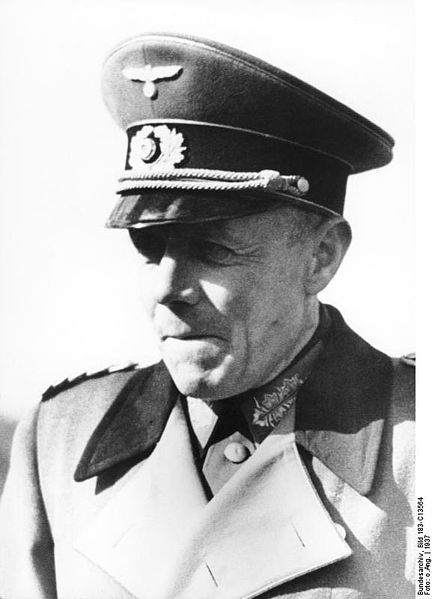
Bundesarchiv_Bild_183-C13564,_Ludwig_BeckGeneral Ludwig Beck

This is one of those uncomfortable posts to write partially because I know that some people will take it completely wrong or ascribe meaning to it that I do not intend. I by training am a military historian, probably better at that than I am theology. One thing that fascinates me in the study of military history is the actions of men in the face of evil and the meetings of such people at the intersections of where military and government policy intersect. It is a timeless theme. The bulk of my study until the past few years was the German Army, particularly that of the Weimar Republic and the Wehrmacht to include policies, leaders, political attitudes and behavior in war and peace. Thus it makes sense for me to look at Colonel General Ludwig Beck who held the post of Chief of the German General Staff during the early part of the Nazi era.

Ludwig Beck is one of those characters in military history that makes professional military officers uncomfortable. Beck is not the perfect example of righteousness nor was he always correct in things that he supported. As an artillery regiment commander he defended the rights of soldiers and officers to be Nazi Party members though he himself was not one. He, like many military officers was a conservative military officer by nature and became Chief of Staff of the Wehrmacht in 1935 two years after Hitler’s ascension to power. Taking office Beck was troubled by some Nazi policies but not by the need for Germany to expand to areas that it had once controlled, he opposed the plan to attack Czechoslovakia not because of any love for the Czech state which he desired to be eliminated, but rather it being a war that Germany could not win. He resigned from his position a Chief of Staff in 1938 when he could not persuade the rest of the General Staff to resign in protest over Hitler’s plan which he felt would be disastrous for Germany. Had the western powers led by Neville Chamberlain not caved at Munich it is likely that the Germans would have suffered badly against the Czech army and fortifications and with the entry of France into the war would have suffered a defeat that would have ended the Hitler regime. In fact German officers who saw the extent of Czech preparations on the frontier following the Munich deal were greatly relieved that they did not have to fight their way into the Czech state.

After his resignation Beck played a key role in the resistance movement. He was involved in the planning for a number of attempts on Hitler’s life. Yet it was his leadership in the July 20th 1944 attempt on the life of Hitler that ensured his place in history. With Colonel Klaus Von Stauffenberg and others in the General Staff at the Front and in Germany he acted to avert further destruction in Europe and the certain destruction of Germany. The plot, Operation Valkyrie was marred by poor execution and failed to kill Hitler of seize power but for a few hours. The planners had left too much to chance and once Hitler had restored communications the coup attempted ended swiftly. Had the attempt succeeded Beck was in line to become either the leader of Germany or the Head of the Army. Instead while being interrogated after his capture he took his own life depriving Nazi leaders of the ability to put him up for a public trial at which he would have been humiliated and then executed. The Kasserne in Sonthofen where the Bundeswehr MP School and Staff School as well as NATO and EU military schools are located is named for him. It is there, ironically a former Adolf Hitler School that his memory and sacrifice is honored by the nation which emerged from the rubble of World War Two. He is honored in a small museum and with a plaque recognizing his sacrifice.

me at sonthofen

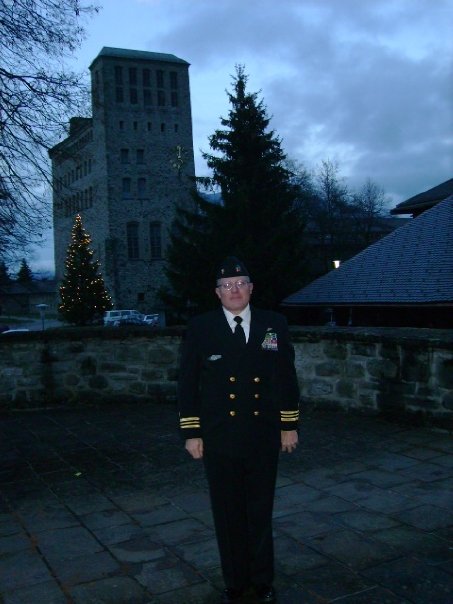
Me at Ludwig Beck Kasserne in December 2006 

The reason that General Beck makes many of us in uniform uncomfortable (and I do include myself) is that he recognized that senior officers, especially those in high command who help set and execute policy cannot isolate themselves in the purely military aspects of the operations. Instead he believed that officers have a higher duty to the constitution and people and not just the military mission that they have been assigned. When he realized that he could not stop Hitler’s invasion of Czechoslovakia he resigned and worked in the obscurity of a small and often divided resistance movement against Hitler. The bulk of the German high command, including many officers idolized in the United States did not recognize the higher duty. Many of these men were consummate professionals who did not support the evil of the Nazi regime and who conducted themselves honorably. Yet they effectively abetted its crimes by not opposing actions of their government that were against international law and morality as well as dangerous from purely a pragmatic military standpoint.

The problem is that military officers in any nation, including ours can face situations such as Beck faced. A military’s character is demonstrated in how leaders deal with such situations. Beck recognized the situation early, the bulk of his fellow officers did not recognize a problem until Germany was embroiled in a war that it could no longer win. Even then most could not mount an opposition to Hitler because they did not want to be considered to be mutineers and violate their oath. The potential to abet evil when military professionals bury their heads by planning and executing purely military aspects of a campaign is great. If they ignore questionable policy or even policies that they know that have been judged by the international community to be illegal or immoral, such as torture of prisoners or waging wars of aggression against countries that have not attacked their nation they become complicit in their nations crimes. This was the case with German Officers who may not have committed any personal crime and even tried to mitigate the evils of the Nazi regime were morally complicit in that evil.

In the United States the military shows its fidelity by remembering our oath to the Constitution and being faithful to it and the people that we serve. As officers we represent all Americans and not just those of our political party, religious faith or social or economic interests, nor any political leader, faction or interest group within the nation. The Constitution, our military regulations, traditions and the Uniform Code of Military Justice are the standard by which we operate and by which we conduct ourselves and tools that protect us when policies or actions taken by the government or people within it violate those codes or international law. The UCMJ makes it clear those officers who take part in, plan or a complicit in illegal actions in war are committing crimes.

When a nation become involved in wars which are non-traditional, revolutionary wars or insurgencies that barriers to professional conduct can be broken down. The Mai Lai massacre committed by 2LT William Calley’s platoon with the certain knowledge and maybe even approval of individuals in the chain of command is one example as were the uncontrolled chaos of prisoner abuse and torture at Abu Ghraib.

Times are difficult and we do not know what the future brings. Stress in societies caused by economic conditions, natural disasters, lawlessness on the streets and divided and ineffective governments sometimes remove the moral restraints of the society and even affect the military. One sees this in Weimar Germany as well as the 4th Republic in France which had to deal with post World War II economic difficulties, exacerbated by recriminations of political opponents for actions the others did during the war while France was occupied by Germany as well as the wars in Indo-China and Algeria which further divided the nation and the military.

Christmas on the Syrian border

It is in stressful and uncertain times that officers have to be men and women of principle who always uphold the highest traditions of their military as well as be the voice of conscience when governments, political parties, special interests or leaders begin to violate international norms in the conduct of war. Beck was not a perfect officer. He supported some of Hitler’s policies until after his resignation but like much of the resistance believed that the Nazi regime could only end up destroying Germany. It is important to remember that like Ludwig Beck that officers do not need to sacrifice their honor to be faithful to their oath. This is important now more than ever as the President makes multiple assaults on the judiciary, the Department of Justice, the FBI, the CIA, and in a less direct matter against the military, its leaders, and its members, especially when he insinuates that before he came to office the military were “losers.” I can only imagine what will happen when the President launches a depleted military into war on multiple fronts especially against North Korea. I am certain that he will blame the military and its leadership for the failures of his policies.

I just wonder if there are any leaders today with the courage of Ludwig Beck. As for me I remain in service simply to care for sailors, marines, soldiers, airmen and their families, knowing that very bad times are coming. Likewise I hope to be an example and mentor to the chaplains, religious program specialists, and the others that I serve with knowing that no matter what happens I am coming to the end of my career. I have been serving continuously in the Army and Navy since 1981. I have been to war and expect that I will see war again before my career is over. My loyalty is to the Constitution and the men and women who I have the privilege of serving alongside.

Until tomorrow,

Peace

Padre Steve+

1 Comment

Filed under ethics, faith, History, leadership, Military, nazi germany, world war two in europe

The Battle of the Bulge: Wacht am Rhein at 73 Years

battle-bulge

Friend’s of Padre Steve’s World,

It has been a busy weekend so I am reposting an article from several years ago dealing with the Battle of the Bulge which began on December 16th 1944. The battle was the final major German offensive on the Western Front. It was costly in manpower to both sides but it helped break the back the German Army. So until tomorrow.

Peace,

Padre Steve+

The Decision 


Adolf Hitler gathered with the Chiefs of Oberkommando des Wehrmachton September 16th 1944 at his “Wolf’s Lair” headquarters in East Prussia.  The situation was critical; he had recently survived an assassination attempt by Army officers led by Colonel Klaus Von Staufenberg at his Wolf’s Lair headquarters in East Prussia.  When the assassination attempt took place the German situation in Normandy was critical. The Americans broke out of the Bocage at St. Lo and spread out across Brittany and the interior of France with Patton’s 3rd Army leading the way.  Even as his commanders in the West pleaded for permission to withdraw to the Seine Hitler forbade withdraw and ordered a counter attack at Mortain to try to close the gap in the German line and isolate American forces. When the German offensive failed the German front collapsed. 40,000 troops, hundreds of tanks and thousands of vehicles were eliminated when the Americans and Canadians closed the Falaise pocket. Despite this cadres of decimated divisions including SS Panzer, Army Panzer and elite Paratroops made their way out of Normandy.  With the Germans in full retreat the Allies advanced to the border of the Reich itself. On the Eastern Front as well disaster threatened when the Red Army launched an offensive which annihilated Army Group Center and advanced to the border of Poland before outrunning supply lines and stalling on the Vistula.

Tiger II Advancing in the Ardennes

            Since Normandy Hitler had wanted to counter attack but had neither the forces nor the opportunity to strike the Allied armies. As the Allied offensive ground to a halt due to combat losses, lack of supplies and stiffening German resistance Hitler maintained a close eye on the situation in the West.  He believed that despite their success that the Americans and British alliance was weak and that a decisive blow could cause one or both to drop out of the war. During a briefing an officer noted the events of the day on the Western Front including a minor counterattack by kampfgrüppen of the 2nd SS Panzer and the 2nd Panzer Divisions which had made minor gains in the Ardennes, Hitler rose from his seat ““Stop!” He exclaimed. “I have come to a momentous decision. I shall go over to the counterattack….Out of the Ardennes, with the objective Antwerp.””[i]

            Thus began the planning for the last great German offensive of WWII.  Hitler “believed that sufficient damage could be inflicted to fracture the Anglo-American alliance, buy time to strike anew against the Soviets, and allow his swelling arsenal of V-weapons to change the course of the war.”[ii]  It was a course of born of desperation, even admitted by Hitler in his briefings to assembled commanders in the week prior to the offensive, one officer noted his remarks: “Gentlemen, if our breakthrough via Liege to Antwerp is not successful, we will be approaching an end to the war which will be extremely bloody. Time is not working for us, but against us. This is really the last opportunity to turn the war in our favor.”[iii]

US Soldiers manhandling a 57mm Anti-Tank Gun into Position

            Despite shortages of men and equipment, continuous Allied assaults and over the objections of General Guderian who argued to reinforce the Eastern Front[iv], the OKW staff secretly developed detailed plans. The planning was so secretive that the “Commander in Chief West and the other senior commanders destined to carry out the attack were not informed.”[v] The plans were submitted to Hitler on October 9th [vi] and presented to Field Marshalls Von Rundstedt and Model at the End of October. General Hasso Von Manteuffel, commander of 5th Panzer Army commented that: “The plan for the Ardennes offensive…drawn up completely by O.K.W. and sent to us as a cut and dried “Führer order.”[vii]  Likewise Model and Von Rundstedt objected to the scope of the attack. Von Rundstedt stated: “I was staggered…It was obvious to me that the available forces were way too small for such an extremely ambitious plan. Model took the same view of it as I did….”[viii]  Model reportedly said to General Hans Krebs: “This plan hasn’t got a damned leg to stand on.”[ix] And “you can tell your Führer from me, that Model won’t have any part of it.”[x] Sepp Dietrich, the old SS fighter and commander of 6th Panzer Army expressed similar sentiments.[xi]  Despite the objections by so many senior commanders Hitler scorned Model’s attempt to float a less ambitious plan to reduce the Allied salient at Aachen. Likewise Von Rundstedt’s desire to remain of the defense and wait for the Allies to attack using the armored forces to launch against any breakthrough was rejected.[xii] Hitler’s mind was set and the preparations moved forward.  The plan was complete down to the timing of the artillery bombardment and axes of advance, and “endorsed in the Führer’s own handwriting “not to be altered.””[xiii] Such a plan flew in the face of the well established doctrine of the Auftragstaktik which gave commanders at all levels the freedom of action to develop the battle as the situation allowed and opportunities arose.
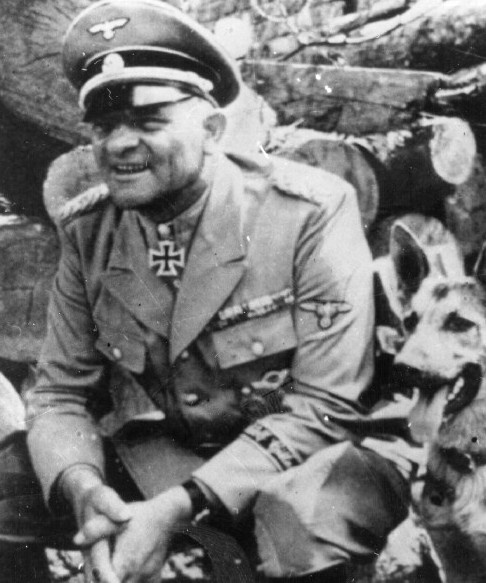
SS General Sepp Dietrich Commander of the 6th SS Panzer Army

          The Germans who the Allies presumed to be at the brink of collapse made a miraculous  recovery following their ghastly losses in Normandy. Kampfgrüppen and remnants of divisions bled the Americans White at the Huertgen Forrest and blunted the British attempt to leapfrog the Northern Rhine at Arnhem decimating the British First Airborne division and causing heavy casualties among other British and American units. The German 15th Army avoided disaster when the British failed to close their escape route from Walchern island allowing 60,000 troops and much equipment to escape.   The Germans re-formed and reorganized the front.  They pulled back many units of the 5th and 6th Panzer Armies for re-fitting and diverted nearly all tank, armored fighting vehicle and artillery production to the West at the expense of the Eastern Front.  The Germans called up 17 year olds and transferred young fit personnel from the Navy and Luftwaffe to the Army and Waffen SS.  Here they were trained by experienced NCOs and officers and brought into veteran units alongside hardened veterans who showed taught them the lessons of 5 years of war.[xiv]  However the rapid influx of new personnel meant that they could not be assimilated as quickly as needed and thus many were not as well trained as they might have been with more time.[xv] Many infantry and Parachute units had received inexperienced officers, taken from garrison duty to fill key positions a problem that would show up during the offensive.[xvi]

Panzer IV Ausf H of an SS Panzer Divsion in the Bulge

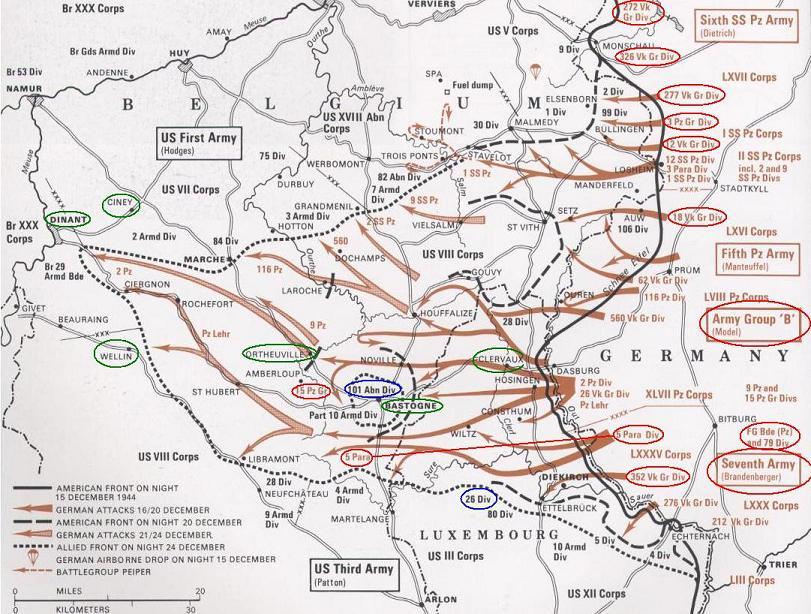
            The Germans were aided by the caution displayed by the Allies throughout the campaign in France which allowed the Germans to reconstitute formations around veteran headquarters staffs.[xvii]  The Germans built up the 5th and 6thPanzer Armies as the Schwerpunkt of the offensive giving them the lion’s share of reinforcements and pulling them out of the line during the fall battles along the Seigfried line and in the Alsace and Lorraine.  The plan was for the two Panzer armies and 7th Army to punch through the Ardennes, cross the Meuse, drive across Belgium, capture Antwerp and severe the link between the British and the Americans.

The spearhead of the assault was 6th Panzer Army Commanded by SS General Sepp Dietrich. It was composed of 1st and 2nd SS Panzer Corps and Army’s LXVII Corps.  The 6th SS Panzer Army included some of the best formations available to the German Army at this late stage of the war including the 1st  SS Panzer Division, the Leibstandarte Adolf Hitler, the 2nd  SS Panzer Division Das Reich, the 9th SS Panzer Division Hohenstaufen and the12th  SS Panzer Division Hitler Jügend. It’s ranks were filled out by the 3rd Parachute Division, the 501st SS Heavy Tank Battalion (attached to 1st SS), the 3rd Panzer Grenadier Division and the 12th, 246th, 272nd, 277th and 326th Volksgrenadier or Infantry divisions. The 6th Panzer Army would be the northern thrust of the offensive and its ultimate objective was Antwerp.  The 6th Panzer Army would be aided by a hastily organized parachute battalion under Colonel Von Der Heydte[xviii] and the 150th Panzer Brigade under SS Colonel Otto Skorzeny which included teams of American dialect speaking soldiers in American uniforms and equipment that were to spread confusion and panic in American rear areas.[xix]

Bradley, Eisenhower and Patton at Bastogne

       To the south was the 5th Panzer Army commanded by General Hasso Von Manteuffel.  The 5th Panzer Army was to advance alongside of the 6th Panzer Army with Brussels as its objective.  Composed of the XLVII and LVIII Panzer Corps and LXVI Corps the major subordinate commands included the best of the Army Panzer divisions including the 2nd Panzer, Panzer Lehr, 9th and the16thPanzer division. It also had the elite Führer Begleit Brigade composed of troops from Panzer Corps Grossdeutschland and commanded by Otto Remer who had help crush the coup against Hitler in July.  The 5th Panzer Army also included the 18th, 26th, 62nd, 560th and later the 167th Volksgrenadier divisions.

The south flank was guarded by 7th Army commanded by General Erich Brandenburger composed of LIII, LXXX and LXXXV Corps.  It included the Führer Grenadier Brigade and later the 15th Panzergrenadier division.  It was the weakest of the three armies but eventually included 6Volksgrenadierdivisions of varying quality and strength[xx] and the veteran 5th Parachute division.[xxi]  However with only 4 divisions at the start of the offensive the 7th Army was the equivalent of a reinforced corps.

While this force seemed formidable it had a number of weaknesses beginning with tank strength.  The 1st and 12th SS Panzer divisions were only at approximately half their established tank strengths and faced severe shortages in other vehicles.[xxii]  2nd SS and 9th SS of II SS Panzer Corps reported similar shortages.[xxiii]The shortage of other motorized vehicles, even in Panzer divisions was acute.  “Even the best equipped divisions had no more than 80 percent of the vehicles called for under their tables of equipment, and one Panzergrenadier division had sixty different types of motor vehicles, a logistician’s nightmare.[xxiv] Panzer Lehr was so short in armored half tracks that only one battalion of its Panzer Grenadiers could be transported in them while others had to use “trucks or bicycles.”[xxv]

Limitations on equipment as well as fuel were not the only challenges that the Germans faced. The US V Corps launched an attack on the Roer River Dams just before the offensive making it necessary for the Germans to divert 6th SS Panzer Army infantry divisions and Jagdpanzer units to be used by 6th SS Panzer Army.  One regiment of 3rd Parachute Division and over half of a second division could not take part in the initial 6th Panzer Army attack. Likewise some Jagdpanzer and Sturmgeschutzen units did not arrive until three days after the offensive began.[xxvi]

Allied Response: Before the Battle

            While the German commanders sought to implement Hitler’s plan Allied commanders looked only to completing the destruction of Germany not believing the Germans capable of any major operation.  The Allied commanders with the exception of Patton did not believe the Germans capable of any more than local counter attacks.  Patton’s 3rd Army G-2 Colonel Koch was the only intelligence officer to credit the Germans with the ability to attack.[xxvii]  Most allied commanders and intelligence officers discounted the German ability to recover from disastrous losses, something that they should have learned in Holland or learned from the Soviet experiences on the Eastern front.  Bradley noted in his memoirs hat “I had greatly underestimated the enemy’s offensive capabilities.”[xxviii]  Carlo D’Este noted that “there was another basic reason why the Allies were about to be caught with their pants down: “Everyone at SHAEF was thinking offensively, about what they could do to the enemy, and never about what the enemy might do to them.””[xxix]   This mindset was amazing due to the amount of intelligence from Ultra and reports from frontline units that major German forces were no longer in the line.[xxx] Additionally nearly all commentators note that American units in the Ardennes did not conduct aggressive patrols to keep the enemy off balance and obtain intelligence.[xxxi]  One describes the efforts of 106th Division as “lackadaisical” and notes that enemy before the offensive was not the Germans but the cold.[xxxii] Max Hastings noted that: “the Allies’ failure to anticipate Hitler’s assault was the most notorious intelligence disaster of the war.”[xxxiii]

The Allies also were in the midst of a manpower crisis. Eisenhower did not have enough divisions to establish a clear manpower advantage as “there were not enough Anglo-American divisions, or enough replacements for casualties in the existing divisions.”[xxxiv]  No more American Infantry divisions were available as the Army had been capped at 90 divisions and infantry replacements were in short supply.  This shortage meant that Eisenhower could not pull divisions out of line to rest and refit. He could only transfer divisions such as the 4th and 28thInfantry divisions to the relative quiet of the Ardennes. He had no ability to “create a strategic reserve unless he abandoned the broad front strategy.”[xxxv]The Germans knew of the allied weakness and believed that they could achieve local superiority even if they did not believe they could reach Antwerp. Model believed that “he was sure that he would reach the Meuse in strength before the Americans could move sufficient reserves to halt his armies or even head them off.”[xxxvi]

American Response: The Breakthrough
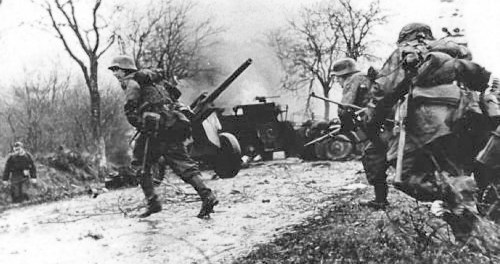
German-Troops-at-the-Battle-of-the-Bulge

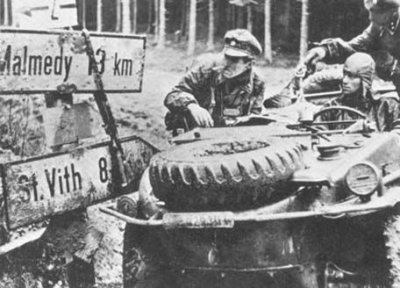
The German assault began on December 16th. Some breakthroughs were made especially in the vicinity of the Losheim Gap and the Schnee Eifel by the southern elements of 6th Panzer Army and Manteuffel’s 5th Panzer Army. However the Germans could not break through around Monschau and Elsenborn Ridge held by the inexperienced but well trained 99th Infantry division and elements of the veteran 2nd “Indianhead” Division.  In the far south near Diekirch the 4th Infantry Division held stubbornly against the attacks of 7thArmy’s Volksgrenadiers. The Germans achieved their greatest success at Losheim where SS Colonel Josef Peiper and his 1st SS Panzer Regiment had driven off the US 14th Cavalry Group and penetrated 6 miles into the American front.  5th Panzer Army made several breakthroughs and isolated two regiments of newly arrived 106th Infantry Division in the Schnee Eifel. Manteufel also pressed the 28th Division hard along the Clerf River, Skyline Ridge and Clairvaux.  Yet at ‘no point on that first day did the Germans gain all of their objectives.”[xxxvii]  The credit goes to US units that stubbornly held on, but also to the poor performance of many German infantry units.  German commanders were frustrated by their infantry’s failure even as the panzers broke through the American lines.  Manteuffel noted his infantry was “incapable of carrying out the attack with the necessary violence.”[xxxviii]
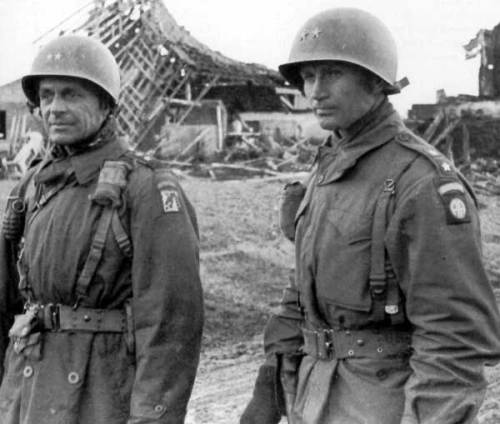
US Airborne Commanders James Gavin (R) and Matthew Ridgeway (L)

            The initial Allied command response to the attack by senior commanders varied.  Bradley believed it was a spoiling attack “to try and force a shift of Patton’s troops from the Saar offensive back to the Ardennes.”[xxxix] Courtney Hodges of 1st Army agreed with Bradley and refused to allow General Gerow, commander of V Corps to call off 2nd Infantry Division’s attack against the Roer dams on the 16th in order to face the German offensive.[xl]  Gerow was one of the first American commanders to recognize the scope of the German attack but Hodges, perhaps the least competent senior American commander in Europe failed to heed Gerow’s advice. Soon after making this decision Hodges “panicked” and evacuated his headquarters at Spa fearing that it would be overrun by the advancing Germans.[xli] Eisenhower when informed of the news realized that something major was occurring and ordered the 7th Armored Division from the 9th Army and 10th Armored Division from 3rd Army into the Ardennes. On the 17th he made other dispositions and released the 82nd and 101stAirborne Divisions from SHAEF reserve at Rheims to the Ardennes under the command of XVIII Airborne Corps.[xlii]  However during this short amount of time Mantueffel’s panzers had advanced 20 miles.

SS Panzer Troops of Kampfgruppe Knittel on the advance.  Photo has often been identified for decades in books and other publications as Waffen-SS Colonel Joachim Peiper the commanding officer of the 1st SS Panzer Regiment and Kampfgruppe Peiper. This has been refuted by recent study.  Peiper is pictured below.
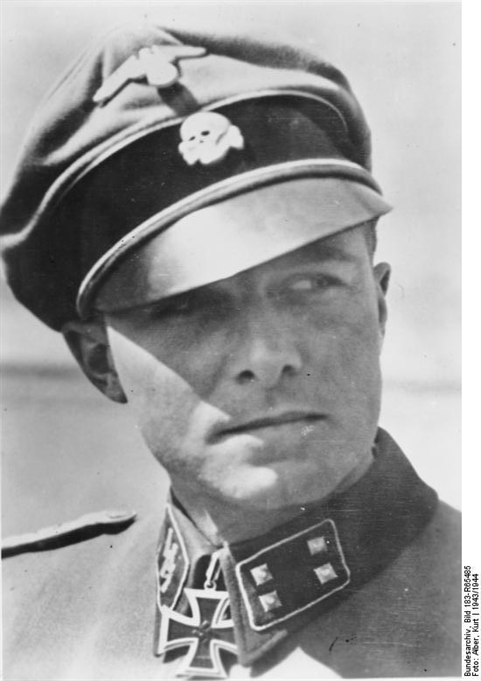
At the command level Eisenhower made a controversial, but correct decsion to divide the command of the Bulge placing on a temporary basis all forces in the northern sector under Montgomery and leaving those to the south under Bradley.  Montgomery according to one commentary initially “had been astonishingly tactful in handing his American subordinates.”[xliii] However he quickly made himself obnoxious to many American commanders.[xliv]Following the battle Montgomery made the situation worse by claiming to have saved the Americans and giving credit to British units which scarcely engaged during the battle.[xlv]  Eisenhower also ordered Patton to launch a counter-attack along the southern flank of the German advance.  However Patton was already working on such an eventuality and promised to be able to launch a counterattack with three divisions by the 22nd.[xlvi]  Bradley praised Patton highly in his memoirs noting: “Patton’s brilliant shift of 3rd Army from its bridgehead in the Saar to the snow-covered Ardennes front became one of the most astonishing feats of generalship of our campaign in the West.”[xlvii]

American Response: the Shoulder’s Hold
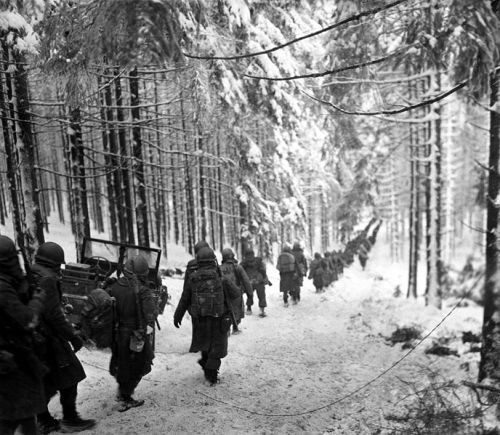
  688px-Bulge_stvithroad_1945jan24_375

The 99th Division’s position was precarious, its right flank was subject to being turned and it was suffering severely at the hands of 12 SS Panzer and several Volksgrenadier divisions.  Gerow reinforced the 99th with elements of the 2nd Infantry division even before he had the final authorization to end its attack.  The two divisions stubbornly held Elsenborn Ridge and the villages of Rockerath, Krinkelt and Büllingen. By the 20th the 9th and 1st Infantry divisions arrived to strengthen the defense and lengthen the line to prevent it from being rolled up by the Germans.  The stubborn resistance of the Americans and arrival of reinforcements meant line was proof “against anything Sepp Dietrich might hurl against it”[xlviii]  By the 23rd Dietrich and 6th SS Panzer Army conceded defeat at Elsenborn and “turned its offensive attentions to other sectors.”[xlix]  German commanders like General Priess the commander of 1st SS Panzer Corps believed that terrain and road network in this sector was unfavorable to the German offensive and had proposed moving the attack further south.[l]  The Panzers could not deploy properly and the German infantry was not up to the task of driving the Americans out of their positions before the reinforcements arrived.

In the south the 4th Infantry Division held the line though heavily pressed by Brandenburger’s 7th Army.  The division was reinforced by elements of both 9thand 10th Armored divisions on the 17th and generally held its line along the Sauer River around Echternach “largely because the left flank of the enemy assault lacked the power-and particularly the armor-of the thrust farther north.”[li]

Turning Point: The Destruction of Kampfgruppe Peiper

619c6c2eedf74e2c12c6b37d361e36d0

While V Corps fought the 6th Panzer Army to a standstill, to the south 1stSS Panzer Division led by Kampfgrüppe Peiper split the seam between V Corps and VIII Corps. The Kampfgrüppe moved west leaving a brutal path of destruction in its wake, including massacres of American POWs and Belgian civilians.[lii]  However its advance was marked with difficulty. On the night of the 17th it failed to take Stavelot. After clearing the American defenders from the town after a hard fight on the 19th it failed to capture a major American fuel dump a few miles beyond the town.  When the Germans approached the American commander ordered his troops to pour 124,000 gallons down the road leading to the dump and set it on fire, depriving the Germans of badly needed fuel.[liii]  Combat Engineers from the 291st Engineer Battalion blew a key bridge across the Ambleve at Trois Ponts and another bridge across the Lienne Creek which left the Germans bottled up in the Ambleve River valley.  This bought time for the 30th Infantry Division to set up positions barring Peiper from the Meuse.  The 30th would be joined by Combat Command B of 3rd Armored Division and elements of 82nd Airborne. These units eventually forced Peiper to abandon his equipment and extricate some 800 troops by foot by the 23rd after a hard fight with the Americans who had barred his every effort to break through to the Meuse.

Turning Point: The Crossroads: St Vith & Bastogne

American_7th_Armored_Division_Shermans_taking_up_positions_outside_St._Vith,_1944


The battle rapidly became focused on key roads and junctions, in particular St. Vith in the north and Bastogne in the south.  At St. Vith the 7thArmored Division under General Hasbrouck, who Chester Wilmont calls one of the “great men of the Ardennes”[liv] completed a fifty mile road march from Aachen to St. Vith.  On his arrival he deployed his combat commands around the town which was the key to the road network in the north and also to the only rail line running west through the Ardennes.[lv]  Hasbrouck gathered in Colonel Hoge’s Combat Command B of 9th Armored Division and the 424th Infantry Regiment of the 106th Division into his defensive scheme as well as the survivors of the 112th Infantry Regiment of the 28th Infantry Division which had escaped the German onslaught after holding as long as possible along the Clerf River and Skyline Drive.[lvi]  With these units Hasbrouck conducted “an eight-day stand that was as critical and courageous, as the defense of Bastogne.”[lvii]  After holding the Germans at St. Vith the units were withdrawn to another defensive position along the Salm and Ourthe Rivers and the village of Viesalm.  This was done at the behest of Montgomery and General Ridgeway of XVII Airborne Corps whose 82nd Airborne had moved into that area on the 19th.  The arrival of the 82nd greatly assisted Hasbrouck’s force holding St. Vith whose defenders had lost an estimated 5000 casualties.[lviii]

The stand at St. Vith confined the “confined the Sixth Panzer Army’s penetration to a chokingly narrow corridor.”[lix]  It also posed a problem for German command and control which because it was out of the 6th Panzer Army’s area of operations Dietrich was unable to lend his weight into the fight.  “Hitler himself had strictly prohibited deviations from the zonal boundaries”[lx] which left the fight for St. Vith in the hands of 5th Panzer Army who felt the impact of the stand as the Americans “also choked off one of the Fifth Panzer Army’s best routes to Bastogne, almost nullifying the significance of the captured road junction at Houffalize.”[lxi] 

EA-48892

To the south of St. Vith lay Bastogne, another key road junction needed by 5thPanzer Army for its advance.  On the night of the18th Panzer Lehr division came within two miles of the town before being checked by resistance by units of the 10th Armored division, remnants of 28th Division and misdirection by “friendly” Belgian guides onto a muddy path that helped halt their advance.[lxii]  This gave the 101st Airborne just enough time to get to the town and prevent its capture. The siege of Bastogne and its defense by the 101st elements of 9th and 10thArmored Divisions and 28th Division became an epic stand against Manteuffel’s Panzers which had surged around the town.  Wilmont comments that “had the Germans won the race for Bastogne, Manteuffel’s armor would have had a clear run to Dinant and Namur on December 19th and 20th” [lxiii] when there were only scattered American units between them and the Meuse. Manteuffel b bypassed Bastonge after the failure to capture it and masked it with 26thVolksgrenadier Division and a regiment of Panzer Lehr.  The remainder of Panzer Lehr and the 2nd Panzer Division moved to the west. [lxiv]  The garrison endured numerous attacks and on the 22nd one of the most celebrated incidents of the war took place when Brigadier General Anthony McAuliffe responded to a demand for the surrender of the town with the reply; “Nuts.”  The town would continue to hold until relieved by 3rd Army on the afternoon of December 26th.[lxv]

Allied Response: The Counterattack


The Allied counterattack began with 3rd Army in the south on 21 December.  Patton’s initially proposed to attack toward the base of the Bulge in order to cut off the largest number of Germans possible.  Eisenhower dictated an attack further west with the goal of relieving Bastogne.  Eisenhower wanted to delay the attack to concentrate combat power while Patton wanted to attack sooner in order to ensure surprise. Patton got his way but attacked on a wide front.  The attack lost its impetus and bogged down into a slugging match with 7th Army’s infantry and paratroops along the southern flank. [lxvi]  Patton’s failure to concentrate his forc forces for the advance to the north diminished his combat power.[lxvii] While Patton attacked from the south the 1st Army dealt with the advanced spearhead of 2nd Panzer Division which had reached the town of Celles and ran out of gas just four miles from Dinant and the Meuse. The 84thInfantry Division stopped the 116th Panzer division from being able to effect a relief of the 2nd Panzer the US 2nd Armored Division and allied fighter bombers chopped up the virtually immobile 2nd Panzer division completing that task by the 26th.[lxviii]  
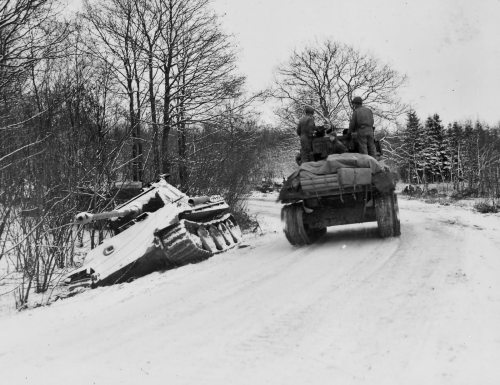
41d233ae6d2744c2cbab2d76cf798341

To the north Montgomery launched a cautious counterattack which slowly and methodically took back lost ground but allowed many Germans to escape. While Montgomery moved south Patton faced heavy German resistance from elements of 5th Panzer Army, reinforced by 1st SS Panzer Corps and 7th Army.  The rupture in the American front was not repaired until 17 January when the American forces met at Houffalize.[lxix] Bradley took over for Montgomery and the Americans pushed the Germans slowly back across the Clerf River by the 23rd.  The advance was hampered by tough German resistance and terrible weather which forced much of the attack to be made by dismounted troops as the roads had completely frozen over.[lxx]

The Allied counter attack has been criticized for allowing too many Germans to escape what could have been a major encirclement.  Patton recognized the incompleteness of the victory in the Ardennes stating: ““We want to catch as many Germans as possible, but he is pulling out.” The “but” clause, the note of regret, the awareness of the imperfection of his victories typified Patton.””[lxxi]  Patton in his memoirs notes: “In making the attack we were wholly ignorant of what was ahead of us, but we were determined to strike through to Bastogne.”[lxxii] Max Hastings simply said: “the Allies were content with success.”[lxxiii]  Murray and Millett place blame on Bradley and Hodges for choosing “merely to drive the enemy out of the Ardennes rather than destroy him.”[lxxiv]

Analysis: Could Wacht Am Rhein Have Worked?

          Could Wacht am Rhein worked?  If much was different, yes.  If the German had been stronger in tanks and vehicles and had adequate stocks of fuel; if their infantry was better trained, and had the Americans not resisted so stubbornly it might have at least got to the Meuse.  Perhaps if the the bad weather held keeping Allied air forces away from the Germans, or had St. Vith and Bastogne been taken by the 18th or 19th, they might have reached the Meuse.  Had the Germans executed their plan and coordinated their assault better[lxxv] in the 6thPanzer Army sector and had the 7th Army enough strength to conduct offensive operations in depth and secure the left flank the attack might have succeeded.  Because the Americans held the shoulders and road junctions, Manteuffel’s 5thPanzer Army, the only force besides the regimental sized Kampfgrüppe Peiper to actually threaten the Meuse was forced to advance while attempting to take Bastogne and defeat 3rd Army’s counterattack. Whether they could have made Antwerp is another matter.  Nearly all German commanders felt the offensive could not take Antwerp but did believe that they could inflict a defeat on the Allies and destroy a significant amount of allied combat power.

The German offense was a desperate gamble.  Too few divisions, scant supplies of petrol, formations that had recently been rebuilt and not given enough time to train to the standard needed for offensive operations coupled with Hitler’s insistence on an unalterable plan kept them from success.  At the same time the Allies were weak in troops as Eisenhower had no strategic reserve save the two American Airborne Divisions.  All reinforcements to the threatened sector had to come from the flanks and by the middle of the battle the 9th Army was drawn down to two divisions. Russell Weigley notes the constraints imposed by the 90 division Army, and of the limited stocks of artillery ammunition.[lxxvi] If the Germans had more forces they might have inflicted a significant defeat on the Allies had they been able to reinforce their success in depth.  Despite this they still inflicted punishing losses on the Americans though suffering greatly themselves.  Hastings notes that the real beneficiaries of the Ardennes offensive were the Russians.[lxxvii]  It is unlikely that the offensive could have ever achieved Hitler’s goals of taking Antwerp and fracturing the British-American alliance.

A Note About other Parts of the Campaign in France

The Riviera and Rhone

            The campaign in south France was strategically wise although opposed by the British to the last minute because they felt it would take away from Overlord.[lxxviii] Though delayed the campaign was well executed by 7th Army, particularly Lt. General Lucian Truscott’s VI Corps of 3 American divisions. Truscott believed “destroying the enemy army was the goal”[lxxix] managed the battle well and skillfully maneuvered his small forces against Blaskowitz’s 19thArmy inflicting heavy losses, though some German commanders noted the caution of American infantry in the attack.[lxxx]  Only Blaskowitz’s tactical skills and the weakness of the American force prevented the Germans from disaster. The seizure of Marseilles and Toulon provided the allies with sorely needed ports that were invaluable to sustain the campaign.[lxxxi]

The Lorraine Campaign

            Patton attacked in the Lorraine with the goal of crossing the Moselle and attempting to break into Germany. He doing so he ran into some of the strongest German forces on the front and bogged down in the poor terrain and mud of the region.[lxxxii]  Patton was delayed in making his assault due to his place “at the far end of the logistics queue.”[lxxxiii] German forces skillfully defended the ancient fortress of city Metz forcing the Americans into a protracted campaign to clear the area with the last strongpoint surrendering on 13 December.  Patton is criticized for his failure to concentrate his forces[lxxxiv] but American tactics were less to blame than the weather, German resistance and shortages of infantry.[lxxxv] In some cases American infantry units performed admirably, particularly 80th Division’s assault on the Falkenburg Stellung.[lxxxvi]Liddell Hart criticized the Allies for failing to attack through the then weakly defended Ardennes, commenting: “By taking what appeared to be the easier paths into Germany the Allies met greater difficulties.”[lxxxvii]

The Huertgen Forrest

            The Huertgen Forrest was the worst managed American fight Western European campaign. [lxxxviii] General Courtney Hodges leadership was poor.[lxxxix] In the Huertgen he fed division after division into a battle that made no strategic sense.  American infantry performed poorly and took extremely heavy casualties leaving four divisions shattered.[xc]  Poor American tactics demonstrated by attacking into a forest in poor weather without concentration negated all of Hodges’ advantages in tanks, artillery and airpower. The forest contained no significant German forces capable of threatening any American advance[xci] and its gain offered little advantage.[xcii] Hastings noted that the gains the only saving grace was that it made it easier for the northern shoulder of the Bulge to hold[xciii]   General Model and his subordinates expertly handled their handful of excellent but weary divisions in this battle using terrain, weather and prepared defensive positions to contest nearly every yard of the Forrest.[xciv]

Conclusions

            The lessons of the Bulge and the other campaigns on the German-French border are many and can be gleaned from Allied and German mistakes. On the Allied side the most glaring mistakes were assumptions prior to the German attack that the Germans were incapable of any serious offensive and ignoring the fact that the Germans had attacked through the Ardennes in 1940.  Likewise the self limitation of the American Army to 90 divisions for world-wide service meant that there were no more divisions in the pipeline and that worn out divisions would have to be reinforced with inexperienced troops while in the front line which ensured a lack of cohesiveness in many divisions, especially the infantry.  Allied intelligence failures as well as their reliance of forces much smaller than they should have had for such a campaign ensured that they would suffer heavy losses in the Bulge while poor planning and execution by Hodges wasted many good troops in a senseless battle.  The Germans were hamstrung by Hitler’s fantasy that the Western Allies could be forced out of the war or the Alliance split by a defeat in the Ardennes.  Likewise German forces, even those so quickly reconstituted were often short troops, tanks and vehicles.  German commanders were forced by Hitler’s rigid insistence on not altering the plan to not be as flexible as they might have been in earlier offensives to adjust according to the situation on the ground.

Notes


[i] Dupay, Trevor N.  Hitler’s Last Gamble: The Battle of the Bulge December 1944-January 1945Harper Collins Publishers, New York NY 1994 p.2.

[ii] Hastings, Max. Armageddon:  The Battle for Germany 1944-1945 Alfred A Knopf, New York NY 2004 p.197.

[iii] Reynolds, Michael. Sons of the Reich: II SS Panzer Corps; Normandy, Arnhem, Ardennes, and on the Eastern Front.  Casemate Publishing, Havertown PA 2002 p.186

[iv] Ibid. p.198

[v] Warlimont, Walter. Inside Hitler’s Headquarters 1939-1945 translated by R.H. Barry. Presidio Press, San Francisco, CA 1964. p. 480

[vi] Ibid.

[vii] Liddell Hart, B.H. The German Generals Talk. Originally published 1948, Quill Publishers Edition, New York 1979 p.274.

[viii] Liddell Hart, B.H. The History of the Second World War G.P. Putnam’s Sons, New York NY 1970. p.646.

[ix] MacDonald, Charles B. A Time for Trumpets: The Untold Story of the Battle of the Bulge William Morrow and Company, New York, NY 1985 p.35.

[x] [x] Newton, Steven H. Hitler’s Commander: Field Marshal Walter Model, Hitler’s Favorite General.DeCapo Press, Cambridge MA 2005. p.329

[xi] Ibid. Hastings p.198.  Hastings quotes Dietrich: “All Hitler wants me to do is cross a river, capture Brussels, then go on and take Antwerp. And all this at the worst time of year through the Ardennes when the snow is waist-deep and there isn’t enough room to deploy four tanks abreast let alone armored divisions. When it doesn’t get light until eight and it’s dark again by four and with re-formed divisions made up chiefly of kids and sick old men-and at Christmas.”

[xii] Ibid. Liddell-Hart The German Generals Talk p.276

[xiii] Wilmont, Chester. The Struggle for Europe Harper and Brothers Publishers, New York, NY 1952 p.576

[xiv] Ibid. p.557.

[xv] Ibid. Hastings. p.199. Hastings notes that Manteuffel said: “It was not that his soldiers now lacked determination of drive; what they lacked were weapons and equipment of every sort. Von Manteuffel also considered the German infantry ill trained.”

[xvi] Ibid. Dupay.p.47  Dupay notes that in 3rd Parachute Division that most of the regimental commanders had no combat experience.

[xvii] Weigley, Russell  F. Eisenhower’s Lieutenants: The Campaign in France and Germany 1944-1945. Indiana University Press, Bloomington IN 1981 p.432.  Weigley speaks of Allied caution and predictable strategy, caution in logistical planning which did not allow the Allies to provide the fuel needs for a rapid drive into Germany and caution of operational commanders.

[xviii] Liddell Hart discusses the issue of paratroops at length in discussions with Manteuffel and General Kurt Student. At the time of the operation there were very few jump trained paratroops available for the operation as most of the 6 organized Parachute Divisions were committed to battle as infantry during the 1944 battles in the East, Italy and in the West. German Generals Talk pp.282-285.  Although Liddell Hart makes note of the employment of these troops and talked with Model and student about why they were not used to seize bridges and other critical terrain featured ahead of the Panzers instead of the use as a blocking force, I have found no one who questioned why the Germans did not use small glider detachments for the same purpose.  The Germans had demonstrated with Skorzeny when they rescued Mussolini from his mountain prison that they still retained this capability.  The use of the SS Paratroop battalion which could have been assigned to Skorzeny as a glider borne force could have been decisive in capturing the key bridges and terrain ahead of 6thPanzer Army.

[xix] Skorzeny’s operation was Operation Greif designed to sow confusion in the Allied Ranks.  His brigade numbered about 3500 men and had a good number of captured US vehicles including some tanks and tank-destroyers on hand to confuse American units that they came in contact with.

[xx] Ibid. Hastings.  p. 199.  Hastings quotes the Adjutant of 18th Volksgrenadier Division who “felt confident of his unit’s officers, but not of the men “some were very inexperienced and paid the price.”  MacDonald notes that the division had many Navy and Air Force replacements but was at full strength. p.646.

[xxi] See MacDonland pp. 644-655 for a detailed commentary on the German Order of Battle.

[xxii] Reynolds, Michael. Men of Steel: 1st SS Panzer Corps;  The Ardennes and Eastern Front 1944-1945 Sarpendon Publishers, Rockville Center NY, 1999. pp.36-37.  Reynolds notes that the 1st SS Panzer Regiment only had 36 Panthers and 34 Mark IV Panzers to begin the operation (excluding the attached 501st SS Heavy Tank Battalion).  He also notes that many of the tank crew replacements had no more than 6 weeks of military training and some of the tank crews had never been in a tank.  Similar problems were found in all the Panzer Divisions.  Severe shortages of armored half tracks, reconnaissance vehicles and other vehicles meant that Panzer Grenadier and Motorized battalions lacked the lift needed and some went on foot or on bicycles.

[xxiii] Ibid. Reynolds. Sons of the Reich. P.183

[xxiv] Ibid. MacDonald. p.44.

[xxv] Ibid.

[xxvi] Ibid. Dupay pp. 27-28.

[xxvii] Ibid. MacDonald. p.52.  MacDonald notes that Koch warned that the Germans were not finished, that “his withdraw, though continuing has not been a rout or mass collapse.” He calls Koch a “lone voice” in the Allied intelligence world.

[xxviii] Bradley, Omar  N. A Soldier’s Story Henry Holt and Company, New York NY 1951. p.459.  Weigley makes some poignant calling Bradley’s comments  “contradictory” and states that: “his apologia is hardly a model of coherence. (p.461)

[xxix]  D’Este, Carlo. Eisenhower: A Soldier’s Life Owl Books, Henry Holt and Company, New York NY 2002. p.638

[xxx] Dupay and others talk about this in detail. See Dupay pp. 35-44.

[xxxi] Ibid. p.38.

[xxxii] Ibid. Hastings. p.201

[xxxiii] Ibid. Hastings. p.199

[xxxiv] Ibid. Weigley. p.464

[xxxv] Ibid.

[xxxvi] Ibid. Wilmont. P.581.

[xxxvii] Ibid. p.583

[xxxviii] Ibid. Hastings. p.223

[xxxix] Ibid. Weigley. P.457

[xl] Ibid. p.471

[xli] Ibid. Hastings. pp.205-206

[xlii] Ibid. Wilmont. pp.583-584

[xliii] Murray, Williamson and Millett, Allan R. A War to Be Won: Fighting the Second World War The Belknap Press of Harvard University Press, Cambridge Massachusetts and London England, 2000 p.470 The authors must base their conclusion on the fact that Montgomery who mentioned to Eisenhower that Hodges might have to be relieved, did not do so and by the next day told Eisenhower that the action was not needed.  A  few other American commanders in the north were favorable to Montgomery but this appears to be a minority view.

[xliv] Ibid. Weigley. pp.504-506.  Weigley and Wilmont both note the comment of a British Staff Officer the Montgomery “strode into Hodges HQ like Christ come to cleanse the temple.” (Wilmont p.592)

[xlv] Ibid. Hastings. pp.230-232.  Hastings is especially critical of Montgomery.  Weigley, equally critical notes regarding  the January 7th press conference, Montgomery’s “inability to be self critical at any point.” p.566.

[xlvi] Ibid. Weigley. p.500.

[xlvii] Ibid. Bradley. p.472  Other commentators differ in their view of Patton’s movement.  Wilmont notes that Patton had no “equal in the on the Allied side in the rapid deployment of troops. (p.589) Weigley urges readers that “it should be kept in appropriate perspective; it was not a unique stroke of genius.” And he compares it to Guderians disengagement with Panzer Group 4 and 90 degree change of direction and assault against the Kiev pocket in the 1941 Russian campaign (p.500)  Hastings notes that “Patton had shown himself skilled in driving his forces into action and gaining credit for their successes. But he proved less effective in managing a tough, tight battle on the southern flank.” (p.230)  Regardless of the perspective and criticism Patton’s movement was unequaled by any Allied commander in the war and had he not moved so quickly the 101st Airborne might not have held Bastogne. Admittedly his attack north was dispersed along a wide front but part of the blame for this must be assigned to Eisenhower who dictated the attack toward the west vice the base of the Bulge where Patton desired to make it.  A note I would make is that being a cavalryman Patton thought like one and when faced with the tight battles in close quarters was not at his best.  Similar comparisons could be made to J.E.B. Stuart at Chancellorsville when he had to take command of Jackson’s Corps.

[xlviii] Ibid. Weigley. p.475

[xlix] Ibid. p.474

[l] Ibid. Reynolds Men of Steel pp.51-52.

[li] Ibid. Weigley. p.470

[lii] The worst of these took place at the village of Malmedy where Battery B 285th Field Artillery Observation Battalion of 7th Armored Division was captured and about 150 soldiers were rounded up and machined gunned in a field with survivors killed with pistol shots in the head.

[liii] Ibid. Weigley. pp.478-479.

[liv] Ibid. Wilmont. p.584

[lv] Ibid. Weigley. p.487

[lvi] Ibid. Weigley. pp.486-487

[lvii] Ibid. Hastings. p.215. Hastings gives most of the credit to Brigadier General Bruce Clarke of CCB 7th Armored Division for the stand.

[lviii] Ibid. MacDonald. 481-487.  MacDonald notes that following the war that the commanders of the units involved “would be grateful to Field Marshal Montgomery for getting them out of what they saw as a deathtrap for their commands. (p.487)

[lix] Ibid. Weigley. p.487

[lx] Ibid.

[lxi] Ibid.

[lxii] Ibid. Hastings. p.217 Also  MacDonald. p.289 who talks of the confused situation east of Bastogne both for the Americans and Germans.

[lxiii] Ibid. Wilmont. p.598

[lxiv] Ibid. Liddel Hart. The German Generals Talk. p.288

[lxv] The defense of Bastogne would continue until after the 1st of January as Hitler renewed the attempts to secure the town in order to push on to the Meuse. Other German formations including units of 1st SS Panzer Corps shifted south from their original attack would make determined efforts to dislodge the stubborn American defenders.

[lxvi] Ibid. Weigley. pp.500-501.  Bradley gives Patton more credit than later commentators. Wilmont notes that the Germans though “amazed at the speed with which Patton had disengaged from the Saar and wheeled them northward…they received due warning of his movement by monitoring the radio net which controlled American traffic, and they were braced to meet his assault. (p.599).

[lxvii] Ibid. Weigely. Pp.520-521

[lxviii] Ibid.  pp.535-537

[lxix] Ibid. pp. 558-561

[lxx] Ibid. pp.563-564

[lxxi] Ibid. p.566.

[lxxii] Patton, George S. War as I Knew It  Originally published by Houghton Mifflin Company NY 1947, Bantam Paperback Edition,  Bantam Books, New York, NY 1980 p.364

[lxxiii] Ibid. Hastings. p.230

[lxxiv] Ibid. Murray and Millett p.471.

[lxxv] Hastings notes that “Tactically, the Ardennes was one of the worst-conducted German battles of the war, perhaps reflecting that none of the generals giving the orders saw any prospect of success. (p.236)

[lxxvi] Ibid. Weigley. pp.567-572

[lxxvii] Ibid. Hastings. p.236-237.  Hastings believes that the employment of the 5th and 6th Panzer Armies in the East “made the task of Zhukov and his colleagues much harder.”

[lxxviii] Ibid. Weigley. p.236. I find it interesting that neither Hastings nor Liddell Hart mention the Riviera and Rhone campaign.

[lxxix] Ibid. Weigley. p.236

[lxxx] Giziowski, Richard. The Enigma of General Blaskowitz  Hippocrene Books Inc. New York NY, 1997. p.328

[lxxxi] Ibid.  Weigley comments on how much the overall supply situation was aided by the operation and capture of the ports and notes that the pace of the Cobra breakout had created a crisis in supply and “without the southern French ports the crisis would have been insurmountable.” (p.237)

[lxxxii] Ibid. p.397.  Weigley notes: “The immobilizing mud and the enemy’s recalcitrant resistance had fragmented the battle into affairs of squads, platoons, companies and battalions….and Patton’s juniors more than he controlled the course of action, to the extent that control was possible.”

[lxxxiii] Ibid. p.384

[lxxxiv] Ibid. p.390 Weigley states: “The American disinclination to concentrate power was rarely more apparent.” comparing the frontages of 1st, 9th and 3rdArmies and notes that Patton attacked along his entire front.”

[lxxxv] Ibid. Weigley. pp.400-401.  Weigley spends a fair amount of time on American infantry shortages in 3rd Army.

[lxxxvi] Ibid. Weigly. P.400.  Weigley notes a German General Wellm attributed part of that victory to the “prowess of the American infantry.”

[lxxxvii] Ibid. Liddell Hart. The History of the Second World War p.560

[lxxxviii] Hastings and Weigley both note how many American division and regimental commanders were relieved of command for their failures in the Huertgen.

[lxxxix] Ibid. Hastings. p.179.  Hastings notes that “instead of recognizing the folly of attacking on terrain that suited the Germans so well, Courtney Hodges reinforced failure.”

[xc] Ibid. Weigley. p.420.  Weigley notes the high numbers of ballet and non battle casualties in the 4th, 8th, 9th and 28th Divisions as well as CCR of 5thArmored and 2nd Ranger Battalion.

[xci] Ibid. Hastings. p.275.  Hastings notes that defending 275th Division “were poor grade troops who-like the garrison of Aachen posed no plausible threat to the flanks of an American advance to the Roer.”

[xcii] Weigley compares the battle in its effect on the American army to Grants “destruction of the Confederate army in the Wilderness-Spotsylvania-Cold Harbor campaign expended many proud old Union army formations…” (p.438)

[xciii] Ibid. Hastings. p.215

[xciv] Ibid. Newton. p.324

1 Comment

Filed under History, Military, nazi germany, world war two in europe

The Rape of Nanking at 80

Friends of Padre Steve’s World,

Eighty years ago Japanese Army troops under the command of Lieutenant General Asaka Yasuhiko launched an attack on the Nationalist Chinese defenders of the city of Nanking. That attack and the subsequent occupation led to one of the most heinous displays of inhumanity and war crimes in modern history. As a single event it ranks as high or higher than any single event directed at one city during the Nazi Holocaust against the Jews.

Not long after I started this blog I wrote an article on the Rape of Nanking. The event which occurred in 1937 was one of the most extensively documented war crimes in modern history. But despite that there are many, especially those of Japanese political right who deny that the event ever occurred and if if atrocities happened in Nanking it was the Chinese government which carried them out. It is amazing that I still get comments from such people on that original article. The critics are war crime deniers who are no better than Holocaust deniers.

Since many of my newer readers might have never seen that article I am re-posting it today.

Have a good day,

Peace

Padre Steve+

The historical controversy regarding the Rape of Nanking in 1937 by the Japanese Army is hotly debated.[1] The massacres occurred in the initial occupation of the city and the two months following in mid December 1937.  The initial reaction to the actions of the Japanese was reported by western journalists and even a German Nazi Party member by the name of John Rabe who assisted in protecting Chinese during the massacre and reported it on his return to Germany. The actions of the Japanese Army shocked many in the west and helped cement the image of the Japanese being a brutal race in the west.

Massacre Victims at Nanking

The controversy’s visibility was raised since the 1997 publication of Iris Chang’s The Rape of Nanking. However, with few exceptions the incident had received little attention by Western historians until Chang’s book was published. The reason for this was  that  China was a sideshow for for the United States and Britain throughout much of the war. When Chiang Kai Shek’s Nationalists were overthrown by the Communists in 1948 the incident disappeared from view in the United States. The  United States government  reacted to the overthrow of Chaing by helping to rebuild Japan and rehabilitate the Japanese while opposing the Chinese Communists.  In fact it was only “after the Cold War was the Rape of Nanking Openly discussed.”[2]

Bodies of Children Killed by the Japanese at Nanking

Chang’s book was instrumental as it brought new attention to the actions of the Japanese Army in the slaughter of Prisoners of War and civilians following the occupation of the city.  Even as Chang’s work was published “revisionist” works began to appear in the 1980s which have either denied the atrocities, sought to minimize numbers killed by Japanese Forces or rationalized the them began to appear in Japan. The revisionists were led by Masaaki Tanaka who had served as an aide to General Matsui Iwane the commander of Japanese forces at Nanking.  Tanaka denied the atrocities outright calling them “fabrications” casting doubt upon numbers in the trial as “propaganda.” He eventually joined in a lawsuit against the Japanese Ministry of Education to remove the words “aggression” and “Nanjing massacre” from textbooks, a lawsuit which was dismissed but was influential to other revisionists and Japanese nationalist politicians and publishers.[3]

Japanese Officer Preparing to Execute Man in Hospital

Most early accounts of the occupation and war crimes have used a number of 200,000 to 300,000 victims based upon the numbers provided during the War Crimes Trials of 1946.[4] Unlike the numbers of victims of the Nazi Holocaust the numbers are less accurate.  Authors who maintain the massacres such as Chang and others such as Japanese military historian Mashario Yamamoto who admits Japanese wrongdoing and excess but challenges the numbers use the same statistical sources to make their arguments.  Chang not only affirms the original numbers but extrapolates that even more may have been killed as a result of the disposal of bodies in the Yangtze River rather than in mass graves away from the city as well as the failure of survivors to report family member deaths to the Chinese authorities.[5] She also notes contemporary Chinese scholars who suggest even higher numbers.

Prince Asaka, Granduncle of Emperor Hirohito Commanded Troops at Nanking

Herbert Bix discussed Japanese knowledge of the atrocities in detail up and down the chain of command including Prince Asaka, granduncle of Emperor Hirohito who commanded troops in Nanking, the military and Foreign Office, and likely even Hirohito himself.[6]

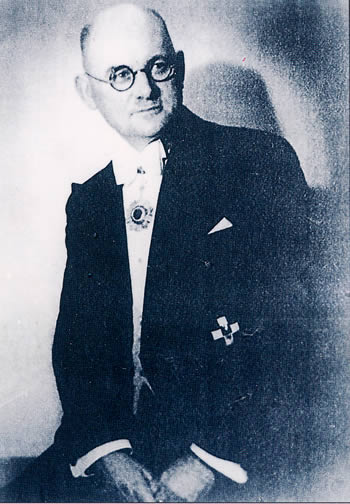
German National and Nazi Party Member John Rabe Protected Chinese at Nanking and Reported His

Experience to the German Government.  He is known as “The Good Man of Nanking”

The publication of German citizen and witness to the massacres John Rabe’s diaries in 2000, The Good Man of Nanking, provided an additional first hand account by a westerner who had the unique perspective of being from Japan’s ally Nazi Germany.  His accounts buttress the arguments of those like Chang who seek to inform the world about the size and scope of Japanese atrocities in Nanking.

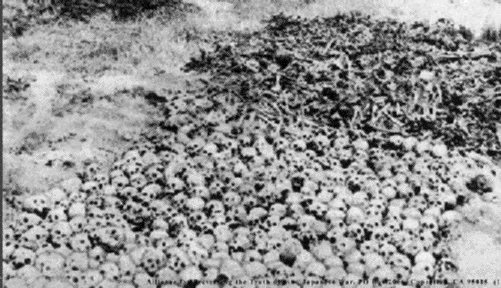
A Field of Skulls at Nanking

Yamamoto who is a military historian by trade and is viewed as a “centrist” in the debate, places the massacres in the context of Japanese military operations beginning with the fall of Shanghai up to the capture of Nanking. Yamamoto criticizes those who deny the massacres but settles on a far lower number of deaths, questioning the numbers used at the War Crimes Trials. He blames some on the Chinese Army[7] and explains many others away in the context of operations to eliminate resistance by Chinese soldiers and police who had remained in the city in civilian clothes. He  claims that  “the Japanese military leadership decided to launch the campaign to hunt down Chinese soldiers in the suburban areas because a substantial number of Chinese soldiers were still hiding in such areas and posing a constant threat to the Japanese.”[8] David Barrett in his review of the Yamamoto’s work notes that Yamamoto believes that “there were numerous atrocities, but no massacre….”[9] Yoshihisa Tak Mastusaka notes that while a centrist Yamamoto’s work’s “emphasis on precedents in the history of warfare reflects an underlying apologist tone that informs much of the book.”[10] Revisionist work also criticizes the trials surrounding Nanking and other Japanese atrocities.  An example of such a work is Tim Maga’s Judgment at Tokyo: The Japanese War Crimes Trials which is critiqued by historian Richard Minear as “having a weak grasp of legal issues” and “factual errors too numerous to list.”[11] Such is a recurrent theme in revisionist scholarship, the attempt to mitigate or minimize the scale of the atrocities, to cast doubt upon sources and motivations of their proponents or sources, to use questionable sources themselves or to attribute them to out of control soldiers, the fog of war and minimize command knowledge as does Yamamoto. Politics is often a key motivating factor behind revisionist work.

Iris Chang Would Later Commit Suicide

Chang would never be the same after researching and writing the Rape of Nanking. Traumatized by what she had learned and burdened by the weight of what she had taken on she killed herself on November 9th 2004.

Iconic Photo of Japanese Acts in China: A Wounded Child at Shanghai Station

“Revisionist” history will almost certainly remain with us, so long as people study the past.  However one has to be careful in labeling a divergent view of a historical subject as necessarily revisionist.  There are occasions when new evidence arises and a “new” or “revisionist” work may actually disprove previous conclusions regarding historic events or persons.  This might occur when what we know about a subject comes from a single or limited number of sources who themselves were limited in what they had available for research and new evidence comes to light. At the same time where numerous sources from diverse points of view attest to the genuineness of an event, the revisionist’s theses should be themselves scrutinized based on evidence presented as well as their political, ideological or racial motivations.  While one does not want to silence voices of opposition to prevailing beliefs one has to be careful in examining their claims, especially when they arise in the context of political or ideological conflicts.

Notes

[1] Bix, Herbert P. Hirohito and the Making of Modern Japan, Harper Collins Publishers, New York, NY 2000. pp.333-334. Bix does a good job explaining the number of victims of the incident drawing on Chinese and Japanese sources.

[2] Kreuter, Gretchen. The Forgotten Holocaust in The Bulletin of Atomic Scientists, March-April 1998 p.66

[3] Fogel, Joshua A. The Nanjing Massacre in History and Historiography, University of California Press, Berkley CA 2000, pp.87-89

[4] Toland, John. The Rising Sun: The Rise and Fall of the Japanese Empire 1936-45. Random House, New York, NY 1970 pp. 50-51. Toland in his brief discussion of the massacres notes both the civilian casualty figures and figures for male citizens of military age who were slaughtered.  Toland also notes the large numbers of women raped by Japanese soldiers.

[5] Chang, Iris. The Rape of Nanking: The Forgotten Holocaust of World War II Penguin Books, New York, NY 1997 pp.102-103. Chang has been criticized by some historians in a number of ways including that she was not a historian, that she compares the atrocities to the Nazi Holocaust and her emotional attachment to the subject which may have been a contributing factor in her 2004 suicide.

[6] Bix. p.336

[7] Yamamoto, Masahiro. The Rape of Nanking: Anatomy of an Atrocity. Praeger Publishers an imprint of the Greenwood Group, Westport, CT 2000. http://site.ebrary.com/lib/apus/docDetail.action?docID=10018001&p00=nanking  p.83

[8] Ibid. p.92.

[9] Barrett, David P.  Review of The Rape of Nanking: Anatomy of an Atrocity by Masashiro Yamamoto Canadian Journal of History/Annales canadiennes d’Histoire XXXVIII, April/Avril 2003 p.170

[10] Mastusaka, Yoshihisa Tak.  Review of The Rape of Nanking: Anatomy of an Atrocity by Masashiro Yamamoto American Historical Review, April 2002 p.525

[11] Minear, Richard. Review of Judgment at Tokyo: The Japanese War Crimes Trials by Tim Mata  American Historical Review. April 2002 p.526

2 Comments

Filed under ethics, History, Loose thoughts and musings, Military, world war two in the pacific

An Unexpected Encounter in a Bar: a Divine or a Chance Meeting?

Friends of Padre Steve’s World,

I’ve been in the military almost 36 1/2 Years and a chaplain for about 25 1/2 of them. I remember when I was in the Texas Army National Guard, our State Chaplain, Colonel John Price pulled me aside and gave me some of the best advice any chaplain has ever given me. He told me that in his experience that chaplains who were not afraid to sit at the bar at the officer’s club or go to other bars often had the opportunity to care for people who would never darken the door of a church or chapel. Over the years I have found that to be true all too often.

This afternoon I went with Judy to our favorite German restaurant, the Bier Garden. We had been working around the house most of the day and the weather was cold a dreary, cloudy with rain and temperatures in the high 30s. When we got there there were only two seats available at the end of the bar and I asked the young man sitting next to them if they were free. He said yes and we sat down. The Army-Navy game was on the televisions and I was settling in to watch the game when the young man struck up a conversation with me. He had obviously had too much to drink and he was struggling to stay awake.

That being said he seemed lonely and depressed, so as I watched the game I occasionally engaged him in conversation and listened to what he was saying. Then he passed out and the bartender woke him up and cut him off. That is when I really got concerned for him. I asked if he was okay, if he needed help and if he was local. He said that he was from California and stationed on board one of the many ships based in our area. He also said that he had walked to the restaurant. So we continued to talk and as we did I could see that he was crying. So I let him talk. He had been in the navy less than a year and he was on his first ship and away from his family for the first time. He was depressed and struggling and I realized that for whatever reason I needed to be there for this kid.

I introduced myself and let him know that I was a chaplain, but even more than importantly that I was a fellow sailor, a shipmate who cared for him. I’m not going to go into details of the conversation but I asked him what ship he was stationed aboard and took the time to encourage him, care for him, and even more importantly decided to find out how he was going to get back to his ship. He told me that he planned on walking back to it, which I realized that since he had had a couple too many drinks, was tired, and it was both dark, cold and beginning to snow that I couldn’t let that happened. I asked him to call his ship and have someone come and get him, but he was hesitant. However he did have a card from his ship that would help him with a cab ride, so I asked the bartender to call a cab. I stayed with the young sailor encouraging him the best that I could for the next half hour and then stood with him waiting for the cab to come outside the restaurant where we continued to talk until the cab came. I talked with the cab driver and found that his company didn’t have the agreement with the Navy to honor it, so I paid the driver more than twice the fare to get him back to his ship.

During our time together I listened a lot and I shared a lot of life experience, I also gave him my business card so he could look me up. But the one thing that I kept letting him know was that he was a sailor, that he was one of my shipmates, and that he wears the same uniform that I do, and that he matters to me. Truthfully that is not bullshit, it’s what I have been taught by every decent non-commissioned officer, Petty Officer, Chief, or commissioned officer in my career. You care for the sailors, soldiers, Marines, and airmen that come into your life no matter what their rank or situation. It’s who we are, and why after all these year I still serve.

While we were standing outside waiting for his cab we were talking about the weather and how cold it was and at that point I pointed out that I was wearing short pants, as I don’t go to long pants until the high temperature is under 40 degrees. He looked down and exclaimed: “Chaps, you,re crazy sir!” I told him that he was right.

My hope is that this young man will remember the crazy chaplain who stood with him in cold weather, wind, rain and snow in short pants who helped him get back to his ship, and that when he has attained any kind of rank that he will take care of other sailors in the same way.

Some might say that the encounter was an act of God or simply a coincidence and I could argue for either point of view. But that being, whichever it was, I know that I couldn’t have done any other. I wanted him to get back to his ship safely and I didn’t want to embarrass him in front of his chain of command.

He asked me questions about God and church and I encouraged him to seek out his chaplain or to contact me and so I hope that our encounter will help in get through his hard times and to succeed in life.

But that is why I am here. I’m going to finish my career in the next few years, this young man is just getting started. He is part of the future and no matter how young I still look, act, and behave, my time in the Navy and military is coming to an end. Whether that is in two and a half, three and a half, or four and a half years, with somewhere between 39 and 42 years of combined service between the Army and Navy, I am closer to the end of my career than this young man.

So I encourage all of my readers to look out for those young men and women who come into your lives.

So until tomorrow and whatever unexpected encounters come our way I wish you the best,

Peace,

Padre Steve+

3 Comments

Filed under christian life, faith, leadership, Military, Pastoral Care

A Miracle of Maritime Salvage: The Salvage of the Fleet at Pearl Harbor

Friends of Padre Steve’s World,

One of the more interesting aspects of the Pearl Harbor attack were the efforts of the US Navy to salvage and return to duty the ships sunk or so heavily damaged that they were thought to be irreparable after the attack. 19 ships were sunk or damaged during the attack, or roughly 20% of the fleet present on December 7th 1941. Unlike other great feats of maritime salvage like that of the German Fleet at Scapa Flow after the First World War, this massive effort led to the majority of the ships being returned to an operational status for further service in the war.

Captain Homer Wallin directing Salvage Operations

Many people know something about the attack, but one of the most remarkable aspects of it was the effort to salvage the fleet in the months following the attack. Under the leadership of Captain Homer N. Wallin teams of Navy and civilian divers from the Pacific Bridge Company worked day and night to salvage the sunken ships. The divers spent over 20,000 man hours under water in the highly hazardous waters; which were filled with unexploded ordinance, and contaminated by fuel and sadly decomposing human bodies. Wallin wrote: “The scene to the newcomer was foreboding indeed. There was a general feeling of depression throughout the Pearl Harbor area when it was seen and firmly believed that none of the ships sunk would ever fight again.”

The divers wore were rubberized coveralls with gloves. The divers were equipped with a lead-weighted belt which weighed 84 pounds and lead-weighted shoes, each of which weighed 36 pounds. Each diver wore a copper helmet attached to a breastplate. Air was supplied through a hose which was attached to the helmet and ran up to a compressor monitored by men on the surface. The work was extremely hazardous, the wrecked ships contained numerous hazards, any of which could cut his air hose and cause his death, and they also contained highly toxic gasses. They often worked in total darkness and had to communicate with the men on the surface via a telephone cable. The divers had to be exceptionally talented to and needed a great amount of coordination senses and balance to work with welding torches, suction hoses, and heavy equipment in the confines of the shattered ships. During the salvage operations a number of divers lost their lives. Before the ships could be raised ammunition, including the massive 14 and 16 inch shells weighing anywhere from 1300 to 2000 pounds each, Japanese bombs and torpedoes, fuel oil, gasoline, electrical equipment and batteries, weapons, and whenever possible the bodies of the entombed crews had to be removed, and then every hole had to be patched to make them buoyant. After the ships were raised cleanup crews had to go aboard and clear the ships of other hazardous waste as repair crews began their work to repair the basic systems needed to get the ships to West Coast shipyards for the major overhauls, The herculean effort was one of the greatest engineering feats in maritime history.

Of these were battleships, the USS Arizona sunk by a cataclysmic explosion, her broken hulk with her collapsed foremast the iconic symbol of the attack. USS Oklahoma was capsized on Battleship Row.  USS Nevada was grounded and sunk off Hospital Point after an abortive attempt to sortie during the attack. USS California and USS West Virginia lay upright on the bottom of Pearl Harbor, their superstructure, distinctive cage masts and gun turrets visible above the oily water.

The former battleship USS Utah lay capsized on the far side of Ford Island while the light cruiser USS Raleigh was fighting for her life barely afloat near Utah.  The ancient Minelayer USS Oglala was laying on her side next to the light cruiser USS Helena at the 1010 Dock. She was not hit by a bomb or torpedo but was said to have “died of fright” when Helena was hit by a torpedo, the blast which opened the seams of her hull. The destroyers USS Cassin and USS Downes were wrecks in the main dry dock. USS Shaw was minus her bow in the floating dry dock after exploding in what was one of the more iconic images of the attack. Other ships received varying amounts of damage.

As the engineers, damage control and salvage experts looked at the damage they realized that every ship would be needed for the long term fight. The building program of the US Navy was just beginning to pick up steam and it would be some time before new construction could not only make up for the losses but also be ready to fight a Two Ocean War. The decision was made to salvage and return to duty any ship deemed salvageable.

Even the seemingly less important ships needed to be rapidly salvaged. Some which initially appeared to be unsalvageable needed at the minimum to be cleared from dry docks and docks needed by operational or less damaged ships. Likewise equipment, machinery and armaments from these ships needed to be salvaged for use in other ships.

Even by modern standards the efforts of the Navy divers and salvage experts and the civilians who worked alongside them were amazing. In the end only three of the 19 ships never returned to service. The work began quickly and on December 14th Commander James Steele began to direct the salvage operations on the sunken hulks. Captain Wallin relieved Steele on January 9th 1942. Wallin formed a salvage organization of Navy officers and civilian contractors. The civilian contractors were instrumental in the operation. Many of the civilians had experience in salvage operations, or underwater construction efforts, such as working on the Golden Gate Bridge which often exceeded the experience of the Navy divers.

The divers recovered bodies whenever possible, salvaged equipment, removed weapons and ammunition, made temporary repairs and help rig the ships for righting or re-floating. In each case the salvage experts, divers and engineers faced different challenges.

Arizona was never raised. Her superstructure was cut down, main battery and some anti-aircraft guns removed. The main batter guns were delivered to the Army Coastal Artillery for use as shore batteries but none reached an operational status before the end of the war. The dives aboard were so dangerous that eventually the attempts to recover bodies ceased as several divers lost their lives in the wreck.  Over the years the National Parks Service has continued to dive on the wreck to assess it as a war grave and memorial.

Utah too was not raised. She was righted in 1942 but efforts to do more were halted because the elderly wreck had no remaining military value. Her wreck along with that of Arizona are war graves, many of their crew members, including over 1000 of Arizona’s men forever remain entombed in their ships. When I visited Pearl Harbor in 1978 as a Navy Junior ROTC Cadet and visited both memorials I was humbled at what I saw. They are haunting reminders of the cost paid by sailors during wartime.

Nevada was the first major ship salvaged. She was re-floated in February 1942 and after temporary repairs sailed to the West Coast on her own power. After repairs and a significant modernization of her anti-aircraft systems was complete she returned to action in 1943 in the invasion of Attu Alaska. She participated in many amphibious operations including Normandy, Southern France, Iwo Jim and Okinawa. She survived the Atomic Bomb tests in 1946 but wrecked and radioactive she was sunk as a target off Hawaii in 1948.


The salvage of the Oklahoma was one of the more challenging endeavors faced by Wallin’s men. Hit by at least five torpedoes during the attack the great ship capsized, her tripod masts digging deep into the mud of the harbor as she settled. Over 400 over her crew lay dead inside the ship. Since it was apparent that the ship was a total loss the salvage operations did not commence until the middle of 1942. The primary goal of the operation was to clear needed space for berthing large ships along Battleship Row. The operation involved making the ship as watertight as possible, solidifying the bottom of the harbor around her to enable her to roll and emplacing a massive system of righting frames, anchor chains and shore mounted winches and cables. The process involved cutting away wrecked superstructure, removing ammunition, weapons and the bodies of those entombed in their former home. She was completely righted in July 1943, and floated again in November. Moved to a dry dock in December she was made watertight and moored in another part of the harbor. Following the war she was being towed to a scrap yard but sank in a storm in May 1947.

California was raised in March and after temporary repairs sailed under her own power to the West Coast. Her repairs and modernization were a major undertaking. Fully reconditioned and modernized to standards of most modern battleships she returned to service in January 1944. She served in retaking Saipan, Guam, Tinian, as well as Leyte Gulf were she had a significant part in the Battle of Surigao Strait. Hit by a Kamikaze she was repaired and returned to action at Okinawa and support the occupation operations of the Japanese Home Islands. She was decommissioned in 1947 and sold for scrapping in 1959.

West Virginia suffered the most severe damage of the battleships returned to duty. She was raised in July 1942 and after repairs sailed to Puget Sound Naval Shipyard. Like California she was completely rebuilt and returned to action in October 1944 in time to take the lead role in destroying the Japanese Battleship Yamashiro. She served throughout the remainder of the war in the Pacific at Iwo Jima, Okinawa and the occupation of Japan.

The Mahan Class destroyers Cassin and Downes were so badly damaged sitting in the Dry Dock Number One with Pennsylvania that initially they were believed beyond salvage. However after closer inspection it was determined that the hull fittings, main weapons systems and propulsion machinery on both ships were worth salvaging. These items were removed, shipped to Mare Island Naval Shipyard and installed on new hulls being constructed. The hulks of the old ships were scrapped at Pearl Harbor. Those ships were commissioned as the Cassin and Downes and served throughout the war.

Both were decommissioned in 1945 and scrapped in 1947. Their sister ship Shaw which had blown up in the floating dry dock was wrecked from her bridge forward. However the rest of the ship including her engineering spaces were intact. A temporary bow was fashioned and the ship sailed to Mare Island under her own power. Completely overhauled she was back in service by July 1942. She was decommissioned in 1945 and scrapped in 1946.

The ancient minelayer Oglala was raised in July and sent back to the West Coast where she was repaired and recommissioned as an internal combustion engine repair ship. She survived the war was decommissioned and transferred to Maritime Commission custody. She was a depot ship at the Suisun Bay Reserve Fleet until 1965 when she was sold for scrap.

The salvage feat to return these ships to duty was one of the most remarkable operations of its type ever conducted. Not only were most of the ships salvaged but most returned to duty. While none survive today many played key roles during the war. Artifacts of some of the ships are on display at various Naval Bases, Museums and State Capitals. They, their brave crews and the Navy Divers and civilian diving and salvage experts who conducted this task exhibited the finest traditions of the US Navy. The successors of the Navy divers at Mobile Diving Salvage Units One and Two still carry on that tradition today.

Peace

Padre Steve+

2 Comments

Filed under History, Military, Navy Ships, world war two in the pacific

The Illusion of Peace: December 6th 1941 and 2017

Friends of Padre Steve’s World,

For most Americans December 6th 1941 was an ordinary day, a day of peace to shop, watch movies and football games or spend time with family. Though war raged in Europe and Hitler had overrun all of Europe and was at the Gates of Moscow, and United States Navy destroyers had been torpedoed and sunk or damaged by German U-Boats, many people and politicians did not believe that war would happen or were completely opposed to entering it. In the Pacific events were building to a crescendo as the Japanese had continued their aggression in China, occupied French Indochina, while the Roosevelt administration had imposed severe economic sanctions on raw materials needed by the Japanese war machine. But the peace was an illusion.

Walter Lord wrote, “A nation brought up on Peace was going to war and didn’t know how.”

For most Americans and Western Europeans December 6th is a time of peace. time of peace. Well, at least the illusion of peace.

Tens of thousands of American, NATO and European Union troops operating in a number of mandates are in harm’s way. In some places like Afghanistan they are at war, in others attempting to keep the peace. Around the world regional conflicts, civil wars, insurgencies  and revolutions threaten not only regional peace but the world peace and economy. Traditional national rivalries and ethnic and religious tensions especially in Asia and the broader Middle East have great potential to escalate into wars that should they actually break will involve the US, NATO and the EU, if not militarily economically and diplomatically.

But, we live in a dream world an illusory world of peace. as W.H. Auden said in his poem September 1st 1939:

Defenseless in the night

Our world in stupor lies…

On December 6th 1941 the world was already at war and the United States was edging into the war. The blood of Americans has already been shed but for the vast majority of Americans the events in Europe and Asia were far away and not our problem. Though President Roosevelt had began the expansion of the military there were those in Congress seeking to demobilize troops and who fought all attempts at to intervene.

Most people went about their business that last furtive day of peace. People went about doing their Christmas shopping, going to movies like The Maltese Falcon staring Humphrey Bogart or the new short Tom and Jerry cartoon, The Night Before Christmas.

Others went to football games. UCLA and USC had played their annual rivalry game to a 7-7 tie, Texas crushed Oregon in Austin by a score of 71-7 while Texas A&M defeated Washington State in the Evergreen Bowl in Tacoma by a score of 7-0.

In Europe the German Wehrmacht was at the gates of Moscow but at the end of its tether. Its troops pressed on as Stalin readied the Red Army for a counteroffensive that would bring the vaunted Wehrmacht to the bring of collapse. U-Boats were taking a distressing toll of ships bound for Britain including neutral US merchant ships and warships, including the USS Reuben James. American Airmen were flying as the volunteer Flying Tigers for the Nationalist Chinese against the Japanese invaders.

War was everywhere but there was still the illusion of peace. When the messages came out of Pearl Harbor the next morning it was already early afternoon on the East Coast. The Japanese Ambassador had been delayed in delivering the declaration of war, people across the country going about their Sunday business, going to church, relaxing or listening to the radio. Thus when war came, despite all the precursors and warnings war came. When it happened it took the nation by surprise. Walter Lord wrote in his classic account of the Pearl Harbor attack Day of Infamy: “A nation brought up on Peace was going to war and didn’t know how.”

By the end of the day over 2400 Americans were dead and over 1200 more wounded. The battleships of the Pacific Fleet were shattered. 4 sunk, one grounded and 3 more damaged. 10 other ships were sunk or damaged in the attack. 188 aircraft were destroyed and 159 damaged.

The next day President Franklin D. Roosevelt called the nation to action requesting that Congress declare war on Japan. That speech was masterful. Roosevelt detailed the Japanese aggression:

Mr. Vice President, and Mr. Speaker, and Members of the Senate and House of Representatives:

Yesterday, December 7, 1941 — a date which will live in infamy — the United States of America was suddenly and deliberately attacked by naval and air forces of the Empire of Japan.

The United States was at peace with that Nation and, at the solicitation of Japan, was still in conversation with its Government and its Emperor looking toward the maintenance of peace in the Pacific. Indeed, one hour after Japanese air squadrons had commenced bombing in the American Island of Oahu, the Japanese Ambassador to the United States and his colleague delivered to our Secretary of State a formal reply to a recent American message. And while this reply stated that it seemed useless to continue the existing diplomatic negotiations, it contained no threat or hint of war or of armed attack.

It will be recorded that the distance of Hawaii from Japan makes it obvious that the attack was deliberately planned many days or even weeks ago. During the intervening time the Japanese Government has deliberately sought to deceive the United States by false statements and expressions of hope for continued peace.

The attack yesterday on the Hawaiian Islands has caused severe damage to American naval and military forces. I regret to tell you that very many American lives have been lost. In addition American ships have been reported torpedoed on the high seas between San Francisco and Honolulu.

Yesterday the Japanese Government also launched an attack against Malaya.

Last night Japanese forces attacked Hong Kong.

Last night Japanese forces attacked Guam.

Last night Japanese forces attacked the Philippine Islands.

Last night the Japanese attacked Wake Island. And this morning the Japanese attacked Midway Island.

Japan has, therefore, undertaken a surprise offensive extending throughout the Pacific area. The facts of yesterday and today speak for themselves. The people of the United States have already formed their opinions and well understand the implications to the very life and safety of our Nation.

As Commander in Chief of the Army and Navy I have directed that all measures be taken for our defense.

But always will our whole Nation remember the character of the onslaught against us.

No matter how long it may take us to overcome this premeditated invasion, the American people in their righteous might will win through to absolute victory. I believe that I interpret the will of the Congress and of the people when I assert that we will not only defend ourselves to the uttermost but will make it very certain that this form of treachery shall never again endanger us.

Hostilities exist. There is no blinking at the fact that our people, our territory, and our interests are in grave danger.

With confidence in our armed forces- with the unbounding determination of our people- we will gain the inevitable triumph- so help us God.

I ask that the Congress declare that since the unprovoked and dastardly attack by Japan on Sunday, December 7, 1941, a state of war has existed between the United States and the Japanese Empire.

Today tens of thousands of US and NATO troops are deployed in Afghanistan as well as in Iraq, Syria, and many regions of Africa and Asia. Some of them are dying that people that most of us do not care about in the least might have a chance at peace and a better life. Likewise the situation on the Korean Peninsula is rapidly escalating and could easily due to miscalculations on the part of the Trump Administration or the Korean dictator Kim Jong Un could lead to a war that will be more destructive and costly in human life since the Second World War. Eleanor Roosevelt reflected:

“Lest I keep my complacent way I must remember somewhere out there a person died for me today. As long as there must be war, I ask and I must answer was I worth dying for?”

Wars, revolutions and other tensions in other parts of the world threaten on every side, but most Americans and Europeans live in the illusion of peace.  A very few professi0onals are given the task of preparing for and fighting wars that our politicians, business leaders, Armageddon seeking preachers and the talking heads of the media sow the seeds. As such many have no idea of the human, material and spiritual cost of war and when it comes again in all of its awful splendor few will be prepared.

We do not know what tomorrow will bring and unfortunately for the vast bulk of Americans and Western Europeans the comments of Walter Lord are as applicable today as they were on December 7th 1941.

Peace

Padre Steve+

1 Comment

Filed under History, Military, national security, News and current events, Political Commentary, US Navy, world war two in the pacific

The Unfolding of Miscalculations: Kim Jong Un and Donald Trump on the Bubble

Friends of Padre Steve’s World,

As we approach the seventy-six anniversary of the attack on Pearl Harbor and the U.S. entry into the Second World War I am becoming ever more concerned with the situation on the Korean Peninsula. This is in large part because I believe that when different officials from the President, to his UN Ambassador, his National Security Advisor, and senior Senators begin to speak openly of the increased chances of armed conflict while increasing military drills and presence that war is more likely than not.

I’m a historian and my studies of the path to war in the 20th and 21st centuries is full of bluster and full of miscalculations on both sides of any conflict. That includes the years and months leading to Pearl Harbor when the Japanese leadership decided upon war when a host of other diplomatic and economic options were still viable. In our day the North Korean leadership could chose the logical course of action to expand economic activists with China, Japan, and South Korea while engaging the United States in diplomatic efforts. Instead they seem intent on provoking an American President who is equally intent on throwing diplomatic and economic courses of actions to the wind in favor of a military option.

This is not a good situation and I really do think that the odds are far more favorable to war breaking out by this time next year if not far sooner as Kim Jong Un pushes the envelope on his ICBM and nuclear programs.

When war comes, and I really do think that it will, it will be because Lil’ Kim, President Trump and their advisors made numerous miscalculations. I really don’t think that either party wants to bring about war, but the miscalculations are too troubling to ignore. Someone is going to slip up. As Barbara Tuchman wrote: War is the unfolding of miscalculations.

As for me I hope that at least one sane member of the Trump Administration has the moral courage to find a way to stop, delay, or turn North Korea into a friend before things get too out of hand. Sadly, I don’t think that that is going to happen.

So until tomorrow,

Peace

Padre Steve+

Leave a comment

Filed under History, Korean Conflicts, leadership, Military, Political Commentary

Prepare for the Worst, Hope for the Best: Raising the Flag December 3rd 1775

Friends of Padre Steve’s World,

There is a precept that I live by: “Prepare for the worst; expect the best; and take what comes.” That was once said by Hannah Arendt, but I take it as my own. I am not a fatalist, nor do I believe that God has predetermined what is going to happen in the future, except that he promises to “make all things new.”

December 3rd is a date that not to many people today remember for anything significant. But one event that happened on December 3rd 1775 is important to those who who follow American and Naval History. It was the day that Lieutenant John Paul Jones hoisted the Grand Union Flag, the precursor to the Stars and Stripes aboard the USS Alfred, the flagship of the new United States Navy. Some 242 years later the Stars and Stripes is still hoisted above United States Navy Ships. What happened on this date so long ago affected the course of history since then. Following his victory at Yorktown which was made possible by the timely intervention of the French Fleet, George Washington wrote to the Marquis de Lafayette:

“It follows than as certain as that night succeeds the day, that without a decisive naval force we can do nothing definitive, and with it, everything honorable and glorious.”

On October 13th 1775 the Continental Congress passed legislation to establish a Navy for a country that did not yet exist.  It was the first was the first in a long line of legislative actions taken by it and subsequent Congresses that helped define the future of American sea power.

The legislation was the beginning of a proud service that the intrepid founders of our nation could have ever imagined.  Less than two months after it was signed on December 3rd 1775 Lieutenant John Paul Jones raised the Grand Union Flag over the new fleet flagship the Alfred. The fleet set sail and raided the British colony at Nassau in the Bahamas capturing valuable cannon and other military stores.  It was the first amphibious operation ever conducted by the Navy and Marines.

Jones received the first recognition of the American flag shortly after France recognized the new United States.  In command of the Sloop of War USS Ranger his ship received a nine-gun salute from the French flagship at Quiberon Bay.

Jones would go on to to greater glory when he in command of the Bonhomme Richard defeated the HMS Serapis at the Battle of Flamborough Head. During the battle when all seemed lost and the colors had been shot away he replied to a British question if he had surrendered replied “I have not yet begun to fight!”

When the war ended very few of these ships remained most having been destroyed or captured during the war. But these few ships and the brave Sailors and Marines who manned them blazed a trail which generations of future sailors would build on.  The Navy has served the nation and the world as a “Global Force For Good” for more than 242 years.

That being said these are troubled times for the Navy. Sixteen years of war coupled with a major reduction in number of ships, mostly due to a decision to decommission more than 30 ships before they were due for replacement and the decision to shed 30,000 sailors to support the wars in Iraq and Afghanistan, not to mention the loss of up to 30,000 sailors a month in non-Navy billets to support those wars has taken a toll on readiness and morale, not to mention ethical behavior. The results have been seen in the numerous accidents and incidents that have involved loss of life and major damage to ships over the past few years, as well as numerous scandals involving senior officer and enlisted leadership.

Please do not get me wrong, the Navy has many superb sailors, officers and leaders; I serve with some of them, but the rot has set in and it is becoming more and more obvious. I see it daily in what I read and with whom I talk. I was fortunate to serve aboard a ship with high standards and high morale after September 11th 2001. My commanding officer back then, Captain Rick Hoffman, now retired is frequently consulted when incidents involving ship handling and leadership come to the fore.

Despite the rhetoric of the President there has been no significant help regarding funding for operations, maintenance, and personnel, nor any let up in mission requirements. I hate to be the one who says it, but no organization can keep doing more with less for more than a decade without problems. The fact that the world situation requires more of a naval presence now than it did before 2001 does not seem to matter to Republican Congressmen who forced Sequester on the services in 2011 yet are willing to bust the budget by trillions of dollars to pay for tax cuts for the absolute wealthiest persons and corporations.

If worse comes to worse on the Korean Peninsula and if at the same time Iran or any other country decide to challenge the United States, things will go from bad to worse. We will lose ships and sailors for the first time since the Second World War and it will not be pretty. Sadly, I think that the President will blame the Navy (and the rest of the military) when the policies that he and his party have pursued lead to disaster.

These are dark times and I am a realist. I don’t live in the cloud cuckoo land of Trump supporters who think that things are going to turn out well. When I see the President and his top advisers and spokespeople continue to talk about the increasing chance of war on the Korean Peninsula I believe them. When I hear the President basically giving a blank check to the Saudis and the Israelis to do as they wish in the Middle East while basically appeasing the Russians and Chinese, I get worried. I lose sleep, and at the same time I prepare myself and those who I serve with to be prepared for the worst.

So with that in mind I wish you a good week.

Peace,

Padre Steve+

1 Comment

Filed under Foreign Policy, History, leadership, Military, News and current events, Political Commentary, US Navy

In Harm’s Way They Went…

Friends of Padre Steve’s World,

It has been a busy day as we finished the major part of decorating our home for the Advent and Christmas seasons. I think that this year is the first year that we have everything ready before the first Sunday of Advent and that even means getting all the boxes that our decorations came in back up to the attic. When we finished we went out to our favorite local German restaurant, The Bier Garden over in Portsmouth.

Since we are coming up on the seventy-sixth anniversary of the Japanese attack on Pearl Harbor and it seems that the United States may again become involved in a truly major and destructive war the likes that we have not seen since the Second World I decided to put on the classic film In Harm’s Way, directed by Otto Preminger and starring John Wayne and an all star cast. It is an unusual film because it deals with very fallible people who can be heroes and scoundrels who have miserable failings. It deals with families, strong ones and broken ones, and it also deals with a topic that is all too current, sexual harassment and rape.

Of course it is set during the Second World War and deals with the Navy in the Pacific during the early part of the war and though it is fictional it represents real battles around the Solomons. Those battles were often bloody. During the first engagement of the Naval Battle of Guadalcanal a U.S. task force slugged it out at close range with a Japanese Force which had the mission of knocking out the Marine airbase on the island the Navy lost two cruisers and four destroyers and of thirteen ships engaged only one remained undamaged. To give an idea how brutal it was, both admirals embarked on the U.S. force were killed in the action.

The tag line for the movie is one that I really like because it kind of tells it like it is when a nation, not just a volunteer professional military goes to war: “In harm’s way they went. The men. The women. The lovers for a night. The lovers for keeps. The strong. The weak. They went, as they were…in Harm’sway.”

I have made two wartime deployments, one on a cruiser and one in Iraq’s Al Anbar Province. I have seen men and women, and families who have gone to war and come home, sometimes rather worse for the wear. I still have nightmares and night terrors from Iraq, but I have written about that before. PTSD is a bitch.

But anyway, as I ponder what is going on in our country and the world I realize that things are probably going to get much worse before they get better. I expect that many unsuspecting people will find themselves in harm’s way sooner rather than later, and like the Americans of 1941, complacent though the world was already at war, will come face to face with a rude awakening that will determine who we are and what we will be for at least a generation. The closing credits of the film are dramatic moving from waves braking upon a beach, to stormy seas, to the explosions of war culminating in the blast of a hydrogen bomb, before going back to a calm sea.

https://youtu.be/_OGVzjqoJ0Q

W.H. Auden wrote:

Defenceless under the night

Our world in stupor lies;

Yet, dotted everywhere,

Ironic points of light

Flash out wherever the Just

Exchange their messages:

May I, composed like them

Of Eros and of dust,

Beleaguered by the same

Negation and despair,

Show an affirming flame.

Until,tomorrow,

Peace,

Padre Steve+

2 Comments

Filed under film, History, Military, Political Commentary, world war two in the pacific