Category Archives: Military

The Transgender Soldiers of the American Civil War


Friends of Padre Steve’s World

President Trump let loose a series of tweets yeasterday morning saying, based on the advise of his generals,  that he was going to kick out transgender soldiers from the military. The irony was not only that the military, immersed in a six month long study of they issue was blindsided by the President, and yesteryear General Dunford, the Chairman of the Joint Chiefs of Staff announced that nothing had changed regarding the treatment of transgender military personnel, and instructed the military to continue to respect every military member. 

So, today I am posting an article about the women soldiers of the Civil War, many of who based on their personal narratives would be considered transgender today. I hope that you enjoy.

Peace

Padre Steve+

Of course when the Civil War broke out the logical end of this train of though was that should women be allowed to serve in the military. Legally and socially it was not possible for women to serve in the military in 1861, but this did not stop women in the Union or the Confederacy from doing so. Quite a few women on both sides of the conflict chaffed about not being allowed to fight for their countries, their families and their causes, and despite official prohibitions that kept women from serving in any capacity but nursing, a good number of women found their way to go to war. While men in the North and South “were expected to enlist, any woman actively participating in the Civil War was an oddity if not a renegade.” In some cases this involved hundreds of women taking male identities in order to fulfill their desires to serve their countries.

The motives of these women varied. In some cases women wanted gain the economic privileges of full citizenship, and for others the glory reserved to only to men. In our modern parlance those that took male identities would be considered transvestites or possibly transgender, but for them “transvestitism was a private rebellion against public conventions. By taking a male social identity, they secured for themselves male power and independence, as well as full status as citizens of their nation. In essence the Civil War was an opportunity for hundreds of women to escape the confines of their sex.” 

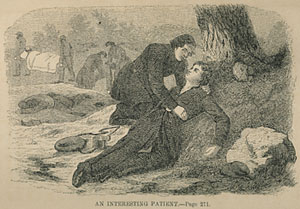
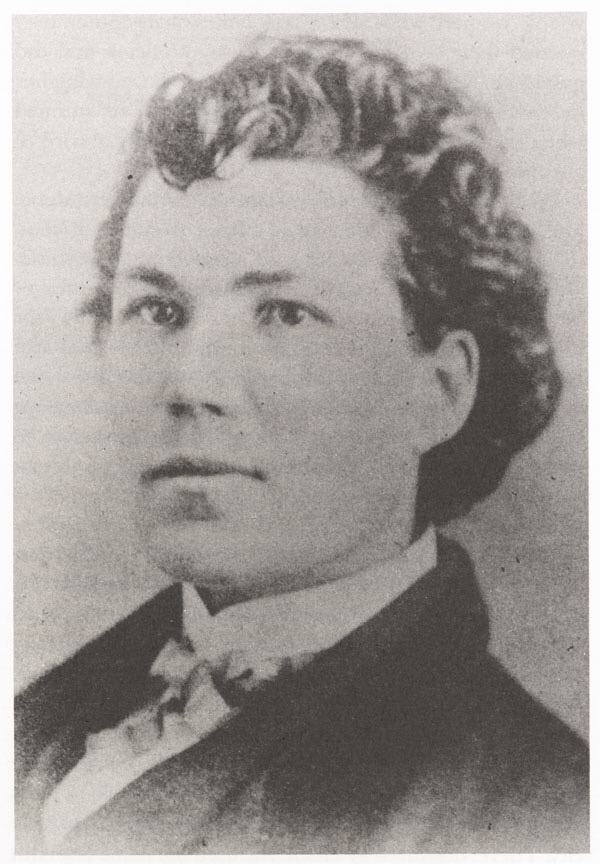
During the war hundreds of women went to war, taking on the identity of men. They enlisted under male names and pretended to be men. Unless they were discovered to be women, or unless they confessed to their wartime service either during or after the war, most women managed to serve without being caught. Sadly, most of their service records were lost. In 1861 Private Franklin Thompson “enlisted in Company F of the 2nd Michigan Infantry…unknown to comrades, Thompson actually was Sarah Emma Edmonds.” Edmonds served in the illustrious Iron Brigade until the disaster at Fredericksburg. Well known for her courage as Franklin Thompson, Edmonds participated in some of the bloodiest combats of the war. At Antietam she was caring for the wounded when she came upon a soldier who had been wounded in the neck. That soldier informed Edmonds that she was dying and after a surgeon came by and confirmed what the soldier said the dying soldier told Edmonds:

“I am not what I seem, but I am female. I enlisted from the purest motives, and I have remained undiscovered and unsuspected. I have neither father, mother nor sister. My only brother was killed today. I closed his eyes about an hour before I was wounded….I am Christian, and have maintained the Christian character ever since I entered the army. I have performed the duties of a soldier faithfully, and am willing to die for the cause of truth and freedom….I wish you to bury me with your own hands, that none may know after my death that I am other than my appearance indicates.”

That unknown woman was not alone, at least nine women, eight Union and one Confederate, fought at Antietam and of those five were casualties. Five women, two Federal and three Confederate took part at Gettysburg. All three Confederate women at Gettysburg were either killed or wounded, or captured, including two women who took part in Pickett’s Charge.


Sarah Edmonds published a book Nurse and Spy in the Union Army while recovering from malaria in 1863. The book, which was published the following year, sold 175,000 copies, the proceeds that she donated to care for sick and wounded Union veterans. After the war, Edmonds attended Oberlin College, married, had three of her own children and adopted two more. She “became a member of the Grand Army of the Potomac, the organization for Union veterans of the Civil War. She applied for, and received, a military pension, and upon her death in 1898 was buried with full military honors.” She was the only women admitted to the Grand Army of the Republic.


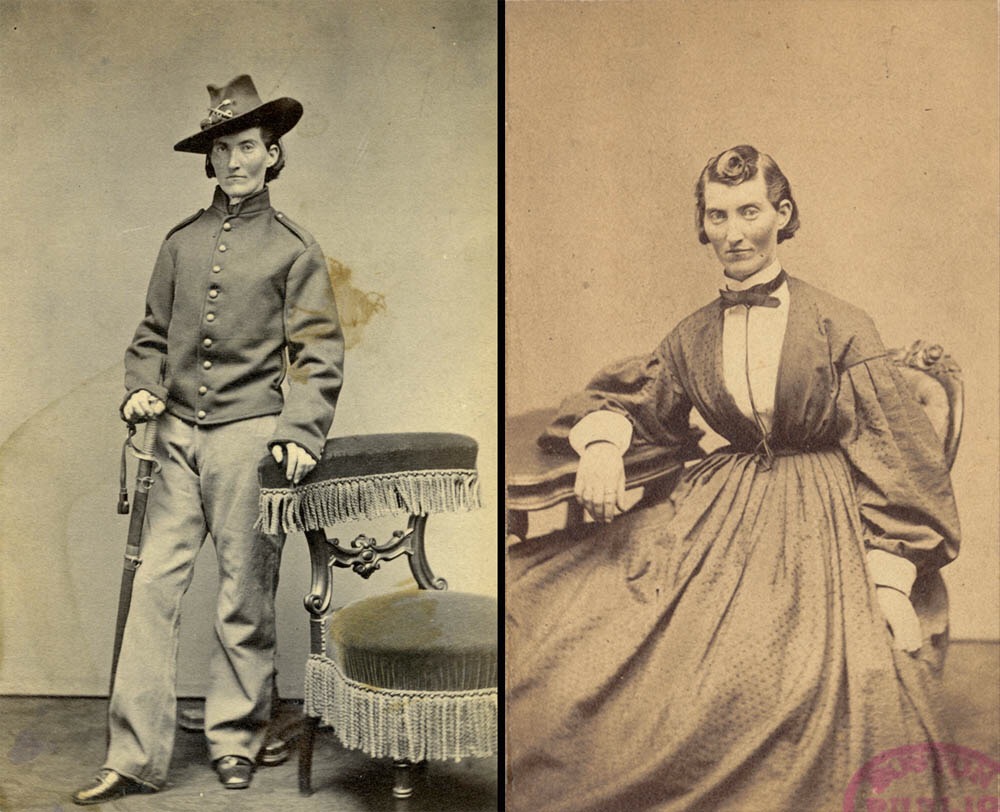
Another of the women to serve was Frances Louisa Clayton. Fighting for the Union as a member of the Minnesota State Militia Cavalry and 2nd Minnesota Battery, serving under the command of Ulysses S. Grant she was wounded at Fort Donelson. Like many other women soldiers, Clayton mastered the art of behaving as a man. She “became “a capital swordsman,” but also commanded attention with her “masculine stride in walking” and “her erect and soldierly carriage.” After the war she promoted her service in a book.


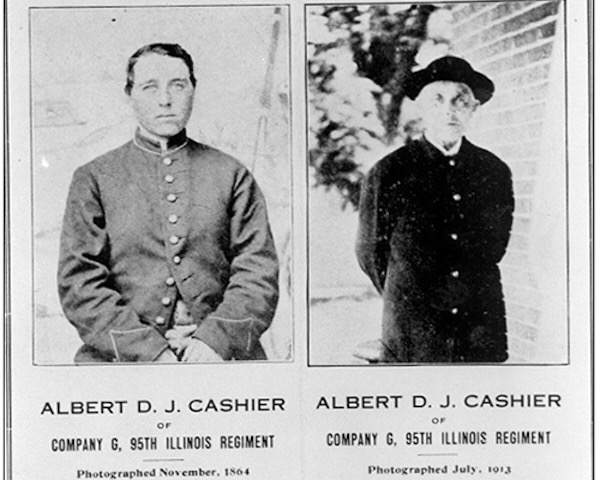
However, most women were more discreet during and after the war regarding their true sexuality. Private Albert Cashier hid his sexuality identity for his entire term of service. He enlisted in August 1862 as a member of the 95th Illinois. Cashier was born in Ireland as a woman, Jennie Hodgers. He fought in forty battles and was discharged with the regiment in August 1865. At Vicksburg he was briefly captured by the Confederates while conducting a reconnaissance “but managed to escape by seizing a gun from one of her guards, knocking him down, and outrunning others. Comrades recalled Private Cashier climbing to the top of their fieldworks to taut the enemy into showing themselves.”

After the war “Albert” returned home and lived as a “farmer and handyman and served as a caretaker in his church. He never married.” In 1890 he applied for and received a military pension and in 1911 the now elderly “man” was struck by a car and suffered a broken leg. The doctor threating him discovered that Albert was not a man, but a woman. But the doctor kept his confidentiality and without revealing “Albert’s” secret had the Union veteran admitted to the local Soldier’s and Sailors’ Home at Quincy, Illinois.” A few years later the elderly “man” began to exhibit erratic behavior and was “committed to a public mental hospital and the word was out.” With her story now sensational front page news and “old comrades in arms came to her defense.” Her comrades had never known that “Albert” was a man during or after the war, while the news was a surprise to them they came to her defense. To combat some of the sensationalism in the media Albert’s fellow soldiers testified “to Albert’s bravery in combat and public good works in later life. Albert/Jennie died at Watertown State Hospital in 1915 at age seventy-one. The local post of the Grand Army of the Republic arranged for her burial. Her headstone reads: “Albert D.J. Cashier, Company G, 95th Illinois Infantry.”

Wartime records are sketchy but as a minimum it is believed that “between 250 and 400 women disguised as men found their way into either the Federal or Confederate armies.” Women known to have served had a “combined casualty rate of 44 percent” including the fact that “eleven percent of women soldiers died in the military.”  Some of those women are now well known but many others are lost to history. Most women tried to keep their sexual identities secret, even to the point of their death on the battlefield. Most of the women who served in the armies returned home to resume relatively normal lives after the war.

Of the women that served in the ranks, some were discovered, and many remained protected by their fellow soldiers. Quite a few received promotions and even served as NCOs or junior officers. With women now serving in combat or combat support roles in the U.S. Military since Operation Desert Storm in 1991, the stigma and scandal that these cross-dressing women soldiers of the Civil War has faded and as scholars and the public both “continue probing cultural notions of gender and identity, the reemerging evidence that women historically and successfully engaged in combat has met with less intellectual resistance and has taken on new cultural significance.” As the United States military services examine the issues surrounding further moves to integrate the combat arms we also should attempt to more closely examine the service of the brave and often forgotten women who served on both sides of the Civil War.

1 Comment

Filed under civil rights, civil war, History, LGBT issues, Military, Political Commentary

My Doctrine: “Give Every Other Human Being the Right You Claim for Yourself”


Friends of Padre Steve’s World,

Another day and another adventure in Trumpland. 

Theodore Roosevelt, the Republican that modern Republicans love to hate said: “I am an American; free born and free bred, where I acknowledge no man as my superior, except for his own worth, or as my inferior, except for his own demerit.” 

After Trump’s announcement in which he said that he was going to bar transgender men and women from military service, including combat vets, I am fighting back in every legal way that I can as an active duty officer. Thankfully I am senior enough that I don’t have to deal with the threats that a number of junior Army chaplain friends are dealing with from their fundamentalist Christian supervisory chaplains. 

I cannot believe who quickly these people will throw fellow servicemen and women under the bus for a President who despises them and what they believe all because he hates LGBTQ people more than them. 

Although I don’t need to I am going to start doing all the preparatory actions that I will need to do to retire from the military on my own terms with 36 or more years of service in peace and war so I don’t have to serve under what if left unchecked will become a fascist dictatorship, in large part due to fundamentalist Christians. I am not going to drop my retirement papers yet, just get things in place so that I can retire at any point that I chose. I will never surrender my honor to willingly prostitute myself to a regime that rejects the rule of law, the Constitution, and the principles of the Declaration of Independence that so many people have fought to preserve. 

Since I posted two articles yesterday this will,suffice for now. But for me the issue is liberty for all. As Robert Ingersoll, a Civil War hero and prominent atheist said: “This is my doctrine: Give every other human being every right you claim for yourself.”  If you can’t do then don’t claim to support the Constitution or revere the Declaration of Independence, because you are simply a liar. Enough said. 

Until tomorrow,

Peace,

Padre Steve+ 

4 Comments

Filed under civil rights, History, laws and legislation, leadership, LGBT issues, Military, News and current events, Political Commentary

A Gigantic Step Backwards: Trump Bans Transgender People from the Military on the Anniversary of Truman’s Desegregation of the Armed Forces


Friends of Padre Steve’s World,

Russian dissident Gary Kasparov said this on Twitter yesterday shortly after President Trump announced on the same platform that Transgender people, even those currently serving honorably would not be allowed to serve in the military. Kasparov noted:

“The autocrat always requires enemies to protect his base from. If real enemies don’t exist, they will be created. Minorities preferred.”

Yesterday I was debating whether to write about President Harry Truman’s courageous decision sixty-nine years ago yesterday to desegregate the U.S. Military. I didn’t because first I have written about it before and I couldn’t come to a decision on how I wanted to approach it. So I wrote an article combining baseball that the principle of interiorizing public rules, norms, traditions, and behaviors that are necessary for our Republic to survive.

But this morning when I saw the series of three Trump tweets about excluding transsexuals from the military citing that the military “Our military must be focused on decisive and overwhelming victory and cannot be burdened with the tremendous medical costs and disruption that transgender in the military would entail” I knew that I had to address it.

The timing of Trump’s tweet was ironic especially because of when he tweeted it. It appeared to be a deliberate action to let civil rights advocates know exactly where he stands. Doing it when he did was not only a blatant move against transgender people, but a shot across the bow of other minorities. Be assured that this is just his first move against the newly acquired rights of LGBTQ people. 

The argument Trump and other opponents of transgender people serving in the military is the same type of argument that was used against Truman’s decision to desegregate, as well as the same argument against women serving, not to mention Gays and Lesbians. Truman, a combat veteran of the First World War had to face the opposition of some Generals, but also much of his political party base which came from the South and which supported Jim Crow, sometimes violently. The fact is that there is almost no truth in anything that the President tweeted today. The additional medical costs are minimal. Likewise, these transgender soldiers, marines, sailors, and airmen are already serving honorably, and many times with distinction because they know that there are people who want them to fail in order to make an example of them to do exactly what the President has said that he is going to do.

However, President Trump is continuing to show that he lacks a moral center and personal courage. Unlike Truman who went to war, the President used multiple deferments and a heel spur to dodge the draft during the Vietnam War even though he was fit enough to play multiple sports in college. Unlike President Truman who showed courage against political opponents in his own party to do the right thing, Trump caved to the anti-LGBTQ activists of the Christian Right led by Vice President Pence. To paraphrase Kasparov, Trump and Pence need enemies to protect their base and to ensure its loyalty. Transgender people are an easy enemy to demonize because there are so few of them and most people are too ignorant to even understand who try are and what is different about them. 

I do not know if the President will attempt to use an executive order, or attempt to get Congress to include this in the Defense Appropriations Bill currently winding its way through Congress. Either way there is bound to be legal opposition to this and based on court precedents, and the 14th Amendment which has been at the heart of all previous measures to allow different minorities to openly serve in the military and have the same opportunity to defend their country as any other citizen. I expect court-challenges to any executive order and I wonder, based on the statements of a number of Republican Senators if such a prohibition could make it through the legislative process.

Depending on which estimate you reference there are between 7,000 and 15,000 transgender persons currently serving in the U.S. Military. Many are combat vets, and some are special operators. They have made the courageous decision to both serve their country and to risk their careers to admit to others their struggle with their gender identity. As a veteran of 36 years of service including combat tours I have much more respect for them than a President who did all that he could to dodge the draft and then would have the nerve to kick these brave men and women out of the military.

Jackie Robinson, who broke the color barrier in baseball a year before President Truman issued his executive order said: There’s not an American in this country free until every one of us is free.”

I echo his remarks and I will continue to speak out for the transgender persons who are now the target of egregious and blatantly religiously based discrimination that has no place in our society if we believe the words of our Declaration of Independence, the Preamble of the Constitution, and the Bill of Rights.

Until tomorrow,

Peace

Padre Steve+

7 Comments

Filed under civil rights, LGBT issues, Military, News and current events, Political Commentary

Dunkirk: A Symphony of War in Three Parts


Friends of Padre Steve’s World,

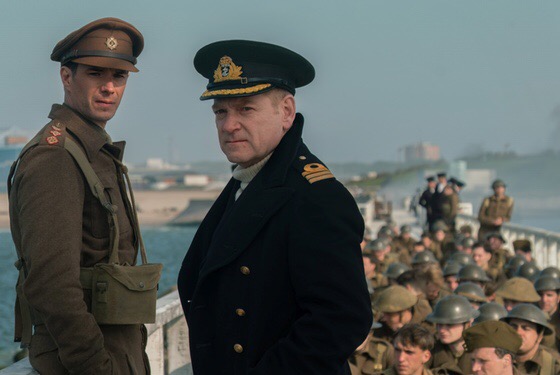
Last night Judy and I went to see the movie Dunkirk. It was different from any war movie that I have ever seen and that was a good thing. It was a work of art that brought the terrible truth of war, of defeat, and of human courage and suffering together in a symphony. Director Christopher Nolan managed to blend three separate timelines to tie together the action on the ground, at sea, and in the air. 

There was not a lot of dialogue but what there was blended well with the images and the score. The fact that the film was primarily shot in IMAX and 70mm instead of digital and used real ships and aircraft instead of massed amounts of digitally created military hardware added to the realism, as the musical score written by Hans Zimmer wrapped itself around you with the ticking of a watch ever present. 

If you have ever been to war or served at sea and been shot at, the movie captured the worst fears of a soldier, sailor, or airman at war; a soldier being trapped on a beach under fire and waiting for rescue; a sailor struggling to escape a sinking ship, or an airman wondering if you have enough fuel to complete the mission and make it home. It also captured the feeling of being delivered from danger, and how that feeling can change in the blink of an eye to terror and despair. 

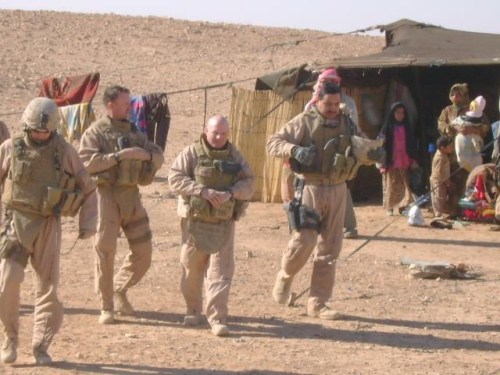
I liked the way that Nolan and Hans Zimmer who wrote the musical score gave something we often overlook in life, the matter of time to the forefront. The ticking of the watch and the blending of an hour in the air, a day at sea, and a week on the land reminded me of how important time is, especially when you are at war. I remember traveling in Iraq by air and ground and just how different each felt in manner of time. Likewise, how different the concept of time felt being on a larger ship or a small boat in a hostile area. 

Dunkirk was a different way to look at war, and maybe because so few people in the United States or Western Europe have experienced war that is a good thing. I honestly think that a film like this, which did not focus on the Generals, Admirals, or political leaders, but rather common soldiers, sailors, and airmen, was a good thing. As far as characters in the film I found that Kenneth Branagh’s character, a Royal Navy Commander directing the evacuation of soldiers from the harbor mole, followed by Tom Hardy who played a Royal Air Force Spitfire pilot, and Mark Rylance who played a civilian mariner to be the most compelling characters. 

Anyway, it is a film that I believe deserves much praise because it focused on the men who fight the war, and what they feel when under fire, rather than trying to wrap the narrative in a neat package with a happy ending. Dunkirk was a miracle that kept a disaster from ending the war. It was not a military victory, it was a nation pulling together to stave off utter defeat, and it allowed Britain to remain in the war and hold off the Nazis in the west until the United States entered the war after Pearl Harbor. 

If you want to read a good book about Dunkirk that will not take too much time I recommend Walter Lord’s Miracle at Dunkirk, and for a broader perspective on the 1940 campaign in France, I recommend Alistair Horne’s classic To Lose a Battle, France 1940, and William Shirer’s The Collapse of the Third Republic, an Inquiry into the Fall of France 1940. 

So until tomorrow,

Peace

Padre Steve+

6 Comments

Filed under film, History, Military, movies, world war two in europe

How Will History Judge Us? Operation Valkyrie at 73


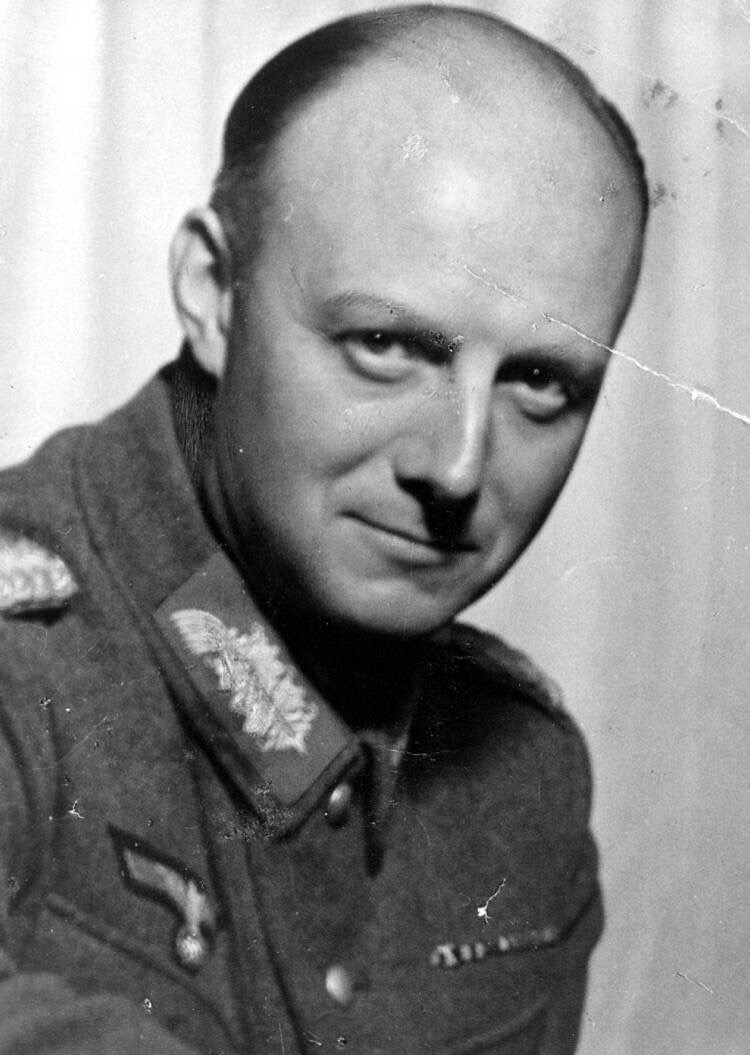
                                                                                         Henning Von Trescow 

Friends of Padre Steve’s World,

Seventy-three years ago today a number of German military officers as well as civilian officials attempted to assassinate Adolf Hitler in an attempt to overthrow the Nazi Regime and end the Second World War. Ironically many had been supporters of Hitler’s early policies and few had spoken out against the Nazi seizure of power, elimination of political opponents, the outlawing of trade unions and opposition political parties. Most remained silent when Hitler conducted his brutal Night of the Long Knives massacre of 1934 and took the personal oath of loyalty to him after Hindenburg died soon after. 

Some would recognize the threat but offered little resistance as Hitler consolidated his power and began to begin his reign of terror at home even as he began to conquer swaths of Europe without firing a shot. Early plans to overthrow Hitler collapsed because his opponents, so used to being loyal and obedient servants of the State were paralyzed whenever an unexpected contingency arose. 

Eleven years after Hitler made opposition political parties illegal and almost five years after he invaded Poland to begin the Second World War a plan called Operation Valkyrie was launched. Two of the key plotters were Colonel Claus Schenk Von Stauffenberg, Major General Henning Von Trescow, and retired General Ludwig Beck. 

Most understood that the attempt would likely fail, but they were determined to try. Von Trescow said: “It is almost certain that we will fail. But how will future history judge the German people, if not even a handful of men had the courage to put an end to that criminal?” 

When Stauffenberg detonated a bomb at Hitler’s East Prussian Wolf’s Lair headquarters Beck and other conspirators attempted to seize power in Berlin. However their plans went awry. Hitler survived the blast. Josef Goebbels secured Berlin, and the plot fell apart. Stauffenberg and a number of conspirators were shot that night, Beck attempted to commit suicide but failed and was killed. Over 5,000 more conspirators, suspects, and other Nazi opponents, including some of the most respected officers of the Wehrmacht were tried in show trials and executed. Some like Field Marshal Erwin Rommel were given the choice of committing suicide to save their families. Von Trescow, who killed himself on the Russian front following the collapse of the coup noted: “We have to show the world that not all of us are like him. Otherwise, this will always be Hitler’s Germany.” Beck notes something that has become a key part of my military ethic: “It is a lack of character and insight, when a soldier in high command sees his duty and mission only in the context of his military orders without realizing that the highest responsibility is to the people of his country.” 

Fabian von Schlabrendorff, a conspirator who was tortured by the Gestapo, said: “Obedience is the rule. However, there are cases which demand disobedience. This has been uncontested in the Prussian Army. Blind obedience has its origin with Hitler.” 

When Hitler issued the Commisar or Criminal Order on the eve of Operation Barbarossa in 1941, Von Trescow told a colleague:

“Remember this moment. If we don’t convince the field marshal (Fedor von Bock) to fly to Hitler at once and have these orders (Commissar Order) canceled, the German people will be burdened with a guilt the world will not forget in a hundred years. This guilt will fall not only on Hitler, Himmler, Göring, and their comrades but on you and me, your wife and mine, your children and mine, that woman crossing the street, and those children over there playing ball.” 

Unlike Hitler’s Germany Americans still have some checks and balances to guard against a President attempting to gain control of the country the way Hitler did Germany, but those checks and balances are delicate, fragile, and if neglected will fail in the crisis. If they do will we have the courage to stand for the principles and ideals of our country? That we do not yet know. Timothy Snyder wrote: 

“The European history of the twentieth century shows us that societies can break, democracies can fall, ethics can collapse, and ordinary men can find themselves standing over death pits with guns in their hands. It would serve us well today to understand why.”

But there are prices to be paid for obedience to unlawful orders and the actions of a criminal state, as well as a price to be paid for disobedience. The men who belatedly and against a nation that was still devoted to Hitler understood those questions and acted accordingly. I do hope that none of us have to face what these men did between 1933 and 1944, but if we do, will we stand the test? 

That my friends is a question we may all have to answer sooner than we think. 
Until tomorrow,

Peace

Padre Steve+

1 Comment

Filed under ethics, History, leadership, Military, nazi germany, News and current events, Political Commentary, world war two in europe

“We Fight for Men and Women Whose Poetry has Not Yet Been Written…” Remembering Robert Gould Shaw and the 54th Massachusetts 


Friends of Padre Steve’s World,

When it learned that the Federal Government was recruiting African Americans, both free men and former slaves as soldiers the Confederate Congress issued this proclamation:

“Any negro taken in arms against the Confederacy will immediately be returned to a state of slavery. Any negro taken in Federal uniform will be summarily put to death. Any white officer taken in command of negro troops shall be deemed as inciting servile insurrection and shall likewise be put to death.” 

Those who doubt that the leaders of the Confederacy fought the war for any “state right” other than the maintenance and expansion of slavery needs to look at the actions and words of that racist republic. 


One hundred and fifty-four years ago today one of those African American regiments went into action against the Confederate works at Battery Wagner, outside of Charleston, South Carolina. The 54th was raised in Boston and Frederick Douglass was instrumental in recruiting men to serve in it, two of which were his sons, and another the grandson of Sojourner Truth. The regimental commander, Colonel Robert Gould Shaw was the son of wealth abolitionists. When the call for volunteers was made in 1861 joined the 7th New York, and later commissioned in the 2nd Massachusetts Volunteer Infantry, with which he fought at the battle of Antietam. After that battle he was offered the command of a black regiment then being raised in Boston. He initially declined the offer but on second thought decided to take it. 

Later tonight I will probably watch the film Glory about that regiment, the 54th Massachusetts Volunteer Infantry. It was one of the first African American Regiments raised for service in the Civil War. I have seen the movie a number of times, and it never fails to bring tears to my eyes. Of course I have written a number of articles about the 54th and other African American units in the Civil War, the later “Buffalo Soldiers” and African American military pioneers, but I cannot forget the 54th. These were men who volunteered and remained in service knowing that the Confederate Congress had condemned them to death should they ever be captured. They also endured the mocking of some White Union soldiers as well as pay inequity with whites, for doing the same dangerous job as infantrymen.

When it was decided that an attack would be made on Battery Wagner the 54th was chosen for the mission. General Thomas Seymour provided this rational for leading the attack the the 54th: they “were in any respect as efficient as any other body of men; and as one of the strongest and best officered, there seemed to be no good reason why it should not be selected for the advance”


During their attack on the night of July 18th 1863, 272 members of the 600 men of the 54th who made the attack including their commander, the twenty-six year-old Colonel Shaw were killed or wounded in a bloody but unsuccessful assault on Battery Wagner. Following the assault, “Sergeant William H Carney staggered back from the fort with wounds in his chest and right arm, but with the regiment’s Stars and Stripes securely in his grasp. “The old flag never touched the ground, boys,” Carney gasped as he collapsed at the first field hospital he could find.” He would be awarded the Medal of Honor for his actions.


Thinking that it was an insult the Confederates stripped Shaw’s body of his uniform and robbed him of his possessions, including his sword. They threw Colonel Shaw’s body in a mass grave with his African American soldiers. When Union commanders asked for the return of his body were told by Confederate commander General Johnson Hagood:

“Had he been in command of white troops, I should have given him an honorable burial; as it is, I shall bury him in the common trench with the niggers that fell with him.”

Union officers sought to have his remains returned but Shaw’s father wrote to implore them not to continue the effort. He wrote to the regimental surgeon:

“We would not have his body removed from where it lies surrounded by his brave and devoted soldiers….We can imagine no holier place than that in which he lies, among his brave and devoted followers, nor wish for him better company. – what a body-guard he has!”

When Shaw first went to war he wrote to his mother words that should be in all of our hearts when we fight for the rights of others, especially those who are despised due to their race, national origin, color, religion or lack thereof,  gender, or sexual orientation:

“We fight for men and women whose poetry is not yet written but which will presently be as enviable and as renowned as any.”

That is what we fight for when we stand for the civil rights of others. That is why it is important to remember the example of the men of the 54th Massachusetts Volunteer Infantry. 

Peace

Padre Steve+

5 Comments

Filed under civil rights, civil war, History, Military, Political Commentary

Fireworks, PTSD, and Memories of Iraq

img_0223-3

Friends of Padre Steve’s World,

Sorry for the late posting as I did not sleep well last night. Fireworks and explosions tend to trigger my PTSD and send me back to Iraq.

Now we had a great 4th of July spending time with each other and then going over to a small get together at a friend’s house for dinner before the city started shooting off its big fireworks show about a mile from our house. We got home just before it began and even though we were inside we could hear the explosions even as neighbors shot off fireworks around the lake that we live near.

I tend to avoid fireworks but they seemed louder than last night than in the past. Eventually I went to bed planning to get up early and run but my sleep was rather awful with a lot of Iraq memories intruding into it. When I got up this morning I realized that I hadn’t posted what I had originally written for today, and then had the realization that it was 10 years ago today that I got on a bus to Fort Jackson, South Carolina to begin my journey to Iraq.

That was startling and maybe my unconscious mind was more aware of it than I realized.

The war and memories of it are still very real to me and as I read about what is going on in Iraq, Syria, and North Korea, those memories become more inflamed as I worry that many more of my brothers and sisters, could soon be in harm’s way. U.S. Army General and hero of the Battle of Gettysburg, Gouverneur Warren wrote to his wife after the Civil War was over, words which I understand more than I ever wanted:

“I wish I did not dream that much. They make me sometimes dread to go to sleep. Scenes from the war, are so constantly recalled, with bitter feelings I wish to never experience again. Lies, vanity, treachery, and carnage.”

So anyway, until tomorrow,

Peace,

Padre Steve+

Leave a comment

Filed under iraq, Military, PTSD

The Tragedy of Friends Divided By War: Winfield Scott Hancock and Lewis Armistead on Cemetery Ridge


Friends of Padre Steve’s World,

I have been rating but continuing to work on my Civil War and Gettysburg texts this weekend, and because of that I am retiring to an older post about the relationships of close friends in war. In this case, friends who had served together for many years who ended up fighting each other at Gettysburg. The story is tragic, because none of them hated each other, or held any animosity towards each other, but instead had followed what they believed to be their duty, some in the continued service of the Union, and others to that of their home states. Even so the bonds of friendship were never severed. Of course, unless you have served with people in war and in the military it it hard to comprehend such a fate. Even now, I know men that I consider friends, men who now hold very different political and social beliefs than me, and if God forbid there was ever another civil war, we would be on opposite sides, but they would still be friends, and I would grieve the fact that we would be fighting. 

I do plan on reworking this section of my Gettysburg text again, adding to it and further exploring the dynamics of the relationships at play in this story. But for now, since I have been working on other things, this will have to do.

Have a great day,

Peace

Padre Steve+

The bonds of friendship forged by soldiers are some of deepest and long lasting that are formed anywhere.  For American military professionals those bonds are formed in the small rather closed society that is the regular United States military. They are formed in war and peace, and are marked by years of deployments, isolated duty and combat. They are part of a culture that is often quite different than that of civilian society. That is the case now as it was in 1860.

When the Southern States seceded from the Union men who had spent much of their adult lives serving together discovered had to say goodbye and prepare to fight each other. Most did so with a heavy heart even though many had strong convictions about the rightness of their region’s cause. Those who left the army to serve the Confederate states were often torn by doubt and questions of where their loyalty lay. Robert E. Lee was a good example of the conflict that many Southern officers faced. “The Southern professional officer in 1861 was confronted with a cruel choice symbolized by Lee’s anguished pacing at Arlington. On one hand, the Southern officer’s political allegiances drew him to the Confederacy; on the other his professional responsibility drew him to the Union.” [1] They wrestled with their oath of office and the costs of perhaps having to face their dearest friends on future battlefields. Lee’s letter to his sister Ann Marshall, who remained a supporter of the Union, after he resigned from the army he had served for 32 years reflects that anguish, torn between his loyalties Lee wrote “With all my devotion to the Union, and the dear feeling of loyalty and duty of an American citizen, I have not been able to make up my mind to raise my hand against my relatives, my children, my home.” [2] He added: “I know you will blame me…but you must think as kindly of me as you can, and believe that I have endeavored to do what I think right.” [3]

They were different from the mass levies of civilian volunteers who rallied to the flags of the Union and Confederacy in 1861. The volunteers, most of whom did not have the deep and abiding friendships of the professionals were often motivated by ideological, sectional or religious hatred of the other and went to war with great aplomb. However, the professionals for the most part went to war against former comrades with heavy heart, “old army colleagues found themselves wrenched from the normal course of their lives when their states joined the Confederacy.” [4]

The American Civil War has many such tales. Porter Alexander wrote of his final words with his superior James B. McPherson, who later went on to be a highly successful corps commander under Grant and Sherman before being killed outside Atlanta in 1864. McPherson desired that Alexander remain in California as an Engineering officer and warned him about the nature of the coming war and gave him his counsel as a friend:

“Now this is not going to be any 90 day or six months affair as some of the politicians are predicting. Both sides are in deadly earnest & it is long & desperate & fought to the bitter end. ..God only knows what may happen to you individually, but for your cause there can be but one possible result. It must be lost….” [5]

Alexander wrote: “Nothing could exceed the kindness & real affection with which McPherson urged these views on me…. His earnest talk impressed me deeply & made me realize that a crisis in my life was at hand. But I felt helpless to avert it or even to debate the question what I should do. I could not controvert one of McPhersons’ statements or arguments; I could only answer this: “Mac, My people are going to war, & and for their liberty. If I don’t come & bear my part they will believe me a coward…” [6]

One of the most remembered is that of Union General Winfield Scott Hancock and Confederate General Lewis Armistead. It was key story line in Michael Shaara’s Pulitzer Prize winning novel The Killer Angels was immortalized in the movie Gettysburg which is based on Shaara’s novel.


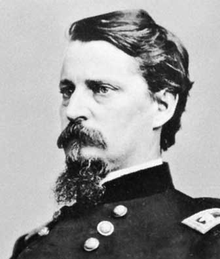
                                                                            Major General Winfield Scott Hancock USA

Hancock was from Pennsylvania. He was a career soldier and Infantry officer, a graduate of West Point Class of 1844. He served in Mexico and held numerous positions. In 1861 he was stationed in California as a Quartermaster under the command of Colonel (Brevet Brigadier General) Albert Sidney Johnston with the Sixth Infantry Regiment. One of his fellow officers was Captain Lewis Armistead, a twice widowed Virginian who also served as a commander of the New San Diego Garrison under Johnston’s command, and Richard Garnett commanding a company at Fort Yuma. Hancock and his wife Almira became fast friends with the widowed Virginian.

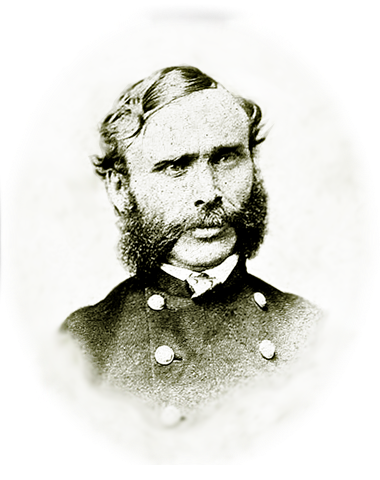
Armistead was a nephew of the officer who defended Fort McHenry from the British in the War of 1812. Armistead had academic and personal difficulties at West Point and “was bounced out, not once but twice.” [7] His troubles included an altercation with Jubal Early in which he broke a plate over Early’s head.  Between his academic difficulties and the fight with Early he resigned from the Academy. However, his father helped him obtain a commission as an Infantry officer in 1839. Armistead’s career from that point on was similar to many other officers of his day. He served with distinction in Mexico, the Great Plains, Kansas, Utah and California.

As the war clouds built and various southern states seceded from the Union numerous officers from the South were torn between their oath, their friendships and their deep loyalty to their home states and families. In the end most Southern officers resigned their commissions, many with mixed feelings and quite often sadness. A large minority, some “40 to 50 per cent of Southern West Point graduates on active duty in 1860 held on to their posts and remained faithful to the Union.” [8] The most prominent of these men were General Winfield Scott and Major General George Thomas, the “Rock of Chickamauga.” Likewise Union Brigadier General John Buford’s family in Kentucky supported the Confederacy.

For those southern officers who remained loyal to the Union to was often at a great personal cost. Thomas’s action cost him his relationship with his immediate family who deemed him to be a traitor. He and others were pilloried and demonized in the basest ways by many in the South. Some Southerners who served the Union were executed when they were captured. George Pickett, who called for his fellow Virginian Thomas’ death ordered 22 North Carolinians who he captured fighting for the Union in Kinston North Carolina to be executed. Pickett was not alone in such sentiments.


                                                                               Brigadier General Lewis Armistead CSA

However, for most it was different. As talk of secession and war heated up officers stationed on the frontier debated the issues and asked each other what they would do if war came. In California Armistead and other officers asked Hancock, who was a Democrat and not openly hostile to the South, advice on what he would do if war came. Hancock’s reply was simple. I shall not fight upon the principle of state-rights, but for the Union, whole and undivided” [9]

The parting came in 1861. When it was apparent that many officers would be resigning and heading home to join their state’s forces the Hancock’s hosted a going away party for their friends. Almira Hancock wrote of the party that “Hearts were filled with sadness over the surrendering of life-long ties.” [10]

Colonel Albert Sidney Johnston’s wife Eliza went to a piano and sang sentimental songs such as Mary of Argyle and the popular Irish song Kathleen Mavourneen. [11] Almira Hancock wrote “Those songs…will ever be remembered by survivors of that mournful gathering.” [12]

“Mavourneen, Mavourneen, my sad tears are falling, 

to think that from Erin and thee I must part!

It may be for years, and it may be forever, 

Then why art thou silent, thou voice of my heart?

The parting was especially emotional for Armistead who had been a friend of the Hancock’s for 17 years. They had helped in following the death of both of his wives and children. He was tearful. He put his arm on his friend’s shoulder as he said: “Hancock, good-by; you can never know what this has cost me, and I hope God will strike me dead if I am ever induced to leave my native soil, should worse come to worse.” [13] As he departed Armistead gave a wrapped Bible and Prayer book to Almira Hancock, in case of his death, inscribed were the words “Trust in God and fear nothing.” [14]

Armistead led his brigade during the Peninsula campaign and battles around Richmond and his brigade was decimated in Lee’s failed assault on prepared Federal positions at Malvern Hill. Armistead did not endear himself to many of the volunteer officers who served in the Confederate ranks. One of his Colonels resigned over Armistead’s supposedly harsh treatment to which Armistead replied: “I have felt obliged to speak to him as one military man would to another and as I have passed nearly all my life in camps my manner may not be understood or appreciated by one who has been all his life a civilian.” [15] Armistead’s words can easily be understood by military professionals whose lives have been shaped in a different manner than their civilian counterparts.

At Gettysburg Armistead spoke his fears about the charge to his comrades. One was Brigadier General Dick Garnett, another of Armistead and Hancock’s comrades from the California days on the night of July 2nd. Garnett’s career had paralleled that Armistead, the same age Garnett struggled at West Point in his third year “he failed and withdrew. Taking the same courses again during the next term, he finished fourteenth among his new classmates, then graduated in 1841 standing 29th of fifty-two graduates.” [16]

Armistead and Garnett served together in the Sixth Infantry for most of their careers. They were promoted at similar times, a pattern of promotion that continued into their Confederate service. The next afternoon, the two friends who had served together so long and whose careers were so similar led their brigades of Pickett’s Division across the valley between Seminary Ridge and Cemetery Ridge against their friend and comrade Winfield Scott Hancock’s II Corps which was defending Cemetery Ridge.

Garnett had to lead his brigade on horseback, having been injured during the army’s march to Gettysburg. During the engagement Garnett was killed just before reaching the Union lines and Hancock gravely wounded. Armistead, lead the remnants of his decimated brigade to the Stone Wall, near the Copse of Trees. He rallied his troops fearing that some were faltering calling out: “Come on boys, give them the cold steel! Who will follow me?” [17]

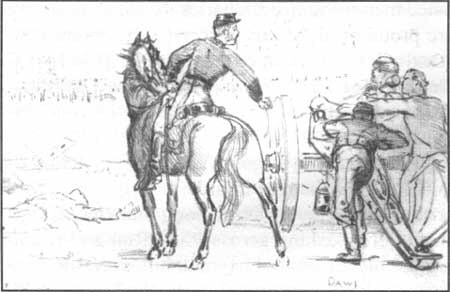
His troops breached the Union line and his black hat atop his sword led his troops forward. He reached the now unmanned artillery of Cushing’s battery and called to his remaining men “The day is ours men, come and turn this artillery on them.” [18] It was then that he met more Federal troops who unleashed a volley of musket fire that cut down many of the survivors. Armistead was wounded in the right arm and shoulder and fell near one of the Union artillery pieces, a point now known as “The High Water Mark” of the Confederacy.


As Armistead lay wounded he was approached by Major Bingham of Hancock’s staff. Bingham, a Mason noticed that Armistead was making a Masonic sign of distress. When Bingham told Armistead of Hancock’s injury Armistead was grieved and told Bingham to “Say to General Hancock for me that I have done him, and you all, an injury, which I shall always regret.” [19]

The meaning of those words is debated, especially by Southerners who cherish the myth of the Lost Cause. However, based on Armistead’s conduct and behavior in the time before he left California, it is not unreasonable to assume that as he lay dying he truly regretted what he had done. Armistead died from infections caused by his wounds which were initially not thought to be life threatening. A Union surgeon described him as: “seriously wounded, completely exhausted, and seemingly broken-spirited.” [20]

Garnett’s body was never found and was probably buried in a mass grave with other Confederate soldiers and was likely taken after the war to his native Virginia “together with thousands of unidentified bodies from Gettysburg, for burial in Richmond’s Hollywood Cemetery.[21] Armistead was buried by a member of the 107th Ohio near the XI Corps field hospital. About a month later a physician from Philadelphia tracked down the soldier and “dug up the “Rough box” containing the body and embalmed poor Armistead’s remains for sale to grieving family members.” [22] Armistead’s family buried the remains in Old Saint Paul’s Cemetery in Baltimore.

Robert Krick wrote: “Death on adjacent bits of blood soaked ground in Adams County, Pennsylvania, yielded a final common thread, that of indignity: Lewis Armistead’s corpse wound up a hostage to petty human greed, while Dick Garnett’s entirely disappeared.” [23]

Hancock’s injuries were severe, but he recovered. He would go on to continued fame and be one of the most admired and respected leaders of the Army during and after the war. He was gracious as a victor and spoke out against reprisals committed against Southerners after the war.

In 1880 Hancock was the Democratic nominee for President. He lost a close election to James Garfield, losing the popular vote by fewer than 40,000 votes. It was an era of great political corruption and Hancock was one of the few major public figures viewed favorably for his integrity. Even his political opponents respected him for his integrity and honesty. Former President Rutherford B Hayes said:

“if when we make up our estimate of a public man, conspicuous both as a soldier and in civil life, we are to think first and chiefly of his manhood, his integrity, his purity, his singleness of purpose, and his unselfish devotion to duty, we can truthfully say of Hancock that he was through and through pure gold.” [24]

A few years after his death Republican General Francis A Walker, lamenting the great corruption of the time said:

“Although I did not vote for General Hancock, I am strongly disposed to believe that one of the best things the nation has lost in recent years has been the example and the influence of that chivalric, stately, and splendid gentleman in the White House. Perhaps much which both parties now recognize as having been unfortunate and mischievous during the past thirteen years would have been avoided had General Hancock been elected.” [25]

The story of Hancock, Armistead and Garnett is one that reminds us of the depth of friendships that many military professionals develop and cherish. It is also a story that reminds us of how hardened ideologues can divide a nation to the point of civil war. It is a story that should give pause to any political or spiritual leader that incites people to war against their neighbor and uses their ideology to slander, demean or even enslave and brutalize their political opponents.

The blood of the approximately 50,000 soldiers that were killed or wounded during the three days of the Battle of Gettysburg is ample reminder of the tragedy of war, especially war that forces the dearest of friends to fight and even kill one another.

Notes 

[1] Huntington, Samuel P. The Soldier and the State: The Theory and Politics of Civil-Military Relations, The Belknap Press of Harvard University Press, Cambridge MA and London 1957 p.212

[2] Thomas, Emory Robert E. Lee W.W. Norton and Company, New York and London 1995 p.188

[3] Korda, Michael. Clouds of Glory: The Life and Legend of Robert E. Lee Harper Collins Publishers, New York 2014 pp.230-231

[4] Jordan, David M. Winfield Scott Hancock: A Soldier’s Life Indiana University Press, Bloomington and Indianapolis 1988 p.33

[5] Alexander, Edward Porter. Fighting for the Confederacy: The Personal Recollections of General Edward Porter Alexander edited by Gary Gallagher University of North Carolina Press, Chapel Hill 1989 p.24

[6] Ibid. Alexander. Fighting for the Confederacy p.25

[7] Guelzo, Allen C. Gettysburg: The Last Invasion Vintage Books a Division of Random House, New York 2013 p.379

[8] Ibid. Huntington The Soldier and the State p.213

[9] Ibid. Jordan Winfield Scott Hancock p.33

[10] Ibid. Jordan Winfield Scott Hancock p.34

[11] Ibid. Jordan Winfield Scott Hancock p.34

[12] Ibid. Jordan Winfield Scott Hancock p.34

[13] Ibid. Jordan Winfield Scott Hancock p.34

[14] Krick, Robert K. The Parallel Lives of Two Virginia Soldiers Armistead and Garnett in The Third Day at Gettysburg and Beyond edited by Gary Gallagher, University of North Carolina Press, Chapel Hill and London 1994 p.112

[15] Tagg, Larry The Generals of Gettysburg: The Leaders of America’s Greatest Battle Da Capo Press Cambridge MA 1998 Amazon Kindle Edition p.244


[16] Ibid. Krick Armistead and Garnett p.101

[17] Stewart, George R. Pickett’s Charge: A Micro-History of the Final Attack at Gettysburg, July 3rd 1863 Houghton Mifflin Company Boston 1959 pp.216-217

[18] Hess, Earl J. Pickett’s Charge: The Last Attack at Gettysburg University of North Carolina Press, Chapel Hill and London 2001 p.262

[19] Ibid. Stewart Pickett’s Charge pp.254-255

[20] Ibid. Stewart Pickett’s Charge pp.254

[21] Ibid. Krick Armistead and Garnett p.123

[22] Ibid. Krick Armistead and Garnett p.123

[23] Ibid. Krick Armistead and Garnett p.123

[24] Ibid. Jordan Winfield Scott Hancock p.319

[25] Stone, Irving They Also Ran Doubleday, New York 1943 and 1981 pg. 188

1 Comment

Filed under civil war, Gettysburg, History, leadership, Military

This Fiery Line: Freeman McGilvery at Plum Run


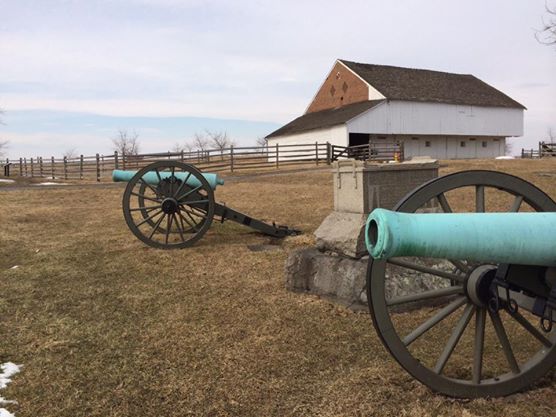
Artillery at the Trostle Farm

Friends of Padre Steve’s World,

Today another excursion into my archives dealing with the Battle of Gettysburg as I muse about my Independence Day article. I hope you enjoy.

Peace

Padre Steve+

The disaster that engulfed Sickles’ III Corps now threatened the Federal center. Meade and Hancock rushed reinforcements in the form of V Corps and much of II Corps. The tip of the Sickle’s salient at Sherfy’s Peach Orchard manned by Graham’s brigade of David Birney’s division was overwhelmed and retreated in disorder. Once “the angle had been breached, the lines connecting to it on the east and north were doomed.” [1] This exposed the left of Humphery’s division and it too was forced to retreat under heavy pressure sustaining heavy casualties. The final collapse of Humphrey’s division a large gap opened in the Federal lines between the elements of V Corps fighting along Devil’s Den and Little Round Top and II Corps along the central portion of Cemetery Ridge.

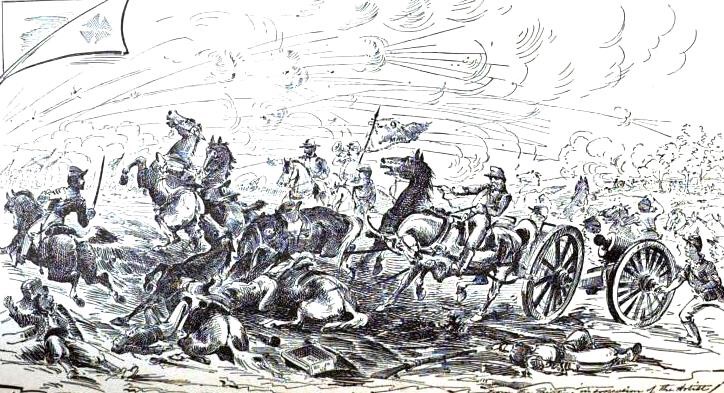
When Meade realized the seriousness of the situation he gave Sickles’ free reign to call for reinforcements from Harry Hunt’s Artillery Reserve as III Corps had only batteries organic to it. Those five batteries were in the think of the fighting providing invaluable support to Sickles’ hard pressed and outnumbered corps. Firing canister they cut swaths of death and destruction through the massed ranks of wildly cheering Confederates of Kershaw and Semmes and Barkdale’s brigades of McLaws’ division.

The Confederates believed that they had cut the Union line in half and advanced through the Peach Orchard and across the Wheat Field toward Cemetery Ridge.


Among the artillery called into action was the First Volunteer Brigade under the command of Lieutenant Colonel Freeman McGilvery. McGilvery, a Maine native was a former sea captain who had organized and commanded the 6th Maine Battery at the beginning of the war. He commanded it with distinction in a number of engagements. Promoted to Major in early 1863 he assumed command of the Brigade and fought at Chancellorsville and was promoted to Lieutenant Colonel in June as the Army of the Potomac pursued Lee’s Army.

McGilvery rode into the maelstrom of the retreating III Corps soldiers and broken guns. His horse was hit four times but he remained unwounded despite “exposing himself to enemy missiles on all parts of the field from Cemetery Ridge to the Peach Orchard.” [2] He noted that there was no infantry anywhere that could plug the gap and acted instantly on his own authority to make a decision that likely saved the Union line. In the confusion of III Corps disintegration three of his batteries had withdrawn leaving Captain John Bigelow’s 9th Massachusetts battery alone at the Trostle farm telling them they must “hold at all hazards.” [3] Bigelow later explained that McGilvery said that “for 4 or 500 yards in my rear there were no Union troops.” He was then instructed by McGilvery “For heavens [sic] sake hold that line…until he could get some other batteries in position…” [4] In another account Bigelow recorded “Captain Bigelow…there is not an infantryman back of you along the whole line which Sickles moved out; you must remain where you are and hold your position at all hazards, and sacrifice your battery if need be, until at least I can find some batteries to put in position and cover you.” [5]

The order could have been considered suicidal; the 21st Mississippi was nearly upon them and they were but one battery and barely one hundred troops. Bigelow did not hesitate to obey; he brought his guns into line at the Trostle house “facing one section slightly to the southwest and the other two sections directly into the path of the oncoming Confederates.” [6]


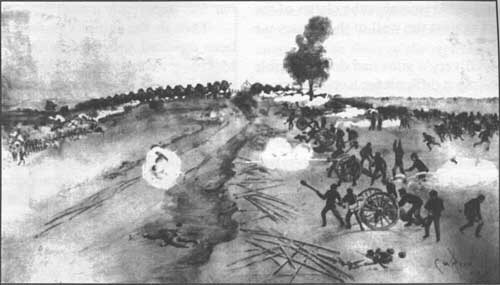
Bigelow’s artillerymen fought like demons he described the effect of his fire on Kershaw’s South Carolinians “the Battery immediately enfiladed them with a rapid fire of canister, which tore through their ranks and sprinkled the field with their dead and wound, until they disappeared in the woods on our left, apparently a mob.” [7] They poured a merciless stream of fire into the advancing Confederates until “they had exhausted their supply of canister and the enemy began to close in on his flanks.” [8] A German born gunner noted “we mowed them down like grass, but they were thick and rushed up.” [9] A hand to hand fight ensued among the guns but the Massachusetts men escaped losing 28 of its 104 men engaged,[10] the brave commander Bigelow was wounded and nearly captured but one of his men helped him to the rear.


Their sacrifice was not in vain. They bought McGilvery an additional 30 minutes to set up a line of guns along Plum Run. Hunt praised the battery “As the battery had sacrificed itself for the safety of the line, its work is specially noticed as typical of the service that artillery is not infrequently called to render, and did render in other instances at Gettysburg besides this one.”[11]

Barksdale’s brigade did not pause and continued in their relentless advance towards Cemetery Ridge, sweeping Union stragglers up as they moved forward led by their irrepressible Colonel. Before them was McGilvery’s new line, hastily cobbled together from any batteries and guns that he could find. Initially composed of 13-15 guns of four different batteries he was joined by two more batteries giving him about 25 guns in all. Subjected to intense Confederate artillery fire and infantry attacks his guns held on even as their numbers were reduced until only six guns remained operational. “Expertly directed by McGilvery a few stouthearted artillerymen continued to blaze away and keep the low bushes in front of them clear of lurking sharpshooters. Although they had no infantry supports, they somehow managed to create the illusion that the woods to their rear were filled with them, and they closed the breach until the Union high command could bring up reinforcements.” [12]

The reinforcements came in the form of Colonel George Willard’s “Harper’s Ferry” Brigade which was looking for revenge and redemption. This unit hit Barksdale’s now disorganized force which had reached its cumulating point hard. Willard was killed and Barksdale mortally wounded and captured in the violent clash which spelled the end of one of the greatest threats to the Union line of the entire battle. Philip Tucker in his book Barksdale’s Charge: The True High Tide of the Confederacy at Gettysburg, July 2, 1863 refers to Barksdale’s charge as the real “high water mark of the Confederacy.”

Plum Run Line

However it was McGilvery who recognized the emergency confronting the line and on his own took responsibility to rectify the situation. He courageously risked “his career in assuming authority beyond his rank” [13] and without his quick action, courage under fire and expert direction of his guns Barksdale’s men might have completed the breakthrough that could have won the battle for General Lee despite all of the mistakes committed by his senior leaders that day.


The action of McGilvery was another example of an officer who had the trust of his superiors who did the right thing at the right time. It is an example of an officer used the principles of what we today call Mission Command to decisively impact a battle. McGilvery rose higher in the Federal service and was promoted to Colonel and command of the artillery of X Corps. He was slightly wounded in a finger at the battle of Deep Bottom in August 1864. The wound did not heal properly so surgeon’s decided to amputate the finger. However they administered a lethal dose of chloroform anesthesia and he died on September 9th, the Union losing one its finest artillerymen. He was buried in his native Maine and the State legislature designated the first Saturday in September as Colonel Freeman McGilvery Day in 2001.

Notes

[1] Trudeau, Noah Andre Gettysburg: A Testing of Courage Harper Collins, New York 2002 p.368

[2] Coco, Gregory A A Concise Guide to the Artillery at Gettysburg Colecraft Industries, Orrtanna PA 1998 p.31

[3] Hunt, Henry I Proceeded to Cemetery Hill in Battles and Leaders of the Civil War Bradford, Ned editor, Meridian Books, New York 1956 p.378

[4] Guelzo, Allen C Gettysburg, The Last Invasion Vintage Books, a Division of Random House, New York 2013 p.314

[5] Ibid. Trudeau p.385

[6] Ibid.

[7] Bigelow, The Peach Orchard, 54; History of the Fifth, 638 retrieved from WE SAVED THE LINE FROM BEING BROKEN: Freeman McGilvery, John Bigelow, Charles Reed and the Battle of Gettysburg by Eric Campbell http://www.nps.gov/history/history/online_books/gett/gettysburg_seminars/5/essay4.htm#52

[8] Coddington, Edwin. The Gettysburg Campaign: A Study in Command Touchstone Books, New York 1960 p.416

[9] Ibid. Guelzo pp.314-315

[10] Ibid Hunt p.379

[11] Ibid. Hunt. P.379

[12] Ibid. Coddington p.417.

[13] Ibid. Coddington.

1 Comment

Filed under civil war, Gettysburg, History, leadership, Military

Vague Orders, Hubris, and the Need for Redemption: J.E.B. Stuart’s Ride at Gettysburg

Friends of Padre Steve’s World

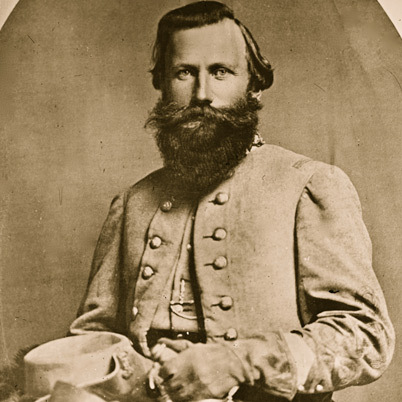
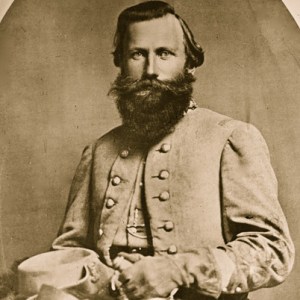
Today I am going back to the archives and re-posting an edited version of something that is part of my unpublished Gettysburg Campaign text. James Ewell Brown (J.E.B.) Stuart is legendary in American military history. A young cavalry officer from Virginia he was like a son to Robert E. Lee and was a man whose military accomplishments were matched by his unbridled vanity, which during the most critical moment in the history of the Confederacy led him to embark on an operation that left his commander in the lurch and helped doom the Confederacy. The story picks up following Stuart being surprised by Federal Cavalry at the Battle of Brandy Station in June of 1863 as Lee’s Army of Northern Virginia was moving north in an attempt to bring the Army of the Potomac to Battle, destroy it, and end the war. Both Stuart and Lee had much to do with the failure of this plan, but I hope that you enjoy this account.

Peace

Padre Steve+

While the embattled “Fighting Joe” Hooker slowly pursued Lee with the Army of the Potomac, a drama of major significance to the battle Robert E. Lee’s own making was beginning to engulf his operations and leave him blind to the movements of the Federal Army. It involved Lee and his Cavalry commander, J.E.B. Stuart and would be the first of a number of mistakes that would characterize Lee’s campaign. All of these failures dealt with Lee’s singular inability to get his commanders to understand his intent for the campaign and his inability to clearly communicate his wishes.

The necessity of subordinate commanders understanding the intent of their superior is essential to the success of any military operation. During the Gettysburg campaign Lee failed miserably to communicate his operational plan and desire to his commanders. The episode with Stuart was one of several that paint a portrait of Lee not being as good of General as the myth surrounding him.

After the surprise at Brandy Station Stuart’s troopers screened the right flank of the army as it moved north, defending the gaps in the Blue Ridge to keep Alfred Pleasanton’s Federal Cavalry Corps from interdicting the march of the Army of Northern Virginia, or discovering the location of Lee’s three infantry corps which were moving north behind the cover of the Blue Ridge.

In this Stuart was successful, but frustrated. Between June 17th and June 21st his troopers fought a series of engagements against the aggressive Federal Cavalry at Ashby’s Gap, Middleburg and Upperville in Northern Virginia. While Stuart’s troopers had held off Pleasanton’s confident troopers the “running combats were taking a toll on the Southern mounted arm, however. Stuart had already suffered several hundred casualties defending gaps and passes.” [1] Much to their dismay the Confederates noted the improvements in the Federal cavalry during these battles. Captain William Blackford, who served as an engineer on Stuart’s staff noted:

“the improvement of enemy cavalry was enormous, mainly in the heavy fire from long range carbines, and horse artillery that was a match for Stuart’s own These cavalrymen fought as if they had been taken from infantry regiments, for they knew how to fight with horses left behind.” [2]

Unlike the rest of the Army of Northern Virginia that was marching like victors into Pennsylvania and Maryland, Stuart’s Cavalry Division had little cause to rejoice. They had been surprised at Brandy Station and Stuart had been humiliated in the Southern press. The Federal cavalry under Pleasanton gave him no opportunity to redeem himself. While Pleasanton’s troopers never broke through Stuart’s screen, they had pressed him hard, and his division was “really fought out during those two weeks from June 9 until the misty morning of June 22…. Not only had Stuart’s cavalry been pressed on the defensive as never before, but also they had not been able to gain a spot of information about the enemy.” [3] Pleasanton’s troopers and proven that the days of “easy Confederate cavalry triumphs were gone,” [4] and Stuart, now “smarting over the cuts to his ego, refused to read the portents” [5] of future disaster.

Stuart had been fighting defensively the entire campaign, but desperately wanted to go on the offensive. As his troops battled at Aldie, Middleburg and Upperville, Stuart formulated a plan that he submitted to Lee. Stuart reasoned since now that “all the infantry were west of the Blue Ridge…that it would be possible to leave one or two brigades of cavalry to defend the gaps and with the remaining three to descend on the enemy and harass Hooker in any advance into Pennsylvania.” [6] For him the plan was designed for personal glory and redemption after the embarrassment at Brandy Station.

On the morning of the 22nd of June Stuart noticed that the Federal cavalry that had engaged him at Upperville the previous day was no longer present. That morning he also received an order from Lee ; an order that was the first of a series of vague, poorly written and contradictory orders that was to plague Lee throughout the campaign.

Unlike his new infantry corps commanders, Ewell and Hill, Stuart was very familiar with Robert E. Lee’s method of command, and Lee had “so much faith in Stuart’s judgment and ability to make the right moves that after indicating his wishes he gave him considerable latitude in carrying them out. His orders were more suggestions than commands….” [7] However well that may have worked for Lee in the past with Jackson and Stuart, the nature of Lee’s orders to Stuart, being conditional, needed to clearly address “the conditions upon which they are based.” [8] This Lee did not do. His order read:

“I judge the efforts of the enemy yesterday were to arrest our progress and ascertain our whereabouts. Perhaps he is satisfied. Do you know where he is and what he is doing? I fear he will steal a march on us and get across the Potomac before we are aware. If you find that he is moving northward and that two brigades can guard the Blue Ridge and take care of your rear, you can move with the other three into Maryland and take position on General Ewell’s right, place yourself in communication with him, guard his flank, keep him informed of the enemy’s movements and collect all the supplies you can….” [9]

James Longstreet, commander of the Confederate First Corps who Stuart was cooperating with on the northward march, added his own comments to Lee’s instructions which even further clouded the order:

General Lee has enclosed this letter for you, to be forwarded to you, provided you can be spared from my front, and provided I think that you can move across the Potomac without disclosing our plans. He speaks of your leaving via the Hopewell Gap and passing by the rear of the enemy. If you can get through by that route I think that you will be less likely to indicate what our plans are than if you should be passing to our rear. I forward the letter of instructions with these suggestions. Please advise me of the condition of affairs before you leave, and order General Hampton, whom I suppose will leave here in command, to report to me at Millwood, either by letter or in person, as may be most agreeable to him.” [10]  

But even without an order from Lee, Stuart was already planning his offensive that he believed would restore his glory. He had sent Major John Mosby with a small detachment of troops to reconnoiter behind the Union lines. Mosby reported the location of all the infantry corps of the Army of the Potomac. Mosby reported to Stuart on June 23rd that the Federal corps were stationary and “were so widely separated…that a column of cavalry could easily get between them.” [11] It was news that Stuart was delighted to hear. Mosby painted a glowing picture of how an operation using the Hopewell Gap could create havoc in the Federal rear and cause panic in Washington as he could “severe communications between Hooker and Pleasanton, destroy a “large portion” of Hooker’s transportation, and take some of the pressure off Lee by creating a diversion for the Union cavalry.” [12]

The inactivity of the Federal army reported by Mosby was exactly the news Stuart wanted to hear, and he asked Lee for permission to plunge into the Federal rear, and in his after action report wrote:

“I submitted to the commanding general the plan of leaving a brigade or so in my present front, and passing through Hopewell, or some other gap in Bull Run Mountain, attaining the enemy’s rear, and passing between his main body and Washington, to cross into Maryland and joining our army north of the Potomac.” [13]

Lee was rather cryptic in his after action report and wrote “Upon the suggestion of the former officer (General Stuart) that he could damage the enemy and delay his passage of the river by getting to his rear, he was authorized to do so.” [14] In that same report of the campaign Lee wrote:

“General Stuart was left to guard the passes of the mountains and observe the movements of the enemy, whom he was instructed to impede and harass as much as possible, should he attempt to cross the Potomac. In that event, General Stuart was directed to move into Maryland, crossing the Potomac east or west of the Blue Ridge, as, in his judgment, should be best, and take position on the right of our column as it advanced.” [15]

That night, during a heavy rainstorm Stuart’s chief of staff Major McClellan received Lee’s reply to his superior’s request. When he received it he immediately delivered to Stuart. Lee’s instruction stated:

“If General Hooker’s army remains inactive, you can leave two brigades to watch him, and withdraw with three others, but should he not appear to be moving northward, I think you had better withdraw this side of the mountains tomorrow night, cross as Shepherdstown next day, and move over to Frederickstown.

You will, however, be able to judge whether you can pass around their army without hindrance, doing them all the damage you can, and cross the river east of the mountains. In either case, after crossing the river, you must move on and feel the right of Ewell’s troops, collecting information, provisions, etc.” [16]

However, Stuart does not deserve the entirety of the blame for what happened. The orders or suggestions that he received from Lee and Longstreet gave Stuart were “so badly worded that it is difficult to make sense of them.” [17] Lee implicitly trusted Stuart but he was wrong in assuming that the young officer should be able to divine his intent after Brandy Station without taking into account the effect the negative press of that battle had on his subordinate. Lee should have “established that Stuart’s most important task was to guard Ewell’s right and report on the direction of Hooker’s advance once Lee crossed the Potomac.” [18] This he did not do. Instead, Stuart was given several conflicting instructions. Lee directed that Stuart maintain contact with Ewell, screen the Blue Ridge gaps, collect information, “raiding around the rear of Hooker’s forces” [19] damaging the enemy and collecting supplies. Stuart could have done any of these tasks, but not all of them, and the smorgasbord offered by Lee played directly into Stuart’s need to redeem himself after the beating that he took in the Confederate Press after Brandy Station.

Specifically, Lee’s lack of clarity and vagueness allowed to Stuart interpret the order in a manner that benefited him. The order could easily be interpreted as getting Stuart and his men into Pennsylvania as quickly as possible to guard Ewell’s flank and discern the intentions of the enemy, which in hindsight appears to be Lee’s intent, or as permission to conduct a raid “roam in the enemy’s rear for an unpredictable period of time, raising havoc with his communications, supplies, and isolated commands” and then “seek out Ewell’s corps and use it as a place of refuge from an aroused enemy.” [20]

The fact is that as they are today that different standards apply to each course of action laid out by a commander and that orders must be clear, otherwise subordinates may interpret them in a far different manner that intended. Such vague orders can have far reaching effects, often contrary to the intent of the commander who issued them; this was the case here.

By giving Stuart the latitude to go around the Federal army Lee undercut his own preference that Stuart cross into Maryland via Shepherdstown and Frederick on June 24th. Lee had provided Stuart an opportunity for something that “Longstreet half-apologetically called “something better than the drudgery of a march around our flank.” [21] It was a critical mistake, which was then further compounded by Stuart and the movement of the Army of the Potomac.

Stung by the criticism of his conduct of the Battle of Brandy Station in the Southern press and frustrated by Pleasanton’s constant thrusts at his troopers screening Lee’s flank on the Blue Ridge Stuart interpreted the orders in the manner that appealed to Stuart’s sense of glory. He would repeat his triumph of the previous year when he rode around the Army of the Potomac. For Stuart this was a chance to regain the limelight and add to his luster. Stuart “summed up his interpretation of his orders when he said later: …it was deemed practicable to move entirely in the enemy’s rear, intercepting his communications with his base (Washington), and, inflicting damage upon his rear, to rejoin the army in Pennsylvania in time to participate in its actual conflicts.”[22]

Historians have long wondered why Lee was not more explicit in his orders to Stuart and why Stuart conducted an operation that left Lee blind and had no obvious advantages, except to allow Stuart to recover his tarnished reputation. Stephen Sears noted in his book Gettysburg that: “The very concept of Stuart’s expedition was fueled by overconfidence and misjudgment at the highest command level.” [23] In a sense the decision harkens back to the hubris of Lee and others about the superiority of his army, and Lee’s distain for the capabilities of Army of the Potomac and Federal troops in general.

In organizing his movement around the Army of the Potomac, Stuart decided to take his three best cavalry brigades with him, and leave the brigades of “Grumble” Jones and Beverly Robertson to defend gaps and screen the rear of the army. The choice was unfortunate; Robertson was unpredictable but was “senior to the dependable Jones” [24] who was considered the “best outpost officer in his command.” [25] The choice ridded Stuart of Robertson, who he did not trust in battle and Jones “whose antipathy for Stuart at least equaled Stuart’s for him.” [26] The intent was that Robertson would screen the army and follow it into Maryland, in fact Stuart gave Robertson “explicit instructions” [27] to do so, but instead “the two brigades would remain fixed, as if planted there, in an inanition of command which immobilized the men for whom Lee in Pennsylvania was anxiously watching.” [28] Longstreet had requested the industrious and dependable Hampton command the remainder of the cavalry, but Stuart disregarded his counsel and took Hampton with him.

Stuart set off with his three best brigades, Wade Hampton’s, Fitzhugh Lee’s, and Rooney Lee’s, the latter now with Rooney Lee having been wounded was under the command of Colonel John R. Chambliss. Chambliss was another former West Pointer who had retired from the old army but had responded to the call to secession.

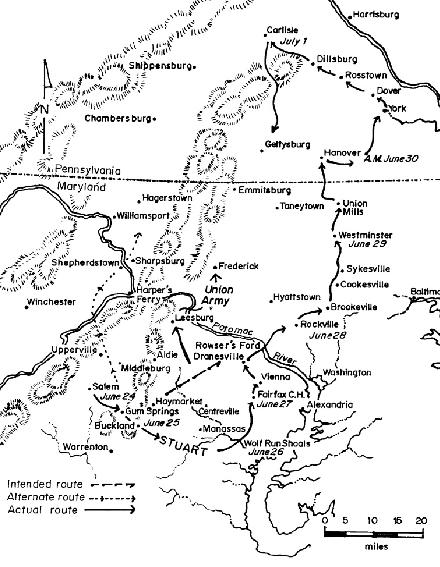
Almost immediately after setting off Stuart and his brigades encountered a situation that should have immediately stopped movement to the Federal rear and instead brought Stuart to move back to the west of the Blue Ridge. Moving through Glasscock’s Gap Stuart’s troopers  “bumped unexpectedly into “an immense wagon train,” which happened to be the tail end of Winfield Hancock’s 2nd Corps, blocking the road in exactly the fashion Lee had described as a hindrance.” [29] Instead of going back when he had the chance Stuart elected to continue with his “plan to go around the Federal army. It was a crucial decision, for he still could have turned back without losing any more time.” [30] Even so, Stuart had to spend a day grazing his horses since he had no grain with him, delaying his advance north and east, placing him a day behind schedule. Though Stuart and his brigades made better time on the 26th, advancing twenty-five miles, he had to again stop to graze his horses at the Occoquan River. It had “taken forty-eight hours to march thirty-five miles.” [31]

Stuart continued on past the outskirts of Washington on June 27th and was again delayed when attempting to cross the Potomac at Rowser’s Ford where the “water level was two feet higher than normal.” [32] Upon crossing the river he then encountered a large Federal wagon train not far from Washington capturing over 100 wagons and 600 mules. He reveled in that feat and boasted that “he had taken more than one hundred and twenty-five best United States model wagons and splendid teams and gay caparisons,” containing “foodstuffs, oats, hay…bacon, ham, crackers and bread” but his progress was slowed by his enormous wagon train of captured supplies…” [33] He and briefly wondered “whether it might be worth “our entering Washington City” [34] before determining that the effort might be too costly.

On June 28th Stuart received word that Joe Hooker and the Army of the Potomac were across the Potomac. Likewise, Stuart “knew nothing of Lee’s position,” [35] and instead of abandoning the wagon train he sacrificed the speed and mobility of his brigades to keep it. This was a direct consequence of how badly Lee had written his order to Stuart. Now, “far from guarding Ewell’s right, he was now moving away from Ewell, with no idea where Hooker’s army might be and no communication with Lee, who frequently inquiring of his aides, “Can you tell me where General Stuart is?” [36]

On the wrong side of the federal army, encumbered by the captured wagon train, “Stuart would have to make a half circle of more than fifty miles around Gettysburg before arriving there about noon on the second day of battle with most of his troopers, his artillery, and his wagon train lumbering far behind him.” [37] On June 30th his men were engaged by Judson Kilpatrick’s Federal near cavalry division near Hanover, and “his men never fought more poorly…and General Stuart and his staff were nearly captured.” [38] By the time Stuart’s troopers arrived in Gettysburg, the once proud outfit was “exhausted and too late to be of any service.” [39] His arrival at Gettysburg was not a moment of triumph, but was humiliating. Instead of reporting to his commander with information that Lee needed, it was Lee who informed him of the position of his own army and the Army of the Potomac. Lee’s words to his much beloved subordinate were painful. He asked him “General Stuart, where have you been?” [40] Stuart seemed to wilt at his mentor’s words, and attempted to put the best face forward, and told Lee “I have brought you 125 wagons and their teams, General,” to which Lee replied “Yes, General, but they are an impediment to me now.” [41]

Stuart’s raid was disastrous for Lee. Until July 2nd, Lee was blind and had no idea where the Federal army was. He learned some when he told of the location of the Army of the Potomac by Longstreet’s scout Harrison on June 28th but even then he had no clear idea of the Federal Army’s location, strength, or intentions until the second day of the Battle of Gettysburg. Stuart’s ride was “an act of folly – ill-planned, badly conducted, and (until the very end) executed with an almost total disregard for anything for any interest other than the self-promotion of J.E.B. Stuart.” [42]

To be clear, a number of important military factors important to those involved in planning campaigns are clear: Deception, commander’s intent, and unity of command. Lee successfully used deception to prevent the Federals from discerning his purposes, but that initial success was compromised by his lack of clarity in communicating his intent for the campaign to Stuart, and by Stuart’s careless disregard of any other consideration but his own reputation and vanity.

Both Stuart and Lee share culpability for the failure of the Confederate campaign at the operational and tactical level. Of course they were not the only ones, Longstreet, Ewell, A.P. Hill, Harry Heth, and Jubal Early and many others had a share in the defeat, but Lee in his orders, and his protégé Stuart in trying to redeem his reputation were most culpable in the defeat at Gettysburg.

Notes

[1] Petruzzi, J. David and Stanley, Steven The Gettysburg Campaign in Numbers and Losses: Synopses, Orders of Battle, Strengths, Casualties and Maps, June 9 – July 1, 1863 Savas Beatie LLC, El Dorado Hills CA 2012 p.41

[2] Davis, Burke J.E.B. Stuart: The Last Cavalier Random House, New York 1957 pp.319-320

[3] Dowdy, Clifford. Lee and His Men at Gettysburg: The Death of a Nation Skyhorse Publishing, New York 1986, originally published as Death of a Nation Knopf, New York 1958 p.57

[4] Freeman, Douglas Southall, Lee’s Lieutenant’s a Study in Command, One volume abridgement by Stephen W Sears, Scribner, New York 1998 p.553

[5] Ibid. Dowdy Lee and His Men at Gettysburg p.57

[6] Ibid. Freeman Lee’s Lieutenants p.553

[7] Coddington, Edwin B. The Gettysburg Campaign: A Study in Command, A Touchstone Book, Simon and Schuster New York, 1968 p.108

[8] Ibid. Coddington The Gettysburg Campaign p.108

[9] Ibid. Davis J.E.B. Stuart: The Last Cavalier p.321

[10] Oates, Willam C. and Haskell, Frank A. Gettysburg: The Confederate and Union Views of the Most Decisive Battle of the War in One Volume Bantam Books edition, New York 1992, originally published in 1905 p.61

[11] Ibid. Coddington The Gettysburg Campaign p.109

[12] Ibid. Coddington The Gettysburg Campaign p.109

[13] McClellan, Henry Brainerd The Life and Campaigns of Major General J.E.B. Stuart Commander of the Cavalry of the Army of Northern Virginia 1885. Digital edition copyright 2011 Strait Gate Publications, Charlotte NC Location 6087

[14] Ibid. McClellan The Life and Campaigns of Major General J.E.B. Stuart location 6106

[15] Lee, Robert E. Reports of Robert E Lee, C.S. Army, Commanding Army of Northern Virginia Campaign Report Dated January 20th 1864. Amazon Kindle Edition location 285

[16] Ibid. Davis J.E.B. Stuart: The Last Cavalier p.324

[17] Fuller, J.F.C. Decisive Battles of the U.S.A. 1776-1918 University of Nebraska Press, Lincoln 2007 copyright 1942 The Royal Society for the Prevention of Cruelty to Animals p.226

[18] Korda, Michael. Clouds of Glory: The Life and Legend of Robert E. Lee Harper Collins Publishers, New York 2014 p.540

[19] Ibid Korda Clouds of Glory p.540

[20] Ibid. Coddington The Gettysburg Campaign p.110

[21] Guelzo, Allen C. Gettysburg: The Last Invasion Vintage Books a Division of Random House, New York 2013 p.96

[22] Ibid. Freeman Lee’s Lieutenants p.555

[23] Sears, Stephen W. Gettysburg, Mariner Books, Houghton Mifflin Company, Boston and New York, 2003 p.106

[24] Ibid. Dowdy Lee and His Men at Gettysburg p.63

[25] Ibid. Davis J.E.B. Stuart: The Last Cavalier p.324

[26] Ibid. Dowdy Lee and His Men at Gettysburg p.63

[27] Ibid. Coddington The Gettysburg Campaign p.112

[28] Ibid. Dowdy Lee and His Men at Gettysburg p.63

[29] Ibid. Guelzo Gettysburg: The Last Invasion p.96

[30] Ibid. Coddington The Gettysburg Campaign p.112

[31] Ibid. Davis J.E.B. Stuart: The Last Cavalier p.325

[32] Ibid. Coddington The Gettysburg Campaign p.112

[33] Ibid Korda Clouds of Glory p.541

[34] Ibid. Guelzo Gettysburg: The Last Invasion p.98

[35] Ibid. Davis J.E.B. Stuart: The Last Cavalier p.325

[36] Ibid Korda Clouds of Glory p.541

[37] Ibid Korda Clouds of Glory p.541

[38] Ibid. Dowdy Lee and His Men at Gettysburg p.73

[39] Ibid. Fuller Decisive Battles of the U.S.A. 1776-1918 p.227

[40] Ibid. Davis J.E.B. Stuart: The Last Cavalier p.334

[41] Ibid. Davis J.E.B. Stuart: The Last Cavalier p.334

[42] Ibid. Guelzo Gettysburg: The Last Invasion p.98

2 Comments

Filed under civil war, Gettysburg, History, leadership, Military