Category Archives: Military

A New Grand Alliance to Defeat DAESH

image.adapt.960.high

Friends of Padre Steve’s World,

We are now waking up to the fourth day in the next phase of a war that began too long ago, a war that too many people have been victimized by, which only is getting worse and more widespread.

Winston Churchill wrote, “If Hitler invaded hell I would make at least a favorable reference to the devil in the House of Commons.” That may seem an odd statement, Churchill made it in reference to the alliance with the Soviet Union to defeat Hitler in World War Two, but it bears a particular relevance to the situation that we find ourselves in with ISIL, or as they are also known, DAESH.

This is a follow up to my posts of the last few days regarding the attacks of Islamic State supporters in Paris and it will not be the last. French President Hollande has correctly noted that the attack was an act of war, and he promised that the French campaign against DAESH would be ruthless. Hollande and other leaders, including President Obama are now beginning to plan a coordinated strategy to defeat DAESH. That being said, any real strategy to defeat DAESH has to include more than a few partners, it must be truly a grand alliance. 

I am a career military officer, an Iraq veteran and an anti-war liberal, but I am also a realist in terms of the world. I have no illusions about the world. I do not believe that the United States always acts with honor and I know in my heart of hearts that much of the chaos that we are seeing in the world, particularly the Middle East comes from years of misbegotten American intrigue and intervention. Of course the Americans were not the only ones involved in creating this mess, we can thank the French and the British for the Sykes-Picot agreement. That agreement and the subsequent post-war agreements artificially divided the Middle East based on British and French colonial interests and disregarded the traditional and historic interests of the people in the region. Those agreements also handed the Arabian Peninsula over to the House of Saud, rather than the more moderate Arabs that fought alongside the British against the Ottoman Empire. We can also thank the Russians for their contributions to the instability of the region, as well as the Israelis who in defending their interests have often made things worse. Finally we cannot forget the role played by many corrupt and despotic Arab leaders who have oppressed their people, and exploited their countries riches for their own gain. Finally, back to the Americans it was the ill-advised and criminal invasion of Iraq by the Bush administration that opened Pandora’s Box and unleashed what we now know as the Islamic State. Sadly, almost all the countries currently involved have had a hand in creating the monster that we know as DAESH and the Islamic State, and all should bear part of the responsibility for defeating it.

That being said, whether any of us like it or not we are at war, a war that has been going on in earnest since 2003. This is not a new war, it is simply DAESH’s continuation of the war that was declared by Al Qaeda, and that Al Qaeda Iraq fought against American, allied, and Iraqi forces from 2003 through 2011.

The genie of war is out of its bottle and it will not return on its own accord, and it will create more chaos, death and destruction, both in the Middle East, but also other parts of the world. The threats of DAESH need to be taken seriously and countered.

We have to understand that this war is not a movie, it is not a video game, and it has the potential to change all of our lives, and not for the better.

Likewise, the fight against DAESH will not be solved or won by military action alone. The falsehoods of the warn porn addicts who believe deploying ground troops without the support of the people in the region, nor dropping more bombs will win the war. President Obama noted correctly, in response to suggestions that large numbers of ground troops be deployed, “that that would be a mistake, because we would see a repetition of what we’ve seen before, which is if you do not have local populations that are committed to inclusive governance and who are pushing back against ideological extremes, that they resurface….” He is right for saying this because those who propose sending in large numbers of ground troops are not committed enough to the hard thing and fully mobilize the nation for war. Instead they would as they always do, put the burden of the war on an already worn out professional volunteer military force without being willing to work with other powers, even rivals that have an interest in defeating DAESH.

The full spectrum of national and international power must be deployed to fight DAESH. This includes the U.S., NATO, Russia, China, Japan, the Arab world, and even Iran. Yes, some of these nations are competitors and rivals, but all have a vested interest in defeating DAESH and all have capabilities that would be helpful in the fight. In the Second World War the President Franklin Roosevelt United States and Britain’s Prime Minister Winston Churchill allied themselves with the Josef Stalin and the Soviet Union in what was then known as the Grand Alliance to defeat Hitler. The Grand Alliance was a real world demonstration of the art of realpolitik. Realpolitik demands compromise and finding common ground with nations that we may not like. Those that practice realpolitik also understand that almost all alliances are temporary. This may be unsavory to idealists, but it is reality, and it is the only thing that will defeat DAESH. It is high time the world leaders to get real in combatting DAESH.

Military force seems always to be the first thing that people think of, and while important, it is not the only kind of power that must be used. If we are going to use military force, we need to work with our allies and commit ourselves to a massive use, on the order of World War II, and coupled with a massive new Marshal Plan for the Middle East. We must use diplomatic and economic power, intelligence and information, coordinate national and international law enforcement efforts, and seek to redress many of the wrongs committed against the people in the region.

Since I am a realist, I understand that whether I want it or not, that this war will most likely remain part of our lives, maybe for a generation or more. Honestly, if we do not make a full effort, I expect that a hundred years from now that young men and women will still be fighting this war. Most will have no idea how it began, even as their governments, corporations, and others make a steady profit off of the war.

I will continue this tomorrow with some thoughts on the civil liberties that we will undoubtedly lose as this war progresses. I think that I will write about the dangers of how xenophobic racists, and others who demonize all Moslems, and who want to punish all Moslems for the actions of DAESH, especially those who are the victims of DAESH who have fled to Europe and other areas to escape them. That is already beginning in this country. 

But that is all for today,

Peace

Padre Steve+

1 Comment

Filed under History, middle east, Military, national security, News and current events, Political Commentary

Hard Truth, War, & ISIL

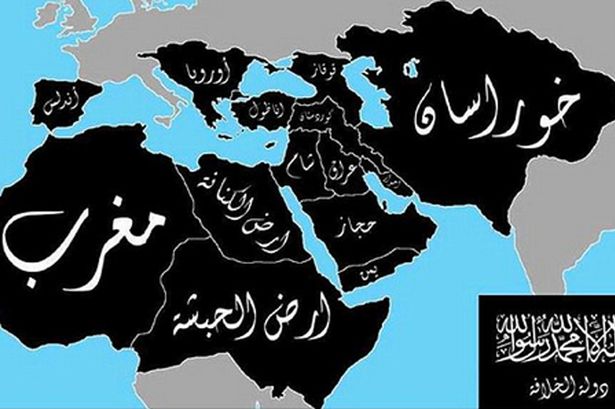
ISIS-MAP

The Imagined Caliphate of ISIL 

Friends of Padre Steve’s World,

Please know this is a difficult article to write. I have been to war, I have seen its devastation and heartache and I came back changed from the experience. I hate it. That being said, despite being a progressive who hates war I am also a realist. I am not one that finds any romance or glory in war, but I know that sometimes it becomes unavoidable and sometimes necessary. I have written about the nature of war, the kind of war we are now engaged in with ISIL and some of the ethical and moral compromises that could easily be made in such a war. Thus what I write here is a continuation of those thoughts and I encourage you to look at those articles. That being said, I do intend on adding some more thoughts to this in the coming days.

I do not expect that all of my readers will agree with me. In fact I had a reader who took exception to yesterday’s article because he could not agree with the fact that the Bush administration’s criminal war against Saddam Hussein’s Iraq was a major cause of today’s problem. He proceeded to lecture me that I was wrong, despite all of the evidence from Congressional hearings, the CIA, and other analysts that disproved his point. That is disheartening, but I expect that now.

That being said I know that there are people on the political right and the political left who will disagree with what I write today. All I ask is that people, regardless of their ideology actually read and take the time to think about what I write before they write me off.

I will be writing more on this subject in the coming days, including about the moral and ethical dangers, as well as the potential threat to our own civil liberties. 

Peace

Padre Steve+

Over the past two weeks elements of ISIL have brutally slaughtered nearly 400 civilians outside of areas that they control. The attacks on the Russian airliner, Beirut, and Paris were committed against innocent civilians going about their daily lives. In the areas that they control in Iraq and Syria, where their brutality is unmatched in modern times. This is disconcerting for those of us that would prefer a peaceful solution to the current conflict. But it is the truth.

Despite having served in the military for over thirty-four years, I am not a warmonger, and I am not enamored with the supposed glory of war, or American military superiority. I hate war, but I am a realist. I am a historian with a considerable background in ethics, philosophy, sociology, and political science. I have experience serving with American advisers in Iraq’s Al Anbar province.

Since 2012 ISIL has invoked a reign of terror in the areas of Syria and Iraq that they control. Massacres of opponents, videotaped executions of captives, including humanitarian aid workers and journalists, ethnic and religious cleansing, the forced conversion of female captives with the added element of rape, before and after their capture and enslavement, the execution of homosexuals, and the destruction or religious, cultural, and historic treasures. ISIL is not seeking peace, but rather to destroy everything that they find abhorrent. They are no different than Christians, Jews, Hindus, and even Buddhists that use the police and military power of the state to persecute those who do not believe just like they do.

We must recognize the significance of the attacks of the Islamic State in the past two weeks. These attacks have killed nearly 400 civilians and wounded close to 400 more. ISIL is not targeting military targets, but innocent people; as such their actions are nothing short of criminal. If they were a real nation state, their leaders would be war criminals.

Islamic scholar Reza Aslan understands ISIL better than many people. Aslan told CNN last year:

“Number one, you do have to respond militarily to ISIS soldiers and fighters. These guys are fighting a war of the imagination, a war that they think is happening between the forces of good and evil. There is no negotiation. There’s no diplomacy. There’s nothing to talk about with these guys. They have to be destroyed.”

Let that set in for a moment.

That is not the opinion of an American or Eurocentric scholar; it is not the ranting of an Islamophobic pundit or preacher, but it is the opinion of a learned, moderate, Moslem scholar. As such it needs to be given a lot of credibility. Aslan’s comment takes me back to the words of General William Tecumseh Sherman during the American Civil War. Sherman, who had to deal with insurgents and other Confederate sympathizers who attacked his supply lines and isolated garrisons noted, “This war differs from other wars, in this particular: We are not fighting armies but a hostile people, and must make old and young, rich and poor, feel the hard hand of war.”

President Obama came into office as a President determined to end the wars that the United States was engaged in and usher in an era of peace. That did not happen. The genie of war and chaos that was unleashed when President Bush stopped pursuing Al Qaeda and attacked Saddam Hussein’s Iraq refused to go back into its bottle. Obama, dealt with the situation with quiet diplomacy and soft power. One cannot blame him. He was hamstrung by the financial crisis of 2008 which blew up just as he became President, as well as the consequences of the Bush foreign policy, and the deal that the Bush administration made with the Shia Moslem regime of Maliki in Iraq for the withdraw of U.S. troops. Since Obama took office, new and more violent terrorist groups have been spawned from the loins of Al Qaeda Iraq. Now, the dogs of war that have been unleashed on the region, which threaten all of the peoples who live there, and now have reached out to other regions.

I know that many of my readers are liberals, and progressives who lean toward pacifism. I am okay with that, because at my heart I am a pacifist, I have been to war, and I hate it. Even the must just war, waged for the best of reasons, and with right motives, still can bring about evil. The well-respected ethicist and philosopher Michael Walzer understands the moral, ethical, and legal aspects of war. He wrote in his book Just and Unjust Wars:

“We don’t call war hell because it is fought without restraint. It is more nearly right to say that, when certain restraints are passed, the hellishness of war drives us to break with every remaining restraint in order to win. Here is the ultimate tyranny: those who resist aggression are forced to imitate, and perhaps even to exceed, the brutality of the aggressor.”

The Islamic State of Iraq and the Levant is different than Al Qaeda. It is a hybrid that will not be defeated by traditional means. ISIL is a terrorist group to be sure, but it is also an embryonic state, which is conquering territory, subduing people, butchering its enemies and murdering innocents in cold blood. The leaders of ISIL boast in their atrocities and honestly believe what they are doing is blessed by their God. They have grown up and been nurtured by a culture of victimhood which they believe that past or present oppression justifies their actions. Eric Hoffer wrote something that is quite poignant if we are to understand the mindset of ISIL:

“It is doubtful if the oppressed ever fight for freedom. They fight for pride and power — power to oppress others. The oppressed want above all to imitate their oppressors; they want to retaliate.”

The leaders and fighters of ISIL are 12th Century people living in the 21st Century. They make use of 21st Century communications technology to further their crusade against all opponents. As Reza Aslan noted, they are incapable of negotiation, seeing it as only weakness and a way to impose their will on those unable to, or unwilling to resist them. Hoffer described their mindset well in his book The True Believer:

“A doctrine insulates the devout not only against the realities around them but also against their own selves. The fanatical believer is not conscious of his envy, malice, pettiness and dishonesty. There is a wall of words between his consciousness and his real self.”

Thus this war will be something different, something that we in the west do not want to comprehend. We want war to be neat, fast and comparatively bloodless, but this will not be the case in the war against ISIL. Such wars may be possible against traditional nation states with weak militaries. But to believe that war with ISIL will be neat, fast, and bloodless is wrong headed and dangerous because it ignores the nature of that group. Carl Von Clausewitz noted that:

“Kind-hearted people might of course think there was some ingenious way to disarm or defeat the enemy without too much bloodshed, and might imagine this is the true goal of the art of war. Pleasant as it sounds, it is a fallacy that must be exposed: war is such a dangerous business that the mistakes which come from kindness are the very worst.”

Ultimately, despite the fact that I almost always counsel that war should be avoided and peaceful solutions found to resolve conflict, there are times that wars must be fought. If ISIL were a true nation-state with a conventional understanding of diplomacy and the relationship between nations it would be conceivable that the United Nations or perhaps the Arab League could help broker a deal. But ISIL is neither your father’s terrorist organization, nor a real nation-state. It is a hybrid that is not driven by realpolitik but rather a fanatical religious belief in their cause.  This allows them to dispense with diplomatic niceties and allows them no compromise with those they believe are the enemies of their God; including other Moslems.

Their war has been raging for some time in both Syria and Iraq. What they are doing is further destroying the mosaic of peoples who are part of the Arab heritage in both countries. The atrocities committed by ISIL against Shi’ite Moslems, secular Sunnis, Yidazi and Christians have been displayed around the world. Mass executions, beheadings and the destruction of historic sites, which are important parts of the Christian, Moslem, and Jewish heritage, are only part of their crimes.

The only condition for peace given by ISIL to those it considers the enemy is “convert or die.”  Whether we like it or not, war is now unavoidable, the attacks on the Russian airliner, the citizens of Beirut, and the people of Paris show that.

Some politicians and pundits seem to think that this will be easy, simply destroy ISIL where they stand. But that belief is illusory. ISIL and its sympathizers may seem to be concentrated in Iraq and Syria, which is enough of a problem for us, but their supporters, financial supporters and sympathizers are worldwide. Interestingly Pope Francis noted: “Even today, after the second failure of another world war, perhaps one can speak of a third war, one fought piecemeal, with crimes, massacres, destruction….”

That being said there is a warning that all must remember about this war. It is at its heart ideological and for ISIL is driven by a perversion of religion. The war will be long, brutal and most importantly, the Islamic State believes that it can and will win it.

Winston Churchill said:

“Never, never, never believe any war will be smooth and easy, or that anyone who embarks on the strange voyage can measure the tides and hurricanes he will encounter. The statesman who yields to war fever must realize that once the signal is given, he is no longer the master of policy but the slave of unforeseeable and uncontrollable events…. Always remember, however sure you are that you could easily win, that there would not be a war if the other man did not think he also had a chance.”

Thus in this war we cannot waver, and we must believe in our ideals of freedom, justice, equality and the value of a single human life. We must do this even though our own practice often makes a mockery of them. But they are still ideals that are worth fighting for, because without them we lose something of our already flawed humanity. Carl Clausewitz recognized this and wrote:

“If the mind is to emerge unscathed from this relentless struggle with the unforeseen, two qualities are indispensable: first, an intellect that, even in the darkest hour, retains some glimmerings of the inner light which leads to truth; and second, the courage to follow this faint light wherever it may lead.”

Barbara Tuchman said, “War is the unfolding of miscalculations.” For over a century the leaders of the West as well as Arab leaders throughout the region have miscalculated far too many times, and what is going on now is the tragic and bloody result of all of those miscalculations. The suffering and the human cost will be great. It was General William Tecumseh Sherman who wrote:

“You cannot qualify war in harsher terms than I will. War is cruelty, and you cannot refine it; and those who brought war into our country deserve all the curses and maledictions a people can pour out…

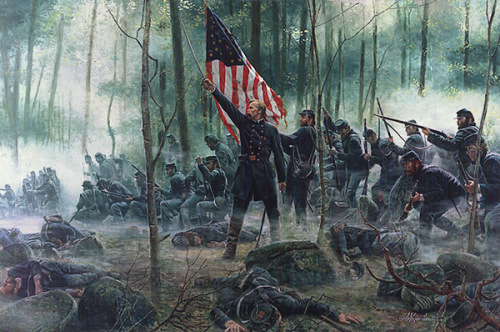
The young Union hero of Little Round Top at the Battle of Gettysburg, Colonel Strong Vincent wrote his wife about how he believed the Union had to defeat the Confederacy. His words were much like Sherman’s and in dealing with ISIL I would hope that the American, Iraqi and coalition forces will take them to heart in combating ISIL: Vincent wrote:

“We must fight them more vindictively, or we shall be foiled at every step.  We must desolate the country as we pass through it, and not leave a trace of a doubtful friend or foe behind us; make them believe that we are in earnest, terribly in earnest…” 

Sherman and Vincent’s words may sound unduly harsh, but ISIL knows no other kind of war.

Pray my friends for peace, but remember reality, peace is not possible when the kind of religious extremism that motivates ISIL is the driving force. That kind of ideology cannot be negotiated with it has to be defeated.

It has been a long time since we in the west have had to wage that kind of war and it will come at some cost to our psyche, and it will take some getting used to, if you can ever get used to the evil, the carnage, the suffering and the devastation that is the essence of war. As William Tecumseh Sherman said “War is Hell.”

To be continued…


7 Comments

Filed under Foreign Policy, History, middle east, Military, News and current events, Political Commentary, terrorism, War on Terrorism

A Personal Bond: The Veterans who Impacted My Life

Friends of Padre Steve’s World,

IMG_1931

Today is Veteran’s Day. I wrote a reflective piece on it two days ago and I want to follow up on it in a more personal manner in this post.

I am one of those unusual people for our day whose entire life has been somehow connected to life in the military. Thus I always become a bit more thoughtful and quite often emotional around Veterans Day and Memorial Day.  I’ve been in the military for over 34 years now.  I enlisted in the National Guard while in college and entered Army ROTC back on August 25th 1981.  Since then it has been to quote Jerry Garcia “a long strange trip.”  During that trip I learned a lot from the veterans who I am blessed to have encountered on the way, men and women who have touched my life in truly special ways.

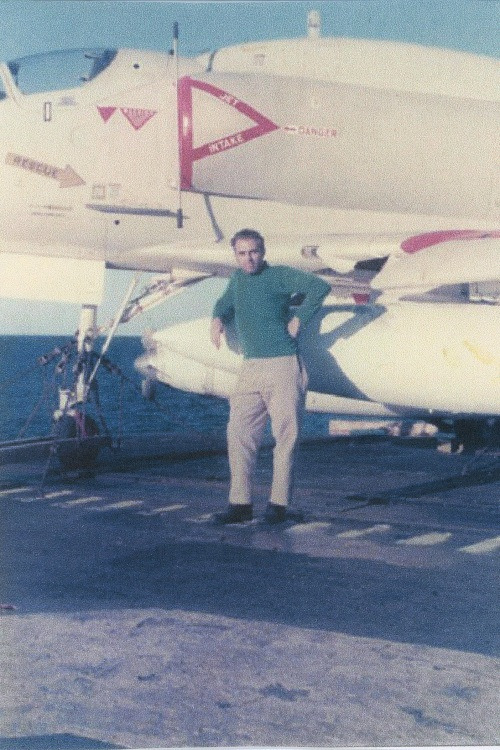
dad-on-hancock

My Dad, Chief Petty Officer Carl Dundas aboard the USS Hancock in 1972

I come from a Navy family and was born in in a Navy hospital. Growing up in a Navy family in the 1960s and 1970s was a big adventure for me that never got old. I still remember looking forward to each new duty assignment with only the wonder that a child can have and to each new adventure that the next move would bring. We lived up and down the West Coast, Oakland, San Diego, Long Beach, Oak Harbor Washington, and finally Stockton California. My earliest memories of life come from our tour at Cubi Point Naval Air Station in Philippines, the sharply dressed Marine gate guards, the Navy officers in their resplendent white uniforms, the jungle that came up to our back yard, and the wild boars that would show up and tear up our garden, trees and lawn. I remember the Blue Angles flying directly over our house in Oak Harbor, those huge F4F Phantom jets roaring over me so low that every detail could be seen. I remember going on my dad’s last ship, the aircraft carrier USS Hancock and being amazed at how big and impressive everything on it was, the sights, sounds, and smells of the ship evoked a wonder that to this day I feel whenever I set foot about a ship. Of course compared to our modern carriers Hancock was old, and small but she was my dad’s ship and I was proud of him.

My dad retired from the Navy in 1974 as a Chief Petty Officer. While he was assigned to the Hancock was sent to manage aviation supplies at an emergency airstrip which was in the South Vietnamese city of An Loc when it was surrounded by the North Vietnamese for 80 days in 1972.  He didn’t talk about it much when he came back; in fact he came back different from the war.  He probably suffered from PTSD.  All the markers were there but we had no idea about it back then, after all he was in the Navy not the Army.  I had friends whose dad’s did not return from Vietnam and saw how Vietnam veterans were treated by the country as a whole including some members of the Greatest Generation.  They were not welcomed home and were treated often with scorn, even by veterans who had fought in the “real wars” of World War II and Korea.  Instead of being depicted an Americans doing their best in a war that few supported they were demonized in the media and in the entertainment industry for many years afterwards.

My dad never made a big deal out of his service but he inspired me to pursue a career in the military by being a man of honor and integrity.

Growing up then, we had a Navy family that surrounded us then remained part of my family’s life long after. My mom and dad remained in contact with friends that they served with or were stationed with, and now many of them are elderly and a good number have passed away.  Even so my mom, now a widow stays in regular contact with a number of her Navy wife “sisters.” There are not many of them left anymore, but mom tries to stay in touch with them. It was the early Navy family experience that shaped much of how I see the world and is a big reason as to why I place such great value on the contributions of veterans to our country and to me.

But there was another part of growing up in a military family in the 1960s, and that was the Vietnam War. I knew kids whose dads never came home from that war, and of course every night the evening news broadcast a “body count” segment which looked like a scoreboard showing how many Americans, South Vietnamese, Viet Cong and North Vietnamese were killed, wounded or captured; but to me, at a very young age, those numbers on that “scoreboard” were flesh and blood human beings. This was my first experience of war.

breedlove-ness2

LCDR Breedlove and Senior Chief Ness

My second view of war came from the veterans of Vietnam who were my teachers in Navy Junior ROTC and the men that I served with in the National Guard and the Army.  Some of these men served as teachers and mentors.  LCDR Jim Breedlove and Senior Chief John Ness at the Edison High School Naval Junior ROTC program were the first who helped me along.  Both have passed away but I will never forget them.  Commander Breedlove was someone that I would see every time that I went home as an adult. His sudden death the week before I returned from Iraq shook me.  I have a post dedicated to them at this link.  (In Memorium: Chief John Ness and LCDR Jim Breedlove USN)

When I joined the California Army National Guard in 1981 Colonel Edgar Morrison was my first battalion commander.  He was the most highly decorated member of the California National Guard at that time and had served multiple tours in Vietnam.  He encouraged me as a young specialist and officer cadet and showed a tremendous amount of care for his soldiers.  Staff Sergeants Buff Rambo and Mickey Yarro taught me the ropes as a forward observer and shared many of their Vietnam experiences as we sat on lonely hillsides at Camp Roberts California calling in artillery fire on so many weekends and during annual training. Buff had been a Marine dog handler on the DMZ, and Mickey a Forward Observer and they were fascinating men, with so many stories and such great experience which they imparted to me.

The Senior NCOs that trained me while in the Army ROTC program at UCLA and Fort Lewis had a big impact. All were combat veterans that had served in Vietnam.  Sergeant First Class Harry Zilkan was my training NCO at the UCLA Army ROTC program.  He was a Special Forces medic with 7th Group in Vietnam.  In Vietnam he was wounded three times, and was awarded two Silver Star Medals. He still had part of a VC bayonet embedded in his foot at UCLA, a reminder of his time serving in Southeast Asia.  He received my first salute as a newly commissioned Second Lieutenant as well as a Silver Dollar.  I understand that after the Army he became a fire fighter.  He had a massive heart attack on the scene of a fire and died a few years later from it.  Sergeant Major John Butler was our senior enlisted adviser at UCLA, he served as a paratrooper and infantryman with the 173rd Airborne brigade in Vietnam.

Another fascinating character was Sergeant First Class Harry Ball was my drill sergeant at the ROTC pre-commissioning camp at Fort Lewis Washington in 1982. I kid you not, that was really his name, but this was probably one of the most important experiences of my life, which was incredibly difficult but most necessary. Sergeant First Class Ball was a veteran of the Special Forces and Rangers and served multiple tours in Vietnam and when he walked across the drill field his Smokey Bear hat reminded me of a shark fin cutting across the water, the man was scary as shit, but he had a heart of gold. Though he only had me for a summer he was quite influential in my life, tearing me apart and then building me back up.  He was my version of Drill Sergeant Foley in the classic movie An Officer and a Gentleman. Like Zack Mayo played by Richard Gere at the end of that movie I can only say: Drill Sergeant “I will never forget you.” Every time I see that movie

As I progressed through my Army career I encountered others of this generation who also impacted my life. First among them was First Sergeant Jim Koenig who had been a Ranger in the Mekong Delta.  I was the First Sergeant that I would measure all others by.  Once during an ARTEP we were aggressed and all of a sudden he was back in the Delta. This man cared so much for his young soldiers in the 557th Medical Company.   He did so much for them and I’m sure that those who served with him can attest to this as well as me. Jim had a brick on his desk so that when he got pissed he could chew on it.  He retired after he was selected to be a Command Sergeant Major because he valued his wife and family more than the promotion.  It hurt him to do this, but he put his family first.

2nd platoon

1985 with 2nd Platoon of 557th Medical Company (Ambulance) in Germany

Colonel Donald Johnson was the commander of the 68th Medical Group when I got to Germany in January 1984.  Colonel “J” as well all called him was one of the best leaders I have seen or served under in 34 years in the military.  He knew everything about everything and his knowledge forced us all to learn and be better officers and NCOs.  On an inspection visit you could always find him dressed in coveralls and underneath a truck verifying the maintenance done on it.  He served a number of Vietnam tours.  He died of Multiple Myeloma and is buried at Arlington.

Chaplain (LTC) Rich Whaley who had served as a company commander in Vietnam on more than one occasion saved my young ass at the Army Chaplain School.  No really he saved my career at least twice, and kept me out of big trouble on both occasions. Personally I don’t know too many senior chaplains who would put themselves on the line for a junior chaplain the way that Rich did for me. He remains a friend and is the Endorsing Agent for the Church of Jesus Christ of Latter Day Saints. As a Mormon he is one of the most “Christian” men that I have ever met.  I know some Christians who might have a hard time with that, but Rich demonstrated every trait of a Christian who loved God and his neighbor.

When I was the Installation Chaplain at Fort Indiantown Gap PA I was blessed to have some great veterans in my Chapel Parish.  Major General Frank Smoker flew 25 missions as a B-17 pilot over Germany during the height of the air war in Europe. He brought his wonderful wife Kate back from England with him and long after his active service was over he remained a vital part of the military community until his death in 2010.  Sergeant Henry Boyd was one of the 101st Airborne soldiers epitomized in Band of Brothers. He had a piece of shrapnel lodged next to his heart from the Battle of the Bulge until the day he died and was honored to conduct his funeral while stationed at Indiantown Gap. Colonel Walt Swank also served in Normandy.  Major Scotty Jenkes was an Air Force pilot in Vietnam flying close air support while Colonel Ray Hawthorne served several tours both in artillery units and as an adviser in 1972 and was with General Smoker a wonderful help to me as I applied to enter the Navy while CWO4 Charlie Kosko flew helicopters in Vietnam.  All these men made a deep impact on me and several contributed to my career in very tangible ways. Another man who I knew at Indiantown Gap was Sergeant Billy Ward who just passed away last week of a major heart attack. Billy was a bear of a man, but one of the kindest and gentlest men who I have ever known. Billy never knew a stranger and loved people no matter what their station in life, no matter what their beliefs, no matter what their lifestyle. I can honestly say that Billy didn’t have an enemy and though he was a lay preacher and was later ordained to the ministry, he just loved people and never judged anyone. He exemplified what it is to be a Christian. 

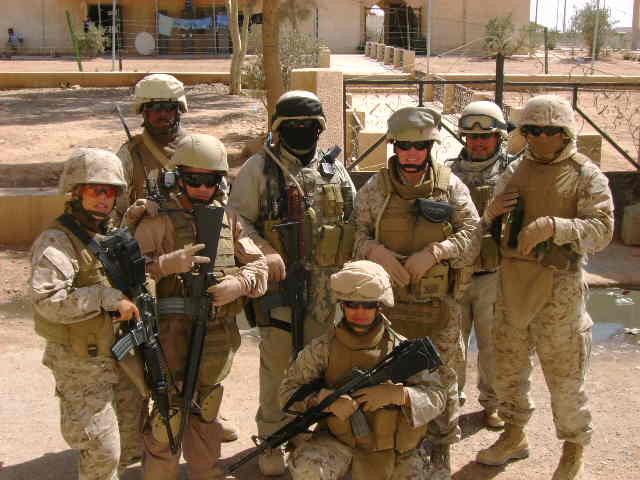
Al Waleed Iraq 2007

In 1999 I resigned my commission as an Army reserve Major to enter active duty in the Navy, with a reduction in rank. Since joining the Navy my life has continued to be impacted and influenced by other veterans. A good amount of my Navy career has been spent serving with Marine Corps. I served with some great Marines and Sailors in those units, including Lieutenant Colonel T D Anderson, and then Major, but now Brigadier General Dave Ottignon of the 2nd Combat Engineer Battalion, Lieutenant Colonel Desroches of 1st Battalion 8th Marines, Colonel Lou Rachal of 3rd Battalion 8th Marines, and Colonel, now Major General Richard Lake of Headquarters Battalion 2nd Marine Division. My friends at Marine Security Forces Colonel Mike Paulovich and Sergeant Major Kim Davis mean more than almost any people in the world.  We traveled the globe together visiting our Marines.  Both of these men are heroes to me as well as friends, Colonel Paulovich was able to administer the oath of office to me when I was promoted to Commander.

I was blessed to become friends with many of the Marine Corps veterans of the Battle of Hue City including General Peter Pace, Barney Barnes, Tony “Limey” Cartilage, Sergeant Major Thomas. They and so many others have become close over the years, especially after I did my time in Iraq. They and all the Vietnam vets, including the guys from the Vietnam Veterans of America like Ray and John who manned the beer stand behind the plate at Harbor Park all mean a lot to me.

hue city boarding team

Boarding Team of USS Hue City 2002

Finally there are my friends and brothers that I have served with at sea on USS HUE CITY during Operation Enduring Freedom and the advisers on the ground in Al Anbar mean more than anything to me. Perhaps the most important is my bodyguard, RP1 Nelson Lebron, who helped keep me safe and accompanied me all over the battlefield.  Nelson who has done Iraq three times, Afghanistan, Lebanon and the Balkans is a hero.  Two others who matter a great deal to me from Iraq were Army Colonel David Abramowitz, Navy Captain (Chaplain) Mike Langston, and Father Jose Bautista-Rojas, a Navy Chaplain and Roman Catholic priest. Then there are the men and women of Navy EOD who I served with from 2006-2008 have paid dearly in combating IEDs and other explosive devices used against us in Iraq and Afghanistan are heroes too.  There is no routine mission for EOD technicians.  Then there are the friends that I serve with in Navy Medicine, medical professionals who care for our Sailors, Marines, Soldiers and Airmen, family members and veterans at home and in the thick of the fighting in Afghanistan.

There are many from my time in Navy Medicine who have meant so much to me. Chaplain Jeff Seiler, an Episcopal Priest at Naval Medical Center Portsmouth and Father Fred Elkin, a retired Navy Chaplain who served there helped keep me together during the darkest time of my life after Iraq, as did many of the physicians and nurses that I worked with there, and many of them were not Christians, but they helped and cared for me. That continued at Naval Hospital Camp LeJeune, where I served as Director of Pastoral Care. At Lejeune I was fortunate to serve with Duke Quarles, a civilian pastoral counselor and retired Navy Chaplain. Duke was a rock for me there, as was Command Master Chief Ed Marino, one of the most spiritual and kind people that I know.

I now serve in a wonderful place, the Joint Forces Staff College. I am surrounded by great people here, from all the services of our armed forces, active duty and retired. I get to do wonderful things, and despite having gone through absolute hell dealing with the military mental health system this year, these folks have stood by me, especially Commander Lisa Rose, our former staff nurse who retired last year. Lisa is a highly skilled nurse and a courageous woman. For eighteen years of her career she served always wondering if someone was going to try to persecute, prosecute or try to run her out the Navy because she is a lesbian. For years she could not take her spouse to official functions, she could not even take a chance on being seen in public by someone with her spouse, even under “don’t ask don’t tell.” She was finally able to do that, but truthfully I cannot imagine what it would be like to want to serve your country, your shipmates and your God, while always knowing that anyone could end that simply because they didn’t approve of who you loved. I am glad that Lisa and my other gay and lesbian friends in the military are now able to openly serve.

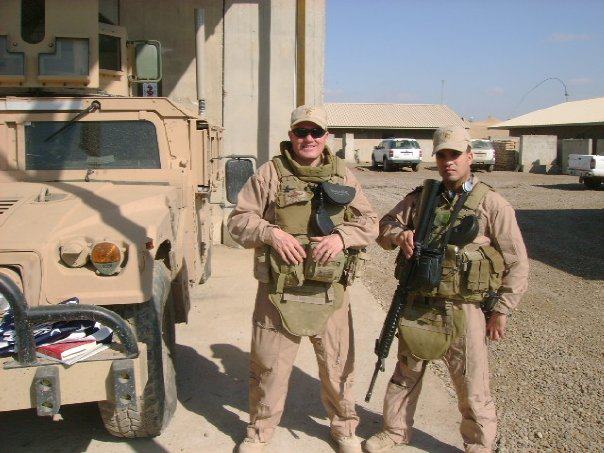
me and nelson

Me with RP1 Nelson Lebron just prior to leaving Iraq

There are others who I have served alongside who have died while in the service of the country, or after their service had ended. Some, like Staff Sergeant Ergin Osman, who I served with at 3rd Battalion 8th Marines, were killed in Afghanistan, others like Commander Marsha Hanley, a nurse I served with in the ICU at Portsmouth, who was one of the people who helped hold me together when I was so fragile; she died of complications of chemotherapy treatment at far too young age. Damage Control Specialist 2nd Class Ray Krolikowski, who I served with aboard USS Hue City died just over a year ago, eleven years after suffering an injury that left him a quadriplegic in 2003. Then there those who died by their own hand, having never recovered from war. Captain Tom Sitsch who was my last Commodore at EOD Group Two, and Father Dennis Rocheford committed suicide after being tormented by the demons of PTSD and TBI. Both men were real heroes. I could mention so many more, but will end there because I am getting a bit emotional.

There is a closing thought from the television mini-series Band of Brothers which kind of sums up how I feel. The American troops who have fought so long and hard are watching a German general address his troops after the German surrender. An American soldier of German-Jewish descent translates for his comrades the words spoken by the German commander, and it as if the German is speaking for each of them as well.

Men, it’s been a long war, it’s been a tough war. You’ve fought bravely, proudly for your country. You’re a special group. You’ve found in one another a bond that exists only in combat, among brothers. You’ve shared foxholes, held each other in dire moments. You’ve seen death and suffered together. I’m proud to have served with each and every one of you. You all deserve long and happy lives in peace.

So for me Veteran’s Day is intensely personal because of the veterans, living and dead, who made an impact on my life. I have a bond, a special bond with so many of my brothers and sisters who volunteer to serve. Today we number less than one percent of the nation, a tiny number of people in comparison to the size of our nation and the commitments that our leaders have engaged us.

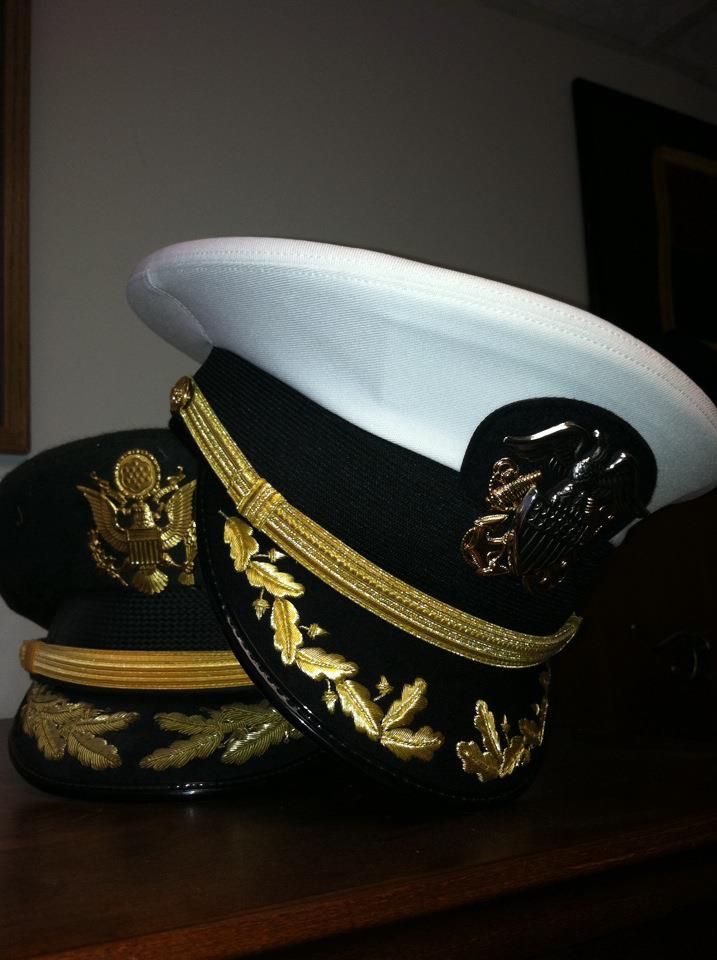
hats

The military is a young persons game, and I am now older than almost everyone on active duty. I have been in the military longer than almost everyone that I know, including many people senior in rank to me. I am a dinosaur, and sometimes a cranky one at that when it comes to dealing with the bureaucracy of the military, but my long strange trip continues. That being said, though I served over half of my career in the Army, at heart I have always been a navy man. I think that President John F. Kennedy expressed how I feel about serving the best. He said, “I can imagine no more rewarding a career. And any man who may be asked in this century what he did to make his life worthwhile, I think can respond with a good deal of pride and satisfaction: ‘I served in the United States Navy.’”

So today I give thanks for all them men that I mention in this post, especially my dad. For the countless others that are not mentioned by name please know that I thank God for all of you too. Someone once said “A ‘Special Day’ once a year creates an excuse for neglect on the other 365 days for mothers, fathers & veterans” Please do not let that continue to happen, please do not just look at this as time off, or if you are a corporation or retailer use this day to boost your sales by acting like you care.

I do hope that people will remember the Veterans that impacted their lives this and every day. Some may have been the men and women that we served with, perhaps a parent, sibling or other relative, maybe a childhood friend, a teacher, coach or neighbor. As we pause for a moment this Friday let us honor those who gave their lives in the defense of liberty in all of the wars of our nation. They have earned it and please thank any veteran that you know in some small way today.

Peace

Padre Steve+

4 Comments

Filed under iraq,afghanistan, Military, remembering friends, Tour in Iraq, US Navy, vietnam

Happy 240th Birthday Marines!

usmcflags

Friends of Padre Steve’s World,

Today is one of these days where I just want to wish people well. Those men and women are those of the United States Marine Corps, with whom I have spent almost ten years of my thirty-three year military career assigned to or in support of as a chaplain. Today is the 240th anniversary of the establishment of the Marine Corps and its founding at Tun Tavern, in Philadelphia. Tonight I wish all those who have served past, present and future, especially those who I have served alongside a happy birthday. Today I will have the privilege of celebrating the 240th Birthday of the Marine Corps here at the Joint Forces Staff College.

On November 10th 1775 the Continental Congress passed a resolution that stated:

Resolved, that two Battalions of Marines be raised consisting of one Colonel, two Lieutenant Colonels, two Majors & Officers as usual in other regiments, that they consist of an equal number of privates with other battalions; that particular care be taken that no persons be appointed to office or enlisted into said Battalions, but such as are good seamen, or so acquainted with maritime affairs as to be able to serve to advantage by sea, when required. That they be enlisted and commissioned for and during the present war with Great Britain and the colonies, unless dismissed by Congress. That they be distinguished by the names of the first & second battalions of American Marines, and that they be considered a part of the number, which the continental Army before Boston is ordered to consist of.

Today is the 239th birthday of the United States Marine Corps. The history of the Marine Corps is one of the most fascinating of any armed service in the world. Starting out as a tiny force attached to Navy ships and shipyards the Corps has gained prominence as one of the premier fighting forces ever assembled. Flexible and deployable anywhere in the world on short notice the Marine Corps has seen action in “every place and clime” and continues to serve around the world.

In 1775 a committee of the Continental Congress met at Philadelphia’s Tun Tavern to draft a resolution calling for two battalions of Marines able to fight for independence at sea and on shore.  The resolution was approved on November 10, 1775, officially forming the Continental Marines. The first order of business was to appoint Samuel Nicholas as the Commandant of the newly formed Marines.

Robert Mullan the owner and proprietor of the said Tun Tavern became Nicholson’s first captain and recruiter. They began gathering support and were ready for action by early 1776.  They served throughout the War for Independence and like the Navy they were disbanded in April 1783 and reconstituted as the Marine Corps in 1798.

The Marines served on the ships of the Navy in the Quasi-war with France, against the Barbary Pirates where a small group of 8 Marines and 500 Arabs under Lieutenant Presley O’Bannon made a march of 500 miles across the Libyan Desert to lay siege Tripoli but only reached Derna. The action is immortalized in the Marine Hymn as well as the design of the Marine Officer’s “Mameluke” Sword. They served in the War of 1812, the Seminole Wars and in the Mexican-American War where in the storming of the on Chapultepec Palace they continued to build and enduring legacy. In the months leading up to the Civil War they played a key role at home and abroad.  In October 1859 Colonel Robert E. Lee led Marines from the Marine Barracks Washington DC to capture John Brown and his followers who had captured the Federal Armory at Harper’s Ferry.

The Corps would serve through the Civil War and on into the age of American Expansion serving in the Spanish American War in the Philippines, Puerto Rico and Cuba where they seized Guantanamo Bay at the battle of Cuzco Wells.  The would serve in China and be a key component of the international force that defended foreign diplomats during the Boxer Revolt as well as the international force that would relieve the diplomatic compound in Peking (Beijing).  In World War One the Marines stopped the German advance at Chateau Thierry and cemented their reputation as an elite fighting force at Belleau Wood where legend has it that the Germans nicknamed them Teufelhunden or Devil Dogs, a name that they Marines have appropriated with great aplomb.

During the inter-war years the Marines were quite active in the Caribbean and Asia and also developed amphibious tactics and doctrine that would be put to use in the Pacific Campaign.  During the war the Marines served in all theaters but won enduring fame at Wake Island, Guadalcanal, Tarawa, Iwo Jima, Okinawa and numerous other battles in the Pacific war. Marine Aviators flew in some the most desperate actions in the war to support the Navy and amphibious operations ashore.

After the war the Truman Administration sought to eliminate the Marine Corps but the Corps was saved by the efforts of Americans across the country and Marine supporters in Congress.  That was a good thing because the Marines were instrumental in keeping the North Koreans from overrunning the South during the Korean War on the Pusan Perimeter, turned the tide at Inchon and helped decimate Communist Chinese forces at the Chosin Reservoir.  After Korea the Marines would serve around the World in the Caribbean and Lebanon and in Vietnam where at Da Nang Keh Sanh, Hue City, Con Thien fighting the North Vietnamese and their Viet Cong allies.  The Marines took the initiative to implement innovative counter insurgency measures such as the Combined Action Platoons which enjoyed tremendous success until they were shut down by the Army high command.  These lessons would serve the Marines well in the new millennium during the Anbar Awakening in Iraq which changed the course of that insurgency and war.

The Marines would again be involved around the World after Vietnam serving in the Cold War, in Lebanon and the First Gulf War which was followed by actions in Somalia, the Balkans and Haiti. After the attacks of September 11th 2001 the Marines were among the first into Afghanistan helping to drive the Taliban from power. In the Iraq Campaign the Marines had a leading role both in the invasion and in the campaign in Al Anbar Province.  After the Marines were withdrawn from Iraq, they became a central player in Afghanistan where until last month they were engaged around Khandahar and in Helmand Province. Today, Marines are deployed in support of many operation around the world and as one of the elite military organizations in the world continue to “fight our country’s battles on the air and land and sea.” The Corps under General John LeJeune institutionalized the celebration of the Marine Corps Birthday and their establishment at Tun Tavern. General LeJeune issued this order which is still read at every Marine Corps Birthday Ball or observance:

MARINE CORPS ORDER No. 47 (Series 1921)
HEADQUARTERS
U.S. MARINE CORPS Washington, November 1, 1921

The following will be read to the command on the 10th of November, 1921, and hereafter on the 10th of November of every year. Should the order not be received by the 10th of November, 1921, it will be read upon receipt.

On November 10, 1775, a Corps of Marines was created by a resolution of Continental Congress. Since that date many thousand men have borne the name “Marine”. In memory of them it is fitting that we who are Marines should commemorate the birthday of our corps by calling to mind the glories of its long and illustrious history.

The record of our corps is one which will bear comparison with that of the most famous military organizations in the world’s history. During 90 of the 146 years of its existence the Marine Corps has been in action against the Nation’s foes. From the Battle of Trenton to the Argonne, Marines have won foremost honors in war, and in the long eras of tranquility at home, generation after generation of Marines have grown gray in war in both hemispheres and in every corner of the seven seas, that our country and its citizens might enjoy peace and security.

In every battle and skirmish since the birth of our corps, Marines have acquitted themselves with the greatest distinction, winning new honors on each occasion until the term “Marine” has come to signify all that is highest in military efficiency and soldierly virtue.

This high name of distinction and soldierly repute we who are Marines today have received from those who preceded us in the corps. With it we have also received from them the eternal spirit which has animated our corps from generation to generation and has been the distinguishing mark of the Marines in every age. So long as that spirit continues to flourish Marines will be found equal to every emergency in the future as they have been in the past, and the men of our Nation will regard us as worthy successors to the long line of illustrious men who have served as “Soldiers of the Sea” since the founding of the Corps.

JOHN A. LEJEUNE,
Major General
Commandant

Leave a comment

Filed under History, Military

They Thanked Us Kindly: Reflections on Veteran’s Day 2015

481801_10151367001287059_1003164983_n1

Friends of Padre Steve’s World,

As a career military officer and veteran of the Iraq campaign as well as Operation Enduring Freedom I get very reflective around Veteran’s Day. For me it is a melancholy time. I remember those who have gone to war, those who did not come home, and those who came home, especially those who came home wounded in body, mind, or spirit; those who were forever changed by their experience of war.

One of my heroes is T.E. Lawrence, the immortal Lawrence of Arabia. After World War One ended and the politicians, diplomats, and business leaders betrayed those who served, as well as the people of many nations with a terrible peace, Lawrence wrote, “We were fond together because of the sweep of open places, the taste of wide winds, the sunlight, and the hopes in which we worked. The morning freshness of the world-to-be intoxicated us. We were wrought up with ideas inexpressible and vaporous, but to be fought for. We lived many lives in those whirling campaigns, never sparing ourselves: yet when we achieved and the new world dawned, the old men came out again and took our victory to remake in the likeness of the former world they knew. Youth could win, but had not learned to keep, and was pitiably weak against age. We stammered that we had worked for a new heaven and a new earth, and they thanked us kindly and made their peace.”

One hundred and one years ago, in November 1914, millions of soldiers were fighting in horrible conditions throughout Europe. From the English Channel to Serbia, Poland and Galicia; French, British, German, Austro-Hungarian, Serbian and Russian troops engaged each other in bloody and often pointless battles. Often commanded by old men who did not understand how the character of war had changed, millions were killed, wounded, maimed or died of disease.

After four years, with the Empires that were at the heart of the war’s outbreak collapsing one after the other there was an armistice. On the eleventh hour, of the eleventh day, of the eleventh month the shooting stopped and the front lines quieted. By then over 20 million people, soldiers and civilians alike had died. Millions more had been wounded, captured, seen their homes and lands devastated or been driven from there ancestral homelands, never to return.

The human cost of that war was horrific. Over 65 million soldiers were called up on all sides of the conflict, of which nearly 37.5 million became casualties, some 57.5% of all soldiers involved. Some countries saw the flower of their manhood, a generation decimated. Russia sustained over 9 million casualties of the 12 million men they committed to the war, a casualty rate of over 76%. The other Allied powers suffered as well.  France lost 6.4 million of 8.5 million, or 73%, Great Britain 3.1 million of nearly 9 million, 35%; Italy 2.2 million of 5.6 million, 39%. Their opponents, Germany, Austria-Hungary and the Ottoman Empire suffered greatly. Germany sustained 7.1 million casualties of 11 million men called up, or nearly 65%, Austria 7 million of 7.8 million, 90% and the Ottoman Empire 975,000 of 2.8 million or 34% of the soldiers that they sent to war.

It was supposed to be the War to end all War…but it wasn’t, it was the mother of countless wars.

It has been a century since that bleak November of 1914, and ninety-six years since the time where for a brief moment, people around the world, but especially in Europe dared to hope for a lasting and just peace. But that would not be the case…

The victors imposed humiliating peace terms on the vanquished, be it the Germans on the Russians, or the Allies on Germany and her partners. The victors divided up nations, drew up borders without regard to historic, ethnic, tribal or religious sensibilities. But then, it was about the victors imposing themselves and their quest for domination, expanding colonial empires and controlling natural resources rather than seeking a just and lasting peace. The current war against the Islamic State is one of the wars spawned by the Sykes-Picot agreement which divided the Middle East between the French and the British at the end of the war. It was a war that keeps on giving.

Of course we have known the disastrous results of their hubris, a hubris still carried on by those who love and profit by war…war without end which continues seemingly with no end in sight.

I am a veteran of Iraq and Operation Enduring Freedom, as well as the Bosnia mission and the Cold War. My dad was a Vietnam veteran who enlisted during the Korean War. I serve because it is the right thing to do, not because I find war romantic or desirable. It is as General William Tecumseh Sherman said “Hell.” If called to go back to Iraq, where I left so much of my soul, I would go in a heartbeat.

This week as we do every year we will pay our homage to honor our veterans, especially in the United States, Great Britain, Canada and France. But sometimes it seems so hollow, for in all of our countries those that serve are a tiny minority of those eligible to serve, who are much of the time ignored or even scorned by those that feel that providing for them after they have served is too much of a burden on the wealthy who make their profits on the backs of these soldiers, sailors, marines and airmen.

I have walked about since returning from Iraq often in a fog, trying to comprehend how a country can be at war for so long, and there is such a gap between the few who serve and the vast majority for whom war is an abstract concept happening to someone else, in places far away, and whose experience of war is its glorification in video games. Personally I find that obscene, and feel that I live in a foreign world. Erich Maria Remarque wrote in All Quiet on the Western Front: 

“I imagined leave would be different from this. Indeed, it was different a year ago. It is I of course that have changed in the interval. There lies a gulf between that time and today. At that time I still knew nothing about the war, we had been only in quiet sectors. But now I see that I have been crushed without knowing it. I find I do not belong here any more, it is a foreign world.”

Similarly Guy Sajer wrote in his classic The Forgotten Soldier: 

“In the train, rolling through the sunny French countryside, my head knocked against the wooden back of the seat. Other people, who seemed to belong to a different world, were laughing. I couldn’t laugh and couldn’t forget.”

Major General Gouverneur Warren wrote to his wife two years after the American Civil War:

“I wish I did not dream that much. They make me sometimes dread to go to sleep. Scenes from the war, are so constantly recalled, with bitter feelings I wish to never experience again. Lies, vanity, treachery, and carnage.”

Sometimes I find it obscene that retailers and other corporations have turned this solemnity into another opportunity to profit. But then why should I expect different? Such profiteers have been around from the beginning of time, but then maybe I still am foolish enough to hope for something different. Please don’t get me wrong, I do appreciate the fact that some businesses attempt in at least some small way to thank veterans. I also know there are many businesses and business owners who do more than offer up tokens once a year, by putting their money where their mouth is to support returning veterans with decent jobs and career opportunities; but for too many others the day is just another day to increase profits while appearing to “support the troops.”

As Marine Corps legend and two-time Medal of Honor winner Major General Smedley Butler Wrote:

“What is the cost of war? what is the bill? “This bill renders a horrible accounting. Newly placed gravestones. Mangled bodies. Shattered minds. Broken hearts and homes. Economic instability. Depression and all of its attendant miseries. Back -breaking taxation for generations and generations. For a great many years as a soldier I had a suspicion that war was a racket; not only until I retired to civilian life did I fully realize it….”

But the marketers of war do not mind, almost Orwellian language is used to lessen its barbarity. Dave Grossman wrote in his book On Killing:

“Even the language of men at war is the full denial of the enormity of what they have done. Most solders do not “kill,” instead the enemy was knocked over, wasted, greased, taken out, and mopped up. The enemy is hosed, zapped, probed, and fired on. The enemy’s humanity is denied, and he becomes a strange beast called a Jap, Reb, Yank, dink, slant, or slope. Even the weapons of war receive benign names- Puff the Magic Dragon, Walleye, TOW, Fat Boy, Thin Man- and the killing weapon of the individual soldier becomes a piece or a hog, and a bullet becomes a round.”

There is even a cottage industry of war buffs, some of who are veterans seeking some kind of camaraderie after their service, but most of whom have little or know skin in the real game, and at no inconvenience to themselves. As far as the veterans I understand, but as for the others I can fully understand the words of Guy Sajer, who wrote:

“Too many people learn about war with no inconvenience to themselves. They read about Verdun or Stalingrad without comprehension, sitting in a comfortable armchair, with their feet beside the fire, preparing to go about their business the next day, as usual…One should read about war standing up, late at night, when one is tired, as I am writing about it now, at dawn, while my asthma attack wears off. And even now, in my sleepless exhaustion, how gentle and easy peace seems!”

It was to be the War to end all war” but I would venture that it was the war that birthed countless wars, worse tyrannies and genocides; That war, which we mark the end of today, is in a very real and tragic sense, the mother of the wars that have followed. Today, war threatens in so many places; the Middle East, Ukraine, Asia, and Africa. Terrorism has apparently returned with a vengeance. War without end, amen.

As so to my friends, my comrades and all that served I honor you, especially those that I served alongside. We are a band of brothers; no matter what the war profiteers do, no matter how minuscule our number as compared to those who do not know what we do, and those who never will.  We share a timeless bond and no one can take that away.

I close with the words of a German General from the television mini-series Band of Brothers which kind of sums up how I feel today. The American troops who have fought so long and hard are watching the general address his troops after their surrender. An American soldier of German-Jewish descent translates for his comrades the words spoken by the German commander, and it as if the German is speaking for each of them as well.

Men, it’s been a long war, it’s been a tough war. You’ve fought bravely, proudly for your country. You’re a special group. You’ve found in one another a bond that exists only in combat, among brothers. You’ve shared foxholes, held each other in dire moments. You’ve seen death and suffered together. I’m proud to have served with each and every one of you. You all deserve long and happy lives in peace.

In hopes of peace,

Padre Steve+

5 Comments

Filed under History, iraq,afghanistan, Military, Political Commentary, shipmates and veterans, Tour in Iraq, War on Terrorism

Can You Live with It? War, ISIL & a Downed Airliner

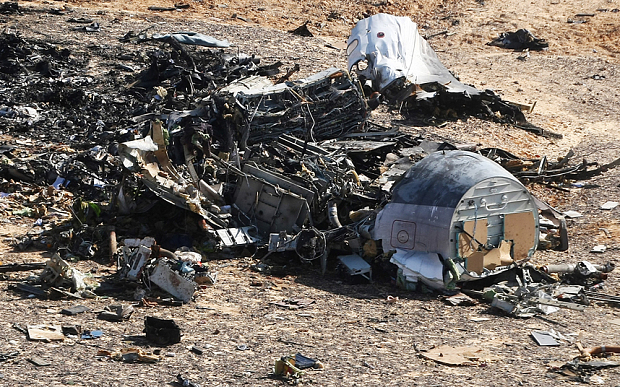
plane_3489909b

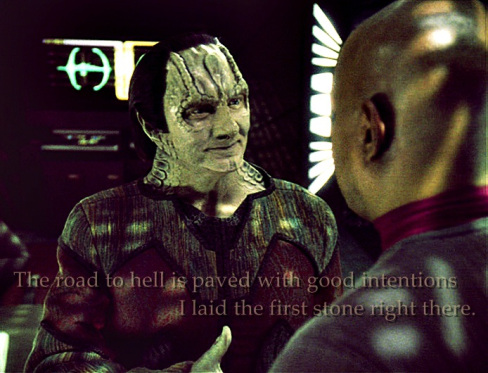
“My father used to say that the road to Hell is paved with good intentions. I laid the first stone right there. I’d committed myself. I’d pay any price, go to any lengths, because my cause was righteous. My… intentions were good. In the beginning, that seemed like enough.” Captain Benjamin Sisko (Avery Brooks) Star Trek Deep Space Nine, In the Pale Moonlight

Friends of Padre Steve’s World,

With the increasing probability that elements of the self-proclaimed Islamic State brought down a Russian airliner in the Sinai last week, it is important to ask what we are willing to do to protect innocent lives. I am not just talking about the situation in Syria and Iraq, where tens of thousands have died and millions have been displaced; but around the world from a hybrid terrorist state that knows no creed but victory or death.

Iraq-unrest

The question is not just about fighting the Islamic State as this is already happening. Though there is no formal alliance and many of the states involved have their own interests at heart, the war now involves the United States, some NATO allies, Russia, Iran, Saudi Arabia, and a number of Arab states, not to mention the kaleidoscope of different warring parties in Iraq and Syria. Until last week the United States was content to fight using airpower alone. Now it appears that albeit with great hesitancy the Obama administration is slowly expanding the fight to include ground troops, although at the time this is limited to special operations troops and advisers.

As the war expands, we do have to ask hard questions, chief among them how far we will go to fight the Islamic State. The fact that no matter what course of action the United States, our allies, and the other combatants take, each one has its drawbacks, as well as benefits. Each one involves a certain amount of risk, and the fact is that the Islamic State does believe that the United States, Europe, Russia, Iran, and Israel are their greatest enemies and is working to attack each one. This poses a question of making alliances with disparate nations, some of which are mortal enemies of each other. But sometimes necessity makes strange bedfellows, just ask Winston Churchill and Josef Stalin.

So today, I am posing a reflection from the television series Star Trek Deep Space Nine. I think that among the Star Trek series that my favorite is Deep Space Nine. Of course all of the Star Trek series and movies deal with ethics, philosophy and morality to some extent; but Deep Space Nine is perhaps the most interesting to me. Don’t get me wrong I think that the Original Series and Start Trek the Next Generation were and are leap years ahead of most television series when it comes to addressing ethical, moral and existential issues, but somehow living in the post 9-11 “War on Terrorism” world I find Deep Space Nine to be the most compelling. I think that is that the fact that the moral issues get blurred which attracts me to the series, and to this episode in particular.

I think that using the medium of science fiction we can think about real life issues in a new, and maybe more creative way than we might. I think it to do this is to think outside the traditional box, which sometimes limits our discussion, and consideration of all of the factors involved. But the subject is uncomfortable because it makes us face truths that we might not want to see, and parts of ourselves, our beliefs, and our values that can become clouded in times of crisis.

One of my favorite episodes is from season six and is entitled “In the Pale Moonlight.” The episode deals with the unsavory matter of contriving a reason to get the Romulan Empire to join with the Federation and the Klingons to fight the Dominion-Cardassian alliance that is threatening those entities as well as potentially the entire Alpha Quadrant. I have included a link to the conclusion of that episode here:

The ethics of this episode seem very timely as I look at the new phase of the conflict that the United States has been engaged for the past thirteen years. The fact is that in spite of our appeal to higher ideals we are having to make alliances with powers that are only slightly less unsavory than ISIS, powers whose polices have help ISIS grow. In a sense it is the classic scenario of making a deal with the devil to defeat one’s enemy. Of course this is not a new phenomena, individuals and nations have made such deals, sometimes with mortal enemies throughout history.

Unfortunately we usually judge such decisions based on their results, rather than wrestle with the ethical issues involved and how we might behave in similar situations. For me the philosophical and ethical issues involved in such alliances have a special interest and as such I tend to notice or recall instances where I saw, read or heard something that makes a connection to an ethical or moral dilemma faced by policy makers and planners today.

Some of the issues involved for policy makers are related to the traditional Just War Theory, and what is called the “Supreme Emergency” exemption. This exemption basically posits that when faced with a supreme and existential emergency a person or state may engage in behaviors that ordinarily would be considered unethical if the situation were not of a supreme emergency.

Of course such decisions in the real world are difficult. Those who have a system of beliefs that help them define right and wrong behaviors, even if they are not codified in law may struggle with such decisions, while those who act according to what they deem necessary or expedient, unbridled by religious, philosophical or other similar codes may not, instead making their decisions based on what appears to be necessary at the time.

This Deep Space Nine episode is remarkable because we get to see an actor playing a military commander dealing with the morality of the course of action that he is taking. In one of the early scenes Captain Sisko expresses his doubts relating to the morality of a decision that he is making in a war that has already consumed the lives of tens of millions of people.

pale-moonlight

After an incident where a Federation starship was destroyed, Sisko went to Elim Garak (Andrew Robinson), an exiled Cardassian intelligence officer to uncover any evidence about Dominion-Cardassian collusion to attack the Romulans. When none was uncovered and Garak’s sources on Cardassia were compromised he agreed to allow Garak to manufacture evidence in order to get the Romulans into the war on the side of the Federation and Klingons. Sisko compounded the situation by having the Klingons release a master forger who was on death row to help Garak. Sisko knew it was wrong and confided in his log:

“Why I didn’t listen to the voice in the back of my mind telling me not to believe a word he said, I’ll never know… But it didn’t take long for me to come face to face with the fact that I’d made a mistake.”

When the former prisoner gets drunk and attacks the owner of a tavern on the space station Sisko was in a bind. He wanted no evidence that the man had been on his station and in order to keep Quark, the bar owner quite had to bribe him. Sisko again expressed his doubts in his personal log:

“Maybe I should have put a stop to it right there. Maybe I should have said, “Thank you very much for your input, Mister Garak, I will take your suggestion under advisement,” and then gone back to my office and forgotten the whole thing. But I didn’t. Because in my heart, I knew what he was saying made sense.”

Even so Sisko still had doubts:

“That was my first moment of real doubt, when I started to wonder if the whole thing was a mistake. So I went back to my office. And there was a new casualty list waiting for me. People are dying out there every day! Entire worlds are struggling for their freedom! And here I am still worrying about the finer points of morality! No, I had to keep my eye on the ball! Winning the war, stopping the bloodshed, those were the priorities! So I pushed on. And every time another doubt appeared before me, I just found another way to shove it aside.”

When nations feel they are engaged in a life and death struggle, those who serve as policy makers, planners and military commanders often make uncomfortable compromises with their own religious, ethical or philosophical codes. Sisko continued down the path despite his doubts but justified his actions by the fact that Starfleet had approved them:

“Maybe… I was under more pressure than I realized. Maybe it really was starting to get to me, but I was off the hook. Starfleet Command had given the plan their blessing and I thought that would make things easier. But I was the one who had to make it happen. I was the one who had to look Senator Vreenak in the eye and convince him that a lie… was the truth.”

The forgery was completed and the Romulan Senator secretly arrived on the station to examine the evidence and as he did so all Sisko could do was wait, confiding in his log:

“So all I could do was wait… and see how masterful Tolar’s forgery really was. So I waited… tried to catch up on my paperwork, but I find it very difficult to focus on criminal activity reports, cargo manifests… So I went back to pacing, staring out of the window. I’m not an impatient man, I’m not one to agonize over decisions once they’re made. I got that from my father. He always says, “Worry and doubt are the greatest enemies of a great chef. The soufflé will either rise or it won’t – there’s not a damn thing you can do about it, so you might as well just sit back and wait and see what happens.” But this time the cost of failure was so high, I found it difficult to take his advice. If Vreenak discovered that the data rod was a forgery, if he realized that we were trying to trick them into the war it could push the Romulans even farther into the enemy camp. They could start to openly help the Dominion. If worst came to worst they could actually join the war against us. I had the distinct feeling that victory or defeat would be decided in the next few minutes.”

It did not work, Vreenak discovered that the data rod was a forgery and threatened to expose Sisko’s deception and possibly bring the Romulans into alliance with the Dominion. When Sisko’s actions blew up in his face and his deceit was revealed he was not happy and resigned himself to face the consequences:

“So it all blew up in my face. All the lies and the compromises, the inner doubts and the rationalizations – all for nothing. Vreenak was furious. I can’t say I blamed him; I’d have reacted the same way. After telling me in no uncertain terms that he intended to expose this “vile deception” to the entire Alpha Quadrant, he got back in his shuttle and headed home. There didn’t seem to be anything more to do… so I went back to work. Two days later we got the news.”

Sisko learned in a Starfleet communication that Vreenak’s shuttle had blown up and that is was suspected to be the work of the Dominion. When Sisko found that Vreenak was dead he went to Garak and forcefully confronted him, striking him in the process. He accused Garak of sabotaging the senator’s ship and killing him as well as the forger, Tolar. Instead of backing down Garak confronted the results and the ethical issue. The heated exchange between the two men is fascinating:

Garak: If you can allow your anger to subside for a moment, you’ll see that they did not die in vain! The Romulans will enter the war!

Captain Sisko: There’s no guarantee of that!

Garak: Oh, but I think that there is. You see, when the Tal Shiar finishes examining the wreckage of Vreenak’s shuttle, they’ll find the burnt remnants of a Cardassian optolythic data rod which somehow miraculously survived the explosion. After painstaking forensic examination, they’ll discover that the rod contains a recording of a high-level Dominion meeting, at which the invasion of Romulus was being planned.

Captain Sisko: And then they’ll discover that it is a fraud!

Garak: Oh, I don’t think they will! Because any imperfections in the forgery will appear to be a result of the explosion. So – with a seemingly legitimate rod in one hand, and a dead senator in the other, I ask you, Captain – what conclusion would you draw?

As Sisko’s anger subsided Garak continued:

“That’s why you came to me, isn’t it, Captain? Because you knew I could do those things that you weren’t capable of doing? Well, it worked. And you’ll get what you want: a war between the Romulans and the Dominion. And if your conscience is bothering you, you should soothe it with the knowledge that you may have just saved the entire Alpha Quadrant. And all it cost was the life of one Romulan senator, one criminal, and the self-respect of one Starfleet officer. I don’t know about you, but I’d call that a bargain.”

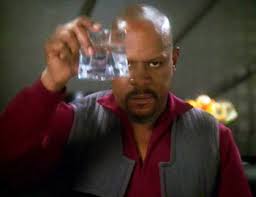
DS9SiskoToast

Shortly thereafter Sisko found out that the out that the deception was successful as Garak had said it would be. The Romulans who recovered the damaged data rod believed that it was genuine and declared war on the Dominion-Cardassian alliance and had entered the war on the side of the Federation. He completed his personal log:

“At oh-eight-hundred hours, station time… the Romulan Empire formally declared war against the Dominion. They’ve already struck fifteen bases along the Cardassian border. So, this is a huge victory for the good guys! This may even be the turning point of the entire war! There’s even a “Welcome to the Fight” party tonight in the wardroom!… So… I lied. I cheated. I bribed men to cover up the crimes of other men. I am an accessory to murder. But most damning of all… I think I can live with it… And if I had to do it all over again… I would. Garak was right about one thing – a guilty conscience is a small price to pay for the safety of the Alpha Quadrant. So I will learn to live with it…Because I can live with it…I can live with it. Computer – erase that entire personal log.”

My guess is that before this war is over, there will be men and women serving in positions of responsibility in our or allied militaries, policy makers and government officials who will make similar deals, violating their own moral codes and even laws in order to defeat the Islamic State and prevent acts of terror against their citizens. Most, like Sisko will not be happy but will live with their decisions. The fact is that long asymmetrical wars in which nation states have to fight non-state terrorist entities get really ugly and the longer and more bloody that they become the more decent and honorable people will make decisions like Sisko and resort to actions that in normal times they would never countenance.

This is nothing new. Those who have fought in such wars throughout history have found ways to “live” with actions that they would not approve of had things been different. Wars such as the one that we are fighting and continue to fight in the years ahead have a corrosive affect on the human spirit. They corrupt and destroy even when they are “successful.”

The question is: Can we live with it? Sadly, as much as I hate to admit it, in a similar situation I think like Sisko, that I could condone or be complicit in something like this. I too could probably convince myself that the end justified the means and that I could live with it, against ISIL. If in fact an ISIL bomb downed the Russian airliner, it is a watershed, and points to worse things to come, and we will have to ask the question, “can you live with it?”

Of course it is possible that this was an accident, truthfully, I do as tragic as it would be, hope this it the case. 

Of course there is always the possibility that ISIL or one of its allied groups did it. But another possibility cannot be ruled out; that a bomb was planted bye third party, possibly the Russians themselves, hoping to implicate ISIL. That my friends is far to frightening to contemplate as there are too many nations that have both the capability and a motive to do this. 

There are some other issues that I want to discuss about this war using the Star Trek motif, and like this they will be unsettling.

Peace

Padre Steve+

2 Comments

Filed under ethics, Foreign Policy, History, middle east, Military, News and current events, Political Commentary, star trek, terrorism

The Power of the Vision: A Weekend in Gettysburg

chamberlain lrt

Friends of Padre Steve’s World

I have been in Gettysburg this weekend with my students from the Staff College and as always it has been a good trip so far. Yesterday we did the first two days of the battle ending at Culp’s Hill. We spent a good amount of time on Little Round Top, not just talking about the battle itself, but the impact of war on people, the souls of the people who fought it and their families. I always remind my students that the one constant in history, even military history, where so many people, particularly history “buffs” focus on tactics, weapons, and technology, is humanity.

Today we will finish and do the third day of battle, walking the route of Pickett’s Charge, going to General Meade’s headquarters before finishing at the Soldier’s Cemetery and discussing the Gettysburg Address and its importance to our history as Americans.

We drove up here yesterday making the best time we have ever made on one of these trips, no bad traffic in the Hampton Roads Bridge Tunnel, no bad traffic of major accidents to tie things up, and miraculously an easy trip around the DC Beltway. Thus we arrived early which allowed me to get a run in from Cemetery Hill, down, Cemetery Ridge, almost to Little Round Top before I turned around went back to the hotel. I was an awesome run. I used to run a lot and fell out of it with a number of physical, as well as emotional issues over the past 15 months. I fell out of shape and gained a lot of weight. I have started running again and my run Friday on the battlefield was the furthest I have ran in those 15 months. There is something inspiring about running here that I cannot explain. First there is the natural beauty of the area, especially during the fall and the beauty of the foliage, then there is the sense of running through an area where so many men made gave the last full measure of devotion, to save the Union.

When I come here I am always reminded of the words of Colonel Joshua Lawrence Chamberlain whose 20th Maine held back the Confederate tide on the extreme left of the Union position on Little Round Top. Those words always inspire me because they remind me of the deeds of men who came before me, men whose sacrifice and devotion helped bring about a new birth of freedom.

Chamberlain spoke these words at the dedication of the Maine monument in 1888, “In great deeds, something abides. On great fields, something stays. Forms change and pass; bodies disappear; but spirits linger, to consecrate ground for the vision-place of souls… generations that know us not and that we know not of, heart-drawn to see where and by whom great things were suffered and done for them, shall come to this deathless field, to ponder and dream; and lo! The shadow of a mighty presence shall wrap them in its bosom, and the power of the vision pass into their souls.”

Every time I come to Gettysburg I sense that mighty presence and the power of that vision embraces my soul.

Peace,

Padre Steve+

Leave a comment

Filed under civil war, Gettysburg, Military

The Unappreciated Hero of Gettysburg

Friends of Padre Steve’s World

I am up at Gettysburg with my students today, so I am posting the final excerpt from the chapter of my Gettysburg text that I have been posting throughout the week. This section wraps up that chapter and discusses the treatment that Abner Doubleday received from George Meade and the subsequent myth surrounding Doubleday and the invention of baseball. The irony about Doubleday is that he is best remembered for a game that he did not invent, and his most heroic performance is forgotten and dismissed. I hope you enjoy.

Peace

Padre Steve+

GettysburgIdols

Abner Doubleday’s Best Performance and Disgraceful Treatment

On the other hand Abner Doubleday proved himself as a capable commander who was able to provide effective leadership during a crisis situation. Although he is one of the most under-appreciated Union commanders at Gettysburg he “ably rose to the occasion, as did divisional commanders James Wadsworth and John Robinson.” [1] Though his abilities were suspect, especially by George Meade and Colonel Wainwright, the Corps artillery commander Doubleday managed to hold off superior Confederate forces, and even inflicted a significant defeat on the divisions of Harry Heth and Robert Rodes. During the fighting against ever increasing numbers of Confederates, First Corps inflicted massive casualties on their opponents. “Seven of the ten Southern brigades incurred casualties from 35 to 50 percent, and the total for all brigades came to an estimated 6,300 officers and men, or about 40 percent of their strength.” [2] Doubleday’s troops held on long enough to support the left flank of Eleventh Corps as it was being assaulted by Early’s division.

When Winfield Scott Hancock arrived on Meade’s behest to take command at Gettysburg Oliver Howard informed him that First Corps “had given way at first contact” [3] implicitly blaming Doubleday for the collapse of the Federal line. Hancock delivered the report in a note to Meade which said “Howard says that Doubleday’s command gave way” [4] This false report fixed in Meade’s mind that his doubts about Doubleday’s ability were correct. To Doubleday’s amazement Meade then cancelled his order appointing Doubleday to command First Corps and ordered John Newton, a division commander, far junior to Doubleday in Sedgwick’s Sixth Corps to replace Doubleday. A badly disappointed Doubleday resumed command of his division. In large part Meade’s appointment of Newton over Doubleday was also political. Doubleday’s fellow abolitionist division commander in First Corps, James Wadsworth said that “Meade’s “animosity” toward Doubleday rested in a “past political difference.” [5] Doubleday, the abolitionist Republican was not acceptable to Meade, the conservative Unionist Democrat and ally of Gorge McClellan. The fact that Newton “was not regarded as daring or brilliant” [6] and was regarded by many as a “pet” of Meade, did not matter. Meade’s volcanic temper and temptation to allow politics to cloud his military judgement meant that “Newton was the only other major general he could trust politically.” [7] When Doubleday formally protested to Meade he was dismissed from Army of the Potomac.

He left the Army of the Potomac never held a field command during the war, however, he was brevetted in the Regular Army to both brigadier and major general. Doubleday served in administrative capacities in Washington D.C. until the end of the war and testified against Meade during the politically charged hearings of the Committee on the conduct of the War. Doubleday remained bitter toward Meade and he “was never reconciled to Meade’s relieving him as acting commander of First Corps in Favor of Maj. Gene. John Newton, who was his junior in rank and the reproach that it implied.” [8] After the war Doubleday reverted to his rank as a Colonel in the Regular Army and was made Colonel of the 35th U.S. Infantry in San Francisco. From 1871 until his retirement in 1873 Doubleday commanded the African American “Buffalo Soldier” 24th Infantry Regiment in Texas. He died in New York on January 25th 1893, and was buried in Arlington National Cemetery. Among the members of the honor guard at his funeral in New York was a man named Abraham Mills who would play a major role in Doubleday’s future fame.

Baseball_article_large

A Myth and Legend Greater than Gettysburg: Abner Doubleday and Baseball

Interestingly enough Doubleday, who was unappreciated as a general became linked forever to the game known as America’s national pastime and to Cooperstown New York, the home of Baseball’s Hall of Fame. As such he is probably better known to most Americans, particularly baseball fans than any Union general who fought at Gettysburg.

Like the Civil War, Baseball too is filled with myths which connect it to our culture, and one “is the myth that Abner Doubleday invented the sport one fine day in 1839 at the farmer Phinney’s pasture at Cooperstown.” [9] It was early American baseball star Albert G. Spaulding who linked the creation of baseball to the Civil War and in particular to Abner Doubleday by way of an apocryphal story of one of Doubleday’s childhood friends, years after Doubleday’s death. In 1907, Spaulding worked with Abraham G. Mills the fourth President of the National League, the same man who had served in Doubleday’s funeral honor guard to conclude that “that the first scheme for playing it, according to the best evidence obtained to date, was devised at Cooperstown New York, in 1839.” [10] But this is simply myth and the under-appreciated hero of the first day of battle at Gettysburg is much better known for something that he did not do.

The ironies of history and myth are fascinating. Interestingly Mills paid homage to Doubleday noting, “in the years to come, in the view of hundreds of thousands of people who are devoted to baseball, Abner Doubleday’s fame will rest evenly, if not quite so much that he was its inventor…as upon his brilliant and distinguished career as an officer in the Federal Army.” [11]

Notes

[1] Ibid. Sears Gettysburg p.245

[2] Ibid. Coddington, The Gettysburg Campaign: A Study in Command, p.307

[3] Ibid. Wert The Sword of Lincoln p.294

[4] Ibid. Guelzo Gettysburg: The Last Invasion p.224

[5] Ibid. Wert The Sword of Lincoln p.294

[6] Ibid. Cleaves Meade of Gettysburg p.143

[7] Ibid. Guelzo Gettysburg: The Last Invasion p.224

[8] Ibid. Pfanz Gettysburg: The First Day p.355

[9] Will, George F Men at Work: The Craft of Baseball Harper Collins Publishers, New York 1990 p.294

[10] Kirsch, George B. Baseball in Blue and Gray: The National Pastime in the Civil War Princeton University Press, Princeton and Oxford, 2003 p.xiii

[11] Ibid.. Kirsch Baseball in Blue and Gray p.xii

Leave a comment

Filed under Baseball, civil war, Gettysburg, History, leadership, Military

Bungled from the Start: Confederate Disaster at Oak Ridge

Friends of Padre Steve’s World

Since I taking a group of my students from the Staff College to Gettysburg this weekend another excerpt from a chapter of my Gettysburg text. This deals with the badly bungled Confederate attack on Oak Ridge on the afternoon of July 1st 1863. I hope that you enjoy.

Peace

Padre Steve+

88thPAcharge

The 88th Pennsylvania Charging Rodes’ Division

The arrival of Rodes’s division as on the field in the van of the Confederate Second Corps was decisive in turning the tide of the battle toward the Confederates that afternoon. When Rodes arrived with Ewell, the Federal First Corps was facing west against Heth and Pender’s divisions and its line only extended about a quarter mile north of the Railroad Cut.

The Union First Corps and Buford’s cavalry division had fought Heth’s poorly coordinated and led attacks to a standstill, but when Rodes arrived he found “a golden opportunity spread before him.” [1] From his position at Oak Ridge he saw the opportunity to take the Federal troops opposing Hill in the flank though his position did not “provide him as comprehensive view as he thought.” [2] His desire was to advance south along Oak Ridge using it to screen his movements in order to execute an attack on the Federal right flank. But before he could do this “the First Corps Generals had made preparations to oppose him.” [3] Robinson’s two brigades under Baxter and Paul deployed and “hurried in line stone and wood fences approximately at right angles to Rodes proper line of advance.” [4] Rodes could see the deployment but the fences obscured the exact positions of Robinson’s troops from him. Seeing the advance of the First Corps units as well as the emergence of Schurz’s troops from Eleventh Corps advancing out of the town the aggressive Confederate commander decided to launch an immediate attack.

dilger

Captain Hubert Dilger

Carter’s artillery, which had deployed in the open and was had “opened an enfilading fire all along the line to the Fairfield road” [5] now drew the fire of Captain Hubert Dilger’s Battery I First Ohio Artillery from Howard’s XI Corps which had just arrived near Oak Ridge. Dilger commanded one of the best artillery units in the army. He was a German immigrant and professional artilleryman who had served in the Grand Duke of Baden’s Horse Artillery. He came to the United States at beginning of the war at the invitation of a distant uncle, to “practice the war-making he had only previously rehearsed.” [6] Dilger was “blunt and a bit arrogant…loved by his men but not by his superiors.” At Chancellorsville he and his battery had helped save the Federal right “when it used a leapfrogging technique to keep the victorious Confederate infantry at bay.” [7] At Gettysburg Dilger again displayed his talent.

Upon its arrival Dilger’s battery opened “a storm of counter-battery fire” [8] on Carter’s battalion as well as the infantry brigade of O’Neal which was near it. The effect of Dilger’s fire on Carter’s artillery disrupted its operation and was successful in blowing up several caissons and guns causing significant numbers of casualties among the men. [9] Seeing the carnage to one battery that he had not placed, Carter “accosted Rodes and asked, “General, what fool put that battery up yonder?” Only to realize after an “awkward pause and a queer expression on the face of all Rodes’ staffers that Rodes himself had placed it there.” [10] In response, the chastised division commander replied “You had better take it away, Carter.” [11] Throughout the rest of the engagement Dilger’s battery would make itself known, shattering Confederate infantry assaults and damaging Southern artillery batteries.


battle-of-gettysburg-oak-ridge-july-1

Rodes’ Division attacks Oak Ridge July 1st

The young division commander was overconfident as he ordered the attack. Thinking he had an adequate grasp of the situation he did not order a reconnaissance before launching the attack, nor did the commanders of the brigades spearheading the attack put out skirmishers, the normal precaution when advancing in the face of the enemy. [12] Rodes deployed his troops over the rough ground of the ridge as quickly as he could and dashed off a note to Jubal Early stating “I can burst through the enemy in an hour.” [13] He was to be badly mistaken, and “like Heth in the south, he paid in disproportionate blood for the ready aggressiveness which in the past had been the hallmark of the army’s greatest victories, but now seemed mere rashness and the hallmark of defeat.” [14]

Rodes deployed George Doles’ excellent brigade to guard his left against the advancing Eleventh Corps units until Early’s division could arrive, something he expected momentarily. Doles and his brigade conducted this task admirably until the arrival of Jubal Early’s division, which enabled it to join the attack on Eleventh Corps divisions north of the town. Initially the movement of the brigade opened a potentially dangerous gap between Doles brigade and O’Neal’s brigade to its right, but this could not be exploited by the Federals. To hold this gap between Doles and O’Neal Rodes pulled one regiment, the 5th Alabama from O’Neal.

To make his main attack Rodes initially deployed his division on a one brigade front as they arrived on the battlefield in line-of-march. As the leading elements of the division neared the Federal positions Rodes, made what appeared to be a simple change of plan to “attack on a two brigade front, sending in O’Neal’s and Iverson’s men simultaneously, then following up with Daniel’s brigade in echelon on the right.” [15] Ramseur’s brigade was held in close reserve. In theory it was a sound plan, but everything is more complicated when bullets start flying. The execution of this change in plan was “bungled right at the start.” [16] None of “the three brigade commanders was sure what the signal for the advance would be” [17] and since Rodes had made no reconnaissance, and none of the brigades put out skirmishers the direction of the attack was faulty, units were mingled and a gap developed between O’Neal and Iverson. [18] The attack “though vigorous, was a disaster” [19] and the plan floundered due to the stout resistance of Robinson’s troops and the “nicely matched incompetence of O’Neal and Iverson” [20] neither of who advanced with their assaulting troops.

O’Neal’s brigade became disoriented and “went in with only three regiments and at an angle different from that indicated by Rodes. Instead of leading his troops in the attack O’Neal remained in the rear with the Fifth Alabama, a reserve regiment,” [21] the regiment Rodes had left behind to guard the gap between O’Neal and Doles’s brigades. The last regiment, the Third Alabama had been aligned on the flank of Doles’s brigade and since Rodes had moved it “evidently concluded…that it was no longer his to direct.” [22] When Rodes discovered this he had to send a staff officer to ensure that the regiment was properly attached to Daniel’s brigade. That regiment was thus left out of the initial advance. The attack stalled almost immediately when O’Neal’s three attacking regiments were fired upon by Union troops of Robinson’s division who had been hidden by a wall which had obscured them from Rodes’s view.

Striking O’Neal’s advancing troops at the oblique, Robinson’s battle hardened Union troops slaughtered the unsuspecting Confederates. Though they were outnumbered the Union men were solid veterans from Henry Baxter’s brigade who were aided by Dilger’s artillery which delivered “effective canister fire at O’Neal’s brigade.” [23] The combined fire of Baxter’s troops as well as Dilger’s artillery “killed or wounded about half of the advancing men with a series of point blank volleys pumped directly into their flank.” [24] O’Neal’s decision to remain back with his reserve regiment rather than “going forward to direct the advancing regiments” [25] caused further problems because there was no officer on the spot to direct the action of the three regiments.

Rodes noted in his after action report that O’Neal’s three attacking regiments “moved with alacrity (but not in accordance with my orders as to direction)” and that when he ordered the 5th Alabama up to support “I found Colonel O’Neal, instead of personally superintending the movements of his brigade, had chosen to remain with his reserve regiment. The result was that the whole brigade was repulsed quickly and with loss….” [26] As O’Neal’s troops fell back in confusion they exposed Iverson’s brigades flank to the Federal fire.

As Rodes’s continued bad luck would have it, Iverson, like O’Neal on his right did not advance simultaneously with O’Neal or on the same axis, but instead waited to see O’Neal’s advance. [27] When it advanced, the brigade “about 1,450 strong, kept on under artillery fire through the open field “as evenly as if on parade.” Then its alignment became faulty, and without Iverson on hand to correct it, the brigade with strange fatality began to bear left toward the stone wall…” [28] As a result the brigade drifted right it’s exposed left was subject to attack from Baxter’s and Gabriel Paul’s brigades of Robinson’s division still hidden behind the stone wall.

When the Confederates got to about fifty yards of Baxter’s troops the commander of the 83rd New York, the Swiss born lieutenant Colonel Joseph A. Moesch shouted: “Up men, and fire.” Moesch rode behind his line cheering his men on, but they needed no urging. In the words of one of one, “The men are no longer human, they are demons; a curse from the living here, a moan from the dying there. ‘Give them —- shouts one.’ See them run’ roars another.” [29] The well concealed veterans of Baxter regiments slaughtered them as they had O’Neal’s men just minutes before. “One regiment went down in such a neat row that when its survivors waves shirt tails, or any piece of cloth remotely white, Iverson thought that the whole regiment of live men were surrendering.” [30] As the Confederate attack collapsed some “of the regiments in Robinson’s division changed front again, charged, and captured nearly all the men who were left unhurt in three of Iverson’s regiments.” [31] Official Confederate reports list only 308 missing but that number differs from the Union reports, Robinson reporting 1000 prisoners and three flags and Baxter’s brigade nearly 400. [32] As Robinson’s troops smashed the brigades of O’Neal and Iverson, they were joined by the remnants of Cutler’s brigade which changed its face from west to north to deliver more devastating fire into the Confederates.

iverson

Brigadier General Alfred Iverson CSA

Iverson was badly shaken by the slaughter and “went to pieces and became unfit for further command,” [33] after being just close enough to the action to observe it. He panicked and notified Rodes that one of his regiments had surrendered in masse though Iverson later retracted that in claim in his official report where he noted “when I found afterward that 500 of my men were left lying dead and wounded on a line as straight as a dress parade, I exonerated …the survivors.” [34] His brigade had lost over two-thirds of its strength in those few minutes, one regiment the 23rd North Carolina lost 89 percent of those it took into battle, and at the end of the day would “count but 34 men in its ranks.” [35] Iverson’s conduct during the battle was highly criticized by fellow officers after it. Accused of cowardice, drunkenness and hiding during the action he was relieved of his command upon the army’s return to Virginia “for misconduct at Gettysburg” [36] and sent back to Georgia. Some complained after the war that Iverson was helped by politicians once he returned to Richmond and instead of facing trial “got off scot free & and had brigade of reserves given to him in Georgia.” [37]

With the center of his attacking forces crushed the brigades of Junius Daniels and Stephen Ramseur entered the fray to the right of Iverson’s smashed brigade. These capable officers achieved a link up with the battered brigades of Harry Heth at the Railroad cut after Daniel’s brigade had fought a fierce battle with Culter’s and Stone’s brigades in the area [38] and allowed the Confederates of A.P. Hill and Dick Ewell’s Corps to form a unified front from which they were able to resume their attack in even greater numbers against the battered remnants of First Corps.

To the east Doles’s brigade advanced with Jubal Early’s division smashed the outnumbered and badly spread out divisions of Oliver Howard’s Eleventh Corps. The timely arrival of that division coupled with the skillful work of Daniel and Ramseur saved Rodes from even more misfortune on that first day of battle, but Rodes’ plan “to burst through the enemy” with his division had evaporated. [39] By the end of the day his division had lost nearly 3000 of the 8000 that it had begun the afternoon.

The battle at Oak Ridge was a series of tactical debacles within a day of what appeared to be a “Confederate strategic bonanza.” [40] Despite the mistakes Rodes never lost his own self-control. He recovered from each mistake and continued to lead his division. He “kept his men on the ridge driving forward until with Hill, and on the flats left joined Early’s right to form a continuous line into Gettysburg.” [41] It was a hard lesson for the young Major General, but one that he learned from. Rodes continued to serve with distinction as a division commander would be killed in action while leading a counterattack by his division against Philip Sheridan’s army at the Third Battle of Winchester on September 19th 1864.

Notes

[1] Ibid. Foote, Shelby, The Civil War, A Narrative. Volume Two p.472

[2] Ibid. Guelzo Gettysburg: The Last Invasion p.170

[3] Ibid. Coddington The Gettysburg Campaign p.286

[4] Ibid. Krick Three Confederate Disasters on Oak Ridge p.119

[5] Ibid. Coddington The Gettysburg Campaign p.286

[6] Ibid Trudeau, Gettysburg: A Testing of Courage p.208

[7] Gottfried, Bradley The Artillery of Gettysburg Cumberland House Publishing, Nashville TN 2008 pp.59-60 Dilger was awarded the Medal of Honor for his actions at Chancellorsville in 1893, part of the citation stating that Dilger: “fought his guns until the enemy were upon him, then with one gun hauled in the road by hand he formed the rear guard and kept the enemy at bay by the rapidity of his fire and was the last man in the retreat.”

[8] Ibid. Krick Three Confederate Disasters on Oak Ridge p.118

[9] Ibid Trudeau, Gettysburg: A Testing of Courage p.210

[10] Ibid. Guelzo Gettysburg: The Last Invasion p.170

[11] Ibid. Gottfried The Artillery of Gettysburg p.61

[12] Ibid. Guelzo Gettysburg: The Last Invasion p.170

[13] Ibid. Guelzo Gettysburg: The Last Invasion p.170

[14] Ibid. Foote, Shelby, The Civil War, A Narrative. Volume Two p.473

[15] Ibid. Sears Gettysburg p.197

[16] Ibid. Sears Gettysburg p.197

[17] Ibid. Guelzo Gettysburg: The Last Invasion p.170

[18] Ibid Freeman, Lee’s Lieutenant’s a Study in Command p.565

[19] Ibid. Pfanz, Donald Richard S. Ewell p.305

[20] Ibid. Krick Three Confederate Disasters on Oak Ridge p.120

[21] Ibid. Pfanz, Donald Richard S. Ewell p.305

[22] Ibid. Krick Three Confederate Disasters on Oak Ridge p.124

[23] Ibid. Sears Gettysburg p.198

[24] Ibid. Foote, Shelby, The Civil War, A Narrative. Volume Two p.473

[25] Ibid Freeman, Lee’s Lieutenant’s a Study in Command p.565

[26] Ibid Luvaas The U.S. Army War College Guide to the Battle of Gettysburg p.36

[27] Ibid. Krick Three Confederate Disasters on Oak Ridge p.132

[28] Ibid. Coddington The Gettysburg Campaign p.289

[29] Ibid. Pfanz Gettysburg: The First Day p.172

[30] Ibid. Dowdy, Lee and His Men at Gettysburg: The Death of a Nation p.134

[31] Ibid. Coddington The Gettysburg Campaign p.290

[32] Ibid Pfanz Gettysburg: The First Day p.175

[33] Ibid. Coddington The Gettysburg Campaign: A Study in Command p.290

[34] Ibid Luvaas The U.S. Army War College Guide to the Battle of Gettysburg p.37

[35] Ibid. Sears Gettysburg p.201

[36] Ibid. Guelzo Gettysburg: The Last Invasion p.173

[37] Ibid. Krick Three Confederate Disasters on Oak Ridge p.136

[38] Ibid. Coddington, The Gettysburg Campaign: A Study in Command, p.292

[39] Ibid. Guelzo Gettysburg: The Last Invasion p.173

[40] Ibid. Krick Three Confederate Disasters on Oak Ridge p.138

[41] Ibid. Dowdy Lee and His Men at Gettysburg: The Death of a Nation p.138

Leave a comment

Filed under civil war, Gettysburg, History, leadership, Military

From the Pages of Beowulf: Robert Rodes & His Division

Friends of Padre Steve’s World

Since I am taking at group of students from the Staff College to Gettysburg this weekend I am continuing to post excepts from a chapter of my Gettysburg text.  This section deals with the entrance of the leading division of the Confederate Second Corps onto the battlefield. The focus is primarily on the Division’s commander, Major General Robert Rodes and his subordinate commanders. It deals with the disparity of leadership that led to a Confederate disaster. I hope you enjoy.

Peace

Padre Steve+

On June 30th Rodes’ division marched about twenty miles and bivouacked at Heidlersburg where he met with his corps commander Ewell, fellow division commander Jubal Early and Isaac Trimble who was accompanying Second Corps where they puzzled over Lee’s orders as to the movement of Second Corps the following day, which indicated that Ewell should march to Gettysburg or Cashtown “as circumstances may dictate.” [1] Neither Rodes nor Early gave favorable opinions of the order and Ewell asked the rhetorical question “Why can’t a commanding General have someone on his staff who can write an intelligible order?” [2]

Ewell assumed that Cashtown was the desired junction of the army ordered his to march from on the morning of July 1st 1863 toward Cashtown to join with Hill’s corps. His choice of routes was good as it gave him the opportunity to turn south towards Gettysburg “as circumstances” dictated in compliance with Lee’s rather vague order of the day before.[3]

Rodes’s division was at Middletown (modern Biglerville) when Ewell received A.P. Hill’s message that he was moving on Gettysburg between eight and nine in the morning. Ewell immediately directed Rodes onto the “Middletown-Gettysburg road and instructed Early to march directly toward Gettysburg on the Heidlersburg road.” [4] As he did so he sent a note to Lee informing him of the situation and about noon he received Lee’s response that Lee “did not want a general engagement brought on till the rest of the army came up.” [5] But by the time Ewell received that instruction events were beginning to spiral out of control on his front just as they had on Harry Heth front just a few hours before.

robert-rodes

Major General Robert Rodes, C.S.A.

Enter Second Corps

Although Ewell was closer to Rodes than Hill was to Heth at the beginning of the battle, Rodes like Heth was also operating somewhat independently as Ewell “preferred to ride near the tail of his column in his buggy.” [6] Like Heth when confronted with the opportunity for battle, he ignored the instruction “to avoid a general engagement, if practicable.” [7] The operation was Rodes’ first as a Major General and he like his fellow division commanders, Jubal Early and Allegheny Johnston, the young and aggressive Rodes was operating independently “as Ewell preferred” until the corps was reunited in the evening. [8] During the early part of the march to Gettysburg he had performed well but July 1st 1863 “would never be remembered as a great day for Robert Rodes.” [9] As he moved his division south he, like Ewell was unaware that a battle was developing to their front and both were surprised when they heard the sound of artillery about four miles north of the town. Rodes later wrote that “to my surprise, the presence of the enemy there in force was announced by the sound of a sharp cannonade, and instant preparations for battle were made.” [10]

Rodes deployed his infantry brigades and “posted Lt.Col. Thomas H. Carter’s battalion of artillery along the nose of the ridge, where it opened with “fine effect” on the Union line stretched across McPherson’s Ridge.” [11] As Rodes set about deploying his troops for his assault on Oak Ridge, Ewell could see Robinson’s division moving up to Oak Ridge and the Mummasburg road facing his troops. He also observed the advance of the two divisions of Eleventh Corps which Carl Schurz was moving into position north of the town. Seeing the developments to his front and right Ewell considered Lee’s order obsolete and noted that “it was already too late to avoid an engagement without abandoning the position already taken up…and I determined to push the attack vigorously.” [12] Likewise he sent an aide to contact Jubal Early and enjoin that General to move to battle.

Rodes’s Division and His Commanders

Robert Rodes was new to commanding a division. The big, blond and charismatic Rodes was one of the most popular leaders in the Army of Northern Virginia. Rodes had a great ability to inspire his subordinates. This was in large part due to his handsome physical appearance which made him look “as if he had stepped from the pages of Beowulf” [13] but also due to his “bluff personality featuring “blunt speech” and a tincture of “blarney.” [14]

Rodes graduated at the age of 19 from the Virginia Military Institute and remained at the school as an assistant professor for three years. He left VMI when Thomas “Stonewall” Jackson received the full professorship he desired and became a successful civil engineer working with railroads in Alabama. He had just been appointed a full professor at VMI as the war was declared. [15]

His career had been remarkable. Rodes was “tough, disciplined and courageous; he was one of those unusual soldiers who quickly grew into each new assignment.” [16] In just two years he had “risen from captaining a company of “Warrior Guards” in Alabama in 1861 to earning the equivalent of a battlefield promotion to major general for the fight he made at Chancellorsville.” [17] As a brigadier he had shown remarkable leadership on the battlefield and off, taking care of the needs of his soldiers and worked to have “at least one company per regiment to drill on a field gun and to keep up that training from time to time, so that his men could service a cannon in a crisis.” [18]

With the coming of war Rodes abandoned his academic endeavors returned to his recent home of Alabama where he was appointed Colonel of the 5th Alabama regiment of infantry. Early in the war Rodes distinguished himself as the commander of that regiment and later as brigade commander of Ewell’s former brigade, a promotion that Ewell recommended. His brigade was one of the spearheads of Jackson’s attack on Eleventh Corps at Chancellorsville, where he “was a brilliant presence on the field, exhorting his men with mustache flying. Jackson personally congratulated him on his gallant performance.” [19] He took acting command of Major General D. H. Hill’s former division during that battle and handled that unit well. Following Chancellorsville, Rodes was recommended for promotion to Major General and permanent command the division by Stonewall Jackson. The act was one of Jackson’s last acts before his untimely death from pneumonia while recovering from his wounds sustained at Chancellorsville. With his appointment Rodes became the first non-West Point graduate to command a division in the Robert E. Lee’s Army of Northern Virginia.

Rodes’s division was the largest in the army with five brigades and approximately 8,000 soldiers present at Gettysburg, almost as many as the First Corps of the Army of the Potomac. His brigade commanders were a mixed bag, ranging from the excellent to the incompetent. Among the former he had George Doles, Stephen Ramseur and Junius Daniel. However, Rodes was saddled with two commanders of dubious quality, Brigadier General Alfred Iverson, who was hated by his men and Colonel Edward O’Neal, a leading secessionist politician “who had absolutely no military experience before the war” [20] and who had been ineffective as an acting brigade commander when he took over for Rodes at Chancellorsville. However, Lee was forced to leave O’Neal at the head of his brigade for lack of other senior leaders over Rodes’ objections. It would be a mistake that would come to haunt him.

However, Rodes was fortunate to have Brigadier Generals Stephen Ramseur and George Doles in command of two of his brigades. Both had led their units well at Chancellorsville under Rodes direction, and would fight well in Gettysburg and subsequent actions. [21] Brigadier General Junius Daniel, though an experienced West Point graduate with a solid record was new to the Army of Northern Virginia, unfamiliar with his commander, while and his brigade was untested in combat.

Brigadier General George Doles commanded a brigade. Doles was not a professional soldier but a former Georgia militia where he commanded a company, “the Baldwin Blues,” one of the oldest and best-trained military units in the state.” [22] As a Colonel he “had shown fiber and vigor” [23] as commander of the 4th Georgia regiment which he commanded at South Mountain and Antietam. Doles was promoted to Brigadier General after Antietam, and commanded the brigade at Chancellorsville. At Chancellorsville his brigade was part of Jackson’s attack against the Federal XI Corps and in the thick the action throughout the battle. Doles was noted for his leadership and valor. By Gettysburg he had a reputation for “being among the Southern army’s most daring, hard fighting brigadiers.” [24]

Stephen Ramseur was the youngest General in the Army of Northern Virginia, he had graduated from West Point in 1861, immediately resigned to join the Confederate cause and within seven months he would be a Brigadier General. He was elected captain of the Ellis Light Artillery of Raleigh North Carolina, and became colonel of the 49th Alabama in 1862. He led the regiment “with distinction during the Seven Days.” [25] While leading his troops at Malvern Hill he was severely wounded. Ramseur was noted for “being a fighter and for his skill in handling troops in battle.” [26]

The young Colonel was promoted to Brigadier General in November 1862 following the Battle of Antietam. He led a North Carolina brigade with great daring at Chancellorsville where he was wounded in the shin by a shell fragment. Along with his division commander Robert Rodes, the still injured Ramseur was “one of the brightest lights in Lee’s army as it approached the field at Gettysburg.” [27]

Junius Daniel was an 1851 graduate of West Point who served seven years before resigning to run his family plantation in 1858. When war came he Daniel volunteered for service and was appointed commander of the 14th North Carolina. He had much brigade command time but little combat experience, as his brigade had been posted in North Carolina and the Virginia Tidewater, thus, not sharing in the Army of Northern Virginia’s year of glory and slaughter. “Daniel’s brigade joined Rodes division in Virginia as a result of the army’s reorganization after Chancellorsville and in time for it to take part in the invasion of Pennsylvania.” [28] Despite his lack of combat experience Junius Daniel was well respected and “had the essential qualities of a true soldier and successful officer, brave, vigilant, honest…gifted as an organizer and disciplinarian, skilled in handling troops.” [29] At Gettysburg he “proved himself a valiant soldier and capable leader….” [30]

This left Rodes with two brigades under questionable leadership, and both would cause him immense grief on the morning of July 1st 1863.

One North Carolina brigade was commanded by Brigadier General Alfred Iverson. Iverson who was considered a “reliable secession enthusiast” was appointed to command the North Carolina troops whose political steadiness and loyalty was questioned by Richmond. [31] Because of this Iverson became “embroiled in bitter turmoil with his North Carolinians.” [32] Iverson had served in the Mexican War and in the army of the 1850s. However, he owed his appointments in both the U.S. Army and that of the Confederacy to political patronage, his father being a prominent U.S. Senator.

Though Iverson was from Georgia he helped raise the 20th North Carolina regiment of infantry and became its first Colonel. However he was constantly at war with his officers and his regiment never bonded with him. As a regimental commander he did see a fair amount of action but his leadership was always a question mark. After he took command of the brigade Iverson “sent an aide to the camp of his former regiment to arrest all twenty-six of its officers.” [33] Those officers responded in kind and “retained a powerful bevy of counsel including…Colonel William Bynum who would later become a member of the Supreme Court.” [34] Iverson then refused promotions to any officer who had opposed him. One of the aggrieved officers of the 20th North Carolina “wrote an outraged letter home insisting that resistance to Iverson was every reasonable man’s duty and asserting that he would oppose him again “with great pleasure” if the occasion offered.” [35] In his previous action at Chancellorsville Iverson “had not distinguished himself.” [36] After Chancellorsville he had “been stigmatized for his conspicuous absence at the height of the fighting.” [37]

Rodes’s old brigade was in the worst hands all. Due to the lack of qualified officers it was commanded at Gettysburg by its senior regimental commander Colonel Edward A. O’Neal. O’Neal was another political animal, who unlike Iverson had no prior military training and nothing he had done before the war “had prepared him for command at any level.” [38] As an Alabama lawyer O’Neal was however well connected politically which gained him rapid rank and seniority over other officers, this eventually led to his command of the 26th Alabama which was a part of Rodes brigade. Rodes had reservations about O’Neal’s ability to command the brigade and recommended two other officers, John Gordon and John T. Morgan who instead were assigned to command other brigades. [39] The Confederate War Department in Richmond forwarded a commission to Lee for O’Neal to be promoted to Brigadier General before Gettysburg, but Lee, who had serious reservations about O’Neal’s capabilities blocked the promotion. [40]

Notes

[1] Ibid Pfanz Gettysburg: The First Day p.148

[2] Ibid Pfanz Gettysburg: The First Day p.149

[3] Ibid. Sears Gettysburg p.160

[4] Ibid. Coddington The Gettysburg Campaign: A Study in Command p.281

[5] Gallagher, Gary. Confederate Corps Leadership on the First Day at Gettysburg: A.P. Hill and Richard S. Ewell in a Difficult Debut in The First Day at Gettysburg edited by Gallagher, Gary W. Kent State University Press, Kent Ohio 1992 p.49

[6] Foote, Shelby, The Civil War, A Narrative. Volume Two Fredericksburg to Meridian Random House, New York 1963 p.472

[7] Ibid Freeman, Lee’s Lieutenant’s a Study in Command p.564

[8] Ibid. Foote The Civil War, A Narrative. Volume Twop.472

[9] Ibid. Dowdy Lee and His Men at Gettysburg: The Death of a Nation p.138

[10] Luvaas, Jay and Nelson Harold W editors. The U.S. Army War College Guide to the Battle of Gettysburg South Mountain Press, Carlisle PA 1986 p.35

[11] Pfanz, Donald. Richard S. Ewell: A Soldier’s Life University of North Carolina Press, Chapel Hill and London 1998 p.305 Pfanz credits Ewell for this but nearly every other source lists Rodes as having placed Carter’s artillery battalion on Oak Hill.

[12] Ibid. Pfanz, Donald Richard S. Ewell p.305

[13] Freeman, Douglas Southall, Lee’s Lieutenant’s a Study in Command, One volume abridgement by Stephen W Sears, Scribner, New York 1998 p.39

[14] Krick, Robert K. Three Confederate Disasters on Oak Ridge: Failures of Brigade Leadership on the First Day of Gettysburg in The First Day at Gettysburg edited by Gallagher, Gary W. Kent State University Press, Kent Ohio 1992 p.115

[15] Dowdy, Clifford. Lee and His Men at Gettysburg: The Death of a Nation Skyhorse Publishing, New York 1986, originally published as Death of a Nation Knopf, New York 1958 p.123

[16] Glatthaar, Joseph T. General Lee’s Army from Victory to Collapse The Free Press, Simon and Schuster, New York and London 2008 p.243

[17] Ibid. Sears, Gettysburg p.53

[18] Ibid. Glatthaar General Lee’s Army from Victory to Collapse p.244

[19] Gwynne, Samuel C. Rebel Yell: The Violence, Passion, and Redemption of Stonewall Jackson Scribner, a Division of Simon and Schuster New York 2014 p.537

[20] Ibid. Tagg The Generals of Gettysburg p.299

[21] Ibid. Krick Three Confederate Disasters on Oak Ridge p.117

[22] Ibid. Tagg The Generals of Gettysburg p.287

[23] Ibid. Freeman Lee’s Lieutenants p.386

[24] Ibid. Tagg The Generals of Gettysburg p.288

[25] Ibid. Warner Generals in Gray p.251

[26] Pfanz Harry W. Gettysburg: The First Day University of North Carolina Press, Chapel Hill and London 2001

[27] Ibid. Tagg The Generals of Gettysburg p.290

[28] Ibid. Pfanz Gettysburg: The First Day p.179

[29] Ibid. Tagg The Generals of Gettysburg p.292

[30] Ibid. Coddington The Gettysburg Campaign p.21

[31] Ibid. Guelzo Gettysburg: The Last Invasion p.25

[32] Ibid. Sears Gettysburg p.53

[33] Ibid. Krick Three Confederate Disasters on Oak Ridge p.129

[34] Ibid. Krick Three Confederate Disasters on Oak Ridge p.131

[35] Ibid. Krick Three Confederate Disasters on Oak Ridge p.130-131

[36] Ibid Freeman, Lee’s Lieutenant’s a Study in Command p.564

[37] Ibid. Trudeau, Gettysburg: A Testing of Courage p.145

[38] Ibid. Krick Three Confederate Disasters on Oak Ridge p.120

[39] Ibid. Krick Three Confederate Disasters on Oak Ridge p.123

[40] Ibid. Pfanz Harry Gettysburg: The First Day p.162 Also see Krick pp.123-124 Following Gettysburg Lee continued to block O’Neal’s promotion and that officer went to extraordinary lengths to obtain a General’s commission using every political ally he had in Alabama and in Richmond. Finally Lee settled the matter before the Wilderness campaign writing that he made “more particular inquiries into his capacity to command the brigade and I cannot recommend him to the command.” Krick pp.123-124

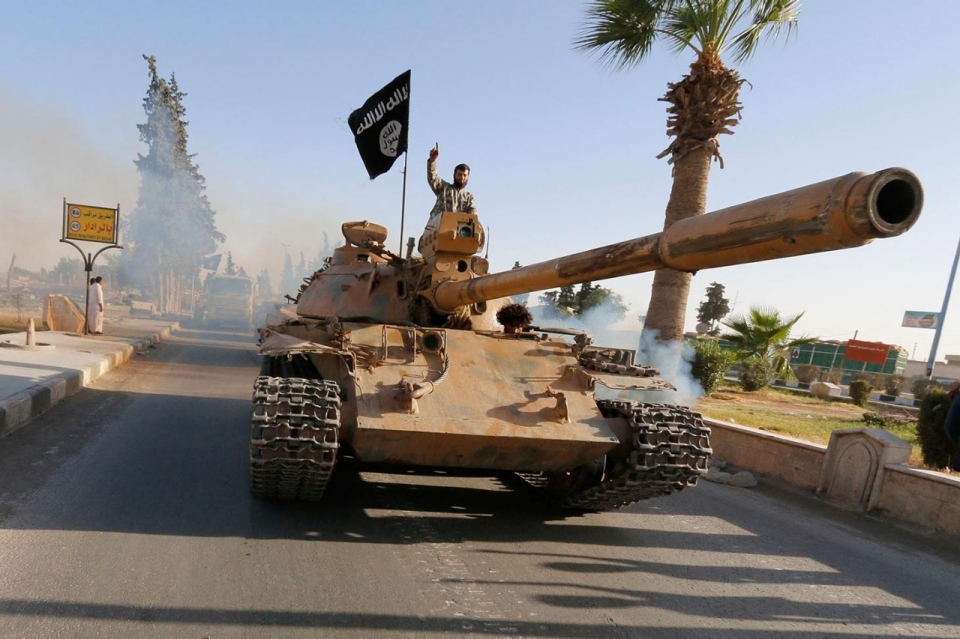
Leave a comment

Filed under civil war, Gettysburg, History, leadership, Military