Category Archives: Military

Heresy, Love, and Faith: My Journey

IMG_1915

I like hard questions and hard cases. My life has been quite interesting and that includes my faith journey as a Christian and human being. It is funny that in my life I have as I have grown older begun to appreciate those that do not believe and to rather distrust those who proclaim their religious faith with absolute certitude, especially when hard questions are asked.  I was reminded of this by an Orthodox Christian internet “troll” this week.

Paul Tillich once said “Sometimes I think it is my mission to bring faith to the faithless, and doubt to the faithful.” 

I find it amusing when trolls come by to condemn my “heresy” and I realize that most have some kind of psychological need to be right, as well as a deep fear, despite their certitude, that they might be wrong, that causes them to do this.

I think that the quote by the late theologian is quite appropriate to me and the ministry that I find myself. I think it is a ministry pattern quite similar to Jesus in his dealings with the people during his earthly incarnate ministry.

Jesus was always hanging out with the outcasts, whether they be Jewish tax collectors collaborating with the Romans, lepers and other “unclean” types, Gentiles including the hated Roman occupiers, Samaritans and most dangerously, scandalous women. He seemed to reach out to these outcasts while often going out of his way to upset the religious establishment and the “true believers” of his day.

There is even one instance where a Centurion whose servant he healed was most likely involved in a homosexual relationship, based on the writer of the Gospel of Matthew’s use of the Greek word “Pais” which connotes a homosexual servant, instead of the more common “Doulos.” That account is the only time in the New Testament where that distinction is made, and Pais is used throughout Greek literature of the time to denote a homosexual slave or “house boy” relationship. Jesus was so successful at offending the profoundly orthodox of his day that his enemies made sure that they had him killed.

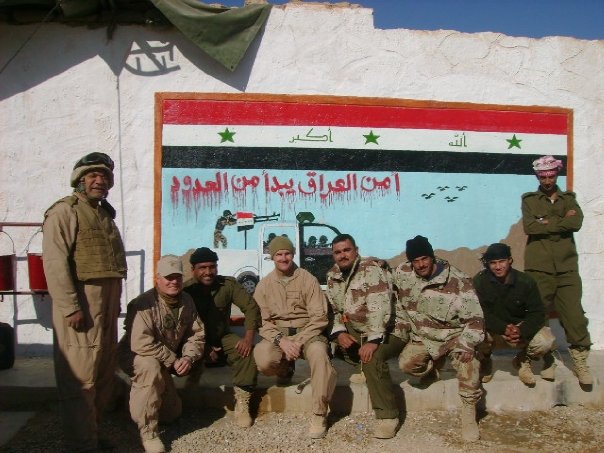
I think that what has brought me to this point is a combination of things but most importantly what happened to me in and after my tour in Iraq. Before I went to Iraq I was certain of about everything that I believed and was quite good at what we theologians and pastors call “apologetics.” My old Chaplain Assistant in the Army, who now recently serves as a Lieutenant Colonel in the Army Chaplain Corps called me a “Catholic Rush Limbaugh” back in 1997, and he meant it quite affectionately.

I was so good at it that I was silenced by a former Archbishop in my former church and banned from publishing for about 7 years after writing two articles for a very conservative Roman Catholic journal, the New Oxford Review.

The funny thing is that he, and a number of my closest friends from that denomination are either Roman Catholic priests or priests in the Anglican Ordinariate which came into communion with Rome a couple of years back. Ironically while being “too Catholic” was the reason I was forbidden to write it was because I questioned certain traditions and beliefs of the Church including that I believed that there was a role for women in the ordained ministry, that gays and lesbians could be “saved” and that not all Moslems were bad that got me thrown out in 2010.

However when I returned from Iraq in the midst of a full blown emotional, spiritual and physical collapse from PTSD that certitude disappeared. It took a while before I was able to rediscover faith and life and when I did it wasn’t the same. There was much more mystery to faith as well as reason. I came out of that period with much more empathy for those that either struggle with or reject faith. Thus I tend to hang out at bars and ball games more than church activities or socials, which I find absolutely tedious. I also have little use for clergy than in dysfunctional and broken systems that are rapidly being left behind. I am not speaking about belief here, but rather structure and methodology.

I think that if there is anything that God will judge the American versions of the Christian church is our absolute need for temporal power in the political, economic and social realms and the propagation of religious empires that only enrich the clergy which doing nothing for the least, the lost and the lonely. The fact that the fastest growing religious identification in the United States is is “none” or “no preference” is proof of that and that the vast amounts of money needed to sustain these narcissistic religious empires, the mega-churches and “Christian” television industry will be their undoing.  That along with their lack of care for anyone but themselves. Jesus said that his disciples would be known by their love for one another, not the size of their religious empire or temporal power.

The interesting thing is that today I have friends and colleagues that span the theological spectrum. Many of these men even if they do not agree with what I believe trust me to love and care for them, even when those most like them in terms of belief or doctrine, both religious and political treat them like crap. Likewise I attract a lot of people who at one time were either in ministry or preparing for it who were wounded in the process and gave up, even to the point of doubting God’s love and even existence. It is kind of a nice feeling to be there for people because they do not have to agree with me for me to be there for them.

In my darkest times my only spiritual readings were Father Andrew Greeley’s Bishop Blackie Ryan mysteries which I began reading in Iraq to help me get through the nights in between missions in Iraq and through the nights when I returned from them.  In one of those books, the last of the series entitled “The Archbishop goes to Andalusia” the miscreant Auxiliary Bishop to the Cardinal Archbishop of Chicago goes to Seville Spain.  In the novel Bishop Blackie makes a comment after celebrating Mass in the cathedral at Seville. He said “Every sacramental encounter is an evangelical occasion. A smile warm and happy is sufficient. If people return to the pews with a smile, it’s been a good day for them. If the priest smiles after the exchanges of grace, it may be the only good experience of the week.”  (The Archbishop in Andalusia p.77)

That is something that I try to do now on a regular basis. Sure most of my sacramental encounters as a hospital chaplain do not occur during the liturgy, but often in the life and death moments and times of deep discouragement felt by the wounded, ill and injured. In that ministry I have found that there are many hurting people, people who like me question their faith and even long held beliefs.

I like the old song by Nazareth called Love Hurts. The song always gets me. It is one of those “real” songs from the 1960s and 1970s that nails how life can be sometimes.

Love hurts, love scars
Love wounds and mars
In any heart not tough
Nor strong enough
To take a lot of pain
And love is like a cloud
Holds a lot of rain
Love hurts

I’m young and I know
But even so, I know a thing or two
I have learned from you
I’ve really learned a lot
And love is like a stove
Burns you when it’s hot
Love hurts

Some fools rave of happiness
Of blissfulness, togetherness
Some fools fool themselves, I guess
But they’re not fooling me
I know it isn’t true
Love is just a lie
Made to make you blue
Love hurts

Love does hurt, and well deciding to love can bring a lot of pain, but I do think that it is worth it. Well, that is all for tonight. Until tomorrow.

Blessings and Peace

Padre Steve+

Love Hurts lyrics © Kobalt Music Publishing Ltd., Warner/Chappell Music, Inc., EMI Music Publishing, Sony/ATV Music Publishing LLC, HOUSE OF BRYANT PUBLICATIONS


2 Comments

Filed under christian life, faith, LGBT issues, mental health, Military, ministry, Religion

“Our Army Would Be Invincible” Pt.2 Longstreet’s First Corps

Friends of Padre Steve’s World

This is the second part of my re-written chapter on the leadership of Army of Northern Virginia at Gettysburg. Today is a look at the leaders of Lieutenant General James Longstreet’s First Corps. This like the following sections of this chapter of my Gettysburg text is interesting because it shows the complexities of the lives and personalities of the men leading these units. Professional soldiers, volunteers with little military experience, soldiers, lawyers, engineers and politicians they are an interesting collection of personalities; some surrounded in myth and others practically unknown. I think it is important for anyone studying a war, a campaign, or a battle to at least look at the lives of the men who planned and fought it. In doing so, even those that oppose what they did in rebelling against the United States can find in them some measure of humanity, and sometimes even gain a sense of empathy for some of them.   

That is why when we look at the lives of soldiers, we have to take the time to at least try to understand the nuance, the contradictions, their strengths and weaknesses as leaders, as well as a measure of their character.

In the coming week I will be doing Ewell’s Second Corps, A.P. Hill’s Third Corps, and Stuart’s Cavalry Division. I will then get to work on a similar chapter for the Army of the Potomac.

Have a great night

Peace

Padre Steve+

The First Corps, under Longstreet remained relatively intact, but now less the division of Major General Richard Anderson, which was transferred to the new Third Corps. The First Corps now had three divisions instead of four, commanded by Major General Lafayette McLaws, Major General John Bell Hood and Major General George Pickett. McLaws and Hood were both experienced division commanders who worked well under Longstreet, while Pickett had never commanded a division in battle.

LongstreetJ_main

James Longstreet

James Longstreet was a native of the Piedmont area of northeastern Georgia, his father, a planter hailed from a Dutch family that had originally migrated to the colonies in 1687. The young Longstreet, nicknamed Peter or Pete by his family had determined as a child that he would have a military career. His father assisted in his admission to the Military Academy which he entered in 1838. Longstreet was neither a model cadet nor student. He graduated in 1842 “ranked fifty-fourth in a class of fifty-six” [1] and was commissioned into the infantry.

While his academy performance was lacking, and he accumulated a significant amounts of demerits, the husky Georgian was well liked and made many lifelong friends in a class that produced ten Confederate and seven Union Generals during the war. His best friend was a cadet from Ohio in the class which followed him, Ulysses S. Grant of whom Longstreet said was “of noble, generous heart, a lovable character, a valued friend.” [2] That friendship would endure for the rest of their lives.

Longstreet served in the West and went to Texas after it was annexed into the Union, and then served in Mexico getting his first taste of combat on the Rio Grande, then at Monterrey and then at Chapultepec. At Chapultepec, Longstreet was in command of Company H of the 8th Infantry Regiment which was leading the assault. He was near the head of the regiment the regiment as they breached the first parapet carrying the regimental colors “which he had grabbed …as they fell from the hands of their wounded bearer[3] he was wounded in the thigh, and he handed the colors to his friend George Pickett, who’s Company A was advancing behind Longstreet’s company.

After his wound had healed Longstreet continued to serve in Texas and later in the New Mexico Territory in campaigns against the Comanche. Serving in various command and staff positions including as a company commander, regimental adjutant, and department Quartermaster he became a well-rounded officer. He was promoted to Major and appointed as a Paymaster and was assigned to Fort Leavenworth in 1858 and then again to New Mexico in 1859.

When Abraham Lincoln was elected in 1860 and Southern states began to secede, Longstreet, who was not a proponent of secession, but he did not hesitate and offered his services to the Governor of Alabama in February 1861. However, there are many questions about this period due to the conflicting story that Longstreet recorded and what the administrative and pay documents record.

Longstreet resigned his commission on May 9th 1861, though he had already accepted a commission in the new Confederate Army dated May 1st 1861 with a date of rank of March 16th 1861 “eight days before he wrote his letter of resignation from the United States Army.” [4] His biographer Jeffry Wert notes that the acceptance of the Confederate commission while he was still serving as an officer in the United States Army, is “a dark story of a man who crossed the delicate line between honor and dishonor” and that “what he did, however, was not the act of an honorable man and officer.” [5] While there may be extenuating circumstances that we do not know, it does appear that Longstreet crossed a line that few, if any other active officers who left the Army for Confederate service crossed.

After his resignation he travelled to Richmond and was promoted to Brigadier General on June 17th, given command of a brigade and fought at Bull Run. He was consider to be one of the best Brigadiers in the army and was promoted to Major General on October 7th 1861 and given command of a division on the Peninsula. He was noted by his aide Moxie Sorrel to be “rather gay in disposition with his chums, fond of a glass, and very skillful at poker.” [6] However, during that time, his family living in Richmond was ravaged by a Scarlett fever outbreak which in January 1862 claimed the lives of three of his children, leaving him a much more serious, and very changed man. “There was no more gaiety, no more poker, and, certainly for the time, no more liquor. Essentially, from that tragic January, he was a soldier and little besides.” [7]

When Lee took over the Army Longstreet quickly became one of his most trusted subordinates and following the Seven Days was promoted to command a wing of the army, with Jackson commanding the other until the Confederate Congress allowed the creation of army corps and promoted each man to the Rank of Lieutenant General. One of Lee’s biographers wrote of the contrast between Jackson and Longstreet:

“In these two latter men Lee seemed to have recognize the Janus face of his own military personality. Longstreet seemed to be steady and dependable, the consummate professional. Jackson, on the other hand, had been by turns brilliant (the Valley) and useless (Mechanicsville and White Oak Swamp). But Jackson was a killer, possessed of the same sorts of aggressive instincts which obsessed Lee.” [8]

During the 1862 campaign Longstreet built a solid reputation as a commander. Douglas Southall Freeman wrote that if there was a word Longstreet’s contemporaries would have used to describe him “they would have agreed on the same soldierly term: dependable. Brilliance there might not be, reliability there undoubtedly was.” [9] He led that corps in the hammer blows that nearly destroyed Pope’s army at Second Manassas, grimly held the line at Antietam, and helped direct the massacre of Burnside’s attacking force at Fredericksburg. His corps was not present at Chancellorsville. As a commander he was noted for his devoted care and concern for the welfare of his soldiers, his reluctance to waste their lives in what he believed to be unwise, foolish, or suicidal attacks and “Under his command, the First Corps was the “bedrock” of the army.” [10]

During their time together Lee and Longstreet developed “a close personal and professional relationship.” [11] Lee would refer to him at times as “the staff in my right hand” and “my old war horse.” After Jackson’s death their relationship grew closer, even when they did not agree, which was not uncommon. Longstreet could be, and was, blunt with Lee, and Lee “was a strong enough personality to bear the presence of a contrarian,” [12] and Longstreet could indeed be a contrarian. Even so he was a trusted subordinate and Longstreet wrote that the relationship was “one of confidence and esteem, official and personal, which ripened into stronger ties as the mutations of war bore heavier upon us.” [13]

Longstreet’s presence as a gruff but kindhearted Georgian in an army dominated by Virginians who “idolized Lee” brought him to appoint “himself to pronounce on military reality, which was to say that his outlook on war was more practical than romantic.” [14] That outlook and honesty would cause Longstreet great consternation after the war as Jubal Early and other leaders of the Lost Cause branded him a “Judas” for his actions at Gettysburg and criticism of Robert E. Lee. Even at Gettysburg, despite their differences of opinion regarding Lee’s strategy, British Lieutenant Colonel Arthur Freemantle noted “The relations between him and Longstreet are quite touching – they are almost always together.… I believe these two generals to be as little ambitious and as thoroughly unselfish as any men in the world.” [15]

Lafayette_McLaws

McLaws’ Division

Longstreet’s senior division commander was McLaws, a career soldier who had served in the old army. He was an 1842 graduate of West Point and friend and classmate of Longstreet. McLaws served in the infantry after graduation and took part in the Mexican War, first in the defensive battle on the Rio Grande, then at Monterrey and at Vera Cruz. Suffering illness he was sent back to recruiting duty in New York and finally rejoined his regiment after the fall of Mexico City.

After Mexico McLaws served in a variety of posts and capacities in Missouri, New Mexico, and Arkansas. He was promoted to Captain in August 1851. As war neared he could see the country beginning to unravel. Typical of many U.A. Army officers from the South he was not an ardent secessionist and his thoughts were pragmatic concerning the issue of slavery. His diary entry for February 27th 1860 noted:

“Debates in congress show no mitigation od sec. feeling…. I think it would be better not to be so fanatical on any subject, the extreme pro-slavery man is as bad as that type as that type of anti-slavery, John Brown. I do not consider slavery an evil by any means, but I certainly do not think it the greatest blessing.” [16]

Throughout 1860 and 1861 McLaws continued to serve in expeditions to Utah and against the Navajo where he commanded a detachment of five companies, three of infantry and two of mounted infantry. When the Navajo expedition terminated and his regimental commander learned of the secession proceedings in Georgia he gave McLaws a leave of absence. Once in Georgia he submitted his resignation which was accepted and approved by the Army on March 23rd 1861. He was appointed as a major and reporting to Virginia was assigned to command the 10th Georgia regiment. Thanks to his early dedication to ensure that it was well trained and led, the regiment went on to great fame and distinction during the war.

He was involved in the construction of the Confederate defenses at Yorktown and Williamsburg and appointed as a Brigadier General in September 1861and led the defense of those lines against McClellan garnering him a promotion to Major General and command of a division in May of 1862.

McLaws was “a capable soldier without flair, who steady performance never produced a high moment. His reliability and dogged tenacity rubbed off on his men, however, and made them as hard to dislodge as any in the army.” [17]

McLaws put together a solid record as a division commander. The division was composed of two Georgia one South Carolina and one Mississippi brigade which he led for two years. During his time in command his exceptional care for the welfare of his men had endeared him to them. He and his division were excellent in the defense, and McLaws was very deliberate “but his attention to his men made him and his division a reliable command.” [18]

Porter Alexander noted that in the defense “McLaws was about the best in the army…being very painstaking about details, & having an eye for good ground.” [19] But there was a drawback, for all of his solidness and fortitude “he lacked a military imagination,” and was “best when told exactly what to do and closely supervised by superiors.” [20] His division was typical of many in First Corps, “outstanding on defense and led by a competent soldier, they were thoroughly dependable. With the reliance of old pro’s, they did what they were told, stood up under heavy casualties, and produced tremendous firepower.” [21]

Unlike many other divisions where brigade leaders were a mix of former officers from the old army as well as volunteers “none of the brigadiers who commanded McLaws’s brigades for extended periods – Semmes, Wofford, Kershaw, and Barksdale – had training or experience as a professional soldier” Most divisions averaged a mix of about half professional officers and half amateurs, often of mixed quality. That being said “no other division operated for any extended period with all-amateur leadership at the brigade level.” The fact that men like James Longstreet and Robert E. Lee demonstrated such confidence in the unit testifies to McLaws’ leadership abilities and accomplishment in welding “the four headstrong brigade commanders into an effective infantry division….” [22]

Kershaw

Brigadier General Joseph Kershaw was a lawyer and politician he had served in Mexico with the Palmetto Regiment. He volunteered for service when South Carolina succeeded and served at Fort Sumter. He had excelled as commander of the 2nd South Carolina and was promoted to command a brigade. As a brigade commander he distinguished himself during the Seven Days, Antietam and Fredericksburg. He displayed an almost natural ability for “quick and rational decisions, and he never endangered his men rashly. McLaws had complete faith in him and his brigade…” [23]

Semmes

Brigadier General Paul Semmes was a banker and plantation owner from Georgia. He was the brother of the Confederacy’s most famous naval commander, Captain Raphael Semmes, who commanded the Raider C.S.S. Alabama. Semmes too was not a professional soldier. However, he “was well known in Georgia as a man both of military tastes & accomplishments before the war & though of no military education he was one of the first generals created.” [24] He commanded the 2nd Georgia Regiment and by 1862 was in command of McLaws’ old brigade. He led with that brigade distinction during the Seven Days, Antietam and at Chancellorsville. By Gettysburg Semmes “had proved himself a worthy and capable brigadier.” [25] Porter Alexander wrote of him “it is due to say that there was never a braver or a better.” [26]

Barksdale

Brigadier General William Barksdale was a Mississippi lawyer, newspaper editor and politician. Barksdale had served in Mexico as a quartermaster, but did though an administrator, he did not shy away from battle and “frequently appeared at the front during heavy fighting, often coatless and carrying a large sword.” [27] While most Confederate officers supported and defended the institution of slavery, Barksdale was one of the few generals who had been “violently pro-slavery and secessionist” [28] before the war.

As a Congressman Barksdale was involved in the altercation when Representative Preston Brooks nearly killed Massachusetts Senator Charles Sumner in the Senate chamber. During that brawl Representative Elihu Washburne of Illinois landed a blow on Barksdale that sent Barksdale and his previously unsuspected wig flying. Someone snatched the wig from the floor and “waved it about like a captured flag.” When Barksdale finally recaptured the hairpiece he “and plopped it on his head wrong side out, the absurdity of the scene giving the combatants pause.” [29] As the scrum broke up Barksdale was left “sputtering about his shame.” [30]

At the outbreak of the war Barksdale volunteered for service and took command of a brigade at Malvern Hill. At Antietam, Fredericksburg and Chancellorsville he and his Mississippi brigade were in the thick of the fight. “He possessed a “thirst for battle glory” wrote one Mississippian….Inspiring by example, Barksdale was a leader who dared to go where many other high-ranking officers would not go in a crisis situation.” [31] He had a strong bond with his soldiers which made them willing to follow him anywhere.

Wofford

Brigadier General William Wofford was the newest of McLaws’ brigade commanders. Wofford was a Georgia newspaper owner and lawyer who had done a great deal of fighting in the Mexican War, where he commanded a company despite having no military education. Wofford was considered a man of “high morale bearing…of the strictest sobriety, and, indeed of irreproachable moral character.” [32] Demonstrating the tensions of the day Wofford was a “staunch Unionist Democrat” who “opposed secession and voted against it at the Georgia secession convention.” [33]

Despite his opposition to secession, Wofford, like others volunteered for service and was “elected colonel of the first Georgia regiment to volunteer for the war.” [34] That being said Wofford “was a decided Union man from first to last during the whole war” and saw “with exceptional prescience…the certain fatality” of secession, but once the deed was done, he closed ranks…” [35] Wofford served well as the regimental commander of the 18th Georgia and acting brigade commander during the Seven Days, Second Manassas, Antietam and Fredericksburg. Now able and experienced the Georgia Unionist was promoted to the brigadier general and given command of the brigade of Thomas Cobb who had been mortally wounded at Fredericksburg in January 1863.

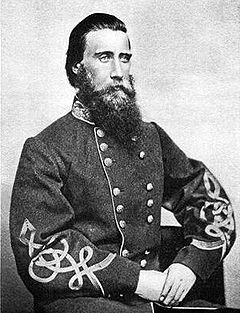
Lt._Gen._John_B._Hood

Hood’s Division

Major General John Bell Hood was an 1853 graduate of West Point and had served as a cavalry officer under Lee’s command with the 2nd U.S. Cavalry in Texas. Physically imposing “Hood stood six feet, two inches and had a powerful chest and a giant’s shoulders.” [36] He gained a stellar reputation as a leader and Indian fighter while serving in the U.S. Army. When his home state of Kentucky did not secede he attached himself to his adopted state of Texas. He began the war as a lieutenant but soon was given the task of forming Texas in Virginia into a fighting regiment. By 1862 Hood was a Brigadier General commanding the only Texas brigade in the east. He took temporary command of a division during the reorganization of the army that followed the Seven Days.

Over the course of the next year he had built a “combat record unequalled by any in the army at his level.” [37] And the “reputation gained as commander of the Texas Brigade and as a division commander made him both a valuable general officer and a celebrity who transcended his peers.” [38] After his performance at Antietam Lee worked the personnel system to get Hood promoted to Major General and assigned to command of an enlarged division which he would command at Gettysburg. Lee wrote of him “Hood is a good fighter, very industrious on the battle field, careless off, & I have had no opportunity of judging his action, when the whole responsibility rested on him. I have a high opinion of his gallantry, earnestness & zeal.” [39]

After Gettysburg Hood went on to succeed Joseph E. Johnston in Georgia as an army commander and attempting to be too aggressive saw his army shattered at the Battles of Franklin and Nashville. As good of Brigade and division commander as he was under the direction of Longstreet, Hood was out of his league as an Army commander. John B. Gordon, as judicious of judge of command ability of any on the Confederate side noted:

“To say he was as brave and dashing as any officer of any age would be the merest commonplace tribute to such a man; but courage and dash are not the only or even the prime requisites of the commander of a great army.” [40]

Hood’s brigade commanders were as solid as group as any in the army.

Law

Brigadier General Evander Law was a graduate of the South Carolina Military Academy, now known as the Citadel. He served as a professor in various military colleges and schools before the war. He served admirably as a regiment and brigade commander during the Seven Days, Second Manassas, and Antietam and was promoted to brigadier general in October 1862 just prior to Fredericksburg. After Chancellorsville he was the senior brigadier in Hood’s division. He had “military training, youth, dash ability and familiarity with his men- a formidable package in combat.” [41]

“Tige” Anderson

Brigadier General George “Tige” Anderson was a Georgian who had served in Mexico as a lieutenant of Georgia cavalry and in 1865 was commissioned as a captain in the Regular cavalry, but resigned after three years. He had no formal military training but was considered a capable officer. He was present at most of the major battles fought by the Army of Northern Virginia but in most cases his brigade had not been heavily engaged and had “little chance to distinguish himself” but he was loved by his soldiers. One wrote that he “stands up for us like a father” while another wrote “He is always at his post.” [42]

Robertson

Hood’s old Texas Brigade was commanded by Brigadier General Jerome Robertson. At the age of forty-eight he had served with Sam Houston in the Texas War for Independence and later took time off to serve fighting Indians. He practiced medicine in Texas and in 1861 was a pro-secession delegate to the Texas secession convention. He was commissioned as a Captain and promoted to Colonel of the 5th Texas just prior to the Seven Days and led that unit to fame. He was promoted after Antietam to command the Texas Brigade. Away from most of the action at Fredericksburg and Chancellorsville he would have his first combat experience as a brigade commander at Gettysburg.

Benning

Brigadier General Henry Benning was a lawyer and Georgia Supreme Court justice. While not having any military training or experience he was “known to all as a man of the highest integrity, and he was compared in character to that earlier champion of the South, John Calhoun. He was one of the most industrious and capable men in the Confederacy.” [43] Unlike other Confederate political leaders he favored a strong central government for the new South. He was considered a prime candidate for a cabinet post but had already decided to serve in the new army and helped organize the 17th Georgia Infantry. As a regiment commander and acting brigade commander at Antietam, his brigade had held off Burnside’s corps at the Burnside Bridge and became known as “Old Rock” [44]and was a “proven commander” who “provided strong leadership and bolstered the confidence of the men under him.” [45]

GeorgePickett

Pickett’s Division

Major General George Pickett had commanded his division for some time, but he “had never led his division in combat.” [46] Likewise the brigades of his division had not fought together in a major engagement, and the division was new to fighting as a part of First Corps. The campaign would also be Pickett’s first offensive campaign as a division commander.

Pickett was an 1846 graduate of West Point who though well liked “showed evidence of a meager intellect and aversion to hard work.” [47] He graduated last in his class and was assigned to the infantry. During the Mexican War Pickett distinguished himself by his gallantry at Chapultepec where he served under command of James Longstreet. As the battle raged Longstreet was wounded. Pickett retrieved the unit colors from Longstreet and as the latter looked on Pickett “carried them over the wall.[48] The act made him famous.

After Mexico his career was typical of many other officers. When southern states began to secede Pickett was in the Pacific Northwest where he had very nearly helped bring the United States and Britain to the brink of war. Pickett opposed secession, not because he did not believe states had the right to secede “but as gravely questioning its expediency.” [49] However, loyalty to his home state was too much and Pickett resigned his commission and returned to Virginia in the summer of 1861.

Pickett was commissioned as a Captain and soon was promoted to Colonel, and as a protégé of Longstreet was promoted to Brigadier General in February 1862 and was given command of a unit known as the Game Cock Brigade, consisting of the 8th, 18th, 19th and 28th Virginia Infantry regiments which he commanded at the Battle of Williamsburg, Seven Pines and Gaines’ Mill where he was wounded.

After he recovered he was appointed to command a newly formed division of four brigades built around his “Game Cocks.” It was Longstreet who through his influence with Lee again “had been instrumental in Pickett’s appointment to divisional command.” [50] But even without that Pickett had “established a reputation as a courageous and hard-driving, if rather impetuous, combat leader able to employ his troops to advantage against great odds.” [51] Though Pickett was “untried at his new rank, but had been an excellent brigade leader and with Longstreet’s full support was apt to direct with wisdom his larger force.” [52]

Pickett’s division only had three of his five brigades at Gettysburg. Two were commanded by old Regular officer’s Richard Garnett and Lewis Armistead, and the third by James Kemper.

Kemper

Brigadier General James Kemper was the only non-professional soldier of the three brigade commanders. Kemper had been a captain of volunteers in the Mexican War, but that war ended before he could see action. He was a politician who had served twice as Virginia’s Speaker of the House and “was another of those civilian leaders who, accustomed to authority, translated their gifts to command in the field.” [53] During his time as a legislator Kemper had served as “chairman of the Military Affairs Committee in the years before the Civil War, and insisted on a high level of military preparedness.” [54] Kemper served as commander of the 7th Virginia Regiment and was promoted to brigadier general after Seven Pines and commanded the brigade at Second Manassas and Antietam. He was “very determined and was respected by brother officers for solid qualities and sound judgment.” [55]

Garnett

Brigadier Richard Garnett came to his command and to Gettysburg under a cloud. He was a West Point graduate, class of 1841who strong Unionist, but who had resigned his commission in the Regular Army because he “felt it an imperative duty to sacrifice everything in support of his native state in her time of trial.” [56] Garnett had run afoul of Jackson while commanding the Stonewall Brigade and during the Valley campaign had been relieved of command and arrested by Jackson for ordering a retreat without Jackson’s permission. Garnett had been “humiliated by accusations of cowardice” [57] and demanded a court-martial which never was held as Lee transferred him away from Jackson to Pickett’s division. Gettysburg offered him “his first real opportunity with Pickett’s division to clear his honor as a gentleman and a soldier.” [58]

Armistead

Pickett’s last brigade was commanded by an old Regular, and longtime friend and comrade of Garnett, Brigadier General Lewis Armistead. He was expelled from West Point and later was commissioned directly into the infantry in 1839. He fought in the Mexican War where he received two brevet promotions for gallantry and was wounded at Chapultepec. Like Garnett Armistead resigned his commission in 1861 to serve in the Confederate army where he took command of the 57th Virginia Infantry and shortly thereafter was promoted to Brigadier General. He held brigade command and served Provost Marshal during Lee’s 1862 invasion of Maryland. He had seen little action since Second Manassas, but was known for “his toughness, sound judgment and great personal courage.” [59]

Notes

[1] Ibid. Wert Longstreet p.30

[2] Ibid. Wert Longstreet p.31

[3] Longacre, Edward G. Pickett: Leader of the Charge White Mane Publishing Company, Shippensburg PA 1995 p.26

[4] Ibid. Wert Longstreet p.54

[5] Ibid. Wert Longstreet pp.54-55

[6] Ibid. Wert Longstreet p.91

[7] Ibid. Freeman Lee’s Lieutenant’s p.111

[8] Ibid. Thomas Robert E. Lee p.247

[9] Ibid. Freeman Lee’s Lieutenant’s p.112

[10] Ibid. Wert Longstreet p.405

[11] Ibid. Wert A Glorious Army p.61

[12] Ibid. Korda Clouds of Glory p.527

[13] Ibid. Wert Longstreet p.173

[14] Ibid. Korda Clouds of Glory p.527

[15] Ibid. Freeman Lee’s Lieutenant’s p.552

[16] Oefinger, John C. Editor A Soldier’s General: The Civil War Letters of Major general Lafayette McLaws University of North Carolina Press, Charlotte and London 2002 p.18

[17] Tagg, Larry The Generals of Gettysburg: The Leaders of America’s Greatest Battle Da Capo Press Cambridge MA 1998 Amazon Kindle Edition pp.208-209

[18] Ibid. Wert General James Longstreet p.209

[19] Alexander, Edward Porter. Fighting for the Confederacy: The Personal Recollections of General Edward Porter Alexander edited by Gary Gallagher University of North Carolina Press, Chapel Hill 1989 p.170

[20] Ibid. Tagg The Generals of Gettysburg p.209

[21] Ibid. Dowdy. Lee and His Men at Gettysburg p.176

[22] Ibid. Oefinger A Soldier’s General p.27

[23] Ibid. Tagg The Generals of Gettysburg p.214

[24] Ibid. Alexander Fighting for the Confederacy p.80

[25] Ibid. Tagg The Generals of Gettysburg p.217

[26] Ibid. Alexander Fighting for the Confederacy p.80

[27] Ibid. Tagg The Generals of Gettysburg pp.217-218

[28] Ibid. Dowdy. Lee and His Men at Gettysburg p.217

[29] Ibid. Goldfield America Aflame p.144

[30] Freehling, William. The Road to Disunion Volume II: Secessionists Triumphant 1854-1861 Oxford University Press, Oxford and New York 2007 p.140

[31] Tucker, Phillip Thomas. Barksdale’s Charge: The True High Tide of the Confederacy at Gettysburg, July 2nd, 1863 Casemate Publishers, Philadelphia and Oxford 2013 p.18

[32] Ibid. Guelzo, Gettysburg: The Last Invasion p.296

[33] Ibid. Tagg The Generals of Gettysburg p.221

[34] Ibid. Guelzo, Gettysburg: The Last Invasion p.297

[35] Ibid. Guelzo, Gettysburg: The Last Invasion pp.296-297

[36] Ibid. Freeman Lee’s Lieutenants p.35

[37] Ibid. Tagg The Generals of Gettysburg p.224

[38] Pfanz, Harry F. Gettysburg: The Second Day. University of North Carolina Press, Chapel Hill 1987 p.161

[39] Girardi, Robert I. The Civil War Generals: Comrades, Peers, Rivals in Their Own Words Zenith Press, MBI Publishing, Minneapolis MN 2013 p.219

[40] Ibid. Girardi The Civil War Generals p.219

[41] Ibid. Tagg The Generals of Gettysburg p.228

[42] Ibid. Tagg The Generals of Gettysburg p.230

[43] Ibid. Tagg The Generals of Gettysburg p.234

[44] Ibid. Freeman Lee’s Lieutenants p.430

[45] Ibid. Tagg The Generals of Gettysburg p.235

[46] Ibid. Coddington The Gettysburg Campaign p.12

[47] Ibid. Tagg The Generals of Gettysburg p.237

[48] Ibid. Wert General James Longstreet p.45

[49] Longacre, Edward G. Pickett: Leader of the Charge White Mane Publishing Company, Shippensburg PA 1995 p.51

[50] Wert, Jeffery D. Gettysburg Day Three A Touchstone Book, New York 2001 p.110

[51] Ibid. Longacre Pickett p.92

[52] Ibid. Freeman Lee’s Lieutenants p.385

[53] Ibid. Dowdy. Lee and His Men at Gettysburg p.268

[54] Ibid. Tagg The Generals of Gettysburg p.241

[55] Ibid. Dowdy. Lee and His Men at Gettysburg p.269

[56] Ibid. Dowdy. Lee and His Men at Gettysburg p.269

[57] Ibid. Guelzo, Gettysburg: The Last Invasion p.379

[58] Ibid. Dowdy. Lee and His Men at Gettysburg p.270

[59] Ibid. Tagg The Generals of Gettysburg p.244

Leave a comment

Filed under civil war, History, leadership, Military

The Wannabe Inquisitors: Christian Trolls

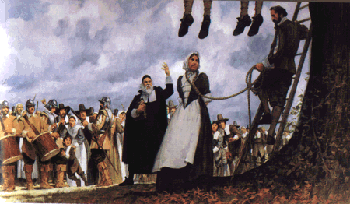
dyer-hanging1

Friends of Padre Steve’s World

Just a short post today, I have spent most of the day over at the Naval Medical Center, getting my initial evaluation for Traumatic Brain Injury and Concussive Syndrome and new hearing aids to help with Tinnitus and speech processing disorder.

But, another day, another religious troll. This one not the typical Evangelical, or even more traditionalist Roman or conservative Catholic type. This one claimed to be Eastern Orthodox and had to bluntly confront me on my heresy. Of course that had to do with women clergy and homosexuals, which seem to be for many of these guys, and for that matter all of my trolls have been guys, the big issue is that they always focus on these things when calling me a heretic. They never call me a heretic for the things that the Church Fathers all condemned as heretical, like my very orthodox doctrine of God, Christ, and the Holy Spirit. Nor can they say that any of my beliefs conflict with the Creeds or Councils, or are not enunciated by at least some of the Church Fathers. Instead they jump on women in ministry and gays.

My personal feeling is that thought they cloak their reasons in their theology is the fact that they cannot handle women in any kind of authority position and that, and the issue of homosexuality makes them question their own manhood, or possibly lack thereof. I love what Barbara Tuchman wrote about male theologians. “Theology being the work of males, original sin was traced to the female.” That really is why male dominated, and often mysoginistic religions reject women as priests, bishops, ministers, Imams, or Rabbis.

After a couple of exchanges this gentleman referred to the statement that the “Orthodox Church IS the Church, is true and correct in EVERYTHING it teaches….” (His emphasis)

Such appeals to absolute truth being contained in any one religion or denomination neither impress or frighten me. I went through that stage of faith, and frankly it’s a free country. I know lots of other people  that would disagree with the man, including the official teaching of the Roman Catholic Church which still holds its 1054 excommunication of the Orthodox as binding, despite the good intentions of Pope John Paul II and Pope Francis. But if such certitude comforts this man, good on him.

What I don’t understand though is how this man and others like him have a compulsive need to troll the internet, find someone that they find lacking, call them a heretic and get upset when the person that they assaulted takes umbrage. I don’t get that. I have no need to go to anyone’s site just to tell them how wrong I think that are. But then maybe such people do this because they lack the official backing of the government to enforce their religious beliefs on others.

I have a live and let live attitude. I don’t think that anyone or any church, denomination, sect or religion has a monopoly on truth. I quite agree with the late Father Henri Nouwen who said:

“Theological formation is the gradual and often painful discovery of God’s incomprehensibility. You can be competent in many things, but you cannot be competent in God.”

I no longer make absolute truth claims. I believe, but I doubt and question, some days more the latter than the former. So when people like this come at me I try not to waste much time on them, though I did defend myself. This man proved again Eric Hoffer’s magnificent thoughts:

“A doctrine insulates the devout not only against the realities around them but also against their own selves. The fanatical believer is not conscious of his envy, malice, pettiness and dishonesty. There is a wall of words between his consciousness and his real self.”

The good thing is that in this country, men like this are unable to enforce their doctrine on other citizens through the police power of the government. Such as the case in Russia where Vladimir Putin’s crusades against women, the LGBT community as well as other smaller Christian denominations and Jews are rooted in the state religion of Russian Orthodoxy. This is a fact and it is a reminder that such people and such systems do exist, and if they ever, in whatever form gained control of the government in this country they would do the same. We see this at the state level where a number of states are attempting to establish Christianity as the State religion, or at the minimum give Christianity precedence over any other religion.

These Wannabe American inquisitors love Putin, and many actually go to Russia to cheer on his actions.

Hopefully things never come to that here. But you never know. As Captain Jean Luc Picard (Patrick Stewart) said in the Star Trek the Next Generation episode The Drumhead:

“We think we’ve come so far. Torture of heretics, burning of witches it’s all ancient history. Then – before you can blink an eye – suddenly it threatens to start all over again.”

Have a great night,

Peace

Padre Steve+


2 Comments

Filed under christian life, faith, Military, News and current events, Religion

Our Army Would be Invincible if…” Confederate Leadership Pt.1

Friends of Padre Steve’s World

This is the first part of a chapter that I am revising for my Gettysburg text. It deals with the problems faced by Robert E. Lee as he attempted to reorganize the Army of Northern Virginia following his victory at Chancellorsville and the death of Stonewall Jackson. 

Over the next few days I will be posting sections on each of the Confederate army corps and J.E.B. Stuart’s Cavalry Division. The later sections will be largely biographic sketches of the leaders of the Confederate Corps, Divisions and Brigades. Eventually I will have a similar chapter on the leadership of the Army of the Potomac.

Have a great night.

Peace,

Padre Steve+  

Lee1

General Robert E. Lee C.S.A.

An issue faced by armies that are forced to expand to meet the demands of war is the promotion and selection of competent leaders at all levels of command. It has been an issue throughout American military history including during our recent wars in Iraq and Afghanistan. The expansion of forces, the creation of new units, combined with the operational demands to employ those units often creates a leadership vacuum that must be filled. Sometimes this results in officers being promoted, being given field command or critical senior staff positions, who have critical deficiencies of leadership, character, intellect, experience or lack the necessary skill sets to do the job.

We may not see this as often in a long term professional military which has been at war for a significant amount of time, but during the Civil War it was something that both sides had to wrestle with, even for high level commanders. The nature of the armies involved, the high proportion of volunteer officers and political appointees coupled with the dearth of officers who had commanded anything larger than a company or widely scattered regiment made this a necessary evil.

To be fair, some officers of limited experience or training do rise to the occasion and perform in an exemplary manner. Others do not. Those leaders that do not are quite often weeded out over the course of time but often not before their lack of experience, or incompetence proves disastrous on the battlefield. As Barbara Tuchman so eloquently put it:

“When the moment of live ammunition approaches, the moment to which all his professional training has been directed, when the lives of the men under him, the issue of the combat, even the fate of a campaign may depend upon his decision at a given moment, what happens inside the heart and vitals of a commander? Some are made bold by the moment, some irresolute, some carefully judicious, some paralyzed and powerless to act.” [1]

Of course the selection of competent and experienced leaders is essential to the planning and execution of all aspects of Joint Planning and Mission Command, as is the proper supervision and command and control on the battlefield. As was noted in Infantry in Battle:

“Of course, a leader cannot be everywhere, but he can and should weigh the capabilities and limitations of his subordinates, determine the critical point or time of the action, and lend the weight and authority of personal supervision where it is most needed.” [2]

The Death of Stonewall Jackson and the Reorganization of the Army of Northern Virginia

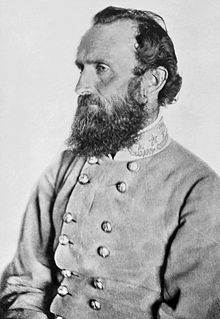
Stonewall_Jackson

Lieutenant General Thomas “Stonewall” Jackson C.S.A

Stonewall Jackson was dead, and with his death after the Pyrrhic victory at Chancellorsville, General Robert E. Lee was faced with the necessity of reorganizing the Army of Northern Virginia. Jackson’s loss was disastrous for Lee, for he lost the one man who understood him and his method of command more than anyone, someone for whom he had a deep and abiding affection. Months before Jackson’s death Lee said of him: “Such an executive officer the sun has never shown on, I have but to show him my design, and I know that it if it can be done it will be done.” [3]

Jackson’s loss loomed large over the Army and the Confederate nation. Jefferson Davis told his wife Varina at Jackson’s funeral “saw a tear escape her husband’s eye and land on Jackson’s face. “You must excuse me,” Davis said later after silently ignoring a fellow mourner’s conversation. “I am still staggered from such a dreadful blow. I cannot think.” [4] Davis telegraphed Lee and described Jackson’s death “A great national calamity has befallen us.” [5] Lee was devastated, but stoic. When he told his Chief of artillery, Brigadier General William Pendleton of Jackson’s death he wept. Lee told his son Custis “It is a terrible loss. I do not know how to replace him. Any victory would be dear at such a cost. But God’s will be done.” [6]

Jackson’s loss was felt throughout the Confederacy, and not just from a military point of view. Southerners saw the war “as a spiritual and religious crusade, a test of the superiority of their devoutness and culture.” [7] As such victory was seen as part of God’s blessing and defeat or loss of Divine punishment. Jackson was a part of that, his legendary piety, valor and success on the battlefield had imbued the spiritual dimension of the Confederate cause with proof of God’s favor. He had been sent by God, and even in death his memory inspired Confederates, one poet “described Jackson as the Confederate Moses who would not get to the Promised Land” [8] although others most certainly would. In a war where death had become more pervasive and affected almost everyone in the South in a personal way, through the loss of family, friends, or home it was easy to lose sight of “basic values and transcending causes. Jackson’s death brought those values and causes to the fore. To what end remained unclear. The certitude of a holy cause that greeted the war’s onset slid into doubt….” [9] After the war soldiers, journalists and civilians pointed to Jackson’s death as “a premonition of their coming defeat.” One wrote “The melancholy news affected the Confederates in the same way that various omens predicted, before Troy could be captured affected the city’s defenders.” [10]

A forlorn Southern woman wrote: “He was the nation’s idol, not a breath even from a foe has ever been breathed against his fame. His very enemies reverenced him. God has taken him away from us that we may lean more upon Him, feel that he can raise up to Himself instruments to work His Divine Will.” [11] An officer in the Army of Northern Virginia wrote: “One of the greatest heroes of the war has been called from us by an all-wise Providence, no doubt as a punishment for ascribing to a mere man praises due to God for giving us Jackson with the virtues and talents he possessed.” [12] Seeing Jackson’s death in light of the defeat at Gettysburg and other major Confederate reverses in the summer of 1863 Virginia Presbyterians decided that Jackson’s “Untimely” death marked a “further chastisement for sins, especially ingratitude, pride, and dependency on an arm of the flesh.” [13]

After Jackson’s loss Lee said “I had such implicit confidence in Jackson’s skill and energy that I never troubled myself to give him detailed instructions. The most general suggestions were all that he needed.” [14] Lee met the loss with “resignation and deep perplexity,” his words displayed that sense of loss, as well as his sense of faith and trust in God’s providence “I know not how to replace him. God’s will be done. I trust He will raise someone up in his place…” [15] In losing Jackson Lee lost a commander who had the ability to make his most imaginative plans come to life and find fulfillment and despite his efforts he never succeeded in finding a suitable replacement. Jackson was not a great tactician, but unlike any other Confederate commander he could implement Lee’s plans through his:

“single-mindedness of purpose, his unbending devotion to duty, his relentlessness as a foe, and his burning desire at whatever cost, for victory….He possessed an unmatched ability to impose his will on recalcitrant subordinates and on his enemies.” [16]

In addition to the loss of Jackson, Lee was desperately short of qualified senior and mid-level officers and Lee “understood how the diminishing numbers of quality officers impacted the army’s effectiveness.” [17] The problem was serious throughout the army, even though Lee had been victories in many battles, was that it suffered badly from high casualty counts, not just in the aggregate number of troops lost, but in leaders. “From the Seven Days to Chancellorsville, few if any regiments had not lost multiple field grade officers. Casualties among colonels, lieutenant colonels and majors surpassed 300 in total in all of the engagements.” [18]

A major part of Lee’s problem was organizational. In 1862 Lee inherited an army that was a “hodgepodge of forces” [19] which was organized in an “unwieldy divisional command system, where green commanders out of necessity were given considerable independence.” [20] That organization was tested and found wanting during the Seven Days campaign where on numerous occasions division commanders failed to coordinate their actions with those of adjacent divisions or failed to effectively control their own troops during movement to contact or combat.

Shortly after the Seven Days Lee reorganized the army, working with the material that he had. He divided the army into two wings since “Confederate law still did not allow for corps commands” [21] under Jackson and James Longstreet. Each wing was composed of four divisions and consisted of about 30,000 troops apiece. Both would be appointed Lieutenant Generals and their command’s recognized officially as the First Corps and the Second Corps in October 1862. These were massive forces, each nearly three times the size of a Union Corps in the Army of the Potomac.

While both Longstreet and Jackson were technically equals, and Longstreet Jackson’s senior by one day, it was Jackson to whom Lee relied on for the most daring tasks, and whom he truly considered his closest confidant and his “executive officer.” The relationship between Lee and Jackson was one of the most remarkable collaborations in military history and Lee owed much of his battlefield success to Jackson, and as J.F.C Fuller wrote: “Without Jackson, Lee was a one armed pugilist. Jackson possessed that brutality essential in war; Lee did not” [22]

The organization worked well at Second Manassas, Fredericksburg and Chancellorsville, although Longstreet’s corps was detached from the army at the time of the latter. When Jackson was wounded at Chancellorsville on the first night of that battle neither A.P. Hill nor J.E.B. Stuart were able effectively commanded Second Corps during the remainder of the battle.

The temperament and personalities of Longstreet and Jackson served to balance each other, and each enjoyed the trust of Lee. Lee’s biographer Michael Korda calls them the:

“yin and yang of subordinates. Jackson was superb at guessing from a few words exactly what Lee wanted done, and setting out to do it immediately without argument or further instructions; Longstreet was as good a soldier, but he was an instinctive contrarian and stubbornly insisted on making Lee think twice, and to separate what was possible from what was not.” [23]

Both men had been instrumental to Lee’s battlefield success and both played indispensable roles in Lee’s ability to command the army.

Likewise, the sheer size of Lee’s formations posed problems both in moment and combat, as Lee noted “Some of our divisions exceed the army Genl Scott entered Mexico with, & our brigades are larger than divisions”…that created stupendous headaches in “causing orders & req[uisitions] to be obeyed.” [24] Lee wrote to Jefferson Davis on May 20th “I have for the past year felt that the corps of the army were too large for one commander. Nothing prevented my proposing to you to reduce their size and increase their number but my inability to recommend commanders.” [25]

In the hands of Longstreet and Jackson these massive corps were in the good hands of leaders who could effectively handle them, “but in anyone else’s hands, a corps the size of Jackson’s or Longstreet’s might prove so big as to become clumsy, or even worse, might call for a degree of micromanagement that Lee and his diminutive staff might not be able to deliver.” [26] Lee recognized this and did not try to replace Jackson. Instead he wrote Jefferson Davis and explained the reasons for creating a new corps:

“Each corps contains in fighting condition about 30,000 men. These are more than one man can handle & keep under his eye in battle….They are always beyond the range and vision & frequently beyond his reach. The loss of Jackson from the command of one half of the army seems to me a good opportunity to remedy this evil.” [27]

Instead of appointing one man to command Second Corps, Lee reorganized the army and created two corps from it. He stripped a division of Longstreet’s First Corps, that of Richard Anderson, to join the new Third Corps. He also divided the large “Light” Division, which under Hill’s “intelligent administration probably is the best in the army” [28] into two divisions, one commanded by Dorsey Pender and the other by Harry Heth.

The problem for Lee was just who to place in command of the new corps and divisions that he was creating. Lee was deeply aware of this problem, and wrote to John Bell Hood that the army would be “invincible if it could be properly organized and officered. There never were such men in an Army before. The will go anywhere and do anything if properly led. But there is the difficulty-proper commanders- where can they be obtained?” [29] Lee sought the best commanders possible for his army, but the lack of depth in the ranks of season, experienced commanders, as well as the need to placate political leaders made some choices necessary evils.

To be continued…

Notes

[1] Tuchman, Barbara The Guns of August Ballantine Books, New York 1962 Amazon Kindle edition location 2946

[2] _________. Infantry In Battle The Infantry Journal Incorporated, Washington DC 1939, reprinted by the USACGSC with the permission of the Association of the United States Army p.195

[3] Taylor, John M. Duty Faithfully Performed: Robert E Lee and His Critics Brassey’s, Dulles VA 1999 p.128

[4] Davis, William C. Jefferson Davis: The Man and His Hour Harper Collins Publishers New York 1991 p.501

[5] Freeman, Douglas Southall, Lee’s Lieutenant’s a Study in Command, One volume abridgement by Stephen W Sears, Scribner, New York 1998 p.524

[6] Wert, Jeffry D. A Glorious Army: Robert E. Lee’s Triumph 1862-1863 Simon and Schuster, New York and London 2011 p.208

[7] Pryor, Elizabeth Brown. Reading the Man: A Portrait of Robert E. Lee Through His Private Letters Penguin Books, New York and London 2007 p.235

[8] Rable, George C. God’s Almost Chosen Peoples: A Religious History of the American Civil War University of North Carolina Press, Chapel Hill 2010 p.261


[9] Goldfield, David. America Aflame: How the Civil War Created a Nation Bloomsbury Press, New York 2011 p.279

[10] Royster, Charles The destructive War: William Tecumseh Sherman, Stonewall Jackson, and the Americans Alfred A. Knopf, New York 1991 p.227

[11] Glatthaar, Joseph T. General Lee’s Army from Victory to Collapse The Free Press, Simon and Schuster, New York and London 2008 p.255

[12] Ibid. Pryor Reading the Man p.236

[13] Ibid. Rable God’s Almost Chosen Peoples p.261

[14] Dowdy, Clifford. Lee and His Men at Gettysburg: The Death of a Nation Skyhorse Publishing, New York 1986, originally published as Death of a Nation Knopf, New York 1958 p.30

[15] Ibid. Freeman Lee’s Lieutenant’s p.524

[16] Ibid. Wert A Glorious Army p.209

[17] Ibid. Wert A Glorious Army p.217

[18] Ibid. Wert A Glorious Army p.217

[19] Ibid. Dowdy. Lee and His Men at Gettysburg p.30

[20] Hagerman, Edward. The American Civil War and the Origins of Modern Warfare. Midland Book Editions, Indiana University Press. Bloomington IN. 1992 p.110

[21] Ibid. Glatthaar General Lee p.157

[22] Fuller, J.F.C. Grant and Lee: A Study in Personality and Generalship, Indiana University Press, Bloomington IN 1957

[23] Korda, Michael. Clouds of Glory: The Life and Legend of Robert E. Lee Harper Collins Publishers, New York 2014 p.527

[24] Guelzo, Allen C. Gettysburg: The Last Invasion Vintage Books a Division of Random House, New York 2013 pp.20-21

[25] Wert, Jeffry D. General James Longstreet The Confederacy’s Most Controversial Soldier, A Touchstone Book, Simon and Schuster, New York and London 1993 p.248

[26] Ibid. Guelzo, Gettysburg: The Last Invasion pp.20-21

[27] Thomas, Emory Robert E. Lee W.W. Norton and Company, New York and London 1995 p.289

[28] Ibid. Freeman Lee’s Lieutenants p.35

[29] Coddington, Edwin B. The Gettysburg Campaign: A Study in Command, A Touchstone Book, Simon and Schuster New York, 1968 p.12

1 Comment

Filed under civil war, History, leadership, Military

Emancipation and the U.S. Military: the Civil War and After

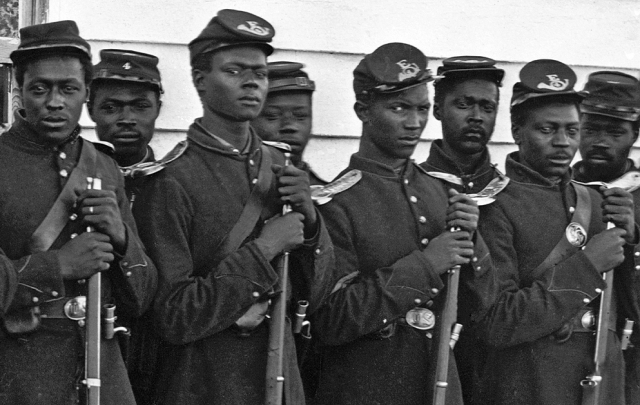
 HD_4USCinfantryDetail.preview

Friends of Padre Steve’s World

Tomorrow is the holiday where we remember the birth of Dr. Martin Luther King Jr. So I felt it appropriate to put out a revised section of my Civil War and Gettysburg text dealing with Emancipation and beginnings of African Americans being allowed to take their place in serving their country.  Sadly, a country that so often, both before, and after emancipation, treated them as either something less than human, or as second class citizens. But the sacrifice of these pioneers helped pave the way for the civil rights of others: women, other ethnic minorities, and most recently the LGBT community. Without blacks, who certainly endured the most odious treatment under slavery than any other group in this country, the long and slow progress others have made would not have been possible. This is certainly not to say that our system, nor our treatment of minorities, immigrants, women and gays is completely fair and equitable. It is not, there are many flaws, and still much discrimination, prejudice and fear mongering which demonizes certain groups as well as seeks to roll back the gains that individuals belonging to these groups have made to be accepted into American society. Thus we continue to strive for “a more perfect Union.” 

Peace

Padre Steve+

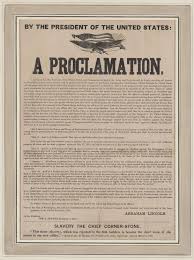
The war brought about another change to warfare in America. This was a societal and political change that has shaped American military history, culture and life ever since. The Emancipation Proclamation gave African Americans, both Freedmen and recently freed slaves the opportunity to serve in the Union Army. The change of policy instituted by Lincoln was revolutionary as well as controversial and it had strategic implications for the war effort. There were many doubters in the north whose attitudes towards African Americans were not much different than Southerners, especially among the Copperheads.

Prior to the Emancipation some Union commanders in occupied Confederate territory “had unofficially recruited black soldiers in Kansas and in occupied portions of South Carolina and Louisiana in 1862. But the administration had not sanctioned these activities.” [1] But as the war continued on, consuming vast numbers of lives the attitude of Lincoln and the administration began to change.

Lincoln and the closest members of his cabinet were beginning to understand that the “North could not win the war without mobilizing all of its resources and striking against Southern resources used to sustain the Confederate war effort.” [2]

Lincoln’s Secretary of War, Edwin Stanton; who was a passionate believer in the justice of emancipation “Instantly grasped the military value of the proclamation. Having spent more time than any of his colleagues contemplating the logistical problems facing the army, he understood the tremendous advantage to be gained if the massive workforce of slaves could be transferred from the Confederacy to the Union.” [3]
emancipation

Lincoln emphasized the “military necessity” of emancipation and “justified the step as a “fit and necessary war measure for suppressing the rebellion.” [4] The process of emancipation now became not only a moral crusade, but now became a key part of national strategy. Lincoln wrote to his future Vice President, Andrew Johnson, then the military governor of occupied Tennessee that “The colored population is the great available and yet unavailed of, force for restoration of the Union.” [5] The idea of simply mollifying the border states was dropped and policy changed that of “depriving the Confederacy of slave labor. Mobilizing that manpower for the Union- as soldiers as well as laborers- was a natural corollary.” [6] Reflecting President Lincoln’s and Stanton’s argument for the military necessity of emancipation, General Henry Halleck wrote to Ulysses Grant that:

“the character of the war has very much changed within the past year. There is now no possibility of reconciliation with the rebels… We must conquer the rebels or be conquered by them….Every slave withdrawn from the enemy is the equivalent of a white man put hors de combat.” [7]

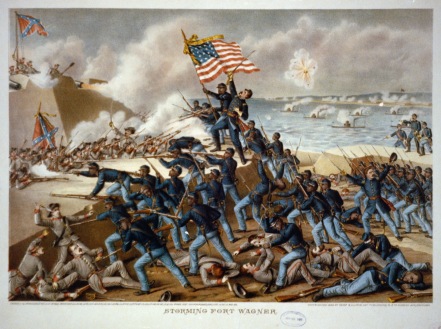
Grant concurred with the decision. Grant wrote to in a letter to Lincoln after the assault on Battery Wagner “by arming the negro we have added a powerful ally. They will make good soldiers and taking them from the enemy weakens him in the same proportion as it strengthens us.” [8] Lincoln wrote after the Emancipation Proclamation that “the emancipation policy, and the use of colored troops, constitute the heaviest blow yet dealt to the rebellion.” [9] The change was a watershed in both American history as well as the future of the U.S. Military services.

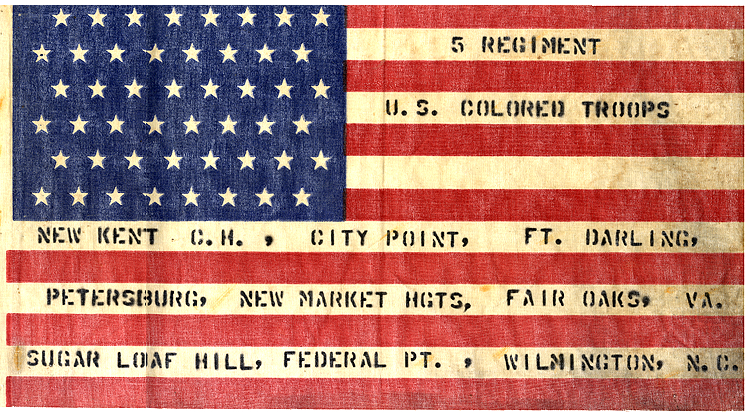
Emancipation allowed for the formation of regiments of United States Colored Troops (USCT), mustered directly into Federal service, which in numbers soon dwarfed the few state raised Black Regiments. However, it was the inspiration provided by those first state raised regiments as well as the violence directed against Blacks in the draft riots helped to provoke “many northerners into a backlash against the consequences of violent racism.” [10] The valor of the state regiments, as well as the USCT units that managed to get into action was remarkable, especially in regard to the amount of discrimination levied at them by some northerners, and the very real threat of death that they faced of captured by Confederates.

In May of 1863 Major General Nathaniel Banks dared to send the First and Third Regiments of “Louisiana Native Home Guard regiments on a series of attacks on Confederate positions at Port Hudson, Louisiana” [11] where they received their baptism of fire. They suffered heavy losses and “of the 1080 men in the ranks, 271 were hit, or one out of every four.” [12] Banks said of them in his after action report: “They answered every expectation…In many respects their conduct was heroic…The severe test to which they were subjected, and the determined manner in which they encountered the enemy, leave upon my mind no doubt of their ultimate success.” [13]
william_carney

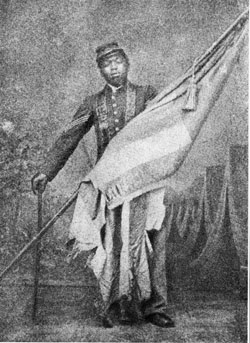
Sergeant William H. Carney of the 54th Massachusetts, Medal of Honor

But the most famous African American volunteer regiment was the 54th Massachusetts, commanded by Colonel Robert Gould Shaw, the “North’s showcase black regiment.” [14] Raised in Boston and officered by many men who were the sons of Boston’s blue blood abolitionist elite, the regiment was authorized in March 1863. Since there was still opposition to the formation of units made up of African Americans, Massachusetts Governor John Andrew authorized the formation of the 54th under the command of white officers, a practice that with few exceptions, became standard in the U.S. military until President Truman desegregated the armed forces in 1948. Governor Andrew was determined to ensure that the officers of the 54th were men of “firm antislavery principles…superior to a vulgar contempt for color.” [15]

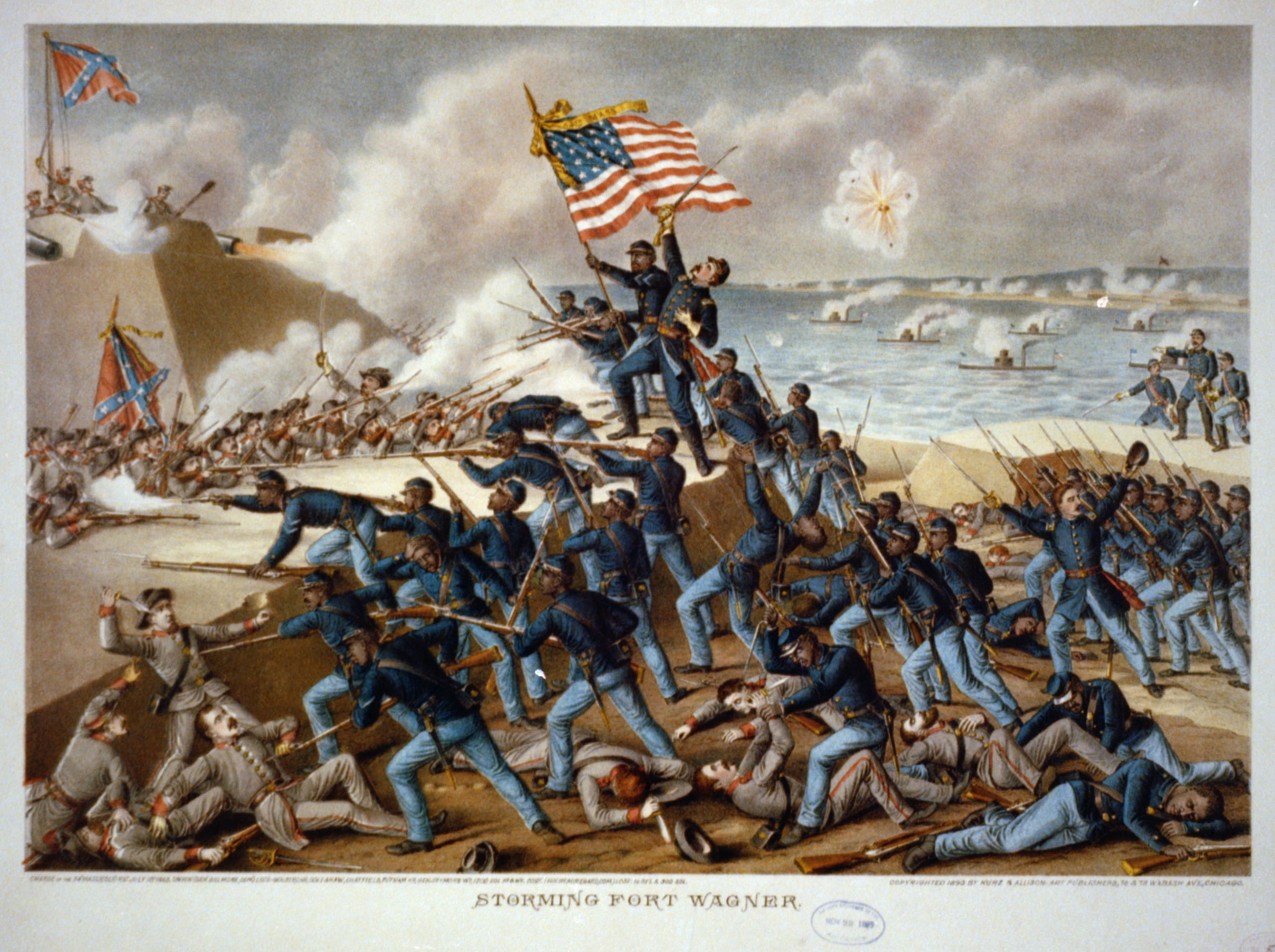
The 54th saw action first in early June and at Gould’s urging sent into battle against the Confederate positions at Fort Wagner on July 18th 1863. Leading the attack the 54th lost nearly half its men, “including Colonel Shaw with a bullet through his heart. Black soldiers gained Wagner’s parapet and held it for an hour before falling back.” [16] Though they tried to hold on they were pushed back after a stubborn fight to secure a breach in the fort’s defenses. “Sergeant William H Carney staggered back from the fort with wounds in his chest and right arm, but with the regiment’s Stars and Stripes securely in his grasp. “The old flag never touched the ground, boys,” Carney gasped as he collapsed at the first field hospital he could find.” [17] Shaw was buried with his men by the Confederates and when Union commanders asked for the return of his body were told “We have buried him with his niggers,” Shaw’s father quelled a northern effort to recover his son’s body with these words: We hold that a soldier’s most appropriate burial-place is on the field where he has fallen.” [18] As with so many frontal attacks on prepared positions throughout the war, valor alone could not overcome a well dug in enemy. “Negro troops proved that they could stop bullets and shell fragments as good as white men, but that was about all.” [19]

Despite the setback, the regiment went on to further actions where it continued to distinguish itself. The Northern press, particularly abolitionists papers brought about a change in the way that many Americans in the North, civilians as well as soldiers, saw blacks. The Atlantic Monthly noted “Through the cannon smoke of that dark night, the manhood of the colored race shines before many eyes that would not see.” [20]

Frederick Douglass, who had two sons serving in the 54th Massachusetts, understood the importance of African Americans taking up arms against those that had enslaved them in order to win their freedom:

“Once let a black man get upon his person the brass letters U.S… let him get an eagle on his button, and a musket on his shoulder and bullets in his pockets, and there is no power on earth which can deny he has won the right to citizenship in the United States.” [21]
The_Storming_of_Ft_Wagner-lithograph_by_Kurz_and_Allison_1890a

Other African American units less famous than the illustrious 54th Massachusetts distinguished themselves in action against Confederate forces. Two regiments of newly recruited blacks were encamped at Milliken’s Bend Louisiana when they were attacked by a Confederate brigade attempting to relieve the Vicksburg Garrison. The troops were untrained and ill-armed but held on against a determined enemy:

“Untrained and armed with old muskets, most of the black troops nevertheless fought desperately. With the aid of two gunboats they finally drove off the enemy. For raw troops, wrote Grant, the freedmen “behaved well.” Assistant Secretary of War Dana, still with Grant’s army, spoke with more enthusiasm. “The bravery of the blacks,” he declared, “completely revolutionized the sentiment in the army with regard to the employment of negro troops. I heard prominent officers who had formerly in private had sneered at the idea of negroes fighting express after that as heartily in favor of it.” [22]

By the end of the war 179,000 African American Soldiers, commanded by 7,000 white officers served in the Union armies. For a number of reasons most of these units were confined to rear area duties or working with logistics and transportation operations. The policies to regulate USCT regiments to supporting tasks in non-combat roles “frustrated many African American soldiers who wanted a chance to prove themselves in battle.” [23] Many of the soldiers and their white officers argued to be let into the fight as they felt that “only by proving themselves in combat could blacks overcome stereotypes of inferiority and prove their “manhood.” [24] Even so in many places in the army the USCT and state regiments made up of blacks were scorned:

“A young officer who left his place in a white regiment to become colonel of a colored regiment was frankly told by a staff officer that “we don’t want any nigger soldiers in the Army of the Potomac,” and his general took him aside to say: “I’m sorry to have you leave my command, and am still more sorry that you are going to serve with Negroes. I think that it is a disgrace to the army to make soldiers of them.” The general added that he felt this way because he was sure that colored soldiers just would not fight.” [25]

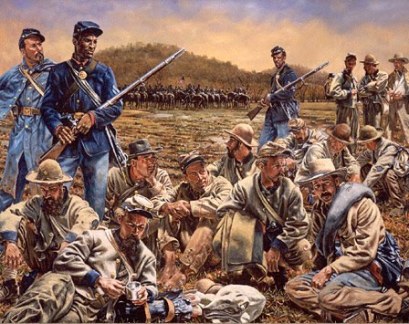
The general of course, was wrong. In the engagements where USCT units were allowed to fight, they did so with varying success most often attributable to the direction of their senior officers. When given the chance they almost always fought well, even when badly commanded. This was true as well when they were thrown into hopeless situations. One such instance was when Ferrero’s Division, comprised of colored troops were thrown into the Battle of the Crater at Petersburg when “that battle lost beyond all recall.” [26] The troops advanced in good order singing as they went, while their commander, General Ferrero took cover in a dugout and started drinking; but the Confederate defenders had been reinforced and “Unsupported, subjected to a galling fire from batteries on the flanks, and from infantry fire in front and partly on the flank,” a witness write, “they broke up in disorder and fell back into the crater.” [27] Pressed into the carnage of the crater where white troops from the three divisions already savaged by the fighting had taken cover, the “black troops fought with desperation, uncertain of their fate if captured.” [28] In the battle the division lost 1327 of just under 4000 men. [29]

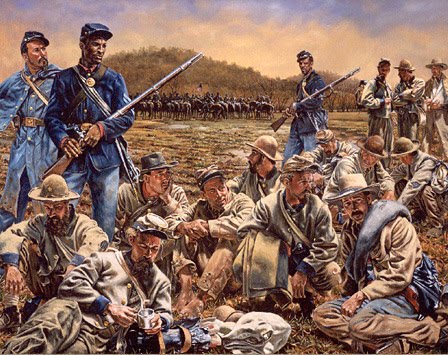
When captured by Confederates, black soldiers and their white officers received no quarter from many Confederate opponents. General Edmund Kirby Smith who held overall command of Confederate forces west of the Mississippi instructed General Richard Taylor to simply execute black soldiers and their white officers: “I hope…that your subordinates who may have been in command of capturing parties may have recognized the propriety of giving no quarter to armed negroes and their officers. In this way we may be relieved from a disagreeable dilemma.” [30] This was not only a local policy, but echoed at the highest levels of the Confederate government. In 1862 the Confederate government issued an order that threatened white officers commanding blacks: “any commissioned officer employed in the drilling, organizing or instructing slaves with their view to armed service in this war…as outlaws” would be “held in close confinement for execution as a felon.” [31]

On April 12th 1864 at Fort Pillow, troops under the command of General Nathan Bedford Forrest massacred the bulk of over 231 Union most of them black as they tried to surrender. While it is fairly clear that Forrest did not order the massacre and even attempted to stop it, it was clear that he had lost control of his troops. His soldiers fought with the fury of men possessed by hatred of an enemy that they considered ‘a lesser race’ slaughtered the Union troops as they either tried to surrender or flee; but he was not displeased with the result. Ulysses Grant wrote that:

“These troops fought bravely, but were overpowered I will leave Forrest in his dispatches to tell what he did with them.

“The river was dyed,” he says, “with the blood of the slaughtered for up to 200 years. The approximate loss was upward of five hundred killed; but few of the officers escaped. My loss was about twenty killed. It is hoped that these facts will demonstrate to the Northern people that negro soldiers cannot cope with Southerners.” Subsequently Forrest made a report in which he left out the part that shocks humanity to read.” [32]

”The bulk of the killing was directed at the black soldiers of the 6th U.S. Colored Heavy Artillery, which composed over a third of the garrison. “Of the 262 Negro members of the garrison, only 58- just over 20 percent- were marched away as prisoners; while of the 295 whites, 168- just under sixty percent were taken.” [33] A white survivor of the 13th West Tennessee Cavalry, a Union unit at the fort wrote: “We all threw down our arms and gave tokens of surrender, asking for quarter…but no quarter was given….I saw 4 white men and at least 25 negroes shot while begging for mercy….These were all soldiers. There were also 2 negro women and 3 little children standing within 25 steps of me, when a rebel stepped up to them and said, “Yes, God damn you, you thought you were free, did you?” and shot them all. They all fell but one child, when he knocked it in the head with the breech of his gun.” [34]A Confederate Sergeant wrote home a week after the massacre: “the poor deluded negroes would run up to our men, fall upon their knees and with uplifted hands scream for mercy, but were ordered to their feet and shot down.” [35]
pride_over_prejudice-reeves-b-of-nashville

African American soldiers proved themselves during the war and their efforts paved the way for Lincoln and others to begin considering the full equality of blacks as citizens. If they could fight and die for the country, how could they be denied the right to votes, be elected to office, serve on juries or go to public schools? Under political pressure to end the war during the stalemate before Petersburg and Atlanta in the summer of 1864, Lincoln reacted angrily to Copperheads as well as wavering Republicans on the issue of emancipation:

“But no human power can subdue this rebellion without using the Emancipation lever as I have done.” More than 100,000 black soldiers were fighting for the Union and their efforts were crucial to northern victory. They would not continue fighting if they thought the North intended to betray them….If they stake their lives for us they must be prompted by the strongest motive…the promise of freedom. And the promise being made, must be kept…There have been men who proposed to me to return to slavery the black warriors. “I should be damned in time & in eternity for so doing. The world shall know that I will keep my faith to friends & enemies, come what will.” [36]

Despite this, even in the North during and after the war, blacks, including former soldiers would be discriminated against, sometimes by the white men that they served alongside. Those rights would be fought for another century and what began in 1863 with the brave service and sacrifice of these African American soldiers began a process of increased civil rights that is still going on today. It would not be until after the war that some blacks were commissioned as officers in the Army. When Governor John Andrew, the man who had raised the 54th Massachusetts attempted to:

“issue a state commission to Sergeant Stephen Swails of the 54th…the Bureau of Colored Troops obstinately refused to issue Swails a discharge from his sergeant’s rank, and Swails promotion was held up until after the end of the war. “How can we hope for success to our arms or God’s blessing,” raged the white colonel of the 54th, Edward Hallowell, “while we as a people are so blind to justice?” [37]

The Southern Debate about Emancipation and Black Soldiers

In the South, politicians and many senior Confederate Officers fought against any allowance for blacks to serve, for they knew if they allowed this, that slavery itself must be swept away. Despite this, a few such as General Patrick Cleburne, an Irish immigrant and a division commander in the Army of Tennessee demonstrated the capacity for forward thinking in terms of race: Cleburne advocated that blacks serve as soldiers should be emancipated.

Cleburne, known as “the Stonewall Jackson of the West” was a bold fighter who put together a comprehensive plan. He noted that the Confederacy was losing the war because it did not have soldiers, the supplies or resources; and most significantly that “slavery, from being one of our chief sources of strength at the beginning of the war, has now become in a military point of view, one of our chief sources of weakness.” [38] Cleburne recommended that “we immediately commence training a large reserve of the most courageous of our slaves, and further that we guarantee freedom within a reasonable time to every slave in the South who shall remain to the confederacy in this war.” [39]

His proposal was radical. He was asking more from his fellow Southerners than they could risk. He was “asking them to surrender the cornerstone of white racism to preserve their nation” [40] and he presented it in stark terms that few could stomach “As between the loss of independence and the loss of slavery, we can assume that every patriot will freely give up the latter- give up the Negro slave rather than be a slave himself.” [41]

In January 1864 General W.H.T Walker obtained a copy of Cleburne’s proposal and sent it to Davis. Walker opposed it and expressed his outrage over it. Cleburne’s proposal went from being a military matter to a political matter and Davis intervened to quash the proposal. “Convinced that the “propagation of such opinions” would cause “discouragements, distraction, and dissension” in the army, Jefferson Davis ordered the Generals to stop discussing the matter…The only consequence of Cleburne’s action seemed to be the denial of promotion to this ablest of the army’s division commanders, who was killed ten months later at the Battle of Franklin.” [42] In fact Cleburne was “passed over for command of an army corps and promotion to lieutenant general” three times in the next eight months, and in “each care less distinguished, less controversial men received the honors.” [43] All copies of Cleburne’s proposal were destroyed by the order of Davis.

Cleburne was not the only military man to advocate the formation of Negro units or even emancipation. Robert E. Lee was one of the chief proponents of this. Lee said after the war that he had told Davis “often and early in the war that the slaves should be emancipated, that it was the only way to remove a weakness at home and to get sympathy abroad, and divide our enemies, but Davis would not hear of it.” [44]

Ten months later Davis raised the issue of arming slaves as he now believed that military necessity left him little choice. He was opposed by some of his closest political allies including Howell Cobb who warned “The day that you make soldiers of them is the beginning of the end of the revolution. If slaves will make good soldiers our whole theory of slavery is wrong.” [45] Lee wrote to a member of Virginia’s legislature “we must decide whether slavery shall be extinguished by our enemies and the slaves used against us, or use them ourselves at the risk of the effects which may be produced on our social institutions…” and he pointed out that “any act for the enrolling of slaves as soldiers must contain a “well digested plan of gradual and general emancipation”: the slaves could not be expected to fight well if their service was not rewarded with freedom.” [46]

The debate began in earnest in the fall of 1864 and revealed a sharp divide in the Confederacy between those who supported the measure and those against it. Cabinet members such as Judah Benjamin and a few governors “generally supported arming the slaves.” [47] They were opposed by the powerful governors of Georgia and North Carolina, Joe Brown and Zebulon Vance as well as President pro-tem of the Confederate Senate R.M.T. Hunter, who forcibly opposed the measure. Led by Governor “Extra Billy” Smith, Virginia’s General Assembly voted “to permit the arming of slaves but included no provision for emancipation, either before or after military service.” [48]

Finally in March of 1865 the Confederate Congress passed by one vote a watered down measure to allow for the recruitment of slaves. It stipulated that “the recruits must all be volunteers” [49] and those who volunteered must also have “the approbation of his master by a written instrument conferring, as far as he may, the rights of a freed man.” [50] While this in itself was a radical proposition for a nation which had went to war to maintain slavery, the fact was that the slave’s service and freedom were granted not by the government, but by his owner, and even at this stage of the war, few owners were willing to part with their property. It was understood by many that giving freedom to a few was a means of saving the “particular institution.” The Richmond Sentinel noted during the November debate: “If the emancipation of a part is the means of saving the rest, this partial emancipation is eminently a pro-slavery measure.” [51] Thus the law made “no mention of emancipation as a reward of military service” [52] and in deference to “state’s rights, the bill did not mandate freedom for slave soldiers.” [53]

But even the watered down measure was opposed by diehards. Robert Kean, who headed the Bureau of War and should have understood the stark reality of the Confederacy’s strategic situation, note in his diary, that the law:

“was passed by a panic in the Congress and the Virginia Legislature, under all the pressure the President indirectly, and General Lee directly, could bring to bear. My own judgment of the whole thing is that it is a colossal blunder, a dislocation of the foundations of society from which no practical results will be reaped by us.” [54]

It was Lee’s prestige alone that allowed the measure to pass, but even that caused some to question Lee’s patriotism. The Richmond Examiner dared to express a doubt whether Lee was “a ‘good Southerner’: that is, whether he is thoroughly satisfied of the justice and beneficence of negro slavery.” [55] Robert Toombs of Georgia stated that “the worst calamity that could befall us would be to gain our independence by the valor of our slaves” [56] and a Mississippi congressman stated that “Victory itself would be robbed of its glory if shared with slaves.” [57] On March 23rd 1865 the War Office issued General Order Number 14, which authorized the call up and recruitment of slaves to the Confederate cause and on March 25th two companies were formed for drill in Richmond’s Capitol Square and as they did so to the sounds of fifes and drums, “Small boys jeered and threw rocks” [58] at them. None of those few volunteers would see action as within a week the Confederate government had fled Richmond.

But some would see that history was moving, and attitudes were beginning to change. It took time, and the process is still ongoing. As imperfect as emancipation was and though discrimination and racism remained, African Americans had reached “levels that none had ever dreamed possible before the war.” [59] In April 1865 as Jefferson Davis and his government fled Richmond, with Davis proclaiming “again and again we shall return, until the baffled and exhausted enemy shall abandon in despair his endless and impossible task of making slaves of a people resolved to be free.” [60]

The irony in Davis’s empty vow was stunning. Within a week Lee had surrendered and in a month Davis himself would be in a Federal prison. The Federal troops who led the army into Richmond came from General Godfrey Weitzel’s Twenty-fifth Corps, of Ord’s Army of the James. The Every black regiment in the Army of the James was consolidated in Weitzel’s Corps, along with Ferrero’s former division which had suffered so badly at the Battle of the Crater. “Two years earlier in New Orleans, Weitzel had protested that he did not believe in colored troops and did not want to command them, and now he sat at the gates of Richmond in command of many thousands of them, and when the citadel fell he would lead them in and share with them the glory of occupying the Rebel capital.” [61] were regiments of black “cavalrymen and infantrymen. Many were former slaves; their presence showed their resolve to be free.” [62]

The Post War Experience of Blacks in the U.S. Army

Some of those early African American soldiers went on to distinguish themselves on the prairie as the immortal Buffalo Soldiers. Other Blacks would fight in Cuba and the Philippines during the Spanish American War. In the First World War, despite there being some instances of racial harmony, blacks, including officers faced discrimination and met with violent acts. “Refusals to arrest white soldiers who physically assaulted black soldiers accompanied by the tendency to rescind unpopular racial orders and to discourage black officers from demanding salutes from white soldiers” [63] was common.

Most of the Regular Army “Buffalo Soldier” units were not allowed to fight in the First World War. Instead they were left on the frontier and a new generation of draftees and volunteers became the nucleus of two infantry divisions, the 92nd and 93rd. However, at the beginning they were regulated to labor service units. The protests of organizations such as the NAACP and men like W.E.B. DuBois, and Phillip Randolph forced the War Department to reconsider the second class status of these men and to form them into combat units.

Despite this, the leadership of the AEF, or the American Expeditionary Force, refused to allow these divisions to serve under American command. Instead they were broken up and the regiments of the 93rd Division were attached to French divisions. The 369th “Harlem Hellfighters” were assigned to the French 16th Division and then to the 161st Division. The 370th “Black Devils” were attached to the French 26th Division, while the 371st and 372nd were assigned to the French 157th (Colonial) Division, which was also known as the Red Hand Division. The 157th Division had suffered badly during the war and been decimated in the unrelenting assaults in the trench warfare of the Western Front. It was reconstituted in 1918 with one French Regiment and the two African American regiments. Both fought exceptionally well and were cited by the French government for their efforts. The 371st was awarded the French Croix de Guerre and Légion d’honeur. Corporal Freddie Stowers of the 1st Battalion 371st was the only African American awarded the Congressional Medal of Honor in the First World War. The 372nd was also awarded the Croix de Guerre and Légion d’honeur for its service with the 157th Division.
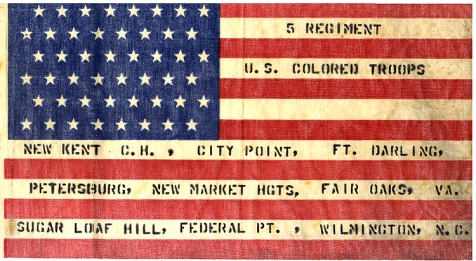
41_090_lg

While many white American soldiers depreciated their French hosts and attempted to sow the seeds of their own racial prejudice against the black soldiers among the French, Southerners in particular warned the French of “black rapist beasts.” However the French experience of American blacks was far different than the often scornful treatment that they received from white American soldiers.

“Soldiers from the four regiments that served directly with the French Army attested to the willingness of the French to let men fight and to honor them for their achievements. Social interactions with French civilians- and white southern soldiers’ reactions to them- also highlighted crucial differences between the two societies. Unlike white soldiers, African Americans did not complain about high prices in French stores. Instead they focused on the fact that “they were welcomed” by every shopkeeper that they encountered.” [64]

Official and unofficial efforts by those in the Army command and individual soldiers to stigmatize them and to try to force the French into applying Jim Crow to laws and attitudes backfired. Villages now expressed a preference for black over white American troops. “Take back these soldiers and send us some real Americans, black Americans,” wrote one village mayor after a group of rowdy white Americans disrupted the town.” [65]

Even after President Truman desegregated the armed forces in 1948, African Americans, as well as other racial minorities, women and gays have faced very real discrimination. The military continues to make great strides, and while overt racist acts and other types of discrimination are outlawed, racism still remains a part of American life.

Today things have changed, and that in large part is due to the unselfish sacrifice in the face of hatred and discrimination of the men of the USCT and the State Black Regiments like the 54th Massachusetts and the Louisiana Home Guards who blazed a way to freedom for so many. Those who followed them as Buffalo Soldiers and volunteers during the World Wars continued to be trail blazers in the struggle for equal rights. A white soldier who served with the 49th Massachusetts wrote “all honor to our negro soldiers. They deserve citizenship. They will secure it! There would be much suffering in what he termed “the transition state” but a “nation is not born without pangs.” [66]

Those birth pangs helped to bring about a new birth of freedom for the United States.

Notes

[1] McPherson, James M. Tried by War: Abraham Lincoln as Commander in Chief Penguin Books, New York and London 2008

[2] McPherson, James M. Drawn With the Sword: Reflections on the American Civil War Oxford University Press, Oxford and New York 1996 p.101

[3] Godwin, Doris Kearns Team of Rivals: The Political Genius of Abraham Lincoln Simon and Shuster, New York and London 2005

[4] Egnal, Marc Clash of Extremes: The Economic Origins of the Civil War Hill and Wang a division of Farrar, Straus and Giroux New York 2009 p.318

[5] Ibid. McPherson Tried by War p.159

[6] Ibid. McPherson Drawn With the Sword p.159

[7] McPherson, James M. Abraham Lincoln and the Second American Revolution Oxford University Press, New York and Oxford 1991 p.35

[8] Ibid. Guelzo Fateful Lighteningp.381

[9] Ibid. McPherson Abraham Lincoln and the Second American Revolution p.35

[10] Ibid. McPherson. The Battle Cry of Freedom p.686

[11] Ibid. Guelzo Fateful Lightening p.379

[12] Ibid. Foote , The Civil War, A Narrative. Volume Two p.398

[13] Ibid. Guelzo Fateful Lightening p.379

[14] Ibid. McPherson. The Battle Cry of Freedom p.686

[15] Ibid. McPherson Drawn With the Sword p.101

[16] Ibid. McPherson. The Battle Cry of Freedom p.686

[17] Ibid. Guelzo Fateful Lightening pp. 380-381

[18] Ibid. McPherson. The Battle Cry of Freedom pp.686-687

[19] Ibid. Foote , The Civil War, A Narrative. Volume Two p.697

[20] Ibid. McPherson. The Battle Cry of Freedom p.686

[21] Ibid. Guelzo Fateful Lightening p. 381

[22] Ibid. McPherson. The Battle Cry of Freedom p.634

[23] Gallagher, Gary W. The Union War Harvard University Press, Cambridge MA and London 2011

[24] Ibid. McPherson Drawn With the Sword p.89

[25] Catton, Bruce. A Stillness at Appomattox Doubleday and Company Garden City, New York 1953 p.227

[26] Ibid. Catton A Stillness at Appomattox p.249

[27] Foote, Shelby, The Civil War, A Narrative. Volume Three Red River to Appomattox Random House, New York 1974 p.537

[28] Wert, Jeffry D. The Sword of Lincoln: The Army of the Potomac Simon and Schuster, New York and London 2005 pp.384-385

[29] Ibid. Foote The Civil War, A Narrative. Volume Three p.537

[30] Ibid. Guelzo Fateful Lightening p. 377

[31] Ibid. Guelzo Fateful Lightening p. 377

[32] Grant, Ulysses S. Preparing for the Campaigns of ’64 in Battles and Leaders of the Civil War Volume IV, Retreat With Honor Edited by Robert Underwood Johnson and Clarence Clough Buel Castle, Secaucus NJ pp.107-108

[33] Ibid. Foote The Civil War, A Narrative. Volume Three p.111

[34] Ibid. Guelzo Fateful Lightening p. 378

[35] Ibid. Foote The Civil War, A Narrative. Volume Three p.112

[36] Ibid. McPherson Abraham Lincoln and the Second American Revolution p.89

[37] Ibid. Guelzo Fateful Lightening p. 376

[38] Ibid. Thomas, The Confederate Nation p.262

[39] Ibid. Thomas, The Confederate Nation p.262

[40] Ibid. Guelzo Fateful Lightening p. 370

[41] Ibid. Thomas, The Confederate Nation p.262

[42] Ibid. McPherson. The Battle Cry of Freedom p.833

[43] Ibid. Thomas, The Confederate Nation p.262

[44] Ibid. Gallagher The Confederate War p.47.

[45] Ibid. Guelzo Fateful Lightening p. 370

[46] Korda, Michael. Clouds of Glory: The Life and Legend of Robert E. Lee Harper Collins Publishers, New York 2014 p.643

[47] Ibid. Thomas, The Confederate Nation p.293

[48] Ibid. Foote. The Civil War, A Narrative. Volume Three pp.754-755

[49] Ibid. Foote. The Civil War, A Narrative. Volume Three p. 755

[50] Ibid. Thomas, The Confederate Nation p.296

[51] Ibid. McPherson. The Battle Cry of Freedom p.836

[52] Ibid. Foote. The Civil War, A Narrative. Volume Three p.755

[53] Ibid. McPherson. The Battle Cry of Freedom p.837

[54] Ibid. Foote. The Civil War, A Narrative. Volume Three p.860

[55] Ibid. McPherson. The Battle Cry of Freedom p.837

[56] Ibid. Foote. The Civil War, A Narrative. Volume Three p.860

[57] Ibid. McPherson. The Battle Cry of Freedom p.835

[58] Ibid. Foote. The Civil War, A Narrative. Volume Three p.860

[59] Ibid. Guelzo Fateful Lightening p. 386

[60] Levine, Bruce Half Slave and Half Free: The Roots of the Civil War Revised Edition, Hill and Wang, a division of Farrar, Strauss and Giroux, New York 1992 and 1995 p.241

[61] Catton, Bruce Grant Takes Command Little, Brown and Company Boston, Toronto and London 1968 p.411

[62] Ibid. Levine Half Slave and Half Free pp.241-242

[63] Keene, Jennifer D. Doughboys, the Great War, and the Remaking of America The Johns Hopkins University Press, Baltimore and London 2001 p.88

[64] Ibid. Keane Doughboys, the Great War, and the Remaking of America p.128

[65] Ibid. Keane Doughboys, the Great War, and the Remaking of America p.129

[66] Ibid Gallagher The Union War p.113

1 Comment

Filed under civil rights, civil war, History, Military

Beginnings of Women’s Equality and the Civil War

senecafalls-womanspeaking

Seneca Falls Convention

Friends of Padre Steve’s World

This is a newly written section of my introductory chapter for my Civil War and Gettysburg text. In that introductory chapter I dealt with many of the tactical, technological, doctrinal and military sociological changes which occurred in the Civil War. In later revisions I added a section on emancipation and the role of African American soldiers during the war. However, I realized when doing my research that in the years leading to the war and during the war that the modern women’s movement really began, in large part due to the role of women in Abolitionist circles. Thus as a coda to the section on emancipation and African American soldiers I added this small section.

Have a blessed weekend,

Peace

Padre Steve+ 


Garrison and the leaders of the abolitionist movement came into contact with two southern women who had converted to the abolitionist cause; South Carolina cotton heiresses, Sarah and Angelina Grimke. The two women were passionate as well as eloquent and became popular lecturers on the abolitionist speaking circuit. These women brought Garrison into contact with the early leaders of the new women’s rights movement. The leaders of the movement, Elizabeth Cady Stanton, Abby Kelley, and Lydia Maria Child were outspoken in their belief that “a campaign to emancipate slaves could not avert its eyes from the need to emancipate American women from social conventions and legal restraints that prevented them, like the slave, from owning property and voting, and kept them altogether subservient to the interests of white males.” [1]

Women in the United States were bound by English common law, and “marriage very nearly meant the legal annihilation of a woman…once a woman was married all property and property rights were transferred to her husband, and she was permitted to own nothing in her own name. Married women could not make contracts, could not sue, could not buy or sell, except over their husband’s signatures.” [2] A married woman’s position was as close to being a slave as could be, and only the plight of black female slaves was worse, for they were simply chattel. The few free black women mainly stayed unmarried “in order to maintain what few property rights they were entitled to.” [3] As they also did over blacks, white men ruled over women in all spheres of life.

Stanton was among the most vocal of women’s rights advocates. She believed that a woman’s place in the home “reflected her subordinate position in society and confined her to domestic duties that served to “destroy her confidence in her own powers, lessen her self respect, and to make her willing to lead a dependent and abject life.” [4] She noted that women were “more fully identified with the slave than man possibly can be… For while the man is born to do whatever he can, for the woman and the negro the is no such privilege.” [5] Since nearly all of the most “outspoken feminists had been schooled in abolitionist movement” they were “suspect in the South, where society was conservative, patriarchal, and insistence that ladies live in a kind of earthly limbo.” [6] Since the South was turning away from anything closely connected with the abolitionist moment, many there also rejected any form of women’s rights.

But even with the abolition movement there was opposition the women’s rights. In May of 1840 Garrison’s American Anti-Slavery Society split when leading evangelicals led by the Tappan brothers withdrew from it. But that neither stopped Garrison from working with them, nor Frederick Douglass from embracing them. From this rather inauspicious beginning, the women’s rights movement began to infiltrate society, especially in the field of education. In 1848 at Seneca New York there was a convention which launched the modern women’s rights movement. Led by Stanton and Elizabeth Mott the delegates published a “Declaration of Sentiments, modeled on the Declaration of Independence, proclaimed “that all men and women are created equal” and deserved their “inalienable rights” include the right to elective franchise.” [7] The declaration was bold and its denunciation of the place of women in society to be considered revolutionary in character. Part read:

“He has never permitted her to exercise her inalienable right to elective franchise. He has compelled her to submit to laws, in the formation of which she had no voice. He has withheld from her rights which are given to the most ignorant and degraded men – both natives and foreigners… He has made her, if married, in the eye of the law, civilly dead. He has taken from her all right to property, even to the wages that she earns…. After depriving her of all her rights as a married woman, if single, and the owner of property, he has taxed her to support a government which recognizes her only when her property can be made profitable to it. He has monopolized nearly all the profitable employments, and from those she is permitted to follow she receives but a scanty remuneration. He closes against her all the avenues to wealth and distinction which he considers honorable to himself. As a teacher of theology, medicine of the law, she is not known… He has created a false public sentiment by giving the world a different code of morals for men and women, by which moral delinquencies which exclude women from society, are not only tolerated, but deemed of little account in man. He has usurped the prerogative of Jehovah alone, claiming his right to assign for her a sphere of action, when that belongs to her conscience and to her God. He has endeavored, in every way that he could, to destroy her confidence in her own powers, lessen her self-respect, and to make her willing to lead an abject and dependent life.” [8]

The declaration also stated, in words which inflamed many men that :“the history of mankind is a history of repeated injuries and usurpations on the part of man toward woman, having in direct object of an absolute tyranny over her.” [9]

While the movement made modest progress regarding property rights in some states, they made little progress in terms of elective franchise and better wages and working conditions. During the ante-bellum period, women who lobbied for such rights were met with open opposition and scorn. The press “frequently denounced and ridiculed the “strong-minded women…” [10] Despite such attitudes women did make some significant advancements, particularly in lay aspects of the church, such as Bible societies, moral reform organizations, as well as the abolition and temperance movements, which had gained prominence during the Second Great Awakening.

Educationally women made great progress. By 1850 the United States was the only country where “girls went to elementary school and achieved literacy in virtually the same proportion as boys.” [11] Likewise a few women entered higher education, particularly at women’s seminaries, which were for all practical purposes boarding schools which produced teachers and writers, as well as the Oberlin College which was founded by Christian abolitionists and welcomed students of both genders as well as of any racial minority. During the three decades prior to the war women made some specific gains, but more important “was the development to their talents for organization, cooperation, leadership, and self expression. It was a time of beginnings and not fulfillment, a time when most women realized and accepted the fact that they lived in a man’s world, a time when a few dedicated but belligerent visionaries were frustrated in their attempt to remake the social order “overnight.” [12]

However, the war would help bring about many more opportunities for women. In 1850 a follow on conference to the Seneca conference, the National Women’s Rights Convention denied the right of anyone to dictate what women could do with their lives:

“The right of any portion of the species to decide for another portion, of any individual to decide for another Individual what is not their “proper sphere”; that the proper sphere for all human beings is the largest and highest to which they are able to attain; what this is, can not be ascertained without complete Liberty of choice; women therefore, ought to choose for herself what sphere she will fill, what education she will seek, and what employment she will follow, and will not be bound to accept, in submission, the rights, the education, and the place which man thinks proper to allow her.” [13]

sarah_seelye

Of course when war broke out the logical end of this train of though was should women be allowed to serve in the military. Quite a few women on both sides of the conflict chaffed about not being allowed to fight for their countries. However, despite official prohibitions that kept women from serving in any capacity but nursing, a good number of women found their way to war, taking male identities in order to gain the economic privileges, and in the case of war, the glory reserved to men. In our modern parlance they would be called transvestites, but their “transvestitism was a private rebellion against public conventions. By taking a male social identity, they secured for themselves male power and independence, as well as full status as citizens of their nation. In essence the Civil War was an opportunity for hundreds of women to escape the confines of their sex.” [14]

During the war hundreds of women went to war, taking on the identity of men. They enlisted under male names and pretended to be men. Unless they were discovered to be women, or unless they confessed to their wartime service either during or after the war, most of their records are lost. At least five women, two Federal and three Confederate took part at Gettysburg. All three Confederates were either killed or wounded, or captured, including two women who took part in Pickett’s Charge.

Wartime records are sketchy but as a minimum it is believed that “between 250 and 400 women disguised as men found their way into either the Federal or Confederate armies.” [15] Women known to have served had a “combined casualty rate of 44 percent” including the fact that “eleven percent of women soldiers died in the military.” [16]

Other women would serve as spies or nurses and some of those discovered remained protected by fellow soldiers. Many received promotions and even served as NCOs or junior officers. With women now serving in combat or combat support roles in the U.S. Military since Operation Desert Storm in 1991, the stigma and scandal that these cross-dressing women soldiers of the Civil War has faded and as scholars and the public both “continue probing cultural notions of gender and identity, the reemerging evidence that women historically and successfully engaged in combat has met with less intellectual resistance and has taken on new cultural significance.” [17] As the United States military services examine the issues surrounding further moves to integrate the combat arms we also should attempt to more closely examine the service of the brave and often forgotten women who served on both sides of the Civil War.

Notes

[1] Ibid. Guelzo Fateful Lightening pp.49-50

[2] Ibid. Guelzo Fateful Lightening p.391

[3] Ibid. Guelzo Fateful Lightening p.391

[4] Ibid. Goldfield America Aflame p.74

[5] Ibid. Guelzo Fateful Lightening p.50

[6] Massey, Mary Elizabeth, Women in the Civil War University of Nebraska Press, Lincoln NE 1966 p. 19

[7] Ibid. McPherson Battle Cry of Freedom p.36

[8] Blanton, DeAnne and Cook, Lauren M. They Fought Like Demons: Women Soldiers in the Civil War Vintage a books, a Division of Random House New York 2002 pp.3-4

[9] Ibid. Guelzo Fateful Lightening p.392

[10] Ibid. Massey Women in the Civil War pp.21-22

[11] Ibid. McPherson The Battle Cry of Freedom p.36

[12] Ibid. Massey Women in the Civil War p.23

[13] Ibid. Guelzo Fateful Lightening p.392.

[14] Ibid. Blanton and Cook They Fought Like Demons p.5

[15] ibid. Guelzo Fateful Lightening p.394

[16] Ibid. Blanton and Cook They Fought Like Demons pp.206-207

[17] Ibid. Blanton and Cook They Fought Like Demons p.204

1 Comment

Filed under civil rights, civil war, History, Military, Political Commentary

“Tho’ all the world betray thee” The Minstrel Boy

lastmass2

The Minstrel Boy (Thomas Moore)

The minstrel boy to the war is gone,
In the ranks of death ye will find him;
His father’s sword he hath girded on,
And his wild harp slung behind him;
“Land of Song!” said the warrior bard,
“Tho’ all the world betray thee,
One sword, at least, thy rights shall guard,
One faithful harp shall praise thee!”

The Minstrel fell! But the foeman’s chain
Could not bring his proud soul under;
The harp he lov’d ne’er spoke again,
For he tore its chords asunder;
And said “No chains shall sully thee,
Thou soul of love and bravery!
Thy songs were made for the pure and free
They shall never sound in slavery!”

The Minstrel Boy will return we pray
When we hear the news we all will cheer it,
The minstrel boy will return one day,
Torn perhaps in body, not in spirit.
Then may he play on his harp in peace,
In a world such as heaven intended,
For all the bitterness of man must cease,
And ev’ry battle must be ended.

(Last verse anonymous Civil War)

Seven years ago I was in the process of returning home from Iraq spending my last couple of days in country before flying out to Kuwait and then the United States. I was already in a rather melancholy state knowing that the Chaplain incoming higher headquarters had turned off my relief for Al Anbar Province after I had paved the way for him with all of the teams of advisors that I had worked with during my time serving them. My relief a personal friend was diverted to the Army advisors with a different Iraqi Division in the north of the country. I felt that the incoming senior chaplain had betrayed and abandoned the men that I worked so hard to care for. Later I heard that he had disregarded my heavily detailed after action reports and told at least one senior chaplain that he “had heard that I was out there but didn’t know if I had done anything.”

It was at that point that I realized that you could do your job and sacrifice yourself to complete a mission only to have someone with their own agenda do what they could to discredit you.  I felt betrayed and still do. I was asked by my therapist about this and frankly, though I have tried to forgive the feelings always come back.

Where the senior Chaplain that I worked for did all that he could to support my team’s mission and see that we were properly recognized at Multi-National Corps Iraq in Baghdad his successor dismissed our work. It was the first time in my Navy career that I had experienced that.  I think it was the fact that I worked for a non-traditional billet working for an Army led joint command outside the normal Navy-Marine Corps chain was a big part of this. Inter-service rivalries and the distain of those bound by conventional thinking are not new and those that have done such non-conventional work have frequently been treated in a similar manner.

I think that is why the line in the song “Tho’ all the world betray thee” means so much to me and w.a big reason why the song touches me in the way it does. It is a song of men changed by war.

Looking back there are some songs which are particularly meaningful to me after my time in Iraq that send a chill up my spine when I hear them. One of these is the patriotic Irish song The Minstrel Boy written by Thomas Moore while a student in honor of friends killed in the Irish Rebellion of 1798.  The song was very popular among soldiers of Irish descent in the American Civil War as well as soldiers fighting in Irish Regiments in World War One and World War Two.

The song is powerful when you hear it for it speaks of the reality of war, war that changes those, even those that return home are not unchanged by it.  It speaks of the sacrifices required by those that go to war and even the effects on the community, the loss of young people.  The final verse added by an anonymous author during the American Civil War in a sense is a prayer, a prayer of return as well as reconciliation. It has been recorded a number of times including an instrumental during the film Blackhawk Down. Another rendition is in the telvision mini-series Rough Riders about the 1st U.S. Volunteer Cavalry at the Battle of San Juan Hill and one in the movie Gettysburg as Father Corby blesses the Irish Brigade.

william_corby_reformat

My life has been changed and faith challenged. When I went to Iraq I still maintained a sense of idealism.   After Iraq and having to deal with PTSD and a psychological, spiritual and physical breakdown as well as a profound sense of abandonment by some senior chaplains, my former church and even God I am a different person. My faith which had been shattered to the point of being a practical agnostic for nearly two years has returned and even now seven years later I struggle with belief, unbelief and faith in general, but I don’t think that is a bad thing. If we are not changed by what God allows or by what life brings I don’t think that we grow. As a Priest I wonder if I could work in the environment that I work without having gone through what I did.

hqdefault1

I see many of the “minstrel boys” and girls of our era and having also been to war and come back changed the last lines of the final verse is a prayer that I echo. One of the versions that I particularly like is the one sung in the Star Trek the Next Generation episode “The Wounded.” While it is only the first verse it deals with the lives of two officers whose lives are forever changed by war. http://www.youtube.com/watch?v=RJudJ9S579A

This is dedicated to all those who have served who have gone through the pain of war and return until war shall be no more.

Peace

Padre Steve+

Leave a comment

Filed under civil war, History, Military, movies, music, PTSD, Tour in Iraq

I wish I did not dream that much: PTSD and Memories of Terrorism

947188_10151670056587059_1172426886_n

Those who are new to what I write on this site may not know a lot about me, nor my struggles with PTSD, Moral Injury, depression and anxiety.

The past week I have been writing about my support of LBGT rights and planned on dealing with some other social issues leading up to the Martin Luther King Jr. holiday next week.

But that was before the attack on Charlie Hebdo. That attack triggered some very unpleasant memories from Iraq and before, and since that attack I have had very little sleep. I actually dread the night.

As a historian and chronicler of the Battle of Gettysburg ands the men who fought there I find many connections with those men and what they wrote. One of them, Major General Gouverneur Warren wrote his wife after the war was over:

“I wish I did not dream that much. They make me sometimes dread to go to sleep. Scenes from the war, are so constantly recalled, with bitter feelings I wish to never experience again. Lies, vanity, treachery, and carnage.”

I feel that kind of angst, and those terrible feelings about the Iraq War, so well said by Warren, come back to the fore in January and February. For me these two months are normally the most difficult of the year as they mark my transition and return back to the United States from Iraq and since my new therapist is walking me through them again and I am in a sense reliving that trauma. It is like having the scar over a deep and unhealed wound ripped away.

January is also the anniversary of the suicide of Captain Tom Sitsch, my last Commodore at EOD Group Two. He was one of the first people to ask me where I as a chaplain would go to to get help for PTSD. Sadly, this man, a true hero died by his own hand just over a year ago suffering from so many after effects of PTSD and Traumatic Brain Injury.

Ever since returning from Iraq in February 2008 I have had a terrible time coping during those months. The reality of PTSD, Moral Injury and possibly Traumatic Brain Injury, which I will be evaluated for in the coming weeks, make sleep nearly impossible. Nightmares, terrors and anxiety are the norm for me and I can completely understand what Guy Sager, who wrote the book The Forgotten Soldier wrote:

“Only happy people have nightmares, from overeating. For those who live a nightmare reality, sleep is a black hole, lost in time, like death.

So when there is a trigger event like the Charlie Hebdo attack, things get that much worse.

This year was really no different than any since 2008, even before the attack on Charlie Hebdo, I was already struggling but all the thoughts, feelings and memories from Iraq have flooded and often overloaded my senses since the Charlie Hebdo attack. What I felt in Iraq came back full force last week as I read about the massacre of the cartoonists and writers of Charlie Hebdo. I have not had a good night sleep since that attack. I talked with this in depth with my therapist today and that discussion brought back other memories.

When I read about the slaughter of the Charlie Hebdo staff in their offices brought back strong memories of an encounter in a remote border post in Iraq in 2007 where I was the only unarmed person in a meeting where everyone had their finger on the trigger of their weapon and even the Iraqi commander did not know who was loyal. We all knew that things could go bad very quickly and the memories of that event are deeply etched in my memory. I have written about it before, but I might need to again. 

Thinking of the men and women murdered in Paris my thoughts went to that room at Al Waleed in late August or early September 2007. What happened to them, to be gunned down in a place where there was no help and no escape reminded me of what well could have happened at Al Waleed in 2007.

20130415-232418


Aftermath of the Frankfurt PX Bombing and Frankfurt Airport Bombing in 1985

mqdefault

The memories buried in my subconscious have connected with other memories, about narrowly avoiding terrorist attacks by the Red Brigades and Baader Meinhof Gang in Germany at the Frankfurt PX and Airport in 1985. I fear going through the gates of military installations and breathe a sigh of relief when I get through without a bomb, improvised explosive device or other terrorist attack. I feel terribly vulnerable and I am very scared about going to places that are soft targets, especially the Main Navy Exchange at Norfolk which is off base. In such places my head is constantly “on a swivel” as we say in the military. A am hyper-vigelent and pretty likely to stay that way so long as I do not feel safe. 

So anyway, I need to stop for the night. I found out that former Negro League player, and member of the Negro League Hall of Fame, Carl Long who I knew well from my time in North Carolina passed away today. He was an amazing man and I will write about him tomorrow.

Likewise, I will  write more about my struggle soon because I know there are other veterans who like me, dread the night.

Peace

Padre Steve+

1 Comment

Filed under mental health, Military, PTSD, Tour in Iraq

Conduct Unbecoming II: Tell the Story of DADT Discrimination

Gays-military-flag-rainbow-lgbt-don-t-ask-don-t-tell-19837645_67849_ver1.0_640_480

Friends of Padre Steve’s World

Those of you who follow this blog or know me understand that I have served in the military since 1981. In that time I have served as an enlisted man, a Medical Service Corps Officer and Chaplain in the Army and a Navy Chaplain. I am coming up on 34 years service. In that time I have had a chance to see the military justice system up close and personal, when I was a company commander and later a brigade Adjutant the military prosecutors were my best friends, defense attorneys, not so much.

Sometimes, the military judicial system is better than the civilian system, but other times it is hopelessly prejudiced, especially against Gays and Lesbians.

This was especially true when I first entered the Army in 1981 before the implementation of Don’t Ask Don’t Tell, as well as after that policy was enacted during the Clinton Administration. I cannot tell you how many men and women that I saw, or heard about being railroaded out of the military simply because they were gay.

Before DADT the process was incredibly brutal. Gays and lesbian could simply be accused of being such, even with no corroborating evidence and put out of the military with a discharge that ensured that they would have difficulty finding employment when they were thrown out of the military. Military officials of the Army Criminal Investigation Division (CID), the Naval Criminal Investigation Service (NCIS) and Air Force Office of Special Investigations (OSI) had free reign to use all means, fair and unfair to ferret out and prosecute anyone suspected of being gay.

I never was a fan of such tactics even though at the time I would have considered myself a Christian conservative who believed that gays were sinners and if they did not repent would go to Hell. But that being said, I never believed that gays were un-patriotic or unworthy of serving in the military so long as they conducted themselves in a manner that heterosexual service members should. Since I knew that homosexuals could not legally marry I figured that their sex life, so long as it did not interfere with their duties was not my concern.

When I was a company commander I knew that I had a number of gays and lesbians in my unit. They were all outstanding soldiers and unlike many of my heterosexual soldiers were never on the military police blotter. You see when I was made a company commander the unit I took command of had the highest drug positive rate in Europe and so many un-adjudicated criminal cases that I spent countless hours after normal duty hours do dealing with them. I had no reason to go after people who were not causing problems and who always could be counted on to go beyond what was required to accomplish the mission. The were great and it would make me proud to hear from them again.

That being said, one could December day the CID came knocking. The two special agents said that they wanted to put an undercover investigator in my company, allegedly to uncover someone suspected of trafficking American cigarettes that they had obtained with their ration cards on the local economy. I asked if they had a warrant or even probable cause for their action. They could produce neither. So I told them that I would not consent because a “spy” in the unit would destroy moral and esprit that I had been working to restore and told them if they could not show me a good reason why I should allow them to do this to get out of my company. After threatening me with investigation for harboring “black marketers” they never came back, so I doubt that they had anything.

However, when they left I wondered if there were any other motives, especially since they had no warrant and no probable cause. I wondered if they were fishing. Since medical units were known to have more homosexuals than other units I wondered if this was a reason, after all I wasn’t kicking anyone out for being homosexual, which back in those days was pretty big business.

When AIDS was finally recognized as a problem, long after it had already killed over 20,000 people, I helped develop some of the Army’s personnel policies for those infected with HIV, and did the counseling and support from an personnel point of view for officers who were infected. I also reviewed

After DADT was passed I was a Chaplain, first in the Army and then the Navy. Sadly, though over-zealous commanders and investigators no longer had carte-blanche to investigate suspected homosexuals, Gays and Lesbians still had to live under-cover. They could serve, but they could not admit that they were homosexual. As such they lived constantly under threat that the slightest mistake could cost them their military careers. I provided pastoral care for a number of those service men and women.

During the DATD era, thousands of Gay and Lesbian service members were drummed out of the service. Others, including a young man who had come to me for counsel, could not handle the pressure or the shame of losing their careers because of being identified as Gay killed themselves.

Even after the end of DADT the stigma of being homosexual has resulted in the prosecution of personnel who were guilty of nothing. I had to testify at the court-martial of a Marine Corps Officer who was the target of one of these witch hunts. I testified during his sentencing that the only reason that he had been prosecuted was because he was Gay. That made it into the record of the trial and I am proud that I could testify on his behalf. It was a travesty of justice engineered by the policies of the former Commandant of the Marine Corps, General James Amos. It was a shame and dishonor to the Marine Corps that a distinguished combat veteran be tried and convicted even though every command and civil police authority up to the Commandant refused to charge him of any crime.

I know several who managed to make it through their career until they could retire. They included distinguished combat veterans and senior officers and non-commissioned officers. One Chief Petty Officer I knew came out at his retirement ceremony, he was so nondescript in his behavior that no-one ever suspected that he was Gay. I do have to admit that coming out at his retirement ceremony had a certain amount of panache which I admired. I have a friend who spent eighteen of 21 years of service before DADT was overturned under constant threat. She gets to retire this summer. I hope to do the invocation and benediction at her retirement.

But I digress…

I have been reading Randy Shilts’ book Conduct Unbecoming: Gays and Lesbians in the U.S. Military. The book came out the month that Shilts, who had written the book that defined the tragedy of the AIDS crisis in its first years died of AIDS. The book is the most comprehensive treatment of the persecution of Gays and Lesbians in the military ever written. However, the book, published shortly after the establishment of DADT when Shilts was dying does not deal with what the Gays and Lesbians who served under DADT went through.

I want to write that book.

If you or anyone you know served in the military after DADT experienced the persecution that still occurred during that time I would like to hear from you. You can contact me by e-mail. I will maintain your confidentiality, after all, I am a priest.

That being said, the story of the Gays and Lesbian patriots who served during the DADT era needs to be told. That era encompassed more deployments and combat than any time since the Vietnam War. Many homosexuals put their lives on the line and even so still suffered great stigma and sometimes persecution. Under DATD 14,346 Soldiers, Sailors, Marines and Airmen were thrown out of the military. 

You may e-mail me, contact me through this site, Facebook or Twitter and I will contact you. Please spread the word. This part of history should not be forgotten, otherwise it may be repeated.

Peace and blessings

Padre Steve+


2 Comments

Filed under civil rights, History, LGBT issues, Military

Death in the Arctic: Scharnhorst at North Cape

Schlachtschiff "Scharnhorst"

Christmastide is a joyous time for many, but in the course of history there have been times that military men have fought and died in hopeless battles far from their families. Thus it is often a time of sorry, especially for those that die alone. Among those who died alone in the Arctic darkness of December 26th 1943 were the officers and crew of the German battlecruiser Scharnhorst.

Schlachtschiff "Scharnhorst"

Scharnhorst in port

The Scharnhorst along with her sister ship Gneisenau were the product of the naval architects of Germany who in the early 1930s designed some of the most beautiful as well as deadly warships of the Second World War.  Following Germany’s rejection of the provisions of the Treaty of Versailles the Kreigsmarine enacted a building program to enlarge and modernize the German Navy which then was composed of obsolete pre-Dreadnaught battleships and a few modern light cruisers and destroyers.   The first major units constructed were actually begun by the predecessor to the Kreigsmarine, the Reichsmarine of the Weimar Republic.  These were the Deutschland class Armored Ships, sometimes called “Pocket Battleships” and later reclassified as Heavy Cruisers. These ships were designed to replace the old pre-Dreadnaught battleships and incorporated electric welds to reduce displacement, diesel engines for extended cruise range to enable them to serve as commerce raiders and a battery of six 11” guns.  While an advance over anything in the German inventory they were outclassed by the British battle cruisers Hood, Renown and Repulse.

However, the first truly capital ships built by the Kriegsmarine were the Scharnhorst and Gneisenau Rated as battleships, in reality they were battle cruisers because of their light main battery of 11” guns as opposed to the 14”, 15” or 16” batteries of other nations battleships.  Despite this in displacement and armor protection of the ships was comparable to other battleships of the era and their designed speed of 31.5 knots was superior to almost all other battleships of the era including the British King George V Class and the US Navy’s  North Carolina class.  Only the massive battlecruiser HMS Hood was their superior in speed and firepower.

As built Scharnhorst and Gneisenau displaced 31,000 toms, however at full combat load they both weighed in at nearly 38,000 tons and were 772 feet long.  They had an armor belt that was nearly 14 inches thick.  Armed with a main battery of nine 11” guns and a secondary armament of twelve 5.9 inch guns they also mounted a powerful for the time anti- aircraft battery of fourteen 4.1 inch guns, 16 37mm and 16 20mm anti-aircraft cannons.  Additionally they mounted six 21” torpedo tubes and carried three Arado 196 A3 scout planes.  The main battery was eventually to be replaced by six 15” guns but this never occurred although Gneisenau was taken in hand to mount the new weapons but the conversion was never completed.

scharnhorst2

Scharnhorst firing at HMS Glorious 

Laid down on 15 June 1935 and launched 3 October 1936 Scharnhorst was commissioned 7 January 1939.  Her sister Gneisenau was laid down 6 May 1935, launched 8 December 1936 and commissioned 21 May 1938.  Upon the commencement of the Second World War the two sisters began a reign of destruction on British shipping. In November they sank the Armed Merchant Cruiser HMS Rawalpindi During Operation Weserübung the pair surprised sank the aircraft carrier HMS Glorious and her two escorting destroyers, the only time a Fleet carrier was caught and sunk by battleships during the war.   From January to March 1941 they conducted Operation Berlin against British merchant shipping in the North Atlantic sinking 22 ships before returning to base.

eeb893a0b92de4ae595de56fe0fd90ca

Scharnhorst and Gneisenau during Operation Cerebus

While in the port of Brest Gneisenau was bombed and torpedoed requiring extensive repairs.  Due to the exposed location of the port the German high command decided to return the ships to Germany along with the Heavy Cruiser Prinz Eugen.  The operation was called Operation Cerberus and it took place from 11-13 February 1942. The ships made a dash up the English Channel which was unsuccessfully contested by the British Royal Air Force and Royal Navy. However, both Scharnhorst and Gneisenau were damaged by mines and needed subsequent repairs.  While undergoing repairs in Kiel Gneisenau was further damaged by the Royal Air Force requiring repairs in or to steam to the port of Gotenhafen for repair and conversion.  Although some work was completed she was decommissioned and sunk as a blockship on 23 March 1945.  Following the war she was raised by the Poles and scrapped.

Scharnhorst was repaired following Operation Cerberes and in March 1943 was transferred to Norway where along with Tirpitz, Admiral Scheer, Lutzow (the former Deutschland), Admiral Hipper and Prinz Eugen she became part of a “fleet in being” poised to strike the Allied convoys bound for Russia.

Admiral_Bruce_Fraser_1943_IWM_A_16489

Admiral Bruce Fraser

The German surface ships were a potent force that if the circumstances allowed could devastate the Russia bound convoys and the Commander of the British Home Fleet, Admiral Bruce Fraser was determined to entrap and destroy any of these ships that threatened any convoy. As such in December 1943 Fraser formed a task group built around the HMS Duke of York to be ready to pounce on any German raider that threatened the convoys. His intent was to catch any of these ships, especially Scharnhorst and trap them between the convoys and their base, in conduction with a second task group centered around the cruisers HMS Belfast, HMS Norfolk, and HMS Sheffield, Known as Force One, and destroy the German battleship.

The key to British the British operation was Enigma the German code machine and cipher system which they had acquired from captured U-Boats, and which British code-breakers had mastered. The Germans decided to send Scharnhorst and five destroyers to locate and destroy convoy JW-55B which had been spotted by Luftwaffe reconnaissance aircraft. Because of Enigma Fraser knew that Scharnhorst would attempt to intercept the convoy and put his plan in motion.

Battle_of_North_Cape_26_December_1943_map


Scharnhorst and her escorts set sail on Christmas Day 1943 under the command of Rear Admiral Erich Bey to conduct Operation Ostfront. Since Fraser knew that the Germans were coming he had the convoy to temporarily reverse course which caused the Germans to miss the convoy. When he did not find the convoy in the expected location Bey detached his destroyers to expand the search area, leaving Scharnhorst alone to face the enemy.

scharnhort_operation_ostfront_5

Rear Admiral Erich Bey

At about 0900 on December 26th 1943 the cruisers of Force One discovered Scharnhorst and the  Battle of North Cape was on. Though little damage was suffered in the first engagement, the radar of Scharnhorst was knocked out, leaving her not only without air support or escort, but blind.

6050465664_e1f42ac7f8_o

HMS Duke of York firing at Scharnhorst

Scharnhorst attempted to flee but Fraser’s Duke of York  and her four escorting destroyers destroyers intercepted her. Without radar in the blinding snow squalls Scharnhorst was surprised. Duke of York’s first radar direct salvos knocked out her forward main battery but the German ship appeared to be making a getaway when a shell from Duke of York hit her number one boiler room and reduced her speed to barely ten knots. Although the German engineers and damage control teams made some repairs and were able to bring her speed back up to 22 knots, the British ships rapidly made up the distance enabling the British destroyers to launch torpedo attacks.

Knowing the ship was doomed Admiral Bey dispatched a message to the high command of the Kriegsmarine: “We will fight on until the last shell is fired.”

While she still attempted to fight off her attackers and escape she was struck by torpedoes from several destroyers as well as was pummeled by the at at distance of under 10,000 yards by Duke of York’s 14″ shells, as well as the 6″ shells of HMS Belfast and HMS Jamaica. Savaged by hits and incapable of further resistance the German ship capsized and sank at 1945 hours with the loss of all but 36 of her 1968 man crew.  Her wreck was discovered 3 October 2000 some 70 miles north of North Cape Norway.

Scharnhorst_survivors_A_021202

Survivors of Scharnhorst 

Admiral Fraser praised the gallantry of the German ship to his officers later that night saying: “Gentlemen, the battle against Scharnhorst has ended in victory for us. I hope that if any of you are ever called upon to lead a ship into action against an opponent many times superior, you will command your ship as gallantly as Scharnhorst was commanded today”

After the battle Grand Admiral Erich Raeder who had authorized the sortie was relieved as commander in chief of the navy and was replaced by Grand Admiral Karl Donitz who commanded the U-Boat forces. Hitler was furious and ended most surface naval operations.

800px-Scharnhorst-WHV-April-2011

Memorial to Scharnhorst and her crew at Kiel

I have written many times about the tragedy of war, on land and at sea. Having served in combat zones on land and having been shot at by the enemy, as well as having served at sea on a cruiser I have a sense of what these men must have gone through on that final day of their lives. Though I am a realist and know that such tragedies will likely occur again, I do pray for the day that war will be no more and that those who serve in harm’s way will never have to again.

Peace

Padre Steve+

3 Comments

Filed under History, Military, Navy Ships, nazi germany, world war two in europe