Category Archives: Military

NUTS! For Christmas

anthony_mcauliffe1

Brigadier General Anthony McAuliffe

On December 16th 1944 the German Army launched an assault in the Ardennes Forrest completely surprising the thinly spread American VIII Corps.  The German 6th Panzer Army, 5th Panzer Army and 7th Army attacked and forced the surrender of 2 regiments of 106th Infantry Division, mauled the 28th Division in the center of the American line while battering other U.S. forces.  To the north the 2nd and 99th Infantry Divisions were tenaciously defending Elsenborn Ridge while to the south the thinly spread 4th Infantry and 9th Armored Divisions resisted the 7th Army advance. As elements of the two German Panzer armies advanced west Eisenhower dispatched his only reserves the 82nd and 101st Airborne Divisions to meet the threat. The 82nd moved to the town of St Vith to aid the 7th Armored Division while the 101st was dispatched to hold the key road center of Bastogne.

By the 22nd the besieged American defenders of Bastogne were causing Hasso Von Manteuffel’s 5th Panzer Army headaches. Manteuffel’s leading Panzer units of the 2nd Panzer Division and Panzer Lehr had been thwarted from taking the town by a Combat Command of 10th Armored Division and lead elements of the 101st.  After failing to take the town the Germans invested it with the 26th Volksgrenadier Division and a regiment of Panzer Lehr while 2nd Panzer and the bulk of Panzer Lehr continued their westward advance.

Cut off from any other American forces the 101st and a collection of stray units including CCB 10th Armored Division and remnants of CCR 9th Armored Division, three 155mm artillery battalions including the African American 969th Field Artillery Battalion held out. By the 21st of December they were completely surrounded.

The Commander of the American garrison was Brigadier General Anthony McAuliffe. McAuliffe was the acting commander of the 101st and normally was the commander of the Division Artillery. Major General Matthew Ridgeway and many key commanders and staff were away from the division when it was hastily deployed to the Bulge to combat the German offensive.  McAuliffe commanded a division short of ammunition, food and cold weather gear.

luettwitz

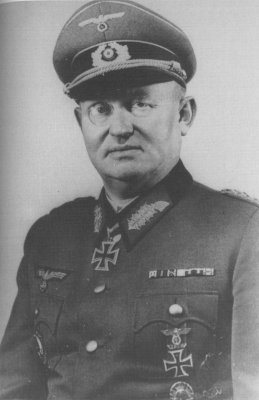
General Der Panzertrüppen Heinrich Freiherr von Lüttwitz

The German forces surrounding the city were commanded by the veteran General Der Panzertrüppen Heinrich Freiherr von Lüttwitz commander of XLVII Panzer Corps.  Lüttwitz believing that resistance was futile sent the following message under a flag of truce to McAuliffe:

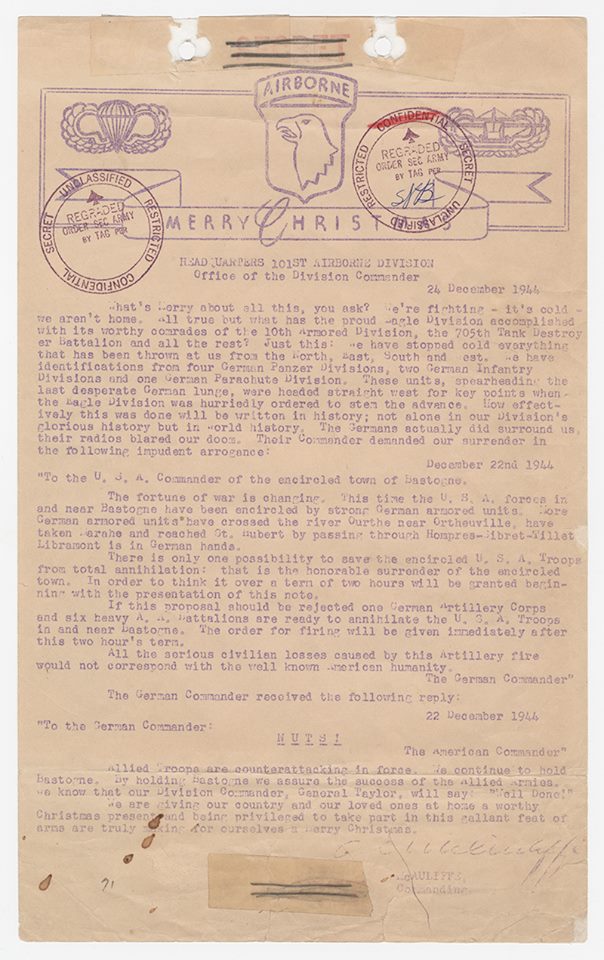
To the U.S.A. Commander of the encircled town of Bastogne.

The fortune of war is changing. This time the U.S.A. forces in and near Bastogne have been encircled by strong German armored units. More German armored units have crossed the river Our near Ortheuville, have taken Marche and reached St. Hubert by passing through Hompre-Sibret-Tillet. Libramont is in German hands.

There is only one possibility to save the encircled U.S.A. troops from total annihilation: that is the honorable surrender of the encircled town. In order to think it over a term of two hours will be granted beginning with the presentation of this note.

If this proposal should be rejected one German Artillery Corps and six heavy A. A. Battalions are ready to annihilate the U.S.A. troops in and near Bastogne. The order for firing will be given immediately after this two hours term.

All the serious civilian losses caused by this artillery fire would not correspond with the well-known American humanity.

The German Commander

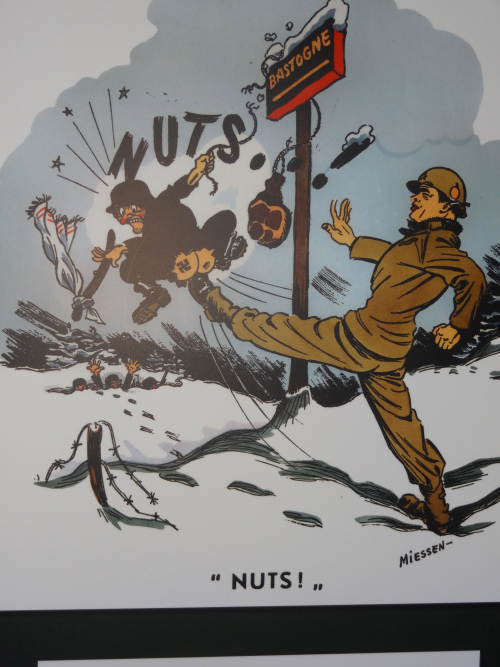
McAuliffe’s response has become one of the immortal responses to a surrender demand in military history. According to staff members present when he received Lüttwitz’s note he simple said “nuts.” One of his staff officers suggested that he use “nuts” as his official reply to Lüttwitz and the following reply was typed:

To the German Commander

NUTS!

The American Commander

The reply was delivered by the commander of the 327th Glider Infantry Regiment Lieutenant Colonel Joseph Harper and his S-3 Major Alvin Jones. When Harper delivered the message he told the German delegation that in “plain English” it meant “Go to hell.” The scene has been immortalized on film in the movie The Battle of the Bulge http://www.youtube.com/watch?v=73OiRZf7DsM

dsc00072a

The garrison held out until it was relieved on December 26th by the 4th Armored Division of General George Patton’s 3rd Army.  Despite that the situation remained tenuous and the town was the scene of much hard fighting over the next two weeks.

1901879_10153009725477994_814138470181390794_n

McAuliffe’s Christmas Message to his Soldiers

McAuliffe went on to command the 103rd Infantry Division by the end of the war.  He returned to Europe as Commander of 7th Army in 1953 and U.S. Army Europe in 1955. He retired in 1956 with the rank of General.  He died in 1975 at the age of 77. His adversary Von Lüttwitz died at the age of 72 in 1969.

As we remain engaged in the current war it is always worth our time to remember the heroism, courage and faith of those that served before us.

Peace

Padre Steve+

Post Script: To read more about the Battle of the Bulge on this site go to Wacht am Rhein: The Battle of the Bulge

Leave a comment

Filed under History, leadership, Military, world war two in europe

Christmas 2007 in Anbar: My Last Mass to Love…

lastmass

“It’s my last mass, my last mass to love…”

It’s funny how a slight twisting of the lyrics of a classic Disco song can blend with one’s wartime experience, instead of my last dance, it was my last mass, to love….

I was in Iraq in December 2007 on an 11 day expedition to American advisors to Iraqi Army and Border units in Al Anbar Province toward the end of my tour in Iraq. The mission was to provide chaplain support and spiritual succor to the American soldiers, marines, sailors, airmen and civilians, as well as the Iraqi and other Arab interpreters and contractors serving in incredibly isolated parts of the province near the Syrian border.

For me it was one of the last magical times in my life. I was exhausted and already suffering from insomnia and nightmares caused by PTSD that I was unaware of having, but while I was there that didn’t matter, in fact if I would have been allowed to extend in Iraq back then I would have. It was my life and the men and women that I served mattered more to me than anything. It still does…

copsouth

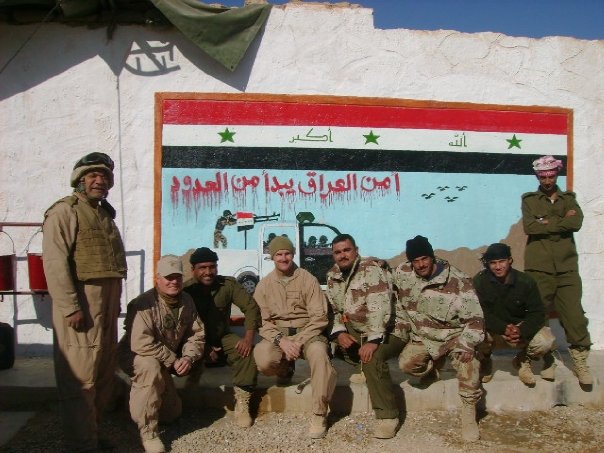
COP South

After a number of visits with other elements we traveled out to a small base near the Syrian border called COP South. It was the location of two teams of advisors, one which supported elements of the Second Border Brigade and one which supported the 3rd Battalion of the 3rd Brigade of the 7th Iraqi Army Division. We were not strangers to either team. Following the vista there we made our way to COP North, also along the Syrian border to do the same for two other advisor teams, one supporting a different Border unit and and the 2nd battalion of the 3rd Brigade of the 7th Division.

10400534_29132407058_7347_n

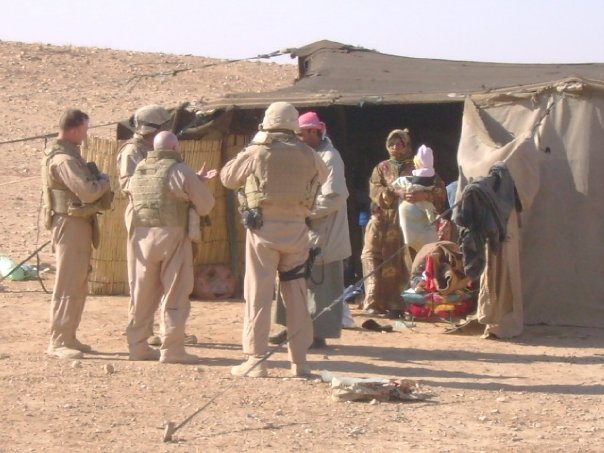
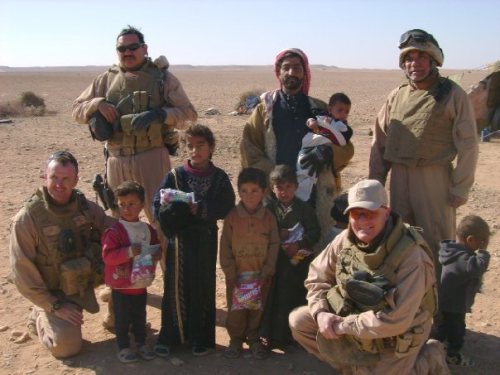
With the Bedouin on the Border, I’m the bald guy without the helmet. 

These outposts were terribly isolated. The men who served there served in incredibly austere conditions where danger lurked just beyond the sand berms that were the boundaries between them and the Islamist extremists of Al Qaeda Iraq and their supporters. The berms were not much comfort to anyone on either of the two most west most COPs in theater. Just to the west was Syria, a haven and support to the Al Qaeda Iraq insurgents and their supporters. All around were Iraqi Sunnis who many only recently had changed their allegiance to support the Americans against the largely foreign AQI forces.

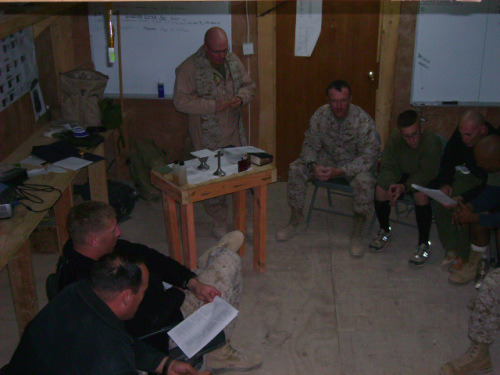
The men that I served were not a typical congregation that you would find in the states. Methodists, Baptists, Presbyterians, Charismatics, Catholics, non-denominational types, Latter Day Saints and even a few Iraqi Christians, some who had not received Eucharist from any priest for years gathered for mass at COP South and COP North that Christmas of 2007. Iraqi Moslems wished us well. Peace on earth in the midst of war.

lastmass2

At Border Fort Five on the Syrian Border

As I mentioned I was exhausted. We had been on the road, flying and in small convoys of just a few vehicles since we arrived in theater, I was also on my last legs. I had stood with and stayed with the wounded, I had seen the destruction wrought on Iraqi facilities and people by both sides. All that mattered was to get out with the men and women who had no other formal spiritual support. I would have stayed another year to provide that support, but I knew that would not happen.

When they were done and we headed back to Ta’Qaddum, the base that we operated from I realized that the support we had provided was the high point of my military Chaplain career as well as my priesthood. Instead of my “last dance” as Dona Summer’s song said, it was my “last mass” to love.

Since then things have not been the same for me. I have talked and written about this before on this site, but those masses with those small groups of Americans and Iraqis meant more to me than any I have ever celebrated, especially those after my return from Iraq in 2008. For me, the magic and mystery have disappeared. I struggle with faith and belief even as I chose to believe in spite of my doubts.

There are times I wonder if it would have been better to have been killed by a rocket, an IED, an ambush or to have been shot down in Iraq, rather than to have to deal with this seemingly endless crisis of faith and to inflict my shit on those that I love. But then such is life and such is war.

Honestly I have to say that I believe again, but I am not sure why. I have to say that while I believe my doubts encompass me.

Christmas will never be the same for me. Yes, I have celebrated man masses since I returned, but to quote the Barry Manilow song, I’m “trying to get the feeling again” and sadly, despite my efforts I don’t think that will ever happen. If it does I will rejoice. If it doesn’t I will persevere just hoping and praying that feelings and facts matter less than faith and doing the best that I can.

Anyway. I am tired and just hoping that this Christmas will be different and that maybe I will get that feeling again, if not now, maybe someday….

Peace

Padre Steve+


Leave a comment

Filed under christian life, faith, iraq,afghanistan, Military, ministry, Pastoral Care, Religion, Tour in Iraq

I Belong Here With Those in Pain and Who Have Lost Their Faith

iraqchristmas

Christmas Eve at COP South 2007, the Most Important Mass of My Life

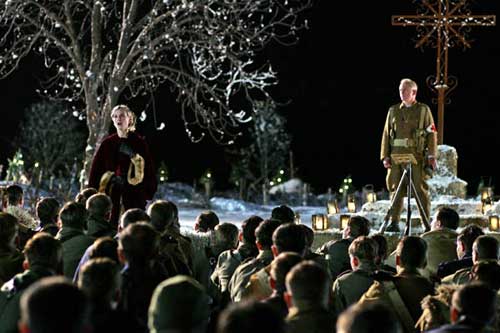
“I belong with those who are in pain, and who have lost their faith, I belong here.” Father Palmer, the Chaplain in Joyeux Noel (Merry Christmas)

In the next day or two, certainly by Christmas I will again watch the film classic Joyeux Noel (Merry Christmas) which is the story of the amazing and exceptional Christmas Truce of 1914. It is a film that each time I see it that I discover something new, more powerful than the last time I viewed it. I will also be writing about Christmas from my perspective as a combat veteran and giving voice to those who serve now, as well as those who served God’s people in hellish places before me.

As a Chaplain I am drawn to the actions of the British Padre in the film, who during the truce conducts a Mass for all the soldiers, British, French and German in no-man’s land, who goes about caring for the soldiers both the living and the dead.  His actions are contrasted with his Bishop who comes to relieve him of his duties and to urge on the replacement soldiers to better kill the Germans.

palmer

Father Palmer Tending the Wounded

As the Chaplain begins to provide the last Rites to a dying soldier the Bishop walks in, in full purple cassock frock coat and hat and the chaplain looks up and kisses his ring.

As the chaplain looks at his clerical superior there is a silence and the Bishop looks sternly at the priest and addresses him:

“You’re being sent back to your parish in Scotland. I’ve brought you your marching orders.”

Stunned the Priest replies: “I belong with those who are in pain, and who have lost their faith, I belong here.”

The Bishop then sternly lectures the Priest: “I am very disappointed you know. When you requested permission to accompany the recruits from your parish I personally vouched for you. But then when I heard what happened I prayed for you.”

The Priest humbly and respectfully yet with conviction responds to his superior: “I sincerely believe that our Lord Jesus Christ guided me in what was the most important Mass of my life. I tried to be true to his trust and carry his message to all, whoever they may be.”

The Bishop seems a bit taken aback but then blames the Chaplain for what will next happen to the Soldiers that he has served with in the trenches: “Those men who listened to you on Christmas Eve will very soon bitterly regret it; because in a few days time their regiment is to be disbanded by the order of His Majesty the King. Where will those poor boys end up on the front line now? And what will their families think?”

They are interrupted when a soldier walks in to let the Bishop know that the new soldiers are ready for his sermon. After acknowledging the messenger the Bishop continues: “They’re waiting for me to preach a sermon to those who are replacing those who went astray with you.” He gets ready to depart and continues: “May our Lord Jesus Christ guide your steps back to the straight and narrow path.”

The Priest looks at him and asks: “Is that truly the path of our Lord?”

The Bishop looks at the Priest and asks what I think is the most troubling question: “You’re not asking the right question. Think on this: are you really suitable to remain with us in the house of Our Lord?”

With that the Bishop leaves and goes on to preach. The words of the sermon are from a 1915 sermon preached by an Anglican Bishop in Westminster Abbey. They reflect the poisonous aspects of many religious leaders on all sides of the Great War, but also many religious leaders of various faiths even today, sadly I have to say Christian leaders are among the worst when it comes to inciting violence against those that they perceive as enemies of the Church, their nation or in some cases their political faction within a country.

bishop

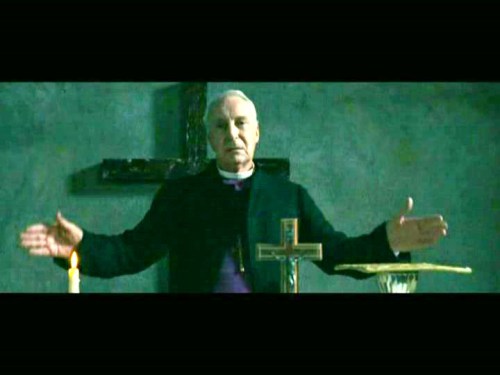
The Bishop Leads His “Service” 

http://www.youtube.com/watch?v=fMPxjUE40iw

“Christ our Lord said, “Think not that I come to bring peace on earth. I come not to bring peace, but a sword.” The Gospel according to St. Matthew. Well, my brethren, the sword of the Lord is in your hands. You are the very defenders of civilization itself. The forces of good against the forces of evil. For this war is indeed a crusade! A holy war to save the freedom of the world. In truth I tell you: the Germans do not act like us, neither do they think like us, for they are not, like us, children of God. Are those who shell cities populated only by civilians the children of God? Are those who advanced armed hiding behind women and children the children of God? With God’s help, you must kill the Germans, good or bad, young or old. Kill every one of them so that it won’t have to be done again.”

The sermon is chilling and had it not been edited by the director would have contained the remark actually said by the real Bishop that the Germans “crucified babies on Christmas.”  Of course that was typical of the propaganda of the time and similar to things that religious leaders of all faiths use to demonize their opponents and stir up violence in the name of their God.

When the Bishop leaves the Priest finishes his ministration to the wounded while listening to the words of the Bishop who is preaching not far away in the trenches. He meditates upon his simple cross, takes it off, kisses it hand hangs it upon a tripod where a container of water hangs.

The scene is chilling for a number of reasons. First is the obvious, the actions of a religious leader to denigrate the efforts of some to bring the Gospel of Peace into the abyss of Hell of earth and then to incite others to violence dehumanizing the enemy forces. The second and possibly even more troubling is to suggest that those who do not support dehumanizing and exterminating the enemy are not suitable to remain in the house of the Lord. Since I have had people, some in person and others on social media say similar things to what the Bishop asks Palmer the scene hits close to home.

iraq-bedouin1

Christmas Eve 2007 with the Bedouin 

When I left Iraq in February 2008 I felt that I was abandoning those committed to my spiritual care, but my time was up. Because of it I missed going with some of my advisors to Basra with the 1st Iraqi Division to retake that city from insurgents. It was only a bit over a month after I had celebrated what I consider to be my most important Masses of my life at COP South and COP North on December 23rd as well as Christmas Eve and Christmas Day. In fact they were really the last masses that I felt the mystery and awe of the love of God that I used to so much feel.

When I left the new incoming senior Chaplain refused to take my replacement leaving our advisors without dedicated support. He then slandered me behind my back because what I was doing was not how he would do things and because I and my relief were under someone else’s operational control. It is funny how word gets back to you when people talk behind your back. Thankfully he is now retired from the Navy and I feel for any ministers of his denomination under his “spiritual” care.  So I cannot forget those days and every time I think about them, especially around Christmas I am somewhat melancholy and why I can relate so much to Father Palmer in the movie.

It has been seven years since those Christmas Masses and they still feel like yesterday. In the intervening years my life has been different. Just a year later I was walking home from church where my wife was to sing in the choir during the Christmas vigil mass. I couldn’t handle the crowds, the noise, and I felt so far away from God. That night I walked home in the dark looking up into the sky asking God if he still was there. If there had been a bar on the way home I would have stopped by and poured myself in.

Since Iraq I have dealt with Severe and Chronic PTSD, depression, anxiety and insomnia were coupled with a two year period where due to my struggles I lost faith, was for all practical purposes an agnostic. I felt abandoned by God, but even more so and maybe more importantly by my former church and most other Chaplains. It was like being radioactive, there was and is a stigma for Chaplains that admits to PTSD and go through a faith crisis, especially from other Chaplains and Clergy.  It was just before Christmas in late 2009 that faith began to return in what I call my Christmas Miracle. But be sure, let no one tell you differently, no Soldier, Sailor, Marine or Airman who has suffered the trauma of war and admitted to PTSD does not feel the stigma that goes with it, and sadly, despite the best efforts of many there is a stigma.

Now that faith is different and I have become much more skeptical of the motivations of religious leaders, especially those that demonize and dehumanize those that do not believe like them or fully support their cause or agenda. Unfortunately there are far too many men and women who will use religion to do that, far too many.

As for me, I thought that I was in a better place a year ago. I had the floor kicked from out from under me this summer and it has been a hard fight and while I am beginning to get back to some sense of normal it is a day to day thing. I still suffer the effects of the PTSD, especially the insomnia, nightmares and the nightmares which came back with a vengeance this summer. I also still have the anxiety in crowded places and bad traffic, but working with my new therapist I am coming up with some effective coping mechanisms. As for faith, I do believe again, though at the same time I doubt. I would have to consider myself a Christian Agnostic who echoes the cry of the man who cried out to Jesus, “Lord I believe, help my unbelief!” 

Like the Priest in Joyeux Noel I know that my place is with those who are “in pain, and who have lost their faith.” For me this may no longer be on the battlefield as I will retire from the Navy out of my current billet teaching at the Joint Forces Staff College in a couple of years. However, that being said I will strive to be there for those that struggle with faith and believe, especially those who struggle because of what they saw and experienced during war and when they returned home.

3670064wxkyb

Joyeux Noel Christmas Eve

Likewise I expect that I will do my best to speak truth to those in power and those whose faithfulness is more a product of their comfort with the God that they create in their own mind rather than the Crucified God wise death on the Cross s a scandal. For many Christians the scandal of the cross is too easy to avoid by surrounding ourselves with pet theologies that appeal to our pride, prejudice and power. The kind of malevolent power represented by the bishop in Joyeux Noel. Thus I take a measure of comfort in the words of Simone Weil who said “He who has not God in himself cannot feel His absence.” 

Thus, like Paul Tillich I have come to believe that “Sometimes I think it is my mission to bring faith to the faithless, and doubt to the faithful.”  In other words to become a complete pain in the ass until the day that I die.

Praying for Peace this Christmas,

Padre Steve+

1 Comment

Filed under christian life, faith, film, History, Military, PTSD, Tour in Iraq, world war one

Mine Eyes Have Seen the Glory: Religion, Ideology and the Civil War Part 3

Friends of Padre Steve’s World

This is the final installment `of a very long chapter in my Gettysburg Staff Ride Text. The chapter is different because instead of simply studying the battle my students also get some very detailed history about the ideological components of war that helped make the American Civil War not only a definitive event in our history; but a war of utmost brutality in which religion drove people and leaders on both sides to advocate not just defeating their opponent, but exterminating them.

But the study of this religious and ideological war is timeless, for it helps us to understand the ideology of current rivals and opponents, some of whom we are in engaged in battle and others who we spar with by other means, nations, tribes and peoples whose world view, and response to the United States and the West, is dictated by their religion. 

Yet for those more interested in current American political and social issues the period is very instructive, for the religious, ideological and political arguments used by Evangelical Christians in the ante-bellum period, as well as many of the attitudes displayed by Christians in the North and the South are still on display in our current political and social debates. 

I probably will write something using some of these ideas in a contemporary setting tomorrow….

Peace

Padre Steve+
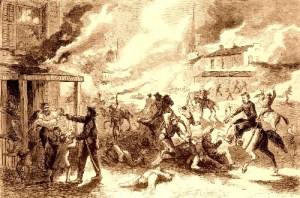
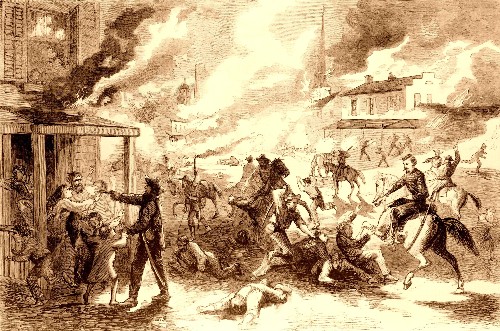
LawrenceDestruction-500

The Attack on Lawrence Kansas 

The Bloody Battle for Kansas

The struggle between the rival factions in Kansas increased in intensity as Free states and slave states alike poured in settlers and resources to control the territory. However, by the fall of 1855 it appeared that the free-state forces were gaining strength and now enjoyed a numerical superiority to the slave state supporters. That changed when President Franklin Pierce “gave official recognition to a territorial government dominated by proslavery forces- a government that decreed the laws of Missouri in force in Kansas as well.” [1]

That government decreed that:

“Public office and jury service were restricted to those with demonstrably proslavery options. Publicly to deny the right to hold slaves became punishable by five year’s imprisonment. To assist fugitive slaves risked a ten-year sentence. The penalty for inciting slave rebellion was death.” [2]

Rich Southerners recruited poor whites to fight their battles to promote the institution of slavery. Jefferson Buford of Alabama recruited hundreds of non-slaveholding whites to move to Kansas. Buford claimed to defend “the supremacy of the white race” he called Kansas “our great outpost” and warned that “a people who would not defend their outposts had already succumbed to the invader.” [3]

To this end he and 415 volunteers went to Kansas, where they gained renown and infamy as members of “Buford’s Cavalry.” The day they left Montgomery they were given a sendoff. Each received a Bible, and the “holy soldiers elected Buford as their general. Then they paraded onto the steamship Messenger, waving banners conveying Buford’s twin messages: “The Supremacy of the White Race” and “Kansas the Outpost.” [4] His effort ultimately failed but he had proved that “Southern poor men would kill Yankees to keep blacks ground under.” [5]

By the end of 1855 the free-state citizens had established their own rival government which provoked proslavery settlers who “bolstered by additional reinforcements from Missouri invaded the free-state settlement of Lawrence, destroyed its two newspapers, and demolished or looted nearby homes and businesses.” [6] Federal troops stationed in Lawrence “stood idly by because they had received no orders from the inert Pierce administration.” [7]

In response Senator Charles Sumner of Massachusetts began a two day speech on the Senate floor known as “The Crime Against Kansas” in which he condemned the assault on Lawrence which he described as “the anteroom to civil war.” [8] Sumner’s speech was a clarion call to partisans on both sides regarding the serious nature of what had taken place in Lawrence and it burst like a bombshell in the hallowed halls of the Senate. Sumner proclaimed “Murderous robbers from Missouri…hirelings picked from the drunken spew and vomit of an uneasy civilization” [9] had committed:

“The rape of a virgin Territory, compelling it to the hateful embrace of Slavery; and it may clearly be traced to a depraved longing for a new slave State, the hideous offspring of such a crime, in the hope of adding to the power of Slavery in the National Government.” [10]

Sumner painted an even bleaker picture of the meaning what he believed was to come noting that the rape” of Lawrence was the evidence that:

“The horrors of intestine feud” were being planned “not only in this distant Territory, but everywhere throughout the country. Already the muster has begun. The strife is no longer local, but national. Even now while I speak, portents hang on all the arches of the horizon, threatening to darken the land, which already yawns with, the mutterings of civil war.” [11]

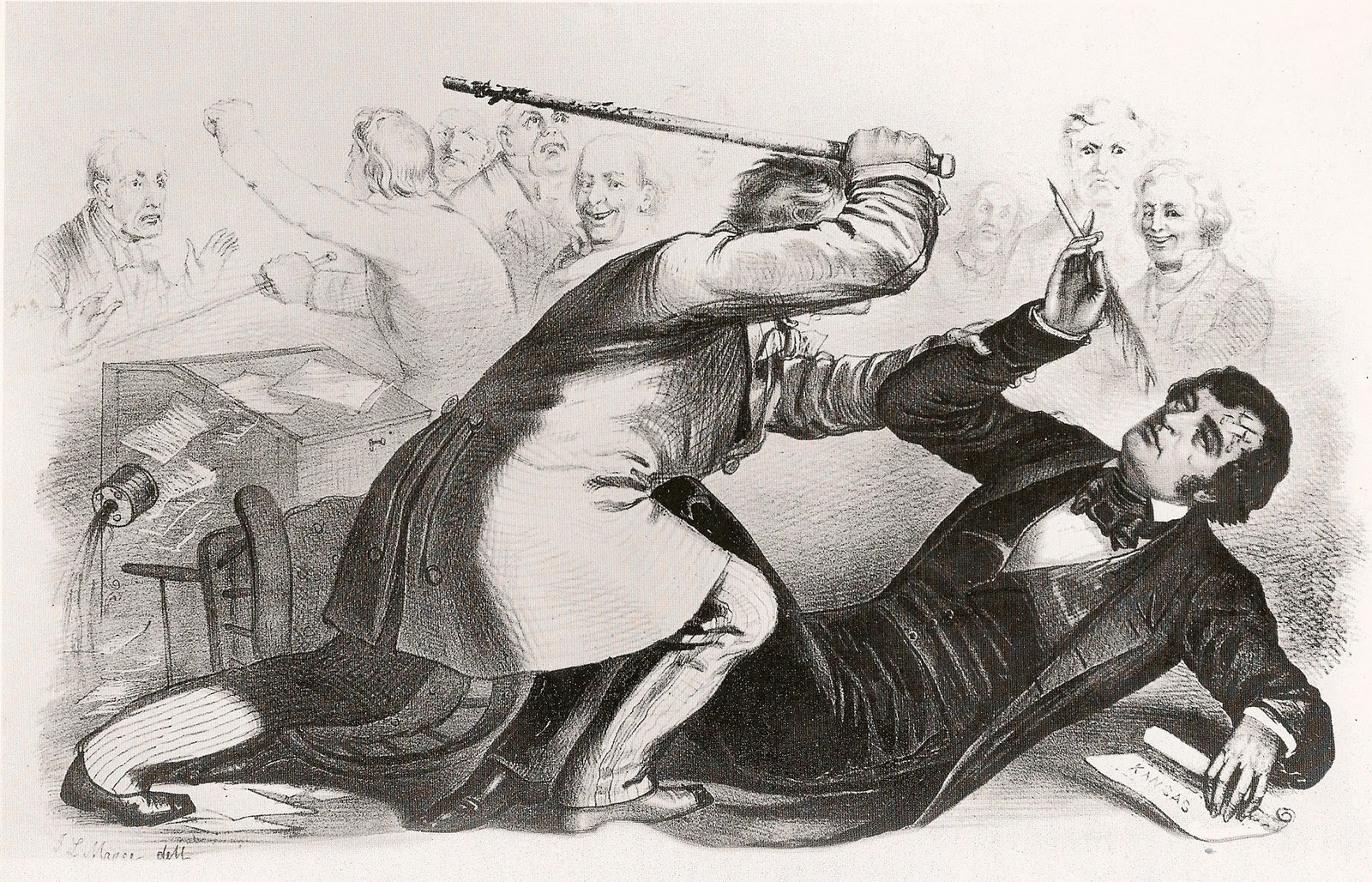
Caning-of-Charles-Sumner

Representative Preston Brooks attacks Senator Charles Sumner in the Senate Chamber 

The effects of Sumner’s speech were equally dramatic, partially because he also personally insulted a number of influential Southern Senators while making it. Two days after the speech, while sitting at his desk in a nearly deserted Senate floor, Sumner was attacked by South Carolina representative Preston Brooks, who was related to one of the men, Senator Andrew P. Butler, who Sumner had insulted in his “Crime against Kansas” speech.

Northern extremists were also at work in Kansas carrying on their own holy war against supporters of slavery. One was John Brown who wrote:

“I rode into Kansas territory in eighteen and fifty-five in a one-horse wagon filled with revolvers, rifles, powder, and two-edged artillery broadswords. I expected war to break out between the free-state forces and the Border Ruffians, and I was ready to buckle on my armor and give battle…

In John Brown Jr.’s words I heard the thundering voice of Jehovah exhorting me to slaughter the Border Ruffians as He’s called Gideon to slay the Midianites. Yes, my greatest or principle object – eternal war against slavery – was to be carried out in Kansas Territory. Praise be God!…” [12]

986024510

John Brown’s Pottawatomie Massacre

Following the attack by the Border Ruffians on Lawrence Kansas, Brown and his company of volunteers went into action against a pro-slavery family at the settlement of Pottawatomie Creek. Brown and his sons attacked the family in their cabin, “dragged three men outside, shot the father through the head, and hacked his two sons with broadswords. Ritual murders.” [13] But Brown was not done; he went to two more cabins hacking his victims to death with the broadswords. Brown wrote:

“On the way back to camp, I was transfixed. The proslavery Philistines had murdered five or six free-state men in the great struggle for the soul of Kansas. Now we had got five of them. God alone is my judge. His will be done.” [14]

The issue in Kansas remained bloody and full of political intrigue. Free-state settlers and proslavery elements battled for the control of the territory. “Throughout the summer and early fall of 1856, armies marched and counter-marched, threatening one another with blood-curdling threats, terrorizing peaceably inclined settlers, committing depredations upon those who could not defend themselves, and killing with enough frequency to give validity to the term “Bleeding Kansas.” [15]

The political battle centered on the Lecompton Constitution which allowed slavery, but which had been rejected by a sizable majority of Kansas residents. The divide was so deep and contentious that that Kansas would not be admitted to the Union until after the secession of the Deep South. But the issue had galvanized the political parties of the North, and for the first time a coalition of “Republicans and anti-Lecompton Douglas Democrats, Congress had barely turned back a gigantic Slave Power Conspiracy to bend white men’s majoritarianism to slavemaster’s dictatorial needs, first in Kansas, then in Congress.” [16]

Attempts to Expand Slavery into the Territories and Beyond
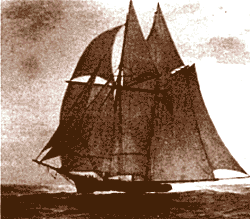
thewanderer_lastslaveship

The Last Slave Ship, the Schooner Wanderer 

Taking advantage of the judicial ruling Davis and his supporters in Congress began to bring about legislation not just to ensure that Congress could not “exclude slavery” but to protect it in all places and all times. They sought a statute that would explicitly guarantee “that slave owners and their property would be unmolested in all Federal territories.” This was commonly known in the south as the doctrine of positive protection, designed to “prevent a free-soil majority in a territory from taking hostile action against a slave holding minority in their midst.” [17]

Other extremists in the Deep South had been long clamoring for the reopening of the African slave trade. In 1856 a delegate at the 1856 commercial convention insisted that “we are entitled to demand the opening of this trade from an industrial, political, and constitutional consideration….With cheap negroes we could set hostile legislation at defiance. The slave population after supplying the states would overflow to the territories, and nothing could control its natural expansion.” [18] and in 1858 the “Southern Commercial Convention…” declared that “all laws, State and Federal, prohibiting the African slave trade, out to be repealed.” [19] The extremists knowing that such legislation would not pass in Congress then pushed harder; instead of words they took action.

In 1858 there took place two incidents that brought this to the fore of political debate. The schooner Wanderer owned by Charles Lamar successfully delivered a cargo of four hundred slaves to Jekyll Island, earning him “a large profit.” [20] Then the USS Dolphin captured “the slaver Echo off Cuba and brought 314 Africans to the Charleston federal jail.” [21] The case was brought to a grand jury who had first indicted Lamar were so vilified that “they published a bizarre recantation of their action and advocated the repeal of the 1807 law prohibiting the slave trade. “Longer to yield to a sickly sentiment of pretended philanthropy and diseased mental aberration of “higher law” fanatics…” [22] Thus in both cases juries and judges refused to indict or convict those responsible.

Evangelical supporters of the efforts to re-open the slave trade argued that if the slave trade was re-opened under “Christian slaveholders instead of course Yankees scrupulously conducting the traffic, the trade would feature fair transactions in Africa, healthy conditions on ships, and Christian salvation in America.” [23]

There arose in the 1850s a second extremist movement in the Deep South, this one which had at its heart the mission to re-enslave free blacks. This effort was not limited to fanatics, but entered the Southern political mainstream, to the point that numerous state legislatures were nearly captured by majorities favoring such action. [24] That movement which had appeared out of nowhere soon fizzled, as did the bid to reopen the slave trade, but these “frustrations left extremists the more on the hunt for a final solution” [25] which would ultimately be found in secession.

Secession and war was now on the horizon, and despite well-meaning efforts of some politicians on both sides to find a way around it, it would come. Religion had been at the heart of most of the ideological debates of the preceding quarter century, and Evangelical Protestants on both sides had not failed to prevent the war; to the contrary those Evangelical leaders were instrumental in bringing it about as they:

“fueled the passions for a dramatic solution to transcendent moral questions. Evangelical religion did not prepare either side for the carnage, and its explanations seemed less relevant as the war continued. The Civil War destroyed the Old South civilization resting on slavery; it also discredited evangelical Protestantism as the ultimate arbiter of public policy.” [26]

The Battle Lines Solidify: A House Divided

don1-023

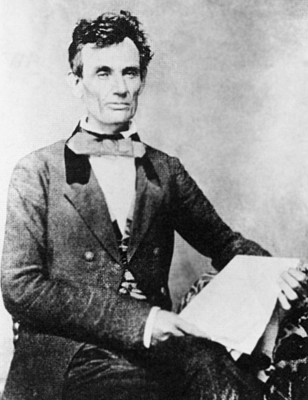
Abraham Lincoln in 1856

Previously a man of moderation Lincoln laid out his views in the starkest terms in his House Divided speech given on June 16th 1858. Lincoln understood, possibly with more clarity than others of his time that the divide over slavery was too deep and that the country could not continue to exist while two separate systems contended with one another. Lincoln for his part was a gradualist and moderate approach to ending slavery in order to preserve the Union. However, Lincoln, like Davis, though professed moderates had allowed “their language to take on an uncompromising quality,” and because the mood of the country was such that neither man “could regard a retreat from his particular position as surrender- hence there could be no retreat at all.” [27]

The Union Lincoln “would fight to preserve was not a bundle of compromises that secured the vital interests of both slave states and free, …but rather, the nation- the single, united, free people- Jefferson and his fellow Revolutionaries supposedly had conceived and whose fundamental principles were now being compromised.” [28] He was to the point and said in clear terms what few had ever said before, in language which even some in his own Republican Party did not want to use because they felt it was too divisive:

“If we could first know where we are and whither we are tending, we could better judge what to do and how to do it. We are now far into the fifth year since a policy was initiated with the avowed object and confident promise of putting an end to slavery agitation. Under the operation of that policy, that agitation has not only not ceased but has constantly augmented. In my opinion, it will not cease until a crisis shall have been reached and passed. “A house divided against itself cannot stand.” I believe this government cannot endure, permanently, half slave and half free. I do not expect the Union to be dissolved; I do not expect the house to fall; but I do expect it will cease to be divided. It will become all one thing, or all the other. Either the opponents of slavery will arrest the further spread of it and place it where the public mind shall rest in the belief that it is in the course of ultimate extinction, or its advocates will push it forward till it shall become alike lawful in all the states, old as well as new, North as well as South.” [29]

Part of the divide was rooted in how each side understood the Constitution. For the South it was a compact among the various states, or rather “only a league of quasi independent states that could be terminated at will” [30] and in their interpretation States Rights was central. In fact “so long as Southerners continued to believe that northern anti-slavery attacks constituted a real and present danger to Southern life and property, then disunion could not be ruled out as an ugly last resort.” [31]

But such was not the view in the North, “for devout Unionists, the Constitution had been framed by the people rather than created as a compact among the states. It formed a government, as President Andrew Jackson insisted of the early 1830s, “in which all the people are represented, which operates directly on the people individually, not upon the States.” [32] Lincoln like many in the North understood the Union that “had a transcendent, mystical quality as the object of their patriotic devotion and civil religion.” [33]

Lincoln’s beliefs can be seen in the Gettysburg Address where he began his speech with the words “Four score and seven years ago our fathers brought forth on this continent, a new nation, conceived in Liberty, and dedicated to the proposition that all men are created equal…” To Lincoln and others the word disunion “evoked a chilling scenario within which the Founders’ carefully constructed representative government failed, triggering “a nightmare, a tragic cataclysm” that would subject Americans to the kind of fear and misery that seemed to pervade the rest of the world.” [34]

Those same beliefs were found throughout the leaders of the Abolition movement, including Theodore Parker who said “The first [step] is to establish Slavery in all of the Northern States- the Dred Scott decision has already put it in all the territories….I have no doubt The Supreme Court will make the [subsequent] decisions.[35]

Even in the South there was a desire for the Union and a fear over its dissolution, even among those officers like Robert E. Lee who would resign his commission and take up arms against the Union in defense of his native state. Lee wrote to his son Custis in January 1861, “I can anticipate no greater calamity for the country than the dissolution of the Union…I am willing to sacrifice everything but honor for its preservation…Secession is nothing but revolution.” But he added “A Union that can only be maintained by swords and bayonets has no charms for me….” [36] The difference between Lee and others like him and Abraham Lincoln was how they viewed the Union, views which were fundamentally opposed.

Alexander Stephens who became the Confederate Vice President was not at all in favor of disunion. A strict constructionist who believed fervently in state’s rights he believed the South was best served to remain in the Union. As the divide grew he remarked “that the men who were working for secession were driven by envy, hate jealousy, spite- “these made war in heaven, which made devils of angels, and of the same passions will make devils of men. Patriotism in my opinion, had no more to do with it than love of God had to do with the other revolt.” [37]
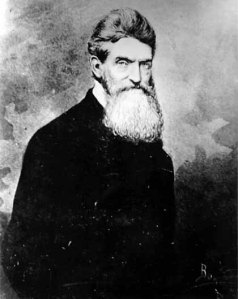
jb_portrait

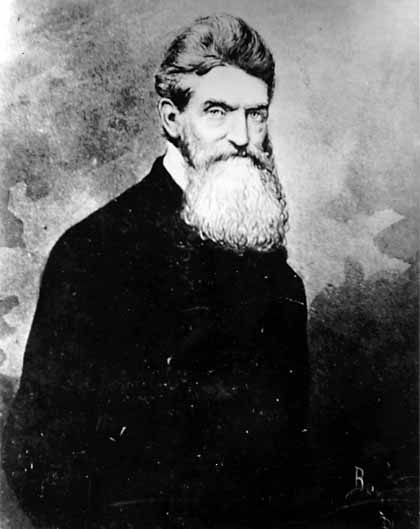
John Brown

In the North there too existed an element of fanaticism. While “the restraining hand of churches, political parties and familial concerns bounded other antislavery warriors,” [38] and while most abolitionists tried to remain in the mainstream and work through legislation and moral persuasion to halt the expansion of slavery with the ultimate goal of emancipation; there were fanatical abolitionists that were willing to attempt to ignite the spark which would cause the powder keg of raw hatred and emotion to explode.

Most prominent among these men was John Brown. Brown was a “Connecticut-born abolitionist…a man with the selfless benevolence of the evangelicals wrought into a fiery determination to crush slavery” [39] who as early as 1834 was “an ardent sympathizer the Negroes” desiring to raise a black child in his own home and to “offering guidance to a colony of Negroes on the farm of the wealthy abolitionist Gerrit Smith at North Elba New York.” [40] Brown regarded moderate free-staters with distain and in Kansas set about to change the equation when he and a company of his marauders set upon and slaughtered the family of a pro-slavery settler at Pottawatomie Creek. [41]

The example of John Brown provides us a good example to understand religious extremism, especially when it becomes violent. The counterinsurgency field manual notes in words that are certainly as applicable to Brown as they are to current religiously motivated terrorists that “Religious extremist insurgents….frequently hold an all-encompassing worldview; they are ideologically rigid and uncompromising…. believing themselves to be ideologically pure, violent religious extremists brand those they consider insufficiently orthodox as enemies.”[42] 

Brown was certainly “a religious zealot…but was nevertheless every much the product of his time and place….” [43] Brown was a veteran of the violent battles in Kansas where he had earned the reputation as “the apostle of the sword of Gideon” as he and his men battled pro-slavery settlers. Brown was possessed by the belief that God had appointed him as “God’s warrior against slaveholders.” [44] He despised the peaceful abolitionists and demanded action. “Brave, unshaken by doubt, willing to shed blood unflinchingly and to die for his cause if necessary, Brown was the perfect man to light the tinder of civil war in America, which was what he intended to do.” [45] Brown told William Lloyd Garrison and other abolitionist leaders after hearing Garrison’s pleas for peaceful abolition that:

“We’ve reached a point,” I said, “where nothing but war can get rid of slavery in this guilty nation. It’s better that a whole generation of men, women, and children should pass away by a violent death than that slavery should continue to exist.” I meant that literally, every word of it.” [46]

Following that meeting, as well as a meeting with Frederick Douglass who rejected Brown’s planned violent action, Brown went about collecting recruits for his cause and set out to seize 10,000 muskets at the Federal armory in Harper’s Ferry Virginia in order to ignite a slave revolt. Brown and twenty-one followers, sixteen whites and five blacks moved on the arsenal, as they went Brown:

“believed that we would probably fail at the Ferry, would probably die. But I believed that all we had to do was make the attempt, and Jehovah would do the rest: the Heavens would turn black, the thunder would rend the sky, and a mighty storm would uproot this guilty land, washing its sins away with blood. With God’s help, I, John Brown, would effect a mighty conquest even though it was like the last victory of Samson.” [47] 

82590-004-346616D5

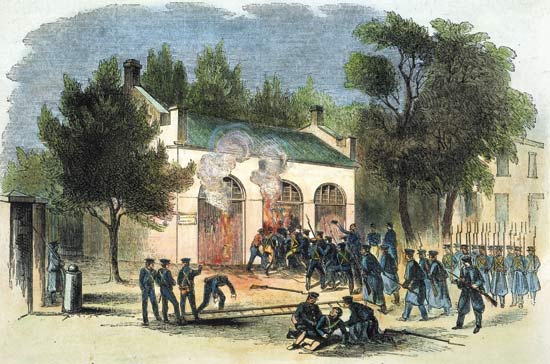
U.S. Marines under Command of Colonel Robert E. Lee storm Harper’s Ferry

After initial success in capturing the armory Brown’s plan was was frustrated and Brown captured, by a force of U.S. Marines led by Colonel Robert E. Lee and Lieutenant J.E.B. Stuart. Brown was tried and hung, but his raid “effectively severed the country into two opposing parts, making it clear to moderates there who were searching for compromise, that northerner’s tolerance for slavery was wearing thin.” [48]

It now did not matter that Brown was captured, tried, convicted and executed for his raid on Harper’s Ferry. He was to be sure was “a half-pathetic, half-mad failure, his raid a crazy, senseless exploit to which only his quiet eloquence during trial and execution lent dignity” [49] but his act was the watershed from which the two sides would not be able to recover, the population on both sides having gone too far down the road to disunion to turn back.

Brown had tremendous support among the New England elites, the “names of Howe, Parker, Emerson and Thoreau among his supporters.” [50] To abolitionists he had become a martyr “but to Frederick Douglass and the negroes of Chatham, Ontario, nearly every one of whom had learned something from personal experience on how to gain freedom, Brown was a man of words trying to be a man of deeds, and they would not follow him. They understood him, as Thoreau and Emerson and Parker never did.” [51]

But to Southerners Brown was the symbol of an existential threat to their way of life. In the North there was a nearly religious wave of sympathy for Brown, and the “spectacle of devout Yankee women actually praying for John Brown, not as a sinner but as saint, of respectable thinkers like Thoreau and Emerson and Longfellow glorifying his martyrdom in Biblical language” [52] horrified Southerners, and drove pro-Union Southern moderates into the secession camp.
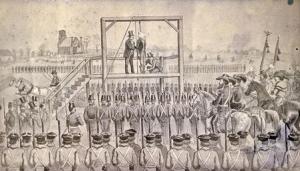
John_Brown_hanging

The Hanging of John Brown 

The day that Brown went to his hanging he wrote his final missive. This was written once more in apocalyptic language, but also in which he portrayed himself as a Christ figure going to his cross on the behalf of a guilty people, but a people who his blood would not atone:

“It’s now December second – the day of my hanging, the day the gallows become my cross. I’m approaching those gallows while sitting on my coffin in the bed of a military wagon. O dear God, my eyes see the glory in every step of the divine journey that brought me here, to stand on that platform, in that field, before all those soldiers of Virginia. Thank you, Father, for allowing an old man like me such might and soul satisfying rewards. I am ready to join thee now in Paradise…

They can put the halter around my neck, pull the hood over my head. Hanging me won’t save them from God’s wrath! I warned the entire country: I, John Brown, am now quite certain that the crimes of this guilty land will never be purged away, but with blood.” [53]

Brown’s composure and dignity during the trial impressed Governor Henry Wise of Virginia who signed Brown’s death warrant and fire eater Edmund Ruffin, and in his diary Ruffin “praised Brown’s “animal courage” and “complete fearlessness & insensibility to danger and death.” [54]

Brown’s death was marked with signs of mourning throughout the North, for Brown was now a martyr. Henry David Thoreau “pronounced Brown “a crucified hero,” [55] while through the North Brown’s death was treated as a martyr’s death. Even abolitionists like Garrison who had condemned violence in the quest of emancipation praised Brown’s actions while throughout the North:

“Church bells tolled, black bunting was hung out, minute guns were fired, prayer meetings assembled, and memorial resolutions adopted. In the weeks following, the emotional outpouring continued: lithographs of Brown circulated in vast numbers, subscriptions were organized for the support of his family, immense memorial meetings took place in New York, Boston and Philadelphia…” [56]

But in the South there was a different understanding. Despite official denunciations of Brown by Lincoln and other Republican leaders, the message was that the North could not be trusted. Brown’s raid, and the reaction of Northerners to it “was seized upon as argument-clinching proof that the North was only awaiting its opportunity to destroy the South by force….” [57]

The Election of Abraham Lincoln

The crisis continued to fester and when Lincoln was elected to the Presidency in November 1860 with no southern states voting Republican the long festering volcano erupted. It did not take long before southern states began to secede from the Union. Alexander Stephens told a friend who asked him “why must we have civil war?”

“Because there are not virtue and patriotism and sense enough left in the country to avoid it. Mark me, when I repeat that in less than twelve months we shall be in the midst of a bloody war. What will become of us then God only knows.” [58]

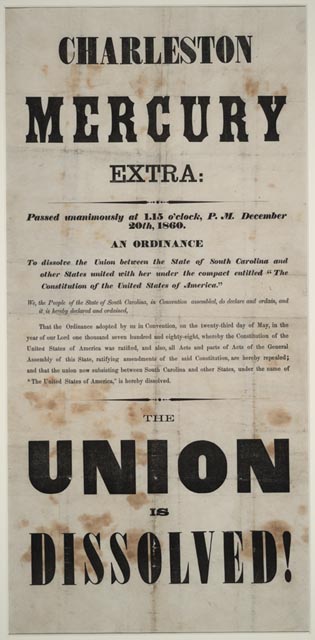
But Stephens’ warning fell on deaf ears as passionate secessionist commissioners went throughout the South spreading their message. South Carolina was the first to secede, followed by Mississippi, Florida, Alabama, Georgia, Louisiana and Texas. Many of the declarations of causes for secession made it clear that slavery was the root cause. The declaration of South Carolina is typical of these and is instructive of the basic root cause of the war:

“all the States north of that line have united in the election of a man to the high office of President of the United States, whose opinions and purposes are hostile to slavery. He is to be entrusted with the administration of the common Government, because he has declared that that “Government cannot endure permanently half slave, half free,” and that the public mind must rest in the belief that slavery is in the course of ultimate extinction.”[59]

Throughout the war slavery loomed large, even though in the beginning of abolition controversies of the 1830s many northerners “were content to tolerate slavery’s indefinite survival in the South so long as it did not impinge on their own rights and aspirations at home.” [60] Such attitudes were still common in the North during the late 1850s, especially among Democrats.

But it was the multiple transgressions of slavery supporters to advance those rights in the courts, through the extension of slavery to the territories, to allow slaveholders to recover their human “property” in northern states during the 1850s taught northerners “just how fundamental and intractable the differences with Southern political leaders were. Thus educated, most northern voters had decided by 1860 that only an explicitly anti-slavery party could protect their interests.” [61]

00035483

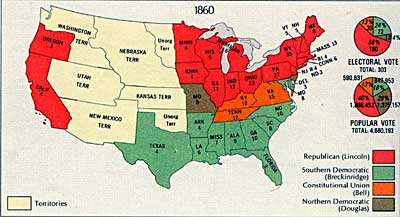
The results of the divide in American politics were such that in the election of 1860 Abraham Lincoln carried all eighteen Free states with a total of “180 electoral votes- 27 more than he needed for victory.” Lincoln had clear majorities in all but three of the states he won and carried 55 percent of the overall vote in the North. [62] Lincoln won no Southern State during the campaign. The election symbolized the extreme polarization of the respective electorates in both the North and the South. The Baptist clergyman James Furman expressed the outrage and paranoia of many in the South by warning after Lincoln’s election “If you are tame enough to submit, Abolition preachers will be at hand to consummate the marriage of your daughters to black husbands.” [63]

William Lloyd Garrison, again using biblical imagery as well as astute analysis of the behavior of Southern leaders after the election of 1860, wrote that the Southern response to Lincoln’s election:

“Never had the truth of the ancient proverb “Whom the gods intend to destroy, they first make mad” been more signally illustrated than in the condition of southern slaveholders following Lincoln’s election. They were insane from their fears, their guilty forebodings, their lust for power and rule, hatred of free institutions, their merited consciousness of merited judgments; so that they may be properly classed as the inmates of a lunatic asylum. Their dread of Mr. Lincoln, of his Administration, of the Republican Party, demonstrated their insanity. In vain did Mr. Lincoln tell them, “I do not stand pledged to the abolition of slavery where it already exists.” They raved just as fiercely as though he were another John Brown, armed for southern invasion and universal emancipation! In vain did the Republican party present one point of antagonism to slavery – to wit, no more territorial expansion. In vain did that party exhibit the utmost caution not to give offense to any other direction – and make itself hoarse in uttering professions of loyalty to the Constitution and the Union. The South protested that it’s designs were infernal, and for them was “sleep no more!” Were these not the signs of a demented people?” [64]

But both sides were blind to their actions and with few exceptions most leaders, especially in the South, badly miscalculated the effects of the election of 1860. The leaders in the North did not realize that the election of Lincoln would mean the secession of one or more Southern states, and Southerners “were not able to see that secession would finally mean war” [65] despite the warnings of Alexander Stephens to the contrary.

The five slave states of the lower South: “appointed commissioners to the other slave states, and instructed them to spread the secessionist message across the entire region. These commissioners often explained in detail why their states were exiting the Union, and they did everything in their power to persuade laggard slave states to join the secessionist cause. From December 1860 to April 1861 they carried the gospel of disunion to the far corners of the South.” [66]
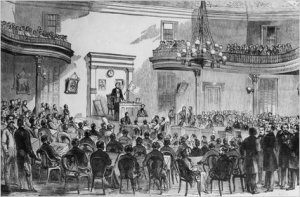
disunion_dec20_secession3-blog427

Secession Convention in Charleston South Carolina 

Slavery and the superiorly of the white race over blacks was at the heart of the message brought by these commissioners to the yet undecided states. Former Congressman John McQueen of South Carolina wrote to secessionists in Virginia “We, of South Carolina, hope to greet you in a Southern Confederacy, where white men shall rule our destinies, and from which we may transmit our posterity the rights, privileges and honor left us by our ancestors.” [67] In Texas McQueen told the Texas Convention: “Lincoln was elected by a sectional vote, whose platform was that of the Black Republican part and whose policy was to be the abolition of slavery upon this continent and the elevation of our own slaves to an equality with ourselves and our children.” [68]

In his First Inaugural Address Lincoln noted: “One section of our country believes slavery is right and ought to be extended, while the other believes it is wrong and ought not to be extended. This is the only substantial dispute.”[69] Of course he was right, and his southern opponents agreed.

As the war began, white Southerners of all types and classes rallied to the call of war against the hated Yankee. The common people, the poor yeomen farmers were often the most stalwart defenders of the South. With the Orwellian slogan “Freedom is not possible without slavery” ringing in their ears, they went to war against the Yankees alongside their slave-owning neighbors to “perpetuate and diffuse the very liberty for which Washington bled, and which the heroes of the Revolution achieved.” [70]
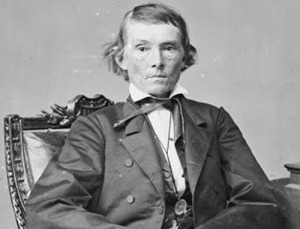
alexander-stephens1

Alexander Stephens

Alexander Stephens the new Vice President of the Confederacy, who had been a devout Unionist and even had a friendly relationship with Lincoln in the months and years leading up to the war explained the foundation of the Southern state in his Cornerstone Speech of March 21st 1861:

Our new government is founded upon exactly the opposite idea; its foundations are laid, its corner- stone rests upon the great truth, that the negro is not equal to the white man; that slavery — subordination to the superior race — is his natural and normal condition. [Applause.] This, our new government, is the first, in the history of the world, based upon this great physical, philosophical, and moral truth.”[71]

Thus the American ideological war was born; it had taken decades to reach the point of no return. It had taken years of frustration, attempts at compromise by politicians who attempted to dodge the moral issues inherent in slavery. Time could not heal the wounds caused by slavery as long as “one section of the country regarded it as a blessing, the other as a curse.” [72] Frederick Douglass observed: “Whatever was done or attempted with a view to the support and secularity of slavery on served to fuel the fire, and heated the furnace of [anti-slavery] agitation to a higher degree than had any before attained.” [73]

“The Heather is on Fire…”
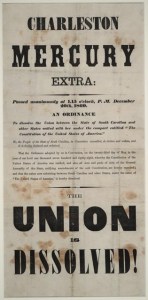
11661

As no middle ground remained, the nation plunged into war with many leaders, especially church leaders forged ahead to claim the mantle of Christ and God for their side; and given the widely held theological “assumptions about divine sovereignty and God’s role in human history, northerners and southerners anxiously looked for signs of the Lord’s favor.” [74] Of course people on both sides used the events of any given day during the war to interpret what this meant and both were subject to massive shifts as the God of Battles seemed to at times favor the armies of the Confederacy and as the war ground on to favor those of the Union.

poster

Those who had been hesitant about secession in the South were overcome by events when Fort Sumter was attacked. Edmund Ruffin spoke for many of the ardent secessionists when he proclaimed “The shedding of blood…will serve to change many voters in the hesitating states, from submission or procrastinating ranks, to the zealous for immediate secession.” [75] But very few of the radical secessionists found their way into uniform or into the front lines. Then like now, very few of those who clamor for war and vengeance the most, and who send the sons of others to die in their wars, take up arms themselves.

Confederate General Jubal Early saw the sour irony in this. Early had fought against secession until the last as a legislator during the Virginia secession debate, and when he finally accepted secession and went to war he never looked back. During the war became one of the most committed Rebels of the Cause. That being said he was not fond of the proponents of secession and took pleasure as the war went on in taunting “the identifiable secessionists in gray uniform who came his way, especially when the circumstances were less than amusing….” [76]After the disastrous defeat at the Third Battle of Winchester in 1864, Early looked at his second in command, former Vice President of the United States and Confederate Major General John C. Breckinridge, who had advocated secession as they retreated amid the “chaos and horror of his army’s rout. Early took the occasion to mock his celebrated subordinate: “Well General, he crowed, “what do you think of the ‘rights of the South’ in the territories now?” [77]

20110930-poster.png_

In the North a different sentiment rose as one volunteer soldier from Pennsylvania wrote: “I cannot believe…that “Providence intends to destroy this Nation, the great asylum for all the oppressed of all other nations and build a slave Oligarchy on the ruins thereof.” Another volunteer from Ohio mused “Admit the right of the seceding states to break up the Union at pleasure…and how long before the new confederacies created by the first disruption shall be resolved into smaller fragments and the continent become a vast theater of civil war, military license, anarchy and despotism? Better to settle it at whatever cost and settle it forever.” [78]

The depth of the religious dimension of the struggle can be seen in the hymn most commonly associated with the Civil War and the United States. This was the immensely popular Battle Hymn of the Republic whose lyricist Julia Ward Howe penned the lines “As he died to make men holy, let us live to make men free! While God is marching on” [79]

There was also an attempt on the part of Northern Evangelicals to push religion to the forefront of the conflict and to correct what they believed was an error in the Constitution, that error being that God was not mentioned in it. They believed that the Civil War was God’s judgment on the nation for this omission. The group, called the National Reform Association proposed the Bible Amendment. They met with Lincoln and proposed to modify the opening paragraph of the Constitution to read:

“We the people of the United States, humbly acknowledging Almighty God as the source of all authority and power and civil government, the Lord Jesus Christ as the Ruler among the nations, His revealed will as the supreme law of the land, in order to form a more perfect union.” [80]

While Lincoln brushed off their suggestion and never referred to the United States as a Christian nation, much to the chagrin of many Northern Christians, the Confederacy had reveled in its self-described Christian character. The Confederacy had “proudly invoked the name of God in their Constitution. Even late in the war, a South Carolina editor pointed to what he saw as a revealing fact: the Federal Constitution – with no reference to the Almighty – “could have been passed and adopted by Atheists or Hindoes or Mahometans.” [81]

When the Stars and Stripes came down on April 14th 1861 the North was galvanized as never before, one observer wrote: “The heather is on fire….I never knew what popular excitement can be… The whole population, men, women, and children, seem to be in the streets with Union favors and flags.” [82] The assault on Fort Sumter help to unify the North in ways not thought possible by Southern politicians who did not believe that Northerners had the mettle to go to war against them. But they were wrong, even Senator Stephen Douglas, Lincoln’s stalwart opponent of so many campaigns went to the White House for a call to national unity. Returning to Chicago he told a huge crowd just a month before his untimely death:

“There are only two sides to the question. Every man must be for the United States or against it. There can be no neutrals in this war, only patriots- or traitors” [83]

Colonel Robert E. Lee, a Virginian who looked askance at secession turned down the command of the Union Army when it was offered and submitted his resignation upon the secession of Virginia noting:

“With all my devotion to the Union and feeling of loyalty and duty of an American citizen, I have not been able to make up my mind to raise my hand against my relatives, my children, my home. I have therefore, resigned my commission in the Army, and save in the defense of my native State…I hope I may never be called upon to draw my sword.” [84]

But throughout the South, most people rejoiced at the surrender of Fort Sumter. In Richmond the night following the surrender “bonfires and fireworks of every description were illuminating in every direction- the whole city was a scene of joy owing to [the] surrender of Fort Sumter” – and Virginia wasn’t even part of the Confederacy.” [85]

The Effect of the Emancipation Proclamation

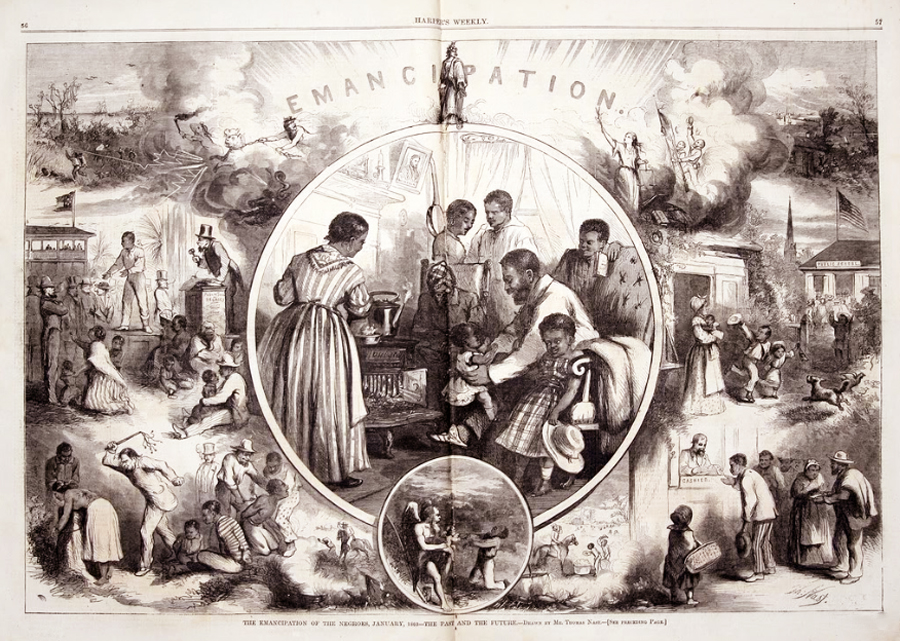
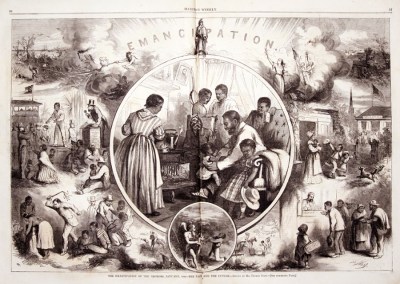
Some twenty months after Fort Sumter fell and after nearly two years of unrelenting slaughter, culminating in the bloody battle of Antietam, Lincoln published the emancipation proclamation. It was a military order in which he proclaimed the emancipation of slaves located in the Rebel states, and it would be another two years, with the Confederacy crumbling under the combined Federal military onslaught before Lincoln was able to secure passage of the 13th Amendment to the Constitution. The amendment abolished slavery and involuntary servitude throughout the country, as well as nullified the fugitive slave clause and the Three-Fifths Compromise.

Though limited in scope the Emancipation Proclamation had more than a social and domestic political effect, it ensured that Britain would not intervene in the war.
emancipation2

The Emancipation Proclamation and the elimination of slavery also impacted the Union war effort in terms of law, law which eventually had an impact around the world as nations began to adapt to the changing character of war. In the “Instructions for the Government of Armies of the United States in the Field, General Orders No. 100 by President Lincoln, April 24, 1863; Prepared by Francis Lieber, LLD noted in Article 42 of that Code:

“Slavery, complicating and confounding the ideas of property, (that is of a thing,) and of personality, (that is of humanity,) exists according to municipal or local law only. The law of nature and nations has never acknowledged it. The digest of the Roman law enacts the early dictum of the pagan jurist, that “so far as the law of nature is concerned, all men are equal.” Fugitives escaping from a country in which they were slaves, villains, or serfs, into another country, have, for centuries past, been held free and acknowledged free by judicial decisions of European countries, even though the municipal law of the country in which the slave had taken refuge acknowledged slavery within its own dominions.” [86]

It continued in Article 43:

“Therefore, in a war between the United States and a belligerent which admits of slavery, if a person held in bondage by that belligerent be captured by or come as a fugitive under the protection of the military forces of the United States, such person is immediately entitled to the rights and privileges of a freeman To return such person into slavery would amount to enslaving a free person, and neither the United States nor any officer under their authority can enslave any human being. Moreover, a person so made free by the law of war is under the shield of the law of nations, and the former owner or State can have, by the law of postliminy, no belligerent lien or claim of service.” [87]

The threat of the destruction of the Union and the continuance of slavery in either the states of the Confederacy or in the new western states and territories, or the maintenance of the Union without emancipation was too great for some, notably the American Freedmen’s Commission to contemplate. They wrote Edwin Stanton in the spring of 1864 with Grant’s army bogged down outside of Richmond and the Copperheads and the Peace Party gaining in influence and threatening a peace that allowed Southern independence and the continuance of slavery:

“In such a state of feeling, under such a state of things, can we doubt the inevitable results? Shall we escape border raids after fleeing fugitives? No man will expect it. Are we to suffer these? We are disgraced! Are we to repel them? It is a renewal of hostilities!…In the case of a foreign war…can we suppose that they will refrain from seeking their own advantage by an alliance with the enemy?” [88]

In his Second Inaugural Address, Abraham Lincoln discussed the issue of slavery as the chief cause of the war. In it, Lincoln noted that slavery was the chief cause of the war in no uncertain terms and talked in a language of faith that was difficult for many, especially Christians, who “believed weighty political issues could be parsed into good or evil. Lincoln’s words offered a complexity that many found difficult to accept,” for the war had devastated the playground of evangelical politics, and it had “thrashed the certitude of evangelical Protestantism” [89] as much as the First World War shattered Classic European Christian Liberalism. Lincoln’s confrontation of the role that people of faith in bringing on the war in both the North and the South is both illuminating and a devastating critique of the religious attitudes that so stoked the fires of hatred. His realism in confronting facts was masterful, and badly needed, he spoke of “American slavery” as a single offense ascribed to the whole nation.” [90]

“One-eighth of the whole population were colored slaves, not distributed generally over the Union, but localized in the southern part of it. These slaves constituted a peculiar and powerful interest. All knew that this interest was somehow the cause of the war. To strengthen, perpetuate, and extend this interest was the object for which the insurgents would rend the Union even by war, while the Government claimed no right to do more than to restrict the territorial enlargement of it. Neither party expected for the war the magnitude or the duration which it has already attained. Neither anticipated that the cause of the conflict might cease with or even before the conflict itself should cease. Each looked for an easier triumph, and a result less fundamental and astounding. Both read the same Bible and pray to the same God, and each invokes His aid against the other. It may seem strange that any men should dare to ask a just God’s assistance in wringing their bread from the sweat of other men’s faces, but let us judge not, that we be not judged. The prayers of both could not be answered. That of neither has been answered fully. The Almighty has His own purposes. “Woe unto the world because of offenses; for it must needs be that offenses come, but woe to that man by whom the offense cometh.” If we shall suppose that American slavery is one of those offenses which, in the providence of God, must needs come, but which, having continued through His appointed time, He now wills to remove, and that He gives to both North and South this terrible war as the woe due to those by whom the offense came, shall we discern therein any departure from those divine attributes which the believers in a living God always ascribe to Him? Fondly do we hope, fervently do we pray, that this mighty scourge of war may speedily pass away. Yet, if God wills that it continue until all the wealth piled by the bondsman’s two hundred and fifty years of unrequited toil shall be sunk, and until every drop of blood drawn with the lash shall be paid by another drawn with the sword, as was said three thousand years ago, so still it must be said “the judgments of the Lord are true and righteous altogether.”[91]

When Edmund Ruffin pulled the lanyard of the cannon that fired the first shot at Fort Sumter it marked the end of an era. Despite the efforts of Edmund Ruffin, Alexander Stephens, Jefferson Davis and so many others who advocated secession and war, the war that they launched in the hope of maintaining slavery; gave birth to what Lincoln described as “a new birth of freedom.”

When the war ended with the Confederacy defeated and the south in now in ruins, Ruffin still could not abide the result. In a carefully crafted suicide note he sent to his son the bitter and hate filled old man wrote on June 14th 1865:

“I here declare my unmitigated hatred to Yankee rule- to all political, social and business connections with the Yankees and to the Yankee race. Would that I could impress these sentiments, in their full force, on every living Southerner and bequeath them to every one yet to be born! May such sentiments be held universally in the outraged and down trodden South, though in silence and stillness, until the now far-distant day shall arrive for just retribution for Yankee usurpation, oppression and outrages, and for deliverance and vengeance for the now ruined, subjugated and enslaved Southern States! … And now with my latest writing and utterance, and with what will be near my last breath, I here repeat and would willingly proclaim my unmitigated hatred to Yankee rule — to all political, social and business connections with Yankees, and the perfidious, malignant and vile Yankee race.” [92]

A Southern Change of Tune: The War Not About Slavery after All, and the “New Religion” of the Lost Cause

001dr

Though Ruffin was dead in the coming years the southern states would again find themselves under the governance of former secessionists who were unabashed white supremacists. Former secessionist firebrands who had boldly proclaimed slavery to be the deciding issue when the war changed their story. Instead of slavery being the primary cause of Southern secession and the war, it was “trivialized as the cause of the war in favor of such things as tariff disputes, control of investment banking and the means of wealth, cultural differences, and the conflict between industrial and agricultural societies.” [93]

Alexander Stephens who had authored the infamous1861 Cornerstone Speech that “that the negro is not equal to the white man; that slavery — subordination to the superior race — is his natural and normal condition” argued after the war that the war was not about slavery at all, that the war:

“had its origins in opposing principles….It was a strife between the principles of Federation, on the one side, and Centralism, or Consolidation on the other.” He concluded “that the American Civil War “represented a struggle between “the friends of Constitutional liberty” and “the Demon of Centralism, Absolutism, [and] Despotism!” [94]

Jefferson Davis, who had masterfully crafted “moderate” language which radicals in the South used to their advantage regarding the expansion and protection of the rights of slave owners in the late 1850s to mollify Northern Democrats, and who wrote in October 1860 that: “The recent declarations of the Black Republican part…must suffice to convince many who have formerly doubted the purpose to attack the institution of slavery in the states. The undying opposition to slavery in the United States means war upon it where it is, not where it is not.” [95]

After the war a revisionist Davis wrote:

“The Southern States and Southern people have been sedulously represented as “propagandists” of slavery, and the Northern as the champions of universal freedom…” and “the attentive reader…will already found enough evidence to discern the falsehood of these representations, and to perceive that, to whatever extent the question of slavery may have served as an occasion, it was far from being the cause for the conflict.” [96]

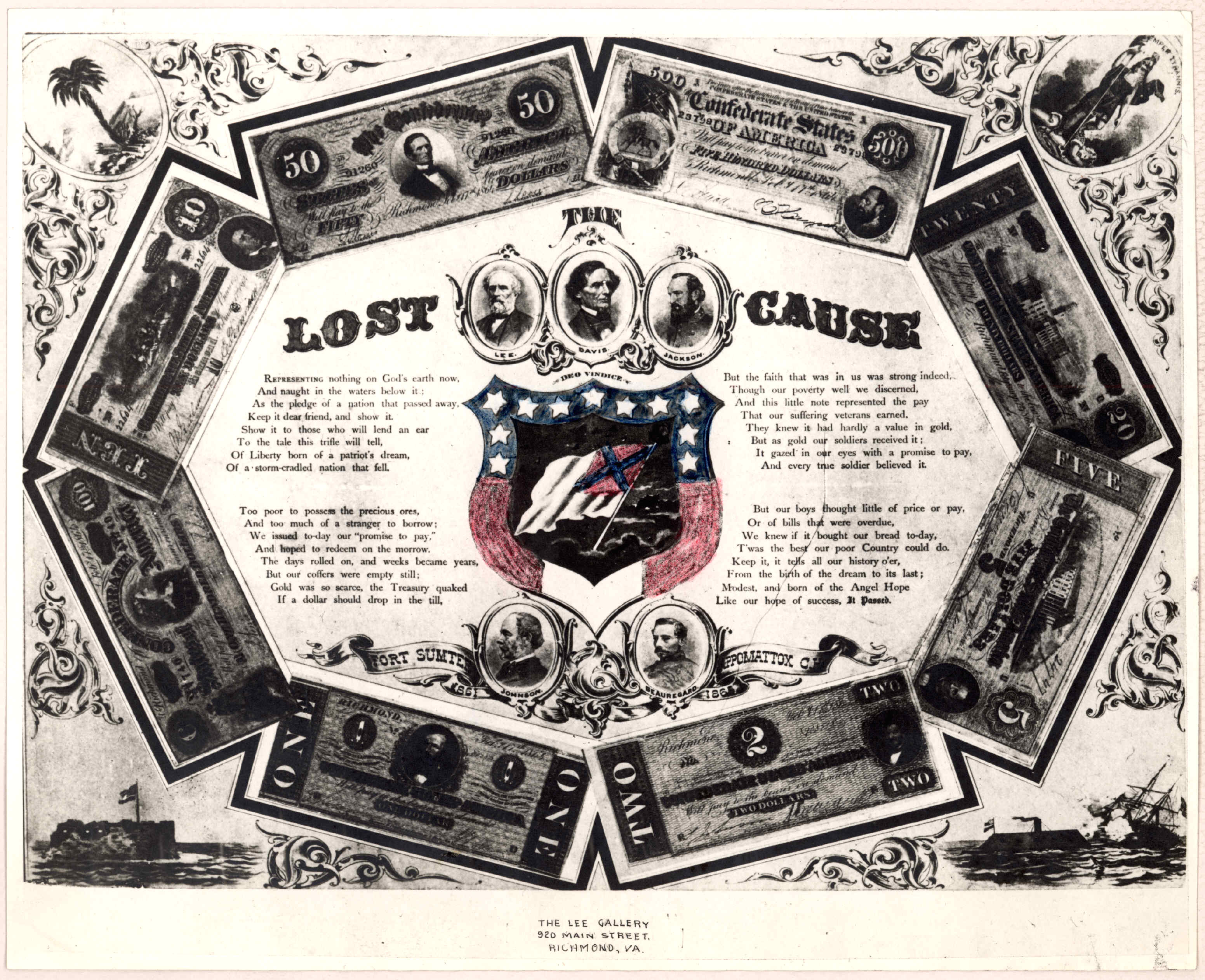
Instead of being about slavery the Confederate cause was mythologized by those promoting the false history of the “Lost Cause” a term coined by William Pollard in 1866, which “touching almost every aspect of the struggle, originated in Southern rationalizations of the war.” [97] By 1877 many southerners were taking as much pride in the “Lost Cause” as Northerners took in Appomattox.[98] Alan Nolen notes: “Leaders of such a catastrophe must account for themselves. Justification is necessary. Those who followed their leaders into the catastrophe required similar rationalization.” [99]

The Lost Cause was elevated by some to the level of a religion. In September 1906, Lawrence Griffith speaking to a meeting of the United Confederate Veterans stated that when the Confederates returned home to their devastated lands, “there was born in the South a new religion.” [100] The mentality of the Lost Cause took on “the proportions of a heroic legend, a Southern Götterdämmerung with Robert E. Lee as a latter day Siegfried.” [101]

This new religion that Griffith referenced was replete with signs, symbols and ritual:

“this worship of the Immortal Confederacy, had its foundation in myth of the Lost Cause. Conceived in the ashes of a defeated and broken Dixie, this powerful, pervasive idea claimed the devotion of countless Confederates and their counterparts. When it reached fruition in the 1880s its votaries not only pledged their allegiance to the Lost Cause, but they also elevated it above the realm of common patriotic impulse, making it perform a clearly religious function….The Stars and Bars, “Dixie,” and the army’s gray jacket became religious emblems, symbolic of a holy cause and of the sacrifices made on its behalf. Confederate heroes also functioned as sacred symbols: Lee and Davis emerged as Christ figures, the common soldier attained sainthood, and Southern women became Marys who guarded the tomb of the Confederacy and heralded its resurrection.” [102]

Jefferson Davis became an incarnational figure for the adherents of this new religion. A Christ figure who Confederates believed “was the sacrifice selected-by the North or by Providence- as the price for Southern atonement. Pastors theologized about his “passion” and described Davis as a “vicarious victim”…who stood mute as Northerners “laid on him the falsely alleged iniquities of us all.” [103]

In 1923 a song about Davis repeated this theme:

Jefferson Davis! Still we honor thee! Our Lamb victorious,

who for us endur’d A cross of martyrdom, a crown of thorns,

soul’s Gethsemane, a nation’s hate, A dungeon’s gloom!

Another God in chains.” [104]

The myth also painted another picture, that of slavery being a benevolent institution which has carried forth into our own time. The contention of Southern politicians, teachers, preachers and journalists was that slaves liked their status; they echoed the words of slave owner Hiram Tibbetts to his brother in 1842 “If only the abolitionists could see how happy our people are…..The idea of unhappiness would never enter the mind of any one witnessing their enjoyments” [105] as well as Jefferson Davis who in response to the Emancipation Proclamation called the slaves “peaceful and contented laborers.” [106]
MPW-15446

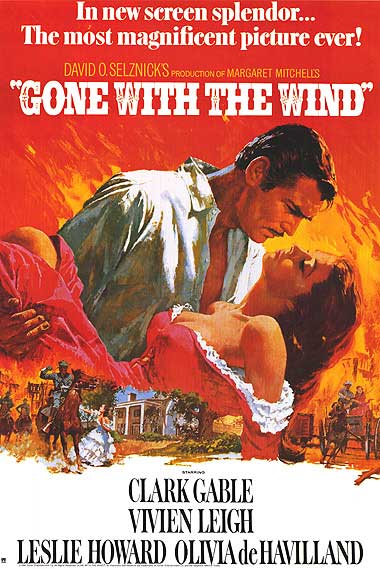
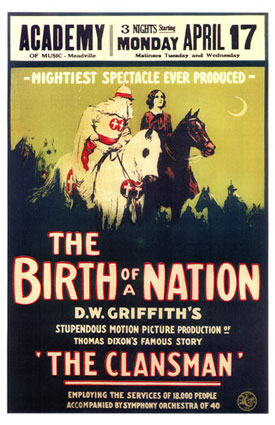
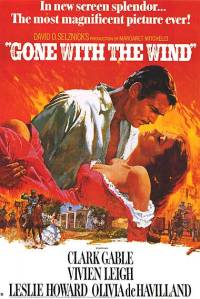
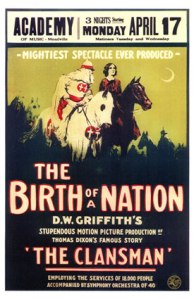
The images of the Lost Cause, was conveyed by numerous writers and Hollywood producers including Thomas Dixon Jr. whose play and novel The Clansman became D.W. Griffith’s The Birth of a Nation, a groundbreaking part of American cinematography which was released in 1915; Margaret Mitchell who penned the epic Pulitzer Prize winning novel Gone With the Wind which in its 1939 film form won ten academy awards immortalized the good old days of the old South with images of faithful slaves, a theme which found its way into Walt Disney’s famed 1946 animated Song of the South.
Birth-of-a-Nation-poster


D.W. Griffith Birth of a Nation

The Lost Cause helped buttress the myths that both comforted and inspired many Southerners following the war. “It defended the old order, including slavery (on the grounds of white supremacy), and in Pollard’s case even predicted that the superior virtues of cause it to rise ineluctably from the ashes of its unworthy defeat.” [107] The myth helped pave the way to nearly a hundred more years of effective second class citizenship for now free blacks who were often deprived of the vote and forced into “separate but equal” public and private facilities, schools and recreational activities. The Ku Klux Klan and other violent organizations harassed, intimidated, persecuted and used violence against blacks.

“From the 1880s onward, the post-Reconstruction white governments grew unwilling to rely just on intimidation at the ballot box and themselves in power, and turned instead to systematic legal disenfranchisement.” [108] Lynching was common and even churches were not safe. It would not be until the Civil Rights movement of the 1950s and 1960s that blacks would finally begin to gain the same rights enjoyed by whites in most of the South.

Despite this many Union veterans to their dying day fought the Lost Causers. Members of the Grand Army of the Republic, the first truly national veteran’s organization, and the first to admit African American soldiers as equals, and the predecessor of modern veteran’s groups, continued their fight to keep the public fixed on the reason for war, and the profound difference between what they believed that they fought for and what their Confederate opponents fought for during the war.

“The Society of the Army of the Tennessee described the war as a struggle “that involved the life of the Nation, the preservation of the Union, the triumph of liberty and the death of slavery.” They had fought every battle…from the firing on the Union flag Fort Sumter to the surrender of Lee at Appomattox…in the cause of human liberty,” burying “treason and slavery in the Potter’s Field of nations” and “making all our citizens equal before the law, from the gulf to the lakes, and from ocean to ocean.” [109]
GAR postcard

At what amounted to the last great Blue and Gray reunion at Gettysburg was held in 1937, the surviving members of the United Confederate Veterans extended an invitation to the GAR to join them there. The members of the GAR’s 71st Encampment from Madison Wisconsin, which included survivors of the immortal Iron Brigade who sacrificed so much of themselves at McPherson’s Ridge on July 1st 1863 adamantly, opposed a display of the Confederate Battle flag. “No Rebel colors,” they shouted. “What sort of compromise is that for Union soldiers but hell and damnation.” [110]

Ruffin outlived Lincoln who was killed by the assassin John Wilkes Booth on April 14th 1864. However the difference between the two men was marked. In his Second Inaugural Address Lincoln spoke in a different manner than Ruffin. He concluded that address with these thoughts:

“With malice toward none, with charity for all, with firmness in the right as God gives us to see the right, let us strive on to finish the work we are in, to bind up the nation’s wounds, to care for him who shall have borne the battle and for his widow and his orphan, to do all which may achieve and cherish a just and lasting peace among ourselves and with all nations.” [111]

Why this Matters Today

The American Civil War provides a complex drama that political leaders, diplomats and military leaders would be wise to study, and not simply the military aspects and battles. Though the issues may be different in nations where the United States decides to intervene to prevent humanitarian disasters, prevent local civil wars from becoming regional conflagrations, or to provide stability after a civil war, the conflict provides poignant example after poignant example. If we fail to remember them we will lose who we are as a nation.

The Union was preserved, reconciliation was to some degree. Albeit the reconciliation was very imperfectly achieved, as the continuance of racism and discrimination, and the lack of repentance on the part of many of those who shamelessly promoted the Lost Cause and their current defenders continues to this day. Allen Guelzo wrote in the American Interest about the importance of both reconciliation and repentance to Frederick Douglass after the war:

“Douglass wanted the South not only to admit that it had lost, but also that it had deserved to lose. “The South has a past not to be contemplated with pleasure, but with a shudder”, he wrote in 1870. More than a decade later, Douglass was still not satisfied: “Whatever else I may forget, I shall never forget the difference between those who fought to save the Republic and those who fought to destroy it.” [112]

Likewise, that imperfect but reunited Union was all that stood in the way of Nazi Germany in the dark days of early 1942. Had the American republic fragmented during the war; had the South won, as so many kings and dictators of the day either openly or secretly desired, there would have been nothing to stand in the way of Hitler, and there would be nothing to stand in the way of the modern despots, terrorists and dictatorships such as the Islamic State today.

The controversies and conflicts brought on by the ideological, social and religious divides in the Ante-Bellum United States provide current leaders with historical examples. Our Civil War was heavily influenced by religion and the ideologies of the partisans in the North and in the South who were driven by religious motives, be those of the evangelical abolitionists or the proslavery evangelicals. If one is honest, one can see much of the same language, ideology and religious motivation at play in our twenty-first century United States. The issue for the vast majority of Americans, excluding certain neo-Confederate and White Supremacist groups, is no longer slavery; however the religious arguments on both sides of the slavery debate find resonance in our current political debates.

Likewise, for military, foreign policy officials and policy makers the subject of the role of religion can be quite informative. Similar issues are just as present in many the current conflicts in the Middle East, Africa and Eastern Europe which are driven by the religious motives of various sects. The biggest of these conflicts, the divide between Sunni and Shia Moslems, is a conflict that threatens to engulf the region and spread further. In it religion is coupled with the quest for geopolitical and economic power. This conflict in all of its complexity and brutality is a reminder that religion is quite often the ideological foundation of conflict.

These examples, drawn from our own American experience can be instructive to all involved in policy making. These examples show the necessity for policy makers to understand just how intertwined the political, ideological, economic, social and religious seeds of conflict are, and how they cannot be disconnected from each other without severe repercussions.

Samuel Huntington wrote:

“People do not live by reason alone. They cannot calculate and act rationally in pursuit of their self-interest until they define their self. Interest politics presupposes identity. In times of rapid social change established identities dissolve, the self must be redefined, and new identities created. For people facing the need to determine Who am I? Where do I belong? Religion provides compelling answers….In this process people rediscover or create new historical identities. Whatever universalist goals they may have, religions give people identity by positing a basic distinction between believers and non-believers, between a superior in-group and a different and inferior out-group.” [113]

By taking the time to look at our own history as well as our popular mythology; planners, commanders and policy makers can learn lessons that if they take the time to learn will help them understand similar factors in places American troops and their allies might be called to serve, or that we might rather avoid.

Notes

[1] Ibid. Levine Half Slave and Half Free p.196

[2] Ibid. Levine Half Slave and Half Free p.196

[3] Ibid. Freehling, The Road to Disunion Volume II: Secessionists Triumphant 1854-1861 p.125

[4] Ibid. Freehling, The Road to Disunion Volume II: Secessionists Triumphant 1854-1861 p.126

[5] Ibid. Freehling, The Road to Disunion Volume II: Secessionists Triumphant 1854-1861 p.126

[6] Ibid. Levine Half Slave and Half Free p.196

[7] Ibid. McPherson The Battle Cry of Freedom p.148

[8] Ibid. Guelzo Fateful Lightening p.81

[9] Ibid. McPherson The Battle Cry of Freedom p.149

[10] Ibid. Guelzo Fateful Lightening p.81

[11] Ibid. Guelzo Fateful Lightening p.81

[12] Ibid. Oates The Approaching Fury p.173

[13] Ibid. Goldfield America Aflame p.118

[14] Ibid, Oates The Approaching Fury p.181

[15] Ibid. Potter The Impending Crisis pp.213-214

[16] Ibid. Freehling, The Road to Disunion Volume II: Secessionists Triumphant 1854-1861 p.142

[17] Ibid. Catton Two Roads to Sumter p.142

[18] McPherson, James. The Battle Cry of Freedom: The Civil War Era Oxford University Press, Oxford and New York 1988 p.102

[19] Ibid Freehling, The Road to Disunion Volume II: Secessionists Triumphant 1854-1861 p.183

[20] Ibid. McPherson The Battle Cry of Freedom p.103

[21] Ibid. Freehling The Road to Disunion Volume II p.183

[22] Ibid. McPherson The Battle Cry of Freedom p.103

[23] Ibid. Freehling The Road to Disunion Volume II pp.174-175

[24] Ibid. Freehling The Road to Disunion Volume II p.185

[25] Ibid. Freehling The Road to Disunion Volume II p.185

[26] Ibid. Goldfield America Aflame p.360

[27] Ibid. Catton Two Roads to Sumter p.144

[28] Gallagher, Gary The Union War Harvard University Press, Cambridge MA and London, 2011 p.47

[29] Lincoln, Abraham A House Divided given at the Illinois Republican Convention, June 16th 1858, retrieved from www.pbs.org/wgbh/ala/part4/4h2934.html 24 March 2014

[30] Ibid. Guelzo Fateful Lightening p.55

[31] Ibid. Guelzo Fateful Lightening p.55

[32] Ibid. Gallagher The Union War p.46

[33] Ibid Gallagher The Union War p.47

[34] Ibid Gallagher The Union War p.47

[35] Wills, Garry. Lincoln at Gettysburg: The Words that Remade America Simon and Schuster Paperbacks, New York 1992 p.114

[36] Korda, Michael. Clouds of Glory: The Life and Legend of Robert E. Lee Harper Collins Publishers, New York 2014 p.221

[37] Catton, Bruce The Coming Fury Phoenix Press, London 1961 p.46

[38] Ibid. Freehling The Road to Disunion Volume II p.207

[39] Ibid. Guelzo Fateful Lightening p.81

[40] Ibid. Potter The Impending Crisis p.211

[41] Ibid. Potter The Impending Crisis pp.211-212

[42] Ibid. U.S. Army/ Marine Counterinsurgency Field Manual p.27

[43] Ibid. Levine Half Slave and Half Free p.197

[44] Ibid. Freehling The Road to Disunion Volume II p.207

[45] Ibid. Korda, Clouds of Glory p.xviii

[46] Ibid. Oates The Approaching Fury p.203

[47] Ibid. Oates The Approaching Fury p.284

[48] Ibid. Korda Clouds of Glory p.xxxix

[49] Ibid. Catton Two Roads to Sumter p.187

[50] Ibid. Potter The Impending Crisis p.381

[51] Ibid. Potter The Impending Crisis p.375

[52] Ibid. Catton Two Roads to Sumter p.187

[53] Ibid. Oates The Approaching Fury p.290

[54] Ibid. Thomas The Confederate Nation p.3

[55] Ibid. McPherson The Battlecry of Freedom p.210

[56] Ibid. Potter The Impending Crisis p.378

[57] Ibid. Guelzo Fateful Lightening p.119

[58] Ibid. Catton The Coming Fury pp.46-47

[59] __________ Declaration of the Immediate Causes Which Induce and Justify the Secession of South Carolina from the Federal Union. Retrieved from The Avalon Project, Yale School of Law http://avalon.law.yale.edu/19th_century/csa_scarsec.asp 24 March 2014

[60] Ibid. Levine Half Slave and Half Free p.251

[61] Ibid. Levine Half Slave and Half Free p.253

[62] Ibid. Potter The Impending Crisis p.442

[63] Ibid. McPherson Drawn With Sword p.50 These words are little different than the words of many conservative Evangelical Christian pastors, pundits and politicians today in relation to the legalization of Gay marriage.

[64] Ibid. Oates The Approaching Fury p.342

[65] Ibid. Catton The Coming Fury p.122

[66] Ibid. Dew Apostles of Disunion p.18

[67] Ibid. Dew Apostles of Disunion p.48

[68] Ibid. Dew Apostles of Disunion p.48

[69] Lincoln, Abraham First Inaugural Address March 4th 1861 retrieved from www.bartleby.com/124/pres31.html 24 March 2014

[70] Ibid. McPherson Drawn With Sword pp.50-51

[71] Cleveland, Henry Alexander H. Stevens, in Public and Private: With Letters and Speeches, before, during and since the War, Philadelphia 1886 pp.717-729 retrieved from http://civilwarcauses.org/corner.htm 24 March 2014

[72] Ibid. Catton Two Roads to Sumter p.143

[73] Ibid. Levine Half Slave and Half Free p.253

[74] Ibid. Rable God’s Almost Chosen Peoples p.74

[75] Ibid. McPherson The Battle Cry of Freedom p.273

[76] Osborne, Charles C. Jubal: The Life and Times of General Jubal A. Earl, CSA Algonquin Books of Chapel Hill, Chapel Hill NC 1992 p.52

[77] Ibid. Osborne Jubal p.52

[78] Ibid. Levine Half Slave and Half Free pp.253-254

[79] Ibid. Huntington Who Are We? P.77

[80] Ibid. Goldfield America Aflame p.360

[81] Ibid. Rable God’s Almost Chosen Peoples pp.337-338

[82] Ibid. McPherson The Battle Cry of Freedom p.274

[83] Ibid. McPherson The Battle Cry of Freedom p.274

[84] Ibid. Thomas The Confederate Nation p.85

[85] Ibid. Guelzo Fateful Lightening p.140

[86] Reichberg, Gregory M, Syse Henrik, and Begby, Endre The Ethics of War: Classic and Contemporary Readings Blackwell Publishing Ltd, Malden, MA and Oxford UK 2006 p.570

[87] Ibid. Reichberg et al. The Ethics of War p.570

[88] Ibid. Guelzo Fateful Lightening p.534

[89] Ibid. Goldfield America Aflame p.358

[90] Ibid. Wills Lincoln at Gettysburg p.186

[91] Lincoln, Abraham Second Inaugural Address March 4th 1865 retrieved from www.bartleby.com/124/pres32.html 24 March 2014

[92] Edmund Ruffin (1794-1865). Diary entry, June 18, 1865. Manuscript Division, Library of Congress Retrieved from http://blogs.loc.gov/civil-war-voices/about/edmund-ruffin/ 24 March 2014

[93] Gallagher, Gary W. and Nolan Alan T. editors The Myth of the Lost Cause and Civil War History Indiana University Press, Bloomington and Indianapolis 2000 p.15

[94] Ibid. Dew Apostles of Disunion p.16

[95] Ibid. Catton The Coming Fury p.104

[96] Davis, Jefferson The Rise and Fall of the Confederate Government Volume One of Two, A public Domain Book, Amazon Kindle edition pp.76-77

[97] Ibid. Gallagher and Nolan The Myth of the Lost Cause and Civil War History p.12

[98] Millet Allen R and Maslowski, Peter. For the Common Defense: A Military History of the United States of America The Free Press, a division of McMillan Publishers, New York 1984 p.230

[99] Ibid. Gallagher and Nolan The Myth of the Lost Cause and Civil War History p.12

[100] Hunter, Lloyd The Immortal Confederacy: Another Look at the Lost Cause Religion in Gallagher and Nolan The Myth of the Lost Cause and Civil War p.185

[101] Ibid. McPherson The Battle Cry of Freedom p.854

[102] Ibid. Hunter The Immortal Confederacy Religion in Gallagher and Nolan The Myth of the Lost Cause and Civil War p.186

[103] Ibid. Hunter The Immortal Confederacy Religion in Gallagher and Nolan The Myth of the Lost Cause and Civil War p.198

[104] Ibid. Hunter The Immortal Confederacy Religion in Gallagher and Nolan The Myth of the Lost Cause and Civil War p.198

[105] Ibid. Levine Half Slave and Half Free p.106

[106] Ibid. Gallagher and Nolan The Myth of the Lost Cause and Civil War History p.16

[107] Ibid. Guelzo Fateful Lightening p.525

[108] Ibid. Guelzo Fateful Lightening p.526

[109] Ibid. Guelzo Fateful Lightening p.532

[110] Ibid. Guelzo Fateful Lightening p.532

[111] Ibid. Lincoln Second Inaugural Address

[112] Guelzo, Allen C. A War Lost and Found in The American Interest September 1st 2011 retrieved 30 October 2014 from http://www.the-american-interest.com/articles/2011/09/01/a-war-lost-and-found/

[113] Ibid. Huntington The Clash of Civilizations p.97

1 Comment

Filed under civil rights, civil war, faith, History, Military, Political Commentary, Religion

Out of the Mud: The Battleships of Pearl Harbor

Under three years after the Japanese attack on Pearl Harbor five of the six surviving battleships fought in the last battleship versus battleship engagement in history, taking revenge on a Japanese surface force at the Battle of Surigao Strait during the Battle of Leyte Gulf.

Vice Admiral Shoji Nishimura who commanded the Southern Force of the Japanese fleet attempting to defeat the American invasion force at Leyte Gulf had successfully avoided damage from the air attacks that so damaged he Center Force sinking the massive Super-Battleship Musashi. Now his force steamed into Surigao Strait in the hopes that it could break through any American resistance and destroy the transports laden with troops and supplies in Leyte Gulf. Following a short distance behind Nishimura was the force of Vice Admiral Kiyohide Shima. The two forces were composed of two battleships, three heavy and two light cruisers and eight destroyers. They had no idea that they were sailing into a maelstrom of death.

The mission of these two groups was to fight their way through the Surigao Strait to assist the Central Force in destroying the US invasion force in Leyte Gulf. The mission was for all practical purposes a suicide mission, a naval “Charge of the Light Brigade” as they sailed into the Valley of Death against the Battle Line of the US 7th Fleet.

The two Japanese Battleships, the Fuso and Yamashiro had spent the majority of the war in home waters and had seen little action. They had not been part of any of the great Japanese victories in 1941 and 1942 and they had not been blooded in the Solomons. Instead the two elderly battlewagons passed the war conducting training in the inland sea. They were no longer first line ships, but the Japanese were desperate and every capital ship mattered, even an old battleship set loose among helpless transports could wreak havoc.


During the afternoon of October 24th Admiral Nishimura received an accurate report from one of Mogami’s scout planes telling him exactly what he was up against yet he pushed on in the manner of a doomed but resolute Samurai.

Facing Nishimura and Shima was a force built around the six old Battleships of Vice Admiral Jesse Oldendorf’s 7th Fleet Battle Line, five of which had been resurrected from the hell of Pearl Harbor.


The Americans heavily outnumbered the Japanese, the Battleships USS West Virginia, USS California and USS Tennessee were the heart of the force. Fully modernized after Pearl Harbor they no longer resembled the ships that they were before the war. Equipped with the latest Mark 8 Fire Control radar they had the ability to put their 16” and 14” shells on target at ranges farther than anything that the Japanese could counter.The were in most respects, especially in gunpowder and fire control as modern as the newest battleships in the fleet, and far superior to all Japanese battleships except the great Yamato and now departed Musashi. 

These three battlewagons were joined by the less fully modernized USS Maryland, USS Mississippi and USS Pennsylvania. The American task force included  4 Heavy Cruisers, 4 Light Cruisers, 28 Destroyers and 39 PT Boats. In the shear number of guns the six American battleships outnumbered the combined Japanese forces with sixteen 16” and forty eight 14” guns against  twenty 14” guns mounted on the antiquated Yamashiro and Fuso. The disparity in lesser guns mounted on the cruisers and destroyers was was just as stark; thirty five against twenty six 8” guns, and fifty one 6” guns against six 5.5 inch guns. This massive imbalance didn’t count the nearly one hundred fifty 5” guns on theUS destroyers and as well as nearly 200 torpedo tubes mounted on those ships as well as those on the PT Boats.

When Nishimura’s force entered the southern entrance to Surigao Strait they were immediately discovered by the American PT Boats at about 2236. Though the PTs scored no hits they provided critical updates on the Japanese position and movements to Jesse Oldendorff.

At 0300 the American destroyers began a devastating series of attacks on the Japanese flanks. They sank two destroyers and damaged another which had to turn back, but the real damage occurred when both Fuso and Yamashiro were struck by torpedoes.

Fuso took two torpedo hits from fish launched by the destroyer USS Melvin. Fuso slowed and then blew up and broke in two sinking with all hands. This account has been contested in recent years but many find the new version less believable than the first.

Key in the evidence was the rescue and capture of Yamashiro’s Executive Officer in the north end of the strait combined with the surviving logs of the other Japanese ships which reported the sinking of Fuso. The Yamashiro continued ahead, though hit in the destroyer attack continued north into the valley of death with heavy cruiser Mogami and the last remaining destroyer Shigure.

At 0353 the West Virginia opened fire and scored hits on her first salvo. She was joined by California and Tennessee two minutes later, while the other battleships with their antiquated Mark 3 fire direction radars were slow to open up.


Maryland got off six full salvoes by ranging in on the splashes of West Virginia, California and Tennessee. Mississippi logged the final salvo of the battle and Pennsylvania got no shots off. West Virginia fired 16 salvoes or 96 rounds of 16”armor piercing shells, Tennessee got off 69 rounds and California 63 of 14” armor piercing shells, Maryland added forty eight 16” rounds.

The Yamashiro and Mogami sailed into the maelstrom absorbing hit after hit and gamely fought back. Yamashiro hit the destroyer USS Albert W Grant which was also hit by friendly fire badly damaging her. Finally with both of the Japanese ships ablaze they turned back down the strait in an attempt to escape this nautical version of Hell.

Yamashiro did not survive long, sinking with few survivors at 0420. Shima’s force entered the fray and the Light Cruiser Abukuma was damaged by a torpedo fired by PT-137 and fell out of the formation. She was sunk on 26 October by Army Air Force B-24s.

Shima and his force came up the strait his force encountered the battered remnants of Nishimura’s force, the burning halves of Fuso and the retreating Mogami and Shigure. Assuming the halves of Fuso to be the wreckage of both battleships Shima beat a hasty retreat but in the process his flagship, the heavy cruiser Nachi collided with Mogami flooding Mogami’s steering engine room and leaving her crippled. She was attacked again by American cruisers and aircraft and was abandoned at 1047 and scuttled a torpedo from the destroyer Akebono. Her hulk sank at 1307 on 25 October.

The battle was one of the most lopsided surface engagements of the war. When it was over only one of Nishimura’s ships had survived, the “lucky” Shigure. Shima’s force survived the night but most of his ships were sunk in the following months. Nachi was sunk in Manila Bay on 5 November by aircraft from the USS Lexington with a loss of over 800 sailors while Shima was in a conference ashore.

With the exception of the Albert W Grant and a PT Boat the American force was unscathed. The resurrected Battlewagons dredged from the mud of Peal Harbor had led the fleet to a decisive victory in the last duel between Dreadnaughts ever fought. The Japanese died as Samurai trying to complete a hopeless mission against a far superior force. The tide had turned and the Old Ladies of Pearl Harbor had returned from the dead to take revenge on the Imperial Navy.

It was an irony of of the naval war that the old battleships; ships which had been regulated to the secondary duty of protecting invasion forces and conducting shore bombardments in support of amphibious operations fought the final battleship versus battleship engagement in history. Sadly none of the surviving Pearl Harbor survivors were preserved. Pennsylvania was expended as a target during the atomic bomb tests at Bikini Atoll, while West Virginia, Maryland, California and Tennessee were scrapped in the late 1950s and early 1960s. Mississippi, which was not at Pearl Harbor survived as a gunnery trainer into the late 1950s, and served as a test ship for the first generations of guided missiles before she too was scrapped.

Peace

Padre Steve+

Leave a comment

Filed under History, Military, Navy Ships, US Navy, world war two in the pacific

The Ships of Pearl Harbor: A Brief History of each Ship Present

harbrmap1

The attack on Pearl Harbor is one of the seminal moments in the history of the United States where at one time the nation rose up as one to the challenge of an attack against it and against its armed forces. Sadly, for most Americans today no matter what their political ideology the concept of coming together in a crisis is a foreign and possibly even a hateful idea.

However, in December 1941 the Pacific Fleet of the United States Navy was attacked at Pearl Harbor of the nation came together as it never had before. On the morning of December 7th 1941 there were over ninety ships of the Pacific Fleet at Pearl Harbor. While over twenty percent of these ships were sunk or damaged in the attack, almost all returned to service, and many of the survivors were lost in action during the war. Only two ships or craft remain of the ships present on December 7th 1941, the tug USS Hoga and the Coast Guard Cutter USCG Taney which is now a museum ship in Baltimore Maryland. The rest, lost in action, sunk as targets or scrapped. Of the gallant men who served as their crews during the war and at Pearl Harbor very few remain. They are part of what we now refer as the “Greatest Generation.” 

In 1978 I had the opportunity to visit Pearl Harbor and visit the USS Arizona and USS Utah Memorials during what was a nearly three week long cruise and visit to Pearl Harbor while a Navy Junior ROTC Cadet.  I cannot forget forget that experience, as the visits to both memorials, sited above the wrecks of the two sunken ships in which more than 1000 Americans remain entombed to this day left a mark on me.

Tonight I remember all of the ships and their gallant crews, many of whom were volunteers who had gone into service not long before the attack because they believed that the nation was in danger which were present at Pearl Harbor on December 7th 1941. I also remember a government which though torn by by ideological differences decided to unite to meet the threat of advancing enemies even before they targeted the United States.

The fact ids that only two of the ships present at the Pearl Harbor attack are still afloat, and the vast majority of their crews have passed away. Very few survivors of that day of infamy remain and it is our sad task to keep reminding the nation and the world of the price of arrogance.

This is the story of the ships that were at Pearl Harbor that fateful morning of December 7th 1941.

Peace

Padre Steve+

A few years ago I wrote a piece called The Battleships of Pearl Harbor. I followed that with an article this year entitled “Forgotten on the Far Side of Ford Island: The USS Utah, USS Raleigh, USS Detroit and USS Tangier. Of course most anyone that has see either Tora! Tora! Tora! or Pearl Harbor is acquainted with the attack on “Battleship Row” and the airfields on Oahu.  What are often overlooked in many accounts are the stories of some of the lesser known ships that played key roles or were damaged in the attack.  Since none of the articles that I have seen have discussed all of the U.S. Navy ships at Pearl Harbor on that fateful morning I have taken the time to list all the ships with the exception of yard and patrol craft present at Pearl Harbor on December 7th 1941.  I have also excluded Coast Guard cutters. A brief account of each ship’s war service and final disposition is included.  I believe that this is the only site that has this information in a single article.

During the attack 18 ships were sunk or damaged but only three, Arizona, Oklahoma and Utah never returned to service.  During the war a further 18 ships were sunk or written off as losses during the war. All ships lost in the war are marked with an asterisk. One ship, the USS Castor remained in active service until 1968 serving in the Korean and Vietnam Wars. One ship, the Light Cruiser Phoenix was sunk in the Falklands War while serving as the Argentine ship General Belgrano. No U.S. Navy ships apart from the Yard Tug Hoga (not included in this article) remain today.  It is unfortunate that the Navy or any organization had the foresight to save one of these ships. It would have been fitting for one of the battleships that survived the war to be preserved as a memorial ship near the Arizona Memorial. While the USS Missouri serves this purpose symbolic of the end of the war it is a pity that no ship at Pearl Harbor was preserved so that people could see for themselves what these gallant ships was like.

Battleships

uss Nevadab36

Nevada (BB-36) Nevada was the only Battleship to get underway during the attack.  As she attempted to escape the harbor she was heavily damaged and to prevent her sinking in the main channel she was beached off Hospital Point.  She would be raised and returned to service by the May 1943 assault on Attu.  She would then return to the Atlantic where she would take part in the Normandy landings off Utah Beach and the invasion of southern France in July 1944.  She then returned to the Pacific and took part in the operations against Iwo Jima and Okinawa where she again provided naval gunfire support.  Following the war she would be assigned as a target at the Bikini atoll atomic bomb tests, surviving these she would be sunk as a target on 31 July 1948. She received 7 battle stars for her WWII service.

uss_oklahoma1

USS Oklahoma

*Oklahoma (BB-37) During the Pearl Harbor attack Oklahoma was struck by 5 aerial torpedoes capsized and sank at her mooring with the loss of 415 officers and crew. Her hulk would be raised but she would never again see service and sank on the way to the breakers in 1946.  She was awarded one battle star for her service during the attack.

Pennsylvania (BB-38) Pennsylvania was the Pacific Fleet Flagship on December 7th 1941 and was in dry dock undergoing maintenance at the time of the attack. Struck by two bombs she received minor damage and would be in action in early 1942. She underwent minor refits and took part in many amphibious landings in the Pacific and was present at the Battle of Surigo Strait.  Heavily damaged by an aerial torpedo at Okinawa Pennsylvania would be repaired and following the war used as a target for the atomic bomb tests. She was sunk as a gunnery target in 1948.  She received 8 battle stars for her WWII service.

USS_Arizona_(BB-39)_-_1930s

The USS Arizona before the attack

*Arizona (BB-39) Arizona was destroyed during the attack.  Hit by 8 armor piercing bombs one of which penetrated her forward black powder magazine she was consumed in a cataclysmic explosion which killed 1103 of her 1400 member crew.  She was decommissioned as a war loss but her colors are raised and lowered every day over the Memorial which sits astride her broken hull.  She received one battle star for her service at Pearl Harbor.

Tennessee (BB-43) Tennessee was damaged by two bombs and was shield from torpedo hits by West Virginia. After repairs she conducted operations in the Pacific until she reported to Puget Sound Naval Shipyard in August 1942 for a complete rebuild and modernized with the latest in radar, fire control equipment and anti-aircraft armaments. She returned to active service in May 1943. She provided Naval Gunfire support in numerous amphibious operations and was a key ship during the Battle of Surigo Strait firing in six-gun salvos to make careful use of her limited supply of armor-piercing projectiles, Tennessee got off 69 of her big 14-inch bullets before checking fire.  Her gunfire helped sink the Japanese Battleships Fuso and Yamishiro and other ships of Admiral Nishimura’s Southern Force.  She was damaged by a Kamikaze off Okinawa on 18 April 1945 which killed 22 and wounded 107 of her crew but did not put her out of action.  Her final assignment of the war was to cover the landing of occupation troops at Wakayama, Japan.  She was decommissioned in 1947 and remained in reserve until 1959 when she was sold for scrap. Tennessee earned a Navy Unit Commendation and 10 battles stars for World War II service.

USSCalifornia

USS California transiting the Panama Canal

California (BB-44) California was hit by two torpedoes but had the bad luck to have all of her major watertight hatches unhinged in preparation for an inspection. Hit by two torpedoes and two bombs she sank at her moorings suffering the loss of 98 killed and 61 wounded. She was refloated and received temporary repairs at Pearl Harbor before sailing to Puget Sound Naval Shipyard to be completely rebuilt and modernized with the latest in radar, fire control equipment and anti-aircraft armaments. She returned to service in January 1944. She saw her first action in the Marianas and was in continuous action to the end of the war. She played an important part in the Battle of Surigo Strait and in the amphibious landings at Guam and Tinian, Leyte, Iwo Jima and Okinawa.  She was decommissioned in 1947 and placed in reserve finally being sold for scrap in 1959. She received 7 battle stars for her WWII service.

Maryland (BB-45) At Pearl Harbor Maryland was moored inboard of Oklahoma and was hit by 2 bombs.  She would be quickly repaired and returned to action and receive minimal modernization during the war. She would participate in operations throughout the entirety of the Pacific Campaign providing naval gunfire support to the landings at Tarawa, Kwajalein, Saipan, where she was damaged by an aerial torpedo, Palau, Leyte where she was damaged by a Kamikaze, Okinawa and the battleship action at Surigo Strait.  Decommissioned in 1947 she was placed in reserve and sold for scrap in 1959. On 2 June 1961 the Honorable J. Millard Tawes, Governor of Maryland, dedicated a lasting monument to the memory of the venerable battleship and her fighting men. Built of granite and bronze and incorporating the bell of “Fighting Mary,” this monument honors a ship and her 258 men who gave their lives while serving aboard her in WWII.  This monument is located on the grounds of the State House, Annapolis, Md. Maryland received seven battle stars for World War II service.

USSWV

The USS West Virginia after her salvage and complete reconstruction

West Virginia (BB-48) West Virginia suffered some of the worst damage in the attack. Hit by at least 5 torpedoes and two bombs she was saved from Oklahoma’s fate by the quick action of her damage control officer to counter flood so she would sink on an even keel.  She would be raised, refloated and taken back to the West Coast for an extensive modernization on the order of the Tennessee and California. The last Pearl Harbor battleship to re-enter service she made up for lost time as she lead the battle line at Surigo Strait firing 16 full salvos at the Japanese squadron helping sink the Japanese Battleship Yamashiro in the last battleship versus battleship action in historyWest Virginia was decommissioned in 1947, placed in reserve and sold for scrap in 1959.

Heavy Cruisers

New Orleans (CA-32) Minor shrapnel damage from near miss. Fought throughout the war in the Pacific; bow blown off by Japanese torpedo at Battle of Trassafaronga in November 1942, repaired. 17 battle stars for WWII service, decommissioned 1947 and sold for scrap in 1957.

san fran

USS San Francisco CA-38

San Francisco (CA-38 Undamaged at Pearl Harbor, fought through Pacific war, most noted for actions at the Naval Battle of Guadalcanal fighting Japanese Battleship Hiei. Decommissioned 1946 and sold for scrap in 1959. San Francisco earned 17 battle stars during World War II. For her participation in the Naval Battle of Guadalcanal, she was awarded the Presidential Unit Citation. For the same action, three members of her crew were awarded the Medal of Honor: Lieutenant Commander Herbert E. Schonland, Lieutenant Commander Bruce McCandless , and Boatswain’s Mate 1st Class Reinhardt J. Keppler (posthumous). Admiral Daniel Callaghan was also awarded the Medal of Honor (posthumous).  During the November 1942 repair at Mare Island, it was necessary to extensively rebuild the bridge. The bridge wings were removed as part of that repair, and are now mounted on a promontory in Lands End, San Francisco at Golden Gate National Recreation Area overlooking the Pacific Ocean. They are set on the great circle course from San Francisco  to Guadalcanal.  The old ship’s bell is housed at the Marines Memorial Club in San Francisco.

Light Cruisers

uss Raliegh

Raleigh (CL-7) Heavily damaged by torpedo, repaired served throughout war mainly in North Pacific . Decommissioned 1945 and scrapped 1946

Detroit (CL-8) Undamaged and got underway during attack. Mainly served in North Pacific and on convoy duty earning 6 battle stars for WWII service, decommissioned and sold for scrap 1946

 Belgrano-Sunk-copy2

The Argentine Navy Cruiser General Belgrano, the former USS Phoenix sinking during the Battle of the Falklands 1982

Phoenix (CL-46) Undamaged at Pearl Harbor and served throughout war and at the Battle of Surigo Strait she helped sink the Japanese Battleship Fuso.  She earned 9 battle stars for WWII service. Decommissioned 1946 and transferred to Argentina 1951. Served as General Belgrano and sunk by submarine HMS Conqueror on 2 May 1982 during the Falklands War.

Honolulu (CL-48) Suffered minor hull damage from near miss. Served in Pacific and fought several engagements against Japanese surface forces in the Solomons. At the Battle of Kolombangara on the night of 12-13 July 1943 she was damaged by a torpedo but sank the Japanese Light Cruiser Jintsu. Earned 9 battle stars for WWII service, decommissioned 1947 and sold for scrap 1949

St. Louis (CL-49) St. Louis got underway at 0930 nearly torpedoed by Japanese midget sub. She served throughout war in numerous operations and was damaged at the Battle of Kolombangara. She earned 11 battle stars for WWII service. She decommissioned 1946 and transferred to Brazil where she was renamed Tamandare stricken in 1976 sold for scrap in 1980 but sank while under tow to Taiwan.

*Helena (CL-50) Damaged and repaired. Engaged in many battles around Solomon Islands where at the Battle of Cape Esperance at Guadalcanal she sank the Japanese Heavy Cruiser Furutaka and destroyer Fubiki. She was engaged during the Naval Battle of Guadalcanal and was sunk at Battle of Kula Gulf 6 July 1943.  She was the first ship to be awarded the Naval Unit Commendation and was awarded 7 battle stars for her WWII service.

Destroyers

Allen (DD-66) Undamaged during attack spent war in local operations in Oahu area. Decommissioned 1945 and scrapped 1946

Schley (DD-103) Being overhauled on December 7th was undamaged in attack. Converted into High Speed Transport (APD) in 1942, earned 11 battle stars for WWII service and decommissioned in 1945 and scrapped in 1946

Chew (DD-106) Undamaged during attack and conducted local operations in Oahu operations for remainder or war, decommissioned 1945 and scrapped 1946.

h95201

USS Ward

*Ward (DD-139) Ward was underway patrolling Channel entrance to Pearl Harbor on December 7th, sank Japanese midget submarine. Converted to APD in 1943 and served in numerous operations prior to being heavily damaged by Japanese bombers at Ormoc Bay off Leyte in December 1944 starting fires that could not be controlled. She was sunk by USS O’Brien (DD-725) after survivors were rescued. By a strange twist of fate the C.O. of O’Brien LCDR Outerbridge who had commanded Ward when she sank the Japanese submarine at Pearl Harbor. Ward earned 10 battle stars for WWII service.

Dewey (DD-349) Being overhauled on December 7th Dewey served throughout the war earning 13 battle stars escorting carriers, convoys and supporting amphibious operations. Decommissioned October 1945 and sold for scrap 1946

Farragut (DD-348) Got underway during attack suffered minor damage from strafing. During the war she operated from the Aleutians to the South Pacific and Central Pacific escorting carriers and supporting amphibious operations. She earned 14 battle stars for WWII service. Decommissioned 1945 and sold for scrap 1947

*Hull (DD-350) Undamaged at Pearl Harbor she operated from the Aleutians to the South Pacific and Central Pacific escorting carriers and supporting amphibious operations. She earned 10 battle stars before sinking in “Halsey’s Typhoon” on 18 December 1944.

MacDonough (DD-351) MacDonough got underway during attack and was undamaged, during war served in North and Central Pacific escorting carriers and supporting amphibious operations. She earned 13 battle stars for her WWII service. Decommissioned October 1945 and sold for scrap 1946

*Worden (DD-352) Worden got underway during attack and went to sea with ships searching for Japanese strike force. Served at Midway and the South Pacific before being transferred to the Aleutians where she grounded on a pinnacle due to winds and currents at Constantine Harbor Amchitka Island on 12 January 193, she broke up in the surf and was written off as a total loss. Worden was awarded 4 battle stars for her WWII service.

Dale (DD-353) Dale got underway immediately under the command of her Command Duty Officer, an Ensign and joined ships searching for Japanese strike force. During war served in North and Central Pacific and took part in the Battle of the Komandorski Islands on 26 March 1943.  Earned 12 battle stars for WWII service, decommissioned October 1945 sold for scrap December 1946.

*Monaghan (DD-354)  Monaghan was the Ready destroyer on December 7th and ordered underway when Ward sank the midget submarine. On way out of harbor rammed, depth charged and sank a Japanese midget submarine that had gotten into Pearl Harbor. She participated in Coral Sea, Midway, Aleutians, the Battle of the Komandorski Islands and Central Pacific operations before sinking with the loss of all but 6 crewmen during the great Typhoon of November 1944 sinking on 17 November. She received 12 battle stars for her WWII service.

dd_uss_aylwin_dd355

USS Aylwin

Aylwin (DD-355) Got underway within an hour of the beginning of the attack with 50% of her crew and four officers, all Ensigns manning her leaving her Commanding Officer and others behind in a launch as she was under direction not to stop for anything. This was captured in the movie In Harm’s Way. During the war Aylwin saw action at Coral Sea, Midway, Guadalcanal, the Aleutians, and the Central Pacific up to the Okinawa and due to the action of her crew survived the great typhoon of November 1944. She earned 13 battle stars for her WWII service and was decommissioned in October 1945. She was sold for scrap in December 1946.

357selfridge_01

USS Selfridge

Selfridge (DD-357) Manned by a crew from 7 different ships Selfridge got underway at 1300 and was undamaged in the attack. Throughout war she served primarily as an escort to carriers and transports. Torpedoed by Japanese destroyer and lost her bow at Battle of Vella Lavella on 6 October 1942. Repaired and finished war. Earned 4 battle stars for WWII service and was decommissioned in October 1945 and sold for scrap in December 1946.

Phelps (DD-360) Undamaged at Pearl Harbor Phelps was credited with shooting down one enemy aircraft. She was in action at Coral Sea, Midway, Guadalcanal, the Aleutians and the Central Pacific picking up 12 battle stars for her WWII service. Decommissioned in October 1945 and scrapped 1947.

Cummings (DD-365) Sustained minor damage from bomb fragments but got underway quickly. During war served on convoy escort, with fast carrier task forces and provided Naval Gunfire Support from the Aleutians to the Indian Ocean where she operated with the Royal Navy. On 12 August 1944, President Roosevelt broadcast a nationwide address from the forecastle of Cummings after a trip the Alaska. Cummings was decommissioned in December 1945 and sold for scrap in 1947.

*Reid (DD-369) Undamaged at Pearl Harbor Reid escorted convoys and amphibious operations throughout the Pacific until she was sunk by Kamikazes at Ormoc Bay in the Philippines on 11 December 1944. On 31 August 1942 she sank by gunfire the Japanese submarine RO-1 off Adak Alaska. She received 7 battle stars for her WWII service.

Case (DD-370) Undamaged at Pearl Harbor Case escorted the fast carrier task forces throughout much of the war as well as conducted Anti-Submarine Warfare operations and Naval Gunfire Support. She sank a Midget submarine outside the fleet anchorage at Ulithi on 20 November 1944 and a Japanese transport off of Iwo Jima on 24 December 1944. She earned 7 battle stars for her WWII service and was decommissioned in December 1945 and sold for scrap in December 1947.

Conyngham (DD-371) Undamaged during attack she was underway that afternoon. Spent most of war on convoy escort, escorting carrier task forces and conducting Naval Gunfire Support missions she was damaged twice by strafing Japanese aircraft she earned 14 battle stars for her WWII service. Used in 1946 Atomic Bomb tests and destroyed by sinking in 1948.

Cassin (DD-372) Destroyed in drydock but salvaged returned to service 1944 escorting convoys and TG 38.1 the Battle Force of the fleet at Leyte Gulf as well as supporting amphibious operations. She earned 6 battle stars for her WWII service.  Decommissioned December 1945 and sold for scrap 1947

shaw09h3

USS Shaw

Shaw (DD-373) Sustained massive damage due to magazine explosion, salvaged and repaired served throughout war and awarded 11 battle stars. Damaged by Japanese dive bombers off Cape Gloucester on 25 December 1943 with loss of 3 killed and 33 wounded. Decommissioned October 1945 and scrapped 1947

*Tucker (DD-374) Undamaged at Pearl Harbor Tucker conducted convoy escort operations and was sunk when she struck a mine escorting a transport to Espiritu Santo on 1 August 1942 sinking on 4 August. She received one battle star for her WWII service.

Downes (DD-375) Destroyed in drydock and salvaged. Decommissioned June 1942, rebuilt and recommissioned 1943. After she was recommissioned and used to escort convoys and conduct Naval Gunfire Support to amphibious operations. She earned 4 battle stars for her WWII service. Decommissioned 1947 and sold for scrap.

Bagley (DD-386) Undamaged at Pearl Harbor Bagley conducted convoy escort operations and supported amphibious landings throughout the Pacific earning 1 battle stars ended the war on occupation duty at the Sasebo-Nagasaki area until returning to the United States. She earned 12 battle stars for her WWII service and was decommissioned in June 1946 and sold for scrap in October 1947.

*Blue (DD-387) Blue was undamaged and got underway during the attack under the direction of 4 Ensigns.  Served on convoy escort duties, present at Battle of Savo Island on 9 August 192 and was torpedoed off Guadalcanal by Japanese destroyer Kawakaze on 21 August and was scuttled 22 August. She earned five battle stars for her WWII service.

Helm (DD-388) Helm was underway, nearing West Loch at the time of the attack. Helm served in the Solomons and the South Pacific until February 19. She joined the fast carrier task forces of 5th Fleet in May 1944. On 28 October at Leyte Gulf 28 October 1944 Helm and companion destroyer Gridley made sank the Japanese submarine I-46. She was used for a target during Operation Crossroads and scrapped in 1946. She received 11 battle stars for her WWII service.

Mugford (DD-389) Mugford was on standby status and had steam up which allowed her to get to sea during the attack in which she shot down Japanese aircraft. She spent much of 1942 on convoy duty between the U.S. and Australia. She took part in the Guadalcanal invasion and was struck by a bomb which killed 8 men, wounded 17 and left 10 missing in action. She would go on to serve in the Central and South Pacific being damaged by a near miss from a bomb on 25 December off Cape Gloucester and was stuck by a Kamikaze on 5 December 1944 in Surigo Strait. She escorted the fast carriers of TF 8 and 58 and later served on anti-submarine and radar picket duty. She decommissioned 1946 and was used in the Atomic Bomb tests and after use as a test ship for radioactive decontamination was sunk on 22 March 1948 at Kwajalein. She received 7 battle stars for her WWII service.

Ralph Talbot (DD-390) Ralph Talbot got underway by 0900 on the morning of the attack and joined other ships at sea attempting to find the Japanese strike force. She spent much of 1942 engaged in escort duties and took part in the Battle of Savo Island where she engaged the Japanese as part of the Northern Group and was damaged by Japanese shellfire. She spent the war in the South and Central Pacific escorting convoys and supporting amphibious operations and was damaged by a Kamikaze off Okinawa. She remained in service until 1946 when she was assigned to JTF-1 and the Operations Crossroads Atomic Bomb test. She survived the blast and was sunk in 198. She earned 12 battle stars for her WWII service.

*Henley (DD-391) Undamaged at Pearl Harbor Henley was already at General Quarters when the attack began because a new sailor sounded the General Quarters alarm instead of Quarters for Muster. As a result her weapons were manned. She got underway during the attack under the command of a junior Lieutenant and joined other ships patrolling outside of Pearl Harbor. Henley carried out convoy and anti-submarine patrols mainly around Australian continuing those duties through the Guadalcanal campaign. She was torpedoed and sunk by Japanese bombers on 3 October 1943 while conducting a sweep in support of troops ashore near Finshafen New Guinea. Henley earned 4 battle stars for her WWII service.

Patterson (DD-392) Patterson was undamaged during the attack and proceeded to sea conducting anti-submarine warfare patrols. She would spend the bulk of the war as an escort for fast carrier task forces. She was with the Southern Group during the Battle of Savo Island and suffered a hit on her #4 gun mount that killed 10 sailors.  She was awarded 13 battle stars for her WWII service. Decommissioned in November 1945 she was stricken from the Naval Vessel Register in 1947 and sold for scrap.

*Jarvis (DD-393) Jarvis survived Pearl Harbor undamaged and got underway to join other ships in patrols around Oahu.  She served as an escort for carriers and convoys and the invasion of Guadalcanal. She was heavily damaged by an aircraft launched torpedo during the landings but her crew made temporary repairs and restored power. She was ordered to Efate New Hebrides but evidently unaware of the order her Commanding Officer set sail for Sidney Australian and repairs from the Destroyer Tender USS Dobbin. She passed south of Savo Island as the Japanese cruiser force approached and refused assistance for the USS Blue.  She was last seen on the morning of 9 August 1942 by a scout plane from Saratoga. Already heavily damaged and having little speed, no radio communications and few operable guns was attacked by a force of 31 Japanese bombers sinking with all hands at 1300 on 9 August. Jarvis was awarded 3 battle stars for her WWII service.

Submarines

v-5a

USS Narwhal

Narwhal (SS-167) Narwhal was one of a class of three large cruiser submarines that was built in the mid 1920s. Narwhal was 14 years old at the time of the attack. She was undamaged at Pearl Harbor and was used primarily to support special missions and special operations forces in raids against Japanese shore installations. Narwhal earned 15 battle stars for her service in the Pacific and was decommissioned in February 1945 and sold for scrap in May. Her 6” guns are enshrined at the Naval Submarine Base Groton.

Dolphin (SS-169) Undamaged in the Pearl Harbor attack Dolphin made 3 war patrols in late 1941 and early 1942 before being withdrawn from combat service and used for training due to her age. She was decommissioned in October 1945 and sold for scrap in 1946. She received 2 battle stars for her service in WWII.

Cachalot (SS-170) Undamaged at Pearl Harbor Cachalot conducted three war patrols damaging an enemy tanker before being withdrawn from combat service in the fall of 1942 being judged too old for arduous combat service. She served as a training ship until June 1945 and was decommissioned in October 1945 and sold for scrap in January 1947. She was awarded 3 battle stars for her WWII service.

ss_uss_tautog_ss199

USS Tautog

Tautog (SS-199) Tautog was undamaged at Pearl Harbor and made the Japanese pay for not sinking her. She helped avenge the Pearl Harbor attack sinking 26 enemy ships of 71,900 tons including the submarines RO-30 and I-28 and destroyers Isoname and Shirakumo in 13 war patrols. She was withdrawn from combat service in April 1945 and served and operated in conjunction with the University of California’s Department of War Research in experimenting with new equipment which it had developed to improve submarine safety. She was decommissioned in December 1945. Spared from the Atomic Bomb tests she served as an immobile reserve training ship in the Great Lakes until 1957 and was scrapped in 1960.  Tautog was awarded 14 battle stars and a Naval Unit Commendation for her service in WWII.

Minelayer

OGLALA

USS Oglala

Oglala (CM-4) Sank due to concussion from torpedo hit on Helena. Raised and repaired, converted to internal combustion repair ship. Decommissioned 1946 transferred to Maritime Commission custody and scrapped 1965

Minesweepers

Turkey (AM-13) Undamaged at Pearl Harbor she was redesignated as a Fleet Tug in 1942. She was decommissioned in November 1945 and sold for scrap in 1946. She received one battle star for her service at Pearl Harbor.

Bobolink (AM-20) Undamaged at Pearl Harbor and redesignated as an Ocean Going Tug in 1942. She decommissioned in 1946 and sold through the Maritime Administration. She received one battle star for her service at Pearl Harbor.

Rail (AM-26) Undamaged at Pearl Harbor Rail was redesignated as a Ocean Going Tug in June 1942. She supported operations throughout the Pacific earning 6 battle stars for her WWII service. She was decommissioned in 1946 and transferred to the Maritime Administration for disposal in 1947.

Tern (AM-31) Undamaged in the attack Tern was redesignated as an Ocean Going Tug in June 1942 and supported the fleet for the remainder of the war. She was decommissioned and struck from the Navy List in December 1945. She earned one battle star for her service at Pearl Harbor.

*Grebe (AM-43) Undamaged at Pearl Harbor Grebe was redesignated as an Ocean Going Tug in June 1942.  On 6 December 1942 Grebe grounded while attempting to float SS Thomas A. Edison at Vuanta Vatoa, Fiji Islands. Salvage operations were broken up by a hurricane that destroyed both ships 1-2 January 1943.

Vireo (AM-52) Undamaged at Pearl Harbor Vireo was designated an Ocean Going Tug in May 1942. At the Battle of Midway she was assisting USS Yorktown CV-5 when that ship was torpedoed by a Japanese submarine and sunk.  She was damaged in a Japanese air strike off Guadalcanal on October 15th 1942 abandoned but recovered by U.S. Forces and repaired supporting damaged fleet units. She was decommissioned in 1946 and disposed of by the Maritime Administration in 1947. Her final disposition is unknown. She was awarded 7 battle stars for her WWII service.

Coastal Minesweepers

Cockatoo (AMC-8) Undamaged at Pearl Harbor Cockatoo operated in the 14th Naval District from Pearl Harbor throughout the war. She was transferred to the Maritime Commission 23 September 1946.

Crossbill (AMC-9) Undamaged in the attack she operated in an in-service status attached to the 14th Naval District from 1941 to 1947.

AMc-14_Condor

USS Condor

Condor (AMC-14) Undamaged in the attack she operated in the Hawaiian Islands throughout World War II. Placed out of service 17 January 1946, she was transferred to the Maritime Commission for disposal 24 July 1946.

Reedbird (AMC-30) Undamaged during the attack she operated in Hawaiian waters throughout World War II. Then ordered inactivated, Reedbird returned to San Diego where she was stripped and placed out of service 14 January 1946. Her name was struck from the Navy list 7 February 1946 and on 8 November 1946 she was delivered to the Maritime Commission for disposal.

Light Minelayers (Note: All of these ships were WWI era “four piper” destroyers converted to Mine Warfare ships in the 1920s and 1930s)

gable

USS Gamble

*Gamble (DM-15) Gamble was undamaged at Pearl Harbor and served throughout the Pacific. On 29 August 1942 she sank Japanese submarine I-123 near Guadalcanal. On 6 May 1943 she mined the Blackett Strait with her sisters USS Preble and USS Breese. On the night of 7-8 May a Japanese destroyer force entered the minefield one of which Kurashio, went down and two others Oyashio and Kagero were sunk by Allied aircraft the next day. The sinking of Kagero provided a measure of revenge as that ship was part of the Japanese Carrier Strike Group that attacked Pearl Harbor. On 18 February 1945 Gamble was damaged by two bombs while operating off of Iwo Jima. Badly damaged she was towed to Saipan but salvage was impossible and she was decommissioned sunk off of Apra Harbor Guam on 16 July 1945. She was awarded 7 battle stars for her WWII service.

Ramsay (DM-16) Ramsey got underway during the attack and dropped depth charges in the vicinity of what was believed to be a midget submarine. She served in the Solomons and Aleutians and was redesignated as a Miscellaneous Auxiliary (AG-98) in 1944 operating around Pearl Harbor. She was decommissioned in October 1945 and scrapped in 1946. She received 3 battle stars for her WWII service.

*Montgomery (DM-17) Undamaged in the attack Montgomery conducted ASW operations in the wake of the attack. She operated throughout the Pacific until she was damaged by a mine while anchored off Ngulu on 17 October 1944. She was decommissioned on 23 April 1945 and sold for scrap in 1946. She was awarded 4 battle stars for her WWII service.

Breese (DM-18) Breese got underway during the attack and assisted in sinking a midget submarine. She was engaged throughout the war in the Pacific and operated with Gamble and Preble to mine the Blackett Strait in May 1943, an operation that resulted in the sinking of 3 Japanese destroyers. She was decommissioned and sold for scrap in 1946. She was awarded 10 battle stars for her WWII service.

Tracy (DM-19) Tracy was being overhauled during the attack and all machinery and armament was dismounted.  After the overhaul she operated around the Pacific and in February 1943 she Tracy, as task group leader, led Montgomery (DM-17) and Preble (DM-20) in laying a field of 300 mines between Doma Reef and Cape Esperance. That night, Japanese destroyer Makigumo struck one of these mines and was damaged so badly that she was scuttled. Tracy was decommissioned and scrapped in 1946. She received 7 battle stars for her WWII service.

Preble (DM-20) Preble was being overhauled on December 7th and took no part in the action. During the war she operated throughout the Pacific and in company with Gamble and Breese laid a minefield on 6 May 1943 which resulted in sinking 3 Japanese destroyers. She was redesignated as a Miscellaneous Auxiliary (AG-99) and she was regulated to convoy escort duties until the end of the war. She was decommissioned in December 1945 and sold for scrap in 1946. She was awarded 8 battle stars for WWII service.

Sicard (DM-21) Sicard was under overhaul at the Naval Shipyard during the attack. During the war she primarily served on convoy escort duty with and in some mine laying operations. She was reclassified a miscellaneous auxiliary, AG-100, effective 5 June 1945, decommissioned in December 1945 and sold for scrap in 1946. She was awarded 2 battle stars for her WWII service.

Pruitt (DM-22) Pruitt was being overhauled during the attack and served throughout the Pacific during the war. She was reclassified a miscellaneous auxiliary, AG-101, effective 5 June 1945, decommissioned November and stricken from the Navy List in December 1945 being scrapped at Philadelphia Naval Shipyard. She was awarded 3 battle stars for her WWII service.

High Speed Minesweepers (Note: All of these ships were WWI era “four piper” destroyers converted to Mine Warfare ships in the 1920s and 1930s)

Zane (DMS-14) Undamaged at Pearl Harbor Zane saw much service in the South and Central Pacific in WWII. She conducted minesweeping, convoy escort and ASW operations from Pearl Harbor to the Marianas campaign. She was damaged in a firefight with Japanese destroyers at Guadalcanal in 1942.  After the invasion of Guam she was reassigned to target towing duties. Reclassified from high-speed minesweeper to a miscellaneous auxiliary, AG-109, on 5 June 1945 she decommissioned in December 1945 and sold for scrap in 1946. She was awarded 6 battle stars and a Naval Unit Commendation for her service in WWII.

*Wasmuth  (DMS-15) Wasmuth was undamaged during the attack and spent 1942  conducting patrol and convoy escort duties in the Aleutians and the West Coast. On 27 December 1942 while escorting a convoy in heavy seas two of her depth charges were ripped off their racks and exploded under her fantail blowing off her stern.  Despite repair attempts her crew was evacuated and she sank on 29 December 1942. She was awarded one battle star for her service at Pearl Harbor.

Trever (DMS-16) Trever got underway during the attack without her Commanding Officer. During the war she saw extensive service. In 1945 she was regulated to training and local operations around Pearl Harbor. On 4 June 1945, she was reclassified as a miscellaneous auxiliary and designated as AG-110 and decommissioned in December 1945 and sold for scrapping in 1946. She received 5 battle stars for her WWII service.

*Perry (DMS-17) Perry got underway during the attack and was undamaged. During the war she engaged in numerous minesweeping and escort duties. She struck a mine during the Peleliu invasion off Florida Island and sank on 6 September 1944. She was awarded 6 battle stars for her WWII service.

Gunboat

pg_uss_sacramento

USS Sacramento

Sacramento (PG-19) The elderly Sacramento was undamaged during the attack and participated in rescue and salvage operations after the attack. During the war she served as a tender for PT Boats and an air sea rescue vessel.  Sacramento was decommissioned on 6 February 1946 at Suisun Bay, Calif., and simultaneously transferred to the War Shipping Administration for disposal. She was sold on 23 August 1947 for mercantile service, initially operating under Italian registry as Fermina. She received one battle star for her service at Pearl Harbor.

Destroyer Tenders

Dobbin (AD-3) Dobbin received minor damage from a bomb burst alongside which killed 2 crewmembers.  During the war she would serve in the South Pacific supporting Pacific Fleet Destroyer Squadrons. She was decommissioned and transferred to the Maritime Administration in 1946. She was awarded one battle star for her service at Pearl Harbor.

Whitney (AD-4) Whitney was moored with a nest of destroyers during the attack and helped them prepare for sea during the attack issuing supplies and ammunition to help them get underway. Her sailors helped in repair and salvage operations on several ships during and after the attack.  She would provide vital support to destroyer squadrons during the war and serve until 1946 when she was decommissioned and transferred to the Maritime Administration and scrapped in 1948. She received one battle star for her service at Pearl Harbor.

Seaplane Tenders

Curtiss (AV-4) Damaged by bomb and repaired. She served throughout the war and was damaged by a  Kamikaze in 1945 while operating off Okinawa. Repaired she finished the war and served on active duty until 1956 when she was decommissioned and placed in reserve. She was scrapped 1972. Curtiss received 7 battle stars for her WWII service.

Tangier (AV-8) Moored just past the USS Utah Tangier was undamaged in the attack and contributed her guns to the air defense as well as shooting at a Japanese midget submarine that had penetrated the harbor. She maintained a very active operational carrier in the Pacific. Decommissioned in 1946 Tangier was sold for scrap in 1961. She earned 3 battle stars for her WWII service.

Seaplane Tenders (Small)


avocet3-08

USS Avocet

Avocet (AVP-4) Undamaged at Pearl Harbor Avocet Avocet served in the Alaskan and Aleutian theatres of operations as a unit of Patrol Wing 4. During the years, she tended patrol squadrons, transported personnel and cargo, and participated in patrol, survey, and salvage duties. She was decommissioned in December 1945 and sold in 1946. She received one battle star for her service at Pearl Harbor.

Swan (AVP-7) Swan was on the Marine Railway drydock during the attack and was undamaged. During the war she was primarily used on target towing duties. She was decommissioned in December 1945 and disposed of by the Maritime Commission in 1946. She received one battle star for her service at Pearl Harbor.

Seaplane Tenders (Destroyer) (Note: All of these ships were WWI era “four piper” destroyers converted to Seaplane Tenders in the 1920s and 1930s)

Hulbert (AVD-6) Hulbert was undamaged during the attack and spent 1942-1943 conducting support missions for flying boats. Reclassified DD-342 she was used as an escort and plane guard for new Escort Carriers at San Diego until the end of the war. She was decommissioned in November 1945 and sold for scrap in 1946. She received 2 battle stars for her WWII service.

*Thornton (AVD-11) Thornton contributed her guns to the defense of Pearl Harbor and served in varying locales in the Pacific supporting the operations of flying boats. She was lost during the Okinawa invasion when collided with Ashtabula (AO-51) and Escalante (AO-70). Her starboard side was severely damaged. She was towed to Kerama Retto. On 29 May 1945 a board of inspection and survey recommended that Thornton be decommissioned, beached stripped of all useful materiel as needed, and then abandoned. She was beached and decommissioned on 2 May 1945. Her name was struck from the Navy list on 13 August 1945. In July 1957, Thornton’s abandoned hulk was donated to the government of the Ryukyu Islands. She received 3 battle stars for her WWII service.

Ammunition Ship

Pyro (AE-1) Pyro was undamaged in the attack and served the war transporting ammunition to naval bases around the Pacific. She was decommissioned in 1946 and scrapped in 1950. She was awarded one battle star for her service at Pearl Harbor.

Oilers

Ramapo (AO-12) Ramapo was not damaged at Pearl Harbor and due to her slow speed was regulated to fuel transport operations between the Aleutians and the Puget Sound. She was decommissioned in 1946 and transferred to the Maritime Administration.

salamonie1-08

*Neosho (AO-23) Undamaged during the attack her Captain alertly moved her from her berth near Battleship Row to a less exposed part of the harbor.  She operated with the carrier task forces and was heavily damaged at the Battle of Coral Sea by Japanese aircraft. Her crew kept her afloat for 4 days until she was discovered and her crew rescued before she was sunk by gunfire from USS Henley on 11 May 1942. Neosho was awarded 2 battle stars for her WWII service.

Repair Ships

Medusa (AR-1) Medusa was undamaged at Pearl Harbor and spent the war throughout the South Pacific repairing numerous vessels damaged in combat. After the war she served to prepare ships for inactivation before being decommissioned in 1947 and turned over to the Maritime Administration. She was scrapped in 1950. She received one battle star for her service at Pearl Harbor.

g19933

USS Vestal after the attack

Vestal (AR-4) Vestal was damaged while moored adjacent to USS Arizona. Repaired following the attack Vestal served throughout war in the Pacific and was vital during the critical days of 1942 when she and her crew performed valiant service on major fleet units damaged during the Guadalcanal campaign and actions around the Solomon Islands. Carriers Enterprise and Saratoga, battleships South Dakota and North Carolina, cruisers San Francisco, New Orleans, Pensacola and St. Louis were among the 5,603 jobs on 279 ships and 24 shore activities that she completed in a 12 month tour at Espiratu Santo. She would continue to perform this level of service the remainder of the war. During a stint at Ulithi she completed 2,195 jobs for 149 ships including 14 battleships, 9 carriers, 5 cruisers and 5 destroyers.  She continued her vital work even after the war into 1946 when she was finally decommissioned.  She was sold for scrap in 1950. She received 1 battle star for her service at Pearl Harbor.

Rigel (AR-11) Rigel was at Pearl Harbor completing her transformation from Destroyer Tender to Repari Ship. She incurred minor damage and she served throughout the war conducting vital repairs to numerous ships. She was decommissioned and transferred to the Maritime Administration in 1946.  Her ultimate fate is unknown. She was awarded 4 battle stars for her WWII service.

Submarine Tender

Pelias (AS-14) Undamaged during the attack Pelias supported submarine squadrons based in the Pacific throughout the war. She was placed in commission in reserve 6 September 1946, and in service in reserve 1 February 1947. On 21 March 1950 she was placed out of service in reserve but later performed berthing ship duty at Mare Island until she decommissioned 14 June 1970. She was scrapped in 1973.

Submarine Rescue Ship

Widgeon (ASR-1) Widgeon conducted salvage, rescue and fire fighting operations on the sunk and damaged battleships on battleship row. During the war she served as the duty submarine rescue ship at Pearl Harbor and San Diego.  After the war she supported the Operation Crossroads. She was decommissioned and sold for scrap in 1947. She received on battle star for her service at Pearl Harbor.

Hospital Ship

Solace (AH-5) Solace was undamaged in the attack and provided medical care to many of the wounded after the attack. She served throughout the war caring for the wounded and dying in the Gilberts, the Marshalls, Guam, Saipan, Palau, Peleliu, Iwo Jima and Okinawa.  Solace was decommissioned at Norfolk on 27 March, struck from the Navy list on 21 May, and returned to the War Shipping Administration on 18 July 1946. She was sold to the Turkish Maritime Lines on 16 April 1948 and renamed SS Ankara, rebuilt as a passenger liner. SS Ankara was laid up in 1977 and scrapped at Aliaga, Turkey, in 1981. Solace received seven battle stars for World War II service.

Cargo Ship

Vega (AK-17) Vega was at Honolulu offloading ammunition when the attack occurred. She served in the Aleutians and in the Central Pacific during the war. Decommissioned and scrapped in 1946. She received 4 battle stars for her WWII service.

General-Stores-Issue Ships

Castor (AKS-1) Castor was strafed by Japanese aircraft during the attack but suffered little damage. She would go on to an illustrious career in WWII, Korea and Vietnam before being decommissioned 1968 and scrapped in Japan in 1969. She was awarded three battle stars for World War II service, two for Korean War service and six campaign stars for Vietnam War service.

antares_aks2b-08

USS Antares 

Antares (AKS-3) Antares was at the Pearl Harbor entrance and spotted a midget submarine. She reported the contact to the USS Ward which sank the sub.  During the war Antares made many supply runs in the Pacific and was at Okinawa. Sailing from Saipan to Pearl Harbor she was attacked by the Japanese submarines I-36, whose torpedoes missed their target and the kaiten-carrying I-165. She opened fire on one of the subs forcing it to dive. She was decommissioned in 1946 and sold for scrap in 1947. She was awarded 2 battle stars for her WWII service.

Ocean-going Tugs

Ontario (AT-13) Undamaged at Pearl Harbor Ontario would support operations in the Pacific throughout the war. She was decommissioned in 1946 and sold in 1947. She received one battle star for her service at Pearl Harbor.

Sunnadin (AT-28) Undamaged in the attack she operated at Pearl Harbor for the duration of the war. She was decommissioned in 1946 and transferred to the Maritime Administration. Her final disposition is unknown. She was awarded one battle star for her service during the Pearl Harbor attack.

Keosanqua (AT-38) Keosanqua was at the Pearl Harbor entrance preparing to transfer a tow from the USS Antares. She took the tow to Honolulu during the attack. She operated at Pearl Harbor and in the Central Pacific conducting towing operations. She was decommissioned in 1946   ransferred to the Maritime Commission 11 July for disposal, she was sold the same day to Puget Sound Tug & Barge Co., Seattle, Wash. Resold to a Canadian shipping firm in 1948, she was renamed Edward J. Coyle. In 1960 she was renamed Commodore Straits.

*Navajo (AT-64) Navaho was 12 miles outside Pearl Harbor entrance when the attack occurred. She operated in the South Pacific until 12 December 1942 when she was torpedoed and sunk by the Japanese submarine I-39 while towing gasoline barge YOG-42 150 miles east of Espiritu Santo, 12 December 1943 with the loss of all but 17 of her crew of 80.  She earned 2 battle stars for her WWII service.

Miscellaneous Auxiliaries

ussUtah

USS UTah AG-16

*Utah (AG-16 ex-BB-31) Sunk at her moorings and righted 1944 but not raised, wreck is now a memorial at Ford Island.

Argonne (AG-31) Argonne was undamaged during the attack and served in a variety of capacities during the war supporting operations in the Pacific. For a time she was Admiral Halsey’s flagship as Commander Southwest Pacific in 1942 during the Guadalcanal Campaign.  On 10 November 1944, Argonne lay moored to a buoy in berth 14, Seeadler Harbor, when the ammunition ship Mount Hood (AE-11) blew up, 1,100 yards away causing damage to her and other ships which she assisted after the explosion. She was decommissioned in 1946 and transferred to the Maritime Administration. She was scrapped in 1950. Argonne was awarded one battle star for her service at Pearl Harbor.

Sumner (AG-32) Sumner was undamaged during the attack and was redesignated as a Survey Ship AGS-5. She was damaged by a Japanese shell off Iwo Jima on 8 March 1945. She was decommissioned in 1946 and transferred to the Maritime Administration. She was awarded 3 battle stars for her WWII service.

7 Comments

Filed under History, Military, Navy Ships, US Navy, world war two in the pacific

The Fleet of Infamy: The Kido Butai

kagaph

Friends of Padre Steve’s World,

We are coming up on the 73rd anniversary of the attack on Pearl Harbor. There are very few veterans of the attack on either side still alive today. Seven of the nine living survivors of the USS Arizona will gather for their last reunion at Pearl Harbor. In a time where most Americans or Japanese know little of war, it is always appropriate to remember. I will be re-posting a number of edited and updated Pearl Harbor articles in the coming days and probably write at least one new one even as continue to work on my Gettysburg text. 

Peace

Padre Steve+

Early in the morning on November 26th 1941 the ships of the Japanese Carrier Strike Force, the Kido Butai under the command of Vice Admiral Chuichi Nagumo weighed anchor from Tankan Bay in the northern Kurile Islands of Japan. The plan was top secret and very few Japanese officers knew of the target. Many officers presumed that war was immanent but most assumed the target would be the Philippines or other targets in Southeast Asia.

The next day Nagumo expressed his personal misgivings about the attack to his Chief of Staff Rear Admiral Ryunosuke Kusaka as the task force plunged through heavy seas. He blurted out, “Mr. Chief of Staff, what do you think? I feel that I’ve undertaken a heavy responsibility. If I had only been more firm and refused. Now we’ve left home waters and I’m beginning to wonder if this operation will work.” 

Admiral Kusaka came up with the right answer:  “Sir, there’s no need to worry. We’ll make out all right.” 

Nagumo smiled. “I envy you, Mr. Kusaka. You’re such an optimist.” 

Japanese_aircraft_carrier_Akagi_01-2

IJN Akagi

It was an attack that was designed to be pre-emptive in nature. The plan was to deal the United States Navy such a crushing blow that the Japanese could complete their Asian conquests before it could recover. It was a plan of great risk that doomed Japan to horror never before imagined when the United States dropped Atomic bombs on Hiroshima and Nagasaki less than four years later. By then the bulk of the Imperial Navy   would lay at the bottom of the Pacific and millions of people killed.

yamamoto-isoroku1

Admiral Isoruku Yamamoto 

The Japanese, even Admiral Yamamoto, the man behind the plan assumed that it entailed great risks. A simulation of the plan conducted in early September by the senior officers of the Combined Fleet and the Kido Butai calculated that two of Japan’s precious aircraft carriers could be lost in the operation. But despite the opposition and reservations of key officers, including the Kido Butai commander, Admiral Nagumo Yamamoto pressed forward.

PERSON JAP Nagumo1

Vice Admiral Chuichi Nagumo

The Kido Butai was the most powerful carrier strike group assembled up to that time. Comprised of six aircraft carriers, the massive flagship Akagi, and the Kaga, the fast 18,000 ton Soryu and Hiryu and the most modern Shokaku and Zuikaku. The carrier embarked over 400 aircraft, of which over 350 were to be used in the two aerial assault waves. Most of the pilots and aircrew were experienced, many with combat experience in China. The carriers were escorted by the old but fast and modernized battleships Kirishima and Hiei, the new heavy cruisers Tone and Chikuma, the light cruiser Abukuma, the new Kagero Class destroyers, Urakaze, Isokaze, Tanikaze, Hamakaze, Kagero and Shiranuhi,the Asashio classdestroyers Arare and Kasumi.Two additional destroyers the Fubuki class Sazanami and Ushiowere assigned to neutralize the American base on Midway Island. The submarines I-19, I-21 and I-23 and 8 oilers were assigned to the force. Five additional submarines the I-16, I-18, I-20, I-22 and I-24 each embarked a Type-A midget submarine.

Akagi_29

On December 7th the force delivered a devastating blow to the American Pacific Fleet at Pearl Harbor, however no American aircraft carriers were present. It would go on for the next several months on a rampage across the Pacific and Indian Oceans. However their success would be short lived. Within a year Akagi, Kaga, Soryu and Hiryu had been sunk at Midway by the carriers not present. Hiei and Kirishima were lost at the Naval Battle of Guadalcanal and over the course of the war every ship of the attack force was lost. Shokaku was torpedoed and sunk at the Battle of the Philippine Sea and Zuikaku, Chikuma and Abukuma were lost at Leyte Gulf, most of the destroyers and submarines were lost in various engagements. However three destroyers, Isokaze, Hamakaze and Kasumi accompanied the great Battleship Yamato on her suicide mission at Okinawa and were sunk on April 7th 1945. The heavy cruiser Tone was sunk at her moorings at Kure during air strikes by the US 3rd Fleet on July 24th 1945. All of the submarines were lost during the war, however I-19 sank the USS Wasp CV-7 and USS O’Brien DD-415 while damaging the USS North Carolina BB-55 on September 15th 1942 off Guadalcanal. Only the destroyer Ushio survived the war and was broken up for scrap in 1948.

800px-Kirishima_and_Akagi_at_Tsukumowan_1939

Among the leaders of the Japanese strike force, Admiral Yamamoto was killed on April 18th 1943 when his aircraft was shot down at Buin.  Most of the sailors who took part in the attack would be dead by the end of the war. Nagumo who resisted the strike and was ordered to lead it realized his worst fears at Midway and in the Solomons dying during the American invasion of Saipan in 1944.

Few present at Tankan Bay on that fateful November morning could have expected the triumph and tragedy ahead. However Yamamoto was probably more of a realist than many in the Japanese government and military leadership when he told Prime Minister Fumimaro Konoe “In the first six to twelve months of a war with the United States and Great Britain I will run wild and win victory upon victory. But then, if the war continues after that, I have no expectation of success.” Yamamoto was eerily prophetic and those that counsel pre-emptive war need to never forget his words or the results of his decisions.

Peace

Padre Steve+

Leave a comment

Filed under History, Military, world war two in the pacific

The Price of Immortality – Pickett’s Charge

Friends of Padre Steve’s World

Here is the latest chapter revision of my Gettysburg text. It is long but again a complex subject that does with more than just the battle. It deals with the complexity of people, relationships and motivations that transform history into myth and turn myth into history. I do hope that you enjoy, as I said it is a bit long but I think well worth the read.

Peace,

Padre Steve+

picketts charge

Danger is part of the friction of war. Without an accurate conception of danger we cannot understand war. That is why I have dealt with it here.Carl Von Clausewitz [1]

When commanders send their troops into battle to execute the plans of their staff, they cannot forget that as Clausewitz noted that War is the province of danger and that:

In the dreadful presence of suffering and danger, emotion can easily overwhelm intellectual conviction, and in the psychological fog it is so hard to form clear and complete insights that changes in view become more understandable and excusable.No degree of calm can provide enough protection: new impressions are too powerful, too vivid, and always assault the emotions as well as the intellect.[2]

To re-engage our understanding of this issue is important, especially in the application of Mission Command where as General Martin Dempsey noted that Understanding equips decision makers at all levels with the insight and foresight to make effective decisions, to manage the associated risks, and to consider second and subsequent order effects. [3] The current and recent wars fought by the United States and its NATO and coalition allies have shielded many military professionals from this aspect of war, but it is still present and we should not ignore it. As noted in the 2006 edition of the Armed Forces Officer:

The same technology that yields unparalleled success on the battlefield can also detach the warrior from the traditional ethos of the profession by insulating him or her from many of the human realities of war. [4]

The nature of the warrior leader is driven by the requirements of combat [5]and courage, both courage in the face of the danger, and the courage to accept responsibility [6] are of paramount importance. In an era where the numbers of soldiers that actually experience combat or served in true combat conditions where the element of danger is ever present is shrinking, we can at least gain part of that understanding through the study of history, campaigns and battles and by actually walking the battlefields, and considering the effects of terrain, weather, exhaustion and the imagining danger faced in confronting an enemy on the field of battle. As such the Battle of Gettysburg and the climactic event of Picketts Charge on July 3rd is a good place to reimagine the element of danger from the point of view of the soldiers, but also the commanders involved in the action.

It is also a place that we can look to find the end of dreams, the shattering of legacies, the emergence of myth as history, and the terrible effects ill-conceived of plans gone awry.

Major General George Pickett and his division waited in Spangler’s Woods and in the swale behind Seminary Ridge and looked across the valley the separated them from the Federal positions on Cemetery Ridge. The troops for the most part were eager to fight and had not seen difficult action for about a year while their comrades in the Army of Northern Virginia had marched to glory. The division had been held in reserve and not seen action at Fredericksburg and they had missed the great victory at Chancellorsville entirely having been detached with Longstreet’s corps on the Suffolk excursion. Now these troops waited anxiously for their orders in the sultry summer heat which caused them to perspire and to drink from the canteens that they filled that morning.

The men varied in what they thought of the battle that they knew that was approaching. Some in Richard Garnett’s brigade were in splendid spirits and confident of sweeping everything before them;never was there anything like the same enthusiasm entering battle. [7] Others were not so confident. In Armistead’s brigade Lieutenant James F. Crocker of the 9th Virginia who had been wounded at Malvern Hill surveyed the ridge before them and told a number of officers that the attack was going to be another Malvern Hill, another costly day to Virginia and Virginians, [8] while a Colonel in Pickett’s division noted that when the men were told of the attack that they went being unusually merry and hilarious that they on a sudden had become as still and thoughtful as Quakers at a love feast. [9] Their commander, George Pickett received the plan of attack from James Longstreet who later noted that Pickett seemed to appreciate the severity of the contest he was about to enterbut was quite hopeful of success. [10]

A member of Pickett’s staff noted years later that It is said, that the condemned, in going to execution, the moments fly.To the good soldier, about to go into action, I am sure the moments linger. Let us not dare say, that with him, either individually, or collectively, is that mythical love of fighting, poetical but fabulous; but rather, that it is the nervous anxiety to solve the great issue as speedily as possible, without stopping to count the cost. [11]

Porter Alexander’s artillery began its bombardment at 1:07 p.m. As it did the Union artillery commenced a deliberate counter-fire, in which the Confederate infantry behind Seminary Ridge began to take a beating. Unlike the Confederate barrage which had mainly sailed over the Union troops on Cemetery Ridge causing few causalities, a large proportion” of the Union long shots landed squarely in the ranks of the gray soldiers drawn up to await the order to advance. [12] Estimates vary but the waiting Confederates lost between 300-500 killed and wounded, the most affected was Kemper’s brigade of Pickett’s division which lost about 250 men, or 15% of its strength. [13] Other units lost significant numbers, with those inflicted on Pettigrew’s brigades further depleting their already sparse numbers.

The Union counter fire had an effect on many of the Confederates including Pickett. Alexander found Pickett in a very positive and excited frame of mind. [14] There are conflicting opinions of Pickett’s state of mind, supporters tending to believe the best about him and his conduct on the battlefield, while detractors, both his contemporaries and current historians allege that he was afraid and quite possibly minimizing his exposer to enemy fire due to his obsession with Sallie. Edwin Longacre wrote: While not himself under fire, Pickett appears not to have taken the barrage too calmly. Aware that Longstreet had asked Alexander recommend the most opportune time for our attack based on the enemys response to his cannonade, Pickett at least twice sent couriers to as the colonel if they should go in. [15]

Like in any historical account the truth probably lies in the middle of the extreme viewpoints and while we think that we know much about the greatest charge in the history of the United States, we are hindered by the lack of written accounts by most of the senior Confederate officers who took part in Pickett’s Charge. This complicates the task of attempting to separate the true from the false and the truth from a judgment or verdict rendered by a less than impartial judge. Lee, Hill and Longstreet treated the charge as just one episode in long campaign reports, and modern readers, like some of the participants, can wonder how much of any of the three generals really saw once the firing started. [16]

Since no reports of the Confederate division commanders are available, Pickett’s was suppressed because of how critical it was toward other commanders. Pettigrew and Pender were dead, Trimble was wounded and in a Federal prison and Harry Heth, Pickett’s cousin limited his report to the action of July 1st 1863. Likewise only two of the nine brigade commanders filed reports and none of them were from Pickett’s division, so it is hard to get a complete and accurate view from official sources. Longstreet discussed Pickett’s report and said that it was not so strong against the attack as mine before the attack was made but his was made in writing and of official record. [17] Pickett was reportedly furious at being force to destroy his report and refused to submit an edited report. So what we are left with on the Confederate side are the reports of two corps commanders and an army commander who were far away from the scene of the action, after action reports of regiments, many of which had lost their commander’s and most of their senior officers, and the recollections from men with axes to grind and or reputations to defend; some Longstreet, some Pickett, some Pettigrew.

The assault force was composed of Pickett’s fresh division from First Corps, Harry Heth’s battered division now under Johnston Pettigrew which had already taken close to 40% casualties and two brigades of Pender’s division now commanded by Isaac Trimble. These two brigades, Lane’s which was fresh but Scales brigade, now under command of Colonel William Lowrence had suffered greatly on July 1st; its “casualty rate was 63% and it had lost its commander and no fewer than fifty-five field and company grade officers. [18] And now, these battered the units began to take casualties from well directed Federal fire. George Stewart wrote: In most armies, such a battered unit would have been sent to the rear for reorganization, but here it was being selected for a climactic attack! [19]

The Confederate losses mounted at an alarming rate. The psychological impact of artillery casualties was great, for the big guns not only killed but mangled bodies, tore them apart, or disintegrated them. [20] A survivor wrote his wife days later: If the crash of worlds and all things combustible had been coming in collision with each other, it could not have surpassed it seemingly. To me it was like the Magazine of Vengeanceblown up. [21] A soldier of Kemper’s brigade recalled that The atmosphere was rent and broken by the rust and crash of projectilesThe sun, but a few minutes before so brilliant, was now darkened. Through this smoky darkness came the missiles of deaththe scene beggars descriptionMany a fellow thought his time had comeGreat big, stout hearted men prayed, loudly too. [22] Colonel Joseph Mayo of the 3rd Virginia regiment was heavily hit, one of its survivors wrote when the line rose up to chargeit appeared that as many were left dead and wounded as got up. [23]

On the opposite ridge Union forces were experiencing the same kind of intense artillery fire. But these effects were minimized due to the prevalent overshooting of the Confederate artillery as well as the poor quality of ammunition. This resulted in few infantry casualties with the worst damage being taken by a few batteries of artillery at the angle. Soldiers behind the lines took the worst beating, but the routing of these non-combatants was of no military significance, [24] This did create some problems for the Federals as Meade was forced to abandon their headquarters and the Artillery Reserve was forced to relocate a little over a half mile to the rear.[25] The effects of this on operations were minimal as Brigadier General Robert Tyler commanding the Artillery Reserve posted couriers at the abandoned position, should Hunt want to get in touch with him. [26]

Despite the fusillade Meade maintained his humor and as some members of his staff tried to find cover on the far side of the little farmhouse quipped:

Gentlemen, are you trying to find a safe place?…You remind me of the man who drove the oxen team which took ammunition for the heavy guns to the field at Palo Alto. Finding himself in range, he tipped up his cart and hid behind it. Just then General Taylor came along and shouted You damned fool, dont you know you are no safer there than anywhere else?The driver responded, I dont suppose I am general, but it kind of feels so. [27]

A bombardment of this magnitude had never been seen on the American continent, but despite its apparent awesome power, the Confederate artillery barrage had little actual effect on the charge. The Prussian observer traveling with Lee’s headquarters dismissed the barrage as a Pulververschwindung,”…a waste of powder. [28] The Federal infantry remained in place behind the stone wall on Cemetery Ridge ready to meet the assault. Henry Hunt replaced his damaged artillery batteries on Cemetery Ridge. But even more importantly Lieutenant Colonel Freeman McGilvery’s massive battery was lying undetected where it could deliver devastating enfilade fire as the Confederate infantry neared their objective. Likewise, Rittenhouse’s batteries on Little Round Top and Osborne’s on Cemetery Hill were unaffected by the Confederate bombardment were poised to wreak destruction on the men of the three Confederate divisions.

Unlike the Federal Army which had its large pool of artillery battalions in the Artillery Reserve with which to replace batteries that had taken casualties or were running low on ammunition, Porter Alexander had no fresh batteries or ammunition: soon the drivers of the caissons found that the heavy fire had exhausted their supply of shot and shell, and the had to go even farther to get it from the reserve train. As a result some of the guns remained mute and their gunners stood helpless during the cannonade and charge, for Alexander had no batteries in reserve to replace them. [29]

There were two reasons for this. First was that Lee had reorganized the artillery before Chancellorsville. He eliminated the artillery reserve and assigned all artillery battalions and batteries directly to the three infantry corps. This meant that Alexander could only draw upon the battalions assigned to First Corps and had no operational control over the batteries of Ewell’s Second Corps or Hill’s Third Corps.

The second was due to the meddling of Brigadier General William Pendleton, Lee’s senior artilleryman who as a staff officer had no command authority over any of the guns in the army. Pendleton relocated the artillery trains of First Corps further to the rear without informing Alexander or Longstreet. Likewise, Pendleton also ordered the eight guns of the Richardson’s artillery away without notifying anyone. These were guns that Alexander was counting on to provide direct support to the attack by advancing them to provide close support to the infantry.

At about 2:20 p.m. Alexander, knowing that he was running short of ammunition sent a note to Picket and Pettigrew advising them:

General: If you are to advance at all, you must come at once or we will not be able to support you as we ought. But the enemys fire has not slackened and there are still 18 guns firing from the cemetery.[30]

About twenty minutes later Alexander saw some of the Federal guns along Cemetery Ridge begin to limber up and depart. He also noticed a considerable drop off in Federal fire. He interpreted this to mean that his guns had broken the Federal resistance, and at 2:40 Alexander sent word to Pickett For Gods sake come quick or my ammunition will not let me support you. [31]

However, what Alexander did not realize was that what was happening on Cemetery Ridge had little to do with his bombardment but instead was directed by Henry Hunt. Hunt ordered batteries low on ammunition or that had sustained damage to withdraw and was replacing them with fresh batteries that Alexander could not see, although he assumed that such might be the case, he noted that the withdraw of batteries was new, for the Federals had never done anything of that sort before, & I did not believe that they were doing it now. [32] He had also decided to conserve ammunition by ordering an immediate cessation and preparation for the assault to follow. [33]

Alexander’s message reached Pickett and Pickett immediately rode off to confer with Longstreet. Pickett gave the message to Longstreet who read it “and said nothing. Pickett said, “General, shall I advance!Longstreet, knowing it had to be, but unwilling to give the word, turned his face away. Pickett saluted and said I am going to move forward, sirgalloped off to his division and immediately put it in motion. [34] Sadly Pickett had no inkling that his corps commander was immovably opposed to the charge [35] and Pickett, caught up in the moment with the excitement of leading his Division into battle did not notice his friend’s mood.

A few minutes later Longstreet rode to find Alexander. Meeting him at 2:45 and Alexander informed him of the shortage of ammunition. The news was surprising to Longstreet as neither he nor Lee had checked on the supply of ammunition during the morning. [36] the news took him aback enough that he seemed momentarily stunned [37] by it. Longstreet told Alexander: Stop Pickett immediately and replenish your ammunition. [38] But Alexander now had to give Longstreet even worse news telling him I explained that it would take too long, and the enemy would recover from the effect of our fire was then having, and too that we had, moreover, very little to replenish it with. [39] Longstreet continued to ride with Alexander and again eyed the Federal positions on Cemetery Ridge with his binoculars. As he looked at the Federal position he slowly spoke and said I dont want to make this attack,pausing between sentences as if thinking aloud. I believe it will fail- I do not know how it can succeed- I would not make it even now, but Gen. Lee has ordered it and expects it. [40] Alexander, who as a battalion commander now in charge of First Corps artillery was very uncomfortable, he later wrote:

I had the feeling that he was on the verge of stopping the charge, & that with even slight encouragement he would do it. But that very feeling kept me from saying a word, or either assent I would not willingly take any responsibility in so grave a matter & I had almost a morbid fear of causing any loss of time. So I stood by, & looked on, in silence almost embarrassing. [41]

While Longstreet was still speaking Pickett’s division swept out of the woods to begin the assault, Alexander knew that the battle was lost if we stopped. Ammunition was too low to try anything else, for we had been fighting for three days. There was a chance, and it was not my part to interfere.[42]

Despite this Pickett and many of his soldiers were confident of success, and: “no officer reflected the mens confidence better than George Pickett. There was no fatalism in him. Believing that his hour of destiny had come and expecting to take fortune at its flood, he rode down the slope like a knight in a tournament. [43] Pickett was an unforgettable man at first sight [44] Pickett wore a dark mustache drooping and curled at the ends, a thin goatee, and hair worn long and curled in ringlets. His hair was brown, and in the morning sunlight it reflected auburn hints. George Pickett stood slender and graceful at the middle height, and carried himself with an air. Dandified in dress, he was the most romantic looking of all Confederates, the physical image of that gallantry implicit in the Souths self concept. [45]

George Pickett was born to wealth and privilege in a Neo-feudal society [46] and came from an old and distinguished Virginia family with a long military heritage dating to the Revolution and the War of 1812. He attended the Richmond Academy until he was sixteen and had to withdraw due to the financial losses his parents had suffered during the panic of 1837.

 Pickett

Major General George Pickett C.S.A.

This led to the young Pickett being sent to live with and study law under his mother’s older brother, the future President, Andrew Johnston in Quincy Illinois. The family’s continued financial distress led them to get George to consider the free education provided by West Point. His mother asked Johnston to assist and Johnston set about obtaining an appointment for his nephew. As befit an up-and-coming politician, his quest was short and successful. His Springfield acquaintances included a United States Congressman who happened to be a fellow Southerner and brother Whig, Kentucky native John T. Stuart. [47] There is a long running myth that connects Pickett’s appointment to West Point to Abraham Lincoln, but it is fiction, fabricated by Pickett’s widow Sallie long after her husband and Lincoln’s death. [48]

Pickett entered West Point in 1842 where he was described by a fellow cadet thought a jolly good fellow with fine natural gifts sadly neglected [49] through his tendency to demonstrate in word and deed that henhouse neither to authority nor submit to what’re considered the Academys narrow, arbitrary, unrealistic, harshly punitive, and inconsistently applied code of conduct [50] became a loyal patron of Benny Havens tavern where he was stealing away regularly now to life his glass in good fellowship…” [51]

Pickett’s academic performance, as well as his record of disciplinary infractions at West Point was exceptionally undistinguished. He racked up vast amounts of demerits for everything from being late to class, chapel and drill, uniform violations and pranks on the drill field where he mocked those who observed proper drill and ceremonies. Pickett graduated last in the class of 1846, something that his vast amount of demerits contributed.

His widow Sallie wrote after his death that he accumulated them so long as he could afford the black marks and punishments they entailed. He curbed his harmful behavior, however, when he found himself approaching the magic number of 200 demerits per year that constituted grounds for dismissal. [52] Pickett finally graduated only five behavioral demerits short of expulsion. [53] The graduating class included George McClellan, A.P. Hill, Thomas, later “Stonewall” Jackson as well as a number of other cadets, most of whom who went on to distinguished military and other careers. At West Point Pickett was considered to be the class clown by many of his classmates was the most popular and prominent young man in the class. [54] Among the many friends that he made was an upperclassman named Ulysses S. Grant and their friendship would span decades and would survive the fire of a war that placed them at swords point. [55]

articulocanvas_clip_image085

Lieutenant Pickett at Chapultepec

Pickett was commissioned into the infantry and served alongside James Longstreet in the Mexican War where fought valiantly in a number of battles, including Contreras, Churubusco, El Molino Del Rey [56] during the Mexican War. Pickett distinguished himself at Chapultepec where he had been the first American to scale the ramparts of Chapultepec, where he planted the flag before the admiring gaze of his friend Longstreet. [57] During that assault Longstreet was wounded and Pickett had snatched the colors and planted them on the castle heights for all to see and cheer. [58] For his actions he received a brevet promotion to First Lieutenant.

Following the war Pickett married but was widowed less than two years later when his wife Sally Minge Pickett died during childbirth along with their infant son in 1852 The loss was devastating to the young officer, he went into a deep depression caused by grief and considered leaving the army. He was persuaded by friends, peers and understanding commanding officers to remain.

While on leave following Sally’s death he was at Fort Monroe, laying under an umbrella at Point Comfort when a child approached him and took pity on him. The child was the nine year old La Salle “Sallie” Corbell and she broke through his emotional defenses by persistently, as only a child can do asking what the source of his grief was. Pickett told the child that his heart had been broken by a sorrow almost too great to bear. When the child asked how ones heart could break, he replied that God broke it when he took from him his loved ones and left him so lonely. [59] While Pickett may not had thought much of the meeting, he did give the little girl a ring and a golden hear bearing his wife’s name. He likely expected never to see her again but though she was a child she was a willful and determined one. She knew her own mind and heart, both told her that one day she would marry George Pickett. [60]

Pickett returned to Texas to serve with the 8th Infantry and was promoted to Captain and ordered to take command of the newly raised Company “D” 9th Infantry at Fort Monroe. Transferred to the Pacific Northwest he married Widowed after that war he served in the Pacific Northwest where he took a Native American wife who bore him a son, however she did not survive childbirth and when she died in early 1858 Pickett was again widowed. In 1859 Captain Pickett faced down British troops from the Hudson Bay Company in an incident now known at the Pig War which at its heart was a dispute about whether the British or the Americans own San Juan Island. The dispute, which brought the two nations to the brink of war, was settled without bloodshed, save for the unfortunate pig, and Pickett became a minor celebrity in the United States and anathema to the British.

When Virginia seceded from the Union, Pickett like many other southern officers was conflicted in his feelings and loyalties and hoped to the last that he would have to take up arms against neither state nor country. [61] Pickett resigned his commission on June 25th 1861. He wrote to Sallie with who he now maintained a frequent correspondence about his decision and decidedly mixed feelings as he:

Always strenuously opposed disunion…” But While I love my neighbor, i.e., my country, I love my household, i.e., my state, more, and I could not be an infidel and lift my sword against my own kith and kin, even though I do believethat the measure of American greatness can be achieved only under one flag. [62]

Pickett returned to Virginia by a circuitous route where he was commissioned as a Captain in the new Confederate army on September 14th and two weeks later was promoted to Colonel and assigned to command forces along the Rappahannock. Though he had as yet seen no combat serving in the Confederate army Pickett was promoted to a brigadier General and assigned to command a Virginia brigade belonging to Longstreet’s division.

Pickett led his brigade well on the peninsula and at Williamsburg was instrumental in routing an advancing Federal force, and at Seven Pines had helped repel a dire threat to the Confederate position. At Gaines Mill Pickett was wounded in the shoulder during the assault put out of action and placed on convalescent leave to recover from his wounds. During his convalescence he fell in love with an old acquaintance; La Salle Corbell, who as a young girl had cheered him after the loss of his wife now a beautiful young woman nursed him back to health and started a chain reaction that would nearly engulf the Confederate officer. [63]

Pickett was promoted to Major General in October 1862 and was assigned command of the division formerly commanded by David R. Jones, which was assigned to Longstreet’s First Corps. The division was sent to peripheral areas and took no part in the battles of late 1862 or Chancellorsville serving instead in the Tidewater with Longstreet’s corps. The corps took part in a series of operations against Union forces in the Hampton Roads area and Pickett’s division bested a Federal force at Suffolk on April 24th 1863, though it was hardly a true test of his ability to command the division in combat. During this time Pickett spent much time visiting La Salle, much to the concern of some of his officers and Longstreet’s staff, and by the time the corps left the area the two were engaged to be married.

When the Division returned to the Army of Northern Virginia after Chancellorsville it was among the forces considered by Jefferson Davis to be sent west for the relief of Vicksburg. Since that operation never materialized the division was assigned to accompany First Corps with the army during the upcoming Pennsylvania campaign. However, much to the consternation of Lee, Longstreet and Pickett two of its brigades were detached by the order of Jefferson Davis to protect Richmond from any Federal incursion.

During the advance into Pennsylvania the division, now composed of the brigades of James Kemper, Lewis Armistead and Richard Garnett was the trail division in Longstreet’s corps and often, in the absence of cavalry assigned to guard the corps and army trains. Due to its late release from these duties at Chambersburg, Pickett’s Division did not arrive at Gettysburg until late afternoon on July 2nd. Lee decided that they would not be needed that day and Longstreet placed that the division in bivouac at Marsh Creek for the night, sending word by messenger to tell Pickett I will have work for him tomorrow. [64]

Pickett spent the night with his soldiers and woke them about 3 a.m. After a quick breakfast Pickett moved the division to Seminary Ridge marshaling his troops in Spangler’s Woods where there was a modicum of protection from Federal fires and observation. However, despite these advantages it placed his division about 1000 yards from the extreme right of Pettigrew’s division with which he would have to coordinate his attack that fateful day.

Pickett scribbled a final note to Sallie as his troops prepared to attack. Oh, may God in his mercy help me as He never has helped me beforeremember always that I love you with all my heart and soul That now and forever I am yours. [65]

When Pickett’s division as well as those of Pettigrew and Trimble swept out of the wood to begin the attack the last chance to stop the attack ended. As Pickett’s brigades moved out, Pickett galloped up, as debonair as if he had been riding through the streets of the Richmond under the eye of his affianced [66] and every soldier within hearing was stirred by Picketts appeal [67] as he shouted Remember Old Virginia! or to Garnett’s men Up, men, and to your posts! Dont forget today that you are from Old Virginia! [68] But when Garnett asked if there were any final instructions Pickett was told I advise you to make the best kind of time in crossing the valley; its a hell of an ugly looking place over yonder. [69]

Armistead called out to his soldiers, Men, remember who you are fighting for! Your homes, your firesides, and your sweethearts! Follow Me! [70]Armistead’s example had a major impact on his brigade, men were inspired, as one later wrote They saw his determination, and they were resolved to follow their heroic leader until the enemys bullets stopped them. [71] about 500 yards to Pickett’s left Pettigrew exhorted his men for the honor of the good old North State, forward.[72]

Pickett’s division showed the full length of its long gray ranks and shining bayonets, as grand as a sight as ever a man looked on.[73] The sight was impressive on both sides of the line, a Confederate Captain recalling the glittering forest of bayonetsthe two half mile wide formations bearing down in superb alignment. [74] The sight of the amassed Confederates moving forward even impressed the Federals. Colonel Philippe Regis de Trobriand, a veteran of many battles in Europe and the United States recalled it was a splendid sight, [75] and another recalled that the Confederate line gave their line an appearance of being irresistible. [76]

469px-Picketts-Charge

But the Federals were confident. Having withstood the Confederates for two days and having survived the artillery bombardment the Union men eagerly awaited the advancing Confederates. Directly facing the Confederate advance in the center of the Union line was the division of Pickett’s West Point Classmate and North Carolina native who remained with the Union, John Gibbon. The cry went out Here they come! Here they come! Here comes the infantry! [77] To the left of Gibbon Alexander Hays called to his men Now boys look outnow you will see some fun! [78]

The Confederates faced difficulties as they advanced, and not just from the Union artillery which now was already taking a terrible toll on the advancing Confederates. Stuck by the massed enfilade fire coming from Cemetery Hill and Little Round Top continued their steady grim advance. Carl Schurz from his vantage point on Cemetery Hill recalled:

Through our field-glasses we could distinctly see the gaps torn in their ranks, the grass dotted with dark spots- their dead and wounded.But the brave rebels promptly filled the gaps from behind or by closing up on their colors, and unasked and unhesitatingly they continued with their onward march.[79]

Pettigrew’s division was met by fire which enveloped them obliquely from Osborne’s thirty-nine guns emplaced on Cemetery Hill. On their left flank a small Federal regiment, the 8th Ohio lay in wait unnoticed by the advancing Confederates. Seeing an opportunity the regiment’s commander Lieutenant Colonel Franklin Sawyer deployed his 160 men in a single line, took aim at Brockenbrough’s Virginia brigade some two hundred yards ahead of the Emmitsburg Road, and opened a devastating fire. Above the boiling clouds the Union men could see a ghastly debris of guns, knapsacks, blanket rolls, severed human heads, and arms and legs and parts of bodies tossed into the air by the impact of the shot. [80] So sudden and unexpected was this that the Confederates panicked and fled in confusion… to the rear where they created more chaos in Trimble’s advancing lines as one observed they Came tearing through our ranks, which caused many men to break. [81] The effect on Confederate morale was very important, for the Army of Northern Virginia was not used to seeing a brigade, even a small one, go streaming off to the rear, with all its flags.Even Picketts men sensed that something disastrous had happened on the left. [82]

In one fell swoop Pettigrew was minus four regiments. Brockenbrough was singularly ineffective in leading his men, he was a nonentity who did not know how to control his recalcitrant rank and file; nor did he have the presence to impress his subordinate officers and encourage them to do his bidding. [83] The disaster that had overtaken Brockenbrough’s brigade now threatened another important component of Lee’s plan- protecting the left flank of the assaulting force. As Brockenbrough’s brigade collapse the vital protection of the left flank collapsed with it.

Pettigrew’s division continued its advance after Brockenbrough’s brigade collapsed, but the Confederate left was already beginning to crumble. Sawyer changed front, putting his men behind a fence, and the regiment began firing into the Confederate flank. [84]with Davis’s brigade now taking the brunt of the storm of artillery shells from Osborne’s guns. This brigade had suffered terribly at the railroad cut on July 1st, especially in terms of field and company grade officers was virtually leaderless, and the inexperienced Joe Davis was helpless to control them. [85] To escape the devastating fire Davis ordered his brigade to advance at the double quick which brought them across the Emmitsburg Road ahead of the rest of the division, where they were confronted by enfilade canister fire from Woodruff’s battery to its left, as well as several regiments of Federal infantry and from the 12th New Jersey directly in their front. A New Jersey soldier recalled We opened on them and they fell like grain before the reaper, which nearly annihilated them. [86] Davis noted that the enemy’s fire commanded our front and left with fatal effect. [87] Davis saw that further continuing was hopeless and ordered his decimated brigade to retire to the position originally held. [88]

Pettigrew’s remain two brigades continued grimly on to the Emmitsburg Road, now completely devoid of support on their left flank. Under converging fire from Hay’s Federal troops the remaining troops of Pettigrew’s command were slaughtered. Hay’s recalled As soon as the enemy got within range we poured into them and the cannon opened with grape and canister [, and] we mowed them down in heaps.[89] The combination of shot, shell, canister and massed musket fire simply erased the North Carolinians ranks. [90]Pettigrew was wounded, Colonel Charles Marshall was killed fifty yards from the stone wall and only remnants of companies and regiments remained unscathed. Soon the assault of Pettigrew’s division was broken:

Suddenly Pettigrews men passed the limit of human endurance and the lines broke apart and the hillside covered with men running for cover, and the Federal gunners burned the ground with shell and canister. On the field, among the dead and wounded, prostrate men could be seen holding up handkerchiefs in sign of surrender. [91]

Trimble’s two brigades fared no better. Scales brigade, now under the command of Colonel W. Lee Lowrence never crossed the Emmitsburg Road but instead took position along it to fire at the enemy on the hill. The soldiers from North Carolina who two days before had marched without flinching into the maw of Wainwrights cannon on Seminary Ridge could not repeat the performance. [92] Trimble was severely wounded in the leg and sent a message to Lane to take command of the division. The order written in the third person added a compliment to his troops: He also directs me to say that if the troops he had the honor to command today for the first time couldnt take that position, all hell cant take it. [93] Lane attempted to rally the troops for one last charge when one of his regimental commanders exploded telling him My God, General, do you intend rushing your men into such a place unsupported, when the troops on the right are falling back? [94] Lane looked at the broken remains of Pettigrew’s division retiring from the field and ordered a retreat. Seeing the broken remnants of the command retreating, an aide asked Trimble if the troops should be rallied. Trimble nearly faint from loss of blood replied: No Charley the best these brave fellows can do is to get out of this,so let them get out of this, its all over. [95] The great charge was now over on the Confederate left.

The concentrated Federal fire was just as effective and deadly on the Confederate right. Kemper’s brigade, on the right of Pickett’s advance was mauled by the artillery of Rittenhouse on Little Round Top, which tracked their victims with cruel precision of marksmen in a monstrous shooting galleryand the overs landed their shots on Garnetts ranks with fearful effect.[96]

As the Confederates advanced Pickett was forced to attempt to shift his division to the left to cover the gap between his and Pettigrew’s division. The move involved a forty-five degree oblique and the fences, which had been discounted by Lee as an obstacle which along the Emmitsburg Road virtually stopped all forward movement as men climbed over them or crowed through the few openings. [97] Pickett’s division’s oblique movements to join with Pettigrew’s had presented the flank of his division to McGilvery’s massed battery. The movement itself had been masterful, the execution of it under heavy fire impressive; however it meant the slaughter of his men who were without support on their right flank.

Pickett himself was doing his best to direct the movements of his Division. Placing himself just behind his Division he “kept his staff busy carrying messages to various generals and performing other duties on the field. At different times he sent his aides back to Confederate lines to inform Longstreet of his need for reinforcements, or to direct Wilcox when to advance his troops, or to ask Major James Dearing for artillery support.” [98] While some of Pickett’s detractors attempt to accuse him of cowardice, including inventing fables about him drinking behind the lines, the facts do not substantiate the accusations. Likewise, Pickett’s position about one hundred yards behind his advancing troops was optimal for command and control purposes.

Though he did not have operational control of Pettigrew’s division, “when he saw it beginning to falter, he ordered Captains E.R. Baird and W. Stuart Symington to help rally them. Then Pickett himself galloped to the left in an effort to steady the men.” [99]

As Pickett’s division advanced into the Plum Run Valley they were met by the artillery of Freeman McGilvery, who wrote that the execution of the fire must have been terrible, as it was over a level plain, and the effect was plain to be seen. In a few minutes, instead of a well-ordered line of battle, there were broken and confused masses, and fugitives fleeing in every direction. [100]

Kemper’s brigade which had the furthest to go and the most complicated maneuvering to do under the massed artillery fire suffered more damage. The swale created by Plum Run was a “natural bowling alley for the projectiles fired by Rittenhouse and McGilvery” [101] was now flanked by Federal infantry as it passed the Condori farm. The Federal troops were those of the Vermont brigade commanded by Brigadier General George Stannard. These troops were nine month volunteers recruited in the fall of 1862 and due to muster our in a few days. They were new to combat, but one of the largest brigades in the army and 13th Vermont had performed with veteran like precision the day before [102] leading Hancock to use them to assault the Confederate right. The Vermonters were positioned to pour fire into the Confederate flank, adding to the carnage created by the artillery, and the 13th and 16th Vermont pivoted ninety degrees to the right and fired a succession of volleys at pistol range on the right of Picketts flank. [103]

Kemper had not expected this, assuming that the Brigades of Wilcox and Perry would be providing support on the flank. As he asked a wounded officer of Garnett’s brigade if his wound was serious, the officer replied that he soon expected to be a prisoner and asked Kemper Dont you see those flanking columns the enemy are throwing on our right to sweep the field? [104] Kemper was stunned but ordered his troops to rush federal guns, but they were torn to pieces first by the artillery and then by the successive musketry of three and a half brigades of Yankee infantry. [105] Kemper was fearfully wounded in the groin and no longer capable of command. His brigade was decimated and parts of two regiments had to refuse their line to protect the flank, and those that continued to advance had hardly any strength left with which to succeed, the Confederate left was no for all intents and purposes out of the fight.

Now that fight was left in the hands of Armistead and Garnett’s brigades, and at this moment in the battle, the survivors of those units approached the stone wall and the angle where they outnumbered the Federal defenders, one regiment of which, the 71st Pennsylvania had bolted to the rear.

This left the decimated remains of Lieutenant Alonzo Cushing’s battery of artillery alone to face the advancing Confederates. Cushing who had already received multiple wounds in his should and groin and was desperately wounded. A number of his guns had been disabled and his battery had taken significant numbers of casualties during the Confederate bombardment. Cushing was another of the young West Point graduates who directed batteries at key points during the battle who was not only a skilled artilleryman, but a gifted leader and a warrior who won the respect of his men. One corporal said that Cushing was the best fighting man I ever saw while another recollected He was so cool and calm as I ever saw him, talking to the boys between shots with the glass constantly to his eyes, watching the effect of our shots. [106]

He received permission from the commander of the Philadelphia Brigade, Alexander Webb, among whose regiments his battery was sited to advance his guns to the wall. Though he was already desperately wounded in the shoulder and the groin, Cushing remained with his gunners. When a subordinate suggested that he go to the rear he replied I will stay right here and fight it out or die in the attempt. [107]

When Webb came to his battery and told Cushing that he believed that the Confederate infantry was about to assault their position Cushing replied I had better run my guns right up to the stone fence and bring all my canister alongside each piece. [108] From the stone fence the young officer directed the fire of his remaining guns. His gunners rammed in more loads of double canister when the Confederates were less than seventy yards away. [109] When the Garnett and Armistead’s survivors were just a hundred yards away from the wall, Cushing ordered triple canister. He was hit a third time, this time in his mouth killing him instantly.[110] The surviving gunners, now commanded by a sergeant fought hand to hand against the Confederates as they were overrun.

The survivors of Garnett’s brigade, led by their courageous but injured commander, who rode fully exposed to Federal fire on his horse, crossed the Emmitsburg Road and pushed forward overwhelming the few Federals remaining at the wall. They reached the outer area of the angle which had been abandoned by the 71st Pennsylvaniaand some of his men stood on the stones yelling triumphantly at their foes. [111] Armistead, sword raised with his hat still on it, climbed over the wall shouting to his men Come on boys! Give them the cold steel”…and holding his saber high, still with the black hat balanced on its tip for a guidon, he stepped over the wall yelling as he did so: Follow me! [112]

Armistead and his remaining soldiers, about one hundred in total, waded into the wreckage of Cushing’s battery and some began to attempt to turn the guns on the Federals. For a few moments there was a sense of supreme exultation as the rebels swarmed over the fence, forced back two Federal companies, and swallowed up a third. Armistead was the first to reach Cushings two guns, placing a hand on one of them and yelling, The day is ours men, come turn this artillery upon them. [113]

However, the triumph of Armistead and his band was short lived; the 72nd Pennsylvania was rushed into the gap by the brigade commander Brigadier General Alexander Webb. The climax of the battle was now at hand and the next few minutes would tell the story, and what that story would be would all depend on whether these blue-coated soldiers really meant it. Right here there were more Confederates than Federals, and every man was firing in a wild, feverish haste, with smoke settling down thicker and thicker. [114] The 69th Pennsylvania, an Irish regiment under Colonel Dennis O’Kane stood fast and their fire slaughtered many Confederates. Other Federal regiments poured into the fight, famous veteran regiments the 19th and 20th Massachusetts, the 7th Michigan and the remnants of the 1st Minnesota who had helped stop the final Confederate assault on July 2nd at such fearful cost.

Dick Garnett, still leading his troops muffled in his dark overcoat, cheered his troops, waving a black hat with a silver cord [115] when he was shot down, his frightened horse running alone off the battlefield, a symbol of the disaster which had befallen Pickett’s division. Armistead reached Cushing’s guns where he was hit by several bullets and collapsed mortally wounded. Armistead had been the driving force behind the last effort, there was no one else on hand to take the initiative. Almost as quickly as it had come crashing in, the Rebel tide inside the outer angle ebbed back to the wall. [116]

For a time the Confederate survivors engaged Webb’s men in a battle at the wall itself in a stubborn contest. A Federal regimental commander wrote The opposing lines were standing as if rooted, dealing death into each other. [117] The Federals launched a local counterattack and many Confederates elected to surrender rather than face the prospect of retiring across the battlefield that was still swept by Federal fire.

Webb had performed brilliantly in repulsing the final Confederate charge andgained for himself an undying reputation. Faced with defeat, he accepted the challenge and held his men together through great personal exertion and a willingness to risk his life. [118] For his efforts he was belatedly awarded the Medal of Honor.

Webb, like John Buford on July 1st, Strong Vincent, Freeman McGilvery and George Sears Greene on July 2nd, was instrumental in the Union victory. Hancock said of Webb In every battle and on every important field there is one spot to which every army [officer] would wish to be assigned- the spot upon which centers the fortunes of the field. There was but one such spot at Gettysburg and it fell to the lot of Genl Webb to have it and to hold it and for holding it he must receive the credit due him. [119]

The survivors of Pickett, Pettigrew and Trimble’s shattered divisions began to retreat, Lee did not yet understand that his great assault had been defeated, but Longstreet, who was in a position to observe the horror was. He was approached by Lieutenant Colonel Arthur Fremantle, a British observer from the Coldstream Guards. Fremantle did not realize that the attack had been repulsed, having just seen one of Longstreet’s regiments advancing through the woods in good orderand unwisely bubbled I would not have missed this for anything.[120] Longstreet replied with a sarcastic laugh The devil you wouldntbarked Longstreet. I would have liked to have missed this very much; weve attacked and been repulsed. Look there. [121]

Fremantle looked out and for the first time I then had a view of the open space between the two positions, and saw it covered with Confederates slowly and sulkily returning towards us in small broken parties, under a heavy fire of artillery. [122] Henry Owen of the 18th Virginia wrote that the retreating men without distinction of rank, officers and privates side by side, pushed, poured and rushed in a continuous stream, throwing away guns, blankets, and haversacks as they hurried on in confusion to the rear. [123]

It was a vision of utter defeat. The Pickett, who had seen his division destroyed and had been unable to get it additional support was distraught. An aide noted that Pickett was greatly affected and to some extent unnerved [124] by the defeat. He found Longstreet and poured out his heart in terrible agony: General, I am ruined; my division is gone- it is destroyed. [125] Lee had come up by now and attempted to comfort Pickett grasping his hand and telling him: General, your men have done all that they could do, the fault is entirely my own and instructed him that he should place his division in the rear of this hill, and be ready to repel the advance of the enemy should they follow up their advantage. [126] The anguished Pickett replied, General Lee, I have no division now. Armistead is down, Garnett is down and Kemper is mortally wounded. [127] Lee missed the point of Picketts anguish completely and attempted to console Pickett again and told the distraught General, General Pickettyou and your men have covered themselves in glory. [128]

Pickett, the romantic true believer in the cause refused to be consoled and told Lee not all the glory in the world, General Lee, can atone for the widows and orphans this day has made. [129] While Longstreet and Lee maintained their composure, Pickett felt an overpowering sense of helplessness as he observed the high tide from Emmitsburg Road and the subsequent retreat of his shattered division. It was too much for the mercurial romantic to absorb. [130] But Pickett was not alone, Cadmus Wilcox told Lee as he returned from the assault that he came into Pennsylvania with one of the finest brigades in the Army of Northern Virginia and now all my people are gone. [131]

When others attempted to stop the flight of his men Pickett countermanded them and ordered his survivors to return to the site where they had bivouacked the previous night. A soldier from the 18th Virginia who saw the retreat noted that at Willoughby Run:

The fugitives, without distinction of rank, officers and privates side by side pushed, poured and rushed in a continuous stream, throwing away guns, blankets, and haversacks as they hurried in confusion toward the rear. Before long there was another attempt to restore order, but again Pickett intervened. Don’t stop any of my men! he cried. Tell them to come to the camp we occupied last night. As he said this he was weeping bitterly, and then he rode on alone toward the rear. [132]

When the survivors finally assembled the next morning they numbered less than 1000 out of the approximately 5000 troops who Pickett led into the attack remained. Four out of every five of Picketts men had been either killed, wounded, or captured. Two of his three brigadiers were gone, probably dead, the third perhaps mortally wounded. Every one of his regimental commanders had been killed, wounded or captured. [133]

During the retreat Pickett and his remaining soldiers would be assigned to the task of being the Provost Guard for the army, escorting Federal prisoners back during the long retreat back to Virginia. For them, it was a humiliating experience.

Pickett was never the same after the charge of July 3rd 1863. Pickett’s after action report which complained about the lack of support his division received was suppressed and destroyed by Lee who wrote Pickett You and your men have crowned yourselves in glory But we have an enemy to fight, and must carefully, at this critical moment, guard against dissections which the reflections in your report will create. [134]

general-george-pickett-and-lasalle-corbell-picketss-circa-1865-img542

George and La Salle “Sallie” Pickett circa 1865

Pickett married La Salle “Sallie” Corbell in September of 1863, and the marriage would last until his death in 1875. Sallie, impoverished by the death of “her soldier” took up writing as well as speaking tours in both the South and the North. Sallie was a stalwart defender of her husband, who she said had the keenest sense of justice, most sensitive consciousness of right, and the highest moral courage but also opposing hatred, sectionalism and strife. [135] Though much of her work was panned by historians and shunned by established magazines and periodicals; her writing were published by newer popular magazines. Her book The Heart of a Soldier, as Revealed in the Intimate Letters of General George Pickett, C.S.A. was for the most part fabrications authored by her, but she found a niche in newer popular magazines and journals, including Cosmopolitan for which she authored a ten part serial of the Pickett family story on the fiftieth anniversary of the battle. Sallie Pickett’s:

idealized portrait of her husband made him a Confederate hero. He never reached the status of Robert E. Lee or Stonewall Jackson, but his association with the famed but futile charge at Gettysburg helped. Virginia veterans and newspapers began romanticizing Picketts all-Virginia divisions role soon after the battle; it was almost by association that George too would share in this idolization…” [136]

Pickett retained command of his division which was reconstituted after Gettysburg and shipped off to North Carolina where he and it performed adequately but without marked distinction. It performed well in the defensive battles around Richmond and Petersburg. The end came at the battle at Five Forks where Pickett’s grossly under strength division was deployed on the far right of the Confederate line was overwhelmed by a massive assault by Sheridan’s cavalry and the Fifth Corps which destroyed it as a fighting formation. Pickett, who had successfully repulsed an attack by Sheridan the previous day did not expect an attack and was away from his division at a Shad bake with Rooney Lee when the attack came. No cowardice was involved; Pickett simply misjudged the situation by assuming that no attack was imminent, yet it left a bad taste in everyones mouth. [137] Two days later Pickett and two other generals, including Richard Anderson were relieved of their duties and dismissed by Lee. However Pickett remained with his division until the end and at Appomattox Lee was heard to remark in what some believed was a disparaging manner Is that man still with this army? [138]

George Pickett attempted to rebuild his life after the war and the task was not easy for though he applied for amnesty his case was complicated by an incident where he had ordered the execution of about twenty-two former North Carolina militiamen who had defected to the Union and been captured by the Confederates. Federal authorities thought about charging him with war crimes which resulted in Pickett fleeing to Canada. It took the intervention of Pickett’s faithful friend Ulysses S. Grant to have the charges dismissed and for Pickett to be granted amnesty by President Johnson in 1868. Grant admitted that the punishment was harsh, but wrote in his friend’s defense:

But it was in time of war and when the enemy no doubt it necessary to retain, by some power, the services of every man within their reach. Gen. Pickett I know personally to be an honorable man but in this case his judgement [sic] prompted him to do what can not well be sustained though I do not see how good, either to the friends of the deceased or by fixing an example for the future, can be secured by his trial now. [139]

Even so his life was difficult, health difficulties plagued him and employment was scarce, even for a man of Pickett’s stature in Virginia. He refused employment which would take him away from Sallie and his children and finally took a job as an insurance agent in Richmond. It was a job which he felt demeaning, which required that he attempt to sell insurance policies to destitute and out of work Confederate veterans and their families. Sallie wrote that he could not come to terms with a profession that made its profits through what one colleague called gall, gall, old man, gall and grub. [140] Distinctly unhappy the dejected old soldier told her Id sooner face a canon,than to take out a policy with me. [141]

In 1870 he was convinced by John Singleton Mosby to visit Lee when the latter was visiting Richmond as Lee was making a final tour of battlefields and other sites. For Pickett the visit only reinforced his resentment that he felt for Lee, who he felt blamed him for the defeat at Five Forks and had ostracized him. The meeting occurred in Lees room at the Ballard Hotel was icy and lasted only two or three minutes. [142]

Mosby realized quickly that the meeting was not going well and Sensing the unpleasantness of the meeting, Mosby got up in a few moments and Pickett followed him. Once outside the room, Pickett broke out bitterly against that old man who, he said, had my division massacred at Gettysburg. [143] Mosby attempted to assuage his friend’s feelings but Pickett was not mollified by Mosbys rejoinder that it made you immortal. [144]

George Pickett was a romantic as well as a true believer in the cause of the Confederacy. Pickett was vain, and at times self-serving, he certainly as Porter Alexander noted was a better brigade commander than division commander, a position that he desired but never excelled. His temperament at times got the better of him and he was not the equal of many of his fellow division commanders in the Army of Northern Virginia.

That being said it would be hard to prove the charges of cowardice or incompetence that some leveled at him for allegedly not being forward enough during the great charge. The fact that he retained command after the battle indicates that Lee did not believe that he had acted with cowardice, or that Lee questioned the manner in which he led the assault.

Likewise, it is unlikely that such any such action on Pickett’s part to charge further into the maelstrom would have done little more than add yet another name to the list of Confederate general officers killed or wounded at Gettysburg. The question of how Pickett survived without a scratch, when his three brigadiers and all of his field officers but one went down. This could be done by the brief explanation that his escape was miraculous. [145] Edwin Coddington wrote that it would have been better for his reputation if had been called to give his life or if the attack had been known for what it was, Longstreets Second Assault. [146]

Bitter and discouraged at the end of his life he uttered his last words to Sallie’s uncle who had also served in the Army of Northern Virginia Well, Colonel, the enemy is too strong for me againmy ammunition is all out He closed his eyes, and settled back as if at peace for the first time in his life. Sallie never left his side; two hours after his death they gently pried her hands from his. [147]

Pickett’s charge was over, except for the blame, the stories and the legends, especially in the South. The failure of this disastrous tactical assault that bears Pickett’s name placed the final nail in Lee’s operational plan to take the war to the North and defeat the Federal army on its own territory. Lees plan was almost Burnside-like in its simplicity, and it produced a Fredericksburg with the roles reversed. [148] James McPherson made the very succinct observation that Picketts charge represented the Confederate war effort in microcosm: matchless valor, apparent initial success, and ultimate disaster. [149]

That tactical and operational failure had strategic implications for the Confederacy; it ensured the loss of Vicksburg and forced Lee to assume the defensive in the east. Lee and his men would go on to further laurels. But they never again possessed the power and reputation that they carried into Pennsylvania those palmy midsummer days of 1863. [150] The repulse ended the campaign that Lee had hoped would secure the independence of the Confederacy. The Battle of Gettysburg was and it was much more than a military defeat, but a political one as well, for with it went the slightest hope remaining of foreign intervention. As J.F.C. Fuller wrote It began as a political move and it had ended in a political fiasco.[151]

Notes

[1] Clausewitz, Carl von. On War Indexed edition, edited and translated by Michael Howard and Peter Paret, Princeton University Press, Princeton NJ 1976 p.114

[2] Ibid. Clausewitz On War p.108

[3] Dempsey, Martin Mission Command White Paper 3 April 2012 p.5 retrieved ( July 2014 from http://www.dtic.mil/doctrine/concepts/white_papers/cjcs_wp_missioncommand.pdf

[4] ___________. The Armed forces Officer U.S. Department of Defense Publication, Washington DC. January 2006 p.18

[5] Ibid. The Armed Forces Officer p.18

[6] Ibid. Clausewitz On War p.101

[7] Stewart, George R. Pickett’s Charge: A Micro-History of the Final Attack at Gettysburg, July 3rd 1863 Houghton Mifflin Company Boston 1959 p.94

[8] Hess, Earl J. Pickett’s Charge: The Last Attack at Gettysburg University of North Carolina Press, Chapel Hill and London 2001 p. 55

[9] Ibid. Stewart Pickett’s Charge: A Micro-History p.94

[10] Wert, Jeffery D. Gettysburg Day Three A Touchstone Book, New York 2001 p.110

[11] Foote, Shelby, The Civil War, A Narrative. Volume Two Fredericksburg to Meridian Random House, New York 1963 p.548

[12] Ibid. Foote The Civil War, A Narrative. Volume Two p.548

[13] Gottfried, Bradley The Artillery of Gettysburg Cumberland House Publishing, Nashville TN 2008 p.206

[14] Ibid. Gottfried The Artillery of Gettysburg p.193

[15] Longacre, Edward G. Pickett: Leader of the Charge White Mane Publishing Company, Shippensburg PA 1995 p.121

[16] Reardon, Carol The Convergence of History and Myth in the Southern Past: Pickett’s Charge in The Third Day at Gettysburg and Beyond edited by Gallagher, Gary W. University of North Carolina Press, Chapel Hill and London 1994 p.83

[17] Ibid. Wert Gettysburg Day Three p.297
[18] Sears, Stephen W. Gettysburg. Houghton Mifflin Co. Boston and New York 2003 p.387
[19] Ibid. Stewart Picketts Charge: A Micro-History p.39

[20] Ibid. Hess Picketts Charge p.153

[21] Ibid. Wert Gettysburg Day Three p.181

[22] Dowdy, Clifford. Lee and His Men at Gettysburg: The Death of a Nation Skyhorse Publishing, New York 1986, originally published as Death of a Nation Knopf, New York 1958 p.294

[23] Ibid. Wert Gettysburg Day Three p.179

[24] Ibid. Stewart Picketts Charge p.132

[25] Coddington, Edwin B. The Gettysburg Campaign: A Study in Command, A Touchstone Book, Simon and Schuster New York, 1968 p.496

[26] Ibid. Coddington The Gettysburg Campaign p.496

[27] Huntington, Tom Searching for George Gordon Meade: The Forgotten Victor of Gettysburg Stackpole Books, Mechanicsburg PA 2013 p.171

[28] Ibid. Hess Picketts Charge p.163

[29] Ibid. Coddington The Gettysburg Campaign p.499

[30] Trudeau, Noah Andre. Gettysburg: A Testing of Courage, Harper Collins Publishers, New York 2002 p.459

[31] Ibid. Coddington The Gettysburg Campaign p.500

[32] Alexander, Edward Porter Fighting for the Confederacy: The Personal Recollections of General Edward Porter Alexander edited by Gallagher, Gary The University of North Carolina Press, Chapel Hill and London 1989 p.258

[33] Hunt, Henry The Third Day at Gettysburg in Battles and Leaders of the Civil War edited by Bradford, Neil Meridian Press, New York 1989 p.374

[34] Alexander, Edwin Porter. The Great Charge and the Artillery Fighting at Gettysburg, in Battles and Leaders of the Civil War edited by Bradford, Neil Meridian Press, New York 1989 p.364

[35] Ibid. Dowdy Lee and His Men at Gettysburg p.297

[36] Wert, Jeffry D. General James Longstreet: The Confederacy’s Most Controversial Soldier A Touchstone Book, Simon and Schuster, New York and London 1993 p.291

[37] Ibid. Coddington The Gettysburg Campaign p.501

[38] Ibid. Alexander The Great Charge and the Artillery Fighting at Gettysburg p.365

[39] Ibid. Alexander The Great Charge and the Artillery Fighting at Gettysburg p.365

[40] Ibid. Trudeau. Gettysburg: A Testing of Courage pp.474-475

[41] Ibid. Alexander The Great Charge and the Artillery Fighting at Gettysburg p.365

[42] Ibid. Alexander Fighting for the Confederacy p.261

[43] Ibid. Dowdy Lee and His Men at Gettysburg p.313

[44] Ibid. Wert Gettysburg Day Three p.109

[45] Ibid. Dowdy, Lee and His Men at Gettysburg p.264

[46] Ibid. Longacre Pickett p.4

[47] Ibid. Longacre Pickett p.6

[48] See Longacre Pickett pp.6-7. The myth was quite successful and it endures in some accounts of Pickett’s life and in a number of military histories including Larry Tagg’s The Generals of Gettysburg

[49] Waugh, John C. The Class of 1846 from West Point to Appomattox: Stonewall Jackson, George McClellan and their Brothers A Ballantine Book, New York 1994 pp.38-39

[50] Ibid. Longacre Pickett p.7

[51] Ibid. Waugh The Class of 1846 from West Point to Appomattox p.39

[52] Ibid. Longacre Pickett p.12

[53] Guelzo, Allen C. Gettysburg: The Last Invasion Vintage Books a Division of Random House, New York 2013 p.378

[54] Ibid. Guelzo Gettysburg: The Last Invasion p.378

[55] Ibid. Longacre Pickett p.20

[56] Ibid. Hess Picketts Charge p.37

[57] Ibid. Dowdy Lee and His Men at Gettysburg p.264

[58] Ibid. Waugh The Class of 1846 p.457

[59] Ibid. Longacre Pickett p.32

[60] Ibid. Longacre Pickett p.33

[61] Ibid. Longacre Pickett pp.50-51

[62] Ibid. Longacre Pickett p.51

[63] Ibid. Hess Pickett’s Charge p.38

[64] Ibid. Hess Pickett’s Charge p.47

[65] Ibid. Dowdy Lee and his Men at Gettysburg p.296

[66] Freeman, Douglas Southall, Lee an abridgment by Richard Harwell, Touchstone Books, New York 1997 p.338

[67] Freeman, Douglas Southall Lee’s Lieutenants: A Study in Command abridged in one volume by Stephen Sears, Scribner Books, Simon and Schuster, New York 1998 p.594

[68] Ibid. Guelzo, Gettysburg: The Last Invasion p.408

[69] Ibid. Hess Picketts Charge p.166

[70] Ibid. Hess Picketts Charge p.167

[71] Ibid. Hess Picketts Charge p.167

[72] Ibid. Trudeau. Gettysburg: A Testing of Courage p.483

[73] Ibid. Alexander The Great Charge and the Artillery Fighting at Gettysburg p.365

[74] Ibid. Foote The Civil War, A Narrative. Volume Two p.553

[75] Ibid. Guelzo Gettysburg: The Last Invasion p.407

[76] Ibid. Hess Picketts Charge p.193

[77] Ibid. Hess Picketts Charge p.193

[78] Ibid. Guelzo Gettysburg: The Last Invasion p.411

[79] Ibid. Sears Gettysburg p.422

[80] Catton, Bruce The Army of the Potomac: Glory Road Doubleday and Company, Garden City New York, 1952 p.318

[81] Ibid. Sears Gettysburg p.423

[82] Ibid. Stewart Pickett’s Charge: A Micro-History of the Final Attack at Gettysburg pp.193-194

[83] Ibid. Hess Pickett’s Charge p.187

[84] Ibid. Stewart Pickett’s Charge: A Micro-History of the Final Attack at Gettysburg p.193

[85] Ibid. Dowdy Lee and His Men at Gettysburg p.311

[86] Ibid. Trudeau. Gettysburg: A Testing of Courage p.494

[87] Ibid. Sears Gettysburg p.425

[88] Ibid. Trudeau. Gettysburg: A Testing of Courage p.494

[89] Ibid. Trudeau. Gettysburg: A Testing of Courage p.502

[90] Ibid. Wert Gettysburg Day Three p.216

[91] Ibid. Catton The Army of the Potomac: Glory Road p.318

[92] Ibid. Trudeau. Gettysburg: A Testing of Courage p.504

[93] Ibid. Stewart Pickett’s Charge: A Micro-History of the Final Attack at Gettysburg pp.238-239

[94] Ibid. Trudeau. Gettysburg: A Testing of Courage p.504

[95] Ibid. Guelzo Gettysburg: The Last Invasion p.425

[96] Ibid. Foote The Civil War, A Narrative. Volume Two p.555

[97] Ibid. Coddington The Gettysburg Campaign p.503

[98] Ibid. Coddington The Gettysburg Campaign p.505

[99] Ibid. Coddington The Gettysburg Campaign p.505

[100] Ibid. Gottfried The Artillery of Gettysburg p.217

[101] Ibid. Hess Pickett’s Charge p.220

[102] Ibid. Coddington The Gettysburg Campaign p.515

[103] Ibid. Coddington The Gettysburg Campaign p.515

[104] Ibid. Trudeau. Gettysburg: A Testing of Courage p.502

[105] Ibid. Sears Gettysburg p.448

[106] Ibid. Gottfried The Artillery of Gettysburg p.200

[107] Ibid. Gottfried The Artillery of Gettysburg p.221

[108] Ibid. Gottfried The Artillery of Gettysburg p.208

[109] Ibid. Wert Gettysburg Day Three p.211

[110] Ibid. Gottfried The Artillery of Gettysburg p.221

[111] Ibid. Trudeau. Gettysburg: A Testing of Courage p.505

[112] Ibid. Foote The Civil War, A Narrative. Volume Two p.562

[113] Ibid. Hess Pickett’s Charge p.262

[114] Ibid. Catton The Army of the Potomac: Glory Road p.319

[115] Ibid. Dowdy Lee and His Men at Gettysburg p.317

[116] Ibid. Trudeau Gettysburg p.508

[117] Ibid. Sears Gettysburg p.451

[118] Ibid. Coddington The Gettysburg Campaign p.528

[119] Ibid. Coddington The Gettysburg Campaign p.528

[120] Fremantle, Arthur Three Months in the Southern States, April- June 1863 William Blackwood and Sons, Edinburgh and London 1863 Amazon Kindle edition p.285

[121] Ibid. Wert General James Longstreet The Confederacy’s Most Controversial Soldier p.292

[122] Ibid. Fremantle Three Months in the Southern States p.287

[123] Ibid. Sears Gettysburg p.456

[124] Ibid. Hess Pickett’s Charge p.326

[125] Ibid. Guelzo Gettysburg: The Last Invasion p.428

[126] Ibid. Guelzo Gettysburg: The Last Invasion p.428

[127] Ibid. Hess Pickett’s Charge p.326

[128] Ibid Guelzo Gettysburg: The Last Invasion p.428

[129] ibid. Guelzo Gettysburg: The Last Invasion pp.428-429

[130] Ibid. Hess Pickett’s Charge p.325

[131] Ibid. Guelzo Gettysburg: The Last Invasion p.429

[132] Ibid. Sears Gettysburg p.456

[133] Ibid. Waugh The Class of 1846 p.489

[134] Ibid. Hess Pickett’s Charge p.354

[135] Ibid. Reardon The Convergence of History and Myth in the Southern Past: Pickett’s Charge p.76

[136] Gordon, Lesley J. “Let the People See the Old Life as it Was” La Salle Corbell Pickett and the Myth of the Lost Cause in The Myth of the Lost Cause and Civil War History edited by Gallagher, Gary W. and Nolan, Alan T. Indiana University Press, Bloomington and Indianapolis 2000 p.170

[137] Ibid. Hess Pickett’s Charge p.375

[138] Ibid. Hess Pickett’s Charge p.375

[139] Ibid. Longacre Pickett p.175

[140] Ibid. Longacre Pickett p.178

[141] Ibid. Longacre Pickett p.178

[142] Ibid. Hess Pickett’s Charge p.377

[143] Ibid. Freeman Lee p.569

[144] Ibid. Waugh The Class of 1846 p.529

[145] Ibid. Stewart Pickett’s Charge: A Micro-History p.287

[146] Ibid. Coddington The Gettysburg Campaign p.528

[147] Ibid. Longacre Pickett p.180

[148] Millet, Allan R. and Maslowski, Peter, For the Common Defense: A Military History of the United States The Free Press a Division of Macmillan Inc. New York, 1984 p.206

[149] McPherson, James The Battle Cry of Freedom: The Civil War Era Oxford University Press, Oxford and New York 1988 p.662

[150] Ibid. McPherson The Battle Cry of Freedom p.665

[151] Fuller, J.F.C. Grant and Lee: A Study in Personality and Generalship, Indiana University Press, Bloomington IN 1957 pp.200-201

Leave a comment

Filed under civil war, History, leadership, Military

Interpreting a Life

GeorgePickett

Friends of Padre Steve’s World,

I have been working on an update to my Gettysburg text dealing with Pickett’s Charge, in particular focusing a lot of attention on the life of the man whose name is forever linked to that calamitous attack, Major General George Pickett. Like what I have written recently about the tragic heroes of Little Round Top, Colonel Joshua Chamberlain, Colonel Strong Vincent and Brigadier General Gouverneur Warren I am finding a character who is different than much of the myth surrounding him. Though not the intellectual equal of the three men mentioned above he too is a tragic figure in his own way. I expect to be publishing that update to that chapter tomorrow.

Like so much of what I do the pursuit of a fair treatment of this man leads me to find more and more information that like everything else that I write about must be questioned and examined in light of circumstance, the motivation of the chroniclers, as well as what we now know about psychology and sociology. When we do this we are able to see beyond the romanticized portrait of Pickett seen in the movie Gettysburg where he is played by Stephen Lang, and see a much more complex individual, a man of many contradictions and much personal tragedy, even before Gettysburg.

I will mention one thing that gave me an insight into Pickett was the fact that he was a chronic rule breaker at West Point, almost always on the edge of being expelled for behavior demerits. He was also a man who had no problem in bucking the system, especially in school and at West Point. One might find that trait inconstant for a man who became a career Army officer, but I can relate to it in many ways. While I identify more with men like Warren and Chamberlain in terms of their intellectual interests and often contradictory personalities, I find in Pickett’s antics at West Point a kindred spirit who didn’t have a problem breaking rules and pushing a system that he thought was dehumanizing and arbitrary. I have been that way through much of my military career when it comes to breaking or bending rules when it appeared that they made no sense. Many people who know me are often perplexed that someone who has served as a commissioned officer for over thirty years can be such a rebel.

I think that is part of the attraction of looking at the lives of leaders and not isolating their actions at any one particular event. We are all products of our entire life experience, our family background and often owe our place in life not just to our own achievements but to the actions of others who work to give us the opportunity to succeed, sometimes in spite of ourselves. We also have the benefit of friends who remain friends in spite of circumstances; for George Pickett one of these lifelong friends was another misfit, Ulysses S. Grant. Pickett also gained enemies, often people who did not appreciate his lightness or humor, and those like Robert E. Lee who could not abide his honesty after the battle of Gettysburg and for what can be deciphered from the available records held it against him until he died.

Pickett was also a men who felt betrayed by some leaders, especially Lee. The disaster that afflicted his division during the great charge took something from him. He was a true believer in the “cause” but saw his division and later his own reputation destroyed by the man who became the heart and soul of the lost cause, Robert E. Lee.

History is never easy to put together especially when we examine the often contradictory lives of the individuals involved, their sometimes unusual motivations, strange personalities and their quirky behaviors. Much as it is with ourselves. We often learn too that we don’t make our way alone, we all have the help of others in getting us where we go and quite often the faithful companionship of friends. These are all part of examining history and life and things that matter…at least to me.

So anyway my friends, until tomorrow I am yours.

Peace

Padre Steve+


Leave a comment

Filed under civil war, leadership, Military

Post Thanksgiving Thanksgiving:

IMG_1915

Dear Friends of Padre Steve’s World,

Just a note tonight wish all of your a Happy Black Friday, or as it really is the day after Thanksgiving.

Yesterday we had a nice Thanksgiving dinner at home with one of our friends over as a guest. I am thankful for so much for I have been blessed. I am especially thankful for my wife Judy who despite the many opportunities I have given her to kill or divorce me has not. She has endured over 10 of the last 18 years of marriage separated from me due to my military assignments and deployments beginning in June of 1996 when as an Army Reserve Major was mobilized to support the Bosnia operation.

Since then most of our lives have been spent apart. I realized a couple of months ago that if I should be selected for Captain in the Navy Chaplain Corps that the odds would be pretty good of having to endure yet another separation. I know that no no matter how strong that she has been that our marriage could not survive another separation of two to three years. Likewise I realized that I am tired and want to go home and that if all I wanted to due was to increase my retirement pay by getting promoted and hanging for another two to three years was the price that to do so would be to jeopardize my marriage to basically hold a position from another chaplain who still wants to push themselves as hard as the office requires. I finally came to realize that I could no longer keep up the charade. I had to chose, and I now, for probably the first time in our marriage with Judy decided with her to get ready to retire from the Navy, give up the idea of trying to make Captain and to get ourselves ready to retire from the Navy and go home.

Home is important to us. I think that I can speak for many, when I say that those  who elect to spend their lives  to serving their country in the military, away from home and family; that no matter how many friends and relationships that you develop away from home, that home is home and everywhere else, as wonderful as it may be is not. Going to my induction at into the Edison High School Hall of Fame made me realize just how much I realize that Stockton is home, like it is for Judy.

My regular readers know the struggles that we have endured since I started this site a year after I returned from Iraq dealing with a complete, psychological, physical and spiritual meltdown due to the shattering experience of combat trauma and PTSD.  Likewise regular readers know just a bit of what Judy and I have been through ealing with separations necessitated by deployments and assignments. The time involved is astounding, since I was mobilized as an Army Reserve Major to support the Bosnia operation in 1996  it is about 10 of the last 18 years that we have spent apart. 

We have talked about it and are both at peace to announce that I am going to be putting in my retirement papers so I can retire from my present duty assignment at the Joint Forces Staff College in the spring of 2017 and move back to Stockton. Moving back to Stockton will reunite us with family and friends, I am looking forward to being near my brother Jeff and his family and so many friends, some of who I have know since 6th grade at Cleveland Elementary School Stockton Junior High and Edison.

There is a cost to this. By putting in retirement papers I will not be considered for promotion to Navy Captain, or for those unfamiliar with Navy ranks, the same rank as an Army, Marine or Air force Colonel. Financially it is a decent amount of money, not just for retirement but for time on active duty. But I have to live with myself. If I decided to roll the dice and actually be selected for promotion I would only be doing it for money. My heart wouldn’t be in it and in doing so if I was selected and either turned it down, or accepted the promotion just to retire in the minimum time required I would be penalizing a man or woman who if not selected because of me might lose the chance to be promoted. I have had friends do just that, and I told them when they did so that that they had hurt the Navy, and especially hurt the men and women that were not selected. Thus I cannot allow that to by the case for me. I am happy, I don’t need another promotion to prove anything.


Now I still have a lot to accomplish before we retire and move home. I enjoy my current assignment as a Chaplain and instructor at the Staff College and the opportunity that it has given me to move back to the academic world. As such I will begin to pursue and Educational Doctorate with  a concentration in Organizational Leadership; continue to write about leadership, military history and PTSD and continue to do what I can to advocate for veterans and active duty personnel dealing with PTSD. I also hope to get my text on Gettysburg published and continue to write after it is done.

Likewise, I am so thankful for all of the people who I call friends, people who care for me and have been there through so much. I am a very fortunate man.

As I think about Thanksgiving I remember the one that I spent in Iraq the most, serving dinner to the troops in the mess line at Ta’Qaddum Air Base after spending half of a mission to the Syrian border marooned with my assistant and body guard Nelson Lebron due to lack of air support and having to cut the mission short to get back to prepare for the next mission.

I left much of my heart and soul in Iraq and brought much of it back with me. I want to see in my lifetime a time when Iraq is a land of peace, and a place that I can return to, if nothing else to see at least some of the Iraqis that I got to know when I was the unlikely “American Imam” who cared about Iraqis as well as Americans and tried to build bridges between our peoples. I hope that I can spend time with men that I served alongside in 2007 and 2008, as well as the Iraqi merchant Marine skipper who I became a friend of in 2002, when he and his ship were detained under the United Nations oil embargo. That man told me that one day that he hoped that “when this war was over, that like the American, British and German veterans of the Second World War, that one day we could meet at a tavern and have a drink as friends.” 

That is something that I long to see in my lifetime.

Since returning from Iraq in 2008 things have not been great. But despite all that I have endured since then dealing with chronic PTSD and so many other issues I am more than thankful. I am blessed beyond belief. Today was the “holy day” known as Black Friday. I didn’t take any part in it. I was too tired.

That being said I thank all of you you for being a part of my life and I wish you all a Happy day after Thanksgiving!

Stay tuned I will be putting some new material out this weekend.

Peace

Padre Steve+

Leave a comment

Filed under ethics, faith, Military, PTSD