Category Archives: national security

To Say that there is to be No Criticism of the President is Unpatriotic and Treasonable

Friends of Padre Steve’s World,

I find it both interesting and troubling to listen to many supporters of President Trump castigate anyone for any criticism offered about the President, sometimes going as far to say that critics are being “unfair,” “disrespectful,”or most disturbing, “disloyal” or “treasonous.” Even the President tweets out those kind of accusations on a whim.

Admittedly some forms of criticism cross boundaries and are personally insulting and disrespectful of the President. In my writings I try, even when being very critical of his policies, words, or actions, to refrain from personal insults that could be considered disrespectful to the President because I am still on active duty.  As my readers know I am a historian as well as an theologian/ethicist and when I do write about the actions of the President and his administration I do so based on careful study and comparison with historical, ethical, or legal precedents. My views are likewise informed by my education and and belief in the principles of the Enlightenment, my belief in human rights as set out in the Preamble of the Declaration of Independence, the U.S. Constitution, and the French Rights of Man and the Citizen, as well as my understanding of the Anglican Christian tradition of “Scripture, Tradition, and Reason” being the foundations of faith.

But it is not disloyal or treasonous to offer criticism of policies, legislative proposals, executive orders, or actions and words of the President or his advisers that could endanger the security of the United States, its citizens, and its alliances, or potentially be unlawful.

Even so I am occasionally criticized for offering historical examples that compare the President and his most ardent supporters in an unfair way, some even calling those disrespectful. I find their double standards and lack of appreciation of irony quite fascinating as most of these people have spent the last eight years or more disparaging and disrespecting President Obama with some of the most racist, vile, contemptible, and false accusations ever made against a sitting President, while at the same time condemning others for simply repeating what the President himself has said.

I found out last year when I had a couple of students criticize some of my teaching at Gettysburg when comparing the anti-immigrant Know Nothings of the 1830s-1850s to current anti-immigrant Trump supporters, and stated that some Trump Administration Civil Rights proposals to be a throwback to Jim Crow. My words then were not insulting nor disrespectful, but simply valid historical criticism; but some Trump supporters are so thin-skinned that they cannot abide any criticism of the President, despite dishing out incredibly racist and disgusting personal comments about President Obama, which were mostly devoid of any non-racially based political or ideological principles.

Unlike President Obama the current President is ensnared in numerous legal, criminal, and Constitutionally backed investigations which range from simply enriching himself as a public official (the emoluments clause) and his family, or more seriously collusion with not only Russian, but Saudi, and other nations to influence his election. The Senate committee investigating the Russian connection said that this actually happened and backed up the evidence submitted by U.S. law enforcement, military, and intelligence agencies concerning this. The Saudi and other Sunni Arab connections were just brought to public light last week. Lord knows how many other governments were involved with Donald Trump Jr., and others to seek to influence the 2016 elections and U.S. foreign policy since then.

Theodore Roosevelt had to defend himself in 1918 from such criticism from the supporters of President Woodrow Wilson. Roosevelt was criticizing the Wilson administration because of how badly he thought they were pursuing the war effort against Germany. For this people were castigating him. People said that newspapers should not print what Roosevelt had to say as well as “He should stand by the President” and “He should be stood before a stone wall and shot.” Roosevelt ended up writing an op-ed in the Kansas City Star in which he noted:

“The President is merely the most important among a large number of public servants. He should be supported or opposed exactly to the degree which is warranted by his good conduct or bad conduct, his efficiency or inefficiency in rendering loyal, able, and disinterested service to the Nation as a whole. Therefore it is absolutely necessary that there should be full liberty to tell the truth about his acts, and this means that it is exactly necessary to blame him when he does wrong as to praise him when he does right. Any other attitude in an American citizen is both base and servile. To announce that there must be no criticism of the President, or that we are to stand by the President, right or wrong, is not only unpatriotic and servile, but is morally treasonable to the American public. Nothing but the truth should be spoken about him or any one else. But it is even more important to tell the truth, pleasant or unpleasant, about him than about any one else.”

This is exactly how I base any criticism I offer of the President, his policies, words, and actions. I heartily agree with the words of Senator Stephen A. Douglas when he battled President James Buchanan over the pro-slavery attempt to have Kansas admitted to the Union as a Slave State in 1858. Douglas said of his encounter with Buchanan:

“God forbid,” I said “that I ever surrender my right to differ from a President of the United States for my own choice. I am not a tool of any President!”

Sadly, there are very few GOP Senators who would have the moral courage to do what Stephen Douglas did in 1858. He did so even though it doomed his chances to be President.

I admire Stephan Douglas but there is a difference. Now there is a difference, I am not a Senator or elected Representative, I am an officer and must carry out the orders of the President. However, if I ever come to believe that I cannot in good conscience carry them out, or if I believe that they are un-Constitutional I will retire from the military in order to allow myself the freedom to speak out more openly. To ‘this point in time I have not to have been forced to Carr out any illegal or unconstitutional orders, and as a Chaplain I have been able to speak my thoughts openly, though I am careful in how I say them at least in order to maintain my respect for the office of the President.

One of my examples is the German General Ludwig Beck, who resigned as head of the German Army in 1938 over Hitler’s aggression and his plan to attack Czechoslovakia. He wrote something that I hold particularly important in my service at this point in history:

“It is a lack of character and insight, when a soldier in high command sees his duty and mission only in the context of his military orders without realizing that the highest responsibility is to the people of his country.” 

Unlike the current President who sought numerous deferments from entering the military in a time of war: Stephen Douglas put his political career on the line to follow the Constitution, Theodore Roosevelt resigned from his office as Assistant Secretary of the Navy Since to go to war and place himself in harms way, Ludwig Beck would die in the failed attempt to kill Hitler in July 1944. All three men were far more honorable than President Trump, and their words should be heeded by Americans regardless of their political affiliation.

I am still dealing with the effects of the water damage in our house I will wish you a good night.

Until tomorrow,

Peace,

Padre Steve+

1 Comment

Filed under ethics, History, leadership, Military, national security, News and current events, Political Commentary

Genocide Does Not Occur in a Vacuum: The Necessity of the Appearance of Law and a Compliant Military

Friends of Padre Steve’s World

Many people have no understanding that genocide does not appear in a vacuum. At its core it require a base and evil race hatred. But it needs to be backed by the appearance of law to be accepted, and is helped when there is a military doctrine that supports it, and a military willing to assist in carrying it out, or whose officers look the other way. 

This is the next installment of my article on war crimes, genocide and the role of ordinary people in them. This focuses on the legal, ideological, and military doctrine foundations of the German race war in Poland and Russia. Without these foundations it would have been difficult, maybe even impossible for the Germans to implement genocide on such a vast scale. 

Peace

Padre Steve+

???????????????

Wilhelm Keitel: “war was a fight for survival….dispense with outdated and traditional ideas about chivalry and the generally accepted rules of warfare…” Bundesarchiv Bild

This study will focus on the German policy of ideological-racial war in Poland and Russia. The German war against the Soviet Union and to a certain extent Poland was waged with an unforgiving ferocity against Hitler’s enemy, the Jewish-Bolshevik state and the Slavic Untermenschen.

The campaigns in Poland and the Soviet Union were characterized by the rise of a “political- ideological strategy.” 25 Operation “Barbarossa showed the fusion of technocracy and ideology in the context of competitive military planning.” 26 Hitler’s “ideological and grandiose objectives, expressed in racial and semi-mystical terms, made the war absolute.” 27

Field Marshal Keitel noted a speech in March 1941 where Hitler talked about the inevitability of conflict between “diametrically opposed ideologies” and that the “war was a fight for survival and that they dispense with their outdated and traditional ideas about chivalry and the generally accepted rules of warfare.” 28 General Halder, Chief of the OKH in his War Dairy for that meeting noted “Annihilating verdict on Bolshevism…the leaders must demand of themselves the sacrifice of understanding their scruples.” 29

Based on Lebensraum and race, the German approach to war would combine “racism and political ideology” for the purpose of the “conquest of new living space in the east and its ruthless Germanization.” 30 Hitler explained that the “struggle for the hegemony of the world will be decided in favor of Europe by the possession of the Russian space.”31 Conquered territories would be “Reich protectorates…and that these areas were to be deprived of anything in the nature of a Slav intelligentsia.” 32

This goal was manifest in the “Criminal Order” issued by OKW which stated that the war was “more than mere armed conflict; it is a collision between two different ideologies…The Bolshevist-Jewish intelligentsia must be eliminated….” 33 Other displaced inhabitants of the conquered eastern lands would be killed or allowed to starve. 34 Part of this was due to economic considerations in the Reich, which gave Germans priority in distribution of food, even that from the conquered lands. Starvation was a population control measure that supplemented other forms of annihilation. 35 As Fest notes in Russia Hitler was “seeking nothing but “final solutions.”” 36Despite numerous post-war justifications by various Wehrmacht generals, the “Wehrmacht and army fell into line with Hitler because there was “a substantial measure of agreement of “ideological questions.”” 37

Hitler’s racial ideology was central to his worldview and fundamental to understanding his actions in the war. 38 However twisted Hitler’s ideological formulations were his ideas found acceptance beyond the Nazi faithful to the Army and Police, who would execute the campaigns in Poland and Russia in conjunction with the Einsatzgrüppen and Nazi party organizations. In these organizations he found allies with pre-existing cultural, political and doctrinal understandings which allowed them to be willing participants in Hitler’s grand scheme of eastern conquest.

ss recruiting poster

Military Doctrine and Ideology

While Hitler’s racial ideology was more extreme than many in the German military and police, these organizations had cultural beliefs and prejudices as well as doctrinal and ideological foundations which helped them become willing accomplices to Hitler. These factors were often, consciously or unconsciously, excluded from early histories of World War II. The Allies relied on German officers to write these histories at the beginning of the Cold War, developing the “dual myth of German military brilliance and moral correctness.”39 British historian and military theorist B.H. Liddell-Hart makes the astounding statement that “one of the surprising features of the Second World War was that German Army in the field on the whole observed the rules of war than it did in 1914-1918-at any rate in fighting its western opponents….” 40

While Liddell-Hart might be excused by lack of knowledge of some German army atrocities he could not have been ignorant. It was not just the SS who he blamed the atrocities but many of the men who he interviewed. In doing this Liddell-Hart and others presented a myth as truth. 41 The myths were helped by the trials of Manstein and Kesselring where “historical truth had to be sacrificed…to the demands of the Cold War.” 42 British military historian Kenneth Macksey confronted the myth that only the “Waffen SS committed barbaric and criminal acts” noting: “Not even the Knights of the Teutonic Order and their followers in the Middle Ages sank to the depths of the anti-Bolshevik Wehrmacht of 1941.” 43

Germany had a long running history of anti-Semitism before Hitler. German anti-Semitism often exhibited a “paranoid fear of the power of the Jews,” 44 and included a “fashionable or acceptable anti-Semitism” 45 which became more pronounced as the conditions of the Jews became better and Jews who had fled to Eastern Europe returned to Germany. 46 Sometimes this was tied to religious attitudes, but more often focused on the belief that the Jews “controlled certain aspects of life” and presented in “pseudo-scientific garb” the “myth of a secret Jewish plot for world domination which was simultaneously part of the internationalism of Freemasonry.” 47

Admiral Wilhelm Canaris provides an example as he “had grown up in the atmosphere of “moderate” anti-Semitism prevailing in the Ruhr middle class and in the Navy believed in the existence of a “Jewish problem”” and would “suggest during 1935-1936 that German Jews should be identified by a Star of David as special category citizens….” 48 Wehrmacht soldiers were “subject to daily doses of propaganda since the 1930s” and that with the “start of the Russian campaign propaganda concerning Jews became more and more aggressive.” 49 Some officers objected to Nazi actions against Jews. Von Manstein protested the “Aryan paragraph” in the Reichswehr on general principal.” 50 Yet some of the men who planned and executed the most heinous crimes like, Adolf Eichmann had “no fanatical anti-Semitism or indoctrination of any kind.” 51

The military “looked to the regime to reshape society in every respect: political, ideological, economic and military…Propaganda would hammer home absolute nature of the struggle…” 52 Ideological training began in the Hitler Youth and Reichsarbeitsdienst and produced a soldier in which “Anti-Semitism, anti-communism, Lebensraum – these central tenants of Nazism were all inextricably linked with the Landser’s conception of duty, with his place and role in the vast machinery of war.” 53

Following the dismissal of General Fritsch in 1938, General Brauchitsch promised Hitler that “he would make every effort to bring the Army closer to the State and the State’s ideology.” 54

Alfred Novotny, a Austrian soldier in the Gross Deutschland division noted how training depicted the Russians as Untermenschen and how they were “subjected to official rantings about how the supposedly insidious, endless influence of the Jews in practically every aspect of the enemy’s endeavors…Jews were portrayed as rats, which were overrunning the world….” 55

anti-jewish poster

This ideological component added to the already “harsh military discipline”which had a long tradition in Germany conditioning soldiers to violence and brutalization of their enemy. Similar programs existed in the Order Police which would play a large part in the eastern campaign, the “image of “treasonous” leftists and Jews helped shape the personal and political beliefs of many policemen throughout the interwar period.” 56 Even ordinary police training before the war in German speaking Europe “was brutalizing.”57 These troops were recipients of an ideological formation which “aimed at shaping the worldview of the police leading to the internalization of belief along National Socialist lines.” 58 Waffen SS soldiers, especially those of the Totenkopf division were subjected to even more systematic political indoctrination on the enemies of National Socialism, the Jews, freemasonry, Bolshevism and the churches. 59

Along with cultural anti-Semitism and the Nazification of German thought in the 1930s, there were aspects of military doctrine which helped prepare the way for the eastern campaign. The most important were the Army’s anti-partisan and rear area security doctrine. The history of security anti-partisan operations dated back to the Prussian Army’s Ettapen, which began in 1813 with the Landwehr’srole in security against looters and others. 60 These units supported and supplied offensive operations from the rear to the combat zone with a secondary mission of countering partisans and preventing disruptions in the rear area. The Ettapen would be reformed and regulated in 1872 following the Franco-Prussian War. 61

The German experience fighting guerrillas and partisans, the francs-tireurs in the Franco- Prussian War, “scarred the Army’s institutional mentality.” 62 Field Marshal Von Moltke the elder was “shattered,” and wrote his brother that “war was now taking on an ever more hate-inspired character.” 63 He was “appalled by improvised armies, irregular elements, and appeals to popular passion, which he described as a “return to barbarism.” 64He wrote:  “Their gruesome work had to be answered by bloody coercion. Because of this our conduct of the war finally achieved a harshness that we deplored, but which we could not avoid.” 65

The brutal German response to the franc-tireurs found its legal justification in Franz Lieber’s principles for classification of belligerents and non-belligerents, which determined that guerrillas were outlaws or bandits. 66 Leiber’s principles were written for the Federal Army of the United States during the U.S. Civil War. Propagated as General Order 100 and signed by Abraham Lincoln the sections dealing with irregular forces and partisans dealt with this in section IV of that code:

Article 82 stated: “Men, or squads of men, who commit hostilities, whether by fighting, or inroads for destruction or plunder, or by raids of any kind, without commission, without being part and portion of the organized hostile army, and without sharing continuously in the war, but who do so with intermitting returns to their homes and avocations, or with the occasional assumption of the semblance of peaceful pursuits, divesting themselves of the character or appearance of soldiers – such men, or squads of men, are not public enemies, and, therefore, if captured, are not entitled to the privileges of prisoners of war, but shall be treated summarily as highway robbers or pirates.”

Article 84 stated: “Armed prowlers, by whatever names they may be called, or persons of the enemy’s territory, who steal within the lines of the hostile army for the purpose of robbing, killing, or of destroying bridges, roads or canals, or of robbing or destroying the mail, or of cutting the telegraph wires, are not entitled to the privileges of the prisoner of war.”

Article 85 stated: “War-rebels are persons within an occupied territory who rise in arms against the occupying or conquering army, or against the authorities established by the same. If captured, they may suffer death, whether they rise singly, in small or large bands, and whether called upon to do so by their own, but expelled, government or not. They are not prisoners of war; nor are they if discovered and secured before their conspiracy has matured to an actual rising or armed violence.” 67

The German Army adapted that code and incorporated it in its doctrine for dealing with partisans. In response to their experience in France during the Franco-Prussian War the Germans systematically reorganized the Ettapen to include railroad and security troops, special military courts, military police, intelligence and non-military police, including the Landespolizei and the Grenzschutzpolizei. 68

The doctrinal response to partisans, or as they would become known in German writings as “bandits,” was that bandits should be encircled and destroyed. This was employed in the Southwest Africa German colonies. The Germans, influenced by the experience in France, “displayed a ferocity surpassing even that of the racially brutalized campaigns of its imperialist peers.” 69

von trotha

Lothar Von Trotha

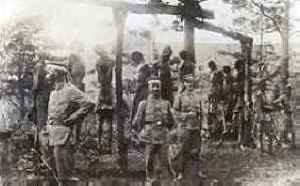
The campaign against the Herero tribes which resisted the occupation of Namibia from 1904- 1912 utilized encirclement operations, racial cleansing and what would become known as Bandenkämpfung operations. 70 In 1904 the Herero were banished from their lands which were handed over to German settlers. When the Herero resisted Von Trotha ordered that they be exterminated. “Every Herero found within German borders with or without weapons, was to be shot. But most of them died without violence. The Germans simply drove them out into the desert and sealed off the border.” 71
20030228_Herero

Of about 80,000 Herero some 60,000 died in the desert, a few thousand survived to be “sentenced to hard labor in German concentration camps.” 72 Despite praise from some in the General Staff the brutality shocked many Germans and General Alfred Von Schielffen who had to defend himself from the “accusations that he had harmed the good name of the army” ensured that “Trotha never served in the field again.” 73 Despite this the application of such Bandenkämpfung operations found their way into German military doctrine.

This was further developed in the First World War, especially in the east where General Fritz Gempp described the security problem as a “ruthless struggle”in which German pacification policy “was in reality the application of terror to galvanize the population into accepting German rule.” 74 Anti-partisan doctrine was codified in the Truppenführung of 1933 which stated that “area defense against partisan warfare is the mission of all units” and that the preferred method of combating partisan bands was that they be surrounded and destroyed. 75 General Erhard Rauss later described active and passive measures used to deal with partisans, focusing on the tactic of encirclement to destroy the enemy. 76

The accounts of the German General Staff praised Von Trotha’s operation. “The month long sealing of desert areas, carried out with iron severity, completed the work of annihilation…the sentence had been carried out” and “the Hereros had ceased to exist as an independent people.” 77

Anti-partisan doctrine focused on the destruction of the partisans, was coupled a total war philosophy and provided fit well with Hitler’s radical ideology. The “propensity for brutality in anti-guerrilla warfare was complimented by officers’ growing preoccupation, both during and after World War I, with the mastery and application of violence.” 78 Michael Geyer notes: “ideological mobilization for the creation of a new national and international order increasingly defined the parameters of technocratic planning.” 79 The acceptance of long used brutal tactics to destroy the enemy combined with Hitler’s radical racial animus against the Jews could only be expected to create a maelstrom in which all international legal and moral standards would be breached.

To be continued…

Notes

25 Geyer, Michael. German Strategy 1914-1945 in Makers of Modern Strategyfrom Machiavelli to the Nuclear Age.

Peter Paret, editor. Princeton University Press, Princeton NJ. 1986. p.582

26 Ibid. Geyer. German Strategy p.587

27 Strachan, Hew. European Armies and the Conduct of War. George, Allen and Unwin, London, UK 1983 p.174

28 Goerlitz, Walter. The Memoirs of Field Marshal Wilhelm Keitel: Chief of the German High Command 1938- 1945. Translated by David Irving. Cooper Square Press 2000, First English Edition 1966 William Kimber and Company Ltd. German edition published by Musterschmnidt-Verlad, Gottigen 1961 p. 135

29 Ibid. Fest, Hitler. p. 649

30 Ibid. Megargee, War of Annihilation p.7

31 Trevor-Roper, H.R. Hitler’s Table Talk 1941-1944 with an introduction by Gerhard L Weinberg, Translated by Norman Cameron and R.H. Stevens, Enigma Books, New York, NY 2000. Originally published in Great Britain by

Weidenfeld & Nicholoson, London 1953 p. 27 Goebbels notes a similar theme in his recollection of Hitler’s reasons for destroying Russia a power . See Taylor, Fred, Editor and Translator. The Goebbels Diaries 1939-1941, Penguin Books Ltd, Harmondsworth UK and New York NY 1984 pp. 413-415.

32 Goerlitz, Walter. History of the German General Staff.” Translated by Brian Battershaw, Westview Press, Boulder

and London, 1985. Originally published as Die Deutsche Generalstab Verlag der Frankfurter Hefte, Frankfur am Main, 1953 p.390

33 Warlimont, Walter. Inside Hitler’s Headquarters 1939-45. Translated by R.H. Berry, Presido Press, Novato CA,

1964 p. 150

34 Weinberg, Gerhard L. Visions of Victory: The Hopes of Eight World War II Leasers. Cambridge University Press, New York, NY 2005. p. 24

35 Aly, Gotz and Heim, Susanne. Architects of Annihilation :Auschwitz and the Logic of Destruction Phoenix

Paperbacks, London, 2003, Originally published as Vordenker der Vernichtung, Hoffman und Campe, Germany 1991, English translation by Allan Blunden. First published in Great Britain Weidenfeld & Nicholson, London, 2002 pp. 245-246

36 Ibid. Fest. Hitler p.649

37 Wette, Wolfram. The Wehrmacht: History, Myth, Reality. Translated by Deborah Lucas Schneider. Harvard University Press, Cambridge, MA 2006. Originally published as Die Wehrmacht: Feindbilder, Vernichtungskreig, Legenden. S. Fischer Verlag, GmbH, Frankfurt am Main, 2002 p.93

38 This understanding is different than many historians who as Friedlander notes advocate something like this: “The persecution and extermination of the Jews of Europe was but a secondary consequence of major German policies pursued toward entirely different goals.” See Friedlander p.xvi

39 Ibid. Megargee. War of Annihilation p.xii

40 Liddell-Hart, B.H. The German Generals Talk. Quill Publishing, New York, NY. 1979. Copyright 1948 by B.H. Liddell-Hart p.22

41 It has to be noted that Liddell-Hart published this work in 1948 and was limited in the materials available, his

primary sources being German officers who he viewed with sympathy because he saw them as exponents of his theory of the indirect approach. The time was also around the beginning of the Cold War and the Berlin Blockade when many American and British leaders were trying to end the war crimes trials and bring the West Germans into the new anti-Communist alliance.

42 Ibid. Wette. The Wehrmacht p.224

43 Macksey, Kenneth. Why the Germans Lose at War: The Myth of German Military Superiority. Barnes and Noble Books, New York 2006, originally published by Greenhill Books, 1996. p.139

44 Stern, Fritz. Gold and Iron: Bismarck, Bleichroder and Building of the German Empire. Vintage Books a division of Random House, New York 1979 First published by Alfred a Knopf 1977. p.495

45 Ibid. Stern. Gold and Iron p.494

46 Ibid. Bracher. The German Dictatorship p.34

47 Ibid. Bracher The German Dictatorship pp.34-35

48 Höhne, Heinze. Canaris: Hitler’s Master Spy. Translated by J. Maxwell, Brownjohn. Cooper Square Press,New York 1999. Originally published by C. Bertelsmann Verlag Gmbh, Munich 1976, first English edition by Doubledayand Company 1979 p. 216. Canaris would later protest the Kristalnacht to Keitel (p.334) and become convinced of the crime of the Nazis against the Jews.

49 Ibid. Witte. The Wehrmacht p.98

50 Ibid Witte The Wehrmacht, p.73

51 Arendt, Hannah, Eichmann in Jerusalem: A Report on the Banality of Evil. Revised and Enlarged Edition. Penguin Books, Harmondsworth, England and New York, NY 1965. Originally published by Viking Press, New York, NY 1963 p.26

52 Ibid. Megargee. War of Annihilation p.6

53 Fritz, Stephen G. Frontsoldaten: The German Soldier in World War II. The University Press of Kentucky, Lexington, KY 1995 p.195

54 Craig, Gordon A. The Politics of the Prussian Army 1640-1945. Oxford University Press, London and New York, 1955 p.495

55 Novatny, Alfred. The Good Soldier. The Aberjona Press, Bedford, PA 2003 p.40

56 Westermann, Edward B. Hitler’s Police Battalions: Enforcing Racial War in the East. University Press of Kansas, Lawrence, KS. 2005 p.64 Westermann also notes the preponderance of SA men who entered the Order Police in the 1930s, a factor which helped further the politicization of that organization.

57 Ibid. Rhodes Masters of Death p.23

58 Ibid. Westermann Hitler’s Police Battalions p.103

59 Sydnor, Charles W. Soldiers of Destruction: The SS Death’s Head Division, 1933-1945. Princeton University Press, Princeton, NY 1977 p. 28

60 Shepherd, Ben. War in the Wild East: The German Army and Soviet Partisans. Harvard University Press, Cambridge, MA 2004 p.41

61 Blood, Philip. Hitler’s Bandit Hunters: The SS and the Occupation of Europe. Potomac Books Inc. Washington, DC 2008 p.11

62 Ibid. Shepherd. War in the Wild East p.42

63 Ibid. Goerlitz. History of the German General Staff p.93

64 Rothenburg, Gunther. Moltke, Schieffen, and the Doctrine of Strategic Envelopment in Makers of ModernStrategy from Machiavelli to the Nuclear Age. Peter Paret, editor. Princeton University Press, Princeton NJ. 1986 p.305

65 Hughes, Daniel J. editor. Moltke on the Art of War: Selected Writings, translated by Harry Bell and Daniel J Hughes. Presidio Press, Novato CA 1993. p.32

66 Ibid. Blood Hitler’s Bandit Hunters p.6 Lieber was a Prussian emigrant to the US who taught law at Columbia University.

67 Instructions for the Government of Armies of the United States in the Field, prepared by Francis Lieber, LL.D., Originally Issued as General Orders No. 100, Adjutant General’s Office, 1863, Washington 1898: Government Printing Office. Retrieved from http://avalon.law.yale.edu/19th_century/lieber.asp 6 May 2014

68 Ibid. Blood Hitler’s Bandit Hunters pp.12-13

69 Ibid. Shepherd Wild War in the East p.42

70 Ibid. Blood. Hitler’s Bandit Hunters pp.16-19 71 Ibid. Lindqvist Exterminatethe Brutes p.149 72 Ibid. Lindqvist Exterminate the Brutes p.149 73 Ibid. Blood. Hitler’s Bandit Hunters p.19

74 Ibid. Blood. Hitler’s Bandit Hunters p.22

75 Condell, Bruce and Zabecki, David T. Editors. On the German Art of War: Truppenführung, Lynn Rienner Publishers, Boulder CO and London 2001. p.172

76 Tsouras, Peter G. Editor, Fighting in Hell: The German Ordeal on the Eastern Front The Ballantine Publishing

Group, New York, 1998. First published 1995 by Greenhill Books pp. 142-146. It is interesting to note that Rauss does not describe any actual anti-partisan operation

77 Ibid. Lindqvist. P.149

78 Ibid. Shepherd. War in the Wild East p.45

79 Ibid. Geyer. German Strategy p.584

Leave a comment

Filed under ethics, Foreign Policy, History, Military, national security, nazi germany, Political Commentary, world war two in europe

Downfall: Imagining the Coming Götterdämmerung

trump-flames-iran-protests

Friends of Padre Steve’s World,

I am watching the movie Downfall tonight as I imagine the coming Götterdämmerung that awaits the United States under President Trump. I do not know when it is coming or exactly how it will happen. But I believe that unless something happens to curb his power, which at the present time is unrestrained by his political party, I expect that the rule of law and the rights enumerated in the Constitution will end. When it does, if not before, the country will plunge into wars without allies that it cannot win, unless winning is defined by obliterating enemies in a nuclear holocaust. If that happens there are no winners.

Somehow when the final cataclysm occurs I expect that the President and his most devoted followers will in the midst of the flames consuming them will blame the very people who helped them to power for the downfall. And they do so without any feeling for them.

When SS General Wilhelm Mohnke who was in charge of the defense of the area around the Reich Chancellory begged Josef Goebbels to convince Hitler to surrender Berlin to allow the people of the city to live, Goebbels responded:

“I feel no sympathy. I repeat, I feel no sympathy! The German people chose their fate. That may surprise some people. Don’t fool yourself. We didn’t force the German people. They gave us a mandate, and now their little throats are being cut!”

Neither he President nor his propagandists have any sense of compassion or empathy. In the days before he killed himself Hitler ranted to those in his bunker including Albert Speer:

“Everyone has lied to me, everyone has deceived me, non[sic] one has told me the truth. The armed forces have lied to me and now the SS have left me in the lurch. The German people has not fought heroically, it deserves to perish. It is not I who have lost the war, but the German people.”

Believe me, however the Trump administration meets its end, be it by the Muller investigation, a porn star, a change of control in the House and Senate, or a disastrous war the response of the President and his media sycophants will be quite similar to Goebbels and Hitler. It will be everyone else’s fault, including those who believed in him, faithfully supported his policies, and followed them into the abyss.

I do pray that I am wrong but I cannot see how this will end in anything less than a disaster.

Again I pray that I am wrong.

Until tomorrow,

Peace

Padre Steve+


1 Comment

Filed under ethics, film, History, holocaust, national security, News and current events

My Country Right or Wrong?

29f03605f6b48a52887c2b51a20b5382

Friends of Padre Steve’s World,

Even since I was a child I was an avid reader of history, especially military history and biography. I idolized the men that I read about and many of the things that they said and did, and almost always skewed them into an almost perverse form of patriotism. After the attacks of 9-11-2001 and during the run up to the invasion of Iraq I got into a internet argument with a man who later became the Presiding Bishop of my former denomination. He was and still is a very honorable man.

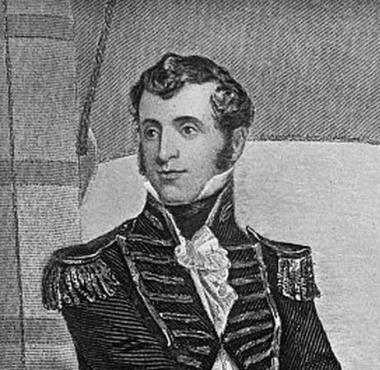
While very conservative theologically he had a strong sense of social justice and having come to adulthood during Vietnam war era he had a certain sense of distrust about military adventurism that I, an officer who at that time had some twenty years of military service did not fully appreciate. I responded to one of his comments with a quote from one of my favorite American Naval heroes, Captain Stephen Decatur who once remarked:

“Our Country! In her intercourse with foreign nations may she always be in the right; but right or wrong, our country!”

decatur 2 sqaure

There is some truth in what Decatur said, but his words should not be used to justify imperialistic nationalism, racism, or militarism. Sadly back then that was exactly how I used it to attempt to shut down the arguments of an honorable man. If he ever reads this I hope that Bishop Craig Bates accepts my heartfelt apology for how I treated him back then.

It took me two combat tours, one at sea where I was a member of a boarding team, and the other in Iraq’s Al Anbar Province, and a lot more military and historical education that I realized how wrong that I was in doing this. Using patriotic quotes to buttress immoral, illegal, unconstitutional, and un-Christian policies is damnable. G. K. Chesterton noted: “‘My country, right or wrong,’ is a thing that no patriot would think of saying. It is like saying, ‘My mother, drunk or sober.’”

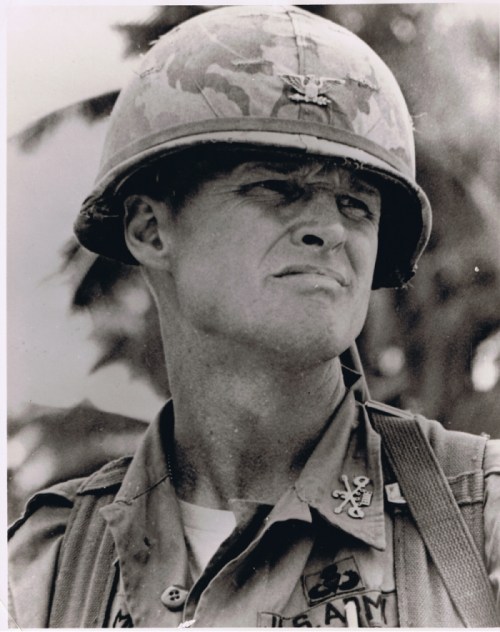
But, I am afraid that my former understanding of patriotism is exactly what many Americans follow today, regardless of their political affiliation or ideology seem to automatically defer to the decisions of the President in launching military strikes. This has been largely true since the end of Second World War until now with the exception of Vietnam. No one wants to be “against the troops” and I am still one of those troops, but opposing nationalism, imperialism, and militarism is not the same as “supporting the troops.” The late Army Lieutenant General Hal Moore, who led his battalion into the Battle of the Ia Drang in 1965 and was memorialized in the film We Were Soldiers told West Point Cadets in 2005:

“The war in Iraq, I said, is not worth the life of even one American soldier. As for Secretary Rumsfeld, I told them, I never thought I would live long enough to see someone chosen to preside over the Pentagon who made Vietnam-era Defense Secretary Robert McNamara look good by comparison. The cadets sat in stunned silence; their professors were astonished. Some of these cadets would be leading young soldiers in combat in a matter of a few months. They deserved a straight answer.

The expensive lessons learned in Vietnam have been forgotten and a new generation of young American soldiers and Marines are paying the price today, following the orders of civilian political leaders as they are sworn to do. The soldiers and those who lead them will never fail to do their duty. They never have in our history. This is their burden. But there is another duty, another burden, that rests squarely on the shoulders of the American people. They should, by their vote, always choose a commander in chief who is wise, well read in history, thoughtful, and slow-exceedingly slow-to draw the sword and send young men and women out to fight and die for their country. We should not choose for so powerful an office someone who merely looks good on a television screen, speaks and thinks in sixty-second sound bites, and is adept at raising money for a campaign.

If we can’t get that part right then there will never be an end to the insanity that is war and the unending suffering that follows in war’s wake-and we must get it right if we are to survive and prosper as free Americans in this land a million Americans gave their lives to protect and defend.”

I remember reading General Moore’s back words then and despite my respect for him I didn’t see their truth, I still believed the lies of Donald Rumsfeld, the Bush Administration, and the Right wing media. I was wrong, and within two and a half years I would discover just how right that he was.

Today, some ten years after I returned from Iraq I find that we now have a President whose historical, ethical, and policy blindness is subjected to his narcissistic and paranoid personality. He is a man who dodged the draft, avoided military service, condemned men and women wounded. killed, or captured in combat as losers while bragging that avoiding sexually transmitted diseases in the 1980s was his Vietnam.

War is a great way to distract from other real concerns, especially if it gives the President, any President, a chance to divert attention from his own malfeasance and criminality. Our Republic is in danger and I do not think that the danger will soon pass. I only wish that it would.

So until tomorrow,

Peace

Padre Steve+


Leave a comment

Filed under ethics, Foreign Policy, History, iraq, leadership, Military, national security, News and current events, Political Commentary, vietnam

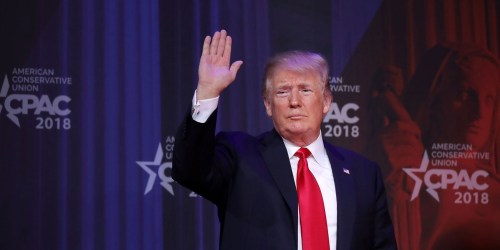
“Incapable of Feeling Shame” The Moral Bankruptcy of the Trump Administration

trump-cpac-1519415653-article-header

Friends of Padre Steve’s World,

Tonight I have just a short thought for us to ponder. Hannah Arendt wrote: “The chief qualification of a mass leader has become unending infallibility; he can never admit an error.”

This statement is undeniably true. Hitler, Stalin, Mao, Castro, the Ayatollahs, and Pol Pot are just some examples. More troubling is that such personalities are not absent today, Vladimir Putin, Marianne LePen, Recep Erdogan, Rodrigo Duterte, Viktor Orbán our own President Trump display this tendency, and their most devoted followers embrace it as well.

In the case of President Trump, presidential power means never having to say your sorry, or made a mistake. Failures are blamed on others, Congressional leaders, former President’s Obama and Bush, journalists, and even advisors who have outlasted their usefulness, case in point, Michael Flynn, James Comey, Steve Bannon, H. R. McMaster, Reince Priebus, Rex Tillerson, Gary Cohn, Tom Price, Sebastian Gorka, and so many more. Conservative columnist and former Bush Administration staffer Michael Gerson wrote in July of 2017: “The president and his men are incapable of feeling shame about shameful things.”

The inability to admit error is dangerous, but it also points to other potentially severe psychological issues. It is one of the characteristics of a paranoid personality, as well as a narcissistic personality. Richard Hofstadter wrote:

“The idea of the paranoid style as a force in politics would have little contemporary relevance or historical value if it were applied only to men with profoundly disturbed minds. It is the use of paranoid modes of expression by more or less normal people that makes the phenomenon significant.”

Likewise, even if those characteristics do not reach the point of becoming an actual psychological disorder, they can be severe enough to impair sound judgment as a leader, and lead to potentially terrible decisions including criminal acts so vast that they beggar the imagination. History shows us this all too often. These kinds of leaders see the world as a threatening place, full of enemies, real and imagined. Ethics and law are irrelevant to them so long as they win. The destruction of their enemies is of the first importance to such leaders, even when it is detrimental to the nations that they lead, even Hitler turned on Germany at the end of the Second World War because he lost the war and then blamed it on his people.

So until tomorrow,

Peace

Padre Steve+

1 Comment

Filed under ethics, leadership, mental health, national security, News and current events, Political Commentary

Mission Accomplished? Trump Evokes Memories Of Defeat and Shame

Friends of Padre Steve’s World,

The Prussian military theorist Carl von Clausewitz wrote:

“No one starts a war–or rather, no one in his sense ought to do so–without first being clear in his mind what he intends to achieve by the war and how he intends to conduct it.” 

Friday night President Trump unleashed United States Navy and Air Force assets in a coordinated strike against alleged Syrian chemical weapon sites in Damascus and at an air base outside of Homs. A total of about 110 weapons were fired from U.S. and French Navy ships in the Mediterranean Sea, and from USAF, Royal Air Force, and French Air Force aircraft at these targets. It was the second time he conducted an isolated strike against the Syrians for using poison gas. In each case he seemed visibly upset about the pictures of the dead children, but cannot seem to understand that Assad does such things every day even when his forces don’t use chemical weapons, and that his lack of coherence on Syria is only helping Assad.

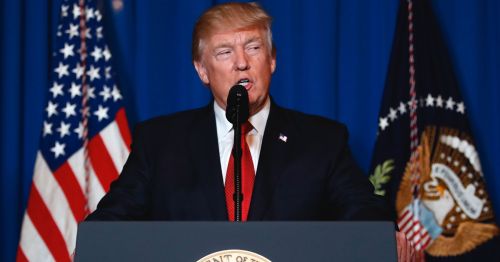
As the strikes proceeded the President announced his decision and reasoning for the attack. Honestly in his speech Mr. Trump said all the right things, but the well telegraphed actions gave time for the Syrians with probable Russian assistance move key components of their program out of the areas stuck by the military. They were also disconnected from any coherent military and diplomatic strategy for success which is a recipe for failure. If the President bothered to study history, especially the military history of the United States since the Second World War he would understand this, but he doesn’t.

The unfortunate thing was that his previous words pressing the military for a withdrawal from Syria had set the stage for the Syrians to launch their deadly gas attacks. The fact is that President, in thought, word, and deed has not cared enough about what happens in Syria or what Bashar Assad does when it doesn’t involve chemical weapons; nor what happens to the people who fought alongside us after we leave.

The President’s policy of stopping Syrian refugees, be they Muslim or Christian from finding refuge in the United States shows his callous heart. Not only did he prevent them from coming; he demonized them and urged other nations to reject them. It was a shameless reprise of the 1930s and 1940s America First movement that shut out the Jews and defended the Nazis.

His only consideration was the defeat of ISIS which from the time of President Obama the U.S. Military was doing. Unfortunately the decision to withdraw not only has emboldened Assad, but will help Iran, Russia, and yes even ISIS, which once free of U.S. Military pressure will rebuild and rebound from defeat just as Al Qaeda Iraq, its predecessor did in 2011.

Likewise the President began openly telegraphing his intentions days before the attack which gave plenty of warning and time for the Assad regime to work with the Russians to move anything of real importance away from the targeted sites. To add insult to injury the French Foreign Minister admitted that the Russians had been warned and given details of what was to be attacked and the American Chairman of the Joint Chiefs of Staff talked about how we had worked to “de-conflict” in regard to battle space and air space to ensure that Russian units were not hit.

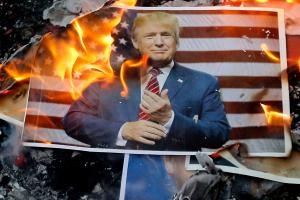
In terms of military effects the Pentagon described the attack as a “one off” and admitted that despite supposedly setting back the Syrian chemical weapons program by years that the Syrians still had the capacity to use them. While U.S. Ambassador to the United Nations Nikki Haley said that the United States is “locked and loaded” to resume strikes the language of the White House is somewhat ambiguous and equivocal. In Syria Assad’s supporters were overjoyed by the lack of force and American allies and opponents of Assad saw their hopes crushed. In Moscow pro-Putin demonstrators burned effigies of President Trump who on Saturday morning proclaimed “Mission Accomplished!!” on Twitter as he praised the actions of the military forces involved.

I’ve been in the military since 1981 and I am still serving, and I think that mission for mission we do our job very well, but our successes are tactical and not strategic. A “one off” missile strike is not a strategy for success. It may have been executed perfectly, but a multitude of tactical successes in absence of a clear strategy for victory and for what happens after it are meaningless in a strategic sense. The sacrifices for soldiers and national treasure for no reason other than to create a distraction from domestic problems is immoral, unethical, and under U.S. and international law illegal.

Meanwhile official Russian Troll and Bot propaganda activity on social media has increased by some 2000% since Friday. Many of those posts and tweets are being shared and spread by Trump supporters as well as insane leftist whose hatred of the United States and the West ensures that they cannot differentiate between truth and fiction. That is dangerous and it gives the Russians an upper hand because Putin’s intelligence services have succeeded in dividing Americans and the West far more effectively than the Soviets in the Cold War.

I believe that the manner in which the President launched the strike, the contradictory messages that the President sends in his tweets, the lack of coherent policy and strategy goals, and the failure to consult makes the decision to strike unwise and illegal and were more a product of his unformed mind and desire for self-preservation at all costs. When I think about these strikes and what might happen in the coming months as political pressure mounts I think of the words of the British military historian B.H. Liddell-Hart:

“I used to think that the causes of war were predominantly economic. I came to think that they were more psychological. I am now coming to think that they are decisively “personal,” arising from the defects and ambitions of those who have the power to influence the currents of nations.

Don’t get me wrong, I despise Assad and his regime and believe that Assad deserves far worse that Gaddafi or Saddam ever got, he is as the President noted an “animal.” But these strikes in the absence of a comprehensive strategy do nothing to remove him, weaken his power, or help those people he and his Russian, Iranian, or Hezbollah allies oppress and terrorize; especially when the President advertises that the United States has no desire to remain in Syria, even to protect the people that the U.S. Military has shed blood to save. The President’s policy and actions bring dishonor to a nation founded on the principle that “all men are created equal.” I strongly believe that this attack was a result of the President’s personal moral defects as his policies do not seem to be linked to any coherent strategy.

Simply doing one off strikes do nothing to redeem him or his policies; his ignorance of history and national security policy should concern and disturb even his most devoted supporters. Unless he decides to couple military power with a coherent approach to overall national security and foreign policy rooted in American values, respect for law, and human rights then regardless of how long he serves as President he will be remembered as a disingenuous fraud who used a foreign crisis to divert attention from his own crimes. Even Hitler didn’t do that.

The situation remains terribly dangerous and no the mission, whatever it is, was not accomplished unless it was to divert attention from his present political problems. If so that lasted about twenty minutes if that. When I watch him and read the President’s tweets I can only think of Lord Balfour’s words about one of his opponents in the House of Lords “If he had a little more brains he would be a half-wit.”

So until tomorrow,

Peace,

Padre Steve+

1 Comment

Filed under Foreign Policy, History, leadership, middle east, Military, national security, Political Commentary

Are the Lamps Going Out Again? Trump Strikes Syria

636272575274687699-XXX-IMG-AP-TRUMP-US-SYRIA-A-1-1-H1I04JT0-90098248

Friends of Padre Steve’s World,

I knew that it was coming. I knew that despite the resistance of James Mattis and the Joint Chiefs that President Trump would hit Syria this week, especially as multiple domestic crises engulf his presidency.

I’m not going to say a lot tonight because we don’t know the full measure of the military strikes nor do we yet know the response of the Russians, Syrians, Iranians, or their Hezbollah allies will be.

That being said the U.S. policy towards Syrian has been confused and contradictory for years and that goes back to the Obama administration’s “Red Line” which turned out to be little more than empty words. However the Obama administration’s strategy to defeat ISIS by backing the Kurds and Arabs in Syria and Iraq was successful enough for President Trump to claim credit for it and then announcing that he wanted a quick withdraw from Syria, despite threats to the people that we had spent lives and treasure to protect, and no ISIS still exists and has the capability of recovering; something that it did in 2012 after the U.S. left Iraq.

I did read the President’s statement about the strikes against Syria. While he left out some details the President was telling to truth about Russia and Syria.

That being said we have to be concerned when a habitual liar involved in the midst of scandal tells the truth about something that previously he showed deep ambivalence. Dietrich Bonhoeffer wrote: “It is worse for a liar to tell the truth than for a lover of truth to lie…. There is a truth which is of Satan. Its essence is that under the semblance of truth it denies everything that is real. It lives upon hatred of the real world which is created and loved by God.” Now we wait to see what happens next; the response of the Russians, Syria, Iran, and Hezbollah, not to mention the Turks, Israelis, Saudis, Iraqis, Kurds, ISIS and others with a stake in the game.

He also failed to get consent of Congress, instead relying on the same, tired, Authorization for the Use of Force that Congress granted President Bush after September 11th 2001. While I despise Assad and his barbaric regime and wouldn’t mind him getting the full Gaddafi treatment from the people that he has persecuted for decades, and I totally oppose the Russian assistance to his criminal regime, I believe that this attack was illegal under international law and a violation of the Constitution and and American law. Congress should have been consulted and given consent in a new authorization for the use of force or a declaration of war.  Instead he ordered the strikes on his own and sadly even though what he said was correct his decision will now be regarded more in light of the swirling scandals surrounding him than the righteousness of the cause, especially when he has fought to ensure that the same people he is defending are denied entry into the United States as refugees.

As the world went to war in August 1914 “Sir Edward Grey, standing with a friend at the window as the street lamps below were being lit, made the remark that has since epitomized the hour: “The lamps are going out all over Europe; we shall not see them lit again in our lifetime.”

Until tomorrow,

Peace

Padre Steve+

1 Comment

Filed under middle east, Military, national security, News and current events, Political Commentary, War on Terrorism

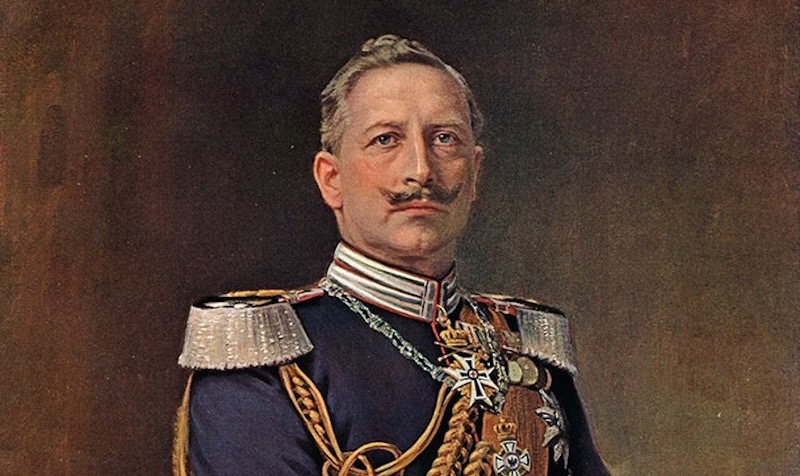
A Crisis of Character: Trump Emulates Kaiser Wilhelm II and War Beckons

Two of a Kind: Kaiser Wilhelm II and President Trump

Friends of Padre Steve’s World,

With every passing day the words of Theodore Roosevelt keep echoing in my mind. The President and hero of San Juan Hill noted: “Character, in the long run, is the decisive factor in the life of an individual and of nations alike.” That is especially true as we all await to see if the actions of President Trump live up to his Tweet storms to defy the Constitution, and unleash missiles on Syria and the forces of Russia and Iran located in that suffering country.

I could never in a million years believed that I would see the day when the manifold transgressions of an American President threaten the both the Constitution and potentially the very existence of the United Staes.  First growing number of  of crises involving multiple indictments of Trump surrogates involved with the supposedly non-existent Russian interference and the President’s threats against the press, political opponents, prosecutors, and his own Department of Justice regarding the Trump campaign collusion with Russia are frightening on their own merits. But then there is the of potential nuclear war with North Korea. But for just a dash of spice let’s mention the President’s tweets of looming strikes on Syria and taunts against Russia. Frankly as recipes for disaster go this is like adding Ghost Peppers to a Sarin laced cheesecake, but I digress…

I think that it is important to see the President’s words and actions in light of a number of factors. The first and foremost of those is character, just as Theodore Roosevelt noted. President Trump may be a character; he may even be a hoot when he gets peed on by Putin paid prostitutes (if such rumors are true) but he shows little evidence of actually having character or being a man of honor.

That dear reader is really the problem, thus it is important to know how the character other leaders at other historical  influenced how they treated people, reacted to criticism, and led their nations into disaster.

In the American experience one is hard pressed to find a President with a similar temperament and character that corresponds to Donald Trump. Yes, Nixon had some similarities, Jackson as well, but both men even at their worst did, at least in public restrain themselves and Nixon, when confronted with the reality of certain impeachment did the country a favor by resigning. Of course American history is replete with other Presidents and leaders with a corresponding lack of character but none tweeted with their iPhone in one hand and the nuclear football in the other, although I assume that he has to put at least one down to eat his friend chicken as he gets his political strategy and intelligence briefings from Sean Hannity and Steve Doocey.

But the times have changed. At onetime there were leaders in the Republican Party who chose to honor the Constitution and their oaths over blind party loyalty or their determination to pass a certain legislative act. Their resistance to President Nixon was instrumental in his resignation in 1974. But there seem to be few current members of the GOP congressional delegations willing to stand either for fear of the Trump base, or blind determination to press on with tax cuts even if it means the sacrifice of the Constitution, nuclear war, or their own integrity.

But all that being said I do think that there is a leader from historywho in temperament was much like President Trump, who ended up helping to lead his nation and the world to the abyss of World War. That is not Adolf Hitler who many people often compare the President. I think that Trump’s authoritarian tendencies and his reliance on his radicalized base, including armed mobs in the street, and hyper-partisan allies in the right wing media, especially Fox News and Rupert Murdoch’s NewsCorp which serves as his de-facto state media are similar, but they do not speak to the President’s unstable, narcissistic, and paranoid behaviors. I think that the better comparison is to Kaiser Wilhelm II of Germany with whom the President seems to share many similarities, both in temperament and words.

As tensions built in the lead up to the First World War Kaiser Wilhelm alternated between threatening Russia with destruction and pleading with his cousin Czar Nicholas II for peace.

In his book The Sleepwalkers: How Europe Went to War in 1914, Christopher Clark wrote of Wilhelm in words that are strikingly reminiscent of the President.

“It was one of this Kaiser’s many peculiarities that he was completely unable to calibrate his behaviour to the contexts in which his high office obliged him to operate. Too often he spoke not like a monarch, but like an over-excited teenager giving free rein to his current preoccupations.

‘I am the sole master of German policy,’ he remarked in a letter to the Prince of Wales (the future Edward VII), ‘and my country must follow me wherever I go”

“Wilhelm frequently –especially in the early years of his reign –bypassed his responsible ministers by consulting with ‘favourites’, encouraged factional strife in order to undermine the unity of government, and expounded views that had not been cleared with the relevant ministers or were at odds with the prevailing policy.

“It was in this last area –the unauthorized exposition of unsanctioned political views –that the Kaiser achieved the most hostile notice, both from contemporaries and from historians. There can be no doubt about the bizarre tone and content of many of the Kaiser’s personal communications in telegrams, letters, marginal comments, conversations, interviews and speeches on foreign and domestic political themes. Their exceptional volume alone is remarkable: the Kaiser spoke, wrote, telegraphed, scribbled and ranted more or less continuously during the thirty years of his reign, and a huge portion of these articulations was recorded and preserved for posterity…”

Max Hastings wrote that Wilhelm “was a brittle personality whose yearning for respect caused him to intersperse blandishments and threats in ill-judged succession.” Sean McMeekin in his book July 1914 wrote that Wilhelm had an “insecurity complex, a need for constant attention and acclaim. As one of his many critics put it, the kaiser needed to be “the stag at every hunt, the bride at every wedding, and the corpse at every funeral.” He also noted “Eager for praise, taking offense at the merest slight, the kaiser was a difficult man to work for. Bismarck had disdained to gratify Wilhelm II’s fragile ego after he became emperor in 1888, which led to his sacking two years later.”

Like President Trump the Kaiser did experience some push back from different governmental ministers, and was somewhat restrained during the month leading up to the war, but his constant belligerence, instability, and unscripted remarks helped set the diplomatic and governmental crisis that led to the war. Of course this was not his fault alone, the Austrian-Hungarians, Serbians, Russians, French, and British all had a hand, but the Kaiser, through his words and actions during the three decades preceding the war bears much responsibility for what happened in 1914. If the Kaiser had had a Twitter account he would have certainly used it in a similar manner to President Trump.

But Germany had no checks and balances to restrain Wilhelm. He was an absolute monarch. Americans do still have institutional checks and balances to Presidential overreach or abuses should we choose to follow the Constitution, but for that to happen the leadership of the Republican Party must also act, as did their predecessors during the Nixon administration to put principle or party, and rule of law over blind obedience. This is not about partisanship; it is about the Constitution, our form of government, and yes, even the prevention of nuclear war, that being said I don’t think that todays Republicans would pass the test that Wilhelm’s advisors failed in 1914.

Character and temperament are very important in times of crisis and elevated tensions. Character is also fate. We should all tremble when we think of the lack of character and maturity shown by our President.

Until tomorrow,

Peace

Padre Steve+

3 Comments

Filed under ethics, History, national security, News and current events, Political Commentary, world war one

The Lights Are Going Out: President Trump’s Appointment of War Criminals as Senior Foreign Policy Advisors

Trump holds a discussion about school shootings with state governors from around the country at the White House in Washington

Friends of Padre Steve’s World,

In her book The March of Folly: From Try to Vietnam historian Barbara Tuchman wrote:

“No one is so sure of his premises as the man who knows too little.”

If there is a man who ever embodied the truth of Tuchman’s words it is President Donald Trump.

Over the past two weeks President Trump has removed men from his cabinet who acted to restrain many of his worst instincts and who all were considered the “adults in the room.” The final nail in the coffin for Secretary of State Rex Tillerson, and National Security Advisor Lieutenant General H. R. McMaster was their condemnation of the actions of Vladimir Putin’s Russia, especially in the killing of Russian dissidents in the United Kingdom. Tillerson and McMaster were also proponents of maintaining the agreement engineered by the Obama Administration and European countries to curb Iran’s nuclear ambitions diplomatically and economically. The two had somewhat different approaches to North Korea with Tillerson a proponent of negotiations and deterrence and McMaster more favorable to preventive military actions to stop or delay the North’s nuclear and intercontinental ballistic missile programs.  Additionally Trump’s Chief Economic Advisor, Gary Cohn who has advocated more moderate and

Their removal has resulted in a shake up of the national security team. CIA Director Mike Pompeo was nominated by the President to take Tillerson’s place. Pompeo is considered to be a hawk on Iran and opposed to the current accord who has called for strikes on Iran’s nuclear facilities and openly mused about regime change in both Iran and North Korea. Pompeo, a graduate of West Point and a Congressman had never been in an executive position

To replace Popeo at CIA, President Trump nominated the deputy director of the CIA, Gina Haspel who according to Robert Richer who worked with her has no political agenda. That being said after 9-11 she ran an interrogation site in Thailand that engaged in the torture of detainees and recommending that tapes of those interrogations be destroyed. Her defenders state that she was operating within orders because such measures were authorized at the time. However based on precedent of the Nuremberg War Crimes Trials the defense of “just carrying out orders” or defending such actions because they were “legal” at the time is not a defense. At Nuremberg, especially in trials of those who engaged in the torture of military and political prisoners, the tribunals convicted dozens of mid-level and high level functionaries of war crimes for doing the activities and methods used by Haspel and her colleagues.

The problem with Haspel is not her devotion to her service and desire to protect the United States, but in the fact that she was willing to use the rational of present “legality” to use torture in ways that when used against Americans the United States judges to be illegal and immoral. It is no wonder that Senator John McCain who experienced such torture at the hands of the North Vietnamese has his doubts about her. My concern is that since she once engaged in such measures will she do so again if ordered. By the standards of Nuremberg she would have stood trial and probably been convicted as a war criminal, and the President has nominated her to be Director of the CIA. Richer says that he believes that she will abide by the law and speak truth to people in  power. If she is confirmed as CIA Director I hope that he is right, but history demonstrates that civil servants, especially professionals in the police and intelligence services are quite adept at adapting to the methods and dictates of whoever is in power in their service to the state. Thus I am concerned.

Finally, the President replaced General McMaster with John Bolton who has since the 1990s advocated preventive war as the primary means to the end of United States national security strategy. He despises alliances, international agreements, international organizations, and any kind of universal justice. He regularly attacks the International Criminal Court, which is the direct descendent of the Nuremberg and Japan war crimes tribunals, both of which were engineered and led by the United States. As Supreme Court Justice Robert Jackson who served as the head prosecutor at the major Nuremberg War Crimes Trials noted:

“If certain acts of violation of treaties are crimes, they are crimes whether the United States does them or whether Germany does them, and we are not prepared to lay down a rule of criminal conduct against others which we would not be willing to have invoked against us.”

Bolton rejects that proposition. In his position as President Bush’s under secretary of state for arms control and international security constantly manipulated intelligence to conform to his views and who worked to discredit colleagues and subordinates who attempted to tell the truth. He was one of the most responsible for the decision to attack Iraq which was according to conservative writer George Will was the worst foreign policy disaster “in American history.” Likewise Bolton still defends the decision to go to war against Iraq and washes his hands of the results of that decision, including the nearly 4500 American military personnel killed and over 35,000 wounded and the exponential help it gave to Iran’s desires in the region.

Bolton also would have been a candidate for prosecution at Nuremberg under counts one and two of the indictment;Conspiracy to Wage Aggressive War and Crimes Against Peace. 

The President has now nominated or appointed two people (Haslip and Bolton) who are by the definition of the Nuremberg Tribunal “War Criminals” to be senior foreign policy and intelligence advisors, and a third, Pompeo, who expresses many of the same views but until now has never been in the position to exercise those views or influence the President as to implementing them.

The next six to eight weeks leading to the middle of May will be very significant to the future of the United States and the world. The President has said that he would meet with the North Korean dictator Kim Jung Un regarding North Korea’s nuclear weapons and intercontinental ballistic missile programs, and the renewal of the multi-national agreement on Iran, which both Trump and Bolton oppose. The actions of the President, guided by Bolton will decide wether the United States goes to war, possibly on multiple fronts with enemies capable of causing great damage to the United States, our allies, and the world economy. Millions of lives could be lost, including tens of thousands of United States military personnel and quite possibly millions of American civilians, not counting the lives of so many innocent people in the Middle East and Northeast Asia.

As I watch these events unfold I am reminded of the Tuchman’s immortal account of Sir Edward Grey and the outbreak of the First World War:  “Watching with his failing eyes, the lamps being lit in St. James Park, Grey was heard to remark that “the lamps are going out all over Europe; we shall not see them again in our lifetime.”

The lamps are going out both in the United States and around the world, and if one has any ability to use reason and think ethically one has to think of how terrible the results of President Trump’s uniformed, historically ignorant, and morally bankrupt decisions will end.

Until tomorrow,

Peace

Padre Steve+


7 Comments

Filed under ethics, History, leadership, national security, nazi germany, News and current events, Political Commentary, war crimes

The Most Dangerous Error… Vietnam, Iraq, and Wars to Come

481801_10151367001287059_1003164983_n

Friends of Padre Steve’s World,

I mentioned yesterday that I was going to do some more writing about the Iraq War. This article discusses the war in the context of strategy and the fact that Americans seldom learn the lessons of war and repeat our mistakes regularly. I sense that under the leadership of Donald Trump that we will find ourselves in new and vastly more bloody and destructive wars that will make the wars of the past 15 years seem like child’s play.

We need to learn from history and we seldom do, as B. H. Liddell-Hart wrote:

“All of us do foolish things, but the wiser realize what they do. The most dangerous error is the failure to recognize our own tendency to error. That error is a common affliction of authority.” 

In 1986 an Army Major working at the Office of the Secretary of Defense wrote a book about the history of the US Army in the Vietnam War, and it turned out to be a work of military prophecy. The young officer, Andrew Krepinevich wrote in his book, The Army in Vietnam: 

“In the absence of a national security structural framework that address the interdepartmental obligations associated with FID operations, and considering the lack of incentives for organizational change within the Army, it is presumptuous for the political leadership to believe that the Army (or the military) alone will develop the capability to successfully execute U.S. security policy in Third World countries threatened by insurgency. This being the case, America’s Vietnam experience takes on a new and tragic light. For in spite of its anguish in Vietnam, the Army has learned little of value. Yet the nation’s policy makers have endorsed the service’s misconceptions derived from the war while contemplating an increased role in Third World low-intensity conflicts. This represents a very dangerous mixture that in the end may see the Army again attempting to fight a conventional war against a very unconventional enemy.” (The Army in Vietnam, Andrew F Krepinevich Jr., The Johns Hopkins University Press, Baltimore and London, 1986. p.275)

Krepinevich retired from the Army in the 1990s as a Lieutenant Colonel and has been busy in the world of think tanks and national security policy. Unlike his book, which is probably one of the best accounts of the Vietnam War and as I said before a book that is somewhat prophetic his later work has not been as well received. He has his critics. But despite that criticism once cannot deny the accuracy of his predictions concerning the Army’s subsequent operations in low intensity, or counter-insurgency campaigns beginning in Somalia and encompassing the wars in Iraq and Afghanistan.

If Krepinevich had been alone in his criticism, or his book not been widely read one might excuse policy makers of the 1990s and 2000s who sent the Army and the military into counterinsurgency campaigns involving massive numbers of troops and the commitment of blood and treasure that had practically no value to the national security of the United States. Instead thousands of American and Allied lives were sacrificed, tens of thousands wounded and one nation, Iraq that had nothing to do with the attacks of 9-11-2001 left devastated and crippled empowering Iran the sworn enemy of the United States no regional rival. The exhaustion of the war and the subsequent war against the Islamic State in Iraq and Syria allowed Vladimir Putin’s Russian to become a major player in the Middle East for the first time since the days of the Soviet Union.

n671902058_1153793_4043

One cannot say that the Iraq war was worth the lives and treasure spent to cover the lies and hubris of the Bush Administration. Nor can one say that the effort to change the tribal structure of the fiercely independent Afghan peoples after driving Al Qaeda from that “Graveyard of Empires” been worth the expenditure of so many American lives and treasure. In fact the wars in Iraq and Afghanistan damaged the United States in more ways than their proponents could every admit. The military, now drained by years of war is hamstrung and will be hard pressed to meet legitimate threats to our national security around the world because of the vast amounts of blood and treasure expended in these wars.

In 1920 T.E. Lawrence wrote about the follies of the British government in Mesopotamia, what is now Iraq. His words could have been written about the Bush Administrations 2003 war in Iraq. Lawrence wrote in a letter to the Sunday Times:

The people of England have been led in Mesopotamia into a trap from which it will be hard to escape with dignity and honour. They have been tricked into it by a steady withholding of information. The Bagdad communiqués are belated, insincere, incomplete. Things have been far worse than we have been told, our administration more bloody and inefficient than the public knows. It is a disgrace to our imperial record, and may soon be too inflamed for any ordinary cure. We are to-day not far from a disaster.”

Krepinevech, like Lawrence before him was right, but he was not the only one. In 1993 Ronald H Spector wrote in his book After Tet:

“Americans dislike problems without solutions. Almost from the beginning of the U.S. involvement in Vietnam they have attempted to find “lessons” in the war. The controversy about the appropriate lessons to be learned continues with the same vigor and lack of coherence as the debates about the war itself.

Lessons are controversial and fleeting but lessons long. The memories of 1968 have remained and served to influence attitudes and expectations well into the 1990s. The ghosts of Vietnam haunted all sides of the recent deliberations about the Gulf War. In the wake of that war, President Bush hastened to announce that “we have kicked the Vietnam syndrome.” 

Doubtless many Americans would like to agree. It is easier to think of the Vietnam War as a strange aberration, a departure from the “normal” kind of war, like World War II and the recent war in the Gulf, where the course of military operations were purposeful and understandable and the results relatively clear cut. Yet the Vietnam War may be less of an aberration than an example of a more common and older type of warfare, reaching back before the Thirty Years’ War and including World War I. A type of warfare in which a decision is long delayed, the purposes of the fighting become unclear, the casualties mount, and the conflict acquires a momentum of its own. In a world which had recently been made safe for conventional, regional and ethnic wars, Vietnam rather than World War II may be the pattern of the future.” (After Tet: The Bloodiest Year in Vietnam, Ronald H Spector Vintage Books, a division of Random House, New York 1993 pp. 315-316

That is certainly the case in the wars that the U.S. has waged since Vietnam, with the exception of the First Iraq War and Operation Desert Storm which was an anomaly. While there is a good chance that such wars will continue, it is also possible that major wars between nuclear armed powers or those armed with other weapons of mass destruction or those using cyber warfare to cause mass casualties and disruption to the world.

After serving in Iraq with the advisors to the Iraqi 7th and 1st Divisions and 2nd Border Brigade in 2007-2008 and seeing the results of the great misadventure brought upon our nation and Iraq by the Bush administration I cannot help but recognize how disastrous the wars unleashed after 9-11-2001 have been. I have lost friends and comrades in them, I have seen the human costs in our Navy hospitals and still deal with men and women whose lives have been turned upside down by war.

I believe that had we actually accomplished anything enduring it would be another matter. But the human, economic, strategic and even more importantly the moral costs of this war have been so disastrous to our nation as to make the loss of the Twin Towers and the victims of 9-11-2001 pale in significance.

sch0-017

It is tragic that these wars have gone on so long that many of the young Marines and Soldiers fighting them have no understanding of why they deploy and deploy to Iraq and then Afghanistan, and they are far more knowledgeable than the population at large, many of whom are untouched by the personal costs of the war. We as Americans love to say “we support the troops” but most don’t even know one. For the most part big bases from where our troops train and deploy are far from where most Americans live and might as well be on a different planet. We are invisible to most of the country, except when they see a color guard at a sporting event or bump into one of us in uniform at an airport.

3rd Infantry Places American Flags At The Graves Of U.S. Soldiers

The sad thing is that we don’t learn from history. Krepinevech, Spector and Lawrence could have written what they wrote yesterday. Instead they all wrote many years before the 9-11 attacks and our military response to them. As a historian, a career officer and a chaplain I cannot help but think of the terrible costs of such wars and how they do not do anything to make us more secure. The fact is that we do not learn from history much to our detriment despite the great human, spiritual, moral and economic effects of such wars.

300px-Battle_of_Ia_Drang_Valley-1

What is the cost of war? what is the bill? Major General Smedley Butler wrote: “This bill renders a horrible accounting. Newly placed gravestones. Mangled bodies. Shattered minds. Broken hearts and homes. Economic instability. Depression and all of its attendant miseries. Back -breaking taxation for generations and generations. For a great many years as a soldier I had a suspicion that war was a racket; not only until I retired to civilian life did I fully realize it….”

Until tomorrow,

Peace

Padre Steve+

2 Comments

Filed under History, iraq, leadership, Military, national security, philosophy, Political Commentary, vietnam, War on Terrorism