Category Archives: nazi germany

Remembering the Holocaust: The Ordinary Men of Wansee and Two Hours that Doomed a Race

20080713_1383757010_brama_birkenau

“Monsters exist, but they are too few in number to be truly dangerous. More dangerous are the common men, the functionaries ready to believe and to act without asking questions.”  Primo Levi

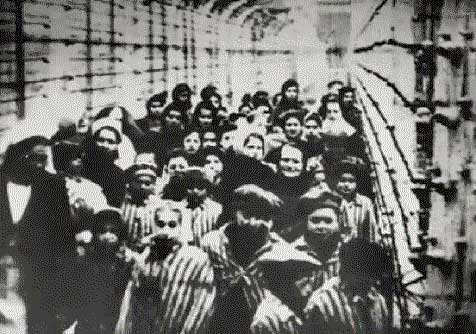
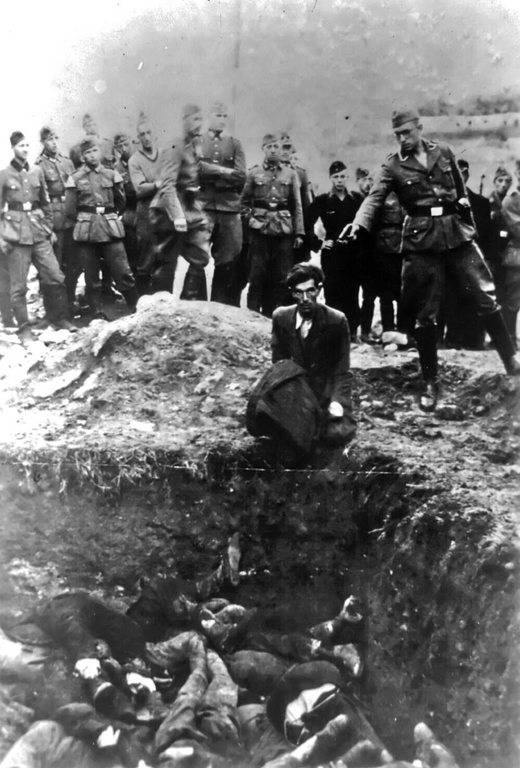
Today was the International Holocaust Remembrance Day. It was on January 27th 1945 that the Nazi death camp called Auschwitz, in Poland was liberated by the Red Army.

auschwitz

Auschwitz began as a work camp, notoriously harsh in its treatment of its prisoners but a work camp, picked because of its proximity to rail lines and isolation. By the summer of 1941 it was the largest camp in the Concentration Camp system. Within months the process of turning Auschwitz into a factory of mass murder began, quite accidentally when members of the camp staff discovered that a chemical used for the delousing of barracks known as Zyklon-B also worked on large animals, and therefore people.  It was tested on Russian and Polish POWs in September 1941.

As the Nazi desire for efficient extermination grew and early death factories showed their limitations and the “experiments” at Auschwitz resulted in it being selected as a death camp. The camp was expanded and its first gas chamber, the former camp morgue began its operations in February 1942. Other more massive chambers were built, chambers that could hold up to 2000 victims per cycle. By the time the operation was shut down in the weeks leading up to the camp’s liberation Rudolf Höss the Commandant of Auschwitz estimated that 2.5 million people, mostly Jews were exterminated in it. Höss boasted d that his camp could exterminate 10,000 people in a 24 hour period. Other estimates are lower, but still in the millions.

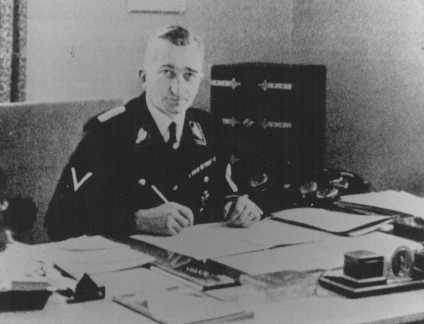
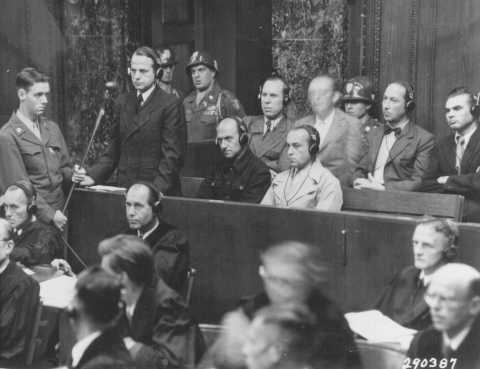
Höss, and other functionaries such Adolf Eichmann, who coordinated the massive effort to exterminate the Jews of Europe following the Wansee Conference of January 20th 1942 approached their jobs dispassionately. This was a common attitude among the civil service, military and police officials that oversaw the Holocaust. They simply did their jobs and followed the law.

Hannah Arendt wrote of Eichmann:

“The trouble with Eichmann was precisely that so many were like him, and that the many were neither perverted nor sadistic, that they were, and still are, terribly and terrifyingly normal. From the viewpoint of our legal institutions and of our moral standards of judgment, this normality was much more terrifying than all the atrocities put together.”

This was what made the Holocaust committed against the Jews of Europe by Nazi Germany a phenomenon different than other genocides. Many of the perpetrators were not driven by centuries old hate as in the Balkans, tribal blood lust as occurred in Rwanda, or the products of Soviet Communism or Communist Chines Maoist regimes.

It was the racial ideology of the Nazis which deemed the Jews and other non-Aryans to be sub-human. That ideology undergirded the German treatment of the Jews, and the conduct of the war, especially in the East. But the execution of the plan required the bureaucratic, administrative, technical and legal skills brought to the table by ordinary men. Men who sought promotion, advancement and economic security for their families. Individually many would have never killed, but in their positions they ran the rail network, the factories, the banking and finance industries and supported the war effort, most not thinking much about the evil that they abetted or if they did finding a way, be it social, scientific, religious, patriotic, legal or simply in the name of efficiency.

That is what makes the evil committed by them so terrifying. It is the product of “normal” people in an advanced Western nation. Make no bones about it, their actions were evil. They aided and abetted the genocide of the Jews, the disabled, other “sub-human” races, particularly Slavs, as well as those that they deemed less than suitable.

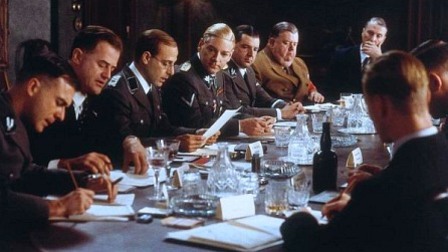
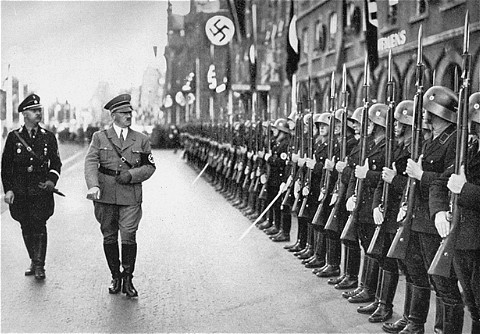
This evening I watched the movie Conspiracy which is about the two hour long Wansee Conference headed by Reinhard Heydrich and organized by Eichmann. That conference put the representatives of competing agencies, and in the case of the SS, agencies within agencies together and brought about their cooperation in the execution of the Final Solution.

conspiracy

The film is chilling in the ordinariness of the men involved. civil servants, party officials, they were the men that did the day to day administration of the necessary functions of the Reich. Some were horrified at the potentiality of the effects of what Heydrich referred as “evacuations” entailed. They understood that it meant the extermination of the Jews. Some were concerned about the military and logistical aspects, others in how such actions squared with the German law, especially the Nuremberg Laws, while still others were concerned with diplomatic relations with Germany’s allies or occupied countries and some unnerved by the fact that it would be murder. But when the conference was done, all agreed and worked together and it only took two hours.

It is important that we do not forget the Holocaust. It is also important to recognize that the instruments of that horror were on the whole “ordinary” men who as they saw it were simply doing their job. It is something that everyone needs to remember.

Peace

Padre Steve+

1 Comment

Filed under History, nazi germany, News and current events, world war two in europe

Remembering the Battle of the Bulge and the Campaign in France

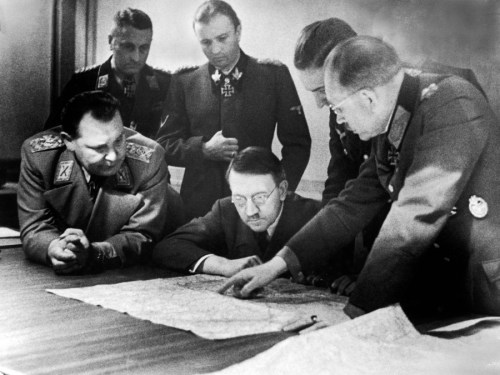
Hitler's General Staff Reviews Plans

Adolf Hitler gathered with the Chiefs of Oberkommando des Wehrmachton September 16th 1944 at his “Wolf’s Lair” headquarters in East Prussia.  The situation was critical; he had recently survived an assassination attempt by Army officers led by Colonel Klaus Von Staufenberg at his Wolf’s Lair headquarters in East Prussia.  When the assassination attempt took place the German situation in Normandy was critical. The Americans broke out of the Bocage at St. Lo and spread out across Brittany and the interior of France with Patton’s 3rd Army leading the way.  Even as his commanders in the West pleaded for permission to withdraw to the Seine Hitler forbade withdraw and ordered a counter attack at Mortain to try to close the gap in the German line and isolate American forces. When the German offensive failed the German front collapsed. 40,000 troops, hundreds of tanks and thousands of vehicles were eliminated when the Americans and Canadians closed the Falaise pocket. Despite this cadres of decimated divisions including SS Panzer, Army Panzer and elite Paratroops made their way out of Normandy.  With the Germans in full retreat the Allies advanced to the border of the Reich itself. On the Eastern Front as well disaster threatened when the Red Army launched an offensive which annihilated Army Group Center and advanced to the border of Poland before outrunning supply lines and stalling on the Vistula.

tiger2_in_action-bulge

Tiger II

  Since Normandy Hitler had wanted to counter attack but had neither the forces nor the opportunity to strike the Allied armies. As the Allied offensive ground to a halt due to combat losses, lack of supplies and stiffening German resistance Hitler maintained a close eye on the situation in the West.  He believed that despite their success that the Americans and British alliance was weak and that a decisive blow could cause one or both to drop out of the war. During a briefing an officer noted the events of the day on the Western Front including a minor counterattack by kampfgrüppen of the 2nd SS Panzer and the 2nd Panzer Divisions which had made minor gains in the Ardennes, Hitler rose from his seat ““Stop!” He exclaimed. “I have come to a momentous decision. I shall go over to the counterattack….Out of the Ardennes, with the objective Antwerp.””[i]

indexb_10a

            Thus began the planning for the last great German offensive of WWII.  Hitler “believed that sufficient damage could be inflicted to fracture the Anglo-American alliance, buy time to strike anew against the Soviets, and allow his swelling arsenal of V-weapons to change the course of the war.”[ii]  It was a course of born of desperation, even admitted by Hitler in his briefings to assembled commanders in the week prior to the offensive, one officer noted his remarks: “Gentlemen, if our breakthrough via Liege to Antwerp is not successful, we will be approaching an end to the war which will be extremely bloody. Time is not working for us, but against us. This is really the last opportunity to turn the war in our favor.”[iii]

us-at-gun-bulge

US 57mm Anti-Tank Gun and Crew

             Despite shortages of men and equipment, continuous Allied assaults and over the objections of General Guderian who argued to reinforce the Eastern Front[iv], the OKW staff secretly developed detailed plans. The planning was so secretive that the “Commander in Chief West and the other senior commanders destined to carry out the attack were not informed.”[v] The plans were submitted to Hitler on October 9th [vi] and presented to Field Marshalls Von Rundstedt and Model at the End of October. General Hasso Von Manteuffel, commander of 5th Panzer Army commented that: “The plan for the Ardennes offensive…drawn up completely by O.K.W. and sent to us as a cut and dried “Führer order.”[vii]

24-1

Field Marshal Walter Model Commander Army Group B

          Model and Von Rundstedt also objected to the scope of the attack. Von Rundstedt stated: “I was staggered…It was obvious to me that the available forces were way too small for such an extremely ambitious plan. Model took the same view of it as I did….”[viii]  Model reportedly said to General Hans Krebs: “This plan hasn’t got a damned leg to stand on.”[ix] And “you can tell your Führer from me, that Model won’t have any part of it.”[x] Sepp Dietrich, the old SS fighter and commander of 6th Panzer Army expressed similar sentiments.[xi]  Despite the objections by so many senior commanders Hitler scorned Model’s attempt to float a less ambitious plan to reduce the Allied salient at Aachen. Likewise Von Rundstedt’s desire to remain of the defense and wait for the Allies to attack using the armored forces to launch against any breakthrough was rejected.[xii] Hitler’s mind was set and the preparations moved forward.  The plan was complete down to the timing of the artillery bombardment and axes of advance, and “endorsed in the Führer’s own handwriting “not to be altered.””[xiii] Such a plan flew in the face of the well established doctrine of theAuftragstaktik which gave commanders at all levels the freedom of action to develop the battle as the situation allowed and opportunities arose.

sepp20dietrich

SS General Sepp Dietrich, Commander of 6th Panzer Army 

              The Germans who the Allies presumed to be at the brink of collapse made a miraculous  recovery following their ghastly losses in Normandy. Kampfgrüppenand remnants of divisions bled the Americans White at the Huertgen Forrest and blunted the British attempt to leapfrog the Northern Rhine at Arnhem decimating the British First Airborne division and causing heavy casualties among other British and American units. The German 15th Army avoided disaster when the British failed to close their escape route from Walchern island allowing 60,000 troops and much equipment to escape.   

ManteuffelGeneral Hasso von Manteuffel Commander 5th Panzer Army

         The Germans also re-formed and reorganized the front.  They pulled back many units of the 5th and 6th Panzer Armies for re-fitting and diverted nearly all tank, armored fighting vehicle and artillery production to the West at the expense of the Eastern Front.  The Germans called up 17 year olds and transferred young fit personnel from the Navy and Luftwaffe to the Army and Waffen SS.  Here they were trained by experienced NCOs and officers and brought into veteran units alongside hardened veterans who showed taught them the lessons of 5 years of war.[xiv]  However the rapid influx of new personnel meant that they could not be assimilated as quickly as needed and thus many were not as well trained as they might have been with more time.[xv] Many infantry and Parachute units had received inexperienced officers, taken from garrison duty to fill key positions a problem that would show up during the offensive.[xvi]

pzkw-iv-bulge

Panzer IV Ausf H of an SS Panzer Divsion in the Bulge

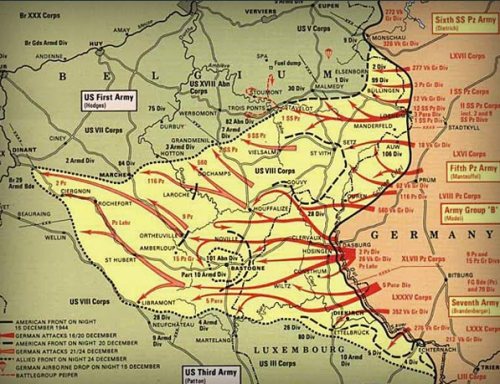
The Germans were aided by the caution displayed by the Allies throughout the campaign in France which allowed the Germans to reconstitute formations around veteran headquarters staffs.[xvii]  The Germans built up the 5th and 6thPanzer Armies as the Schwerpunkt of the offensive giving them the lion’s share of reinforcements and pulling them out of the line during the fall battles along the Seigfried line and in the Alsace and Lorraine.  The plan was for the two Panzer armies and 7th Army to punch through the Ardennes, cross the Meuse, drive across Belgium, capture Antwerp and severe the link between the British and the Americans.

The spearhead of the German assault was 6th Panzer Army Commanded by SS General Sepp Dietrich. It was composed of 1st and 2nd SS Panzer Corps and Army’s LXVII Corps.  The 6th SS Panzer Army included some of the best formations available to the German Army at this late stage of the war including the 1st  SS Panzer Division, the Leibstandarte Adolf Hitler, the 2nd  SS Panzer Division Das Reich, the 9th SS Panzer Division Hohenstaufen and the12th  SS Panzer Division Hitler Jügend. It’s ranks were filled out by the 3rd Parachute Division, the 501st SS Heavy Tank Battalion (attached to 1st SS), the 3rd Panzer Grenadier Division and the 12th, 246th, 272nd, 277th and 326th Volksgrenadier or Infantry divisions. The 6th Panzer Army would be the northern thrust of the offensive and its ultimate objective was Antwerp.  The 6th Panzer Army would be aided by a hastily organized parachute battalion under Colonel Von Der Heydte[xviii] and the 150thPanzer Brigade under SS Colonel Otto Skorzeny which included teams of American dialect speaking soldiers in American uniforms and equipment that were to spread confusion and panic in American rear areas.[xix]

bradleyeisenhowerpatton20a20bastogne

Bradley, Eisenhower and Patton at Bastogne

          To the south was the 5th Panzer Army commanded by General Hasso Von Manteuffel.  The 5th Panzer Army was to advance alongside of the 6th Panzer Army with Brussels as its objective.  Composed of the XLVII and LVIII Panzer Corps and LXVI Corps the major subordinate commands included the best of the Army Panzer divisions including the 2nd Panzer, Panzer Lehr, 9th and the16thPanzer division. It also had the elite Führer Begleit Brigade composed of troops from Panzer Corps Grossdeutschland and commanded by Otto Remer who had help crush the coup against Hitler in July.  The 5th Panzer Army also included the 18th, 26th, 62nd, 560th and later the 167th Volksgrenadier divisions.

bulge1

German Panzer Grenadier 

The south flank was guarded by 7th Army commanded by General Erich Brandenburger composed of LIII, LXXX and LXXXV Corps.  It included theFührer Grenadier Brigade and later the 15th Panzergrenadier division.  It was the weakest of the three armies but eventually included 6Volksgrenadier divisions of varying quality and strength[xx] and the veteran 5th Parachute division.[xxi]  However with only 4 divisions at the start of the offensive the 7th Army was the equivalent of a reinforced corps.

bulge-jeep

While this force seemed formidable it had a number of weaknesses beginning with tank strength.  The 1st and 12th SS Panzer divisions were only at approximately half their established tank strengths and faced severe shortages in other vehicles.[xxii]  2nd SS and 9th SS of II SS Panzer Corps reported similar shortages.[xxiii]The shortage of other motorized vehicles, even in Panzer divisions was acute.  “Even the best equipped divisions had no more than 80 percent of the vehicles called for under their tables of equipment, and one Panzergrenadier division had sixty different types of motor vehicles, a logistician’s nightmare.[xxiv] Panzer Lehr was so short in armored half tracks that only one battalion of its Panzer Grenadiers could be transported in them while others had to use “trucks or bicycles.”[xxv]

Limitations on equipment as well as fuel were not the only challenges that the Germans faced. The US V Corps launched an attack on the Roer River Dams just before the offensive making it necessary for the Germans to divert 6th SS Panzer Army infantry divisions and Jagdpanzer units to be used by 6th SS Panzer Army.  One regiment of 3rd Parachute Division and over half of a second division could not take part in the initial 6th Panzer Army attack. Likewise some Jagdpanzer andSturmgeschutzen units did not arrive until three days after the offensive began.[xxvi]

The Allies Before the Battle

            While the German commanders sought to implement Hitler’s plan Allied commanders looked only to completing the destruction of Germany not believing the Germans capable of any major operation.  The Allied commanders with the exception of Patton did not believe the Germans capable of any more than local counter attacks.  Patton’s 3rd Army G-2 Colonel Koch was the only intelligence officer to credit the Germans with the ability to attack.[xxvii]  Most allied commanders and intelligence officers discounted the German ability to recover from disastrous losses, something that they should have learned in Holland or learned from the Soviet experiences on the Eastern front.  Bradley noted in his memoirs hat “I had greatly underestimated the enemy’s offensive capabilities.”[xxviii]  Carlo D’Este noted that “there was another basic reason why the Allies were about to be caught with their pants down: “Everyone at SHAEF was thinking offensively, about what they could do to the enemy, and never about what the enemy might do to them.””[xxix]   This mindset was amazing due to the amount of intelligence from Ultra and reports from frontline units that major German forces were no longer in the line.[xxx] Additionally nearly all commentators note that American units in the Ardennes did not conduct aggressive patrols to keep the enemy off balance and obtain intelligence.[xxxi]  One describes the efforts of 106th Division as “lackadaisical” and notes that enemy before the offensive was not the Germans but the cold.[xxxii] Max Hastings noted that: “the Allies’ failure to anticipate Hitler’s assault was the most notorious intelligence disaster of the war.”[xxxiii]

408

Tanks of US 7th Armored Division near St Vith

            The Allies also were in the midst of a manpower crisis. Eisenhower did not have enough divisions to establish a clear manpower advantage as “there were not enough Anglo-American divisions, or enough replacements for casualties in the existing divisions.”[xxxiv]  No more American Infantry divisions were available as the Army had been capped at 90 divisions and infantry replacements were in short supply.  This shortage meant that Eisenhower could not pull divisions out of line to rest and refit. He could only transfer divisions such as the 4th and 28thInfantry divisions to the relative quiet of the Ardennes. He had no ability to “create a strategic reserve unless he abandoned the broad front strategy.”[xxxv]The Germans knew of the allied weakness and believed that they could achieve local superiority even if they did not believe they could reach Antwerp. Model believed that “he was sure that he would reach the Meuse in strength before the Americans could move sufficient reserves to halt his armies or even head them off.”[xxxvi]

American Response: The Breakthrough

            The German assault began on December 16th. Some breakthroughs were made especially in the vicinity of the Losheim Gap and the Schnee Eifel by the southern elements of 6th Panzer Army and Manteuffel’s 5th Panzer Army. However the Germans could not break through around Monschau and Elsenborn Ridge held by the inexperienced but well trained 99th Infantry division and elements of the veteran 2nd “Indianhead” Division.  In the far south near Diekirch the 4th Infantry Division held stubbornly against the attacks of 7th Army’sVolksgrenadiers. The Germans achieved their greatest success at Losheim where SS Colonel Josef Peiper and his 1st SS Panzer Regiment had driven off the US 14thCavalry Group and penetrated 6 miles into the American front.  5th Panzer Army made several breakthroughs and isolated two regiments of newly arrived 106thInfantry Division in the Schnee Eifel. Manteufel also pressed the 28th Division hard along the Clerf River, Skyline Ridge and Clairvaux.  Yet at ‘no point on that first day did the Germans gain all of their objectives.”[xxxvii]  The credit goes to US units that stubbornly held on, but also to the poor performance of many German infantry units.  German commanders were frustrated by their infantry’s failure even as the panzers broke through the American lines.  Manteuffel noted his infantry was “incapable of carrying out the attack with the necessary violence.”[xxxviii]

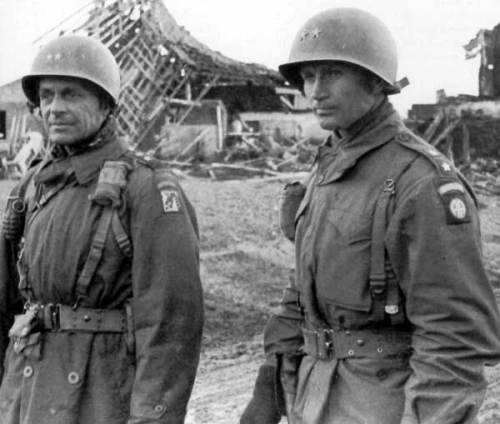
gavin-and-ridgeway

US Airborne Commanders James Gavin (R) and Matthew Ridgeway (L)

            The initial Allied command response to the attack by senior commanders varied.  Bradley believed it was a spoiling attack “to try and force a shift of Patton’s troops from the Saar offensive back to the Ardennes.”[xxxix] Courtney Hodges of 1st Army agreed with Bradley and refused to allow General Gerow, commander of V Corps to call off 2nd Infantry Division’s attack against the Roer dams on the 16th in order to face the German offensive.[xl]  Gerow was one of the first American commanders to recognize the scope of the German attack but Hodges, perhaps the least competent senior American commander in Europe failed to heed Gerow’s advice.

Battle of the Bulge - US prisoners on December 22nd 1944


        Soldiers of the 106th Infantry Division as POWs

         Soon after making this decision Hodges “panicked” and evacuated his headquarters at Spa fearing that it would be overrun by the advancing Germans.[xli] Eisenhower when informed of the news realized that something major was occurring and ordered the 7th Armored Division from the 9th Army and 10th Armored Division from 3rd Army into the Ardennes. On the 17thhe made other dispositions and released the 82nd and 101st Airborne Divisions from SHAEF reserve at Rheims to the Ardennes under the command of XVIII Airborne Corps.[xlii]  However during this short amount of time Mantueffel’s panzers had advanced 20 miles.

peiper-in-schwimwagen

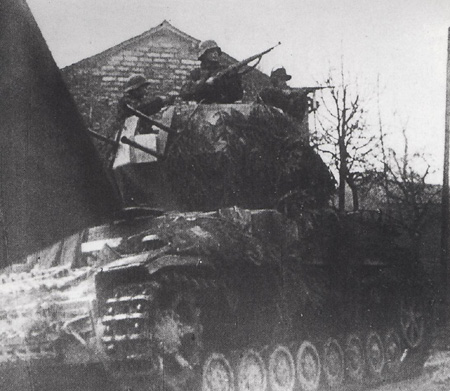
SS Panzer Troops of Kampfgruppe Knittel on the advance.  Photo has often been identified for decades in books and other publications as Waffen-SS Colonel Joachim Peiper the commanding officer of the 1st SS Panzer Regiment and Kampfgruppe Peiper. This has been refuted by recent study.  Peiper is pictured below.

peiper

               At the command level Eisenhower made a controversial, but correct decsion to divide the command of the Bulge placing on a temporary basis all forces in the northern sector under Montgomery and leaving those to the south under Bradley.  Montgomery according to one commentary initially “had been astonishingly tactful in handing his American subordinates.”[xliii] However he quickly made himself obnoxious to many American commanders.[xliv] Following the battle Montgomery made the situation worse by claiming to have saved the Americans and giving credit to British units which scarcely engaged during the battle.[xlv]  Eisenhower also ordered Patton to launch a counter-attack along the southern flank of the German advance.  However Patton was already working on such an eventuality and promised to be able to launch a counterattack with three divisions by the 22nd.[xlvi]  Bradley praised Patton highly in his memoirs noting: “Patton’s brilliant shift of 3rd Army from its bridgehead in the Saar to the snow-covered Ardennes front became one of the most astonishing feats of generalship of our campaign in the West.”[xlvii]

American Response: the Shoulder’s Hold

bulge07             Malmedy Massacre 

          The 99th Division’s position was precarious, its right flank was subject to being turned and it was suffering severely at the hands of 12 SS Panzer and several Volksgrenadier divisions.  Gerow reinforced the 99th with elements of the 2nd Infantry division even before he had the final authorization to end its attack.  The two divisions stubbornly held Elsenborn Ridge and the villages of Rockerath, Krinkelt and Büllingen. By the 20th the 9th and 1st Infantry divisions arrived to strengthen the defense and lengthen the line to prevent it from being rolled up by the Germans.  The stubborn resistance of the Americans and arrival of reinforcements meant line was proof “against anything Sepp Dietrich might hurl against it”[xlviii]  By the 23rd Dietrich and 6th SS Panzer Army conceded defeat at Elsenborn and “turned its offensive attentions to other sectors.”[xlix]  German commanders like General Priess the commander of 1st SS Panzer Corps believed that terrain and road network in this sector was unfavorable to the German offensive and had proposed moving the attack further south.[l]  The Panzers could not deploy properly and the German infantry was not up to the task of driving the Americans out of their positions before the reinforcements arrived.

0-5

In the south the 4th Infantry Division held the line though heavily pressed by Brandenburger’s 7th Army.  The division was reinforced by elements of both 9thand 10th Armored divisions on the 17th and generally held its line along the Sauer River around Echternach “largely because the left flank of the enemy assault lacked the power-and particularly the armor-of the thrust farther north.”[li]

Turning Point: The Destruction of Kampfgruppe Peiper

panzeri00265om

            While V Corps fought the 6th Panzer Army to a standstill, to the south 1st SS Panzer Division led by Kampfgrüppe Peiper split the seam between V Corps and VIII Corps. The Kampfgrüppe moved west leaving a brutal path of destruction in its wake, including massacres of American POWs and Belgian civilians.[lii]  However its advance was marked with difficulty. On the night of the 17th it failed to take Stavelot. After clearing the American defenders from the town after a hard fight on the 19th it failed to capture a major American fuel dump a few miles beyond the town.  When the Germans approached the American commander ordered his troops to pour 124,000 gallons down the road leading to the dump and set it on fire, depriving the Germans of badly needed fuel.[liii]  Combat Engineers from the 291st Engineer Battalion blew a key bridge across the Ambleve at Trois Ponts and another bridge across the Lienne Creek which left the Germans bottled up in the Ambleve River valley.  This bought time for the 30th Infantry Division to set up positions barring Peiper from the Meuse.  The 30th would be joined by Combat Command B of 3rd Armored Division and elements of 82nd Airborne. These units eventually forced Peiper to abandon his equipment and extricate some 800 troops by foot by the 23rd after a hard fight with the Americans who had barred his every effort to break through to the Meuse.

Turning Point: The Crossroads: St Vith & Bastogne

            The battle rapidly became focused on key roads and junctions, in particular St. Vith in the north and Bastogne in the south.  At St. Vith the 7th Armored Division under General Hasbrouck, who Chester Wilmont calls one of the “great men of the Ardennes”[liv] completed a fifty mile road march from Aachen to St. Vith.  On his arrival he deployed his combat commands around the town which was the key to the road network in the north and also to the only rail line running west through the Ardennes.[lv]  Hasbrouck gathered in Colonel Hoge’s Combat Command B of 9th Armored Division and the 424th Infantry Regiment of the 106th Division into his defensive scheme as well as the survivors of the 112thInfantry Regiment of the 28th Infantry Division which had escaped the German onslaught after holding as long as possible along the Clerf River and Skyline Drive.[lvi]  With these units Hasbrouck conducted “an eight-day stand that was as critical and courageous, as the defense of Bastogne.”[lvii]  After holding the Germans at St. Vith the units were withdrawn to another defensive position along the Salm and Ourthe Rivers and the village of Viesalm.  This was done at the behest of Montgomery and General Ridgeway of XVII Airborne Corps whose 82nd Airborne had moved into that area on the 19th.  The arrival of the 82ndgreatly assisted Hasbrouck’s force holding St. Vith whose defenders had lost an estimated 5000 casualties.[lviii]

The stand at St. Vith confined the “confined the Sixth Panzer Army’s penetration to a chokingly narrow corridor.”[lix]  It also posed a problem for German command and control which because it was out of the 6th Panzer Army’s area of operations Dietrich was unable to lend his weight into the fight.  “Hitler himself had strictly prohibited deviations from the zonal boundaries”[lx] which left the fight for St. Vith in the hands of 5th Panzer Army who felt the impact of the stand as the Americans “also choked off one of the Fifth Panzer Army’s best routes to Bastogne, almost nullifying the significance of the captured road junction at Houffalize.”[lxi]

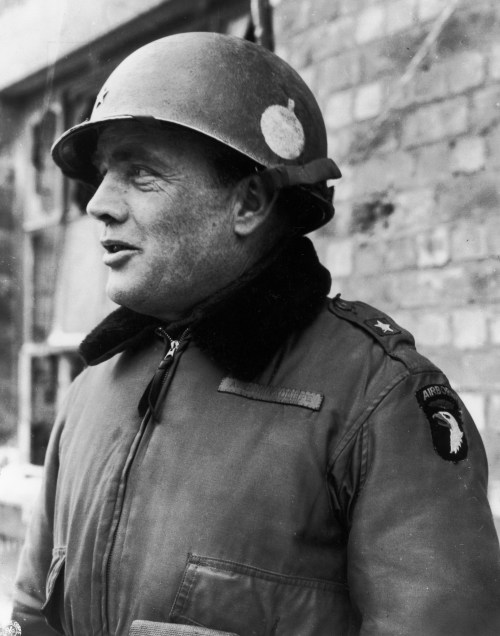
American General Anthony McAuliffe commander of the 101st

Brigadier General Anthony McAuliffe 

        To the south of St. Vith lay Bastogne, another key road junction needed by 5thPanzer Army for its advance.  On the night of the18th Panzer Lehr division came within two miles of the town before being checked by resistance by units of the 10th Armored division, remnants of 28th Division and misdirection by “friendly” Belgian guides onto a muddy path that helped halt their advance.[lxii]  This gave the 101st Airborne just enough time to get to the town and prevent its capture. The siege of Bastogne and its defense by the 101st elements of 9th and 10thArmored Divisions and 28th Division became an epic stand against Manteuffel’s Panzers which had surged around the town.  Wilmont comments that “had the Germans won the race for Bastogne, Manteuffel’s armor would have had a clear run to Dinant and Namur on December 19th and 20th” [lxiii] when there were only scattered American units between them and the Meuse. Manteuffel b bypassed Bastonge after the failure to capture it and masked it with 26th VolksgrenadierDivision and a regiment of Panzer Lehr.  The remainder of Panzer Lehr and the 2nd Panzer Division moved to the west. [lxiv]  The garrison endured numerous attacks and on the 22nd one of the most celebrated incidents of the war took place when Brigadier General Anthony McAuliffe responded to a demand for the surrender of the town with the reply; “Nuts.”  The town would continue to hold until relieved by 3rd Army on the afternoon of December 26th.[lxv]

Allied Response: The Counterattack

sherman-bastogne

            The Allied counterattack began with 3rd Army in the south on 21 December.  Patton’s initially proposed to attack toward the base of the Bulge in order to cut off the largest number of Germans possible.  Eisenhower dictated an attack further west with the goal of relieving Bastogne.  Eisenhower wanted to delay the attack to concentrate combat power while Patton wanted to attack sooner in order to ensure surprise. Patton got his way but attacked on a wide front.  The attack lost its impetus and bogged down into a slugging match with 7thArmy’s infantry and paratroops along the southern flank. [lxvi]  Patton’s failure to concentrate his forces for the advance to the north diminished his combat power.[lxvii] While Patton attacked from the south the 1st Army dealt with the advanced spearhead of 2nd Panzer Division which had reached the town of Celles and ran out of gas just four miles from Dinant and the Meuse. The 84th Infantry Division stopped the 116th Panzer division from being able to effect a relief of the 2nd Panzer the US 2nd Armored Division and allied fighter bombers chopped up the virtually immobile 2nd Panzer division completing that task by the 26th.[lxviii]

To the north Montgomery launched a cautious counterattack which slowly and methodically took back lost ground but allowed many Germans to escape. While Montgomery moved south Patton faced heavy German resistance from elements of 5th Panzer Army, reinforced by 1st SS Panzer Corps and 7th Army.  The rupture in the American front was not repaired until 17 January when the American forces met at Houffalize.[lxix] Bradley took over for Montgomery and the Americans pushed the Germans slowly back across the Clerf River by the 23rd.  The advance was hampered by tough German resistance and terrible weather which forced much of the attack to be made by dismounted troops as the roads had completely frozen over.[lxx]

The Allied counter attack has been criticized for allowing too many Germans to escape what could have been a major encirclement.  Patton recognized the incompleteness of the victory in the Ardennes stating: ““We want to catch as many Germans as possible, but he is pulling out.” The “but” clause, the note of regret, the awareness of the imperfection of his victories typified Patton.””[lxxi]  Patton in his memoirs notes: “In making the attack we were wholly ignorant of what was ahead of us, but we were determined to strike through to Bastogne.”[lxxii] Max Hastings simply said: “the Allies were content with success.”[lxxiii]  Murray and Millett place blame on Bradley and Hodges for choosing “merely to drive the enemy out of the Ardennes rather than destroy him.”[lxxiv]

Analysis: Could Wacht Am Rhein Have Worked?

          Could Wacht am Rhein worked?  If much was different, yes.  If the German had been stronger in tanks and vehicles and had adequate stocks of fuel; if their infantry was better trained, and had the Americans not resisted so stubbornly it might have at least got to the Meuse.  Perhaps if the the bad weather held keeping Allied air forces away from the Germans, or had St. Vith and Bastogne been taken by the 18th or 19th, they might have reached the Meuse.  Had the Germans executed their plan and coordinated their assault better[lxxv] in the 6thPanzer Army sector and had the 7th Army enough strength to conduct offensive operations in depth and secure the left flank the attack might have succeeded.  Because the Americans held the shoulders and road junctions, Manteuffel’s 5thPanzer Army, the only force besides the regimental sized Kampfgrüppe Peiper to actually threaten the Meuse was forced to advance while attempting to take Bastogne and defeat 3rd Army’s counterattack. Whether they could have made Antwerp is another matter.  Nearly all German commanders felt the offensive could not take Antwerp but did believe that they could inflict a defeat on the Allies and destroy a significant amount of allied combat power.

The German offense was a desperate gamble.  Too few divisions, scant supplies of petrol, formations that had recently been rebuilt and not given enough time to train to the standard needed for offensive operations coupled with Hitler’s insistence on an unalterable plan kept them from success.  At the same time the Allies were weak in troops as Eisenhower had no strategic reserve save the two American Airborne Divisions.  All reinforcements to the threatened sector had to come from the flanks and by the middle of the battle the 9th Army was drawn down to two divisions. Russell Weigley notes the constraints imposed by the 90 division Army, and of the limited stocks of artillery ammunition.[lxxvi] If the Germans had more forces they might have inflicted a significant defeat on the Allies had they been able to reinforce their success in depth.  Despite this they still inflicted punishing losses on the Americans though suffering greatly themselves.  Hastings notes that the real beneficiaries of the Ardennes offensive were the Russians.[lxxvii]  It is unlikely that the offensive could have ever achieved Hitler’s goals of taking Antwerp and fracturing the British-American alliance.

A Note About other Parts of the Campaign in France

The Riviera and Rhone

USA-E-Riviera-p193US Soldier Being Greeted as a Liberator 

          The campaign in south France was strategically wise although opposed by the British to the last minute because they felt it would take away from Overlord.[lxxviii] Though delayed the campaign was well executed by 7th Army, particularly Lt. General Lucian Truscott’s VI Corps of 3 American divisions. Truscott believed “destroying the enemy army was the goal”[lxxix] managed the battle well and skillfully maneuvered his small forces against Blaskowitz’s 19thArmy inflicting heavy losses, though some German commanders noted the caution of American infantry in the attack.[lxxx]  Only Blaskowitz’s tactical skills and the weakness of the American force prevented the Germans from disaster. The seizure of Marseilles and Toulon provided the allies with sorely needed ports that were invaluable to sustain the campaign.[lxxxi]

The Lorraine Campaign

            Patton attacked in the Lorraine with the goal of crossing the Moselle and attempting to break into Germany. He doing so he ran into some of the strongest German forces on the front and bogged down in the poor terrain and mud of the region.[lxxxii]  Patton was delayed in making his assault due to his place “at the far end of the logistics queue.”[lxxxiii] German forces skillfully defended the ancient fortress of city Metz forcing the Americans into a protracted campaign to clear the area with the last strongpoint surrendering on 13 December.  Patton is criticized for his failure to concentrate his forces[lxxxiv] but American tactics were less to blame than the weather, German resistance and shortages of infantry.[lxxxv] In some cases American infantry units performed admirably, particularly 80th Division’s assault on the Falkenburg Stellung.[lxxxvi]Liddell Hart criticized the Allies for failing to attack through the then weakly defended Ardennes, commenting: “By taking what appeared to be the easier paths into Germany the Allies met greater difficulties.”[lxxxvii]

The Huertgen Forrest

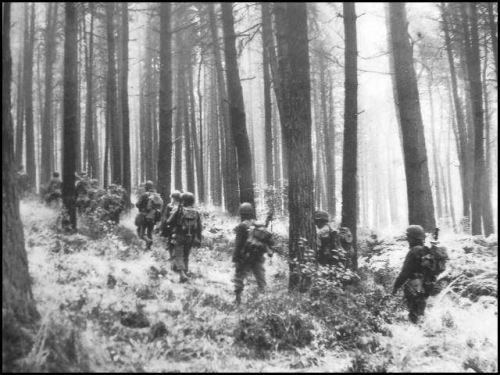
hurtgen-forest-soldiers

The Huertgen Forrest was the worst managed American fight Western European campaign. [lxxxviii] General Courtney Hodges leadership was poor.[lxxxix] In the Huertgen he fed division after division into a battle that made no strategic sense.  American infantry performed poorly and took extremely heavy casualties leaving four divisions shattered.[xc]  Poor American tactics demonstrated by attacking into a forest in poor weather without concentration negated all of Hodges’ advantages in tanks, artillery and airpower. The forest contained no significant German forces capable of threatening any American advance[xci] and its gain offered little advantage.[xcii] Hastings noted that the gains the only saving grace was that it made it easier for the northern shoulder of the Bulge to hold[xciii]   General Model and his subordinates expertly handled their handful of excellent but weary divisions in this battle using terrain, weather and prepared defensive positions to contest nearly every yard of the Forrest.[xciv]

Conclusions

            The lessons of the Bulge and the other campaigns on the German-French border are many and can be gleaned from Allied and German mistakes. On the Allied side the most glaring mistakes were assumptions prior to the German attack that the Germans were incapable of any serious offensive and ignoring the fact that the Germans had attacked through the Ardennes in 1940.  Likewise the self limitation of the American Army to 90 divisions for world-wide service meant that there were no more divisions in the pipeline and that worn out divisions would have to be reinforced with inexperienced troops while in the front line which ensured a lack of cohesiveness in many divisions, especially the infantry.  Allied intelligence failures as well as their reliance of forces much smaller than they should have had for such a campaign ensured that they would suffer heavy losses in the Bulge while poor planning and execution by Hodges wasted many good troops in a senseless battle.  The Germans were hamstrung by Hitler’s fantasy that the Western Allies could be forced out of the war or the Alliance split by a defeat in the Ardennes.  Likewise German forces, even those so quickly reconstituted were often short troops, tanks and vehicles.  German commanders were forced by Hitler’s rigid insistence on not altering the plan to not be as flexible as they might have been in earlier offensives to adjust according to the situation on the ground.


[i] Dupay, Trevor N.  Hitler’s Last Gamble: The Battle of the Bulge December 1944-January 1945Harper Collins Publishers, New York NY 1994 p.2.

[ii] Hastings, Max. Armageddon:  The Battle for Germany 1944-1945 Alfred A Knopf, New York NY 2004 p.197.

[iii] Reynolds, Michael. Sons of the Reich: II SS Panzer Corps; Normandy, Arnhem, Ardennes, and on the Eastern Front.  Casemate Publishing, Havertown PA 2002 p.186

[iv] Ibid. p.198

[v] Warlimont, Walter. Inside Hitler’s Headquarters 1939-1945 translated by R.H. Barry. Presidio Press, San Francisco, CA 1964. p. 480

[vi] Ibid.

[vii] Liddell Hart, B.H. The German Generals Talk. Originally published 1948, Quill Publishers Edition, New York 1979 p.274.

[viii] Liddell Hart, B.H. The History of the Second World War G.P. Putnam’s Sons, New York NY 1970. p.646.

[ix] MacDonald, Charles B. A Time for Trumpets: The Untold Story of the Battle of the Bulge William Morrow and Company, New York, NY 1985 p.35.

[x] [x] Newton, Steven H. Hitler’s Commander: Field Marshal Walter Model, Hitler’s Favorite General.DeCapo Press, Cambridge MA 2005. p.329

[xi] Ibid. Hastings p.198.  Hastings quotes Dietrich: “All Hitler wants me to do is cross a river, capture Brussels, then go on and take Antwerp. And all this at the worst time of year through the Ardennes when the snow is waist-deep and there isn’t enough room to deploy four tanks abreast let alone armored divisions. When it doesn’t get light until eight and it’s dark again by four and with re-formed divisions made up chiefly of kids and sick old men-and at Christmas.”

[xii] Ibid. Liddell-Hart The German Generals Talk p.276

[xiii] Wilmont, Chester. The Struggle for Europe Harper and Brothers Publishers, New York, NY 1952 p.576

[xiv] Ibid. p.557.

[xv] Ibid. Hastings. p.199. Hastings notes that Manteuffel said: “It was not that his soldiers now lacked determination of drive; what they lacked were weapons and equipment of every sort. Von Manteuffel also considered the German infantry ill trained.”

[xvi] Ibid. Dupay.p.47  Dupay notes that in 3rd Parachute Division that most of the regimental commanders had no combat experience.

[xvii] Weigley, Russell  F. Eisenhower’s Lieutenants: The Campaign in France and Germany 1944-1945. Indiana University Press, Bloomington IN 1981 p.432.  Weigley speaks of Allied caution and predictable strategy, caution in logistical planning which did not allow the Allies to provide the fuel needs for a rapid drive into Germany and caution of operational commanders.

[xviii] Liddell Hart discusses the issue of paratroops at length in discussions with Manteuffel and General Kurt Student. At the time of the operation there were very few jump trained paratroops available for the operation as most of the 6 organized Parachute Divisions were committed to battle as infantry during the 1944 battles in the East, Italy and in the West. German Generals Talk pp.282-285.  Although Liddell Hart makes note of the employment of these troops and talked with Model and student about why they were not used to seize bridges and other critical terrain featured ahead of the Panzers instead of the use as a blocking force, I have found no one who questioned why the Germans did not use small glider detachments for the same purpose.  The Germans had demonstrated with Skorzeny when they rescued Mussolini from his mountain prison that they still retained this capability.  The use of the SS Paratroop battalion which could have been assigned to Skorzeny as a glider borne force could have been decisive in capturing the key bridges and terrain ahead of 6th Panzer Army.

[xix] Skorzeny’s operation was Operation Greif designed to sow confusion in the Allied Ranks.  His brigade numbered about 3500 men and had a good number of captured US vehicles including some tanks and tank-destroyers on hand to confuse American units that they came in contact with.

[xx] Ibid. Hastings.  p. 199.  Hastings quotes the Adjutant of 18th Volksgrenadier Division who “felt confident of his unit’s officers, but not of the men “some were very inexperienced and paid the price.”  MacDonald notes that the division had many Navy and Air Force replacements but was at full strength. p.646.

[xxi] See MacDonland pp. 644-655 for a detailed commentary on the German Order of Battle.

[xxii] Reynolds, Michael. Men of Steel: 1st SS Panzer Corps;  The Ardennes and Eastern Front 1944-1945 Sarpendon Publishers, Rockville Center NY, 1999. pp.36-37.  Reynolds notes that the 1st SS Panzer Regiment only had 36 Panthers and 34 Mark IV Panzers to begin the operation (excluding the attached 501st SS Heavy Tank Battalion).  He also notes that many of the tank crew replacements had no more than 6 weeks of military training and some of the tank crews had never been in a tank.  Similar problems were found in all the Panzer Divisions.  Severe shortages of armored half tracks, reconnaissance vehicles and other vehicles meant that Panzer Grenadier and Motorized battalions lacked the lift needed and some went on foot or on bicycles.

[xxiii] Ibid. Reynolds. Sons of the Reich. P.183

[xxiv] Ibid. MacDonald. p.44.

[xxv] Ibid.

[xxvi] Ibid. Dupay pp. 27-28.

[xxvii] Ibid. MacDonald. p.52.  MacDonald notes that Koch warned that the Germans were not finished, that “his withdraw, though continuing has not been a rout or mass collapse.” He calls Koch a “lone voice” in the Allied intelligence world.

[xxviii] Bradley, Omar  N. A Soldier’s Story Henry Holt and Company, New York NY 1951. p.459.  Weigley makes some poignant calling Bradley’s comments  “contradictory” and states that: “his apologia is hardly a model of coherence. (p.461)

[xxix]  D’Este, Carlo. Eisenhower: A Soldier’s Life Owl Books, Henry Holt and Company, New York NY 2002. p.638

[xxx] Dupay and others talk about this in detail. See Dupay pp. 35-44.

[xxxi] Ibid. p.38.

[xxxii] Ibid. Hastings. p.201

[xxxiii] Ibid. Hastings. p.199

[xxxiv] Ibid. Weigley. p.464

[xxxv] Ibid.

[xxxvi] Ibid. Wilmont. P.581.

[xxxvii] Ibid. p.583

[xxxviii] Ibid. Hastings. p.223

[xxxix] Ibid. Weigley. P.457

[xl] Ibid. p.471

[xli] Ibid. Hastings. pp.205-206

[xlii] Ibid. Wilmont. pp.583-584

[xliii] Murray, Williamson and Millett, Allan R. A War to Be Won: Fighting the Second World War The Belknap Press of Harvard University Press, Cambridge Massachusetts and London England, 2000 p.470 The authors must base their conclusion on the fact that Montgomery who mentioned to Eisenhower that Hodges might have to be relieved, did not do so and by the next day told Eisenhower that the action was not needed.  A  few other American commanders in the north were favorable to Montgomery but this appears to be a minority view.

[xliv] Ibid. Weigley. pp.504-506.  Weigley and Wilmont both note the comment of a British Staff Officer the Montgomery “strode into Hodges HQ like Christ come to cleanse the temple.” (Wilmont p.592)

[xlv] Ibid. Hastings. pp.230-232.  Hastings is especially critical of Montgomery.  Weigley, equally critical notes regarding  the January 7th press conference, Montgomery’s “inability to be self critical at any point.” p.566.

[xlvi] Ibid. Weigley. p.500.

[xlvii] Ibid. Bradley. p.472  Other commentators differ in their view of Patton’s movement.  Wilmont notes that Patton had no “equal in the on the Allied side in the rapid deployment of troops. (p.589) Weigley urges readers that “it should be kept in appropriate perspective; it was not a unique stroke of genius.” And he compares it to Guderians disengagement with Panzer Group 4 and 90 degree change of direction and assault against the Kiev pocket in the 1941 Russian campaign (p.500)  Hastings notes that “Patton had shown himself skilled in driving his forces into action and gaining credit for their successes. But he proved less effective in managing a tough, tight battle on the southern flank.” (p.230)  Regardless of the perspective and criticism Patton’s movement was unequaled by any Allied commander in the war and had he not moved so quickly the 101stAirborne might not have held Bastogne. Admittedly his attack north was dispersed along a wide front but part of the blame for this must be assigned to Eisenhower who dictated the attack toward the west vice the base of the Bulge where Patton desired to make it.  A note I would make is that being a cavalryman Patton thought like one and when faced with the tight battles in close quarters was not at his best.  Similar comparisons could be made to J.E.B. Stuart at Chancellorsville when he had to take command of Jackson’s Corps.

[xlviii] Ibid. Weigley. p.475

[xlix] Ibid. p.474

[l] Ibid. Reynolds Men of Steel pp.51-52.

[li] Ibid. Weigley. p.470

[lii] The worst of these took place at the village of Malmedy where Battery B 285th Field Artillery Observation Battalion of 7th Armored Division was captured and about 150 soldiers were rounded up and machined gunned in a field with survivors killed with pistol shots in the head.

[liii] Ibid. Weigley. pp.478-479.

[liv] Ibid. Wilmont. p.584

[lv] Ibid. Weigley. p.487

[lvi] Ibid. Weigley. pp.486-487

[lvii] Ibid. Hastings. p.215. Hastings gives most of the credit to Brigadier General Bruce Clarke of CCB 7th Armored Division for the stand.

[lviii] Ibid. MacDonald. 481-487.  MacDonald notes that following the war that the commanders of the units involved “would be grateful to Field Marshal Montgomery for getting them out of what they saw as a deathtrap for their commands. (p.487)

[lix] Ibid. Weigley. p.487

[lx] Ibid.

[lxi] Ibid.

[lxii] Ibid. Hastings. p.217 Also  MacDonald. p.289 who talks of the confused situation east of Bastogne both for the Americans and Germans.

[lxiii] Ibid. Wilmont. p.598

[lxiv] Ibid. Liddel Hart. The German Generals Talk. p.288

[lxv] The defense of Bastogne would continue until after the 1st of January as Hitler renewed the attempts to secure the town in order to push on to the Meuse. Other German formations including units of 1st SS Panzer Corps shifted south from their original attack would make determined efforts to dislodge the stubborn American defenders.

[lxvi] Ibid. Weigley. pp.500-501.  Bradley gives Patton more credit than later commentators. Wilmont notes that the Germans though “amazed at the speed with which Patton had disengaged from the Saar and wheeled them northward…they received due warning of his movement by monitoring the radio net which controlled American traffic, and they were braced to meet his assault. (p.599).

[lxvii] Ibid. Weigely. Pp.520-521

[lxviii] Ibid.  pp.535-537

[lxix] Ibid. pp. 558-561

[lxx] Ibid. pp.563-564

[lxxi] Ibid. p.566.

[lxxii] Patton, George S. War as I Knew It  Originally published by Houghton Mifflin Company NY 1947, Bantam Paperback Edition,  Bantam Books, New York, NY 1980 p.364

[lxxiii] Ibid. Hastings. p.230

[lxxiv] Ibid. Murray and Millett p.471.

[lxxv] Hastings notes that “Tactically, the Ardennes was one of the worst-conducted German battles of the war, perhaps reflecting that none of the generals giving the orders saw any prospect of success. (p.236)

[lxxvi] Ibid. Weigley. pp.567-572

[lxxvii] Ibid. Hastings. p.236-237.  Hastings believes that the employment of the 5th and 6th Panzer Armies in the East “made the task of Zhukov and his colleagues much harder.”

[lxxviii] Ibid. Weigley. p.236. I find it interesting that neither Hastings nor Liddell Hart mention the Riviera and Rhone campaign.

[lxxix] Ibid. Weigley. p.236

[lxxx] Giziowski, Richard. The Enigma of General Blaskowitz  Hippocrene Books Inc. New York NY, 1997. p.328

[lxxxi] Ibid.  Weigley comments on how much the overall supply situation was aided by the operation and capture of the ports and notes that the pace of the Cobra breakout had created a crisis in supply and “without the southern French ports the crisis would have been insurmountable.” (p.237)

[lxxxii] Ibid. p.397.  Weigley notes: “The immobilizing mud and the enemy’s recalcitrant resistance had fragmented the battle into affairs of squads, platoons, companies and battalions….and Patton’s juniors more than he controlled the course of action, to the extent that control was possible.”

[lxxxiii] Ibid. p.384

[lxxxiv] Ibid. p.390 Weigley states: “The American disinclination to concentrate power was rarely more apparent.” comparing the frontages of 1st, 9th and 3rdArmies and notes that Patton attacked along his entire front.”

[lxxxv] Ibid. Weigley. pp.400-401.  Weigley spends a fair amount of time on American infantry shortages in 3rd Army.

[lxxxvi] Ibid. Weigly. P.400.  Weigley notes a German General Wellm attributed part of that victory to the “prowess of the American infantry.”

[lxxxvii] Ibid. Liddell Hart. The History of the Second World War p.560

[lxxxviii] Hastings and Weigley both note how many American division and regimental commanders were relieved of command for their failures in the Huertgen.

[lxxxix] Ibid. Hastings. p.179.  Hastings notes that “instead of recognizing the folly of attacking on terrain that suited the Germans so well, Courtney Hodges reinforced failure.”

[xc] Ibid. Weigley. p.420.  Weigley notes the high numbers of ballet and non battle casualties in the 4th, 8th, 9th and 28th Divisions as well as CCR of 5thArmored and 2nd Ranger Battalion.

[xci] Ibid. Hastings. p.275.  Hastings notes that defending 275th Division “were poor grade troops who-like the garrison of Aachen posed no plausible threat to the flanks of an American advance to the Roer.”

[xcii] Weigley compares the battle in its effect on the American army to Grants “destruction of the Confederate army in the Wilderness-Spotsylvania-Cold Harbor campaign expended many proud old Union army formations…” (p.438)

[xciii] Ibid. Hastings. p.215

[xciv] Ibid. Newton. p.324

3 Comments

Filed under History, Military, nazi germany, world war two in europe

Be Careful of What you Vote Against: A Warning from History

“I hated the growing atheistic movement, which was fostered and promoted by the Social Democrats and the Communists. Their hostility toward the Church made me pin my hopes on Hitler for a while. I am paying for that mistake now; and not me alone, but thousands of other persons like me.” Martin Niemöller

Martin Niemöller

Martin Niemöller was a war hero.  He had served on U-Boats during the First World War and commanded a U-Boat in 1918 sinking a number of ships.  After the war he resigned his commission in the Navy in opposition to the Weimar Republic and briefly was a commander in a local Freikorps unit. His book Vom U-Boot zur Kanzel (From U-boat to Pulpit) traced his journey from the Navy to the pastorate. He became a Pastor and as a Christian opposed what he believed to be the evils of Godless Communism and Socialism.  This placed him in the very conservative camp in the years of the Weimar Republic and he rose in the ranks of the United Evangelical Church of the Old Prussian Union.  Active in conservative politics, Niemöller initially support the appointment of Adolf Hitler as Chancellor.

However, he quickly soured on Hitler due to his insistence on the state taking precedence over the Church.  Niemöller was typical of many Germans of his era and harbored ant-Semitic sentiments that he only completely abandoned his anti-Semitic views until after he was imprisoned.  He would spend 8 years as a prisoner of the Nazis a period hat he said changed him including his views about Jews, Communists and Socialists.  Niemöller was one of the founding members of the Pfarrernotbund (Pastor’s Emergency Federation) and later the Confessing Church. He was tried and imprisoned in concentration camps due to his now outspoken criticism of the Hitler regime.

Herman Maas

Herman Maas was another Evangelical Pastor.  Unlike Niemöller, Maas was a active participant in the ecumenical movement, built bridges to the Jewish community and defended the rights of Jews as German citizens.  He received a fair amount of criticism for his attendance of Reichspräsident Friedrich Ebert’s funeral.  Ebert was both a Socialist and avowed atheist.  Maas too was active in the Pfarrernotbund and the Confessing church, and unlike Niemöller maintained his opposition to anti-Semitism and the Nazi policies against the Jews. He would help draft the Barmen declaration.  He too would be imprisoned and survive the war.  Maas was the first non-Jewish German to be officially invited to the newly formed state of Israelin 1950. In July 1964 Yad Vashem recognized the Maas as one of the Righteous Among the Nations.

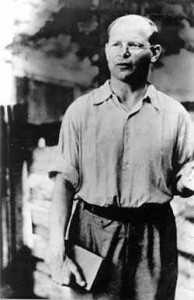
Dietrich Bonhoeffer

Dietrich Bonhoeffer a young Pastor and theologian would also step up to oppose the Nazis and offer support for the Jews.  He helped draft the Bethel Confession which among other things rejected “every attempt to establish a visible theocracy on earth by the church as a infraction in the order of secular authority. This makes the gospel into a law. The church cannot protect or sustain life on earth. This remains the office of secular authority.”  He also helped draft the Barmen declaration which opposed and condemned Nazi Christianity.  Bonhoeffer would eventually along with members of his family take an active role in the anti-Nazi resistance as a double agent for Admiral Canaris’ Abwehr.  For this he would be executed after his final sermon in the concentration camp at Flossenburg just a month prior to the end of the war. Bonhoeffer wrote “If you board the wrong train, it is no use running along the corridor in the other direction.” 

Another opponent of the Nazis in the Confessing Church was Swiss-German theologian Karl Barth.  Barth went into exile as a Swiss citizen but remained active in the criticism of the Nazi regime.

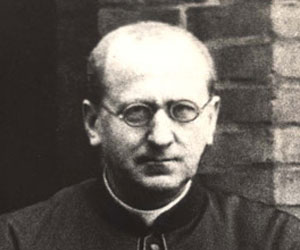
Bernard Lichtenberg

Catholic Bishop Galen of Münster and others including Father Rupert Meyer in Munich who opposed Hitler in the early 1920s would also oppose the Nazi policies toward the Church and the Jews.  Some like Meyer would end up in concentrations camps with some like Canon Bernard Lichtenberg of Berlin dying at the hands of the Nazis.

Rupert Meyer

All these men took risks to defend the Jews who were religious minority group that had been traditionally discriminated against in Germany.  They opposed the Nazi policies which were widely supported by much of the German populace making them unpopular in their own churches as among the traditionally conservative supporters of the Evangelical and Catholic Churches.  The Jews were not simply discriminated against as a racial or religious group but also identified with the political left, especially the Social Democrats, Independent Socialists, Communists and the Spartacists.

Since the Independent Socialists, Communists and Spartacists were all involved in attempts to create a Soviet state during the early tumultuous years of Weimar and been involved in many acts of violence against traditional German institutions and the state, they were viewed by Hitler and others as part of the Bolshevik-Jewish threat to Germany.  A sentiment harbored by many non-Nazi conservatives and Christians.

Karl Liebnicht and Rosa Luxembourg were among the high profile leaders of this movement in Germany and both were Jewish.  The fact that many in the leadership of the Bolshevik movement in theSoviet Union were Jewish added fuel to the fire that the Nazis stoked in Germany.  Hitler and the Nazis played on the historic, but muted prejudice against German Jews who in many cases were more secular and German than religious and had assimilated well in Germany.  Hitler’s rhetoric as well as that of other Nazis and Nazi publications helped identify the Jews as part of the “Stab in the back” myth that was commonly used by the German right to explain the defeat in the First World War.  Thus they were painted as a political and social threat to Germany.

Nazi Political and Religious Opponents in Concentration Camps

When Hitler took power persecution of the Jews began in earnest.  Jews were along with Communists, Trade Unions and Socialists enemies of the state.  They were banned from the military, civil service and other government employment, professional associations and forced to wear a gold Star of David on their clothing.  Their property was seized, many were abused by SA men acting as deputized auxiliary police and many times their businesses, Synagogues and homes were vandalized, burned or seized by the state.  Many would be forced to flee in order not to be sent to ghettos and concentration camps.  Even those leaving only escaped with the minimum of their possessions as the Nazi regime extorted anything of value from them as they left Germany.  This was all done because Hitler and those like him portrayed the Jews as not only an inferior race, but enemies of the state and the German people.

Hitler portrayed himself and his movement as defenders of Christianity. He was not the first or last to do so but his speech of February 1st 1933, the day after he was appointed Chancellor by President Hindenburg made it abundantly clear that he was bent on securing the support of Christians to solidify his grip on power: “The National Government will regard it as its first and foremost duty to revive in the nation the spirit of unity and co-operation. It will preserve and defend those basic principles on which our nation has been built. It regards Christianity as the foundation of our national morality, and the family as the basis of national life. . . .”

The Sturmabteilung (SA) at Church

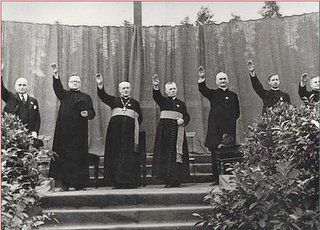
Churches became sponsors of Nazi meetings, the Swastika banner hung in the sanctuaries of churches throughout the Reich and Bishops, Priests and Pastors joined Nazi organizations and gave the Nazi salute. They had sold their soul to Hitler and the Nazis out of fear of the Communists, Socialists, Jews and Slavs.

Eric Hoffer noted that “It is when power is wedded to chronic fear that it becomes formidable.” Hitler and his enablers spread fear and took advantage of it to bring those fearful of the left to his support.

Hitler leaving a Church

Today we face a similar phenomena in conservative circles in the United States.  This time it is not the Jews but Moslems, Gays, immigrants and racial minorities who are the targets of the xenophobic rage by many influential members of the “conservative” media including Rush Limbaugh, Sean Hannity and numerous others.  Their popularity in voicing support for “Christian morale values” such as being against abortion has ingratiated them with conservative Christians.  It is so bad that that many “conservative” Christians cannot differentiate between their vitriolic and un-Christian rage against Moslems, Gays and Lesbians, trade unionists, Democrats or anyone else portrayed by the big media talkers and the Gospel.

It is if they have become an appendage to Republican or “conservative” politicians rather than a Christian church.  It is not uncommon to see Christians on the web or on the call in talk radio programs identify lock stock and barrel with Limbaugh and others identifying the crass materialism and social Darwinism of “pure” Capitalism and the anti-Christian policy of pre-emptive war.   That may seem harsh, but many of these people in the “Conservative Bible project” seek to re-translate the Bible into their own political, social and economic policies even seeking to change or minimize any Scripture that might be equated with the “Social Gospel.”  Unfortunately many Christians and others have jumped in on the anti-Moslem and anti-immigrant crusades and anti-Gay launched by those on the far right.

There are those on the far right that advocate eliminating all Moslems from the military, government, security intelligence and police forces and even universities. Similar threats are made against non-European immigrants, legal and illegal alike especially those from Mexico or Latin America.  I have a friend; a Navy Officer who served a year in Iraq that was confronted by a member of the “Minutemen” in Texas to show his Green Card and threatened simply because he is Mexican.  Others especially conservative Christians suggest criminalizing homosexuality, jailing homosexuals or putting them in concentration camps, deporting them or even punishing gays with the death penalty.

This is so similar to the Nuremberg Laws and the Aryan Paragraph issued by the Nazis that it is scary.  Likewise the threats to American Moslems or Gays of placing them “behind razor wire” as we did to American Japanese citizens in World War II are chilling.  I wonder how Christians would react if an atheist or someone on the political left suggested all conservative Christians or members of pro-Life groups be imprisoned for the actions of Christians or pro-Life movement members like Scott Roeder or Eric Rudolph who killed to stop abortion or Fred Phelps and his Westboro Baptist Church?

This new found militancy has swept up the “Christian right” and others since 9-11 and has reached proportions that I could never have imagined. After my tour in Iraq I realized that much of what these people were saying was not Christian at all and when taken to their logical conclusion would be a police state in which anyone who opposed them would be persecuted.  I question the motivations of the leaders of the movement but believe that most of the Christian conservatives have been caught up in the anger and the emotion of the times versus being true believers in what these men say.  That being said, you don’t have to be a true believer to be a willing accomplice in actions that first are not Christian and second trample on the Constitutional rights of American citizens.

I could keep citing examples but if someone can show me where this is condoned in the Gospels I would like to know.  The fact is that Christians are to place God first and defend the rights of others, even non-believers.  This is found not only in Scripture but runs through the Christian tradition across the denominational spectrum.

The persecution of American Moslems, minorities, Gays and others is dangerous, not just for those minorities but ultimately for Christians who endorse and advocate against those groups.  American and English law is based on legal precedence.  Once something has been determined to be legal, or constitutional it is considered by the law to be settled law.  This is a point made by Chief Justice Roberts regarding Roe v. Wade at his confirmation hearings.  If Christians want to use the law against Moslems or for that matter any other minority be it religious or political they tread on very dangerous ground.  Not only do they make a mockery of the Gospel command to love our neighbors, care for the foreigners among us and to be a witness to non-Christians support policies or laws that if enacted could and very well would be used against them by their opponents.

During the Republican Presidential primaries major leaders of the Evangelical movement and churches did all that they could to paint Mitt Romney as a religious cultist because he is Mormon. When Romney secured the nomination those same people started backtracking and committing their support to him because they believe that President Obama is an enemy of the country. They don’t like Romney, they are just against Obama. Romney will remember what they called him and their tepid support. If he becomes President he will not be beholden to them and will govern as he desires. Laws and Executive orders that give expanded power to the Executive Branch will not be overturned and if Evangelicals decide that they don’t like what he is doing and act toward him as they have President Obama they could find themselves on the outside and abandoned by the man that they supported.

Law is all about precedent and if such laws were enacted and upheld by the courts they would be settled law that could be used against anyone.   What these dear brothers and sisters fail to realize is that such laws can be turned against them if the state should ever decided based on the statements of actions of some that the Christian community is a threat to state security of the public welfare.  With the actions of some radical Christians who have committed murder and violence against political, social and religious opponents it would not be hard for the government to label whole churches as enemies of the state.  The law is a two edged sword and those who want to use it to have the state enforce their religious, social, ideological or political beliefs on others need to remember what comes around goes around.

The Confessing church understood this and many were imprisoned, exiled or killed for this belief.  The founding fathers of this country understood this too, that is why there is the Constitutional protection of Religion in the First Amendment.  This was put in because Virginia Baptists who had been persecuted by Anglicans lobbied James Madison for the amendment in the Bill of Rights threatening to withdraw their support for his candidacy if he did not.  Niemöller would discover the depths of his earlier folly in prison telling one interviewer after the war:

“I find myself wondering about that too. I wonder about it as much as I regret it. Still, it is true that Hitler betrayed me. I had an audience with him, as a representative of the Protestant Church, shortly before he became Chancellor, in 1932. Hitler promised me on his word of honor, to protect the Church, and not to issue any anti-Church laws. He also agreed not to allow pogroms against the Jews, assuring me as follows: ‘There will be restrictions against the Jews, but there will be no ghettos, no pogroms, in Germany. I really believed given the widespread anti-Semitism in Germany, at that time—that Jews should avoid aspiring to Government positions or seats in the Reichstag. There were many Jews, especially among the Zionists, who took a similar stand. Hitler’s assurance satisfied me at the time. On the other hand, I hated the growing atheistic movement, which was fostered and promoted by the Social Democrats and the Communists. Their hostility toward the Church made me pin my hopes on Hitler for a while. I am paying for that mistake now; and not me alone, but thousands of other persons like me.”

It is easy for well meaning people Niemöller to be bought with promises of support by politicians and media types who speak the words they want to hear in difficult times.  So today I suggest the formation of an ecumenical Pastor’s Emergency League which will not be bought by the empty and godless promises of hate mongers on the right or the left.  Such a group of men and women spanning the breadth of the Christian tradition and others that see the danger of extremism of all types is becoming necessary.  Such a step is becoming necessary due to the militancy of the Christian right as well as the militancy of atheist groups who lobby against all public religious expression by any religion.  Such a League would respect the various creeds and statements of faith of each member’s denomination.  The movement of the right has set a dangerous course fraught with perils that they do not comprehend.

We have entered a dangerous phase of American history.  These movements have the potential not only to oppress law-abiding and patriotic Americans of all faiths and to crush the religious freedoms of all in this county. Suggesting that American citizens, including those who serve the county in the military or government of entire religious, ethnic, political, religious affiliation or sexual preference be jailed, banned from office or fired is totalitarian and dare I say Nazi like.

Niemöller would say it well in this poem:

First they came for the communists, and I did not speak out—because I was not a communist;
Then they came for the socialists, and I did not speak out—because I was not a socialist;
Then they came for the trade unionists, and I did not speak out—because I was not a trade unionist;
Then they came for the Jews, and I did not speak out—because I was not a Jew;
Then they came for me—and there was no one left to speak out for me.

Peace,

Padre Steve+

8 Comments

Filed under History, Loose thoughts and musings, nazi germany, News and current events, Political Commentary, pro-life anti-abortion, Religion

The Hatred of “the Other”: White Supremacists, Neo-Nazis, Politics and the Oak Creek Massacre

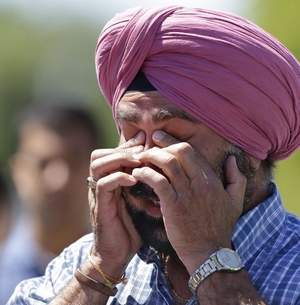
A Sikh man Cries outside the Temple in Oak Creek Wisconsin

We don’t know much yet but when we do my guess is that we will not like what we see.

Today a yet unnamed gunman who according to the FBI had White Supremacist tattoos on his body walked into the Sikh Temple in Oak Creek Wisconsin. The man killed 6 people and wounded many more who had simply come to worship. When police responded he shot and wounded an officer who returned fire and killed him.

Because of the tattoos FBI and police believe that the man may be White Supremacist of some sort. The have made no concrete announcements about the motive or if the man was a member of a White Supremacist or Neo-Nazi group but it appears that the investigators are looking strongly in that direction. We will find out more about him in the coming days but if the initial reports are accurate it paints a chilling picture of a movement that is becoming more widespread and more violent.

Sikhs are one of the earliest non-European immigrant groups to the United States. From the Punjab area of India they have frequently been attacked because they look different. Observant Sikh men do not cut their hair, keep a beard and wear a turban. As such they are often believed to be Moslems and since the September 11th 2001 attacks have suffered much abuse as well as been the victims of violence including murder.

Sikhs along those that they are commonly mistaken, Moslems and Arab Americans in general, as well as Indians, Pakistanis, and other non-European ethnicity Americans are often looked upon with suspicion, mistrust and hatred. This is fed by frequent attacks in right wing media demonizing them as “the enemy within” and the ravings of certain McCarthyesque politicians and pundits.

Sikhs, though peaceful and law abiding citizens often get caught in the Xenophobic hatred of “the other,” they are not “real Americans.” The fact is Sikhs look different. They are a very visible expression of ‘the other” that politicians, pundits and preachers of the American right wing love to demonize. It doesn’t matter that they are not Moslems and had no part in 9-11, they just wear turbans and loose fitting clothes and are a bit darker than most of us.

But going beyond the now normal xenophobia which is more driven by hate mongers that stir up fear and loathing is the absolute hatred for non-white minorities exhibited by White Supremacists, Neo-Nazis and Skinheads.

There are over well over 1000 known hate groups spanning ranging from traditional groups such as the Ku Klux Klan and Neo-Nazis to the Nation of Islam. The numbers, especially in White Supremacist groups has risen dramatically since 9-11, roughly 69% since then. Violence has been a long established tactic of these groups. When one takes the already existing hate group ideology and marries it to the xenophobic rantings of the Unholy Trinity of Politicians, Pundits and Preachers who rail against anyone who is not like them it is not surprising that attacks like this occur. I am just surprised that they don’t happen more often. But then again maybe this is just the beginning.

Neo-Nazis and White Supremacists are also beginning to make a push to get elected to local political offices and to grow their political power from “the ground up” according to Don Black, the  founder of the Neo-Nazi group Stormfront. Brian Culpepper of the National Socialist Movement in Tennessee claims that his group is entering the political process by stealth: “We insert ourselves into the infrastructure of other established parties due to the bias against us and the difficulty of third parties getting ballot access….” and that “We have people working with the most recent incoming class of freshmen in the House,…And they don’t even know it.” Black of Stormfront notes that many White Supremacists and Neo-Nazis followers are involved with the Tea Party movement but don’t feel that Tea Party leadership “is skittish when it comes to talking about racial realities.” He believes that this will mean that White Supremacists and Neo-Nazis may have to go it alone.

Today a lot of people, thankfully across the political spectrum are denouncing the brutal attack and murder of the members of the Oak Creek Sikh community. Hopefully it cause us to remember that words and ideology do have meaning and can bring people to do heinous crimes. We quite readily condemn the actions of Moslem extremists and terrorists. However we should condemn all that preach and practice the art of hate. The fact is that all hate groups and other terrorists regardless of their ideology are the same kind of animal. The sooner that we realize that the better.

Having been accosted and threatened by Neo-Nazis in the past I find this troubling. This is not an innocent movement. It grows by sowing fear and hatred. The Nazis in Germany singled out the Jews and linked them to every imaginable evil including Socialism and Communism. If you read the histories of the Nazi period, especially their political and propaganda campaigns in the 1920s and 1930s before they came to power one can see many similarities with the growing numbers of people taking part in or tacitly approving of the racist hate messages being spouted today.

Hopefully this will serve as a wake up call to those that have for whatever reason succumbed to the message of the hate mongers and help bring us back to a sense of shared American values of tolerance and community.

We will find out more in the coming days. Right now we know little about the man or his motivation for killing the Sikhs of Oak Creek.  But if the attacker was indeed a member of or sympathizer with a Neo-Nazi or White Supremacist as early reports suggest who is also linked to the mainstream political right it suggests a bigger problem than we want to think about.

There will be more on this to come I’m sure and I don’t think that we will like when we find out.

Peace

3 Comments

Filed under nazi germany, News and current events, Political Commentary

“Unprecedented, unmerciful and unrelenting harshness…”: Terror and Ideology in the German Campaigns In Poland and Russia


The following is an article that I first published on this site in 2009 “The Ideological War: How Hitler’s Racial Theories Influenced German Operations in Poland and Russia.” Since I am getting ready to write a number of articles on the subject of politicized military and police forces, the Concentration Camps and the Einsatzgrüppen I wanted to give my readers an overview of the subject. The focus is the ideology that framed and justified to the perpetrators the mass murders of Jews, Poles, Russians and others during the German invasions of Poland and the Soviet Union. I will be writing about policy as well as key personalities involved in the planning and execution of these crimes over the coming months since I have renewed my studies of the crimes and their prosecution at Nuremberg over the past year. In a sense this article is simply an introduction to more specific articles that I will write.  

Peace, Padre Steve+

Introduction: Ideology and Genocide 

Architects of Annihilation: Heinrich Himmler with Adolf Hitler 

The German war against the Soviet Union was the first truly race-based ideological war in history with the campaign against Poland its precursor.  Adolf Hitler’s racial theories and beliefs played a dominant role in Germany’s conduct of the war in the East in both the military campaign and occupation.  This has become clearer in recent years as historians have had the opportunity to examine Hitler’s writings, those of senior Nazi officials and military officers and documents which had been unavailable until the end of the Cold War.  Understanding the Nazi ideological basis and the underlying cultural prejudice against the Jews and eastern Europeans in general is foundational to understanding Hitler’s conduct of the war and why the destruction of the Jews figured so highly in his calculations.  One must also understand the military and police cultures and doctrines that enabled them to cooperate so closely in the conduct of the war.

The German war in the east would differ from any previous war.  Its underlying basis was ideological. Economic and geopolitical considerations were given importance in relationship to the understanding of the German “Master Race.”  Race and Lebensraum was the goal of the State that “concentrates all of its strength on marking out a way of life for our people through the allocation of Lebensraum for the next one hundred years…the goal corresponds equally to the highest national and ethnic requirements.[1] Hitler believed that Germany was “entitled to more land…because it was the “mother of life” not just some “little nigger nation or another.”” [2] The Germans planned to “clear” the vast majority of the Slavic population and the “settlement of millions of hectares of eastern Lebensraum with German colonists” complimented by a short term exploitation of the land to “secure the food balance of the German Grossraum.”[3] Joachim Fest notes that Hitler called it a “crime” to wage war only for the acquisition of raw materials. Only the issue of living space permitted resort to arms.”[4]

Previous wars emphasized conquest of territory and natural resources be they for empire or self sufficiency. The Thirty Years War had a heavy religious component but was more about increasing the power of emerging nation states led by men not necessarily loyal to their religious brethren.[5] The American and Russian Civil wars had some ideological basis and helped usher in the brutality of total war. Both had major effect in these nations’ development and both were bitterly contested with the winners imposing to various degrees political changes on their vanquished brothers they were civil wars.[6] While Adam Tooze sees the Holocaust as the first step of the “last great land grab in the long and bloody history of European colonialism…”[7] this argument does not take away from the basic premise that the war was at its heart ideological.
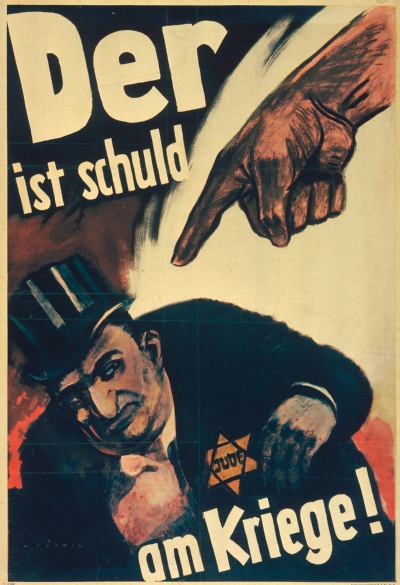
The root of this war was in the mind of Adolf Hitler himself. His years in Vienna were foundational as he absorbed the ideas of Pan-German, anti-Semitic groups and newspapers like the Deutsches Volksblatt. [8] In Vienna he made the connection between the Jews and Marxism.[9] Joachim Fest notes that in Vienna Hitler became obsessed by the fear of the Slavs and Jews, hated the House of Hapsburg, the Social Democratic Party, and “envisioned the end of Germanism.”[10] His racial views were amplified after the war in turbulent Weimar Germany where he became a member of the NDSAP, rising rapidly within it, eventually taking over party leadership, reorganizing it so that it “became the instrument of Hitler’s policies.”[11] Following the unsuccessful Beer Hall Putsch of 1923 Hitler wrote Mein Kampf while imprisoned in the Landsberg prison in which he enunciated his views about the Jews, Slavs and Lebensraum. Hitler believed that Imperial Germany had been “hopelessly negligent” in regard to the Jews[12] and that the Jews in conjunction with the Catholic Center Party and Socialists worked together for “maximum damage to Germany.”[13] Likewise he saw the Jews as heading the “main ideological scourges of the nineteenth and twentieth century’s.”[14] It was the ideology of Hitler’s “obsessive anti-Semitism”[15] that drove Nazi Germany’s policy in regard to the Jews and against Jewish-Bolshevism.

By the 1920s Hitler had “combined his hatred of the Jews and of the supposedly Jewish dominated Soviet state with existing calls to conquer additional Lebensraum, or living space, in the east.”[16] Hitler wrote: “The fight against Jewish world Bolshevism requires a clear attitude toward Soviet Russia. You cannot drive out the Devil with Beelzebub.”[17] Richard Evans notes that Mein Kampf clearly enunciated that “Hitler considered racial conflict…the essence of history, and the Jews to be the sworn enemy of the German race ….” And that the “Jews were now linked indissolubly in Hitler’s mind with “Bolshevism” and “Marxism.” [18] When Hitler became the dictator of Germany “his ideology and strategy became the ends and means of German foreign policy.”[19] His aims were clear, Hitler remarked to Czech Foreign Minister Chvalkovsky on 21 January 1939: “We are going to destroy the Jews.”[20] It was clear that Hitler understood his own role in this effort noting to General Heinrici that “he was the first man since Charlemagne to hold unlimited power in his own hand. He did not hold this power in vain, he said, but would know how to use it in the struggle for Germany…”[21]

This study will focus on the German policy of ideological-racial war in Poland and Russia. The German war against the Soviet Union and to a certain extent Poland was waged with an unforgiving ferocity against Hitler’s enemy, the Jewish-Bolshevik state and the Slavic Untermenschen. It was characterized by the rise of “political-ideological strategy”[22] in which “Barbarossa showed the fusion of technocracy and ideology in the context of competitive military planning.”[23]
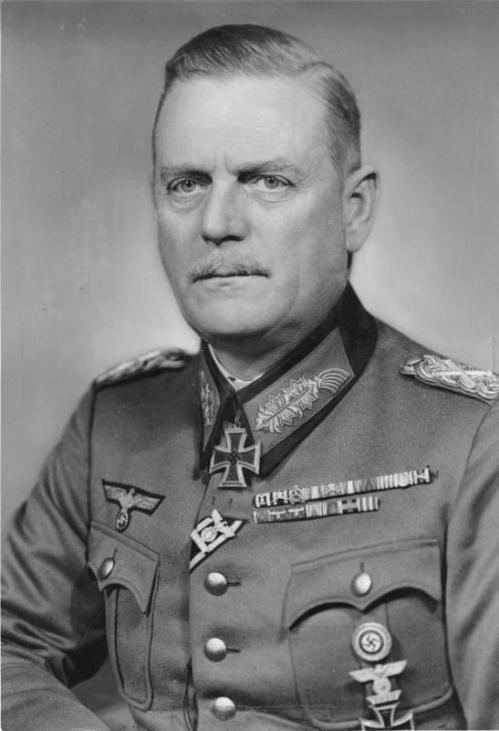
Field Marshal Wilhelm Keitel “war was a fight for survival….dispense with outdated and traditional ideas about chivalry and the generally accepted rules of warfare…” Bundesarchiv Bild

Hitler’s “ideological and grandiose objectives, expressed in racial and semi-mystical terms, made the war absolute.”[24] Field Marshal Keitel noted a speech in March 1941 where Hitler talked about the inevitability of conflict between “diametrically opposed ideologies” and that the “war was a fight for survival and that they dispense with their outdated and traditional ideas about chivalry and the generally accepted rules of warfare.”[25] General Halder, Chief of the OKH in his War Dairy for that meeting noted “Annihilating verdict on Bolshevism…the leaders must demand of themselves the sacrifice of understanding their scruples.”[26] Based on Lebensraum and race, the German approach to war would combine “racism and political ideology” for the purpose of the “conquest of new living space in the east and its ruthless Germanization.”[27] Hitler explained that the “struggle for the hegemony of the world will be decided in favor of Europe by the possession of the Russian space.”[28] Conquered territories would be “Reich protectorates…and that these areas were to be deprived of anything in the nature of a Slav intelligentsia.”[29] This goal was manifest in the “Criminal Order” issued by OKW which stated that the war was “more than mere armed conflict; it is a collision between two different ideologies…The Bolshevist-Jewish intelligentsia must be eliminated….”[30] Other displaced inhabitants of the conquered eastern lands would be killed or allowed to starve.[31] Part of this was due to economic considerations in the Reich, which gave Germans priority in distribution of food, even that from the conquered lands. Starvation was a population control measure that supplemented other forms of annihilation.[32] As Fest notes in Russia Hitler was “seeking nothing but “final solutions.””[33] Despite numerous post-war justifications by various Wehrmacht generals, the “Wehrmacht and army fell into line with Hitler because there was “a substantial measure of agreement of “ideological questions.””[34]

Ideology was key to Hitler’s worldview and fundamental to understanding his actions in the war.[35] However twisted Hitler’s ideological formulations were his ideas found acceptance beyond the Nazi faithful to the Army and Police, who would execute the campaigns in Poland and Russia in conjunction with the Einsatzgrüppen and Nazi party organizations.  In these organizations he found allies with pre-existing cultural, political and doctrinal understandings which allowed them to be willing participants in Hitler’s grand scheme of eastern conquest.

Doctrinal and Ideological Foundations

While Hitler’s racial ideology was more extreme than many in the German military and police, these organizations had cultural beliefs and prejudices as well as doctrinal and ideological foundations which helped them become willing accomplices to Hitler.  These factors were often, consciously or unconsciously, excluded from early histories of World War II. The Allies relied on German officers to write these histories at the beginning of the Cold War, developing the “dual myth of German military brilliance and moral correctness.”[36] B.H. Liddell-Hart makes the astounding statement that “one of the surprising features of the Second World War was that German Army in the field on the whole observed the rules of war than it did in 1914-1918-at any rate in fighting its western opponents….”[37] While he might be excused by lack of knowledge of German army atrocities, not just the SS who he blamed the atrocities, it helps present a myth as truth.[38] The myths were helped by the trials of Manstein and Kesselring where “historical truth had to be sacrificed…to the demands of the Cold War.”[39] Kenneth Macksey confronts the myth that only the “Waffen SS committed barbaric and criminal acts” noting: “Not even the Knights of the Teutonic Order and their followers in the Middle Ages sank to the depths of the anti-Bolshevik Wehrmacht of 1941.”[40]
Pre-Nazi Exterminator: General Lothar Von Trotha led the Genocide against the Herero in Namibia

Germany had a long running history of anti-Semitism before Hitler.  German anti-Semitism often exhibited a “paranoid fear of the power of the Jews,”[41] and included a “fashionable or acceptable anti-Semitism”[42] which became more pronounced as the conditions of the Jews became better and Jews who had fled to Eastern Europe returned to Germany.[43] Sometimes this was tied to religious attitudes, but more often focused on the belief that the Jews “controlled certain aspects of life” and presented in “pseudo-scientific garb” along with the “myth of a secret Jewish plot for world domination which was simultaneously part of the internationalism of Freemasonry.”[44] Admiral Wilhelm Canaris provides an example as he “had grown up in the atmosphere of “moderate” anti-Semitism prevailing in the Ruhr middle class and in the Navy believed in the existence of a “Jewish problem”” and would “suggest during 1935-1936 that German Jews should be identified by a Star of David as special category citizens….”[45] Wehrmacht soldiers were “subject to daily doses of propaganda since the 1930s” and that with the “start of the Russian campaign propaganda concerning Jews became more and more aggressive.”[46] Some objected to Nazi actions against Jews. Von Manstein protested the “Aryan paragraph” in the Reichswehr on general principal.”[47] Yet some who planned and executed the most heinous crimes like Adolf Eichmann had “no fanatical anti-Semitism or indoctrination of any kind.”[48]

The military “looked to the regime to reshape society in every respect: political, ideological, economic and military…Propaganda would hammer home absolute nature of the struggle…”[49] Ideological training began in the Hitler Youth and Reichsarbeitsdienst and produced a soldier in which “Anti-Semitism, anti-communism, Lebensraum – these central tenants of Nazism were all inextricably linked with the Landser’s conception of duty, with his place and role in the vast machinery of war.”[50] Following the dismissal of General Fritsch in 1938, General Brauchitsch promised that “he would make every effort to bring the Army closer to the State and the State’s ideology.”[51] Alfred Novotny, a Austrian soldier in the Gross Deutschland division noted how training depicted the Russians as Untermenschen and how they were “subjected to official rantings about how the supposedly insidious, endless influence of the Jews in practically every aspect of the enemy’s endeavors…Jews were portrayed as rats, which were overrunning the world….”[52] This added to the already “harsh military discipline” which had a long tradition in Germany conditioning soldiers to violence and brutalization of their enemy. Similar programs existed in the Order Police which would play a large part in the eastern campaign, the “image of “treasonous” leftists and Jews helped shape the personal and political beliefs of many policemen throughout the interwar period.”[53] Even ordinary police training before the war in German speaking Europe was brutalizing.”[54] These troops were recipients of an ideological formation which “aimed at shaping the worldview of the police leading to the internalization of belief along National Socialist lines.”[55] Waffen SS soldiers, especially those of the Totenkopf division were subjected to even more systematic political indoctrination on the enemies of National Socialism, the Jews, freemasonry, Bolshevism and the churches.[56]

Along with cultural anti-Semitism and the Nazification of German thought in the 1930s, there were aspects of military doctrine which helped prepare the way for the eastern campaign. The most important were the Army’s anti-partisan and rear area security doctrine.  The history of security anti-partisan operations dated back to the Prussian Army’s Ettapen, which began in 1813 with the Landwehr’s role in security against looters and others.[57] These units supported and supplied offensive operations from the rear to the combat zone with a secondary mission of countering partisans and preventing disruptions in the rear area. The Ettapen would be reformed and regulated in 1872 following the Franco-Prussian War.[58] The German experience fighting guerrillas and partisans, the francs-tireurs in the Franco-Prussian War, “scarred the Army’s institutional mentality.”[59] Von Moltke was “shattered,” writing his brother that “war was now taking on an ever more hate-inspired character.”[60] He was “appalled by improvised armies, irregular elements, and appeals to popular passion, which he described as a “return to barbarism.”[61] He wrote: “Their gruesome work had to be answered by bloody coercion. Because of this our conduct of the war finally achieved a harshness that we deplored, but which we could not avoid.”[62] The brutal German response to the franc-tireurs found legal justification in Franz Lieber’s principles for classification of belligerents and non-belligerents, which determined that guerrillas were outlaws or bandits.[63] In response, the Germans systematically reorganized the Ettapen to include railroad and security troops, special military courts, military police, intelligence and non-military police, including the Landespolizei and the Grenzschutzpolizei.[64]

The doctrinal response to partisans, or as they would become known in German writings as “bandits,” was that bandits should be encircled and destroyed. This was employed in the Southwest Africa German colonies.  The Germans, influenced by the experience in France, “displayed a ferocity surpassing even that of the racially brutalized campaigns of its imperialist peers.”[65] The campaign against the Herero tribes which resisted the occupation of Namibia from 1904-1912 utilized encirclement operations, racial cleansing and what would become known as Bandenkämpfung operations.[66] This was further developed in the First World War, especially in the east where General Fritz Gempp described the security problem as a “ruthless struggle” in which German pacification policy “was in reality the application of terror to galvanize the population into accepting German rule.”[67] Anti-partisan doctrine was codified in the Truppenführung of 1933 which stated that “area defense against partisan warfare is the mission of all units” and that the preferred method of combating partisan bands was that they be surrounded and destroyed.[68] General Erhard Rauss later described active and passive measures used to deal with partisans, focusing on the tactic of encirclement to destroy the enemy.[69]

Anti-partisan doctrine focused on the destruction of the partisans, was coupled a total war philosophy and provided fit well with Hitler’s radical ideology.  The “propensity for brutality in anti-guerrilla warfare was complimented by officers’ growing preoccupation, both during and after World War I, with the mastery and application of violence.”[70] Michael Geyer notes: “ideological mobilization for the creation of a new national and international order increasingly defined the parameters of technocratic planning.”[71] The acceptance of long used brutal tactics to destroy the enemy combined with Hitler’s radical racial animus against the Jews could only be expected to create a maelstrom in which all international legal and moral standards would be breached.

Beginnings in Poland
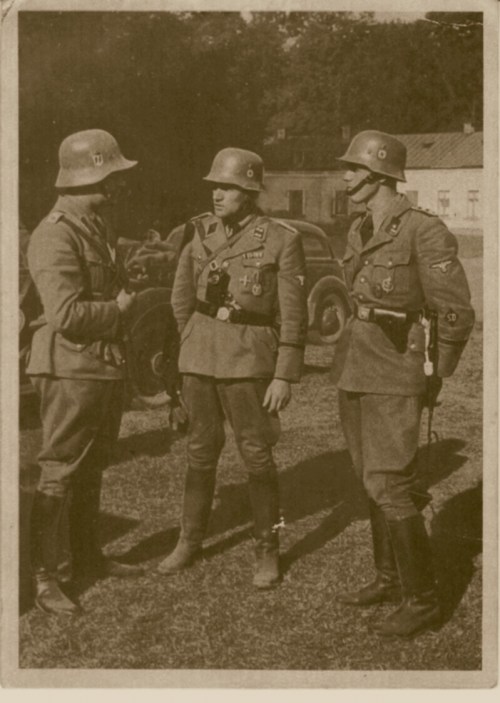
Einsatzgrüppen in Poland

The Polish campaign was a precursor to the Russian campaign and was not totally race driven. It contained elements of Germany’s perception of the injustice of Versailles which gave Poland the Danzig corridor and Germany’s desire to reconnect East Prussia to the Reich, as well as the perceived necessity to remove a potential enemy from its rear as it faced France, yet it was a campaign steeped in Nazi racial ideology.  Poland resisted German efforts to ally itself with Germany in 1939, thus Hitler determined it “would be crushed first.”[72] Meeting with military leaders on 23 May 1939 Hitler “made it plain that the real issue was not Danzig, but securing of Germany’s Lebensraum….”[73] On 22 August he enjoined the generals to “Close your hearts to pity! Act brutally! Eighty million people must obtain what is their right.”[74]
General Johannes Blaskowitz 

Even so, most military leaders failed to appreciate what Hitler was calling on them to do; Manstein would note that “what Hitler had to say about an eventual war with Poland, could not, in my opinion, be interpreted as a policy of annihilation.”[75] Others such as Canaris was “utterly horrified” as he read his notes to his closest colleagues “His voice trembled as he read, Canaris was acutely aware that he had witnessed something monstrous.”[76] General Johannes Blaskowitz, commander of 8th Army who would be the military commander in Poland did not leave any notes about the meeting, but his biographer notes that he “may have naively attached a military meaning to these terms since he was busy with military matters and soon to begin operations.”[77] This was the interpretation of Manstein as well.[78] Keitel noted that the speech was “delivered in the finest sense of psychological timing and application,” molding “his words and phrases to suit his audience.”[79] In light of the mixed interpretations by military leaders, it is possible that many misinterpreted Hitler’s intent and did not fully appreciated his ideology as they went into Poland, carefully secluding themselves in the narrow confines of their military world. While such an explanation is plausible for some, it is also true that many others in light of subsequent actions were in full agreement with Hitler. One author notes that “no man who participated in the Führer Conferences….and there were present the highest ranking officers of the three services, could thereafter plead ignorance of the fact that Hitler had laid bare his every depth of infamy before them, and they had raised no voice in protest either then or later.”[80] In July, General Wagner, the Quartermaster General issued orders that “authorized German soldiers to take and execute hostages in the event of attacks by snipers or irregulars.”[81]

Regardless of the meaning ascribed to Hitler’s speech, Hitler had already laid plans to destroy the Jews in Poland and decimate the Polish intelligentsia and leadership.   Hitler gave Himmler the task of forming “Einsatzgrüppen to follow the German troops as they advanced into Poland and liquidate Poland’s upper class wherever it was to be found.”[82] While senior party leaders remained at Hitler’s side following the conference, Himmler worked to coordinate his troops, including the reinforced Totenkopf battalions and Einsatzgrüppen with the Army.[83]
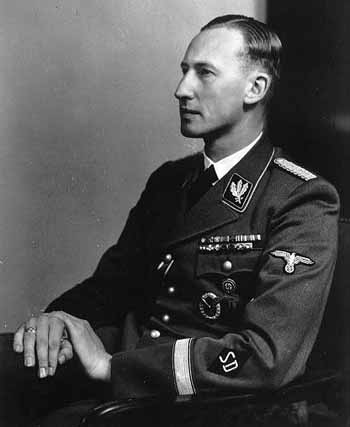
SS Obergruppenfuhrer Reinhard Heydrich: Hitler’s Hangman

Himmler began planning in early May and the Army decided to “use SS and police units to augment their own forces for security tasks.”[84] Himmler established “five Einsatzgrüppen to accompany each of the numbered German armies at the start of the campaign.”[85] Placed under the aegis of Reinhard Heydrich the groups were broken down into smaller units of 100-150 men and allotted to army corps.  All senior posts were occupied by officers of the SS Intelligence Service the SD or Sicherhietsdienst.[86] Two additional groups were formed shortly after the invasion.[87] Additionally 3 regiments of the SS Totenkopfverbande, under the direction of SS General Theodore Eicke were deployed in the rear areas of the advancing armies.[88] The purpose of these units was shielded from the Army in the planning stages,[89] although Heydrich worked with the Army to develop lists of up to 30,000 people to be arrested.[90] To eliminate the Polish elites without disturbing the Army, Himmler and Heydrich gave the Army “only the bare minimum of information.”[91] The deception was initially successful.  Blaskowitz’s 8th Army defined the mission of the Einsatzgrüppen in a traditional manner, noting their mission as “the suppression of all anti-Reich and anti-German elements in the rear of the “fighting troops, in particular, counter espionage arrests of politically unreliable persons, confiscation of weapons, safeguarding of important counter-espionage materials etc…”[92] General Wagner issued orders in July 1939 that “authorized German soldiers to take and execute hostages in the event of attacks by snipers or irregulars.” Despite the deception, there was no way to disguise the murder of Polish intelligentsia and Jews, and had the Army had the political acumen it could have considerably restricted the terror campaign.[93] .

The campaign demonstrated Hitler’s intent. Heydrich talked about the “murdering the Polish ruling class” of the aristocracy, Catholic clergy, communists and Jews on 7 September.[94] The Army moved east with the Einsatzgruppen and Totenkopf Verbande, conducting arrests and executions in its wake.  The Army worried about Polish soldiers left behind in rear areas, and a paranoia developed as some generals believed that a “brutal guerilla campaign has broken out everywhere and we are ruthlessly stamping it out.”[95] Yet some actions against the Polish elites and the Jews drew Army reactions. The unit commanded by SS General Woyrsch “behaved with such unparalleled bestiality that it was throw out of the operational area” by General List of 14th Army.[96] Totenkopfverbande Brandenburg came to Army attention when its commander remarked that the “SSVT would not obey Army orders,” and the conclusion of the Army General was that “the SSVT commander was following orders from some non-military authority to terrorize the local Jews.”[97]

These atrocities as well as those of other Waffen-SS units were hard to hide and brought reactions out of army commanders who sought to punish the offenders. Blaskowitz and others attempted to put a halt to SS actions against Poles and Jews,[98] but most officers turned a blind eye to the atrocities or outright condoned them.  It is believed that General Walter Model and others “not only knew what was occurring in Poland but actually took part in what Halder himself described in October as “this devilish plan.””[99] It appears that many who objected were not motivated so much by humanitarian, moral or legal considerations, but rather by the effect on good order and discipline.[100] Likewise it is clear that many officers, even if they did not participate in the actions probably approved of them.  Many biographies and histories of this period written by authors influenced by surviving German officers make no or little mention of the Army’s part in these actions.

Einsatzgruppe Members killing Polish Jews

Himmler and Heydrich were sensitive to the perception of the Army and resented the fact that the Army believed them to be responsible for actions that they were carrying out under the direction and order of Hitler and that their troops were “undisciplined gangs of murderers.”[101] After the establishment of the Government General led by Hans Frank there was conflict between the Army under Blaskowitz, the SS, Police and the Nazi administration. Blaskowitz made an “elaborate report on the atrocities of the SS,”[102] expressing concern about his “extreme alarm about illegal executions, his worries about maintaining troop discipline under those circumstances, the failure of discussions with the SD and Gestapo and their assertions that they were only following SS Orders.”[103] While it is unclear if the memorandum made it to Hitler, it is clear that Hitler did know about the protest and Blaskowitz fell into disfavor and was reassigned after a period of continued conflict with the Nazi administration. Hitler’s reaction according to his adjutant was that the Army’s leaders used “Salvation Army” methods, and their ideas “childish.”[104] Likewise General Georg von Külcher was relieved of command for protesting SS and police atrocities.[105] SS Officers convicted by Army courts-martial were given amnesty by Hitler on “4 October 1939 who two weeks later removed SS units from the jurisdiction of military courts.”[106] While the army remained, it was not longer in charge and would assist the SS and Police in combat and further atrocities. One German officer, later a conspirator in the July 20th plot, remarked in November 1939 about the killings that he “was ashamed to be German! The minority are dragging our good through the mud by murdering, looting and torching houses will bring disaster on the whole German people if we do not stop it soon…”[107]

The Army was relieved of responsibility for policing Poland which fell on the Ordungspolizei battalions and Gendarmerie.  These units would wreak their own devastation on Poland in the coming months and years.[108] Poland would also be the first Nazi driven shift in population to exploit the newly won Lebensraum as Poles were driven into the newly formed Government General and ethnic Germans moved into previously Polish occupied territories. By 1941 over 1,200,000 Poles and 300,000 Jews had been expelled and 497,000 ethnic Germans brought into provinces lost in 1919.[109] Prior to the war about 3.3 million Jews lived in Poland. After the war 50-70,000 were found to have survived in Poland, the Polish Army and camps in Germany. A further 180,000 were repatriated from the Soviet Union.[110]

Russia
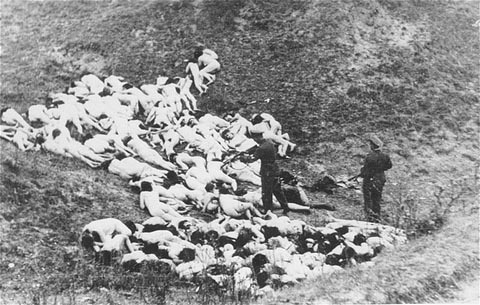
The Nazi war against Russia was the penultimate test of Hitler’s ideology. Planning began after 21 July, when Hitler made “his intentions plain” and “von Brauchitsch set his planners to work.”[111] Detailed preparations began in the winter of 1940-41 following the Luftwaffe’s failure against Britain and postponement of Operation Sea Lion.  Hitler intended to “crush Soviet Russia in a quick campaign which was to begin no later than March 15, 1941, and before the end of the war with England.”[112] Keitel noted the final decision came in “early December 1940” and from then he had “no doubt whatsoever that only some unforeseen circumstance could possibly alter his decision to attack.”[113] The plan focused on the destruction of “the Red Army rather than on any specific terrain or political objective,”[114] although these objectives would arise in later planning and in the campaign.  Hitler stated: “What matters is that Bolshevism must be exterminated. In case of necessity, we shall renew our advance whenever a new center of resistance is formed. Moscow as the center of doctrine must disappear from the earth’s center….”[115]

Besides preparations aimed at the destruction of the Red Army and overthrow of the Soviet State, the “war against the Soviet Union was more openly ideological from the start.”[116] Hitler set the stage on March 3rd 1941: “the forthcoming campaign is more than a mere armed conflict; it is a collision between two different ideologies…this war will not be ended merely by the defeat of the enemy armed forces” and that “the Jewish-Bolshevist intelligentsia must be eliminated….”[117] Hitler noted that “this is a task so difficult that it cannot be entrusted to the Army.”[118] Reichskommissars would be appointed in the conquered areas, but since normal civilian powers would be insufficient to eliminate the Bolshevists, that it “might be necessary “to establish organs of the Reichsführer SS alongside the army’s Secret Field Police, even in the operational areas….”[119] The “primary task was to liquidate “all Bolshevist leaders or commissars” if possible while still in the operations zones,”[120] yet the orders did not contain “a syllable that in practice every Jew would be handed over to the extermination machine.”[121] This was followed on 13 March by an agreement between the Army represented by General Wagner and the SS, which stated in part that “the Reichsführer SS has been given by the Führer special tasks within the operations zone of the Army…to settle the conflict between two opposing political systems.”[122] Likewise the agreement dictated that Himmler would “act independently and on his own responsibility” while ensuring that “military operations are not affected by measures necessary to carry out his task.”[123] A further instruction of 26 March issued by Wagner gave the Army’s agreement to the use of the Einsatzgrüppen in the operations zone, specifying coordination between them and army authorities in the operational zone and communications zones to the rear.  Cooperation was based on the “principals for co-operation between the State Secret Police and the Field Security organization of the Wehrmacht agreed with the Security branch of the War Ministry on 1 January 1937.”[124]

Police Battalion in the Soviet Union

The most significant act for the Army in this was the Commissar Order, sometimes known as the “Criminal Order” which was used war as evidence at Nuremberg as against Keitel and the High Command of the Wehrmacht.  The order specified the killing of Soviet Political Commissars attached to the Red Army and as “they were not prisoners of war” and another order specified that “in the event that a German soldier committed against civilians or prisoners, disciplinary action was optional….”[125] The order noted regarding political commissars that “in this struggle consideration and respect for international law with regard to these elements is wrong.” [126] The “Guidelines for the Conduct of Troops in Russia” issued on May 19, 1941 called for “ruthless and vigorous measures against Bolshevist inciters, saboteurs [and] Jews.”[127]
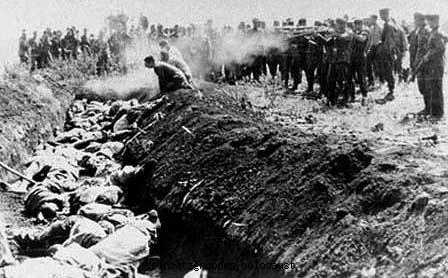
Shortly before the order was issued, Hitler previewed it to the generals saying that the war in Russia “cannot be conducted in a knightly fashion” and that it would have to be waged with “unprecedented, unmerciful and unrelenting harshness…”[128] and that they would have to “dispense with all of their outdated and traditional ideas about chivalry and the generally accepted rules of warfare: the Bolsheviks had long since dispensed with them.”[129] He explained that his orders were beyond their comprehension stating “I cannot and will not change my orders and I insist that that they be carried out with unquestioning and unconditional obedience.”[130]

Himmler visiting POW Camp holding Red Army Prisoners, most would die in German Captivity

Hitler’s speech was protested by some according to Von Brauchitsch,[131] who refused to protest to Hitler but issued an order “threatening dire penalties for excesses against civilians and prisoners of war” which he maintained at Nurnberg “was sufficient to nullify the Commissar Order.”[132] Yet Von Brauchitsch would tell commanders to “proceed with the necessary hardness.”[133] Warlimont noted that Von Bock, who would “later emerge as an opponent of the Commissar Order…makes no special comment on the meeting or the restricted conference that followed.” [134] Keitel said that he “stubbornly contested” the clause “relating to the authority of the SS-Reichsführer… in the rearward operational areas.”[135] Keitel blamed the Army High Command, but the order came out with his signature on behalf of Hitler, which was key evidence against him at Nuremberg. He stated that “there was never any possibility of justifying them in retrospect by circumstances obtaining in the Russian campaign.”[136] Some commanders refused to publish the orders and “insisted that the Wehrmacht never implemented such policies…” blaming them instead on the SS. One writer states “such protests were undoubtedly sincere, but in practice German soldiers were far from innocent. The senior professional officers were often out of touch with their subordinates.”[137] The orders were a “license to kill, although not a great departure from German military traditions….”[138] The effect was terrifying, for in a sense the Einsatzgruppen, “could commit ever crime known to God and man, so long as they were a mile or two away from the firing line.”[139] Security Divisions were “instructed to give material and logistical support to…units of the Einsatzgruppen.”[140] Even worse, army units in rear areas “could be called on to assist Himmler’s SS police leaders.”[141]
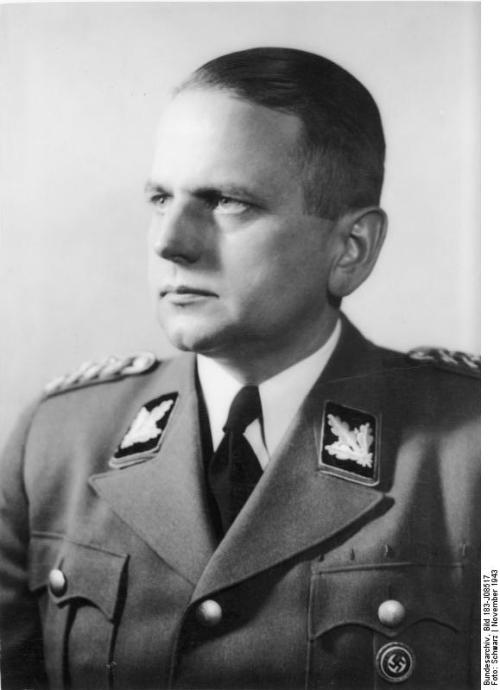
SS Brigadefuhrer Otto Ohlendorf Commander of Einstazgruppe D

The SS formed four Einsatzgruppen composed of SD, Waffen-SS and Police troops designated A-D with “A” being assigned to Army Group North, B to Army Group Center, C to Army Group South and “D” to 11th Army.  They were not standardized in manpower or equipment, the largest unit being A in the North at 990 personnel[142] and D with only 550.[143] These units had SS, SD or Police commanders. Additionally nine Ordnungspolizei battalions were initially assigned to the invasion forces.[144] The police contingent would grow over time so that by 1943, these units would be grouped under regiments and number about 180,000 men assisted by 301,000 auxiliaries.[145] These units would act in concert with 9 Army Security Divisions which handled rear area security.[146] Himmler initially did not reveal their intent and planned use to Einsatzgruppen commanders, only speaking of a “heavy task…to “secure and pacify” the Russian area using Sicherheitspolizei and SD methods.”[147] Understanding the effect of these operations, Himmler would state that “in many cases it is considerably easier to lead a company in battle than to command a company responsible to…carry out executions, to deport people…to be always consistent, always uncompromising-that is in many cases far, far harder.”[148]

Nazi actions are well documented; the Einsatzgruppen, Police, Army and locally recruited Schutzmannschaft battalions[149] ruthlessly exterminated Jews and others in the operational area. No sooner had an Einsatzgruppe unit entered a city, a “deadly stranglehold” would grip the “Jewish inhabitants claiming thousands and thousands of victims day by day and hour by hour.”[150] Non-Jewish Russians were encouraged to conduct programs which Heydrich noted “had to be encouraged.”[151] Einsatzgruppen D report 153 noted: “During period covered by this report 3,176 Jews, 85 Partisans, 12 looters, 122 Communist functionaries shot. Total 79,276.”[152] By the spring of 1942 Einsatzgruppe A had claimed “more than 270,000 victims, the overwhelming majority of whom were Jewish.”[153] The total killed for all groups then was 518,388 people, mostly Jews.[154] Germany’s Romanian ally acted against Jews in Odessa as well; “on 23 October 1941 19,000 Jews were shot near the harbor… probably 200,000 Jews perished either at Romanian hands or after being turned over by the Romanians to the Germans.”[155]

Operations against Jews were often called anti-partisan operations.  Himmler referred to Einsatzgruppen as “anti-Partisan formations[156] while Wehrmacht Security divisions “murdered countless Soviet civilians and burned Russian settlements to the ground under the pretext of subduing partisan resistance.”[157] The attitude in 1941-1942 was that “’all Jews are partisans and all partisans are Jews.” From 1943, all armed resistance was “banditry” and all Jews irrespective of circumstances were treated as “bandits.””[158] The commander of the 221st Security Division endeavored to persuade his “subordinate units that the Jews were carriers of Bolshevik contamination and, therefore, the ultimate source of any sabotage or difficulty the division faced.”[159] The extermination of the Jews and partisan war were closely intertwined with the Reich’s economic policies designed to exploit the natural resources of the Russia. This included the “hunger plan” which German authorities seemed to imagine that “millionfold starvation could be induced by requisitioning off all available grain and “shutting off” the cities.”[160] Hitler told Halder that in 1941 that he “intended to level Moscow and Leningrad, to make them uninhabitable, so there would be no need to feed their populations during the winter.”[161] Economic officials held life and death power over villages. Those that met agricultural quotas were “likely to be spared annihilation and evacuation…the culmination of this process, during 1943, would be the widespread creation of “dead zones.””[162] All told the German killed nearly 1.5 million Russian Jews.[163] By 1942, 2 million Soviet POW’s were killed.  600,000 shot outright, 140,000 by the Einsatzkommandos.[164] All told 3.3 million Soviet POWs died in German captivity through starvation, disease and exposure,[165] are included in a total of over 10 million Red Army Combat deaths.[166] Bracher notes: “The reality and irreality of the National Socialism were given their most terrible expression in the extermination of the Jews.”[167]

SS Gruppenfuhrer Arthur Nebe: “I have looked after so many criminals and now I have become one myself.”

Himmler and others continued to use euphemistic language to describe their efforts talking in terms of “Jewish resettlement.”[168] Terms such as special actions, special treatment, execution activity, cleansing and resettlement were used in place of the word murder.[169] At the same time these operations led to problems in the ranks, one SS trooper observed: “deterioration in morale among his own men who had to be issued increasing rations of vodka to carry out their killing orders.”[170] Even commanders were affected, Nebe would say “I have looked after so many criminals and now I have become one myself.”[171] A fellow conspirator would describe him as a “shadow of his former self, nerves on edge and depressed.”[172] Erich Bach-Zelewski, who led the SS anti-partisan efforts would suffer a nervous breakdown which included “hallucinations connected to the shootings of Jews” which hospitalized him in 1942.[173] Himmler would state in October 1943 that “to have gone through” the elimination of the Jews had “and remained decent, that has made us tough. This is an unwritten, never to be written, glorious page in our history.”[174]

Conclusion

The German war against Poland and Russia was heavily dependent on the racist ideology of Adolf Hitler.  He was the true spirit behind the atrocities committed by his nation as one noted in Russia: “Here too the Führer is the moving spirit of a radical solution in both word and deed.”[175] He saw the partisan war as “the chance to stamp out everything that stands against us.”[176] Belief in Germany’s right to Lebensraum the superiority of the German Volk and necessity to settle the Jewish problem provided a fertile ground for Hitler’s plans.  German military doctrines, especially those of anti-partisan and total warfare abetted Hitler’s goals.

Einsatzgruppen Trial at Nuremberg 

It is quite clear that many in the Wehrmacht were in agreement with Hitler’s ideology of racial-war. Prepared by cultural prejudice and long traditions of thought, the “Prussian and in later German military must be regarded as a significant part of the ideological background of the Second World War.”[177] General Reichenau’s orders to his troops are revealing: “The most important goal of the campaign against Jewish-Bolshevism is the complete destruction of its grip on power and the elimination of the Asian influence from our European cultural sphere.”[178] Von Rundstedt appeared to agree with Reichenau to “use the partisan threat as excuse for persecuting Jews, so long as the dirty work was largely left to SS Einsatzgruppen.”[179] The Army command…on the whole acquiesced in the extermination of the Jews, or at least closed its eyes to what was happening.”[180] Even if the Generals had been more forceful in their opposition, they would have been opposed by the highly Nazified youth that made up the bulk of their Army, especially junior officers. SS leaders fanatically executed Hitler’s policies aided by the civil administration. Genocide was to bring the Reich “long term economic gains and trading advantages” and was seen as a way of “financing the war debt without burdening the German taxpayer.”[181] Some individuals attempted to resist the most brutal aspects of the Nazi campaign against the Jews. Some like Wilhelm Kube, Reichskommissar for White Russia and a virulent anti-Semite was shocked at the murders of the Jews calling them “unworthy of the German cause and damaging to the German reputation” and would later attempt to spare Jews by employing them in war industries, would be “defeated by Himmler’s zealots.”[182] Army officers who objected like Blaskowitz and Külcher were relieved, or like Von Leeb, told by Hitler to “in so many words told to mind his own business.” Leeb stated: “the only thing to do is to hold oneself at a distance.”[183] Rommel knew of crimes through Blaskowitz but blamed the crimes “on Hitler’s subordinates, not Hitler himself.”[184]

Hitler’s ideology permeated German military campaigns and administration of the areas conquered by his armies. No branch of the German military, police or civil administration in occupied Poland or Russia was exempt guiltless in the crimes committed by the Nazi regime. It is a chilling warning of the consequences awaiting any nation that allows it to become caught up in hate-filled political, racial or even religious ideologies which dehumanizes opponents and of the tragedy that awaits them and the world. In Germany the internal and external checks that govern the moral behavior of the nation and individuals failed. Caught up in the Nazi system, the Germans, especially the police and military abandoned the norms of international law, morality and decency, banally committing crimes which still reverberate today and which are seen in the ethnic cleansing actions in the former Yugoslavia and other nations.

Bibliography

Aly, Gotz and Heim, Susanne. Architects of Annihilation: Auschwitz and the Logic of Destruction Phoenix Paperbacks, London, 2003, originally published as Vordenker der Vernichtung, Hoffman und Campe, Germany 1991, English translation by Allan Blunden.  First published in Great Britain Weidenfeld & Nicholson, London, 2002

Arendt, Hannah, Eichmann in Jerusalem: A Report on the Banality of Evil. Revised and Enlarged Edition. Penguin Books, Harmondsworth, England and New York, NY 1965. Originally published by Viking Press, New York, NY 1963

Blood, Philip. Hitler’s Bandit Hunters: The SS and the Occupation of Europe. Potomoac Books Inc. Washington, DC 2008

Bracher, Karl Dietrich. The German Dictatorship: The Origins, Structure, and Effects of National Socialism. Translated by Jean Steinberg, Holt Rinehart and Winston, New York, NY 1979. Originally Published under the title Die Deutsche Diktatur: Entstehung, Struktur,Folgen des Nationalsocialismus. Verlag Kiepenheuer & Witsch. Koln and Berlin, 1969

Browning, Christopher R. Ordinary Men: Reserve Police Battalion 101 and the Final Solution in Poland. Harper Perennial Books, New York, New York 1993 reissued 1996.

Burleigh, Michael and Wippermann, Wolfgang. The Racial State: Germany 1933-1945 Cambridge University Press, New York NY and Cambridge UK 1991

Condell, Bruce and Zabecki, David T. Editors. On the German Art of War: Truppenführung , Lynn Rienner Publishers, Boulder CO and London 2001

Craig, Gordon A. The Politics of the Prussian Army 1640-1945. Oxford University Press, London and New York, 1955

Davidowicz, Lucy S. The War Against the Jews 1933-1945 Bantam Books, New York, NY 1986.

Di Nardo, Richard L. Germany and the Axis Powers: From Coalition to Collapse. University Press of Kansas, Lawrence, KS. 2005

Erickson, John. The Road to Berlin. Cassel Military Paperbacks, London, 2003. First Published by Weidenfeld and Nicholson, 1983

Evans, Richard J. The Coming of the Third Reich Penguin Books, New York 2004.  First published by Allen Lane 2003

Evans, Richard J. The Third Reich in Power 1933-1939. Penguin Press, New York, NY 2005

Ferguson, Niall. The War of the Worlds: Twentieth Century Conflict and the Descent of the West. The Penguin Press, New York, 2006

Fest, Joachim, Hitler. Translated by Richard and Clara Winston. Harcourt Brace Jovanovich Publishers, San Diego, New York, London, 1974.  German Edition by Verlag Ullstein 1973

Fraser, David. Knight’s Cross: A Life of Field Marshal Erwin Rommel Harper Perennial, New York 1995, first published by Harper Collins in Britain, 1993

Friedlander, Saul Nazi Germany and the Jews 1939-1945: The Years of Extermination. Harper Perennial, New York, NY 2007

Fritz, Stephen G. Frontsoldaten: The German Soldier in World War II.  The University Press of Kentucky, Lexington, KY 1995

Geyer, Michael. German Strategy 1914-1945 in Makers of Modern Strategy from Machiavelli to the Nuclear Age. Peter Paret, editor. Princeton University Press, Princeton NJ. 198

Giziowski, Richard. The Enigma of General Blaskowitz. Hippocrene Books, New York 1997

Glantz, David M. and House, Jonathan. When Titans Clashed: How the Red Army Stopped Hitler. University Press of Kansas, Lawrence, KS. 1995

Goerlitz, Walter. History of the German General Staff. Translated by Brian Battershaw, Westview Press, Boulder and London, 1985. Originally published as Die Deutsche Generalstab Verlag der Frankfurter Hefte, Frankfurt am Main, 1953

Goerlitz, Walter. The Memiors of Field Marshal Wilhelm Keitel: Chief of the German High Command 1938-1945.  Translated by David Irving. Cooper Square Press 2000,  First English Edition 1966 William Kimber and Company Ltd.  German edition published by Musterschmnidt-Verlad, Gottigen 1961 .

Hitler, Adolf Mein Kampf translated by Ralph Manheim. Mariner Books, Houghton Mifflin Company, New York, NY 1999. Houghton Mifflin Company 1943, copyright renewed 1971. Originally published in Germany by Verlag Frz. Eher Nachf. GmbH 1925

Höhne, Heinze. Canaris: Hitler’s Master Spy. Traslated by J. Maxwell Brownjohn. Cooper Square Press,

New York 1999. Originally published by C. Bertelsmann Verlag Gmbh, Munich 1976, first English edition by Doubleday and Company 1979

Höhne, Heinze. The Order of the Death’s Head: The Story of Hitler’s SS. Translated by Richard Barry. Penguin Books, New York and London, 2000. First English edition published by Martin Secker and Warburg Ltd. London 1969. Originally published as Der Orden unter dem Totenkopf, Verlag Der Spiegel, Hamburg 1966.

Hughes, Daniel J. editor. Moltke on the Art of War: Selected Writings, translated by Harry Bell and Daniel J Hughes. Presidio Press, Novato CA 1993

Liddell-Hart, B.H. The German Generals Talk. Quill Publishing, New York, NY. 1979. Copyright 1948 by B.H. Liddell-Hart

Macksey, Kenneth. Why the Germans Lose at War: The Myth of German Military Superiority. Barnes and Noble Books, New York 2006, originally published by Greenhill Books, 1996

Manstein, Erich von. Forward by B.H. Liddle Hart, Introduction by Martin Blumenson. Lost victories: The War Memoirs of Hitler’s Most Brilliant General. Zenith Press, St Paul MN 2004. First Published 1955 as Verlorene Siege, English Translation 1958 by Methuen Company

Shirer, William L. The Rise and Fall of the Third Reich. A Touchstone Book published by Simon and Schuster, 1981, Copyright 1959 and 1960

Megargee, Geoffrey P. War of Annihilation: Combat and Genocide on the Eastern Front 1941.Bowman and Littlefield Publishers Inc. Lanham, Boulder, New York. 2007

Messinger, Charles, The Last Prussian: A Biography of Field Marshal Gerd Von Rundstedt 1875-1953 Brassey’s (UK) London England 1991

Newton, Steven H. Hitler’s Commander: Field Marshal Walter Model-Hitler’s Favorite General DaCapo Press a division of Perseus Books Group, Cambridge MA 2005

Novatny, Alfred. The Good Soldier. The Aberjona Press, Bedford, PA 2003

Padfield, Peter. Himmler. MJF Books, New York. 1990

Reitlinger, Gerald.  The SS: Alibi of a Nation. The Viking Press, New York, 1957. Republished by Da Capo Press, New York, NY.

Rhodes, Richard. Masters of Death: The SS Einsatzgruppen and the Invention of the Holocaust. Vintage Books a division of Random House, New York, NY 2002

Shepherd, Ben. War in the Wild East: The German Army and Soviet Partisans. Harvard University Press, Cambridge, MA 2004

Sofsky, Wolfgang. The Order of Terror: The Concentration Camp. Translated by William Templer. Princeton University Press. Princeton, NJ 1997. Originally published as Die Ordnung des Terros: Das Konzentrationslager. S. Fischer Verlag, GmbH, Frankfurt am Main, 1993

Speer, Albert. Inside the Third Reich. Collier Books, a Division of MacMillan Publishers, Inc. New York, NY 1970.

Strachan, Hew. European Armies and the Conduct of War. George, Allen and Unwin, London, UK 1983

Stein, George H. The Waffen SS 1939-1945: Hitler’s Elite Guard at War. Cornell University Press, Ithaca and London, 1966

Stern, Fritz. Gold and Iron: Bismarck, Bleichroder and Building of the German Empire. Vintage Books a division of Random House, New York 1979 First published by Alfred a Knopf 1977

Sydnor, Charles W. Soldiers of Destruction: The SS Death’s Head Division, 1933-1945. Princeton University Press, Princeton, NY 1977 Taylor, Fred, Editor and Translator. The Goebbels Diaries 1939-1941, Penguin Books Ltd, Harmondsworth UK and New York NY 1984.

Tooze, Adam. The Wages of Destruction Penguin Books, New York, NY, 2008. First Published by Allen Lane Books, Penguin Group, London UK, 2006

Trevor-Roper, H.R. Hitler’s Table Talk 1941-1944 with an introduction by Gerhard L Weinberg,  Translated by Norman Cameron and R.H. Stevens, Enigma Books, New York, NY 2000. Originally published in Great Britain by Weidenfeld & Nicholoson, London 1953.

Warlimont, Walter. Inside Hitler’s Headquarters 1939-45. Translated by R.H. Berry, Presido Press, Novato CA, 1964.

Weinberg, Gerhard L. Germany Hitler and World War II . Cambridge University Press, New York, NY 1995

Weinberg, Gerhard L. Ed. Hitler’s Second Book: The Unpublished Sequel to Mein Kampf by Adolph Hitler. Translated by Krista Smith, Enigma Books,  New York, NY 2006. Originally published as Hitlers zweites Buch, Gerhard Weinberg editor, 1961.

Weinberg, Gerhard L. Visions of Victory: The Hopes of Eight World War II Leasers. Cambridge University Press, New York, NY 2005

Westermann, Edward B. Hitler’s Police Battalions: Enforcing Racial War in the East. University Press of Kansas, Lawrence, KS. 2005

Wette, Wolfram. The Wehrmacht: History, Myth, Reality. Translated by Deborah Lucas Schneider. Harvard University Press, Cambridge, MA 2006. Originally published as Die Wehrmacht: Feindbilder, Vernichtungskreig, Legenden. S. Fischer Verlag, GmbH, Frankfurt am Main, 2002

Wheeler-Bennett, John. The Nemesis of Power: The German Army in Politics 1918-1945. St. Martin’s Press Inc. New York, NY 1954

Notes

[1] Weinberg, Gerhard L. Ed. Hitler’s Second Book: The Unpublished Sequel to Mein Kampf by Adolph Hitler. Translated by Krista Smith, Enigma Books, New York, NY 2006. Originally published as Hitlers zweites Buch, Gerhard Weinberg editor, 1961 p. 159

[2] Davidowicz, Lucy S. The War Against the Jews 1933-1945 Bantam Books, New York, NY 1986. p.91

[3] Tooze, Adam. The Wages of Destruction Penguin Books, New York, NY, 2008. First Published by Allen Lane Books, Penguin Group, London UK, 2006. p.463

[4] Fest, Joachim, Hitler. Translated by Richard and Clara Winston. Harcourt Brace Jovanovich Publishers, San Diego, New York, London, 1974.  German Edition by Verlag Ullstein 1973 pp. 607-608

[5] Note the actions of Cardinal Richelieu in France who worked to expand French power at the expense of other Catholic nations and the Vatican itself.

[6] In the United States the Reconstruction policies produced great resentment in the south with decidedly negative results for the newly freed slaves which lasted another 100 years, while in the Soviet Union great numbers of “opponents of Socialism” were killed, imprisoned or driven out of the county.

[7] Ibid. Tooze. The Wages of Destruction p.462

[8] Ibid. Davidowicz, The War Against the Jews pp.8-9

[9] Ibid. Davidowicz. The War Against the Jews p.12

[10] Ibid. Fest  Hitler. p.47

[11] Bracher, Karl Dietrich. The German Dictatorship: The Origins, Structure, and Effects of  National Socialism. Translated by Jean Steinberg, Holt Rinehart and Winston, New York, NY 1979. Originally Published under the title Die Deutsche Diktatur: Entstehung, Struktur,Folgen des Nationalsocialismus. Verlag Kiepenheuer & Witsch. Koln and Berlin, 1969 p.93

[12] Weinberg, Gerhard L. Germany Hitler and World War II . Cambridge University Press, New York, NY 1995 p.61

[13] Ibid. Weinberg, Hitler’s Second Book p.60

[14] Friedlander, Saul Nazi Germany and the Jews 1939-1945: The Years of Extermination. Harper Perennial, New York, NY 2007 p.xviii

[15] Ibid. Friedlander, The Years of Extermination p.xvii  Friedlander called this anti-Semitism “Redemptive anti-Semitism” in which “Hitler perceived his mission as a kind of crusade to redeem the world by eliminating the Jews.

[16] Megargee, Geoffrey P. War of Annihilation: Combat and Genocide on the Eastern Front 1941.Bowman and Littlefield Publishers Inc. Lanham, Boulder, New York. 2007 p.4

[17] Hitler, Adolf Mein Kampf translated by Ralph Manheim. Mariner Books, Houghton Mifflin Company, New York, NY 1999. Houghton Mifflin Company 1943, copyright renewed 1971. Originally published in Germany by Verlag Frz. Eher Nachf. GmbH 1925. p.662.

[18] Evans, Richard J. The Coming of the Third Reich Penguin Books, New York 2004.  First published by Allen Lane 2003 p.197

[19] Ibid. Davidowicz The War Against the Jews pp. 88-89

[20] Rhodes, Richard. Masters of Death: The SS Einsatzgruppen and the Invention of the Holocaust. Vintage Books a division of Random House, New York, NY 2002 p.37

[21] Speer, Albert. Inside the Third Reich. Collier Books, a Division of MacMillan Publishers, Inc. New York, NY 1970 p.166

[22] Geyer, Michael. German Strategy 1914-1945 in Makers of Modern Strategy from Machiavelli to the Nuclear Age. Peter Paret, editor. Princeton University Press, Princeton NJ. 1986. p.582

[23] Ibid. Geyer. German Strategy p.587

[24] Strachan, Hew. European Armies and the Conduct of War. George, Allen and Unwin, London, UK 1983 p.174

[25] Goerlitz, Walter. The Memoirs of Field Marshal Wilhelm Keitel: Chief of the German High Command 1938-1945.  Translated by David Irving. Cooper Square Press 2000,  First English Edition 1966 William Kimber and Company Ltd.  German edition published by Musterschmnidt-Verlad, Gottigen 1961 p. 135

[26] Ibid. Fest, Hitler.  p. 649

[27] Ibid. Megargee, War of Annihilation p.7

[28] Trevor-Roper, H.R. Hitler’s Table Talk 1941-1944 with an introduction by Gerhard L Weinberg,  Translated by Norman Cameron and R.H. Stevens, Enigma Books, New York, NY 2000. Originally published in Great Britain by Weidenfeld & Nicholoson, London 1953 p. 27 Goebbels notes a similar theme in his recollection of Hitler’s reasons for destroying Russia a power .  See Taylor, Fred, Editor and Translator. The Goebbels Diaries 1939-1941, Penguin Books Ltd, Harmondsworth UK and New York NY 1984 pp. 413-415.

[29] Goerlitz, Walter. History of the German General Staff.” Translated by Brian Battershaw, Westview Press, Boulder and London, 1985. Originally published as Die Deutsche Generalstab Verlag der Frankfurter Hefte, Frankfur am Main, 1953 p.390

[30] Warlimont, Walter. Inside Hitler’s Headquarters 1939-45. Translated by R.H. Berry, Presido Press, Novato CA, 1964 p. 150

[31] Weinberg, Gerhard L. Visions of Victory: The Hopes of Eight World War II Leasers. Cambridge University Press, New York, NY 2005. p. 24

[32] Aly, Gotz and Heim, Susanne. Architects of Annihilation :Auschwitz and the Logic of Destruction Phoenix Paperbacks, London, 2003, Originally published as  Vordenker der Vernichtung, Hoffman und Campe, Germany 1991, English translation by Allan Blunden.  First published in Great Britain Weidenfeld & Nicholson, London, 2002 pp. 245-246

[33] Ibid. Fest. Hitler p.649

[34] Wette, Wolfram. The Wehrmacht: History, Myth, Reality. Translated by Deborah Lucas Schneider. Harvard University Press, Cambridge, MA 2006. Originally published as Die Wehrmacht: Feindbilder, Vernichtungskreig, Legenden. S. Fischer Verlag, GmbH, Frankfurt am Main, 2002 p.93

[35] This understanding is different than many historians who as Friedlander notes advocate something like this: “The persecution and extermination of the Jews of Europe was but a secondary consequence of major German policies pursued toward entirely different goals.” Friedlander p.xvi

[36] Ibid. Megargee. War of Annihilation p.xii

[37] Liddell-Hart, B.H. The German Generals Talk. Quill Publishing, New York, NY. 1979. Copyright 1948 by B.H. Liddell-Hart p.22

[38] It has to be noted that Liddle-Hart published this work in 1948 and was limited in the materials available, his primary sources being German officers who he viewed with sympathy because he saw them as exponents of his theory of the indirect approach.

[39] Ibid. Wette. The Wehrmacht p.224

[40] Macksey, Kenneth. Why the Germans Lose at War: The Myth of German Military Superiority. Barnes and Noble Books, New York 2006, originally published by Greenhill Books, 1996. p.139

[41] Stern, Fritz. Gold and Iron: Bismarck, Bleichroder and Building of the German Empire. Vintage Books a division of Random House, New York 1979 First published by Alfred a Knopf 1977.  p.495

[42] Ibid. Stern. Gold and Iron p.494

[43] Ibid. Bracher. The German Dictatorship p.34

[44] Ibid. Bracher The German Dictatorship pp.34-35

[45] Höhne, Heinze. Canaris: Hitler’s Master Spy. Translated by J. Maxwell, Brownjohn. Cooper Square Press,

New York 1999. Originally published by C. Bertelsmann Verlag Gmbh, Munich 1976, first English edition by Doubleday and Company 1979 p. 216.  Canaris would later protest the Kristalnacht to Keitel (p.334) and become convinced of the crime of the Nazis against the Jews.

[46] Ibid. Witte. The Wehrmacht p.98

[47] Ibid Witte The Wehrmacht, p.73

[48] Arendt, Hannah, Eichmann in Jerusalem: A Report on the Banality of Evil. Revised and Enlarged Edition. Penguin Books, Harmondsworth, England and New York, NY 1965. Originally published by Viking Press, New York, NY 1963 p.26

[49] Ibid. Megargee. War of Annihilation p.6

[50] Fritz, Stephen G. Frontsoldaten: The German Soldier in World War II.  The University Press of Kentucky, Lexington, KY 1995 p.195

[51] Craig, Gordon A. The Politics of the Prussian Army 1640-1945. Oxford University Press, London and New York, 1955 p.495

[52] Novatny, Alfred. The Good Soldier. The Aberjona Press, Bedford, PA 2003 p.40

[53] Westermann, Edward B. Hitler’s Police Battalions: Enforcing Racial War in the East. University Press of Kansas, Lawrence, KS. 2005 p.64  Westermann also notes the preponderance of SA men who entered the Order Police in the 1930s, a factor which helped further the politicization of that organization.

[54] Ibid. Rhodes Masters of Death p.23

[55] Ibid. Westermann Hitler’s Police Battalions p.103

[56] Sydnor, Charles W. Soldiers of Destruction: The SS Death’s Head Division, 1933-1945. Princeton University Press, Princeton, NY 1977 p. 28

[57] Shepherd, Ben. War in the Wild East: The German Army and Soviet Partisans. Harvard University Press, Cambridge, MA 2004 p.41

[58] Blood, Philip. Hitler’s Bandit Hunters: The SS and the Occupation of Europe. Potomac Books Inc. Washington, DC 2008 p.11

[59] Ibid. Shepherd. War in the Wild East p.42

[60] Ibid. Goerlitz. History of the German General Staff p.93

[61] Rothenburg, Gunther. Moltke, Schieffen, and the Doctrine of Strategic Envelopment in Makers of Modern Strategy from Machiavelli to the Nuclear Age. Peter Paret, editor. Princeton University Press, Princeton NJ. 1986 p.305

[62] Hughes, Daniel J. editor. Moltke on the Art of War: Selected Writings, translated by Harry Bell and Daniel J Hughes. Presidio Press, Novato CA 1993. p.32

[63] Ibid. Blood Hitler’s Bandit Hunters p.6   Lieber was a Prussian emigrant to the US who taught law at Columbia University.

[64] Ibid. Blood Hitler’s Bandit Hunters pp.12-13

[65] Ibid. Shepherd Wild War in the East p.42

[66] Ibid. Blood. Hitler’s Bandit Hunters pp.16-19

[67] Ibid. Blood. Hitler’s Bandit Hunters p.22

[68] Condell, Bruce and Zabecki, David T. Editors. On the German Art of War: Truppenführung , Lynn Rienner Publishers, Boulder CO and London 2001. p.172

[69] Tsouras, Peter G. Editor, Fighting in Hell: The German Ordeal on the Eastern Front The Ballantine Publishing Group, New York, 1998. First published 1995 by Greenhill Books. Pp. 142-146.  It is interesting to note that Rauss does not describe any actual anti-partisan operation.

[70] Ibid. Shepherd. War in the Wild East p.45

[71] Ibid. Geyer. German Strategy p.584

[72] Ibid. Weinberg. Visions of Victory p.8

[73] Ibid. Goerlitz, History of the German General Staff p.346

[74] Höhne, Heinze. The Order of the Death’s Head: The Story of Hitler’s SS. Translated by Richard Barry. Penguin Books, New York and London, 2000. First English edition published by Martin Secker and Warburg Ltd. London 1969. Originally published as Der Orden unter dem Totenkopf, Verlag Der Spiegel, Hamburg 1966 p.259

[75] Manstein, Erich von. Forward by B.H. Liddle Hart, Introduction by Martin Blumenson. Lost victories: The War Memoirs of Hitler’s Most Brilliant General. Zenith Press, St Paul MN 2004. First Published 1955 as Verlorene Siege, English Translation 1958 by Methuen Company p.29

[76] Ibid. Hohne. Canaris p.347

[77] Giziowski, Richard. The Enigma of General Blaskowitz. Hppocrene Books, New York 1997 p.119

[78] Ibid. Manstein. Lost Victories p.29

[79] Ibid. Goerlitz. The Memoirs of Field Marshal Keitel p.87

[80] Wheeler-Bennett, John. The Nemesis of Power: The German Army in Politics 1918-1945. St. Martin’s Press Inc. New York, NY 1954 p.448

[81] Ibid. Megargee. War of Annihilation p.13

[82] Ibid. Höhne The Order of the Death’s Head p.297

[83] Padfield, Peter. Himmler. MJF Books, New York 1990 p.264

[84] Ibid. Megargee. War of Annihilation p.13

[85] Ibid. Westermann. Hitler’s Police Battalions p.127

[86] Ibid.  Höhne The Order of the Death’s Head p.297

[87] Ibid. Westermann. Hitler’s Police Battalions p.127

[88] Ibid. Sydnor Soldiers of Destruction p.37 These would become the nucleus of the Totenkopf Division

[89] Ibid. Giziowski Blaskowitz p.120

[90] Ibid. Witte. The Wehrmacht p.100

[91] Ibid. Höhne The Order of the Death’s Head pp. 297-298

[92] Ibid. Giziowski Blaskowitz p.120

[93] Ibid. Höhne The Order of the Death’s Head p.298

[94] Ibid. Witte. The Wehrmacht p.100

[95] Newton, Steven H. Hitler’s Commander: Field Marshal Walter Model-Hitler’s Favorite General Da Capo Press a division of Perseus Books Group, Cambridge MA 2005. p.74

[96] Ibid. Giziowski. The Enigma of General Blaskowitz pp.165-166

[97] Ibid. Sydnor, Soldiers of Destruction pp. 42-43 Note SSVT is the common abbreviation for the SS Totenkopf Verbande

[98] Ibid. Goerlitz. History of the German General Staff p.359

[99] Ibid. Newton. Hitler’s Commander p.78

[100] Ibid. Witte The Wehrmacht p.102

[101] Ibid. Höhne The Order of the Death’s Head p.298

[102] Ibid. Goerlitz. History of the German General Staff .p.359

[103] Ibid. Giziowski. The Enigma of General Blaskowitz p.173

[104] Ibid. Giziowski. The Enigma of General Blaskowitz p.173

[105] Ibid. Witte The Wehrmacht p.102

[106] Burleigh, Michael and Wippermann, Wolfgang. The Racial State: Germany 1933-1945 Cambridge University Press, New York NY and Cambridge UK 1991. p.100

[107] Ibid. Witte The Wehrmacht p.102

[108] For a good account of one of the Police Battalions see Ordinary Men: Reserve Police Battalion 101mand the Final Solution in Poland by Christopher Browning Harper Perennial Publishers, San Francisco CA 1992

[109] Reitlinger, Gerald.  The SS: Alibi of a Nation. The Viking Press, New York, 1957. Republished by Da Capo Press, New York, NY p.131

[110] Ibid. Davidowicz The War Against the Jews pp.395-397

[111] Ibid. Megargee. War of Annihilation p.24

[112] Ibid. Wheeler-Bennett The Nemesis of Power p.511

[113] Ibid. Goerlitz. The Memoirs of Field Marshal Wilhelm Keitel. P.132

[114] Glantz, David M. and House, Jonathan. When Titans Clashed: How the Red Army Stopped Hitler. University Press of Kansas, Lawrence, KS. 1995 p.31

[115] Trevor-Roper, H.R. Hitler’s Table Talk 1941-1944 with an introduction by Gerhard L Weinberg,  Translated by Norman Cameron and R.H. Stevens, Enigma Books, New York, NY 2000. Originally published in Great Britain by Weidenfeld & Nicholoson, London 1953 p.6

[116] Ibid. Megargee. War of Annihilation p.10 More openly ideological as compared to Poland.

[117] Ibid. Warlimont. Inside Hitler’s Headquarters p.150

[118] Ibid. Warlimont. Inside Hitler’s Headquarters p.151

[119] Ibid. Reitlinger, The SS p.175

[120] Ibid. Höhne The Order of the Death’s Head p. 354

[121] Ibid. Höhne The Order of the Death’s Head p. 354  Again another deception.

[122] Ibid. Warlimont. Inside Hitler’s Headquarters p.153

[123] Ibid. Warlimont. Inside Hitler’s Headquarters p.153

[124] Ibid. Warlimont. Inside Hitler’s Headquarters pp. 158-159

[125] Ibid. Glantz and House. When Titans Clashed p.56

[126] Ibid. Davidowicz. The War Against the Jews p.123

[127] Ferguson, Niall. The War of the Worlds: Twentieth Century Conflict and the Descent of the West. The Penguin Press, New York, 2006 p.442

[128] Ibid. Wheeler-Bennett. Nemesis of Power p.513

[129] Ibid. Goerlitz. The Memoirs of Field Marshal Keitel p.135

[130] Ibid. Wheeler-Bennett. Nemesis of Power p.513

[131] Ibid. Wheeler-Bennett Nemesis of Power p.513 and footnote. He cites the three Army Group commanders, Leeb, Rundstedt and Bock. However Von Rundstedt’s biographer notes that “no evidence exists as to what Von Rundstedt’s to this was at the time.” Messenger, Charles, The Last Prussian: A Biography of Field Marshal Gerd Von Rundstedt 1875-1953 Brassey’s (UK) London England 1991. p.134

[132] Ibid. Reitlinger, The SS p.176

[133] Ibid. Megargee. War of Annihilation p.33

[134] Ibid. Warlimont. Inside Hitler’s Headquarters p.162

[135] Ibid. Goerlitz. The Memoirs of Field Marshal Keitel p.136

[136] Ibid. Goerlitz. The Memoirs of Field Marshal Keitel pp.136-137

[137] Ibid. Glantz and House. When Titans Clashed p.56

[138] Ibid. Blood. Hitler’s Bandit Hunters p.52

[139] Ibid. Reitlinger The SS p. 177

[140] Ibid. Shepherd. War in the Wild East p.54

[141] Ibid. Reitlinger The SS p. 177

[142] Ibid. Rhodes Masters of Death pp.12-13

[143] Ibid. Westermann. Hitler’s Police Battalions p.167

[144] Ibid. Westermann. Hitler’s Police Battalions p.164

[145] Ibid. Blood Hitler’s Bandit Hunters p.141

[146] Ibid. Shepherd Wild War in the East p.48. Shepherd notes the deficiencies of these units in terms of organization, manpower and equipment which he calls “far short of the yardstick of military excellence with which the Wehrmacht is so widely associated.

[147] Ibid.  Höhne The Order of the Death’s Head p. 356 Only one of the Einsatzgruppen commanding officers was a volunteer, Arthur Nebe who was involved in the conspiracy to kill Hitler. It is believed by many that Nebe volunteered to earn the clasp to the Iron Cross to curry favor with Heydrich and that initially “Nebe certainly did not know that “employment in the east” was synonymous with the greatest mass murder in history.

[148] Ibid. Bracher. The German Dictatorship p.422

[149] Ibid. Blood Hitler’s Bandit Hunters p.55

[150] Ibid. Höhne The Order of the Death’s Head p. 360

[151] Ibid.  Friedlander The Years of Extermination p.207

[152] Ibid. Höhne The Order of the Death’s Head p. 360

[153] Ibid. Tooze The Wages of Destruction p.481

[154] Ibid. Ferguson. The War of the World p.446

[155] Di Nardo, Richard L. Germany and the Axis Powers: From Coalition to Collapse. University Press of Kansas, Lawrence, KS. 2005 p.133 The Hungarians would also engage in ant-Jewish operations. Only the Italian army would not conduct operations against the Jews.

[156] Ibid. Höhne The Order of the Death’s Head p. 369

[157] Ibid. Wette The Wehrmacht p.127

[158] Ibid. Blood. Hitler’s Bandit Hunters p.117

[159] Ibid. Shepherd. War in the Wild East pp.90-91

[160] Ibid. Tooze The Wages of Destruction p.481

[161] Ibid. Magargee. War of Annihilation p.64

[162] Ibid. Shepherd. War in the Wild East pp.127-128

[163] Ibid. Davidowicz The War Against the Jews from the table on page 403. This included 228,000 from the Baltic republics (90%) 245,000 from White Russia (65%) 900,000 from the Ukraine (60%) and 107,000 from Russia proper (11%)

[164] Ibid. Rhodes. Masters of Death p.241

[165] Ibid. Glantz and House When Titans Clashed p.57

[166] Ibid. Glantz and House. When Titans Clashed table on p.292

[167] Ibid. Bracher. The German Dictatorship p.431

[168] Ibid. Bracher. The German Dictatorship p.430

[169] Ibid. Höhne The Order of the Death’s Head p. 367

[170] Ibid. Rhodes. Masters of Death p.225

[171] Ibid. Rhodes Masters of Death p.225

[172] Ibid. Höhne The Order of the Death’s Head p. 363

[173] Ibid. Höhne The Order of the Death’s Head p. 363

[174] Ibid. Bracher. The German Dictatorship p.423

[175] Ibid. Bracher. The German Dictatorship p.430

[176] Ibid. Megargee War of Annihilation p.65

[177] Ibid. Wette. The Wehrmacht p.293

[178] Ibid. Wette. The Wehrmacht p.97

[179] Messenger, Charles. The Last Prussian A Biography of Field Marshal Gerd Von Rundstedt 1875-1953 Brassey’s London, 1991 p148

[180] Ibid. Bracher The German Dictatorship pp.430-431

[181] Ibid. Aly and Heim Architects of Annihilation p.242

[182] Ibid. Padfield Himmler pp.341-342

[183] Ibid. Megargee War of Annihilation p.97

[184] Fraser, David. Knight’s Cross: A Life of Field Marshal Erwin Rommel Harper Perennial, New York 1995, first published by Harper Collins in Britain, 1993. p.536

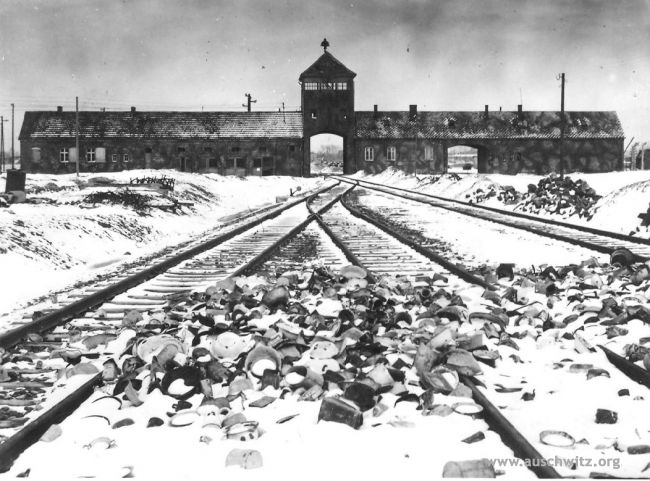
3 Comments

Filed under History, Military, nazi germany, Political Commentary, world war two in europe