Category Archives: Religion

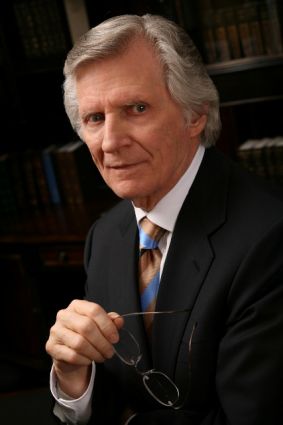
The Unexplained and Tragic Death of David Wilkerson

The Reverend David Wilkerson 1931-2011

Renowned Pentecostal  preacher David Wilkerson was killed in an automobile accident in East Texas about 1PM yesterday.  Wilkerson was one of the more influential preachers of his era preaching a message of God’s love, God’s judgment and rigorous personal holiness. Unlike many of his contemporaries who embraced the “word of faith” and “prosperity gospel” message Wilkerson condemned that message without denying the fact that God still does miracles and answers prayers.  Likewise there was never any scandal associated with him or his ministry financial, sexual or otherwise.  He proclaimed many “prophetic” words concerning judgment upon the church and the world as the time of Jesus’ second coming approached. Whether one agreed with his prophecies or interpretation of the Biblical texts concerning the second coming or not one did not question the reality of his faith or his belief in the message that he preached.  In fact one can see even in his more extravagant prophecies a tone similar to that of the Old Testament prophets especially Jeremiah.

The heart of Wilkerson’s outreach was to people that much of the church had ignored or condemned, gang members, criminals, drug abusers and other young people who lived on the margins of society. One cannot deny his impact on those that he ministered to as well as those that he influenced.  Many young people who became Christians in the 1960s and 1970s, especially those that were considered “hippies” found his message attractive and many have talked of his influence in their lives and ministries.  In fact back in 1975 I remember reading his famous book The Cross and the Switchblade and actually being inspired by it.

When I heard that Reverend Wilkerson had died in a car crash I looked up the articles on the news and was surprised to see that he evidently swerved into an oncoming logging truck and was not wearing a seat belt.  I really found this strange.  Of course there are a number of reasons that this could have transpired he could have become distracted while driving, tried to avoid a small animal in the road, been startled by something or even experienced a sudden medical problem that caused him to lose control of the car.  Looking at the pictures on a local Texas television station of the car which is unrecognizable as to its make and model it is no wonder that he did not survive the crash. His wife was probably saved by her seat belt, she is recovering in hospital and I join with their family, friends, co-workers and those that he ministered to for her complete recovery.

As I searched for information on the crash I came across an article that included his last daily blog post which was posted in the hours before his death. As I read it I sensed a man struggling with faith and God a man who seems to have been enduring his own “Dark Night of the Soul.”  The article was entitled When All Means Fail http://davidwilkersontoday.blogspot.com/2011/04/when-all-means-fail.html and it is thought provoking especially when read in the light of the circumstances of his death. I repost it here because it appears to me to show a man struggling with burdens that are overwhelming. Please know as someone who has struggled greatly with faith that I seek in no way to cast any dispersion upon the life, ministry, character or godliness of David Wilkerson.  I do not know what he was facing but it was something incredibly painful that caused him in this post and many of his recent posts on his blog site and ministry web site to wrestle with God.  As a minster I know that many things that we write or preach about deal with the things that we are dealing with ourselves. Sometimes it seems that we are preaching as much to ourselves as to the people that God has entrusted to us.  Of course we are not alone even Paul the Apostle demonstrated such a struggle in the Letter to the Romans.

Wilkerson posted:

“To believe when all means fail is exceedingly pleasing to God and is most acceptable. Jesus said to Thomas, “You have believed because you have seen, but blessed are those that do believe and have not seen” (John 20:29).

Blessed are those who believe when there is no evidence of an answer to prayer—who trust beyond hope when all means have failed.

Someone has come to the place of hopelessness—the end of hope—the end of all means. A loved one is facing death and doctors give no hope. Death seems inevitable. Hope is gone. The miracle prayed for is not happening.

That is when Satan’s hordes come to attack your mind with fear, anger, overwhelming questions: “Where is your God now? You prayed until you had no tears left. You fasted. You stood on promises. You trusted.”

Blasphemous thoughts will be injected into your mind: “Prayer failed. Faith failed. Don’t quit on God—just do not trust him anymore. It doesn’t pay!”

Even questioning God’s existence will be injected into your mind. These have been the devices of Satan for centuries. Some of the godliest men and women who ever lived were under such demonic attacks.

To those going through the valley and shadow of death, hear this word: Weeping will last through some dark, awful nights—and in that darkness you will soon hear the Father whisper, “I am with you. I cannot tell you why right now, but one day it will all make sense. You will see it was all part of my plan. It was no accident. It was no failure on your part. Hold fast. Let me embrace you in your hour of pain.”

Beloved, God has never failed to act but in goodness and love. When all means fail—his love prevails. Hold fast to your faith. Stand fast in his Word. There is no other hope in this world.”

If this were the only time that he wrote such deep and troubling words and if the circumstances of his death were different I would not have given the article a second thought.  But because of the circumstances I decided to keep reading. I read every blog post dating back to February and the topics of hopelessness, failure and struggle are present in almost every article.  They can be found here: http://davidwilkersontoday.blogspot.com/ and here http://www.worldchallenge.org/view/devotions

As I read these articles I felt the pain of a man who has been a weeping prophet and the mould of Jeremiah.  Jeremiah comes to my mind as his writings show a man that struggled with faith and was probably suffering from profound and deep depression and I get the same sense from Wilkerson’s writings.  Wilkerson’s prophetic words, be they true or not are not the words of a man who is angry and lashing out at the society around him.  They are, even dating back to the 1980s the words of a man who preaches out of a heart of sadness and concern for those people, nations and leaders that he believes are coming under the judgment of God.  I have seen some lash out and condemn Wilkerson as a false prophet because of the nature of his words but I cannot and will not do so even though I disagree with underlying premises of his eschatology.  Wilkerson cannot be compared to those that have made their living simply “studying Bible prophecy” and making money off of it or many of the other supposed modern day “prophets” who seem to believe that all they say is as inspired as the Scriptures themselves.  Wilkerson’s struggles which are so apparent in his writings show a personal humility and introspection lacking in the vast bulk of the self proclaimed prophets and Bible prophecy experts.

His writings of the past few months show a man concerned with not failing God and struggling with physical, spiritual or emotional pain of some kind. While the writings are almost always directed to the encouragement of God’s people there is also the sense that he was preaching to himself as much as anyone else.  I think that and preacher who is honest will admit that this is the case and it is not a mark of failure or lack of faith or character for this to be the case.  Likewise it is not hypocritical.

I don’t know what happened on that East Texas Highway yesterday. I don’t know if something happened to cause David Wilkerson to lose control of his vehicle or if in a moment of despair that he steered his vehicle into the oncoming truck. It doesn’t matter really because he is now with the Lord and he leaves the legacy of many changed lives and of faithfulness even while he struggled with things that we cannot fathom.  Perhaps we will know what happened someday but not today and it really doesn’t matter except if it was the latter and Wilkerson committed “suicide by car” it shows us that no-one, even famous preachers that we place on pedestals is immune from struggle, pain or doubt even while they struggle to believe.

We remember his life and ministry and we pray for his family. We trust his soul to God.

Peace

Padre Steve+

Note: I have closed comments to this article things seem to be getting repetitive.  I may reopen them if the situation warrants me doing so. Thank you to all that contributed even those that disagree with my speculation or even those that said bad things about me!

Peace

Padre Steve+

51 Comments

Filed under christian life, faith, Religion

A Quiet Alleluia: Padre Steve Celebrates Easter 2011

“Ministry means the ongoing attempt to put one’s own search for God, with all the moments of pain and joy, despair and hope, at the disposal of those who want to join this search but do not know how.”  — Henri J.M. Nouwen

Those readers and friends that have walked with me over the past two years on this site as well as those that walked with me before I ever put pen to my thoughts know how much I have struggled with God and faith since my return from Iraq. Easter has been difficult during that time as was Christmas.  My journey has been marked by many doubts. Today was different. Today we observed a quiet Easter out at the Island Hermitage marked by solitude and community.

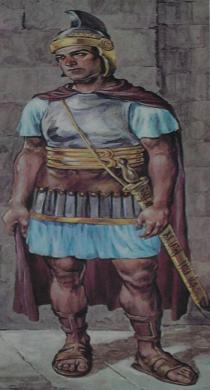
The day was quiet and uneventful. I have been writing of late on the Easter story as told by Longinus the Centurion who Church tradition accords the honor of being the Centurion who remarked at the foot of the cross “truly this man was the son of God.”  The Centurions of the Bible have always been models for me as a Christian because they were career military men who served a far flung empire and at in least one part of their careers served in an unpopular occupation of a subjugated land with a proud and unbroken populace.  In their case it was Judea of the First Century and mine was Iraq. The story of Longinus as he is known to Church tradition is one that has fascinated me, a gentile officer of an occupying army discovers God at the scene of a brutal execution which he himself supervised. The story has helped me as I imagined what it must have been like for a Roman Centurion serving in a troubled land ruled by a cabal of corrupt politicians representing Rome, the family of Herod and the powerful institution of the Jewish Temple leadership composed of the High Priest, the ruling Sanhedrin and various religious parties. Likewise the lad featured an undying insurgency dedicated to overthrowing the Romans and what some considered the corrupt administration of the High Priest who they believed to be a collaborator with the Roman occupiers. These were the Zealots.  I was fascinated by the story and the story led me to a deeper appreciation of the Easter story.

We had contemplated going to Camp LeJeune to Mass at the Base Chapel. My friend Father Jose is a wonderful pastor and serves as the base Catholic Chaplain. While it would have been nice to see him celebrate the liturgy it meant that we would do so as strangers in a large community of faith.  Judy and I still both struggle with large gatherings especially where we know very few people and decided that we would celebrate Eucharist together. We were joined in this by my land lady Sharon.  It was a quiet but joyful expression of faith and community where each of us has at times suffered under sometimes cold and unfeeling Church institutions and leaders.

I used the story of Longinus as my homily telling the story in story form rather than as a theological treatise or sermon.  After the homily we confessed the faith of the Nicene Creed, prayed for the church and the world especially the outcast and persecuted and celebrated the Eucharist around my small pine dining room table, which is actually in my living room which doubles a my bedroom. The Island Hermitage is not a mansion.

Later in the day Judy and I would take our little dog Molly on a walk through a park not far from here. The park is a woodland and wetland area on the Bogue Sound side of the island. To walk in those peaceful woods hearing, seeing and listening to the sights and sounds of nature was wonderful. Molly especially loved it as she hunted for some of the deer that she had seen a few days before while walking near the hermitage.  Following that we drove the 2 ½ miles to lands end with Molly’s ears and fur flapping in the breeze as she stood on Judy’s lap with her head and shoulders hanging out the door.  The evening was also quiet as I finished the Easter installment of the Longinus story and Judy made a number of bracelets from her seemingly unending supply of bracelet stuff.

About an hour ago I took Molly on a walk to do her nightly constitutional and as we walked in the dark I looked up into the clear night sky to see thousands of stars.  In 2008 I walked home from church on Christmas Eve looking up into the cold winter night sky wondering if God even existed.  Tonight I looked at the sky and uttered a simple thank you for the resurrection. I know that I believe again. The belief that became real again in 2009 during my “Christmas Miracle” while on duty at the Naval Medical Center is now a quiet and real part of my life and ministry, especially to those who have lost their faith or struggle with faith. It is a quiet alleluia that is now a part of my life again. It is not the same as what I had before and certainly some critics including some in my old denomination have labeled me a liberal, a heretic and even an apostate mostly because I do not agree with their political agenda or narrow and often undemocratic understanding of the Gospel and its social ramifications.  I suppose that should bother me but it no longer does. My skin has become more resistant to such critics and while such criticism from people that I counted as friends still stings in general I am much more resilient to it, obviously the Holy Spirit’s work in the life of this miscreant priest.

Yet I remain a Christian and an Old Catholic and treasure the gift that God has given us in Christ.  The ministry that I have now is different but it is founded upon that faith that people like Longinus discovered that first Easter and I can only say “I believe alleluia!”

Peace

Padre Steve+

3 Comments

Filed under christian life, faith, Pastoral Care, Religion

Trouble in River City the Centurion’s Easter: An Empty Tomb, Duplicitous Politicians and a Lingering Question

What springs from earth dissolves to earth again, and heaven-born things fly to their native seat.
Marcus Aurelius 

The pounding on his door awakened Longinus before he expected on this day after the Jewish Passover. He was hoping perhaps beyond hope that the worst was over and that in a few days he could take his soldiers back to the confines of Caesarea and away from the troubled city of Jerusalem. He was tired of this duty and longed for service with a real Legion with real Roman soldiers. He wiped the sleep from his eyes and went to the door of his quarters in Fortress Antonia.  He opened the door to find his Adjutant Marcus with a look of near panic on his face.

He asked the young officer to come into his quarters and take a seat at his table. He took a wineskin and poured the contents into two cups. He asked Marcus what was so urgent and frightening that he had to be at his quarters well before the duty day began. The young man took off his helmet to reveal a crop of blondish brown hair common to the Tyrol in the northern part of Italy and told an almost unbelievable story. He explained that there was trouble at the tomb of the itinerant preacher named Jesus. The two guards from their unit who had relieved the previous watch at the tomb had evidently fallen asleep and there had been a break in.  They claimed that they had been overcome when some kind of angelic being who had descended in front of them and some of the women who had been at the execution site previously.  The story seemed preposterous but Longinus could not believe that they had fallen asleep on duty either as such could be punished by a death sentence.  Adding to the confusion was a report that two of the preacher’s “disciples” had reportedly entered the tomb and claimed that the body was gone as had some of the women that had been there at the crucifixion.  It was unbelievable but yet in light of the strangeness of the man and his execution.  Longinus had the Adjutant bring the two soldiers to him along with the Sergeant of the Guard to explain what had happened.

The two soldiers, one a Samaritan and the other a Greek had good reputations in the unit. Neither had given him cause for concern and the terrified expression on their faces as they explained what happened gave Longinus reason to believe them. Yes it was possible that they were lying but Longinus believed their story. I found that not to believe them and their story that they heard the angel or whatever it was tell the women that the preacher had been raised from the dead. Longinus was not much of a believer in miracles angels or any sort of magic hocus pocus purveyed by seers, magicians or fortune tellers but here he was believing this outlandish story because to disbelieve would mean that there was a serious breakdown of discipline by two outstanding soldiers. He had some soldiers that he wouldn’t believe for an Athenian minute if they told him such a tale but he believed these men and he again thought of his words as the preacher hung dying on the cross on that evil hill.

Longinus went to Pilate’s headquarters when he and the other Centurions were participants in a meeting with the High Priest and his representatives and two of Herod’s people.  The meeting reminded him of a meeting of criminals.  The High Priest and his representatives were livid and Herod’s henchmen voiced their displeasure regarding the lapse of the Roman soldiers that allowed this to happen. Longinus spoke for his men and said that as improbable as it was that he believed their story. That only made the non-Romans angrier; he almost thought that they were engaging Pilate in some histrionic episode in order to force Pilate to do their bidding. They insisted that Longinus’ soldiers had to have fallen asleep and or that they had conspired with the preacher’s followers to remove the body from the tomb. This angered Longinus to the point that he interrupted their ranting to defend his men’s honor. Pilate finally ordered Longinus and the High Priest to be silent.  He asked the non-Romans to step outside while he conferred with Longinus and the other Centurions.

Pilate explained his dilemma. He was afraid that if he sent the High Priest away by supporting his soldiers that there would be a revolt in the streets. He had seen the tumult on the streets by the supporters of the High Priest when he tried to release the “King of the Jews” and felt that this would be worse for security. He advised the Centurions that while he had no reason to doubt them or their men that he had to placate the High Priest and Herod in order to avoid chaos, chaos that could lose him his job if he wasn’t careful. Likewise he did not feel that he had the manpower in the city to handle a full-fledged revolt and that he would have to call for reinforcements from the Legions based in Syria, something that he was loathe to do as this would get back to the Emperor.

Longinus thought back to the day of the execution.  Pilate had agreed to place a guard at the tomb at the urging of the High Council. Longinus had argued against placing any soldiers at the tomb as he felt that since the “King of the Jews” them man that he had called the “son of God” was dead that Rome’s obligation was over. The whole thing reeked of politics, Longinus was overruled by Pilate who explained that Roman soldiers needed to guard the tomb because the High Priest who Longinus detested as much as Pilate insisted that Jesus’ followers would attempt to steal the body and claim that he had been raised from the dead to lead a revolt against the Council and eventually Rome itself.  Added to the Judean witches’ cauldron was Herod, the corpulent and corrupt “King” of Judea.  If Longinus detested Pilate and Caiaphas he hated Herod and all that he stood for, it made him wonder why Roman lives and treasure were spent to solve the problems of this God-forsaken land which he believed would still be trouble two millennia from now if the world lasted that long. Longinus believed that as long as Rome allowed the High Council and Herod to rule the region by proxy that the troubles would never end. He believed that it was only a matter of time before these people, led by the Zealots would revolt as they had against the Seleucids nearly 200 years before. He knew if that happened that Rome would crush the revolt and not leave as much as a house standing.  He hated this occupation and all that it stood for, especially when he saw a good man, an innocent man killed for no good reason other than the politics of it all. It sickened him.

When he was done explaining his decision to Longinus and the other Centurions he called the now quite irate non-Romans back into the proceedings.  He told the High Priest and Herod’s men that he would disciple the soldiers involved and he would assist them in finding just what parties removed the body from the tomb.  In the mean time he would suppress any stories coming from the soldiers about this supposed “resurrection.”  The High Priest and Herod’s men agreed that this would suffice and thanked Pilate for his time and effort. Longinus and the other Centurions quietly seethed as this took place. When the non-Roman parties had left Pilate ensured the officers that no action would be taken against the men and that he would not actively assist the Jews in trying to find the perpetrators of the event. He then let the officer know that they would remain in Jerusalem for another week to allow the multitude of pilgrims to leave the city and then they would return to Caesarea.

Longinus left with the others and met his Adjutant and stepped into the court of the fortress. He was very unhappy with the deal that Pilate made with the High Priest and Herod.  He felt that he had dishonored his soldiers and the unit for the sake of political expediency. He felt ashamed of the Empire for what Pilate had done in cooperating with these people from beginning to end during this affair. He would not forget.

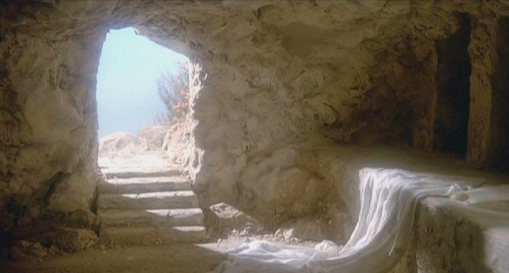
That night he felt compelled to walk to the empty tomb.  In the darkness he looked into the sepulcher aided by a lantern. He saw the grave cloths where they remained; the large stone was rolled away and the seal that had been placed on it was broken.  He looked for any evidence to suggest that his soldiers had fallen asleep but could not find any.  Nor did he see how anyone could have stolen the body and gotten very far without being seen by anyone. Convinced by what he saw he set down in the tomb and thought about this man.  He looked at ground where the body had been placed.  In the dim light he noticed what appeared to be some thorns.  He reached down He would have to find out more about him if he truly was the son of God.

He walked back to the fortress when he went to the Officer’s Mess and had the steward pour him some wine. He drank quite a few before the evening was out and then went to his quarters where he lay down exhausted and perplexed by the events of the past few days.

Peace

Padre Steve+

1 Comment

Filed under faith, History, Religion

The Morning after a Crucifixion: A Centurion Reflects on a Days Work

The horrible day was over and the night had passed. The sun rose over the escarpment overlooking the Jordan River casting a red glow in the east as the city awoke to the Sabbath morning.  Longinus rose as always when his adjutant arrived at his quarters in Fortress Antonia with his breakfast.  He preferred a private breakfast and this was typical for the area, a cup of the local tea, a plate of figs a loaf of bread with honey and since they were in a major city a portion of mutton procured from a local butcher who was more interested in earning a living than completely avoiding contact with the gentile Roman legionnaires.  Longinus invited the young officer to sit on a small chair beside the table which served both as his dining table and office desk.

They discussed the impending return to Caesarea and the needs of the soldiers as well as the case of a soldier caught drunk and disorderly stumbling around the outer court of the Temple. The Temple Police apprehended the man and returned him to the watch officer of the fortress. It was embarrassing but not atypical of the locally recruited Samaritans.  Sometimes Longinus wished that he was back with an Italian Cohort or even with the elite Imperial Guard, but even in those units individual soldiers would still do stupid things.  After discussing the matters he dismissed the officer and rose from his chair.  Longinus took the cup of tea and a piece of the bread and walked to the small window which looked out across the city and he could see the rocky crag called Golgotha now devoid of crucifixes where he supervised the executions of the two criminals and the man called by Pilate “the King of the Jews.”

It was the last that bothered him; while Longinus had seen or supervised numerous crucifixions he never enjoyed them as did some of his brother officers.   Occupation duty anywhere but especially here was difficult on soldiers.  The troops were not the elite of the Empire, many of the officers were cast offs from the Legions and the duty itself drained officers and men alike. They knew that the Jews hated them their Caesar and their taxes.  Violence against soldiers posted to remote outposts was not uncommon; the Jews of the Zealot party had no compunction about killing Roman infidels and felt that dying to free their land was an honorable thing to do. They could be brutal both to the Romans as well as other Jews that they suspected of collaborating with the hated occupiers.  Longinus hated them and treated them as terrorists whenever he encountered them, they were not soldiers and they had no honor He hated them and their land, he longed for the culture and peace of the home provinces of the Empire.

There was something unusual about the man that Pilate called “the King of the Jews.” Longinus took a sip of his tea and took another bite from the honey covered bread and shook his head. He had no idea why a man who did not seem to be violent whose followers melted away the moment this “King” was arrested by the Temple Police.  He gazed upon the sunrise as the sky began to lighten. He thought about the women and the young man who stood nearby the cross the day before. He thought about the blood and the water and his remark to his men as the man died “truly this man was the son of God.”  He hadn’t thought about it much until now. He knew that he would have to think some more on this subject but he had too much to accomplish today. There was still the possibility of violence in the city and one never knew what the Zealots were up to.  Yes he would be busy. He took another sip from his tea and dressed for his meeting with Pilate and the other Centurions.

Peace,

Padre Steve+

4 Comments

Filed under faith, History, Religion

The Long Good Friday: The Story of Longinus the Centurion

It was another ignominious day in the life of Longinus the Centurion. Posted to the troubled outpost of Judea he commanded a unit composed of locally recruited troops mostly Samaritans and some Syrians. How he wished that he commanded elite troops of the Italian Cohort or any of the European Legions stationed in nearby Syria.  Normally he and his men were posted to the Roman capital of Judea Caesarea on the Mediterranean coast of Judea, though his troops were not elite the location was not bad so far as amenities, especially for Judea.

However, today’s mission was another distasteful assignment away from Caesarea back to the always troublesome city of Jerusalem.  Since the Jewish Passover was coming and with it thousands of Jewish pilgrims from around the world were in the city and in there was always the potential for trouble. Longinus had heard around the headquarters that tensions in Jerusalem were increasing due to the presence of some itinerant preacher from up in Galilee which according to the agents and spies in the city allegedly had healed the sick, raised the dead and restored sight to the blind. Evidently he had even stirred things up on a previous visit by chasing money changers out of the Temple. Longinus had to admire that, this Jesus was pretty ballsy. Since the worldly and seasoned Longinus didn’t think much of religious zealots, Jewish or otherwise he could only chuckle when thinking of some bumpkin raising hell in the Temple and pissing off the religious elite.

He led his unit as part of the mixed Cohort which provided security for the Imperial Legate, Pontius Pilate. He remembered a previous mission where Pilate had posted the Imperial Standards with the Image of Caesar as God outside the Fortress Antonia very close to the Jewish Temple caused a riot and Pilate had the Standards returned to Caesarea under heavy escort the next day.  This time there was a rebel named Barabbas who had been causing no end of trouble and Pilate had sentenced him to death.  But then the Jewish High Council brought Pilate another case, the case of this itinerant preacher, Jesus of Nazareth. It seemed to Longinus and the other Centurions present that the case was a simple religious disagreement that the Romans should not get involved in. However Pilate took the case fearful of the threat to his job if he allowed another “king” to live.  Yet Pilate had found this Jesus innocent but caved to the pressure of the mob, even ignoring the pleas of his wife Claudia to spare the preacher.  Pilate was a typical politician and cut a deal which allowed King Herod, the Sanhedrin and himself to meet the demands of their various constituencies or in the case of Pilate his boss to end this Jesus of Nazareth problem once and for all.

On the day before the Passover one of the preacher’s own men turned him in to the Council for the paltry sum of 30 pieces of silver. That alone proved to Longinus that this Jesus was no threat to anyone. The Temple Police brought Jesus to the Sanhedrin which condemned him to death, but since they were not authorized by the Roman administration to carry out the death sentence they took the case to Pilate. Longinus saw Pilate use every trick that he could to make the decision the responsibility of someone else and if Longinus had been Pilate he would have told those religious types to pound sand and get the hell out of his headquarters, but he was a soldier not a politician with greater aspirations like the legate.

Instead Pilate complicated his life and those of his fellow Roman officers in charge of their local troops. One Centurion had the duty of supervision the torture of this Jesus. The troops were brutal, Samaritans and Syrians they hated the Jews and torturing a Jew for any offense was just too much fun, but for the Roman officers it was unseemly and lacked the honor of a true battle against other soldiers. After the brutal scourging with a barbed whip those soldiers placed a rough hewn “crown” of thorns on the unfortunate man’s head and robed him in purple to mock his claims to be a “king.” Longinus felt that the whole exercise was a cruel joke but the order had been given and by Roman law had to be carried out. After the scouring Pilate tried one last time to get out of killing this man offering to spare him for the life of Barabbas, a man who was a legitimate terrorist threat to the Empire’s interests in Judea. Instead the weak willed Pilate caved and spared the life of the terrorist for a man who couldn’t even control his own people. It was sad what was done in the name of the Emperor.

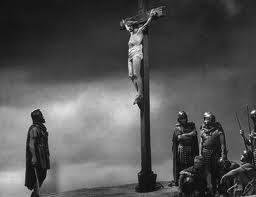
When final sentence was pronounced Longinus was assigned to the crucifixion detail.  Normally with such inflamed passions he would have assigned much of his unit to the task of the execution and related security measures. However it seemed that the usually surly population had little interest in stopping this execution of one of their own. With that in mind Longinus took just four soldiers with him to conduct the execution, security did not seem to be a problem. After a rather tumultuous parade through Jerusalem where the condemned man was heckled and abused they arrived at a hill just outside of the city called Golgotha, the place of the Skull. Longinus felt that the place was grotesque but it did work for the execution. Any visitor to the city would see the condemned man as well as two common thieves who were being executed at the same time.

His men performed the execution in the prescribed manner and he allowed the men to divide the condemned man’s clothing among them. For three hours the men along with a number of observers those that were obviously mourning the scene including a woman that appeared to be the itinerant preacher’s mother and a young man who he might be one of his followers. They were balanced out by a group of hecklers who mocked the condemned men, especially the preacher. Even one of the common thieves joined in the heckling. Yet in spite of this the preacher responded with grace and love to those who mocked him in his dying hours offering forgiveness to his men and promising eternal life to one of the condemned men who hung on either side of him.  The only real trouble came when some of the Council members noticed that the placard above the preacher said “The King of the Jews.” They immediately send men to Pilate to change the wording but Pilate finally told them to pack sand saying “I have written what I have written.” Longinus kept his silence when he heard this he and the other Centurions arrived back in Caesarea and had a chance to share drinks and a meal in a local pub.

It was an unusual day, the skies grew black as noon approached and the preacher made a number of chilling statements from his place on the cross the most poignant being where he cried out “my God my God why have you forsaken me?” That struck Longinus, this man was not really guilty of anything in Roman Law but was being killed and Longinus was part of the process.  A tear came to his eye when the preacher cried out “it is finished” and died.  Without thinking he called out to his men and to those remaining at the site “truly this man was the Son of God” drawing the ire of those cheering the execution and the bewilderment of those that appeared to be there to support this man. So when a runner came from Pilate came to order the deaths be speeded up to accommodate the religious traditions of the Jews he was relieved. His men broke the legs of the men on either side of the preacher but when they came to the limp body of the preacher they found that he was dead. Just to ensure that this was the case he had a soldier drive a spear into the side of the man. Blood and water flowed from the wound. The man was dead and the job was complete. Another Centurion came with a detail of soldiers to remove the bodies and to ensure the security of the preacher’s tomb, yet another concession to the religious people.

Longinus was glad that the day was done. He cast a glance at a number of women and one young man that remained. They obviously were his friends and the older women might have even been the preacher’s mother. He shook his head marched his troops back into the city and reported that the mission was complete when he reached Fortress Antonia.  He felt hollow inside and hoped beyond hope that time could be altered to allow him to save the many before it ever got to this point.

Arriving at Antonia he joined a number of fellow officers and as they chatted about the day he felt his anger and frustration rise. That preacher didn’t deserve to die and it was too bad that he could not be restored to life. But the Centurion in change of the Tomb Guard detail reported that the body had disappeared from the tomb. Longinus was tired. He hoped that it might be true. He asked the bartender for another drink and wondered just what was going on in this hellhole called Judea and he thought again “truly this man was the Son of God.”

Peace

Padre Steve+

Note: Longinus is the name attributed to the Centurion at the Cross during the crucifixion by early church tradition. Likewise this is true of Claudia the wife of Pilate. This story is simply my versions of what might have happened that fateful Friday when a Centurion named Longinus became an actor in a play that he could not imagine.

5 Comments

Filed under faith, History, Religion

Deadly Chatter: The Danger of Talking and not Listening

“Christians, especially ministers, so often think they must always contribute something when they are in the company of others, that this is the one service they have to render. They forget that listening can be a greater service than speaking.” Dietrich Bonhoeffer

I am a man of words sometimes many but mostly in writing but when I am in the company of others, unless I know them well or feel an exceptional need to add to a conversation I tend not to say much. In fact many times what I contribute is nothing more than something funny or witty to break tension or point out irony, speaking of which I need to do my Summer White uniform shirt in the next couple of days because we have an inspection next week but I digress.

Since I happen to be a minister I often get to experience the incessant droning and chatter of many Christians especially ministers who seem to believe that God would have them pounce on every opportunity to prattle on feeling that they must contribute something even if they have nothing to say.  Since I have on occasion been guilty of this myself I must always remember to take the Lincoln Log out of my eye before I go pointing out the Sequoia in someone else’s eye.  But we Christians and especially those of the ministerial type can really be a pain in the ass about this and I speak from experience on both the giving and receiving end of this proposition. What I fin amazing is for some ministers, especially the really popular ones on television or the mega-mart, I mean mega-church variety can take a small section of the Bible, usually the most insignificant ones like The Prayer of Jabez and turn them into a series of sermons each lasting nearly an hour complete with the DVD and the book, or series of books on the subject.

I remember a pastor of a mega-church that would begin sermon series on various topics and never complete them. He had one that was on “mission, vision and passion” which died somewhere around the eighth week of hour-long sermons into the mission section.  The sad thing is I can’t even remember what his primary Scriptural texts for this. Likewise I have endured many other sermon series to nowhere by various pastors or simply been held hostage by pastors that won’t shut up even when they know that they are beating a dead horse.  As for me I try to spend no more than 15 minutes on a sermon and usually shoot for about 12 minutes and focus on one thing either from the Gospel lesson or tying that lesson in with either the Old Testament or Epistle reading.  I just hope that in that time I don’t put anyone to sleep and that somehow by the miraculous work of the Holy Spirit that at least someone in the congregation takes a nugget from the message and that it is helpful.

Judy helped me in this when I was the Base Chaplain at Fort Indiantown Gap Pennsylvania.  The congregation had an unwritten rule that the service would begin promptly at 1100 and end promptly at 1200.  Judy and I know some American Sign Language since she went to California State University at Northridge because of her rather significant hearing loss and as any boyfriend who was passionately in love and lust would do I followed her.  As a result I became fairly well versed in sign language though I have lost most of that capability over time.  However she was good to let me know during a sermon how much time that I had before I had to be done and if I waxed too poetically she would let me know that I was boring something that I should have figured out by the sleeping members of the congregation.  But what the heck, none of them were sitting on a window ceil. No harm no foul.

I have found in the ministry of Priest and Chaplain that more often than not people don’t really want me to pontificate about everything that I know and would much rather that I take the time to listen to them. I actually try hard to notice the words as well as the inflection and the non-verbal aspects of communication when I spend time with people because it is all a part of listening.  I don’t always do it well and many times I have to catch myself before I interject a comment, idea or suggestion that might not be what the person needs at all in order to ensure the sanctity of the moment.  I know that when I am not doing well, which I spent the better part of the past three years not doing after my return from Iraq that the last thing that I want is someone who spouts “answers” and pushes their agenda without ever taking the time to care for or listen to what I am actually saying.  I think that I am not alone in this.

Bonhoeffer made this amazingly succinct comment about just what I am saying here and he does it far better than I could have done. “Many people are looking for an ear that will listen. They do not find it among Christians, because these Christians are talking where they should be listening.”  Therein lays the danger for both the person seeking someone that will listen to them as well as the one with all the answers.    The danger is that when we are in constant transmission mode we not only fail to listen or to really hear the other but also become deaf to the still small voice of God. Bonhoeffer noted this danger saying “he who can no longer listen to his brother will soon be no longer listening to God either; he will be doing nothing but prattle in the presence of God too.”  I figured due to the wisdom of my long-suffering wife Judy that God stopped taking theology lessons from me a long time ago, if indeed the Deity Herself ever took them from me. Of course back in my younger days I knew everything but since I have learned that I really know very little but I am definitely sure that I prattle in the presence of God as much as anyone else, and that is reality. Taking the time in the Daily Office and Scripture is something that I struggled with on my return from Iraq when I even struggled with the existence of God.  I am aware of this and I am trying to take some time every day to “be still and know.”

Unfortunately our media and information obsessed culture beats us senseless throwing more information, much of which is useless, deceptive or destructive in terms of content that it dulls our senses to the reality of others around us and keeps us from listening and seeing those who cry out for someone that will just take the time to listen even if they cannot “fix” the problem. You see in much of Christianity we suffer the same ailment of the culture around us in that we would rather “fix” someone than care for them. You see care takes loving nurture and patience especially the latter. Fixing is a “fire and forget” kind of thing, the kind of thing that “miracle workers” do for a living even if they are miracles faux no miracles at all. However the real act of care by a minister appropriately called “pastoral care” or the spiritual care of souls by a lay person takes time and involves a relationship and that requires listening when the answers are not apparent.  It is standing near the cross and not abandoning Jesus in the crisis something that nearing Good Friday we should remember with fear and trembling. I’m no fool when it comes to knowing my limitations especially when it comes to something like survival and I would have probably much more like Peter who went into hiding after denying Jesus than John on that day when the sky turned black.

You see to care involves love and as the Apostle Paul so aptly described love and what it is not in 1 Corinthians 13: “If I speak in the tongues of mortals and of angels, but do not have love, I am a noisy gong or a clanging cymbal. And if I have prophetic powers, and understand all mysteries and all knowledge, and if I have all faith, so as to remove mountains, but do not have love, I am nothing.”

Paul got it, even though he put a young man to sleep when preaching. The man fell out a window and died but thankfully the Holy Spirit wrought a miracle and raised the young man from the dead as he does so many weeks for so many of the faithful who suffer injury when passing out in the middle of a tedious sermon.  Maybe Paul wrote the epistle after that incident.

But simply to preach with no end is one thing but to fail to care or fail to really listen is worse.  Providing “answers” without understanding the question and to impatiently wait our opportunity to jump in and push our agenda no matter how noble or even “Biblical” it is is not faith nor is it Christian, insofar as Jesus would have understood it to be.

I remember an associate pastor of a mega-church that we attended in the late 1980s as I was getting ready to begin seminary. This pastor who was very charismatic and a wonderful preacher could not be bothered to care for or listen to the questions and struggles of a budding seminarian.  He would cross his arms and tap his foot to signal that his time was better spent doing anything other than listening to someone else. I had another senior pastor at a different mega-church who was one of my ordaining pastors back in my Evangelical Protestant days who told the congregation that someone asked him how sick that he would have to be for him to visit them in hospital he said “you don’t want to be that sick.” Of course he told the story during a sermon so the clear message was “if you are sick don’t expect a visit and don’t even bother calling me.”

Unfortunately this attitude has been all too common throughout the history of the Church and today it almost seems epidemic among pampered pastors who appear to be more intent on their personal gain than on caring for the flock that God has given them. Likewise it is all too common in church life. To  again quote from Bonhoeffer “This is the beginning of the death of the spiritual life, and in the end there is nothing left but spiritual chatter and clerical condescension arrayed in pious words. One who cannot listen long and patiently will presently be talking beside the point and be never really speaking to others, albeit he be not conscious of it. Anyone who thinks that his time is too valuable to spend keeping quiet will eventually have no time for God and his brother, but only for himself and for his own follies.”

This is a much bigger danger to Christians and the Christian faith than many if not most active clergy and laity alike across the denominational spectrum imagine.  The fact is if people don’t believe that we care about them and fail to show them the unconditional love that God shows us instead seeking to provide fixes that gel with our agenda then we will lose a generation. Perhaps we are already well on the way to this and it will be our fault.

Peace

Padre Steve+

1 Comment

Filed under christian life, faith, Pastoral Care, philosophy, Religion

An Easter People Living in a Good Friday World

Barbara Johnson wrote that Christians are an “Easter People Living in a Good Friday World.”

In the memorial acclamation which is part of many Eucharistic liturgies we proclaim “Christ has died, Christ is risen, Christ will come again” or possibly this variant “Dying you destroyed our death, rising you restored your life, Lord Jesus come in glory.  It has been part of the proclamation of the Gospels and various books of the New Testament and is the faith and prayer of those that call themselves Christians almost regardless of denomination from the very beginning.

Around the world many Christians understand this as they are persecuted for their faith sometimes to the point of death. The reality of Christians and others who are persecuted for their faith in many countries is quite unlike many American Christians who seem to believe that if someone disagrees with them they are being persecuted, despite enjoying tremendous political power and being the majority religion of the land.  Yet even in this country we live in a Good Friday world, maybe not like those that are dying for their faith but certainly in a place where suffering and violence abound, where innocent people are brutally murdered and where natural disasters bring destruction on the just and the unjust alike. In fact our country is experiencing a crisis of an order that it has not seen in many decades even while war, economic collapse and natural disasters and deep political division have left many people in deep despondency as well as in a very angry mood.

Our technology enables us to gather information and to receive news often faster than we can absorb it, thus when deluged by bad news it is easy to lose sight of the things that matter in life, especially relationships with those that we love as well as those that become part of our lives and of the Crucified God.

It is during Lent, Holy Week and in the Easter Triduum of Holy or Maundy Thursday, Good Friday and Easter that the reality of God participating in our world, the real world of pain, suffering, injustice and death becomes something that keeps us, or rather those who profess the Christian faith from simply becoming exponents of what Luther termed the “theology of glory.”  The Cross is that scandal or stumbling block that according to Jürgen Moltmann, the knowledge of which “brings a conflict of interest between God who has become man and man who wishes to become God.” It is the Cross which forces us to deal with the present realities even while we remain fixed upon the hope of Easter.

Unfortunately for many American Christians our focus tends to be less on the Crucified and Risen God than on our attempts to use the raw power of the political process and unsavory compromises with those that would co-opt and compromise the faithful for the advancement of their political, social and economic agendas.  This is nothing new; it has been an unfortunate and painful series of chapters in the history of the Christian Church since the time that Christianity became legal and the State religion during the reign of Constantine.  The sad truth is that in Western Christianity beginning with the Catholic Church and extending out to those that have been the theological heirs of Saint Augustine Catholic and Protestant alike have more often than not allowed their faith to be subordinated to their political, economic and social agendas and thereby becoming captive to things that are often antithetical to the Gospel.

Yet in the midst of this there is the constant call of the Gospel, that “God was reconciling the world to himself counting men’s sins not against them.”  Moltmann puts this paradox well when he says:

“When God becomes man in Jesus of Nazareth, he not only enters into the finitude of man, but in his death on the cross also enters into the situation of man’s godforsakenness. In Jesus he does not die the natural death of a finite being, but the violent death of the criminal on the cross, the death of complete abandonment by God. The suffering in the passion of Jesus is abandonment, rejection by God, his Father. God does not become a religion, so that man participates in him by corresponding religious thoughts and feelings. God does not become a law, so that man participates in him through obedience to a law. God does not become an ideal, so that man achieves community with him through constant striving. He humbles himself and takes upon himself the eternal death of the godless and the godforsaken, so that all the godless and the godforsaken can experience communion with him.” 

It is in this that Christians can fully be Easter People who live in a Good Friday world.  It is in living the paradox of Good Friday and Easter that we find just how God humbled himself for all people. In suffering the wrath of some incredibly religious people Jesus in the eloquent words of Paul the Apostle “though he was in the form of God, did not regard equality with God as something to be exploited, 7but emptied himself, taking the form of a slave, being born in human likeness. And being found in human form, he humbled himself and became obedient to the point of death— even death on a cross.” (Phil 4:7-8) and in that God, “who reconciled us to himself through Christ, and has given us the ministry of reconciliation; that is, in Christ God was reconciling the world to himself, not counting their trespasses against them, and entrusting the message of reconciliation to us.” (2 Cor 5:18-19)

Yes this is what it means to be an Easter people living in a Good Friday World.

Peace

Padre Steve+

2 Comments

Filed under christian life, faith, philosophy, Religion

Surrendering Religious Liberty to the State for Money: The Example of Florida I n 2011

“To suffer the civil magistrate to intrude his powers into the field of opinion and to restrain the profession or propagation of principles on supposition of their ill tendency is a dangerous fallacy which at once destroys all religious liberty, because he being of course judge of that tendency will make his opinions the rule of judgment and approve or condemn the sentiments of others only as they shall square with or differ from his own.” Thomas Jefferson – Statute for Religious Freedom, 1779

“Religious Freedom; Proposes an amendment to the State Constitution to provide that an individual may not be barred from participating in any public program because of choosing to use public benefits at a religious provider and to delete a prohibition against using public revenues in aid of any church, sect, or religious denomination or any sectarian institution.” Summary Statement of Florida SJR 1218

Thomas Jefferson was one of the wisest of our Founding Fathers in understanding how religious liberty can be threatened by the State especially when religious people think that they can use the state for their own bidding. This is happening today in the State of Florida where the House and Senate seem to be hell bent on obliterating the wall of separation of Church and State in the Florida Constitution which has been in existence for 127 years. The legislation Senate Joint Resolution 1218 sponsored by Senator Thad Altman(R) District 24 changes the heart of Article I “Declaration of Rights” which begins with

SECTION 3. Religious freedom.—There shall be no law respecting the establishment of religion or prohibiting or penalizing the free exercise thereof. Religious freedom shall not justify practices inconsistent with public morals, peace or safety.

The Florida State Senate then strikes this language from the State Constitution:

No revenue of the state or any political subdivision or agency thereof shall ever be taken from the public treasury directly or indirectly in aid of any church, sect, or religious denomination or in aid of any sectarian institution.”

That language is replaced with this statement:

“An individual may not be barred from participating in any public program because that individual has freely chosen to use his or her program benefits at a religious provider.”

See full text of legislation: http://www.flsenate.gov/Session/Bill/2011/1218/BillText/Filed/HTML

Senator Altman is very nondescript in his religious views simply listing himself as a “Christian” on his Florida Senate information page. Likewise he has the lowest rating of the Christian Coalition of any Florida Republican. He is a building contractor by trade and he gets the bulk of his political funding from various business interests the top 7 groups being:

$36,520 – Lawyers & Lobbyists
$25,050 – Health Professionals
$23,200 – Insurance
$17,801 – Real Estate
$17,700 – Crop Production & Basic Processing
$11,500  – Hospitals & Nursing Homes
$10,500 – Telecom Services & Equipment

He is not a favorite of the Tea Party which leads me to believe that this measure, which many religious conservatives will certainly support, is political opportunism at its rawest and most unseemly form. Senator Altman would strike down 127 years of Florida law to try to shore up his support with religious conservatives and at the State level turn the Constitution of the United States on its head and for what? I’ll tell you what, his political power.

The legislation destroys protections granted to religious institutions and opens the way for the most numerous and powerful religious institutions to use taxpayer money for their own ends.  Of course once such a law is passed the State is given the right to decide which religious groups receive taxpayer funding opening the way to the establishment of a de-facto State religion of the most powerful and financially influential Churches while at the same time opening the door to the persecution of minority denominations or religions.  I’ll bet those that came to this land fleeing such Church-State tyrannies are spinning in their graves at this legislation.

Since the founders are much better in speaking to this than I am I think I will close with the text of a letter from James Madison to Edward Livingston back in 1822:

“Notwithstanding the general progress made within the two last centuries in favour of this branch of liberty, and the full establishment of it in some parts of our country, there remains in others a strong bias towards the old error, that without some sort of alliance or coalition between Government and Religion neither can be duly supported. Such, indeed, is the tendency to such a coalition, and such its corrupting influence on both the parties, that the danger cannot be too carefully guarded against. And in a Government of opinion like ours, the only effectual guard must be found in the soundness and stability of the general opinion on the subject. Every new and successful example, therefore, of a perfect separation between the ecclesiastical and civil matters, is of importance; and I have no doubt that every new example will succeed, as every past one has done, in showing that religion and Government will both exist in greater purity the less they are mixed together. It was the belief of all sects at one time that the establishment of Religion by law was right and necessary; that the true religion ought to be established in exclusion of every other; and that the only question to be decided was, which was the true religion. The example of Holland proved that a toleration of sects dissenting from the established sect was safe, and even useful. The example of the colonies, now States, which rejected religious establishments altogether, proved that all sects might be safely and even advantageously put on a footing of equal and entire freedom; and a continuance of their example since the Declaration of Independence has shown that its success in Colonies was not to be ascribed to their connection with the parent country. if a further confirmation of the truth could be wanted, it is to be found in the examples furnished by the States which had abolished their religious establishments. I cannot speak particularly of any of the cases excepting that of Virginia, where it is impossible to deny that religion prevails with more zeal and a more exemplary priesthood than it ever did when established and patronized by public authority. We are teaching the world the great truth, that Governments do better without kings and nobles than with them. The merit will be doubled by the other lesson: the Religion flourishes in greater purity without, than with the aid of Government.” (Letter to Edward Livingston, July 10, 1822)

Those that support such statutes be they at the local, state or federal level such be scrutinized because at the heart of all such actions their lies the evil of political power and monetary corruption which would make Churches and religious institutions the unwitting servants of the State, something that our founders rejected and should be rejected today. Such laws invariably lead to persecution and the curtailment of religious liberty.

William Butler Yeats said “Once you attempt legislation upon religious grounds, you open the way for every kind of intolerance and religious persecution.”

Florida legislators and voters need to be aware of this before they commit themselves to the rejection of such a core belief of our nation and until now the State of Florida.

Peace

Padre Steve+

1 Comment

Filed under History, philosophy, Political Commentary, Religion

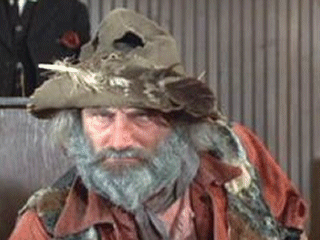
Blazing Saddles and Contemporary American Life and Politics

 The affairs of state

http://www.youtube.com/watch?v=BiF0M4uOhgI&feature=related

What’s a dazzling urbanite like you doing in a rustic setting like this?

Sometimes a film can capture the spirit of a society. If there is an iconic film that captures the spirit of America it has to be Mel Brooks’ classic Western spoof Blazing Saddles.  It debuted back in 1974 when the nation was bitterly divided facing political crisis in the wake of the Watergate break-in cover-up which was soon to usher President Richard Nixon out of office and an economic crisis including a spike in oil and gas prices brought about by Middle East tensions.  Americans also faced the end of a disastrous war in Vietnam the military threat of the Soviet Union, dissent among our Allies and the rise of a new economic power Japan.

It is at times like this that our political leaders almost always fail to rise to the occasion and take every opportunity to preserve their power and political offices catering to their own interest groups at the expense of everyone else.  Blazing Saddles captures the moment quite well when upon learning of chaos in the town of Rock Ridge Governor LePetomane played by Mel Brooks reacts as almost all politicians do when a crisis arises.

“Holy underwear! Sheriff murdered! Innocent women and children blown to bits! We have to protect our phony baloney jobs here, gentlemen! We must do something about this immediately! Immediately! Immediately! Harrumph! Harrumph! Harrumph!”

Unfortunately when I look at our political, economic and social landscape I am frequently taken back to this bit of the film.  Sometimes I think that Governor LePetomane is much more reflective of the men and women that we elect at every level of government than it is not. I think that the only time that politicians get concerned about something that really matters is when their “phony baloney jobs” are at stake. Come to think of it I don’t think it matters if they are Republicans, Democrats, Libertarians, Tea Partiers or even Commies the only time that 99.61872% of politicians give a damn about an issue is if it threatens their re-election bids or aspirations to a higher office.  Then and only then do they at least pretend to care, well at least until they are re-elected.  My number might actually be lower than reality but you get the idea.  But of course the affairs of state must take precedence over the affairs of state and the business of government really hasn’t changed.

http://www.youtube.com/watch?v=P-cje17OGnQ&feature=related

Attorney Generla Hedley Lamar (Harvey Korman): Under the provisions of this bill we would snatch 200,000 acres of Indian Territory, which we have deemed unsafe for their use at this time. They’re such children.
Governor LePeotomane: 200,000 acres? 200,000 acres? What will it cost, man? What will it cost?
Headley Lamar: A box of these (box of paddle balls).
LePetomane: Are you crazy? They’ll never go for it, and then again they might. Little red devils! They love toys!

Lamar then has Governor LePetomane sign another bill to “convert the state hospital for the insane into the William J. Le Petomane Memorial Gambling Casino for the Insane.”

In such times many people take refuge in their faith and the people of Rock Ridge were no exception. Since I am well versed in almost every Mel Brooks movie song I immediately thought of the following verse from the song The Ballad of Rock Ridge.

Now is a time of great decision

http://www.youtube.com/watch?v=9v0OLW3Qhc8

“Now is a time of great decision, are we to stand up or to quit? There’s no avoiding this conclusion, our town is turning into shit.”

In such a climate citizens have to ask the question so aptly put in The Ballad of Rock Ridge. What will citizens do?

http://www.youtube.com/watch?v=9v0OLW3Qhc8

Some like the preacher, Reverend Johnson want to leave “Now I don’t have to tell you good folks what’s been happening in our beloved little town. Sheriff murdered, crops burned, stores looted, people stampeded, and cattle raped. The time has come to act, and act fast. I’m leaving.”


But the town drunk Gabby Johnson tells the reverend exactly what he thinks:

“You get back here you pious candy-ass sidewinder. Ain’t no way that nobody is gonna’ to leave this town. Hell, I was born here, an’ I was raished here, an’ dad gum it, I am gonna die here, an no sidewindin bushwhackin, hornswaglin, cracker croaker is gonna ruin my biscuit cutter.”

Gabby manages to inspire his fellow townspeople into staying as Olson Johnson played by David Huddleston rallies the town “What are we made of? Our fathers came across the prairie, fought Indians, fought drought, fought locusts, fought Dix – remember when Richard Dix came in here and tried to take over this town? Well, we didn’t give up then, and by gum, we’re not gonna give up now.”

I think is that if we want the country to get better we can’t give up no matter how nutty the extremists on both sides of the political divide get. Of course those on the extremes who all believe that they are the mainstream seem to constantly multiply by exponential exponents. This means of course, mathematically speaking that there are a lot more of the extremists than there have ever been before and we moderates will soon be an endangered species no matter which bunch of extremists eventually wins though at the present time it seems that the political right is setting the agenda but back to the film and its application in today’s world.

I saw an article about a Republican leader of the Orange County Tea Party named Marilyn Davenport who had sent out a very racist and ugly e-mail to friends and supporters that like so many e-mails happen to get forwarded to people that don’t see the humor.  The e-mail showed an image, posed like a family portrait, of chimpanzee parents and child, with Obama’s face artificially superimposed on the child. Text beneath the photo reads, “Now you know why no birth certificate.”

I am depressed

Unfortunately beyond the matters of policy, eligibility or political ideology that some on the right have with President Obama and the Democrats there is also a racist element that just hates the fact that we have a black man in the White House. Mr. Taggart played by Slim Pickins made this comment on being introduced to a very black Sheriff Bart played by Cleavon Little  “Well, if that don’t beat all. Here we take the good time and trouble to slaughter every last Indian in the West, and for what? So they can appoint a sheriff that’s blacker than any Indian. I am depressed.”  Having been threatened by White Supremacists on this website I know that there is an undercurrent of racism involved in this. Policy disagreements are one thing, as far as I’m concerned on policy issues there is nothing off limits whether I agree or disagree. That is political free speech which I will die to defend. However vitriolic racial hatred masquerading as “internet humor” as Mrs. Davenport called it is unacceptable. It may be free speech but we have to call it what it is, racial hatred.  Now people on the political left often flippantly refer to Conservatives of all varieties as “Nazis” and have their own fair share of hateful e-mails and prejudices so this cuts both ways.

However I grew up in the 1960s and 1970s when lynching’s still occurred in the South and even in Northern California adults, contemporaries of my parents produced some of the most racially insensitive and prejudiced comments when our schools in Stockton were desegregated.  The comments were made in school district meetings and in the opinion page of the Stockton Record and they were quite ugly. I was part of the first High School classes to go through my entire high school years in a desegregated school, Edison High School in Stockton California. Somehow the “Soul Vikes” made it work and of our class which was about 25% black, 25% white, 25% Mexican American and 25% Asian along with a further 8% that no-one could place are still close and care about each other.  We have we attended reunions and hundreds of us are friends on Facebook. We defied the “experts” who said that there would be violence and that the “social experiment” could not work.  We are conservatives and liberals, Republicans, Democrats, Libertarians and Tea Partiers, straight and gay, black, white, Hispanic and Asian, Fundamental Christians, Progressive Christians, traditionalists, non-traditionalists, Buddhists, Jews, maybe even a Moslem or two and certainly some free tinkers, agnostics and Atheists too, but we share something very special. While we may disagree on some very important matters we still care about each other and respect each other.

What bothers me about the present racism is that some of the worst offenders claim to be Christians or if they do not claim to be Christians often seek the support of conservative Christians for their political agendas.  Somehow I think that Jesus would not approve.  Racism has no place in our society no matter what race does it especially for people who claim to be followers of Jesus.

The sad truth is that in his time Mel Brooks took a bolder stand against racism than most Christians. Using the Old West and humor he mocked racism and showed its ugliness in a way that Middle America got.  Maybe we should take a mass dandelion break and grab a copy of Blazing Saddle’s put it in our DVD, Blue-Ray or computer and reflect back on what might be. Maybe like Sheriff Bart we can ride into the sunset knowing that our job is done.

http://www.youtube.com/watch?v=MySGAaB0A9k

Bart: Work here is done. I’m needed elsewhere now. I’m needed wherever outlaws rule the West, wherever innocent women and children are afraid to walk the streets, wherever a man cannot live in simple dignity, wherever a people cry out for justice.
The Townspeople: (in unison) Bullshit!
Bart: All right, you caught me. Speaking the plain truth is getting pretty damn dull around here.


Dull can be good but anyway I digress….however there are times that I feel like Mongo…”Mongo not know Mongo only pawn in game of life.”

Peace

Padre Steve+

2 Comments

Filed under faith, History, movies, philosophy, Political Commentary, Religion

The Unchristian Christianity of Modern America

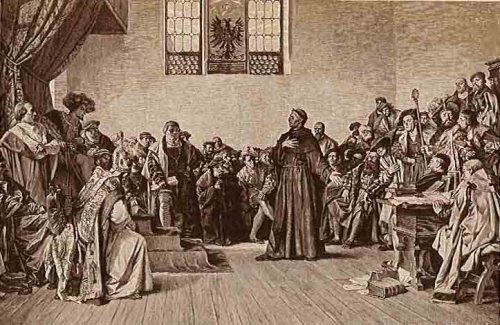
I cannot and will not recant

We live in an era where religion and politics especially in conservative circles have become one just as they were in the days following Constantine’s granting of religious freedom to all in the Empire while making the Catholic Church the State religion which went from a persecuted Church to an Imperial Church overnight. The Church in the coming centuries became an arm of the State something that until the enlightenment it remained in many nations. Most of the English Colonies that became the United States had State Religions even after the Bill of Rights the last to disestablish its state religion being the Commonwealth of Massachusetts in 1833.  Most European State Churches remained until the fall of the Empires after the First World War but many countries in Europe still have State Churches which are not very vibrant now days.

The curious thing is that until the 18th and 19th Centuries the powers of State Churches were great and heavily benefited greatly through their allegiance to the State.  To disobey the Church was to disobey the State and to disobey the State was often tantamount to disobeying God since the State and the rulers thereof were not simply ordained by God but in fact God’s instruments. Unfortunately this led to many abuses of power by those in the Church as well as the State and thankfully we in the United States were able to for the most part break with that tradition which was and is repugnant to the Gospel as well as human freedom.

In fact the United States has been the foremost proponent of religious freedom and tolerance of any nation in history. It was something that we enshrined, the right of all people to worship according to their faith. Now we haven’t been perfect practitioners of our ideal as there have been plenty of religious based prejudice and persecution in this country dating to colonial times, especially of religions outside the mainstream of Protestant Christianity, it took nearly 150 years for Catholics to become part of mainstream America and longer for others especially religions outside of the Judeo-Christian tradition. Despite those instances our experiment of religious liberty has been an amazing success in which many denominations have prospered.

All that being said I fear we are entering a stage where authoritarian religious groups closely allied with the rich and the powerful are on the ascendant in the United States just as radicals in other religions, particularly Islam but not limited to Islam are on the rise. Frankly I expect that people who are either living in a culture that still believes that the world is like it was back in the 13th Century and those that have become fantastically rich and enamored with the technology of the West to be that way. Let us face facts most of the counties in the Middle East lack the centuries of related social, political, philosophic or religious development that is part of Western culture and we still screw things up. The Islamic World has not experienced anything like the Renaissance, Reformation or Enlightenment. There is a chance that it might amid the pro-democracy and freedom protests that are occurring throughout the Middle East even as radical Islamists dream of a new Caliphate, something that seems to be anathema to many of the young protestors in Egypt and other Arab Nations.

In the United States the movement to religious authoritarian systems closely allied with politicians and the State to do their bidding comes from conservative circles, particularly conservative and fundamental Evangelical Christian churches and the Roman Catholic Church which since the reforms of Vatican Two has retreated into its old Ultramontanistic self.

That being said I figure I should go ahead and continue to dig my grave with my conservative brethren who view anyone to the left of them as a wild eyed raving liberal and quite possibly a Socialist.  I am a moderate and I might be classed as a liberal conservative or conservative liberal.  Thus I and people like me stand in the uncomfortable middle of a deeply polarized society where most to our left or right despise us for actually deviating from the established dogmas of the left or the right.

To the extreme right I might be a raving liberal, and the far left an intolerant conservative but the I choose to live in the tension between the two, although I think that in today’s Tea Party charged environment I would be called a liberal.  But I am a moderate and I will not give up the middle ground simply because others have adopted a scorched earth policy in faith and politics where “if you ain’t for us you’re against us” is the norm. In fact I think that Jesus stood against that kind of thought process, if you don’t believe me look at Mark 9:38-40 where Jesus says something different when the disciples confront him about others casting out demons in his name “he who is not against us is for us.”

As a passionate moderate who is also a Priest and Christian my goal in life is to get along, find common ground among disparate groups and care for God’s people.  I do this by acknowledging and maintaining the tensions that are inherent in a pluralistic society and not simply going along what whatever is popular or expedient. This takes a lot of effort and does not exclude being prophetic.  However that prophetic role comes in relationship with others where there is mutual respect, civility and care for each other even when we do not agree. It does not come from being angry or acting disrespectfully just because I can.  The prophetic role does not come from the outside looking in railing at your opponents.  That only increases your isolation, eventually to the point that you are no longer a player in the debate, simply an annoying pest with absolutely no say in anything.  It takes more courage to be open and dialogue with people respectfully than it does to rail against them.  Anyone can be a critic and anyone can be a wrecking ball.  That’s easy.  There is little personal risk in doing so, because you don’t have to open you self up to the possibility that there may be some merit in your opponent’s view and once you have a relationship with someone it is hard to demonize or dehumanize them.  Unfortunately that is what is happening across the religious and political divide in our society.

Despite the rancor on the extremes I think that there are more people out there like me than not. My belief is that voices like ours are drowned out by drumbeat of competing demagogues on the far right and the far left.  Since I am a priest my focus will be on the dangers that I see in the current climate and the captivity that churches have unwittingly placed themselves in making political alliances.  These alliances, particularly those of conservative Christians have become so incestuous and so intertwined that they are seen as one with supposed political conservatives. As such these churches and Christian leaders have become the religious voice of political movements fighting a cultural war in which only one side can win and in which there is no room for compromise or dialogue.

In doing so these religious leaders have compromised themselves so that only their followers give any credence to what they are saying.  They are so to speak “preaching to the choir” and not reaching out to or even caring about the welfare of their opponents, they are in a sense like the Taliban. They frequently demonize their opponents or for that matter anyone, even other Christians that might disagree with their understanding of the Christian faith.

That is why I say that many have become like the Taliban. If you do not agree with them on their social-religious agenda you are a heretic regardless of how orthodox you are in your actual theology.  Theology and belief is no longer the test, the test is if you agree with a social-political-religious agenda which often is at odds with the Christian faith proclaimed by Jesus.  This is like the Taliban because the goal is to gain control of the government and use the government to impose a social-religious theocracy where the church uses the “police power of the government” to achieve its goals.  Such a message is anathema to the Gospel and its redemptive message that “God was in Christ reconciling the world to himself, not counting men’s sins against them.” What many churches and Christian leaders have done is to for practical purposes discard any real attempts to engage people with the message of the Gospel in favor of using political power to coerce non-believers into compliance through the police power of the government.  This in stark opposition to the early Church which was martyred for their faith in Christ versus their opposition to government policy or social ills, of which there were plenty that they could have protested.

Early in his “Reforming” days the young Martin Luther wrote a book entitled “The Babylonian Captivity of the Church.” It was a severe critique of abuses in the Roman Catholic Church of his era.  I think churches today have become captive to various political parties, social and economic theories, movements and ideas.  These are not necessarily Christian even though any churches have “baptized” them so to speak.  Capitalism for instance is has many benefits, however unbridled capitalism which is not moderated with true concern for the least, the lost and the lonely, is nothing more that economic social Darwinism.  It is the survival of the fittest with little concern or regard for real people.  People in the world of baptized unbridled capitalism are not people, but consumers and economic units.  In the United States we can see this in practical terms where historically US corporations which at one time employed millions of Americans and produced actual good that were in turn exported to the world have outsourced so many jobs and industries to other nations.

This was done in order to increase corporate profits by paying foreign workers almost nothing and not having to abide by US environmental laws or tax codes.  This may bring cheaper goods in the marketplace but it has endangered our economic and even strategic military security. Economic power is one of the key elements of national security.  In the military we call this the DIME:  Diplomatic, Intelligence, Military and Economic power and unless your economy can keep up you will fail.  Just ask the Soviet Union.  It is interesting to see many Christian leaders and churches talk of capitalism as if came down from heaven even using the Bible to try to bolster their argument.  This is just one of many areas where the church is not longer a prophetic voice, but a willing captive mouthpiece for political and economic institutions which at their heart could care less about the Christian faith and wouldn’t mind it going away.

On the left many churches have embraced social reform, the civil rights movement, women’s liberation as well as left leaning and even socialistic economic models and a demonstrated preference for the Democratic Party.  While none of these goals of themselves are anti-Christian the linkage to the causes often over the Gospel has hurt progressive Christianity.

On the right conservative churches beginning in the 1970s in reaction to the social revolutions of the 1960s moved lock, stock and barrel to the Republican Party. They were led by men such as Jerry Falwell who founded the Moral Majority in 1979, Pat Robertson who founded the Christian Coalition and Dr D. James Kennedy who founded the now defunct “Center for Reclaiming America for Christ.”  Ronald Reagan was the political spokesman and was an outspoken advocate of the role of America’s Judeo-Christian heritage. Conservative religious leaders solidified that relationship in the 1990s during the presidency of Bill Clinton, whose sexual proclivities did nothing to help his cause with Christians despite him signing the Defense of Marriage Act.  The 1994 “Republican Revolution” and “Contract for America” helped solidify Christian conservatives as a central component of the Republican Party and by that point there was a clear alliance between Christian conservatives and the Republican Party.  It was also during this time that politically conservative talk radio became a force in American politics and many on the Christian Right gravitated to broadcasters such as Rush Limbaugh and later Sean Hannity.  Conservative Christians now stand at the center of the Tea Party movement and are a force that no Republican politician can ignore if he or she wants to keep their job.

Despite what I have said I am not saying that people’s faith should not play an important part of their political viewpoint.  Churches and influential pastors have been an important part of American life and has contributed to many advances in our society including the civil rights movement, which could not have succeeded without the efforts of the Reverend Martin Luther King Jr. and many other clergymen and women, from across the denominational and racial spectrum.

Other examples of where churches spoke to societal wrongs included slavery and child labor.  Now this was not a unified front as many churches especially regarding slavery and civil rights opposed these measures.  This included the major denominations that split into northern and southern factions over the issue of slavery prior to the Civil War.  The Southern Baptist Church is a product of this split.  Other churches such as the Methodists and Presbyterians eventually came back together, the Presbyterian Church USA doing so in 1982, 117 years after the Civil War…better late than never I guess.  This will not happen with the Southern and American Baptist Convention’s as they are now theologically poles apart.

There has been a trend over the last 20 years or so by many clergy and laity in both liberal and conservative churches to be uncritical in their relationships with political parties. In my view this has emasculated the witness of the church.  I have experienced this on both the left and the right. When I was a kid my dad, a career Navy Chief Petty Officer was serving in Vietnam. New to the area we went to a church of the denomination that my parents had grown up in and in which I had been baptized.  This was a mainline Protestant church, the name I will not mention because it is irrelevant to the discussion.  The minister constantly preached against the war and the military probably assuming that he had no military families in the congregation.  At that church I had a Sunday school teacher tell me that my dad was a “baby killer” when I told her that my dad was serving in Vietnam.  If it had not been for the Roman Catholic chaplain at the little Navy base in town who showed my family the love of God when that happened, caring for our Protestant family without trying to make us Catholic I would have probably never reconciled with the church.

I trace my vocation as a priest and chaplain to that man. Since I have spent more of my life in conservative churches in the days since I have seen a growing and ever more strident move to the political right in conservative churches.  I think this has less to do with the actual churches but the influence of conservative talk radio which has catered to conservatives, especially social conservative Christians.  Conservative Christians are a key part of this demographic and it is not unusual to hear ministers as well as lay people simply parroting what these broadcasters are saying. I often hear my fellow Christians on the right talk more vociferously about free markets capitalism, the war on terror and justifying the other conservative causes which are general less than central to the faith in public forums like Facebook.  Some of what is written is scary.  People who pray for the government to fail, pray for the President to be killed, call anyone who disagrees with them pretty horrible names or prays the “imprecatory Psalms” against their opponents.  I saw an active duty Army Chaplain call the President “that reject.” The words of a lot of these folks are much more like Sean Hannity than the Apostle Paul.  When I have challenged conservative Christian friends on what I think are inconsistencies I have in some cases been attacked and pretty nastily if I might add.

I see this in stark contrast to the witness of the early church.  Pliny’s letter to the Emperor Trajan sums up how Christians responded to real, not imagined persecution for their Christian faith, not social-political cause.

“They stated that the sum of their guilt or error amounted to this, that they used to gather on a stated day before dawn and sing to Christ as if he were a god, and that they took an oath not to involve themselves in villainy, but rather to commit no theft, no fraud, no adultery; not to break faith, nor to deny money placed with them in trust. Once these things were done, it was their custom to part and return later to eat a meal together, innocently, although they stopped this after my edict, in which I, following your mandate, forbade all secret societies.”

Pliny was perplexed because although he thought their religion to be “fanatical superstitions” he could find no other fault in their lives; they even obeyed his order to stop meeting together.  My view is that Christians some on the left but especially on the right lost any prophetic voice not only in society, in their respective political party alliances.  They have become special interest groups who compete with other special interest groups, which politicians of both parties treat as their loyal servants.  This is what I mean by captivity.  I think that the church has to be able to speak her mind and be a witness of the redemption and reconciliation message of the Gospel and hold politicians, political parties and other power structures accountable for their treatment of the least, the lost and the lonely; caring for those that to those who seek to maintain political and economic control, merely numbers.  The church has to maintain her independence or lose submit to slavery.  There are many examples we can look to in this just a couple of relatively modern examples being William Wilberforce and Dr. Martin Luther King Jr.  We can find many others throughout Church history. These men were not apolitical, but they and their ministries were both prophetic and redemptive.  They maintained peaceful dialogue with their opponents and helped bring about justice.  Billy Graham never gave in to the temptation to endorse any political party.  Instead he had a voice and relationship with every US President during his active ministry, be they Republican or Democrat.

It is incumbent on Christians and other people of faith seek to embody this witness in our divided and dangerous world.  Christians especially cannot allow themselves to be ghettoized in any political party, or political faction where they are just another interest group even an important one. Nor can they allow their public witness to be absorbed and consumed by the promotion of political agendas or causes, even if those causes are worthy of support.  It is a matter of keeping priorities causes can never take precedence over the message of God’s love and reconciliation in Christ.  Unfortunately this is too often the case.

My view is that if you build relationships with people by loving them, caring for them and treating them with the same respect that you would want for yourself; even with those that you have major differences, then you will have a place at the table and your voice will be heard.  If we on the other hand cauterize ourselves from relationships and dialogue we will be relegated, and rightly so to the margins of the social and political process of our nation.  In effect we will ensure that people will stop listening to us not only on the social and political issues, but more importantly in our proclamation of the faith in the Kingdom of God which was proclaimed by Jesus which that comes to us from the Apostles.

Unfortunately I believe that Christians thinking that they are more influential than they are have marginalized themselves.  This is because many have compromised the faith by allowing extremists to be the public face of the Christian church in public debates on social, morale and political issues.  I hope someday we will rebuild our credibility as people who actually care about the life of our fellow citizens and our country and not just those who agree with us.  God have mercy on us all.

Peace, Steve+


9 Comments

Filed under christian life, faith, History, philosophy, Religion