Category Archives: star trek

Freedom or Security? The Precarious Balance

sloaninquarters

Friends of Padre Steve’s World,

The Roman philosopher and political theorist Cicero wrote words that are chilling, and over 2000 years after he wrote them, still troubling, “Inter Arma Enim Silent Leges,” in time of war the law stands silent…

Yesterday I wrote a piece that dealt with the moral and ethical costs of fighting a war against the self-proclaimed Islamic State using the lens of the Star Trek Deep Space Nine episode In the Pale Moonlight. I found it troubling and even had some nightmares involving this war, as a result I did not sleep well last night. So today I am going to continue the discussion, with a slightly different emphasis, again using a Deep Space Nine episode, this one called Inter Arma Enim Silent Leges which deals with a Federation security service trying to co-opt the Chief Medical Officer of Deep Space Nine to spy for them.

James Madison wrote that “A popular government, without popular information, or the means of acquiring it, is but a prologue to a farce or a tragedy; or, perhaps both.”

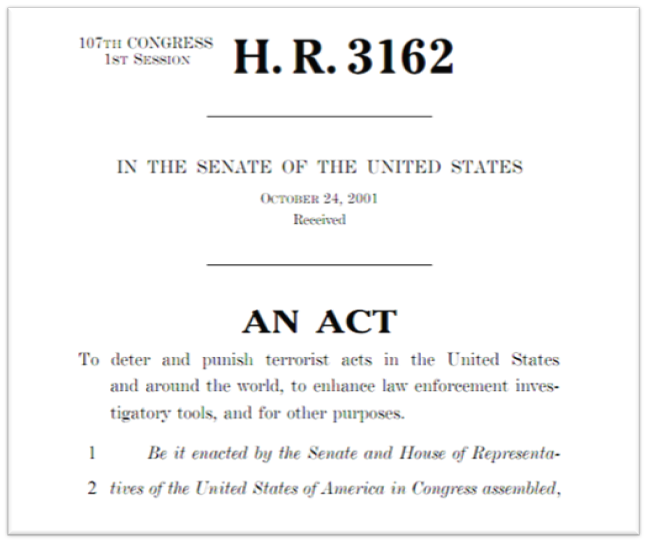
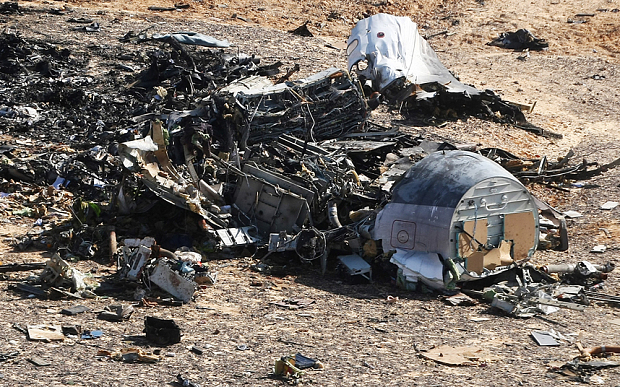
After September 11th 2001 the National Security State went into overdrive with the passage of the so called Patriot Act. That act opened the floodgates for an ever expanding national security state. With the growing likelihood that a Russian airline was destroyed by a terrorist bomb over the Sinai Peninsula, the probability is that more and more civil liberties will disappear in the name of national security. The fact is that we as a society need to wrestle with the questions of maintaining an open and free society in the midst of a world that is growing ever more dangerous. If we are to maintain an open and free society we must have this discussion, and we cannot allow ourselves to be duped into surrendering the very rights and civil liberties that we hold dear, in the name of security against threats real, and imagined. The fact that the threat to civil liberties is growing, and has been for the last decade and a half under both Republican and Democratic administrations, and Congresses controlled at one time or another by the Republican and the Democratic Parties.
Patriot-Act-HR-3162

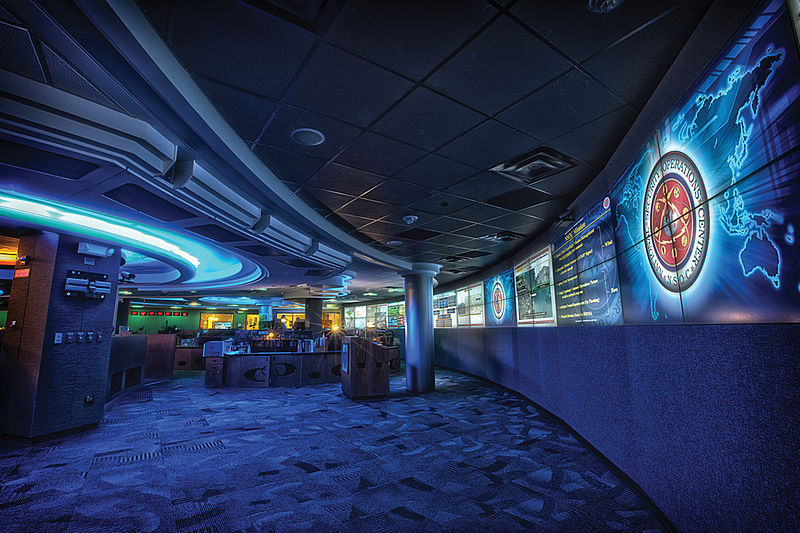
I have a lot of apprehension when I read the reports about the activities of the National Security Agency, other intelligence and police agencies at all levels of government and the pervasive erosion of civil rights.  The national security state and the seeming all pervasive security and surveillance apparatus which demolishes any sense of privacy, especially the protections enunciated in the Fourth Amendment and to some extent the First Amendment. Of course the use of similar methods by the private sector, often in conduction with government agencies is another concern, but that needs to wait for another day.

I also understand from history and empirical evidence that many others, many from unfriendly countries do not share those apprehensions. Many of these competitors are willing to use whatever openness that we have as a society against us, using similar technology and methods used by our intelligence, police, governmental and private sector. It makes for an ethical, legal and even constitutional conundrum. I know that I am not comfortable with this, and perhaps maybe none of us should be.

It is very easy on one hand in light of history, our Constitution and democratic process to condemn the NSA, the FISA courts and other lawfully constituted agencies and those that drafted the laws over the decades that allow the activities which they now conduct. The same can be said of foreign intelligence agencies which all engage in similar activities including the British GCHQ, the German Bundesnachrichtendienst and so many others including the Chinese and Russians.

Likewise it is equally easy in light of history, current events and national security concerns for people to jump to the other side of the fence and not only defend the activities of the NSA and agencies like it, and to demonize those that protest or expose such activities.

When I see the talking heads on cable news shows defending or condemning such activities and not agonizing over the complexity and issues involved I get worried. Because there are legitimate concerns voiced by critics as well as defenders. But since we live in an era of soundbites, gotcha and half-truths being portrayed as all truth I find it helpful to use either historical examples, literature or fiction, and even science fiction to wrestle with the fundamental truths. So I find looking at such issues through the prism of Star Trek sometimes more interesting and provocative than simply doing the whole moralizing pundit thing.

There was an episode of Star Trek Deep Space Nine that aired well before the events of 9-11-2001, and the subsequent Global War on Terror, that I find fascinating. The episode deals with a secretive agency in Starfleet operating in the gray areas between the laws and ideals of the Federation and the threats that the Federation faces. Even when the Federation is a peace, Section 31, as it is called is engaged in activities https://www.youtube.com/watch?v=DhkfuyBLDlYagainst historic or potential enemies. In a way it is somewhat like the NSA or the Defense Intelligence Agency.

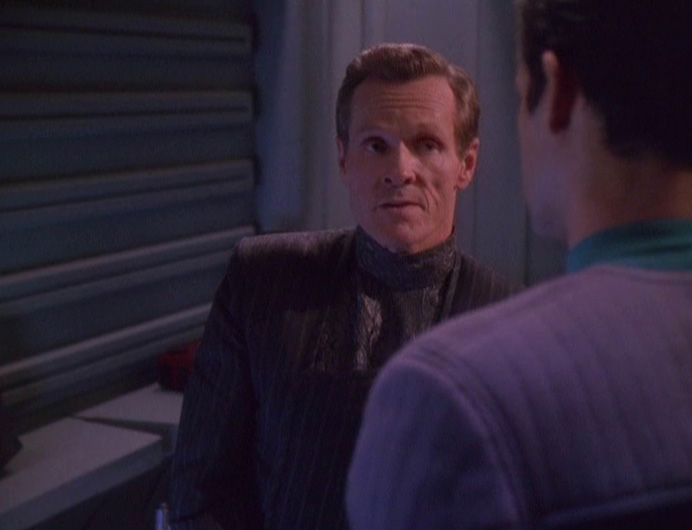
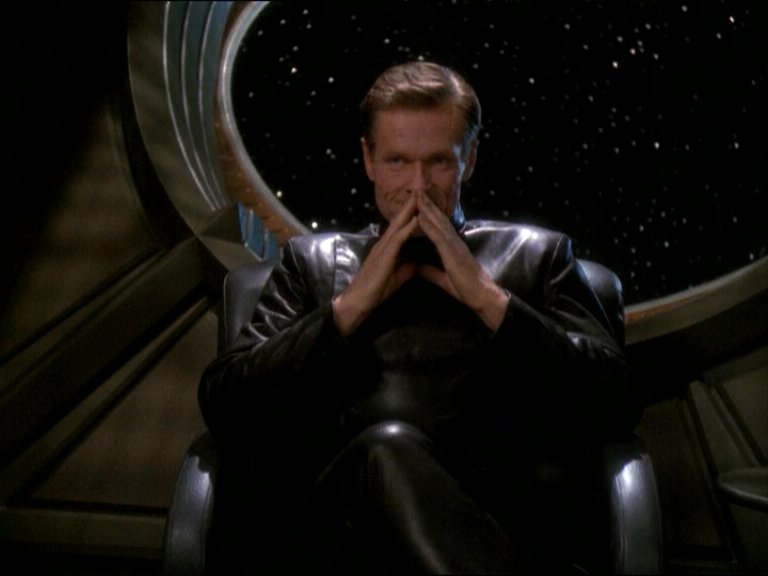
At the beginning of the Deep Space Nine Episode Inter Arma Enim Silent Leges the head of Section 31, a man only known as Sloan comes back Doctor Julia Bashir to involve him in an clandestine operation. An operation to on the Romulans who at this point are a Federation ally against the Dominion.

Sloan makes his approach and Bashir, who expresses his reservations:

BASHIR: You want me to spy on an ally.

SLOAN: To evaluate an ally. And a temporary ally at that. I say that because when the war is over, the following will happen in short order. The Dominion will be forced back to the Gamma Quadrant, the Cardassian Empire will be occupied, the Klingon Empire will spend the next ten years recovering from the war and won’t pose a serious threat to anyone. That leaves two powers to vie for control of the quadrant, the Federation and the Romulans.

BASHIR: This war isn’t over and you’re already planning for the next.

SLOAN: Well put. I hope your report is equally succinct.

BASHIR: How many times do I have to tell you, Sloan? I don’t work for you.

SLOAN: You will. It’s in your nature. You are a man who loves secrets. Medical, personal, fictional. I am a man of secrets. You want to know what I know, and the only way to do that is to accept the assignment.

I find the exchange both illuminating and riveting. The fact is that in the situation we face today the arguments of both sides should make us very uncomfortable.

Whether we like it or not or not, the incredibly rapid technical and communication advances of the past couple of decades have primed us for our present conundrum of liberty and privacy or security. That technology, as wonderful as it is  has enabled a generation to grow up in a virtual world in many ways detached from the moral and ethical balances between individual rights and liberties as well responsibility to community.

All the wonderful gadgets that we employ in everyday life, make it easy for enemies and “friends” to do things that were unimaginable to people other than science fiction writers even twenty to thirty years ago. Likewise they were certainly beyond the wildest imaginations of any of the founders who drafted Constitution.

The reality is, the things that make are lives so easy are also the things that have the potential to remove the very liberties that we treasure, either by our enemies using them, or those that defend us.

The truth is, that throughout history, even our own there have been operatives within the government in charge of secrets, as well as spies. In the Inter Arma Enim Silent Leges episode we see an operation that is full of duplicity and moral ambiguity all committed in the name of security. I won’t go into the details because it is too full of twists, and turns, you can read the plot of the episode at Memory Alpha.org http://en.memory-alpha.org/wiki/Inter_Arma_Enim_Silent_Leges_%28episode%29

There is an exchange between Dr. Bashir and Admiral Ross of Starfleet command which is very enlightening because it practically mirrors how many on both the civil liberties and the national security side of the current controversy feel about the War on Terror.

BASHIR: You don’t see anything wrong with what happened, do you.

ROSS: I don’t like it. But I’ve spent the last year and a half of my life ordering young men and young women to die. I like that even less.

BASHIR: That’s a glib answer and a cheap way to avoid the fact that you’ve trampled on the very thing that those men and women are out there dying to protect! Does that not mean anything to you?

ROSS: Inter arma enim silent leges.

BASHIR: In time of war, the law falls silent. Cicero. So is that what we have become? A twenty fourth century Rome driven by nothing more than the certainty that Caesar can do no wrong!

ROSS: This conversation never happened.

In light of the controversy of today regarding the NSA, FISA Courts, government secrecy and intelligence gathering information on its own citizens, as well as allies, friends and and enemies we face a growing tide of reporters and others seeking to reveal those secrets. Back in 1989 ethicist Sissela Bok wrote something very important in her book Secrets: Moral Choice in Public and Private Life:

“…as government secrecy expands, more public officials become privy to classified information and are faced with the choice of whether or not to leak … growing secrecy likewise causes reporters to press harder from the outside to uncover what is hidden. And then in a vicious circle, the increased revelations give government leaders further reasons to press for still more secrecy.”

As we wade through the continuing controversy surrounding these issues we will see people do exactly what Bok said. These are the exact arguments are being made by the people and officials directly involved in such activities, as well as former elected and appointed officials, and members of the press.

The interesting thing to me is that very few of the people or agencies, past and present, Republican and Democrat involved have clean hands. It is amazing to see former champions of civil liberties defend the NSA actions and those that empowered the NSA in the Patriot Act now condemn it. I find it both fascinating and frightening.

At the end of the Inter Arma Enim Silent Leges episode the mysterious Sloan pops back in on Doctor Bashir who is in his quarters, asleep and depressed by what he experienced during the operation on Romulus and with Admiral Ross.

https://www.youtube.com/watch?v=KonWH1hg1ok

SLOAN: Good evening.

BASHIR: Are you expecting applause? Have you come to take a bow?

SLOAN: I just wanted to say thank you.

BASHIR: For what? Allowing you to manipulate me so completely?

SLOAN: For being a decent human being. That’s why we selected you in the first place, Doctor. We needed somebody who wanted to play the game, but who would only go so far. When the time came, you stood your ground. You did the right thing. You reached out to an enemy, you told her the truth, you tried to stop a murder. The Federation needs men like you, Doctor. Men of conscience, men of principle, men who can sleep at night. You’re also the reason Section Thirty one exists. Someone has to protect men like you from a universe that doesn’t share your sense of right and wrong.

BASHIR: Should I feel sorry for you? Should I be weeping over the burden you’re forced to carry in order to protect the rest of us?

SLOAN: It is an honor to know you, Doctor. Goodnight.

We live in this kind of world and maybe it is good to sometimes step back and look at issues using a different prism. I really don’t have the answers. I am a civil libertarian who places a high value on the openness of a government to its people. I also know that there are those that have no regard for such openness or, to quote Sloan don’t “share your sense of right and wrong.”

Maybe that is not a good answer. I really don’t know. All I know is that as uncomfortable as this all is that those on both sides of the issue have valid points and concerns. It is a debate that needs to happen if we are able to balance that a society needs to balance individual rights and responsibility to the community; openness and secrecy; civil liberties and national security.

But that being said. it is a debate that needs to happen, even if it makes us uncomfortable. I for one think that it is better that we be uncomfortable when looking at such an important debate than to be prisoners of our certitude.

Peace

Padre Steve+
1 Comment

Filed under civil rights, ethics, laws and legislation, national security, Political Commentary, star trek, terrorism

Can You Live with It? War, ISIL & a Downed Airliner

plane_3489909b

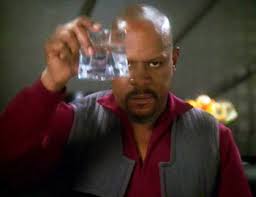
“My father used to say that the road to Hell is paved with good intentions. I laid the first stone right there. I’d committed myself. I’d pay any price, go to any lengths, because my cause was righteous. My… intentions were good. In the beginning, that seemed like enough.” Captain Benjamin Sisko (Avery Brooks) Star Trek Deep Space Nine, In the Pale Moonlight

Friends of Padre Steve’s World,

With the increasing probability that elements of the self-proclaimed Islamic State brought down a Russian airliner in the Sinai last week, it is important to ask what we are willing to do to protect innocent lives. I am not just talking about the situation in Syria and Iraq, where tens of thousands have died and millions have been displaced; but around the world from a hybrid terrorist state that knows no creed but victory or death.

Iraq-unrest

The question is not just about fighting the Islamic State as this is already happening. Though there is no formal alliance and many of the states involved have their own interests at heart, the war now involves the United States, some NATO allies, Russia, Iran, Saudi Arabia, and a number of Arab states, not to mention the kaleidoscope of different warring parties in Iraq and Syria. Until last week the United States was content to fight using airpower alone. Now it appears that albeit with great hesitancy the Obama administration is slowly expanding the fight to include ground troops, although at the time this is limited to special operations troops and advisers.

As the war expands, we do have to ask hard questions, chief among them how far we will go to fight the Islamic State. The fact that no matter what course of action the United States, our allies, and the other combatants take, each one has its drawbacks, as well as benefits. Each one involves a certain amount of risk, and the fact is that the Islamic State does believe that the United States, Europe, Russia, Iran, and Israel are their greatest enemies and is working to attack each one. This poses a question of making alliances with disparate nations, some of which are mortal enemies of each other. But sometimes necessity makes strange bedfellows, just ask Winston Churchill and Josef Stalin.

So today, I am posing a reflection from the television series Star Trek Deep Space Nine. I think that among the Star Trek series that my favorite is Deep Space Nine. Of course all of the Star Trek series and movies deal with ethics, philosophy and morality to some extent; but Deep Space Nine is perhaps the most interesting to me. Don’t get me wrong I think that the Original Series and Start Trek the Next Generation were and are leap years ahead of most television series when it comes to addressing ethical, moral and existential issues, but somehow living in the post 9-11 “War on Terrorism” world I find Deep Space Nine to be the most compelling. I think that is that the fact that the moral issues get blurred which attracts me to the series, and to this episode in particular.

I think that using the medium of science fiction we can think about real life issues in a new, and maybe more creative way than we might. I think it to do this is to think outside the traditional box, which sometimes limits our discussion, and consideration of all of the factors involved. But the subject is uncomfortable because it makes us face truths that we might not want to see, and parts of ourselves, our beliefs, and our values that can become clouded in times of crisis.

One of my favorite episodes is from season six and is entitled “In the Pale Moonlight.” The episode deals with the unsavory matter of contriving a reason to get the Romulan Empire to join with the Federation and the Klingons to fight the Dominion-Cardassian alliance that is threatening those entities as well as potentially the entire Alpha Quadrant. I have included a link to the conclusion of that episode here:

The ethics of this episode seem very timely as I look at the new phase of the conflict that the United States has been engaged for the past thirteen years. The fact is that in spite of our appeal to higher ideals we are having to make alliances with powers that are only slightly less unsavory than ISIS, powers whose polices have help ISIS grow. In a sense it is the classic scenario of making a deal with the devil to defeat one’s enemy. Of course this is not a new phenomena, individuals and nations have made such deals, sometimes with mortal enemies throughout history.

Unfortunately we usually judge such decisions based on their results, rather than wrestle with the ethical issues involved and how we might behave in similar situations. For me the philosophical and ethical issues involved in such alliances have a special interest and as such I tend to notice or recall instances where I saw, read or heard something that makes a connection to an ethical or moral dilemma faced by policy makers and planners today.

Some of the issues involved for policy makers are related to the traditional Just War Theory, and what is called the “Supreme Emergency” exemption. This exemption basically posits that when faced with a supreme and existential emergency a person or state may engage in behaviors that ordinarily would be considered unethical if the situation were not of a supreme emergency.

Of course such decisions in the real world are difficult. Those who have a system of beliefs that help them define right and wrong behaviors, even if they are not codified in law may struggle with such decisions, while those who act according to what they deem necessary or expedient, unbridled by religious, philosophical or other similar codes may not, instead making their decisions based on what appears to be necessary at the time.

This Deep Space Nine episode is remarkable because we get to see an actor playing a military commander dealing with the morality of the course of action that he is taking. In one of the early scenes Captain Sisko expresses his doubts relating to the morality of a decision that he is making in a war that has already consumed the lives of tens of millions of people.

pale-moonlight

After an incident where a Federation starship was destroyed, Sisko went to Elim Garak (Andrew Robinson), an exiled Cardassian intelligence officer to uncover any evidence about Dominion-Cardassian collusion to attack the Romulans. When none was uncovered and Garak’s sources on Cardassia were compromised he agreed to allow Garak to manufacture evidence in order to get the Romulans into the war on the side of the Federation and Klingons. Sisko compounded the situation by having the Klingons release a master forger who was on death row to help Garak. Sisko knew it was wrong and confided in his log:

“Why I didn’t listen to the voice in the back of my mind telling me not to believe a word he said, I’ll never know… But it didn’t take long for me to come face to face with the fact that I’d made a mistake.”

When the former prisoner gets drunk and attacks the owner of a tavern on the space station Sisko was in a bind. He wanted no evidence that the man had been on his station and in order to keep Quark, the bar owner quite had to bribe him. Sisko again expressed his doubts in his personal log:

“Maybe I should have put a stop to it right there. Maybe I should have said, “Thank you very much for your input, Mister Garak, I will take your suggestion under advisement,” and then gone back to my office and forgotten the whole thing. But I didn’t. Because in my heart, I knew what he was saying made sense.”

Even so Sisko still had doubts:

“That was my first moment of real doubt, when I started to wonder if the whole thing was a mistake. So I went back to my office. And there was a new casualty list waiting for me. People are dying out there every day! Entire worlds are struggling for their freedom! And here I am still worrying about the finer points of morality! No, I had to keep my eye on the ball! Winning the war, stopping the bloodshed, those were the priorities! So I pushed on. And every time another doubt appeared before me, I just found another way to shove it aside.”

When nations feel they are engaged in a life and death struggle, those who serve as policy makers, planners and military commanders often make uncomfortable compromises with their own religious, ethical or philosophical codes. Sisko continued down the path despite his doubts but justified his actions by the fact that Starfleet had approved them:

“Maybe… I was under more pressure than I realized. Maybe it really was starting to get to me, but I was off the hook. Starfleet Command had given the plan their blessing and I thought that would make things easier. But I was the one who had to make it happen. I was the one who had to look Senator Vreenak in the eye and convince him that a lie… was the truth.”

The forgery was completed and the Romulan Senator secretly arrived on the station to examine the evidence and as he did so all Sisko could do was wait, confiding in his log:

“So all I could do was wait… and see how masterful Tolar’s forgery really was. So I waited… tried to catch up on my paperwork, but I find it very difficult to focus on criminal activity reports, cargo manifests… So I went back to pacing, staring out of the window. I’m not an impatient man, I’m not one to agonize over decisions once they’re made. I got that from my father. He always says, “Worry and doubt are the greatest enemies of a great chef. The soufflé will either rise or it won’t – there’s not a damn thing you can do about it, so you might as well just sit back and wait and see what happens.” But this time the cost of failure was so high, I found it difficult to take his advice. If Vreenak discovered that the data rod was a forgery, if he realized that we were trying to trick them into the war it could push the Romulans even farther into the enemy camp. They could start to openly help the Dominion. If worst came to worst they could actually join the war against us. I had the distinct feeling that victory or defeat would be decided in the next few minutes.”

It did not work, Vreenak discovered that the data rod was a forgery and threatened to expose Sisko’s deception and possibly bring the Romulans into alliance with the Dominion. When Sisko’s actions blew up in his face and his deceit was revealed he was not happy and resigned himself to face the consequences:

“So it all blew up in my face. All the lies and the compromises, the inner doubts and the rationalizations – all for nothing. Vreenak was furious. I can’t say I blamed him; I’d have reacted the same way. After telling me in no uncertain terms that he intended to expose this “vile deception” to the entire Alpha Quadrant, he got back in his shuttle and headed home. There didn’t seem to be anything more to do… so I went back to work. Two days later we got the news.”

Sisko learned in a Starfleet communication that Vreenak’s shuttle had blown up and that is was suspected to be the work of the Dominion. When Sisko found that Vreenak was dead he went to Garak and forcefully confronted him, striking him in the process. He accused Garak of sabotaging the senator’s ship and killing him as well as the forger, Tolar. Instead of backing down Garak confronted the results and the ethical issue. The heated exchange between the two men is fascinating:

Garak: If you can allow your anger to subside for a moment, you’ll see that they did not die in vain! The Romulans will enter the war!

Captain Sisko: There’s no guarantee of that!

Garak: Oh, but I think that there is. You see, when the Tal Shiar finishes examining the wreckage of Vreenak’s shuttle, they’ll find the burnt remnants of a Cardassian optolythic data rod which somehow miraculously survived the explosion. After painstaking forensic examination, they’ll discover that the rod contains a recording of a high-level Dominion meeting, at which the invasion of Romulus was being planned.

Captain Sisko: And then they’ll discover that it is a fraud!

Garak: Oh, I don’t think they will! Because any imperfections in the forgery will appear to be a result of the explosion. So – with a seemingly legitimate rod in one hand, and a dead senator in the other, I ask you, Captain – what conclusion would you draw?

As Sisko’s anger subsided Garak continued:

“That’s why you came to me, isn’t it, Captain? Because you knew I could do those things that you weren’t capable of doing? Well, it worked. And you’ll get what you want: a war between the Romulans and the Dominion. And if your conscience is bothering you, you should soothe it with the knowledge that you may have just saved the entire Alpha Quadrant. And all it cost was the life of one Romulan senator, one criminal, and the self-respect of one Starfleet officer. I don’t know about you, but I’d call that a bargain.”

DS9SiskoToast

Shortly thereafter Sisko found out that the out that the deception was successful as Garak had said it would be. The Romulans who recovered the damaged data rod believed that it was genuine and declared war on the Dominion-Cardassian alliance and had entered the war on the side of the Federation. He completed his personal log:

“At oh-eight-hundred hours, station time… the Romulan Empire formally declared war against the Dominion. They’ve already struck fifteen bases along the Cardassian border. So, this is a huge victory for the good guys! This may even be the turning point of the entire war! There’s even a “Welcome to the Fight” party tonight in the wardroom!… So… I lied. I cheated. I bribed men to cover up the crimes of other men. I am an accessory to murder. But most damning of all… I think I can live with it… And if I had to do it all over again… I would. Garak was right about one thing – a guilty conscience is a small price to pay for the safety of the Alpha Quadrant. So I will learn to live with it…Because I can live with it…I can live with it. Computer – erase that entire personal log.”

My guess is that before this war is over, there will be men and women serving in positions of responsibility in our or allied militaries, policy makers and government officials who will make similar deals, violating their own moral codes and even laws in order to defeat the Islamic State and prevent acts of terror against their citizens. Most, like Sisko will not be happy but will live with their decisions. The fact is that long asymmetrical wars in which nation states have to fight non-state terrorist entities get really ugly and the longer and more bloody that they become the more decent and honorable people will make decisions like Sisko and resort to actions that in normal times they would never countenance.

This is nothing new. Those who have fought in such wars throughout history have found ways to “live” with actions that they would not approve of had things been different. Wars such as the one that we are fighting and continue to fight in the years ahead have a corrosive affect on the human spirit. They corrupt and destroy even when they are “successful.”

The question is: Can we live with it? Sadly, as much as I hate to admit it, in a similar situation I think like Sisko, that I could condone or be complicit in something like this. I too could probably convince myself that the end justified the means and that I could live with it, against ISIL. If in fact an ISIL bomb downed the Russian airliner, it is a watershed, and points to worse things to come, and we will have to ask the question, “can you live with it?”

Of course it is possible that this was an accident, truthfully, I do as tragic as it would be, hope this it the case. 

Of course there is always the possibility that ISIL or one of its allied groups did it. But another possibility cannot be ruled out; that a bomb was planted bye third party, possibly the Russians themselves, hoping to implicate ISIL. That my friends is far to frightening to contemplate as there are too many nations that have both the capability and a motive to do this. 

There are some other issues that I want to discuss about this war using the Star Trek motif, and like this they will be unsettling.

Peace

Padre Steve+

2 Comments

Filed under ethics, Foreign Policy, History, middle east, Military, News and current events, Political Commentary, star trek, terrorism

Tapestry: The Importance of Just One Thread

IMG_1915.JPG

Friends of Padre Steve’s World

It is interesting to think about life, what has transpired, and what might have been if only…

Like anyone I wonder about all of the “what ifs” and “might have been” parts of my life. Of course there are many, going back to things that I could not control, such as the choices that my parents made regarding career, family, and home. Then there are my own choices, choices that I made, some for better, and some maybe for worse. Then there were the choices of men and women in my life and career that impacted my life and the decision that I made.

Some of my dreams, and nightmares too, involve those decisions, particularly the ones that I could not control; but then there were those decisions, particularly regarding my military career choices, that come back to haunt my dreams. Those can be troubling; the things that I volunteered to do and the costs of those to Judy as a result of those decisions. Many of those decisions, particularly my decisions to volunteer for certain deployments and operations have come at a great cost to both of us.

But then I am reminded that none of us have a crystal ball that allows us to see what the result of our decisions will be; none of us are God, or some other omniscient being. We make our decisions based on what we know, and what we think might be the outcome of our decisions.

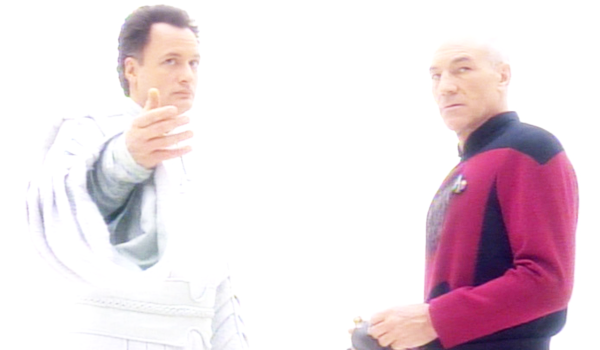
Judy and I have been watching a marathon of Star Trek the Next Generation episodes of late. We are currently in the midst of season six. One of the episodes that we watched the other night is called Tapestry where Captain Picard is killed, but given a chance by the being called the Q for a do-over, a second change at life. Picard ends up regretting the do-over, it alienates him from his friends, and turns him in to a different person. Instead of a starship captain is a nondescript lieutenant junior grade doing a job that he hates.

tapestry2

The resultant decision leaves Picard distraught and he complains to Q:

Picard: You having a good laugh now, Q? Does it amuse you to think of me living out the rest of my life as a dreary man in a tedious job?

Q: I gave you something most mortals never experience: a second chance at life. And now all you can do is complain?

Picard: I can’t live out my days as that person. That man is bereft of passion… and imagination! That is not who I am!

Q: Au contraire. He’s the person you wanted to be: one who was less arrogant and undisciplined in his youth, one who was less like me… The Jean-Luc Picard you wanted to be, the one who did not fight the Nausicaan, had quite a different career from the one you remember. That Picard never had a brush with death, never came face to face with his own mortality, never realized how fragile life is or how important each moment must be. So his life never came into focus. He drifted through much of his career, with no plan or agenda, going from one assignment to the next, never seizing the opportunities that presented themselves. He never led the away team on Milika III to save the Ambassador; or take charge of the Stargazer’s bridge when its captain was killed. And no one ever offered him a command. He learned to play it safe – and he never, ever, got noticed by anyone.

It is a fascinating exchange and one that when I wonder about the choices that I have made that I think about; because when all is said and done, my life, like all of ours is a tapestry. On reflection Picard tells Counselor Troi, “There are many parts of my youth that I’m not proud of. There were… loose threads – untidy parts of me that I would like to remove. But when I… pulled on one of those threads – it’d unravel the tapestry of my life.”

I think that I can agree with that. All the things in my life, the good things and the bad, as well as the paths not taken have all been a part of the tapestry of my life. I would not be who I am without them; and that I cannot comprehend. I would rather be the flawed me that is me, than the perfect me that never existed. Thus, all of those threads are in a sense precious and even holy.

Peace

Padre Steve+

2 Comments

Filed under faith, star trek

Born that Way: A Star Trek Episode for Today

STTNG517TheOutcast18_zps9b0f7431

Friends of Padre Steve’s World

Judy and I were watching a Star Trek the next Generation video the other night and both of us were moved by it. The episode called The Outcast from season five, involved an encounter where the crew of the Enterprise assisted people of an androgynous race to find a missing shuttlecraft.

The androgynous race had believed that they had evolved beyond gender, and members who felt that they were either male or female were outcasts, and subjected to what we might call reprogramming, something quite like what some Christian conservatives call “reparative therapy” or “conversion therapy” in which homosexuals are forced to renounce and deny who and what they are. 

In the Star Trek episode a scientist, of that race named Soren meets the crew of the Enterprise and finds that she is attracted to Commander Riker. It is a highly emotional episode, and when her leaders find that she is attracted to Riker they put her on trial. During that interrogation she is given the chance by Riker to deny who she is and blame the situation on him, but she cannot. Instead she declares the truth about who she is, a truth that is shared by so many of the homosexuals and lesbians that I have come to know over the years. Her argument is so compelling, and has been stated in similar ways by so many of the people that I have known.

“I am female. I was born that way. I have had those feelings, those longings, all of my life. It is not unnatural. I am not sick because I feel this way. I do not need to be helped. I do not need to be cured. What I need, and what all of those who are like me need, is your understanding. And your compassion. We have not injured you in any way. And yet we are scorned and attacked. And all because we are different. What we do is no different from what you do. We talk, and laugh. We complain about work. And we wonder about growing old. We talk about our families, and we worry about the future. And we cry with each other when things seem hopeless. All of the loving things that you do with each other, that is what we do. And for that, we are called misfits, and deviants, and criminals. What right do you have to punish us? What right do you have to change us? What makes you think you can dictate how people love each other?”

The leaders of the planet reject her argument and she is subjected to the reparative therapy against her wishes. When Riker attempts to rescue her she rejects the attempt. When I first saw the episode when I was in seminary I was conflicted because I understood that the heart of the matter did not deal with someone being a heterosexual, but toward how we as a society and as members of the Christian faith community have treated homosexuals and lesbians for millennia.

I know and have known many homosexuals and lesbians, many of them Christians, many much more conservative in their faith than me. Sadly, their families, their faith communities, have rejected most of them and until the past few years denied the rights enjoyed by heterosexuals, inside or outside of marriage, including the right to have their partner with them when they die.

Who is to dictate whom people love and the manner in which they love each other? What would I, or you do if someone in a church, or the government, or even our families told us that we could not be who we were born to be? And honestly, what would we think if people tried to change us against our will and against every fiber of our being? Would that not be a crime against our humanity?

That is the question that all of us have to ask, even when we claim that God only blesses certain relationships while ignoring the other clear commands of scripture? When I see people who have multiple divorces, and adulterous relationships condemn homosexual couples who only desire to legally marry and remain with the love of their life, I am appalled, for I know many same sex couples who have been faithful to each other and lived together for decades before their relationships were recognized as legal and proper, even if some religious people disagree.

My commitment is to care for and accept people no matter what their sexual orientation is. As a priest and pastor I can do nothing else. Of course some will disagree with me and that is their right and I will not take freedom away from them, but I do ask that they not impose their beliefs on same sex couples and thus deprive them of the same freedoms the rest of us enjoy.

While the Supreme Court has recognized that gays and lesbians have the Constitutional right to marriage based upon the 14th Amendment and the Civil Rights Act of 1965, that right is still being assailed by its opponents; most of who are conservative Christians.

This is about civil rights and human rights, and at the same time the religious freedom of gay and lesbian Christians who have been denied the right other heterosexual Christians have always had; the right to have the marriage they entered into and blessed by their ministers as legal. For too many centuries those defending the faith, including Popes, bishops and kings engaged in the same relationships that they persecuted others for doing. The list of these defenders of the faith is long, and the people often illustrious and sometimes infamous.

I think that it is time that we learn to accept people for who they are, and not who we think that they should be.

Have a great day,

Peace

Padre Steve+

Leave a comment

Filed under christian life, ethics, faith, LGBT issues, marriage and relationships, star trek

Do You wish to Resign? Oaths, Star Trek & Kim Davis

reunion315

Friends of Padre Steve’s World

We are returning home from Germany and the Oktoberfest today, Lord willing and the creek don’t rise, as they say in Appalachia we should be home tonight. This post too was written and scheduled for publication before the trip. I do promise to write some articles about the trip to Munich, as well as our trips to Salzburg and Nuremberg over the next week or so.

But that being said, I was watching an episode of Star Trek the Next Generation before I we left for our trip to Germany on Thursday night, and there was a remarkable scene that occurred between Captain Jean Luc Picard (Sir Patrick Stewart) and Lieutenant Worf (Michael Dorn).

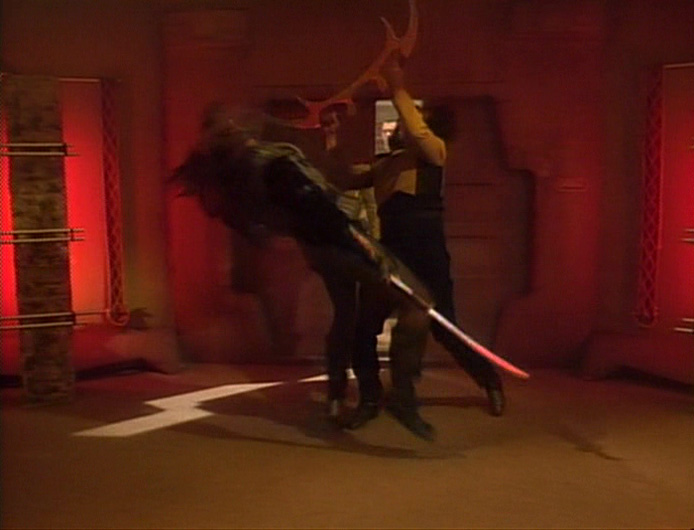
I think that the scene is especially pertinent in light of the controversy regarding the recalcitrant county clerk of Rowan County, Kentucky, Mrs. Kim Davis and her defiance of her oath of office in regard to issuing marriage licensees to Gay couples. In the episode, Worf avenges the murder of his mate by killing the man who killed her, a man who had also used his position to falsely accuse Worf’s father as and by Klingon law, Worf as traitors.

After Worf kills the man and returns to the Enterprise he claims that he has simply acted according to Klingon tradition. The response does not satisfy Picard who dresses Worf down. Picard notes that while Worf’s actions may be in accord with Klingon tradition that they are not in compliance with the oath that Worf, like all Starfleet officers swore to uphold:

“The High Council would seem to agree; they consider the matter closed. I don’t. Mr. Worf, the Enterprise crew currently includes representatives from thirteen planets. They each have their individual beliefs and values and I respect them all. But they have all chosen to serve Starfleet. If anyone cannot perform his or her duty, because of the demands of their society, they should resign. – Do you wish to resign?”

That is something that I think matters. In a country like the United States, composed of so many people of different races, cultures, ethnic groups, and religions there are bound to be times that the beliefs of certain people come in conflict with the oaths that they swear to the Constitution. In fact I would dare say that at any given time almost any American can find themselves disagreeing with the Constitution, the law and the government. That is something that our founders in their wisdom understood. Sadly, many Americans cannot understand that simple truth and assume that their personal beliefs, religious or otherwise trump the Constitution and any oaths that they have solemnly sworn, often in the name of God.

The fact is that without a respect for one another, and without understanding that we can all have our own beliefs, yet still agree to take oaths to uphold the law and defend the rights of people that we may not agree, that there is no freedom, only anarchy.

Peace

Padre Steve+

1 Comment

Filed under christian life, civil rights, ethics, faith, film, laws and legislation, Political Commentary, star trek

“You Must Have Faith…” RIP Leonard Nimoy

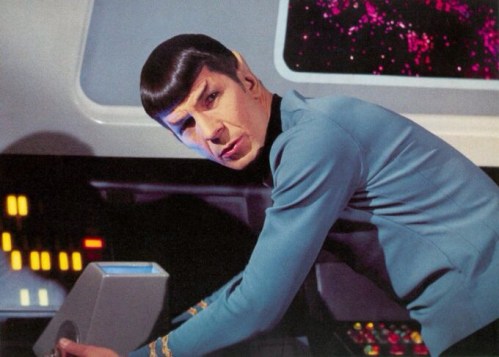
Today we lost a great human being and wonderfully actor who playing the Vulcan “Mr Spock” in Star Trek help to teach us to be better human beings. As I mentioned earlier I am on the way to Gettysburg and I found out as my iPhone lit up with news alerts. Thankfully I am not driving. 

Those who follow my writings know just how much Star Trek in all its forms means to me, it is one of the constants in my life, which along with baseball and history has helped make me who I am today. 

One of the key players in that show, who I have always had a certain fondness for was Mr Spock, played by Leonard Nimoy. Nimoy played a character who could have been a one dimensional caricature with a depth, sensitivity, and complex subtlety that enriched us who watched him. 

Of course Nimoy was much more than Spock, he was a tremendously gifted actor and his career even without Star Trek would have been considered quite successful. But it was his portrayal of Spock in the original series, the films that flowed from that series and his reprise of the role in Star Trek the Next Generation and Star Trek: Into Darkness which made him an icon of film and television, and made me look for something higher, better and more noble in life. I’m sure others who grew up with him would agree with me in that. 

I was thinking about the many things that Nimoy said, as Mr Spock as well as out of character which were so rich. One of the most fascinating is in the movie Star Trek VI The Undiscovered Country where Captain Spock startles a young Vulcan Lieutenant when discussing a possible peace treaty with the Klingon Empire. 

Spock: History is replete with turning points, Lieutenant. You must have faith.” 

Valeris: Faith?

Spock: That the universe will unfold as it should

Valeris: But is that logical? Surely we must….

Spock: Logic, logic and, logic….Logic is the beginning of wisdom, Valeris, not the end…

I am a terribly logical person, I doubt at least as much and often more than I have faith. Sometimes I have a hard time getting around my logical side to believe, to have faith. Thus the exchange is something that resonates with me. 

Nimoy, as Nimoy had a profound wit, as well as wisdom. Nimoy tweeted his last tweet on February 23rd it is quite profound.

“A life is like a garden. Perfect moments can be had, but not preserved, except in memory. LLAP” 

For those who don’t get the last bit of that LLAP is the line that Spock and Nimoy are both most remembered for, live long and prosper. 

It is a fitting benediction. I shall miss him. 

Live long, and prosper.

Peace

Padre Steve+ 

2 Comments

Filed under faith, Loose thoughts and musings, philosophy, star trek

Living in the National Security State

Patriot-Act-HR-3162

Inter Arma Enim Silent Leges, in time of war the law stands silent…

James Madison wrote that “A popular government, without popular information, or the means of acquiring it, is but a prologue to a farce or a tragedy; or, perhaps both.”

After September 11th 2001 the National Security State went into overdrive with the passage of the so called Patriot Act. That act opened the floodgates for an ever expanding national security state.

I have a lot of apprehension when I read the reports about the activities of the National Security Agency, other intelligence and police agencies at all levels of government and the pervasive erosion of civil rights.  The national security state and the seeming all pervasive security and surveillance apparatus which demolishes any sense of privacy, especially the protections enunciated in the Fourth Amendment and to some extent the First Amendment. Of course the use of similar methods by the private sector, often in conduction with government agencies is another concern, but that needs to wait for another day.

I also understand from history and empirical evidence that many others, many from unfriendly countries do not share those apprehensions. Many of these competitors are willing to use whatever openness that we have as a society against us, using similar technology and methods used by our intelligence, police, governmental and private sector. It makes for an ethical, legal and even constitutional conundrum. I know that I am not comfortable with this, and perhaps maybe none of us should be.

It is very easy on one hand in light of history, our Constitution and democratic process to condemn the NSA, the FISA courts and other lawfully constituted agencies and those that drafted the laws over the decades that allow the activities which they now conduct. The same can be said of foreign intelligence agencies which all engage in similar activities including the British GCHQ, the German Bundesnachrichtendienst and so many others including the Chinese and Russians.

Likewise it is equally easy in light of history, current events and national security concerns for people to jump to the other side of the fence and not only defend the activities of the NSA and agencies like it, and to demonize those that protest or expose such activities.

When I see the talking heads on cable news shows defending or condemning such activities and not agonizing over the complexity and issues involved I get worried. Because there are legitimate concerns voiced by critics as well as defenders. But since we live in an era of soundbites, gotcha and half-truths being portrayed as all truth I find it helpful to use either historical examples, literature or fiction, and even science fiction to wrestle with the fundamental truths. So I find looking at such issues through the prism of Star Trek sometimes more interesting and provocative than simply doing the whole moralizing pundit thing.

enimsilentleges_210

There was an episode of  Star Trek Deep Space Nine that aired well before the events of 9-11-2001, and the subsequent Global War on Terror, that I find fascinating. The episode deals with a secretive agency in Starfleet operating in the gray areas between the laws and ideals of the Federation and the threats that the Federation faces. Even when the Federation is a peace, Section 31, as it is called is engaged in activities against historic or potential enemies. In a way it is somewhat like the NSA or the Defense Intelligence Agency.

At the beginning of the Deep Space Nine Episode Inter Arma Enim Silent Leges the head of Section 31, a man only known as Sloan comes back Doctor Julia Bashir to involve him in an clandestine operation. An operation to on the Romulans who at this point are a Federation ally against the Dominion.

Sloan makes his approach and Bashir, who expresses his reservations:

BASHIR: You want me to spy on an ally.

SLOAN: To evaluate an ally. And a temporary ally at that. I say that because when the war is over, the following will happen in short order. The Dominion will be forced back to the Gamma Quadrant, the Cardassian Empire will be occupied, the Klingon Empire will spend the next ten years recovering from the war and won’t pose a serious threat to anyone. That leaves two powers to vie for control of the quadrant, the Federation and the Romulans.

BASHIR: This war isn’t over and you’re already planning for the next.

SLOAN: Well put. I hope your report is equally succinct.

BASHIR: How many times do I have to tell you, Sloan? I don’t work for you.

SLOAN: You will. It’s in your nature. You are a man who loves secrets. Medical, personal, fictional. I am a man of secrets. You want to know what I know, and the only way to do that is to accept the assignment.

I find the exchange both illuminating and riveting. The fact is that in the situation we face today the arguments of both sides should make us very uncomfortable.

Whether we like it or not or not, the incredibly rapid technical and communication advances of the past couple of decades have primed us for our present conundrum of liberty and privacy or security. That technology, as wonderful as it is  has enabled a generation to grow up in a virtual world in many ways detached from the moral and ethical balances between individual rights and liberties as well responsibility to community.

All the wonderful gadgets that we employ in everyday life, make it easy for enemies and “friends” to do things that were unimaginable to people other than science fiction writers even twenty to thirty years ago. Likewise they were certainly beyond the wildest imaginations of any of the founders who drafted Constitution.

The reality is, the things that make are lives so easy are also the things that have the potential to remove the very liberties that we treasure, either by our enemies using them, or those that defend us.

The truth is, that throughout history, even our own there have been operatives within the government in charge of secrets, as well as spies. In the Inter Arma Enim Silent Leges episode we see an operation that is full of duplicity and moral ambiguity all committed in the name of security. I won’t go into the details because it is too full of twists, and turns, you can read the plot of the episode at Memory Alpha.org http://en.memory-alpha.org/wiki/Inter_Arma_Enim_Silent_Leges_%28episode%29

There is an exchange between Dr. Bashir and Admiral Ross of Starfleet command which is very enlightening because it practically mirrors how many on both the civil liberties and the national security side of the current controversy feel about the War on Terror.

BASHIR: You don’t see anything wrong with what happened, do you.

ROSS: I don’t like it. But I’ve spent the last year and a half of my life ordering young men and young women to die. I like that even less.

BASHIR: That’s a glib answer and a cheap way to avoid the fact that you’ve trampled on the very thing that those men and women are out there dying to protect! Does that not mean anything to you?

ROSS: Inter arma enim silent leges.

BASHIR: In time of war, the law falls silent. Cicero. So is that what we have become? A twenty fourth century Rome driven by nothing more than the certainty that Caesar can do no wrong!

ROSS: This conversation never happened.

In light of the controversy of today regarding the NSA, FISA Courts, government secrecy and intelligence gathering information on its own citizens, as well as allies, friends and and enemies we face a growing tide of reporters and others seeking to reveal those secrets. Back in 1989 ethicist Sissela Bok wrote something very important in her book Secrets: Moral Choice in Public and Private Life:

“…as government secrecy expands, more public officials become privy to classified information and are faced with the choice of whether or not to leak … growing secrecy likewise causes reporters to press harder from the outside to uncover what is hidden. And then in a vicious circle, the increased revelations give government leaders further reasons to press for still more secrecy.”

As we wade through the continuing controversy surrounding these issues we will see people do exactly what Bok said. These are the exact arguments are being made by the people and officials directly involved in such activities, as well as former elected and appointed officials, and members of the press.

nsa-operations-center

The interesting thing to me is that very few of the people or agencies, past and present, Republican and Democrat involved have clean hands. It is amazing to see former champions of civil liberties defend the NSA actions and those that empowered the NSA in the Patriot Act now condemn it. I find it both fascinating and frightening.

At the end of the Inter Arma Enim Silent Leges episode the mysterious Sloan pops back in on Doctor Bashir who is in his quarters, asleep and depressed by what he experienced during the operation on Romulus and with Admiral Ross.

SLOAN: Good evening.

BASHIR: Are you expecting applause? Have you come to take a bow?

SLOAN: I just wanted to say thank you.

BASHIR: For what? Allowing you to manipulate me so completely?

SLOAN: For being a decent human being. That’s why we selected you in the first place, Doctor. We needed somebody who wanted to play the game, but who would only go so far. When the time came, you stood your ground. You did the right thing. You reached out to an enemy, you told her the truth, you tried to stop a murder. The Federation needs men like you, Doctor. Men of conscience, men of principle, men who can sleep at night. You’re also the reason Section Thirty one exists. Someone has to protect men like you from a universe that doesn’t share your sense of right and wrong.

BASHIR: Should I feel sorry for you? Should I be weeping over the burden you’re forced to carry in order to protect the rest of us?

SLOAN: It is an honor to know you, Doctor. Goodnight.

We live in this kind of world and maybe it is good to sometimes step back and look at issues using a different prism. I really don’t have the answers. I am a civil libertarian who places a high value on the openness of a government to its people. I also know that there are those that have no regard for such openness or, to quote Sloan don’t “share your sense of right and wrong.”

Maybe that is not a good answer. I really don’t know. All I know is that as uncomfortable as this all is that those on both sides of the issue have valid points and concerns. It is a debate that needs to happen if we are able to balance that a society needs to balance individual rights and responsibility to the community; openness and secrecy; civil liberties and national security.

But that being said. it is a debate that needs to happen, even if it makes us uncomfortable. I for one think that it is better that we be uncomfortable when looking at such an important debate than to be prisoners of our certitude.

Peace

Padre Steve+

2 Comments

Filed under History, laws and legislation, national security, Political Commentary, star trek

Friday Morning Myth Busting before a Trip to Gettysburg

IMG_1915

Dear Friends of Padre Steve’s World,

Today I head up with my class to Gettysburg for our Staff Ride. Of course this comes on the heals of the San Francisco amazing game seven victory in the 2014 World Series, and if you read this site you understand that I was up until the wee hours of the morning because I was much too excited to sleep. This is actually, despite the lack of sleep a blessing because most of the time that I don’t sleep it is because of anxiety, nightmares, flashbacks and night terrors that torment me. As Gouverneur Warren, one of the heroes of Gettysburg wrote after the war:

“I wish I did not dream that much. They make me sometimes dread to go to sleep. Scenes from the war, are so constantly recalled, with bitter feelings I wish to never experience again. Lies, vanity, treachery, and carnage.”

But last night was different, to was hard to get to sleep because of the excitement of one of the best World Series games in history. That being said I am tired. I revised my chapter on the ideological nature of the American Civil War, and I should have another chapter revision on the Confederate decision to allow Robert E. Lee to invade Pennsylvania in the late spring of 1863 done by the time that I leave tomorrow. But those chapters, which are around 80 pages long are now too big to post in one fell swoop here.

However, in my readings I encountered a quote by historian Drew Faust Gilpin, as well as another that was part of a Methodist tract from 1860 that both seem absolutely timely today. I included both in the chapter, but I am going to post it here as well, because in the religious-historical myth that has become the staple that frauds like David Barton, Glenn Beck and their political and media allies flood the the airways and internet with, it is timely. Gilpin wrote:

“Sacred and secular history, like religion and politics, had become all but indistinguishable…The analogy between the Confederacy and the chosen Hebrew nation was invoked so often as to be transformed into a figure of everyday speech. Like the United States before it, the Confederacy became a redeemer nation, the new Israel.”

The Methodist tract noted:

“Confederate independence, explained a Methodist tract quoting Puritan John Winthrop, was intended to enable the South, “like a city set on a hill’ [to] fulfill her God given mission to exalt in civilization and Christianity the nations of the earth.”

Personally I cannot imagine anymore hatful projections of the Christian faith, but then I was reminded by the Fox News Channel resident Shrink, Dr Keith Ablow, that the United States needs to be conducting it’s own Jihad, its own wars of conquest to impose the American way on the rest of the world. Of course the blowhard shrink Ablow who has no skin in the game doesn’t seem to mind putting the sons and daughters of the nation in harm’s way, to die in unjust, unrighteous, illegal, immoral and certainly un-Christian wars to satiate his bloodlust. Ablow revels in diagnosing the pathologies and motivations of people that he has never met, not a very professional way of doing business as a shrink, but just watching Ablow’s rants on television and reading what he puts out on the internet I wonder if he is a sociopath, a man without empathy, a man who does not seam to be motivated by the desire to help people, nor by the upholding the Hippocratic oath, to do no harm.

I find it fascinating to read what General and later President Ulysses S Grant said about such ideas:

“As the United States is the freest of all nations, so, too, its people sympathize with all people struggling for liberty and self-government; but while so sympathizing it is due to our honor that we should abstain from enforcing our views upon unwilling nations and from taking an interested part, without invitation, in the quarrels between different nations or between governments and their subjects. Our course should always be in conformity with strict justice and law, international and local.”

But that my friends is why history matters, and why you should take your time to study it, including the uncomfortable things that destroy the myths perpetuated by the Lost Causers of the modern “Conservative Christian” revisionists and their allies who sell their crap as truth to people who want to believe it because they have been conditioned by thirty years and more of propaganda, that the myth is true.

Clothed in  the garb of faith and patriotism these lies, and the political, military and economic consequences  that they have spawned over the past thirteen years, have cost more American lives and treasure, as well as destroyed our stature in the world than any series of events in our history. heretical These filthy and polluted ideas helped destroy what could have been a renaissance in international relations because their proponents painted everything in terms of black and white and you either are for us or against us. Yes let me say it, President George Bush’s, uninspired,misguided and down right ignorant  religious world views have taken us to the abyss.

This my friends is why history matters. Sometimes it may seem dry and dusty, and no you cannot get rich as a real historian, while the fake ones like Barton, Beck and Bill O’Reilly are able to make a lot of money because they appear to what people want to hear by lying, by so linking their religion with their politics and their distorted view of history that the reality of history is ground to dust under the heals of their designer jackboots.

So, tomorrow, or is it already today now, I head up to Gettysburg where the brave men of the Army of the Potomac, whose veterans, like those of other Union armies engaged in the struggle for freedom helped give our nation a “new birth of freedom.” 

I think that how the Army of Tennessee, a Union army in the West described the war is at the heart of the issue.

“The Society of the Army of the Tennessee described the war as a struggle “that involved the life of the Nation, the preservation of the Union, the triumph of liberty and the death of slavery.” They had fought every battle…from the firing on the Union flag Fort Sumter to the surrender of Lee at Appomattox…in the cause of human liberty,” burying “treason and slavery in the Potter’s Field of nations” and “making all our citizens equal before the law, from the gulf to the lakes, and from ocean to ocean.”

It is amazing what the study of history and going to the places that it was made can do in someone’s heart. For me, the study of the Battle of Gettysburg and the American Civil War, and not just the military aspects of it has motivated me to be more forceful and speak up against the lies of those like Barton, Beck, O’Reilly, Ablow and the hosts of pundits, preachers and politicians who spread their lies as truth.

But then for me, truth matters. In this I am reminded of a quote from Star Trek the Next Generation. It is from an episode called “The First Duty.” In it the seasoned Captain Jean Luc Picard confronts his young protege Wesley Crusher after a disastrous accident that leaves a Star Fleet Academy cadet dead. Picard tells the young Crusher that “the first duty of every Starfleet officer is to the truth, whether it’s scientific truth, historical truth or personnel truth…

To me, as a miscreant priest, and career officer that quote strikes home. I have a duty to the truth, believe it or not it does matter to me, and sometimes that means that I have to be a myth buster and call out the professional liars who posit themselves as historians, political scientists or experts on military strategy, when none of them have either the education or the experience to be experts in anything but being able to lie for fun and profit.

You see when I go to Gettysburg, and I stand where so many men died do make others free I become ever more inspired to confront the liars.

But now I am preaching and I try not to do that. I do need to attempt to get some sleep, so have a nice night.

Peace

Padre Steve+


Leave a comment

Filed under civil rights, civil war, History, Military, News and current events, Political Commentary, star trek

Can you Live With It? The Moral Costs of the War Against the Islamic State

pale-moonlight

“My father used to say that the road to Hell is paved with good intentions. I laid the first stone right there. I’d committed myself. I’d pay any price, go to any lengths, because my cause was righteous. My… intentions were good. In the beginning, that seemed like enough.” Captain Benjamin Sisko (Avery Brooks) Star Trek Deep Space Nine, In the Pale Moonlight

I think that among the Star Trek series that my favorite is Star Trek Deep Space Nine. Of course all of the series deal with ethics, philosophy and morality to some extent, but Deep Space Nine is perhaps the most interesting to me. Don’t get me wrong I think that the Original Series and Start Trek the Next Generation were and are leap years ahead of most television series when it comes to addressing ethical, moral and existential issues, but somehow living in the post 9-11 “War on Terrorism” world I find Deep Space Nine to be the most compelling. I think that is that the fact that the moral issues get blurred which attracts me to the series, and to this episode in particular.

One of my favorite episodes is from season six and is entitled “In the Pale Moonlight.” The episode deals with the unsavory matter of contriving a reason to get the Romulan Empire to join with the Federation and the Klingons to fight the Dominion-Cardassian alliance that is threatening those entities as well as potentially the entire Alpha Quadrant. I have included a link to the conclusion of that episode here:

http://www.youtube.com/watch?v=dTgGtJ-PisA

The ethics of this episode seem very timely as I look at the new phase of the conflict that the United States has been engaged for the past thirteen years. The fact is that in spite of our appeal to higher ideals we are having to make alliances with powers that are only slightly less unsavory than ISIS, powers whose polices have help ISIS grow. In a sense it is the classic scenario of making a deal with the devil to defeat one’s enemy. Of course this is not new, individuals and nations have made such deals, sometimes with mortal enemies throughout history.

Unfortunately we usually judge such decisions based on their results, rather than wrestle with the ethical issues involved and how we might behave in similar situations. For me the philosophical and ethical issues involved in such alliances have a special interest and as such I tend to notice or recall instances where I saw, read or heard something that makes a connection to an ethical or moral dilemma faced by policy makers and planners today.

Some of the issues involved for policy makers are related to the traditional Just War Theory, and what is called the “Supreme Emergency” exemption. This exemption basically posits that when faced with a supreme and existential emergency a person or state may engage in behaviors that ordinarily would be considered unethical if the situation were not of a supreme emergency.

Of course such decisions in the real world are difficult. Those who have a system of beliefs that help them define right and wrong behaviors, even if they are not codified in law may struggle with with such decisions, while those who act according to what they deem necessary or expedient, unbridled by religious, philosophical or other similar codes may not, instead making their decisions based on what appears to be necessary at the time.

This Deep Space Nine episode is remarkable because we get to see an actor playing a military commander dealing with the morality of the course of action that he is taking. In one of the early scenes Captain Sisko expresses his doubts relating to the morality of a decision that he is making in a war that has already consumed the lives of tens of millions of people.

siskogarak


After an incident where a Federation starship was destroyed, Sisko went to Elim Garak (Andrew Robinson), an exiled Cardassian intelligence officer to uncover any evidence about Dominion-Cardassian collusion to attack the Romulans. When none was uncovered and Garak’s sources on Cardassia were compromised he agreed to allow Garak to manufacture evidence in order to get the Romulans into the war on the side of the Federation and Klingons. Sisko compounded the situation by having the Kilingons release a master forger who was on death row to help Garak. Sisko knew it was wrong and confided in his log:

“Why I didn’t listen to the voice in the back of my mind telling me not to believe a word he said, I’ll never know… But it didn’t take long for me to come face to face with the fact that I’d made a mistake.”

When the former prisoner gets drunk and attacks the owner of a tavern on the space station Sisko was in a bind. He wanted no evidence that the man had been on his station and in order to keep Quark, the bar owner quite had to bribe him. Sisko again expressed his doubts in his personal log:

“Maybe I should have put a stop to it right there. Maybe I should have said, “Thank you very much for your input, Mister Garak, I will take your suggestion under advisement,” and then gone back to my office and forgotten the whole thing. But I didn’t. Because in my heart, I knew what he was saying made sense.”

Even so Sisko still had doubts:

“That was my first moment of real doubt, when I started to wonder if the whole thing was a mistake. So I went back to my office. And there was a new casualty list waiting for me. People are dying out there every day! Entire worlds are struggling for their freedom! And here I am still worrying about the finer points of morality! No, I had to keep my eye on the ball! Winning the war, stopping the bloodshed, those were the priorities! So I pushed on. And every time another doubt appeared before me, I just found another way to shove it aside.”

When nations feel they are engaged in a life and death struggle, those who serve as policy makers, planners and military commanders often make uncomfortable compromises with their own religious, ethical or philosophical codes. Sisko continued down the path despite his doubts but justified his actions by the fact that Starfleet had approved them:

“Maybe… I was under more pressure than I realized. Maybe it really was starting to get to me, but I was off the hook. Starfleet Command had given the plan their blessing and I thought that would make things easier. But I was the one who had to make it happen. I was the one who had to look Senator Vreenak in the eye and convince him that a lie… was the truth.”

The forgery was completed and the Romulan Senator secretly arrived on the station to examine the evidence and as he did so all Sisko could do was wait, confiding in his log:

“So all I could do was wait… and see how masterful Tolar’s forgery really was. So I waited… tried to catch up on my paperwork, but I find it very difficult to focus on criminal activity reports, cargo manifests… So I went back to pacing, staring out of the window. I’m not an impatient man, I’m not one to agonize over decisions once they’re made. I got that from my father. He always says, “Worry and doubt are the greatest enemies of a great chef. The soufflé will either rise or it won’t – there’s not a damn thing you can do about it, so you might as well just sit back and wait and see what happens.” But this time the cost of failure was so high, I found it difficult to take his advice. If Vreenak discovered that the data rod was a forgery, if he realized that we were trying to trick them into the war it could push the Romulans even farther into the enemy camp. They could start to openly help the Dominion. If worst came to worst they could actually join the war against us. I had the distinct feeling that victory or defeat would be decided in the next few minutes.”

In-The-Pale-Moonlight

It did not work, Vreenak discovered that the data rod was a forgery and threatened to expose Sisko’s deception and possibly bring the Romulans into alliance with the Dominion. When Sisko’s actions blew up in his face and his deceit was revealed he was not happy and resigned himself to face the consequences:

“So it all blew up in my face. All the lies and the compromises, the inner doubts and the rationalizations – all for nothing. Vreenak was furious. I can’t say I blamed him; I’d have reacted the same way. After telling me in no uncertain terms that he intended to expose this “vile deception” to the entire Alpha Quadrant, he got back in his shuttle and headed home. There didn’t seem to be anything more to do… so I went back to work. Two days later we got the news.”

Sisko learned in a Starfleet communication that Vreenak’s shuttle had blown up and that is was suspected to be the work of the Dominion. When Sisko found that Vreenak was dead he went to Garak and forcefully confronted him, striking him in the process. He accused Garak of sabotaging the senator’s ship and killing him as well as the forger, Tolar. Instead of backing down Garak confronted the results and the ethical issue. The heated exchange between the two men is fascinating:

Garak: If you can allow your anger to subside for a moment, you’ll see that they did not die in vain! The Romulans will enter the war!

Captain Sisko: There’s no guarantee of that!

Garak: Oh, but I think that there is. You see, when the Tal Shiar finishes examining the wreckage of Vreenak’s shuttle, they’ll find the burnt remnants of a Cardassian optolythic data rod which somehow miraculously survived the explosion. After painstaking forensic examination, they’ll discover that the rod contains a recording of a high-level Dominion meeting, at which the invasion of Romulus was being planned.

Captain Sisko: And then they’ll discover that it is a fraud!

Garak: Oh, I don’t think they will! Because any imperfections in the forgery will appear to be a result of the explosion. So – with a seemingly legitimate rod in one hand, and a dead senator in the other, I ask you, Captain – what conclusion would you draw?

As Sisko’s anger subsided Garak continued:

“That’s why you came to me, isn’t it, Captain? Because you knew I could do those things that you weren’t capable of doing? Well, it worked. And you’ll get what you want: a war between the Romulans and the Dominion. And if your conscience is bothering you, you should soothe it with the knowledge that you may have just saved the entire Alpha Quadrant. And all it cost was the life of one Romulan senator, one criminal, and the self-respect of one Starfleet officer. I don’t know about you, but I’d call that a bargain.”

Shortly thereafter Sisko found out that the out that the deception was successful as Garak had said it would be. The Romulans who recovered the damaged data rod believed that it was genuine and declared war on the Dominion-Cardassian alliance and had entered the war on the side of the Federation. He completed his personal log:

“At oh-eight-hundred hours, station time… the Romulan Empire formally declared war against the Dominion. They’ve already struck fifteen bases along the Cardassian border. So, this is a huge victory for the good guys! This may even be the turning point of the entire war! There’s even a “Welcome to the Fight” party tonight in the wardroom!… So… I lied. I cheated. I bribed men to cover up the crimes of other men. I am an accessory to murder. But most damning of all… I think I can live with it… And if I had to do it all over again… I would. Garak was right about one thing – a guilty conscience is a small price to pay for the safety of the Alpha Quadrant. So I will learn to live with it…Because I can live with it…I can live with it. Computer – erase that entire personal log.”

DS9SiskoToast

My guess is that before this war is over, there will be men and women serving in positions of responsibility in our or allied militaries, policy makers and government officials who will make similar deals, violating their own moral codes and even laws in order to defeat the Islamic State and prevent acts of terror against their citizens. Most, like Sisko will not be happy but will live with their decisions. The fact is that long asymmetrical wars in which nation states have to fight non-state terrorist entities get really ugly and the longer and more bloody that they become the more decent and honorable people will make decisions like Sisko and resort to actions that in normal times they would never countenance.

This is nothing new. Those who have fought in such wars throughout history have found ways to “live” with actions that they would not approve of had things been different. Wars such as the one that we are fighting and continue to fight in the years ahead have a corrosive affect on the human spirit. They corrupt and destroy even when they are “successful.”

The question is: Can we live with it? Sadly, as much as I hate to admit it, in a similar situation I think like Sisko, that I could condone or be complicit in something like this. I too could probably convince myself that the end justified the means and that I could live with it.

Peace

Padre Steve+

4 Comments

Filed under ethics, leadership, News and current events, philosophy, Political Commentary, star trek, War on Terrorism

The National Security State thru the Lens of Star Trek Deep Space Nine

nsa-operations-center

Inter Arma Enim Silent Leges, in time of war the law stands silent…

James Madison wrote that “A popular government, without popular information, or the means of acquiring it, is but a prologue to a farce or a tragedy; or, perhaps both.”

I am amazed when I read the reports about the activities of the National Security Agency and the reactions of citizens to them. I know that I feel a sense of apprehension about those activities. The national security state and the seeming all pervasive security and surveillance apparatus which demolishes any sense of privacy, especially the protections enunciated in the Fourth Amendment and to some extent the First Amendment.

I also feel, or rather understand from history and empirical evidence that many others, many from unfriendly countries do not share those apprehensions. It makes for an ethical, legal and even constitutional conundrum that I am not sure if anyone of us is quite comfortable with and perhaps maybe we shouldn’t be.

It is very easy on one hand in light of history, our Constitution and democratic process to condemn the NSA, the FISA courts and other lawfully constituted agencies and those that drafted the laws over the decades that allow the activities which they now conduct. The same can be said of foreign intelligence agencies which all engage in similar activities including the British GCHQ, the German Bundesnachrichtendienst and so many others including the Chinese and Russians.

Likewise it is equally easy in light of history, current events and national security to jump to the other side of the fence and not only defend the activities of the NSA and agencies like it, and to demonize those that expose such activities.

I find looking at such issues in light of Star Trek sometimes more interesting and provocative than simply doing the whole moralizing pundit thing. The fact that the particular episode of  Star Trek Deep Space Nine was aired well before the events of 9-11-2001, and the subsequent Global War on Terror, make it more interesting. The episode deals with an agency in Starfleet that is secretive, but legal operating in the gray areas between the ideals of the Federation and the threats that it faces. Even when the Federation is a peace, Section 31, as it is called is engaged in activities against historic or potential enemies.

At the beginning of the Deep Space Nine Episode Inter Arma Enim Silent Leges the head of Section 31, a man only known as Sloan comes back to Doctor Bashir to involve him in an operation, spying on the Romulans who are working with the Federation against the Dominion.

BASHIR: You want me to spy on an ally.

SLOAN: To evaluate an ally. And a temporary ally at that. I say that because when the war is over, the following will happen in short order. The Dominion will be forced back to the Gamma Quadrant, the Cardassian Empire will be occupied, the Klingon Empire will spend the next ten years recovering from the war and won’t pose a serious threat to anyone. That leaves two powers to vie for control of the quadrant, the Federation and the Romulans.

BASHIR: This war isn’t over and you’re already planning for the next.

SLOAN: Well put. I hope your report is equally succinct.

BASHIR: How many times do I have to tell you, Sloan? I don’t work for you.

SLOAN: You will. It’s in your nature. You are a man who loves secrets. Medical, personal, fictional. I am a man of secrets. You want to know what I know, and the only way to do that is to accept the assignment.

The fact is that the situation we face today and the arguments of both sides should make us uncomfortable. The fact is that like it or not or not the incredibly rapid technical and communication advances of the past couple of decades have primed us for our present time. Likewise they have also enabled a generation to grow up in a virtual world in many ways detached from the moral and ethical balances of individual rights and liberties as well responsibility to community. All the wonderful gadgets that we employ in everyday life make it easy for enemies and “friends” to do things that were unimaginable to people other than science fiction writers even twenty to thirty years ago. Likewise they were must certainly beyond the wildest imaginations of any of the founders of this country or drafters of the Constitution. The reality is, the things that make are lives so easy are also the things that are potential instruments of our destruction.

That being said throughout history, even our own there have been operatives within the government in charge of secrets, and even spies. In the Inter Arma Enim Silent Leges episode we see an operation that is full of duplicity and moral ambiguity all committed in the name of security. It involves the mysterious Section 31 and Starfleet Admiral Ross who attempt to use Doctor Bashir to double cross a Romulan Senator who had been working with the Federation to keep the secret of the head of the Romulan secret police who is a Federation agent. When Doctor Bashir figures out the plot he confronts the Admiral. Part of their exchange is very enlightening because it practically mirrors how many on both the civil liberties and the national security side of the current controversy feel about the War on Terror.

BASHIR: You don’t see anything wrong with what happened, do you.

ROSS: I don’t like it. But I’ve spent the last year and a half of my life ordering young men and young women to die. I like that even less.

BASHIR: That’s a glib answer and a cheap way to avoid the fact that you’ve trampled on the very thing that those men and women are out there dying to protect! Does that not mean anything to you?

ROSS: Inter arma enim silent leges.

BASHIR: In time of war, the law falls silent. Cicero. So is that what we have become? A twenty fourth century Rome driven by nothing more than the certainty that Caesar can do no wrong!

ROSS: This conversation never happened.

In light of the controversy of today, that of the NSA, FISA and government secrecy and gathering information on its own citizens we face a growing tide of reporters and others seeking to reveal those secrets. Back in 1989 ethicist Sissela Bok wrote something very important in her book Secrets: Moral Choice in Public and Private Life:

“…as government secrecy expands, more public officials become privy to classified information and are faced with the choice of whether or not to leak … growing secrecy likewise causes reporters to press harder from the outside to uncover what is hidden. And then in a vicious circle, the increased revelations give government leaders further reasons to press for still more secrecy.”

As we wade through this controversy we will see people do exactly this and the these exact arguments are being made by the people and officials directly involved as well as former elected and appointed officials as well as the press. The interesting thing to me is that very few of the people or agencies, past and present, Republican and Democrat involved really have clean hands. It is amazing to see former champions of civil liberties defend the NSA actions and those that empowered the NSA in the Patriot Act now condemn it. I find it fascinating.

At the end of the Inter Arma Enim Silent Leges episode the mysterious Sloan pops back in on Doctor Bashir who is in his quarters, asleep and depressed by what he experienced during the operation on Romulus and with Admiral Ross.

SLOAN: Good evening.

BASHIR: Are you expecting applause? Have you come to take a bow?

SLOAN: I just wanted to say thank you.

BASHIR: For what? Allowing you to manipulate me so completely?

SLOAN: For being a decent human being. That’s why we selected you in the first place, Doctor. We needed somebody who wanted to play the game, but who would only go so far. When the time came, you stood your ground. You did the right thing. You reached out to an enemy, you told her the truth, you tried to stop a murder. The Federation needs men like you, Doctor. Men of conscience, men of principle, men who can sleep at night. You’re also the reason Section Thirty one exists. Someone has to protect men like you from a universe that doesn’t share your sense of right and wrong.

BASHIR: Should I feel sorry for you? Should I be weeping over the burden you’re forced to carry in order to protect the rest of us?

SLOAN: It is an honor to know you, Doctor. Goodnight.

We live in this kind of world and maybe it is good sometimes to find other ways to look at it. I really don’t have the answers. I am a civil libertarian who places a high value on the openness of a government to its people. I also know that there are those that have no regard for such openness or, to quote Sloan don’t “share your sense of right and wrong.”

Maybe that is not a good answer. I really don’t know. All I know is that as uncomfortable as this all is that those on both sides of the issue have valid points and concerns and they come back to the balance that a society needs to have between individual rights and responsibility to the community, openness and secrecy, civil liberties and national security. But that being said it is a debate that needs to happen, even if it makes us uncomfortable. I for one think that it is better that we be uncomfortable when looking at such an important debate than to be prisoners of our certitude.

Peace

Padre Steve+
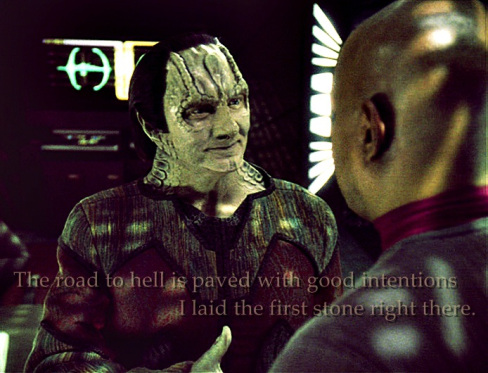
1 Comment

Filed under civil rights, Foreign Policy, national security, Political Commentary, star trek