Category Archives: US Navy

Bloody Betio, The God of Death Has Come: The Battle of Tarawa

Friends of Padre Steve’s World,

Tonight an interlude before I resume my narrative on the Nuremberg Trials. This article is about the Battle of Tarawa, one of the sharpest, bloodiest battles of the Pacific War, all for one square mile of barren land which within the next half century will probably be under water due to sea rise and climate change.

That leads me to tonight’s article. There are some things that should not be forgotten, unfortunately many of them are lost to history. One of these events was the American assault against the Japanese fortress on Tarawa Atoll in November 1943. The battle was one of the deadliest encounters of the Second World War, and was waged for the control of a tiny coral atoll that only occupied one square mile of the earth’s s surface. Dug in on that atoll were about 4,000 Japanese defenders.

The only Japanese officer to survive, Warrant Officer Kiyoshi Ota recalled, “We could see the American landing craft coming towards us like dozens of spiders over the surface of the water.  One of my men exclaimed, ‘The God of Death has come!’”

I hope that this small attempt to detail that battle helps you understand the sacrifice of the men who fought there.

Peace

Padre Steve+

The American Decision: Operation Galvanic
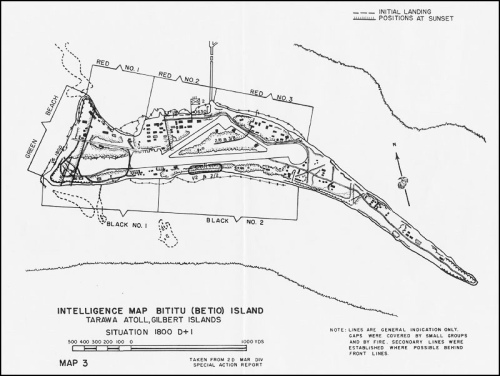
The Target: Betio Island, Tarawa Atoll

Following the Guadalcanal campaign and the shift of significant naval forces away from the Solomons, the focus of the U. S. Navy and Marine Corps shifted to operations in the Central Pacific. Unlike the Solomons campaign, which was initially a Navy and Marine Corps Operation, but shifted to Army control under General Douglas MacArthur as the campaign shifted to Borneo; the operations in the Central Pacific would be an almost total Navy and Marine Corps operation.

Operation Galvanic was the first offensive operation in the Central Pacific. It came about as a result of the Joint U.S. Strategic Committee decision in April 1943 to favor an advance in the Central Pacific while continuing to maintain McArthur’s offensive in the South Pacific.[i]
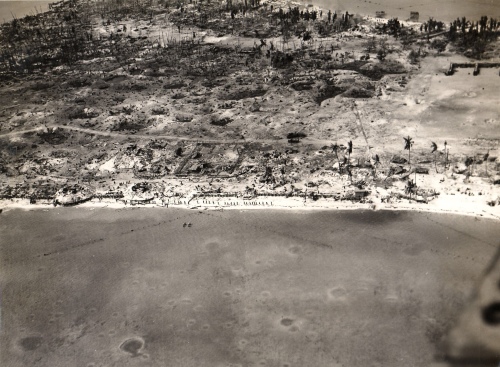
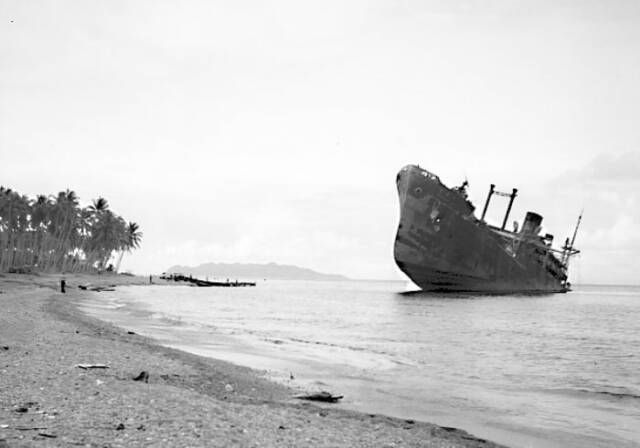
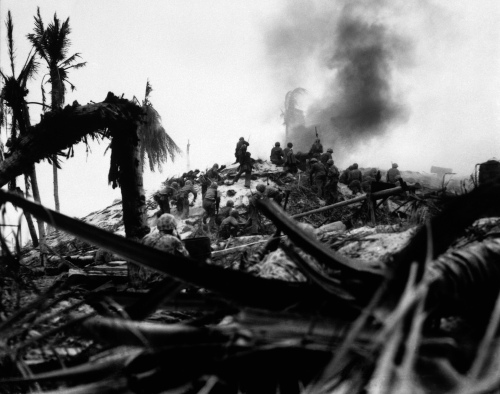
Betio Island after the Battle

The driving force behind this strategy was Admiral Ernest King. King fought for the plan and “insisted that any campaign should focus on the destruction of Japan’s overseas resources, which meant an offensive directed only toward the Western Pacific sea lanes.”[ii] The Joint Chiefs believed that a simultaneous attack by the forces of Admiral Chester Nimitz in the Central Pacific, and MacArthur in the South Pacific would “keep the Japanese guessing” in regard to which direction the Americans would strike. [iii] The decision of The Joint Chiefs was presented to the British at the TRIDENT meetings in May 1943 and while the British resisted the American plans, a compromise was reached which allowed the Americans to “simultaneously…maintain and extend unremitting pressure against Japan….”[iv]
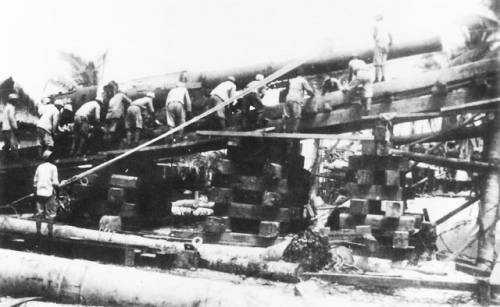
Japanese Troops Emplacing 8″ Vickers Gun

The decision to begin operations in the Central Pacific meant that the priority that MacArthur’s had been given in logistics and personnel would be reduced in order to launch the Central Pacific operation.  MacArthur protested to no avail, and the Joint Chief’s stood firm in their decision that the Central Pacific operation “would make it easier to isolate Japan from her domain in the south.”[v]

MacArthur was allowed to continue OPERATION CARTWHEEL in order to neutralize the key Japanese base at Rabaul while Nimitz’s forces attacked the Marshall and Caroline islands.[vi] Nimitz’s staff began their preparations and decided on a conservative course to capture the Gilberts first before taking the more heavily defended Marshalls.[vii] This was in part due to the “need to minimize the risks to his untried amphibious forces against such heavily fortified enemy bases out of reach of air cover.”[viii]
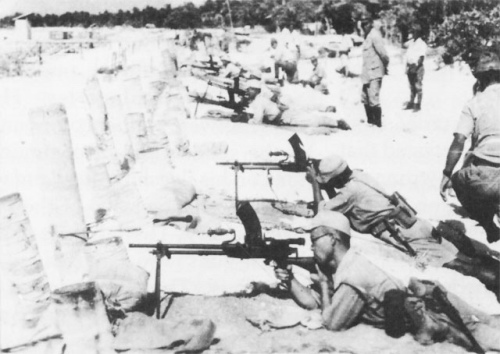
Japanese Naval Infantry conducting Live Fire with Type 99 Machine Guns

Several factors were considered by Nimitz and his planners considerations in this choice.  Nimitz did not have enough troops to capture all of the vital heavily defended locations in the Marshalls without dividing his forces.[ix] Additionally the Gilbert operation could be supported by land based bombers.[x] A final consideration was the Joint Chief’s decision to allow MacArthur to retain control of 1st Marine Division, which Nimitz had hoped to employ in his operations in the Central Pacific.[xi] The Staff of CINCPAC did a thorough photo reconnaissance of the Gilbert’s, and convinced the Joint Chiefs that Tarawa and Makin needed to be taken to provide air bases for the assault on the Marshalls.  Finally, the order for Galvanic was issued on 20 July 1943 with its execution planned for November 1943.[xii]

Japanese Preparations
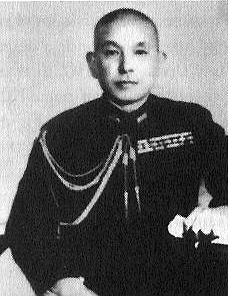
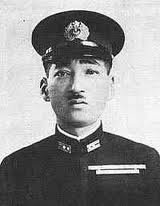
Rear Admiral Keiji Shibasaki

“It will take a million men a thousand years to take Betio”

The Japanese had done little to prepare against potential American offensive operations against the Gilbert’s until Makin Island was raided by elements of the 2nd Raider Battalion in August 1942.  The Makin raid shook the Japanese and they reinforced Makin and occupied Betio.[xiii]

The Japanese deployed the Yokosuka 6th Special Landing Force, essentially Naval Infantry or Marines[xiv] and the 111th Construction Battalion to Betio on 15 September 1942, over nine months after they attacked Pearl Harbor.[xv] What many people do not know is that these Special Naval Landing Forces were some of the most murderous and criminal elements of the Japanese military during the Second World War. They fully embraced the twisted version of Bushido and Emperor worship to justify their brutal conduct of war. While the Japanese on Betio were not accused of war crimes, it was only because they had no prisoners, military or civilian to torture and kill as other Special Naval Landing Forces had in the Pacific.

The forces on Betio were commanded by Admiral Tomanari Sachiro, who at once began to fortify Betio. Tomanari was a skilled officer who appreciated the value of strong fortifications on exposed islands like Betio. Likewise, recognizing that his forces were inadequate to the mission, Tomanari asked Tokyo for reinforcements. The reinforcements came in the form of Commander Sugai’s 7th Sasebo Special Naval Landing Force, which landed on 14 March.[xvi]Commander Sugai’s troops were the famed Rikusentai, the best of the Japanese Navy’s land forces and considered to be better disciplined, trained, and effective than Imperial Army Units of the same size.
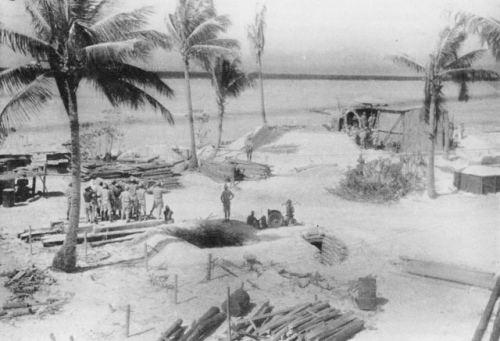
Japanese Gunnery Exercises before the Invasion

The fortification of Betio proceeded slowly until Rear Admiral Shibasaki relieved Tomanari, who returned to Japan. [xvii] Shibasaki was a tough veteran of service at sea and ashore including 19 months as a Rikusentai[xviii] officer in China. Shibasaki was chosen by Admiral Mineichi Koga, Admiral Isoruku Yamamoto’s to instill a better fighting spirit on the island.

The Imperial General Headquarters, issued a “New Operations Plan,” which ordered the outer defensive islands, such as Tarawa, to “hold up any American advance while an inner line of fortresses was constructed….”[xix]

Shibasaki drove the garrison hard, inspiring them to “extraordinary heights of labor that resulted in Betio’s superb defenses.”[xx]Betio mounted four 8” Naval guns[xxi], four 14 cm guns, four dual mount 5.5” dual purpose guns[xxii] six 80 mm anti-boat guns, eight 75 mm dual purpose guns, ten 75 mm mountain guns, six 70 mm guns and nine 37 mm anti-tank guns, numerous machine guns. The defenders were also equipped with light AA guns and 14 Type 95 Ha-Gō light tanks.[xxiii]

These weapons were mounted in well camouflaged, armored, or reinforced pillboxes, connected by trenches. [xxiv] In accordance with the directives of the high command, Shibasaki ordered his troops “to defend to the last man all vital areas and destroy the enemy at the waters’ edge.”[xxv]

The Japanese records note that Shibasaki “immediately began to strengthen morale and carried out advanced training, and as a result…the garrison remarkably enhanced its fighting capability and they were full of confidence.”[xxvi] Even the service troops were thoroughly trained to fight from their superb defensive positions.[xxvii] Shibasaki reportedly told his men that it would take a million men a thousand years to take Betio.

American Preparations for Galvanic
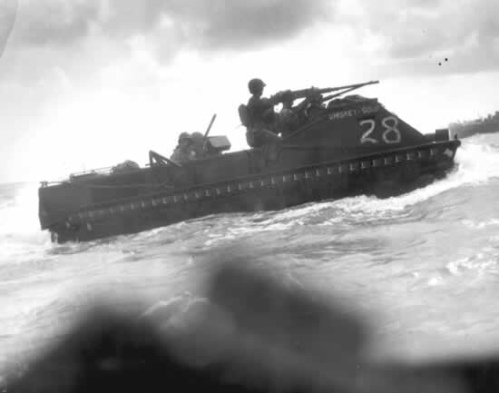
LVT Amphibious Tractor

Nimitz organized his forces into three major commands, the 5th Fleet, commanded by Admiral Raymond Spruance, the 5th Amphibious Force under Admiral Richmond “Kelly” Turner, and the V Amphibious Corps under Major General Holland “Howlin’ Mad” Smith, USMC.[xxviii] The 2nd Marine Division, which was assigned to assault Tarawa, was commanded by Major General Julian Smith.

The force that sustained this operation, and the subsequent amphibious operations was the Service Force Pacific Fleet.[xxix] This was a collection of ships whose mission it was to sustain the fleet in mobile operations. [xxx] This force, greatly “increased the range and power of the Navy in amphibious operations.”[xxxi] The plans for Galvanic called for the Army’s 27th Division take Makin Island, and the 2nd Marine Division which had been blooded at Guadalcanal, to take Tarawa, supported by the carriers and battleships of Admiral Raymond Spruance’s 5th Fleet.

Galvanic was the first application of new amphibious tactics developed for the Pacific war.[xxxii] Air and sea bombardment would precede the actual assault. The Marines would be transported ashore in a new vehicle called an LVT (Landing Vehicle Tracked) and other amphibious ships and craft including the LSD (Landing Ship Dock), LCM (Landing Craft Mechanized) and LCVP (Landing Craft Vehicle Personnel).

The LVTs were absolutely vital at Tarawa because of the distance that the reef extended from the beaches. The LVT’s, nicknamed “Amtracks” or “Amphtracks” were essentially a tracked amphibious personnel carrier. They were developed from a commercial vehicle used by U.S. Forrest Service Rangers in the Florida Everglades and were capable of crossing coral reefs that other craft could not cross.

The early LVTs had retrofitted armor and mounted a .50 cal. machine gun.  At Tarawa the Marines deployed 75 LVT-1s[xxxiii] and 50 LVT-2s. A total of 93 LVTs were part of the first wave of the Marine assault.[xxxiv] The LVTs were transported to Tarawa aboard LSTs (Landing Ship Tanks.)

Other innovations in this new form of amphibious warfare included the assignment of Naval Gunfire Support teams to the Marine Regiments, and down to some battalions. [xxxv] The attack at Tarawa was the first time that the Marines used the M4 Sherman tank in combat. [xxxvi]

Tarawa, ended up being a real combat proving ground for the tactics and equipment which would be improved on and used in every subsequent amphibious operation in the Pacific.  Tarawa also marked the last major use of rubber landing craft by the Marine Corps in an opposed landing.[xxxvii]

There were limitations to American preparations. First the size of the force meant that it could not be assembled in one place for rehearsals or to train as a team.[xxxviii] A second problem for the Americans was the assumption that high and low tides would be sufficient to get their landing craft across the reef in spite of warnings to the contrary.[xxxix] Likewise, the Americans failed to completely anticipate the scope to which the Japanese had fortified the island.

The latter was a failure of commanders to appreciate good intelligence that had been provided to them. In particular, aerial photos taken by the Air Force, and ULTRA intercepts provided good information on the strength and composition of the Japanese units on the island, as well as the layout of the defenses.[xl]

Likewise, some important equipment shortages were not remedied. The Marine Bazooka’s did not arrive, and neither the 6th or 8th Marines had ever made an actual amphibious assault.  At Guadalcanal the these regiments made an administrative landing, and few field-grade officers remained from the 2nd Marine Regiment who had landed at Tulagi.[xli] Despite their combat experience, they were far from the “amphibious experts” that they would become.[xlii]

However, they made up for their lack of practical amphibious experience by their cohesiveness, high morale and esprit. Likewise, they were well armed and equipped, in top physical condition and knew the basic tools of their trade: “weapons proficiency and field firing, close combat techniques, fire and maneuver, tactical leadership, fire discipline.”[xliii]
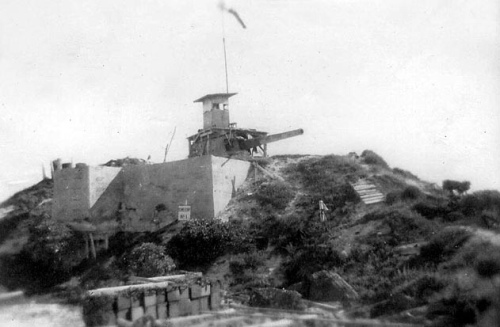
Japanese Vickers 8″ Gun Emplacement

The most critical aspect of the operation was to get across the reef onto the island.  There were few good landing sites and it was decided to make the landings from inside the atoll’s lagoon onto the Betio’s north shore.  This decision meant that transports embarking the Marines would have to unload outside of the lagoon and that the landing craft would have to make a 10 mile trip to get to the beaches.[xliv]

Another problem was that there was only one entrance into the lagoon, and it was not deep enough for heavy ships to enter.[xlv] This meant that ships such as battleships and cruisers would not be able provide direct, close range fire on the Japanese positions which were best situated to disrupt the Marines.

The execution of the plan involved land based bomber strikes beginning on D minus 7. Carrier aircraft would begin their operations on D minus 2.  Cruisers and destroyers joined the cacophony of destruction on D minus 1 and the battleships on D-Day itself.[xlvi]

On D-Day the Navy planned to bombard the island with 3,000 tons of shells in 2 ½ hours.[xlvii] The Navy was confident in its bombardment plans. Rear Admiral H. F. Kingman, who commanded the fire support group declared “We will not neutralize; we will not destroy; we will obliterate the defenses on Betio!”[xlviii]

Four battalions of Marines would land in the first wave, the three battalions of the 2nd Marines Regiment, and 2nd Battalion 8th Marines, all commanded by Colonel David Shoup.

Colonel Shoup would win the Medal of Honor on Betio and later became the Commandant of the Marine Corps. However, he assumed command of the 2nd Marines when the Regimental commander fell ill on the journey to Efate.[xlix] The division reserve were the remaining two battalions of the 8th Marine Regiment. The Division’s 6th Marine Regiment served as the corps reserve.[l]The assault units would be reinforced by tanks, and the 1st and 2nd Battalions 18th Marine Regiment, the division’s combat engineers.

The Invasion: Day One
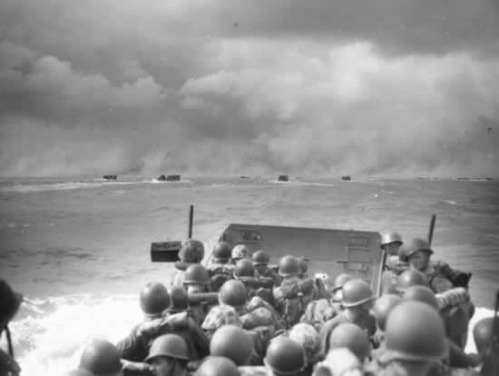
Marines Going Ashore on Day One

The final naval gunfire bombardment commenced at 0542 hours on 20 November, and the assault waves began their trek to the beaches.  The transports were out of range of Japanese guns, but since they were so far out, the small amphibious craft boats have to make a 10 mile trip to get to the beaches. [li]At this point things began to go seriously wrong for the Marines.
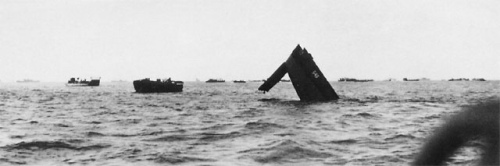
LCT (Landing Craft Tank) Sinking after Being Hit

Unfortunately, Admiral Kingman and the Navy had “badly miscalculated the amount of softening-up that could be done in two and a half daylight hours bombardment.” Although the bi Vickers guns were silenced, not enough damage was done to the Japanese defenses.[lii] The Japanese unwittingly helped the Marines by firing their larger guns at the warships instead of holding fire, thus identifying their positions to Navy gunners.[liii]

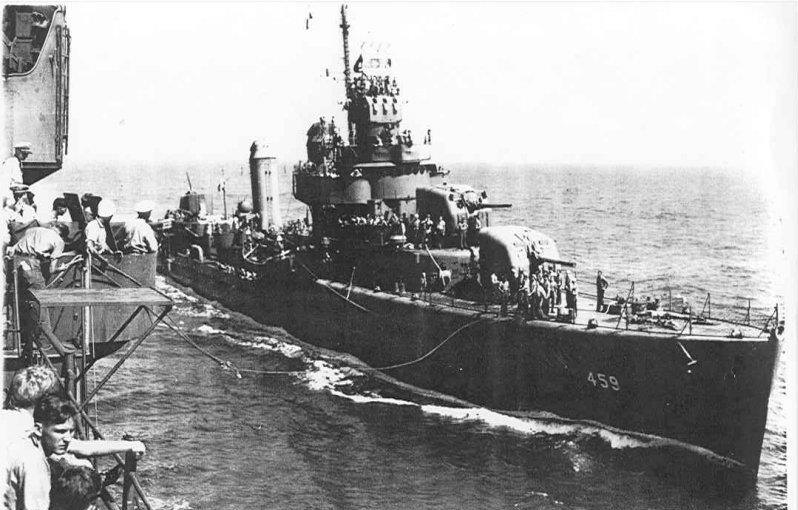
The bombardment was lifted to allow an attack by carrier based aircraft. However, the aircraft were late to arrive and the ships did not resume fire, allowing the Japanese to emerge and re-train their weapons on the approaching landing craft.[liv] Likewise the destroyers USS Ringgold and USS Dashiell, the only ships operating inside the lagoon and providing close Naval Gunfire Support, were ordered to cease fire, knowing the Japanese gunners along the shore were still active.[lv] Some believe that an extra half hour of direct fire from the destroyers would have saved many lives.[lvi]

The LVTs in the first three waves were delayed by a heavy chop outside the lagoon and did not make landfall until 0913, which threw off the landing schedule.[lvii] The expected and planned for rise in tides did not materialize, and tides remained unpredictably low for the first 48 hours. As a result, no landing craft other than the LVTs could cross the reef, and the Marines were forced to wade ashore from distances of 600 to 1000 yards.[lviii]
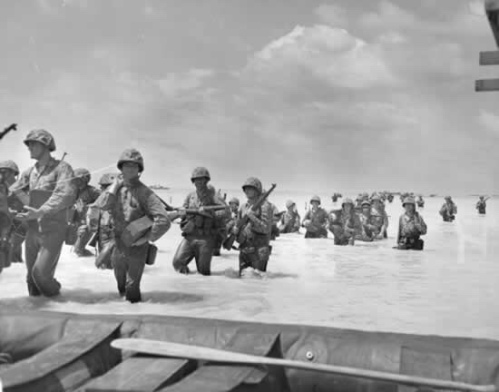
Marines Wading Across the Lagoon

Shoup’s Marines landed on three beaches.  Red One and Red Two lay to the west of a 500 yard long pier, while Red Three lay to the east.  Third Battalion Second Marines (3/2) landed on Red-1, while 2/2 on Red-2. Second Battalion Eighth Marines (2/8) landed on Red-3, while elements of 1/18 and the scout snipers landed at the pier, with First Battalion Second Marines (1/2) remained at sea in reserve to land behind the battalion making the best progress.[lix]

As soon as the Amtracks hit the reef the Japanese began firing.  Every “working weapon along the north and west shorelines….blazed forth in fierce, interlocking fields of fire.”[lx] As they watched the Amtracks craw over the reef that Japanese knew they were in for a tough fight, one of Warrant Officer Ota’s men exclaimed “Heavens! The God of Death has come!”[lxi]

The Marines of 3/2 on Red-1 received enfilade fire from Japanese guns emplaced in a U around the beach. Even before the Marines landed they began to take causalities, Amtracks were hit in the lagoon and most that were not sunk or destroyed were unfit for further use.[lxii] The 2000 Marines who landed on the beaches in the first hour of the assault were badly disorganized, and the commanding officer’s of 2/2 and the Amtracks were killed. 3/2’s commander was isolated on the reef and only 2/8’s commander was with his troops. 2/8 was the only battalion being to reach the shore relatively intact.[lxiii] 3/2 was down to 65% of its strength and Kilo Company, 3/2 had taken over 50% casualties.[lxiv]

The Marines in the fourth to sixth waves were struggling to wade ashore from the reef. Landing craft “ran aground or milled about helplessly outside the reef, which was swept by crossfire from behind the beaches and from a grounded hulk northwest of the pier.”[lxv] Most of the tanks were put out of action either through accurate fire by Japanese guns or by sinking in deep areas of the lagoon, the Tank battalion commander was blown out of his Amtrack, wounded and survived 24 hours by clinging to a pile of dead bodies to keep from drowning.[lxvi]
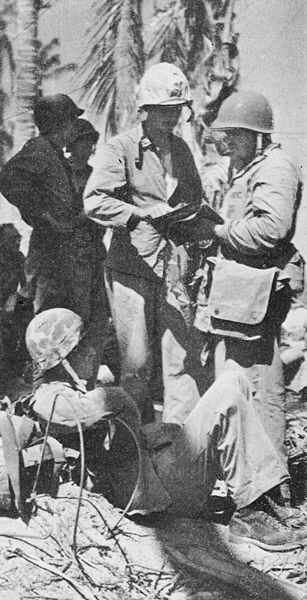
Colonel Shoup Directing Operations

Colonel Shoup landed at Red-2 and began directing operations on the beach.  He knew that he had to get more troops ashore to exploit the minimal gains his Marines had made.  The news from Red One and Two was bad; he decided to bring 1/2 in at Red-2 thought that 3/8 should go in at Red-3.[lxvii] At 1018 General Julian Smith ordered the 8th Marines to dispatch 3/8 to Red-3.[lxviii] The Marines of 3/8 had to make their way across 700 yards through the water to get to the beach. They were slaughtered, and only 30 percent of the first wave got ashore, while the second and the third “were practically wiped out.”[lxix]
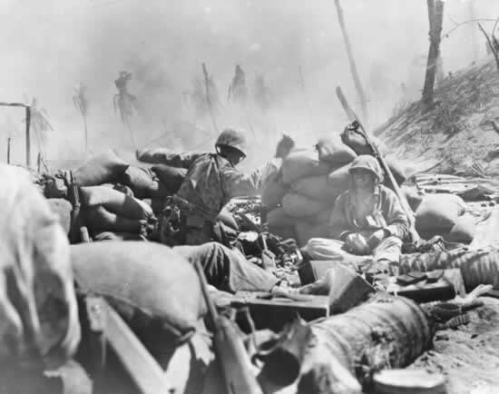
Close Combat

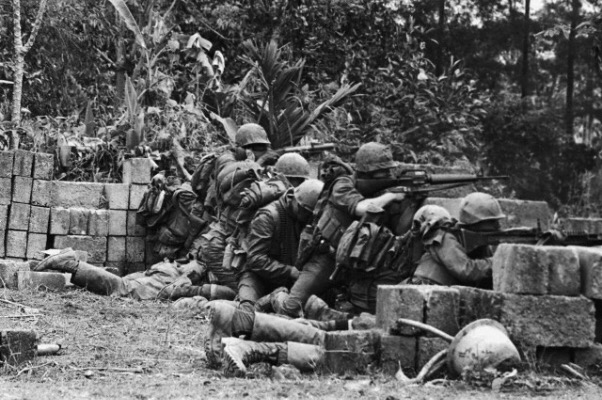
As Shoup’s Marines struggled to reach the beaches, those who had gotten ashore engaged the Japanese at point blank range. First Lieutenant William Hawkins of the 2nd Marine Scout and Sniper platoon and five of his men engaged the Japanese on the pier in vicious hand to hand fighting. [lxx] Staff Sergeant Bordelon of the Engineers on Red-2 though grievously wounded knocked out four gun positions, some by lobbing dynamite charges into them and galvanizing survivors into action, finally being killed while taking on a Japanese position alone.  Both Marines would be awarded the Medal of Honor.[lxxi]
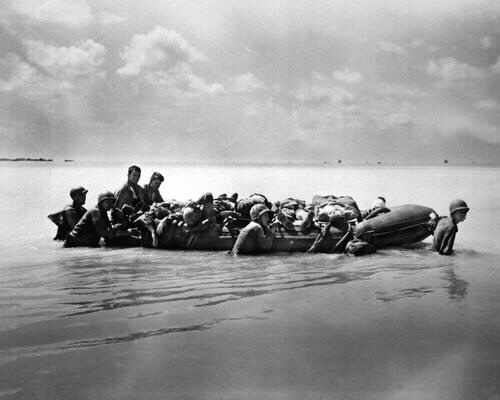
Wounded Being Evacuated by Rubber Raft

By afternoon Julian Smith realized that he needed more troops, his last battalion, 1/8 waited to go ashore.[lxxii] Smith asked for the 6th Marines. He had Rear Admiral Wilbur Hill, Commander of Amphibious Group Two, send a message to Admiral Richmond K. Turner stating “Issue in doubt. I concur.” This message sent a chill through the listening Naval Staff.[lxxiii]

Ashore, Colonel Shoup brought in howitzers from 1st Battalion 10th Marines on his surviving Amtracks to the eastern edge of Red Two near the pier. [lxxiv] The howitzers landed in the early evening.[lxxv] Shoup sent Lieutenant Colonel Carlson to make a personal report to General Smith that he would hold onto his beachhead no matter what happened.

Shoup ordered his Catholic Chaplain to lay out a cemetery and begin burying the dead who were already decomposing in the tropical heat.[lxxvi] As this transpired, 2/8 got two of its 37mm anti-tank guns into position to drive off Japanese tanks approaching the beachhead.[lxxvii]

Members of the Second Marine Division Band assisted Navy Hospital Corpsman in bringing back wounded Marines.[lxxviii] For the rest of the day the Marines continued to eke out a beachhead. Shoup’s Marines on Red-2 and Red-3 managed to advance about halfway across the island, while 3/2 and elements 1/2 and 2/2 were isolated. Major Ryan of Lima Company 3/2 pulled them back to meet an expected Japanese counter-attack.[lxxix]

By nightfall the Marines had taken over 1500 casualties of 5000 men landed the first day.[lxxx] There is no evidence that Shoup considered withdraw that night.[lxxxi] No counterattack occurred due to Japanese command and control problems. The primary cause was that Admiral Shibasaki and his staff were killed while shifting the position of their headquarters during the afternoon,[lxxxii] and the Japanese communications were in shambles. A well organized counterattack would have been disastrous for the Marines,[lxxxiii] but it did not happen, even though the Japanese assembled over 1000 men to oppose the Marines on day two.[lxxxiv] Had Shibasaki lived and the Japanese communications survived, a counterattack might have had ramifications far beyond Tarawa.[lxxxv]

Day Two
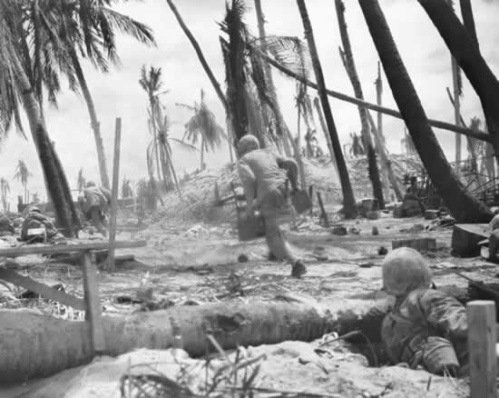
Advancing Under Fire

The second day began with the First Battalion EighthMarines landing on Red Two, while the 6th Marines began to land on Green Beach at the far western tip of Betio.  Like the Marines who landed on the first day, 1/8’s landing turned into a bloodbath, the tide fell even lower than the previous day. As they hit the reef and waded ashore they drifted into some of the heaviest Japanese defenses. Japanese guns, including the dual 5.5” guns took direct aim at the boats, while Marines ashore watched helplessly. War correspondent Robert Sherrod noted: “This is worse, far worse than it was yesterday.”[lxxxvi] Only half of 1/8 reached the beach with none of their heavy weapons or equipment.  Shoup ordered the remnants of the battalion into line on his western flank in preparation for an advance inland.[lxxxvii] During five hours of landings on day two, the “Marine casualties reached a higher rate than that sustained on the first morning.”[lxxxviii]

Meanwhile, Shoup ordered Ryan’s “orphans” to make an attack down the right flank of the Japanese positions on Green Beach. Shoup’s decision and Ryan’s leadership made the attack a success. The “American victory at Betio evolved from the attack during one intense hour the second morning.”[lxxxix]

Taking every available Marine, two surviving Sherman tanks, and some mortars, Ryan gathered his force and coordinated Naval Gunfire support. The area contained a number of heavy guns including two of the remaining 8” mounts.  A destroyer blanketed the Japanese positions with 5” shells and fire from her light AA guns.[xc] Attacking behind the beach, Ryan’s Marines isolated and destroyed everyone and everything that looked hostile.[xci] Against minimal opposition Ryan’s Marines quickly seized the gun positions and the western end of the airfield.  Within an hour his Marines occupied the entire western side of Betio up to a 200 yard depth. At 1200 he radioed Shoup to let him know the good news, and that he now intended to advance east against the airfield.[xcii] The attack allowed the Marines to land intact battalions with supporting arms for the first time battle.[xciii]

To the east behind Red Two and Red- Three, the 8th Marines and survivors of 1/2 and 2/2 attacked against fierce Japanese opposition near Shibasaki’s former command bunker and two other large bunkers which were mutually supporting.  The attack by the 2nd Marine survivors eventually succeeded in getting completely across the south side of the island.[xciv] During the attack Lt. Hawkins of the Scout Snipers, who had distinguished himself at the pier the previous day was mortally wounded.

The attack cut the island in two, but the Japanese launched a viscous counterattack on the Marine positions which was beaten back.[xcv] The 8th Marines faced a more difficult task going against what was now the heart of the Japanese defense as the defenders had been reinforced by Lt. Minami and his third company of the 7th Special Naval Landing Force.

Vicious fighting ensued and by nightfall “the Marines had little to show for their heavy losses,[xcvi] but they did make significant inroads against the Japanese to warrant optimism for D+2.[xcvii] By evening the Marines on Red-1 and Red-2 had consolidated their beachhead so that reinforcements were finally able to land, including jeeps, artillery and heavy equipment.

By mid-day the Marines noted that Japanese defenders were beginning to commit suicide, and they began to feel that Japanese morale had broken.  By late afternoon Shoup transmitted the message: “Casualties many. Percentage of dead unknown. Combat efficiency-We are winning.”[xcviii] By late afternoon Major Jones’s First Battalion Sixth Marines landed on Green beach in their rubber boats, reinforcing Ryan’s orphans. It was the first of the 7 battalions on the island to get ashore intact.

Ryan and Jones coordinated their units for a night defense and an early attack the next morning.[xcix] Meanwhile, Second Battalion Sixth Marines cleared the nearby island of Bairiki, allowing the artillery of Second Battalion Tenth Marines to land its howitzers on the island.  This in cut off any line of retreat for the defenders of Betio.[c] Colonel Merritt Edson came ashore during the evening to relieve Shoup[ci], who remained to help coordinate the next day’s attack. Once again there were no coordinated Japanese counterattacks. The senior officer, Commander Takes Sugai, was isolated in the pocket between the Red and Green beaches, and no senior officer could coordinate any attacks.[cii]

Mopping Up: Day Three and Four
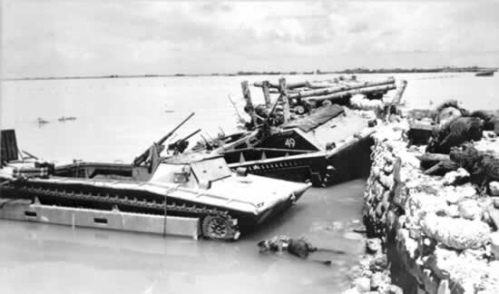
Wrecked LVT’s and Dead Marines Litter the Beach

Day three began with attacks against Japanese strong points and the arrival of more reinforcements, including 3/6 which landed on Green Beach, and three light tank platoons which landed on Red-2.[ciii] The Marines attacked from Green Beach, sweeping east to join the 2nd Marines who had cut the island in two the day before.  The 8th Marines continued to attack the heavily fortified bunker complex, and eventually captured the heavily fortified and defended positions.

During the assault First Lieutenant Sandy Bonnyman of 1/18 won the Medal of Honor for leading the assault on these positions, including destroying a major bunker defended by 150 Japanese, he was killed during the fight.[civ] Fighting remained fierce throughout the day and General Smith arrived to take command on shore.  The Marines continued to attack supported by tanks, artillery and naval gunfire.  By the evening they were established at the east end of the airfield.

The now desperate Japanese defenders launched a series of Banzai charges which beginning about 1930 hours and ending about 0400 when the Marines annihilated the last attack with the assistance of artillery.[cv] The attack, which could have succeeded the first or early the second day, now aided the Marines by killing troops that might have been used to exact a higher price in Marine lives for the tail of the island.[cvi]

The next morning the Marines pushed forward and eliminated the last Japanese defenders, and by 1200 Betio was secured.  Of about 5000 defenders only 17 Japanese and some Korean laborers were taken prisoner.[cvii] The Marines lost over 1000 killed and 2300 wounded.[cviii]
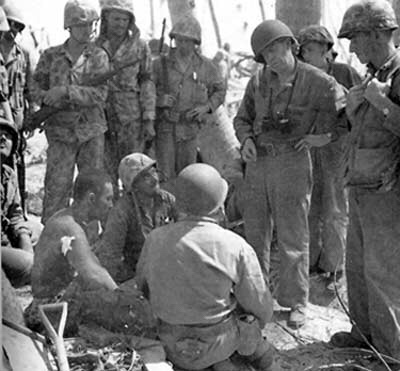
One of the Japanese Survivors being Interrogated

Epilogue

The Marines paid a heavy price for Betio, but it was not to be a useless sacrifice. However, it was a source of great controversy especially among politicians.[cix] Historian Ronald Spector wonders if waiting for better tides or a full moon would have saved lives.[cx] Holland Smith later argued that Tarawa should have been bypassed, but Nimitz’s biographer, E. B. Potter notes “if the lessons of the amphibious assault had not been learned at Tarawa, they would have to be learned elsewhere, probably at greater cost.”[cxi]

The lessons learned aided all future amphibious operations in the Central Pacific and elsewhere.  Timing and coordination of naval gunfire support, air strikes and combat loading of transports were all refined in future operations. Large numbers of armored and up-gunned Amtracks would be part of every future operation.[cxii] Intelligence was emphasized and replicas of the Japanese fortifications were built and tested to determine the best way of destroying them.[cxiii] Likewis, the Marines shocked the public by releasing photos and films of the carnage on Tarawa to awaken them to the challenges ahead.[cxiv]

Today the battle is remembered annually by the 2nd Marine Division at Camp LeJeune, North Carolina. Each year, an ever shrinking number of veterans of the battle attend the ceremonies.  Samuel Eliot Morison put it best: “All honor, then, to the fighting heart of the United States Marine. Let the battle for that small stretch of coral sand called Betio of Tarawa be remembered as terrible indeed, but glorious, and the seedbed for victory in 1945.”[cxv]

Appendix: The Commanders
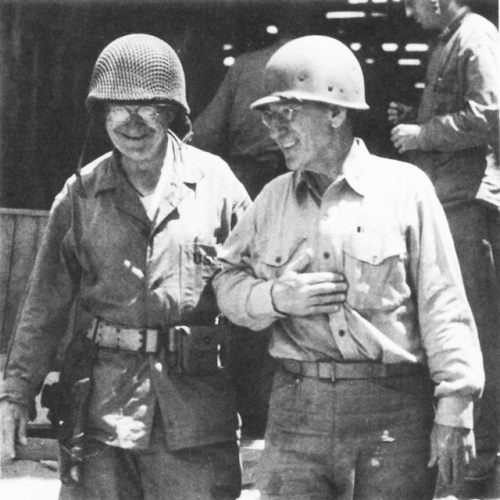
Lieutenant General Holland Smith and Major General Julian Smith

General Holland M. “Howling Mad” Smith USMC: (1882-1967) Lieutenant General Holland M. Smith commanded V Amphibious Corps during the Gilberts operation.  Prior to the war he had worked extensively on amphibious warfare doctrine for both the Marine Corps and Navy. Unlike many senior officers Smith was not a Naval Academy graduate having matriculated from the Alabama Polytechnic Institute (now Auburn University) in 1903 and law school in 1903.  Smith served as Adjutant of the 4th Marine Brigade in the First World War and served in Panama and the Dominican Republic in addition to other Marine tours afloat and ashore.  He served well and had many key assignments between the wars culminating in as the Assistant Commandant of the Marine Corps.  Subsequent to the Gilbert campaign he served as Commanding General of the Fleet Marine Force, Pacific and later commanded the Marines at Iwo Jima.  He retired in 1946.

Major General Julian Smith USMC: (1885-1975) Major General Julian Smith served as Commanding General 2nd Marine Division at Tarawa.  He graduated from the University of Delaware and was commissioned as a Second Lieutenant in 1909.  He served in Haiti, Santo Domingo and the Vera Cruz expedition. During the First World War he served as an instructor in the Marine Officer training camps at Quantico. After the war he served in Cuba, Nicaragua and various command and staff posts including the Army Command and General Staff College.  He commanded 5th Marines in 1938 and in 1942 was promoted the Major General serving as director of Fleet Marine Force Schools, New River, NC.  He took command of 2nd Marine Division in May 1943 and served there until April 1944 when he became Commanding General, Expeditionary Troops, Third Fleet and in December 1944 took command of the Military Department of the Pacific.  He retired in 1946.
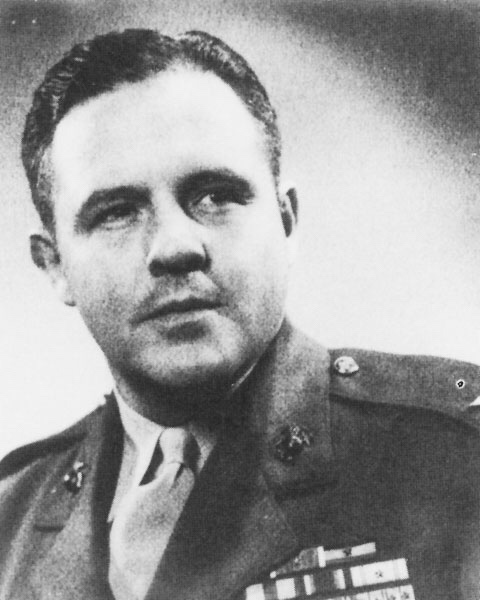
Colonel David Shoup

Colonel David Shoup USMC: (1904-1983) Colonel David Shoup commanded the 2nd Marines at Tarawa, being appointed as commander when its commander fell ill.  Shoup won the Congressional Medal of Honor for his actions on Tarawa.  A 1926 graduate of DePauw University, Shoup was commissioned a Second Lieutenant through the ROTC program that year.  He served in various assignments to include service in China, at sea on the battleship Maryland and Marine Barracks Puget Sound Navy Yard. He joined the staff of 6th Marines in October 1940 and assumed command of 2/6 in February 1942.  He was assigned as the Assistant Operations Officer for 2nd Marine Division in July 1942 and promoted the Lieutenant Colonel.   He went with the Division to New Zealand where he became the G-3 and from which he was fleeted up to command 2ndMarines at Tarawa.  After Tarawa he served as the Division Chief of Staff at Saipan and Tinian.  After the war Shoup continued to be assigned in key billets at the Pentagon and as commanding General, 1st Marine Division and then the Third Marine Division.  He became Chief of Staff, Headquarters Marine Corps in 1958 and was appointed as the 22nd Commandant of the Marine Corps by President Eisenhower, a post that he retained until his retirement in 1963.

Rear Admiral Tomanari Sachiro

Admiral Tomanari Sachiro IJN: (1887-?) Commander of Tarawa garrison until relieved by Rear Admiral Shibasaki.   Graduate Naval Academy 1910, initially a communications officer he held various commands including three destroyers, an Oiler, the Light Cruiser Yuma, Heavy Cruisers, Furutake and, Haguro and the Battleship Kirishima. Assigned to Tarawa in February 1943, he helped design and supervised the initial construction of the defenses until he was relieved by Admiral Shibasaki on 20 July1943.  He returned to Japan and served the remainder of the war on Navy Division of Imperial General Headquarters.  Tomonari survived the war though nothing is mentioned as to his postwar fate.

Rear Admiral Shibasaki Keiji

Rear Admiral Shibasaki Keiji IJN: (1894-1943) Commanded Tarawa Garrison until his death during the battle.  He graduated from the Naval Academy in 1915 and he was a skilled navigator and instructor.  Prior to the war he had served afloat and ashore and ashore and had commanded a ship and naval station and served as a naval attaché to Prince Kuni Asaakira, a member of the Imperial Family.  Among his assignments was 19 month combat tour with the special Naval Landing Forces in China, where he served as Chief of Staff of Shanghai Special Naval Landing Force.  Shibasaki’s leadership helped the garrison improve their defensive capabilities and combat skills as he inspired them to great heights and executed an intense training program. He was killed in the battle.

A Personal Note

I have not been to Tarawa but feel that I know it well.  I served in Second Marine Division from April 1999 through December 2001.  Due to my prior service experience I was used to fill gaps where chaplains were needed and ended up serving in four different battalions.  I served in 2nd Combat Engineer Battalion, the descendant of 1/18, the combat engineers.  We had a WWII Bulldozer outside our command post named after Sergeant Bordelon, the Medal of Honor Citations for Bordelon and Boonyman were prominently displayed.  I also served in 1/8 and 3/8.  I knew the accounts of the slaughter of these Marines as they attempted to land but as I re-read the accounts I was moved by their courage under fire.  The CPs of these battalions are also adorned with citations of their heroes lost at Tarawa.  Veterans would visit our units during Tarawa Days at Camp LeJeune, worn by the battle and the years they always made a great impression on me.

There is almost a mystical connection between the Second Marine Division and the Marines of Tarawa; it was a crucible that defined the division, whose motto is the same as the Army Infantry School. “Follow Me!”

Semper Fidelis,

Padre Steve+

Notes

[i] Spector, Ronald H. Eagle Against the Sun: The American War with Japan.  The Free Press, New York, NY 1985. p.253

[ii] Murray, Williamson and Millett, Allan R. A War to Be Won: Fighting the Second World War, The Belknap Press of Harvard University Press, Cambridge, MA 2000. p.338

[iii] Ibid. Spector. p.253

[iv] Ibid. p.255 The conference also set a date for the invasion of France.

[v] Toland, John. The Rising Sun: The Decline and Fall of the Japanese Empire, 1936-1945. Random House, Inc. New York, NY 1970. p.468

[vi] Ibid. Spector. p.255

[vii] Costello, John. The Pacific War 1941-1945. Quill Publishing, New York, NY 1982. p.430

[viii] Ibid.

[ix] Potter, E.B. Nimitz. Naval Institute Press, Annapolis, MD, 1976, Third Printing with Revisions 1979. p.243. Nimitz’s forces would have had to seize 5 major Japanese bases and his staff was not sure that the Pacific carrier force would be strong or experienced enough to provide the necessary air cover for the operation.

[x] Ibid.

[xi] Ibid. pp.243-245

[xii] Morison, Samuel Elliott. The Two Ocean War: A Short History of the United States Navy in the Second World War. Little Brown and Company, Boston and Toronto, 1963. p.296.

[xiii] Hammell, Eric and Lane, John E. Bloody Tarawa: The 2nd Marine Division, November 20-23, 1943. The Zenith Press, St. Paul MN 2006.  Text copyright 1998 Eric Hammell and John E. Lane. p.4

[xiv] See Alexander, Joseph H. Utmost Savagery: The Three Days of Tarawa.Ivy Books, published by Ballantine Books, New York, NY. 1995. pp. 39-40.  This unit became the Third Special Base Unit on its deployment and was joined by the 111th Construction Battalion.

[xv] Ibid. Hammell. p.4

[xvi] See Alexander pp.39-40. This unit was basically a reinforced infantry battalion with 3 rifle companies, a weapons battery, anti-aircraft battery, a light tank company and support units numbering about1600 men.

[xvii] Ibid. Alexander. p.43

[xviii] Alexander p.27 The Rikusentai was the Japanese equivalent of Marines, who numbered about 50,000 men.  The officers attended Army schools and qualified enlisted men attended additional Army specialist training.

[xix] Ibid. Costello. p.431

[xx] Ibid. Hammell. p.22

[xxi] See Alexander p.77. While most writers say that these guns were brought from Singapore, Alexander notes that British writer William H Bartsch submitted proof (serial numbers) that the guns were sold by Vickers to Japan in 1905 as a legitimate business transaction.

[xxii] These are the same guns (127mm) mounted as the secondary armament of Nachi and Takao Class Heavy Cruisers and later mounted on light cruisers to replace the main battery with a more effective anti-aircraft armament.

[xxiii] Ibid. Hammell. p.22

[xxiv] Hammell notes that many of these bunkers and pillboxes were so well concealed that they could not be seen.

[xxv] Ibid. Toland. p.469.

[xxvi] Ibid. Alexander. p.43.

[xxvii] Ibid. Hammell. p.28

[xxviii] Ibid. Morison. p.297

[xxix] Ibid. Costello. p.429

[xxx] At this point the force could provide everything except major permanent repairs to warships.

[xxxi] Liddell-Hart, B.H.  History of the Second World War. G.P. Putnam’s Sons, New York, NY 1970. p.511

[xxxii] Ibid. Costello. p.431

[xxxiii] The older LVT-1s had boiler plate armor added as a field modification and were given a heavy machine gun. Prior to this they were unarmored and had two light machine guns.

[xxxiv] Ibid. Morison. p.303

[xxxv] Hammell includes a by name list of these officers in Appendix B.  Of note for today, each MEUSOC (Marine Expeditionary Unit, Special Operations Capable) has an assigned Naval Gunfire Support Team.

[xxxvi] Ibid. Alexander. pp. 61-62.  The Shermans had to be transported aboard pre-loaded LCM-3s carried in the well decks of the LSDs.

[xxxvii] Ibid. Alexander. pp.58-59

[xxxviii] Ibid. Morison. p.297.  As a sidebar discussion it should be noted that Galvanic helped provide the model for the organization of all further Marine Corps amphibious doctrine now known by the acronym PERMA; Planning, Embarkation, Rehearsal, Movement and Assault, which describes the 5 phases of a amphibious assault.

[xxxix] Ibid. Hammell details the intricacies of the particular tides seen at Tarawa and the knowledge that the Marines had from the former Resident Commissioner of the Island, Major Frank Holland who warned the division staff that he knew that there would not be enough water over the reef to get landing craft across it. (pp.18-20)

[xl] Ibid. Alexander. pp.75-77

[xli] Ibid. Alexander. pp.67-68.

[xlii] Ibid. p.70

[xliii] Ibid. p.71

[xliv] Ibid. Morison. p.302

[xlv] Ibid. Hammell. p.16

[xlvi] Johnston, Richard W. Follow Me! The Story of the Second Marine Division in world War II.  Copyright 1948 by the Second Marine Division History Board and published by Random House Publishers, New York, NY 1948. p.106

[xlvii] Ibid. Liddell-Hart. p.511  Johnson says 2,700 tons. (p.106)

[xlviii] Ibid. Johnston. p.106

[xlix] Ibid. Hammell. p.17

[l] Ibid.

[li] Ibid.. Hammell. 46-47

[lii] Ibid. Morison. p.303

[liii] Ibid. Alexander. p.113.  Alexander notes that the Japanese would have been better served by using these guns on the stalled out landing craft.

[liv] Ibid. Hammell. p.47.

[lv] Ibid. Hammell. p.58

[lvi] Ibid.

[lvii] Ibid. Morison. p.303

[lviii] Ibid. Alexander. p.79

[lix] Ibid. Hammell. p.17

[lx] Ibid. Alexander. p.121

[lxi] Wukovits, John. One Square Mile of Hell: The Battle for Tarawa. NAL Caliber, published by New American Library, a division of Penguin Group USA, New York NY, 2006. p.112

[lxii] Ibid. Johnston. p.116

[lxiii] Ibid.

[lxiv] Ibid. Wukovits. P.119  Other companies suffered as grievously, K/3/2 was not alone in its suffering.

[lxv] Ibid. Spector. pp.263-264

[lxvi] Ibid. Alexander. pp.136-138

[lxvii] Ibid. Hammell. p.90

[lxviii] Ibid. p.95

[lxix] Ibid. Spector. p.264

[lxx] Ibid. Wukovits. p.114

[lxxi] Ibid. Alexander. pp.139-140

[lxxii] 1/8 did not arrive on the beach due to botched communications until D plus 1.

[lxxiii] Ibid. p.150  The last time this signal had been sent it was by Major Devereaux at Wake Isalnd

[lxxiv] Ibid. p.151

[lxxv] Ibid. Johnston. p.132

[lxxvi] Ibid. Hammell. p.112

[lxxvii] Ibid. p.130

[lxxviii] Ibid. Johnston. p.122

[lxxix] Ibid. Johnston. p.122

[lxxx] Ibid. Costello. p.436

[lxxxi] Ibid. Alexander. p.163

[lxxxii] Ibid. Alexander. pp.157-158  Hammell notes that Shibasaski was most likely killed by fire from Ringgold or Dashiell.

[lxxxiii] Ibid. Hammell.pp.139-140

[lxxxiv] Ibid. Alexander. p.162

[lxxxv] Ibid.  Wukovits. p.176. Wukovits notes how this could have affected the planning for the Normandy invasion.

[lxxxvi] Ibid. Alexander. p.173

[lxxxvii] Ibid. Hammell. p.160

[lxxxviii] Ibid. Costello. p.437

[lxxxix] Ibid. Alexander. p.170

[xc] Ibid. Hammell. p.163

[xci] Ibid. Hammell. p.166

[xcii] Ibid. Wukovits. p.178

[xciii] Ibid. Alexander. p.170 Ryan would be awarded the Navy Cross for his efforts.

[xciv] Ibid. Hammell. p.172

[xcv] Ibid. Alexander. p.179

[xcvi] Ibid. Alexander. p.181

[xcvii] Ibid. Hammell. p.178

[xcviii] Ibid.. Wukovits. p.194

[xcix] Ibid. Hammell. p.202

[c] Ibid. Hammell. p.212

[ci] Shoup would be awarded the Medal of Honor and eventually go on to be the Commandant of the Marine Corps.

[cii] Ibid. Alexander. pp.191-192

[ciii] Ibid. Johnston. p.134  2 platoons landed on Red-2 and one on Green Beach.

[civ] Ibid. Alexander. pp.202-205

[cv] Ibid. Johnston. pp.145-146

[cvi] Ibid. Johnston. p.147

[cvii] Ibid. Toland. p.470

[cviii] Ibid. Murray and Millett. p.345

[cix] Ibid. Liddell-Hart. p.511

[cx] Ibid. Spector. p.266

[cxi] Ibid. Potter. P.264

[cxii] Ibid. Murray and Millett. p.347  The Amtrack in improved forms has been part of the Marines ever since. The current model serves in a traditional amphibious role as well as a Armored Personnel Carrier for Marines involved in ground combat operations ashore.

[cxiii] Ibid. Costello. p.439. The method found to work best was long range plunging fire by heavy guns found on battleships and heavy cruisers.

[cxiv] Ibid. Murray and Millett. p.346

[cxv] Ibid. Morison. p.306

Bibliography

Alexander, Joseph H. Utmost Savagery: The Three Days of Tarawa. Ivy Books, published by Ballantine Books, New York, NY. 1995.

Costello, John. The Pacific War 1941-1945. Quill Publishing, New York, NY 1982

Morison, Samuel Elliott. The Two Ocean War: A Short History of the United States Navy in the Second World War. Little Brown and Company, Boston and Toronto, 1963

Hammell, Eric and Lane, John E. Bloody Tarawa: The 2nd Marine Division, November 20-23, 1943. The Zenith Press, St. Paul MN 2006.

Johnston, Richard W. Follow Me! The Story of the Second Marine Division in world War II.  Copyright 1948 by the Second Marine Division History Board and published by Random House Publishers, New York, NY 1948

Murray, Williamson and Millett, Allan R. A War to Be Won: Fighting the Second World War, The Belknap Press of Harvard University Press, Cambridge, MA 2000

Potter, E.B. Nimitz. Naval Institute Press, Annapolis, MD, 1976, Third Printing with Revisions 1979

Spector, Ronald H. Eagle Against the Sun: The American War with Japan.  The Free Press, New York, NY 1985 Toland, John. The Rising Sun: The Decline and Fall of the Japanese Empire, 1936-1945. Random House, Inc. New York, NY 1970
Leave a comment

Filed under History, imperial japan, Military, US Marine Corps, US Navy, World War II at Sea, world war two in the pacific

Against Insurmountable Odds: The Naval Battle of Guadalcanal, part Two


Friends of Padre Steve’s World,

Last night I wrote about the opening engagement of the Naval Battle of Guadalcanal. Despite the heroic battle to protect the Marines on Guadalcanal I the early morning hours of November 13th, the situation in the White House was akin to the setbacks at Omaha Beach a year and a half later. The temptation to withdraw the Marines who had already won a foothold on the island and who had withstood several major Japanese assaults was strong, but time played a role that superseded American political realities.

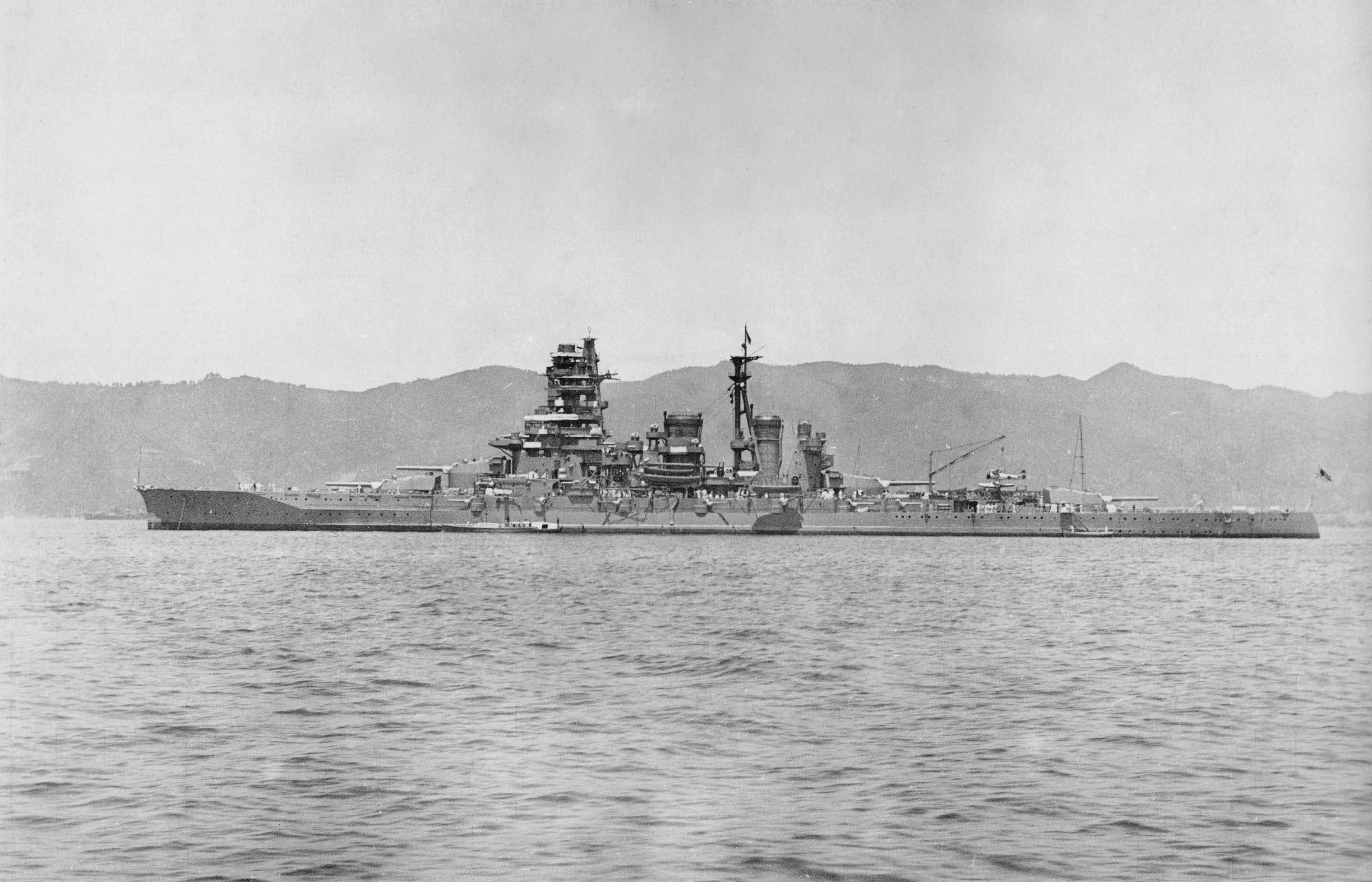
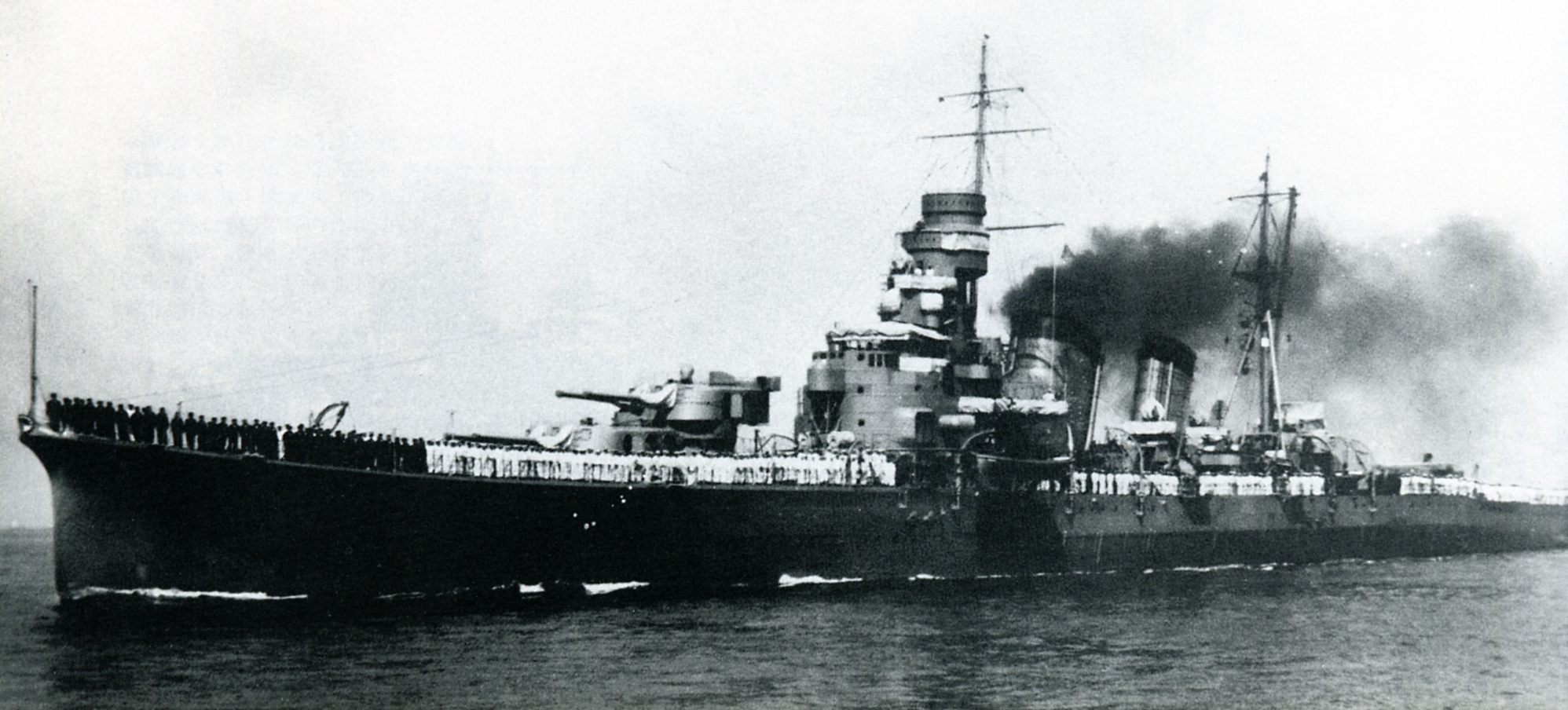
                                                        IJN Kinugusa 
On the morning of the 13th, following the defeat of Rear Admiral Hiraoki Abe’s Force, Vice Admiral Nobutake Kondo pressed home the attack. On the 13th, his transport force, carrying the Imperial Army 38th Division, protected by the destroyers of Rear Admiral Gunichi Mikawa ran the gauntlet of  Marine Corps, Navy, and Army Air Force aircraft stationed at Henderson Field which according to the Japanese plan should have been rendered inoperative on the night of the 12th and 13th. Mikawa pressed ahead despite heavy losses and though losing seven of the eleven transports landed a sizable number of troops on Guadalcanal despite losing most of their supplies and equipment.

As the sun set on the night of the 13th another bombardment Force under Rear Admiral Shoji Nishimura came in under the cover of darkness to fire 500 eight inch shells at the airfield. Damage was moderate, some aircraft were destroyed, but Henderson Field Remained in action, its aircraft continuing to inflict heavy casualties of the Japanese landing forces, and their escorts, including the heavy cruisers Kinugusa, Maya, Chokai, and Suzuya, light cruisers Isuzu and Tenryu, and six destroyers. Mikawa sent Maya and Suzuya to shell Henderson Field while his other ships attempted to screen the transports. In the following action seven of the eleven transports were sunk, with many of their troops transferred to destroyers which delivered them to Guadalcanal without most of their supplies and equipment. During his withdraw, most of Mikawa’s ships were damaged by aircraft from Henderson Field, including Kinugusa which was mortally wounded by Marine and Navy aircraft from Henderson Field and USS Enterprise. 
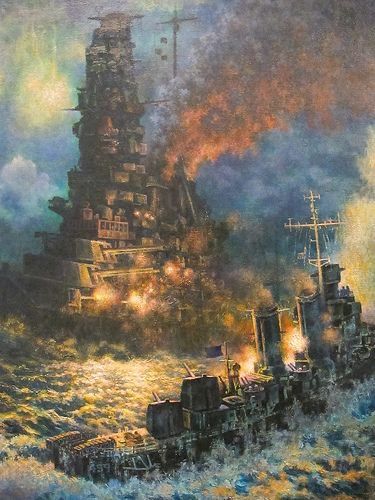
                                             IJN Battleship Kirishima 

Despite the losses and under pressure from Tokyo to retake the Guadalcanal, Admiral Yamamoto ordered Admiral Kondo, with a reconstructed bombardment Force to attack Henderson Field. That task force was centered on the battleship Kirishima, though Kondo’s flagship was the heavy cruiser Atago. This force was more powerful than Abe’s, with one battleship, 2 heavy and 2 light cruisers as well as nine destroyers.


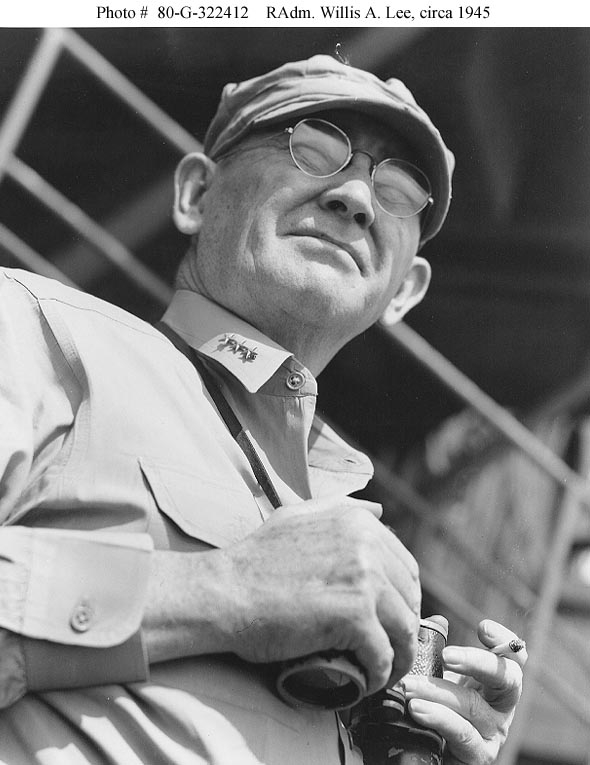
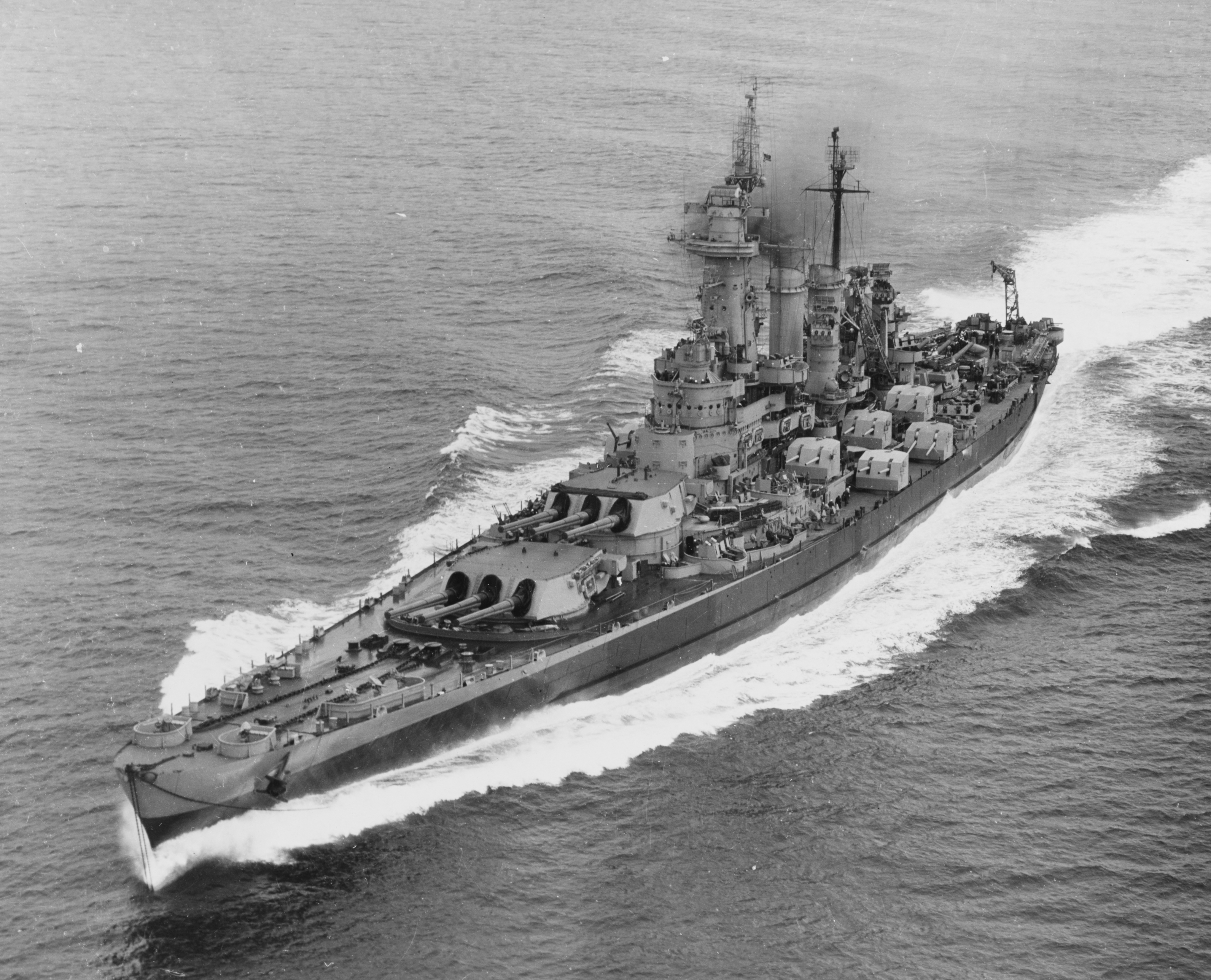
By now the Americans were rushing to get every available ship to Guadalcanal, despite the doubts that it could hold. Against the advice of many officers, Vice Admiral William “Bull” Halsey directed the battleships USS Washington and South Dakota, along with the destroyers USS Preston, Walke, Benham, and Gwin none of which had operated together before until that night. The battleships were selected because nothing else was available, the spdestroyers, each because they had more fuel. They were under the command of Rear Admiral Willis Lee aboard Washington.


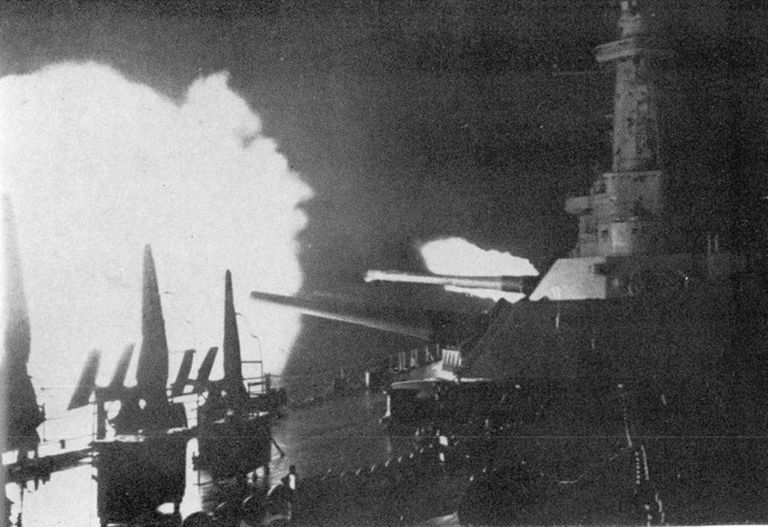
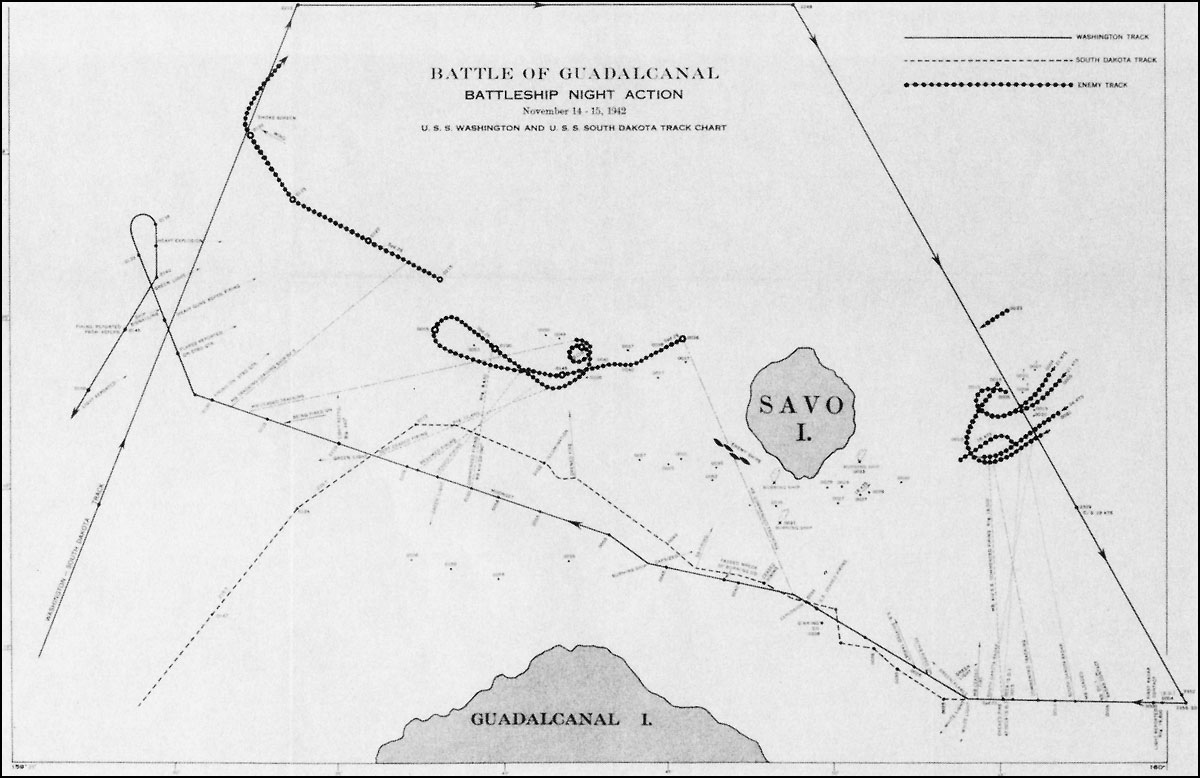
Early in the morning of the 15th the task forces of Kondo and Lee joined battle. The US destroyers, operating in the van succeeded in their task of screening the battleships at heavy loss to themselves. Preston, Walke, and Benham were sunk or mortally wounded. The South Dakota was put out of the action by a mistake by her Chief Engineer coupled with accurate Japanese gunfire. Now operating alone and undetected, Washington opened fire on Kirishima hitting her with between 9 and 20 16” shells. Mortally wounded Kirishima became the second battleship lost by the Imperial Navy in the war. Kondo retreated, and the following morning the four surviving transports beaches themselves under air attack from Henderson Field.

  •                       Washington Firing and Broadside at Kirishima 

    From that point on Japanese missions were limited to resupply of forced on Guadalcanal or their evacuation. Many other bloody battles remained to be fought, it after November 15th 1942, the issue of who should control Guadalcanal was not no longer in doubt.

Peace,

Padre Steve+


Leave a comment

Filed under History, imperial japan, leadership, Navy Ships, US Army Air Corps, US Marine Corps, US Navy, World War II at Sea, world war two in the pacific

40 Minutes of Hell: The Naval Battle of Guadalcanal, Part One


Friends of Padre Steve’s World,

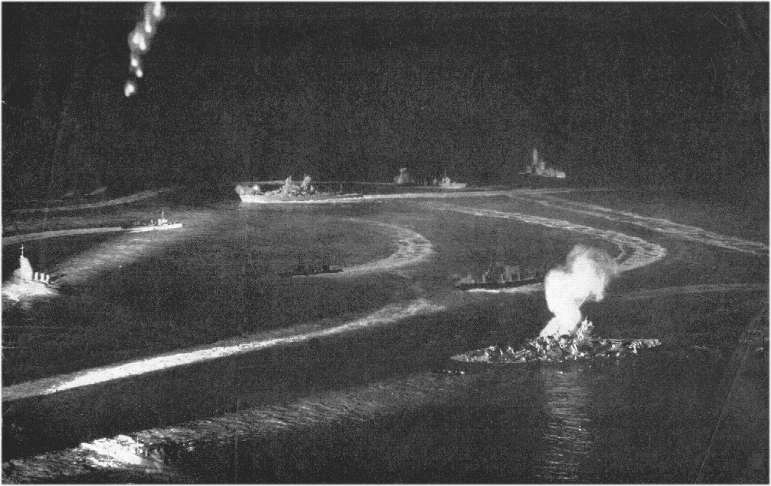
In the very early morning hours of November 13th 1942, one of the most intense short range battles in modern naval history was fought in the waters between Guadalcanal and Savo Island. Fourteen ships of the Imperial Japanese Navy, including the battleships Hiei and Kirishima supported by the light cruiser Nagara and eleven destroyers under the command of Rear Admiral Hiraoki Abe were sent on a mission to destroy the Marine air base, Henderson Field on Guadalcanal in order to ensure the safety of a convoy carrying the soldiers of the 38th division of the Imperial Japanese Army, whose mission was to land than recover the island for the Japanese.

Rear  Hiraoki  Abe  (above)  and  Daniel  Callaghan  (below)

The Americans, whose intelligence code-breakers had surmised Japanese intentions and in response Admiral Richmond Turner gathered a force of two heavy and five light cruisers, the USS San Francisco, USS Portland, USS Helena, USS Atlanta, and the USS Juneau and eight destroyers. He placed Rear Admiral Daniel Callaghan in command, although Rear Admiral Norman Scott aboard Atlanta was slightly junior but more experienced in fighting the Japanese at Guadalcanal, having led a US task force to victory at the Battle of Cape Esperance just a month earlier.

                                            Rear Admiral Norman Scott

Adding to the US difficulties was that the force, hastily cobbled together had never operated before as a unit, and Callaghan choose San Francisco, which had previously commanded as his flagship, despite her lack of the latest surface search radar. Likewise, he placed the five ships with it at the rear of his formation, and did not issue a battle plan for his task force. In doing so he lost the element of surprise as Abe had no knowledge of a US task force off Guadalcanal.

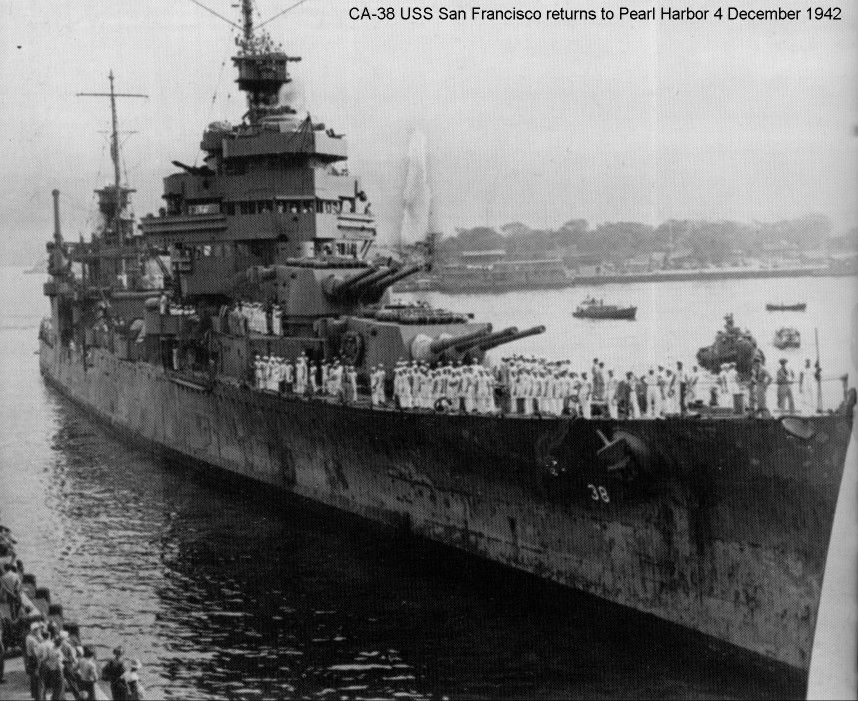
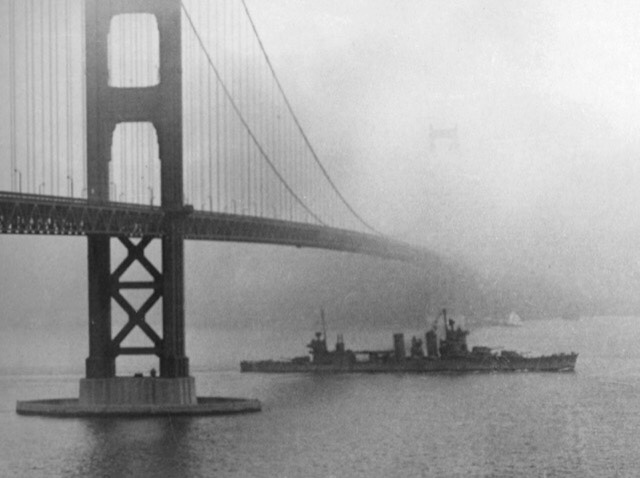
               San Francisco returns to Pearl Harbor, December 1942 under Golden Gate Bridge

As night gathered on the 12th of November, Abe steamed southeast down the slot and south of Savo Island, in an unwieldy formation, and his battleships piled high with special fragmentation shells designed to maximize destruction of shore targets and airfields but which were of little use against surface ships. Callaghan steamed northeast through Ironbottom Sound to intercept in a column formation with four destroyers in the van, followed by his five cruisers, and then his other four destroyers. According to Naval historian Samuel Elliott Morrison, the formation was chosen because it had worked for Scott at Cape Esperance, but he failed to take advantage of his advantage in radar and left the cruiser Helena, and the four destroyers with the latest radar in the rear of his formation.

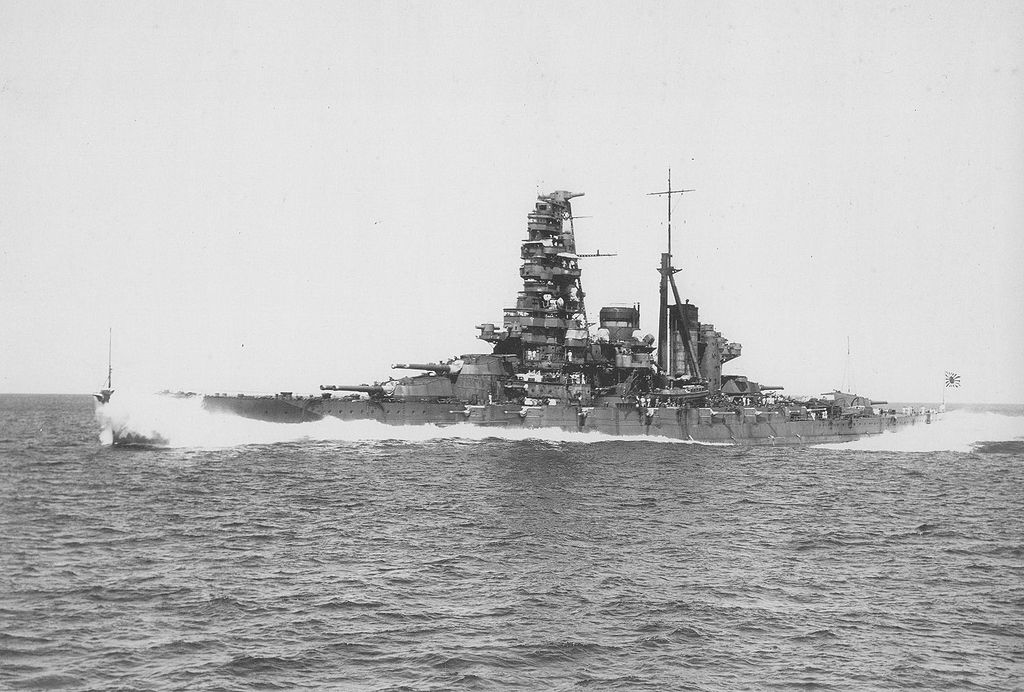
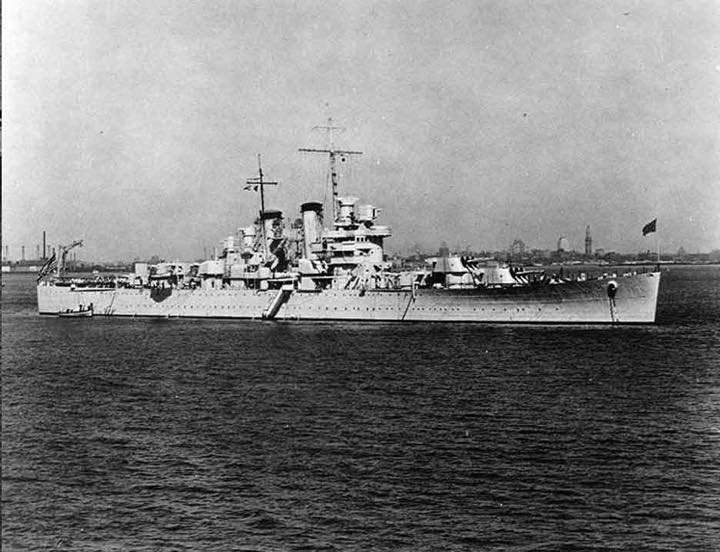
Battleship IJN Hiei (above) USS Helena (below)


At 0124 hours radarmen aboard Helena picked up the Japanese Force at 27,000 and 32,000 yards and notified Callaghan. Instead of moving into a position to take the Japanese by a surprise gunfire and torpedo attack Callaghan decided to go directly at the Japanese, sacrificing his advantage in surprise and radar in favor of a short range melee.


USS Laffey

Approaching each other at a combined forty knots the range closed rapidly until at 0141 the destroyer USS Cushing had to make a sharp turn to starboard to avoid a collision with the leading Japanese destroyers, the result was a near pile up for which which Callaghan demanded answers. The Captain of Atlanta explained his maneuvers by radioing Callaghan, “avoiding our destroyers.” 
Within seconds the battle began. The lead US destroyers, Cushing, Laffey, Sterrett, and O’Bannon along with Atlanta engaging the lead Japanese destroyers, Nagara and Hiei.


The result was chaos. Laffey engaged Hiei at a range of 20 feet, inflicting damage and killing key members of Abe’s staff and Hiei’s senior officers. Yet it was another four minutes before Callaghan gave the order to open fire. In the mean time Atlanta was illuminated by Japanese searchlights and opened a murderous fire on the Japanese destroyer Akatzuki. However, the Japanese destroyer’s sacrifice was not in vain as other Japanese ships blasted Atlanta with gunfire and torpedoes, and putting her out of action. Cushing and Laffey were mortally wounded during the initial minutes of the action and both forces continued to close one another, the battle developing into a series of individual fights with each ship searching for targets as well as being targeted by the enemy.
San Francisco was smashed by Japanese shells, including those from the battleships.

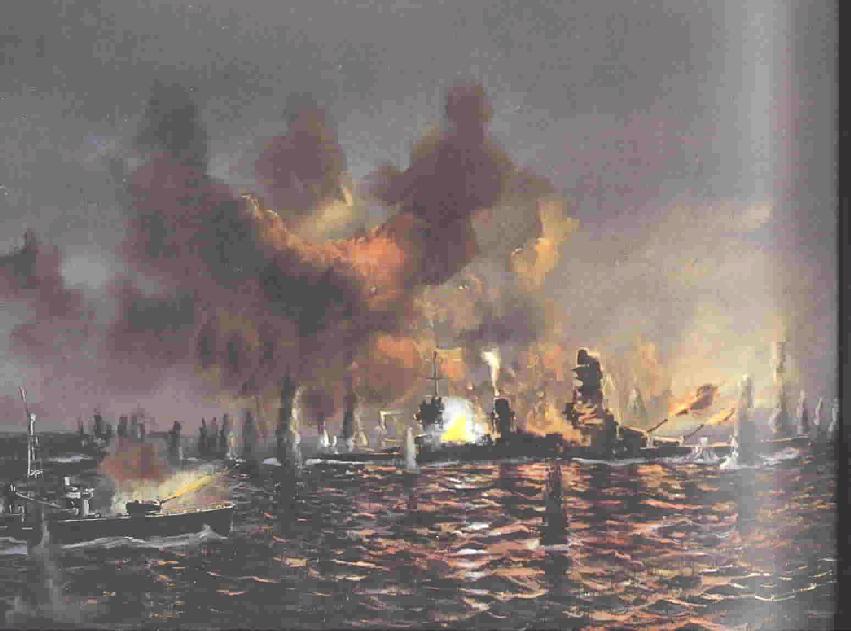
Illustration of the Battle by Life Magazine

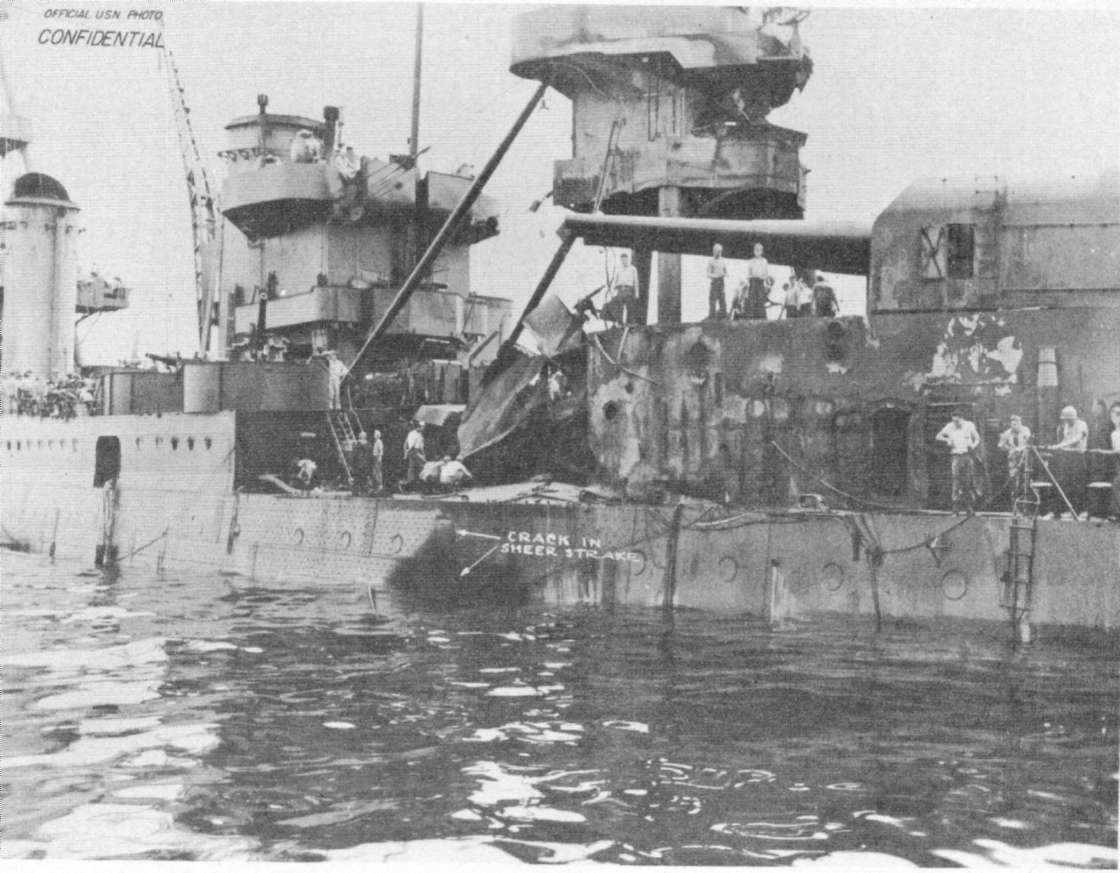
The barrage killed Admiral Callaghan, his staff, as well as the Commanding Officer and Executive officer of the ship. But for the actions of her crew led by her Chief Engineer  LCDR Bruce McCandless, and Gunnery officer LCDR Wilborne the ship might have been lost. Instead she continued in action adding her 8” guns to the maelstrom. Portland delivered devastating fire from her 8” guns into several targets but was hit in the stern by a Japanese torpedo which limited her to steaming in circles, yet still engaging any target she could.
Helena, Juneau and the rear destroyers now entered the fray. Helena, a veteran of Cape Esperance used her superior radar and experience to help deliver San Francisco from other Japanese attacks from Japanese destroyers and Nagara. Juneau was hit by a Japanese torpedo which broke her keel and left her dead in the water. Destroyers Barton and Monssen were devastier by Japanese fire, Barton sinking seven minutes into her combat career. Monssen was mortally wounded.
                                               Damage to USS Portland

At 0200 Admiral Abe broke off the action. Individual fights still continued, Sterrett crippled the Japanese destroyer Yudachi which was finished off of Portland shortly after sunrise. Hiei was crippled and was further damaged by Marine aircraft from Henderson Field before her crew scuttled her, she was the first Japanese battleship to be sunk in combat during the war. Cushing, Monssen, and Atlanta each lost their fight to stay afloat and Portland, assisted by the tug USS Bobolink reached the safety of Tulagi the next day. After temporary repairs she sailed for Australia and then the United States for full repair and modernization.

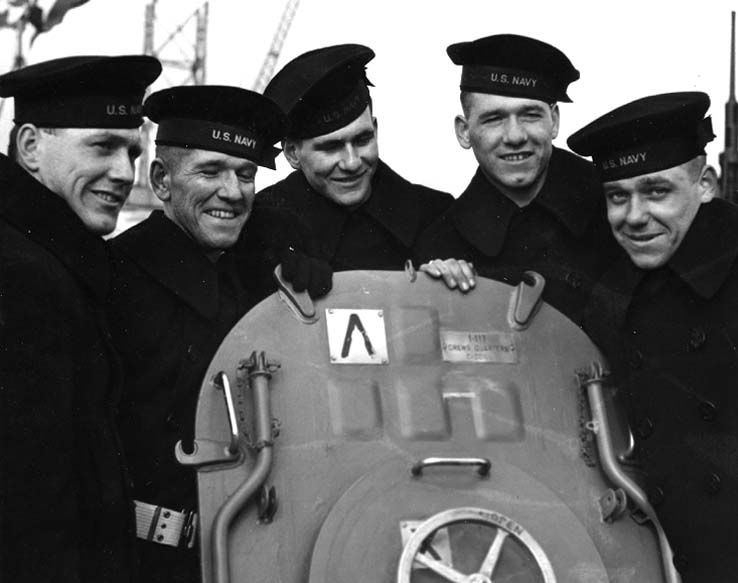
The Sullivan Brothers
As Captain Hoover, the senior surviving officer of the US task force took his surviving, and still navigable ships out of harm’s way. It was a harrowing task. Only Helena of his cruisers was fully operational, and  of his three destroyers, only Sterrett and Fletcher had operational sonar, but they were not enough to protect the crippled cruisers. At 1101 a torpedo hit Juneau, blasting her to pieces and leaving about one hundred survivors to fend for themselves as Hoover sought to avoid further attacks. For ten days the surviors suffered until an Army Air Force B-17 spotted them. By then only ten sailors remained alive from the crew of the Juneau, over seven hundred others, including the five Sullivan Brothers either went down with the ship or died awaiting rescue.

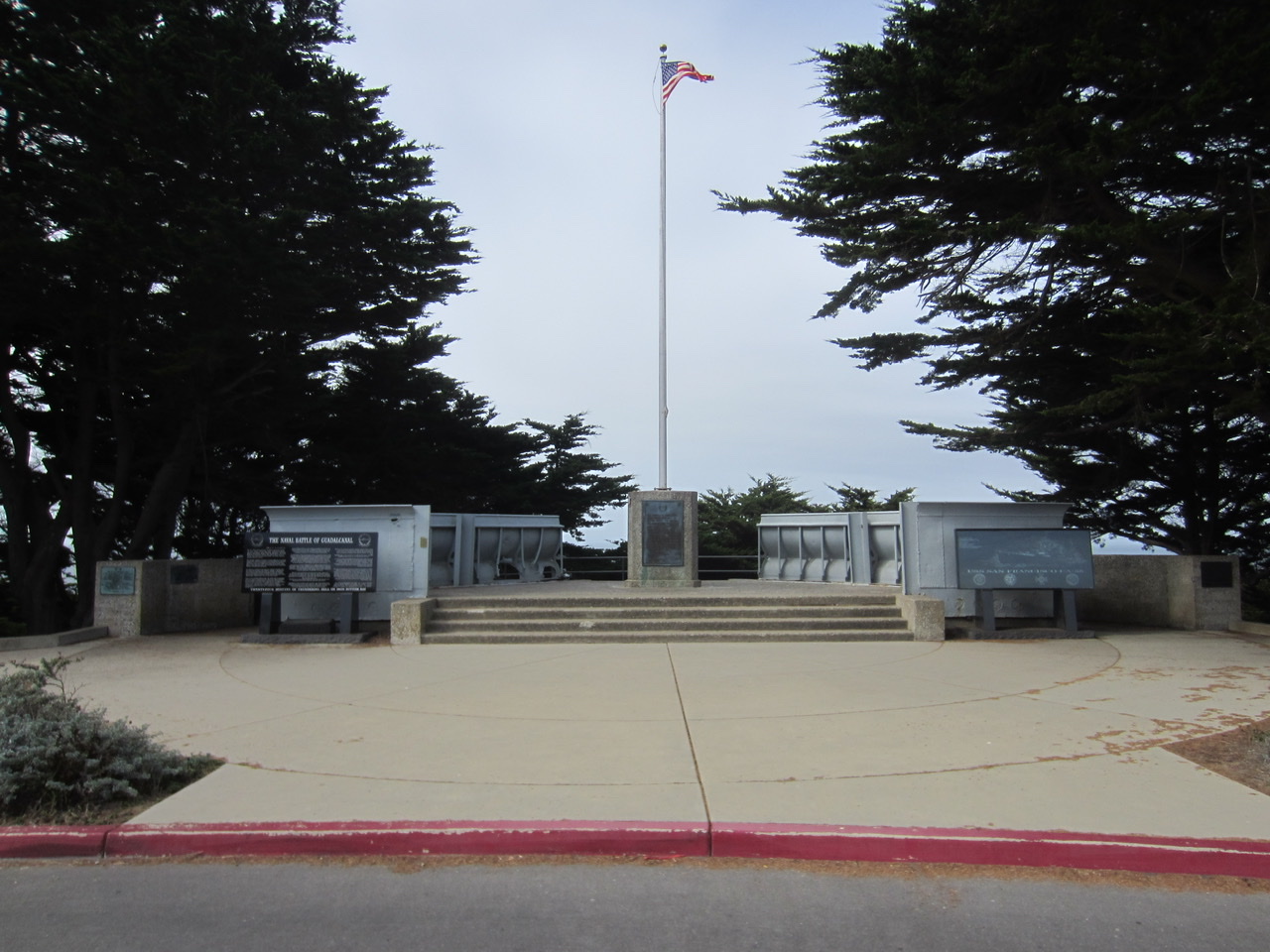
USS San Francisco Memorial, the outer wall is from the bridge of the ship still pierced by Japanese shell fire

Of the Commanders, Admiral Abe was forced into retirement at the age of 53, Admirals Callaghan and Scott died in the battle, and Captain Hoover was tried, but not convicted at Court Martial for the loss of Juneau and her crew.
But, the Naval Battle of Guadalcanal was not yet over…

To be continued,

Peace

Padre Steve+

Leave a comment

Filed under History, Military, Navy Ships, US Army Air Corps, US Marine Corps, US Navy, World War II at Sea, world war two in the pacific

A Veteran’s Day Postscript: Belonging to a Different World

Friends of Padre Steve’s World

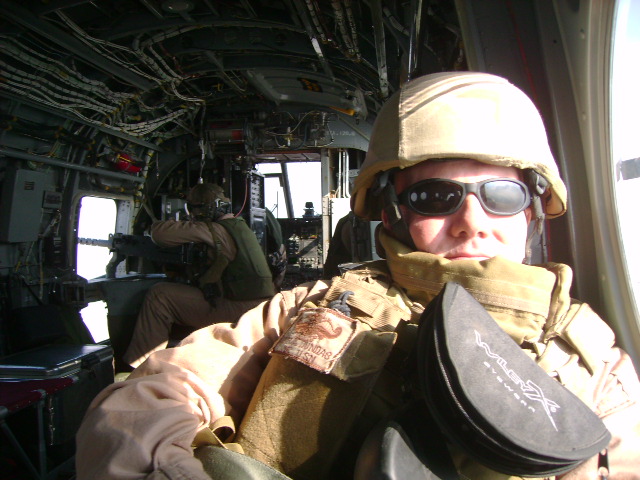
I wrote about Armistice Day and Veteran’s Day but I decided to write a postscript to it today. I write this specifically as a combat veteran who more than a decade after my return still deal with the effects of war, PTSD, TBI, sleep disorders, nightmares and night terrors, bad knees, ankles, shoulders, tinnitus, inability to understand speech, and a bunch of other stuff. I know many more who deal with what I do and worse. At least I am no longer suicidal, though I do experience periodic bouts of depression, panic attacks, and anxiety.

For me it began in February 2008 when on the way back from Iraq the military charter aircraft bringing us home stopped in Ramstein Germany. After a few hour layover we re-boarded the aircraft but we were no longer alone, the rest of the aircraft had been filled with the families of soldiers and airmen stationed in Germany. Just days before most of us had been in Iraq or Afghanistan. The cries of children and the intrusion of these people, not bad people by any means on our return flight was shocking, it was like returning to a world that I no longer knew.

I think that coming home from war, especially for those damaged in some way, in mind, body or spirit is harder than being at war.

In that thought I am not alone. Erich Maria Remarque in his classic novel All Quiet on the Western Front wrote:

“I imagined leave would be different from this. Indeed, it was different a year ago. It is I of course that have changed in the interval. There lies a gulf between that time and today. At that time I still knew nothing about the war, we had been only in quiet sectors. But now I see that I have been crushed without knowing it. I find I do not belong here any more, it is a foreign world.”

Likewise, Guy Sajer a French-German from the Alsace and veteran of the Grossdeutschland Division on the Eastern Front in World War II noted at the end of his book The Forgotten Soldier: 

“In the train, rolling through the sunny French countryside, my head knocked against the wooden back of the seat. Other people, who seemed to belong to a different world, were laughing. I couldn’t laugh and couldn’t forget.”

I have been reminded of this several times in the past week. It began walking through a crowded Navy commissary on Saturday, in the few minutes in the store my anxiety level went up significantly. On Tuesday I learned of the death of Captain Tom Sitsch my last Commodore at EOD Group Two, who died by his own hand. His life had come apart. After a number of deployments to Iraq as the Commander EOD Mobile Unit 3 and of Task Force Troy he was afflicted with PTSD. Between June of 2008 and the end of 2009 he went from commanding an EOD Group to being forced to retire.  Today I had a long talk with a fairly young friend agonizing over continued medical treatments for terminal conditions he contracted in two tours in Iraq where he was awarded the Bronze Star twice.

I have a terrible insomnia, nightmares and night terrors due to PTSD. My memories of Iraq are still strong, and this week these conditions have been much worse. Sager wrote:

“Only happy people have nightmares, from overeating. For those who live a nightmare reality, sleep is a black hole, lost in time, like death.”

Nearly 20 years after returning from war, a survivor of the 1st Battalion 308th Infantry, the “Lost Battalion” of World War One, summed up the experience of so many men who come back from war:

“We just do not have the control we should have. I went through without a visible wound, but have spent many months in hospitals and dollars for medical treatment as a result of those terrible experiences.”

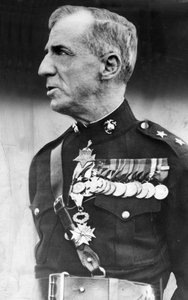
butler-medals1

Two time Medal of Honor winner Major General Smedley Butler toured Veterans hospitals following his retirement from the Marine Corps. He observed the soldiers who had been locked away. In his book War is a Racket:

“But the soldier pays the biggest part of this bill. If you don’t believe this, visit the American cemeteries on the battlefields abroad. Or visit  any of the veterans’ hospitals in the United States….I have visited eighteen government hospitals for veterans. In them are about 50,000 destroyed men- men who were the pick of the nation eighteen years ago. The very able chief surgeon at the government hospital in Milwaukee, where there are 3,800 of the living dead, told me that mortality among veterans is three times as great as among those who stayed home.”

Similarly Remarque wrote in All Quiet on the Western Front:

“A man cannot realize that above such shattered bodies there are still human faces in which life goes its daily round. And this is only one hospital, a single station; there are hundreds of thousands in Germany, hundreds of thousands in France, hundreds of thousands in Russia. How senseless is everything that can ever be written, done, or thought, when such things are possible. It must be all lies and of no account when the culture of a thousand years could not prevent this stream of blood being poured out, these torture chambers in their hundreds of thousands. A hospital alone shows what war is.”

Lt.ColonelCharlesWhiteWhittlesey

Lieutenant Colonel Charles Whittlesey

Sometimes even those who have been awarded our Nation’s highest award for valor succumb to the demons of war that they cannot shake, and never completely adjust to life at “home” which is no longer home. For them it is a different, a foreign world to use the words of Sager and Remarque. Lieutenant Colonel Charles Whittlesey won the Medal Medal of Honor as Commander of 1st Battalion 308th Infantry, the “Lost Battalion” in France. After the war he was different. He gave up his civilian law practice and served as head of the Red Cross in New York. In that role, and as the Colonel for his reserve unit, he spent his time visiting the wounded who were still suffering in hospitals. He also made the effort to attend the funerals of veterans who had died. The continued reminders of the war that he could not come home from left him a different man. He committed suicide on November 21st 1921not long after serving as a pallbearer for the Unknown Soldier when that man was interred at Arlington National Cemetery.

In his eulogy, Judge Charles L. Hibbard noted:

“He is sitting on the piazza of a cottage by the sea on a glorious late September day but a few weeks ago. . . He is looking straight out to sea, with naught but sea between him and that land where lie so many of his boys. The beating surf is but an echo, the warm, bright sunshine, the blue sky, the dancing waves, all combine to charm. But a single look at his face and one knows he is unconscious of this glory of Nature. Somewhere far down in the depths of his being or in imagination far off across the waters he lives again the days that are past. That unconscious look has all the marks of deep sorrow, brooding tragedy, unbearable memories. Weeks pass. The mainspring of life is wound tighter and tighter and then comes the burial of the Unknown Soldier. This draws the last measure of reserve and with it the realization that life had little now to offer. This quiet, reserved personality drew away as it were from its habitation of flesh, thought out the future, measured the coming years and came to a mature decision. You say, ‘He had so much to live for – family, friends, and all that makes life sweet.’ No, my friends, life’s span for him was measured those days in that distant forest. He had plumbed the depth of tragic suffering; he had heard the world’s applause; he had seen and touched the great realities of life; and what remained was of little consequence. He craved rest, peace and sweet forgetfulness. He thought it out quietly, serenely, confidently, minutely. He came to a decision not lightly or unadvisedly, and in the end did what he thought was best, and in the comfort of that thought we too must rest. ‘Wounded in action,’ aye, sorely wounded in heart and soul and now most truly ‘missing in action.’”

Psychologist and professor Dr. Ari Solomon analyzed the case of Colonel Whittlesey and noted:

“If I could interview Whittlesey as a psychologist today, I’d especially have in mind … the sharp discrepancy between the public role he was playing and his hidden agony, his constant re-exposure to reminders of the battle, his possible lack of intimate relations, and his felt need to hide his pain even from family and dearest friends.”

I wish I had the answer. I have some ideas that date back to antiquity in the ways that tribes, clans and city states brought their warriors home. The warriors were recognized, there were public rituals, sometimes religious but other times not. But the difference is that the warriors were welcomed home by a community and re-integrated into it. They were allowed to share their stories, many of which were preserved through oral traditions so long that they eventually were written down, even in a mythologized state.

But we do not do that. Our society is disconnected, distant and often cold. Likewise it is polarized in ways that it has not been since the years before our terrible Civil War. Our warriors return from war, often alone, coming home to families, friends and communities that they no longer know. They are misunderstood because the population at large does not share their experience. The picture painted of them in the media, even when it is sympathetic is often a caricature; distance and the frenetic pace of our society break the camaraderie with the friends that they served alongside. Remarque wrote, “We were all at once terribly alone; and alone we must see it through.”

If we wonder about the suicide epidemic among veterans we have to ask hard questions. Questions like why do so many combat veterans have substance abuse problems and why is it that approximately one in ten prisoners serving time are veterans? It cannot be simply that they are all bad eggs. Many were and are smart, talented, compassionate and brave, tested and tried in ways that our civilian society has no understanding for or clue about. In fact to get in the military most had to be a cut above their peers. We have to ask if we are bringing our veterans home from war in a way that works. Maybe even more importantly we have to ask ourselves if as a culture if we have forgotten how to care about each other. How do we care for the men and women who bear the burden of war, even while the vast majority of the population basks in the freedom and security provided by the soldier without the ability to empathize because they have never shared that experience.

For every Tom Sitsch, Charles Whittlesey or people like my friend, there are countless others suffering in silence as a result of war. We really have to ask hard questions and then decide to do something as individuals, communities and government to do something about it. If we don’t a generation will suffer in silence.

Peace

Padre Steve+

3 Comments

Filed under History, iraq,afghanistan, leadership, Military, ministry, PTSD, remembering friends, shipmates and veterans, suicide, Tour in Iraq, us army, US Marine Corps, US Navy, world war one

Happy 244th Birthday Marines


Friends of Padre Steve’s World,

i will take a momentary break from politics and everything else to wish all United States Marines a Happy 244th Birthday. This one is more special than many others because my nephew Darren is now a Marine.

Honestly, after all that we have been through as a country this year, today is one of these days where I just want to wish people well. Those men and women are those of the United States Marine Corps, with whom I have have spent almost ten years of my thirty-five year military career assigned to or in support of as a chaplain. Today is the 244th anniversary of the establishment of the Marine Corps and its founding at Tun Tavern, in Philadelphia. Today I wish all those who have served past, present and future, especially those who I have served alongside a happy birthday.

On November 10th 1775 the Continental Congress passed a resolution that stated:

Resolved, that two Battalions of Marines be raised consisting of one Colonel, two Lieutenant Colonels, two Majors & Officers as usual in other regiments, that they consist of an equal number of privates with other battalions; that particular care be taken that no persons be appointed to office or enlisted into said Battalions, but such as are good seamen, or so acquainted with maritime affairs as to be able to serve to advantage by sea, when required. That they be enlisted and commissioned for and during the present war with Great Britain and the colonies, unless dismissed by Congress. That they be distinguished by the names of the first & second battalions of American Marines, and that they be considered a part of the number, which the continental Army before Boston is ordered to consist of.

The history of the Marine Corps is one of the most fascinating of any armed service in the world. Starting out as a tiny force attached to Navy ships and shipyards the Corps has gained prominence as one of the premier fighting forces ever assembled. Flexible and deployable anywhere in the world on short notice the Marine Corps has seen action in “every place and clime” and continues to serve around the world.

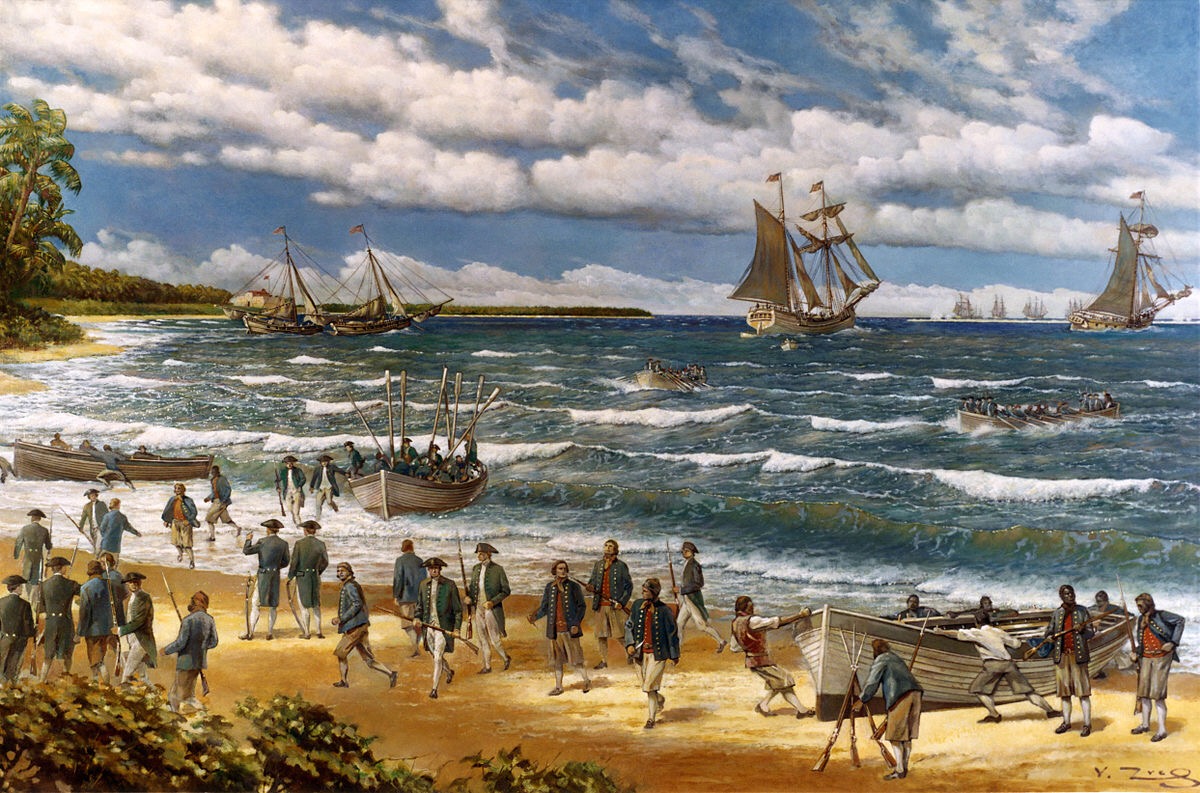
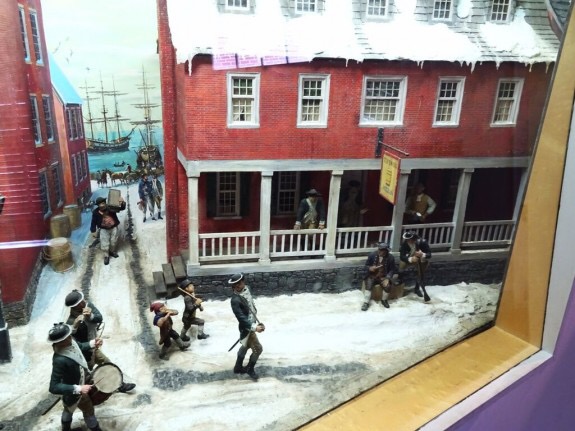
In 1775 a committee of the Continental Congress met at Philadelphia’s Tun Tavern to draft a resolution calling for two battalions of Marines able to fight for independence at sea and on shore.  The resolution was approved on November 10, 1775, officially forming the Continental Marines. The first order of business was to appoint Samuel Nicholas as the Commandant of the newly formed Marines.

Robert Mullan the owner and proprietor of the said Tun Tavern became Nicholson’s first captain and recruiter. They began gathering support and were ready for action by early 1776.  They served throughout the War for Independence and like the Navy they were disbanded in April 1783 and reconstituted as the Marine Corps in 1798.

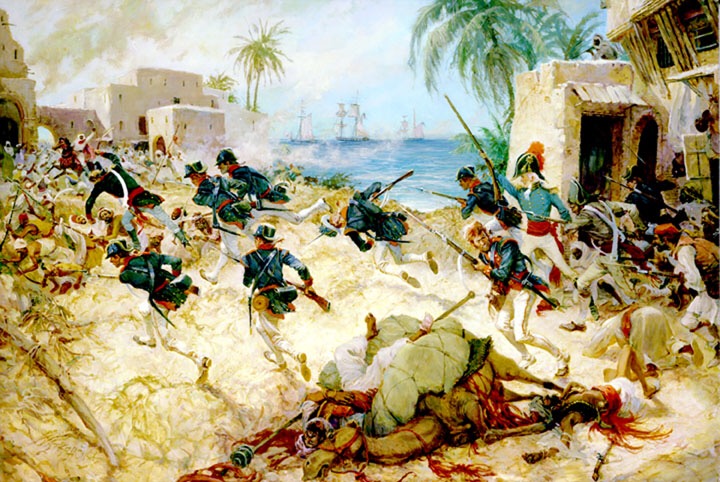
The Marines served on the ships of the Navy in the Quasi-war with France, against the Barbary Pirates where a small group of 8 Marines and 500 Arabs under Lieutenant Presley O’Bannon made a march of 500 miles across the Libyan Desert to lay siege Tripoli but only reached Derna. The action is immortalized in the Marine Hymn as well as the design of the Marine Officer’s “Mameluke” Sword. They served in the War of 1812, the Seminole Wars and in the Mexican-American War where in the storming of the on Chapultepec Palace they continued to build and enduring legacy. In the months leading up to the Civil War they played a key role at home and abroad.  In October 1859 Colonel Robert E. Lee led Marines from the Marine Barracks Washington DC to capture John Brown and his followers who had captured the Federal Armory at Harper’s Ferry.

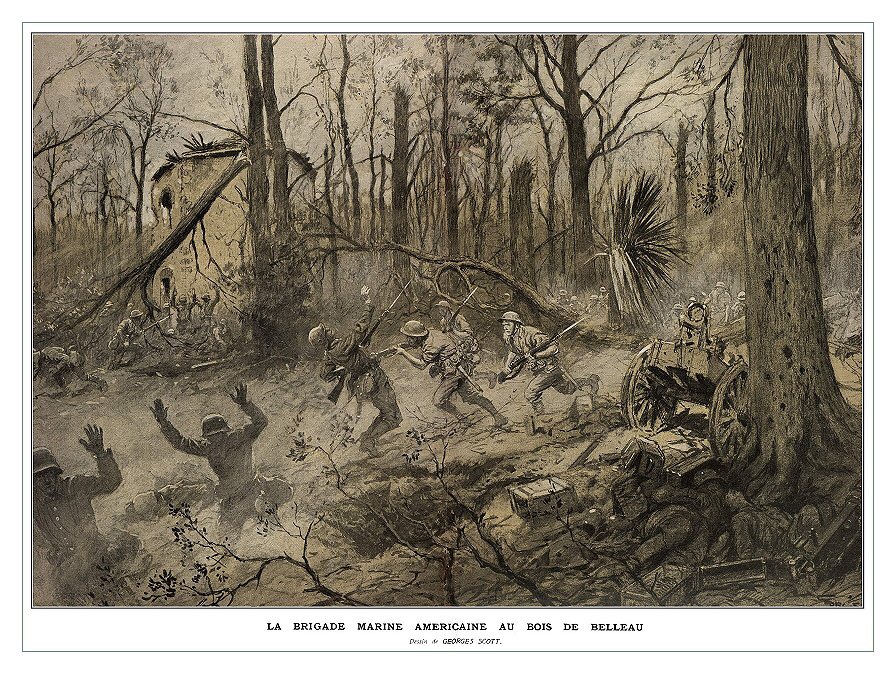
The Corps would serve through the Civil War and on into the age of American Expansion serving in the Spanish American War in the Philippines, Puerto Rico and Cuba where they seized Guantanamo Bay at the battle of Cuzco Wells.  The would serve in China and be a key component of the international force that defended foreign diplomats during the Boxer Revolt as well as the international force that would relieve the diplomatic compound in Peking (Beijing).  In World War One the Marines stopped the German advance at Chateau Thierry and cemented their reputation as an elite fighting force at Belleau Wood where legend has it that the Germans nicknamed them Teufelhunden or Devil Dogs, a name that they Marines have appropriated with great aplomb.

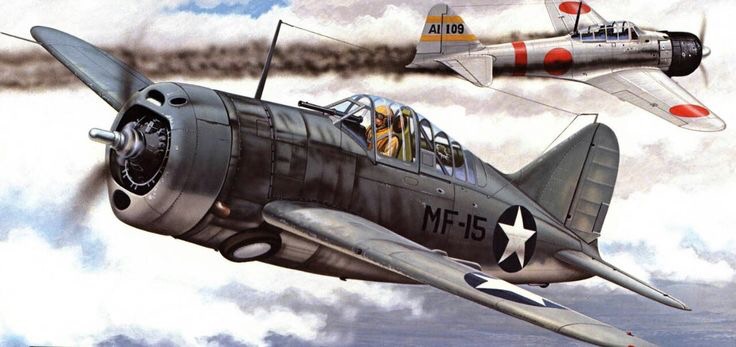
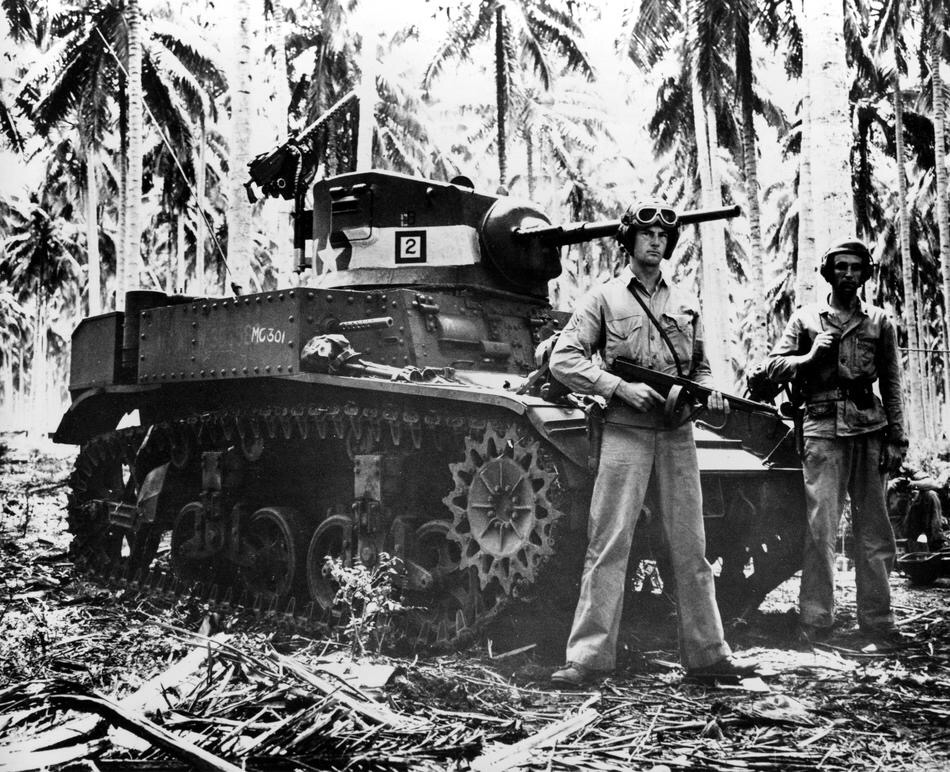
During the inter-war years the Marines were quite active in the Caribbean and Asia and also developed amphibious tactics and doctrine that would be put to use in the Pacific Campaign.  During the war the Marines served in all theaters but won enduring fame at Wake Island, Guadalcanal, Tarawa, Iwo Jima, Okinawa and numerous other battles in the Pacific war. Marine Aviators flew in some the most desperate actions in the war to support the Navy and amphibious operations ashore.

After the war the Truman Administration sought to eliminate the Marine Corps but the Corps was saved by the efforts of Americans across the country and Marine supporters in Congress.  That was a good thing because the Marines were instrumental in keeping the North Koreans from overrunning the South during the Korean War on the Pusan Perimeter, turned the tide at Inchon and helped decimate Communist Chinese forces at the Chosin Reservoir.  After Korea the Marines would serve around the World in the Caribbean and Lebanon and in Vietnam where at Da Nang Keh Sanh, Hue City, Con Thien fighting the North Vietnamese and their Viet Cong allies.  The Marines took the initiative to implement innovative counter insurgency measures such as the Combined Action Platoons which enjoyed tremendous success until they were shut down by the Army high command.  These lessons would serve the Marines well in the new millennium during the Anbar Awakening in Iraq which changed the course of that insurgency and war.

The Marines would again be involved around the World after Vietnam serving in the Cold War, in Lebanon and the First Gulf War which was followed by actions in Somalia, the Balkans and Haiti. After the attacks of September 11th 2001 the Marines were among the first into Afghanistan helping to drive the Taliban from power. In the Iraq Campaign the Marines had a leading role both in the invasion and in the campaign in Al Anbar Province.  After their withdraw from Iraq the Marines became a central player in Afghanistan where they were engaged around Khandahar and in Helmand Province. In the wake of the ISIS gains in Syria and Iraq the Marines returned to Iraq serving to help train and advise Iraqi Army units in areas of Al Anbar Province and other areas of that country, while others have been involved in relief efforts in Puerto Rico following Hurricane Maria. If by some chance war breaks out on the Korean Peninsula, Marines will be among the first to respond.

The Marines are elite among world military organizations and continue to “fight our nations battles on the air and land and sea.” The Corps under General John LeJeune institutionalized the celebration of the Marine Corps Birthday and their establishment at Tun Tavern. General LeJeune issued this order which is still read at every Marine Corps Birthday Ball or observance:

MARINE CORPS ORDER No. 47 (Series 1921)
HEADQUARTERS
U.S. MARINE CORPS Washington, November 1, 1921

The following will be read to the command on the 10th of November, 1921, and hereafter on the 10th of November of every year. Should the order not be received by the 10th of November, 1921, it will be read upon receipt.

On November 10, 1775, a Corps of Marines was created by a resolution of Continental Congress. Since that date many thousand men have borne the name “Marine”. In memory of them it is fitting that we who are Marines should commemorate the birthday of our corps by calling to mind the glories of its long and illustrious history.

The record of our corps is one which will bear comparison with that of the most famous military organizations in the world’s history. During 90 of the 146 years of its existence the Marine Corps has been in action against the Nation’s foes. From the Battle of Trenton to the Argonne, Marines have won foremost honors in war, and in the long eras of tranquility at home, generation after generation of Marines have grown gray in war in both hemispheres and in every corner of the seven seas, that our country and its citizens might enjoy peace and security.

In every battle and skirmish since the birth of our corps, Marines have acquitted themselves with the greatest distinction, winning new honors on each occasion until the term “Marine” has come to signify all that is highest in military efficiency and soldierly virtue.

This high name of distinction and soldierly repute we who are Marines today have received from those who preceded us in the corps. With it we have also received from them the eternal spirit which has animated our corps from generation to generation and has been the distinguishing mark of the Marines in every age. So long as that spirit continues to flourish Marines will be found equal to every emergency in the future as they have been in the past, and the men of our Nation will regard us as worthy successors to the long line of illustrious men who have served as “Soldiers of the Sea” since the founding of the Corps.

JOHN A. LEJEUNE,
Major General
Commandant

I have had the privilege to have served with the Marines directly or indirectly for nearly ten of the thirty-seven years that I have served in the military. In addition to that I wear the Fleet Marine Force Officer Warfare Qualification device and I am a graduate of the Marine Corps Command and Staff College. I have been able to celebrate the Marine Corps Birthday with Marines in places like Ramadi and Guantanamo Bay. For me it is an honor to have served with so many great Americans.

So to all my Marine Corps friends, and any other Marines who read this piece, have a great night and Semper Fidelis.

Peace

Padre Steve+

Leave a comment

Filed under History, iraq,afghanistan, Military, shipmates and veterans, Tour in Iraq, US Marine Corps, US Navy, War on Terrorism, world war one, world war two in the pacific

An End and A Beginning at the Twilight of a Career

Friends of Padre Steve’s World,

Toady was the turning of another page in my military career, probably the last one before I retire. I left my old command, reported in to my new command and will begin checking in to the Naval Region before reporting to Norfolk Naval Shipyard, in Portsmouth where Lord willing and the creek don’t rise next summer. The shipyard hasn’t had it’s own chaplain in years and my mission, with no resources other than me is to try to help justify the re-establishment of a chaplain billet there. I will give it my best, but with the continuing cuts to religious ministries in Naval Installations Command I think the best I can do is to care for the sailors and civilian employees to the best of my ability and let the chips fall where they may.

I suppose that it is fitting that someone like me, a Priest who is a historian at heart finish his career trying to make a go of it. The shipyard is the oldest in the Navy, Drydock Number One is the oldest in the Western Hemisphere. The Frigate USS Chesapeake, one of the first six frigates built for the re-established U.S. Navy was the first major warship constructed at it. The USS Merrimac was raised and rebuilt in the Drydock One by the Confederate States Navy as the Ironclad CSS Virginia.

The Naval Yard was recaptured by the Union later in 1862 and following reconstruction it became one of the major construction and repair yards for the Navy, and our allies in the Second World War.

The battleship USS Alabama was constructed there and thousands of ships were repaired or overhauled at it, including Famous ships like the USS Arizona and HMS Illustrious, as well the largest modern Super carriers of the U.S. Navy.

I look forward to learning more of the history as I work there.

So until tomorrow, all the best.

Peace,

Padre Steve+


3 Comments

Filed under civil war, History, Military, national security, Navy Ships, US Navy

Waiting for First Light at Slaughterhouse Five: PTSD and a Coda to te end of a Military Career


Friends of Padre Steve’s World,

I am checking out of my current command to finish my career attached to Norfolk Naval Shipyard, in Portsmouth Virginia. I am struggling. Not feeling appreciated and feeling like a cast off. This isn’t new, shortly after I was promoted to Commander, the newly appointed Deputy Chief of Chaplains treated me like a potted plant while making her rounds of the Generals and Major Commands. As Kurt Vonnegut noted in Slaughterhouse Five “and so it goes.”  My Problems in the Navy Chaplain Corps began when I went public with my struggles with PTSD. Somehow it seems that Chaplains can care for the wounded and those traumatized by war but if we admit that we are wounded we are expendable.

I read General Romeo Dallaire’s latest book, Waiting for First Light: My Ongoing Struggle with PTSD a couple of years ago. General Dallaire had been the commander of the UN Peacekeepers in Rwanda, men and women who were prevented from stopping genocide, and people who have been forever haunted by what they witnessed.

General Dallaire recounts a story of horror that never ended for him, and he details how difficult and traumatic coming home that neither appreciate nor understood what he had been through, including people in the military. I found so much in his story that was analogous to my own and in light of that I am going to begin writing my PTSD memoir.

It will be hard because I will have to write about things that are deeply traumatic and upsetting, especially how I was received and continue to be received by most of my fellow chaplains. Because I came and publicly discussed my issues with PTSD, the shattering of my faith in so many things, my wilderness experience of being an agnostic for two years, and the change in my faith since then, I experienced the rejection of my former church and many of my peers.

To many of my peers and Chaplain Corps superiors I am simply a broken Chaplain; and broken chaplains or for that matter broken ministers have no place and very few people who they can talk with. I remember my old Commodore at EOD Group Two, the late Captain Tom Sitsch ask me bluntly “Where does a chaplain go for help?”My answer to him was “not to other chaplains.” Sadly, he too was going through his own personal PTSD hell and with his life falling apart he committed suicide in January 2014.

General Dallaire recounts a similar experience, as like Chaplains, Generals and other senior leaders have no place to go, they like us are not supposed to break. General Dallaire wrote: “I received little support from my colleagues and peers; I received only a few messages from my sixty or so fellow generals – a couple of phone calls, and an e-mail from one old friend. The others appeared to be in two camps: those who were too busy to get in touch, and those who didn’t know what to say.” But I would also add, that there are those that do not want to know and others who actually turn their backs on men and women whose injury lies inside their brain, as well as some chaplains and ministers who seem to take a certain perverse joy in inflicting pain.

I still struggle with nightmares, night terrors, insomnia, and hyper-vigilance. After more than a decade I cannot imagine life without them. Like General Dallaire, I still wait for first light.

So pray for me if you do that, if not send some positive thoughts my direction.

Until tomorrow,

Peace

Padre Steve+

23 Comments

Filed under iraq, mental health, Pastoral Care, PTSD, Tour in Iraq, US Navy

The Battle of Cape Engano: Victory in Spite of Miscommunications and the Lack of Unity of Command


RptsI-P60

Friends of Padre Steve’s World,

I am finishing up a series of posts about the Battle of Leyte Gulf. This one is about the Battle of Cape Engano in which a force of Japanese carriers with very few aircraft were used to lure the main part of the American Third Fleet under Admiral William “Bull” Halsey away from the vulnerable troop transports and supply ships supporting the invasion. It was a momentous battle and study in the principle of unity of command, which the Americans violated with nearly catastrophic results.

Eventually I will write something about the epic Battle off Samar to conclude the series properly but that will have to wait. Today has been a busy day working around the house and taking care of things long needed. Maybe I will do some work on my lack of

Peace

Padre Steve+

Unclear command structures, confusing, and mistaken communications, acts of valor from outnumbered forces who survived, and the intentional sacrifice of a carrier task force as a decoy, so that battleships might provide a victory. Despite the unclear communications and unclear command structures, the United States  Navy was victorious.  But still, this message remains one of the most confusing and infuriating ever sent to the commander of a fleet in action with the enemy fleet nearly in sight: 

“TURKEY TROTS TO WATER GG FROM CINCPAC ACTION COM THIRD FLEET INFO COMINCH CTF SEVENTY-SEVEN X WHERE IS RPT WHERE IS TASK FORCE THIRTY FOUR RR THE WORLD WONDERS.” Admiral Nimitz to Admiral Halsey

After Admiral William “Bull” Halsey felt that he had heavily damaged the Japanese Center Force during the Battle of the Sibuyan Sea he withdrew the Fast Battleships of Task Force 34 from the San Bernardino Strait in order to use them in a surface engagement against Admiral Jisaburo Ozawa’s Northern Force. Halsey assumed that Ozawa’s carriers were the main threat to the American invasion forces. However he did not know that Ozawa’s carriers had very few aircraft embarked and that the Northern force was in fact a decoy, designed to draw him away from Vice Admiral Takeo Kurita’s Center and the two task forces of the Southern force.

                         The Zuikaku under attack at Cape Engano

When Halsey’s aircraft reported the Center force withdrawing he believed that the threat had been removed. He wrote in his memoirs “I believed that the Center Force had been so heavily damaged in the Sibuyan Sea that it could no longer be considered a serious menace to Seventh Fleet.”Thus he moved with haste to intercept, engage and destroy the Northern force and its carriers and battleships.  Halsey believed that his engagement against the Northern force would culminate when his fast battleships destroyed whatever Japanese surface forces remained.

It was not a bad assumption. Ever since the early days of the Pacific war the truly decisive engagements had been decided by carriers. Unfortunately for the American sailors of Taffy-3, the group of Escort Carriers, destroyers and destroyer escorts which encountered Kurita’s Center force which had doubled back overnight and passed through the San Bernardino Strait surprising Rear Admiral Thomas Kinkaid’s task group of “Jeep” Carriers.

Destroyers_laying_smoke_screen_during_Battle_of_Samar_1944

                                             The Battle off Samar

The unequal battle that ensued off Samar was a near run thing for the Americans. Had Kurita not been confused about what forces he was facing and pressed his attacks he may have inflicted painful damage on the actual invasion forces. However after a morning of battle, in which Taffy-3’s destroyers, destroyer escorts, aircraft and even the Jeep carriers themselves inflicted heavy damage on the Japanese force Kurita withdrew.

Halsey

                                       Admiral William “Bull” Halsey

However as Taffy-3 battled for its life against Kurita’s battleships, cruisers and destroyers Halsey’s carrier air groups were pounding Ozawa’s hapless carriers and their escorts. About 0800 on the 25th Kinkaid’s desperate messages began to reach Nimitz and Halsey. However since Halsey did not believe just how serious the situation was he continued to pursue Ozawa’s force. When he received Nimitz’s message he was incensed. The message “TURKEY TROTS TO WATER GG FROM CINCPAC ACTION COM THIRD FLEET INFO COMINCH CTF SEVENTY-SEVEN X WHERE IS RPT WHERE IS TASK FORCE THIRTY FOUR RR THE WORLD WONDERS was composed of three parts. The preface “Turkey trots to water” was padding, as was the last part “the world wonders.”

ship_zuiho2

                                     Light Carrier Zuiho under attack

However the communications officer on Halsey’s flagship only removed the first section leaving “Where is Third Fleet, the world wonders.” Halsey was flabbergasted and though the battleships of Task Force 34 were almost in range of the Japanese force he sent them south to relieve Kinkaid’s beleaguered force. However by the time Vice Admiral Willis Lee’s battle line arrived Kurita had withdrawn, losing 3 heavy cruisers sunk, three heavy cruisers and one destroyer heavily damaged.

gsxN4rT

                                           Zuikaku being abandoned

All the Japanese carriers were sunk along with a light cruiser and a number of destroyers, but Kurita’s heavy forces escaped. Among the Japanese losses was the carrier Zuikaku the last surviving carrier of the Pearl Harbor attack. Naval historian Samuel Elliott Morrison wrote:

“If TF 34 had been detached a few hours earlier, after Kinkaid’s first urgent request for help, and had left the destroyers behind, since their fueling caused a delay of over two and a half hours, a powerful battle line of six modern battleships under the command of Admiral Lee, the most experienced battle squadron commander in the Navy, would have arrived off the San Bernardino Strait in time to have clashed with Kurita’s Center Force… Apart from the accidents common in naval warfare, there is every reason to suppose that Lee would have “crossed the T” and completed the destruction of Center Force.” 

USS Mobile 10

The Battle of Cape Engano closed the epic extended battle of Leyte Gulf. The victory of the US Navy was decisive even without the final destruction of Kurita’s forces. The remnants of the Japanese forces would never mount a serious offensive threat again. The survivors would be hunted down over the next 9 months, some sunk by submarines, other in surface engagements, still more to air attacks at Okinawa and in Japanese ports.

Halsey received much criticism for his decision to withdraw TF 34 from San Bernardino Strait. However in his defense the action exposed one of the key problems in any kind of warfare, the problem of seams. Kinkaid’s escort carriers belonged to 7th Fleet which came under the operational control of Douglas MacArthur’s Southwest Pacific Region while Halsey commanded 3rd Fleet under Admiral Nimitz’s Central Pacific region. This created a situation where two fleets belonging to two regions under two separate commanders were attempting to fight a single battle. The principle of unity of command and unity of effort was violated with nearly disastrous results.

Leave a comment

Filed under History, Military, Navy Ships, US Navy, World War II at Sea, world war two in the pacific

The Revenge of the Pearl Harbor Battleships: The Battle of Surigao Strait


wvsurigaopaint-500x295

Friends of Padre Steve’s World,

Today was another busy but weird day as I am in the middle of trying to do my checkout from my current base even as I await the official short fused orders that are moving me to Norfolk Naval Shipyard in Portsmouth sometime next week. So today, after successfully completing my Physical Readiness Test, I did some of my checkout that I could complete without my orders; I am posting the third article of a series on the Battle of Leyte Gulf. This article discusses the Battle of Surigao Strait which ended in the near annihilation of most of the of the Japanese Southern Force. The battle was the last ever where battleships engaged each other in a surface action.

Surigao_straight

The two task groups of the Japanese Southern Force passed the daylight hours of 24 October relatively unscathed despite an air attack that caused minor damage. The group commanded by Vice Admiral Shoji Nishimura comprised of the elderly Battleships Yamashiro and Fuso the Heavy Cruiser Mogami and four destroyers was leading the charge and was followed by that commanded by Vice Admiral Kiyohide Shima with the Heavy Cruisers Nachi and Ashigara, Light Cruiser Abukuma and four destroyers.

The mission of these two groups which were unable to coordinate their actions due to orders to maintain strict radio silence was to fight their way through the Surigao Strait to assist the Central Force in destroying the US invasion force in Leyte Gulf.  The mission was for all practical purposes a suicide mission, a naval “Charge of the Light Brigade” as they sailed into the Valley of Death against the Battle Line of the US 7th Fleet.

USS West Virginia Surigao strait

                      USS West Virginia firing a Broadside at Surigao

The Japanese Battleships had spent the majority of the war in home waters and had seen little action.  They had not been part of any of the great Japanese victories in 1941 and 1942 and they had not been blooded in the Solomons.  Instead the two elderly battlewagons passed the war conducting training in the inland sea.  They were no longer first line ships but the Japanese were desperate.  During the afternoon Admiral Nishimura received an accurate report from one of Mogami’s scout planes telling him exactly what he was up against yet he pushed on in the manner of a Samurai.

Japanese_battleships_Yamashiro,_Fuso_and_Haruna

                                                Yamashiro and Fuso

Facing him was a force built around the 6 old Battleships of Vice Admiral Jesse Oldendorf’s 7th Fleet Battle Line.  The Americans heavily outnumbered the Japanese, the Battleships West VirginiaCalifornia and Tennessee were the heart of the force. Fully modernized after Pearl Harbor they no longer resembled the ships that they were before the war. Equipped with the latest Mark 8 Fire Control radar they had the ability to put their 16” and 14” shells on target at ranges farther than anything that the Japanese could counter.  Joined by the less fully modernized Maryland, Mississippi and Pennsylvania, 4 Heavy Cruisers, 4 Light Cruisers, 28 Destroyers and 39 PT Boats they outnumbered the combined Japanese forces with sixteen 16” and forty eight 14” guns to twenty 14” guns on the antiquated Yamashiro and Fuso.  The disparity in lesser guns was just as stark, thirty five against twenty six 8” guns, and fifty one 6” guns against six 5.5 inch guns.  This massive imbalance didn’t count the nearly one hundred fifty 5” guns on the US destroyers and as well as nearly 200 torpedo tubes.

yamashiro surigao strait

                 Yamashiro and Shigure ride into the Valley of death

No one can ever criticize the Japanese Navy for its courage in battle, even in hopeless ones. Nishimura’s force entered the southern entrance to Surigao Strait and was discovered by the American PT Boats at about 2230.  Though the PTs scored no hits they provided critical updates on the Japanese to Oldendorff.  At 0300 the American destroyers began a devastating series of attacks on the Japanese flanks.  They sank two destroyers and damaged another which had to turn back, but the real damage occurred when both Fuso and Yamashiro were hit. Fuso took two torpedoes fired by the destroyer USS Melvin.  She slowed and then blew up and broke in two sinking with all hands.  This account has been contested in recent years but many find the new version less believable than the first. Key in the evidence was the rescue and capture of Yamashiro’s Executive Officer in the north end of the strait and the surviving logs of the other Japanese ships which reported the sinking. Yamashiro though hit continued north with Mogami and the last destroyer Shigure.  At 0353 West Virginia opened fire and score hits on her first salvo. She was joined by California and Tennesseeat 0355, the other battleships with their Mark 3 fire direction radars were slow to open up. Maryland got off six full salvos by ranging in on the splashes of West VirginiaCalifornia and Tennessee.  Mississippi logged the final salvo of the battle and Pennsylvania got no shots off.  West Virginia fired 16 salvos, 96 rounds of 16”armor piercing shells, Tennessee got off 69 rounds and California 63 each of 14” armor piercing shells, while  Maryland added another forty eight 16” rounds.

The Yamashiro and Mogami sailed into the maelstrom absorbing hit after hit and gamely fought back. Yamashiro hit the destroyer Albert W Grant which was also hit by friendly fire badly damaging her. Finally both ships ablaze they turned back down the strait with Yamashiro sinking with few survivors at 0420.  Shima’s force then entered the fray and the Light Cruiser Abukuma was damaged by a torpedo fired by PT-137 and fell out of the formation. She was sunk on 26 October by Army Air Force B-24s. As Shima came up the strait his force entered the battered remnants of Nishimura’s force, the burning halves of Fuso and the retreating Mogami and Shigure. Assuming the halves of Fuso to be the wreckage of both battleships Shima beat a hasty retreat but in the process his flagship Nachi collided with Mogami flooding Mogami’s steering engine room and leaving her crippled.  She was attacked again by American cruisers and aircraft and as abandoned at 1047 and scuttled a torpedo from the destroyer Akebono sinking at 1307 on 25 October.

nachi

                                              Nachi Under Air Attack

The battle was one of the most lopsided surface engagements of the war.  When it was over only one of Nishimura’s ships had survived the “lucky” Shigure.  Shima’s force survived the night but most of his ships were sunk in the following by war’s end. Nachi was sunk in Manila Bay on 5 November by aircraft from the USS Lexington with a loss of over 800 sailors while Shima was in a conference ashore.

With the exception of Albert W Grant and a PT Boat the American force was unscathed the old Battlewagons dredged from the mud of Peal Harbor had led the fleet to a decisive victory in the last duel between Dreadnaughts ever fought. The Japanese died as Samurai trying to complete a hopeless mission against a far superior force.

9 Comments

Filed under History, leadership, Military, Navy Ships, US Navy, World War II at Sea, world war two in the pacific

Leyte Gulf: The Battle of Sibuyan Sea and the Sinking of the Musashi


Japanese_battleship_Musashi

                                                Battleship Musashi

Friends of Padre Steve’s World,

I’m in the midst of posting a five or six part posting about the Battle of Leyte Gulf, the biggest naval battle in history. Despite the fact that it happened 75 years ago there are lessons to be learned from it, especially if you are a President desperate to actually win something and place all your faith in the military, even when you ask it to do something that it cannot due.  This is the second in that series. I hope you enjoy.

Peace

Padre Steve+

Following the loss of Atago, Maya and Takao Vice Admiral Takeo Kurita’s Center Force had an uneventful rest of the day on the 23rd as his ships kept a watchful eye and ear for more US Navy submarines. At about 0800 on 24 October the Center Force was spotted by 3 U.S. Army Air Force B-24 Liberator bombers which promptly reported them.

TBF_dropping_torpedo_NAN2-2-44

       TBF Avenger dropping its “fish” 19 of these would hit Musashi

One of the ships in the Center Force was the battleship Musashi, sister ship of the mighty Yamato which was also in the force. The two battlewagons were the largest battleships ever built. With a full load displacement of 72,800 tons and an armament of nine 18.1 inch guns, the largest battery ever mounted on a warship the two behemoths also had massive anti-aircraft batteries and the Japanese were counting on them leading the Center Force to a miraculous victory during the battle. Admiral Kurita addressed his commanders prior to the battle:

“I know that many of you are strongly opposed to this assignment. But the war situation is far more critical than any of you can possibly know. Would it not be shameful to have the fleet remain intact while our nation perishes? I believe that the Imperial General Headquarters is giving us a glorious opportunity. Because I realize how very serious the war situation actually is, I am willing to accept even this ultimate assignment to storm into Leyte Gulf. You must all remember that there are such things as miracles.”

musashi

                Musashi or Yamato under attack October 24th 1944

At 1000 the Musashi’s radar picked up approaching aircraft. These were from the USS Intrepid and the USS Cabot which were assigned to Rear Admiral Gerard Bogan’s Task Group 38.4. The anti-aircraft crews and damage control teams prepared as the ship’s bugle sounded the alarm. As the aircraft came closer the main guns of the Musashi fired but ceased fire as the aircraft drew closer. Helldiver dive bombers plunged downward at the ships of the Center Force and F6F Hellcat fighters unopposed by enemy fighters conducted strafing runs as TBF Avenger torpedo bombers dropped their deadly loads at the Musashi. The big ship avoided two of the “fish” but a third struck causing little damage and the first wave few away. Musashi reported that she had sustained a hit and continued on. The Japanese sailors knew that this would not be the last attack. Though Musashi had weathered the first strike the American fliers hit the battleships Nagato, Yamato and severely damaged the heavy cruiser Myōkō.

Musashi_under_attack

                                                       Musashi hit

At 1140 the Musashi’s radar picked up the next wave of attackers and at 1203. These were from the Intrepid, Essex and Lexington. Hitting the Center Force in two waves a half hour apart these aircraft delivered punishing blows on Musashi. She was hit by 3 torpedoes and 2 bombs. The torpedoes caused damage that caused a 5 degree list and was down six feet by the bow. The torpedo damage was concentrated midships and one torpedo flooded her number 4 engine room. One of the bombs hit an engine room and disabled her port inline propeller shaft. With her speed reduced she proceeded on.

Musashi_under_fire

                                             Musashi under Attack

Thirty minutes following this attack at about 1330 Musashi was attacked again by Helldivers and Avengers. She was hit by four 1000 pound bombs and 4 torpedoes. She was now so badly damage that she could no longer keep up with the fleet and dropped behind to fend for herself. At 1350 this attack ended and her speed was reduced to 20 knots while she was now down 13 feet by the bow, with nearly all of her trim and void tanks full. With such damage the was now little room for any more damage in her forward compartments, but the hits would keep coming even as she dropped behind the rest of the fleet.

Separated from the fleet, the wounded giant was now attacked by aircraft from the Enterprise, Cabot, Franklin and Intrepid that score hits with 11 bombs including the deadly 1000 pounders and 8 torpedoes. During the course of these attacks which ended shortly after 1530, the Musashi sustained 19 torpedo and 17 bomb hits and taken 18 near hits close aboard. The damage was fatal.

At 1620 her skipper Rear Admiral Toshihira Inoguchi began desperate damage control measures to control the increasing list which had reached 10 degrees to port. Now dead in the water Musashi continued to list further and when the list reached 12 degrees at 1915 Inoguchi ordered preparations to abandon ship. The surviving crew assembled on the deck, the battle flag and the Emperor’s portrait were removed. Admiral Inoguchi gave his personal notebook to his Executive officer Captain Kenkichi Kato and directed then him to abandon ship. Admiral Inoguchi retired to his cabin and was not seen again. At 1930 with the list now 30 degrees Captain Kato gave the order to abandon ship. Soon with the list increasing further men began to slide across the decks being crushed in the process. Panic broke out among the crew which had been assembled by divisions and Captain Kato ordered “every man for himself.” At 1936 the ship capsized and port and went down by the bow sinking in 4,430 feet of water in the Visayan Sea at 13-07N, 122-32E.

The destroyers Kiyoshimo, Isokaze and Hamakaze rescued 1,376 survivors including Captain Kato, but 1,023 of Musashi’s 2,399 man crew were lost including her skipper, Rear Admiral Inoguchi who was promoted Vice Admiral, posthumously.

                                                 The Wreck of Musashi 

The rest of the Center Force under Kurita turned around to get out of range of the aircraft, passing the crippled Musashi as his force retreated. Kurita’s retreat was temporary and Kurita waited until 17:15 before turning around again to head for the San Bernardino Strait hoping to find it empty of American ships. His force was still battle worthy because the majority of the 259 sorties were directed on Musashi and the Heavy Cruiser Myōkō which retired heavily damaged. The Southern Force which had also been hit by American carrier air strikes also continued its push toward Surigao Strait. the wreck of Musashi was discovered by a team led by Microsoft co-founder Paul Allen.

The Battle of Surigao Strait, the revenge of the Pearl Harbor Battleships will be the next article in this series.

Leave a comment

Filed under History, Military, Navy Ships, US Navy, World War II at Sea, world war two in the pacific