Category Archives: war crimes

It is Happening Again, Not in Nazi Germany: The Campaign Against “Life Unworthy of Life”

Friends of Padre Steve’s World,

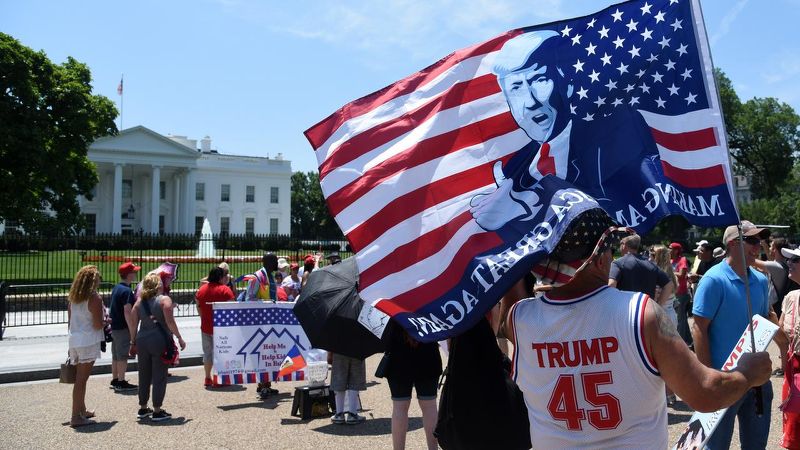
I am reflecting about the present in light of the past, and how policy wise, the Social Darwinist policies of the Trump Administration, and the words of his cult propagandists about the value of human life during the Coronavirus 19 Pandemic since it first began. Throughout the pandemic President Trump and his ruthless enablers have done all tat they can to ensure that the pandemic has killed and infected more people in the United States than any nation in the world, and for a nation that represents barely 4% of the world population with one of the most advanced medical systems in the world that is saying a lot. The only answer for such a disaster is that Trump and his Cult want this to happen. Why else would he first deny the infection, then minimize it, then issue a series of contradictory guidance, leave the states to determine their own way through, and then sign a one time bill that provided some relief, but has not been followed up on. The answer to Republicans is that the people helped by it really are not worthy, while the hundreds of billions sucked up by Wall Street and major corporations is worth it. The program is so much like the Nazi economic plan that it defies the imagination.

Then there is the President’s continued resistance to testing, tracing, passive preventive measures such as cloth face masks, social distancing, and closing down the places where the infection spreads most effectively, bars, churches, discos, and sadly Schools too. He has sacked or marginalized many of the best immunologists, virologists, and public health officials in the country and has in the past few weeks appointed political hacks to key positions in his Coronavirus Task Force, who now argue for the Discredited and inhuman concept of Herd Immunity, which if it was employed in the United States would result in at least TWO MILLION MORE DEATHS, and countless more infections. That any President or Administration would even consider such measures places them in the realm of a criminal regime bent on the mass murder or American citizens without even having to fire a bullet or resort to poison gas. All they have to do is let the virus run rampant, which seems to be their plan. As of yesterday the United States reported 187,736 deaths, and 6,211, 796 total cases, 24% of the world’s infections and 22% of the world’s deaths. The American totals are no doubt serious undercounts due to the Trump Administration’s orders to minimize testing and reporting of Coronavirus 19 infections and deaths to minimize the political fallout of the catastrophe that Trump and his Cult Followers not only seek to minimize but pretend that it didn’t happen at all. Instead of reporting the truth the report the false narrative that Trump has saved the country, and the Coronavirus Pandemic was defeated by him even as it rages.

But regardless, the actions of Trump and his followers direct me to the Eugenics movement of the 1920s and 1930s in the United States, Weimar Germany, and other European nations, as well as Japan. But the eugenics movement was nowhere more malevolent, evident and active than it was in Hitler’s Germany. Likewise it is hard to believe that members of the administration as well as its supporters seem to believe, if you take them at their word that the elderly, disabled, mentally ill, and poor, especially those who are not white or Christian are a burden on the State, and are as the Eugenicists of the 1920s and 1930s, as well as Hitler’s Nazi Party believed, were ”Life unworthy of life .” 


It seems hard to believe for anyone born after the mid 1960s, that government through its laws, decrees, and policies could deem certain people to be “life unworthy of life.” The most malevolent of such governments was the Nazi regime of Adolf Hitler, but individuals and institutions in the United States promoted the same ideology in the 1920s and 1930s but, in spite of actions like the the Tuskegee Experiments, could not carry it to its logical conclusion because most Americans of the time couldn’t go along with it. But the moral, social, religious and ideological barriers to its implementation then no longer exist today.

In Nazi Germany life that was unworthy of life included the physically and mentally handicapped or disabled, those with Downs Syndrome, Cerebral Palsy, Polio, and people with other neurological conditions. Likewise the mentally ill, those suffering clinical depression, schizophrenia, and other mental illnesses were considered to be life unworthy of life. Even the deaf were included, as well as veterans suffering from what we would now call PTSD or Traumatic Brain Injury. Also included were people labeled as “asocial” a very loose definition that could include almost any metal disorder or criminal act, including being a homosexual. Sadly, the President himself has made statements that show that he has no regard for the lives of such people, his policies, especially his executive orders, and the men and women he nominates to the Federal Judiciary have similar views to him.

I have been to Hadamar, I have walked it’s grounds, toured its wards, and stood in its gas chambers and crematoria. Tens of thousands people deemed “Life unworthy of Life” were liquidated at the T-4 Euthanasia centers, most located in former hospitals, psychiatric institutions, or sanitariums.

Once the Nazis decided to eliminate them the same day as they invaded Poland in 1939, most of these people gassed with carbon monoxide gas from the exhaust of trucks or Diesel engines, and their remains were cremated. Others, especially children were either starved to death or given a lethal injection while they slept. In every case the next of kin of each victim was sent a standard form letter telling them that their relative had died of influenza, typhus, or some other disease while being given the best of care. The next of kin were then given the option of paying for an urn that may or may not have contained the ashes of their loved ones for inurnment near their home town. If they could not afford an urn the ashes were disposed of in the cemetery nearest to where they were killed. At Hadamar, it was on the grounds of the institution.

Despite the Nazis attempts to disguise their crime they could not be hidden, and after over 70,000 Germans were Euthanized the official T-4 Euthanasia program was ended in Germany.  The gas chambers, cremation ovens and facilities were disassembled by SS experts, and sent east to Poland, where they and their experienced technicians became key components of the Holocaust of the Jews at Soribor, Belzec, Treblinka, and Auschwitz. 

But the Euthanasia program, despite Nazi lies to senior clerics and officials of neutral countries didn’t stop, it simply moved eastward as the SS Einsatzgruppen killed the patients at every mental hospital, sanitarium, old folks home, or orphanage they came across. Inside Germany at the four T4 centers over 80,000 were gassed. At Hartheim in Austria a Party was held on the gassing of the 10,000th victim. Richard Evans wrote:

“At Hartheim the staff held a party to celebrate their ten-thousandth cremation, assembling in the crematorium around the naked body of a recently gassed victim, which was laid out on a stretcher and covered with flowers. One staff member dressed as a clergyman and performed a short ceremony, then beer was distributed to all present. Eventually no fewer than 20,000 were gassed at Hartheim, the same at Sonnenstein, 20,000 at Brandenburg and Bernburg, and another 20,000 at Grafeneck and Hadamar, making a total of 80,000 altogether.”

The tolls in Poland, the Baltic States, and the Soviet Union were much higher, but were conducted outside the auspices of the T4 program which “officially” ended in 1941, but continued in a more clandestine manner throughout the war.

Now in Trump’s United States of 2020 the laws guaranteeing health care to people are being challenged, the Secretary of Education has removed funding from the Department’s funding request for the Special Olympics, programs for the physically and mentally disabled under the SSI are being cut to the bone, and even care for disabled veterans is being threatened as not being economical because none of them are economically valuable to an administration for which profit is the bottom line of the insurance industry. Likewise, most supposedly pro-life Christians have no problems in cutting such programs because many have bought into the materialistic, Prosperity Gospel, whose fawning preachers have anointed President Trump if he were King Cyrus.

To Trump’s Cult of Evangelicals no criticism of the President can be tolerated, no matter how factual it may be, even if it involves the lives of the least, and most most vulnerable members of our society. Thus, for these supposedly “pro-life Christians” the  sick, the weak, the infirm, or mentally ill, who are not productive have no place in society. Inside the womb they are a remarkably powerful political issue; but once outside the womb they might as well be dead if you listen to Trump’s clique of Reichsbishofs, according to who cannot produce for the economy should not eat, get medical care, or live. They are life unworthy of life. This is even worse than the Nazis, for there is not even the Darwinistic idea of producing superior human beings, but rather to kill and let die for profit. The Nazis did that too, with the life of every human being that the considered sub-human, but the overriding the goal of the Nazi true believers, the idea of a perfect Aryan Germanic Master Race was always the ideal to be pursued.

Thus the propaganda directed at German citizens as to how much these men women and children cost the German taxpayer in order to get them to acquiesce to something they would never consider. Now today’s Republican leaders use the same arguments to justify cutting taxes and let the social contract we have with our fellow human beings collapse, because the to poor, the sick, the infirm, the disabled, prisoners, the mentally ill and the elderly simply cost more than they are worth, that also applies to infants and young children suffering any expensive chronic but treatable conditions.

You see, in the authoritarian world in which we live; a world where an uninhibited and unhinged executive backed by cult followers, profit minded billionaires, and greedy preachers, such lives; the old and infirm, the disabled, the mentally ill, the young but physically disabled, those with neurological issues, and birth defects stand in the way of profit, stand in the way of a “perfect” society. They have no value to them because they cost too much, and burden real Americans.

If you directly challenged such people may not advocate euthanasia per say, they would not advocate for gas chambers, or firing squads. Instead they would turn a blind eye to depriving their victims of citizenship, starving them, depriving them of medical care, and turning them out of care facilities knowing that their families lack the capability of caring for them. and if they have any capacity for work, work them until they die, so long as they Confess Christ before they die.

How do we know that life does not matter to them? One way is to note the many times that pharmaceutical corporations have increased the costs of previously inexpensive yet vital life saving medicines by thousands of dollars a dose all for profit with little to no pushback from the White House, or the FDA, much less the Senate GOP majority, or the Evangelical supporters of Trump.

Please understand, this dystopian future need not happen if people of any faith, or no faith at all make a stand against a twisted idea of dictatorship backed up by billionaires and corporate entities that suck billions of dollars from the taxpayer and pay almost nothing themselves. Of course they couldn’t do it on their own in not supported by a de facto State Media, and a cult like legion of followers who would follow Trump even if he shot someone on 5th Avenue. His words, not mine.

I am now 60 years old, and I have served in the military over 39 years, and this does bother me enough to speak out. As a senior military officer facing the end of my career and retirement amid multiple physical and emotional issues, it does matter. I keep two things in mind today. First is that of my own responsibility to my Oath, and to fellow citizens.  In that I am reminded of the words of German General Ludwig Beck who wrote:

“It is a lack of character and insight, when a soldier in high command sees his duty and mission only in the context of his military orders without realizing that the highest responsibility is to the people of his country.”

And like Beck’s compatriot, Major General Henning Von Tresckow stated: “We have to show the world that not all of us are like him. Otherwise, this will always be Hitler’s Germany.” Or in my case, Trump’s America.

Historian Timothy Snyder reminds of a certain truth, which should we forget, as I imagine a large number of Trump supporters have:

“The European history of the twentieth century shows us that societies can break, democracies can fall, ethics can collapse, and ordinary men can find themselves standing over death pits with guns in their hands. It would serve us well today to understand why.”


Those are all hard truths to comprehend. As Americans we always presume that we are the good guys, when in fact many times we have acted in means contrary to the ideals of the Declaration as well as the Constitution, and other laws enacted by Congress. But our republic has survived, but its institutions are both resilient and fragile. History has proven this, we have even survived a civil war, but we may not survive an increasingly vindictive and unstable President, his compliant majority in the Senate, and the 35-40% of voters who are in effect no longer Republicans, but a Trump Cult which is largely buttressed by Conservative Evangelical Churches, and inspired by a President who uses force, legal, and extralegal alike to secure his rule. That my friends is what a Fascist Authoritarian does.

We live in extraordinary times which call for extraordinary strength if our Republic is to continue in any form that resembles the intentions of the founders and their liberal enlightenment beliefs. The German Pastor, Theologian, and Martyr to the Hitler regime wrote:

“The fearful danger of the present time is that above the cry for authority, be it of a Leader or of an office, we forget that man stands alone before the ultimate authority and that anyone who lays violent hands on man here is infringing eternal laws and taking upon himself superhuman authority which will eventually crush him. The eternal law that the individual stands alone before God takes fearful vengeance where it is attacked and distorted. Thus the Leader points to the office, but Leader and office together point to the final authority itself, before which Reich or state are penultimate authorities. Leaders or offices which set themselves up as gods mock God and the individual who stands alone before him, and must perish.”

If we do not want to see the return of a full fledged government and industrial sponsored campaign to eradicate life unworthy of life, we have to fight. It is a fight that we did not chose, but if the Republic is to survive without becoming a criminal dictatorship we must speak up, and we must do so now. If we do not we have no one to blame but ourselves.

As Yehuda Bauer said: “Thou shall not be a perpetrator, thou shall not be a victim, and thou shall never, but never, be a bystander.”

The choice is ours, and the time is now. As Bonhoeffer noted: “The church has an unconditional obligation to the victims of any ordering society, even if they do not belong to the Christian community.” and also“We are not to simply bandage the wounds of victims beneath the wheels of injustice, we are to drive a spoke into the wheel itself.”

Likewise he wrote: We in the resistance have learned to see the great events of world history from below, from the perspective of the excluded, the ill treated, the powerless, the oppressed and despised… so that personal suffering has become a more useful key for understanding the world than personal happiness.”

If I as a Christian and an American officer sworn to uphold our Constitution cannot do that, I am worse than Trump and his cult. Over the past few years I have come to understand what Bonhoeffer wrote in prison:

“During the last year or so I’ve come to know and understand more and more the profound this-worldliness of Christianity.  The Christian is not ahomo religiosus, but simply a man, as Jesus was a man…I’m still discovering right up to this moment, that it is only by living completely in this world that one learns to have faith. One must completely abandon any attempt to make something of oneself, whether it be a saint, or a converted sinner, or a churchman (a so-called priestly type!) a righteous man or an unrighteous one, a sick man or a healthy one.  By this-worldliness I mean living unreservedly in life’s duties, problems, successes and failures, experiences and perplexities.  In so doing we throw ourselves completely into the arms of God, taking seriously, not our own sufferings, but those of God in the world—watching with Christ in Gethsemane. That, I think, is faith; that is metanoia; and that is how one becomes a man and a Christian.”

“I discovered later, and I’m still discovering right up to this moment, that is it only by living completely in this world that one learns to have faith. By this-worldliness I mean living unreservedly in life’s duties, problems, successes and failures. In so doing we throw ourselves completely into the arms of God, taking seriously, not our own sufferings, but those of God in the world. That, I think, is faith.”

In the midst of all the lies of Trump and his cult. In the midst of their attempt to kill as many people as possible, and to bring about a dictatorship I can only say as did Marin Luther at the Diet of Worms: 

“Since your most serene majesty and your high mightinesses require of me a simple, clear and direct answer, I will give one, and it is this: I cannot submit my faith either to the pope or to the council, because it is as clear as noonday that they have fallen into error and even into glaring inconsistency with themselves. If, then, I am not convinced by proof from Holy Scripture, or by cogent reasons, if I am not satisfied by the very text I have cited, and if my judgment is not in this way brought into subjection to God’s word, I neither can nor will retract anything; for it cannot be either safe or honest for a Christian to speak against his conscience. Here I stand; I cannot do otherwise; God help me! Amen.

I double dog dare any Trump Cultist who calls themselves a Christian to refute that.

I am tired of the so called Evangelical Christians who damn Christ and his Gospel for their political gain and shit upon their evangelical forefathers like the great Virginia Baptist John Leland who in defense of religious liberty for all wrote:

“The notion of a Christian commonwealth should be exploded forever. … Government should protect every man in thinking and speaking freely, and see that one does not abuse another. The liberty I contend for is more than toleration. The very idea of toleration is despicable; it supposes that some have a pre-eminence above the rest to grant indulgence, whereas all should be equally free, Jews, Turks, Pagans and Christians.”

I will fight for the truth, I will fight for the rights of every American. But I will not ever concede ground to a murderous group of thugs masquerading as Christians whose only goal is the continuation in power of a man who will give them anything in exchange for his unbridled power and authoritarian rule.

So until tomorrow,

Peace,

Padre Steve+

16 Comments

Filed under anti-semitism, christian life, civil rights, civil war, Coronavirus 19 Pandemic, crimes against humanity, ethics, euthanasia, faith, History, holocaust, laws and legislation, leadership, Military, ministry, nazi germany, News and current events, Political Commentary, racism, Religion, war crimes

The Nazi Invasion of Poland 81 Years Later

Friends of Padre Steve’s World,

In his poem September 1st 1939, W.H. Auden penned these words in response to Hitler’s invasion of Poland:

I sit in one of the dives
On Fifty-second Street
Uncertain and afraid
As the clever hopes expire
Of a low dishonest decade:
Waves of anger and fear
Circulate over the bright
And darkened lands of the earth,
Obsessing our private lives;
The unmentionable odour of death
Offends the September night.

Accurate scholarship can
Unearth the whole offence
From Luther until now
That has driven a culture mad,
Find what occurred at Linz,
What huge imago made
A psychopathic god:
I and the public know
What all schoolchildren learn,
Those to whom evil is done
Do evil in return.

Exiled Thucydides knew
All that a speech can say
About Democracy,
And what dictators do,
The elderly rubbish they talk
To an apathetic grave;
Analysed all in his book,
The enlightenment driven away,
The habit-forming pain,
Mismanagement and grief:
We must suffer them all again.

Into this neutral air
Where blind skyscrapers use
Their full height to proclaim
The strength of Collective Man,
Each language pours its vain
Competitive excuse:
But who can live for long
In an euphoric dream;
Out of the mirror they stare,
Imperialism’s face
And the international wrong.

Faces along the bar
Cling to their average day:
The lights must never go out,
The music must always play,
All the conventions conspire
To make this fort assume
The furniture of home;
Lest we should see where we are,
Lost in a haunted wood,
Children afraid of the night
Who have never been happy or good.

The windiest militant trash
Important Persons shout
Is not so crude as our wish:
What mad Nijinsky wrote
About Diaghilev
Is true of the normal heart;
For the error bred in the bone
Of each woman and each man
Craves what it cannot have,
Not universal love
But to be loved alone.

From the conservative dark
Into the ethical life
The dense commuters come,
Repeating their morning vow;
“I will be true to the wife,
I’ll concentrate more on my work,”
And helpless governors wake
To resume their compulsory game:
Who can release them now,
Who can reach the deaf,
Who can speak for the dumb?

All I have is a voice
To undo the folded lie,
The romantic lie in the brain
Of the sensual man-in-the-street
And the lie of Authority
Whose buildings grope the sky:
There is no such thing as the State
And no one exists alone;
Hunger allows no choice
To the citizen or the police;
We must love one another or die.

Defenceless under the night
Our world in stupor lies;
Yet, dotted everywhere,
Ironic points of light
Flash out wherever the Just
Exchange their messages:
May I, composed like them
Of Eros and of dust,
Beleaguered by the same
Negation and despair,
Show an affirming flame.

Auden’s words are timeless, as they not only pertain to Hitler, but to every tyrant who has tried to destroy other nations and peoples. There are many such men today, and most start with crushing the resistance of their own countrymen, in order to build up a cult following that will enable them to take their need for conquest to other nations. President Trump, like Hitler, Stalin, Putin, Mussolini, and so many more has been engaged in the first steps of tyranny Since he took office: undermining the courts, congress, and state and local governments, eradicating the written and unwritten norms of our democracy and republic, dismembering the constitutional guardrails that prevent any one person or branch of government to rule by fiat. Pitting White Conservative Christian against religious, racial, or ethnic minorities, and engaging in practices that violate the Constitution, Federal and state laws, and destroying the separation of powers that our founders knew were the only guard against tyranny, especially the tyranny of the Executive Branch.

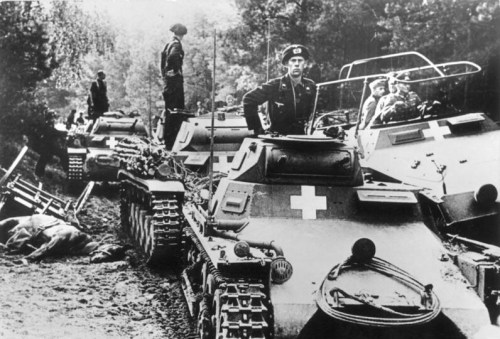
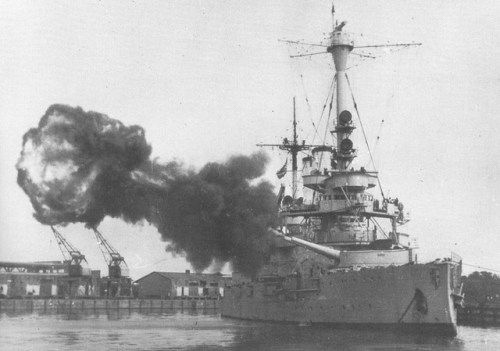
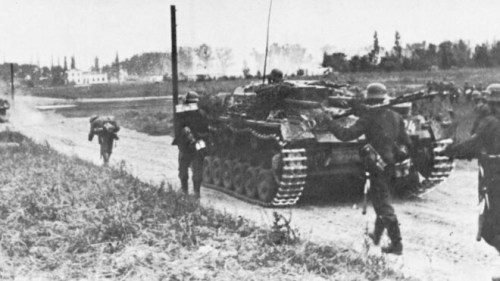
Eighty one years ago Tuesday, the German Wehrmacht on the orders of Adolf Hitler invaded Poland. He had already bloodlessly conquered Austria and Czechoslovakia without war, he believed that he could do it again in Poland, but after years of appeasement the British and French declared war on Germany, it did not help Poland, because the British and French had the means but lacked the will to threaten Germany by invading her scarcely defended western border from a determined French ground attack, or prevent the Royal Navy from attacking her North Sea Ports, or entering the Baltic to aid Poland. Likewise they had refused Stalin’s offer to aid them if they went to war with Czechoslovakia in 1938, which enabled Hitler, the enemy of all things Communist to negotiate a non-aggression It began the European phase of the Second World War and by the time the war was over Europe would be devastated, Hitler would be dead, and the world changed. An epoch had ended, a new epoch begun. It is quite possible that the epoch that began with the defeat of Nazi Germany is ending, and something else, maybe like the previous era from 1918-1945 is returning. But, what follows the epoch that began in 1945 and appears to be ending, is the province futurists, seers, and prophets.

Not being the Prophet, nor the son of the Prophet, I shall not engage in speculation, but return to 1 September 1939.

When Hitler announced the war to a less than enthusiastic German nation, he used his usual lies to shield himself from starting the war. William Shirer, one of the few American reporters remaining in Europe wrote in his book The Rise and Fall of the Third Reich:

“Having lied so often on his way to power and in his consolidation of power, Hitler could not refrain at this serious moment in history from thundering a few more lies to the gullible German people in justification of his wanton act. You know the endless attempts I made for a peaceful clarification and understanding of the problem of Austria, and later of the problem of the Sudetenland, Bohemia and Moravia. It was all in vain… In my talks with Polish statesmen… I formulated at last the German proposals and… there is nothing more modest or loyal than these proposals. I should like to say this to the world. I alone was in the position to make such proposals, for I know very well that in doing so I brought myself into opposition to millions of Germans. These proposals have been refused…. For two whole days I sat with my Government and waited to see whether it was convenient for the Polish Government to send a plenipotentiary or not… But I am wrongly judged if my love of peace and my patience are mistaken for weakness or even cowardice… I can no longer find any willingness on the part of the Polish Government to conduct serious negotiations with us… I have therefore resolved to speak to Poland in the same language that Poland for months past has used toward us… This night for the first time Polish regular soldiers fired on our own territory. Since 5:45 A.M. we have been returning the fire, and from now on bombs will be met with bombs.” 

But things did not turn out Hitler’s way. He expected England and France to remain neutral. When they refused to budge and announced their support for Poland on September 3rd 1939 Hitler called his foreign minister, Joachim von Ribbentrop to his office. One witness told Shirer, who again recorded it in The Rise and Fall of the Third Reich.” 

“When I entered the next room [Schmidt later recounted] Hitler was sitting at his desk and Ribbentrop stood by the window. Both looked up expectantly as I came in. I stopped at some distance from Hitler’s desk, and then slowly translated the British ultimatum. When I finished there was complete silence. Hitler sat immobile, gazing before him… After an interval which seemed an age, he turned to Ribbentrop, who had remained standing by the window. “What now?” asked Hitler with a savage look, as though implying that his Foreign Minister had misled him about England’s probable reaction. Ribbentrop answered quietly: “I assume that the French will hand in a similar ultimatum within the hour.

His duty performed, Schmidt withdrew, stopping in the outer room to apprise the others of what had happened. They too were silent for a moment. Then: Goering turned to me and said: “If we lose this war, then God have mercy on us!” Goebbels stood in a corner by himself, downcast and self-absorbed. Everywhere in the room I saw looks of grave concern.”

Hitler, though he had concluded non-aggression pact with Stalin’s Soviet Union, that divided Poland between the two authoritarian powers, did not believe that Britain or France would do any more than to conclude a peace agreement after he finished Poland. Though France and Britain could have caused havoc and maybe even ended the war had they even attempted a serious campaign against Germany in September 1939, they did not. Hitler’s gamble which gave great concern to his Generals paid off. Poland was defeated, and with his pact with Stalin in place, Hitler was able to turn his attention to the West.

Hitler’s biographer, the late German historian Joachim Fest wrote:

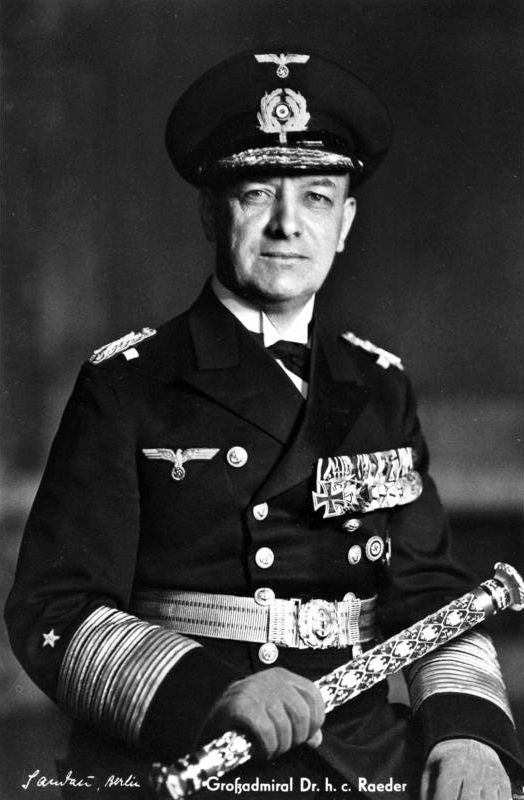
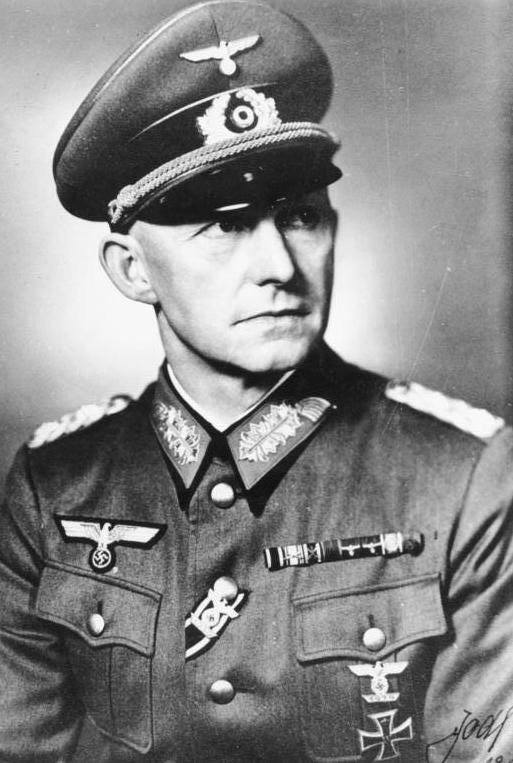
In spite of all expenditures in the preceding years Germany was armed only, for the war that Hitler launched on September 1, not for the war of September 3. The army did consist of 102 divisions, but only half of these were active and battle-ready. The state of its training left much to be desired. The navy was distinctly inferior to the British and even to the French fleets; not even the strength permissible under the Anglo-German Naval Treaty of 1935 had been attained. Shortly after the Western declarations of war reached Berlin, Grand Admiral Raeder declared tersely that the German fleet, or rather “the little that is finished or will be finished in time, can only go down fighting honorably.” The air force alone was stronger than the forces of the enemy; it had 3,298 planes at its disposal. On the other hand, the ammunition supply had been half consumed by the end of the Polish campaign, so that the war could not have been actively continued for even three or four weeks. At Nuremberg, General Jodl called the existing reserves at the outbreak of the war “literally ridiculous.” Troop equipment also amounted to considerably less than the four-month stock that the High Command of the army had demanded. Even a small-scale attack from the West in the fall of 1939 would probably have brought about Germany’s defeat and the end of the war, military experts have concluded.

But Hitler’s war went far beyond a typical military invasion, occupation and revision of borders or exploitation of economic resources. Hitler’s invasion of Poland was his first movement to achieve Lebensraum “living space” in the East. It was also a racial war where the less than human inhabitants of that space, especially the Jews would be expelled from their homes, driven into ghettos, and eventually exterminated. In Poland the victims included the Polish intelligentsia, professors, priests, military officers, government officials, nobility; anyone who might be able to lead a revolt.

By invading Poland Hitler had abandoned politics which had served him so well against, party rivals, domestic opponents, and later European and World leaders. After Poland Hitler rejected political options and pressed forward with war. Fest wrote:

One of the striking aspects of his behavior is the stubborn, peculiarly blind impatience with which he pressed forward into the conflict. That impatience was curiously at odds with the hesitancy and vacillations that had preceded earlier decisions of his. When, in the last days of August, Göring pleaded with him not to push the gamble too far, he replied heatedly that throughout his life he had always played vabanque. And though this metaphor was accurate for the matter at hand, it hardly described the wary, circumspect style with which he had proceeded in the past. We must go further back, almost to the early, prepolitical phase of his career, to find the link with the abruptness of his conduct during the summer of 1939, with its reminders of old provocations and daredevil risks. There is, in fact, every indication that during these months Hitler was throwing aside more than tried and tested tactics, that he was giving up a policy in which he had excelled for fifteen years and in which for a while he had outstripped all antagonists. It was as if he were at last tired of having to adapt himself to circumstances, tired of the eternal talking, dissimulation, and diplomatic wirepulling, and were again seeking “a great, universally understandable, liberating action.”

Hitler having brought about the destruction of Europe died by his own hand in his bunker having determined that the German people were not worthy of him. The conflict which he bathed in the mythological understandings of Wagner and Paganism was also an eschatological war. Race and Lebensraum overrode all sense of ethics, morality, and even diplomacy that might lead to long term alliances with partners that shared shared mutual interests. Instead, Hitler’s most base instincts, hatred, and the racist desire to establish his mythological Aryan Race as the overlords of Poland, and the. Of every other conquered nation put him in a league of his own.

Fest wrote:

Morally, too, he now crossed the boundary that made the war irrevocable. In the same conversation he demanded the repression of any sign “that a Polish intelligentsia is coming forward as a class of leaders. The country is to continue under a low standard of living; we want to draw only labor forces from it.” Territory that went far beyond the borders of 1914 was incorporated into the Reich. The remainder was set up as a general government under the administration of Hans Frank; one part was subjected to a ruthless process of Germanization, the other to an unprecedented campaign of enslavement and annihilation. And while the commandos, the Einsatzgruppen, commenced their reign of terror, arresting, resettling, expelling, and liquidating—so that one German army officer wrote in a horrified letter of a “band of murderers, robbers and plunderers”—Hans Frank extolled the “epoch of the East” that was now beginning for Germany, a period, as he described it in his own peculiar brand of bombastic jargon, “of the most tremendous reshaping of colonizing and resettlement implementation.”

Diplomacy has no place in eschatology. Interestingly, the same day he invaded Poland, he signed an order for a euthanasia program directed against the weakest members of his own German nation. Called the T-4 operation, it was directed by the SS and was the proving ground where those who operated the gas chambers at Auschwitz, Treblinka, Soribor, and Belzec their training in mass murder.

In Hitler’s worldview the handicapped, the mentally ill, and others with any kind of disability were life unworthy of life. They were a drain on society. Sadly, President Trump and his followers view differs little from Hitler’s.

Anyway, this is enough for the night. I shall refrain from further comparisons with the current American President, and the authoritarian and racist leaders taking power in parts of Europe, and the British Prime Minister working to overthrow Britain’s relationship with Europe while threatening the very fabric of the British Constitutional Monarchy, and the unity of the United Kingdom.

The British Historical John Keegan wrote: “The great men of power who seek to change the nations they belong to usually are pretty terrible people.” I cannot think of any more accurate words to describe President Trump and his cult, be they political, law enforcement, military, media, or common citizens.

The ghosts of the past seldom remain there and often return with a vengeance when awakened by the same forces that unleashed them then.

Until tomorrow,

Peace,

Padre Steve+

4 Comments

Filed under crimes against humanity, Foreign Policy, History, Military, nazi germany, Political Commentary, war crimes, war crimes trials, world war two in europe

They Thought They Were Free: the Germans 1933-45 and the GOP 2016-2020

they thought they were free

Friends of Padre Steve’s World,

As I Continue to follow the rhetoric coming out of the Trumpublican Party at their their Virtual Nuremberg Rally, am re-posting an article about one of the most important books that was published in the years following the Second World War. That book is Milton Mayer’s They Thought They Were Free. 

It is one of the most powerful books I have ever read was Milton Mayer’s “They Thought They Were Free: The Germans 1933-1945.” Mayer was a visiting professor at the University of Frankfurt in the 1950s and lived in a small Hessian town near the city. The book is about the relationships that he built with ten ordinary citizens in the town and how they lived under Nazism and how most saw little wrong with it in the end.

The book is well worth the read and very timely when one compares the attitudes of the men who became Mayer’s friends and many people in the United States today. The last few chapters of the book are a reflection of the author’s opinions of the future of Germany at the time of his writing and he was mistaken on how the Germans would eventually become a society that embraced democracy and rejected authoritarianism (at the time he felt that it was very possible that democracy would fail in Germany,) they do not take away anything from the heart of the book and its message about how people adjust to authoritarian rule.

One chapter in particular struck me, it was a conversion that Mayer had with a colleague at the University who also reflected what it was like to live in the Third Reich and how in doing so he compromised himself and lost the opportunity to resist when resistance might have changed the course of events as Germany proceeded down the road to dictatorship and destruction. The chapter is particularly painful to read as the man understood that he should have known better but didn’t recognize the warning signs of the gradual nature of how life was changing with each new law or dictate from the Fuhrer.

In reading the chapter I see parallels in American society today. There are the Trump loyalists, many of who openly call for restrictions of liberty and crushing opposition to the President’s policies using extra-constitutional means including violence. I have watched videos and interviews with Trump supporters over the past few years, particularly after Charlottesville, the QANON inspired “Pizzagate,” and following the murder of George Floyd the President gave a speech at the White House Rose Garden and then unleashed Federal Police of multiple agencies and the Washington DC National Guard launch an all out attack on peaceful demonstrators in Lafayette Park and outside Saint John’s Church, following which accompanied by the Attorney General, Secretary of Defense, and Chairman of the Joint Chiefs of Staff marched through the chaos to get a photo op, holding a Bible every which way imaginable until he figured out which way was up. Ever since he was elected some of his followers have openly discussed resorting to violence, killing opponents, and civil war if Trump is removed from office or is defeated in the 2020 election. Sadly, these are not a stand alone video, there are others much like it, as well as blog posts, Twitter and Facebook posts, and other social media platforms. One of Tuesday’s speaker’s Abby Johnson, an anti-abortionist activist has said that Mixed Race children, particularly those that have a Black parent and a White parent are more likely to be criminals than purely White children. That is even worse than how the Nazis viewed mixed race German-Jewish people. And the woman calls herself pro-life. What have we come to?

That being said there are many Trump supporters who through traditions long established in the United States: a distrust of Government authority, the media, academics, supposed leftists and socialists, and finally racial, ethnic, or religious minorities follow him. Sadly for the last 40 years they have been subjected to the incessant drumbeat of those ideologies through right wing talk radio, internet “news” sights and Fox News well meaning and decent people have absorbed race hatred and conspiracy theories, just like regular people in Germany in the late 1920s and early 1930s willingly surrendered their wills to Adolf Hitler and his Nazi Party. 


As I said, many Trump supporters are quite extreme And violent, while others, persuaded by years of right-wing talk radio, politically charged sermons by their pastors, and the daily dose of Fox News now believe everything said by the President even when confronted by facts.

Then there are Trump’s opponents, but many of the opponents were divided and could not get along with each other in order to thwart Trump.  Some of these opponents actually helped Trump into office by circulating the Russian anti-Hillary Clinton conspiracy theories and falsehoods throughout the 2016 campaign. I think things are different now, but one cannot say what the end will be.

While both parties have true believers and fanatics, there is another segment comprised of the people who simply go with the flow because life is too busy and crisis laden to get too deeply enmeshed in the political debate, and many have become so cynical that they see no difference in either side and are much more concerned about making it paycheck to paycheck, and pray to live as the Coronavirus 19 cuts a swath of death through the American population, and the economy crashes with an over 10% unemployment rate and businesses shuttering forever as Trump and the GOP close off help to all but their richest business and banking allies.

Meanwhile Trump’s Virtual Nuremberg Rally continues with it’s complete submission and worship of Trump the Messiah, the one alone can fix everything, even as they state blatantly racist propaganda like the supposedly pro-life (read anti-abortion) 

When his eventually falls, which men like always do, his followers, be they true believers or those who simply followed because it seemed to be better for them will face a reckoning, with the crimes that they either cooperated or allowed by looking the other way.

So I invite you to read this and draw your own conclusions. Have a great day.

Peace

Padre Steve+

Chapter 13: But Then It Was Too Late

“What no one seemed to notice,” said a colleague of mine, a philologist, “was the ever widening gap, after 1933, between the government and the people. Just think how very wide this gap was to begin with, here in Germany. And it became always wider. You know, it doesn’t make people close to their government to be told that this is a people’s government, a true democracy, or to be enrolled in civilian defense, or even to vote. All this has little, really nothing, to do with knowing one is governing.

“What happened here was the gradual habituation of the people, little by little, to being governed by surprise; to receiving decisions deliberated in secret; to believing that the situation was so complicated that the government had to act on information which the people could not understand, or so dangerous that, even if the people could not understand it, it could not be released because of national security. And their sense of identification with Hitler, their trust in him, made it easier to widen this gap and reassured those who would otherwise have worried about it.

“This separation of government from people, this widening of the gap, took place so gradually and so insensibly, each step disguised (perhaps not even intentionally) as a temporary emergency measure or associated with true patriotic allegiance or with real social purposes. And all the crises and reforms (real reforms, too) so occupied the people that they did not see the slow motion underneath, of the whole process of government growing remoter and remoter.

“You will understand me when I say that my Middle High German was my life. It was all I cared about. I was a scholar, a specialist. Then, suddenly, I was plunged into all the new activity, as the university was drawn into the new situation; meetings, conferences, interviews, ceremonies, and, above all, papers to be filled out, reports, bibliographies, lists, questionnaires. And on top of that were the demands in the community, the things in which one had to, was ‘expected to’ participate that had not been there or had not been important before. It was all rigmarole, of course, but it consumed all one’s energies, coming on top of the work one really wanted to do. You can see how easy it was, then, not to think about fundamental things. One had no time.”

“Those,” I said, “are the words of my friend the baker. ‘One had no time to think. There was so much going on.’”

“Your friend the baker was right,” said my colleague. “The dictatorship, and the whole process of its coming into being, was above all diverting. It provided an excuse not to think for people who did not want to think anyway. I do not speak of your ‘little men,’ your baker and so on; I speak of my colleagues and myself, learned men, mind you. Most of us did not want to think about fundamental things and never had. There was no need to. Nazism gave us some dreadful, fundamental things to think about—we were decent people—and kept us so busy with continuous changes and ‘crises’ and so fascinated, yes, fascinated, by the machinations of the ‘national enemies,’ without and within, that we had no time to think about these dreadful things that were growing, little by little, all around us. Unconsciously, I suppose, we were grateful. Who wants to think?

“To live in this process is absolutely not to be able to notice it—please try to believe me—unless one has a much greater degree of political awareness, acuity, than most of us had ever had occasion to develop. Each step was so small, so inconsequential, so well explained or, on occasion, ‘regretted,’ that, unless one were detached from the whole process from the beginning, unless one understood what the whole thing was in principle, what all these ‘little measures’ that no ‘patriotic German’ could resent must some day lead to, one no more saw it developing from day to day than a farmer in his field sees the corn growing. One day it is over his head.

“How is this to be avoided, among ordinary men, even highly educated ordinary men? Frankly, I do not know. I do not see, even now. Many, many times since it all happened I have pondered that pair of great maxims, Principiis obsta and Finem respice—‘Resist the beginnings’ and ‘Consider the end.’ But one must foresee the end in order to resist, or even see, the beginnings. One must foresee the end clearly and certainly and how is this to be done, by ordinary men or even by extraordinary men? Things might have. And everyone counts on that might.

“Your ‘little men,’ your Nazi friends, were not against National Socialism in principle. Men like me, who were, are the greater offenders, not because we knew better (that would be too much to say) but because we sensed better. Pastor Niemöller spoke for the thousands and thousands of men like me when he spoke (too modestly of himself) and said that, when the Nazis attacked the Communists, he was a little uneasy, but, after all, he was not a Communist, and so he did nothing; and then they attacked the Socialists, and he was a little uneasier, but, still, he was not a Socialist, and he did nothing; and then the schools, the press, the Jews, and so on, and he was always uneasier, but still he did nothing. And then they attacked the Church, and he was a Churchman, and he did something—but then it was too late.”

“Yes,” I said.

“You see,” my colleague went on, “one doesn’t see exactly where or how to move. Believe me, this is true. Each act, each occasion, is worse than the last, but only a little worse. You wait for the next and the next. You wait for one great shocking occasion, thinking that others, when such a shock comes, will join with you in resisting somehow. You don’t want to act, or even talk, alone; you don’t want to ‘go out of your way to make trouble.’ Why not?—Well, you are not in the habit of doing it. And it is not just fear, fear of standing alone, that restrains you; it is also genuine uncertainty.

“Uncertainty is a very important factor, and, instead of decreasing as time goes on, it grows. Outside, in the streets, in the general community, ‘everyone’ is happy. One hears no protest, and certainly sees none. You know, in France or Italy there would be slogans against the government painted on walls and fences; in Germany, outside the great cities, perhaps, there is not even this. In the university community, in your own community, you speak privately to your colleagues, some of whom certainly feel as you do; but what do they say? They say, ‘It’s not so bad’ or ‘You’re seeing things’ or ‘You’re an alarmist.’

“And you are an alarmist. You are saying that this must lead to this, and you can’t prove it. These are the beginnings, yes; but how do you know for sure when you don’t know the end, and how do you know, or even surmise, the end? On the one hand, your enemies, the law, the regime, the Party, intimidate you. On the other, your colleagues pooh-pooh you as pessimistic or even neurotic. You are left with your close friends, who are, naturally, people who have always thought as you have.

“But your friends are fewer now. Some have drifted off somewhere or submerged themselves in their work. You no longer see as many as you did at meetings or gatherings. Informal groups become smaller; attendance drops off in little organizations, and the organizations themselves wither. Now, in small gatherings of your oldest friends, you feel that you are talking to yourselves, that you are isolated from the reality of things. This weakens your confidence still further and serves as a further deterrent to—to what? It is clearer all the time that, if you are going to do anything, you must make an occasion to do it, and then you are obviously a troublemaker. So you wait, and you wait.

“But the one great shocking occasion, when tens or hundreds or thousands will join with you, never comes. That’s the difficulty. If the last and worst act of the whole regime had come immediately after the first and smallest, thousands, yes, millions would have been sufficiently shocked—if, let us say, the gassing of the Jews in ’43 had come immediately after the ‘German Firm’ stickers on the windows of non-Jewish shops in ’33. But of course this isn’t the way it happens. In between come all the hundreds of little steps, some of them imperceptible, each of them preparing you not to be shocked by the next. Step C is not so much worse than Step B, and, if you did not make a stand at Step B, why should you at Step C? And so on to Step D.

“And one day, too late, your principles, if you were ever sensible of them, all rush in upon you. The burden of self-deception has grown too heavy, and some minor incident, in my case my little boy, hardly more than a baby, saying ‘Jewish swine,’ collapses it all at once, and you see that everything, everything, has changed and changed completely under your nose. The world you live in—your nation, your people—is not the world you were born in at all. The forms are all there, all untouched, all reassuring, the houses, the shops, the jobs, the mealtimes, the visits, the concerts, the cinema, the holidays. But the spirit, which you never noticed because you made the lifelong mistake of identifying it with the forms, is changed. Now you live in a world of hate and fear, and the people who hate and fear do not even know it themselves; when everyone is transformed, no one is transformed. Now you live in a system which rules without responsibility even to God. The system itself could not have intended this in the beginning, but in order to sustain itself it was compelled to go all the way.

“You have gone almost all the way yourself. Life is a continuing process, a flow, not a succession of acts and events at all. It has flowed to a new level, carrying you with it, without any effort on your part. On this new level you live, you have been living more comfortably every day, with new morals, new principles. You have accepted things you would not have accepted five years ago, a year ago, things that your father, even in Germany, could not have imagined.

“Suddenly it all comes down, all at once. You see what you are, what you have done, or, more accurately, what you haven’t done (for that was all that was required of most of us: that we do nothing). You remember those early meetings of your department in the university when, if one had stood, others would have stood, perhaps, but no one stood. A small matter, a matter of hiring this man or that, and you hired this one rather than that. You remember everything now, and your heart breaks. Too late. You are compromised beyond repair.

“What then? You must then shoot yourself. A few did. Or ‘adjust’ your principles. Many tried, and some, I suppose, succeeded; not I, however. Or learn to live the rest of your life with your shame. This last is the nearest there is, under the circumstances, to heroism: shame. Many Germans became this poor kind of hero, many more, I think, than the world knows or cares to know.”

I said nothing. I thought of nothing to say.

“I can tell you,” my colleague went on, “of a man in Leipzig, a judge. He was not a Nazi, except nominally, but he certainly wasn’t an anti-Nazi. He was just—a judge. In ’42 or ’43, early ’43, I think it was, a Jew was tried before him in a case involving, but only incidentally, relations with an ‘Aryan’ woman. This was ‘race injury,’ something the Party was especially anxious to punish. In the case at bar, however, the judge had the power to convict the man of a ‘nonracial’ offense and send him to an ordinary prison for a very long term, thus saving him from Party ‘processing’ which would have meant concentration camp or, more probably, deportation and death. But the man was innocent of the ‘nonracial’ charge, in the judge’s opinion, and so, as an honorable judge, he acquitted him. Of course, the Party seized the Jew as soon as he left the courtroom.”

“And the judge?”

“Yes, the judge. He could not get the case off his conscience—a case, mind you, in which he had acquitted an innocent man. He thought that he should have convicted him and saved him from the Party, but how could he have convicted an innocent man? The thing preyed on him more and more, and he had to talk about it, first to his family, then to his friends, and then to acquaintances. (That’s how I heard about it.) After the ’44 Putsch they arrested him. After that, I don’t know.”

I said nothing.

“Once the war began,” my colleague continued, “resistance, protest, criticism, complaint, all carried with them a multiplied likelihood of the greatest punishment. Mere lack of enthusiasm, or failure to show it in public, was ‘defeatism.’ You assumed that there were lists of those who would be ‘dealt with’ later, after the victory. Goebbels was very clever here, too. He continually promised a ‘victory orgy’ to ‘take care of’ those who thought that their ‘treasonable attitude’ had escaped notice. And he meant it; that was not just propaganda. And that was enough to put an end to all uncertainty.

“Once the war began, the government could do anything ‘necessary’ to win it; so it was with the ‘final solution of the Jewish problem,’ which the Nazis always talked about but never dared undertake, not even the Nazis, until war and its ‘necessities’ gave them the knowledge that they could get away with it. The people abroad who thought that war against Hitler would help the Jews were wrong. And the people in Germany who, once the war had begun, still thought of complaining, protesting, resisting, were betting on Germany’s losing the war. It was a long bet. Not many made it.”

Copyright notice: Excerpt from pages 166-73 of They Thought They Were Free: The Germans, 1933-45 by Milton Mayer, published by the University of Chicago Press. ©1955, 1966 by the University of Chicago. All rights reserved. This text may be used and shared in accordance with the fair-use provisions of U.S. copyright law, and it may be archived and redistributed in electronic form, provided that this entire notice, including copyright information, is carried and provided that the University of Chicago Press is notified and no fee is charged for access. Archiving, redistribution, or republication of this text on other terms, in any medium, requires the consent of the University of Chicago Press. (Footnotes and other references included in the book may have been removed from this online version of the text.)

4 Comments

Filed under authoritarian government, civil rights, Coronavirus 19 Pandemic, crimes against humanity, culture, ethics, germany, History, holocaust, nazi germany, News and current events, Political Commentary, racism, Religion, war crimes

Nagasaki at 75 Years: “In Being the First to use It, We had Adopted an Ethical Standard common to the Barbarians of the Dark Ages.”

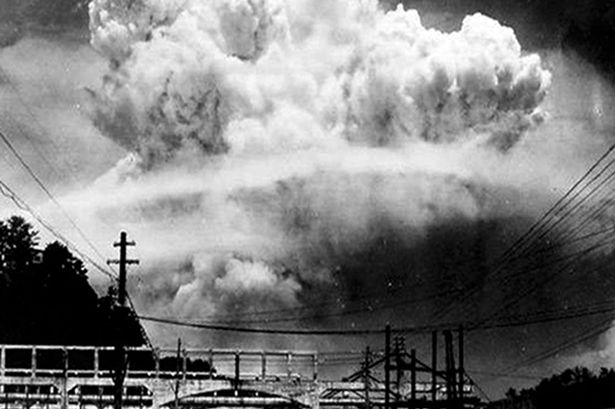
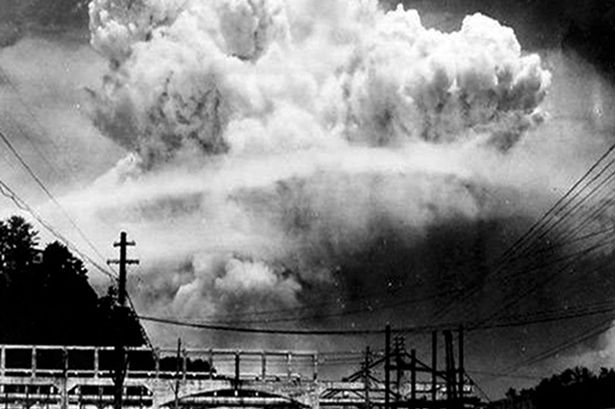
7A_Nagasaki_Bomb_Cloud

Friends of Padre Steve’s World,

Viktor Frankl Wrote: “Since Auschwitz we know what man is capable of. And since Hiroshima we know what is at stake.” 

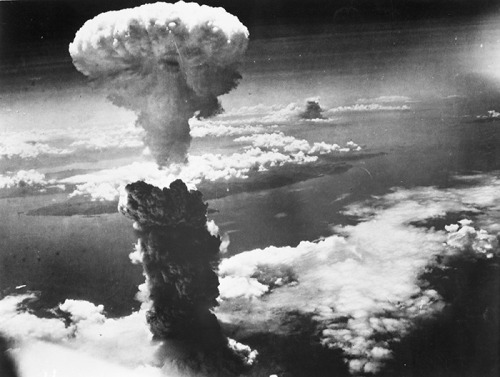
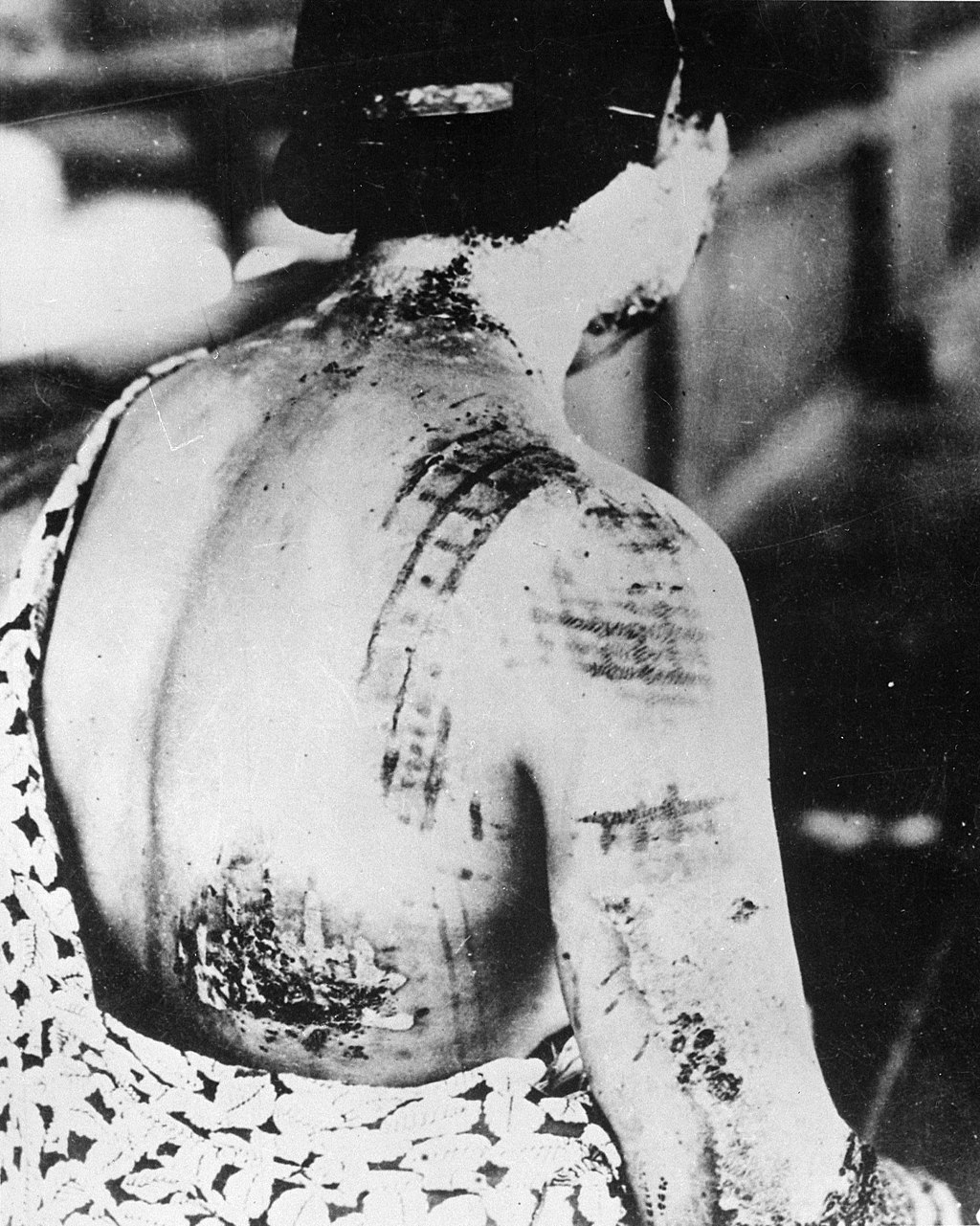
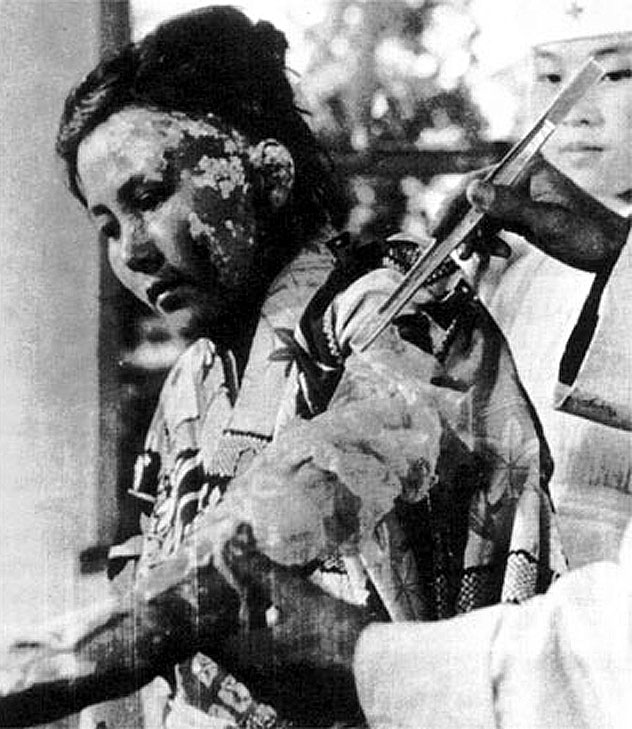
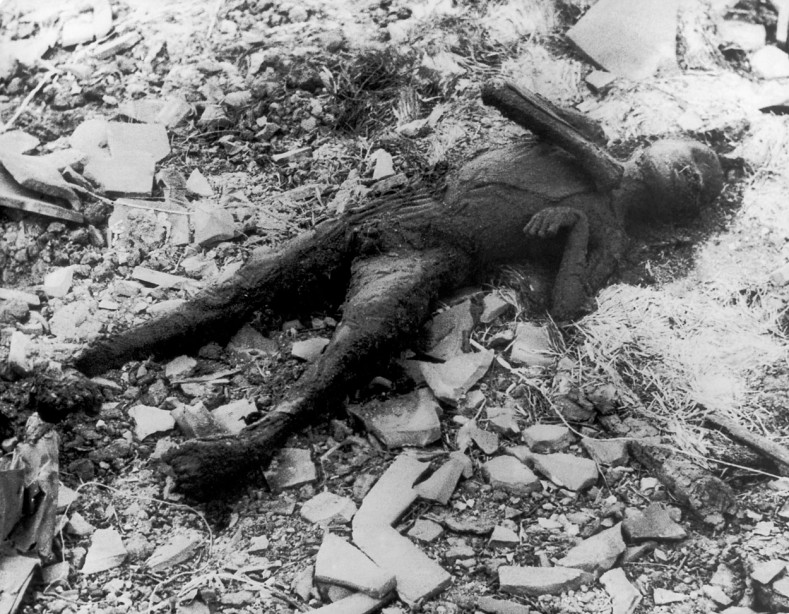
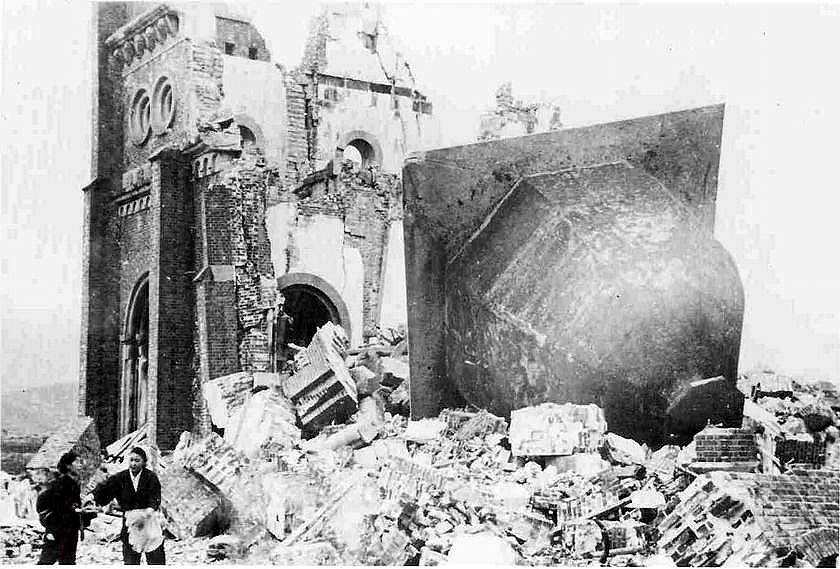
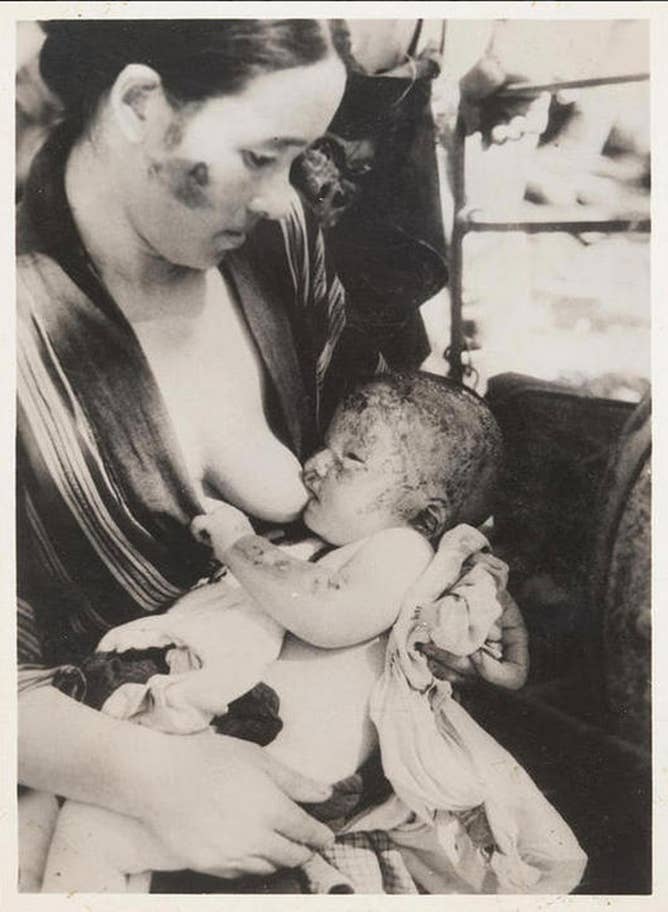
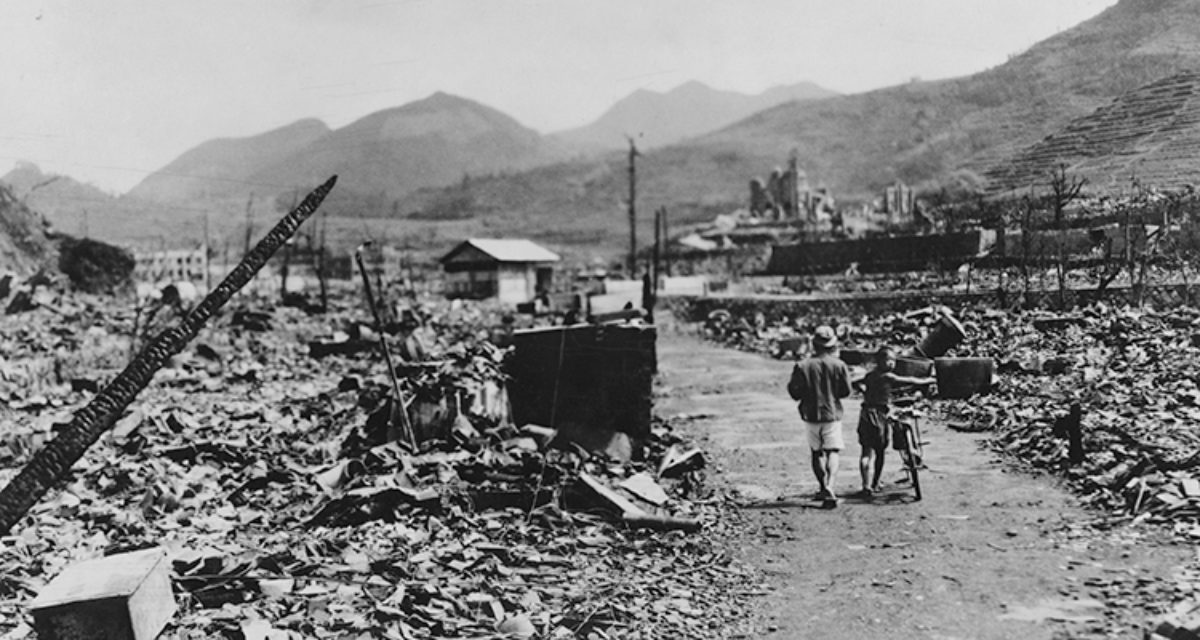
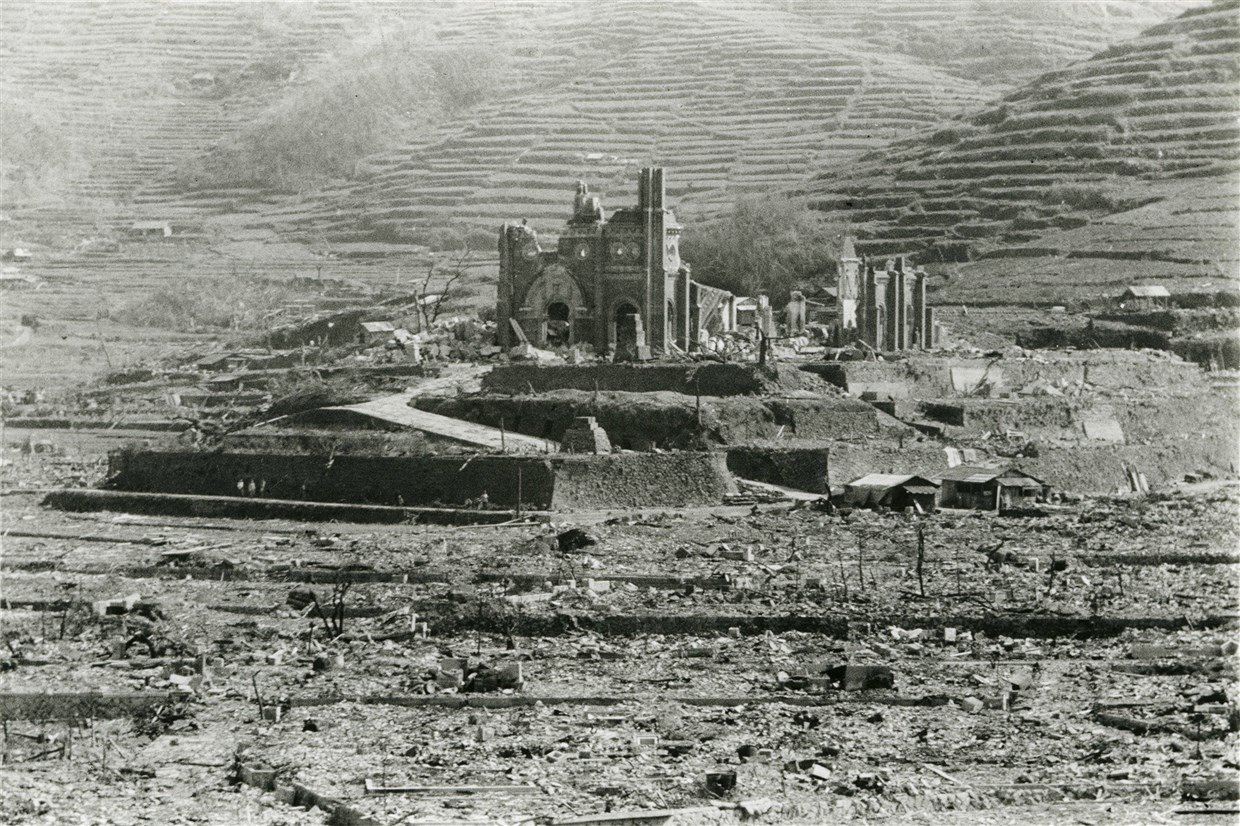
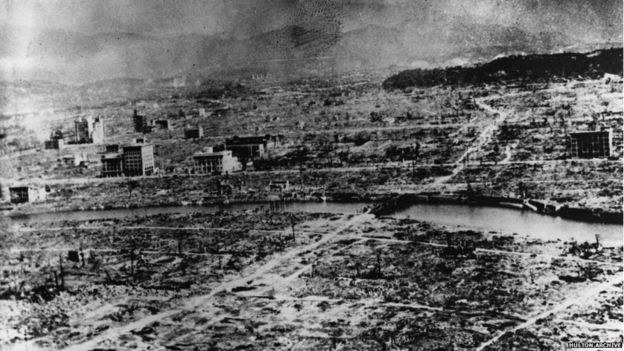
August 9th was the anniversary of the second and hopefully last nuclear weapon used in war, the bomb called the Fat Man which was dropped on the Japanese city of Nagasaki by a B-29 bomber nicknamed Bockscar.  Three days before the city of Hiroshima had been destroyed by the first atomic bomb used in combat, nicknamed Little Boy. In Hiroshima an estimated 66,000 people died and 69,000 injured. In Nagasaki, 39,000 dead and 25,000 injured. Postwar estimates of casualties from the attack on Hiroshima range from 66,000 to 80,000 fatalities and 69,000 to 151,000 injured. Official Japanese figures issued in the late 1990s state the total number of people killed in the Nagasaki attack exceeded 100,000. Kurt Vonnegut who survived the allied terror bombing of Dresden as a POW in 1945 wrote:

“The most racist, nastiest act by America, after human slavery, was the bombing of Nagasaki. Not of Hiroshima, which might have had some military significance. But Nagasaki was purely blowing away yellow men, women, and children. I’m glad I’m not a scientist because I’d feel so guilty now.”

Both the cities were military targets, but the bombs were dropped in locations away from most military targets, or war production plants, they were dropped to kill the largest number of people possible. When we tried the Nazis at Nuremberg the targeted killing of civilians by their armed forces and the SS was labeled a Crime Against Humanity, yet we did, not just in the atomic bombings of Hiroshima and Nagasaki, but also in numerous other Japanese cities where hundreds of B-29s using thousands small incendiary bombs destroyed Japanese cities and incinerated hundreds of thousands of Japanese civilians. But while these raids were designed to destroy or industrial targets, which were often intermixed in civilian neighborhoods, they were also targeted to kill Japanese civilian workers in massive fire storms, or render them homeless and further decrease Japanese war production.

They did have a strategic purpose but  any sense of proportionality had been lost. The Japanese in 1945 had no means of attacking the United States with any chance of winning the war, all they could do was to kill as many Americans, British, Australians, and Russians as possible before they were destroyed. Japan’s Defense was based on a national suicide pact driven by its leaders. However, many reasonable American military Commanders including Admiral William Leahy, General Dwight Eisenhower, Admiral Chester Nimitz, General Hap Arnold, and Dr. Leó Szilárd

The decision to drop these weapons, forever changed the consequences of waging total war. It was a decision that still haunts humanity and which policy makers and military strategists wrestle with in an age where at nine nations have deployable nuclear weapons and a number of other nations are developing or trying to obtain them. John Hersey, the first American reporter with free access to visit Hiroshima and write about Hiroshima would later write words that the leaders of nations possessing nuclear weapons and their military chiefs must truly ponder before deciding to go to war, especially if they plan to wage a total war:

“The crux of the matter is whether total war in its present form is justifiable, even when it serves a just purpose. Does it not have material and spiritual evil as its consequences which far exceed whatever good might result? When will our moralists give us an answer to this question?“

It is also the subject that is wrestled with by students of major military staff colleges and universities. I know, I taught the ethics elective at the Joint Forces Staff College. In each of our classes at least one brave officer did a presentation detailing the ethical issues involved the decision and the implications today. For those not familiar with the military the truth is that most officers are quite circumspect and much more grown up about the subject than the average citizen, politician, especially President Trump, his current National Security Advisor, Secretary of State, and National Intelligence Advisor. But then there are probably some in the military who would be like Colonel Paul Tibbets who flew the B-29 bomber Enola Gay which dropped said these words in an interview in 1989:

“I made up my mind then that the morality of dropping that bomb was not my business. I was instructed to perform a military mission to drop the bomb. That was the thing that I was going to do the best of my ability. Morality, there is no such thing in warfare. I don’t care whether you are dropping atom bombs, or 100-pound bombs, or shooting a rifle. You have got to leave the moral issue out of it.”

Tibbets, like Truman justified his position based on his view of the bestiality of the crimes committed by the Japanese during the war. It was quite a common point of view. Both views are troubling considering the power of the weapons being used. They almost sound the like excuses of German military officers and political officials on trial at Nuremberg between 1945 and 1948.

It was a decision made by President Truman one reason was purely pragmatic. For Truman, the “The buck stops here” was more than a motto, it was a way of life. He took responsibility for his action, but there is a certain banality in the way he wrote about them in his memoirs.

The atomic bomb was a wonder weapon that promised to end the war with a minimum of American casualties. Truman noted in 1952:

“I gave careful thought to what my advisors had counseled. I wanted to weigh all the possibilities and implications… General Marshall said in Potsdam that if the bomb worked we would save a quarter of a million American lives and probably save millions of Japanese… I did not like the weapon… but I had no qualms if in the long run millions of lives could be saved.”

But Truman’s decision was also based on the factor of revenge and viewing the Japanese as animals.  There was a certain element of racism in his view of Asians which was little different than the Nazis views of they referred to as sub-human. This racial prejudice was common in the mid-twentieth century, and the Japanese attack on Pearl Harbor only increased the blood lust, not that the Japanese also didn’t consider Europeans or Americans as equal to them, because they too, were a Master Race. This resulted in the war in the Pacific being much more brutal and inhuman than the one the Americans and British fought against the Nazis.

In response to a telegram from the Reverend Samuel McCrea Cavert, the General Secretary of the Federal Council of The Churches of Christ in America, the predecessor of the National Council of Churches. Reverend Cavert was a Presbyterian minister. Cavert’s telegram stated:

“Many Christians deeply disturbed over use of atomic bombs against Japanese cities because of their necessarily indiscriminate destructive efforts and because their use sets extremely dangerous precedent for future of mankind. Bishop Oxnam, President of the Council, and John Foster Dules, Chairman of its Commission on a just and durable peace are preparing statement for probable release tomorrow urging that atomic bombs be regarded as trust for humanity and that Japanese nation be given genuine opportunity and time to verify facts about new bomb and to accept surrender terms. Respectfully urge that ample opportunity be given Japan to reconsider ultimatum before any further devastation by atomic bomb is visited upon her people.”

Truman’s response to the telegram revealed the darker side of his decision to use the bomb.

My dear Mr. Cavert:

I appreciated very much your telegram of August ninth.

Nobody is more disturbed over the use of Atomic bombs than I am but I was greatly disturbed over the unwarranted attack by the Japanese on Pearl Harbor and their murder of our prisoners of war. The only language they seem to understand is the one we have been using to bombard them.

When you have to deal with a beast you have to treat him as a beast. It is most regrettable but nevertheless true.

The President’s senior military advisors were certainly of a different point of view about the use of the weapons. Admiral William Leahy who served as Chief of Staff to the Commander in Chief and was the senior Naval Officer in service disagreed and told Stimson of his misgivings about using the atomic bomb at this particular point in the war. In his memoirs which were released in 1949 he wrote:

“It is my opinion that the use of this barbarous weapon at Hiroshima and Nagasaki was of no material assistance in our war against Japan. The Japanese were already defeated and ready to surrender because of the effective sea blockade and the successful bombing with conventional weapons… My own feeling was that in being the first to use it, we had adopted an ethical standard common to the barbarians of the Dark Ages. I was not taught to make wars in that fashion, and that wars cannot be won by destroying women and children.”

General Dwight D. Eisenhower disagreed with the use of the atomic bomb and recorded his interaction with Stimson:

“In 1945 Secretary of War Stimson, visiting my headquarters in Germany, informed me that our government was preparing to drop an atomic bomb on Japan. I was one of those who felt that there were a number of cogent reasons to question the wisdom of such an act. During his recitation of the relevant facts, I had been conscious of a feeling of depression and so I voiced to him my grave misgivings, first on the basis of my belief that Japan was already defeated and that dropping the bomb was completely unnecessary, and secondly because I thought that our country should avoid shocking world opinion by the use of a weapon whose employment was, I thought, no longer mandatory as a measure to save American lives.” He also wrote later words similar to Leahy:

“I was against it on two counts. First, the Japanese were ready to surrender, and it wasn’t necessary to hit them with that awful thing. Second, I hated to see our country be the first to use such a weapon.”

Stimson did not agree with the Eisenhower, he would later recall words that echoed those of Truman in 1952, not his words to Revered Cavert immediately after the event.

“My chief purpose was to end the war in victory with the least possible cost in the lives of the men in the armies which I had helped to raise. In the light of the alternatives which, on a fair estimate, were open to us I believe that no man, in our position and subject to our responsibilities, holding in his hands a weapon of such possibilities for accomplishing this purpose and saving those lives, could have failed to use it and afterwards looked his countrymen in the face.”

Admiral William Leahy wrote in his memoirs:

“Once it had been tested, President Truman faced the decision as to whether to use it. He did not like the idea, but he was persuaded that it would shorten the war against Japan and save American lives. It is my opinion that the use of this barbarous weapon at Hiroshima and Nagasaki was of no material assistance in our war against Japan. The Japanese were already defeated and ready to surrender because of the effective sea blockade and the successful bombing with conventional weapons… My own feeling was that in being the first to use it, we had adopted an ethical standard common to the barbarians of the Dark Ages. I was not taught to make wars in that fashion, and that wars cannot be won by destroying women and children.”

General Hap Arnold, the Commander of the Army Air Forces noted: “It always appeared to us that, atomic bomb or no atomic bomb, the Japanese were already on the verge of collapse.” 

Those who questioned the decision would be vindicated by the U.S. Strategic Bombing Survey study published in 1946. That study laid out the facts in stark terms:

“Certainly prior to 31 December 1945, and in all probability prior to 1 November 1945, Japan would have surrendered even if the atomic bombs had not been dropped, even if Russia had not entered the war, and even if no invasion had been planned or contemplated.” 

Later, Dr. J. Samuel Walker, the Chief Historian of the Nuclear Regulatory Commission wrote:

“Careful scholarly treatment of the records and manuscripts opened over the past few years has greatly enhanced our understanding of why Truman administration used atomic weapons against Japan. Experts continue to disagree on some issues, but critical questions have been answered. The consensus among scholars is the that the bomb was not needed to avoid an invasion of Japan. It is clear that alternatives to the bomb existed and that Truman and his advisers knew it.” 

Thus the moral question remains and perhaps is best answered by the words of Dr. Leó Szilárd who first proposed building atomic weapons. In 1960 he noted to U.S. News and World Reports:

Suppose Germany had developed two bombs before we had any bombs. And suppose Germany had dropped one bomb, say, on Rochester and the other on Buffalo, and then having run out of bombs she would have lost the war. Can anyone doubt that we would then have defined the dropping of atomic bombs on cities as a war crime, and that we would have sentenced the Germans who were guilty of this crime to death at Nuremberg and hanged them? 

But, again, don’t misunderstand me. The only conclusion we can draw is that governments acting in a crisis are guided by questions of expediency, and moral considerations are given very little weight, and that America is no different from any other nation in this respect.

I think now, three quarters of a century later  we need to ponder that question before it can happen again. India and Pakistan are moving closer to nuclear war, Russia, China, North Korea, and yes even the United States are modernizing weapons and delivery systems. Admiral Leahy, General Eisenhower, and Dr. Szilard turned out to be right. As did General Omar Bradley who said:

“Ours is a world of nuclear giants and ethical infants. We know more about war than we know about peace, more about killing than we know about living. If we continue to develop our technology without wisdom or prudence, our servant may prove to be our executioner.”

Eisenhower, Leahy, Bradley, and Szilard were correct. The weapons have grown more deadly, the delivery systems, more accurate with greater range, speed, and maneuverability, and even their miniaturization, make their use more likely than not. If they are used it will be the beginning of the end.

Albert Einstein’s words which he penned after the bombing should serve as a warning to Americans for all time:

“America is a democracy and has no Hitler, but I am afraid for her future; there are hard times ahead for the American people, troubles will be coming from within and without. America cannot smile away their Negro problem nor Hiroshima and Nagasaki. There are cosmic laws.”

Until Tomorrow,

Peace

Padre Steve+

2 Comments

Filed under crimes against humanity, ethics, Foreign Policy, History, imperial japan, leadership, Military, national security, News and current events, nuclear weapons, Political Commentary, us army, US Army Air Corps, US Navy, US Presidents, war crimes, world war two in the pacific

The Film that Shocked the World: Nazi Concentration Camps From Nuremberg

Friends of Padre Steve’s World,

Friends of Padre Steve’s World,


Instead of writing much tonight I am posting a video compiled by American and British personnel as they liberated Nazi Concentration Camps in Germany. The images even though shot in black and white are still nearly 75 years after it was shown in the Nuremberg Palace of Justice on 29 November 1945, just a week into the trial the Allied Prosecutors led by Associate U.S. Supreme Court Justice, Robert H. Jackson introduced it into evidence.

The UPI report of the day’s testimony and the film described the scene:

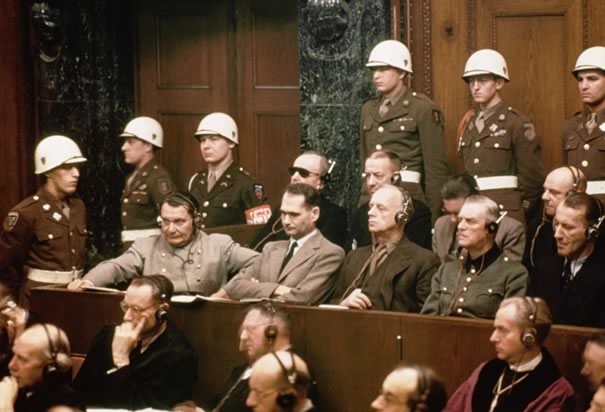
NUREMBERG, Nov. 29, 1945 (UP) – A tense audience at the war crimes trial watched for 52 horror-packed minutes today a 6,000-foot American Army film baring conditions at Nazi concentration camps. The prosecution charged that the camps were an instrument of policy of German leaders, including the 20 men on trial in the courtroom, in their drive for power.

In an almost deathlike silence the defendants, silhouetted in the dark courtroom by fluorescent lamps so that their guards could watch them, stared fascinated, bowed their heads low or mopped their faces as the show proceeded.

One, Hjalmar Schacht, kept his back turned throughout. Another, Polish Overlord Hans Frank, one of the most infamous mass murderers in world history, got sick.

American Sidney S. Alderman had closed the case on the German seizure of Austria, denouncing Reichsmarshal Hermann Goering, Austrian traitor Arthur Seyss-Inquart, Baron Franz von Papen and former Foreign Minister Baron Constantin von Neurath as the arch-plotters – “sly bullies wearing sanctimonious masks to cover their duplicity.”

High spots included a telephone talk in which Goering dictated to Seyss-Inquart a request which Seyss-Inquart was to make that German troops be sent into Austria; a telephone talk in which Adolf Hitler said he would “never, never forget” Benito Mussolini for co-operating and a 41-minute call by Goering to former Foreign Minister Joachim von Ribbentrop, then Ambassador in London, describing how “the birds are twittering here” in Berchtesgaden the day after the German invasion.

Court recessed at 3:15 so the movie screen could be made ready. At 3:35 the lights suddenly went out. At the same instant lights set around the prisoners’ dock rail flashed on to light the defendants. Reinforcements of American M.P.’s filed silently into the room to join the white-helmeted guards around the dock.

American Prosecutor Thomas Dodd rose.

“We will now show what concentration camps mean,” he said. “… the camps were not an end in themselves but an integral part of the Nazi system of government. We intend to prove that each defendant knew of the camps and that the camps were instruments by which the defendants retained power. They used the camps to prepare aggressive war.”

At 3:50 the film started grinding. The 6,000 feet shown were selected from 80,000 feet.

First came Leipzig – shots of bodies, burned to a crisp, of men and women who had tried to flee barracks the Nazis set afire and were mowed down by machine-gun fire.

Goering leaned forward in his seat, staring. Rudolf Hess snapped upright, betraying intelligent interest for the first time since the trial started, and whispered to Goering on his right and Ribbentrop on his left.

The camera eye moved slowly over the heaps of burned bodies. War correspondents had seen them before they were piled up – fingers dug into the earth in agony.

Col. Gen. Alfred Jodi put on dark glasses. Field Marshal Wilhelm Keitel bent stiffly forward.

The film flashed to Hamadar, which the Germans called the shudder house.

Papen lowered his head and covered his face with a handkerchief.

The film went on to Northausen, which the American 3rd Armored and 104th Infantry divisions liberated. It showed 2,500 bodies stacked beside a bombed building.

Schacht, his owl-like glasses reflecting the light in the prisoners’ dock, remained rigidly facing the audience, turned away from the screen.

German civilians, carrying bodies to mass graves under the guns of American troops, passed on the screen.

Grand-Adm. Karl Doenitz leaned heavily over the side of the dock as if he had taken all he could. Keitel took off his glasses, mopped his sweating face and lowered his head.

Next came Buchenwald, one of the worst of all. The film showed German civilians marching past a display of lamp shades, picture frames, plaques and bookmarks made of the skin of murdered men. The wife of the S.S. camp commandant had selected the victims.

Hess still watched, intensified. Julius Streicher stared with a deadpan face. Ribbentrop still had his eyes to the floor.

Then came Mauthausen, notorious Dachau, one of the earliest, greatest and most dreadful, and Belsen, where bodies were piled so high British bulldozers had to push them int o mass graves.

The film ended and the lights went on. For long moments the entire audience sat as if transfixed. Goering did not move his eyes from the screen until court adjourned one minute later. Schacht stood up and his lawyer said that he had nothing to do with the camps – in fact, would tell the court that he spent seven months at Dachau himself.

The film is real, and there was much more like it; in fact the Soviets would show a film from the death camps they liberated just two months later. But for now I will leave you with the film that shocked the world, and forever turned the tide against the Nazi Major War Criminals.

Please don’t believe that such events could happen in any country in the World, including Trump’s America. Please watch all of it, even if it sickens you as it should. Please don’t believe anything Trump says regarding race, ethnicity, religion, political opponents, the free press, and his deliberate falsification or anything that might embarrass him, because in each case he is telling his alternate version of the truth which acquits him and blames his victims.
As of today he has been responsible for decisions that have claimed the lives of over 160,000 American and infected over Five million Americans with the Coronavirus 19 virus and a pandemic that has made a nation with just 4.25% of the Worlds population, which supposedly had the best in medical, scientific and research programs to stop pandemics to the worst for a nation supposedly so well educated, prepared, and ready for a pandemic.

But instead of a President dedicated to telling the truth, backing the facts of science and medicine, we have a man who only speaks for himself and those who will not turn on him. 162,000 dead, and over Five Million infected Americans testify against him

Yet, unlike the President I will tell the truth because I am bound by my oath to the Constitution, and my vows as a priest.

With that I leave you for tonight. I do need get some sleep.

I report, you decide.

Peace,

Padre Steve+

1 Comment

Filed under civil rights, Coronavirus, crimes against humanity, culture, ethics, euthanasia, faith, film, germany, History, holocaust, laws and legislation, leadership, LGBT issues, natural disasters, nazi germany, News and current events, Political Commentary, war crimes, war crimes trials

When Military Forces Become Criminal Institution’s: The WWII Wehrmacht and the Attempt of Trump to Turn the Military into His Instrument of Terror

Hitler and His Commanders Planning Operation Barbarossa 

Friends of Padre Steve’s World,

Tonight I am continuing on with my series on Supreme Court Justice Robert Jackson’s closing arguments while serving as the Chief American Prosecutor at the Major War Crimes Trials at Nuremberg. These crimes are not without relevance today, thus it is important for us to revisit them, for as I noted yesterday, quoting Yehuda Bauer, the Holocaust did not deviate from human norms.

For me it is a difficult subject, for I served in and supported a war that by any standard of legal and moral judgement would have met the criteria that we prosecuted the Nazis for in 1945. I should have known better because I had studied the Nazi crimes and had been the student of a professor who served as an interrogator and interpreter during the Nuremberg War Crimes Trials. But in the moment of hysteria after the attacks of September 11th 2001 and my belief in the integrity of Secretary of State Colin Powell, I allowed my good sense to be persuaded that an act of aggressive war that resulted in war crimes, and might even include crimes against humanity was perfectly legal.

I went to Iraq in 2007 and 2008. I worked with advisors to Iraqi Army, Border Troops, Police, Port of Entry, and Provincial Reconstruction Teams In Al Anbar Province. I came back from Iraq a very different man. I saw the lies. I came to love and appreciate the Iraqis and what they had suffered under both Saddam Hussein and our invasion and occupation. I can still see the maimed bodies, the destroyed cities and hamlets, the crippled children, as well as the wounded Marines in my mind. I pray and hope that the Iraqis that I served alongside did not become victims of ISIS after I left the country.

I am haunted by it to this day, and I no longer trust the supposedly good intentions of the American government, and in the age of Donald Trump fear for our nation and the world. Since he took office he has attempted to use military units in operations both on the Mexican Border, in Washington D.C., and has pardoned convicted U.S. Army and Navy War Criminals.

After Border Patrol agents, in full combat gear and body armor fired tear gas across across the Mexican border against Mexicans throwing rocks at them,  President Trump said that he authorized U. S. Military personnel to use deadly force against rock throwers. His former Chief of Staff, and now opponent, retired Marine Corps General John Kelly issued a “cabinet order” something never heard of before, allowing U. S. Military personnel to engage refugees believed to be endangering Border Control agents, in what appears to be a direct violation of Posse Comitatus. Add to those issues the use of drone strikes, by the Bush, Obama, and Trump Administrations, both DOD and CIA, against often insignificant targets that that more often than not have many women and children in them, and finally the pardoning of convicted war criminals by President Trump, and firing the only administration who stood in his way, Secretary of the Navy Richard Spencer.

Since then the President attempted to use the Army against peaceful protestors in Lafayette Part outside the White House on 1 June 2020, their use was not authorized by the Secretary of Defense and Chairman of the Joint Chiefs of Staff. However, the President used U.S. Park Police, a mixture of other Federal Police, and D.C. National Guardsmen launched a violent attack on the protestors in order to allow the President unimpeded access to St. John’s Episcopal Church for a disastrous photo-op. But the optics for the military were bad, both Secretary of Defense Mark Esper and General Mark Miley apologized for their presence. Subsequently, they have taken actions following it directly opposing the President’s most racist and pro-Confederate, and White Nationalist words and tweets, while the Commandant of the Marine Corps, Chief of Naval Operations, and other Service Chiefs banned Confederate and other racist symbols on military bases. They also ordered investigations into racial incidents and at least in the case of the Navy have moved to initiate a climate of command that takes the issues of racism, gender bias, sexual assault, religious prejudice and other actions harm anyone serving in the Navy.

But I digress. When I read these accounts my mind is taken back to the subject of war crimes, and based on my expertise and study of the crimes of the Nazis, not to mention the Japanese in the Second World War, I automatically default to those settings.

So, I will stop with my words and go back to those of Robert Jackson at Nuremberg, because they are so pertinent today, and because I have been writing about Justice Jackson and the Major War Crimes Trials at Nuremberg. There will be a time that I write about the subsequent Generals Trial, and the Einsatzgruppen Trial. 

Until tomorrow,

Peace,

Padre Steve+

Immediately after the seizure of power the Nazis went to work to implement these aggressive intentions by preparing for war. They first enlisted German industrialists in a secret rearmament programme. Twenty days after the seizure of power Schacht was host to Hitler, Goering and some twenty leading industrialists. Among them were Krupp von Bohlen of the great Krupp armament works and representatives of I. G. Farben and other Ruhr heavy industries. Hitler and Goering explained their programme to the industrialists, who became so enthusiastic that they set about to raise three million Reichsmarks to strengthen and confirm the Nazi Party in power. Two months later Krupp was working to bring a reorganised association of German industry into agreement with the political aims of the Nazi Government. Krupp later boasted of the success in keeping the German war industries secretly alive and in readiness despite the disarmament clauses of the Versailles Treaty, and recalled the industrialists’ enthusiastic acceptance of “the great intentions of the Fuehrer in the rearmament period of 1933-1939”.

Some two months after Schacht had sponsored his first meeting to gain the support of the industrialists, the Nazis moved to harness industrial labour to their aggressive plans. In April, 1933, Hitler ordered Dr. Ley “to take over the trade unions”, numbering some 6 million members. By Party directive Ley seized the unions, their property and their funds. Union leaders, taken into “protective custody” by the SS and SA, were put into concentration camps. The free labour unions were then replaced by a Nazi organization known as the German Labour Front, with Dr. Ley at its head. It was expanded until it controlled over 23 million members. Collective bargaining was eliminated, the voice of labour could no longer be heard as to working conditions, and the labour contract was prescribed by “trustees of labour” appointed by Hitler. The war purpose of this labour programme was clearly acknowledged by Robert Ley five days after war broke out, when he declared in a speech that:

“We National Socialists have monopolised all resources and all our energies during the past seven years so as to be able to be equipped for the supreme effort of battle.”

The Nazis also proceeded at once to adapt the Government to the needs of war. In April, 1933, the Cabinet formed a Defence Council, the working committee of which met frequently thereafter. In the meeting of 22nd May, 1933, at which defendant Keitel presided, the members were instructed that:

“No document must be lost since otherwise the enemy propaganda would make use of it. Matters communicated orally cannot be proven; they can be denied by us in Geneva.”

In February, 1934 -and, your Honours, dates in this connection are important -with defendant Jodl present, the Council planned a mobilization calendar and mobilization order for some 240,000 industrial plants. Again it was agreed that nothing should be in writing so that “the military purpose may not be traceable”.

Hjalmar Schacht


On 21st May, 1935, the top secret Reich Defence Law was enacted. Defendant Schacht was appointed Plenipotentiary General for War Economy with the task of secretly preparing all economic forces for war and, in the event of mobilization, of financing the war.

Schacht’s secret efforts were supplemented in October, 1936, by the appointment of defendant Goering as Commissioner of the Four-Year Plan, with the duty of putting the entire economy in a state of readiness for war within four years.

A secret programme for the accumulation of the raw materials and foreign credits necessary for extensive rearmament was also set on foot immediately upon seizure of power. In September of 1934, the Minister of Economics was already complaining that:

“The task of stock-piling is being hampered by the lack of foreign currency; the need for secrecy and camouflage also is a retarding influence.”

Foreign currency controls were at once established. Financing was delegated to the wizard Schacht, who conjured up the MEFO bill to serve the dual objectives of tapping the short-term money market for rearmament purposes while concealing the amount of these expenditures.

The spirit of the whole Nazi administration was summed up by Goering at a meeting of the Council of Ministers, which included Schacht, on 27th May, 1936, when he said: “All measures are to be considered from the standpoint of an assured waging of war.” The General Staff, of course, also had to be enlisted in the war plan. Most of the generals, attracted by the prospect of rebuilding their armies, became willing accomplices. The Minister of War von Blomberg and the Chief of Staff General von Fritsch, however, were not cordial to the increasingly belligerent policy of the Hitler regime, and by vicious and obscene plotting they were discredited and removed in January, 1938. Thereupon, Hitler assumed for himself supreme command of the armed forces and the positions of von Blomberg and of von Fritsch were filled by others who became, as Blomberg said of Keitel, “a willing tool in Hitler’s hands for every one of his decisions”. The generals did not confine their participation to merely military matters. They participated in all major diplomatic and political manoeuvres, such as the Obersalzberg meeting where Hitler, flanked by Keitel and other top generals, issued his virtual ultimatum to Schuschnigg.

As early as 5th November, 1937, the plan to attack had begun to take definiteness as to time and victim. In a meeting which included the defendants Raeder, Goering and von Neurath, Hitler stated the cynical objective:

“The question for Germany is where the greatest possible conquest could be made at the lowest possible cost.”

He discussed various plans for the invasion of Austria and Czechoslovakia, indicating clearly that he was thinking of these territories not as ends in themselves, but as means for further conquest. He pointed out that considerable military and political assistance could be afforded by possession of these lands, and discussed the possibility of constituting from them new armies up to a strength of about 12 divisions. The aim he stated boldly and baldly as the acquisition of additional living-space in Europe, and recognized that “The German question can be solved only by way of force.” Six months later, emboldened by the bloodless Austrian conquest, Hitler, in a secret directive to Keitel, stated his “unalterable decision to smash Czechoslovakia by military action in the near future”.

On the same day, Jodl noted in his diary that the Fuehrer had stated his final decision to destroy Czechoslovakia soon and had initiated military preparations all along the line. By April the plan had been perfected to attack Czechoslovakia “with lightning swift action as the result of an ‘incident’”.

All along the line preparations became more definite for a war of expansion, on the assumption that it would result in a world-wide conflict. In September, 1938, Admiral Carls officially commented on a “Draft Study of Naval Warfare against England”:

“There is full agreement with the main theme of the study.

1. If, according to the Fuehrer’s decision, Germany is to acquire a position as a world power, she needs not only sufficient colonial possessions but also secure naval communications and secure access to the ocean.

2. Both requirements can only be fulfilled in opposition to Anglo-French interests and will limit their positions as world powers. It is unlikely that they can be achieved by peaceful means. The decision to make Germany a world power therefore forces upon us the necessity of making the corresponding preparations for war.

3. War against England means at the same time war against the Empire, against France, probably against Russia as well, and a large number of countries overseas; in fact, against one-third to one-half of the whole world.

It can only be justified and have a chance of success if it is prepared economically as well as politically and militarily and waged with the aim of conquering for Germany an outlet to the ocean.”

This Tribunal knows what categorical assurances were given to an alarmed world after the Anschluss, after Munich, after the occupation of Bohemia and Moravia, that German ambitions were realised and that Hitler had “no further territorial demands to make in Europe.” The record of this trial shows that those promises were calculated deceptions and that those high in the bloody brotherhood of Nazidom knew it.

As early as 15th April, 1938, Goering pointed out to Mussolini and Ciano that the possession of those territories would make possible an attack on Poland. Ribbentrop’s Ministry wrote on 26th August, 1938:

“After the liquidation of the Czechoslovakian question, it will be generally assumed that Poland will be next in turn.”

Hitler, after the Polish invasion, boasted that it was the Austrian and Czechoslovakian triumphs by which “the basis for the action against Poland was laid”. Goering suited the act to the purpose and gave immediate instructions to exploit, for the further strengthening of the German war potential, first the Sudetenland, and then the whole Protectorate.

By May of 1939 the Nazi preparations had ripened to the point that Hitler confided to the defendants Goering, Raeder, Keitel, and others, his readiness “to attack Poland at the first suitable opportunity”, even though he recognized that “further successes cannot be attained without the shedding of blood”. The larcenous motives behind this decision he made plain in words that echoed the covetous theme of Mein Kampf:

“Circumstances must be adapted to aims. This is impossible without invasion of foreign States or attacks upon foreign property. Living-space in proportion to the magnitude of the State is the basis of all power -further successes cannot be attained without expanding our living-space in the East ….”

While a credulous world slumbered, snugly blanketed with perfidious assurances of peaceful intentions, the Nazis prepared not as before for a war but now for the war. The defendants Goering, Keitel, Raeder, Frick and Funk, with others, met as the Reich Defence Council in June of 1939. The minutes, authenticated by Goering, are revealing evidence of the way in which each step of Nazi planning dovetailed with every other. These five key defendants, three months before the first panzer unit had knifed into Poland, were laying plans for “employment of the population in wartime”, and had gone so far as to classify industry for priority in labour supply after “five million servicemen had been called up”. They decided upon measures to avoid “confusion when mobilization takes place”, and declared a purpose “to gain and maintain the lead in the decisive initial weeks of war”. They then planned to use in production prisoners of war, criminal prisoners, and concentration camp inmates. They then decided on “compulsory work for women in war time”. They had already passed on applications from 1,172,000 specialist workmen for classification as indispensable, and had approved 727,000 of them. They boasted that orders to workers to report for duty “are ready and tied up in bundles at the labour offices”. And they resolved to increase the industrial manpower supply by bringing into Germany “hundreds of thousands of workers” from the Protectorate to be “housed together in hutments”.

Grand Admiral Erich Raeder

It is the minutes of this significant conclave of many key defendants which disclose how the plan to start the war was coupled with the plan to wage the war through the use of illegal sources of labour to maintain production. Hitler, in announcing his plan to attack Poland, had already foreshadowed the slave labour programme as one of its corollaries when he cryptically pointed out to the defendants Goering, Raeder, Keitel, and others that the Polish population “will be available as a source of labour”. This was part of the plan made good by Frank, who as Governor-General notified Goering, that he would supply “at least one million male and female agricultural and industrial workers to the Reich”, and by Sauckel, whose impressments throughout occupied territory aggregated numbers equal to the total population of some of the smaller nations of Europe.

Colonel General Alfred Jodl 


Here also comes to the surface the link between war labour and concentration camps, a manpower source that was increasingly used and with increasing cruelty. An agreement between Himmler and the Minister of Justice, Thierack, in 1942 provided for “the delivery of anti-social elements from the execution of their sentence to the Reichsfuehrer SS to be worked to death”. An SS directive provided that bedridden prisoners be drafted for work to be performed in bed. The Gestapo ordered 46,000 Jews arrested to increase the “recruitment of manpower into the concentration camps”. One hundred thousand Jews were brought from Hungary to augment the camps’ manpower. On the initiative of the defendant Donitz concentration camp labour was used in the construction of submarines. Concentration camps were thus geared into war production on the one hand, and into the administration of justice and the political aims of the Nazis on the other. The use of prisoner-of-war labour, as then planned in that meeting, also grew with German needs. At a time when every German soldier was needed at the front and forces were not available at home, Russian prisoners of war were forced to man anti-aircraft guns against Allied planes. Field-Marshal Milch reflected the Nazi merriment at this flagrant violation of International Law, saying: “… This is an amusing thing, that the Russians must work the guns.”

Admiral Wilhelm Canaris, Executed on the order of Adolf Hitler 9 April 1945 


The orders for the treatment of Soviet prisoners of war were so ruthless that Admiral Canaris, pointing out that they would “result in arbitrary mistreatments and killing”,  protested to the OKW against them as breaches of International Law. The reply of Keitel was unambiguous. He said:

“The objections arise from the military conception of chivalrous warfare! This is the destruction of an ideology! Therefore I approve and back the measures”.

The Geneva Convention would have been thrown overboard openly, except that Jodl objected because he wanted the benefits of Allied observance of it while it was not being allowed to hamper the Germans in any way.

Field Marshal Wilhelm Keitel

Other crimes in the conduct of warfare were planned with equal thoroughness as a means of ensuring victory of German arms: In October, 1938, almost a year before the start of the war, the large-scale violation of the established rules of warfare was contemplated as a policy, and the Supreme Command circulated a most secret list of devious explanations to be given by the Propaganda Minister in such cases. Even before this time commanders of the armed forces were instructed to employ any methods of warfare so long as they facilitated victory. During the progress of the war the orders increased in savagery. A typical Keitel order, demanding the use of the “most brutal means”, provided that .

“… It is the duty of the troops to use all means without restriction, even against women and children, so long as they ensure success.”

Grand Admiral Karl Donitz

The German naval forces were no more immune from the infection than the land forces. Raeder ordered violations of the accepted rules of warfare wherever necessary to gain strategic successes. Donitz urged his submarine crews not to rescue survivors of torpedoed enemy ships, in order to cripple merchant shipping of the Allied Nations by decimating their crews.

Thus, the WAR CRIMES against Allied forces and the CRIMES AGAINST HUMANITY committed in occupied territories are incontestably part of the programme for making the war because, in the German calculations, they were indispensable to its hope of success.

Similarly, the whole group of pre-war crimes, including the persecutions within Germany, fall into place around the plan for aggressive war like stones in a finely wrought mosaic. Nowhere is the whole catalogue of crimes of Nazi oppression and terrorism within Germany so well integrated with the crime of war as in that strange mixture of wind and wisdom which makes up the testimony of Hermann Goering. In describing the aims of the Nazi programme before the seizure of power, Goering stated that the first question was to achieve and establish a different political structure for Germany, which would enable Germany to object against the Dictate (of Versailles), and to make not only a protest, but an objection of such a nature that it would actually be considered.

With these purposes, Goering, admitted that the plan was made to overthrow the Weimar Republic, to seize power, and to carry out the Nazi programme by whatever means were necessary, whether legal or illegal.

Reichsmarschal Hermann Goering 

From Goering’s cross-examination we learn how necessarily the whole programme of crime followed. Because they considered a strong State necessary to get rid of the Versailles Treaty, they adopted the Fuehrerprinzip. Having seized power, the Nazis thought it necessary to protect it by abolishing parliamentary government, and suppressing all organized opposition from political parties. This was reflected in the philosophy of Goering that the opera was more important than the Reichstag. Even the “opposition of each individual was not tolerated unless it was a matter of unimportance”. To insure the suppression of opposition a secret police force was necessary. In order to eliminate incorrigible opponents, it was necessary to establish concentration camps and to resort to the device of protective custody. Protective custody, Goering, testified, meant that:

“People were arrested arid taken into protective custody who had not yet committed any crime but who could be expected to do so if they remained free.”

The same war purpose was dominant in the persecution of the Jews. In the beginning, fanaticism and political opportunism played a principal part, for anti-Semitism and its allied scapegoat, mythology, were the vehicle on which the Nazis rode to power. It was for this reason that the filthy Streicher and the blasphemous Rosenberg were welcomed at Party rallies and made leaders and officials of the State or Party. But the Nazis soon regarded the Jews as foremost amongst the opposition to the police State with which they schemed to put forward their plans of military aggression. Fear of their pacifism and their opposition to strident nationalism was given as the reason that the Jews had to be driven from the political and economic life of Germany. Accordingly, they were transported like cattle to the concentration camps, where they were utilised as a source of forced labour for war purposes.

At a meeting held on 12th November, 1938, two days after the violent anti-Jewish pogroms instigated by Goebbels and carried out by the Party Leadership Corps and the SA, the programme for the elimination of Jews from the German economy was mapped out by Goering, Funk, Heydrich, Goebbels, and the other top Nazis. The measures adopted included confinement of the Jews in ghettoes, cutting off their food supply, “aryanizing” their shops, and restricting their freedom of movement. Here another purpose behind the Jewish persecutions crept in, for it was the wholesale confiscation of their property which helped to finance German rearmament. Although Schacht’s plan to use foreign money to ransom the entire race within Germany was not adopted, the Jews were stripped to the point where Goering was able to advise the Reich Defence Council that the critical situation of the Reich exchequer, due to rearmament, had been relieved “through the billion Reichsmark fine imposed on Jewry, and through profits accrued to the Reich in the aryanization of Jewish enterprises”.

A glance over the dock will show that, despite quarrels among themselves, each defendant played a part which fitted in with every other, and that all advanced the Common Plan. It contradicts experience that men of such diverse backgrounds and talents should so forward each other’s aims by coincidence. The large and varied role of Goering was half militarist and half gangster. He stuck his pudgy finger in every pie. He used his SA bullies to help bring the gang into power. In order to entrench that power he contrived to have the Reichstag burned, established the Gestapo, and created the concentration camps. He was equally adept at massacring opponents and at framing scandals to get rid of stubborn generals. He built up the Luftwaffe and hurled it at his defenceless neighbours. He was among the foremost in harrying Jews out of the land. By mobilising the total economic resources of Germany he made possible the waging of the war which he had taken a large part in planning. He was, next to Hitler, the man who tied the activities of all the defendants together in a common effort.

The parts played by the other, defendants, although less comprehensive and less spectacular than that of the Reichsmarschall, were nevertheless integral and necessary contributions to the joint undertaking, without any one of which the success of the common enterprise would have been in jeopardy. There are many specific deeds of which these men have been proven guilty. No purpose would be served -nor indeed is time available -to review all the crimes which the evidence has charged against their names. Nevertheless, in viewing the conspiracy as a whole and as an operating mechanism, it may be well to recall briefly the outstanding services which each of the men in the dock rendered to the common cause.

To be continued…

2 Comments

Filed under ethics, germany, History, holocaust, laws and legislation, leadership, Military, national security, nazi germany, Political Commentary, war crimes, war crimes trials, White nationalism, world war two in europe

The Combination of Trump and his System has Brought About this Catastrophe

Friends of Padre Steve’s World,

The crimes of Adolf Hitler’s Nazi regime may seem like the happened a long time ago in a galaxy far, far away, we would all like to believe that. However, they are only as far away as the next time. That is why we must continue to show them in their awful reality. Yehuda Bauer, a renowned historian of the Holocaust whose family escaped from Czechoslovakia the day it was annexed by the Third Reich wrote:

“The horror of the Holocaust is not that it deviated from human norms; the horror is that it didn’t. What happened may happen again, to others not necessarily Jews, perpetrated by others, not necessarily Germans. We are all possible victims, possible perpetrators, possible bystanders.”

This is an eternal truth. The Red Chinese in Tibet, the Cambodian Killing Fields, the Serbians massacring Bosnians under the noses of Dutch Peacekeepers in Srebrenica, the Tutsis of Rwanda butchered by their Hutu neighbors shortly after Easter, as well as the crimes of the Islamic State against Kurds, opposition Sunnis, Shia, Yazidis, and Christians in Iraq and Syria.

Besides genocide we can add the crime of aggressive war against weaker neighbors or nations committed Russia in Georgia and the Ukraine, and the United States against Iraq. Then there is the assault on minority groups within various nations, the rejection of refugees, and rise in anti-Semitism across Russia, Europe, and the United States have all produced myriads of victims, perpetrators, and bystanders.

The crimes committed by the Nazis against their own citizens and the nations that they victimized are not completely unique to them. While the Nazi Genocide committed against the Jews is unique, what motivated them is far more common than we would want to admit. The Holocaust and the Nazi war for Lebensraum is not an aberration from the norms of human nature, it is the norm. That is why continuing to expose those crimes, the men and women behind them, and those who stood by, doing nothing while their neighbors were being marched away, or stood by as other men marched men, women, and children to massive pits and shot them one by one, up close and personal, by the tens of thousands.

I would like with all my heart to consign the crimes of the Nazis to the depths of history, but I cannot. That is why I, a man born thirteen and a half years after the major Nuremberg War Crimes ended with ten of the defendants hanging from the gallows continues to write about it.

However, that is not the case. What is happening in the United States under the authoritarian regime of President Trump which is smashing the legal, constitutional, and institutional guardrails that until now preventing a Chief Executive from becoming an autocrat are endangering the Republic and threading to destroy our system of government, our alliances, economy, National security, and the lives and civil rights of all Americans, including his deluded cult followers who he will condemn to death by COVID19, lack of health care, or simply betray them to poverty, unemployment and opioid addiction. Of course as far as the heavily armed self-proclaimed militias, they would do well to remember the story of SA the Sturmanteilung, or Storm Troopers, that once their purpose was finished, Hitler killed their leaders and consigned them to the lowest rungs of the Nazi hierarchy, with meaningless titles and no power. He needed no competition from an armed force that wanted to displace the military, police, and SS from their positions. No one, not even his faithful should trust him because he only cares for himself, and will blame them if he falls from power.

Albert Speer commented:

“The tremendous danger, however, contained in this totalitarian system only became abundantly clear at the moment when we were approaching the end. It was then that one could see what the meaning of the principle was, namely, that every order should be carried out without any criticism. Everything . . . you have seen in the way of orders which were carried out without any consideration, did after all turn out to be mistakes . . . This system let me put it like this to the end of the system it had become clear what tremendous dangers are contained in any such system, as such quite apart from Hitler’s principle. The combination of Hitler and this system, then, brought about this tremendous catastrophe to this world.” 

He told his staff on the morning of 22 April 1945:

“Everyone has lied to me, everyone has deceived me… the SS left me in the lurch. The German people have not fought heroically. It deserves to perish… it is not I who have lost the war, but the German people.”

If Trump loses and lives, that will be his judgement on both the nation and those who followed him into the abyss of his own making. After all, he has never taken personal responsibility for anything;  his multiple corporate bankruptcies, his avoidance of military service in Vietnam, his failed marriages, all which all ended because of his unfaithfulness to his wives, and then with the Coronavirus 19 Pandemic, where he has claimed on several occasions, “I take no responsibility for anything.”  That is one thing that he is not lying about. To him, all of his failures are the fault of someone else.

Over the past few days I have been writing about the Nuremberg Trials and the American Chief Prosecutor, Supreme Court Justice Robert Jackson. Last night I wrote about the introduction of his closing arguments before the Tribunal which followed his opening address by nine months. I now continue with Justice Jackson’s closing arguments against the Nazi war criminals sitting in the dock of Nuremberg’s Palace of Justice, many of whom were little different than Trump and his sycophants.

So until tomorrow, I leave you with Jackson’s words.

Peace,

Padre Steve+

THE CRIMES OF THE NAZI REGIME

The strength of the case against these defendants under the conspiracy count, which it is the duty of the United States to argue, lies in its simplicity. It involves but three ultimate inquiries: First, have the acts defined by the Charter as crimes been committed; second, were they committed pursuant to a common plan or conspiracy; third, are these defendants among those who are criminally responsible? The charge requires examination of a criminal policy, not of a multitude of isolated, unplanned, or disputed crimes. The substantive crimes upon which we rely, either as goals of a common plan or as means for its accomplishment, are admitted. The pillars which uphold the conspiracy charge may be found in five groups of overt acts, whose character and magnitude are important considerations in appraising the proof of conspiracy.

1. THE SEIZURE OF POWER AND SUBJUGATION OF GERMANY TO A POLICE STATE The Nazi Party seized control of the German State in 1933. “Seizure of power” is a characterisation used by defendants and defence witnesses, and so apt that it has passed into both history and everyday speech. The Nazi junta in the early days lived in constant fear of overthrow. Goering, in 1934, pointed out that its enemies were legion, and said:

“Therefore, the concentration camps have been created, where we have first confined thousands of Communists and Social Democrat functionaries.”

In 1933 Goering forecast the whole programme of purposeful cruelty and oppression when he publicly announced:

“Whoever in the future raises a hand against a representative of the National Socialist movement or of the State must know that he will lose his life in a very short while.”

New political crimes were created to this end. It was made a treason, punishable with death, to organize or support a political party other than the Nazi Party. Circulating a false or exaggerated statement, or one which would harm the State or even the Party, was made a crime. Laws were enacted of such ambiguity that they could be used to punish almost any innocent act. It was, for example, made a crime to provoke “any act contrary to the public welfare”.

The doctrine of punishment by analogy was introduced to enable conviction for acts which no statute forbade. Minister of Justice Guertner explained that National Socialism considered every violation of the goals of life which the community set up for itself to be a wrong per se, and that the acts could be punished even though it was not contrary to existing “formal law”.

The Gestapo and the SD were instrumentalities of an espionage system which penetrated public and private life. Goering controlled a personal wiretapping unit. All privacy of communication was abolished. Party Blockleiter appointed over every 50 householders spied continuously on all within their ken.

Upon the strength of this spying individuals were dragged off to “protective custody” and to concentration camps without legal proceedings of any kind1and without statement of any reason therefore. The partisan political police were exempted from effective legal responsibility for their acts.

With all administrative offices in Nazi control and with the Reichstag reduced to impotence, the judiciary remained the last obstacle to this reign of terror. But its independence was soon overcome and it was reorganised to dispense a venal justice. Judges were ousted for political or racial reasons and were spied upon and put under pressure to join the Nazi Party. After the Supreme Court had acquitted three of the four men whom the Nazis accused of setting the Reichstag on fire, its jurisdiction over treason cases was transferred to a newly established “People’s Court” consisting of two judges and five Party officials. The German film of this “People’s Court” in operation, which the showed in this chamber, revealed its presiding judge pouring partisan abuse on speechless defendants. Special courts were created to try political crimes, only Party members were appointed judges, and “Judges’ letters” instructed the puppet judges as to the “general lines” they must follow.

The result was the removal of all peaceable means either to resist or to change the Government. Having sneaked through the portals of power, the Nazis slammed the gate in the face of all others who might also aspire to enter. Since the law was what the Nazis said it was, every form of opposition was rooted out and every dissenting voice throttled. Germany was in the clutch of a police State, which used the fear of the concentration camp as a means to enforce non-resistance. The Party was the State, the State was the Party, and terror by day and death by night were the policy of both.

2. THE PREPARATION AND WAGING OF WARS OF AGGRESSION From the moment the Nazis seized power, they set about with feverish but stealthy efforts, in defiance of the Versailles Treaty, to arm for war. In 1933 they found no air force. By 1939 they had 21 squadrons, consisting of 240 echelons or about 2,400 first-line planes, together with trainers and transports.

In 1933 they found an army of 3 infantry and 3 cavalry divisions. By 1939 they had raised and equipped an army of 51 divisions, 4 of which were fully motorized and 4 of which were panzer divisions. In 1933 they found a navy of one cruiser and six light cruisers. By 1939 they had built a navy of 4 battleships, 1 aircraft carrier, 6 cruisers, 22 destroyers, and 54 submarines. They had also built up in that period an armament industry as efficient as that of any country in the world.

These new weapons were put to use, commencing in September, 1939, in a series of undeclared wars against nations with which Germany had arbitration and non-aggression treaties, and in violation of repeated assurances.

On 1st September, 1939, this rearmed Germany attacked Poland. The following April witnessed the invasion and occupation of Denmark and Norway, and May saw the overrunning of Belgium, the Netherlands, and Luxembourg. Another spring saw Yugoslavia and Greece under attack, and in June, 1941, came the invasion of Soviet Russia. Then Japan, which Germany had embraced as a partner, struck without warning at Pearl Harbour in December, 1941, and four days later Germany declared war on the United States.

We need not trouble ourselves about the many abstract difficulties that can be conjured up about what constitutes aggression in doubtful cases. I shall show you, in discussing the conspiracy, that by any test ever put forward by any responsible authority, by all the canons of plain common sense, these were unlawful wars of aggression in breach of treaties and in violation of assurances.

3. WARFARE IN DISREGARD OF INTERNATIONAL LAW

It is unnecessary to labour this point on the facts. Goering asserts that the Rules of Land Warfare were obsolete, that no nation could fight a total war within their limits. He testified that the Nazis would have denounced the Conventions to which Germany was a party, but that General Jodl wanted captured German soldiers to continue to benefit from. their observance by the Allies.

It was, however, against the Soviet people and Soviet prisoners that Teutonic fury knew no bounds, in spite of a warning by Admiral Canaris that the treatment was in violation of International Law. We need not, therefore, for the purposes of the conspiracy count, recite the revolting details of starving, beating, murdering, freezing, and mass extermination admittedly used against the Eastern soldiery. Also, we may take as established or admitted that the lawless conduct such as shooting British and American airmen, mistreatment of Western prisoners of war, forcing French prisoners of war into German war work, and other deliberate violations of the Hague and Geneva Conventions, did occur, and in obedience to highest levels of authority.

4. ENSLAVEMENT AND PLUNDER OF POPULATIONS IN OCCUPIED COUNTRIES

The defendant Sauckel, Plenipotentiary General for the Utilization of Labour, is authority for the statement that “out of five million foreign workers who arrived in Germany, not even 200,000 came voluntarily”. It was officially reported to defendant Rosenberg that in his territory “recruiting methods were used which probably have their origin in the blackest period of the slave trade”. Sauckel himself reported that male and female agents went hunting for men, got them drunk, and “shanghaied” them to Germany. These captives were shipped in trains without heat, food, or sanitary facilities. The dead were thrown out at stations, and the newborn were thrown out the windows of moving trains.

Sauckel ordered that “all the men must be fed, sheltered and treated in such a way as to exploit them to the highest possible extent at the lowest conceivable degree of expenditure”. About two million of these were employed directly in the manufacture of armaments and munitions. The director of the Krupp locomotive factory in Essen complained to the company that Russian forced labourers were so underfed that they were too weakened to do their work, and the Krupp doctor confirmed their pitiable condition. Soviet workers were put in camps under Gestapo guards, who were allowed to punish disobedience by confinement in a concentration camp or by hanging on the spot.

Populations of occupied countries were otherwise exploited and oppressed unmercifully. Terrorism was the order of the day. Civilians were arrested without charges, committed without counsel, executed without hearing. Villages were destroyed, the male inhabitants shot or sent to concentration camps, the women sent to forced labour, and the children scattered abroad. The extent of the slaughter in Poland alone was indicated by Frank, who reported:

” If I wanted to have a poster put up for every seven Poles who were shot, the forests of Poland would not suffice for producing the paper for such posters.”

Those who will enslave men cannot be expected to refrain from plundering them. Boastful reports show how thoroughly and scientifically the resources of occupied lands were sucked into the German war economy, inflicting shortage, hunger, and inflation upon the inhabitants. Besides this grand plan to aid the German war effort there were the sordid activities of the Rosenberg “Einsatzstab”, which pillaged art treasures for Goering and his fellow-bandits. It is hard to say whether the spectacle of Germany’s No. 2 leader urging his people to give up every comfort and strain every sinew on essential war work while he rushed around confiscating art by the trainload should be cast as tragedy or comedy. In either case it was a crime.

International Law at all times before and during this war spoke with precision and authority respecting the protection due to civilians of an occupied country, and the slave trade and plunder of occupied countries was at all times flagrantly unlawful.

5. PERSECUTION AND EXTERMINATION OF JEWS AND CHRISTIANS

The Nazi movement will be of evil memory in history because of its persecution of the Jews, the most far-flung and terrible racial persecution of all time. Although the Nazi Party neither invented nor monopolised anti-Semitism, its leaders from the very beginning embraced it, incited it, and exploited it. They used it as “the psychological spark that ignites the mob”. After seizure of power, it became an official State policy. The persecution began in a series of discriminatory laws eliminating the Jews from the civil service, the professions, and economic life. As it became more intense it included segregation of Jews in ghettoes, and exile. Riots were organized by Party leaders to loot Jewish business places and to burn synagogues. Jewish property was confiscated and a collective fine of a billion marks was imposed upon German Jewry. The programme progressed in fury and irresponsibility to the “final solution”. This consisted of sending all Jews who were fit to work to concentration camps as slave labourers, and all who were not fit, which included children under 12 and people over 50, as well as any others judged unfit by an SS doctor, to concentration camps for extermination.

Adolf Eichmann, the sinister figure who had charge of the extermination programme, has estimated that the anti-Jewish activities resulted in the killing of six million Jews. Of these, four million were killed in extermination institutions, and two million were killed by Einsatzgruppen, mobile units of the Security Police and SD which pursued Jews in the ghettoes and in their homes and slaughtered them in gas wagons, by mass shooting in anti-tank ditches and by every device which Nazi ingenuity could conceive.

So thorough and uncompromising was this programme that the Jews of Europe as a race no longer exist, thus fulfilling the diabolic “prophecy” of Adolf Hitler at the beginning of the war. Of course, any such programme must reckon with the opposition of the Christian Church. This was recognized from the very beginning. Defendant Bormann wrote all Gauleiter in 1941 that “National Socialism and Christian concepts are irreconcilable”, and that the people must be separated from the Churches, and the influence of the Churches totally removed. Defendant Rosenberg even wrote dreary treatises advocating a new and weird. Nazi religion.

The Gestapo appointed “Church specialists” who were instructed that the ultimate aim was “destruction of the confessional Churches”. The record is full of specific instances of the persecution of clergymen, the confiscation of Church property, interference with religious publications, disruption, of religious education, and suppression of religious organizations.

The chief instrument for persecution and extermination was the concentration camp, sired by the defendant Goering and nurtured under the overall authority of defendants Frick and Kaltenbrunner.

The horrors of these iniquitous places have been vividly disclosed by documents and testified to by witnesses. The Tribunal must be satiated with ghastly verbal and pictorial portrayals. From your records it is clear that the concentration camps were the first and worst weapon of Nazi oppression used by the National Socialist State, and that they were the primary means utilised for the persecution of the Christian Church and the extermination of the Jewish race. This has been admitted to you by some of the defendants from the witness stand. In the words of defendant Frank:

“A thousand years will pass and this guilt of Germany will still not be erased.”

These, then, were the five great substantive crimes of the Nazi regime. Their commission, which cannot be denied, stands admitted. The defendant Keitel, who is in a position to know the facts, has given the Tribunal what seems to be a fair summation of the case on the facts:

“The defendant has declared that ‘he admits the contents of the general Indictment to be proved from the objective and factual point of view’ (that is to say, not every individual case) ‘and this in consideration of the law of procedure governing the trial. It would be senseless, despite the possibility of refuting several documents or individual facts, to attempt to shake the Indictment as a whole.’” I pass now to the inquiry as to whether these groups of criminal acts were integrated in a common plan or conspiracy.

THE COMMON PLAN OR CONSPIRACY

The prosecution submits that these five categories of premeditated crimes were not separate and independent phenomena but that all were committed pursuant to a common plan or conspiracy.

The defence admits that these classes of crimes were committed, but denies that they are connected one with another as parts of a single programme. The central crime in this pattern of crimes, the king-pin which holds them all together, is the plot for aggressive wars. The chief reason for international cognizance of these crimes lies in this fact. Have we established the plan or conspiracy to make aggressive war?

Certain admitted or clearly proven facts help to answer that question. First is the fact that such war of aggression did take place. Second, it is admitted that from the moment the Nazis came to power, every one of them and every one of the defendants worked like beavers to prepare for some war. The question therefore comes to this: Were they preparing for the war which did occur, or were they preparing for some war which never happened?

It is probably true that in their early days none of them had in mind what month of what year war would begin, the exact dispute which would precipitate it, or whether its first impact would be Austria, Czechoslovakia, or Poland. But I submit that the defendants either knew or were chargeable with knowledge that the war for which they were making ready would be a war of German aggression. This is partly because there was no real expectation that any power or combination of powers would attack Germany. But it is chiefly because the inherent nature of the German plans was such that they were certain sooner or later to meet resistance and that they could then be accomplished only by aggression.

The plans of Adolf Hitler for aggression were just as secret as Mein Kampf, of which over six million copies were published in Germany. He not only openly advocated overthrowing the Treaty of Versailles, but made demands which went far beyond a mere rectification of its alleged injustices. He avowed an intention to attack neighbouring States and seize their lands, which he said would have to be won with “the power of a triumphant sword”. Here, for every German to hearken to, were the “ancestral voices prophesying war”.

Goering has testified in this courtroom that at his first meeting with Hitler, long before the seizure of power:

“I noted that Hitler had a definite view of the impotency of protest and, as a second point, that he was of the opinion that Germany should be freed of the Peace of Versailles. ‘We did not say we shall have to have a war and defeat our enemies’; this was the aim and the methods had to be adapted to the political situation.”

When asked if this goal were to be accomplished by war if necessary, Goering did not deny that eventuality but evaded a direct answer by saying, “We did not debate about that at all at that time.” He went on to say that the aim to overthrow the Treaty of Versailles was open and notorious and that, I quote again, “Every German in my opinion was for its modification, and there was no doubt that this was a strong inducement for joining the party.”

Thus, there can be no possible excuse for any person who aided Hitler to get absolute power over the German people, or who took a part in his regime, to fail to know the nature of the demands he would make on Germany’s neighbours.

Until tomorrow…

1 Comment

Filed under anti-semitism, crimes against humanity, ethics, euthanasia, faith, History, holocaust, nazi germany, News and current events, Political Commentary, racism, Religion, war crimes, war crimes trials, world war two in europe

Their dislike for the law which condemns them is not original. It has been remarked before that: “No thief e’er felt the halter draw with good opinion of the law.” Robert Jackson’s Closing Argument at Nuremberg and Trump: Part One

Friends of Padre Steve’s World,

Yesterday I introduced a segment of Associate Supreme Court Justice Robert Jackson’s Closing Arguments at Nuremberg. This article, which is actually the first section of that argument without the allusions to the films Nuremberg and Judgment at Nuremberg. Instead it is simply the first part of Jackson’s argument taken directly from the trial records.

Jackson’s closing occurred 178 days after his opening address, after nearly nine months of testimony, with evidence was presented by the prosecutors and the defense. It was The Nazis own records provided the massive amounts of damning evidence by which the prosecution had to present in such a skillful manner that it couldn’t be denied by defendants or history.

Jackson was masterful as he made his synopsis of the evidence and testimony presented over those nine months. To do so he had to come back after a poor performance against the former Nazi Reichs Marshal Hermann Goering. It was a day that shook his confidence, but after Jackson’s performance, British prosecutor Maxwell Fyfe destroyed Goering on cross. Many in the media believed that Jackson could not come back, in fact he wanted to resign as Chief Prosecutor. But he remained and delivered his second masterpiece of the trial.

His words should give us all pause when we think that we view the events of the past in a patronizing manner, thinking that we are too advanced to be capable of such such behaviors. We trust in technological advances and affluence but human nature remains unchanged and the crimes of the Twentieth Century which Jackson detailed in his summation could be eclipsed by worse today. There are plenty of monsters in the United States and the world all too willing to reprise the crimes of the Nazis. I sincerely believe that President Trump and many members of his administration, and his supporters are capable of doing worse than the Nazis and would do the same if he is elected to a second term, or refuses to leave office. Let the reader understand.

So we begin where Jackson began on the Friday, July 27th 1946.

Mr. President and members of the Tribunal:

An advocate can be confronted with few more formidable tasks than to select his closing arguments where there is great disparity between his appropriate time and his available material. In eight months -a short time as State trials go -we have introduced evidence which embraces as vast and varied a panorama of events as has ever been compressed within the framework of a litigation. It is impossible in summation to do more than outline with bold strokes the vitals of this trial’s sad and melancholy record, which will live as the historical text of the twentieth century’s shame and depravity.

It is common to think of our own time as standing at the apex of civilisation, from which the deficiencies of preceding ages may patronisingly be viewed in the light of what is assumed to be “progress”. The reality is that in the long perspective of history the present century will not hold an admirable position, unless its second half is to redeem its first. These two-score years in this twentieth century will be recorded in the book of years as some of the most bloody in all annals. Two world wars have left a legacy of dead which number more than all the armies engaged in any war that made ancient or medieval history. No half-century ever witnessed slaughter on such a scale, such cruelties and inhumanities, such wholesale deportations of peoples into slavery, such annihilations of minorities. The terror of Torquemada pales before the Nazi Inquisition. These deeds are the overshadowing historical facts by which generations to come will remember this decade. If we cannot eliminate the causes and prevent the repetition of these barbaric events, it is not an irresponsible prophecy to say that this twentieth century may yet succeed in bringing the doom of civilisation.

Goaded by these facts, we were moved to redress the blight on the record of our era. The defendants complain that our pace is too fast. In drawing the Charter of this Tribunal, we thought we were recording an accomplished advance in International Law. But they say that we have outrun our times, that we have anticipated an advance that should be, but has not yet been made. The Agreement of London, whether it originates or merely records, at all events marks a transition in International Law which roughly corresponds to that in the evolution of local law when men ceased to punish crime by “hue and cry” and began to let reason and inquiry govern punishment. The society of nations has emerged from the primitive “hue and cry”, the law of “catch and kill”. It seeks to apply sanctions to enforce International Law, but to guide their application by evidence, law, and reason instead of outcry. The defendants denounce the law under which their accounting is asked. Their dislike for the law which condemns them is not original. It has been remarked before that:

“No thief e’er felt the halter draw with good opinion of the law.”

I shall not labour the law of this case. The position of the United States was explained in my opening statement. My distinguished colleague, the Attorney-General of Great Britain, will reply on behalf of all the Chief Prosecutors to the defendants’ legal attack. At this stage of the proceedings, I shall rest upon the law of these crimes as laid down in the Charter. The defendants, who except for the Charter would have no right to be heard at all, now ask that the legal basis of this trial be nullified. This Tribunal, of course, is given no power to set aside or modify the Agreement between the Four Powers, to which eighteen other nations have adhered. The terms of the Charter are conclusive upon every party to these proceedings.

In interpreting the Charter, however, we should not overlook the unique and emergent character of this body as an International Military Tribunal. It is no part of the constitutional mechanism of internal justice of any of the signatory nations. Germany has unconditionally surrendered, but no peace treaty has been signed or agreed upon. The Allies are still technically in a state of war with Germany, although the enemy’s political and military institutions have collapsed. As a Military Tribunal, this Tribunal is a continuation of the war effort of the Allied nations. As an International Tribunal, it is not bound by the procedural and substantive refinements of our respective judicial or constitutional systems, nor will its rulings introduce precedents into any country’s internal system of civil justice. As an International Military Tribunal, it rises above the provincial and transient, and seeks guidance not only from International Law but also from the basic principles of jurisprudence, which are assumptions of civilisation and which long have found embodiment in the codes of all nations.

Of one thing we may be sure. The future will never have to ask, with misgiving, what could the Nazis have said in their favour. History will know that whatever could be said, they were allowed to say. They have been given the kind of a trial which they, in the days of their pomp and power, never gave to any man.

But fairness is not weakness. The extraordinary fairness of these hearings is an attribute of our strength. The prosecution’s case, at its close, seemed inherently unassailable because it rested so heavily on German documents of unquestioned authenticity. But it was the weeks upon weeks of pecking at this case, by one after another of the defendants, that has demonstrated its true strength. The fact is that the testimony of the defendants has removed any doubt of guilt which, because of the extraordinary nature and magnitude of these crimes, may have existed before they spoke. They have helped to write their own judgement of condemnation.

But justice in this case has nothing to do with some of the arguments put forth by the defendants or their counsel. We have not previously and we need not now discuss the merits of all their obscure and tortuous philosophy. We are not trying them for the possession of obnoxious ideas. It is their right, if they choose, to renounce the Hebraic heritage in the civilisation of which Germany was once a part. Nor is it our affair that they repudiated the Hellenic influence as well. The intellectual bankruptcy and moral perversion of the Nazi regime might have been no concern of International Law had it not been utilised to goose-step the Herrenvolk across international frontiers. It is not their thoughts, it is their overt acts which we charge to be crimes. Their creed and teachings are important only as evidence of motive, purpose, knowledge and intent.

We charge unlawful aggression but we are not trying the motives, hopes, or frustrations which may have led Germany to resort to aggressive war as an instrument of policy. The law, unlike politics, does not concern itself with the good or evil in the status quo, nor with the merits of the grievances against it. It merely requires that the status quo be not attacked by violent means and that policies be not advanced by war. We may admit that overlapping ethnological and cultural groups, economic barriers, and conflicting national ambitions created in the 1930′ s, as they will continue to create, grave problems for Germany as well as for the other peoples of Europe. We may admit too that the world had failed to provide political or legal remedies which would be honourable and acceptable alternatives to war. We do not underwrite either the ethics or the wisdom of any country, including my own, in the face of these problems. But we do say that it is now, as it was for some time prior to 1939, illegal and criminal for Germany or any other nation to redress grievances or seek expansion by resort to aggressive war.

Let me emphasize one cardinal point. The United States has no interest which would be advanced by the conviction of any defendant if we have not proved him guilty on at least one of the counts charged against him in the Indictment. Any result that the calm and critical judgement of posterity would pronounce unjust would not be a victory for any of the countries associated in this prosecution. But in summation we now have before us the tested evidences of criminality and have heard the flimsy excuses and paltry evasions, of the defendants. The suspended judgement with which we opened this case is no longer appropriate. The time has come for final judgement, and if the case I present seems hard and uncompromising, it is because the evidence makes it so.

I perhaps can do no better service than to try to lift this case out of the morass of detail with which the record is full, and put before you only the bold outlines of a case that is impressive in its simplicity. True, its thousands of documents and more thousands of pages of testimony deal with an epoch and cover a continent, and touch almost every branch of human endeavour.

They illuminate specialities, such as diplomacy, naval development and warfare, land warfare, the genesis of air warfare, the politics of the Nazi rise to power, the finance and economics of totalitarian war, sociology, penology, mass psychology, and mass pathology. I must leave it to experts to comb the evidence and write volumes on their specialities, while I picture in broad strokes the offences whose acceptance as lawful would threaten the continuity of civilisation. I must, as Kipling put it, “splash at a ten-league canvas with brushes of camel’s hair”.

Until tomorrow,

Peace,

Padre Steve+

Leave a comment

Filed under crimes against humanity, ethics, History, holocaust, laws and legislation, leadership, nazi germany, News and current events, Political Commentary, war crimes, world war two in europe

The Crowning Hubris and Incompetence of Robert E. Lee: Pickett’s Charge

ipickeo001p1

Friends of Padre Steve’s World,

It has been a long week and I haven’t had time to do much writing. Usually I spend June 30th to July 3rd writing about the Battle of Gettysburg, but with our trip to New Hampshire to pick up our new Papillon Puppy, Maddy Lyn who I wrote about late Wednesday night, I haven’t had time to do any new writing or much of anything. So as the day ends I am reposting something from one of my draft books on the Battle of Gettysburg, this on what has become known as “Pickett’s Charge,” which should be better known as the “Crowning Moment of Robert E. Lee’s Arrogant Folly.”

Have a great night, and remember that no-matter what President Trump says to defend the Confederacy, and the monuments to its racist rebellion, that in the end, the truth will win and expose him  for what he is, the real successor to Confederate President Jefferson Davis. 

Peace

Padre Steve+


The great German theoretician of war Carl von Clausewitz had an exceptionally keen understanding of the human element in war and its importance in setting policy, deciding on operations, and especially in what men face on the battlefield. Clausewitz wrote, Danger is part of the friction of war. Without an accurate conception of danger we cannot understand war. That is why I have dealt with it here.” [1] This is an important understanding because it brings the human element to the fore, thus, when commanders send their troops into battle to execute the plans of their staff, they cannot forget, as Clausewitz so succinctly that War is the province of danger and, In the dreadful presence of suffering and danger, emotion can easily overwhelm intellectual conviction, and in the psychological fog it is so hard to form clear and complete insights that changes in view become more understandable and excusable.No degree of calm can provide enough protection: new impressions are too powerful, too vivid, and always assault the emotions as well as the intellect.” [2] The memories of the men who fight in such conditions are vivid and seldom forgotten.

However, in the more modern wars of today, many soldiers of developed nations with modern high-tech militaries are not exposed to the same type of danger. Thus it is important to examine the issue in light of history and understand that no-matter how much technology advances that the human element remains the same. Understanding the element of danger is important, for leaders, as General Martin Dempsey noted, Understanding equips decision makers at all levels with the insight and foresight to make effective decisions, to manage the associated risks, and to consider second and subsequent order effects. [3] The fact is that many current and recent wars fought by the United States and its NATO and coalition allies have shielded many military professionals from this aspect of war. But the realm of danger it is still present and should not be ignored. As noted in the 2006 edition of the Armed Forces Officer:

The same technology that yields unparalleled success on the battlefield can also detach the warrior from the traditional ethos of the profession by insulating him or her from many of the human realities of war. [4]

However, The nature of the warrior leader is driven by the requirements of combat [5] and courage, both courage in the face of the danger, and the courage to accept responsibility [6] are of paramount importance. That is why the study of history is never a waste, and in fact should be given more importance in general education, but even more so in the education of those who are to lead men and women in combat.

Both Pickett’s Charge and the life of George Pickett provide excellent case studies in courage and responsibility. We live in a time where the numbers of soldiers that actually experience combat or served in true combat conditions where the element of danger is present is shrinking. As such the Battle of Gettysburg and the climactic event of Pickett’s Charge on July 3rd is a good place to reimagine the element of danger from the point of view of the soldiers, but also the commanders involved in the action.

Gettysburg is also a place that we can look to find the end of dreams, the shattering of legacies, the emergence of myth as history, and the terrible human effects ill-conceived of plans gone awry.

Major General George Pickett’s men’s opinions varied as they anticipate the approaching battle. Some in Richard Garnett’s brigade were in splendid spirits and confident of sweeping everything before them;never was there anything like the same enthusiasm entering battle. [7]Others were not so confident. In Armistead’s brigade, Lieutenant James F. Crocker of the 9th Virginia who had been wounded at Malvern Hill surveyed the ridge before them and told a number of officers that the attack was going to be another Malvern Hill, another costly day to Virginia and Virginians, [8] while a Colonel in Pickett’s division noted that when the men were told of the attack that they went being unusually merry and hilarious that they on a sudden had become as still and thoughtful as Quakers at a love feast. [9] Their commander, George Pickett received the plan of attack from James Longstreet who later noted that Pickett seemed to appreciate the severity of the contest he was about to enterbut was quite hopeful of success. [10]

A member of Pickett’s staff noted years later that It is said, that the condemned, in going to execution, the moments fly.To the good soldier, about to go into action, I am sure the moments linger. Let us not dare say, that with him, either individually, or collectively, is that mythical love of fighting, poetical but fabulous; but rather, that it is the nervous anxiety to solve the great issue as speedily as possible, without stopping to count the cost. [11]

Colonel Porter Alexander, CSA

Porter Alexander’s artillery began its bombardment at 1:07 p.m. As it did, the Union artillery commenced a deliberate counter-fire, in which the Confederate infantry behind Seminary Ridge began to take a beating. Unlike the Confederate barrage which had mainly sailed over the Union troops on Cemetery Ridge causing few causalities, a large proportion” of the Union long shots landed squarely in the ranks of the gray soldiers drawn up to await the order to advance. [12] Estimates vary, but the waiting Confederates lost 300 to 500 men killed and wounded during the Union counter-barrage. The most affected was Kemper’s brigade of Pickett’s division which lost about 250 men or fifteen percent of its strength. [13] Other units lost significant numbers, with those inflicted on Pettigrew’s brigades further depleting their already sparse numbers.
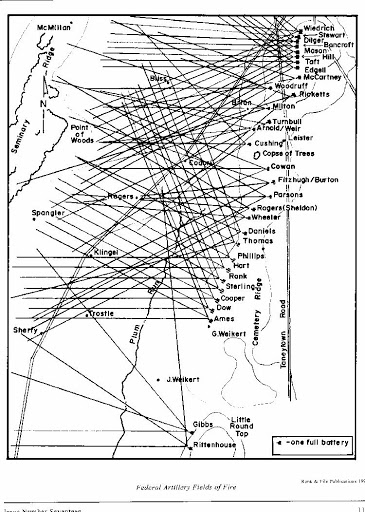


The Union counter fire had an effect on many of the Confederates including Pickett. As the artillery duel continued Porter Alexander found Pickett in a very positive and excited frame of mind. [14] There are conflicting opinions of Pickett’s state of mind; supporters tending to believe the best about him and his conduct on the battlefield, while detractors, both his contemporaries and current historians allege that he was afraid and quite possibly minimizing his exposure to enemy fire due to his obsession with his young fiancée La Salle “Sallie” Corbell. Edwin Longacre wrote: While not himself under fire, Pickett appears not to have taken the barrage too calmly. Aware that Longstreet had asked Alexander recommend the most opportune time for our attack based on the enemys response to his cannonade, Pickett at least twice sent couriers to as the colonel if they should go in. [15]

Like in any historical account, the truth probably lies in the middle of the extreme viewpoints and while we think that we know much about the greatest charge in the history of the United States, we are hindered by the lack of written accounts by most of the senior Confederate officers who took part in Pickett’s Charge. This complicates the task of attempting to separate the true from the false and the truth from a judgment or verdict rendered by a less than impartial judge. Lee, Hill and Longstreet treated the charge as just one episode in long campaign reports, and modern readers, like some of the participants, can wonder how much of any of the three generals really saw once the firing started. [16]

Since no reports of the Confederate division commanders are available, Pickett’s was suppressed because of how critical it was toward other commanders. Pettigrew and Pender were dead, Trimble was wounded and in a Federal prison and Harry Heth, Pickett’s cousin limited his report to the action of July 1st 1863. Likewise, only two of the nine brigade commanders filed reports and none of them were from Pickett’s division, so it is hard to get a complete and accurate view from official sources. Longstreet discussed Pickett’s report and said that it was not so strong against the attack as mine before the attack was made but his was made in writing and of official record. [17] Pickett was reportedly furious at being forced to destroy his report and refused to submit an edited report. So what we are left with on the Confederate side are the reports of two corps commanders and an army commander who were far away from the scene of the action, after action reports of regiments, many of which had lost their commander’s and most of their senior officers, and the recollections from men with axes to grind and or reputations to defend; some Longstreet, some Pickett, some Pettigrew.

                                                               Picketts Charge

The assault force was composed of Pickett’s fresh division from First Corps, Harry Heth’s battered division now under Johnston Pettigrew which had already taken close to 40% casualties and two brigades of Pender’s division now commanded by Isaac Trimble. Of these two brigades, only Lane’s was fresh while Scales brigade, now under command of Colonel William Lowrence had suffered greatly on July 1st; its “casualty rate was 63% and it had lost its commander and no fewer than fifty-five field and company grade officers. [18] And now, these battered units began to take casualties from well directed Federal fire. George Stewart wrote: In most armies, such a battered unit would have been sent to the rear for reorganization, but here it was being selected for a climactic attack! [19]

The Confederate losses mounted at an alarming rate. The psychological impact of artillery casualties was great, for the big guns not only killed but mangled bodies, tore them apart, or disintegrated them. [20] A survivor wrote his wife days later: If the crash of worlds and all things combustible had been coming in collision with each other, it could not have surpassed it seemingly. To me it was like the Magazine of Vengeance” blown up. [21] A soldier of Kemper’s brigade recalled that The atmosphere was rent and broken by the rust and crash of projectilesThe sun, but a few minutes before so brilliant, was now darkened. Through this smoky darkness came the missiles of deaththe scene beggars descriptionMany a fellow thought his time had comeGreat big, stout hearted men prayed, loudly too. [22] Colonel Joseph Mayo of the 3rd Virginia regiment was heavily hit. One of its survivors wrote: when the line rose up to chargeit appeared that as many were left dead and wounded as got up. [23]


On the opposite ridge, Union forces were experiencing the same kind of intense artillery fire. But these effects were minimized due to the prevalent overshooting of the Confederate artillery as well as the poor quality of ammunition. This resulted in few infantry casualties with the worst damage being taken by a few batteries of artillery at “the Angle.” Soldiers behind the lines took the worst beating, but the routing of these non-combatants was of no military significance, [24] This did create some problems for the Federals as Meade was forced to abandon their headquarters and the Artillery Reserve was forced to relocate a little over a half mile to the rear.” [25] The effects of this on operations were minimal as Brigadier General Robert Tyler commanding the Artillery Reserve posted couriers at the abandoned position, should Hunt want to get in touch with him. [26]

Despite the fusillade Meade maintained his humor and as some members of his staff tried to find cover on the far side of the little farmhouse quipped:

Gentlemen, are you trying to find a safe place?…You remind me of the man who drove the oxen team which took ammunition for the heavy guns to the field at Palo Alto. Finding himself in range, he tipped up his cart and hid behind it. Just then General Taylor came along and shouted You damned fool, dont you know you are no safer there than anywhere else?” The driver responded, I dont suppose I am general, but it kind of feels so. [27]

A bombardment of this magnitude had never been seen on the American continent, but despite its apparent awesome power, the Confederate artillery barrage had little actual effect on the charge. The Prussian observer traveling with Lee’s headquarters dismissed the barrage as aPulververschwindung,”…a waste of powder. [28] The Federal infantry remained in place behind the stone wall on Cemetery Ridge ready to meet the assault. Henry Hunt replaced his damaged artillery batteries on Cemetery Ridge. But even more importantly Lieutenant Colonel Freeman McGilvery’s massive battery was lying undetected where it could deliver devastating enfilade fire as the Confederate infantry neared their objective. Likewise, Rittenhouse’s batteries on Little Round Top and Osborne’s on Cemetery Hill were unaffected by the Confederate bombardment were poised to wreak destruction on the men of the three Confederate divisions.

Unlike the Federal Army which had a large pool of artillery battalions in the Artillery Reserve with which to replace batteries that had taken casualties or were running low on ammunition, Porter Alexander had no fresh artillery batteries and suffered a want of ammunition. The manifestation of the effect of this was not long in coming: soon the drivers of the caissons found that the heavy fire had exhausted their supply of shot and shell, and they had to go even farther to get it from the reserve train. As a result some of the guns remained mute and their gunners stood helpless during the cannonade and charge, for Alexander had no batteries in reserve to replace them. [29]

There were two reasons for this. First was that Lee had reorganized the artillery before Chancellorsville. He eliminated the artillery reserve and assigned all artillery battalions and batteries directly to the three infantry corps. This meant that Alexander could only draw upon the battalions assigned to First Corps and had no operational control over the batteries of Ewell’s Second Corps or Hill’s Third Corps.

The second was due to the meddling of Brigadier General William Pendleton, Lee’s senior artilleryman who as a staff officer had no command authority over any of the guns in the army. Pendleton relocated the artillery trains of First Corps further to the rear without informing Alexander or Longstreet. Likewise, Pendleton also ordered the eight guns of the Richardson’s artillery away without notifying anyone. These were guns that Alexander was counting on to provide direct support to the attack by advancing them to provide close support to the infantry.

At about 2:20 p.m. Alexander, knowing that he was running short of ammunition sent a note to Picket and Pettigrew advising them:

General: If you are to advance at all, you must come at once or we will not be able to support you as we ought. But the enemys fire has not slackened and there are still 18 guns firing from the cemetery.” [30]

About twenty minutes later Alexander saw some of the Federal guns along Cemetery Ridge begin to limber up and depart. He also noticed a considerable drop off in Federal fire. He interpreted this to mean that his guns had broken the Federal resistance, and at 2:40 Alexander sent word to Pickett For Gods sake come quick or my ammunition will not let me support you. [31]

However, what Alexander did not realize was that what was happening on Cemetery Ridge had little to do with his bombardment but instead was directed by Henry Hunt. Hunt ordered batteries low on ammunition or that had sustained damage to withdraw and was replacing them with fresh batteries that Alexander could not see, Although he assumed that such might be the case, he noted that the withdraw of batteries was new, for the Federals had never done anything of that sort before, & I did not believe that they were doing it now. [32] He had also decided to conserve ammunition by ordering an immediate cessation and preparation for the assault to follow.[33]

Alexander’s message reached Pickett and Pickett immediately rode off to confer with Longstreet. Pickett gave the message to Longstreet who read it and said nothing. Pickett said, “General, shall I advance!” Longstreet, knowing it had to be, but unwilling to give the word, turned his face away. Pickett saluted and said I am going to move forward, sir” galloped off to his division and immediately put it in motion. [34] Sadly, Pickett had no inkling that his corps commander was immovably opposed to the charge [35] and Pickett, caught up in the moment with the excitement of leading his Division into battle did not notice his friend’s mood.

Pickett and Longstreet, the Order is Given 

A few minutes later Longstreet rode to find Alexander. Meeting him at 2:45 Alexander informed him of the shortage of ammunition. The news was surprising to Longstreet as neither he nor Lee had checked on the supply of ammunition during the morning. [36] The news took him aback enough that he seemed momentarily stunned [37] by it. Longstreet told Alexander: Stop Pickett immediately and replenish your ammunition. [38] But Alexander now had to give Longstreet even worse news telling him I explained that it would take too long, and the enemy would recover from the effect of our fire was then having, and too that we had, moreover, very little to replenish it with. [39] Longstreet continued to ride with Alexander and again eyed the Federal positions on Cemetery Ridge with his binoculars. As he looked at the Federal position he slowly spoke and said I dont want to make this attack,” pausing between sentences as if thinking aloud. I believe it will fail- I do not know how it can succeed- I would not make it even now, but Gen. Lee has ordered it and expects it. [40] Alexander, who as a battalion commander now in charge of First Corps artillery was very uncomfortable, he later wrote:

I had the feeling that he was on the verge of stopping the charge, & that with even slight encouragement he would do it. But that very feeling kept me from saying a word, or either assent I would not willingly take any responsibility in so grave a matter & I had almost a morbid fear of causing any loss of time. So I stood by, & looked on, in silence almost embarrassing. [41]

While Longstreet was still speaking Pickett’s division swept out of the woods to begin the assault. Alexander wrote that the battle was lost if we stopped. Ammunition was too low to try anything else, for we had been fighting for three days. There was a chance, and it was not my part to interfere.” [42]

Despite this Pickett and many of his soldiers were confident of success, and: “no officer reflected the mens confidence better than George Pickett. There was no fatalism in him. Believing that his hour of destiny had come and expecting to take fortune at its flood, he rode down the slope like a knight in a tournament. [43] Pickett was an unforgettable man at first sight [44] Pickett wore a dark mustache drooping and curled at the ends, a thin goatee, and hair worn long and curled in ringlets. His hair was brown, and in the morning sunlight it reflected auburn hints. George Pickett stood slender and graceful at the middle height, and carried himself with an air. Dandified in dress, he was the most romantic looking of all Confederates, the physical image of that gallantry implicit in the Souths self concept. [45]

                                           The Romantic Rebel: George Pickett

George Pickett was born to wealth and privilege in a Neo-feudal society [46] and came from an old and distinguished Virginia family with a long military heritage dating to the Revolution and the War of 1812. He attended the Richmond Academy until he was sixteen and had to withdraw due to the financial losses his parents had suffered during the panic of 1837.

This led to the young Pickett being sent to live with and study law under his mother’s older brother, the future President, Andrew Johnston in Quincy Illinois. The family’s continued financial distress led them to get George to consider the free education provided by West Point. His mother asked Johnston to assist and Johnston set about obtaining an appointment for his nephew. As befit an up-and-coming politician, his quest was short and successful. His Springfield acquaintances included a United States Congressman who happened to be a fellow Southerner and brother Whig, Kentucky native John T. Stuart. [47] There is a long running myth that connects Pickett’s appointment to West Point to Abraham Lincoln, but it is fiction, fabricated by Pickett’s widow Sallie long after her husband and Lincoln’s death. [48]

Pickett entered West Point in 1842 where he was described by a fellow cadet thought a jolly good fellow with fine natural gifts sadly neglected[49] through his tendency to demonstrate in word and deed that henhouse neither to authority nor submit to what’re considered the Academys narrow, arbitrary, unrealistic, harshly punitive, and inconsistently applied code of conduct [50] became a loyal patron of Benny Havens tavern where he was stealing away regularly now to life his glass in good fellowship…” [51]

Pickett’s academic performance, as well as his record of disciplinary infractions at West Point was exceptionally undistinguished. He racked up vast amounts of demerits for everything from being late to class, chapel and drill, uniform violations and pranks on the drill field where he mocked those who observed proper drill and ceremonies. Pickett graduated last in the class of 1846, something that his vast amount of demerits contributed.

His widow Sallie wrote after his death that he accumulated them so long as he could afford the black marks and punishments they entailed. He curbed his harmful behavior, however, when he found himself approaching the magic number of 200 demerits per year that constituted grounds for dismissal. [52] Pickett finally graduated only five behavioral demerits short of expulsion. [53] The graduating class included George McClellan, A.P. Hill, Thomas, later “Stonewall” Jackson as well as a number of other cadets, most of whom who went on to distinguished military and other careers. At West Point Pickett was considered to be the class clown by many of his classmates was the most popular and prominent young man in the class. [54] Among the many friends that he made was an upperclassman named Ulysses S. Grant and their friendship would span decades and would survive the fire of a war that placed them at swords point. [55]

Pickett at Chapultepec 

Pickett was commissioned into the infantry and served alongside James Longstreet in the Mexican War where they fought valiantly in a number of battles, including Contreras, Churubusco, El Molino Del Rey. [56]Pickett distinguished himself at Chapultepec where he had been the first American to scale the ramparts of Chapultepec, where he planted the flag before the admiring gaze of his friend Longstreet. [57]During that assault Longstreet was wounded and Pickett had snatched the colors and planted them on the castle heights for all to see and cheer. [58] For his actions he received a brevet promotion to First Lieutenant.

Following the war Pickett married but was widowed less than two years later when his wife Sally Minge Pickett died during childbirth along with their infant son in 1852. The loss was devastating to the young officer. He went into a deep depression caused by grief and considered leaving the army. He was persuaded by friends, peers and understanding commanding officers to remain.

While on leave following Sally’s death, he was at Fort Monroe, laying under an umbrella at Point Comfort when a child approached him and took pity on him. The child was the nine year old La Salle “Sallie” Corbell and she broke through his emotional defenses by persistently, as only a child can do asking what the source of his grief was. Pickett told the child that his heart had been broken by a sorrow almost too great to bear. When the child asked how ones heart could break, he replied that God broke it when he took from him his loved ones and left him so lonely. [59] While Pickett may not have thought much of the meeting, he did give the little girl a ring and a golden heart bearing his wife’s name. He likely expected never to see her again but though she was a child she was a willful and determined one. She knew her own mind and heart, both told her that one day she would marry George Pickett. [60]

Pickett returned to Texas to serve with the 8th Infantry and was promoted to Captain and ordered to take command of the newly raised Company “D” 9thInfantry at Fort Monroe. Transferred to the Pacific Northwest he married. Widowed after that war he served in the Pacific Northwest where he took a Native American wife who bore him a son, however she did not survive childbirth and when she died in early 1858 Pickett was again widowed. In 1859 Captain Pickett faced down British troops from the Hudson Bay Company in an incident now known at the Pig War which at its heart was a dispute about whether the British or the Americans own San Juan Island. The dispute, which brought the two nations to the brink of war, was settled without bloodshed, save for the unfortunate pig, and Pickett became a minor celebrity in the United States and anathema to the British.

When Virginia seceded from the Union, Pickett like many other southern officers was conflicted in his feelings and loyalties and hoped to the last that he would have to take up arms against neither state nor country. [61]Pickett resigned his commission on June 25th 1861. He wrote to Sallie with who he now maintained a frequent correspondence about his decision and decidedly mixed feelings as he:

Always strenuously opposed disunion…” But While I love my neighbor, i.e., my country, I love my household, i.e., my state, more, and I could not be an infidel and lift my sword against my own kith and kin, even though I do believethat the measure of American greatness can be achieved only under one flag. [62]

Pickett returned to Virginia by a circuitous route where he was commissioned as a Captain in the new Confederate army on September 14th and two weeks later was promoted to Colonel and assigned to command forces along the Rappahannock. Though he had as yet seen no combat serving in the Confederate army, Pickett was promoted to brigadier General and assigned to command a Virginia brigade belonging to Longstreet’s division.

Pickett led his brigade well on the peninsula and at Williamsburg was instrumental in routing an advancing Federal force, and at Seven Pines had helped repel a dire threat to the Confederate position. At Gaines Mill Pickett was wounded in the shoulder during the assault put out of action and placed on convalescent leave to recover from his wounds. During his convalescence he fell in love with an old acquaintance; La Salle Corbell, who as a young girl had cheered him after the loss of his wife now a beautiful young woman nursed him back to health and started a chain reaction that would nearly engulf the Confederate officer. [63]

Pickett was promoted to Major General in October 1862 and was assigned command of the division formerly commanded by David R. Jones, which was assigned to Longstreet’s First Corps. The division was sent to peripheral areas and took no part in the battles of late 1862 or Chancellorsville serving instead in the Tidewater with Longstreet’s corps. The corps took part in a series of operations against Union forces in the Hampton Roads area and Pickett’s division bested a Federal force at Suffolk on April 24th 1863, though it was hardly a true test of his ability to command the division in combat. During this time Pickett spent much time visiting La Salle, much to the concern of some of his officers and Longstreet’s staff, and by the time the corps left the area the two were engaged to be married.

When the Division returned to the Army of Northern Virginia after Chancellorsville, it was among the forces considered by Jefferson Davis to be sent west for the relief of Vicksburg. Since that operation never materialized, the division was assigned to accompany First Corps with the army during the upcoming Pennsylvania campaign. However, much to the consternation of Lee, Longstreet and Pickett, two of its brigades were detached by the order of Jefferson Davis to protect Richmond from any Federal incursion.

During the advance into Pennsylvania the division, now composed of the brigades of James Kemper, Lewis Armistead and Richard Garnett was the trail division in Longstreet’s corps and often, in the absence of cavalry assigned to guard the corps and army trains. Due to its late release from these duties at Chambersburg, Pickett’s Division did not arrive at Gettysburg until late afternoon on July 2nd. Lee decided that they would not be needed that day and Longstreet placed that the division in bivouac at Marsh Creek for the night, sending word by messenger to tell Pickett I will have work for him tomorrow. [64]

keith-rocco-hell-for-glory-picketts-charge

                                                            The Price of Immortality

Pickett spent the night with his soldiers and woke them about 3 a.m. After a quick breakfast Pickett moved the division to Seminary Ridge marshaling his troops in Spangler’s Woods where there was a modicum of protection from Federal fires and observation. However, despite these advantages it placed his division about 1000 yards from the extreme right of Pettigrew’s division with which he would have to coordinate his attack that fateful day.

Pickett scribbled a final note to Sallie as his troops prepared to attack. Oh, may God in his mercy help me as He never has helped me beforeremember always that I love you with all my heart and soul That now and forever I am yours. [65]

When Pickett’s division as well as those of Pettigrew and Trimble swept out of the wood to begin the attack, the last chance for anyone to stop it ended. Robert E. Lee’s final die was cast and nearly thirteen-thousand men began to advance into what Longstreet called “a cul de sac of death.”

As Pickett’s brigades moved out, Pickett galloped up, as debonair as if he had been riding through the streets of the Richmond under the eye of his affianced [66] and every soldier within hearing was stirred by Picketts appeal [67] as he shouted Remember Old Virginia! or to Garnett’s men Up, men, and to your posts! Dont forget today that you are from Old Virginia! [68] But when Garnett asked if there were any final instructions Pickett was told I advise you to make the best kind of time in crossing the valley; its a hell of an ugly looking place over yonder. [69]

Armistead called out to his soldiers, Men, remember who you are fighting for! Your homes, your firesides, and your sweethearts! Follow Me! [70]Armistead’s example had a major impact on his brigade. His men were inspired, as one later wrote They saw his determination, and they were resolved to follow their heroic leader until the enemys bullets stopped them. [71] About 500 yards to Pickett’s left Pettigrew exhorted his men for the honor of the good old North State, forward.” [72]

Pickett’s division showed the full length of its long gray ranks and shining bayonets, as grand as a sight as ever a man looked on.” [73]The sight was impressive on both sides of the line, a Confederate Captain recalling the glittering forest of bayonets” the two half mile wide formations bearing down in superb alignment. [74] The sight of the amassed Confederates moving forward even impressed the Federals. Colonel Philippe Regis de Trobriand, a veteran of many battles in Europe and the United States recalled it was a splendid sight, [75] and another recalled that the Confederate line gave their line an appearance of being irresistible.[76]

But the Federals were confident. Having withstood the Confederates for two days and having survived the artillery bombardment the Union men on Cemetery Ridge eagerly awaited the advancing Confederates. Directly facing the Confederate advance in the center of the Union line was the division of Pickett’s West Point Classmate and North Carolina native who remained with the Union, John Gibbon. The cry went out Here they come! Here they come! Here comes the infantry! [77] To the left of Gibbon Alexander Hays called to his men Now boys look outnow you will see some fun! [78]

The Confederates faced difficulties as they advanced, and not just from the Union artillery which now was already taking a terrible toll on the advancing Confederates. Stuck by the massed enfilade fire coming from Cemetery Hill and Little Round Top, they continued their steady grim advance. Carl Schurz from his vantage point on Cemetery Hill recalled:

Through our field-glasses we could distinctly see the gaps torn in their ranks, the grass dotted with dark spots- their dead and wounded.But the brave rebels promptly filled the gaps from behind or by closing up on their colors, and unasked and unhesitatingly they continued with their onward march.” [79]
8th_Ohio_At_Gettysburg

                                                                          The 8th Ohio 

Pettigrew’s division was met by fire which enveloped them obliquely from Osborne’s thirty-nine guns emplaced on Cemetery Hill. On their left flank a small Federal regiment, the 8th Ohio lay in wait unnoticed by the advancing Confederates. Seeing an opportunity the regiment’s commander Lieutenant Colonel Franklin Sawyer deployed his 160 men in a single line, took aim at Brockenbrough’s Virginia brigade some two hundred yards ahead of the Emmitsburg Road, and opened a devastating fire. Above the boiling clouds the Union men could see a ghastly debris of guns, knapsacks, blanket rolls, severed human heads, and arms and legs and parts of bodies tossed into the air by the impact of the shot. [80] So sudden and unexpected was this that the Confederates panicked and fled in confusion… to the rear where they created more chaos in Trimble’s advancing lines as one observed they Came tearing through our ranks, which caused many men to break. [81] The effect on Confederate morale was very important, for the Army of Northern Virginia was not used to seeing a brigade, even a small one, go streaming off to the rear, with all its flags.Even Picketts men sensed that something disastrous had happened on the left. [82]

In one fell swoop Pettigrew was minus four regiments. Brockenbrough was singularly ineffective in leading his men, he was a nonentity who did not know how to control his recalcitrant rank and file; nor did he have the presence to impress his subordinate officers and encourage them to do his bidding. [83] The disaster that had overtaken Brockenbrough’s brigade now threatened another important component of Lee’s plan- protecting the left flank of the assaulting force. As Brockenbrough’s brigade collapsed, the vital protection of the left flank collapsed with it.

Pettigrew’s division continued its advance after Brockenbrough’s brigade collapsed, but the Confederate left was already beginning to crumble. Sawyer changed front, putting his men behind a fence, and the regiment began firing into the Confederate flank. [84] Now Davis’s brigade was taking the full brunt of the storm of artillery shells from Osborne’s guns. This brigade had suffered terribly at the railroad cut on July 1st. The brigade, especially in terms of field and company grade officers was virtually leaderless, and the inexperienced Joe Davis was helpless to control them. [85]To escape the devastating fire Davis ordered his brigade to advance at the double quick which brought them across the Emmitsburg Road ahead of the rest of the division, where they were confronted by enfilade canister fire from Woodruff’s battery to its left, as well as several regiments of Federal infantry and from the 12th New Jersey directly in their front. A New Jersey soldier recalled We opened on them and they fell like grain before the reaper, which nearly annihilated them. [86] Davis noted that the enemy’s fire commanded our front and left with fatal effect. [87] Davis saw that further continuing was hopeless and ordered his decimated brigade to retire to the position originally held.” [88]

Pettigrew’s remain two brigades continued grimly on to the Emmitsburg Road, now completely devoid of support on their left flank. Under converging fire from Hay’s Federal troops the remaining troops of Pettigrew’s command were slaughtered. Hay’s recalled As soon as the enemy got within range we poured into them and the cannon opened with grape and canister [, and] we mowed them down in heaps.” [89] The combination of shot, shell, canister and massed musket fire simply erased the North Carolinians ranks. [90] Pettigrew was wounded, Colonel Charles Marshall was killed fifty yards from the stone wall and only remnants of companies and regiments remained unscathed. Soon the assault of Pettigrew’s division was broken:

Suddenly Pettigrews men passed the limit of human endurance and the lines broke apart and the hillside covered with men running for cover, and the Federal gunners burned the ground with shell and canister. On the field, among the dead and wounded, prostrate men could be seen holding up handkerchiefs in sign of surrender. [91]

Trimble’s two brigades fared no better. Scales brigade, now under the command of Colonel W. Lee Lowrence never crossed the Emmitsburg Road but instead took position along it to fire at the enemy on the hill. The soldiers from North Carolina who two days before had marched without flinching into the maw of Wainwrights cannon on Seminary Ridge could not repeat the performance.” [92] Trimble was severely wounded in the leg and sent a message to Lane to take command of the division. The order written in the third person added a compliment to his troops: He also directs me to say that if the troops he had the honor to command today for the first time couldnt take that position, all hell cant take it. [93] Lane attempted to rally the troops for one last charge when one of his regimental commanders exploded telling him My God, General, do you intend rushing your men into such a place unsupported, when the troops on the right are falling back?” [94] Lane looked at the broken remains of Pettigrew’s division retiring from the field and ordered a retreat. Seeing the broken remnants of the command retreating, an aide asked Trimble if the troops should be rallied. Trimble nearly faint from loss of blood replied: No Charley the best these brave fellows can do is to get out of this,” so let them get out of this, its all over. [95] The great charge was now over on the Confederate left.

The concentrated Federal fire was just as effective and deadly on the Confederate right. Kemper’s brigade, on the right of Pickett’s advance was mauled by the artillery of Rittenhouse on Little Round Top, which tracked their victims with cruel precision of marksmen in a monstrous shooting gallery” and the overs landed their shots on Garnetts ranks with fearful effect.” [96]

As the Confederates advanced Pickett was forced to attempt to shift his division to the left to cover the gap between his and Pettigrew’s division. The move involved a forty-five degree oblique and the fences, which had been discounted by Lee as an obstacle which along the Emmitsburg Road virtually stopped all forward movement as men climbed over them or crowed through the few openings. [97] Pickett’s division’s oblique movements to join with Pettigrew’s had presented the flank of his division to McGilvery’s massed battery. The movement itself had been masterful, the execution of it under heavy fire impressive; however it meant the slaughter of his men who were without support on their right flank.

Pickett himself was doing his best to direct the movements of his Division. Placing himself just behind his Division he “kept his staff busy carrying messages to various generals and performing other duties on the field. At different times he sent his aides back to Confederate lines to inform Longstreet of his need for reinforcements, or to direct Wilcox when to advance his troops, or to ask Major James Dearing for artillery support.” [98] While some of Pickett’s detractors attempt to accuse him of cowardice, including inventing fables about him drinking behind the lines, the facts do not substantiate the accusations. Likewise, Pickett’s position about one hundred yards behind his advancing troops was optimal for command and control purposes.

Though he did not have operational control of Pettigrew’s division, “when he saw it beginning to falter, he ordered Captains E.R. Baird and W. Stuart Symington to help rally them. Then Pickett himself galloped to the left in an effort to steady the men.” [99]

As Pickett’s division advanced into the Plum Run Valley they were met by the artillery of Freeman McGilvery, who wrote that the execution of the fire must have been terrible, as it was over a level plain, and the effect was plain to be seen. In a few minutes, instead of a well-ordered line of battle, there were broken and confused masses, and fugitives fleeing in every direction. [100]

Stannard’s Vermont Brigade strikes Kemper’s Flank 

Kemper’s brigade which had the furthest to go and the most complicated maneuvering to do under the massed artillery fire suffered more damage. The swale created by Plum Run was a “natural bowling alley for the projectiles fired by Rittenhouse and McGilvery” [101] was now flanked by Federal infantry as it passed the Condori farm. The Federal troops were those of the Vermont brigade commanded by Brigadier General George Stannard. These troops were nine month volunteers recruited in the fall of 1862 and due to muster our in a few days. They were new to combat, but one of the largest brigades in the army and 13th Vermont had performed with veteran like precision the day before [102] leading Hancock to use them to assault the Confederate right. The Vermonters were positioned to pour fire into the Confederate flank, adding to the carnage created by the artillery, and the 13thand 16th Vermont pivoted ninety degrees to the right and fired a succession of volleys at pistol range on the right of Picketts flank.[103]

Kemper had not expected this, assuming that the Brigades of Wilcox and Perry would be providing support on the flank. As he asked a wounded officer of Garnett’s brigade if his wound was serious, the officer replied that he soon expected to be a prisoner and asked Kemper Dont you see those flanking columns the enemy are throwing on our right to sweep the field?[104] Kemper was stunned but ordered his troops to rush the federal guns, however they were torn to pieces first by the artillery and then by the successive musketry of three and a half brigades of Yankee infantry. [105] Kemper was fearfully wounded in the groin and no longer capable of command. His brigade was decimated and parts of two regiments had to refuse their line to protect the flank, and those that continued to advance had hardly any strength left with which to succeed, meaning that the Confederate left and right were for all intents and purposes out of the fight.

This left Armistead and Garnett’s grimly advancing brigades to carry on the fight as they crossed the Emmitsburg Road and approached the stone wall. The brigades where now bunched together and at the point of attack and for a few minutes outnumbered the Federal defenders at the stone wall and the Angle, as one regiment of Webb’s Philadelphia Brigade, the 71st Pennsylvania had bolted to the rear.

This left the decimated remains of Lieutenant Alonzo Cushing’s battery of artillery alone to face the advancing Confederates. Cushing who had already received multiple wounds in his shoulder and groin was desperately wounded. A number of his guns had been disabled and his battery had taken significant numbers of casualties during the Confederate bombardment. Cushing was another of the young West Point graduates who directed batteries at key points during the battle who was not only a skilled artilleryman, but a gifted leader and a warrior who won the respect of his men. One corporal said that Cushing was the best fighting man I ever saw while another recollected He was so cool and calm as I ever saw him, talking to the boys between shots with the glass constantly to his eyes, watching the effect of our shots. [106]

He received permission from the commander of the Philadelphia Brigade, Alexander Webb, among whose regiments his battery was sited to advance his guns to the wall. Though wounded Cushing remained with his gunners and when a subordinate suggested that he go to the rear he replied I will stay right here and fight it out or die in the attempt. [107]

92681186b29b70439321935b2ab79a62

When Webb came to his battery and told Cushing that he believed that the Confederate infantry was about to assault their position Cushing replied I had better run my guns right up to the stone fence and bring all my canister alongside each piece. [108] From the stone fence the young officer directed the fire of his remaining guns. His gunners rammed in more loads of double canister when the Confederates were less than seventy yards away. [109] When the Garnett and Armistead’s survivors were just a hundred yards away from the wall, Cushing ordered triple canister. He was hit a third time, this time in his mouth killing him instantly.” [110] The surviving gunners, now commanded by a sergeant fought hand to hand against the Confederates as they were overrun.

The survivors of Garnett’s brigade, led by their courageous but injured commander, who rode fully exposed to Federal fire on his horse, crossed the Emmitsburg Road and pushed forward, overwhelming the few Federals remaining at the wall. They reached the outer area of the Angle “which had been abandoned by the 71st Pennsylvania” and some of his men stood on the stones yelling triumphantly at their foes.” [111]

Dick Garnett, was still leading his troops mounted upon his horse, miraculously un-hit until he was almost to the wall. There, Garnett, “muffled in his dark overcoat, cheered his troops, waving a black hat with a silver cord” [112] and still seeking redemption from the scurrilous accusations of Stonewall Jackson was shot down, in a blast of musket fire and canister. His now rider less and frightened horse, now alone, ran off the battlefield, a symbol of the disaster which had befallen Pickett’s division.
armistead

Armistead and his decimated brigade continued their grim advance into the fiery cauldron of death, their commander, sword raised with his hat still on it, climbed over the wall shouting to his men Come on boys! Give them the cold steel”…and holding his saber high, still with the black hat balanced on its tip for a guidon, he stepped over the wall yelling as he did so: Follow me! [113] It would be a moment that those that survived would remember for the rest of their lives.
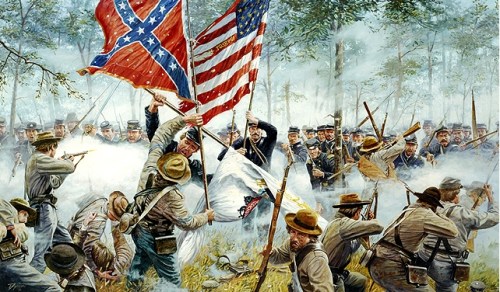
Now, Armistead and his remaining soldiers, maybe about one hundred in total of the approximately 1570 who had advanced out of the woods on Seminary Ridge just twenty minutes before when the order was given to advance. [114] The survivors waded into the wreckage of Cushing’s battery and some began to attempt to turn the guns on the Federals. For a few moments there was a sense of supreme exultation as the rebels swarmed over the fence, forced back two Federal companies, and swallowed up a third. Armistead was the first to reach Cushings two guns, placing a hand on one of them and yelling, The day is ours men, come turn this artillery upon them. [115]

High_Water_Mark_from_Gettysburg

However, the triumph of Armistead and his band was short lived; the 72ndPennsylvania was rushed into the gap by the brigade commander Brigadier General Alexander Webb. The climax of the battle was now at hand and the next few minutes would tell the story, and what that story would be would all depend on whether these blue-coated soldiers really meant it. Right here there were more Confederates than Federals, and every man was firing in a wild, feverish haste, with smoke settling down thicker and thicker. [116] The 69th Pennsylvania, an Irish regiment under Colonel Dennis O’Kane stood fast and their fire slaughtered many Confederates. Other Federal regiments poured into the fight, famous veteran regiments like the 19th and 20th Massachusetts, the 7th Michigan and the valiant remnants of the 1st Minnesota who had helped stop the final Confederate assault on July 2nd at such fearful cost. Major Rice of the 19th Massachusetts wrote:

The grove was fairly jammed with Picketts men. In all positions, lying and kneeling. Back from the edge were many standing and firing over those in front.Every foot of ground was occupied by men engaged in mortal combat, who were in every possible position which can be taken while under arms, or lying wounded or dead.[117]

As his troops battled the Federals hand to hand, using muskets as clubs, and the bayonet Armistead, standing by one of Cushing’s cannon was he was hit by several bullets and collapsed, mortally wounded. Armistead had been the driving force behind the last effort, there was no one else on hand to take the initiative. Almost as quickly as it had come crashing in, the Rebel tide inside the outer angle ebbed back to the wall. [118]

For a time the Confederate survivors engaged Webb’s men in a battle at the wall itself in a stubborn contest with men battling in some places within rifle-length of each other and other places hopelessly mingled. [119] A Federal regimental commander wrote The opposing lines were standing as if rooted, dealing death into each other.” [120] The Federals launched a local counterattack and many Confederates elected to surrender rather than face the prospect of retiring across the battlefield that was still swept by Federal fire.

Brigadier General Alexander Webb

Webb had performed brilliantly in repulsing the final Confederate charge andgained for himself an undying reputation. Faced with defeat, he accepted the challenge and held his men together through great personal exertion and a willingness to risk his life.” [121] For his efforts he was belatedly awarded the Medal of Honor.

Webb, like John Buford on July 1st, Strong Vincent, Freeman McGilvery and George Sears Greene on July 2nd, was instrumental in the Union victory. Hancock said of Webb:

In every battle and on every important field there is one spot to which every army [officer] would wish to be assigned- the spot upon which centers the fortunes of the field. There was but one such spot at Gettysburg and it fell to the lot of Genl Webb to have it and to hold it and for holding it he must receive the credit due him. [122]

The surviving Confederates of Pickett’s division who had not surrendered at the Angle retreated without order [123] and as they drew nearer to the safety of their own lines the survivors of Picketts division soon turned into a sullen mob intent on getting as far as possible from the bloody battlefield. [124] Some commanders attempted to restore order but their efforts were in vain as Pickett’s defeated and shell shocked men realized the enormity of their defeat and the terrible cost.

As the survivors of Pickett, Pettigrew and Trimble’s shattered divisions retreated from the killing field Robert E. Lee did not yet understand that his great assault had been defeated. However, the sullen James Longstreet, who was in a position to observe the horror, did. Longstreet was approached by Lieutenant Colonel Arthur Fremantle, a British observer from the Coldstream Guards. Fremantle did not realize that the attack had been repulsed, having just seen one of Longstreet’s regiments advancing through the woods in good order” and unwisely bubbled I would not have missed this for anything.” [125] Longstreet replied with a sarcastic laugh The devil you wouldnt” barked Longstreet. I would have liked to have missed this very much; weve attacked and been repulsed. Look there. [126]

Fremantle looked out and for the first time I then had a view of the open space between the two positions, and saw it covered with Confederates slowly and sulkily returning towards us in small broken parties, under a heavy fire of artillery. [127] Henry Owen of the 18th Virginia wrote that the retreating men without distinction of rank, officers and privates side by side, pushed, poured and rushed in a continuous stream, throwing away guns, blankets, and haversacks as they hurried on in confusion to the rear. [128]

It was a vision of utter defeat. Pickett, who had seen his division destroyed and had been unable to get it additional support was distraught. An aide noted that Pickett was greatly affected and to some extent unnerved [129] by the defeat. He found Longstreet and poured out his heart in terrible agonyGeneral, I am ruined; my division is gone- it is destroyed.[130] Lee had come up by now and attempted to comfort Pickett grasping his hand and telling him: General, your men have done all that they could do, the fault is entirely my own and instructed him that he should place his division in the rear of this hill, and be ready to repel the advance of the enemy should they follow up their advantage.” [131]The anguished Pickett replied, General Lee, I have no division now. Armistead is down, Garnett is down and Kemper is mortally wounded. [132] Lee missed the point of Picketts anguish completely and attempted to console Pickett again and told the distraught General, General Pickettyou and your men have covered themselves in glory. [133]

Pickett, the romantic true believer in the cause refused to be consoled and told Lee not all the glory in the world, General Lee, can atone for the widows and orphans this day has made. [134] Pickett’s bitterness toward Lee over the loss of his division would redound through the remainder of his life. While Longstreet and Lee maintained their composure, Pickett felt an overpowering sense of helplessness as he observed the high tide from Emmitsburg Road and the subsequent retreat of his shattered division. It was too much for the mercurial romantic to absorb.[135] But Pickett was not alone. Cadmus Wilcox told Lee as he returned from the assault that he came into Pennsylvania with one of the finest brigades in the Army of Northern Virginia and now all my people are gone. [136]

When others attempted to stop the flight of his men, Pickett countermanded them and ordered his survivors to return to the site where they had bivouacked the previous night. A soldier from the 18th Virginia who saw the retreat noted that at Willoughby Run:

The fugitives, without distinction of rank, officers and privates side by side pushed, poured and rushed in a continuous stream, throwing away guns, blankets, and haversacks as they hurried in confusion toward the rear. Before long there was another attempt to restore order, but again Pickett intervened. Don’t stop any of my men! he cried. Tell them to come to the camp we occupied last night. As he said this he was weeping bitterly, and then he rode on alone toward the rear. [137]

When the survivors finally assembled the next morning, they numbered less than 1000 out of the approximately 5000 troops Pickett led into the attack. “Four out of every five of Picketts men had been either killed, wounded, or captured. Two of his three brigadiers were gone, probably dead, the third perhaps mortally wounded. Every one of his regimental commanders had been killed, wounded or captured.[138]

During the retreat Pickett and his remaining soldiers would be assigned to the task of being the Provost Guard for the army, escorting Federal prisoners back during the long retreat back to Virginia. For them, it was a humiliating experience.

Pickett was never the same after the charge of July 3rd 1863. Pickett’s after action report which complained about the lack of support his division received was suppressed and destroyed by Lee who wrote Pickett You and your men have crowned yourselves in glory But we have an enemy to fight, and must carefully, at this critical moment, guard against dissections which the reflections in your report will create. [139]

Pickett married La Salle “Sallie” Corbell in September of 1863, and the marriage would last until his death in 1875. Sallie, impoverished by the death of “her soldier” took up writing as well as speaking tours in both the South and the North. Sallie was a stalwart defender of her husband, who she said had the keenest sense of justice, most sensitive consciousness of right, and the highest moral courage but also opposing hatred, sectionalism and strife. [140] Though much of her work was panned by historians and shunned by established magazines and periodicals; her writing were published by newer popular magazines. Her book The Heart of a Soldier, as Revealed in the Intimate Letters of General George Pickett, C.S.A. was for the most part fabrications authored by her, but she found a niche in newer popular magazines and journals, including Cosmopolitan for which she authored a ten part serial of the Pickett family story on the fiftieth anniversary of the battle. Sallie Pickett’s:

idealized portrait of her husband made him a Confederate hero. He never reached the status of Robert E. Lee or Stonewall Jackson, but his association with the famed but futile charge at Gettysburg helped. Virginia veterans and newspapers began romanticizing Picketts all-Virginia divisions role soon after the battle; it was almost by association that George too would share in this idolization…” [141]

Pickett retained command of his division which was reconstituted after Gettysburg and shipped off to North Carolina where he and it performed adequately but without marked distinction. Pickett had one moment of glory when reacting to a Federal Army under Benjamin Butler advancing on Petersburg he threw a scratch force together which preserved Petersburg and its vital rail line in early May 1864. This allowed General P.T.G. Beauregard to bring up more troops to hold the city.

The division performed adequately in the defensive battles around Richmond and Petersburg, though it suffered terribly from the lack of rations, medicines, clothing and equipmentaggravated by the rigors of life in the trenches. [142] Morale and desertion was a terrible problem in Pickett’s division and Lee was concerned enough to bring enough to bring the matter to Longstreet. Lee used terms like unsoldierly and unmilitary, lax in discipline, loose in military instruction [143] to describe the division. Though he was fully cognizant of the conditions of the trenches Lee identified the source of the problem as Pickett and his officers who were not sufficiently attentive to the men,not informed as to their condition and he told Longstreet: I desire you to correct the evils in Picketts divisionby every means in your power… I beg that you will insist upon these points. [144]

During the Richmond and Petersburg campaign, Pickett was often sick, and at several intervals he was unable to exercise command, and the poor state of his general health, aggravated by the unusually stressful conditions of the past year, age him beyond his years. [145]

The end came at the battle at Five Forks where Pickett’s division was deployed on the far right of the Confederate line, was overwhelmed by a massive assault by Sheridan’s cavalry and the Fifth Corps which destroyed it as a fighting formation. Pickett, for unknown reasons did not put much effort into the defense of Five Forks. He successfully repulsed an attack by Sheridan on March 31st but evidently did not expect an attack the following day. On the afternoon of April 1stPickett was away from his division at a Shad bake with Fitzhugh Lee and Thomas Rosser when the attack came and destroyed his division as a fighting unit. No cowardice was involved; Pickett simply misjudged the situation by assuming that no attack was imminent, yet it left a bad taste in everyones mouth. [146] That being said Picketts lackadaisical effort in holding Five Forks is indefensible. So to is his incredible derelict behavior late on the morning of April 1st when he slipped away from his command to the shad bake not even informing the next senior officer, Rooney Lee that he was gone. [147]

Whether cowardice was involved or not, Pickett’s decision to be away from his division with a very aggressive Federal army at his front was ill-advised and demonstrated to Lee that Pickett was unfit for command. Two days later Pickett and two other generals, including Richard Anderson were relieved of their duties and dismissed by Lee. However Pickett remained with his division until the end and at Appomattox Lee was heard to remark in what some believed was a disparaging manner Is that man still with this army? [148]

The Hangings at Kinston. George Pickett becomes a War Criminal 

George Pickett attempted to rebuild his life after the war and the task was not easy, for though he applied for amnesty, his case was complicated by an incident where he had ordered the execution of twenty-two former North Carolina militiamen who had defected to the Union and been re-captured by the Confederates. Pickett’s action was no different than many Confederate commanders who followed the Richmond government’s decision to take ruthless measures to suppress Unionist sentiments and secession of areas of the Confederacy where Union sympathies ran high. The area of Pickett’s operation was a haven for Tories who openly supported U.S. troops. What was worse, hundreds of local Unionists engaged in the most violent guerrilla activities, shooting and burning out their secessionist neighbors, waylaying Confederate supply trains, attacking outposts. [149]

In a sense Pickett was now engaged in counter-insurgency operations, and like many commanders involved in such operations descend into the same type of barbaric actions of those they are fighting. By early 186 the war was turning into a grim, hate-filled struggle that knew few rules and niceties, and Pickett was changing to the pattern. [150] When Pickett captured the former militiamen he refused to treat them as prisoners of war and instead he court-martialed them and hanged them all. [151] He established a military court composed of Virginia, North Carolina and Georgia officers, hauled the deserters-in-arms before it, and approved the death sentences. [152] When the prisoners went to the gallows Pickett reportedly told each of them God damn you, I reckon you will ever hardly go back there again, you damned rascals; Ill have you shot, and all the other damned rascals who desert. [153]

Federal authorities thought about charging him with war crimes which resulted in Pickett fleeing to Canada. It took the intervention of Pickett’s faithful friend Ulysses S. Grant to have the charges dismissed and for Pickett to be granted amnesty by President Johnson in 1868. Grant admitted that the punishment was harsh, however, Grant’s judgment was steeped in the fact that many Northern commanders had resorted to similar actions in combating insurgents and deserters. Grant wrote in his friend’s defense:

But it was in time of war and when the enemy no doubt it necessary to retain, by some power, the services of every man within their reach. Gen. Pickett I know personally to be an honorable man but in this case his judgement [sic] prompted him to do what can not well be sustained though I do not see how good, either to the friends of the deceased or by fixing an example for the future, can be secured by his trial now. [154]

Even so, Pickett’s life was difficult. Health difficulties plagued him and employment was scarce, even for a man of Pickett’s stature in Virginia. He refused employment which would take him away from Sallie and his children and finally took a job as an insurance agent in Richmond. It was a job which he felt demeaning, requiring that he attempt to sell insurance policies to destitute and out of work Confederate veterans and their families. Sallie wrote that he could not come to terms with a profession that made its profits through what one colleague called gall, gall, old man, gall and grub. [155] Distinctly unhappy the dejected old soldier told her Id sooner face a canon,than to take out a policy with me. [156]

In 1870 he was convinced by John Singleton Mosby to visit Lee when the latter was visiting Richmond as Lee was making a final tour of battlefields and other sites. For Pickett the visit only reinforced his resentment that he felt for Lee, who he felt blamed him for the defeat at Five Forks and had ostracized him. The meeting occurred in Lees room at the Ballard Hotel was icy and lasted only two or three minutes. [157]

Mosby realized quickly that the meeting was not going well and Sensing the unpleasantness of the meeting, Mosby got up in a few moments and Pickett followed him. Once outside the room, Pickett broke out bitterly against that old man who, he said, had my division massacred at Gettysburg. [158] Mosby attempted to assuage his friend’s feelings but Pickett was not mollified by Mosbys rejoinder that it made you immortal. [159]

general-george-pickett-and-lasalle-corbell-picketss-circa-1865-img542

                                                                    George and Sallie

George Pickett was a romantic as well as a true believer in the cause of the Confederacy. Pickett was vain, often self-serving and even irresponsible. He certainly as Porter Alexander noted was a better brigade commander than division commander, a position that he desired but at which never excelled. He was a poor administrator, and in the campaigns of 1864 and 1865 demonstrated exceptionally poor leadership.

His temperament, especially his seeming inability to function in a hierarchical structure, and the rebellious streak that he had as a cadet at West Point was never exercised: He resented authority and chafed at deferring to any man as his superiorPickett never understood his place in the hierarchy. He considered himself part of the cream of the Army of Northern Virginia, but without being willing to shoulder all the responsibilities and sacrifices that entailed. [160]

All that being said, in the matter of Pickett’s conduct during the charge that bears his name; the charges of cowardice or incompetence that some leveled at him are certainly not true. The fact that Pickett retained command after the battle indicates that Lee did not believe that he had acted with cowardice, or that Lee questioned the manner in which Pickett led the assault. Lee had many concerns about Pickett and reservations about his leadership but those stand apart from Pickett’s conduct on July 3rd 1863.

In the matter of Pickett not going far enough forward, it is unlikely that such any such action on Pickett’s part to charge further into the maelstrom would have done little more than add yet another name to the list of Confederate general officers killed or wounded at Gettysburg. The question of how Pickett survived without a scratch, when his three brigadiers and all of his field officers but one went down. This could be done by the brief explanation that his escape was miraculous. [161] Edwin Coddington wrote that it would have been better for his reputation if had been called to give his life or if the attack had been known for what it was, Longstreets Second Assault. [162]

Bitter and discouraged at the end of his life he uttered his last words to Sallie’s uncle who had also served in the Army of Northern Virginia Well, Colonel, the enemy is too strong for me againmy ammunition is all out He closed his eyes, and settled back as if at peace for the first time in his life. Sallie never left his side; two hours after his death they gently pried her hands from his. [163]

Pickett’s charge was over, except for the blame, the stories and the legends, especially in the South. The failure of this disastrous tactical assault that bears Pickett’s name placed the final nail in Lee’s operational plan to take the war to the North and defeat the Federal army on its own territory. Lees plan was almost Burnside-like in its simplicity, and it produced a Fredericksburg with the roles reversed. [164] James McPherson made the very succinct observation that Picketts charge represented the Confederate war effort in microcosm: matchless valor, apparent initial success, and ultimate disaster. [165]

That tactical and operational failure had strategic implications for the Confederacy; it ensured the loss of Vicksburg and forced Lee to assume the defensive in the east. Lee and his men would go on to further laurels. But they never again possessed the power and reputation that they carried into Pennsylvania those palmy midsummer days of 1863.[166] The repulse ended the campaign that Lee had hoped would secure the independence of the Confederacy. The Battle of Gettysburg was and it was much more than a military defeat, but a political one as well, for with it went the slightest hope remaining of foreign intervention. As J.F.C. Fuller wrote It began as a political move and it had ended in a political fiasco.” [167]

                                                                     Notes

[1] Clausewitz, Carl von. On War Indexed edition, edited and translated by Michael Howard and Peter Paret, Princeton University Press, Princeton NJ 1976 p.114

[2] Ibid. Clausewitz On War p.108

[3] Dempsey, Martin Mission Command White Paper 3 April 2012 p.5 retrieved ( July 2014 from http://www.dtic.mil/doctrine/concepts/white_papers/cjcs_wp_missioncommand.pdf

[4] ___________. The Armed forces Officer U.S. Department of Defense Publication, Washington DC. January 2006 p.18

[5] Ibid. The Armed Forces Officer p.18

[6] Ibid. Clausewitz On War p.101

[7] Stewart, George R. Pickett’s Charge: A Micro-History of the Final Attack at Gettysburg, July 3rd 1863 Houghton Mifflin Company Boston 1959 p.94

[8] Hess, Earl JPickett’s Charge: The Last Attack at Gettysburg University of North Carolina Press, Chapel Hill and London 2001 p. 55

[9] Ibid. Stewart Pickett’s Charge: A Micro-History p.94

[10] Wert, Jeffery D. Gettysburg Day Three A Touchstone Book, New York 2001 p.110

[11] Foote, Shelby, The Civil War, A Narrative. Volume Two Fredericksburg to Meridian Random House, New York 1963 p.548

[12] Ibid. Foote The Civil War, A Narrative. Volume Two p.548

[13] Gottfried, Bradley The Artillery of Gettysburg Cumberland House Publishing, Nashville TN 2008 p.206

[14] Ibid. Gottfried The Artillery of Gettysburg p.193

[15] Longacre, Edward G. Pickett: Leader of the Charge White Mane Publishing Company, Shippensburg PA 1995 p.121

[16] Reardon, Carol The Convergence of History and Myth in the Southern Past: Pickett’s Charge in The Third Day at Gettysburg and Beyond edited by Gallagher, Gary W. University of North Carolina Press, Chapel Hill and London 1994 p.83

[17] Ibid. Wert Gettysburg Day Three p.297

[18] Sears, Stephen W. Gettysburg. Houghton Mifflin Co. Boston and New York 2003 p.387

[19] Ibid. Stewart Picketts Charge: A Micro-History p.39

[20] Ibid. Hess Picketts Charge p.153

[21] Ibid. Wert Gettysburg Day Three p.181

[22] Dowdy, CliffordLee and His Men at Gettysburg: The Death of a Nation Skyhorse Publishing, New York 1986, originally published as Death of a Nation Knopf, New York 1958 p.294

[23] Ibid. Wert Gettysburg Day Three p.179

[24] Ibid. Stewart Picketts Charge p.132

[25] Coddington, Edwin B. The Gettysburg Campaign: A Study in Command, A Touchstone Book, Simon and Schuster New York, 1968 p.496

[26] Ibid. Coddington The Gettysburg Campaign p.496

[27] Huntington, Tom Searching for George Gordon Meade: The Forgotten Victor of Gettysburg Stackpole Books, Mechanicsburg PA 2013 p.171

[28] Ibid. Hess Picketts Charge p.163

[29] Ibid. Coddington The Gettysburg Campaign p.499

[30] Trudeau, Noah Andre. Gettysburg: A Testing of Courage, Harper Collins Publishers, New York 2002 p.459

[31] Ibid. Coddington The Gettysburg Campaign p.500

[32] Alexander, Edward Porter Fighting for the Confederacy: The Personal Recollections of General Edward Porter Alexander edited by Gallagher, Gary The University of North Carolina Press, Chapel Hill and London 1989 p.258

[33] Hunt, Henry The Third Day at Gettysburg in Battles and Leaders of the Civil War edited by Bradford, Neil Meridian Press, New York 1989 p.374

[34] Alexander, Edwin Porter. The Great Charge and the Artillery Fighting at Gettysburg, in Battles and Leaders of the Civil War edited by Bradford, Neil Meridian Press, New York 1989 p.364

[35] Ibid. Dowdy Lee and His Men at Gettysburg p.297

[36] Wert, Jeffry D. General James Longstreet: The Confederacy’s Most Controversial Soldier A Touchstone Book, Simon and Schuster, New York and London 1993 p.291

[37] Ibid. Coddington The Gettysburg Campaign p.501

[38] Ibid. Alexander The Great Charge and the Artillery Fighting at Gettysburg p.365

[39] Ibid. Alexander The Great Charge and the Artillery Fighting at Gettysburg p.365

[40] Ibid. Trudeau. Gettysburg: A Testing of Courage pp.474-475

[41] Ibid. Alexander The Great Charge and the Artillery Fighting at Gettysburg p.365

[42] Ibid. Alexander Fighting for the Confederacy p.261

[43] Ibid. Dowdy Lee and His Men at Gettysburg p.313

[44] Ibid. Wert Gettysburg Day Three p.109

[45] Ibid. Dowdy, Lee and His Men at Gettysburg p.264

[46] Ibid. Longacre Pickett p.4

[47] Ibid. Longacre Pickett p.6

[48] See Longacre Pickett pp.6-7. The myth was quite successful and it endures in some accounts of Pickett’s life and in a number of military histories including Larry Tagg’s The Generals of Gettysburg

[49] Waugh, John C. The Class of 1846 from West Point to Appomattox: Stonewall Jackson, George McClellan and their Brothers A Ballantine Book, New York 1994 pp.38-39

[50] Ibid. Longacre Pickett p.7

[51] Ibid. Waugh The Class of 1846 from West Point to Appomattox p.39

[52] Ibid. Longacre Pickett p.12

[53] Guelzo, Allen C. Gettysburg: The Last Invasion Vintage Books a Division of Random House, New York 2013 p.378

[54] Ibid. Guelzo Gettysburg: The Last Invasion p.378

[55] Ibid. Longacre Pickett p.20

[56] Ibid. Hess Picketts Charge p.37

[57] Ibid. Dowdy Lee and His Men at Gettysburg p.264

[58] Ibid. Waugh The Class of 1846 p.457

[59] Ibid. Longacre Pickett p.32

[60] Ibid. Longacre Pickett p.33

[61] Ibid. Longacre Pickett pp.50-51

[62] Ibid. Longacre Pickett p.51

[63] Ibid. Hess Pickett’s Charge p.38

[64] Ibid. Hess Pickett’s Charge p.47

[65] Ibid. Dowdy Lee and his Men at Gettysburg p.296

[66] Freeman, Douglas Southall, Lee an abridgment by Richard Harwell, Touchstone Books, New York 1997 p.338

[67] Freeman, Douglas Southall Lee’s Lieutenants: A Study in Command abridged in one volume by Stephen Sears, Scribner Books, Simon and Schuster, New York 1998 p.594

[68] Ibid. Guelzo, Gettysburg: The Last Invasion p.408

[69] Ibid. Hess Picketts Charge p.166

[70] Ibid. Hess Picketts Charge p.167

[71] Ibid. Hess Picketts Charge p.167

[72] Ibid. Trudeau. Gettysburg: A Testing of Courage p.483

[73] Ibid. Alexander The Great Charge and the Artillery Fighting at Gettysburg p.365

[74] Ibid. Foote The Civil War, A Narrative. Volume Two p.553

[75] Ibid. Guelzo Gettysburg: The Last Invasion p.407

[76] Ibid. Hess Picketts Charge p.193

[77] Ibid. Hess Picketts Charge p.193

[78] Ibid. Guelzo Gettysburg: The Last Invasion p.411

[79] Ibid. Sears Gettysburg p.422

[80] Catton, Bruce The Army of the Potomac: Glory Road Doubleday and Company, Garden City New York, 1952 p.318

[81] Ibid. Sears Gettysburg p.423

[82] Ibid. Stewart Pickett’s Charge: A Micro-History of the Final Attack at Gettysburg pp.193-194

[83] Ibid. Hess Pickett’s Charge p.187

[84] Ibid. Stewart Pickett’s Charge: A Micro-History of the Final Attack at Gettysburg p.193

[85] Ibid. Dowdy Lee and His Men at Gettysburg p.311

[86] Ibid. Trudeau. Gettysburg: A Testing of Courage p.494

[87] Ibid. Sears Gettysburg p.425

[88] Ibid. Trudeau. Gettysburg: A Testing of Courage p.494

[89] Ibid. Trudeau. Gettysburg: A Testing of Courage p.502

[90] Ibid. Wert Gettysburg Day Three p.216

[91] Ibid. Catton The Army of the Potomac: Glory Road p.318

[92] Ibid. Trudeau. Gettysburg: A Testing of Courage p.504

[93] Ibid. Stewart Pickett’s Charge: A Micro-History of the Final Attack at Gettysburg pp.238-239

[94] Ibid. Trudeau. Gettysburg: A Testing of Courage p.504

[95] Ibid. Guelzo Gettysburg: The Last Invasion p.425

[96] Ibid. Foote The Civil War, A Narrative. Volume Two p.555

[97] Ibid. Coddington The Gettysburg Campaign p.503

[98] Ibid. Coddington The Gettysburg Campaign p.505

[99] Ibid. Coddington The Gettysburg Campaign p.505

[100] Ibid. Gottfried The Artillery of Gettysburg p.217

[101] Ibid. Hess Pickett’s Charge p.220

[102] Ibid. Coddington The Gettysburg Campaign p.515

[103] Ibid. Coddington The Gettysburg Campaign p.515

[104] Ibid. Trudeau. Gettysburg: A Testing of Courage p.502

[105] Ibid. Sears Gettysburg p.448

[106] Ibid. Gottfried The Artillery of Gettysburg p.200

[107] Ibid. Gottfried The Artillery of Gettysburg p.221

[108] Ibid. Gottfried The Artillery of Gettysburg p.208

[109] Ibid. Wert Gettysburg Day Three p.211

[110] Ibid. Gottfried The Artillery of Gettysburg p.221

[111] Ibid. Trudeau. Gettysburg: A Testing of Courage p.505

[112] Ibid. Dowdy Lee and His Men at Gettysburg p.317

[113] Ibid. Foote The Civil War, A Narrative. Volume Two p.562

[114] Ibid. Stewart Pickett’s Charge: A Micro-History of the Final Attack at Gettysburg p.172

[115] Ibid. Hess Pickett’s Charge p.262

[116] Ibid. Catton The Army of the Potomac: Glory Road p.319

[117] Ibid. Stewart Pickett’s Charge: A Micro-History of the Final Attack at Gettysburg pp.235-236

[118] Ibid. Trudeau Gettysburg p.508

[119] Ibid. Stewart Pickett’s Charge: A Micro-History of the Final Attack at Gettysburg p.236

[120] Ibid. Sears Gettysburg p.451

[121] Ibid. Coddington The Gettysburg Campaign p.528

[122] Ibid. Coddington The Gettysburg Campaign p.528

[123] Ibid. Stewart Pickett’s Charge: A Micro-History of the Final Attack at Gettysburg p.248

[124] Ibid. Hess Pickett’s Charge p.309

[125] Fremantle, Arthur Three Months in the Southern States, April- June 1863 William Blackwood and Sons, Edinburgh and London 1863 Amazon Kindle edition p.285

[126] Ibid. Wert General James Longstreet The Confederacy’s Most Controversial Soldier p.292

[127] Ibid. Fremantle Three Months in the Southern States p.287

[128] Ibid. Sears Gettysburg p.456

[129] Ibid. Hess Pickett’s Charge p.326

[130] Ibid. Guelzo Gettysburg: The Last Invasion p.428

[131] Ibid. Guelzo Gettysburg: The Last Invasion p.428

[132] Ibid. Hess Pickett’s Charge p.326

[133] Ibid Guelzo Gettysburg: The Last Invasion p.428

[134] ibid. Guelzo Gettysburg: The Last Invasion pp.428-429

[135] Ibid. Hess Pickett’s Charge p.325

[136] Ibid. Guelzo Gettysburg: The Last Invasion p.429

[137] Ibid. Sears Gettysburg p.456

[138] Ibid. Waugh The Class of 1846 p.489

[139] Ibid. Hess Pickett’s Charge p.354

[140] Ibid. Reardon The Convergence of History and Myth in the Southern Past: Pickett’s Charge p.76

[141] Gordon, Lesley J. “Let the People See the Old Life as it Was” La Salle Corbell Pickett and the Myth of the Lost Cause in The Myth of the Lost Cause and Civil War History edited by Gallagher, Gary W. and Nolan, Alan T. Indiana University Press, Bloomington and Indianapolis 2000 p.170

[142] Ibid. Longacre Pickett p.160

[143] Selcer, Richard F. Lee vs. Pickett: Two Divided by War Thomas Publications, Gettysburg PA 1998 p.66

[144] Ibid. Selcer Lee vs. Pickett p.66

[145] Ibid. Longacre Pickett pp.160-161

[146] Ibid. Hess Pickett’s Charge p.375

[147] Ibid. Longacre Pickett pp.166-167

[148] Ibid. Hess Pickett’s Charge p.375

[149] Ibid. Longacre Pickett p.137

[150] Ibid. Longacre Pickett p.141

[151] Guelzo Allen C. Fateful Lightening: A New History of the Civil War Era and Reconstruction Oxford University Press, Oxford and New York 2012 p.368

[152] Ibid. Longacre Pickett p.140

[153] Ibid. Guelzo Fateful Lightening p.368

[154] Ibid. Longacre Pickett p.175

[155] Ibid. Longacre Pickett p.178

[156] Ibid. Longacre Pickett p.178

[157] Ibid. Hess Pickett’s Charge p.377

[158] Ibid. Freeman Lee p.569

[159] Ibid. Waugh The Class of 1846 p.529

[160] Ibid. Selcer Lee vs. Pickett p.101

[161] Ibid. Stewart Pickett’s Charge: A Micro-History p.287

[162] Ibid. Coddington The Gettysburg Campaign p.528

[163] Ibid. Longacre Pickett p.180

[164] Millet, Allan R. and Maslowski, Peter, For the Common Defense: A Military History of the United States The Free Press a Division of Macmillan Inc. New York, 1984 p.206

[165] McPherson, James The Battle Cry of Freedom: The Civil War Era Oxford University Press, Oxford and New York 1988 p.662

[166] Ibid. McPherson The Battle Cry of Freedom p.665

[167] Fuller, J.F.C. Grant and Lee: A Study in Personality and Generalship, Indiana University Press, Bloomington IN 1957 pp.200-201

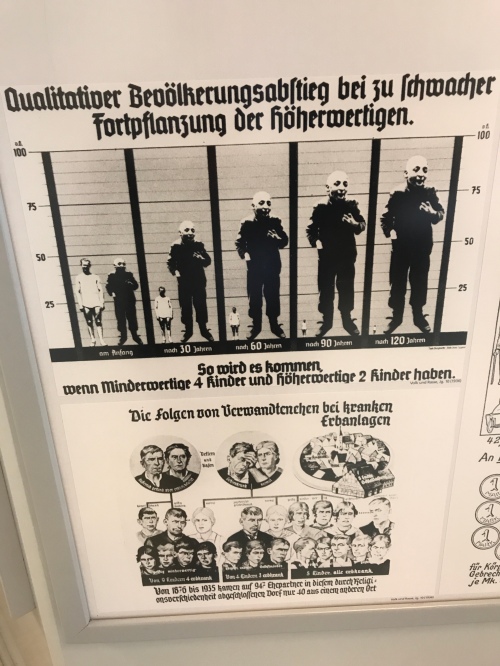
9 Comments

Filed under civil war, Gettysburg, History, leadership, racism, us army, war crimes

Statues With Limitations: Time to Take Them Down

The Confederate Monument in Portsmouth, Virginia in 2017 and on June 11th 2020

Friends of Padre Steve’s World,

I have to apologize for the delay in getting this out. I have been working on most of the week. In fact, I thought I would have it ready on Wednesday night, but I was not happy with my revisions and the situation kept changing. So I kept editing, redoing, adding and deleting. That consumed Thursday night and Friday night as well as I tried to include the bases named for former Confederates is well. I quit last night and decided enough, that I would use what I had written about them in a separate article.  

This is a heavily edited and revised consolidation three articles that I wrote in 2017 following the White Nationalist rallies in Charlottesville, that the violence inflicted on the counter-protestors by the White Nationalists.  Of course that was when President said that “there were very good people on both sides.” I shuddered when I heard his words. Since then the President doesn’t even try to hide his massive amount of racism and admiration for the republic built on the foundation of slavery, whose descendants and supporters through the south and even in the north, erected monuments which were for the most part to perpetuate the memories of traitors, and to remind Blacks that they were not equal.

Over the past two weeks this topic, which was shut down pretty quickly after Charlottesville, has risen again with good reason. The brutal murder of George Floyd in Minneapolis by a White police officer, which was followed by protests with a militarized police response, causing additional violence against unarmed and mostly peaceful protestors. The President Trump ordered an attack on peaceful protestors by heavily armed federal police and National Guardsmen, firing tear gas, firing rubber bullets, and brutalizing people indiscriminately following a speech from the Rose Garden to the Nation. He did it for a photo op outside St. John’s Church where he held up a Bible like a weapon. I never felt more afraid of an American President than I did at that moment. Overwhelming numbers of people agreed, and some of the finest, most honorable, and distinguished military leaders this nation has produced since Vietnam began to speak out, former Secretary of Defense and Marine Corps General James Mattis compared Trump’s actions to those of Hitler and the Nazis. And still Trump tweeted, but military commanders and governors took action.

Admiral Gilday, the Chief of Naval Operations set about the process of banning the official or unofficial display of the Confederate flag on Naval Bases. The Commandant of the Marine Corps extended his ban on it to bumper stickers, and flags on cars, clothing, or displayed in barracks rooms. Governors, Mayors, and City Councils began to order or debate the removal of statues on public grounds. The Army announced that it would consider renaming bases named in honor of former Confederate Generals, only to have Trump defend names of the bases and state that they would not be renamed. The Senate Armed Services Committee voted that the bases should be renamed and included that in the National Defense Authorization Act, which the President has promised to veto if the amendment was included.

But last night at least two important Confederate Monuments were toppled or so heavily damaged before authorities could have them removed. The first was the statue of Confederate President Jefferson Davis on Richmond’s Monuments Boulevard, which was toppled from its base. The other was Portsmouth, Virginia’s monument to “Our Confederate Dead.” The city council had taken up a discussion about removing the monument, but demonstrators accompanied by a brass band with no police intervention, heavily damaged it amid a party like atmosphere.

Truthfully, it reminded me of when East Germans tore down the wall, and other Easter European nations topped statues of Stalin and other Communist leaders in 1989 as they overthrew their Communist governments. Sadly, it was marred when one man trying to clear people out of the way of a statue that was being pulled down was pinned under it and seriously injured.

Context is Everything

Why they Fought: Willing Volunteers or Draftees

The context of the placement of the Confederate Monuments is paramount as I will explain, and my comments are not meant to impugn the lives of people’s ancestors. However, what motivated these men to fight is part of the context. Many, who were not professional soldiers, especially early in the war were eager and willing volunteers with dreams of glory, speedy victory, and return to normal life after the Confederacy achieved independence. While many did not own slaves, and were poor, the fact that they were White, meant that they were at least not at the bottom of the social ladder. Likewise, some slave owners, some who held many and others just a few felt strong enough to join up.

My family on both my paternal and maternal sides fought as members of the 8th Virginia Cavalry on the side of the Confederacy, despite their part of Virginia officially siding with the Union and becoming the state of West Virginia. One of them, the family patriarch on my paternal side was a slave holder who after the war refused to swear his allegiance to the United States and quite possibly was a member of White Supremacist groups after the war. There is no doubt of what he fought for, and the fact that he was a traitor and remained a traitor to our country.

I don’t know as many details about the maternal side except they were part of the same regiment, none were subject to conscription and as such all volunteered willingly to fight against the United States. For me that is a problem, I find it hard to honor their military service because it was against the United States. There are no records that I know of, no letters that they wrote which say what they thought, and they are not “mentioned in dispatches” (the manner in which the Confederate Army honored soldiers) for any particular gallantry, in fact the history of the regiment mentions that my paternal family patriarch, an officer, deserted in February of 1865.

I also have draw a distinction between the kinds of men that served in the Confederate Army. In particular I make a distinction between those that were eager volunteers for the Confederacy, like my ancestors, and those who were unwilling conscripted in the Confederate Draft beginning in early 1862. Interestingly enough the Confederates resorted to a draft before the Union because the Confederate Army could not get enough willing volunteers. These men were drafted, often against their will, and the Confederate draft had exemptions for the rich, and slave owners, who could pay for substitutes, and go on with their life running plantations. However, a few notable slave owners, like Wade Hampton of South Carolina not only did  not take advantage of that privilege, to volunteer, but Hampton went beyond volunteering, but actually armed and equipped what was in effect a combined arms regiment of infantry, cavalry, and artillery. He was a volunteer, who had never served in the U.S. Army and he served throughout the war, serving with distinction, and went home to nothing.

Most of the soldiers drafted had no means to pay for a substitute or did not have the political connections to escape it. Interestingly one of the notable exemptions to the Confederate Draft were the men who were exempted because they owned more than ten slaves or worked for someone that owned more than 20 slaves. This was known as the Twenty Slave Rule, which was modified in Draft Law of 1864 to 15 slaves. As you can imagine many poor Whites who owned no slaves found the rule to be quite unjust, but this kind of privilege is just that, quite unjust.

As a result the conscripts were frequently abused by the willing volunteers and their commanders, and frequently deserted. When found, most were summarily executed following a Drumhead Trial. As the war became more desperate, deserters were summarily executed without any trial. Hundreds of deserters from the Army of Northern Virginia were executed in the last months of the war by the direct order of Robert E. Lee simply because they were trying to go home to their families who had been displaced by the advance of Sherman’s army in Georgia and the Carolinas. These men were victims of the war and secessionist leaders as much as anyone. If you read some of their letters they are heartbreaking.

All of those who volunteered to serve the Confederate cause were traitors. But the men who had previously been officers in the United States Army or Navy, or in high Federal office, were far worse, because they broke their oath of office. No-matter their reason for serving the Confederacy, none of their their gallantry as soldiers, battlefield heroics, leadership skills, or tactical brilliance matters because they were traitors to the United States. Yes they were Americans, and many had served honorably before the Civil War, but that makes them no less traitors.

After the war a some of the survivors reconciled with the Union, and openly opposed the growing myth of the Lost Cause, and took no part in subsequent violence or in implementing discriminatory measures against the now free Blacks. Among the most prominent of these men were Lee’s lieutenants James Longstreet, Richard Ewell, John Mosby, and Billy Mahone. I have little doubt that A.P. Hill would have joined them had he not been killed in action at the end of the war. Following the war Hill’s widow opposed Jubal Early and other proponents of the Lost Cause.

Longstreet, received a pardon and his citizenship with the help of the Radical Republicans who were most vocal in terms of Reconstruction, and he announced his support for the election of Ulysses S. Grant in the 1868 election. For this he was condemned by many former Confederates. He received an appointment as Surveyor of Customs New Orleans. In 1872 he was appointed as head of the Louisiana Militia, by the Republican Governor. In 1873 he sent troops to stop the threat of an attack on the majority Black town of Colfax, but they arrived a day after several hundred members of the White League committed what is now known as the Colfax Massacre. In 1874 he led the New Orleans Police, and local militia, including Blacks to defend the temporary capital against a force of more than 8,400 members of the White League, which outnumbered his force by more than two to one. The action became known as the Battle of Liberty Place by opponents of Reconstruction and White Supremacists. During the action he was wounded, his men defeated and Grant sent in Federal troops to restore order. The supporters of the Lost Cause despised him because he told the truth when they claimed that States Rights, not Slavery. Longstreet on hearing this, said “I never heard of any other cause of the quarrel than slavery.” Longstreet in word and deed proved his loyalty. Despite the fact he was one of the corps commanders in American history, and stood for what was right after the war he did not get a Fort named after him.

Robert E. Lee himself did reconcile and opposed the use of the Confederate flags, uniforms, and monuments, after the war, but still held very racist views and never apologized for his actions. I will explore Lee’s actions during the secession crisis, during, and after the war the at a later time because for the most part they are neither honorable or noble.

Interestingly, very few monuments, except those on battlefields are dedicated to these men in the South, except for Robert E. Lee who ironically wanted no part of them. Nor are there monuments in the South to Southern officers who remained loyal to the Union during the war including Generals Winfield Scott, George Thomas, John Buford, John Gibbon, Montgomery Miegs, and Admiral David Farragut.

Likewise there is another class of men who have to be considered when dealing with the Monument Controversy. These were the political leaders whose actions led directly to the deaths of three quarters of a million men, including hundreds of thousands of Southern men, and the destruction of much of the South. How even the most devoted Southerner who wants to honor their soldiers can tolerate monuments to these political leaders who got so many of them killed  in their back yards is beyond me. These were also the men who ensured that primary reason for secession given in their various articles of secession for each state was preserving and expanding slavery, while maintaining white superiority. As Confederate Vice President Alexander Stephens noted in his Cornerstone Speech:

“Our new Government is founded upon exactly the opposite idea; its foundations are laid, its cornerstone rests, upon the great truth that the negro is not equal to the white man; that slavery, subordination to the superior race, is his natural and normal condition.”

There is a final group that needs to be considered. These were Confederate veterans, including notables like General Nathan Bedford Forrest, as well as men who did not serve in the war who joined paramilitaries such as the Ku Klux Klan, the Red Shirts, and the White Leagues, that terrorized and killed newly free blacks, sometimes destroying whole towns or neighborhoods in the process.  There were others politicians, turned soldiers, and went into politics again who established the Black Codes. These were pre-Jim Crow laws that placed many former slaves into a form of slavery by other means, imprisoning them and making them forced laborers on plantations, and businesses, many owned by Northerners.

Racism and slavery was at the heart of the war, and it proved to be not just a Southern problem. Many Northern businesses and banks had a strong financial interest in slavery, and there was a strong anti-war, pro-Confederate movement, known as the Copperheads in the North that fully approved of slavery, the post-war Black Codes, and Jim Crow. Likewise there were many Northerners who were just as racist as any Southerner, before, during and after the war. There were and are still are some  Sundown Towns, though they don’t openly say so, in the North and states that were never a part of the Confederacy. In no way can all Northerners be fully excused from the crime of slavery, nor can many be absolved of being as racist any pro-slavery Confederate or Jim Crow proponent. Some of these men have monuments built in their honor which likewise should be examined if we are going to talk about the Confederate monuments.

As to the monuments themselves, the vast majority were erected after the Plessy v. Ferguson case that legalized the Jim Crow Laws and empowered the movement to disenfranchise blacks, to fire them from positions in Federal and State governments, and to use violence against Blacks to keep them in line. Almost all of the monuments which were erected between 1895 and 1930 were put up not to honor the men who served but to remind Blacks of their status. The same is true of the next major surge of monument building which occurred during the Civil Rights movement, again to demonstrate to Blacks that they were subordinate to Whites, and many of these monuments were erected in places where no Confederate soldiers came from, and others which commemorate men who committed terrorist acts and murder against Blacks in the years after the war. In many case these monuments are located in cities and towns that are heavily African American. Two of these are no far from where I live in Norfolk and Portsmouth Virginia. They have different histories which I think leads to a discussion about their context.

Context and Placement Matter

Alexander Pope wrote “Monuments, like men, submit to fate.” 

Instead of going directly into what I think should be done with these monuments but think that a little bit more background and context is necessary. That context is best put in the difference between history and memory. History, is made by people because it has real world effects cannot be erased because for good or bad its effects always are with us. Memory on the other hand is often selective and tends toward sentimentally, or our sense of anger, or grief  over over past losses or the loss of a mythological past.  Because of that, memory often leads to the preservation of things that provide us with a certain sense of comfort, or things that buttress our innate sense of superiority and desire for revenge.

Statues and monuments themselves have to be taken in their historical context: especially what they meant to the people that erected them and the era in which they were constructed. From time immemorial people and nations have erected statues and monuments to dieties, empowers, kings, generals, and yes, even philosophers and historians. They have also sought to commemorate the lives of soldiers who died in various wars, in part to honor their dead, as did the ancient Athenians at Kerameikos, but more often to build upon a sense of national myth and purpose, to link the sacrifices of yesterday’s leaders, or soldiers to their current generation’s political, social, and even spiritual urges.

Some religions like Judaism and Islam have traditionally frowned upon the erection of statues and images that represented their dieties, their saints, or their leaders, fearing that such images could lead to idolatry. There was even a constroversy in the Christian Church, the Iconoclast Controversywhich dealt with the issues of statues of Christ, the Virgin Mary, or Saints which took more than a hundred years to resolve.

In Western society, especially since the Romans there has been a conscious attempt by nations to built statues and monuments to their leaders and other men, as women seldom rated such honor, whether the men actually deserved honor or not. As such there are monuments across Europe in prominent places to honor men with political, social, hereditary, or economic connections. Often when compared to their contemporaries, or others, before or after them, did little to be heirs to such honor. This does not mean that they were necessarily bad people, or even unworthy of the honor of their time, but rather that they are undeserving of perpetual honor in the most public of locations, or in places unconnected with where they made their name.

Cemeteries and museums are the best places for statues which have past their effective life in the public square. Removing them from places of honor does nothing to harm history, nor does it write them out of history. I like how the Old Testament writers of the books of the Kings and Chronicles end their discussions of the kings of Israel and Judah. They note that these men’s lives and deeds, good and evil, are written about and where they were buried to be with their ancestors. An example of the is Jehu, one of the kings of Israel in the book of Second Kings: “Now the rest of the acts of Jehu, all that he did, and all his power, are they not written in the Book of the Annals of the Kings of Israel?”

Since the Jews of the Old Testament did not build statues to their leaders for fear of idolatry, they ensured through the oral, and later the written tradition that these leaders, the good and the bad, were remembered for their work and contributions, as well as their failures. The Islamic tradition is quite similar.

The ancient Greeks, particularly those of Athens chose to use the cemetery as a place to remember their dead. In dedicating the Mount Auburn Cemetery during the Greek revival, U.S. Supreme Court Justice Joseph Story noted:

“The Greeks exhausted the resources of their exquisite art in adorning the habitations of the dead. They discouraged internments within the limits of their cities; and consigned their relics to shady groves, in the neighborhood of murmuring streams and merry fountains, close by the favorite resorts of those who were engaged in the study of philosophy and nature, and called them, with the elegant expressiveness of their own beautiful language, cemeteries or “places of repose.”

Cemeteries are always places where the dead can be honored or remembered, and where their descendants can find comfort and even sense the presence of their departed ancestors.

But the public square is another matter. Times change, societies change, governments and systems of governmental change. The statues that the early colonists of the British American colonies erected to King George III after the French and Indian War, had no place in the new republic and were removed. Monuments to Josef Stalin and Vladimir Lenin where removed from their places of prominence in Hungary, Czechoslovakia, Poland, and Romania once those countries escaped Soviet domination. After the Second World War, the new Federal Republic of Germany banned any monuments to Nazi Leaders as well as the use or display of Nazi paraphernalia. Instead, resisters to the Nazis, as well as the victims of the Nazis have been honored and remembered, especially those killed in the Holocaust. Since reunification Germany has continued to honor the victims and resistors much to the new generation of Germans born in the former East who know little about the evil of the Nazis and seek to follow their example.

However, when a monument is located in prominent place it makes a statement about the values and character of the people who put it there and the times in which they lived. But as I said, times changes, as do societal values, and in the case of the cause of the Civil War, so do views on race and the value of other human beings.

Statues in public places dedicated to specific individuals or events tend to have a shelf life, which means that they regardless of who they are dedicated, to need to be periodically re-examined in the light of history to see if they should remain in their current place of honor or be moved to a different location.

But, the United States is a comparatively young country, our oldest monuments are likewise comparatively new, and many pale in comparison to those of Europe, the Middle East, and Asia. In those areas multiple civilizations and empire have risen and fallen, massive monuments have been erected, toppled, or faded away. Many surviving monuments now are in museums, in collections of antiquity representing fallen civilizations, or have been moved from places of honor and replaced by ones that more appropriately represent the current national culture and experience.

As we approach the first quarter millenium of our experiment as a republic it is a good time to look at what we have commemorated with monuments and make considered decisions about each of them, and not just Confederate monuments.

Obviously many, especially those that deal with our founding as a nation and our founders need to stay, but others should be replaced, or removed to more appropriate venues. In cases of monuments that memorialize the most shameful parts of our history, and men whose actions subjected others to inhuman treatment, and caused the deaths of hundreds of thousands we do have options of what to do with them which now have to be exercised.

One option could be to leave them where they are and place other monuments and markers to explain the historical context and promote truthful history versus myth, as we have with men like George Washington and Thomas Jefferson.  In both cases we honor the good but we own up to other things about them.

Another option is to remove them, but what replaces them should be well thought out. This actually goes beyond the monuments themselves. Our actions have to do with history, historical preservation, and the narrative that a community wants to communicate about its history, its values, and yes, even its future. Whatever replaces the monuments we replaced, for good or bad in the long run, are part of what bind generations together, or drives them apart.

A third option is destroying them,  especially those dedicated to men who were evil, or represented evil causes. In the case of many of the relatively generic mass produced monuments to Confederates during the Plessy v. Ferguson and Civil Rights Era, the monuments were not placed to honor long dead soldiers but to stick a finger in the eyes of Blacks, and defy those who called for more than emancipation, but true equality.

It think in the case of truly evil men that their statues and monuments should be placed in poorly kept parks, at eye level with other statues like them. This allows people to view them not as exalted figures, but as for their littleness and evil.  A number of Eastern European countries have done this with statues of Stalin, Lenin, and others from the Soviet era.

But the generic mass produced ones are another matter. They are of no particular quality, their value only in reminding Blacks that they are despised.They should be removed, and if someone wants them as a backyard ornament, or if someone wants them to stand guard over the graves of Confederate dead as they lay in repose. That may be the best option, but there are so many of them.

The placement or monuments is of more importance than their existence, and their contexts matter. Honore De Balzac noted: “With monuments as with men, position means everything.

Removal, Relocation, Preservation, or Destruction: What Now?

It is interesting to see how memory and myth cloud history when it comes to monuments, especially those to the Southern Confederacy. This confederacy that was described by its Vice President, former US Senator Alexander Stephens in these words:

“Our new government is founded upon exactly the opposite idea; its foundations are laid, its corner- stone rests upon the great truth, that the negro is not equal to the white man; that slavery — subordination to the superior race — is his natural and normal condition. [Applause.] This, our new government, is the first, in the history of the world, based upon this great physical, philosophical, and moral truth.” 

Confederate President Jefferson Davis, who so many monuments are dedicated was not happy with his Vice President’s remarks. This was not because he didn’t believe them himself,  but because Stephens honesty could hurt the cause of the Confederacy abroad. Davis knew that France and Britain had to recognize and support the Confederacy was to survive.  He noted:

“That speech infuriated me, Oh, what Stephens had said was true, perfectly true, but could anything hurt us more abroad than such impolitic remarks? It was the beginning of a fatal falling out between me and that rebellious and vindictive dwarf, who was hell-bent on forming his own policies and disputing mine with niggardly deviousness.” 

How President Trump’s closest advisors, who tend to be better read than him, cannot understand the purely Machiavellian words of Jefferson Davis is beyond me. How they think that openly proclaiming racism is harmful to their policies and political goals is beyond me. Likewise how the President can tweet it or repeat them can only be described in three ways: he is no political genius, he is completely ignorant of history, or that he really is the embodiment of evil. I don’t see any other choices.

The sad fact is that the vast majority of the Confederate monuments, wherever located, were not built to honor the several hundred thousand Confederate dead; but rather to remind Blacks that they were subordinate to Whites, wherever the were erected. They are monuments to White Supremacy, racism, and to intimidate Blacks in the public square.

This is most evident by looking the periods during which they were constructed, eras in which discrimination, intimidation, and violence against Blacks was predominant. Very few were built in the first two decades following the war, but the first big surge in construction came in the aftermath of Plessy v. Ferguson in the 1890s the although some of those, including the monument which was for the most part destroyed in Portsmouth, Virginia last night were funded  by the wives, mothers, and children of the fallen; were not erected until the 1890s as every right of Blacks was stripped away, not just in the South, but in the entire United States.

Honestly I cannot understand why any of these monuments remain where they are some 155  years later, unless the context of their construction and monuments or historical narratives to the victims of the Confederacy and the institution of Souther Slavery are placed alongside. I am hard pressed to explain why they remain in places of honor. Instead if displayed they should be displayed as symbols of shame next to monuments dedicated to the victims of slavery, and those who fought to destroy it, along with historical exhibits that show the depth of the evil of the era and the suffering or the victims, as otherwise good people watched everything and did nothing.

But most memorials to the Confederate dead memorials, the very few that were built other than expressions of White Supremacy are a tiny minority. Most of the Confederate monuments that spark such freak show of White grievance today were erected anywhere from 30 to 150 years after the war.

The periods that they were built are interesting of themselves. The biggest spike in construction began in the immediate aftermath of the Plessy v. Ferguson ruling that legalized Jim Crow and the second during the backlash against the Civil Rights Movement beginning around 1948. The chart below provides a good representation of when the Confederate monuments were built.

As I mentioned I think that each monument should be examined based on its historical merit. Since the vast majority of these monuments happen to be from the days of the Confederate resurgence after Plessy and at the height of the Dixiecrat response to the Civil Rights movement beginning after Brown v. Board of Education which overturned Plessy in 1954, there is nothing redeeming in the vast majority of them.

So I am going to use the example of the monuments in Hampton Roads area as a teaching point.

In the Commonwealth Virginia where I live, there were 223 Confederate monuments standing at the time of Charlottesville, the most of any state. That is in a sense understandable due to it being the largest state in the Confederacy as well as the site of its capital. There are three major public monuments located in South Hampton Roads as well as a number of monuments in local cemeteries throughout the area.

The one located in Portsmouth is the oldest and the most interesting from a historical point of view. Planning and fund raising for it began in the late 1860s shortly after the war and it was dedicated on the site where slaves were whipped and punished in the town square. It was dedicated in 1893. The head of the local Sons of Confederate Veterans chapter say that it was placed there when a church where it was planned to be located backed out. I do not know the veracity of that claim. That being said the location is still problematic, especially since Portsmouth has been a large Black population,  and many of the Black families in Portsmouth trace their roots to the slaves of the city’s ante-bellum times.

The monument itself was, before its destruction last night most interesting monuments that I have seen. It is an imposing sight in the old court square. At its center is an obelisk on which is inscribed To Our Confederate Dead. The obelisk is surrounded by four statues representing an infantryman, a cavalryman, an artillleryman, and a sailor. It was one of the most impressive Confederate monuments I have seen, but despite the fact that it was funded by war widows and their families, it could not remain in place. It stood in the place where slaves were auctioned and a block from where they were held in deplorable conditions until they were auctioned off like cattle.

Three years ago I thought it be would fitting if the monument was moved in its entirety to a cemetery in the city where Confederate war dead are buried. It could be replaced by any number of monuments, perhaps one to the Portsmouth’s war dead from the World Wars, Korea, Vietnam, the First Gulf War, and the current wars which have been going on since 2001, or maybe even better a monument to the victims of slavery, the Black Codes, and Jim Crow with an adjoining historical and research center. The Germans do this with concentration camps. However after it was shattered on June 10th, I think that it it is time for it to be removed. I think that if its supporters want they can pay for it to have dismantled, removed,  and restored so it can be displayed in a private location out of public view, they can. However, I think that maybe the city to move it to a less prominent position and leave it the way it is as a reminder to future generations, with an explanation of where it stood and why it stood there. It would kind of be like the preserved remnants of the Berlin Wall.


Norfolk’s monument is another case in point. After Portsmouth’s monument was destroyed, Norfolk’s Mayor announced that the statue crowning it would be removed in 24 hours weather permitting, and that the monument it stood on would be removed within two weeks. I wish that Portsmouth had the sense to do that in 2017, or even two weeks ago. The statue was removed today and the rest of the monument will follow.

Norfolk’s monument, where is, or is soon to be was, located within a block of where Norfolk’s slave auctions took place, the slave jail, and  slave infirmary  were located, and but a few blocks from the docks where slaves were shipped to other destinations in the South. This is important because Norfolk was the leading port in the slave trade from about the 1830s until the outbreak of the Civil War, and that was not because of the trans-Atlantic slave trade, but to the trafficking of slaves already born in the United States.

The monument was over 80 feet tall. When it was built it towered over the city. In the years since it still occupied a prominent position in the center of the city, but now has been dwarfed by massive towers representing banks, businesses, and hotels. It was capped by the figure of a defiant Confederate soldier holding a sword and the Confederate flag, nicknamed Johnny Reb. At its base are engravings of the Confederate Battle Flag and a dedication to Our Confederate Dead. It was lake the others aWhite Supremacy. The city should make a prudent and well informed decision of what to do with it.


In Virginia Beach the Confederate Monument is outside the old Princess Anne County Courthouse where slave auctions were held, and which is on the grounds of the current Virginia Beach Municipal complex. In older times it would have been seen by all entering the city hall or courts for any reason. It is over 20 feet tall and topped by the statue of a Confederate infantryman. Unlike the other monuments simply dedicated to the dead. Instead this one is dedicated to Our Confederate Heroes.

Now compared to the Norfolk or Portsmouth memorials it is in a distinctly less visible location and one has to go out of their way to find it. I think it could remain where it is but only if there was monument to the victims of slavery who were bought and sold there. That would provide appropriate context for it. However, there is something about being dedicated to Confederate Heroes which has no appropriate place in the public square. Its design is unremarkable. It was dedicated not long after Plessy v. Ferguson. Likewise, it was located where slave auctions were held in a county that provided very few soldiers to the Confederate cause. This it can only be interpreted one way, to remind people that Blacks are inferior. I think that it should be removed and destroyed as there is nothing that it commemorates, that is worth preserving, even in a museum or cemetery.

There is one other located in our area. It is in the Denbeigh section of Newport News, at site of the old Warwick County Courthouse. Denbeigh was named after the Denbeigh Plantation. When the county seat was moved to Newport News when Denbeigh and Warwick county were consolidated as the independent city of Newport News in 1958.

The courthouse is now a museum. The monument, which was dedicated in 1909 to the men of Company H, 32nd Virginia Infantry Regiment, stands outside the museum. The regiment, recruited from the Peninsula in early 1861 had a number of companies farmed out to the artillery was reconstituted as a small, 7 company regiment in 1862. It was decimated at Antietam and served to the end of the war with the Army of Northern Virginia where just five officers and forty-two enlisted men surrendered with Robert E. Lee at Appomattox on April 9th 1865. Since this monument is dedicated to a specific unit which distinguished itself in numerous engagements, including Antietam, and Petersburg I think that relocating it to one of those battlefields where it fought would be completely appropriate. Leaving it in place is more problematic. The Newport News City Council decided to cover it until they could decide what to do and requests have been made for its removal.
All of these monuments served a twofold purpose. In the case of Portsmouth, it began with monetary donations from war widows and for a monument was to honor the fallen. By the time it was built that purpose was also mixed with the political desire of many whites to re-establish White Supremacy. As to monuments located in cemeteries where Confederate soldiers are interred it is only fitting that they remain where they are, those are the places of their repose. My only objection would be to displays of the Confederate Battle Flag in those cemeteries.

As to what should be done with each monument there are options, but what can actually be done with them are dictated by State Laws which stipulates that localities can erect monuments like the former law of Virginia which stipulated that the state cannot “disturb or interfere with any monuments or memorials so erected.” That was problem for the Virginia legislature finally changed the law. Last week Virginia’s Governor, Ralph Northam ordered the monument to Robert E. Lee on Richmond’s Monument Boulevard be removed. His order was temporarily stayed by a Federal District Judge after objections by a avowed Confederate sympathizer currently running for office in Northern Virginia.

As a historian I think that all of these monuments can serve as teaching points. Likewise,  whatever is done with them has to be the to context of the context of when and why they were erected in relation to slavery, and White Supremacy. Additionally, the Civil War, Reconstruction and Jim Crow needs to be clarified as part of teaching history and in the process of expunging the myths of the Lost Cause and the Noble South from the historical narrative.

I want to make a couple of points. First I do not think it is wrong for the relatives and descendants of those who fell in any war to want to remember them, but that should not be these memorials. I have traveled throughout Europe and I have seen the monuments in city squares Britain, France, Belgium, and Germany. These monuments list the names of the war dead of those towns in wars dating back to the Napoleonic era and before and many are in churchyard cemeteries.  Even if I disagree wth the cause that they fought for I will not forbid their descendants to honor their memory, even if I for reasons of conscience refuse to honor the military service of my ancestors who rebelled against the United States in 1861. I may carry their blood and DNA, and they will remain part of my heritage, but I cannot honor or memorialize the cause for which they fought.

I think that the remaining Confederate monuments serve no purpose where they are. I have described what I think would be best done with the ones in our local era. But they have to be replaced. I would suggest that they be replaced by monuments to victims of slavery, the unwilling conscripts pressed into service of an immoral and inhuman cause, and those who opposed that cause, before, during, and after the war, and learning centers staffed by trained historians and archivists who are not out to promote the Noble South and Lost Cause myths.

Norfolk’s monument is in the process of being removed, Portsmouth’s, now mostly destroyed, should be removed. I have already discussed the Virginia Beach and Newport News monuments, the fates of which are yet to be decided. The same is true for many other of the Confederate monuments throughout the South. In the last two weeks But, at the same time we have to address the monuments to Confederate leaders which built during the same time period as these generic representations of Confederate soldiers. The fact is that the leaders of the Confederate rebellion against the United States are much more responsible for the deaths of three quarters of a million soldiers and the devastation of the South than any ordinary soldier. These leaders include the Confederate President, Jefferson Davis, secessionist politicians like Henry Benning and military leaders like Robert E. Lee, Stonewall Jackson, and Braxton Bragg. I see little reason for monuments to men who were responsible for such great suffering to remain in places of honor.

But honestly even this is not enough. We have to remove the the monuments or do something to explain their presence. Likewise, in order to do justice, we have to fully tell the story of the victims of slavery, the Black Codes, and “Southern Justice.” Likewise, we have to also honor the Southern Unionists like George Thomas, Montgomery Meigs and Winfield Scott who did not forsake their oaths the the country, and remember men like Robert E. Lee’s lieutenants James Longstreet, Richard Ewell, Billy Mahone, and John Mosby who fully reconciled to the Union, supported the rights of Blacks, and who were deomonized and then written out of Southern history by the proponents of the Lost Cause.

So anyway, monuments to the Confederacy, its leaders, and those in other parts of the country dedicated to others of questionable merit, must be held to the bar of history, otherwise we mock all of their victims by keeping them in the public square long after their time is up. We will also really look hard at schools, highways, streets, named after the leaders of the Confederacy.

I will deal with the Forts tomorrow.

Peace,

Padre Steve+

5 Comments

Filed under civil rights, civil war, historic preservation, History, News and current events, Political Commentary, racism, war crimes